


Abstract
In this study, the hot corrosion behavior of a low-Cr, Ru-containing nickel-based single-crystal (SX) superalloy under exposure to Na2SO4 corrosive environments at 950 °C for up to 200 h was systematically investigated. The hot corrosion kinetics of the alloy exhibit a typical two-stage characteristic, consisting of an incubation stage and an acceleration stage. Notably, the mass gain rate is reduced after 100 h of hot corrosion. During the initial incubation stage, the molten sulfate reduces the interfacial oxygen partial pressure, thereby facilitating the formation of discontinuous reticular Al2O3/Cr2O3 and metastable MoS2. As corrosion progresses, the MoS2 in the upper region of the oxide layer is consumed, while a relatively continuous MoS2 layer is formed as an internal sulfide layer. In addition, as MoS2 evolves and sulfur is continuously supplied from the deposited sulfate, abundant sulfur reacts with Ru to form thermodynamically stable RuS2. This indicates that Ru participates in high-temperature sulfidation reactions and accompanies the transformation of corrosion products from the metastable MoS2 phase to the thermodynamically stable RuS2 phase. The continued mass gain with a reduced rate beyond 100 h of hot corrosion suggests that internal sulfides may influence the sulfur diffusion kinetics, although the inward sulfur penetration remains ongoing.
1. Introduction
Nickel-based single crystal (SX) superalloys have been widely used in the hot-end components of advanced aero engines due to their excellent high-temperature mechanical properties and resistance to hot corrosion [1,2,3,4]. Driven by the ongoing increase in aero engine inlet temperatures, fourth-generation nickel-based SX superalloys were developed to meet the increasing requirements for creep resistance at high temperatures [5,6,7,8,9,10]. Compared to previously developed nickel-based SX superalloys, such as the widely used second-generation ones, 2–4 wt.% of Ru has been incorporated into fourth-generation nickel-based SX superalloys to enhance high-temperature mechanical properties and microstructural stability [11]. Meanwhile, due to the relatively high Re content, the Cr content has to be reduced to diminish the formation of topologically close-packed (TCP) phases [12]. Numerous studies have demonstrated that these alloys exhibit superior creep resistance and thermal stability. Nonetheless, sulfur and sodium originating from fuel and salt mist reacted to form Na2SO4 on the surface of hot-end components. These deposits severely impaired the corrosion resistance of the Ni-based superalloys [13,14,15,16]. However, to the best of the authors’ knowledge, the hot corrosion resistance of fourth-generation SX superalloys has not been investigated yet [17,18,19].
The investigations on the hot corrosion behaviors of SX superalloys have focused on the second-generation nickel-based SX superalloys with high Cr contents [20,21,22,23,24,25,26]. The results show that due to the high Cr content (≥12 wt.%), the Cr element plays a vital role in improving the hot corrosion resistance [27,28]. For instance, Chen et al. investigated the influence of Cr content on the high-temperature corrosion behavior of second-generation SX superalloys and demonstrated that the primary role of Cr is to inhibit sulfide formation, rather than to provide oxidation resistance [27]. Chang et al. examined the interaction between Ta and Cr in relation to the Type-I hot corrosion resistance of second-generation SX superalloys [28]. Their findings revealed that a thick sulfate layer forms on the surface of the Cr2O3 oxide layer, effectively reducing the oxygen partial pressure at the Cr2O3/sulfate interface. This decrease in oxygen partial pressure subsequently suppresses the dissolution of Cr2O3, thereby improving the alloy’s resistance to hot corrosion. Therefore, it can be concluded that in the second-generation nickel-based SX superalloys with high Cr content, the primary protective role of chromium is twofold. Under low-oxygen conditions, chromium effectively inhibits sulfur diffusion via the “sulfide blocking effect”; under high-oxygen conditions, it promotes the formation of protective Cr2O3 oxide layers, thereby obstructing the penetration pathways of corrosive media.
In addition, Lin et al. [29] and Guan et al. [30] investigated the effect of Ru content on the hot corrosion performance of high Cr (≥12 wt.%) nickel-based polycrystalline superalloys. The results indicated that Ru promotes the segregation of Cr and Mo in the dendritic regions, thereby facilitating the formation of continuous and dense Al2O3 and Cr2O3 oxide layers. Moreover, Ru also mitigates spallation of corrosion products, reduces the corrosion weight gain rate, decreases the thickness of the corrosion layer, and enhances the adhesion between the corrosion layer and the substrate, ultimately leading to a significant improvement in the hot corrosion resistance of high-Cr nickel-based superalloys. Therefore, it can be concluded that existing studies have shown that in high-Cr alloys, the role of Ru addition is to influence the formation of dense Al2O3 and Cr2O3 layers [31]. However, in fourth-generation nickel-based SX superalloys, the Cr content (2–4 wt.%) is significantly lower than that of the as-cast nickel-based alloys (≥12 wt.%) examined in the aforementioned studies. Therefore, one of the primary objectives of this study is to determine whether the reduced Cr content is sufficient to maintain a continuous Cr2O3 layer comparable to that formed in high-Cr nickel-based superalloys, which typically serves as a protective barrier against inward diffusion of sulfur. Furthermore, according to thermodynamic equilibrium calculations reported in the literature [32], Ru is thermodynamically prone to react with sulfur to form RuS2 at 950 °C, and the equilibrium amount of RuS2 increases slightly with rising temperature. However, the sulfidation-related behavior of Ru in low-Cr fourth-generation nickel-based single-crystal superalloys under molten Na2SO4 hot-corrosion conditions has not been systematically verified. Thereby, the second objective of this study is to elucidate the potential role of Ru and the formation mechanism of Ru sulfide in the fourth-generation SX superalloys under hot corrosion conditions.
Therefore, this study systematically investigated the hot corrosion behavior of a low-Cr, Ru-containing fourth-generation nickel-based single-crystal superalloy under exposure to Na2SO4 corrosive media at 950 °C. The evolution of corrosion kinetics and corrosion products as a function of exposure time was analyzed. These results offer new insights for optimizing the high-temperature corrosion resistance of the fourth-generation nickel-based SX superalloys.
2. Experiment
2.1. Material
Single-crystal specimens were prepared by the liquid-metal-cooled (LMC) directional solidification method using an LVM-2 furnace (Russian Academy of Sciences, Saint Petersburg, Russia). The nominal composition of the SX superalloys is listed in Table 1 (all data are given in wt.%). The SX superalloy rods were fabricated via directional solidification by the liquid metal cooling (LMC) process with a drawing rate of 3 mm/min. The seed crystal with [001]-orientation was used to ensure that the SX bar grows with the desired orientation. The SX bar was then subjected to the solutionized heat treatment of 1285 °C/2 h, 1300 °C/2 h, and 1325 °C/20 h and a two-step aging treatment at 1100 °C/4 h/air cooling (AC) and 870 °C/24 h/AC. The hot corrosion specimens with a dimension of 14 mm in diameter and 3 mm in height were cut by means of wire electrical discharge machining. The specimen surfaces were ground with #240, #400, #600, #800 and #1200 SiC papers, and then cleaned with acetone and ethanol to remove contamination.
Table 1.
Composition of the Nickel-based SX superalloys (wt.%).
2.2. Hot Corrosion Test
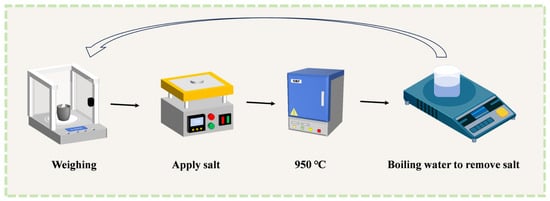
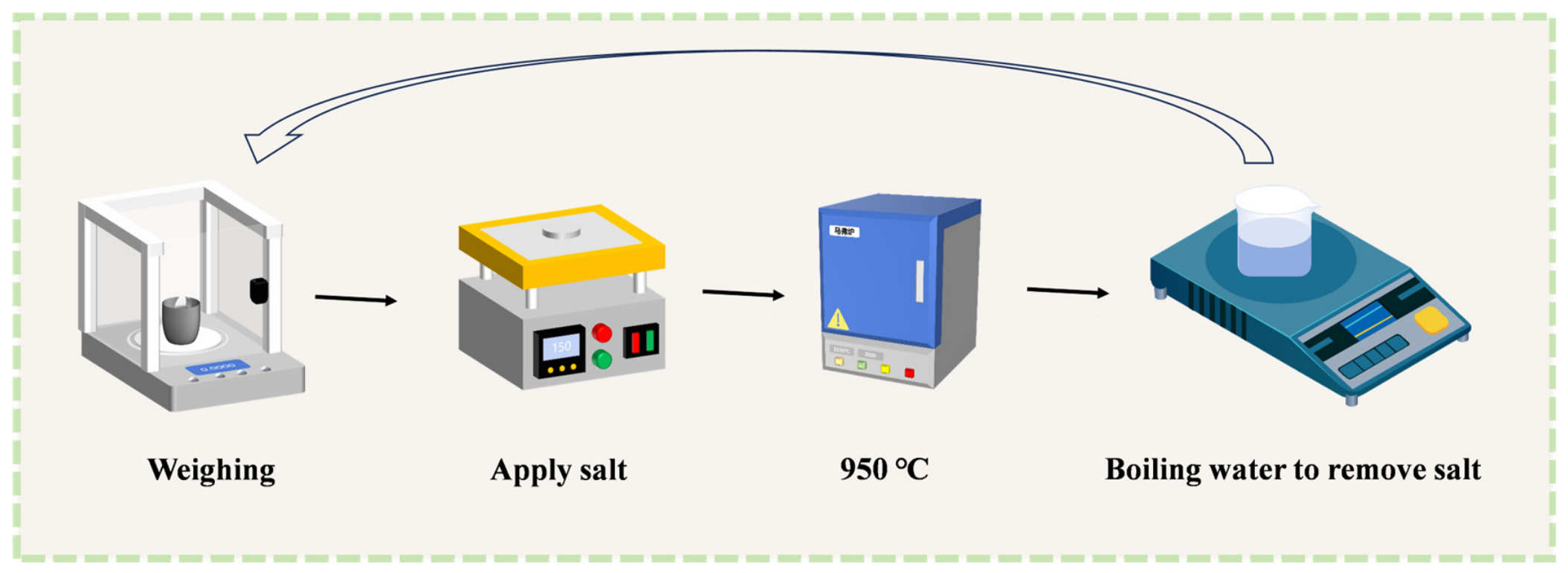
Hot corrosion testing was conducted via the sulfate deposition method. The specimen was cleaned in a 3:1 ethanol–acetone solution, dried under ambient conditions, and weighed to determine the initial mass. Subsequently, the samples were placed on a clean nickel plate preheated to 150 °C and uniformly coated with a saturated Na2SO4 solution using a fine-bristled brush. Sulfate loading was controlled at 0.3–0.5 mg/cm2 per corrosion cycle and verified gravimetrically using an analytical balance with an accuracy of 0.01 mg. Following coating, the specimen was transferred into a pre-weighed corundum crucible, which was then subjected to isothermal corrosion in a muffle furnace at the designated temperature of 950 °C. Each exposure cycle had a duration of 25 h. Upon completion of a cycle, the crucible was withdrawn from the furnace, promptly sealed with lids, and air-cooled for 10 min. The specimen was then immersed in boiling deionized water for 20 min to remove residual salts, which is a standard procedure for hot corrosion experiments [33,34,35,36]. No discernible delamination or loss of solid corrosion products (i.e., oxides and sulfides) was observed during the treatment. After thorough drying in ambient air, the specimen-crucible assembly was reweighed to include any spalled corrosion product fragments retained within the crucible. Afterward, the salt layer was reapplied, and the specimen was returned to the original crucible and reintroduced into the furnace for the subsequent cycle. The experimental cycle was repeated iteratively until the total accumulated corrosion exposure time reached 200 h (Figure 1); each data point of the mass change was the average of three samples.
Figure 1.
Schematic illustration of the experimental procedure.
2.3. Microstructural Characterizations
The microstructural characterization of the SX superalloy was performed using a FEI Talos F200X transmission electron microscope (TEM, Thermo Fisher Scientific, Hillsboro, OR, USA) equipped with an energy-dispersive X-ray spectroscopy (EDX) detector, operated at 200 kV. TEM specimens (3 mm diameter disks) were cut from the SX cylinder and mechanically ground to a thickness of approximately 50 μm. TEM foils were further thinned via electrochemical polishing using a Struers Tenupol-5 twin-jet electropolisher (Struers, Ballerup, Denmark). The electrolyte consisted of 10 vol.% perchloric acid and 90 vol.% ethanol, with the polishing temperature maintained at −20 °C and an applied voltage of 20 V.
Corrosion products were characterized by X-ray diffraction (XRD, Bruker-AXS D8 Advance, Bruker AXS GmbH, Karlsruhe, Germany) and scanning electron microscopy (SEM, Gemini SEM 360, Carl Zeiss Microscopy GmbH, Jena, Germany) equipped with an EDX detector. Site-specific TEM lamellae of corrosion products were prepared using a focused ion beam (FIB) system (FEI Helios 5UX, Thermo Fisher Scientific, Hillsboro, OR, USA).
3. Results
3.1. Sx Superalloy Microstructure
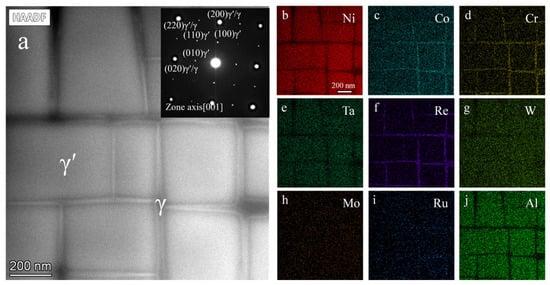
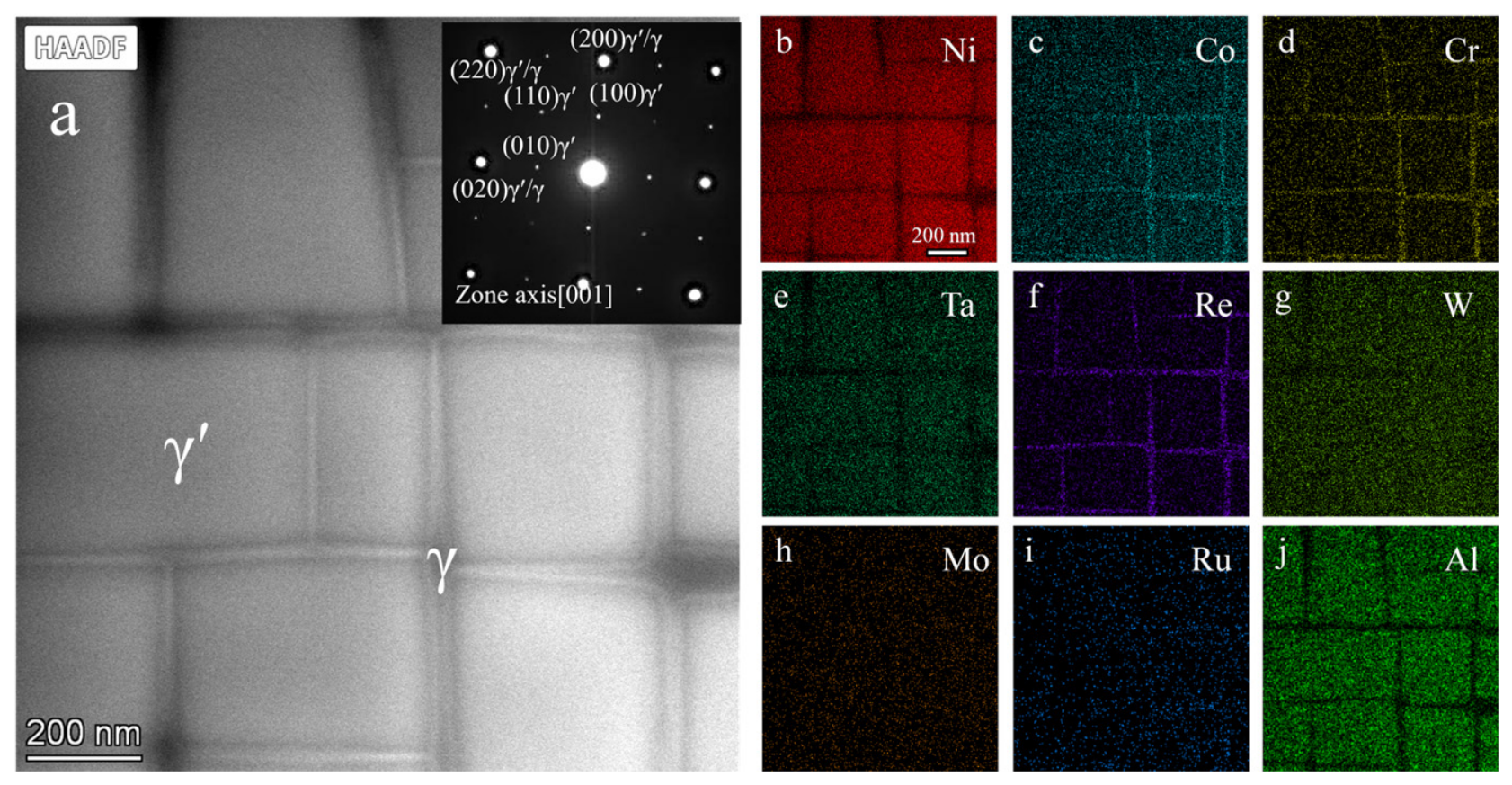
Figure 2a shows the HAADF-STEM image of the representative microstructure of the SX superalloys and the electron diffraction pattern along the [001] zone axis. The STEM-EDX elemental maps are shown in Figure 2b–j. Apparently, Al and Ta are partitioned in the γ′ phase, while Co, Cr and Re are primarily enriched in the γ matrix. Note that Ru also shows a slight preference to be in the γ matrix, though the partitioning of Ru between the γ′ phase and γ matrix is not as discernible as that of Co, Cr and Re. Mo and W do not exhibit remarkable partitioning between the γ′ phase and γ matrix.
Figure 2.
(a) The HAADF-STEM image of the representative microstructure of the SX superalloy and the corresponding electron diffraction pattern; (b–j) STEM-EDX elemental maps.
3.2. Hot Corrosion Kinetics
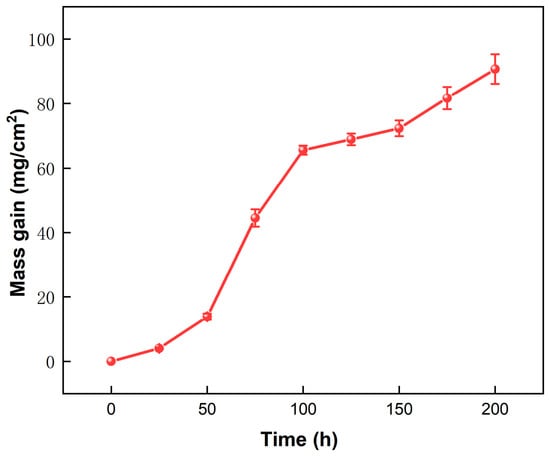
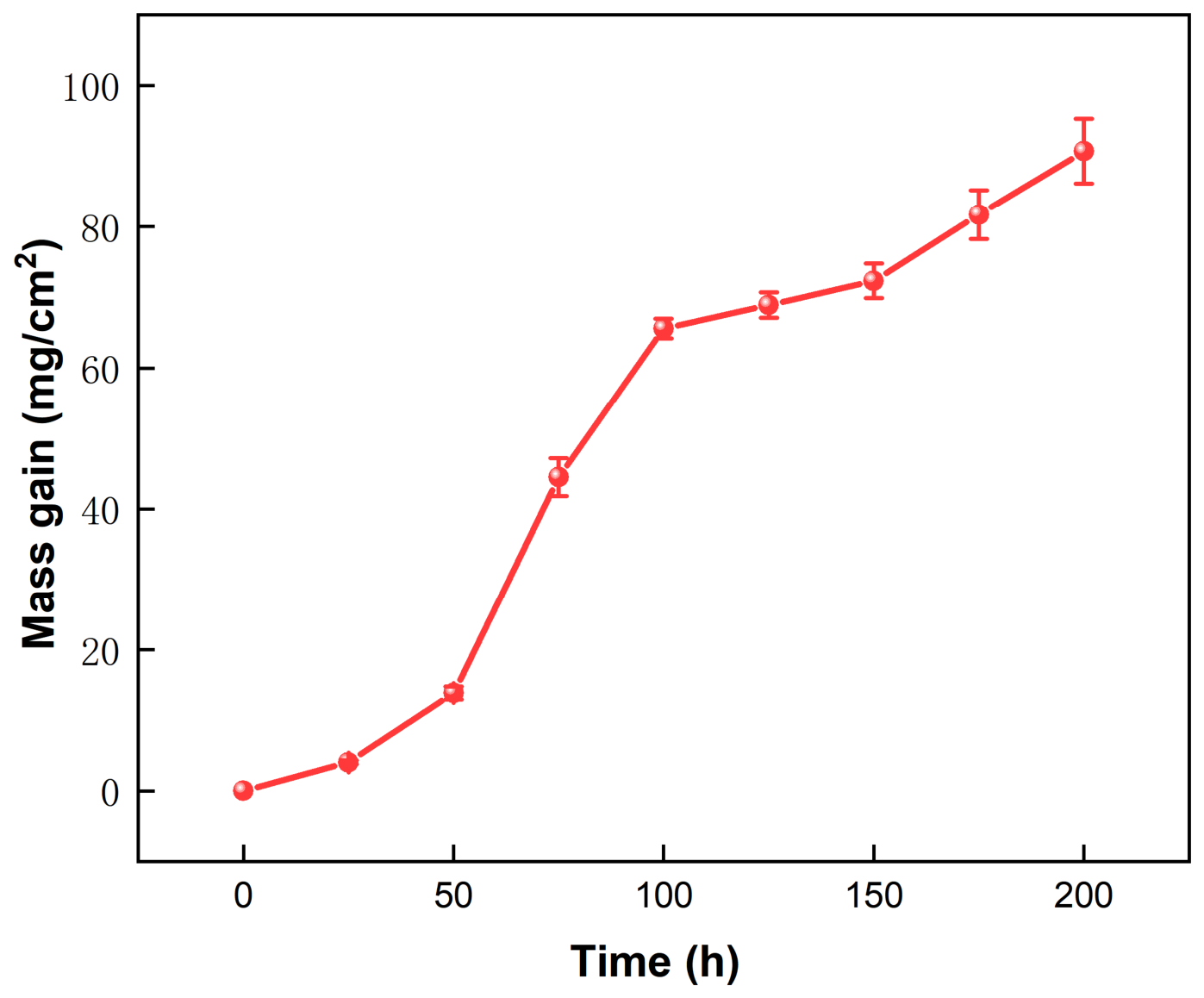
Figure 3 illustrates the hot corrosion kinetic curves of the SX superalloy specimen coated with molten sulfate at 950 °C. After 200 h of hot corrosion exposure at 950 °C, the weight gain per unit area on the specimen surface reaches 90.6 mg/cm2. During the initial 0–25 h incubation period, the weight gain rate is low, with the cumulative weight gain at 25 h being less than 4.1 mg/cm2. This could be attributed to the uniform coverage of a molten Na2SO4 salt film on the specimen surface in the early stage of hot corrosion. The Na2SO4 salt film served as the barrier layer for effectively isolating the substrate from the surrounding atmospheric environment. As a result, the oxygen required for high-temperature oxidation of the alloy was primarily supplied by the molten Na2SO4 salt, thereby inhibiting the rapid progression of hot corrosion. In the 25–100 h stage, the weight gain rate increases rapidly, suggesting severe corrosion occurred on the specimen surface during this period. When the corrosion time extends to 100–200 h, the weight gain rate is lowered, suggesting that a certain protective oxide layer was formed on the surface of the specimen, which could prevent the corrosion medium from penetrating inward. However, the density of this oxide film was insufficient, and its protective efficiency was limited, unable to effectively prevent the continuous inward diffusion of corrosive components such as oxygen and sulfur.
Figure 3.
The plot of the weight gain per unit area vs. the exposure time for the SX superalloy specimen at 950 °C.
3.3. XRD
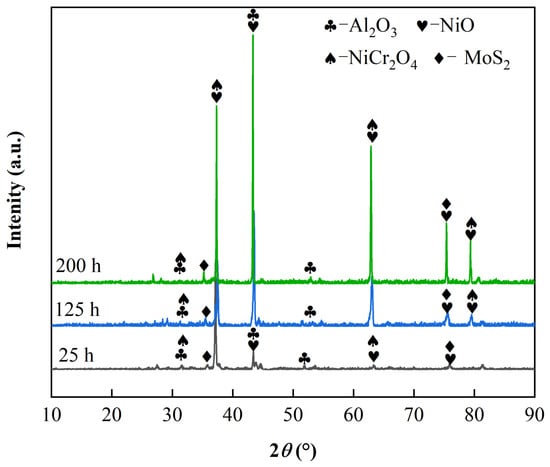
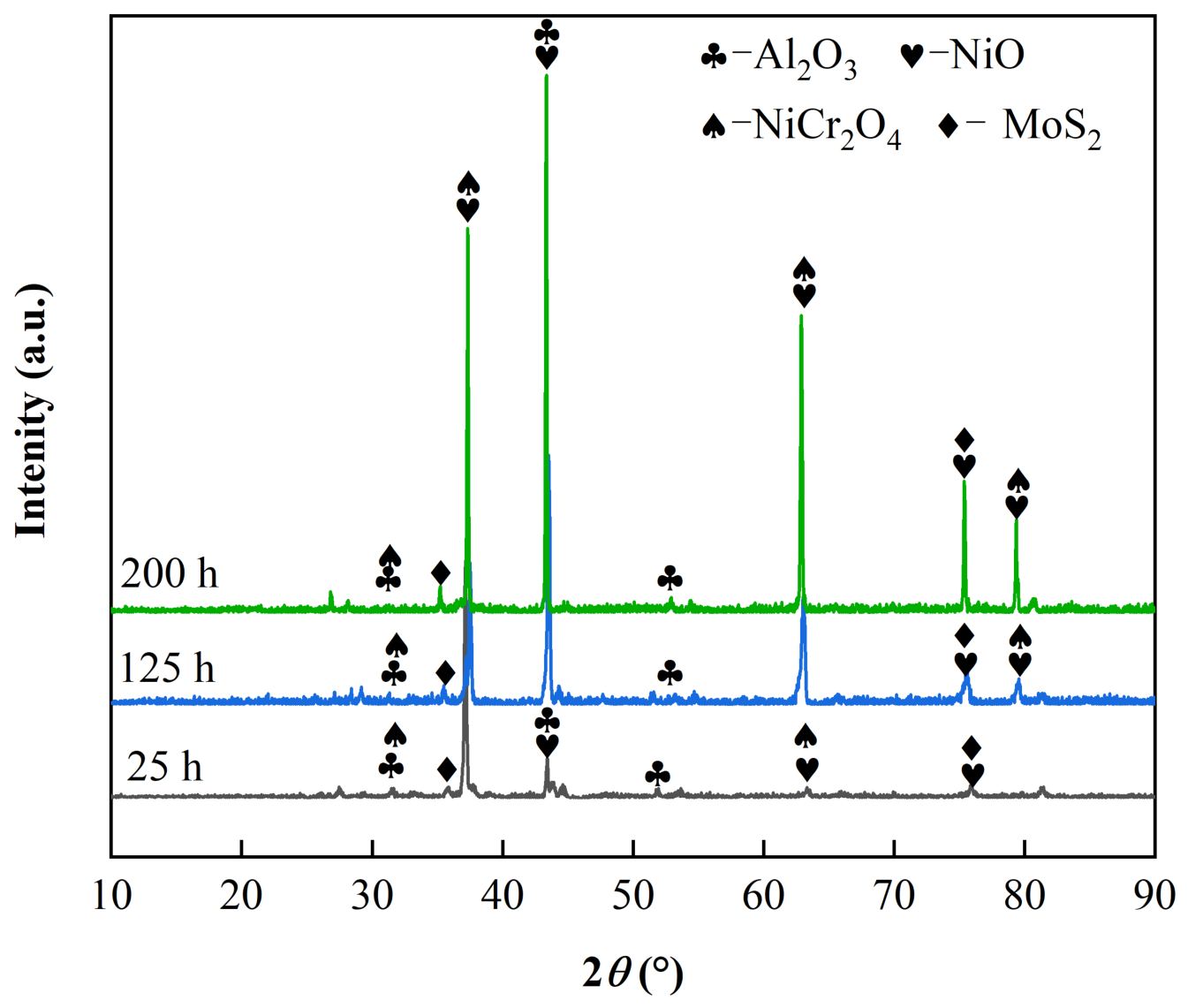
Figure 4 presents the XRD spectra of the specimen surface subjected to hot corrosion at 950 °C for various times. After 25 h of corrosion at 950 °C, the corrosion products formed on the surface are composed of NiO, Al2O3, NiCr2O4 and MoS2. When the thermal corrosion time was extended to 125 h, characteristic diffraction peaks corresponding to NiO and Al2O3 remained discernible in the XRD spectrum, while the peak of the MoS2 sulfide intensified. After 200 h of hot corrosion, NiO and Al2O3 are predominant corrosion products on the specimen surface, whereas MoS2 remains detectable.
Figure 4.
XRD patterns from the corrosion products of the specimens corroded at 950 °C.
3.4. Morphologies and Microstructures During Hot Corrosion
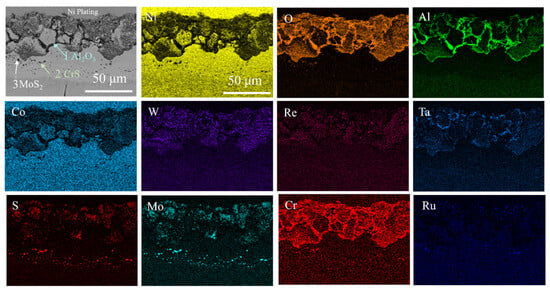
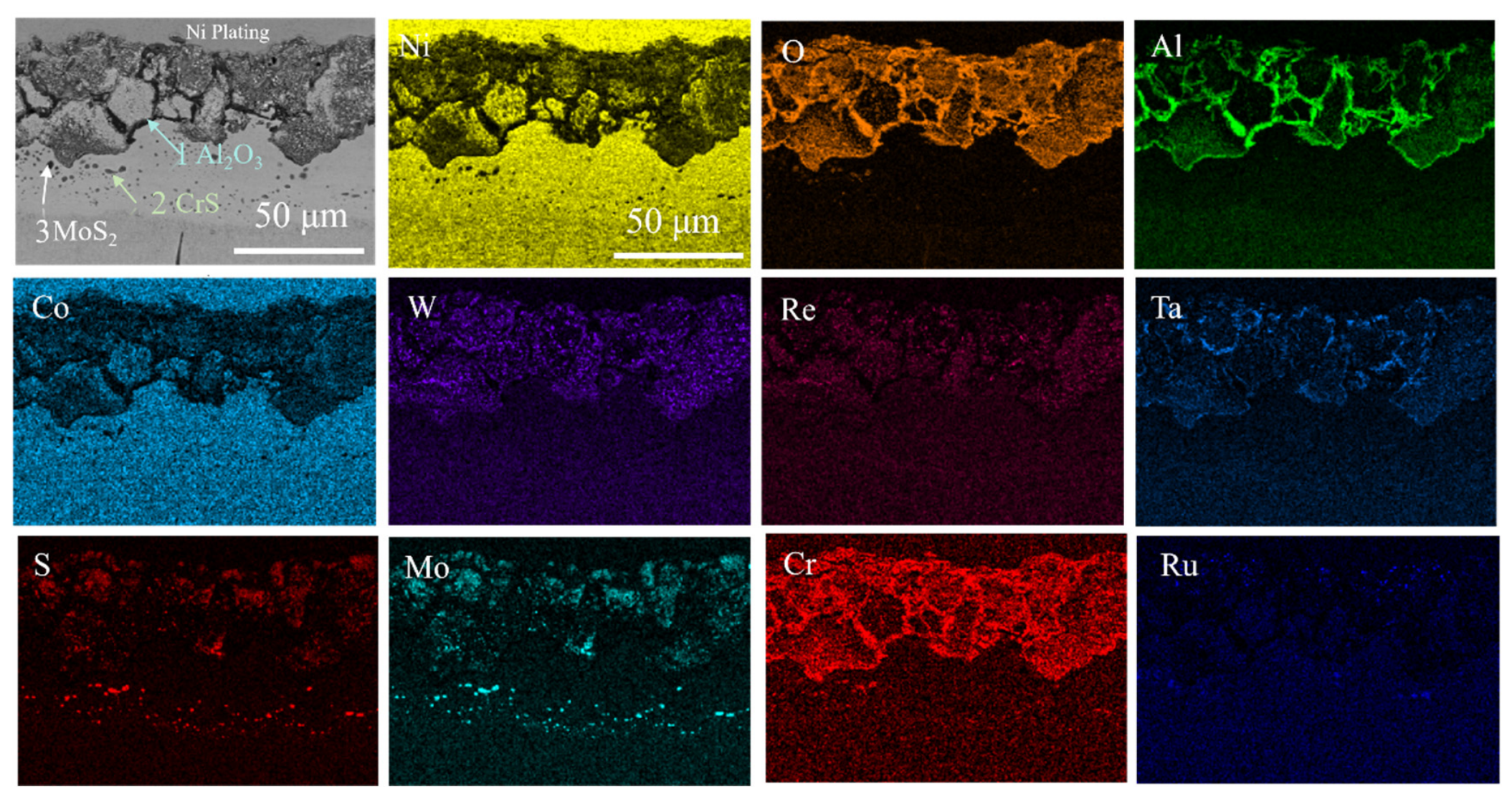
Figure 5 presents the representative microphotographs of microstructures and elemental distribution characteristics of the present SX superalloy after hot corrosion at 950 °C for 25 h. After 25 h exposure, EDX mapping results reveal that the outer oxide layer is mainly composed of oxides of Ni, Al, Cr, W, Ru, and Re. Al2O3 is distributed as a discontinuous network (Point 1 in Table 2). Above the network-like Al2O3 layer, numerous Ta-bearing oxide particles and Mo-based sulfides are distributed. Within the underlying sulfide layer, the main sulfide product is MoS2 (Point 3 in Table 2), and a small amount of Cr sulfide (Point 2 in Table 2) can also be observed.
Figure 5.
EDX elemental distribution maps of the SX superalloy specimen after exposure in a hot corrosion environment with the Na2SO4 deposit at 950 °C for 25 h.
When the hot corrosion time was extended to 125 h (Figure 6), the thickness of the corrosion layer significantly increased, and its spatial distribution became more uniform. A spinel oxide layer consisting of Ni/Al/Cr/W/Ta/Re mixed oxides was formed between the NiO and discontinuous reticular Al2O3/Cr2O3 layers. Compared with the state at 25 h, this spinel layer partially suppressed the inward diffusion of oxygen and sulfur, which might contribute to the lowered mass gain rate. Meanwhile, the amount of Cr sulfide in the sulfide layer increased. The outward-diffused Cr element reacted with the sulfur to form the Cr sulfide, which might inhibit the continuous inward diffusion of the sulfur element to a certain extent [20].
Figure 6.
EDX elemental distribution maps of the SX superalloy specimen after exposure in a hot corrosion environment with the Na2SO4 deposit at 950 °C for 125 h.
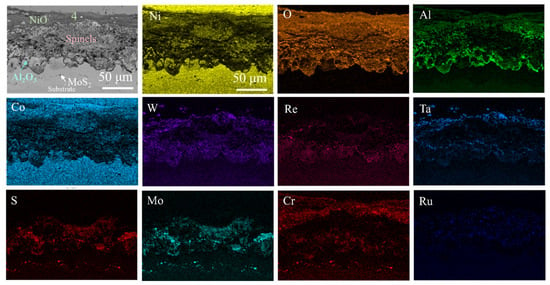
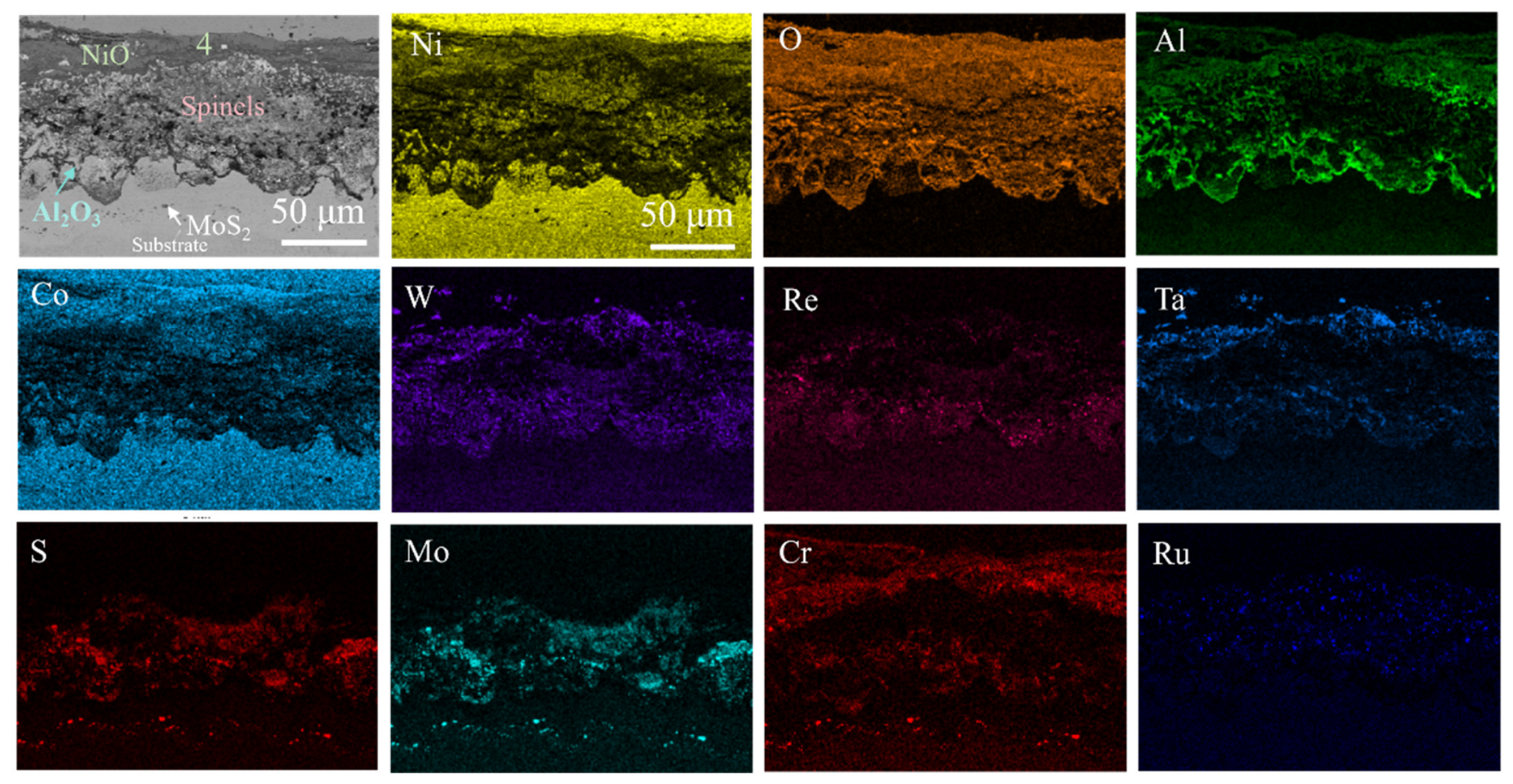
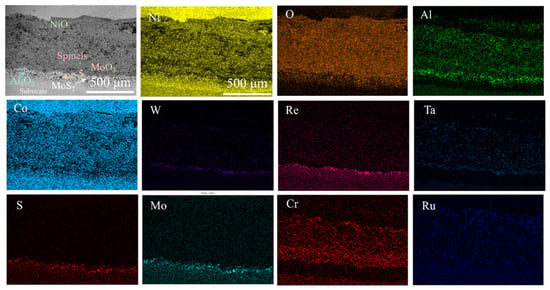
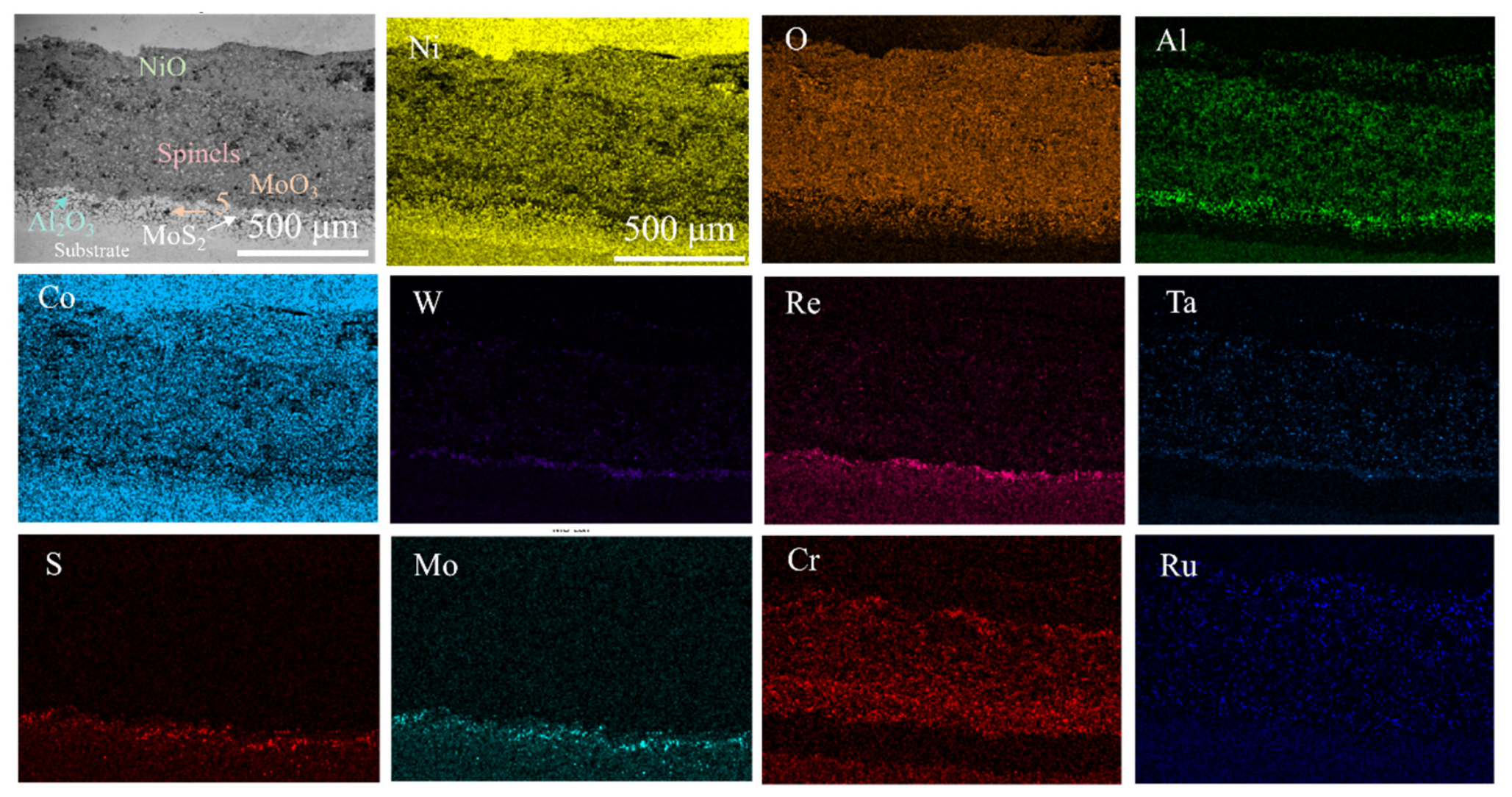
When the duration of hot corrosion was extended to 200 h (Figure 7), the thickness of the corrosion layer further increased, and the microstructure of the oxide layer tended to stabilize. The upper part of the intermediate layer consists of a spinel oxide layer composed of mixed Al/Cr/Co oxides. Beneath this spinel layer lies a relatively continuous oxide layer enriched with W, Ta and Re. Further downwards, the originally network-like Al2O3 within the internal-oxidation zone transforms into an approximately planar structure. In addition, a relatively continuous MoS2 layer is formed underneath the network-like Al2O3.
Figure 7.
EDX elemental distribution maps of the SX superalloy specimen after exposure in a hot corrosion environment with the Na2SO4 deposit at 950 °C for 200 h.
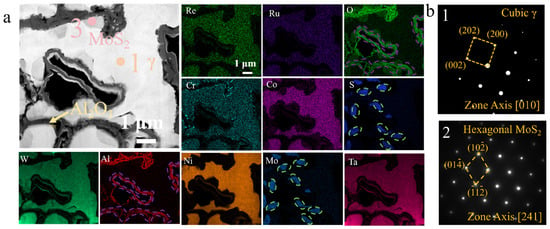
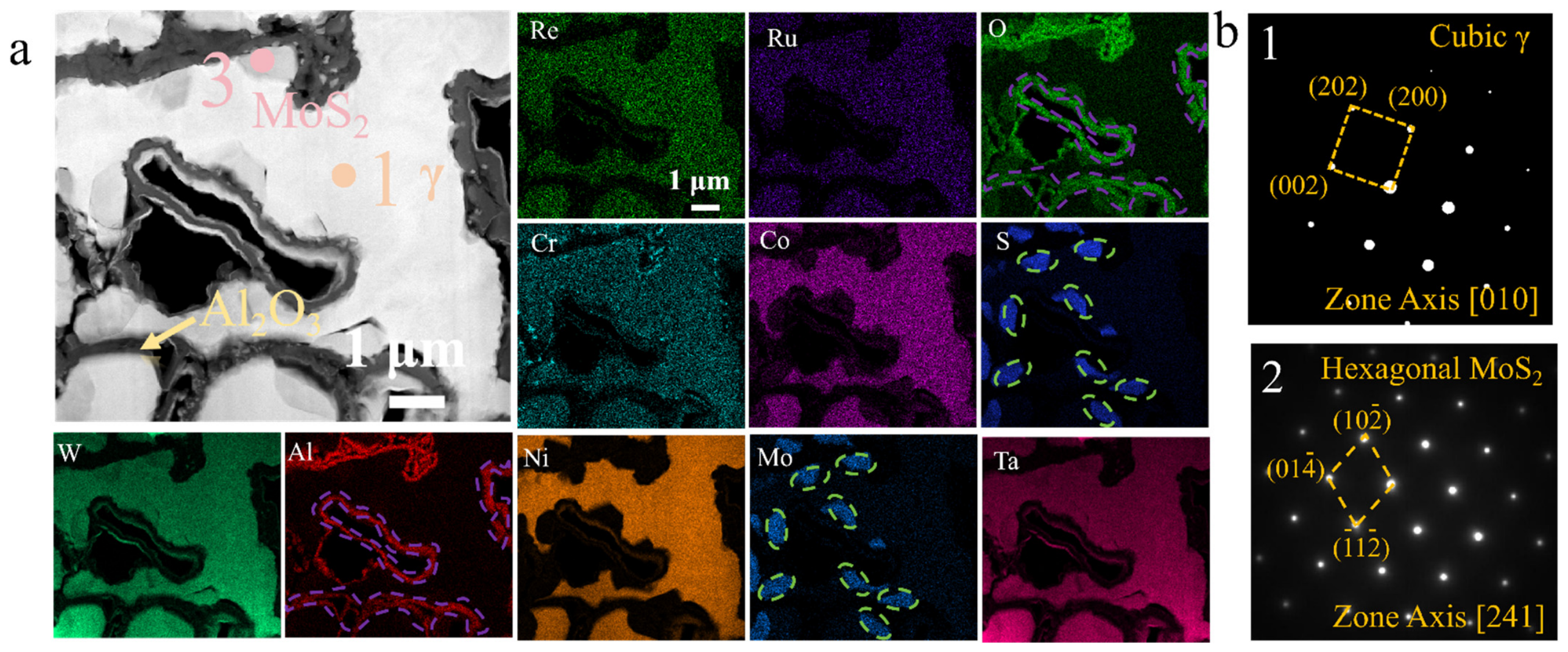
To further explore the microstructure of the oxide film, FIB was utilized to lift out the TEM specimens from the oxide layer in the specimen after hot corrosion at 950 °C for 25 h. Figure 8a shows the representative high-angle annular dark-field scanning transmission electron microscope (HAADF-STEM) image of this region and the corresponding EDX elemental map. The white regions are significantly enriched with Ni, Co, Ta, W, Cr, Re, and Ru. The selected area electron diffraction (SAED) pattern (SAED 1 in Figure 8b) indicates that this region is composed of the cubic γ matrix phase. TEM observations confirmed that MoS2 particles were formed in the oxide layer, as revealed by the compositional analysis (see Figure 8a and Table 3) and SAED pattern 2 in Figure 8b. In addition, Cr-rich oxide particles are intermittently embedded in the reticular Al-rich oxides.
Figure 8.
(a) The HAADF-STEM image and EDX elemental maps of the oxide layer formed on the specimen surface corroded at 950 °C for 25 h. (b) The patterns for Points 1 and 2 are shown in (a).
Table 3.
Compositions of the two points in Figure 8 (at.%).
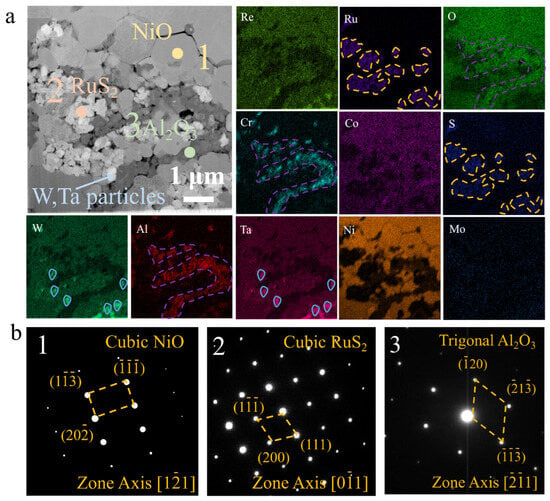
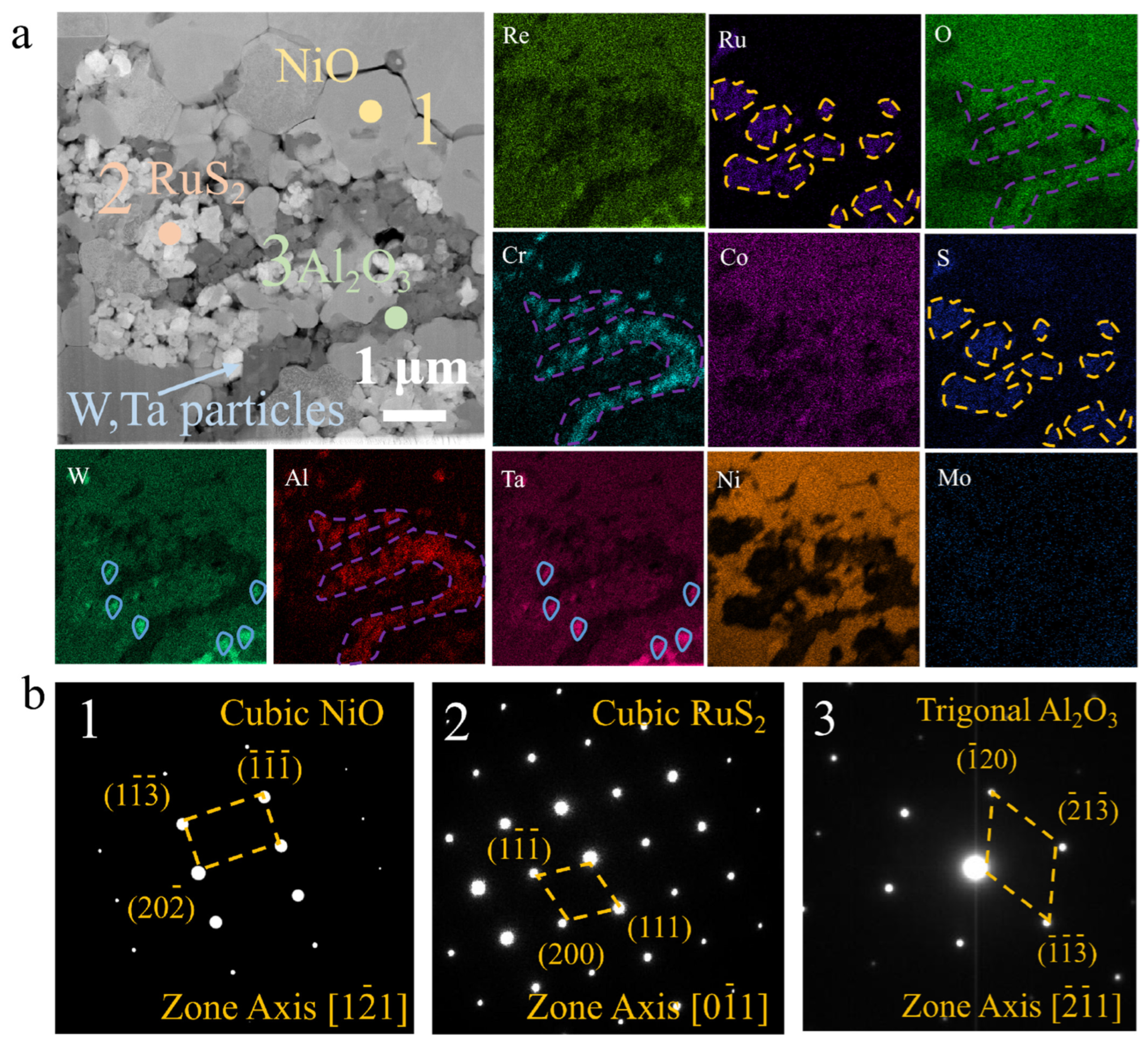
Figure 9a presents a representative HAADF-STEM image of the sample following 125 h of hot corrosion, along with the corresponding EDX elemental distribution maps. As the corrosion duration increased, the absence of an effective protective oxide layer during the initial stage of hot corrosion resulted in direct exposure of the matrix to the surrounding environment, thereby promoting extensive oxidation of the matrix. As a result, the outermost layer is composed of NiO grains of varying sizes (SAED 1 in Figure 9b). In the intermediate spinel oxide layer, the regions that remained unoxidized regions during the early corrosion stage have been fully oxidized. Al/Cr-rich oxide strips (SAED 3 in Figure 9b) remain sparsely distributed and have not yet developed into a continuous, dense lamellar structure. Meanwhile, sulfur diffused inward and reacted with Ru to form RuS2 (SAED 2 in Figure 9b). The SAED pattern of RuS2 is shown in the Supplementary Materials (Figure S1). In addition, dispersed W/Ta-rich oxide particles were observed.
Figure 9.
(a) The HAADF-STEM image and EDX elemental maps of the oxide layer formed on the specimen surface corroded at 950 °C for 125 h. (b) The patterns for Points 1, 2 and 3 are shown in (a).
4. Discussion
4.1. Hot Corrosion Process
As shown in Figure 3, the hot corrosion kinetic curve of the Ru-containing Ni-based single-crystal superalloys at 950 °C can be divided into two stages, i.e., the corrosion incubation period and corrosion acceleration period, which is analogous to the characteristic two stages observed in the second-generation SX alloys at 900 °C [28,33,34]. Nonetheless, a reduced mass gain rate was observed after 100 h of hot corrosion in the corrosion kinetic curve. Therefore, the following discussion will focus on the evolution processes and underlying mechanisms of hot corrosion of the present fourth-generation SX alloy at elevated temperatures.
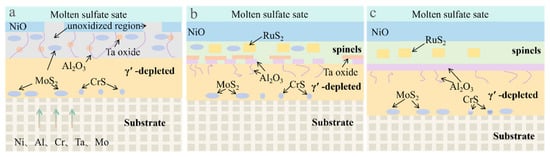
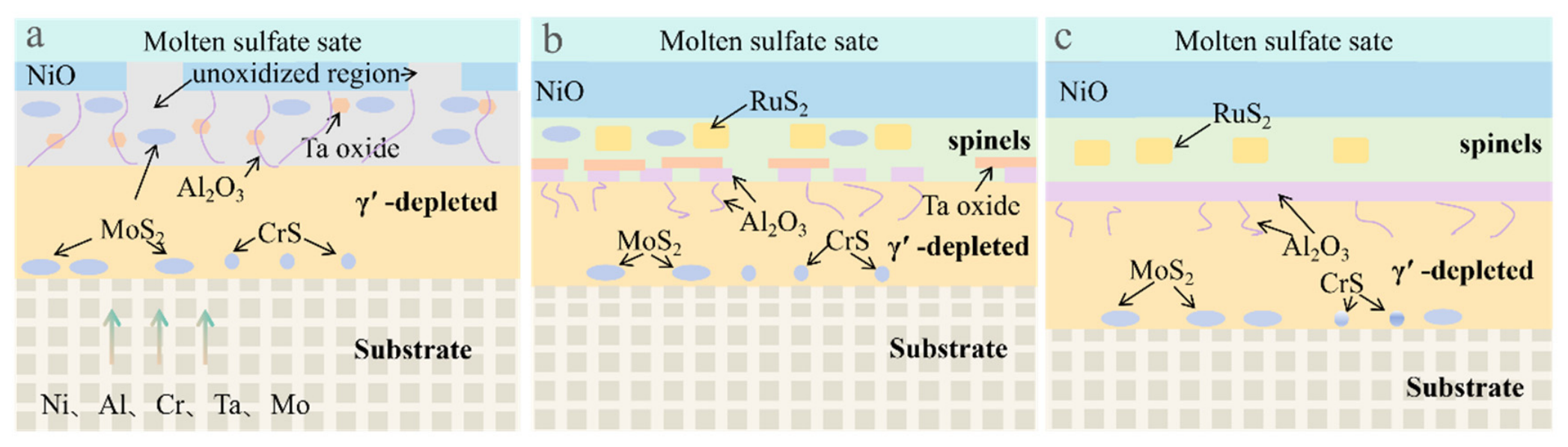
Based on SEM and TEM microstructural characterization, the corrosion products and underlying processes are schematically shown in Figure 10. At the initial hot corrosion stage (Figure 10a), the specimen surface is evenly covered by a continuous molten sulfate layer, which serves as an isolation layer separating the matrix from the surrounding atmospheric environment. The elements Ni, Al, Cr, Ta and W in the matrix diffused to the specimen surface promptly and reacted with the molten salt to form various corrosion products at different depths. As shown in Figure 4, the oxygen participating in interfacial oxidation was primarily derived from the decomposition of molten Na2SO4, which remarkably reduced the oxygen partial pressure at the salt-matrix interface. Such a low oxygen potential promoted the selective internal oxidation of Al and Cr, generating network-like Al2O3/Cr2O3 in the subsurface zone [31,37,38,39], as shown in Equations (1)–(3):
Figure 10.
Schematic illustrations of hot corrosion processes of the present SX alloy at 950 °C. (a) The incubation stage; (b) The early acceleration stage; (c) The later acceleration stage.
Meanwhile, the low interfacial oxygen partial pressure enabled the preferential reaction between Mo and sulfur, forming initial MoS2 precipitates in the subsurface at the corrosion incubation period. Moreover, sulfur exhibits a higher diffusivity than oxygen in the Ni-based superalloy matrix [28]. Consequently, although the majority of sulfur reacted with Mo in the shallow oxide zone during the initial stage of hot corrosion, a minor fraction continuously penetrates inward. Upon traversing the discontinuous surface oxide scale, sulfur reacted with Cr and Mo in the alloy matrix to form CrS and MoS2. The following equations describe these reactions:
As exposure time increased in the incubation period, the sulfur penetration depth progressively increased, culminating in the formation of an internal sulfidation zone. This stage corresponds to the corrosion incubation period on the hot corrosion curve (Figure 3).
As hot corrosion proceeded (Figure 10b), continuous growth of the oxide scale gradually consumed the surface molten sulfate, significantly increasing the local activity of oxygen and sulfur at the sulfate–specimen interface. As a result, atmospheric oxygen can directly reach the specimen surface and engage in interfacial reactions. As displayed in Figure 6, a dense and continuous NiO outer layer and a spinel intermediate layer were progressively formed. Numerous MoS2 products were retained in the lower region of the oxide layer. The absence of MoS2 products from the upper region may be attributed to its oxidation-driven conversion into volatile MoO3 [40,41]. KC et al. conducted density functional theory calculations to investigate the interaction of the MoS2 surface with oxygen [42]. It was found out that the adsorption of oxygen and oxidizing MoS2 is thermodynamically favored, as the Mo–O bond is stronger compared to Mo–S. Such oxidation progresses according to the following stoichiometry [40]:
The locally released sulfur can then diffuse and react with Ru to form RuS2 [43].
After 200 h of hot corrosion (Figure 10c), the overall corrosion scale thickness increases significantly, and the oxide layer becomes more uniform and stable. The MoS2 phase in the oxide layer completely disappears (Figure 7). In contrast, a continuous internal sulfidation layer mainly composed of MoS2 forms at the interface between the γ′-denuded zone and the alloy matrix. Notably, the formation of a MoS2 layer has seldom been reported in earlier investigations on second-generation SX superalloys [40]. In previous work, the high Cr concentration of Cr facilitated the formation of a dense Cr2O3 layer, which acted as an effective barrier against inward diffusion of sulfur and oxygen [44,45,46]. In contrast, the present SX alloy with a lower Cr content developed a discontinuous reticular Al2O3/Cr2O3 layer, which is less effective as a diffusion barrier for oxygen and sulfur compared to the continuous Cr2O3 scale in the second-generation SX superalloys. The formed MoS2 layer may locally sequester sulfur at the corrosion front rather than fully stopping sulfur penetration. As a result, the internal sulfide layer gradually propagates deeper into the alloy substrate with prolonged corrosion time. This accounts for the deceleration in mass gain observed after 100 h of hot corrosion, as displayed in the hot corrosion curve shown in Figure 3. Nonetheless, the reduction in mass-gain rate after 100 h should not be interpreted as a genuine improvement in the hot corrosion resistance. The formation of internal sulfides alters the diffusion kinetics of oxygen and sulfur, leading to a decreased mass-gain rate, while inward sulfur penetration and substrate degradation still persist.
4.2. Role of Ru
Ru-containing fourth-generation SX superalloys exhibit distinct corrosion product evolution and microstructural response under molten sulfate-induced corrosion at 950 °C. During prolonged hot corrosion at 950 °C, the oxygen partial pressure at the corrosion interface gradually increases, which might trigger the oxidative decomposition of MoS2 formed in the early corrosion stage. As a result, the phase fraction of MoS2 continuously decreased, accompanied by the release of free sulfur. The abundant sulfur in the system further reacted with Ru in the matrix to in situ form a new phase of RuS2. This observation indicates that in the Ru-containing fourth-generation SX superalloy, Ru participated in high-temperature sulfidation reactions and may accompany the transformation of corrosion products from the metastable MoS2 phase to the thermodynamically stable RuS2 phase. Although both MoS2 and RuS2 may locally sequester sulfur at the corrosion front, they could not block the continuous inward migration of sulfur, and the sulfide layer steadily propagated deeper into the alloy substrate with increasing corrosion time. The reduced mass-gain rate after 100 h was not caused by sulfur inhibition, but originated from the transition of dominant corrosion mechanisms.
5. Conclusions
The hot corrosion behavior and microstructural evolution of a Ru-containing fourth-generation Ni-based SX superalloy subjected to molten sulfate-induced corrosion at 950 °C were systematically investigated. The main conclusions are drawn as follows:
- The hot corrosion kinetic process of the present SX superalloy exhibits a characteristic two-stage behavior: an incubation stage followed by an acceleration stage. Notably, however, the mass gain rate decreased after 100 h of exposure to hot corrosion conditions.
- In the present Cr-lean SX superalloy, the Al2O3/Cr2O3 layer exhibited a discontinuous reticulated morphology owing to insufficient Cr, and thus provided only limited resistance to inward oxygen and sulfur transport. This complied with the accelerating corrosion stage after 25 h exposure. With prolonged exposure, the abundant sulfur reacted with Mo to form the MoS2 phase. Particularly, a stable internal sulfide layer was eventually formed at the interface between the γ′-denuded zone and the substrate.
- In the present Ru-bearing fourth-generation nickel-based superalloy, in situ generated RuS2 was observed in the corrosion products. This indicated that Ru participated in high-temperature sulfidation reactions and may accompany the transformation of corrosion products from the metastable MoS2 phase to the thermodynamically stable RuS2 phase.
Supplementary Materials
The following supporting information can be downloaded at: https://www.mdpi.com/article/10.3390/nano16191225/s1, Figure S1: Selected-area electron diffraction (SAED) pattern of RuS2.
Author Contributions
Conceptualization, S.G. and Y.Z. (Yong Zhang); methodology, S.G. and Y.Z. (Yong Zhang); investigation, S.G., Z.W., S.Y., B.Z. (Bohou Zhang), C.Z., F.D., G.Z., Z.L. and L.Y.; validation, Z.W., C.Z. and Y.Z. (Yangtao Zhou); formal analysis, S.G., B.Z. (Baobing Zhang), G.Z. and B.Z. (Bohou Zhang); resources, F.D., Y.Z. (Yangtao Zhou) and Y.Z. (Yangtao Zhou); data curation, S.G.; writing—original draft preparation, S.G.; writing—review and editing, S.G. and Y.Z. (Yong Zhang); visualization, S.G., S.Y., Z.L. and L.Y.; supervision, Y.Z. (Yong Zhang); project administration, Y.Z. (Yong Zhang); funding acquisition, Y.Z. (Yong Zhang). All authors have read and agreed to the published version of the manuscript.
Funding
This research was funded by Nanjing Science and Technology Major Project (grant no. 202405009), the National Natural Science Foundation of China (grant no. 52671169), the Jiangsu Funding Program for Excellent Postdoctoral Talent (grant no. 2024ZB653), the UGITC (grant no. 159001JX0120240243), and the Basic Research Program of Jiangsu Province (grant no. BK20251456).
Data Availability Statement
The original contributions presented in this study are included in the article/Supplementary Materials. Further inquiries can be directed to the corresponding author.
Conflicts of Interest
Fangmiao Duan and Guijuan Zhou were employed by China United Gas Turbine Technology Co., Ltd. Zhigang Li and Lianxu Yu were employed by Metalink Special Alloys Corporation. The remaining authors declare that the research was conducted in the absence of any commercial or financial relationships that could be construed as a potential conflict of interest.
References
- Reed, R.C. The Superalloys: Fundamentals and Applications; Cambridge University Press: Cambridge, UK, 2006. [Google Scholar] [CrossRef] [Scilit]
- Guo, S.J.; Li, J.D.; Yuan, S.Y.; Li, Z.G.; Yu, C.H.; Zhang, Y. High-Temperature Oxidation Behaviors and γ’ Phase Stability of a New Fourth-Generation Single Crystal Superalloy with Rare Earth. Acta Metall. Sin. 2026, 62, 351–362. [Google Scholar] [CrossRef]
- Lu, G.X.; Wen, Z.X.; Zhao, T.T.; Zhao, Y.S.; Yue, Z.F. Effect of microstructural degradation on the hydrogen embrittlement susceptibility and mechanism of a Ni-based single crystalline superalloy. Mater. Sci. Eng. A 2026, 954, 149759. [Google Scholar] [CrossRef] [Scilit]
- Saito, T.; Harada, H.; Osawa, M.; Yokokawa, T.; Kawagishi, K.; Suzuki, S. Elastic moduli of 6th generation Ni-base single crystal superalloy TMS-238 and its tie-lined γ and γ’ phases. Mater. Sci. Eng. A 2025, 941, 148410. [Google Scholar] [CrossRef] [Scilit]
- Hobbs, R.A.; Zhang, L.; Rae, C.M.F.; Tin, S. The effect of ruthenium on the intermediate to high temperature creep response of high refractory content single crystal nickel-base superalloys. Mater. Sci. Eng. A 2008, 489, 65–67. [Google Scholar] [CrossRef] [Scilit]
- Zhao, Y.S.; Li, N.; Wang, L.; He, J.Y.; Liu, W.H.; Song, M. High-temperature creep-induced site occupation evolution in the γ′ lattice in a Ru-bearing Ni-based superalloy. Mater. Res. Lett. 2023, 11, 888–895. [Google Scholar] [CrossRef] [Scilit]
- Xu, J.H.; Li, L.F.; Liu, X.G.; Li, H.; Feng, Q. Thermal-Stress Coupling Effect on Microstructure Evolution of a Fourth-Generation Nickel-Based Single-Crystal Superalloy at 1100 °C. Acta Metall. Sin. 2021, 57, 205–214. [Google Scholar] [CrossRef]
- Takahashi, Y.; Kobayashi, D.; Fujii, S.; Arai, S.; Takuma, M.; Saitoh, K.; Sato, T. Time-dependent subcritical crack growth and its mechanism in Ni-based single crystal superalloys at 500 °C. Mater. Sci. Eng. A 2024, 889, 145869. [Google Scholar] [CrossRef] [Scilit]
- Niu, H.Y.; Wu, H.; Fan, G.H.; Liu, Q. Rate-related high-temperature deformation of nickel-based single-crystal superalloys. J. Alloys Compd. 2025, 1023, 180152. [Google Scholar] [CrossRef] [Scilit]
- Utada, S.; Heczko, M.; Rame, J.; Hamadi, S.; Dlouhý, A.; Kruml, T.; Villechaise, P.; Reed, R.C.; Mills, M.J.; Cormier, J. Origin of localizing creep damage in Ni-based single crystal superalloys pre-strained at room temperature. Acta Mater. 2025, 299, 121448. [Google Scholar] [CrossRef] [Scilit]
- Heckl, A.; Neumeier, S.; Cenanovic, S.; Göken, M.; Singer, R.F. Reasons for the enhanced phase stability of Ru-containing nickel-based superalloys. Acta Mater. 2011, 59, 6563–6573. [Google Scholar] [CrossRef] [Scilit]
- Liu, B.; Yang, W.C.; Qin, J.R.; Fu, H.T.; Wang, Q.; Xin, Z.; Su, H.J.; Liu, L. Dual effects of Ru on TCP phase growth and twinning behavior in a fourth-generation single crystal superalloy at 1100 °C/150 MPa creep condition. Scr. Mater. 2025, 268, 116873. [Google Scholar] [CrossRef] [Scilit]
- Badea, T.-A.; Dombrovschi, M. The Influence of Alloying Elements on the Hot Corrosion Behavior of Nickel-Based Superalloys. Materials 2025, 18, 1996. [Google Scholar] [CrossRef] [Scilit] [PubMed]
- Li, Y.; Davies, H.; Hardy, M.; Jackson, C.; Whittaker, M. Corrosion Fatigue of a Nickel-Based Superalloy Disc Rotor with Salt in Air and Sulphur Dioxide Environments. Materials 2025, 18, 3819. [Google Scholar] [CrossRef] [Scilit] [PubMed]
- Lencová, K.; Netrvalová, M.F.; Vostfák, M.; Lukáč, F.; Mušálek, R.; Česánek, Z.; Houdková, Š. Hot Corrosion Behavior of TWAS and HVOF NiCr-Based Coatings in Molten Salt. Materials 2023, 16, 1712. [Google Scholar] [CrossRef] [Scilit] [PubMed]
- Flores-Garcia, N.S.; Arrieta-Gonzalez, C.D.; Ramos-Hernandez, J.J.; Pedraza-Basulto, G.K.; Gonzalez-Rodriguez, J.G.; Porcayo-Calderon, J.; Martinez-Gomez, L. Rare Earth-Based Compounds as Inhibitors of Hot-Corrosion Induced by Vanadium Salts. Materials 2019, 12, 3796. [Google Scholar] [CrossRef] [Scilit] [PubMed]
- Tan, X.P.; Liu, J.L.; Jin, T.; Hu, J.Q. Effect of Ruthenium on precipitation behavior of the Topologically Close-Packed Phase in a single-crystal Ni-based superalloy during high-temperature exposure. Metall. Mater. Trans. A 2012, 43, 3608–3614. [Google Scholar] [CrossRef] [Scilit]
- Meng, X.Y.; Tang, C.; Lyu, S.M.; Xie, X.F.; Jia, J.; Qu, J.L. Temperature-dependent deformation mechanisms and strengthening behavior of a novel Ni-based superalloy with bimodal γ′ precipitate distribution. Mater. Sci. Eng. A 2026, 953, 149784. [Google Scholar] [CrossRef] [Scilit]
- Tan, Z.H.; Wang, X.G.; Pang, J.C.; Zou, M.K.; Tao, Y.; Tao, X.P.; Zou, C.L.; Yang, Y.H.; Liu, J.D.; Liu, J.L.; et al. Pore-induced defects during thermo-mechanical fatigue of a fourth-generation single crystal superalloy. Mater. Res. Lett. 2023, 11, 678–687. [Google Scholar] [CrossRef] [Scilit]
- Chang, J.X.; Wang, D.; Liu, T.; Zhang, G.; Lou, L.H.; Zhang, J. Role of tantalum in the hot corrosion of a Ni-base single crystal superalloy. Corros. Sci. 2015, 98, 585–591. [Google Scholar] [CrossRef] [Scilit]
- Fan, J.; Li, J.; Song, Y.; Jiao, D.; Zhu, Z.; Ma, X.; Yuan, R.; Yu, J.; Wang, J.; Kou, H.; et al. Effect of ppm-level La modification on hot corrosion behaviour of single crystal superalloy CMSX-4. J. Alloys Compd. 2025, 1035, 181423. [Google Scholar] [CrossRef] [Scilit]
- Meng, J.S.; Chen, M.X.; Shi, X.P.; Ma, Q. Effect of Co on oxidation and hot corrosion behavior of two nickel-based superalloys under Na2SO4-NaCl at 900 °C. Trans. Nonferrous Met. Soc. China 2021, 31, 240–2414. [Google Scholar] [CrossRef] [Scilit]
- Yang, Y.Q.; Zhao, Y.C.; Wen, Z.X.; Lu, G.X.; Pei, H.Q.; Yue, Z.F. Synergistic effect of multiple molten salts on hot corrosion behaviour of Ni-based single crystal superalloy. Corros. Sci. 2022, 204, 110381. [Google Scholar] [CrossRef] [Scilit]
- Yang, Y.Q.; Zhao, Y.C.; Wen, Z.X.; Wang, J.J.; Li, M.; Pei, H.Q.; Yue, Z.F. Study on the hot corrosion-creep failure mechanism of Ni-based single crystal superalloy considering the stress dependence. Mater. Sci. Eng. A 2024, 897, 146350. [Google Scholar] [CrossRef] [Scilit]
- Yang, X.; Yang, L.; Wang, J.; Chen, Z.; Chen, M.; Zhang, J.; Wang, F. Investigation on the hot corrosion behavior of a single crystal Ni-based superalloy in molten Na2SO4 + K2SO4 salts improved by different preoxidation treatments. Corros. Sci. 2023, 221, 111377. [Google Scholar] [CrossRef] [Scilit]
- Ma, L.; Wang, D.; Zhang, G.; Shen, J.; Zhang, J. Effect of Hf on microstructure and creep properties of a hot corrosion resistant nickel-based single crystal superalloy. China Foundry 2025, 22, 173–181. [Google Scholar] [CrossRef] [Scilit]
- Chen, Z.; Dong, T.; Qu, W.; Ru, Y.; Zhang, H.; Pei, Y.; Gong, S.; Li, S. Influence of Cr content on hot corrosion and a special tube sealing test of single crystal nickel base superalloy. Corros. Sci. 2019, 156, 161–170. [Google Scholar] [CrossRef] [Scilit]
- Chang, J.X.; Chang, D.; Zhang, G.; Lou, L.H.; Zhang, J. Interaction of Ta and Cr on Type-I hot corrosion resistance of single crystal Ni-base superalloys. Corros. Sci. 2017, 117, 35–42. [Google Scholar] [CrossRef] [Scilit]
- Liu, E.Z.; Guan, X.R. Effect of Ru on corrosion resistance of high Cr content superalloy. Mater. Corros. 2016, 67, 1269–1273. [Google Scholar] [CrossRef] [Scilit]
- Guan, X.R.; Guan, Y.S.; Ji, H.S.; Liu, E.Z.; Zheng, Z.; Yu, Y.S. Study on hot corrosion of Ni-based superalloys with different Ru contents. Mater. Sci. Technol. 2013, 21, 108–112. [Google Scholar]
- Yang, B.S.; Li, B.; Wang, S.Y.; Zhang, T.; Ye, F. High temperature hot corrosion of single crystal superalloy DD6 subject to varying amounts of sodium salt deposited. Equip. Environ. Eng. 2023, 20, 10–19. [Google Scholar]
- Movenko, D.A.; Zavodov, A.V.; Laptev, A.B.; Loschinina, A.O. Changing the Structure of a Single-Crystal Ni-Based Superalloy during Its High-Temperature Salt Corrosion at 750 °C. Met. Sci. Heat Treat. 2024, 66, 21–28. [Google Scholar] [CrossRef] [Scilit]
- Li, Q.; Liu, F.; Li, Y.; Yao, J.; Yang, J.; Tan, L.; Wang, Z.; Huang, L.; Liu, Y. A study of the hot salt corrosion behavior of three nickel-based single-crystal superalloys at 900 °C. Crystals 2024, 14, 307. [Google Scholar] [CrossRef] [Scilit]
- Song, P.; Liu, M.; Jiang, X.; Feng, Y.; Wu, J.; Zhang, G.; Wang, D.; Dong, J.; Chen, X.-Q.; Lou, L. Influence of alloying elements on hot corrosion resistance of nickel-based single crystal superalloys coated with Na2SO4 salt at 900 °C. Mater. Des. 2021, 197, 109197. [Google Scholar] [CrossRef] [Scilit]
- Chang, J.X.; Wang, D.; Liu, X.G.; Lou, L.H.; Zhang, J. Effect of Rhenium Addition on Hot Corrosion Resistance of Ni-Based Single Crystal Superalloys. Metall. Mater. Trans. A 2018, 49, 4343–4352. [Google Scholar] [CrossRef] [Scilit]
- Gong, N.; Meng, T.L.; Teo, S.L.; Cao, J.; Lee, C.J.J.; Tan, C.K.I.; Tan, D.C.C.; Suwardi, A.; Lin, M.; Misra, R.D.K.; et al. High-temperature oxidation and hot corrosion of Ni-based single crystal superalloy in the incubation stage. Corros. Sci. 2023, 214, 111026. [Google Scholar] [CrossRef] [Scilit]
- Chen, Z.H.; Wu, M.M.; Pei, Y.L.; Li, S.S.; Gong, S.K. Study on abnormal hot corrosion behavior of nickel-based single-crystal superalloy at 900 °C after drilling. npj Mater. Degrad. 2021, 5, 21. [Google Scholar] [CrossRef] [Scilit]
- Li, Q.; Yuan, X.; Li, D.; Song, P.; Li, Z.; Huang, T.; Wen, L.; Liang, Y.; Lu, J. Effect of pre-oxidation treatment on the hot corrosion behavior of pack-cemented aluminide coatings on the K438 alloy in salt mixture. Corros. Commun. 2022, 5, 1–13. [Google Scholar] [CrossRef] [Scilit]
- Yang, F.M.; Lian, L.X.; Liu, Y.; Gong, X.F. Mechanism of adding rhenium to improve hot corrosion resistance of nickel-based single-crystal superalloys. Rare Met. 2021, 40, 2076–2082. [Google Scholar] [CrossRef] [Scilit]
- Szoszkiewicz, R.; Rogala, M.; Dąbrowski, P. Surface-Bound and Volatile Mo Oxides Produced During Oxidation of Single MoS2 Crystals in Air and High Relative Humidity. Materials 2020, 13, 3067. [Google Scholar] [CrossRef] [Scilit] [PubMed]
- Zhang, W.W.; Yang, Y.; Tan, Y.B.; Xiang, S.; Shi, W.; Ma, M. Hot corrosion behavior and mechanism of cryo-rolled MP159 superalloy with long rod-like γ′ phase. Corros. Sci. 2022, 209, 110706. [Google Scholar] [CrossRef] [Scilit]
- Kc, S.; Longo, R.C.; Wallace, R.M.; Cho, K. Surface oxidation energetics and kinetics on MoS2 monolayer. J. Appl. Phys. 2015, 117, 135301. [Google Scholar] [CrossRef] [Scilit]
- Svendsen, S.R. High Temperature Enthalpy and Decomposition Pressures of RuS2. Acta Chem. Scand. A 1979, 33, 601–607. [Google Scholar] [CrossRef] [Scilit]
- Wang, J.H.; Li, D.G.; Shao, T.M. Electrochemical study on the hot corrosion behavior of Ni16Cr13Co4Mo alloy in molten NaCl-KCl and NaCl-KCl-Na2SO4. Corros. Sci. 2022, 200, 110247. [Google Scholar] [CrossRef] [Scilit]
- Chen, S.S.; Liu, Z.D.; Pan, C.Y.; Liu, F.L.; Fu, Y.D. High-Temperature Oxidation and Hot Corrosion Characteristics of Ni-Cr Alloy Cladding Layers with Different Cr Contents. Rare Met. Mater. Eng. 2023, 52, 2702–2710. [Google Scholar] [CrossRef]
- Liu, J.; Zhang, S.Q.; Wang, D.; Wang, L.; Chen, L.J. Effect of Ta on the microstructure and creep properties of a hot-corrosion resistant Ni-based single-crystal superalloy after long-term exposure. Acta Metall. Sin. 2024, 60, 179–188. [Google Scholar] [CrossRef]

Disclaimer/Publisher’s Note: The statements, opinions and data contained in all publications are solely those of the individual author(s) and contributor(s) and not of MDPI and/or the editor(s). MDPI and/or the editor(s) disclaim responsibility for any injury to people or property resulting from any ideas, methods, instructions or products referred to in the content. |
© 2026 by the authors. Licensee MDPI, Basel, Switzerland. This article is an open access article distributed under the terms and conditions of the Creative Commons Attribution (CC BY) license.