


Abstract
(1) Background: A free gingival graft (FGG) is a common technique used to reconstruct or enhance the area of keratinized mucosa, while a connective tissue graft (CTG) is utilized to boost soft tissue thickness, thereby promoting stability in interproximal marginal bone levels. Most reported complications following FGG procedure are associated with the donor site. In addition to a painful, open wound in the palate, the most frequent complications linked to FGG harvesting include excessive bleeding, postoperative bone exposure, and recurrent herpes lesions. Numerous methods for securing the donor site after a free gingival graft surgery have been documented in research publications. The main objective of this systematic review was to assess various techniques for protecting the palate after graft harvesting and their impact on patient experience, with a focus on pain management. The secondary objective was to evaluate these techniques in relation to donor site wound healing. (2) Methods: The search was performed across four databases: Medline (PubMed Central), Scopus, Web of Science, and Embase, in accordance with PRISMA guidelines and the recommendations set forth in the Cochrane Handbook for Systematic Reviews of Interventions. The initial search took place on 9 October 2023, followed by an update on 28 June 2024. The search utilized the following keywords: (“wound” OR “injury”) AND (“graft” OR “free gingival graft” OR “graft harvesting”) AND (“healing” OR “recovery”) AND “palate”. (3) Results: After conducting the follow-up search, a total of 958 papers were identified: 193 from PubMed, 314 from Scopus, 101 from Web of Science, and 350 from Embase. Ultimately, of the 49 papers that remained, 11 were excluded due to not fulfilling the inclusion criteria, leaving 38 full-text papers on free gingival grafts (FGG) for qualitative analysis. (4) Conclusions: Various methods for palatal protection after free gingival grafts (FGG) are described in the literature, stemming from biological, physical, or chemical sources. Most studies in this review examined platelet-rich fibrin and suggested that it provides no benefits for patients’ subjective experiences or wound healing outcomes. While photobiomodulation appears to support wound epithelialization, it does not influence pain perception. Alternatives such as propolis, hyaluronic acid, and medicinal plant extracts show potential for palatal protection; however, further research is needed to thoroughly evaluate their effectiveness.
1. Introduction
Dental implants, much like natural teeth, need the appropriate amount and quality of surrounding tissues, both soft and hard, to function properly. Given that implant therapy has become the standard approach for restoring edentulous areas and rehabilitating the masticatory system, the indications for gingival augmentation extend to both natural teeth and dental implants. Back in 1960, Clifford Ochsenbein noted that the attached gingiva is specifically designed for functional needs, whereas the alveolar mucosa, being thin and delicately attached tissue, is not adaptable for chewing function [1]. Lang and Löe [2] stated that gingival health can be maintained even with a very thin gingiva. Nevertheless, researchers suggested that in regions having less than 2 mm of keratinized mucosa, inflammation tends to persist despite effective oral hygiene. Therefore, they proposed that keratinized mucosa measuring a minimum of 2 mm (which is equivalent to 1 mm of attached gingival tissue in this situation) is sufficient to ensure periodontal health around the teeth. Additionally, it is worth noting that plaque management is expected to be more effective when there is more than 2 mm keratinized tissue zone present in the vicinity of the implant [3]. Sufficient tissue volume and width of keratinized gingiva appear to be essential determinants for peri-implant health [4].
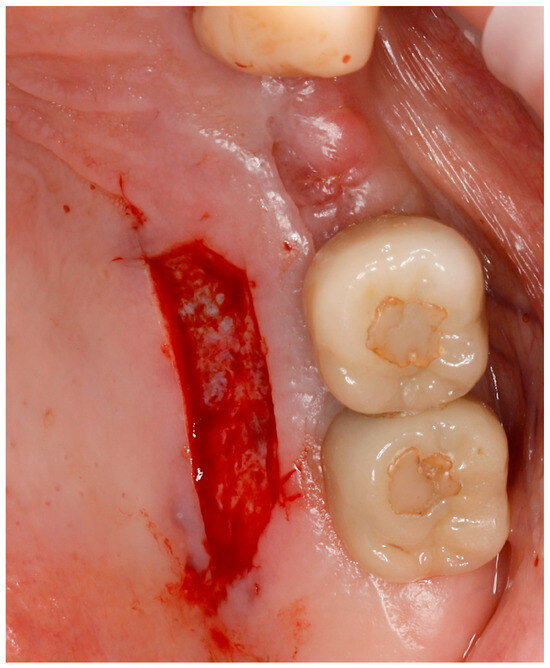
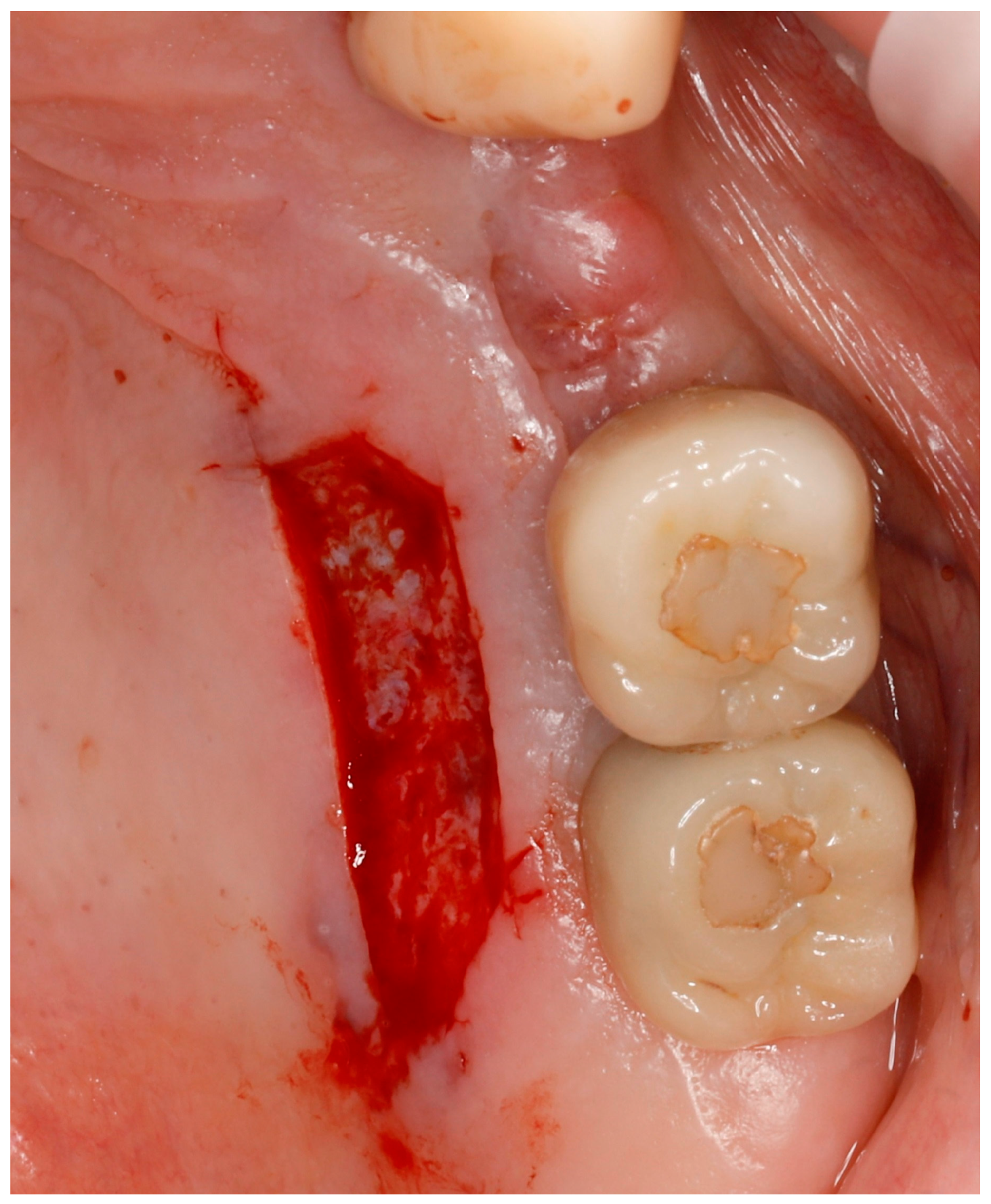
For almost sixty years, clinical periodontology has been defined by the use of autografts for two primary objectives: widening the keratinized mucosa and increasing soft tissue volume [5]. Autogenous graft-based approaches stand out as the most successful method for obtaining peri-implant soft tissue improvement [4]. A free gingival graft (FGG) is a common technique for rebuilding or expanding the keratinized mucosa area, while a connective tissue graft (CTG) serves to augment soft tissue volume, consequently promoting stability of interproximal marginal bone levels [3]. The majority of documented complications following FGG or CTG procedures are connected with the donor site [6] (Figure 1). Apart from a painful, open wound of the palate, the most common complications related to harvesting of FGG are as follows: excessive bleeding, postoperative bone exposure, and recurrent herpes lesions [7].
Figure 1.
Photograph of a palatal wound created immediately after harvesting a free graft from the palate.
Various methods of securing the donor site following FGG procedure have been described in the literature. The absorbable gelatin sponge appears to serve as the standard method for protecting the palate following free gingival graft (FGG) procedures, as evidenced by its consistent use in the control groups of several investigations [8,9,10]. The addition of cyanoacrylate and hyaluronic acid to a gelatin sponge has shown significant benefits in protecting the palatal donor site [10]. Furthermore, the use of platelet-rich fibrin (PRF) as a protective agent in palatal donor sites during free gingival graft (FGG) procedures has been associated with reduced postoperative pain and accelerated epithelialization of the wound [11]. Moreover, laser photobiomodulation following FGG appears to promote epithelialization at the donor site, although it has limited effect on reducing postoperative pain [12]. These examples represent only a few of the methods for protecting the palate following graft harvesting and their respective impacts on the healing process.
While systematic reviews on specific methods of palate protection are present in the literature, a comprehensive review synthesizing all available techniques for protecting the palatal donor site has not yet been conducted. Such a review would be valuable in summarizing the effects of these methods on patient experience and wound healing outcomes, while also addressing the complications commonly associated with donor site management. The main objective of this systematic review was to assess various techniques for protecting the palate after graft harvesting and their impact on patient experience, with a focus on pain management. The secondary objective was to evaluate these techniques in relation to donor site wound healing.
2. Materials and Methods
The systematic review was registered in the INPLASY database (https://inplasy.com/) on 25 November 2024, with the following registration DOI: https://doi.org/10.37766/inplasy2024.11.0107.
2.1. Eligibility Criteria
2.1.1. Inclusion Criteria
The PICO components were applied in this systematic review as formulating the right questions is essential for such reviews [13]. The questions were as follows:
- Patients (P): individuals who underwent harvesting of FGG or deepithelialized CTG;
- Intervention (I): preservation of the palatal graft site using methods other than gauze compression, suturing, or gelatin sponge;
- Comparison (C): preservation of the palatal graft site using standard methods like gauze compression or gelatin sponge;
- Outcome (O): wound healing, pain assessment, postoperative discomfort, sensory disturbance, color matching, and secondary bleeding.
The inclusion criteria were defined as:
- Studies classified as randomized clinical trials;
- Publications written in the English language;
- Studies focusing on patients aged 18 years or older;
- Research involving patients who underwent the removal of a free graft from the palate, with the harvested area protected by various methods in the test group and an alternative healing technique in the control group.
2.1.2. Exclusion Criteria
The exclusion criteria were defined as:
- Studies without a control group;
- Research involving donor sites outside the palatal area;
- Research examining grafting techniques other than free gingival grafts (FGG) and de-epithelialized connective tissue grafts (CTG);
- Studies not written in English;
- Book sections, expert opinions, guidelines, letters, conference materials, animal research, literature reviews, case reports, case series, abstracts, debates, or editorials.
2.2. Search Strategy
The search was carried out across four databases—Medline (PubMed Central), Scopus, Web of Science, and Embase—adhering to the PRISMA (Preferred Reporting Items for Systematic Reviews and Meta-Analyses) [14] and the instructions outlined in the Cochrane Handbook for Systematic Reviews of Interventions [15]. The PRISMA 2020 manuscript checklist is provided in the Supplementary Materials. The initial search was carried out on 9 October 2023, with a follow-up on 28 June 2024 without restrictions on publication date. Both searches utilizing a mix of MeSH terms, free-text keywords, and subject headings in both instances. The search strategy employed the following keywords: (“wound” OR “injury”) AND (“graft” OR “free gingival graft” OR “graft harvesting”) AND (“healing” OR “recovery”) AND “palate”.
2.3. Data Extraction
The titles and abstracts obtained from the search were individually assessed and chosen for further examination by two reviewers (T.J. and M.J.). The full text of each selected primary article was evaluated to verify its adherence to the eligibility criteria. Discrepancies were settled by consulting the team coordinator (J.J.O.). Data including authorship, publication year, ethnic group, type of palate protection, and methods used to evaluate the effectiveness of the palate protection technique were independently extracted by the two authors (T.J. and M.J.) and validated by the team coordinator (J.J.O.).
2.4. Risk of Bias
The methodological risk assessment of bias for each study was performed by two independent authors (M.P.K. and T.J.), and, in the case of disagreement, it was resolved by a third author (J.J.O). For randomized clinical trials (n = 38), the qualitative analysis of the studies was performed based on the risk of bias assessment using the Cochrane risk of bias tool for randomized clinical trials (RoB 2): ‘Bias Risk Assessment of Randomised Controlled Studies’—Cochrane Handbook 6.0 [16]. The following domains were considered:
- Randomization process;
- Deviations from intended interventions;
- Missing outcome data;
- Measurement of the outcome;
- Selection of the reported results.
The blinding of operators was not considered since it was impossible to perform in these types of interventions. Each study included was assessed as having a ‘high’ risk of bias for domains with a negative response (red), a ‘low’ risk of bias for those with a positive response (green), and an ‘unclear’ risk of bias (yellow) when the response was ambiguous. Overall quality was based on the scores in individual domains; the overall quality was of low bias risk. When at least one domain had an uncertain level of risk, the overall quality was deemed to have an unclear risk of bias. Also, the assessment of at least one domain as high risk or three or more domains as having unclear risk resulted in a quality of high risk of bias.
3. Results
3.1. Search Results
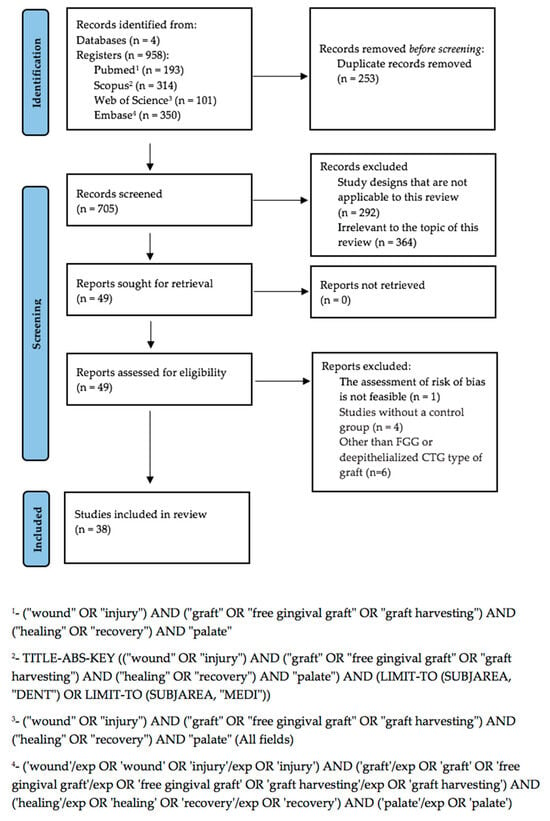
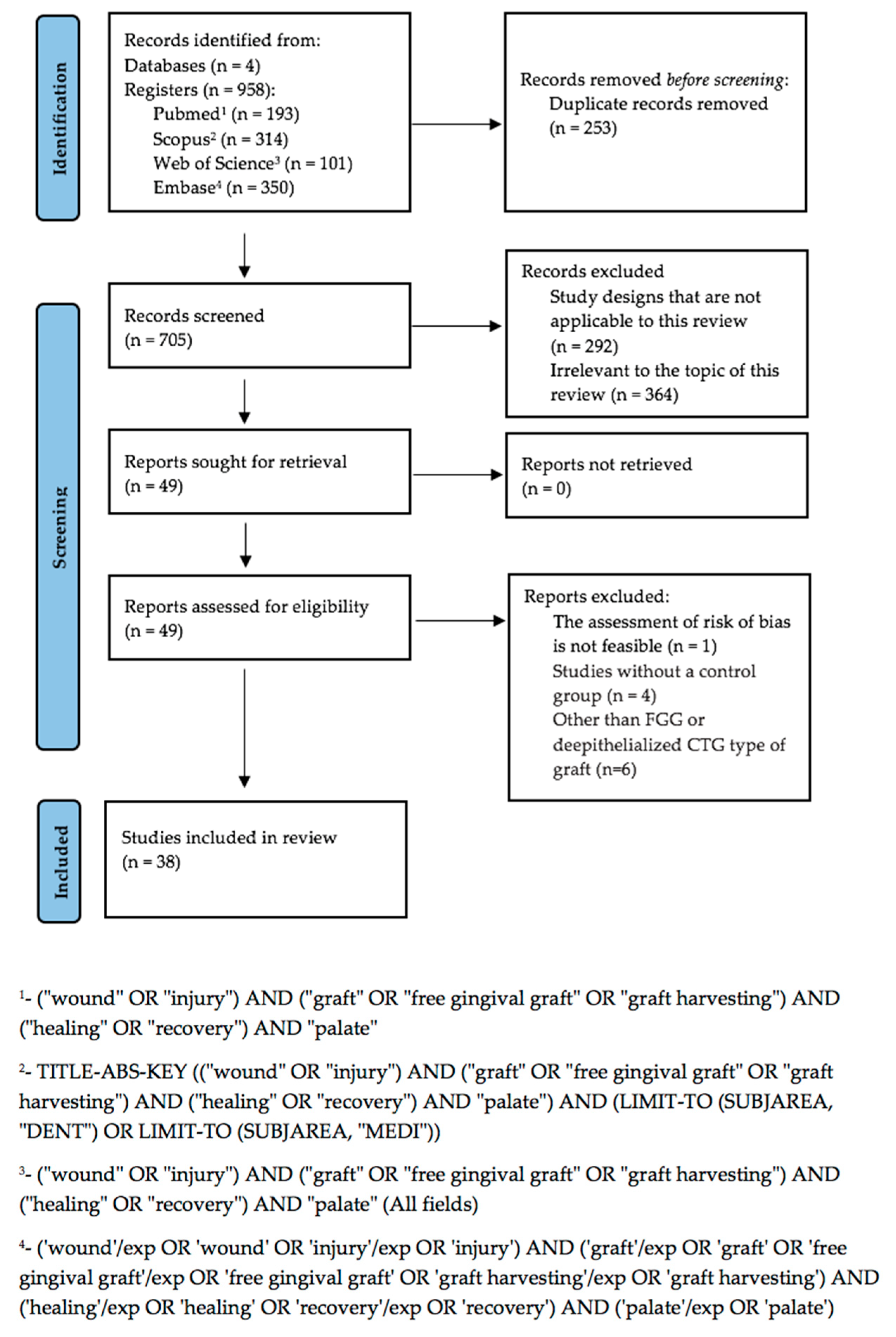
After performing a follow-up search, 958 papers were identified: 193 from PubMed, 314 from Scopus, 101 from Web of Science, and 350 from Embase. Using Mendeley software (v2.119.0), 253 duplicates were eliminated, leaving 705 abstracts for the first screening phase. At this stage, 292 articles were excluded as they did not align with the study type outlined in the eligibility criteria. From the 413 remaining titles, 364 were discarded for being irrelevant to the topic of this review. Ultimately, out of the 49 remaining papers, 11 were excluded for failing to meet the inclusion criteria, resulting in 38 full-text papers on free gingival grafts (FGG) being retained for qualitative analysis. The process is illustrated in Figure 2 (PRISMA 2020 Flow Diagram).
Figure 2.
Prisma 2020 flow diagram.
Data regarding various methods of palatal protection following the harvesting of free gingival grafts (FGGs) were complied with postoperative parameters and extracted. Table 1 provides a summary of the characteristics of each study included.
Table 1.
Characteristics of included studies.
The most frequently studied method of palatal protection is platelet-rich fibrin (PRF) [21,22,26,30,31,32,37,43,50,53], followed by photobiomodulation (PBM) [20,23,28,38,45]. In the majority of studies [19,21,23,24,25,26,28,29,30,31,33,34,35,36,38,39,40,41,42,43,45,46,47,49,50,51,54], pain is measured using the visual analog scale (VAS) developed by Huskisson [55]. The VAS is also utilized to assess color match [19,21,23,25,29,36,46], the alteration of sensitivity [22], postoperative discomfort [22,24,28,29,45,49,50], changes in patients’ feeding habits [22,28,29,47], or burning sensations [23,25,28,29,47,49]. Epithelialization is the most frequently evaluated healing parameter, with authors assessing it using 3% hydrogen peroxide (bubbling test) [19,21,22,26,27,28,31,34,40,45,46,47,49] or through standard clinical photographs [25,39,42,45]. A dedicated summary of the research findings for platelet-rich fibrin (PRF) and photobiomodulation (PBM) methods is provided in Table 2 and Table 3. The authors of this review (T.J. and J.J.O.) categorized the methods of palatal protection into three groups: biological, physical, and chemical. This classification is detailed in Table 4.
Table 2.
A summary of research studies using platelet-rich fibrin (PRF) for palate protection.
Table 3.
An overview of research on the use of photobiomodulation following graft harvesting.
Table 4.
Classification of palate wound management techniques after graft harvesting, according to their source origin.
3.2. Risk of Bias
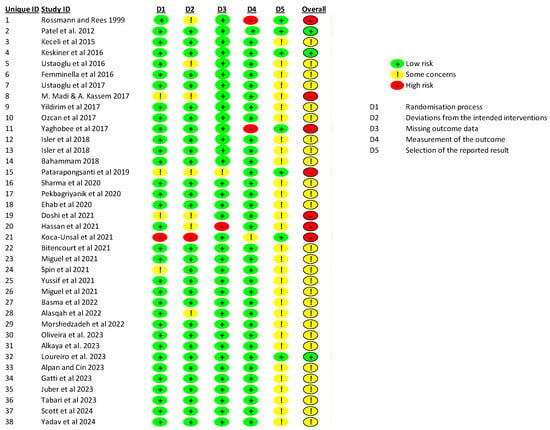
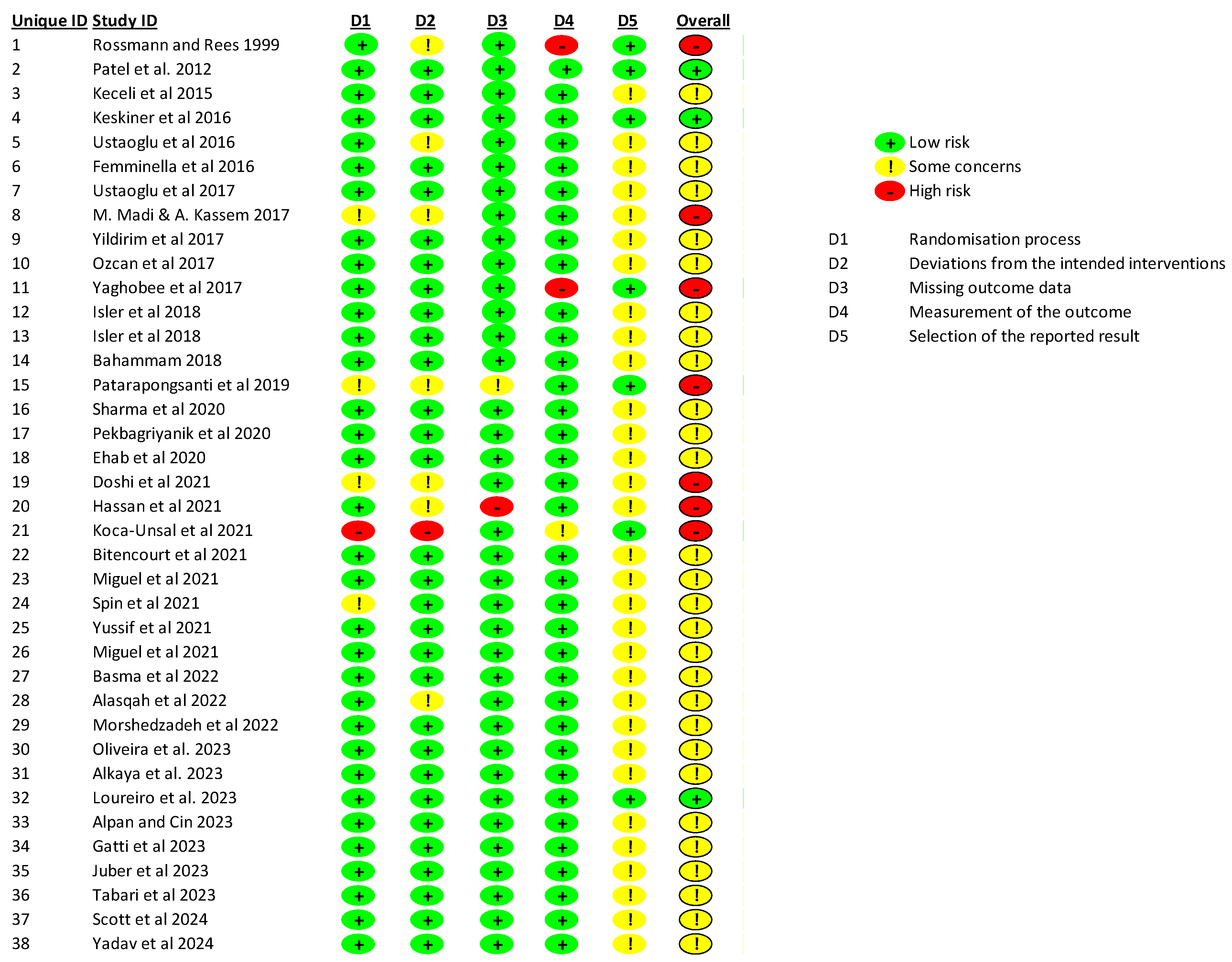
The database search yielded a total of 958 records. However, it is important to note that not all databases supported the application of the full set of inclusion and exclusion criteria. As a result, during the next stage of selection, studies that did not meet the established criteria were manually excluded, and duplicates were removed. After a thorough review based on the inclusion criteria, 38 studies were deemed eligible for analysis (Figure 3).
Figure 3.
The qualitative analysis for randomized clinical trials [17,18,19,20,21,22,23,24,25,26,27,28,29,30,31,32,33,34,35,36,37,38,39,40,41,42,43,44,45,46,47,48,49,50,51,52,53,54].
In the randomization process, 4 publications were labelled as having some concerns, and one publication was high risk, while the remaining publications were low risk. In domain no. 2 (deviations from the intended interventions), five publications were labelled as having some concerns, one publication was high risk, and the remaining publications were low risk. In the domain concerning missing outcome data, one publication had some concerns and one publication had high risk, while the remaining publications had low risk. In domain 4 (measurement of the outcome), one publication had some concerns, two had high risk, and the remaining publications had low risk. In terms of selecting the reported results, the majority, with as many as 31 publications, raised concerns primarily related to the use of subjective assessments of parameters such as pain, post-procedure discomfort, and the amount of painkillers consumed. Domain 5 significantly influenced the overall risk of bias score, in which seven publications had high risk status, only three publications had low risk status, and the remaining publications had some concerns.
4. Discussion
4.1. Quantification and Evaluation of Postoperative Pain
Pain is the most frequent complication observed after palatal graft harvesting [56]. Therefore, from the patient’s perspective, the most important aspect is to assess postoperative pain using various methods of palate protection. The degree of pain experienced at the donor site does not significantly impact the clinical outcomes of the treatment; nevertheless, it plays a critical role in determining the patient’s willingness to consent to similar procedures in the future. The main challenge encountered by the authors of this review is that factors such as pain perception, burning sensations, post-surgery discomfort, and changes in patients’ eating habits are all inherently subjective. One issue with these factors is their subjective nature, and another is that they are assessed using various methods. In the studies included, a visual analog scale (VAS) is frequently used to evaluate these subjective parameters [19,21,22,23,24,25,26,28,29,30,31,33,34,35,36,38,39,40,41,42,43,45,46,47,49,50,51,54]. For example, when assessing pain levels, 0 represents no pain, while 10 indicates the highest degree of pain.
4.1.1. Platelet-Rich Fibrin (PRF)
In 4 out of 10 publications [26,30,31,43] comparing PRF with other standard methods of palate protection, PRF demonstrated an advantage in terms of pain perception. Following this, only Basma et al. [43] noted that patients who had PRF protection on the palate utilized fewer analgesics. None of the articles examining the effect of photobiomodulation on the wound after graft removal showed an improvement in pain perception [23,28,38,45], though two studies reported a reduction in postoperative discomfort [28,38]. Rossmann and Rees [17] compared oxidized regenerated cellulose, absorbable gelatin sponge, and sterile gauze compression, finding no differences in pain assessment across the treatment groups.
4.1.2. Ozone
Ozone is extensively applied in medical practice post-surgery, as it enhances microcirculation, stimulates the proliferation of immunocompetent cells, and facilitates the increased secretion of growth factors [57]. Isler et al. [28] compared ozone therapy and photobiomodulation with a control group (spontaneous healing) and found that, although the control group showed higher VAS scores for postoperative pain, there was no statistically significant difference between the groups. Additionally, no differences were observed in terms of analgesic consumption, dietary habits, or burning sensations. However, patient discomfort was significantly greater in the control group.
4.1.3. Chitosan Gel and Propolis
Chitosan gel and propolis, both derived from animal sources, offer a wide range of applications in the medical field. Chitosan demonstrates antimicrobial activity against fungi and bacteria due to its cationic nature [58]. Yadav et al. [54] found no statistically significant differences in pain levels, analgesic consumption, dietary changes, or sensory alterations between chitosan-based dressings and the control group, which used wet gauze. In a separate study, Madi and Kassem [24] evaluated four groups: simvastatin suspension, simvastatin combined with chitosan gel, chitosan gel alone, and petroleum gel. While chitosan gel alone did not provide any notable benefit in reducing pain intensity or discomfort in palatal wounds, the combination of simvastatin with chitosan gel significantly lowered VAS scores compared to the other three groups. Propolis, on the other hand, is a resinous material created by bees, recognized for its antioxidant, anti-inflammatory and antimicrobial properties, which is effective against bacteria and fungi, much like chitosan [59]. Tabari et al. [52] demonstrated that a 5% propolis oral ointment significantly lowered pain scores compared to a placebo, though it had no significant impact on burning sensation. Similarly, other studies have reported reduced pain in patients with palatal wounds treated with propolis [44].
4.1.4. Alternative Approaches for Evaluating Subjective Outcomes
This systematic review also incorporated studies utilizing alternative methods to the VAS for assessing subjective sensory outcomes. Scott et al. [53] evaluated pain and analgesic intake using the 21-point numerical rating scale (NMRS-21) in patients from both the PRF and hemostatic agent groups, with no significant differences observed between them. Another assessment tool is the Oral Health Impact Profile-14 (OHIP-14), which consists of 14 questions addressing oral and general health concerns experienced over the preceding 12 months, spanning seven dimensions: functional limitation, pain, psychological discomfort, physical and psychological disability, social disability, and disadvantage [51]. Juber et al. [51] reported that participants treated with highly ozonated sunflower oil exhibited higher overall OHIP-14 scores compared to the control group. Different researchers have also utilized OHIP to evaluate the efficacy of palate protectors [35,39].
4.2. Wound Healing Assessment
Techniques for evaluating wound healing after graft removal seem more reliable, as their assessments are independent of the patient and performed by the researcher. However, the variety of healing assessment methods used in this review complicates the objective comparison of the included studies. The “bubble test” is one of the most frequently employed methods to assess wound healing, utilizing hydrogen peroxide. The principle behind this test is that when the epithelium is not intact, the hydrogen peroxide penetrates the connective tissue, where the enzyme catalase breaks it down into water and oxygen [21]. This reaction is clinically indicated by the formation of bubbles on the wound surface [21]. In the included studies, the authors have defined the healing parameter using the bubble test in various ways, such as epithelization (EP) [17,19,27,31,40], complete wound epithelization (CWE) [21,22,35,46], complete epithelization (CE) [26], complete reepithelization [34,47,49], or remaining wound area (RWA) [28]. Regardless of the nomenclature, all of these parameters ultimately evaluate the extent of the wound surface covered by epithelium within a specified period following the procedure. Palatal wound healing can also be evaluated through the analysis of standardized photographs, where the wound area is measured in square millimeters (mm2) using specialized software or visual observation [25,26,35,39,42,45].
Studies comparing PRF (platelet-rich fibrin) with control groups demonstrated a healing advantage of PRF in palatal wound healing in five studies [21,22,26,31,37], while two studies [32,53] reported a disadvantage. In the case of applying photobiomodulation, the authors agree that it provides benefits for wound healing [23,28,38,45]. Keceli et al. [19] assessed epithelialization (EP) weekly for the first month using bubble formation after applying 3% hydrogen peroxide, ranking EP as total, partial, or none, and found that medicinal plant extract (MPE) promoted better healing compared to the wet gauze group. Rossmann and Rees [17] demonstrated that oxidized regenerated cellulose (ORS) promotes superior palatal wound healing compared to an absorbable gelatin sponge. In contrast to the conclusions of Scott et al. [53], Patarapongsanti et al. [31] demonstrated a significant advantage of PRF over ORC in promoting wound healing. Pekbagriyanik et al. [33] reported that by the second week, the number of patients achieving complete epithelialization was higher in the non-thermal atmospheric pressure plasma (NAPP) group compared to the control group. Yadav et al. [54] determined that chitosan-based dressings exhibited a significantly higher rate of complete epithelialization (CE) at both the second and third weeks compared to the control group using wet gauze. Madi and Kassem’s study [24], which evaluated four groups (simvastatin suspension, simvastatin combined with chitosan gel, chitosan gel alone, and petroleum gel), demonstrated a significant advantage of the simvastatin combined with chitosan gel at 3 and 7 days; however, no significant differences were noted at the 14-day postoperative evaluation. Yildirim et al. [25] reported that hyaluronic acid (HA) gels accelerate epithelialization at the palatal donor wound site. In the investigation by Oliveira et al. [46], three groups were compared: a sutures group, a placebo group, and a group receiving a gel containing green tea extract and hyaluronic acid; nonetheless, no significant differences were found among the groups concerning complete wound epithelialization.
Alpan et al. [49], in their study, employed the Landry Wound Healing Index (WHI) along with the bubbling test to assess wound healing from day 3 to day 28 postoperatively. This index, scored from 1 (very poor) to 5 (excellent), evaluates wound healing based on tissue color, palatal response, granulation tissue presence, epithelialization at incision edges, and the degree of suppuration. The results of their investigation indicated that hyaluronic acid treatment produced higher WHI values compared to treatment with hypochlorous acid and flurbiprofen from the 7th to the 21st day. Complete epithelialization was observed on day 21 in the hyaluronic acid group, while it occurred on day 28 in the other groups.
5. Conclusions
- (1)
- The literature documents numerous techniques for palatal protection following free gingival grafts (FGG), utilizing materials of biological, physical, or chemical origin.
- (2)
- This systematic review included 10 publications on PRF. Five of these showed a healing benefit from PRF, while four indicated an advantage in pain perception.
- (3)
- Photobiomodulation evidently enhances wound epithelialization, yet has no effect on pain perception.
- (4)
- Propolis, hyaluronic acid, or medicinal plant extracts are promising alternatives for palate protection; however, there is insufficient research to fully assess their effectiveness.
- (5)
- The application of a gelatin sponge stabilized with sutures is widely regarded as a standard method for protecting the palatal donor site following periodontal grafting procedures. However, the results of the aforementioned studies underscore the need for further investigation into palatal wound protection techniques to definitively determine the clinical advantages and patient outcomes associated with specific methods.
Supplementary Materials
The following supporting information can be downloaded at: https://www.mdpi.com/article/10.3390/jfb15120360/s1, Supplementary file: PRISMA 2020 manuscript checklist.
Author Contributions
Conceptualization, T.J.; methodology, T.J. and M.J.; software, M.P.-K.; validation, T.J., A.J., and M.P.-K.; formal analysis, M.J. and W.K.; resources, T.J. and M.J.; data curation, T.J.; writing—original draft preparation, T.J. and M.P.-K.; writing—review and editing, J.J.-O.; visualization, T.J.; supervision, J.J.-O.; project administration, T.J. and A.J.; funding acquisition, T.J. and A.J. All authors have read and agreed to the published version of the manuscript.
Funding
This research received no external funding.
Institutional Review Board Statement
Not applicable.
Informed Consent Statement
Not applicable.
Data Availability Statement
No new data were created or analyzed in this study. Data sharing is not applicable to this article.
Conflicts of Interest
The authors declare no conflicts of interest.
References
- Ochsenbein, C. Newer Concepts of Mucogingival Surgery. J. Periodontol. 1960, 31, 175–185. [Google Scholar] [CrossRef] [Scilit]
- Lang, N.P.; Löe, H. The Relationship between the Width of Keratinized Gingiva and Gingival Health. J. Periodontol. 1972, 43, 623–627. [Google Scholar] [CrossRef] [Scilit] [PubMed]
- Giannobile, W.V.; Jung, R.E.; Schwarz, F.; Groups of the 2nd Osteology Foundation Consensus Meeting. Evidence-Based Knowledge on the Aesthetics and Maintenance of Peri-Implant Soft Tissues: Osteology Foundation Consensus Report Part 1—Effects of Soft Tissue Augmentation Procedures on the Maintenance of Peri-Implant Soft Tissue Health. Clin. Oral Implants Res. 2018, 29, 7–10. [Google Scholar] [CrossRef] [Scilit] [PubMed]
- Zucchelli, G.; Tavelli, L.; McGuire, M.K.; Rasperini, G.; Feinberg, S.E.; Wang, H.L.; Giannobile, W.V. Autogenous Soft Tissue Grafting for Periodontal and Peri-Implant Plastic Surgical Reconstruction. J. Periodontol. 2020, 91, 9–16. [Google Scholar] [CrossRef] [Scilit]
- Nabers, J.M. Free Gingival Grafts. Periodontics 1966, 4, 243–245. [Google Scholar]
- Griffin, T.J.; Cheung, W.S.; Zavras, A.I.; Damoulis, P.D. Postoperative Complications Following Gingival Augmentation Procedures. J. Periodontol. 2006, 77, 2070–2079. [Google Scholar] [CrossRef] [Scilit]
- Brasher, W.J.; Rees, T.D.; Boyce, W.A. Complications of Free Grafts of Masticatory Mucosa. J. Periodontol. 1975, 46, 133–138. [Google Scholar] [CrossRef] [Scilit]
- Sousa, F.; Machado, V.; Botelho, J.; Proença, L.; Mendes, J.J.; Alves, R. Effect of A-PRF Application on Palatal Wound Healing after Free Gingival Graft Harvesting: A Prospective Randomized Study. Eur. J. Dent. 2020, 14, 63–69. [Google Scholar] [CrossRef] [Scilit]
- Veríssimo, A.H.; Ribeiro, A.K.C.; Martins, A.R.L.A.; Gurgel, B.C.V.; Lins, R.D.A.U. Comparative Analysis of the Hemostatic, Analgesic, and Healing Effects of Cyanoacrylate on Free Gingival Graft Surgical Wounds in Donor and Recipient Areas: A Systematic Review. J. Mater. Sci. Mater. Med. 2021, 32, 98. [Google Scholar] [CrossRef] [Scilit]
- Parlak, H.M.; Durmaz, M.H.; Bayrak, H.; Yilmaz, B.T.; Keceli, H.G. Cyanoacrylate and Hyaluronic Acid Combination on Palatal Donor Site Management after De-Epithelialized Graft Harvesting. J. Periodontol. 2023, 94, 519–528. [Google Scholar] [CrossRef] [Scilit]
- Gusman, D.J.; Matheus, H.R.; Alves, B.E.; de Oliveira, A.M.; Britto, A.S.; Novaes, V.C.; Nagata, M.J.; Batista, V.S.; de Almeida, J.M. Platelet-Rich Fibrin for Wound Healing of Palatal Donor Sites of Free Gingival Grafts: Systematic Review and Meta-Analysis. J. Clin. Exp. Dent. 2021, 13, e190–e200. [Google Scholar] [CrossRef] [Scilit]
- Heidari, M.; Paknejad, M.; Jamali, R.; Nokhbatolfoghahaei, H.; Fekrazad, R.; Moslemi, N. Effect of Laser Photobiomodulation on Wound Healing and Postoperative Pain Following Free Gingival Graft: A Split-Mouth Triple-Blind Randomized Controlled Clinical Trial. J. Photochem. Photobiol. B 2017, 172, 109–114. [Google Scholar] [CrossRef] [Scilit] [PubMed]
- Stone, P.W. Popping the (PICO) Question in Research and Evidence-Based Practice. Appl. Nurs. Res. 2002, 15, 197–198. [Google Scholar] [CrossRef] [Scilit]
- Page, M.J.; McKenzie, J.E.; Bossuyt, P.M.; Boutron, I.; Hoffmann, T.C.; Mulrow, C.D.; Shamseer, L.; Tetzlaff, J.M.; Akl, E.A.; Brennan, S.E.; et al. The PRISMA 2020 Statement: An Updated Guideline for Reporting Systematic Reviews. BMJ 2021, 372, n71. [Google Scholar] [CrossRef] [Scilit]
- Higgins, J.P.T.; Green, S. Cochrane Handbook for Systematic Reviews of Interventions Version 5.1.0 [Updated March 2011]; The Cochrane Collaboration: London, UK, 2011; Available online: http://www.handbook.cochrane.org (accessed on 6 September 2011).
- Sterne, J.A.C.; Savović, J.; Page, M.J.; Elbers, R.G.; Blencowe, N.S.; Boutron, I.; Cates, C.J.; Cheng, H.Y.; Corbett, M.S.; Eldridge, S.M.; et al. RoB 2: A Revised Tool for Assessing Risk of Bias in Randomised Trials. BMJ 2019, 366, l4898. [Google Scholar] [CrossRef] [Scilit]
- Rossmann, J.A.; Rees, T.D. A Comparative Evaluation of Hemostatic Agents in the Management of Soft Tissue Graft Donor Site Bleeding. J. Periodontol. 1999, 70, 1369–1375. [Google Scholar] [CrossRef] [Scilit] [PubMed]
- Patel, P.V.; Kumar, S.; Vidya, G.D.; Patel, A.; Holmes, J.C.; Kumar, V. Cytological Assessment of Healing Palatal Donor Site Wounds and Grafted Gingival Wounds after Application of Ozonated Oil: An Eighteen-Month Randomized Controlled Clinical Trial. Acta Cytol. 2012, 56, 277–284. [Google Scholar] [CrossRef] [Scilit]
- Keceli, H.G.; Aylikci, B.U.; Koseoglu, S.; Dolgun, A. Evaluation of Palatal Donor Site Hemostasis and Wound Healing after Free Gingival Graft Surgery. J. Clin. Periodontol. 2015, 42, 582–589. [Google Scholar] [CrossRef] [Scilit]
- Keskiner, I.; Lutfioğlu, M.; Aydogdu, A.; Saygun, N.I.; Serdar, M.A. Effect of Photobiomodulation on Transforming Growth Factor-β1, Platelet-Derived Growth Factor-BB, and Interleukin-8 Release in Palatal Wounds after Free Gingival Graft Harvesting: A Randomized Clinical Study. Photomed. Laser Surg. 2016, 34, 263–271. [Google Scholar] [CrossRef] [Scilit]
- Ustaoğlu, G.; Ercan, E.; Tunali, M. The Role of Titanium-Prepared Platelet-Rich Fibrin in Palatal Mucosal Wound Healing and Histoconduction. Acta Odontol. Scand. 2016, 74, 558–564. [Google Scholar] [CrossRef] [Scilit]
- Femminella, B.; Iaconi, M.C.; Di Tullio, M.; Romano, L.; Sinjari, B.; D’Arcangelo, C.; De Ninis, P.; Paolantonio, M. Clinical Comparison of Platelet-Rich Fibrin and a Gelatin Sponge in the Management of Palatal Wounds after Epithelialized Free Gingival Graft Harvest: A Randomized Clinical Trial. J. Periodontol. 2016, 87, 103–113. [Google Scholar] [CrossRef] [Scilit] [PubMed]
- Ustaoglu, G.; Ercan, E.; Tunali, M. Low-Level Laser Therapy in Enhancing Wound Healing and Preserving Tissue Thickness at Free Gingival Graft Donor Sites: A Randomized, Controlled Clinical Study. Photomed. Laser Surg. 2017, 35, 223–230. [Google Scholar] [CrossRef] [Scilit]
- Madi, M.; Kassem, A. Topical Simvastatin Gel as a Novel Therapeutic Modality for Palatal Donor Site Wound Healing following Free Gingival Graft Procedure. Acta Odontol. Scand. 2018, 76, 212–219. [Google Scholar] [CrossRef] [Scilit]
- Yıldırım, S.; Özener, H.Ö.; Doğan, B.; Kuru, B. Effect of Topically Applied Hyaluronic Acid on Pain and Palatal Epithelial Wound Healing: An Examiner-Masked, Randomized, Controlled Clinical Trial. J. Periodontol. 2018, 89, 36–45. [Google Scholar] [CrossRef] [Scilit] [PubMed]
- Ozcan, M.; Ucak, O.; Alkaya, B.; Keceli, S.; Seydaoglu, G.; Haytac, M.C. Effects of Platelet-Rich Fibrin on Palatal Wound Healing after Free Gingival Graft Harvesting: A Comparative Randomized Controlled Clinical Trial. Int. J. Periodontics Restor. Dent. 2017, 37, e270–e278. [Google Scholar] [CrossRef] [Scilit]
- Yaghobee, S.; Rouzmeh, N.; Aslroosta, H.; Mahmoodi, S.; Khorsand, A.; Kharrazifard, M.J. Effect of Topical Erythropoietin (EPO) on Palatal Wound Healing Subsequent to Free Gingival Grafting (FGG). Braz. Oral Res. 2018, 32, e55. [Google Scholar] [CrossRef] [Scilit]
- Isler, S.C.; Uraz, A.; Guler, B.; Ozdemir, Y.; Cula, S.; Cetiner, D. Effects of Laser Photobiomodulation and Ozone Therapy on Palatal Epithelial Wound Healing and Patient Morbidity. Photomed. Laser Surg. 2018, 36, 571–580. [Google Scholar] [CrossRef] [Scilit]
- Isler, S.C.; Eraydin, N.; Akkale, H.; Ozdemir, B. Oral Flurbiprofen Spray for Mucosal Graft Harvesting at the Palatal Area: A Randomized Placebo-Controlled Study. J. Periodontol. 2018, 89, 1174–1183. [Google Scholar] [CrossRef] [Scilit]
- Bahammam, M.A. Effect of Platelet-Rich Fibrin Palatal Bandage on Pain Scores and Wound Healing after Free Gingival Graft: A Randomized Controlled Clinical Trial. Clin. Oral Investig. 2018, 22, 3179–3188. [Google Scholar] [CrossRef] [Scilit]
- Patarapongsanti, A.; Bandhaya, P.; Sirinirund, B.; Khongkhunthian, S.; Khongkhunthian, P. Comparison of Platelet-Rich Fibrin and Cellulose in Palatal Wounds after Graft Harvesting. J. Investig. Clin. Dent. 2019, 10, e12467. [Google Scholar] [CrossRef] [Scilit]
- Sharma, V.; Kumar, A.; Puri, K.; Bansal, M.; Khatri, M. Application of Platelet-Rich Fibrin Membrane and Collagen Dressing as Palatal Bandage for Wound Healing: A Randomized Clinical Control Trial. Indian J. Dent. Res. 2019, 30, 881–888. [Google Scholar] [CrossRef] [Scilit] [PubMed]
- Pekbağrıyanık, T.; Dadas, F.K.; Enhoş, Ş. Effects of Non-Thermal Atmospheric Pressure Plasma on Palatal Wound Healing of Free Gingival Grafts: A Randomized Controlled Clinical Trial. Clin. Oral Investig. 2021, 25, 6269–6278. [Google Scholar] [CrossRef] [Scilit] [PubMed]
- Ehab, K.; Abouldahab, O.; Hassan, A.; El-Sayed, K.M.F. Alvogyl and Absorbable Gelatin Sponge as Palatal Wound Dressings Following Epithelialized Free Gingival Graft Harvest: A Randomized Clinical Trial. Clin. Oral Investig. 2020, 24, 1517–1525. [Google Scholar] [CrossRef] [Scilit]
- Doshi, A.; McAuley, J.W.; Tatakis, D.N. Topical Phenytoin Effects on Palatal Wound Healing. J. Periodontol. 2021, 92, 409–418. [Google Scholar] [CrossRef] [Scilit]
- Hassan, A.; Ahmed, E.; Ghalwash, D.; Elarab, A.E. Clinical Comparison of MEBO and Hyaluronic Acid Gel in the Management of Pain After Free Gingival Graft Harvesting: A Randomized Clinical Trial. Int. J. Dent. 2021, 2021, 2548665. [Google Scholar] [CrossRef] [Scilit]
- Koca-Ünsal, R.B.; Ünsal, G.; Kasnak, G.; Fıratlı, Y.; Özcan, İ.; Orhan, K.; Fıratlı, E. Ultrasonographic Evaluation of the Titanium-Prepared Platelet-Rich Fibrin Effect in Free Gingival Graft Procedures. J. Periodontol. 2022, 93, 187–194. [Google Scholar] [CrossRef] [Scilit]
- Bitencourt, F.V.; De David, S.C.; Schutz, J.D.S.; Neto, A.O.K.; Visioli, F.; Fiorini, T. Minimizing Patient Morbidity After Free Gingival Graft Harvesting: A Triple-Blind Randomized-Controlled Clinical Trial. Clin. Oral Implants Res. 2022, 33, 622–633. [Google Scholar] [CrossRef] [Scilit]
- Miguel, M.M.V.; Mathias-Santamaria, I.F.; Rossato, A.; Ferraz, L.F.F.; Figueiredo-Neto, A.M.; de Marco, A.C.; Casarin, R.C.V.; Wallet, S.M.; Tatakis, D.N.; Mathias, M.A.; et al. Microcurrent Electrotherapy Improves Palatal Wound Healing: Randomized Clinical Trial. J. Periodontol. 2021, 92, 244–253. [Google Scholar] [CrossRef] [Scilit]
- Spin, J.R.; Lopes de Oliveira, G.J.P.; Spin-Neto, R.; Herculano, R.D.; Marcantonio, R.A.C. Effect of Natural Latex Membranes on Wound Repair of Palate Donor Areas: A Pilot Randomized Controlled Trial Study, Including the Membranes Characterization. Mater. Today Commun. 2021, 27, 102390. [Google Scholar] [CrossRef] [Scilit]
- Yussif, N.; Wagih, R.; Selim, K. Propylene Mesh versus Acrylic Resin Stent for Palatal Wound Protection Following Free Gingival Graft Harvesting: A Short-Term Pilot Randomized Clinical Trial. BMC Oral Health 2021, 21, 208. [Google Scholar] [CrossRef] [Scilit]
- Miguel, M.M.V.; Mathias-Santamaria, I.F.; Rossato, A.; Ferraz, L.F.F.; Rangel, T.P.; Casarin, R.C.V.; Tatakis, D.N.; Santamaria, M.P. Enamel Matrix Derivative Effects on Palatal Mucosa Wound Healing: Randomized Clinical Trial. J. Periodontal Res. 2021, 56, 1213–1222. [Google Scholar] [CrossRef] [Scilit] [PubMed]
- Basma, H.S.; Saleh, M.H.A.; Abou-Arraj, R.V.; Imbrogno, M.; Ravida, A.; Wang, H.L.; Li, P.; Geurs, N. Patient-Reported Outcomes of Palatal Donor Site Healing Using Four Different Wound Dressing Modalities Following Free Epithelialized Mucosal Grafts: A Four-Arm Randomized Controlled Clinical Trial. J. Periodontol. 2023, 94, 88–97. [Google Scholar] [CrossRef] [Scilit] [PubMed]
- Alasqah, M.; Alrashidi, A.; Alshammari, N.; Alshehri, A.; Gufran, K. Effect of Honey Dressing Material on Palatal Wound Healing After Harvesting a Free Gingival Graft: A Prospective Randomized Case Control Study. Eur. Rev. Med. Pharmacol. Sci. 2022, 26, 2662–2668. [Google Scholar] [CrossRef] [Scilit] [PubMed]
- Morshedzadeh, G.; Aslroosta, H.; Vafaei, M. Effect of GaAlAs 940 nm Photobiomodulation on Palatal Wound Healing After Free Gingival Graft Surgery: A Split-Mouth Randomized Controlled Clinical Trial. BMC Oral Health 2022, 22, 202. [Google Scholar] [CrossRef] [Scilit]
- Oliveira, J.A.; da Silveira, M.I.; de Oliveira Alves, R.; Bezerra, F.J.B.; de Oliveira, G.J.P.L.; Pigossi, S.C. Effect of a Gel Containing Green Tea Extract and Hyaluronic Acid on Palate Pain Scores and Wound Healing After Free Gingival Graft: A Quasi-Randomized Controlled Clinical Trial. Clin. Oral Investig. 2023, 27, 6735–6746. [Google Scholar] [CrossRef] [Scilit]
- Alkaya, B.; Kayhan, H.G.; Temmerman, A.; Haytac, M.C.; Teughels, W. Pre-Operative, Chair-Side Zn-Containing Surgical Stents Affect Morbidity and Wound Healing After Free Gingival Graft Harvesting: A Randomized Clinical Trial. Clin. Oral Investig. 2023, 27, 5519–5527. [Google Scholar] [CrossRef] [Scilit]
- Loureiro, B.B.; Juber, P.; Souza, A.A.; Cezario, E.M.; Lima-Junior, J.C.; Fontes, K.B.F.C.; Soares, I.F.; Zuza, E.P. Application of Highly Ozonated Sunflower Oil Does Not Improve Palatal Wound Healing: A Randomized Controlled Clinical Trial. J. Periodontol. 2023, 94, 858–867. [Google Scholar] [CrossRef] [Scilit]
- Alpan, A.L.; Cin, G.T. Comparison of Hyaluronic Acid, Hypochlorous Acid, and Flurbiprofen on Postoperative Morbidity in Palatal Donor Area: A Randomized Controlled Clinical Trial. Clin. Oral Investig. 2023, 27, 2735–2746. [Google Scholar] [CrossRef] [Scilit]
- Gatti, F.; Iorio-Siciliano, V.; Scaramuzza, E.; Tallarico, M.; Vaia, E.; Ramaglia, L.; Chiapasco, M. Patient-Reported Outcome Measures of Leucocyte- and Platelet-Rich Fibrin (L-PRF) or Hemostatic Agent Application at Palatal Donor Sites After Free Gingival Graft Harvesting: A Randomized Controlled Clinical Trial. Quintessence Int. 2023, 54, 408–417. [Google Scholar] [CrossRef] [Scilit]
- Juber, P.; Loureiro, B.; Zuza, E.; Cezario, E.; Romeiro, R.; Lima-Junior, J.; Soares, I.; Souza, A. Highly Ozonated Sunflower Oil Dose May Cause Oxidative Stress and Impact the Quality of Life After Palatal Graft Removal: Secondary Endpoints of a Randomized Controlled Clinical Trial. Ozone Sci. Eng. 2023, 46, 1–9. [Google Scholar] [CrossRef] [Scilit]
- Alizadeh Tabari, Z.; Seyfi, F.; Dashkhaneh, F.; Gheibi, N.; Anbari, F. Effect of an Oral Ointment Containing Propolis on Palatal Donor Site Pain and Wound Healing After Harvesting a Free Gingival Graft: A Split-Mouth, Double-Blind Clinical Trial. J. Herb. Med. 2023, 42, 100741. [Google Scholar] [CrossRef] [Scilit]
- Scott, S.M.H.; Lacy, J.A.; Palaiologou, A.A.; Kotsakis, G.A.; Deas, D.E.; Mealey, B.L. Donor Site Wound Healing Following Free Gingival Graft Surgery Using Platelet-Rich Fibrin: A Randomized Controlled Trial. J. Periodontol. 2024, 95, 632–639. [Google Scholar] [CrossRef] [Scilit] [PubMed]
- Yadav, V.S.; Makker, K.; Haidrus, R.; Dawar, A.; Gumber, B. Chitosan-Based Dressing for Management of Palatal Donor Site: A Randomized Clinical Trial. J. Periodontal Res. 2024, 1–9. [Google Scholar] [CrossRef] [Scilit] [PubMed]
- Huskisson, E.C. Measurement of Pain. Lancet 1974, 2, 1127–1131. [Google Scholar] [CrossRef] [Scilit] [PubMed]
- Tavelli, L.; Barootchi, S.; Stefanini, M.; Zucchelli, G.; Giannobile, W.V.; Wang, H.L. Wound Healing Dynamics, Morbidity, and Complications of Palatal Soft-Tissue Harvesting. Periodontol. 2000 2023, 92, 90–119. [Google Scholar] [CrossRef] [Scilit] [PubMed]
- Huth, K.C.; Jakob, F.M.; Saugel, B.; Cappello, C.; Paschos, E.; Hollweck, R.; Hickel, R.; Brand, K. Effect of Ozone on Oral Cells Compared with Established Antimicrobials. Eur. J. Oral Sci. 2006, 114, 435–440. [Google Scholar] [CrossRef] [Scilit]
- Boateng, J.S.; Matthews, K.H.; Stevens, H.N.; Eccleston, G.M. Wound Healing Dressings and Drug Delivery Systems: A Review. J. Pharm. Sci. 2008, 97, 2892–2923. [Google Scholar] [CrossRef] [Scilit]
- Huang, S.; Zhang, C.P.; Wang, K.; Li, G.Q.; Hu, F.L. Recent Advances in the Chemical Composition of Propolis. Molecules 2014, 19, 19610–19632. [Google Scholar] [CrossRef] [Scilit]

Disclaimer/Publisher’s Note: The statements, opinions and data contained in all publications are solely those of the individual author(s) and contributor(s) and not of MDPI and/or the editor(s). MDPI and/or the editor(s) disclaim responsibility for any injury to people or property resulting from any ideas, methods, instructions or products referred to in the content. |
© 2024 by the authors. Licensee MDPI, Basel, Switzerland. This article is an open access article distributed under the terms and conditions of the Creative Commons Attribution (CC BY) license (https://creativecommons.org/licenses/by/4.0/).