


Abstract
As generative artificial intelligence (AI) performs tasks once regarded as markers of human intelligence, how people judge the capacities of machines has become a question for intelligence research. This study examined perceived machine agency, the attribution of intelligence-related capacities such as thinking, planning, moral judgment, and problem solving to robots. We tested whether it is associated with psychological distress through AI anxiety and whether self-reported AI literacy moderates this pathway. A convenience sample of 1205 Chinese college students, mainly from Jiangsu Province, completed a cross-sectional survey. Controlling for gender, age, and subjective socioeconomic status, perceived machine agency was significantly but weakly associated with psychological distress. This association was indirect through AI anxiety, and the direct association was not significant. AI literacy significantly moderated the first stage of the indirect association, which became stronger as AI literacy increased. These cross-sectional findings describe associations rather than causal effects. They suggest that attributing intelligence-related capacities to machines is linked to students’ emotional well-being and that greater self-reported AI competence does not by itself weaken this link.
1. Introduction
What intelligence is, and who or what possesses it, are long-standing questions in intelligence research, and they extend to the implicit theories of intelligence held by laypeople (Coane et al., 2023; Sternberg et al., 1981). Generative artificial intelligence (AI) has made these questions newly pressing. AI systems now outperform most students on mathematics assessment items (D. Kaya & Yavuz, 2025), although they still fall short of humans on some non-verbal reasoning tests (Lesigang & Pietschnig, 2026), and Sternberg (2024) argued that such technology alters not only the processes of human intelligence but also people’s perceptions of human intelligence. People also do not perceive intelligent machines merely as tools. They often attribute to them mental capacities such as thinking, planning, and judging (Colombatto & Fleming, 2024; Ladak et al., 2024; Shank et al., 2019), and such attributions are one component of how laypeople judge the intelligence of machines. As generative AI systems appear increasingly able to understand questions, plan tasks, and judge what is right, students may hand over more of their own thinking to these systems. Such reliance has been linked to weaker critical thinking (Gerlich, 2025; Zhai et al., 2024), lower perceived creativity (Li et al., 2026), and concern that AI-assisted work is no longer genuinely one’s own (Su et al., 2026). In addition, students who compare their own abilities with those of AI report more anxiety about being replaced (J. Wang et al., 2026). Concerns of this kind may contribute to psychological distress, commonly indexed by symptoms of anxiety and depression, which is a prevalent concern in higher education (Auerbach et al., 2018; Kroenke et al., 2009). Examining how such judgments relate to students’ distress, and which intelligence-related competences shape this relation, can therefore clarify the consequences of beliefs about intelligence in environments shared with artificial agents. It also has practical value for college mental health services.
Responses to intelligent machines have previously been linked to both perceptual and individual factors (Epley et al., 2007; Ladak et al., 2024). For example, H. M. Gray et al. (2007) showed that people perceive minds along two dimensions, agency (the capacity to think, plan, and act) and experience (the capacity to feel), and that robots are typically credited with moderate agency but little experience. The capacities that define agency, such as thinking, planning, reasoning about right and wrong, and solving problems, overlap considerably with lay conceptions of intelligence, which emphasize problem solving, reasoning, and knowledge (Coane et al., 2023; Sternberg et al., 1981), although this overlap does not make perceived agency equivalent to perceived intelligence. Other studies found that attributing human-like minds to machines elicited feelings of eeriness and unease (K. Gray & Wegner, 2012; Shank et al., 2019; Stein & Ohler, 2017). Additionally, researchers have found that autonomous and capable machines are perceived as threats to human identity, uniqueness, safety, and resources (Złotowski et al., 2017). For instance, Yogeeswaran et al. (2016) found that robots presented as surpassing human capabilities elicited greater perceived threat to human jobs and human identity. In addition, the rapid diffusion of generative AI in higher education has made such machines a daily presence in students’ lives, and AI anxiety has been associated with less favorable attitudes toward AI (Kasneci et al., 2023; F. Kaya et al., 2024). Besides these perceptual factors, competence-related factors such as AI literacy may shape how students respond to intelligent technologies (Long & Magerko, 2020; Ng et al., 2021). Lay judgments of machine intelligence may therefore relate to students’ well-being, but the pathways linking perceived machine agency, AI-related concerns, and psychological distress remain largely unknown. In the present study, we aimed to investigate the perceptual and individual difference factors relevant to psychological distress in Chinese college students.
1.1. Theoretical Framework
The present study uses the transactional model of stress (Lazarus & Folkman, 1984) as its overarching framework and combines it with mind perception theory (H. M. Gray et al., 2007) and the perseverative cognition hypothesis (Brosschot et al., 2006). According to the transactional model, emotional responses to a change in the environment depend on two appraisals. In primary appraisal, people judge whether the change threatens their valued goals; in secondary appraisal, they judge whether their resources are sufficient to cope with it. Mind perception theory specifies what is appraised: the more agency people attribute to machines, the more these machines resemble independent actors that could compete with humans for jobs and act beyond human control (Stein et al., 2019; Złotowski et al., 2017). Perceived machine agency is therefore expected to feed into a threat appraisal, which is expressed as AI anxiety, a domain-specific emotional response to AI (Y.-Y. Wang & Wang, 2022). AI literacy corresponds to the resources considered in secondary appraisal. It may weaken the threat appraisal by making the behavior of machines understandable, or it may strengthen the appraisal by making the capabilities of AI more credible and personally relevant. Finally, the perseverative cognition hypothesis explains how a domain-specific worry may extend to general distress: repeated worry about an unresolved, future-oriented stressor prolongs stress responses and contributes to anxiety and depressive symptoms (Brosschot et al., 2006). Together, these accounts link the three hypotheses tested below. Perceived machine agency is expected to be associated with psychological distress (Hypothesis 1) indirectly through AI anxiety (Hypothesis 2), and the strength of the first link is expected to depend on AI literacy (Hypothesis 3). We use this framework to interpret the results in the Discussion. Because this study is cross-sectional, the framework specifies the ordering that we expected, not an ordering that the data can establish.
1.2. Perceived Machine Agency and Psychological Distress
Perceived machine agency refers to the extent to which people attribute to machines the capacities that constitute the agency dimension of mind perception, such as thinking, planning, distinguishing right from wrong, and solving problems (H. M. Gray et al., 2007; Waytz et al., 2010). Following the original mind perception research, the present study assessed these attributions with respect to robots. Four related constructs should be distinguished. Perceived agency concerns whether an entity is seen as able to think, plan, and act. Perceived intelligence is a broader evaluative judgment of how well an entity reasons, learns, and solves problems. Beliefs about functional capability concern what a machine can actually do, and mind attribution concerns whether a machine is seen as having mental states such as understanding or intention. These constructs overlap but are not equivalent. Because thinking, reasoning, and problem solving are central to lay conceptions of intelligence (Coane et al., 2023; Sternberg et al., 1981), perceived machine agency captures one component of lay judgments of machine intelligence, namely the attribution of intelligence-related capacities, but not the whole of such judgments. Moreover, the agency items combine mentalistic content (thinking and understanding right and wrong) with more functional content (making plans and solving problems); so, a high score may reflect both mind attribution and beliefs about functional capability. In this article, perceived machine agency therefore refers to the measured attribution of these capacities to robots, and its relation to perceived intelligence is treated as conceptual overlap rather than equivalence. Perceived agency has usually been measured with short rating scales derived from H. M. Gray et al. (2007), on which participants rate whether an entity can think, plan, or tell right from wrong, and agency items of this kind have shown good internal consistency in Chinese samples (Fan et al., 2025; W. Xu et al., 2025). We adopted this approach because it targets the attribution of intelligence-related capacities directly and is brief enough for a survey that includes several scales.
Previous research suggests that technology-related anxiety and technology-related competence are both associated with how people respond to intelligent technologies and with their well-being (F. Kaya et al., 2024; Ragu-Nathan et al., 2008; B. Wang et al., 2023). Attributing minds to machines is correlated with various negative reactions, such as feelings of eeriness (K. Gray & Wegner, 2012; Stein & Ohler, 2017), concerns about human uniqueness and control (Stein et al., 2019; Złotowski et al., 2017), and perceived threats to human distinctiveness (Ferrari et al., 2016; W. Xu et al., 2025). These reactions may extend beyond single encounters with machines because beliefs about what machines can do shape how people anticipate their own futures in a world increasingly shaped by intelligent technologies (Frey & Osborne, 2017).
Some studies have shown that the eeriness evoked by machines with minds is a negative affective state rather than a purely cognitive judgment (K. Gray & Wegner, 2012; Stein & Ohler, 2017). As for perceived machine agency, to date, relatively few studies have examined its association with psychological distress in college students. Złotowski et al. (2017) examined how people responded to autonomous robots that could make decisions without human input. The results indicated that autonomous robots elicited stronger perceived threats to human identity, uniqueness, safety, and resources than non-autonomous robots. The association between perceived machine agency and negative reactions has been investigated, but its link with psychological distress has rarely been examined. It also remains unclear through which variables this association might operate and which factors might alter it.
Therefore, the present research used a sample of Chinese college students to investigate the roles of AI anxiety and AI literacy in the association between perceived machine agency and psychological distress. Specifically, we aimed to examine whether AI anxiety statistically mediated the association between perceived machine agency and psychological distress and whether AI literacy moderated this mediating process. Psychological distress is commonly assessed with brief symptom screeners. We used the four-item Patient Health Questionnaire (PHQ-4; Kroenke et al., 2009), which combines two anxiety items and two depression items and is suited to large surveys that include several scales.
1.3. AI Anxiety as a Mediator
AI anxiety refers to an overall affective response of anxiety or fear that inhibits individuals from interacting with AI, and it covers anxiety about learning AI, fear of job replacement, concern about sociotechnical blindness, and discomfort with humanoid AI configurations (Y.-Y. Wang & Wang, 2022). In some ways, AI anxiety can be regarded as a domain-specific and future-oriented worry because much of its content concerns what AI might do to one’s education, career, and society (Johnson & Verdicchio, 2017). The perseverative cognition hypothesis suggests that repeated worry about stressors prolongs stress-related physiological activation and thereby contributes to poorer health (Brosschot et al., 2006). Research on intolerance of uncertainty has also shown that difficulty tolerating an uncertain future is a transdiagnostic vulnerability for both anxiety and depression (Carleton, 2016). F. Kaya et al. (2024) have also reported that AI anxiety was associated with more negative attitudes toward AI, suggesting that it is not a neutral evaluation but an emotionally charged reaction. Therefore, students who are anxious about AI may repeatedly think about uncertain academic and career prospects in a world increasingly shaped by intelligent technologies. Such worry is difficult to resolve because the future impact of AI on specific occupations cannot be known with certainty (Frey & Osborne, 2017). This unresolved worry may increase the likelihood of general anxiety and depressive symptoms. Thus, AI anxiety may be positively associated with psychological distress. AI anxiety is most often measured with the Artificial Intelligence Anxiety Scale (AIAS; Y.-Y. Wang & Wang, 2022), which assesses the four components described above. We used the AIAS because its job replacement and sociotechnical blindness components correspond to the threat appraisals that perceived machine agency is expected to evoke, and because it has been used with Chinese university students (Jin et al., 2026).
Among the various factors that may be associated with AI anxiety, students’ perceptions of what intelligent machines are capable of deserve particular attention. Perceived machine agency captures one central aspect of these perceptions, namely whether machines are seen as able to think, plan, and decide on their own (H. M. Gray et al., 2007). Previous empirical studies have indicated that machines perceived as autonomous elicit stronger concerns about human uniqueness, situational control, and resources (Stein et al., 2019; Złotowski et al., 2017), and in Chinese samples, perceiving robots as agentic has been found to heighten the threat to human distinctiveness (W. Xu et al., 2025). The association between perceived machine agency and AI anxiety is consistent with the transactional model of stress, which proposes that an event is appraised as threatening when individuals perceive that it endangers valued goals and that their coping resources are insufficient (Lazarus & Folkman, 1984). Students who believe that machines can think and plan may therefore appraise AI as a credible competitor for future jobs and as a technology that may escape human control. Additionally, research on human distinctiveness proposes that machines which blur the boundary between humans and machines threaten people’s sense of what makes humans unique (Ferrari et al., 2016). These appraisals correspond closely to the job replacement and sociotechnical blindness components of AI anxiety (Y.-Y. Wang & Wang, 2022). Students who attribute more agency to machines may therefore experience the prospect of learning and living with AI as more threatening. Because the agency items in this study referred to robots, whereas AI anxiety concerns AI technologies and products in general, this reasoning assumes that judgments about robots carry over to AI more broadly. We examine this assumption empirically in Section 2.2.1 and return to it in the Discussion.
1.4. AI Literacy as a Moderator
AI literacy, as a set of competencies that enables individuals to critically evaluate AI technologies, communicate and collaborate with AI, and use AI as a tool (Long & Magerko, 2020), is commonly described in terms of awareness, usage, evaluation, and ethics (Ng et al., 2021; B. Wang et al., 2023). From the perspective of intelligence research, AI literacy can be regarded as a domain-specific competence that supports adaptation to environments increasingly shaped by intelligent technologies. In most studies, including the present one, AI literacy is measured by self-report; so, it reflects perceived competence rather than demonstrated knowledge or performance (Hornberger et al., 2023). Theories of adaptive intelligence define intelligence by how well people use their knowledge and skills to adapt to, shape, and select their environments (Sternberg, 2019), and AI literacy captures the knowledge and skills that such adaptation requires when the environment contains intelligent machines (Li et al., 2026). On the one hand, AI literacy is associated with more regulated patterns of AI use; for example, the association between generative AI use intensity and cognitive dependence on AI was weaker among students with higher AI literacy (Li et al., 2026). In the transactional model, such competence could function as a coping resource (Lazarus & Folkman, 1984): students who understand how AI systems work may interpret apparent machine agency as the output of algorithms rather than as evidence of an independent mind, which would weaken the association between perceived machine agency and AI anxiety. On the other hand, AI literacy also involves recognizing what AI can do and remaining alert to its misuse (B. Wang et al., 2023), and greater knowledge about a technology does not uniformly reduce concern about its risks (Kahan et al., 2012). Students with higher AI literacy also use AI more intensively (Li et al., 2026), and attributions of mind to AI increase with usage frequency (Colombatto & Fleming, 2024); so, the agency they perceive may appear more credible and personally relevant, which would strengthen the association between perceived machine agency and AI anxiety. Because relatively little research has examined the interaction between perceived machine agency and AI literacy, we expected AI literacy to moderate the first stage of the indirect association between perceived machine agency and psychological distress via AI anxiety, without specifying its direction a priori. We measured AI literacy with the Artificial Intelligence Literacy Scale (AILS; B. Wang et al., 2023), which covers the awareness, usage, evaluation, and ethics dimensions described above and has been used with Chinese undergraduates (Wu et al., 2026).
1.5. The Present Study
Taken together, this study aimed to investigate whether AI anxiety mediates the association between perceived machine agency and psychological distress, and whether AI literacy moderates the association between perceived machine agency and AI anxiety. By examining the attribution of intelligence-related capacities to machines together with an intelligence-related competence, this study addresses a question that has become central to intelligence research in the AI era: how beliefs about what machines can do intellectually relate to human emotional functioning, and whether competence in dealing with intelligent technologies protects against these consequences. Specifically, a moderated mediation model (Figure 1) was constructed to examine the association between perceived machine agency and psychological distress. Based on the theoretical framework and the literature reviewed above, the present study proposed the following hypotheses:
Figure 1.
The hypothesized moderated mediation model.
Hypothesis 1.
Perceived machine agency would be significantly and positively associated with psychological distress.
Hypothesis 2.
AI anxiety would significantly mediate the association between perceived machine agency and psychological distress; that is, the indirect association through AI anxiety would be significantly different from zero.
Hypothesis 3.
AI literacy would significantly moderate the association between perceived machine agency and AI anxiety, and thus the indirect association between perceived machine agency and psychological distress through AI anxiety.
2. Materials and Methods
2.1. Participants
The present study recruited 1238 Chinese college students by convenience sampling. All participants volunteered for an online survey administered through the Wenjuanxing platform (www.wjx.cn) between May and October 2025. Almost all responses were submitted from mobile phones (89.6%) or through WeChat (10.0%). The data from nine questionnaires were excluded from further analysis because the participants gave nearly identical answers across items (within-person standard deviation across items below 0.5). Additionally, seven participants younger than 18 years and 17 participants who did not report a valid age were excluded, and there were no missing values on the study variables among the remaining questionnaires. The final sample included 1205 participants (97.3%), consisting of 767 males (63.7%) and 438 females (36.3%), with a mean age of 19.49 years (SD = 1.46; range = 18–30). Of these, 746 responses were collected in May–July 2025 and 459 in September–October 2025. Based on self-reported location, 1120 participants (92.9%) were located in Jiangsu Province in eastern China, most of them in Taizhou (n = 861; 71.5% of the sample), and the remaining 85 participants were located in 23 other provinces. The questionnaire did not record institution, academic discipline, or year of study; so, these characteristics cannot be reported. The sample should therefore be regarded as a regional convenience sample rather than a representative sample of Chinese college students. The research procedure was approved by the institutional ethics review committee of the authors’ university, and all participants provided informed consent before completing the survey.
2.2. Measures
2.2.1. Perceived Machine Agency
Perceived machine agency was measured with the four agency items of the mind perception framework (H. M. Gray et al., 2007). Agency items based on this framework have shown good internal consistency in Chinese samples (Fan et al., 2025; W. Xu et al., 2025). Each item described a cognitive or agentic capacity, and participants rated their agreement with each item on a six-point scale ranging from 1 (strongly disagree) to 6 (strongly agree). The four items were “Robots can think,” “Robots can make plans on their own,” “Robots understand the difference between right and wrong,” and “Robots can solve problems.” Following the original mind perception research, the items referred to robots, and participants were not given a definition of “robot” or, in the other scales, of “AI”. The scale score was the mean of the four items, with higher scores indicating that participants attributed more agency to robots. A one-factor confirmatory factor analysis (CFA) supported the unidimensionality of the items, χ2(2) = 11.05, CFI = 0.996, TLI = 0.989, RMSEA = 0.061, SRMR = 0.012, with standardized loadings of 0.61–0.86 (Appendix A, Table A1). The first eigenvalue (2.86) accounted for 71.6% of the variance, and parallel analysis (Horn, 1965) retained one factor. Cronbach’s alpha coefficient in the present study was 0.867, and McDonald’s omega (McDonald, 1999) was 0.870.
To examine whether judgments about robots were related to judgments about the AI applications that students use, we drew on additional items in the same survey that referred to “AI devices” and were rated on a seven-point scale. Perceived machine agency correlated positively with the perceived autonomy of AI devices (four items, e.g., “After being assigned a specific task, AI devices can autonomously provide action plans and suggestions”; α = 0.924; r = 0.408), with the perceived human-likeness of interacting with AI devices (three items, e.g., “Interacting with AI devices feels similar to interacting with a real person”; α = 0.960; r = 0.463), and with the item “The understanding ability of AI devices is similar to that of humans” (r = 0.501; all ps < 0.001). These moderate correlations indicate that attributions to robots and judgments about AI devices are related but not interchangeable.
2.2.2. AI Anxiety
The Artificial Intelligence Anxiety Scale (AIAS) is a self-reported inventory that was developed by Y.-Y. Wang and Wang (2022) and has been used to measure individuals’ anxiety about AI technologies and products. Its validity has been verified in Chinese university students (Jin et al., 2026). The AIAS consists of 21 items covering four dimensions (learning, job replacement, sociotechnical blindness, and AI configuration), and the items were rated on a five-point Likert scale ranging from 1 (strongly disagree) to 5 (strongly agree) in the present study; a sample item is “Learning to use AI techniques/products makes me anxious.” The scale score was the mean of the 21 items, with higher scores indicating higher AI anxiety. Cronbach’s alpha coefficient in the present study was 0.973.
2.2.3. AI Literacy
The Artificial Intelligence Literacy Scale (AILS) was originally developed to provide a reliable and valid assessment of users’ competence in using AI (B. Wang et al., 2023) and covers four dimensions: awareness, usage, evaluation, and ethics. It has been translated into Chinese and used with Chinese undergraduates (Wu et al., 2026). Participants evaluated their own competence with items such as “I can distinguish between smart devices and non-smart devices” and “I can choose a proper solution from various solutions provided by a smart agent.” The AILS score therefore reflects self-assessed AI literacy rather than objectively demonstrated knowledge or performance. The AILS includes 12 items, three per dimension; one item in each of the awareness, usage, and ethics dimensions is reverse-keyed. All items were rated on a seven-point Likert scale ranging from 1 (strongly disagree) to 7 (strongly agree). In the present sample, the three reverse-keyed items showed near-zero corrected item–total correlations after recoding (−0.01 to 0.03). A CFA showed that the original 12-item, four-factor model fitted poorly, χ2(48) = 1732.05, CFI = 0.836, RMSEA = 0.171, and the reverse-keyed items had standardized loadings of −0.23 to −0.10 on their intended factors (Table A1). When a method factor for the reverse-keyed items was added, fit improved substantially (CFI = 0.953); the three items loaded 0.69–0.83 on the method factor, and their loadings on the substantive factors remained near zero (−0.15 to −0.06). This pattern indicates that the reverse-keyed items mainly captured a wording-related response style, a problem that has been reported for reverse-worded items, particularly in East Asian samples (Weijters et al., 2013; Wong et al., 2003). The scale score was therefore computed as the mean of the nine positively keyed items, which retained two or three items for each of the four dimensions, with higher scores indicating higher self-reported AI literacy. For the nine items, the four-factor CFA yielded a mixed picture of fit, χ2(21) = 230.44: CFI (0.976), TLI (0.959), and SRMR (0.022) indicated good fit, whereas RMSEA (0.091) exceeded the criterion of 0.08 specified in Section 2.3. Standardized loadings ranged from 0.70 to 0.89. The four factors were highly correlated (0.81–0.98), the first eigenvalue (6.21) accounted for 68.9% of the variance, and parallel analysis retained one factor, which supports the use of a total score. A one-factor model showed a similar pattern, with acceptable CFI (0.955), TLI (0.941), and SRMR (0.032) but an RMSEA of 0.109. The fit of the nine-item AILS should therefore be regarded as adequate on some indices rather than uniformly good. The nine-item and 12-item scores were highly correlated (r = 0.912), and the main results were similar when the 12-item score was used (Section 3.6). Cronbach’s alpha coefficient of the nine-item AILS in the present study was 0.942, and McDonald’s omega was 0.944.
2.2.4. Psychological Distress
The four-item Patient Health Questionnaire (PHQ-4) was used to measure psychological distress during the past two weeks (Kroenke et al., 2009). Previous studies have widely used the PHQ-4 and its two-item components, the GAD-2 and the PHQ-2, to screen for anxiety and depressive symptoms in primary care and general population samples (Kroenke et al., 2003, 2007; Löwe et al., 2010), and the Chinese version has shown good reliability and validity among community outpatients and adolescents in China (Qian et al., 2021; H. Xu et al., 2025). The scale consists of two items assessing anxiety symptoms and two items assessing depressive symptoms. The version administered in the present study departed from the standard PHQ-4 in four respects. First, instead of the standard frequency anchors (“not at all”, “several days”, “more than half the days”, and “nearly every day”), the response options were “never”, “occasionally (1–2 days)”, “often (3–4 days)”, and “nearly every day”. Second, items were scored from 1 to 4 rather than from 0 to 3. Third, each item was phrased as a question that included the time frame (e.g., “In the past two weeks, did you often feel nervous, anxious, or on edge?”), and the loss-of-interest item included examples (“such as work, hobbies, and social activities”). Fourth, the two depression items were presented in reverse order. These modifications were made by the research team when the questionnaire was constructed for this study; they did not follow an existing adaptation or survey convention that we are aware of. The day-count anchors were intended to make the response options more concrete and to reduce the judgment burden associated with relative frequency categories, the scoring from 1 to 4 was adopted to simplify completion and data entry, and the examples were added to clarify what the loss-of-interest item referred to. No specific rationale was recorded for phrasing the items as questions or for changing the order of the two depression items. Because the modified anchors do not correspond to the standard frequency categories, the validity evidence for the standard PHQ-4 cannot be assumed to transfer to this version, and established clinical cut-off scores were not used. The scale score was the mean of the four items and was treated as a continuous index of the severity of anxiety and depressive symptoms, with higher scores indicating greater psychological distress. In the present sample, a two-factor CFA (anxiety and depression) fitted the data well, χ2(1) = 0.02, CFI = 1.000, RMSEA = 0.000, SRMR < 0.001, with standardized loadings of 0.78–0.94 and a latent correlation of 0.93 between the two factors (Table A1). As evidence of convergent validity, the scale score correlated negatively with a single-item measure of life satisfaction (“I am satisfied with my life”), r = −0.373, p < 0.001. Cronbach’s alpha coefficient in the present study was 0.900 (anxiety items: 0.865; depression items: 0.814), and McDonald’s omega was 0.902.
2.2.5. Covariates
Gender, age, and subjective socioeconomic status (SES) were included as covariates. Subjective SES was assessed with two items on which participants rated, on a ten-point ladder, their family’s economic status relative to the socioeconomic development of their province and their own socioeconomic status relative to the people around them (Adler et al., 2000); the two items were averaged.
2.3. Statistical Analysis
The main analyses were conducted in R (Version 4.6.1; R Core Team, 2026), and the confirmatory factor analyses used to assess common method bias were conducted with the lavaan package (Rosseel, 2012) using robust maximum likelihood (MLR). The mediation model and the hypothesized moderated mediation model were specified following Model 4 and Model 7 of the PROCESS framework (Hayes, 2022), respectively, and were estimated with ordinary least squares regression. In Model 7, in which AI literacy was specified as the moderator, the interaction term of perceived machine agency × AI literacy predicted the mediator (AI anxiety), and perceived machine agency and AI literacy were mean-centered before the interaction term was computed. Gender (0 = male, 1 = female), age, and subjective SES were entered into all models as covariates. The percentile bootstrap method with 5000 resamples was used to calculate the 95% confidence intervals (CIs) of the indirect effect, the conditional indirect effects, and the index of moderated mediation (Hayes, 2015). The interaction was probed with simple slopes at one standard deviation below the mean, at the mean, and one standard deviation above the mean of the mean-centered AI literacy score, as well as with the Johnson–Neyman technique. An effect was regarded as statistically significant if zero was not contained in the 95% CI. Confirmatory factor analyses of the individual instruments and tests of measurement invariance across gender were estimated with maximum likelihood in Python (Version 3.11) using NumPy and SciPy (Harris et al., 2020; Virtanen et al., 2020); this implementation reproduced the maximum likelihood χ2 values that lavaan produced for the measurement model. Model fit was evaluated with CFI and TLI (≥0.90 acceptable, ≥0.95 good), RMSEA (≤0.08), and SRMR (≤0.08) (Hu & Bentler, 1999). Configural, metric (equal loadings), and scalar (equal loadings and intercepts) invariance were tested sequentially, and a more constrained model was retained when ΔCFI ≥ −0.010, ΔRMSEA ≤ 0.015, and ΔSRMR ≤ 0.030 for metric or ≤ 0.010 for scalar invariance (Chen, 2007; Putnick & Bornstein, 2016). Because the data were cross-sectional, the terms “effect”, “mediation”, and “moderated mediation” are used in their statistical sense: indirect effects are products of regression coefficients that describe how an association is statistically partitioned, and they do not establish temporal or causal order (Fiedler et al., 2011; Maxwell & Cole, 2007).
3. Results
3.1. Common Method Bias Analysis
Because all variables were measured by self-report at a single time point, common method bias was examined with confirmatory factor analysis (Podsakoff et al., 2003), in which perceived machine agency and psychological distress were indicated by their items and AI anxiety and AI literacy were indicated by parcels corresponding to their theoretical dimensions (Little et al., 2002). A single-factor model in which all indicators loaded on one factor fitted the data poorly, χ2 (104) = 5295.19, CFI = 0.372, TLI = 0.276, RMSEA = 0.269, SRMR = 0.215, and fitted substantially worse than the four-factor model, χ2 (96) = 605.69, CFI = 0.939, TLI = 0.924, RMSEA = 0.087, SRMR = 0.059 (Δχ2 (8) = 4227.7, p < 0.001). Adding an unmeasured latent method factor to the four-factor model improved fit (ΔCFI = 0.045, ΔTLI = 0.053, ΔRMSEA = 0.039, ΔSRMR = 0.024). These changes exceed the ΔCFI of 0.010 that is often used to indicate a meaningful difference in fit (Chen, 2007), which shows that shared method variance was present. The method factor accounted for an average of 5.0% of the variance in the indicators, which is below the median of 25% reported for method variance in behavioral research (Williams et al., 1989). Moreover, the latent correlations among the four substantive factors were similar with and without the method factor (perceived machine agency and AI anxiety: 0.49 vs. 0.52; AI anxiety and psychological distress: 0.32 vs. 0.36; perceived machine agency and psychological distress: 0.16 vs. 0.15). These results suggest that common method variance does not account for the main associations. However, because all variables were self-reported in the same survey, common method bias cannot be ruled out (Podsakoff et al., 2012).
3.2. Measurement Invariance Across Gender
Because the sample included more men (n = 767) than women (n = 438), we tested whether the four-factor measurement model was invariant across gender (Appendix A, Table A2). The configural model fitted adequately on CFI and SRMR, although RMSEA exceeded 0.08, χ2(192) = 1176.12, CFI = 0.933, TLI = 0.916, RMSEA = 0.092, SRMR = 0.059. Constraining the factor loadings to equality (metric invariance) changed fit by ΔCFI = −0.003, ΔRMSEA = −0.001, and ΔSRMR = 0.004, and additionally constraining the intercepts (scalar invariance) changed fit by ΔCFI = −0.003, ΔRMSEA = −0.001, and ΔSRMR = 0.001. Although the χ2 difference tests were significant (Δχ2(12) = 49.75 and 49.37, ps < 0.001), as is common in large samples, the changes in the approximate fit indices were within the recommended criteria, which supports metric and scalar invariance. Separate tests for each instrument led to the same conclusion for the AILS and the PHQ-4. For the four perceived machine agency items, constraining the loadings changed RMSEA (0.016) and SRMR (0.031) slightly beyond the criteria, whereas ΔCFI (−0.008) was within them, and the scalar constraints did not further worsen fit; metric invariance in these items across gender was therefore only partly supported. Because gender was used only as a covariate, this does not affect the main analyses, but gender comparisons of perceived machine agency should be interpreted with caution.
3.3. Correlation Analysis
Table 1 presents the means, standard deviations, and Pearson’s correlations of the study variables. Perceived machine agency was significantly and positively correlated with AI anxiety (r = 0.468, p < 0.001), AI literacy (r = 0.449, p < 0.001), and psychological distress (r = 0.132, p < 0.001), although the last correlation was small (1.7% shared variance). AI anxiety was significantly and positively correlated with AI literacy (r = 0.267, p < 0.001) and psychological distress (r = 0.323, p < 0.001), whereas AI literacy was not significantly correlated with psychological distress (r = −0.016, p = 0.590).
Table 1.
Means, standard deviations, and Pearson’s correlations of the study variables (N = 1205).
3.4. AI Anxiety as the Mediator
After controlling for gender, age, and subjective SES, the mediating role of AI anxiety in the association between perceived machine agency and psychological distress was tested with the specification of PROCESS Model 4 (Figure 2). The total effect (path c) of perceived machine agency on psychological distress was significant (B = 0.100, SE = 0.022, p < 0.001; standardized β = 0.135), which supported Hypothesis 1, although the association was small. Both the path from perceived machine agency to AI anxiety (path a; B = 0.339, SE = 0.019, p < 0.001) and the path from AI anxiety to psychological distress (path b; B = 0.331, SE = 0.031, p < 0.001) were significant. The indirect effect of perceived machine agency on psychological distress through AI anxiety was significant, 0.112 (Boot SE = 0.015, 95% CI [0.084, 0.144]; completely standardized indirect effect = 0.153). The direct effect (path c′) was not significant (B = −0.013, SE = 0.023, p = 0.586, 95% CI [−0.058, 0.033]). This indirect-only pattern (Zhao et al., 2010) supported Hypothesis 2: once AI anxiety was taken into account, perceived machine agency was no longer significantly associated with psychological distress. Because the data are cross-sectional, this result describes how the association is statistically partitioned and does not establish that AI anxiety transmits a causal effect.
Figure 2.
The mediating role of AI anxiety in the association between perceived machine agency and psychological distress. Note: unstandardized coefficients are shown; gender, age, and subjective socioeconomic status were controlled. c = total effect; c′ = direct effect (not significant). *** p < 0.001.
3.5. The Moderated Mediation Model Analysis
The specification of PROCESS Model 7 (Hayes, 2022) was used to examine the hypothesized moderated mediation model in which the first stage of the indirect association between perceived machine agency and psychological distress was moderated by AI literacy (Table 2). The interaction of perceived machine agency and AI literacy significantly predicted AI anxiety (B = 0.122, SE = 0.014, t = 8.42, p < 0.001, 95% CI [0.093, 0.150]), and the interaction term explained an additional 4.3% of the variance in AI anxiety (ΔR2 = 0.043), indicating that AI literacy significantly moderated the association between perceived machine agency and AI anxiety.
Table 2.
Regression results of the moderated mediation model (N = 1205).
Simple slope analyses (Figure 3A) showed that the association between perceived machine agency and AI anxiety was significantly positive at all three levels of AI literacy and was strongest for participants with high AI literacy (M + 1 SD; B = 0.342, SE = 0.021, t = 16.24, p < 0.001, 95% CI [0.301, 0.384]), weaker for participants with mean AI literacy (B = 0.234, SE = 0.023, t = 10.15, p < 0.001, 95% CI [0.189, 0.279]), and weakest for participants with low AI literacy (M − 1 SD; B = 0.126, SE = 0.031, t = 4.08, p < 0.001, 95% CI [0.065, 0.186]). The Johnson–Neyman analysis (Figure 3B) showed that this positive association was significant whenever mean-centered AI literacy exceeded −1.34, which applied to 98.6% of participants. Meanwhile, at low perceived machine agency (M − 1 SD), higher AI literacy was associated with lower AI anxiety (B = −0.079, SE = 0.026, p = 0.002), whereas at high perceived machine agency (M + 1 SD), higher AI literacy was associated with higher AI anxiety (B = 0.139, SE = 0.023, p < 0.001).
Figure 3.
AI literacy as a moderator of the association between perceived machine agency and AI anxiety. (A) Predicted AI anxiety across perceived machine agency at low (M − 1 SD), mean, and high (M + 1 SD) AI literacy, with 95% confidence bands; covariates were held at their means. (B) Conditional effect of perceived machine agency on AI anxiety across mean-centered AI literacy, with 95% confidence band; the dotted line marks the Johnson–Neyman boundary (−1.34) above which the positive effect is significant, and the grey histogram shows the distribution of AI literacy. (C) Conditional indirect effect of perceived machine agency on psychological distress through AI anxiety across mean-centered AI literacy, with percentile bootstrap 95% confidence band (5000 resamples); points mark M − 1 SD, M, and M + 1 SD of AI literacy.
Further, the indirect association between perceived machine agency and psychological distress through AI anxiety was significantly moderated by AI literacy (index of moderated mediation = 0.040, Boot SE = 0.011, 95% CI [0.021, 0.066]). As shown in Table 3 and Figure 3C, the conditional indirect effect was 0.042, 95% CI [0.007, 0.071] at low AI literacy, 0.078, 95% CI [0.054, 0.102] at mean AI literacy, and 0.113, 95% CI [0.084, 0.146] at high AI literacy. Thus, Hypothesis 3 was supported: AI literacy significantly moderated the first stage of the indirect association, and the moderation took the form of amplification rather than buffering.
Table 3.
Conditional indirect effects of perceived machine agency on psychological distress through AI anxiety at different levels of AI literacy.
3.6. Robustness Analyses
We conducted several robustness analyses (Appendix A, Table A3). First, when the 12-item AILS score was used as the moderator, the interaction remained significant (B = 0.088, SE = 0.023, p < 0.001), as did the index of moderated mediation (0.029, 95% CI [0.002, 0.062]). Second, to examine whether the results depended on the mentalistic or the functional content of the agency items, we repeated the analysis with a two-item score based on the mentalistic items (“think” and “understand right and wrong”) and a two-item score based on the functional items (“make plans on their own” and “solve problems”). The interaction and the index of moderated mediation were significant for both scores (mentalistic: B = 0.121, index = 0.039, 95% CI [0.021, 0.060]; functional: B = 0.124, index = 0.042, 95% CI [0.022, 0.071]), but the conditional indirect effect at low AI literacy was not significant for either two-item score. Third, additionally controlling for the perceived autonomy of AI devices did not change the results (interaction B = 0.122; index = 0.041, 95% CI [0.022, 0.066]). Fourth, because the PHQ-4 contains anxiety symptoms, we analyzed the depression (PHQ-2) and anxiety (GAD-2) items separately. The indirect association through AI anxiety was significant for depressive symptoms (0.113, 95% CI [0.081, 0.146]) and for anxiety symptoms (0.112, 95% CI [0.084, 0.144]), and the index of moderated mediation was significant for both (0.041, 95% CI [0.021, 0.066]; 0.040, 95% CI [0.021, 0.066]). Finally, we estimated an alternative model in which psychological distress was specified as the mediator between perceived machine agency and AI anxiety. This model also yielded a significant indirect association (0.027, 95% CI [0.012, 0.043]), which shows that the cross-sectional data are compatible with more than one ordering of the variables.
4. Discussion
In the present study, a moderated mediation model was used to examine the association between perceived machine agency and psychological distress in a regional sample of Chinese college students, treating perceived machine agency as the attribution of intelligence-related capacities to robots and self-reported AI literacy as an intelligence-related competence for adapting to intelligent technologies. Our findings indicated that perceived machine agency was associated with psychological distress indirectly through AI anxiety, and the direct association was not significant. Students who attributed more agency to robots reported more AI anxiety, which in turn was associated with more psychological distress. Moreover, this indirect association was significantly moderated by AI literacy in that the indirect association through AI anxiety was strongest among students with high AI literacy and weakest, though still significant, among those with low AI literacy.
4.1. The Association Between Perceived Machine Agency and Psychological Distress
The results show that perceived machine agency was positively associated with psychological distress, which is consistent with Hypothesis 1. This implies that students who attribute more thinking and planning capacities to intelligent machines also tend to report more symptoms of anxiety and depression. However, the association was small (r = 0.132; standardized β = 0.135), and perceived machine agency accounted for less than 2% of the variance in distress. Associations of this size are common in research on individual differences and can matter when they concern beliefs held by many people, but they have limited practical relevance for predicting the distress of individual students (Funder & Ozer, 2019; Götz et al., 2022). Similarly, studies of human–machine interaction have shown that machines perceived as having minds evoke eeriness and unease (K. Gray & Wegner, 2012; Shank et al., 2019; Stein & Ohler, 2017). Other studies also found that autonomous machines were perceived as threats to human identity, uniqueness, safety, and resources (Stein et al., 2019; Złotowski et al., 2017). Additionally, Ferrari et al. (2016) found that robots with a more human-like appearance were perceived as a greater threat to human distinctiveness. These results extend research on lay conceptions of intelligence (Coane et al., 2023; Sternberg et al., 1981) from judgments about people to judgments about machines: the extent to which students attributed intelligence-related capacities to robots were related to their own emotional functioning. Notably, such judgments need not track the actual performance of machines, which outperform most students on some mathematics items (D. Kaya & Yavuz, 2025) but still fall short of humans on non-verbal reasoning tests (Lesigang & Pietschnig, 2026); the present findings concern the perception of machine intelligence rather than machine intelligence itself. The present results also suggest that the association between intelligent machines and student well-being depends on how students perceive these machines rather than on their mere presence. That is, machines perceived as sophisticated tools may support learning and daily life, whereas perceiving machines as independent thinkers and planners is accompanied by somewhat poorer mental health.
In light of the transactional model of stress, an agent that can think and plan on its own is more likely to be appraised as a potential competitor whose actions cannot be fully predicted or controlled (Lazarus & Folkman, 1984). Furthermore, such appraisals concern long-term prospects, such as future employment, that students cannot resolve through immediate action. From the perspective of research on human distinctiveness, perceiving agency in machines challenges the belief that thinking and planning are uniquely human capacities (Ferrari et al., 2016; W. Xu et al., 2025). Perceived machine agency may be particularly salient among college students because generative AI tools that appear to reason and plan have become part of their daily learning (Kasneci et al., 2023). What is more, these perceptions may be continually reinforced because students interact with such tools repeatedly. Therefore, students may carry their perceptions of machine minds into their broader outlook on the future, where these perceptions are associated with anxiety and depressive symptoms. However, the agency items referred to robots, and they correlated only moderately with judgments about AI devices (r = 0.41–0.50). Whether the same pattern holds for perceptions of generative AI systems in particular therefore remains to be tested.
The context in which the data were collected may also be relevant. The survey was conducted in 2025, when free generative AI services such as DeepSeek, Doubao, and Kimi were widely available to Chinese students. National regulations had also made the appropriate use of AI a salient issue in higher education. The Interim Measures for the Management of Generative Artificial Intelligence Services (Cyberspace Administration of China et al., 2023) regulate the provision of such services, and the Degree Law of the People’s Republic of China, in force since January 2025, allows degrees to be withheld or revoked when a thesis is found to have been ghostwritten, a provision whose draft version explicitly named ghostwriting by AI (Standing Committee of the National People’s Congress, 2024). Universities also differ in how they regulate the use of AI in coursework and theses. Frequent exposure to capable AI tools may make the agency of machines more salient, and rules that restrict AI use may make students more aware of its risks. Because we did not measure how often students used AI, which systems they used, or which rules applied to them, we could not test these possibilities, and the present results should be interpreted against this specific regional and temporal context.
4.2. The Mediating Role of AI Anxiety
The significant indirect association through AI anxiety supported Hypothesis 2. The results indicated that AI anxiety was positively associated with psychological distress, which implies that students who worry more about AI tend to report more anxiety and depressive symptoms. This is consistent with the perseverative cognition hypothesis, which proposes that prolonged worry about stressors contributes to poorer health (Brosschot et al., 2006). Research on intolerance of uncertainty also suggests that concerns about an unpredictable future are a shared vulnerability for anxiety and depression (Carleton, 2016). In addition, our findings indicated that perceived machine agency was positively associated with AI anxiety. This result implies that students who see machines as able to think and plan tend to feel more anxious about AI. This is consistent with research showing that autonomous machines elicit concerns about human uniqueness and control (Stein et al., 2019; Złotowski et al., 2017). This result is also consistent with the transactional model of stress, which proposes that demands are appraised as threats when coping resources are perceived as insufficient (Lazarus & Folkman, 1984). Therefore, students who perceive more agency in machines may be more likely to appraise AI as a threat. Because the direct association was not significant, AI anxiety statistically accounted for the association between perceived machine agency and psychological distress.
These accounts are consistent with the ordering that we hypothesized, but the present data cannot establish it. All variables were measured at the same time, and the measures did not share a time frame: psychological distress referred to the previous two weeks, whereas perceived machine agency and AI anxiety were not tied to a specific period. Other orderings are plausible. Students who experience more distress may appraise AI more negatively and therefore report more AI anxiety, and an alternative model in which psychological distress was specified as the mediator also yielded a significant indirect association (Section 3.6). In addition, a general tendency toward negative affect (Watson & Clark, 1984) may contribute to both AI anxiety and psychological distress. This possibility is relevant because the PHQ-4 itself contains anxiety symptoms, although the indirect association was of similar size when only the depression items were analyzed. AI anxiety is therefore best described as a variable through which perceived machine agency is statistically indirectly associated with distress, rather than as an established psychological mechanism. Longitudinal studies with repeated measures, or experiments that manipulate how agentic an AI system appears, are needed to test whether perceived machine agency precedes AI anxiety and whether AI anxiety precedes distress (Maxwell & Cole, 2007).
4.3. The Moderating Role of AI Literacy
This study further found that AI literacy significantly moderated the association between perceived machine agency and AI anxiety. The association between perceived machine agency and AI anxiety was stronger among students with higher AI literacy. In other words, among students who attributed little agency to machines, those with higher AI literacy reported less AI anxiety, whereas among students who attributed much agency to machines, those with higher AI literacy reported more AI anxiety. This pattern differs from the buffering role usually expected of competence-related resources, such as the weaker coupling between AI use and cognitive dependence among students with higher AI literacy (Li et al., 2026) and the lower technostress associated with literacy facilitation in organizations (Ragu-Nathan et al., 2008).
One possible explanation, which the present study could not test directly, is that AI literacy changes what perceived agency means to students. Students with higher AI literacy may use AI more intensively (Li et al., 2026) and may therefore be more likely to witness how quickly the capabilities of AI are improving; usage frequency has also been found to increase people’s attributions of mind to AI systems (Colombatto & Fleming, 2024). When such students also believe that machines can think and plan, the comparison between their own abilities and those of AI becomes concrete. Among Chinese college students, comparing one’s abilities with generative AI has been associated with greater job replacement anxiety, and this association was stronger when AI was appraised as a hindrance (J. Wang et al., 2026). Similarly, employees who were more aware of smart technology, AI, robotics, and algorithms reported more depression and cynicism (Brougham & Haar, 2018), and anticipated changes to work and loss of status predicted AI identity threat in the workplace (Mirbabaie et al., 2022). For students who are knowledgeable about AI and perceive it as agentic, AI literacy may therefore make the threat to their own competence and future more salient rather than less. However, we did not measure AI use, the types of AI systems that students used, perceived threat, comparisons with AI, or concerns about future employment; so, this account remains a hypothesis for future research.
A competing explanation follows from the content of the agency items. Some items, such as “Robots can solve problems” and “Robots can make plans on their own”, can be read as descriptions of functional capabilities. Students with higher self-reported AI literacy may endorse them because they know what current systems can do, not because they attribute a human-like mind to these systems. Consistent with this possibility, the problem-solving item was more strongly correlated with AI literacy (r = 0.52) than the other three items were (r = 0.32–0.37), and it was the item least correlated with AI anxiety (r = 0.28). Conversely, a low score may come from a student with limited knowledge of current AI or from a knowledgeable student who rejects anthropomorphic terms such as “think” and “understand”. Nevertheless, the interaction was of similar size for a score based only on the mentalistic items (Section 3.6), which suggests that the amplification pattern is not solely due to knowledgeable students endorsing functional descriptions. Distinguishing these explanations will require measures that separate mind attribution from beliefs about functional capability, together with objective tests of AI literacy (Hornberger et al., 2023).
Conversely, when perceived machine agency was low, higher AI literacy was associated with lower AI anxiety. Students who regard AI as a tool for improving efficiency rather than as an independent agent may be able to use their knowledge to keep AI in a supporting role, which corresponds to the scaffolded rather than substitutive use of AI described by Li et al. (2026). The protective value of AI literacy may therefore depend on whether students regard AI as a tool or as an agent. The moderated mediation results extend this pattern to psychological distress: the indirect association through AI anxiety was strongest at high AI literacy and weakest, though still significant, at low AI literacy. From the perspective of adaptive intelligence (Sternberg, 2019), knowledge and skills are valuable to the extent that they help people adapt; the present findings suggest that self-reported AI-specific competence may sharpen students’ appraisals of what machines can do without necessarily supporting emotional adaptation to those appraisals. Thus, AI literacy may regulate how students use AI without necessarily regulating how they feel about machines that appear to have minds, and AI literacy programs may need to address how students interpret machine agency in addition to teaching technical skills.
4.4. Implications for Intelligence Research
The present findings have three implications for intelligence research. First, they indicate that the attribution of intelligence-related capacities to machines forms an individual difference with emotional correlates: the extent to which students attributed thinking, planning, moral judgment, and problem-solving capacities to robots was associated with AI anxiety and, indirectly through it, with psychological distress, although the latter association was small. This extends the study of implicit theories of intelligence (Coane et al., 2023; Sternberg et al., 1981) from judgments about people to judgments about artificial agents. Second, the findings bear on how comparisons between human and machine intelligence affect people’s views of their own intellectual standing. As AI systems perform tasks once regarded as markers of human intelligence (D. Kaya & Yavuz, 2025; Sternberg, 2024), the perception that machines think and plan may challenge students’ sense of human intellectual distinctiveness (Ferrari et al., 2016; W. Xu et al., 2025), a concern that has been linked to job replacement anxiety (J. Wang et al., 2026) and to the felt erosion of cognitive ownership (Su et al., 2026). Third, the amplifying role of self-reported AI literacy suggests that perceived domain-specific competence for interacting with intelligent technologies does not automatically translate into adaptive emotional functioning. Theories of adaptive intelligence emphasize the use of knowledge and skills to adapt to changing environments (Sternberg, 2019); the present results indicate that, in environments shared with intelligent machines, such adaptation may also require the regulation of emotional responses to apparent machine intelligence. Future studies could relate perceived machine agency to measured cognitive abilities, such as reasoning and theory of mind, the latter being closely related to general intelligence (Navarro et al., 2021), to examine whether people’s own intellectual abilities shape how they judge and respond to machine intelligence.
4.5. Limitations and Future Directions
Some limitations of the present research should be mentioned. First, the cross-sectional design cannot establish the temporal ordering among perceived machine agency, AI anxiety, and psychological distress, and the measures did not share a time frame. The indirect associations should therefore not be interpreted as causal effects, and longitudinal or experimental studies are needed to test the proposed ordering. Second, all variables were self-reported in a single survey. Although the method factor accounted for a small share of variance, shared method variance and a general tendency toward negative affect may have inflated some associations; future studies could include measures of negative affectivity or obtain information from other sources. Third, the agency items referred to robots, whereas the AI anxiety and AI literacy scales referred to AI technologies and products, and participants were not given a common definition of these terms. Because judgments about robots were only moderately correlated with judgments about AI devices, future research should assess agency attributions to specific AI systems, such as generative AI chatbots, and should distinguish mind attribution from beliefs about functional capability. Fourth, AI literacy was self-reported, the three reverse-keyed AILS items were excluded after data collection, and the PHQ-4 was administered with study-specific modifications in its response anchors. Although the nine-item AILS and the modified PHQ-4 showed largely acceptable structural validity and measurement invariance across gender in this sample, the findings should be replicated with objective AI literacy tests and the standard PHQ-4. Fifth, the sample was a convenience sample drawn mainly from one region of Jiangsu Province, was predominantly male, and lacked information on institution, academic discipline, year of study, actual AI use, and institutional rules on AI use. The results may therefore not generalize to Chinese college students as a whole, and future studies should recruit more diverse samples and record how and how often students use AI. Finally, the associations were small to moderate in size; in particular, perceived machine agency accounted for less than 2% of the variance in psychological distress.
4.6. Practical Implications
With these limitations in mind, the findings have some practical implications. The findings suggest that college students’ psychological distress may be shaped not only by their general exposure to AI technologies, but also by how they interpret the agency of intelligent machines. Perceived machine agency was associated with psychological distress indirectly through AI anxiety, suggesting that AI anxiety may be an important correlate through which beliefs about machine minds are linked to students’ mental health. Importantly, this indirect association varied with self-reported AI literacy. Higher AI literacy was associated with lower AI anxiety when perceived machine agency was low, but with higher AI anxiety when perceived machine agency was high. This pattern suggests that AI literacy may not function simply as a protective factor in all contexts. Rather, students with greater AI literacy may be more sensitive to the potential implications of highly agentic AI systems, especially when they perceive such systems as capable of autonomous decision-making, influence, or control. Students with high AI literacy who perceive machines as highly agentic may therefore be a group whose AI-related concerns deserve particular attention. Therefore, AI literacy education may need to address how students interpret the apparent minds of intelligent machines and how they manage the feelings these interpretations evoke, in addition to teaching technical and evaluative skills.
5. Conclusions
In summary, the present study examined the association between perceived machine agency and psychological distress in a regional convenience sample of Chinese college students. Perceived machine agency was associated with psychological distress indirectly through AI anxiety, although the overall association was small and the cross-sectional design does not allow for causal conclusions. Moreover, self-reported AI literacy significantly moderated the association between perceived machine agency and AI anxiety, such that students with higher self-reported AI literacy showed a steeper increase in AI anxiety as perceived machine agency increased. By linking the attribution of intelligence-related capacities to machines and an AI-specific competence to students’ emotional functioning, this study contributes to understanding the psychological consequences of beliefs about intelligence in the age of AI. These findings highlight the conditional role of AI literacy and suggest that AI literacy education should go beyond technical and evaluative skills to include a balanced understanding of AI agency and adaptive management of AI-related anxiety.
Author Contributions
Conceptualization, L.Y., and S.Z.; Methodology, Z.B., Y.J., F.Y., Y.L. and X.W.; Formal Analysis, Z.B., Y.J., F.Y., Y.L., X.W. and S.Z.; Investigation, Z.B., Y.J., F.Y., Y.L. and X.W.; Data Curation, L.Y., S.Z. and Q.G.; Writing—Original Draft Preparation, L.Y., Z.B., S.Z. and Q.G.; Writing—Review & Editing, L.Y., Z.B., S.Z. and Q.G.; Supervision, L.Y., S.Z. and Q.G.; Funding Acquisition, L.Y. All authors have read and agreed to the published version of the manuscript.
Funding
This research was funded by the Key Project of the Ministry of Education under the National Education Science Planning Program (grant number DBA220442).
Institutional Review Board Statement
This study was conducted in accordance with the Declaration of Helsinki and approved by the Ethics Committee of the School of Psychology, Fujian Normal University on 10 March 2021, approval code: 20210310.
Informed Consent Statement
Online informed consent was obtained from all participants before they completed the questionnaire.
Data Availability Statement
The data presented in this study are available from the corresponding author upon reasonable request.
Acknowledgments
During the preparation of this manuscript, the authors used Claude Opus 5.5 (Anthropic) for language polishing. The authors have reviewed and edited the output and take full responsibility for the content of this publication.
Conflicts of Interest
The authors declare no conflicts of interest.
Appendix A
This appendix reports the psychometric analyses and robustness analyses added in the revision (see Section 2.2, Section 3.2 and Section 3.6).
Table A1.
Confirmatory factor analyses of the measurement instruments (N = 1205).
Table A2.
Results of measurement invariance across gender.
Table A3.
Robustness analyses of the moderated mediation model.
References
- Adler, N. E., Epel, E. S., Castellazzo, G., & Ickovics, J. R. (2000). Relationship of subjective and objective social status with psychological and physiological functioning: Preliminary data in healthy, White women. Health Psychology, 19(6), 586–592. [Google Scholar] [CrossRef] [PubMed]
- Auerbach, R. P., Mortier, P., Bruffaerts, R., Alonso, J., Benjet, C., Cuijpers, P., Demyttenaere, K., Ebert, D. D., Green, J. G., Hasking, P., Murray, E., Nock, M. K., Pinder-Amaker, S., Sampson, N. A., Stein, D. J., Vilagut, G., Zaslavsky, A. M., Kessler, R. C., & WHO WMH-ICS Collaborators. (2018). WHO world mental health surveys international college student project: Prevalence and distribution of mental disorders. Journal of Abnormal Psychology, 127(7), 623–638. [Google Scholar] [CrossRef] [Scilit] [PubMed]
- Brosschot, J. F., Gerin, W., & Thayer, J. F. (2006). The perseverative cognition hypothesis: A review of worry, prolonged stress-related physiological activation, and health. Journal of Psychosomatic Research, 60(2), 113–124. [Google Scholar] [CrossRef] [Scilit] [PubMed]
- Brougham, D., & Haar, J. (2018). Smart technology, artificial intelligence, robotics, and algorithms (STARA): Employees’ perceptions of our future workplace. Journal of Management & Organization, 24(2), 239–257. [Google Scholar] [CrossRef] [Scilit]
- Carleton, R. N. (2016). Into the unknown: A review and synthesis of contemporary models involving uncertainty. Journal of Anxiety Disorders, 39, 30–43. [Google Scholar] [CrossRef] [Scilit] [PubMed]
- Chen, F. F. (2007). Sensitivity of goodness of fit indexes to lack of measurement invariance. Structural Equation Modeling, 14(3), 464–504. [Google Scholar] [CrossRef] [Scilit]
- Coane, J. H., Cipollini, J., Barrett, T. E., Kavaler, J., & Umanath, S. (2023). Lay definitions of intelligence, knowledge, and memory: Inter- and independence of constructs. Journal of Intelligence, 11(5), 84. [Google Scholar] [CrossRef] [Scilit] [PubMed]
- Colombatto, C., & Fleming, S. M. (2024). Folk psychological attributions of consciousness to large language models. Neuroscience of Consciousness, 2024(1), niae013. [Google Scholar] [CrossRef] [Scilit] [PubMed]
- Cyberspace Administration of China, National Development and Reform Commission, Ministry of Education, Ministry of Science and Technology, Ministry of Industry and Information Technology, Ministry of Public Security & National Radio and Television Administration. (2023). Interim measures for the management of generative artificial intelligence services. Cyberspace Administration of China. (In Chinese) [Google Scholar]
- Epley, N., Waytz, A., & Cacioppo, J. T. (2007). On seeing human: A three-factor theory of anthropomorphism. Psychological Review, 114(4), 864–886. [Google Scholar] [CrossRef] [Scilit] [PubMed]
- Fan, R., Zheng, Y., Li, J., & Xu, G. (2025). Perceiving minds in machines: How perceived theory of mind in robots influences human–robot empathy through the lens of mind perception theory. BMC Psychology, 13, 1379. [Google Scholar] [CrossRef] [Scilit] [PubMed]
- Ferrari, F., Paladino, M. P., & Jetten, J. (2016). Blurring human–machine distinctions: Anthropomorphic appearance in social robots as a threat to human distinctiveness. International Journal of Social Robotics, 8(2), 287–302. [Google Scholar] [CrossRef] [Scilit]
- Fiedler, K., Schott, M., & Meiser, T. (2011). What mediation analysis can (not) do. Journal of Experimental Social Psychology, 47(6), 1231–1236. [Google Scholar] [CrossRef] [Scilit]
- Frey, C. B., & Osborne, M. A. (2017). The future of employment: How susceptible are jobs to computerisation? Technological Forecasting and Social Change, 114, 254–280. [Google Scholar] [CrossRef] [Scilit]
- Funder, D. C., & Ozer, D. J. (2019). Evaluating effect size in psychological research: Sense and nonsense. Advances in Methods and Practices in Psychological Science, 2(2), 156–168. [Google Scholar] [CrossRef] [Scilit]
- Gerlich, M. (2025). AI tools in society: Impacts on cognitive offloading and the future of critical thinking. Societies, 15(1), 6. [Google Scholar] [CrossRef] [Scilit]
- Götz, F. M., Gosling, S. D., & Rentfrow, P. J. (2022). Small effects: The indispensable foundation for a cumulative psychological science. Perspectives on Psychological Science, 17(1), 205–215. [Google Scholar] [CrossRef] [Scilit] [PubMed]
- Gray, H. M., Gray, K., & Wegner, D. M. (2007). Dimensions of mind perception. Science, 315(5812), 619. [Google Scholar] [CrossRef] [Scilit] [PubMed]
- Gray, K., & Wegner, D. M. (2012). Feeling robots and human zombies: Mind perception and the uncanny valley. Cognition, 125(1), 125–130. [Google Scholar] [CrossRef] [Scilit] [PubMed]
- Harris, C. R., Millman, K. J., van der Walt, S. J., Gommers, R., Virtanen, P., Cournapeau, D., Wieser, E., Taylor, J., Berg, S., Smith, N. J., Kern, R., Picus, M., Hoyer, S., van Kerkwijk, M. H., Brett, M., Haldane, A., del Río, J. F., Wiebe, M., Peterson, P., … Oliphant, T. E. (2020). Array programming with NumPy. Nature, 585(7825), 357–362. [Google Scholar] [CrossRef] [Scilit] [PubMed]
- Hayes, A. F. (2015). An index and test of linear moderated mediation. Multivariate Behavioral Research, 50(1), 1–22. [Google Scholar] [CrossRef] [Scilit] [PubMed]
- Hayes, A. F. (2022). Introduction to mediation, moderation, and conditional process analysis: A regression-based approach (3rd ed.). Guilford Press. [Google Scholar]
- Horn, J. L. (1965). A rationale and test for the number of factors in factor analysis. Psychometrika, 30(2), 179–185. [Google Scholar] [CrossRef] [Scilit] [PubMed]
- Hornberger, M., Bewersdorff, A., & Nerdel, C. (2023). What do university students know about artificial intelligence? Development and validation of an AI literacy test. Computers and Education: Artificial Intelligence, 5, 100165. [Google Scholar] [CrossRef] [Scilit]
- Hu, L., & Bentler, P. M. (1999). Cutoff criteria for fit indexes in covariance structure analysis: Conventional criteria versus new alternatives. Structural Equation Modeling, 6(1), 1–55. [Google Scholar] [CrossRef] [Scilit]
- Jin, K., Wu, Y., & Jin, T. (2026). Depression and artificial intelligence anxiety among Chinese university students: A Bayesian network analysis. Depression and Anxiety, 2026, 8705382. [Google Scholar] [CrossRef] [Scilit] [PubMed]
- Johnson, D. G., & Verdicchio, M. (2017). AI anxiety. Journal of the Association for Information Science and Technology, 68(9), 2267–2270. [Google Scholar] [CrossRef] [Scilit]
- Kahan, D. M., Peters, E., Wittlin, M., Slovic, P., Ouellette, L. L., Braman, D., & Mandel, G. (2012). The polarizing impact of science literacy and numeracy on perceived climate change risks. Nature Climate Change, 2(10), 732–735. [Google Scholar] [CrossRef] [Scilit]
- Kasneci, E., Sessler, K., Küchemann, S., Bannert, M., Dementieva, D., Fischer, F., Gasser, U., Groh, G., Günnemann, S., Hüllermeier, E., Krusche, S., Kutyniok, G., Michaeli, T., Nerdel, C., Pfeffer, J., Poquet, O., Sailer, M., Schmidt, A., Seidel, T., … Kasneci, G. (2023). ChatGPT for good? On opportunities and challenges of large language models for education. Learning and Individual Differences, 103, 102274. [Google Scholar] [CrossRef] [Scilit]
- Kaya, D., & Yavuz, S. (2025). Can generative AI and ChatGPT break human supremacy in mathematics and reshape competence in cognitive-demanding problem-solving tasks? Journal of Intelligence, 13(4), 43. [Google Scholar] [CrossRef] [Scilit] [PubMed]
- Kaya, F., Aydin, F., Schepman, A., Rodway, P., Yetişensoy, O., & Demir Kaya, M. (2024). The roles of personality traits, AI anxiety, and demographic factors in attitudes toward artificial intelligence. International Journal of Human–Computer Interaction, 40(2), 497–514. [Google Scholar] [CrossRef] [Scilit]
- Kroenke, K., Spitzer, R. L., & Williams, J. B. W. (2003). The patient health questionnaire-2: Validity of a two-item depression screener. Medical Care, 41(11), 1284–1292. [Google Scholar] [PubMed]
- Kroenke, K., Spitzer, R. L., Williams, J. B. W., & Löwe, B. (2009). An ultra-brief screening scale for anxiety and depression: The PHQ-4. Psychosomatics, 50(6), 613–621. [Google Scholar] [CrossRef] [Scilit]
- Kroenke, K., Spitzer, R. L., Williams, J. B. W., Monahan, P. O., & Löwe, B. (2007). Anxiety disorders in primary care: Prevalence, impairment, comorbidity, and detection. Annals of Internal Medicine, 146(5), 317–325. [Google Scholar] [CrossRef] [Scilit] [PubMed]
- Ladak, A., Loughnan, S., & Wilks, M. (2024). The moral psychology of artificial intelligence. Current Directions in Psychological Science, 33(1), 27–34. [Google Scholar] [CrossRef] [Scilit]
- Lazarus, R. S., & Folkman, S. (1984). Stress, appraisal, and coping. Springer. [Google Scholar]
- Lesigang, J., & Pietschnig, J. (2026). Humans outperform multimodal large language models (MLLMs) in non-verbal tests of mental rotation and figural reasoning. Journal of Intelligence, 14(9), 219. [Google Scholar] [CrossRef] [Scilit] [PubMed]
- Li, W., Zhang, W., Li, M., & Zhang, Y. (2026). Generative AI as an external cognitive tool: Cognitive dependence, AI literacy, and perceived academic creativity. Journal of Intelligence, 14(8), 185. [Google Scholar] [CrossRef] [Scilit] [PubMed]
- Little, T. D., Cunningham, W. A., Shahar, G., & Widaman, K. F. (2002). To parcel or not to parcel: Exploring the question, weighing the merits. Structural Equation Modeling, 9(2), 151–173. [Google Scholar] [CrossRef] [Scilit] [PubMed]
- Long, D., & Magerko, B. (2020). What is AI literacy? Competencies and design considerations. In Proceedings of the 2020 CHI conference on human factors in computing systems (pp. 1–16). Association for Computing Machinery. [Google Scholar]
- Löwe, B., Wahl, I., Rose, M., Spitzer, C., Glaesmer, H., Wingenfeld, K., Schneider, A., & Brähler, E. (2010). A 4-item measure of depression and anxiety: Validation and standardization of the patient health questionnaire-4 (PHQ-4) in the general population. Journal of Affective Disorders, 122(1–2), 86–95. [Google Scholar] [CrossRef] [Scilit] [PubMed]
- Maxwell, S. E., & Cole, D. A. (2007). Bias in cross-sectional analyses of longitudinal mediation. Psychological Methods, 12(1), 23–44. [Google Scholar] [CrossRef] [Scilit] [PubMed]
- McDonald, R. P. (1999). Test theory: A unified treatment. Lawrence Erlbaum Associates. [Google Scholar]
- Mirbabaie, M., Brünker, F., Möllmann Frick, N. R. J., & Stieglitz, S. (2022). The rise of artificial intelligence—Understanding the AI identity threat at the workplace. Electronic Markets, 32(1), 73–99. [Google Scholar] [CrossRef] [Scilit]
- Navarro, E., Goring, S. A., & Conway, A. R. A. (2021). The relationship between theory of mind and intelligence: A formative g approach. Journal of Intelligence, 9(1), 11. [Google Scholar] [CrossRef] [Scilit] [PubMed]
- Ng, D. T. K., Leung, J. K. L., Chu, S. K. W., & Qiao, M. S. (2021). Conceptualizing AI literacy: An exploratory review. Computers and Education: Artificial Intelligence, 2, 100041. [Google Scholar] [CrossRef] [Scilit]
- Podsakoff, P. M., MacKenzie, S. B., Lee, J.-Y., & Podsakoff, N. P. (2003). Common method biases in behavioral research: A critical review of the literature and recommended remedies. Journal of Applied Psychology, 88(5), 879–903. [Google Scholar] [CrossRef] [Scilit] [PubMed]
- Podsakoff, P. M., MacKenzie, S. B., & Podsakoff, N. P. (2012). Sources of method bias in social science research and recommendations on how to control it. Annual Review of Psychology, 63, 539–569. [Google Scholar] [CrossRef] [Scilit] [PubMed]
- Putnick, D. L., & Bornstein, M. H. (2016). Measurement invariance conventions and reporting: The state of the art and future directions for psychological research. Developmental Review, 41, 71–90. [Google Scholar] [CrossRef] [Scilit] [PubMed]
- Qian, J., Jiang, M., Chen, C., Chen, Y., Yu, D., & Li, C. (2021). Reliability and validity of the ultra-brief screening scale for depression and anxiety in outpatient clinics of community healthcare centers. Journal of Internal Medicine Concepts & Practice, 16(2), 116–120. (In Chinese) [Google Scholar] [CrossRef]
- Ragu-Nathan, T. S., Tarafdar, M., Ragu-Nathan, B. S., & Tu, Q. (2008). The consequences of technostress for end users in organizations: Conceptual development and empirical validation. Information Systems Research, 19(4), 417–433. [Google Scholar] [CrossRef] [Scilit]
- R Core Team. (2026). R: A language and environment for statistical computing (Version 4.6.1) [Computer software]. R Foundation for Statistical Computing.
- Rosseel, Y. (2012). lavaan: An R package for structural equation modeling. Journal of Statistical Software, 48(2), 1–36. [Google Scholar]
- Shank, D. B., Graves, C., Gott, A., Gamez, P., & Rodriguez, S. (2019). Feeling our way to machine minds: People’s emotions when perceiving mind in artificial intelligence. Computers in Human Behavior, 98, 256–266. [Google Scholar] [CrossRef] [Scilit]
- Standing Committee of the National People’s Congress. (2024). Degree law of the People’s Republic of China. Standing Committee of the National People’s Congress. (In Chinese) [Google Scholar]
- Stein, J.-P., Liebold, B., & Ohler, P. (2019). Stay back, clever thing! Linking situational control and human uniqueness concerns to the aversion against autonomous technology. Computers in Human Behavior, 95, 73–82. [Google Scholar] [CrossRef] [Scilit]
- Stein, J.-P., & Ohler, P. (2017). Venturing into the uncanny valley of mind—The influence of mind attribution on the acceptance of human-like characters in a virtual reality setting. Cognition, 160, 43–50. [Google Scholar] [CrossRef] [Scilit] [PubMed]
- Sternberg, R. J. (2019). A theory of adaptive intelligence and its relation to general intelligence. Journal of Intelligence, 7(4), 23. [Google Scholar] [CrossRef] [Scilit] [PubMed]
- Sternberg, R. J. (2024). Do not worry that generative AI may compromise human creativity or intelligence in the future: It already has. Journal of Intelligence, 12(7), 69. [Google Scholar] [CrossRef] [Scilit] [PubMed]
- Sternberg, R. J., Conway, B. E., Ketron, J. L., & Bernstein, M. (1981). People’s conceptions of intelligence. Journal of Personality and Social Psychology, 41(1), 37–55. [Google Scholar] [CrossRef]
- Su, J., Wang, Z., Qiang, Z., & Wang, Z. (2026). Is it mine or not mine? Cognitive offloading to generative AI and concern over the erosion of cognitive ownership. Journal of Intelligence, 14(8), 182. [Google Scholar] [CrossRef] [Scilit] [PubMed]
- Virtanen, P., Gommers, R., Oliphant, T. E., Haberland, M., Reddy, T., Cournapeau, D., Burovski, E., Peterson, P., Weckesser, W., Bright, J., van der Walt, S. J., Brett, M., Wilson, J., Millman, K. J., Mayorov, N., Nelson, A. R. J., Jones, E., Kern, R., Larson, E., … SciPy 1.0 Contributors. (2020). SciPy 1.0: Fundamental algorithms for scientific computing in Python. Nature Methods, 17(3), 261–272. [Google Scholar] [CrossRef] [Scilit] [PubMed]
- Wang, B., Rau, P.-L. P., & Yuan, T. (2023). Measuring user competence in using artificial intelligence: Validity and reliability of artificial intelligence literacy scale. Behaviour & Information Technology, 42(9), 1324–1337. [Google Scholar] [CrossRef] [Scilit]
- Wang, J., Liu, Z., & Huang, J. (2026). Comparing human ability with generative AI: Self-evaluation, appraisal, and adaptive professional intelligence among journalism and communication students. Journal of Intelligence, 14(9), 201. [Google Scholar] [CrossRef] [Scilit] [PubMed]
- Wang, Y.-Y., & Wang, Y.-S. (2022). Development and validation of an artificial intelligence anxiety scale: An initial application in predicting motivated learning behavior. Interactive Learning Environments, 30(4), 619–634. [Google Scholar] [CrossRef] [Scilit]
- Watson, D., & Clark, L. A. (1984). Negative affectivity: The disposition to experience aversive emotional states. Psychological Bulletin, 96(3), 465–490. [Google Scholar] [CrossRef]
- Waytz, A., Gray, K., Epley, N., & Wegner, D. M. (2010). Causes and consequences of mind perception. Trends in Cognitive Sciences, 14(8), 383–388. [Google Scholar] [CrossRef] [Scilit] [PubMed]
- Weijters, B., Baumgartner, H., & Schillewaert, N. (2013). Reversed item bias: An integrative model. Psychological Methods, 18(3), 320–334. [Google Scholar] [CrossRef] [Scilit] [PubMed]
- Williams, L. J., Cote, J. A., & Buckley, M. R. (1989). Lack of method variance in self-reported affect and perceptions at work: Reality or artifact? Journal of Applied Psychology, 74(3), 462–468. [Google Scholar] [CrossRef] [Scilit]
- Wong, N., Rindfleisch, A., & Burroughs, J. E. (2003). Do reverse-worded items confound measures in cross-cultural consumer research? The case of the Material Values Scale. Journal of Consumer Research, 30(1), 72–91. [Google Scholar] [CrossRef] [Scilit]
- Wu, H., Ni, H., He, J., & Wee, E. H. (2026). The serial mediating roles of AI self-efficacy and academic procrastination in the association between AI literacy and AI dependence among Chinese undergraduates. Australian Journal of Psychology, 78(1), 2721637. [Google Scholar] [CrossRef] [Scilit] [PubMed]
- Xu, H., Zhang, C., Guo, H., Luo, T., Song, J., Shen, Q., Chen, Y., Xu, J., Tan, S., & Jiang, R. (2025). Validation of the Chinese version of Patient Health Questionnaire-4 among Chinese adolescents. Journal of Affective Disorders, 387, 119505. [Google Scholar] [CrossRef] [Scilit] [PubMed]
- Xu, W., Li, C., Miao, X., & Liu, L. (2025). Our tools redefine what it means to be us: Perceived robotic agency decreases the importance of agency in humanity. BMC Psychology, 13, 380. [Google Scholar] [CrossRef] [Scilit] [PubMed]
- Yogeeswaran, K., Złotowski, J., Livingstone, M., Bartneck, C., Sumioka, H., & Ishiguro, H. (2016). The interactive effects of robot anthropomorphism and robot ability on perceived threat and support for robotics research. Journal of Human-Robot Interaction, 5(2), 29–47. [Google Scholar] [CrossRef] [Scilit]
- Zhai, C., Wibowo, S., & Li, L. D. (2024). The effects of over-reliance on AI dialogue systems on students’ cognitive abilities: A systematic review. Smart Learning Environments, 11, 28. [Google Scholar] [CrossRef] [Scilit]
- Zhao, X., Lynch, J. G., Jr., & Chen, Q. (2010). Reconsidering Baron and Kenny: Myths and truths about mediation analysis. Journal of Consumer Research, 37(2), 197–206. [Google Scholar] [CrossRef] [Scilit]
- Złotowski, J., Yogeeswaran, K., & Bartneck, C. (2017). Can we control it? Autonomous robots threaten human identity, uniqueness, safety, and resources. International Journal of Human-Computer Studies, 100, 48–54. [Google Scholar] [CrossRef] [Scilit]
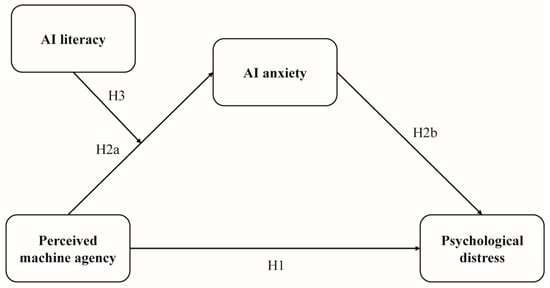
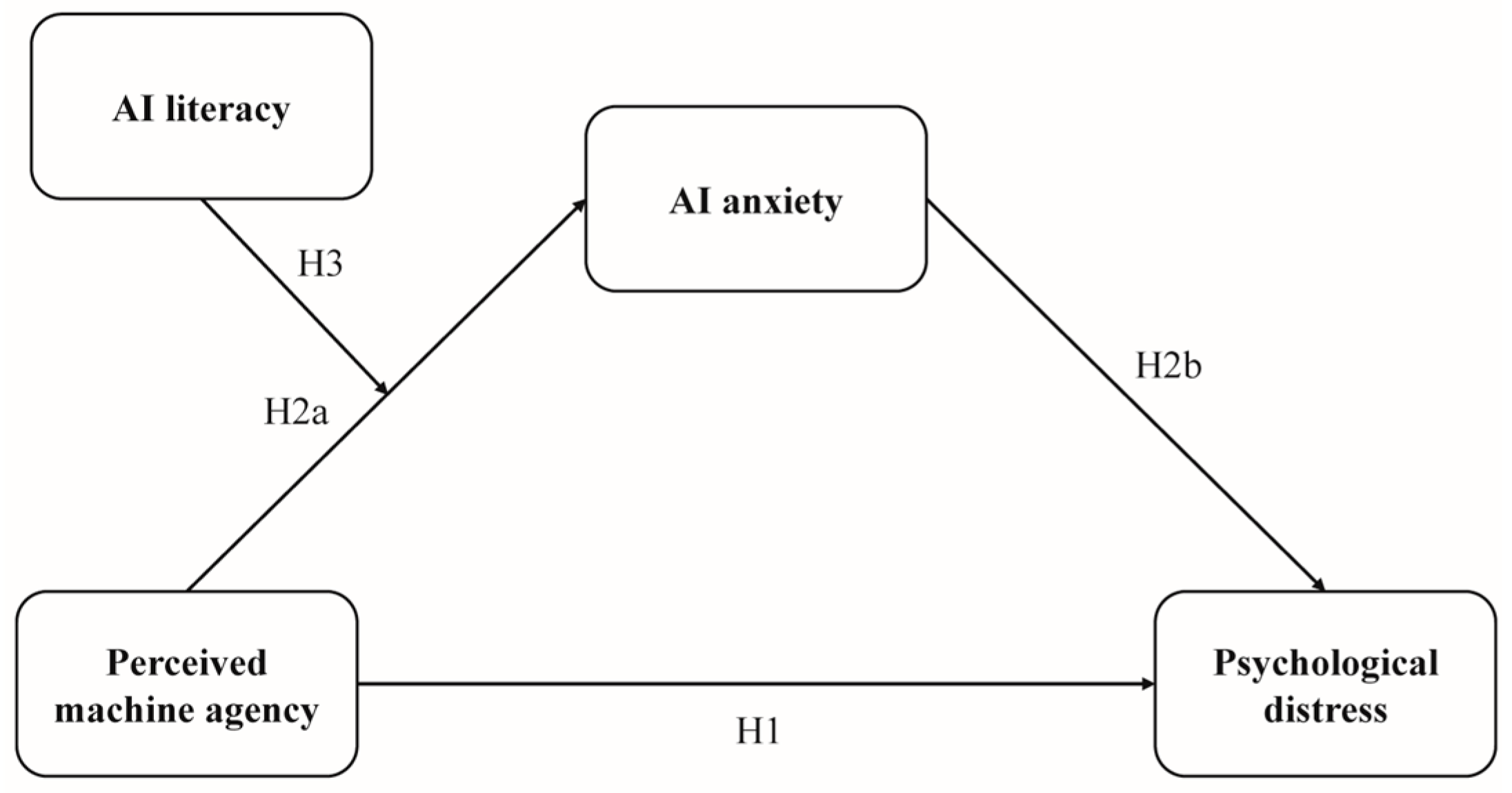
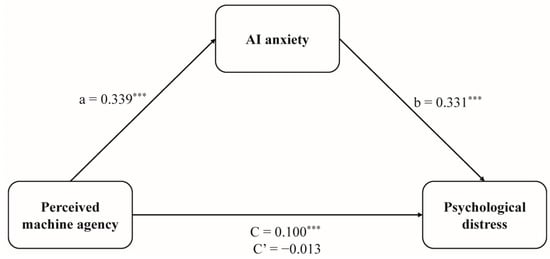
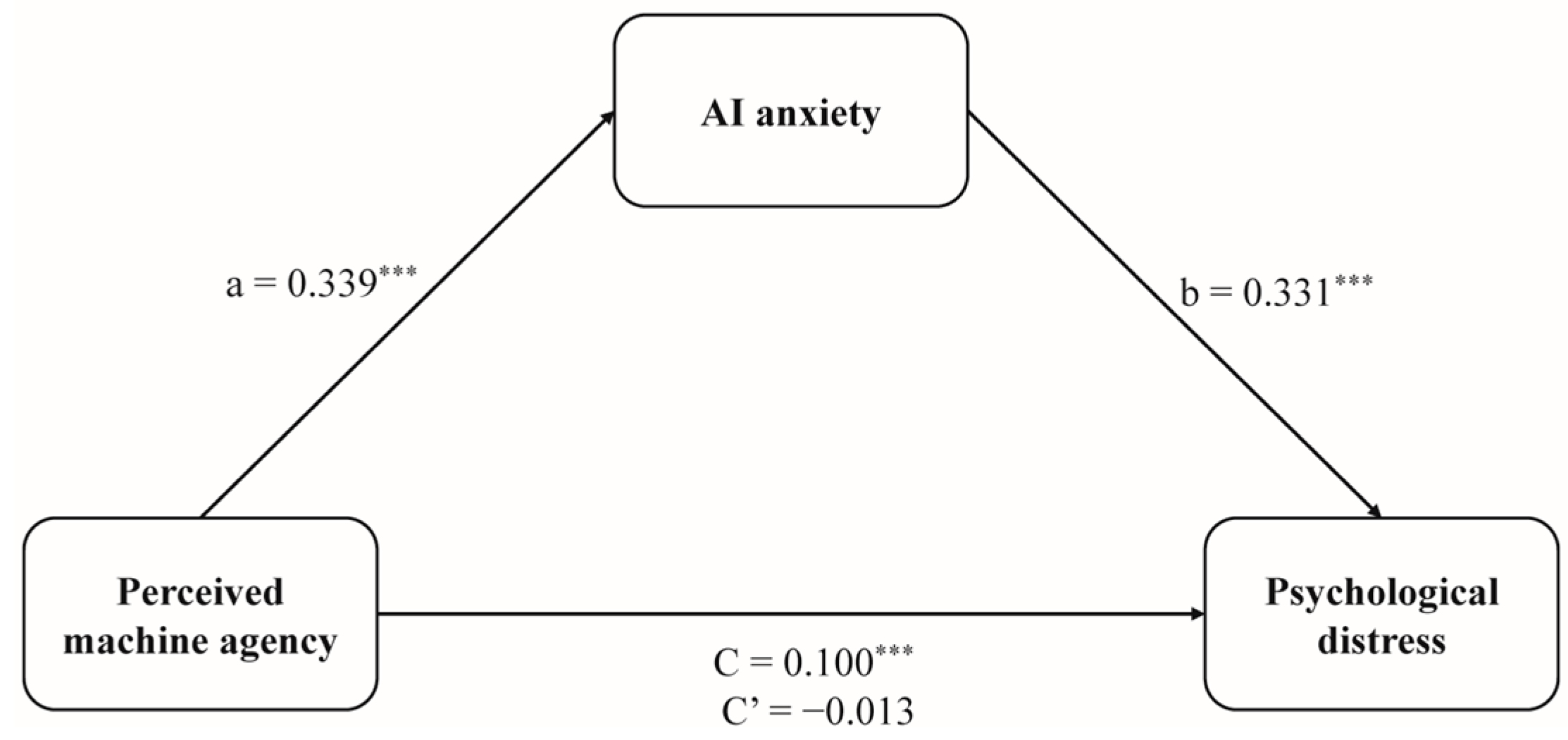
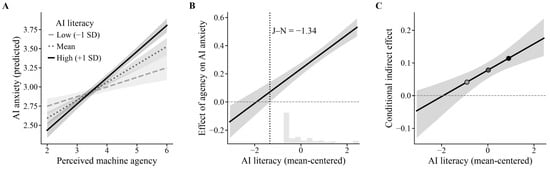
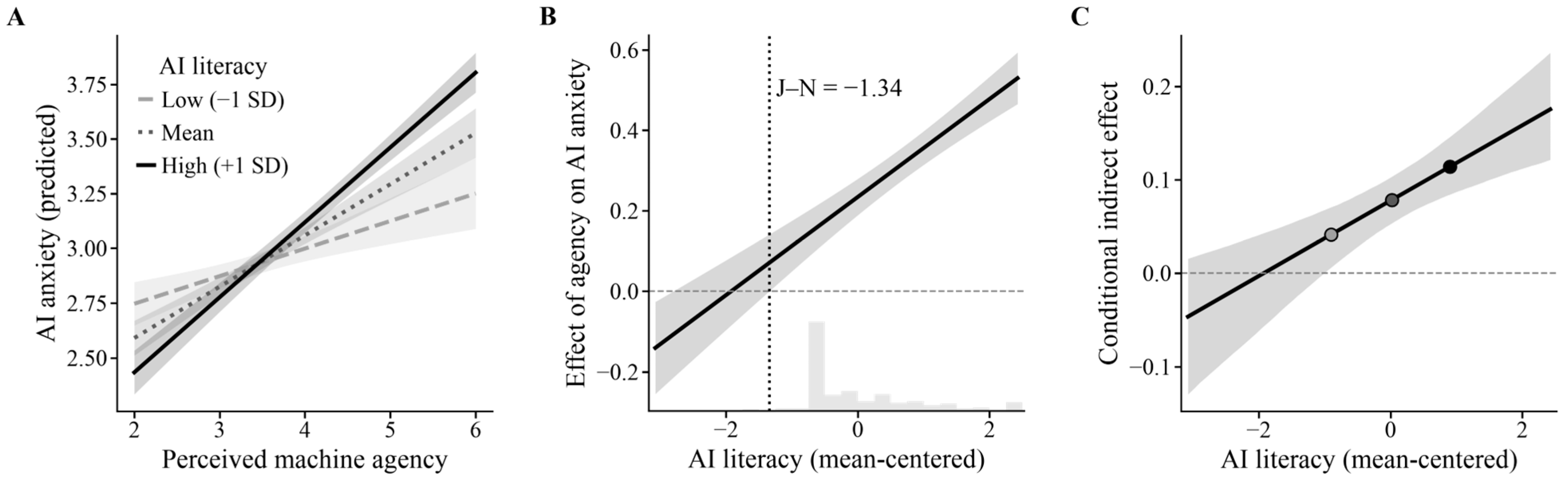

Disclaimer/Publisher’s Note: The statements, opinions and data contained in all publications are solely those of the individual author(s) and contributor(s) and not of MDPI and/or the editor(s). MDPI and/or the editor(s) disclaim responsibility for any injury to people or property resulting from any ideas, methods, instructions or products referred to in the content. |
© 2026 by the authors. Licensee MDPI, Basel, Switzerland. This article is an open access article distributed under the terms and conditions of the Creative Commons Attribution (CC BY) license.