


Abstract
Addressing the challenge of explaining embodied higher-order cognition, the present study explored how bodily interaction may influence individual and collective creativity-related processes within a predictive-processing framework. Two experiments were conducted using an Embodied Predictive Processing Paradigm (EPPP) adapted from the mirror-game framework, with neural data collected using functional near-infrared spectroscopy (fNIRS). Experiment 1 involved 64 university students (60 with valid fNIRS data), whereas Experiment 2 involved 120 university students organized into 60 dyads (57 dyads with valid fNIRS data). Participants were assigned to one of three conditions: consistent mirror interaction, inconsistent mirror interaction, or a no-mirror control. Creativity tasks included three stages: concept association, idea generation, and creative selection. Behavioral results suggested that bodily interaction was associated with differences in creativity-related performance. In both individual and dyadic contexts, consistent bodily interaction was generally associated with higher flexibility- and fluency-related performance, whereas originality-related effects were weaker and less consistent. Neural analyses based on fNIRS data yielded mixed and exploratory findings. In individual creativity tasks, some differences in cortical activity and functional connectivity were observed in channels approximately overlying motor-related and prefrontal cortical regions associated with SCAN-, DMN-, and ECN-related functions, although several between-group comparisons were not significant. In collective creativity tasks, low-frequency fluctuation differences were primarily observed in cortical regions approximately associated with mentalizing-related functions, whereas mirror-neuron-related regions showed less consistent effects. Exploratory inter-brain synchronization analyses suggested possible associations between premotor and supplementary motor cortical regions and collaborative idea generation, as well as between primary somatosensory cortical regions and concept association. Overall, these findings provide exploratory behavioral and neural evidence that bodily interaction may influence creativity-related cognitive and interpersonal coordination processes in ways broadly compatible with predictive-processing perspectives.
1. Introduction
1.1. From Embodied Metaphor to Embodied Predictive Processing
Embodied approaches have increasingly influenced creativity research, emphasizing that creative cognition is deeply grounded in bodily experience and interactions with the environment (Malinin, 2019). However, despite the growing prominence of embodied cognition, explaining higher-order cognitive processes such as creativity remains challenging. Although embodied metaphor theory provides an important semantic framework for linking bodily experience and abstract cognition (Gibbs et al., 2004), it offers relatively limited insight into the underlying psychological and neural mechanisms through which bodily interaction shapes creative cognition. Consequently, embodied creativity research has been criticized for explaining why the body matters while providing less explanation of how bodily experiences contribute to creative processes (Borghi et al., 2017; Shapiro, 2019).
To address these limitations, recent developments in cognitive science have increasingly turned to the Predictive Processing Model (PPM). Originating from Friston’s (2010) free-energy principle, predictive processing conceptualizes the brain as an active prediction system that continuously minimizes prediction error by integrating top-down expectations with bottom-up sensory information (Clark, 2013, 2016; Hohwy, 2013, 2020; Gallagher, 2017). Rather than viewing cognition as a linear input–processing–output sequence, predictive processing emphasizes dynamic interactions among the brain, the body, and the environment.
Within creativity research, predictive-processing accounts have brought a significant theoretical shift. Early theories, such as Campbell’s (1960) evolutionary theory and the Blind Variation and Selective Retention (BVSR) framework, viewed creativity as a process of variation and selection. Building on these ideas, Dietrich and Haider (2015) proposed that creativity can be understood as a prediction-based process in which multiple hypotheses are generated and continuously evaluated through feedback. Similarly, Gabora’s (2017) Honing Theory conceptualizes creativity as a self-organizing process aimed at reducing uncertainty through the dynamic reorganization of mental representations. From this perspective, creativity may be viewed as a continuous process of prediction and revision rather than merely a static cognitive product.
Importantly, predictive processing provides a mechanistic account that is highly compatible with embodied cognition. According to Clark (2016), predictions are not generated solely within the brain but are continuously updated through sensorimotor interactions with the environment. Through action and feedback, the body participates in the formation and revision of internal models, allowing cognition to emerge from dynamic body–brain–environment coupling.
Recently, Su and Ye (2026) investigated how bodily interaction direction and interaction type influence creativity and proposed that bodily interaction may facilitate creativity through mechanisms broadly compatible with embodied predictive processing. Their findings provided preliminary behavioral evidence supporting the role of bodily interaction in creativity-related processes. However, the dynamic mechanisms underlying individual and collective creativity, as well as their neural correlates, remain largely unexplored.
Therefore, the shift from embodied metaphor to embodied predictive processing represents an important mechanistic turn in understanding embodied creativity. Building upon previous work, the present study further extends the embodied predictive-processing framework to both individual and collective creativity and explores how bodily interaction may influence creativity-related processes at both behavioral and neural levels.
1.2. Creativity as an Embodied Predictive Process
1.2.1. Bodily Interaction and Individual Creativity as Individual Predictive Processing
- (1)
- Prediction occurs during creative cognition.
Valtulina and De Rooij (2019) analyzed adolescents’ self-reports to understand the reasoning behind their actions during creative generation tasks. Their results demonstrated that prediction and evaluation are ubiquitous throughout the creative process. Specifically, transitions between conceptual selection, conceptual combination, and idea generation—as well as the iterative recombination of prior concepts—are primarily driven by predictive and evaluative mechanisms. Moreover, the frequency of these predictive–evaluative actions influences the number of ideas generated, the diversity of concepts employed, and the fluency within conceptual categories.
- (2)
- Prediction improves creativity.
Several studies (Byrne et al., 2010; Bruijninckx, 2019; Sam, 2020) have shown that predictive engagement enhances creative performance. Byrne et al. (2010) experimentally demonstrated that predictive activity is strongly associated with the quality and innovativeness of advertising campaigns, underscoring the value of prediction in creative problem solving. Bruijninckx (2019) and Sam (2020) further found that broad predictive framing reduces evaluative uncertainty and enhances idea originality, suggesting that prediction serves as an effective strategy for improving creative evaluation. Collectively, these findings identify predictive processing as a core mechanism in creative development and highlight the need for future research to examine how predictive mechanisms specifically modulate creative evaluation.
- (3)
- The Implicit Predictive Processing Mechanism Linking the Body and Individual Creativity
From the perspective of embodied cognition, accumulating evidence indicates that bodily experiences—particularly tactile and motor interactions—play a predictive role in creativity. Bitu et al. (2021), drawing on the embodied representation theory (Pezzulo, 2011), investigated the role of tactile feedback in predictive processing during creative drawing. Viewing creativity as a predictive motor control process (Dietrich & Haider, 2015), the study examined whether direct finger contact on a tablet could enhance drawing originality compared with stylus or pen use.
1.2.2. Bodily Interaction and Collective Creativity as Group Predictive Processing
In addressing the “problem of other minds”, the predictive processing model emphasizes the role of selective attention to visual and proprioceptive information. Friston et al. (2011) proposed that the same generative model may support both action execution and action observation, with attention selectively directed toward visual or proprioceptive information depending on whether the movement is performed by oneself or observed in another.
Specifically, when the self executes bodily actions, precision is increased for proprioceptive inputs, prioritizing internal bodily feedback. When prior predictions mismatch incoming sensory data, proprioceptive prediction errors arise, prompting the individual to act in ways that minimize these errors. Conversely, when observing others’ actions, the observer engages in visual prediction based on the other’s perceived movements and their own prior expectations, without physically enacting the same motion. Through this process, the observer can infer the intention underlying another’s action—activating the Mirror Neuron System (MNS).
Importantly, mirror neuron activation is not merely a response to observed movement, but to the inferred intention behind it. As Clark (2016) suggests, mirror neuron activity may be better understood as a consequence of flexible, context-sensitive predictive processing rather than as an independent explanation of action understanding.
In this sense, collective creativity can be seen as a process of group-level predictive processing, wherein bodily synchronization, shared attention, and intention inference form a dynamically coupled predictive system that underpins creative collaboration.
1.2.3. Experimental Challenges and the Need for Interactive Paradigms
Although predictive-processing theories provide a promising framework for understanding embodied creativity, experimentally investigating these mechanisms remains challenging. Predictive processes are typically implicit, dynamic, and continuously coupled with bodily and social interactions, making them difficult to capture using traditional creativity paradigms.
Most previous studies have relied on static bodily manipulations or isolated behavioral tasks and therefore have provided limited insight into the dynamic mechanisms through which bodily interaction influences higher-order cognition. Recently, Su and Ye (2025) proposed an embodied predictive-processing framework and reported that temporal synchrony in bodily interaction enhanced the Aha! experience through an implicit metacognitive predictive mechanism. These findings suggest that bodily interaction may influence higher-order cognition through dynamic prediction-based processes while also highlighting the need for more ecologically valid paradigms capable of capturing embodied and socially coordinated cognition.
Accordingly, there remains a need for interactive paradigms that allow the investigation of embodied predictive processes underlying both individual and collective creativity. Such paradigms should be capable of capturing real-time bodily coordination and social interaction, thereby providing a more suitable framework for exploring the dynamic mechanisms of embodied creativity.
1.3. The Experimental Potential of the Mirror Game Paradigm for Investigating How Bodily Interaction Influences Individual and Collective Creativity
As a highly interactive embodied paradigm, the Mirror Game provides a promising framework for investigating how bodily interaction influences creativity through implicit predictive processes. Unlike traditional paradigms based on static bodily manipulations, the Mirror Game enables the real-time observation of movement coordination, sensory feedback, and interpersonal interaction, thereby offering a dynamic and ecologically valid approach to studying embodied cognition. In our previous studies, we employed mirror-game-based paradigms to investigate how bodily interaction shapes creativity and insight experiences and proposed that temporal coordination and bodily synchrony may play important roles in higher-order cognition (Su & Ye, 2025, 2026). Building upon these findings, the present study further explores the neural mechanisms underlying individual and collective creativity within an embodied predictive-processing framework.
1.3.1. Individual Level: Dynamic Embodied Metaphors and Predictive Processing in Creative Cognition
At the individual level, the Mirror Game provides a unique experimental platform for investigating how bodily prediction shapes creative thinking. According to predictive processing theory, the brain continuously generates top-down predictions during perception and action and minimizes prediction errors to achieve cognitive updating (Friston, 2010; Clark, 2016). In the Mirror Game, participants engage in real-time imitation and coordinated movement, constantly generating predictions about both their own and their partner’s actions and updating internal models through sensory feedback. This continuous perception–action cycle allows the creative process to unfold at the embodied level.
From the perspective of embodied creativity, bodily interaction in the Mirror Game is not merely motor behavior but a process of meaning construction. Variations in bodily rhythm, speed, tension, and direction evoke dynamic embodied metaphors—sensorimotor experiences that serve as implicit scaffolds for creative cognition. For example, nonverbal sensations such as flow, resistance, or breakthrough during coordination can translate into metaphorical representations at the cognitive level, such as “the flow of inspiration” or “a breakthrough in thought.” These experiential metaphors engage predictive mechanisms that restructure existing conceptual networks and foster novel associations (Keefer et al., 2014; Laukkonen et al., 2021).
Thus, the Mirror Game provides an opportunity to investigate the dynamic interplay among embodied metaphor generation, prediction-error correction, and creative updating. More broadly, it offers a promising framework for examining the role of bodily interaction in creative predictive processes.
1.3.2. Collective Level: Shared Predictive Mechanisms and the Emergence of Creative Synergy
At the collective level, the Mirror Game provides a powerful framework for examining shared predictive processing and the emergence of creative collaboration. Collective creativity is not a simple aggregation of individual ideas; rather, it is a dynamic co-regulation process driven by shared prediction and synchronization (Fusaroli et al., 2014; Sawyer & DeZutter, 2009). The Mirror Game’s joint improvisation condition exemplifies this mechanism: in the absence of designated leadership, two individuals must continuously predict each other’s rhythms and intentions, aligning their movements and emotions through iterative error correction.
This process reflects an interpersonal prediction error minimization mechanism. When two individuals achieve high levels of spatiotemporal coupling, their perception–action systems converge into a collective predictive state characterized by shared attention and momentary alignment of intentions. This embodied and cognitive synchrony often coincides with the emergence of a shared flow experience, enhancing the integrative quality and originality of group creative output (Gaggioli et al., 2017; Redcay & Schilbach, 2019). Furthermore, collective creativity engages higher-order social prediction mechanisms that support intention inference and emotional resonance. Hyperscanning studies have further suggested that collaborative creativity is accompanied by inter-brain synchronization, indicating that shared predictive processes may contribute to creative coordination (Zhao et al., 2022).
Thus, the Mirror Game can serve both as a paradigm for studying group-level predictive processing and as an embodied experimental model of collective creativity, offering a feasible approach to uncover the neural and dynamic mechanisms underlying creative collaboration.
1.4. Developing a Novel Experimental Paradigm of Implicit Predictive Processing for Investigating How Bodily Interaction Influences Individual and Collective Creativity
As described in our previous studies (Su & Ye, 2025, 2026), the Embodied Predictive Processing Paradigm (EPPP) extends traditional embodied-metaphor approaches by emphasizing dynamic bodily interaction and real-time sensorimotor coordination. The paradigm is characterized by three features: (1) a shift from embodied metaphors to dynamic embodied interaction; (2) a transition from static bodily states to dynamically coupled systems; and (3) applicability to both individual and collective creativity.
From the perspective of embodied metaphor theory, the EPPP operationalized bodily interaction through three experimental conditions: (1) a Consistent Mirror-Interaction Group, in which participants imitated the experimenter’s movements; (2) an Inconsistent Mirror-Interaction Group, in which participants performed movements opposite to those demonstrated by the experimenter; and (3) a No-Mirror Control Group, in which participants did not participate in the mirror-game intervention.
Guided by predictive-processing perspectives and drawing on divergent-thinking approaches, the adapted paradigm organized creative cognition into three sequential task stages—concept association, idea generation, and creative selection—with four creativity-related behavioral measures conceptually linked to an exploratory predictive-processing framework.
Accordingly, the three task stages and four associated behavioral measures were organized as follows: (1) Concept Association Stage (Flexibility-Related Dimension): Concept association was theoretically associated with the generation of possible conceptual representations within a predictive-processing framework. Behavioral performance was assessed by the number of concepts generated, serving as a task-specific indicator of flexibility-related performance rather than conventional category-based cognitive flexibility. (2) Idea Generation Stage (Fluency-Related Dimension): Idea generation was conceptually linked to action through the combination of concepts to develop creative ideas. Fluency-related performance was assessed by the number of ideas generated. (3) Creative Selection Stage (Subjective Originality-Evaluation and Creative-Ranking Dimensions): This stage included both the subjective evaluation and selection of creative ideas. Creative evaluation involved participants’ subjective assessments of the originality of their ideas. These ratings reflected participants’ own judgments rather than independently assessed creative quality. Creative idea selection was conceptually associated with selection-related evaluation and, more broadly, with prediction-error minimization. Behavioral performance was examined through the original generation position of the selected idea, reflecting participants’ evaluative preferences during creative decision-making.
Importantly, these behavioral measures were not direct computational indices of predictive processing (e.g., prediction errors or model updating), but rather creativity-related indicators theoretically linked to prediction-based cognition.
Gordon et al. (2023) proposed the Somato-Cognitive Action Network (SCAN), suggesting that motor-related cortical systems may contribute not only to movement execution but also to higher-order cognition. In the present study, SCAN served as a theoretical framework for interpreting motor-related cortical activity rather than as a directly measured large-scale network.
For individual creativity, neural dependent variables focused on cortical activity patterns in channels approximately overlying motor-related and prefrontal regions, including: (1) Amplitude of Low-Frequency Fluctuations (ALFF); (2) Channel-Level Functional Connectivity (CH-FC); and (3) Cortical-Region Functional Connectivity (CR-FC).
In addition to SCAN, the social brain consists primarily of two interacting neural subsystems: the Mirror Neuron System (MNS) and the Mentalizing Network (MTN).
The MNS provides the neural basis for imitation and action coordination and is thought to support real-time interpersonal synchronization during social interaction (Hamilton, 2013). Complementarily, the MTN is involved in intention inference and higher-order social cognition, commonly referred to as mentalizing or theory of mind (ToM) (Frith & Frith, 2006). Although these two systems partially overlap anatomically, meta-analytic evidence suggests that they serve relatively distinct functions, with the MNS primarily supporting action understanding and motor coordination, whereas the MTN is more closely related to abstract social reasoning and intention attribution (Van Overwalle & Baetens, 2009). Together, the MNS and MTN may provide complementary mechanisms for interpersonal coordination and creative social cognition during collaborative interaction.
For collective creativity, neural dependent variables included: (1) ALFF of SCAN-related regions, reflecting embodied predictive activation, and (2) Inter-brain Synchronization between MNS and MTN subsystems, reflecting shared prediction and social coupling during creative collaboration.
1.5. Research Aims and Hypotheses
Experimental Aim 1: By comparing three experimental groups—the consistent mirror-interaction group, the inconsistent mirror-interaction group, and the no-mirror control group—Experiment 1 aimed to explore how bodily interaction and sensorimotor coordination influence individual creativity-related processes within an exploratory predictive-processing framework.
H1.
Bodily Interaction May Influence Individual Creativity-Related Processes Within an Exploratory Predictive-Processing Framework.
Behavioral Hypothesis 1: Compared with the inconsistent and control groups, participants in the consistent group were expected to show greater flexibility-related performance, higher fluency, and stronger subjective originality ratings. These differences were expected to be associated with sensorimotor coordination during bodily interaction, although alternative explanations involving task difficulty, cognitive load, or affective engagement could not be excluded.
Neural Hypothesis 1: Consistent bodily interaction was expected to be associated with altered cortical activity patterns in motor-related and prefrontal regions. Specifically, group differences in ALFF, channel-level functional connectivity (CH-FC), and cortical-region functional connectivity (CR-FC) were expected in channels approximately overlying premotor, parietal, and prefrontal regions.
Experimental Aim 2: Building on Experiment 1, Experiment 2 aimed to explore how bodily interaction and interpersonal coordination influence collective creativity-related processes within an exploratory group-level predictive-processing framework.
H2.
Bodily Interaction May Influence Collective Creativity Within an Exploratory Group-Level Predictive-Processing Framework.
Behavioral Hypothesis 2: Compared with the inconsistent and control groups, dyads in the consistent mirror-interaction group were expected to exhibit greater flexibility-related performance, higher fluency, and stronger subjective originality ratings. These differences were expected to be associated with interpersonal coordination during collaborative creativity, although attentional and interactional factors could also contribute.
Neural Hypothesis 2: Collective creativity was expected to involve altered inter-brain coordination patterns in cortical regions associated with motor and social-cognitive functions. Specifically, dyads in the consistent mirror-interaction group were expected to show differences in inter-brain synchronization in cortical regions approximately associated with motor coordination and social cognition.
2. Experiment 1: How Bodily Interaction Engages Implicit Predictive Processing in Individual Creativity
2.1. Method
2.1.1. Participants
Given that no prior studies have used this specific paradigm, direct references for determining sample size were limited. Therefore, an a priori power analysis was conducted using G*Power software (version 3.1.9.7). According to the analysis results, assuming a statistical power of 0.80, a significance level of 0.05, and a relatively large effect size (f = 0.50), a one-way ANOVA with three groups would require approximately 20–30 participants per group, resulting in a total sample size of approximately 60–90 participants.
In the pilot phase, nine students from a certain university participated in the study. Participants were randomly assigned to three groups, with three participants in each group. Data from this phase were excluded from further analysis due to the instability of the behavioral and near-infrared experimental procedures.
In the main experimental phase, 64 students from a University participated in the study: 21 in the inconsistent group, 21 in the consistent group, and 22 in the no mirror game group. Due to issues such as interruptions in the near-infrared brain imaging equipment and personal reasons of the participants, data from four participants were incomplete and therefore excluded from further analysis. Ultimately, valid near-infrared data from 60 participants (20 in each group) were included in the analysis. All participants were physically and mentally healthy, had normal or corrected-to-normal vision, were unaware of the experimental content before participation, and had never participated in similar experiments.
This experiment was approved by the Ethics Committee of Guangzhou University. Before the experiment, all participants read and signed an informed consent form. After the experiment, each participant received compensation of 20 RMB.
2.1.2. Experimental Design and Procedure
Upon arrival, participants were guided into the laboratory by the experimenter and seated in designated chairs. The experimenter then fitted the participants with the fNIRS equipment, adjusted the Source and Detector probes, and ensured that all channels were properly activated with adequate signal quality.
The experimental procedure consisted of three major phases (Figure 1):
Figure 1.
Experiment 1 Procedure Diagram.
Once the fNIRS system was activated, participants were instructed to relax for 1 min. This served two purposes: (1) to help participants calm their emotions and focus on the upcoming tasks, and (2) to establish a 1-min baseline for fNIRS data collection.
- (1)
- Phase 1: Information Collection
Each participant was asked to read and complete the following materials:
(1) Informed Consent Form—in accordance with the Declaration of Helsinki, ensuring participants’ right to informed participation.
(2) Self-Assessment Manikin (SAM) Emotional Scale—for participants to self-evaluate their current emotional state.
(3) Advertising Creativity Experience Questionnaire—for participants to assess whether they have prior experience with advertising creativity.
Participants were encouraged to ask questions if they did not understand any part of the forms, and the experimenter provided explanations as needed. After completion, participants signed and returned the materials to the experimenter.
- (2)
- Phase 2: Mirror Game Task
The experimenter introduced the Mirror Game (approximately 1 min), explaining the rules:
Participants in the consistent group were to mimic the experimenter’s movements, while those in the inconsistent group were to perform the opposite movements. Participants were reminded to avoid large head movements and to maintain natural body coordination.
(1) Learning Phase (approximately 2 min):
Participants in the mirror game conditions (both consistent and inconsistent groups) learned six body movements from the experimenter—two along each spatial dimension (up–down, left–right, forward–backward). Participants were allowed to practice, and the experimenter provided corrections as needed.
(2) Formal Phase (approximately 6 min):
During the formal session, the experimenter randomly performed movements from the six learned actions. Participants in the consistent mirror group were required to imitate the experimenter’s actions, while those in the inconsistent group were required to perform the opposite movements (up↔down, left↔right, forward↔ backward).
- (3)
- Phase 3: Brainstorming Task
The experimenter introduced the advertising creativity task (approximately 1 min): Smart_Nomad is a young company specializing in “personalized smart backpacks.” Your task is to propose an advertising idea for Smart_Nomad’s new smart backpack product (e.g., a video advertisement concept).
(1) Concept Association Task (10 min):
Participants were asked to write down as many related concepts as possible on small sticky notes, each note containing one concept, and to place them on the table. They were instructed to produce at least 20 concepts, or more if possible, and to think creatively and divergently beyond conventional boundaries while considering the information provided in the task. The minimum requirement of 20 concepts was intended to ensure sufficient material for the subsequent idea-combination task; however, participants who generated fewer than 20 concepts were still retained in the analyses as valid cases.
(2) Idea Generation Task (up to 15 min):
Participants were asked to select and combine the previously listed concepts to form new ideas, writing each generated idea on a large sticky note. They then attached the selected concepts and corresponding ideas together.
(3) Creative Selection Task (approximately 5 min):
Participants rated each generated idea using a 7-point, single-item creativity scale developed for the present study (1 = not at all creative; 7 = extremely creative), reflecting their subjective judgments of creativity. They then selected the most innovative idea to submit to Smart_Nomad. The company would review the submissions and offer monetary rewards (¥50–¥100) for the most creative ideas. Participants could also generate and submit a new idea if dissatisfied with their previous ones.
For behavioral scoring, creative-idea selection was operationalized as the original generation position of the selected idea (1, 2, 3, etc.), with newly generated ideas coded as 0. Thus, this variable reflected the position of the selected idea in the generation sequence rather than an independently assessed level of creative quality.
After completing the creative selection task, the experimenter stopped fNIRS recording and removed the equipment from the participant (Figure 2).
Figure 2.
Experiment 1 Setup.
Finally, participants were asked to complete a compensation form and received ¥20 as an experimental participation fee.
2.2. Near-Infrared Data Collection
2.2.1. Experimental Equipment
In this study, a NirSmartII-3000 portable near-infrared brain functional imaging device was used, manufactured by Huichuang in Danyang, Jiangsu, China. The device operates with two near-infrared wavelengths, 730 nm and 850 nm, and features a configuration of 24 emitters and 16 detectors, supporting up to 63 channels. The system was employed to detect relative changes in oxygenated hemoglobin (HbO) and deoxygenated hemoglobin (HbR) concentrations, with neural activity inferred through the conversion of light intensity signals using the modified Beer–Lambert law. The sampling rate was set at 11 Hz. Each participant’s optode arrangement included 21 emitters and 16 detectors, forming 48 channels, with a distance of approximately 3 cm between each pair of channels. The optode placement followed the 10/20 system using an electroencephalogram (EEG) cap, and virtual localization methods were employed to determine the correspondence between recording channels and measurement points on the cerebral cortex (Figure 3).
Figure 3.
Experiment 1 S-D Arrangement.
2.2.2. Determination of Regions of Interest (ROIs)
- (1)
- Does Creativity Involve the SCAN?
Gordon et al. (2023) validated through three large fMRI datasets that the motor system is not only involved in motor execution but is also closely related to abstract thinking and other higher-order cognitive processes. The “Somato-Cognitive Action Network” (SCAN) includes the primary motor cortex (M1), the supplementary motor area (SMA), the thalamus (ventral intermediate nucleus [VIM] and centromedian nucleus [CM]), the posterior putamen, and the postural cerebellum.
- (2)
- Is the Predictive Processing of Creativity Related to the Default Mode Network (DMN) and Executive Control Network (ECN)?
Previous research has shown that three major brain networks are closely related to creativity: the Default Mode Network (DMN), the Executive Control Network (ECN), and the Salience Network (SN) (Beaty et al., 2014, 2015; Zhu et al., 2017).
The Default Mode Network (DMN) is associated with “intrinsic mental activity” and is related to spontaneous thinking processes such as mind-wandering, mental simulation, social cognition, autobiographical memory retrieval, and future scenario thinking (Raichle et al., 2001; Buckner et al., 2008; Sormaz et al., 2018). Andrews-Hanna et al. (2010) and Andrews-Hanna et al. (2014) proposed that the DMN includes a core hub and two subsystems. The core hub, composed of the posterior cingulate cortex (PCC) and the anterior medial prefrontal cortex (aMPFC), serves as a key node with high centrality. The two subsystems are: (1) the dorsal medial prefrontal cortex (dMPFC) subsystem, consisting of the dMPFC, temporoparietal junction (TPJ), lateral temporal cortex (LTC), and temporal pole (TempP), which is primarily associated with considering others’ perspectives; and (2) the medial temporal lobe (MTL) subsystem, composed of the ventral MPFC (vMPFC), posterior inferior parietal lobule (pIPL), retrosplenial cortex (Rsp), parahippocampal gyrus (PHC), and hippocampal formation (HF+), which is related to autobiographical memory and future simulation. In the process of creative thinking, DMN activity reflects the spontaneous generation of potential ideas or the retrieval of potentially useful information from long-term memory (Beaty et al., 2014, 2015, 2016, 2017, 2018). In terms of predictive processing, the DMN is responsible for top-down predictions concerning creative tasks.
The Executive Control Network (ECN) is the brain’s “external mind,” primarily composed of the dorsolateral prefrontal cortex (DLPFC), especially the middle frontal gyrus, and the anterior part of the inferior parietal lobule. Other regions include the middle cingulate cortex, the potential dorsal precuneus, posterior inferior temporal lobule, dorsal medial thalamus, and head of the caudate nucleus (Uddin et al., 2019). The ECN operates in opposition to the DMN, forming a pair of anticorrelated brain networks (Goulden et al., 2014). In a healthy brain, the DMN is activated during mind-wandering or idle states, whereas the ECN is active during the processing of visual or sensory inputs. For instance, the ECN, as the dominant control network for task selection and behavior, evaluates stimuli from other brain networks (visual network, auditory network, sensorimotor network, limbic system) to make choices and guide further actions (Niendam et al., 2012). This means that in the process of creative thinking, the DMN primarily handles the spontaneous generation of potential ideas (bottom-up processing), while the ECN evaluates these spontaneously generated ideas and corrects any unsuitable ideas or directions of thought, ensuring that the generated ideas align with the task goals (top-down processing) (Beaty et al., 2014, 2015, 2016, 2017, 2018).
The Salience Network (SN) serves as the brain’s “mediator,” primarily composed of brain regions such as the dorsal anterior cingulate cortex (dACC) and the anterior insula (AI) (Seeley et al., 2007). The SN continuously monitors the external world and carefully determines other brain networks’ responses to new information and stimuli, primarily regulating the switching between the DMN and the ECN (Goulden et al., 2014). The coupling of the DMN and SN in the early stages facilitates the subsequent coupling between the DMN and ECN, serving as an intermediate transition mechanism.
It is worth noting that Seeley et al. (2007) found that the frontal region, including the anterior cingulate cortex (ACC) and the pre-supplementary motor area (preSMA), typically exhibits brain activity highly correlated with the anterior insula (AI), and together they are referred to as the Salience Network (SN). Bonnelle et al. (2012) studied 57 patients with cognitive impairment following traumatic brain injury. The results demonstrated that the structural integrity of the SN (including the ACC, preSMA, and AI) is necessary for the effective regulation of DMN activity, and regulation failure can lead to reduced cognitive control efficiency. Therefore, the SN plays an indispensable role in processing sensorimotor information, overall cognition, and coordinating between emotions, pain, and bodily movements (Chang et al., 2013). In other words, the SN is closely related to the Somato-Cognitive Action Network (SCAN) that includes the preSMA, and the two networks likely work together to mediate the switching between the DMN and ECN.
Cortical Regions Approximately Associated with SCAN-, DMN-, and ECN-Related Functions
Thus, the regions of interest for Experiment 1 included cortical channels approximately overlying regions associated with SCAN-related motor functions (M1 and SMA), DMN-related regions (AG and SMG), and ECN-related regions (DLPFC). These ROI definitions were intended as approximate cortical functional references based on the MNI atlas rather than direct measurements of full large-scale brain-network architectures. Based on the MNI atlas, the channel selections were as follows:
(1) SCAN-related motor cortical regions (M1 and SMA) Channels: 19, 20, 21, 22, 29, 30, 31, 32, 34, 35, 38, 46, 48;
(2) DMN-related cortical regions (AG and SMG) Channels: 1, 2, 43, 44;
(3) ECN-related cortical regions (DLPFC) Channels: 3, 8, 13, 14, 17, 18, 23, 24, 25, 26.
2.3. Experimental Results
Behavioral data were analyzed using R 4.5.1, while near-infrared data were analyzed using Matlab (2017b). Behavioral analyses included all participants who completed the experimental tasks, whereas fNIRS analyses included only participants with valid fNIRS recordings after preprocessing and channel-quality assessment.
2.3.1. Statistical Analysis of Behavioral Data
- (1)
- Dependent Variables: Creativity-Related Measures Within the Predictive-Processing Framework
Behavioral performance was assessed using four creativity-related dependent variables corresponding to different components of the predictive-processing framework: prediction-related flexibility, action-related fluency, evaluation-related subjective originality, and prediction-related creative-idea selection (creative-idea ranking). Because these measures differed in their measurement scales and distributional properties, statistical models appropriate to each outcome were used rather than applying a common analysis of variance to all dependent variables.
All analyses treated experimental group as a three-level between-subjects factor: the Mirroring Game Inconsistent Group (n = 21), Mirroring Game Consistent Group (n = 21), and No Mirroring Game Group (Control) (n = 22). For significant omnibus effects, pairwise group comparisons were conducted with Holm correction to control the family-wise error rate across the three pairwise comparisons. Statistical significance was evaluated at α = 0.05.
(1) Prediction-Related (Flexibility). Prediction-related flexibility was operationalized as the number of distinct concepts generated by each participant and therefore constituted a count outcome. Rather than treating this measure as normally distributed continuous data, count regression was used. An initial Poisson model indicated overdispersion (Pearson dispersion ratio = 1.70). A negative binomial model provided a better fit than the Poisson model (AIC = 399.79 vs. 405.02) and was therefore adopted as the primary model for flexibility.
Descriptive statistics are presented in Table 1. Mean flexibility was highest in the Mirroring Game Consistent Group (M = 26.14, SD = 7.65), followed by the Mirroring Game Inconsistent Group (M = 18.29, SD = 3.20) and the No Mirroring Game Group (M = 14.73, SD = 5.80).
Table 1.
Descriptive Statistics of Individual Creativity Predictive Processing Performance.
The negative binomial regression revealed a significant overall effect of experimental group, likelihood-ratio χ2(2) = 36.35, p < .001. Holm-adjusted pairwise comparisons showed that the Mirroring Game Inconsistent Group generated significantly greater flexibility than the No Mirroring Game Group, IRR = 1.24, 95% CI [1.04, 1.48], PHolm = 0.016. The Mirroring Game Consistent Group also demonstrated substantially greater flexibility than the No Mirroring Game Group, IRR = 1.78, 95% CI [1.50, 2.10], PHolm < 0.001, and greater flexibility than the Mirroring Game Inconsistent Group, IRR = 1.43, 95% CI [1.22, 1.68], PHolm < 0.001 (Figure 4a).
Figure 4.
Individual Creativity Predictive-Processing Outcomes in Experiment 1. Note. (a) Prediction-related flexibility, analyzed using negative binomial regression. (b) Action-related fluency, analyzed using COM-Poisson regression. (c) Evaluation-related subjective originality, analyzed using a linear model/one-way ANOVA. (d) Prediction-related creative-idea selection (creative-idea ranking), analyzed using ordinal logistic regression. Points represent individual observations; lines and error bars in panels (a–c) represent model-based group estimates and their uncertainty, whereas panel (d) shows the observed ordinal distributions. Brackets indicate significant Holm-adjusted pairwise comparisons. p < .05 (*), p < .001 (***).
(2) Action-Related (Fluency). Action-related fluency was operationalized as the number of ideas generated by each participant and was likewise analyzed as a count outcome. The Poisson model showed substantial underdispersion (Pearson dispersion ratio = 0.60), violating the equidispersion assumption of conventional Poisson regression. Accordingly, Conway–Maxwell–Poisson (COM-Poisson) regression was adopted as the primary model because it explicitly accommodates underdispersed as well as equidispersed and overdispersed count outcomes (Shmueli et al., 2005; Sellers & Premeaux, 2021). The estimated dispersion parameter was ν = 1.88, and the COM-Poisson model provided a better fit than the conventional Poisson model (AIC = 256.73 vs. 264.18). The use of a dispersion-sensitive count model is particularly relevant to fluency and divergent-thinking count measures, for which underdispersion has previously been documented (Forthmann et al., 2020).
Descriptively, fluency was highest in the Mirroring Game Consistent Group (M = 7.05, SD = 2.46), whereas the Mirroring Game Inconsistent Group (M = 4.38, SD = 1.50) and No Mirroring Game Group (M = 4.59, SD = 1.44) showed similar levels.
The COM-Poisson model revealed a significant overall effect of experimental group, likelihood-ratio χ2(2) = 24.74, p < .001. Holm-adjusted pairwise Wald comparisons indicated that fluency was significantly higher in the Mirroring Game Consistent Group than in both the No Mirroring Game Group (PHolm < 0.001) and the Mirroring Game Inconsistent Group (PHolm < 0.001). In contrast, the Mirroring Game Inconsistent Group did not differ significantly from the No Mirroring Game Group (PHolm = 0.666). Model-predicted responses were 4.59, 4.38, and 7.05 for the No Mirroring Game, Inconsistent, and Consistent groups, respectively (Figure 4b).
The robustness analyses yielded the same substantive conclusion: both conventional Poisson and quasi-Poisson models detected a significant overall group effect, and Poisson pairwise comparisons reproduced the same pattern of significant and nonsignificant group differences.
(3) Evaluation-Related (Subjective Originality) Measures. Evaluation-related originality was assessed using participants’ subjective originality ratings and analyzed using a linear model equivalent to a one-way ANOVA, with experimental group as the between-subjects factor. Unlike the two count outcomes, the linear-model assumptions were adequately supported: the residual normality test was nonsignificant, Shapiro–Wilk W = 0.965, p = .069, and there was no evidence of unequal group variances, Fligner–Killeen χ2(2) = 0.42, p = .810.
Descriptively, subjective originality was similar across the Mirroring Game Inconsistent Group (M = 4.44, SD = 0.89), Mirroring Game Consistent Group (M = 4.69, SD = 0.69), and No Mirroring Game Group (M = 4.58, SD = 0.80).
The analysis revealed no significant effect of experimental group, F(2, 61) = 0.52, p = .594 (Figure 4c). None of the Holm-adjusted pairwise comparisons was significant. This null result was robust to alternative analyses: Welch’s ANOVA was nonsignificant, p = .601, as was the Kruskal–Wallis test, p = .535. Thus, the experimental manipulation influenced the generation-related measures of flexibility and fluency but did not produce detectable differences in participants’ subjective evaluations of originality.
(4) Prediction-Related Creative-Idea Selection (Creative-Idea Ranking). Creative-idea ranking represented participants’ ordered selection of creative ideas and was therefore treated as an ordinal outcome rather than as a continuous measure. Accordingly, ordinal logistic regression was adopted as the primary analysis, with experimental group entered as the predictor. The Kruskal–Wallis test and Holm-adjusted pairwise Wilcoxon tests were additionally conducted as nonparametric sensitivity analyses.
The descriptive distributions indicated that creative-idea rankings tended to be higher in the Mirroring Game Consistent Group than in the Mirroring Game Inconsistent Group (Figure 4d).
The ordinal logistic regression revealed a significant overall effect of experimental group, likelihood-ratio χ2(2) = 7.58, p = .023. Holm-adjusted pairwise comparisons showed that participants in the Mirroring Game Consistent Group had significantly greater odds of selecting higher-ranked creative ideas than participants in the Mirroring Game Inconsistent Group, OR = 4.90, 95% CI [1.54, 15.60], PHolm = 0.022. Neither the Inconsistent versus No Mirroring Game comparison, OR = 0.42, 95% CI [0.14, 1.27], PHolm = 0.252, nor the Consistent versus No Mirroring Game comparison, OR = 2.08, 95% CI [0.70, 6.12], PHolm = 0.252, was statistically significant.
The nonparametric sensitivity analysis supported this pattern. The Kruskal–Wallis test showed an overall group difference, H(2) = 7.03, p = .030, and Holm-adjusted pairwise Wilcoxon comparisons again identified a significant difference between the Mirroring Game Consistent and Inconsistent groups (PHolm = 0.031), whereas the remaining pairwise comparisons were nonsignificant.
- (2)
- Additional Variables: Emotion and Advertising Creativity Experience
(1) Emotion (Pleasure, Arousal, and Control): To examine whether participants’ emotional states differed across experimental conditions, pleasure, arousal, and emotional control were compared across the Mirroring Game Inconsistent Group, Mirroring Game Consistent Group, and No Mirroring Game Group using one-way ANOVAs.
For pleasure, no significant group effect was observed. Mean pleasure scores were 3.38 (SD = 1.12) in the Mirroring Game Inconsistent Group, 3.24 (SD = 1.58) in the Mirroring Game Consistent Group, and 3.45 (SD = 1.14) in the No Mirroring Game Group, F(2, 61) = 0.155, p = .857, ηp2 = 0.01.
For arousal, the group effect was also nonsignificant. Mean arousal scores were 6.90 (SD = 1.58) in the Mirroring Game Inconsistent Group, 7.24 (SD = 1.76) in the Mirroring Game Consistent Group, and 6.64 (SD = 1.79) in the No Mirroring Game Group, F(2, 61) = 0.666, p = .518, ηp2 = 0.02.
In contrast, a significant group difference was observed for emotional control. Mean emotional-control scores were 3.76 (SD = 1.34) in the Mirroring Game Inconsistent Group, 2.43 (SD = 1.36) in the Mirroring Game Consistent Group, and 3.91 (SD = 2.14) in the No Mirroring Game Group, F(2, 57) = 5.102, p = .009, ηp2 = 0.14.
Because emotional control differed significantly across the three experimental groups, supplementary covariate-adjusted robustness analyses were conducted to determine whether the primary behavioral findings remained after adjustment for emotional control. Importantly, these analyses did not replace the primary models reported above. Instead, emotional control was added as a covariate while retaining the model family appropriate to each dependent variable: negative binomial regression for flexibility, COM-Poisson regression for fluency, a linear model for subjective originality, and ordinal logistic regression for creative-idea ranking. This approach allowed the robustness analysis to preserve the distributional characteristics of each outcome rather than imposing a common ANCOVA framework on variables with different measurement properties. Regression-based covariate adjustment can accommodate different outcome types while retaining statistical models appropriate to their distributional characteristics (Colantuoni & Rosenblum, 2015/2017; Van Lancker et al., 2024).
For flexibility, the overall effect of experimental group remained significant after adjustment for emotional control, likelihood-ratio χ2(2) = 53.41, p < .001. Emotional control was not significantly associated with flexibility, b = 0.040, SE = 0.021, z = 1.91, p = .056.
For fluency, the COM-Poisson model likewise showed that the overall group effect remained significant after adjustment for emotional control, likelihood-ratio χ2(2) = 28.30, p < .001. Emotional control was not significantly associated with fluency, b = 0.089, SE = 0.048, z = 1.85, p = .064.
For subjective originality, the group effect remained nonsignificant after adjustment for emotional control, F(2, 60) = 0.52, p = .599. Emotional control was also not significantly associated with subjective originality, F(1, 60) = 0.10, p = .754.
Finally, for creative-idea ranking, the ordinal logistic regression showed that the overall group effect remained significant after adjustment for emotional control, likelihood-ratio χ2(2) = 7.22, p = .027. Emotional control itself was not significantly associated with creative-idea ranking, b = 0.021, SE = 0.138, z = 0.15, p = .879.
Taken together, the covariate-adjusted analyses reproduced the substantive pattern of the primary analyses: significant experimental-group effects remained for flexibility, fluency, and creative-idea ranking, whereas subjective originality remained nonsignificant. Thus, the primary behavioral findings were robust to statistical adjustment for emotional control.
(2) Advertising Creativity Experience: One-Way ANOVA. To investigate whether advertising creativity experience influenced the experimental results, a one-way ANOVA was conducted on the advertising creativity experience scores across the inconsistent group, consistent group, and control group. The results showed:
No significant group effect was found for advertising creativity experience. Scores were similar across the Mirroring Game Inconsistent Group (M = 10.00, SD = 2.98), Mirroring Game Consistent Group (M = 11.00, SD = 3.36), and No Mirroring Game Group (M = 10.77, SD = 2.53), F(2, 61) = 0.66, p = .522, ηp2 = 0.02.
Thus, there was no evidence that the three experimental groups systematically differed in prior advertising creativity experience. Given the absence of a between-group difference, advertising creativity experience was not included in the supplementary covariate-adjusted robustness models.
2.3.2. Statistical Analysis of fNIRS Data
Based on the paper by Herold et al. (2018) titled “Applications of functional near-infrared spectroscopy (fNIRS) neuroimaging in exercise–cognition science: a systematic, methodology-focused review,” which discusses the current applications, data processing, and analysis of fNIRS without a standardized procedure, it highlights the significant heterogeneity in the use of fNIRS within the exercise-cognition science domain. This review, which synthesizes the methodologies used in 35 studies that applied fNIRS to measure cortical hemodynamic responses during cognitive testing, provides methodological recommendations for future fNIRS research in the field of exercise-cognition science. Therefore, this study largely adopts the methodological recommendations provided by the review, particularly concerning the preprocessing pipeline.
For the group-level fNIRS analyses, the participant was treated as the observational unit. Multiple channels within a participant were not treated as independent participants. Analyses were conducted separately for the predefined task stages and for the corresponding channel- or cortical-region-level measures. Thus, observations from different tasks, channels, or cortical regions were not pooled and treated as independent participant-level observations in a single between-group analysis.
According to Herold et al. (2018), there are three main sources of noise in fNIRS signals: (1) instrument noise (e.g., low-frequency drift and short-term noise due to light source instability); (2) movement-related noise (e.g., baseline shifts caused by motion); and (3) physiological oscillations (e.g., heartbeat—0.5 to 2.0 Hz, Mayer waves—0.07 to 0.13 Hz, and respiration—0.2 to 0.4 Hz). To remove these noises, low-pass filters (e.g., to remove heart rate noise) and high-pass filters (e.g., to remove instrument noise) are commonly used. In recent years, several review articles have recommended a cutoff frequency range of 0.5 Hz for low-pass filters and 0.01 Hz for high-pass filters (Herold et al., 2018; Cooper et al., 2012; Brigadoi et al., 2014).
- (1)
- Preprocessing
(1) Pruning Channels (hmrR_PruneChannels): Automatically prunes channels based on distance range, signal-to-noise ratio (SNR) threshold, and standard deviation (SD) range. Channels were pruned using an optical intensity range of 0.001–1000, an SNR threshold of 2, and a source–detector distance range of 0–45 mm.
(2) Conversion of Light Intensity to Optical Density (hmrR_Intensity2OD): Converts the acquired data from intensity values to optical density values.
(3) Motion Artifact Correction (hmrR_MotionArtifactByChannel): Automatically flags motion artifacts based on preset thresholds for motion and mask time, as well as standard deviation and amplitude thresholds. Motion artifacts were detected using a motion time window of 0.5 s, a mask time of 1 s, a standard deviation threshold of 5, and an amplitude threshold of 0.4.
(4) Spline Motion Correction (hmrR_MotionCorrectSpline): Corrects flagged motion artifacts using a spline interpolation method. Spline interpolation correction was performed with a parameter of p = 0.99.
(5) Bandpass Filtering (hmrR_BandpassFilt): Applies a bandpass filter (0.01–0.5 Hz) to the data using high-pass and low-pass filters.
(6) Conversion of Optical Density to Concentration (hmrR_OD2Conc): Converts optical density data to changes in hemoglobin concentration, specifically oxygenated hemoglobin (HbO) and deoxygenated hemoglobin (HbR), based on the modified Beer–Lambert law. Partial pathlength factors (PPF) were set to [1.0, 1.0].
(7) CBSI Motion Correction (Cbsi_Motion_Correction): Corrects for motion artifacts in the data using a channel-based signal intensity correction method. Channels with poor signal quality or excessive noise identified during preprocessing were excluded from subsequent analyses.
Given that previous studies have found oxygenated hemoglobin to be more sensitive to changes in blood flow, this experiment will focus solely on the analysis of “oxygenated hemoglobin” concentration. In addition, HbO signals generally demonstrate a higher signal-to-noise ratio and greater sensitivity to task-related cortical activation in cognitive fNIRS studies.
- (2)
- Low-Frequency Amplitude
The amplitude of low-frequency fluctuations (ALFF) quantifies the magnitude of low-frequency oscillations within a predefined frequency range. Fractional amplitude of low-frequency fluctuations (fALFF) normalizes this measure by expressing the amplitude within the low-frequency range relative to that across the detectable frequency spectrum. This normalization can reduce the contribution of nonspecific signal components and improve the specificity of low-frequency fluctuation measures (Zou et al., 2008). Accordingly, subsequent analyses focused primarily on fALFF as a relative measure of low-frequency fluctuations in the HbO signal. The application of fALFF to characterize regional low-frequency hemodynamic fluctuations is also consistent with previous fNIRS research (Shi et al., 2025).
For the exploratory analysis of cortical regions discussed in relation to SCAN, channel-level fALFF values were first averaged across the predefined channels approximately overlying motor-related cortical regions and then standardized across participants within each task to obtain standardized ROI-averaged fALFF values. Under this task-wise, across-participant standardization, zero represents the across-participant mean of ROI-averaged fALFF within each task, rather than a physiological baseline or the absence of cortical activity. Deviations from zero were therefore not interpreted as evidence of absolute cortical activation or deactivation. The anatomical proximity of these channels to motor-related regions does not independently establish their membership in SCAN.
Exploratory one-sample t-tests against zero were conducted within each experimental group to examine whether standardized ROI-averaged fALFF values deviated from this reference. Importantly, a significant one-sample test within one group and a nonsignificant test within another do not establish a significant difference between the groups. Therefore, direct one-way omnibus comparisons among the Mirroring Game Consistent, Mirroring Game Inconsistent, and No-Mirroring Game groups were additionally conducted for each task. Welch ANOVA, Kruskal–Wallis tests, and permutation-based tests were used as sensitivity analyses to evaluate the robustness of the between-group results.
Concept Association and Idea Generation Tasks.
Exploratory one-sample t-tests showed that the Mirroring Game Consistent Group exhibited standardized fALFF values below the zero reference across the predefined SCAN-related cortical ROIs during both the concept association task, M = −0.186, SD = 0.292, t(19) = −2.85, p = .010, Cohen’s d = −0.64, and the idea generation task, M = −0.271, SD = 0.284, t(19) = −4.26, p < .001, Cohen’s d = −0.95 (Table 2; Figure 5). These findings indicate deviations from the task-specific standardized reference rather than reduced absolute cortical activation.
Table 2.
Results of Standardized fALFF in SCAN-Related Cortical Regions during the Concept Association and Idea Generation Tasks.
Figure 5.
Standardized fALFF in SCAN-Related Cortical Regions during the Concept Association and Idea Generation Tasks. Note. (a) Localization of the predefined SCAN-related cortical ROIs; red markers indicate ROI locations and do not represent statistically significant channel-wise effects. (b,c) Standardized fALFF across the predefined ROIs during the concept association and idea generation tasks, respectively. Bars and error bars represent the mean ± SD. Asterisks indicate significant deviations from the standardized reference value of zero based on one-sample t-tests. Zero represents the reference point of the standardized fALFF measure rather than a physiological baseline; thus, the asterisks indicate within-group deviations from the standardized reference rather than significant between-group differences. * p < .05, *** p < .001.
Importantly, direct comparisons among the three experimental groups were not significant for either the concept association task, F(2, 57) = 0.86, p = .427, η2 = 0.029, or the idea generation task, F(2, 57) = 2.06, p = .137, η2 = 0.067. Welch’s ANOVA, Kruskal–Wallis, and permutation-based sensitivity analyses yielded the same overall conclusion. Thus, although the Consistent Group showed significant within-group deviations from the standardized reference, these findings did not constitute evidence of significant between-group differences in SCAN-related fALFF.
- (3)
- Channel Functional Connectivity
To examine “channel functional connectivity,” Pearson correlation analyses were conducted between each pair of channels across the five task phases of the experiment. The results indicated that channel functional connectivity was not significant during the Mirror Game learning phase, Mirror Game formal phase, Concept Association task, and Creative Selection task. However, significant connectivity was observed only during the Idea Generation task. The significant results are reported below:
(1) Idea Generation Task: Significant Differences in Channel Functional Connectivity Across the Three Groups. A one-way ANOVA was conducted on Fisher’s r-to-z-transformed functional connectivity coefficients to examine group differences in channel-level functional connectivity during the Idea Generation Task. After FDR correction for multiple comparisons across channel pairs, the functional connectivity between Ch10 and Ch12 showed a significant group effect, F(2, 57) = 13.99, p < .001, ηp2 = 0.33, FDR-adjusted p < .05 (Table 3; Figure 6).
Table 3.
Descriptive and F-test Statistics for Functional Connectivity Between Ch10 and Ch12 During the Idea Generation Task.
Figure 6.
Channel-Level Functional Connectivity Differences Among Experimental Groups During the Idea Generation Task. Note. (a) Matrix of one-way ANOVA F statistics for between-group differences in Fisher’s r-to-z-transformed functional connectivity coefficients across channel pairs. The color scale represents the magnitude of the F statistic; values in this panel are shown before correction for multiple comparisons. (b) Binary significance matrix showing channel pairs that remained significant after false discovery rate (FDR) correction. White squares indicate significant connections, whereas black squares indicate nonsignificant connections. The two symmetric white squares represent the same significant Ch10–Ch12 connection. (c) Spatial visualization of the FDR-corrected significant connection on the cortical channel montage. Blue dots indicate the locations of fNIRS measurement channels, while the red line represents the significant functional connection between Ch10 and Ch12 that survived FDR correction. Only connections surviving FDR correction are displayed in panels (b,c). FDR-adjusted p < .05.
Further post-hoc analysis revealed that the functional connectivity in the Consistent group was significantly lower than in the Inconsistent group (PBonferroni < 0.001). Similarly, the No-Mirroring group also showed significantly lower functional connectivity compared to the Inconsistent group (PBonferroni < 0.001). However, there was no significant difference between the Consistent group and the control group.
(2) Similarity: Functional Connectivity Similarity Between the Formal Mirroring Game Stage and the Three Creativity Tasks. Based on the results of the channel functional connectivity analysis, further analysis was conducted to examine the similarity in functional connectivity between the formal mirroring game stage and the subsequent three creativity tasks within the Consistent group and the Inconsistent group. Specifically, in these two groups, each participant generated five 48×48 matrices. Rank correlation analysis was then performed to assess the similarity in functional connectivity between the formal mirroring game stage and the other tasks, as shown in Table 4.
Table 4.
Similarity in Channel Functional Connectivity between the Formal Mirroring Game Experiment and the Three Creativity Tasks.
The results indicate that in both the Consistent and Inconsistent groups, the functional connectivity similarity between the formal mirroring game stage and the subsequent Concept Association Task, Idea Generation Task, and Creative Selection Task was generally greater than 0.7, indicating a high positive correlation.
- (4)
- Functional Connectivity among Cortical Regions Associated with SCAN-, DMN-, and ECN-Related Functions
To examine functional connectivity among cortical regions theoretically associated with SCAN-, DMN-, and ECN-related functions, Pearson correlation analyses were performed on the mean signals extracted from these cortical regions across the five task stages. The results revealed that brain network functional connectivity was not significant during the Mirroring Game Learning Stage, the Formal Mirroring Game Stage, the Idea Generation Task, and the Creative Selection Task. However, significant results were found for the Concept Association Task, and only these significant results are reported below:
Concept Association Task. One-way ANOVA performed on Fisher’s r-to-z transformed correlation coefficients revealed a significant group difference in functional connectivity between SCAN-related and DMN-related ROIs, F(2, 56) = 4.71, p = .013, ηp2 = 0.14. Bonferroni-adjusted post-hoc comparisons showed that the Mirroring Game Inconsistent Group had significantly greater functional connectivity than both the Mirroring Game Consistent Group (PBonferroni = 0.047) and the No-Mirroring Game Group (PBonferroni = 0.022). No significant difference was observed between the Mirroring Game Consistent Group and the No-Mirroring Game Group (PBonferroni = 1.000), as shown in Table 5 and Figure 7a.
Table 5.
Descriptive and ANOVA F-test Statistics for Functional Connectivity Between SCAN–DMN-Related and DMN–ECN-Related During the Concept Association Task.
Figure 7.
ROI-Level Functional Connectivity Across Experimental Groups. Note. Spatial locations of the predefined SCAN-, DMN-, and ECN-related cortical ROIs are shown in blue, green, and red, respectively. (a) SCAN–DMN functional connectivity across the three experimental groups. (b) DMN–ECN functional connectivity across the three experimental groups. Bars and error bars represent the mean ± SD of the raw Pearson correlation coefficients (r), with individual participant values overlaid. Inferential analyses were performed on Fisher’s r-to-z-transformed coefficients. Brackets indicate significant Bonferroni-adjusted post hoc comparisons. * p < .05, ** p < .01.
Sensitivity analyses supported the overall SCAN–DMN group effect. The homogeneity-of-variance assumption was not violated (Levene’s p = .211; Brown–Forsythe p = .276), and the group effect remained significant using Welch’s ANOVA, F(2, 35.43) = 3.93, p = .029, and a permutation-based omnibus test with 10,000 permutations (p = .011). Pairwise permutation tests with Bonferroni correction supported the difference between the Mirroring Game Inconsistent and Consistent Groups (PBonferroni = 0.040), whereas the difference between the Mirroring Game Inconsistent and No-Mirroring Game Groups was attenuated and did not reach the conventional significance threshold (PBonferroni = 0.053). Thus, the overall SCAN–DMN group effect was robust across alternative statistical approaches, although the latter pairwise comparison should be interpreted cautiously.
Functional connectivity between DMN-related and ECN-related ROIs also differed significantly among the three groups, F(2, 56) = 5.59, p = .006, ηp2 = 0.17. Bonferroni-adjusted post-hoc comparisons showed that the Mirroring Game Inconsistent Group had significantly greater functional connectivity than the No-Mirroring Game Group (PBonferroni = 0.005). Neither the comparison between the Mirroring Game Consistent Group and the Mirroring Game Inconsistent Group (PBonferroni = 0.196) nor that between the Mirroring Game Consistent Group and the No-Mirroring Game Group (PBonferroni = 0.436) was significant (Table 5; Figure 7b).
Sensitivity analyses further supported the robustness of the DMN–ECN group effect. The homogeneity-of-variance assumption was satisfied (Levene’s p = .995; Brown–Forsythe p = .996), and the effect remained significant using Welch’s ANOVA, F(2, 37.08) = 5.92, p = .006, and the permutation-based omnibus test with 10,000 permutations (p = .006). The pairwise permutation analysis with Bonferroni correction also confirmed significantly greater DMN–ECN functional connectivity in the Mirroring Game Inconsistent Group than in the No-Mirroring Game Group (PBonferroni = 0.004), indicating that this group difference was robust across statistical approaches.
2.4. Experiment 1 Discussion
2.4.1. Behavioral Outcomes: Predictive Processing Mechanism as a Mediator of the Impact of Bodily Interaction on Creativity
Building upon the research of Valtulina and De Rooij (2019), the present findings suggest that bodily interaction may influence creativity-related cognitive processes in ways broadly consistent with predictive-processing perspectives. Specifically, significant group differences were observed in flexibility-related performance, fluency-related performance, and creative idea-selection behavior.
In the concept association task (flexibility-related dimension), the consistent group outperformed the inconsistent group. This difference reflected a greater number of generated concepts rather than greater diversity across independently coded conceptual categories. This outcome aligns with previous research, which indicated that the mirror game group performed better than the no mirror game group, as gestural movements have been shown to enhance creativity. One possible explanation is that consistent bodily interaction may have imposed lower cognitive-control demands than inconsistent bodily interaction, thereby facilitating concept generation. However, cognitive load was not directly measured in the present study. In the idea generation task (fluency-related dimension), the consistent group significantly outperformed the other two groups. This could be attributed not only to cognitive load but also to the nature of the mirror game requirements, where consistent and inconsistent groups had to either imitate or oppose each other’s actions, implying a fluid or oppositional mode of thinking. Consequently, the consistent group was more adept at generating a greater number of ideas in the ideation task. Regarding the creative idea-selection task (creative-ranking dimension), the consistent group showed significantly higher creative-idea rankings than the inconsistent group, whereas neither group differed significantly from the no-mirror-game group after Holm correction. Because these rankings represented the original generation positions of selected ideas, higher rankings should be interpreted as the selection of ideas generated later in the sequence rather than as evidence of greater originality or creative quality. One possible explanation is that consistent bodily interaction may have facilitated subsequent creative idea selection by promoting sensorimotor coordination and cognitive engagement. From a predictive-processing perspective, this pattern may be compatible with differences in how participants evaluated and updated their expectations during creative selection; however, prediction-error minimization was not directly measured.
Although group differences were observed in flexibility-related concept generation and fluency-related idea production, subjective originality ratings did not differ significantly among the experimental groups. Therefore, the observed increases in creative output should not be equated with improvements in creative quality. Rather, these findings suggest that bodily interaction may influence the quantity of creative production without necessarily enhancing the perceived originality of the resulting ideas.
Importantly, these findings should not be interpreted as direct evidence of predictive-processing mechanisms. Rather, they may reflect the combined influence of sensorimotor coordination, attentional engagement, cognitive-control demands, and interactional dynamics during embodied creative interaction.
2.4.2. Low-Frequency Amplitude: Creativity and SCAN-Related Cortical Regions
From a predictive-processing perspective, creative thinking may involve sensorimotor prediction and the offline simulation of possible actions. However, the present fALFF findings do not provide direct evidence of SCAN activation or predictive-processing mechanisms. Instead, the analysis of motor-related cortical regions offers an exploratory basis for discussing potential links between sensorimotor processes and creativity.
Regarding the fALFF results, direct comparisons of standardized ROI-averaged fALFF among the three experimental groups revealed no statistically significant differences during either the concept association or idea generation task. Exploratory one-sample t-tests against the task-specific standardized zero reference nevertheless showed significant negative deviations in the Mirroring Game Consistent Group during both tasks. These deviations reflect relative differences from the standardized reference rather than absolute cortical activation or deactivation. Furthermore, the examined channels were approximately localized to motor-related cortical regions and cannot be definitively identified as belonging to the Somato-Cognitive Action Network (SCAN). Accordingly, these exploratory findings should not be interpreted as evidence of SCAN-specific activation or a group-level neural effect of bodily interaction. Nevertheless, previous research has suggested a potential role for motor-related processes in creativity (Matheson & Kenett, 2020).
Neuroimaging studies have shown that motor regions, such as the premotor cortex, are employed in simulating various possible actions (Pezzulo & Cisek, 2016; Watson & Buxbaum, 2015), a process that may contribute to creative cognition. Previous studies have also reported motor-related cortical involvement during creative tasks (Aziz-Zadeh et al., 2013; Benedek et al., 2014, 2018; Fink et al., 2009). Such involvement has been investigated in both verbal and non-verbal creative tasks (Gonen-Yaacovi et al., 2013). The field of improvisation further illustrates the potential relationship between sensorimotor functions and creativity. Studies of musical improvisation, for example, have reported the engagement of sensorimotor regions during spontaneous creative performance (Limb & Braun, 2008; López-González & Limb, 2012; Pinho et al., 2014). Taken together, these studies provide a theoretical context for considering sensorimotor contributions to creativity, although the present findings do not establish a specific neural mechanism linking bodily interaction to creative performance.
2.4.3. Channel Functional Connectivity: Similarity in Functional Connectivity Patterns Between Bodily Interaction and Creativity
In terms of channel functional connectivity results, during the ideation task, significant differences in functional connectivity were observed between Ch10 and Ch12 across the groups, with the consistent and control groups showing significantly lower connectivity than the inconsistent group. Ch10 is primarily located in the primary somatosensory cortex (S1) and the primary motor cortex (M1), while Ch12 is mainly in the somatosensory association cortex (SAC) and the primary somatosensory cortex (S1). Evidently, both Ch10 and Ch12 are associated with the SCAN (M1, SMA). This finding aligns with the fALFF activation results, both of which suggest that creativity may be realized in motor regions.
Particularly, the similarity in channel functional connectivity results indicates that during the formal experimental phase of the mirror game, the functional connectivity patterns in the conceptual association task, the idea combination task, and the creative selection task were quite consistent between the two groups, with Spearman correlation coefficients greater than 0.7, indicating a high positive correlation. This suggests that the functional connectivity patterns induced by bodily interaction were likely applied in subsequent creativity tasks, supporting the notion that the neural mechanism underlying the relationship between bodily interaction and creativity is likely the predictive processing neural mechanism.
2.4.4. Functional Connectivity Among Cortical Regions Associated with SCAN-, DMN-, and ECN-Related Functions
Regarding brain network functional connectivity, during the conceptual association task, significant differences were found among the three groups in the functional connectivity of the SCAN, the default mode network (DMN), and the executive control network (ECN). Further analysis revealed that the functional connectivity between SCAN and DMN, and between DMN and ECN, was significantly higher in the inconsistent group than in the no mirror game group, while there were no significant differences between the consistent and control groups.
This finding aligns with previous theoretical logic, emphasizing that the salience network (SN) continuously monitors the external world and carefully determines other brain networks’ responses to new information and stimuli, primarily modulating the switching between the default mode network (DMN) and the executive control network (ECN) (Goulden et al., 2014). The early coupling of the default mode network and the salience network facilitates subsequent coupling between the default mode network and the executive control network as an intermediate transition mechanism. If the salience network is replaced with the body–cognition action network (SCAN), which also includes the pre-supplementary motor area (preSMA), then the top-down prediction of creative problems by the default mode network is closely related to divergent thinking (Beaty et al., 2014, 2015, 2016, 2017, 2018). Therefore, the observed functional connectivity patterns among cortical regions commonly associated with SCAN-, DMN-, and ECN-related functions may be broadly consistent with theoretical accounts emphasizing interactions among motor, default-mode, and executive systems during creative cognition.
3. Experiment 2: How Bodily Interaction Engages Group-Level Implicit Predictive Processing in Group Creativity
3.1. Method
3.1.1. Participants
Because no previous studies had employed this specific paradigm, an a priori power analysis was conducted using G*Power. Assuming a statistical power of 0.80, a significance level of 0.05, and a relatively large effect size (f = 0.50), a one-way ANOVA with three groups required approximately 20 dyads per group (total N = 60 dyads, 120 participants).
Prior to the formal experiment, a pilot study involving eight dyads was conducted to refine the behavioral and fNIRS procedures. Data from the pilot study were not included in the final analyses.
In the formal experiment, 60 dyads (20 dyads per group), composed of previously unacquainted Guangzhou University students, participated. All 60 dyads were included in the behavioral analyses. However, fNIRS recordings from three dyads in the Dyadic No-Mirror Game Group were excluded from the neural analyses because of recording interruptions or unusable signal quality. Consequently, the fNIRS analyses included 57 dyads: 20 in the Dyadic Mirror Game Consistent Group, 20 in the Dyadic Mirror Game Inconsistent Group, and 17 in the Dyadic No-Mirror Game Group. The three dyads excluded from the fNIRS analyses were retained in the behavioral analyses because their behavioral data were valid. Participants were physically and mentally healthy, had no prior knowledge of the experimental procedures, and had not previously participated in similar studies.
The study was approved by the Ethics Committee of Guangzhou University. Written informed consent was obtained from all participants, and each participant received RMB 25 as compensation.
3.1.2. Experimental Design and Procedure
The experimental procedure for Experiment 2 was identical to that of Experiment 1, except that Experiment 1 involved individual participants, whereas Experiment 2 was conducted with dyads (Figure 8 and Figure 9).
Figure 8.
Experiment 2 Procedure Diagram.
Figure 9.
Experiment 2 Setup.
During the concept association task, each member of the dyad generated concepts on small sticky notes, and the total number of concepts produced by both members was recorded as the dyad’s flexibility-related score. During the idea generation task, the dyad combined previously generated concepts to produce advertising ideas, with each idea recorded on a large sticky note. The total number of generated ideas was recorded as the dyad’s fluency-related score.
Dyadic cooperation was operationalized as the number of ideas generated by combining concepts contributed by both members of the dyad during the idea generation task. Each idea incorporating at least one concept from each participant was assigned a score of 1, regardless of the number of concepts contributed by either participant. Ideas incorporating concepts from only one participant were assigned a score of 0. The dyadic cooperation score was calculated as the sum of all qualifying ideas, reflecting the frequency of cross-partner concept integration rather than the overall quality of cooperation.
During the creative evaluation and selection task, both participants rated the originality of their generated ideas using a 7-point creativity scale, and the mean of their ratings was used as the dyad’s subjective originality score. The dyad then jointly selected a final idea for submission or generated a new idea. Previously generated ideas were coded according to their original order of generation (1, 2, 3, etc.), whereas the generation of a new idea was coded as 0. The creative idea-selection variable therefore reflected selection behavior rather than an independently assessed measure of creative quality.
3.2. Near-Infrared Data Collection
3.2.1. Experimental Equipment
This study utilized the NirSmartII-3000 portable near-infrared brain function imaging system (manufactured by Huichuang, Danyang, Jiangsu, China), configured with two near-infrared wavelengths of 730 nm and 850 nm. The system was used to detect relative concentration changes in oxygenated hemoglobin (HbO) and deoxygenated hemoglobin (HbR), allowing the study of neural activity by converting light intensity signals through the modified Beer–Lambert law. The sampling rate was set at 11 Hz.
Each participant was fitted with optodes containing 23 emitters and 16 detectors, forming 50 channels, with each pair of channels spaced approximately 3 cm apart. The placement of the optodes followed the 10/20 EEG cap system, and virtual localization methods were employed to determine the corresponding positions of recording channels on the cerebral cortex.
This study primarily focused on observing the brain regions associated with “the mirror neuron system” (MNS) and “the mentalizing network” (MTN) (Figure 10).
Figure 10.
Experiment 2 S-D Layout.
3.2.2. Identification of Regions of Interest (ROIs)
- (1)
- Does Brain Synchronization in the Predictive Processing Cortex (Mentalizing Network) Occur Before the Mirror Neuron System?
From the perspective of predictive processing, the mechanism through which bodily interaction influences group creativity is likely the group predictive processing mechanism, rather than the mirror neuron mechanism. According to Su and Ye (2021), the integration of “enactive cognition,” “interaction theory,” and the “predictive processing model” might be the optimal combination to solve the problem of other minds. They established a “non-representational model of predictive processing for interaction theory,” showing that in the problem of other minds, predictive processing is the fundamental psychological mechanism, while the mirror neuron mechanism is merely a neural phenomenon associated with predictive processing.
Mirror neurons were discovered through single-cell recordings in the F5 and PF regions of monkeys. It is widely believed that the pars opercularis of the inferior frontal gyrus (Brodmann area 44) corresponds to the F5 region in humans, while the inferior parietal lobule (IPL) corresponds to the PF/PFG regions in monkeys (Rizzolatti & Craighero, 2004). Molenberghs et al. (2009) critically reviewed published fMRI studies, examining the role of frontal and parietal brain regions in imitation. Their Activation Likelihood Estimation (ALE) meta-analysis revealed that the superior parietal lobule, inferior parietal lobule, and dorsal premotor cortex, rather than the inferior frontal gyrus, are typically involved in imitation. Another meta-analysis confirmed that, in the frontal lobe, the premotor cortex rather than the inferior frontal gyrus is consistently active during imitation studies. Similarly, in the parietal region, both the superior and inferior parietal lobules are activated during imitation. These findings suggest that motor areas are crucial for the imitation functions of the Mirror Neuron System (MNS).
Monticelli et al. (2021) also suggested that mentalizing is performed by a widespread cortical network, primarily including the prefrontal cortex (PFC), inferior frontal gyrus (IFG), temporoparietal junction (TPJ), posterior parietal cortex (PPC), temporal pole, and posterior cingulate cortex (PCC), with the IFG potentially being the most important mentalizing area. The IFG, as the lowest part of the lateral frontal cortex, can be divided into three distinct areas: the pars opercularis, pars triangularis, and pars orbitalis (Greenlee et al., 2007).
- (2)
- Brain Regions of Interest for the Experiment: Cortical Regions Approximately Associated with MNS- and MTN-Related Functions
The regions of interest (ROIs) in this experiment included cortical channels approximately overlying regions associated with mirror-neuron-related motor functions and mentalizing-related social-cognitive functions. These ROI definitions were intended as approximate cortical functional references rather than direct measurements of full large-scale brain-network architectures. The channel selections were as follows:
(1) MNS-related cortical regions:
M1: Channels 7/55, 15/63, 31/79;
SMA: Channels 8/56, 16/64, 17/65, 32/80, 33/81, 47/95, 48/96.
(2) MTN-related cortical regions:
Pars Triangularis (IFG-Tr): Channels 1/99, 2/100, 9/57, 41/89, 42/90, 49/97, 50/98;
Pars Orbitalis (IFG-Or): Channels 23/71, 37/85;
TPJ (AG, SMG): Channels 3/51, 43/91, 4/52, 5/53, 44/92, 45/93;
DLPFC: Channels 10/58, 11/59, 19/67, 20/68, 21/69, 25/73, 35/83, 36/84, 39/87, 40/88.
3.3. Experimental Results
The behavioral data were analyzed using R 4.5.1, and the near-infrared spectroscopy (fNIRS) data were analyzed using Matlab (2017b). Behavioral analyses included all dyads that completed the experimental tasks, whereas fNIRS analyses included only dyads with valid fNIRS recordings after preprocessing and channel-quality assessment. In Experiment 2, the dyad served as the primary unit of analysis for group-level behavioral creativity measures.
3.3.1. Statistical Analysis of Behavioral Data
To examine group-level creativity-related performance within the predictive-processing framework, five behavioral outcomes were analyzed: prediction-related flexibility, action-related fluency, evaluation-related subjective originality, prediction-related creative-idea selection (creative-idea ranking), and dyadic cooperation. Each experimental condition comprised 20 dyads (N = 60).
Because these dependent variables differed in their measurement scales and distributional properties, statistical models were selected according to the characteristics of each outcome rather than applying a common analysis of variance framework to all measures. Count outcomes were analyzed using count regression models with their dispersion characteristics explicitly evaluated; subjective originality was analyzed using a linear model; and creative-idea ranking was analyzed as an ordered outcome using ordinal logistic regression. Pairwise comparisons following the primary models were adjusted using the Holm procedure to control for multiple comparisons (Table 6).
Table 6.
Descriptive Statistics of Group Creativity Predictive Processing Performance.
- (1)
- Group Creativity-Related Measures Within the Predictive-Processing Framework
(1) Group Prediction-Related (Flexibility Dimension): Flexibility was operationalized as a count variable representing the number of distinct conceptual categories generated by each dyad. Because the initial Poisson model showed overdispersion (dispersion ratio = 1.67), a negative binomial (NB) regression model was used as the primary analysis. The NB model also provided a better fit than the Poisson model (AIC = 386.25 vs. 394.42).
The likelihood-ratio test indicated a significant overall effect of experimental condition on flexibility, LR χ2(2) = 42.84, p < .001. Holm-adjusted pairwise comparisons showed that the Inconsistent group generated significantly greater flexibility than the Control group, IRR = 1.34, 95% CI [1.14, 1.59], PHolm < 0.001. The Consistent group also showed substantially greater flexibility than the Control group, IRR = 1.86, 95% CI [1.58, 2.18], PHolm < 0.001, and significantly greater flexibility than the Inconsistent group, IRR = 1.38, 95% CI [1.19, 1.61], PHolm < 0.001.
Thus, flexibility increased progressively from the Control condition to the Inconsistent and Consistent mirroring conditions, with the strongest prediction-related flexibility observed in the Consistent group (Figure 11a).
Figure 11.
Group Creativity-Related Behavioral Outcomes in Experiment 2. (a) Prediction-related flexibility. (b) Action-related fluency. (c) Evaluation-related subjective originality. (d) Prediction-related creative-idea ranking. (e) Dyadic cooperation. Points represent observed dyad-level responses. Lines and error bars in panels (a–c,e) represent model-based group estimates and their uncertainty; panel (d) shows the observed ordinal distributions. Significance brackets indicate Holm-adjusted pairwise comparisons from the corresponding primary models. p < .05 (*), p < .001 (***).
(2) Group Action-Related (Fluency Dimension): Fluency was operationalized as the number of ideas generated by each dyad. Because fluency is a count outcome, a Poisson model was initially examined. The dispersion ratio was 0.38, indicating substantial underdispersion. Accordingly, a Conway–Maxwell–Poisson (COM-Poisson) regression was used as the primary model because it explicitly accommodates underdispersed count data (Forthmann et al., 2020; Sellers & Shmueli, 2010). The estimated dispersion parameter was ν = 2.96, and the COM-Poisson model showed substantially better fit than the conventional Poisson model (AIC = 228.91 vs. 250.86).
The COM-Poisson likelihood-ratio test revealed a significant overall effect of experimental condition, LR χ2(2) = 9.83, p = .007. Holm-adjusted pairwise comparisons indicated that the Consistent group had significantly greater fluency than the Control group (coefficient = 0.651, SE = 0.237, z = 2.74, PHolm = 0.018). The difference between the Inconsistent and Control groups was not significant (coefficient = 0.204, SE = 0.216, PHolm = 0.345), and the Consistent–Inconsistent comparison did not remain significant after Holm correction (coefficient = 0.447, SE = 0.218, PHolm = 0.080).
The model-predicted responses were approximately 5.95, 6.40, and 7.50 for the Control, Inconsistent, and Consistent groups, respectively. Sensitivity analyses using quasi-Poisson regression (p = .010 for the overall effect) and the Kruskal–Wallis test (p = .011) supported the presence of an overall group effect.
Therefore, the clearest evidence for enhanced action-related fluency was observed for the Consistent condition relative to the Control condition (Figure 11b).
(3) Group Evaluation-Related (Subjective Originality Dimension): Subjective originality was obtained by aggregating the participants’ self-evaluation scores at the dyadic level. Because this outcome was treated as continuous, a linear model corresponding to a one-way ANOVA was retained as the primary analysis.
The assumptions of the model were adequately supported. Residuals did not significantly deviate from normality (Shapiro–Wilk W = 0.973, p = .210), and the Fligner–Killeen test provided no evidence of unequal variances across groups (p = .654).
There was no significant effect of experimental condition on subjective originality, F(2, 57) = 0.03, p = .970. The means were highly similar across the Control (M = 4.42, SD = 0.76), Inconsistent (M = 4.39, SD = 0.56), and Consistent (M = 4.43, SD = 0.57) groups. None of the Holm-adjusted pairwise comparisons was significant (all adjusted ps = 1.00).
The conclusion was unchanged in robustness analyses using Welch’s ANOVA (p = .963) and the Kruskal–Wallis test (p = .650). Thus, the experimental manipulation did not provide evidence of an effect on evaluation-related subjective originality (Figure 11c).
(4) Group Prediction-Related Creative-Idea Selection (Creative-Idea Ranking): Creative-idea ranking represents an ordered outcome rather than a normally distributed continuous variable. Therefore, an ordinal logistic regression was used as the primary analysis instead of treating the ranks as continuous scores or nominal categories.
The likelihood-ratio test showed no significant overall effect of experimental condition on creative-idea ranking, LR χ2(2) = 2.62, p = .269. Holm-adjusted pairwise comparisons likewise showed no significant differences between the Inconsistent and Control groups (OR = 0.66, 95% CI [0.22, 1.96], PHolm = 0.636), the Consistent and Control groups (OR = 0.37, 95% CI [0.11, 1.25], PHolm = 0.329), or the Consistent and Inconsistent groups (OR = 0.56, 95% CI [0.18, 1.74], PHolm = 0.636).
A nonparametric sensitivity analysis yielded the same conclusion. The Kruskal–Wallis test was not significant, χ2(2) = 2.21, p = .331, and none of the Holm-adjusted pairwise Wilcoxon comparisons was significant.
Accordingly, there was no reliable evidence that experimental condition influenced prediction-related creative-idea ranking (Figure 11d).
(5) Degree of Cooperation Between Pairs: Dyadic cooperation was operationalized as a count outcome and was therefore analyzed using a Poisson generalized linear model (GLM) as the primary analysis. The dispersion ratio was 1.39, indicating some overdispersion; however, the Poisson model showed a slightly lower AIC than the negative binomial model (261.30 vs. 261.74). The Poisson model was therefore retained as the primary model, with negative binomial and quasi-Poisson models used as robustness analyses.
The Poisson likelihood-ratio test revealed a significant overall effect of experimental condition on dyadic cooperation, LR χ2(2) = 24.27, p < .001. Holm-adjusted pairwise comparisons showed that the Consistent group demonstrated substantially greater cooperation than the Control group, IRR = 2.15, 95% CI [1.52, 3.05], PHolm < 0.001, and greater cooperation than the Inconsistent group, IRR = 1.90, 95% CI [1.36, 2.66], PHolm < 0.001. The difference between the Inconsistent and Control groups was not significant, IRR = 1.13, 95% CI [0.76, 1.68], PHolm = 0.545.
The robustness analyses produced the same substantive pattern. The negative binomial model yielded a significant overall group effect, LR χ2(2) = 14.61, p < .001, with significant Consistent–Control (PHolm < 0.001) and Consistent–Inconsistent (PHolm = 0.002) comparisons. Similarly, the quasi-Poisson analysis yielded a significant overall group effect, F = 8.71, p < .001, with the same two Holm-adjusted pairwise contrasts remaining significant.
These convergent results indicate that the Consistent mirroring condition was associated with substantially greater dyadic cooperation, whereas the Inconsistent condition did not differ reliably from the Control condition (Figure 11e).
- (2)
- Additional Variables: Emotion and Advertising Creativity Experience
(1) Emotion (Pleasure, Arousal, and Control): To investigate whether emotional states had an effect on the experimental results, a one-way ANOVA was conducted on the emotional states (pleasure, arousal, and control) of the three groups (inconsistent dyadic group, consistent dyadic group, and control dyadic group). The following results were obtained:
For pleasure, no significant main effect was found between groups: inconsistent dyadic group (M = 3.33, SD = 1.32), consistent dyadic group (M = 3.15, SD = 0.71), and control dyadic group (M = 3.40, SD = 1.14), F(2, 57) = 0.28, p = 0.758, ηp2 = 0.01.
For arousal, no significant main effect was found between groups: inconsistent dyadic group (M = 6.70, SD = 1.29), consistent dyadic group (M = 6.85, SD = 1.21), and control dyadic group (M = 6.75, SD = 1.13), F(2, 57) = 0.08, p = 0.924, ηp2 = 0.00.
For control, no significant main effect was found between groups: inconsistent dyadic group (M = 3.08, SD = 1.58), consistent dyadic group (M = 3.03, SD = 1.46), and control dyadic group (M = 3.25, SD = 1.63), F(2, 57) = 0.12, p = 0.891, ηp2 = 0.00.
Taken together, no significant between-group differences were detected for pleasure, arousal, or emotional control, and the corresponding effect sizes were negligible to small. Thus, there was no evidence of systematic between-group differences in these emotional-state measures in Experiment 2.
(2) Advertising Creativity Experience: To examine whether advertising creativity experience influenced the experimental results, a one-way ANOVA was conducted on the scores of advertising creativity experience across the inconsistent dyadic group, consistent dyadic group, and control dyadic group. The results showed:
For advertising creativity experience, no significant main effect was found between groups: inconsistent dyadic group (M = 9.73, SD = 1.51), consistent dyadic group (M = 10.93, SD = 3.13), and control dyadic group (M = 10.75, SD = 3.01), F(2, 57) = 1.20, p = 0.310, ηp2 = 0.04.
Thus, there was no evidence of a systematic between-group difference in prior advertising creativity experience in Experiment 2.
3.3.2. Near-Infrared Spectroscopy Data Statistical Analysis
Statistical unit of analysis. For the group-level fNIRS and hyperscanning analyses in Experiment 2, the dyad was treated as the observational unit. The two members of each dyad were not treated as independent observations in the between-group analyses. Likewise, measurements from different channels, cortical regions, and task stages were not pooled as independent observations. Rather, task stages were analyzed separately, and the corresponding channel- or cortical-region-level measures were summarized at the dyad level before between-group statistical comparisons.
- (1)
- Preprocessing
The fNIRS preprocessing procedure in Experiment 2 followed the same pipeline and parameters as in Experiment 1. An additional wavelet-based motion correction step (hmrR_MotionCorrectWavelet; IQR = 1.5) was applied to further reduce residual motion-related artifacts.
Although channel-quality screening, motion artifact correction, and bandpass filtering were implemented to reduce measurement artifacts and out-of-band physiological fluctuations, no dedicated short-separation channels or concurrent peripheral physiological recordings (e.g., heart rate or respiration) were available. Consequently, systemic physiological contributions to the HbO signals could not be directly estimated or completely removed. The WTC-based inter-brain synchronization measures were therefore interpreted as hemodynamic synchrony, which may contain both neural and systemic physiological components. This limitation was considered when interpreting the hyperscanning findings.
- (2)
- Low-Frequency Amplitude (fALFF)
To examine relative low-frequency fluctuation characteristics in cortical regions approximately associated with mirror-neuron-related motor functions (M1 and SMA) and mentalizing-related social-cognitive functions (IFG and TPJ), between-group differences in standardized fALFF were examined using one-way analyses of variance (ANOVAs). Significant between-group differences were observed only across the predefined MTN-related cortical ROIs.
Concept Association and Idea Generation Tasks: Significant Differences in MTN-Related Cortical Regions
Significant between-group differences in standardized fALFF were observed across the predefined MTN-related cortical ROIs during both the concept association task, F(2, 54) = 4.46, p = .016, ηp2 = 0.142, and the idea generation task, F(2, 54) = 3.98, p = .024, ηp2 = 0.129 (Table 7; Figure 12). After Holm correction across the two prespecified MTN-related omnibus tests, both effects remained statistically significant (PHolm = 0.032 for both tasks). Bonferroni-adjusted post hoc comparisons further indicated that the Dyadic Mirror Game Consistent Group showed lower standardized fALFF than the Dyadic No-Mirroring Game Group during both concept association (PBonferroni = 0.013) and idea generation (PBonferroni = 0.032). These findings indicate between-group differences in the relative standardized frequency-domain measure across the predefined MTN-related cortical ROIs, with lower values in the consistent group than in the no-mirroring group.
Table 7.
Descriptive Statistics and ANOVA Results for Standardized fALFF Across the Predefined MTN-Related Cortical ROIs During the Concept Association and Idea Generation Tasks.
Figure 12.
Predefined MTN-Related Cortical ROIs and Standardized fALFF Across Experimental Groups. Note. (a) Spatial locations of the 15 paired MTN-related cortical ROIs across the two dyad members. Red markers indicate the predefined cortical ROIs, and blue lines indicate corresponding ROI pairs across dyad members; the lines are schematic and do not represent anatomical connectivity or inter-brain synchronization. (b) Standardized mean fALFF across the predefined MTN-related cortical ROIs during the Concept Association Task. (c) Standardized mean fALFF across the same ROIs during the Idea Generation Task. Bars and error bars represent M ± SD. Brackets indicate significant Bonferroni-adjusted post hoc group comparisons. * p < .05.
Sensitivity analyses. To evaluate whether these omnibus findings depended on the equal-variance assumption of the conventional ANOVA, Welch’s heteroscedasticity-robust ANOVA was additionally conducted using the originally reported group means, standard deviations, and sample sizes. The between-group effect remained significant for both concept association, Welch’s F(2, 34.15) = 4.43, p = .020, and idea generation, Welch’s F(2, 35.33) = 3.88, p = .030. After Holm correction across these two sensitivity tests, both effects remained statistically significant (PHolm = 0.039 for both tasks). Thus, the omnibus group differences were not dependent on the homogeneity-of-variance assumption of the conventional ANOVA.
Lastly, exploratory one-sample t-tests against zero were conducted on standardized fALFF values across different tasks (mirror-game practice, formal mirror-game experiment, concept association, idea generation, and creative selection) in the predefined MNS-related cortical ROIs. These analyses were intended only to assess whether standardized values deviated from the reference value of zero and should not be interpreted as tests of absolute cortical activation or deactivation or as evidence of between-group differences. No significant deviations from zero were observed in the MNS-related cortical ROIs during the three creativity tasks.
- (3)
- Inter-brain Synchronization
Inter-brain hemodynamic coherence was quantified using wavelet transform coherence (WTC) between homologous channels of the two members of each dyad. WTC is widely used to characterize frequency-specific inter-brain synchronization in fNIRS hyperscanning studies (Nguyen et al., 2021). The dyad was treated as the independent observational unit in all between-group comparisons, and the concept association and idea generation tasks were analyzed separately.
In the original exploratory analysis, group differences in WTC values were examined across channels and WTC period bins using one-way analyses of variance (ANOVAs), with experimental condition as the between-dyad factor. Frequency windows showing prominent between-group differences were identified through inspection of the statistical maps and subsequently adjusted based on the observed results. Multiple comparisons across the 50 channels were controlled using the Benjamini–Hochberg false discovery rate (FDR) procedure. Within the selected frequency windows, mean WTC values were subjected to additional group comparisons, including one-way ANOVAs and Bonferroni-adjusted post hoc tests. Additional exploratory robustness checks included Welch’s ANOVA, the Kruskal–Wallis test, and conventional permutation tests. However, these analyses did not account for the data-driven frequency-window selection. Therefore, the original channel-specific results were considered exploratory rather than confirmatory.
To evaluate the robustness of these findings, supplementary analyses were conducted using WTC values restricted to time–frequency points inside the cone of influence (COI), thereby excluding observations potentially affected by wavelet boundary effects. Mean WTC was recalculated for each dyad, channel, and candidate frequency window using the eligible time–frequency points.
A maximum-F permutation analysis was then performed to account for the search across frequency windows and channels. The analysis included 57 dyads, comprising 20 dyads in the inconsistent group, 20 in the consistent group, and 17 in the no-mirror-game group. Group labels were permuted at the dyad level while preserving the original group sizes. For each of 5000 permutations, one-way ANOVA F statistics were calculated across the candidate frequency windows and all 50 channels, and the maximum F statistic was retained to construct the null distribution. Family-wise error rate (FWER)-corrected p values were obtained by comparing the observed F statistics with the permutation distribution of the maximum statistic.
Two candidate frequency-window families were examined. The first comprised six documented windows from the original exploratory procedure (bins 20–26, 28–36, 44–56, 50–56, 23–31, and 51–55). The second comprised 261 contiguous windows spanning bins 20–56, with window widths of 5–13 bins, and was used as a broader sensitivity analysis. Corrected p values were calculated separately for each task and jointly across both tasks. The expanded window family was defined retrospectively and does not constitute an exact reconstruction of all decisions made during the original manual frequency-selection procedure.
To further evaluate whether the observed coherence was specific to actual interacting partners, a supplementary shuffled-dyad control analysis was conducted. Within each experimental group, participants from different dyads were randomly re-paired to generate pseudo-dyads, and WTC was recalculated for the originally selected channel-frequency combinations. This procedure was repeated 200 times. The observed mean WTC of the actual dyads was compared with the shuffled-dyad distribution using a one-sided Monte Carlo test.
The original channel-frequency patterns were retained for descriptive visualization, but statistical conclusions were based on the supplementary selection-aware analyses. Anatomical channel locations were displayed on a standard cortical surface for reference and were not interpreted as spatially extended statistical effects. The supplementary analysis results are summarized in Appendix A Table A1.
(1) Concept Association Task: Exploratory Inter-Brain Coherence
The original exploratory analysis examined between-group differences in wavelet transform coherence (WTC) across channels and period bins within the 0.01–0.5 Hz frequency range during the concept association task, using one-way ANOVAs with experimental group as the between-dyad factor (Figure 13). Three candidate WTC period-bin ranges were identified from the statistical maps (bins 40–60, 26–31, and 23–31). After channel-wise false discovery rate (FDR) correction, Ch46 was identified in the latter two ranges, with original FDR-adjusted p values of .023 and .010, respectively. Based on these exploratory findings, bins 23–31 were selected for subsequent analysis. However, because this frequency window was selected based on the observed group differences, the original channel-wise FDR correction did not account for the data-driven frequency search.
Figure 13.
Exploratory Inter-Brain Coherence During the Concept Association Task. Note. The left panel shows the channel-wise ANOVA F-statistic heatmap across WTC period bins from the original exploratory analysis. The dashed lines indicate the data-driven selected period range (bins 23–31), and Ch46 denotes the exploratory channel of interest. The right panel illustrates the approximate cortical location of Ch46. The colored cortical area is provided for anatomical visualization only and does not represent vertex-wise statistical significance. The observed group difference at Ch46 did not survive selection-aware maximum-F permutation correction accounting for the frequency-window and channel search (Appendix A Table A1).
Within the selected WTC period range (bins 23–31), the original one-way ANOVA yielded a between-group difference at Ch46, F(2, 54) = 9.98, p = .000205, PFDR = 0.0102. The original Bonferroni-adjusted post hoc comparisons indicated lower WTC in the consistent group than in the no-mirror-game group (PBonferroni = 0.0104) and lower WTC in the inconsistent group than in the no-mirror-game group (PBonferroni < 0.001), whereas the consistent and inconsistent groups did not differ significantly (Table 8; Figure 14). These comparisons are reported as exploratory because they were conducted after selection of the channel-frequency combination using the same data.
Table 8.
Descriptive Statistics and Exploratory ANOVA Results for Inter-Brain Coherence at Channel 46 During the Concept Association Task.
Figure 14.
Exploratory Inter-Brain Synchronization at Channel 46 During the Concept Association Task. Note. (a) Homologous Ch46 cortical locations for the two members of each dyad. The blue curve denotes the paired channels used for inter-brain synchronization (IBS) analysis and does not represent anatomical connectivity or causal influence. (b) IBS values at Ch46 across the three experimental groups during the concept association task, based on the exploratorily selected WTC period range (bins 23–31). Bars and error bars represent M ± SE, calculated from the original WTC data without cone-of-influence (COI) masking. Brackets and asterisks indicate pairwise differences identified by the original Bonferroni-adjusted post hoc comparisons (* p < .05, *** p < .001). These significance markers refer exclusively to the original exploratory analysis and do not account for the data-driven frequency-window and channel selection. Importantly, the Ch46 group effect did not survive the supplementary selection-aware maximum-F permutation correction (Appendix A Table A1). Therefore, the displayed group differences should be interpreted as exploratory rather than statistically confirmed effects.
Additional analyses of the originally selected data included Welch’s ANOVA (F = 9.32, p < .001), the Kruskal–Wallis test (χ2 = 15.50, p < .001), and a conventional permutation test (p < .001). The Brown–Forsythe test did not indicate significant heterogeneity of variance (p = .618). Pairwise permutation tests with Holm correction indicated differences between the consistent and no-mirror-game groups (PHolm = 0.007) and between the inconsistent and no-mirror-game groups (PHolm < 0.001), but not between the consistent and inconsistent groups (PHolm = 0.170). Although these exploratory analyses yielded small p values for some comparisons, neither the conventional permutation tests nor the Holm adjustment accounted for the preceding frequency-window and channel selection.
To address this limitation, WTC was recalculated after excluding time–frequency points outside the cone of influence (COI). The resulting group comparison at Ch46 yielded F(2, 54) = 6.84, p = .0023 before correction for the frequency-by-channel search. However, the supplementary maximum-F permutation analysis did not support a statistically significant group effect at this selected target. The task-wise family-wise error rate (FWER)-corrected p value was .421 for the six documented frequency windows and 0.852 for the expanded family of 261 windows. The corresponding across-task corrected p values were 0.659 and 0.974, respectively (Appendix A Table A1). The expanded window family was defined retrospectively and was used as a sensitivity analysis rather than an exact reconstruction of the original manual selection procedure.
Descriptively, the original WTC values were lower in the inconsistent group (M = 0.32, SD = 0.05) and consistent group (M = 0.34, SD = 0.04) than in the no-mirror-game group (M = 0.39, SD = 0.05; Table 8; Figure 14). According to the experiment’s MNI-based channel localization, Ch46 showed an approximate overlap of 0.77 with the primary somatosensory cortex (S1). Nevertheless, the anatomical correspondence and observed descriptive differences do not establish a statistically confirmed S1-specific group effect. Accordingly, the Ch46 findings are interpreted as exploratory patterns rather than confirmatory evidence of between-group differences in inter-brain synchronization.
(2) Idea Generation Task: Exploratory Inter-Brain Coherence
The original exploratory analysis examined between-group differences in wavelet transform coherence (WTC) across channels and period bins during the idea generation task, using one-way ANOVAs with experimental group as the between-dyad factor (Figure 15). A candidate WTC period range was identified at bins 51–55, corresponding to approximately 0.0214–0.0270 Hz. After channel-wise false discovery rate (FDR) correction, Ch47 was identified within this range, with an original FDR-adjusted p value of .0072. Based on this exploratory finding, bins 51–55 were selected for subsequent analysis. However, because the frequency window was selected based on the observed group differences, the original channel-wise FDR correction did not account for the data-driven frequency search.
Figure 15.
Exploratory Inter-Brain Coherence During the Idea Generation Task. Note. The (left) panel shows the channel-wise ANOVA F-statistic heatmap across WTC period bins from the original exploratory analysis. The dashed lines indicate the data-driven selected period range (bins 51–55), and Ch47 denotes the exploratory channel of interest. The (right) panel illustrates the approximate cortical location of Ch47. The colored cortical area is provided for anatomical visualization only and does not represent vertex-wise statistical significance. The observed group difference at Ch47 did not survive selection-aware maximum-F permutation correction accounting for the frequency-window and channel search (Appendix A Table A1).
Within the selected WTC period range (bins 51–55), the original one-way ANOVA yielded a between-group difference at Ch47, F(2, 54) = 10.46, p = .000144, PFDR = 0.0072. The original Bonferroni-adjusted post hoc comparisons indicated higher WTC in the consistent group than in the no-mirror-game group (PBonferroni < 0.001), whereas neither the consistent versus inconsistent comparison nor the inconsistent versus no-mirror-game comparison reached significance under this procedure (Table 9; Figure 16). These comparisons are reported as exploratory because they were conducted after selection of the channel-frequency combination using the same data.
Table 9.
Descriptive Statistics and Exploratory ANOVA Results for Inter-Brain Synchronization at Channel 47 During the Idea Generation Task.
Figure 16.
Exploratory Inter-Brain Synchronization at Channel 47 During the Idea Generation Task. Note. (a) Homologous Ch47 cortical locations for the two members of each dyad. The blue curve denotes the paired channels used for the inter-brain synchronization (IBS) analysis and does not represent anatomical connectivity or causal influence. Ch47 is anatomically associated primarily with the premotor and supplementary motor cortex (PMC/SMA). (b) Original exploratory IBS values at Ch47 across the three experimental groups during the idea generation task, calculated within the data-driven selected WTC period range (bins 51–55). Bars and error bars represent M ± SE based on the original WTC data without cone-of-influence (COI) masking. The bracket and significance marker indicate only the original exploratory Bonferroni-adjusted post hoc comparison between the consistent and no-mirror-game groups (*** p < .001). These significance markers do not account for the preceding frequency-window and channel selection and should not be interpreted as confirmatory evidence. The Ch47 group effect did not survive the supplementary selection-aware maximum-F permutation correction (Appendix A Table A1).
Additional analyses of the originally selected data included Welch’s ANOVA (F = 10.92, p < .001), the Kruskal–Wallis test (χ2 = 15.93, p < .001), and a conventional permutation test (p < .001). The Brown–Forsythe test did not indicate significant heterogeneity of variance (p = .998). Pairwise permutation tests with Holm correction indicated differences between the consistent and no-mirror-game groups (PHolm < 0.001), between the consistent and inconsistent groups (PHolm = 0.036), and between the inconsistent and no-mirror-game groups (PHolm = 0.038). Although these exploratory analyses yielded small p values, neither the conventional permutation tests nor the Holm adjustment accounted for the preceding frequency-window and channel selection.
To address this limitation, WTC was recalculated after excluding time–frequency points outside the cone of influence (COI). The resulting group comparison at Ch47 yielded F(2, 54) = 9.47, p = .00030 before correction for the frequency-by-channel search. However, the supplementary maximum-F permutation analysis did not support a statistically significant group effect at this selected target. The task-wise family-wise error rate (FWER)-corrected p value was .070 for the six documented frequency windows and 0.259 for the expanded family of 261 windows. The corresponding across-task corrected p values were .141 and .460, respectively (Appendix A Table A1). The expanded window family was defined retrospectively and was used as a sensitivity analysis rather than an exact reconstruction of the original manual selection procedure.
Descriptively, the original WTC values were higher in the consistent group (M = 0.39, SD = 0.07) than in the inconsistent group (M = 0.33, SD = 0.08) and the no-mirror-game group (M = 0.28, SD = 0.07; Table 9; Figure 16). According to the experiment’s MNI-based channel localization, Ch47 showed an approximate overlap of 0.6204 with premotor and supplementary motor regions (PMC/SMA). Nevertheless, the anatomical correspondence and observed descriptive differences do not establish a statistically confirmed PMC/SMA-specific group effect. Accordingly, the Ch47 findings are interpreted as exploratory patterns rather than confirmatory evidence of between-group differences in inter-brain synchronization.
(3) Supplementary Analyses: Selection-Aware Permutation and Shuffled-Dyad Controls
Supplementary analyses were conducted to evaluate the robustness of the original exploratory inter-brain synchronization findings. After restricting WTC values to time–frequency points inside the cone of influence (COI), the originally selected channel-frequency combinations showed uncorrected group differences during the concept association task (Ch46, bins 23–31: F(2, 54) = 6.84, p = .0023) and the idea generation task (Ch47, bins 51–55: F(2, 54) = 9.47, p = .00030). However, neither effect survived the selection-aware maximum-F permutation correction across frequency windows and channels.
For the six documented frequency windows, the task-wise family-wise error rate (FWER)-corrected p values were .421 for Ch46 and .070 for Ch47, with corresponding across-task corrected p values of .659 and .141. For the expanded family of 261 frequency windows, the task-wise corrected p values were .852 and .259, respectively, and the across-task corrected p values were .974 and .460. However, neither effect survived the maximum-F permutation corrections across the evaluated frequency-window and channel search families. Because these search families were reconstructed retrospectively, the analyses are interpreted as selection-aware sensitivity analyses rather than exact replications of the original manual selection procedure.
The supplementary shuffled-dyad control analysis likewise did not establish greater coherence for actual dyads than for randomly re-paired participants at the originally selected channel-frequency targets. During the concept association task, mean WTC was 0.3428 for actual dyads and 0.3390 for shuffled dyads (one-sided Monte Carlo p = .353). During the idea generation task, the corresponding values were 0.3146 and 0.3206 (p = .692). These control analyses did not show that coherence in actual dyads was reliably greater than coherence in randomly re-paired dyads at either selected target. However, the absence of a significant difference should not be interpreted as evidence that interaction-specific coupling was absent, and these controls cannot exclude shared task-related or systemic physiological contributions.
Taken together, the supplementary analyses did not independently confirm the original exploratory group differences at Ch46 or Ch47. Accordingly, these channel-frequency patterns are retained for descriptive purposes and interpreted as exploratory rather than confirmatory findings (Appendix A Table A1).
3.4. Experiment 2 Discussion
3.4.1. Behavioral Results: Bodily Interaction and Collective Creativity Within a Group-Level Predictive-Processing Framework
Building on previous studies, the present findings suggest that bodily interaction may influence collective creativity-related processes through interpersonal coordination and socially interactive cognitive dynamics within an exploratory group-level predictive-processing framework. Significant group differences were observed in group flexibility-related concept generation and group fluency-related idea production, whereas no statistically significant group difference was found in creative idea-selection behavior.
In the group concept association task (flexibility-related dimension), the consistent dyadic group outperformed the other groups. This difference reflected a greater number of generated concepts rather than greater diversity across independently coded conceptual categories. In the group idea generation task (fluency-related dimension), the consistent dyadic group showed significantly higher fluency than the no-mirror-game group, whereas its difference from the inconsistent dyadic group did not reach statistical significance after Holm correction. Together, these findings suggest that consistent bodily interaction may facilitate the quantity of collective creative production, potentially through interpersonal coordination and collaborative concept generation. In the group creative idea-selection task (creative-ranking dimension), no statistically significant differences were observed among the three groups. Although the inconsistent dyadic group showed a higher frequency of rank 1 and 2 creative choices, this descriptive pattern should not be interpreted as evidence of superior creative idea-selection performance or a distinct predictive-processing mechanism.
Dyadic cooperation, measured by the number of ideas integrating concepts from both participants, reflected cross-partner concept integration rather than the quality of collaboration. Although subjective originality ratings did not differ significantly among the experimental groups, the observed behavioral differences suggest that bodily interaction may influence the quantity and collaborative organization of creative production. These findings should therefore not be interpreted as evidence of improved creative quality.
3.4.2. Fnirs Results: Low-Frequency Amplitude: The Mentalizing Network (MTN) May Play an Important Role in Group Creativity
Regarding the fractional amplitude of low-frequency fluctuations (fALFF) results, significant between-group differences in standardized fALFF were observed in the predefined Mentalizing Network (MTN)-related cortical ROIs during both the concept association and idea generation tasks. Specifically, the consistent dyadic group showed significantly lower standardized fALFF than the no-mirror-game group. In contrast, no significant between-group differences in standardized fALFF were observed in the predefined Mirror Neuron System (MNS)-related cortical ROIs, and exploratory one-sample tests revealed no significant deviations from the standardized zero reference during the creativity tasks. These findings reflect differences in relative low-frequency hemodynamic fluctuations rather than absolute cortical activation or deactivation.
Based on our theoretical framework, both the MNS and MTN may contribute to understanding others’ actions and intentions. The MTN is particularly relevant to the interpretation of others’ mental states, which may involve predictive processing of their intentions. The observed group differences in fALFF within cortical ROIs approximately associated with mentalizing functions are compatible with the possibility that social-cognitive processes contribute to collaborative creativity. However, the present measurements do not establish activity specific to the full MTN or directly demonstrate prediction-error signaling or model updating. The absence of significant MNS-related differences should not be interpreted as evidence that the MNS was uninvolved in these tasks.
3.4.3. Inter-Brain Synchronization: The Primary Somatosensory Cortex May Play a Role in Concept Association Tasks
During the concept association task, the behavioral findings suggested that bodily interaction was associated with differences in group creativity-related performance. In the original exploratory fNIRS analysis, both the consistent and inconsistent mirror-game groups showed lower inter-brain wavelet transform coherence (WTC) at Ch46 than the no-mirror-game group. Anatomical localization indicated that Ch46 predominantly overlapped with the primary somatosensory cortex (S1). At a descriptive level, this pattern raised the possibility that prior bodily interaction might be associated with differences in inter-brain hemodynamic coherence during subsequent collaborative concept association.
However, this exploratory pattern should be interpreted cautiously in light of the supplementary analyses. The original frequency window was selected after inspection of the group-difference maps, and the channel-wise false discovery rate (FDR) correction did not account for this frequency-window search. Although the cone-of-influence (COI)-masked analysis yielded an uncorrected group difference at Ch46, F(2, 54) = 6.84, p = .0023, the effect did not survive the selection-aware maximum-F permutation corrections. The task-wise family-wise error rate (FWER)-corrected p values were .421 for the six documented frequency windows and 0.852 for the expanded family of 261 windows. Therefore, the original Ch46 group difference cannot be regarded as a statistically confirmed effect.
The shuffled-dyad control analysis provided further grounds for caution. At the selected Ch46 frequency window, coherence in actual dyads was not reliably greater than that in randomly re-paired dyads (one-sided Monte Carlo p = .353). Although this nonsignificant comparison does not demonstrate the absence of interaction-specific coupling, it does not provide independent evidence that the observed coherence pattern was specific to actual interacting partners. Furthermore, because dedicated short-separation channels and concurrent peripheral physiological measurements were unavailable, shared task-related fluctuations and systemic physiological contributions cannot be excluded.
From a theoretical perspective, the original descriptive pattern raises an interesting question about whether more effective collaboration necessarily requires stronger inter-brain coherence in somatosensory regions. One possibility is that prior bodily interaction changes how partners coordinate their actions, expectations, or communication strategies during subsequent collaborative tasks. Under some circumstances, effective cooperation might involve less reliance on continuous sensorimotor monitoring. However, the present data do not establish that reduced S1 coherence reflects enhanced cooperative intent, more efficient interpersonal prediction, or improved mutual understanding. These explanations remain hypotheses rather than conclusions supported by the corrected inter-brain coherence analyses.
3.4.4. Inter-Brain Synchronization: The Pre-Motor Cortex and Supplementary Motor Area May Play a Role in Idea Generation Tasks
During the idea generation task, behavioral results showed that the consistent dyadic group exhibited significantly higher fluency than the no-mirror-game group, whereas the difference between the consistent and inconsistent dyadic groups did not reach statistical significance after Holm correction. In terms of cooperation, the consistent mirror-game group combined ideas with those of their partners more frequently than the other two groups, whereas no statistically significant difference was observed between the inconsistent and no-mirror-game groups. In the original exploratory fNIRS analysis, the consistent dyadic group showed higher inter-brain wavelet transform coherence (WTC) at Ch47 than the no-mirror-game group. Anatomical localization indicated that Ch47 predominantly overlapped with the premotor cortex (PMC) and supplementary motor area (SMA). At a descriptive level, this pattern raised the possibility that prior bodily interaction might be associated with differences in inter-brain hemodynamic coherence in motor-related regions during collaborative idea generation.
However, this exploratory pattern should be interpreted cautiously in light of the supplementary analyses. The original frequency window was selected after inspection of the group-difference maps, and the channel-wise false discovery rate (FDR) correction did not account for this frequency-window search. Although the cone-of-influence (COI)-masked analysis yielded an uncorrected group difference at Ch47, F(2, 54) = 9.47, p = .00030, the effect did not survive the selection-aware maximum-F permutation corrections. The task-wise family-wise error rate (FWER)-corrected p values were .070 for the six documented frequency windows and 0.259 for the expanded family of 261 windows. Therefore, the original Ch47 group difference cannot be regarded as a statistically confirmed effect.
The shuffled-dyad control analysis provided further grounds for caution. At the selected Ch47 frequency window, coherence in actual dyads was not reliably greater than that in randomly re-paired dyads (one-sided Monte Carlo p = .692). Although this nonsignificant comparison does not demonstrate the absence of interaction-specific coupling, it does not provide independent evidence that the observed coherence pattern was specific to actual interacting partners. Furthermore, because dedicated short-separation channels and concurrent peripheral physiological measurements were unavailable, shared task-related fluctuations and systemic physiological contributions cannot be excluded.
From a theoretical perspective, the original descriptive pattern raises an interesting question about the potential involvement of motor-related cortical regions in collaborative idea generation, particularly when participants combine multiple concepts to produce novel ideas. This possibility is broadly consistent with the work of Gordon et al. (2023), who identified a Somato-Cognitive Action Network (SCAN) comprising inter-effector regions within the motor cortex and proposed that this system contributes to the integration of action planning, bodily movement, and broader behavioral goals. Their findings suggest that motor cortical organization extends beyond the execution of isolated movements and may be relevant to understanding interactions between bodily action and higher-level cognition. In the context of embodied creativity, this framework raises the possibility that sensorimotor processes contribute to how individuals coordinate and combine ideas during collaborative tasks. However, the present data do not establish that Ch47 corresponds specifically to the SCAN or that increased PMC/SMA coherence reflects a neural mechanism underlying creative idea generation. These explanations remain theoretically plausible hypotheses that require further investigation rather than conclusions supported by the corrected inter-brain coherence analyses.
4. Discussion
4.1. Toward an Embodied Predictive-Processing Perspective on Creativity
In summary, the present findings are broadly consistent with the theoretical account proposed by Dietrich and Haider (2015), suggesting that creativity may involve processes compatible with an embodied predictive system. However, these interpretations should be regarded as exploratory and hypothesis-generating rather than definitive evidence for predictive-processing mechanisms.
The creative process resembles the variation-selection process in biological evolutionary systems, where humans generate creative ideas through a variation-selection coupling mechanism. The variation component of innovative ideas is guided by a priori knowledge, while the selection of these ideas is integrated into a trial-and-error process. In this process, the variation-selection coupling is repeatedly executed until the idea closest to the expected standard is found, that is, the idea with the smallest deviation from these standards.
Most importantly, according to Dietrich and Haider’s (2015) theory, the creative process is likely to be predicted and processed by the “motor system”: Creative ideas are viewed as abstract forms of predictive processing operated by internal models initially used for action control. Direct models allow for the generation of various motor solutions in action control, and similarly, they enable the generation of various hypotheses to achieve creative goals in creative thinking. The inverse model, acting as the controller and selector of the most adaptive motor solutions, allows for the selection and evaluation of various generated ideas in the context of creativity.
From the perspective of intelligence research, the present embodied-creativity paradigm may also relate to broader cognitive abilities involving cognitive flexibility, adaptive control, sensorimotor coordination, and socially coordinated problem solving. In line with recent work emphasizing multilevel brain–cognition mapping and careful interpretation of hierarchical brain–behavior relationships (e.g., Di Plinio et al., 2025), the present findings should be interpreted cautiously as exploratory evidence rather than definitive mappings between embodied creativity and large-scale brain-network organization.
4.2. Novelty and Contributions of the Present Study
The present study extends previous research on embodied creativity in several important respects. First, whereas much previous embodied-creativity research has focused on relatively static bodily manipulations or on behavioral outcomes, the present study conceptualized creativity within a dynamic body–brain–environment framework informed by predictive processing. Rather than treating bodily action merely as a metaphorical prime for creative cognition, the Embodied Predictive Processing Paradigm (EPPP) used real-time mirror interaction to create dynamically coordinated sensorimotor contexts preceding creative cognition. In this respect, the study extends our previous behavioral work on bodily interaction and creativity by examining possible neural correlates of embodied creative processes.
Second, the study extends the embodied-creativity framework from the individual to the interpersonal level. Experiment 1 examined individual creativity following bodily interaction, whereas Experiment 2 examined creativity as a dyadic process involving interpersonal coordination. This multilevel design provides a bridge between embodied accounts of individual creative cognition and emerging perspectives that view collaborative creativity as a dynamically coordinated social process. Importantly, the collective-creativity experiment treated the dyad as the relevant behavioral unit and combined behavioral measures with fNIRS hyperscanning, allowing interpersonal neural coordination to be examined during collaborative creative cognition.
The transition from individual to collaborative creativity may involve not only individual idea generation and evaluation but also the integration of one’s own reasoning with an understanding of others’ intentions and knowledge. Recent studies on technical cognition suggest that reasoning and social-cognitive processes can make complementary, context-dependent contributions to understanding and coordinating others’ actions (Bluet et al., 2025; Osiurak et al., 2025). In this context, collaborative creativity may depend on how individuals integrate their own ideas with those of their partners to develop shared creative outcomes. Although the present study did not directly assess these integrative processes, this perspective offers a useful theoretical extension for understanding the relationship between bodily interaction and group creativity.
Third, the study contributes methodologically by combining a dynamic mirror-game paradigm with behavioral measures, regional fNIRS measures, functional-connectivity analyses, and inter-brain synchronization across concept association, idea generation, evaluation, and selection stages. Previous hyperscanning research has demonstrated that inter-brain coupling is relevant to cooperation and collective performance, and recent work has begun to link inter-brain coupling directly to group creativity (Reinero et al., 2021; Pick et al., 2024). The present study complements this literature by examining whether experimentally manipulated bodily interaction contexts are followed by differences in both creative behavior and cortical coordination during subsequent collaborative creativity.
Taken together, the main contribution of the present study lies not in demonstrating a definitive computational predictive-processing mechanism or confirmed interaction-specific neural coupling, but in providing an integrative experimental framework linking bodily interaction, individual and collective creativity, and exploratory measures of interpersonal hemodynamic coherence. The findings therefore extend embodied-creativity research from relatively static body–cognition associations toward a more dynamic and socially interactive perspective, while providing testable hypotheses for future studies that directly manipulate and quantify prediction error, model updating, and interpersonal predictive alignment.
4.3. Limitations and Future Directions
Several limitations of the present study should be acknowledged when interpreting the findings.
4.3.1. Predictive-Processing Operationalization Limitations
First, although the present study was theoretically informed by predictive-processing perspectives, the experimental paradigm did not directly measure core computational components of predictive processing, such as prediction generation, prediction-error signaling, model updating, or Bayesian inference. The behavioral variables used in this study—including flexibility, fluency, originality, and creative idea selection—should therefore not be interpreted as direct computational indices of predictive processing. Rather, these measures represent creativity-related cognitive processes that may be conceptually compatible with broader predictive-processing accounts. Future studies should incorporate computational modeling approaches, trial-level prediction manipulation, and formal Bayesian frameworks to directly test predictive-processing mechanisms in creative cognition.
4.3.2. Experiment and Measurement Limitations
Second, the experimental design could not fully isolate embodied predictive consistency from several potentially confounding factors. The three experimental conditions differed in sensorimotor coordination, movement engagement, attentional demands, cognitive load, interaction dynamics, and possible affective experiences. In particular, the no-mirror control group was not a fully matched active control, while the inconsistent condition may have involved greater inhibitory control and conflict-monitoring demands. Therefore, the observed effects cannot be uniquely attributed to predictive-processing-related mechanisms.
A further limitation concerns the construct validity of the creativity-related behavioral measures. Although flexibility, fluency, and originality were retained as theoretical dimensions, flexibility-related performance was indexed by concept count rather than independently coded conceptual categories. Creative idea-selection positions and dyadic cooperation scores were also task-specific behavioral indicators rather than measures of creative quality or cooperation quality, respectively. Future studies should incorporate independent category coding and inter-rater reliability assessments to strengthen measurement validity and reproducibility.
In addition, originality-related measures relied on participants’ self-evaluation rather than independent external ratings, potentially introducing metacognitive bias, confidence effects, or social-desirability bias. Future studies should combine subjective evaluations with independent blind ratings and semantic-distance measures to improve psychometric validity.
4.3.3. fNIRS and Hyperscanning Limitations
Third, several limitations are associated with the use of fNIRS hyperscanning methodology. Although fNIRS is well suited for studying embodied and interactive cognition in ecologically valid settings, it provides relatively limited spatial resolution and cortical coverage compared with whole-brain neuroimaging techniques. Importantly, fNIRS cannot directly measure subcortical structures such as the thalamus, basal ganglia, cerebellum, or deeper components involved in large-scale cognitive networks. Accordingly, the present findings should not be interpreted as direct measurements of the full SCAN, DMN, ECN, MNS, or MTN architectures. Instead, the observed effects should be understood more cautiously as exploratory cortical coordination patterns in channels approximately overlying motor-related, prefrontal, temporoparietal, and parietal regions. Future studies combining fNIRS with fMRI, EEG, or multimodal neuroimaging approaches may provide more comprehensive evidence regarding the neural dynamics of embodied creativity.
A further limitation concerns the interpretation of the hyperscanning findings in Experiment 2. Inter-brain synchronization (IBS) was quantified using wavelet transform coherence (WTC) between members of each actual dyad. Although supplementary shuffled-dyad controls were conducted, coherence in actual dyads was not reliably greater than that in randomly re-paired dyads. This finding does not establish the absence of interaction-specific coupling, but it does not provide independent evidence that the observed coherence was specific to actual interacting partners. Furthermore, shared task structure, common sensory input, synchronized behavior, and systemic physiological fluctuations may contribute to between-brain hemodynamic coherence. Although motion correction, temporal filtering, and cone-of-influence masking were applied, dedicated short-separation channels and concurrent peripheral physiological measurements were unavailable; therefore, superficial and systemic physiological contributions could not be directly estimated or removed. The present IBS findings should consequently be interpreted as exploratory WTC-based hemodynamic coherence patterns rather than confirmed interaction-specific neural coupling. Future studies should incorporate more comprehensive physiological monitoring, short-separation measurements, and additional surrogate or phase-randomization controls to better distinguish interaction-specific coupling from shared task-related or physiological fluctuations.
4.3.4. Statistical and Analytical Limitations
Fourth, although the revised analyses used statistical models matched to the measurement properties of the behavioral outcomes, several analytical limitations remain. Specifically, count outcomes were analyzed using dispersion-appropriate count models, subjective originality was analyzed using a linear model with diagnostic and robustness checks, ordinal creative-idea selection was analyzed using ordinal regression, and the dyad was treated as the observational unit for the group-level analyses in Experiment 2. These approaches improve the correspondence between the statistical models and the underlying data structure; nevertheless, the sample sizes remain relatively modest, particularly for the dyadic experiment, which may limit statistical power and the precision of effect estimates.
For the fNIRS analyses, task stages were analyzed separately, and participant- or dyad-level measures constituted the observational units in the corresponding between-group comparisons; measurements from multiple channels or cortical regions were not treated as independent participants. Nevertheless, an important limitation of the original Experiment 2 WTC analysis was that frequency windows were selected and adjusted after inspection of the group-difference maps, introducing a risk of circular inference. The original channel-wise false discovery rate (FDR) correction did not account for this frequency-window search. Supplementary cone-of-influence-masked maximum-F permutation analyses, using 5000 dyad-level group-label permutations across all 50 channels, evaluated both six documented frequency windows and an expanded family of 261 windows. Neither of the originally selected Ch46 and Ch47 effects survived the task-wise or across-task family-wise error rate corrections. Because these search families were reconstructed retrospectively rather than reproducing every decision made during the original manual selection process, these analyses should be regarded as selection-aware sensitivity analyses rather than exact corrections for the full original selection procedure. Accordingly, the original channel-specific WTC patterns remain exploratory and should not be interpreted as statistically confirmed between-group differences. Future studies with larger independent samples, preregistered frequency windows and regions of interest, and confirmatory replication designs are needed to establish the reproducibility of these findings.
4.3.5. Future Approaches
Finally, the present study provides an initial framework for examining embodied creativity from a predictive-processing perspective rather than a definitive computational account of the underlying mechanisms. Future research could strengthen this framework by combining experimentally controlled manipulations of sensorimotor predictability with computational modeling, objective creativity assessment, behavioral measures of interpersonal coordination, and multimodal neuroimaging. Larger and more diverse samples would also make it possible to examine whether the observed effects generalize across creative domains, populations, and cultural contexts.
For dyadic creativity in particular, future studies could jointly model moment-to-moment behavioral coordination and neural synchronization to determine when interpersonal alignment facilitates or constrains collective idea generation and selection. Such studies should also use independently specified frequency windows and anatomical targets, selection-aware statistical procedures, shuffled-dyad or other surrogate controls, and concurrent physiological measurements to establish whether observed inter-brain coherence reflects interaction-specific processes. This approach may help clarify the relationships among embodied interaction, predictive cognition, and creative behavior at individual and interpersonal levels.
Author Contributions
Conceptualization, J.S.; methodology, J.S.; software, J.S.; validation, J.S.; formal analysis, J.S.; investigation, J.S.; re-sources, H.Y.; data curation, J.S.; writing—original draft preparation, J.S.; writing—review and editing, J.S. and H.Y.; visualization, J.S.; supervision, H.Y.; project administration, H.Y.; funding acquisition, H.Y. All authors have read and agreed to the published version of the manuscript.
Funding
This research was supported by the National Social Science Fund of China through two projects: the Post-Funded Key Project “Research on Body Movement and Psychological Development” (Project No. 20FTYA002) and the Post-Funded General Project “Artificial Intelligence and Psychology” (Project No. 25FSHB027).
Institutional Review Board Statement
This study was conducted in accordance with the Declaration of Helsinki and was approved by the Ethics Review Committee of the School of Education, Guangzhou University (Protocol No. GZHU202357, approved on 23 October 2023). All participants voluntarily provided written informed consent prior to participation and received appropriate compensation after the session.
Informed Consent Statement
Informed consent was obtained from all subjects involved in the study.
Data Availability Statement
The data supporting the findings of this study are hosted on the Open Science Framework (OSF) platform. Access to the data is restricted to protect participant privacy. Researchers interested in accessing the data may contact the corresponding author to request permission. Data may be shared upon reasonable request, subject to appropriate approval.
Conflicts of Interest
The authors declare no conflicts of interest.
Appendix A
Table A1.
Selection-Aware Permutation and Shuffled-Dyad Control Analyses of Inter-Brain Synchronization in Experiment 2.
References
- Andrews-Hanna, J. R., Reidler, J. S., Sepulcre, J., Poulin, R., & Buckner, R. L. (2010). Functional-anatomic fractionation of the brain’s default network. Neuron, 65(4), 550–562. [Google Scholar] [CrossRef] [Scilit]
- Andrews-Hanna, J. R., Smallwood, J., & Spreng, R. N. (2014). The default network and self-generated thought: Component processes, dynamic control, and clinical relevance. Annals of the New York Academy of Sciences, 1316(1), 29–52. [Google Scholar] [CrossRef] [Scilit]
- Aziz-Zadeh, L., Liew, S. L., & Dandekar, F. (2013). Exploring the neural correlates of visual creativity. Social Cognitive and Affective Neuroscience, 8(4), 475–480. [Google Scholar] [CrossRef] [Scilit]
- Beaty, R. E., Benedek, M., Barry Kaufman, S., & Silvia, P. J. (2015). Default and executive network coupling supports creative idea production. Scientific Reports, 5(1), 10964. [Google Scholar] [CrossRef] [Scilit]
- Beaty, R. E., Benedek, M., Silvia, P. J., & Schacter, D. L. (2016). Creative cognition and brain network dynamics. Trends in Cognitive Sciences, 20(2), 87–95. [Google Scholar] [CrossRef] [Scilit]
- Beaty, R. E., Benedek, M., Wilkins, R. W., Jauk, E., Fink, A., Silvia, P. J., Hodges, D. A., Koschutnig, K., & Neubauer, A. C. (2014). Creativity and the default network: A functional connectivity analysis of the creative brain at rest. Neuropsychologia, 64, 92–98. [Google Scholar] [CrossRef] [Scilit]
- Beaty, R. E., Christensen, A. P., Benedek, M., Silvia, P. J., & Schacter, D. L. (2017). Creative constraints: Brain activity and network dynamics underlying semantic interference during idea production. NeuroImage, 148, 189–196. [Google Scholar] [CrossRef] [Scilit]
- Beaty, R. E., Kenett, Y. N., Christensen, A. P., Rosenberg, M. D., Benedek, M., Chen, Q., Fink, A., Qiu, J., Kwapil, T. R., Kane, M. J., & Silvia, P. J. (2018). Robust prediction of individual creative ability from brain functional connectivity. Proceedings of the National Academy of Sciences of the United States of America, 115(5), 1087–1092. [Google Scholar] [CrossRef] [Scilit]
- Benedek, M., Jauk, E., Fink, A., Koschutnig, K., Reishofer, G., Ebner, F., & Neubauer, A. C. (2014). To create or to recall? Neural mechanisms underlying the generation of creative new ideas. NeuroImage, 88, 125–133. [Google Scholar] [CrossRef] [Scilit]
- Benedek, M., Schües, T., Beaty, R. E., Jauk, E., Koschutnig, K., Fink, A., & Neubauer, A. C. (2018). To create or to recall original ideas: Brain processes associated with the imagination of novel object uses. Cortex, 99, 93–102. [Google Scholar] [CrossRef] [Scilit]
- Bitu, F., Galinon-Mélénec, B., & Molina, M. (2021). Digital touchscreens as a media for creativity during adolescence. L’Année Psychologique, 121(4), 489–518. [Google Scholar] [CrossRef] [Scilit]
- Bluet, A., Reynaud, E., Federico, G., Bryche, C., Lesourd, M., Fournel, A., Lamberton, F., Ibarrola, D., Rossetti, Y., & Osiurak, F. (2025). The technical-reasoning network is recruited when people observe others make or teach how to make tools: An fMRI study. iScience, 28(2), 111870. [Google Scholar] [CrossRef] [Scilit]
- Bonnelle, V., Ham, T. E., Leech, R., Kinnunen, K. M., Mehta, M. A., Greenwood, R. J., & Sharp, D. J. (2012). Salience network integrity predicts default mode network function after traumatic brain injury. Proceedings of the National Academy of Sciences of the United States of America, 109(12), 4690–4695. [Google Scholar] [CrossRef] [Scilit]
- Borghi, A. M., Binkofski, F., Castelfranchi, C., Cimatti, F., Scorolli, C., & Tummolini, L. (2017). The challenge of abstract concepts. Psychological Bulletin, 143(3), 263. [Google Scholar] [CrossRef] [Scilit]
- Brigadoi, S., Ceccherini, L., Cutini, S., Scarpa, F., Scatturin, P., Selb, J., Gagnon, L., Boas, D. A., & Cooper, R. J. (2014). Motion artifacts in functional near-infrared spectroscopy: A comparison of motion correction techniques applied to real cognitive data. NeuroImage, 85, 181–191. [Google Scholar] [CrossRef] [Scilit]
- Bruijninckx, L. (2019). The effect of forecasting on individuals’ implicit creative idea evaluation process [Master’s thesis, Tilburg University]. Available online: https://arno.uvt.nl/show.cgi?fid=150243 (accessed on 1 July 2026).
- Buckner, R. L., Andrews-Hanna, J. R., & Schacter, D. L. (2008). The brain’s default network: Anatomy, function, and relevance to disease. Annals of the New York Academy of Sciences, 1124(1), 1–38. [Google Scholar]
- Byrne, C. L., Shipman, A. S., & Mumford, M. D. (2010). The effects of forecasting on creative problem-solving: An experimental study. Creativity Research Journal, 22(2), 119–138. [Google Scholar] [CrossRef] [Scilit]
- Campbell, D. T. (1960). Blind variation and selective retention in creative thought as in other knowledge processes. Psychological Review, 67(6), 380–400. [Google Scholar] [CrossRef] [Scilit]
- Chang, L. J., Yarkoni, T., Khaw, M. W., & Sanfey, A. G. (2013). Decoding the role of the insula in human cognition: Functional parcellation and large-scale reverse inference. Cerebral Cortex, 23(3), 739–749. [Google Scholar] [CrossRef] [Scilit]
- Clark, A. (2013). Whatever next? Predictive brains, situated agents, and the future of cognitive science. Behavioral and Brain Sciences, 36(3), 181–204. [Google Scholar] [CrossRef] [Scilit]
- Clark, A. (2016). Surfing uncertainty: Prediction, action, and the embodied mind. Oxford University Press. [Google Scholar]
- Colantuoni, E., & Rosenblum, M. (2015). Leveraging prognostic baseline variables to gain precision in randomized trials. Statistics in Medicine, 34(18), 2602–2617, (Correction in 2017, Statistics in Medicine, 36, 4419). [Google Scholar] [CrossRef] [Scilit]
- Cooper, R. J., Selb, J., Gagnon, L., Phillip, D., Schytz, H. W., Iversen, H. K., Ashina, M., & Boas, D. A. (2012). A systematic comparison of motion artifact correction techniques for functional near-infrared spectroscopy. Frontiers in Neuroscience, 6, 147. [Google Scholar] [CrossRef] [Scilit]
- Dietrich, A., & Haider, H. (2015). Human creativity, evolutionary algorithms, and predictive representations: The mechanics of thought trials. Psychonomic Bulletin & Review, 22(4), 897–915. [Google Scholar] [CrossRef] [Scilit]
- Di Plinio, S., Perrucci, M. G., Ferrara, G., Sergi, M. R., Tommasi, M., Martino, M., Saggino, A., & Ebisch, S. J. (2025). Intrinsic brain mapping of cognitive abilities: A multiple-dataset study on intelligence and its components. Neuroimage, 309, 121094. [Google Scholar] [CrossRef] [Scilit]
- Fink, A., Grabner, R. H., Benedek, M., Reishofer, G., Hauswirth, V., Fally, M., Neuper, C., Ebner, F., & Neubauer, A. C. (2009). The creative brain: Investigation of brain activity during creative problem solving by means of EEG and fMRI. Human Brain Mapping, 30(3), 734–748. [Google Scholar] [CrossRef] [Scilit]
- Forthmann, B., Gühne, D., & Doebler, P. (2020). Revisiting dispersion in count data item response theory models: The Conway–Maxwell–Poisson counts model. British Journal of Mathematical and Statistical Psychology, 73, 32–50. [Google Scholar] [CrossRef] [Scilit]
- Friston, K. (2010). The free-energy principle: A unified brain theory? Nature Reviews Neuroscience, 11(2), 127–138. [Google Scholar] [CrossRef] [Scilit]
- Friston, K., Mattout, J., & Kilner, J. (2011). Action understanding and active inference. Biological Cybernetics, 104(1), 137–160. [Google Scholar] [CrossRef] [Scilit]
- Frith, C. D., & Frith, U. (2006). The neural basis of mentalizing. Neuron, 50(4), 531–534. [Google Scholar] [CrossRef] [Scilit]
- Fusaroli, R., Rączaszek-Leonardi, J., & Tylén, K. (2014). Dialog as interpersonal synergy. New Ideas in Psychology, 32, 147–157. [Google Scholar] [CrossRef] [Scilit]
- Gabora, L. (2017). Honing theory: A complex systems framework for creativity. Nonlinear Dynamics, Psychology, and Life Sciences, 21(1), 35–88. [Google Scholar]
- Gaggioli, A., Chirico, A., Mazzoni, E., Milani, L., & Riva, G. (2017). Networked flow in musical bands. Psychology of Music, 45(2), 283–297. [Google Scholar] [CrossRef] [Scilit]
- Gallagher, S. (2017). Enactivist interventions: Rethinking the mind. Oxford University Press. [Google Scholar]
- Gibbs, R. W., Lima, P. L., & Francozo, E. (2004). Metaphor is grounded in embodied experience. Journal of Pragmatics, 36(7), 1189–1210. [Google Scholar] [CrossRef] [Scilit]
- Gonen-Yaacovi, G., de Souza, L. C., Levy, R., Urbanski, M., Josse, G., & Volle, E. (2013). Rostral and caudal prefrontal contribution to creativity: A meta-analysis of functional imaging data. Frontiers in Human Neuroscience, 7, 465. [Google Scholar] [CrossRef] [Scilit]
- Gordon, R. A., Juola, J. F., & Stadthagen-Gonzalez, H. (2023). A somato-cognitive action network alternates with effector regions in motor cortex. Nature, 607(407), 1098–1102. [Google Scholar] [CrossRef] [Scilit]
- Goulden, N., Khusnulina, A., Davis, N. J., Bracewell, R. M., Bokde, A. L., McNulty, J. P., & Mullins, P. G. (2014). The salience network is responsible for switching between the default mode network and the central executive network: Replication from DCM. Neuroimage, 99, 180–190. [Google Scholar] [CrossRef] [Scilit]
- Greenlee, J. D., Oya, H., Kawasaki, H., Volkov, I. O., Severson, M. A., Howard, M. A., & Brugge, J. F. (2007). Functional connections within the human inferior frontal gyrus. Journal of Comparative Neurology, 503(4), 550–559. [Google Scholar] [CrossRef] [Scilit]
- Hamilton, A. F. d. C. (2013). The mirror neuron system contributes to social responding. Cortex, 49(10), 2957–2959. [Google Scholar] [CrossRef] [Scilit]
- Herold, F., Wiegel, P., Scholkmann, F., Thiers, A., Hamacher, D., & Schega, L. (2018). Applications of functional near-infrared spectroscopy (fNIRS) neuroimaging in exercise–cognition science: A systematic methodology-focused review. Journal of Clinical Medicine, 7(12), 466. [Google Scholar] [CrossRef] [Scilit]
- Hohwy, J. (2013). The predictive mind. Oxford University Press. [Google Scholar]
- Hohwy, J. (2020). New directions in predictive processing. Mind & Language, 35(2), 209–223. [Google Scholar] [CrossRef] [Scilit]
- Keefer, L. A., Landau, M. J., Sullivan, D., & Rothschild, Z. K. (2014). Embodied metaphor and abstract problem solving: Testing a metaphoric fit hypothesis in the health domain. Journal of Experimental Social Psychology, 55, 12–20. [Google Scholar] [CrossRef] [Scilit]
- Laukkonen, R. E., Ingledew, D. J., Grimmer, H. J., Schooler, J. W., & Tangen, J. M. (2021). Getting a grip on insight: Real-time and embodied Aha experiences predict correct solutions. Cognition and Emotion, 35(5), 918–935. [Google Scholar] [CrossRef] [Scilit]
- Limb, C. J., & Braun, A. R. (2008). Neural substrates of spontaneous musical performance: An fMRI study of jazz improvisation. PLoS ONE, 3(2), e1679. [Google Scholar] [CrossRef] [Scilit]
- López-González, M., & Limb, C. J. (2012). Musical creativity and the brain. In Cerebrum: The dana forum on brain science (Vol. 2012). Dana Foundation. [Google Scholar]
- Malinin, L. H. (2019). How radical is embodied creativity? Implications of 4E approaches for creativity research and teaching. Frontiers in Psychology, 10, 2372. [Google Scholar] [CrossRef] [Scilit]
- Matheson, H. E., & Kenett, Y. N. (2020). The role of the motor system in generating creative thoughts. NeuroImage, 213, 116697. [Google Scholar] [CrossRef] [Scilit]
- Molenberghs, P., Brander, C., Mattingley, J. B., & Cunnington, R. (2009). The role of the superior temporal sulcus and the mirror neuron system in imitation. Human Brain Mapping, 30(10), 2895–2906. [Google Scholar]
- Monticelli, M., Zeppa, P., Mammi, M., Penner, F., Melcarne, A., Zenga, F., & Garbossa, D. (2021). Where we mentalize: Main cortical areas involved in mentalization. Frontiers in Neurology, 12, 712532. [Google Scholar] [CrossRef] [Scilit]
- Nguyen, T., Hoehl, S., & Vrtička, P. (2021). A guide to parent-child fNIRS hyperscanning data processing and analysis. Sensors, 21(12), 4075. [Google Scholar] [CrossRef] [Scilit]
- Niendam, T. A., Laird, A. R., Ray, K. L., Dean, Y. M., Glahn, D. C., & Carter, C. S. (2012). Meta-analytic evidence for a superordinate cognitive control network subserving diverse executive functions. Cognitive, Affective, & Behavioral Neuroscience, 12, 241–268. [Google Scholar] [CrossRef] [Scilit]
- Osiurak, F., Bryche, C., Metaireau, M., Bluet, A., Gramaje, C., Baumard, J., Rossetti, Y., Lesourd, M., & Federico, G. (2025). The neural basis of transactive technical cognition. NeuroImage, 321, 121527. [Google Scholar] [CrossRef] [Scilit]
- Pezzulo, G. (2011). Grounding procedural and declarative knowledge in sensorimotor anticipation. Mind & Language, 26(1), 78–114. [Google Scholar] [CrossRef] [Scilit]
- Pezzulo, G., & Cisek, P. (2016). Navigating the affordance landscape: Feedback control as a process model of behavior and cognition. Trends in Cognitive Sciences, 20(6), 414–424. [Google Scholar] [CrossRef] [Scilit]
- Pick, H., Fahoum, N., Zoabi, D., & Shamay Tsoory, S. G. (2024). Brainstorming: Interbrain coupling in groups forms the basis of group creativity. Communications Biology, 7(1), 911. [Google Scholar] [CrossRef] [Scilit]
- Pinho, A. L., de Manzano, Ö., Fransson, P., Eriksson, H., & Ullén, F. (2014). Connecting to create: Expertise in musical improvisation is associated with increased functional connectivity between premotor and prefrontal areas. The Journal of Neuroscience, 34(18), 6156–6163. [Google Scholar] [CrossRef] [Scilit]
- Raichle, M. E., MacLeod, A. M., Snyder, A. Z., Powers, W. J., Gusnard, D. A., & Shulman, G. L. (2001). A default mode of brain function. Proceedings of the National Academy of Sciences of the United States of America, 98(2), 676–682. [Google Scholar] [CrossRef] [Scilit]
- Redcay, E., & Schilbach, L. (2019). Using second-person neuroscience to elucidate the mechanisms of social interaction. Nature Reviews Neuroscience, 20(8), 495–505. [Google Scholar] [CrossRef] [Scilit]
- Reinero, D. A., Dikker, S., & Van Bavel, J. J. (2021). Inter-brain synchrony in teams predicts collective performance. Social Cognitive and Affective Neuroscience, 16(1–2), 43–57. [Google Scholar] [CrossRef] [Scilit]
- Rizzolatti, G., & Craighero, L. (2004). The mirror-neuron system. Annual Review of Neuroscience, 27, 169–192. [Google Scholar] [CrossRef] [Scilit]
- Sam, J. (2020). Denk er anders nog even over na: Een studie over het effect van probleemdefinitie en voorspellen op de originaliteitsbias en de evaluatie van het idee [Master’s thesis, Tilburg University]. [Google Scholar]
- Sawyer, R. K., & DeZutter, S. (2009). Distributed creativity: How collective creations emerge from collaboration. Psychology of Aesthetics, Creativity, and the Arts, 3(2), 81–92. [Google Scholar] [CrossRef] [Scilit]
- Seeley, W. W., Menon, V., Schatzberg, A. F., Keller, J., Glover, G. H., Kenna, H., Reiss, A. L., & Greicius, M. D. (2007). Dissociable intrinsic connectivity networks for salience processing and executive control. Journal of Neuroscience, 27(9), 2349–2356. [Google Scholar] [CrossRef] [Scilit]
- Sellers, K. F., & Premeaux, B. (2021). Conway–Maxwell–Poisson regression models for dispersed count data. Wiley Interdisciplinary Reviews: Computational Statistics, 13(6), e1533. [Google Scholar]
- Sellers, K. F., & Shmueli, G. (2010). A flexible regression model for count data. The Annals of Applied Statistics, 4(2), 943–961. [Google Scholar] [CrossRef] [Scilit]
- Shapiro, L. (2019). Embodied cognition. Routledge. [Google Scholar]
- Shi, S., Meng, J., Wu, X., Wang, J., Wang, H., Li, P., & Qie, S. (2025). The relationship between fractional amplitude of low-frequency fluctuations (fALFF) and the severity of neglect in patients with unilateral spatial neglect (USN) after stroke: A functional near-infrared spectroscopy study. IBRO Neuroscience Reports, 18, 31–38. [Google Scholar] [CrossRef] [Scilit]
- Shmueli, G., Minka, T. P., Kadane, J. B., Borle, S., & Boatwright, P. (2005). A useful distribution for fitting discrete data: Revival of the Conway–Maxwell–Poisson distribution. Journal of the Royal Statistical Society Series C: Applied Statistics, 54(1), 127–142. [Google Scholar] [CrossRef] [Scilit]
- Sormaz, M., Murphy, C., Wang, H. T., Hymers, M., Karapanagiotidis, T., Poerio, G., Margulies, D. S., Jefferies, E., & Smallwood, J. (2018). Default mode network can support the level of detail in experience during active task states. Proceedings of the National Academy of Sciences of the United States of America, 115(37), 9318–9323, (Correction in 2018, Proceedings of the National Academy of Sciences of the United States of America, 115, E11198). [Google Scholar] [CrossRef] [Scilit]
- Su, J., & Ye, H. (2021). “Enactive cognition”, “interaction theory” and “predictive processing model”—A new look at “the problems of other mind”. Journal of Psychological Science, 44(6), 1519–1526. (In Chinese) [Google Scholar]
- Su, J., & Ye, H. (2025). Temporal synchrony in bodily interaction enhances the aha! experience: Evidence for an implicit metacognitive predictive processing mechanism. Journal of Intelligence, 13(7), 83. [Google Scholar] [CrossRef] [Scilit]
- Su, J., & Ye, H. (2026). How bodily interaction shapes creativity: Two experiments on direction and type. Behavioral Sciences, 16(5), 735. [Google Scholar] [CrossRef] [Scilit]
- Uddin, L. Q., Yeo, B. T., & Spreng, R. N. (2019). Towards a universal taxonomy of macro-scale functional human brain networks. Brain Topography, 32(6), 926–942. [Google Scholar] [CrossRef] [Scilit]
- Valtulina, J., & De Rooij, A. (2019). The predictive creative mind: A first look at spontaneous predictions and evaluations during idea generation. Frontiers in Psychology, 10, 481691. [Google Scholar] [CrossRef] [Scilit]
- Van Lancker, K., Bretz, F., & Dukes, O. (2024). Covariate adjustment in randomized controlled trials: General concepts and practical considerations. Clinical Trials, 21(4), 399–411. [Google Scholar] [CrossRef] [Scilit]
- Van Overwalle, F., & Baetens, K. (2009). Understanding others’ actions and goals by mirror and mentalizing systems: A meta-analysis. NeuroImage, 48(3), 564–584. [Google Scholar] [CrossRef] [Scilit]
- Watson, C. E., & Buxbaum, L. J. (2015). A distributed network critical for selecting among tool-directed actions. Cortex, 65, 65–82. [Google Scholar] [CrossRef] [Scilit]
- Zhao, Q., Li, Y., Li, S., Liang, Z., Chen, S., Ga, R., Yu, Q., & Zhou, Z. (2022). A study on the relationship between the dynamic behaviors of the leader and group performance during creativity. Journal of Intelligence, 10(4), 87. [Google Scholar] [CrossRef] [Scilit]
- Zhu, W., Chen, Q., Xia, L., Beaty, R. E., Yang, W., Tian, F., Sun, J., Cao, G., Zhang, Q., Chen, X., & Qiu, J. (2017). Common and distinct brain networks underlying verbal and visual creativity. Human Brain Mapping, 38(4), 2094–2111. [Google Scholar] [CrossRef] [Scilit]
- Zou, Q. H., Zhu, C. Z., Yang, Y., Zuo, X. N., Long, X. Y., Cao, Q. J., Wang, Y. F., & Zang, Y. F. (2008). An improved approach to detection of amplitude of low-frequency fluctuation (ALFF) for resting-state fMRI: Fractional ALFF. Journal of Neuroscience Methods, 172(1), 137–141. [Google Scholar] [CrossRef] [Scilit]
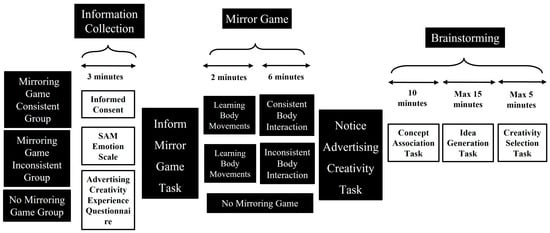
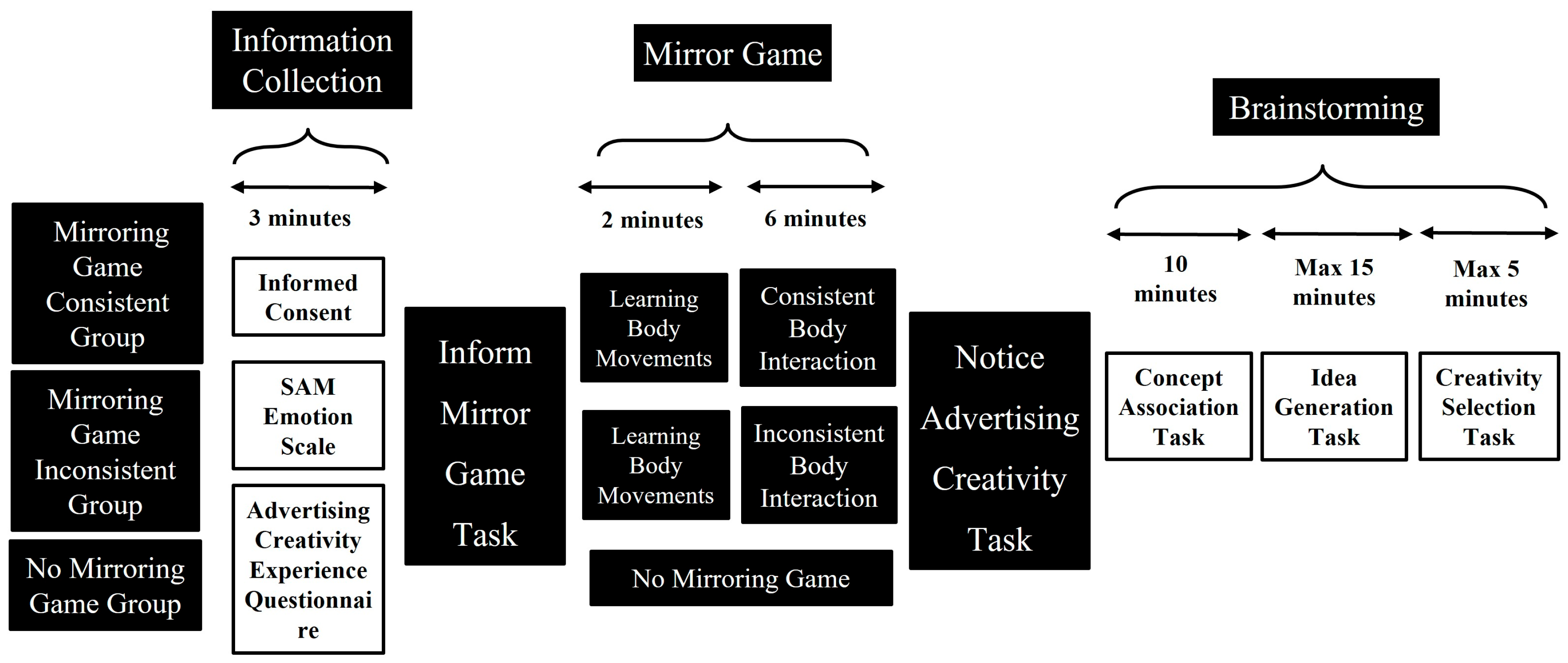

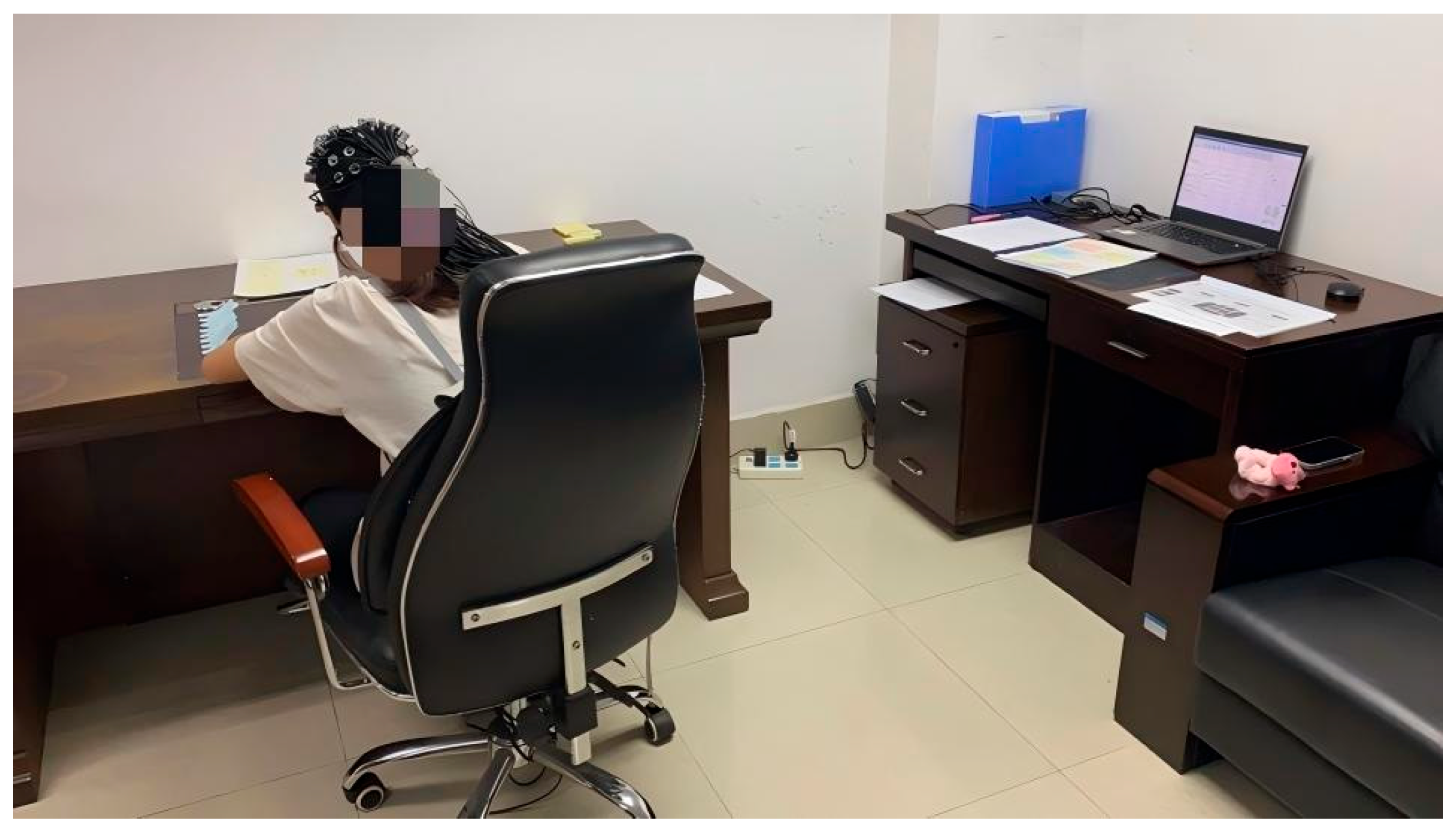
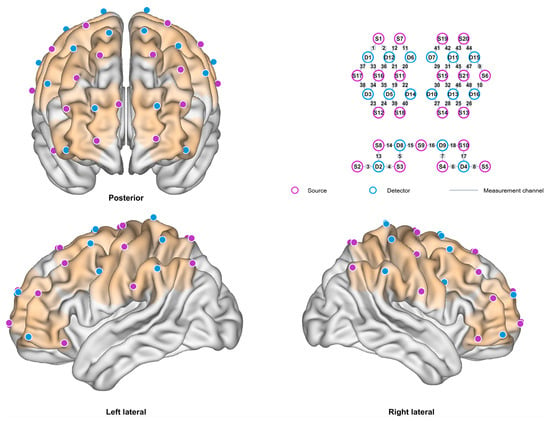
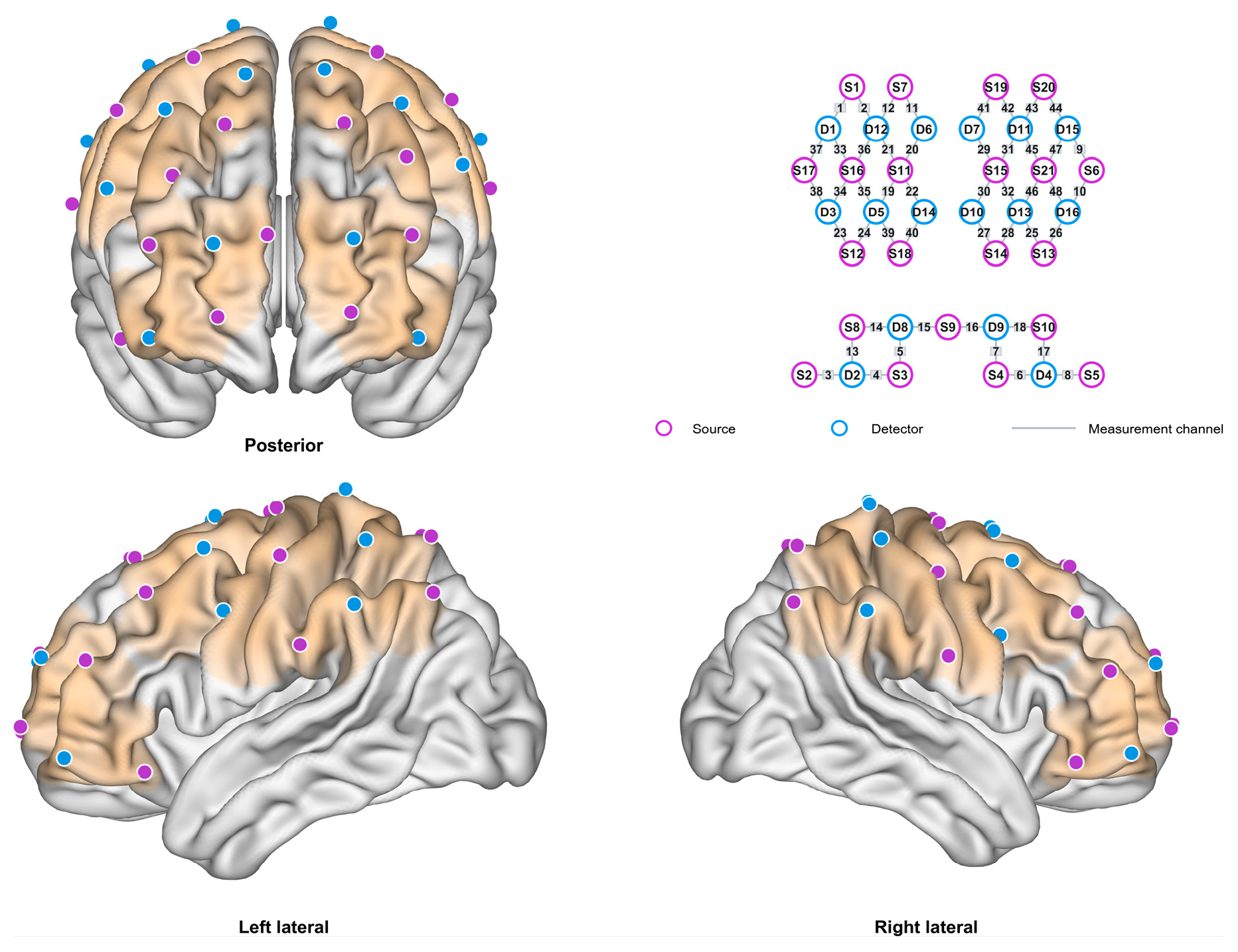
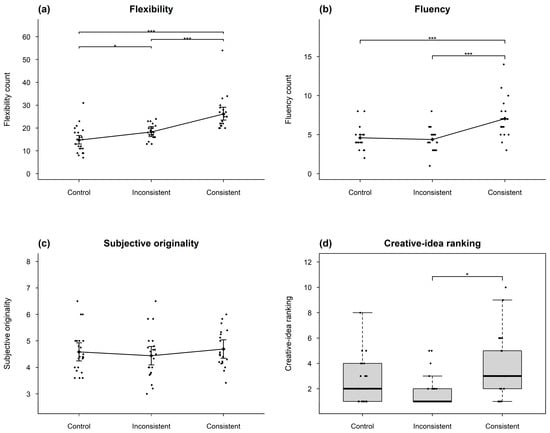
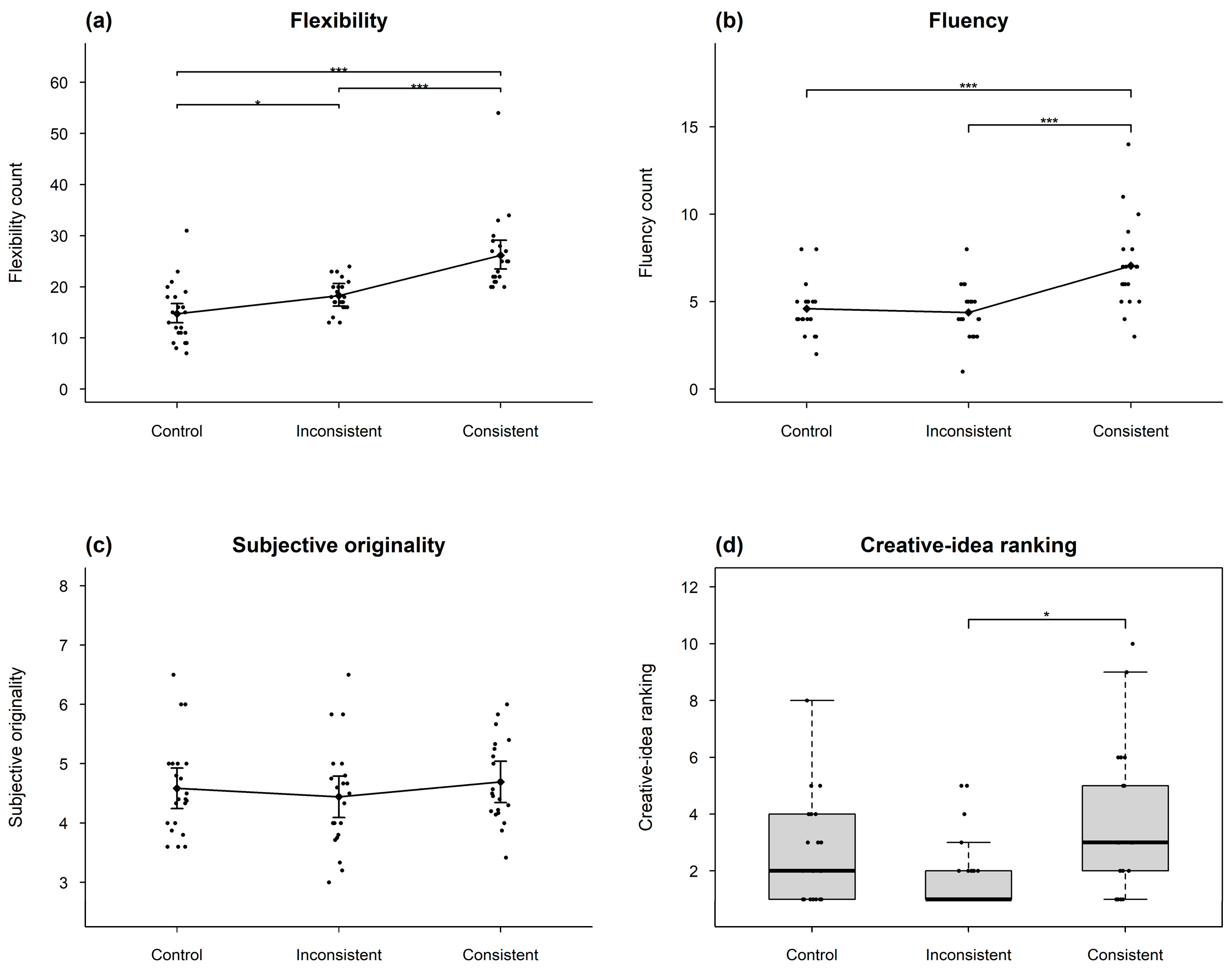
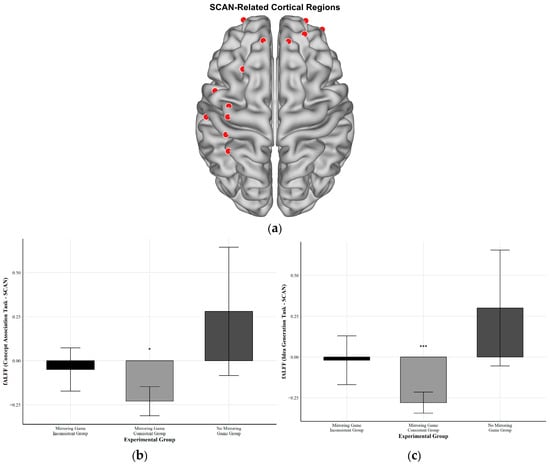
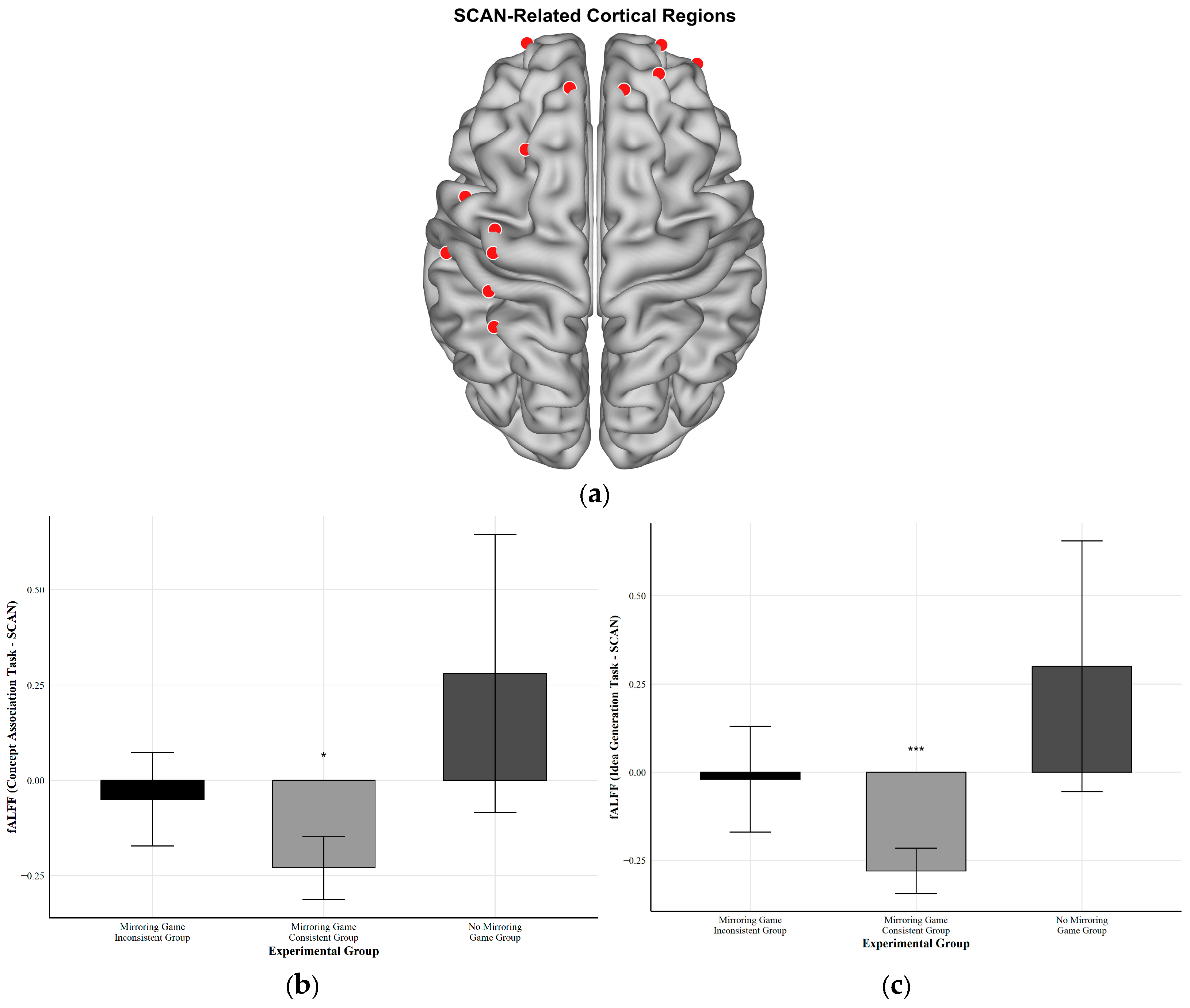
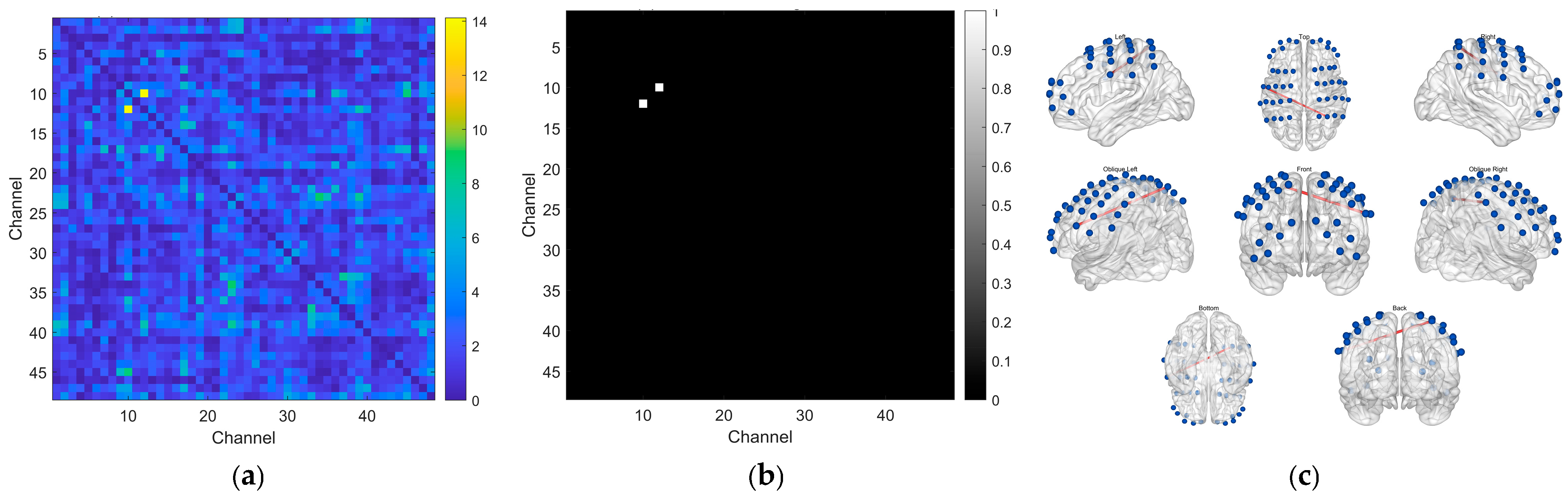
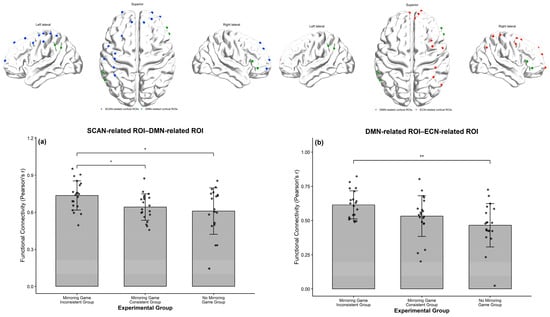
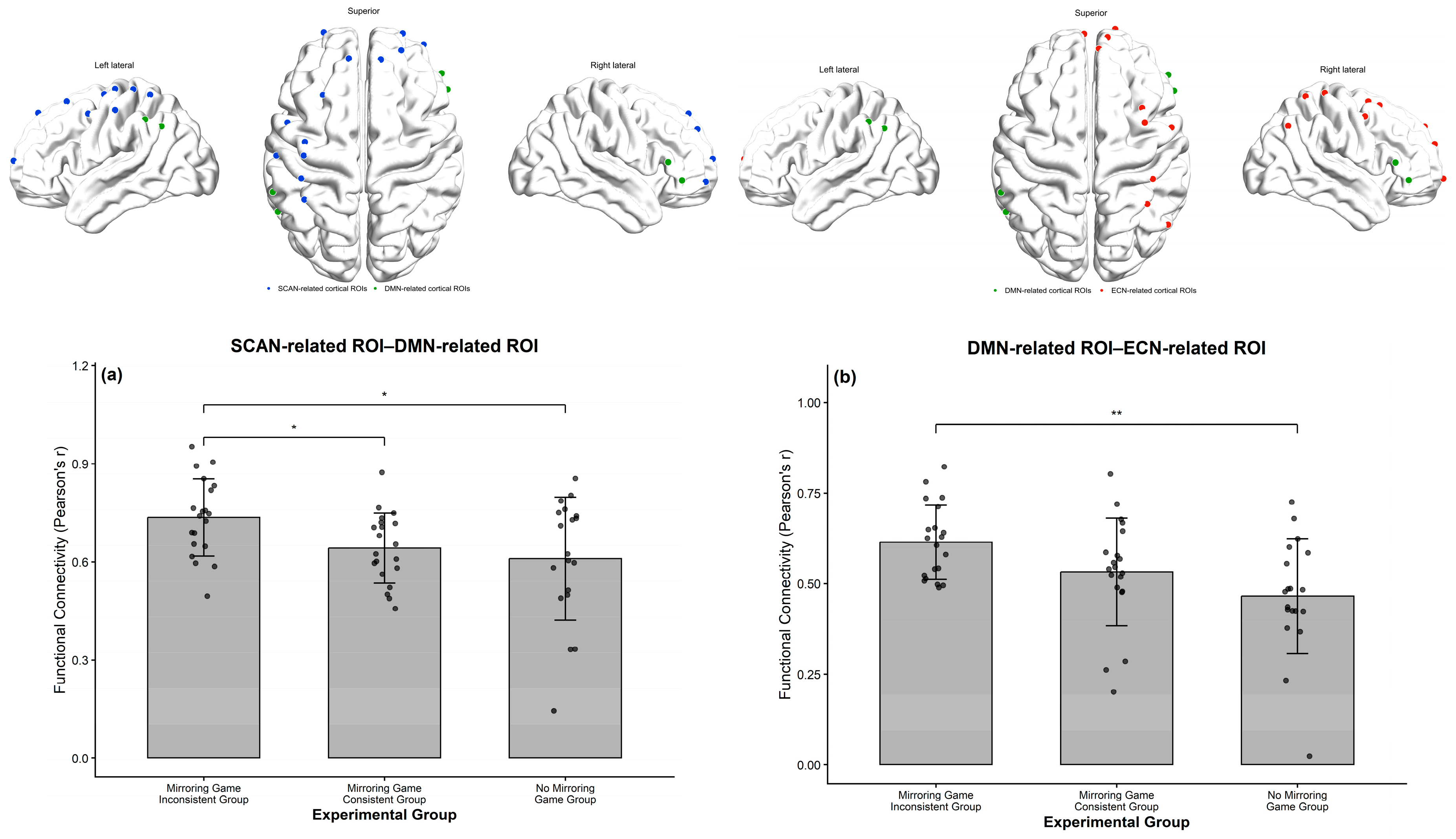
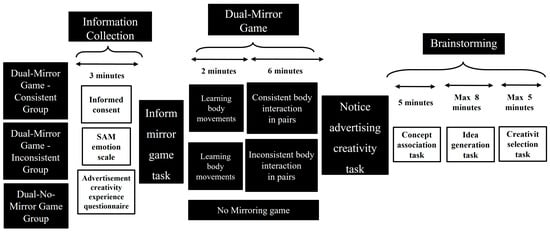
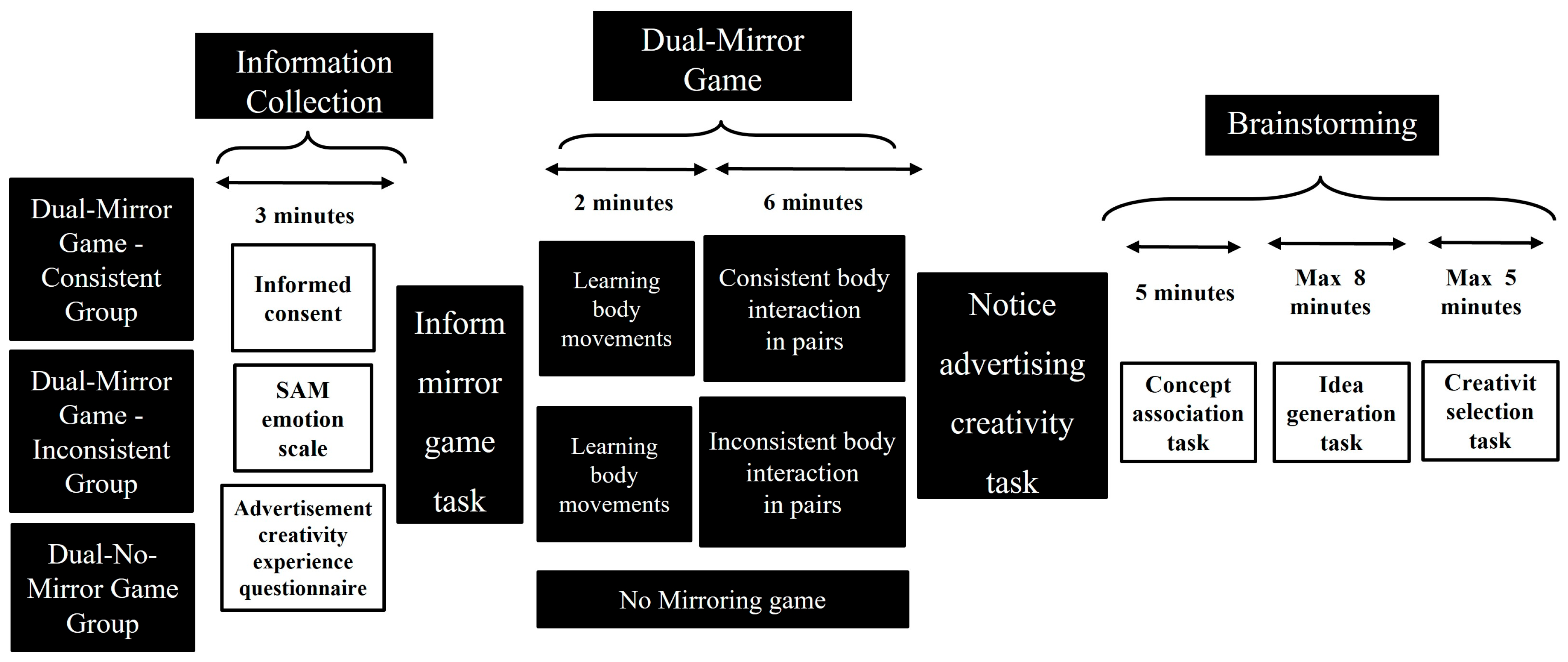
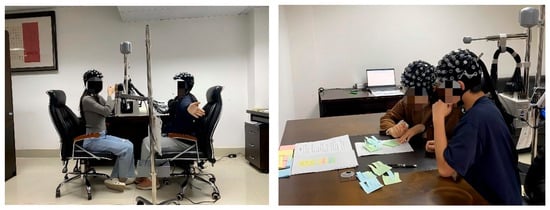
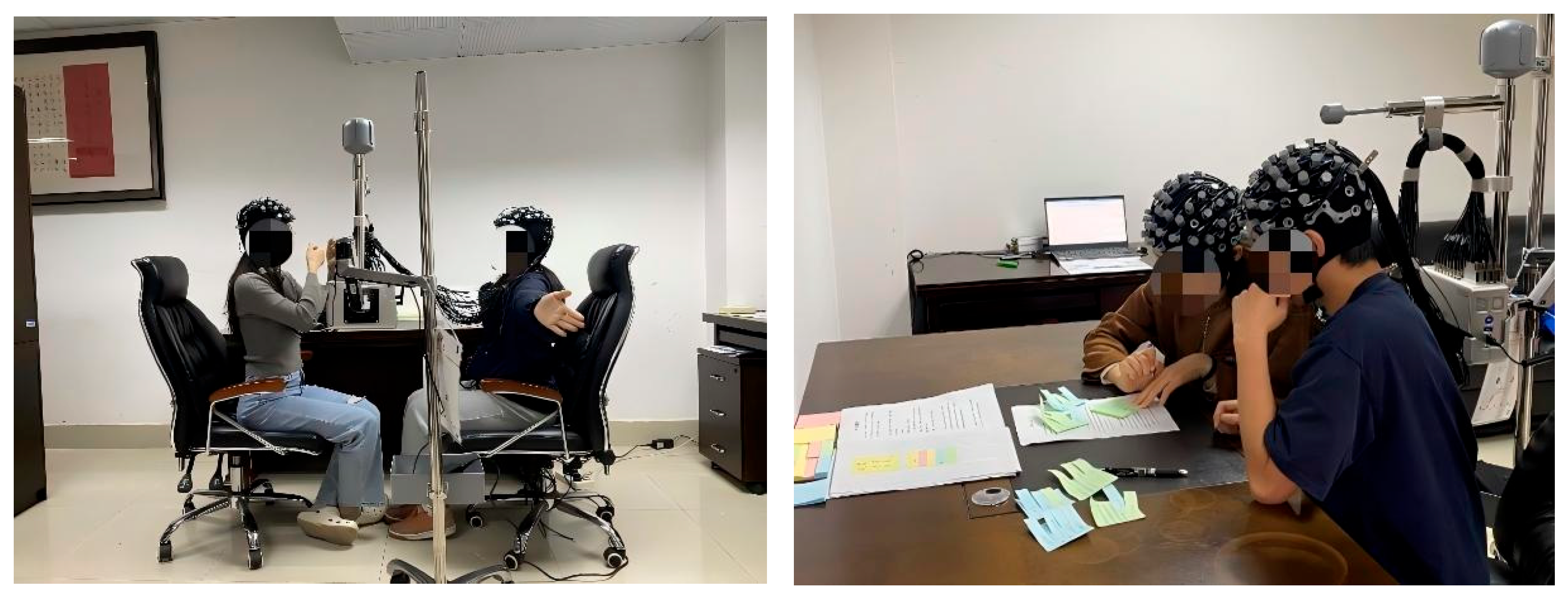
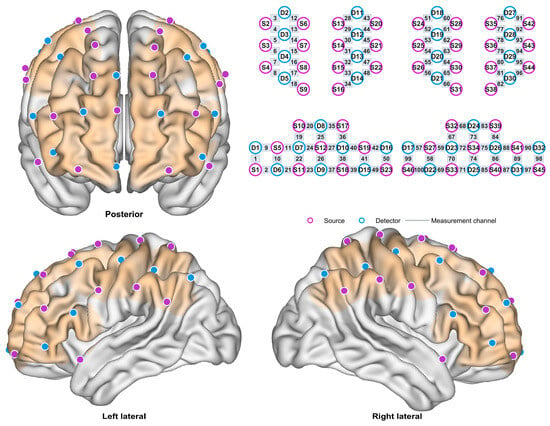
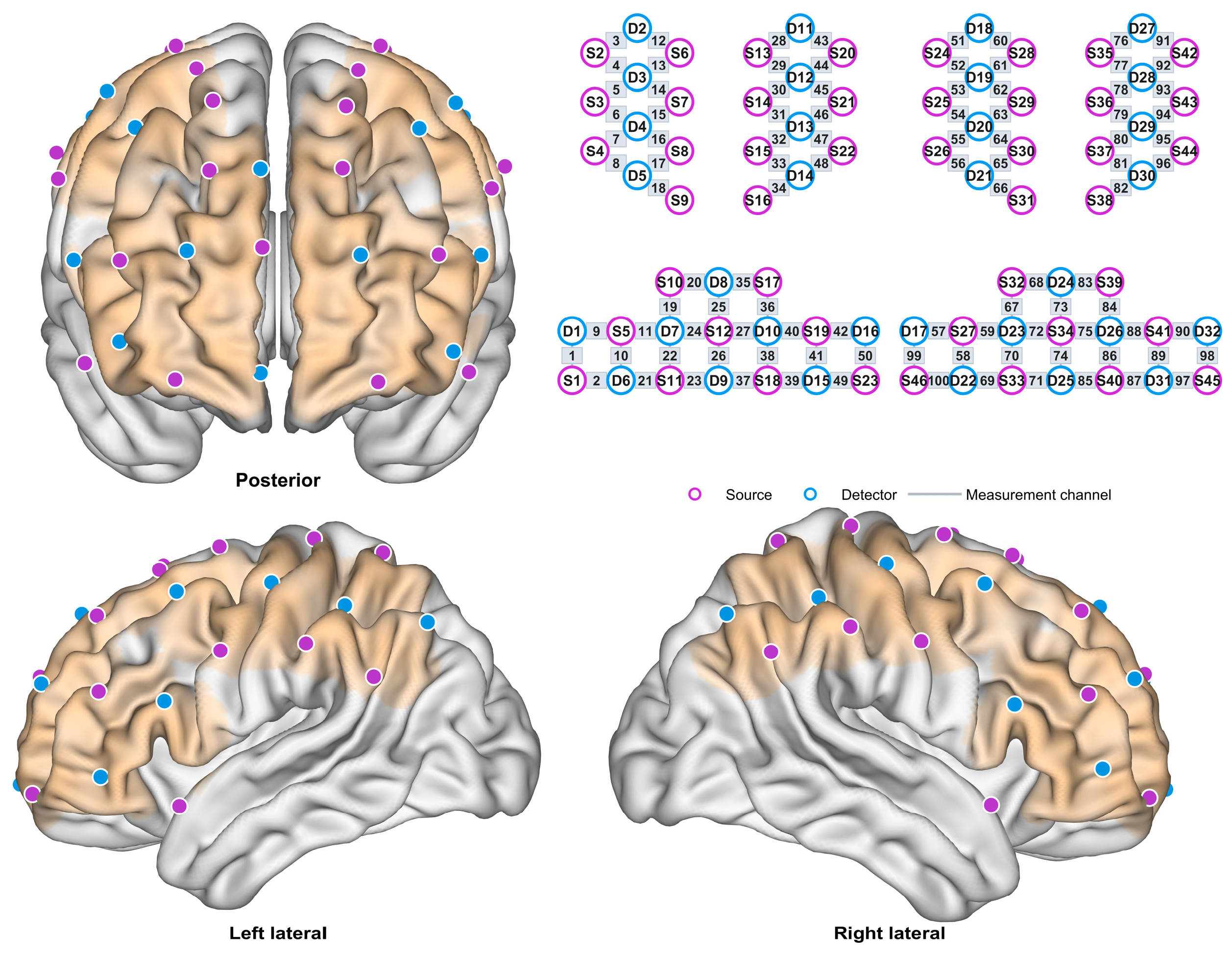
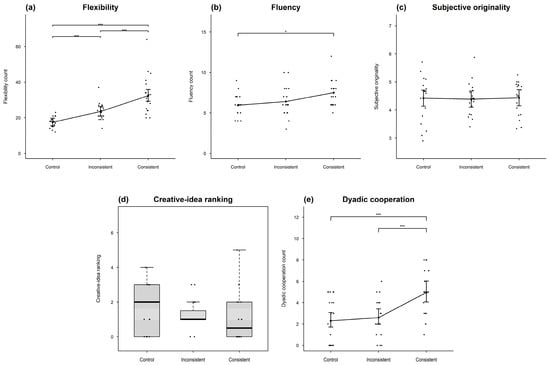
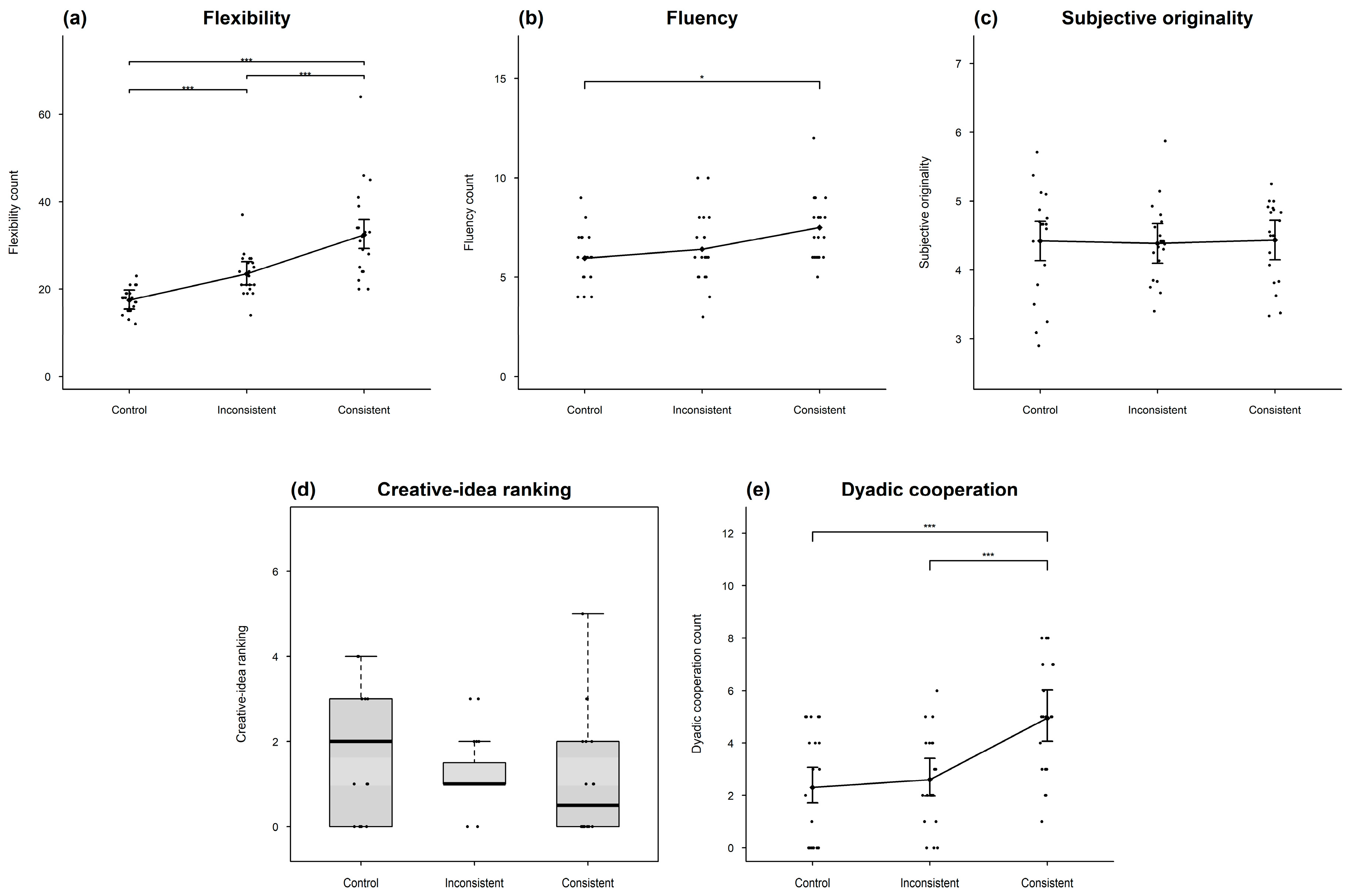
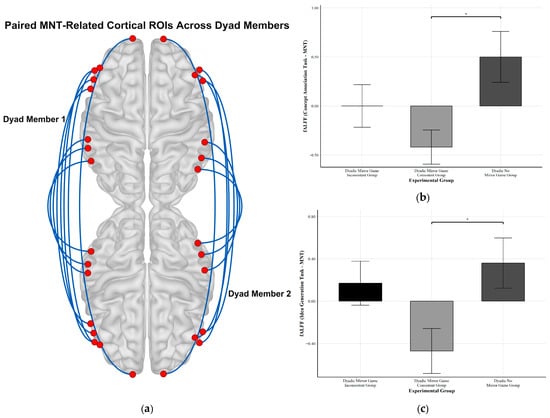
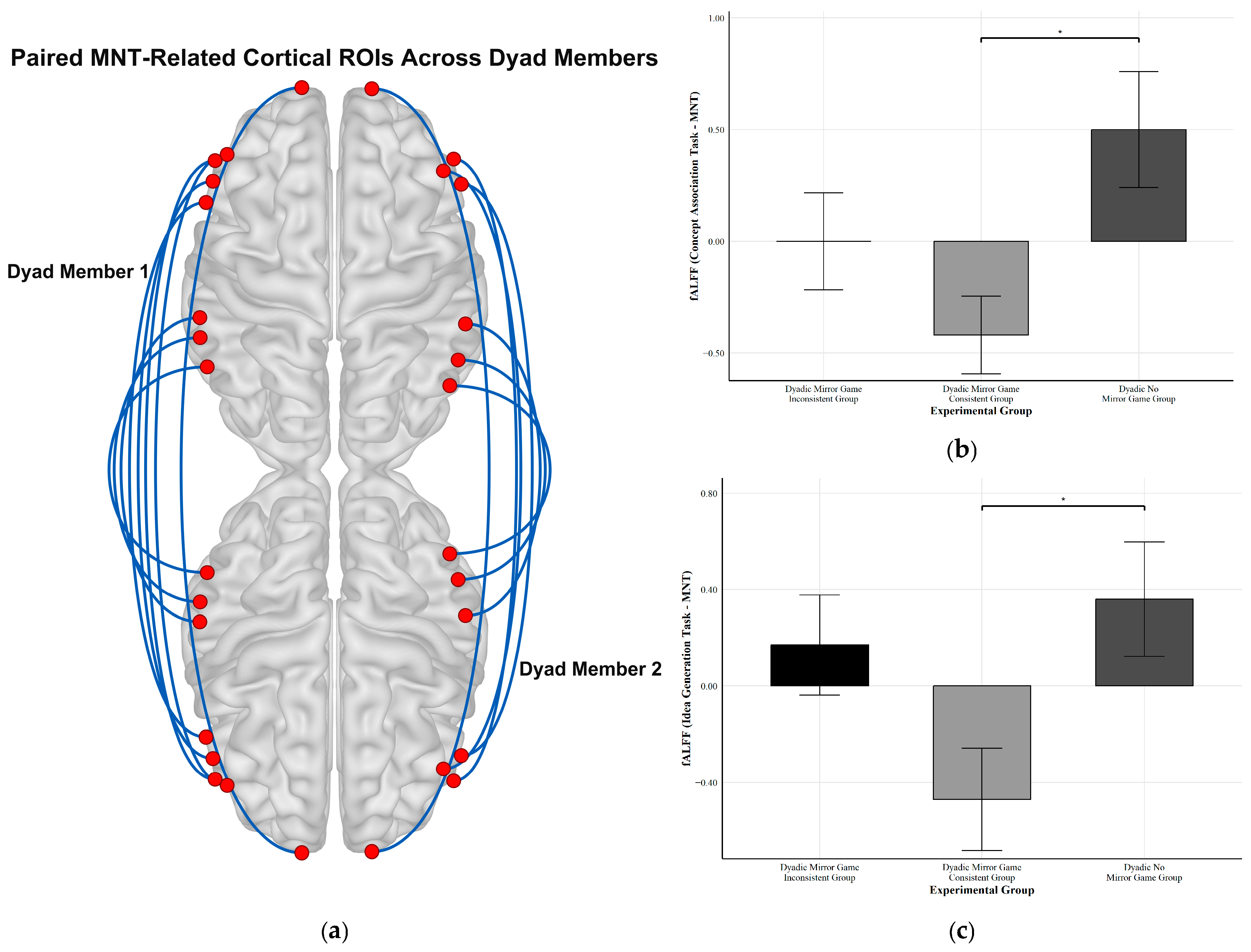
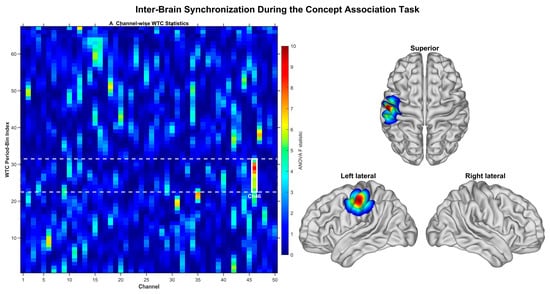
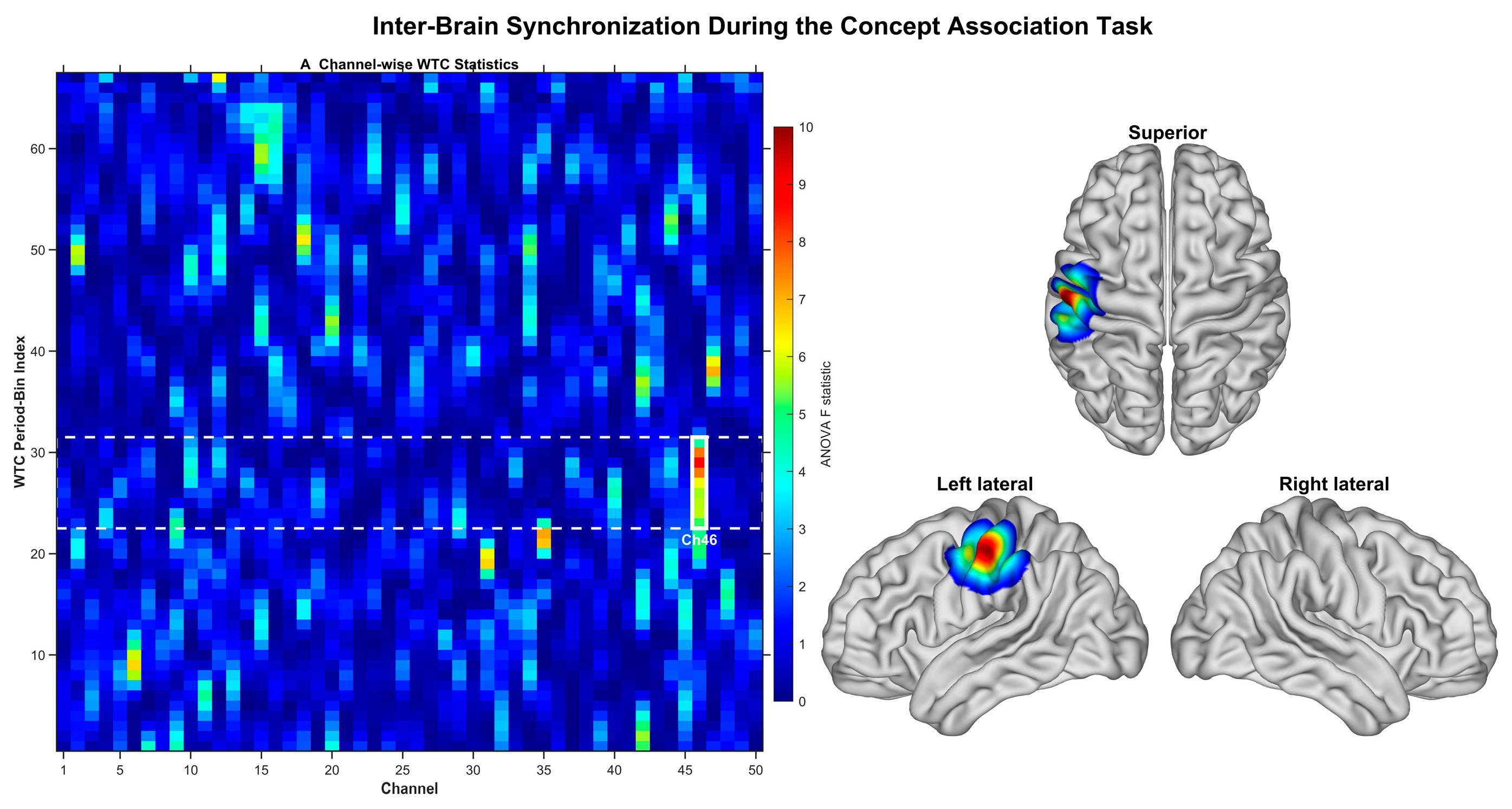
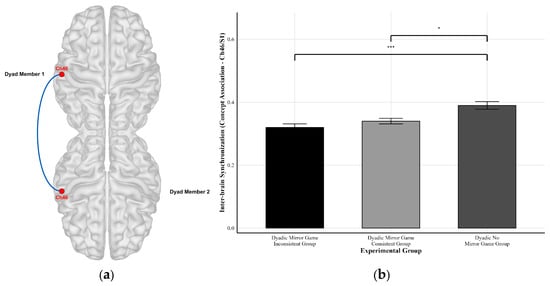
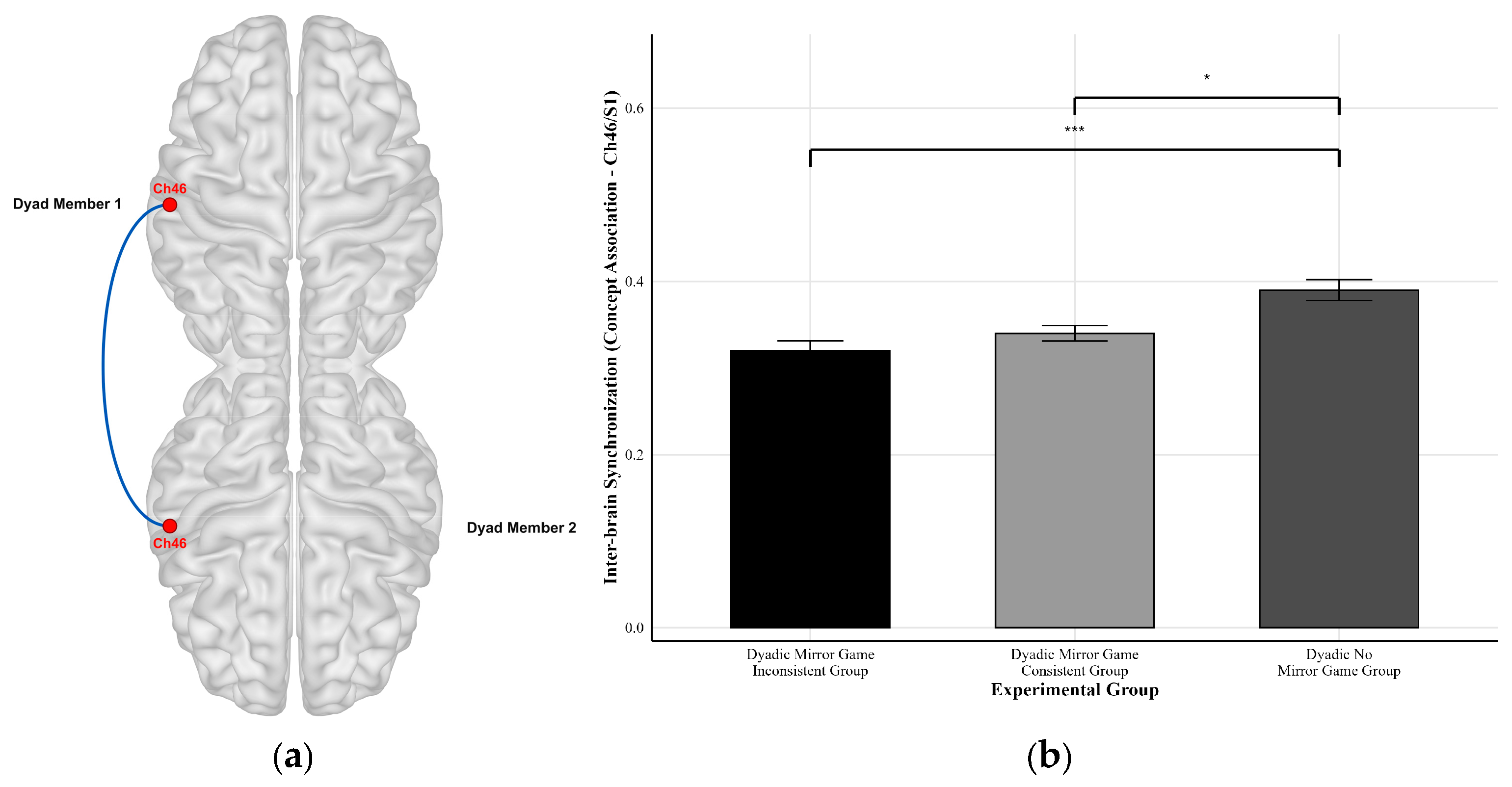
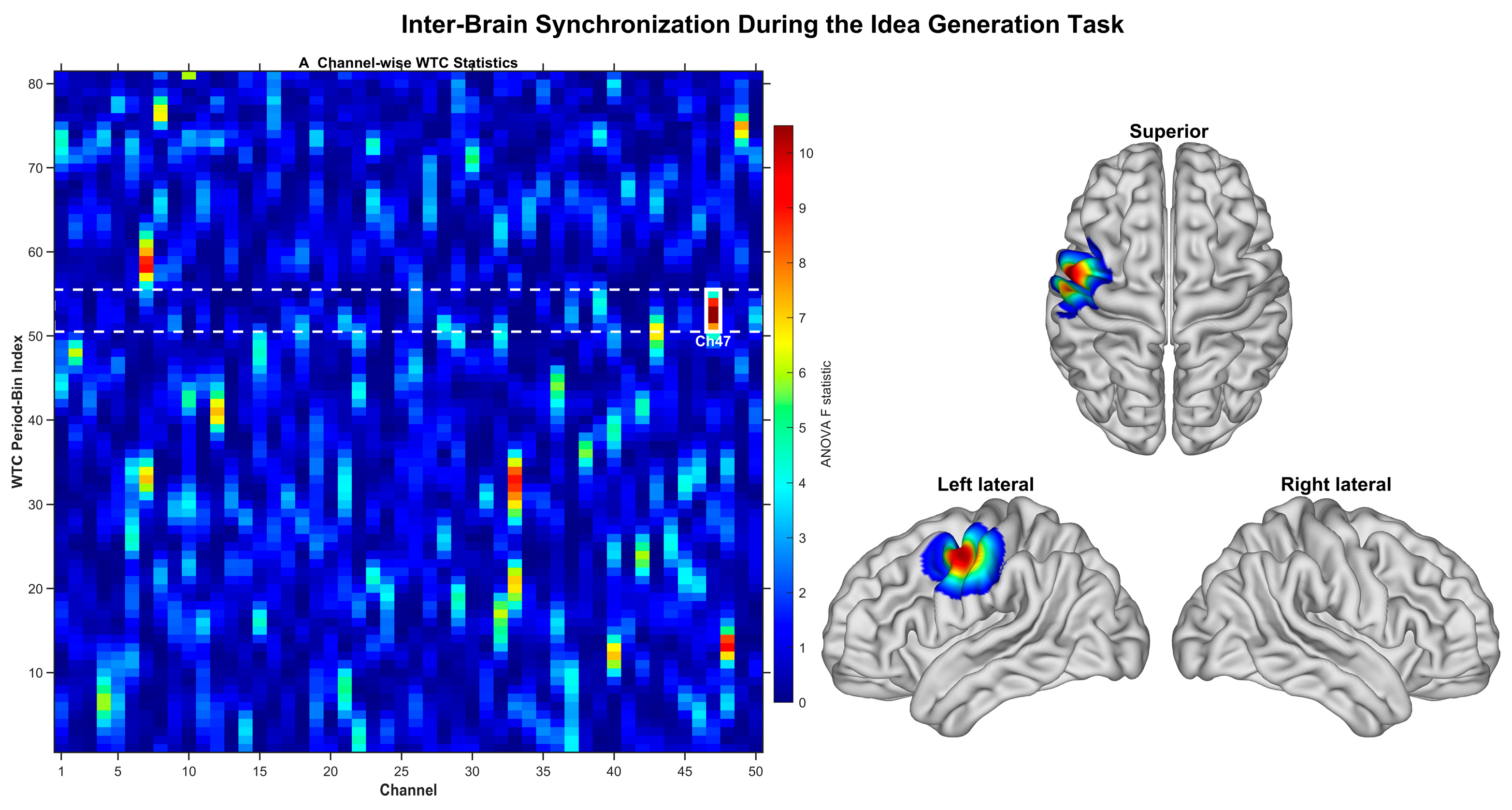
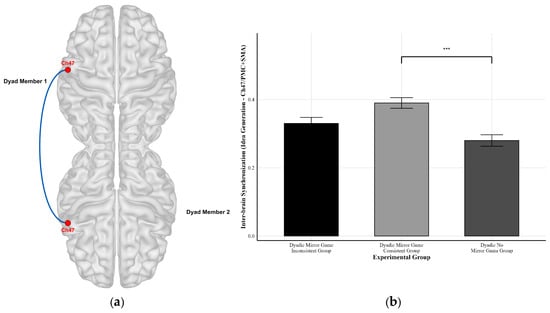
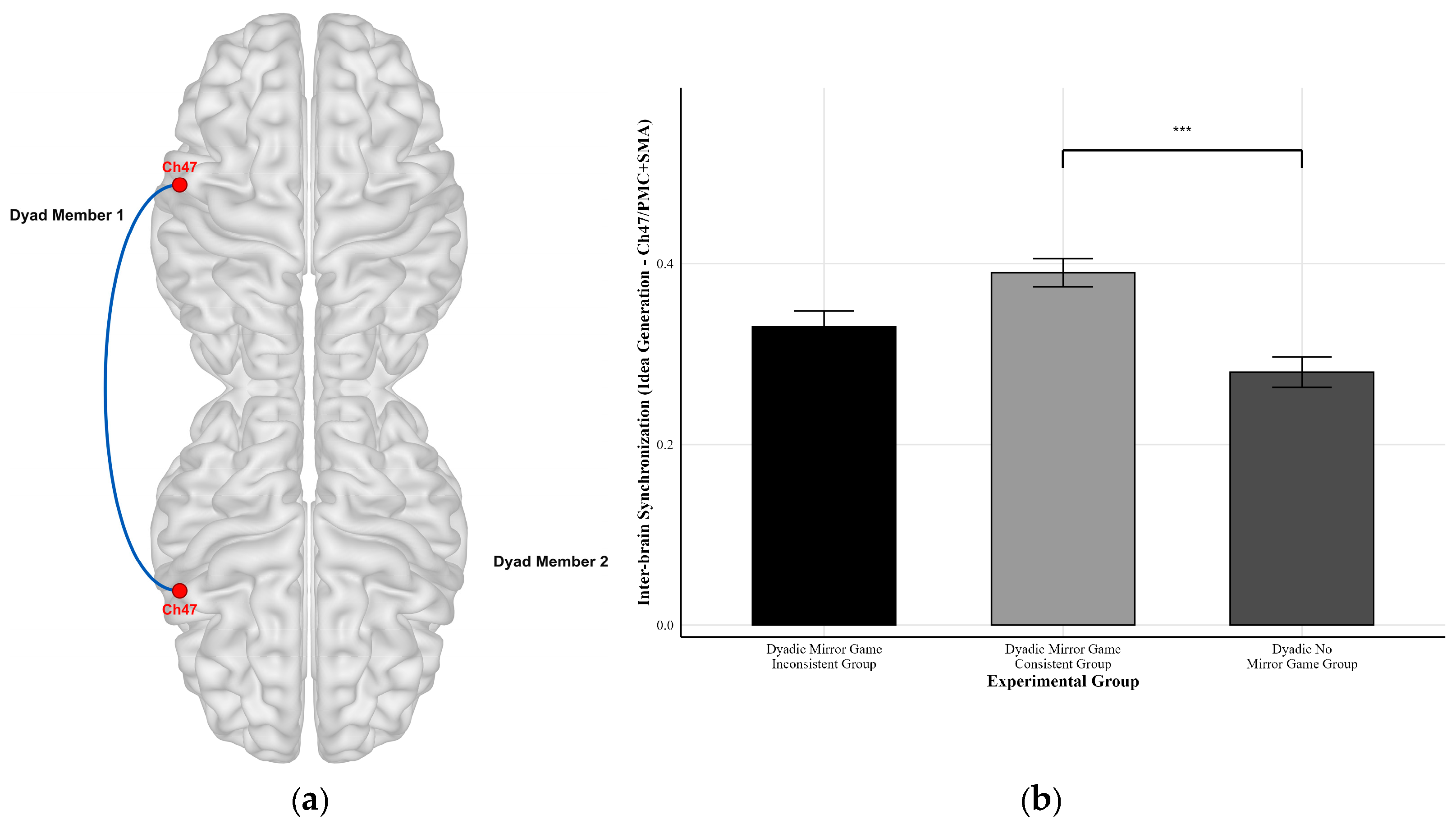

Disclaimer/Publisher’s Note: The statements, opinions and data contained in all publications are solely those of the individual author(s) and contributor(s) and not of MDPI and/or the editor(s). MDPI and/or the editor(s) disclaim responsibility for any injury to people or property resulting from any ideas, methods, instructions or products referred to in the content. |
© 2026 by the authors. Licensee MDPI, Basel, Switzerland. This article is an open access article distributed under the terms and conditions of the Creative Commons Attribution (CC BY) license.