


Abstract
Learning a foreign language requires learners to regulate their emotions, maintain motivation, and cope with various academic challenges. Building on the established literature on basic psychological needs (BPN) satisfaction in second-language education and grounded in self-determination theory (SDT), this study examined the relationships among emotional intelligence (EI), BPN satisfaction, resilience, and EFL achievement in a sample of 305 first-year students enrolled in mandatory foundation-year English courses at a single Saudi university. Structural equation modeling was used to estimate the direct associations among these constructs and the indirect associations between EI and resilience and between EI and EFL achievement through BPN satisfaction. EI was positively associated with BPN satisfaction and resilience but did not show a significant direct association with EFL achievement. BPN satisfaction was positively associated with both resilience and EFL achievement. EI also showed significant indirect associations with resilience and EFL achievement through BPN satisfaction. The proposed model accounted for approximately 60% of the variance in BPN satisfaction, 67% of the variance in resilience, and 27% of the variance in EFL achievement. Findings involving EFL achievement are preliminary given the measurement limitations of this construct. Overall, the findings advance our understanding of the relationships among EI, BPN satisfaction, resilience, and EFL achievement in an EFL context.
1. Introduction and Literature Review
Learning a foreign language is a complex and demanding process that extends far beyond the acquisition of linguistic knowledge and communicative skills (Duan et al., 2024; Kim & Kim, 2021; Xu & Hong, 2025). Successful language learning requires learners to continuously regulate their emotions, maintain motivation, cope with academic setbacks, and actively engage in challenging learning tasks (Kim & Kim, 2021; Xu & Hong, 2025). Throughout this process, learners frequently encounter communication anxiety, fear of making mistakes, self-doubt, and repeated experiences of failure (Duan et al., 2024; W. Qian & Masroor, 2026; Rui et al., 2025), all of which may hinder their engagement and academic achievement. Consequently, understanding the psychological factors that enable learners to cope with these challenges has become an important focus of research in foreign and second language education. In response to this growing interest, recent research has increasingly adopted perspectives from positive psychology to explain why some learners thrive despite the emotional and cognitive demands of language learning (Dewaele et al., 2019; Y. Wang et al., 2021). Rather than focusing mainly on learners’ weaknesses or difficulties, positive psychology emphasizes the personal strengths, positive emotions, and psychological resources that promote well-being, resilience, motivation, and academic success (MacIntyre et al., 2019; Y. Wang et al., 2021). Among these resources, emotional intelligence (EI), the satisfaction of Basic Psychological Needs (BPN), and resilience have emerged as particularly important constructs because they influence how learners perceive, regulate, and respond to learning experiences (Alamer, 2021; Alrabai & Alamer, 2022; Kim & Kim, 2021; C. Li, 2020).
A growing body of research has demonstrated that emotionally intelligent learners are generally better able to understand and manage their emotions, establish positive interpersonal relationships, and cope effectively with academic stress (Augusto-Landa et al., 2024; Mayer et al., 2008; McEown et al., 2024). In language-learning contexts, EI has also been associated with more positive emotional experiences, stronger engagement, and better academic performance (Chen & Zhang, 2022; C. Li, 2020; C. Li & Xu, 2019; McEown et al., 2024). Similarly, learners whose basic psychological needs for autonomy, competence, and relatedness are satisfied tend to exhibit higher motivation, engagement, and more adaptive learning behaviors (Alamer, 2021; Niemiec & Ryan, 2009; Zhen et al., 2017). At the same time, resilience helps learners to recover from setbacks, persist when they encounter difficulties, and maintain positive functioning despite the challenges inherent in foreign language learning (Cassidy, 2016; Kim & Kim, 2021; Zarrinabadi et al., 2022).
Self-Determination Theory (SDT) and BPN satisfaction have an established research base in second-language education. A systematic review by Al-Hoorie et al. (2025) documented three decades of research applying SDT and its mini-theories to second-language learning. Empirical studies have linked BPN satisfaction with vocabulary knowledge, self-determined motivation, boredom, and behavioral engagement (Alamer, 2021; Liu et al., 2025). Alamer (2021), for example, examined BPN satisfaction in relation to motivational orientations, effort, and vocabulary knowledge and found that BPN satisfaction was directly related to vocabulary knowledge. Liu et al. (2025) found that BPN satisfaction was directly associated with behavioral engagement and indirectly associated with it through boredom and through a sequential pathway involving self-determined motivation and boredom. Lisha (2024) also discussed intrinsic and extrinsic motivation in English learning in relation to basic psychological needs, drawing on previous empirical studies within an SDT framework. More recently, Oga-Baldwin and Ryan (2025) reviewed theoretical and empirical evidence concerning competence need satisfaction and its relationships with motivation and achievement in language learning. Collectively, this literature demonstrates that BPN satisfaction is already well established as an important component of language-learning motivation and outcomes.
Within this established literature, however, less attention has been given to how learners’ emotional competencies are associated with BPN satisfaction and how these constructs are jointly related to resilience and achievement. Previous language-learning studies have examined EI in relation to emotions and achievement (C. Li, 2020; C. Li & Xu, 2019), BPN satisfaction in relation to motivation, engagement, and achievement (Alamer, 2021; Elahi Shirvan & Alamer, 2024; Liu et al., 2025), and resilience in relation to motivation, engagement, and L2 proficiency (Danesh & Shahnazari, 2020; Kim & Kim, 2021; Zarrinabadi et al., 2022). Recent research has also reported associations between EI and BPN satisfaction (Chin et al., 2025; Vasiou et al., 2024) and between BPN satisfaction and resilience (Gao et al., 2025; Trigueros et al., 2024). Building on these findings, the present study examines the specific indirect pathways linking EI with resilience and EFL achievement through BPN satisfaction. Its contribution therefore lies not in introducing BPN satisfaction to language-learning research, but in connecting the established BPN literature with research on EI and resilience within a single EFL model.
1.1. Emotional Intelligence
EI generally refers to an individual’s capacity to perceive, understand, regulate, and use emotions effectively in oneself and in others (Mayer et al., 2008; Salovey & Mayer, 1990; Law et al., 2004). It reflects how people identify emotional cues, manage emotional reactions, and employ emotions in ways that support thinking, decision-making, and social interaction (Zhao et al., 2025; Xuan, 2025). EI is often viewed as an important psychological resource because it is associated with how students respond to academic demands, interpersonal challenges, and stressful learning situations (Shengyao et al., 2024; Yang & Duan, 2023; Xuan, 2025). EI has been widely studied over the past three decades and is now considered a key construct in educational psychology and EFL education (C. Li, 2020; Zhi et al., 2024). Its conceptual origins can be traced to earlier work on multiple intelligences, particularly the notions of intrapersonal and interpersonal intelligence, which emphasized individuals’ ability to understand themselves and others (Gardner, 1983). EI was later formally introduced within the broader framework of social intelligence by Salovey and Mayer (1990), who described it as the capacity to recognize and distinguish one’s own and others’ emotions and use this emotional information to guide thought and behavior (C. Li, 2020; Zhi et al., 2024). Over time, EI has been conceptualized from different theoretical perspectives, particularly the ability model and the trait model (C. Li, 2020; Petrides & Furnham, 2001; Zhi et al., 2024). Although these perspectives differ in their theoretical assumptions and assessment methods, both emphasize individuals’ capacity to perceive, understand, regulate, and use emotions effectively (Mayer & Salovey, 1997; Petrides & Furnham, 2001). In the present study, EI is conceptualized as learners’ self-perceived ability to perceive, regulate, understand, and use emotions effectively in educational contexts.
EI is widely regarded as an important factor associated with various aspects of human functioning including, for example, wellbeing, health, and overall quality of life (Maalouf et al., 2022; Shengyao et al., 2024). Unlike cognitive intelligence, which is generally considered relatively stable over time, EI can be developed and strengthened through experience and training (Dhliwayo & Coetzee, 2020; Shengyao et al., 2024). Research has shown that higher levels of EI are associated with better psychological wellbeing, as emotionally intelligent individuals are often more capable of coping with academic pressures, reducing stress, and lowering the risk of mental health difficulties such as anxiety and depression (Augusto-Landa et al., 2024; Xuan, 2025). EI has also been associated with stronger interpersonal relationships, improved collaboration, more positive learning attitudes, and greater social adaptability, all of which can enhance students’ learning experiences and academic outcomes (Thao et al., 2023; Xuan, 2025). In language learning contexts, higher levels of EI have been associated with greater classroom engagement (Maguire et al., 2017; McEown et al., 2024), positive emotions such as enjoyment (C. Li, 2020), lower levels of negative emotions such as anxiety, stress and boredom (Alrabai & Alamer, 2022; C. Li & Xu, 2019; McEown et al., 2024), stronger self-efficacy (Y. Wang & Wang, 2022), improved psychological wellbeing (Shengyao et al., 2024), and enhanced self-regulations and better teamwork abilities (Xuan, 2025). For example, in a six-week emotional intelligence intervention study involving 56 Chinese high school students, C. Li and Xu (2019) showed that the intervention successfully enhanced learners’ positive emotions, such as enjoyment, reduced negative emotions such as anxiety, and improved their overall emotional intelligence.
1.2. Basic Psychological Needs (BPN)
BPN satisfaction constitutes a central component of SDT (Deci & Ryan, 2000; Ryan & Deci, 2017). SDT identifies three fundamental needs: competence, autonomy, and relatedness. It proposes that BPN satisfaction supports growth, learning, and psychological development (Deci & Ryan, 2000; Ryan & Deci, 2017, 2020). Autonomy refers to experiencing volition and self-endorsement in one’s actions (Ryan & Deci, 2020; Trigueros et al., 2024). In educational settings, it reflects learners’ perceptions that they actively choose and regulate their learning rather than merely comply with external demands. Students who experience autonomy are more likely to demonstrate initiative, take responsibility for their learning, and engage actively in academic tasks (Niemiec & Ryan, 2009). Competence refers to a sense of effectiveness and the ability to attain desired outcomes (Deci & Ryan, 2000; Gao et al., 2025; Vansteenkiste et al., 2019). In language learning, it reflects learners’ confidence in their capacity to understand, use, and improve the target language. Students who perceive themselves as competent are more likely to persist through challenges, invest effort, and approach academic tasks confidently (Niemiec & Ryan, 2009; Zhen et al., 2017). Relatedness involves feeling connected to others and having a sense of belonging (Deci & Ryan, 2000; Vansteenkiste et al., 2019). In EFL classrooms, relatedness is reflected in supportive and respectful relationships with teachers and classmates. Beyond its theoretical importance, BPN satisfaction has significant implications for learners’ academic functioning, well-being, and adaptive development. Research grounded in SDT indicates that learners who experience greater autonomy, competence, and relatedness tend to demonstrate stronger motivation, engagement, and psychological well-being (Alamer, 2021; Y. Li et al., 2025; L. Qian & Qiu, 2026). BPN satisfaction has also been associated with grit (Elahi Shirvan & Alamer, 2024; Fu, 2025), willingness to communicate (Fu, 2025), self-determined motivation (Alamer, 2021), confidence (Trigueros et al., 2024), self-efficacy (Zhen et al., 2017), and achievement goals (Diseth et al., 2012). Beyond language education, studies in sport and physical education have also linked BPN satisfaction with engagement through motivational processes (De Francisco et al., 2018; Leo et al., 2022). Collectively, these findings suggest that BPN satisfaction is closely associated with academic functioning and learners’ emotional and motivational development. Conversely, insufficient BPN satisfaction has been associated with lower levels of motivation, engagement, well-being, and effective learning (Niemiec & Ryan, 2009; Ryan & Deci, 2017).
1.3. Resilience
Resilience generally refers to an individual’s ability to adapt positively to challenges, stress, and adversity (Cassidy, 2016; Masten et al., 1990; Wicaksono et al., 2023). It reflects the capacity to recover from difficulties, maintain psychological well-being, and continue functioning effectively despite setbacks. In educational contexts, resilience is commonly understood as students’ capacity to cope with academic challenges, persist in the face of difficulties, and sustain effort toward their learning goals (Romano et al., 2021; Sabouripour et al., 2021; Shengyao et al., 2024; Wicaksono et al., 2023). Rather than merely avoiding negative experiences, resilience involves actively managing and overcoming adversity in ways that support continued growth and academic achievement (Duan et al., 2024; Kim & Kim, 2021; Shengyao et al., 2024). Resilience has been conceptualized in several ways in the literature, including as a trait, a process, and an outcome (Fletcher & Sarkar, 2013). Early conceptualizations often viewed resilience as a relatively stable personal trait that enables individuals to cope with stress. More recent perspectives, however, increasingly conceptualize resilience as a dynamic and context-dependent process that develops over time through interactions between individuals and their environment. In educational settings, resilience is influenced not only by individual characteristics but also by contextual factors, such as the classroom environment, social support, and motivational conditions (Kim & Kim, 2021). Consistent with these contemporary perspectives, the present study conceptualizes resilience as a malleable psychological ability that can be fostered through both internal resources (e.g., emotional intelligence) and contextual conditions (e.g., satisfaction of basic psychological needs). This conceptualization aligns with the broader view of resilience as a malleable construct that plays a vital role in students’ academic development and success.
Resilience is particularly relevant in EFL learning because acquiring a foreign language often involves emotional, cognitive, and social challenges (Duan et al., 2024; Kim & Kim, 2021; Rui et al., 2025). Learners frequently experience communication anxiety, fear of making mistakes, difficulty expressing themselves, and pressure to perform in evaluative situations (Horwitz et al., 1986), all of which can lead to frustration, reduced confidence, and, in some cases, disengagement from learning. Consequently, resilience has increasingly been recognized as a crucial factor because it enables learners to cope effectively with academic challenges, setbacks, and stressful learning experiences while maintaining motivation, engagement, and performance (Romano et al., 2021; Sabouripour et al., 2021; Shengyao et al., 2024). In EFL settings, resilient learners are therefore more likely to manage the emotional and cognitive demands of language learning successfully and continue striving toward language proficiency under challenging conditions (Danesh & Shahnazari, 2020; Kim & Kim, 2021). Resilience is also particularly relevant in contemporary educational environments, where university students must adapt to demanding workloads and online or blended learning formats that may be associated with their psychological well-being and academic performance (Rui et al., 2025; Wicaksono et al., 2023).
1.4. Theoretical and Empirical Integration
Recent research has highlighted the relationship between EI and BPN satisfaction. SDT traditionally emphasizes the role of environmental and interpersonal supports in satisfying the needs for autonomy, competence, and relatedness (Deci & Ryan, 2000; Ryan & Deci, 2017). However, learners may differ in how they interpret and respond to the same learning environment. EI represents a relatively general personal capacity to perceive, understand, use, and regulate emotions, whereas BPN satisfaction reflects learners’ experiences within a particular context. Learners with higher EI may interpret classroom challenges more constructively, regulate emotional reactions to difficulties, feel more confident when completing learning tasks, and manage relationships with teachers and classmates more effectively. These emotional competencies may therefore be associated with greater satisfaction of autonomy, competence, and relatedness. Empirical evidence supports an association between these constructs. Chin et al. (2025) found that EI was positively associated with BPN satisfaction among university students. Similarly, Vasiou et al. (2024) found a significant indirect relationship between EI and university students’ happiness through BPN satisfaction. Zhang et al. (2026) also identified a significant indirect relationship between EI profiles and well-being through BPN satisfaction among Chinese university students. Based on the distinction between EI as a relatively general emotional capacity and BPN satisfaction as a context-specific experience, the proposed model specifies a directional path from EI to BPN satisfaction for theoretical purposes. Nevertheless, this ordering is theoretical rather than temporal, and reciprocal or reverse relationships remain plausible.
EI may also be directly associated with learners’ resilience. Individuals with higher EI are generally better able to understand and regulate their emotional reactions, which enable them to cope more effectively with challenges, setbacks, and stressful situations. Mohamed et al. (2025), for example, found that EI was positively associated with resilience among university students, suggesting that emotionally intelligent students possess a greater capacity to adapt to academic pressures and adversity. Similarly, L. Li and Gao (2026) reported positive relationships between EI and psychological resilience among EFL learners, with resilience involved in the indirect association between EI and academic procrastination. Shengyao et al. (2024) also found that EI was positively related to resilience and reported significant indirect associations between EI and both psychological well-being and academic achievement through resilience. Alrabai and Alamer (2022), likewise, reported an indirect association between L2 EI and resilience through positive and negative classroom emotions. Their findings indicate that emotionally intelligent learners may develop greater resilience because they experience more enjoyment and are better able to manage potentially debilitating emotions such as anxiety and boredom. Overall, the evidence suggests that EI constitutes an important psychological resource associated with resilience both directly and indirectly through learners’ emotional experiences and coping processes.
A growing body of research has also identified a positive relationship between EI and academic performance. In general higher-education contexts, Bordbar et al. (2025) found that EI positively predicted academic performance, both directly and indirectly through academic self-regulation. Similarly, Shengyao et al. (2024) found positive relationships between EI and academic achievement among university students. In language-learning contexts, Chen and Zhang (2022) reported that global EI positively predicted overall English performance as well as listening and speaking achievement among Chinese EFL learners. C. Li (2020) likewise found that EI was positively related to both perceived and actual English achievement, with foreign language enjoyment partially mediating this relationship. More recently, R. Wang and Xu (2025) and Xu and Hong (2025) showed that EI was associated with language-learning performance through emotional and motivational factors, including willingness to communicate, boredom, motivation, and grit. Collectively, these findings indicate that EI is associated with academic performance and EFL achievement both directly and through emotional and motivational variables.
In addition to EI, BPN satisfaction may provide an important motivational foundation for resilience. According to SDT, learners function more effectively when their needs for competence, autonomy, and relatedness are satisfied (Deci & Ryan, 2000; Ryan & Deci, 2017). Autonomy satisfaction allows learners to experience volition and ownership of their learning, competence satisfaction strengthens their confidence in managing challenging tasks, and relatedness satisfaction provides a sense of social connection and support (Niemiec & Ryan, 2009; Ryan & Deci, 2017). Together, these experiences may strengthen learners’ ability to cope with difficulties and persist following academic setbacks. Empirical evidence supports this relationship. Trigueros et al. (2024) identified positive relationships among BPN satisfaction, resilience, and confidence in English. Gao et al. (2025) similarly found that BPN satisfaction positively predicted resilience among tertiary EFL learners engaged in informal digital English learning. These findings suggest that learners are more likely to respond adaptively to language-learning difficulties when they experience volition, effectiveness, and interpersonal support.
BPN satisfaction may also be associated with EFL achievement through adaptive self-perceptions, autonomous motivation, sustained effort, engagement, and persistence. For example, Alamer (2021) found that satisfaction of learners’ BPN was directly associated with vocabulary knowledge, which highlights its importance for language learning. Similarly, Elahi Shirvan and Alamer (2024) reported an indirect association between learners’ BPN satisfaction and L2 achievement through perseverance of effort. N. Wang (2024) further found that BPN satisfaction was positively associated with English achievement among Chinese EFL undergraduates, with this relationship fully mediated by learners’ English self-concept. This finding suggests that satisfying learners’ psychological needs may enhance achievement by strengthening their perceptions of themselves as capable language learners. Likewise, Y. Wang et al. (2024) reported an indirect association between perceived teacher autonomy support and academic English speaking performance through BPN satisfaction and classroom engagement. Evidence from broader educational contexts has also linked BPN satisfaction with self-efficacy, achievement goals, engagement, and academic achievement (Diseth et al., 2012; Zhen et al., 2017). Thus, learners who feel autonomous in their decisions, competent in performing language tasks, and connected to teachers and classmates may be more likely to develop positive academic self-perceptions, engage actively, invest sustained effort, and achieve better EFL outcomes. Taken together, these relationships provide a theoretical basis for examining indirect associations through BPN satisfaction. Emotionally intelligent learners might be better able to regulate negative emotional reactions, make adaptive learning choices, develop confidence in their capabilities, and establish supportive relationships with others. These emotional competencies may be associated with greater satisfaction of autonomy, competence, and relatedness, which may also be related to the motivational and psychological resources learners draw upon to persist through difficulties and perform successfully. Existing studies provide initial support for BPN satisfaction as a possible indirect pathway between EI and positive outcomes such as happiness, engagement, and well-being (Chin et al., 2025; Vasiou et al., 2024; Zhang et al., 2026). However, the indirect associations between EI and both resilience and EFL achievement through BPN satisfaction remain insufficiently examined, particularly among university EFL learners.
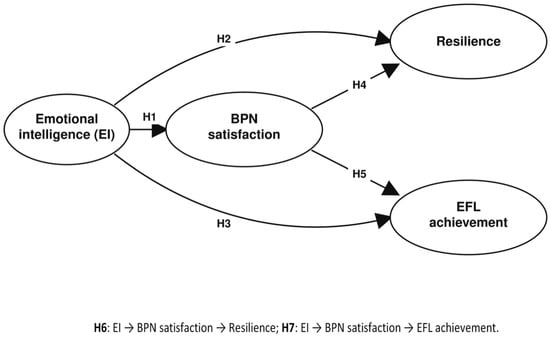
EI, BPN satisfaction, and resilience are each supported by established bodies of research. The present study builds on this literature by examining the associations among EI, BPN satisfaction, resilience, and EFL achievement. More specifically, it examines whether EI is indirectly associated with resilience and EFL achievement through BPN satisfaction. Accordingly, the proposed model specifies direct associations between EI and BPN satisfaction, resilience, and EFL achievement, as well as between BPN satisfaction and both resilience and EFL achievement. It also specifies indirect associations between EI and these two variables through BPN satisfaction. By bringing together emotional competencies, psychological need satisfaction, resilience, and achievement, the framework offers a theoretically informed examination of these relationships among first-year students enrolled in mandatory foundation-year English courses at a single Saudi university.
2. Hypotheses and Proposed Model
H1.
Emotional intelligence is positively associated with BPN satisfaction.
H2.
Emotional intelligence is positively associated with resilience.
H3.
Emotional intelligence is positively associated with EFL achievement.
H4.
BPN satisfaction is positively associated with resilience.
H5.
BPN satisfaction is positively associated with EFL achievement.
H6.
Emotional intelligence is positively and indirectly associated with resilience through BPN satisfaction.
H7.
Emotional intelligence is positively and indirectly associated with EFL achievement through BPN satisfaction.
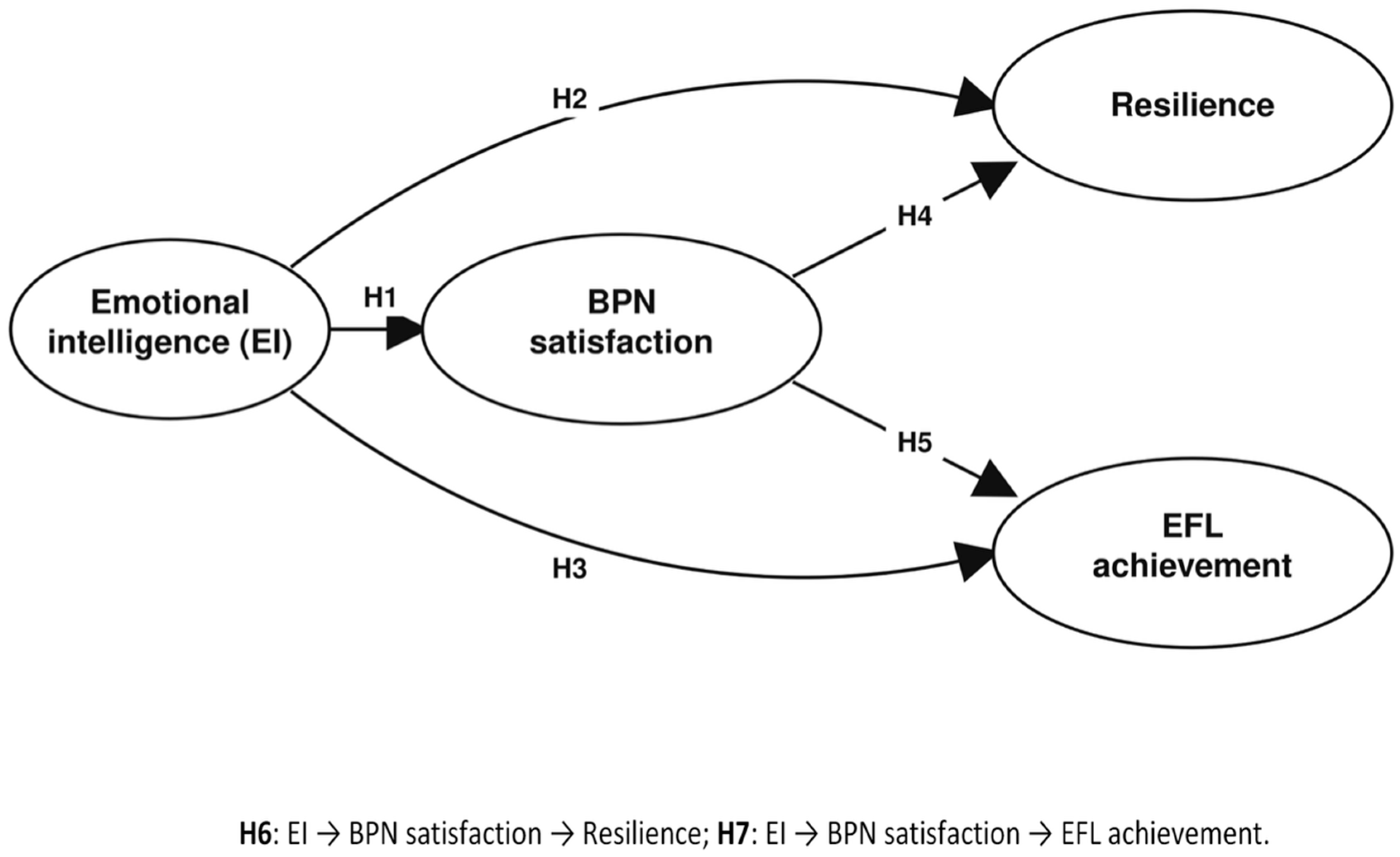
Collectively, these hypotheses form the proposed structural model illustrated in Figure 1.
Figure 1.
Hypothesized Structural Model.
3. Methods
3.1. Sample
The participants were 305 first-year undergraduate students enrolled in a foundation year program at a public university in Saudi Arabia. The sample consisted of 166 males (54.4%) and 139 females (45.6%), with ages ranging from 18 to 22 years. As part of the foundation-year program, all students were required to complete mandatory elementary-level English courses before beginning their major studies. The courses were designated elementary-level by the institution; participants’ English proficiency was not independently assessed. The participants represented scientific, medical, and arts and humanities pathways. This population was selected because the foundation year represents an important transition between secondary and university education. During this period, students are required to adapt to university-level academic expectations while developing the English-language skills needed for their subsequent studies. The mandatory nature of the English courses also meant that students were likely to differ in their interest, motivation, and emotional adjustment to language learning, making this context relevant to the examination of EI, BPN satisfaction, and resilience. Participants were recruited using convenience sampling and voluntarily completed an online questionnaire. Prior to their participation, students were informed about the purpose of the study and assured that their responses would remain anonymous and confidential. Ethical approval for the study was obtained from the university’s research ethics committee, and informed consent was obtained from all participants before data collection.
3.2. Instruments
EI was assessed using the Wong and Law Emotional Intelligence Scale (WLEIS) developed by Law et al. (2004). The instrument consists of 16 items distributed across four dimensions: Self Emotion Appraisal (SEA, four items), Others’ Emotion Appraisal (OEA, four items), Use of Emotion (UOE, four items), and Regulation of Emotion (ROE, four items). BPN satisfaction was assessed using the BPN-L2 scale developed by Alamer (2021). The scale comprises 12 items distributed across three dimensions: autonomy (four items), competence (four items), and relatedness (four items), which represent the basic psychological needs proposed by Self Determination Theory. Resilience was measured using the Brief Resilience Scale developed by Smith et al. (2008). The six-item scale measures individuals’ capacity to bounce back or recover from stress and setbacks. All items across these instruments were rated on a five-point Likert scale ranging from 1 (strongly disagree) to 5 (strongly agree). EFL achievement was assessed using two self-reported indicators of students’ performance in their English courses. First, participants reported their final grade in a major English course completed during the previous semester. Second, they reported their most recent score on a quiz, test, or midterm examination in their current English course. Responses to both indicators were recorded on a five-point scale, with higher scores indicating higher levels of English-language achievement. Achievement was specified as a latent construct represented by these two indicators. Self-reported indicators were used because the researcher did not have access to official grades and the anonymous survey responses could not be linked to students’ academic records. Although this approach allowed achievement to be included while preserving participants’ anonymity, the self-reported scores may be subject to recall error and response bias. To enhance clarity and ensure participants’ full understanding of the questionnaire items, all instruments were translated into Arabic, the participants’ native language. The accuracy of the translation was verified through the independent back-translation procedure proposed by Brislin (1970).
3.3. Data Analysis Procedures
Data were analyzed using Jamovi (version 2.6.19.0) and the SEMLj module. Descriptive statistics and Pearson correlation coefficients were first computed for all study variables. A confirmatory factor analysis (CFA) was then conducted to evaluate the measurement model and examine the reliability and convergent validity of the constructs. EI and BPN satisfaction were specified as second-order latent constructs, whereas resilience and achievement were modeled as first-order latent constructs. Model fit was evaluated using the Comparative Fit Index (CFI), Tucker–Lewis Index (TLI), Root Mean Square Error of Approximation (RMSEA), and Standardized Root Mean Square Residual (SRMR). Based on commonly used guidelines, CFI and TLI values of 0.90 or higher and RMSEA and SRMR values below 0.08 were considered indicative of acceptable model fit (Kline, 2023). Following the evaluation of the measurement model, structural equation modeling (SEM) was conducted to estimate the hypothesized direct associations among the study constructs. Finally, the indirect associations were estimated and their statistical significance was evaluated using bias-corrected bootstrap confidence intervals based on 5000 bootstrap resamples.
4. Results
4.1. Preliminary Analyses
Table 1 presents the descriptive statistics and correlations among the study variables. The results showed that participants reported relatively high levels of EI (M = 4.01, SD = 0.69), BPN satisfaction (M = 3.98, SD = 0.71), resilience (M = 3.89, SD = 0.83), and achievement (M = 4.12, SD = 0.80). The skewness values ranged from −1.243 to −0.436, while the kurtosis values ranged from 0.242 to 1.771, indicating no serious violations of univariate normality.
Table 1.
Descriptive Statistics and Correlations Among the Study Variables.
Pearson correlation analyses showed significant positive relationships among all study variables. EI was positively associated with BPN satisfaction (r = 0.646, p < .001), resilience (r = 0.698, p < .001), and achievement (r = 0.211, p < .001). Similarly, BPN satisfaction was positively related to resilience (r = 0.638, p < .001) and achievement (r = 0.366, p < .001). Resilience was also positively correlated with achievement (r = 0.218, p < .001).
Multivariate normality was assessed using Mardia’s coefficients. The results indicated significant multivariate skewness (χ2 = 27,379.97, p < .001) and kurtosis (z = 118.91, p < .001), suggesting a violation of multivariate normality. Therefore, robust maximum likelihood estimation (MLR) was employed in the subsequent analyses (Kline, 2023).
4.2. Measurement Model
A CFA was conducted to evaluate the measurement model. EI and BPN satisfaction were specified as second order constructs. EI was represented by self emotion appraisal (SEA), others’ emotion appraisal (OEA), use of emotion (UOE), and regulation of emotion (ROE), whereas BPN satisfaction was represented by autonomy, competence, and relatedness.
The measurement model demonstrated an acceptable fit to the data: Yuan–Bentler scaled χ2(581) = 1017.38, p < .001, CFI = 0.910, TLI = 0.903, RMSEA = 0.060 (95% CI [0.054, 0.066]), and SRMR = 0.063.
The reliability and convergent validity results are presented in Table 2, whereas the higher-order factor loadings are presented in Table 3.
Table 2.
Measurement Model Results: Standardized Factor Loadings, Reliability, and Convergent Validity.
Table 3.
Higher-Order Factor Loadings of Emotional Intelligence and Basic Psychological Needs Satisfaction.
The higher-order loadings of EI ranged from 0.743 to 0.854, whereas those of BPN satisfaction ranged from 0.753 to 0.936. The standardized loadings of the observed indicators ranged from 0.497 to 0.909. Cronbach’s alpha and omega coefficients ranged from 0.811 to 0.913 for the psychological constructs. The achievement construct, however, showed weaker measurement properties: one of its two indicators had a relatively low standardized loading (0.497), and its reliability estimates were below conventional thresholds (α = 0.574; ω = 0.636). Its AVE of 0.490 was also marginally below the commonly recommended value of 0.50. Achievement was retained to report the analysis transparently; however, estimates involving this construct are treated as preliminary. Its two-indicator structure and relatively weak reliability present substantial measurement limitations. Accordingly, estimates involving achievement should be interpreted cautiously, and the findings require replication using verified grades or more robust achievement measures.
4.3. Structural Model
Following the evaluation of the measurement model, the hypothesized structural model was tested. The structural model demonstrated fit indices identical to those of the measurement model, indicating that the hypothesized structural relations adequately represented the observed covariance structure.
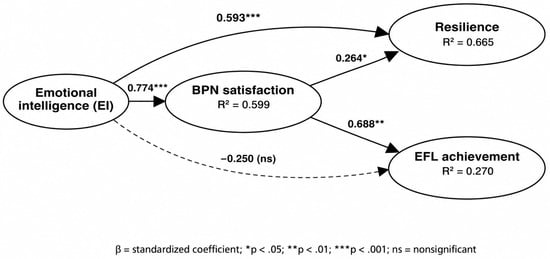
The structural path estimates are presented in Table 4. EI was significantly and positively associated with BPN satisfaction (β = 0.774, p < .001). EI also showed a significant positive association with resilience (β = 0.593, p < .001). Likewise, BPN satisfaction was positively associated with resilience (β = 0.264, p = .028) and achievement (β = 0.688, p = .006). However, the direct association between EI and achievement was not statistically significant (β = −0.250, p = .167).
Table 4.
Structural Path Estimates.
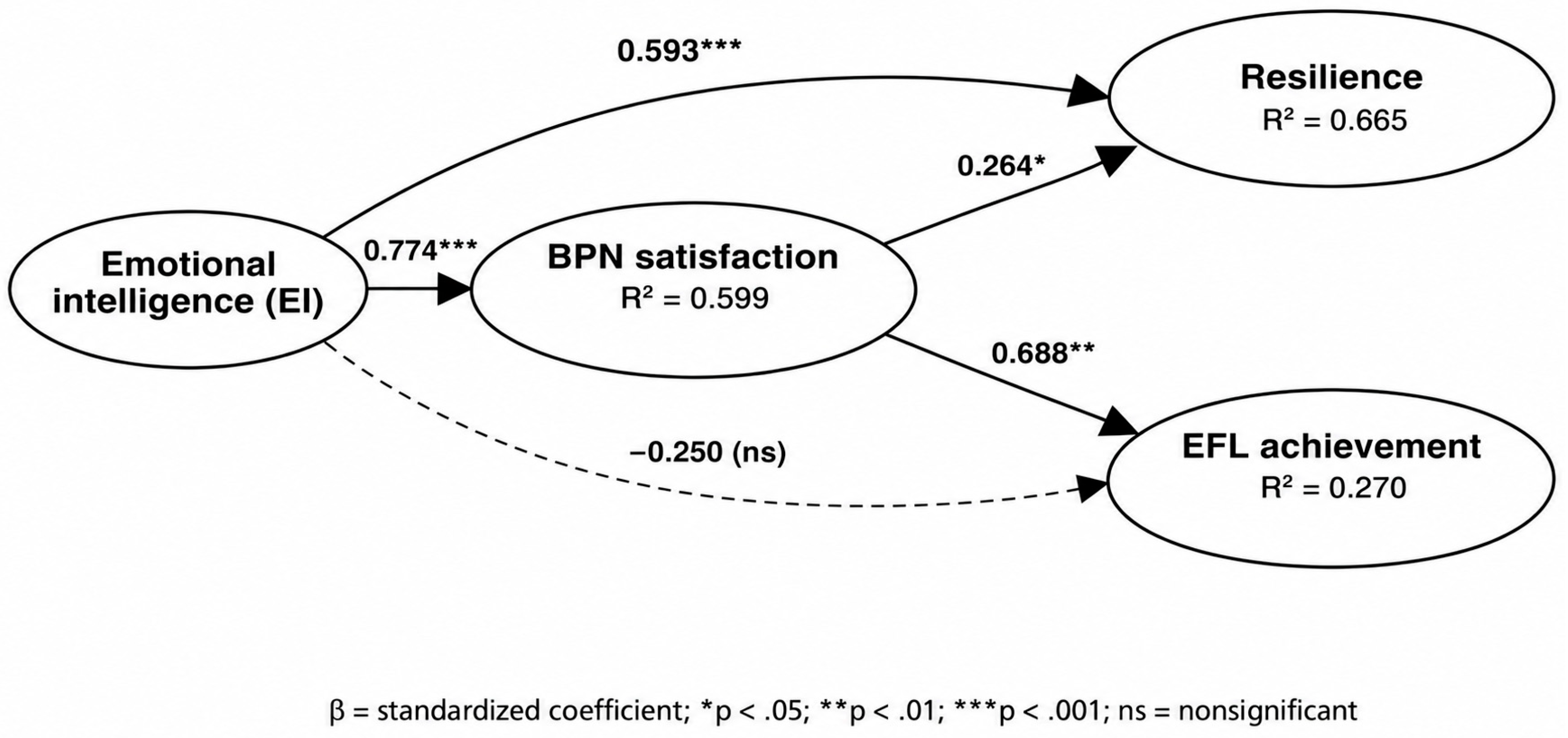
The model accounted for 59.9% of the variance in BPN satisfaction (R2 = 0.599), 66.5% of the variance in resilience (R2 = 0.665), and 27.0% of the variance in achievement (R2 = 0.270). The estimated structural model, including the standardized path coefficients and accounted-for variance, is presented in Figure 2.
Figure 2.
Estimated Structural Model with Standardized Path Coefficients.
4.4. Analysis of Indirect Associations
The indirect associations were estimated using 5000 bias-corrected bootstrap samples. As shown in Table 5, the indirect association between EI and resilience through BPN satisfaction was statistically significant (β = 0.204, 95% CI [0.021, 0.388], p = .044). The indirect association between EI and achievement through BPN satisfaction was also statistically significant (β = 0.533, 95% CI [0.166, 0.899], p = .027), whereas the direct association between EI and achievement was not significant. These results indicate evidence of statistically significant indirect associations through BPN satisfaction. However, because the data were collected at a single time point, they do not establish temporal ordering or causal mediation. Furthermore, the indirect estimate involving achievement should be interpreted cautiously because of the construct’s measurement limitations.
Table 5.
Indirect Associations.
5. Discussion
The current study examined the relationships among EI, BPN satisfaction, resilience, and EFL achievement among first-year students enrolled in mandatory foundation-year English courses at a single Saudi university. Specifically, it investigated the direct associations of EI with BPN satisfaction, resilience, and achievement, as well as the indirect associations between EI and resilience and between EI and achievement through BPN satisfaction. The proposed structural model showed acceptable fit to the data, accounting for approximately 60% of the variance in BPN satisfaction, 67% of the variance in resilience, and 27% of the variance in achievement. However, the hypothesized direct association between EI and achievement was not supported, and the achievement findings remain preliminary. These findings highlight the relevance of EI and learners’ BPN satisfaction to resilience and their possible relevance to EFL achievement in comparable foundation-year contexts.
5.1. Direct Associations of Emotional Intelligence with Basic Psychological Needs Satisfaction, Resilience, and EFL Achievement
One of the most notable findings was the strong positive relationship between EI and BPN satisfaction. Students with higher EI reported greater satisfaction of autonomy, competence, and relatedness. This finding supports the first hypothesis and is consistent with research linking EI with BPN satisfaction among university students (Chin et al., 2025; Vasiou et al., 2024; Zhang et al., 2026). Learners who effectively perceive, understand, and regulate emotions may feel more competent when facing academic challenges, exercise greater autonomy in directing their learning, and develop stronger relationships with teachers and classmates. Thus, EI may be closely associated with BPN satisfaction through the emotional resources that learners draw upon to engage meaningfully and effectively with their learning environment. This finding can also be interpreted through SDT (Deci & Ryan, 2000; Ryan & Deci, 2017). According to SDT, autonomy, competence, and relatedness are essential psychological nutrients for motivated and effective functioning. EI may be related to the satisfaction of these needs through learners’ ability to cope with academic demands, maintain positive interpersonal relationships, and respond constructively to classroom challenges. Consequently, emotionally intelligent learners may be more likely to experience competence, exercise autonomy, and establish supportive relationships with teachers and peers.
The present study also found a significant positive direct association between EI and resilience, which supported the second hypothesis. This result suggests that emotionally intelligent learners may be better able to recover from setbacks, adapt to academic challenges, and persist when encountering difficulties. Foreign language learning often involves communication anxiety, repeated errors, demanding assessments, and fluctuating motivation. Learners with higher EI may regulate negative emotions more effectively, maintain emotional stability, and respond adaptively to setbacks, characteristics that may be associated with greater resilience. This finding is consistent with research reporting positive relationships between EI and resilience among university students (Mohamed et al., 2025; Shengyao et al., 2024). Similar evidence has emerged in language-learning contexts. Alrabai and Alamer (2022) reported an indirect association between EI and L2 resilience through positive and negative classroom emotions, while L. Li and Gao (2026) identified a positive association between EI and psychological resilience among EFL learners. EI has also been linked to greater enjoyment and lower anxiety, stress, and boredom in language learning (C. Li, 2020; C. Li & Xu, 2019; McEown et al., 2024). These findings indicate that EI may represent a protective emotional resource associated with learners’ adaptive responses when facing language-learning difficulties.
Contrary to the third hypothesis, EI did not have a significant direct association with EFL achievement after BPN satisfaction was included in the model (β = −0.250, p = .167). This result differs from studies reporting positive direct relationships between EI and academic or language achievement (Chen & Zhang, 2022; C. Li, 2020; Shengyao et al., 2024). However, the nonsignificant negative coefficient should not be interpreted as evidence that EI is detrimental to achievement. EI was positively correlated with achievement at the bivariate level, but it was also strongly associated with BPN satisfaction. The direct coefficient therefore represents the relationship between EI and achievement after accounting for the variance that EI shares with BPN satisfaction. The change from a positive bivariate correlation to a nonsignificant negative direct coefficient may reflect the substantial shared variance between EI and BPN satisfaction and the inclusion of both constructs in the same model.
This result suggests that EI may not have a distinct association with achievement once learners’ satisfaction of autonomy, competence, and relatedness is considered. This interpretation is consistent with studies showing that the relationship between EI and achievement may involve motivational, emotional, and behavioral variables, including self-regulation, enjoyment, willingness to communicate, boredom, motivation, and grit (Bordbar et al., 2025; C. Li, 2020; R. Wang & Xu, 2025; Xu & Hong, 2025). Differences from previous findings may also be related to the educational context, the elementary-level designation of their English courses, the use of self-reported achievement indicators, or differences in model specification. In particular, because achievement was measured using only two self-reported indicators and showed relatively weak reliability, both the magnitude and direction of its association with EI should be interpreted cautiously.
5.2. Associations of BPN Satisfaction with Resilience and EFL Achievement
The results of this study indicated that BPN satisfaction was significantly and positively associated with resilience, which supported the fourth hypothesis. Learners who experience greater autonomy, competence, and relatedness may be more capable of adapting to challenges and recovering from language-learning setbacks. When students perceive control over their learning, feel capable of accomplishing learning tasks, and experience meaningful relationships with teachers and classmates, they are more likely to develop the psychological resources needed to cope with adversity, regulate negative emotions, and persist through difficulties. This finding is supported by SDT, which proposes that BPN satisfaction promotes optimal psychological functioning and adaptive behavior (Deci & Ryan, 2000; Ryan & Deci, 2017). Autonomy provides a sense of ownership over learning, competence strengthens confidence in meeting academic demands, and relatedness provides emotional and social support during challenging situations. Together, these resources may enable learners to respond constructively to setbacks and remain committed to their long-term learning goals. The finding is also consistent with empirical evidence from language-learning contexts. Trigueros et al. (2024) identified a positive relationship between psychological need satisfaction and resilience among English learners. Similarly, Gao et al. (2025) reported a positive association between BPN satisfaction and resilience among tertiary EFL learners and an indirect association between BPN satisfaction and engagement through resilience. Related studies have linked BPN satisfaction with greater psychological well-being, engagement, grit, and adaptive learning behaviors (Elahi Shirvan & Alamer, 2024; Y. Li et al., 2025; L. Qian & Qiu, 2026). Collectively, these findings indicate that BPN satisfaction is closely associated with resilience in EFL learning.
The present study also found that BPN satisfaction was significantly and positively associated with EFL achievement, providing preliminary support for the fifth hypothesis. Learners whose needs for autonomy, competence, and relatedness are satisfied tend to achieve better outcomes in English learning. Students who feel capable of mastering learning tasks, experience meaningful social connections with peers and teachers, and perceive themselves as active participants in their learning are more likely to engage in learning, invest sustained effort, and attain higher levels of EFL achievement. This finding is consistent with SDT (Deci & Ryan, 2000; Ryan & Deci, 2017, 2020), which proposes that satisfaction of the basic psychological needs promotes autonomous motivation, self-regulation, engagement, and effective academic functioning. Accordingly, learners whose psychological needs are satisfied are more likely to engage in adaptive learning behaviors that contribute to higher academic achievement. This interpretation is consistent with previous research that highlighted the important role of BPN satisfaction in language-learning achievement. Previous studies have reported direct associations between BPN satisfaction and language achievement (Alamer, 2021) and indirect associations through motivational and psychological variables, such as perseverance of effort (Elahi Shirvan & Alamer, 2024) and English self-concept (N. Wang, 2024). Moreover, need-supportive learning environments have been associated with language performance through BPN satisfaction and classroom engagement (Y. Wang et al., 2024). The present study extends this body of research by identifying a positive association between BPN satisfaction and EFL achievement. However, because achievement was represented by two self-reported indicators with relatively weak reliability, this association should be considered preliminary and interpreted cautiously.
5.3. Indirect Associations Through Basic Psychological Needs Satisfaction
The analysis of indirect associations indicated significant indirect associations between EI and both resilience and EFL achievement through BPN satisfaction. Specifically, EI was associated with resilience both directly and indirectly through learners’ psychological needs. Emotionally intelligent learners, in this sense, may report greater resilience not only because of their effective emotion regulation but also because their emotional competencies are associated with greater satisfaction of autonomy, competence, and relatedness. These need-supportive experiences may, in turn, be associated with a greater ability to cope with academic challenges (Gao et al., 2025; Trigueros et al., 2024). The significant direct and indirect associations therefore suggest that EI and BPN satisfaction are both relevant to resilience.
Regarding EFL achievement, the direct association with EI was nonsignificant, whereas the indirect association through BPN satisfaction was significant, although this finding remains preliminary. This finding suggests that EI may be associated with achievement through learners’ satisfaction of autonomy, competence, and relatedness rather than through a direct pathway. The satisfaction of these needs is associated with motivation, engagement, sustained effort, and positive academic self-perceptions, which are relevant to language achievement (Alamer, 2021; Elahi Shirvan & Alamer, 2024; N. Wang, 2024; Y. Wang et al., 2024). This finding extends the research on the indirect pathways linking EI with educational outcomes. Previous studies have reported indirect associations involving self-regulation, enjoyment, resilience, willingness to communicate, boredom, motivation, and grit (Bordbar et al., 2025; C. Li, 2020; Shengyao et al., 2024; R. Wang & Xu, 2025; Xu & Hong, 2025). Other studies have reported indirect associations between EI and engagement, happiness, and well-being through BPN satisfaction (Chin et al., 2025; Vasiou et al., 2024; Zhang et al., 2026). The present study extends this evidence by reporting significant indirect associations between EI and both resilience and achievement through BPN satisfaction in an EFL context. This pattern is consistent with SDT, which associates the satisfaction of autonomy, competence, and relatedness with adaptive psychological and academic outcomes (Deci & Ryan, 2000; Ryan & Deci, 2017). Nevertheless, because the present data were cross-sectional, these indirect associations do not establish temporal ordering or causal mediation.
6. Practical Implications
The findings of the present study have potential implications for language educators and curriculum designers working in comparable mandatory foundation-year EFL programs. Given the significant associations of EI with psychological need satisfaction and resilience, language teachers may consider incorporating activities that foster students’ emotional awareness, emotional regulation, empathy, and interpersonal communication skills. Such activities may include reflective learning tasks, collaborative problem-solving activities, peer discussions, and structured opportunities for emotional reflection during language learning (Xu & Hong, 2025; Xuan, 2025). Developing these emotional competencies may help learners cope more effectively with the challenges associated with learning a foreign language. The findings also emphasize the importance of creating classroom environments that support students’ needs for autonomy, competence, and relatedness. Consistent with previous recommendations (Alamer, 2021), teachers can promote autonomy by providing meaningful choices in learning activities, encouraging learner independence, and supporting students’ decision-making during classroom tasks. Competence can be strengthened by offering appropriately challenging activities, constructive feedback, and opportunities for students to experience success. Similarly, relatedness can be enhanced by fostering positive teacher–student relationships, encouraging collaboration among classmates, and creating supportive classroom communities in which learners feel respected and valued. These instructional practices may support learners’ resilience; implications for achievement remain tentative given the preliminary nature of the achievement findings.
The observed indirect associations provide a rationale for future research examining emotional skill development together with support for learners’ psychological needs. Consequently, educational interventions may adopt a comprehensive approach that combines emotional skill development with classroom practices that promote autonomy, competence, and relatedness. By addressing both learners’ emotional competencies and their psychological needs, educators could create learning environments that support students’ well-being, persistence, and long-term engagement with language learning. Finally, the present findings have implications for teacher education and professional development programs. Teacher training initiatives may emphasize the importance of recognizing students’ emotional experiences and supporting their psychological needs throughout the learning process. Equipping teachers with strategies to foster emotionally supportive and psychologically need-supportive classrooms may contribute to more resilient and motivated language learners.
7. Limitations and Future Research
Although this study makes several contributions, its limitations should also be recognized. First, the study employed a cross-sectional research design, which precludes causal inferences regarding the relationships among EI, BPN satisfaction, resilience, and EFL achievement. Although the proposed structural model was theoretically grounded and demonstrated a satisfactory fit to the data, the indirect associations do not establish temporal ordering or causal mediation and cannot exclude reverse relationships or unmeasured confounding variables. Longitudinal and experimental studies are needed to establish the temporal and causal relationships among these constructs. Second, all psychological constructs were assessed using self-report questionnaires. Although self-report measures are widely used in educational and psychological research, they may be influenced by common method variance, social desirability bias, and participants’ subjective perceptions. Future studies may benefit from adopting multiple sources of data, such as teacher ratings, classroom observations, or behavioral measures, to provide a comprehensive assessment of learners’ emotional and motivational characteristics. Third, the measurement of EFL achievement presents an additional limitation. Achievement was represented by only two self-reported indicators, one of which had a relatively weak factor loading. The construct also showed below-threshold reliability estimates and an AVE marginally below 0.50. In addition, self-reported grades may be affected by recall error or socially desirable responding. These limitations may have increased measurement error and reduced the stability and precision of the structural estimates involving achievement, including the indirect association between EI and achievement through BPN satisfaction. Accordingly, the findings involving achievement should be considered preliminary and should not be regarded as secure until replicated using stronger outcome data. Future studies should use verified institutional grades, standardized language-proficiency assessments, or multiple objective indicators of language performance. Fourth, the participants were first-year students enrolled in mandatory English courses designated elementary-level by the institution within a foundation-year program at a single Saudi university. The compulsory nature of the courses and the transitional characteristics of the foundation year may have influenced students’ BPN satisfaction, resilience, and achievement. Consequently, the findings are most directly relevant to similar foundation-year EFL contexts and should not be generalized to university language learners more broadly. Future research should examine the model across institutions, proficiency levels, educational stages, and voluntary as well as mandatory language-learning contexts. Finally, although the present study examined BPN satisfaction as an indirect pathway between EI and resilience and achievement, other psychological variables may also contribute to these relationships. Future studies could extend the proposed model by incorporating additional mediating or moderating variables, such as academic emotions, motivation, self-efficacy, learner engagement, foreign language anxiety, classroom environment, growth mindset, grit, or perceived teacher support. Examining these variables may provide a comprehensive understanding of the complex psychological processes that contribute to successful language learning.
Funding
This research received no external funding.
Institutional Review Board Statement
The study was approved by the Research Ethics Committee of the University of Ha’il (Approval No. H-2026-084).
Informed Consent Statement
Informed consent was obtained from all participants involved in the study.
Data Availability Statement
The data supporting the findings of this study are available from the corresponding author upon a request.
Conflicts of Interest
The author declares no conflicts of interest.
References
- Alamer, A. (2021). Basic psychological needs, motivational orientations, effort, and vocabulary knowledge: A comprehensive model. Studies in Second Language Acquisition, 44(1), 164–184. [Google Scholar] [CrossRef] [Scilit]
- Al-Hoorie, A. H., Oga-Baldwin, W. L. Q., Hiver, P., & Vitta, J. P. (2025). Self-determination mini-theories in second language learning: A systematic review of three decades of research. Language Teaching Research, 29(4), 1603–1638. [Google Scholar] [CrossRef] [Scilit]
- Alrabai, F., & Alamer, A. (2022). The role of learner character strengths and classroom emotions in L2 resilience. Frontiers in Psychology, 13, 956216. [Google Scholar] [CrossRef] [Scilit] [PubMed]
- Augusto-Landa, J. M., García-Martínez, I., & León, S. P. (2024). Analysis of the effect of emotional intelligence and coping strategies on the anxiety, stress and depression levels of university students. Psychological Reports, 127(4), 1751–1770. [Google Scholar] [CrossRef] [Scilit] [PubMed]
- Bordbar, S., Hasannejad Mogadammorki, S., Atashbahar, O., Bahmaei, J., Vejdani, M., & Yusefi, A. R. (2025). The effect of emotional intelligence on academic performance with the mediating role of academic self-regulation: Evidence from college students. Discover Education, 4(1), 506. [Google Scholar] [CrossRef] [Scilit]
- Brislin, R. W. (1970). Back-translation for cross-cultural research. Journal of Cross-Cultural Psychology, 1(3), 185–216. [Google Scholar] [CrossRef] [Scilit]
- Cassidy, S. (2016). The academic resilience scale (ARS-30): A new multidimensional construct measure. Frontiers in Psychology, 7, 1787. [Google Scholar] [CrossRef] [Scilit] [PubMed]
- Chen, Z., & Zhang, P. (2022). Trait emotional intelligence and second language performance: A case study of Chinese EFL learners. Journal of Multilingual and Multicultural Development, 43(8), 731–745. [Google Scholar] [CrossRef] [Scilit]
- Chin, W. M., Ahmad, N. A., Ismail, I. A., Alias, S. N., & Asri, A. S. (2025). A serial mediation model on trait emotional intelligence, basic psychological needs, and academic motivation as antecedents of student engagement. Sage Open, 15(3), 21582440251352752. [Google Scholar] [CrossRef] [Scilit]
- Danesh, J., & Shahnazari, M. (2020). A structural relationship model for resilience, L2 learning motivation, and L2 proficiency at different proficiency levels. Learning and Motivation, 72, 101636. [Google Scholar] [CrossRef] [Scilit]
- Deci, E. L., & Ryan, R. M. (2000). The “What” and “Why” of goal pursuits: Human needs and the self-determination of behavior. Psychological Inquiry, 11(4), 227–268. [Google Scholar] [CrossRef] [Scilit]
- De Francisco, C., Arce, C., Sánchez-Romero, E. I., & del Pilar Vílchez, M. (2018). The mediating role of sport self-motivation between basic psychological needs satisfaction and athlete engagement. Psicothema, 30(4), 421–426. [Google Scholar] [CrossRef] [Scilit] [PubMed]
- Dewaele, J. M., Chen, X., Padilla, A. M., & Lake, J. (2019). The flowering of positive psychology in foreign language teaching and acquisition research. Frontiers in Psychology, 10, 2128. [Google Scholar] [CrossRef] [Scilit] [PubMed]
- Dhliwayo, P., & Coetzee, M. (2020). Cognitive intelligence, emotional intelligence and personality types as predictors of job performance: Exploring a model for personnel selection. SA Journal of Human Resource Management, 18, 13. [Google Scholar] [CrossRef] [Scilit]
- Diseth, Å., Danielsen, A. G., & Samdal, O. (2012). A path analysis of basic need support, self-efficacy, achievement goals, life satisfaction and academic achievement level among secondary school students. Educational Psychology, 32(3), 335–354. [Google Scholar] [CrossRef] [Scilit]
- Duan, S., Han, X., Li, X., & Liu, H. (2024). Unveiling student academic resilience in language learning: A structural equation modelling approach. BMC Psychology, 12(1), 177. [Google Scholar] [CrossRef] [Scilit] [PubMed]
- Elahi Shirvan, M., & Alamer, A. (2024). Modeling the interplay of EFL learners’ basic psychological needs, grit and L2 achievement. Journal of Multilingual and Multicultural Development, 45(7), 2831–2847. [Google Scholar] [CrossRef] [Scilit]
- Fletcher, D., & Sarkar, M. (2013). Psychological resilience: A review and critique of definitions, concepts, and theory. European Psychologist, 18(1), 12–23. [Google Scholar] [CrossRef] [Scilit]
- Fu, R. (2025). Enjoyment and grit as mediators between informal digital learning English, basic psychology needs, and willingness to communicate among English as a foreign language university students. Current Psychology, 44, 1660–1674. [Google Scholar] [CrossRef] [Scilit]
- Gao, Y., Wang, X., & Reynolds, B. L. (2025). The mediating roles of resilience and flow in linking basic psychological needs to tertiary EFL learners’ engagement in the informal digital learning of English: A mixed-methods study. Behavioral Sciences, 15(1), 85. [Google Scholar] [CrossRef] [Scilit] [PubMed]
- Gardner, H. (1983). Frames of mind: The theory of multiple intelligences. Basics. [Google Scholar]
- Horwitz, E. K., Horwitz, M. B., & Cope, J. (1986). Foreign language classroom anxiety. Modern Language Journal, 70(2), 125–132. [Google Scholar] [CrossRef]
- Kim, T. Y., & Kim, Y. (2021). Structural relationship between L2 learning motivation and resilience and their impact on motivated behavior and L2 proficiency. Journal of Psycholinguistic Research, 50(2), 417–436. [Google Scholar] [CrossRef] [Scilit] [PubMed]
- Kline, R. B. (2023). Principles and practice of structural equation modeling. Guilford Publications. [Google Scholar]
- Law, K. S., Wong, C.-S., & Song, L. J. (2004). The construct and criterion validity of emotional intelligence and its potential utility for management studies. Journal of Applied Psychology, 89(3), 483–496. [Google Scholar] [CrossRef] [Scilit] [PubMed]
- Leo, F. M., Mouratidis, A., Pulido, J. J., López-Gajardo, M. A., & Sánchez-Oliva, D. (2022). Perceived teachers’ behavior and students’ engagement in physical education: The mediating role of basic psychological needs and self-determined motivation. Physical Education and Sport Pedagogy, 27(1), 59–76. [Google Scholar] [CrossRef] [Scilit]
- Li, C. (2020). A positive psychology perspective on Chinese EFL students’ trait emotional intelligence, foreign language enjoyment and EFL learning achievement. Journal of Multilingual and Multicultural Development, 41(3), 246–263. [Google Scholar] [CrossRef] [Scilit]
- Li, C., & Xu, J. (2019). Trait emotional intelligence and classroom emotions: A positive psychology investigation and intervention among Chinese EFL learners. Frontiers in Psychology, 10, 2453. [Google Scholar] [CrossRef] [Scilit] [PubMed]
- Li, L., & Gao, X. (2026). Impact of emotional intelligence on academic procrastination among EFL learners in China: Serial mediation role of self-efficacy and psychological resilience. Frontiers in Psychology, 17, 1693897. [Google Scholar] [CrossRef] [Scilit] [PubMed]
- Li, Y., Sueb, R., & Said Hashim, K. (2025). Basic psychological needs and psychological well-being among undergraduate students in China: The mediating role of autonomous motivation and academic engagement. Psychology Research and Behavior Management, 18, 527–549. [Google Scholar] [CrossRef] [Scilit] [PubMed]
- Lisha, Y. (2024). Impacts of the motivations of English learning on the psychological needs under self-determination theory. International Journal of New Developments in Education, 6(7), 12–16. [Google Scholar] [CrossRef] [Scilit]
- Liu, H., Wang, Y., & Wang, H. (2025). Exploring the mediating roles of motivation and boredom in basic psychological needs and behavioural engagement in English learning: A self-determination theory perspective. BMC Psychology, 13, 179. [Google Scholar] [CrossRef] [Scilit] [PubMed]
- Maalouf, E., Hallit, S., & Obeid, S. (2022). Personality traits and quality of life among Lebanese medical students: Any mediating effect of emotional intelligence? A path analysis approach. BMC Psychology, 10(1), 28. [Google Scholar] [CrossRef] [Scilit] [PubMed]
- MacIntyre, P. D., Gregersen, T., & Mercer, S. (2019). Setting an agenda for positive psychology in SLA: Theory, practice, and research. The Modern Language Journal, 103(1), 262–274. [Google Scholar] [CrossRef] [Scilit]
- Maguire, R., Egan, A., Hyland, P., & Maguire, P. (2017). Engaging students emotionally: The role of emotional intelligence in predicting cognitive and affective engagement in higher education. Higher Education Research and Development, 36(2), 343–357. [Google Scholar] [CrossRef] [Scilit]
- Masten, A. S., Best, K. M., & Garmezy, N. (1990). Resilience and development: Contributions from the study of children who overcome adversity. Development and Psychopathology, 2(4), 425–444. [Google Scholar] [CrossRef] [Scilit]
- Mayer, J. D., & Salovey, P. (1997). What is emotional intelligence? In P. Salovey, & D. J. Sluyter (Eds.), Emotional development and emotional intelligence: Educational implications (pp. 3–31). Basic Books. [Google Scholar]
- Mayer, J. D., Salovey, P., & Caruso, D. R. (2008). Emotional intelligence: New ability or eclectic traits? American Psychologist, 63(6), 503–517. [Google Scholar] [CrossRef] [Scilit] [PubMed]
- McEown, K., McEown, M. S., & Oga-Baldwin, W. L. Q. (2024). The role of trait emotional intelligence in predicting academic stress, burnout, and engagement in Japanese second language learners. Current Psychology, 43, 1395–1405. [Google Scholar] [CrossRef] [Scilit]
- Mohamed, M. G., Al-Yafeai, T. M., Adam, S., Hossain, M. M., Ravi, R. K., Jalo, F. M., & Osman, A. E. (2025). The significance of emotional intelligence in academic stress, resilience, and safe transition from high school to university: An SEM analysis among Northern Emirati university students. Global Transitions, 7, 109–117. [Google Scholar] [CrossRef] [Scilit]
- Niemiec, C. P., & Ryan, R. M. (2009). Autonomy, competence, and relatedness in the classroom: Applying self-determination theory to educational practice. Theory and Research in Education, 7(2), 133–144. [Google Scholar] [CrossRef] [Scilit]
- Oga-Baldwin, W. L. Q., & Ryan, R. M. (2025). Competence need satisfaction in language learning (and beyond): Current state of the evidence and directions for exploration. Studies in Second Language Learning and Teaching, 15(2), 279–299. [Google Scholar] [CrossRef] [Scilit]
- Petrides, K. V., & Furnham, A. (2001). Trait emotional intelligence: Psychometric investigation with reference to established trait taxonomies. European Journal of Personality, 15(6), 425–448. [Google Scholar] [CrossRef] [Scilit]
- Qian, L., & Qiu, X. (2026). More than the sum? A configurational approach to basic psychological needs, mindset, and buoyancy in EFL engagement. Innovation in Language Learning and Teaching, 1–24. [Google Scholar] [CrossRef] [Scilit]
- Qian, W., & Masroor, Z. (2026). Pathways to persistence: Extending the role of academic resilience in autonomous supportive teaching environment. Sage Open, 16(1), 21582440261423030. [Google Scholar] [CrossRef] [Scilit]
- Romano, L., Angelini, G., Consiglio, P., & Fiorilli, C. (2021). Academic resilience and engagement in high school students: The mediating role of perceived teacher emotional support. European Journal of Investigation in Health, Psychology and Education, 11(2), 334–344. [Google Scholar] [CrossRef] [Scilit] [PubMed]
- Rui, Y., Zhang, Y., & Jin, H. (2025). The relationship between mindfulness and second language resilience among Chinese English majors: The mediating role of academic hope. BMC Psychology, 13(1), 497. [Google Scholar] [CrossRef] [Scilit] [PubMed]
- Ryan, R. M., & Deci, E. L. (2017). Self-determination theory: Basic psychological needs in motivation, development, and wellness. The Guilford Press. [Google Scholar] [CrossRef] [Scilit]
- Ryan, R. M., & Deci, E. L. (2020). Intrinsic and extrinsic motivation from a self-determination theory perspective: Definitions, theory, practices, and future directions. Contemporary Educational Psychology, 61, 101860. [Google Scholar] [CrossRef] [Scilit]
- Sabouripour, F., Roslan, S., Ghiami, Z., & Memon, M. A. (2021). Mediating role of self-efficacy in the relationship between optimism, psychological well-being, and resilience among Iranian students. Frontiers in Psychology, 12, 675645. [Google Scholar] [CrossRef] [Scilit] [PubMed]
- Salovey, P., & Mayer, J. D. (1990). Emotional intelligence. Imagination, Cognition and Personality, 9(3), 185–211. [Google Scholar] [CrossRef] [Scilit]
- Shengyao, Y., Xuefen, L., Jenatabadi, H. S., Samsudin, N., Chunchun, K., & Ishak, Z. (2024). Emotional intelligence impact on academic achievement and psychological well-being among university students: The mediating role of positive psychological characteristics. BMC Psychology, 12(1), 389. [Google Scholar] [CrossRef] [Scilit] [PubMed]
- Smith, B. W., Dalen, J., Wiggins, K., Tooley, E., Christopher, P., & Bernard, J. (2008). The brief resilience scale: Assessing the ability to bounce back. International Journal of Behavioral Medicine, 15(3), 194–200. [Google Scholar] [CrossRef] [Scilit] [PubMed]
- Thao, L. T., Thuy, P. T., Thi, N. A., Yen, P. H., Thu, H. T. A., & Tra, N. H. (2023). Impacts of emotional intelligence on second language acquisition: English-major students’ perspectives. Sage Open, 13(4), 21582440231212065. [Google Scholar] [CrossRef] [Scilit]
- Trigueros, R., Fernández-Ortega, C., Aguilar-Parra, J. M., & Collado-Soler, R. (2024). Satisfaction of psychological needs, resilience, confidence and willingness to communicate in English of secondary school students. Acta Psychologica, 250, 104529. [Google Scholar] [CrossRef] [Scilit] [PubMed]
- Vansteenkiste, M., Aelterman, N., Haerens, L., & Soenens, B. (2019). Seeking stability in stormy educational times: A need-based perspective on (de)motivating teaching grounded in self-determination theory. In E. N. Gonida, & M. S. Lemos (Eds.), Motivation in education at a time of global change (Vol. 20, pp. 53–80). Emerald. [Google Scholar] [CrossRef] [Scilit]
- Vasiou, A., Vasilaki, E., Mastrothanasis, K., & Galanaki, E. (2024). Emotional intelligence and university students’ happiness: The mediating role of basic psychological needs’ satisfaction. Psychology International, 6(4), 855–867. [Google Scholar] [CrossRef] [Scilit]
- Wang, N. (2024). How does basic psychological needs satisfaction contribute to EFL learners’ achievement and positive emotions? The mediating role of L2 self-concept. System, 123, 103340. [Google Scholar] [CrossRef] [Scilit]
- Wang, R., & Xu, Q. (2025). Emotional intelligence and language learning performance of EFL learners in China: Chain mediating effects of willingness to communicate and foreign language learning boredom. Frontiers in Psychology, 16, 1702948. [Google Scholar] [CrossRef] [Scilit] [PubMed]
- Wang, Y., Derakhshan, A., & Zhang, L. J. (2021). Researching and practicing positive psychology in second/foreign language learning and teaching: The past, current status and future directions. Frontiers in Psychology, 12, 731721. [Google Scholar] [CrossRef] [Scilit] [PubMed]
- Wang, Y., Luo, W., Liao, X., & Zhao, P. (2024). Exploring the effect of teacher autonomy support on Chinese EFL undergraduates’ academic English speaking performance through the mediation of basic psychological needs and classroom engagement. Frontiers in Psychology, 15, 1323713. [Google Scholar] [CrossRef] [Scilit] [PubMed]
- Wang, Y., & Wang, Y. (2022). The interrelationship between emotional intelligence, self-efficacy, and burnout among foreign language teachers: A meta-analytic review. Frontiers in Psychology, 13, 913638. [Google Scholar] [CrossRef] [Scilit] [PubMed]
- Wicaksono, B. H., Ismail, S. M., Sultanova, S. A., & Abeba, D. (2023). I like language assessment: EFL learners’ voices about self-assessment, self-efficacy, grit tendencies, academic resilience, and academic demotivation in online instruction. Language Testing in Asia, 13(1), 37. [Google Scholar] [CrossRef] [Scilit]
- Xu, Q., & Hong, H. (2025). Emotional intelligence and language learning performance of ESL learners: Mediating effects of L2 grit and L2 motivation. Journal of Intelligence, 13(11), 146. [Google Scholar] [CrossRef] [Scilit] [PubMed]
- Xuan, Q. (2025). Emotional intelligence and holistic student development: An assessment of psychological and social efficacy in vocational university English education. Frontiers in Psychology, 16, 1664645. [Google Scholar] [CrossRef] [Scilit] [PubMed]
- Yang, L., & Duan, M. (2023). The role of emotional intelligence in EFL learners’ academic literacy development. Heliyon, 9(1), e13110. [Google Scholar] [CrossRef] [Scilit] [PubMed]
- Zarrinabadi, N., Lou, N. M., & Ahmadi, A. (2022). Resilience in language classrooms: Exploring individual antecedents and consequences. System, 109, 102892. [Google Scholar] [CrossRef] [Scilit]
- Zhang, X., Lin, X., & Wang, Y. (2026). Emotional intelligence profiles and well-being among Chinese university students: The mediating role of basic psychological needs. Intelligence, 114, 101991. [Google Scholar] [CrossRef] [Scilit]
- Zhao, J., Li, X., Wei, J., Long, X., & Gao, Z. (2025). Understanding the psychological pathways to translation technology competence: Emotional intelligence, self-esteem, and innovation capability among EFL students. BMC Psychology, 13(1), 66. [Google Scholar] [CrossRef] [Scilit] [PubMed]
- Zhen, R., Liu, R. D., Ding, Y., Wang, J., Liu, Y., & Xu, L. (2017). The mediating roles of academic self-efficacy and academic emotions in the relation between basic psychological needs satisfaction and learning engagement among Chinese adolescent students. Learning and Individual Differences, 54, 210–216. [Google Scholar] [CrossRef] [Scilit]
- Zhi, R., Wang, Y., & Wang, Y. (2024). The role of emotional intelligence and self-efficacy in EFL teachers’ technology adoption. The Asia-Pacific Education Researcher, 33, 845–856. [Google Scholar] [CrossRef] [Scilit]

Disclaimer/Publisher’s Note: The statements, opinions and data contained in all publications are solely those of the individual author(s) and contributor(s) and not of MDPI and/or the editor(s). MDPI and/or the editor(s) disclaim responsibility for any injury to people or property resulting from any ideas, methods, instructions or products referred to in the content. |
© 2026 by the author. Licensee MDPI, Basel, Switzerland. This article is an open access article distributed under the terms and conditions of the Creative Commons Attribution (CC BY) license.