


Abstract
Anxiety accompanying students’ reliance on generative AI has been linked to appraisals of their own competence and to comparison with peers, two complementary routes usually modeled separately. This study asked which nodes retain conditional associations with AI-related anxiety and dependence when both routes are modeled together. Survey responses from 283 foreign language majors formed a 17-node regularized partial correlation network, supplemented by written responses from 21 students. Social-comparison anxiety was the only anxiety node connected with dependence (partial r = 0.177, 95% bootstrap interval [0.077, 0.280]); exploratory facet analyses located it mainly in fear of falling behind or missing out, less consistently in peer competence pressure, and not in upward comparison. The three measured self-appraisal nodes, which assessed broad confidence, were unrelated to anxiety conditionally and at the zero-order level. The dependence association was modest, had no resolved direction, and was retained only in the fourth-year network; no cohort difference was established, and study year was confounded with collection period. Written responses did not corroborate this association but revealed integrity boundaries, guilt, and redefined language competence, which the survey omitted. The findings identify candidate correlates of reliance that require replication in independent samples, and content missing from AI anxiety instruments.
1. Introduction
Generative artificial intelligence (AI) makes it possible for students to produce fluent texts, translations, and explanations with substantially less direct effort. The educational significance of this assistance depends partly on what students continue to do themselves. A satisfactory product may coexist with limited practice in selecting words, interpreting context, evaluating evidence, or revising an argument. Cognitive offloading research situates such decisions within the relationship between internal processing and external support, emphasizing the role of metacognitive evaluations in deciding when to delegate a task (Risko & Gilbert, 2016). In an experimental study of mathematics learning, Bastani et al. (2025) showed that the consequences of access to generative AI depended on the safeguards built into the tool. Although that setting differs from language education, it illustrates why assisted task performance and independent learning should be examined separately.
Experimental work on offloading shows that its consequences are neither uniformly beneficial nor uniformly harmful. Saving information externally can free capacity and improve performance on a subsequent task, yet the offloaded material itself is retained less well (Grinschgl et al., 2021; Storm & Stone, 2015). Survey evidence from higher education points in a similar direction: frequent reliance on AI tools has been associated with weaker critical-thinking scores (Gerlich, 2025), and reported dependence on generative AI has been linked to lower achievement through self-efficacy, a path moderated by perceived teacher caring (Jia et al., 2025), while ethical concerns and institutional policies have been reported to moderate the consequences of over-reliance (Abubakar et al., 2025). These findings concern outcomes. Where the antecedents of dependence have been examined, the prevailing explanation has been individual and competence-based: AI anxiety has been related to dependence partly through lower AI self-efficacy (Wu et al., 2026). A second, social route has recently been proposed, in which comparison with peers and a competitive academic climate are associated with problematic or dependent use (Fu, 2026; Zhang & Lee, 2026), and existing research has been criticized for concentrating on individual psychological vulnerability while neglecting the social comparison context that generative AI creates (Zhang & Lee, 2026). In these studies the two routes were examined in separate models. They are not mutually exclusive: comparison with more capable peers can lower self-evaluations of ability (Marsh, 1987; Wood, 1989), and judgments of one’s own competence can be activated by such comparisons. What remains open is which forms of anxiety and appraisal retain an association with reliance once the other route is represented in the same model. That is the question addressed here.
Foreign language majors offer a particularly informative context for investigating the regulation of AI assistance. Text production and translation are simultaneously learning activities, visible demonstrations of competence, and potential professional services. Students therefore encounter AI as a resource for completing current tasks and as a point of comparison for the abilities they are developing. They may appreciate its usefulness while worrying that frequent delegation reduces opportunities to practice. They may also compare their productivity with that of peers who use AI more effectively, or question the future value of language expertise. These concerns potentially connect affective experience with decisions about when to rely on AI, when to check its outputs, and when to work independently.
Research in language education has so far concentrated on what generative AI does for performance. Chatbot interaction has improved elementary learners’ speaking outcomes (Tai & Chen, 2024), altered willingness to communicate and speaking anxiety among learners of English (C. Wang et al., 2024), and raised task engagement in essay writing (Zare et al., 2025). Less attention has been given to what students feel about their own position while using these tools, and almost none to majors for whom translation and text production are the prospective profession rather than a general academic skill.
Research on AI-related anxiety has recognized that apprehension can concern learning to use the technology as well as its broader consequences (Y.-Y. Wang & Wang, 2022). In language education, recent work has also examined associations between AI use and foreign language classroom anxiety (Yang & Yang, 2026). These constructs need to be distinguished. Foreign language anxiety, as classically defined, concerns apprehension arising in language performance and evaluation situations (Horwitz et al., 1986), and it varies alongside enjoyment rather than being its simple opposite (Dewaele & MacIntyre, 2014). Anxiety about performing in a foreign language concerns the demands of language learning and evaluation; anxiety about AI can concern changing standards of competence, reliance on a tool as a threat to competence, or perceived professional displacement. The present study addresses the latter concerns. Here, AI-related anxiety refers to apprehension about what generative AI implies for one’s own competence, one’s standing relative to peers, and one’s professional future, rather than apprehension about learning to use the technology. It was represented by three content-defined components: AI unease (discomfort at the pace of AI development and concern that overuse will weaken one’s own ability to produce work), social-comparison anxiety (defined below), and replacement unease (the frequency of unease about AI replacing translators and foreign-language graduates). These components were defined by item content; whether they form distinct dimensions was examined rather than assumed. AI dependence was measured separately and is treated as a correlate, not a component. The study does not measure clinical anxiety, language proficiency, or general intelligence.
1.1. Appraisals and Social Comparison in AI Anxiety
Control-value theory provides a useful starting point for connecting emotion to learning. It explains achievement emotions through appraisals of control and the value attached to activities or outcomes (Pekrun, 2006), consistent with appraisal accounts in which emotions arise from evaluations of a situation’s relevance, controllability, and implications for the self (Moors et al., 2013). A parallel account in technology research treats responses to a perceived technological threat as a joint function of appraised threat and appraised ability to avoid it (Liang & Xue, 2009), and identity research describes how a threat to a valued professional identity prompts protective or restructuring responses (Petriglieri, 2011). For students preparing to enter language professions, AI is plausibly appraised on all three grounds at once. Applied to AI-assisted language work, the theory suggests that students’ confidence in directing their work and their valuation of human expertise may be relevant to anxiety. Yet these appraisals need not have uniform relationships with every concern. Confidence in evaluating AI output may relate differently to worries about skill erosion than confidence in the continuing value of a language-related profession. A competence account therefore directs attention to whether weaker self-regulatory competence, AI literacy, or confidence in collaborating with AI accompanies greater unease, as the self-efficacy pathway to dependence implies (Wu et al., 2026); the corresponding prediction is stated in Section 1.3.
Social comparison adds a distinct relational element. People evaluate their abilities partly in relation to others (Festinger, 1954), and six decades of subsequent work confirm that such comparisons reliably shape self-evaluation, with upward comparisons the most consequential for affect (Gerber et al., 2018). In an AI-rich learning environment, comparison may concern the quality of a student’s unaided performance, the efficiency of their AI use, or the opportunities they believe others are gaining. Work on fear of missing out links apprehension about others’ rewarding experiences with patterns of engagement, although its original empirical context was social media (Przybylski et al., 2013). Extending that perspective to AI requires direct investigation rather than assuming that the same process operates across settings. Several neighboring constructs need to be kept apart. Social comparison orientation is a stable disposition to compare oneself with others (Gibbons & Buunk, 1999); upward comparison is an episode of evaluating oneself against someone who performs better (Collins, 1996); fear of missing out is apprehension that others are gaining rewarding experiences or opportunities from which one is absent (Przybylski et al., 2013); and perceived peer norms describe how common a behavior is among peers, without any evaluative threat to the self. In the present study, social-comparison anxiety refers to the affective component these processes share in an AI-rich environment: apprehension arising from evaluating one’s own AI-related standing against peers. It was measured by four items covering three facets: upward comparison with classmates’ AI-assisted output, fear of falling behind peers or missing AI-enabled opportunities, and pressure about peers’ superior AI competence. Peer norms were measured as a separate node, and comparison orientation as a disposition was not measured. Because the four items are closely related, the facets were examined in a sensitivity analysis rather than treated as separately validated subscales.
The two accounts are therefore better treated as complementary than as rival mechanisms. A competence account directs attention to how anxiety relates to students’ appraisals of their own abilities; a comparison account directs attention to the relational component of anxiety. Comparison-related pressure could accompany a preference for immediate results and greater reliance on AI. Equally, reliance could make students more attentive to comparisons, or both could reflect unmeasured demands such as workload or assessment pressure. For this reason, the present study examines patterns of conditional association rather than causal pathways, and it does not assume a sequence from appraisal to anxiety to behavior. It also distinguishes AI dependence from frequent use. The dependence items concern insecurity without AI, habitual delegation, difficulty working independently, and accepting output without sufficient elaboration; frequency alone does not establish these experiences.
1.2. What a Network Can and Cannot Show
Network approaches offer a way to study how related experiences connect after accounting for other measured variables (Borsboom et al., 2021). A regularized partial correlation network can identify whether an anxiety component retains a relationship with dependence or professional value when other appraisals are included. This is useful when the substantive question concerns the pattern of connections rather than only the level of a total score. It suits the present question directly: a network can show whether an anxiety component remains connected with dependence once self-appraisals are held constant, and whether self-appraisals retain any direct connection with anxiety.
Psychometric networks are well established in the study of cognitive ability. They have been used to re-examine the structure of CHC ability batteries (McGrew et al., 2023), to reanalyze the Hungarian WAIS (Schmank et al., 2019), to relate brain structural covariance to general intelligence in struggling learners (Simpson-Kent et al., 2021), and to situate adaptability and curiosity within a network of academic achievement (Feraco et al., 2023). The approach has also been reviewed extensively and its reporting standardized (Burger et al., 2023; Robinaugh et al., 2020). Applying it to the affective conditions surrounding AI-assisted language work extends a familiar method to a question about the regulation, rather than the measurement, of cognitive performance.
Theoretical network accounts sometimes propose that a phenomenon emerges through interactions among its components (Borsboom, 2017). Intelligence research provides an influential example: the mutualism model explains the positive manifold through reciprocal developmental interactions among cognitive processes (van der Maas et al., 2006). This analogy motivates attention to relations among components, but a cross-sectional network of self-reports does not test a developmental mutualism model. Moreover, network and latent-variable accounts can be combined within a common psychometric framework (Epskamp et al., 2017). A favorable information criterion for one selected network cannot establish the causal origin of covariance or exclude alternative factor models with local dependencies. The network is therefore used here to locate conditional associations bearing on the two accounts, and model comparisons serve as a check on how far any structural interpretation of those associations can be taken.
A second distinction concerns the meaning of network prominence. A variable can have many conditional associations without being frequently discussed by participants. Conversely, students may repeatedly articulate a valued practice that exhibits little conditional covariation with the other survey measures. Centrality describes the estimated network and should not automatically be interpreted as psychological importance or intervention leverage (Bringmann et al., 2019). Bringing written accounts into the analysis therefore offers an opportunity to examine interpretive correspondence and disagreement, rather than simply seeking quotations that appear to confirm a network.
1.3. The Present Study
The present study therefore asked which types of nodes retain conditional associations with AI-related anxiety and AI dependence among foreign language majors when self-appraised competence and social comparison are represented in the same model. The question concerns patterns of conditional association; it does not test causal pathways or adjudicate a competition between mechanisms. A pooled survey network was the principal source of evidence, supplemented by written interviews. Two further aims served this question. The first was to establish how stable the relevant connections were across estimation choices and selected covariates, how they were distributed across facets of social comparison and across the two data-collection waves, and how far dimensionality and model comparisons permit a structural interpretation of them. The second was to examine whether students’ written accounts of regulating their AI use expressed the same concerns, or different ones that the survey did not measure.
Two predictions bear directly on this question and are stated as the central hypotheses.
H1.
Nodes representing self-assessed competence (self-regulatory competence, AI literacy, and collaboration efficacy) will show negative conditional associations with anxiety-related nodes.
H2.
Social-comparison anxiety will act as a bridge node linking the other anxiety-related nodes with AI dependence.
These predictions were formulated after exploratory network outputs had been inspected and are therefore not preregistered confirmatory hypotheses. The analysis plan also stated five secondary expectations: differentiated neighborhoods for the anxiety components; connections of replacement unease with substitution belief and lower professional value; closer links of anxiety to dependence than to protective practices; stronger connections in later study years; and an appraisal-to-emotion-to-regulation ordering in exploratory directed models. Subsequent measurement and model-comparison analyses were explicitly exploratory.
2. Materials and Methods
2.1. Design and Participants
The survey yielded 335 submissions. Sequential screening excluded three respondents who reported never using generative AI, 33 who selected an identical response across all 51 Likert items, 15 with the defined acquiescent response pattern, and one probable duplicate submission. The acquiescence rule required an average absolute difference below 0.8 across six semantically opposed item pairs together with a modal response accounting for at least 85% of Likert responses. Duplicate screening identified successive submissions from the same IP address with more than 75% identical responses across at least 30 jointly observed items. Screening was applied to original responses before composite scores were calculated. The resulting analytic sample comprised 283 respondents with complete data on the analyzed variables.
There were 234 women (82.7%) and 49 men (17.3%). The sample included 108 first-year students, four second-year students, 19 third-year students, 147 fourth-year students, four postgraduate students, and one respondent classified as other. Language-major categories were English (n = 106), German (52), French (49), Korean (36), Japanese (28), Spanish/other as coded in the export (11), and other (1). Survey responses were recorded between 10 July and 6 September 2026. All first-year respondents participated in July, whereas all other respondents participated in August or September. Collection period and study year were consequently confounded. The year distribution was therefore uneven: the lower-year group consisted mainly of first-year students surveyed in July (108 of 112), and the upper-year group mainly of fourth-year students surveyed in August or September (147 of 166). Year-related comparisons below are accordingly interpreted as contrasts between two collection waves as much as between stages of study.
The supplementary written interviews were completed in August 2026, and participants were recruited based on their consent to participate in paid interviews. They included 21 participants: 18 women and three men, spanning six language majors and the first through fourth undergraduate years.
2.2. Measures and Node Construction
The questionnaire used seven-point agreement items, supplemented by three questions referring to the preceding month. The main network contained 17 nodes, comprising 13 multi-item mean scores and four single-item indicators (Table 1). Supplementary Section S1 reports the English rendering and the scoring map for every item; the Chinese originals are available from the first author on request. The variables represent reported appraisals and practices; labels such as AI literacy and critical evaluation do not denote independently assessed ability.
Table 1.
Network nodes and descriptive statistics in the survey sample (N = 283).
Redundancy screening informed the aggregation of overlapping candidate variables. Weighted topological overlap exceeded 0.30 for the two general unease items (0.377), the initial fear-of-missing-out composite and the item about others’ superior AI competence (0.351), and the self-efficacy and self-regulated-learning composites (0.345). Accordingly, AI unease combined concern about rapid AI development and possible erosion of creative ability; social-comparison anxiety averaged three opportunity/comparison items and the peer-competence-pressure item; and self-regulatory competence combined six self-efficacy and learning-regulation items. These decisions were theory-guided and data-informed, rather than evidence that three anxiety dimensions had been independently validated. Of the four social-comparison items, one concerned upward comparison with classmates’ AI-assisted output (fomo2), two concerned falling behind peers or missing AI-enabled opportunities (fomo1, fomo3), and one concerned pressure about others’ superior AI competence (aix3). Their Spearman correlations ranged from 0.633 to 0.811.
Replacement unease was measured by one item asking how frequently thoughts about AI replacing translators and foreign language professionals had caused unease in the preceding month. Its five response labels described proportions, ranging from “almost none” to “almost all,” despite the frequency wording. We retain this ordinal indicator and report the response-format mismatch as a measurement limitation. Professional value confidence was also a single item; its wording affirmed the value of the major and explicitly stated an absence of worry. This overlap matters when interpreting its negative association with replacement unease.
Checking AI or machine-translated text was measured on five ordered proportion categories. AI-free writing or translation practice used four categories: 0, 1–3, 4–6, and more than 6 occasions in the preceding month. These category scores were not treated as exact counts. A three-item verification-practice composite, partly overlapping with these behaviors, was excluded from the main network and added in a sensitivity analysis.
Most items were adapted from the instrument reported by Jiang and Wang (2026), whose scales were reviewed by content experts and validated in an independent sample of pre-service teachers; Su et al. (2026) subsequently used its anxiety, impulsivity, and dependence scales in a further sample. The six items forming AI unease and social-comparison anxiety correspond to its AI anxiety/fear-of-missing-out scale, which draws on the distinction between apprehension about learning to use AI and concern about its consequences (Johnson & Verdicchio, 2017; Li & Huang, 2020; Y.-Y. Wang & Wang, 2022), of which only the consequence-oriented side is represented here, and on research on fear of missing out (Przybylski et al., 2013). Immediate-reward preference, trust, anthropomorphism, AI literacy, and peer norms correspond to its impulsivity, trust, anthropomorphic attachment, perceived AI literacy, and social-norms scales, and four of the six dependence items (dep3–dep6) to its dependency scale. Adaptation replaced references to study and lesson preparation with language and creative work; for example, concern that overusing AI would make one “dumber” became concern that it would weaken one’s own ability to produce work. The reverse-keyed impulsivity item and the tool-availability item that Jiang and Wang removed during validation were also administered here and were likewise excluded. The two dependence items on insecurity without AI (dep1–dep2), the self-regulatory competence items (the first two following the General Self-Efficacy Scale; Schwarzer & Jerusalem, 1995), perceived usefulness (following Davis, 1989), critical evaluation, collaboration efficacy, and the translation-specific items were written for this study. Because the items were adapted or newly written and administered to a different population, the psychometric evidence reported below is the relevant evidence for their use here. Full item wording and the scoring map are provided in Supplementary Section S1.
2.3. Network Estimation and Uncertainty
A Gaussian graphical model was estimated from Spearman correlations using EBICglasso with γ = 0.50. Edges represent regularized conditional associations between node scores, accounting for all other included nodes (Epskamp & Fried, 2018). The ordinal and composite measures were treated as approximately continuous for this model; alternative correlation specifications were examined as sensitivity checks. This specification follows published guidance for continuous and ordinal data at this sample size (Isvoranu & Epskamp, 2023), while recognizing that regularized selection can omit genuine weak edges and that its retained edges should not be treated as significance tests (Williams & Rast, 2020). Reporting follows the standards proposed by Burger et al. (2023). Edge accuracy was summarized using 1000 nonparametric bootstrap resamples. The reported 95% bootstrap quantile intervals describe estimation uncertainty under the regularized procedure and are not presented as conventional null-hypothesis tests for selected edges.
We calculated strength, expected influence, bridge strength, and bridge expected influence. Bridge measures used eight theory-assigned communities: emotion, self-appraisal, AI appraisal, professional value, epistemic monitoring, social context, regulation, and protective behavior (Jones et al., 2021). Several communities contained a single node, making cross-community centrality partly dependent on this assignment. Case-dropping bootstrap analyses with 1000 resamples assessed centrality stability using the correlation-stability coefficient, following Epskamp et al. (2018). Node predictability was estimated as in-sample R2 from a separate Gaussian nodewise model implemented in mgm (Haslbeck & Waldorp, 2020); it is not cross-validated prediction of future outcomes, and in cross-sectional networks such values are typically moderate and depend on how completely the relevant domain is represented (Haslbeck & Fried, 2017).
Sensitivity analyses compared the principal network with an mgm estimate, an automatically selected correlation specification, and a network including verification practice. Exploratory extensions examined Pearson correlations, alternative γ values, and residualized nodes controlling for gender, study-year group, coded use frequency, and language major. The covariate analysis used 278 undergraduates with a lower- or upper-year classification. Residualization was a sensitivity check, not causal adjustment. Three further analyses examined the boundaries of the main associations. First, social-comparison anxiety was replaced by its three facets (upward comparison, fear of falling behind or missing out, and peer competence pressure) and, separately, by its four items, and the networks were re-estimated with the same settings and 1000 bootstrap resamples. Second, for every pair of a self-appraisal node and an anxiety node, zero-order Spearman correlations and unregularized partial correlations were computed with 95% percentile intervals from 1000 bootstrap resamples, to describe how large the associations absent from the regularized network could plausibly be. Third, the principal network was re-estimated separately for first-year respondents surveyed in July (n = 108) and fourth-year respondents surveyed in August or September (n = 147).
Networks were compared between lower-year students (years 1–2, n = 112) and upper-year students (years 3–4, n = 166) using 1000 permutations in the Network Comparison Test (van Borkulo et al., 2023). Edge comparisons used Holm adjustment across all tested edges. Because year and collection period were confounded, these comparisons cannot identify an isolated developmental effect. A supplementary moderated network used study-year group as a moderator.
2.4. Exploratory Dimensionality and Directed Models
Measurement checks used robust maximum-likelihood confirmatory factor analysis, composite reliability, average variance extracted, and heterotrait–monotrait ratios. Exploratory graph analysis and 1000 parametric bootstrap replications evaluated dimensionality for seven anxiety items, a 16-item affect-and-appraisal set, and all 17 nodes (Golino & Epskamp, 2017), with dimension stability summarized as in Christensen and Golino (2021a). Redundancy among candidate variables was screened with unique variable analysis (Christensen et al., 2023). The loadings comparison test was attempted for these item sets and a wider 44-item set; successful classifications were interpreted as heuristic model diagnostics (Christensen & Golino, 2021b).
Additional comparisons fitted single-factor, exploratory-graph-derived correlated-factor, saturated-network, and recursively pruned-network models using maximum likelihood in psychonetrics. Pruning used an FDR-adjusted threshold of 0.01. These models were selected and evaluated in the same sample. We therefore distinguish relative fit within this candidate set from out-of-sample confirmation. During manuscript preparation, a further exploratory check compared an ordinary one-factor anxiety model, the same model allowing a residual covariance between the two AI-unease items, and a three-component model. This check addressed whether a local item dependency could account for apparent differentiation. The existing comparison that fixed every intercomponent correlation to one while also fixing replacement-item error to zero was not used as a decisive test of unidimensionality. A further check addressed the fairness of that contrast. In the original comparison the network was free to estimate every retained edge, whereas the competing factor models were constrained to have no residual covariances. We therefore refitted the four-factor solutions for the 17 nodes and for the 16-item pool, freeing residual covariances one at a time in descending order of modification index, and recorded BIC against the pruned network at each step. All factor models were estimated with a mean structure so that free parameters were counted on the same basis as in psychonetrics; omitting the means would give every factor model a spurious advantage of p ln(N) BIC units (95.97 for the 17 nodes and 90.33 for the 16-item pool).
Exploratory Bayesian networks were estimated using hill climbing with a Gaussian BIC score and 1000 bootstrap resamples, with tabu and PC-stable searches as algorithm checks (Scutari, 2010). We examined adjacencies retained in at least 85% of resamples and treated direction proportions below 0.70 as unresolved. These proportions indicate algorithmic orientation stability conditional on adjacency, not probabilities of causal effects. The acyclic models do not estimate the reciprocal feedback proposed by an emergence account. All analyses were conducted in R (version 4.5.2) using qgraph 1.9.8, bootnet 1.8, networktools 1.6.0, mgm 1.2.15, NetworkComparisonTest 2.2.3, lavaan 0.6.21, EGAnet 2.4.1, psychonetrics 0.17.8, and bnlearn 5.2.1.
2.5. Written Interview Analysis and Integration
The written instrument contained 33 open-ended questions about AI use, reliance, evaluation, competition, professional prospects, and boundaries of acceptable assistance. The segmentation retained 934 codable sentence-like units from 604 answers. One participant, P13, provided particularly brief material but contributed 11 retained units and remained in the analysis. The corpus is thus heterogeneous in response depth. It is not appropriate to infer saturation from its size alone.
An initial 18-code framework was developed by the corresponding author with more than 13 years of qualitative research experience; it combined network-related categories with additional distinctions, including neutral replacement forecasts and integrity boundaries. Two further codes captured guilt and redefinitions of language competence. Multiple codes could be applied to a unit. Explicit denials were not coded as the presence of a concern. Adjudication introduced post hoc distinctions between concrete control of AI and integrity boundaries, between dependence and context-specific use, and between trust and perceived usefulness. A codebook addendum, available on request, also documents ambiguity in the comparison and guilt codes. The first author coded all 934 units against the frozen codebook; the second author then checked the coding and highlighted every difference, and the third author adjudicated each discrepancy with a written rationale. Corresponding sentences, node/codes and decision rules are available from the first author on request.
Integration used a joint display linking selected survey associations with coded co-occurrences and illustrative passages (Fetters et al., 2013; Guetterman et al., 2015). Co-occurrence was evaluated within the same unit, adjacent units, the same answer, and the same participant. The Chinese originals of the quoted passages are available from the first author on request.
3. Results
3.1. Measurement Properties
Table 1 presents descriptive statistics and internal consistency. Composite means ranged from 3.54 for substitution belief to 5.69 for critical evaluation and peer norms. Cronbach’s α ranged from 0.785 to 0.955 across the 13 multi-item nodes. The 13-factor measurement model yielded robust CFI = 0.911, robust RMSEA = 0.065, and SRMR = 0.069. These results indicate some acceptable features alongside room for improvement in comparative fit. Composite reliability ranged from 0.787 to 0.957 and average variance extracted from 0.568 to 0.909. The largest HTMT ratio was 0.781, between self-regulatory competence and AI literacy; the AI-unease/social-comparison ratio was 0.690. Two dependence items had standardized loadings of 0.630 and 0.566. High internal consistency does not resolve the content overlap or single-item limitations described above.
3.2. Main Network Results
The principal network retained 43 of 136 possible edges (31.6%), including three negative edges (Figure 1). Its strongest associations were between self-regulatory competence and AI literacy (partial r = 0.391), AI unease and social-comparison anxiety (0.366), and perceived usefulness and trust (0.327). Selected edges and bootstrap intervals are reported in Table 2. Node positions in Figure 1 are graphical and imply no temporal or causal order, and node colors mark theory-assigned rather than empirically confirmed communities.
Figure 1.
Regularized partial correlation network of AI-related anxiety, appraisals, and regulation among foreign language majors (N = 283). Edges are EBICglasso partial correlations estimated from Spearman correlations (γ = 0.50); 43 of 136 possible edges were retained. Blue edges are positive and red edges negative; thickness reflects absolute weight. Node colors show theory-assigned communities, and node positions carry no temporal or causal meaning. AIU = AI unease; SCA = social-comparison anxiety; REP = replacement unease; SRC = self-regulatory competence; AIL = AI literacy; HACE = collaboration efficacy; SUB = substitution belief; PU = perceived usefulness; TRUST = trust in AI; ANTH = anthropomorphism; VAL = professional value confidence; CRIT = critical evaluation; PN = peer norms; INST = immediate-reward preference; DEP = AI dependence; CHK = checking MT output (MT = machine translation); AFP = AI-free practice.
Table 2.
Selected conditional associations in the 17-node network and their bootstrap uncertainty (N = 283).
The anxiety nodes had differentiated neighborhoods. Social-comparison anxiety connected with replacement unease (0.206), immediate-reward preference (0.191), and dependence (0.177), in addition to its stronger connection with AI unease. The association with dependence is modest: a partial correlation of 0.177 lies between conventional benchmarks for small and typical effects in individual-differences research (Gignac & Szodorai, 2016). It corresponds to a zero-order correlation of 0.434 [0.323, 0.540] and an unregularized partial correlation of 0.226 [0.096, 0.347]. Replacement unease was negatively connected with professional value confidence (−0.126). Its positive association with substitution belief was small (0.032), and the bootstrap interval included zero. AI unease was principally connected with social comparison; its additional connection with replacement unease was 0.084, with an interval extending to zero. Thus, differentiation was clearest in external association patterns, rather than equally strong connections among three distinct dimensions.
No direct edge between any anxiety node and self-regulatory competence, AI literacy, or collaboration efficacy survived regularization, so H1 was not supported in this conditional model. The absence of these edges did not arise from conditioning alone. Zero-order correlations between the three self-appraisal nodes and the three anxiety nodes ranged from −0.079 to 0.050, and all 95% bootstrap intervals lay between −0.192 and 0.171 (Supplementary Table S4). Without regularization, two small partial associations of opposite sign appeared, between self-regulatory competence and social-comparison anxiety (0.167 [0.031, 0.294]) and between AI literacy and social-comparison anxiety (−0.148 [−0.287, −0.003]). Because these two self-appraisals were strongly connected with each other (0.391) and neither was related to social comparison at the zero-order level, these estimates are more consistent with mutual suppression than with substantive competence–anxiety relations. The results bound the likely size of associations involving the measured self-appraisal nodes; they do not establish that competence, AI self-efficacy, or task-specific control appraisals are unrelated to anxiety, because these nodes captured broad confidence rather than such specific appraisals and therefore do not provide a decisive test of them. Substitution belief was more strongly connected with dependence (0.264) than with replacement unease, and immediate-reward preference also connected with dependence (0.208).
Critical evaluation had the highest estimated strength (1.017), followed by social-comparison anxiety (0.967) and collaboration efficacy (0.964). These are descriptive ranks, not demonstrated pairwise differences. Among the anxiety nodes, social-comparison anxiety had the highest bridge strength (0.394), compared with replacement unease (0.158) and AI unease (0.051), and it was the only anxiety node connected with dependence. Across all 17 nodes, however, its bridge strength ranked seventh, and its two strongest edges, with AI unease and replacement unease, lie within its own theory-assigned community and therefore do not count as bridging. The pattern is therefore consistent with H2 only in a limited sense: among the anxiety nodes, social-comparison anxiety alone linked anxiety with dependence. The largest bridge strength overall belonged to critical evaluation (1.017), whose assigned community contained only itself. Social comparison’s in-sample predictability was 0.492, and dependence’s was 0.421 (Figure 2). Strength and bridge strength summarize a node’s connections in this cross-sectional, between-person network; they do not identify which variable would be the most effective target of an educational intervention (Bringmann et al., 2019; Dablander & Hinne, 2019).
Figure 2.
Node strength, expected influence, and bridge strength in the 17-node network (N = 283). Red points are sample estimates, black points bootstrap means, and gray bars 95% intervals from 1000 nonparametric bootstrap resamples. Bridge strength uses the eight theory-assigned communities shown in Figure 1. AIU = AI unease; SCA = social-comparison anxiety; REP = replacement unease; SRC = self-regulatory competence; AIL = AI literacy; HACE = collaboration efficacy; SUB = substitution belief; PU = perceived usefulness; TRUST = trust in AI; ANTH = anthropomorphism; VAL = professional value confidence; CRIT = critical evaluation; PN = peer norms; INST = immediate-reward preference; DEP = AI dependence; CHK = checking MT output (MT = machine translation); AFP = AI-free practice.
Checking translations and practicing without AI were peripheral, with strengths of 0.011 and 0.030 and mgm R2 values of zero. Neither retained a direct anxiety edge. Their near-isolation describes their relationship to this particular set of predominantly attitudinal measures; it does not show that checking or practice is educationally unimportant. Both were single items with coarse response categories and a one-month time frame, which limits the covariation they could share with attitudinal composites.
3.3. Stability and Sensitivity Analyses
The analyses in this section concern stability within the present sample, across estimation choices, covariates, and specifications of the social-comparison node, and the distribution of the main association across the two collection cohorts; none of them tests generalizability to independent samples. Correlation-stability coefficients were 0.671 for strength, expected influence, bridge strength, and bridge expected influence, above the recommended threshold of 0.50 (Epskamp et al., 2018). Larger edges were estimated more consistently than weak peripheral edges; Figure 3A shows the intervals for all 43 retained edges, and Table 2 gives those for the edges discussed in the text.
Figure 3.
Accuracy and stability of the 17-node network (N = 283). (A) The 43 non-zero edge weights with 95% bootstrap quantile intervals from 1000 nonparametric resamples; blue points and lines mark positive edges and red points and lines negative edges. (B) Case-dropping stability of strength, expected influence, bridge strength, and bridge expected influence across 1000 resamples; lines show the mean correlation with the full-sample estimates and shaded bands the 2.5th–97.5th percentiles. AIU = AI unease; SCA = social-comparison anxiety; REP = replacement unease; SRC = self-regulatory competence; AIL = AI literacy; HACE = collaboration efficacy; SUB = substitution belief; PU = perceived usefulness; TRUST = trust in AI; ANTH = anthropomorphism; VAL = professional value confidence; CRIT = critical evaluation; PN = peer norms; INST = immediate-reward preference; DEP = AI dependence; CHK = checking MT output (MT = machine translation); AFP = AI-free practice.
Edge-weight correlations with the principal model were 0.949 for mgm, 0.969 for the automatic correlation specification, and 0.990 when verification practice was added. The mgm estimate retained 24 edges, all also retained by EBICglasso, illustrating that high weight correspondence does not imply identical sparsity. Residualization for the selected covariates produced an edge-weight correlation of 0.986 with the principal network and 0.993 with the unadjusted network fitted to the same 278 respondents. The social-comparison/dependence connection remained similar (0.179 after residualization). Networks estimated with γ values of 0, 0.25, 0.50, and 1 retained 75, 55, 43, and 35 edges, respectively. Their weight correlations with the principal model ranged from 0.954 to 1.000.
When AI unease and social-comparison anxiety were merged, the combined affect node retained connections with replacement unease (0.300), immediate-reward preference (0.239), and dependence (0.170). The broad affect–regulation pattern therefore did not depend entirely on separating the two original composites. This robustness also limits the claim that the observed relations are unique to a psychometrically distinct social-comparison dimension.
Social-comparison anxiety was then decomposed into its three facets (Table 3). The facet nodes were closely connected with one another (partial r = 0.205 to 0.522), and the rest of the network was nearly unchanged (edge-weight correlation for the 16 shared nodes = 0.982). The facets had different neighborhoods. The association with dependence was carried by fear of falling behind or missing out (0.104 [0.009, 0.186]) and, less consistently, by peer competence pressure (0.087 [0.000, 0.172]; zero in 4.0% of resamples), whereas upward comparison with classmates’ AI-assisted output had no edge with dependence (zero in 78.1% of resamples). Fear of falling behind or missing out also carried the associations with replacement unease (0.154) and immediate-reward preference (0.110), and peer competence pressure carried the association with AI unease (0.259). No facet was connected with peer norms above 0.02 or with any self-appraisal node. Entering the four items separately gave the same picture: the item on classmates’ AI-assisted output had no dependence edge, whereas the dependence association was distributed in small amounts across the falling-behind, missing-opportunities, and peer-competence items (0.056 to 0.079), none of which was retained in every resample (Supplementary Table S5). Because each facet rests on one or two highly correlated items, the facet-level estimates are less stable than the composite and are interpreted as exploratory. They nonetheless suggest that the composite’s association with reliance reflects fear of falling behind or missing out in an AI-using peer environment, and to a lesser extent pressure about peers’ AI competence, more than upward comparison of performance as such; this more specific interpretation requires multi-item measures of each facet before it can be regarded as established.
Table 3.
Conditional associations of the three facets of social-comparison anxiety in the 19-node network (N = 283).
The upper-year network had greater estimated global strength than the lower-year network (5.569 versus 3.582), but neither the structure test (M = 0.281, p = .116) nor the global-strength test (S = 1.987, p = .148) detected a difference. No edge comparison survived Holm adjustment, and no year-moderated edge survived selection in the supplementary model. These findings leave the year-related expectation unsupported; they do not demonstrate equivalence between groups or disentangle study year from collection period.
Because study year and collection period coincided, the principal network was also estimated within the two largest cohorts (Supplementary Table S6). Among fourth-year respondents surveyed in August or September (n = 147), the social-comparison/dependence edge was retained (0.222; unregularized partial correlation 0.256 [0.057, 0.449]). Among first-year respondents surveyed in July (n = 108), it was not retained (unregularized 0.089 [−0.106, 0.299]), although the zero-order correlation remained positive (0.258). The association was therefore retained only in the fourth-year network. Retention in one cohort but not the other does not establish a between-cohort difference: the intervals overlap, the edge-level comparison above did not detect a group difference, the first-year cohort was smaller, and study year remained confounded with collection period. The pooled association may nonetheless rest more on the later, upper-year wave. No self-appraisal–anxiety edge was retained in either cohort.
3.4. Dimensionality Analyses
The seven anxiety items formed one community in exploratory graph analysis, reproduced in 99.5% of bootstrap samples. For the full 17-node network, dimensionality was less stable: three communities occurred in 35.8% and four in 42.1% of bootstrap samples. Replacement unease’s replication stability within its empirical community was 0.410. These results do not support a strong claim of three stable anxiety dimensions. Throughout this article, AI unease, social-comparison anxiety, and replacement unease are therefore treated as content-defined nodes, not as distinct latent dimensions.
Within the supplied psychonetrics comparisons, the pruned network had the lowest BIC for each variable set. For the 17 nodes, its BIC was 13,487.3, compared with 13,654.2 for four correlated factors and 14,106.2 for one factor. Absolute fit remained limited (CFI = 0.861, RMSEA = 0.085). These values count the item means among the free parameters, as psychonetrics does; the residual-covariance comparisons reported below use the same convention, so their first row for each variable set reproduces the figure given here. Moreover, comparing a single factor across anxiety, usefulness, competence, and behavior is not a stringent test against all plausible latent-variable accounts. The loadings comparison test classified the 16-item affect-and-appraisal set as network-like in 99.9% of bootstrap classifications, but failed computationally for the anxiety-only and wider 44-item sets. Those failures provide no evidence for either model class.
The additional anxiety measurement check is particularly informative (Table 4). An ordinary one-factor model showed robust CFI = 0.911 and RMSEA = 0.169. Allowing a residual association between the two AI-unease items improved robust CFI to 0.983 and RMSEA to 0.077. Its BIC of 5988.54 was lower than the three-component model’s 5993.68 by 5.14. Thus, a broad common anxiety factor with a local dependency remained a competitive explanation. Because this modification was selected after examining the residual pattern, it also requires independent validation. Together, the results support using the content-defined nodes for exploratory association mapping while leaving the underlying measurement structure and any emergence mechanism unresolved. These BIC values come from a separate lavaan implementation and are not comparable with the psychonetrics values reported above.
Table 4.
Measurement models for the seven anxiety items (N = 283).
A parallel limitation applies to the network-versus-factor comparisons themselves (Table 5). Those comparisons constrained the factor models to have no residual covariances while leaving the network free to estimate every retained edge. Removing that asymmetry does eventually reverse the ordering, but it requires many more local dependencies than a handful of obviously redundant item pairs. For the 17 nodes, freeing residual covariances one at a time in descending order of modification index left the network ahead through eleven terms: ten freed covariances still favored the network by 3.2 BIC units, eleven left the two models level (+0.5), and the factor model was first preferred at twelve (−3.7), by which point comparative fit had risen from CFI = 0.768 to 0.901. For the 16-item affect and appraisal pool, the reversal came earlier. One freed covariance, between the two items on unease about AI, narrowed the difference from 131.4 to 42.8, and a second, between the first two dependence items, reversed it (−3.4). Because the freed terms were selected by modification index in the same sample, because local dependencies among closely worded items are expected in this instrument, and because the eighth and ninth freed pool solutions are inadmissible, neither family of models can be preferred on these grounds. We therefore treat the model comparisons as a description of relative parsimony within an arbitrary candidate set rather than as evidence bearing on whether the covariance is generated by direct dependencies or by common causes.
Table 5.
Information criteria for four-factor models as residual covariances are freed, relative to the pruned network (N = 283).
3.5. Exploratory Directed-Model Results
Eighteen high-stability adjacencies were shared by hill climbing and tabu search and also appeared in the PC-stable skeleton. In the hill-climbing bootstrap summary, social comparison’s adjacency with dependence appeared in 98.5% of resamples, but its orientation toward dependence had a proportion of 0.695, below the prespecified 0.70 interpretive threshold. The orientation toward AI unease was also unresolved (0.627). Orientations from social comparison toward replacement unease (0.776) and immediate-reward preference (0.738) were more consistent across bootstrap samples.
In total, 6 of the 18 adjacencies had a consistent orientation (direction proportion ≥ .70); the other 12 were left unoriented. Unresolved orientation is expected in Gaussian Bayesian networks estimated from cross-sectional data, because opposite arc directions often fit the data equally well and cannot be distinguished without temporal or experimental information (Briganti et al., 2023; Scutari, 2010). For social comparison, the two oriented adjacencies pointed away from it, toward replacement unease and immediate-reward preference, and no oriented arc pointed into it; its adjacencies with AI unease and dependence remained unoriented. This pattern is conditional on the variables and search procedure and does not establish that social comparison initiates a causal sequence. In particular, the directed analyses did not provide clear support for a general ordering in which competence or appraisal nodes precede anxiety and anxiety precedes dependence (Figure 4). Critical evaluation likewise received no oriented arcs, and checking and AI-free practice were isolated. Taken together, the secondary expectations received mixed support: the anxiety nodes had differentiated neighborhoods; replacement unease was connected with lower professional value but only weakly and unstably with substitution belief; anxiety was connected with dependence but not with checking or AI-free practice; no stronger connections were found among upper-year students; and the directed models did not show an appraisal-to-emotion-to-regulation ordering.
Figure 4.
Exploratory directed associations among the 17 nodes (N = 283). Arrows show adjacencies retained in at least 85% of 1000 hill-climbing bootstrap resamples (Gaussian BIC score). Arrows mark orientations with direction proportions ≥0.70 (6 of 18); lines without arrowheads mark adjacencies whose orientation was unresolved (<0.70). Directions indicate algorithmic orientation stability, not causal effects. Colors follow Figure 1. AIU = AI unease; SCA = social-comparison anxiety; REP = replacement unease; SRC = self-regulatory competence; AIL = AI literacy; HACE = collaboration efficacy; SUB = substitution belief; PU = perceived usefulness; TRUST = trust in AI; ANTH = anthropomorphism; VAL = professional value confidence; CRIT = critical evaluation; PN = peer norms; INST = immediate-reward preference; DEP = AI dependence; CHK = checking MT output (MT = machine translation); AFP = AI-free practice.
3.6. Qualitative Written-Response Findings
The initial 18-code annotations had pooled κ = 0.919 and 99.04% agreement across 16,812 binary decisions. Agreement was summarized with Cohen’s κ (Cohen, 1960); values above 0.90 indicate almost perfect agreement (McHugh, 2012). Per-code κ ranged from 0.543 to 0.978, with lower agreement for anthropomorphism and trust. The two additional codes had pooled κ = 0.918. These values describe consistency between the two coders’ annotations; their validity remains dependent on the codebook, segmentation, and the adjudication decisions.
The adjudicated coding indicated AI unease in 19 participants, dependence in 15, replacement unease in 12, and social comparison in nine. All 21 participants had coded material on usefulness, critical evaluation, professional value, norms, independent practice, and integrity boundaries. This contrast was also visible in a descriptive comparison across 16 mapped constructs (AI literacy had no qualitative counterpart): strength and the number of participants expressing a code had Spearman ρ = 0.003. Figure 5 instead ranks coded-unit frequency, whose descriptive correlation with strength was ρ = 0.004. Because these constructs are neither independent observations nor equivalent measures across datasets, both coefficients are descriptive only.
Figure 5.
Network strength versus prominence in written responses for 16 constructs measured in both sources (survey N = 283; written responses from 21 students, 934 coded units). The x-axis ranks node strength in the survey network and the y-axis ranks the number of coded units (1 = highest); bubble area reflects the number of participants (of 21) expressing each code, and dotted lines mark the median rank (8.5). AI literacy had no qualitative counterpart and is omitted. AIU = AI unease; SCA = social-comparison anxiety; REP = replacement unease; SRC = self-regulatory competence; HACE = collaboration efficacy; SUB = substitution belief; PU = perceived usefulness; TRUST = trust in AI; ANTH = anthropomorphism; VAL = professional value confidence; CRIT = critical evaluation; PN = peer norms; INST = immediate-reward preference; DEP = AI dependence; CHK = checking MT output (MT = machine translation); AFP = AI-free practice.
Students’ accounts identified concrete tensions between efficiency and maintaining competence. P5 described language learning as cumulative: “A feel for the language, reading speed, and comprehension all need training. If you keep relying on AI, you stop practicing.” P21 located reliance in uncertainty about their own output: “After writing Japanese sentences, I never feel quite sure; I always want to send them to AI for checking before I dare submit them.” These passages make skill preservation and reassurance intelligible, but they do not identify the direction of the survey associations.
Social comparison was expressed less often, with 10 coded units, nine elicited by the direct comparison question. P21 explained: “Sometimes, when I see others finish tasks quickly with AI while I write slowly by hand, I feel a little anxious.” Other participants denied competition or framed peer interaction as sharing useful tools. P17 stated: “We do not compare, but we discuss which AI is more useful.” Four participants’ brief responses to the comparison question were excluded by the codability filter; they were not unanswered questions. Accordingly, the coded prevalence should not be interpreted as the prevalence of anxiety in the interview sample, much less in the wider student population. Low coded prevalence did not simply follow from limited elicitation. Among the nine constructs that the protocol put to participants directly, the comparison question had the lowest proportion of retained respondents with material coded for the prompted construct: among the 17 participants with retained codable material for that question, nine (52.9%) had material coded for social comparison; the other four participants supplied brief responses that were excluded by the codability filter. The corresponding proportions were 94.7% for the question on skill erosion, 89.5% for evaluating AI errors, 100% for integrity boundaries, and 100% for the value of the profession. The construct with the second-highest estimated strength in the survey network was thus also the one these participants elaborated least when invited to do so (Figure 5).
Local co-occurrence offered uneven correspondence with the survey (Table 6). Social comparison and dependence did not co-occur in the same or adjacent coded units, although both were present somewhere in nine participants’ accounts. The written data therefore provided no direct corroboration of the association between social-comparison anxiety and dependence. The social-comparison/replacement and social-comparison/immediate-reward pairs likewise lacked local co-occurrence. Professional value and replacement unease co-occurred within six units and nine adjacent-unit pairings, but positive co-occurrence cannot validate a negative partial correlation. Participants can express worry and defend the value of their profession within the same response.
Table 6.
Joint display of selected survey associations (N = 283) and written evidence (21 students, 934 coded units).
The interviews also extended beyond the network. Integrity boundaries appeared in 21 participants, guilt in 17, and reflections on changing standards of language competence in 10. P1’s boundary was explicit: “The bottom line is that you cannot rely entirely on AI; you need your own understanding. You cannot use AI in exams—that is cheating.” The competence-redefinition code was confined to the question directly asking about changes in standards of language ability. These accounts identify dimensions of regulation not directly represented in the principal survey network, but their elicitation limits claims about spontaneous salience. Integration therefore yielded contextual elaboration and substantive gaps, rather than uniform corroboration of the quantitative structure.
4. Discussion
This study examined which types of nodes retain conditional associations with AI-related anxiety and dependence among foreign language majors when self-appraised competence and social comparison are represented together. A 17-node regularized partial correlation network was estimated from 283 survey respondents; its stability was examined across estimation choices and covariates, its distribution across collection waves and facets of social comparison, and its structural interpretation against competing factor models; and the network was set against 934 coded units from 21 students’ written accounts.
4.1. Core Findings
Two findings answer the main question. First, H1 was not supported for the measured self-appraisal nodes: none of the three self-appraisal nodes retained a direct connection with any anxiety node, and their zero-order correlations with anxiety were also close to zero. Second, the pattern was consistent with H2 in a limited sense: social-comparison anxiety was the only anxiety node connected with dependence and had the highest bridge strength among the anxiety nodes, although its bridge strength ranked seventh among all 17 nodes. These are conditional associations among self-reports collected at one time point. The social-comparison/dependence association was modest (partial r = 0.177). Associations of this size can matter when they accumulate across many episodes (Funder & Ozer, 2019), but a single cross-sectional estimate of this size does not support strong claims. The association was retained only in the fourth-year network, although no between-cohort difference was established and study year was confounded with collection period; its direction was unresolved in the exploratory directed models, and it has not been tested outside the present dataset. It therefore identifies social comparison as a candidate correlate of reliance rather than an established cause; the reverse relation and common influences, such as workload or assessment demands, remain plausible.
The facet analysis qualifies what the social-comparison node represents. In this exploratory analysis, its connection with dependence was carried by fear of falling behind peers or missing AI-enabled opportunities, and to a lesser extent by pressure about peers’ AI competence, rather than by upward comparison with classmates’ AI-assisted output. The facet combines one item on falling behind peers and one on missing AI-enabled opportunities without a peer referent, so this association reflects fear of missing out as much as comparison with peers. The relational element that accompanies reliance in these data is plausibly described as concern about keeping pace in an AI-using peer environment, which shares features with fear of missing out and competitive pressure, than as social comparison in the narrow sense of evaluating one’s performance against a better-performing other. Because the facets rest on one or two closely related items, this distinction is provisional and requires measures designed to separate the facets.
The status of the three anxiety components also remains open. The seven anxiety items largely formed one community, a common-factor model with one local dependency fit the anxiety items as well as the three-component representation, and the 17-node dimensionality solution was unstable. The components are content-defined nodes with distinctive conditional neighborhoods, not demonstrated latent dimensions. The conclusions above therefore concern which associations accompany reliance, not whether social-comparison anxiety is a distinct construct or a component of a self-reinforcing system.
Two further associations require cautious interpretation. Critical evaluation’s strong connections with collaboration efficacy, usefulness, and peer norms describe an evaluative engagement pattern. Its centrality cannot establish that teaching evaluation would alter the connected variables (Bringmann et al., 2019; Spiller et al., 2020). Conversely, substitution belief’s connection with dependence may partly reflect the belief that further human revision adds little value; one substitution item already combines perceived output quality with direct acceptance. The observed association therefore includes potential item-content overlap and should not be interpreted as a clean effect of perceived AI superiority.
4.2. Comparison with Prior Literature
The pattern differs from the self-efficacy pathway reported by Wu et al. (2026), in which AI anxiety was related to dependence partly through lower AI self-efficacy, and is closer to the social route described by Zhang and Lee (2026) and Fu (2026). The comparison is indirect, because Wu et al. measured general AI anxiety and AI self-efficacy, whereas the present self-appraisal nodes concern self-regulation, AI literacy, and collaboration efficacy, and the present design cannot test mediation. The present results therefore concern the measured broad-confidence nodes and do not test the AI self-efficacy pathway itself. The two accounts are also complementary rather than exclusive: comparison with more capable peers can lower self-evaluations of ability (Marsh, 1987; Wood, 1989), so a social route could operate partly through competence appraisals that broad confidence measures do not register. Control-value theory informed H1, yet the current measures assess relatively broad confidence rather than control appraisals attached to specific episodes. The null conditional connections could reflect this mismatch, shared variance among confidence measures, restricted variation, or other features of measurement, and they do not justify concluding that control appraisals have no role in AI-related emotion.
The facet results connect the present findings with research on fear of missing out, which links apprehension about others’ rewarding experiences with patterns of engagement (Przybylski et al., 2013), and with Fu’s (2026) account of competitive academic climates. When students see peers producing acceptable work rapidly, they may experience pressure to keep pace even while valuing independent learning; the interview passage contrasting others’ AI-assisted speed with slow handwritten work illustrates one such experience. Professional value’s negative connection with replacement unease is consistent with an appraisal interpretation, but the value item’s explicit reference to not worrying makes semantic overlap an alternative explanation.
The findings also extend research on human–AI interaction by locating affect alongside reported monitoring and reliance. Recent work in Journal of Intelligence has examined the relationships among generative AI use, metacognitive weakness, epistemic laziness, and critical thinking dispositions (Kırcaburun, 2026). Related work in the same journal has considered how students perceive machine creativity (Marrone et al., 2022), how generative systems perform on narrative creative tasks (Vinchon et al., 2024), and what the accumulated evidence indicates about effects on higher-order thinking (Zhao et al., 2025). The present findings add a domain-specific question: whether concern about keeping pace with AI-using peers accompanies reliance even when students report confidence in their own abilities. These are complementary questions about the regulation of cognitive assistance, not direct tests of intelligence change.
4.3. Methodological Contributions
The study makes two methodological contributions. First, it shows that a network’s information-criterion advantage over factor models can disappear once the factor models are allowed comparable local dependencies. An ordinary common-factor model of the anxiety items initially fit poorly, but allowing a single residual association substantially improved fit and yielded a lower BIC than the three-component representation. The same asymmetry governs the wider comparisons: the pruned network retained a lower BIC through eleven freed residual covariances for the 17-node set, with the factor model first preferred at twelve; for the 16-item affect-and-appraisal pool, the ordering reversed after two (Table 5). Rejecting a restrictive one-factor specification is therefore not evidence for an emergence explanation. Because network and latent-variable models can be statistically equivalent under specifiable conditions (Epskamp et al., 2017; Marsman et al., 2018; van Bork et al., 2021), and because both selections here reused the same observations, favorable information criteria in either direction warrant further comparison rather than an ontological conclusion. This caution applies to studies that infer emergence from a single favorable network-versus-factor comparison (Bringmann & Eronen, 2018; Fried, 2020).
Second, the study tests the competence and social routes within one conditional model and supplements the regularized estimates with information that regularized networks do not provide by themselves: zero-order and unregularized partial correlations for the absent edges, a facet-level decomposition of the central anxiety node, and re-estimation within collection waves. Regularized selection can omit genuine weak edges (Williams & Rast, 2020), and a missing edge is easily taken as evidence of irrelevance. Reporting the plausible size of absent associations, and checking whether a composite node owes its connections to a specific facet, shows how far a network result constrains theory. These analyses describe stability and boundaries within one sample; they do not substitute for replication in independent samples.
4.4. Insights from Qualitative Accounts
The written accounts did not provide direct evidence for the association between social-comparison anxiety and dependence. The two codes never co-occurred in the same or adjacent units, social comparison was the least elaborated of the directly prompted topics, and several participants denied competing with peers. This divergence is reported as a finding rather than resolved. It may reflect the protocol, which asked about comparison in a single question; reluctance to describe oneself as competitive; or comparison-related concern that operates without being articulated as a reason for reliance. The written data cannot distinguish among these explanations, and they leave the comparison–dependence association without qualitative corroboration in this sample.
The contrast between network strength and written prominence cautions against treating the most frequently voiced concern as the structural center of a system, and equally against treating a central node as the concern participants experience most intensely. Written responses were shaped by direct prompts, heterogeneous detail, and a coding rule focused on affirmed content, and the qualitative norms and practice codes cover more content than their survey counterparts. The near-zero rank correspondence is consequently a descriptive contrast between measurement approaches, not evidence that students are unaware of what shapes their behavior.
The principal contribution of the qualitative strand lies in the content it identified beyond the survey. Integrity boundaries (21 participants), guilt about one’s own completed AI use (17), neutral forecasts about the profession (17), and redefinitions of what counts as language competence (10) were voiced widely yet had no counterpart among the survey nodes. These concerns suggest that the regulation of AI assistance includes judgments about legitimate authorship and the kind of expertise students wish to develop. Their omission marks specific gaps in the content coverage of current AI anxiety and dependence instruments, and their inclusion might change the apparent position of social comparison or dependence, because centrality depends on which variables are represented (Bringmann et al., 2019). Asked directly, students explained their regulation of AI through integrity, guilt, and the competence they wished to develop, rather than through comparison with peers.
4.5. Practical Implications
Educational implications should be treated as proposals to evaluate and kept proportionate to modest, cross-sectional associations. Network centrality does not identify the most effective target for intervention (Bringmann et al., 2019; Dablander & Hinne, 2019; Spiller et al., 2020), so the central positions of critical evaluation and social-comparison anxiety do not imply that changing either would alter the variables connected with it. Likewise, the weak connections of checking and AI-free practice do not make these activities educationally unimportant; they were measured by single items over one month and may matter for learning through routes this attitudinal network does not represent.
With these limits, the findings suggest three proposals. For instructors, addressing concern about keeping pace may be worthwhile: peer discussion could acknowledge variation in AI access and prompting experience without equating speed with competence, and courses could make visible the difference between producing an effective AI-assisted text and demonstrating independent understanding, using revision explanations and appropriately scoped unaided tasks. For program and assessment designers in language departments, the prominence of integrity boundaries and redefined competence in students’ accounts suggests stating explicitly which forms of AI assistance count as legitimate in translation and writing tasks, since students are already drawing these lines for themselves. For instructors and researchers who evaluate such practices, the distinction between perceiving AI as useful and accepting its output without reflection offers an outcome worth tracking. The study does not establish that these practices reduce anxiety or dependence; it identifies reasons to examine their effects jointly on emotion, tool use, and independent performance.
4.6. Limitations
The cross-sectional design precludes inference about temporal ordering, reciprocal influence, or causal effects. The sample was predominantly female and concentrated in the first and fourth years, and study year coincided with collection period: first-year students responded in July and all others in August or September. The year-group comparison, the year-moderated network, and the within-cohort estimates therefore contrast two collection waves as much as two stages of study, and the retention of the social-comparison/dependence edge only in the fourth-year network neither establishes a cohort difference nor can be attributed to study year rather than collection period. The absence of a significant network comparison cannot establish developmental stability. Finally, all stability and sensitivity analyses were conducted within the present sample, so the main association, which is modest and of unresolved direction, has not been replicated in an independent sample.
Several constructs were operationalized narrowly. Replacement unease, professional value, checking, and AI-free practice were single items, whose reliability cannot be estimated from the data and whose content coverage is limited (Allen et al., 2022); the replacement item also paired frequency wording with proportion labels, and the value item explicitly stated an absence of worry. Social-comparison anxiety combined four closely related items whose facets could only be separated as single items or item pairs. The self-appraisal nodes measured broad confidence rather than AI self-efficacy or control appraisals tied to specific tasks, so the absence of competence–anxiety edges may partly reflect what was measured rather than the absence of a competence route. One substitution item combined perceived output quality with direct acceptance. The network and factor models were also selected and compared in the same sample.
The behavioral indicators point to a related measurement gap. Agreement that one evaluates AI critically did not translate into substantial conditional connections with reported checking proportions or practice frequency. The measures differ in time frame, response format, and specificity; checking also depends on how often a student uses AI translation, and practice depends on available tasks and time. Future studies should combine calibrated confidence judgments with observed revision behavior, AI interaction logs, and tasks completed without assistance. Finally, the survey omitted the integrity, guilt, and competence-redefinition concerns that students raised.
4.7. Future Research Directions
Several directions follow. First, the direction of the comparison–dependence association could be tested with experience-sampling designs that record comparison episodes, subsequent tool choices, and unaided performance within students, or with experiments that vary the visibility of peers’ AI-assisted output. Second, measures should separate upward comparison, fear of falling behind or missing out, and peer competence pressure with several items each, alongside a dispositional measure of comparison orientation, so that the facet pattern observed here can be tested. Third, AI anxiety and dependence instruments should add scales for integrity boundaries, guilt after AI use, and changing standards of competence, and the network should be re-estimated to test whether social comparison remains central once these concerns are represented. Fourth, comparable year groups should be sampled at the same time, with measurement invariance assessed before structural differences are interpreted, and the social route should be examined across academic climates that differ in competitive intensity, because comparison-driven reliance may be amplified where peer competition is pronounced (Fu, 2026). Fifth, a preregistered replication in an independent sample should test H1 and H2 directly, together with episode-specific measures of AI self-efficacy and control appraisals.
5. Conclusions
This study examined which types of nodes retain conditional associations with AI-related anxiety and dependence among foreign language majors when self-appraised competence and social comparison are represented in the same model, combining a 17-node survey network (N = 283) with written accounts from 21 students. Social-comparison anxiety was the only anxiety node connected with dependence, a modest association that exploratory facet analyses located mainly in fear of falling behind or missing out, with a weaker and less consistent contribution from pressure about peers’ AI competence, whereas the measured self-appraisal nodes, which captured broad confidence rather than AI self-efficacy or task-specific control appraisals, were unrelated to anxiety both conditionally and at the zero-order level. These associations were stable across estimation choices and covariates within this sample. The dependence association was retained only in the fourth-year network, without an established cohort difference and with study year confounded with collection period; its direction remained unresolved, it has not been replicated in an independent sample, and model comparisons could not distinguish interacting components from a common factor. The findings therefore identify associations that accompany reliance in this sample and delimit how far the evidence for them extends. Students’ written accounts did not corroborate the comparison pathway; they explained their regulation of AI through integrity boundaries, guilt, and changing standards of language competence, none of which the survey measured. Future research should test the direction of the comparison–dependence association in intensive longitudinal and experimental designs, measure the facets of comparison separately, and include the moral and identity-related judgments through which students say they govern their own use of AI.
Supplementary Materials
The following supporting information can be downloaded at: https://www.mdpi.com/article/10.3390/jintelligence14110280/s1, Table S1: Every administered item, its node, and its English rendering; Table S2: Response options and coding; Table S3: All 136 candidate edges of the principal network, ordered by absolute weight; Table S4: Self-appraisal–anxiety pairs: zero-order, unregularized partial, and regularized estimates; Table S5: Facet- and item-level decomposition of social-comparison anxiety; Table S6: The social-comparison/dependence association within study-year cohorts and collection waves.
Author Contributions
Conceptualization, Z.Y. and Z.W.; methodology, Z.Y.; formal analysis, Z.Y.; investigation, Z.Y.; writing—original draft preparation, Z.Y. and Y.Z.; writing—review and editing, Z.W. All authors have read and agreed to the published version of the manuscript.
Funding
This research received no external funding.
Institutional Review Board Statement
The study was conducted in accordance with the Declaration of Helsinki, and the protocol was approved by the Ethics Committee of Qingdao University (QDU-PSY-20260603A) on 3 June 2026.
Informed Consent Statement
Informed consent was obtained from all participants that completed the survey.
Data Availability Statement
The raw data supporting the conclusions of this article will be made available by the authors on request.
Acknowledgments
During preparation of this manuscript, Kimi 3 was used to translate selected excerpts and proofread. The authors take full responsibility for the content of this publication.
Conflicts of Interest
The authors declare no conflicts of interest.
Abbreviations
The following abbreviations are used in this manuscript:
| AIU | AI unease |
| SCA | Social-comparison anxiety |
| REP | Replacement unease |
| SRC | Self-regulatory competence |
| AIL | AI literacy |
| HACE | Collaboration efficacy |
| SUB | Substitution belief |
| PU | Perceived usefulness |
| TRUST | Trust in AI |
| ANTH | Anthropomorphism |
| VAL | Professional value confidence |
| CRIT | Critical evaluation |
| PN | Peer norms |
| INST | Immediate-reward preference |
| DEP | AI dependence |
| CHK | Checking MT output |
| AFP | AI-free practice |
References
- Abubakar, S., Jeilani, A., & Yusuf, M. (2025). The role of over-reliance on AI in the negative consequences of student learning: The moderating effects of ethical concerns and institutional policies. Cogent Education, 12(1), 2591503. [Google Scholar] [CrossRef] [Scilit]
- Allen, M. S., Iliescu, D., & Greiff, S. (2022). Single item measures in psychological science: A call to action. European Journal of Psychological Assessment, 38(1), 1–5. [Google Scholar] [CrossRef] [Scilit]
- Bastani, H., Bastani, O., Sungu, A., Ge, H., Kabakcı, Ö., & Mariman, R. (2025). Generative AI without guardrails can harm learning: Evidence from high school mathematics. Proceedings of the National Academy of Sciences, 122(26), e2422633122. [Google Scholar] [CrossRef] [Scilit] [PubMed]
- Borsboom, D. (2017). A network theory of mental disorders. World Psychiatry, 16(1), 5–13. [Google Scholar] [CrossRef] [Scilit] [PubMed]
- Borsboom, D., Deserno, M. K., Rhemtulla, M., Epskamp, S., Fried, E. I., McNally, R. J., Robinaugh, D. J., Perugini, M., Dalege, J., Costantini, G., Isvoranu, A.-M., Wysocki, A. C., van Borkulo, C. D., van Bork, R., & Waldorp, L. J. (2021). Network analysis of multivariate data in psychological science. Nature Reviews Methods Primers, 1, 58. [Google Scholar] [CrossRef] [Scilit]
- Briganti, G., Scutari, M., & McNally, R. J. (2023). A tutorial on Bayesian networks for psychopathology researchers. Psychological Methods, 28(4), 947–961. [Google Scholar] [CrossRef] [Scilit] [PubMed]
- Bringmann, L. F., Elmer, T., Epskamp, S., Krause, R. W., Schoch, D., Wichers, M., Wigman, J. T. W., & Snippe, E. (2019). What do centrality measures measure in psychological networks? Journal of Abnormal Psychology, 128(8), 892–903. [Google Scholar] [CrossRef] [Scilit] [PubMed]
- Bringmann, L. F., & Eronen, M. I. (2018). Don’t blame the model: Reconsidering the network approach to psychopathology. Psychological Review, 125(4), 606–615. [Google Scholar] [CrossRef] [Scilit] [PubMed]
- Burger, J., Isvoranu, A.-M., Lunansky, G., Haslbeck, J. M. B., Epskamp, S., Hoekstra, R. H. A., Fried, E. I., Borsboom, D., & Blanken, T. F. (2023). Reporting standards for psychological network analyses in cross-sectional data. Psychological Methods, 28(4), 806–824. [Google Scholar] [CrossRef] [Scilit] [PubMed]
- Christensen, A. P., Garrido, L. E., & Golino, H. (2023). Unique variable analysis: A network psychometrics method to detect local dependence. Multivariate Behavioral Research, 58(6), 1165–1182. [Google Scholar] [CrossRef] [Scilit] [PubMed]
- Christensen, A. P., & Golino, H. (2021a). Estimating the stability of psychological dimensions via bootstrap exploratory graph analysis: A Monte Carlo simulation and tutorial. Psych, 3(3), 479–500. [Google Scholar] [CrossRef] [Scilit]
- Christensen, A. P., & Golino, H. (2021b). On the equivalency of factor and network loadings. Behavior Research Methods, 53(4), 1563–1580. [Google Scholar] [CrossRef] [Scilit] [PubMed]
- Cohen, J. (1960). A coefficient of agreement for nominal scales. Educational and Psychological Measurement, 20(1), 37–46. [Google Scholar] [CrossRef] [Scilit]
- Collins, R. L. (1996). For better or worse: The impact of upward social comparison on self-evaluations. Psychological Bulletin, 119(1), 51–69. [Google Scholar] [CrossRef]
- Dablander, F., & Hinne, M. (2019). Node centrality measures are a poor substitute for causal inference. Scientific Reports, 9, 6846. [Google Scholar] [CrossRef] [Scilit] [PubMed]
- Davis, F. D. (1989). Perceived usefulness, perceived ease of use, and user acceptance of information technology. MIS Quarterly, 13(3), 319–340. [Google Scholar] [CrossRef] [Scilit] [PubMed]
- Dewaele, J.-M., & MacIntyre, P. D. (2014). The two faces of Janus? Anxiety and enjoyment in the foreign language classroom. Studies in Second Language Learning and Teaching, 4(2), 237–274. [Google Scholar] [CrossRef] [Scilit]
- Epskamp, S., Borsboom, D., & Fried, E. I. (2018). Estimating psychological networks and their accuracy: A tutorial paper. Behavior Research Methods, 50(1), 195–212. [Google Scholar] [CrossRef] [Scilit] [PubMed]
- Epskamp, S., & Fried, E. I. (2018). A tutorial on regularized partial correlation networks. Psychological Methods, 23(4), 617–634. [Google Scholar] [CrossRef] [Scilit] [PubMed]
- Epskamp, S., Rhemtulla, M., & Borsboom, D. (2017). Generalized network psychometrics: Combining network and latent variable models. Psychometrika, 82(4), 904–927. [Google Scholar] [CrossRef] [Scilit] [PubMed]
- Feraco, T., Sella, E., Meneghetti, C., & Cona, G. (2023). Adapt, explore, or keep going? The role of adaptability, curiosity, and perseverance in a network of study-related factors and scholastic success. Journal of Intelligence, 11(2), 34. [Google Scholar] [CrossRef] [Scilit] [PubMed]
- Festinger, L. (1954). A theory of social comparison processes. Human Relations, 7(2), 117–140. [Google Scholar] [CrossRef] [Scilit]
- Fetters, M. D., Curry, L. A., & Creswell, J. W. (2013). Achieving integration in mixed methods designs—Principles and practices. Health Services Research, 48(6pt2), 2134–2156. [Google Scholar] [CrossRef] [Scilit] [PubMed]
- Fried, E. I. (2020). Lack of theory building and testing impedes progress in the factor and network literature. Psychological Inquiry, 31(4), 271–288. [Google Scholar] [CrossRef] [Scilit]
- Fu, F. (2026). Academic involution atmosphere and AI dependence among university students: The mediating role of academic stress and the moderating role of individual academic involution behaviors. Frontiers in Psychology, 17, 1857123. [Google Scholar] [CrossRef] [Scilit] [PubMed]
- Funder, D. C., & Ozer, D. J. (2019). Evaluating effect size in psychological research: Sense and nonsense. Advances in Methods and Practices in Psychological Science, 2(2), 156–168. [Google Scholar] [CrossRef] [Scilit]
- Gerber, J. P., Wheeler, L., & Suls, J. (2018). A social comparison theory meta-analysis 60+ years on. Psychological Bulletin, 144(2), 177–197. [Google Scholar] [CrossRef] [Scilit] [PubMed]
- Gerlich, M. (2025). AI tools in society: Impacts on cognitive offloading and the future of critical thinking. Societies, 15(1), 6. [Google Scholar] [CrossRef] [Scilit]
- Gibbons, F. X., & Buunk, B. P. (1999). Individual differences in social comparison: Development of a scale of social comparison orientation. Journal of Personality and Social Psychology, 76(1), 129–142. [Google Scholar] [CrossRef] [Scilit] [PubMed]
- Gignac, G. E., & Szodorai, E. T. (2016). Effect size guidelines for individual differences researchers. Personality and Individual Differences, 102, 74–78. [Google Scholar] [CrossRef] [Scilit]
- Golino, H. F., & Epskamp, S. (2017). Exploratory graph analysis: A new approach for estimating the number of dimensions in psychological research. PLoS ONE, 12(6), e0174035. [Google Scholar] [CrossRef] [Scilit] [PubMed]
- Grinschgl, S., Papenmeier, F., & Meyerhoff, H. S. (2021). Consequences of cognitive offloading: Boosting performance but diminishing memory. Quarterly Journal of Experimental Psychology, 74(9), 1477–1496. [Google Scholar] [CrossRef] [Scilit] [PubMed]
- Guetterman, T. C., Fetters, M. D., & Creswell, J. W. (2015). Integrating quantitative and qualitative results in health science mixed methods research through joint displays. The Annals of Family Medicine, 13(6), 554–561. [Google Scholar] [CrossRef] [Scilit] [PubMed]
- Haslbeck, J. M. B., & Fried, E. I. (2017). How predictable are symptoms in psychopathological networks? A reanalysis of 18 published datasets. Psychological Medicine, 47(16), 2767–2776. [Google Scholar] [CrossRef] [Scilit] [PubMed]
- Haslbeck, J. M. B., & Waldorp, L. J. (2020). mgm: Estimating time-varying mixed graphical models in high-dimensional data. Journal of Statistical Software, 93(8), 1–46. [Google Scholar] [CrossRef] [Scilit]
- Horwitz, E. K., Horwitz, M. B., & Cope, J. (1986). Foreign language classroom anxiety. The Modern Language Journal, 70(2), 125–132. [Google Scholar] [CrossRef]
- Isvoranu, A.-M., & Epskamp, S. (2023). Which estimation method to choose in network psychometrics? Deriving guidelines for applied researchers. Psychological Methods, 28(4), 925–946. [Google Scholar] [CrossRef] [Scilit] [PubMed]
- Jia, W., Pan, L., & Neary, S. (2025). Effect of GenAI dependency on university students’ academic achievement: The mediating role of self-efficacy and moderating role of perceived teacher caring. Behavioral Sciences, 15(10), 1348. [Google Scholar] [CrossRef] [Scilit] [PubMed]
- Jiang, B., & Wang, Z. (2026). Addicted to AI? Prevalence and psychological drivers of generative AI dependency among pre-service teachers. Frontiers in Psychology, 17, 1922716. [Google Scholar] [CrossRef] [Scilit] [PubMed]
- Johnson, D. G., & Verdicchio, M. (2017). AI anxiety. Journal of the Association for Information Science and Technology, 68(9), 2267–2270. [Google Scholar] [CrossRef] [Scilit]
- Jones, P. J., Ma, R., & McNally, R. J. (2021). Bridge centrality: A network approach to understanding comorbidity. Multivariate Behavioral Research, 56(2), 353–367. [Google Scholar] [CrossRef] [Scilit] [PubMed]
- Kırcaburun, K. (2026). Generative AI use and critical thinking dispositions in higher education: A cross-sample study of the sequential role of metacognitive weakness and epistemic laziness. Journal of Intelligence, 14(7), 147. [Google Scholar] [CrossRef] [Scilit] [PubMed]
- Li, J., & Huang, J. S. (2020). Dimensions of artificial intelligence anxiety based on the integrated fear acquisition theory. Technology in Society, 63, 101410. [Google Scholar] [CrossRef] [Scilit]
- Liang, H., & Xue, Y. (2009). Avoidance of information technology threats: A theoretical perspective. MIS Quarterly, 33(1), 71–90. [Google Scholar] [CrossRef] [Scilit]
- Marrone, R., Taddeo, V., & Hill, G. (2022). Creativity and artificial intelligence—A student perspective. Journal of Intelligence, 10(3), 65. [Google Scholar] [CrossRef] [Scilit] [PubMed]
- Marsh, H. W. (1987). The big-fish-little-pond effect on academic self-concept. Journal of Educational Psychology, 79(3), 280–295. [Google Scholar] [CrossRef]
- Marsman, M., Borsboom, D., Kruis, J., Epskamp, S., van Bork, R., Waldorp, L. J., van der Maas, H. L. J., & Maris, G. (2018). An introduction to network psychometrics: Relating Ising network models to item response theory models. Multivariate Behavioral Research, 53(1), 15–35. [Google Scholar] [CrossRef] [Scilit] [PubMed]
- McGrew, K. S., Schneider, W. J., Decker, S. L., & Bulut, O. (2023). A psychometric network analysis of CHC intelligence measures: Implications for research, theory, and interpretation of broad CHC scores “Beyond g”. Journal of Intelligence, 11(1), 19. [Google Scholar] [CrossRef] [Scilit] [PubMed]
- McHugh, M. L. (2012). Interrater reliability: The kappa statistic. Biochemia Medica, 22(3), 276–282. [Google Scholar] [CrossRef] [Scilit]
- Moors, A., Ellsworth, P. C., Scherer, K. R., & Frijda, N. H. (2013). Appraisal theories of emotion: State of the art and future development. Emotion Review, 5(2), 119–124. [Google Scholar] [CrossRef] [Scilit]
- Pekrun, R. (2006). The control-value theory of achievement emotions: Assumptions, corollaries, and implications for educational research and practice. Educational Psychology Review, 18(4), 315–341. [Google Scholar] [CrossRef] [Scilit]
- Petriglieri, J. L. (2011). Under threat: Responses to and the consequences of threats to individuals’ identities. Academy of Management Review, 36(4), 641–662. [Google Scholar] [CrossRef] [Scilit]
- Przybylski, A. K., Murayama, K., DeHaan, C. R., & Gladwell, V. (2013). Motivational, emotional, and behavioral correlates of fear of missing out. Computers in Human Behavior, 29(4), 1841–1848. [Google Scholar] [CrossRef] [Scilit]
- Risko, E. F., & Gilbert, S. J. (2016). Cognitive offloading. Trends in Cognitive Sciences, 20(9), 676–688. [Google Scholar] [CrossRef] [Scilit] [PubMed]
- Robinaugh, D. J., Hoekstra, R. H. A., Toner, E. R., & Borsboom, D. (2020). The network approach to psychopathology: A review of the literature 2008–2018 and an agenda for future research. Psychological Medicine, 50(3), 353–366. [Google Scholar] [CrossRef] [Scilit] [PubMed]
- Schmank, C. J., Goring, S. A., Kovacs, K., & Conway, A. R. A. (2019). Psychometric network analysis of the Hungarian WAIS. Journal of Intelligence, 7(3), 21. [Google Scholar] [CrossRef] [Scilit] [PubMed]
- Schwarzer, R., & Jerusalem, M. (1995). Generalized self-efficacy scale. In J. Weinman, S. Wright, & M. Johnston (Eds.), Measures in health psychology: A user’s portfolio. Causal and control beliefs (pp. 35–37). NFER-NELSON. [Google Scholar]
- Scutari, M. (2010). Learning Bayesian networks with the bnlearn R package. Journal of Statistical Software, 35(3), 1–22. [Google Scholar] [CrossRef] [Scilit]
- Simpson-Kent, I. L., Fried, E. I., Akarca, D., Mareva, S., Bullmore, E. T., The CALM Team & Kievit, R. A. (2021). Bridging brain and cognition: A multilayer network analysis of brain structural covariance and general intelligence in a developmental sample of struggling learners. Journal of Intelligence, 9(2), 32. [Google Scholar] [CrossRef] [Scilit] [PubMed]
- Spiller, T. R., Levi, O., Neria, Y., Suarez-Jimenez, B., Bar-Haim, Y., & Lazarov, A. (2020). On the validity of the centrality hypothesis in cross-sectional between-subject networks of psychopathology. BMC Medicine, 18, 297. [Google Scholar] [CrossRef] [Scilit] [PubMed]
- Storm, B. C., & Stone, S. M. (2015). Saving-enhanced memory: The benefits of saving on the learning and remembering of new information. Psychological Science, 26(2), 182–188. [Google Scholar] [CrossRef] [Scilit] [PubMed]
- Su, J., Wang, Z., Qiang, Z., & Wang, Z. (2026). Is it mine or not mine? Cognitive offloading to generative AI and concern over the erosion of cognitive ownership. Journal of Intelligence, 14(8), 182. [Google Scholar] [CrossRef] [Scilit] [PubMed]
- Tai, T.-Y., & Chen, H. H.-J. (2024). Improving elementary EFL speaking skills with generative AI chatbots: Exploring individual and paired interactions. Computers & Education, 220, 105112. [Google Scholar] [CrossRef] [Scilit]
- van Bork, R., Rhemtulla, M., Waldorp, L. J., Kruis, J., Rezvanifar, S., & Borsboom, D. (2021). Latent variable models and networks: Statistical equivalence and testability. Multivariate Behavioral Research, 56(2), 175–198. [Google Scholar] [CrossRef] [Scilit] [PubMed]
- van Borkulo, C. D., van Bork, R., Boschloo, L., Kossakowski, J. J., Tio, P., Schoevers, R. A., Borsboom, D., & Waldorp, L. J. (2023). Comparing network structures on three aspects: A permutation test. Psychological Methods, 28(6), 1273–1285. [Google Scholar] [CrossRef] [Scilit] [PubMed]
- van der Maas, H. L. J., Dolan, C. V., Grasman, R. P. P. P., Wicherts, J. M., Huizenga, H. M., & Raijmakers, M. E. J. (2006). A dynamical model of general intelligence: The positive manifold of intelligence by mutualism. Psychological Review, 113(4), 842–861. [Google Scholar] [CrossRef] [Scilit] [PubMed]
- Vinchon, F., Gironnay, V., & Lubart, T. (2024). GenAI creativity in narrative tasks: Exploring new forms of creativity. Journal of Intelligence, 12(12), 125. [Google Scholar] [CrossRef] [Scilit] [PubMed]
- Wang, C., Zou, B., Du, Y., & Wang, Z. (2024). The impact of different conversational generative AI chatbots on EFL learners: An analysis of willingness to communicate, foreign language speaking anxiety, and self-perceived communicative competence. System, 127, 103533. [Google Scholar] [CrossRef] [Scilit]
- Wang, Y.-Y., & Wang, Y.-S. (2022). Development and validation of an artificial intelligence anxiety scale: An initial application in predicting motivated learning behavior. Interactive Learning Environments, 30(4), 619–634. [Google Scholar] [CrossRef] [Scilit]
- Williams, D. R., & Rast, P. (2020). Back to the basics: Rethinking partial correlation network methodology. British Journal of Mathematical and Statistical Psychology, 73(2), 187–212. [Google Scholar] [CrossRef] [Scilit] [PubMed]
- Wood, J. V. (1989). Theory and research concerning social comparisons of personal attributes. Psychological Bulletin, 106(2), 231–248. [Google Scholar] [CrossRef]
- Wu, H., Ni, H., He, J., & Wee, E. H. (2026). AI anxiety and AI dependence among undergraduates: A moderated mediation model of AI self-efficacy and AI literacy. Frontiers in Psychology, 17, 1884382. [Google Scholar] [CrossRef] [Scilit] [PubMed]
- Yang, M., & Yang, W. (2026). The association between generative artificial intelligence use and foreign language classroom anxiety. Acta Psychologica, 267, 107132. [Google Scholar] [CrossRef] [Scilit] [PubMed]
- Zare, J., Ranjbaran Madiseh, F., & Derakhshan, A. (2025). Generative AI and English essay writing: Exploring the role of ChatGPT in enhancing learners’ task engagement. Applied Linguistics, amaf045. [Google Scholar] [CrossRef] [Scilit]
- Zhang, X., & Lee, J. (2026). The comparative trap: How social comparison orientation drives problematic generative AI (GenAI) use. International Journal of Human–Computer Interaction. Advance online publication. [Google Scholar] [CrossRef] [Scilit]
- Zhao, Y., Yue, Y., Sun, Z., Jiang, Q., & Li, G. (2025). Does generative artificial intelligence improve students’ higher-order thinking? A meta-analysis based on 29 experiments and quasi-experiments. Journal of Intelligence, 13(12), 160. [Google Scholar] [CrossRef] [Scilit] [PubMed]
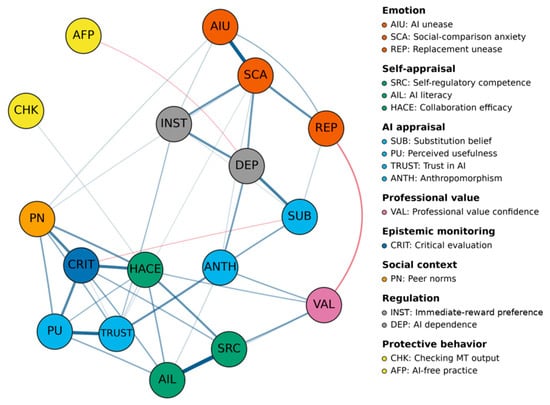
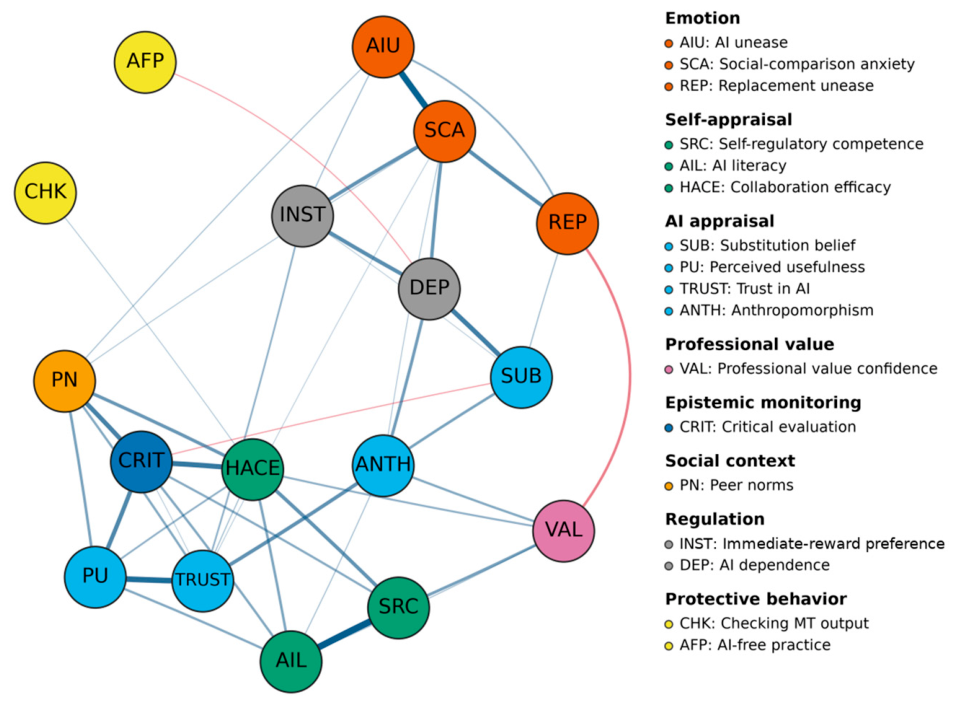
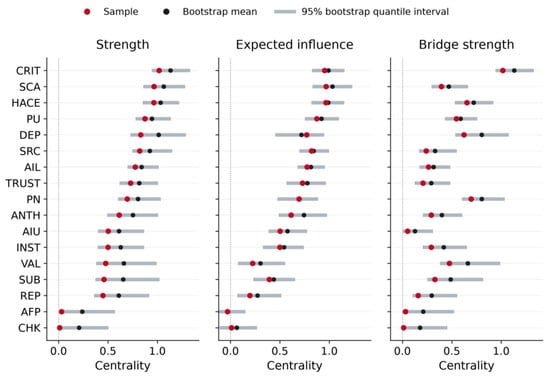
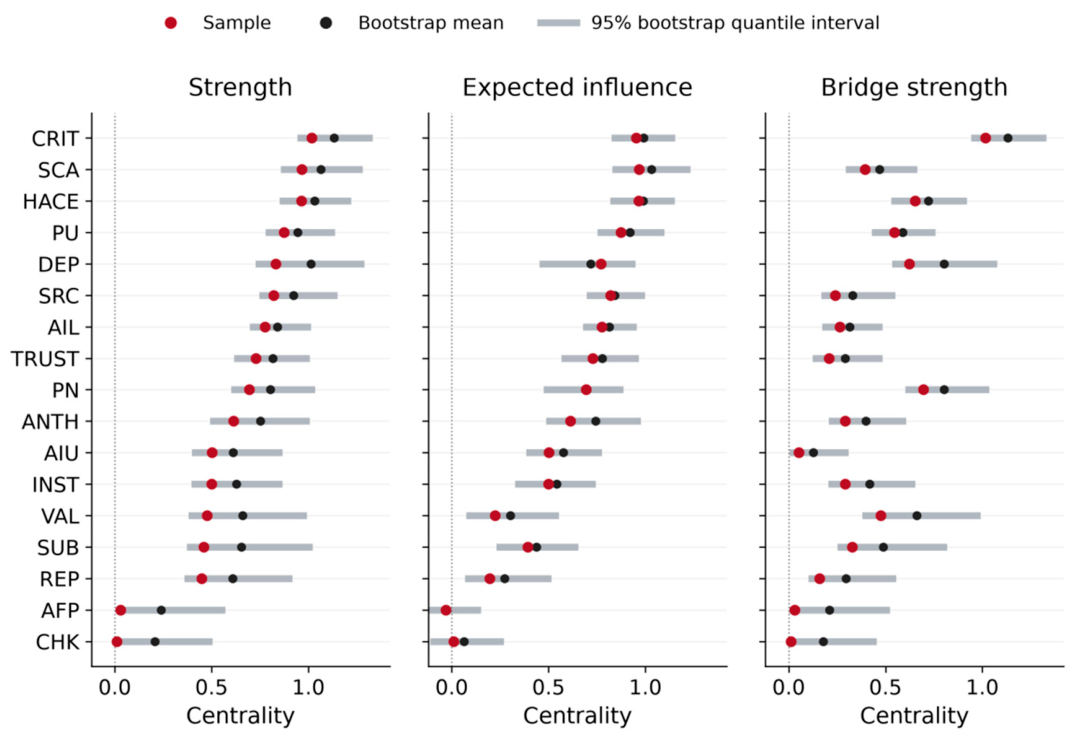
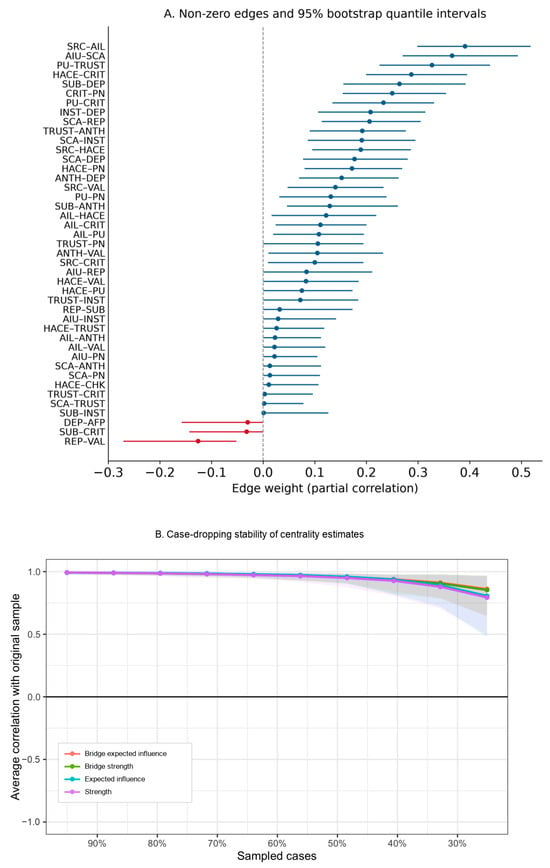
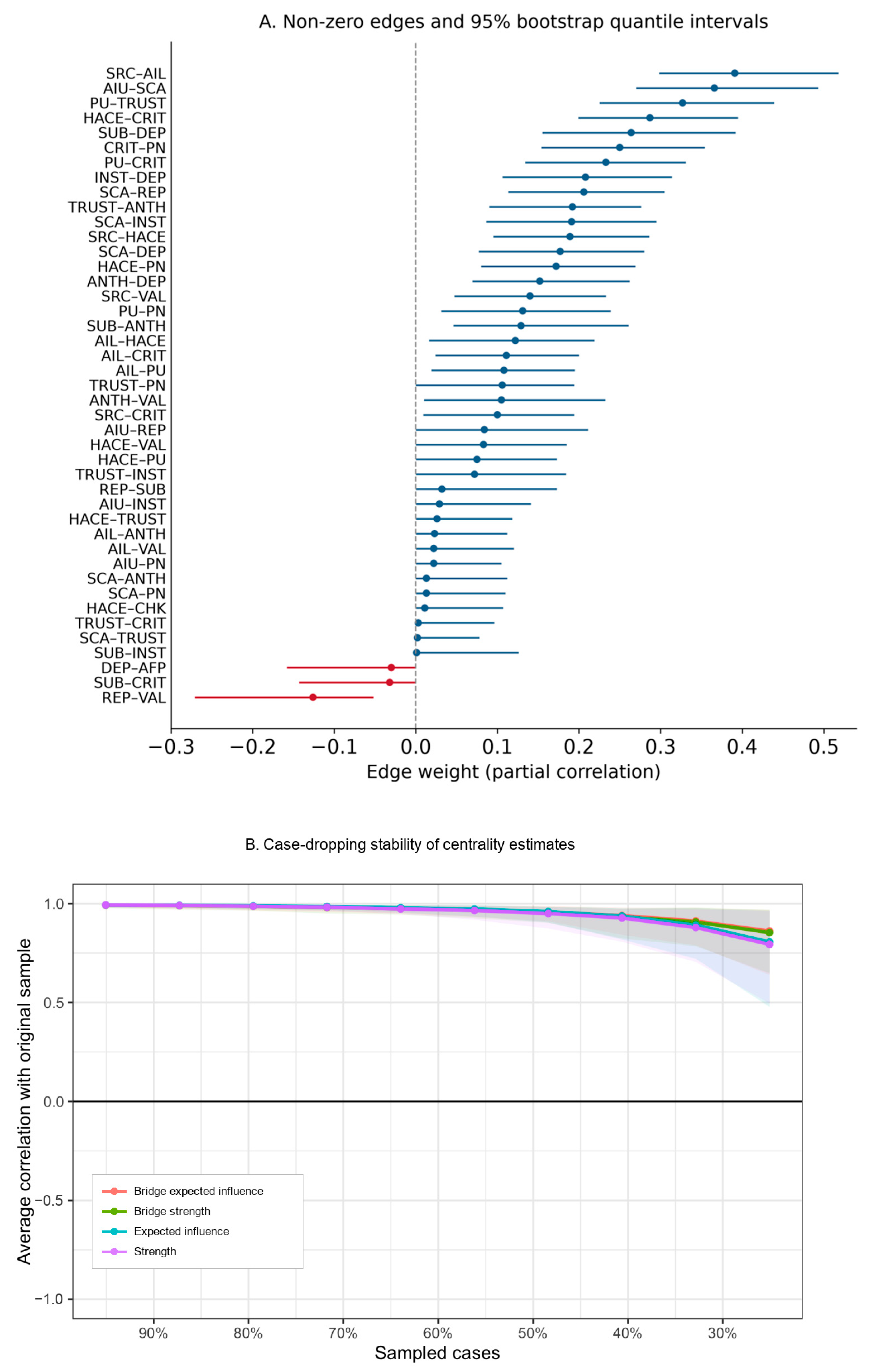
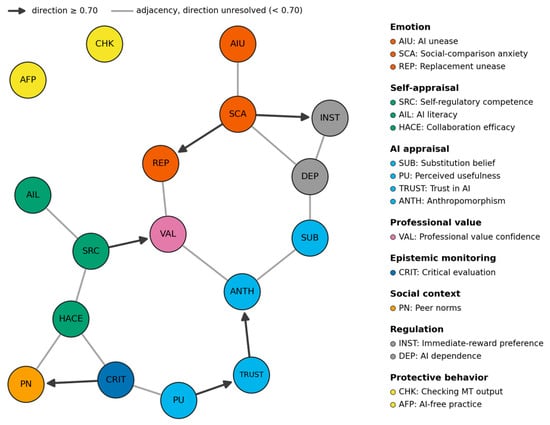
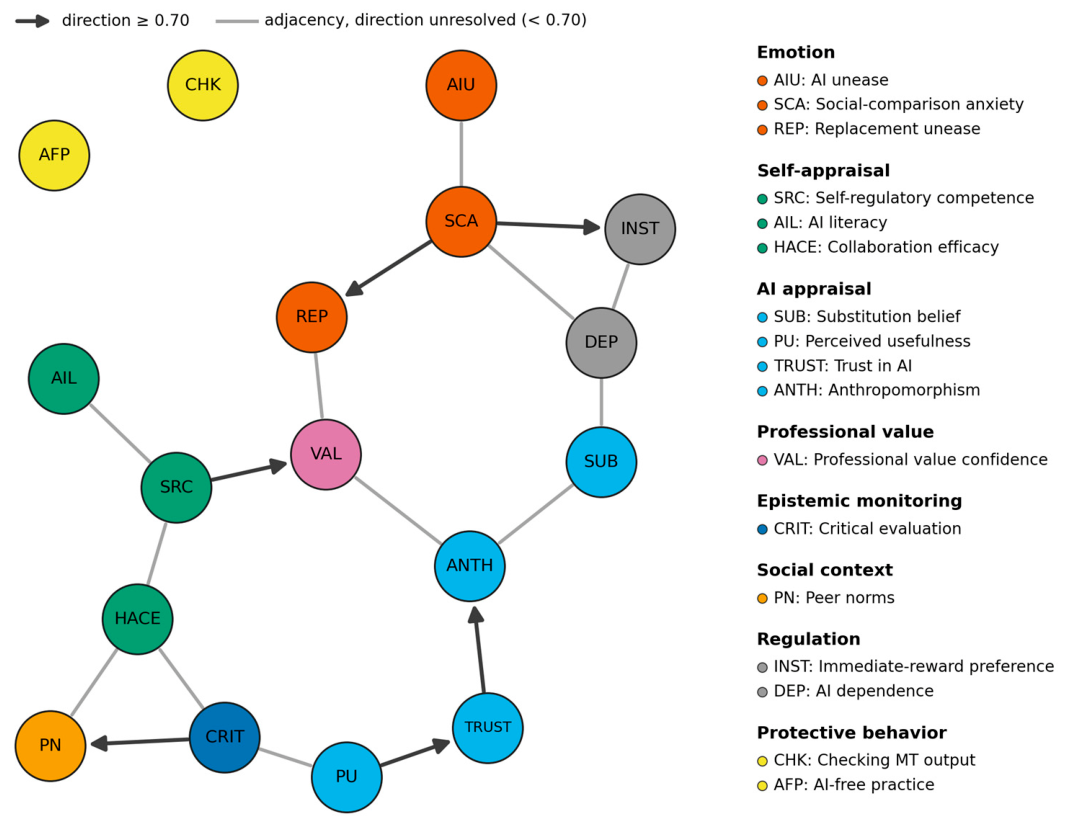
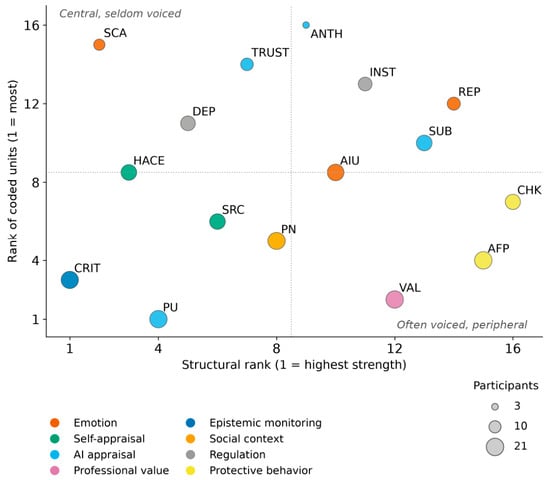
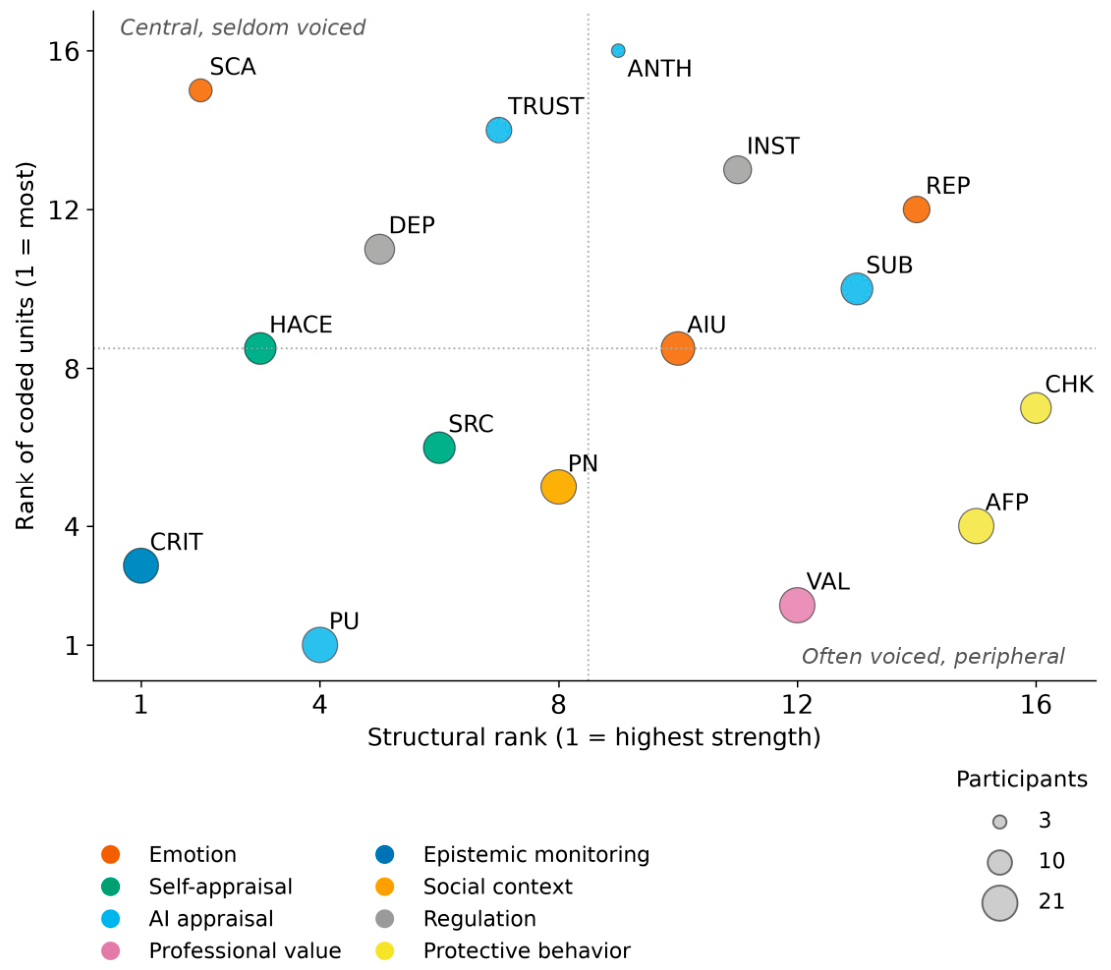

Disclaimer/Publisher’s Note: The statements, opinions and data contained in all publications are solely those of the individual author(s) and contributor(s) and not of MDPI and/or the editor(s). MDPI and/or the editor(s) disclaim responsibility for any injury to people or property resulting from any ideas, methods, instructions or products referred to in the content. |
© 2026 by the authors. Licensee MDPI, Basel, Switzerland. This article is an open access article distributed under the terms and conditions of the Creative Commons Attribution (CC BY) license.