


Abstract
This study addresses a limitation in classical models of nanofluid flow, namely, their inability to adequately capture microscale effects associated with fluid-element microrotation and local microstructural dynamics. Specifically, the effects of nanoparticle geometry and microrotation on the hydrodynamic and thermal behavior of copper (Cu)–water nanofluids flowing over a stretching surface under a transverse magnetic field are investigated. Four nanoparticle morphologies: bricks, cylinders, platelets, and blades, are considered, with water (Pr = 6.2) as the base fluid. Appropriate similarity transformations are employed to reduce the governing nonlinear partial differential equations (PDEs) to a system of ordinary differential equations (ODEs), which is solved numerically using the Runge–Kutta–Fehlberg (RKF) integration scheme. A comprehensive parametric analysis is conducted to examine the effects of the governing physical parameters on the velocity, microrotation, and temperature distributions. The results reveal that increasing the thermal radiation parameter enhances the temperature distribution for all four nanoparticle morphologies. Furthermore, comparative analysis indicates that water-based nanofluids exhibit a more pronounced temperature gradient than kerosene-based fluids under identical physical conditions. These findings highlight the importance of nanoparticle morphology and microscale rotational effects in modeling the flow and heat transfer characteristics of nanofluids.
1. Introduction
A rise in temperature at various stages of the production process is a major problem in many industrial processes. The thermal bottleneck is usually caused by insufficient heat dissipation in one or more electrical components embedded in engineering machinery, leading to excessive heat dissipation to the ambient environment, which in turn causes the power consumption to rise. To overcome these energy losses and to solve thermal management problems, Choi [1] proposed the concept of nanofluids, which are a base fluid with ultra-fine particles (smaller than 100 nm) having very high thermal conductivities and dispersed throughout the fluid. Following this idea, Li and Xuan [2] carried out a series of experiments to study the convective heat transfer and fluid flow inside the tube when the base fluid is a mixture of these nanostructures. They found that the convective heat transfer coefficient of the base fluid is greatly increased after adding these nanostructures. In the same way, Angayarkanni et al. [3] examined the stability of suspensions of magnetite (Fe3O4) in kerosene, in addition to polyalphaolefin (PAO)-hosted alumina (Al2O3) spheres and alumina nanorods. They found that increasing both the particle size and loading of the particle fraction leads to increased specific heat capacity only for the mixtures of Al2O3 in PAOs. The problem of thermal transport and transient nanofluids flow past an accelerating vertical plate immersed in porous media was tackled by Hussanan et al. [4]. Using water as the standard host fluid under different amounts of Cu, Al2O3, or TiO2, they found that the Cu–water systems produce the highest thermal profiles. In another application, Wilk et al. [5] analyzed the thermophysical properties of a water-based Cu–nanofluid inside a special type of coil heat exchanger, and concluded that this nanofluid mixture is suitable to meet the operational criteria for the buffer zone, while maximizing the heat exchange by enhancing the heat exchange characteristics of the unit. In addition, Swalmeh et al. [6] showed that an increasing microrotation parameter had a negative effect on the heat transfer characteristics of Cu compared to Al2O3 in water-based micropolar fluid. Saba et al. [7] explored a novel water-based Cu–Al2O3 hybrid configuration, testing the acceleration of the flow and heat exchange with the height-adjustable porous walls, which showed that the configuration with platelets has the best heat exchange performance. Furthermore, Hussanan et al. [8] investigated the energy transport with the CNT effects in an MHD flow over the stretching boundaries with thermal radiation and Newtonian heating and found that the CNT-water flow has a higher temperature. Finally, the water-based Cu–nanofluid was investigated by Yahiaoui et al. [9] to understand the variations in water temperature and fluid flow in the square vs. concave/convex wall domain, showing that the square domain maximizes water performance.
As for electrohydrodynamics, Nguyen et al. [10] simulated the effect of an electric field on the heat efficiency inside a porous matrix and determined that the efficiency is increased when an electric field is applied along with thermal radiation. At the same time, Hussain et al. [11] focused on developing a magnetic MWCNTs–Fe3O4 nanocomposite (NC) by combining different properties of the materials to explore new possibilities for specific engineering applications, achieving a 50% increase in the thermal conductivity of the magnetic fluid at 0.5 g/L loading. Saleem et al. [12] investigated the flow of Cu–water nanofluid, incorporating different nanoparticle shapes (spherical, blade, and platelet), induced by a flat plate. To study generalized Fourier’s law, Wang et al. [13] used an analytical solution method to investigate the thermal transport of Casson fluids by the Prabhakar fractional derivative, and showed that the fluid properties can be systematically tailored by increasing the fractional parameters. Imran et al. [14] have developed highly stable ferro-nanofluids by mixing oleic acid-coated Fe3O4 particles with a mixture of sunflower oil and mineral oil in different volume fractions, which showed an unprecedented thermal conductivity enhancement of 91% at 0.6 vol%. Shamshuddin et al. [15] studied axisymmetric flow of a Marangoni fluid containing Cu–water between the disc in the presence of static magnetic field applied in the axial direction and thermal radiation. They discovered that increasing the Marangoni variable increased the flow rate and decreased the thermal fields. Furthermore, Jamshed [16] developed a computational model for the boundary layer flow, thermal transport, and entropy generation of a Maxwell nanofluid, and found that the Cu–water system is an excellent thermal conductor as compared to TiO2–water mixture. The MHD flow response of water-hosted metallic nanostructures (Cu, Al2O3, and SWCNTs) across a flexible porous boundary was explored by Pattnaik et al. [17], who pointed out that increasing the concentration of nanoparticles retards the velocity profiles more aggressively for Cu than for Al2O3 or SWCNTs. Pasha et al. [18] mapped out how diverse nanoparticle shapes dictate energy exchange and thermal flow, discovering that laminar-state configurations exert a more pronounced impact on entropy and temperature fields than sphere, column, hexahedron, or tetrahedron variations, while also proving that the skin friction coefficient scales up with higher mixed convection parameters. Finally, Wakif and Sehaqui [19] mathematically addressed a stability problem tied to water-based metal oxide nanomaterials, proving that the entire system tends to destabilize as the particle dimensions expand.
The magnetic flow of a second-grade nanofluid having activation energy over a convectively heated curved stretching boundary was monitored by Reddy et al. [20], whose calculations definitively showed that both fluid velocity and thermal distributions amplify remarkably when fluid and convergence parameters grow. Looking at antenna engineering, Alilat et al. [21] computed the mean surface temperature of a conical antenna where thermal regulation was maintained using a porous structure saturated with nanofluid. Concurrently, Ganesh et al. [22] delineated the hydrothermal behavior of a Casson fluid transporting multi-walled carbon nanotubes (MWCNTs) through a wavy square cavity centered with a circular cylinder. Pooyoo et al. [23] practically measured the thermal and transport response within a cylindrical heat pipe running on an Al2O3–water mixture, confirming that this fluid significantly upgrades the system’s effective thermal conductivity. In addition, the flow and heat transmission of sodium alginate-hosted hybrid nanofluids over adjustable stretching/shrinking surfaces were tracked by Hammachukiattikul et al. [24], revealing that the overall thermal conduction capacity of this SA-based radiative MHD hybrid mixture improves when the hybrid volume fraction, Eckert number, Casson parameter, heat source term, inclined magnetic field angle, and radiation parameter are increased. Several recent studies have investigated various aspects of magnetohydrodynamic (MHD) boundary layer flows over stretching surfaces, providing valuable insights into their flow and heat transfer characteristics [25,26,27].
Recently, several studies have examined the flow and heat transfer characteristics of Cu-based nanofluids under a variety of geometric and physical configurations. As mentioned above, Saleem et al. [12] investigated the flow of Cu–water nanofluid, incorporating different nanoparticle shapes (spherical, blade, and platelet), induced by a flat plate moving with constant velocity, subject to a constant wall temperature and viscous dissipation effects. Swalmeh et al. [6] examined natural convection boundary-layer flow of Cu–water and Al2O3–water micropolar nanofluids over a solid sphere with prescribed wall temperature, incorporating micro-rotation and micro-inertia effects characteristic of micropolar fluid theory. Saba et al. [7] studied the flow and heat transfer of a Cu–Al2O3/water hybrid nanofluid inside a rectangular channel with dilating/squeezing permeable walls, examining the influence of different Cu nanocomposite shapes on the flow and thermal fields. While these studies provide valuable insight into the roles of nanoparticle shape, micropolar behavior, hybridization, and porous/deformable boundaries in nanofluid transport, several important aspects remain unaddressed, in particular, as follows:
- (i).
- Flow geometry and surface kinematics: Unlike the constant-velocity moving plate of Saleem et al. [12], the stationary/oscillating sphere of Swalmeh et al. [6], and the deformable channel walls of Saba et al. [7], the present study considers flow induced by a linearly stretching sheet, which generates a fundamentally different momentum boundary layer structure governed by the stretching–velocity ratio rather than plate translation, buoyancy, or wall deformation rate.
- (ii).
- Thermal boundary condition: In contrast to the constant wall temperature assumed in [6,7,12], the present work prescribes a parabolic (spatially varying) temperature distribution at the sheet, providing a more realistic representation of non-uniform surface heating relevant to many engineering processes.
- (iii).
- Porous boundary and suction effects: None of [6,7,12] consider a stretching sheet with a porous (permeable) boundary subject to suction. (Saba et al. [7] do include permeable/porous channel walls, but in a dilating–squeezing channel-flow configuration rather than a boundary-layer flow over a stretching sheet.) The present study incorporates wall suction on a stretching, porous sheet, allowing investigation of its influence on the velocity and thermal boundary layers.
- (iv).
- Thermal radiation: Thermal radiation effects, which are entirely absent from the formulations of [6,7,12], are incorporated in the present energy equation, making the model more applicable to high-temperature nanofluid systems where radiative heat transfer becomes significant.
Consequently, the present study generalizes and extends the existing body of work by simultaneously accounting for a linearly stretching, porous sheet; a parabolic wall-temperature distribution; suction at the boundary; and thermal radiation, a combination not previously examined in [6,7,12] or elsewhere in the literature, to the best of the authors’ knowledge.
Motivated by this gap, the objectives of this study are three-fold: first, to establish a mathematical framework for water-based Cu–nanofluid flow through a stretching surface; second, to evaluate the concurrent influences of a transverse magnetic field, thermal radiation, and porous boundary; and lastly, to compute the solution for the resulting nonlinear system by implementing the Runge–Kutta–Fehlberg (RKF) numerical scheme.
2. Mathematical Modeling
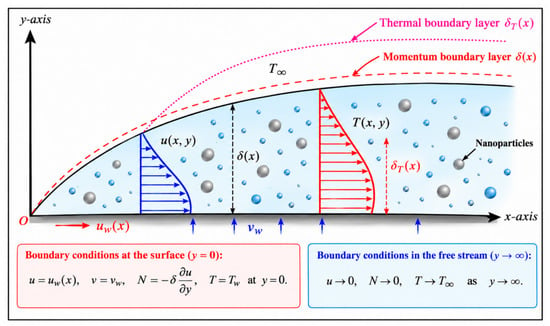
The physical model addresses the steady, two-dimensional flow of an aqueous copper nanofluid past a stretching surface, accommodating four distinct nanoparticle geometries. As illustrated in Figure 1, the coordinate system is defined with the x-axis aligned parallel to the surface and the y-axis oriented perpendicular to it. The sheet stretching velocity is prescribed as (where represents a positive constant), and the surface is maintained at a non-uniform thermal state [28]. To analyze how copper nanofluids deform and flow under stress, one must employ the governing equations of continuity alongside linear and angular momentum.
Figure 1.
Schematic illustration of momentum and thermal boundary layers in nanoparticles micropolar fluid flow over a stretching surface.
In these equations, the velocity components are designated by and , whereas and represent the magnetic field and micro-inertia density, respectively. A comprehensive listing of all alternative parameters and variables can be found in the nomenclature.
To model the heat transfer characteristics of the nanofluid, the energy equation is expressed in the form
According to Rosseland’s approximation, the energy equation takes the following form:
The relative conditions at boundaries are
where boundary mass transfer velocity with indicates suction. To evaluate the viscosity of aqueous copper nanofluids featuring non-spherical particle geometries, the subsequent expression is employed
The shape factors for the non-spherical particles are accounted for by the coefficients and which are detailed in Table IV of Timofeeva et al. [29]. When the copper nanoparticles are spherical, the viscosity of the water-based mixture is given as
The relationship governing the spin gradient viscosity links it directly to the dynamic viscosity of the nanofluid as follows:
The spin gradient viscosity is expressed as a function of the nanofluid’s dynamic viscosity through the following expression:
To calculate the density of the nanofluid, the empirical correlation developed by Pak and Cho [30] is formulated as
The electrical conductivity of water-based Cu–nanofluid, which is of the form
There are many formulations that have been proposed for the thermal conductivity of binary mixtures. One of the basic frameworks that has been developed is Maxwell’s [31] model, in which the effective conductivity is related to the thermal parameters of the carrier fluid, the dispersed phase concentration, and perfect spherical geometries. Given the restrictions on uniformity of shape, Hamilton and Crosser [32] then extended Maxwell’s theory to cover non-spherical shapes. Their modification introduces an empirical shape factor, enabling the model to account for diverse nanoparticle structures when determining the mixture’s overall effective thermal conductivity. Mathematically, this formulation is expressed as
The structural configuration is accounted for by the shape factor n, which equals 3 and 6 for spheres and cylinders, respectively. Furthermore, the empirical shape constant is extracted from Table III of Timofeeva et al. [29].
To obtain nonlinear ordinary differential equations from the given partial differential equation, similarity variables were introduced such as
Using Equations (2), (3), (5) and (14) with their corresponding boundary conditions (6) to (7), the governing partial differential equations can be written as
In terms of the non-dimensional variables, the boundary constraints adjust to
where and represent an ordinary derivative with respect to . , respectively show the magnetic parameter and Prandtl number, is the micro–rotation parameter and is the radiation parameter.
3. Numerical Procedure
The nonlinear boundary value problem defined by Equations (15)–(17), subject to the boundary conditions (18) and (19), was solved numerically using a shooting technique coupled with the Runge–Kutta–Fehlberg fourth-fifth order (RKF45) integration scheme, implemented via Maple’s built-in dsolve numeric solver (method = rkf45). The solution procedure consisted of the following steps.
3.1. Reduction to a First-Order System
Defining
Equations (15)–(17) were recast as the equivalent first-order system:
The associated boundary condition takes the following form:
Here,
3.2. Shooting Formulation (BVP → IVP Conversion)
The seventh-order system above requires seven initial conditions at , of which only four are directly supplied by the physical boundary conditions (18): . Since is expressed in terms of the as-yet-unknown rather than a known numerical value, three initial slopes remain genuinely undetermined: . These were estimated using an iterative Newton (secant-type) shooting procedure built around Maple’s dsolve in which the three unknowns were systematically refined until the far-field conditions
were satisfied to within a prescribed tolerance. Maple’s absolute and relative error tolerances were set to abserr = relerr = 1 × 10⁻⁶, and the shooting iteration was terminated when the maximum residual in the three far-field boundary conditions fell below 10−6.
3.3. Domain Truncation and Convergence
The semi-infinite domain was truncated to a finite computational domain . The value of was determined by successively increasing it until the computed values of no longer changed beyond the fourth–fifth decimal place, as shown in Table 1 for a representative parameter set. The step size was independently halved to confirm that the reported results are also mesh independent. On this basis, was adopted for all results reported in this study; for particle geometries with larger viscosity-coefficient values (e.g., brick, with δ2 = 471.4), a correspondingly larger was required to achieve the same level of convergence. Since it has the largest δ2 (471.4) of the four shapes and was the slowest to converge in the testing, this makes it the right “stress test” case to report; since it converges by , the other three shapes (which converge faster) are automatically covered.
Table 1.
Convergence checks for and (representative case: ).
3.4. Validation
As a check on the accuracy of the solution procedure, the limiting case was considered, for which Equation (15) reduces exactly to the classical linear-stretching-sheet problem of Crane [33] whose closed-form exact solution yields the exact benchmark value . The present Maple-based numerical scheme reproduced this value to within 0%, confirming the accuracy and stability of the solution procedure as shown in Table 2.
Table 2.
Comparison of the present numerical results with the exact solution of Crane [33] in the limiting case .
4. Graphical Results and Discussion
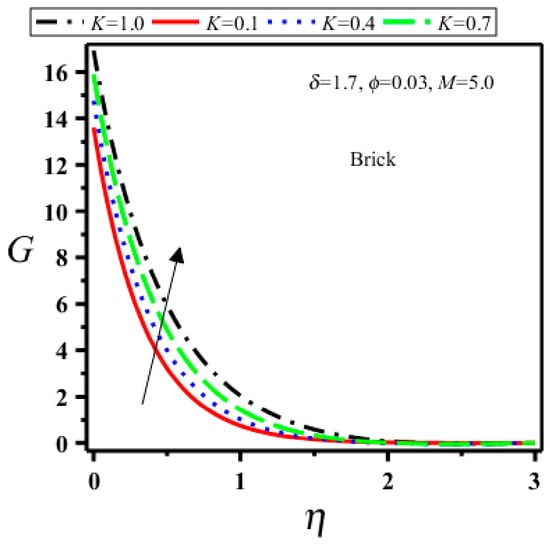
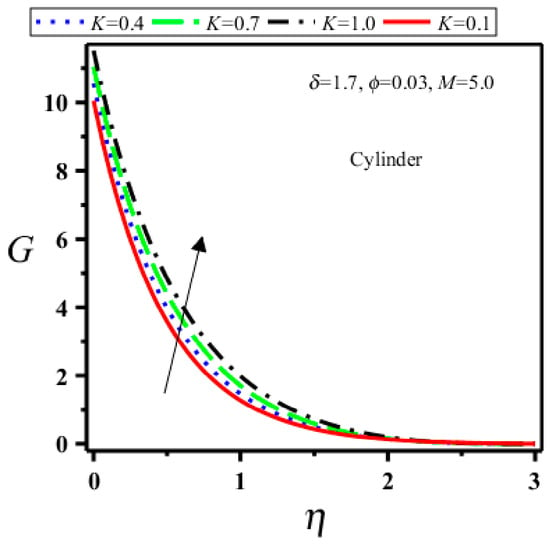
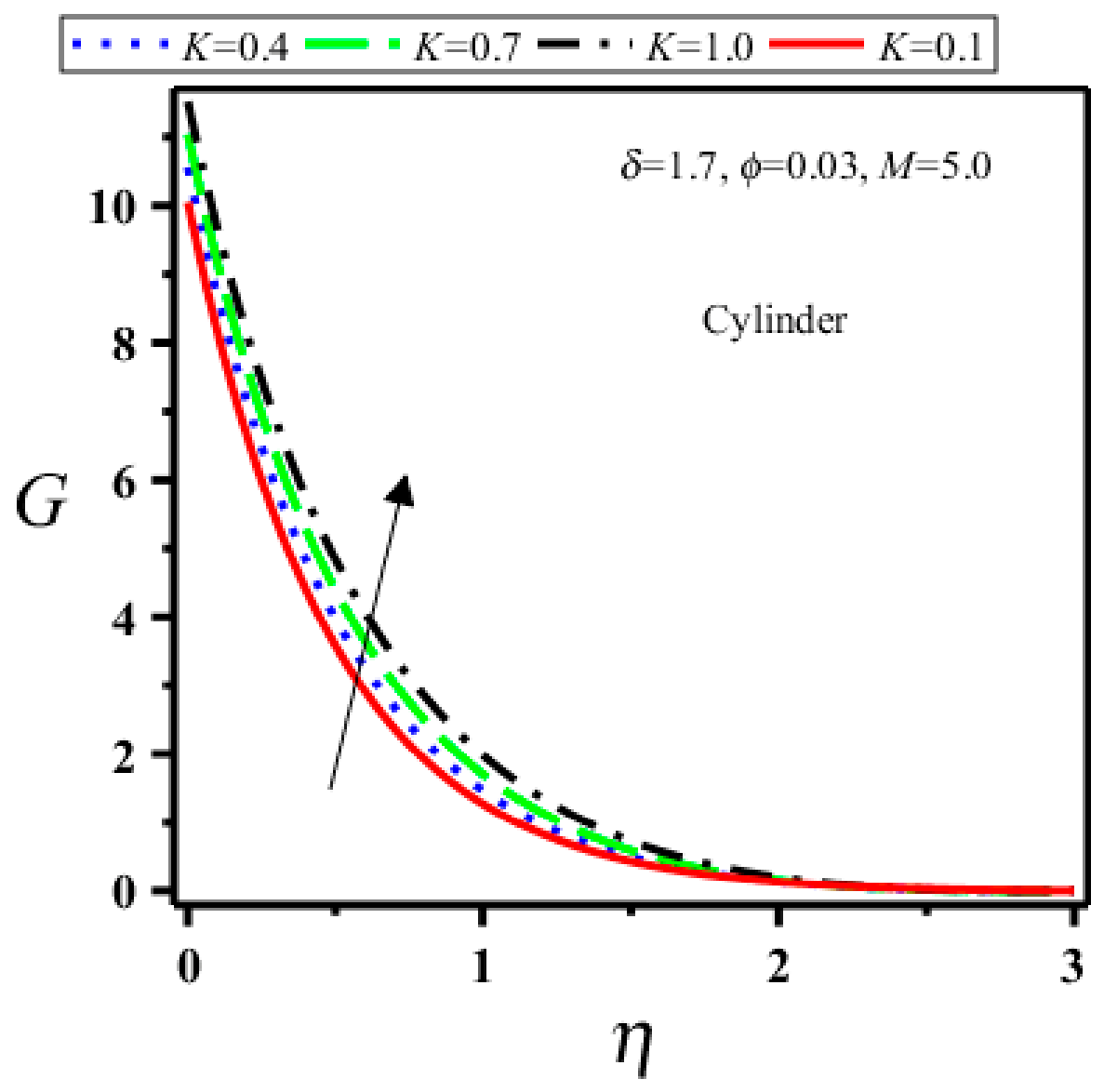
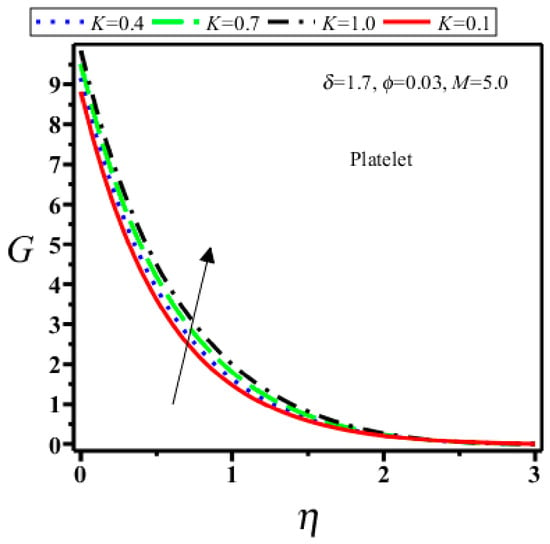
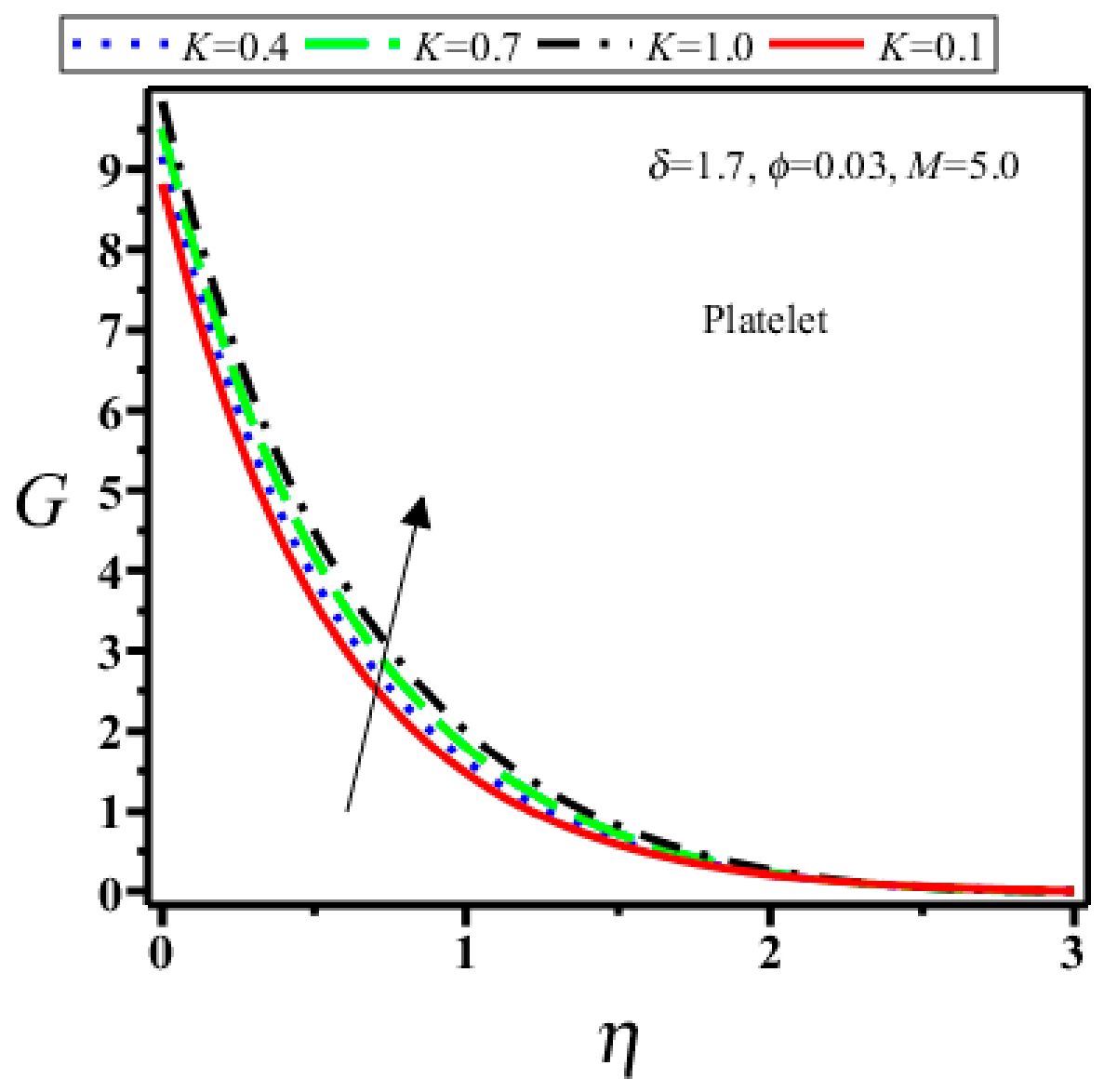
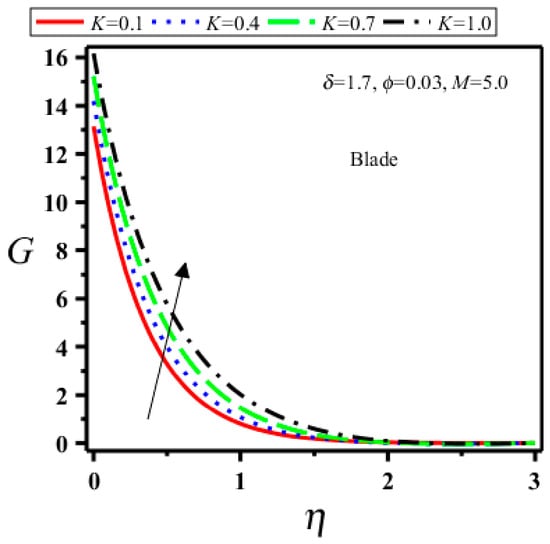
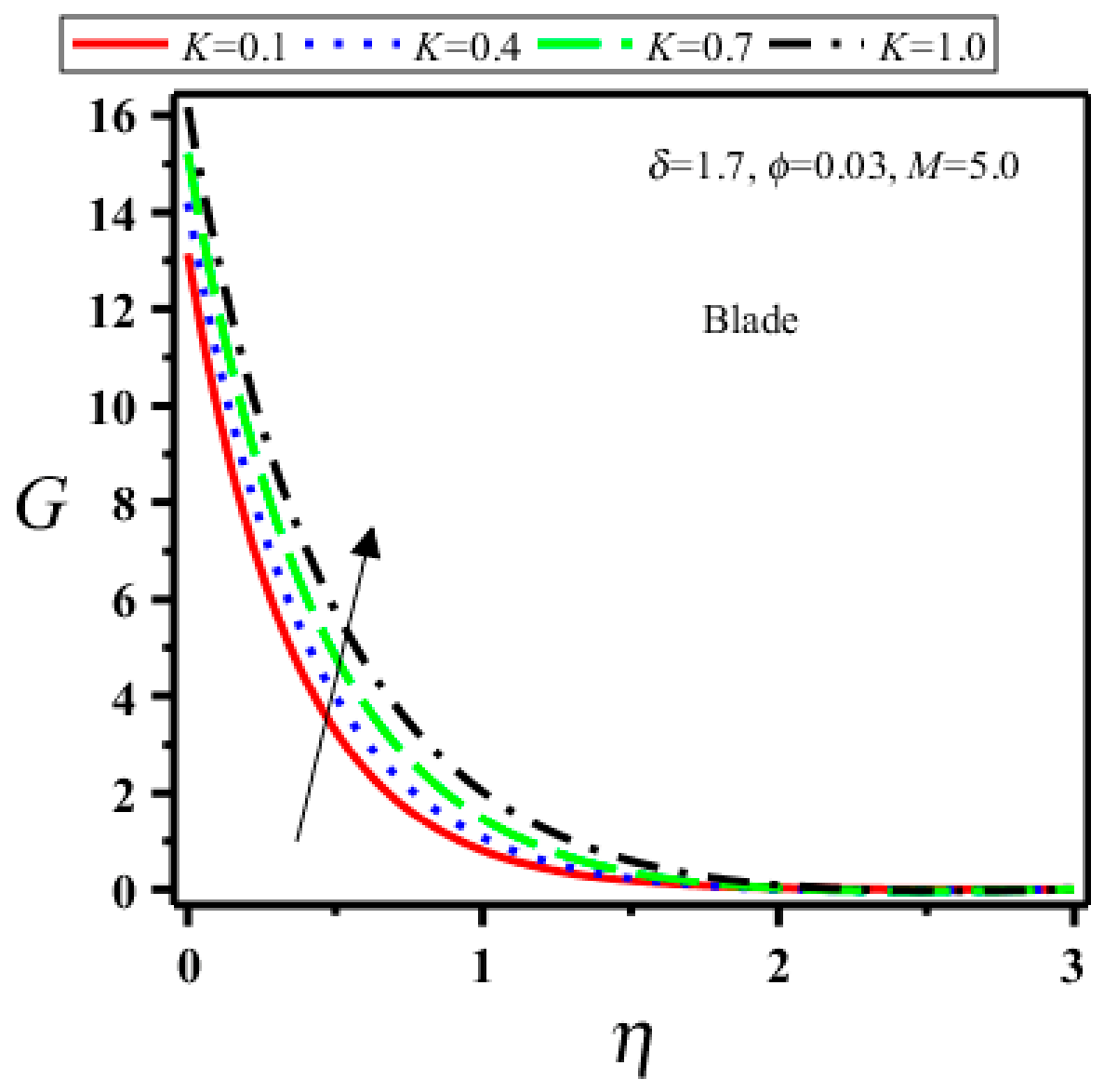
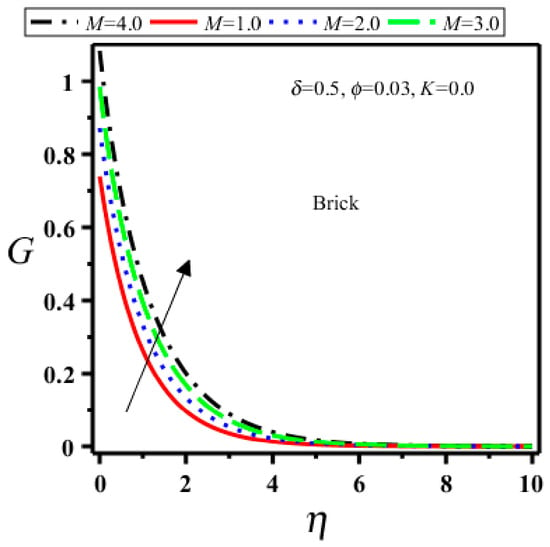
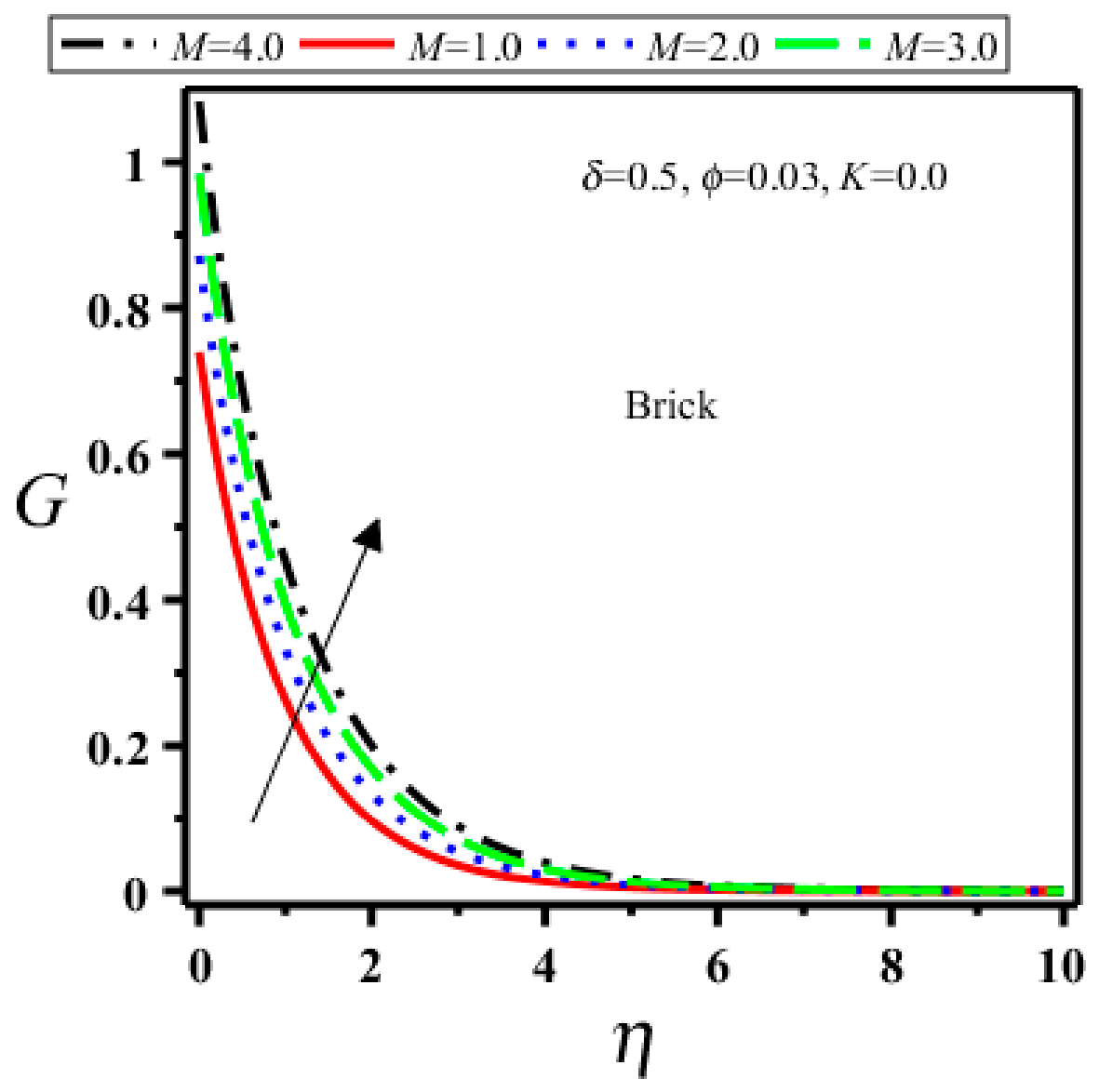
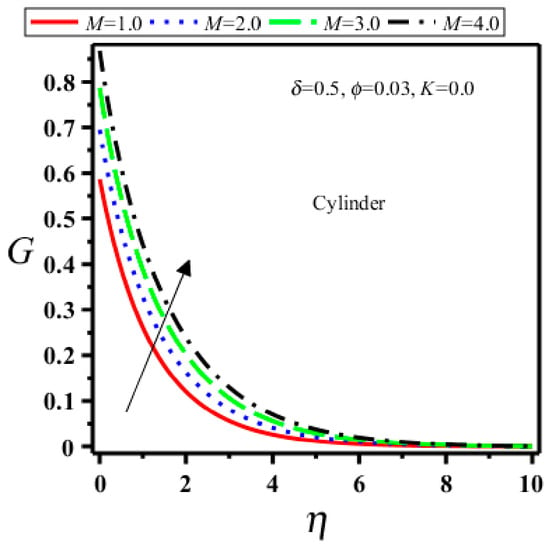
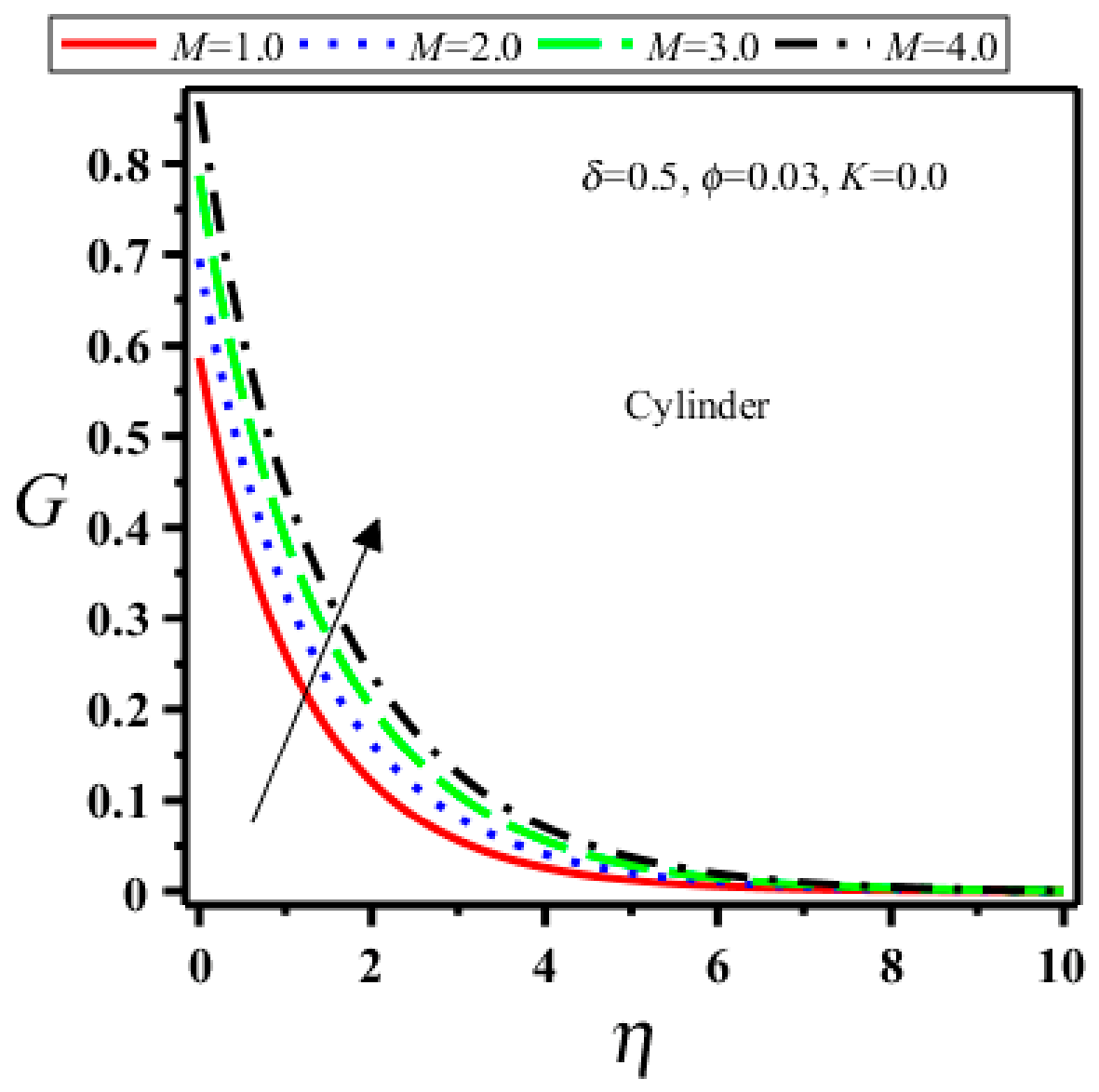
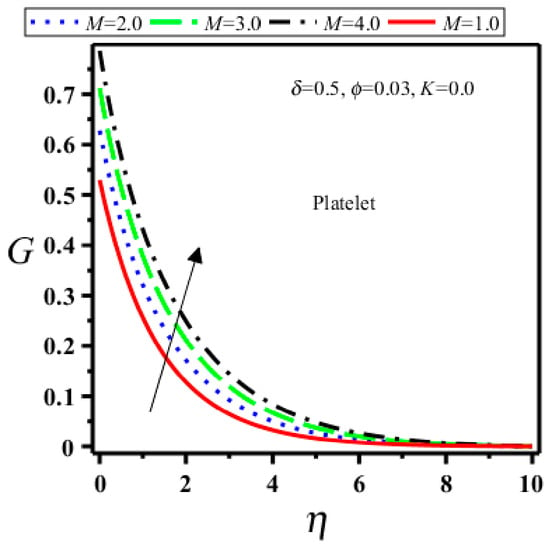
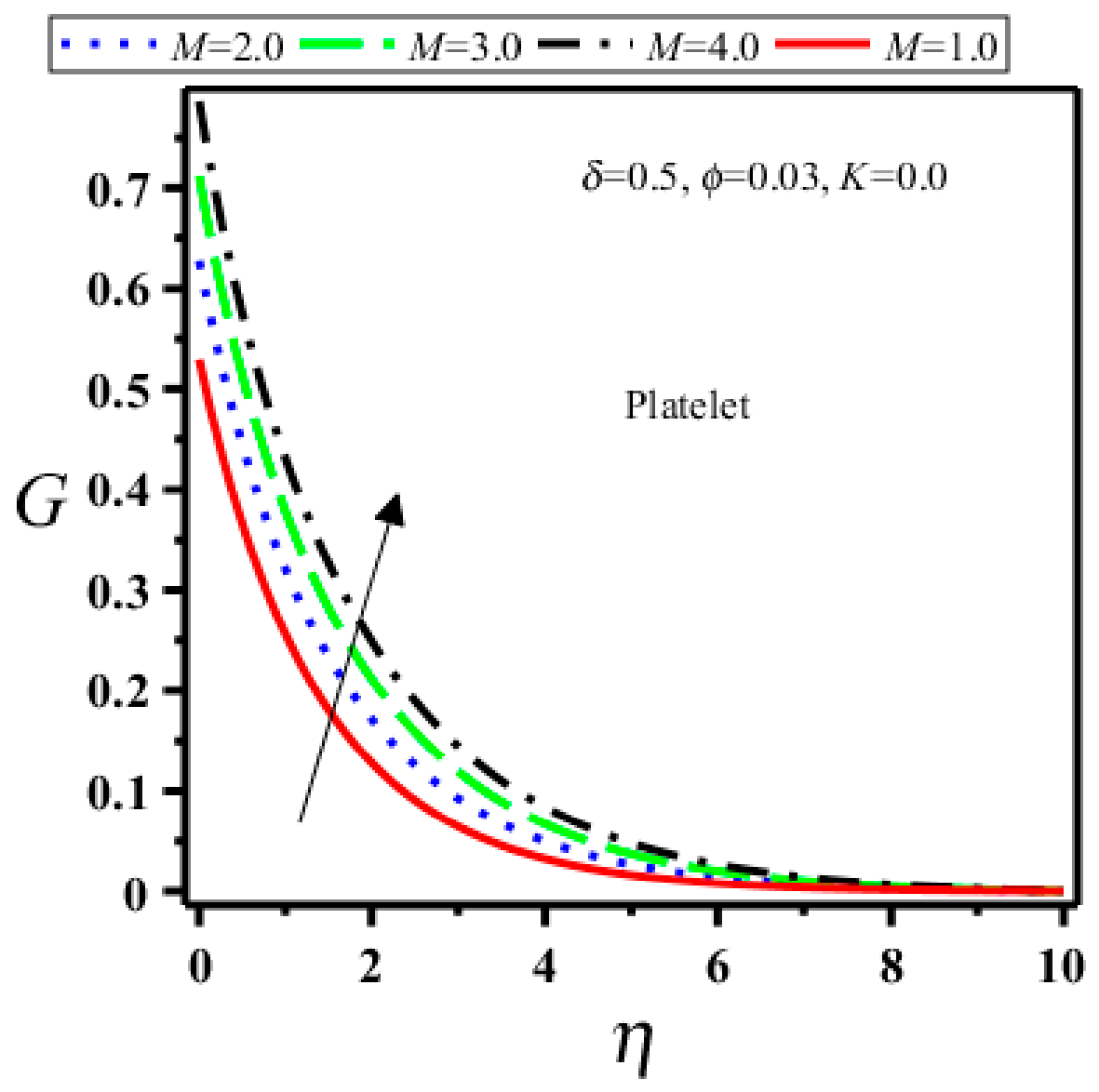
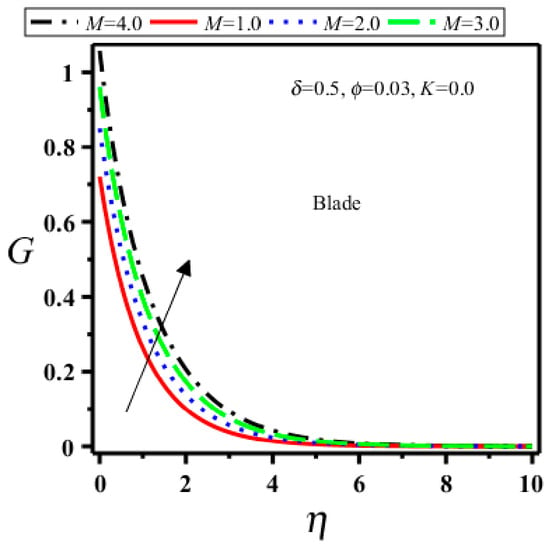
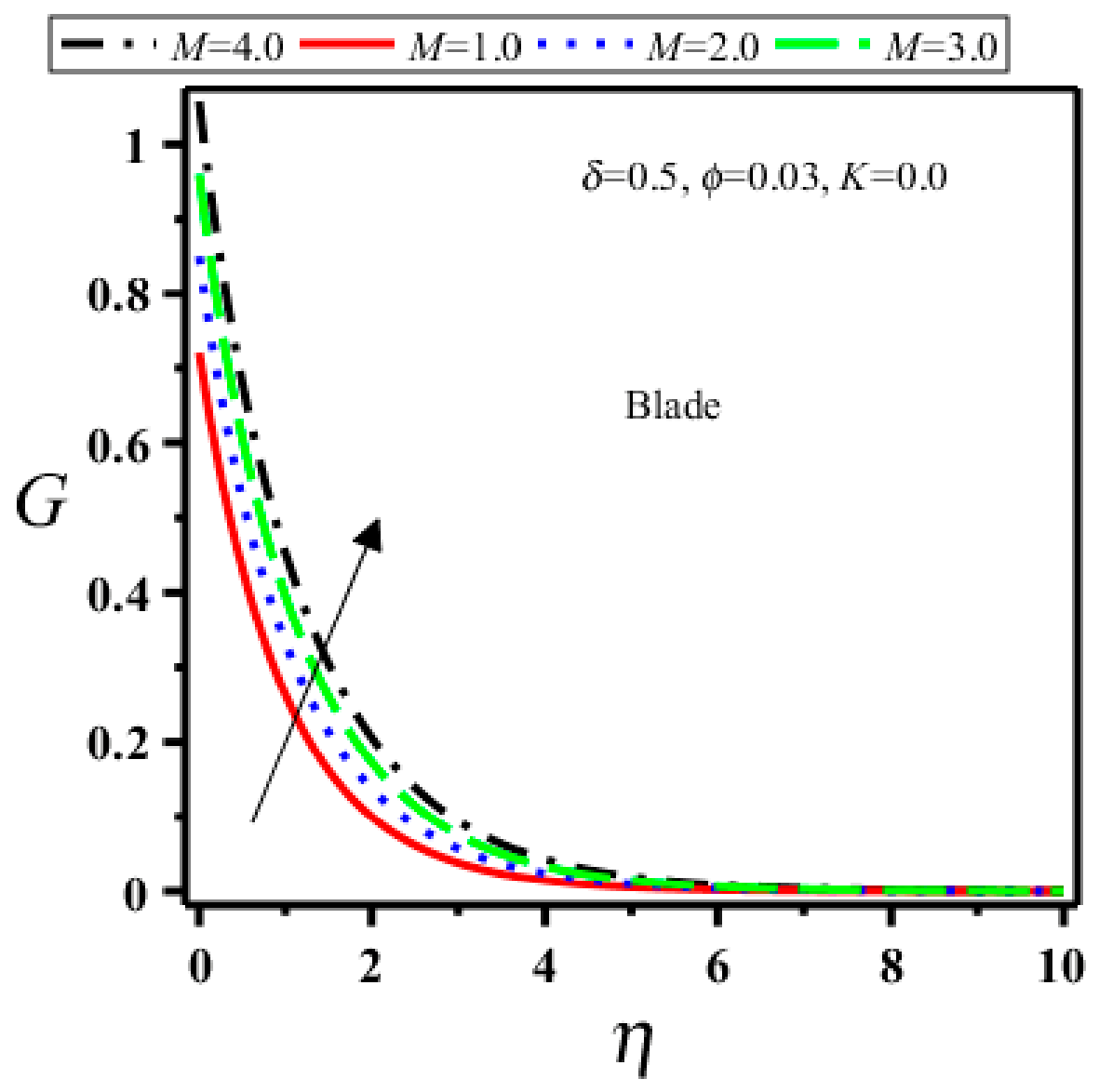
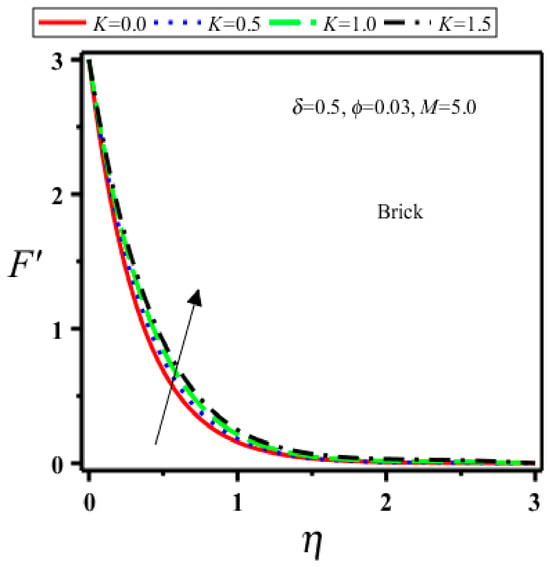
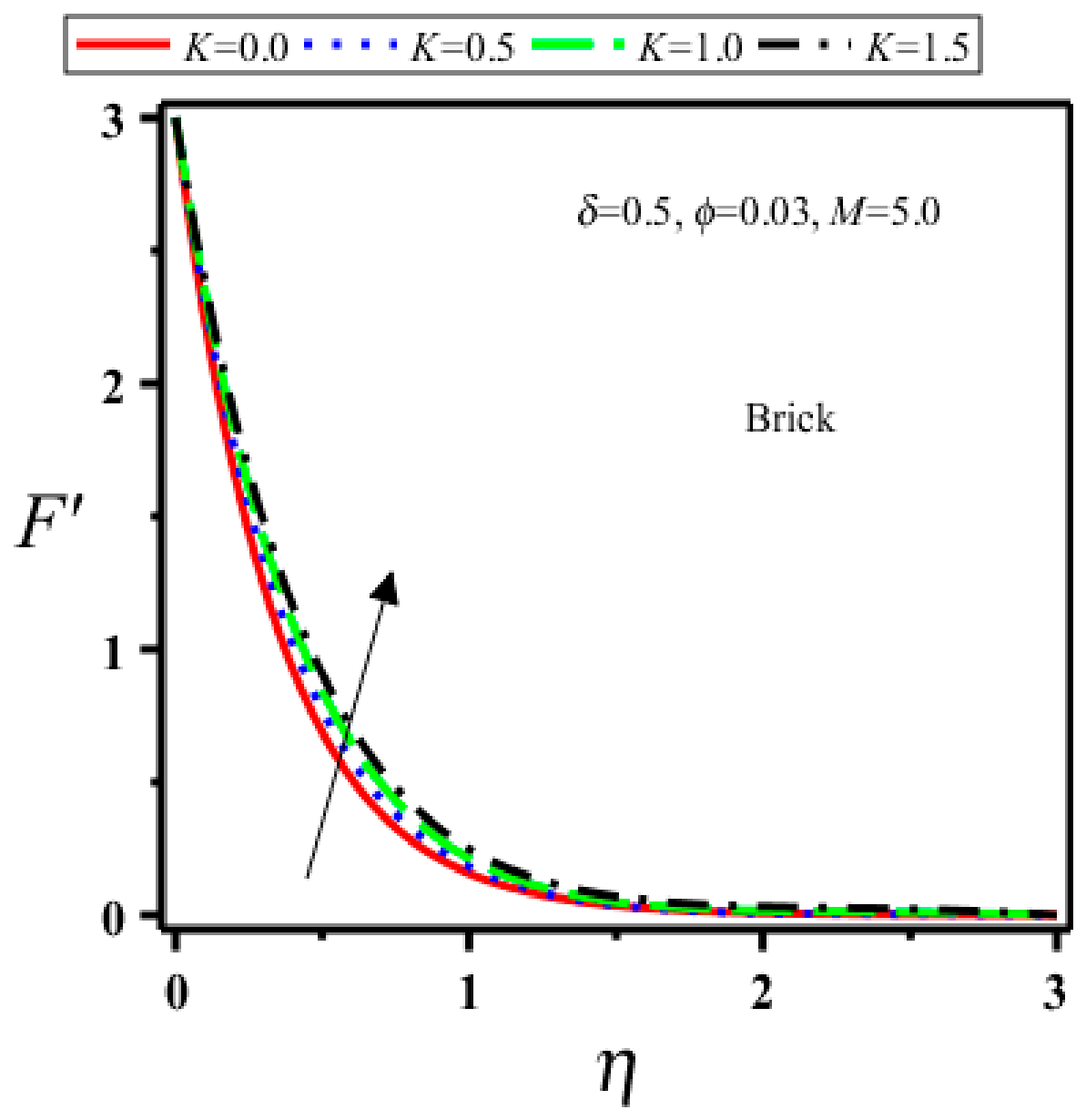
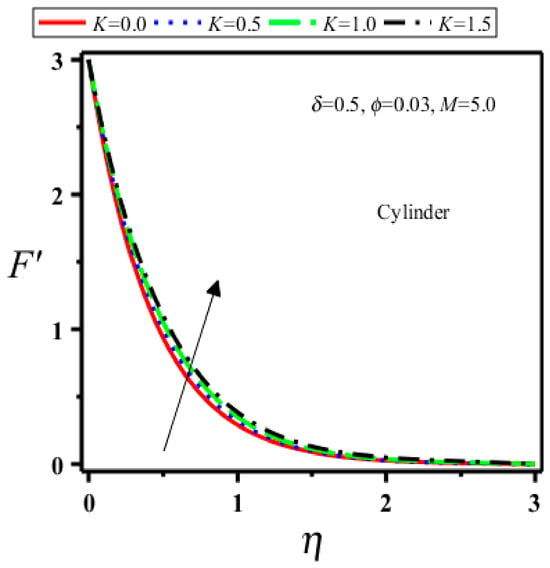
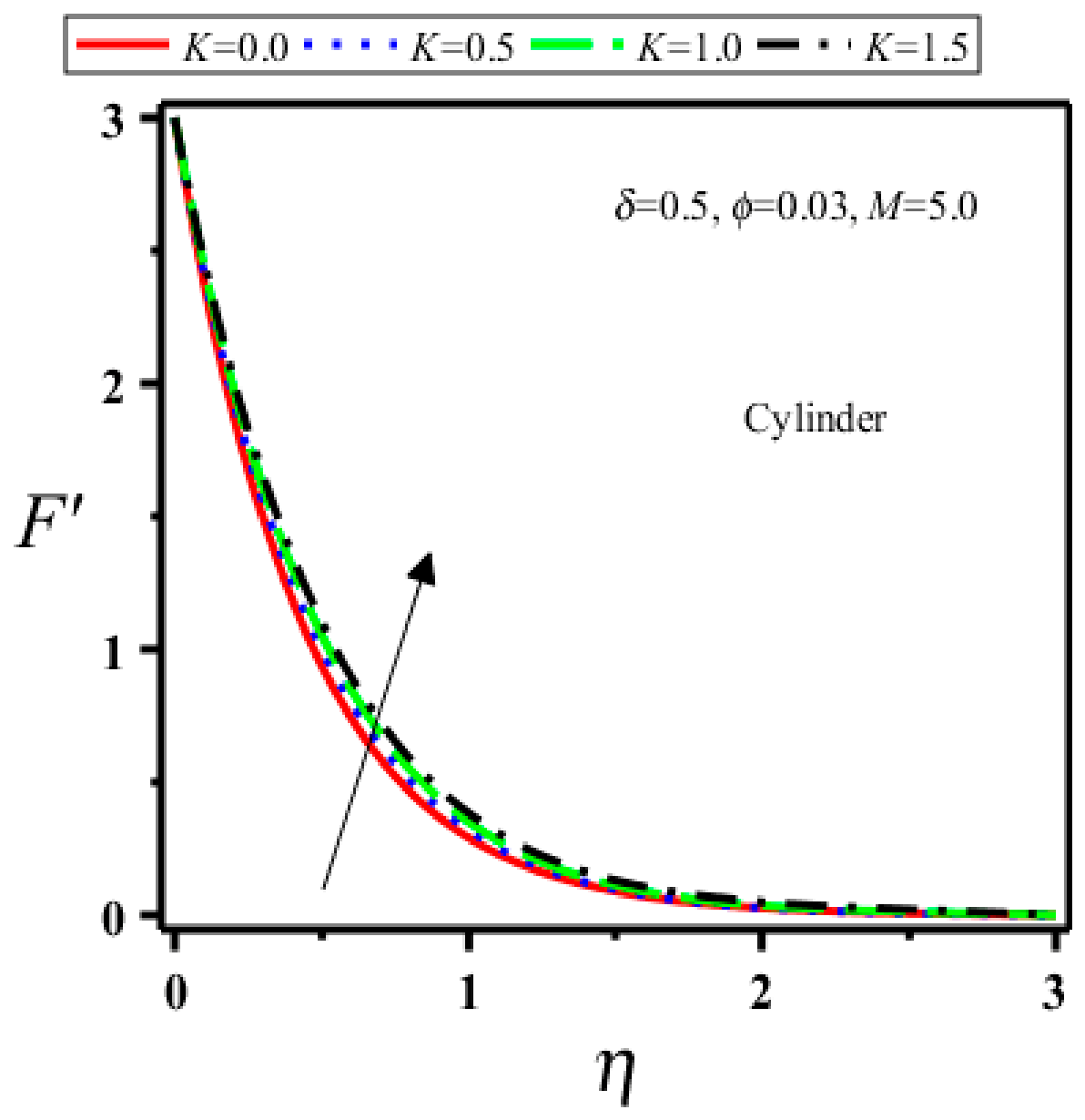
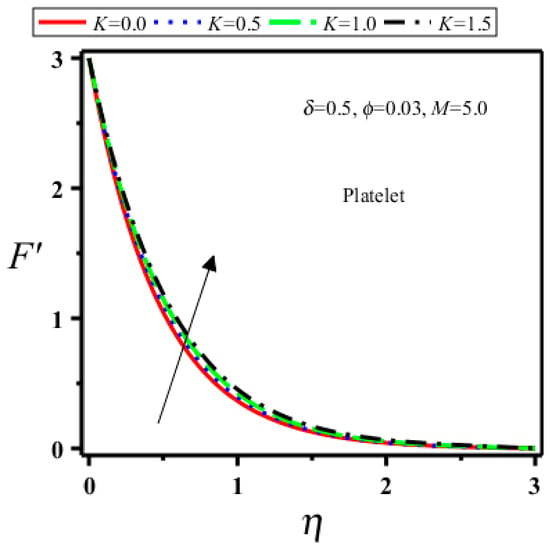
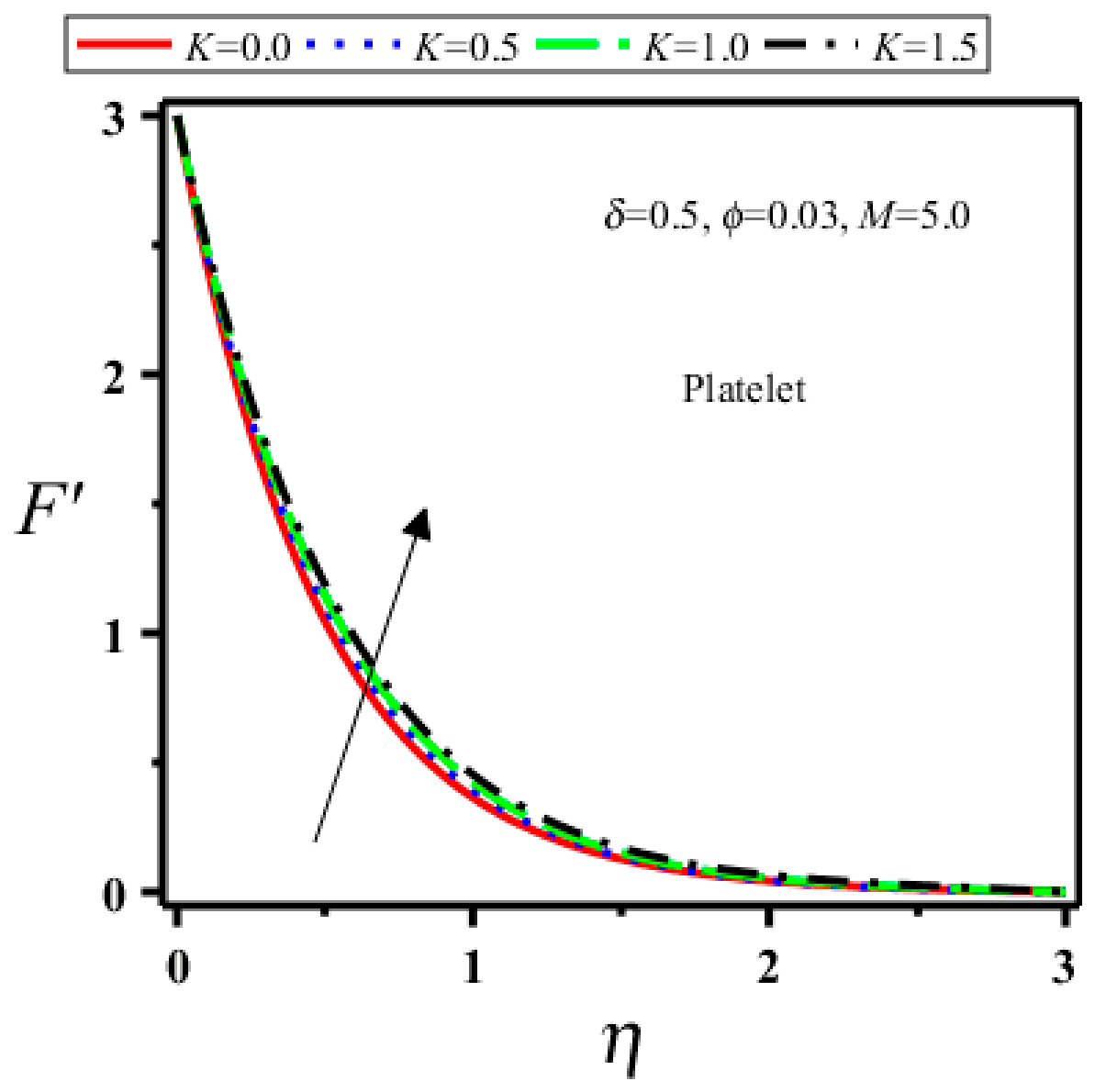
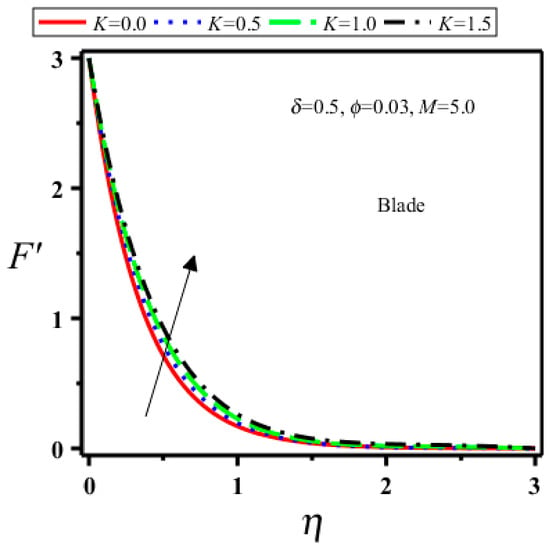
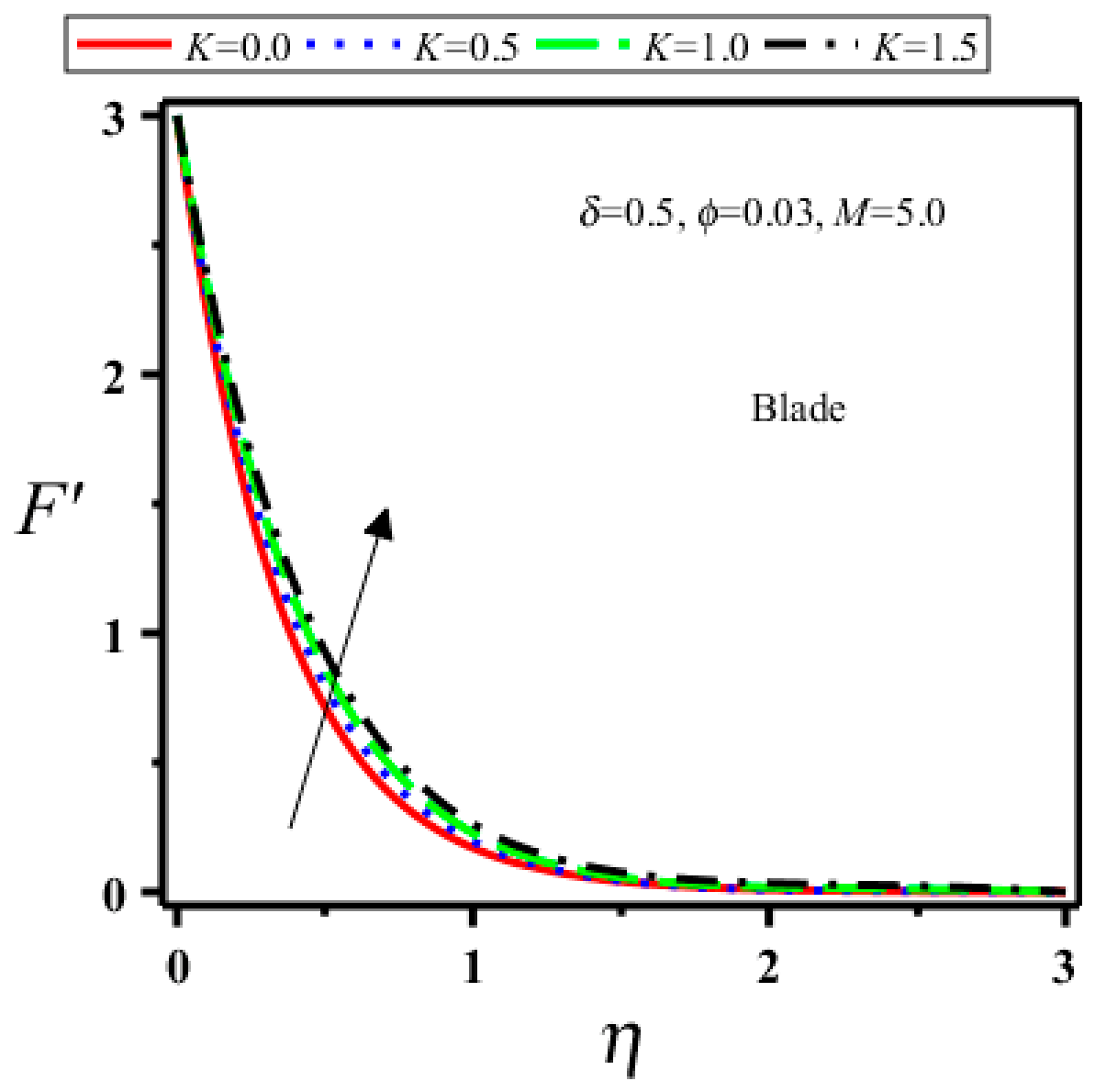
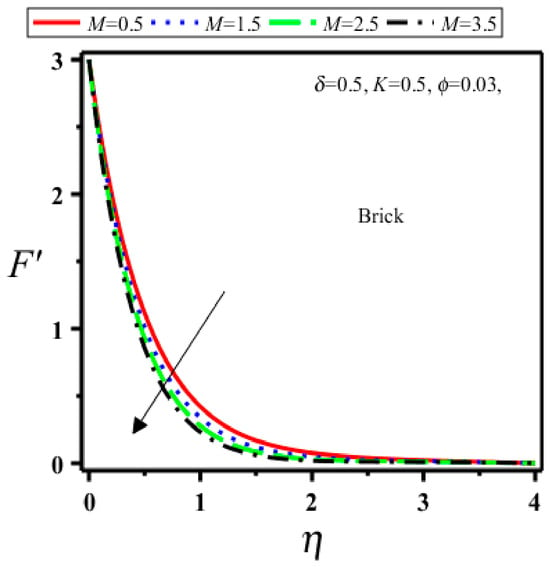
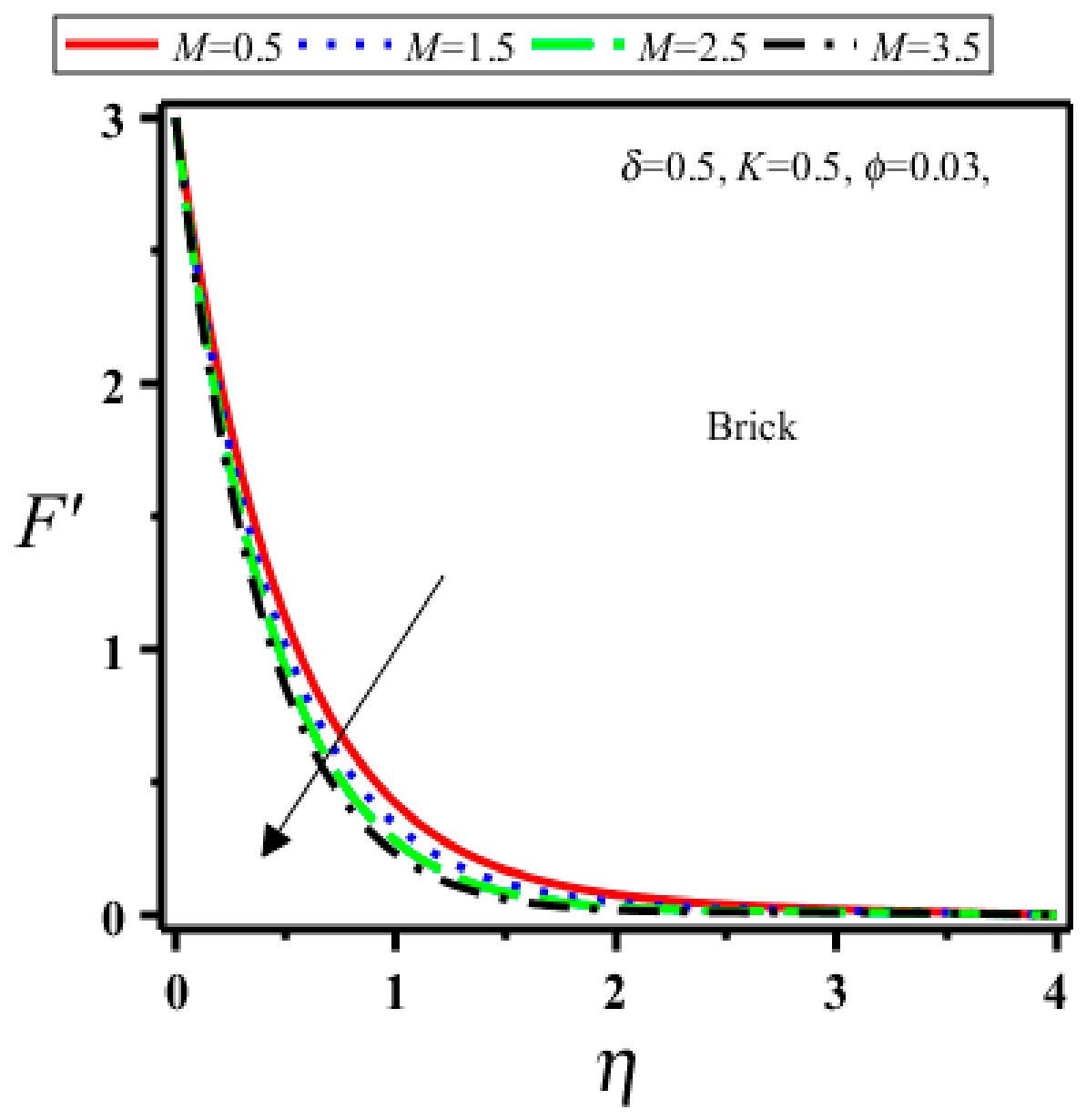
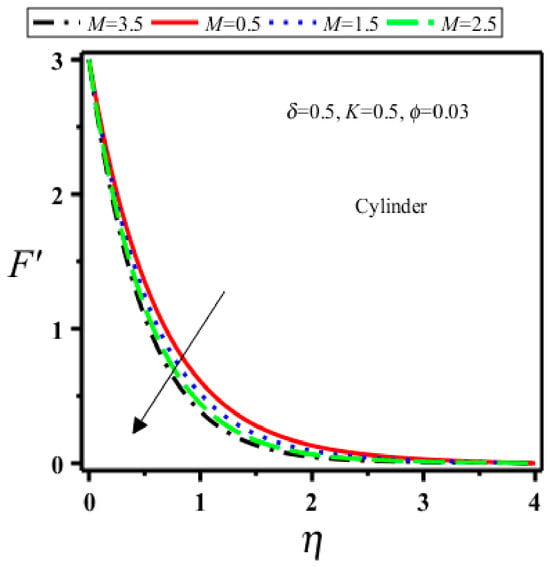
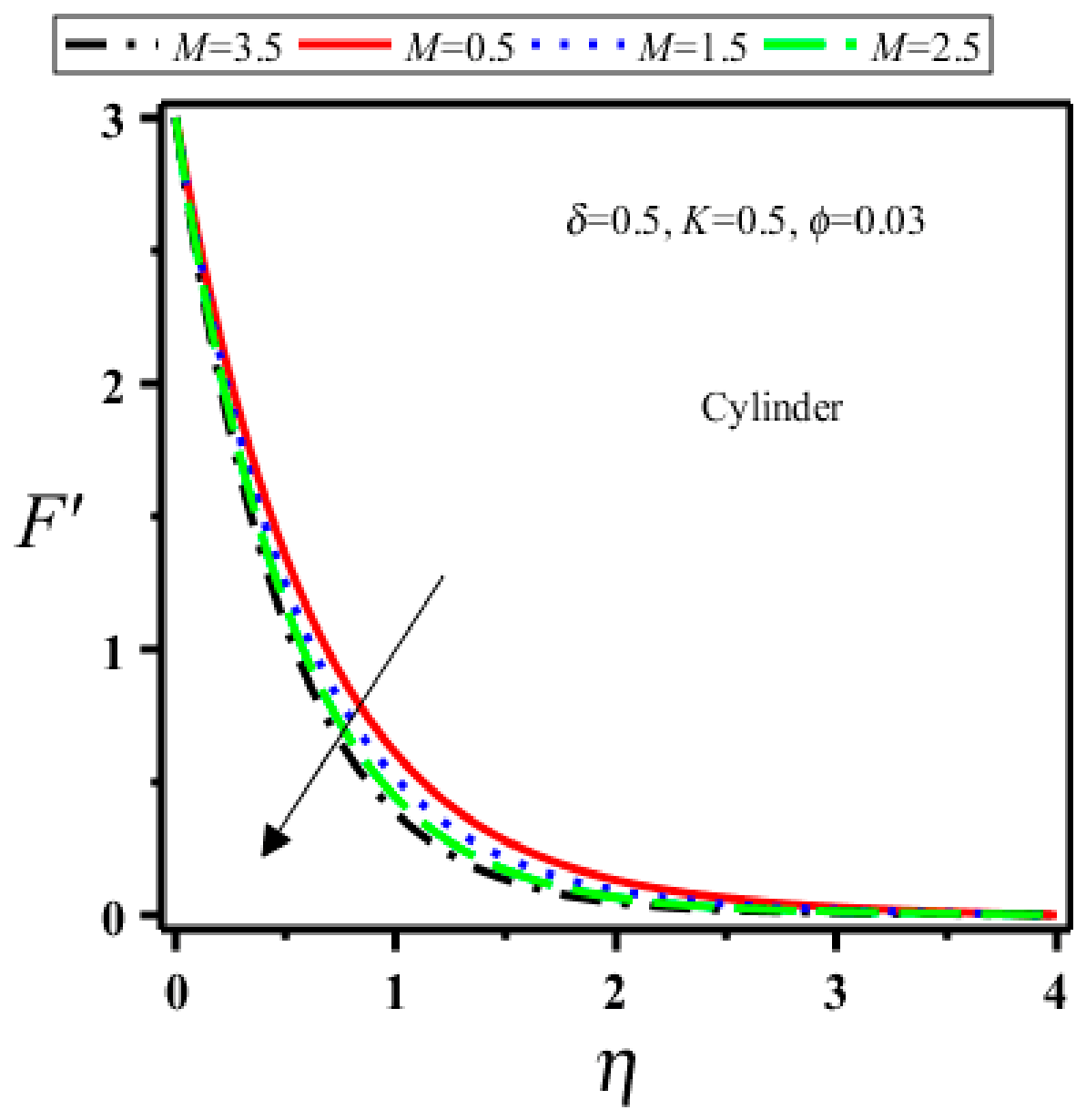
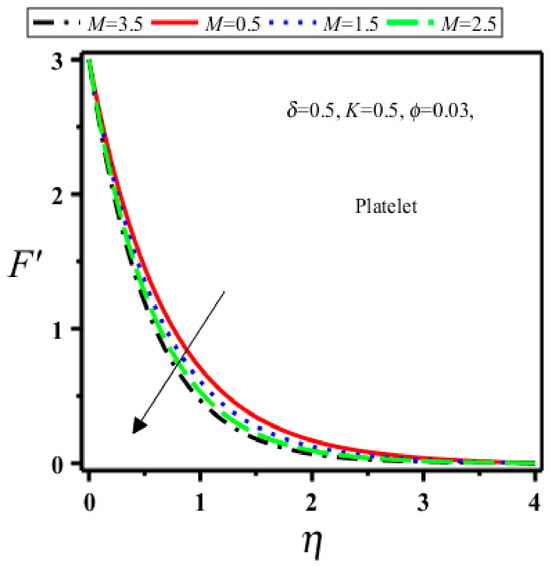
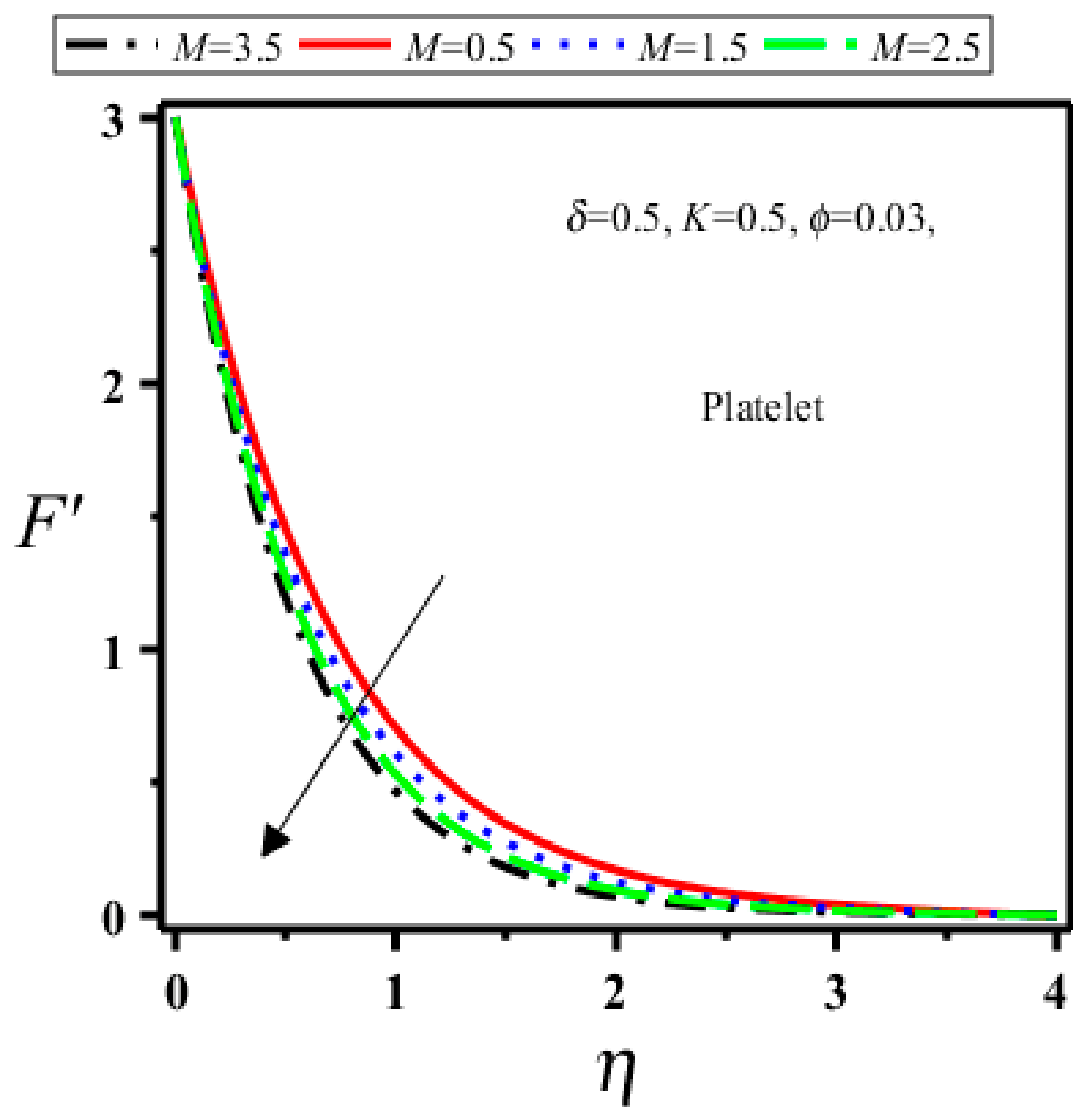
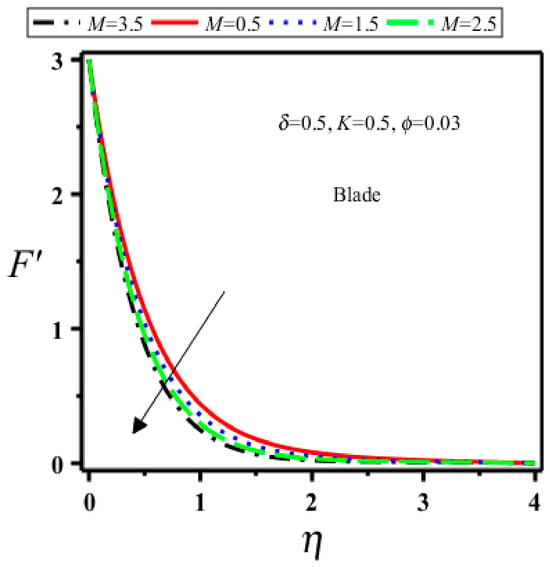
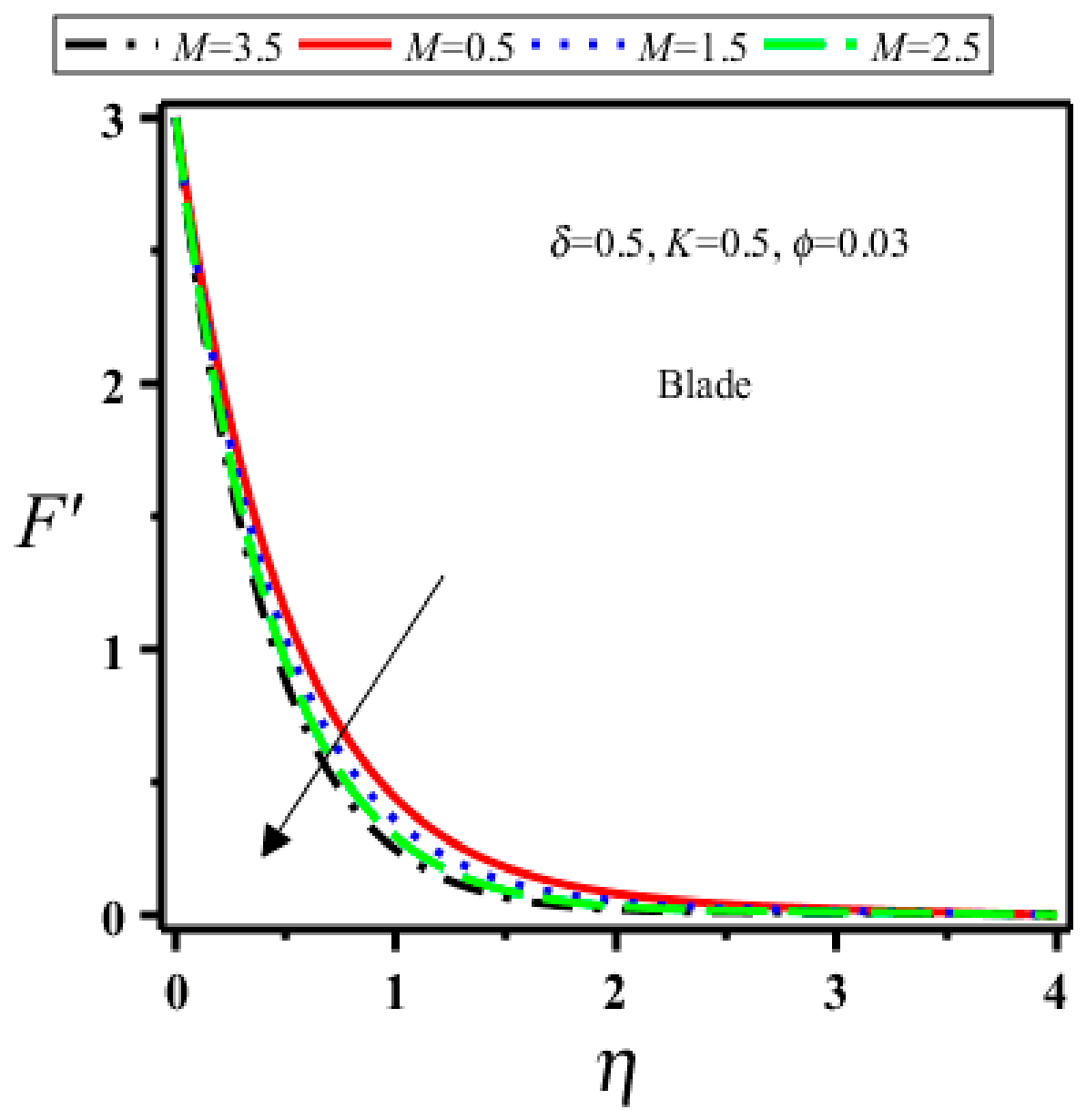
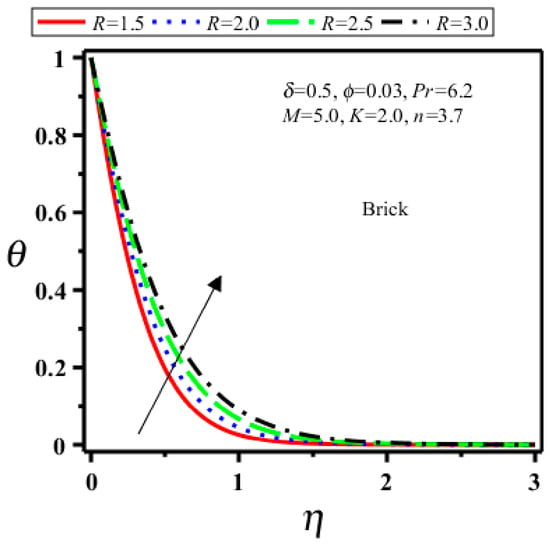
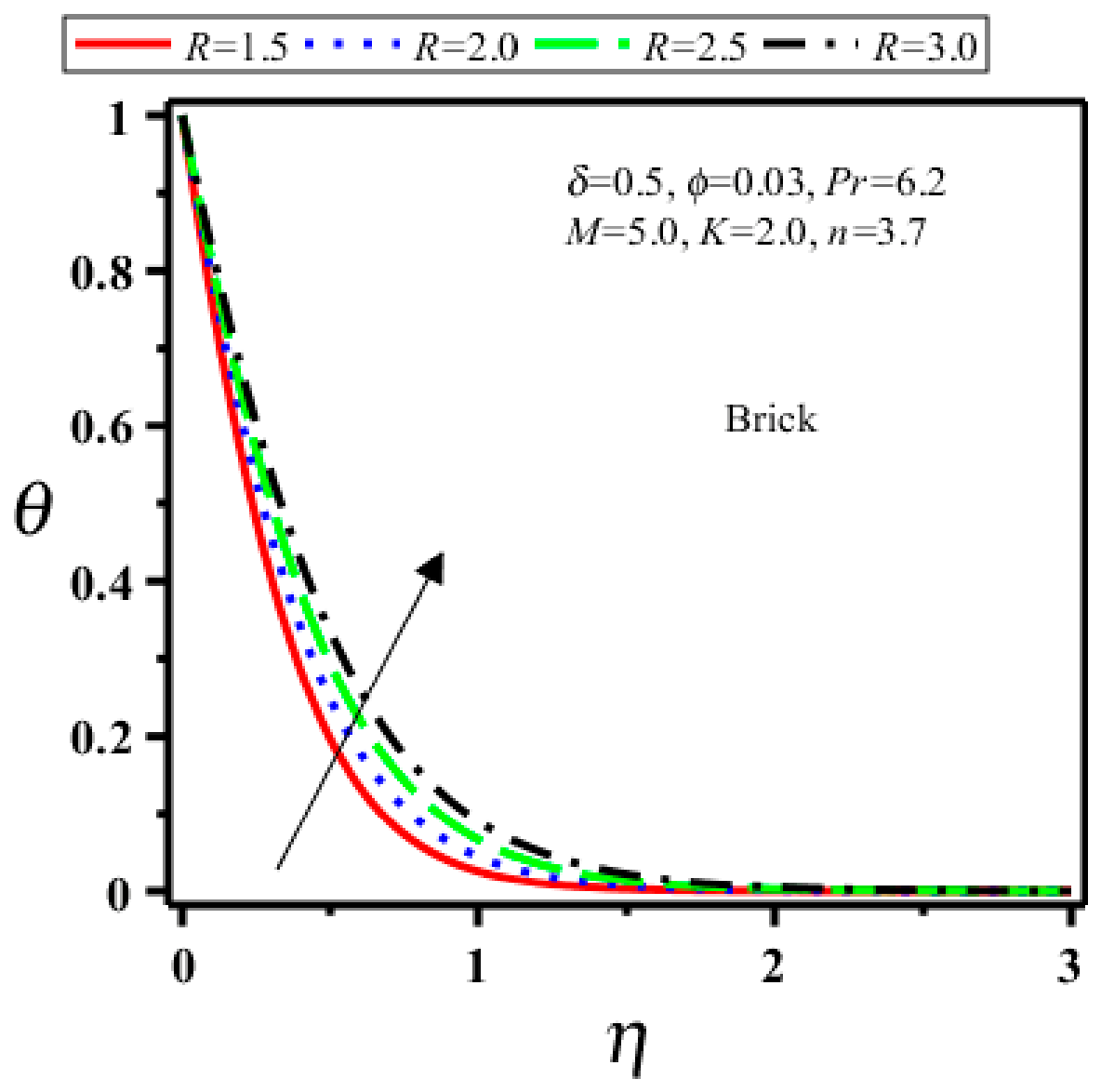
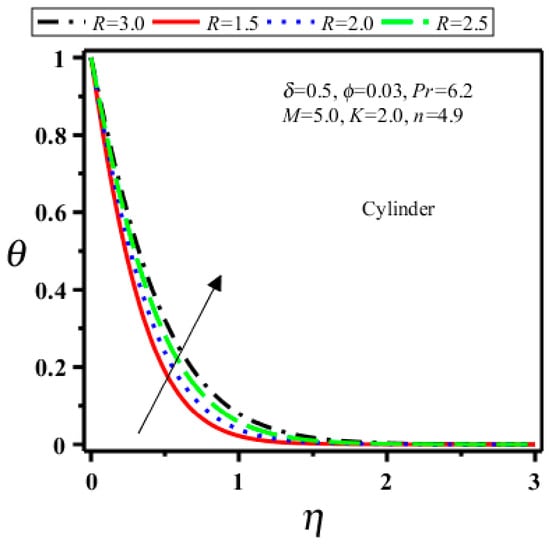
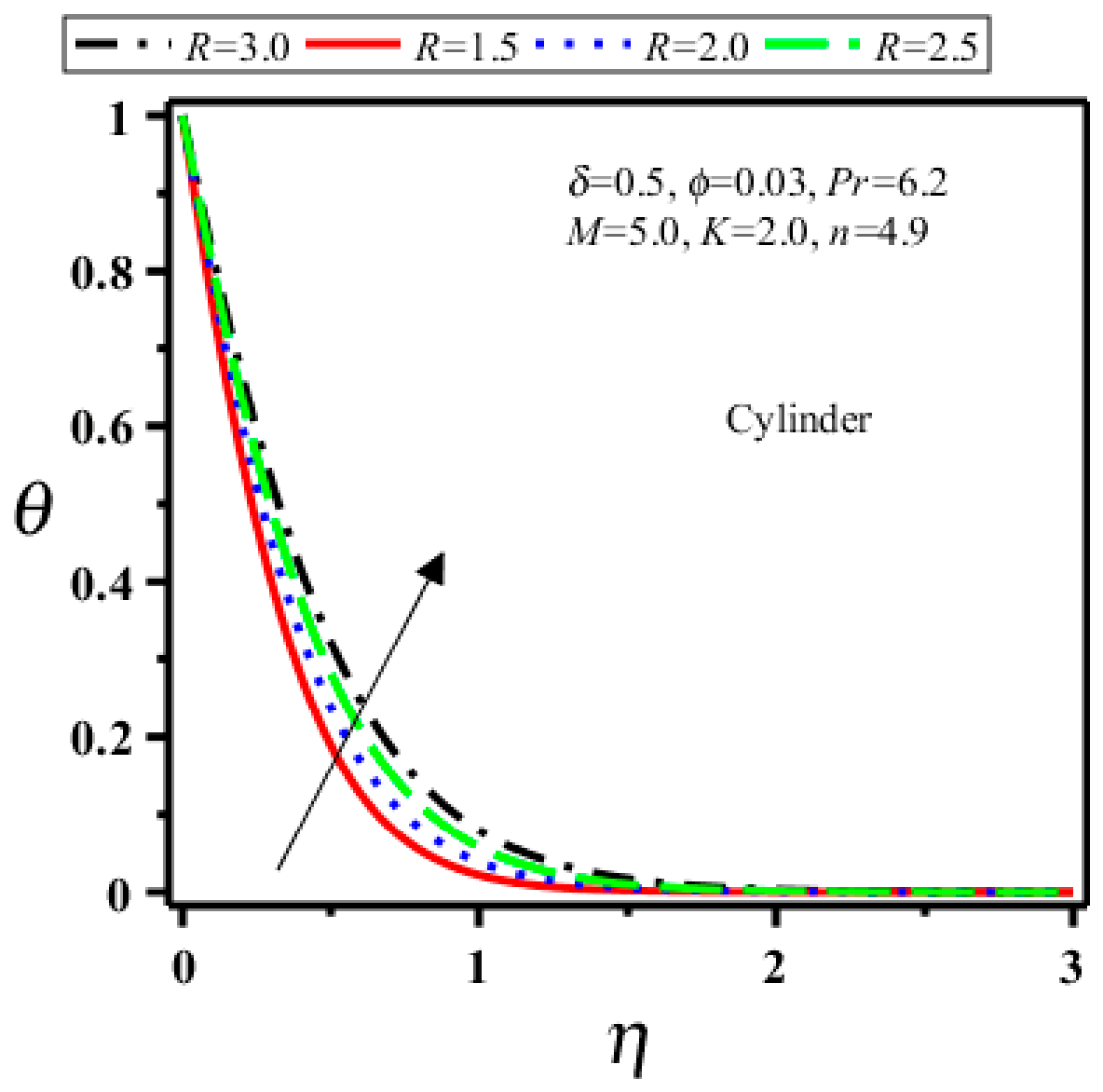
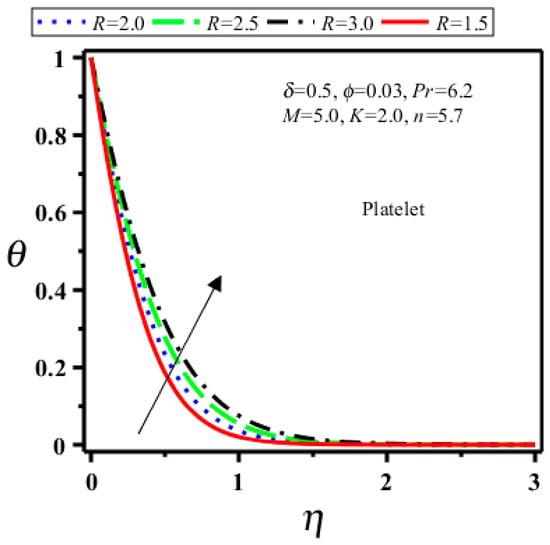
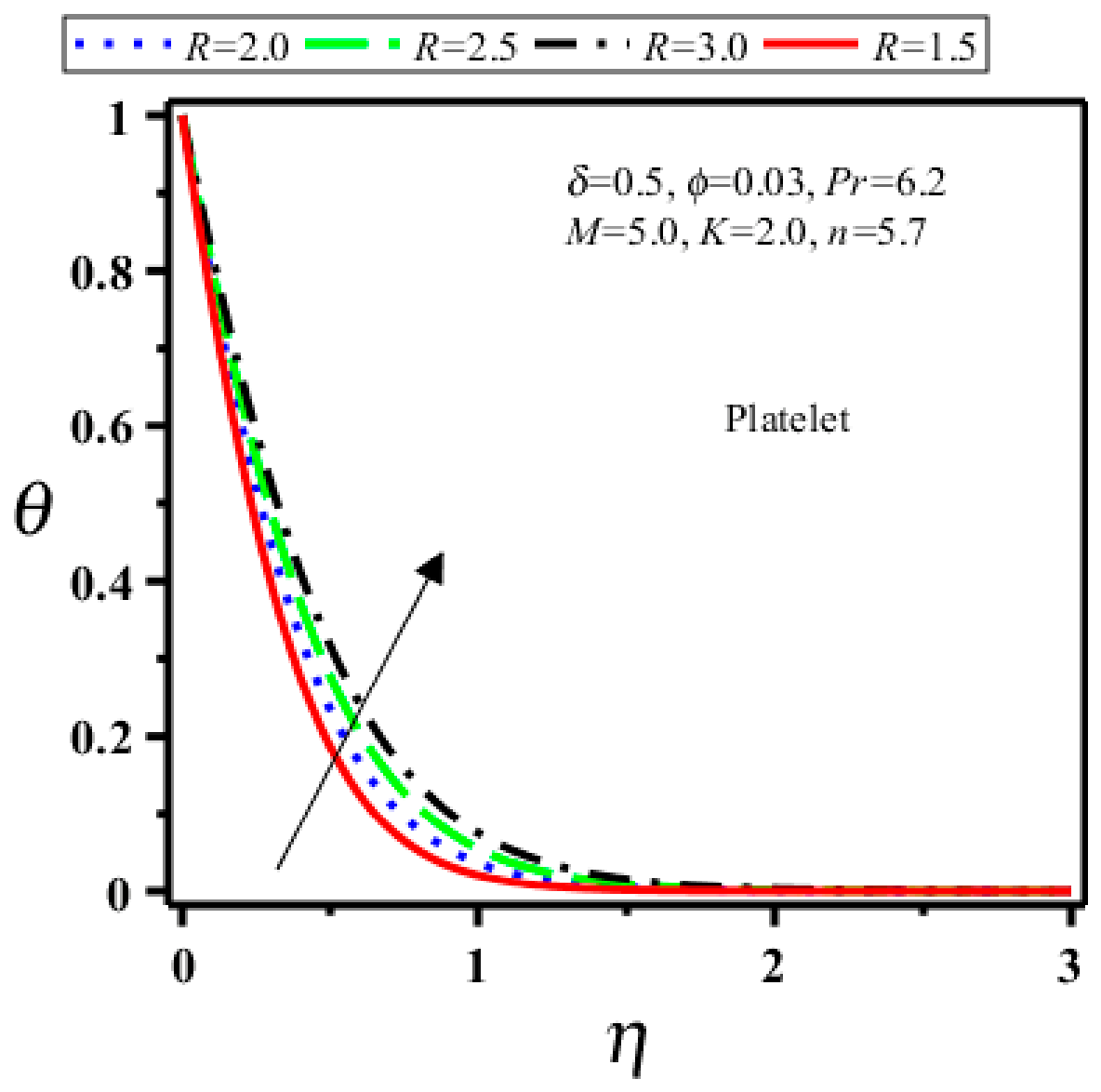
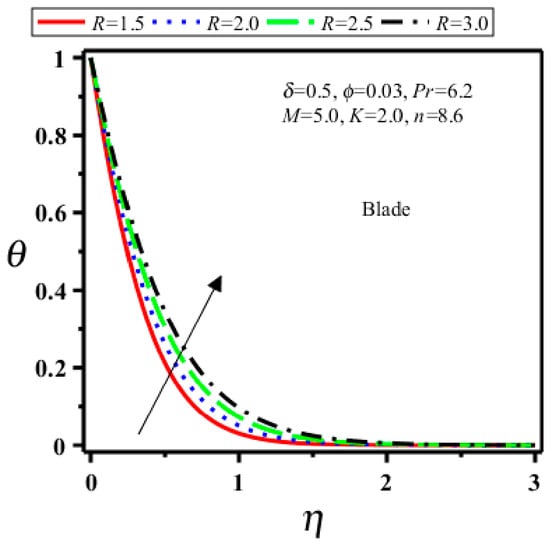
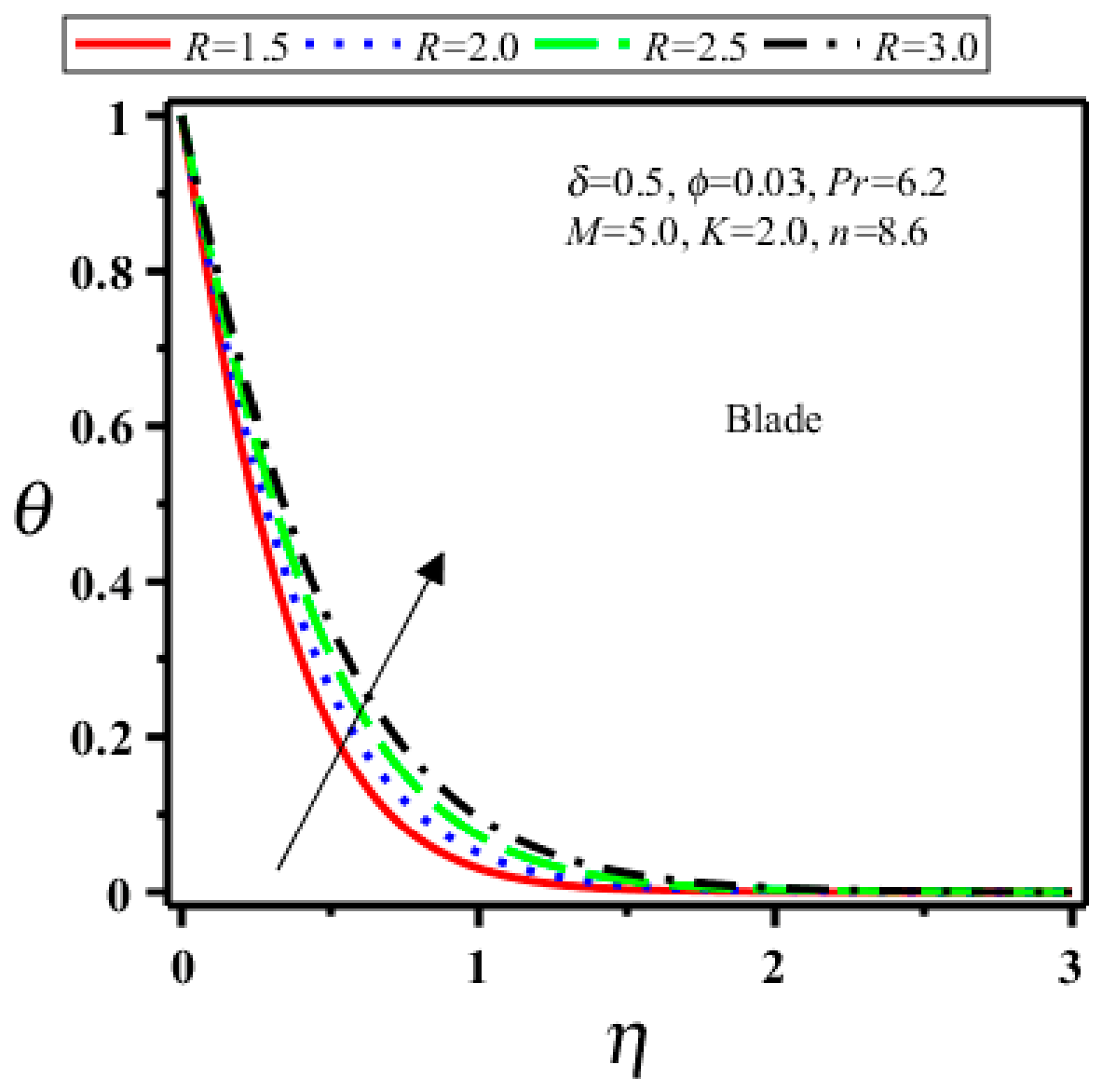
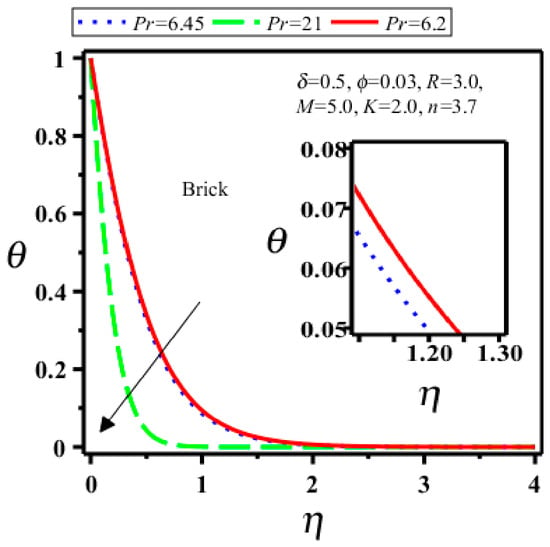
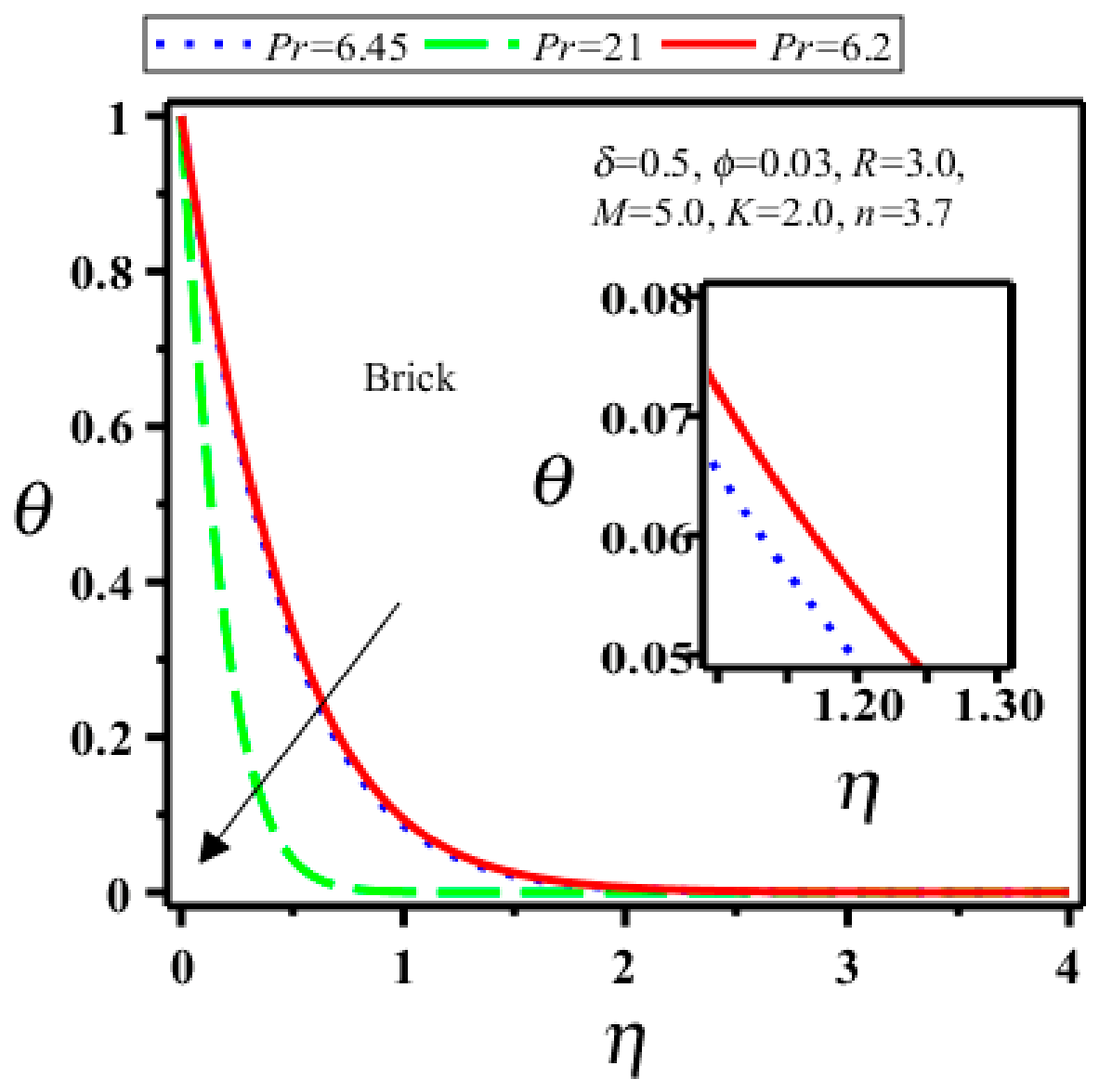
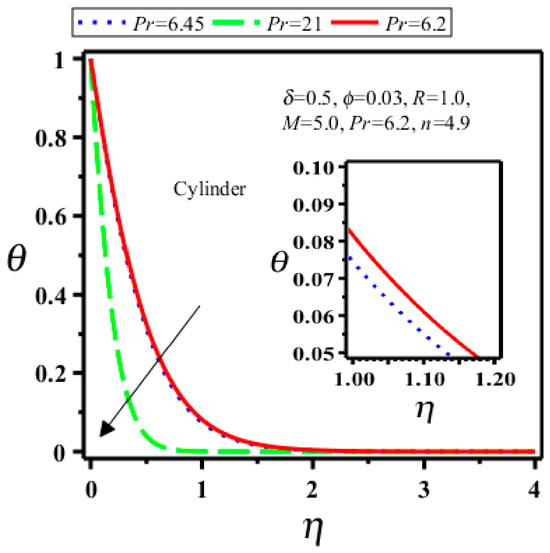
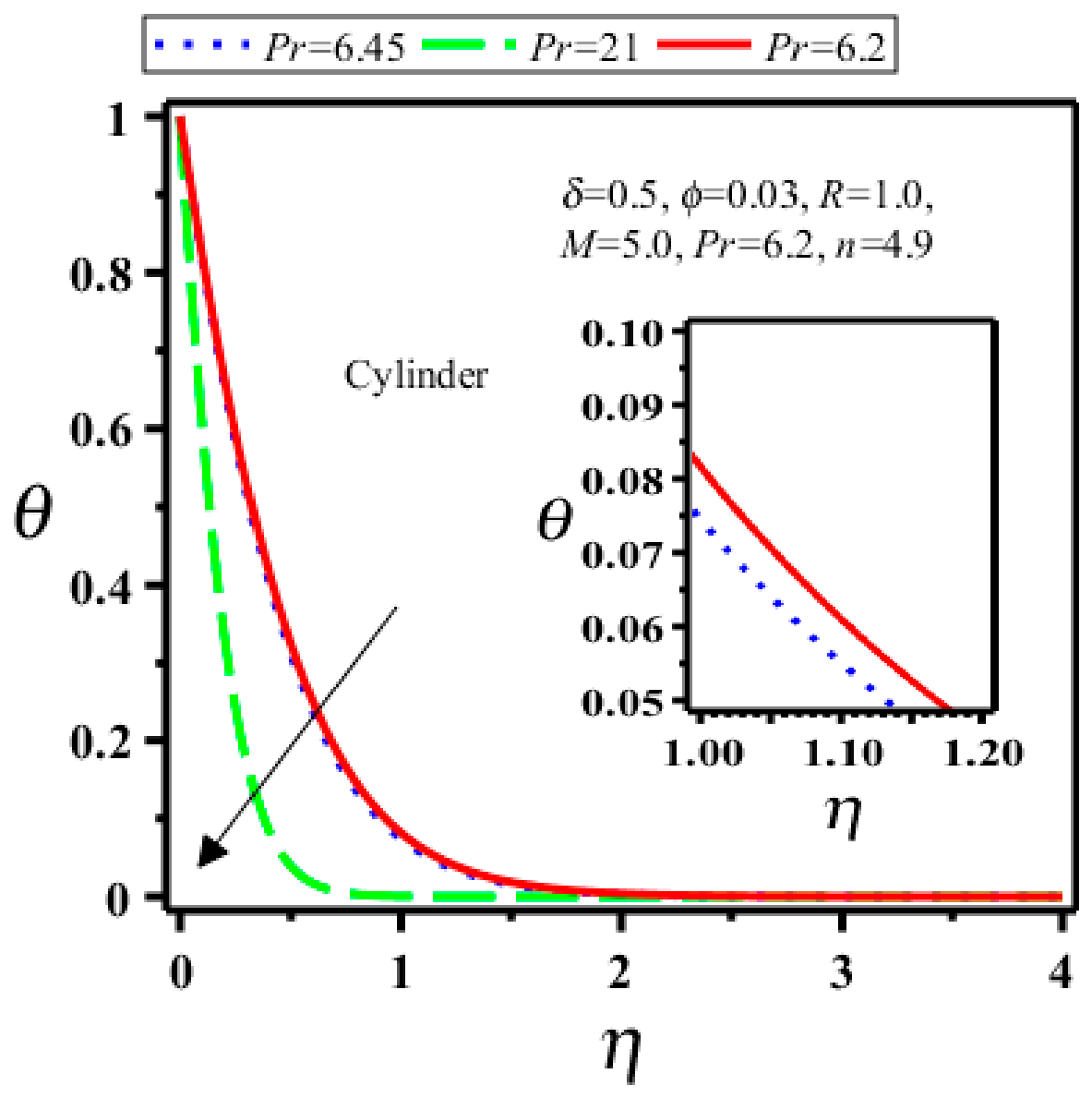
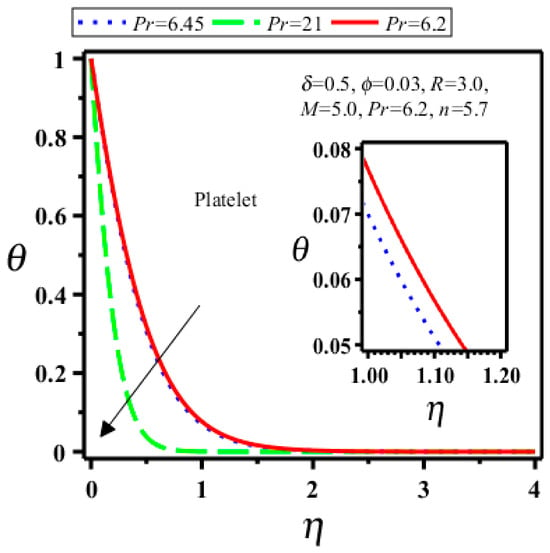
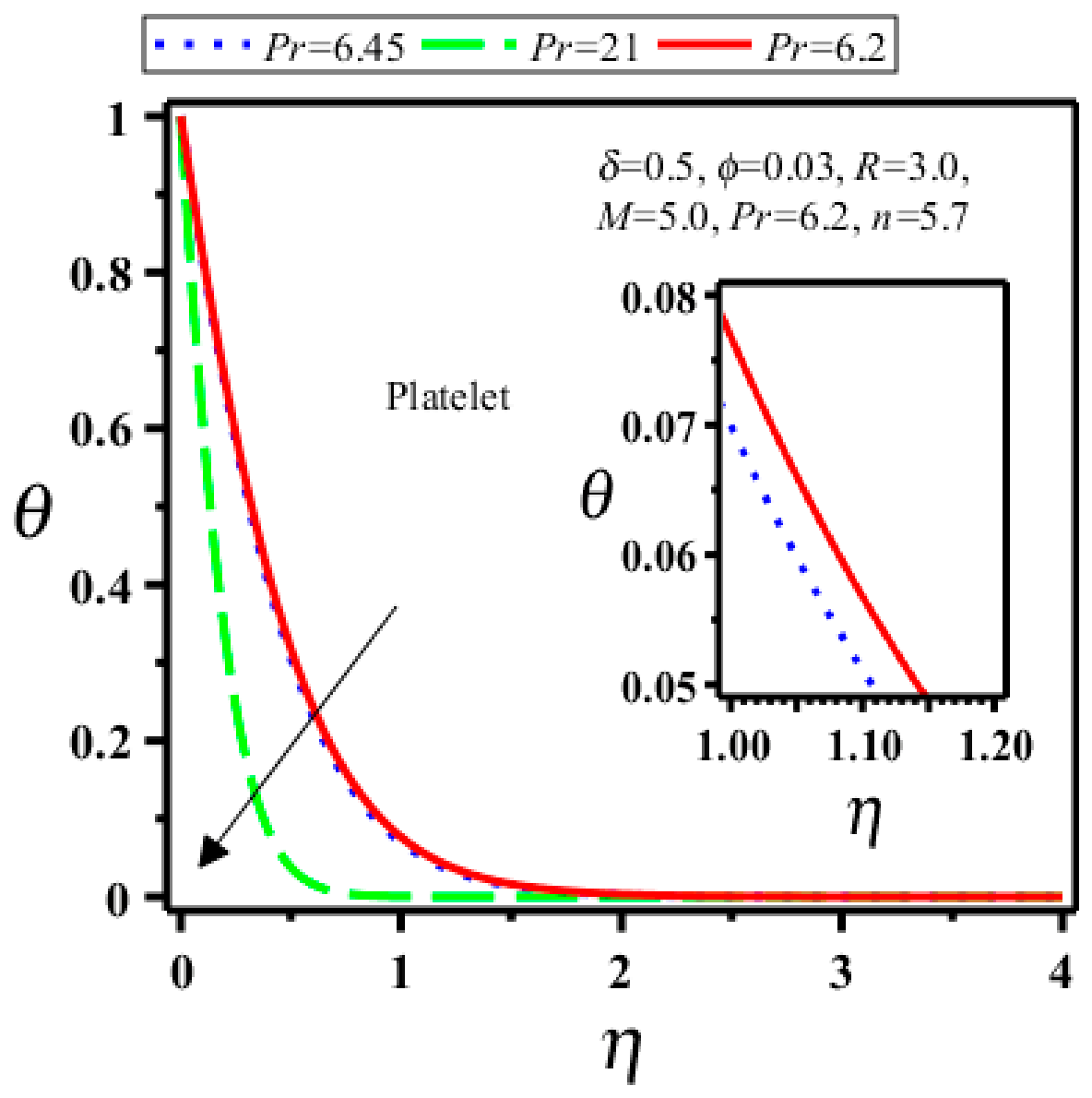
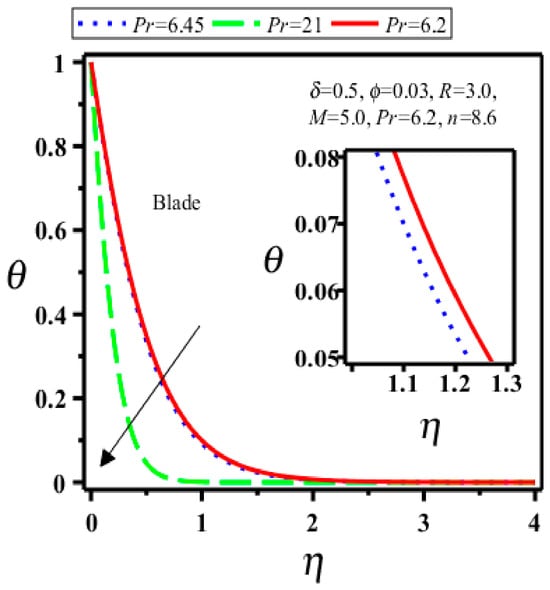
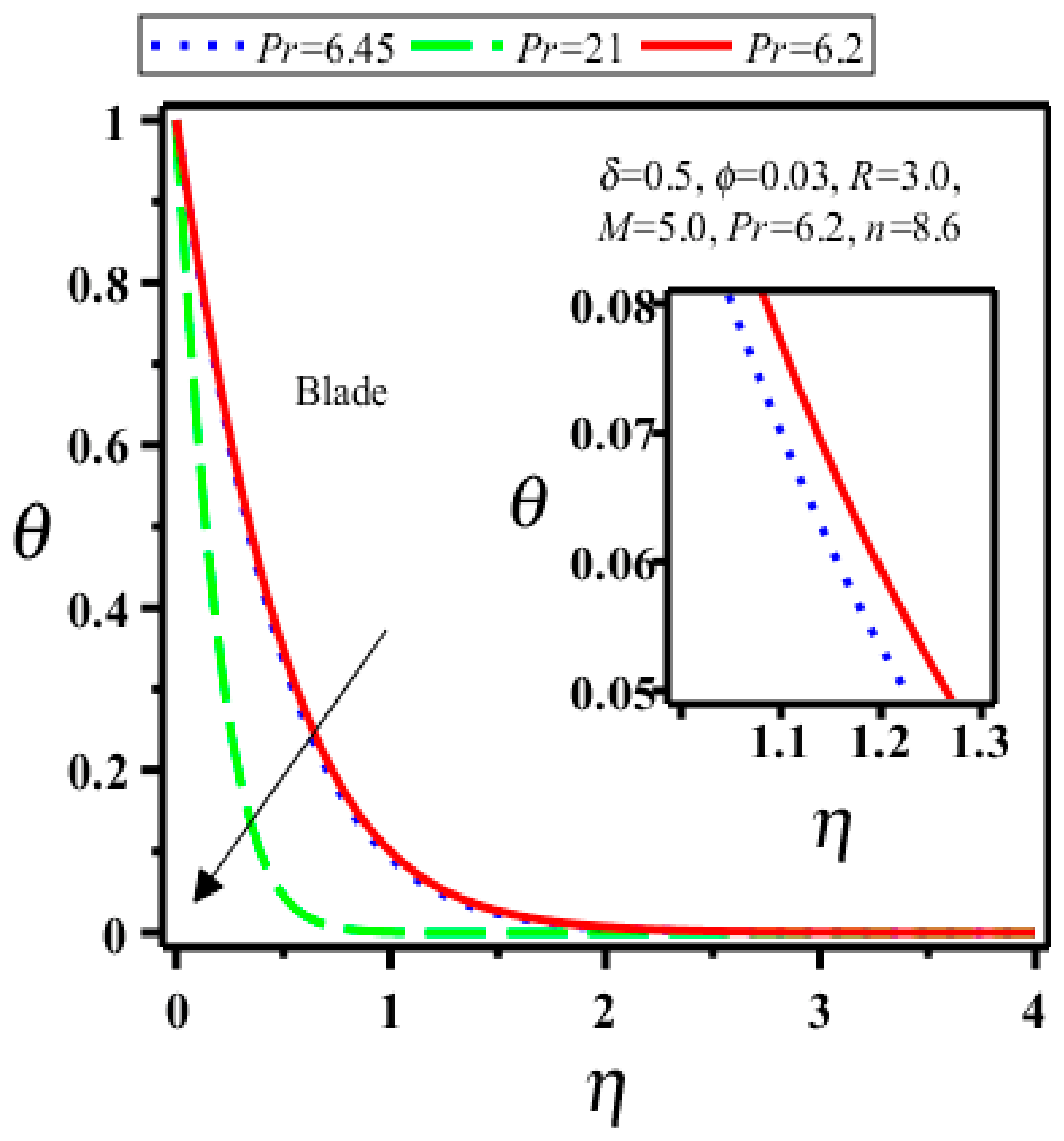
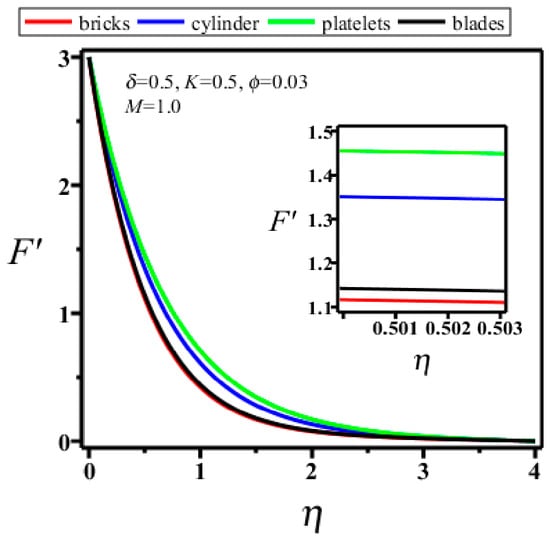
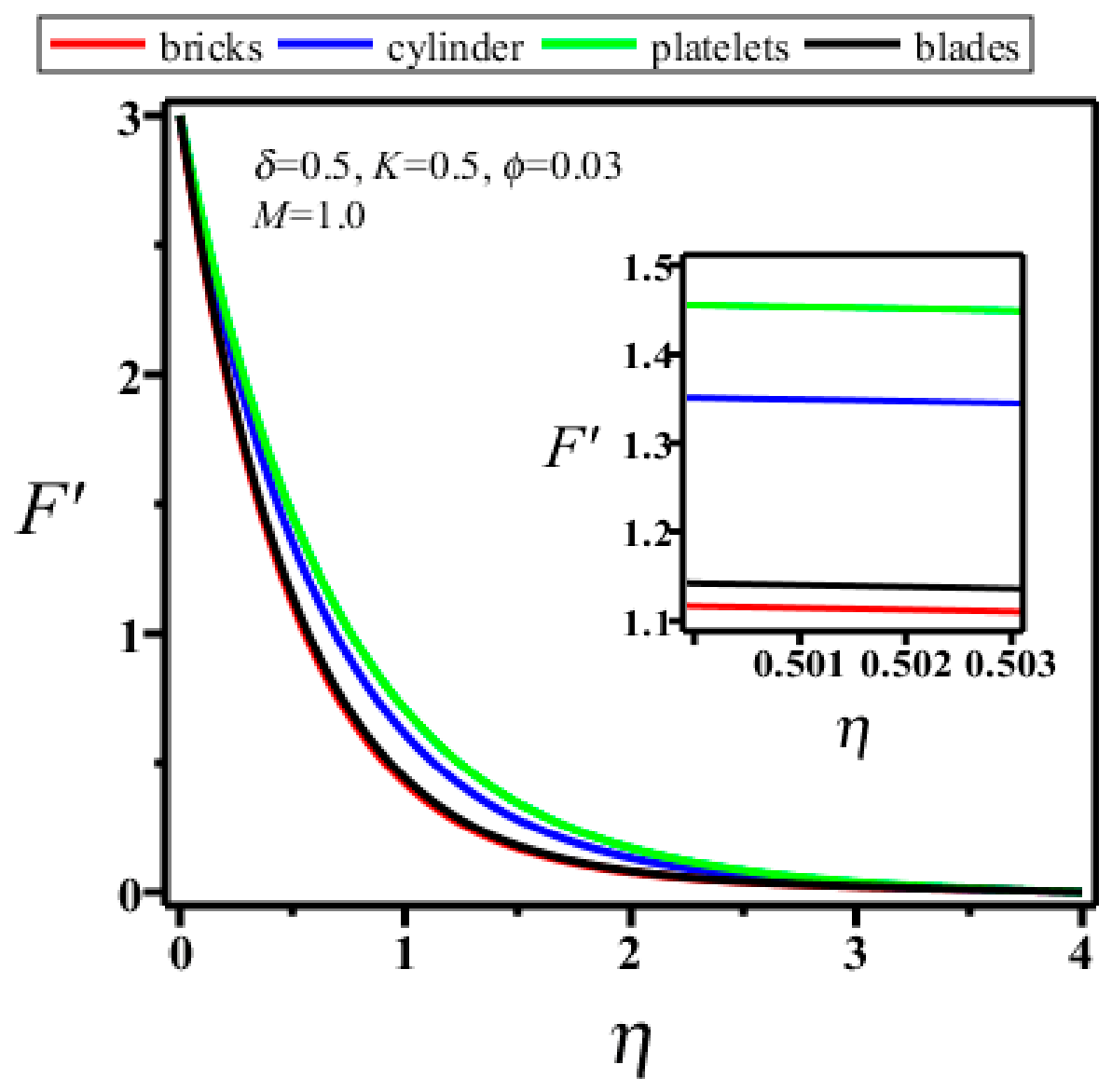
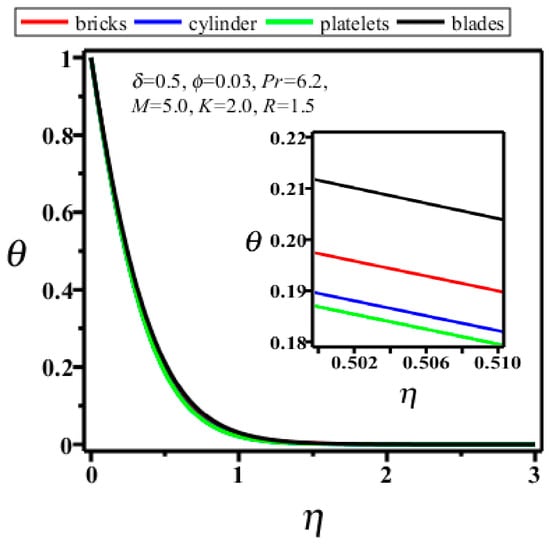
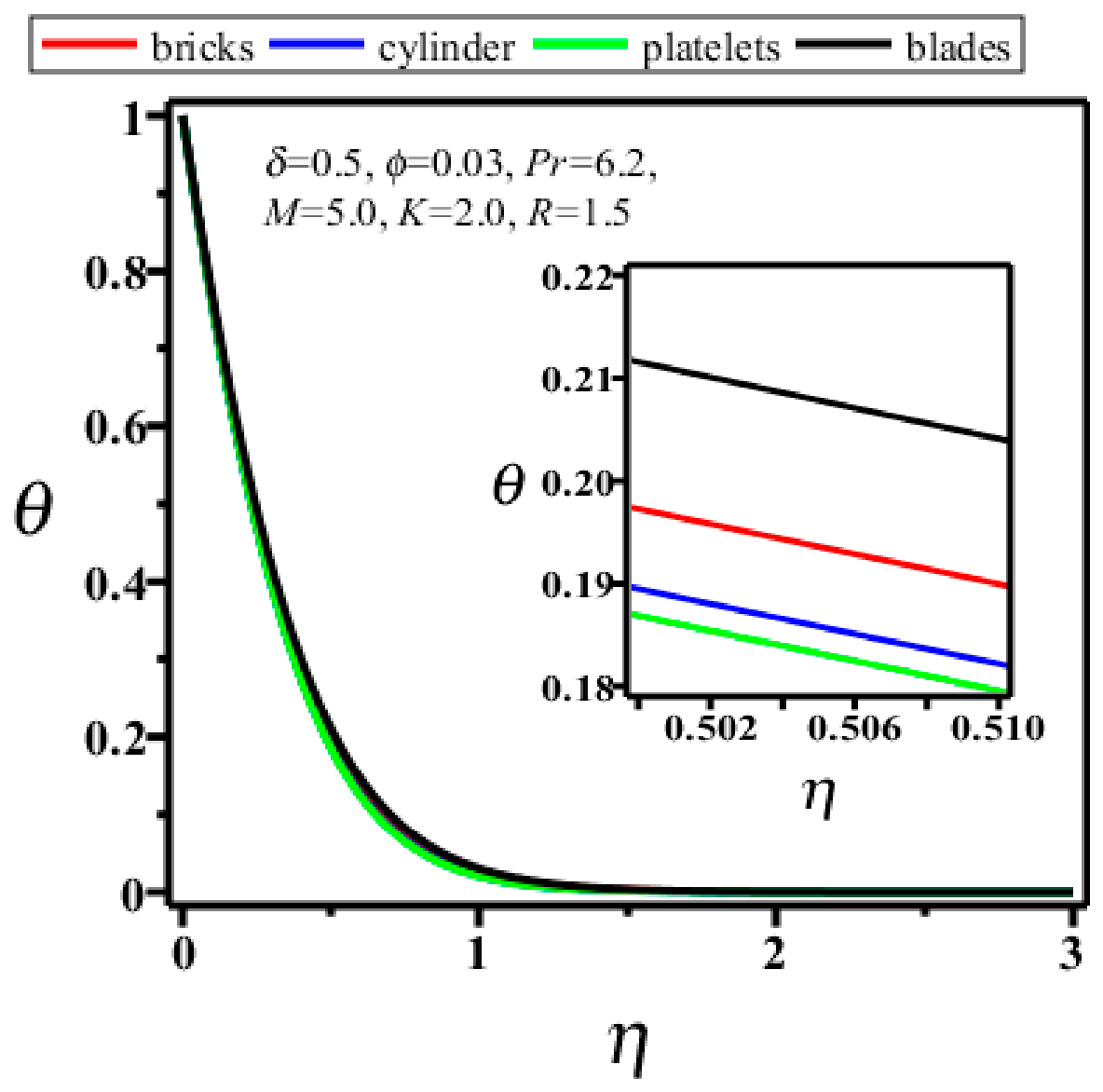
To study the physical behavior arising due to the existence of various physical parameters, specifically, the micro–rotation parameter , magnetic parameter , radiation parameter , Prandtl number on a thermal distribution, and velocity field are represented via various plots. A Maple (software 2025) toolbox was used. Figure 2, Figure 3, Figure 4 and Figure 5 present the micro-rotation velocity profile against for various values of micro-rotation parameter K for a water-based nanofluid over a stretching sheet () with suction () and a fixed volume fraction of in the presence of a magnetic field, brick, cylindrical, platelet, and blade-shaped Cu-nanoparticles, respectively. The graphical data demonstrate that escalating values of lead to a corresponding increase in the micro-rotation velocity across all four nanoparticle geometries. Figure 6, Figure 7, Figure 8 and Figure 9 describe the response of the micro-rotation velocity field to various values of the magnetic parameter for the brick, cylindrical, platelet, and blade nanoparticle configurations under stretching () with suction conditions. It is observed that the micro-rotation velocity field enhances as the magnetic parameter increases. Figure 10, Figure 11, Figure 12 and Figure 13 display the velocity field as a function of different micro-rotation parameter values for the various Cu-nanoparticle geometries (bricks, cylinders, platelets, and blades) when , , and . The profiles indicate that an increase in the micro-rotation parameter serves to accelerate the velocity field . Finally, Figure 14, Figure 15, Figure 16 and Figure 17 illustrate the impact of a varying magnetic parameter on the velocity field when applied to the different Cu-nanoparticle shapes (bricks, cylinders, platelets, and blades) under identical conditions of , , and . These findings indicate that intensifying the magnetic parameter suppresses the velocity distribution. This deceleration occurs because an enhanced magnetic field generates a resistive drag known as the Lorentz force, which directly opposes the fluid motion and consequently lowers the velocity profiles. Figure 18, Figure 19, Figure 20 and Figure 21 illustrate how varying the thermal radiation parameter modifies the temperature field across copper (Cu) nanofluids containing brick, cylindrical, platelet, and blade-shaped particles when , and . The data reveal that higher radiation parameters elevate the temperature profiles for every nanoparticle configuration. This trend stems from the fact that defines the relative ratio of radiative energy transport to conductive heat transfer; hence, an escalation in intensifies the thermal state of the system. Figure 22, Figure 23, Figure 24 and Figure 25 detail the impact of different Prandtl numbers on the thermal distribution under a magnetic field for the four distinct Cu nanoparticle shapes when and . An increase in is found to depress the temperature fields uniformly across all particle geometries. From a physical standpoint, a larger Prandtl number signifies that momentum diffusivity outweighs thermal diffusivity, which diminishes heat penetration and lowers the overall temperature. Furthermore, these figures contrast the thermal performance of three host mediums: water , sodium alginate , and kerosene . The water-based Cu nanofluid exhibits a noticeably higher temperature profile than its sodium alginate and kerosene counterparts. This behavior is attributed to the superior intrinsic thermal conductivities of water and sodium alginate relative to kerosene, thereby enhancing the thermal distribution of the mixture. Figure 26 compares the velocity field among the four nanoparticle shapes (bricks, cylinders, platelets, and blades) under the conditions of a stretching sheet and fluid suction with . The comparison demonstrates that platelet-shaped Cu particles yield higher velocity magnitudes than the brick, cylindrical, or blade configurations. Conversely, Figure 27 compares the temperature fields of these various nanoparticle structures under suction with . In this scenario, blade-shaped Cu nanoparticles establish more elevated temperature profiles than the alternative brick, cylindrical, or platelet geometries.
Figure 2.
of brick-shaped nanoparticles for various values of ; , .
Figure 3.
of cylinder-shaped nanoparticles for various values of ; , .
Figure 4.
of platelet-shaped nanoparticles for various values of ; , .
Figure 5.
of blade-shaped nanoparticles for various values of ; , .
Figure 6.
of brick-shaped nanoparticles for various values of ; , .
Figure 7.
of cylinder-shaped nanoparticles for various values of ; , .
Figure 8.
of platelet-shaped nanoparticles for various values of ; , .
Figure 9.
of blade-shaped nanoparticles for various values of ; , .
Figure 10.
of brick-shaped nanoparticles for various values of ; , .
Figure 11.
of cylinder-shaped nanoparticles for various values of ; , .
Figure 12.
of platelet-shaped nanoparticles for various values of ; , .
Figure 13.
of blade-shaped nanoparticles for various values of ; , .
Figure 14.
of brick-shaped nanoparticles for various values of ; , .
Figure 15.
of cylinder-shaped nanoparticles for various values of ; , .
Figure 16.
of platelet-shaped nanoparticles for various values of ; , .
Figure 17.
of blade-shaped nanoparticles for various values of ; , .
Figure 18.
of brick-shaped nanoparticles for various values of ; , .
Figure 19.
of cylinder-shaped nanoparticles for various values of ; , .
Figure 20.
of platelet-shaped nanoparticles for various values of ; , .
Figure 21.
of blade-shaped nanoparticles for various values of ; , .
Figure 22.
Impact of the Pr on the temperature distribution of platelet-shaped nanoparticles. and .
Figure 23.
Impact of the on the temperature distribution of cylinder-shaped nanoparticles. and .
Figure 24.
Impact of on the temperature distribution of platelet-shaped nanoparticles. and .
Figure 25.
Impact of the on the temperature field of blade-shaped nanoparticles. and .
Figure 26.
Comparison of for different shapes of Cu-nanoparticles. and .
Figure 27.
Comparison of for different shapes of Cu-nanoparticles. and .
The quantitative analysis of the effects of the nanoparticle volume fraction , micropolar parameter , magnetic parameter , and suction parameter on the skin friction coefficient and surface heat transfer rate is presented in Table 3, Table 4, Table 5, Table 6, Table 7, Table 8, Table 9 and Table 10 for four nanoparticle shapes: brick, cylinder, blade and platelet.
Table 3.
Effect of nanoparticle volume fraction on skin friction coefficient .
Table 4.
Effect of nanoparticle volume fraction on .
Table 5.
Effect of micropolar parameter on skin friction coefficient .
Table 6.
Effect of micropolar parameter on .
Table 7.
Effect of magnetic parameter skin friction coefficient .
Table 8.
Effect of magnetic parameter on .
Table 9.
Effect of suction parameter on skin friction coefficient .
Table 10.
Effect of suction parameter on .
Table 3 and Table 4 show that the absolute value of decreases with the increase of for all particle shapes, and the surface heat transfer rate decreases for all particle shapes when the value of increases from 0 to 0.20. Cylindrical particles have the lowest skin friction magnitude (0.3109) while blade-shaped particles have the highest (0.6919). The highest heat transfer rate (2.0643) is for brick-shaped particles and the lowest is for blade-shaped particles (1.5270).
As seen in Table 5 and Table 6, the higher the value of , the smaller the magnitude of skin friction and the higher the surface heat transfer rate for all geometries for increasing from 0 to 2. On the other hand, Table 7 and Table 8 indicate that the heat transfer decreases and the skin friction increase with the increase of magnetic strength, which indicates the effect of magnetic resistance on the flow.
Table 9 and Table 10 show that the magnitude of skin friction and the surface heat transfer rate both increase significantly with the increase of from 0 to 2. The enhancement is about 426% for brick-shaped particles, ranging from 1.2893 to 6.7797. The same trends are seen for other particle shapes.
In general, the quantitative comparisons show that the surface transport properties are strongly affected by the geometry of the nanoparticles. Under the investigated conditions, the maximum skin friction magnitude is obtained with blade-shaped particles while the maximum surface heat transfer rate is obtained with brick-shaped particles. The results provide a relative comparison of the four nanoparticle geometries for momentum and thermal transport.
5. Closing Remarks
In this study, the steady two-dimensional flow and heat transfer characteristics of an aqueous micropolar nanofluid consisting of copper nanoparticles of various shapes (bricks, cylinders, platelets, and blades) passing over a stretching/shrinking surface were studied in detail. The mathematical model was able to capture the effects of transverse magnetic field and thermal radiation, as well as the fact that the fluid had a microstructure with local microrotation effects. Using similarity variables, those governing partial differential equations (PDEs) were reduced to ordinary differential equations (ODEs) and then integrated numerically using the Runge–Kutta–Fehlberg (RKF) scheme. From the parametric numerical simulations, the following are the main deductions:
- An elevation in the micro-rotation parameter leads to a corresponding rise in the angular velocity across all geometric configurations of copper nanoparticles.
- The linear velocity profiles across all copper nanoparticle shapes are suppressed by stronger magnetic fields.
- Thermal fields expand as the radiation parameter increases, whereas an increase in the Prandtl number induces a cooling effect across the various copper nanoparticle geometries.
- Non-Newtonian copper nanofluids utilizing a water base exhibit elevated thermal states compared to their kerosene-based counterparts. There is a larger temperature field for blade-shaped nanoparticles than brick-, cylinder-, and platelet-shaped nanoparticles.
- As compared to bricks, cylinders, and blades, the velocity of Cu–nanoparticles shaped like platelets is greater.
- Increasing the nanoparticle volume fraction (φ) from 0 to 0.20 reduces both the skin friction magnitude and surface heat transfer rate for all four nanoparticle geometries.
- Increasing the suction parameter (S) significantly enhances the surface heat transfer rate, with brick-shaped nanoparticles exhibiting approximately 426% improvement as S increases from 0 to 2.
- Nanoparticle geometry significantly influences momentum and heat transfer characteristics. Brick-shaped nanoparticles consistently provide the highest surface heat transfer rate, whereas blade-shaped nanoparticles generally exhibit the highest skin friction magnitude.
Author Contributions
W.P.: Methodology, Software, Validation, Supervision, Visualization, Writing—original draft, Writing—review and editing. M.I.A.: Conceptualization, Funding acquisition, Investigation, Software, Visualization, Writing—original draft, Writing—review and editing. M.S.K.: Conceptualization, Investigation, Methodology, Software, Supervision, Writing—review and editing. Y.Y.: Software, Validation, Visualization, Writing—original draft, Writing– review and editing. All authors have read and agreed to the published version of the manuscript.
Funding
This research received no external funding.
Data Availability Statement
The original contributions presented in this study are included in the article. Further inquiries can be directed to the corresponding author.
Acknowledgments
This study was supported by the Thammasat Postdoctoral Fellowship.
Conflicts of Interest
The authors declare no conflict of interest.
Nomenclature
| Constant | |
| Base fluid heat capacity | |
| Heat capacity of nanofluid | |
| Dimensionless velocity | |
| Dimensionless micro–rotation velocity | |
| Vortex viscosity | |
| Mean absorption coefficient | |
| Thermal conductivity of working fluid | |
| Thermal conductivity of nanoparticle | |
| Micro-rotation vector | |
| Shape factor | |
| Radiative heat flux | |
| Suction parameter | |
| Wall temperature | |
| Ambient temperature | |
| Stretching parameter | |
| Volume fraction | |
| Stefan–Boltzmann constant | |
| Working fluid density | |
| Nanofluid density | |
| Working fluid dynamic viscosity | |
| Nanofluid dynamic viscosity | |
| Working fluid kinematic viscosity | |
| Working fluid electric conductivity | |
| Electric conductivity of nanofluid | |
| Electric conductivity of nanofluids |
References
- Choi, S.U.; Eastman, J.A. Enhancing Thermal Conductivity of Fluids with Nanoparticles (No. ANL/MSD/CP–84938; CONF–951135–29); Argonne National Lab. (ANL): Argonne, IL, USA, 1995. [Google Scholar]
- Li, Q.; Xuan, Y. Convective heat transfer and flow characteristics of Cu–water nanofluid. Sci. China Ser. E Technol. Sci. 2002, 45, 408–416. [Google Scholar] [CrossRef] [Scilit]
- Angayarkanni, S.A.; Sunny, V.; Philip, J. Effect of nanoparticle size, morphology and concentration on specific heat capacity and thermal conductivity of nanofluids. J. Nanofluids 2015, 4, 302–309. [Google Scholar] [CrossRef] [Scilit]
- Hussanan, A.; Khan, I.; Hashim, H.; Anuar, M.K.; Ishak, N.; Sarif, N.M.; Salleh, M.Z. Unsteady MHD flow of some nanofluids past an accelerated vertical plate embedded in a porous medium. J. Teknol. 2016, 78, 121–126. [Google Scholar] [CrossRef] [Scilit]
- Wilk, J.; Smusz, R.; Grosicki, S. Thermophysical properties of water based Cu nanofluid used in special type of coil heat exchanger. Appl. Therm. Eng. 2017, 127, 933–943. [Google Scholar] [CrossRef] [Scilit]
- Swalmeh, M.Z.; Alkasasbeh, H.T.; Hussanan, A.; Mamat, M. Heat transfer flow of Cu–water and Al2O3–water micropolar nanofluids about a solid sphere in the presence of natural convection using Keller–box method. Results Phys. 2018, 9, 717–724. [Google Scholar] [CrossRef] [Scilit]
- Saba, F.; Ahmed, N.; Khan, U.; Waheed, A.; Rafiq, M.; Mohyud–Din, S.T. Thermophysical analysis of water based (Cu–Al2O3) hybrid nanofluid in an asymmetric channel with dilating/squeezing walls considering different shapes of nanoparticles. Appl. Sci. 2018, 8, 1549. [Google Scholar] [CrossRef] [Scilit]
- Hussanan, A.; Khan, I.; Gorji, M.R.; Khan, W.A. CNTS–water–based nanofluid over a stretching sheet. BioNanoScience 2019, 9, 21–29. [Google Scholar] [CrossRef] [Scilit]
- Yahiaoui, A.; Djezzar, M.; Naji, H. Simulating of heat transfer enhancement via a water–based nanofluid in enclosures with curved side walls. Int. Commun. Heat Mass Transf. 2019, 100, 118–132. [Google Scholar] [CrossRef] [Scilit]
- Nguyen, T.K.; Soomro, F.A.; Ali, J.A.; Haq, R.U.; Sheikholeslami, M.; Shafee, A. Heat transfer of ethylene glycol–Fe3O4 nanofluid enclosed by curved porous cavity including electric field. Physica A Stat. Mech. Its Appl. 2020, 550, 123945. [Google Scholar] [CrossRef] [Scilit]
- Hussain, S.; Alam, M.; Imran, M.; Zouli, N.; Aziz, A.; Irshad, K.; Haider, M.; Khan, A. Fe3O4 nanoparticles decorated multi–walled carbon nanotubes based magnetic nanofluid for heat transfer application. Mater. Lett. 2020, 274, 128043. [Google Scholar] [CrossRef] [Scilit]
- Saleem, S.; Qasim, M.; Alderremy, A.; Noreen, S. Heat transfer enhancement using different shapes of Cu nanoparticles in the flow of water based nanofluid. Phys. Scr. 2020, 95, 055209. [Google Scholar] [CrossRef] [Scilit]
- Wang, F.; Asjad, M.I.; Zahid, M.; Iqbal, A.; Ahmad, H.; Alsulami, M. Unsteady thermal transport flow of Casson nanofluids with generalized Mittag–Leffler kernel of Prabhakar’s type. J. Mater. Res. Technol. 2021, 14, 1292–1300. [Google Scholar] [CrossRef] [Scilit]
- Imran, M.; Alam, M.M.; Hussain, S.; Abutaleb, A.; Aziz, A.; Chandan, M.R.; Irshad, K.; Al-Hagri, A.M.A.; Bakather, O.Y.; Khan, A. Colloidal Fe3O4 nanoparticles–based oil blend ferro–nanofluid for heat transfer application. Eur. Phys. J. Plus 2021, 136, 752. [Google Scholar] [CrossRef] [Scilit]
- Shamshuddin, M.D.; Mishra, S.R.; Bég, O.A.; Bég, T.A.; Ali, K. Computation of radiative Marangoni (thermocapillary) magnetohydrodynamic convection in a Cu-water based nanofluid flow from a disk in porous media: Smart coating simulation. Heat Transf. 2021, 50, 1931–1950. [Google Scholar] [CrossRef] [Scilit]
- Jamshed, W. Numerical investigation of MHD impact on Maxwell nanofluid. Int. Commun. Heat Mass Transf. 2021, 120, 104973. [Google Scholar] [CrossRef] [Scilit]
- Pattnaik, P.K.; Parida, S.K.; Mishra, S.R.; Abbas, M.A.; Bhatti, M.M. Analysis of metallic nanoparticles (Cu, Al2O3, and SWCNTs) on magnetohydrodynamics water–based nanofluid through a porous medium. J. Math. 2022, 2022, 1–12. [Google Scholar] [CrossRef] [Scilit]
- Pasha, A.A.; Islam, N.; Jamshed, W.; Alam, M.I.; Jameel, A.G.A.; Juhany, K.A.; Alsulami, R. Statistical analysis of viscous hybridized nanofluid flowing via Galerkin finite element technique. Int. Commun. Heat Mass Transf. 2022, 137, 106244. [Google Scholar] [CrossRef] [Scilit]
- Wakif, A.; Sehaqui, R. Generalized differential quadrature scrutinization of an advanced MHD stability problem concerned water-based nanofluids with metal/metal oxide nanomaterials: A proper application of the revised two-phase nanofluid model with convective heating and through-flow boundary conditions. Numer. Methods Partial Differ. Equ. 2022, 38, 608–635. [Google Scholar]
- Reddy, S.C.; Asogwa, K.K.; Yassen, M.F.; Adnan, Z.I.; Sayed, M.; Eldin, B.A.; Swarnalatha, K.M. Dynamics of MHD second–grade nanofluid flow with activation energy across a curved stretching surface. Front. Energy Res. 2022, 10, 1007159. [Google Scholar] [CrossRef] [Scilit]
- Alilat, N.; Martin, E.B.; Sastre, F.; García, J.A.M.; Baïri, A. Thermal behavior of a conical antenna cooled with nanofluid saturated porous media: Effects of the cavity’s inclination and aspect ratio. Int. J. Numer. Methods Heat Fluid Flow 2022, 32, 3935–3947. [Google Scholar] [CrossRef] [Scilit]
- Ganesh, N.V.; Al-Mdallal, Q.M.; Hirankumar, G.; Kalaivanan, R.; Chamkha, A.J. Buoyancy–driven convection of MWCNT–Casson nanofluid in a wavy enclosure with a circular barrier and parallel hot/cold fins. Alex. Eng. J. 2022, 61, 3249–3264. [Google Scholar] [CrossRef] [Scilit]
- Pooyoo, N.; Kumar, S. Numerical Simulation of Cylindrical Heat Pipe Using Al2O3–Water Nanofluid as the Working Fluid. Int. Energy J. 2022, 22, 195. [Google Scholar] [CrossRef] [Scilit]
- Hammachukiattikul, P.; Govindaraju, M.; Sohail, M.; Vadivel, R.; Gunasekaran, N.; Askar, S. Analytical Study on Sodium Alginate Based Hybrid Nanofluid Flow through a Shrinking/Stretching Sheet with Radiation, Heat Source and Inclined Lorentz Force Effects. Fractal Fract. 2022, 6, 68. [Google Scholar] [CrossRef] [Scilit]
- Idrees Afridi, M.; Habib, S.; Almohsen, B.; Khan, Z.; Razzaq, R. Artificial neural networks framework for investigating Hall and ion slip dynamics in Prandtl nanofluids using non-Fourier heat and mass transfer models. Chaos Solitons Fractals 2025, 196, 116408. [Google Scholar] [CrossRef] [Scilit]
- Afridi, M.I.; Mkhatshwa, M.P.; Qasim, M.; Chamkha, A.J. Non-similar solutions for Darcy–Forchheimer flow with multiple dissipative mechanisms: A spectral collocation approach. Chin. J. Phys. 2025, 98, 254–276. [Google Scholar] [CrossRef] [Scilit]
- Afridi, M.I.; Mkhatshwa, M.P.; Qasim, M.; Chamkha, A.J. Thermal and computational analysis of MHD dissipative flow of Eyring–Powell fluid: Non-similar approach via overlapping grid-based spectral collocation scheme. Chin. J. Phys. 2024, 92, 1026–1042. [Google Scholar] [CrossRef] [Scilit]
- Afridi, M.I.; Qasim, M.; Shafie, S. Entropy generation in hydromagnetic boundary flow under the effects of frictional and Joule heating: Exact solutions. Eur. Phys. J. Plus 2017, 132, 404. [Google Scholar] [CrossRef] [Scilit]
- Timofeeva, E.V.; Routbort, J.L.; Singh, D. Particle shape effects on thermophysical properties of alumina nanofluids. J. Appl. Phys. 2009, 106, 014304. [Google Scholar] [CrossRef] [Scilit]
- Pak, B.C.; Cho, Y. Hydrodynamic and heat transfer study of dispersed fluids with submicron metallic oxide particle. Exp. Heat Transf. 1998, 11, 151–170. [Google Scholar] [CrossRef] [Scilit]
- Maxwell, J.C. Electricity and Magnetism; Clarendon: Oxford, UK, 1873. [Google Scholar]
- Hamilton, R.; Crosser, O. Thermal conductivity of heterogeneous two–component systems. Ind. Eng. Chem. Fundam. 1962, 1, 187. [Google Scholar] [CrossRef] [Scilit]
- Crane, L.J. Flow past a stretching plate. Z. Für Angew. Math. Und Phys. ZAMP 1970, 21, 645–647. [Google Scholar] [CrossRef] [Scilit]

Disclaimer/Publisher’s Note: The statements, opinions and data contained in all publications are solely those of the individual author(s) and contributor(s) and not of MDPI and/or the editor(s). MDPI and/or the editor(s) disclaim responsibility for any injury to people or property resulting from any ideas, methods, instructions or products referred to in the content. |
© 2026 by the authors. Licensee MDPI, Basel, Switzerland. This article is an open access article distributed under the terms and conditions of the Creative Commons Attribution (CC BY) license.