


Abstract
This paper examines the relationship between learning environments and changes in Information and Communication Technologies (ICT)-related career aspirations across education systems in the context of ongoing digital transformation. The analysis uses country-level data from the Programme for International Student Assessment (PISA) 2018 and 2022, combining indicators of student autonomy, digital skills and teacher support. Digital readiness is operationalized as a latent country-level construct combining digital skills, student autonomy and perceived teacher support. The study uses regression analysis as the primary associational approach, complemented by clustering and latent-representation techniques used for exploratory profiling and visualization. Unlike prior research that treats learning loss, digital skills and career expectations separately, our analysis integrates them within a comparative longitudinal framework. It shifts the focus from short-term post-pandemic effects toward the broader capacity of education systems to support digital preparedness and future-oriented career expectations. Digital skills were consistently associated with ICT aspiration growth across education systems, while teacher support played a complementary contextual role. Autonomy shows weaker, context-dependent effects. The findings support interpreting digital readiness as a multidimensional construct reflecting combinations of digital skills, autonomy and teacher support.
1. Introduction
The expansion of digital technologies, intensified by the COVID-19 pandemic and accompanied by the growing importance of artificial intelligence (AI) and digital economies, has transformed both the conditions of learning and the skills required for future labor market participation. In this context, a key question is whether education systems are developing sufficiently strong educational and digital foundations to prepare students for increasingly digital and AI-mediated societies. Although recent research has extensively examined post-pandemic learning loss, digital inequalities and the growing relevance of ICT- and AI-related skills, few studies have simultaneously examined learning environments, digital competencies and changes in ICT-related career aspirations using comparative longitudinal country-level data [1,2,3,4,5,6,7,8,9,10,11]. Further, studies on educational outcomes tend to focus on performance decline, while labor market research emphasizes the rise of digital occupations without systematically linking these developments to the structural conditions of education systems. As a result, limited attention has been paid to the relationship between learning environments, digital preparedness and changes in students’ occupational expectations across countries. In particular, limited comparative evidence exists regarding how learning environments and digital preparedness is associated with changes in ICT-related career aspirations across education systems over time. In this study, ICT career aspirations are interpreted not as a direct measure of AI preparedness, but as an indirect indicator of students’ orientation toward digitally intensive occupational pathways increasingly shaped by automation, datafication and AI-enabled work. The broader relevance of AI-mediated societies is discussed in relation to digital transformation and future labor-market change, while the empirical analysis focuses specifically on digital learning conditions and ICT-related career aspirations [12,13,14].
Recent empirical evidence shows that post-pandemic learning loss has been unevenly distributed across education systems and student groups, with socio-economic inequalities shaping both academic recovery and access to learning opportunities [15,16,17,18,19,20,21,22,23]. At the same time, studies on digital inequality and PISA-based evidence indicate that digital skills, digital inclusion and students’ capacity to use technology for learning are closely associated with educational performance and broader learning conditions [1,2,3,24,25,26,27,28,29]. In parallel, research on AI and digitally enhanced learning environments suggests that educational transformation depends not only on access to technology, but also on pedagogical design, institutional readiness and the capacity of education systems to support meaningful digital engagement [12,13,14,30,31,32]. These debates are directly relevant for ICT-related career aspirations, because students’ expectations about future digital occupations are shaped by educational experiences, perceived digital competence, socio-economic context and the visibility of digital career pathways [4,5,6,7,8,9,10,11].
We define digital readiness as the extent to which education systems provide the digital skills, autonomy and pedagogical support needed for students to engage with digitally intensive learning and occupational pathways [1,2,12,32]. In this sense, digital readiness is not reduced to technological access but is interpreted as a multidimensional educational condition combining competence, learner agency and institutional support.
Conceptually, the study is informed by career-development and learning perspectives, which suggest that perceived competence, contextual support and learner agency are related to students’ educational and occupational expectations [33]. From this perspective, digital skills reflect perceived competence, teacher support captures pedagogical and institutional guidance and autonomy reflects learner agency.
Thus, our study addresses this gap by investigating whether structural characteristics of learning environments are associated with changes in ICT-related career aspirations. The analysis is based on country-level indicators derived from PISA 2018 and PISA 2022 [15,16]. Measures of student autonomy, digital learning skills and perceived teacher support were derived from variables and indices available in the PISA database and aggregated at country level for cross-national comparison.
The main objective of our study is to examine whether education systems characterized by stronger autonomy, more developed digital skills and higher levels of teacher support are also those in which ICT-related career aspirations have grown more substantially between 2018 and 2022. A second objective is to assess whether these relationships are consistent across mathematics, reading and science. A third objective is to identify broader structural profiles of educational readiness and evaluate whether such profiles help explain cross-national heterogeneity in ICT aspiration dynamics. These objectives are reflected in the following research questions:
RQ1: How are learning environment characteristics associated with cross-national variation in academic outcomes and ICT-related career aspirations?
RQ2: To what extent are the relationships between digital learning conditions and academic performance consistent across Mathematics, Reading and Science?
RQ3: Can broader structural profiles of educational readiness explain variation in ICT-related occupational expectations between 2018 and 2022?
In the present study, academic performance measures are treated primarily as contextual indicators reflecting broader learning-environment conditions rather than as the principal outcomes of interest, which remain focused on ICT-related career aspirations and digital readiness.
The originality of the study lies in its integrated perspective. Rather than examining post-pandemic learning outcomes, digital skills or career expectations in isolation, our study connects them within a comparative longitudinal framework. It thus shifts the focus from short-term academic disruption to the broader question of whether education systems are preparing students for participation in increasingly digital and AI-mediated societies. Methodologically, the study combines comparative descriptive analysis with multivariate and representation-learning techniques in order to capture both observable and latent dimensions of educational readiness. More broadly, the study suggests that the transition toward increasingly digital and AI-mediated societies should be understood not only as a technological transformation, but also as a structural educational challenge shaped by institutional, pedagogical and socio-economic conditions.
2. Literature Review
The COVID-19 pandemic and the expansion of digital technologies have significantly transformed education systems, reshaping both learning environments and students’ skill development. Evidence shows that school closures led to declines in academic performance, particularly in domains such as mathematics and science [15,16,17,18,19]. Systematic reviews further confirm that learning loss represents a global phenomenon, with heterogeneous effects depending on socio-economic context and access to resources [20,21].
Beyond performance decline, the pandemic has amplified pre-existing inequalities in education systems. Several studies emphasize that disadvantaged students were disproportionately affected due to limited access to digital infrastructure and institutional learning support [22]. These findings are supported by international reports highlighting long-term risks for human capital development and educational equity [23].
At the same time, the increasing integration of digital technologies has shifted attention from access to effective use, giving rise to the concept of the “second digital divide”. Early research shows that inequalities in digital skills and usage significantly affect students’ ability to navigate online information and learning environments [24,25,26,27,28,29]. More recent cross-national studies based on PISA data confirm that digital competencies are positively associated with academic achievement and broader educational performance indicators [1,2,3].
In parallel, the role of artificial intelligence (AI) and digital tools in education has gained more importance. Research indicates that digitally enhanced and AI-supported learning environments can support knowledge acquisition, assessment processes and student engagement, while also introducing new pedagogical challenges [13,30,31]. Empirical evidence further suggests that digital and AI-based applications can support learning beyond traditional classroom settings, although their effectiveness depends on institutional and contextual factors [32]. At the system level, international assessments highlight the importance of digital readiness and learning environments in shaping educational outcomes [4,5]. AI-related literature is used here to contextualize the broader digital transformation of education, but the empirical analysis does not measure AI-specific competences or AI use directly.
Another important strand of the literature focuses on the relationship between digital learning and career aspirations, particularly in ICT-related fields. Studies show that exposure to ICT and the development of digital skills are associated with students’ attitudes toward digitally intensive careers and their professional expectations [6,7,8,9]. Digital skills may be associated with ICT-related career aspirations by strengthening students’ perceived capacity to participate in technology-intensive learning and occupational environments, while teacher support may be related to the confidence and guidance through which digital exposure is translated into occupational expectations. Student autonomy is interpreted as a condition of self-directed learning, but its influence is expected to depend on the presence of adequate pedagogical and institutional support. Research on higher education students further indicates that career aspirations in IT fields are associated with both skill development and educational experiences [10,11]. The conceptual link between digital competencies, learning environments and career aspirations can be interpreted through career-development perspectives, particularly Social Cognitive Career Theory [33]. This perspective emphasizes that students’ occupational expectations are related to perceived competence, contextual support and learning experiences.
More recent contributions highlight that digital career aspirations are influenced by broader socio-economic and contextual factors. Evidence suggests that gender, access to digital resources and learning opportunities play an important role in shaping students’ orientation toward digital professions [34,35], indicating that ICT-related career expectations are not only associated by educational outcomes, but also by structural and contextual conditions.
Recent studies based on PISA 2022 highlight the growing importance of digital readiness and the long-term educational consequences of the COVID-19 pandemic. For instance, Ref. [36] showed that while digital resources are increasingly integrated into mathematics education, advanced applications such as simulations and coding remain underutilized, and excessive digital use together with health-related issues negatively affect achievement. Pena et al. [37] found that the pandemic contributed to declines in non-cognitive skills, including growth mindset and school belonging, with stronger adverse effects among disadvantaged students. Other researchers [38] further demonstrated that socioeconomic inequalities in scientific literacy widened significantly between PISA 2018 and 2022. Also, Ref. [39] reported that educational digitalization positively influenced students’ life satisfaction by increasing learning interest and reducing anxiety. Finally, Bayesian network analyses based on PISA 2022 data [40] confirmed that socioeconomic disparities remain among the strongest determinants of performance in reading, science, and mathematics.
The literature suggests three converging points. First, digital competencies are related to students’ capacity to participate in technology-mediated learning. Second, learning environments and teacher support remain important because digital access alone does not guarantee meaningful educational engagement. Third, ICT-related career aspirations appear to be associated not only with skills, but also with educational experiences and broader socio-economic contexts. However, these strands of research are still rarely integrated in a comparative longitudinal framework.
These studies suggest that learning environments, digital competencies and career aspirations are closely interconnected, yet often analyzed separately. While existing research provides important insights into learning loss, digital skills and ICT-related career orientation, several gaps remain. First, most studies examine these dimensions independently rather than within an integrated framework. Second, there is limited cross-national evidence linking learning environments and digital preparedness to changes in career aspirations over time. Third, relatively few studies examine educational preparedness in the context of increasingly digital and AI-mediated societies. Within this framework, digital skills are interpreted as perceived competence resources, teacher support as pedagogical and institutional guidance, and student autonomy as an indicator of self-directed learning capacity. These three dimensions were therefore selected because they capture complementary components of digital readiness: competence, learner agency and pedagogical support [1,2,12,32]. Therefore, the present study addresses these gaps by examining how structural learning conditions are associated with changes in ICT-related career aspirations across education systems between 2018 and 2022. The novelty of the present study does not lie in examining digital skills, learning environments or ICT aspirations separately, but in integrating these dimensions within a comparative longitudinal country-level framework based on PISA 2018–2022 data. By combining these dimensions within a unified analytical framework, the research contributes to the literature on comparative education, digital transformation and future skills by providing a cross-national perspective on educational readiness in the context of increasingly digital and AI-mediated societies. For this reason, autonomy, digital skills and teacher support were selected as complementary dimensions of digital readiness: autonomy captures learner agency, digital skills capture perceived competence, and teacher support captures pedagogical and institutional support.
3. Methodology
The methodological design of the study was reorganized around a transparent and reproducible country-level analytical workflow. The empirical analysis uses publicly available OECD PISA 2018 and PISA 2022 tables and constructs a harmonized dataset at the level of education systems. The main purpose of the workflow is to examine whether learning-environment characteristics observed in PISA 2022 are associated with changes in students’ ICT-related career aspirations between 2018 and 2022.
The analysis was structured into three analytical layers. The first layer represents the primary empirical analysis and includes data extraction, harmonization, construction of country-level indicators, descriptive statistics, cross-domain comparison and standardized regression models. This layer directly addresses the research questions by examining the relationship between student autonomy, digital learning skills, teacher support and changes in ICT-related career aspirations.
The second layer consists of exploratory profiling analyses. Clustering and latent-space visualization were used to describe similarities between education systems and to identify broad profiles of educational readiness. These methods were not used as confirmatory or predictive models, but as descriptive tools that complement the main regression-based analysis.
The third layer includes supplementary analyses, such as Linear Discriminant Analysis, Bayesian-network modeling, gender-related comparisons and model-based simulations. These analyses were included only as additional exploratory checks of pattern consistency and probabilistic co-occurrence. They are interpreted descriptively and do not imply causal identification or predictive validation.
This tiered structure was adopted in order to separate the main empirical contribution of the paper from additional exploratory analyses. Consequently, the interpretation of the findings focuses primarily on the descriptive and associational evidence obtained from the harmonized PISA indicators, while the more complex analytical tools are treated as complementary evidence.
3.1. Data Sources and Analytical Sample
The empirical analysis is based on a harmonized country-level dataset constructed from publicly available OECD PISA 2018 and PISA 2022 tables. The unit of analysis is the education system/country. The dataset combines indicators of students’ career expectations between 2018 and 2022 with PISA 2022 indicators describing learning-environment characteristics, including student autonomy, digital learning skills and teacher support.
The main outcome variable is the change in ICT-related career aspirations between PISA 2018 and PISA 2022. This variable was extracted from OECD Table II.B1.2.4, which reports percentage-point differences in students’ career expectations across occupational domains. In addition to ICT-related occupations, three complementary domains were retained for descriptive comparison: health professions, science and engineering occupations, and science-related technical occupations.
The main learning-environment indicators were extracted from PISA 2022 tables reporting score differences associated with students’ experiences of learning at home after accounting for students’ and schools’ socio-economic profile. Mathematics was used as the primary domain for the main analysis, based on Table II.B1.2.26. Science and reading indicators, extracted from Tables II.B1.2.27 and II.B1.2.28, were used for cross-domain comparison.
All indicators were harmonized at country level. Country identifiers were cleaned to remove footnote symbols and formatting inconsistencies, while non-numeric entries and missing-value labels were converted into missing values. Countries with missing information for the variables required in a specific analysis were excluded listwise from that analysis. Therefore, the number of observations may differ slightly across descriptive, regression and supplementary analyses, depending on data availability. This procedure may reduce the available sample size and may introduce bias if missingness is systematically related to country characteristics. For this reason, sample sizes are reported by analysis, and the results are interpreted cautiously.
The purpose of the data construction process was not to create entirely new primary measures, but to select, harmonize and combine existing OECD-reported indicators within a comparative longitudinal framework. This approach allows the study to examine whether cross-national differences in learning-environment characteristics are associated with changes in ICT-related career aspirations between 2018 and 2022.
The indicators listed in Table 1 correspond either to OECD-reported percentage-point differences between PISA 2022 and PISA 2018 or to OECD-reported score differences after accounting for students’ and schools’ socio-economic profile. These indicators were merged by harmonized country identifiers in order to construct the final country-level analytical dataset. Since data availability differs across PISA tables, each analysis was conducted on the maximum available sample for the variables involved, with listwise deletion applied only within that specific analytical step.
Table 1.
OECD PISA tables and indicators used in the analysis.
3.2. Framework
The analytical framework was designed as a sequential and reproducible workflow linking post-pandemic learning conditions to broader digital readiness and changes in students’ ICT-related career aspirations. The framework reflects the temporal scope of the study: PISA 2018 provides the pre-pandemic reference point for career expectations, while PISA 2022 captures education systems after the major disruption caused by COVID-19 school closures and the expansion of digitally mediated learning. Therefore, the analysis does not treat the data as a direct measure of preparedness for generative artificial intelligence, but as evidence on digital learning conditions, learning-environment characteristics and ICT-related occupational expectations.
The framework combines data harmonization, construction of country-level indicators, descriptive analysis, regression-based association analysis and supplementary exploratory techniques. Each component has a specific role in the study. Career-aspiration changes and PISA-reported learning-environment effects constitute the core empirical variables. Regression and correlation analyses are used to estimate associations between these variables. Clustering, VAE-based latent representation, Linear Discriminant Analysis, model-based simulation and Bayesian-network modeling are used as exploratory or supplementary tools for profiling, visualization and pattern detection. This methodological hierarchy was emphasized to avoid presenting exploratory tools as causal or confirmatory models [41,42,43,44,45].
The workflow distinguishes between four categories of analytical elements. The first category includes observed career-aspiration changes between PISA 2018 and PISA 2022. These variables measure percentage-point changes in students’ expected occupational domains and include changes in ICT-related careers, health professions, science and engineering occupations and science-related technical occupations. The second category includes PISA 2022 learning-environment indicators, namely student autonomy, digital learning skills and teacher support. These indicators are reported as score differences after accounting for students’ and schools’ socio-economic profile.
The third category includes derived indicators used for exploratory analysis. These include cluster membership from K-means clustering, latent coordinates obtained from the VAE representation, a composite Digital Readiness Index, a binary ICT-growth indicator used for LDA and model-based predicted values from the regression simulation. The fourth category includes statistical outputs, such as regression coefficients, LDA coefficients, Pearson correlations and Bayesian-network edges.
This organization clarifies that the study does not treat all analytical components as having the same inferential status. The primary empirical contribution lies in examining whether country-level learning-environment indicators are associated with changes in ICT-related career aspirations between 2018 and 2022. The additional methods are used to complement this analysis by describing profiles, visualizing latent similarities and exploring co-occurrence patterns. All results are interpreted as descriptive or associational and do not imply causal identification.
Let i = 1, …, N denote education systems. The main variables are student autonomy (), digital learning skills () and teacher support (). Changes in ICT-related career aspirations are denoted by ΔICTi. Analogous changes are denoted for health professions, science and engineering occupations and science-related technical occupations. The three indicators were selected because they correspond to the conceptual dimensions of digital readiness defined in the study: digital skills as perceived competence, autonomy as learner agency, and teacher support as pedagogical and institutional support.
3.2.1. Data Extraction, Harmonization and Numerical Encoding
For each education system (i), the framework extracts two categories of indicators. The first category refers to changes in students’ career expectations between PISA 2018 and PISA 2022. The second category refers to learning-environment characteristics reported in PISA 2022, including student autonomy, digital learning skills and teacher support.
The OECD table entries were cleaned and converted into numerical values using a rule-based parsing procedure. Country identifiers were harmonized across tables, and indicators were merged at country level. Non-numeric or missing-value entries were converted into missing values, and listwise deletion was applied only within the analyses requiring the affected variables.
For each country (i), the change in ICT-related career aspirations was defined as:
where denotes the percentage of students in country expressing interest in ICT professions in year . Analogous change indicators are computed for the remaining occupational domains and used in comparative and multivariate analyses. These additional domains were retained for descriptive comparison and supplementary probabilistic analysis.
After harmonization, all indicators were merged into country-level analytical datasets combining learning-environment characteristics and longitudinal changes in occupational expectations. Countries with missing values in the variables required for a specific analysis were excluded listwise only from that analysis.
3.2.2. Primary Association Analyses
The primary empirical analysis examines whether learning-environment indicators are associated with changes in ICT-related career aspirations. The dependent variable is the percentage-point change in ICT-related career aspirations between PISA 2018 and PISA 2022, while the predictors are student autonomy, digital learning skills and teacher support.
Before model estimation, predictors were standardized in order to ensure comparability of coefficient magnitudes. For each indicator , a z-score transformation is applied as follows:
where and denote the mean and standard deviation of indicator across all countries, ensuring that each dimension contributes equally to distance-based methods and prevents any single indicator from dominating the clustering solution due to scale differences.
The main regression specification is
where denotes the change in ICT-related career aspirations, and , and denote standardized learning-environment indicators. The regression coefficients estimate conditional associations between learning-environment characteristics and ICT aspiration growth. They are interpreted as associational estimates and not as causal effects. Basic regression diagnostics were inspected, including residual distribution, homoscedasticity and multicollinearity among predictors. Given the limited country-level sample, these checks were interpreted descriptively and used to assess the robustness of the main associational patterns rather than to support causal inference.
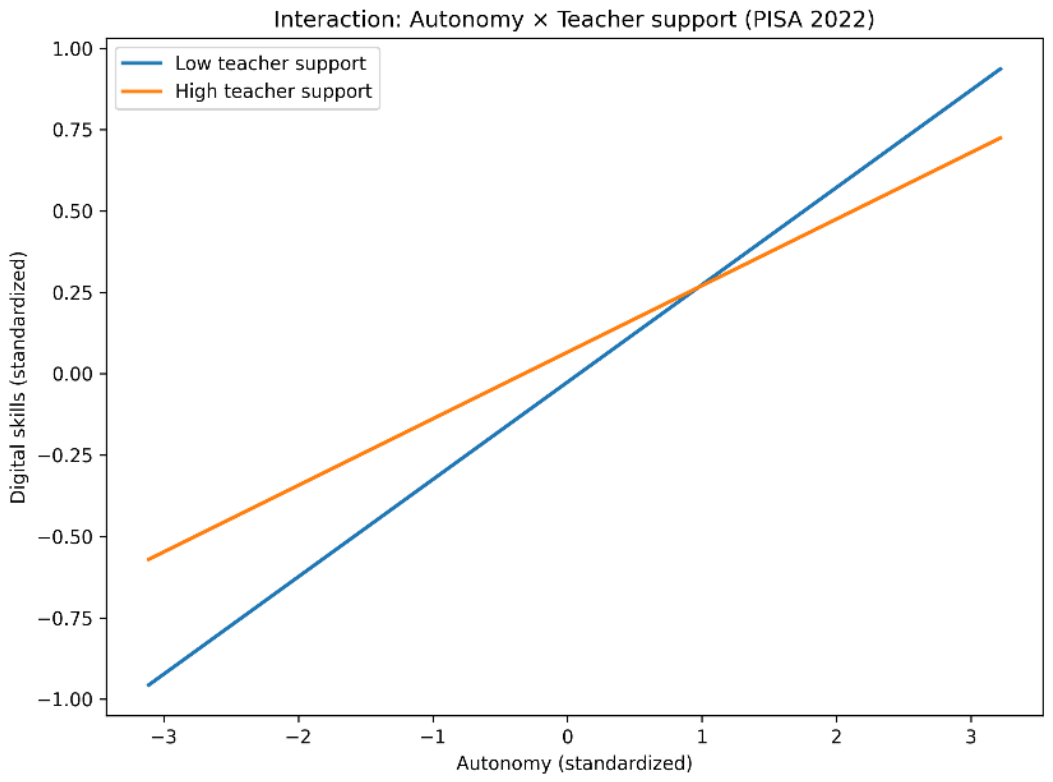
In addition, interaction terms between autonomy and teacher support were explored to examine whether the association between autonomy and digital learning outcomes differs depending on the level of teacher support. These interaction models are treated as exploratory and are interpreted cautiously.
3.2.3. Cross-Domain Consistency Analysis
To examine whether learning-environment indicators display similar patterns across academic domains, the extraction procedure was repeated for Mathematics, Reading and Science. For each domain , domain-specific effects of student autonomy, digital learning skills and teacher support were extracted using the same harmonization and parsing procedure applied in the baseline analysis.
Cross-domain consistency was evaluated by computing pairwise Pearson correlation coefficients between homologous indicators across domains. For example, the stability of autonomy effects between mathematics and reading was assessed as
and analogously for science. The same procedure was applied to digital learning effects and teacher support effects.
Beyond correlational consistency, domain-specific differences in effect magnitudes were examined using paired statistical tests. In particular, paired t-tests were applied to digital learning effects across domains:
These analyses were used to assess whether the observed learning-environment patterns are domain-specific or reflect broader system-level characteristics of education systems after the pandemic-related disruption.
3.2.4. Exploratory Profiling of Education Systems
Exploratory profiling methods were used to describe similarities between education systems in terms of autonomy, digital skills and teacher support. These methods were included to support interpretation and visualization, not to provide confirmatory evidence.
First, K-means clustering was applied to standardized learning-environment indicators to identify groups of education systems with similar profiles. Clustering was included to identify descriptive profiles of education systems with similar configurations of autonomy, digital skills and teacher support, rather than to establish statistically fixed country categories [41,42]. The objective of K-means is to partition the set of countries into clusters , such that the within-cluster sum of squared deviations is minimized:
where denotes the standardized feature vector for country (i), and denotes the centroid of cluster . The resulting clusters are interpreted as descriptive typologies of education systems characterized by different configurations of autonomy, digital preparedness and teacher support. The number of clusters was selected using standard exploratory criteria, including the elbow criterion and silhouette coefficient, together with the interpretability of the resulting country profiles.
Second, a Variational Autoencoder was used as an exploratory dimensionality-reduction tool. Given the limited country-level sample size, the VAE was not used as a predictive deep-learning model. Instead, it was used to generate a two-dimensional latent representation that visualizes similarities between education systems based on standardized learning-environment indicators. Compared with PCA or MDS, the VAE was used to provide a flexible latent representation that can capture possible non-linear similarities between education systems. However, given the limited number of countries, it is interpreted only as an exploratory visualization tool, not as a predictive deep-learning model. The resulting latent coordinates were summarized into a composite Digital Readiness Index used only for exploratory correlation analysis with ICT aspiration growth. The index is interpreted as a compact representation of relative readiness profiles, not as a validated measure of digital or AI preparedness [43,44].
The latent representation is interpreted descriptively as a compact visualization of digital-readiness profiles. It does not represent a validated measure of generative AI preparedness, but rather an exploratory representation of digital learning conditions and structural similarities between education systems.
3.2.5. Supplementary Analyses: LDA, Model-Based Simulation and Bayesian Network
Several supplementary analyses were conducted to examine the stability and interpretability of the observed patterns from alternative analytical perspectives.
First, Linear Discriminant Analysis was used as an exploratory classification tool. LDA was included to assess whether the selected readiness indicators provide a simple descriptive separation between countries with higher and lower ICT aspiration growth [45]. Countries were divided into groups with relatively higher and lower ICT aspiration growth, and LDA was used to assess whether these groups could be partially separated based on autonomy, digital skills and teacher support. The discriminant function is
where is the vector of standardized predictors. The LDA results are interpreted as descriptive evidence of group separation rather than as predictive validation.
Second, model-based simulations were conducted using the fitted linear regression model. In these simulations, standardized autonomy was increased by one standard deviation while digital skills and teacher support were held constant:
The predicted change in ICT aspirations was then computed as
This procedure was used only to illustrate predicted differences under the fitted model assumptions. It does not represent a causal counterfactual intervention.
Third, Bayesian-network modeling was used as a descriptive probabilistic tool to explore co-occurrence patterns between changes in occupational aspiration domains. This approach was used to explore whether changes in ICT aspirations tend to co-occur with changes in other occupational aspiration domains [40]. The variables included changes in aspirations for ICT, health professions, science and engineering, and science-related technical occupations:
Given the limited country-level sample size, these variables were discretized into low, medium and high categories before estimation. The network structure was estimated using a score-based hill-climbing procedure, and conditional probabilities were estimated from the discretized data. The resulting Bayesian network is interpreted as an exploratory representation of probabilistic co-occurrence between occupational aspiration domains, not as a causal structure.
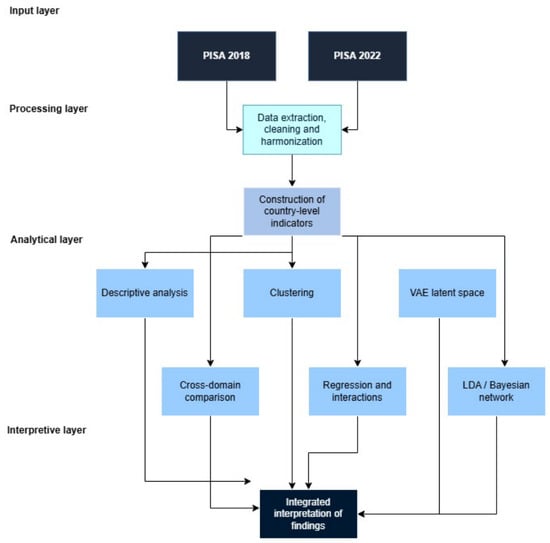
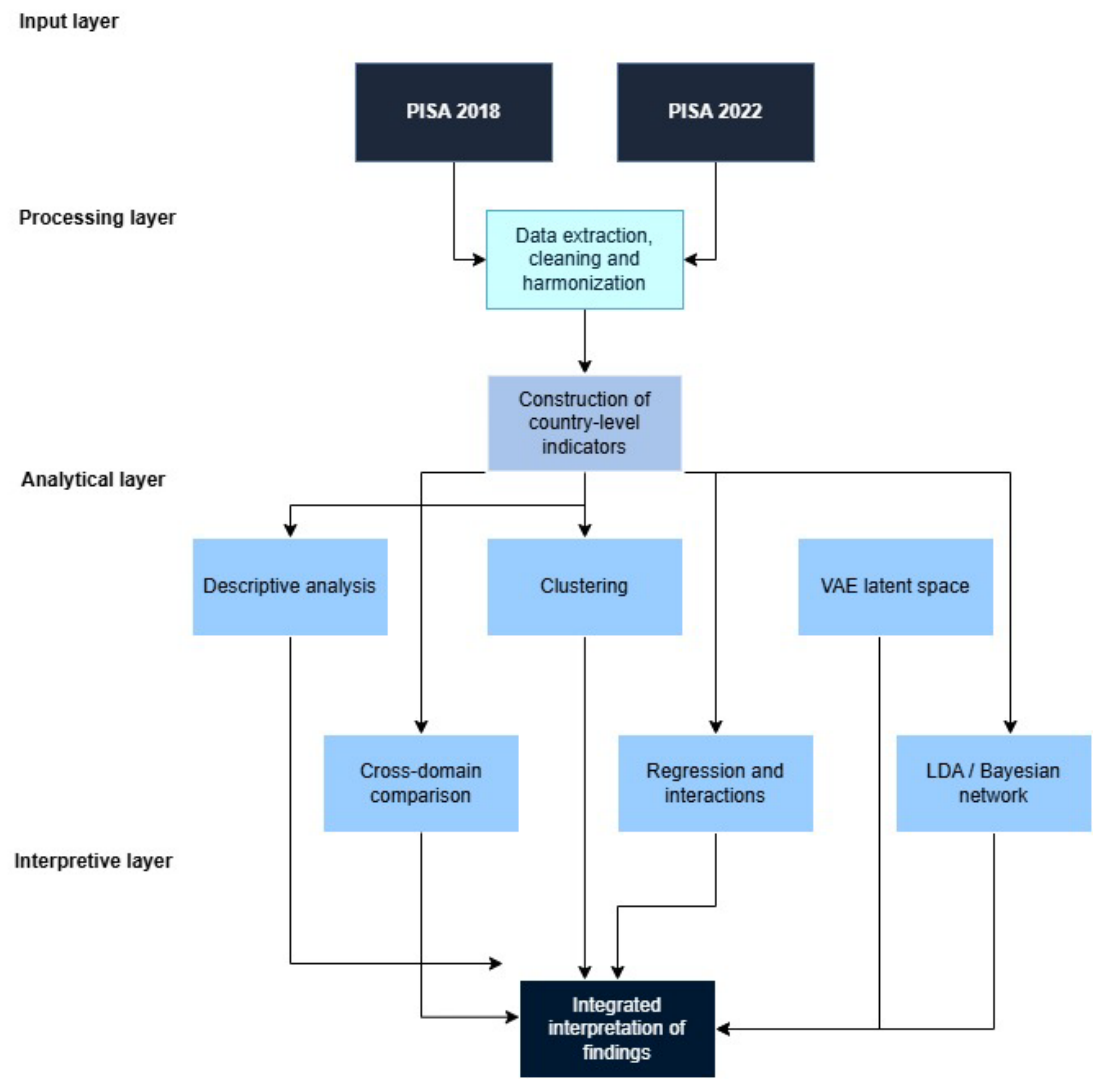
The methodological flowchart is presented in Figure 1.
Figure 1.
Methodological workflow of the study.
The analyses were conducted in Python 3.12 using standard data-processing, statistical and machine-learning libraries. Intermediate datasets and scripts were retained to allow the reported tables and figures to be regenerated from the original OECD PISA tables.
4. Results
This section presents the results obtained from the application of the analytical framework to the harmonized PISA 2018–2022 datasets.
4.1. Changes in Career Aspirations Between 2018 and 2022
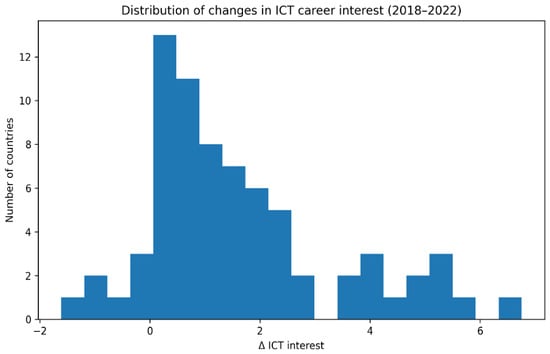
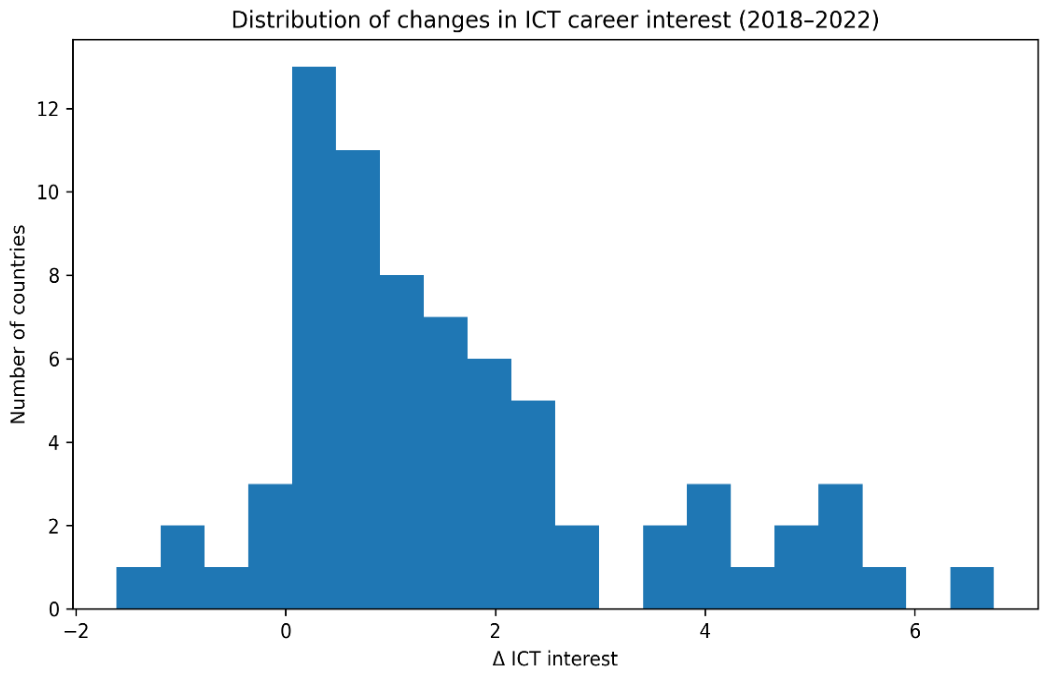
The first layer of analysis examines the distribution and cross-domain structure of changes in students’ career expectations between PISA 2018 and PISA 2022 (Figure 2). The focus is placed on ICT-related occupations, complemented by comparative evidence from health professions, science and engineering occupations and science-related technical careers, establishing the empirical baseline for the subsequent modeling stages.
Figure 2.
Distribution of ICT aspiration change (2018–2022).
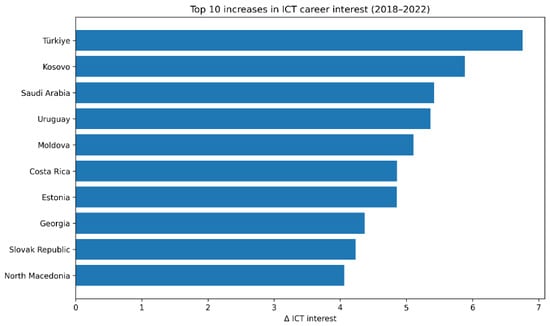
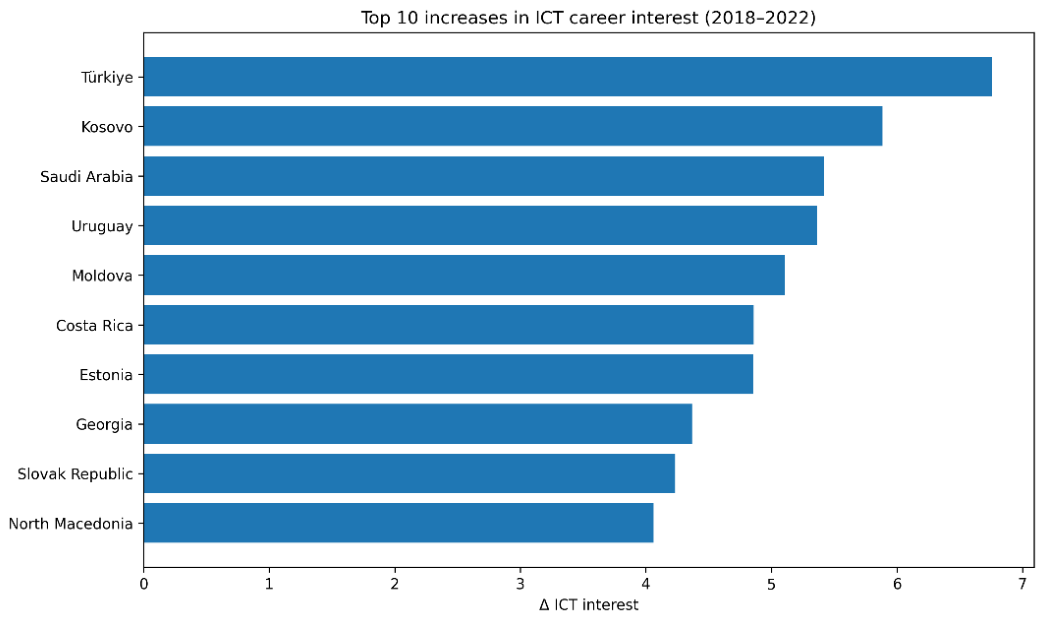
The distribution of country-level changes in students’ interest in ICT-related careers between 2018 and 2022 is positively skewed, with most observations concentrated between 0 and 2 percentage points, indicating that most education systems experienced moderate increases in ICT career aspirations. The presence of a pronounced right tail, with several countries exhibiting large positive changes (ΔICT > 4), points to the existence of outliers characterized by accelerated growth in ICT-related career interest, potentially reflecting differences in national educational and labor-market contexts, including the perceived attractiveness of ICT-related occupations. At the same time, a small number of negative values indicate that not all countries experienced growth in ICT aspirations, suggesting that structural constraints or alternative career orientations may still shape students’ expectations in certain education systems. Figure 3 ranks the ten countries with the largest positive changes in ICT career interest. The large positive deltas observed for countries such as Turkey, Kosovo, Saudi Arabia and Uruguay indicate a pronounced reorientation of student aspirations toward ICT professions, showing that, in some education systems, the perceived attractiveness of ICT careers has shifted substantially over a relatively short period.
Figure 3.
Top 10 increases in ICT career aspirations (2018–2022).
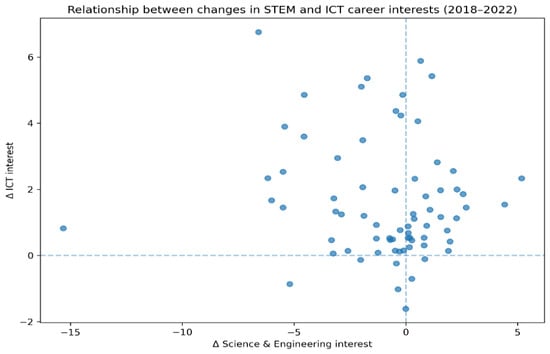
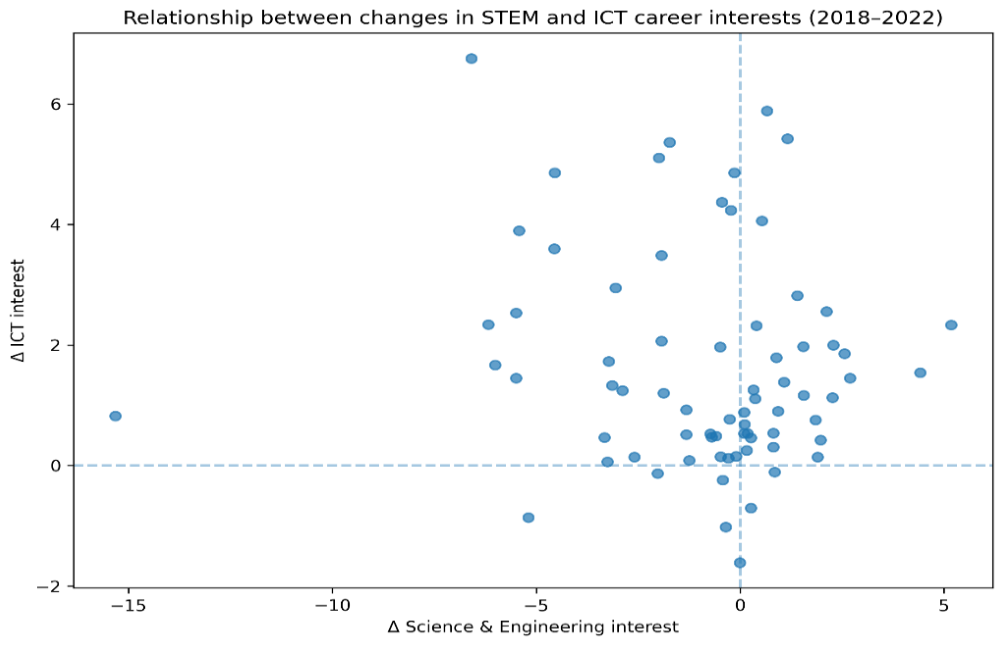
Additionally, Figure 4 examines the association between changes in interest in Science & Engineering careers and changes in ICT career interest. The dispersion of points suggests a weak-to-moderate positive relationship, indicating that increases in ICT interest are often, but not always, accompanied by increases in broader STEM-oriented aspirations. Several countries display strong positive ICT growth despite stagnant or declining interest in traditional science and engineering fields, suggesting a partial decoupling between ICT and classical STEM trajectories. This pattern implies that ICT careers increasingly function as a distinct and attractive pathway, not merely as a subset of general STEM professions. Conversely, the presence of countries with declining science and engineering interest and modest ICT growth points to differentiated structural dynamics across scientific and technological domains. This pattern suggests that ICT aspiration growth is not a uniform response to digital transformation but varies according to national educational and labor-market contexts.
Figure 4.
Relationship between changes in ICT and science and engineering aspirations (2018–2022).
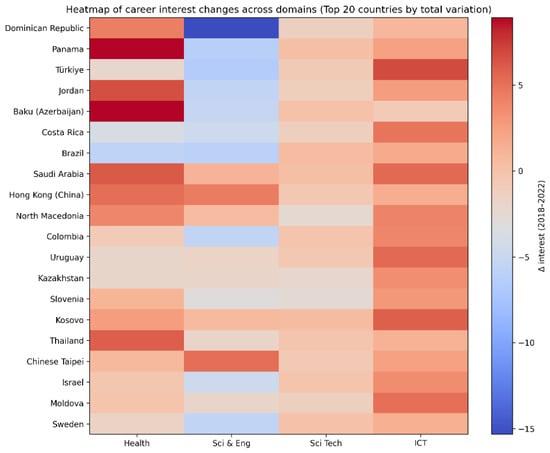
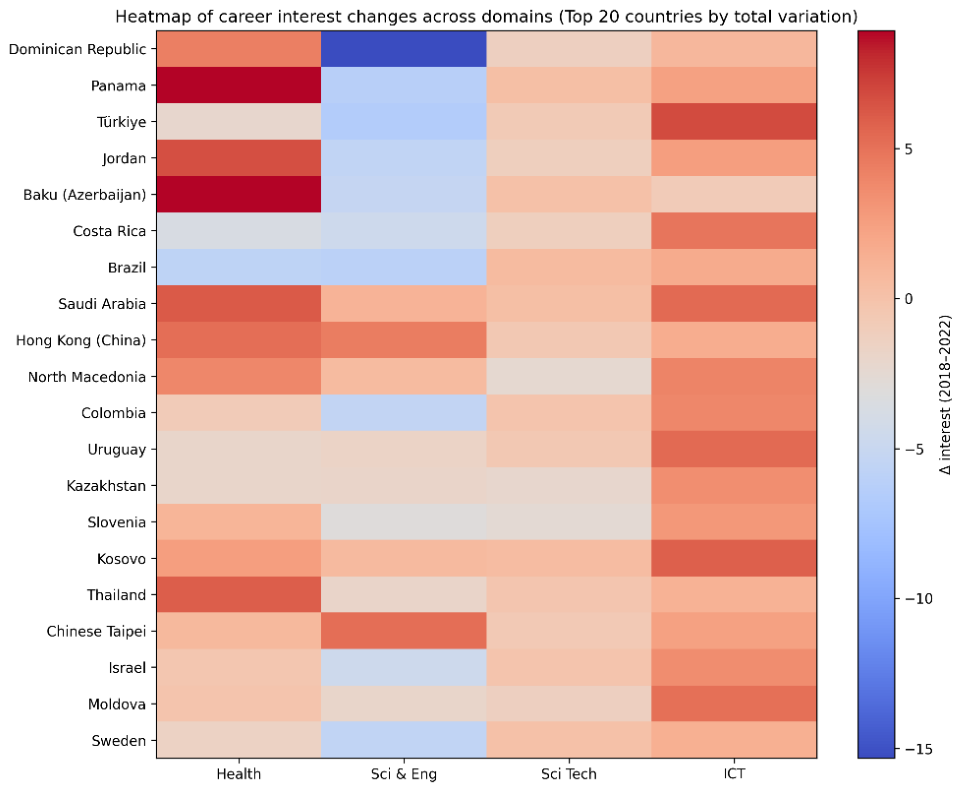
The heatmap in Figure 5 provides a comparative overview of changes in career interest across four domains (health, science and engineering, science-related technical occupations and ICT) for the countries with the largest variation. The results reveal pronounced cross-domain heterogeneity, with several education systems showing strong increases in ICT interest alongside more moderate or even negative changes in traditional scientific and health-related careers. At the same time, some countries exhibit parallel increases across multiple domains, indicating more general expansions in career expectations rather than sector-specific shifts. ICT growth appears to coexist with divergent trajectories in other fields, potentially reflecting both substitution and complementarity patterns across occupational domains.
Figure 5.
Heatmap of multidomain changes in career aspirations (Top 20 most volatile countries).
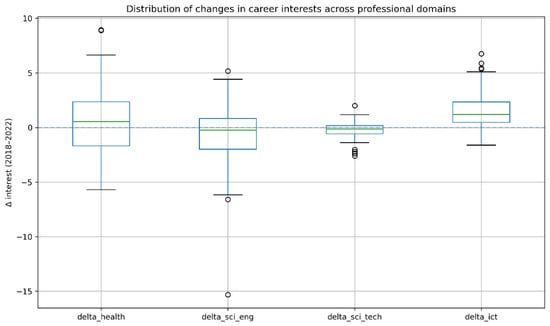
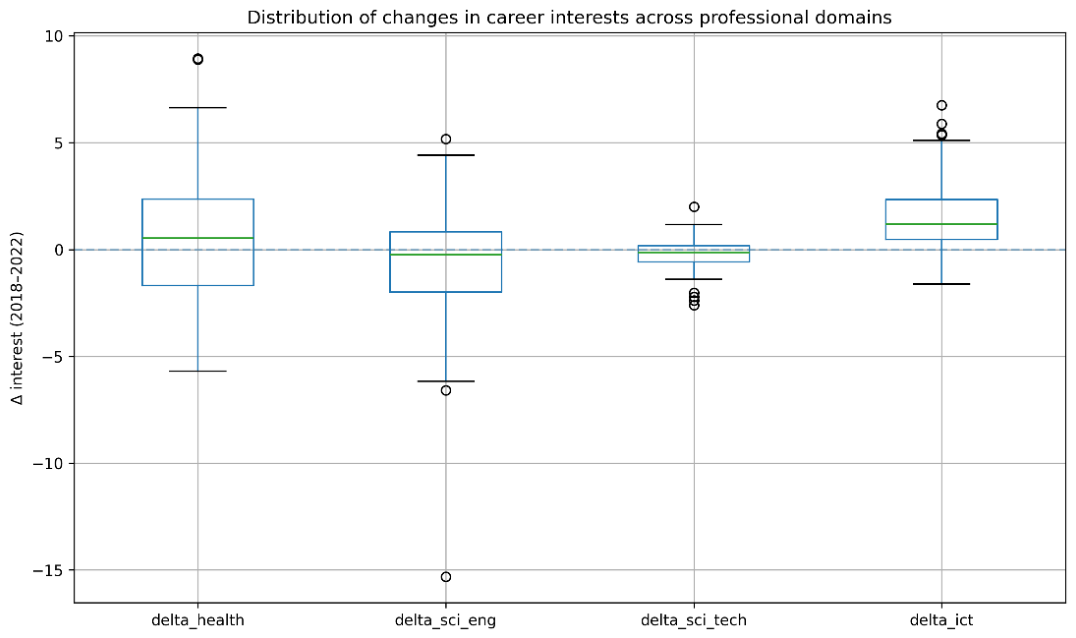
The distributional analysis in Figure 6 further reinforces these differences across domains. ICT exhibits a clearly positive median change and several high positive outliers, indicating consistent growth across countries. In contrast, science and engineering shows a slightly negative median and substantial dispersion, reflecting heterogeneous and, in some cases, declining interest. The health domain presents a more balanced distribution around a small positive median, but with wide variability across countries. Science-related technical occupations display the lowest dispersion and a median close to zero, suggesting relatively stable career expectations, highlighting a structural divergence between ICT and the other domains. ICT stands out as the only field with a consistently positive shift, whereas traditional STEM and health-related careers exhibit more fragmented and context-dependent trajectories.
Figure 6.
Boxplot of changes in career aspirations by domain (2018–2022).
The figures show that ICT-related career aspirations increased in many education systems between 2018 and 2022, although the magnitude of change varied substantially across countries and across occupational domains.
4.2. Latent Profiles of Digital Readiness Across Education Systems
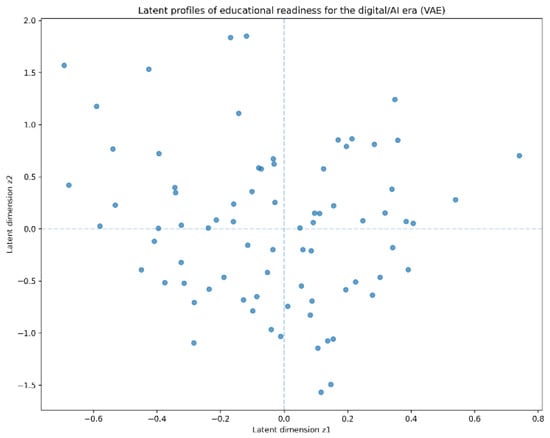
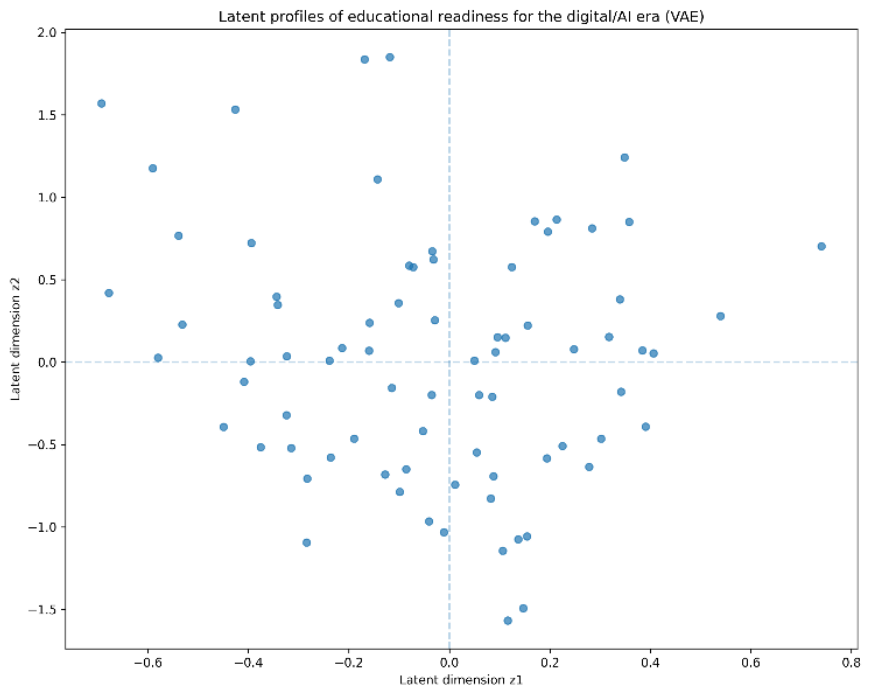
The second layer of results focuses on the latent profiling of education systems based on learning environment indicators, with the aim of uncovering structural patterns of readiness for digital transformations. A VAE is employed to project standardized indicators of student autonomy, digital learning skills and teacher support into a low-dimensional latent space, which can be interpreted as a continuous representation of digital readiness. The two-dimensional latent representation derived from the VAE, based on standardized indicators of student autonomy, digital skills and teacher support, reveals substantial cross-national heterogeneity in structural digital readiness across education systems. The absence of sharp boundaries suggests overlapping profiles of readiness, with gradual transitions between lower- and higher-capacity systems. Countries positioned in regions with higher latent values can be interpreted as having relatively more favorable digital-readiness profiles, while those located in lower regions reflect weaker combinations of digital skills, autonomy and teacher support (Figure 7). The overlap between latent profiles suggests that readiness should be interpreted as a continuum rather than as a set of clearly separated country groups.
Figure 7.
VAE latent space of education systems.
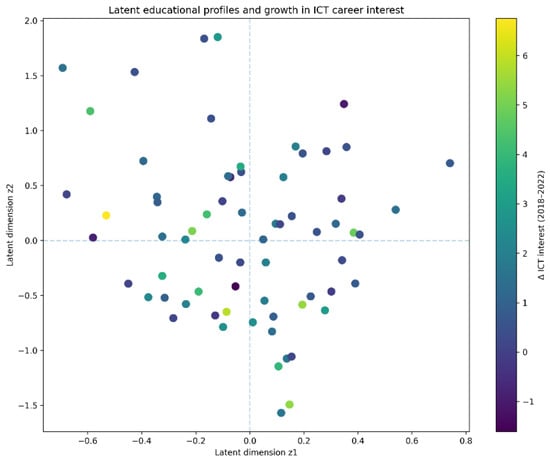
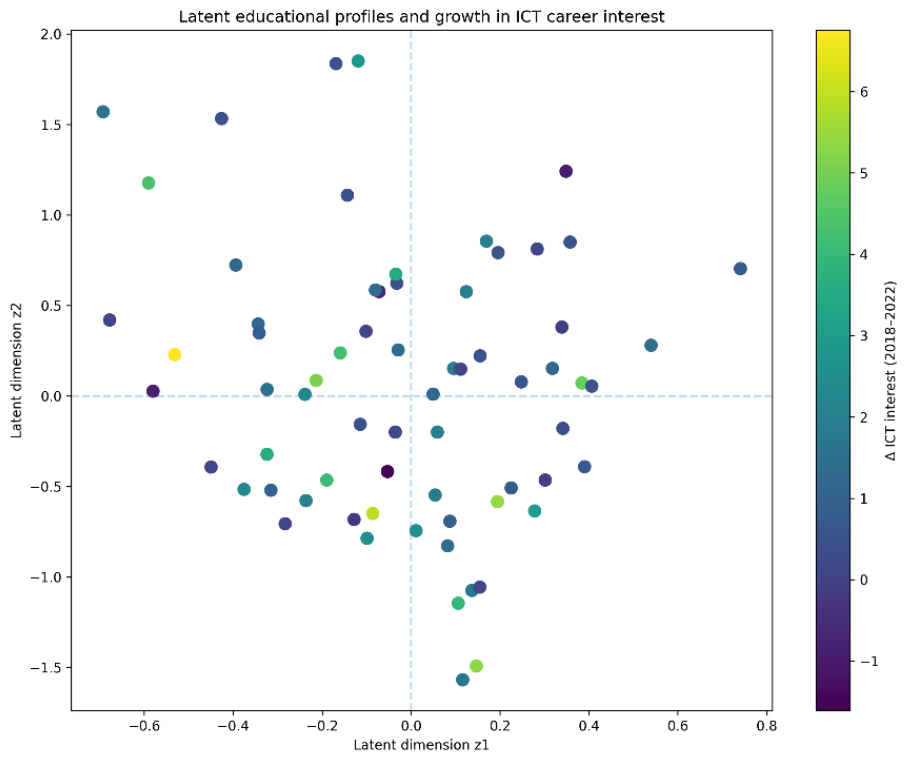
The latent space representation is extended by encoding ICT career aspiration growth (2018–2022) as a color gradient, enabling an integrated assessment of the relationship between structural educational readiness and changes in ICT-related career interest (Figure 8). The resulting distribution reveals substantial heterogeneity across education systems, without a clear positive association between latent-readiness positioning and ICT aspiration growth. Countries with comparable structural profiles display heterogeneous outcomes, highlighting the role of additional contextual factors.
Figure 8.
VAE latent space colored by ICT aspiration change (2018–2022).
The latent digital-readiness representation exhibited a weak but statistically significant negative correlation with changes in ICT-related career aspirations (r = −0.242, p = 0.047), suggesting that higher latent-readiness positioning was not systematically associated with stronger ICT aspiration growth across education systems.
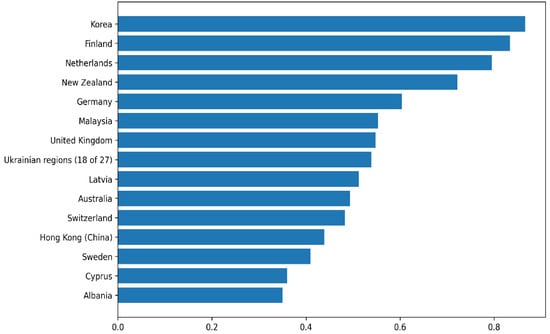
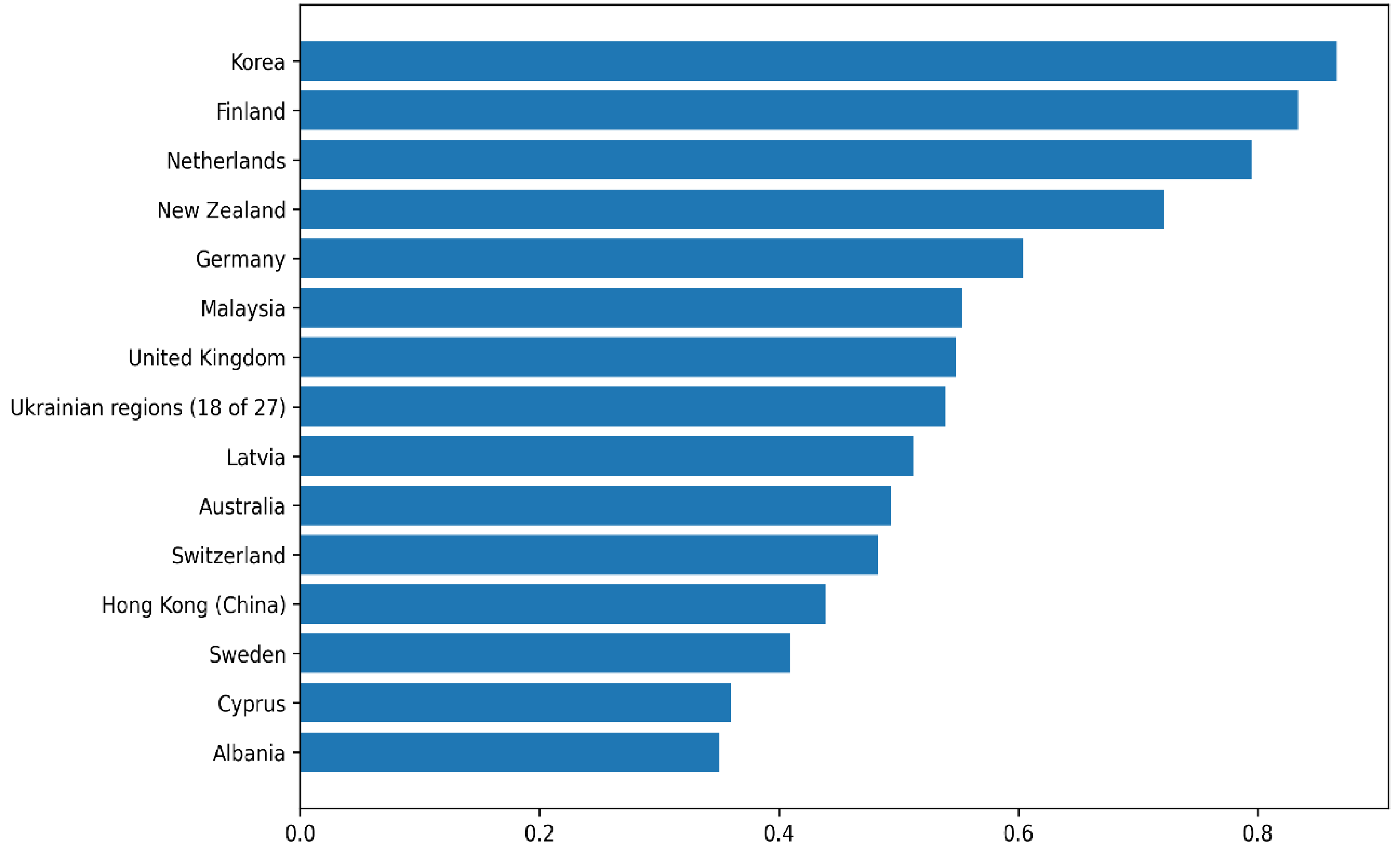
The ranking of countries based on the composite Digital Readiness Index reveals a strong concentration of high-readiness profiles among advanced education systems, with countries such as Korea, Finland, The Netherlands and New Zealand occupying the leading positions (Figure 9).
Figure 9.
Top 15 education systems by Digital Readiness Index.
4.3. Learning Environment Effects, Typologies and Cross-Domain Consistency
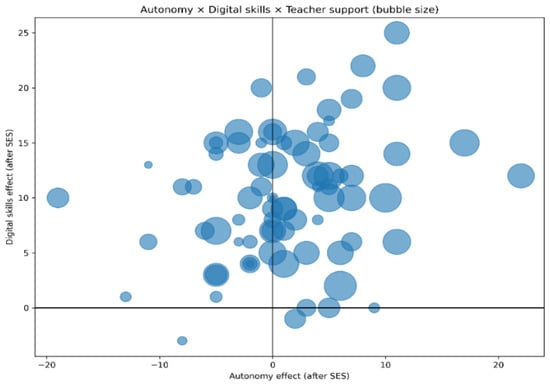
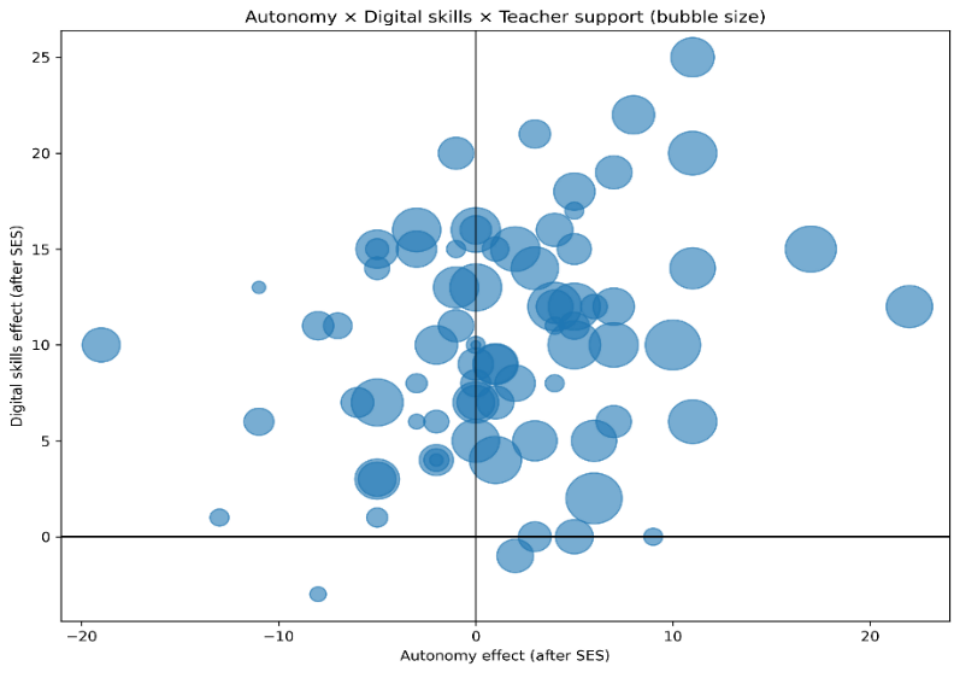
The joint distribution of school autonomy, digital skills and teacher support highlights the multi-dimensional nature of educational readiness for digital transformation (Figure 10).
Figure 10.
Autonomy × digital skills × teacher support (bubble plot, mathematics).
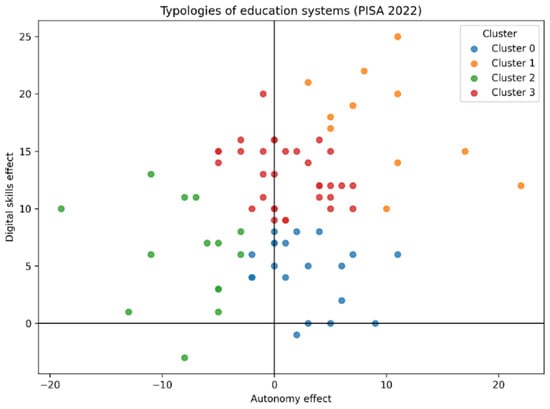
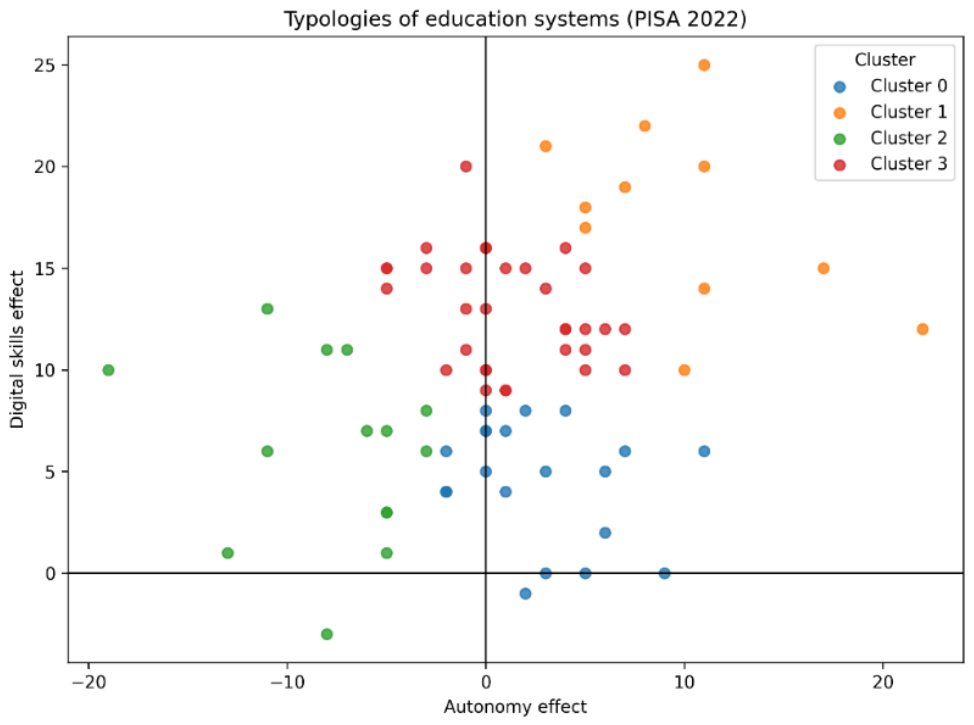
Intermediate clusters in Figure 11 indicate that autonomy alone is not sufficient to ensure strong digital outcomes. Some systems exhibit relatively high autonomy but only moderate digital performance, while others achieve reasonable digital skills despite limited autonomy. The typology highlights substantial heterogeneity across education systems and suggests that the relationship between autonomy and digital skills is conditional on broader systemic factors.
Figure 11.
Clusters of education systems based on autonomy and digital skills (mathematics).
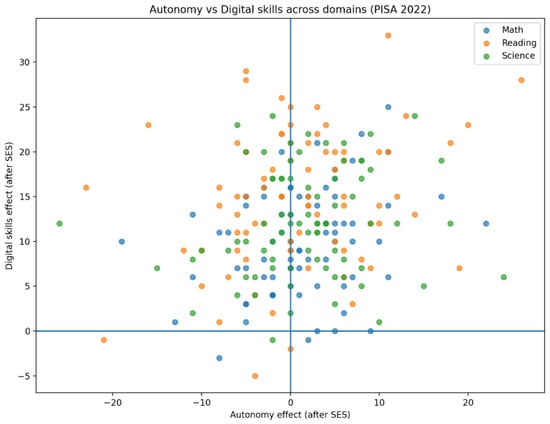
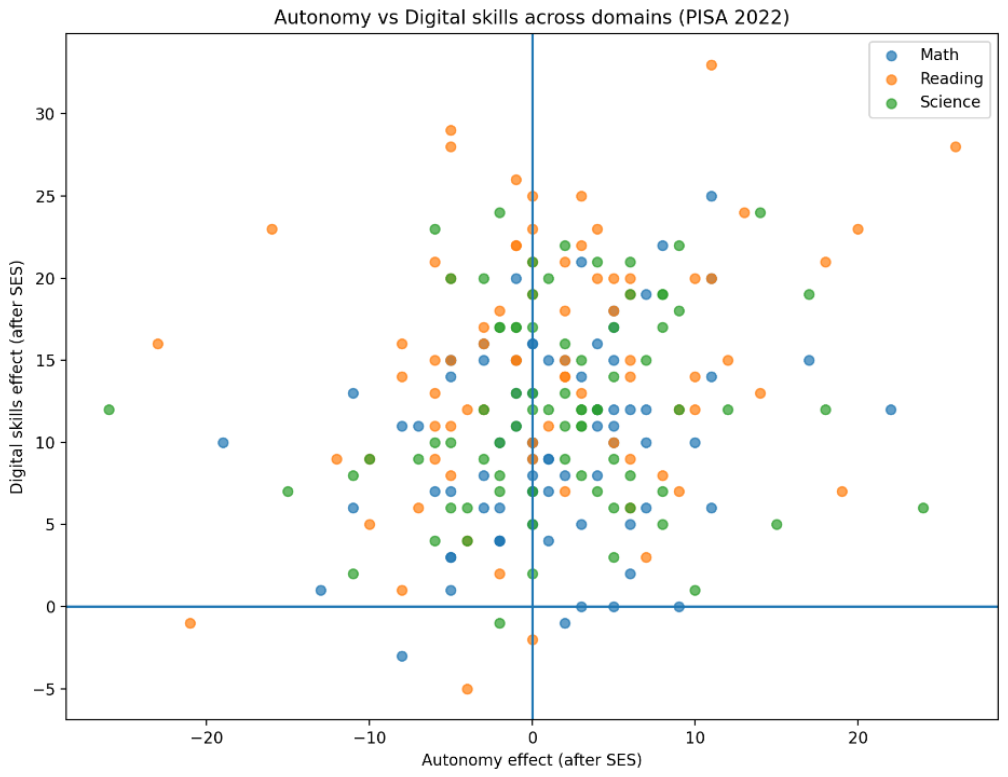
The relationship between school autonomy and digital skills across mathematics, reading and science is weakly positive but highly dispersed, indicating substantial cross-national heterogeneity (Figure 12). While some education systems exhibit a clear positive association, where higher autonomy coincides with stronger digital competencies, many countries deviate from this pattern. The dispersion varies across domains, with reading and science showing a higher concentration of observations in the upper range compared to mathematics.
Figure 12.
Autonomy versus digital skills effects across domains (mathematics, reading, science).
4.4. Distribution and Heterogeneity of ICT Career Aspiration Change (2018–2022)
The distribution of changes in ICT career aspirations between 2018 and 2022 confirms the substantial cross-national heterogeneity identified in the previous analyses. While most countries exhibit moderate increases in ICT-related aspirations, the presence of both extreme positive cases and stagnating systems suggests that ICT career dynamics remain strongly context-dependent across education systems.
4.5. Interaction Between Autonomy, Teacher Support and Digital Skills
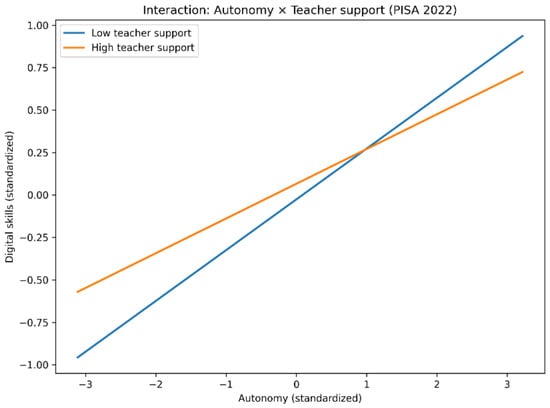
The interaction between autonomy, teacher support and digital skills reveals important conditional patterns in the relationship between learning environments and ICT-related career aspirations.
The interaction coefficient between autonomy and teacher support was negative but statistically non-significant (β = −0.059, p = 0.628), suggesting that the interaction pattern observed in Figure 13 should be interpreted cautiously and primarily as an exploratory visualization rather than as strong statistical evidence of moderation effects.
Figure 13.
Interaction: Autonomy × Teacher support (PISA 2022).
4.6. Gender Disparities in Autonomy, Digital Learning and ICT-Related Outcomes
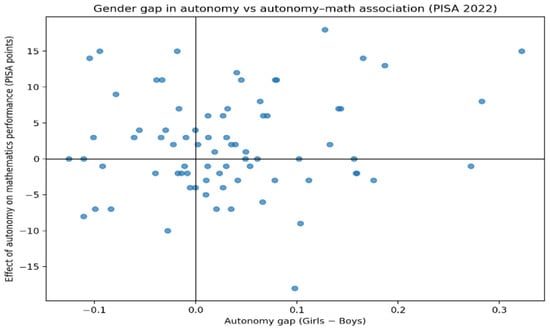
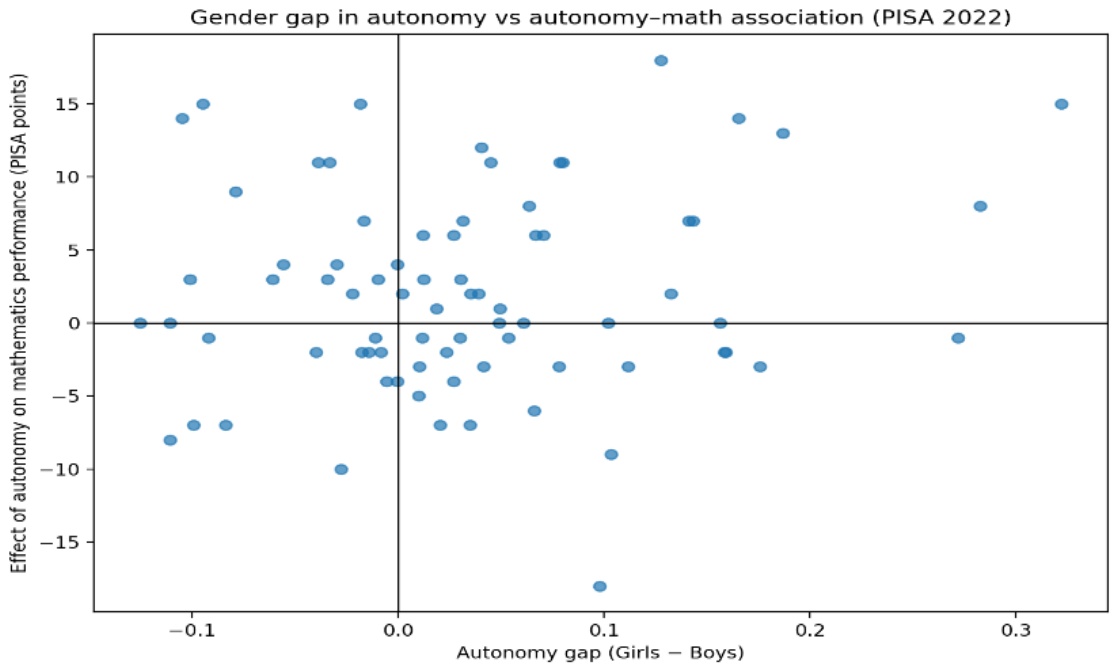
The relationship between gender differences in perceived autonomy and the effect of autonomy on mathematics performance is highly dispersed, indicating no systematic alignment between the two (Figure 14).
Figure 14.
Gender differences in autonomy effects.
Across countries, positive or negative autonomy effects coexist with both female and male advantages in perceived autonomy, suggesting that gender differences in autonomy are not consistently associated with performance outcomes. This pattern implies that the aggregate effects of autonomy do not appear to differ systematically by gender at country level. The absence of a clear relationship indicates that differences in access to autonomy do not automatically translate into differential academic returns.
4.7. Classification of Education Systems by ICT Aspiration Growth
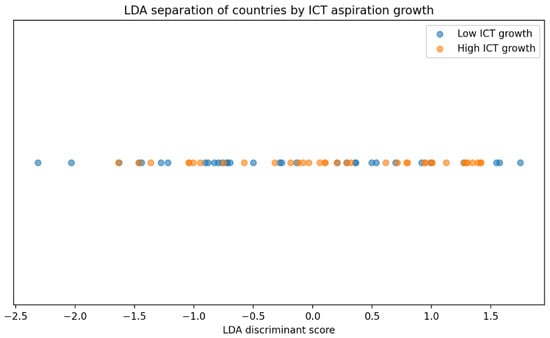
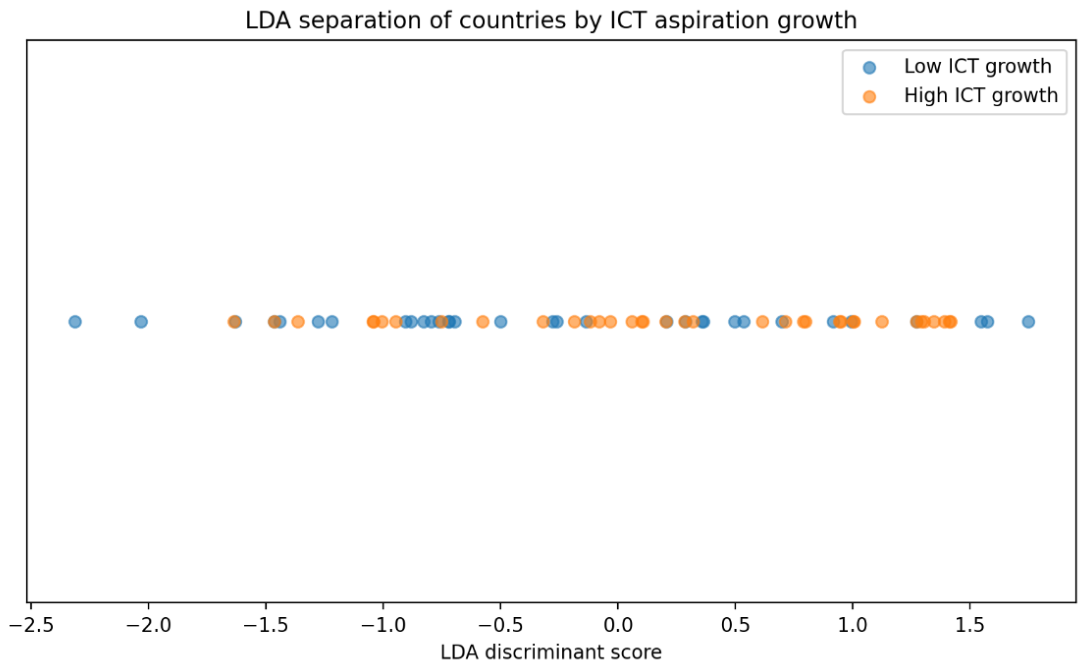
This section examines whether structural characteristics of education systems can discriminate between countries with high versus low growth in ICT career aspirations (Figure 15). A Linear Discriminant Analysis (LDA) model was estimated using standardized indicators of school autonomy, digital skills and teacher support, with countries classified based on their level of ICT aspiration growth. The average classification accuracy obtained across folds indicates that the structural learning environment indicators possess non-trivial discriminative power in separating countries by ICT aspiration growth trajectories. However, the accuracy remains moderate rather than high, suggesting that while these features contain relevant information, they do not fully determine the differences observed in ICT career dynamics.
Figure 15.
Linear Discriminant Analysis of education systems by ICT aspiration growth.
Countries with higher ICT aspiration growth tend to exhibit higher discriminant scores, while low-growth systems are concentrated in the lower range. However, the substantial overlap between groups indicates that no clear boundary separates growth trajectories based solely on educational indicators. This overlap highlights that ICT career dynamics are not fully determined by school-level conditions. Instead, learning environments act as enabling factors that increase the likelihood of ICT-oriented aspirations, without guaranteeing their emergence.
4.8. Regression Results
Table 2 reports the OLS regression estimates linking autonomy, teacher support and their interaction to standardized digital-skills outcomes. The results indicate that autonomy exhibits a weak positive association with digital skills, while teacher support and the interaction term remain statistically non-significant. These estimates are interpreted as country-level associations rather than causal effects.
Table 2.
OLS regression estimates for digital-skills outcomes.
4.9. Model-Based Simulation
The counterfactual simulation evaluates the effect of increasing school autonomy by one standard deviation while holding digital skills and teacher support constant. The results indicate that the predicted increase in ICT career aspirations is modest on average and exhibits substantial variation across countries. In most cases, the simulated increase in autonomy leads to only limited changes in predicted ICT aspiration levels, suggesting that, although autonomy contributes to ICT career orientation, its marginal impact is relatively small compared to the effects associated with digital skills and teacher support.
At the same time, the comparison between observed and predicted values reveals that the model does not fully capture extreme cases of ICT aspiration growth. Several countries with high observed increases in ICT interest display much lower predicted values under the counterfactual scenario, indicating that additional contextual factors beyond learning environments influence these dynamics. The counterfactual analysis confirms that interventions focused exclusively on increasing autonomy may be insufficient to generate substantial shifts in ICT-related career aspirations.
4.10. Probabilistic Relationships Between Career Domains
The Bayesian network analysis does not identify significant conditional dependencies between changes in ICT career aspirations and shifts in other occupational domains. The learned structure contains no edges, indicating that changes in ICT aspirations are not systematically linked to contemporaneous changes in health, science and engineering, or science-related technical career expectations. The marginal distribution of ICT aspiration changes is evenly distributed across the three categories (low, medium, high), further suggesting the absence of dominant dependency patterns within the observed data.
5. Discussion
5.1. Interpretation of ICT Aspiration Dynamics
The findings suggest a structurally uneven transformation of career aspirations toward ICT between 2018 and 2022. While the overall distribution indicates a general tendency toward increased ICT interest, country-level differences reveal substantial divergence in how education systems are positioned in relation to digitalization. The weak coupling between ICT and traditional STEM changes suggests that ICT-related aspirations may be evolving as a partially distinct domain in the analyzed data. These differences may reflect unmeasured national factors, such as labor-market signals, policy emphasis on digital education or social perceptions of ICT careers, which are not directly modeled in the present analysis.
The absence of Bayesian-network dependencies provides exploratory support for the view that ICT aspiration dynamics may not simply mirror changes in traditional STEM or health-related aspirations. However, this should not be interpreted as evidence of full independence between domains, because the analysis is based on country-level aggregated and discretized variables. Countries with stronger ICT aspiration growth may reflect contexts in which digital careers became more visible, economically attractive or institutionally promoted between 2018 and 2022. Such increases may be associated with labor-market demand for ICT skills, expectations of higher wages in technology-related occupations, national digitalization or AI strategies, media attention to digital careers and broader social perceptions of ICT as a stable and future-oriented career path. These explanations are not directly tested in the present models, but they help interpret why ICT aspiration growth differs substantially across education systems.
This finding aligns with studies emphasizing that ICT-related career expectations are shaped by both educational experiences and broader socio-economic contexts [4,5,6,7,8,9,10,11]. This addresses RQ1 by showing that ICT aspiration growth varies across education systems and is associated with both learning-environment indicators and broader contextual conditions.
5.2. Digital Readiness as a Multidimensional Construct
The latent-profile results support the interpretation of digital readiness as a multidimensional construct rather than a single observable condition. Education systems appear to occupy different positions within a continuous structural space shaped by autonomy, digital skills and teacher support. However, the weak negative correlation between the Digital Readiness Index and ICT aspiration growth indicates that structural readiness should not be interpreted as a direct predictor of students’ occupational expectations. Instead, digital readiness appears to describe enabling conditions that interact with national contexts, institutional pathways and students’ perceptions of digital careers. This interpretation is consistent with prior literature suggesting that readiness for digital transformation depends on the combination of digital competence, institutional capacity and pedagogical support [12,13,19,23]. This result relates to RQ3, as the latent profiles suggest that digital readiness is better interpreted as a combination of competence, learner agency and support rather than as a single observable indicator.
5.3. Institutional and Pedagogical Conditions of Digital Readiness
The learning-environment results suggest that autonomy, digital skills and teacher support should be interpreted relationally rather than as isolated predictors. Systems combining stronger autonomy and digital competencies may provide more favorable conditions for digital learning, whereas weaker configurations point to possible structural constraints. However, the substantial dispersion across countries indicates that autonomy is not a universal driver of digital skills. Its relevance appears to depend on the institutional and pedagogical conditions in which it operates. This result is consistent with studies showing that digital skills are more meaningful when embedded in supportive learning environments rather than treated as isolated technical competences [1,2,3,32].
The interaction results suggest that teacher support should be interpreted as a contextual pedagogical condition rather than as a strong direct predictor. Although the estimated interaction is not statistically significant, the observed pattern is consistent with the broader interpretation that autonomy and digital skills operate within institutional support structures. Therefore, teacher support may help shape how digital exposure and perceived competence are translated into occupational expectations, but this interpretation remains exploratory. The complementary role of teacher support also aligns with research emphasizing that digital transformation in education depends not only on access to technology, but also on pedagogical guidance and institutional support [12,32,36]. In relation to the theoretical framework, the findings suggest that perceived competence, learner agency and contextual support operate jointly rather than independently.
5.4. Exploratory Modeling and Methodological Scope
The limited separation observed in the LDA results reinforces the interpretation that learning-environment indicators capture only part of the variation in ICT aspiration dynamics. Rather than determining ICT aspiration growth, these indicators appear to describe enabling conditions whose relevance depends on broader institutional and national contexts.
The regression results indicate that the role of autonomy and teacher support should be interpreted cautiously. Autonomy shows a weak positive association with standardized digital-skills outcomes, but teacher support and the interaction term are not statistically significant. Therefore, the evidence supports a limited and context-dependent interpretation of pedagogical support rather than a strong direct effect.
The model-based simulation suggests that autonomy alone is unlikely to account for large differences in ICT aspiration growth. This reinforces the interpretation that digital competencies, teacher support and broader contextual factors should be considered jointly.
This interpretation is consistent with previous research showing that digital readiness depends not only on access to technology, but also on digital competence, institutional support and pedagogical capacity [1,2,12,32].
5.5. Limitations
Several limitations should be considered when interpreting the findings of this study. The analysis relies on country-level aggregated indicators derived from PISA data, which limits the ability to capture within-country heterogeneity and does not allow causal inference at the individual level. The latent representation and clustering techniques employed in the study were used as exploratory analytical tools and should not be interpreted as predictive or causal models. The analysis is constrained by the relatively limited number of education systems available for cross-national comparison, which may affect the stability of some multivariate relationships. Although the study examines educational readiness in the context of digital transformation, the PISA 2018–2022 data do not directly measure artificial intelligence competencies or generative-AI-related educational practices. Consequently, ICT-related career aspirations should be interpreted only as indirect indicators of orientation toward digitally intensive occupational pathways [12,13,14,30].
In addition, several interpretations discussed in this manuscript concern broader national, institutional and labor-market contexts that were not directly measured in the empirical models. These interpretations should therefore be understood as theoretically informed explanations rather than directly tested mechanisms.
Another limitation concerns the deliberately simple specification of the regression models. The main predictors are restricted to autonomy, digital skills and teacher support, because the study focuses on learning-environment indicators available in the harmonized PISA framework. However, ICT-related career aspirations may also depend on broader country-level factors that were not included in the models, such as GDP, labor-market demand for ICT occupations, wage expectations, digitalization levels, internet access, national AI and digital strategies and the size of the technology sector. Therefore, the regression results should be interpreted as partial country-level associations rather than as comprehensive explanatory models of ICT aspiration growth.
6. Conclusions
Our study investigated the relationship between learning environments and changes in students’ ICT-related career aspirations in the context of ongoing digital transformation. By combining harmonized PISA 2018–2022 data with multivariate and exploratory latent-representation analyses, the study provides an integrated perspective on how learning environments are associated with ICT-related career aspirations across education systems.
The empirical results indicate a clear but uneven expansion of ICT career aspirations across countries. While most education systems experienced positive growth, the magnitude and direction of change vary substantially, highlighting significant cross-national heterogeneity. This suggests that exposure to digital transformation alone is insufficient to generate uniform shifts in students’ occupational expectations.
Across the analytical approaches employed in the study, digital skills were consistently associated with ICT aspiration growth, suggesting the relevance of perceived digital competence for students’ orientation toward ICT-related careers. At the country level, stronger digital skills are associated with greater growth in ICT career aspirations, although the observed associations cannot be interpreted as individual-level causal effects.
Teacher support appears to play a complementary contextual role, although the interaction effects identified in the regression analyses remain statistically limited and should be interpreted cautiously. Although its direct association with ICT aspiration growth remains comparatively limited within the regression models, supportive pedagogical environments may contribute to the development of ICT-related career interest under specific contextual conditions.
By contrast, the role of autonomy appears more limited and strongly context-dependent. While autonomy can foster exploratory learning and engagement, its effects are contingent on the presence of adequate pedagogical support structures. In the absence of such support, autonomy alone does not appear sufficient to drive ICT-oriented career aspirations, challenging simplified assumptions regarding the universally positive effects of autonomy across education systems.
The latent representation analysis supports interpreting digital readiness across education systems as a continuous and multidimensional construct. Education systems do not form discrete categories of “high” or “low” readiness but rather occupy positions along a continuum shaped by different combinations of autonomy, digital skills and teacher support. Some systems characterized by favorable configurations across these dimensions show stronger ICT aspiration growth, although substantial variation persists within similar structural profiles.
Importantly, the findings further suggest that educational factors alone do not fully determine ICT career dynamics. Countries with comparable levels of structural readiness often display different outcomes, indicating that broader contextual influences, such as labor market conditions, national digital strategies and socio-cultural perceptions of ICT professions, may also play an important role, reinforcing the interpretation of learning environments as enabling conditions rather than deterministic drivers.
Consistent with the systemic perspective on AI adoption in education proposed by [14], the present findings suggest that digital readiness cannot be reduced to individual digital skills alone. Rather, educational readiness for educational readiness for digitally intensive societies depends on the alignment between student competencies, institutional support, pedagogical capacity and broader structural conditions shaping trust and engagement with technology.
From a policy perspective, the results highlight that investments in digital infrastructure alone may be insufficient to produce sustained increases. The findings suggest that educational strategies may benefit from prioritizing the development of digital competencies, the strengthening of teacher support systems and the integration of digital learning within coherent curricular frameworks. Therefore, the findings should be interpreted as country-level associational evidence. They support a multidimensional understanding of digital readiness, while highlighting the need for further research using additional contextual indicators and longitudinal microdata.
Author Contributions
D.M.P. and A.B.: methodology, validation, formal analysis, investigation, resources, data curation, writing—original draft, writing—review and editing, visualization, supervision. D.M.P. and S.-V.O.: conceptualization, formal analysis, investigation, writing—original draft, writing—review and editing, visualization, project administration. All authors have read and agreed to the published version of the manuscript.
Funding
This work was supported by a grant of the Ministry of Research, Innovation and Digitization, CNCS/CCCDI-UEFISCDI, project number COFUND-DUT-OPEN4CEC-1, within PNCDI IV. This project has been funded by UEFISCDI under the Driving Urban Transitions Partnership, which has been co-funded by the European Commission.
Institutional Review Board Statement
Not applicable.
Informed Consent Statement
Not applicable.
Data Availability Statement
The original contributions presented in this study are included in the article. Further inquiries can be directed to the corresponding author.
Conflicts of Interest
The authors declare that there are no conflicts of interest.
References
- Jeong, D.W.; Moon, H.; Jeong, S.M.; Moon, C.J. Digital capital accumulation in schools, teachers, and students and academic achievement: Cross-country evidence from the PISA 2018. Int. J. Educ. Dev. 2024, 107, 103024. [Google Scholar] [CrossRef] [Scilit]
- Kim, H.J.; Yi, P.; Hong, J.I. Are schools digitally inclusive for all? Profiles of school digital inclusion using PISA 2018. Comput. Educ. 2021, 170, 104226. [Google Scholar] [CrossRef] [Scilit]
- Hu, J.; Yu, R. The effects of ICT-based social media on adolescents’ digital reading performance: A longitudinal study of PISA 2009, PISA 2012, PISA 2015 and PISA 2018. Comput. Educ. 2021, 175, 104342. [Google Scholar] [CrossRef] [Scilit]
- Park, H.R.; Khan, S.; Petrina, S. ICT in science education: A quasi-experimental study of achievement, attitudes toward science, and career aspirations of Korean middle school students. Int. J. Sci. Educ. 2009, 31, 993–1012. [Google Scholar] [CrossRef] [Scilit]
- Bhat, R.M. Impact of Information and Communication Technology (ICT) On the Curriculum Upgradation and Career Aspiration of Students. Qubahan Acad. J. 2022, 2, 1–5. [Google Scholar] [CrossRef] [Scilit]
- Caspi, A.; Gorsky, P. STEM career expectations across four diverse countries: Motivation to learn mathematics mediates the effects of gender and math classroom environments. Int. J. STEM Educ. 2024, 11, 1–15. [Google Scholar] [CrossRef] [Scilit]
- Pagkratidou, M.; Michaelides, M.P.; Pitsia, V.; Karakolidis, A. Factors Associated with STEM Career Expectations of Greek 15-Year-Old Students. J. STEM Educ. Res. 2025, 8, 59–87. [Google Scholar] [CrossRef] [Scilit]
- McKenzie, S.; Bennett, D. Understanding the career interests of Information Technology (IT) students: A focus on choice of major and career aspirations. Educ. Inf. Technol. 2022, 27, 12839–12853. [Google Scholar] [CrossRef] [Scilit]
- McKenzie, S.; Coldwell-Neilson, J.; Palmer, S. Informing the career development of IT students by understanding their career aspirations and skill development action plans. Aust. J. Career Dev. 2017, 26, 14–23. [Google Scholar] [CrossRef] [Scilit]
- Strohmeier, D.; Gradinger, P.; Yanagida, T. Adolescents’ digital career aspirations: Evidence for gendered pathways in a digital future. J. Adolesc. 2024, 96, 526–538. [Google Scholar] [CrossRef] [Scilit] [PubMed]
- Turner, K. A digital career choice: Rural students’ perceptions of the value of digital media learning based on their career aspirations. Aust. Educ. Res. 2023, 50, 625–641. [Google Scholar] [CrossRef] [Scilit]
- Cope, B.; Kalantzis, M.; Searsmith, D. Artificial intelligence for education: Knowledge and its assessment in AI-enabled learning ecologies. Educ. Philos. Theory 2021, 53, 1229–1245. [Google Scholar] [CrossRef] [Scilit]
- Ko, G.Y.; Shin, D.; Auh, S.; Lee, Y.; Han, S.P. Learning Outside the Classroom During a Pandemic: Evidence from an Artificial Intelligence-Based Education App. Manag. Sci. 2023, 69, 3616–3649. [Google Scholar] [CrossRef] [Scilit]
- Nava Chirinos, A.A. Artificial Intelligence in Higher Education: Strategic Foundations, Practices, and Success Factors from a Bibliometric Perspective. Ceniiac 2025, 1, e0009. [Google Scholar] [CrossRef] [Scilit]
- Engzell, P.; Frey, A.; Verhagen, M.D. Learning loss due to school closures during the COVID-19 pandemic. Proc. Natl. Acad. Sci. USA 2021, 118, e2022376118. [Google Scholar] [CrossRef] [Scilit] [PubMed]
- Donnelly, R.; Patrinos, H.A. Learning loss during COVID-19: An early systematic review. Prospects 2022, 51, 601–609. [Google Scholar] [CrossRef] [Scilit] [PubMed]
- Harmey, S.; Moss, G. Learning disruption or learning loss: Using evidence from unplanned closures to inform returning to school after COVID-19. Educ. Rev. 2023, 75, 637–656. [Google Scholar] [CrossRef] [Scilit]
- Polat, M.; Turhan, N.S. A meta-analysis study on the relationship between mathematical literacy and mathematics achievement in PISA tests. J. Educ. Teach. 2022, 9, 661–676. [Google Scholar]
- Wang, X.S.; Perry, L.B.; Malpique, A.; Ide, T. Factors predicting mathematics achievement in PISA: A systematic review. Large-Scale Assess. Educ. 2023, 11, 24. [Google Scholar] [CrossRef] [Scilit]
- Cruz, N.A.D.; Adona, A.J.; Molato-Gayares, R.; Park, A. Learning loss and recovery from the COVID-19 pandemic: A systematic review of evidence. Int. J. Educ. Dev. 2025, 115, 103271. [Google Scholar] [CrossRef] [Scilit]
- Bartholo, T.L.; Koslinski, M.C.; Tymms, P.; Castro, D.L. Learning loss and learning inequality during the COVID-19 pandemic. Ensaio 2023, 31, 574–597. [Google Scholar] [CrossRef] [Scilit]
- Khan, M.J.; Ahmed, J. Child education in the time of pandemic: Learning loss and dropout. Child. Youth Serv. Rev. 2021, 127, 106065. [Google Scholar] [CrossRef] [Scilit] [PubMed]
- UNESCO. Education in a Post-COVID World: Nine Ideas for Public Action; International Commission on the Futures of Education; UNESCO: Paris, France, 2020. [Google Scholar]
- Azzolini, D.; Schizzerotto, A. The Second Digital Divide in Europe. A Cross-National Study on Students’ Digital Reading and Navigation Skills; FBK-IRVAPP: Trento, Italy, 2017. [Google Scholar]
- Zhong, Z.J. From access to usage: The divide of self-reported digital skills among adolescents. Comput. Educ. 2011, 56, 736–746. [Google Scholar] [CrossRef] [Scilit]
- Rohatgi, A.; Hatlevik, O.E. The interrelationships between reading achievement, online reading activities, and metacognitive skills: Findings from PISA data. Stud. Educ. Eval. 2026, 88, 101559. [Google Scholar] [CrossRef] [Scilit]
- Liu, X.; Hansen, K.Y.; Valcke, M.; De Neve, J. A decade of PISA: Student perceived instructional quality and mathematics achievement across European countries. ZDM Math. Educ. 2024, 56, 859–891. [Google Scholar] [CrossRef] [Scilit]
- Pulkkinen, J.; Rautopuro, J. The correspondence between PISA performance and school achievement in Finland. Int. J. Educ. Res. 2022, 114, 102000. [Google Scholar] [CrossRef] [Scilit]
- Hernández-Ramos, J.; Araya, R. Do School Activities Foster Creative Thinking? An Analysis of PISA Results. Educ. Sci. 2025, 15, 133. [Google Scholar] [CrossRef] [Scilit]
- Lee, C.; So, H.J. Learners leveraging generative AI for creative problem solving: Focusing on the PISA 2022 creative thinking problems. Educ. Technol. Soc. 2025, 28, 241–258. [Google Scholar] [CrossRef]
- Guo, J.; Marsh, H.W.; Parker, P.D.; Hu, X. Cross-Cultural Patterns of Gender Differences in STEM: Gender Stratification, Gender Equality and Gender-Equality Paradoxes. Educ. Psychol. Rev. 2024, 36, 37. [Google Scholar] [CrossRef] [Scilit]
- OECD. PISA 2022 Results (Volume I): The State of Learning and Equity in Education; OECD Publishing: Paris, France, 2023. [Google Scholar]
- Lent, R.W.; Brown, S.D.; Hackett, G. Toward a unifying social cognitive theory of career and academic interest, choice, and performance. J. Vocat. Behav. 1994, 45, 79–122. [Google Scholar] [CrossRef] [Scilit]
- Gil-Madrona, P.; Guerrero-Muguerza, A.M.; Infantes-Paniagua, Á.; Martínez-López, M. What Are the Best Predictors of STEM Competences in PISA 2018? An Analysis of the Spanish Context Using Data Mining. Sch. Sci. Math. 2025. [Google Scholar] [CrossRef] [Scilit]
- Abroampah, D.; Cui, Y.; Gierl, M. Investigating Predictors of Student Performance in STEM Using Educational Data Mining Techniques. Can. J. Sci. Math. Technol. Educ. 2025, 25, 251–270. [Google Scholar] [CrossRef] [Scilit]
- Joshi, D.R.; Khanal, J. Digital resource engagement, health challenges, and mathematical achievement in school children: An in-depth analysis of PISA data 2022. Comput. Hum. Behav. Rep. 2025, 19, 100782. [Google Scholar] [CrossRef] [Scilit]
- Pena, J.W.Q.; Volante, L.; De Witte, K. The impact of the pandemic and school closures on non-cognitive characteristics: Evidence from PISA. Int. J. Educ. Res. Open 2025, 9, 100489. [Google Scholar] [CrossRef] [Scilit]
- Kastorff, T.; Heine, J.H. Socioeconomic status and scientific literacy: Expanding educational inequalities during the COVID-19 pandemic—Insights from PISA 2018 and 2022. Large-Scale Assess. Educ. 2025, 13, 36. [Google Scholar] [CrossRef] [Scilit]
- Fang, X.; Mo, Z. The impact of educational digitalization on life satisfaction: An empirical analysis based on PISA 2022. Front. Psychol. 2026, 17, 1740535. [Google Scholar] [CrossRef] [Scilit] [PubMed]
- Oprea, S.-V.; Bâra, A. Is Reading an Upstream Predictor of Science and Mathematics Achievements in PISA? A Bayesian Network Analysis for Policy Educational Interventions on Socio-Economic Dispersion and Gender Gaps. Syst. Res. Behav. Sci. 2026, 4, 1576–1596. [Google Scholar] [CrossRef] [Scilit]
- Ikotun, A.M.; Ezugwu, A.E.; Abualigah, L.; Abuhaija, B.; Heming, J. K-means clustering algorithms: A comprehensive review, variants analysis, and advances in the era of big data. Inf. Sci. 2023, 622, 178–210. [Google Scholar] [CrossRef] [Scilit]
- Ashabi, A.; Sahibuddin, S. The systematic review of K-means clustering algorithm. In Proceedings of the 2020 8th International Conference on Information Technology and Multimedia; IEEE: New York, NY, USA, 2020. [Google Scholar] [CrossRef] [Scilit]
- Asperti, A.; Trentin, M. A survey on variational autoencoders from a Green AI perspective. SN Comput. Sci. 2021, 2, 301. [Google Scholar] [CrossRef] [Scilit]
- Girin, L.; Leglaive, S.; Bie, X.; Diard, J.; Hueber, T.; Alameda-Pineda, X. Dynamical variational autoencoders: A comprehensive review. Found. Trends Mach. Learn. 2021, 15, 1–175. [Google Scholar] [CrossRef] [Scilit]
- Graf, R.; Zeldovich, M.; Friedrich, S. Comparing linear discriminant analysis and supervised machine learning algorithms for binary classification. Biom. J. 2024, 66, 2200098. [Google Scholar] [CrossRef] [Scilit] [PubMed]

Disclaimer/Publisher’s Note: The statements, opinions and data contained in all publications are solely those of the individual author(s) and contributor(s) and not of MDPI and/or the editor(s). MDPI and/or the editor(s) disclaim responsibility for any injury to people or property resulting from any ideas, methods, instructions or products referred to in the content. |
© 2026 by the authors. Licensee MDPI, Basel, Switzerland. This article is an open access article distributed under the terms and conditions of the Creative Commons Attribution (CC BY) license.