Systematic Review

Artificial Intelligence in Translation and Interpreting in Education: A Systematic Review of Trends, Applications and Challenges

by
Amadú Candé
1 and
Domingos Martinho
1,2,*
1
ISLA Santarém-Polytechnique University, Rua Dr. Teixeira Guedes, 31, 2000-029 Santarém, Portugal
2
NECE—Research Centre for Business Sciences, Estrada do Sineiro 56, 6200-209 Covilhã, Portugal
*
Author to whom correspondence should be addressed.
Information 2026, 17(6), 543; https://doi.org/10.3390/info17060543
Submission received: 6 May 2026 / Revised: 22 May 2026 / Accepted: 26 May 2026 / Published: 2 June 2026
(This article belongs to the Section Artificial Intelligence)

Abstract

This study systematically examines the role of Artificial Intelligence (AI) in translation and interpreting in educational contexts. A systematic literature review (SLR) was conducted following the PRISMA 2020 framework, analysing 38 studies published between 2020 and March 2026. The review adopts a hybrid methodology that combines automated relevance scoring—implemented through a Python 3.13-based rule-driven model—with manual validation to support screening efficiency and methodological transparency. The findings reveal the predominance of neural machine translation (NMT) and large language models (LLMs), which several of the reviewed studies associate with potential improvements in translation quality, efficiency, and accessibility, although these effects are not consistent across all contexts. These technologies support several educational applications, including language learning, translator training, automated feedback, and multilingual educational content access. However, persistent challenges remain, including limitations in handling cultural and contextual nuances, reduced performance in specialised domains, and persistent disparities in low-resource languages, largely driven by data scarcity and limited linguistic representation. Additional concerns include student assessment, technological dependency, and the evolving roles of educators and translation professionals. This study offers a structured synthesis of trends, applications, and challenges, highlighting the need for hybrid and inclusive AI approaches to address linguistic diversity, particularly in low-resource contexts.

1. Introduction

The intensification of academic, professional, and institutional interactions in global contexts has increased the importance of multilingual communication. Translation and interpreting play a central role in knowledge dissemination, academic mobility, and equitable access to information. However, language barriers continue to limit the participation of underrepresented linguistic communities in educational and scientific environments.
Recent advances in artificial intelligence (AI), particularly in natural language processing (NLP), have begun to influence translation and interpreting practices by enabling faster and more scalable language processing solutions, although their effectiveness varies across contexts. The transition from rule-based approaches to neural architectures and transformer-based models has contributed to substantial improvements in machine translation quality and semantic consistency [1]. More recently, large language models (LLMs) have expanded AI capabilities in contextual understanding, language generation, and multilingual interaction, supporting new possibilities for AI-assisted translation and interpreting in educational environments [2].
The growing integration of AI-based technologies into education has also influenced teaching and learning practices. Machine translation systems, intelligent assistants, and AI-supported learning platforms are increasingly being used to support multilingual communication, adaptive feedback, and access to educational content across diverse linguistic contexts. Several studies suggest that these technologies may support more accessible and personalised learning environments, although the evidence remains uneven and context-dependent [3]. AI-assisted translation and interpreting technologies are increasingly positioned at the intersection of language mediation, pedagogy, and digital inclusion, though their pedagogical impact is still being explored [4]. In educational settings, these systems are applied not only in language learning and translator training, but also in multilingual accessibility support, automated feedback generation, and cross-linguistic communication. At the same time, their increasing adoption raises important pedagogical, ethical, and technological concerns related to assessment validity, academic integrity, technological dependency, and linguistic equity [5].
Despite recent technological developments, the reviewed studies highlight several persistent challenges. Current AI-based translation systems continue to face limitations in handling cultural nuances, pragmatic interpretation, specialised terminology, and multilingual variability. Additional concerns include data privacy, algorithmic bias, and uneven performance across high-resource and low-resource languages. These limitations become particularly relevant in educational environments, where inaccurate or oversimplified outputs may affect both learning quality and fairness in pedagogical assessment processes [6].
Although research on AI-assisted translation and interpreting has expanded considerably in recent years, the literature remains fragmented and frequently focused on isolated technological or pedagogical dimensions. There is still limited integrated evidence regarding how AI technologies are being applied, evaluated, and discussed across educational translation and interpreting contexts. To address this gap, the present study systematically reviews the role of AI-based translation and interpreting in education through a hybrid methodological approach combining automated relevance scoring with expert manual validation. Following the PRISMA 2020 guidelines [7], the review analysed 38 peer-reviewed studies published between 2020 and March 2026 to ensure methodological transparency and reproducibility. The study is guided by the following research questions:
RQ1. What are the main AI technologies used in translation and interpreting in educational contexts?
RQ2. How are these technologies applied in the teaching and learning processes?
RQ3. What are the pedagogical impacts, benefits, and potential implications of AI-based translation and interpreting in educational contexts?
RQ4. What are the main limitations, challenges, and implications of AI-based translation and interpreting in education?
Overall, this review summarises the technological and pedagogical trends identified in the selected studies, highlights the challenges reported in the literature, and outlines possible implications for AI-assisted multilingual education and translation practices.
The remainder of the article is structured as follows. Section 2 presents the methodology, including databases, selection criteria, and analysis procedures. Section 3 presents the results. Section 4 discusses the findings and proposes future research directions, including solutions for low-resource languages. Finally, Section 5 presents the conclusions.

2. Materials and Methods

2.1. Research Design

This study adopts a systematic literature review (SLR) approach that was conducted and reported in accordance with the PRISMA 2020 guidelines [7], ensuring transparency, methodological rigour, and reproducibility throughout the research process. Systematic reviews are widely recognised as robust methods for synthesising dispersed scientific evidence, reducing selection bias, and identifying research trends and gaps in emerging interdisciplinary fields [7,8].
The review focuses on the intersection of AI, translation and interpreting, and education, aiming to provide an integrated analysis of technological developments, application domains, and associated challenges. The review protocol was not prospectively registered. However, methodological transparency was reinforced throughout the review process through predefined eligibility criteria, structured search procedures, explicit screening stages, and detailed reporting of the automated and manual validation workflow.

2.2. Eligibility Criteria

Studies were included if they: (i) addressed AI technologies applied to translation or interpreting, (ii) focused on educational, pedagogical, or learning-related contexts, (iii) were published between 2020 and March 2026, and (iv) were published in peer-reviewed journals or conference proceedings in English.
Studies were excluded if they: (i) did not explicitly address translation, interpreting, or educational applications; (ii) focused exclusively on unrelated AI applications; (iii) lacked sufficient methodological or contextual information; or (iv) consisted of editorials, notes, abstracts, or non-peer-reviewed material.
The restriction to English-language publications was adopted to ensure consistency in the screening, interpretation, and comparative analysis procedures. However, this criterion may have contributed to the underrepresentation of research produced in multilingual and low-resource linguistic contexts, particularly from regions with lower international indexing visibility. Consequently, the review corpus may reflect the existing asymmetries in global scientific publication and dissemination.
To preserve conceptual coherence, studies were retained only when their primary focus directly contributed to the understanding of AI-mediated translation, interpreting, multilingual communication, or pedagogical applications associated with language mediation in educational contexts. Studies that more broadly addressed AI in education were excluded when their connection to translation, interpreting, or multilingual educational mediation was only indirect or peripheral.

2.3. Data Sources and Search Strategy

A comprehensive literature search was conducted across three major bibliographic databases (Web of Science, Scopus, and ScienceDirect) and one supplementary publisher platform (MDPI). Bibliographic databases were selected owing to their multidisciplinary coverage and strong representation in education, computational linguistics, translation studies, and digital technologies. MDPI was included as a supplementary source because of its significant concentration of recent publications on AI, language technologies, and educational innovation. To minimise duplication and potential publisher-specific bias, all retrieved records were merged into a unified dataset and subjected to duplicate detection and removal procedures before screening.
The search covered publications from 2020 to March 2026, capturing the most recent developments associated with neural machine translation (NMT) and LLMs. The same search query was consistently applied across all selected databases:
(“artificial intelligence” OR AI OR “machine learning”)
AND (translation OR interpreting OR “machine translation”)
AND (education OR teaching OR learning).
No additional filters were applied beyond the publication period and document type. Boolean operators were used to balance sensitivity and specificity to ensure adequate coverage while maintaining relevance [9]. This strategy aligns with established practices in systematic literature reviews in the technology and education domains.

2.4. Data Collection and Initial Dataset

The initial search yielded 2185 records, which were distributed as follows: Web of Science (n = 448), Scopus (n = 1291), ScienceDirect (n = 262), and MDPI (n = 184). All records were merged into a unified dataset for further processing. Multi-database search strategies are recommended to increase coverage and reduce publication bias, particularly in interdisciplinary research areas [9]. The combined dataset served as the basis for subsequent preprocessing, automated filtering, and manual screening procedures.

2.5. Data Preprocessing, Automated Scoring, and Study Selection

Metadata retrieved from the selected databases, including title, abstract, keywords, publication year, and source, were standardised to ensure consistency across records originating from different indexing systems. A harmonisation procedure was applied to align field names and merge keyword information from manual and automatic tags into a unified dataset structure. Duplicate records were identified and removed through normalised title matching. Text preprocessing was subsequently applied to the title, abstract, and keyword fields, including lowercase conversion, punctuation removal, whitespace normalisation, and elimination of non-alphanumeric characters. These procedures were implemented following established information-retrieval principles to improve consistency across records and enhance the reliability of automated screening [10].
Given the size of the deduplicated dataset (n = 2010), a rule-based automated relevance scoring procedure was developed in Python to support the initial screening stage. The model was designed as an exploratory prescreening support tool to improve screening efficiency within a large multidisciplinary corpus rather than as a substitute for expert review or as a fully validated classification system. Each record was ranked according to its estimated relevance to the review scope, following a weighted scoring framework based on four analytical dimensions: (i) thematic alignment with AI and translation/interpreting; (ii) explicit educational relevance; (iii) technological specificity, particularly references to neural machine translation, large language models, speech recognition, and related AI-based language technologies; and (iv) textual richness, operationalised as a proxy for metadata informativeness. Records that did not satisfy the two core mandatory conditions—namely, explicit reference to both AI-related concepts and translation/interpreting-related concepts—were assigned a score of zero and excluded from further screening [11].
The final relevance score was calculated based on a weighted sum of predefined criteria, as detailed in Table 1. This automated procedure acted as a decision-support mechanism to identify candidate studies for manual full-text screening. The screening and eligibility assessment were conducted using automated relevance scoring and manual validation procedures. During the manual validation stage, the full-text eligibility criteria of the candidate studies were independently reviewed by both authors. Disagreements regarding inclusion or thematic relevance were subsequently discussed until a consensus was reached. Given the exploratory and interdisciplinary nature of the review corpus and the methodological heterogeneity of the included studies, a conventional risk-of-bias assessment tool was not fully appropriate. The screening and synthesis procedures were informed by methodological quality considerations through predefined eligibility criteria, multi-database coverage, structured screening stages, and consensus-based manual validation. Particular attention was paid during the qualitative synthesis process to methodological clarity, thematic relevance, contextual adequacy, and the explicit reporting of educational or technological applications.
A minimum inclusion threshold was established a priori (before analysis). Records were then classified into three relevance levels (low, moderate, and high relevance) based on their score, with a cut-off score of 14 retaining 68 studies as a candidate corpus for manual validation. In line with recent work on semi-automated systematic review workflows, rule-based and machine-assisted screening was used to improve efficiency, transparency, and reproducibility while preserving human oversight in final decision-making. The use of automated relevance scoring also enabled a more systematic and scalable identification of relevant studies, reinforcing the robustness of the review process and reproducibility. Data regarding publication year, geographical context, AI technologies employed, application domains, educational implications, reported benefits, and identified limitations were manually extracted for each study. Data extraction followed a structured analytical framework to ensure consistency across studies and support thematic synthesis.
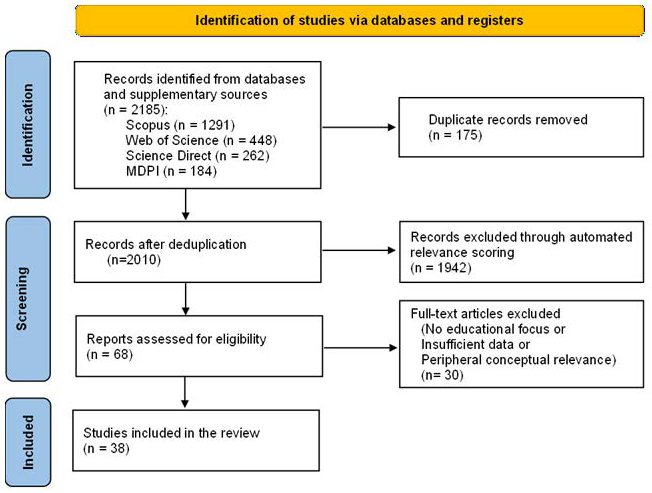
Following the automated screening stage, 1942 records were excluded because they failed to meet the minimum thematic relevance threshold (score < 14), leaving 68 studies for full-text screening. Sensitivity analysis was conducted by comparing adjacent cut-off values to assess the robustness of this procedure [12,13] (Table 2).
The score of 14 was chosen, as it represents a balanced compromise between recall (ensuring comprehensive coverage at lower thresholds) and precision (ensuring high relevance by filtering out lower-scoring noise), avoiding the rapid decline in corpus size observed at higher thresholds. The reduction from 14 to 15 reveals a significant loss of candidate studies, suggesting an excessively restrictive filtering that could omit relevant conceptual contributions. Conversely, the inclusion of studies at the 13-threshold introduces a volume of records with lower thematic density. Thus, a score of 14 was validated as the most prudent methodological choice, ensuring that the analytical corpus maintains both high information density and sufficient breadth [14].
Although this hybrid strategy improved scalability and methodological transparency, some limitations remained. Because the procedure relied on explicit lexical patterns and predefined weights, it may have underrepresented relevant studies using indirect terminology, broader interdisciplinary framing, or implicit references to translation and interpreting. The possibility of false negatives cannot be excluded. Manual validation procedures and sensitivity analyses were incorporated into the workflow to mitigate this limitation, and the automated scoring model was treated exclusively as a decision-support mechanism rather than as a substitute for expert screening. The scoring framework prioritises thematic relevance and improves screening efficiency within a large multidisciplinary corpus [15]. The final sample comprised 38 studies, as illustrated in the PRISMA 2020 flow diagram (Figure 1) [7]. A complete list of the included studies is provided in Appendix A.
The Python 3.13 script used for automated relevance scoring and filtering is provided in Supplementary Material S1.

3. Results

3.1. Overview of the Selected Studies

Following the PRISMA 2020 review framework [7], the final analysis included 38 studies. The temporal distribution of publications reveals a marked increase in research output after 2024, reflecting the rapid evolution of NMT systems and, more recently, LLMs. This trend highlights the growing academic and practical interest in AI-driven language technologies within educational contexts (Table 3).
The studies originated from a diverse set of regions, with strong representation from Europe (47.37%) and Asia (39.47%) (Table 4). This distribution reflects the global relevance of multilingual education and uneven technological development across regions. However, the geographical distribution also reveals a notable imbalance, with limited representation from regions such as Africa and parts of Asia where low-resource languages are predominant. This imbalance may partially reflect the English-language inclusion criterion adopted in this review, as well as broader disparities in international publication visibility and database indexing across linguistic and geographical contexts.

3.2. Domains of AI Application in Translation

The analysed studies are distributed across several application domains. As shown in Table 5, most studies focus on teaching and training translators, making education the primary context for AI technology experimentation, validation, and integration. Some of the reviewed studies report improvements in specific areas—such as translation practice, feedback mechanisms, or classroom workflows—although these findings are not consistent across all contexts [16,17].
In addition to the educational context, there are also relevant studies on translation quality assessment (TQA), particularly in the field of machine translation and hybrid machine translation, showing high agreement between human and machine evaluation in TQA tasks [18]. Another important group of studies focuses on specialised translation, with emphasis on areas of medical, legal and technical translation, in which there are greater terminological requirements and greater sensitivity to the context [19,20].
A set of studies has been published on multimodal and audiovisual translation, including systems that integrate text, voice, and image, as well as applications aimed at accessibility and linguistic inclusion [21,22]. Emerging conceptual studies that analyse the redefinition of the translator’s role and the reconfiguration of the professional ecosystem in the face of the growing presence of AI are few in number but have theoretical relevance [23,24]. Across the reviewed studies, AI integration appears most common in formal educational settings, particularly in translator training, although the extent of adoption varies considerably.
Table 5. Primary domains of AI application in translation and interpreting studies.
Domainn%Main ContributionsRepresentative Studies
Education and training of translators1847.37%Improvement of translation quality, automated feedback, and pedagogical redefinition.[16,17,25]
Translation Quality Assessment (TQA)615.79%High AI–human agreement and multimodal assessment.[18,26]
Specialised translation513.16%Limitations of complex contexts and terminology.[19,20]
Multimodal and audiovisual translation410.53%Integration of ASR + NMT: Synchronisation and quality challenges.[22,27]
Inclusion and language accessibility37.89%Reduction in language barriers and promoting social inclusion.[21,28]
Theoretical and conceptual studies25.27%Redefining the translator’s role in the professional ecosystem.[23,24]

3.3. AI Technologies for Translation and Interpreting

The selected studies were analysed according to the main AI technologies employed. NMT emerged as the most prominent technology across the reviewed studies (Table 6). Based on deep learning architectures, NMT systems represent the current state of the art in machine translation, offering substantial improvements in fluency, contextual coherence, and overall translation quality when compared to earlier approaches [17,29,30].
The second most salient category corresponds to LLMs, which are increasingly applied in translation-related contexts. These generative AI models are not limited to translation itself but are also used for tasks such as translation evaluation, automated feedback generation, and pedagogical support, enabling more interactive and adaptive learning environments [16,31].
In addition, hybrid AI systems—combining statistical and neural approaches—are identified as a relevant strategy, particularly in scenarios involving low-resource languages, where data scarcity limits the effectiveness of purely neural approaches and requires complementary modelling strategies. As shown in Table 6, these approaches mitigate data scarcity and enhance translation performance through complementary modelling techniques [29,31].
Beyond text-based translation, other technologies include automatic speech recognition (ASR), which supports speech-to-text processing in multilingual and interpreting contexts [21], and multimodal AI systems that integrate textual, audio, and visual data to enable more complex and context-aware translation solutions [32].
Finally, AI-based translation evaluation tools have emerged as a distinct category, reflecting the growing interest in automated methods for assessing translation quality, particularly within educational settings [18].

3.4. Educational Applications of AI in Translation

The reviewed studies reveal a diverse set of AI educational applications in translation and interpreting contexts. These applications were organised according to their primary pedagogical, professional, or evaluative focus to improve analytical clarity. A distinction was made between general language-learning support, which refers to multilingual educational assistance in broader learning environments, and professional translation and interpreting training, which concerns competency development within specialised translator education. Likewise, AI-assisted translation quality evaluation was differentiated from automated educational feedback and assessment processes, although several studies observed a partial overlap between these domains.
The reviewed literature suggests that AI applications are increasingly distributed across both general educational support functions and specialised professional training contexts (Table 7). Studies focusing on general language-learning support have emphasised multilingual interaction, adaptive language-learning assistance, and the pedagogical integration of NMT systems in foreign-language education [30,33,34]. In contrast, studies related to professional translation and interpreting training focused more strongly on post-editing competencies, critical evaluation of AI-generated outputs, machine translation literacy, workflow adaptation, and digital competency development among translation students and practitioners [23,35,36].
The literature also identified a growing role for AI-assisted translation quality evaluation in educational settings. These studies explored semantic equivalence, multimodal assessment, AI–human agreement, and quality benchmarking in translation training contexts [18,25,26]. Although conceptually related, studies addressing automated educational feedback and assessment focused more specifically on formative assessment processes, learner monitoring, and AI-supported pedagogical feedback generation [16,17,37].
Additionally, multimodal and audiovisual mediation studies highlighted the integration of ASR, subtitling systems, audiovisual synchronisation, and computer-assisted interpreting technologies in educational and accessibility-oriented settings [21,22,27,38]. Finally, several studies have emphasised the role of AI tools in promoting inclusion and multilingual accessibility, particularly in contexts involving low-resource languages and linguistic barriers in education [28,29,33].

3.5. Benefits and Opportunities of AI in Education

The benefits of using AI-based translation and interpreting technologies in educational contexts were examined. As summarised in Table 8, improved accessibility emerged as one of the most recurrent benefits identified in the reviewed studies, particularly through the reduction in language barriers and the facilitation of multilingual access to educational content [26,28]. These contributions may support more inclusive educational environments, especially in contexts characterised by linguistic diversity and multilingual communication needs.
Several studies have also emphasised the role of AI technologies in promoting inclusion by facilitating access to educational resources for students from diverse linguistic and cultural backgrounds [21,28,29]. This aspect was particularly relevant in multilingual and low-resource educational contexts.
Increased efficiency was another frequently identified benefit, as AI-assisted translation systems may accelerate translation processes, reduce repetitive manual tasks, and support faster content adaptation for both students and educators [16,17].
Several reviewed studies further suggest that AI-supported translation and language-learning tools may improve student engagement, adaptive learning processes, and translation performance, although the strength of evidence varies across educational contexts and study designs [16,17,30].
Finally, personalised learning emerged as an important pedagogical benefit associated with AI integration. Large language model-based systems have been reported to support adaptive feedback generation, individualised assistance, and more context-sensitive educational interactions that, in some reviewed studies, demonstrated convergence with expert-level evaluation practices [16].

3.6. Challenges and Limitations

Table 9 presents the main limitations identified in the literature. Despite the benefits, the results reveal several important limitations. AI systems still struggle with cultural nuances and contextual interpretation, particularly in creative or domain-specific texts [39]. Accuracy remains a critical challenge in specialised domains, such as legal translation [20].
The performance of AI systems is significantly limited in low-resource languages due to the scarcity of parallel corpora, limited linguistic standardisation, and reduced representation in training datasets. These constraints hinder model generalisation and lower translation quality, particularly in context-sensitive and domain-specific applications [40].
From a pedagogical perspective, the integration of AI raises concerns regarding the assessment of student competencies, as automated tools may obscure individual performance [25]. Finally, broader ethical issues, including technological dependency, bias, and implications for academic integrity, are highlighted [41].

4. Discussion

This section discusses the findings in relation to the research questions, integrates evidence from the reviewed studies, and synthesises the implications for technology, pedagogy, low-resource languages and future research.

4.1. Technological Trends in AI for Translation and Interpreting (RQ1)

Within the analysed literature, NMT and LLMs emerge as the most frequently referenced AI technologies in current translation and interpreting research. Across the selected corpus, NMT appears as a widely adopted approach, often associated with improvements in fluency, semantic adequacy, and contextual coherence when compared with earlier machine translation paradigms [30]. However, these reported improvements vary across languages, domains, and evaluation methods and should therefore be interpreted within the specific contexts examined by the individual studies.
The growing presence of LLMs in the reviewed literature suggests an interest in more interactive and context-aware systems capable of supporting tasks such as translation, explanation, feedback generation, and linguistic mediation [16]. While several studies highlight the potential of LLMs to enhance these processes, their performance remains uneven across specialised domains and low-resource languages, indicating that their pedagogical and translational value is still contingent on task type, linguistic coverage, and model configuration.
Hybrid AI approaches—combining neural, statistical, or rule-based components—also appear in the reviewed studies, particularly in contexts involving low-resource languages where data scarcity limits the effectiveness of purely neural systems [29]. These approaches reflect ongoing efforts to mitigate structural limitations in multilingual AI and suggest that future translation technologies may rely on more adaptive and integrated architectures rather than a single dominant paradigm.
Finally, the increasing attention to multimodal and speech-based technologies points to a gradual expansion of translation and interpreting research beyond text-only systems. Several studies highlight the relevance of audiovisual, speech-to-text, and interactive modalities [32], indicating a broader shift towards communication models that integrate multiple linguistic and sensory channels.

4.2. Pedagogical Applications and Educational Impact (RQ2)

Across the educational contexts examined, AI tools are being integrated into a range of educational processes, particularly in language learning and translator-training contexts. Several studies suggest that AI-based systems may support second-language acquisition by providing multilingual exposure, automated feedback, and interactive learning opportunities [30].
In translator-training settings, some studies highlight an increasing emphasis on competencies such as post-editing, critical evaluation of machine-generated output, and digital literacy, reflecting the evolving skill set required in technology-mediated professional environments [25].
While these findings point to a growing presence of AI in educational practice, the extent and effectiveness of this integration vary considerably across institutions, languages, and pedagogical designs. In particular, a number of studies report the use of AI-based translation and interpreting quality assessment tools, with some LLM-based systems showing partial convergence with human evaluators in specific tasks [18]. These results indicate potential for scalable feedback mechanisms, especially in large cohorts where individualised assessment is difficult to provide, although the reliability of such systems remains dependent on task type and linguistic context.
The reviewed literature also suggests that the integration of AI tools may influence pedagogical roles. In several studies, teachers are described as adopting more facilitative or mediating functions, guiding students in the critical and responsible use of AI rather than focusing solely on content transmission. Students, in turn, are expected to develop meta-competencies such as evaluating AI outputs, integrating them into their learning processes, and understanding the limitations of automated systems.
Finally, AI technologies appear to contribute to accessibility and inclusion in multilingual educational environments. Some studies report that AI-assisted translation and interpreting tools can broaden participation and improve access to educational resources for linguistically diverse learners [26,28]. However, these benefits are not uniform and depend heavily on the linguistic resources available, the quality of AI outputs, and the institutional capacity to integrate such tools effectively.

4.3. Benefits and Educational Implications (RQ3)

Findings across the corpus suggest that AI-based translation tools may support certain educational practices, particularly in areas related to efficiency, accessibility, and personalised learning. Several studies report that AI-assisted translation systems can reduce workload or facilitate multilingual access to educational materials, especially in contexts where students or educators regularly engage with content in multiple languages [17]. Other studies describe potential benefits for adaptive learning and feedback generation, particularly when large language models are integrated into structured pedagogical activities [16]. These benefits, however, are not uniform and depend on factors such as task type, language pair, and the degree of human oversight involved.
The literature also indicates that AI-based translation technologies may contribute to educational inclusion by reducing language barriers and supporting access to multilingual resources for linguistically diverse learners. These findings align with broader international efforts to promote more accessible and equitable educational environments. Nonetheless, the extent to which AI supports inclusion varies across contexts, and several studies emphasise that the quality and reliability of AI outputs remain critical determinants of their pedagogical value.
Importantly, the effectiveness of AI-assisted translation and interpreting tools appears to be strongly shaped by contextual conditions, including technological infrastructure, linguistic resources, institutional support, and the specific characteristics of multilingual educational environments. These contextual dependencies become particularly salient in low-resource language settings, where limited digital resources and reduced linguistic representation in AI models may constrain the practical benefits of these technologies. As a result, while AI tools show promise in supporting multilingual education, their impact remains uneven and closely tied to the structural and linguistic conditions in which they are deployed.

4.4. Challenges, Risks, and Ethical Implications (RQ4)

The reviewed studies identify several persistent challenges that limit the effective integration of AI in translation and educational contexts. A recurring issue concerns the difficulty AI systems face in handling cultural and contextual nuances. Several studies report that current models struggle with pragmatic meaning, stylistic variation, and socio-cultural references, particularly in tasks requiring fine-grained interpretation or domain-specific knowledge (cultural nuances) [39]. These limitations underscore the continued importance of human expertise in complex or context-sensitive translation scenarios.
Performance inconsistencies in specialised domains—such as legal, medical, or technical translation—are also noted across the reviewed literature. Some studies describe cases where AI systems produce inaccurate or incomplete outputs in high-stakes contexts, raising concerns about reliability and the extent to which these tools can be safely integrated into professional or educational workflows (specialised domains) [20]. These findings suggest that, despite recent advances, AI systems remain misaligned with the precision and contextual depth required in specialised translation environments.
Low-resource languages represent one of the most significant structural challenges identified in the corpus. Many studies emphasise that state-of-the-art AI models are trained predominantly on datasets that disproportionately represent high-resource languages, resulting in uneven performance across linguistic contexts (low-resource languages) [40]. This imbalance extends beyond technical constraints and raises broader concerns regarding linguistic equity and access to education. In multilingual educational environments, such disparities may reinforce existing inequalities, particularly in regions where minority or local languages play a central role in learning processes [25].
The reviewed literature also highlights several ethical concerns associated with the increasing use of AI in educational and translation settings. These include risks of over-reliance on automated systems, the potential amplification of algorithmic biases, and challenges related to academic integrity when AI tools are used without adequate oversight (ethical risks) [41]. Collectively, these issues point to the need for a critical, responsible, and context-aware integration of AI in education—one that ensures technological adoption does not compromise pedagogical quality, fairness, or inclusiveness.

4.5. Implications for Low-Resource Languages and Future Research

Across the corpus, low-resource languages emerge as one of the most significant constraints affecting the integration of AI into translation, interpreting, and multilingual education. The limitations identified in the literature extend well beyond computational challenges and include linguistic, pedagogical, infrastructural, and accessibility-related factors. Together, these dimensions shape both the effectiveness and the inclusiveness of AI-supported multilingual communication systems, particularly in educational settings where linguistic diversity is central.
A recurrent issue across the corpus concerns data scarcity, particularly the limited availability of high-quality parallel corpora required for training NMT systems and LLMs [29,33]. Several studies also note that orthographic variation, inconsistent linguistic standardisation, and regional diversity can undermine translation consistency, semantic preservation, and contextual reliability, especially in multilingual educational environments [28,33].
The literature further suggests that current AI models remain heavily dependent on general-purpose datasets dominated by high-resource languages, which contributes to reduced performance in specialised educational, legal, and technical translation contexts [18,19,20]. Greater linguistic divergence between high-resource and low-resource languages may further compromise semantic equivalence, contextual interpretation, and translation fluency, particularly in culturally sensitive or domain-specific communication scenarios [20,29].
Beyond computational and linguistic constraints, the reviewed studies also identify important infrastructural and educational barriers. These include unequal access to digital technologies, limited institutional capacity to integrate AI tools, and restricted availability of linguistically inclusive educational resources [28]. Such disparities may reinforce existing inequalities in multilingual education and reduce the practical benefits of AI-assisted translation technologies for underrepresented linguistic communities.
At the pedagogical level, several studies emphasise the growing importance of AI literacy, post-editing competencies, critical evaluation skills, and ethical awareness among both students and educators [23,27,29]. Rather than replacing human expertise, the literature increasingly positions AI as a complementary tool that can support adaptive and multilingual educational practices when used critically and responsibly.
Overall, the findings indicate that the challenges associated with AI-assisted translation and multilingual education extend well beyond model performance alone. Future research would benefit from adopting more interdisciplinary and context-sensitive approaches that integrate computational, pedagogical, sociolinguistic, and accessibility-oriented perspectives, particularly in low-resource multilingual environments.

5. Conclusions

This study examined the role of AI in translation and interpreting within educational contexts through a systematic literature review conducted in accordance with the PRISMA 2020 framework. The review provides an overview of 38 studies addressing current technological trends, pedagogical applications, and emerging challenges associated with AI-assisted translation and interpreting in education.
The findings suggest that AI technologies, particularly NMT and LLMs, are progressively influencing translation practices and multilingual educational environments. The reviewed studies indicate that these technologies are increasingly being integrated into language learning, translator and interpreter training, translation quality assessment, and multilingual educational support. Several studies report potential benefits related to efficiency, accessibility, and personalised learning support. However, the overall evidence remains heterogeneous, and the reported outcomes vary substantially across educational settings, linguistic contexts, and technological implementations.
The review also highlights important limitations and challenges associated with the integration of AI into translation and educational practices. Current systems continue to face difficulties in handling cultural nuances, contextual interpretation, and low-resource language scenarios. In addition, the increasing adoption of AI technologies raises pedagogical and ethical concerns related to assessment validity, academic integrity, transparency, and algorithmic bias. These findings reinforce the continued importance of human expertise and critical supervision in AI-assisted translation and interpreting processes.
From an educational perspective, the reviewed literature suggests an increasing need for competencies related not only to the operational use of AI tools but also to the critical evaluation and contextual interpretation of AI-generated outputs. The findings further indicate that educators may need to adapt pedagogical practices to support more reflective, context-aware, and human-centred approaches to AI integration in multilingual learning environments.
Importantly, the study emphasises the need to address linguistic diversity and inclusion within current AI ecosystems. The persistent limitations affecting underrepresented and low-resource languages highlight structural inequalities in multilingual AI development and digital linguistic representation. Future research should therefore prioritise more inclusive AI approaches, including hybrid architectures, human-in-the-loop systems, and the development of linguistic resources tailored to low-resource multilingual contexts.
Overall, this review contributes to a more critical understanding of the evolving relationship between AI, translation and interpreting, and education, while highlighting the importance of balanced, context-sensitive, and pedagogically informed approaches to the integration of AI technologies in multilingual educational environments.

Supplementary Materials

The following supporting information can be downloaded at https://www.mdpi.com/article/10.3390/info17060543/s1, File S1: Python Script for Automated Relevance Scoring and Study Selection. PRISMA checklist.

Author Contributions

Conceptualisation, A.C. and D.M.; methodology, A.C.; validation, A.C. and D.M.; formal analysis, A.C. and D.M.; investigation, A.C. and D.M.; data curation, A.C. and D.M.; visualisation, A.C. and D.M.; writing—original draft preparation, A.C. and D.M.; writing—review and editing, A.C. and D.M.; supervision, D.M.; project administration, D.M. All authors have read and agreed to the published version of the manuscript.

Funding

The APC was funded by ISLA Santarém—Polytechnic University.

Institutional Review Board Statement

Not applicable.

Informed Consent Statement

Not applicable.

Data Availability Statement

The original contributions presented in this study are included in the article/Supplementary Material. Further inquiries can be directed to the corresponding author.

Acknowledgments

Generative AI tools were used to support language refinement and improve clarity and structure of the manuscript. All content, analysis, and interpretations are the sole responsibility of the authors. Generative AI tools were used to assist in minor aspects of code development. All methodological design and implementation were performed and validated by the authors.

Conflicts of Interest

The authors declare no conflicts of interest.

Appendix A

Table A1. List of studies included (n = 38). Each study is identified by an ID and linked to its corresponding reference number in the bibliography.
IDYearTitleSourceRef.
S12026Vividh-Vaani: Video Translation and Synchronization using Machine LearningCluster Computing—The Journal of Networks, Software Tools and Applications[22]
S22023Artificial Intelligence, Machine Translation & Cyborg Translators: A Clash of Utopian and Dystopian VisionsEzikov Svyat[24]
S32025Integrating Hybrid AI Approaches for Enhanced Translation in Minority LanguagesApplied Sciences[29]
S42022Integrating professional machine translation literacy and data literacyLebende Sprachen[35]
S52023Beyond the black mirror effect: the impact of machine translation in the audiovisual translation environmentLinguistica Antverpiensia, New Series—Themes in Translation Studies[42]
S62024Application of translation technology based on AI in translation teachingSystems and Soft Computing[17]
S72023The Challenges of Teaching and Assessing Technical Translation in an Era of Neural Machine TranslationEducation Sciences[25]
S82024Outline of an Artificial Intelligence Literacy Framework for Translation, Interpreting and Specialised CommunicationLublin Studies in Modern Languages and Literature[36]
S92022Artificial intelligence and translation: Challenges for training and the professionFORUM (Netherlands)[23]
S102021Human translation vs. machine translation: A contrastive analysis and factors involving machine translation use for legal translationMutatis Mutandis[19]
S112021Re-framing conceptual metaphor translation research in the age of neural machine translation: Investigating translators’ added value with products and processesTraining, Language and Culture[43]
S122023Neural machine translation in foreign language teaching and learning: a systematic reviewEducation and Information Technologies[30]
S132025The Application of AI Translation Tools in Improving Students’ Translation Fidelity and AccuracyArab World English Journal[44]
S142025A systematic multimodal assessment of AI machine translation tools for enhancing access to critical care education internationallyBMC Medical Education[26]
S152025To eat or to feed: can large language models provide useful feedback in translation education?Interpreter and Translator or Trainer[16]
S162025The impact of artificial intelligence (AI) on translation students’ training practices: a case study of ChatGPT translation (ChatGPT-T) outputComputer Assisted Language Learning[45]
S172025Monolingual versus bilingual captioning: An ergonomic perspective on computer-assisted simultaneous interpretingInterpreting and Society[46]
S182025Using AI in Translation Quality Assessment: A Case Study of ChatGPT and Legal Translation TextsElectronics[18]
S192024Multimodal fusion-powered English speaking robotFrontiers in Neurorobotics[32]
S202023A Systematic Review on the Use of Emerging Technologies in Teaching English as an Applied Language at the University LevelSystems[33]
S212025Integrating Artificial Intelligence in the Higher Education of Technical Writers and Technical TranslatorsFachsprache-Journal of Professional and Scientific Communication[47]
S222025Development of a Speech-to-Sign Language Translation System Using Machine Learning and Computer Vision: A Bulgarian Case StudyTEM Journal—Technology Education Management Informatics[21]
S232024Comparative Study of Google Translate and Yandex of English Latin-Originated Legal Phraseology into Arabic: A corpus-based approachTraduction et Langues[20]
S242025Multidisciplinary Insights into Translation Studies: Paradigm Shifts in the Information RevolutionNew Frontiers in Translation Studies[48]
S252024A Comparative Study on the Translation Quality between Human and Machine-Generated Subtitles IEEE (ICNLP)[27]
S262025Artificial intelligence applications in the teaching and learning of Spanish-Arabic translationEuropean Public and Social Innovation Review[49]
S272025Multidimensional Impacts of Generative AI and an In-Depth Analysis of LLMs with Their Expanding Horizons in Technology and Society.Textual Intelligence: Large Language Models and Their Real-World Applications.[50]
S282025The perception of Multimedia Translation students on automated translation versus human translation for localising a websiteCadernos de Traducao[39]
S292025Advances in Amazigh Language Technologies: A Comprehensive Survey Across Processing DomainsInformation[40]
S302026Image Captioning Through Deep Learning: An Adaptation of the BLIP-2 Model to ArabicApplied Sciences[51]
S312025Practical exploration of English translation activity courses in universities under the background of artificial intelligenceSystems and Soft Computing[38]
S322025A systematic review of research on AI in language education: Current status and future implicationsLanguage Learning & Technology[34]
S332024Awareness of Artificial Intelligence as an Essential Digital Literacy: ChatGPT and Gen-AI in the ClassroomChanging English Studies in Culture and Education[52]
S342025AI evaluation of ChatGPT and human generated image/textual contents by bipolar generalized fuzzy hypergraphArtificial Intelligence Review[53]
S352026The double edge of communicative AI: continuity and disruption in higher educationI-COM-Zeitschrift T fur Interaktive und Kooperative Medien[41]
S362024Investigating the Efficacy of ChatGPT-3.5 for Tutoring in Chinese Elementary Education SettingsIEEE Transactions on Learning Technologies[54]
S372022Multilingualism, translanguaging and transknowledging Translation technology in EMI higher educationAILA Review[28]
S382024Intelligent Voice Assistant as an Example of Inclusive Design Methodology ImplementationObrazovani I Nauka-Education and Science[55]

References

  1. Vaswani, A.; Shazeer, N.; Parmar, N.; Uszkoreit, J.; Jones, L.; Gomez, A.N.; Kaiser, L.; Polosukhin, I. Attention Is All You Need. arXiv 2017, arXiv:arXiv:1706.03762. [Google Scholar] [CrossRef]
  2. Brown, T.B.; Mann, B.; Ryder, N.; Subbiah, M.; Kaplan, J.; Dhariwal, P.; Neelakantan, A.; Shyam, P.; Sastry, G.; Askell, A.; et al. Language Models Are Few-Shot Learners. arXiv 2020. [Google Scholar] [CrossRef]
  3. Bozkurt, A.; Karadeniz, A.; Baneres, D.; Guerrero-Roldán, A.E.; Rodríguez, M.E. Artificial Intelligence and Reflections from Educational Landscape: A Review of AI Studies in Half a Century. Sustainability 2021, 13, 800. [Google Scholar] [CrossRef]
  4. Dolenc, K.; Brumen, M. Exploring Social and Computer Science Students’ Perceptions of AI Integration in (Foreign) Language Instruction. Comput. Educ. Artif. Intell. 2024, 7, 100285. [Google Scholar] [CrossRef]
  5. Yan, W.; Li, B.; Lowell, V.L. Integrating Artificial Intelligence and Extended Reality in Language Education: A Systematic Literature Review (2017–2024). Educ. Sci. 2025, 15, 1066. [Google Scholar] [CrossRef]
  6. Joshi, P.; Santy, S.; Budhiraja, A.; Bali, K.; Choudhury, M. The State and Fate of Linguistic Diversity and Inclusion in the NLP World. In Proceedings of the 58th Annual Meeting of the Association for Computational Linguistics, Online, 5–10 July 2020; Association for Computational Linguistics: Stroudsburg, PA, USA, 2020; pp. 6282–6293. [Google Scholar] [CrossRef]
  7. Page, M.J.; McKenzie, J.E.; Bossuyt, P.M.; Boutron, I.; Hoffmann, T.C.; Mulrow, C.D.; Shamseer, L.; Tetzlaff, J.M.; Akl, E.A.; Brennan, S.E.; et al. The PRISMA 2020 Statement: An Updated Guideline for Reporting Systematic Reviews. BMJ 2021, 372, n71. [Google Scholar] [CrossRef]
  8. Budgen, D.; Brereton, P. Performing Systematic Literature Reviews in Software Engineering. In Proceedings of the 28th International Conference on Software Engineering, Shanghai, China, 20–28 May 2006; ACM: New York, NY, USA, 2006; pp. 1051–1052. [Google Scholar] [CrossRef]
  9. Brereton, P.; Kitchenham, B.A.; Budgen, D.; Turner, M.; Khalil, M. Lessons from Applying the Systematic Literature Review Process within the Software Engineering Domain. J. Syst. Softw. 2007, 80, 571–583. [Google Scholar] [CrossRef]
  10. Keselj, V. Speech and Language Processing (Second Edition) Daniel Jurafsky and James H. Martin (Stanford University and University of Colorado at Boulder) Pearson Prentice Hall, 2009, Xxxi+988 pp; Hardbound, ISBN 978-0-13-187321-6, $115.00. Comput. Linguist. 2009, 35, 463–466. [Google Scholar] [CrossRef]
  11. Manning, C.D.; Raghavan, P.; Schütze, H. Introduction to Information Retrieval, 1st ed.; Cambridge University Press: Cambridge, UK, 2008; ISBN 978-0-521-86571-5. [Google Scholar]
  12. Van De Schoot, R.; De Bruin, J.; Schram, R.; Zahedi, P.; De Boer, J.; Weijdema, F.; Kramer, B.; Huijts, M.; Hoogerwerf, M.; Ferdinands, G.; et al. An Open Source Machine Learning Framework for Efficient and Transparent Systematic Reviews. Nat. Mach. Intell. 2021, 3, 125–133. [Google Scholar] [CrossRef]
  13. O’Mara-Eves, A.; Brunton, G.; Oliver, S.; Kavanagh, J.; Jamal, F.; Thomas, J. The Effectiveness of Community Engagement in Public Health Interventions for Disadvantaged Groups: A Meta-Analysis. BMC Public Health 2015, 15, 129. [Google Scholar] [CrossRef]
  14. Wells, M.; Bujkiewicz, S.; Hubbard, S.J. Using Threshold Analysis to Assess the Robustness of Public Health Intervention Recommendations from Network Meta-Analyses: Application to Accident Prevention in Households with Children under Five. BMC Public Health 2022, 22, 966. [Google Scholar] [CrossRef]
  15. Donato, H.; Donato, M. Etapas Na Condução de Uma Revisão Sistemática. Acta Medica Port. 2019, 32, 227–235. [Google Scholar] [CrossRef]
  16. Jiao, H.; Hu, W.; Zhang, X. To Eat or to Feed: Can Large Language Models Provide Useful Feedback in Translation Education? Interpret. Transl. Train. 2025, 19, 317–337. [Google Scholar] [CrossRef]
  17. Yu, Y. Application of Translation Technology Based on AI in Translation Teaching. Syst. Soft Comput. 2024, 6, 200072. [Google Scholar] [CrossRef]
  18. Alghamdi, F.A.; Alotaibi, H. Using AI in Translation Quality Assessment: A Case Study of ChatGPT and Legal Translation Texts. Electronics 2025, 14, 3893. [Google Scholar] [CrossRef]
  19. Briva-Iglesias, V. Human Translation vs. Machine Translation: A Contrastive Analysis and Factors Involving Machine Translation Use for Legal Translation. Mutatis Mutandis 2021, 14, 571–600. [Google Scholar] [CrossRef]
  20. Sofiane, D. Comparative Study of Google Translate and Yandex of English Latin-Originated Legal Phraseology into Arabic: A Corpus-Based Approach. Trad. Lang. 2024, 23, 365–384. [Google Scholar] [CrossRef]
  21. Nikolov, S.; Pashev, G.; Gaftandzhieva, S. Development of a Speech-to-Sign Language Translation System Using Machine Learning and Computer Vision: A Bulgarian Case Study. TEM J. 2025, 14, 3227–3241. [Google Scholar] [CrossRef]
  22. Patil, K.; Mahale, N.; Kulkarni, M.; Shahade, M.; Awate, A.; Nandwalkar, B. Vividh-Vaani: Video Translation and Synchronization Using Machine Learning. Clust. Comput. J. Netw. Softw. Tools Appl. 2026, 29, 137. [Google Scholar] [CrossRef]
  23. Cennamo, I.; de Faria Pires, L. Artificial Intelligence and Translation: Challenges for Training and the Profession. FORUM 2022, 20, 333–356. [Google Scholar] [CrossRef]
  24. Eszenyi, R.; Bednárová-Gibová, K.; Robin, E. Artificial Intelligence, Machine Translation & Cyborg Translators: A Clash of Utopian and Dystopian Visions. Ezikov Svyat 2023, 21, 102–113. [Google Scholar] [CrossRef]
  25. Tavares, C.; Tallone, L.; Oliveira, L.; Ribeiro, S. The Challenges of Teaching and Assessing Technical Translation in an Era of Neural Machine Translation. Educ. Sci. 2023, 13, 541. [Google Scholar] [CrossRef]
  26. Chen, C.; Dong, Y.; Castillo-Zambrano, C.; Bencheqroun, H.; Barwise, A.; Hoffman, A.; Nalaie, K.; Qiu, Y.; Boulekbache, O.; Niven, A. A Systematic Multimodal Assessment of AI Machine Translation Tools for Enhancing Access to Critical Care Education Internationally. BMC Med. Educ. 2025, 25, 1022. [Google Scholar] [CrossRef] [PubMed]
  27. Du, J.; Lu, J. A Comparative Study on the Translation Quality between Human and Machine-Generated Subtitles. In Proceedings of the 2024 6th International Conference on Natural Language Processing (ICNLP), Xi’an, China, 22–24 March 2024; pp. 62–66. [Google Scholar] [CrossRef]
  28. Heugh, K.; French, M.; Arya, V.; Pham, M.; Tudini, V.; Billinghurst, N.; Tippett, N.; Chang, L.; Nichols, J.; Viljoen, J. Multilingualism, Translanguaging and Transknowledging Translation Technology in EMI Higher Education. AILA Rev. 2022, 35, 89–127. [Google Scholar] [CrossRef]
  29. Chang, C.-C.; Lin, Y.-H.; Hsu, Y.-H.; Fan, I.-H. Integrating Hybrid AI Approaches for Enhanced Translation in Minority Languages. Appl. Sci. 2025, 15, 9039. [Google Scholar] [CrossRef]
  30. Klimova, B.; Pikhart, M.; Benites, A.D.; Lehr, C.; Sanchez-Stockhammer, C. Neural Machine Translation in Foreign Language Teaching and Learning: A Systematic Review. Educ. Inf. Technol. 2023, 28, 663–682. [Google Scholar] [CrossRef]
  31. Dengel, A.; Gehrlein, R.; Fernes, D.; Görlich, S.; Maurer, J.; Pham, H.H.; Großmann, G.; Eisermann, N.D. Qualitative Research Methods for Large Language Models: Conducting Semi-Structured Interviews with ChatGPT and BARD on Computer Science Education. Informatics 2023, 10, 78. [Google Scholar] [CrossRef]
  32. Pan, R. Multimodal Fusion-Powered English Speaking Robot. Front. Neurorobot. 2024, 18, 1478181. [Google Scholar] [CrossRef]
  33. Klimova, B.; Pikhart, M.; Polakova, P.; Cerna, M.; Yayilgan, S.Y.; Shaikh, S. A Systematic Review on the Use of Emerging Technologies in Teaching English as an Applied Language at the University Level. Systems 2023, 11, 42. [Google Scholar] [CrossRef]
  34. Zhu, M.; Wang, C. A Systematic Review of Research on AI in Language Education: Current Status and Future Implications. Lang. Learn. Technol. 2025, 29, 1–29. [Google Scholar] [CrossRef]
  35. Krüger, R. Integrating Professional Machine Translation Literacy and Data Literacy. Leb. Sprachen 2022, 67, 247–282. [Google Scholar] [CrossRef]
  36. Krüger, R. Outline of an Artificial Intelligence Literacy Framework for Translation, Interpreting and Specialised Communication. Lub. Stud. Mod. Lang. Lit. 2024, 48, 11–23. [Google Scholar] [CrossRef]
  37. Yu, J.; Yu, S.; Chen, L. Using Hybrid Intelligence to Enhance Peer Feedback for Promoting Teacher Reflection in Video-Based Online Learning. Br. J. Educ. Technol. 2025, 56, 569–594. [Google Scholar] [CrossRef]
  38. Dai, J. Practical Exploration of English Translation Activity Courses in Universities under the Background of Artificial Intelligence. Syst. Soft Comput. 2025, 7, 200249. [Google Scholar] [CrossRef]
  39. Ogea-Pozo, M. The Perception of Multimedia Translation Students on Automated Translation versus Human Translation for Localising a Website. Cad. Traducao 2025, 45, e101897. [Google Scholar] [CrossRef]
  40. Akallouch, O.; Akallouch, M.; Fardousse, K. Advances in Amazigh Language Technologies: A Comprehensive Survey Across Processing Domains. Information 2025, 16, 600. [Google Scholar] [CrossRef]
  41. Breiter, A.; Lopez, P. The Double Edge of Communicative AI: Continuity and Disruption in Higher Education. i-com 2026, 25, 69–77. [Google Scholar] [CrossRef]
  42. de los Reyes Lozano, J.; Mejías-Climent, L. Beyond the Black Mirror Effect: The Impact of Machine Translation in the Audiovisual Translation Environment. Linguist. Antverp. New Ser. Themes Transl. Stud. 2023, 22, 1–19. [Google Scholar] [CrossRef]
  43. Massey, G. Re-Framing Conceptual Metaphor Translation Research in the Age of Neural Machine Translation: Investigating Translators’ Added Value with Products and Processes. Train. Lang. Cult. 2021, 5, 37–56. [Google Scholar] [CrossRef]
  44. Duan, H.; Gao, X.; Zhang, Y. The Application of AI Translation Tools in Improving Students’ Translation Fidelity and Accuracy. Arab. World Engl. J. 2025, 290–306. [Google Scholar] [CrossRef]
  45. Muftah, M. The Impact of Artificial Intelligence (AI) on Translation Students’ Training Practices: A Case Study of ChatGPT Translation (ChatGPT-T) Output. Comput. Assist. Lang. Learn. 2025, 1–37. [Google Scholar] [CrossRef]
  46. Zhang, W.; Xie, R. Monolingual versus Bilingual Captioning: An Ergonomic Perspective on Computer-Assisted Simultaneous Interpreting. Interpret. Soc. 2025, 5, 131–153. [Google Scholar] [CrossRef]
  47. Wittkowsky, M.; Krüger, R. Integrating Artificial Intelligence in the Higher Education of Technical Writers and Technical Translators. Fachspr. J. Prof. Sci. Commun. 2025, 47, 44–61, 630. [Google Scholar] [CrossRef]
  48. Štefčík, J. Multidisciplinary Insights into Translation Studies: Paradigm Shifts in the Information Revolution. New Front. Transl. Stud. 2025, 1–282. [Google Scholar] [CrossRef]
  49. Mahyubau Rayaa, B. Artificial Intelligence Applications in the Teaching and Learning of Spanish-Arabic Translation. Eur. Public Soc. Innov. Rev. 2025, 10, 1368. [Google Scholar] [CrossRef]
  50. Jeet, R.; Wasim Bhatt, M.; Ali Rusho, M.; Quraishi, A.; Manchanda, M. Multidimensional Impacts of Generative AI and an In-Depth Analysis of LLMs with Their Expanding Horizons in Technology and Society. In Textual Intelligence Large Language Models and Their Real-World Applications; Wiley: Hoboken, NJ, USA, 2025; pp. 383–411. [Google Scholar] [CrossRef]
  51. Abdelaal, A.F.; Costa-Montenegro, E.; García-Méndez, S.; Noaman, H.M.; Kayed, M. Image Captioning Through Deep Learning: An Adaptation of the BLIP-2 Model to Arabic. Appl. Sci. 2026, 16, 3226. [Google Scholar] [CrossRef]
  52. Bender, S. Awareness of Artificial Intelligence as an Essential Digital Literacy: ChatGPT and Gen-AI in the Classroom. Chang. Engl. Stud. Cult. Educ. 2024, 31, 161–174. [Google Scholar] [CrossRef]
  53. Amini, A.; Firouzkouhi, N.; Farag, W.; Ali, O.; Zabalawi, I.; Davvaz, B. AI Evaluation of ChatGPT and Human Generated Image/Textual Contents by Bipolar Generalized Fuzzy Hypergraph. Artif. Intell. Rev. 2025, 58, 85. [Google Scholar] [CrossRef]
  54. Bai, Y.; Li, J.; Shen, J.; Zhao, L. Investigating the Efficacy of ChatGPT-3.5 for Tutoring in Chinese Elementary Education Settings. IEEE Trans. Learn. Technol. 2024, 17, 2156–2171. [Google Scholar] [CrossRef]
  55. Zakharov, A.; Zakharova, I.; Shabalin, A.; Khanbekov, S.; Dzhalilzoda, D. Intelligent Voice Assistant as an Example of Inclusive De-Sign Methodology Implementation. Educ. Sci. J. 2024, 26, 149–175. [Google Scholar] [CrossRef]
Figure 1. PRISMA 2020 flow diagram of the study selection process.
Information 17 00543 g001
Table 1. A weighted relevance scoring framework for automated pre-screening of records.
CriterionOperational DefinitionWeighting Logic
Core Conceptual AlignmentMust contain at least one AI term AND at least one translation/interpreting term.Mandatory: If absent, score = 0
Base RelevanceThe initial score assigned to studies that meet the mandatory criteria.6
Terminology DensityNumber of translation/interpreting terms found in metadata.+1 per term
Educational RelevancePresence of terms such as “education”, “student”, “classroom”, “learning”.4
Title Precision AdjustmentDirect reference to “translation” or “interpreting” in the title.−2 (Adjustment factor)
Technological SpecificityReference to focal AI technologies (e.g., LLM, NMT, and ASR).3
Textual RichnessMetadata length (abstract/keywords) > 80 words.+1 to +2
Note: The scoring model assigns a base score of 6 plus additional weighted points for specific conceptual, educational, and technical indicators. Mandatory alignment with AI and translation/interpreting domains is required for inclusion; records lacking these core concepts are automatically excluded (score = 0). The textual richness threshold (metadata length > 80 words) was empirically defined to distinguish between minimally and sufficiently informative records. The adjustment factor was applied to reduce excessive weighting of the repetition of generic keyword titles.
Table 2. Sensitivity analysis of the automated screening threshold.
Threshold ScoreCandidate Studies (n)Relevance ClassificationImpact on Corpus Size
13115Low PrecisionHigh risk of noise inclusion
1468BalancedOptimal recall/precision trade-off
1531High PrecisionRisk of omitting relevant records
Table 3. Temporal distribution of studies.
Publication YearsNumber of Studies%
2020–202125.26%
2022–2023821.05%
2024–20262873.68%
Table 4. Temporal and geographical distribution of the studies.
RegionNumber of Studies%
Europe1847.37%
Asia1539.47%
North America25.26%
Africa25.26%
Australia12.63%
Table 6. The main AI technologies identified in the reviewed studies.
TechnologyDescriptionRepresentative Studies
NMTDeep learning-based translation models[17,29,30]
LLMsGenerative AI models for language processing[16,31]
Hybrid AI systemsCombination of statistical and neural approaches[31]
ASRSpeech-to-text technologies[21]
Multimodal AI systemsIntegration of text, audio, and visual data[32]
AI-based Translation Evaluation ToolsAutomated quality assessment of translation[18]
Table 7. Applications of AI-based translation and interpreting.
Educational Application DomainDescriptionRepresentative
Studies
General language-learning supportAI tools that support multilingual learning environments through machine translation, adaptive language practice, multilingual interaction, and AI-assisted language learning.[30,33,34]
Professional translation and interpreting trainingAI-assisted pedagogical practices focused on translator and interpreter competency development, including post-editing, critical evaluation of machine translation, workflow adaptation, and AI literacy.[23,35,36]
AI-assisted translation quality evaluationUse of AI systems to support translation quality assessment, semantic comparison, multimodal evaluation, and AI–human agreement analysis in educational or training contexts.[18,25,26]
Automated educational feedback and assessmentAI-supported feedback generation, learner monitoring, formative assessment, and reflective educational support for translation and language-learning activities.[16,17,37]
Multimodal and audiovisual mediationIntegration of ASR, subtitling systems, audiovisual synchronisation, and multimodal translation technologies within educational and accessibility-oriented[21,22,38]
Inclusion and accessibility in multilingual educationReducing linguistic barriers and providing accessibility support in multilingual and low-resource educational environments through AI-assisted translation technologies.[28,29,33]
Table 8. Main benefits of AI-based translation and interpreting technologies in education.
BenefitDescriptionRepresentative Studies
Improved accessibilityReducing language barriers and facilitating multilingual access to educational content.[26,28]
Increased efficiencyAcceleration of translation processes and reduction in repetitive manual tasks.[16,17]
Enhanced learning outcomesImproved student engagement, adaptive learning, and translation performance.[16,17,30]
Personalised learningAdaptive feedback, individualised assistance, and context-sensitive support.[16]
Support for inclusionFacilitation of access for linguistically and culturally diverse learner groups,[21,28,29]
Table 9. The main challenges and limitations of AI in translation and education.
ChallengeDescriptionRepresentative Studies
Cultural and contextual limitationsDifficulty handling nuances and pragmatics.[39]
Performance in specialised domainsLimitations in legal or technical translation.[20]
Low-resource languagesLack of training data.[40]
Pedagogical challengesDifficulty in assessing student competence.[25]
Ethical concernsBias, overreliance, academic integrity.[41]
Disclaimer/Publisher’s Note: The statements, opinions and data contained in all publications are solely those of the individual author(s) and contributor(s) and not of MDPI and/or the editor(s). MDPI and/or the editor(s) disclaim responsibility for any injury to people or property resulting from any ideas, methods, instructions or products referred to in the content.