


Abstract
This study proposes an integrative model that combines technological factors and top management support to examine their impact on successful ERP implementation and its direct effect on the efficiency, effectiveness, and flexibility of business processes in the context of firms operating in Serbia. Employing the Technology–Organization–Environment (TOE) framework, this research analyzes data collected from 123 managers using a structured questionnaire and Partial Least Squares Structural Equation Modeling (PLS-SEM). The findings reveal that technological complexity positively affects ERP implementation success, contrary to common assumptions that complexity is a barrier. Technological compatibility and readiness show no direct significant effects but demonstrate conditional influences when moderated by top management support. Top management involvement significantly moderates the relationship between technological factors and ERP success, with balanced managerial engagement being critical to avoid potential negative impacts of over-control in complex projects. Moreover, ERP implementation significantly enhances operational efficiency, effectiveness, and flexibility. This study concludes that ERP success depends on the interplay between technological attributes and well-balanced leadership support, emphasizing the need for holistic management of technology, people, and processes. These insights contribute to theoretical understanding and practical guidance for organizations aiming to optimize ERP outcomes and operational performance.
1. Introduction
Over the last decade, information and communication technologies have developed rap-idly, transforming business processes across industries [1,2,3]. While artificial intelligence (AI) and digitalization drive much of this change, ERP systems remain the backbone of enterprise digital transformation by integrating essential organizational processes and providing reliable, timely data critical for AI and other digital technologies [4,5,6,7,8]. ERP systems serve as a foundational step in digitalization, enabling companies to automate processes, improve customer satisfaction, and make strategic, data-driven decisions [9,10,11]. Through ERP implementation, businesses can achieve greater operational efficiency, re-duce costs, enhance data accuracy, and strengthen competitive advantage. Consequently, ERP is widely regarded as essential for maintaining competitiveness in today’s evolving market.
Despite its critical role, ERP system implementation remains a complex and risky undertaking, with many organizations facing high costs, delays, and failure to achieve expected benefits. In addition, prior research has reported mixed findings regarding the effects of technological conditions and managerial support on implementation success and subsequent operational outcomes, underscoring the need for a better understanding of the factors that drive successful implementation [12]. The rapid advancement of information technology has led many organizations to integrate innovative solutions to improve operational performance. Among these, ERP systems have emerged as fundamental tools for companies striving to maintain competitiveness and embrace Industry 4.0 transformations. Organizations widely recognize ERP as a key instrument to enhance operational efficiency, effectiveness, and overall competitive positioning. The implementation of ERP, whether through new system deployment or upgrades incorporating additional features, profoundly influences an organization’s capabilities, culture, and financial resources.
However, even though many companies implement ERP systems, not all ERP projects succeed. Many ERP implementations face problems such as high costs, delays, and unmet goals [13]. Research shows that many projects do not deliver expected benefits on time or within budget [14]. One reason for these failures is that companies may not fully understand how ERP fits their organizational needs and environment [12].
According to Gartner, between 54.7% and 74.9% of ERP projects do not fully achieve their stated goals. The duration of ERP implementation, whether a few months, several years, an upgrade, or a full new system rollout, has considerable effects on an organization’s capacity, corporate culture, and financial stability [15]. A large-scale McKinsey [16] survey examining over 5.000 major IT projects, each with budgets exceeding $16 million, uncovered persistent project management challenges. The findings revealed that 16% of the implementation projects threatened a company’s survival, 46% went over budget, 8% experienced delays, and 57% failed to stick to the original plan. Similarly, studies conducted by the Standish Group dating back to the 1990s highlight generally high failure rates for IT projects. Their most recent report from 2013 indicated that only 38% of such implementation projects were successful, while 62% either failed outright or experienced significant difficulties [17]. These figures suggest that many ERP implementations encounter substantial obstacles, with project implementation failure often meaning cancellation, missed deployment deadlines, or budget overruns. Implementing a new ERP system is a multifaceted and demanding process that significantly exceeds typical expectations. Success requires considerable effort, detailed planning, and strategic oversight, including a comprehensive review of various critical factors necessary to guide effective execution.
Implementing ERP systems presents numerous challenges for organizations worldwide. Companies with clear reasons and good plans for adopting ERP tend to be more successful because they invest the right resources and prepare the organization properly [18]. When the reasons for adoption are unclear, companies often face many difficulties during and after implementation [19]. This is especially true in developing countries, where companies may be pressured to upgrade their systems but may lack the resources or experience to do so well [20]. Besides the decision to adopt, the success of ERP projects depends on technological and organizational factors. On the technology side, the ERP system must be flexible, work well with existing systems, and protect data security [21]. On the organizational side, leadership support, good change management, user training, and communication are important for success [22]. Both sets of factors are important and must be balanced to ensure a smooth implementation.
Top management support plays a very important role by providing resources, supporting change, and helping the entire organization remain committed to the project [23]. Without strong support from top management, ERP projects may fail even if the technology is good. Top management support can also strengthen the effects of technology and organizational factors, leading to better ERP implementation and operational improvements.
In current research, analyzing the factors that contribute to successful ERP system implementation is a key challenge. Successfully building an ERP system is a complex affair that may involve several factors, such as organizational structure, technology, and management style. By combining these factors, the probability of a successful ERP project increases when all other factors are present and appropriately managed.
According to several recent studies, opinions differ on which factors are most important for ERP success. Researchers concur, however, that no single variable has a sole effect on success. Far from being limited to the final effect, effective ERP implementation relies on several factors interacting in various parts of the company [24]. ERP success results from a combination of strategic planning, strong management, and people’s readiness to adapt [25,26]. Emerging research also emphasizes that more organizational culture, change readiness, and the state of digital maturity are becoming critical in ERP outcomes [27,28]. Technological advancements, such as cloud computing and agile project management, have also modified the effects of these characteristics on ERP projects [29,30]. Moreover, leadership engagement, appropriate communication, and continuous training represent established firm supports that facilitate ERP project success [21]. It is these human aspects, along with the technical and process elements, that make up a working environment for successful ERP implementation. As ERP projects have grown more complex, challenges such as coordinating multiple locations, maintaining data quality, and ensuring cybersecurity have become increasingly important [31,32]. To address this, researchers recommend viewing ERP success from a wider lens and including all the common denominators, plus the new challenges of organizations today.
The Technology–Organization–Environment (TOE) framework, created by Tornatzky and Fleischer [33], is used to study the factors influencing the adoption and implementation of technologies such as ERP. Traditionally, the model divides these factors into three categories: technological, organizational, and environmental. This study adopts a partial perspective, focusing exclusively on the technological and organizational dimensions, following prior research that highlights the primacy of internal factors in operational performance, while environmental factors tend to influence broader strategic outcomes [34]. Therefore, by not including environmental factors, the study can concentrate more closely on the elements within the organization that have a stronger influence on successful ERP system implementation.
The technological context relates to aspects such as innovation characteristics, compatibility with existing systems, and relative advantage. The organizational context involves internal factors, such as managerial support, organizational structure, resources, and culture. The environmental context refers to market competition, regulatory requirements, and industry trends. Empirical tests across industries have proven the explanatory power of TOE. For example, Zhu et al. [35] found that technological and organizational characteristics significantly affect e-commerce adoption in EU companies, whereas others demonstrated that TOE dimensions predict ERP adoption in SMEs. Additionally, Christiansen et al. [36] confirmed the importance of all three conventional TOE contexts, as well as the additional context of innovativeness, for implementing cloud-based ERP solutions in organizations. Previous studies also show that TOE may act as a holistic lens for understanding the intricacies of technology implementation processes [37,38,39,40,41,42,43]. One study further indicates that specific organizational dimensions deserve additional attention in the context of ERP development and their influence on operational performance, namely, effectiveness, efficiency, and flexibility. The readiness of human resources, including competencies and motivation, together with the maturity and standardization of internal procedures, plays an important role in determining implementation success [44,45]. By incorporating people and business processes into the TOE framework, the model can be extended to account for key aspects that influence ERP outcomes. Recognizing the importance of a competent and motivated workforce, along with clearly defined operational routines, provides greater insight into the internal conditions necessary for successful ERP implementation and ultimately enhances firm performance.
Technology compatibility, as one of the factors affecting the technological success of ERP system adoption, is vital in implementing innovative IT solutions. Technical compatibility has been defined as “the degree which an innovation is perceived to be consistent with existing values, needs, and past experiences” [46,47]. This is an important idea because managers assess compatibility when designing and implementing a new technological solution within an organization. Compatibility, as previously emphasized, refers to the degree to which an organizational innovation aligns with an enterprise’s values, existing practices, and operational needs [48], and it is a critical factor in successful ERP system implementation [49]. Due to the complexity and novelty of ERP technology, organizations must adapt their existing business processes to the system, which often requires substantial changes and additional employee training [50]. If the organizational culture, values, and business requirements do not harmonize with the system, the risk of implementation failure greatly increases. Aligning ERP systems with organization-specific characteristics positively impacts successful implementation. Therefore, the compatibility of the technology with a firm’s needs and practices is one of the most critical factors in the successful introduction of these systems into various sectors [51].
Technology complexity refers to the degree to which technology is perceived as relatively difficult to understand, use, and apply [52,53]. This complexity brings certain barriers and challenges, including issues related to security, privacy, and the use of advanced technology. Technical complexity is defined as the extent to which an innovation is considered difficult to handle [54,55,56]. Previous studies have shown that technical complexity negatively affects the speed of selecting and implementing new technology [47,57]. When complexity is high, managers tend to postpone or reject implementation because they perceive the process as complicated and demanding. An ERP system’s technical complexity can act as a significant barrier to its effective implementation within an organization, as it complicates the alignment and incorporation of the system into current business processes. This complexity usually requires additional resources, increased employee training, and organizational changes, which can make the implementation process harder to complete smoothly [36,58,59]. Accordingly, minimizing technological complexity is essential to ensure successful ERP system implementation across different sectors.
Technology readiness is essential for successful ERP system implementation. It describes how well an organization is equipped with the necessary technological resources and infrastructure to support ERP deployment [60,61]. IT infrastructure with reliable hardware, software, and network capabilities can handle large volumes of data, real-time processing, and integration with other information systems [62]. ERP software readiness, including ensuring data privacy and integrity and having strong security measures, is equally important [21,63]. Moreover, human IT resources have expertise and skills that are critical to its operation and sustained processes [64]. When these technological elements are well aligned, organizations experience fewer challenges during implementation and have a higher chance of success [65]. In summary, technology readiness is essential for organizations planning to implement ERP systems. It ensures that the technological infrastructure can meet the specific needs of ERP, improving operational efficiency and increasing the value gained from implementation [66].
Top management support is an essential organizational aspect impacting ERP system implementation in companies. Top management support refers to senior management involvement and commitment to ensure that the necessary resources, vision, and strategic support are available to manage the complexity of organizational changes related to ERP implementation. Top management plays a vital role that extends beyond the initial stages and must be maintained throughout the entire implementation cycle, including communicating business strategies and setting clear, achievable targets and objectives for ongoing project milestones and measures [67,68]. Lack of top management support usually leads to implementation failure in addition to organizational resistance to changes in business processes [18,69]. Top management support also motivates employees through clear communication, which increases system acceptance and facilitates a smoother transition process [47,70]. Numerous researchers argue that top management support is strongly associated with ERP implementation success due to its role in providing resources and ensuring organizational leadership commitment [71,72,73]. In addition, studies indicate that coordination and problem-solving during implementation are influenced by top management support, as it provides adequate assistance to project teams [74]. Top management support moderates other factors that could have a positive or negative influence on ERP implementation outcomes [72,75]. This moderating effect further highlights the critical need for ongoing and committed top management involvement throughout the ERP implementation process.
Although prior research has extensively examined the technological and organizational antecedents of ERP implementation using the TOE framework and highlighted the role of top management support, this study contributes distinctively in three key areas. First, it explicitly disaggregates operational performance into three dimensions—efficiency, effectiveness and flexibility—providing a more nuanced assessment of ERP outcomes. Second, it thoroughly analyzes the moderating role of top management support on the relationship between technological factors and ERP success, emphasizing the need for balanced managerial engagement. Third, it investigates these relationships within the specific empirical context of Serbia, a country classified as developing, thus addressing the limited prior testing of such models in developing country settings. These three aspects collectively offer a novel perspective on the complex interactions driving ERP implementation success and operational performance.
Based on the previously presented rationale and to examine the impact of technological and organizational factors on ERP system implementation, the model assumes the following hypotheses:
H1.
Technological complexity affects ERP system implementation success.
H2.
Technological compatibility affects ERP system implementation success.
H3.
Technology readiness affects ERP system implementation success.
H4a.
Top management support moderates the relationship between technological complexity and ERP system implementation success.
H4b.
Top management support moderates the relationship between technological compatibility and ERP system implementation success.
H4c.
Top management support moderates the relationship between technology readiness and ERP system implementation success.
ERP system implementation is generally deemed a proactive project that influences various aspects of operational efficiency. The success of ERP initiatives is evaluated based on project outcomes such as meeting time, cost, and scope targets, while business results measure long-term improvements in organizational performance after the system is implemented [76,77]. The business outcomes of ERP systems are typically categorized into three primary dimensions of performance [78]: efficiency, effectiveness, and flexibility. Efficiency is the process of reducing operational costs and cycle times, as well as increasing productivity and quality of the business process. The benefits are primarily due to automation and IT use, which move routine activities away from work and make processes more reliable [79,80]. Efficient performance measurement in ERP implementations requires employee involvement in metric design and alignment with strategic goals, balancing dimensions such as quality, time, cost and flexibility [81]. Effectiveness is an important aspect of any system and is directly related to better decision making, planning, and resource utilization supported by any ERP system. The information-oriented features of ERP reduce waste, improve resource consumption, and create agility. Business processes are more aligned with strategic objectives [82]. Flexibility refers to the system’s adaptability to IT infrastructure and processes as part of evolving market conditions. This process allows companies to use ERP systems to improve and innovate products and services, reduce cycle times, and build stronger relationships with customers and suppliers, helping them maintain their competitive advantage [78].
Failures are commonly associated with low system adaptability, particularly in challenging global scenarios [83]. Higher costs in certain sectors can offset gains from improved operational productivity, making it difficult to clearly measure the financial impact [84,85]. From a measurable perspective, ERP creates value at the operational level by impacting resources through three interconnected effects: automation, information, and transformation. Together, these effects enhance efficiency, improve management effectiveness, and increase strategic flexibility [86]. Because it typically takes time for the benefits to be realized, long-term review and appraisal of ERP implementation are required. ERP implementation can positively contribute to organizational performance and also improve an enterprise’s competitiveness by enhancing operational efficiency, effectiveness, and flexibility. To gain the benefits, ERP requires not only technical implementation but also effective change management, process redesign, and IT alignment with business goals. Further research is needed to identify the factors that maximize ERP benefits and those that hinder its success [87,88].
Based on the discussion above, the following hypotheses are proposed for this study:
H5.
ERP system implementation impacts the efficiency of business processes.
H6.
ERP system implementation impacts the effectiveness of business processes.
H7.
ERP system implementation impacts the flexibility of business processes.
The objective of this study is to systematically examine the influence of technological factors on the success of ERP system implementation and their ultimate contribution to improving operational performance, specifically regarding efficiency, effectiveness, and flexibility of business processes. Special emphasis is placed on analyzing the moderating role of top management support in the relationship between technological factors and ERP implementation, thereby presenting a clear novelty in the literature by focusing on developing countries such as the Republic of Serbia. This focus provides fresh insights into how top management support influences the effectiveness of technological factors in ERP implementation. Such findings contribute to advancing theoretical understanding and offer practical guidance for information systems management in emerging economies.
This document is structured into multiple sections. The introductory part summarizes the pertinent literature related to the latent variables that form the research model. This is followed by a description of the research methodology and a presentation of the results along with their analysis. The discussion and conclusion are outlined as distinct sections that delve into the principal findings, their theoretical significance, and real-world applications.
2. Materials and Methods
2.1. Sampling
Before creating a list of companies, two limitations were applied to the original sample. First, organizations without actual ERP implementation experience were excluded from the sample. Only firms that had already adopted and used an ERP system were included in the analysis. Companies without ERP implementation experience, without plans for ERP implementation or without the capacity to evaluate ERP assimilation levels and related performance impacts were also excluded. Including these firms could have introduced bias and undermined the internal validity of the study. Second, micro-sized enterprises were omitted due to their limited organizational frameworks, minimal process formalization, and inadequate resources for thorough ERP system implementation. The inclusion of such firms could have diminished the structural comparability within the sample. The survey involved 123 managers from various hierarchical levels who were directly or indirectly engaged in business processes supported by already implemented ERP systems. Each respondent represented one firm, so the study followed a one informant, one firm approach in order to avoid duplicate organizational responses. Also, control variables such as industry and firm size were not included in the model in order to maintain a parsimonious specification focused on the main theoretical relationships. Data collection was carried out using an online questionnaire distributed via Google Forms, as well as paper-based questionnaires administered on-site. The structure of the firm sample is detailed in Table 1. The sample primarily consists of manufacturing firms (68.3%) and service firms (31.7%). Medium-sized companies (50–250 employees) represent the largest group at 43.1%, followed by large companies (over 250 employees) at 38.2%, and small companies (up to 50 employees) at 18.7%. Regarding ERP systems, Microsoft Dynamics is the most common (26%), followed closely by other ERP systems (46.3%), SAP (19.5%), and Oracle (8.1%). In terms of ERP usage duration, 45.5% of firms have been using ERP for more than 5 years, while 13.8% have less than one year of experience.
Table 1.
Structure of the firm sample.
To enhance clarity and accuracy of the responses, informal interviews were conducted after the questionnaires were completed. All procedures adhered to ethical standards pertinent to this type of research. Participants were guaranteed anonymity and informed that this study was conducted solely for academic purposes. It was explicitly mentioned that neither the response database nor demographic details would be disclosed to third parties. Participation was voluntary, with respondents given a four-week timeframe to complete the questionnaire. In total, 147 managers agreed to participate in this study, resulting in 127 returned questionnaires; among them, 123 were fully completed and deemed valid for further analysis. Regarding the respondent demographics, males constitute 59.3%, while females represent 40.7%. Regarding educational qualifications, those with a master’s degree represent the largest group at 48%, followed by those with undergraduate degrees at 39%, and those with secondary education at 13%. Concerning work experience, respondents with up to five years account for 31.7%, those with five to ten years for 29.3%, those with ten to twenty years for 21.1%, and those with over twenty years for 17.9%. The largest cohort regarding ERP-related experience consists of respondents with more than five years (27.6%), followed closely by those with one to three years (25.2%). Respondents with three to five years and less than one year of ERP experience each represent equal proportions at 23.6%.
2.2. Measurements
A structured questionnaire was created to gather data for empirical analysis. The instrument included four sections: the first related to technological factors, the second to organizational factors, the third to ERP system implementation, and the fourth to operational performance outcomes. In addition, the constructs were presented in separate sections of the questionnaire, respondents were assured anonymity, and they were informed that the survey was conducted solely for academic purposes, in order to reduce the possibility of common method bias. All constructs were measured using previously validated scales adapted from established studies within the ERP and information system literature. Employing validated instruments enhances measurement reliability and ensures consistency with prior empirical research. All questionnaire items were rated on a five-point Likert scale ranging from 1 (“strongly disagree”) to 5 (“strongly agree”).
Technological compatibility denotes the extent to which the ERP system aligns with existing organizational systems and business processes. This construct was operationalized with three items adapted from Xu et al. [89], Vluggen [90], and Moore and Benbasat [91]: your ERP system is a good complement to the traditional system; your ERP system fits the needs of the company; and your ERP system is compatible with the overall operation of the company.
Technological complexity refers to the perceived difficulty associated with learning, operating, and maintaining the ERP system. Measurement involved three items adapted from Xu et al. [89], Vluggen [90], and Moore and Benbasat [91]: learning to use your ERP system has been difficult for employees; your ERP system is difficult to maintain compared with the traditional system; and your ERP system is difficult to operate compared with the traditional system.
Technology readiness reflects the adequacy of an organization’s technological infrastructure and skills necessary for successful ERP implementation. This construct was measured with three items adapted from Gutierez et al. [92], Oliveira et al. [93], and Pan and Jang [94]: your company emphasizes the importance of using an ERP system in the operating process; your company gives importance to technology infrastructure (such as equipment, software, and ICT networks); and the company has the necessary skills to implement new modern technology.
Top management support captures the degree of senior management’s commitment and involvement in ERP adoption and utilization. This construct was measured with four items adapted from [95,96]: your top management is interested in using ERP systems; your top management considers ERP system adoption important; your top management has shown support for ERP systems; and top management supports innovation and technology through ERP implementation.
ERP system implementation was conceptualized as a multidimensional construct representing the extent of ERP integration, adaptation, and effective use in organizational processes. Eight items adapted from Zhu et al. [95], Hwang and Min [97], Schniederjans and Yadav [98], and Garg and Chauhan [99] were employed: your company has effectively integrated ERP systems with other business software; all business transactions are accurately processed through the ERP system; your company gives importance to the ERP system in responding to all the needs of the organization’s processes; your company gives importance to the ERP system to support the changes required by the organization’s processes; your company gives importance to the ability of the ERP system to edit data items to meet the needs of the organization; your company gives importance to the ability of the ERP system to modify the process to meet the needs of the organization; ERP system users have received adequate and completed training; and the company regularly evaluates ERP system users to ensure training effectiveness.
Operational efficiency pertains to improvements in cost reduction, process speed, and error minimization achieved through ERP implementation. The construct was measured using three items from Chin et al. [100] and Karimi et al. [78]: ERP implementation has improved our efficiency of operations; ERP implementation has lowered our costs of operation; and ERP implementation has reduced the amount of rework needed for data entry errors. Operational effectiveness reflects the extent to which ERP systems improve data quality, accessibility, and task performance. It was measured using four items: data provided by ERP add value to our operations; ERP implementation has improved timely access to corporate data; the functionalities of ERP adequately meet the requirements of our jobs; and overall, the use of the ERP system in the company significantly contributes to promoting effective business processes. Operational flexibility indicated the organization’s capability to adapt processes and respond to environmental changes facilitated by ERP usage. This construct was measured using four items: ERP implementation has given us more ways to customize our processes; ERP implementation has made our company more agile; ERP implementation has made us more adaptive to a changing business environment; and overall, the use of the ERP system in the company significantly contributes to promoting flexible business processes.
3. Results
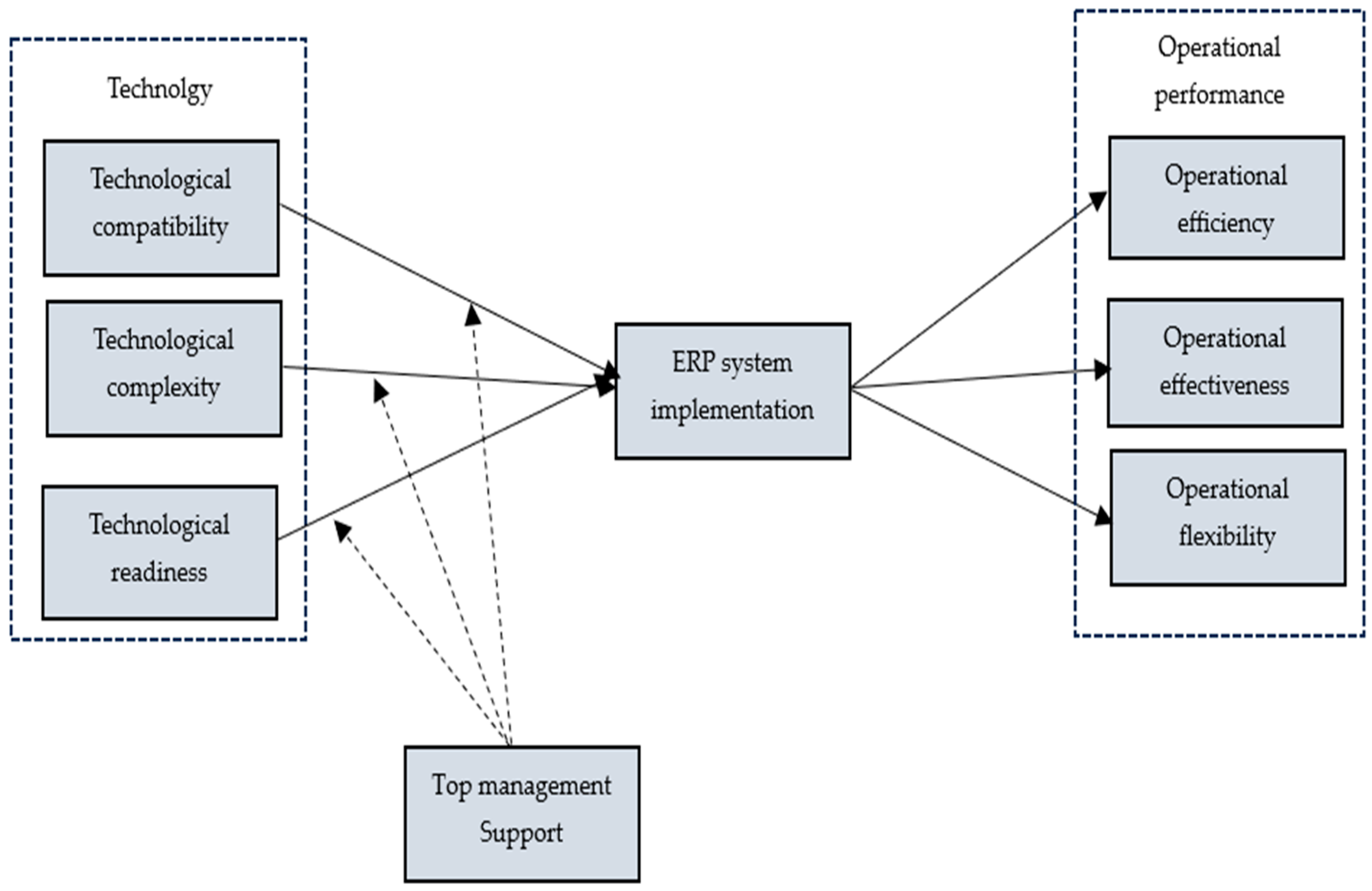
The research questions (Figure 1) were evaluated with Partial Least Squared Structural Equation Modeling (PLS-SEM). This method was selected for several important reasons. First, we used a complex framework and referred to several constructs, and thus, the mediating effects and direct relationships of these constructs need to be assessed. Secondly, we observed that the initial analysis discovered that this dataset does not follow normal distribution patterns. This supported the case for the use of PLS-SEM, because variance-based techniques have long been recognized as effective solutions to complex models as well as non-normally distributed data fields and, in comparison with CB-SEM, may also be suitable when sample size is relatively limited [101,102]. Third, it comprises important aspects of various research fields, such as business, management, and information systems, which also correspond to the functionality of PLS-SEM methodologies [103,104]. We evaluated the measurement model using a two-step process, further validating the quality of the structural model [70]. The initial data preprocessing was carried out in SPSS Version 24, and key indicators for the reflective model of this study were calculated using SmartPLS 3.0 software.
Figure 1.
Research model.
The research model is composed of eight key constructs: technological compatibility (TC), technological complexity (TL), technology readiness (TR), top management support (TM), ERP system implementation (ES), operational efficiency (OE), operational effectiveness (OT), and operational flexibility (OF).
3.1. Measurement Model Assessment
A consistent PLS algorithm procedure was employed to conduct confirmatory factor analysis. The assessment included all measurement items associated with the constructs of the research model, with the aim of examining indicator reliability, internal consistency reliability, convergent validity, discriminant validity, and collinearity. The outcomes of these assessments, including the measurement items, outer loadings, and construct-level indicators, are presented in Table 2. In line with the guidelines proposed by Tavakol and Dennick [105], Cronbach’s alpha (α) demonstrates acceptable values across all model constructs. The composite reliability indicators rhoa and rhoc exceed the recommended threshold of 0.7 for all latent variables, indicating a strong level of internal consistency [102]. Furthermore, the average variance extracted (AVE) values range between 0.802 and 0.911, surpassing the minimum acceptable level of 0.5 [106], thereby confirming the convergent validity of the constructs. In addition, all outer loadings exceeded the recommended threshold, confirming satisfactory indicator reliability. Collinearity diagnostics further showed that most VIF values were within acceptable limits, although four indicators exhibited VIF values above 10. Since these indicators also demonstrated satisfactory outer loadings and their corresponding constructs met the recommended reliability and convergent validity criteria, they were retained in the model. The subsequent section discusses the empirical findings and their interpretation in relation to prior research and the proposed research questions. The results and their implications are examined within a broader theoretical and practical context, while potential avenues for future research are also outlined.
Table 2.
Measurement model and constructs.
The Fornell–Larcker criterion was used to assess the discriminant validity of the constructs in the research model. The differentiation of latent factors is maintained by applying this criterion, so the measurement constructs are reliable regarding uniqueness [107]. The analysis in Table 3 indicates that the measurement model fulfills the criteria for discriminant validity, as defined by the Fornell–Larcker criterion. As such, we can conclude that the construct parameters in our study are valid and sufficiently separable from each other. In addition to the Fornell–Larcker criterion, discriminant validity was also examined using the HTMT criterion. Since two HTMT values exceeded the recommended threshold, the Fornell–Larcker criterion was retained as the primary basis for assessment and was supplemented by additional pairwise confirmatory factor model comparisons for the conceptually closest construct pairs. In all tested cases, the two-factor models showed a significantly better fit than the corresponding one-factor models, providing additional support for discriminant validity.
Table 3.
Discriminant validity.
3.2. Structural Model Assessment
Statistical analysis shows that the technological complexity has an impact on ERP system implementation (β = 0.305; p < 0.01), thereby confirming hypothesis H2. However, the effects of technological compatibility and technological readiness on ERP system implementation are not statistically significant, leading to the rejection of hypotheses H1 and H3. The findings indicate that a one-unit increase in technological complexity results in a 0.305-unit increase in ERP system implementation success, pointing to a strong predictive effect. In a direct relationship, there is a positive impact on operational performance, improving its dimensions of efficiency (β = 0.878; p < 0.001), effectiveness (β = 0.888; p < 0.01), and flexibility (β = 0.917; p < 0.01), thus confirming hypotheses H5, H6 and H7, as well as highlighting the significant role of ERP implementation in enhancing various aspects of operational performance. The bootstrap procedure was also applied to assess the indirect effects defined by the research model. The results of the indirect effects in Table 4 provide comprehensive insight into the moderating role of top management support in the relationship between technological factors and ERP system implementation. A statistically significant indirect effect was found between technological compatibility and ERP system implementation, moderated by top management support (β = 0.200; p < 0.05), as well as between technological complexity and ERP system implementation, moderated by top management support (β = −0.269; p < 0.01). Regarding the statistically insignificant indirect relationship between technological readiness and ERP system implementation moderated by top management support, the results suggest that the organization’s level of technological readiness alone, even with managerial support moderation, cannot sufficiently lead to successful ERP solution implementation. The procedure proposed by Xu et al. [89] was used to confirm the moderating effects. A partial moderating role of top management support was established in the relationship between technological complexity and ERP system implementation. A full moderating role of top management support was confirmed in the relationship between technological compatibility and ERP system implementation, while no moderating role of top management support was found in the relationship between technological readiness and ERP system implementation. Based on the empirical findings, the overarching RQ2 receives partial support, given that significant relationships were observed for certain dimensions, whereas others were not statistically significant. Furthermore, this study confirms the importance of top management support as a moderator in most relationships between technological factors and ERP system implementation.
Table 4.
Results of testing research questions: direct and indirect effects.
The coefficients of determination (R2) in Table 4 for the endogenous variables ERP system implementation (0.825), operational efficiency (0.772), operational effectiveness (0.788), and operational flexibility (0.842) indicate a high level of explained variance. These results suggest that the proposed structural model successfully explains the variations in the observed construct dimensions, indicating its strong predictive power for these dependent variables. The value of the standardized root mean square residual (SRMR) is 0.078, which is below the commonly accepted threshold of 0.08 for a good model fit [108]. This indicates a satisfactory model–data fit and suggests that the model is not significantly partially specified, thereby confirming the validity of the structural relationships within the model [109].
Post hoc power analysis in Table 5 revealed strong statistical power (>0.80) for the main structural relationships, particularly those linking ERP implementation with operational outcomes and top management support. However, lower power values were observed for selected weak-effect paths (e.g., technological readiness and compatibility), suggesting that non-significant findings for these relationships should be interpreted with caution.
Table 5.
Post hoc statistical power analysis of structural paths.
4. Discussion
The findings of this study further confirm the important role of ERP systems in enhancing an organization’s operational performance, aligning with previous research highlighting their positive impact on efficiency, effectiveness, and flexibility of business processes [29,78]. The high path coefficients indicate that ERP systems are effective tools for optimizing operations and adapting to dynamic business environments. An interesting and somewhat unexpected result concerns the positive and statistically significant impact of technological complexity on ERP implementation. Prior studies generally identify complexity as a hindrance that can cause delays and increased costs. However, our findings suggest that higher levels of technical complexity may require greater managerial and employee engagement, which can lead to improved learning processes and adaptation, ultimately contributing to more successful implementation [36,58,110]. This interpretation reflects a broader view of complexity as a challenge that activates necessary resources and fosters focused coordination. Neither technological compatibility nor readiness showed a statistically significant direct effect on ERP implementation. This aligns with evidence that technology and a strong technological infrastructure alone do not guarantee success without adequate organizational support and readiness to align processes and people with the new system [49]. Organizational and human factors, particularly top management support, play a decisive role in this regard. Analysis of moderating effects revealed that top management support significantly moderates the relationship between technological compatibility and ERP implementation, confirming findings that managerial commitment and active leadership facilitate the alignment of ERP systems with strategic objectives and promote technology adoption [18,67]. Without proper management and resource allocation, even compatible systems may fail. Notably, top management support negatively moderates the relationship between technological complexity and ERP implementation. This negative moderation suggests that while complexity itself can stimulate better management efforts, excessive top management involvement in highly complex situations may lead to over-control or bureaucratization, which can slow or complicate the implementation process [75]. This interpretation is consistent with studies indicating that excessive managerial intervention without a clear strategy and delegation can provoke employee resistance and hamper progress [69]. Therefore, an optimal level of managerial support should be balanced, sufficiently engaged to ensure resources but not so dominant as to restrict agility and team initiative. The moderating effect of top management support was not confirmed for technological readiness, implying that even with good technological infrastructure and competencies, the absence of effective managerial involvement and employee readiness can undermine ERP success [19,111]. This finding highlights the multidimensional nature of ERP implementation, requiring synergy between technical and managerial factors. Moreover, Wang and others [101] found that transformational leadership positively influences ERP project success, with change management mediating this relationship. Importantly, their study also demonstrated that top management support moderates the nexus between transformational leadership and ERP success, reinforcing the critical role of managerial engagement in enhancing ERP implementation outcomes. This aligns with the observed necessity to balance managerial involvement to optimize ERP success. The high coefficients of determination suggest that the model successfully integrates key factors explaining variance in ERP implementation and operational performance, thus confirming the relevance of applying the TOE framework in this context [35,37]. Special emphasis is placed on the importance of personnel, organizational culture, and change readiness, all of which are supported by prior research [18,28].
The results demonstrate the critical importance of a holistic approach to ERP implementation, where continuous top management support and effective leadership, alongside technological characteristics, are essential to address complexity and achieve sustainable business benefits [67,71,72].
5. Conclusions
This study shows that implementing ERP systems significantly improves operational performance in companies by increasing efficiency, effectiveness, and flexibility of business processes. While technological complexity is often seen as a difficulty, the results suggest that this complexity can encourage an organization to prepare better and be more engaged, leading to ERP project success. On the other hand, technological compatibility and readiness alone are not enough to guarantee success without strong and continuous support from top management. Management support plays a very important role in helping an organization deal with technological factors in successful ERP implementation. Strong involvement from top management when the technology is very complex can slow the process. This means that companies need to find the right balance in how much management should interfere, allowing flexibility for the implementation team to work effectively. These results show that ERP implementation must be seen as a whole process where technology, people, and management work together. Technology cannot be considered by itself but must be matched with the organization’s readiness and support.
From a theoretical perspective, this research improves our understanding of ERP implementation as a complex process in which technology and human factors affect each other. It confirms that the TOE framework is useful, especially emphasizing the need for good management and organizational conditions. Moreover, this study highlights the growing importance of integrating advanced technologies into ERP systems, suggesting that such technologies can enhance decision-making processes and further improve operational performance when aligned with organizational readiness and management support.
From a practical perspective, the findings represent important advice for managers. They should not control every detail, but create an environment where teams have support and freedom to solve problems. Managers need to be involved throughout the project, providing resources, clear goals, and good communication. It is also very important to invest in employee training so they can handle complex technology and accept the new system. Organizations should match the ERP system with their business processes and strategies, rather than install the technology as a separate project. This requires involving people from different departments so that the system works well across the company and can adapt to changes. As such, companies will better manage difficulties and gain the full benefits of ERP, improving their operations and competitive position. Additionally, managers should consider how AI capabilities integrated within ERP solutions can automate routine tasks, provide predictive insights, and support change management efforts, thereby reinforcing the strategic impact of the ERP system.
One limitation of this study is its focus on developing countries, specifically conducted in only one country and selected industries, which may limit the generalizability of the findings to other geographic or economic contexts. Additionally, the study specifically concentrates on technological and organizational factors, excluding environmental factors such as market dynamics and regulatory influences, which may also play a significant role in ERP implementation success. Furthermore, the study examined only a selected group of technological and organizational variables, allowing space for investigation of additional influencing factors. Furthermore, the model does not include control variables such as industry and firm size, which may influence ERP implementation and operational performance, and should be considered in future research. In addition, several indicators showed elevated collinearity values, suggesting possible overlap among conceptually close reflective items. Although this did not compromise the overall adequacy of the measurement model, future research may further refine these indicators. Moreover, the research did not deeply explore the specific impacts of emerging AI technologies within ERP implementations, and the potential variations caused by different company cultures and varying employee adaptabilities were not fully addressed.
Future research should examine a wider range of factors influencing ERP implementation, including market and environmental influences that were beyond the scope of this study. It is particularly important to extend investigations into developed countries, where contextual differences such as regulatory frameworks, market dynamics and competitive pressures may significantly impact ERP adoption and success. Incorporating environmental factors into the analysis will provide a more comprehensive understanding of how external conditions facilitate or hinder ERP implementation across diverse economic settings. In addition, extended studies are needed to assess the long-term effects of ERP on organizational performance and adaptability. Studying the role of company culture and employee readiness remains essential to improving change management strategies and user acceptance. These efforts will contribute to more robust theoretical models and practical guidelines, ultimately enhancing the effectiveness and sustainability of ERP systems globally.
Author Contributions
Conceptualization, I.M. and M.S.; methodology, I.M., M.M. and M.S.; software, I.M. and M.S.; validation, D.R.P., M.M. and B.L.; formal analysis, I.M., D.R.P., M.M., B.L. and M.S.; investigation, I.M. and M.S.; resources, I.M.; data curation, I.M. and M.S.; writing—original draft preparation, I.M. and M.S.; writing—review and editing, I.M., D.R.P., M.M., B.L. and M.S.; visualization, I.M.; supervision, M.S.; project administration, I.M.; funding acquisition, I.M. All authors have read and agreed to the published version of the manuscript.
Funding
This research received no external funding.
Institutional Review Board Statement
This study was conducted in accordance with the Declaration of Helsinki and approved by the Institutional Review Board of the University of Kragujevac (protocol code IV-02-643/15 and 18 September 2024).
Informed Consent Statement
Informed consent was obtained from all subjects involved in this study.
Data Availability Statement
The data presented in this study are available on request from the corresponding author due to ethical reasons.
Conflicts of Interest
The authors declare no conflicts of interest.
References
- Brynjolfsson, E.; McAfee, A. The Second Machine Age: Work Progress and Prosperity in a Time of Brilliant Technologies; WW Norton & Company: New York, NY, USA, 2014. [Google Scholar]
- Davenport, T.H. From analytics to artificial intelligence. J. Bus. Anal. 2018, 1, 73–80. [Google Scholar] [CrossRef] [Scilit]
- Slavković, M.; Pavlović, K.; Depalov, V.R.; Vučenović, T.; Bugarčić, M. Effects of digital citizenship and digital transformation enablers on innovativeness and problem-solving capabilities. Appl. Sci. 2024, 14, 4827. [Google Scholar] [CrossRef] [Scilit]
- Huang, M.H.; Rust, R.T. Engaged to a robot? The role of AI in service. J. Serv. Res. 2021, 24, 30–41. [Google Scholar] [CrossRef] [Scilit]
- Wamba, S.F.; Queiroz, M.M. Blockchain in the operations and supply chain management: Benefits, challenges and future research opportunities. Int. J. Inf. Manag. 2020, 52, 102064. [Google Scholar] [CrossRef] [Scilit]
- Maroufkhani, P.; Wan Ismail, W.K.; Ghobakhloo, M. Big data analytics adoption model for small and medium enterprises. J. Sci. Technol. Policy Manag. 2020, 11, 483–513. [Google Scholar] [CrossRef] [Scilit]
- Bauer, W.; Hämmerle, M.; Schlund, S.; Vocke, C. Transforming to a hyper-connected society and economy–towards an “Industry 4.0”. Procedia Manuf. 2015, 3, 417–424. [Google Scholar] [CrossRef] [Scilit]
- Siau, K.; Yang, Y. Impact of artificial intelligence, robotics, and machine learning on sales and marketing. In Proceedings of the MWAIS 2017 Conference, Milwaukee, WI, USA, 18–19 May 2017. [Google Scholar]
- Mhaskey, S.V. Integration of artificial intelligence (AI) in enterprise resource planning (ERP) systems: Opportunities, challenges, and implications. Int. J. Comput. Eng. Res. Trends 2024, 11, 1–9. [Google Scholar] [CrossRef] [Scilit]
- Chopra, M.; Singh, S.K.; Gupta, A.; Aggarwal, K.; Gupta, B.B.; Colace, F. Analysis & prognosis of sustainable development goals using big data-based approach during COVID-19 pandemic. Sustain. Technol. Entrep. 2022, 1, 100012. [Google Scholar] [CrossRef] [Scilit]
- Koyeda, V. AI-Enhanced ERP Systems: Transforming Enterprise Operations through Intelligent Integration. J. Comput. Sci. Technol. Stud. 2025, 7, 23–30. [Google Scholar] [CrossRef] [Scilit]
- Rajapakse, D.P.P.K.; Thushara, S.C. Critical failure factors in ERP implementation: A systematic literature review. J. Bus. Technol. 2023, 7, 1. [Google Scholar] [CrossRef] [Scilit]
- Ranjan, K.R.; Read, S. Value co-creation: Concept and measurement. J. Acad. Mark. Sci. 2016, 44, 290–315. [Google Scholar] [CrossRef] [Scilit]
- Françoise, O.; Bourgault, M.; Pellerin, R. ERP implementation through critical success factors’ management. Bus. Process Manag. J. 2009, 15, 371–394. [Google Scholar] [CrossRef] [Scilit]
- Delloite. Available online: https://www.gartner.com/doc/reprints?id=1-2JD9CAAS&ct=241115&st=sb (accessed on 2 January 2026).
- McKinsey Technology. Available online: https://www.mckinsey.com/capabilities/mckinsey-technology/our-insights/bridging-the-great-ai-agent-and-erp-divide-to-unlock-value-at-scale#/ (accessed on 2 January 2026).
- Shakkah, M.S.; Alaqeel, K.; Alfageeh, A.; Budiarto, R. An investigation study on optimizing enterprise resource planning (ERP) implementation in emerging public university: Al Baha University case study. Int. J. Electr. Comput. Eng. 2016, 6, 1920–1928. [Google Scholar]
- Ehie, I.C.; Madsen, M. Identifying critical issues in enterprise resource planning (ERP) implementation. Comput. Ind. 2005, 56, 545–557. [Google Scholar] [CrossRef] [Scilit]
- Mahmood, F.; Khan, A.Z.; Bokhari, R.H. ERP issues and challenges: A research synthesis. Kybernetes 2020, 49, 629–659. [Google Scholar] [CrossRef] [Scilit]
- Barkley, E.; Jokonya, O. Factors affecting SMEs emerging technologies adoption in developing countries: A literature review. Procedia Comput. Sci. 2024, 239, 1966–1973. [Google Scholar] [CrossRef] [Scilit]
- Kirmizi, M.; Kocaoglu, B. The influencing factors of enterprise resource planning (ERP) readiness stage on enterprise resource planning project success: A project manager’s perspective. Kybernetes 2022, 51, 1089–1113. [Google Scholar] [CrossRef] [Scilit]
- Oakland, J.S.; Tanner, S. Successful change management. Total Qual. Manag. Bus. Excell. 2007, 18, 1–19. [Google Scholar] [CrossRef] [Scilit]
- Fareed, M.Z.; Su, Q.; Abbas Naqvi, N.; Batool, R.; Aslam, M.U. Transformational leadership and project success: The moderating effect of top management support. SAGE Open 2023, 13, 21582440231195685. [Google Scholar] [CrossRef] [Scilit]
- Amini, M.; Sadat Safavi, N. Critical success factors for ERP implementation. Int. J. Inf. Technol. Inf. Syst. 2013, 5, 1–23. [Google Scholar] [CrossRef] [Scilit]
- Gupta, S.; Kumar, S.; Singh, S.K.; Foropon, C.; Chandra, C. Role of cloud ERP on the performance of an organization: Contingent resource-based view perspective. Int. J. Logist. Manag. 2018, 29, 659–675. [Google Scholar] [CrossRef] [Scilit]
- Ali, M.; Miller, L. ERP system implementation in large enterprises–a systematic literature review. J. Enterp. Inf. Manag. 2017, 30, 666–692. [Google Scholar] [CrossRef] [Scilit]
- Palanisamy, R. Organizational culture and knowledge management in ERP implementation: An empirical study. J. Comput. Inf. Syst. 2008, 48, 100–120. [Google Scholar]
- Riaz, U.; Ali Sair, M.S.; Malik, M.E. Effect of organizational culture and top management support on ERP implementation. Sci. Int. 2014, 26, 1361–1369. [Google Scholar]
- Morawiec, P.; Sołtysik-Piorunkiewicz, A. Cloud computing, big data, and blockchain technology adoption in ERP implementation methodology. Sustainability 2022, 14, 3714. [Google Scholar] [CrossRef] [Scilit]
- Radić, A.; Bobek, S.; Arsić, S.; Nikolić, Đ.; Sternad Zabukovšek, S. An integrated PLS-SEM-TOPSIS-Sort approach for assessing ERP solutions acceptance across various industries. Information 2025, 16, 954. [Google Scholar] [CrossRef] [Scilit]
- Vayyavur, R. ERP implementation challenges & critical organizational success factors. Int. J. Curr. Eng. Technol. 2015, 5, 2347–5161. [Google Scholar]
- Menon, S. Benefits and process improvements for ERP implementation: Results from an exploratory case study. Int. Bus. Res. 2019, 12, 124–132. [Google Scholar] [CrossRef] [Scilit]
- Tornatzky, L.; Fleischer, M. The Process of Technology Innovation, 2nd ed.; Lexington Books: Lexington, MA, USA, 1990. [Google Scholar]
- Chatha, K.A.; Jajja, M.S.S.; Gillani, F.; Farooq, S. Examining the effects of technology–organization–environment framework on operational performance through supply chain integration of the firm. Benchmarking Int. J. 2024, 31, 1797–1825. [Google Scholar] [CrossRef] [Scilit]
- Zhu, K.; Dong, S.; Xu, S.X.; Kraemer, K.L. Innovation diffusion in global contexts: Determinants of post-adoption digital transformation of European companies. Eur. J. Inf. Syst. 2006, 15, 601–616. [Google Scholar] [CrossRef] [Scilit]
- Christiansen, V.; Haddara, M.; Langseth, M. Factors affecting cloud ERP adoption decisions in organizations. Procedia Comput. Sci. 2022, 196, 255–262. [Google Scholar] [CrossRef] [Scilit]
- Lutovac, M.; Manojlov, D. The successful methodology for enterprise resource planning (ERP) implementation. J. Mod. Account. Audit. 2012, 8, 1838. [Google Scholar]
- Borgman, H.P.; Bahli, B.; Heier, H.; Schewski, F. Cloudrise: Exploring cloud computing adoption and governance with the TOE framework. In Proceedings of the 2013 46th Hawaii International Conference on System Sciences, Wailea, HI, USA, 7–10 January 2013; IEEE: Piscataway, NJ, USA, 2013; pp. 4425–4435. [Google Scholar]
- Awa, H.O.; Ojiabo, O.U.; Emecheta, B.C. Integrating TAM, TPB and TOE frameworks and expanding their characteristic constructs for e-commerce adoption by SMEs. J. Sci. Technol. Policy Manag. 2015, 6, 76–94. [Google Scholar] [CrossRef] [Scilit]
- Gangwar, H.; Date, H.; Ramaswamy, R. Understanding determinants of cloud computing adoption using an integrated TAM-TOE model. J. Enterp. Inf. Manag. 2015, 28, 107–130. [Google Scholar] [CrossRef] [Scilit]
- Priyadarshinee, P.; Raut, R.D.; Jha, M.K.; Gardas, B.B. Understanding and predicting the determinants of cloud computing adoption: A two staged hybrid SEM-Neural networks approach. Comput. Hum. Behav. 2017, 76, 341–362. [Google Scholar] [CrossRef] [Scilit]
- Wibowo, A.; Sari, M.W. Measuring enterprise resource planning (ERP) systems effectiveness in Indonesia. Telkomnika 2018, 16, 343–351. [Google Scholar] [CrossRef] [Scilit]
- Ahn, B.; Ahn, H. Factors affecting intention to adopt cloud-based ERP from a comprehensive approach. Sustainability 2020, 12, 6426. [Google Scholar] [CrossRef] [Scilit]
- Dilu, E.; Gebreslassie, M.; Kebede, M. Human resource information system implementation readiness in the Ethiopian health sector: A cross-sectional study. Hum. Resour. Health 2017, 15, 85. [Google Scholar] [CrossRef] [Scilit] [PubMed]
- Vrchota, J.; Volek, T.; Novotná, M. Factors introducing Industry 4.0 to SMEs. Soc. Sci. 2019, 8, 130. [Google Scholar] [CrossRef] [Scilit]
- Premkumar, G.; Roberts, M. Adoption of new information technologies in rural small businesses. Omega 1999, 27, 467–484. [Google Scholar] [CrossRef] [Scilit]
- Das, S.; Dayal, M. Exploring determinants of cloud-based enterprise resource planning (ERP) selection and adoption: A qualitative study in the Indian education sector. J. Inf. Technol. Case Appl. Res. 2016, 18, 11–36. [Google Scholar] [CrossRef] [Scilit]
- Kishore, R.; McLean, E.R. Reconceptualizing innovation compatibility as organizational alignment in secondary IT adoption contexts: An investigation of software reuse infusion. IEEE Trans. Eng. Manag. 2007, 54, 756–775. [Google Scholar] [CrossRef] [Scilit]
- AL-Shboul, M.D.A. Towards better understanding of determinants logistical factors in SMEs for cloud ERP adoption in developing economies. Bus. Process Manag. J. 2019, 25, 887–907. [Google Scholar] [CrossRef] [Scilit]
- Žabjek, D.; Kovačič, A.; Indihar Štemberger, M. The influence of business process management and some other CSFs on successful ERP implementation. Bus. Process Manag. J. 2009, 15, 588–608. [Google Scholar] [CrossRef] [Scilit]
- Alhammadi, A.; Stanier, C.; Eardley, A. The determinants of cloud computing adoption in Saudi Arabia. In Proceedings of the 2nd International Conference on Computer Science and Engineering, Abha, Saudi Arabia, 3–5 August 2015; pp. 1–13. [Google Scholar]
- Carbonell, P.; Rodriguez, A.I. The impact of market characteristics and innovation speed on perceptions of positional advantage and new product performance. Int. J. Res. Mark. 2006, 23, 1–12. [Google Scholar] [CrossRef] [Scilit]
- Schlichter, J.; Klyver, K.; Haug, A. The moderating effect of ERP system complexity on the growth–profitability relationship in young SMEs. J. Small Bus. Manag. 2021, 59, 601–626. [Google Scholar] [CrossRef] [Scilit]
- Ribbers, P.M.; Schoo, K.C. Program management and complexity of ERP implementations. Eng. Manag. J. 2002, 14, 45–52. [Google Scholar] [CrossRef] [Scilit]
- Rogers, E.M.; Singhal, A. Empowerment and communication: Lessons learned from organizing for social change. Ann. Int. Commun. Assoc. 2003, 27, 67–85. [Google Scholar] [CrossRef] [Scilit]
- Arora, R.; Gera, S.; Saxena, M. Mitigating security risks on privacy of sensitive data used in cloud-based ERP applications. In Proceedings of the 8th International Conference on Computing for Sustainable Global Development (INDIACom), New Delhi, India, 16–18 March 2021; IEEE: Piscataway, NJ, USA, 2021; pp. 458–463. [Google Scholar]
- Laukkanen, T.; Lauronen, J. Consumer value creation in mobile banking services. Int. J. Mob. Commun. 2005, 3, 325–338. [Google Scholar] [CrossRef] [Scilit]
- Oranefo, P.C.; Eke, C.; Egbunike, C.F. Factors affecting cloud ERP and big data analytics adoption in Nigeria: Perception of accountants in Nigeria. J. Compr. Bus. Adm. Res. 2024, 1, 124–134. [Google Scholar] [CrossRef] [Scilit]
- Samirul, I.M.; Iftakhayrul, I.M.; Quddus, M.A.; Haq, K.M.T.; Niropam, D.; Nur, M. A conceptual framework for sustainable AI-ERP integration in dark factories: Synthesising TOE, TAM, and IS success models for autonomous industrial environments. Sustainability 2025, 17, 9234. [Google Scholar] [CrossRef] [Scilit]
- AL-Shboul, M.D.A.; Garza-Reyes, J.A.; Kumar, V. Best supply chain management practices and high-performance firms: The case of Gulf manufacturing firms. Int. J. Prod. Perform. Manag. 2018, 67, 1482–1509. [Google Scholar] [CrossRef] [Scilit]
- Wijaya, A.P.; Yusup, M. Kemampuan komunikasi matematis tertulis peserta didik dengan model problem based learning pada materi SPLDV. Plusminus J. Pendidik. Mat. 2023, 3, 61–72. [Google Scholar] [CrossRef] [Scilit]
- Doom, C.; Milis, K.; Poelmans, S.; Bloemen, E. Critical success factors for ERP implementations in Belgian SMEs. J. Enterp. Inf. Manag. 2010, 23, 378–406. [Google Scholar] [CrossRef] [Scilit]
- Beheshti, H.M.; Oghazi, P.; Mostaghel, R.; Hultman, M. Supply chain integration and firm performance: An empirical study of Swedish manufacturing firms. Compet. Rev. 2014, 24, 20–31. [Google Scholar] [CrossRef] [Scilit]
- Zervas, I.; Stiakakis, E. HRM strategies for bridging the digital divide: Enhancing digital skills, employee performance, and inclusion in evolving workplaces. Admin. Sci. 2025, 15, 267. [Google Scholar] [CrossRef] [Scilit]
- Reich, B.H.; Benbasat, I. Factors that influence the social dimension of alignment between business and information technology objectives. MIS Q. 2000, 24, 81–113. [Google Scholar] [CrossRef] [Scilit]
- Awa, H.O.; Ojiabo, O.U.; Orokor, L.E. Integrated technology-organization-environment (TOE) taxonomies for technology adoption. J. Enterp. Inf. Manag. 2017, 30, 893–921. [Google Scholar] [CrossRef] [Scilit]
- Umble, E.J.; Haft, R.R.; Umble, M.M. Enterprise resource planning: Implementation procedures and critical success factors. Eur. J. Oper. Res. 2003, 146, 241–257. [Google Scholar] [CrossRef] [Scilit]
- Ifinedo, P. Impacts of business vision, top management support, and external expertise on ERP success. Bus. Process Manag. J. 2008, 14, 551–568. [Google Scholar] [CrossRef] [Scilit]
- Putri, R.S.; Purwanto, A.; Pramono, R.; Asbari, M.; Wijayanti, L.M.; Hyun, C.C. Impact of the COVID-19 pandemic on online home learning: An explorative study of primary schools in Indonesia. Int. J. Adv. Sci. Technol. 2020, 29, 4809–4818. [Google Scholar]
- Slavković, M.; Pavlović, K.; Mamula Nikolić, T.; Vučenović, T.; Bugarčić, M. Impact of digital capabilities on digital transformation: The mediating role of digital citizenship. Systems 2023, 11, 172. [Google Scholar] [CrossRef] [Scilit]
- Hwang, D.; Min, H. Identifying the drivers of enterprise resource planning and assessing its impacts on supply chain performances. Ind. Manag. Data Syst. 2015, 115, 541–569. [Google Scholar] [CrossRef] [Scilit]
- Jayeola, O.; Sidek, S.; Abdul-Samad, Z.; Hasbullah, N.N.; Anwar, S.; An, N.B.; Ray, S. The mediating and moderating effects of top management support on the cloud ERP implementation–financial performance relationship. Sustainability 2022, 14, 5688. [Google Scholar] [CrossRef] [Scilit]
- Dospinescu, O.; Buraga, S. Integrated ERP systems—Determinant factors for their adoption in Romanian organizations. Systems 2025, 13, 667. [Google Scholar] [CrossRef] [Scilit]
- Ağaoğlu, M.; Yurtkoru, E.S.; Ekmekçi, A.K. The effect of ERP implementation CSFs on business performance: An empirical study on users’ perception. Procedia Soc. Behav. Sci. 2015, 210, 35–42. [Google Scholar] [CrossRef] [Scilit]
- Sheikh, Z.; Islam, T.; Rana, S.; Hameed, Z.; Saeed, U. Acceptance of social commerce framework in Saudi Arabia. Telemat. Inform. 2017, 34, 1693–1708. [Google Scholar] [CrossRef] [Scilit]
- Ram, J.; Corkindale, D.; Wu, M.L. Implementation critical success factors (CSFs) for ERP: Do they contribute to implementation success and post-implementation performance? Int. J. Prod. Econ. 2013, 144, 157–174. [Google Scholar] [CrossRef] [Scilit]
- Alharbi, B. Development of an ERP system design course to improve students’ learning outcomes. Int. J. Emerg. Technol. Learn. 2021, 16, 276. [Google Scholar] [CrossRef] [Scilit]
- Karimi, J.; Somers, T.M.; Bhattacherjee, A. The role of information systems resources in ERP capability building and business process outcomes. J. Manag. Inf. Syst. 2007, 24, 221–260. [Google Scholar] [CrossRef] [Scilit]
- Shang, S.; Seddon, P.B. Assessing and managing the benefits of enterprise systems: The business manager’s perspective. Inf. Syst. J. 2002, 12, 271–299. [Google Scholar] [CrossRef] [Scilit]
- Fung, H.P. Relationships among team trust, team cohesion, team satisfaction, team effectiveness and project performance as perceived by project managers in Malaysia. Aust. J. Basic Appl. Sci. 2014, 8, 205–216. [Google Scholar]
- Morawiec, P.; Sołtysik-Piorunkiewicz, A. ERP system development for business agility in Industry 4.0—A literature review based on the TOE framework. Sustainability 2023, 15, 4646. [Google Scholar] [CrossRef] [Scilit]
- Al-Assaf, K.; Alzahmi, W.; Alshaikh, R.; Bahroun, Z.; Ahmed, V. The relative importance of key factors for integrating Enterprise Resource Planning (ERP) systems and performance management practices in the UAE Healthcare Sector. Big Data Cogn. Comput. 2024, 8, 122. [Google Scholar] [CrossRef] [Scilit]
- Li, Y. ERP adoption in Chinese small enterprise: An exploratory case study. J. Manuf. Technol. Manag. 2011, 22, 489–505. [Google Scholar] [CrossRef] [Scilit]
- HassabElnaby, H.R.; Hwang, W.; Vonderembse, M.A. The impact of ERP implementation on organizational capabilities and firm performance. Benchmarking Int. J. 2012, 19, 618–633. [Google Scholar] [CrossRef] [Scilit]
- Wulan, T.S.; Novika, P.W.; Nurvianti, E.; Putra, F.A. Impact of ERP system implementation on operational and financial efficiency in manufacturing industry. J. Econ. Educ. Entrpren. Stud. 2024, 5, 491–501. [Google Scholar] [CrossRef] [Scilit]
- Sarker, S.; Sarker, S.; Sahaym, A.; Bjørn-Andersen, N. Exploring value cocreation in relationships between an ERP vendor and its partners: A revelatory case study. MIS Q. 2012, 36, 317–338. [Google Scholar] [CrossRef] [Scilit]
- Ruivo, P.; Oliveira, T.; Neto, M. Examine ERP post-implementation stages of use and value: Empirical evidence from Portuguese SMEs. Int. J. Account. Inf. Syst. 2014, 15, 166–184. [Google Scholar] [CrossRef] [Scilit]
- Rahman, M.A.; Zamil, M.H.; Hoque, A.B. A meta-analysis of ERP and CRM integration tools in business process optimization. ASRC Procedia Glob. Perspect. Sci. Scholarsh. 2025, 1, 278–312. [Google Scholar] [CrossRef] [Scilit]
- Xu, W.; Ou, P.; Fan, W. Antecedents of ERP assimilation and its impact on ERP value: A TOE-based model and empirical test. Inf. Syst. Front. 2017, 19, 13–30. [Google Scholar] [CrossRef] [Scilit]
- Vluggen, M. The determinants of enterprise resource planning (ERP) systems usage levels: An empirical study. In Proceedings of the 28th Annual Congress of the European Accounting Association, 18–20 May 2005. Moore, G.C.; Benbasat, I. Development of an instrument to measure the perceptions of adopting an information technology innovation. Inf. Syst. Res. 1991, 2, 192–221. [Google Scholar]
- Gutierrez, A.; Boukrami, E.; Lumsden, R. Technological, organisational and environmental factors influencing managers’ decision to adopt cloud computing in the UK. J. Enterp. Inf. Manag. 2015, 28, 788–807. [Google Scholar] [CrossRef] [Scilit]
- Oliveira, T.; Thomas, M.; Espadanal, M. Assessing the determinants of cloud computing adoption: An analysis of the manufacturing and services sectors. Inf. Manag. 2014, 51, 497–510. [Google Scholar] [CrossRef] [Scilit]
- Pan, M.J.; Jang, W.Y. Determinants of the adoption of enterprise resource planning within the technology-organization-environment framework: Taiwan’s communications industry. J. Comput. Inf. Syst. 2008, 48, 94–102. [Google Scholar] [CrossRef] [Scilit]
- Zhu, Y.; Li, Y.; Wang, W.; Chen, J. What leads to post-implementation success of ERP? An empirical study of the Chinese retail industry. Int. J. Inf. Manag. 2010, 30, 265–276. [Google Scholar] [CrossRef] [Scilit]
- Aligarh, F.; Sutopo, B.; Widarjo, W. The antecedents of cloud computing adoption and its consequences for MSMEs’ performance: A model based on the Technology-Organization-Environment (TOE) framework. Cogent Bus. Manag. 2023, 10, 2220190. [Google Scholar] [CrossRef] [Scilit]
- Hwang, W.; Min, H. Assessing the impact of ERP on supplier performance. Ind. Manag. Data Syst. 2013, 113, 1025–1047. [Google Scholar] [CrossRef] [Scilit]
- Schniederjans, D.; Yadav, S. Successful ERP implementation: An integrative model. Bus. Process Manag. J. 2013, 19, 364–398. [Google Scholar] [CrossRef] [Scilit]
- Garg, P.; Chauhan, A. Factors affecting the ERP implementation in Indian retail sector: A structural equation modelling approach. Benchmarking Int. J. 2015, 22, 1315–1340. [Google Scholar] [CrossRef] [Scilit]
- Chin, W.W.; Marcolin, B.; Newsted, P. A partial least squares latent variable modeling approach for measuring interaction effects: Results from a Monte Carlo simulation study and an electronic-mail emotion/adoption study. Inf. Syst. Res. 2003, 14, 189–217. [Google Scholar] [CrossRef] [Scilit]
- Abdurrahman, L.; Langi, A.Z. Information technology (IT) value model using variance-based structural equation modeling: Towards IT value engineering. In Proceedings of the 2014 2nd International Conference on Information and Communication Technology (ICoICT), Nusa Dua, Indonesia, 24–26 May 2014; IEEE: Piscataway, NJ, USA, 2014; pp. 499–504. [Google Scholar]
- Reinartz, W.; Haenlein, M.; Henseler, J. An Empirical Comparison of the Efficacy of Covariance-Based and Variance-Based SEM. Int. J. Res. Mark. 2009, 26, 332–344. [Google Scholar] [CrossRef] [Scilit]
- Sternad Zabukovšek, S.; Bobek, S.; Zabukovšek, U.; Kalinić, Z.; Tominc, P. Enhancing PLS-SEM-enabled research with ANN and IPMA: Research study of enterprise resource planning (ERP) systems’ acceptance based on the technology acceptance model (TAM). Mathematics 2022, 10, 1379. [Google Scholar] [CrossRef] [Scilit]
- Liu, J. The impact of brand longevity on consumers’ purchase intention: An ERP study. Neurosci. Res. 2025, 216, 104898. [Google Scholar] [CrossRef] [Scilit] [PubMed]
- Tavakol, M.; Dennick, R. Making sense of Cronbach’s alpha. Int. J. Med. Educ. 2011, 2, 53. [Google Scholar] [CrossRef] [Scilit] [PubMed]
- Nasution, M.I.; Fahmi, M.; Prayogi, M.A. The quality of small and medium enterprises performance using the structural equation model-part least square (SEM-PLS). J. Phys. Conf. Ser. 2020, 1477, 052052. [Google Scholar] [CrossRef] [Scilit]
- Afthanorhan, A.; Ghazali, P.L.; Rashid, N. Discriminant validity: A comparison of CBSEM and consistent PLS using Fornell & Larcker and HTMT approaches. J. Phys. Conf. Ser. 2021, 1874, 012085. [Google Scholar]
- West, S.G.; Taylor, A.B.; Wu, W. Model fit and model selection in structural equation modeling. In Handbook of Structural Equation Modeling; Hoyle, R.H., Ed.; Guilford Press: New York, NY, USA, 2012; pp. 209–231. [Google Scholar]
- Stone, B.M. The ethical use of fit indices in structural equation modeling: Recommendations for psychologists. Front. Psychol. 2021, 12, 783226. [Google Scholar] [CrossRef] [Scilit]
- Bugarčić, M.; Slavković, M. Does digitalization support project management effectiveness? New insight on the role of intellectual capital. Buildings 2023, 13, 1898. [Google Scholar] [CrossRef] [Scilit]
- Ram, J.; Corkindale, D.; Wu, M.L. Examining the role of organizational readiness in ERP project delivery. J. Comput. Inf. Syst. 2015, 55, 29–39. [Google Scholar] [CrossRef] [Scilit]
- Wang, D.; Zhang, X.; Li, Y. Digitalization of present work process; investigating the role of leadership, change management and top management support in the success of enterprise resource planning projects. Sustainability 2024, 16, 11178. [Google Scholar] [CrossRef] [Scilit]

Disclaimer/Publisher’s Note: The statements, opinions and data contained in all publications are solely those of the individual author(s) and contributor(s) and not of MDPI and/or the editor(s). MDPI and/or the editor(s) disclaim responsibility for any injury to people or property resulting from any ideas, methods, instructions or products referred to in the content. |
© 2026 by the authors. Licensee MDPI, Basel, Switzerland. This article is an open access article distributed under the terms and conditions of the Creative Commons Attribution (CC BY) license.