


Abstract
The traditional craft of Buddha statue carving represents an important form of cultural heritage in many Asian societies, yet the transmission of this knowledge is increasingly threatened by modernization and the declining number of skilled artisans. This study explores the use of Virtual Reality (VR) as an innovative tool for preserving and teaching the cultural knowledge associated with Salah Lanna stone Buddha carving. A VR-based learning environment was developed to simulate traditional carving techniques, tools, and cultural narratives related to Lanna Buddhist art. The system was designed using Unity 3D and integrated hand-tracking interaction to enable immersive practice of carving procedures. The prototype was evaluated through expert review involving ten specialists in Buddha carving, art education, and VR technology. The evaluation assessed five dimensions: usability, authenticity, cultural relevance, immersion, and perceived learning potential. Results indicate high levels of expert evaluation results regarding the effectiveness of the system, with average scores of 4.6 for usability, 4.8 for authenticity, 4.7 for cultural relevance, 4.5 for immersion, and 4.9 for perceived learning potential on a five-point scale. The findings suggest that VR technology can provide a promising platform for preserving traditional craftsmanship and supporting immersive cultural learning. By integrating technical training with cultural narratives, the system demonstrates potential for enhancing access to traditional craft education while contributing to the digital preservation of Salah Lanna cultural heritage.
1. Introduction
1.1. Salah Lanna Cultural Context in Buddhist Art
Salah Lanna refers to the traditional craftsmanship and artistic knowledge associated with the Lanna cultural region of Northern Thailand. Historically, Lanna art developed between the thirteenth and eighteenth centuries under the influence of Theravada Buddhism and regional cultural exchange across mainland Southeast Asia [1,2]. Within this cultural context, the creation of Buddha statues served not only as a religious practice but also as an important medium of cultural expression reflecting local beliefs, aesthetic values, and artisanal knowledge embedded within temple communities [3,4].
Buddha statues produced within the Lanna artistic tradition exhibit distinctive stylistic characteristics that differentiate them from other regional forms of Buddhist art, including elongated facial proportions, gentle facial expressions, flame-shaped Ushnisha, and finely carved robe patterns [1,3,4].
1.2. Challenges and Opportunities for Cultural Preservation Through VR
Despite its cultural significance, the transmission of Salah Lanna craftsmanship has become increasingly vulnerable in contemporary society. In the past, knowledge of this craft was primarily transferred through traditional apprenticeship systems, in which experienced masters trained younger artisans through long-term practice and close mentorship. However, social transformation associated with modernization, urban migration, and changing economic conditions has gradually weakened this system of knowledge transfer. Consequently, several traditional carving techniques and related cultural practices are at risk of disappearing if they are not systematically documented and incorporated into contemporary educational approaches.
The craft of Buddha carving represents an important cultural, spiritual, and artistic tradition in many Asian societies. For generations, artisans have preserved and transmitted this knowledge through hands-on practice and direct instruction. Nevertheless, the continuity of this tradition has faced increasing challenges in the modern era. Urbanization, shifts in generational interests, and the limited availability of structured learning platforms have contributed to a reduction in the number of skilled practitioners [5]. This situation raises concerns regarding the long-term preservation of these traditional skills and highlights the need for alternative approaches that can support their continued transmission.
Digital technologies provide new opportunities for preserving and communicating cultural knowledge. Among these technologies, Virtual Reality (VR) has attracted growing attention in educational and cultural heritage contexts. VR enables the creation of immersive environments in which users can observe and interact with simulated craft processes. In contrast to conventional instructional methods, VR-based environments allow learners to rehearse carving procedures repeatedly and receive immediate visual feedback, while avoiding the material costs and risks associated with physical training [6]. Furthermore, the integration of visual guidance, interactive tools, and narrative elements can support the representation of cultural knowledge alongside practical skills.
Previous research has reported promising results regarding the application of VR in traditional craft education. Studies involving craft activities such as pottery and hand weaving indicate that immersive learning environments can increase learner engagement, support skill development, and contribute to the digital documentation of cultural practices [7,8]. These findings suggest that VR may provide a useful platform for supporting the preservation and teaching of Buddha carving traditions. Accordingly, the present study investigates the development of a VR-based learning environment designed to simulate stone Buddha carving processes while also presenting the cultural knowledge associated with Salah Lanna craftsmanship.
This study contributes to the field in three main aspects. First, it proposes a VR-based learning environment for teaching Buddha carving within the cultural context of Salah Lanna craftsmanship. Second, the system integrates cultural knowledge with craft practice through an immersive digital learning environment. Third, the study presents an expert evaluation of the developed prototype, focusing on usability, authenticity, cultural relevance, immersion, and its potential for supporting learning.
2. Literature Review
This section reviews the existing literature on the application of Virtual Reality (VR) in traditional craft education, the unique challenges of preserving cultural heritage, and the potential benefits of using immersive technologies to teach skills such as Buddha carving.
2.1. Traditional Methods of Craft Education
Traditional craft education, including Buddha carving, relies on apprenticeship models where learners acquire skills through direct mentorship. This practice provides hands-on experience, fostering the transfer of intricate techniques and cultural knowledge. However, this method has significant limitations, including dependence on the availability of skilled mentors, high costs of materials, and the declining number of artisans [9]. A study by Hallberg et al. [10] emphasized the challenges faced by traditional crafts in the face of modernization, particularly the reduced interest among younger generations.
Furthermore, traditional methods often lack standardized documentation, leading to inconsistencies in skill transmission. In efforts to bridge this gap, digital repositories and videos have been created to archive skills, but these tools lack interactivity and fail to replicate the experiential learning integral to craft mastery [11]. For instance, in preserving Japanese woodworking techniques, educational programs have started digitizing processes but remain inaccessible to larger audiences without significant technological integration [9].
2.2. Virtual Reality in Education
VR offers transformative potential in education by creating immersive and interactive environments where learners can practice skills repeatedly without material constraints. This feature is especially beneficial for traditional crafts like Buddha carving, which require extensive practice to master fine motor skills. Research by Guan et al. [7] highlighted how VR-based pottery education enabled students to achieve higher proficiency in less time compared to physical methods, attributing the success to VR’s ability to provide real-time feedback and simulate tactile interactions.
Similarly, studies by Kim [12] show that VR can effectively replicate the visual and physical aspects of crafting, such as hand movements and tool handling, which are critical in Buddha carving. Additionally, VR integrates multisensory learning, allowing students to engage through sight, sound, and touch, fostering deeper understanding and skill retention [13]. Emerging studies also highlight the use of VR in facilitating group learning environments where multiple learners can interact and share feedback, further enhancing collaborative skill-building [14].
2.3. Application of VR in Cultural Heritage Preservation
One of VR’s most significant contributions lies in its ability to digitize and preserve cultural heritage. By recreating traditional crafts in virtual environments, VR ensures the preservation of endangered skills and their accessibility to a global audience. A notable example is the Tibetan Thangka painting project, which used VR to replicate intricate brushwork and layering techniques, making these practices available to learners worldwide [13]. Similarly, Zabulis et al. [14] explored VR’s role in archiving historical crafts, enabling users to interact with virtual replicas of traditional tools and techniques.
VR also enhances museum experiences by providing interactive demonstrations of traditional crafts. Studies by Ringas et al. [11] found that VR exhibits not only engage visitors but also educate them about the cultural and historical significance of crafts, fostering appreciation and awareness. Furthermore, initiatives like the European project “Crafting Futures” use VR to create educational modules for craftspeople, combining technical skill development with storytelling to contextualize the cultural importance of crafts [15]. Cultural knowledge was embedded through interactive information panels, narrated audio descriptions, and symbolic annotations that explain the religious and artistic meanings of specific Buddha statue features. During each carving stage, contextual prompts introduce relevant aspects of Salah Lanna iconography.
2.4. Challenges and Opportunities
Although Virtual Reality (VR) offers considerable potential for supporting craft education and cultural preservation, several practical constraints remain. The adoption of VR in traditional craft contexts is often limited by issues related to cost, technological capability, and the attitudes of practitioners who rely on long-established methods of knowledge transmission. In particular, haptic technology, which plays an important role in simulating tactile sensations during craft activities, is still under development. Current systems do not yet provide the level of precision required for delicate manual skills, such as those involved in the carving of Buddha statues [6]. In addition, the financial investment required for VR equipment and software infrastructure can be substantial, which may restrict its use in regions where traditional crafts are most vulnerable and where educational resources are relatively limited.
At the same time, ongoing technological progress suggests that these constraints may gradually be reduced. The development of open-source VR platforms has begun to lower barriers to entry, enabling smaller craft workshops and educational institutions to explore the use of immersive technologies in training and documentation. In parallel, collaborative initiatives involving technologists, artisans, and educators have increasingly been reported, creating opportunities to design VR applications that reflect the specific characteristics of individual craft traditions [5]. Moreover, the integration of VR with emerging technologies—including artificial intelligence and augmented reality may further expand its educational and cultural applications. Such developments could strengthen the role of immersive technologies as tools for documenting traditional knowledge and supporting the continued transmission of cultural practices [10].
3. Methodology
This study adopted a research-and-development (R&D) approach to design, develop, and evaluate a Virtual Reality (VR) learning environment for teaching stone Buddha carving within the cultural context of Salah Lanna craftsmanship. The research consisted of two main stages: (1) development of the VR prototype and (2) expert-based evaluation of the developed system.
3.1. VR System Requirement Analysis and Development
The initial stage involved identifying the functional and cultural requirements for the VR learning environment. To ensure authenticity of the carving process, consultations were conducted with three experienced Buddha carving artisans. These consultations focused on identifying essential carving techniques, commonly used tools, and the sequential workflow involved in traditional stone carving practices.
Based on the identified requirements, the VR environment was developed using Unity 2022 (Unity Technologies, San Francisco, CA, USA) and deployed on an Oculus Quest 2 headset (Meta Platforms Inc., Menlo Park, CA, USA) to provide an immersive learning environment. Hand interaction was implemented using a Leap Motion Controller mounted on the Oculus Quest 2 headset (Ultraleap Ltd., Bristol, UK) and integrated with Leap Motion Controller 2 (LMC2) (Ultraleap Ltd., Bristol, UK), allowing precise capture of hand and finger movements.
The development followed an iterative prototyping approach consisting of system design, implementation, testing, and refinement stages. Feedback from both technical experts and artisans was incorporated during development to ensure both technical functionality and cultural authenticity of the VR simulation.
3.1.1. Requirement Step
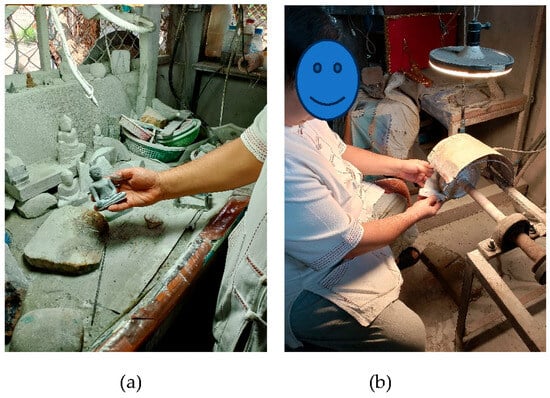
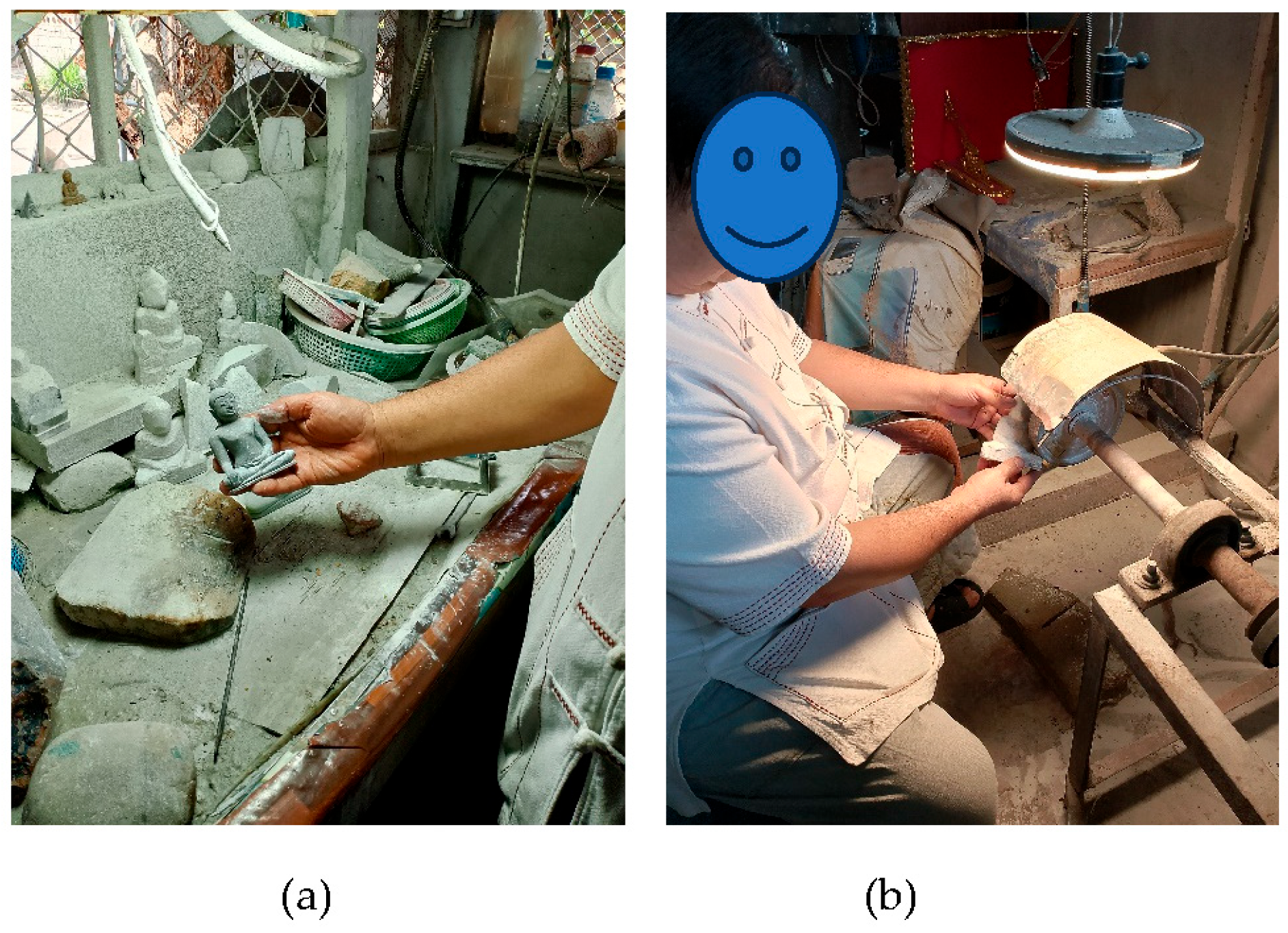
The requirements for the VR system were identified through extensive consultations with professional Buddha carvers, educators, and VR technologists. Key objectives included the accurate simulation of carving tools, realistic replication of carving techniques, and integration of cultural and historical narratives. The system needed to support interactive learning, allowing users to practice precision and control with virtual tools. Feedback from artisans emphasized the importance of tool fidelity, cultural authenticity, and the inclusion of guided tutorials for beginners. Technological requirements included the use of hand-tracking and haptic feedback technologies to enhance immersion and user engagement as shown in Figure 1.
Figure 1.
The requirement step to gather the design of virtual reality. (a) Carving workspace. (b) Demonstration of using the tool.
3.1.2. Design and Development
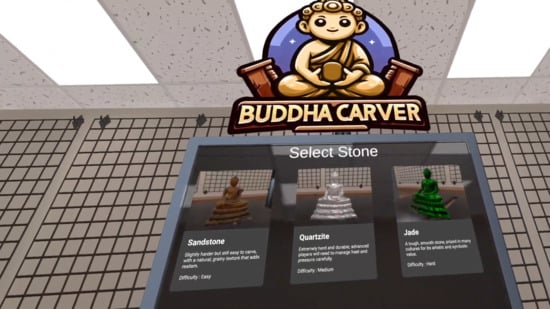
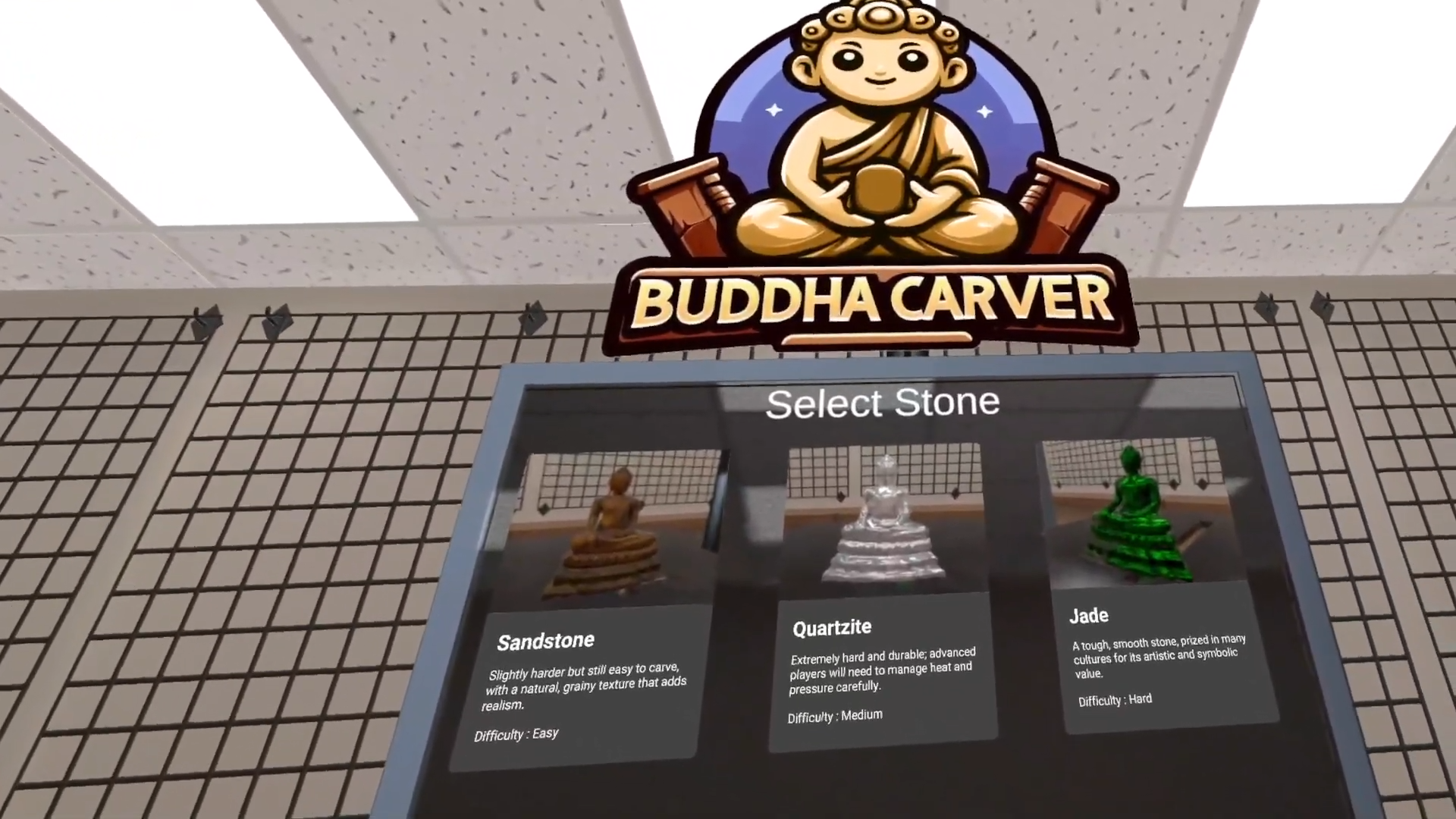
The design phase focused on creating a user-friendly and immersive VR environment (Figure 2). The virtual tools were modeled based on real carving instruments, with adjustable settings for precision and pressure to replicate the experience of working with different materials. Guided tutorials were designed with visual and auditory instructions to provide step-by-step guidance for learners. Additionally, cultural integration was prioritized by embedding interactive elements that explained the historical and symbolic significance of Buddha carving. Development was carried out using Unity 3D software (Unity 2022, Unity Technologies, San Francisco, CA, USA), a versatile platform for creating interactive VR experiences. The environment incorporated Leap Motion Controller technology for hand tracking, enabling users to interact naturally with the tools. Haptic feedback devices were integrated to simulate the tactile experience of carving. The development process was iterative, with regular feedback from artisans and educators ensuring the system aligned with real-world practices and educational goals.
Figure 2.
Design of the virtual reality system for Buddha carving.
3.1.3. Technical System Specification
The VR training environment was developed using Unity 3D and deployed on an Oculus Quest 2 headset to enable immersive interaction within a virtual stone-carving workspace. Hand interaction was implemented using a Leap Motion Controller integrated with Ultraleap Gemini tracking software, which captures finger and hand movements with an approximate tracking accuracy of 0.7 mm and a latency of 20–25 milliseconds. This setup allows users to manipulate virtual carving tools in a way that closely resembles real hand movements used in traditional stone carving. To enhance interaction realism, vibration-based handheld controllers were used to provide haptic feedback with adjustable intensity ranging from 0–100%, generating tactile cues during carving actions such as drilling, grinding, and surface contact.
The virtual carving tools were calibrated based on commonly used stone-carving equipment employed by traditional artisans. The virtual drill tool was configured with adjustable parameters to approximate real workshop tools, including a simulated drill diameter of 3–8 mm and a rotation speed ranging from 500 to 3000 revolutions per minute (rpm). Pressure sensitivity during carving was mapped through controller force input thresholds, allowing the system to simulate varying levels of applied pressure. These configurations enable the VR system to approximate the operational characteristics of real carving tools while maintaining stable interaction within the virtual learning environment. These technical configurations were designed to balance simulation realism with system stability in standalone VR hardware environments.
3.2. Instruments
A structured questionnaire was developed to evaluate the VR system. The questionnaire consisted of five evaluation dimensions: usability, authenticity, cultural relevance, immersion, and perceived learning potential. Each item was measured using a five-point Likert scale ranging from 1 (very dissatisfied) to 5 (very satisfied).
3.2.1. Evaluators Description
The evaluation involved ten experts selected based on their professional expertise in traditional crafts, education, or VR technology. The panel consisted of Buddha carving artisans, art education specialists, and VR technology experts. Expert-based evaluation was selected as an appropriate method for prototype validation during early-stage system development.
The evaluation involved a panel of 10 experts selected based on their expertise in traditional crafts, education, or VR technology. The panel included experienced Buddha carvers, educators specializing in traditional art forms, and VR technologists familiar with immersive learning systems. This diverse group ensured a comprehensive assessment of the VR environment. Experts were recruited through professional networks and academic affiliations, and their participation was voluntary. All participants provided informed consent and were briefed on the study’s objectives before engaging with the VR system.
The purpose of the expert evaluation was to assess the design validity and cultural authenticity of the VR system prototype rather than to measure learning outcomes. Expert review methods with 5–10 specialists are commonly used in early-stage VR system validation.
3.2.2. Composition of the Expert Panel
The composition of the expert panel is presented in Table 1. The panel included three groups of specialists representing key knowledge domains relevant to the study. Four participants were professional Buddha carving artisans with extensive experience in traditional stone carving practices, ensuring that the VR simulation accurately represented authentic carving techniques and workflows. Three participants were art education experts with backgrounds in traditional art instruction, providing insights into the educational relevance and pedagogical design of the system. The remaining three participants were VR technology specialists who evaluated the technical implementation, interaction design, and overall functionality of the immersive environment.
Table 1.
Composition of the Expert Panel for VR System Evaluation.
Overall, the experts possessed between 5 and 25 years of professional experience in their respective fields, which contributed to a balanced and credible evaluation of both the cultural and technological aspects of the VR learning system.
3.3. Data Analysis
The data in this study were analyzed using descriptive statistics, specifically the mean and standard deviation, to summarize the experts’ evaluations of the developed VR system. The mean was used to indicate the overall level of agreement among experts for each evaluation item, while the standard deviation provided information about the degree of variation in their responses.
The use of descriptive statistics is appropriate for this study because the evaluation focused on validating an early-stage VR prototype through expert review. Since the number of evaluators was relatively small (n = 10) and the purpose of the assessment was to examine the design quality, cultural authenticity, and functional performance of the system rather than to test statistical hypotheses, descriptive measures were considered sufficient to represent the overall evaluation results.
It is acknowledged that the mean may be influenced by extreme values, particularly when the sample size is limited. For this reason, the standard deviation was also examined to better understand the distribution of responses. A relatively small standard deviation suggests a consistent level of agreement among the experts.
Although the median can also be used as a measure of central tendency for Likert-scale data because it is less sensitive to extreme values, the combination of mean and standard deviation was considered adequate for describing the overall pattern of expert evaluations in this prototype assessment.
4. Results
This section reports the findings from expert evaluations of the Virtual Reality (VR) training environment designed for learning the art of Buddha carving. The results are presented according to the key dimensions assessed, namely the VR system prototype and the experts’ perspectives.
4.1. VR System Prototype
The VR system developed in this study was designed to simulate the environment of a traditional stone Buddha carving workshop. Within this virtual setting, users can interact with carving tools through hand-tracking technology, allowing movements of the hands to control virtual instruments in a natural manner. The system incorporates several functional elements, including interfaces for tool selection, an interactive carving workspace, and contextual information describing the cultural and symbolic meanings associated with specific features of Buddha statues. Through this environment, users can choose different tools, manipulate carving instruments, and perform fundamental carving procedures such as drilling, shaping, and detailing. Visual feedback is generated in real time to illustrate the effects of each action, supporting a more immersive learning experience.
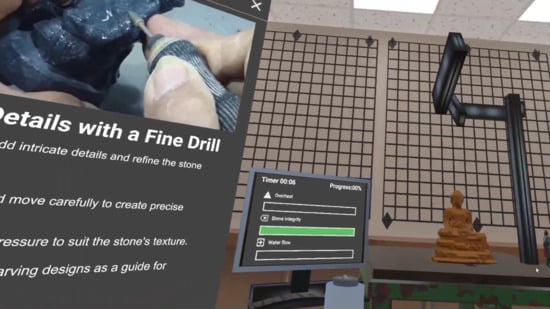
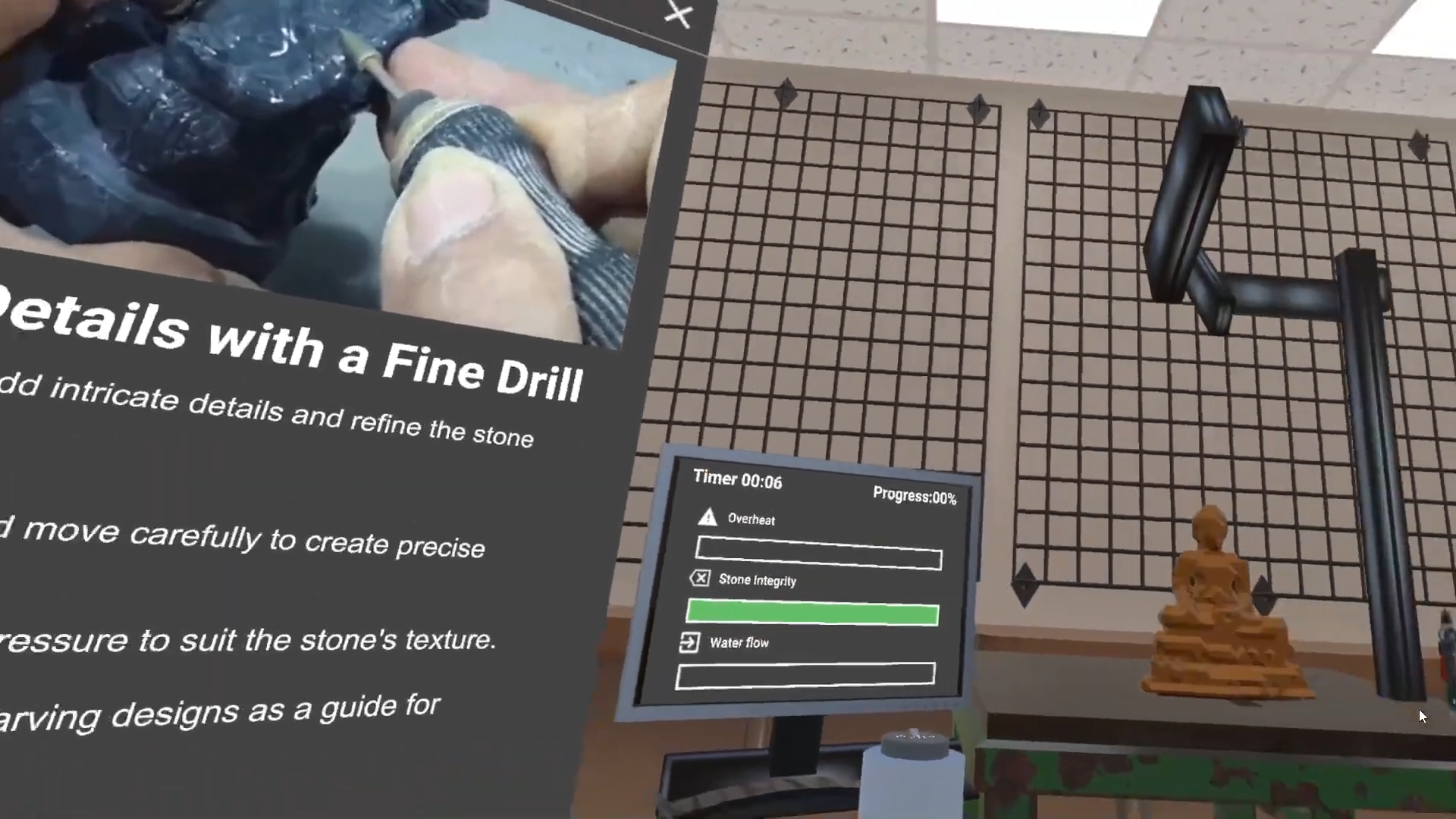
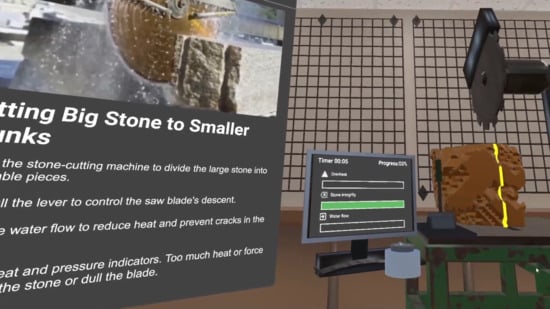
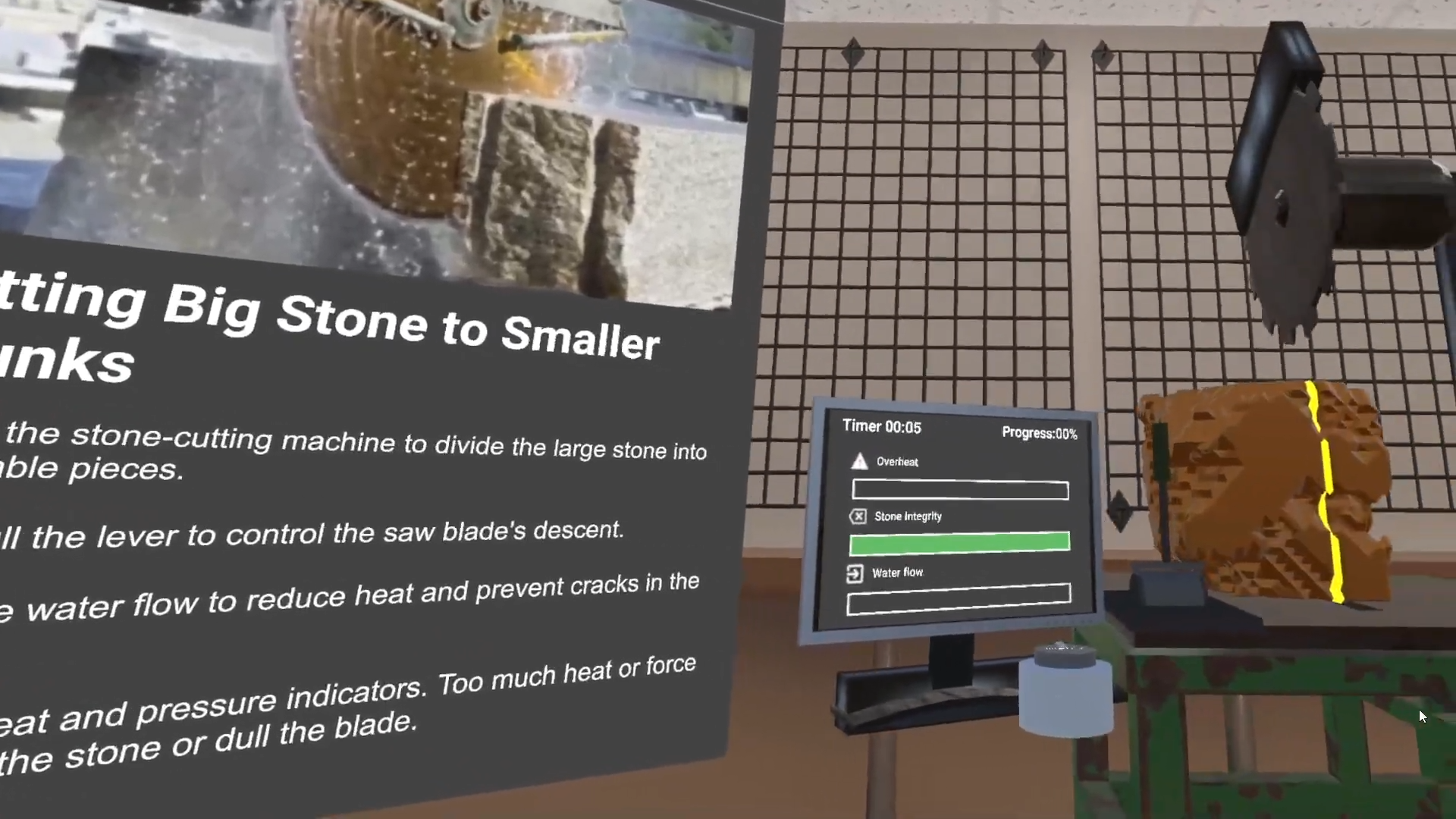
The prototype also includes a simulated workshop environment that integrates virtual tools, a digital workspace, and interactive displays presenting cultural knowledge related to Buddha carving. Within the system, users can select tools, modify operational settings, and practice carving techniques on virtual materials. Feedback is provided immediately in response to user actions, enabling learners to observe how specific techniques influence the carving process. In addition, guided instructional sequences introduce basic carving procedures, while supplementary interactive elements provide information about the historical background and cultural significance of Buddha carving traditions. To assess the realism and practical usability of the system, the prototype was evaluated with the participation of professional artisans. Their observations and recommendations were used to refine the system, particularly with respect to improving the precision of tool interaction and clarifying instructional guidance. The prototype of the virtual reality system is illustrated in Figure 3, Figure 4 and Figure 5.
Figure 3.
Example of Adding Details with a Fine Drill.
Figure 4.
Example of Cutting Big Stone into Smaller Chunks. Cutting along the yellow guideline to achieve the correct proportions.
Figure 5.
Shaping the Stone with an Angle Grinder.
4.2. Expert Evaluation Results
The VR system prototype was evaluated by ten experts across five dimensions: usability, authenticity, cultural relevance, immersion, and perceived learning potential. Table 2 presents the summarized evaluation results.
Table 2.
Descriptive Statistics of Expert Evaluation Results.
The average usability score was 4.6, indicating that experts considered the system interface intuitive and accessible. Authenticity received an average score of 4.8, reflecting strong agreement that the virtual tools and carving procedures closely resembled real-world practices. Cultural relevance scored 4.7, suggesting that the integration of cultural narratives effectively supported the learning experience.
Immersion received a mean score of 4.5, indicating that the VR environment successfully created a realistic and engaging experience. The highest score was observed in perceived learning potential (4.9), suggesting that experts believed the system could effectively support skill development in traditional carving practices.
5. Discussion
This section discusses the results in relation to the existing literature, highlighting the strengths, challenges, and opportunities identified in the evaluation of the VR environment for teaching Buddha carving.
5.1. Usability and User Experience
The findings indicate that the developed VR environment has strong potential as a tool for supporting the preservation and teaching of traditional craftsmanship. Expert evaluations suggest that the system successfully integrates technical skill training with cultural knowledge related to Salah Lanna Buddha carving. The VR environment received high usability ratings, with experts highlighting the intuitive interface, seamless navigation, and the effectiveness of step-by-step tutorials. These instructional features helped reduce user confusion and supported the learning process, which aligns with Guan et al. [7], who emphasize the importance of instructional clarity in VR learning environments to reduce cognitive load and enhance engagement. Visual and auditory feedback within the system also enabled users to identify and correct mistakes in real time, supporting skill acquisition as suggested by Yang et al. [8].
5.2. Authenticity of Craft Simulation
The authenticity of the craft simulation was another notable strength of the VR system. Experts commended the realistic modeling of carving tools and the accurate simulation of carving techniques, which closely resembled real-world stone carving practices. This finding supports the argument by Zabulis et al. [14] that cultural authenticity in VR craft systems is essential for preserving intangible heritage. The ability of the system to simulate detailed carving processes allows learners to practice precision and control, which are crucial for developing fine motor skills in craft training. Moreover, the high scores for authenticity and cultural relevance indicate that the consultation with artisans during the requirement analysis stage contributed significantly to the accuracy of the simulated carving process.
5.3. Cultural Relevance and Heritage Preservation
Cultural relevance was also identified as a major strength of the VR environment. The integration of historical explanations and symbolic narratives related to Buddha carving enabled users to understand not only the technical aspects of the craft but also its cultural and spiritual context. This result is consistent with previous studies suggesting that VR systems that incorporate cultural storytelling can serve as effective tools for heritage preservation (Ringas et al. [11]; Yang et al. [13]. By linking practical skill training with cultural narratives, the system allows users to connect craft techniques with their cultural origins, thereby enhancing both educational value and cultural appreciation.
5.4. Immersion and User Engagement
The immersive characteristics of the VR environment further supported user engagement during the learning process. Hand-tracking interaction and responsive visual feedback contributed to a realistic simulation of carving activities, creating an environment like a traditional carving workshop. This observation supports the work of Kim [12], who emphasize the importance of immersion in VR-based craft education. Additionally, ambient sounds and dynamic feedback helped strengthen the sense of presence, encouraging sustained user engagement throughout the learning process.
5.5. Limitations and Future Research Opportunities
Despite these strengths, several limitations were identified. One limitation of the current VR system is the lack of advanced haptic feedback capable of fully simulating the resistance and texture of real stone materials. The absence of advanced haptic feedback limits the ability of users to perceive material resistance during carving, which may affect the training of fine motor skills and pressure control. Similar challenges have been noted in previous studies, which indicates that current haptic technologies still face difficulties in replicating the nuanced tactile sensations involved in craft activities, as noted by Hallberg et al. [10]. Addressing this limitation through the integration of more advanced haptic technologies could significantly enhance the realism and effectiveness of the VR training environment.
Another limitation relates to the relatively small number of expert evaluators and the absence of comparative experimental groups. Although expert evaluation is commonly used during early-stage prototype validation, the findings cannot yet fully represent the learning outcomes of general users. Future research should therefore involve larger participant samples and controlled experimental studies comparing VR-based training with traditional teaching approaches. Additionally, incorporating regional variations in Buddha carving styles could broaden the cultural scope of the system and enhance its educational value.
5.6. Implications for Cultural Preservation
Overall, the results highlight the potential of VR technology as a powerful tool for preserving and teaching traditional crafts. By digitizing the techniques and knowledge of artisans, the VR environment contributes to the documentation and dissemination of cultural heritage. Similar to findings reported by Zabulis et al. [14] and Ringas et al. [11], immersive digital environments can play a critical role in safeguarding intangible cultural heritage while expanding access to traditional craft education. Through the integration of cultural knowledge and interactive technology, the proposed VR system demonstrates a promising approach to bridging traditional craftsmanship with contemporary digital learning environments.
6. Conclusions
This study demonstrated the potential of a Virtual Reality (VR) training environment as an innovative solution for learning and preserving the art of Buddha carving. By integrating authentic tool simulations, guided tutorials, and cultural narratives, the VR system effectively addressed key challenges in traditional craft education, such as accessibility and the decline of artisan mentors. Expert evaluations highlighted its strengths in usability, authenticity, cultural relevance, and learning potential, underscoring its ability to replicate intricate carving techniques and foster cultural appreciation. The findings reinforce VR’s transformative role in bridging heritage crafts and modern educational methods, while also contributing to broader cultural preservation efforts by making traditional practices accessible to a global audience.
Despite its strengths, the study identified several areas for improvement. One key limitation of the current VR system is the lack of advanced haptic feedback capable of fully simulating the tactile resistance of real stone materials. Without realistic force feedback, users may have difficulty perceiving material resistance during carving, which can affect the development of fine motor skills and pressure control that are essential in stone carving practice. Future development of the system should therefore explore the integration of more advanced haptic technologies capable of providing force feedback to better approximate real-world carving conditions.
Future research may extend the practical application of the developed VR system by adapting its design framework and interaction features to support training in other forms of detailed craftsmanship. Although the present study focuses on Buddha stone carving, the core components of the VR environment such as hand-tracking interaction, virtual tool manipulation, and guided carving procedures could be applied to other carving traditions that require precise manual control and sequential working processes. By modifying the digital tools, materials, and instructional content, the system could be adapted to represent different artistic practices while maintaining the same underlying training structure.
Such an approach may also contribute to the preservation and transmission of other traditional crafts that rely on highly specialized manual skills. Crafts such as Chinese jade carving, ivory ball carving, and boxwood or olive pit micro-carving share similar characteristics with Buddha carving, including intricate hand movements and the need for sustained skill development. Adapting VR-based training environments to support these practices could broaden the educational value of the system while supporting wider efforts to safeguard traditional craftsmanship in different cultural contexts.
Author Contributions
Conceptualization, P.J. (Phichete Julrode); Methodology, P.J. (Phichete Julrode); Software, P.J. (Phichete Julrode); Validation, P.J. (Phichete Julrode); Formal analysis, P.J. (Phichete Julrode); Investigation, P.J. (Piyapat Jarusawat); Resources, P.J. (Piyapat Jarusawat); Data curation, P.J. (Piyapat Jarusawat); Writing—original draft, P.J. (Phichete Julrode); Writing—review and editing, P.J. (Phichete Julrode). All authors have read and agreed to the published version of the manuscript.
Funding
This work was supported by the Faculty of Humanities, Chiang Mai University, under the Fundamental Fund 2025 (Grant No. 8393(10).1.5.1/1060).
Institutional Review Board Statement
The study was conducted in accordance with the Declaration of Helsinki and approved by the International Conference on Harmonization in Good Clinical Practice (ICH- GCP) and The Belmont Report. (code: COA No. 257/68; date: 18 September 2025).
Informed Consent Statement
Informed consent was obtained from all subjects involved in the study.
Data Availability Statement
The data presented in this study are available upon request from the corresponding author due to restrictions. The datasets generated and/or analyzed during the current study are subject to privacy and ethical restrictions and therefore are not publicly available. Access may be granted upon request by the Research Ethics Committee for the purpose of review.
Acknowledgments
We confirm that AI-assisted tools were used only for language support, specifically for checking grammar and improving the fluency and clarity of the English language. The AI tools were not used for generating the scientific content, analysis, or interpretations presented in the manuscript. All academic content, interpretations, and conclusions remain the sole responsibility of the authors.
Conflicts of Interest
The authors declare no conflicts of interest.
References
- Stratton, C.; Scott, M. Buddhist Sculpture of Northern Thailand; Serindia Publications: Chicago, IL, USA, 2004. [Google Scholar]
- Woodward, H.W. The Art and Architecture of Thailand; Brill: Leiden, The Netherlands, 2003. [Google Scholar]
- Lekhakula, J.; Khwakhong, N.; Liswadiratanakul, D.; Suttipisan, S. Integrated of Sufficiency Economy and Creative Tourism for Tourist Attraction Development in Thailand. J. Assoc. Res. 2021, 26, 188–201. [Google Scholar]
- Sooksawasdi, S. Study on the Buddha Image from Wat Luang Nong-ngu Archaeological Site, Doisaket District, Chiang Mai Province. J. Inf. 2017, 37, 21–44. [Google Scholar] [CrossRef]
- Zabulis, X.; Partarakis, N.; Demeridou, I. A roadmap for craft understanding, education, training, and preservation. Heritage 2023, 6, 5305–5328. [Google Scholar] [CrossRef] [Scilit]
- Partarakis, N.; Zabulis, X.; Antona, M. Transforming heritage crafts to engaging digital experiences. In Visual Computing for Cultural Heritage; Springer: Cham, Switzerland, 2020. [Google Scholar] [CrossRef] [Scilit]
- Guan, X. Analysis of fusion application of 3D virtual technology in arts and crafts design. In Proceedings of the 2022 6th International Conference on Intelligent Computing and Control Systems (ICICCS); IEEE Xplore: New York, NY, USA, 2023. [Google Scholar] [CrossRef] [Scilit]
- Yang, H. Research on the application of interaction design in the digital education of traditional crafts. In Design, User Experience, and Usability; Springer: Cham, Switzerland, 2023. [Google Scholar] [CrossRef] [Scilit]
- Skovfoged, M.M.; Viktor, M.; Sokolov, M.K.; Hansen, A.; Nielsen, H.H.; Rodil, K. The tales of the Tokoloshe: Safeguarding intangible cultural heritage using VR. In Proceedings of the Second African Conference for Human Computer Interaction: Thriving Communities, New York, NY, USA, 3–7 December 2018; pp. 1–4. [Google Scholar]
- Hallberg, S.; Hirsto, L.; Kaasinen, J. Experiences and outcomes of craft skill learning with a 360 virtual learning environment and a head-mounted display. Heliyon 2020, 6, e04705. [Google Scholar] [CrossRef] [Scilit] [PubMed]
- Ringas, C.; Tasiopoulou, E.; Kaplanidi, D.; Partarakis, N.; Zabulis, X.; Zidianakis, E.; Patakos, A.; Patsiouras, N.; Karuzaki, E.; Foukarakis, M.; et al. Traditional craft training and demonstration in museums. Heritage 2022, 5, 431–459. [Google Scholar] [CrossRef] [Scilit]
- Kim, M. Virtual Craft: Experiences and Aesthetics of Immersive Making Culture. Humanities 2023, 12, 100. [Google Scholar] [CrossRef] [Scilit]
- Srdanović, P.; Skala, T.; Maričević, M. InHeritage—A Gamified Mobile Application with AR and VR for Cultural Heritage Preservation in the Metaverse. Appl. Sci. 2025, 15, 257. [Google Scholar] [CrossRef] [Scilit]
- Zabulis, X.; Meghini, C.; Partarakis, N.; Beisswenger, C.; Dubois, A.; Fasoula, M.; Nitti, V.; Ntoa, S.; Adami, I.; Chatziantoniou, A.; et al. Representation and preservation of heritage crafts. Sustainability 2020, 12, 1461. [Google Scholar] [CrossRef] [Scilit]
- Partarakis, N.; Zabulis, X.; Patsiouras, N.; Chatjiantoniou, A.; Zidianakis, E.; Mantinaki, E.; Kaplanidi, D.; Ringas, C.; Tasiopoulou, E.; Dubois, A.; et al. Multi-Scale Presentation of Spatial Context for Cultural Heritage Applications. Electronics 2022, 11, 195. [Google Scholar] [CrossRef] [Scilit]

Disclaimer/Publisher’s Note: The statements, opinions and data contained in all publications are solely those of the individual author(s) and contributor(s) and not of MDPI and/or the editor(s). MDPI and/or the editor(s) disclaim responsibility for any injury to people or property resulting from any ideas, methods, instructions or products referred to in the content. |
© 2026 by the authors. Licensee MDPI, Basel, Switzerland. This article is an open access article distributed under the terms and conditions of the Creative Commons Attribution (CC BY) license.