


Abstract
This study examines how an inland city constructs a cutting-edge technological identity through media framing, thereby addressing a critical gap in urban image research. Focusing on Guiyang’s reinvention as “China Data Valley”, we analyzed a comprehensive corpus of news articles (January 2018–September 2025) using an integrated computational framework that incorporates descriptive statistics, LDA topic modeling, and co-word network analysis. This study investigated three dimensions: the distribution of discourse power among media actors, the narrative architecture of the urban image, and the distinct framing strategies employed by different media types. The results reveal that national official media are the primary drivers of image construction. The narrative is structured around a three-layer architecture. Furthermore, media types exhibit distinct framing strategies. This study provides practical insights for urban branding and contributes to media framing theory by extending its geographical focus to inland technology hubs and elucidating image construction within China’s unique media ecosystem. Finally, it proposes a replicable analytical model for latecomer regions seeking a discursive breakthrough in the digital era.
1. Introduction
Guiyang, the capital of Guizhou Province in southwestern China, presents a compelling case of urban image reinvention. Historically known for its ecological appeal as the “Capital of Summer Resorts”, it has strategically reinvented itself as “China Data Valley”, a tech-savvy and future-oriented hub. This transformation reflects a broader paradigm shift in urban development, propelled by the global digital economy and China’s national “Digital China” strategy. This strategy orchestrates a whole-of-society digital transition, guiding advancement in the digital economy, technological innovation, infrastructure modernization, data-driven industrial upgrading, and the improvement in public well-being [1,2,3]. However, a crucial question remains inadequately addressed: how does an inland city successfully construct a cutting-edge, high-tech urban image in media discourse? This construction process constitutes a key point of entry for this study.
To address this underexplored question, media framing theory serves as a core lens for understanding this construction process. Urban images are, in essence, “social facts” co-constructed by multiple actors, with mass media serving not merely as conduits of information but as the primary architects of meaning [4,5]. Through selective reporting, narrative framing, and deliberate discursive strategies, the media significantly shape how governments, investors, and the public perceive a city. However, existing research on urban image construction based on the media framing theory exhibits a significant gap: most studies have predominantly centered on developed eastern metropolises or traditional tourist cities, with insufficient attention paid to how less-developed regions proactively construct cutting-edge technological images through media framing. Such a gap impedes a comprehensive understanding of diversified regional development pathways in the digital era.
To address this gap, this study examines the media construction of Guiyang’s “China Data Valley” image. Moving beyond conventional qualitative approaches, we adopt an innovative computational framework that integrates descriptive statistics, LDA topic modeling, and co-word network analysis. This mixed-method design not only facilitates the efficient and objective identification of core thematic patterns but also reveals latent conceptual structures within the discourse, offering a replicable analytical model for media studies. This study is guided by three research questions: (1) Discourse Power: Which media lead the coverage, and how is it distributed over time? (2) Narrative Architecture: What key themes constitute the “China Data Valley” image? (3) Strategic Differentiation: How do different types of media vary in their framing strategies?
Theoretically, this study advances the media framing theory by examining the construction of a cutting-edge technological image in an underdeveloped inland city. Through systematic analysis of who frames, what is framed, and how framing differs across China’s unique media landscape, this study expands the geographical scope of relevant research while enriching understanding of image construction within unique political-economic ecosystem.
Methodologically, this study transcends conventional qualitative approaches by integrating multiple computational techniques into a unified computational text analysis framework. This scalable and reproducible model enhances both the breadth and objectivity of media discourse research.
Practically, the findings proffer actionable insights for urban governance and media practice. The identification of key media actors, dominant narratives, and collaborative models across media outlets equip policymakers with actionable intelligence for optimizing city branding and enhancing urban image coherence, including resource allocation, partnership building, and information coordination. For media practitioners, this not only enhances the professionalism of urban narration, but also encourages self-reflection on the various media roles of resource integration, collaborative communication, and value guidance in the digital age.
2. Literature Review
The understanding of the urban image construction of “China Data Valley” traces back to the classic theory proposed by Kevin Lynch, who suggested that the urban image is primarily perceived and remembered through five elements: paths, edges, districts, nodes, and landmarks [6,7,8]. Subsequent research has expanded the scope of this foundation, with studies exploring various directions. One strand focused on the classification of urban image resources—such as core, auxiliary, and derivative resources [9]—and examines how each category contributes to city branding. Another line of study focused on quantitative approaches to measuring urban images, seeking to establish systematic evaluation frameworks [10,11]. As research progressed, the multidimensional nature of the urban image was progressively revealed. Urban images have been categorized according to dominant characteristics into distinct types, such as historically traditional [12,13], culturally hybrid [14], and economically developed [15]. Furthermore, some studies explore sensory dimensions—analyzing color composition [16,17], soundscapes [18,19] and geometry forms in urban image [20]—arguing that these elements reflect regional cultural identity and contemporary spirit.
Nevertheless, the case of Guiyang remains conspicuously absent from these established typologies. Unlike the aforementioned cities, Guiyang establishes itself as an innovative benchmark for high-quality development, thereby showcasing a discursive leapfrogging that challenges the conventional pathways of urban image formation. In order to study this urban image construction process, we need to introduce a new theoretical perspective.
Media framing theory provides a central theoretical lens for analyzing this process. The concept “frame” was first introduced by Bateson as shared interpretive rules that enable communication [21]. Goffman later refined it, proposing that frames are cognitive structures that facilitate the perception, organisation and interpretation of reality by individuals. These structures enable individuals to synthesize fragmented experiences and process complex information efficiently [22]. Subsequent scholars, such as Entman, have expanded the concept of framing into the domain of communication studies, thereby demonstrating its utility in analyzing how media representations influence public understanding of social phenomena—including urban issues, of course [4,23]. In the information age, the role of the media has become increasingly crucial in understanding how city images are constructed. In recent years, using media content to examine the construction of urban images has emerged as an innovative and widely adopted approach in urban and communication studies [24,25,26,27,28,29].
However, extant research has predominantly focused on the impact of short-term events, such as international sports competitions, on shaping urban image [30,31,32,33]. A significant gap remains in understanding how cities achieve comprehensive image transformation through systematic, sustained urban image work [34,35] within the context of national strategies, particularly in the digital era, where novel technological identities emerge under state-driven initiatives. This gap is particularly evident in the Chinese context, where a unique media ecosystem—consisting of national, local, and market-oriented outlets—assumes a pivotal yet under-examined role in the legitimisation and propagation of such policy-driven narratives aligned with the Digital China strategy. Therefore, this study employs media framing theory, with Guiyang as a case study, to examine how different media participate in framing the construction of a high-tech image in inland regions and the characteristics of such framing practices. To empirically track the media framing mechanism at scale, this study employs computational text mining to reveal the media framing of “China Data Valley”.
3. Methodology
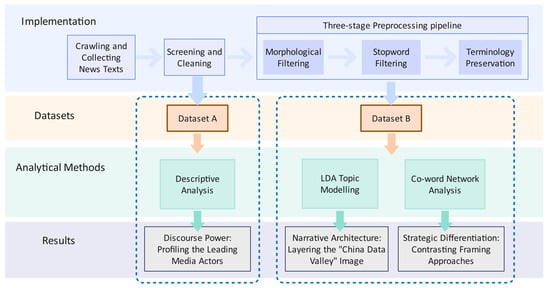
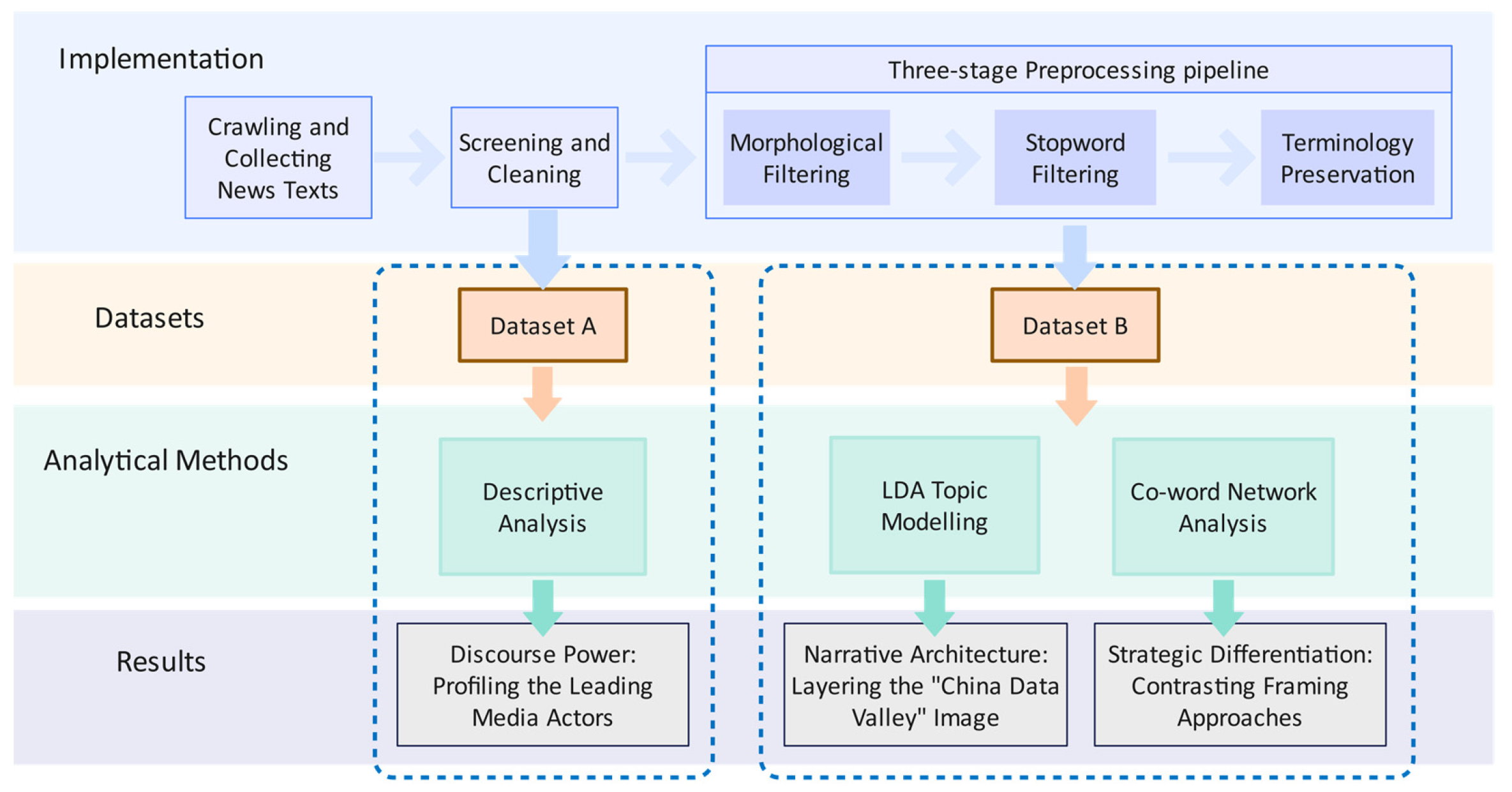
Grounded in the institutional reality of China’s party-led media system [36,37], this study categorized outlets into national official, local official, and market-oriented trade media based on their distinct institutional affiliations and target audiences. This framework enabled a comparative analysis that went beyond the mere identification of “who constructs what” in the discourse to examine “how construction differs” across media types. This study adopted an integrated methodological approach, encompassing descriptive analysis, LDA topic modeling, and co-word network analysis, to progress from mapping the overarching features of the framing to delineating the nuanced, media-specific narrative strategies that collectively construct a emerging and significant image of the “China Data Valley”. Figure 1 presents the comprehensive research framework employed in this study.
Figure 1.
Research framework.
Data were collected from Baidu Baijiahao using the keyword “China Data Valley”, with the search period spanning from 1 January 2018, to 30 September 2025, and limited to news texts. Raw data were obtained through web crawling, after which manual screening process was conducted to remove duplicates and irrelevant articles. To ensure analytical depth, we retained only articles whose core narrative focused specifically on the construction of the “China Data Valley”, excluding those that mentioned the term only incidentally. This rigorous filtration process yielded 362 valid news articles, which constituted the cleaned dataset for descriptive analysis (Dataset A). Baidu Baijiahao was selected as the data source for this study for three fundamental reasons: (1) The platform is integrated with Baidu—a leading information gateway in China—which means users access its content directly without needing to visit the platform separately. (2) The platform aggregates media entities across types and tiers, enabling the capture of both national macro-narratives and localized and market-oriented practices, thereby supporting a comparative analysis of image construction across media dimensions. (3) The platform’s considerable user base underscore its broad influence and research value. Its users span diverse regions, age groups, and interest circles, thus allowing for insights into how the “China Data Valley” image is disseminated and perceived among the general public.
After completing the descriptive statistical analysis, all news reports in which “China Data Valley” did not refer to Guiyang were excluded. Then, a three-step text preprocessing pipeline was applied to the remaining corpus, as outlined below:
- (1)
- Morphological Filtering: Special characters, particularly typesetting symbols and redundant spaces frequently encountered in news texts, were removed using regular expressions to standardize the text. The Jieba, a widely used Chinese word segmentation library developed for Python (version 3.12.10), was employed to filter out single-character function words, preserving only content words with substantive semantic meaning.
- (2)
- Stopword Filtering: The HIT Stopword List, widely adopted in Chinese text analysis, was used as the base and supplemented with custom stopwords, including “editor”, “first review”, “according to”, and “repost”. These terms, though frequent in news content, introduce semantic noise and were therefore systematically removed to retain only vocabulary with clear semantic meaning.
- (3)
- Terminology Preservation: A specialized dictionary was developed to ensure the retention of all domain-specific concepts, including terms such as “Digital China”, “Guanshanhu District”, “Trusted Data Space”, and “High-quality Development”. The dictionary was compiled through manual review of industry reports and policy documents, covering the core terminology associated with “China Data Valley”.
The preprocessed corpus was then sorted by publication date and structured into a dataset containing five key columns: media organization name, media type, publication date, article title, and article content. This process yielded a curated analytical corpus of 282 articles on Guiyang’s “China Data Valley” image, which was exported as Dataset B, the final cleaned dataset, for subsequent topic modeling and network analysis.
This study applied the Latent Dirichlet Allocation (LDA) method to model latent topics within news texts of Guiyang’s “China Data Valley”, with the aim of systematically identifying core thematic frameworks in media reports. As an unsupervised machine learning approach, LDA is particularly suited to automatically detecting underlying semantic structures in large-scale, unlabeled text corpora, thereby minimizing the need for manual annotation or predefined categories [38]. Its strengths include high interpretability, enabled by transparent topic-word probability distributions, and demonstrated generalizability across languages and textual domains [39,40].
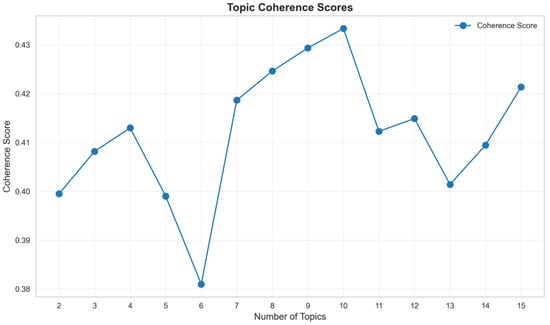
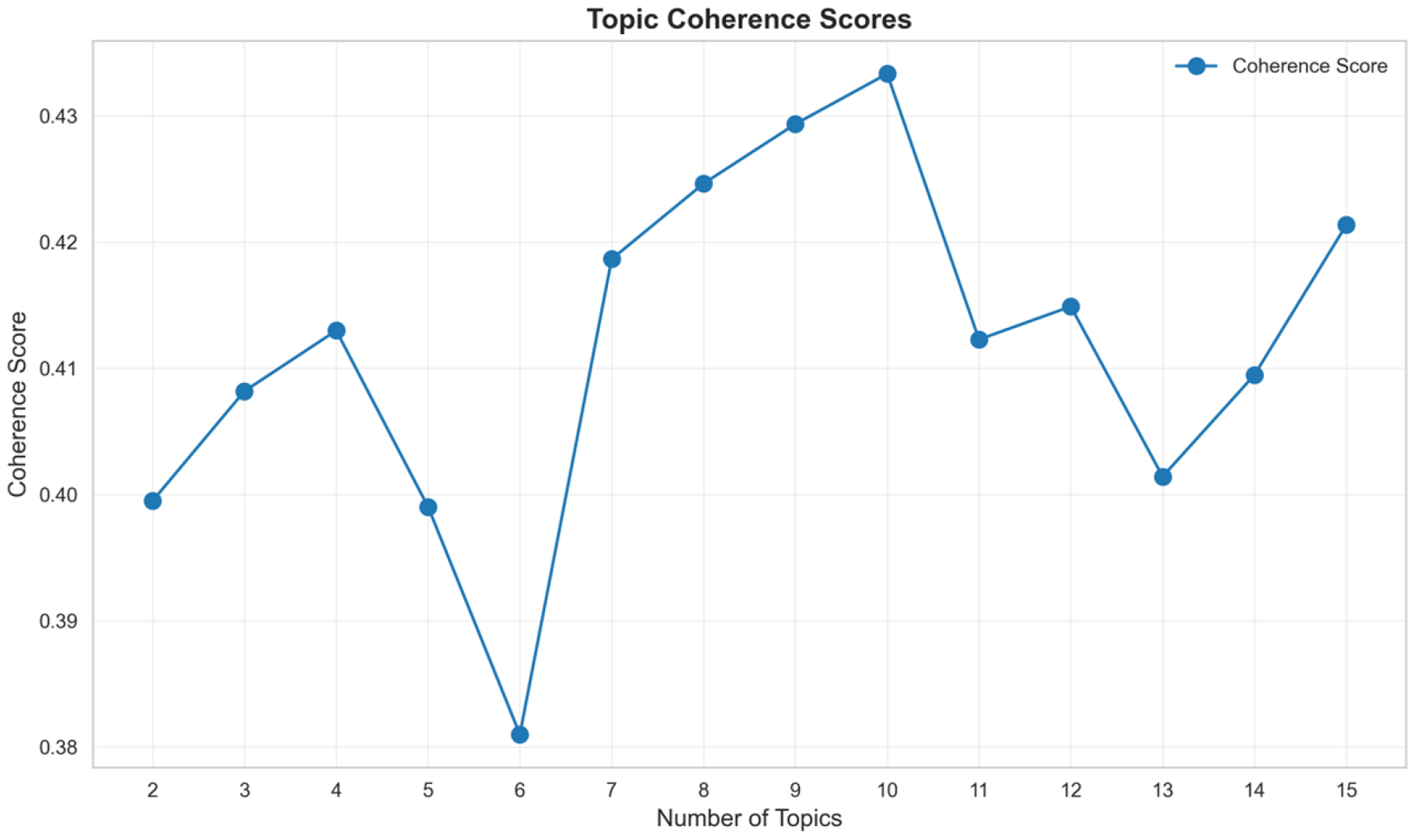
Using the cleaned Dataset B, we trained the LDA model via the Gensim library in Python. First, the text data were converted into a bag-of-words representation, and then a dictionary was constructed by filtering out terms that appeared in fewer than 10 or more than 50% of documents, in order to reduce noise. A grid search was then executed across a range of topic numbers (K) ranging from 2 to 15. For each value of K, the model was trained with the following parameters: passes = 15, iterations = 200, and alpha = ‘auto’. These parameter settings were chosen to ensure model convergence and thorough training. To determine the optimal number of topics, we employed the c_v coherence score [41], a widely used metric that assesses the semantic coherence of topic terms by measuring their contextual co-occurrence [42,43,44]. Higher c_v scores indicate more interpretable and semantically meaningful topics. As shown in Figure 2, the c_v coherence score was calculated for each model, revealing a peak in topic coherence at K = 10.
Figure 2.
The coherence scores calculation result based on LDA model.
In addition to this quantitative metric, we also took into consideration the distinctive characteristics of news texts, which are typically marked by focused content and clear thematic organization. An excessively small topic count (K < 8) tends to conflate distinct thematic dimensions, while an overly large number (K > 14) often yields fragmented and less interpretable topics. Accordingly, K = 10 was selected as the optimal number of topics, providing an appropriate balance between statistical coherence and semantic coverage while adequately capturing the principal thematic dimensions of reporting on “China Data Valley” within the conventions of the news genre.
To examine the differentiated strategies employed by different media types in constructing the urban image of “China Data Valley”, this study conducted a separate co-word analysis for each media type. The analytical procedure was as follows: first, texts underwent TF-IDF vectorization, with the retention of terms appearing in at least three documents and in no more than 60% of all documents; second, a word–word co-occurrence matrix was then computed from the resulting vectors, and the 50 keywords with the highest document frequency were selected to construct the co-word network; finally, the network structure was then visualized using Gephi (version 0.10.1, Java 11.0.17). Subsequent analysis involved community detection, comparison of network density, and core-periphery analysis. These metrics provide distinct insights for contrasting framing approaches across media types: community detection reveals thematic clusters, density quantifies the thematic connection tightness, and core-periphery structure identifies the hierarchical emphasis of narratives.
4. Results
4.1. Discourse Power: Profiling the Leading Media Actors
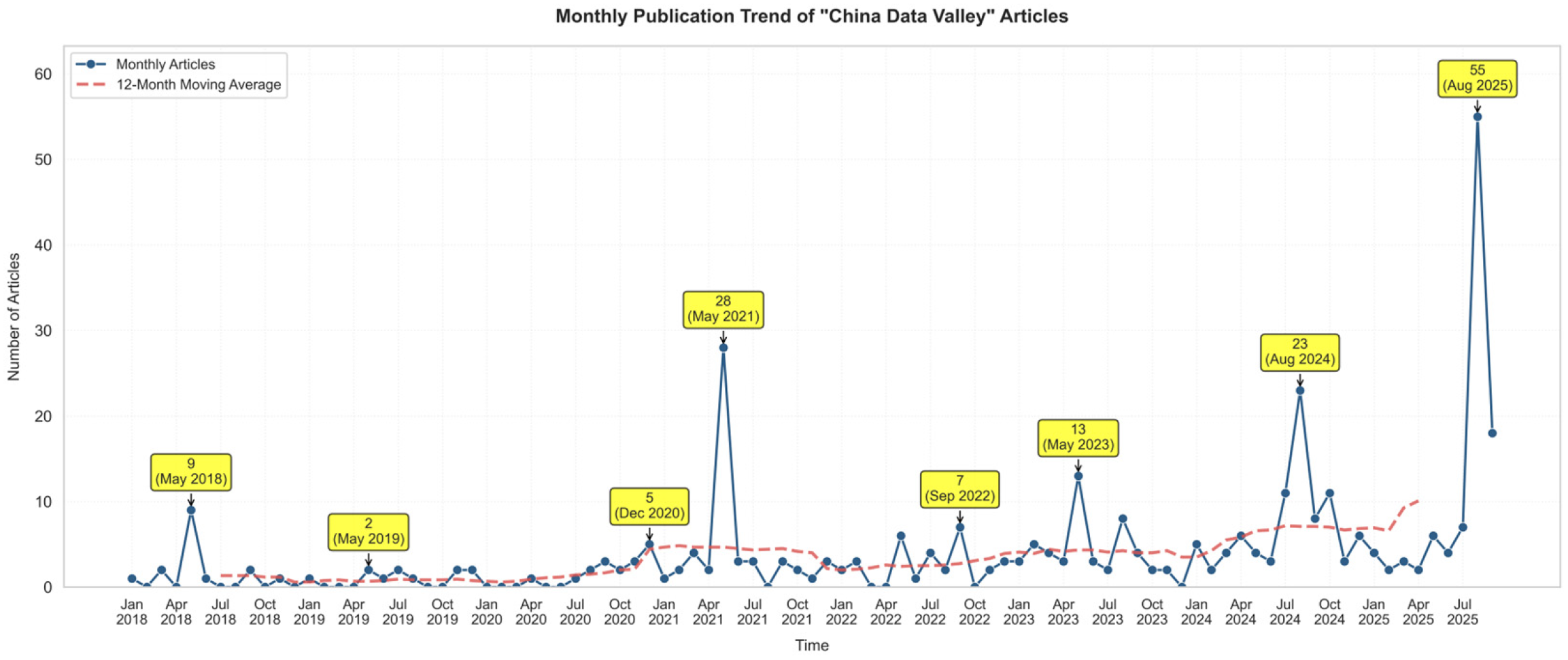
Figure 3 shows the monthly publication volume of “China Data Valley” reports from January 2018 to September 2025. The solid line indicates the actual article count, while the dashed line represents a trendline illustrating changes over time. The month with the highest number of articles each year is highlighted. Overall, coverage of “China Data Valley” has exhibited steady growth in recent years, with a marked increase in 2025 relative to previous years. The time-series data demonstrate a consistent upward trend, punctuated by pronounced peaks in specific months—namely, May 2018, May 2021, May 2023, August 2024, and August 2025. These peaks correspond to the months in which the China International Big Data Industry Expo (Big Data Expo) was held in those respective years. As the primary driver of media attention to “China Data Valley”, the Big Data Expo consistently generates extensive coverage, resulting in short-term surges in reporting. Coverage during these peak periods typically encompasses a range of topics related to the expo, including forum discussions, product launches, policy announcements, and technology demonstrations. The growth in coverage reflects both the ongoing implementation of the Digital China strategy and the increasing prominence of the “China Data Valley” in media discourse.
Figure 3.
Monthly publication trend of “China Data Valley” articles.
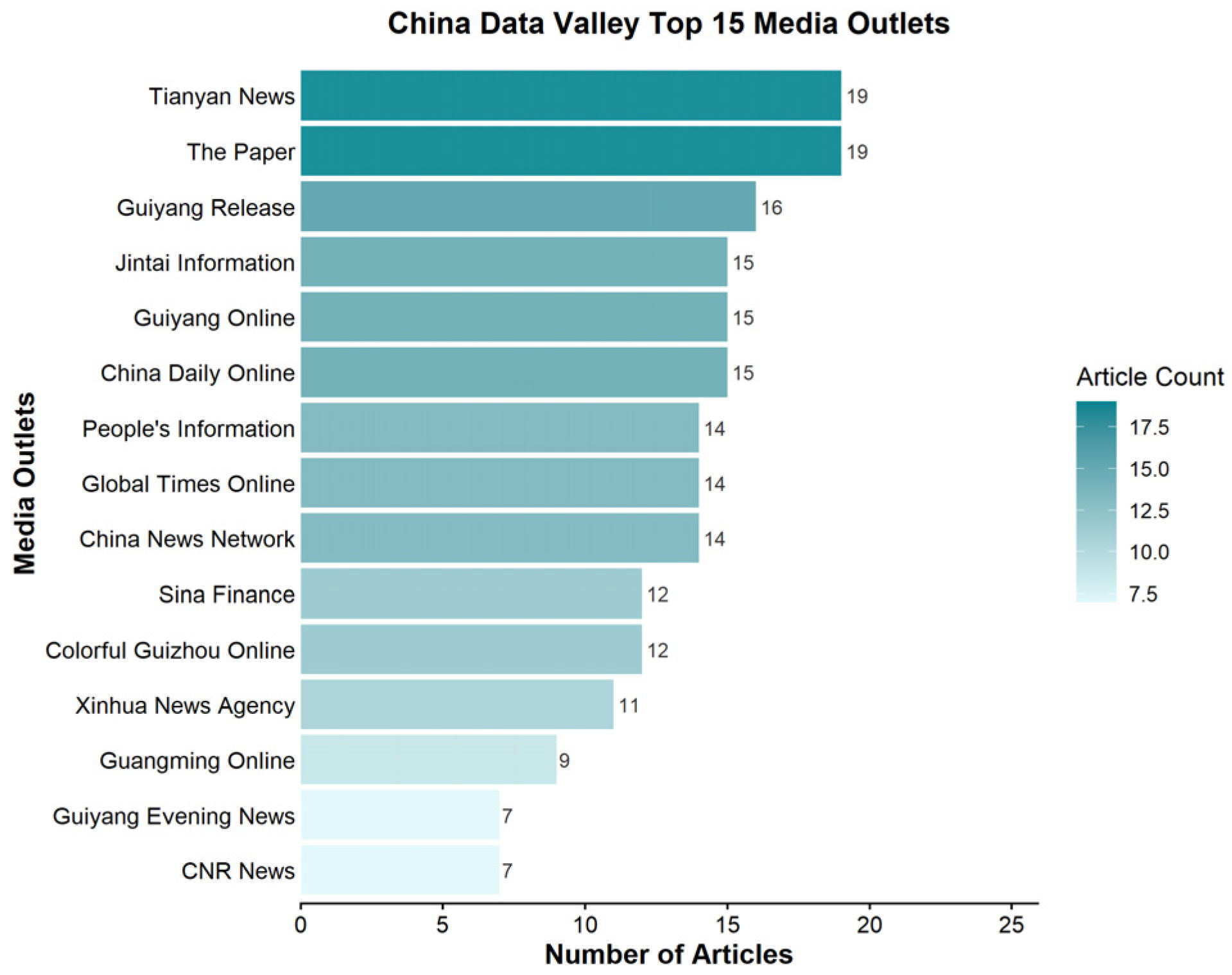
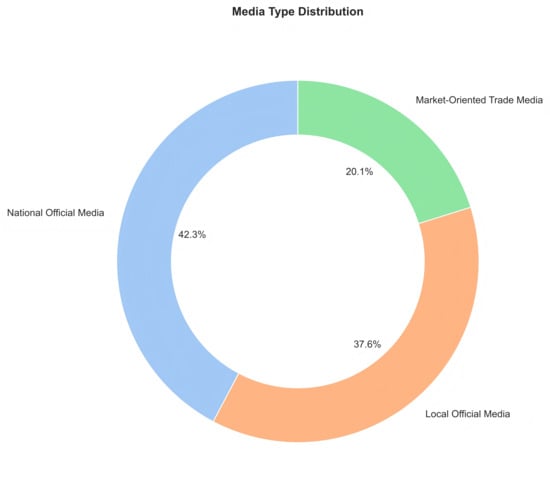
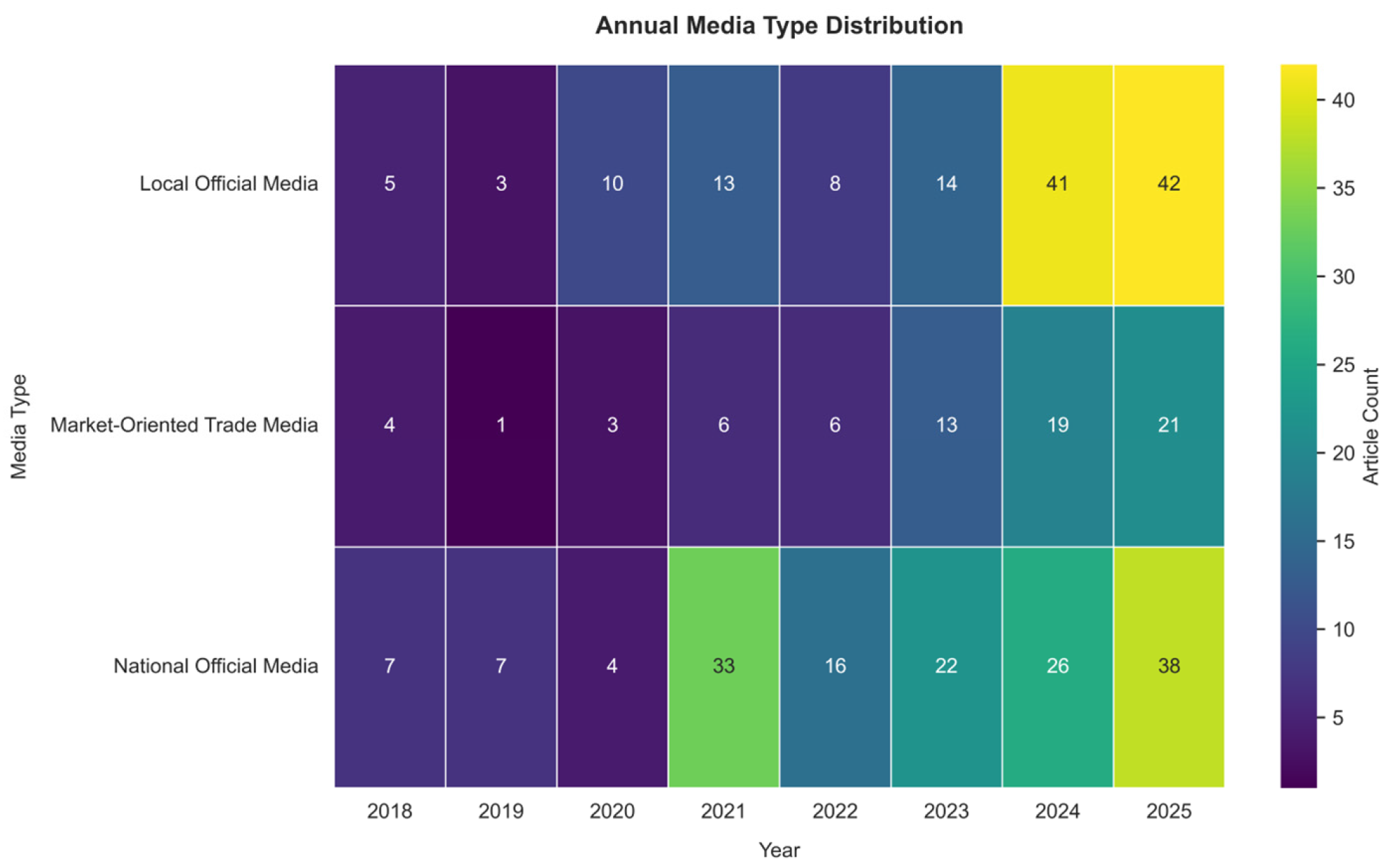
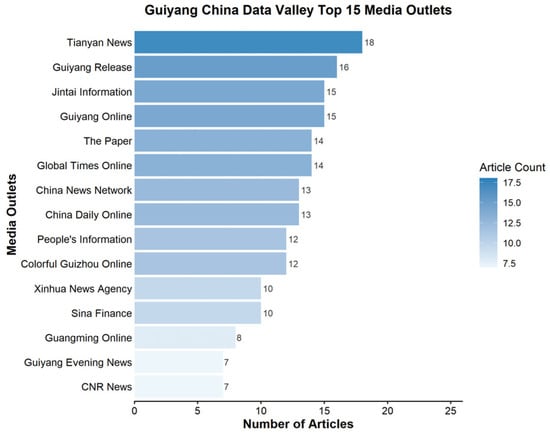
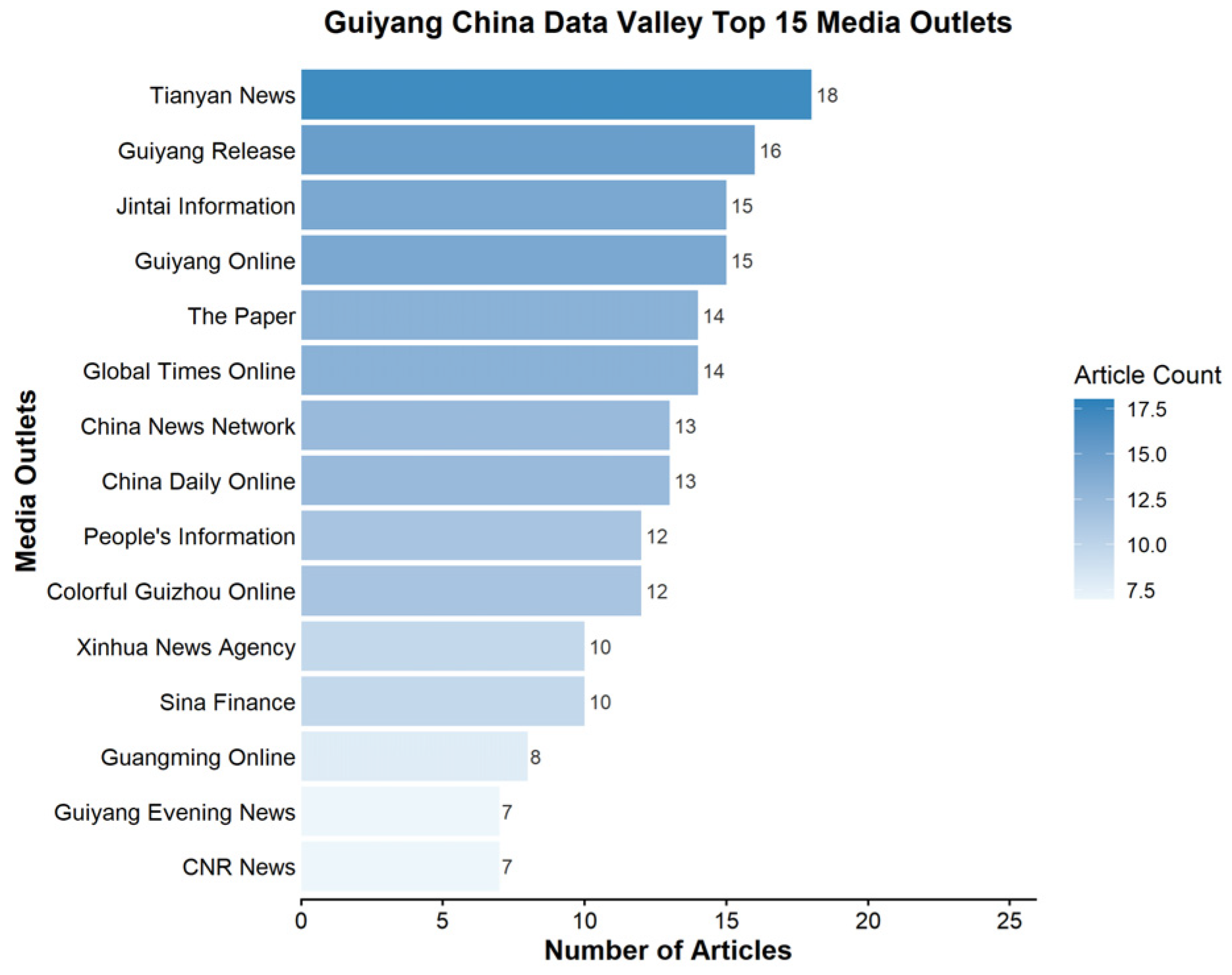
Figure 4 presents the 15 media outlets that have published the most articles about “China Data Valley”. Leading local official media include Tianyan News, Guiyang Release, and Guiyang Online; the Paper is the most active market-oriented industry outlet; and China Daily Online and Jintai Information are the primary national official media covering the topic. As shown in Figure 5, all three media types—national official, local official, and market-oriented industry—participated in constructing the “China Data Valley” image. National and local official media were the main sources, with national media accounting for nearly half of all articles and market-oriented media less than one quarter.
Figure 4.
Top 15 media outlets by “China Data Valley” report volume.
Figure 5.
Distribution of media types by “China Data Valley” report volume.
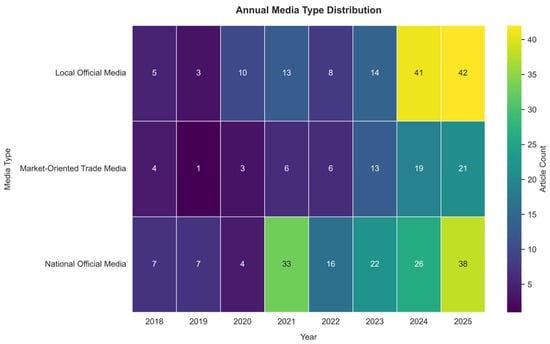
The heatmap in Figure 6 shows that report volume has increased across all three media types, with national and local official media exhibiting pronounced growth over the past two years. In 2021, national official media exhibited a notable surge in coverage. In the early years, all three types showed limited attention to “China Data Valley”, but local official media significantly increased their coverage from 2024 onward.
Figure 6.
Report volume trends across media types.
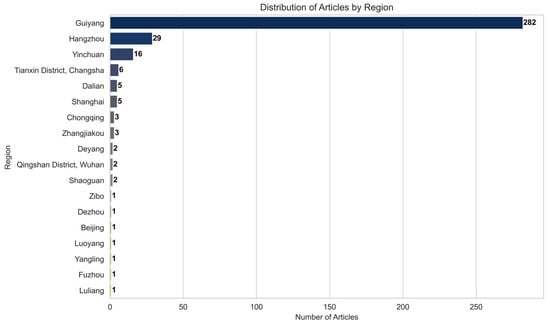
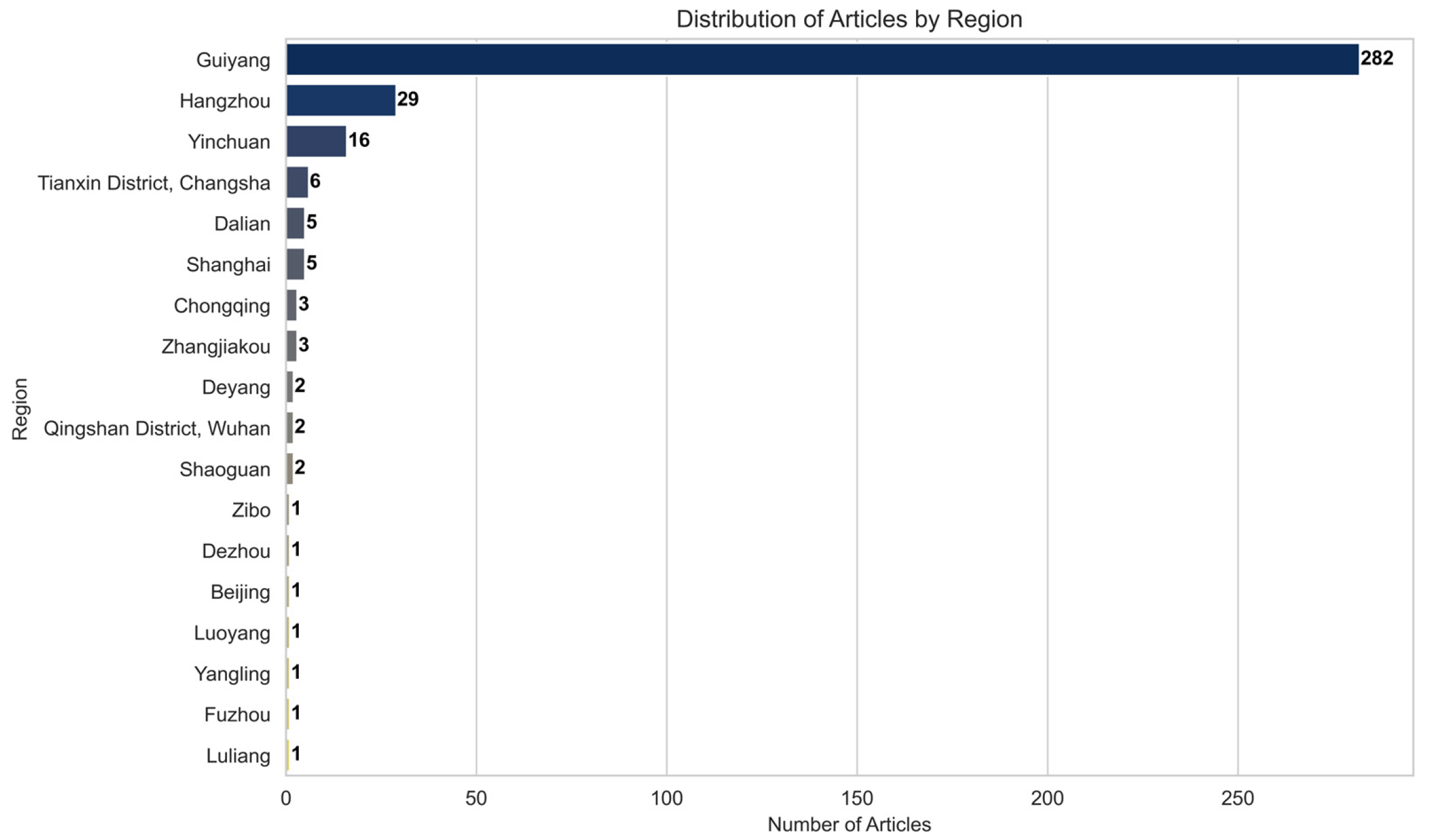
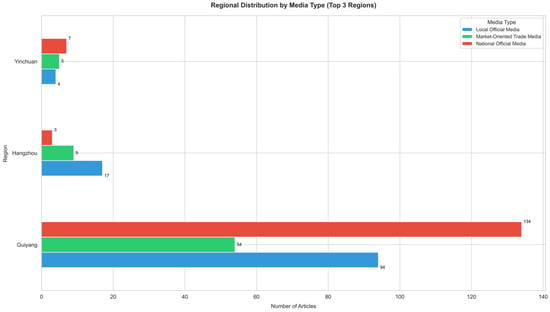
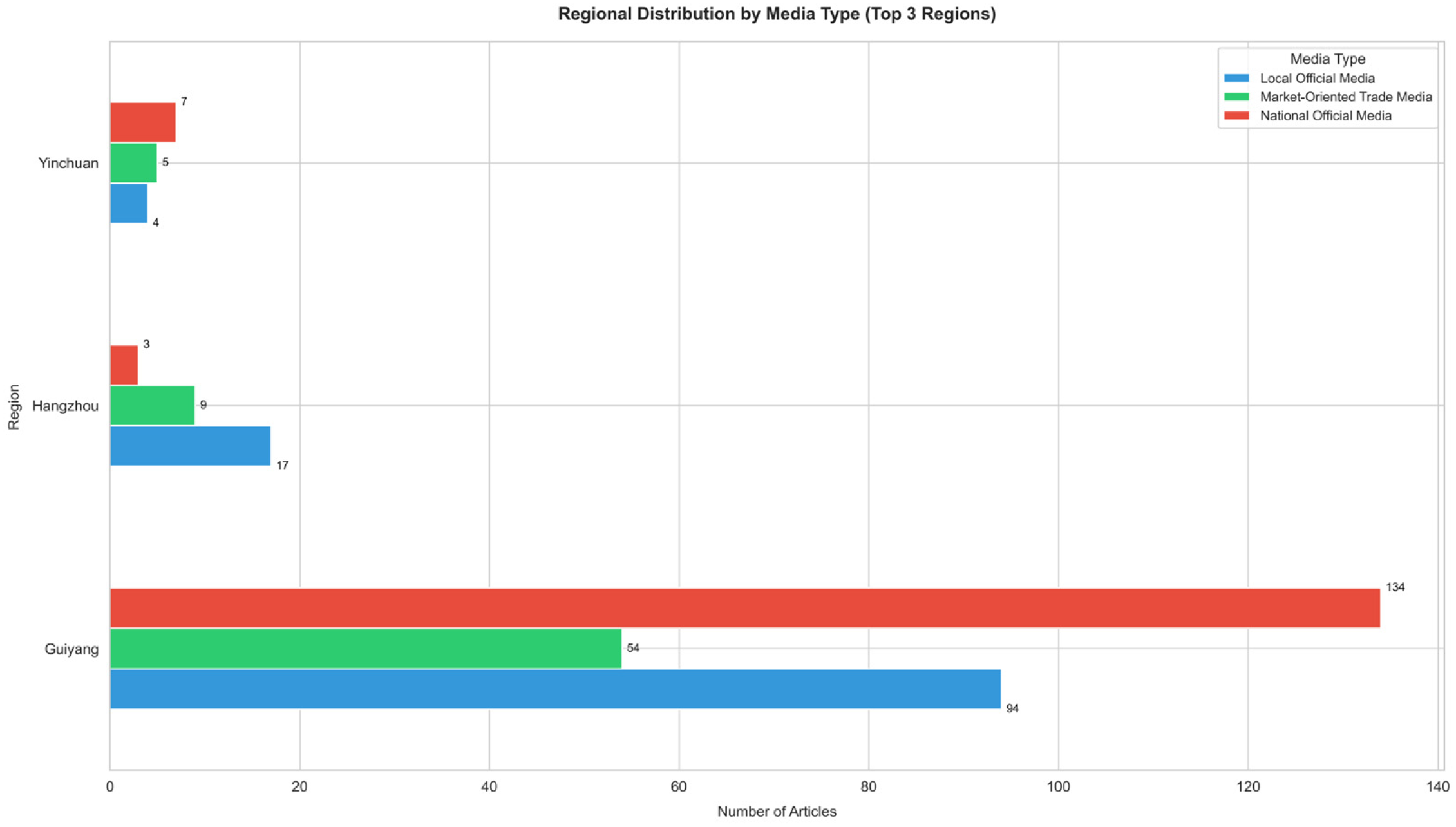
As demonstrated in Figure 7, Guiyang is the city most frequently referred to as “China Data Valley”, appearing in 282 articles—a figure that significantly exceeds that of other cities. Hangzhou occupies second place with 29 articles, followed by Yinchuan with 16. In view of the minimal coverage of other cities, Figure 8 compares the volume of reports pertaining to the three cities across different media types. Yinchuan is primarily covered by national official and market-oriented media, while Hangzhou is mainly covered by local official media. All three media types covered Guiyang to a considerable extent, albeit with obvious differences in coverage volume: national official media exhibited the highest publication volume, followed by local official media, while market-oriented media published fewer articles than the official media.
Figure 7.
Cities referred to “China Data Valley” by report volume.
Figure 8.
The volume of reports referring top three cities across media types.
Figure 9 shows the 15 media outlets that have published the most articles focusing specifically on Guiyang’s “China Data Valley”. When compared with Figure 4, the overall pattern of media participation remains largely consistent.
Figure 9.
Top 15 media outlets by Guiyang “China Data Valley” report volume.
4.2. Narrative Architecture: Layering the “China Data Valley” Image
To present the topic modeling results clearly, Table 1 lists the high-frequency keywords for each topic. The topics were ranked in descending order by their total share, which was calculated as the sum of the proportions of the top ten keywords within each topic. To ensure the reliability of LDA topic labeling, a human interpretation consistency check was conducted. Two independent coders separately performed initial topic naming, and discrepancies in label assignments were resolved through joint discussion until a consensus was reached on the most representative label for each topic. As outlined below, ten dominant themes construct the “China Data Valley” urban image.
Table 1.
The distribution of LDA topic keywords.
- (1)
- Theme 1: International Big Data Expo Platform & Cooperation
Keywords such as “International”, “Cooperation”, and “Release” reflect how the media position the Big Data Expo as Guiyang’s pivotal platform for engaging the global big data community. Guiyang is framed as an active participant and rule-setter in global data governance. By showcasing the release of state-of-the-art technologies and the participation of prominent international industry leaders, Guiyang not only legitimizes its “China Data Valley” identity on the international stage but also aligns itself with national strategies that leverage high-level platforms to catalyze local development.
- (2)
- Theme 2: Computing Power Infrastructure & National Digital Foundation
“Computing Power”, “Intelligent Computing”, “Data Center”, and “Safeguards” point to the foundational role of hardware infrastructure. Media coverage directly links Guiyang’s computing clusters to the national “Eastern Data, Western Computing” project, emphasizing its strategic function through words like “Scale” and “Rendering”. This suggests that Guiyang is a significant node in the national computing power network, reflecting a state-led infrastructure layout designed to safeguard data sovereignty through centralized resource scheduling.
- (3)
- Theme 3: Data Factor Marketization Innovations & Operations
“Data Transaction”, “Market”, and “Trusted Data Space” focus on institutional innovation and operational mechanisms in data circulation. Public data has become a key enabler for breaking down data silos and serving as the engine to unleash the value of enterprise data. As a national pilot zone for data factor marketization, Guiyang hosts large-scale data center clusters, a mature public data operational system, and robust intelligent computing capabilities. The aforementioned comprehensive strength has further translated into notable national-level achievements: Guiyang’s Trusted Data Space, a national pilot program, exemplifies a leadership role in addressing challenges related to data element circulation, including low efficiency, high costs and poor security, thereby realizing data value appreciation.
- (4)
- Theme 4: Sci-Tech Innovation City Ecosystem & Vibrancy
“Competition”, “Sports”, “Virtual”, “Computing Power”, and “Talent” show the diversity and dynamism of Guiyang’s innovation ecosystem. Media reports on technology competitions, smart sports events, and talent initiatives not only exemplify Guiyang’s technological capabilities in hosting specialized events and cultivating virtual sports IP, but also showcase the city’s deep integration of the big data, sporting events and cultural tourism industries, exemplifying the practical value of big data in driving industrial innovation and convergence.
- (5)
- Theme 5: Tech Innovation Ecosystem & Talent Hub Development
“Talent”, “Communication”, “Culture”, and “Base” underscore the symbiotic relationship between technological innovation and the development of talent hubs. Coupled with words like “Investment” and “Brand”, the media accentuate Guiyang’s endeavors to appeal to high-caliber talent while concurrently fortifying its local ecosystem to nurture and retain talent. This theme reinterprets talent development as a form of soft power, which is essential to building a global image. Talents are integrated into a sustainable ecosystem through a series of supportive measures, thereby ensuring that human capital continuously plays a pivotal role in long-term innovation-driven development.
- (6)
- Theme 6: Industrial Digital Transformation Drive
“Implementation”, “Acceleration”, “Digitalization”, and “Industrial Sector” focus on the pivotal impetus propelling the digital transformation of traditional industries. Media narratives illustrate the deep integration of big data with the real economy through keywords such as “Software” and “Digitalization”, framing Guiyang as a facilitator and provider of solutions for industrial internet advancement. This theme underscores the mechanism through which technological empowerment propels industrial restructuring at the core operational level.
- (7)
- Theme 7: Smart Governance & Citizen-Centric Services
“Self-service”, “Government Affairs”, and “Tax Revenue” anchor the broader narrative of citizens’ daily experiences. By promoting initiatives such as one-stop online services and intelligent self-service terminals, the media have depicted Guiyang as a city integrating smart governance with public services. This theme is pivotal in translating the achievements of “China Data Valley” into tangible public benefits, fostering social acceptance of big data development, and establishing its “people-centred” governance philosophy.
- (8)
- Theme 8: Data Center Clusters & Regional Development
“Data Center”, “Pilot Zone”, “Region”, “Internet”, and “Tourism” extend beyond the scope of infrastructure reporting, with a view to emphasizing the catalytic effect of data centre clusters on regional development. Media coverage underscores the role of data centers in boosting the local economy, exemplified by the cultural tourism linkages facilitated by the “One-Code Tour Guizhou” platform, and elucidates how data empowers cultural tourism, thereby contributing to economic growth in western China. The evolution of Guiyang’s data center from a rudimentary storage facility to a pivotal regional development engine exemplifies the considerable potential to overcome geographical and physical limitations on resource aggregation and allocation.
- (9)
- Theme 9: AI-Driven Governance Empowerment
“Artificial Intelligence”, “Model”, “Intelligence”, “Society”, and “Governance” suggest that the media systematically demonstrate how artificial intelligence empowers urban governance and official-public interactions, with efficient applications spanning community management, traffic optimization, education, healthcare, and public safety. This theme presents Guiyang as a model of AI-driven “good governance”, emphasizing that China Data Valley not only pursues economic growth but also transforms technological advantages into capabilities that bolster urban resilience, security, and operational efficiency. This innovative, AI-driven governance approach has been successfully implemented in Guiyang. Media coverage vividly demonstrates how technology can elevate public service and infrastructure standards.
- (10)
- Theme 10: Systemic Policy Support & Top-Level Planning
“Policy”, “System”, and “Advancement” demonstrate the systematic policy support and strategic planning provided by the state for Guiyang’s development as China Data Valley. From its designation as a National Big Data Comprehensive Pilot Zone to the implementation of China’s first-in-nation local regulations on government data sharing and opening, and big data security management, media exemplifies Guiyang’s big data development as a consequence of top-down institutional design and policy safeguards. It embodies the characteristics of China’s innovation model: as a significant practical achievement of the Digital China strategy, China Data Valley is progressively taking shape through institutional empowerment and strategic top-level design.
To elucidate the unique narrative logic underpinning the media construction of the “China Data Valley”, the ten themes generated by LDA topic modeling were organized into a three-layered narrative architecture. The architecture reveals a distinctive Chinese media model for constructing a futuristic tech-city image, structured around three distinct yet interconnected layers: the foundational, the operational, and the expressive.
- (1)
- Foundational Layer: Infrastructure and Institutional Support
The media construct the foundational image of “China Data Valley” through two complementary themes: Theme 2 and Theme 10. Theme 2 accentuates Guiyang’s role as a national digital infrastructure hub, underscoring the city’s substantial advancements in digital infrastructure development. Theme 10 focuses on top-level design and policy frameworks, underscoring the government-led institutional framework. Collectively, this narrative framework outline a strategic framework of state-led infrastructure development and institutional support, thereby establishing the foundational credibility that shapes Guiyang’s identity as a national data hub.
- (2)
- Operational Layer: Marketization and Data Value Realization
The media has constructed a narrative framework for a collaborative ecosystem where institutions, talent, and industries interact to transform data into value. Theme 3 embodies institutional innovations in data valorization. Theme 5 focus on measures to attract and nurture technical talent. Theme 6 demonstrates how data-driven upgrades yield tangible economic outcomes. This narrative framework generates a self-reinforcing cycle: market mechanisms attract talent, which in turn drives industrial application, and each success further reinforces the others. Through this layer, the media frame Guiyang not merely as a big data and computational hub, but as a mature, self-sustaining ecosystem for value creation—where data finds its market, talent finds its purpose, and industry finds its future.
- (3)
- Expressive Layer: Scenario-Based Public Perception
Media discourse translates the macro-level strategy into tangible, everyday realities, shaping Guiyang’s image as an internationalized, livable, and digitally living city. Theme 1 leverages high-profile international events as showcase windows to reinforce the city’s cutting-edge positioning and global influence. Theme 4 positions events such as the Virtual F1 Chinese Open not merely as entertainment, but as catalysts that demonstrate digital infrastructure, stimulate the digital sports industry, and enhance urban appeal. This narrative framework portrays an environment where technological advancement, economic opportunity, and quality of life converge to attract talent and foster an innovation community. Meanwhile, Theme 7, Theme 8, and Theme 9 illustrate the implementation of big data in governance, public services, and regional collaboration, integrating technology into the fabric of urban life.
4.3. Strategic Differentiation: Contrasting Framing Approaches
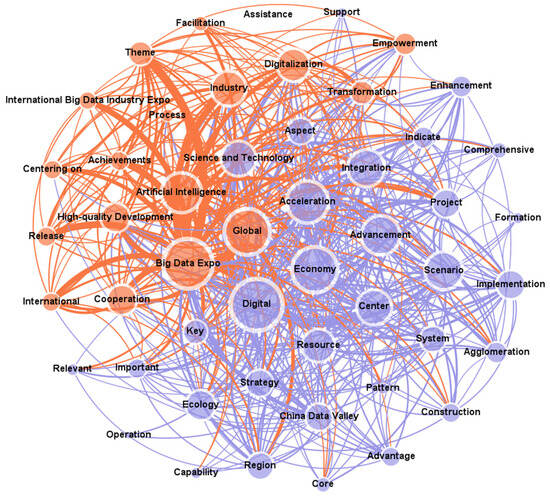
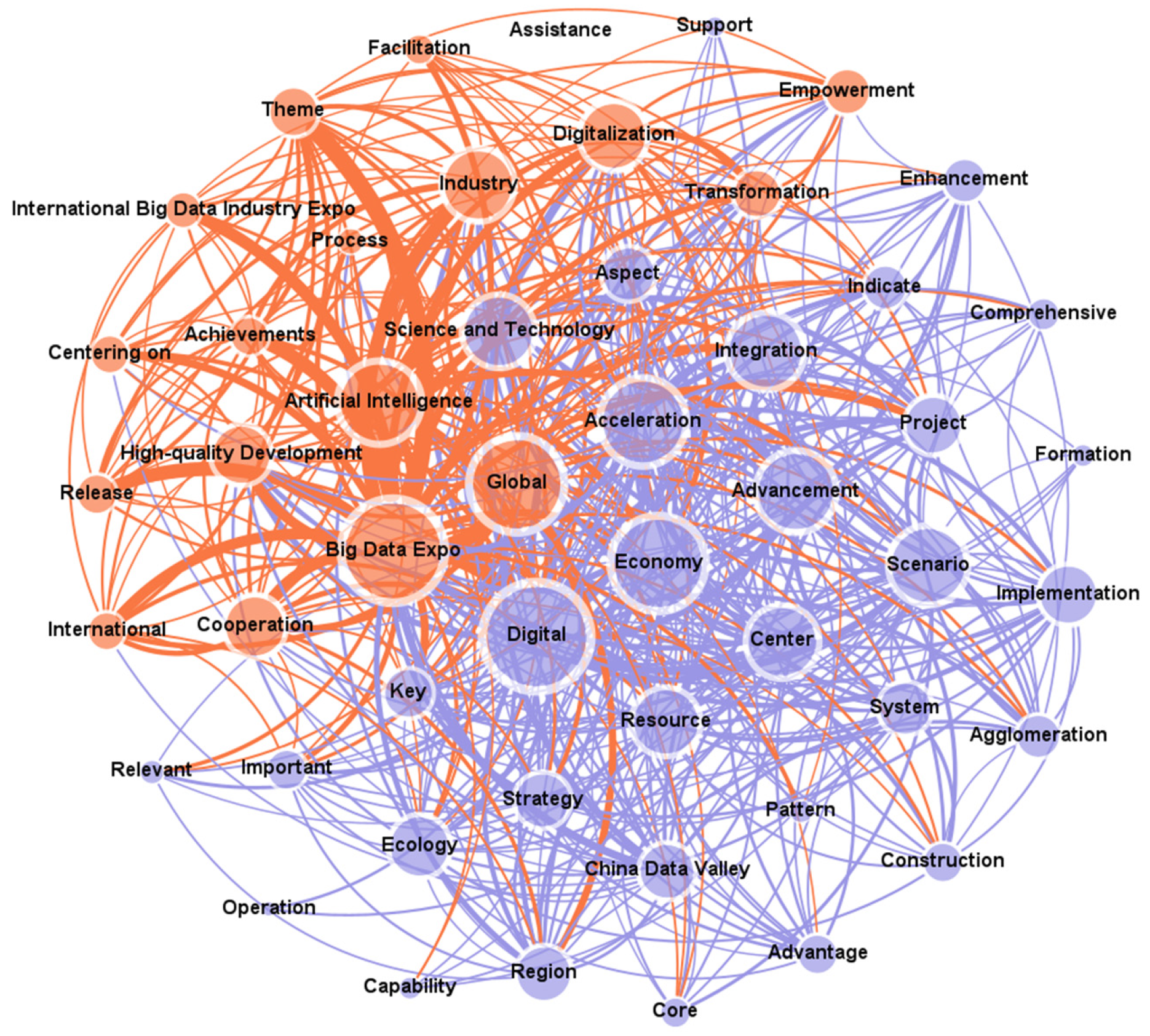
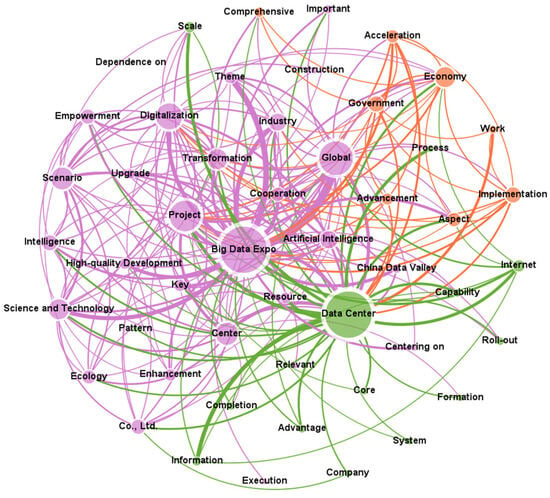
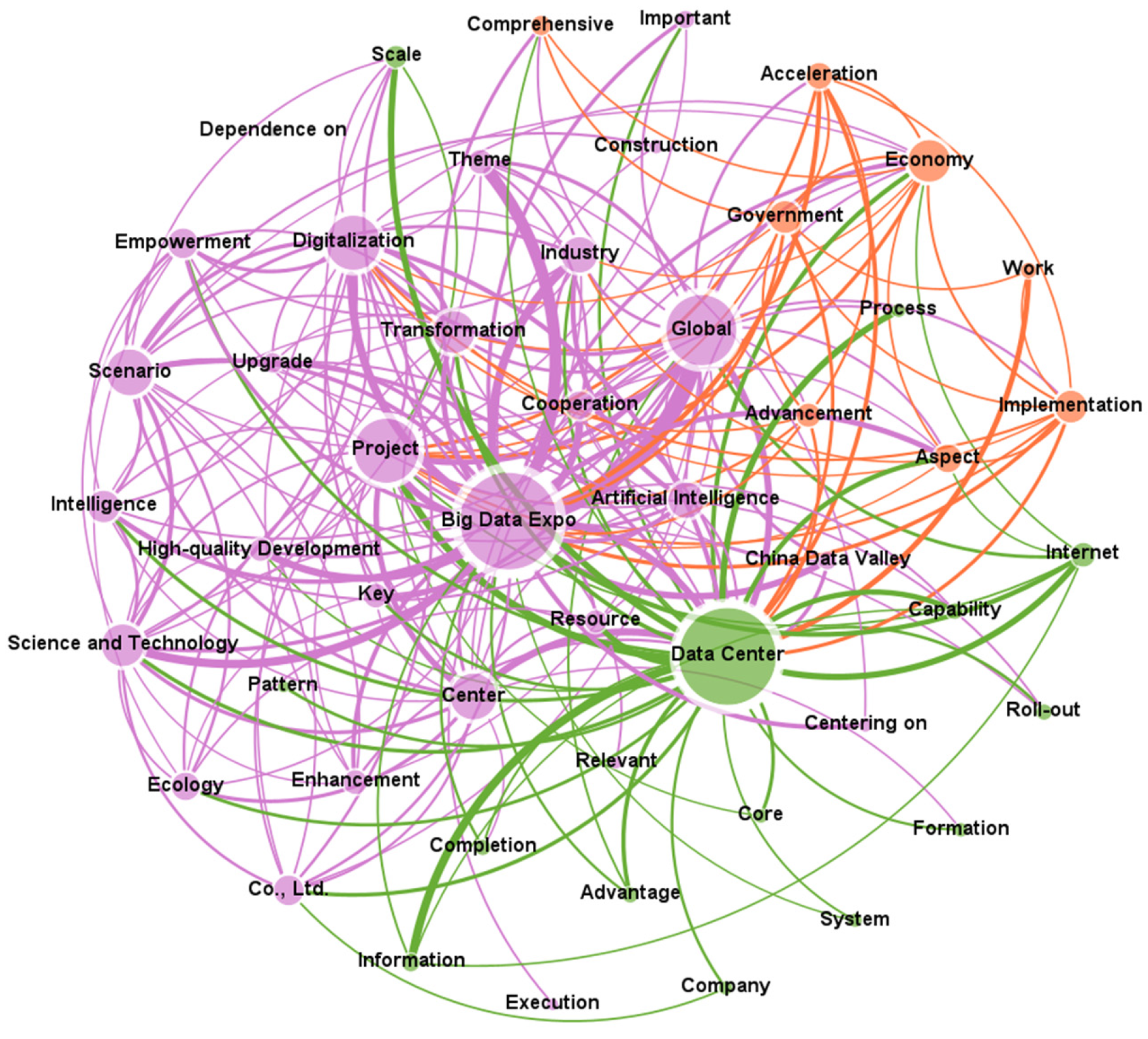
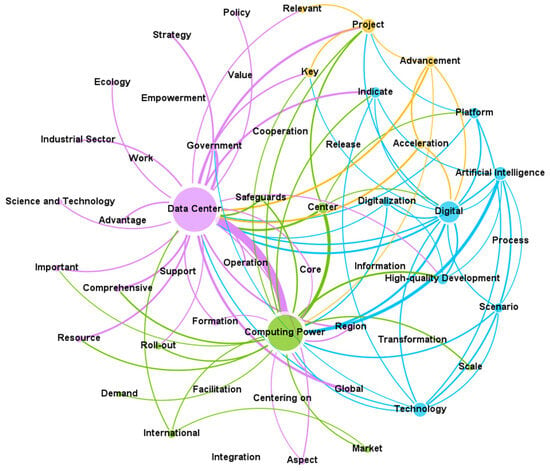
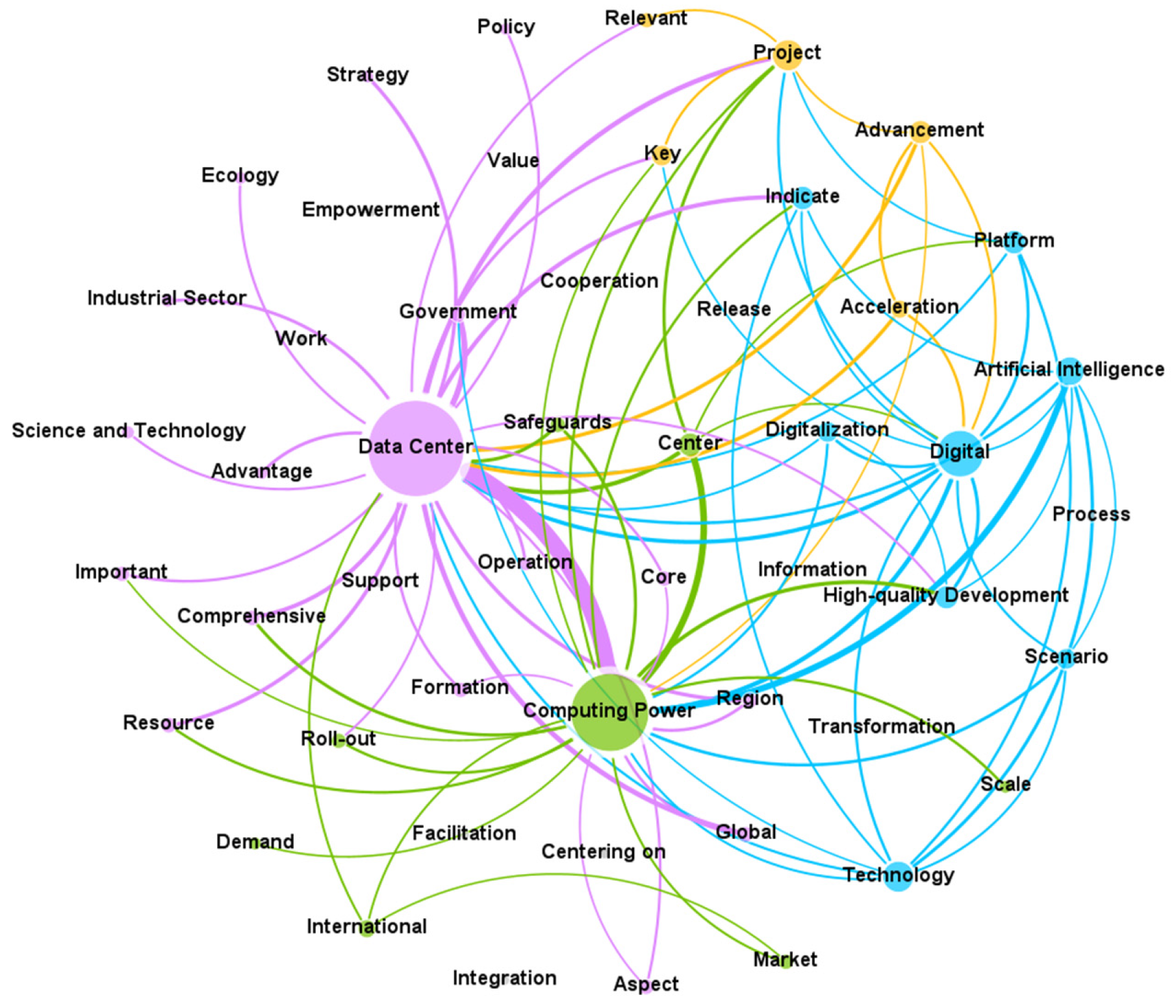
To further delineate the distinct framing strategies across different media types, the thematic priorities of each were examined through co-word network analysis. Figure 10, Figure 11 and Figure 12 visualize the co-word networks for the three media types, with node color indicating thematic clusters and node size reflecting node degrees. The figures reveal that both national and local official media emphasize the Big Data Expo, while market-oriented trade media and local official media share a focus on data center development. Each media type exhibits distinct thematic priorities: national official media demonstrate a pronounced focus on internationalization, digital economy, and the advancement of digitalization initiatives; local official media exhibit a concentration on data center development, project implementation, and industrial transformation; and market-oriented trade media prioritize data centers and computing power, digital industry growth, as well as market demand, project progress, and operational guarantees.
Figure 10.
Co-word network of national official media.
Figure 11.
Co-word network of local official media.
Figure 12.
Co-word network of market-oriented trade media.
Community detection revealed that the national official media, local official media, and market-oriented trade media contained 2, 3, and 4 thematic clusters, respectively. The national official media network formed two clusters around the Big Data Expo and Digital. The local official media network exhibited three clusters centered on the Big Data Expo, Data Center, and Economy, while the market-oriented trade media network displayed four clusters organized around Data Center, Computing Power, Digital, and Project. From national to local official media, and on to market-oriented industry media, the themes covered exhibit a distinct spectrum: the number of thematic clusters increases, with the focus extending from macro-strategic levels to meso-level economic and regional development, and down to specific implementation. This suggests how the official media anchor core narratives, while industry media expand these central themes into a range of diverse, actionable dimensions that encompass technical, industrial and project-specific discussions.
A comparison of network densities across the three figures reveals a distinct hierarchy: the national official media network features the most densely connected, followed by the local official media network, while the market-oriented trade media network is the sparsest. This pattern suggests that national official media foster a cohesive opinion sphere and policy consensus, as tight interconnections reinforce consistent agenda-setting and normative alignment. In contrast, market-oriented trade media reflect a strategy of audience segmentation and thematic diversification, prioritizing flexibility and specialized coverage. The local official media occupies an intermediate position, balancing adherence to state-led agendas with simultaneous consideration of regional concerns and specific implementation challenges.
Core-periphery analysis further revealed distinct discursive strategies across media types. National official media constructs a macro-strategic narrative centered on the Big Data Expo, Digital, Global, Artificial Intelligence, Economy, and Science and Technology. The framing positions the “China Data Valley” within a broad national and global discourse, reinforcing its image as a benchmark initiative in the national data industry, while showing less emphasis on implementation-level terms such as Support, Operation, or Assistance.
In contrast, local official media builds a project-oriented narrative, with core vocabulary like Data Center and Project serving to emphasize tangible outcomes. However, the peripheral position of terms such as Execution and Dependence indicates a tendency to highlight isolated successes without delving deeply into practical implementation challenges, including technical adaptation, resource allocation, and administrative coordination. The framing fails to account for the synergistic interdependencies across government, enterprises, and research institutions during the development of the China Data Valley.
Market-oriented trade media exhibit a techno-pragmatic discourse, characterized by a prevalence of infrastructure and technical terms such as Data Center, Computing Power, and AI. It is noteworthy that the peripheral positioning of terms such as Value, Transformation, and Empowerment reflects a discursive paradigm that emphasizes the instrumental dimensions of technology and implementation feasibility, while downplaying broader questions of socio-economic transformation and human-centered value. While this market-oriented approach is indeed effective in showcasing advancements in big data and computing technology, it has the tendency to distill a complex socio-technical phenomenon down to an array of deployable assets, thereby narrowing public understanding of its profound and far-reaching social significance.
5. Conclusions, Suggestion, Limitations and Future Work
By integrating descriptive analysis, LDA topic modeling, and co-word network analysis, this study establishes a replicable computational text analysis framework that deciphers the mechanisms behind the media construction of Guiyang’s “China Data Valley” urban image. This approach advances the empirical application of media framing theory, revealing how an inland city strategically builds a high-tech identity under the Digital China policy.
The principal findings are organized around three core dimensions: discourse power, addressing the question of “who frames”; narrative architecture, examining “what is framed”; and strategic differentiation, analyzing “how framing differs”.
Firstly, media discourse power exhibits a tripartite structure characterized by national-level leadership, local supplementation, and industry coordination. This reveals an efficient collaborative model for policy-driven urban image construction in China’s unique media ecosystem. However, this model has also led to an excessive reliance of media narratives on landmark events such as the Big Data Expo, resulting in the dissemination of the city’s image presenting a “fragmented” feature.
Secondly, this study contributes a three-layer narrative architecture to media framing theory. The architecture functions in a synergistic and non-sequential manner: the foundational layer supplies essential material and institutional support; the operational layer drives data valorization and industrial upgrading; and the expressive layer translates these operations into public-facing narratives. It is noteworthy that, beyond the infrastructure-oriented discourse of the Digital China strategy, the architecture also represents the media’s conscious framing of the urban image within China’s unique socio-political context. “China Data Valley” is reinterpreted as a comprehensive strategic initiative: not merely a pursuit of technological advancement, but a systemically designed endeavor that integrates big data to reshape production relations, enhance public welfare, promote social progress, and ultimately drive broader socio-economic transformation.
Finally, this study extends media framing theory by identifying a complementary media ecosystem where different media types exhibit distinct agenda-setting preferences: the national level sets the macro tone, the market-oriented level deepens and diversifies, while the local level serves as an intermediary, collectively creating a top-down collaborative communication network that progresses from conceptual guidance to practical implementation. This offers insights into the dynamics among media outlets, revealing not merely competition but, more significantly, how frames can interact synergistically to construct a coherent national strategic narrative within the context of a state-influenced media ecosystem.
Based on the findings, the following suggestions are proposed for urban governance and media practice. First, the government is advised to orchestrate a differentiated media strategy: proactively provide national official media with macro-level narratives, and supply local and market-oriented media with granular stories. Second, communication materials can be flexibly released based on the three-layer architecture, which connects the respective layers to transform technological achievements into experiences perceivable by the public, thereby enhancing the persuasiveness of the communication. Third, the media should consider building a sustained narrative beyond event-centric reporting. This process entails the proactive dissemination of recent achievements in urban development, compelling narratives about daily life, and cutting-edge technological advancements to maintain long-term engagement and coherence. Finally, recognizing the value of a complementary media ecosystem, various media outlets should achieve synergistic dissemination through differentiated content.
Guiyang’s experience demonstrates a reference pathway for latecomer regions: by strategically aligning differentiated media narratives with national policy agendas, cities can construct a distinctive digital identity that transcends conventional geographic and developmental limitations. The three-layer narrative architecture and the identified framing strategies together form a conceptual framework for analyzing how latecomer regions construct high-tech identities through media. The integrated computational approach provides a practical tool to apply this theoretical lens to other cases in an objective, scalable manner. While the findings are context-specific, the theoretical and computational framework enables the methodology, rather than merely its specific conclusions, to be applied to other cases.
While this study provides valuable insights, it also acknowledges the following limitations and suggests directions for future work.
First, the primary data source selected for this study, while justified in the data collection section for its utility, may not fully represent the entire Chinese media landscape due to the platform’s inherent algorithmic curation. Future studies could expand the sample sources to enhance generalizability.
Second, this study focuses on the discursive mechanisms of media framing, which thus leaves aside the deeper political and economic drivers behind Guiyang’s pursuit of a high-tech identity. While the media campaign has been contextualized within national strategies, such as Digital China, the analysis does not delve into the core structural drivers. These aspects are significant and thus merit further exploration in the future. It is hoped that this study’s focus on media framing will establish the foundation for subsequent related research.
Author Contributions
Conceptualization, M.A.; Methodology, M.A.; Software, M.A.; Validation, M.A.; Formal analysis, M.A.; Investigation, M.A.; Resources, M.A.; Data curation, M.A. and L.S.; Writing—original draft, M.A.; Writing—review & editing, M.A. and L.S.; Visualization, M.A.; Supervision, L.S.; Project administration, L.S.; Funding acquisition, L.S. All authors have read and agreed to the published version of the manuscript.
Funding
This research was funded by the General Project of the National Social Science Fund of China “Study on the Formation Mechanism and Promotion Strategies of Identification with Core Values in Online Communities” (Grant No. 21BSH049); and the Heilongjiang Provincial Higher Education Undergraduate Teaching Reform Key Entrusted Project “Research on Knowledge Production and Innovation Pathways in New Liberal Arts Disciplines—With the Development of Social Science Majors as an Example” (Grant No. SJGZ20220008).
Institutional Review Board Statement
Not applicable.
Informed Consent Statement
Not applicable.
Data Availability Statement
The original contributions presented in this study are included in this article. Further inquiries can be directed to the corresponding author.
Acknowledgments
During the preparation of this manuscript, the authors used Doubao for the purpose of minor grammar checking and slight language polishing. The authors have reviewed and edited the output and take full responsibility for the content of the publication.
Conflicts of Interest
The authors declare no conflicts of interest.
References
- Zhao, M.; Fang, K. Extending the research on digital China: The transnational lens. Inf. Commun. Soc. 2022, 26, 270–285. [Google Scholar] [CrossRef] [Scilit]
- Khanal, S.; Zhang, H.; Taeihagh, A. Development of New Generation of Artificial Intelligence in China: When Beijing’s Global Ambitions Meet Local Realities. J. Contemp. China 2024, 34, 19–42. [Google Scholar] [CrossRef] [Scilit]
- Zhang, C.; Liu, B.; Yang, Y. Digital economy and urban innovation level: A quasi-natural experiment from the strategy of “Digital China”. Humanit. Soc. Sci. Commun. 2024, 11, 574. [Google Scholar] [CrossRef] [Scilit]
- Entman, R.M. Framing: Toward Clarification of a Fractured Paradigm. McQuail’s Read. Mass Commun. Theory 1993, 43, 51–58. [Google Scholar] [CrossRef] [Scilit]
- Pan, Z.; Kosicki, G.M. Framing analysis: An approach to news discourse. Political Commun. 1993, 10, 55–75. [Google Scholar] [CrossRef] [Scilit]
- Lynch, K. The Image of the City; MIT Press: Cambridge, MA, USA, 1960. [Google Scholar]
- Meenar, M.; Afzalan, N.; Hajrasouliha, A. Analyzing Lynch’s City Imageability in the Digital Age. J. Plan. Educ. Res. 2022, 42, 611–623. [Google Scholar] [CrossRef] [Scilit]
- Hospers, G.-J. Lynch, Urry and city marketing: Taking advantage of the city as a built and graphic image. Place Brand. Public Dipl. 2009, 5, 226–233. [Google Scholar] [CrossRef] [Scilit]
- Xv, Y.; Yin, J. Research on Work Mechanism of Image Resources of City for Brand. In Proceedings of the 2012 Second International Conference on Business Computing and Global Informatization, Business Computing and Global Informatization (BCGIN), 2012 Second International Conference on 2012, Shanghai, China, 12–14 October 2012; pp. 923–926. [Google Scholar] [CrossRef] [Scilit]
- Filomena, G.; Verstegen, J.A.; Manley, E. A computational approach to ‘The Image of the City’. Cities 2019, 89, 14–25. [Google Scholar] [CrossRef] [Scilit]
- Gilboa, S.; Jaffe, E.D.; Vianelli, D.; Pastore, A.; Herstein, R. A summated rating scale for measuring city image. Cities 2015, 44, 50–59. [Google Scholar] [CrossRef] [Scilit]
- Gao, B. A Study on the Communication Mode of Tik Tok’s “online celebrity City” Image: Taking Xi’an City Image Communication as an Example. Int. J. Educ. Humanit. 2023, 6, 151–155. [Google Scholar] [CrossRef] [Scilit]
- Jiang, Y.; Kuang, X. Image of a city in the local and global media: Suzhou as a case. Cities 2023, 143, 104593. [Google Scholar] [CrossRef] [Scilit]
- Zhou, J.; Ho, H.-W.; Mieiro, S. Government promotion and city image: Visitor intentions in Macao. Int. J. Tour. Cities 2024, 10, 1124–1144. [Google Scholar] [CrossRef] [Scilit]
- Qu, H.; Teh, B.T.; Nordin, N.A.; Liang, Z. Analysis of Guangzhou city image perception based on weibo text data (2019–2023). Heliyon 2024, 10, e36577. [Google Scholar] [CrossRef] [Scilit]
- Liu, Y.; Ye, R.; Jing, W.; Yin, X.; Sun, J.; Yang, Q.; Hou, Z.; Hu, H.; Shu, S.; Yang, J. Perceiving Fifth Facade Colors in China’s Coastal Cities from a Remote Sensing Perspective: A New Understanding of Urban Image. Remote Sens. 2025, 17, 2075. [Google Scholar] [CrossRef] [Scilit]
- Badami, A.A. Management of the image of the city in urban planning: Experimental methodologies in the colour plan of the Egadi Islands. Urban Des. Int. 2025, 30, 21–36. [Google Scholar] [CrossRef] [Scilit]
- Białous, M. Urban Soundscape as A Medium of Communication. J. Erciyes Commun./Erciyes İletişim Derg. 2023, 10, 543–554. [Google Scholar] [CrossRef] [Scilit]
- Zheng, R.; Luo, J.; Lu, S. Examining city image construction through the lens of linguistic soundscape: A case analysis of Shenzhen. Landsc. Res. 2024, 49, 554–567. [Google Scholar] [CrossRef] [Scilit]
- Chatzipoulka, C.; Nikolopoulou, M. Urban geometry, SVF and insolation of open spaces: London and Paris. Build. Res. Inf. 2018, 46, 881–898. [Google Scholar] [CrossRef] [Scilit]
- Bateson, G. A theory of play and fantasy. Psychiatr. Res. Rep. 1955, 2, 39–51. [Google Scholar]
- Goffman, E. Frame Analysis: An Essay on the Organization of Experience; Harvard University Press: Cambridge, MA, USA, 1974. [Google Scholar]
- Cacciatore, M.A.; Scheufele, D.A.; Iyengar, S. The End of Framing as we Know it … and the Future of Media Effects. Mass Commun. Soc. 2015, 19, 7–23. [Google Scholar] [CrossRef] [Scilit]
- Huang, J.; Obracht-Prondzynska, H.; Kamrowska-Zaluska, D.; Sun, Y.; Li, L. The image of the City on social media: A comparative study using “Big Data” and ”Small Data” methods in the Tri-City Region in Poland. Landsc. Urban Plan. 2021, 206, 103977. [Google Scholar] [CrossRef] [Scilit]
- Abesinghe, S.; Kankanamge, N.; Yigitcanlar, T.; Pancholi, S. Image of a City through Big Data Analytics: Colombo from the Lens of Geo-Coded Social Media Data. Future Internet 2023, 15, 32. [Google Scholar] [CrossRef] [Scilit]
- Mang, L.; Mohamed, S.; Abdul Aziz, A. Exploring City Image Communication Strategy of Hefei’s New Government Media. Malays. J. Soc. Sci. Humanit. 2023, 8, E002371. [Google Scholar] [CrossRef] [Scilit]
- Acuti, D.; Mazzoli, V.; Donvito, R.; Chan, P. An instagram content analysis for city branding in London and Florence. J. Glob. Fash. Mark. 2018, 9, 185–204. [Google Scholar] [CrossRef] [Scilit]
- Xie, C.; Qin, X.; Hu, J. Analysis on the Image Project of Hubei Local Cities under the Computer Operation: Based on the News Data of “the Hubei Daily” in 2019. J. Phys. Conf. Ser. 2020, 1578, 012015. [Google Scholar] [CrossRef] [Scilit]
- Marzouk, A.M. Egypt’s image as a tourist destination: An exploratory analysis of DMO’s social media platforms. Leis./Loisir 2021, 46, 255–291. [Google Scholar] [CrossRef] [Scilit]
- Zhang, L.; Zhao, S. City branding and the Olympic effect: A case study of Beijing. Cities 2009, 26, 245–254. [Google Scholar] [CrossRef] [Scilit]
- Ferreira, L.B.; de Moura Engracia Giraldi, J.; Maheshwari, V.; de Oliveira, J.H.C. Impacts of host city image in the country destination branding in sport mega-event context: Exploring cognitive and affective image dimensions. Int. J. Event Festiv. Manag. 2022, 13, 486–505. [Google Scholar] [CrossRef] [Scilit]
- Oshimi, D.; Harada, M. Host residents’ role in sporting events: The city image perspective. Sport Manag. Rev. 2019, 22, 263–275. [Google Scholar] [CrossRef] [Scilit]
- Doustaly, C.; Zembri-Mary, G. Is urban planning returning to the past in search of a sustainable future? Exploring the six Paris and London Olympic Games (1900–2024). Plan. Perspect. 2024, 39, 675–700. [Google Scholar] [CrossRef] [Scilit]
- Ahmadreza, S.-D.; Giuseppe, D.-L. Boosting city image for creation of a certain city brand. Geogr. Pannonica 2019, 23, 23–31. [Google Scholar] [CrossRef] [Scilit]
- Maher, K.H.; Carruthers, D. Urban Image Work: Official and Grassroots Responses to Crisis in Tijuana. Urban Aff. Rev. 2014, 50, 244–268. [Google Scholar] [CrossRef] [Scilit]
- Luo, A.J. Media system in China: A Chinese perspective. Int. Commun. Chin. Cult 2015, 2, 49–67. [Google Scholar] [CrossRef] [Scilit]
- Ostini, J.; Ostini, A.Y.H. Beyond the Four Theories of the Press: A New Model of National Media Systems. Mass Commun. Soc. 2002, 5, 41–56. [Google Scholar] [CrossRef] [Scilit]
- Blei, D.M.; Ng, A.Y.; Jordan, M.I. Latent Dirichlet Allocation. J. Mach. Learn. Res. 2003, 3, 993–1022. [Google Scholar] [CrossRef]
- DiMaggio, P.; Nag, M.; Blei, D. Exploiting affinities between topic modeling and the sociological perspective on culture: Application to newspaper coverage of U.S. government arts funding. Poetics 2013, 41, 570–606. [Google Scholar] [CrossRef] [Scilit]
- Griffiths, T.L.; Steyvers, M. Finding scientific topics. Proc. Natl. Acad. Sci. USA 2004, 101 (Suppl. S1), 5228–5235. [Google Scholar] [CrossRef] [Scilit]
- Röder, M.; Both, A.; Hinneburg, A. Exploring the Space of Topic Coherence Measures. In Proceedings of the Eighth ACM International Conference on Web Search and Data Mining, Shanghai, China, 2–6 February 2015; pp. 399–408. [Google Scholar] [CrossRef] [Scilit]
- Yusof, M.A.; Saee, S. Codeswitching: Exploring perplexity and coherence metrics for optimizing topic models of historical documents. Int. J. Syst. Innov. 2024, 8, 103–118. [Google Scholar] [CrossRef]
- Mimno, D.; Wallach, H.; Talley, E.; Leenders, M.; McCallum, A. Optimizing semantic coherence in topic models. In Proceedings of the 2011 Conference on Empirical Methods in Natural Language Processing, Edinburgh, UK, 27–31 July 2011; pp. 262–272. [Google Scholar]
- Syed, S.; Spruit, M. Full-text or abstract? examining topic coherence scores using latent dirichlet allocation (October). In Proceedings of the 2017 IEEE International conference on data science and advanced analytics (DSAA), Tokyo, Japan, 19–21 October 2017; pp. 165–174. [Google Scholar]

Disclaimer/Publisher’s Note: The statements, opinions and data contained in all publications are solely those of the individual author(s) and contributor(s) and not of MDPI and/or the editor(s). MDPI and/or the editor(s) disclaim responsibility for any injury to people or property resulting from any ideas, methods, instructions or products referred to in the content. |
© 2025 by the authors. Licensee MDPI, Basel, Switzerland. This article is an open access article distributed under the terms and conditions of the Creative Commons Attribution (CC BY) license (https://creativecommons.org/licenses/by/4.0/).