


Abstract
Among the pictorial remains unearthed from Buddhist monastery sites in the Khotan region, a distinct category of female deities holds considerable significance. Belonging to the local protective pantheon of Khotan, they fulfilled the dual functions of safeguarding the Buddhist Dharma and protecting the local population. The Earth Goddess (Pṛthivī-Dṛḍhā) discussed in this paper is a particularly representative example of such goddesses. This study will focus on early Chinese translations of Buddhist scriptures, with particular reference to and utilization of the Khotanese and Tibetan Buddhist textual materials unearthed from Dunhuang, as well as relevant scholarly findings. Through these sources, this paper attempts to explore how this relatively inconspicuous minor protective deity in early Gandhāran Buddhist art rose to prominence in Khotan during the 9th to 10th centuries, becoming a greatly venerated local protective goddess who assumed the status of a wet nurse (or nurturing mother) figure for the Khotan region. The iconography of the Earth Goddess, as known from early Mahāyāna scriptures and Gandhāran art, underwent a prolonged process of transformation and reinterpretation in Khotan, evolving from textual sources into visual representations. This transformation highlights the creative agency of the ancient Khotanese in the realms of culture and art.
1. Introduction
Among the painted remains unearthed at Buddhist temple sites in the Khotan region, there are many images depicting Buddhist protective deities, one category of which consists of local protective deities of Khotan. These deities, originally widespread in the Gandhāra region, became protectors of the Dharma and local guardian deities of Khotan along with the eastward transmission of Buddhism from India and the translation and compilation of early Mahāyāna scriptures in Khotan (Rong and Zhu 2011, p. 190). The textual study of the local protective deities of Khotan was first initiated by Zhang Guangda and Rong Xinjiang. In their article “The records of famous images, the paintings of famous images from Dunhuang and Khotan as reflected in them” published in the mid-1980s, they carried out a preliminary survey of Chinese, Khotanese, Tibetan and other documentary sources related to the guardian deities of Khotan. References to the Eight Great Guardians of Khotan appear in documents such as the Mahāvaipulya Mahāsaṃnipāta Sūtra (Dafang deng daji jing 大方等大集經), fascicle 55, the “Candragarbha-parivarta” (Yuezang fen 月藏分); the Khotanese Buddhist votive text P.2893 from Dunhuang; and the Tibetan Religious History of the Li Country (Tib.: Li yul chos kyi lo rgyus, P.t. 960). (Zhang and Rong 1986, pp. 69–147). Duan Qing, in her 2006 article “Newly Discovered Khotanese Fragments of the Suvarṇaprabhāsottama-sūtra,” published two fragments of this sūtra held in the collection of the National Library of China. One fragment, the Suv11 (inventory no: BH2-24) from the “Saṃjñāya Chapter”, concerns Saṃjñāya, the great yakṣa, one of the Eight Great Guardian Deities of Khotan; the other fragment, the Suv14.36-46 (inventory no: BH2-23) from “The Chapter on the Yakṣas Protecting the Dharma”, also deals with protective demons and spirits, and likewise mentions Saṃjñāya, the great yakṣa who commands the multitude of world-protecting and dharma-protecting demons and spirits (Duan 2006, pp. 7–22; 2013, pp. 185–201).
In fact, as Zhang Guangda and Rong Xinjiang have pointed out, both the Mahāvaipulya Mahāsaṃnipāta Sūtra, and the Suvarṇaprabhāsa Sūtra (Jin guangming jing 金光明經) which circulated widely in Khotan, contain a large number of incantations (dhāraṇī). Khotanese document confirms that, by the 8th century or even somewhat earlier, the Vajrayāna, which developed from the early Mahāyāna Yogācāra school, had become prevalent in Khotan, and the Vajrayāna incorporated deities absorbed from Hinduism into the Khotanese pantheon. A large number of eulogistic verses (gāthās) and incantations (dhāraṇīs) can be found in the manuscript discovered in Khotan and Dunhuang. These include Buddhist scriptures or prayers written in the Khotanese language, as well as Sanskrit texts transcribed using the Khotanese Brahmi script (Zhang and Rong 1993, pp. 254–63). In 2007, Prods Oktor Skjærvø published a study of two Khotanese amulet manuscript fragments discovered at Dandan Oilik in the 1990s and later preserved at the Xinjiang Institute of Cultural Relics and Archaeology, providing their decipherment, transliteration, and English translation (Skjærvø 2007, pp. 387–401). In her article titled “Mantra Amulet” published in 2009 (revised in 2013), Duan Qing also produced a transliteration, decipherment, and Chinese translation of these two amulet manuscripts. Based on the content of the manuscripts, Duan considers the fragments as “The Amulet of the Mantra Spoken by the Assembly of Nāgas”1 and holds that these manuscripts belong to the category of Buddhist protective text (Duan 2009, pp. 267–68; 2013, p. 208).2
Duan Qing pointed out that this Khotanese amulet of the assembly of Nāga kings contains a substantial portion of mantras. Like the Pañcarakṣā (Five Protections) in Mahāyāna Buddhist literature, which also features numerous mantras, these incantations are believed to have mystical efficacy, capable of averting various national calamities and disasters as well as many forms of human suffering (Duan 2013, pp. 226–29). In 2013, Duan Qing also published an article on a Khotanese Buddhist rakṣā literature manuscript fragment, “The Amulet for Countering the Fifteen Demons”,3 in which she points out that this manuscript is a mantra amulet designed to protect (rakṣā) pregnant women and infants, warding off the fifteen types of female demons (rākṣasīs) that harm fetuses and cause childhood diseases. She further notes that these fifteen demons are identical to the fifteen yakṣa rākṣasīs described in several Chinese translations of Buddhist rakṣā texts, dating from the Northern Wei (386–534) to the Tang (628–907). Among them, she specifically mentions that both the Fo shuo hu zhu tongzi tuoluoni jing 佛說護諸童子陀羅尼經 (Dhāraṇī sūtra for Protecting Children) translated by Bodhiruci 菩提流支 (first half of the 5th century) of the Northern Wei and the Mahāsahasrapramardana sūtra (Shouhu da qian guotu jing守護大千國土經) translated by Dānapāla 施護 (?–1017) record these fifteen female evil demons that attack fetuses and children4. She also mentioned that images related to these fifteen female demons, accompanied by relevant Khotanese and Chinese inscriptions, were discovered in the Dunhuang Library Cave (Duan 2013, pp. 208–9).
With regard to the study of iconographic sources on the protective deities of Khotan, research prior to 2000 mainly focused on the organization of the artistic collections obtained by European archeological expeditions and individuals in Xinjiang and Dunhuang, China, during the late 19th and early 20th centuries, as well as the preliminary iconographic interpretation of individual relevant images.5 The earliest relevant work on the iconographic study of Khotanese art collections is Eiichi Matsumoto’s Studies on Dunhuang Paintings (Tonkōga no Kenkyū 敦煌畫の研究), published in 1937. In this work, Matsumoto examined the iconography of Vaiśravaṇa, the heavenly king who is one of the Eight Great Guardian Deities of Khotan,6 with particular attention to the high-relief fragmentary image of Vaiśravaṇa together with the Dṛḍhā the Earth Goddess from the Rawak site in Khotan, as well as a half-length portrait of the heavenly king Vaiśravaṇa on paper discovered at the Khadalik site.7 He also pointed out the close relationship between the cult of the heavenly king Vaiśravaṇa in Khotan and the ancestral lineage of the Khotanese royal family (E. Matsumoto 1937, pp. 450–60, figs. 120–121). Joanna Williams’s publication The Iconography of Khotanese Painting (Williams 1973), a foundational study of Khotanese iconography, largely remains at the level of preliminary and brief description in its identification and interpretation of various Khotanese images; nonetheless, her keen perception of a considerable number of iconographic features laid an important foundation for subsequent research. For instance, she identified one of the important iconographic features of the great yakṣa Saṃjñāya as his association with a deer, thus providing crucial evidence for the study of the identification of this important deity who is one of the Eight Great Guardian Deities of Khotan (Williams 1973, pp. 137–39, figs. 40–43).
After 2000, the study of the iconography of the protective deities of Khotan entered a thematic phase. Zhang Xiaogang’s “The Khotanese Kings Who Protect the Kingdom in Dunhuang ‘Auspicious Image’ Paintings” (X. Zhang 2005) systematically investigated, from an archeological perspective, the locations and basic iconographic features of the murals of the Eight Great Guardian Deities of Khotan in the Dunhuang caves (X. Zhang 2005, pp. 50–56). Rong Xinjiang and Zhu Lishuang’s “Text and Image: A New Investigation of the Eight Great Guardian Deities of Khotan” (Rong and Zhu 2011), carried out a comprehensive and in-depth textual and iconographic examination of the relevant names and the murals of the Eight Great Guardian Deities in the Mogao Grottoes, drawing on Chinese, Tibetan and Khotanese sources (Rong and Zhu 2011, pp. 190–218). Erika Forte’s “On a Wall Painting from Toplukdong Site No. 1 in Domoko: New Evidence of Vaiśravaṇa in Khotan?” identified and interpreted the figure of Saṃjñāya in a newly discovered mural fragment from the Toplukdong Buddhist temple site at Domoko (Ch. Damagou 達瑪溝), Khotan, in the year 2000 (Forte 2014, pp. 215–24). The present author’s “Yakṣa in Images in the Buddhist Protector Deity System of Khotan (6th to the 8th Century)—A Discussion Centered on the Painted Remains from the Damagou Buddhist Temple Site” (H. Zhang 2017) discussed the diversity and complexity of yakṣa images in the Khotan region, as represented by the Saṃjñāya yakṣa from the Topulukdong site; the images simultaneously possesses the features of both bodhisattvas and deities, while still retaining the iconographic characteristics of demons (yakṣa), all of which find corresponding textual records in Buddhist scriptures of various periods (H. Zhang 2017, pp. 205–44).
In addition to the aforementioned studies on the theme of the Eight Great Local Guardian Deities of Khotan, since around 2020, researchers have begun to turn their attention to the iconographic sources related to protective goddesses/female yakṣas of Khotan discovered in the Khotan and Dunhuang regions. These include C. Lo Muzio’s “Skanda and the Mothers in Khotanese Buddhist Paintings” (Lo Muzio 2017, pp. 71–89), Meng Sihui’s “The Paper Painting ‘Sixteen Female Grahas to Protect Children’ and the Worship of ‘to Protect Children’ in Khotan-Dunhuang Area” (Meng 2020, pp. 183–234), and the author’s study of the fragmentary paper painting of the Maṇḍala for the Protection of Children, collected by Aurel Stein in Dunhuang and now preserved in the National Museum, New Delhi, together with its Buddhist protective animal-headed demon figures.” (H. Zhang 2022, pp. 102–13) and “Textual and Pictorial Studies on the Four-Armed Animal-Headed Yakṣa-Goddess and Revatī in Khotanese Buddhist Protective Deity Images” (H. Zhang 2024, pp. 293–307). These researchers have all drawn upon materials related to mātṛkās (mother goddess) cults in Chinese Buddhist translations and Indian traditional texts. Focusing on their respective cases studies, they explore how the female rākṣasas/yakṣas who harmed fetuses and infants within the Hindu tradition were transformed within a Buddhist context into demon deities that safeguard the dharma and protect women and children, ultimately being incorporated into the iconographic pantheon of local protective goddesses in Khotan.
Nevertheless, regarding the extant images of protective goddesses of Khotan, the diversity of iconographic types and the complexity of their textual sources necessitate specialized studies on different categories of goddess images. For instance, Jia Yingyi has specifically proposed that the image of the Earth Goddess constitutes an important subject in Khotanese Buddhist art and represents an iconographic type capable of reflecting the distinctive iconographic features of Khotanese Buddhism (Jia 2010, p. 102). Yet, although the image of the Earth Goddess already existed in Gandhāran Buddhist art prior to the 3rd century CE and was recorded in early Mahāyāna Buddhist scriptures, why did she frequently appear—as a local protective goddess of Khotan—in Khotanese Buddhist manuscripts from Dunhuang and in the murals of Buddhist temples in the Khotan region from the 9th to 10th centuries CE onward? Why does this situation occur? What position does she occupy among the local protective goddesses of Khotan? These will be the focal points of the research in the present study.
2. The Khotan Local Goddesses in the Khotanese Prayer Texts of Dunhuang—Manuscripts Stein Ch.00267 and Or.8210/S.2471
Among the Khotanese Buddhist documents unearthed from the Dunhuang Library Cave, prayer texts addressed to various Buddhas, bodhisattvas, and protective deities have been preserved. Among them, two prayer texts in the manuscripts IOL Khot S.11/Ch.00267 and Or.8210/S.2471 collected by Aurel Stein (hereafter abbreviated as Ch.00267 and S.2471, respectively) have been studied by Duan Qing (Duan 2020, p. 155), who identifies them as belonging to the latest Khotanese manuscripts, dated to the mid-10th century, with both scrolls commissioned by members of the Khotanese royal family. These two Khotanese prayer texts were first studied by H. W. Bailey in the early 1940s, who published a Khotanese transcription and partially translated them into English (Bailey 1942, pp. 889–93). Afterwards, Duan Qing published the transcription, a complete German translation and a study of the S.2471 prayer text in her doctoral thesis published in 1992 (Duan 1992, pp. 82–86). Subsequently, P. O. Skjærvø provided a transcription and an English translation of the S.2471 prayer text (Skjærvø 2002, pp. 32–35). Duan Qing then published a Chinese translation and related research in 2020 (Duan 2020, pp. 150–59).
Comparing the studies of Bailey, Duan, and Skjærvø, and contrasting Bailey’s English translation of lines 2–35 of the Ch.00267 prayer text (Bailey 1942, pp. 889–91) with Duan Qing’s Chinese translation of lines 229–284 of S.2471, (Duan 2020, pp. 154–55), it can be seen that the two documents are remarkably similar in both textual structure and the supplicatory content. Duan Qing points out that the prayers are divided into two levels, the first comprising Buddhas and bodhisattvas, and the second comprising protective deities. Among the Buddhas invoked in the prayer texts is Verauca (in Khotanese), i.e., Vairocana (in Sanskrit), Mahāvairocana (Ch. 大日如來), the most important Buddha in Tang Esoteric Buddhism (Ch. Tangmi 唐密), normally positioned at the center of the maṇḍala. In these two prayer texts, however, he is located at the bottom, which reflects that throughout its history, Khotanese Buddhism consistently emphasized the Mahāyāna traditions, and that in Khotan, “folk worship of the Buddha venerated the Buddha as a deity,” embodying the local folk characteristics of Buddhism. The protective deities in the prayer texts are all tutelary deities of the Khotanese territory, who protect estates, castles, and borders. Therefore, Professor Duan Qing translated these Buddhas as “…deva-Buddhas” (or “celestial Buddhas” 天佛) (Duan 2020, pp. 153, 155–56).
According to Bailey’s translation of the Ch.00267 prayer text, residents of the city of Ṣacū8, the genii, deities, and protectors, total thirty million (koṭi) divine beings (Bailey 1942, p. 891). Apart from the “1800 Nāga kings and their hosts,” all the rest are protective goddesses of “the earth, the city gods, and the royal palaces.” In the S.2471 prayer text of the Stein collection, the protective deities of Khotan total 7807, with their retinues, amount to “one hundred and nine koṭis,” guarding the land of Khotan (Bailey 1942, p. 891; Duan 2020, p. 155).
Among the local protector deities in the Khotan region, in addition to male gods such as the Eight Great Guardian Deities9—including Vaiśravaṇa (Pishamen 毗沙門), Saṃjñāya (Sanzhi 散脂), and Gṛhāvadapta (Reshe 熱舍)—and the Eight Luminaries of Khotan10, according to H. W. Bailey’s research, there are also female local protector deities referred to as “celestial maidens,” among whom the names of thirteen goddesses are recorded (Bailey 1942, pp. 915–17). Bailey and Duan Qing have provided cross-linguistic equivalents for six of these goddesses, translating their names across Khotanese, Sanskrit and Chinese: Agūśa’/Aṃgūśa’(Anajinshou, 阿那緊首), Sthānāvą/Sthānāvī (Tananduli, 他難闍梨), Cą̄mą̄ṇḍva/Cāmuṇḍā (Zamenzhi, 匝門支), Hārrva/Hāritī (Helidi, 訶梨帝), Raivi or Reva/Revatī (Lipodi, 梨婆坻), and Draiṇḍa or Daṣa/Dṛḍhā (Jianlao, 堅牢) (Bailey 1942, pp. 890–93; Skjærvø 2002, pp. 33–34; Duan 1992, pp. 83–84, cf. Duan 2020, pp. 154–55). According to the transcriptions by Bailey and Prods Oktor Skjærvø, the Earth Goddess Dṛḍhā (Skt. Dṛḍhā; Ch. 堅牢) appears in the Dunhuang Khotanese manuscripts as draiṇḍa in line 28 of Ch.00267, and as daṣa’ in line 264 of S.2471 (Bailey 1942, p. 890; Skjærvø 2002, p. 500), respectively.
In the Dunhuang Khotanese prayer texts, the “Earth goddess” mentioned in manuscripts Ch.00267 and S.2471 appears in Khotanese as draiṇḍa and daṣa’, respectively, and has been unanimously identified by Bailey and Duan Qing with the Sanskrit Dṛḍhā, corresponding to the Chinese translation “堅牢” (firm/steadfast). In Buddhist literature, Dṛḍhā is an epithet of the earth goddess “Pṛthivī”. Buddhism absorbed this concept of “Dṛḍhā” (“that which is firm”) and designated her as Dṛḍhā-pṛthivī (the Dṛḍhā Earth Goddess, Jianlao dishen 堅牢地神), one of the protective deities in Buddhism, who safeguards the Dharma together with the celestial devas. In the three extant Chinese translations of the Suvarṇaprabhāsa Sūtra (Golden Light Sūtra 金光明經), a separate chapter is devoted exclusively to her.
This goddess can be traced back to the ancient Indian Ṛg-veda (Wu 2010, pp. 42, 46–48). In Vedic literature, the longest hymn dedicated to Pṛthivī is found in the Atharva-veda, which repeatedly emphasizes her fecundity and productivity as the source of all vegetation, particularly crops, while nourishing all beings dwelling upon her. She is also called Dhātrī, the wet nurse of all beings, and is beseeched to pour forth her milk as a mother suckles her son (Kinsley 1987, p. 9).
3. The Earth Goddess (Pṛthivī) in Early Gandhāran Art: Between Text and Image
In early Gandhāran Buddhist art of the 2nd–3rd centuries CE, the Earth Goddess (Pṛthivī) is already depicted as a witness to the Buddha’s enlightenment, present at the site of Śākyamuni’s awakening and attesting to the merits accumulated over countless lifetimes. A 2nd-century CE sculptural fragment entitled Worship of the Triratna (Figure 1), excavated from the Buddhist site of Loriyan Tangai in present-day Pakistan and now preserved in the Indian Museum, Kolkata, depicts the Buddha’s proclamation of the Dharma through the three turnings of the Wheel of the Dharma (i.e., the Four Noble Truths), while the Earth Goddess appears beneath the three Dharma wheels as a witnessing deity (Pons 2024, p. 317, fig. II.5.36).
Figure 1.
Worship of Triratna (detail): Earth Goddess, low relief, 2nd century CE, from Loriyan Tangai, Pakistan, Indian Museum, Kolkata (Pons 2024, p. 317, fig. II.5.36).
Another fragmentary relief of the same theme, dating from the 1st to 3rd centuries CE and unearthed in the Gandhāra region, features at its center the Earth Goddess raising both arms and holding up three Dharma wheels, flanked by a deer on either side, symbolizing the historical Buddhist event in which the Earth Goddess witnessed the Buddha’s third turning of the Dharma wheel in the Deer Park at Sārnāth (Figure 2).11
Figure 2.
Worship of Triratna (detail): Earth Goddess, low relief, 1st–3nd century CE, from Gandhara, Collection Amory; photo courtesy of the website of the Indian Museum, Kolkata.
This episode of the Earth Goddess witnessing the Buddha’s turning of the Dharma wheel is recorded in several Chinese translations of Buddhist sūtras. In Chinese translations of Buddhist sūtras, the term “地神” does not mark gender morphologically; its referents, however, may encompass both male and female deities. In Chinese Buddhism, however, the Earth Goddess (Dṛḍhā Pṛthivī) is regarded as the Earth Mother. For example, it appears in fascicle 14 of the Ekottara Āgama (Zengyi ahan jing 增一阿含經), translated by Saṃghadeva 僧伽提婆 during the Eastern Jin dynasty (317–420); in fascicle 32 of the Dharmaguptaka Vinaya (Sifen lü 四分律), translated by Buddhayaśas 佛陀耶舍 and Zhu Fonian 竺佛念 during the Later Qin period (384–417); and in fascicle 15, sūtra no. 379, of the Saṃyukta Āgama (Za ahan jing 雜阿含經), translated by Guṇabhadra during the Liu Song dynasty.
In the Chinese translations mentioned above, the Earth Goddess (Pṛthivī) is consistently rendered as dishen 地神 (“Earth Goddess”). For example, fascicle 14 of the Ekottara Āgama states:
At that time, the Earth Goddess (地神, dishen), having heard these words, proclaimed: “Now the Tathāgata is turning the Dharma wheel in Vārāṇasī.”
是時,地神聞此語已,作是唱:”今如來在波羅㮈國轉法輪”。(T02, no. 125, p. 619b9–10)
After the mid-7th century CE, the Earth Goddess in Chinese Buddhist literature came to be referred to by a new name. For example, when mentioning this deity, fascicle 41 of the Abhidharma-mahāvibhāṣā-śāstra (Apidamo da piposha lun 阿毘達磨大毘婆沙論) translated by Xuanzang玄奘 states:
As the sūtra says: When the Buddha turned the Dharma wheel, the bhikṣus headed by Kauṇḍinya perceived the Dharma, and the Earth Goddess yakṣa raised her voice and proclaimed it far and wide. The World-Honoured One is now in the ṛṣi-deer park at Vārāṇasī. He has turned the Dharma wheel in the three turnings with its twelve aspects… and so on in full detail. … The sūtra says: When the Buddha turned the Dharma wheel, the Earth Goddess yakṣa raised her voice and proclaimed it far and wide.
如契經說:佛轉法輪,憍陳那等苾芻見法,地神藥叉,舉聲遍告。世尊今在婆羅痆斯仙人鹿苑。三轉法輪,具十二相。乃至廣說。…謂《契經》說:佛轉法輪,地神藥叉,舉聲遍告。(T27, no. 1545, p. 210a18-28)
And in fascicle 1 of the Sūtra on the Three Turnings of the Dharma Wheel (Foshuo san zhuan falun jing 佛說三轉法輪經) translated by Yijing 義淨 (635–713):
At that time, the earth-dwelling yakṣa (地居藥叉, diju yaocha), having heard the Buddha’s teaching, uttered a great voice and announced to the devas: “O gentle ones, you should know that the Buddha, at the Ṛṣi Descent Site (Ṛṣipatana) in the Deer Park (Mṛgadāva) of Vārāṇasī (Barāṇasī), has extensively expounds the Dharma wheel of three turnings and twelve aspects (dvādaśākāra)…”
是時,地居藥叉聞佛說已,出大音聲,告人天曰:“仁等當知,佛在婆羅痆斯仙人墮處施鹿林中,廣說三轉十二行相法輪,……。”(T02, no. 110, p. 504b12-14)
In this passage, Yijing refers to the “earth goddess” (dishen 地神) as an “earth-dwelling yakṣī” (diju yaocha 地居藥叉), while in fascicle 41 of the Abhidharma-mahāvibhāṣā-śāstra, Xuanzang further designates her as “Earth Goddess Yakṣī” (地神藥叉). It is evident that both Yijing and Xuanzang personally traveled to India in search of the Dharma; consequently, in their translations they must have possessed a deeper understanding of the Indian concept of the earth deity. The so-called “earth-dwelling yakṣī” mentioned in the text refers to a female yakṣa residing beneath the earth, usually depicted as a young woman. From the Buddhist site of Haḍḍa in Afghanistan, dating to the 2nd–4th centuries CE, a stucco fragment depicting a figure supporting three Dharma wheels (symbolizing the Three Jewels, triratna) with both hands has been unearthed (Figure 3). The French scholar Francine Tissot identified this figure as a yakṣī (Tissot 2002, p. 81). However, judging from its iconographic theme of supporting the triratna, together with the accounts of Yijing and Xuanzang, the principal figure should not be regarded merely as an ordinary yakṣī, but rather identified as the Earth Goddess Yakṣī (Dṛḍhā-pṛthivī-Yakṣī).
Figure 3.
Dṛḍhāpṛthivī-Yakṣī, holding the Triratna Stucco, 5th–6th century CE, from Hadda, Afghanistan, National Museum, Kabul (Tissot 2002, p. 81: pl.).
In early Gandhāran sculptural art, the Earth Goddess also frequently appears as a witness to the process of Śākyamuni Buddha’s cultivation before his enlightenment, attesting to the moment when Prince Siddhārtha sat in meditation under the Bodhi tree, repelled and subdued with wisdom and the power of concentration the disturbances of desires, fears, and temptations brought forth by Māra’s demonic army, thereby achieving awakening. The episode is described in fascicle 29 of the Abhiniṣkramaṇa Sūtra (Fo benxing jijing 佛本行集經), “Chapter on the Bodhisattva’s Subjugation of Māra 菩薩降魔品” (no. 32), translated by the Sui dynasty monk Jñānagupta 闍那崛多 (523–600).
At that time, the Bodhisattva pointed to the earth with his finger, and when he had spoken thus, thereupon the Earth Goddess borne by this earth, adorned with various precious substances—that is, adorned on her body with a sublime heavenly crown, earrings, bracelets, armlets, finger-rings and such, and with various kinds of necklaces—further holding with both hands a seven-jeweled vase filled with various sorts of fragrant flowers, emerged suddenly from underground, neither too close to nor too far from the Bodhisattva’s seat, revealing half her body, bowing with reverence toward the Bodhisattva, and said to the Bodhisattva: “… I bear witness for you; I know who you are.”12
The fascicle 9 of the Lalitavistara Sūtra (Fangguang da zhuangyan jing 方廣大莊嚴經), “Chapter on the Subjugation of Māra,” translated by Divākara (地婆訶羅, 613–687) of the Tang dynasty:
At that time, the Bodhisattva slowly raised his right hand, pointed to the earth with his finger, and spoke this gāthā: “By what do all things attain their growth? The great earth can be the cause impartially; It should bear witness for me, You must now behold and speak truthfully.” Thereupon, the Earth Goddess, her form subtle and exquisite, adorned with various kinds of pearl necklaces upon her person, emerged from the earth before the Bodhisattva, bowed with reverence, held up a seven-jeweled vase, filled with fragrant flowers as an offering. She addressed the Bodhisattva, saying: “I bear witness that the Bodhisattva, in times past, throughout countless kalpas cultivated the noble path, and now attains Buddhahood ….”. When these words were spoken, the trichiliocosm shook with the six kinds of tremors, and a great sound arose with eighteen characteristics.13
Fascicle 3 of the Sūtra on Past and Present Causes and Effects (Guoqu Xianzai Yinguo Jing 過去現在因果經), translated by Guṇabhadra 求那跋陀羅 (394–468) of the Liu Song dynasty in the Southern Dynasties:
“At that moment, the great earth quaked in six ways. Then the Earth Goddess, holding a seven-jeweled vase full of lotus flowers, emerged from the earth, ….”14
A relief stele titled Relief with the Assault of Māra, dating from the 2nd–3rd centuries CE and housed in the Museum für Asiatische Kunst, Berlin (Figure 4a,b), depicts Siddhārtha seated in meditation beneath the Bodhi tree, subduing the demon king Māra and his demonic army through wisdom and meditative concentration, while the Earth Goddess serves as witness to his enlightenment. When Māra questioned whether the merits accumulated by the Buddha were sufficient for him to attain Buddhahood, the Buddha thereupon pointed to the earth with his right hand as testimony (the Bhūmisparshā Mudrā, the “earth-touching gesture,” meaning “the earth bears witness”), whereupon the earth began to quake, and the Earth Goddess emerged from the earth to offer her support to the Buddha. In the image, the Earth Goddess appears from beneath the earth directly before the case of the Buddha’s throne, revealing only her upper body. She wears a jeweled crown, and the part of her upper body that emerges above ground is adorned all over with various kinds of pearl necklaces. Holding in her hands a vase filled with jewels or lotus flowers, she symbolizes her qualities of abundance and nurturance. In the Abhiniṣkramaṇa Sūtra, fascicle 27, “Chapter on Māra Frightening the Bodhisattva 魔怖菩薩品 (31)” states:
Figure 4.
(a) Relief with the Assault of Māra, low relief, 3rd century CE, from Gandhara, Museum für Asiatische Kunst, Berlin (image sourced from the website of the Museum für Asiatische Kunst); (b) Earth Goddess: detail of the Relief.
At that time, when the Bodhisattva sat down beneath the Bodhi tree, he made this solemn vow: “I shall not rise from this seat until I have achieved the Enlightenment.”
爾時,菩薩坐彼菩提樹下之時,發是要誓:“我不成道,不起此座”.(T03, no. 190, p. 779b1-2)
A schist relief of Gandhāran art from Pakistan, dated to the 2nd to 3rd century CE, and now held in the Cleveland Museum of Art, depicts Prince Siddhārtha seated in meditation beneath the Bodhi tree, vowing “I will not rise from this seat until I attain enlightenment” (Kurita 1988, p. 113, fig. 218; Czuma 1998, p. 6; Sengupta 2019, p. 314, fig. 6.27). Here, however, the figure represented is Siddhārtha after he has already achieved awakening and become a Buddha; hence, he is shown as a standing Buddha figure, having risen from his seat. The female figure kneeling in reverence at his lower left is the Earth Goddess, serving as witness to the Buddha’s enlightenment. In the image, the Earth Goddess rises from the ground and kneels reverently before the feet of the standing Buddha figure, who has already attained perfect enlightenment and risen from his seat (Figure 5).
Figure 5.
Siddhartha Under Bodhi Tree, low relief, 2nd–3rd Century CE, from Gandhara Region, Pakistan (Czuma 1998, p. 6).
4. The Local Buddhist Protective Goddess of Khotan: Dṛḍhā the Earth Goddess
The extant vestiges of Dṛḍhā the Earth Goddess in the Khotan region can be traced back to the 5th century CE. In Ancient Khotan, published in 1907, A. Stein reported that among the relief sculptures on the inner walls flanking the great gateway of the southeast wall of the Rawak Stupa courtyard, two statues situated farther from the gateway (Figure 6) each had a small female bust between their two feet. The two busts were exactly alike; one of them (R. xvii.1) was removed and broken on its way to London, and later reassembled (Figure 7a,b, Stein 1907, I, p. 495; Whitfield 1985, fig. 83). This Dṛḍhā the Earth Goddess bears clear traces of the influence of small goddess busts from the early Gandhāra region. A bronze bust of Athena dating from the 1st century CE, discovered in Room 10 of Excavation Area 2 at Begram, Afghanistan (Figure 8), functioned as a steelyard weight measuring approximately 8.9–11 cm in height. Such weights were widely used during the Roman Empire and served as important weighing instruments along the Silk Road. The goddess statue wears an Attic helmet, and its realistic carving technique is characteristic of the Hellenistic style. Scholars consider it to be a commercial product manufactured by local workshops under the influence of Roman Mediterranean models during the Kushan period (Mairs 2014, pp. 175–95). From this, it can be inferred that the small Dṛḍhā the Earth Goddess statues in the Rawak Stupa courtyard were likely small busts produced by a similar method using mold-casting, and then placed in their present position. Their stylistic model referenced the appearance of yakṣīs (yakṣa maidens) from the Gandhāra region (Figure 9).
Figure 6.
Bust of Dṛḍhā, the Earth Goddess, at Vaiśravaṇa’s feet, southeast wall of Rawak Stupa courtyard, R. xxvi–xxviii (Stein 1907, II, pl. XIV.c).
Figure 7.
(a) A fragmentary figure of the Dṛḍhā the Earth Goddess (front and side views), stucco statue, 5th–6th century CE, from the southeast wall of the Rawak Stupa courtyard, no. R. xvii.1 (Stein 1907, I, p. 495; (b) A bust of the Earth Goddess, collected by the British Museum. Cote: 1907, 1111.179 (Whitfield 1985, fig. 83).
Figure 8.
Balance weight, bust of Athena, Bronze, 1st century CE, from Room 10, Sector 2, Begram, Afghanistan, National Museum of Afghanistan (Cambon 2007, p. 233, pl. 180).
Figure 9.
Yakṣī, statuette bust, 2nd–3rd Century CE, from Gandhara Region (Foucher 1918, p. 65, fig. 336).
In the Khotan region, besides the small stucco figures of Dṛḍhā the Earth Goddess discovered by Stein at the Rawak Buddhist temple site, the earliest mural images of this deity to be discovered were those found by the German Emil Trinkler during 1927–1928 at the Buddhist temple sites of Balawaste (Figure 10)15 and Dandan Oilik.16 Gerd Gropp identified this figure as a female donor. He describes one from Dandan Oilik as follows: on the upper layer of a mural (beneath which lies an earlier stratum of mural dating to the 8th century CE), a kneeling woman is painted dating to the 10th century CE. She wears a long robe with elaborate drapery folds, and the hem of the garment drapes in stripes (Figure 11). Both arms are stretched horizontally forward, and an open cloak hangs down from her shoulders. The woman holds up with both hands the feet of a nearly life-size Buddha (Gropp 1974, pp. 101–2, fig. Abb. 37 a–d).
Figure 10.
Drawing of Dṛḍhā Earth Goddess, mural painting from Balawaste Buddhist temple site, Hotan (Gropp 1974, p. 128, fig. Abb. 42a–f).
Figure 11.
Dṛḍhā Earth Goddess, mural painting, 10th century, from Buddhist temple numbered CD4 at Dandan Oilik site, Hotan (Gropp 1974, p. 102, fig. Abb. 37a–d).
From the early 1980s to the beginning of this century, additional mural remains of Dṛḍhā the Earth Goddess were successively discovered at the Buddhist temple sites of Dandan Oilik 丹丹烏里克, Toplukdong 托普魯克墩 (Figure 12), and Bugaiwuyulaike 布蓋烏于來克 (Figure 13 and Figure 14)17 in the Hetan region. Among them, the two images of Dṛḍhā the Earth Goddess discovered at the Bugaiwuyulaike Buddhist temple site in 1982 share the same mode as the Earth Goddess discovered by Trinkler, and should belong to a relatively late type (10th-century): the image of a heavenly maiden wearing a long cloak, placed between two feet of the Buddha. In contrast, the Dṛḍhā the Earth Goddess image discovered at Toplukdong should belong to an earlier type, datable to the 6th to 7th centuries CE.
Figure 12.
Dṛḍhā Earth Goddess, mural painting, 6th–7th century, from Toplukdong No. 1 Buddhist Temple Site, Hotan (photo by author).
Figure 13.
Dṛḍhā Earth Goddess, mural painting, 9th–10th century, from Bugaiwuyulaike Buddhist temple site, Hotan (photo courtesy of Zhang Huajie, Director of Hotan Museum).
Figure 14.
Dṛḍhā Earth Goddess, mural painting, 9th–10th century, from Bugaiwuyulaike Buddhist temple site, Hotan (XJWG, p. 93, pl. 0211).
Jia Yingyi has elaborated on the general features and textual basis of the iconography of Dṛḍhā the Earth Goddess in the Khotan region. She points out that the mural image of Dṛḍhā the Earth Goddess in Khotan is usually painted between the Buddha’s two feet, in a kneeling posture, with both arms raised and both hands supporting the Buddha’s two feet (Jia 2010, pp. 97–102). Among these, the most representative example is a mural of Dṛḍhā the Earth Goddess preserved in the museum of the Toplukdong Buddhist monastery site at Damagou, Qira County (策勒縣), Hotan. This earth goddess has the appearance of a young woman (Figure 15): black hair draped over her shoulders, slender eyes and a small mouth, wearing a narrow-sleeved garment with a cross-collar closing to the right (left lapel over right), with a light, gauze-like scarf draped over the shoulders. She spreads both arms to support the Buddha’s feet (CLFF, p. 71).18 Jia Yingyi argues that this image was painted on the basis of the account in the “Chapter on Dṛḍhā the Earth Goddess” (Jianlao dishen pin 堅牢地神品) of the Suvarṇaprabhāsottama Sūtra (Jin guangming jing 金光明經), where it is recorded that Dṛḍhā the Earth Goddess “conceals her form beneath the Dharma seat and supports his feet on her head” (T16, no. 663, p. 345c8-14; Jia 2010, pp. 96–108, fig. 3; 2022, pp. 258–59).
Figure 15.
Dṛḍhā Earth Goddess, mural painting, 8th century CE, from Northern area of Domoko, Hotan (CLFF, p. 71: pl.).
Based on the Khotanese murals of Dṛḍhā the Earth Goddess excavated from the Khotan region, and in addition to the iconographic type identified by Jia Yingyi—where the Earth Goddess is typically positioned between the Buddha’s feet, supporting them with both hands as a sign of her protection of the Dharma—another form is also attested. As evidenced at the Bugaiwuyulaike Buddhist temple site, the goddess is depicted in a kneeling posture with both palms joined before her chest, expressing reverence toward the Buddha (Figure 16). In addition to expressing veneration for the Dharma, this gesture should also carry the meaning of making vows and offering prayers. In another scripture, the Kṣitigarbha Bodhisattva Pūrvapraṇidhāna Sūtra (Dizang pusa benyuan jing 地藏菩薩本願經), translated by the Khotanese monk Śikṣānanda 實叉難陀 (652–710) from the late 7th to early 8th century, the “Chapter on the Earth Goddess Protecting the Dharma 地神護法品” in fascicle 2 states that Dṛḍhā the Earth Goddess is the guardian and protective deity of the great earth, able to protect and nourish the earth, bringing about abundant harvests and rich produce. The Buddha said to Dṛḍhā the Earth Goddess: “Your great divine power is seldom matched by other deities. Why is this? The land of Jambudvīpa entirely receives your protection. Even grasses, trees, sand and stones, rice, hemp, bamboo and reeds, grains, precious goods, everything that comes forth from the earth does so all because of your power” (T13, no. 412, p. 787b8-12). From this, it can be seen that the Dṛḍhā the Earth Goddess gradually evolved from an early Buddhist protector goddess into a local goddess who protects the land and crops.
Figure 16.
Drawing of Dṛḍhā Earth Goddess, mural painting from Bugaiwuyulaike (Jia 2010, fig. 1).
5. The Protective Goddess of the Kingdom of Khotan: The Milk-Giving Earth Goddess and Her Imagery
In Stein’s Dunhuang Khotanese manuscript, IOL Khot S.21/Ch.i.0021a.a (hereafter abbreviated as Ch.i.0021a.a), according to Skjærvø’s transcription, English translation and research, its content is a panegyric to the Khotanese king Vijaya Dharma (Khot. Viśa’ Dharmä, Ch. Yuchi Damo [尉遲達摩])19 entitled “Panegyric to King Śrī Viśa’ Dharma,” composed in late Khotanese and dated to 982 CE (Skjærvø 2002, pp. 522–24). In the 9th to 10th lines of the 6th stanza of the panegyric, the Khotanese term for the earth goddess, “būmä-dīvya”, appears, preceded by the modifier “hūrrāka” meaning “milk-giving”:
Having perfect view (Samyak-dṛṣṭi), (9) of pure lineage, royal issued from the family of King Mahāsaṃmata, Vaiśravaṇa, the lord Aśoka, King Cayaṃ, the milk-giving (10) lady goddess of the earth, … (the English translation cited here is from Skjærvø 2002, p. 523) (Cf. Bailey 1942, p. 887).
Two points are worth noting here. First, the Khotanese name of the Earth Goddess does not employ “draiṇḍa” or “daṣa” which correspond to Sanskrit Dṛḍhā as seen in the Dunhuang manuscripts Ch.00267 and S.2471, but rather appears as hūrrāka būmä-dīvya. Skjærvø translated it as “the milk-giving lady goddess of the earth”, while Bailey, who also provided an early English translation of this panegyric, rendered it as “the giver of milk, goddess of earth” (Bailey 1942, p. 887). Second, the name of this earth goddess appears immediately after the Heavenly King Vaiśravaṇa (Ch.: 毗沙門), King Aśoka (Ch.: 阿育王), and King Cayaṃ, suggesting that she is clearly distinct from the Dṛḍhā-pṛthivī (the Earth Goddess Dṛḍhā) mentioned in manuscripts Ch.00267 and S.2471, and that she derives from a different textual tradition and corresponds to a distinct iconographic type.
In the second volume of Ancient Khotan published in 1907, Stein published a photograph he had taken at the Dandan Oilik (丹丹烏里克) site in Khotan, showing the east wall of the shrine D.II (Stein 1907, I, fig. 30). Stein reported that the statue preserved on this wall was a standing statue of the heavenly king Vaiśravaṇa (Figure 17): the head and shoulders were already destroyed, it wore scale armor, and on the feet were a type of loose, high-shafted soft leather boots (Chāruks) popular in the Western Regions, with both feet treading “on a pointed-eared thick-set demon”. On the lower part of the wall immediately adjacent to the relief sculpture, there was a series of mural paintings. The leftmost figure (Figure 18) was a woman standing in a square pond filled with lotus flowers. She wore a large red headscarf of Indian style, along with elaborate necklaces and armlets. She was completely naked, while four strings of small bells (or beads?) hung in elegant arcs around her hips, entirely consistent with the mode of representation of dancing girls and other female attendant figures in early Indian sculpture. Yet what is truly remarkable is that in the place where “the fig leaf is placed” in the post-classical pictorial tradition, there appears instead an exquisite grape leaf. The woman’s face is turned toward her lower right, toward a small male figure, equally naked, who seems to be trying to grasp her (Stein 1907, I, pp. 253–54).
Figure 17.
The eastern wall of the small cella at the D.II site, Dandan Oilik (Stein 1907, I, fig. 30).
Figure 18.
A photo of the east wall of the D.II site (Dandan-Oilik), taken by the Stein Expedition (Stein 1907).
Regarding the identification of this female figure, Stein believed that she was the Nāginī of the “Legend of the Nāginī and the minister” (龍女索夫傳說), recorded in Volume 12 of the Great Tang Records on the Western Regions (Da Tang Xiyu Ji 大唐西域記) by Xuanzang 玄奘 (602–664). The story relates that the river on which the kingdom of Khotan depended for its livelihood suddenly dried up, and the people faced a crisis of survival. A widowed Nāginī appeared by the riverside, saying that she had lost her husband and was destitute and without anyone to rely upon. She proposed to the king that if he could select a husband for her, the river water would resume flowing. The Nāginī selected the king’s most trusted minister. For the sake of the country and the people, the minister readily consented, donned white garments, mounted a white horse, and entered the river to marry into the nāga palace. Thereupon, the great river resumed its flow. In gratitude to the king, the Nāga couple had a white horse carry back a “great sandalwood drum” capable of warning of enemy invasion, as a gift in return (Stein 1907, I, pp. 227–28; for the original Chinese text of this story, see Ji et al. 1985, pp. 1024–25). Based on the content of this story, Stein sought to identify the naked woman as the Nāginī of the Khotan river, while the small boy clinging by her side was interpreted as her new husband, the minister (Stein 1907, I, p. 254).20
From an iconographic perspective, Willams points out that Stein had already noticed two problems in the mural composition that he was unable to explain. First, according to Stein, this scene matches a legend recorded by Xuanzang from Khotan, in which a river to the east of the city had once dried up, and it was found that the local nāga king had died, and his widow was unable to command the waters. A minister of the Khotanese king volunteered to marry the nāga king’s widow; dressed in white and mounted on a white horse, he plunged into the water. Soon after, the white horse returned alone, bearing a great sandalwood drum carrying a message from the minister that all would be well. Yet the drum, this crucial iconographic element, is absent from the painting. Second, although the nāga king’s widow might be depicted as a purely human-shaped Nāginī, in Gandhāra Nāginīs all have a snake-hood headdress, but this Nāginī has none (Stein 1928, p. 139; Williams 1973, p. 153).21
Furthermore, Willams observes that there are two horses in the picture rather than one, and neither is pure white: one of them is spotted. Moreover, above the two horses there are two seated figures, and the disproportion in scale between these figures and the child-sized representation of the minister is not given any reasonable explanation. She therefore proposes that it is more acceptable to interpret this mural scene through the Sudhana Jātaka. This Jātaka tells of Prince Sudhana’s marriage to a beautiful goddess, Kiṃnarī. Willams states that this story is preserved in Khotanese manuscripts and also exists in Sanskrit versions (Bailey 1966, pp. 506–32). In the Saka version, Prince Sudhana and his father each have a counselor/friend, the two being opposed to one another. The father’s counselor, taking advantage of the prince’s absence, misleads the old king into sacrificing the beautiful Kiṃnarī. She escapes by flying back to her homeland (Williams 1973, p. 153).
She suggests that this mural may perhaps be identified as a wedding scene (at which horses and other animals were reputedly present), with the figures in the background representing the two counselors. The ring in the female figure’s hand would thus play a role in the story, while her curious belt might indicate her identity as a Kiṃnarī. She further proposes the hypothesis that if the figure from Sudhana’s childhood were linked to the Sudhana of the same name in the Gaṇḍavyūha Sūtra, despite the fact that this chapter, the final part of the Avataṃsaka Sūtra in Chinese translation,22 has no connection whatsoever with the Khotanese, Sanskrit and other versions of the Sudhana Jātaka story,23 the widespread circulation of this sūtra in the Khotan region, the possibility of conflating the two would nonetheless be considerable (Williams 1973, pp. 153–54).
In Hindu and Buddhist iconography, Kiṃnarī are typically represented as female deities, half-human and half-bird, skilled in music and dance (Figure 19 and Figure 20). According to the plot of the love story between Sudhana and the Kiṃnarī in the Saka version described by Willams, this goddess, capable of flight, should also be depicted in half-human, half-bird form. Yet in the relief scenes on the Borobudur stupa-temple on the island of Java dating from the 8th century CE, which represent the love story between Prince Sudhana and Manoharā, the youngest daughter of the Kiṃnara king (Figure 21), this Kiṃnarī goddess named Manoharā is not carved in half-human, half-bird form, but rather as a normal female figure; moreover, the sizes and proportions of the prince and the Kiṃnarī figure are equal (Nou and Frédéric 1994, p. 27; Jaini 1966, pp. 533–58). If, however, one follows Willams in identifying the woman and the small boy on the east wall of shrine D.II at the Dandan Oilik site in Khotan as Kiṃnarī and Kiṃnara, this would appear not to correspond, judged simply by the proportional relationship between the figures. Williams’s interpretation of the D.II mural as Sudhana Jātaka rests on textual parallels observable in Khotanese and Sanskrit literature; nevertheless, its iconographic evidence remains inconclusive.
Figure 19.
Kiṃnarī, wall painting, late 5th century, Cave 17, Ajanta (Behl 2023, p. 179: above figure).
Figure 20.
Kiṃnarī, low relief, 8th century, Pawon Temple, Java (https://en.wikipedia.org/wiki/Kinnara#cite_note-17, accessed on 27 March 2026).
Figure 21.
Kiṃnarī goddess, low relief, 8th century, from Borobudur stupa-temple, Java (Nou and Frédéric 1994, p. 27).
The identifying evidence she proposes, such as the ring and the belt, cannot be confirmed from the mural itself, making it difficult to verify that this is an iconographic representation of a jātaka story; at the same time, the composition also lacks clear evidence of the continuous narrative structure that normally accompanies such narratives.
Regarding the identification and interpretation of the mural figures proposed by Willams, the main elements that we can accept, from left to right, are as follows (Figure 22): to the lower right of the statue of the heavenly king Vaiśravaṇa and above the head of the demon (Yakṣa) beneath his feet, (1) a small seated Buddha making the meditation mudrā (dhyāna-mudrā); (2) a woman standing in a lotus pond; to her lower right, (3) a completely naked little boy; (4) a spotted horse, behind and above whose saddle a human form resembling a rider is faintly discernible; in front of the spotted horse there is at least one additional horse, behind and above which likewise appears a mounted figure; (5) above the two horses are two seated male figures: the one on the left wears a brown kāṣāya with clearly marked folds and a turban-like headdress, and raises his right hand holding an object; the one on the right wears a dark monk’s robe, holding a palm-leaf manuscript in his left hand with his right hand raised.
Figure 22.
A drawing of the mural paintings and sculptural fragments from the east wall of the D.II site, Dandan-Oilik (drawn and compiled by Claire Mayeux, after Lin 2006, p. 204, fig. 1).
Based on an iconographic research perspective, a re-examination of this mural and its integral relationship with the Vaiśravaṇa statue naturally brings to mind the three figures mentioned in the aforementioned Khotanese panegyric from Stein Ch.i.0021a.a: King Vaiśravaṇa, Aśoka, and the Milk-Giving Earth Goddess who appears in Khotanese and Tibetan literature concerning the founding of the Khotan kingdom. Among them, The Prophecy of the Li Country (Tib.: Li yul lung bstan pa, Ch.: Yutian guo shou ji 于闐國授記), which records the founding history of the Khotan kingdom, contains a complete legendary tale concerning these three figures. The relevant passage is here cited in R. E. Emmerick’s English translation (Emmerick 1967, pp. 15–17) as follows:
At the time when the Li country, after the drying up of the lake (saras), was still vacant, having removed the empty space at Kus-po-yen on the site of the present castle of Hu-then, during the evening that they camped the night, the king’s chief consort (agramahīṣī) gave birth to a boy equipped with signs (lakṣaṇa) meaning excellent. Previously, that consort of the king, having entered a grove (udyāna) of the park (ārāna), while she was engaged in bathing in a lotus-pool, had seen above her Vaiśravaṇa passing in the air (ākāśa) with his retinue. Beholding Vaiśravaṇa’s fair form, the king’s consort, having pondered upon it, had become pregnant and gave birth in Kus-po-yen. King Dharmāśoka summoned the sign-readers (naimittika) and inquired: ‘Will this child’s life be long or short? Are his marks (lakṣaṇa) good or bad? What is his destiny (bhāga)?’ The sign-readers said: ‘This child has good marks. His destiny is very great. He will not be an ordinary (prākṛta) man: before his father the king has departed this life, he will be king.’ Being envious, King Dharmāśoka was angry: ‘His destiny thus being great, he may perhaps seize the sovereignty while I am alive! I have no need of him; cast him away!’ When the mother did not cast away the child, the king in anger became violent. Fearing lest he kill the child, the mother cast him away. Afterwards, a breast (stana) arose from the earth, and, sucking at it, he did not die. Later, he received the name Sa-nu (earth-breast).24
The passage from the Prophecy (PLG) recounts an important story about the birth of the first king in the Khotanese foundation legend. According to Zhu Lishuang’s research, this Prophecy was composed in 830 CE, originally in Khotanese language, and the Tibetan version was translated by rma shākya vod (Zhu 2015, pp. 109–20). Zhang Guangda and Rong Xinjiang point out that this legend first appears in Chinese Buddhist literature dating to the 7th century CE, initially recorded in the Great Tang Records on the Western Regions (hereafter abbreviated as the Xiyu ji 西域記) written by Xuanzang, who traveled to India to obtain scriptures in the early Tang dynasty, and subsequently in the Biography of the Tripiṭaka Master of the Great Ci’en Monastery (Da Ci’en Si Sanzang Fashi Zhuan 大慈恩寺三藏法師傳, hereafter abbreviated as Ci’en Zhuan 慈恩傳), compiled by Huili 慧立 (615–ca.677) and Yancong 彥悰 (627–649). In the relevant accounts of both these Chinese texts, the founder of the Khotan kingdom is described as an infant emerged from the forehead of the statue of the heavenly king Vaiśravaṇa in a local Vaiśravaṇa temple in Khotan, who was nourished by the earth-milk before the temple and who accordingly gave the state its name. However, the two accounts differ in that the Ci’en Zhuan states that the founder of the Khotan kingdom was the crown prince of King Aśoka, whereas the Xiyu Ji identifies him as the son of an emperor of the eastern land; thus, the legend preserved in the Xiyu Ji is more ancient than that in the Ci’en Zhuan (Zhang and Rong 1993, pp. 200–1).
The Tibetan version of the Prophecy (PLG), like the Ci’en Zhuan, presents the founder of the Khotan kingdom as the crown prince of King Aśoka, but describes this prince as having been conceived by Aśoka’s chief queen after seeing the heavenly king Vaiśravaṇa, and as having been nourished by the earth-milk. Hence, he was named “Earth-breast” (地乳). Moreover, The Prophecy on Mount Gośṛṅga (Tib.: Ri glang ru Lung bstan pa, Ch.: Niujiao shan shouji 牛角山授記, abbreviated as PG), preserved in the Tibetan Tripiṭaka, and the Religious History of the Li Country (Tib.: Li yul chos kyi lo rgyus, abbreviated as P.t. 960), discovered at Dunhuang, contain records of identical content but in relatively simpler wording, composed in the 9th century CE (Zhang and Rong 1993, p. 199; Zhu 2011, pp. 110–12; 2020, pp. 208–12).
The aforementioned accounts in Chinese and Tibetan literature concerning the legend of the founder of the Khotan kingdom provide the clues for understanding why the Khotanese Panegyric to Vijaya Dharma in Stein’s Dunhuang manuscript Ch.i.0021a.a mentions the heavenly king Vaiśravaṇa, King Aśoka, and the milk-giving Earth Goddess; they are all connected with the original founder of Khotan, Earth-breast. Observing the set of murals on the east wall of the D.II shrine at Dandan Oilik in light of the above accounts, one may find that the naked woman and the small boy in the mural bear a close interactive relationship with the statue of the heavenly king Vaiśravaṇa to their right (cf. Figure 22). She is situated beside the right foot of the heavenly king, forming a sharp contrast with the towering height of the statue, indicating that she is shown emerging from the ground. Her right hand supports and touches her right breast, while the small boy below her right is extending his hand, reaching toward the woman to beg for milk (Figure 23).25 This scene may be regarded as a representation of the episode in which the infant Earth-breast, son of Aśoka, having been abandoned, is suckled and nurtured by the Earth Goddess; the female figure resembling a wet nurse corresponds precisely to a deified embodiment of the great earth that, according to the texts, bestowed milk upon the small boy (Earth-breast).
Figure 23.
Milk-giving goddess of the Earth; mural paintings from east wall of D.II site, Dandan-Oilik (Huo and Qi 2006, p. 152, fig. 2).
This set of murals can be explained by the legend of the birth of the very first founding king of the Khotan kingdom. The female figure is identified as an Earth Goddess akin to a wet nurse, and the small child figure as Earth-breast, which is based on the fact that this breast-feeding goddess is depicted standing in a lotus pond. While the opening of the Prophecy (PLG) records that Khotan was formerly a lake (Tib.: mtsho, rendered by local Chinese as “haizi 海子” [sea/lake]). According to legend, Śākyamuni “then seated himself upon a lotus throne in the water near the present-day Western Jade River (Shel chab mgo ma) (Zhu 2012, p. 230, n. 7) and prophesied that this haizi would turn into mulberry fields [and] bestowed his blessings” (quotation based on Zhu Lishuang’s Chinese translation of the PLG, Zhu 2012, p. 230). In the Religious History of the Li Country, compiled to record the origins of the establishment of the various monasteries of Khotan, the “haizi” ([great lake]) is also mentioned repeatedly: “At the places where lotus flowers first emerged from the haizi, vihāras also appeared one by one: …, the numinous vihāras total three hundred and thirty-three”(quotation based on Zhu Lishuang’s Chinese translation of the Dunhuang Tibetan manuscript P.t. 960, Zhu 2011, p. 115).26 The same manuscript also records that when King Aśoka abandoned his son at the site of the Dharma protector shrine beside the Buddha hall within the northern gate of the Khotan capital, the Northern Dharma-Protector Heavenly King Vaiśravaṇa and the Goddess of Merit caused a breast to rise up from the earth, enabling his son to be nurtured and raised.
Beneath the feet of the Milk-Giving Earth Goddess on the east wall of the D.II shrine at Dandan Oilik, the lotus pond may well correspond to the spot where lotus flowers emerged from the lake in front of the monastery as recorded in the text. Moreover, in the P.t. 960 manuscript, there is a legend concerning the heavenly king Vaiśravaṇa and Śāriputra jointly managing the great lake (Ch.: haizi 海子) of Khotan:27 When Śākyamuni appeared in the world, he led his disciples to Khotan and ordered Śāriputra and the heavenly king Vaiśravaṇa to dig open the lakeshore and release the waters, so that Khotan would turn into mulberry fields suitable for cultivation. According to the investigations and research of Sun Xiushen and Zhang Xiaogang, this “story of draining the lake” first appears in Dunhuang Cave 237 of the Mogao Grottoes, dating to the period of Tibetan domination (781–847), painted on the northern slope of the ceiling of the west wall niche in the main chamber (Figure 24): in the painting, the heavenly king Vaiśravaṇa, wearing armor and holding a long-shafted trident, and Śāriputra, wearing a kāṣāya robe and holding a khakkhara staff, stand facing each other by the shore of a lake, making a digging gesture; on the lake surface, lotus flowers rise up one after another, six of which, floating on the water, each bear a seated Buddha, and above them is an inscription reading: “于闐國舍利弗毗沙門天王决海時” (Yutian guo Shelifu Pishamen tianwang juehai shi, At the time when Śāriputra and the Heavenly King Vaiśravaṇa drained the lake for the kingdom of Khotan) (Sun 1999, p. 69, pl.56; X. Zhang 2015, pp. 208–10). From the representation of the lake shore and the lotus flowers in the picture, one can discern a similarity in compositional treatment with the lotus pond water beneath the feet of the milk-giving goddess (Earth Goddess) on the east wall of the D.II shrine. Therefore, it is quite conceivable that the lotus pond beneath the feet of the milk-giving goddess (Earth Goddess) on the east wall of the shrine is precisely the place where lotus flowers emerged from the “great lake” (haizi) mentioned in the P.t. 960 manuscript.
Figure 24.
Scene of Vaiśravaṇa and Śāriputra Subduing Ocean, wall painting, late 8th–early 9th century, Mogao Cave 237, Dunhuang (Sun 1999, p. 72, pl.56).
Anna Filigenzi and Mauro Maggi have specifically discussed the image of Vaiśravaṇa on the banner painting of Pelliot tibétain 2222, along with its Chinese28 and Khotanese inscriptions (Figure 25). They provided the following summary of the iconographic features of the heavenly king Vaiśravaṇa figure and its Khotanese origin: “this image of Vaiśravaṇa is based, like others from Dunhuang and elsewhere, on a prototype that seems to have formed in Khotan. The Guardian King presiding over the north is dressed in Chinese-style armor and boots, wears a three-lobed crown, and holds his specific attributes: a spear in the right hand and a small stūpa in the left. He stands on the hands of a small female figure emerging from the ground, which represents the earth goddess. The association with the earth goddess and, at a secondary level, the spear are distinctive features that indicate the prominent role of Khotan in the forming of this specific iconographic type, which was destined for a durable fortune and wide diffusion” (Filigenzi and Maggi 2002, p. 83).
Figure 25.
Vaiśravaṇa, Ink and paint on paper, 10th century CE, Mogao Cave 17, Dunhuang, Bibliothèque Nationale de France, P. tib. 2222 (Drège 1999, p. 32, fig. 15).
The two scholars particularly point out that the halberd held in the hand of the heavenly king Vaiśravaṇa is connected with the story of his draining of the lake, and that he, together with the Earth Goddess, originates from the legend of Prince Earth-breast, which is recorded in the Tibetan Prophecy of the Li Country concerning the founding of the Khotan kingdom. The Earth Goddess beneath the feet of the heavenly king Vaiśravaṇa may be regarded as a symbol of the breast that miraculously sprang from the earth to nurse the prince as recorded in the text (ibid., p. 83).
There are also numerous images of the Earth Goddess holding up Vaiśravaṇa’s two feet with both hands in Dunhuang. For example, on the lower part of the western side of the south wall in Mogao Cave 154, Vaiśravaṇa is depicted standing face to face with a heavenly maiden. Between the two figures and above them there is an inscription reading “毗沙門天王 (Pishamen tianwang, Heavenly King Vaiśravaṇa)”. Vaiśravaṇa holds a halberd in his right hand and supports a stūpa on his left hand, and wears a three-lobed crown.29 Beneath his feet, there is a young woman visible from the chest upward (Figure 26). Based on the Dunhuang Tibetan manuscript Religious History of the Li Country translated and annotated by Wang Yao and Chen Jian (Wang and Chen 1983, pp. 149–50), Zhang Xiaogang speculates that these three figures in this mural may represent Vaiśravaṇa, the Auspicious Heavenly Maiden (Ch. Jixiang tianü 吉祥天女, Skt. Lakṣmī30), and the Earth Maiden (Dadi xiannü 大地仙女) from the legend of the founding of Khotan (X. Zhang 2015, pp. 176–77, pl. 2-1-50). According to the Dunhuang Tibetan manuscript P.t. 960 translated and annotated by Zhu Lishuang, it can be known that back then, the army and retinue led by Prince Earth-breast, son of King Aśoka, and the Indian army and retinue led by the minister expelled by King Aśoka encountered each other at the Western Jade River of Khotan. Initially, the two sides did not recognize each other; each made preparations for battle and was ready to resort to force. At that moment, “the dharma-protector Vaiśravaṇa, the Auspicious Heavenly Maiden, and the Dṛḍhā the Earth Goddess and others mediated between them, … and thus reconciliation was achieved” (Zhu 2011, p. 112). Dṛḍhā the Earth Goddess (Jianlao dishen 堅牢地神) here is the same as the Earth Maiden mentioned by Zhang Xiaogang, namely the young woman located beneath the feet of the heavenly king Vaiśravaṇa in the painting.
Figure 26.
Vaiśravaṇa, Śrīdevī, and the Earth Goddess, wall painting, early 9th century, Mogao Cave 154, Dunhuang (X. Zhang 2015, pl. 2-1–2-50).
With regard to the damaged image of Vaiśravaṇa on the east wall of D.II at Dandan Oilik and the group of mural images to its lower right, we have already attempted above to interpret them in connection with the early historical legends of the founding of Khotan, and have carried out a textual and iconographic analysis of the three most important figures among them (the heavenly king Vaiśravaṇa, the Milk-Giving Earth Goddess, and the infant Khotanese king: the Earth-breast Prince). We shall now continue along this line of reasoning to interpret the two seated figures located on the left side of this set of murals (Figure 27). As for these two seated figures, Willams merely provided a brief description: “that on left in brown robe of crumpled cloth with similar turban, holds unclear object in raised right hand; figure on right in dark blue robe, head shaven (?), holds palm-leaf book in left hand, right hand raised with thumb and fourth finger touching” (Williams 1973, p. 153).31
Figure 27.
Two seated figures (detail of the drawing of the mural painting of the east wall of D.II site, Dandan-Oilik).
The information provided by Willams’s description can be summarized in two points: first, both figures wear kāṣāya robes; second, the object held in the hand and the hand gesture of the one in the dark robe positioned at the leftmost of the mural (from the viewer’s perspective) (Figure 28). From an iconographic perspective, if the above iconographic analysis and interpretation, centered on the narrative of the story of Prince Earth-breast, the founder of Khotan, are valid, then these two figures located close to Prince Earth-breast may perhaps continue to be interpreted within the context of the historical narrative following the establishment of the Kingdom of Khotan by Prince Earth-breast. Both the Tibetan text The Prophecy of the Li Country and the Dunhuang Tibetan manuscript P.t. 960 Religious History of the Li Country record a legend reporting that after the founding of the kingdom by Prince Earth-breast, the initial propagation of Buddhism in Khotan by his descendants was accomplished through the wondrous assistance of the Bodhisattva Maitreya and the Bodhisattva Mañjuśrī. The relevant passage from Emmerick’s English translation of the Tibetan text The Prophecy of the Li Country is cited here as follows:
Figure 28.
King Vijaya Saṃbhava (detail of the drawing of the mural painting of the east wall of the D.II site, Dandan-Oilik).
When first the lake had in ancient times dried up, Prince Sa-nu, the minister Yaśas and the like took up residence and established the country. Prince Sa-nu’s son, King Yehu-la, built the city of Dṅar-ldan in the country of Hu-then. A hundred and sixty-five years after the origin of the Li country, when Prince Yehu-la’s son King Vijaya Saṃbhava had been king for five years, the religion (dharma) first arose in the Li country. Mañjuśrī and Maitreya, realizing that this Li country was the special property of the Buddhas of the three times (tryadhva-), Maitreya took human birth and appeared as the king called Vijaya Saṃbhava, and Mañjuśrī appeared in the form (rūpa) of the monk (bhikṣu) Ārya Vairocana. Coming to the place of arrival at the end of karma and kleśa, the grove of Ću-le in the country of Ćar-ma, they acted as pious friends (kal- yāṇamitra) of the beings (sattva) in the Li country. They also made the Li language and taught it to children and cattle herds. And they taught the Li letters. After that, the religion (dharma) arose (Emmerick 1967, pp. 23–25).32
In Emmerick’s translation, one hundred and sixty-five years after Prince Earth-breast (Sa-nu) had founded the Khotan kingdom, his descendant King Vijaya Saṃbhava (Ch. Yüchi Sanbapo 尉遲散跋婆)33 was born as a human being through the incarnation of Maitreya, becoming a king who protected the Dharma; while Mañjuśrī manifested as an honorable monk (bhikṣu), Vairocana (Ch. Piluzhena 毗盧折那), they came to “the country of Ćar-ma.” The name Ćar-ma here is rendered in Zhu Lishuang’s Chinese translation as “贊摩” (Zanmo), corresponding to the Tibetan tsar ma (Zhu 2012, p. 246; 2011, p. 84, n. 3). Zhang Guangda and Rong Xinjiang point out that tsar ma is the Tibetan name for the Chinese “Zanmo Monastery” (贊摩寺), which is mentioned in such Chinese historical texts as the History of the Northern Dynasties (Bei Shi 北史, fasc. 97) and the Book of Zhou (Zhou Shu 周書, fasc. 50). Fascicle 5 of the Ci’en Zhuan states that this monastery was the first monastery established in Khotan (Zhang and Rong 1993, p. 281). In this monastery, the venerable Vairocana not only created the Khotanese language but also taught the Khotanese script to cowherds and other common people. From then on, the Dharma appeared and spread in Khotan.
Prompted by the account of this legend, and re-examining the two seated figures wearing kāṣāya robes on the east wall of D.II at Dandan Oilik (see Figure 27), we speculate that these two figures may be identified as King Vijaya Saṃbhava and the bhikṣu Vairocana recorded in the Tibetan texts. Observing these two figures from the perspective of iconography, certain evidence can be provided in each case regarding their iconographic features. In the legend, King Vijaya Saṃbhava was an emanation of the Bodhisattva Maitreya; thus, he initially possesses certain fundamental characteristics of a bodhisattva (Figure 28). Most striking are his physiognomy and coiffure, which resemble those of Gandhāran bodhisattva statues: a full-moon countenance with downcast eyes; the hair is styled in waves, winding upwards to form a high topknot (Figure 29) (Pugachenkova 1982, p. 56 pl). Furthermore, he has a nimbus and an aureole; additionally, he wears an uttarīya (upper garment), with the right shoulder exposed.
Figure 29.
Bodhisattva head, stone sculpture, 5th–6th centuries CE, from Polatu-Dheri Monastery, Hadda, Afghanistan (Pugachenkova 1982, p. 56 pl.).
But it is noteworthy that his upper garment swirls and flows, the draping folds revealing the thin, soft, and smooth silk of superior quality and indicating his noble royal status. His crossed-ankle seated posture is also not a bodhisattva posture; rather, it corresponds to a posture commonly seen among the Sogdian upper-class nobility of Central Asia. For example, in a banquet scene of a mural of a Sogdian aristocratic residence at the ancient city site of Panjakent, Tajikistan, dated to the 6th–8th centuries, three Sogdian nobles are seen joyfully drinking in this very posture, and their manner of holding a wine bowl is identical to that of King Vijaya Saṃbhava (Figure 30) (Belenizki and Belous 1980, p. 82). On Khotanese wooden panel paintings discovered at the D.II shrine site at Dandan Oilik, noble figures riding horses and camels, considered to bear the influence of Persian artistic style, also hold similar wine bowls (Figure 31) (Bussagli 1979, p. 59). According to Frantz Grenet, a batch of silverware dating from the 4th to 6th centuries, excavated in the vicinity of Samarkand, reveals that the Sogdian-type wine bowls continued the Achaemenid and Parthian traditions of the Sasanian period. In the Panjakent murals, such wine bowls are usually held by the host of the banquet (Rante and Lintz 2022, pp. 108–9). Moreover, the posture of King Vijaya Saṃbhava’s other arm at D.II, Dandan Oilik, is also like that of the Sogdian nobles holding a wine cup, with the palm facing inward, placed close to the abdomen and resting on the thigh. The statue’s combination of a Bodhisattva-like countenance with royal attire and demeanor corresponds perfectly with Tibetan textual records describing King Vijaya Saṃbhava, who is depicted as an emanation derived from the Bodhisattva Maitreya.
Figure 30.
Feast scene (drawing), wall paintings from room VI/I, Penjikent (Belenizki and Belous 1980, p. 82).
Figure 31.
Two deities seated on their mounts, each holding a bowl-shaped object, Vooden Votive Tablet from Dandan-Oilik, Khotan (Bussagli 1979, p. 59: pl.).
We identify the seated figure of a monk wearing a dark-colored kāṣāya robe in the D.II mural at Dandan Oilik as the portrait of King Vijaya Saṃbhava (Figure 32). According to Willams’s description, his left hand “holds palm-leaf book in left hand, right hand raised with thumb andfourth finger touching” (Williams 1973, p. 153). Yet she did not point out what the gesture made by the right hand is. In Buddhist iconographic mudrās, it is called the “Mañjuśrī sword mudrā” (Wenshu jian yin 文殊劍印), also known as the “Vajra-Tikshna Bodhisattva mudrā” (Jingang li pusa yin 金剛利菩薩印) or the “Vajra Wisdom Sword mudrā” (Jingang zhi jian yin 金剛智劍印) (FGDCD, p. 5959; Quanfo Bianjibu 2003, p. 81; Li 1991, p. 215, fig. 243). This mudrā is recorded in the Vajra Crown Tantra Yoga Mañjuśrī Bodhisattva Offering Ritual (Jingang ding jing Yujia Wenshu shili gongyang yigui 金剛頂經瑜伽文殊師利菩薩供養儀軌), translated by Amoghavajra (Bukong 不空, 705–774) of the Tang dynasty. It is one of the mudrās prescribed in the “Mañjuśrī Bodhisattva Offering Ritual” section of that sūtra. According to the ritual manual, the Mañjuśrī Bodhisattva to be venerated is an image of a “youthful” (kumāra) bodhisattva with five topknots crowning his head whose “right hand holds the wisdom sword, and left hand grasps a blue lotus flower, upon which rests a pustaka of the Prajñāpāramitā Sūtra; thus, this “sword mudrā” is a hand configuration in which the fingers are raised upright in the form of a sword (T20, no. 1175, p. 719b7–12). According to the legend recorded in the Tibetan texts, the venerable bhikṣu Vairocana in the D.II mural at Dandan Oilik is a manifestation of the Bodhisattva Mañjuśrī; however, since he is after all not the Bodhisattva Mañjuśrī himself, his left hand holds a scripture, while his right hand can only perform the Mañjuśrī sword mudrā, rather than actually holding a sword.
Figure 32.
A drawing of the mural paintings of the east wall of the D.II site, Dandan-Oilik (Lin 2006, p. 204, fig. 1).
Behind and to the right of the breast-feeding Earth Goddess in the mural on the east wall of D.II at Dandan Oilik, there is painted a seated Buddha in meditation (dhyāna-mudrā) seated in the full lotus posture (paryaṅka). This seated Buddha should correspond to a legendary tale recorded in The Prophecy of the Li Country, which involves the two aforementioned founders of Khotanese Buddhism at the Zanmo Monastery. After this monastery was built, the eminent monk Vairocana requested King Vijaya Saṃbhava to strike the bell (ghantā) to summon the assembly of monks. The king, however, made a vow that unless the Tathāgata himself appeared and handed the bell to him, he would by no means strike it. At that moment, Vairocana, the emanation of the Bodhisattva Mañjuśrī, manifested the Tathāgata in the sky, and the Tathāgata appeared in the Zanmo Monastery, personally placing the bell (ghantā) into the king’s hands. The king took the bell and struck it. To this day, on the stone wall of Zanmo there remains the trace of the Buddha seated in full lotus posture. The seated Buddha in meditation depicted in the mural should represent the Tathāgata image that manifested at the Zanmo Monastery.
6. Conclusions
The textual and visual materials on the Earth Goddess—one of the local protector goddesses in the Khotan region—as discussed above, indicate that this deity frequently appeared in both early North Indian Mahāyāna Buddhist literature and Gandharan art. Its original, basic iconographic characteristic is its role as a protector of the Buddhist Dharma. Nevertheless, within the Indian Buddhist pantheon of protector deities (dharmapālas), her status is relatively low. After entering Khotan, this deity retained her original function as a Buddhist protector, but was gradually endowed with new attributes and meanings through locally circulating Buddhist scriptures and indigenous Khotanese beliefs and legends. For instance, her iconographic representation shifted from its original position at the base of the Buddha’s seat to a position beneath the Buddha’s feet, and eventually adopted a new compositional form in which she appears beneath the feet of the heavenly king Vaiśravaṇa. In particular, after the 9th–10th centuries CE, with the establishment of the histories of the Khotan kingdom and its Buddhist Dharma, the Earth Goddess evolved from the original great earth goddess (Dṛḍhā) into a deity who acquired the status of the wet nurse of Prince Earth-Breast, the founder of the Khotan kingdom. As a result, she rose to the foremost position among the many protective goddesses of Khotan, even surpassing the two goddesses Aṃgūśa’ and Sthānāvī among the Eight Great Guardian Deities of Khotan in early Buddhist literature, and ultimately attained a status equal to that of the heavenly king Vaiśravaṇa as a protective deity of the Khotan kingdom. The set of images related to the relevant theme on the east wall of the Rawak Stupa temple site, discussed earlier in this study, serves as the best evidence.
The study of the iconography of Khotan’s local protective goddesses is an important research topic that embodies diverse cultural elements. Situated at the crossroads of Eastern and Western cultures, Khotan’s Buddhist art not only absorbed external influences, but also developed strong local characteristics through the translation and transmission of Buddhist scriptures among the region’s multi-ethnic population. Second, several scholars have emphasized Khotan’s significance as a center of Buddhist cultural production. Sylvain Lévi observed that the Sūryagarbha Sūtra within the Mahāsaṃnipāta Sūtra exhibits a strong orientation toward Khotan and was likely composed there (Lévi 1905, p. 253). Zhang Guangda and Rong Xinjiang further argue that Khotan functioned not only as a hub for the transmission of Mahāyāna scriptures, but also as a site of textual production and localization, where Buddhist texts were composed and adapted with local elements. (Zhang and Rong 1993, p. 280). When studying the Khotanese “Amulet for Countering the Fifteen Demons” and the “Mantra Amulet,” Duan Qing also argues that these two types of texts may have been original compositions by Khotanese monks (Duan 2013, p. 222). Building on this observation, the present study suggests that the iconography of the Earth Goddess, as known from early Mahāyāna scriptures and Gandhāran art, underwent a prolonged process of transformation and reinterpretation in Khotan, evolving from textual sources into visual representations. This transformation highlights the creative agency of the ancient Khotanese in the realms of culture and art.
Funding
This research received no external funding.
Institutional Review Board Statement
Not applicable.
Informed Consent Statement
Not applicable.
Data Availability Statement
No new data were created or analyzed in this study. Data sharing is not applicable to this article.
Conflicts of Interest
The author declares no conflict of interest.
Abbreviations
| CLFF | Cele Damagou——Fofa huiju zhi di 策勒達瑪溝——佛法彙集之地, edited by Zhongguo Shehui Kexueyuan Kaogu Yanjiusuo 中國社會科學院考古研究所, Zhonggong Cele Xianwei 中共策勒縣委, and Cele Xian Renmin Zhengfu 策勒縣人民政府. 2011. Wulumuqi: Xinjiang kexue jishu chubanshe. |
| KT | Bailey. H. W. Khotanese Texts, Vol. I–VII. London: Cambridge University Press 1-1985. |
| TLTD | Thomas, F. W. 1935–1963. Tibetan Literary Texts and Documents Concerning Chinese Turkestan. Parts I–IV. London: The Royal Asiatic Society. |
| T | Taishō Shinshū Daizōkyō大正新脩大藏經, eds. by Takakusu Junjirō 高楠順次郎, and Watanabe Kaikyoku 渡邊海旭, 100 vols. Tōkyō: Taishō issaikyō kankōkai 大正一切經刊行會, 1924–1935. |
| TTK | Emmerick, R. E. 1967. Tibetan Texts Concerning Khotan. London: Oxford University Press. |
| XJWG | Xinjiang wenwu guji daguan 新疆文物古跡大觀, edited by Xinjiang Weiwu’er zizhiqu Wenwu Shiye Guanliju新疆維吾爾自治區文物事業管理局. 1999. Wulumuqi: Xinjiang meishu sheying chubanshe. |
| XJWW | Xinjiang Weiwu’er Zizhiqu di san ci quanguo wenwu pucha chengguo jicheng (Hetian Diqu juan) 新疆維吾爾自治區第三次全國文物普查成果集成(和田地區卷), edited byXinjiang Weiwu’er Zizhiqu Wenwuju新疆維吾爾自治區文物局, ed. 2011. Beijing: Kexue chubanshe. |
| WXL | Wuxing chu dongfang li Zhongguo——Hetian lishi wenhua 五星出東方利中國——和田歷史文化, edited by Hetian diqu bowuguan 和田地區博物館, Beijing shifan daxue lishi xueyuan 北京師範大學歷史學院, Beijing shifan daxue sichou zhi lu yu bianjiang kaogu yanjiu zhongxin 北京師範大學絲綢之路與邊疆考古研究中心, Xinjiang weiwu’er zizhiqu wenwu kaogu yanjiusuo 新疆維吾爾自治區文物考古研究所, and Xinjiang weiwu’er zizhiqu bowuguan 新疆維吾爾自治區博物館, eds. 2024. Beijing: Beijing shidai wenhua shuju. |
Notes
| 1 | Ingo Strauch, in the early Gāndhārī Bajaur Collection of manuscripts dating from the 1st to 3rd century CE, discovered a Kharoṣṭhī manuscript concerning Nāga kings (the Manasvi-nāgarāja-sūtra), which he considers to be a unique text belonging to rakṣā literature; it reflects the process by which Buddhism absorbed local beliefs (the worship of yakṣas and deities). See (Strauch 2014, pp. 63–84). |
| 2 | Peter Skilling proposes: Within Buddhist literature, there is a type of protective text, namely “rakṣā literature” (abbreviated rakṣā); “This type of literature consists of texts which are meant to bestow magical power and to protect the persons who command them from a series of calamities.” See (Skilling 1992, p. 110); see also (Holz 2021, pp. 9–17). |
| 3 | This manuscript, which measures 174 cm in length, was obtained from local Khotan people in the late 1970s and is now in the collection of the National Library of China (Duan 2013, p. 203). |
| 4 | At the end of the 19th century, N. F. Petrovskiy, the Russian consul in Kashgar, collected three Sanskrit manuscript fragments of this sūtra in that region. The three fragments are numbered as S IP 32a, S. 1474 = T III Š 1, and S. 1490 = T III Š 80, and are now all preserved in the Manuscript Department of the Institute of Oriental Manuscripts of the Russian Academy of Sciences (Ol’denburg 1899). |
| 5 | Among them, important archeological reports and catalogs of institutional collections include the series of archaeological reports published successively by Aurel Stein between 1907 and 1928: the 2-volume Ancient Khotan (Stein 1907), the 5-volume Serindia (Stein 1921), and the 4-volume Innermost Asia (Stein 1928); in terms of collection catalogues, the main ones are the Innermost Asia (Stein 1928); in terms of collection catalogs, the main ones are the Catalogue of Paintings Recovered from Tun-huang by Sir Aurel Stein: Preserved in the Sub-Department of Oriental Prints and Drawings in the British Museum and in the Museum of Central Asian Antiquities, Delhi compiled by Waley (1931), the Descriptive Catalog of Antiquities Recovered by A. Stein, During His Explorations in Central Asia, Kansu and Eastern Iran published by Andrews (1935), and the three-volume illustrated catalogue of the Stein Central Asian art collection in the British Museum, The Art of Central Asia. The Stein Collection in the British Museum, compiled by R. Whitfield between 1983 and 1985 (Whitfield 1983, 1985). |
| 6 | The designation of “Eight Great Guardian Deities of Khotan” first appears in the Mahāvaipulya Mahāsaṃnipāta Sūtra, fascicle 55, in the “Candragarbha-parivarta,” translated by the Uḍḍyāna monk Narendrayaśas (那連提舍). The Eight Great Guardian Deities are listed as follows: Prince Aparājita (難勝天子), the yakṣa Saṃjñāya (散脂夜叉), the Great yakṣa Gaganasvara (羖羊脚大夜叉), the yakṣa Suvarṇamālā (金華鬘夜叉), the nāga king Gṛhāvatapta (熱舍龍王), the goddess Aṅkuśā (阿那緊首天女), the goddess Sthānavī (他難闍梨天女), and the divine king Vaiśravaṇa (毘沙門王神). See T13, no. 397, p. 368a13–18. For related studies, see (Rong and Zhu 2011, pp. 190–28). |
| 7 | For the source of the original image data and related research, see (Stein 1907, II, pl. XIV.c, IV, pl. XCI; Andrews 1935, p. 114). |
| 8 | Author’s note: Khotanese Ṣacū = Chinese Shazhou (沙洲), i.e., Dunhuang. |
| 9 | For the Eight Great Guardian Deities of Khotan and their iconography, see (Rong and Zhu 2011, pp. 190–218). |
| 10 | For the Eight Luminaries of Khotan (Ch. Yutian Bayao 于闐八曜) pointed out by Duan Qing, see (Duan 1988, p. 40). |
| 11 | Source of figure: https://indianmuseumkolkata.org/gallery/gandhara-gallery/ (accessed on 17 April 2026). |
| 12 | 爾時,菩薩手指此地,作是言已,是時,此地所負地神,以諸珍寶,而自莊挍,所謂上妙天冠耳璫手鏁臂釧及指環等,種種瓔珞莊嚴於身,復以種種香華滿盛七寶瓶內,兩手捧持,去菩薩坐不近不遠,從於地下忽然湧出,示現半身,曲躬恭敬向於菩薩,白菩薩言:…“我證明汝,我知於汝。” (T03, no. 190, p. 791a21-27) |
| 13 | 爾時,菩薩徐舉右手以指大地,而說偈言:“諸物依何得生長,大地能為平等因,此應與我作證明,汝今當觀如實說。”爾時,地神形體微妙,以種種真珠瓔珞莊嚴其身,於菩薩前從地踊出,曲躬恭敬捧七寶瓶,盛滿香花以用供養,白菩薩言:“我為證明,菩薩往昔於無量劫修習聖道,今得成佛,…。”作是語時三千大千世界六種震動,出大音聲有十八相。 (T03, no. 187, p. 594c20-595a1) |
| 14 | 于時大地,六種震動;於是地神,持七寶瓶,滿中蓮花,從地踊出,… (T03, no.189, p. 640b14-15). |
| 15 | For line drawings of some mural fragments of this earth deity, see (Gropp 1974, pp. 111–19, 112, Abb. 42a–f; Jia 2010, p. 101, fig. 2). |
| 16 | The mural depicted in this photograph (inventory no. B.2.1) was cut from the rear wall chapel (site no. A.4.2) at the Trinkler Buddhist monastery site in Dandan-Oilik by the German E. Trinkler Central Asian Expedition in 1927–1928. According to research by Jia Yingyi, this mural is likely to have been cut from the south wall of the shrine of the Buddhist temple numbered CD4 at the Dandan Oilik site (as designated by the Sino-Japanese Dandan-oilik Expedition of 2004–2006) (Gropp 1974, pp. 101–2, fig. Abb. 37 a–d; Jia 2022, p. 240, fig. 11-14-2). According to Peng Jie’s article “The Worship of figures of Dṛḍhā Earth Deity in Khotan and the Evolution of its Iconography,” a male earth deity figure was discovered at the Dandan Oilik Buddhist temple in 2002, and similar male Dṛḍhā Earth Deity figures have been found in Kucha, Xinjiang. Since the male Dṛḍhā Earth Deity lies beyond the scope of the present discussion, it will not be addressed here (Liang and Peng 2009, pp. 251–60). |
| 17 | Bugaiwuyulaike is also written as Bugaiwuyilike 布蓋烏依里克. This Buddhist temple is located in the desert about 40 km north of the city of Hotan. In 1982, two murals of Dṛḍhā the Earth Goddess were discovered at this site; one of them was found inside a square shrine in the eastern part of the site. It was photographed on site; later the site was looted, and the present whereabouts of the mural are unknown. See (XJWW p. 136; XJWG, p. 93, pl. 0211; Jia 2022, pp. 13–14, fig. 1–20). |
| 18 | On the eastern side of the base of the Buddha statue on the north wall of the Toplukdong Buddhist temple site No. 1, another male earth deity with a double topknot, referred to as a child, was discovered. See (CLFF p. 23, lower left figure; Jia 2022, p. 258, fig. 12-8). |
| 19 | Zhang Guangda and Rong Xinjiang, based on Khotanese wooden documents discovered in the Khotan region, consider that the date of the Khotanese king Vijaya Dharma may possibly be traced back to the fifth or sixth centuries, rather than the ninth or tenth centuries. See (Zhang and Rong 1993, pp. 77–78). |
| 20 | According to a report published by Christoph Baumer in 1999 concerning his expedition to Dandan Oilik in the previous year, the Vaiśravaṇa statue at this spot was largely destroyed, and the mural of the “Legend of the Nāginī and Minister” had already entirely disappeared. See (Baumer 1999, pp. 10–14). |
| 21 | Willams notes that a mural fragment (Bal.0121) collected by Stein at the Balawaste site in Khotan shows a snake-hood. |
| 22 | Author’s note: The “Sudhana” referred to by Joanna Williams here corresponds to Sudhanakumāra (Shancai tongzi 善財童子) as recorded in the “Gaṇḍavyūha” chapter (“Ru fajie pin” 入法界品, “Entry into the Dharma Realm”) of the Chinese translation of the Avataṃsaka Sūtra 大方廣華嚴經. |
| 23 | Concerning the Khotanese, Sanskrit and other versions of the Sudhana Jātaka, Willams mentions the Divyāvadāna, the Mahāvastu, the Avadānakalpalatā and others; For the latest research on the Khotanese folk version, see Almuth Degener’s 2013 article Mighty animals and powerful women: on the function of some motifs from folk literature in the Khotanese Sudhanāvadāna (Degener 2013, pp. 103–30). |
| 24 | Based on the English translation and research of F. W. Thomas and R. E. Emmerick, and referencing Chinese versions by Zhang Guangda and Rong Xinjiang, Zhu Lishuang rendered the Tibetan text into Chinese with critical notes. Her chinese translation is provided below: 爾時,于闐海子業已乾涸,虛曠無人。〔阿育法王〕於今于闐都城城堡所在之歸部延淸理空地,宿營過夜。當晚,王之正妃生一男孩,妙貌絕倫。先是,王妃入歡喜苑中,於池中沐浴之時,見上方毗沙門及其眷厲淩空而過。王妃既見毗沙門絕美之形,思之而受孕,遂於歸部延生產。阿育法王集諸相士問道:“此嬰之壽命長短?其相好壞?勢運若何?”相者答:“此子相貌端好,勢運弘通,非凡人也,父王壽命未終,即作國王。”阿育法王生起妒恨,怒曰:”其命即如此弘大,將於我生年而執政耶?我無需〔此子〕,棄之!”其母不欲拋棄,然王怒甚且暴戾。因懼〔王〕將殺子,母將此子拋棄。爾後,地中隆起一乳,〔此兒〕飲吮,遂得未死,後因得名地乳 (sa nu)。Cf. (Zhu 2012, p. 240; Zhang and Rong 1993, p. 200). |
| 25 | This paired set of figures readily calls to mind another goddess (mother deity), Hārītī (Hariti, Guizi mu 鬼子母), whose image was also widespread in the Khotan and Gandhāra regions, so much so that Lin Meicun identified this paired set as “the story of Hariti losing her child (Guizimu shizi yinyuan 鬼子母失子因緣).” See (Lin 2006, pp. 204–5). |
| 26 | In The Prophecy on Mount of Gośṛṅga, it is also stated that before the founding of the Khotan kingdom, this land had once been a desolate and quite great haizi (great lake) (Zhu 2020, p. 208). |
| 27 | The following citation follows Zhu Lishuang’s translation from the Tibetan text into Chinese: 當于闐仍為海子,世尊命北方天王毗沙門與比丘舍利弗二者道:“今此海子,乃三世諸佛之不共佛土,後將轉成桑田。蓮花生長之處,伽藍亦將一一出現,……。此海子你[二位]去傾至一旁,使複成桑田。”北方天王毗沙門與比丘舍利弗二者於神山以錫杖尖和矛頭決海,海子遂幹。佛涅槃後百年,[于闐]轉成桑田 (Zhu 2011, p. 109). |
| 28 | The Chinese inscription on the banner painting reads “北方大聖毗沙門天王” (Beifang dasheng Pishamen tianwang, The Great Heavenly King Vaiśravaṇa of the North). The Khotanese insrcription states that the person who commissioned this Vaiśravaṇa painting, “Kharasąnä, prays for long life.” Cf. (Filigenzi and Maggi 2002, p. 83; Soymié 1999, p. 34, n. 17). |
| 29 | Matsumoto Eiichi and Matsumoto Bunzaburo referred to this type of depiction of Vaiśravaṇa images as “Tobatsu Bishamonten” (or “Tobatsu Vaiśravaṇa” 兜跋毗沙門天王像). See (E. Matsumoto 1937, pp. 450–60; B. Matsumoto 2003, pp. 36–43). |
| 30 | In Sanskrit, Jixiang tianü (吉祥天女) is known not only as Lakṣmī but also as Śrī. In Khotanese language the goddess Śrī was translated as ŚŚandarāmata (See Bailey 1979, p. 359). |
| 31 | Lin Meicun identified them as Śākyamuni and his great disciple Kāśyapa Buddha, but this judgment is far removed from the specific context of the image. Lacking evidentiary support, it appears to be largely based on subjective speculation. Cf. (Lin 2006, p. 205). |
| 32 | Concerning this passage of the Tibetan text, one may simultaneously refer to the Chinese translation of the relevant paragraph by Zhu Lishuang: 初,往昔海子業已乾涸,地乳王子及大臣耶舍等即居於此地,創建國家。地乳王子之子葉護羅王建于闐都城蘇蜜城。自于闐建國一百六十五年後,葉護羅王之子尉遲散跋婆王登基,〔其即位〕五年,于闐佛法初被,文殊與彌勒二者領悟此於闐為三世諸佛之不共〔佛土〕,彌勒乃受生為人,化為尉遲散跋婆王;文殊則化為比丘尊者毗盧折那,來至宿業與煩惱究竟之聖地贊摩睢梨(tsu le)林,作于闐眾生之善友,且創制于闐語,教示予牧童等;〔尊者〕亦以于闐字母教人,爾後,佛法出現。 (Zhu 2012, p. 246). |
| 33 | Regarding King Vijaya Saṃbhava, according to Zhu Lishuang’s research, his Tibetan name is bi dza ya saṃ bha ba. bi dza ya (rendered in the Religious History of Khotan as byi dza ya) is generally considered to be the clan’s name of the Khotanese royal family, or possibly a component of the title of the Khotanese king. In Tang dynasty historical sources it is phonetically transcribed as “Yüchi” (尉遲), “Fushe” (伏闍) and so on; in Khotanese it appears as Vij’ida, Visya, Vīśa’, and in Sanskrit it can be reconstructed as Vijaya. sam bha ba: in Khotanese, Saṃbhava, with its Sanskrit reconstruction as Sambhava (TLTD I, pp. 105, 305, n. 1, pp. 418–22; KT IV, p. 7; TTK, pp. 23, 100; Skjærvø 1991, pp. 257–59). Furthermore, Rong Xinjiang and Zhu Lishuang consider that this king’s Khotanese name, Vīśa’ Saṃbhava, is usually phonetically transcribed in Chinese as “Yüchi Sanbopo” (尉遲散跋婆), and his Chinese name was Li Shengtian (李聖天). However, scholars generally agree that the reign of the Khotanese king Li Shengtian (early 10th century) postdates the composition dates of both The Prophecy of the Li Country and The Religious History of Khotan (P.t. 960) (both early 9th century). The chronological discrepancy that exists here lies beyond the scope of the present study, and the question is therefore left open for now. For the relevant research by Rong and Zhu, see (Rong and Zhu 2012, pp. 1–13). |
References
Primary Sources
Bodhiruci 菩提流支, trans. Foshuo huzhu tongzi tuoluoni jing佛說護諸童子陀羅尼經. T19, no. 1028A.Buddhayaśas 佛陀耶舍 and Zhu Fonian 竺佛念, trans. Sifen lü 四分律 (Skt. Dharmaguptaka Vinaya). T22, no. 1428.Dānapāla or Shihu施護, trans. Shouhu da qian guotu jing守護大千國土經 (Skt. Mahāsahasrapramardana sutra). T19, no. 999.Dharmakṣema 曇無讖, trans. Jin guangming jing 金光明經 (Skt. Suvarṇaprabhāsasūtra). T16, no. 663.Divākara 地婆訶羅, trans. Da fangguangfo Huayan jing Rufajie pin大方廣佛華嚴經入法界品 (Skt. Gaṇḍavyūhasūtra). T10, no. 295.Divākara 地婆訶羅, trans. Fangguang da zhuangyan jing 方廣大莊嚴經 (Skt. Lalitavistara Sūtra). T03, no. 187.Guṇabhadra 求那跋陀羅, trans. Guoqu xianzai yinguo jing 過去現在因果經.T03, no. 189.Guṇabhadra 求那跋陀羅, trans. Za ahan jing 雜阿含經 (Skt. Saṃyukta Āgama). T02, no. 99.Jñānagupta 闍那崛多, trans. Fo benxing jijing 佛本行集經 (Skt. Abhiniṣkramaṇa Sūtra). T03, no. 190.Narendrayaśas 那連提耶舍, trans. Dafang deng daji jing大方等大集月藏經 (Skt. Mahāvaipulya Mahāsaṃnipāta-candragarbha sūtra). T13, no. 397.Saṃghadeva 僧伽提婆, trans. Zengyi ahan jing 增壹阿含經 (Skt. Ekottara Āgama). T02, no. 125.Shi Baogui 釋寶貴 and Jñānagupta 闍那崛多, joint trans. Hebu Jin guangming jing. T16, no. 664.Śikṣānanda 實叉難陀, trans. Dizang pusa benyuan jing 地藏菩薩本願經 (Skt. Kṣitigarbha Bodhisattva Pūrvapraṇidhāna Sūtra). T13, no. 412.Xuanzang 玄奘, trans. Apidamo da piposha lun 阿毘達磨大毘婆沙論 (Skt. Abhidharma-mahāvibhāṣā-śāstra). T27, no. 1545.Yijing 義淨, trans. Foshuo san zhuan falun jing 佛說三轉法輪經T02, no. 110.Yijing 義淨, trans. Jin guangming zuisheng wang jing 金光明最勝王經 (Skt. Suvarṇaprabhāsottamasūtra). T16, no. 665.Secondary Sources
- Andrews, Fred H. 1935. Descriptive Catalogue of Antiquities Recovered by Sir Aurel Stein during His Explorations in Central Asia, Kansu and Eastern Iran. New Delhi: Manager of Publications. [Google Scholar]
- Bailey, Harold Walter. 1942. Hvatanica IV. Bulletin of the School of Oriental and African Studies 10: 886–924. [Google Scholar] [CrossRef] [Scilit]
- Bailey, Harold Walter. 1966. The Sudhana Poem of Ṛddhiprabhāva. Bulletin of the School of Oriental and African Studies 29: 506–32. [Google Scholar] [CrossRef] [Scilit]
- Bailey, Harold Walter. 1979. Dictionary of Khotan Saka. Cambridge: Cambridge University Press. [Google Scholar]
- Baumer, Christoph. 1999. Dundun Oilik Revisited: New Findings a Century Later. Oriental Art 45: 2–14. [Google Scholar] [CrossRef] [Scilit]
- Behl, Benoy K. 2023. The Ajanta Caves: Paintings of Ancient Buddhist India. London: Thames and Hudson. [Google Scholar]
- Belenizki, Alexander Markowitsch, and Dmitry W. Belous. 1980. Mittelasien: Kunst der Sogden. 1. Auflage. Leipzig: VEB E. A. Seemann Buch-und Kunstverlag. [Google Scholar]
- Bussagli, Mario. 1979. Central Asian Painting: From the Sixth to the Tenth Century. Translated by Stuart Gilbert. New York: Rizzoli. [Google Scholar]
- Cambon, Pierre. 2007. Afghanistan les Trésors Retrouvés: Collections du Musée National de Kaboul. Paris: RMN/Musée National des Arts Asiatiques Guimet. [Google Scholar]
- Czuma, Stanislaw. 1998. East Meets West. Members Magazine, Cleveland Museum of Art 38: 7. [Google Scholar]
- Degener, Almuth. 2013. Mighty Animals and Powerful Women: On the Function of Some Motifs from Folk Literature in the Khotanese Sudhanāvadāna. In Multilingualism and History of Knowledge, Vol. I: Buddhism among the Iranian Peoples of Central Asia. Edited by Matteo De Chiara, Mauro Maggi and Giuliana Martini. Vienna: Austrian Academy of Sciences Press, pp. 103–30. [Google Scholar]
- Drège, Jean-Pierre, ed. 1999. Images de Dunhuang: Dessins et Peintures sur Papier des Fonds Pelliot et Stein. coll. « Mémoires archéologiques», no 24. Paris: École Française d’Extrême-Orient, p. 32, fig. 15. [Google Scholar]
- Duan, Qing 段晴. 1988. Yutian wen zhong de Bayao于闐文中的八曜. Minzu Yuwen 民族語文 4: 36–40. [Google Scholar]
- Duan, Qing. 1992. Das khotanische Aparimitāyuḥsūtra: Ausgabe, Kommentar, Übersetzung und Glossar. Studien zur Indologie und Iranistik: Dissertationen, Band 3. Reinbek: Wezler. [Google Scholar]
- Duan, Qing 段晴. 2006. Xin fanxian de yutian yu “Jin guangming zuishengwang jing” 新發現的於闐語《金光明最勝王經》. In Dunhuang Tulufan yanjiu 9 敦煌吐鲁番研究 9. pp. 7–22. [Google Scholar]
- Duan, Qing 段晴. 2009. Mingzhou hushen fu 明咒護身符. In Dandan Oilik yizhi—Zhongri gongtong kaocha yanjiu baogao 丹丹烏裡克遺址——中日共同考察報告. Edited by Zhongguo Xinjiang wenwu kaogusuo 中國新疆文物考古所 and Riben fojiao daxue Niya yizhi xueshu yanjiu jigou 日本佛教大學尼雅遺址學術機構. Beijing: Wenwu chubanshe, pp. 267–79. [Google Scholar]
- Duan, Qing 段晴, ed. 2013. Duizhi shiwu gui hushenfu 對治十五鬼護身符. In Yutian·Fojiao·Gujuan 于闐·佛教·古卷. Shanghai: Zhongxi Shuju, pp. 203–44. [Google Scholar]
- Duan, Qing 段晴. 2020. “Yipian Yutianyu qidaowen suo yingshe de shi shiji Dunhuang Yutianren de zongjiao xinyang (一篇于闐語祈禱文所映射的十世紀敦煌於闐人的宗教信仰)” [A Khotanese Prayer and Its Reflection on the Religious Beliefs of the Khotanese in 10th-Century Dunhuang]. Ouya xuekan 歐亞學刊 [Eurasian Studies] 10: 150–61. [Google Scholar]
- Emmerick, Ronald Eric. 1967. Tibetan Texts Concerning Khotan. London: Oxford University Press. [Google Scholar]
- Filigenzi, Anna, and Mauro Maggi. 2002. Pelliot tibétain 2222: A Dunhuang Painting with a Khotanese Inscription. Journal of Inner Asian Art and Archaeology 3: 83–89. [Google Scholar]
- Forte, Erika. 2014. On a Wall Painting from Toplukdong Site No. 1 in Domoko: New Evidence of Vaiśravaṇa in Khotan? In Changing Forms and Cultural Identity: Religious and Secular Iconographies. Edited by Deborah Klimburg-Salter and Lilya Iojda. South Asian Archaeology and Art 1: 215–24, esp. 243. Turnhout: Brepols. [Google Scholar]
- Foucher, Alfred. 1918. L’Art gréco-bouddhique du Gandhâra: Étude sur les origines de l’influence classique dans l’art bouddhique de l’Inde et de l’Extrême-Orient. Paris: E. Leroux, Tome II, fasc.1. [Google Scholar]
- Gropp, Gerd. 1974. Archäologische Funde aus Khotan, Chinesisch-Ostturkestan: Die Trinkler-Sammlung im Übersee-Museum. Bremen: F. Röver. [Google Scholar]
- Holz, Kathrin. 2021. The Bhadrakarātrī-Sūtra: Apotropaic Scriptures in Early Indian Buddhism (Monographien zur indischen Archäologie, Kunst und Philologie). Heidelberg: Heidelberg Asian Studies Publishing. [Google Scholar]
- Huo, Xuchu 霍旭初, and Xiaoshan Qi 祁小山. 2006. Sichouzhilu·Xinjiang fojiao yishu 絲綢之路·新疆佛教藝術 [The Buddhist Art in Xinjiang Along the Silk Road]. Wulumuqi: Xinjiang Daxue Chubanshe. [Google Scholar]
- Jaini, Padmanabh S. 1966. The Story of Sudhana and Manoharā: An Analysis of the Texts and the Borobudur Reliefs. Bulletin of the School of Oriental and African Studies, University of London 29: 533–58. [Google Scholar] [CrossRef] [Scilit]
- Ji, Xianlin 季羡林, Shimin Geng 耿世民, Guangda Zhang 張廣達, Jieqin Zhu 朱傑勤, Yi Zhang 張毅, Zhongxin Jiang 蔣忠新, and Tingfu Yang 楊廷福, annots. 1985. Da Tang Xiyuji Jiaozhu 大唐西域記校注. Beijing: Zhonghua Shuju. [Google Scholar]
- Jia, Yingyi 賈應逸, ed. 2010. Yutian fojiao tuxiang zhong de dishen yanjiu 于闐佛教圖像中的地神研究. In Xinjiang Fojiao Bihua de Lishixue Yanjiu 新疆佛教壁畫的歴史學研究. Beijing: Zhongguo Renmin Daxue Chubanshe, pp. 96–108. [Google Scholar]
- Jia, Yingyi 賈應逸. 2022. Xinjiang fojiao yicun de kaocha yu yanjiu 新疆佛教遺存的考察與研究. Lanzhou: Gansu wenhua chubanshe. [Google Scholar]
- Kinsley, David. 1987. Hindu Goddesses: Vision of the Divine Feminine in the Hindu Religious Traditions. Delhi: Motilal Banarsidass. [Google Scholar]
- Kurita, Isao 栗田功. 1988. Gandhāran Art [ガンダーラ美術 = Gandāra bijutsu]. Tōkyō: Nigensha. [Google Scholar]
- Lévi, Sylvain. 1905. Notes chinoises sur l’Inde. V. Quelques documents sur le bouddhisme indien dans l’Asie centrale (première partie). Bulletin de l’École Française d’Extrême-Orient 5: 253–305. [Google Scholar] [CrossRef] [Scilit]
- Li, Dingxia 李鼎霞. 1991. Fojiao zaoxiang shouyin 佛教造像手印. Beijing: Beijing Yanshan chubanshe. [Google Scholar]
- Liang, Tao 梁濤, and Jie Peng 彭傑. 2009. Yutian de dishen tuxiang jiqi liubian 于闐的地神圖像及其流變. Dongnan Wenhua 東南文化 2: 251–60. [Google Scholar]
- Lin, Meicun 林梅村. 2006. Sichou Zhilu Kaogu Shiwu Jiang 絲綢之路考古十五講. Beijing: Beijing Daxue Chubanshe. [Google Scholar]
- Lo Muzio, Ciro. 2017. Skanda and the Mothers in Khotanese Buddhist Paintings. In Interaction in the Himalayas and Central Asia: Processes of Transference, Translation and Transformation in Art, Archaeology, Religion and Polity. Edited by Eva Allinger, Franz Grenet, Christian Jahoda, Maria-Katharina Lang and Anne Vergati. Vienna: Austrian Academy of Sciences Press. [Google Scholar]
- Mairs, Rachel. 2014. Models, Moulds and Mass Production: The Mechanics of Stylistic Influence from the Mediterranean to Bactria. Ancient West & East 13: 175–95. [Google Scholar]
- Matsumoto, Bunzaburo 松本文三郎. 2003. Douba Pishament ian kao 兜跋毗沙門天考. Dunhuang Yanjiu 敦煌研究 5: 36–43. [Google Scholar]
- Matsumoto, Eiichi 松本榮一. 1937. Tonkōga no Kenkyū 敦煌畫の研究. 2 vols. Tōkyō: Tōhō Bunka Gakuin Tōkyō Kenkyūjo. [Google Scholar]
- Meng, Sihui 孟嗣徽. 2020. “Huzhu tongzi shiliu nvshen” xiangye yu Yutian yu Dunhuang diqu de hutongzi xinyang《護諸童子十六女神》像葉與于闐敦煌地區的護童子信仰. Yishushi Yanjiu 藝術史研究 23: 183–234. [Google Scholar]
- Nou, Jean-Louis, and Louis Frédéric. 1994. Borobudur. Paris: Imprimerie Nationale Éditions. [Google Scholar]
- Ol’denburg, Sergej Fedorovič. 1899. Otryvki kašgarskich i sanskritskich rukopisej iz sobranija N. F. Petrovskago, II. Otryvki iz ‘Pañcarakṣā’. Zapiski Voctočnago otdelenija Imperatorskago Russkago Archeologičeskago Obstchestova 11: 207–64. [Google Scholar]
- Pons, Jessie. 2024. Arts du Gandhara: Richesse, diversité et répartition des ateliers de sculpteurs sur pierre. Strasbourg: Université de Strasbourg/Association pour la Protection de l’Archéologie Afghane. [Google Scholar]
- Pugachenkova, Galina Anatol’evna. 1982. Iskusstvo Gandhary. Moskva: Iskusstvo. [Google Scholar]
- Quanfo Bianjibu 全佛編輯部. 2003. Fojiao de Shouyin 佛教的手印. Beijing: Zhongguo Shehui Kexue Chubanshe. [Google Scholar]
- Rante, Rocco, and Yannick Lintz. 2022. Splendeurs des oasis d’Ouzbékistan: Sur les routes caravanières d’Asie centrale. Paris: El Viso et Musée du Louvre. [Google Scholar]
- Rong, Xinjiang 榮新江, and Lishuang Zhu 朱麗雙. 2011. Tuwen huzheng: Yutian bada shouhushen xintan 圖文互證:于闐八大守護神新探 [Mutual Evidence of Image and Text: A New Investigation of the Eight Protective Deities of Khotan]. In Dunhuang Wenxian, Kaogu, Yishu Zonghe Yanjiu: Jinian Xiang Da Xiansheng Danchen 110 Zhounian Guoji Xueshu Yantaohui Lunwenji 敦煌文獻、考古、藝術綜合研究——紀念向達先生誕辰110周年國際學術研討會論文集 [Comprehensive Studies on Dunhuang Manuscripts, Archaeology, and Art: Proceedings of the International Symposium Commemorating the 110th Anniversary of Xiang Da’s Birth]. Edited by Jinshi Fan 樊錦詩, Xinjiang Rong 榮新江 and Shetian Lin 林世田. Beijing: Zhonghua Shuju, pp. 190–218. [Google Scholar]
- Rong, Xinjiang 榮新江, and Lishuang Zhu 朱麗雙. 2012. Yutian guowang Li Shengtian shiji xinzheng 于闐國王李聖天事蹟新證. Xiyu Yanjiu 西域研究 2: 1–13. [Google Scholar]
- Sengupta, Arputha Rani. 2019. Buddhist Jewels in Mortuary Cult: Magic Symbols. Delhi: Agam Kala Prakashan. [Google Scholar]
- Skilling, Peter. 1992. The Rakṣā literature of the Śrāvakayāna. Journal of the Pali Text Society 16: 109–82. [Google Scholar]
- Skjærvø, Prods Oktor. 1991. Kings of Khotan in the Eighth Century. In Histoire et cultes de l’Asie centrale préislamique. Edited by Paul Bernard and Frantz Grenet. Paris: CNRS Éditions, pp. 255–78. [Google Scholar]
- Skjærvø, Prods Oktor. 2002. Khotanese Manuscripts from Chinese Turkestan in The British Library: A Complete Catalogue with Texts and Translations. With contributions by Ursula Sims-Williams. Corpus Inscriptionum Iranicarum, Part II: Inscriptions of the Seleucid and Parthian Periods and of Eastern Iran and Central Asia, Vol. V: Saka, Texts VI. London: The British Library. [Google Scholar]
- Skjærvø, Prods Oktor. 2007. A Khotanese Amulet. In Iranian Languages and Texts from Iran and Turan, Konaua E. Emmerick Memorial Volume. Edited by Maria Macuch, Mauro Maggi and Werner Sundermann. Iranica, 13. Wiesbaden: Harrassowitz Verlag, pp. 387–401. [Google Scholar]
- Soymié, Michel. 1999. Peinture et dessins de Dunhuang. Notes d’iconographie. In Images de Dunhuang: Dessins et Peintures sur Papier des Fonds Pelliot et Stein. Edited by Jean-Pierre Drège. coll. « Mémoires archéologiques», no. 24. Paris: École Française d’Extrême-Orient, pp. 13–53. [Google Scholar]
- Stein, Aurel. 1907. Ancient Khotan: Detailed Report of Archaeological Explorations in Chinese Turkestan. 2 vols. Oxford: Clarendon Press. [Google Scholar]
- Stein, Aurel. 1921. Serindia: Detailed Report of Explorations in Central Asia and Westernmost China. Oxford: Clarendon Press, vol. II. [Google Scholar]
- Stein, Aurel. 1928. Innermost Asia: Detailed Report of Explorations in Central Asia, Kan-Su and Eastern Iran. Oxford: Clarendon Press, vol. I. [Google Scholar]
- Strauch, Ingo. 2014. The evolution of the Buddhist rakṣā genre in the light of new evidence from Gandhāra: The Manasvi-nāgarāja-sūtra from the Bajaur Collection of Kharoṣṭhī Manuscripts. Bulletin of the School of Oriental and African Studies 77: 63–84. [Google Scholar]
- Sun, Xiushen 孫修身. 1999. Fojiao dongchuan gushi huajuan 佛教東傳故事畫卷. In Dunhuang shiku quanji 12 敦煌石窟全集 12. Edited by Dunhuang yanjiuyuan 敦煌研究院. Hong Kong: The Commercial Press (H.K.) Ltd. [Google Scholar]
- Tissot, Francine. 2002. Kaboul le Passé Confisqué: Trésors du Musée de Kaboul 1931–1965. Paris: Paris Musées. [Google Scholar]
- Waley, Arthur. 1931. A Catalogue of Paintings Recovered from Tun-Huang by Sir Aurel Stein: Preserved in the Sub-Department of Oriental Prints and Drawings in the British Museum and in the Museum of Central Asian Antiquities, Delhi. London: Printed by Order of the Trustees of the British Museum and of the Government of India. [Google Scholar]
- Wang, Yao 王堯, and Jian Chen 陳踐. 1983. Dunhuang Tubo wenxian xuan 敦煌吐蕃文獻選. Chengdu: Sichuan renmin chubanshe. [Google Scholar]
- Whitfield, Roderick. 1983. The Art of Central Asia. The Stein Collection in the British Museum. Tokyo: Kodansha International, vol. 2, pp. 344–45, pl.75. [Google Scholar]
- Whitfield, Roderick. 1985. The Art of Central Asia: The Stein Collection in the British Museum. Tokyo: Kodansha International in co-operation with the Trustees of the British Museum, vol. 3. [Google Scholar]
- Williams, Joanna. 1973. The Iconography of Khotanese Painting. East and West 23: 109–54. [Google Scholar]
- Wu, Baihui 巫白慧. 2010. “Liju Fituo” Shenqu Xuan 《梨俱吠陀》神曲选. Beijing: Shangwu chubanshe. [Google Scholar]
- Zhang, Guangda 張廣達, and Xinjiang Rong 榮新江. 1986. Dunhuang “ruixiangji”, ruixiangtu jiqi fanying de Yutian 敦煌”瑞像記”、瑞像圖及其反映的于闐. In Dunhuang Tulufan wenxian yanjiu wenji 敦煌吐魯番文獻研究論集. Edited by Beijing daxue zhonggushi yanjiuzhongxin 北京大學中古史研究中心. Beijing: Beijing daxue chubanshe, vol. 3. [Google Scholar]
- Zhang, Guangda 張廣達, and Xinjiang Rong 榮新江. 1993. Yutian Shi Congkao 于闐史叢考. Shanghai: Shanghai Shudian. [Google Scholar]
- Zhang, Huiming 張惠明. 2017. Gongyuan liu zhi ba shiji Yutian fojiao hufa shenxi zhong de yecha tuxiang——Yi Damagou fosi yizhi huaji wei zhongxin de taolun 公元六至八世紀于佛教護法神系中的夜叉圖像——以達瑪溝佛寺遺址畫跡爲中心的討論”. Yishushi Yanjiu 藝術史研究 17: 205–44. [Google Scholar]
- Zhang, Huiming 張惠明. 2022. Yindu xin Delhi guojia bowuguan shoucang de Sitanyin Dunhuang suohuo ‘Hu zhu tongzi mantuluo’ zhiben canhua jiqi fojiao hufa shoushou guishen tu-xiang 印度新德里國家博物館收藏的斯坦因敦煌所獲《護諸童子曼荼羅》紙本殘畫及其佛教護法獸首鬼神圖像. Dunhuangxue Jikan 敦煌学辑刊 4: 102–13. [Google Scholar]
- Zhang, Huiming 張惠明. 2024. Yutian fojiao hufa guishen tuxiang sibi shoushou yecha—Nüshen yu Libodi de wenben yu huihua ziliao kao 于闐佛教護法鬼神圖像四臂獸首夜叉—女神與黎婆坻的文本與繪畫資料考. In Studia Indica: Special Issue in Memory of Professor Duan Qing. Edited by Shaoyong Ye, Xing Zhang and Jingjing Fan. Shanghai: Zhongxi Shuju, vol. 1, pp. 293–307. [Google Scholar]
- Zhang, Xiaogang 張小剛. 2005. Dunhuang ruixiangtu zhong de Yutian huguo shenwang 敦煌瑞像圖中的于闐護國神王. Dunhuang Yanjiu 敦煌研究 1: 50–56. [Google Scholar]
- Zhang, Xiaogang 張小剛. 2015. Dunhuang Fojiao Gantonghua Yanjiu 敦煌佛教感通畫研究. Lanzhou: Gansu jiaoyu chubanshe. [Google Scholar]
- Zhu, Lishuang 朱麗雙. 2011. Dunhuang zangwen wenshu P. t. 960 suoji shouhu Yutian zhi shenling—Yutian jiaofashi yizhu zhisan 敦煌藏文文書P. t. 960所記守護于闐之神靈—《于闐教法史》譯注之三. Dunhuang Yanjiu 敦煌研究 4: 113–18. [Google Scholar]
- Zhu, Lishuang 朱麗雙. 2012. ‘Yutian guo shouji’ yizhu 《于闐國授記》譯注(1). Zhongguo Zangxue 中國藏學 S1: 223–68. [Google Scholar]
- Zhu, Lishuang 朱麗雙. 2015. ‘Yutian guo shouji’ de chengli niandai yanjiu《于闐國授記》的成立年代研究. In Xiyu Wenxue 西域文史. Edited by Yuqi Zhu 朱玉麒. Beijing: Kexue Chubanshe, vol. 9, pp. 109–20. [Google Scholar]
- Zhu, Lishuang 朱麗雙. 2020. ‘Niujiaoshan shouji’ yizhu《牛角山授記》譯注. Xiyu Wenshi 西域文史 14: 195–242. [Google Scholar]
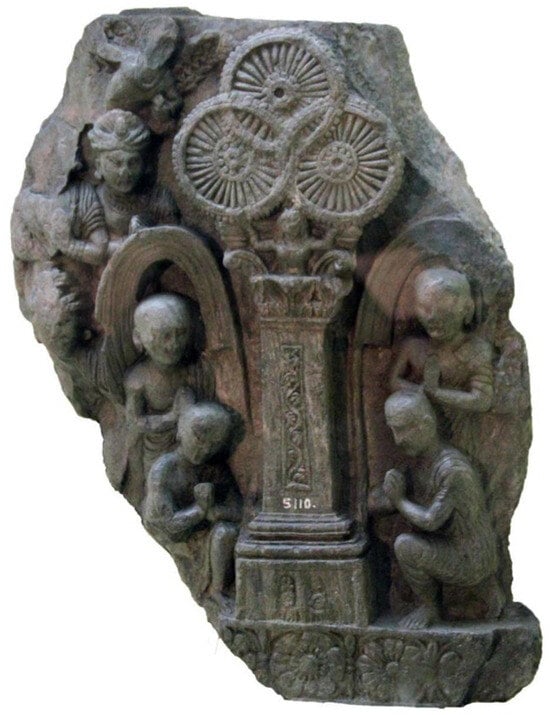
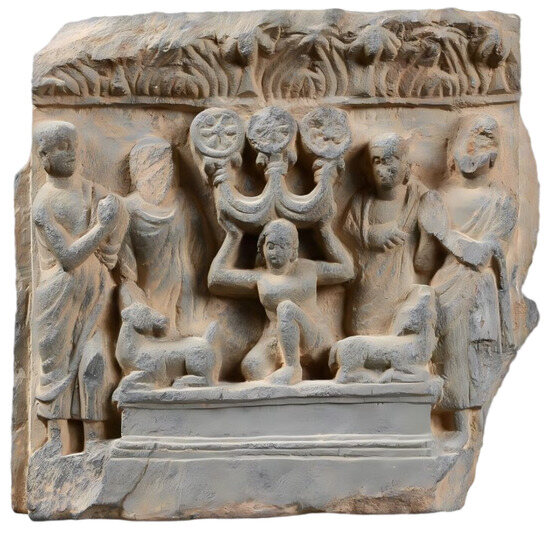
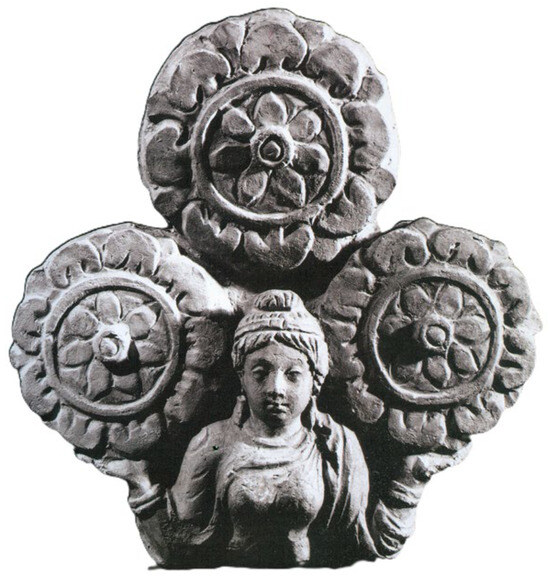
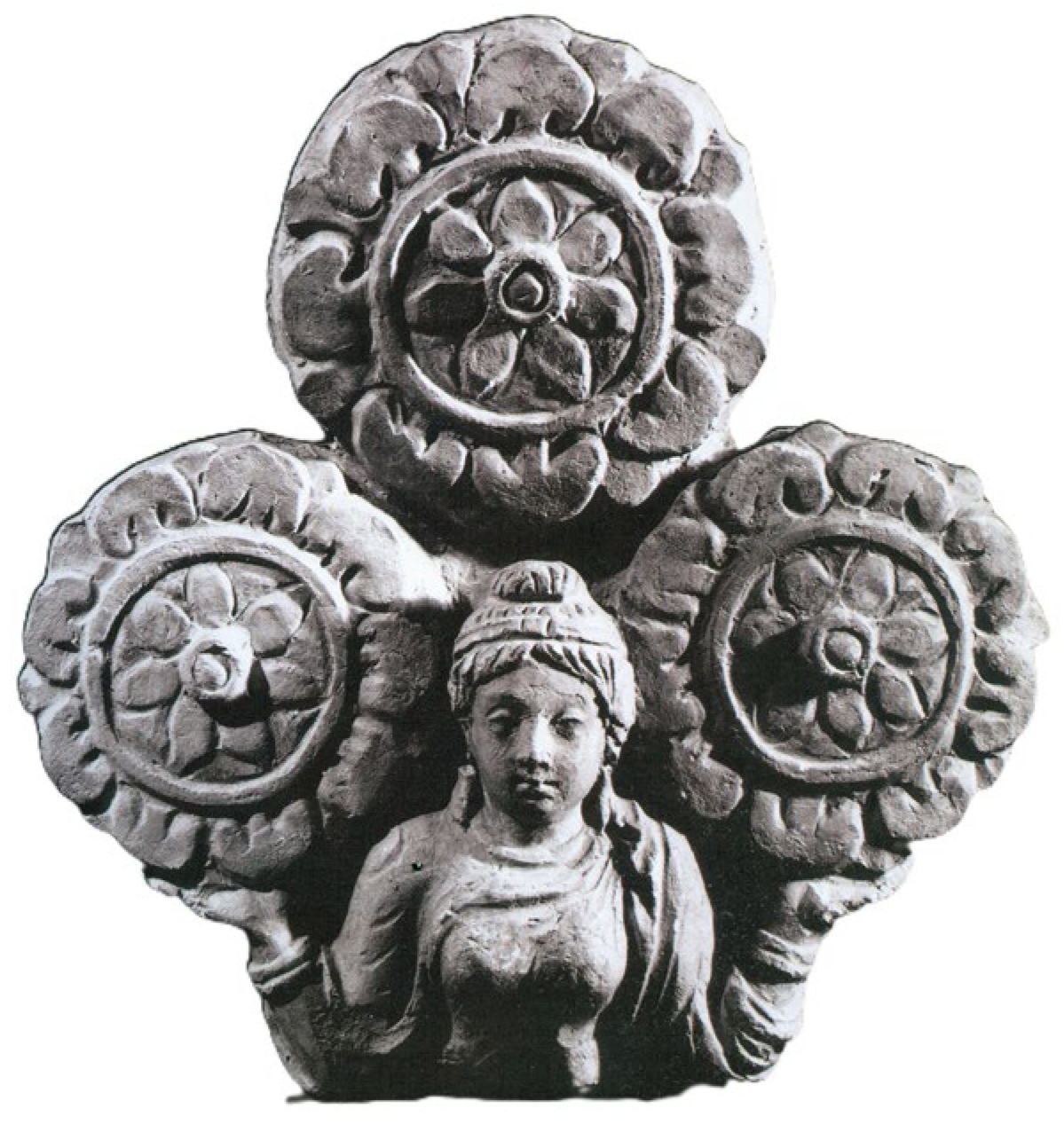
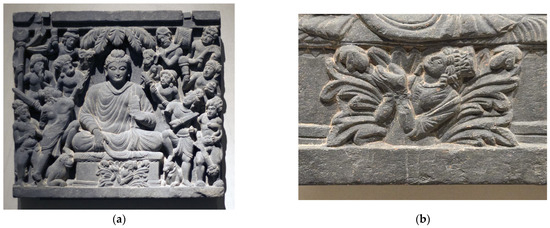
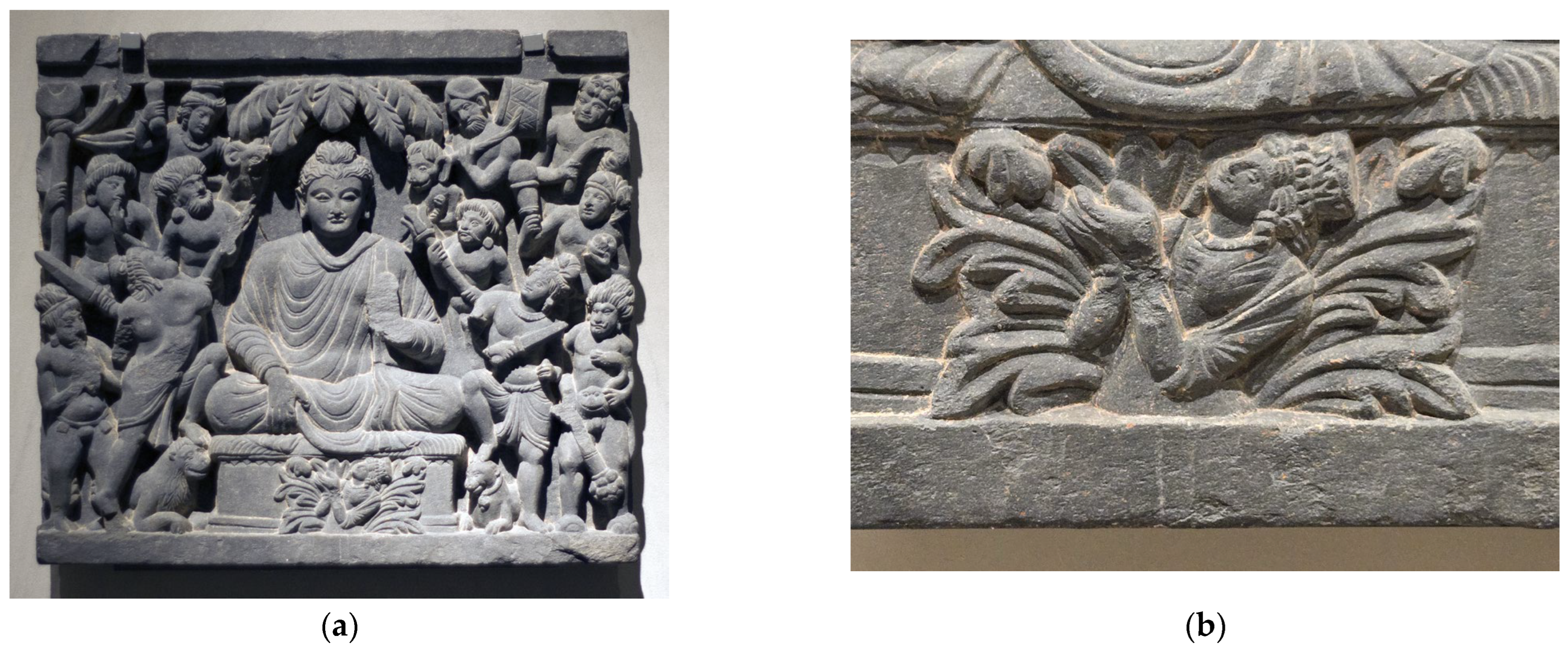
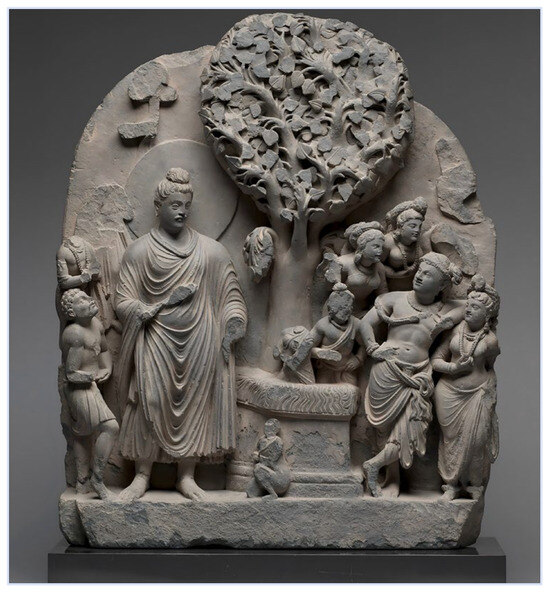
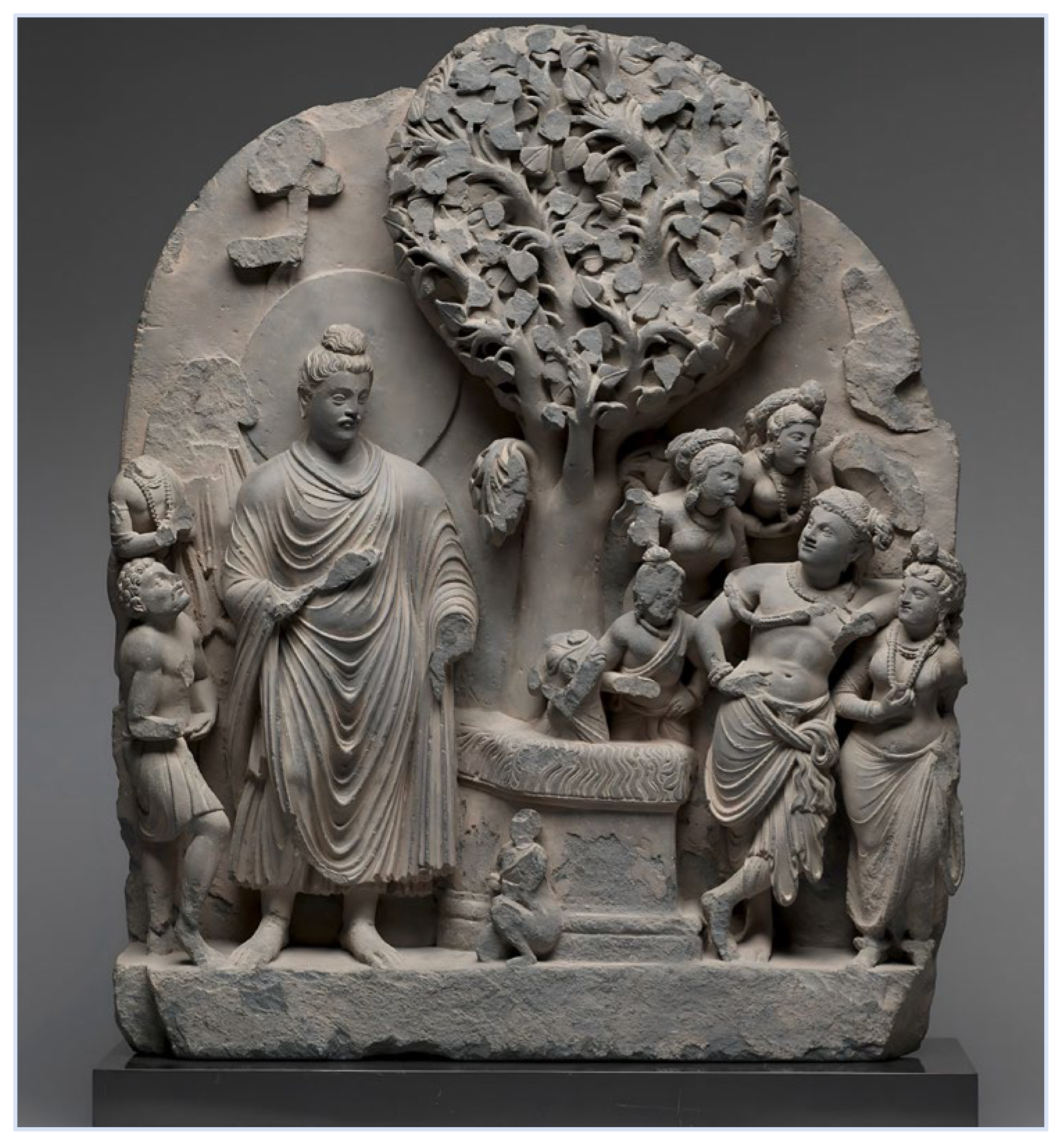
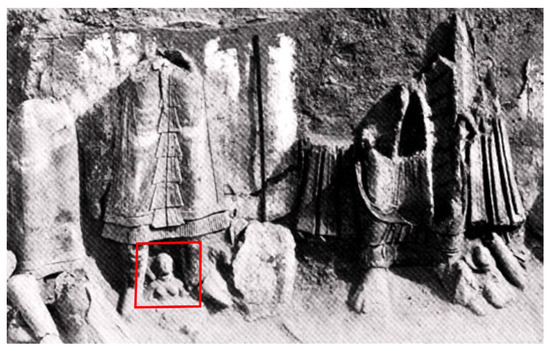
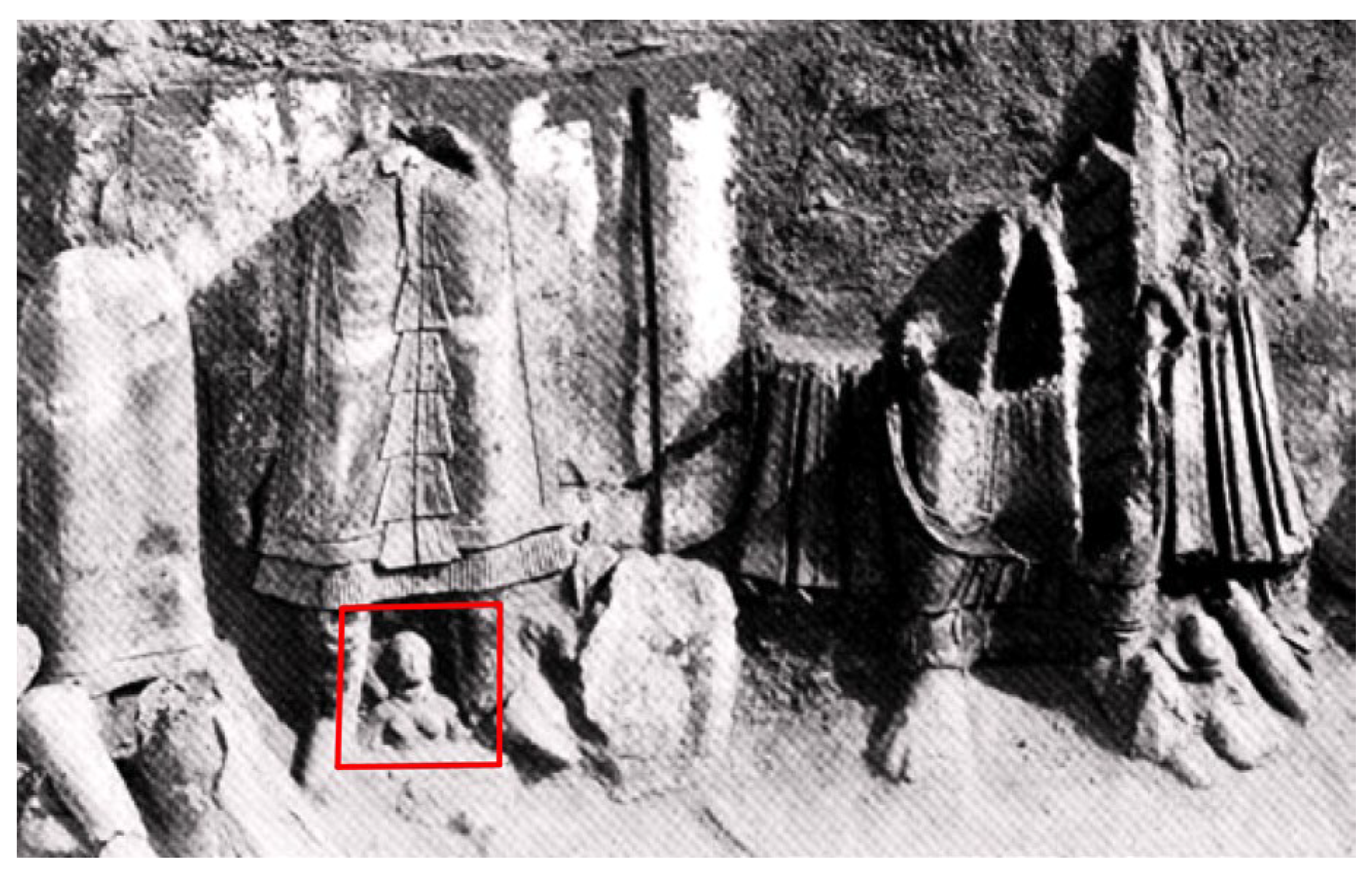
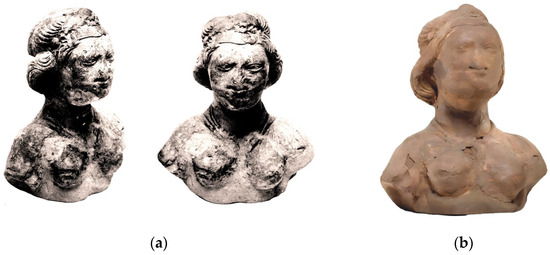
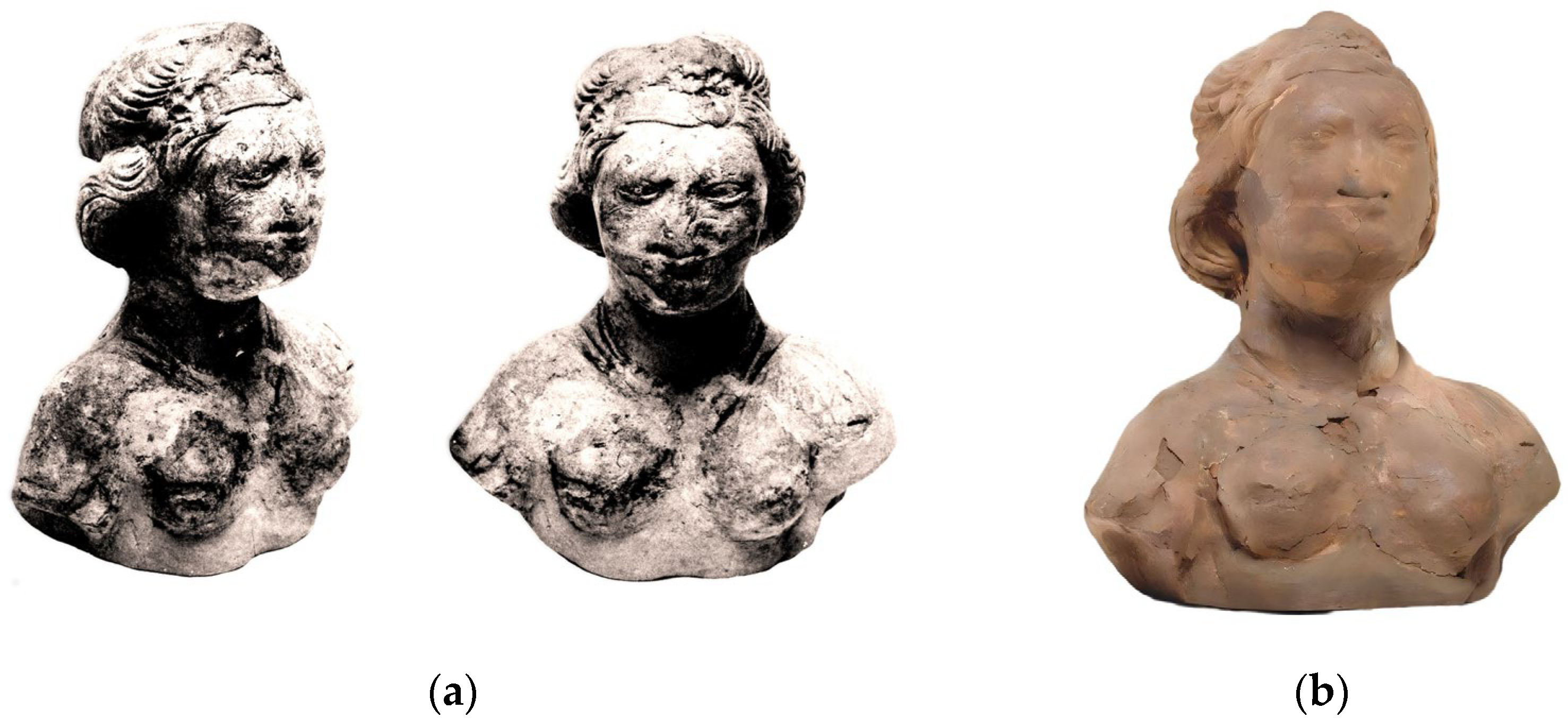
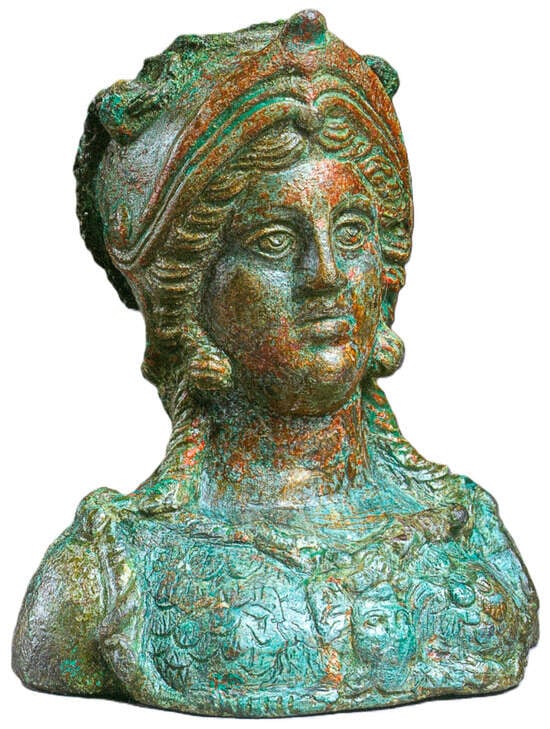
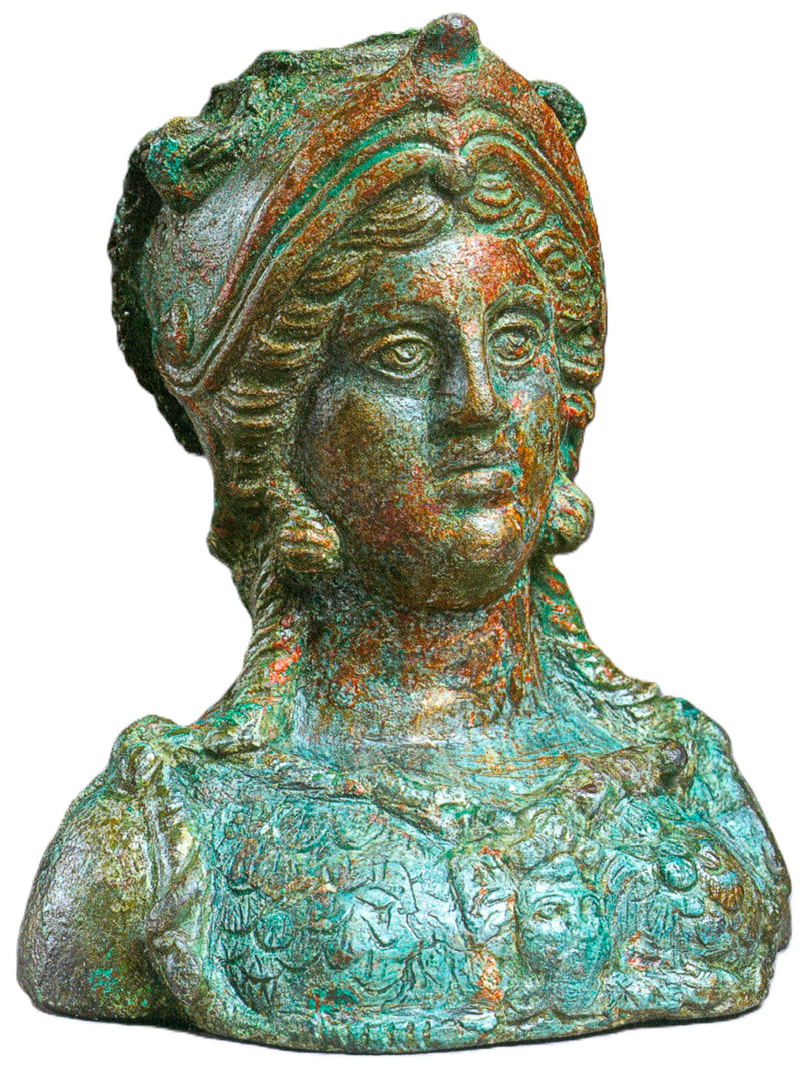
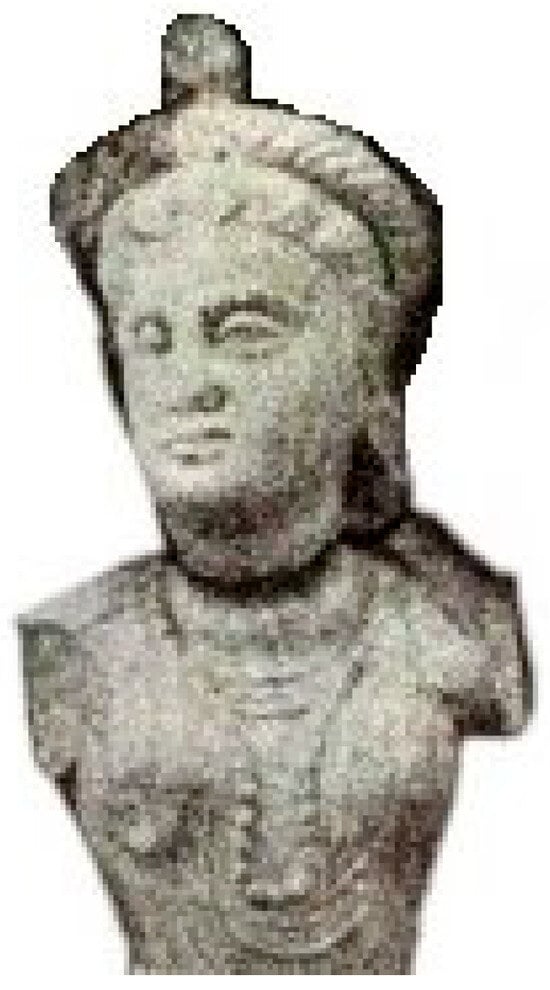
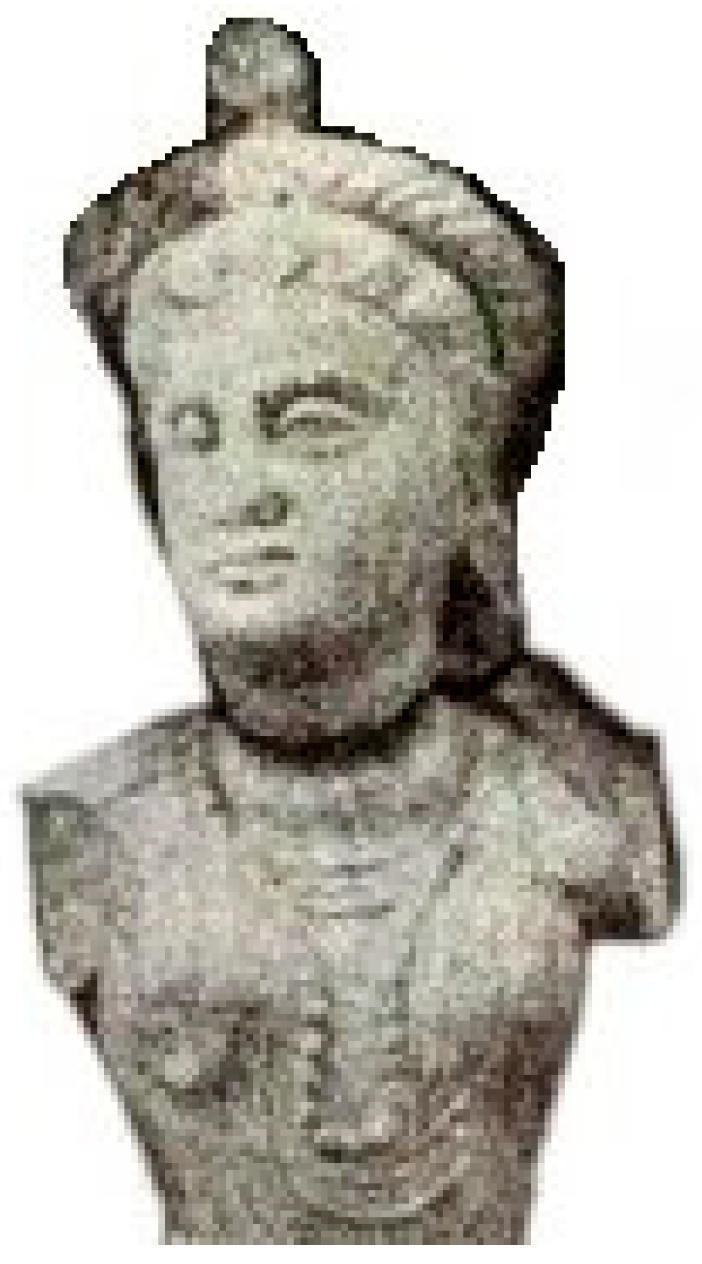
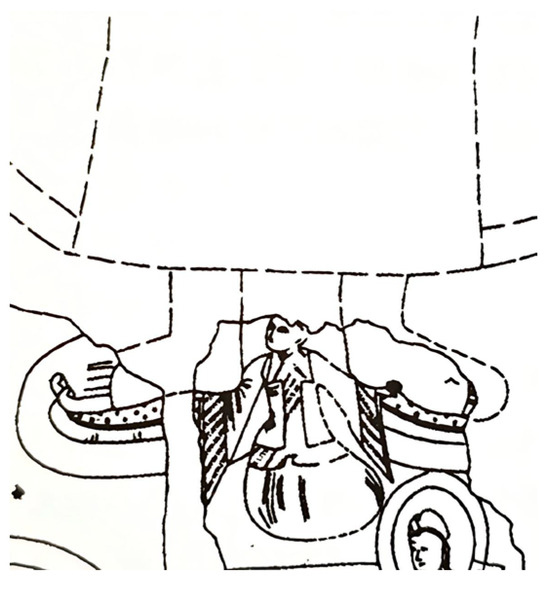
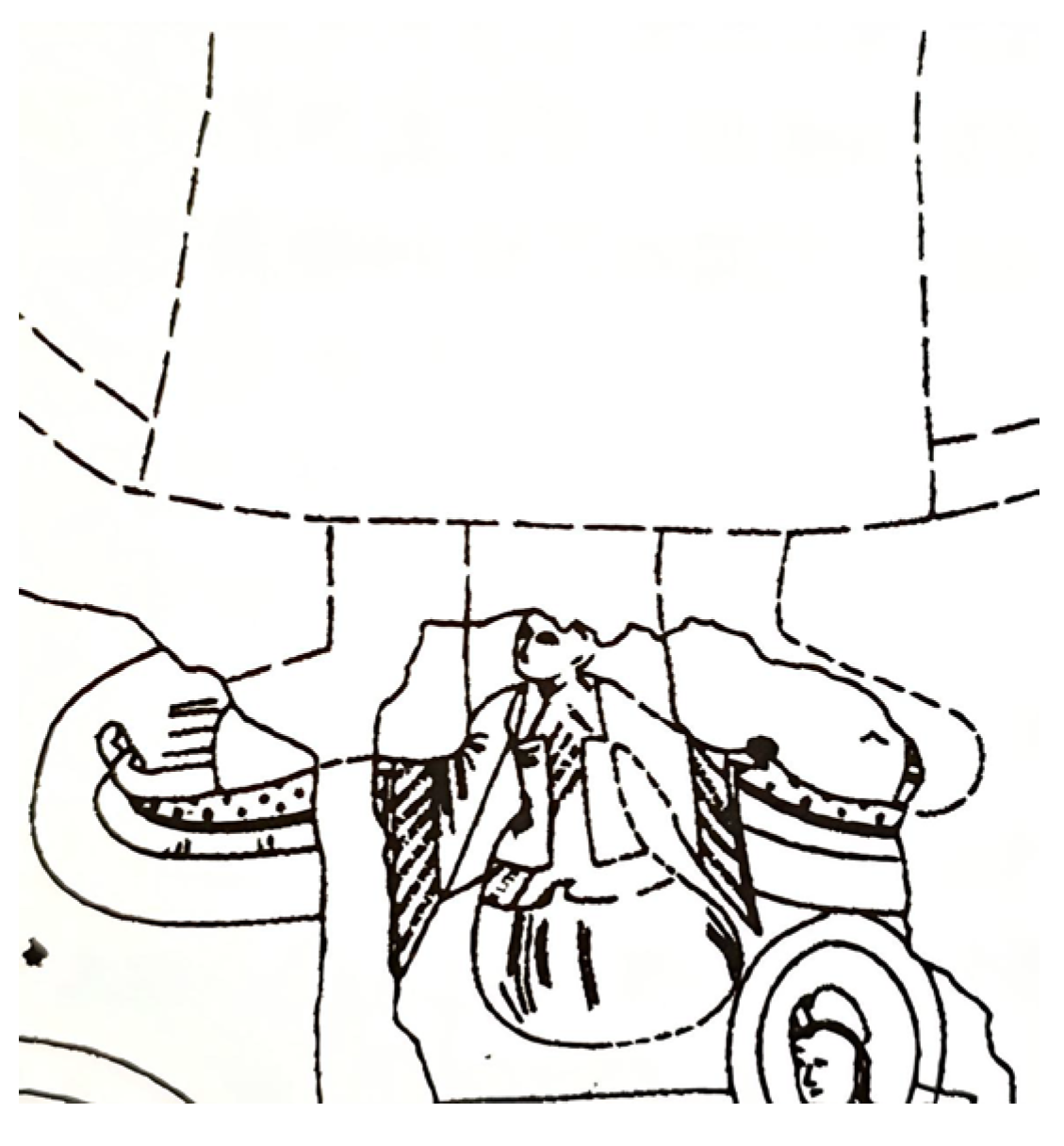
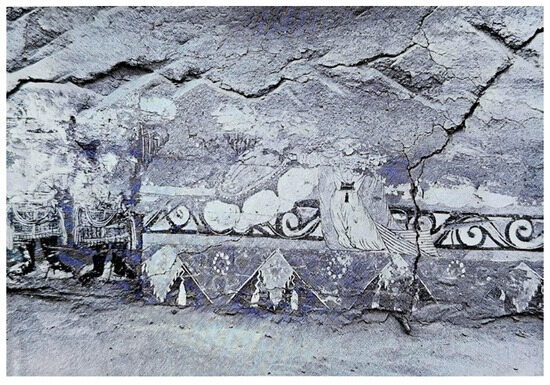
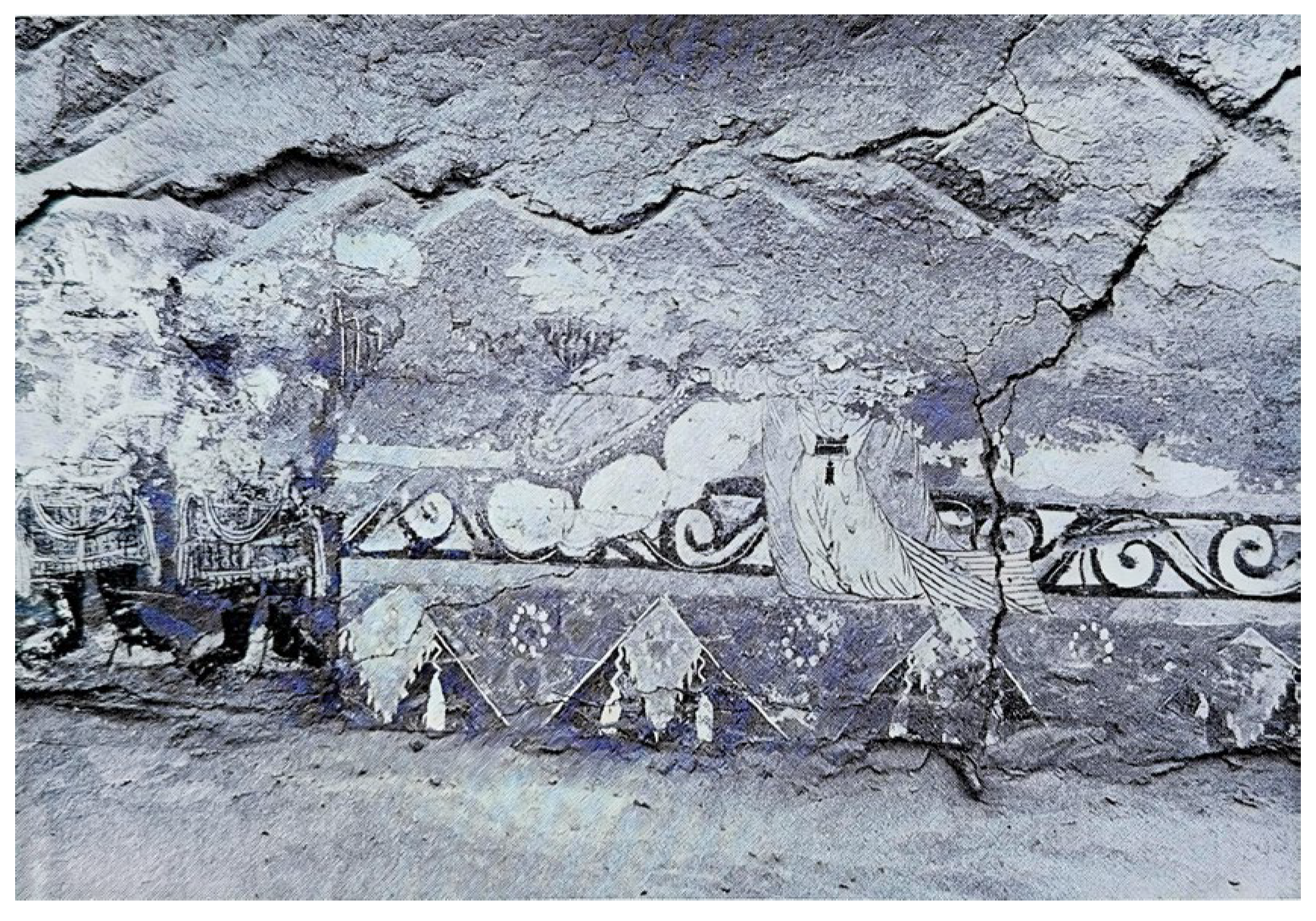
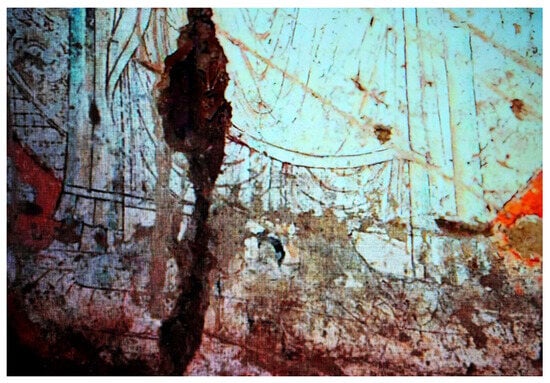
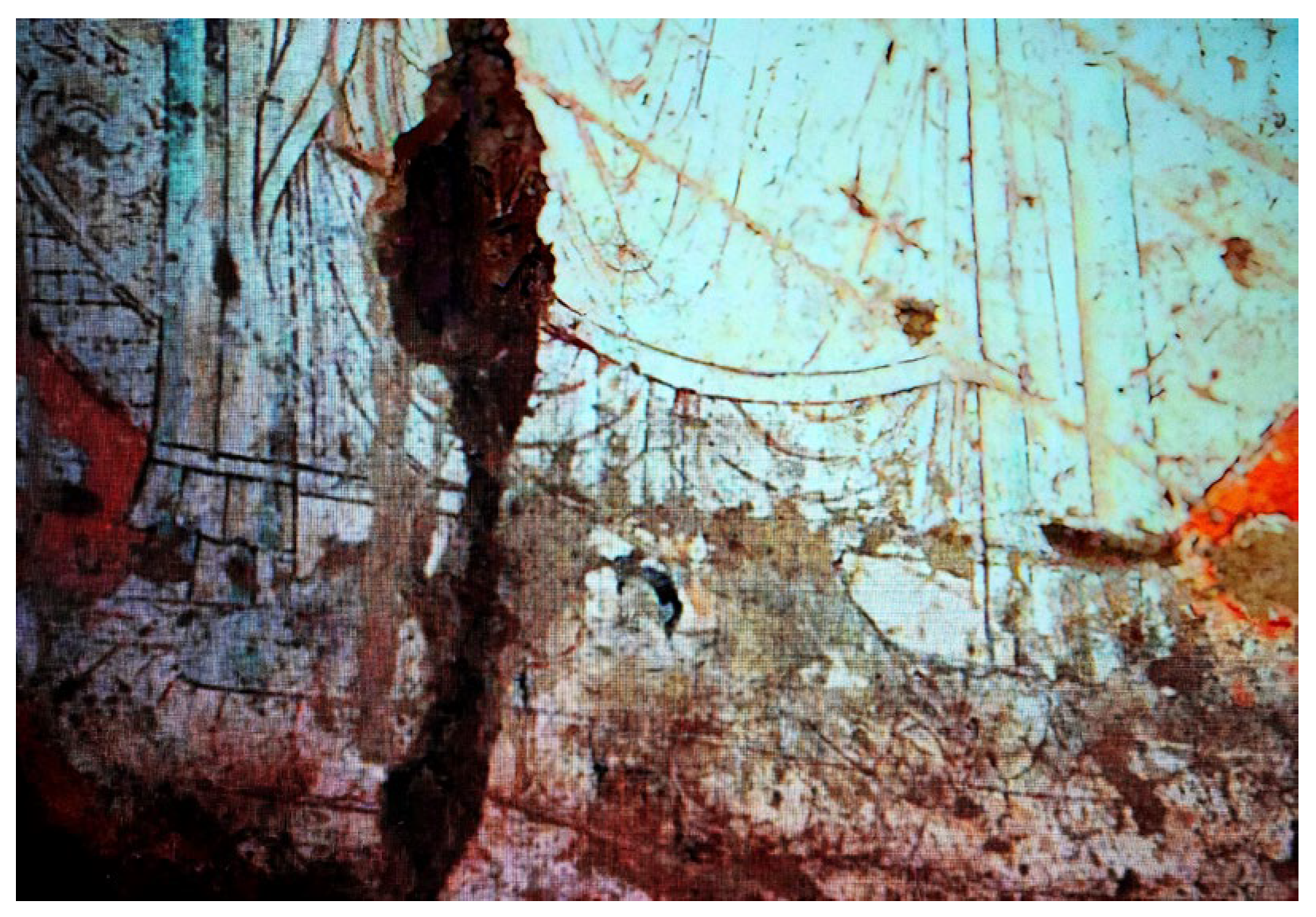
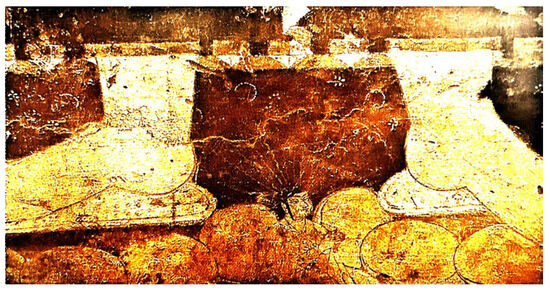
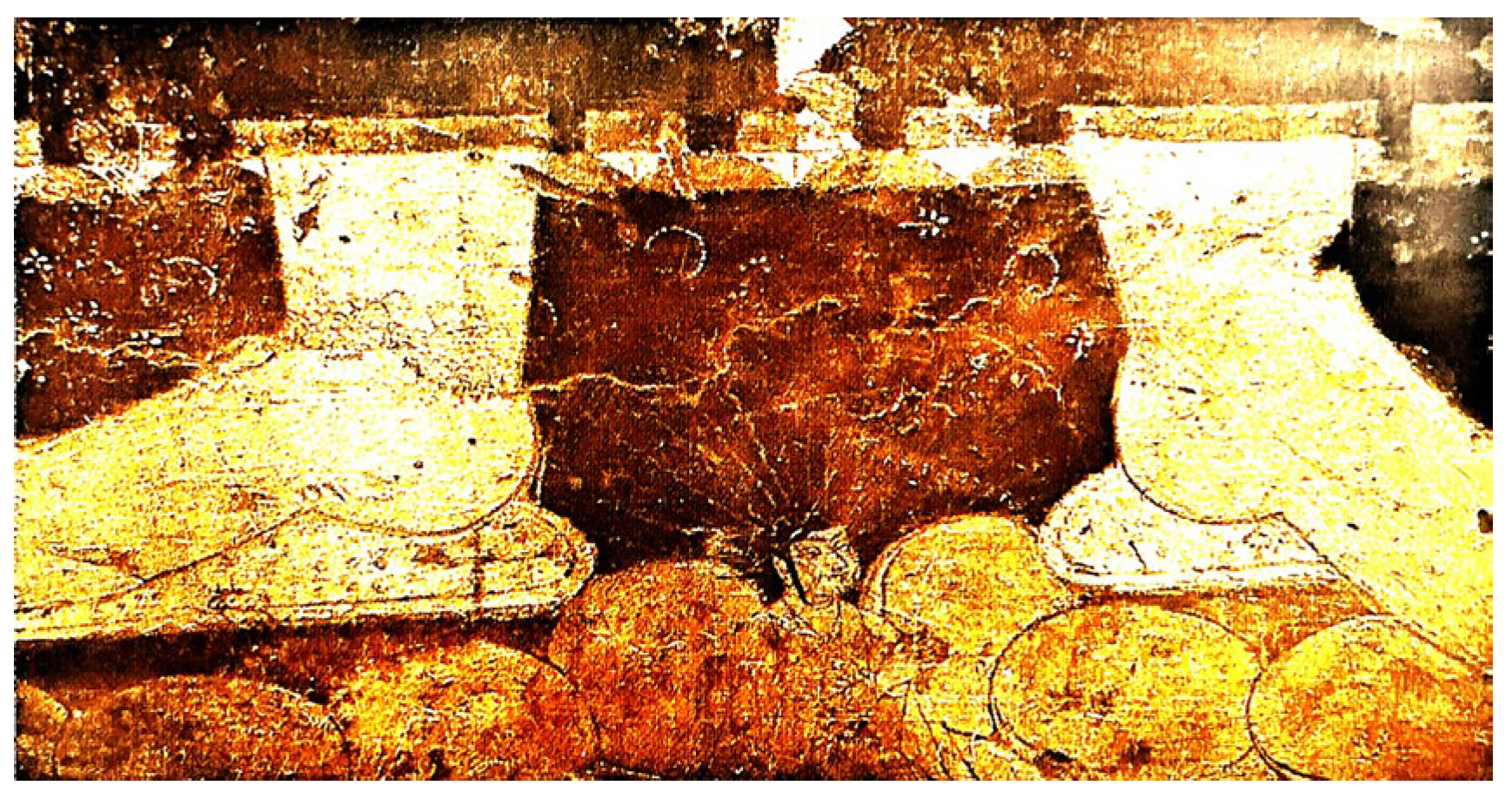
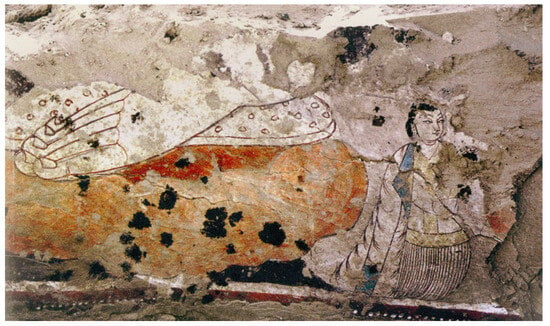
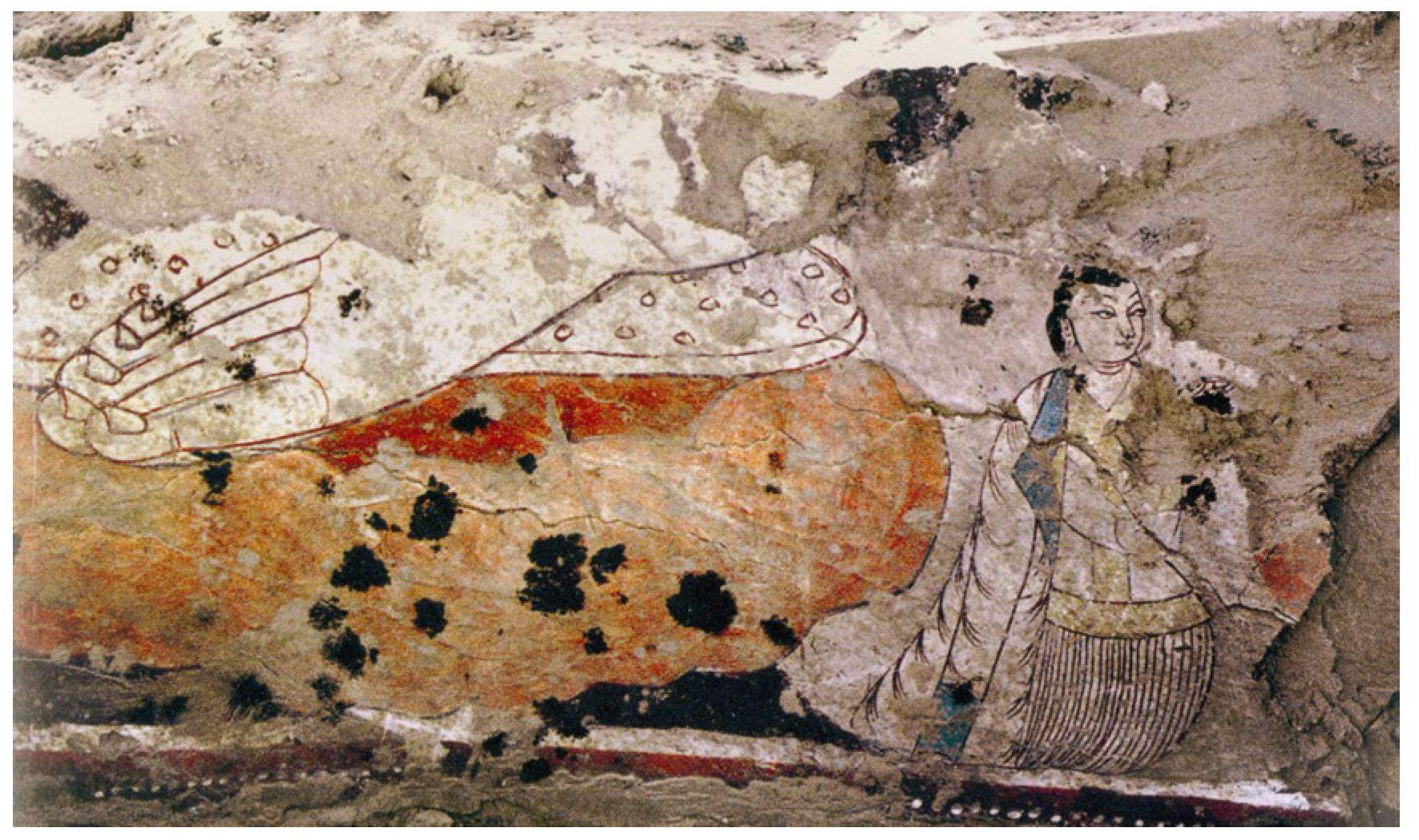
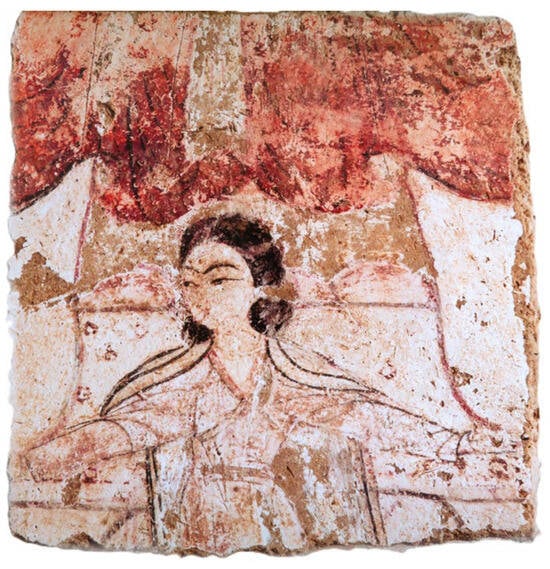
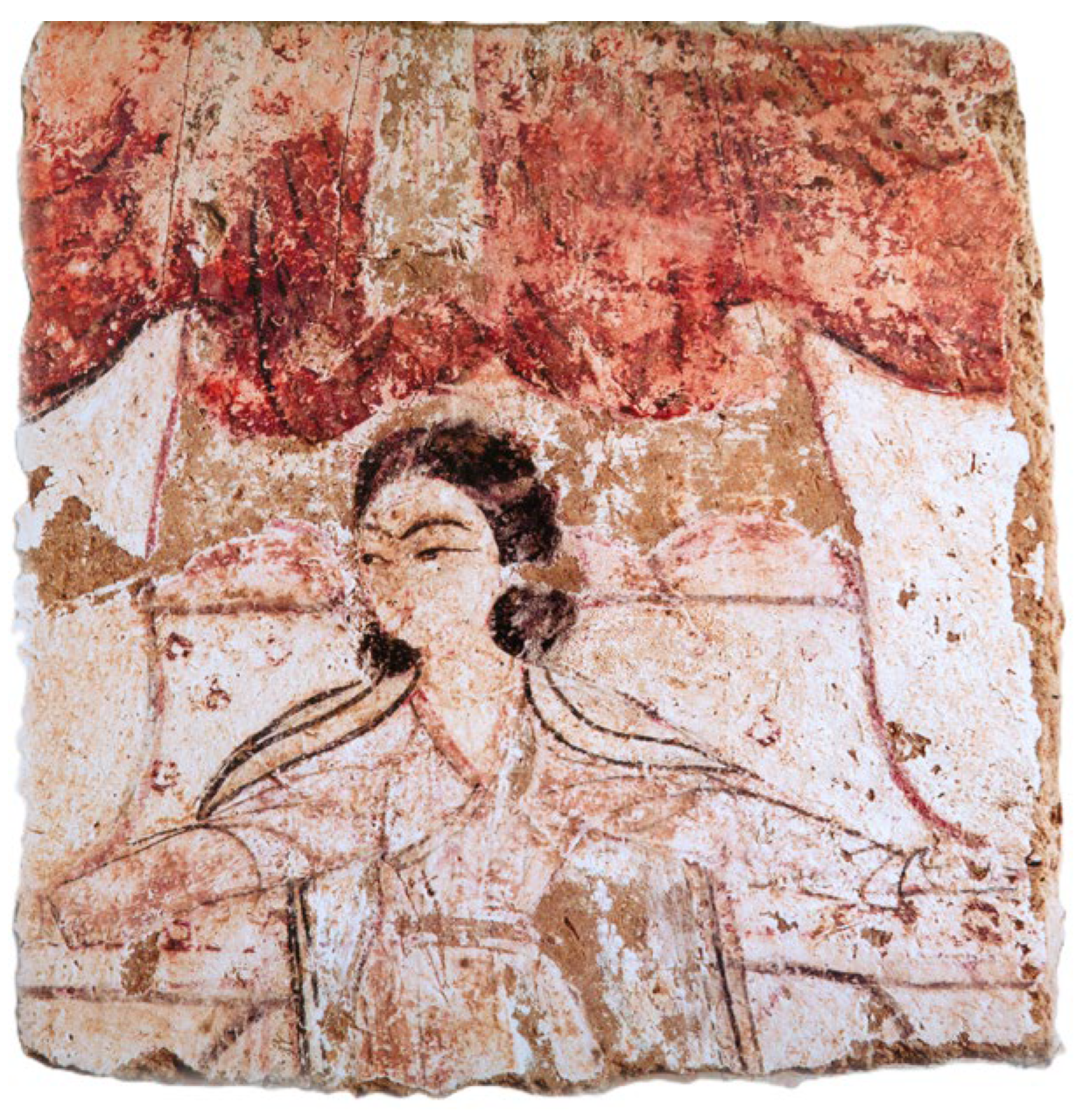
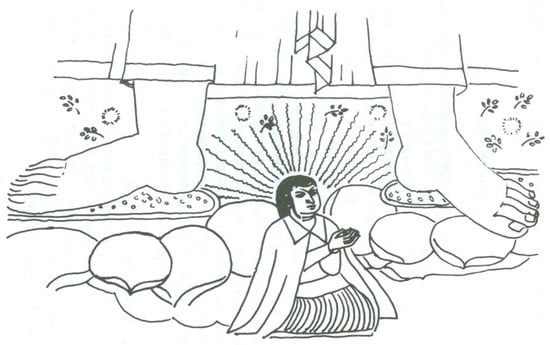
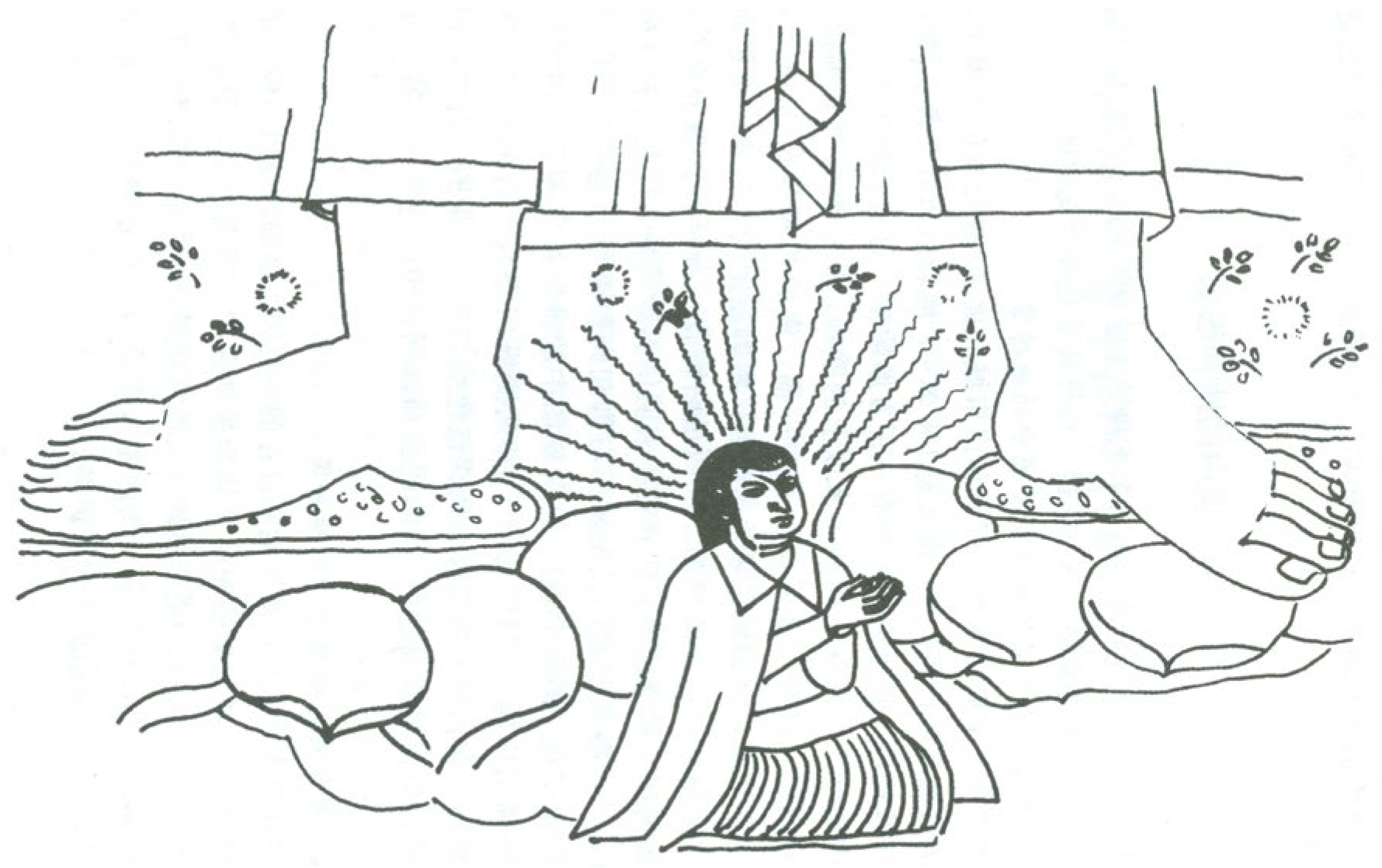
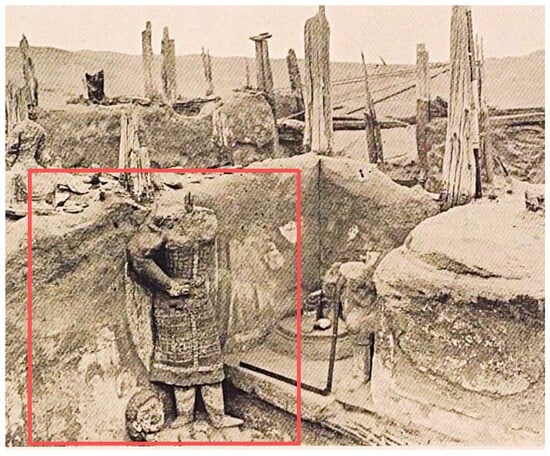
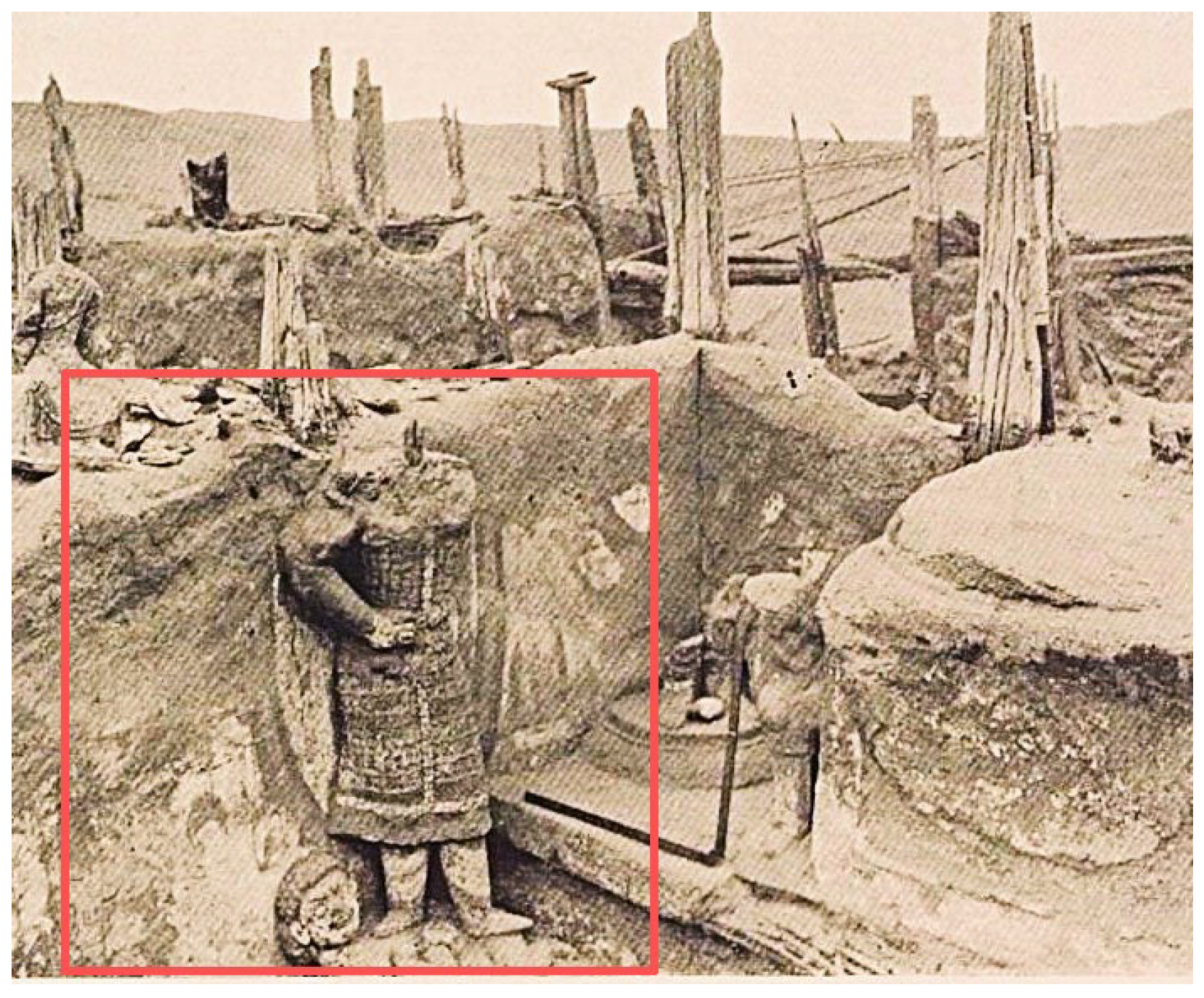
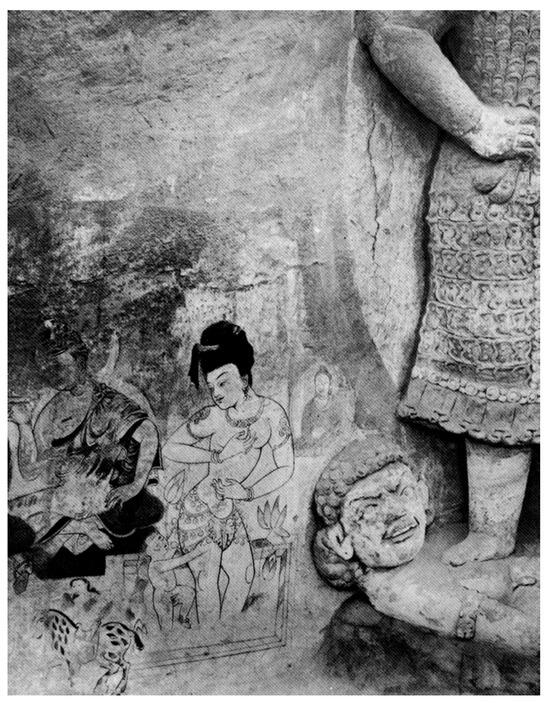
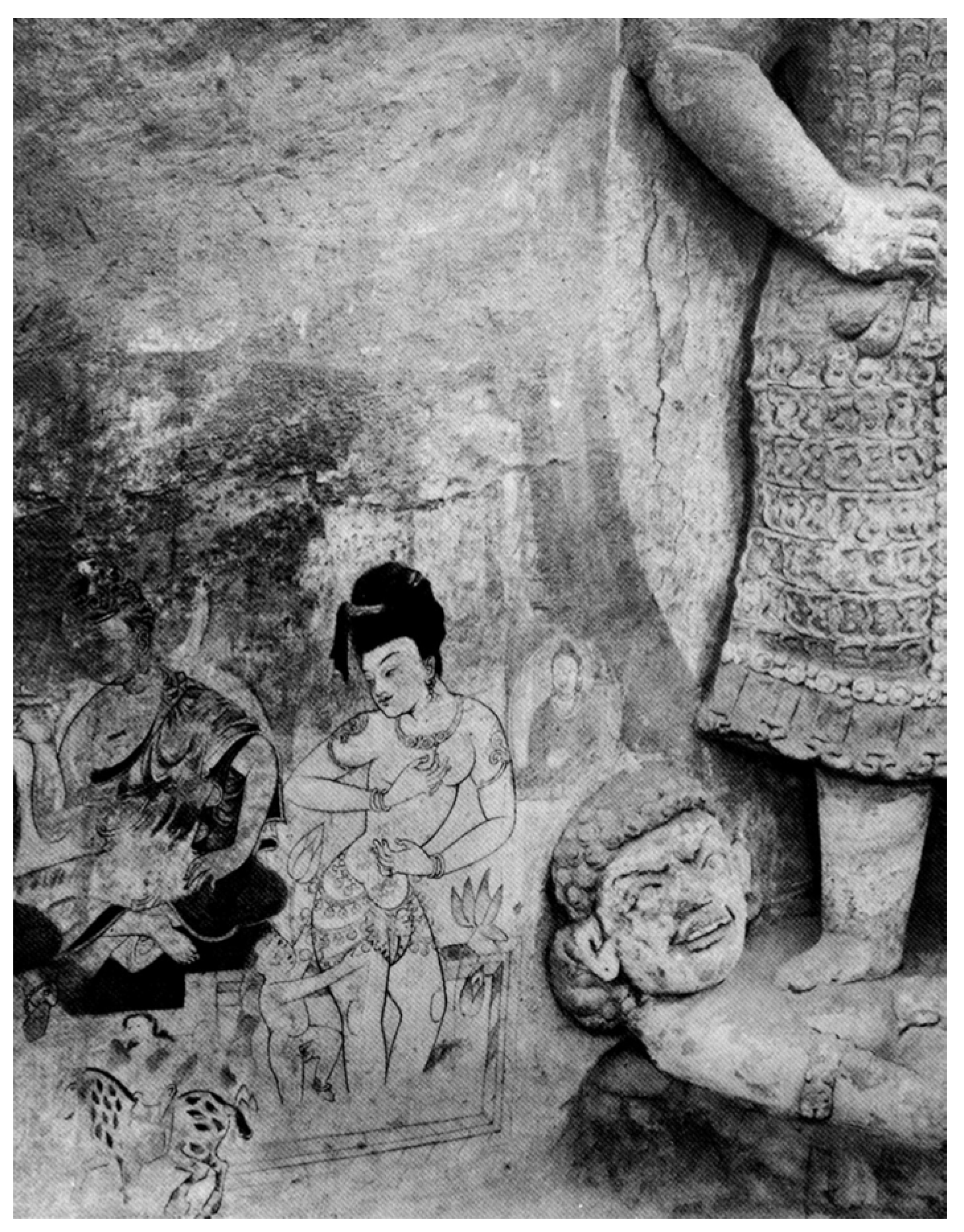
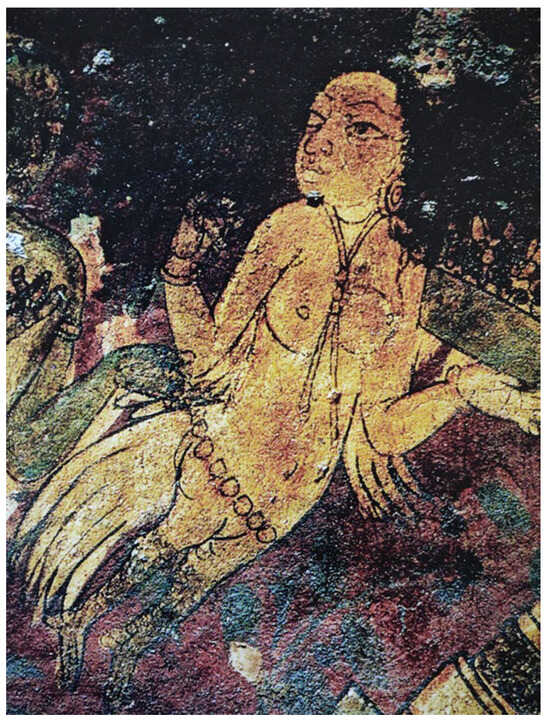
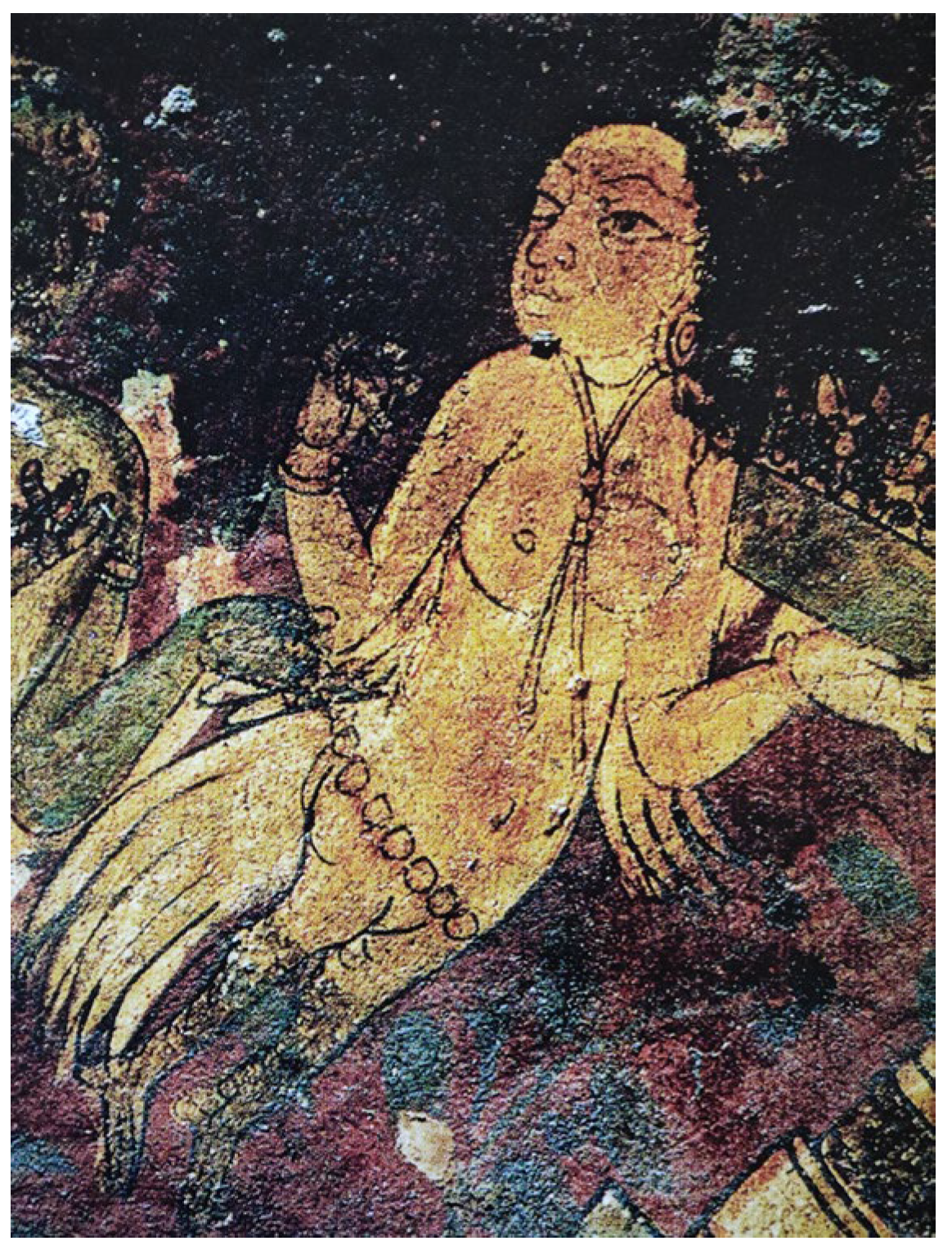
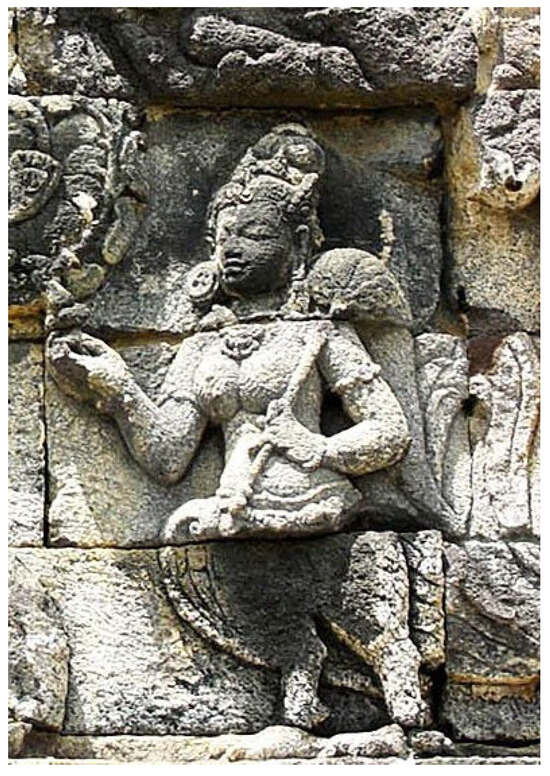
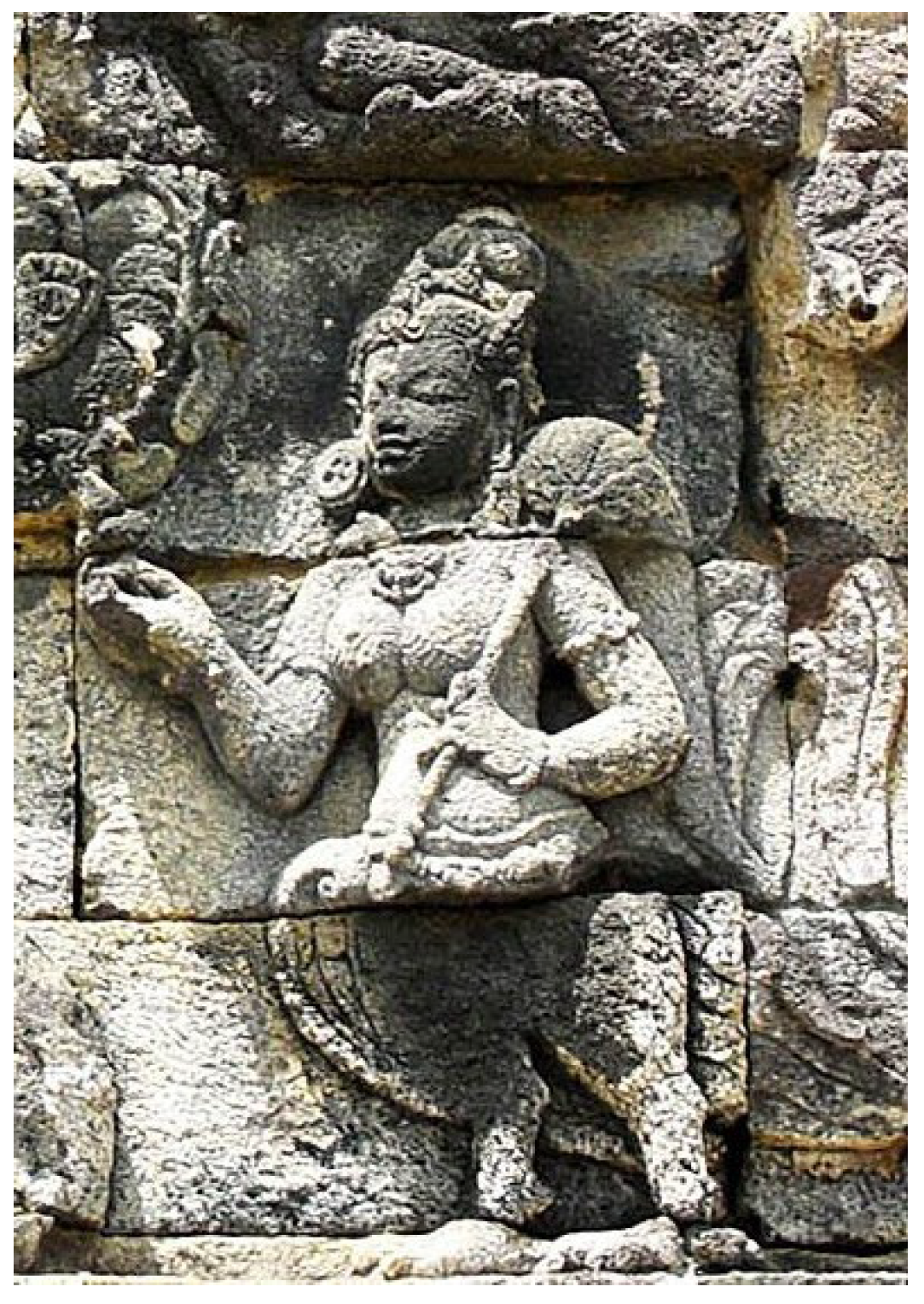
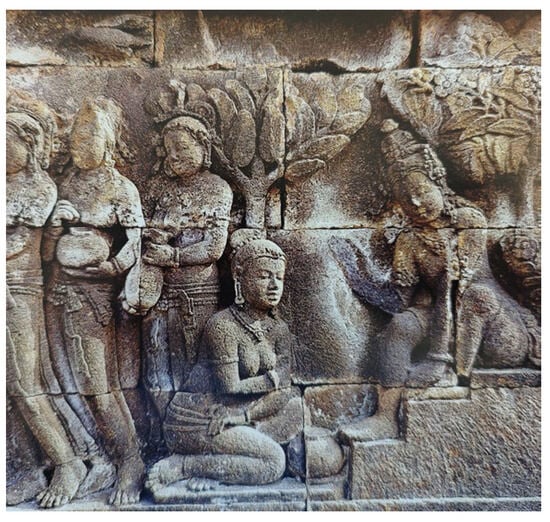
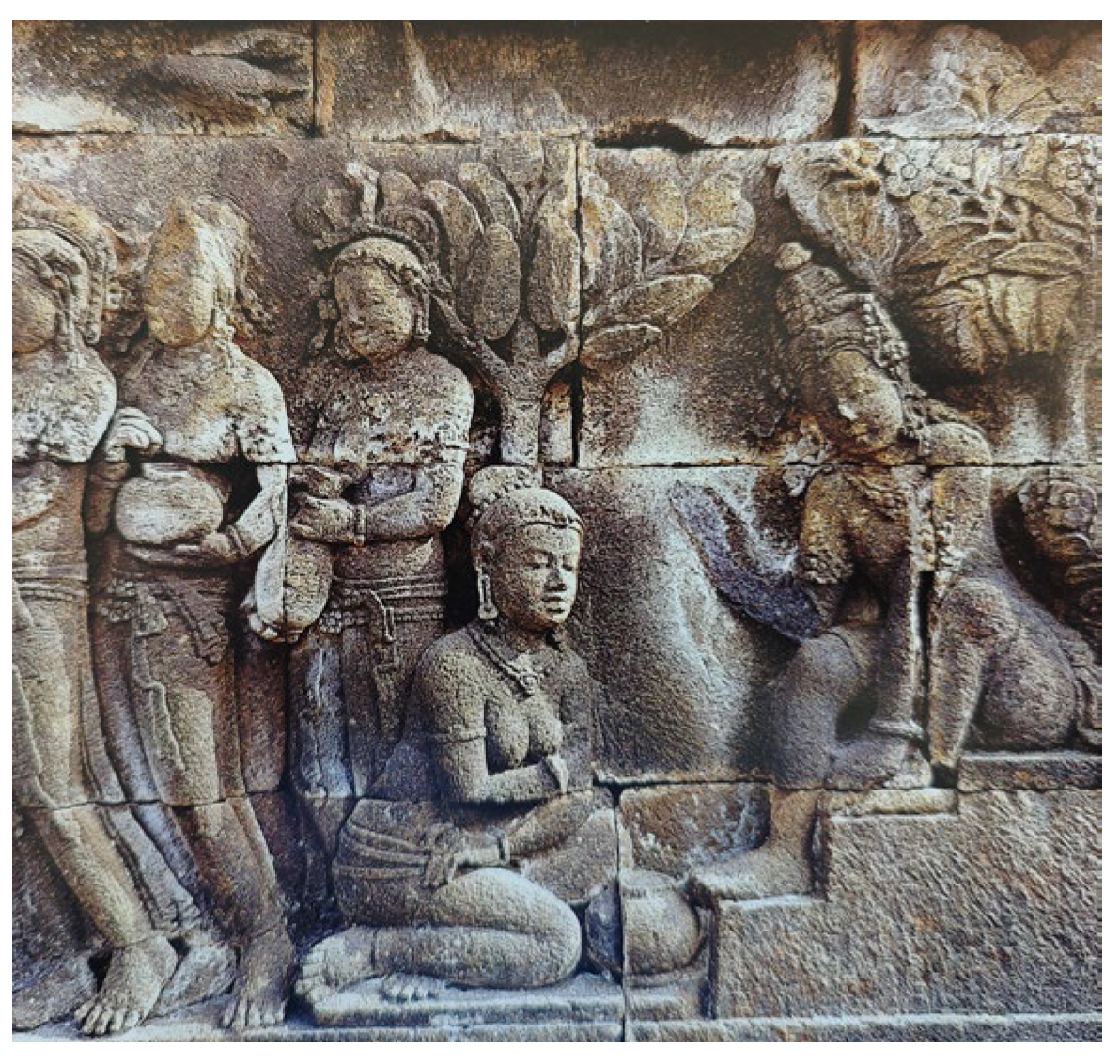
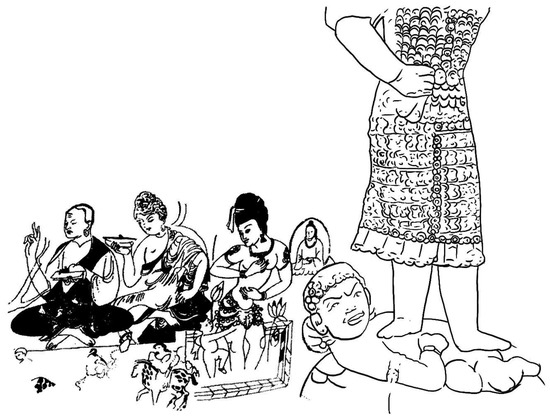
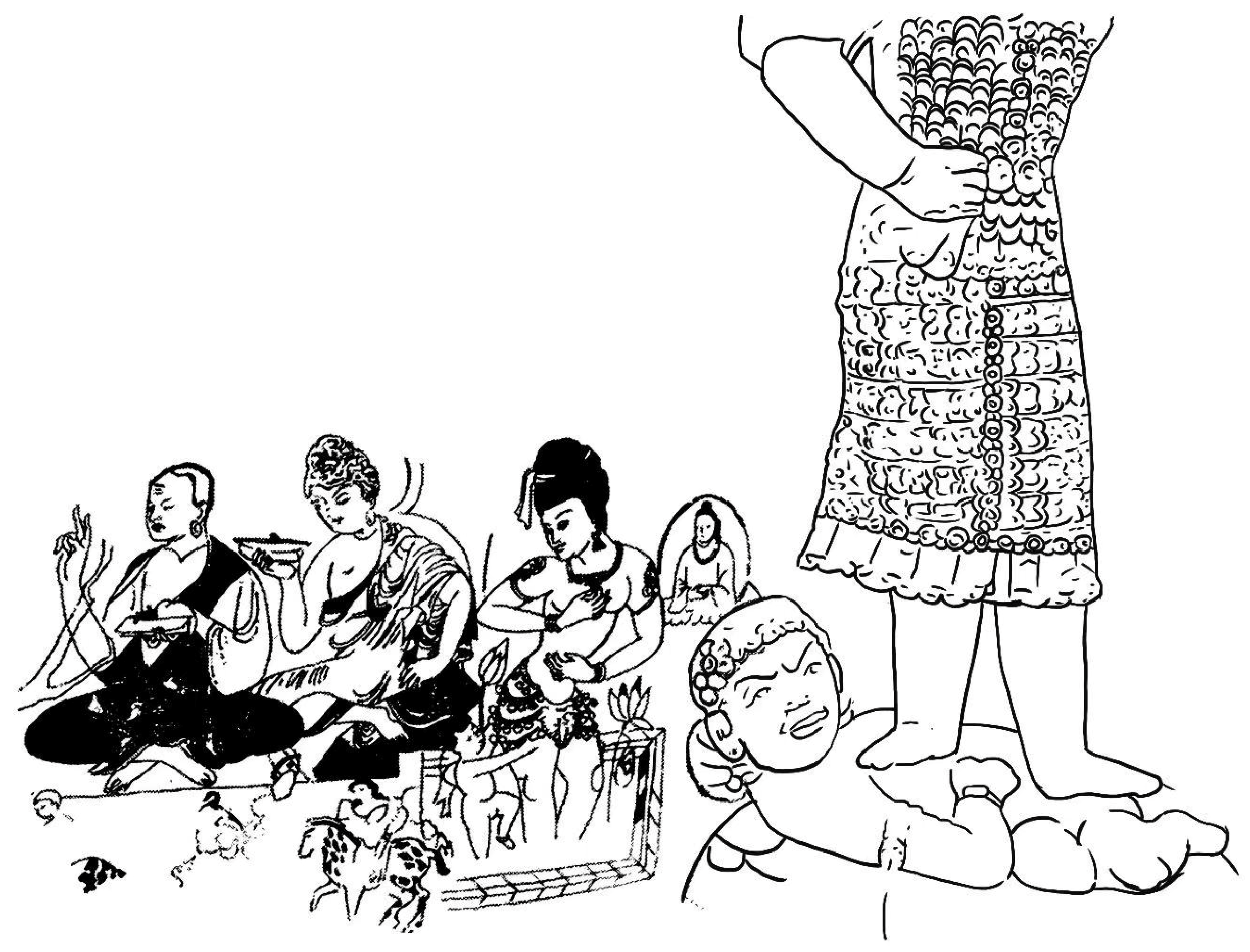
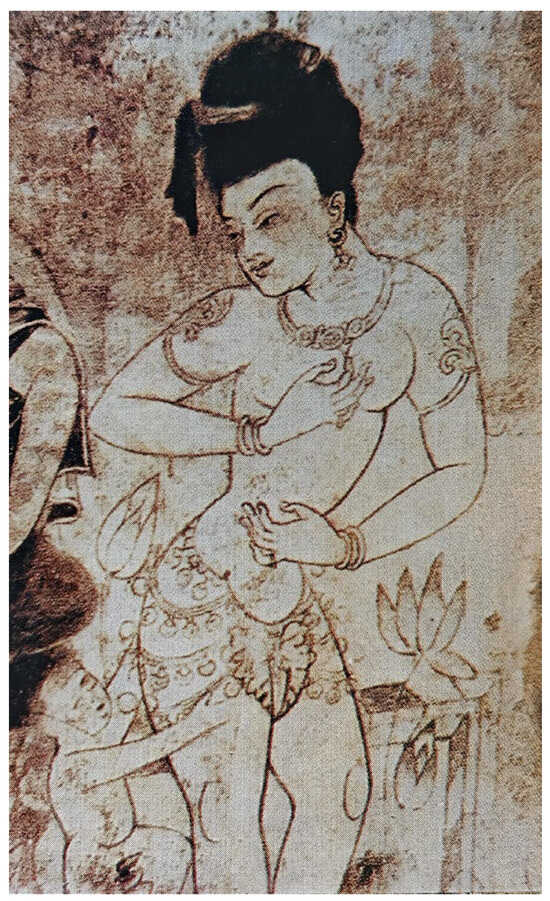
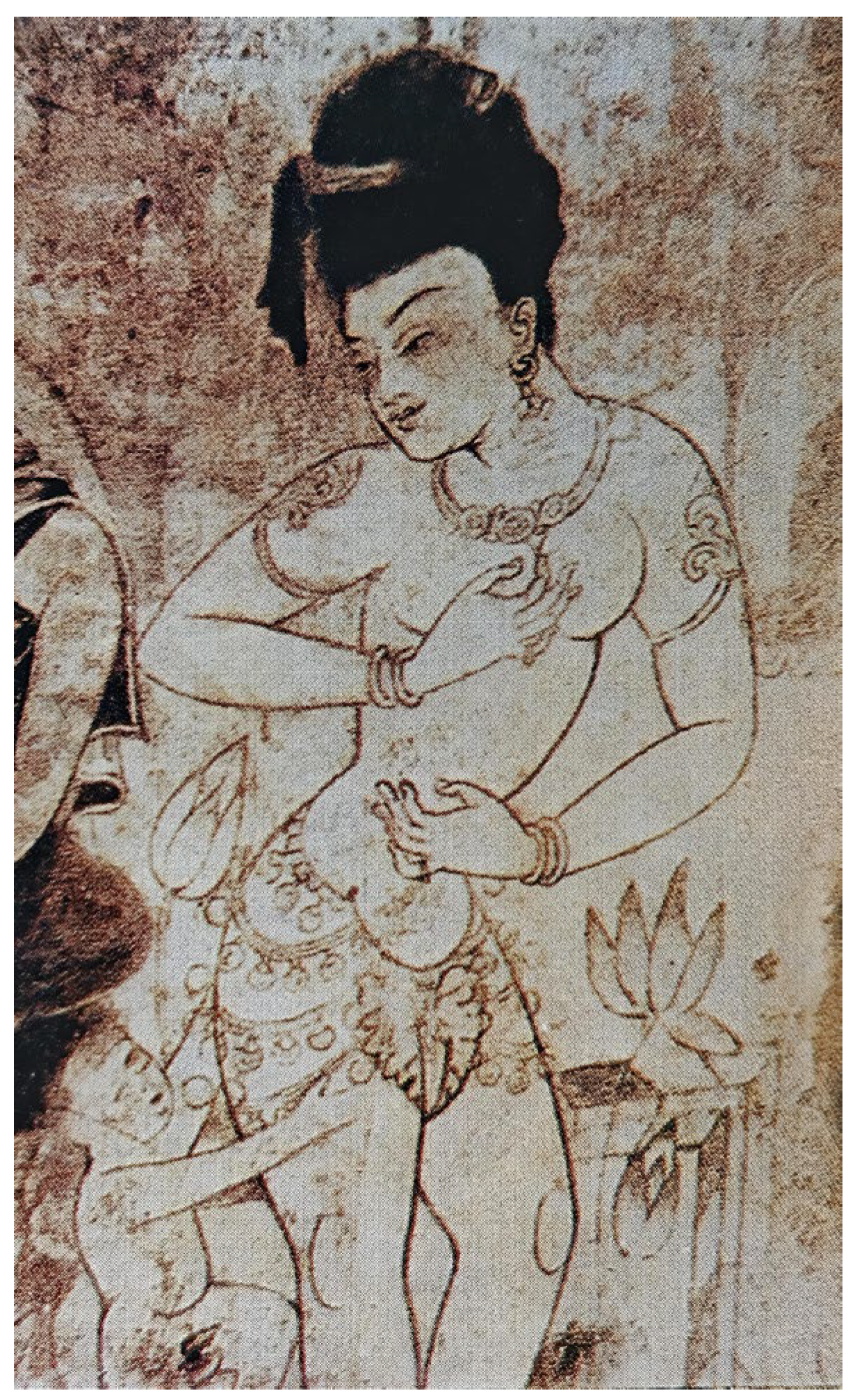
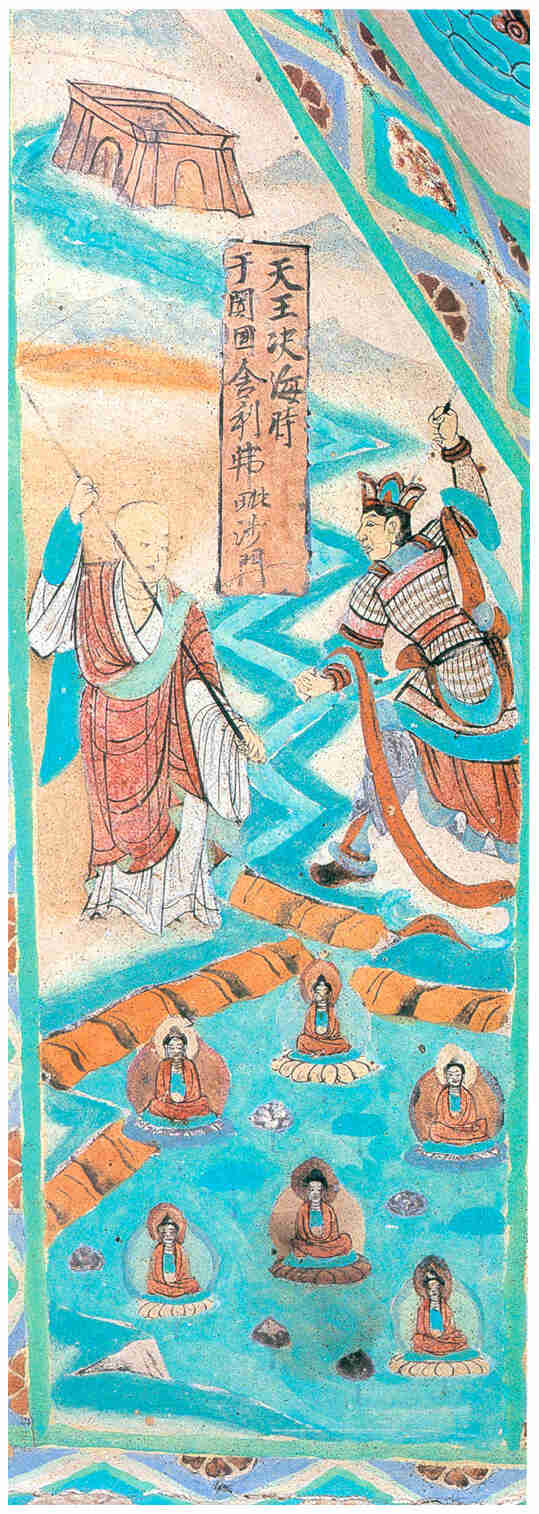
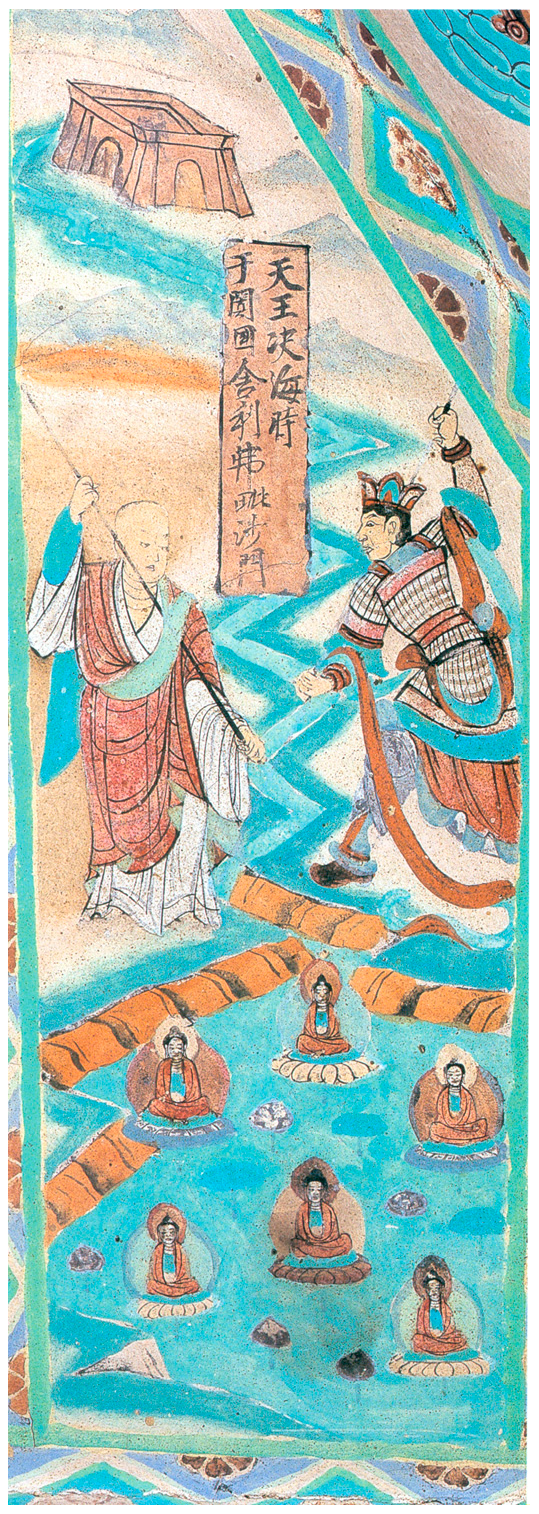
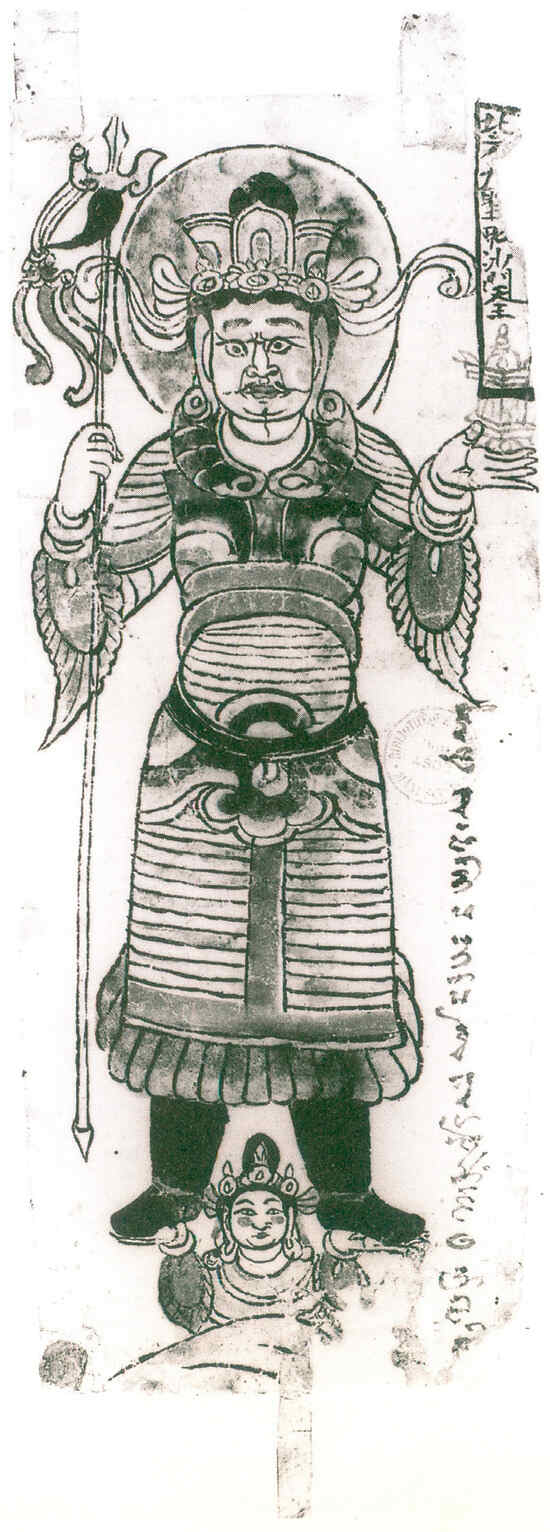
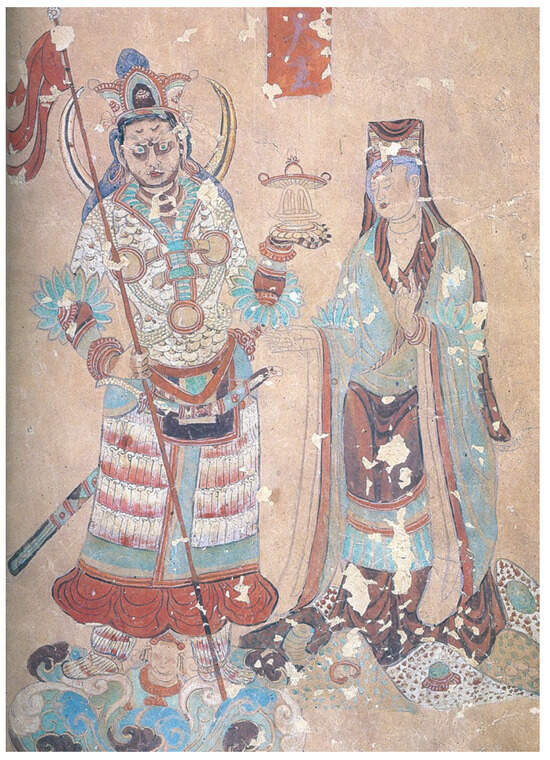
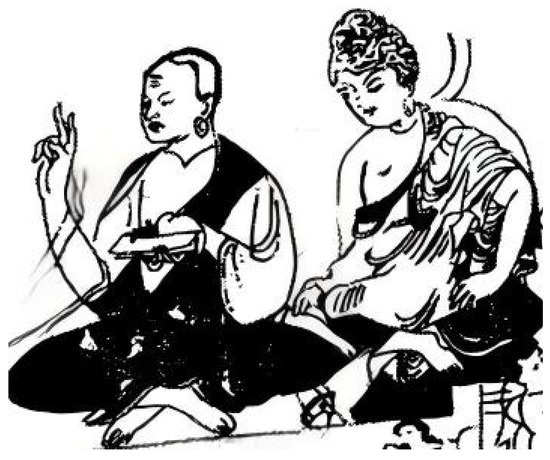
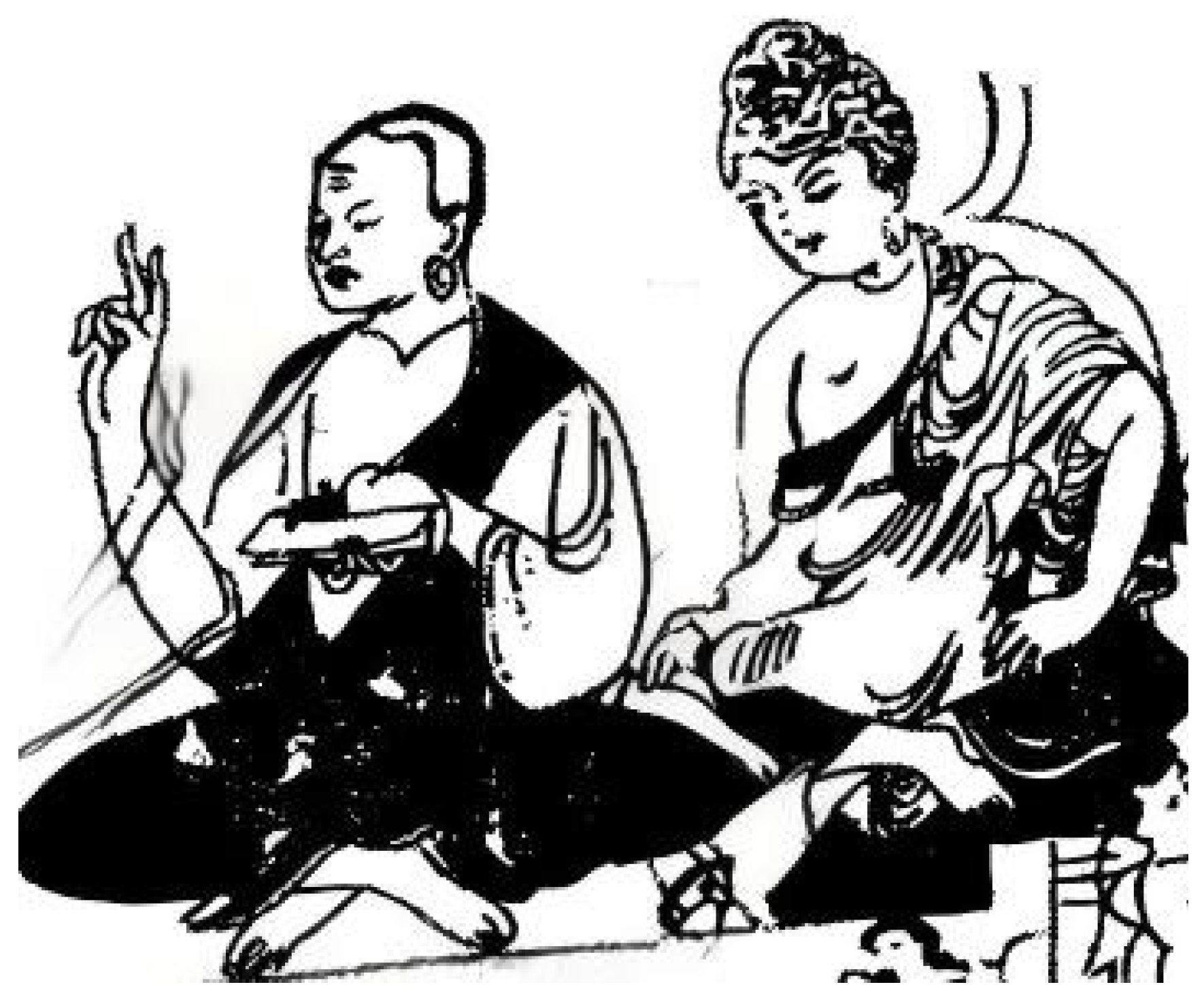
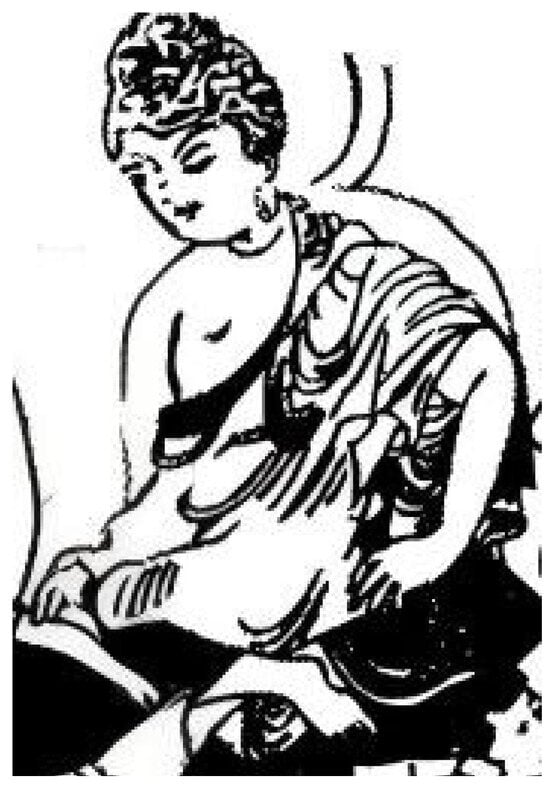
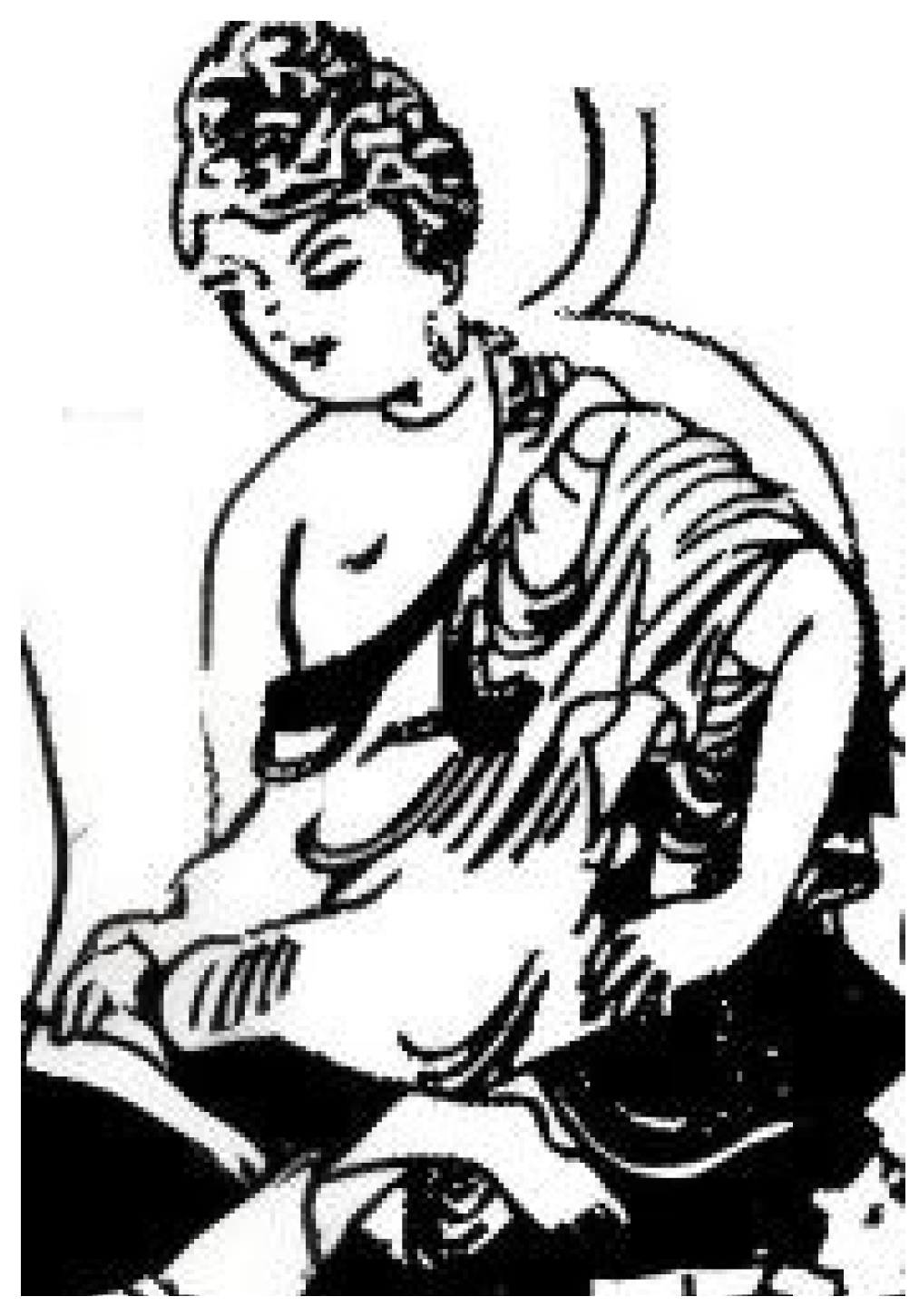
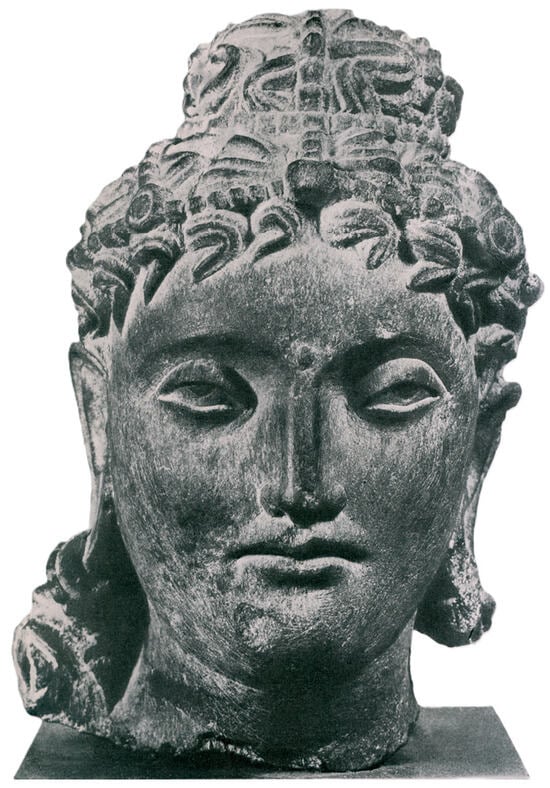
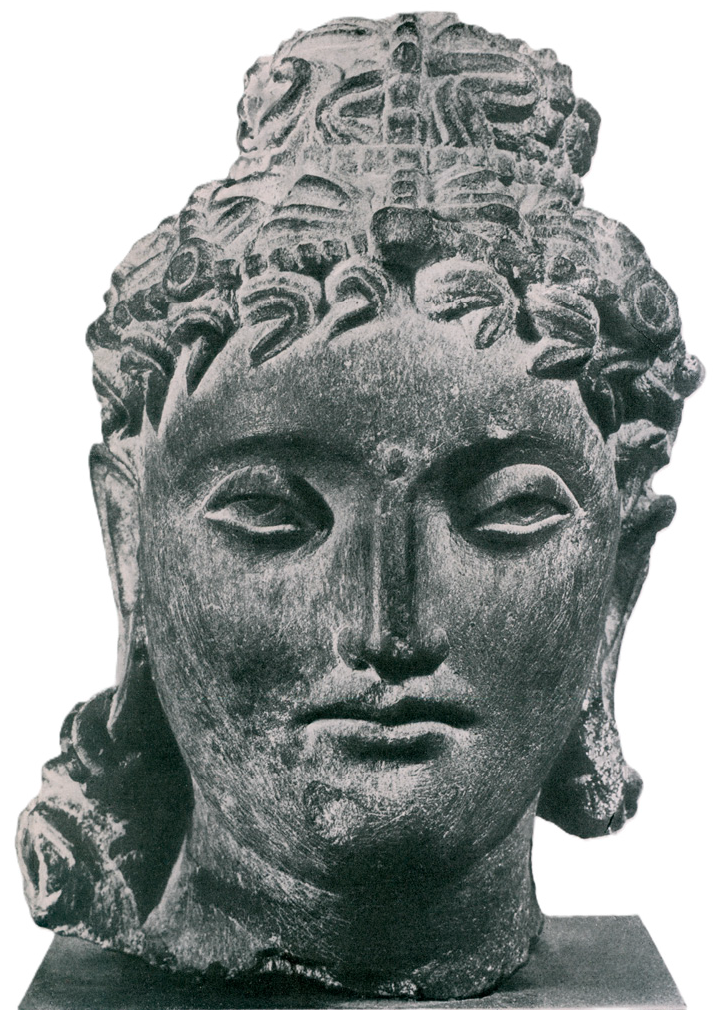
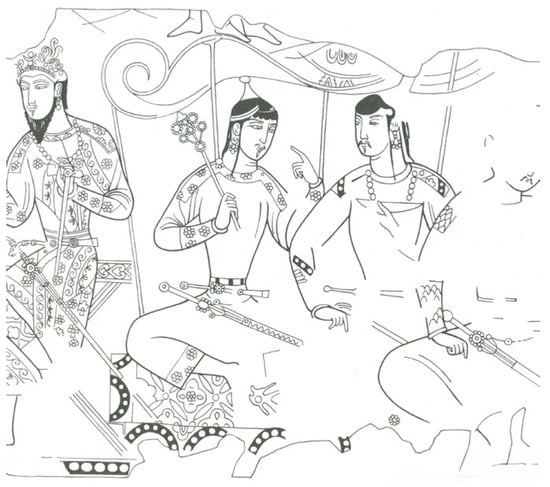
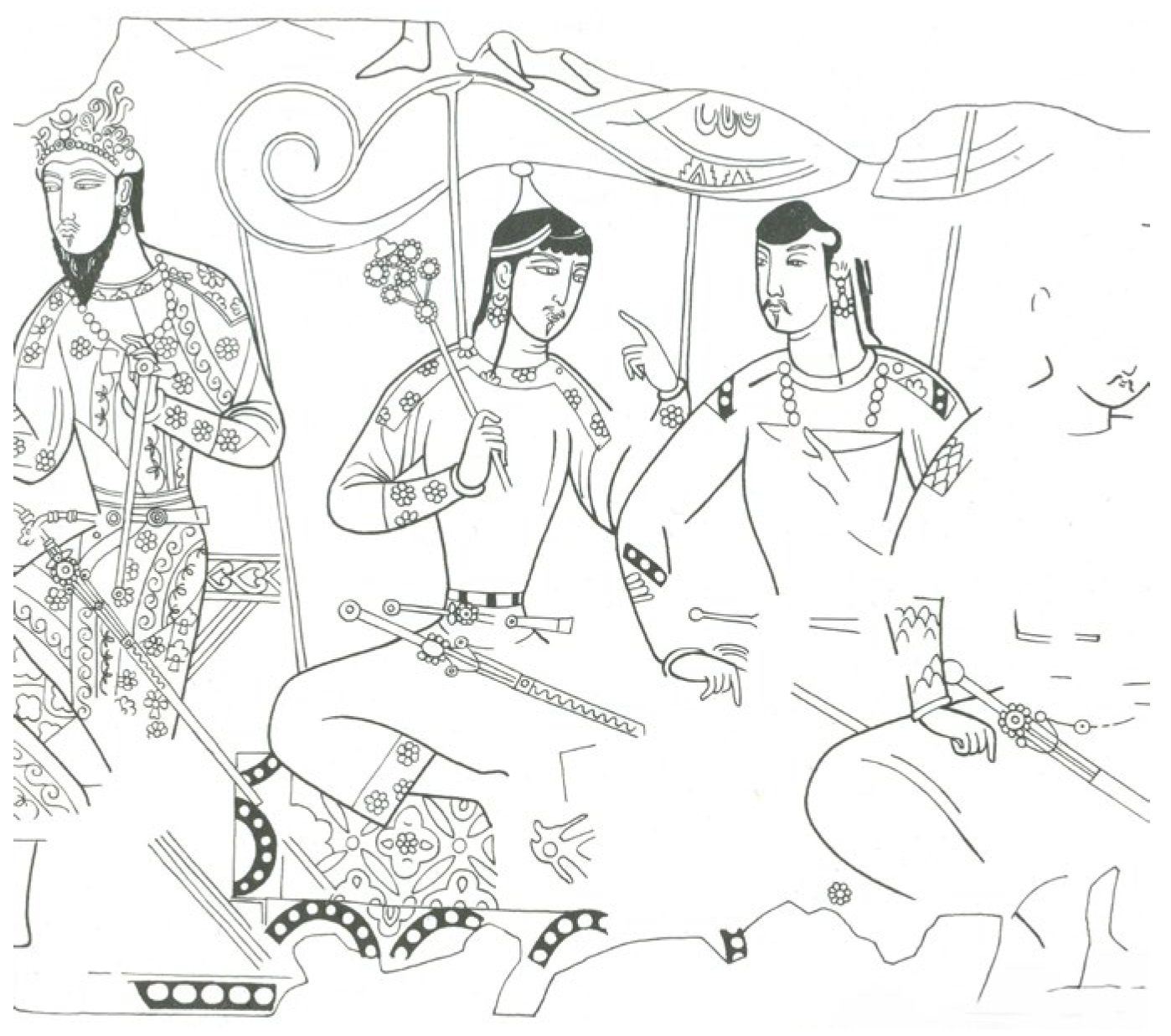
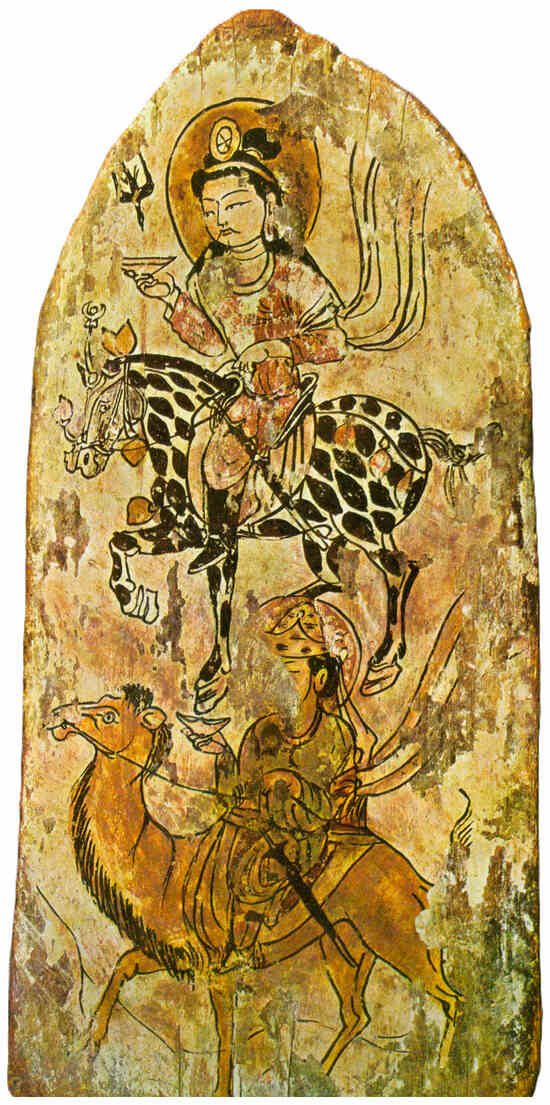
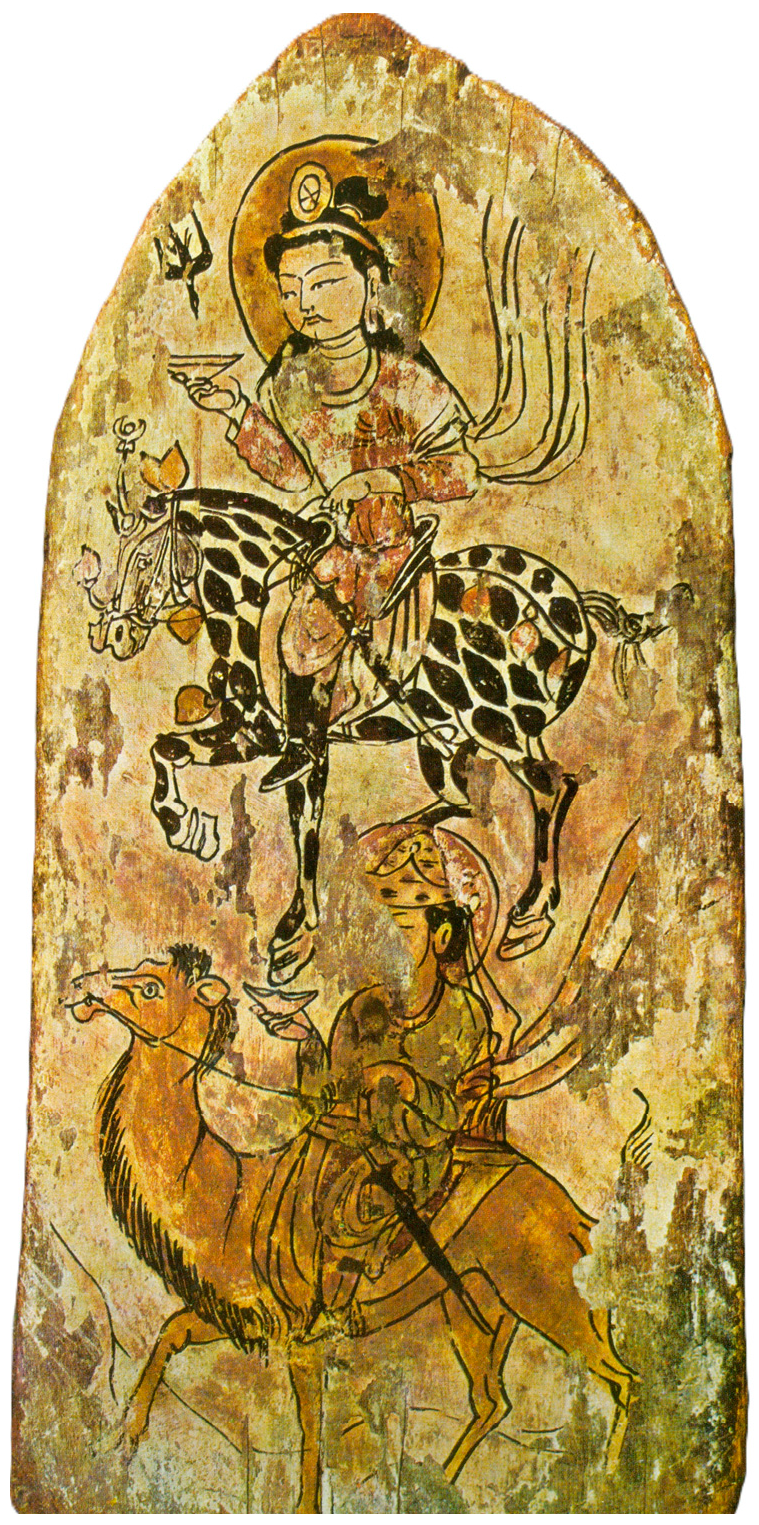
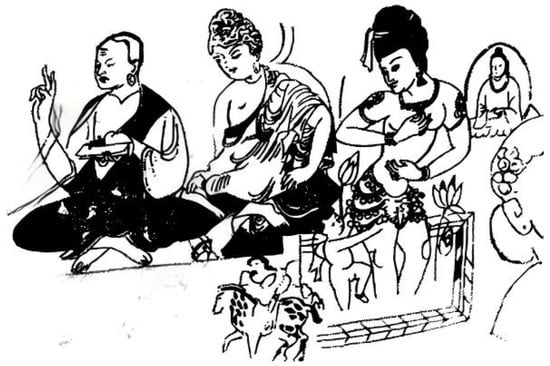
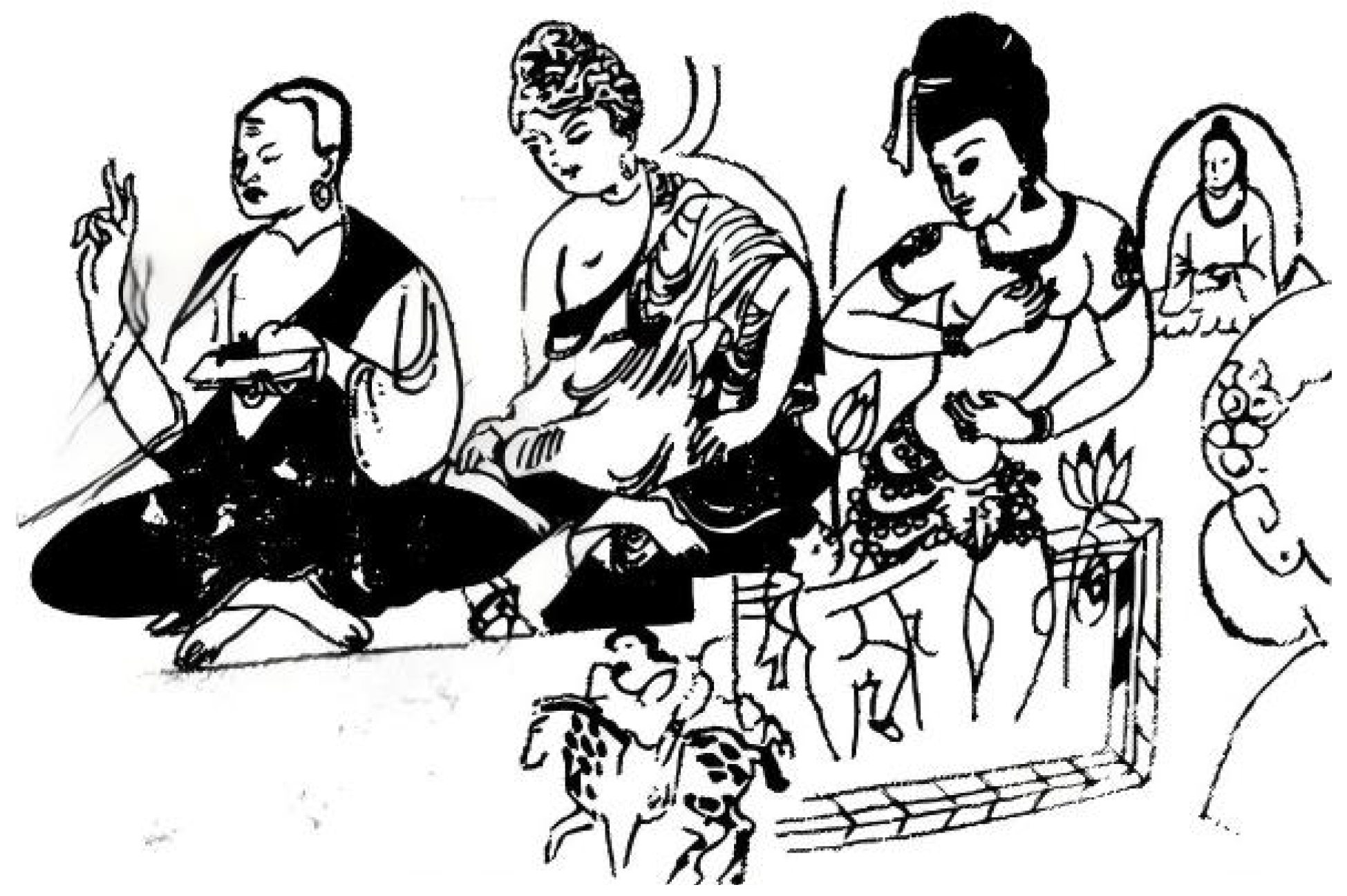
Disclaimer/Publisher’s Note: The statements, opinions and data contained in all publications are solely those of the individual author(s) and contributor(s) and not of MDPI and/or the editor(s). MDPI and/or the editor(s) disclaim responsibility for any injury to people or property resulting from any ideas, methods, instructions or products referred to in the content. |
© 2026 by the author. Licensee MDPI, Basel, Switzerland. This article is an open access article distributed under the terms and conditions of the Creative Commons Attribution (CC BY) license.