


Abstract
The Sŏkkuram principal Buddha image, created in mid-eighth-century Unified Silla, was conceived as a replication of the Bodhgayā Mahābodhi enlightenment image, intentionally reproducing its precise dimensions, even as its sculptural style reflects Tang Chinese influence rather than Indian prototypes. Soon after its creation, it came to function as a canonical prototype for Buddhist sculptural production in late Unified Silla. This paper examines the replications and transformations the Sŏkkuram image generated as a canonical prototype through the early Koryŏ period. The stone seated Buddha from An’gye-ri, Kyŏngju, is identified as a faithful replication, notably reproducing even the distinctive pentagonal pillar sockets—a feature unattested elsewhere in Unified Silla. A survey of the broader Sŏkkuram lineage reveals a wide spectrum: from stylistically close replications to images retaining only the formal type, and from iconographic transmission to transformations extending the bhūmisparśamudrā to Medicine Buddha imagery—produced across diverse social strata. The paper repositions the Sŏkkuram Buddha not as an isolated masterwork but as a normative prototype of an enduring sculptural tradition. This breadth and persistence—spanning stone, iron, and dry lacquer over several centuries—suggests an authority exceeding artistic prestige, raising the possibility the image was perceived as possessed of numinous power.
1. Introduction
Sŏkkuram, the artificial grotto constructed at the summit of Mount T’oham in Kyŏngju, stands as one of the most celebrated masterworks in the study of Korean architectural and Buddhist sculptural history.1 The principal Buddha image enshrined at the center of the circular main chamber—the only sculpture in the grotto executed fully in the round, in contrast to the bodhisattva figures, the Ten Great Disciples, and all other sculptures rendered in relief—commands an overwhelming presence that inspires profound reverence and awe in those who come to worship before the image (Figure 1). Seated on a pedestal approximately 1.6 m in height, the 3.4 m image gives material form to the sublime nature of the Buddha through well-proportioned human anatomy, subtly modulated bodily surfaces, and a restrained yet realistic idealization.2
Figure 1.
Sŏkkuram, principal Buddha image. Mid-eighth century. Granite. H. 343.1 cm; pedestal H. 165.6 cm. Kyŏngju, North Kyŏngsang Province. © Korea Heritage Service.
Following the creation of the Sŏkkuram principal image, a substantial number of seated Buddha figures in the earth-touching gesture (bhūmisparśamudrā; Kor. hangma ch’okchi in, 降魔觸地印) were produced in the Kyŏngju region, apparently modeled on this prototype.3 These range from examples closely approximating the Sŏkkuram image, to figures sharing the same formal type but displaying divergent proportions or less accomplished bodily articulation, to images in which the drapery convention (ch’agŭi pŏp, 着衣法) has been modified, to those that retain the earth-touching gesture while holding a medicine jar (yakki, 藥器) in the opposite hand. Variation in medium is equally notable: in addition to stone, examples cast in iron or executed in dry lacquer (kŏnch’il, 乾漆) are also attested. Stylistic analysis and typological classification of these images have been substantially advanced through prior scholarship (R. Kim 1989b; R. Kim et al. 2011, pp. 60–63, 76–80).
In her seminal study of earth-touching gesture Buddha images of the Unified Silla period, Kim Lena has observed that “the Sŏkkuram Buddha exerted a profound influence on the formal and stylistic development of seated buddha images in Silla thereafter,” and that among Silla earth-touching gesture images, cases exist in which the figure is represented with a medicine jar placed in the hand as the Medicine Buddha—a development she identifies as a distinctive feature of the Silla reception of this iconographic type (R. Kim 1989b, p. 339). The present study takes her argument as its point of departure and seeks to extend it in a new direction. The transmissions and transformations she identifies go beyond mere formal borrowing or superficial local adaptation. This paper proposes that they were made possible because the Sŏkkuram main Buddha had established itself as a canonical prototype (canon) for Buddhist sculpture in Unified Silla, and investigates the historical circumstances and religious motivations that led the Sŏkkuram principal image to serve as the model for the subsequent production of devotional images.
To this end, this paper reexamines the Sŏkkuram principal image alongside the various Buddha sculptures produced from the late Unified Silla through the early Koryŏ period, through the conceptual lens of the formation of a “canonical prototype,” its “replications,” and its “transformations.”4 The case study to which this paper directs particular attention is the Buddha image from An’gye-ri 安溪里, Kyŏngju, which appears to have been produced not long after the construction of Sŏkkuram (Figure 2). This image has consistently been evaluated as “the most closely similar work to the Sŏkkuram principal image among sculptures in the Kyŏngju region” (R. Kim et al. 2011, p. 62). Yet its significance extends well beyond its resemblance to the Sŏkkuram principal Buddha. The An’gye-ri image gives clear expression to the deliberate intention of its patrons and sculptors to reproduce an image identical to the Sŏkkuram Buddha, and constitutes compelling evidence that the Sŏkkuram principal image functioned as a normative prototype within Unified Silla society from the very moment of its creation.
Figure 2.
Stone Seated Buddha from An’gye-ri, Kyŏngju. Late 8th century. Granite. H. 145 cm. An’gye-ri, Kangdong-myŏn, Kyŏngju, North Kyŏngsang Province. Photograph by the author.
Since the study of ancient Korean Buddhist sculpture must inevitably proceed from formal analysis of surviving works in the absence of documentary records, this paper first examines the sculptural significance of the Sŏkkuram principal image, and then traces the faithful replication of the prototype as embodied in the An’gye-ri Buddha. It subsequently surveys examples from the late Unified Silla and early Koryŏ periods to trace the processes of formal transmission and transformation. The ultimate aim is to reposition the Sŏkkuram principal image not as an isolated masterwork but as the originating prototype that generated the canonical norms for Buddhist sculptural production in subsequent generations. In so doing, this paper seeks to move beyond the formal and typological classifications of prior scholarship to argue that the Sŏkkuram principal image was understood as a faithful transposition of the Bodhgayā Mahābodhi image onto Korean soil, and that it came to function, from shortly after its creation, as a new canonical prototype within Unified Silla Buddhist sculpture—one invested with a religious authority that demands investigation in its own right.
That the Sŏkkuram principal image was so extensively replicated and came to serve as the prototype for devotional image production raises a question that cannot be answered by an account of its formal influence alone. The religious meaning and authority that contemporaries attributed to this image must also be considered. No documentary sources have yet been identified that directly attest to the Sŏkkuram Buddha having been received as a numinously efficacious image (yŏnghŏmsang 靈驗像). Yet the material evidence itself—the extensive and sustained pattern of replication unfolding from the late Unified Silla through the early Koryŏ period—strongly suggests that this image was received not merely as a model of sculptural excellence but as a canonical prototype—an authoritative original whose formal and iconographic qualities were understood to embody sacred presence, and whose replication was conceived as a means of accessing and transmitting that presence to new times and places.5 It is this logic—the understanding that reproducing the form of the Sŏkkuram Buddha was not simply an artistic exercise but an act through which the prototype’s sacred authority could be extended and made newly efficacious—that constitutes the “religious meaning” referred to above. To place this possibility on the horizon of discussion is among the aims of the present paper.
2. From Bodhgayā to Mount T’oham: The Formation of the Unified Silla Prototype
The principal Buddha image of Sŏkkuram, founded in the mid-eighth century by Kim Taesŏng 金大城, chief minister of Unified Silla, is depicted in the bare right-shoulder drapery convention (p’yŏndan ugyŏn, 偏袒右肩) and forms the earth-touching gesture (bhūmisparśamudrā; Kor. hangma ch’okchi in, 降魔觸地印) (Nam 2014, pp. 84–127). This iconographic type was modeled on the enlightenment image (sŏngdosang, 成道像) enshrined in the main hall of the Mahābodhi Temple at Bodhgayā in India.6 The Tang dynasty pilgrim monk Xuanzang 玄奘 (602–664) recorded this image in meticulous detail in his Da Tang Xiyuji 大唐西域記, describing its posture, hand gesture, and precise measurements.7
The image inside the shrine was in the posture of sitting cross-legged facing the east, with the right foot upon [the left thigh]; the left hand was drawn back and the right one pointed downward. It was just as if the figure was alive. The pedestal was four chi two cun high and one zhang two chi five cun wide, and the image was one zhang one chi five cun tall. The two knees were eight chi eight cun apart, and the width from one shoulder to another measured six chi two cun. All the auspicious physical symbols of a buddha were complete and the compassionate features were true to reality, except that a little spot above the right breast was unfinished (emphasis added).8
Xuanzang records that the Mahābodhi principal image sat in the cross-legged posture facing east, with the left hand drawn back and the right hand extended downward in the earth-touching gesture. A comparison with the Sŏkkuram principal image reveals that the posture, hand gesture, and eastward orientation correspond in every respect. Bodhgayā, the site where Śākyamuni Buddha attained enlightenment beneath the Bodhi tree at the Vajrāsana, has long been venerated as the supreme sacred ground of Buddhism (Rowland 1938; H. Kang 2005). The bhūmisparśamudrā, in which the right hand extends downward to touch the earth, represents the very moment of Śākyamuni’s enlightenment as he vanquishes Māra.9 Although Xuanzang’s account makes no mention of the robe arrangement, the fact that almost all bhūmisparśamudrā images produced both at seventh- and eighth-century Bodhgayā and in the Tang capital of Chang’an following Xuanzang’s return uniformly expose the right shoulder suggests that Sŏkkuram stands firmly within this established tradition.10
Most striking of all is that virtually every measurement of the sculpture, excluding the pedestal—its total height, knee-span, and shoulder-width—corresponds with near precision to the dimensions recorded by Xuanzang (U. Kang 1984, pp. 54–57).11 These measurements are given in Tang Chinese linear units (tangchi 唐尺). Taking one tangchi as equivalent to 29.7 cm, the dimensions of the Mahābodhi image as recorded by Xuanzang convert to approximately 341.6 cm in height, 261.4 cm in knee-span, and 184.1 cm in shoulder-width. The dimensions recorded in the precision measured survey report of the Sŏkkuram principal image are 343.1 cm in total height, 256.0 cm in knee-span, and 197.2 cm in shoulder-width (Kyŏngju-si 2020, p. 271)—a remarkably close correspondence.
That the Sŏkkuram principal image was produced to the same dimensions as the Mahābodhi image recorded by Xuanzang was first demonstrated through the combined contributions of two scholars, and must be counted among the most significant advances in Sŏkkuram scholarship.
The Japanese scholar Yoneda Miyoji conducted a meticulous survey of Sŏkkuram during the 1930s, carefully measuring each part of the sculpture and its architectural spaces and converting the results into Tang Chinese units, and demonstrated that the overall design of Sŏkkuram was governed by a sophisticated system of proportions based on this same unit of measurement (Yoneda 1944, pp. 12–15). Building on Yoneda’s foundational work, Kang Woobang subjected these converted measurements to a systematic comparison with Xuanzang’s account, and was the first to demonstrate that the Sŏkkuram principal image was produced to the same dimensions as the Mahābodhi image as described by Xuanzang (U. Kang 1984, pp. 54–57). The contributions of these two scholars provide an indispensable foundation for understanding the intentions behind the creation of the Sŏkkuram Buddha.
A comparison of Xuanzang’s recorded dimensions for the Mahābodhi principal image with Yoneda’s Tang-unit conversions of the Sŏkkuram principal image is presented in Table 1, which makes immediately apparent that the dimensions of the two images, excluding the pedestal, are virtually identical (Table 1).12 This points to an intention that goes well beyond mere iconographic imitation—a deliberate effort to transpose onto Silla soil the very image enshrined at Bodhgayā, Buddhism’s most sacred site.
Table 1.
Comparison of Dimensions: Bodhgayā and Sŏkkuram Principal Buddha Images.
It should be noted, however, that while the intention to faithfully replicate the characteristics of the Bodhgayā image is clearly discernible, the Sŏkkuram Buddha does not appear to have been modeled directly on any Indian image. The image that Xuanzang saw at the Mahābodhi Temple no longer survives, and the bhūmisparśamudrā seated Buddha currently enshrined within the temple is generally dated to no earlier than the tenth century (Figure 3a).13 The precise appearance of the image Xuanzang actually witnessed is therefore impossible to determine today. It is nonetheless reasonable to suppose that the images produced at Bodhgayā after the seventh century, some of which survive, were made in continuation of the image enshrined in the Mahābodhi Temple at the time of his visit, and that they preserve something of the appearance of the Bodhgayā image that Xuanzang himself saw. Indeed, a Buddha image from the Bodhgayā region tentatively dated to the seventh century corresponds exactly with the Sŏkkuram principal image in its iconographic configuration—the right-shoulder-baring robe, the earth-touching gesture, and the placement of the left hand resting inward upon the thigh (Figure 3b). The sculptural styles of the two images, however, differ considerably. While certain features are shared—the broad, muscular rendering of the shoulders and arms, and the treatment of the thin robe as if clinging to the body—there are marked differences in overall sculptural character, particularly in the rendering of the robe folds along the right side of the torso and the emphatic drapery treatment across the legs and left arm. In sum, while the Sŏkkuram Buddha shares the core iconographic features of the surviving Bodhgayā bhūmisparśamudrā Buddhas—the exposed right shoulder, the earth-touching gesture, and the position of the left hand—it displays a distinctly independent character in its sculptural style.
Figure 3.
Bhūmisparśamudrā Seated Buddha Images from the Bodhgayā Region: (a) Seated Buddha in bhūmisparśamudrā enshrined in the Mahābodhi Temple at Bodhgayā. Ca. 11th century. H. 200 cm. After (Leoshko 1988, p. 41); (b) Seated Buddha in bhūmisparśamudrā, excavated at Bodhgayā. 7th century. H. 70 cm. Naradha State Museum, India. Photograph by the author.
In this respect, the Sŏkkuram Buddha is far closer to the Buddhist sculpture that flourished in Tang China at the time of its creation than to anything from Bodhgayā. The bhūmisparśamudrā Buddha enjoyed widespread popularity in China in the early to mid-eighth century, and numerous examples can be found in the Leigutai 雷鼓臺 and surrounding grottoes on the eastern hill of the Longmen 龍門 cave complex in Henan Province.14 The stone triad originally enshrined at Qibaotai 七寶臺 in Chang’an in the early eighth century, now preserved as relief carvings at Baoqingsi 寶慶寺, also includes multiple bhūmisparśamudrā images that share stylistic affinities with the Sŏkkuram Buddha (Figure 4a). Among Tang examples, the bhūmisparśamudrā Buddha from Cave 18 of the Tianlongshan 天龍山 caves in Taiyuan, Shanxi Province, dating to the first half of the eighth century, and the marble Buddha image of 728 CE from Guanghuisi 廣惠寺 in Zhengding County, Hebei Province, are most frequently cited as the stylistically closest parallels to the Sŏkkuram Buddha (Figure 4b) (R. Kim 2020, pp. 195–96). For Tianlongshan Grottoes, see Li and Li (2003).
Figure 4.
Bhūmisparśamudrā Seated Buddha Images from Tang China: (a) Stone Buddhist triad, originally enshrined at Baoqingsi 寶慶寺, Xi’an. Early 8th century, 701–704. H. 109.5 cm. Tokyo National Museum. Photograph by the author; (b) Cave 18, north (back) wall, Tianlongshan Caves 天龍山石窟, Taiyuan, Shanxi Province. First half of the 8th century. After (Tonomura 1922, p. 76).
In the case of the Sŏkkuram Buddha, the intention to replicate the Mahābodhi image at Bodhgayā was realized through faithful adherence to the dimensions recorded in Xuanzang’s account, while the actual sculptural execution drew upon the Buddhist art of Tang China. The iconographic prototype lay in India, but its visual realization was mediated through China.15
How, then, was the Sŏkkuram main Buddha perceived in Silla society? Unfortunately, no contemporary record survives to tell us. We have no way of knowing what religious significance Kim Taesŏng and the others who commissioned and created the image intended to invest in it, nor how it was understood by those who encountered it at the time. In this respect, the case of the Śākyamuni image at Seiryōji 清涼寺 in Kyoto offers suggestive parallels.
The standing sandalwood image of Śākyamuni now enshrined at Seiryōji (985 CE, height 162 cm) was carved in Taizhou 台州 in Zhejiang province by the tenth-century Japanese monk Chōnen 奝然, who had it made as a replica of a sandalwood Śākyamuni image he had seen in the Northern Song capital, and brought it back to Japan (Figure 5a). The image is associated with the legend of King Udayana: grief-stricken at the Buddha’s absence, the king had Maudgalyāyana convey thirty-two craftsmen to the Trāyastriṃśa heaven, where they rendered an exact likeness of the Buddha in sandalwood (Henderson and Hurvitz 1956, pp. 5–55; McCallum 1996, pp. 51–67). After the image’s arrival in Japan, veneration of it gradually spread, and by the latter half of the twelfth century it had come to be revered as an image of numinous efficacy. Strikingly, Japanese worshippers came to believe that the Seiryōji image was itself the original that had been in Zhejiang, and that the replica and the prototype had been secretly exchanged (Oku 2019b, pp. 377–97). The image thus came to be regarded not as a copy of a particular statue but as the Udayana image itself—an image that had inherited from the Buddha his own power and authority. From the mid-thirteenth century onward, the Seiryōji Śākyamuni gave rise to numerous replicas throughout Japan, of which the standing Śākyamuni at Saidaiji in Nara stands as one of the most representative examples (Figure 5b).
Figure 5.
The Seiryōji-type standing Śākyamuni: prototype and representative replication. (a) Standing Śākyamuni. Northern Song dynasty, 985. sandalwood. H. 162 cm. Brought to Japan by Chōnen (奝然, 938–1016). Seiryōji, Kyoto. (b) Standing Śākyamuni. 1249. sandalwood. H. 162.1 cm. Zenkei (善慶) and eight other sculptors. Saidaiji, Nara. Public Domain.
In the case of early Korean Buddhist sculpture, relevant textual sources are exceedingly scarce; apart from the fragmentary accounts in Iryŏn’s 一然 (1206–1289) Samguk yusa 三國遺事 (Memorabilia of the Three Kingdoms), compiled in the late thirteenth century, and the inscriptions on a small number of images, there is almost no basis on which to trace the devotional intentions behind the creation of Buddhist statues or the patterns of their religious reception. Yet the desire for sacred icon veneration was a universal phenomenon within the Buddhist world, and the practice of replicating images from sacred sites—and of expecting from those replications the same numinous power as the originals—appears to have been equally widespread across East Asian Buddhism. It is through this comparative lens, and through cases such as the Seiryōji image, that we may reasonably infer something of the religious significance and devotional standing that the Sŏkkuram main Buddha would have held, even in the absence of both contemporary and later records.
When we consider the devotion and care that the patrons and makers of the Sŏkkuram project invested in the work, and the strong orientation toward the Bodhgayā image that is consistently manifest across every aspect of the sculpture’s conception, iconographic features, and scale, the Sŏkkuram main Buddha may be understood as a sacred icon (sŏngsang 聖像) through which the enlightenment image of Bodhgayā was transplanted onto Silla soil. The case of the Seiryōji image—though made in China as a replica, it came to be venerated in Japan as the Udayana image itself—offers a suggestive comparative case for inferring how the Sŏkkuram main Buddha may have been perceived in Unified Silla society. The Seiryōji case does not constitute direct evidence for such a reception in the Korean context, but it does suggest that this pattern of identificatory veneration was operative in East Asian Buddhist culture more broadly, and invites the question of whether a similar logic may have been at work in the case of the Sŏkkuram main Buddha.16 The fact that the Sŏkkuram main Buddha went on to serve as a religious and artistic prototype, generating numerous replicas in subsequent centuries, further suggests a pattern of veneration closely analogous to that of the Seiryōji image, and lends additional support to this interpretation.
3. A Faithful Copy of the Sŏkkuram Prototype: The Stone Seated Buddha from An’gye-ri, Kyŏngju
Oku Takeo, a leading Japanese scholar of Buddhist sculptural replication, defines the practice as the reproduction of a buddha image’s form premised on a broad consensus regarding its value (Oku 2019a, pp. 31–32). A replicated image, in his view, does more than copy the original: by reproducing the form of an image regarded as numinously efficacious, it celebrates and reinforces the authority of the original while acquiring the status of its surrogate. Yet this relationship is contingent—it takes hold only when the original’s existence and reputation are sufficiently well known for worshippers to recognize the replica’s efficacy and embrace it as an object of veneration.
The main Buddha of Sŏkkuram functioned as a canonical prototype for the production of seated buddha images from the late Unified Silla through the early Koryŏ period. Many seated buddha images produced during this period follow the visual characteristics of the Sŏkkuram main Buddha, yet are accompanied by virtually no inscriptions or documentary records. Accordingly, the degree of fidelity in replication has been treated as a central analytical concern in the study of buddha images in the Sŏkkuram lineage.17 Yet this is not simply a matter of sculptural type and style. If a deliberate effort to faithfully replicate the Sŏkkuram Buddha can be demonstrated, this would suggest that patrons and makers alike may have recognized Sŏkkuram as an archetypal model. The stone seated Buddha from An’gye-ri, Kyŏngju, offers an ideal case for examining this issue (Figure 2).18
Located in An’gye-ri, Kangdong-myŏn, at the northernmost reaches of Kyŏngju—roughly fifty kilometers north of Sŏkkuram and approximately thirty kilometers north of the Silla royal capital—this Buddha image has suffered considerable damage over the centuries from natural weathering and human-inflicted wear.19 Nevertheless, it has long attracted scholarly attention as an image that closely and faithfully resembles the Sŏkkuram main Buddha in every category of formal type, iconography, and sculptural style. The robe configuration, hand gesture, cross-legged posture, arrangement of the legs, and position of both hands all correspond to those of the Sŏkkuram Buddha.20
The sculptural style and physical proportions, no less than the formal type, continue the distinctive qualities of the Sŏkkuram main Buddha. The broad shoulders, slender waist, full chest, the soft fold of flesh beneath the chest, the fleshy roundness of the cheeks, the clearly articulated three neck folds and jawline, and the delicate rendering of the brows and eyes—all carry forward the Sŏkkuram main Buddha’s characteristically realistic yet idealized treatment of the human form (Figure 1, Figure 2 and Figure 6a,b). The subtly modeled curvature of the lips and corners of the mouth completes this effect, in which the sense of physical presence is rendered with utmost immediacy while restrained expression purges any worldly quality, elevating the image toward the ideal.21
Figure 6.
Comparison of facial treatment: cheeks, jawline, and facial features. (a) Sŏkkuram main Buddha; (b) An’gye-ri seated Buddha. (a) © Korea Heritage Service; (b) Photograph by the author.
Most revealing of the replicative intent, however, is the treatment of the drapery, whose concise yet natural rendering corresponds to that of the Sŏkkuram Buddha to a remarkable degree. Severe damage in places makes it difficult to assess the original appearance throughout, yet the number and rendering of the diagonal drapery folds rising from the right flank to the left shoulder, the band-like fold descending below the left arm, the curve of the drapery on the left side beneath the left arm, the rhythmically incised groove running from the outer thigh toward the hip, the relief folds across both legs, and even the exposure of the left toes beneath the right arm are nearly identical (Figure 7a,b and Figure 8a,b). The slightly rough, unfinished-looking surface where the sole of the left foot meets the body, left indistinct as if the work were incomplete, likewise finds a precise parallel. The hem of the robe on the reverse and the diagonally curving folds toward the left and right hips are similarly close (Figure 9a,b).
Figure 7.
Comparison of drapery treatment: the curved fold beneath the left arm. (a) Sŏkkuram main Buddha; (b) An’gye-ri seated Buddha. (a) © Korea Heritage Service; (b) Photograph by the author.
Figure 8.
Comparison of drapery treatment: the relief folds across both legs and the disposition of the feet. (a) Sŏkkuram main Buddha, upper; (b) An’gye-ri seated Buddha, lower. (a) © Korea Heritage Service; (b) Photograph by the author.
Figure 9.
Comparison of drapery treatment on the reverse: the hem of the robe and the diagonally curving folds toward the hips. (a) Sŏkkuram main Buddha; (b) An’gye-ri seated Buddha. (a) © Korea Heritage Service; (b) Photograph by the author.
The close relationship between the two images is already evident from the analysis above; the connection becomes still more certain, however, when we turn to the pedestal. The most distinctive feature of the Sŏkkuram main Buddha’s pedestal is the combination of pilasters carved at the corners of the middle register and pentagonal stone columns erected as separate elements on the outside of each corner (Figure 10).22 Lim Young-ae has designated this pedestal type—characterized by a three-tiered structure with an octagonal middle register—the “three-tiered octagonal” (samdan p’algak 三段八角) lotus pedestal. According to Lim, the earliest extant example of this type with a securely established date of production is the Sŏkkuram main Buddha’s pedestal itself (Y. Im 2011, pp. 285–86). While the three-tiered octagonal lotus pedestal is attested in a number of examples, the combination of an octagonal middle register with separately erected pentagonal columns at each corner was, until recently, known only from Sŏkkuram—and it is precisely this combination that appears at An’gye-ri.
Figure 10.
Pedestal of the Sŏkkuram main Buddha, showing the three-tiered octagonal (samdan p’algak 三段八角) lotus pedestal with pilasters carved at the corners of the middle register and pentagonal stone columns erected at each corner. © Korea Heritage Service.
Excavations carried out in 2002 revealed pentagonal sockets at all eight corners of the upper surface of the An’gye-ri Buddha’s lower register—sockets that appear to have held columns of precisely this kind (Figure 11a,b).23 The combination of an octagonal middle register and eight pentagonal sockets is a form of exceptional rarity in Unified Silla, attested until now only at Sŏkkuram and An’gye-ri. It should be noted, however, that whereas the lower register of the Sŏkkuram pedestal has a circular plan, that of the An’gye-ri pedestal is octagonal—a feature characteristic of the late eighth century. According to Lim, examples of the three-tiered octagonal lotus pedestal with a circular lower register predate those with an octagonal lower register.24 The pedestal form of the An’gye-ri Buddha thus suggests that it was produced slightly later than Sŏkkuram.
Figure 11.
Lower register of the An’gye-ri Buddha’s pedestal (after Taehan Pulgyo Chogyejong Munhwa Yusan Palkkul Chosadan 2005). The middle register, which would have been placed above, is no longer extant. (a) Plan and elevation drawing. (b) Upper surface of the octagonal lower register, showing pentagonal sockets carved at each of the eight cor-ners, which would have supported pentagonal stone columns—analogous to the arrangement seen in the Sŏkkuram main Buddha’s pedestal.
As the foregoing analysis has demonstrated, the Sŏkkuram main Buddha and the An’gye-ri Buddha are remarkably alike. The correspondence extends to the routing of individual drapery folds, their number and degree of relief, and the manner in which they taper and dissolve—and reaches even to so distinctive a feature as the pentagonal columns at the corners of the pedestal. The two images display an exceptionally close point-by-point correspondence.
This study proposes that the An’gye-ri Buddha is a sculptural replication of exceptional fidelity, produced through direct on-site observation of the Sŏkkuram Buddha. A formal type may be transmitted through verbal description, small-scale models, or drawn templates; yet a correspondence extending to such refined sculptural style and minute detail as this would be difficult to achieve through such means alone.25
One possible objection is that the two images independently drew upon a common Chinese prototype no longer known to us. If such a prototype had enjoyed any degree of circulation in Korea at the time—whether through small-scale models, drawings, or other intermediary means of transmission—one would expect it to have generated more than two surviving examples. It is true that works produced during this period may have been destroyed or lost without trace. Yet given that buddha images belonging to the same formal type as the Sŏkkuram main Buddha survive in considerable number (a survey of representative examples is provided in Section 4 below), the fact that this particular combination—encompassing not merely iconographic type but sculptural style, drapery detail, and pedestal form in such comprehensive and intimate correspondence—is attested in these two images alone suggests that this specific constellation of features did not derive from any widely shared iconographic tradition of the time.
A counterargument might hold that the difference in scale between the An’gye-ri Buddha and the Sŏkkuram original precludes regarding the former as a replication. As discussed above, however, replication does not require complete formal identity with the original. In Japanese Buddhist art, replicas that differ from their prototypes in scale are routinely recognized as replications (Oku 2019b). Sŏkkuram was a project of unprecedented scale, completed as a state undertaking under the patronage of the highest-ranking official of the day; those who could commission a work of comparable magnitude would have been exceedingly few. The reduction in scale should therefore be understood not as evidence of an absence of replicative intent, but as a reflection of the practical circumstances of the patron. That the maker nonetheless sought to reproduce the original as faithfully as possible in every category—iconography, sculptural style, drapery detail, and pedestal form—only makes the replicative character of the An’gye-ri Buddha more, not less, apparent.
The skill of the An’gye-ri sculptors is revealed with particular clarity in the differential adjustment of proportions carried out in the process of scaling down. The overall height of the An’gye-ri Buddha was reduced to approximately 42% of the Sŏkkuram original, at 145 cm; yet the rate of reduction varies across different parts of the body.26 The shoulder width was reduced to approximately 64% of the original, while the knee width was reduced to approximately 55%—meaning that the upper body was scaled down more substantially than the lower. This appears to reflect an understanding of the principles of optical correction. Placed atop a pedestal 1.6 m in height, the Sŏkkuram main Buddha rises to a total height of approximately 5 m; viewed from below by a standing before the image with hands joined in prayer, the upper body would appear diminished by the effects of foreshortening. To compensate for this distortion, the Sŏkkuram sculptors appear to have deliberately enlarged the upper body—a judgment confirmed by actual measurement, which shows the upper body to be significantly larger in proportion than the lower. The An’gye-ri Buddha, at 145 cm in total height, stands at little more than eye level with a standing viewer, and required no such exaggeration of the upper body. The An’gye-ri sculptors did not simply reduce the original uniformly; they understood how the change in scale altered the conditions of visual perception, and adjusted the proportions of individual body parts accordingly. This is a level of replication that could only have been achieved by those who had thoroughly internalized not merely the forms of Sŏkkuram, but the sculptural principles that governed them.
Who, then, commissioned the An’gye-ri Buddha, and for what purpose was it erected on the outskirts of Kyŏngju? In the complete absence of documentary evidence, no answer can be given with certainty. Yet the exceptional precision of the replication strongly suggests that the patron was someone belonging to the highest stratum of power—someone with direct access to the inner rotunda of Sŏkkuram. Sŏkkuram was a state undertaking, and it is likely that the circular main hall, in which the principal image was enshrined, was accessible only to an extremely restricted circle of individuals from the royal family and the highest aristocracy.27 It was in the period immediately following the completion of Sŏkkuram, when the memory of its forms and the technical knowledge embodied in its making were still vivid, that such a faithful replication would have been possible—brought about by the conjunction of a high-ranking patron’s clear commission and the participation of highly skilled craftsmen.28 That the An’gye-ri Buddha was not the only faithful replication produced in this period cannot, of course, be asserted with certainty; yet it is equally unlikely that such replications were produced in large numbers. Those with direct access to the inner rotunda of Sŏkkuram would have been very few, and fewer still would have possessed both the financial means and the social authority to engage craftsmen capable of reproducing it with this degree of fidelity. The question of who commissioned the An’gye-ri Buddha thus leads naturally to a deeper one: what did it mean to replicate Sŏkkuram at all?
As Oku Takeo has argued, sculptural replication presupposes a broad recognition of the outstanding value of the image being replicated, and constitutes a deliberate act of reproducing its form in that recognition (Oku 2019a). Seen in this light, it is difficult to suppose that those responsible for the An’gye-ri Buddha were engaged in nothing more than the imitation of the outward appearance of a celebrated image of their day. The very thoroughness with which they replicated the Sŏkkuram main Buddha strongly suggests that they understood it as a sacred icon (sŏngsang 聖像)—not merely a sculpture, but a numinous presence that had transplanted onto Silla soil the enlightenment image of Bodhgayā’s Mahābodhi Temple, inheriting from that sacred prototype its own religious power and authority.29 If so, the An’gye-ri Buddha carries a significance that exceeds ordinary replication: it is a double replication of a sacred site image—the Bodhgayā enlightenment image transposed first into Sŏkkuram, and Sŏkkuram transposed in turn into An’gye-ri. This process of double replication offers concrete testimony to how the Sŏkkuram main Buddha was received and understood in the period immediately following its creation. To borrow Kubler’s term, the Sŏkkuram main Buddha began to function as a prime object—generating a succession of replications and transformations—from the very moment of its completion (Kubler 1962), and in so doing it established itself as a new canonical prototype for Buddhist sculpture in Unified Silla, one whose authority was commensurate with that of the Bodhgayā image itself. The An’gye-ri Buddha stands, for the present, as the earliest and most compelling evidence of this.
4. Transmission and Transformation of the Sŏkkuram Buddha Prototype
The Sŏkkuram main Buddha continued to function as a canonical prototype for the production of seated buddha images from the late Unified Silla through the early Koryŏ period (R. Kim 1989b, pp. 337–82). Yet examples that display a deliberate intention to faithfully replicate the original in its entirety are exceedingly rare—the An’gye-ri Buddha remaining, to the best of our knowledge, the sole surviving example of such comprehensive fidelity. Most buddha images in the Sŏkkuram lineage inherit the formal type of Sŏkkuram—the right-shoulder-baring robe configuration and the earth-touching gesture—while diverging considerably in sculptural style and detail.
Buddha images belonging to the Sŏkkuram lineage survive in considerable number, distributed across the Kyŏngju region, the broader Kyŏngsang provinces, and more distant regions beyond. A comprehensive survey of all extant examples lies beyond the scope of the present study; the following discussion is necessarily selective, focusing on representative cases that illuminate the key dimensions of transmission and transformation.30
Notably, buddha images in the Sŏkkuram lineage were produced not only in stone but also in dry lacquer and iron. The dry lacquer seated Buddha at Ch’ŏngnyangsa, Ponghwa, North Kyŏngsang Province, closely resembles the Sŏkkuram main Buddha in its robe configuration, hand gesture, the drapery folds cascading over the knees with tucked fabric between them, and the treatment of the drapery on the reverse side of the image (Figure 12).31 Minor stylistic shifts, however—a slightly forward-inclined posture and a shortened torso—suggest a date of production in the late eighth to ninth century (Chŏng 2017, 2018, pp. 7–33). The image is currently venerated as a Medicine Buddha, with a jewel-shaped medicine jar placed on the left hand, though the possibility has been raised that this jar was not part of the original commission (Ponghwa Kun’ch’ŏng·Taehan Pulgyo Chogyejong Ch’ŏngnyangsa 2020, pp. 50–52).
Figure 12.
Seated Buddha, dry lacquer (kŏnch’il 乾漆). Unified Silla period, late eighth to ninth century. H. 90 cm. Ch’ŏngnyangsa, Ponghwa, North Gyeongsang Province. © The Research Institute of Buddhist Cultural Heritage.
The iron seated Buddha now in the collection of the National Museum of Korea (accession no. K983) is also well known as an example that closely follows the Sŏkkuram main Buddha (Figure 13). Adopting the right-shoulder-baring robe and earth-touching gesture, it faithfully inherits the formal qualities of the Sŏkkuram original in its broad shoulders, imposing physical proportions, and disciplined drapery rendering. This iron Buddha has long been associated with the site of Powŏnsa, Sŏsan, but this provenance is now considered unreliable, and its original location remains unknown (K. Kang 2021). Its date of production remains a matter of debate, with opinions ranging from roughly contemporary with Sŏkkuram to the late Unified Silla or early Koryŏ period (U. Kang 1998, pp. 1–31; Kwŏn 2022, pp. 141–53).
Figure 13.
Seated Buddha, iron. Unified Silla or early Koryŏ period. H. 150 cm; knee span 118 cm. National Museum of Korea, Seoul (acc. no. K983). © National Museum of Korea.
The large iron seated Buddha transmitted from the site of Powŏnsa, Sŏsan, and the iron seated Buddha from Hasach’angdong, Hanam, Kyŏnggi Province, produced in the early Koryŏ period, may also be confidently identified as replicas of Sŏkkuram (Figure 14 and Figure 15) (Ch’oe 2013b; S. Yi 2020, pp. 5–40; Kwŏn 2021, pp. 123–50). The Hasach’angdong iron Buddha so faithfully perpetuates the Sŏkkuram stylistic tradition—in its right-shoulder-baring robe, earth-touching gesture, and balanced physical proportions—that Japanese scholars conducting cultural heritage surveys during the colonial period assessed it as a masterwork of the Unified Silla period (Sekino 1932, p. 130; Nakayoshi 1971, pp. 173–74). Following liberation, however, excavations at the temple site led to its reclassification as an early Koryŏ image (Hwang 1985, p. 30). The fact that the Sŏkkuram stylistic tradition was reproduced in materials as different as dry lacquer and iron testifies to the enduring force with which the Sŏkkuram main Buddha functioned as a canonical prototype transcending material boundaries extending into the early Koryŏ period.
Figure 14.
Seated Buddha, iron. Early Koryŏ period. H. 259 cm; knee span 214 cm. Transmitted from the site of Powŏnsa, Sŏsan, South Chungcheong Province. National Museum of Korea, Seoul (acc. no. Bon’gwan 5191). © National Museum of Korea.
Figure 15.
Seated Buddha, iron. Early Koryŏ period. H. 281.8 cm; knee span 213 cm. Transmitted from Hasach’angdong, Hanam, Kyŏnggi Province. National Museum of Korea, Seoul (acc. no. Deoksu 2748). © National Museum of Korea.
Among the broader Sŏkkuram lineage, however, such faithful replications represent only a small minority. Most buddha images in the Sŏkkuram lineage inherited its formal elements while displaying a wide spectrum of variation in physical proportions and sculptural technique. The stone seated Buddha at Yŏngji, Kyŏngju, the stone seated Buddha at the Karhangsa site, Kimch’ŏn, the stone seated Buddha at Kounsa, Ŭisŏng, North Kyŏngsang Province, and the stone seated Buddha at Yaksaam, Kwangju, all follow the iconography of the Sŏkkuram main Buddha, yet tend toward simplified proportions and schematized drapery rendering. The Yŏngji seated Buddha may serve as a representative example (Figure 16): the balanced proportions, naturalistic bodily modeling, and precise drapery handling that distinguish the Sŏkkuram main Buddha proved, in most cases, seldom achieved in later works (Y. Im 1996).
Figure 16.
Seated Buddha, stone. H. 192 cm (figure); pedestal H. 154 cm; knee span 150 cm. Yŏngji, Kyŏngju, North Gyeongsang Province. Photograph by Sunkyung Kim.
This difficulty points to a broader pattern. While Sŏkkuram functioned as an iconographic norm, faithfully replicating its full sculptural accomplishment was an altogether different matter—one that demanded not only direct observation of the original but also a clear commission from a patron of the highest social stratum and the participation of exceptionally skilled artisans. These were conditions that few could meet. Yet the very breadth of the Sŏkkuram replication tradition—spanning such a wide range of quality and ambition—suggests that veneration of the Sŏkkuram main Buddha had extended well beyond the royal family and the highest aristocracy to reach a considerably broader social sphere. In this sense, the An’gye-ri Buddha, with its comprehensive fidelity to the original, and the many images that inherit only its formal type with simplified style, together testify—each in its own way—to the remarkable reach of Sŏkkuram’s influence across Unified Silla society.
Also worthy of attention are cases from the eighth and ninth centuries in which the Sŏkkuram main Buddha served as a model while new transformations were attempted. Most representative are examples in which the hand gesture is retained but the robe configuration is modified. The stone seated Buddha at Porisa, Mirŭkkok, Namsan, Kyŏngju, adopts the full-coverage robe, in which both shoulders are covered (Figure 17), while most of the seated Buddha images excavated from Punhwangsa and displayed in the garden of the Kyŏngju National Museum retain the earth-touching gesture but show either the full-coverage robe or the double-robe configuration—in which the right-shoulder-baring robe is worn beneath an additional outer garment—rather than the simple right-shoulder-baring robe of the Sŏkkuram original.32
Figure 17.
Seated Buddha, stone, Mirŭkkok valley, Namsan, Kyŏngju. Height 244 cm (image only); 436 cm (with pedestal). © Korea Heritage Service.
Among the most significant of these transformations is the emergence of Medicine Buddha images that combine the Sŏkkuram formal type with a medicine jar held in the left hand.33 These images share the earth-touching gesture and medicine jar held in the left hand, but diverge in their treatment of the robe—revealing a spectrum of transformation from minimal to more substantial departure from the Sŏkkuram prototype.34 At one end of this spectrum, the seated Buddha excavated from the Yongjang valley, Namsan, Kyŏngju, now displayed at the Kyŏngju National Museum, retains the right-shoulder-baring robe of the Sŏkkuram original, adding only a medicine jar to the left hand—the most conservative adaptation (Figure 18). The Buddha at Yonghwasa, Chŭngch’on-ri, Sangju, represents a more substantial departure: the right-shoulder-baring robe is replaced by the full-coverage robe, while the earth-touching gesture and medicine jar are retained (Figure 19). Occupying an intermediate position, the image excavated from the Samnyŏnggye valley, Namsan, Kyŏngju, now in the collection of the National Museum of Korea, preserves the right-shoulder-baring robe but covers the right shoulder with an additional cloth—a modified robe configuration that combines elements of both types while adding a medicine jar to the left hand (Figure 20).
Figure 18.
Seated Medicine Buddha, stone, excavated from the Yongjang valley, Namsan, Kyŏngju. Height 110 cm (excluding pedestal); 52 cm (image only). Kyŏngju National Museum (acc. no. Kyŏngju 1765). Photograph by the author.
Figure 19.
Seated Buddha, stone, Yonghwasa, Chŭngch’on-ri, Sangju, North Kyŏngsang Province. Height 168 cm. © Korea Heritage Service.
Figure 20.
Seated Bhaiṣajyaguru (Yaksa yŏrae 藥師如來), stone. Unified Silla period. H. 109.0 cm. Transmitted from Samnyunggok, Namsan, Kyŏngju. National Museum of Korea, Seoul (acc. no. Bon’gwan 1957). © National Museum of Korea.
The earth-touching gesture, established as the predominant hand gesture of Unified Silla stone seated Buddhas through the Sŏkkuram main Buddha, was combined with Medicine Buddha iconography to give rise to a distinctively Korean iconographic type—the Medicine Buddha with the earth-touching gesture. This demonstrates that the Sŏkkuram prototype functioned not merely as a model for replication and copying, but as a generative source for new iconographic invention.35
One of the central questions in the study of Sŏkkuram replications concerns which elements of Sŏkkuram were transmitted and which were not. Among the most important considerations in the production of the Sŏkkuram main Buddha was the replication of the Bodhgayā image at its original scale, yet this absolute scale was not reproduced in any later work, including the An’gye-ri Buddha. More striking still, the artificial grotto structure that lies at the very heart of Sŏkkuram—the distinctive architectural arrangement connecting the circular main chamber and the antechamber, with its iconographic program of Vajrapāṇi guardians, Four Heavenly Kings, ten disciples, and bodhisattvas—was not carried over into any subsequent replication.36 Had technical difficulty been the obstacle, a comparable structure in wood rather than granite might have been attempted, yet no such example survives. Whether such structures were never produced, or were produced but subsequently lost, cannot be determined with the evidence currently available. Why it was the Sŏkkuram main Buddha alone that was selectively replicated and transformed remains a question that awaits more sustained inquiry.
The Sŏkkuram main Buddha thus functioned as a pervasive iconographic and stylistic norm for Buddhist sculpture from the late Unified Silla through the early Koryŏ period. Its influence unfolded across multiple registers—from faithful replication to the selective inheritance of formal elements to the creation of new iconographic types. In Kubler’s terms, the Sŏkkuram main Buddha was not merely a prime object that initiated a sequence of replications, but a canonical prototype whose generative force shaped the trajectory of Korean Buddhist sculpture across the centuries that followed (Kubler 1962).
5. Conclusions
The Sŏkkuram main Buddha is a faithful replication of the image of the Buddha’s enlightenment at Mahābodhi Temple in Bodhgayā, transposed onto Korean soil, and it functioned as a new prototype for Buddhist sculpture in Unified Silla from shortly after its creation. The stone seated Buddha from An’gye-ri, Kyŏngju, demonstrates this clearly through its precise replication of the Sŏkkuram original—extending to drapery detail, physical proportions, and the distinctive pedestal structure. As a replication of the Sŏkkuram Buddha, which was itself a replication of the Bodhgayā enlightenment image, the An’gye-ri Buddha carries particular significance as a double replication of a sacred prototype. It was in all likelihood understood as sharing in the status of the Bodhgayā image as its surrogate, mediated through Sŏkkuram.
Replications of this caliber, however, were exceedingly rare. Many images that appear to have taken the Sŏkkuram Buddha as their model inherited its iconographic features while falling short of reproducing its sculptural accomplishment. This suggests, paradoxically, that veneration of the Sŏkkuram main Buddha had spread beyond the royal family and the highest aristocracy to reach a considerably broader social sphere. Although this question cannot be fully explored within the scope of the present study, the breadth of this diffusion also points to the possible existence of model drawings or templates.37 Beyond cases such as the An’gye-ri Buddha, which was produced through direct observation of the original, formal types may well have been transmitted to regions considerably beyond Kyŏngju through small-scale models or drawn templates. Such transmission through intermediary models would have contributed to the spread of the formal type while inevitably failing to capture the full sculptural qualities of the original. Beyond formal inheritance, new transformations also emerged—modifications to the robe configuration, and the appearance of Medicine Buddha images combining the Sŏkkuram formal type with the earth-touching gesture. In this sense, the Sŏkkuram main Buddha came to function not merely as an object of replication but as a generative source for new iconographic creation—not only a prime object, in Kubler’s terms, but a canonical prototype (canon) that shaped the trajectory of Korean Buddhist sculpture across multiple registers and over the long centuries that followed (Kubler 1962).
The process by which the Bodhgayā image gave rise to Sŏkkuram, and Sŏkkuram in turn gave rise to the An’gye-ri Buddha and countless other replications, offers a vivid illustration of how a prototype is reproduced, transformed, and made to generate new creations. The evidence surveyed in this study—faithful replications such as the An’gye-ri Buddha, iconographic transformations extending the bhūmisparśamudrā to Medicine Buddha imagery, and the sustained production of devotional images across stone, iron, and dry lacquer by patrons drawn from diverse social strata—collectively points toward a religious authority that cannot be accounted for by artistic prestige alone. No documentary record directly attesting to the recognition of the Sŏkkuram main Buddha as a numinously efficacious image has yet been identified. Yet the scale, diversity, and persistence of the replication tradition may itself constitute a form of indirect evidence—cautiously suggesting that this image was received, in Unified Silla and early Koryŏ society, as possessed of a sanctity that made its replication an act of religious consequence.
Funding
The research received no external funding.
Institutional Review Board Statement
Not applicable.
Informed Consent Statement
Not applicable.
Data Availability Statement
The original contributions presented in this study are included in the article. Further inquiries can be directed to the corresponding author.
Conflicts of Interest
The author declares no conflicts of interest.
Notes
| 1 | The architectural ingenuity, sculptural refinement, and religious significance of Sŏkkuram have attracted considerable scholarly attention. For representative studies, see S. Kim (1986), R. Kim (1992a), C. Yi (2016), and Yun and Yun (1998). |
| 2 | The precise dimensions of the Sŏkkuram principal image are: height 343.1 cm; pedestal height 165.6 cm (Kyŏngju-si 2020, p. 271). For analysis of the stylistic rendering of the Sŏkkuram main Buddha’s body and the sense of sublimity it conveys, see (R. Kim 1989b, pp. 344–46; C. Yi 2016, pp. 176–79). |
| 3 | It should be noted that the earth-touching gesture did not first appear in Unified Silla Buddhist sculpture with the Sŏkkuram principal image. Earlier examples are attested in the late seventh to early eighth century, including the Kunwi stone Buddha triad and the rock-carved Buddha triad at Ch’ilburam Hermitage on Namsan, Kyŏngju. It was, however, following the creation of the Sŏkkuram image that Buddha figures bearing this iconographic feature were produced in dramatically greater numbers. For the Ch’ilburam rock-carved Buddha triad, see Ha (2018). |
| 4 | In The Shape of Time (1962), George Kubler proposed a new framework for art history that replaced the conventional notion of style with the concept of historical sequence and continuous change. In his view, all man-made things form a linked succession in time, consisting of “prime objects”—originating works that pose new problems and generate new possibilities—and the “replications” and “variations” that follow from them. A prime object is not merely a model to be copied; it is a generative source that sets the terms for subsequent production. The present paper draws on this conceptual framework in its examination of the relationship between the Sŏkkuram principal image and the Buddhist sculptures produced from the late Unified Silla through the early Koryŏ period (Kubler 1962, pp. 33–66). |
| 5 | This understanding resonates with Hsueh-man Shen’s broader argument, in her study of medieval Chinese Buddhist replication, that authenticity in a Buddhist context was not an inherent quality of the original but was achieved through the replication process itself. In Shen’s framework, each replica came to function as an extension of its prototype, re-enacting its divine presence in a new time and place and carrying the same religious authority—a logic that provides a productive comparative frame for understanding the replication tradition examined in the present study. Her analysis of how replicated images inherited and perpetuated the authority of their prototypes—rather than being diminished to mere copies—lends theoretical support to the argument advanced here: that the replication of the Sŏkkuram Buddha was not a formal exercise but a religiously consequential act through which the sacred authority of the prototype was extended and renewed. See Shen (2018). |
| 6 | That the Sŏkkuram principal image was modeled on the bhūmisparśamudrā enlightenment image at Bodhgayā was established by Kim Lena. See R. Kim (1981, 1987, 1989b). |
| 7 | This level of descriptive specificity is rarely encountered in other Chinese textual accounts of Buddha images, or in other image descriptions within the Da Tang Xiyuji itself. See Ch’oe (2009, p. 14). |
| 8 | Xuanzang, Da Tang Xiyuji 大唐西域記, juan 8, T2087, 51: 916a, “精舍內佛像儼然 結加趺坐 右足居上 左手斂 右手垂 東面而坐 肅然如在. 座高四尺二寸 廣丈二尺五寸 像高丈一尺五寸 兩膝相去八尺八寸 兩肩六尺二寸 相好具足 慈顏若真. 唯右乳上 圖瑩未周.” English translation adapted from Li (1995, pp. 218–19). Li Rongxi renders the dimensions of the image and its pedestal in feet and inches; in the present paper, the original Chinese units are retained to avoid confusion. For an alternative English translation to that of Li Rongxi, see Beal ([1884] 1969). |
| 9 | For the enlightenment of Śākyamuni at Bodhgayā, its history as a sacred site, and the sculptures and votive objects found there, see (Rowland 1938; Leoshko 1988; Asher 2008; H. Kang 2005). |
| 10 | The convention of baring the right shoulder in the Indian manner in bhūmisparśamudrā images appears to have originated at Sārnāth, in the second half of the fifth century. The placement of the left hand in the lap as though in meditation, also characteristic of bhūmisparśamudrā images, likewise derived from depictions of the enlightenment scene in the Sārnāth region, and subsequently became the standard for standalone bhūmisparśamudrā images in the sixth century. This iconographic type, established at Sārnāth, went on to achieve widespread popularity in the Bodhgayā region during the sixth and seventh centuries (C. Yi 2007, pp. 73–81). On the transmission of the bhūmisparśamudrā image to China, see (R. Kim 1989a, pp. 270–90; Ch’oe 2009, pp. 8–33). |
| 11 | Kang Woobang’s observations have been translated into English and introduced to the international scholarly community through the following publications (U. Kang 2001, pp. 320–44; 2003, pp. 168–77). For the dimensions of the Sŏkkuram principal icon, see pp. 171–72. |
| 12 | Table 1 is translated and adapted from a table in U. Kang (1984). While the total height and the distance between the two knees of the two images correspond closely, a slight discrepancy is observed in the shoulder-width. Kang attributes this discrepancy to the difficulty establishing a reliable measurement point owing to the gently curving contour of the shoulders. (U. Kang 1984, p. 55) (reprinted in U. Kang 1990, p. 281). |
| 13 | The current structure of the Mahābodhi Temple at Bodhgayā is also a nineteenth-century restoration and reconstruction carried out on the basis of the Burmese Bagan style. For studies on the sites and artifacts of Bodhgayā, see (H. Kang 2005, pp. 88–127; Ch’oe 2013a, pp. 268–69). For the stylistic characteristics and dating of the Buddha image enshrined in the Mahābodhi Temple, see (Huntington 1984, pp. 99–100; Leoshko 1987, pp. 124–29). |
| 14 | For the transmission of the Bodhgayā Buddha image to Tang China and its widespread popularity there, as well as for studies of bhūmisparśamudrā Buddha images in Tang China, see (Hida 1986; R. Kim 1989a, pp. 291–336). |
| 15 | This interpretive framework finds a striking parallel in Nam Dong-shin’s analysis of Pulguksa. Nam has argued that Kim Taesŏng conceived of Pulguksa as a representation of the royal palace at Kapilavastu—the sacred site to which Śākyamuni returned to preach the Dharma to his father, King Śuddhodana. When it came to giving this conception a concrete architectural form, however, reliable information about the actual appearance of Kapilavastu was unavailable, since Xuanzang had recorded that the city was already in ruins at the time of his visit. Nam therefore proposed that Kim Taesŏng sought the architectural model for Pulguksa not in India but in the Hanyuandian 含元殿 of the Daminggong 大明宮 palace complex in Tang Chang’an. The concept was drawn from India, but its concrete realization was sought in Tang China. Whether all the details of Nam’s interpretation can be accepted as stated remains open to further discussion; the broader framework he proposes—a duality between concept and realization—nonetheless corresponds precisely to what is observed in the case of the Sŏkkuram principal image. The conceptual prototype lay in the Mahābodhi image at Bodhgayā, while the model for its sculptural realization was sought in Tang China. These two cases together illuminate a consistent logic that appears to have governed the way eighth-century Silla Buddhists approached the task of recreating sacred sites of India on Korean soil (Nam 2019, pp. 132–36). |
| 16 | This line of reasoning finds support in a prior study analyzing the medieval Chinese reception of the Buddha statue at Mahābodhi Temple in Bodhgayā, India—tracing the shift in the perceived ontological status of the image from “as if real” to “the real itself,” and the subsequent transmission and replication of the image in China as ruixiang 瑞像 (auspicious image). The logic of such “sacred replication” offers an important comparative frame for understanding the devotional intentions behind the creation of the Sŏkkuram main Buddha. See (Ch’oe 2015). |
| 17 | In Japanese Buddhist art, a sculptural work may be recognized as a replica even when its appearance does not fully correspond to the original. In practice, works based on the same prototype often convey markedly different impressions—a consequence of the craftsman’s formal interpretation and intentional transformation. The standing Buddha at Saidaiji (Figure 5b), for instance, is widely regarded as a faithful replica of the Seiryōji Śākyamuni (Figure 5a)—one reportedly produced after direct on-site observation of the original—yet despite faithfully reproducing its formal conventions, conveys a distinctly different visual impression from its model (Oku 2019b, p. 386). Meanwhile, Nedate has argued that sculptural replication extends well beyond the mere reproduction of form, encompassing a range of practices: the selective extraction of iconographically significant features, the replication of the original’s ritual space, and the insertion of small votive images into the interior of the image—a practice premised on the belief that the numinous efficacy of the original could thereby be transmitted to the copy. According to Nedate, such replication practices flourished with particular intensity in eleventh- and twelfth-century Japan (Nedate 2011). The author is grateful to Professor Tanaka Kenichi of Kyoto University, who, upon learning of her research on replications of the Sŏkkuram main Buddha, kindly brought Nedate’s work to her attention. |
| 18 | This Buddha image is designated Cultural Heritage Material No. 92 of North Gyeongsang Province (Taehan Pulgyo Chogyejong Munhwa Yusan Palkkul Chosadan 2005, p. 5). |
| 19 | Roof tiles inscribed with the name “An’gyesa” 安溪寺 have been excavated in the vicinity, and the toponym An’gye-ri has led some to identify this site with that temple. However, the tiles are believed to date to the Koryŏ period and cannot be directly associated with the structure that housed the Unified Silla stone seated Buddha. The current building site appears to have been first established in the early Chosŏn period. No Unified Silla remains have been found at the site, and the original location of the image’s enshrinement remains unknown; it is presumed that the Unified Silla Buddha was relocated and re-enshrined here during the early Chosŏn period. During excavations, however, a gilt-bronze Buddha and demon-face roof tiles dating to the Unified Silla period were recovered, raising the possibility that a temple founded in the Unified Silla period once stood in the vicinity. Its precise location has not been identified (Taehan Pulgyo Chogyejong Munhwa Yusan Palkkul Chosadan 2005, p. 74). |
| 20 | Kim Lena evaluates the image as “the extant work most closely resembling the Sŏkkuram main Buddha” (R. Kim et al. 2011, p. 62). It has also been described as “a Buddha bearing a striking resemblance to the Sŏkkuram main Buddha, which is regarded as the supreme masterpiece in the history of Korean Buddhist sculpture” (S. Im 2013). |
| 21 | For the stylistic analysis of the Sŏkkuram main Buddha, see (R. Kim 1989b, pp. 344–46; C. Yi 2016, pp. 176–79; H. Kang 2023, pp. 8–14). |
| 22 | As noted above, while the Sŏkkuram main Buddha was made to the same dimensions as the Bodhgayā image, the height and width of its pedestal differ from those of its Bodhgayā counterpart. The Sŏkkuram pedestal was thus in all likelihood designed independently, with forms and dimensions that depart from those of the Bodhgayā original. |
| 23 | The lower register had not been visible prior to excavation, having been buried beneath the surface, and was recovered during the 2002 investigations. Before the excavation, a rectangular stone slab was in use as the middle register of the pedestal, presumably a repurposed element incorporated during a later reinstallation of the image. The original middle register stone has not been found. The current middle register is a reconstruction carried out in new stone following the excavation (Taehan Pulgyo Chogyejong Munhwa Yusan Palkkul Chosadan 2005, p. 23). |
| 24 | The earliest known example in which both the middle and lower registers adopt an octagonal plan is the stone seated Vairocana Buddha at Sŏngnamam-sa, dated to 766. From the late eighth century onward, the octagonal plan was extended to the lower register as well, and the combination of a circular upper register with octagonal middle and lower registers became the canonical form of the Unified Silla three-tiered octagonal lotus pedestal (Y. Im 2011, pp. 287–88). The An’gye-ri Buddha follows precisely this canonical form; its only unusual feature is the use of separately erected pentagonal columns at the corners of the middle register. |
| 25 | The replication history of the Seiryōji Śākyamuni offers instructive parallels. Among the Seiryōji-type Śākyamuni images produced across Japan from the mid-thirteenth century onward, the image at Saimyōji 西明寺, Kyoto, and the image formerly at Jōrakuin 常樂院 correspond closely to the Seiryōji original in their fine details. Yet whereas the original Seiryōji image has slightly projecting kneecaps, these replicas render the knee area without protrusion—as a smooth surface devoid of drapery folds—a detail that reveals they were produced without direct observation of the original (Oku 2019b, pp. 377–97). |
| 26 | The dimensions of the An’gye-ri Buddha are as follows: total height 145 cm, height of the head 43.5 cm, shoulder width 70 cm, and knee span 115 cm (Taehan Pulgyo Chogyejong Munhwa Yusan Palkkul Chosadan 2005, p. 23). The corresponding dimensions of the Sŏkkuram principal image are 343.1 cm in total height, 197.2 cm in shoulder width, and 256.0 cm in knee span (Kyŏngju-si 2020, p. 271). |
| 27 | The Samguk yusa records that the construction of the stone grotto’s ceiling was carried out during Kim Taesŏng’s lifetime. On this basis, some scholars have argued that Sŏkkuram was completed before Pulguksa (Sin 1992, pp. 33–35). |
| 28 | One view identifies King Hŭngdŏk (興德王, r. 826–836) as the likely patron, on the grounds that the joint burial mound of the king and his queen is located approximately five kilometers from the An’gye-ri Buddha (S. Im 2013). The present study, however, considers the An’gye-ri Buddha to have been produced in the period shortly after the completion of Sŏkkuram, and therefore dates it earlier than the reign of King Hŭngdŏk. |
| 29 | The inference that thoroughness of replication reflects recognition of the original’s sacred authority finds theoretical support in Hsueh-man Shen’s argument that authenticity in Buddhist replication was not an inherent quality of the original but was achieved through the replication process itself—each faithful replica functioning not as a mere copy but as an indistinguishable extension of its prototype, carrying the same religious authority. See (Shen 2018, pp. 142–64). |
| 30 | The most comprehensive survey of earth-touching gesture Buddha images of the Unified Silla period remains the landmark study by R. Kim (1989b), which established the foundation for all subsequent research in this area. Even so, the examples discussed therein represent only a portion of the extant material, and the total number of images belonging to the Sŏkkuram lineage considerably exceeds those catalogued there. |
| 31 | The close resemblance of this dry lacquer image to the Sŏkkuram main Buddha is also noted in the studies of Chŏng (2017, 2018). |
| 32 | For the Punhwangsa Buddha images, see https://encykorea.aks.ac.kr/Article/E0024895 (accessed 10 December 2025). |
| 33 | For a detailed treatment of this subject, see (R. Kim 1992b, pp. 91–103) (reprinted in 2003, pp. 369–89). |
| 34 | For a typological survey of Medicine Buddha images of the Unified Silla period, see (Hŏ 2017, pp. 131–35). |
| 35 | In their pioneering studies, Kim Lena and Heo Hyeonguk have both drawn attention to cases among Unified Silla earth-touching gesture Buddha images in which the figure holds a medicine jar, identifying this as a distinctive feature of the Silla reception of the Sŏkkuram iconographic type. The present study seeks to advance this observation one step further. Such transformations were made possible, it is argued here, because the Sŏkkuram main Buddha had established itself as a canonical prototype for Buddhist sculpture in Unified Silla. As a replication of the Bodhgayā image transplanted onto Silla soil, the Sŏkkuram main Buddha appears to have been recognized from shortly after its creation as an image of immense religious authority, and it subsequently functioned as an archetypal model for faithful replication. It was precisely on the basis of that authority and its status as a prototype that the Sŏkkuram main Buddha could come to serve not merely as an object of replication but as the generative source from which new iconographic creations could depart. |
| 36 | Kang Woobang has suggested that the stone grotto at Powŏnam, Sach’ŏn, South Kyŏngsang Province, apparently of Koryŏ date, may represent an imitation of the Sŏkkuram grotto structure. The suggestion is intriguing, but the surviving remains are too fragmentary to permit a firm conclusion (U. Kang 1992). |
| 37 | For the possible existence of model drawings or templates (pŏmbon 範本) in the transmission of Buddhist sculptural types, including those associated with Sŏkkuram, see (So 2017; Han 2021). |
References
Primary Sources
Iryŏn 一然 (1206–1289). Samguk yusa 三國遺事 [Memorabilia of the Three Kingdoms]. Ca. 1281.Xuanzang 玄奘 (596–664). Datang xiyuji 大唐西域記 [Great Tang Dynasty Record of the Western Regions]. 646. T2087, vol. 51. In Taishō shinshū daizōkyō 大正新脩大藏經, Edited by Takakusu Junjirō 高楠順次郎 and Watanabe Kaigyoku 渡邊海旭. Tokyo: Taishō Issaikyō Kankōkai, 1924–1932.Secondary Sources
- Asher, Frederick M. 2008. Bodh Gaya. Monumental Legacy Series. New Delhi: Oxford University Press. [Google Scholar]
- Beal, Samuel, trans. 1969. Si-yu-ki: Buddhist Records of the Western World by Hiuen Tsiang. 2 vols. Delhi: Oriental Books Reprint Corporation. First published 1884. [Google Scholar]
- Ch’oe, Sŏna (Ch’oe, Sun-ah). 2009. “Chinyong: Indo Podŭgaya hangmach’okchi in buljwasang e taehan Chungguk Tangdae pulgyodotŭl ŭi insik kwa suyang” 진용(眞容): 인도 보드가야 항마촉지인 불좌상에 대한 중국 당대(唐代) 불교도들의 인식과 수용 [True Visage: Medieval Chinese Reception of the Vajrāsana Buddha Statue at Mahābodhi Temple in Bodh Gaya, India]. Misulsa Wa Siggak Munhwa 8: 8–39. [Google Scholar]
- Ch’oe, Sŏna (Ch’oe, Sun-ah). 2013a. “Hana ŭi wŏllyu, tayan han suyang: Chungguk Tangdae porisŏsang kwa T’ongil Silla Sŏkkuram ponjonbul” 하나의 원류, 다양한 수용: 중국 당대(唐代) 보리서상(菩提瑞像)과 통일신라 석굴암 본존불 [One Prime Object, Different Receptions: ‘The Auspicious Image of Bodhgayā’ in Tang China and the Buddha Statue at Sŏkkuram in the Unified Silla]. Misulsa Wa Siggak Munhwa 12: 260–305. [Google Scholar]
- Ch’oe, Sŏna (Ch’oe, Sun-ah). 2015. Zhenrong to Ruixiang: The Medieval Chinese Reception of the Mahābodhi Buddha Statue. The Art Bulletin 97: 364–87. [Google Scholar] [CrossRef] [Scilit]
- Ch’oe, Sŏngŭn (Choe, Seong-Eun). 2013b. “Kwangju ch’ŏlbul jwasang kwa T’ongil Silla tosang ŭi kyesŭng” 광주철불좌상과 통일신라 도상의 계승 [The Iron Seated Buddha from Kwangju and the Inheritance of Unified Silla Iconography]. In Koryŏ Sidae Pulgyo Chogak Yŏn’gu 고려시대 불교조각 연구 [Studies on Buddhist Sculpture of the Koryŏ Period]. Seoul: Ilchogak 일조각. [Google Scholar]
- Chŏng, Ŭnu (Jeong, Eun-U). 2017. “Ponghwa Ch’ŏngnyangsa kŏnch’il yaksa yŏrae jwasang ŭi t’ŭkching kwa chejakshigi kŏmt’o” 봉화 청량사 건칠약사여래좌상의 특징과 제작시기 검토 [A Study of the Characteristics and Date of Production of the Dry Lacquer Medicine Buddha at Ch’ŏngnyangsa, Ponghwa]. Misulsa Yŏn’gu 32: 7–33. [Google Scholar]
- Chŏng, Ŭnu (Jeong, Eun-U). 2018. “Namal yŏch’o kŏnch’il pulsang ŭi chejakk kibŏp kwa shiwŏn yŏn’gu” 나말여초 건칠불상의 제작기법과 시원 연구 [A Study of the Production Technique and Origins of Dry Lacquer Buddhist Images from the Late Silla and Early Koryŏ Period]. Misulsa Yŏn’gu 35: 7–33. [Google Scholar]
- Ha, Chŏngmin (Ha, Jungmin). 2018. “Kyŏngju Namsan Ch’ilburam pulgyo chogak kwa sŏkkyŏng p’yŏn ŭro pon T’ongil Silla ŭi pulgyo sinang kwa ŭirye” 경주 南山 七佛庵 불교조각과 石經片으로 본 통일신라의 불교신앙과 의례 [Buddhist Art, Stone Sūtras, and Buddhist Practices at Ch’ilburam Hermitage, Kyŏngju in the Unified Silla Period]. Han’guk Kodaesa T’amgu 29: 303–54. [Google Scholar]
- Han, Chŏngho (Han, Joung-ho). 2021. “Hwabŏn ŭro pon Sŏkkuram ch’anggyŏn shigi” 화본(畵本)으로 본 석굴암 창건시기 [The Time of Building Seokgulam Estimated with model painting]. Pulgyo Misulsa Hak 31: 7–36. [Google Scholar]
- Henderson, Gregory, and Leon Hurvitz. 1956. The Buddha of Seiryōji: New Finds and New Theory. Artibus Asiae 19: 5–55. [Google Scholar]
- Hida, Romi 肥田路美. 1986. “Tōdai ni okeru Buddagayā Kongōza shinyō-zō no ryūkō” 唐代における佛陀伽耶金剛座眞容像の流行. In Ronshū Bukkyō Bijutsushi 論叢佛敎美術史. Edited by Machida Kōichi. Sensei Koki Kinen 町田甲一先生古稀紀念. Tokyo: Yoshikawa Kōbunkan 吉川弘文館, pp. 157–86. [Google Scholar]
- Hŏ, Hyŏnguk (Heo, Hyeonguk). 2017. “Han’guk kodae ŭi yaksa yŏrae sinang kwa tosang yŏn’gu” 한국 고대의 약사여래 신앙과 도상 연구 [A Study of the Cult and Iconography of the Medicine Buddha in Ancient Korea]. Ph.D. dissertation, Hongik University, Seoul, Republic of Korea. [Google Scholar]
- Huntington, Susan L. 1984. The “Pāla-Sena” Schools of Sculpture. Leiden: E. J. Brill. [Google Scholar]
- Hwang, Suyŏng (Hwang, Su-young). 1985. “Koryŏ sidae ŭi ch’ŏlbul” 고려시대의 철불 [Iron Buddhas of the Koryŏ Period]. Kogomisul 30: 166–67. [Google Scholar]
- Im, Sŏkkyu 임석규. 2013. “Kyŏngju An’gye-ri Sŏkcho Yŏrae Jwasang” 경주 안계리 석조여래좌상. Pŏpbo Sinmun 법보신문, February 20. Available online: https://www.beopbo.com/news/articleView.html?idxno=74346 (accessed on 2 May 2025).
- Im, Yŏngae (Lim, Young-ae). 1996. “T’ongil Silla Yŏngji sŏkpul chwasang yŏn’gu” 통일신라 영지석불좌상 연구 [A Study on the Seated Stone Buddha Image of the Unified Silla Period at Yŏngji]. Kangwa Misulsa 8: 7–19. [Google Scholar]
- Im, Yŏngae (Lim, Young-ae). 2011. “‘Samdanp’algak’ yŏnhwa taejwa ŭi t’ongilsilla suyong kwa chŏn’gae” ‘삼단팔각’ 연화대좌의 통일신라 수용과 전개 [Acceptance and Development of the ‘Octagonal Three-step’ Lotus Pedestal in United Silla]. Silla Munhwa 38: 279–306. [Google Scholar]
- Kang, Hŭijŏng (Kang, Heejung). 2005. “Podŭgaya ŭi Pulgyo yujŏk kwa kubbŏpsŭng” 보드가야의 불교유적과 구법승 [Buddhist Monuments in Bodhgaya and Pilgrims]. Misulsa Wa Sigak Munhwa 4: 88–127. [Google Scholar]
- Kang, Hŭijŏng (Kang, Heejung). 2023. “Silla chungdae chogaksa esŏ Sŏkkuram ŭi yangsik chŏk t’ŭkching kwa wisang” 신라 중대 조각사에서 석굴암의 양식적 특징과 위상 [A Reassessment of the Construction of Seokguram Grotto and its Statues in the History of Silla Sculpture]. Misulsa Wa Sigak Munhwa 31: 6–35. [Google Scholar]
- Kang, Kŏnu (Kang, Kunwoo). 2021. “Sŏsan Powŏnsa ch’ŏlcho yŏrae jwasang koch’al” 서산 보원사 철조여래좌상 고찰 [A Study on the Iron Seated Buddha at Bowonsa Temple in Seosan]. Misul Charyo 100: 22–49. [Google Scholar]
- Kang, Ubang (Kang, Woobang). 1984. “Sŏkpulsa ponjon ŭi tosang sogo” 석불사 본존의 도상소고 [Notes on the Iconography of the Principal Image at Sŏkpulsa]. Misul Charyo 35: 54–57, Reprinted in 1990, Wŏnyung Kwa Chohwa 원융과 조화 [Integration and Harmony]. Seoul: Yŏrhwadang, pp. 280–81. [Google Scholar]
- Kang, Ubang (Kang, Woobang). 1990. Wŏnyung Kwa Chohwa 원융과 조화 [Integration and Harmony]. Seoul: Yŏrhwadang. [Google Scholar]
- Kang, Ubang (Kang, Woobang). 1992. “Sach’ŏn Powŏnam sŏkkul ŭi kujo wa pulsang” 泗川 普安庵石窟의 構造와 佛像 [The Structure and Buddhist Images of the Powŏnam Stone Grotto, Sach’ŏn]. In Kasan Yi Chigwan Sŭnim Hwagap Kinyŏm Nonch’ong: Han’guk Pulgyo Munhwa Sasangsa 伽山李智冠스님 華甲記念論叢—韓國佛敎文化思想史. Seoul: Yŏrhwadang, vol. 2, pp. 333–52, Reprinted 2000 in Pŏpkong Kwa Changŏm 법공과 장엄 [Dharmic Emptiness and Splendor]. Seoul: Yŏrhwadang, pp. 244–52. [Google Scholar]
- Kang, Ubang (Kang, Woobang). 1998. “T’ongil Silla ch’ŏlbul kwa Koryŏ ch’ŏlbul ŭi p’yŏnnyŏn shiron” 통일신라 철불과 고려철불의 편년시론 [A Chronological Study of Iron Buddhas of Unified Silla and Koryŏ]. Misul Charyo 41: 1–31, Reprinted in 1990, Wŏnyung Kwa Chohwa 원융과 조화. Seoul: Yŏrhwadang 열화당, pp. 282–304. [Google Scholar]
- Kang, Ubang (Kang, Woobang). 2001. Bulguksa Temple and Seokbulsa Temple. Korea Journal 41: 320–44. [Google Scholar]
- Kang, Ubang (Kang, Woobang). 2003. The Art of Avataṃsaka Sūtra in the Unified Silla Period: The Sanctuary of Sŏkkuram and Hwaŏm-kyŏng Pyŏnsangdo (Narrative Portrayal in the Avataṃsaka Sūtra). In Transmitting the Forms of Divinity: Early Buddhist Art from Korea and Japan. Edited by Hiromitsu Washizuka, Park Youngbok and Kang Woobang. New York: Japan Society, pp. 168–77. [Google Scholar]
- Kim, Rina (Kim, Lena). 1981. “Indo pulsang ŭi Chungguk chŏllae ko—Porisuha Kŭmgangchwa chinyongsang ŭl chungsim ŭro” 印度佛像의 中國傳來考–菩提樹下 金剛座眞容像을 중심으로 [On the Transmission of Indian Buddhist Images to China: Focusing on the True Likeness Image at the Vajrāsana beneath the Bodhi Tree]. In Han Ugŭn Paksa Chŏngnyŏn Kinyŏm Sahak Nonch’ong 韓㳓劤博士停年紀念史學論叢. Seoul: Chishik Sanŏpsa, pp. 737–52, Reprinted in 1989, Han’guk Kodae Pulgyo Chogaksa Yŏn’gu 韓國古代佛敎彫刻史硏究. Seoul: Ilchogak, pp. 270–90. [Google Scholar]
- Kim, Rina (Kim, Lena). 1987. “Hangma ch’okchi in puljwasang yŏn’gu” 降魔觸地印佛坐像硏究 [Studies on Bhūmisparśamudrā Seated Buddha Images]. In Han’guk Pulgyo Misulsaron 韓國佛敎美術史論. Edited by Hwang Suyŏng (Hwang Su-young). Seoul: Minjoksa, pp. 73–110. [Google Scholar]
- Kim, Rina (Kim, Lena). 1989a. Han’guk Kodae Pulgyo Chogaksa Yŏn’gu 韓國古代佛敎彫刻史硏究. Seoul: Ilchogak. [Google Scholar]
- Kim, Rina (Kim, Lena). 1989b. “T’ongil Silla sidae ŭi hangma ch’okchi in puljwasang” 統一新羅 시대의 降魔觸地印佛坐像 [Bhūmisparśamudrā Seated Buddha Images of the Unified Silla Period]. In Han’guk Kodae Pulgyo Chogaksa Yŏn’gu 韓國古代佛敎彫刻史硏究. Seoul: Ilchogak, pp. 337–82. [Google Scholar]
- Kim, Rina (Kim, Lena). 1992a. “Sŏkkuram pulsanggun ŭi myŏngch’ing kwa yangsik e kwanhayŏ” 석굴암 불상군의 명칭과 양식에 관하여 [On the Designation and Style of the Buddha Images at Sŏkkuram]. Chŏngsin Munhwa Yŏn’gu 15: 4–32, Reprinted in 2003, Han’guk Kodae Pulgyo Chogak Pigyo Yŏn’gu 韓國古代佛敎彫刻比較硏究. Seoul: Munye Ch’ulp’ansa, pp. 279–316. [Google Scholar]
- Kim, Rina (Kim, Lena). 1992b. “T’ongil Silla sidae Yaksa Yŏrae chwayang ŭi han yuhyŏng” 統一新羅 時代 藥師如來坐像의 한 類型 [A Type of Bhaiṣajyaguru Seated Buddha Image of the Unified Silla Period]. Pulgyo Misul 11: 91–103, Reprinted in 2003, Han’guk Kodae Pulgyo Chogak Pigyo Yŏn’gu 韓國古代佛敎彫刻比較硏究. Seoul: Munye ch’ulp’ansa 문예출판사, pp. 369–89. [Google Scholar]
- Kim, Rina (Kim, Lena). 2020. Han’guk Ŭi Pulgyo Chogak 한국의 불교조각 [Buddhist Sculpture of Korea]. Seoul: Sahoe P’yŏngnon Akademi. [Google Scholar]
- Kim, Rina (Kim, Lena), Ŭnu Chŏng (Eun-U Jeong), Kwisuk An (Kui Sook Ahn), Sŭnghŭi Yi (Seung Hui Lee), Yongyun Yi (Yongyun Lee), Suk Sin (Suk Shin), Sukhŭi Yi (Sookhi Lee), and Hyŏnsun Mun (Hyun-soon Moon). 2011. Han’guk Pulgyo Misulsa 한국불교미술사 [History of Korean Buddhist Art]. Seoul: Mijinsa. [Google Scholar]
- Kim, Sanghyŏn (Kim Sang, Hyun). 1986. “Sŏkpulsa mit Pulguksa ŭi yŏn’gu—kŭ ch’anggŏn kwa sasangjŏk paegyŏng” 석불사 및 불국사의 연구—그 창건과 사상적 배경 [Studies on Sŏkpulsa and Pulguksa: Their Foundation and Ideological Background]. Pulgyo Yŏn’gu 2: 25–51. [Google Scholar]
- Kubler, George. 1962. The Shape of Time: Remarks on the History of Things. New Haven: Yale University Press. [Google Scholar]
- Kwŏn, Pogyŏng (Kwon, Bo Kyung). 2021. “Hanam hasach’angdong ch’ŏlbul chwasang ŭi hamŭi wa kinyŏmbisŏng” 하남 하사창동 철불좌상의 함의와 기념비성 [The Implications and Monumentality of the Iron Seated Buddha from Hasachang-dong, Hanam-si]. Misulsahak 42: 123–50. [Google Scholar]
- Kwŏn, Pogyŏng (Kwon, Bo Kyung). 2022. “Silla Hadae · Koryŏ Ch’ŏlbul Yŏn’gu” 신라 하대·고려 철불연구 [Studies on Iron Buddhas of the Late Silla and Koryŏ Periods]. Ph.D. dissertation, Department of Art History, Graduate School of Dongguk University, Seoul, Republic of Korea. [Google Scholar]
- Kyŏngju-si. 2020. Kyŏngju Sŏkkuram Sŏkkul Chŏngmil Silch’ŭk Chosa Pogosŏ 경주 석굴암 석굴 정밀실측조사보고서 [Precise Measured Survey Report on the Sŏkkuram Grotto, Kyŏngju]. Kyŏngju: Kyŏngju-si. [Google Scholar]
- Leoshko, Janice. 1987. The Iconography of Buddhist Sculptures of the Pāla and Sena Periods from Bodhgayā. Ph.D. dissertation, The Ohio State University, Columbus, OH, USA. [Google Scholar]
- Leoshko, Janice, ed. 1988. Bodhgaya, the Site of Enlightenment. Bombay: Marg Publications. [Google Scholar]
- Li, Rongxi, trans. 1995. The Great Tang Dynasty Record of the Western Regions. Berkeley: Numata Center for Buddhist Translation and Research. [Google Scholar]
- Li, Yuqun 李裕群, and Gang Li 李鋼. 2003. Tianlongshan Shiku 天龍山石窟 [The Tianlongshan Caves]. Beijing: Kexue chubanshe. [Google Scholar]
- McCallum, Donald F. 1996. The Saidaiji Lineage of the Seiryōji Shaka Tradition. Archives of Asian Art 49: 51–67. [Google Scholar]
- Nakayoshi, Isao 中吉功. 1971. Shiragi · Kōrai no Butsuzō 新羅·高麗の佛象 [Buddhist Images of Silla and Koryŏ]. Tokyo: Nigensha. [Google Scholar]
- Nam, Tongshin (Nam, Dongsin). 2014. “Ch’ŏn’gung ŭrosŏ ŭi Sŏkkuram” 천궁(天宮)으로서의 석굴암(石窟庵) [Sŏkkuram as a Heavenly Palace]. Misulsa Wa Sigak Munhwa 13: 84–127. [Google Scholar]
- Nam, Tongshin (Nam, Dongsin). 2019. “Pulgyo chŏk isang segye rosŏ ŭi Pulguksa” 불교적 이상세계로서의 불국사 [Pulguksa as a Buddhist Ideal World]. Silla Munmul Yŏn’gu 12: 121–43. [Google Scholar]
- Nedate, Kensuke 根立研介. 2011. “Butsuzō o utsusu to iu koto—henyō suru mohō gainen” 仏像を写すということ—変容する模倣概念 [On the Replication of Buddha Images: The Transforming Concept of Imitation]. In Mohō no Imi To Kinō—Utsusu, Nukidasu, Henyō Saseru 模倣の意味と機能-写す・抜き出す・変容させる. Edited by Nedate Kensuke 根立研介. Research Report of Grant-in-Aid for Scientific Research. Tokyo: Japan Society for the Promotion of Science. [Google Scholar]
- Oku, Takeo 奥健夫. 2019a. “Daianji honzon Shaka-zō to sono mokoku—’meisaku’ no seiritsu” 大安寺本尊釈迦像とその模刻―「名作」の成立―[The Principal Śākyamuni Image at Daianji and Its Replicas: The Emergence of a “Masterwork”]. In Bukkyō Chōzō No Seisaku to Juyō: Heian Jidai o Chūshin Ni 仏教彫像の制作と受容―平安時代を中心に―. Tokyo: Chūō Kōron Bijutsu Shuppan, pp. 31–54. [Google Scholar]
- Oku, Takeo 奥健夫. 2019b. “Seiryōji Shaka Nyorai no juyōshi: Kamakura jidai o chūshin ni” 清涼寺釈迦如来の受容史―鎌倉時代を中心に―[The Reception History of the Seiryōji Śākyamuni: Focusing on the Kamakura Period]. In Bukkyō Chōzō no Seisaku to Juyō: Heian Jidai o Chūshin Ni 仏教彫像の制作と受容―平安時代を中心に―. Tokyo: Chūō Kōron Bijutsu Shuppan, pp. 377–97. [Google Scholar]
- Ponghwa Kun’ch’ŏng·Taehan Pulgyo Chogyejong Ch’ŏngnyangsa 봉화군청·대한불교조계종 청량사. 2020. Ponghwa Ch’ŏngnyangsa Kŏnch’il Yaksa Yŏrae Chwasang Mit Pokchang Yumul Chŏngmil Chindan Mit Kinokhwa 봉화 청량사 건칠약사여래좌상 및 복장유물 정밀진단 및 기록화 [Precision Diagnosis and Documentation of the Dry Lacquer Bhaiṣajyaguru Seated Buddha at Ch’ŏngnyangsa, Ponghwa, and Its Votive Deposits]. Ponghwa-gun: Ponghwa Kun’ch’ŏng·Taehan Pulgyo Chogyejong Ch’ŏngnyangsa. [Google Scholar]
- Rowland, Benjamin. 1938. A Miniature Replica of the Mahabodhi Temple. Journal of the Indian Society of Oriental Art 6: 73–83. [Google Scholar]
- Sekino, Tadashi 關野貞. 1932. Chōsen Bijutsushi 朝鮮美術史. Seoul: Chōsen Shigakkai 朝鮮史學會. [Google Scholar]
- Shen, Hsueh-man. 2018. Authentic Replicas: Buddhist Art in Medieval China. Honolulu: University of Hawai’i Press. [Google Scholar]
- Sin, Yŏnghun. 1992. “Sŏkpulsa sŏksil kŭmdang kujoron” 석불사 석실금당 구조론 [On the Structure of the Stone Chamber Main Hall of Sŏkpulsa]. Chŏngsin Munhwa Yŏn’gu 15: 33–51. [Google Scholar]
- So, Hyŏnsuk (So, Hyun-sook). 2017. “Kodae Tong-Asia pulgyo chogak kwa hwabŏn” 고대 동아시아 불교조각과 화본(畵本) [Ancient East Asian Buddhist Sculpture and Model Painting]. Pulgyo Misulsa Hak 23: 7–30. [Google Scholar]
- Taehan Pulgyo Chogyejong Munhwa Yusan Palkkul Chosadan 대한불교조계종 문화유산발굴조사단. 2005. Kyŏngju Angyeri Sŏkcho Yŏrae Chwasang Chubyŏn Chiyŏk 1·2ch’a Munhwa Yujŏk Palgul Chosa Pogosŏ 경주 안계리 석조여래좌상 주변지역 1·2차 문화유적발굴조사보고서 [Report on the First and Second Excavation Surveys of the Cultural Sites Surrounding the Stone Seated Buddha from Angyeri, Kyŏngju]. Kyŏngsangbuk-to: Pulgyo munhwajae yŏn’guso. [Google Scholar]
- Tonomura, Taijirō 外村太治郎著. 1922. Tenryūzan Sekkutsu 天龍山石窟 [The Tianlongshan Grottoes]. With a Preface by Naitō Torajirō (Konan) 內藤虎(湖南). Osaka: Kanao Bun’endō. [Google Scholar]
- Yi, Chuhyŏng (Rhi, Juhyung). 2007. “Podŭgaya hangma sŏngdosang ŭi chŏnsa—Pulchŏn misul ŭi 〈Hangma〉 sŏsa wa ch’okchi in pulsang ŭi t’ansaeng” 보드가야 항마성도상의 前史—불전미술의 〈降魔〉 敍事와 촉지인 불상의 탄생 [The Prehistory of the Bodhgayā Enlightenment Image: The Narrative of Māra’s Defeat in Buddhist Narrative Art and the Birth of the Bhūmisparśamudrā Image]. In Sigak Munhwa ŭi Chŏnt’ong Kwa Haesŏk: Chŏngjae Kim Rina Kyosu Chŏngnyŏn T’oeim Kinyŏm Nonch’ong 시각문화의 전통과 해석: 靜齋 金理那 敎授 정년퇴임 기념 논총. Seoul: Yegyŏng, pp. 73–81. [Google Scholar]
- Yi, Chuhyŏng (Rhi, Juhyung). 2016. “Sŏkkuram ŭi Pulgyo chogak” 석굴암의 불교조각 [Buddhist Sculpture at Sŏkkuram]. In Silla Ŭi Chogak Kwa Hoehwa 신라의 조각과 회화 [Sculpture and Painting of Silla]. Edited by Silla Ch’ŏnnyon ŭi Yŏksa wa Munhwa P’yŏnch’an Wiwŏnhoe. Andong: Kyŏngsangbuk-to Munhwajae Yŏn’guwŏn, pp. 154–83. [Google Scholar]
- Yi, Sukhŭi (Lee, Sookhui). 2020. “Hanam Ch’ŏnwangsaji ch’ŏlbul chwasang ŭi ch’urhyŏn kwa ŭimi” 하남 천왕사지 철불좌상의 출현과 의미 [The Appearance and Meaning of Iron Seated Buddha Statue in Cheonwangsa Temple Site in Hanam]. Han’guk Chungse Kogohak 8: 5–40. [Google Scholar]
- Yoneda, Miyoji 米田美代治. 1944. “Gyŏngju Sŏkkuram no zōei keikaku” 慶州石窟庵の造営計画 [The Architectural Plan of the Sŏkkuram Grotto, Kyŏngju]. In Chōsen Jōdai Kenchiku No Kenkyū 朝鮮上代建築の硏究 [A Study of Ancient Korean Architecture]. Tokyo: Akitaya. [Google Scholar]
- Yun, Chaesin (Yoon, Chae-Shin), and Changsŏp Yun (Yoon, Jang-seop). 1998. Sŏkpulsa 석불사 [Stone Buddha Temple]. Seoul: Hakch’ŏn. [Google Scholar]
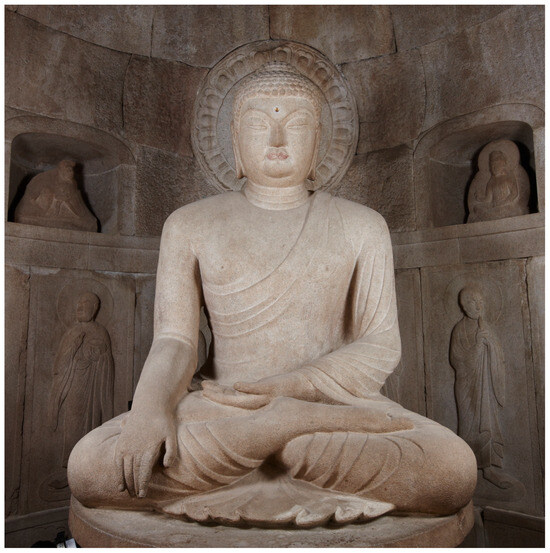
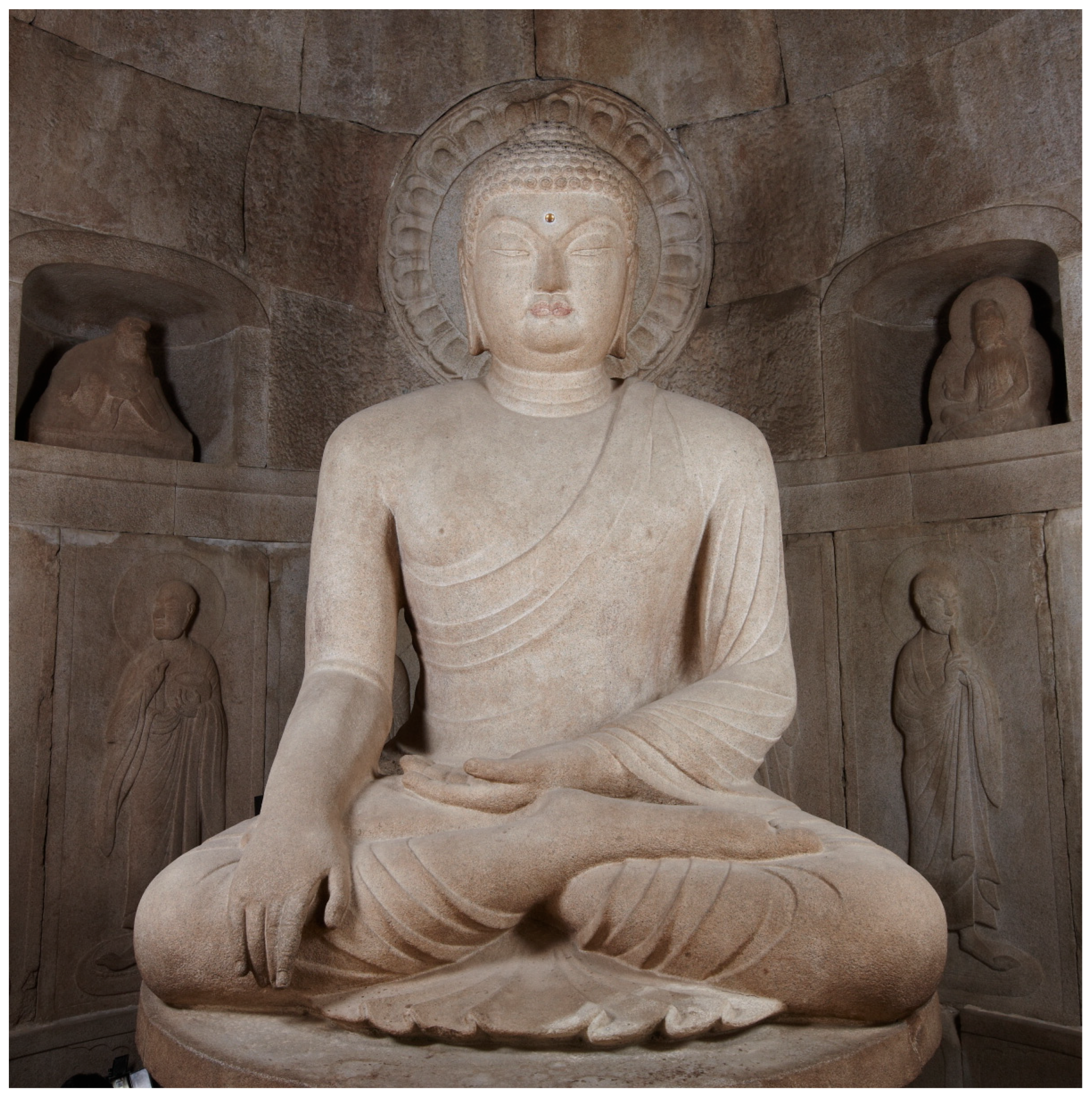
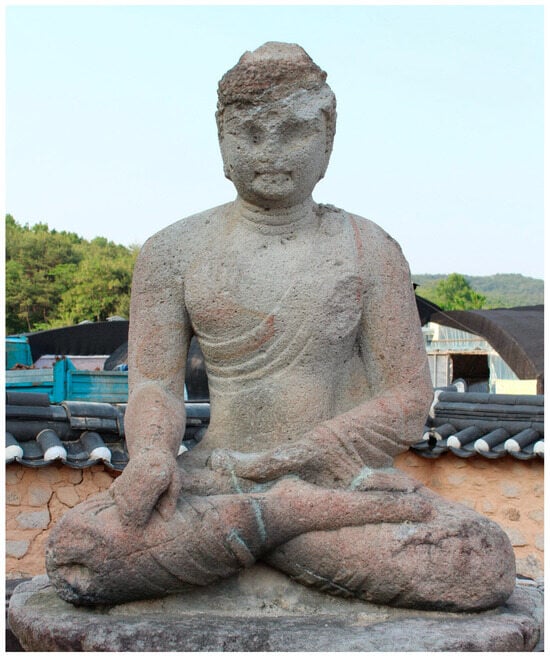
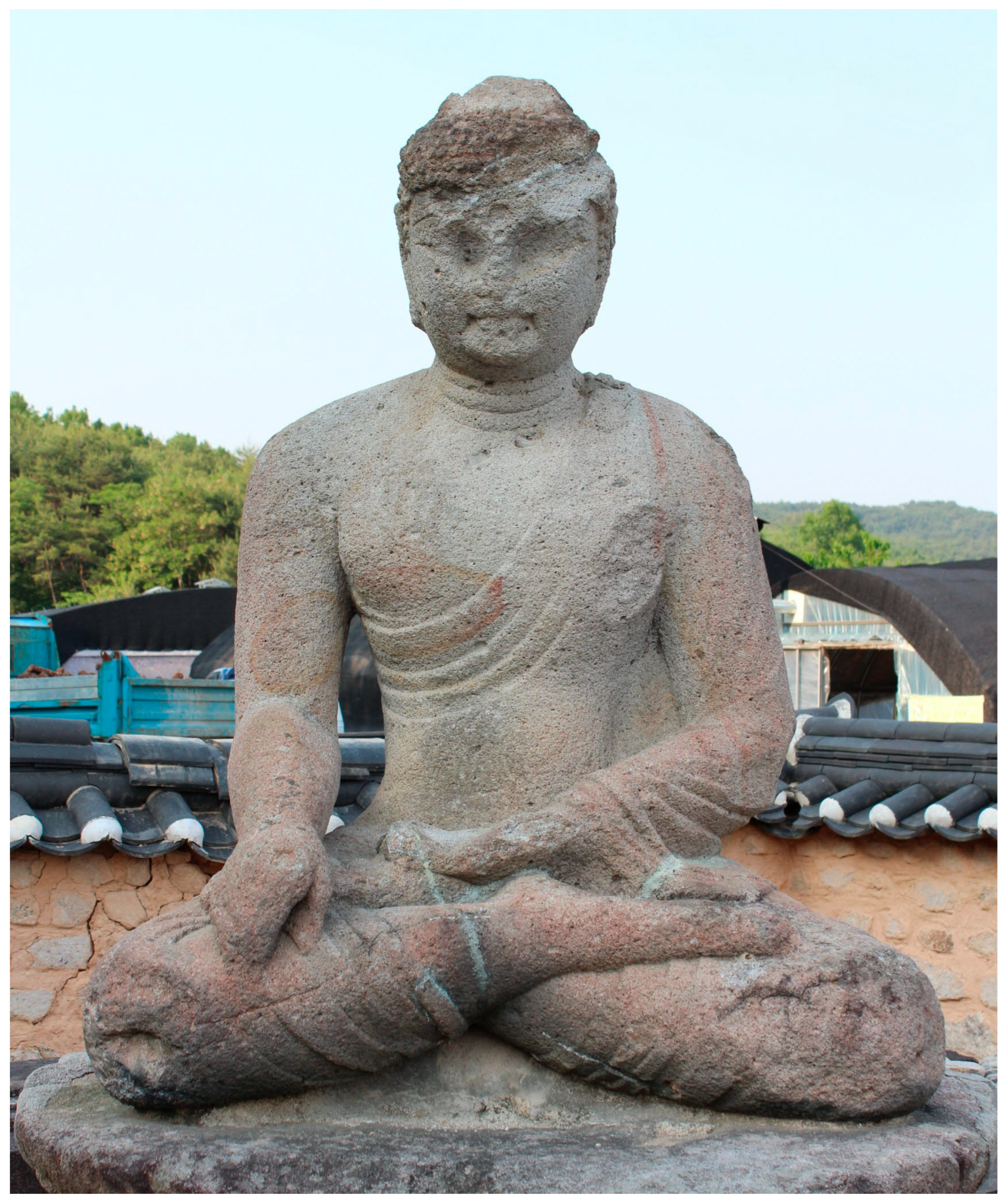
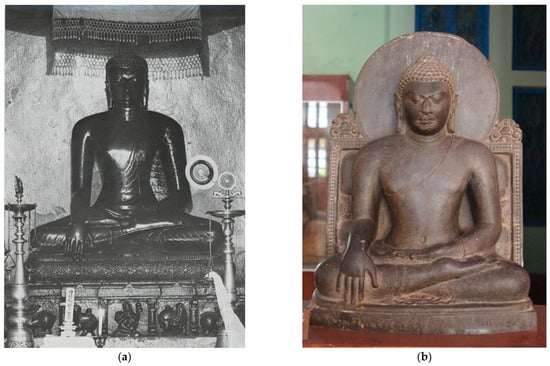
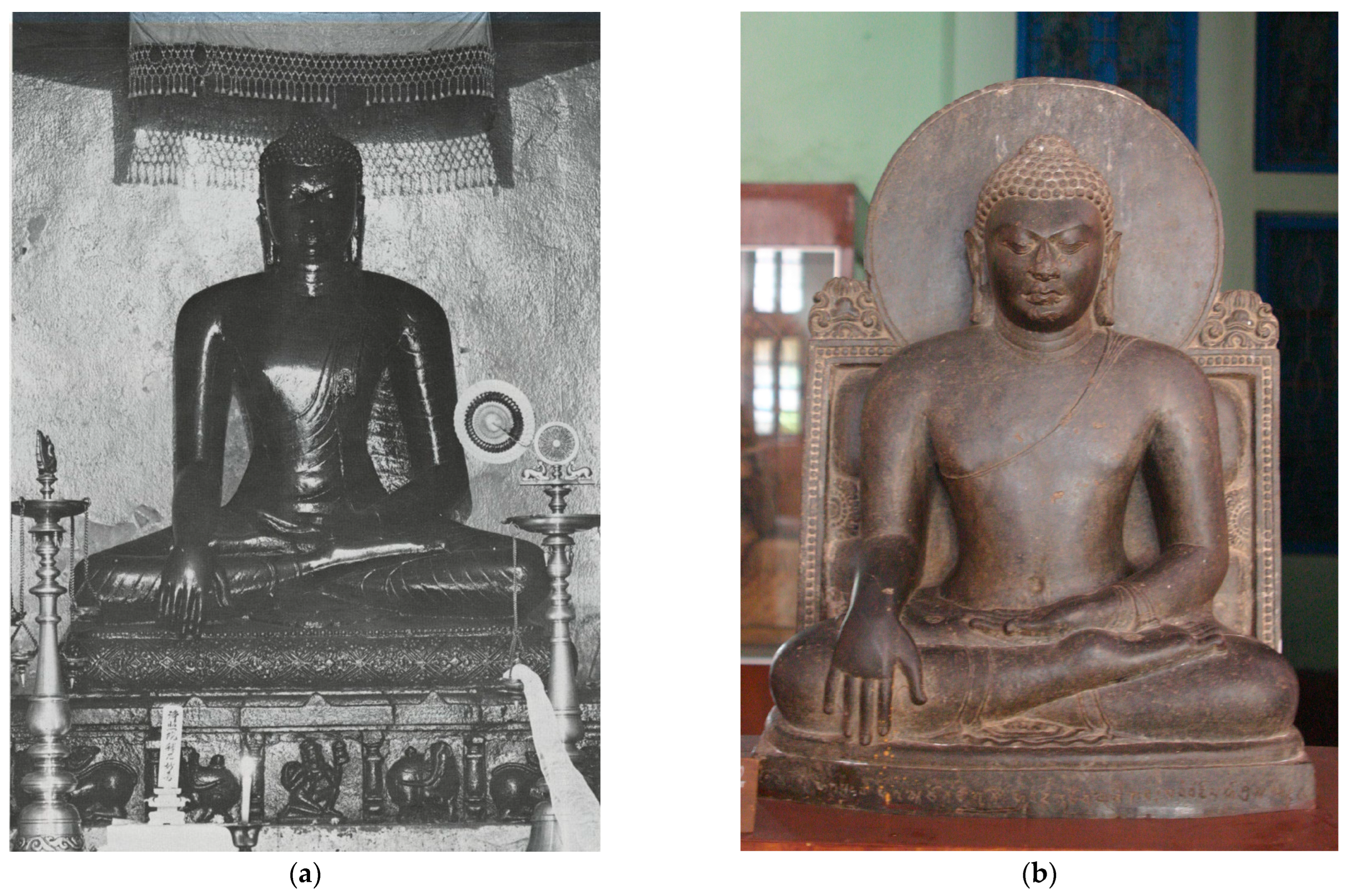
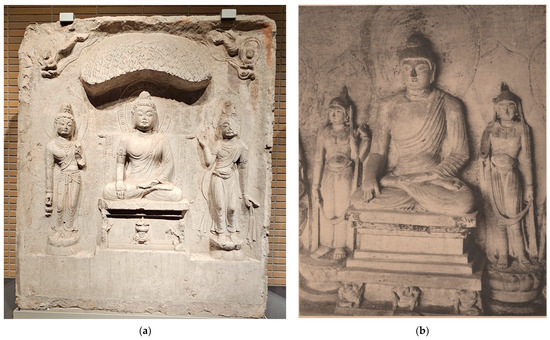
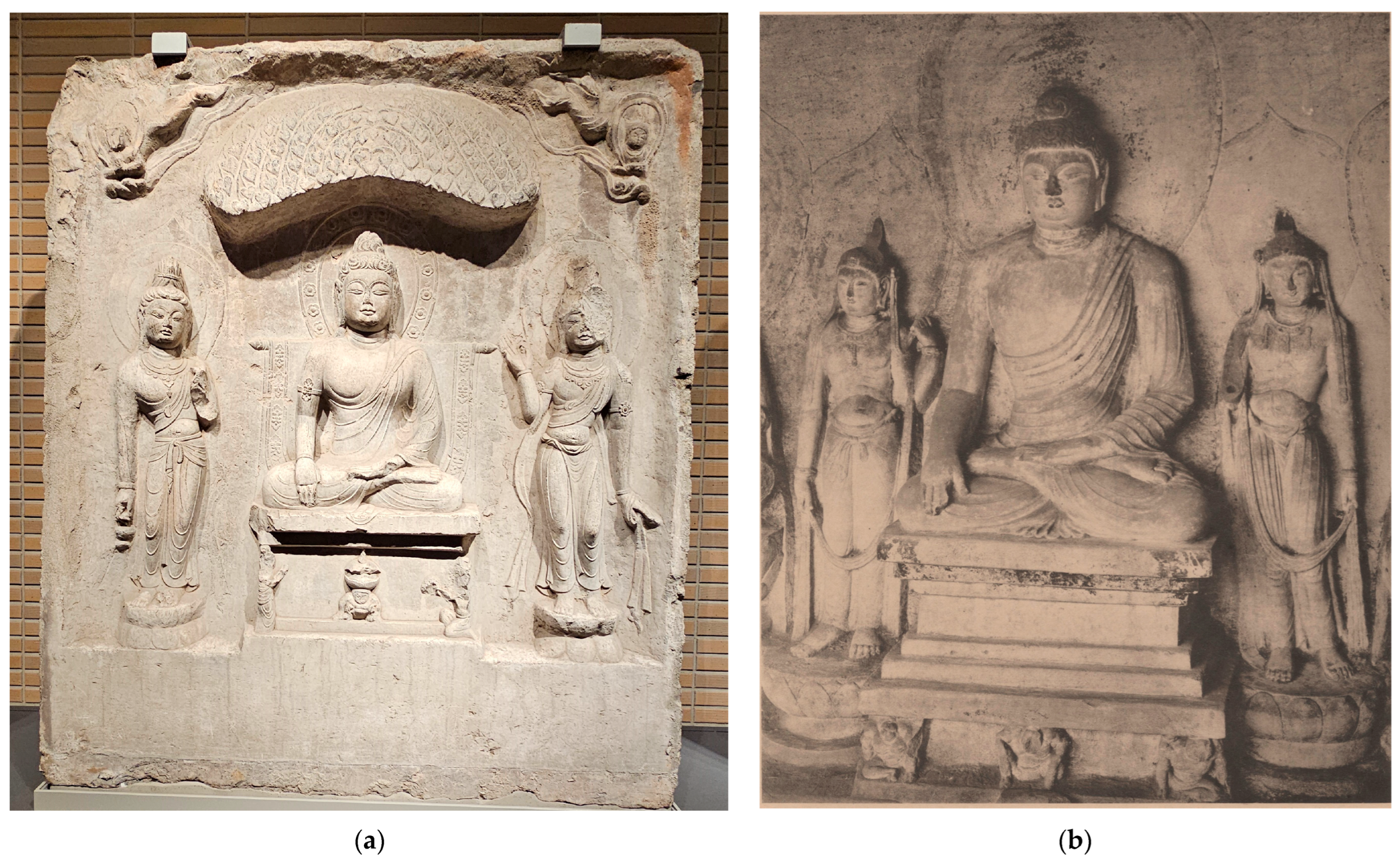
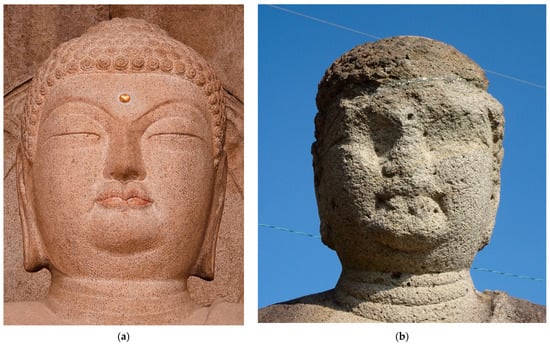
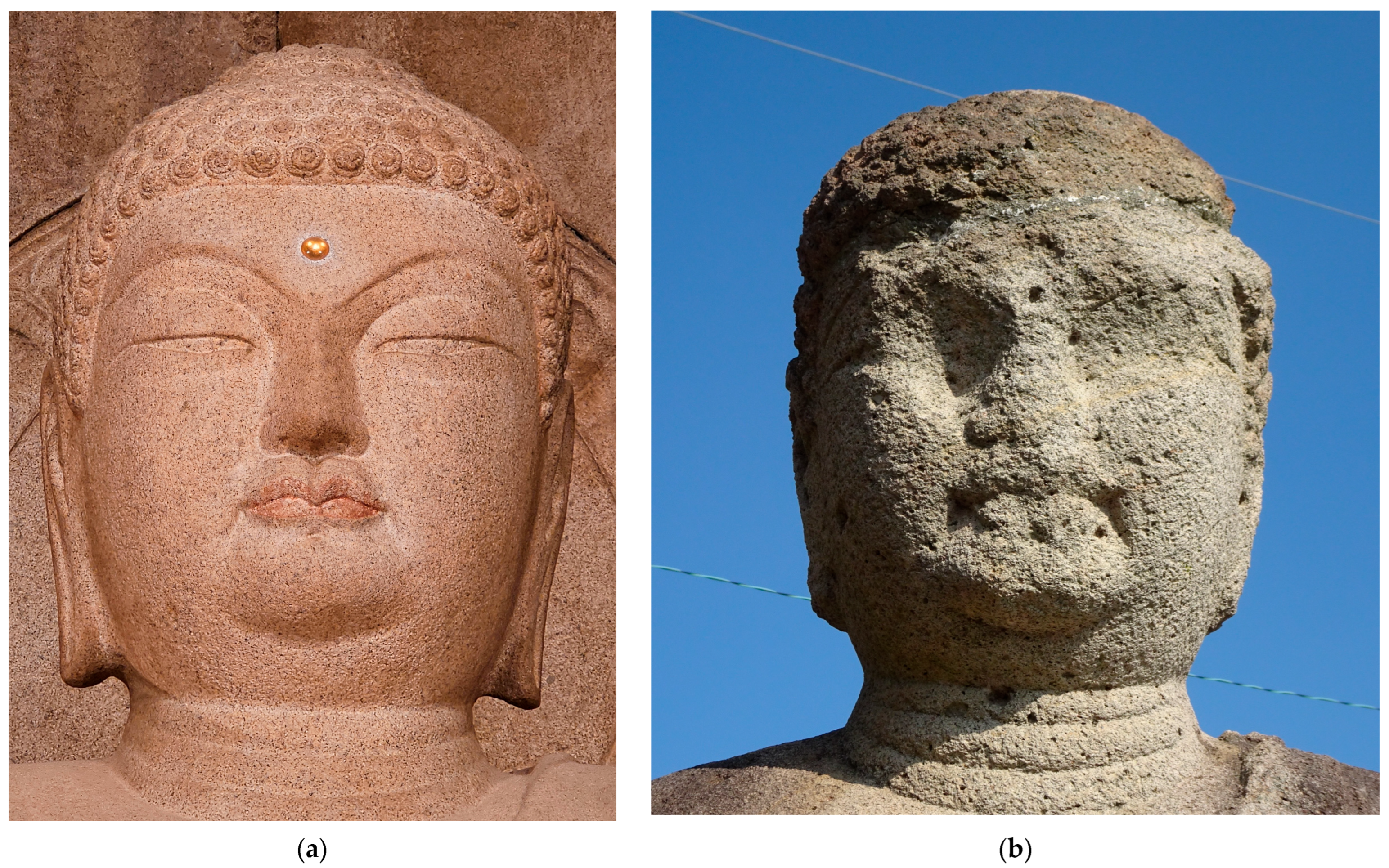
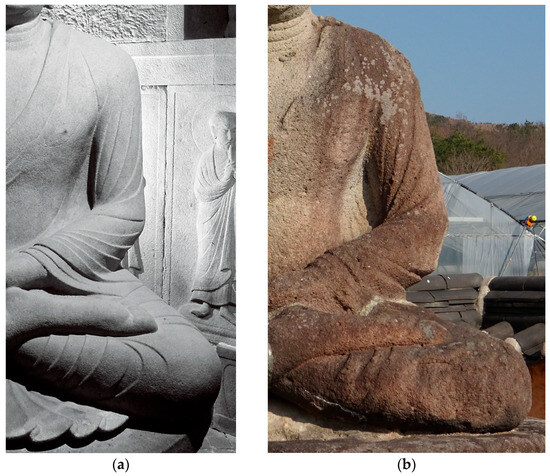
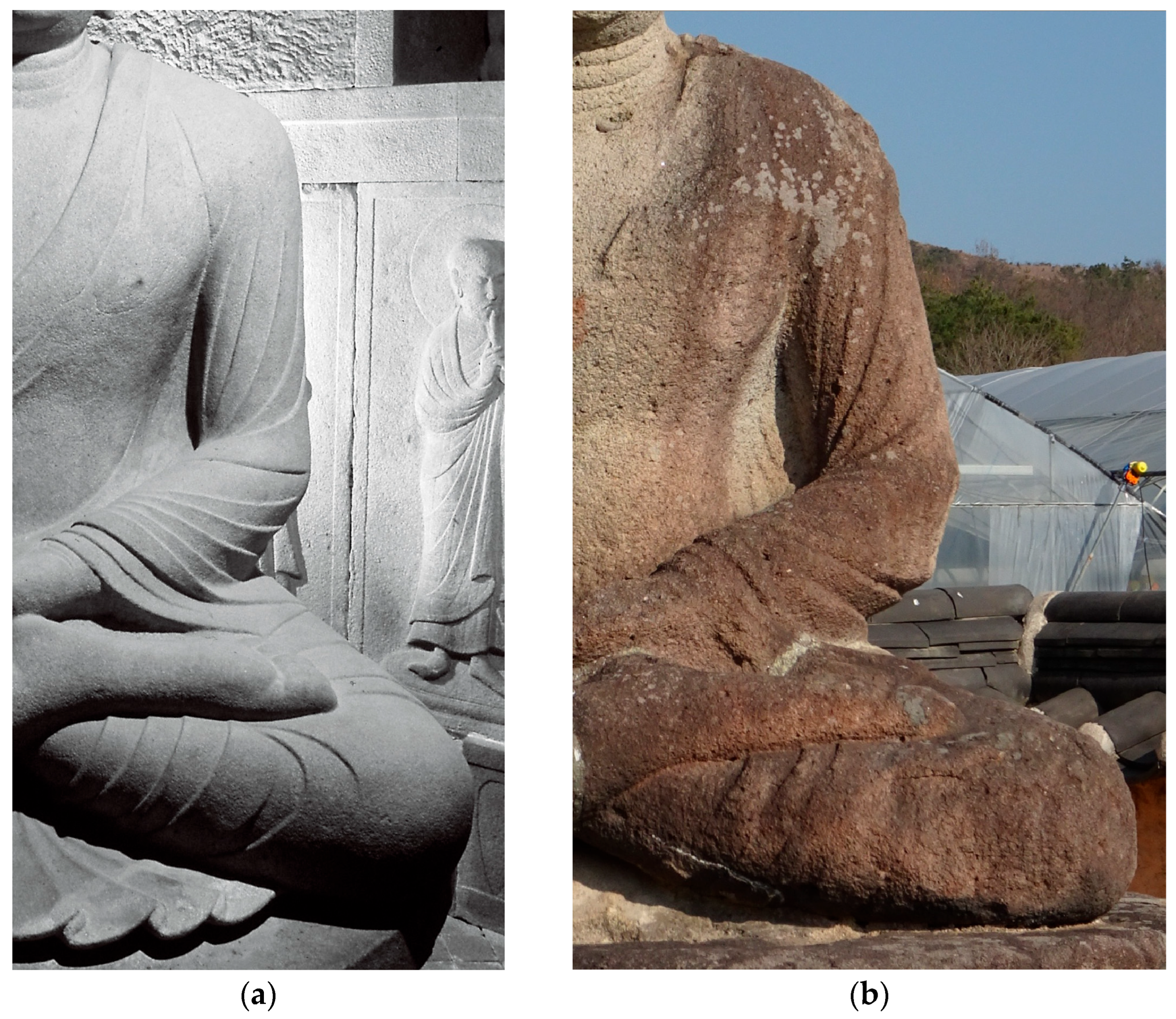
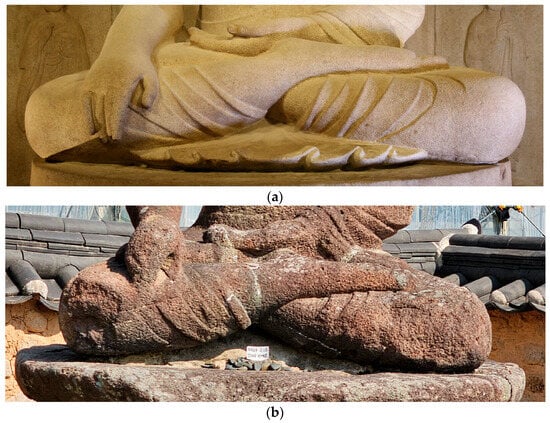
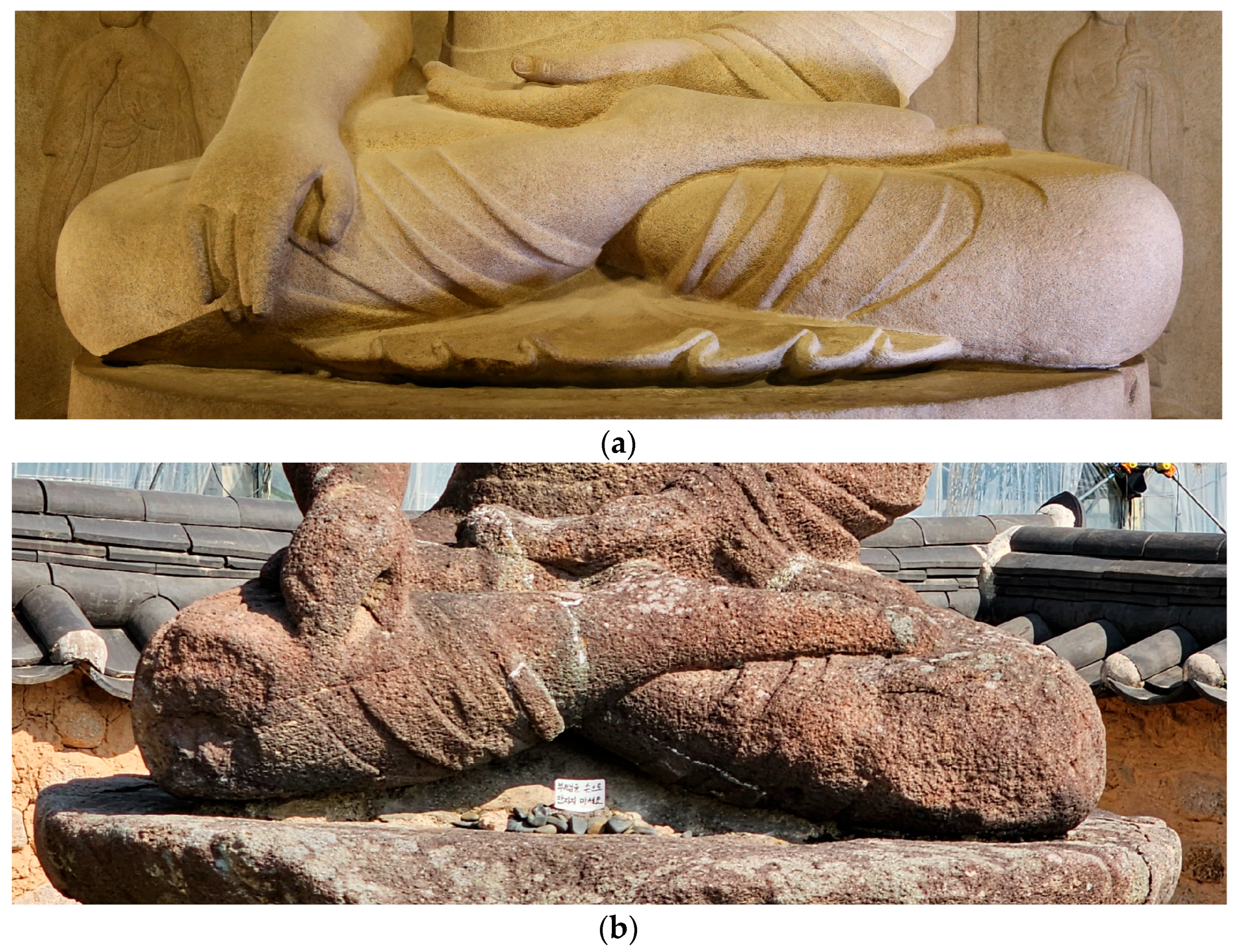
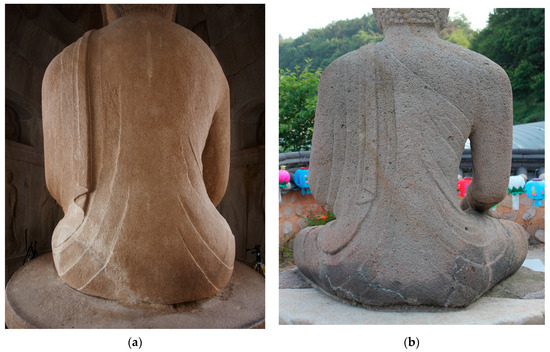
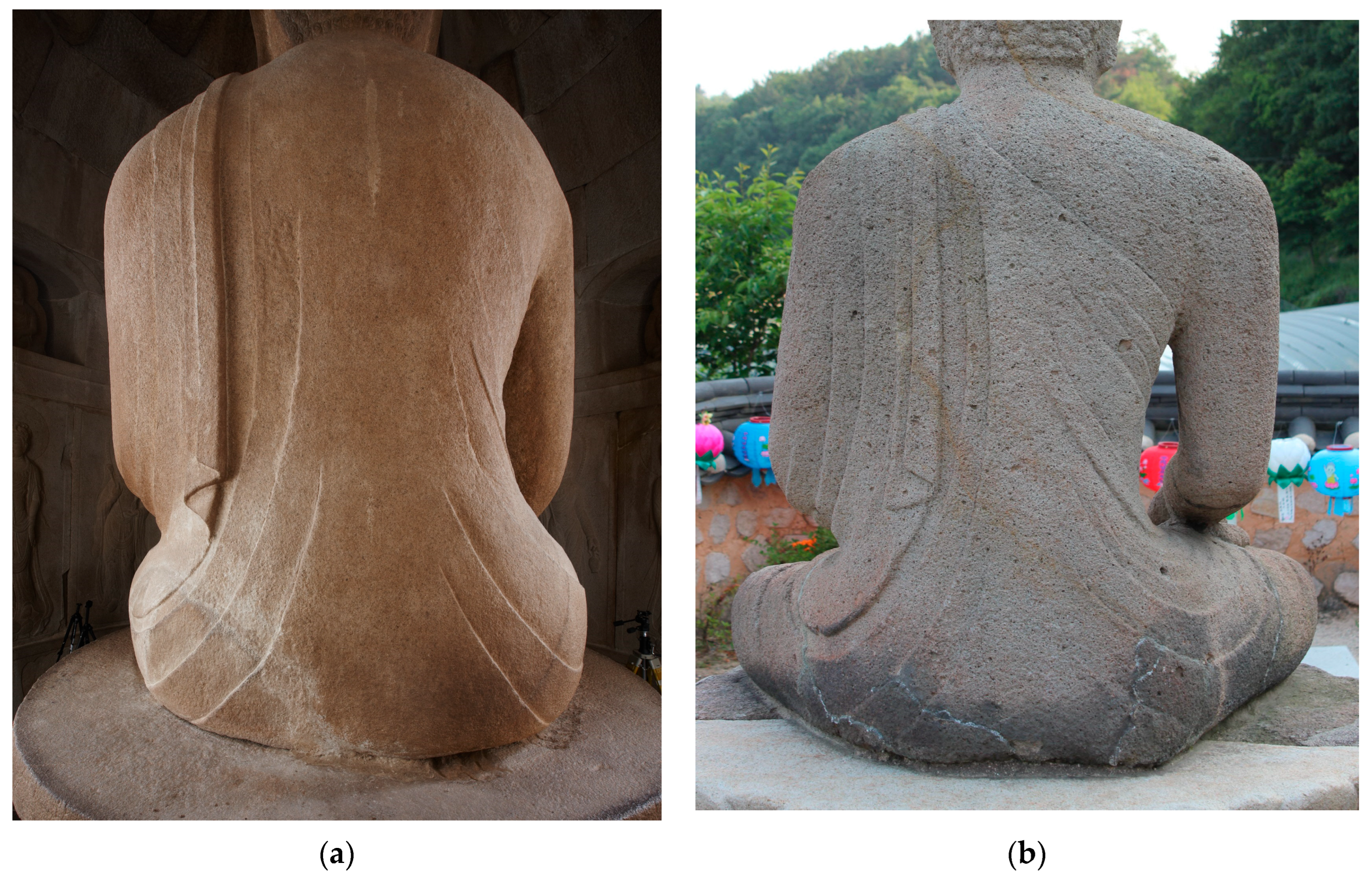
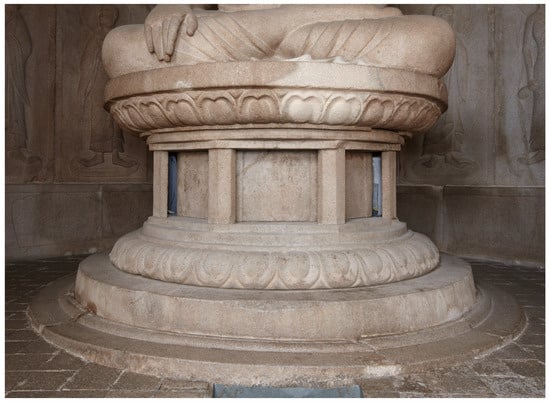
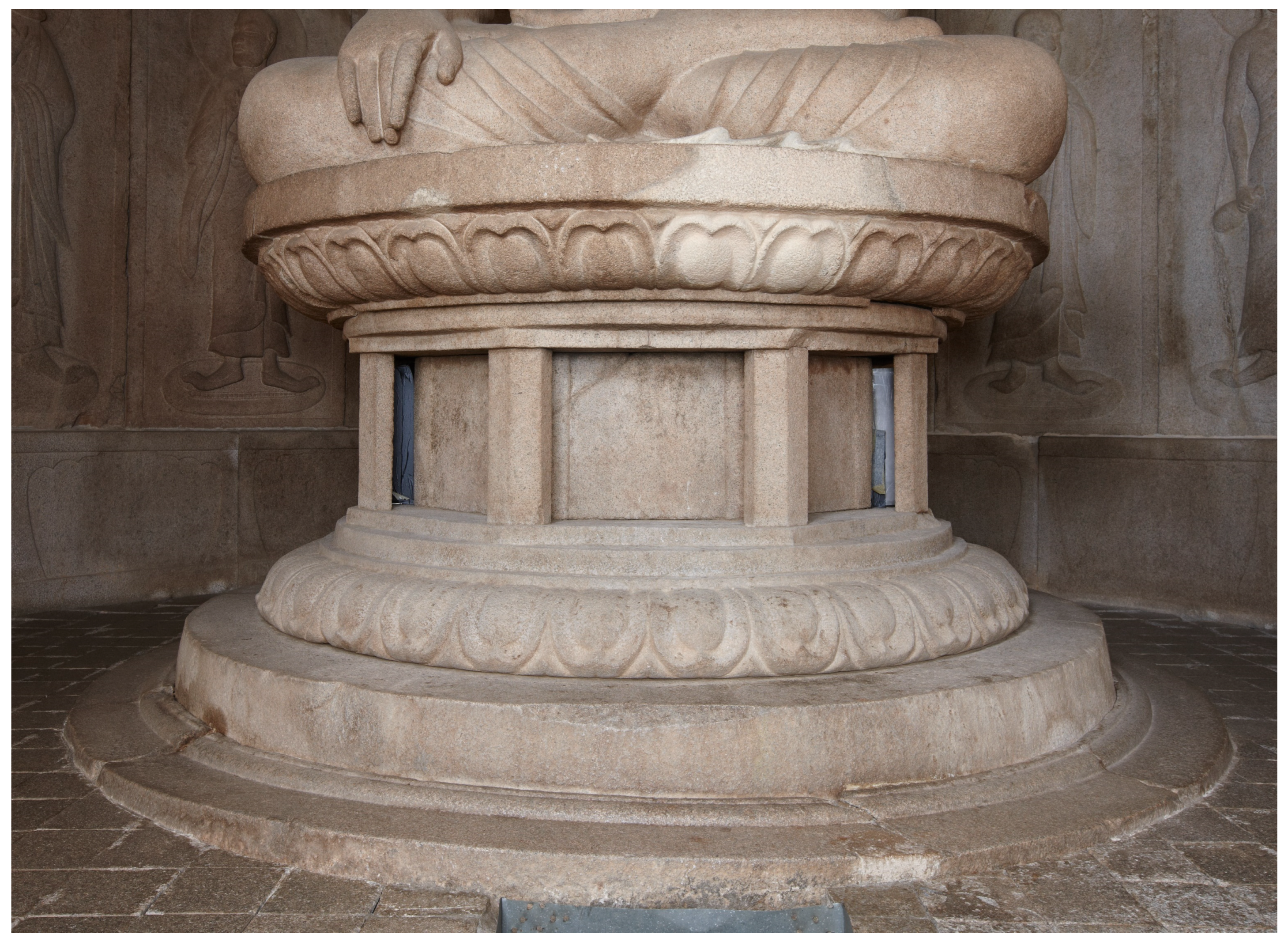
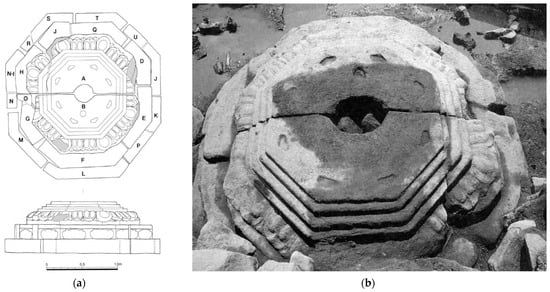
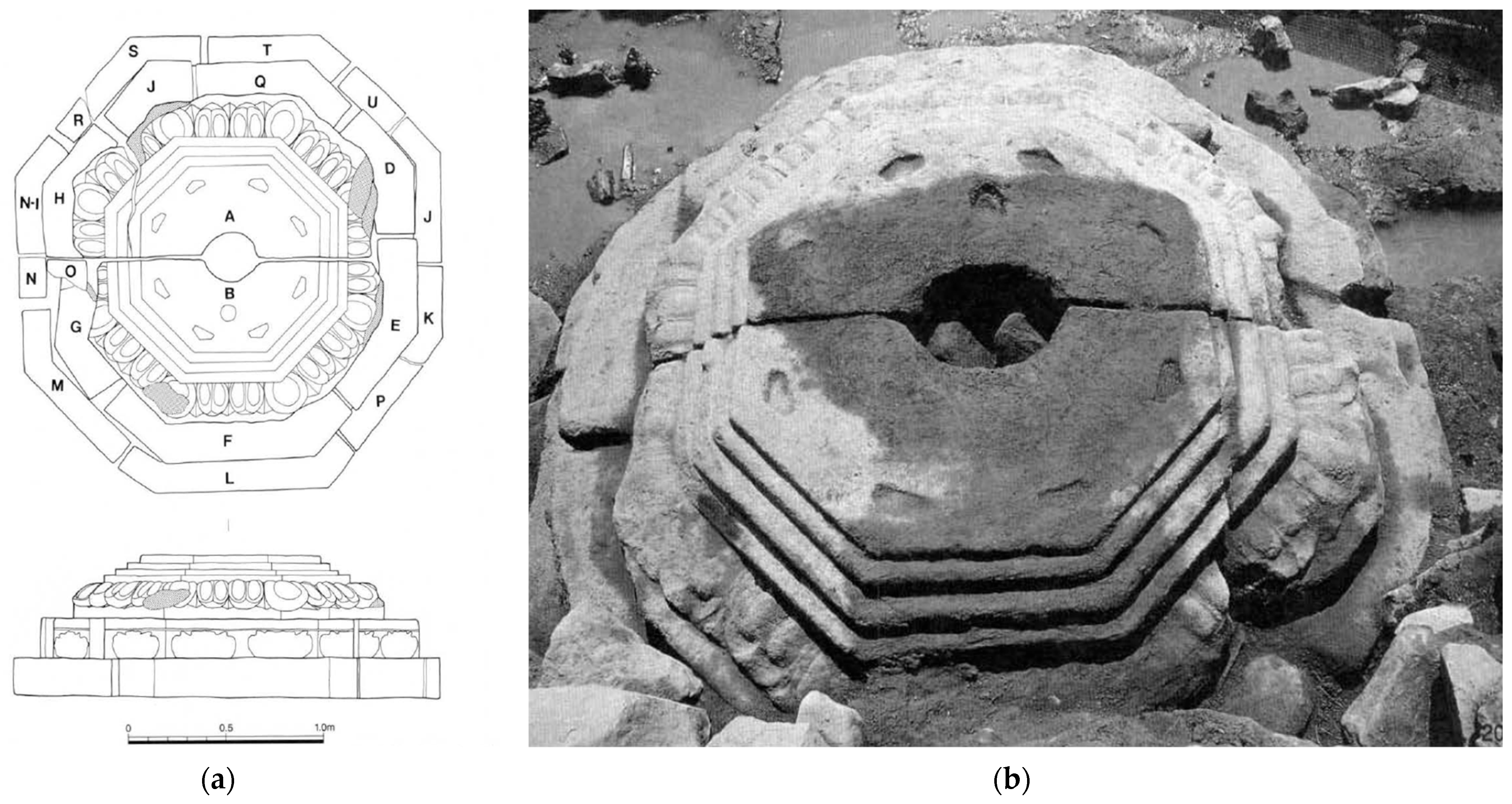
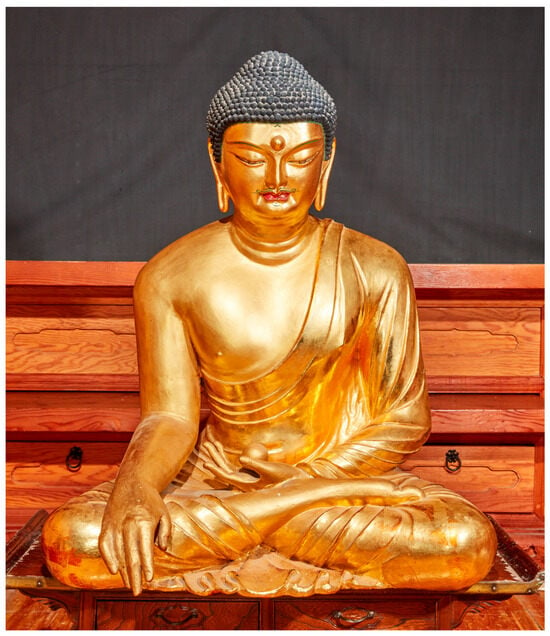
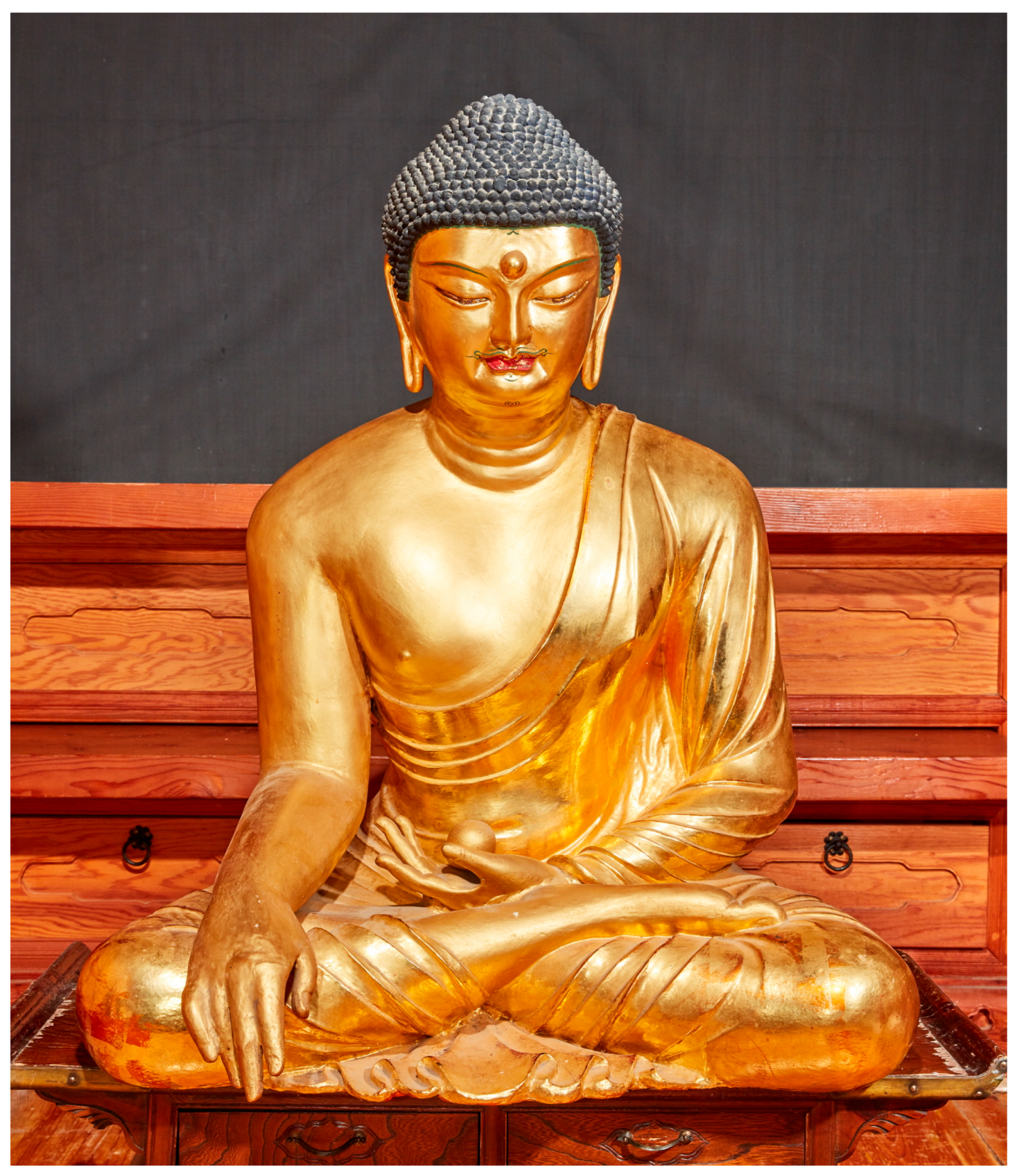
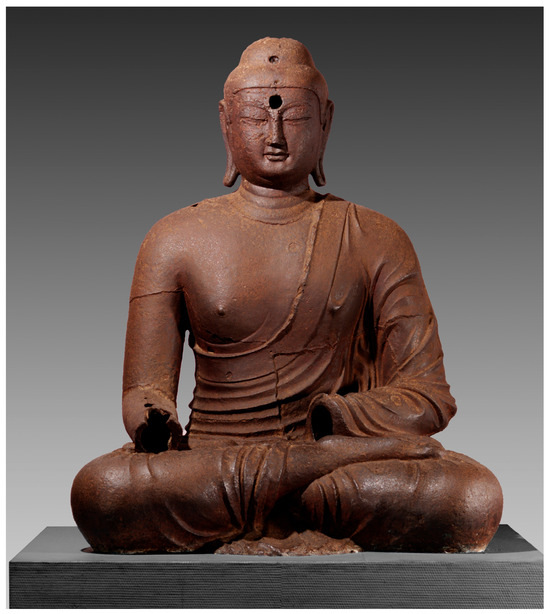
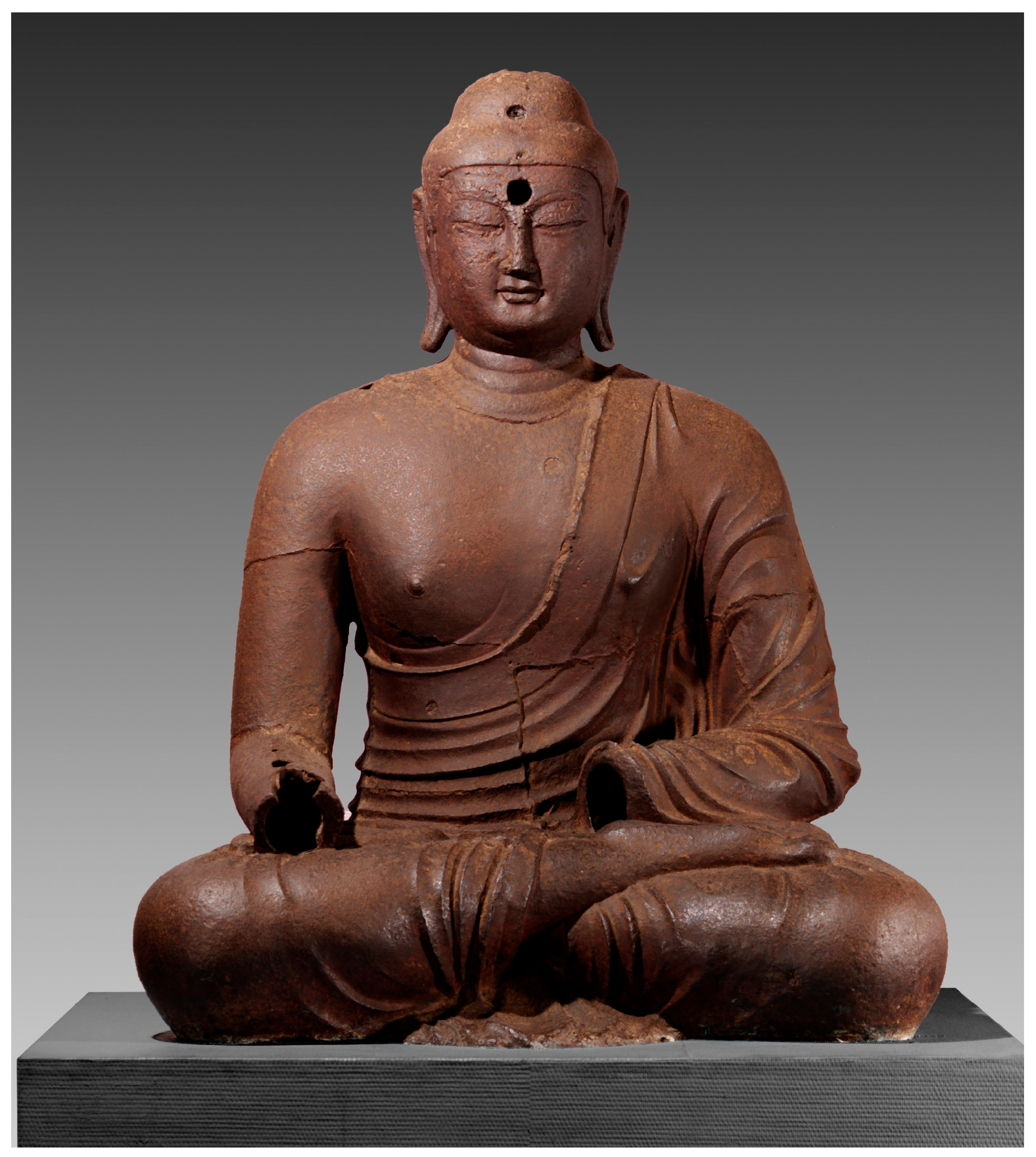
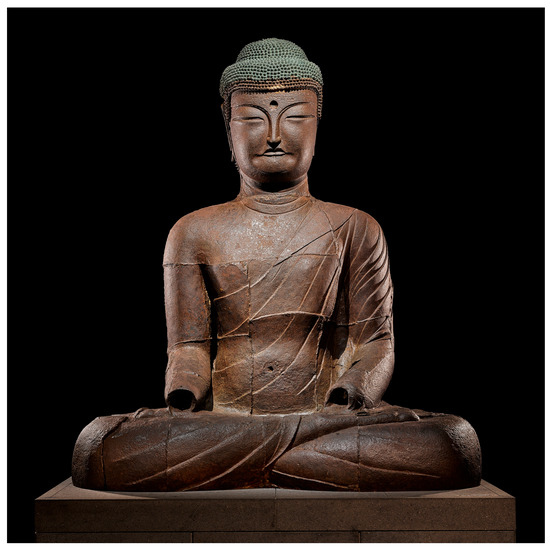
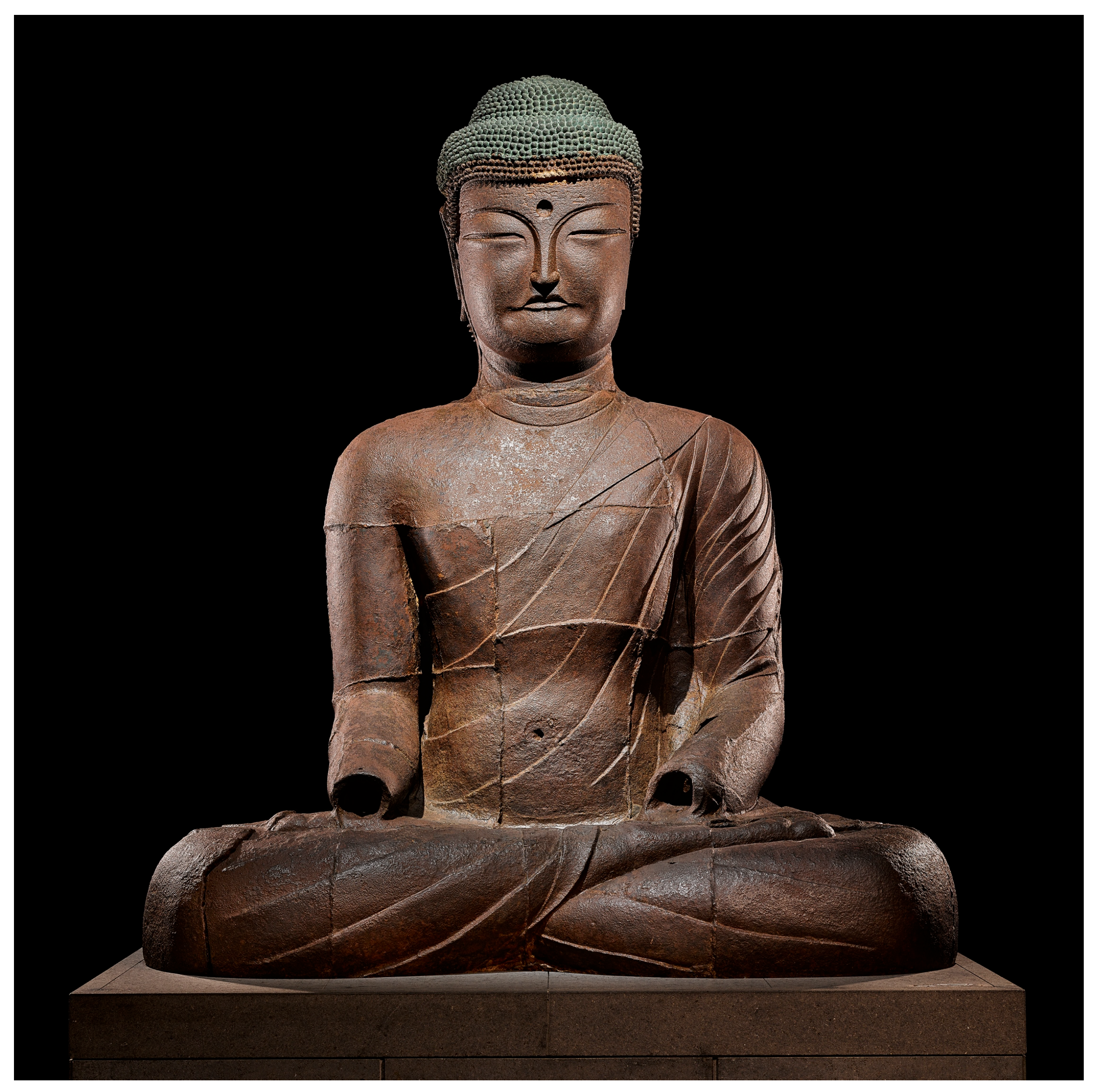
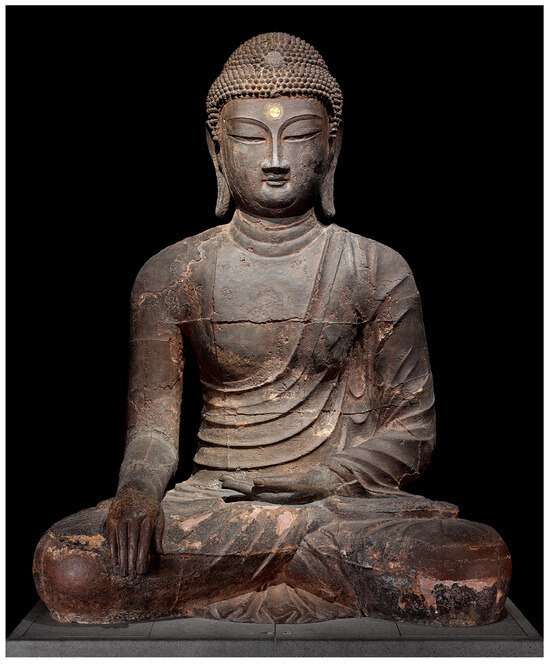
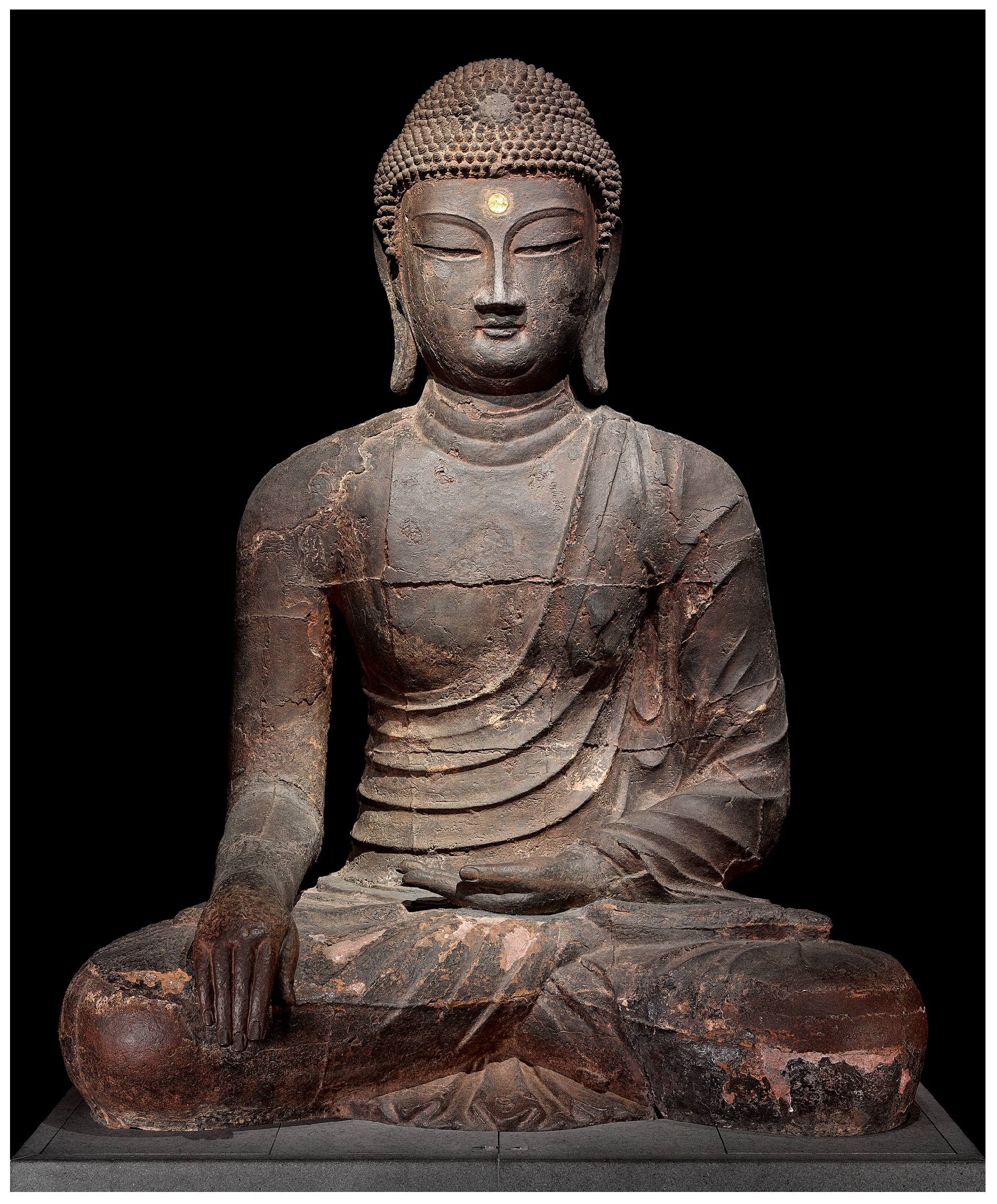
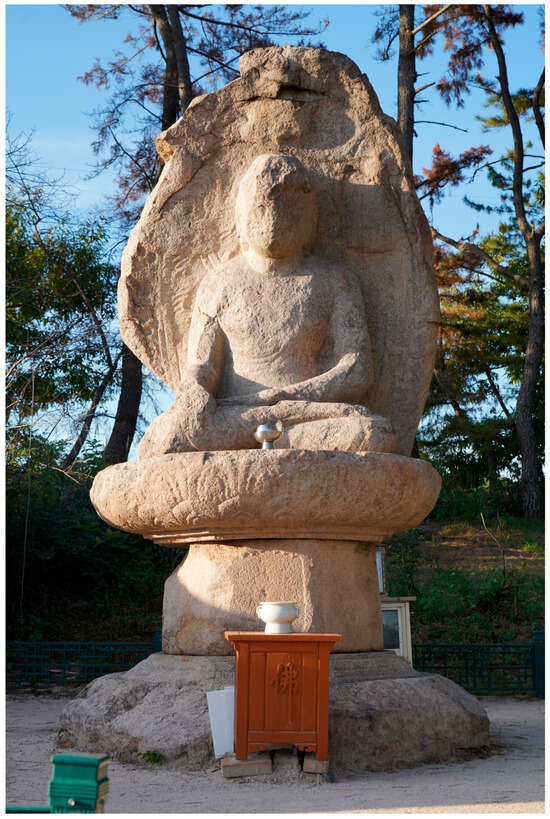
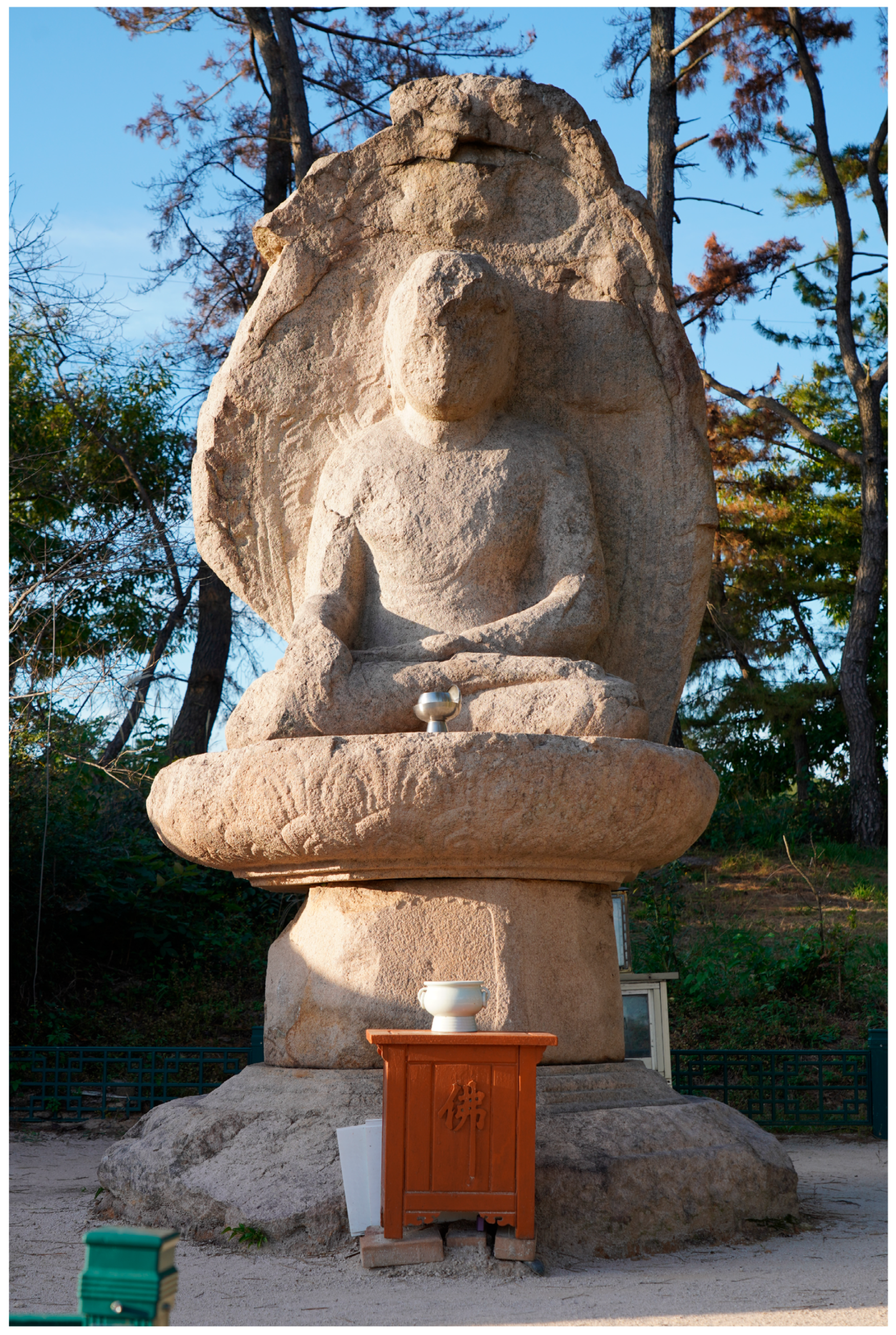
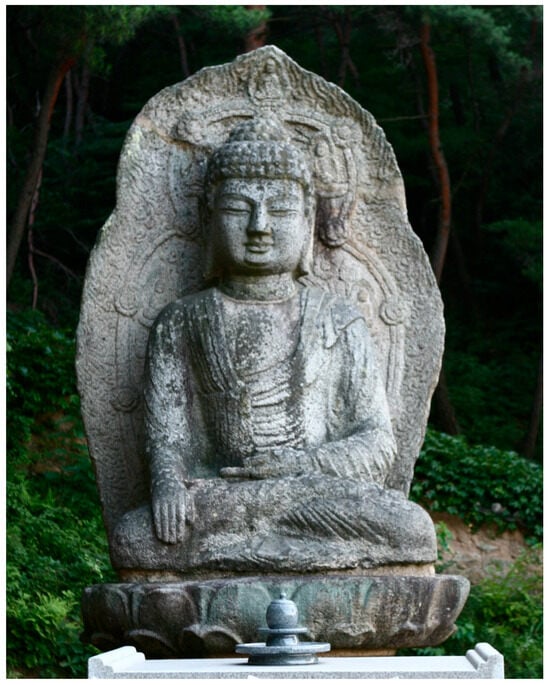
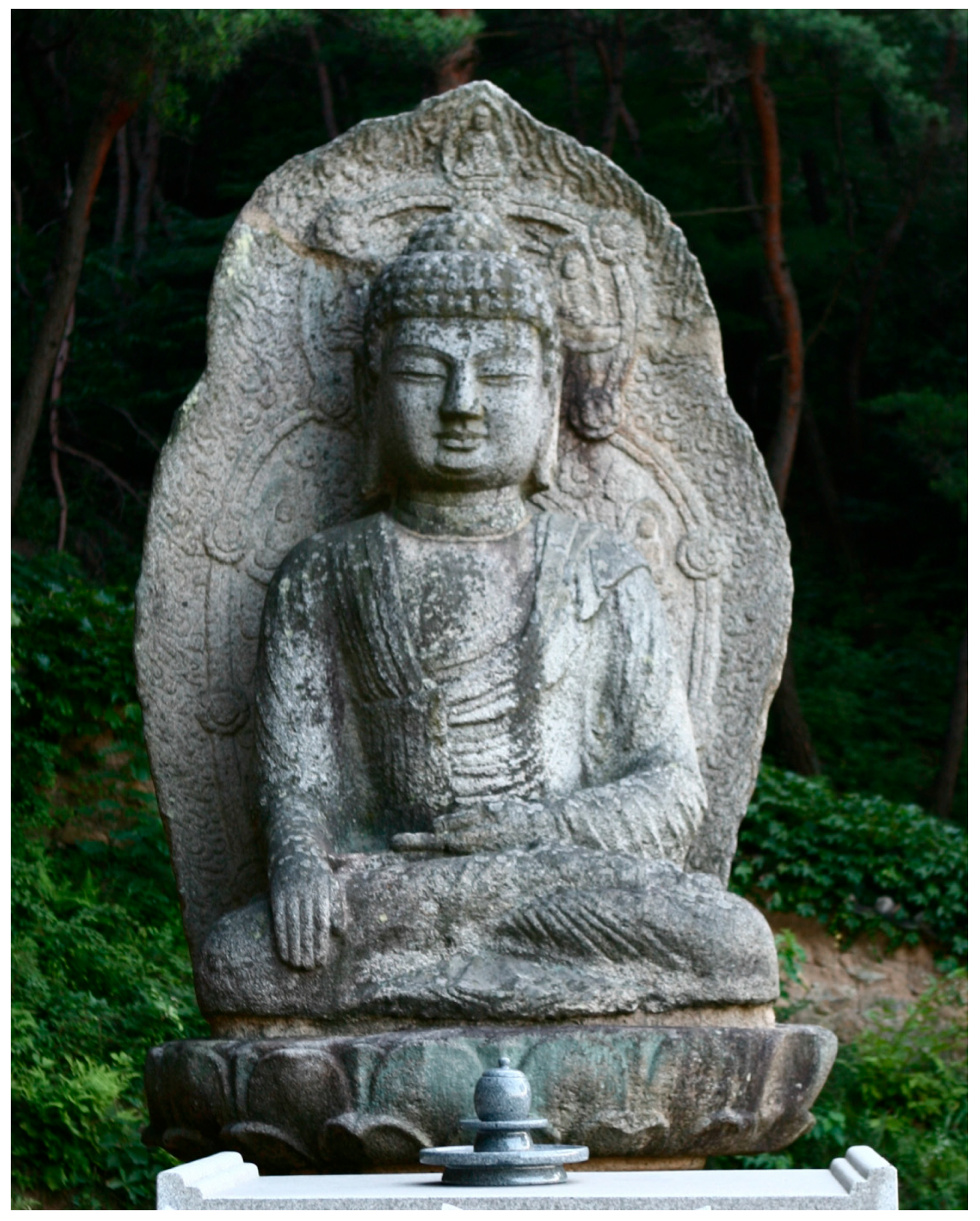
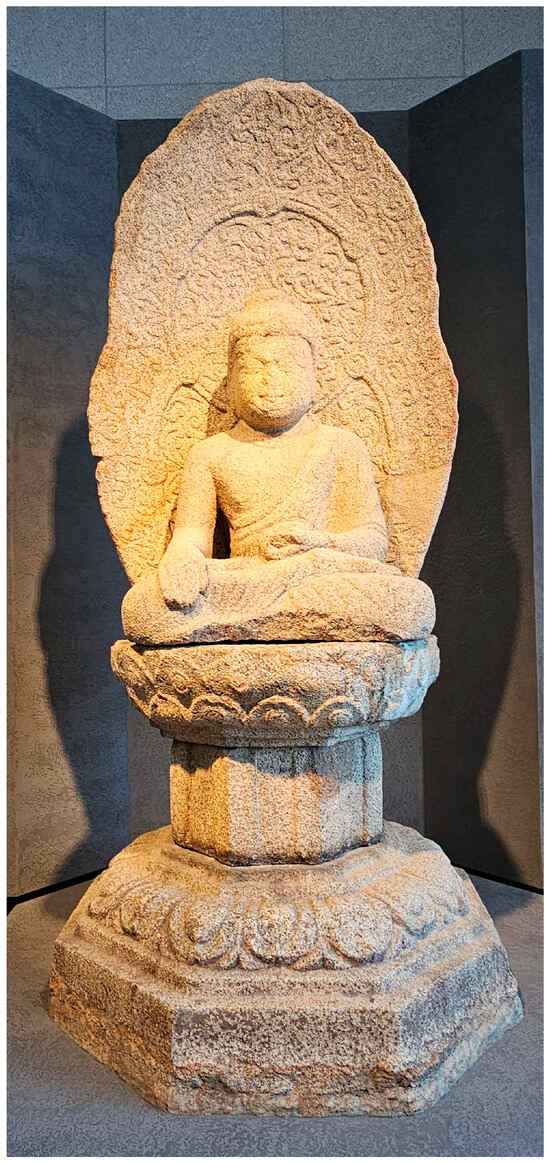
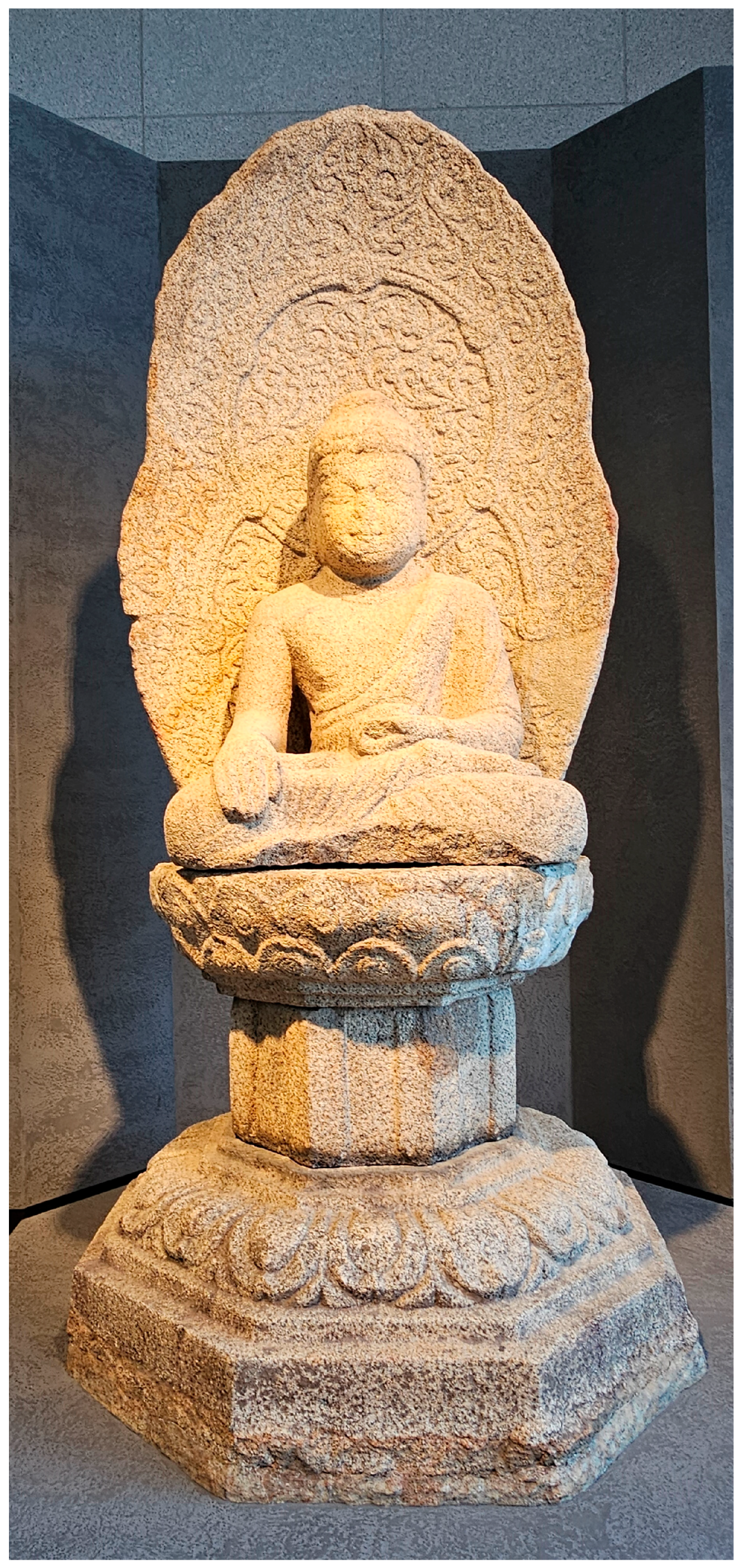
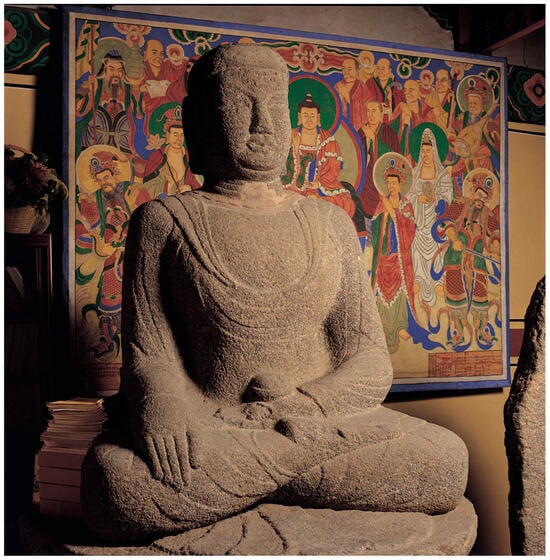
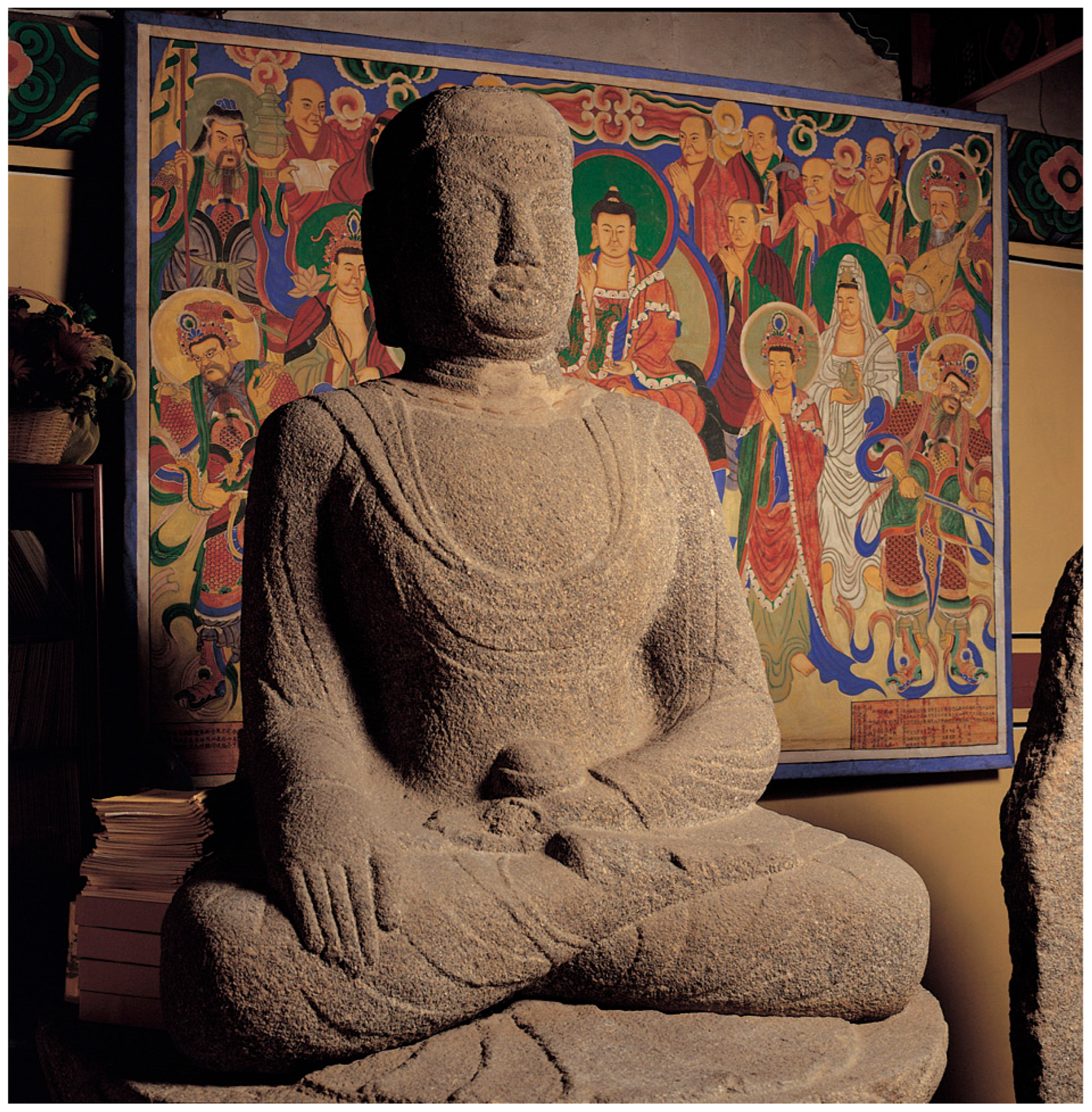
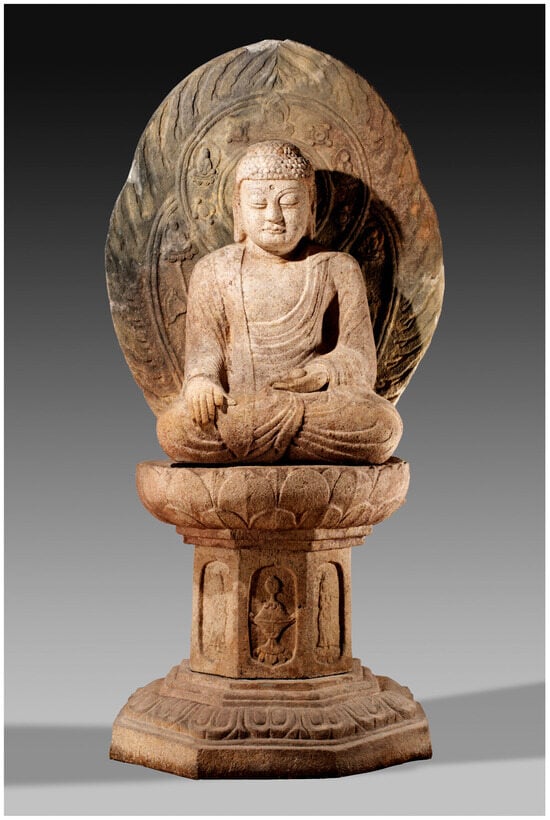
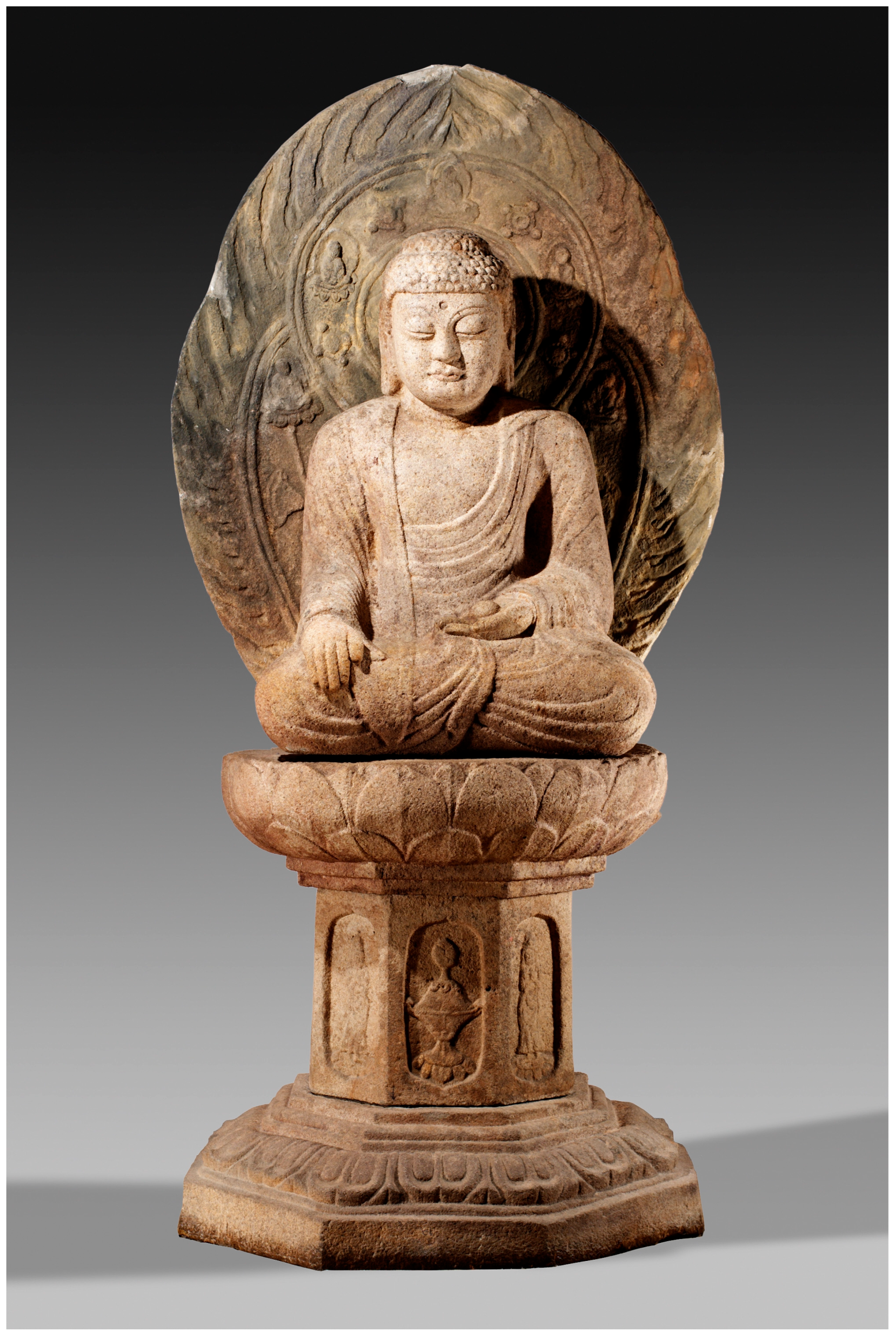

Disclaimer/Publisher’s Note: The statements, opinions and data contained in all publications are solely those of the individual author(s) and contributor(s) and not of MDPI and/or the editor(s). MDPI and/or the editor(s) disclaim responsibility for any injury to people or property resulting from any ideas, methods, instructions or products referred to in the content. |
© 2026 by the author. Licensee MDPI, Basel, Switzerland. This article is an open access article distributed under the terms and conditions of the Creative Commons Attribution (CC BY) license.