


Abstract
This article analyzes prohibitions against the destruction of flora in the calendrical regulations of the late Western Han period and in the millenarian cosmological discourses in the Taiping jing 太平經 (Canon of Great Peace). The study focuses on the “Zhaoshu sishi yueling wushi tiao” 詔書四時月令五十條 (“Edict of Monthly Ordinances for the Four Seasons in Fifty Articles”) which was promulgated by Wang Mang in 5 CE. The Edict prohibited setting fire to forests and was intended to restore cosmic harmony. At the time, natural disasters and celestial anomalies were interpreted as signs of the loss of the Mandate of Heaven. Heavenly patterns and hemerology play a central role here by enabling environmental regulations to be incorporated into a political logic of legitimization. The Canon of Great Peace reinterprets these norms by replacing seasonal cycles with an interpretation of balance between yin and yang and by giving environmental prohibitions eschatological significance. Thus, calendrical regulations for natural resource management transform into an apocalyptic discourse in which the natural environment becomes the setting for cosmic disorder that must be avoided.
1. Introduction
In agricultural societies, all major human activities are carried out at set times in relation to the seasons.1 These times are defined by natural rhythms and by celestial phenomena related to the sun’s annual course. In China, the observation and appreciation of these phenomena was theorized as the active maintenance of cosmic harmony by humans. Thus, the idea that there should be appropriate periods (yishi 以時) for each human activity (such as agriculture and rituals) has been evolving in ancient discourse since the fourth century BCE.
Environmental prohibitions appear among prohibited activities in philosophical texts from the fourth and third centuries BCE, forming part of a practical cosmology with political considerations addressed to rulers. These texts prescribe the alignment of human activities, whether agricultural, social or ritual, with seasonal cycles. This is not done out of respect for the natural environment, but rather to optimize the exploitation and sharing of resources, reflect on their taxation (Miller 2017; Lander 2022) and avoid the occurrence of natural disasters by incurring the wrath of Heaven (Rols 2021, pp. 60–76).
The idea of appropriate periods was gradually adopted in texts from the end of the third century BCE onwards to legitimize imperial authority. During the unification of the Chinese kingdoms, this authority presented itself as the guarantor of harmony between humans and the cosmic order.2 Environmental prohibitions in the hemerological, legal and administrative texts from the second and first centuries BCE stem from a political and liturgical vision of cosmic harmony. According to this vision, the management and exploitation of natural resources follow more ritualistic than knowledgeable regulations (Rols 2021).
Some of these hemerological systems are correlated with calendrical prohibitions related to the destruction of fauna, flora, and certain natural spaces. These systems date back to antiquity and were subsequently reused in later agricultural treatises. One example is the sixth-century CE Qimin yaoshu 齊民要術 (Essential Techniques for the Welfare of the People; see Rols 2025a, pp. 33–37).3 Calendrical prohibitions also influenced the early Daoist precepts that were published between the fifth and sixth centuries. These reveal a reinterpretation of calendrical prohibitions from the perspective of moral discipline. Unlike calendrical prohibitions, however, the practice of precepts is not imposed on everyone. Rather, it is addressed to believers in the context of their salvation and as a means of achieving transcendence (Rols 2025b).
The two systems of environmental prohibitions—calendrical prohibitions and Daoist precepts—are based on different rationales and objectives related to historical, political and religious developments between the Western Han period (206 BCE–9 CE) and the end of the Six Dynasties period (220–589 CE). This article examines how the conceptual framework of environmental prohibitions evolved between these two periods. The focus is on the significant period between the end of the first century BCE and the beginning of the first century CE. During this time, two distinct discourses emerged that employed environmental prohibitions to convey the notion of restoring cosmic order in the face of natural disasters. In the first discourse, Wang Mang 王莽 (46 BCE–23 CE) used the calendrical prohibitions from earlier texts as a political tool while preparing to ascend to the imperial throne. The second discourse is that of the Taiping jing 太平經 (Canon of Great Peace), which played a pivotal role in the emergence of Daoist apocalyptic and millenarian ideas at the beginning of our era. It was during this time that Wang Mang established his own dynasty, the Xin Dynasty (9–25 CE), and proclaimed the imminent arrival of an era of “Great Peace” (taiping 太平).
The first part of this article examines how Wang Mang used calendrical prohibitions to legitimize his power and restore cosmic order. In 5 CE, he issued the “Zhaoshu sishi yueling wushi tiao” 詔書四時月令五十條 (“Edict of Monthly Ordinances for the Four Seasons in Fifty Articles)”. Next, it explores the presence of similar environmental prohibitions in the Canon of Great Peace, which has an apocalyptic and millenarian scope. The Canon of Great Peace situates natural and social disasters within a cosmological and moral framework, announcing the arrival of an era of Great Peace.
The origins of Daoist eschatological and millenarian beliefs during the first two centuries CE are centered on discourses about the Great Peace. The version of the Canon of the Great Peace (DZ 1101) examined in this article makes reference to “secret instructions” (jue 訣). Unlike the calendar prohibitions promulgated by Wang Mang, these secret instructions concerning the prohibition of destroying flora do not reproduce the hemerological systems found in earlier calendrical prohibitions, nor do they resemble later Daoist precepts. Instead of being based on the idea of appropriate periods, they are grounded in the balance of yin and yang.
The second part focuses on understanding the historical context of the astronomical interpretations and the yin and yang theory that influenced these secret instructions. It explores how these ideas became central to eschatological discourse and strategies for political legitimization during times of crisis in the Wang Mang period.4 From the second half of the first century BCE to the second century CE, there was an innovative use of classical and apocryphal texts (weishu 緯書) that were innovatively used as tools to either legitimize or delegitimize imperial power through prophecies and cosmic symbols. These conceptual tools shaped discussions on the Great Peace and the relationship between Heaven and the Emperor—two pivotal concepts in medieval Chinese thought (Zhao 2019). As this study suggests, this process also influenced the two secret instructions of the Canon of the Great Peace.
2. Calendrical Regulations of Ancient Times
The calendrical regulations were essential for structuring collective life. They served several purposes. They regulated agricultural work by indicating optimal times for sowing, harvesting, and cutting wood. They also regulated religious and political life by determining dates for communal sacrifices and prohibitions. Additionally, they guided the decisions of rulers and civil servants to ensure the state’s prosperity. Some of the earliest sources to prescribe appropriate periods for exploiting natural resources are major theoretical works such as the Lüshi chunqiu 呂氏春秋 (Spring and Autumn Annals of Master Lü) and the Guanzi 管子 (Book of Master Guan), dating from the third century BCE (Rols 2021, pp. 76–111). Other sources include excavated legal texts that reflect the real-world implementation of such beliefs, e.g., the “Law on Peasant Activities” (tianlü 田律) found in the Shuihudi and Zhangjiashan manuscripts (Rols 2021, pp. 181–89). Hemerological texts have also been discovered during archeological excavations, such as the “Punishments and Rewards” system in the Bamboo Slip Inscriptions of the Early Han housed at Peking University, and in the Kongjiapo Daybook (see Rols 2025a).
Between the fourth and second centuries BCE, the calendrical regulations (includes ordinances and prohibitions) concerning flora were based on empirical knowledge, shared ritual practices, and social norms. These regulations were established around ritual rules that, despite having a religious or symbolic function, were rooted in concrete observations of nature and how it functions (Rols 2025a). The best example is perhaps the prohibition on felling trees in spring: yes, doing so is a metaphysical affront to spring, which is associated with the agent Wood, but it is also when trees are growing, when birds are nesting therein, and when wood is least usable, least needed, and most difficult to regrow. It is difficult to distinguish in the logic of this prohibition between the empirical and the metaphysical, the natural and the social, and the rational and the moral, because they blend together, and because the point is not thought but action.
As discussed in normative hemerological and philosophical sources, failure to maintain the harmony between heaven, earth, and man results in “disaster” (zai 災 or huo 禍). This includes what we might call “natural disasters,” such as floods and drought, as well as locusts, famine, and disease. However, it also encompasses social and political unrest, including wars, revolts, and dynastic collapse. If our sources do not distinguish “natural disasters” or “acts of Heaven,” However, this perspective primarily stems from the belief that humanity is seen as the cause of cosmic disorder. This can be through faulty governance, the collective disregard for the rites, or the excessive, untimely exploitation of natural resources. It can also be individual, such as in the case of crimes, moral transgressions, or violations of ritual rules.
By the fourth century BCE, a variety of hemerological texts and cosmo-liturgical calendars emerged to list and schematize the rules.5 These texts specify the times at which certain actions, such as cutting wood, diverting rivers, killing animals and mining mountains, can upset the balance of Heaven and Earth. Importantly, they also remind the reader that failure in timing results in disaster, and that disasters are thus to be interpreted as the results of human’s failures. These texts had a profound impact on new political and religious discourses surrounding disasters and calendrical regulations at the end of the Western Han.
3. Disruption of Cosmic Order in the Late Western Han
In the final years of the Western Han, the court highlighted its understanding of natural disasters as a result of non-compliance with calendrical regulations. The first to do so, in 81 BCE, was the imperial Grand Secretary Sang Hongyang 桑弘羊 (152–80 BCE). Appealing to the language of “appropriate periods,” Sang criticized scholars for confusing the seasonal regulations of spring and summer with those of autumn and winter, disturbing the cosmic order and upsetting celestial laws.6 He was also among the first to cite the “Yueling” 月令 (“Monthly Ordinances”) over the Lüshi Chunqiu on this topic.7
Four decades later, in the winter of 41 BCE, Emperor Yuan (49–33 BCE) formally acted upon these ideas, establishing a precedent in state ideology. This came in response to a series of “disasters and anomalies” (zaiyi 災異),8 which discussions at court linked to failures cosmic synchronicity. This time, the throne was held responsible in both senses the term: it was blamed, and—by being blamed—recognized as the guarantor of celestial order as master of the cosmo-liturgical calendar. The emperor accepted this charge, issuing the command in 41 BCE to “Not violate the prohibitions of the four seasons” (毋犯四時之禁; Hanshu, juan 9, 7a).
Placing Emperor Yuan’s concern over the scale of disasters onto context, the Hanshu and Shiji record no fewer than eighteen disasters in 48–7 BCE, nearly half of those record over the entire two-century reign of the Western Han (Jiao 2010, pp. 27–37; see Figure 1 below).9 According to Bielenstein (1984), phenomena considered “unusual” (e.g., eclipses, earthquakes, floods, locusts, and epidemics) were recorded by officials in imperial documents and became warnings from Heaven. These phenomena were then included in official works, such as the Shiji and Hanshu. Bielenstein demonstrates that the number of abnormal phenomena surged at the end of the Western Han dynasty. However, he argues that this was primarily an institutional phenomenon, and that the abundance of these records is best explained by the choices and intentions of officials (Bielenstein 1984, p. 99). This increase in records primarily reflects the intensification of political and administrative use of omens rather than a gross, uniform increase in natural disasters themselves (Bielenstein 1984).10
Figure 1.
Han dynasty disasters, as recorded in the dynastic annals11.
Wang Mang rose to power amid these “disasters” and at a time when the state, merchants, local notables, and wealthy families had seized control of most of the land and natural resources, to the detriment of the peasantry. At court, where the emperor’s favorites, concubines, eunuchs and advisors all schemed, Wang Mang gradually ascended to several key government posts. A few years before establishing his own dynasty—the Xin (9–25 CE)—Wang Mang cultivated a virtuous image. With the support of his aunt, Empress Dowager Wang Zhengjun 王政君 (71 BCE–13 CE), in the midst of his many reforms, the two issued the “Zhaoshu sishi yueling wushi tiao,” which was addressed by administrative channels to local authorities on the empire’s north-western frontier in 5 CE.
Excavating an oasis some 60 km from Dunhuang in the 1990s, archeologists discovered the text of this edict written for display on the exterior wall of a local government building at Xuanquan. The text comprises fifty ordinances and calendrical prohibitions from cosmo-liturgical calendars, identical to those in the Lüshi chunqiu, regulating collective activities such as agriculture, construction and taxation. The edict is an usurpation of imperial power, in itself, and a legitimization of Wang Mang’s cosmic authority to act as emperor (Sanft 2008–2009). Importantly, for our purposes here, some fifteen of the fifty ordinances concern prohibitions on the destruction of flora and fauna.
Accompanying the ordinances is a discourse on the restoration of the cosmic harmony that had been lost by the Han, prefiguring Wang Mang’s coup d’état four years later. The choice of the title and form of “Monthly Ordinances” is a clear move to anchor the Wang clan’s political reforms in the model of the kings and saints of antiquity in response to contemporary woes. Specifically, the introduction gives two justifications for the promulgation of these prohibitions: first, to re-establish cosmic harmony, and second, to ensure abundant cereal years:
The great empress dowager decreed: lately, the forces of yin and yang have not been working in harmony,12 the wind and rain have not appeared at the right times, and the lazy peasants,13 who consider themselves peaceful have not put any effort into their work, so [we have suffered] repeated disasters. My deepest commiseration goes to the suffering [this has caused]. The [wise] emperors14 and enlightened kings could hardly fail to bow to the calendrical system established by Heaven.15 They followed it sincerely and impartially. They respectfully followed the forces of yin and yang, and piously taught16 the people about the periods [of collective activity].17 They encouraged… agriculture for [producing] a year of abundant harvest18…, for they attached importance to the fate of the people. It is for this reason that we established [the office] of astrologers and installed the four masters19… The seasonal periods [have been fixed] so as to achieve a fruitful year, bringing felicity20… Here’s what needs to be done every year.21 [The four masters] will travel separately to the administrative offices of each commandery.The articles [of law] decreed are:22大皇大后詔曰:往者陰陽不調,風雨不時,降農自安,不堇作[勞],是以數被菑害,惻然傷之。惟□帝眀王,靡不躬天之磿數,信執厥中,欽順陰陽,敬授民時,□勸耕種,以豐年□,蓋重百姓之命也。故建羲和,立四子,……時以成歲,致憙……其宜□歲分行所部各郡。 詔條:(Dunhuang Xuanquan yueling zhaotiao, p. 4).
The official reason given for the promulgation of the “Zhaoshu sishi yueling wushi tiao” was to resolve the political and social crises caused by the appearance of recent omens. These signs, which symbolized Liu clan’s the loss of the mandate of Heaven coincided with a series of omens manipulated to signal Heaven’s choice of Wang Mang to rise to imperial dignity (Loewe 1974, p. 286–88). Zhao (2019, p. 145) states that Wang Mang used twelve omens to delegitimize the Liu clan and present himself as their legitimate successor. Wang Mang’s manipulation of omens goes hand in hand with an interpretative discourse on the causes and solutions to natural disasters produced by his literate acolytes, as Liu Xin, who will be discussed below. Against a backdrop of major reforms, including a rather significant one for agriculture, the Edict was thus promulgated within a framework of a restauration of the imagined institutions of the Western Zhou (Bielenstein 2008, pp. 223–51).
Ironically, the rhetoric of respecting the rules of calendrical regulations was also used to justify the fall of Wang Mang’s reign. Following several natural disasters (changes in the course of the Yellow River, droughts, etc.) and their cumulative effects (famines and rebellions) from 11 to 23 CE (Bielenstein 2008, pp. 240–43), the Hanshu encapsulated Wang Mang’s bad governance in the following terms: “Wang Mang himself didn’t follow the calendrical ordinances. This made the people feel a strong resentment” (自莽爲不順時令,百姓怨恨[…]; Hanshu, juan 99, p. 4163).
Regarding the content of the Edict, calendrical prohibitions are transformed into articles (tiao 條) of law regulating collective and annual activities. The empress dowager’s introductory words highlight the essential role of calendrical regulations in restoring cosmic order and averting disasters. She also proposes using them to establish an agricultural policy that would produce abundant harvests, thus attesting to their good governance. As this one wall display in the far northwest is the only trace thereof, we might however theorize in turn that its actual application may have been geographically limited. Nevertheless, compared to the similar calendrical regulations found in the cosmoliturgical calendars of the Lüshi Chunqiu, Huainanzi, and Liji (see Sanft 2008–2009), the content of this edict focuses more on practical than theoretical considerations regarding the application periods of the prohibitions. They are no longer monthly, but rather multi-monthly (Rols 2025a, pp. 23–26).
Regarding the destruction of flora and fauna, the “Zhaoshu sishi yueling wushi tiao” adds explanatory notes after each article, a feature, new to the genre, that clarifies the contents of prohibitions and the deadlines for their application. For example, the prohibition on felling trees and on killing newborns and females animals both begin in the first month of spring, but they have different durations:23
It is forbidden to cut down trees. This refers to all trees, whether large or small, none of which may be cut down until the end of the eighth month. When the plants wither and [their leaves] fall, it is then possible to cut down those authorized to be cut down.24禁止伐木。 謂大小之木皆不得伐也,盡八月。草木零落,乃得伐其當伐者。(Dunhuang Xuanquan yueling zhaotiao, p. 4)
Fetuses must not be killed. [This] refers to [all female animals] whether they belong to the wild fauna or to the six domestic animals and when the females are pregnant or carrying an embryo.25 The prohibition is effective until the twelfth month.毋殺孡。 謂禽獸、六畜懷任(妊)有胎者也,盡十二月常禁。(Dunhuang Xuanquan yueling zhaotiao, p. 4)
As for the destruction of woodlands and wetlands, the meaning of these prohibitions concerns their impact on preserving fauna for part of the year:
Mountain forests must not be burned. [This] means that mountain forests must not be set on fire for the purpose of hunting, injuring or harming birds, land animals, [reptiles],26 insects and plants…. months. [The prohibition] ends…毋焚山林。 謂燒山林田獵,傷害禽獸□蟲草木……【正】月盡……(Dunhuang Xuanquan yueling zhaotiao, p. 5)
One must neither [deplete] watercourses and marshes, nor [dry up] ponds and bodies of water… Only [by observing this prohibition] may fish be caught in any place. The prohibition is effective until the eleventh month.毋[侵] 水澤,□陂池、□□。四方乃得以取魚,盡十一月常禁。(Dunhuang Xuanquan yueling zhaotiao, p. 5)
In the opinion of Charles Sanft (2010, pp. 715–16), the “Zhaoshu sishi yueling wushi tiao” is overly focused on the protection of newborns, as concerns the renewal of animal populations, neglecting the reproductive value of adult females. With that said, this is the only text in the genre that considers the multi-annual growth of flora and fauna. While texts aimed at protecting animals, plants, wetlands and woodlands only at certain times of the year do little to attenuate the long-term negative effects of over-exploitation. They do nonetheless reveal practical knowledge about the agricultural calendar. Unlike previous calendar regulations, which divided their ordinances and prohibitions by day, month, or season, this text’s multi-month regulations better reflect empirical knowledge. For instance, it establishes time periods for when tree felling is permitted or prohibited, mirroring agricultural practices. Cutting trees in autumn and winter protects the wood from wood-eating insects (Rols 2025a).
4. Secret Instructions of the Canon of Great Peace
Another text, the Canon of Great Peace, refers to prohibitions against destroying flora. These prohibitions are connected to discourses on the causes of cosmic disorder during the Wang Mang era in different ways. The version of the Canon of Great Peace that is part of the Daoist Canon comprises texts from different periods, with some dating from the end of the Han dynasty (second century CE) and others date from the end of the Six Dynasties to the time when the Daoists of the Shangqing movement “rediscovered” the work.27 Situated chronologically between ancient calendrical regulations and medieval Daoist precepts, the work offers “secret instructions” (jue 訣) —or “warnings” (jie 誡), according to the Tang version of the Taiping jingchao 太平經鈔 (Espesset 2002, pp. 43–56). Espesset suggests that the secret instructions of the Canon of Great Peace began as oral teachings and were recorded in writing when they were found in Daoist texts from the Six Dynasties period.
According to Espesset, the choice of the character jue, which translates as secret instruction, is particularly significant in the structure of the Canon of Great Peace. In the revealed Daoist texts of the Six Dynasties period, the transmission of writings was accompanied by secret oral instructions (koujue 口訣), which were essential for understanding and implementing the teachings. These instructions were accompanied by incantations and talismans. The work comprises a collection of written recipes (fa 法) and initiatory formulas of oral origin (jue; Espesset 2002, pp. 356–57). In the latest juan (section Geng 庚),28 two secret instructions similar to calendrical regulations prohibit the destruction of flora. More specifically, they forbid the burning of forests and fields.
As part of a millenarian discourse, the Canon of Great Peace uses correlative cosmology to interpret prohibitions on burning flora which had previously been widely disseminated and popularized through calendrical regulations. However, the two secret instructions (DZ 1101, 7.40b–41b) do not take into account the concept of appropriate periods linked to empirical knowledge and the earlier cosmo-ritual culture (see Rols 2025a). However, the idea of maintaining cosmic order is ever-present. The Taiping jing’s cosmologized instructions conceptualize human actions in terms of a balance between yang and yin. In order to preserve cosmic balance, fire and trees (mu 木), both of which are yang in nature, must not meet. Conversely, burning herbaceous plants (cao 草), which are yin in nature, is encouraged to counteract harmful yin influences using a yang method of destruction (fire). Compared with calendrical regulations, this distinction between yang trees and yin herbaceous plants is a conceptual novelty.
The “Secret Instruction on the Prohibition of Burning Mountain Forests” (“jin shao shan lin jue” 禁燒山林訣) views the prohibition as an accumulation of the yang principle between the act of burning and the subject of destruction (the trees). In this instruction, the master is asked what pleases Heaven (xi 喜) and what it forbids (jin 禁). In response, he explains why setting fire to mountain forests and wooded countryside is forbidden by Heaven. This secret instruction, issued by the master to his disciples, adds mountain symbolism to the correlative thought, which is based on the principles of yin and yang and the five elements. The mountain is associated with the “great yang” (taiyang 太陽). It governs the “fundamental components” (gang 綱) of the soil, meaning that it structures the entire terrestrial system in which flora develops:
- -
- Heaven has urgently forbidden the burning of mountains, forests, groves and trees in the countryside as a whole; what does this mean? I would like to hear your explanation.
- -
- Great! The mountain corresponds to the “great yang” and governs the fundamental components of the earth and soil. The tree is the most developed type of plants (cotton, root, etc.), and is also yang in nature. When the element of fire develops as the governor of the five elements, it is also yang in nature. So, when three yang rulers meet, they weaken each other. This is why Heaven urgently orders that setting fire to mountains, forests, groves and trees is totally forbidden. Trees that are not burned then embody the yin principle. Yin corresponds to the mother, which is why we must take advantage of her descent.
「天上急禁絕火燒山林叢木之鄕,何也?願聞之。」「然,山者,太陽也,土地之綱,是其君也。布根之類,木是其長也,亦是君也,是其陽也。火亦五行之君長也,亦是其陽也。三君三陽,相逢反相衰。是故天上令急禁燒山林叢木,木不燒則陰中。陰者稱母,故倚下也。」(Taiping jing, juan 118, 1b-2a).
Although no specific calendar information is provided, the phrase “when the Fire element becomes dominant” may refer to the summer season in the cosmology of the Five Elements, which is dominated by Fire. The reasoning behind this prohibition centers on the triple convergence of yang (sanyang 三陽): mountain, tree and fire. Each of the three occupies the position of lord (sanjun 三君) in their respective domains: earth, plants, and the Five Elements. Their meeting would result in mutual weakening (xiangshuai 相衰), because, in the philosophy of yin and yang, an excess of yang leads to imbalance and the dissipation of forces. In other words, three yang elements do not reinforce each other; rather, they cancel or exhaust each other out. If yang declines, yin takes over, inevitably leading to debauchery and disorder (Espesset 2002, pp. 266–67).
This secret instruction employs a cyclical, regulatory logic that is specific to correlative cosmology. Rather than being achieved through uniformity, balance is attained by accompanying the transformations of yin and yang forces. Not burning prevents the yang of fire from destroying other yang elements, such as mountains and trees. This rebalances the yin and yang forces, as the unburned wood “enters the yin”. This formulation could suggest that the yin that appears “descending” after summer is dominant during autumn and winter. However, the following instruction does not provide a calendar interpretation, despite being a contrary example. It perpetuates the idea that human actions contribute to the yin or yang transformations of the world for better or worse. In the “Secret Instruction on the Burning of Fields and Herbaceous Plants” (“Shao xia tiancao jue” 燒下田草訣), the use of the Fire element to destroy yin herbaceous plants is encouraged:
- -
- May I ask if we can burn the fields and herbaceous plants?
- -
- If Heaven does not forbid it, we must burn them.
- -
- What are the reasons for burning only herbaceous plants? I would like to hear your explanation.
- -
- Herbaceous plants are yin in nature and correspond to the second celestial trunk, Yi 乙. Mu trees generally correspond to the first celestial trunk, Jia 甲. Jia is yang in nature and is associated with all varieties of wood. The [second celestial trunk] Yi is yin in nature and is associated with all varieties of herbaceous plants. The second celestial trunk fears the metal agent because the metal agent harms the wood agent. If the wood agent is harmed, then the yang principle is weakened. When the yang principle is weakened, evil acts are produced, which is why herbaceous plants must be burned. Heaven further says that the second celestial trunk, Yi, is yin in nature. Herbaceous plants and field soils are also yin in nature. When the three yin elements interact, it disrupts the established order (gong 共) and gives rise to evil. This is why Xuanwu 玄武 resides in the north, at the heart of supreme yin, so that the latter reverses and gives rise to the yang principle. Fire is yang in nature. Therefore, if one obtains the yang principle from the yin principle, this goes in the direction of lavishness and gives rise to benevolent acts.
請問下田草寧可燒不?天上不禁燒也。當燒之。獨何故當燒之乎?願聞之。然,草者,木之陰也,與乙相應。木者,與甲相應。甲者,陽也,與木同類,故相應也。乙者,陰也,與草同類,故與乙相應也。乙者畏金,金者傷木,木傷則陽衰,陽衰則偽姦起,故當燒之也。又天上言,乙亦陰也,草亦陰也,下田亦土之陰也。三陰相得,反共生姦。故玄武居北極陰中,陰極反生陽。火者,陽也,陰得陽而順吉,生善事。(Taiping jing, juan 118, 2b-3a).
These two instructions are structured around a network of complementary oppositions and dualities that shape their discourse and internal logic. They distinguish between the yin and yang natures of plants. Large plants are associated with the yang principle, while small plants are associated with the yin principle. According to traditional cosmology, this classification is based on a plant’s affiliation with one of the heavenly trunks. Trees belong to the first heavenly trunk, Jia 甲, while herbaceous plants belong to the second, Yi 乙. The secret instructions interpret the beneficial and harmful transformations of flora in terms of a correlation between celestial trunks and the five elements, which produce an imbalanced or balanced effect on the forces of yin and yang. Therefore, the practices and prohibitions concerning the destruction of flora have social and moral repercussions. Human actions can have positive consequences, giving rise to benevolent acts (shan 善), or negative ones, encouraging the manifestation of harmful behaviors (jian 姦). Finally, these two secret instructions illustrate a discursive process rooted in the correlative cosmology of yin and yang and the Five Elements, as opposed to calendrical systems aligned with seasonal, monthly or daily cycles, as seen in earlier calendrical regulations.
5. Similar Prohibitions in Other Sources
In terms of calendrical regulations, prohibitions on burning forests or fields were largely linked to natural phenomena and the rhythm of the seasons. For instance, the chapter “Wangzhi” 王制 (“Royal Regulations”) of the Liji states that it is forbidden to burn fields in spring when insects and animals emerge from hibernation (昆蟲未蟄,不以火田; Liji, juan 5, 28b). In the Lüshi Chunqiu and other monthly ordinances texts in Huainanzi or Liji, there is a prohibition against burning mountains and forests (wufen shanlin 無焚山林) in the second month of spring (Lüshi Chunqiu, juan 2, 2b).
The prohibitions in the “Laws on Peasant Activities” (“Tianlü” 田律), dating from 195–188 BCE and discovered in 1983 at the Zhangjiashan 張家山archaeological site in Hubei (see Harper and Kalinowski 2017, pp. 14 and 76), are also calendrical:
Forbid people, officers, convict laborers, and slaves as follows spring and summer: Do not cut wood in mountain forest; dam rivers or springs; burn grass for ash; or take newborn fawns, eggs or hatchlings. Do not kill heavily pregnant animals. Do not take fish by poison.(Translation Sanft 2008–2009, p. 170)
禁諸民吏徒隸, 春夏毋敢伐材木山林, 及進(壅)隄水泉, 燔草為灰, 取産麛卵鷇; 毋殺其繩 重者, 毋毒魚.(Zhangjiashan, pp. 42–43)
In the chapter “Methods for Governing” (“Zhushu 主術”) of Huainanzi, the prohibition is against hunting by burning forests (不焚林而獵; Huainanzi, juan 9, 28b). Similarly, Wang Mang’s Edict, which dates from the beginning of our era, mentions the prohibition of setting fire to mountain forests for hunting purposes from the second month of spring on (see the article of the Edict above; Dunhuang Xuanquan yueling zhaotiao, p. 5).
These secret instructions are also dissimilar to the Daoist precepts of the “Laojun yibai bashi jie” 老君一百八十戒 (“One Hundred and Eighty Precepts of Lord Lao”). Eighty Precepts of Lord Lao), found in the Taishang Laojun Jinglu 太上老君經律 (Canonical rules of the Most High Lord Lao; DZ 786), which was published at the end of the Six Dynasties period in the sixth century.29 These precepts prohibit the burning of plains and herbaceous plants. Using fire to destroy uncultivated fields, mountain forests (不得燒野田山林; DZ 786, 4b) or plains (不得在平地然火; DZ 786, 8b) is prohibited at any time of year.
The precepts of the Lingbao tradition of the Taishang dongxuan lingbao sanyuan pinjie gongde qingzhong jing 太上洞玄靈寶三元品戒功德輕重經 (Revealed Text of the Most High Concerning Major and Minor Merits and Precepts Categorized According to the Three Primes in the Mysterious Canon of Lingbao; DZ 456), burning forests and wild lands at the end of the Six Dynasties is considered a sin (火燒田野山林之罪; DZ 456, 26a).30 The destruction of mountain by fire is associated with criticism of hunting practices (燒山捕獵之罪; DZ 456, 25a) and is also mentioned in certain calendrical regulations, such as the Edict of Wang Mang.
Moreover, these Daoist precepts differ from the Prātimoksa of the Sarvāstivādins,31 which takes a different approach to prohibiting the burning of wood and herbs. According to the Fifty-second Pāyantika, “If a healthy bhiksu desires to warm himself in the open air and burns or causes the burning of grass, wood, cow dung, or sweepings, there is a Pāyantika” (Finot 1913, p. 513). In the Buddhist monastic discipline (Vinaya), a Pāyantika offense is a minor transgression that requires the monk or nun to confess their fault to the community in order to be purified. When the monk’s health is not in peril, the purpose of this rule revolves more around protecting the animalcules remaining in the wood or cow dung. Although there is a connection between Buddhist compassion and Daoist precepts regarding the killing of animals (Rols 2025b, pp. 45–46), the pāyantika rule does not resemble these Daoist precepts. It is not related to calendrical prohibitions or secret instructions, either.
6. Imbalance Between Yin and Yang and Political Disorder
If the aforementioned environmental prohibitions do not provide a cosmological framework based on the imbalance of yin and yang, what could the theoretical sources of inspiration for these secret instructions “delivered by Heaven” have been? The most serious clue points to commentators of abnormal phenomena such as Dong Zhongshu 董仲舒 (179–104 BCE), Liu Xiang, and Liu Xin saw them as expressions of imbalances in yin and yang. They also viewed them as warnings from Heaven (tianjie 天戒) addressed to rulers (“Wuxing zhi” 五行志 chapter of Hanshu). Thus, ineffective frost, fire, or frozen trees are understood through the dynamics of yin and yang. As with the secret instructions, these two forces are not fixed but rather in motion, constantly alternating and accumulating. An excess of yin causes stagnation and cold. For example, trees freeze when there is an excess of yin. Conversely, when yang is generated after an accumulation of yin, disasters occur, such as fires. Another example is frost that falls without killing the grass. This illustrates a situation in which yin is present, yet does not produce its usual destructive effects:
In the thirty-third year of Duke Xi’s reign, it was noted that “in the twelfth month, the frost did not kill the herbaceous plants.” Liu Xin thought the herbaceous plants to be demonic. Liu Xiang believed that today corresponds to the tenth month, whereas for the Zhou, it was the twelfth. According to the Yi jing, the number five represents the position of heaven and the sovereign. In the ninth month, the yin pneuma reaches its peak, allowing the five to communicate with the position of Heaven. The hexagram bo strips everything bare and begins the great killings. The manifestation of yin conforms to the order of yang, and ministers only kill after receiving orders from the sovereign. However, today, in the tenth month, frost falls without killing the herbaceous plants because the sovereign’s orders have not been carried out. This is [Heaven’s] response to laxity.僖公三十三年「十二月,隕霜不殺草」。劉歆以為草妖也。劉向以為今十月,周十二月。於易,五為天位,為君位,九月陰氣至,五通於天位,其卦為剝,剝落萬物,始大殺矣,明陰從陽命,臣受君令而後殺也。今十月隕霜而不能殺草,此君誅不行,舒緩之應也。(Hanshu, juan 27, p. 1409)
The thirtieth year [of Duke Xiang’s reign]: “In the fifth month, on the day of jiawu, a disaster struck the State of Song.” Dong Zhongshu thought that the accumulation of yin engenders yang, which is why fire causes disasters.[襄公] 三十年「五月甲午,宋災」。董仲舒以為[…]積陰生陽,故火生災也。(Hanshu, juan 27, p. 1326)
According to the Annals of Spring and Autumn, during the sixteenth year of Duke Cheng’s reign: “In the first month, it rained, and the wood froze.” Liu Xin thought that the yang energy above could not descend freely and that the yin energy below could not rise. That’s why it rained and the trees froze. Because the climate is freezing cold, the wood cannot be crooked or straight.32 Liu Xiang believed ice to be an abundance of yin with stagnant water. Wood is nascent yang and has the appearance of high dignitaries, ministers, and great officers. Thus, when humans were about to experience harm, the yin pneuma constrained wood, which was the first to feel the cold. This is why it rained and froze simultaneously.春秋成公十六年「正月,雨,木冰」。劉歆以為上陽施不下通,下陰施不上達,故雨,而木為之冰,雰氣寒,木不曲直也。劉向以為冰者陰之盛而水滯者也,木者少陽,貴臣卿大夫之象也。此人將有害,則陰氣協木,木先寒,故得雨而冰也。(Hanshu, juan 27, pp. 1319–20)
Similar to the secret instructions, the destruction of flora and the occurrence of fires in the “Wuxing zhi” chapter of Hanshu are believed to result from the accumulation of yin or yang and their interactions, which produce disasters.33 While the comments in this chapter primarily interpret the reactions of vegetation to exceptional phenomena from a political perspective, herbaceous plants and trees are sensitive indicators of yin and yang imbalances, as discussed in the Taiping jing. This theoretical interpretation is not present in the calendrical regulations, at least not in this form.
The destruction of flora and the resulting imbalance of yin and yang, which characterize political disorder, refer to the study of the Confucian classics (jing 經) and to an intellectual context specific to the literate culture of the Western Han dynasty.34 According to Zhao (2019, p. 5), this is a scholarly tradition in which the cosmology of yin and yang is used as a political weapon to provide late first-century BCE scholars with an interpretive framework for thinking about imperial legitimacy through the prism of the Mandate of Heaven. Thus, imperial officials and advisors such as Wei Xiang 魏相 (?–59 BC) and Bing Ji 丙吉 (?–55 BC) believed that political errors caused imbalances in yin and yang (Zhao 2019, p. 6).
They drew inspiration from the ideas of Dong Zhongshu, who, a century earlier, had believed that signs of imbalance were caused by the government’s ethical failings (Zhao 2019, p. 7). During the reign of Emperor Xuan 宣 (r. 74–49 BCE) and under the influence of Wei Xiang, this cosmology transformed into an administrative science. The forces of yin and yang left the realm of symbolism to become part of the government’s operational thought system (Zhao 2019, pp. 7–8). During this period, Wang Ji 王吉 (?–48 BCE), a native of Langye 35 and Grand Counselor (jian dafu 諫大夫), lamented to Emperor Xuan that the current governance was far from the “foundations of Great Peace” (此非太平之基也), and expressed his desire to restore the ancient rites, clarify the royal institutions, and guide and lead the people of this generation towards benevolence and longevity (願與大臣延及儒生,述舊禮,明王制,驅一世之民,濟之仁壽之域; Hanshu, juan 22, 6b).
According to Zhao Lu, Wang Ji believed that Great Peace (taiping) depended on the idea that a ruler’s moral virtue formed the basis of cosmic and social order. In this interpretation of political morality, the balance of yin and yang forces indicates the integrity or corruption of the government. Consequently, Wang Ji was one of the first to establish a link between a universal moral order and the ideal of Great Peace (Zhao 2013, pp. 66–71).36 However, the term “Great Peace” does not capture the eschatological discourse inherent in the revelations of the Great Peace. The second part of the article below focuses on how this discourse has evolved throughout history, particularly examining how people have associated natural disasters with the government’s ethical failings.
7. Eschatology of the Great Peace at the End of the First Century BCE
In Daoist history, Gan Zhongke 甘忠可 (?–?) was the first to propose an era of Great Peace that would bring an end to natural disasters, during the reign of Emperor Cheng 成 (r. 32–7 BCE). This idea was later developed by his disciple, Xia Heliang 夏賀良 (?–5 BCE), a master of esoteric techniques (daoshu zhi shi 道術之士), during the reign of Emperor Ai 哀 (r. 6–1 BCE).
Masters Gan and Xia base their arguments on the revealed text of the Great Peace. The Hanshu refers to a revelation that emerged around 30 BCE during the reign of Emperor Cheng 成 (r. 33–7 BCE), when the saintly Chijingzi 赤精子, “perfected being and messenger of the celestial emperor” (tiandi shi zhenren 天帝使眞人), revealed to Gan Zhongke the Canon of Great Peace which Guaranteed Dynastic Sovereignty According to the Astonomical System of the Celestial Offices (Tianguan li baoyuan taiping jing 天官曆包元太平經), in twelve chapters (Hanshu, juan 75, 37a).37
Although some historians distinguish between two works—the Calendar of the Celestial Offices (天官曆) and the Canon of Great Peace Guaranteeing Dynastic Sovereignty (包元太平經)—Grégoire Espesset’s view of a single title seems more in keeping with the context of the time (Espesset 2010, p. 39; Loewe 1974, pp. 278–82; Petersen 1992, p. 152; Schipper and Verellen 2004, t. 1, pp. 277–80). Indeed, the epithets the Writing of Zhongke (Zhongke shu 忠可書; Hanshu, 75.37b) and the Prophetic Writing (Chenshu 讖書)38 do not suggest that they could be several different texts. Furthermore, his title associates the concept of the Great Peace with an astronomical system for maintaining imperial power, and clearly reflects the political, cataclysmic and calendrical discourse of the time.
Gan Zhongke had first advanced the idea of renewing the Mandate of Heaven during his upon revelation/fabrication to Emperor Cheng. He was not well received (Beck 1980, p. 155):
The colonel of the Central Ramparts, Liu Xiang 劉向, submitted a report [to the throne] saying that [Gan] Zhongke was falsifying [the authority] of demons and deities to deceive the sovereign and mislead the masses. [Gan Zhongke] was sent to prison to be punished, but he died of illness before his trial. [Xia] Heliang and his other [disciples] were convicted for studying Zhongke’s writings and for disrespecting the Annals [of Confucius]. Subsequently, [Xia] Heliang and the others continued to secretly teach each other [their doctrine].中壘校尉劉向奏忠可假鬼神罔上惑眾,下獄治服,未斷病死。賀良等坐挾學忠可書以不敬論,後賀良等復私以相教。(Hanshu, juan 75, 37b).
Several years later, at the start of Emperor Ai’s reign, Gan Zhongke’s revelation remained controversial because it was considered deviant from Confucian orthodoxy. A new report denouncing Xia Heliang was presented by the Colonel Director of Retainers (sili xiaowei 司隸校尉) Xie Guang 解光 (?–?), whose influence at court stemmed from his mastery of the Classics and his interpretation of prodigies. The investigation was entrusted to Liu Xin, Commandant of the imperial chariots (fengche duwei 奉車都尉) and the son of Liu Xiang, Gan Zhongke’s chief accuser. Liu Xin ruled that this doctrine should not be put into practice because it was not in accordance with the Five Classics (Hanshu, 75.37b).
Despite this negative judgement, Xia Heliang met with Emperor Ai on several occasions, supported by Li Xun 李尋 (?–5 BCE). A group of high-ranking individuals, including Li Xun and the prefect of Chang’an, Guo Chang 郭昌 (?–?) encouraged these meetings, which resulted in his introduction to the emperor being made possible. According to the Hanshu, Xia Heliang visited Emperor Ai (r. 25–1 BCE) while the latter was ill, threatened with catastrophic floods and drought, and weakened by discontent among civil servants (Bielenstein 1984, p. 102). Xia Heliang advised him to “change eras and swap titles” (gaiyuan yihao 改元易號), at which the emperor announced declared the first year of the Primal General (Yuanjiang 元將) and “titled [himself] Emperor of the Way of the Holy Liu, Emperor of the Great Peace” (hao yue Chen Sheng Liu Taiping Huangdi 號曰陳聖劉太平皇帝).39 This would guarantee his recovery, and that of the empire.
Gan Zhongke’s failure to resolve the disasters afflicting the empire using his revealed method led to a second attempt before Emperor Ai. This attempt was justified, among other things, by the death of Emperor Cheng without an heir:
They told the emperor: “The Han dynasty is in decline and must receive a new [heavenly] mandate. Emperor Cheng did not respond to Heaven’s mandate, which is why he had no heir. Today, Your Majesty has been ill for a long time, and anomalies occur frequently: it is Heaven warning of its condemnation of humans. It is appropriate to quickly change the reign motto and adopt a new imperial title. Thus, [your] life will be prolonged, a prince [heir] will be born, and disasters and prodigies will come to an end. If the Way is obtained but not implemented, calamities will inevitably befall, or great floods will arise, disastrous fires will break out, and the people will be purged.”陳說「漢曆中衰,當更受命。成帝不應天命,故絕嗣。今陛下久疾,變異屢數,天所以譴告人也。宜急改元易號,乃得延年益壽,皇子生,災異息矣。得道不得行,咎殃且亡,不有洪水將出,災火且起,滌盪人民。」(Hanshu, juan 75, p. 3192).
Ultimately, neither the divine writing nor the change of the era name put an end to natural disasters or Emperor Ai’s illness. Only a few days after its promulgation, the decree announcing the new era was considered a failure. The authorities’ disappointment triggered the downfall of Xia Heliang and Li Xun, who were considered heterodox because they did not respect the Five Classics (Zhao 2019, p. 37). The first was imprisoned and executed, while the second received the lighter sentence of exile (Hanshu, 75.39b; Petersen 1992, pp. 152–54).
In this tale, Li Xun establishes a connection between a literate culture that links disasters to the government’s moral order, and the revelation of the Great Peace brought by Xia Heliang. According to Loewe (1974, pp. 276–77), he was a scholar who represented the reformist and moralist movement. He followed in the intellectual footsteps of Dong Zhongshu, who believed that natural phenomena reflected the moral will of Heaven. However, according to Zhao (2019, pp. 35–36), Li Xun gradually departed from the orthodox Confucian model of his predecessors, such as Liu Xiang and Dong Zhongshu. Unlike Liu Xin, who relied on interpretations of Confucian classics, Li Xun did not reject the classics outright. Rather, he believed that Heaven could convey its intentions through texts that did not belong to Confucian orthodoxy (Zhao 2019, p. 37).40
Zhao (2019, p. 38) notes that, despite appearing to oppose Liu Xin, Li Xun shared the same logic of seeking Great Peace beyond the classics.41 Through the Classics, Li Xun asserted the superiority of texts revealed by Heaven. By presenting the perfected being (zhenren 真人) as a direct intermediary between Heaven and humans, rather than the sage, Li Xun, Gan Zhongke and Xia Heliang reimagined the transmission of the classics to validate the Canon of Great Peace. Heaven is then described as an active force transmitting its teachings immediately, which places the revelation of Great Peace above the classical texts (Zhao 2019, p. 38).
At this point, the Great Peace symbolizes the restoration of moral and cosmic order through the harmonization of relations between Heaven, Earth and humanity by the sovereign’s virtue. However, it was not a key issue during the late Western Han period, when debates about disasters and other anomalies dominated. This is why, in his biography, Li Xun was not primarily interested in the Great Peace. Instead, he focused on interpreting omens through the theory of correlating political transformations, using the “Hongfan 洪範” chapter from the Shangshu 尚書 as a reference. He also studied heavenly patterns, monthly ordinances, and yin and yang 又學天文月令陰陽.42 During the reign of Emperor Ai, Li Xun was granted access to the Imperial Palace, where he was asked to explain a series of natural disasters, such as floods, earthquakes and comets, which he interpreted as divine warnings to the Imperial Court. For example, after severe flooding, he discussed calendrical regulations in an adumbration of Wang Mang’s Edict a few years later:
The Book of Documents says: “the people must be piously instructed in the collective periods [of activity].” Accordingly, the ancient kings respected Heaven and Earth, valued the forces of yin and yang, venerated the four seasons and rigorously enforced the monthly ordinances (calendrical regulations). By following this through benevolent governance, the harmony of the breaths can be achieved, like a drumstick in perfect harmony with the drum. These days, the court neglects the seasonal and monthly ordinances. The palace attendants, secretariat, and inner circle should all be instructed to become thoroughly acquainted with the purport of the monthly ordinances, and occasions should be established for their subordinates to present inquiries. If His Majesty issues ordinances at the wrong time, those in the know should admonish him so that he conforms to the breath of the season.《書》曰:「敬授民時。」故古之王者,尊天地,重陰陽,敬四時,嚴月令。順之以善政,則和氣可立致,猶枹鼓之相應也。今朝廷忽於時月之令,諸侍中尚書近臣宜皆令通知月令之意,設羣下請事;若陛下出令有謬於時者,當知爭之,以順時氣。(Hanshu, juan 75, 34a)
Li Xun’s predictions of catastrophic flooding earned him the appointment as commandant of the cavalry (qiduwei 騎都尉), responsible for protecting the Yellow River’s dikes (Hanshu, 75.37a), even though he prioritized the strict application of calendrical regulations. Because in that period, officials could use abnormal phenomena, such as eclipses, comets, and earthquakes, which were considered omens, to indirectly criticize the government since the rebuke seemed to come from heaven. During this period, the recording of omens (portents) and abnormal phenomena provided an institutionalized outlet for bureaucratic discontent (Bielenstein 1984).
Thus, to understand the origins of the concept of the Great Peace, we must consider not only the cosmology of yin and yang, but also how scholars interpreted disasters and abnormal phenomena as transcribed in heavenly patterns and apocryphal texts. These interpretations were based on astronomical and astrological knowledge.
8. Of Astral Science and Apocryphal Texts
That the lost Tianguan li baoyuan taiping jing was positioning itself vis-à-vis the discourse around “disasters” and calendrical deregulation is made explicit in its title. Namely, labeling itself as tianguan 天官 (“Celestial Offices”) and li 曆 (“Astronomical System”) lent it the appearance of an official document grounded in expert technical knowledge. Tianguan is simply the word for “constellations” and the study thereof, and it evokes the eponymous monograph in Sima Qian’s 司馬遷 (145–87 BCE) Shiji, the “Tianguan shu” 天官書.43 The same goes for li, which are mathematical procedure texts for calculating calendars and ephemerides and, thus, important symbols of the throne’s cosmo-political authority and the subject of another eponymous monograph in the Shiji, the “Lishu” 曆書.
These represent the two branches of what we might call “the astral and mathematical sciences,” referred to by synecdoche as tianwen lishu 天文曆數 (heavenly patterns and astronomy and numbers). In short, tianwen 天文 (“Heavenly patterns”), covers the observation and interpretation of the sky and is subdivided into celestial omens (zhan 占), cosmology (tianti 天體), and catalogs and charts of tianguan constellations. Li, by contrast, involves calculating the movements of the sun, moon, and planets as well as the official calendar (Morgan 2020, pp. 327–28). In relation to the discussion thus far, it is thus li that provides the scientific substrate of calendar regulations, and tianwen/tianguan the analytical tools to interpret “disasters.”
Whether or not tianguan is a direct reference to the “Tianguan shu,” the latter represents the summa of the field in the first century BCE. The “Tianguan shu” is a catalog: it lists and describes the divisions of the sky, the Twenty-eight Lodges (xiu 宿), the Five Planets (wuxing 五星), and around ninety asterisms (Sun and Kistemaker 1997, pp. 21–22). More than that, however, it sets out a paradigm in which astronomy, astrology, correlative cosmology, ethics, and political thought are integrated into a single field of actionable soteriological knowledge. To each lodge, planet, asterism, and configuration thereof are assigned if-then omen statements explaining them as reflections of the ethical choices of man and harbingers of their consequences. And to each division of the celestial realm, as particularly evident in the “field allocation” (fenye 分野) system, is attributed an analogical correspondence with a region of Earth. This gives astronomical observations and celestial signs value that can be directly correlated with human affairs (Espesset 2016, p. 6; Sun and Kistemaker 1997, pp. 24–25).
In sum, the “Tianguan shu” is part of a larger intellectual trend seeking to establish “the stimulus and response between heaven and man.” According to Morgan (2020, pp. 344–49), expert sources enforce a categorical distinction between hemerology,44 the worship of the heavens, and the fields and subfields of tianwen lishu (astronomy and mathematics). These domains operate in parallel, but astronomical vocabulary is often borrowed and used symbolically. Thus, for example, the fixed stars—which are fixed in the sky—become calendar deities that can move between asterisms (see Harkness 2016). This symbolic appropriation is confusing, but that, Morgan argues, is the point: it is a legitimization strategy resulting in what could be called “alternative astronomy,” similar to “alternative medicine” (Morgan 2020, p. 345). However, tianwen/tianguan frequently blurs the lines. For instance, the chapter “Tianwen zhi” in the Hanshu discusses summer calendrical ordinances. When these ordinances are violated, it damages the fire qi (huoqi火氣), and the penalty appears in the Dazzling Deluder, reflecting a fault on the part of the sovereign and placing astronomy within a ritual and moral framework (Csikszentmihalyi and Nylan 2021, pp. 196–97).
Between the time of Sima Qian and the second century CE, these alternative astronomical writings, which fall under the category of hemerology, were considered weishu 緯書 (apocryphal texts) and were conceived as commentaries on the Confucian classics jing 經 (Sun and Kistemaker 1997, p. 23). Though often esoteric, these texts contained numerous astrological descriptions and sometimes advanced astronomical reflections. They tended to depict the heavens as a reflection of human social order. These texts, known as weishu, enjoyed great popularity during the reigns of Emperor Cheng and Emperor Ping 平 (r. 1 BCE–5 CE). The problem with Gan Zhongke’s twelve-chapter text is that it is likely a weishu presented as a jing. The reference to Celestial Offices/Heavenly Patterns in the title establishes a connection between political thought at the imperial court based on this field of knowledge and the hemerological interpretation of disasters and prodigies offered by the text. Liu Xiang and Liu Xin’s group undoubtedly perceived it as sacrilegious to pass off this weishu as a jing, meaning a text revealed by a higher power, similar in authority to the Classics.
Ironically, Liu Xin, Xia Heliang’s adversary, is said to have influenced the Canon of Great Peace and several other later Daoist texts through his work, the San tong li 三統曆 (Triple Concordance System), which was written in 10 CE. These Daoist texts are believed to have incorporated and modified Liu Xin’s calendar theories and the content of the weishu from the same period to provide an apocalyptic perspective (Bokenkamp 1994, p. 66). The Canon of Great Peace employs the cyclical logic inherited from these texts to proclaim the end of one historical era and the beginning of a new one marked by peace. While the San tong li’s content is known,45 it is highly likely that its calendrical and apocalyptic theories are similar to those in Gan Zhongke’s writing, which predates it by about forty years. The Hongfan Lun 洪範論 created by Liu Xin (Hanshu; juan 36, 48a) likely draws on earlier common ideas, such as those found in the “Hongfan” 洪範 chapter from the Shangshu and the heavenly patterns studied at the same period by Li Xun (Hanshu, juan 75, 25b; see also Csikszentmihalyi and Nylan 2021, pp. 238–39).
Liu Xin created the Triple Concordance system to support Wang Mang, who ascended to the imperial throne in 9 CE (Hanshu, juan 36, 47b–48a). Liu Xin developed an astronomical system that justified Wang’s power based on ancient models and cosmic cycles. His calendar system was used until 85 CE (Cullen 2017, p. 32). The Triple Concordance system organizes the passage of time into large cycles linked to cosmic movements and the five elements. According to this conception, each dynasty rises and falls according to a predetermined cosmological order. This order justifies dynastic legitimacy through the Mandate of Heaven. This system also introduces an eschatological dimension, positing that each cycle is destined to end in disorder before a new order can be established. Though its astronomical usefulness was limited, this cyclical view greatly influenced apocalyptic Daoist texts by providing them with a vision of a cyclical end of an age and beginning of a new era (Bokenkamp 1994, pp. 63–67).
9. The First Daoist Eschatological and Millenarian Movements
A few years before Liu Xin’s book, a new milestone was reached in the evolution of discourse and beliefs related to natural disasters. This occurred with the emergence of popular religious movements containing apocalyptic, messianic, and millenarian themes. This was the case for the worshippers of Xiwangmu 西王母 (Queen Mother of the West), who travelled from east to west across the empire after a terrible drought in 3 BCE, preaching the imminent arrival of their deity. While awaiting her arrival, the faithful are protected from death by her talismans (See Schipper 1979, pp. 32–33 and 39; Espesset 2009, p. 1062; Cahill 1993, pp. 21–22).
From the final years of the Western Han dynasty to the brief Xin dynasty, religious discourses aimed at the population emerged. These new religious discourses signal the beginning of a post-natural disaster era. Various apocalyptic and millenarian movements emerge, such as the worshippers of the Queen Mother of the West in 3 BCE and the Red Eyebrows (Chimei 赤眉) in 18–27 CE (Espesset 2009, p. 1062).46 In a similar vein, the rhetoric surrounding the establishment of the “New” dynasty (Xin 新) also displayed several messianic and millenarian features (Schipper 1979, p. 34).
Although there is little evidence explaining how this messianic fervor ignited the Han Empire, it was triggered by a major catastrophe: a severe drought. According to Schipper (1979, p. 33), the messianic message linked to belief in Xiwangmu would be an unfavorable interpretation of the events of that era in divinatory and cosmological terms. From then on, this discourse was no longer aimed at the elite and the population against the backdrop of legitimizing political power. Instead, it was directed at believers, including the destitute, who were barefoot and disheveled and had probably lost everything in the disaster. Rather than being achieved through calendrical regulations that rebalance the cosmic order, salvation is now achieved through faith in Xiwangmu and his talismans.
According to one of the descriptions of Xiwangmu in the Shanhai jing 山海經 (Book of Mountains and Seas), some historians (R. Mathieu, C. Despeux and R. Strassberg) consider her to be the divinity of epidemics. However, Suzanne Cahill is more cautious in her translation, only associating her with destructive constellations:
She administers calamities from heaven as well as five punishments(Trans. Strassberg 2002, p. 109).
[or] She is controller of the Grindstone and the Five Shards constellations of the heavens(Trans. Cahill 1993, p. 16).
是司天之厲及五殘。(Shanhai jing, juan 2, 14b)
Descriptions of the Queen Mother of the West in the Shanghai Jing reveal a connection between her power to avert disasters, such as epidemics (li 厲), and the five celestial disasters (wu can 五殘), and her cult, where she safeguards her devotees with talismans. Thus, two years after Xia Heliang’s proposal of an era of Great Peace and eight years prior to Wang Mang’s edict, the Xiwangmu cult witnessed a reconciliation between messianic discourses on catastrophic phenomena and various Han religious practices.
Descriptions of Xiwangmu from the Later Han period in Shanghai Jing show her with a leopard’s tail, tiger’s teeth, tousled hair, and a sheng 勝 ornament on her head. Her therianthropic forms reflect her roles as a shaman and exorcist (Cahill 1993, pp. 16–17; Despeux 1990, pp. 43–45). She is also the goddess of natural disasters and epidemics and, thanks to her demonifugal writings (her talismans), she has the power to confer the ability to resist disease (Despeux 1990, p. 40).
Xiwangmu is a highly significant figure in the development of messianic currents during the Later Han period. She explores the transition from ancient shamanic practices involving singing and dancing with drums (Granet 1926; Boileau 2013) to the formation of the first Daoist communities in the second century CE, particularly the Yellow Turbans movement in Shandong. The Yellow Turbans thus combine the idea of an era of Great Peace, as conceived by Xia Heliang, with a religious, popular and messianic discourse that is relatively similar to that of Xiwangmu’s followers. Furthermore, Xiwangmu’s iconography dates from the Later Han period. Her local cults were particularly prevalent in Sichuan and Shandong—two regions in which the Celestial Masters and Yellow Turbans would later emerge (see Chang 1988; Gao 1987).
Due to the revolutionary nature of the Xiwangmu cult, texts associated with it were not preserved by Daoist orthodoxy (Despeux 1990, p. 46). More generally, the messianic nature of religious discourse in the later Han period was gradually abandoned or absorbed by doctrines associated with two new deities during the Six Dynasties period: the deified Laozi and Buddha. The two deities enjoyed an imperial cult during the second half of the second century (Seidel 1992, pp. 36–38 and 48–49).
Yet the Yellow Turbans’ actions were no less revolutionary than those of Xiwangmu’s followers two centuries earlier. Their leader, Zhang Jiao (also known as Zhang Jue; died 184), is a healer and exorcist who travels with his two brothers throughout central and eastern China (present-day Henan and Shandong regions). His movement attracted huge numbers of followers and he healed crowds of people (Robinet 1991, p. 61).47 For around ten years, Zhang Jiao’s disciples roamed the central plains, proclaiming that an era of Great Peace would begin in the Jiazi year (the first year of the sexagesimal cycle). The Jiazi year began in 184. That year, the Yellow Turban uprising set the entire central plain on fire. The insurgents set fire to and pillaged the towns in their path. However, the insurgents were eventually crushed by imperial armies in the early 190s. Their bloody revolt left behind a ruined, divided empire at the mercy of the victorious generals. The context of the Yellow Turbans’ revolt and their doctrine of the “Way of Great Peace” (taiping dao 太平道) has many similarities with that of Xiwangmu’s followers.48 A popular revolt with messianic and millenarian tendencies emerged from a political and social crisis linked to natural disasters.
10. The Great Peace and Confucian Thought in the Second Century CE
Twenty years before the Yellow Turbans uprising, the scholar Xiang Kai 襄楷 (?–?) spoke before the imperial court about the revealed text of the Great Peace. Skilled in the arts of astronomy and yin and yang (善天文陰陽之術; Houhanshu, juan 60, 32a), Xiang Kai was an active figure during the reigns of Emperors Huan 桓 (r. 146–168) and Ling 靈 (r. 168–189). According to Zhao (2019, pp. 159–62), he embodied the intellectual transition during which the concept of the Great Peace emerged as a synthesis of classical Confucianism and the apocalyptic beliefs of the Yellow Turbans.
In terms of context and ideas, Xiang Kai’s story is indeed similar to that of Li Xun. According to the HouHanshu (60.32a–36b), Xiang Kai sent a memorial to Emperor Huan in 166 CE, claiming that celestial omens were harbingers of disaster. He claimed that the increase in celestial and astronomical anomalies indicated a significant cosmic and moral imbalance. He associated this imbalance with natural disasters, such as frost and hail, and political unrest characterized by the arbitrary rule of eunuchs at court (60.32b-33a). For instance, he associated specific heavenly patterns with political and natural disasters that occurred shortly thereafter:
Seven years earlier, in the twelfth month, Mars and Jupiter entered the Xuanyuan lodge together, then moved in reverse (nixing 逆行) for more than forty days.49 Shortly after [this astral event], Empress Deng was executed. And that winter, extreme cold set in, killing birds and beasts, fish and turtles. [Furthermore] near the fortified [cities], the leaves of the bamboo and cypress trees withered and died.前七年十二月,熒惑與歲星俱入軒轅,逆行四十餘日,而鄧皇后誅。其冬大寒,殺鳥獸,害魚鱉,城傍竹柏之葉有傷枯者。(Houhanshu, juan 60, 33a)
Xiang Kai interpreted these celestial signs as divine warnings about the decline of the dynasty. He believed that urgent government reform was needed to restore harmony between Heaven and the empire. He recommended relying on the Taiping qingling shu 太平清領書 (Writing of Clear Instructions of the Great Peace), a revealed text in one hundred and seventy scrolls that was presented to Emperor Shun 順 (r. 126–144). Its content is based on the principles of yin and yang, the five elements, and shamanism (HouHanshu 60.40a). Similar to Xia Heliang, this divine writing also does not align with the rulers’ expectations (神書不合明德; HouHanshu, 60.36b). The HouHanshu adds that Zhang Jiao, the leader of the Yellow Turban Rebellion, had this divine book in his possession. Thus, the HouHanshu officially states that there was a connection between the Canon of Great Peace and the millenarian Yellow Turban Rebellion in the fifth century.
According to Barbara Hendrischke (2017, p. 721), the compilers of the sixth century associated the Canon of Great Peace with the Taiping qingling shu, which Xiang Kai supposedly presented to the Han court. They also linked Gan Ji (or Yu Ji) as the author of the text. The Houhanshu narrative is frequently referenced in discussions about the Canon of Great Peace’s influence on the Yellow Turban movement, but it lacks tangible evidence. Barbara Hendrischke insists that there is no textual continuity between the text mentioned by Xiang Kai in the second century in the Houhanshu and the later version of the Canon of Great Peace.
Indeed, the narrative of the legends about Yu Ji/Gan Ji (d. 200 CE) as the new repository of the revelation of the Great Peace underwent several changes in Six Dynasties texts.50 Some accounts from the third and fourth centuries depict Yu Ji as a fangshi unrelated to the Canon of Great Peace who was executed on the orders of the warlord Sun Ce 孫策 (175–200). The three oldest versions of the Yu Ji legend appear in the Soushen ji 搜神記 (In search of the supernatural: the written record), the Jiangbiao zhuan 江表傳 (The Record of the South of the Yangtze River) and the Zhilin 志林 (Forest of Annals), which offer different versions of his legend. All three versions can be found in the Sanguo zhi 三國志 (Monograph of the Three Kingdoms), a historical chronicle covering the period from the end of the second century to the second half of the third century. The work was written by Chen Shou 陳壽 (233–297) and completed by Pei Songzhi 裴松之 (372–451), who added accounts from these three sources.
In Gan Bao’s 干寶 (d. 336) Soushen ji, it is recounted that General Sun Ce, jealous of Yu Ji’s popularity among his troops, had him executed despite his magical prowess. Shortly afterwards, Yu Ji returned to take revenge, tormenting Sun Ce and driving him to suicide (Dewoskin and Crump 1996, pp. 10–11). In the Jiangbiao zhuan, written by the third-century author Yu Pu 虞溥, who was from southeastern Shandong, offers a variation of the legend of Yu Ji, in which Yu Ji is also considered a Daoist master (daoshi 道士) from Langye in Shandong. Then, the Zhilin, a work probably written by Yu Xi 虞喜 (281–356), offers an alternative version in which Yu Ji has a disciple named Gong Chong 宫崇, who was also the bearer of a revelation from the Great Peace. Compared to the Soushen ji and the Zhilin, this version marks an evolution of the legend of Yu Ji. Its narrative is nearly identical to that of the Houhanshu, which came after it. The difference is that it refers to the Way of Great Peace with blue-green instructions (Taiping qingling dao 太平青領道) in a hundred scrolls. Additionally, Yu Ji lived for a hundred years to align with the earlier legends of the Soushen ji and Zhilin, which recount her death in 200 CE:
The Zhilin says: early in the reign of Emperor Shun (r. 126–144), Gong Chong of Langye appeared before the emperor to reverently submit the holy scripture that his master, Yu Ji, had discovered in the Quyang spring. [The support of] the writing is made of white silk pieces containing red ruled lines.51 Its title, the Way of Great Peace with blue-green instructions in a hundred scrolls. From the reign of Emperor Shun to the middle of the Jian’an era (196–220), fifty to sixty years passed, Yu Ji was at that time about a hundred years old […].52志林曰:初順帝時,琅邪宮崇詣闕上師于吉所得神書於曲陽泉水上,白素朱界,號太平青領道,凡百餘卷。順帝至建安中,五六十歲,于吉是時近已百年 […]。(Sanguo zhi, juan 46, p. 1110)
The Zhilin only covers the events surrounding Yu Ji’s death with the intention of adding an earlier period, before the Yellow Turban Rebellion led by Zhang Jiao at the end of the second century. In a form of revelation identical to the Hanshu account with Xia Heliang, Yu Xi intentionally combines Yu Ji, Gong Chong, and the Canon of the Great Peace. This gives Yu Ji exceptional longevity. These modifications align with the conclusions of J. O. Petersen, who proposes that the connection between Yu Ji (or Gan Ji) and the Canon of the Great Peace is a late interpretation of fictitious origin. The same applies to the connection between Yu Ji and Gong Chong (Petersen 1989, pp. 133–71; Petersen 1990, pp. 173–216). This is all the more significant given that Gong Chong is the only person to appear alone in another fourth century text, the Shenxian zhuan 神仙傳, as the owner of two hundred chapters of Daoist writing (daoshu 道書; Shenxian zhuan, juan 7, 5a).
The legend of the Canon of the Great Peace’s revelation in the Zhilin and Houhanshu is from the late fourth or fifth century and likely does not accurately recount the second-century history of the book. However, the narrative about Xiang Kai in the Houhanshu is historically significant because it demonstrates the persistence of the concept of Great Peace, which draws on heavenly patterns and apocryphal texts. Although his contemporaries perceived this revealed text as “heterodox” (妖妄不經; Houhanshu, juan 60, 40b), Xiang Kai referred to the Writing of Clear Instructions of the Great Peace as a guide for restoring the correspondence between the sovereign and Heaven (Zhao 2019, pp. 162–65). It was not yet a manifesto of millenarian and revolutionary ideology, as would be the case a few decades later with the Yellow Turban movement.
11. Conclusions
In the secret instructions of the Canon of the Great Peace, the idea that an imbalance between yin and yang in the natural environment would lead to disasters is rooted in the complex system of thought. This system was exploited by scholars at the imperial court between the end of the first century BCE and the second century CE, as well as by early Daoist millenarian movements, such as the Yellow Turbans. Thus, the prohibitions against destroying flora in the Wang Mang Edict and the Canon of the Great Peace are embedded in eschatological discourse and strategies for political legitimization in times of crisis in different ways. The Edict corresponds to one of the last calendrical regulations of antiquity. It prohibited cutting down trees or setting fire to forests during certain months in order to maintain cosmic order and prevent disasters. The two secret teachings of the Canon of the Great Peace are rooted in interpretations from the second half of the first century BCE. These interpretations associate natural phenomena, celestial signs, and the theory of yin and yang with moral and political disorder in government and society.
The prohibition against destroying wildlife in calendrical regulations and astronomy reached a turning point during Wang Mang’s reign. He used this prohibition as a political tool to justify restoring celestial order and legitimizing his power. He did this in the face of what he perceived as the end of a cosmic and dynastic cycle. In line with this trend, the Canon of the Great Peace reformulates previous prohibitions on burning vegetation based on a correlative logic of yin and yang. Burning mountain forests, for example, weakens yang and promotes disorder. Conversely, burning herbaceous plants, which are yin in nature, is recommended to restore balance to the cosmos. Thus, environmental prohibitions, whether calendrical or cosmological, exist at the intersection of astronomy, politics, and religion, ushering in the “Great Peace” of a new cosmic era.
Funding
This research was funded by [the Israel Science Foundation] grant number [2717/22].
Institutional Review Board Statement
Not applicable.
Informed Consent Statement
Not applicable.
Data Availability Statement
No new data were created or analyzed in this study. Data sharing is not applicable to this article.
Conflicts of Interest
The author declares no conflict of interest.
Notes
| 1 | I would like to thank Daniel P. Morgan for his suggestions and comments on the drafting of this article. I am also grateful for the support of the Israel Science Foundation, Breakthrough Research Grant no. 2717/22. |
| 2 | For an overview of the concept of the appropriate period in Lüshi Chunqiu 呂氏春秋 (Master Lü’s Spring and Autumn Annals), see Rols (2021, pp. 93–111). For an analysis of the notion of ideal governance in this third-century BCE book, refer to Kalinowski (1980, 1982). |
| 3 | Calendrical regulations, ordinances, and prohibitions are ethical meta-categories that I use to cover several emic categories with different application periods, such as daily prohibitions (rijin 日禁), monthly ordinances (yueling 月令), summer prohibitions (xiajin 夏禁), etc. |
| 4 | Many historians have studied the political and intellectual environment in which these ideas emerged. Wang Mang occupies a unique position in Chinese history as the founder of the short-lived Xin dynasty, which signaled a rupture between the Western and Eastern Han dynasties (25–220 CE). During his reign, he introduced radical social and political reforms that the elites and large landowners resisted. Peasant revolts also contributed to his downfall (Loewe 1974, pp. 286–306). |
| 5 | For more information on the cosmo-liturgical calendar, see Kalinowski (1980, pp. 196–97). |
| 6 | Yantie lun jiaozhu, p. 557. Written by Huan Kuan 桓寬 (first cent. BCE), the Yantie lun offers a record of the debate at court in 81 BCE in 60 chapters, compiled from notes taken by scribes in attendance. |
| 7 | The “Yueling” circulated independently of the Liji 禮記 prior to its inclusion, alongside the chapters “Mingtang Wei” 明堂位 and “Yueji” 樂記, by Ma Rong 馬融 (79–166). While currently considered a copy of the Lüshi Chunqiu’s “Shi’er Ji” 十二紀, Eastern Han (25–220) scholars believed the “Yueling” to be a Zhou-era work that was rightfully added to the Liji at a later date. While it attracted little interest under the Western Han, the number of references there to exploded in the following centuries—e.g., in the Baihu tong de lun 白虎通德論, Lunheng論衡, Fengsu tongyi 風俗通義, and Caizhong lang ji 蔡中郎集. The new importance of the “Yueling” and other calendrical regulations in Confucian orthodoxy under the Eastern Han meant that references to competing sources in the Lüshi Chunqiu, the Huainanzi and the hemerological writings, could be avoided. |
| 8 | Disasters can take the form of events like droughts or earthquakes, while anomalies might encompass eclipses. |
| 9 | I am not listing all the phenomena considered abnormal and warnings from heaven discussed in particular in imperial Annals and “Heavenly Patterns” treatises, such as solar eclipses, comets, meteors and unusual plant behavior (see Morgan 2019; Bielenstein 1984). |
| 10 | Historians have debated for a long time about these records in Han sources; for more information, see Loewe (1974), Espesset (2016), Csikszentmihalyi and Nylan (2021), and Hogue (2023). |
| 11 | The data referred to in Figure 1 were compiled by Jiao (2010) in Zhongguo zaihai tongshi (Qin Han juan) 中國災害通史(秦漢卷), China Disaster History (Qin and Han Dynasties). They are taken from the Shiji, Hanshu, and HouHanshu. |
| 12 | The Dunhuang Xuanquan yueling zhaotiao (p. 9) notes that the expression “the forces of yin and yang are out of tune” (ying yang bu diao 陰陽不調) was used several times in the imperial proclamations transcribed by the Hanshu, mainly during the reign of Emperor Yuan in 48, 46, 42 and 35 BC, but also closer to the time of the Edict in 2 BCE, when the ailing Emperor Ai was on the throne. |
| 13 | Sanft (2008–2009, p. 178) and Huang (2010, p. 3) substitute the character jiang 降 for duo 隋, a synonym for duo 惰 (indolent, lazy). |
| 14 | Dunhuang Xuanquan yueling zhaotiao (p. 10) suggests, based on several sources including the Hanshu and Shiji, that the missing character could be sheng 聖, as it appears several times within the phrase “shengdi mingwang” 聖帝眀王. |
| 15 | Sanft (2008–2009, p. 189, footnote 12) translates “tian zhi lishu” 天之曆數 as “celestial order”. These terms refer to all the celestial messages used to establish the calendar, such as solar nodes, seasonal indicators and astronomical observations. |
| 16 | Sanft (2008–2009, pp. 178 and 189) translates jing 敬 as “assiduous”, but both qin 欽 and jing mean “an action undertaken with respect.” They both refer to respect for Heaven and the integrity required to understand celestial messages in order to establish the calendar. |
| 17 | The term minshi 民時 refers to seasonal periods of agricultural work defined according to the prevailing calendar system. See Dunhuang Xuanquan yueling zhaotiao, p. 10; (Sanft 2008–2009, p. 189; Huang 2010, p. 11). |
| 18 | According to Huang (2010, p. 11) and Sanft (2008–2009, p. 189, footnote no. 9), a similar sentence found in the Hanshu, in the biography of Wang Mang, highlights the character gu 榖, instead of the missing character. The end of this passage would read: “a year of abundant grain harvest.” |
| 19 | Wang Mang is supposed to have changed the name of the Great Director of Agriculture to Xihe (Hanshu, juan 19, 11a). The name Xihe is a contraction of the names of the four masters, and designates either the function of astrologer or the office of astronomer. |
| 20 | The meaning of the missing part may be similar to the term “ding sishi chengsui” 定四時成歲, which is mentioned several times in the Hanshu. See Dunhuang xuanquan yueling zhaotiao, p. 11. |
| 21 | I agree with Sanft (2008–2009, p. 178) and the Dunhuang Xuanquan Yueling Zhaotiao (p. 12), who both consider the illegible character to correspond to mei 每. However, Huang (2010, p. 13) offers an alternative interpretation, suggesting that the missing character is cheng 成: “In order to instruct in what ways to achieve a fruitful year, they will travel separately to the administrative offices of each commandery.” |
| 22 | The author’s translation slightly modifies the translation by Sanft (2008–2009, p. 178). |
| 23 | The translations below present some of the prohibitions that formed the basis of my previous research (Rols 2021). They serve as an introduction to the content of the Edit, except for the prohibition on burning. That prohibition will be compared with the prohibitions in the Taiping jing later. |
| 24 | Unless stated otherwise, the translations in this article are the authors’ own. |
| 25 | Here, I am following Sanft’s (2008–2009, p. 179) translation, in which she highlights the distinction between the terms wildlife (qinshou 禽獸) and domestic animals (liuchu 六畜). However, Anne Cheng (1997, p. 259) suggests a more precise translation of the character tai 胎, translating it as “embryo” rather than “fetus.” This is confirmed by the explanation of the order above, where two stages are distinguished: the embryonic stage (tai) and the development of the foetus during gestation (huairen 懷妊). |
| 26 | As for the partially legible character preceding chong 蟲, Sanft (2008–2009, p. 192, footnote no. 59) deciphers it as ye 也, but does not fully confirm this interpretation. According to Sanft, this would be an orthography of she 虵 and would be synonymous with she 蛇. However, I believe that the ye-like orthography could have originally been ta 它, another graphic alternative to she 蛇. |
| 27 | For more information on the “rediscovery” of the Taiping jing at the end of the Six Dynasties, see Hendrischke (2007, pp. 35–38; 2017, p. 720) and Espesset (2002, pp. 32–41). |
| 28 | According to Espesset, the two juan in the Geng section translated below belong to “layer” or “stratum” A. This part (out of three parts: A, B and C) is a conversation between the Celestial Master and his students. Hendrischke said it is to be from the sixth century. It is not from the Taiping jing, but from a shorter version called Taiping jing chao太平經鈔. See Espesset (2002, pp. 73 and 443), and Hendrischke (2017, pp. 719–36). |
| 29 | A full English translation of the Taishang Laojun jinglü version was produced by Hendrischke and Penny (1996). |
| 30 | Refer to Penny (1996, pp. 5–8) for further details on the various lists of Daoist precepts that are comparable to “Laojun yibai bashi jie”. |
| 31 | In the fourth century, a large number of texts were translated from Sanskrit or Pali into Chinese. Among these translations was a discipline text from the Indian Sarvāstivādin school (Hinayanist tradition) called Shisong lü 十誦律 (Vinaya in Ten Recitations; T. 1435). To compare Daoist precepts with Buddhist precepts from the same period, I use the Shisong lü and its abridged French translation by Louis Finot and Édouard Huber, titled Prātimokṣa of the Sarvāstivādins. Finot and Huber’s translation is based on Sanskrit manuscripts found in Kutcha that are in poor condition. They supplemented these manuscripts with the Shisong lü and its Chinese version (Finot 1913, pp. 473–543). Finot and Huber jointly undertook the work of comparing and translating the texts of the Prātimokṣa of the Sarvāstivādins. Finot compared several fragments of Sanskrit manuscripts discovered during Paul Pelliot’s 1907 mission to Kucha (Kumarajiva’s homeland) with the Chinese version of the Shisong lü translated by Huber. However, this work is not a complete translation of the Shisong lü. |
| 32 | Like wood, which cant be crooked nor straight, see how the other four elements “lose their nature due to human ill conduct” (Espesset 2016, pp. 11–12). |
| 33 | For an analysis of natural anomalies as reflections and warnings of political disorder on the “Wuxing zhi,” see Csikszentmihalyi and Nylan (2021, pp. 213–79) and Hogue (2023). |
| 34 | See the list of classical texts that was compiled by Zhao (2019, pp. 181–83). |
| 35 | The detail in the Hanshu about his place of origin is significant, since, from the third century CE onwards, the recipient in the legends about the revelations of the Great Peace is a certain Yu Ji 于吉 (or Gan Ji 干吉), also from Langye, as mentioned in the Jiangbiao zhuan 江表傳 written by Yu Pu 虞溥, himself a native of southeastern Shandong. |
| 36 | In the 2019 publication of Zhao Lu’s thesis, the analysis of Wang Ji is incomplete. |
| 37 | However, the translation by Schipper and Verellen (t. 1, p. 277) is different: Scripture of the Great Peace and the Conservation of the Origin According to the Calendar of the Officials of Heaven. But this celestial text, addressed to the emperor, aims to safeguard imperial power (baoyuan 包元), and not the conservation of the origin. Furthermore, “li,” which is translated as “calendar,” had a broader meaning at the time, referring to astronomical systems. |
| 38 | The epithet is mentioned in Wang Mang’s biography (Hanshu, juan 99, 52a). |
| 39 | Although identifying chen 陳 as a verb synonymous with dao 道, meaning “to speak” or “to call oneself,” seems most appropriate, the verb “to speak” is already implied by the preceding character (yue 曰): hao yue Chen sheng Liu Taiping Huangdi 號曰陳聖劉太平皇帝. According to the editor’s notes in Hanshu (p. 340), Li Fei’s 李斐 (Qing dynasty) reading of chen as a synonym for the noun dao, “way” or “method,” seems the most likely option. |
| 40 | Refer to the section entitled “Liu Xiang, Liu Xin and Li Xun’s Careers” in Zhao (2019, pp. 38–45). |
| 41 | The idea of a Great Peace had been disseminated a few years earlier through discourse such as Wang Ji’s. |
| 42 | “Heavenly patterns” (tianwen) is one of the two branches of the astral sciences, principally concerning celestial omens. On the contents of tianwen and the eponymous treatises in the dynastic histories, see Morgan (2019). Monthly ordinances (yueling) appear here as a generic term of a knowledge, in the same way as “heavenly patterns” (tianwen) or the theory of yin and yang (Hanshu, 75.25b). |
| 43 | For the translation and analysis of this chapter of the Hanshu, see Pankenier (2013, pp. 444–511). |
| 44 | The term “calendar divination” is also used by Morgan (2020, p. 328) with reference to hemerology. |
| 45 | For an in-depth study of San tong li, see Cullen (2017, pp. 32–137). |
| 46 | Bokenkamp explains that the term “millenarianism” is linked to a linear conception of history typical of Judaism and Christianity. This concept involves a progression toward an ultimate end, followed by a perfect reign. However, since ancient China viewed history as cyclical, with each end being the beginning of a new cycle, the term “millenarianism” does not really apply. Therefore, when we use the terms “millenarian” or “apocalypse,” it should be understood as a turning points in a cycle that lead back to a new beginning (Bokenkamp 1994, pp. 61–62). |
| 47 | About Zhang Jue and the Yellow Turbans, see Hendrischke (2007, pp. 19–24). |
| 48 | For more information on legends relating to the revelations of the Great Peace and its main protagonists, spanning from the end of the first century BCE to medieval Daoism, see Beck (1980). |
| 49 | For more on the observation of retrograde motion of planets in ancient civilizations, see Kuhn (1957, pp. 47–48). |
| 50 | According to Espesset (2021, p. 211), the earliest known occurrence of the standalone trisyllable “太平經” appears around 200 CE in Xun Yue’s 荀悅 (148–209) Han Annals (漢紀), his selective reworking of the Han Documents. It appears alongside the original passage, either as an abbreviation or because Xun Yue interpreted two consecutive document titles as one. |
| 51 | The HouHanshu later specified that this work was written on bright white silk, with vermilion red edging, green letterheads, and vermilion red titles (皆縹白素朱介青首朱目; Espesset 2002, p. 25). |
| 52 | I have made a few modifications to Espesset’s translation (Espesset 2002, p. 25), which I reproduce here. |
References
Primary Sources
Dunhuang Xuanquan yueling zhaotiao 敦煌懸泉月令詔條. Zhongguo wenwu yanjiusuo and Gansu sheng wenwu kaogu yanjiusuo eds. 2001. Beijing: Zhonghua shuju.Hanshu 漢書. Ban Gu 班固, et al. 1962. Beijing: Zhonghua shuju.Hou Hanshu 后漢書. Fan Ye范曄. 1965. Beijing: Zhonghua shuju.Huainanzi 淮南子. Chen Guangzhong ed. 2012. Beijing: Zhonghua shuju.Liji jijie 禮記集解. Sun Xidan孫希旦, Shen Xiaohuan沈嘯寰 et Wang Xingxian王星賢ed. 1989. Beijing: Zhonghua shuju.Lüshi chunqiu jishi 呂氏春秋集釋. Lü Buwei 呂不韋. Xu Weiyu 許維遹 ed. 2009. Beijing: Zhonghua shuju.Sanguo zhi 三國志. Chen Shou 陳壽. 1964. Beijing: Zhonghua shuju.Shenxian zhuan 神仙傳. Ge Hong 葛洪. 2016. Beijing: Zhonghua shuju.Shiji 史記. Sima Qian 司馬遷. 1959. Beijing: Zhonghua shuju.Soushen ji 搜神記. Gan Bao干寶. 1979. Beijing: Zhonghua shuju.Taiping jing hejiao 太平經合校. Wang Ming 王明. 2014. Beijing: Zhonghua shuju.Yantie lun jiaozhu 鹽鐵論校注. Wang Liqi 王利器 ed. 1992. Beijing: Zhonghua shuju.Zhangjiashan Han mu zhujian (247 hao mu) 張家山漢墓竹簡 (二四七號墓). 2006. Zhangjiashan 247 hao Hanmu zhujian zhengli xiaozu (eds.) 張家山二四七號漢墓竹簡整理小組, Beijing: Wenwu chubanshe.Zhongguo meishu fenlei quanji, Zhongguo huaxiang shi quanji: Shandong han huaxiang shi中國美術分類全集·中國畫像石全集:山東漢畫像石. 2000. Jinan: Henan meishu chubanshe—Shandong meishu chubanshe.Zhengtong Daozang正統道藏. Sanjiaben 三家本collection. 1445 (1988). Shanghai: Shanghai shudian chubanshe.Da daojia lingjie 大道家令戒. DZ 789.Santian neijie jing 三天内解經. DZ 1205.Taiping jing 太平經. DZ 1101.Taishang Dongxuan lingbao sanyuan pinjie gongde qingzhong jing 太上洞玄靈寶三元品戒功德輕重經. DZ 456.Taishang Laojun jinglü 太上老君經律. DZ 786.Secondary Sources
- Beck, B. J. Mansvelt. 1980. The Date of the “Taiping Jing”. T’oung Pao 66: 149–182. [Google Scholar] [CrossRef] [Scilit]
- Bielenstein, Hans. 1984. Han portents and prognostications. Bulletin of the Museum of Far Eastern Antiquities 56: 97–112. [Google Scholar]
- Bielenstein, Hans. 2008. Wang Mang, the Restoration of the Han Dynasty, and Later Han. In The Cambridge History of China, vol. I, The Ch’in and Han Empires. Edited by Denis Twitchett and John K. Fairbank. Cambridge: Cambridge University Press, pp. 223–51. [Google Scholar]
- Boileau, Gilles. 2013. Politique et Rituel Dans la Chine Ancienne. Paris: Collège de France, Institut des Hautes Études Chinoises. [Google Scholar]
- Bokenkamp, Stephen. 1994. Time After Time: Taoist Apocalyptic History and the Founding of the T’ang Dynasty. Asia Major 7: 59–88. [Google Scholar]
- Cahill, Suzanne. 1993. Transcendence and Divine Passion: The Queen Mother of the West in Medieval China. Standford: Stanford University Press. [Google Scholar]
- Chang, Renxia 常任侠. 1988. Zhongguo meishu quanji· Huihua bian 18· Huaxiang shi huaxiang zhuan 中國美術全集·繪畫編18·畫像石畫像磚. Shanghai: Shanghai renmin meishu. [Google Scholar]
- Cheng, Anne. 1997. Histoire de la Pensée Chinoise. Paris: Édition du Seuil. [Google Scholar]
- Csikszentmihalyi, Mark, and Michael Nylan, eds. 2021. Technical Arts in the Han Histories: Tables and Treatises in the Shiji and Hanshu. Albany: Suny Press. [Google Scholar]
- Cullen, Christopher. 2017. The Foundations of Celestial Reckoning: Three Ancient Chinese Astronomical Systems. London and New York: Routledge. [Google Scholar]
- Despeux, Catherine. 1990. Immortelles de la chine ancienne. Puiseaux: Pardès. [Google Scholar]
- Dewoskin, Joel Kenneth, and James Irving Crump. 1996. In Search of the Supernatural: The Written Record. Stanford: Stanford University Press. [Google Scholar]
- Espesset, Grégoire. 2002. Cosmologie et tri fonctionnalité dans l’idéologie du Livre de la Grande paix (Taiping jing). Ph.D. thesis, Paris University 7, Paris, France. [Google Scholar]
- Espesset, Grégoire. 2009. Latter Han religious mass movements and the early Daoist church. In Early Chinese Religion, Part One: Shang throught Han (1250 BC–220 AD). Edited by John Lagerwey and Marc Kalinowski. Leiden and Boston: Brill, pp. 1061–102. [Google Scholar]
- Espesset, Grégoire. 2010. Le Livre de la Grande paix et son corpus: Histoire et structure littéraires, idéologie. Annuaire EPHE, Sciences Religieuses 117: 39–47. [Google Scholar]
- Espesset, Grégoire. 2016. Sketching out Portents Classification and Logics in the Monographs of Han Official Historiography. Bochumer Jahrbuch zur Ostasienforschung/Bochum Yearbook of East Asian Studies 39: 5–38. [Google Scholar]
- Espesset, Grégoire. 2021. Authorial Strategies in Pursuit of the Great Book: Ruminations about a Published Dissertation on Han China. Journal of Chinese Studies 72: 181–218. [Google Scholar]
- Finot, Louis. 1913. Le Prātimokṣasūtra des Sarvāstivādins. Journal Asiatique 11: 465–557. [Google Scholar]
- Gao, Wen 高文. 1987. Sichuan Handai Huaxiang Zhuan 四川漢代畫像磚. Shanghai: Shanghai Renmin Meishu Chubanshe. [Google Scholar]
- Granet, Marcel. 1926. Danses et Légendes de la Chine Ancienne. Paris: Librairie Félix Alcan. [Google Scholar]
- Harkness, Ethan Richard. 2016. A Parallel Universe: The Transmission of Astronomical Terminology in Early Chinese Almanacs. In The Circulation of Astronomical Knowledge in the Ancient World. Edited by John M. Steele. Leiden: Brill, pp. 396–415. [Google Scholar]
- Harper, Donald, and Marc Kalinowski. 2017. Books of Fate and Popular Culture in Early China: The Daybook Manuscripts of the Warring States, Qin, and Han. Leiden: Brill. [Google Scholar]
- Hendrischke, Barbara. 2007. The Scripture on Great Peace: The Taiping Jing and the Beginnings of Daoism. Berkeley: University of California Press. [Google Scholar]
- Hendrischke, Barbara. 2017. Dialogue Forms in the Taiping Jing (Scripture on Great Peace). Journal of American Oriental Society 137: 719–36. [Google Scholar] [CrossRef] [Scilit]
- Hendrischke, Barbara, and Benjamin Penny. 1996. The 180 Precepts Spoken By Lord Lao, A Translation and Textual Study. Taoist Resource 6: 17–29. [Google Scholar]
- Hogue, David H. 2023. Historians of abnormality: Anomaly discourse in Han dynasty political philosophy and its antecedents in war. Ph.D. thesis, University of Chicago, Chicago, IL, USA. [Google Scholar]
- Huang, Ren’er 黄人二. 2010. Dunhuang Xuanquanzhi “Sishi yueling zhaotiao” zhengli yu yanjiu 敦煌懸泉置《四時月令詔條》整理與研究. Wuhan: Wuhan daxue chubanshe. [Google Scholar]
- Jiao, Peimin 焦培民. 2010. Zhongguo zaihai tongshi (Qin Han juan) 中國災害通史(秦漢卷). Zhengzhou: Zhengzhou Daxue Chubanshe. [Google Scholar]
- Kalinowski, Marc. 1980. Les justifications historiques du gouvernement idéal dans le Lü shi Chunqiu. Bulletin de l’École française d’Extrême-Orient 68: 155–208. [Google Scholar] [CrossRef] [Scilit]
- Kalinowski, Marc. 1982. Cosmologie et gouvernement naturel dans le Lü Shi Chunqiu. Bulletin de l’École française d’Extrême-Orient 71: 169–216. [Google Scholar] [CrossRef] [Scilit]
- Kuhn, Thomas S. 1957. The Copernican Revolution: Planetary Astronomy in the Development of Western Thought. Cambridge: Harvard University Press. [Google Scholar]
- Lander, Brian. 2022. Deforestation in Early China, How People Adapted to Wood Scarcity. In The Cultivated Forest: People and Woodlands in Asian History. Edited by Ian Miller, Bradley Camp Davis, Brian Lander and John S. Lee. Seattle: University of Washington Press, pp. 1–19. [Google Scholar]
- Loewe, Michael. 1974. Crisis and Conflict in Han China, 104 BC to AD 9. London: George Allen & Unwin. [Google Scholar]
- Miller, Ian Matthew. 2017. Forestry and the Politics of Sustainability in Early China. Environmental History 22: 594–617. [Google Scholar] [CrossRef] [Scilit]
- Morgan, Daniel Patrick. 2019. Heavenly Patterns. In Monographs in Tang Official Historiography: Perspectives from the Technical Treatises of the History of Sui (Sui shu). Edited by Daniel Patrick Morgan and Damien Chaussende. Cham: Springer, pp. 143–80. [Google Scholar]
- Morgan, Daniel Patrick. 2020. Reflections on Visual and Material Sources for the History of the Exact Sciences in Early Imperial China. NTM Zeitschrift für Geschichte der Wissenschaften, Technik und Medizin 28: 325–57. [Google Scholar] [CrossRef] [Scilit] [PubMed]
- Pankenier, David W. 2013. Astrology and Cosmology in Early China: Conforming Earth to Heaven. Cambridge: Cambridge University Press. [Google Scholar]
- Penny, Benjamin. 1996. Buddhism and Daoism in The 180 Precepts Spoken by Lord Lao. Taoist Resource 6: 1–16. [Google Scholar]
- Petersen, Jens Ø. 1989. The Early Traditions Relating to the Han Dynasty Transmission of the Taiping jing, part 1. Acta Orientalia 50: 133–71. [Google Scholar]
- Petersen, Jens Ø. 1990. The Early Traditions Relating to the Han Dynasty Transmission of the Taiping jing, part 2. Acta Orientalia 51: 173–216. [Google Scholar]
- Petersen, Jens Ø. 1992. The Taiping jing and the A.D. 102 clepsydra reform. Acta Orientalia 53: 122–58. [Google Scholar]
- Robinet, Isabelle. 1991. Histoire du Taoïsme des Origines au 14e Siècle. Paris: Le Cerf. [Google Scholar]
- Rols, Johan. 2021. Les Interdits de Destruction de la Faune et de la Flore de l’Antiquité Tardive au haut Moyen-Âge Chinois. Ph.D. thesis, EPHE-PSL, Paris, France. [Google Scholar]
- Rols, Johan. 2025a. Don’t Destroy Natural Spaces! The Influence and Characteristics of Daoist Precepts from the Early Middle Ages in relation to Previous Prohibitions and Early Buddhism. In Proceedings of the International Conference on Soil and Ecological Balance (2023 土壤與生態平衡國際研討會論文集). Edited by Wang Chiu-Kui. Xinbei: Ruifang Qingyun Dian, pp. 31–65. [Google Scholar]
- Rols, Johan. 2025b. Empiric Derived Ritual: How Prohibitions on Tree-cutting Illustrate Relations between Sacred Cosmology and Empiric Knowledge. The Journal of Chinese Ritual, Theatre and Folklore 227: 9–46. [Google Scholar]
- Sanft, Charles. 2008–2009. Edict of Monthly Ordinances for the four Seasons in Fifty Articles from 5 C.E: Introduction to the Wall Inscription Discovered at Xuanquanzhi, with Annotated Translation. Early China 39: 125–208. [Google Scholar] [CrossRef] [Scilit]
- Sanft, Charles. 2010. Environmental and Law in Early Imperial China (Third Century BCE–First Century CE): Qin and Han Statutes Concerning Natural Resources. Environmental History 15: 701–21. [Google Scholar] [CrossRef] [Scilit]
- Schipper, Kristofer. 1979. Millénarismes et messianismes dans la Chine ancienne. Cina, 31–49. [Google Scholar]
- Schipper, Kristofer, and Franciscus Verellen. 2004. The Taoist Canon: A Historical Companion to the Daozang. Chicago and London: The University of Chicago Press. [Google Scholar]
- Seidel, Anna. 1992. La Divination de Lao Tseu Dans le Taoïsme des Han. Paris: EFEO. [Google Scholar]
- Strassberg, Richard. 2002. A Chinese Bestiary: Strange Creatures from the Guideways Through Mountains and Seas. Berkeley and Los Angeles: University of California Press. [Google Scholar]
- Sun, Xiaochun, and Jacob Kistemaker, eds. 1997. The Chinese Sky During the Han: Constellating Stars and Society. Leiden: Brill. [Google Scholar]
- Zhao, Lu. 2013. In Pursuit of the Great Peace: Han Dynasty Classicism and the Making of Early Medieval Literati Culture. Ph.D. thesis, University of Pennsylvania, Philadelphia, PA, USA. [Google Scholar]
- Zhao, Lu. 2019. In Pursuit of the Great Peace: Han Dynasty Classicism and the Making of Early Medieval Literati Culture. Albany: State University of New York Press. [Google Scholar]
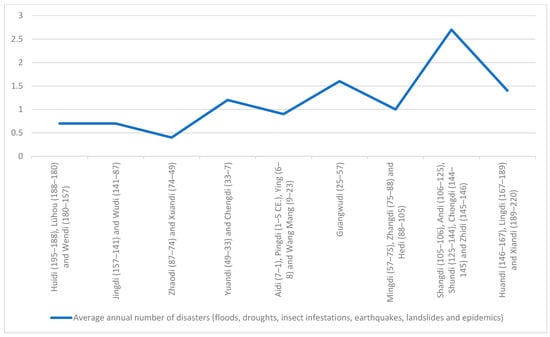
Disclaimer/Publisher’s Note: The statements, opinions and data contained in all publications are solely those of the individual author(s) and contributor(s) and not of MDPI and/or the editor(s). MDPI and/or the editor(s) disclaim responsibility for any injury to people or property resulting from any ideas, methods, instructions or products referred to in the content. |
© 2025 by the author. Licensee MDPI, Basel, Switzerland. This article is an open access article distributed under the terms and conditions of the Creative Commons Attribution (CC BY) license.