


Abstract
Benthic foraminifera are valuable bioindicators in modern and paleo-environmental studies due to their sensitivity to ecological changes. While sediment grain size is a fundamental factor structuring benthic habitats, its direct impact on benthic foraminifera remains poorly understood, as field studies are often complicated by covarying environmental parameters. To address this knowledge gap, we conducted a 14-week controlled laboratory culture experiment to investigate the biological response of a common benthic foraminifera Quinqueloculina seminula to different sediment grain sizes. Specimens were cultured in three distinct sediment grain size treatments (50, 150 and 250 μm), representing a gradient from fine to coarse sand. Our results demonstrate a clear and significant positive relationship between sediment grain size and the test size of Q. seminula. Furthermore, the species exhibited significant morphological plasticity, with the ratio of length/width increasing from 1.61 in fine sediment to 1.71 in coarse sediment. Individuals of Q. seminula in coarse sediment developed more elongate tests, while those in fine sediment maintained a more rounded morphology. This study provides the first experimental evidence that sediment grain size can drive significant changes in the size and morphology of Q. seminula. The observed phenotypic plasticity likely represents an adaptation to optimize locomotion and energetic allocation in different sedimentary environments. These findings confirmed the importance of sediment granulometry as a key control on foraminiferal biology and have important implications for the use of morphological data in paleoenvironmental reconstructions and modern biomonitoring.
1. Introduction
Benthic foraminifera are vital components of marine microfaunal communities [1,2]. As unicellular protists, they secrete or agglutinate tests (calcareous or agglutinated) that are preserved in the sedimentary record [1]. Due to their short life cycles, high sensitivity to environmental changes (e.g., temperature, salinity, dissolved oxygen, pollutants and substrate type), widespread distribution and high abundance, benthic foraminifera are widely recognized as excellent bioindicators for modern marine environments [3,4,5] and as key proxies for reconstructing paleoceanographic and paleoclimatic information, including sea surface temperature, salinity, productivity, bottom water oxygenation and water mass properties [6,7]. By establishing quantitative relationships between foraminiferal community structure, test morphological characteristics, or geochemical signals and environmental parameters, scientists can interpret the evolutionary history of marine environments archived in sediments.
Among the multiple environmental factors influencing the distribution and survival of benthic foraminifera, sediment characteristics, particularly grain size composition, represent a fundamental and critical abiotic factor [8,9,10,11]. Sediment grain size determines the physical structure of the benthic habitat, porewater exchange efficiency, organic matter loading, and microbial activity intensity [1], thereby directly affecting essential life processes of foraminifera such as feeding, locomotion, test construction, and reproduction. Field ecological surveys have repeatedly confirmed that specific foraminiferal assemblages are closely associated with sediment types (e.g., sand, silt, clay) [10,12,13]. For instance, in the coastal waters of Hurghada in the Red Sea, biological communities dominated by species such as Quinqueloculina seminula and Q. laevigata have been found to be associated with specific sedimentary environments [14]. However, in natural settings, sediment grain size often covaries with factors such as water depth, hydrodynamics, organic matter content, and pollutants (e.g., heavy metals) [15]. This covariation makes it difficult for field studies to precisely isolate and quantify the independent contribution of the single factor of grain size. Consequently, based solely on field observational data, it is challenging to establish a clear causal relationship between sediment grain size and specific biological responses of foraminifera (e.g., survival, growth, morphology).
Addressing the limitations mentioned above, laboratory-controlled culture experiments offer an irreplaceable research approach. By systematically altering a single target environmental variable (e.g., temperature, salinity) under artificially controlled conditions while keeping other factors constant, the direct impact mechanisms of specific environmental stresses on foraminifera can be precisely revealed [16]. In recent years, culture experiments have been successfully applied to elucidate the responses of foraminifera to temperature, salinity, dissolved oxygen, and pollutants (e.g., heavy metals) [17,18,19]. These culture experiments typically employ durations ranging from several weeks to months. Common methodological approaches include the use of calcein to distinguish newly formed chambers from pre-existing tests, controlled temperature and salinity regimes, and standardized feeding protocols [16,18]. These studies have not only validated field observations but have also deepened our understanding of the physiological and ecological adaptability of foraminifera. However, controlled culture experiments focusing on the fundamental habitat factor of sediment grain size remain scarce. This is particularly true for studies targeting a single indicator species.
Quinqueloculina seminula is a common porcelaneous benthic foraminifera widely distributed in shallow marine, lagoonal, and intertidal environments globally [20,21,22]. Its ecological importance has been highlighted in multiple studies. This species has been confirmed as an effective indicator of water depth and salinity changes [22,23]. Furthermore, under stress from heavy metal pollution, it exhibits significant declines in abundance and increases in the rate of test morphological abnormalities, demonstrating its potential as a bioindicator for pollution monitoring [24]. Additionally, behavioral studies indicate that Q. seminula possesses high mobility (~2 mm/min) and can penetrate the top few centimeters of the surface layer, suggesting that it plays an important role in surface sediment reworking processes [25,26,27]. Although the ecological indicator value of Q. seminula is clear, its preference for specific sediment grain sizes and its adaptive responses to them still lack experimental evidence obtained under strictly controlled conditions.
In this study, we conducted a 14-week laboratory culture experiment aimed at quantitatively investigating the biological effects of sediment grain size on the benthic foraminifera Q. seminula. The experiment established three sediment grain size treatments (50, 150 and 250 μm) to simulate substrate environments ranging from fine sand to coarse sand. Our study aims to quantitatively reveal the biological response of Q. seminula to different sediment grain sizes.
2. Materials and Methods
2.1. Living Benthic Foraminifera
The benthic foraminifera used for the culture experiment were initially collected in May 2024 from surface sediments in Qingdao Bay, Yellow Sea. They were subsequently placed in laboratory incubators for long-term acclimation and cultivation. During the acclimation period, foraminifera were maintained in glass crystallizing dishes containing natural seawater (salinity 30 psu, temperature 15 °C) and a 2 cm layer of natural sediment. The cultures were kept in a temperature-controlled incubator with a 12:12 h light:dark photoperiod (100 μmol photons m−2 s−1). They were fed twice weekly with a mixed algal diet (Nitzschia closterium, Isochrysis galbana and Chlorella vulgaris). Half of the seawater was replaced weekly to maintain water quality. After six months of indoor culture, live benthic foraminifera Quinqueloculina seminula were picked up using a stereomicroscope. Juveniles of identical size (length 100 μm) and high vitality were chosen and temporarily placed in culture dishes. High vitality was assessed under a stereomicroscope based on established criteria: (1) active extrusion and retraction of pseudopodia, (2) visible locomotory activity or attachment to the substrate, (3) clear, non-abraded test appearance without obvious damage or dissolution features. They were randomly divided into nine groups, with 60 individuals per group.
2.2. Experimental Design
The sediments collected from the same site were first acid-washed with 0.1 mol/L HCl to dissolve the calcareous foraminiferal tests within them. Then they were sterilized at high temperature (121 °C) and dried in an oven at 50 °C. Finally, the sediments were sequentially filtered using sieves with mesh sizes of 100, 200 and 300 μm. Sediments with grain size ranges of 0–100, 100–200, and 200–300 μm were obtained. For ease of statistical analysis, we used approximate mean grain sizes to represent these ranges, corresponding to mean grain sizes of 50, 150 and 250 μm, respectively. Three replicates were designed for each grain size treatment, resulting in a total of nine groups, corresponding to the nine groups of live benthic foraminifera samples prepared previously.
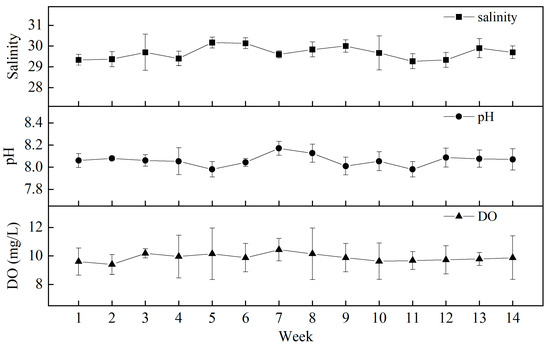
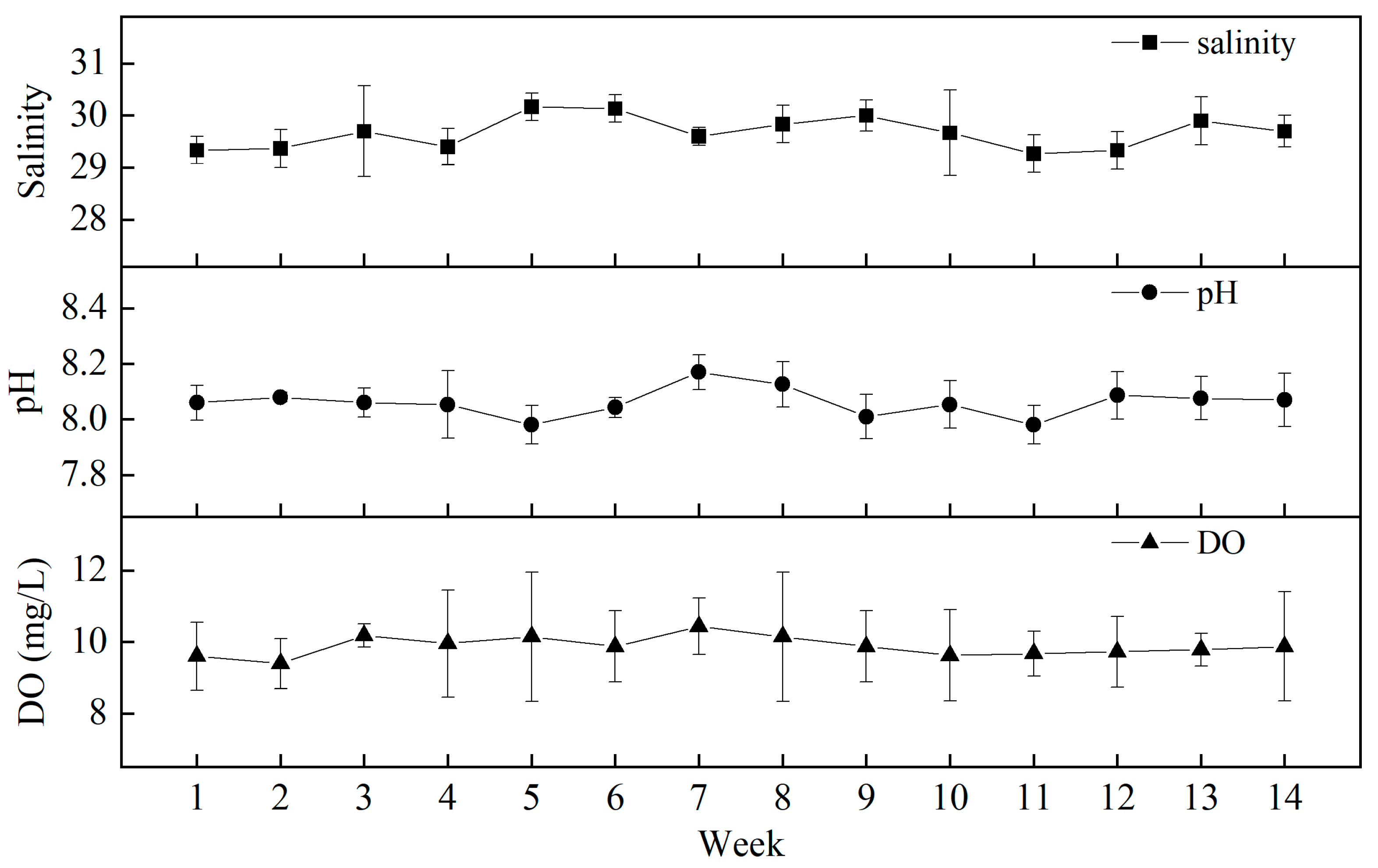
Experiment culture groups were set up in glass crystallizing dishes (bottom diameter 100 mm, height 50 mm). For each dish, 100 mL of the required grain size sediments was added, followed by 150 mL of natural seawater filtered through a 0.22 μm cellulose acetate membrane. Then, the corresponding live benthic foraminifera Q. seminula were also transferred to each culture dish and placed in a constant temperature incubator (15 °C) with a 12:12 h light:dark photoperiod (100 μmol photons m−2 s−1). For each dish, 100 mL of the required grain size sediments was added, creating a sediment layer approximately 1.5 cm deep. This was followed by 250 mL of natural seawater filtered through a 0.22 μm cellulose acetate membrane, resulting in an overlying water column of approximately 4 cm. The salinity, pH and dissolved oxygen of seawater were 32 psu, 8.1 and 8.2 mg/L. Dishes were covered with perforated Parafilm to reduce evaporation while allowing for gas exchange. Calcein was added to the seawater at a concentration of 8 mg/L to mark the growth of the calcareous tests of the foraminiferal individuals. The seawater used for culture was replaced twice weekly, and 1 mL of frozen concentrated algal solution was added during each water change. The algal species included Nitzschia closterium, Isochrysis galbana and Chlorella vulgaris. The experiment lasted for a total of 14 weeks. The salinity, pH and dissolved oxygen (DO) concentration of the seawater in the culture dishes were measured weekly using a pH meter (Mettler Toledo, Shanghai, China), a refractometer salinity meter (Atago, Saitama, Japan) and a dissolved oxygen meter (Smart Sensor, Dongguan, China), respectively. The relevant environmental factor data are shown in Figure 1.
Figure 1.
Changes in environmental factors during the culture experiment. (The error bars represent standard error of the mean value).
2.3. Sample Treatment
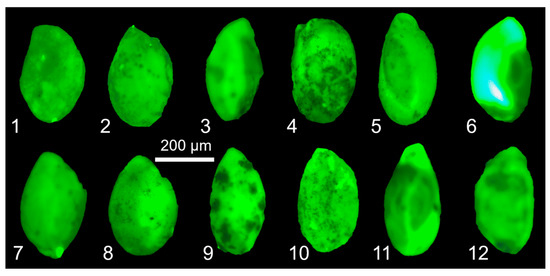
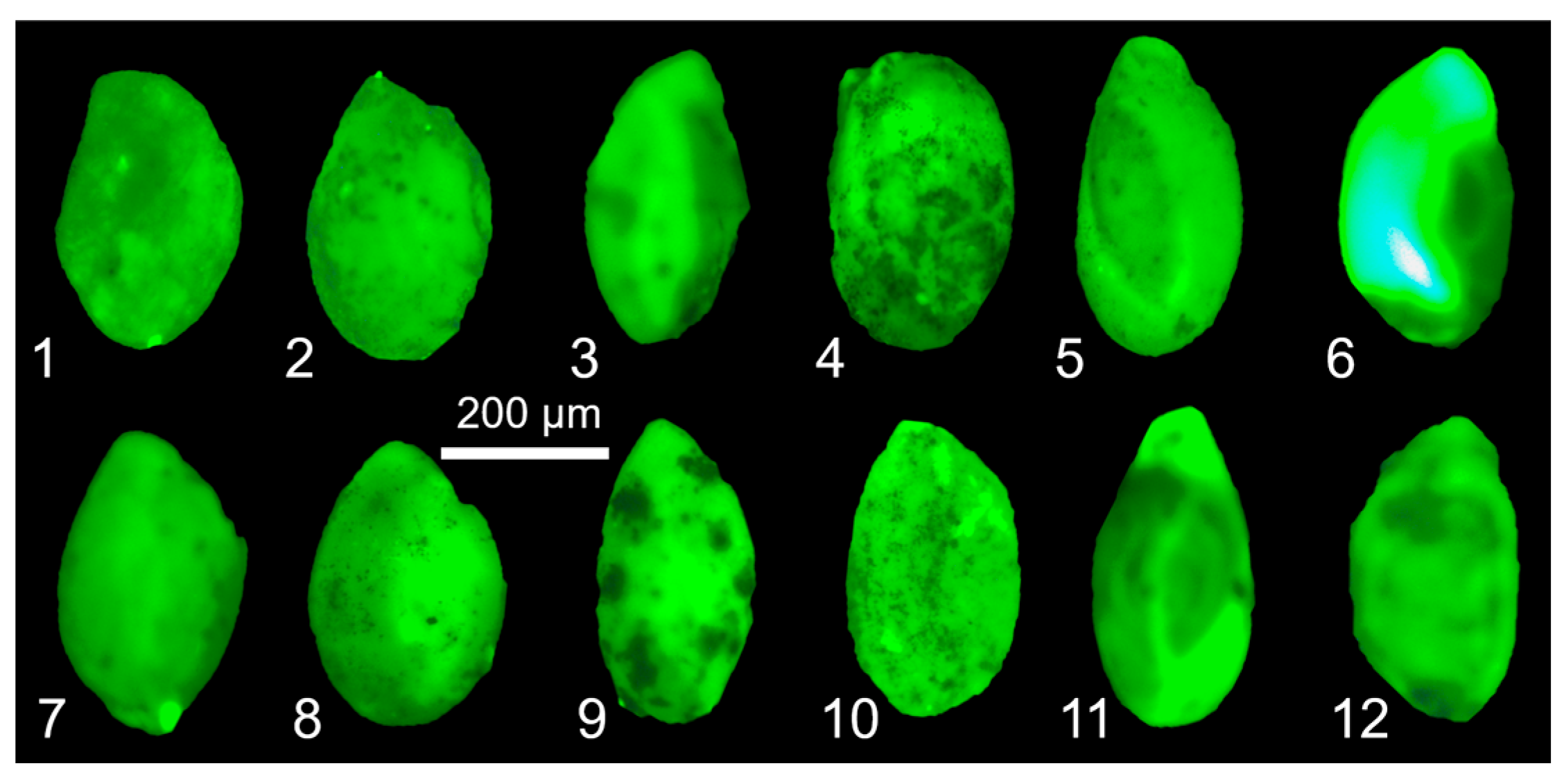
After the culture experiment, all sediments were collected, dried, and placed on picking trays under a stereomicroscope, where all benthic foraminiferal tests of Q. seminula were picked out. All foraminiferal test samples were examined under an inverted fluorescence microscope (MSHOT MF52-N, Guangzhou, China, 520 nm). Individuals that grew during the culture experiment absorbed calcein, causing their tests to emit yellow-green fluorescence upon excitation. This allows for the precise differentiation of newly grown portions of the test from the original test during the experiment. Specimens whose entire test showed strong fluorescence were further selected for morphological measurements (Figure 2). All fluorescent specimens were imaged using a stereomicroscope (Nexcope NSZ818, Ningbo, China) with an image analysis software (ImageView, x64 for Windows 11). Test length (maximum dimension along the axis of chamber addition) and width (maximum dimension perpendicular to the length axis) were measured from digital images [28]. To ensure consistency, all measurements were performed by the same operator in a single session to eliminate inter-operator variability. For each specimen, measurements were repeated three times, and the mean value was used for analysis.
Figure 2.
Micrographs of Q. seminula under fluorescence microscopes. (1, 2, 7, 8: Treatment of grain size of 50 μm; 3, 4, 9, 10: Treatment of grain size of 150 μm; 5, 6, 11, 12: Treatment of grain size of 250 μm).
2.4. Statistical Analysis
All statistical analyses were performed using Origin software (Version 2025, OriginLab, Northampton, MA, USA). One-way analysis of variance (ANOVA) was used to test for significant differences among the three sediment grain size treatments (50, 150 and 250 μm) for the following dependent variables: (1) number of surviving fluorescent specimens (2) test length and (3) length/width ratio. Prior to analysis, normality was assessed using the Shapiro–Wilk test, and homogeneity of variances was verified using Levene’s test. Data met the assumptions for parametric analysis. When significant differences were detected (p < 0.05), Tukey’s HSD post hoc test was applied for pairwise comparisons. Linear regression analysis was performed to examine the relationship between grain size and both test length and length/width ratio.
3. Results
3.1. Survival and Recovery of Quinqueloculina seminula
After 14 weeks of culture, all tests of Q. seminula were successfully recovered from all experimental groups. Under the fluorescence microscope, 266 tests that emitted yellow-green fluorescence were picked out (Figure 2). Under the 50, 150, and 250 μm treatments, the total numbers of fluorescent tests were 84, 93, and 89, respectively, with the average per triplicate being 28 ± 2.1, 31 ± 2.6 and 30 ± 3.0. These fluorescent tests, representing 46.7%, 51.7%, and 49.4% of the initial 60 individuals per replicate, indicate the specimens that grew during the experiment. The remaining non-fluorescent individuals either did not survive the 14-week culture period or did not grow sufficiently to incorporate detectable calcein. ANOVA indicated that there was no significant difference (F = 0.337, p = 0.727 > 0.05) in the number of surviving and growing benthic foraminifera among the three treatment groups.
3.2. Response of Test Size to Sediment Grain Size
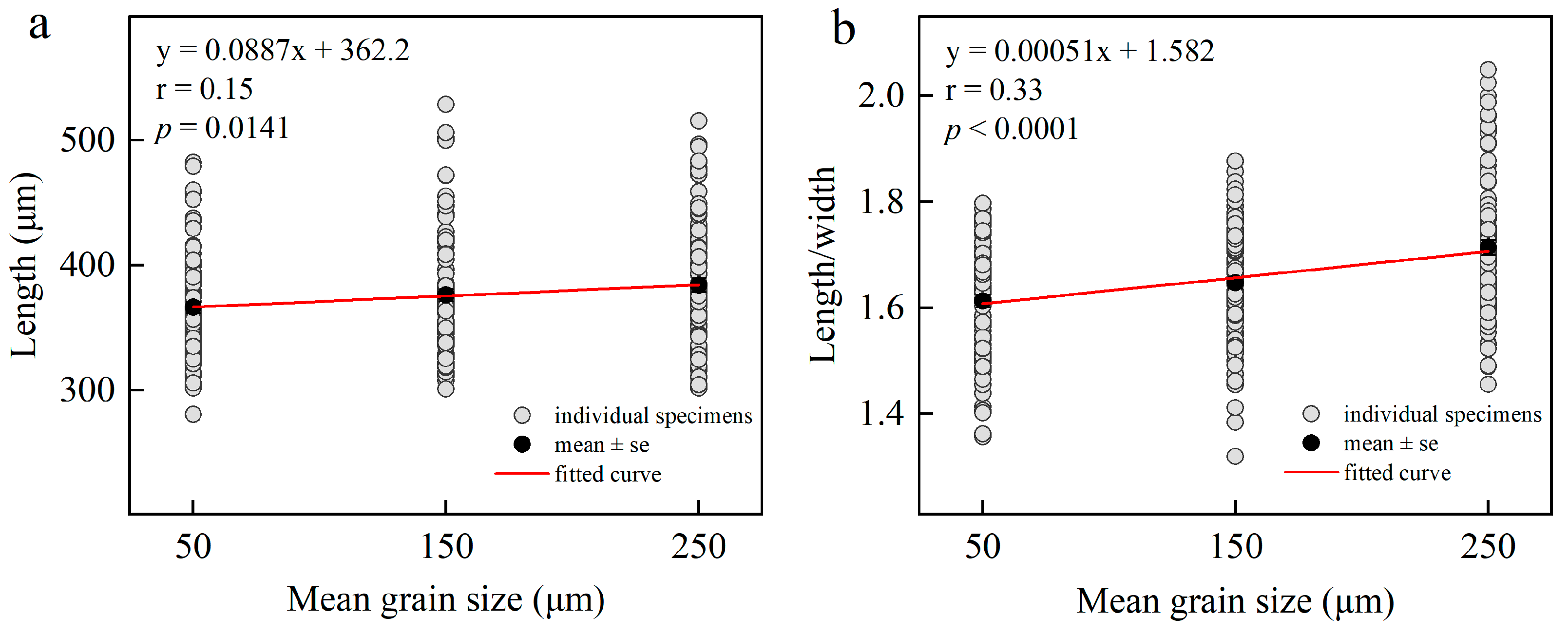
All 266 tests of Q. seminula from three treatments were measured for the length and width. We used length to represent the size of the tests. The distribution of test length for Q. seminula under different sediment grain size treatments is shown in Figure S1. A clear pattern of increasing test size with increasing sediment grain size was observed. In the 50 μm treatment (fine sediment), test lengths ranged from 280.90 to 482.26 μm, with a mean of 366.34 ± 4.55 μm. The 150 μm treatment (medium sediment) produced intermediate test sizes, ranging from 301.15 to 528.85 μm (mean 376.14 ± 5.00 μm). The largest test sizes were observed in the 250 μm treatment (coarse sediment), with lengths ranging from 301.70 to 515.66 μm and a mean of 384.11 ± 5.43 μm. ANOVA revealed significant differences among the three treatment groups (F = 3.05, p = 0.049 < 0.05). Therefore, a relationship between the length of Q. seminula and mean grain size was established using individual specimen data (y = 0.0887x + 362.2, r = 0.15, p = 0.0141 < 0.05, Figure 3a).
Figure 3.
Length (a) and length/width (b) of Q. seminula under different sediment grain size treatments.
3.3. Response of Test Morphology to Sediment Grain Size
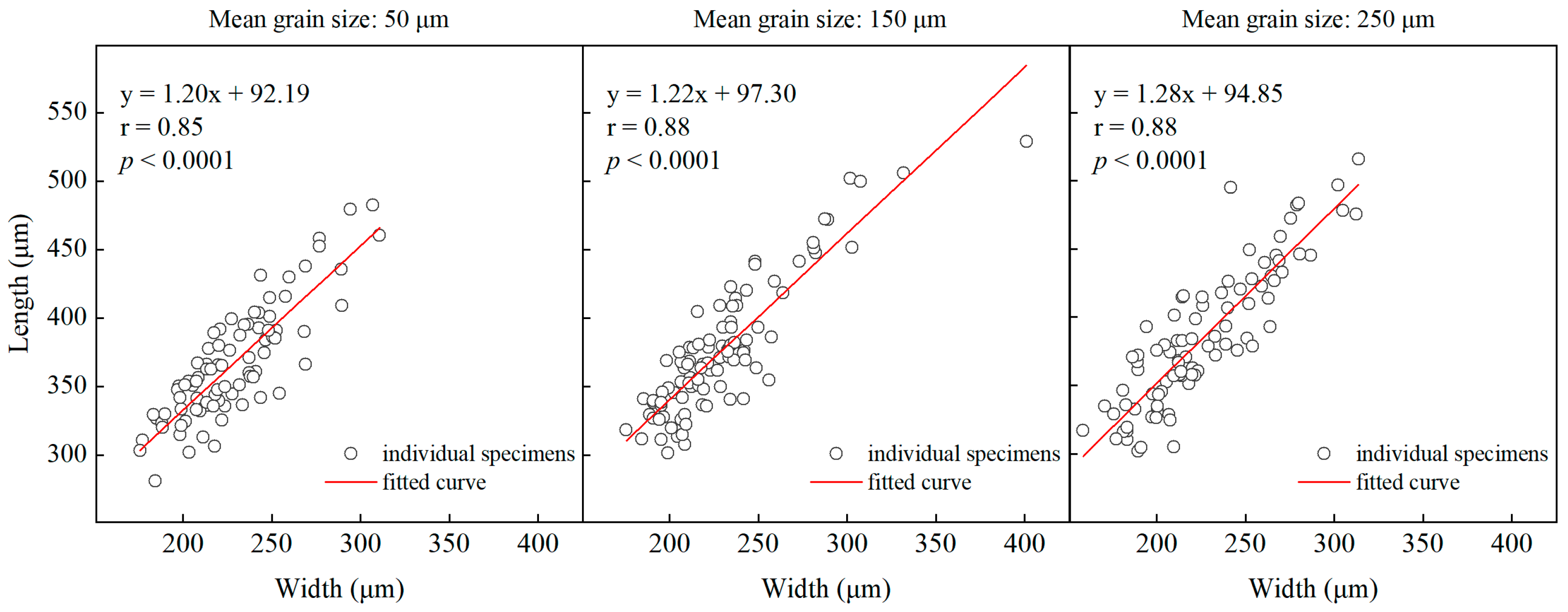
Figure 4 illustrates the variation in both test length and width across the three grain size treatments. Under the 50, 150 and 250 μm treatments, the ratios of length/width of Q. seminula were 1.61 ± 0.012 (mean ± se, n = 84), 1.65 ± 0.011 (n = 93) and 1.71 ± 0.014 (n = 89), respectively.
Figure 4.
Variation in length and width for Q. seminula under different sediment grain size treatments.
Among three treatments, the slopes between length and width increased with increasing grain size (1.20, 1.22 and 1.28 for grain size 50, 150 and 250 μm, respectively), indicating a higher ratio of length/width at a similar test size range. This morphological change can also be observed in the micrographs of Q. seminula (Figure 2), where individuals in the coarse sediment treatment group (250 μm grain size) exhibit a more elongated morphology, while those in the fine sediment treatment group (50 μm grain size) appear more rounded. Statistical analysis confirmed significant differences among the three treatment groups (ANOVA, F = 16.75, p < 0.0001). This indicates that Q. seminula develops a more elongate, slender test morphology when cultured in coarser sediments while maintaining a more rounded, globular form in finer sediments. Therefore, a relationship between the length/width of Q. seminula and mean grain size was established using individual specimen data (y = 0.00051x + 1.582, r = 0.33, p < 0.0001, Figure 3b).
4. Discussion
4.1. Sediment Grain Size as a Primary Control on Foraminiferal Test Size
Our experimental results demonstrate a clear and significant positive relationship between sediment grain size and test size of Quinqueloculina seminula. Individuals cultured in coarse sediment (250 μm) attained significantly larger test lengths compared to those in fine sediment (50 μm), with a progressive gradient observed across the three treatments. This finding provides direct experimental evidence supporting the hypothesis that sediment granulometry exerts a fundamental control on foraminiferal growth and development.
Previous field studies have shown relationships between foraminiferal assemblages and sediment types [8,9,15,29]. Armynot du Châtelet et al. [8] demonstrated that grain size is the most limiting parameter for benthic foraminifera in intertidal environments, with both density and species richness being significantly lower in coarser sediments. However, these field observations could not distinguish whether grain size directly affects foraminiferal biology or merely correlates with other covarying environmental factors such as organic matter content or hydrodynamics. Moreover, previous studies have not focused on the relationship between foraminiferal individual size and sediment grain size. Our controlled laboratory experiment, which maintained constant temperature, salinity, food supply, and water chemistry (Figure 1) while varying only sediment grain size, provides the first unambiguous evidence that grain size alone can affect benthic foraminiferal size.
The observed size increase in coarse sediments may be related to several interconnected mechanisms. Coarser sediments typically have larger interstitial spaces, which may facilitate easier locomotion and provide more space for the growth of foraminifera. Studies on foraminiferal bioturbation have shown that Q. seminula exhibit high mobility and play important roles in surface sediment reworking [25]. This also demonstrates the high sensitivity of Q. seminula to sediment grain size, indicating that it is an excellent indicator species for reflecting changes in sediment grain size. Combining previous studies with our culture experiment, it is demonstrated that sediment grain size not only influences the locomotory behavior of benthic foraminifera but also affects their growth and calcification. This may have long-term implications for foraminifera-related biogeochemical cycles, such as biogenic calcium carbonate deposition. It is noted that while we infer potential locomotory advantages from morphological differences, we did not directly measure movement rates or burrowing efficiency in this experiment. Future studies combining morphological analysis with direct behavioral observations would be valuable to test these hypothesized functional relationships.
4.2. Morphological Plasticity: Ecological and Physiological Implications
The most striking finding of this study is the variation in test morphology across grain size treatments, specifically the increasing ratio of length/width with increasing sediment grain size. This morphological plasticity has important implications for understanding foraminiferal adaptation to substrate conditions.
In coarse sediments, Q. seminula developed more elongate tests (higher length/width ratio), while in fine sediments, individuals maintained a more rounded morphology. This morphological response may represent an adaptive strategy to optimize movement efficiency in different sedimentary environments. Elongate, streamlined forms may experience reduced drag and facilitate burrowing through coarse, high-permeability sediments, whereas rounded forms may be better suited for navigating the tortuous pore networks characteristic of fine-grained, low-permeability muds.
A previous study documented similar morphological adaptations in Jurassic benthic foraminifera, noting that under oxygen-restricted conditions, certain taxa developed flat compressed tests where the high surface area-to-volume ratio favored gas interchange [30]. While our study maintained constant dissolved oxygen levels across all treatments (Figure 1), the observed morphological variation may reflect underlying differences in metabolic demands related to locomotion efficiency. In fine sediments with limited pore space, a more rounded morphology might reduce friction during movement, whereas in coarse sediments with abundant pore space, an elongate morphology could facilitate more efficient burrowing. We also speculate that energetic allocation strategies may shift with sediment type. In our study, the smaller test sizes observed in fine sediment treatments may indicate that fine-grained substrates represent suboptimal conditions requiring greater energetic investment in movement or other maintenance activities, thereby reducing the energy available for growth and calcification. Overall, the observed morphological plasticity reflected the rapid physiological response to environmental change. Our study did not include direct measurements of energetic expenditure or metabolic rates, which would be necessary to fully test the energetic allocation hypothesis. In future research, more environmental parameters should be monitored simultaneously, and in-depth studies on the physiological metabolism and molecular regulation of benthic foraminifera should be conducted to reveal their response mechanisms.
While our 14-week experiment provides clear evidence of phenotypic plasticity in response to sediment grain size, it represents a relatively short period relative to the species’ potential lifespan. Future studies should extend the experimental duration over multiple generations to investigate whether these morphological responses are transient or lead to long-term adaptation and to examine potential transgenerational effects.
We acknowledge that our experimental setup, while controlling for many variables, may introduce additional factors that could influence foraminiferal responses. Sediment packing density likely differs among grain size treatments, with fine sediments typically exhibiting higher compaction and reduced porosity compared to coarse sediments. This could affect porewater exchange, oxygen penetration, and the ease of foraminiferal locomotion independently of grain size per se. Additionally, microbial colonization patterns may vary with grain size, potentially influencing food availability and sediment biogeochemistry. Coarser sediments with larger interstitial spaces may support different microbial communities than finer sediments. While we maintained consistent feeding regimes across treatments, these indirect effects of grain size on the sedimentary microenvironment are inherent to any study manipulating sediment texture. In addition, mechanical constraints may play a role: in fine-grained sediments with limited pore space, physical restriction could limit test expansion, whereas coarser sediments with larger interstitial spaces may allow for less constrained growth.
4.3. Implications for Paleoenvironmental Reconstruction and Biomonitoring
Our observation of morphological variation within a single species across different sediment treatments contrasts with studies that have focused primarily on species replacement along sediment gradients. The finding that Q. seminula exhibits significant phenotypic plasticity in response to sediment grain size suggests that intraspecific morphological variation should be carefully considered in paleoenvironmental reconstructions. Traditional approaches that rely solely on species presence/absence or relative abundance may overlook important ecological information encoded in morphological variation within species.
The finding that Q. seminula exhibits systematic morphological variation in response to sediment grain size has important implications for both paleoenvironmental reconstruction and modern biomonitoring applications. Our results suggest that sediment grain size should be considered as a potential confounding factor when interpreting morphological data from fossil assemblages. For modern biomonitoring applications, our results support the use of Q. seminula as a sensitive indicator of sediment characteristics. Compared to previous studies on changes in species composition [9,15], our study extends this framework by demonstrating that even within a single species, quantitative morphological parameters respond predictably to sediment grain size gradients.
The observed morphological plasticity also raises questions about taxonomic practices in foraminiferal studies. If significant morphological variation can be induced by environmental factors such as sediment grain size, caution is warranted when using morphological criteria alone for species identification, particularly in heterogeneous sedimentary environments. Integration of molecular techniques with morphological analysis may help distinguish environmentally induced phenotypic variation from genetically fixed taxonomic differences.
5. Conclusions
This study provides the first experimental evidence demonstrating that sediment grain size significantly influences the growth and morphology of the benthic foraminifer Quinqueloculina seminula. Through a 14-week controlled laboratory culture experiment with three sediment grain size treatments (50, 150 and 250 μm), we documented systematic variations in test size and shape. Test size increased significantly with increasing sediment grain size. Test morphology shifted rapidly along the grain size gradient, with the ratio of length/width increasing from 1.61 in fine sediment to 1.71 in coarse sediment. This indicates that Q. seminula develops more elongate, slender tests in coarse sediments while maintaining more rounded forms in fine sediments. These morphological responses likely reflect adaptations to optimize locomotion efficiency and possibly energetic allocation in different sedimentary environments. This study demonstrates that Q. seminula is a sensitive indicator species for sediment characteristics, with quantifiable morphological parameters that respond predictably to environmental gradients. The observed biological response has important implications for both paleoenvironmental reconstruction and modern biomonitoring. Future research should explore the genetic and physiological mechanisms underlying this morphological plasticity and investigate whether similar patterns occur in other foraminiferal species.
Supplementary Materials
The following supporting information can be downloaded at: https://www.mdpi.com/article/10.3390/jmse14070645/s1, Figure S1: Distribution of length for Q. seminula under different sediment grain size treatments.
Author Contributions
Conceptualization, M.H. and S.D.; methodology, J.L. and R.X.; software, W.Y.; validation, M.H., W.Y. and W.H.; formal analysis, J.L.; investigation, M.H. and S.D.; resources, S.D.; data curation, M.H.; writing—original draft preparation, M.H., J.L., R.X., W.Y., W.H. and S.D.; writing—review and editing, M.H., J.L., R.X., W.Y., W.H. and S.D.; visualization, M.H. and S.D.; supervision, S.D.; project administration, S.D.; funding acquisition, S.D. All authors have read and agreed to the published version of the manuscript.
Funding
This research was funded by the Fund of Key Laboratory of Marine Ecological Conservation and Restoration, Ministry of Natural Resources/Fujian Provincial Key Laboratory of Marine Ecological Conservation and Restoration (EPR2024006), Natural Science Foundation of Jiangsu Province (BK20241062), Science and Technology Plan Project of Lianyungang (JCYJ2420), China Postdoctoral Science Foundation (2025M770398), Lianyungang Postdoctoral Research Funding Program, Natural Science Foundation of the Jiangsu Higher Education Institutions of China (23KJB170006), Young Elite Scientists Sponsorship Program by Jiangsu Association for Science and Technology (JSTJ-2025-593), Training Program of Innovation and Entrepreneurship for Undergraduates.
Data Availability Statement
The raw data supporting the conclusions of this article will be made available by the authors on request.
Acknowledgments
We would like to thank the work of the editor and the three anonymous reviewers for their constructive comments.
Conflicts of Interest
The authors declare no conflicts of interest.
References
- Murray, J.W. Ecology and Applications of Benthic Foraminifera; Cambridge University Press: New York, NY, USA, 2006; p. 426. [Google Scholar]
- Lei, Y.-L.; Stumm, K.; Wickham, S.A.; Berninger, U.-G. Distributions and biomass of benthic ciliates, foraminifera and amoeboid protists in marine, brackish, and freshwater sediments. J. Eukaryot. Microbiol. 2014, 61, 493–508. [Google Scholar] [CrossRef] [Scilit] [PubMed]
- Sosnitsky, T.; Krekova, V.; Elisha, B.; Sadekov, A.; Torfstein, A.; Holzmann, M.; Li, H.; Abramovich, S.; Ashckenazi-Polivoda, S. A cosmopolitan calcifying benthic foraminifera in agglutinated disguise as a geochemical recorder of coastal environments. Proc. Natl. Acad. Sci. USA 2025, 122, e2413054122. [Google Scholar] [CrossRef] [Scilit]
- O’Brien, P.A.J.; Polovodova Asteman, I.; Bouchet, V.M.P. Benthic foraminiferal indices and environmental quality assessment of transitional waters: A review of current challenges and future research perspectives. Water 2021, 13, 1898. [Google Scholar] [CrossRef] [Scilit]
- Indap, M. Understanding Role of Foraminifera in Environmental Studies: A Review. Int. J. Ecol. Environ. Sci. 2023, 49, 457–471. [Google Scholar] [CrossRef] [Scilit]
- Westerhold, T.; Dallanave, E.; Penman, D.; Schoene, B.; Röhl, U.; Gussone, N.; Kuroda, J. Earth orbital rhythms links timing of Deccan trap volcanism phases and global climate change. Sci. Adv. 2025, 11, eadr8584. [Google Scholar] [CrossRef] [Scilit]
- Meckler, A.N.; Sexton, P.F.; Piasecki, A.M.; Leutert, T.J.; Marquardt, J.; Ziegler, M.; Agterhuis, T.; Lourens, L.J.; Rae, J.W.B.; Barnet, J.; et al. Cenozoic evolution of deep ocean temperature from clumped isotope thermometry. Science 2022, 377, 86–90. [Google Scholar] [CrossRef] [Scilit]
- Armynot du Châtelet, É.; Bout-Roumazeilles, V.; Riboulleau, A.; Trentesaux, A. Sediment (grain size and clay mineralogy) and organic matter quality control on living benthic foraminifera. Rev. Micropaleontol. 2009, 52, 75–84. [Google Scholar] [CrossRef] [Scilit]
- Dowari, J.; Sarkar, U.; Faruque Hussain, M. Sediment Grain Size Controlling the Distribution of Foraminiferal Assemblage: A Case Study from Chandipur Coast, India. J. Geol. Soc. India 2026, 102, 100–110. [Google Scholar] [CrossRef] [Scilit]
- Celia Magno, M.; Bergamin, L.; Finoia, M.G.; Pierfranceschi, G.; Venti, F.; Romano, E. Correlation between textural characteristics of marine sediments and benthic foraminifera in highly anthropogenically-altered coastal areas. Mar. Geol. 2012, 315–318, 143–161. [Google Scholar] [CrossRef] [Scilit]
- Schönfeld, J. A new benthic foraminiferal proxy for near-bottom current velocities in the Gulf of Cadiz, northeastern Atlantic Ocean. Deep Sea Res. Part I Oceanogr. Res. Pap. 2002, 49, 1853–1875. [Google Scholar] [CrossRef] [Scilit]
- Sadough, M.; Ghane, F.; Manouchehri, H.; Moghaddasi, B.; Beikaee, H. Identification and abundance of benthic foraminifera in the sediments from Fereidoonkenar to Babolsar of Southern Caspian Sea. Turk. J. Fish. Aquat. Sci. 2013, 13, 79–86. [Google Scholar] [CrossRef]
- Romano, E.; Bergamin, L.; Magno, M.C.; Ausili, A. Sediment characterization of the highly impacted Augusta harbour (Sicily, Italy): Modern benthic foraminifera in relation to grain-size and sediment geochemistry. Environ. Sci. Process. Impacts 2013, 15, 930–946. [Google Scholar] [CrossRef] [Scilit]
- El-Kahawy, R.M.; Mabrouk, M.S. Benthic foraminifera as bioindicators for the heavy metals in the severely polluted Hurghada Bay, Red Sea coast, Egypt. Environ. Sci. Pollut. Res. 2023, 30, 70437–70457. [Google Scholar] [CrossRef] [Scilit]
- Li, T.; Cai, G.; Zhang, M.; Li, S.; Nie, X. The response of benthic foraminifera to heavy metals and grain sizes: A case study from Hainan Island, China. Mar. Pollut. Bull. 2021, 167, 112328. [Google Scholar] [CrossRef] [Scilit] [PubMed]
- Dong, S.; Lei, Y.; Li, T.; Jian, Z. Responses of benthic foraminifera to changes of temperature and salinity: Results from a laboratory culture experiment. Sci. China Earth Sci. 2019, 62, 459–472. [Google Scholar] [CrossRef] [Scilit]
- Li, M.; Lei, Y.; Li, T.; Dong, S. Response of intertidal foraminiferal assemblages to salinity changes in a laboratory culture experiment. J. Foraminifer. Res. 2020, 50, 319–329. [Google Scholar] [CrossRef] [Scilit]
- Li, H.; Lei, Y.; Dong, S.; Wu, T.; Chen, S. The response of calcareous organism to temperature from continental shelf sediments under culture experiment—A case of benthic foraminifera. J. Sea Res. 2023, 196, 102447. [Google Scholar] [CrossRef] [Scilit]
- Qiao, L.; Wu, Y.; Ren, C.; Li, T.; Guo, Y.; Zhao, A. Benthic foraminiferal community structure and its response to heavy metals revealed using environmental DNA/RNA metabarcoding in Yueqing Bay, East China Sea. Mar. Pollut. Bull. 2025, 217, 118126. [Google Scholar] [CrossRef] [Scilit]
- Lei, Y.; Li, T.; Jian, Z.; Nigam, R. Taxonomy and distribution of benthic foraminifera in an intertidal zone of the Yellow Sea, PR China: Correlations with sediment temperature and salinity. Mar. Micropaleontol. 2017, 133, 1–20. [Google Scholar] [CrossRef] [Scilit]
- Lei, Y.; Li, T. Atlas of Benthic Foraminifera from China Seas the Bohai Sea and the Yellow Sea; Springer-Verlag GmbH Germany and Science Press: Beijing, China, 2016; p. 399. [Google Scholar]
- Anbuselvan, N.; Senthil Nathan, D. Benthic foraminiferal distribution and biofacies in the shelf part of Bay of Bengal, east coast of India. Mar. Biodivers. 2019, 49, 691–706. [Google Scholar] [CrossRef] [Scilit]
- Abu-Zied, R.H.; Al-Dubai, T.A.M.; Bantan, R.A. Environmental conditions of shallow waters alongside the southern Corniche of Jeddah based on benthic foraminifera, physico-chemical parameters and heavy metals. J. Foraminifer. Res. 2016, 46, 149–170. [Google Scholar] [CrossRef] [Scilit]
- Liu, Z.; He, M.; Han, P.; Dong, S.; Chen, X. Bio-monitoring heavy metal pollution: Insights from benthic foraminiferal assemblages and shell morphology. Front. Mar. Sci. 2025, 12, 1716252. [Google Scholar] [CrossRef] [Scilit]
- Deldicq, N.; Seuront, L.; Bouchet, V.M.P. Inter-specific and inter-individual trait variability matter in surface sediment reworking rates of intertidal benthic foraminifera. Mar. Biol. 2021, 168, 101. [Google Scholar] [CrossRef] [Scilit]
- Gross, O. Influence of temperature, oxygen and food availability on the migrational activity of bathyal benthic foraminifera: Evidence by microcosm experiments. Hydrobiologia 2000, 426, 123–137. [Google Scholar] [CrossRef] [Scilit]
- Bouchet, V.M.P.; Seuront, L. Strength May Lie in Numbers: Intertidal Foraminifera Non-Negligible Contribution to Surface Sediment Reworking. Open J. Mar. Sci. 2020, 10, 131–140. [Google Scholar] [CrossRef]
- Burkett, A.M. Life on Plastics: Deep-Sea Foraminiferal Colonization Patterns and Reproductive Morphology. J. Mar. Sci. Eng. 2025, 13, 1597. [Google Scholar] [CrossRef] [Scilit]
- Burkett, A.M.; Rathburn, A.E.; Gonzalez Acevedo, A.; Gonzalez Acevedo, C.; Ezpeleta, J. Foraminiferal population dynamics on elevated plastic substrates and in sediments at 4000 m in the Eastern Pacific. Mar. Ecol. Prog. Ser. 2023, 723, 1–18. [Google Scholar] [CrossRef] [Scilit]
- Reolid, M.; Martínez-Ruiz, F. Comparison of benthic foraminifera and geochemical proxies in shelf deposits from the Upper Jurassic of the Prebetic (southern Spain). J. Iber. Geol. 2012, 38, 449–465. [Google Scholar] [CrossRef] [Scilit]
Disclaimer/Publisher’s Note: The statements, opinions and data contained in all publications are solely those of the individual author(s) and contributor(s) and not of MDPI and/or the editor(s). MDPI and/or the editor(s) disclaim responsibility for any injury to people or property resulting from any ideas, methods, instructions or products referred to in the content. |
© 2026 by the authors. Licensee MDPI, Basel, Switzerland. This article is an open access article distributed under the terms and conditions of the Creative Commons Attribution (CC BY) license.