


Abstract
Corrosion of reinforcing steel exposed to chloride leads to the degradation of steel-reinforced concrete structures. Electrochemical chloride removal (ECR) has proven to be a non-destructive and cost-effective rehabilitation technique for reinforced concrete structures. Most studies have focused on chloride attack, with free chloride removal efficiency used as the primary index to measure ECR performance. Hence, we focused on the influence of ECR on bound chloride ions under the combined effect of chloride and sulfate. The instability of bound chloride ions was investigated through macroscopic experiments, whereas the underlying mechanism was revealed using XRD and TG-DTG analyses. In addition, a three-dimensional ECR simulation was developed using the finite element method. Both free and bound chloride ion concentrations decreased over the experimental period, with the rate of decrease being higher during the first 4 weeks than during the subsequent 4 weeks. The decomposition of C–S–H gel and the desorption of physically adsorbed chloride ions played a leading role in the release of bound chloride ions, whereas the contribution of Friedel’s salt was comparatively minor. The three-dimensional finite element simulation demonstrated that ECR can effectively remove chloride ions from concrete and that the longer the treatment time, the greater the effect.
1. Introduction
Corrosion of reinforcing steel is the principal cause of durability loss in reinforced concrete structures [1,2]. For marine concrete, the combined action of chloride and sulfate attacks leads to severe corrosion of the reinforcing steel, which induces structural degradation.
Previous studies have demonstrated that chloride ions are the dominant factor driving the corrosion of reinforcing steel. Once chloride ions penetrate concrete, they exist mainly in two forms [3]: (1) free chloride ions present in the pore solution of concrete, which directly cause severe corrosion of reinforcing steel [4], and (2) bound chloride ions, which are classified into two categories: weakly bound chloride ions (retained through physical adsorption on the surface of hydration products or within pore structures of solid-phase components in concrete) and strongly bound chloride ions (chemically combined, where chloride ions react with the hydration products of C3A to form Friedel’s salt [5]) [4]. In concrete, the total chloride ion concentration (Ct) is the sum of the free chloride ion concentration (Cf) and the bound chloride ion concentration (Cb). Although the corrosive role of free chloride ions in reinforcing steel corrosion has been widely acknowledged, bound chloride ions are not permanently stable. Under specific conditions, they may undergo instability and release, transforming into free chloride ions. Once released, bound chloride ions have the same diffusivity and corrosion activity as free chloride ions, thereby adversely affecting the durability of reinforced concrete structures [6,7].
Electrochemical desalination is a non-destructive and cost-effective rehabilitation method for reinforced concrete structures. Elsener et al. [8] used a 2-year field test to demonstrate the feasibility of electrochemical desalination for removing free chloride ions. Orellan [9] and Fajardo [10] reported that the removal ratio of chloride ions can reach 50–60% in electrochemical desalination tests. Elsener [8] further noted that under an external electric field, bound chloride ions may become unstable and release free chloride ions while maintaining a certain equilibrium between bound and free chloride ions. Domestic researchers such as Fan Qingxin [11], Shen Erbu [12], and Liang Jian [13] have investigated the effects of protective layer thickness, current density, type of electrolyte solution, and electrolyte temperature on desalination efficiency. Their results indicated that electrochemical desalination can effectively reduce the chloride ion content in concrete, thereby enhancing the durability of reinforced concrete.
To date, extensive research has been conducted on electrochemical desalination. However, most studies have focused primarily on single chloride attack conditions and have considered the removal of free chloride ions as the primary index for evaluating desalination efficiency. Therefore, existing research is limited in its applicability to reinforced concrete structures exposed to environments rich in both chlorides and sulfates, such as coastal regions and salt lakes. Only a few studies have systematically explored the influence mechanism of the coupled effect of electric field, chloride ions, and sulfate ions on the stability of bound chloride ions in chloride–sulfate coexistence systems. Based on this, our core research objective in this study was to investigate the influence of desalination cycles on the stability of bound chloride ions under chloride–sulfate coexistence conditions. We adopted a combination of experimental tests and simulation analyses to systematically reveal the correlation laws between desalination cycles, ionic coupling effects, and the stability of bound chloride ions. These findings are of great significance for ensuring the effective operation and accurate prediction of electrochemical desalination in complex environments, which is crucial for improving rehabilitation efficiency and extending the service life of reinforced concrete structures.
2. Experimental Methods
2.1. Raw Materials and Mix Proportions
P∙II 42.5 Portland cement was used. Its basic physical and mechanical properties are listed in Table 1 (tests were conducted in accordance with GB 175-2023 Common Portland Cement [14]), and its chemical composition is shown in Table 2 (Conch brand). Natural river sand was used as the fine aggregate, classified as Zone II medium sand; the performance indices are listed in Table 3 (tests were conducted in accordance with GB/T 14684-2022 Sand for construction [15]).
Table 1.
Physical and mechanical properties of cement.
Table 2.
Chemical composition of cement (wt.%).
Table 3.
Performance of fine aggregate.
The embedded reinforcing steel bars were of the HPB235 type with a diameter of 10 mm (φ10). The chemical composition of these materials is listed in Table 4. Drinking water from Nanjing city was used for mixing. The water-to-binder ratio was 0.5, and the binder-to-sand ratio was 1:2.5. The mortar fluidity was 78 mm in accordance with JGJ/T 70-2009 [16]. To simulate the combined action of chloride sulfate attacks, the samples were prepared with NaCl and Na2SO4 accounting for 3% and 1% of the binder mass, respectively. All chemical reagents used were of analytical grade.
Table 4.
Chemical composition of HPB235 reinforcing steel (wt.%).
2.2. Experimental Setup and Procedure
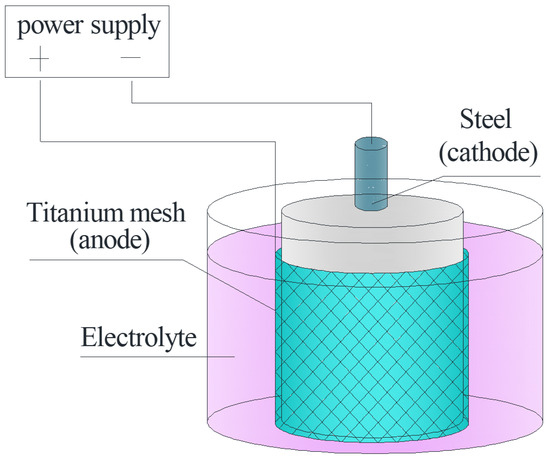
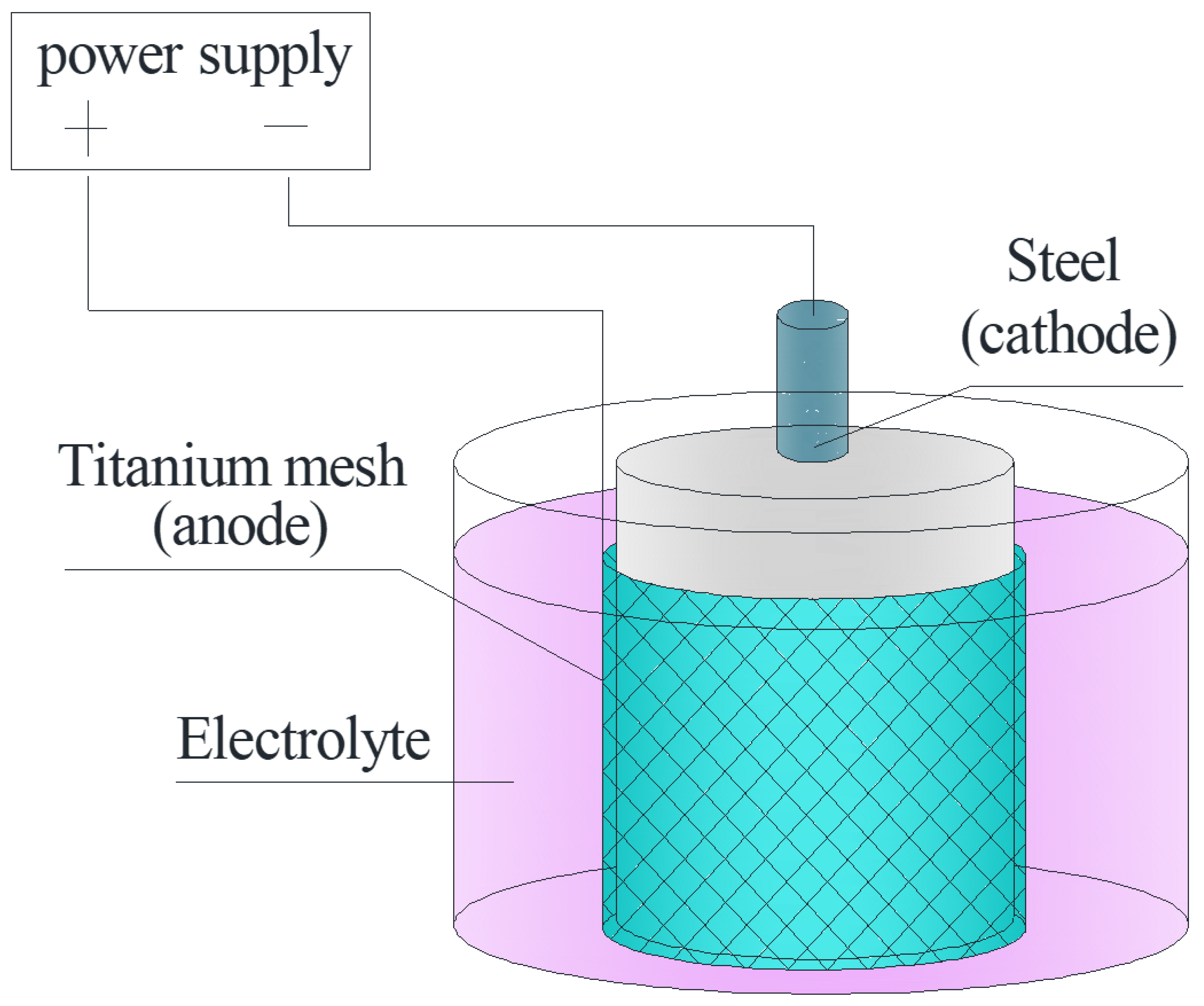
Cylindrical samples were cast using PVC pipe molds of dimensions φ100 mm × 100 mm, with a φ10 HPB235 reinforcing steel bar embedded along the central axis. After 1 day, the samples were demolded, and their top and bottom surfaces were sealed with epoxy resin. Next, the samples were cured in a standard curing chamber for 27 days. Electrochemical desalination was conducted using the experimental setup shown in Figure 1.
Figure 1.
Experimental setup of electrochemical desalination.
A regulated DC power supply (HAP03-300D) was used. A high-purity titanium mesh served as the external anode, and a saturated Ca(OH)2 solution was used as the electrolyte. The applied current density was 2 A/m2. After electrochemical desalination, powder samples were collected from the concrete adjacent to the reinforcing-steel surface for analysis. Three parallel specimens were prepared for each group, and the average of the measured data from the three specimens was considered as the chloride ion concentration for the corresponding cyclic period. Test methods for determining the total chloride ion concentration, free chloride ion concentration, and bound chloride ion concentration were adopted in accordance with a previous study [17].
2.3. Testing Methods
2.3.1. XRD Testing
The phase identification of the powdered samples was performed using a Bruker D8 Advance X-ray powder diffractometer (Bruker, Ettlingen, Germany). The scanning range was 5–90° with a scanning speed of 10°/min, step size of 0.02°, operating voltage of 40 kV, and operating current of 30 mA.
2.3.2. TG-DTG Testing
The thermogravimetric (TG-DTG) curves of the cement paste samples were obtained using a Netzsch STA449 simultaneous thermal analyzer (NETZSCH, Selb, Germany). The sample mass was 10 ± 2 mg. The heating range was from 25 °C to 900 °C, under nitrogen atmosphere, with a heating rate of 10 °C/min. α-Al2O3 was used as the reference material.
2.4. Finite Element Modeling
Assuming that the electrolyte solution is dilute during the entire electrochemical chloride removal (ECR) process, and ignoring the interactions between solutes in the solution as well as the convective velocity of ions, the Nernst–Planck physics interface in COMSOL 6.4 Multiphysics can be selected for the finite element simulation of the ECR process. Specifically, we investigated the influence of current application cycles under combined chloride–sulfate attack on the total chloride ion concentration and desalination efficiency in concrete. Furthermore, the spatial distribution of total chloride ions before and after electrochemical desalination was simulated.
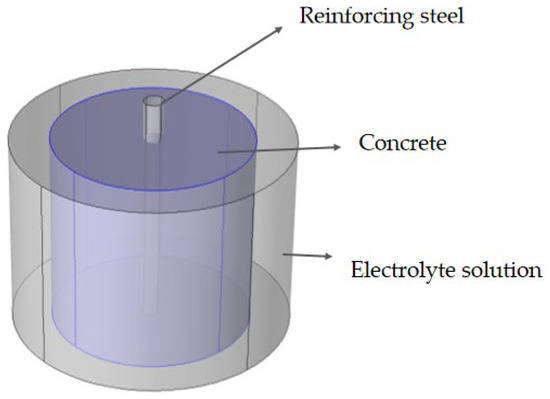
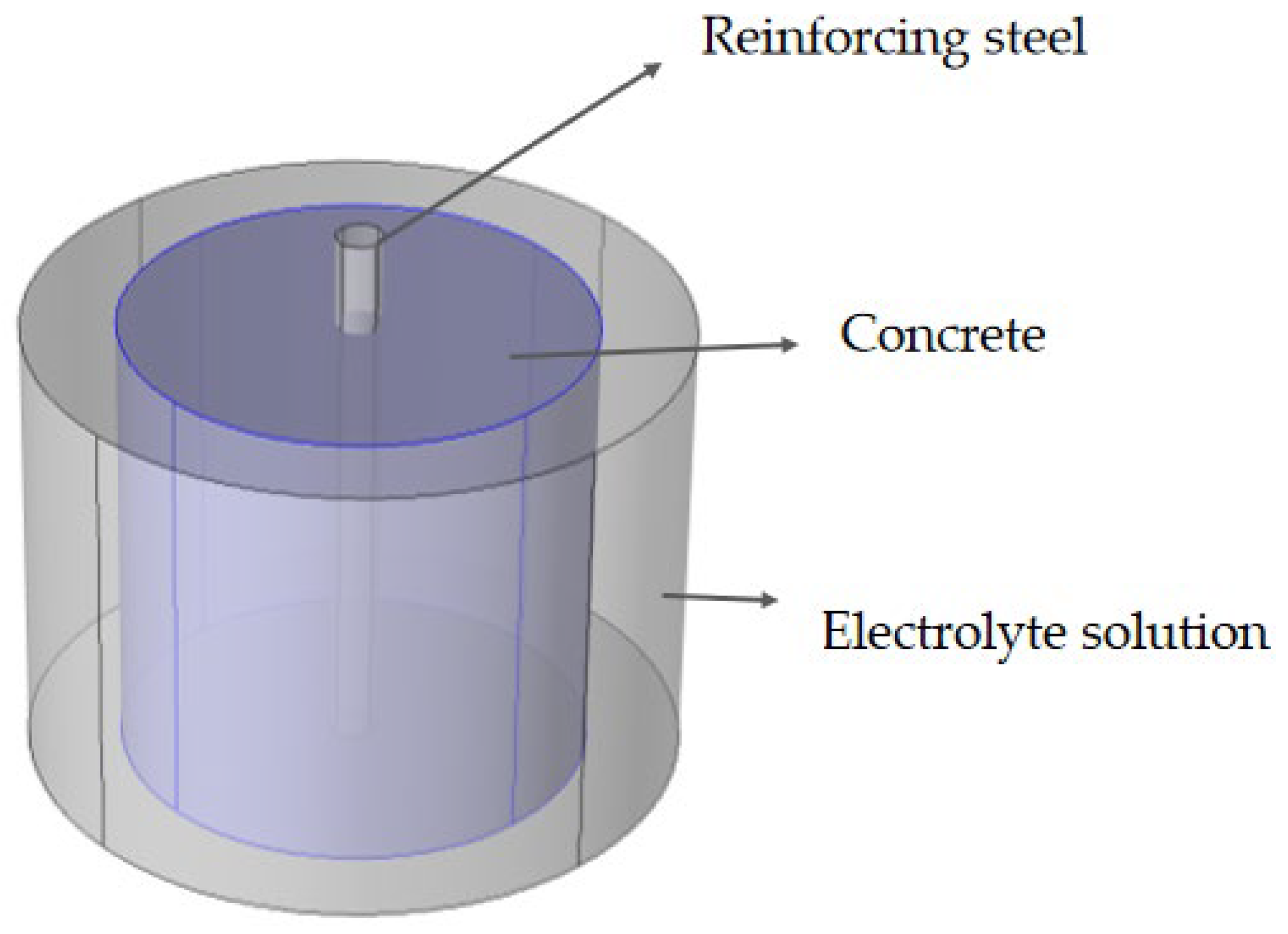
A three-dimensional COMSOL model of electrochemical desalination was established (Figure 2). The outermost region represented the external electrolyte solution, and the initial chloride ion concentration was set to zero. The intermediate light-blue region represents concrete (reinforcing steel diameter = 10 mm, protective layer thickness = 45 mm). Based on the experimental results, the initial total chloride ion concentration was set to 0.462%, with an initial free chloride ion concentration of 0.384%. The sulfate ion concentration was set to 0.17%. Calculated based on References [18,19]: The chloride ion diffusion coefficient was 2.36 × 10⁻¹² m2/s, and the sulfate ion diffusion coefficient was 0.40 × 10⁻¹² m2/s in the pore solution. The chloride ion diffusion coefficient was 1.186 × 10⁻¹² m2/s, and the sulfate ion diffusion coefficient was 0.728 × 10⁻¹² m2/s in the external solution.
Figure 2.
Three-dimensional COMSOL model of electrochemical desalination.
3. Results and Discussion
3.1. Experimental Results and Discussion
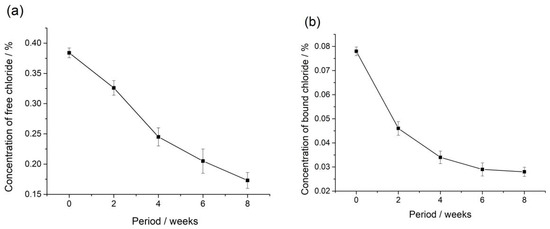
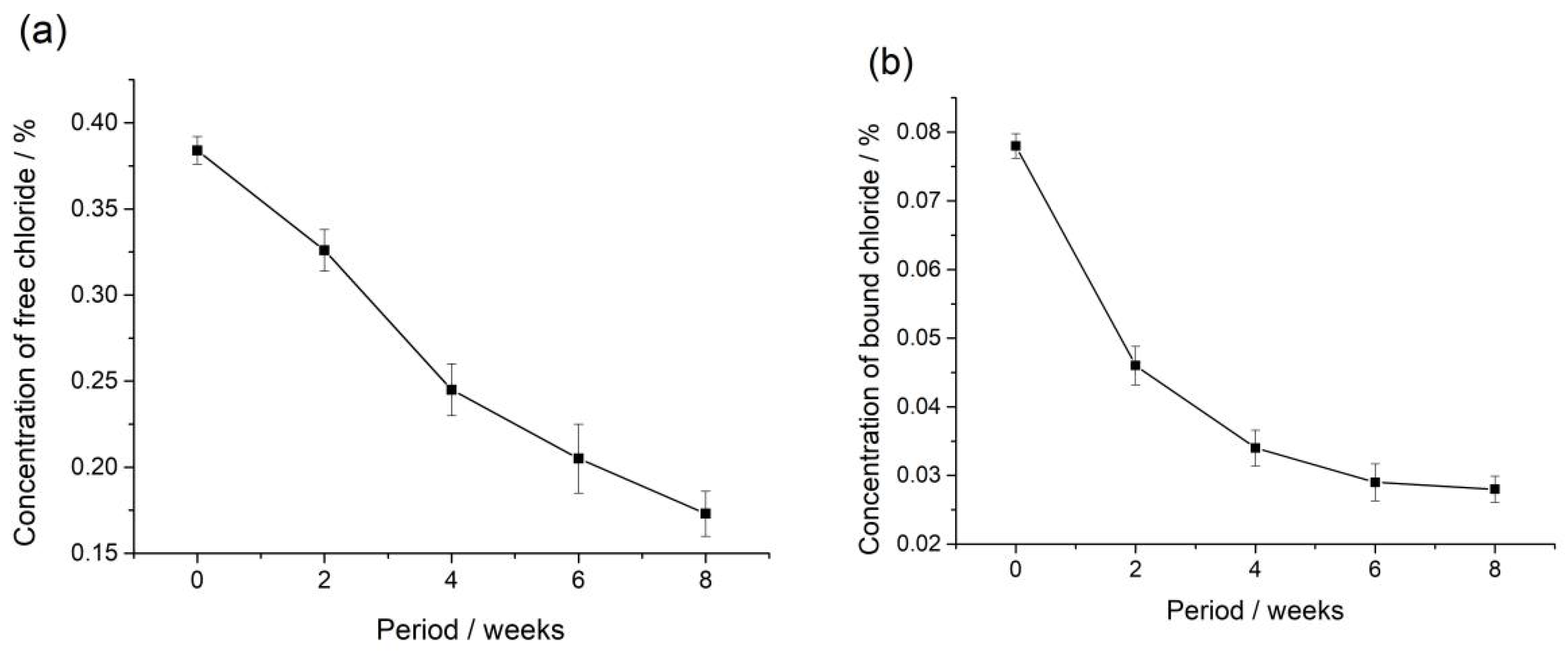
The stability of bound chloride ions was investigated at current application cycles of 0, 2, 4, 6, and 8 weeks. Figure 3 presents the variation in free and bound chloride ion concentrations with the current application cycle. As shown in Figure 3, both the free and bound chloride ion concentrations decreased with increasing current application duration, with a higher rate of decrease during the first 4 weeks than during the last 4 weeks.
Figure 3.
Effects of the duration of the current application on chloride ion concentration: (a) free chloride, (b) bound chloride.
During electrochemical desalination, the reinforcing steel acts as a cathode, whereas the titanium mesh serves as an anode. The electric field formed between them drives negatively charged chloride ions to migrate toward the positively charged titanium mesh. Consequently, the free chloride ion concentration inside the samples decreased as the desalination time increased. In the later stages of the current application, the proportion of free chloride ions available for migration reduced, leading to a lower amount of chloride ion transport per unit time. Consequently, the variation in the free chloride ion concentration gradually levelled off.
Under the combined action of chloride and sulfate attacks, the reactivity of SO42− is higher than that of Cl−, and SO42− preferentially consumes part of the C3A [20]. This reduces the amount of C3A available to react with Cl− to form Friedel’s salt, thereby increasing the proportion of chloride ions immobilized within samples through physical adsorption. Because physically adsorbed chloride ions are located at ion-exchange sites in the C-S-H gel, they are reversible under an applied electric field [21]. In other words, chloride ions that undergo desorption may reoccupy adsorption sites and become immobilized again. However, the probability of reoccupying these sites is low under a continuously applied electric field. Therefore, the bound chloride ion concentration decreased progressively with increasing duration of current application.
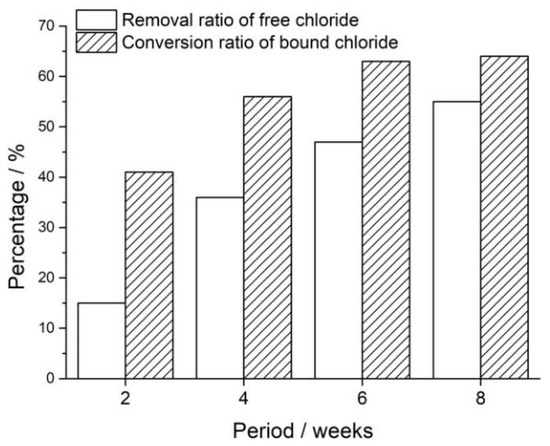
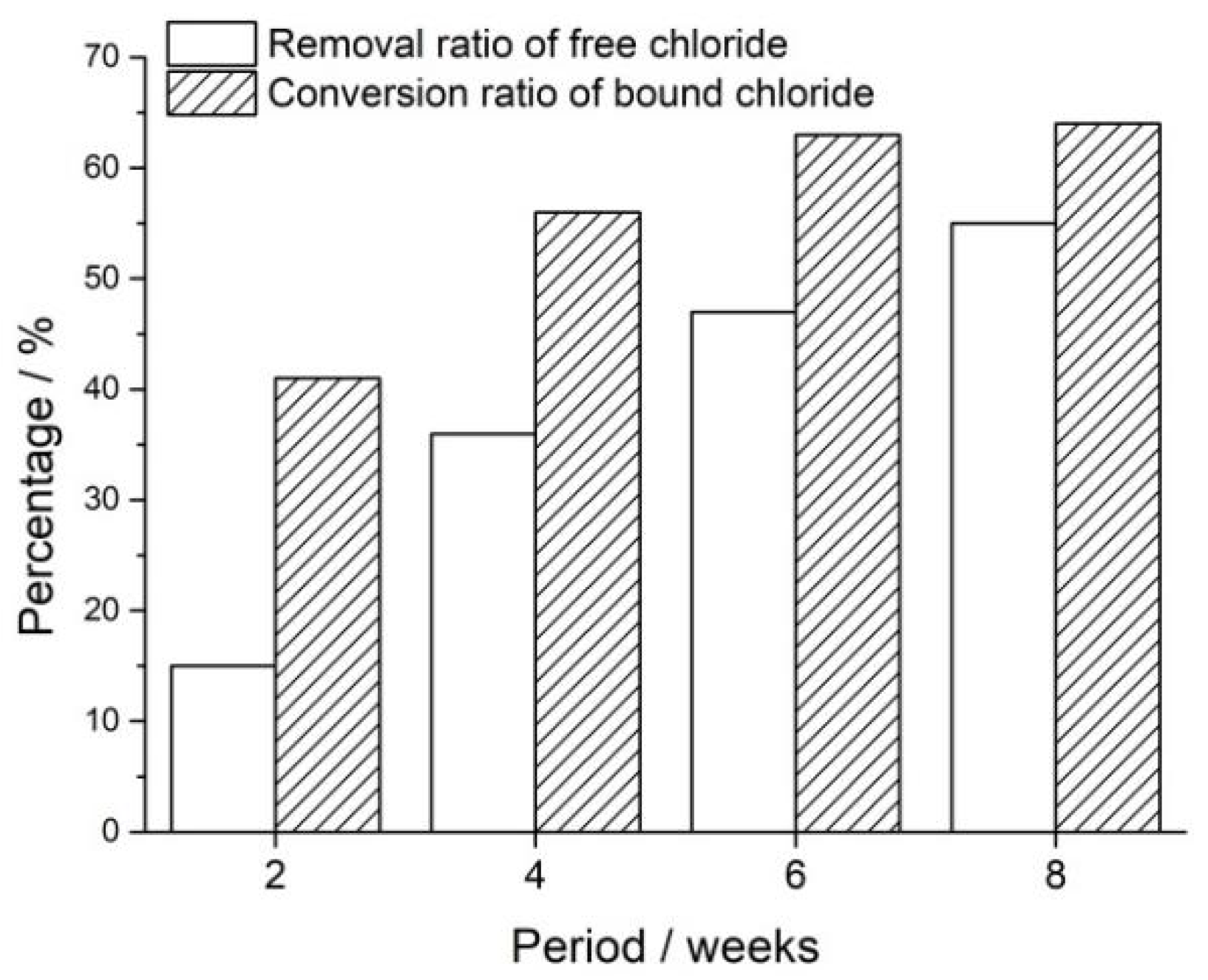
Figure 4 shows the removal ratio of free chloride ions and the conversion ratio of bound chloride ions as a function of the electrochemical desalination cycle. As shown in Figure 4, both ratios increased with increasing desalination time, indicating that the applied electric field effectively reduced the chloride ion concentration within the samples. In addition, the results demonstrated that desalination proceeded continuously over time. However, the growth rate of both ratios decreased with an increase in the duration of the current application. The desalination efficiency was significantly higher during the early period than during the later period of the current application, suggesting that electrochemical desalination reached a bottleneck in the later stage of the current application.
Figure 4.
Effects of the duration of the current application on desalination efficiency.
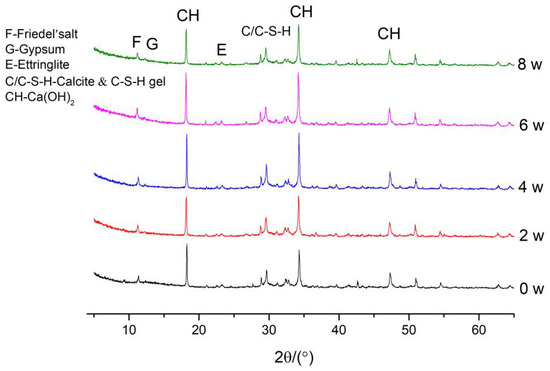
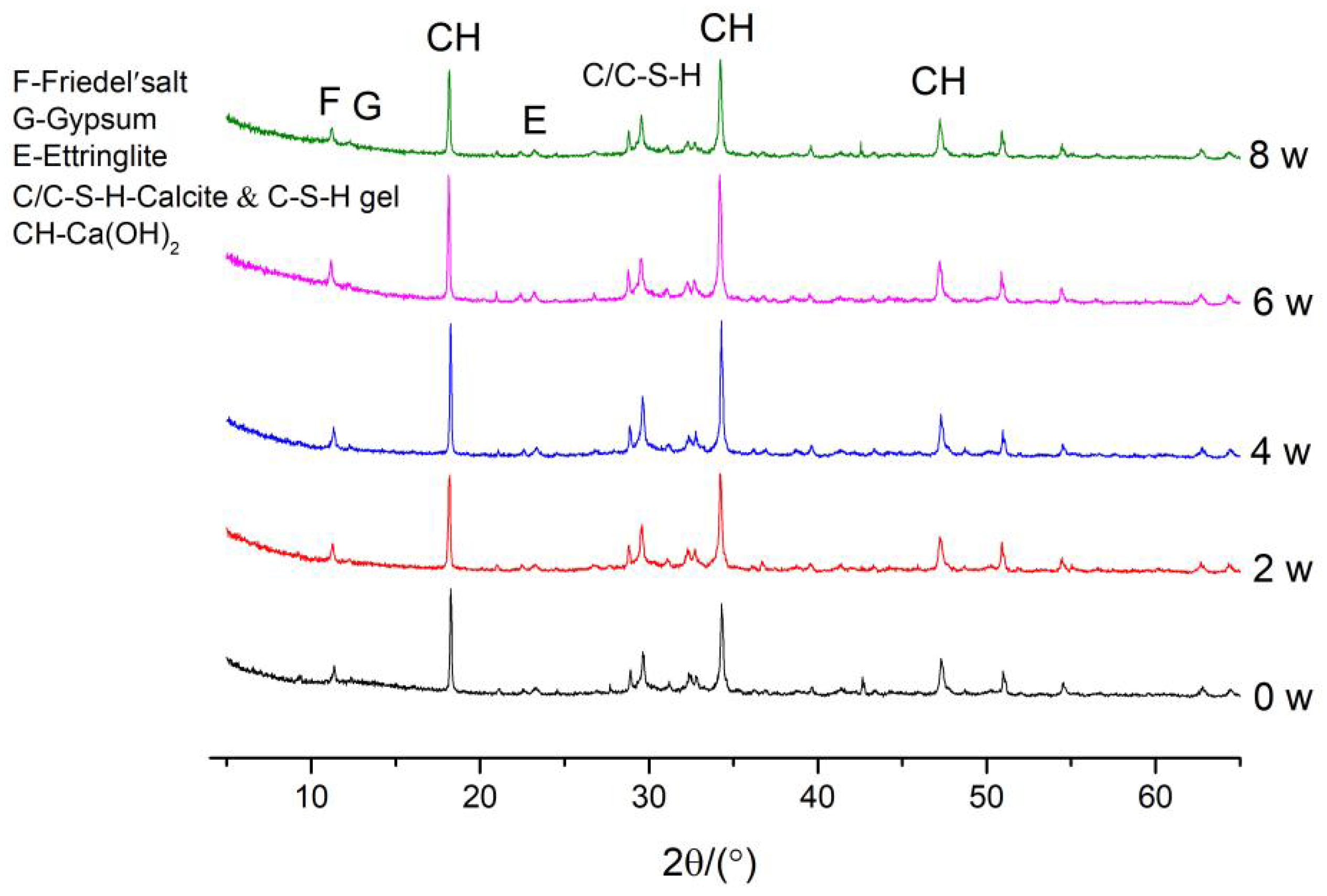
The XRD patterns of the samples subjected to different electrochemical desalination cycles are presented in Figure 5. During the early stage of desalination (0–4 weeks), the diffraction peaks of C-S-H gel and CaCO3 were significantly weakened [22], whereas the diffraction peaks of C-S-H gel showed little change in the later stage (4–8 weeks). Because the concentration of CaCO3 did not decrease during desalination, the reduction in the diffraction peaks was attributed to the decrease in the C-S-H gel concentration. This indicates that the C-S-H gel decomposed under an electric field, and its decomposition rate was higher in the early stage than in the later stage. We compared the diffraction peaks of Friedel’s salt before and after desalination and found that Friedel’s salt peaks weakened after treatment. However, the degree of weakening was insignificant with increasing desalination time, suggesting that the decomposition of Friedel’s salt occurred but at a considerably slower rate than with the decomposition of the C-S-H gel. In addition, because of the presence of sulfate ions, peaks corresponding to their primary reaction products, gypsum (G) and ettringite (E), appeared in Figure 5. The ettringite diffraction peak intensities decreased with desalination time, indicating that ettringite partially decomposed during desalination.
Figure 5.
XRD patterns of samples after electrochemical desalination at 0–8 weeks.
Another study indicated that bound chloride ions in concrete account for approximately 50–80% of the total chloride ions [4]. Moreover, Friedel’s salt is the main crystalline form of chemically bound chloride ions [23], and the C-S-H gel acts as the primary carrier for physical chloride adsorption [24,25]. Based on the above analysis, it can be inferred that the dominant factors responsible for the release of bound chloride ions during electrochemical desalination are the decomposition of C-S-H gel and the desorption of physically adsorbed chloride ions, which transform bound chloride ions back into the free state. Although Friedel’s salt also undergoes instability and release during desalination, its contribution is considerably smaller than that of physically adsorbed chloride ions in C-S-H gel.
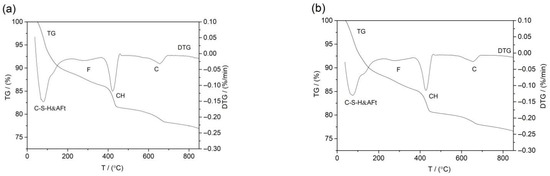
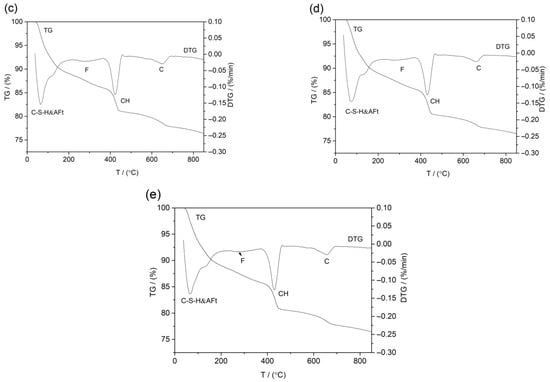
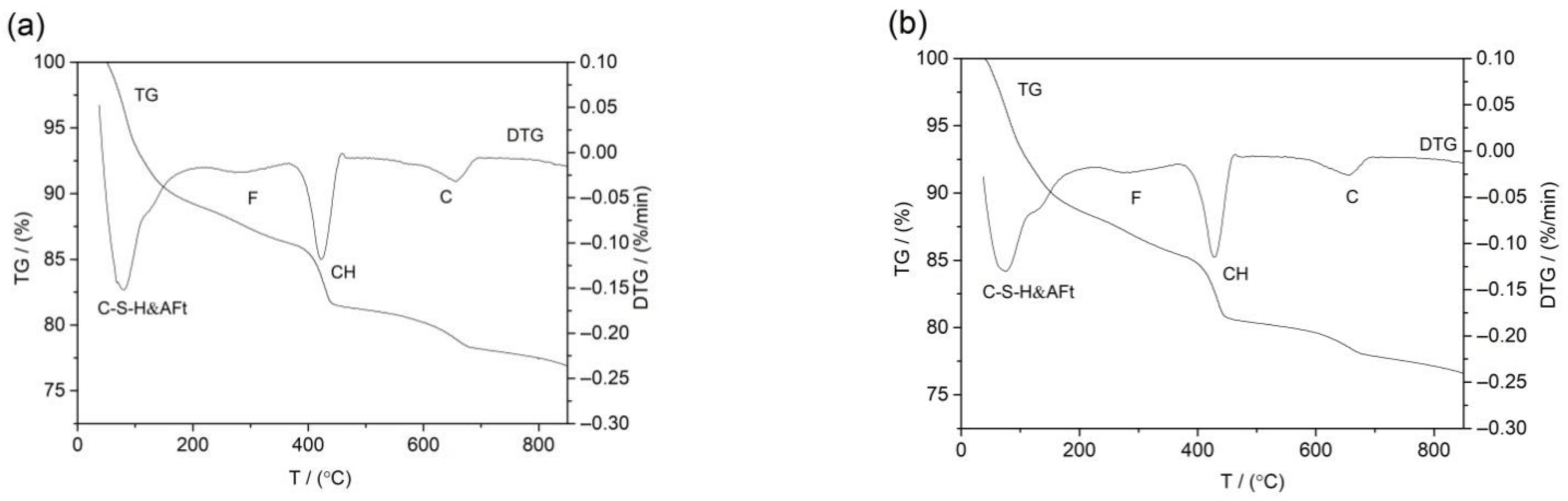
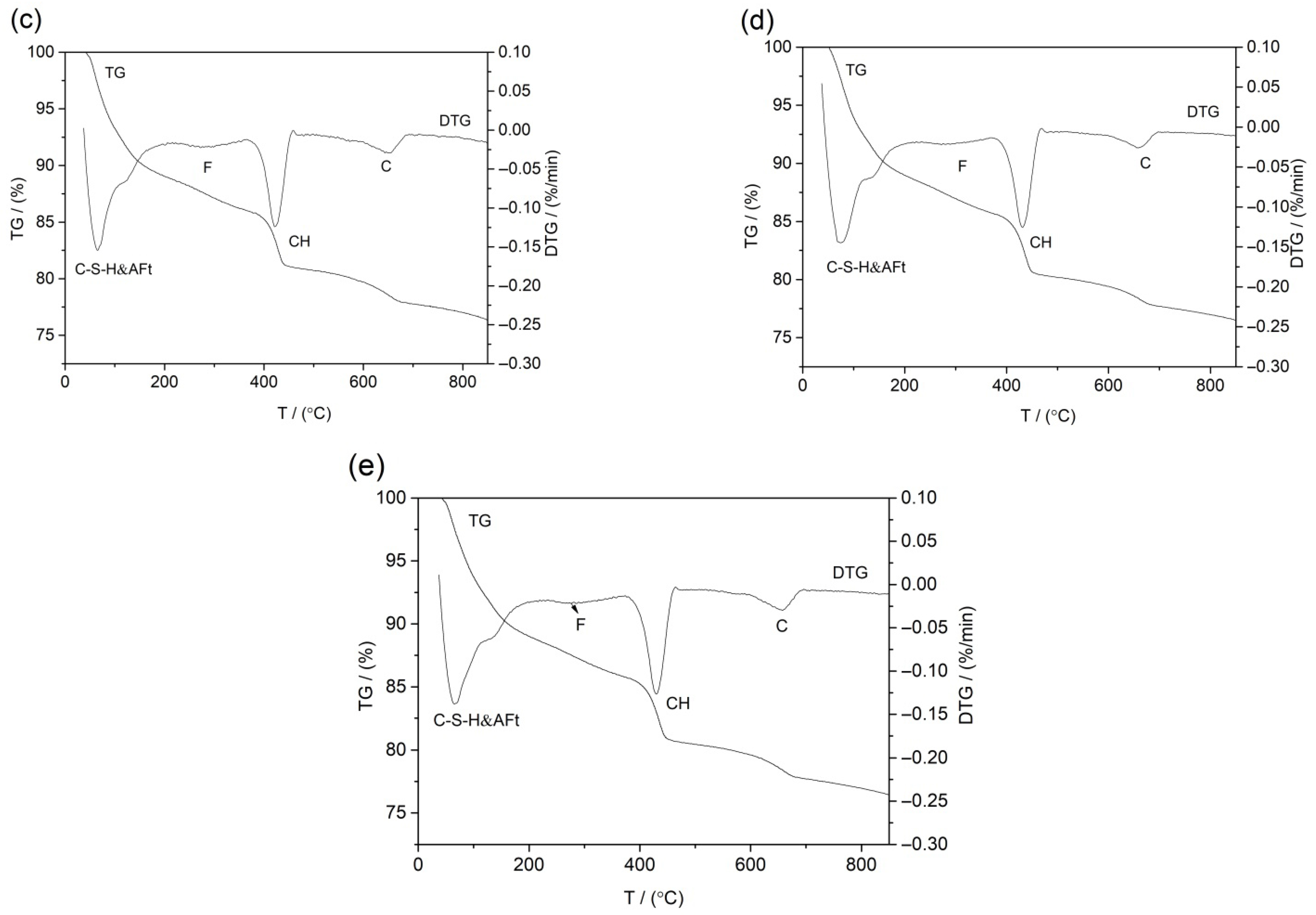
The TG-DTG curves of samples subjected to 0, 2, 4, 6, and 8 weeks of electrochemical desalination are shown in Figure 6.
Figure 6.
TG-DTG curves of samples before and after electrochemical desalination: (a) 0 weeks, (b) 2 weeks, (c) 4 weeks, (d) 6 weeks, and (e) 8 weeks.
With increasing desalination time, the intensities of several endothermic peaks in Figure 6a–e changed to varying degrees. This suggests that changes in ion concentration in the solution induce decomposition or reorganization of certain crystalline phases during the electrochemical process, while also affecting the gel structure. In particular, the endothermic peak of Friedel’s salt weakened, indicating that the external electric field destabilized the bound chloride ions.
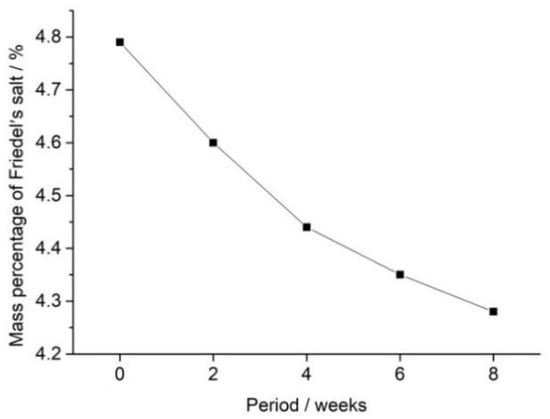
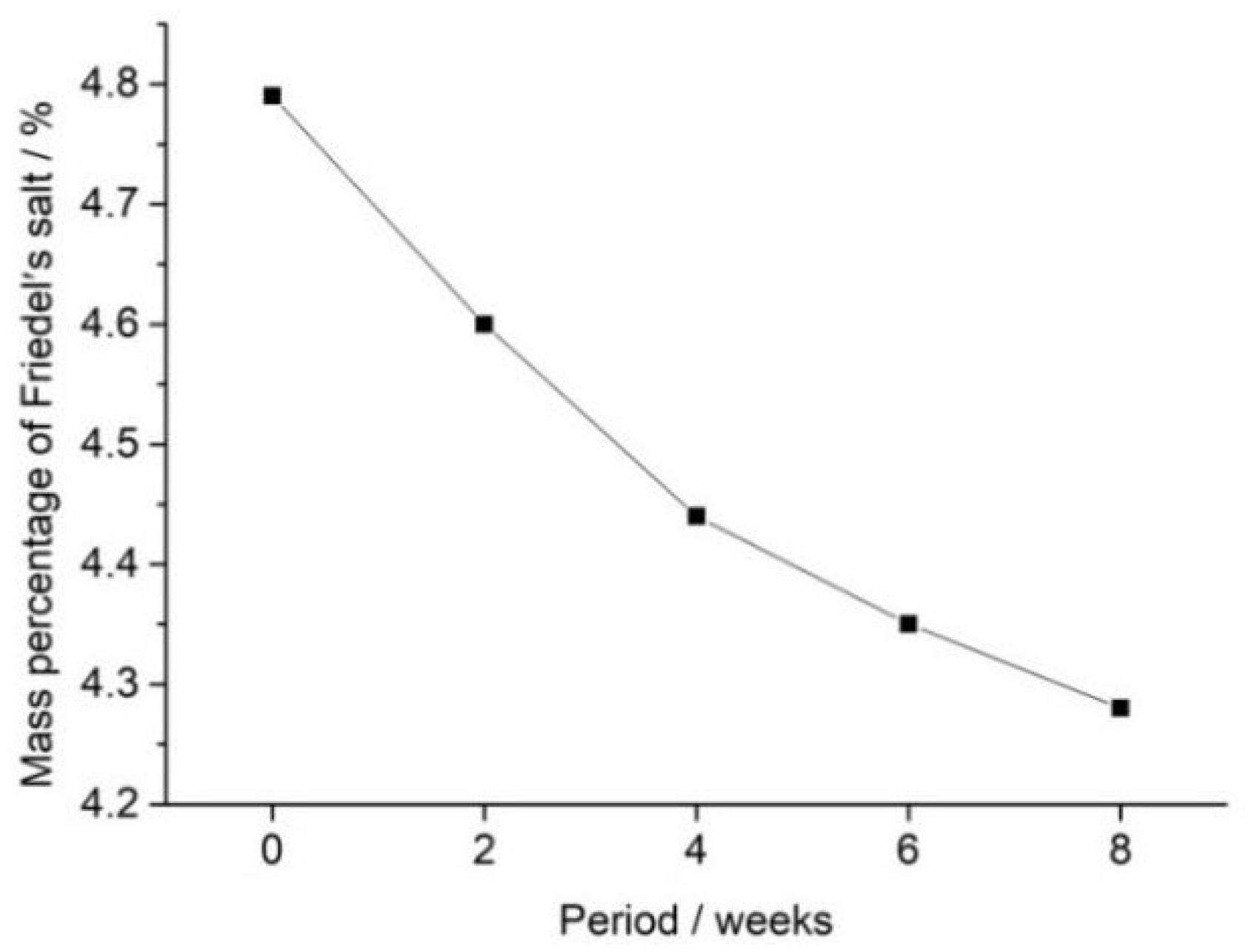
The mass percentage of Friedel’s salt after 0, 2, 4, 6, and 8 weeks of desalination was calculated using Equation (1), and the results are shown in Figure 7.
where WF is the mass percentage of Friedel’s salt (%); Wlost is the mass loss of the sample between 310 °C and 385 °C(%), as shown in Table 5; Wresidual is the residual mass of the sample at 900 °C (%), as shown in Table 5; mF is the molar mass of Friedel’s salt, 561 g/mol; and mH2O is the molar mass of water, 18 g/mol. As shown in Table 5, the mass loss within the characteristic temperature range associated with Friedel’s salt gradually decreases from 1.166% at 0 weeks to 1.045% at 8 weeks. This reduction reflects the decomposition of Friedel’s salt during electrochemical desalination. Although slight variations exist in the residual mass among groups, these differences are relatively small and do not alter the overall decreasing trend of mass loss. Therefore, Table 5 provides quantitative support for the calculation of the Friedel’s salt mass fraction, and the corresponding evolution trend is presented and discussed in Figure 7.
Figure 7.
Mass percentage of Friedel’s salt.
Table 5.
Mass loss of the samples (%).
As shown in Figure 7, the mass percentage of Friedel’s salt decreased with an increase in the desalination time. The decrease was more pronounced in the early stage of the current application than in the later stage. This indicates that Friedel’s salt undergoes decomposition during desalination, which is primarily concentrated in the early stage of the current application. This is consistent with the analysis results of XRD diffraction patterns in Figure 5.
3.2. Finite Element Simulation Results and Discussion
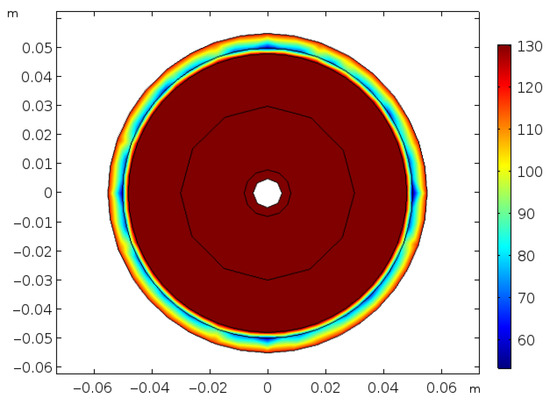
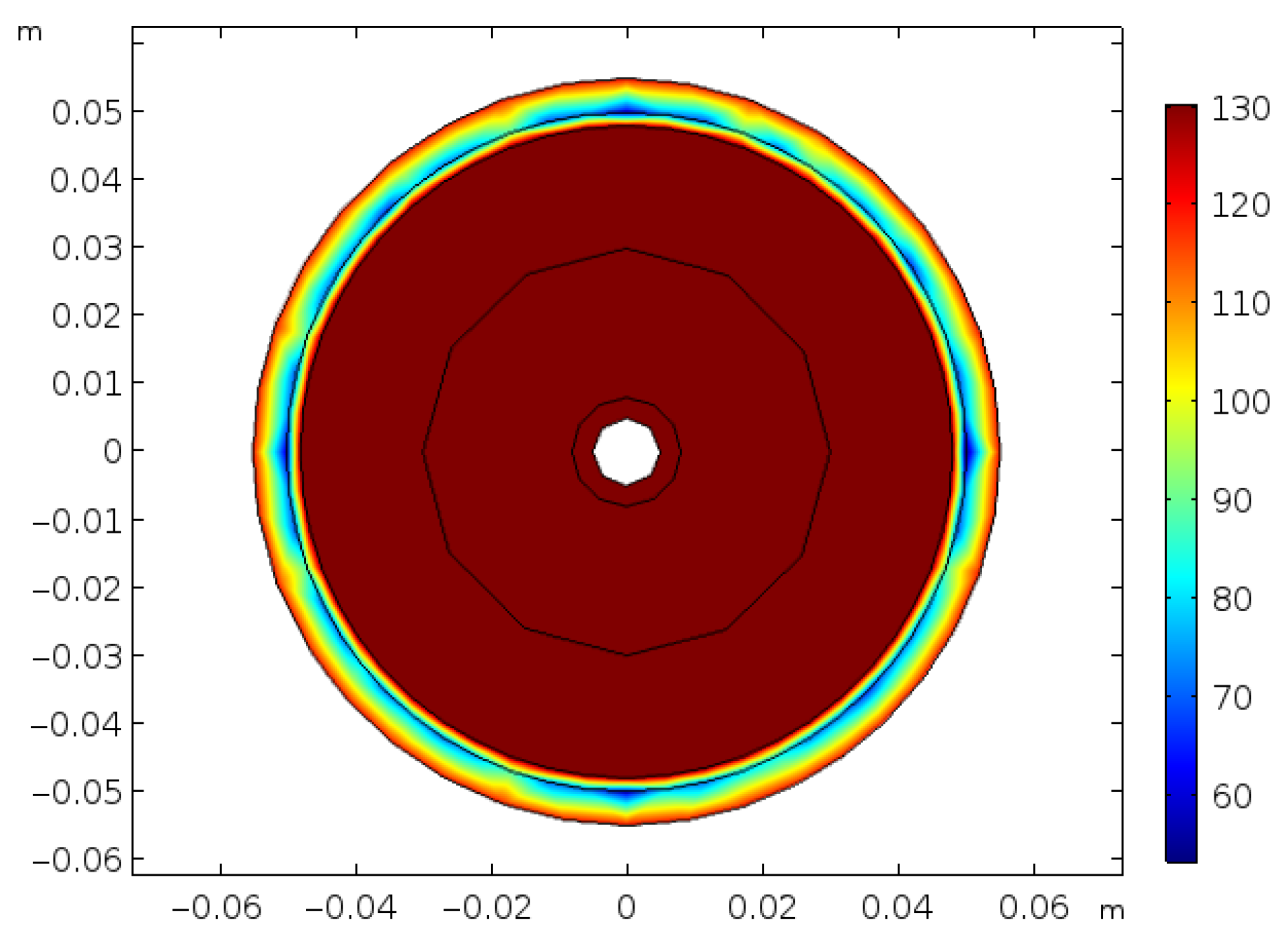
Figure 8 shows the spatial distribution of total chloride ion concentration in concrete before electrochemical desalination. The total chloride ion concentration in the titanium mesh (outermost layer) was significantly higher than that in the external electrolyte solution. This was because the electrolyte was replaced every 7 days during the experiment, leading to chloride ion accumulation in the anode region. An initial chloride ion concentration was assigned to the titanium mesh throughout the process to ensure consistency in the finite element simulation. Furthermore, the chloride ion concentration inside the sample was assumed to be uniformly distributed to maintain consistent initial conditions.
Figure 8.
Distribution of total chloride ions in the mortar before electrochemical desalination.
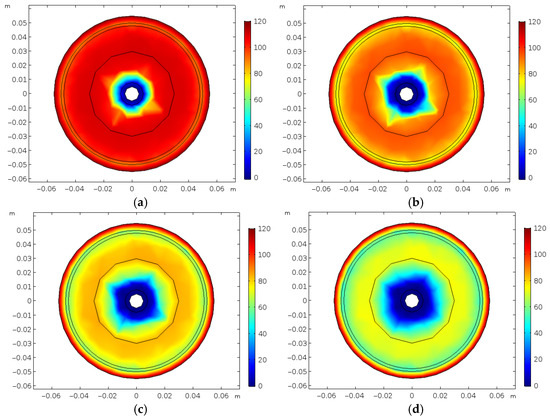
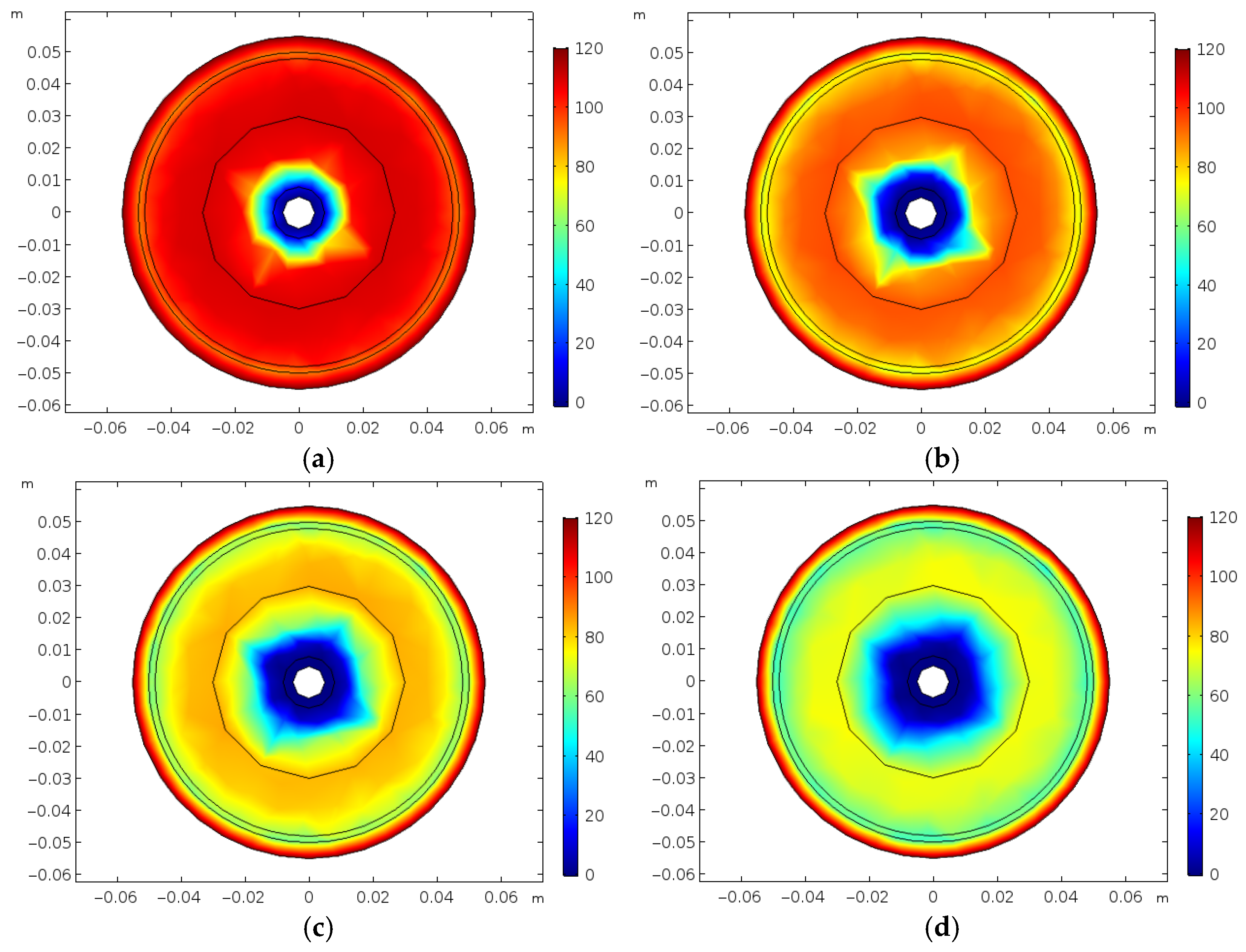
Figure 9 shows the spatial distribution of total chloride ions in concrete samples subjected to electrochemical desalination for 2, 4, 6, and 8 weeks under a current density of 2 A/m2. A comparison of Figure 9a–d shows that the internal color distribution of concrete gradually changed from red to light yellow as the current application time increased, whereas the blue region near the reinforcing steel progressively expanded outward. This indicated that the total chloride ion content in the concrete decreased as the desalination time increased, reaching its lowest value near the reinforcing steel. During electrochemical desalination, chloride ions near the reinforcing steel cathode experience strong repulsive forces [26], which drive them away from the steel and toward the external anode. Consequently, the total chloride ion concentration near the reinforcing steel remained the lowest throughout the process, showing an increasing gradient from the interior to the exterior of the concrete. Therefore, in practical applications, extending desalination time can improve chloride removal efficiency.
Figure 9.
Distribution of total chloride ions in mortar after electrochemical desalination: (a) 2 weeks, (b) 4 weeks, (c) 6 weeks, and (d) 8 weeks.
A comparison of the chloride ion concentration distributions across the four desalination cycles showed that the concentration between the concrete surface and external titanium mesh region was consistently lower than that at the concrete surface near the titanium mesh. When ions migrate in an electric field, the closer they are to the electrode, the stronger the force exerted by the field [27]. Near the external anode (titanium mesh), chloride ions experience a stronger attraction, which accelerates their migration toward the anode. Ultimately, the chloride ion concentration in the electrolyte solution region was lower than that at the concrete surface near the titanium mesh. Therefore, it can be inferred that, in practical engineering, placing a titanium mesh (anode) at the surface of reinforced concrete structures can further enhance the chloride removal performance.
4. Conclusions
This study investigated the influence of electrochemical desalination cycles on the stability of bound chloride ions in concrete under combined chloride–sulfate attacks. The instability of the bound chloride ions was examined through macroscopic experiments, and the underlying mechanisms were analyzed via XRD and TG-DTG. In addition, a three-dimensional finite element simulation was performed to model the electrochemical desalination process. The main conclusions are as follows:
- With increasing current application duration, both the free and bound chloride ion concentrations decreased, with a faster decline during the first 4 weeks than in the subsequent 4 weeks. The removal ratio of free chloride ions and the conversion ratio of bound chloride ions increased with desalination time, although their growth rates slowed over time. The electrochemical desalination efficiency was markedly higher in the early stage than in the later stage of the current application.
- The release of bound chloride ions was mainly governed by the decomposition of C-S-H gel and the desorption of physically adsorbed chloride ions. The instability and release of Friedel’s salt contributed considerably less than these two mechanisms. In addition, ettringite partially decomposed during the desalination process.
- The three-dimensional finite element simulation demonstrated that the total chloride ion content in concrete decreased progressively with increasing desalination time, reaching its lowest level near the reinforcing steel. This confirmed that electrochemical desalination effectively removes chloride ions from concrete, and longer desalination durations yield superior results.
- C-S-H gel decomposes under the action of an electric field, exerting potential adverse effects on the durability of concrete. Therefore, further research on the durability of concrete structures after electrochemical chloride removal (ECR) treatment is necessary.
Author Contributions
Data curation, H.D.; Writing—original draft, L.Y.; Writing—review & editing, L.J.; Study design, H.C. Project administration, H.C. All authors have read and agreed to the published version of the manuscript.
Funding
This work was supported by the National Natural Science Foundation of China (Grant no. 52079048) and the General Program of Natural Science Foundation for Colleges and Universities in Jiangsu Province (Grant no. 16KJB560007).
Data Availability Statement
Data supporting the results of this study are available on request from the corresponding author.
Conflicts of Interest
Author Hao Dong was employed by the company China Design Group Co., Ltd. The remaining authors declare that the research was conducted in the absence of any commercial or financial relationships that could be construed as a potential conflict of interest.
Abbreviations
The following abbreviations are used in this manuscript:
| TG-DTG | Thermogravimetric |
| ECR | Electrochemical chloride removal |
References
- Xiu, J.; Jin, Z.; Li, N.; Hou, B. Research progress of chloride ion transport in concrete under marine salt spray environment. Bull. Chin. Ceram. Soc. 2023, 42, 771–785. [Google Scholar]
- Laurens, S.; Hénocq, P.; Rouleau, N.; Deby, F.; Samson, E.; Marchand, J.; Bissonnette, B. Steady-state polarization response of chloride-induced macrocell corrosion systems in steel reinforced concrete—Numerical and experimental investigations. Cem. Concr. Res. 2016, 79, 272–290. [Google Scholar] [CrossRef] [Scilit]
- Yu, L.; Jiang, L.; Chu, H. Review of researches on binding chloride ions in concrete. Sci. Technol. Eng. 2020, 20, 3387–3393. [Google Scholar]
- Neville, A. Chloride attack of reinforced concrete: An overview. J. Civ. Environ. Eng. 1995, 28, 63–70. [Google Scholar] [CrossRef] [Scilit]
- Glasser, F.P.; Kindness, A.; Stronach, S.A. Stability and solubility relationships in AFm phases. Cem. Concr. Res. 1999, 29, 861–866. [Google Scholar] [CrossRef] [Scilit]
- Glass, G.K.; Buenfeld, N.R. The influence of chloride binding on the chloride induce corrosion risk in reinforced concrete. J. Civ. Environ. Eng. 2000, 42, 329–344. [Google Scholar]
- Peng, P.; Song, Z.; Liu, Y.; Chu, H.; Jiang, L.; Zhang, Y. Ultrasound-assisted pulse current electrochemical chloride removal in cementitious materials. Constr. Build. Mater. 2025, 497, 143939. [Google Scholar] [CrossRef] [Scilit]
- Elsener, B.; Molina, M.; Böhni, H. The electrochemical removal of chlorides from reinforced concrete. Corros. Sci. 1993, 35, 1563–1570. [Google Scholar] [CrossRef] [Scilit]
- Orellan, J.C.; Escadeillas, G.; Arliguie, G. Electrochemical chloride extraction: Efficiency and side effects. Cem. Concr. Res. 2004, 34, 227–234. [Google Scholar] [CrossRef] [Scilit]
- Fajardo, G.; Escadeillas, G.; Arliguie, G. Electrochemical chloride extraction (ECE) from steel-reinforced concrete specimens contaminated by “artificial” sea water. Corros. Sci. 2006, 48, 110–125. [Google Scholar] [CrossRef] [Scilit]
- Fan, Q.; Yu, Q.; Chen, L.; Li, T.; Wei, J.; Zhang, Y. Electrochemical desalination technologies and the effect discussion. Concrete 2005, 194, 101–104. [Google Scholar]
- Shen, E.; Fang, D.; Wang, Y.; Huang, J.; Xi, H.; Tu, L. A study on factors influencing the efficiency of electrochemical chloride extraction in reinforced concrete. Total Corros. Control 2013, 27, 40–44. [Google Scholar]
- Liang, J.; Tang, Y.; Zhang, C.; Wang, C.; Li, R. Numerical modeling of concrete electrochemical chloride extraction and analysis of its influencing factors. J. Water Resour. Water Eng. 2021, 32, 188–193. [Google Scholar]
- GB 175-2023; Common Portland Cement. State Administration for Market Regulation: Beijing, China; Standardization Administration of the People’s Republic of China: Beijing, China, 2023.
- GB/T 14684-2022; Sand for Construction. State Administration for Market Regulation: Beijing, China; Standardization Administration of the People’s Republic of China: Beijing, China, 2022.
- JGJ/T 70-2009; Standard for Test Method of Basic Properties of Construction Mortar. Ministry of Housing and Urban-Rural Development of the People’s Republic of China: Beijing, China, 2009.
- Yu, L.; Jiang, L.; Chu, H.; Guo, M.; Zhu, Z.; Dong, H. Effect of electrochemical chloride removal and ground granulated blast furnace slag on the chloride binding of cement paste subjected to NaCl and Na2SO4 attack. Constr. Build. Mater. 2019, 220, 538–546. [Google Scholar] [CrossRef] [Scilit]
- Yang, P.; Sant, G.; Neithalath, N. A refined, self-consistent Poisson-Nernst-Planck (PNP) model for electrically induced transport of multiple ionic species through concrete. Cem. Concr. Compos. 2017, 82, 80–94. [Google Scholar] [CrossRef] [Scilit]
- Snyder, K.A.; Feng, X.; Keen, B.D.; Mason, T.O. Estimating the electrical conductivity of cement paste pore solutions from OH−, K+ and Na+ concentrations. Cem. Concr. Res. 2003, 33, 793–798. [Google Scholar] [CrossRef] [Scilit]
- Mouret, M.; Bascoul, A.; Escadeillas, G. Microstructural features of concrete in relation to initial temperature—SEM and ESEM characterization. Cem. Concr. Res. 1999, 29, 369–375. [Google Scholar] [CrossRef] [Scilit]
- Hou, D.; Li, T. Influence of aluminates on the structure and dynamics of water and ions in the nanometer channel of calcium silicate hydrate(C-S-H) gel. Phys. Chem. Chem. Phys. 2018, 20, 2373–2387. [Google Scholar] [CrossRef] [Scilit]
- Nguyen, T.H.Y.; Tran, V.M.; Pansuk, W.; Cao, N.T.; Bui, V.H.L. Electrochemical chloride extraction on reinforced concrete contaminated external chloride: Efficiencies of intermittent applications and impacts on hydration products. Cem. Concr. Compos. 2021, 121, 104076. [Google Scholar] [CrossRef] [Scilit]
- Zibara, H. Binding of External Chloride by Cement Pastes. Ph.D. Thesis, University of Toronto, Toronto, ON, Canada, 2001. [Google Scholar]
- Ramachandran, V.S. Possible states of chloride in the hydration of tricalcium silicate in the presence of calcium chloride. Mater. Struct. 1971, 4, 3–12. [Google Scholar] [CrossRef] [Scilit]
- Yoon, S.; Ha, J.; Chae, S.R.; Kilcoyne, D.A.; Monteiro, P.J.M. X-ray spectromicroscopic study of interactions between NaCl and calcium silicate hydrates. Mag. Concr. Res. 2014, 66, 141–149. [Google Scholar] [CrossRef] [Scilit]
- Gao, Q.; Mao, J.; Jin, W.; Luo, L.; Zhu, Y.; Shen, J.; Li, S.; Wu, G. Experimental study on electrical characteristics of ions in concrete at early age under electric field. Concrete 2018, 5, 24–26+31. [Google Scholar]
- Qiong, G. Study on Probabilistic Seismic Damage Characteristics of Offshore Cable-Stayed Bridge under Environmental Corrosion; Beijing Jiaotong University: Beijing, China, 2019. [Google Scholar]

Disclaimer/Publisher’s Note: The statements, opinions and data contained in all publications are solely those of the individual author(s) and contributor(s) and not of MDPI and/or the editor(s). MDPI and/or the editor(s) disclaim responsibility for any injury to people or property resulting from any ideas, methods, instructions or products referred to in the content. |
© 2026 by the authors. Licensee MDPI, Basel, Switzerland. This article is an open access article distributed under the terms and conditions of the Creative Commons Attribution (CC BY) license.