


Abstract
Chloride-induced deterioration is a major threat to the durability of marine concrete structures, especially in tidal and submerged zones. This study simulated these environments by immersing C45 concrete specimens in NaCl solutions (5%, 10%, 15%) under both constant immersion and wet–dry cycles. Compressive strength tests, low-field NMR for pore structure, chloride ion profiling, and SEM-EDS analyses were conducted. A modified chloride diffusion model was developed based on Fick’s second law, incorporating time- and concentration-dependent parameters. The results showed that higher NaCl concentrations and tidal zone exposure significantly accelerated concrete degradation. In the tidal zone, wet–dry cycles led to larger macropore formation, higher chloride penetration, and more severe microstructural damage compared to the submerged zone. Compressive strength initially increased and then declined in high-salinity environments, with strength losses reaching up to 25% under 15% NaCl after 120 days. NMR data confirmed the transformation of micropores and mesopores into macropores, especially in the tidal zone. SEM-EDS analysis revealed decalcification, gypsum formation, and Friedel’s salt accumulation on eroded surfaces. It was determined that chloride ion diffusion behavior in concrete is significantly influenced by the chloride content and diffusion concentration, as well as the exposure zone. The developed model indicates that depth increased over time and with concentration. The proposed diffusion model achieved high fitting accuracy (R2 > 0.97), effectively capturing the effects of erosion age and salt; this makes it a reliable tool for predicting chloride ion ingress in marine concrete, and for supporting service life evaluation and durability design.
1. Introduction
With the rapid economic development of coastal regions worldwide, the exploitation of marine resources and utilization of marine space have been continuously deepened, leading to a development trend of large-scale, systematic and diversified construction of marine engineering structures [1,2,3]. A series of large-scale infrastructure projects, such as ports and terminals, cross-sea bridges, offshore wind power foundations, seawater intake and drainage projects, subsea tunnels, and marine pastures, have been successively completed and put into operation, providing strong support for regional economic growth [4,5,6]. The completion of these projects not only improves transportation efficiency and energy supply capacity, but also expands the development space of the marine economy, playing a vital role in promoting regional interconnection and industrial upgrading [7,8,9]. However, marine engineering structures are extensively exposed to highly humid, saline and corrosive marine environments, which poses extremely severe challenges to their service performance and durability.
Seawater contains a variety of chemical components with potential corrosivity. Among them, chloride ions (Cl−) are widely recognized as one of the primary factors causing durability degradation of reinforced concrete structures due to their high concentration, strong activity and easy migration [10,11]. Chloride ions can penetrate into the interior of concrete through multiple mechanisms, including surface adsorption, capillary absorption, diffusion and convection, and gradually accumulate on the surface of steel bars. When the chloride ion concentration exceeds the critical threshold, it will destroy the passive film of steel bars and trigger electrochemical corrosion reactions. The volume expansion of corrosion products will cause concrete cracking and spalling, ultimately reducing the bearing capacity and durability of structures and even leading to premature structural failure in severe cases [12,13]. Therefore, in-depth research on the diffusion law of chloride ions in concrete is of crucial significance for the service life prediction, protective design and health monitoring of marine engineering structures.
In recent years, to more systematically elucidate the mechanisms of chloride ingress in concrete, extensive studies have been conducted within the framework of theoretical modeling–experimental characterization–numerical simulation–service life prediction, leading to the establishment of a multi-level and multi-mechanism modeling system for chloride transport. Traditionally, Fick’s second law, derived from classical diffusion theory, remains the most widely adopted fundamental model in engineering durability assessment due to its concise mathematical formulation and easily obtainable parameters [14]. On this basis, time-dependent diffusion models have been further proposed, in which the diffusion coefficient is expressed as a function of age, moisture content, temperature, or chloride concentration, thereby better representing the non-steady-state transport process under realistic service conditions [15]. Beyond the conventional “pure diffusion” framework, considerable efforts have been devoted to incorporating the effects of wet–dry cycles, capillary suction, and convective transport under marine exposure, which significantly enhance chloride ingress. Consequently, convection–diffusion and adsorption–diffusion models have been developed to describe surface solution absorption, increased transport flux, and salt accumulation within boundary layers [16,17,18]. Meanwhile, recognizing that chlorides in concrete pore solution exist in both free and bound states, an increasing number of models explicitly integrate chloride binding capacity and dissociation kinetics into the governing equations, enabling a unified representation of the apparent diffusion coefficient and the actual coupled transport–reaction processes [19]. For more complex exposure conditions, multi-ionic transport models based on electrochemical theory, such as the Nernst–Planck and Poisson–Nernst–Planck formulations, further account for electromigration, ionic interactions, and electroneutrality constraints. These models are particularly suitable for detailed characterization of coupled multi-ion transport in migration tests and saline environments [20]. At the structural scale, multi-physics coupling models incorporate unsaturated transport, cracking or loading effects, and ionic diffusion, thereby revealing the intrinsic driving mechanisms of chloride migration from multi-scale and multi-mechanistic perspectives [21]. Collectively, these modeling approaches provide essential theoretical support for durability assessment and service life prediction of marine concrete structures and have been progressively integrated into performance-based service life design frameworks.
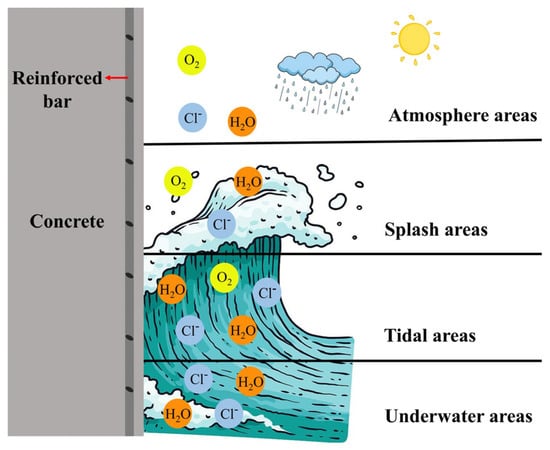
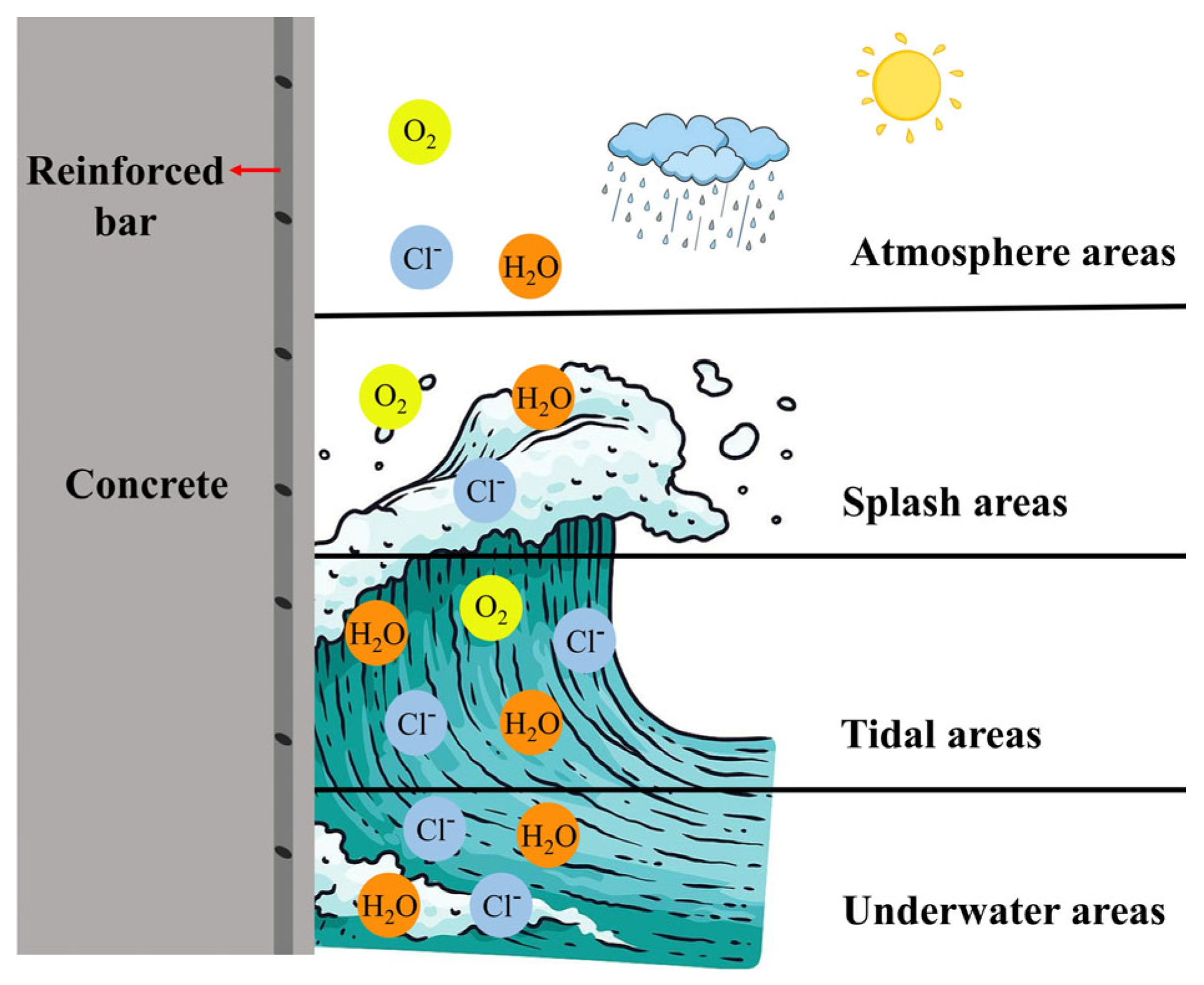
In fact, the marine environment exhibits typical zonal characteristics and can be divided into different exposure zones including the atmospheric zone, splash zone, tidal zone and submerged zone [22,23,24]. The modes of seawater action vary significantly in different zones, resulting in distinct erosion effects on concrete structures. For instance, the atmospheric zone is mainly affected by salt spray deposition and wet–dry cycles, leading to significant chloride enrichment; the splash zone is subjected to frequent wave impacts, resulting in intense physical and chemical erosion on the concrete surface; the tidal zone experiences alternating periodic immersion and exposure, causing continuous fluctuations in moisture content and chloride ion concentration inside concrete; and the submerged zone remains in a saturated state for a long time, where the chloride ion diffusion behavior is closer to a stable diffusion mode [25]. These regional differences collectively lead to significant spatial heterogeneity in chloride ion diffusion paths, diffusion rates and concentration gradients, resulting in complex and variable characteristics of concrete durability degradation.
Based on the above analysis, this study experimentally simulated two representative marine exposure conditions, namely the tidal zone and the submerged zone, to systematically investigate the performance degradation of concrete subjected to chloride attack. From a multi-scale perspective, a combination of low-field nuclear magnetic resonance (LF-NMR), scanning electron microscopy coupled with energy-dispersive spectroscopy (SEM–EDS), chloride profile analysis, and uniaxial compressive strength tests was employed to establish a correlation framework linking pore structure evolution, chloride transport behavior, and macroscopic mechanical deterioration. This integrated approach enabled clarification of the intrinsic relationships between internal structural evolution and transport characteristics of concrete under different marine exposure regions. On this basis, Fick’s second law was adopted as the theoretical foundation. Key influencing factors, including exposure duration, NaCl concentration, and differences between marine exposure zones, were incorporated to modify the conventional diffusion model. An improved region-adaptive chloride diffusion prediction model was thus established, allowing for separate characterization and prediction of chloride transport behavior in the tidal and submerged zones.
2. Materials and Methods
2.1. Raw Materials and Mix Proportions
In this experiment, P·O 42.5 ordinary Portland cement was used as the cementitious material. Its main and chemical components are shown in Table 1, and its physical properties are shown in Table 2. Natural crushed stone with a particle size range of 5~20 mm was adopted as the coarse aggregate. The main physical properties are shown in Table 3. The fine aggregate was medium sand with a fineness modulus of approximately 2.7, and its physical and chemical properties are listed in Table 4. A naphthalene-based high-efficiency water reducer was selected, with a rated water reduction rate of about 20%. Tap water from the laboratory was used as the mixing water.
Table 1.
The main chemical composition of cement (wt%).
Table 2.
Standard physical properties of cement.
Table 3.
The main physical performance indexes of gravel.
Table 4.
Standard physical properties of sand.
A C45 concrete mix was designed with reference to a practical engineering project in Qingdao, and the details of the mix proportions are presented in Table 5.
Table 5.
Concrete mix proportion.
2.2. Experimental Scheme
2.2.1. Simulation of Different Marine Environmental Zones
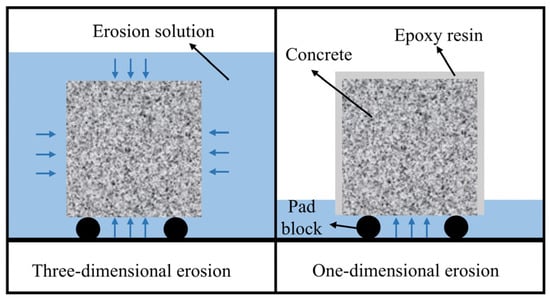
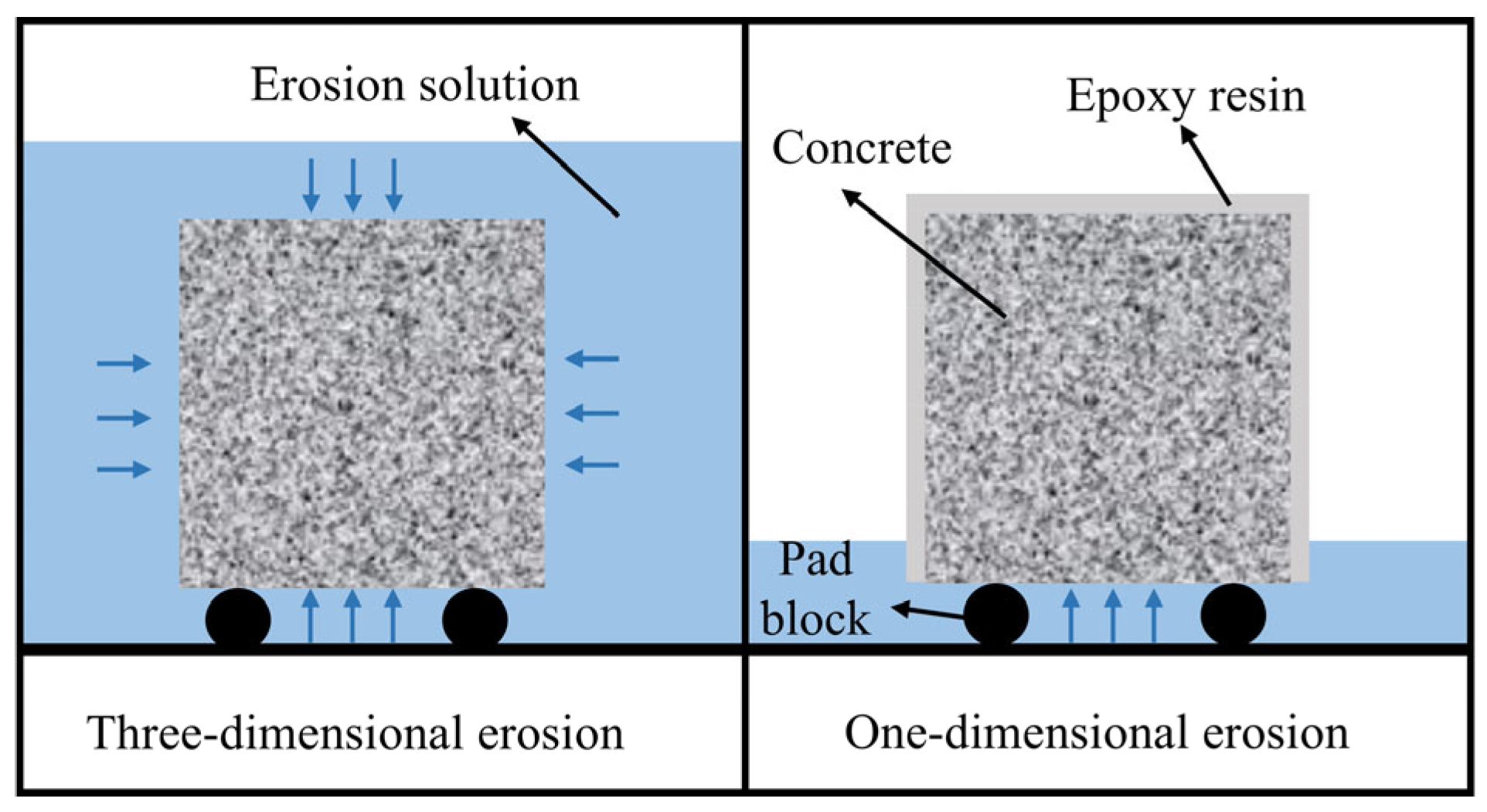
The positions of the submerged zone and tidal zone are illustrated in Figure 1. Sodium chloride (NaCl) solutions with three concentrations (5%, 10%, and 15%) were prepared using anhydrous NaCl, and a one-dimensional erosion method was adopted in the test. Schematic diagrams of one-dimensional and three-dimensional erosion are presented in Figure 2. Prior to the erosion test, five surfaces of the concrete specimens were sealed with epoxy resin, with only the non-poured surface reserved as the erosion-exposed surface.
Figure 1.
Location of different regions.
Figure 2.
One-dimensional erosion and three-dimensional erosion diagram.
The submerged zone of the marine environment was simulated by fully immersing the specimens in NaCl solutions of different concentrations for 24 h per day. The tidal zone was simulated by subjecting the specimens to a wet–dry cycle regime in NaCl solutions of different concentrations, which consisted of 12 h of immersion and 12 h of natural air-drying per day. The designed erosion durations were 30, 60, 90, and 120 days, respectively.
2.2.2. Compressive Strength Test
A three-dimensional erosion method was adopted for the compressive strength test. Concrete specimens with dimensions of 100 mm × 100 mm × 100 mm were immersed in NaCl solutions of three concentrations (5%, 10%, and 15%) to simulate the submerged zone and tidal zone environments. The compressive strength of the specimens was measured when the erosion durations reached 30, 60, 90, and 120 days, and the degradation law of compressive strength was analyzed accordingly.
2.2.3. Pore Structure Characterization
The pore structure of concrete was evaluated using low-field nuclear magnetic resonance (NMR) technology. Samples were cured for 28 days and prepared in cubic form with dimensions of approximately 100 × 100 × 100 mm. Prior to testing, the specimens were vacuum-saturated to ensure full water saturation. The T2 relaxation time distribution was used to characterize the pore size and distribution; shorter T2 times correspond to smaller pores. The intensity of the T2 distribution enables estimation of the proportion of pores in different size ranges. All tests were conducted at a controlled temperature of 25 ± 1 °C.
2.2.4. Microstructural and Elemental Analysis
The microstructure and elemental composition of concrete were analyzed using scanning electron microscopy (SEM) combined with energy-dispersive X-ray spectroscopy (EDS). Representative samples (approximately 10 × 10 × 10 mm) were extracted from the eroded regions. After acetone replacement for dehydration, the specimens were dried in a vacuum oven for 24 h. Prior to testing, a thin layer of gold was sputter-coated on the sample surface to enhance electrical conductivity. The accelerating voltage was set between 15 and 20 kV.
2.2.5. Chloride Ion Penetration Depth Test
A one-dimensional erosion method was employed for the tests of chloride ion penetration depth and concentration. Prior to the erosion test, five surfaces of the concrete specimens cured for 28 days were sealed with epoxy resin, while the unsealed non-poured surface was designated as the erosion-exposed surface. The specimens were sized at 100 mm × 100 mm × 100 mm and subjected to wet–dry cycle tests in the prepared solutions for 0, 30, 60, 90, and 120 cycles, respectively.
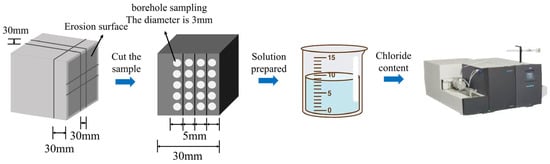
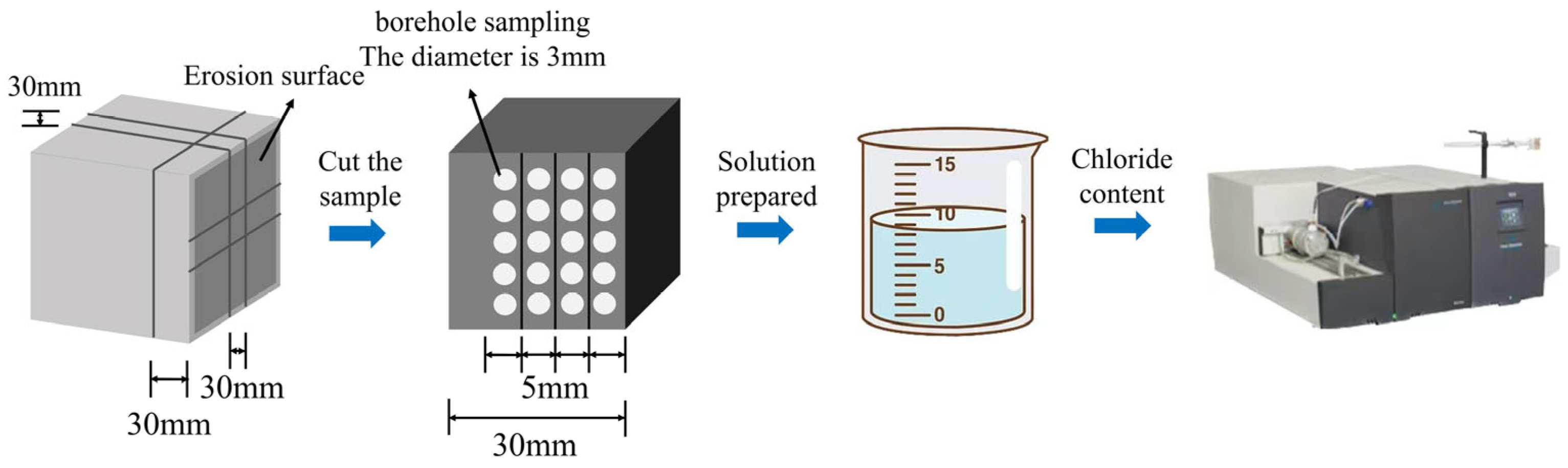
A cube sample with a side length of 30 mm was cut from the center of the erosion-exposed surface using a cutting machine. Subsequently, drilling sampling was conducted on the erosion-exposed surface with an electric drill of 3 mm in diameter. Concrete powder samples were collected at intervals of 5 mm up to a depth of 20 mm, with approximately 20 g of powder gathered at each depth and then sieved through a 0.075 mm square-hole sieve. After that, 4 g of the sieved powder was mixed with 40 mL of distilled water; the mixture was fully stirred and then allowed to stand for 48 h. The water-soluble chloride content was determined using a chloride ion analyzer. The expression standard of chloride ion content in this study is the mass fraction of water-soluble chlorine based on the mass of concrete powder. Prior to testing, the instrument was calibrated with a standard chloride solution, and a blank test was conducted to eliminate background interference. During measurement, the sample extract was placed in a titration vessel and stirred at a constant speed. The titration was automatically performed by the instrument using potentiometric titration with AgNO3, which identified the endpoint volume and calculated the Cl− concentration in the extract. The water-soluble chloride content at each depth was then calculated based on the volume of the extract solution and the mass of the powder sample. At least two parallel tests were conducted for each depth, and the average value was reported. The process of testing chloride ion penetration depth and concentration is illustrated in Figure 3.
Figure 3.
The process of testing chloride ion erosion depth and concentration.
3. Results and Discussion
3.1. The Evolution of Compressive Strength over Time
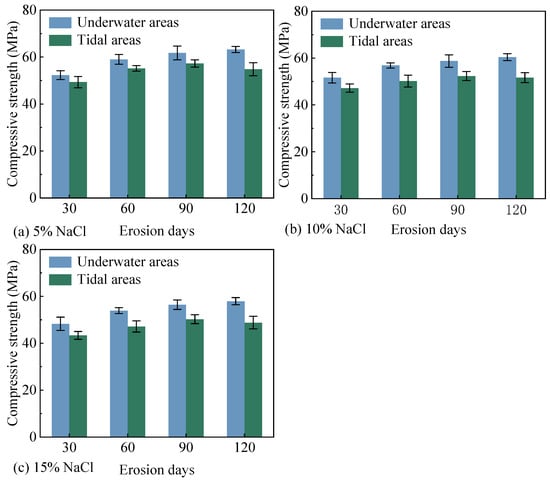
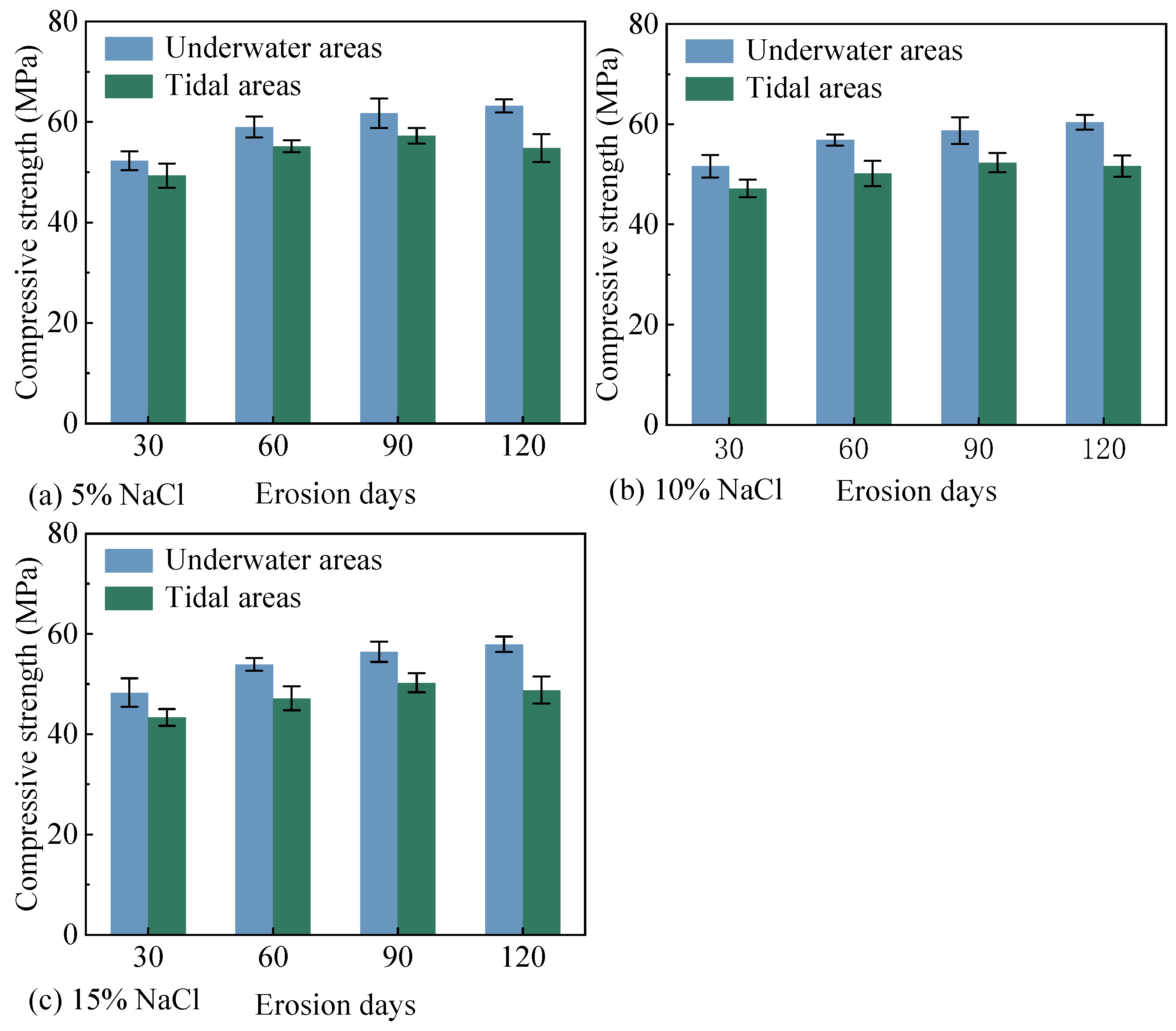
Figure 4 presents the variation law of concrete compressive strength under different working conditions. As can be seen from the figure, NaCl solutions with different concentrations exert a significant influence on the compressive strength of concrete. The concrete exhibits relatively high compressive strength when eroded by 5% NaCl solution. With the NaCl concentration increasing to 10%, the compressive strength of concrete decreases to a certain extent. In contrast, the compressive strength of concrete undergoes a substantial decline under erosion by 15% NaCl solution. This is because the high-concentration NaCl solution induces excessive corrosion reactions inside the concrete, which damages the internal microstructure of concrete and thus impairs its compressive strength.
Figure 4.
Compressive strength of concrete under different working conditions: (a) 5%, (b) 10%, (c) 15%.
With the extension of erosion duration, the compressive strength of concrete shows a complex variation law. In the submerged zone, regardless of the concentration of NaCl solutions, the compressive strength of concrete generally presents a trend of first increasing and then stabilizing. When eroded by 5% NaCl solution, the compressive strength of concrete rises from 52.27 MPa at 30 days to 61.74 MPa at 90 days, and reaches 63.18 MPa at 120 days, with the growth rate gradually slowing down. In the tidal zone, the variation in compressive strength is more complex, without an obvious monotonically increasing or decreasing trend; the compressive strength of concrete begins to decline after 90 days of erosion.
A comparison of the concrete compressive strength between the submerged zone and tidal zone indicates that under erosion by NaCl solution with the same concentration, the compressive strength of concrete in the submerged zone is generally higher than that in the tidal zone. This is mainly attributed to the fact that the alternating wet–dry environment in the tidal zone renders concrete more vulnerable to erosion damage. During the alternating processes of seawater immersion and air-drying in the tidal zone, concrete undergoes more physical and chemical changes, such as the formation and dissolution of salt crystals, as well as the evaporation and absorption of water. These changes will cause damage to the internal structure of concrete [26,27,28], thereby reducing its compressive strength. On the contrary, concrete in the submerged zone is in a relatively stable aqueous environment and subjected to relatively slight erosion, thus maintaining higher compressive strength.
3.2. Pore Structure Distribution
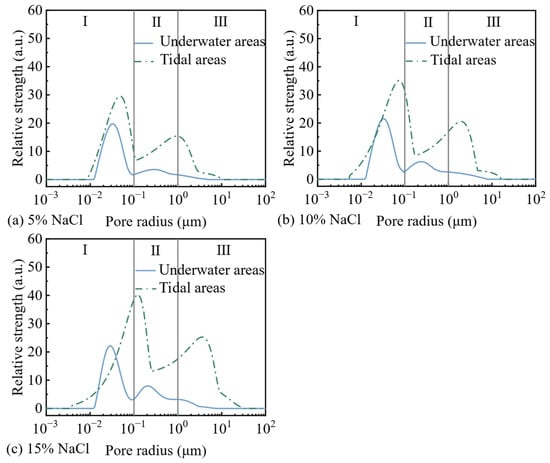
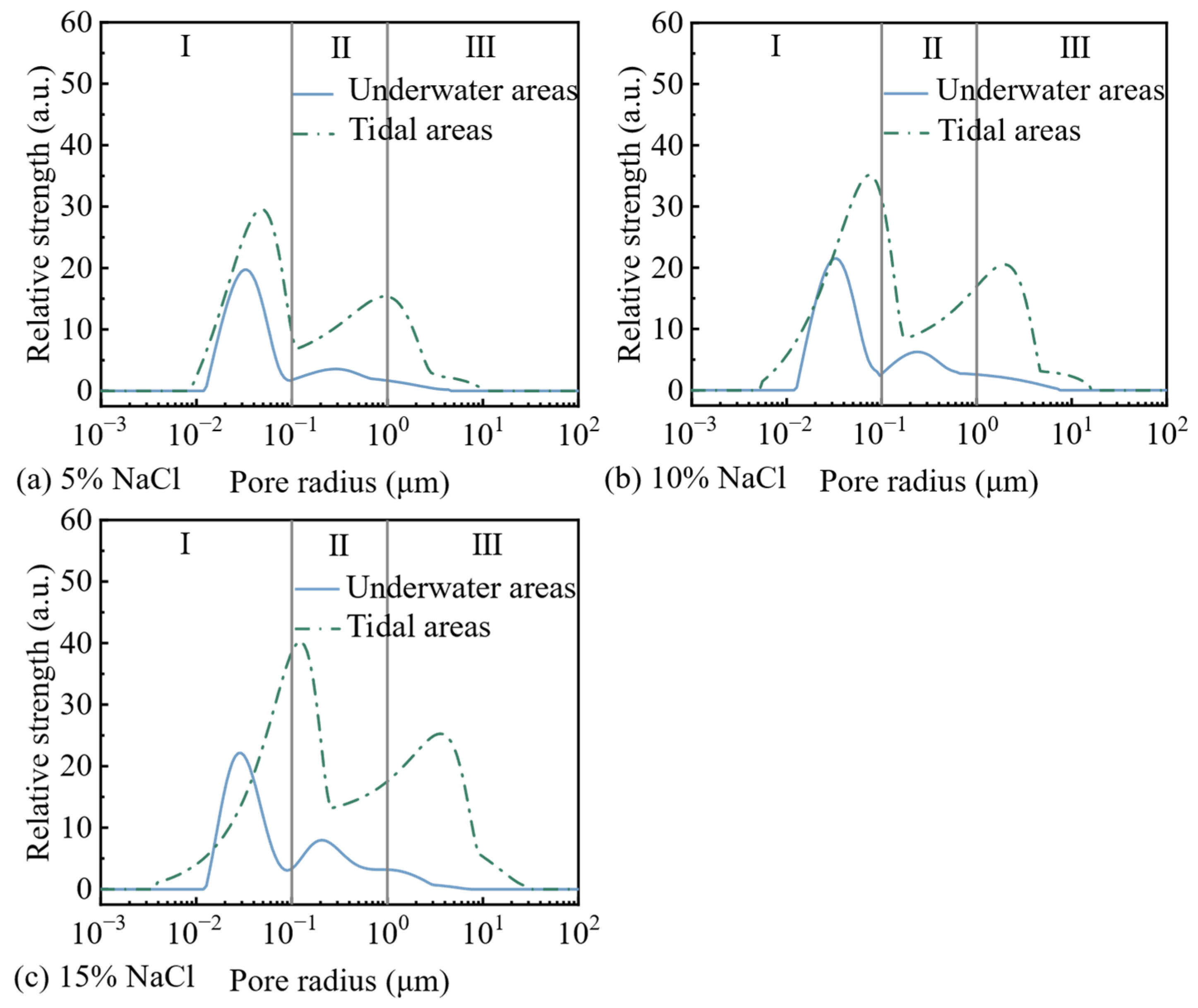
The pore structure of concrete can be categorized into three regions based on pore radius: Region I comprises micropores (r ≤ 0.10 μm), Region II includes mesopores (0.10 μm < r ≤ 1.00 μm), and Region III represents macropores (r > 1.00 μm). Figure 5 illustrates the distribution of pore radii in ordinary concrete after 120 days of exposure to NaCl solutions at different concentrations (5%, 10%, and 15%), measured in both submerged and tidal zones.
Figure 5.
Distribution of pore radius of concrete under different working conditions: (a) 5%, (b) 10%, (c) 15%.
As shown in the figure, regardless of NaCl concentration, the pore size distribution in both zones exhibits a typical bimodal pattern. The primary peak is located in Region I, while the secondary peak lies in Region II, indicating that micropores and mesopores are the dominant pore types in the concrete matrix. With increasing NaCl concentration from 5% to 15%, the intensity of both peaks generally increases in both zones, with a more pronounced effect observed in the tidal zone. This suggests that higher salt concentrations exacerbate the degradation of the pore structure.
Furthermore, as the NaCl concentration increases, both peaks exhibit a rightward shift, particularly the secondary peak, which approaches or even enters Region III (macropore region). This indicates that high-concentration saline environments promote the transformation of some micropores and mesopores into larger pores, resulting in enlarged pore sizes and a more porous structure. Notably, under the 15% NaCl condition, the tidal zone exhibits the most severe pore enlargement, characterized by a significant rightward shift and increased intensity of the secondary peak.
In summary, high-concentration NaCl environments exert a stronger deteriorative effect on the pore structure of concrete. Due to alternating wetting and drying cycles and salt crystallization effects, the tidal zone is more susceptible to pore expansion and interconnectivity, thereby accelerating material degradation. These findings highlight the synergistic influence of salt concentration and environmental exposure conditions on the durability reduction mechanism of ordinary concrete in marine environments.
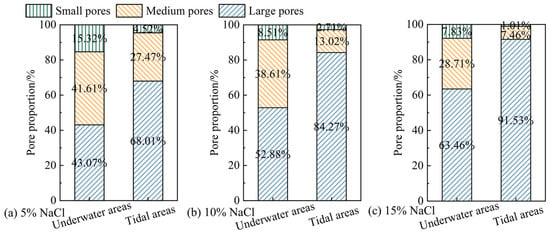
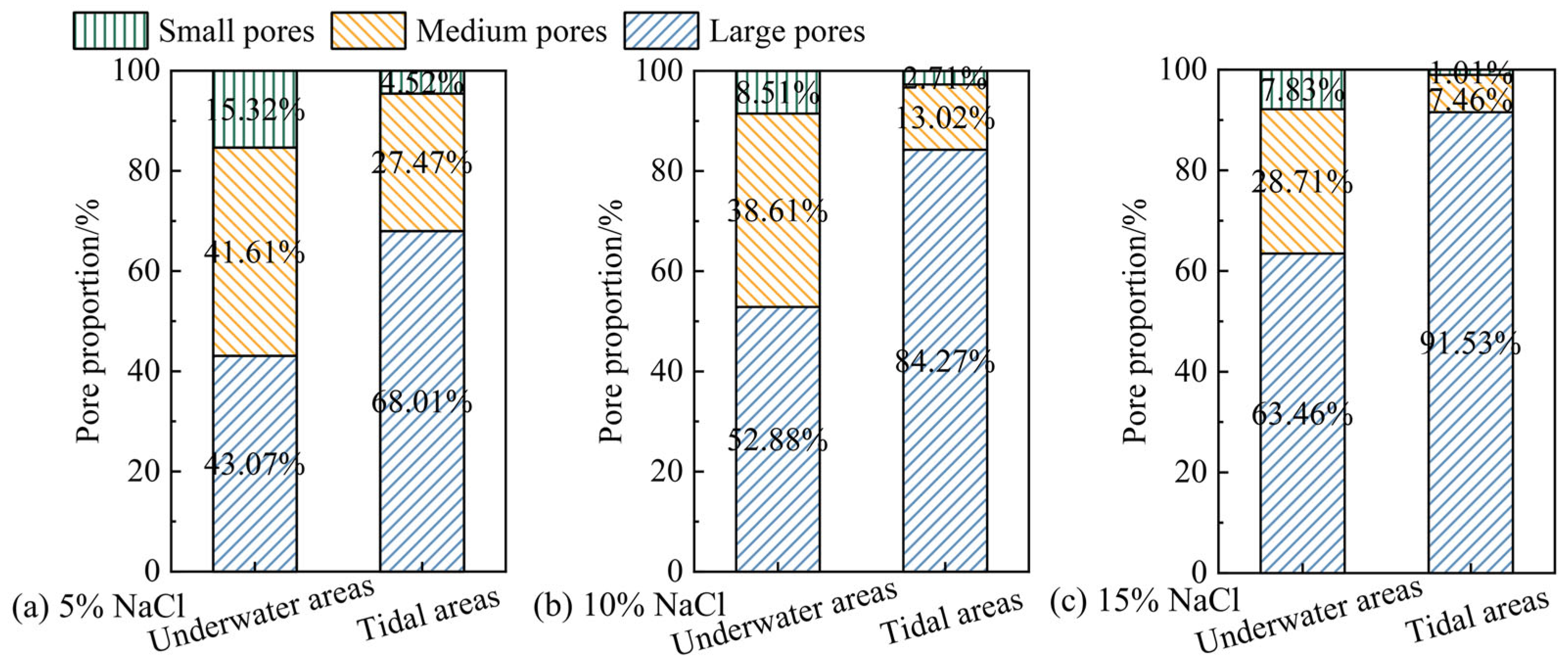
Figure 6 presents the variation in the proportion of different pore types (micropores, mesopores, and macropores) in ordinary concrete subjected to salt erosion and wet–dry cycling under various NaCl concentrations.
Figure 6.
The pore proportion of concrete under different working conditions: (a) 5%, (b) 10%, (c) 15%.
As observed in the figure, macropores consistently dominate the pore structure, accounting for a significantly higher proportion than mesopores and micropores. Moreover, with increasing NaCl concentration, the proportion of macropores shows a continuous upward trend. Under the 5% NaCl condition, the macropore content in the tidal zone reaches 68.01%, which increases to 91.53% at 15% NaCl, indicating a substantial enlargement of pore sizes in high-salinity environments.
Simultaneously, the proportions of mesopores and micropores decrease progressively. In the tidal zone, the mesopore content decreases from 27.47% at 5% NaCl to only 7.46% at 15% NaCl; micropores drop from 5% to just 1.01% over the same range. A similar trend is observed in the submerged zone, although the extent of pore expansion is less pronounced compared to the tidal zone.
These results suggest that under prolonged salt erosion combined with wet–dry cycles, micropores and mesopores tend to transform into macropores, leading to an overall increase in pore size and a more porous internal structure. This, in turn, reduces the durability of the concrete. The effect is particularly evident in the tidal zone, where the alternating wetting–drying conditions and salt crystallization pressure synergistically accelerate pore structure deterioration.
3.3. Microscopic Analysis
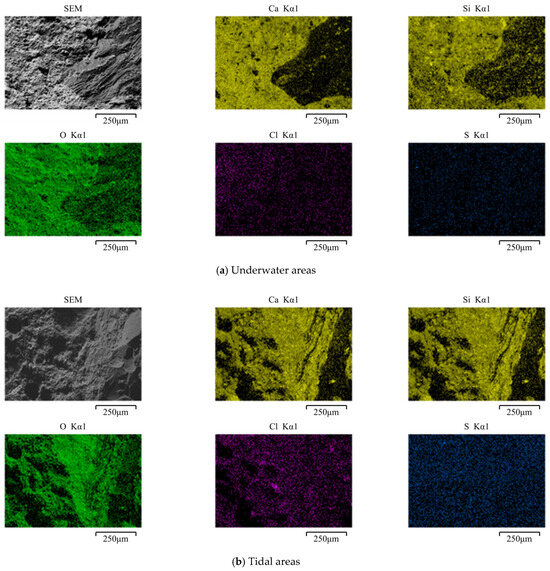
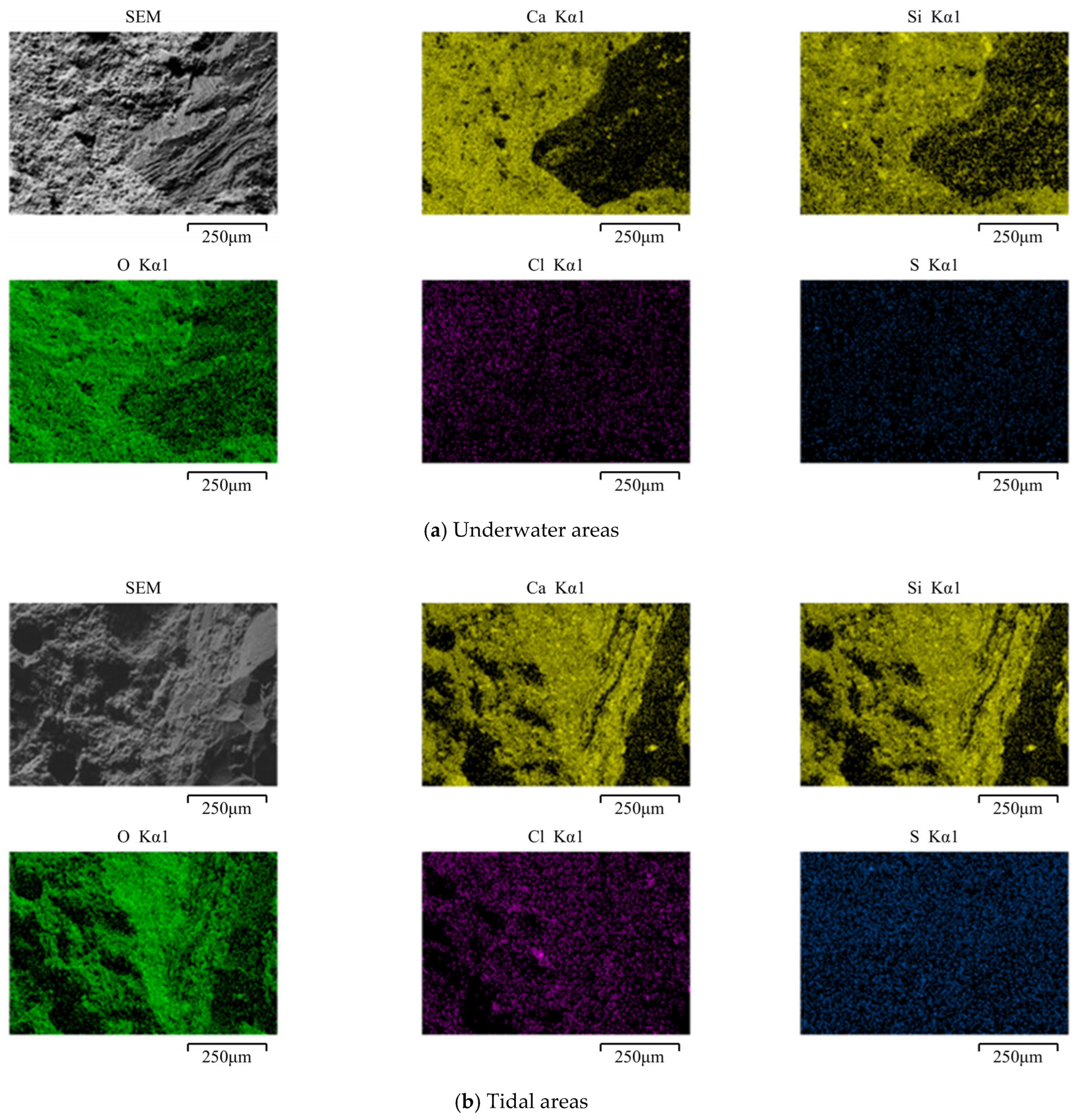
Figure 7 presents the SEM and EDS results of concrete samples in the submerged and tidal zones after 120 cycles of exposure to 5% NaCl solution. As shown in Figure 7a, the microstructure in the submerged zone remains dense, with a well-bonded interface between the aggregate and the cementitious matrix. No significant cracks or pores are observed. The primary elements detected are Ca, Si, and O, which are typical of a Portland cement-based matrix. Calcium is evenly distributed within the cementitious phase, while silicon is mainly concentrated in the aggregate regions. The contents of Cl and S are extremely low and display a dispersed distribution, indicating minimal ingress of harmful salts into the concrete at this stage.
Figure 7.
The SEM and EDS spectra of concrete after 120 instances of erosion in 5% NaCl solution: (a) submerged zone; (b) tidal areas.
In contrast, Figure 7b shows that the surface of the sample in the tidal zone exhibits pronounced honeycomb-like erosion pits [29,30]. The overall contents of Ca and Si are reduced, indicating decalcification and the involvement of calcium ions in the formation of erosion products. The concentration of Cl is significantly elevated and displays a gradient distribution along the eroded pits. Similarly, the SO42− content is markedly increased and shows a strong spatial correlation with Ca, confirming the formation of gypsum due to sulfate attack [31,32].
Through a multi-scale investigation spanning the micro-, meso-, and macro-levels, it is observed that wet–dry cycles drive repeated penetration and evaporation of salt solutions, leading to supersaturation and crystallization of salts (NaCl and Na2SO4) within the pores. This crystallization generates expansive stress, which initiates and propagates microcracks. Concurrently, Cl− reacts with C3A to form Friedel’s salt, consuming the aluminate phase and releasing Ca2+, thereby weakening the cohesion of the cementitious matrix [33,34]. Additionally, SO42− reacts with Ca(OH)2 to form gypsum and secondary ettringite, leading to expansive corrosion. These reactions result in the formation of voids in the interfacial transition zone (ITZ) and increased porosity in the cementitious matrix, which further accelerates the ingress of corrosive agents. Ultimately, a positive feedback loop of “penetration–corrosion–cracking” is established, manifesting as significant degradation in macroscopic properties such as compressive strength.
3.4. Chloride Ion Concentration
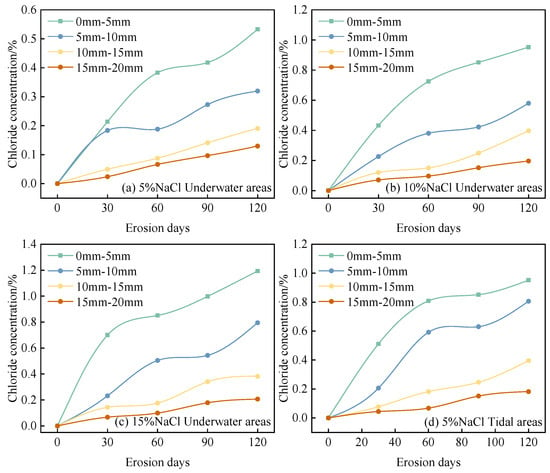
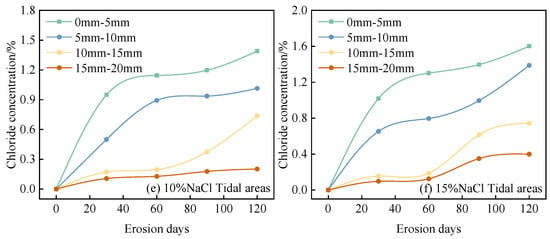
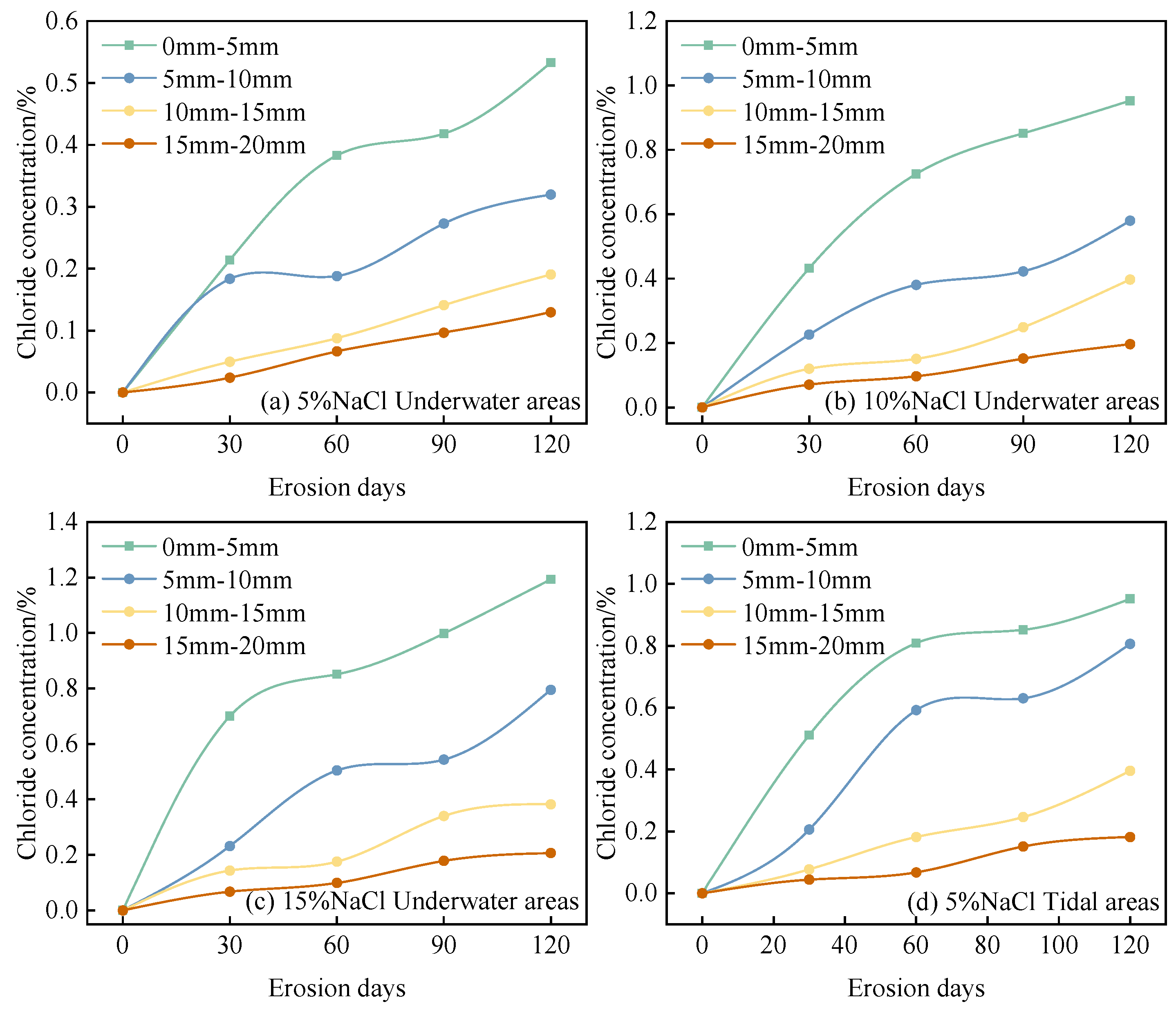
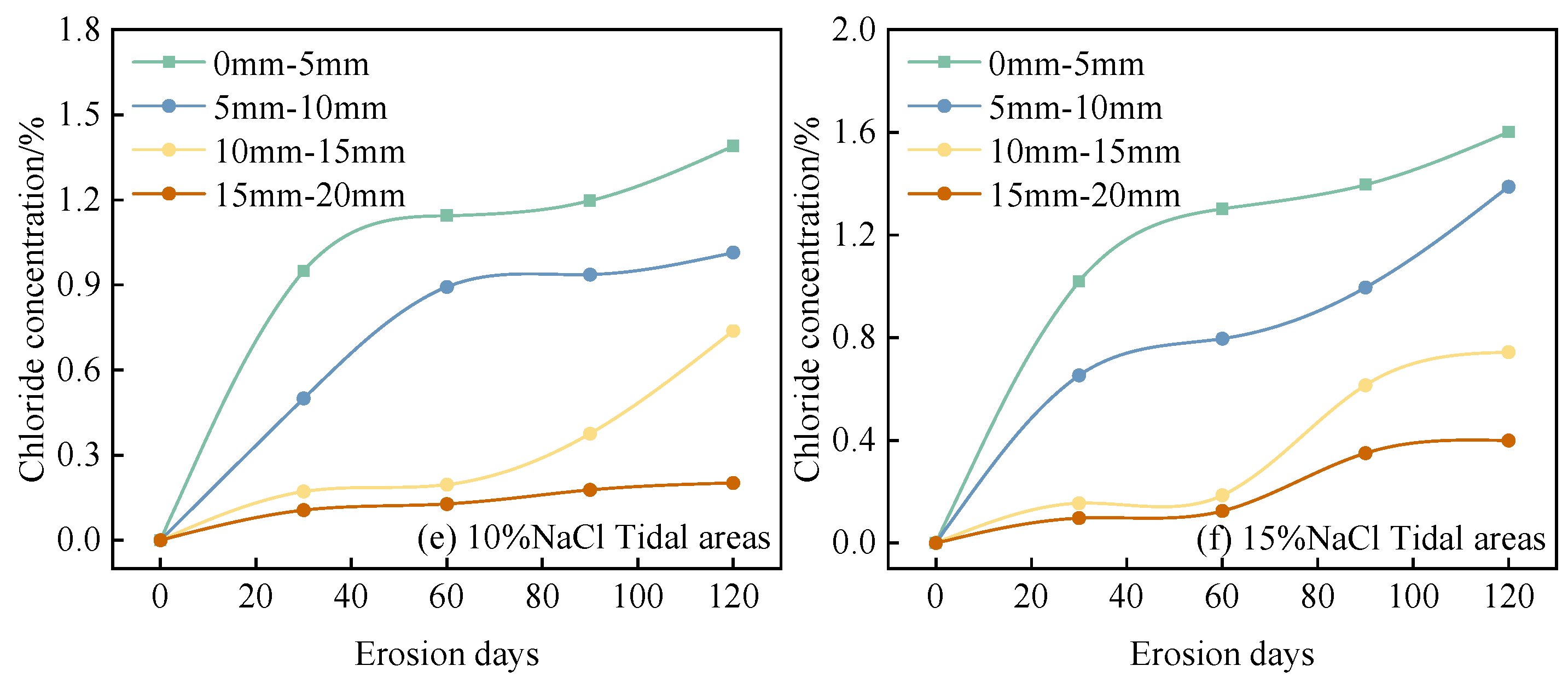
Figure 8 illustrates the variation trends of chloride ion concentrations at different depths of concrete erosion under various NaCl solution concentrations. It can be observed that with an increase in NaCl concentration of the corrosive medium, the chloride ion concentrations at all internal depths of concrete generally increase. This is consistent with the concentration-driven mechanism of chloride ion migration. A comparison among the three NaCl solutions with concentrations of 5%, 10%, and 15% reveals that under the same erosion duration and at the same erosion depth range, the chloride ion concentration corresponding to the high-concentration solution is higher. For instance, at the depth range of 0~5 mm in the submerged zone, after 30 days of erosion, the chloride ion concentration is 0.2139% under 5% NaCl solution, 0.43206% under 10% NaCl solution, and 0.70062% under 15% NaCl solution. This is because the NaCl solution with a higher concentration contains more chloride ions, which provides a greater driving force for the diffusion of chloride ions into the interior of concrete. The high-concentration solution enlarges the chloride ion concentration difference between the external and internal parts of concrete, thereby accelerating the chloride ion penetration process and resulting in elevated chloride ion concentrations at different depths of concrete.
Figure 8.
The variation in chloride ion concentration with depth under different working conditions: (a) 5% NaCl underwater areas; (b) 10% NaCl underwater areas; (c) 15% NaCl underwater areas; (d) 5% NaCl tidal areas; (e) 10% NaCl tidal areas; (f) 15% NaCl tidal areas.
Both in the submerged zone and tidal zone, with the extension of erosion duration, the chloride ion concentrations of concrete at different erosion depths under various NaCl solution concentrations increase gradually. Within different depth ranges under all concentrations and in different zones, the chloride ion concentrations rise continuously as the erosion time extends from 30 days to 120 days. This is because the prolonged erosion time provides more opportunities for chloride ions to diffuse into the interior of concrete through its pores and microcracks. The long-term erosion process leads to the continuous accumulation of chloride ions in concrete, thus causing a gradual increase in chloride ion concentrations at different depths. In both the submerged zone and tidal zone, the chloride ion concentration of concrete decreases gradually with an increase in erosion depth. This is because the microstructure of concrete exerts a significant hindering effect on the migration of chloride ions during their diffusion into the concrete interior. The hydration products of cement undergo a binding reaction with chloride ions, which reduces the diffusion rate and concentration of chloride ions [35,36]. In addition, as the depth increases, the diffusion path becomes longer and the diffusion resistance increases, leading to a gradual decrease in chloride ion concentration [37,38,39].
3.5. Chloride Ion Diffusion Model
The chloride ion diffusion coefficient is a critical parameter for evaluating the chloride ion penetration resistance of concrete. At present, most experimental studies generally adopt Fick’s second law (Equation (1)) [40,41] to describe the diffusion behavior of chloride ions in concrete. On the basis of this model, researchers often introduce modifications by incorporating various influencing factors, thereby establishing chloride ion diffusion models applicable to specific experimental conditions.
where CC(x,t) denotes the chloride ion content at erosion depth x and exposure time t, %; x represents the erosion depth, mm; t stands for the exposure time, d; CC-0 refers to the initial chloride ion content, %; CC-S indicates the surface chloride ion content, %; DC signifies the chloride ion diffusion coefficient, mm2/d; and erf is the Gaussian error function:
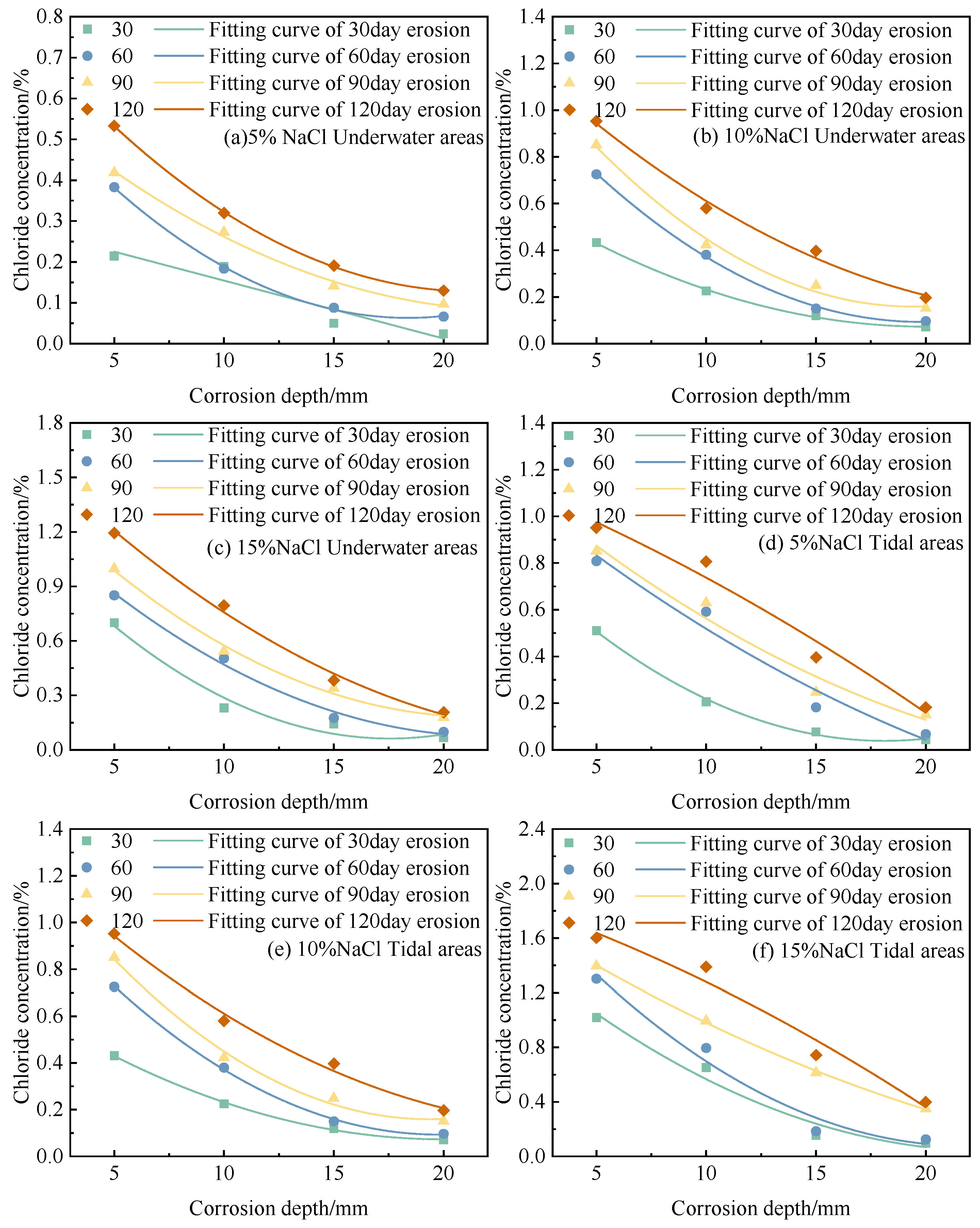
The chloride ion content in the central region of the concrete specimens prepared in this study was 0%. Therefore, CC-0 was set to 0%. A comparative regression analysis of the test data presented in Section 3.4 was conducted using various function models. The results demonstrated that the quadratic polynomial model exhibited better performance in terms of regression coefficients during the fitting process. On this basis, the quadratic polynomial was selected as the fitting tool in this study. According to the distribution characteristics of chloride ion content, a numerical prediction model for the surface chloride ion content of concrete was established, and its specific expression is shown in Equation (2).
Figure 9 presents the fitting curves of chloride ion content distribution in the sub-merged zone and tidal zone at different erosion ages. According to the regression equa-tions for each working condition, substituting x = 0 into the equations yields the surface chloride ion content CC-S, and the fitting results are summarized in Table 4.
Figure 9.
Fitting curve of chloride ion content distribution under different working conditions: (a) 5% NaCl underwater areas; (b) 10% NaCl underwater areas; (c) 15% NaCl underwater areas; (d) 5% NaCl tidal areas; (e) 10% NaCl tidal areas; (f) 15% NaCl tidal areas.
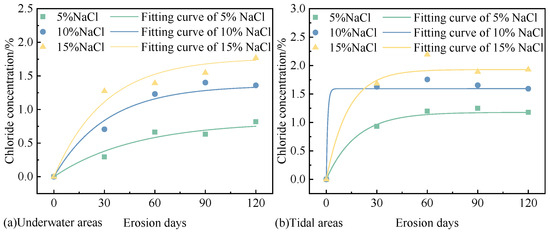
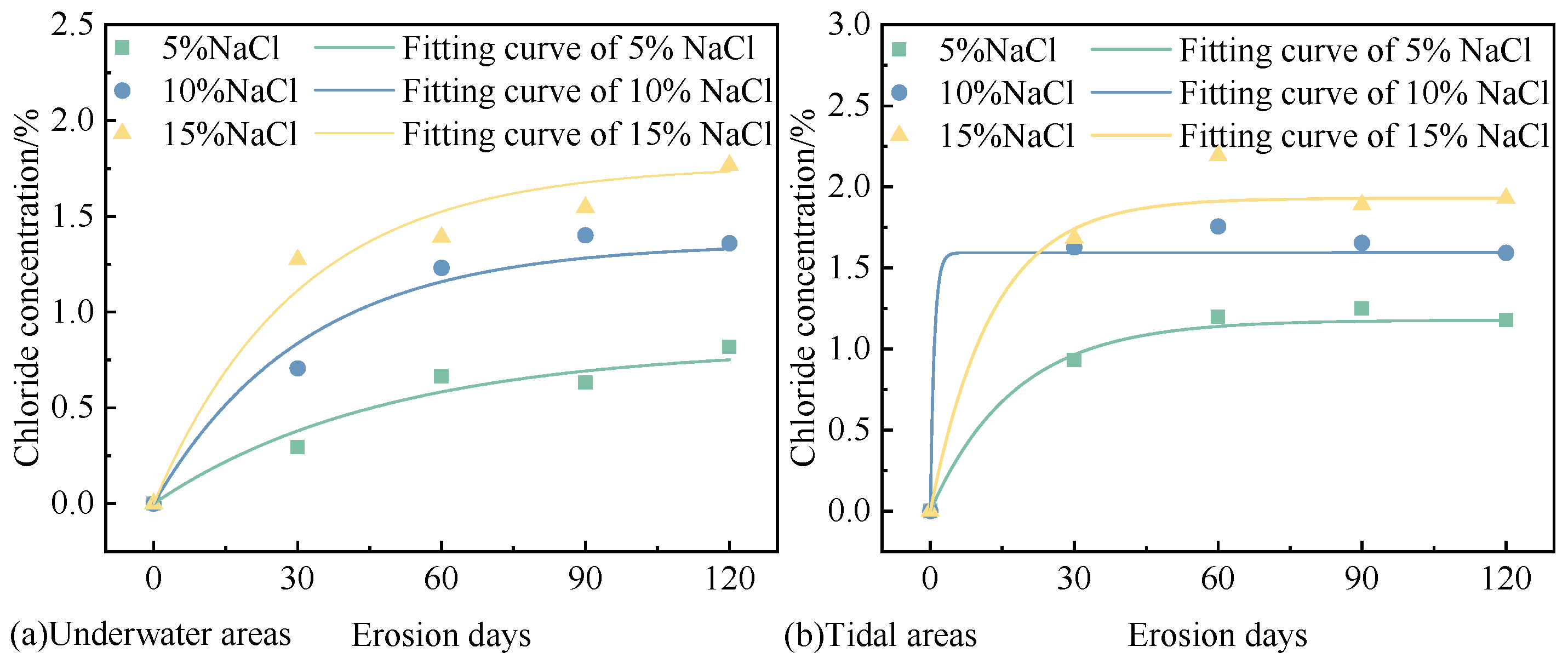
Based on the analysis of the fitting data in Table 6, a scatter diagram illustrating the relationship between surface chloride ion concentration and erosion duration was plotted, as shown in Figure 10. It can be seen from the diagram that under all erosion conditions, the chloride ion concentration on the surface of the specimens exhibited a gradual upward trend with the extension of the erosion period. This phenomenon is highly consistent with the chloride ion diffusion law revealed in previous studies [18]. A further analysis reveals that the variation in chloride concentration of the corrosive solution exerts a significant promoting or inhibiting effect on the accumulation of chloride ion concentration on the specimen surface.
Table 6.
Surface chloride ion content of concrete under different working conditions.
Figure 10.
Scatter plot of surface chloride ion content and erosion time under different working conditions: (a) Underwater areas; (b) Tidal areas.
Figure 10 also indicates that a significant power function relationship exists between the surface chloride ion concentration and erosion time at the initial stage of erosion. To characterize its property of eventually tending to be stable, a function expressed as Equation (3) was introduced for fitting within the framework of the exponential model in this study. This model effectively describes the time-dependent variation law of surface chloride ion concentration.
where CC-S denotes the surface chloride ion content of concrete, %; CC-S0 refers to the maximum value of the surface chloride ion content fraction during the erosion age, %; a signifies the fitting parameter; and t stands for the erosion time, d.
Table 7.
Fitting parameters of surface chloride ion content.
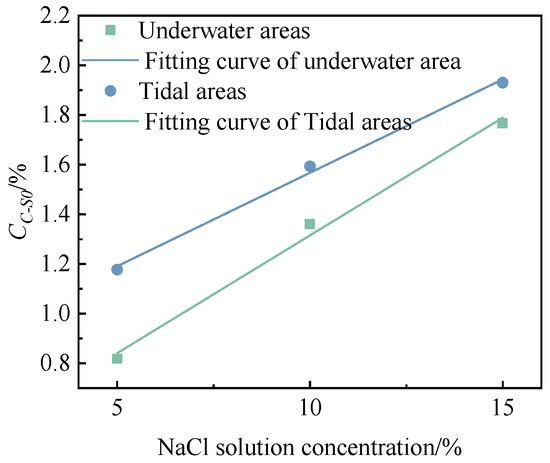
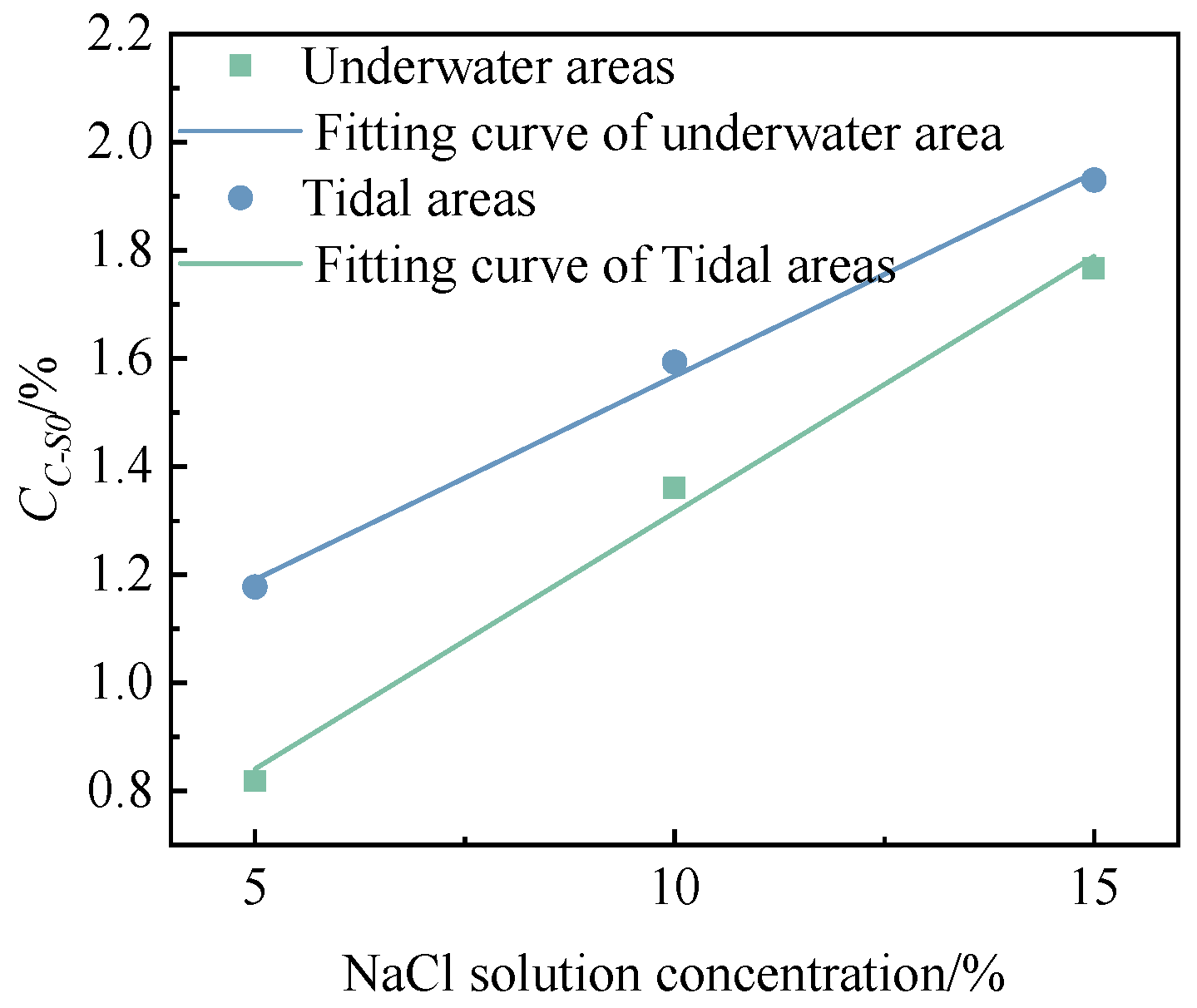
Considering the effect of chloride solution concentration on parameter CC-S0 in Equation (3), it can be seen from Table 7 that in the submerged zone, with an increase in solution concentration, parameter CC-S0 generally shows an upward trend, while parameter a basically exhibits a downward trend. In the tidal zone, parameter CC-S0 also generally presents an upward trend with an increase in solution concentration, whereas parameter a shows no obvious trend. Therefore, under different working conditions, the mean value of parameter a was adopted. The linear model exhibits high accuracy in fitting the relationship between concentration and parameter CC-S0, as expressed in Equation (4).
where CC-S0 refers to the maximum value of the surface chloride ion content fraction during the erosion age, %, and n signifies the concentration of the NaCl solution, %.
The fitting curves depicting the variation in parameter CC-S0 with chloride concentration in the solution are illustrated in Figure 11, and the calculated results for parameters b and c are presented in Table 8.
Figure 11.
Curve of the variation in CC-S with solution concentration.
Table 8.
Calculation results for parameters b and c.
Therefore, functional models describing the variation in chloride ion content on the concrete surface with erosion age and NaCl solution concentration were established for the submerged zone and tidal zone, which are expressed as Equation (5) and Equation (6), respectively.
By substituting CC-0 and CC-S for the submerged zone and tidal zone into Equation (1), the chloride ion diffusion models for the submerged zone and tidal zone, namely Equations (7) and (8), can be derived. On the basis of Equations (7) and (8), as well as the data presented in Section 3.4 of this paper, the concrete diffusion coefficients under different working conditions obtained via fitting are listed in Table 9.
Table 9.
Diffusion coefficient of concrete under different working conditions.
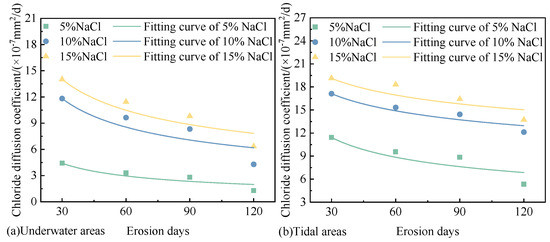
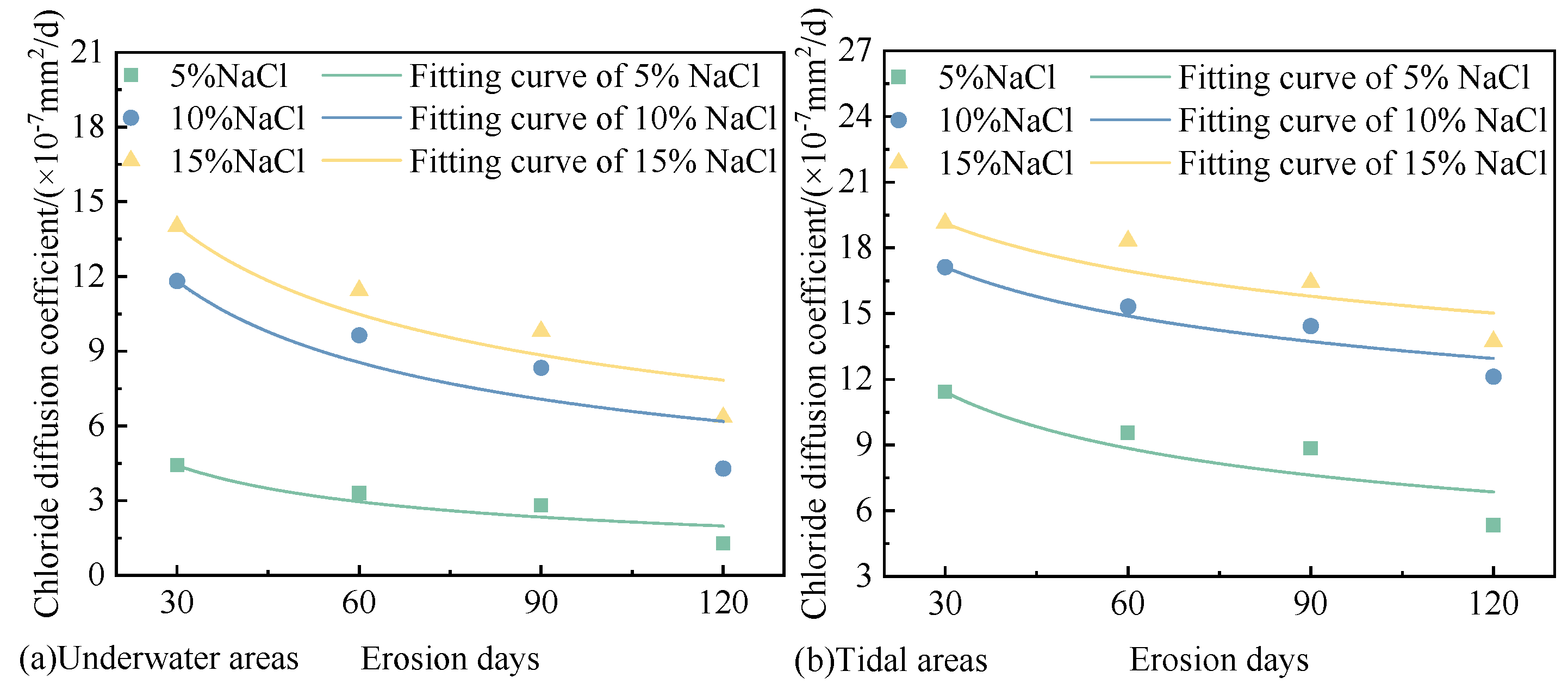
Figure 12 presents a scatter diagram illustrating the variation in chloride ion diffusion coefficient with erosion time. It can be observed that the diffusion coefficients under all working conditions decrease with the extension of erosion age, and the differences among various working conditions gradually narrow. Considering the significant power function relationship between the diffusion coefficient and erosion time, this study introduces an attenuation coefficient z and proposes Equation (9).
where Dt denotes the chloride ion diffusion coefficient at the erosion age of t; Dst refers to the chloride ion diffusion coefficient at the selected reference erosion age (30 days is adopted herein); tst signifies the selected reference erosion age (with a value of 30 days); and z stands for the attenuation coefficient of the chloride ion diffusion coefficient.
Figure 12.
Scatter plot of chloride ion diffusion coefficient changing with erosion time under different working conditions: (a) underwater areas; (b) tidal areas.
The chloride ion diffusion coefficients in Table 9 were substituted into Equation (9) for regression analysis, and the time-dependent attenuation coefficients z of the chloride ion diffusion coefficients were obtained, as listed in Table 10.
Table 10.
The values of parameters Dst and z.
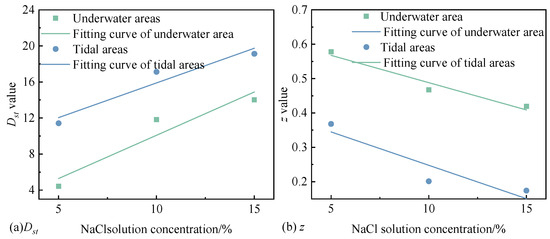
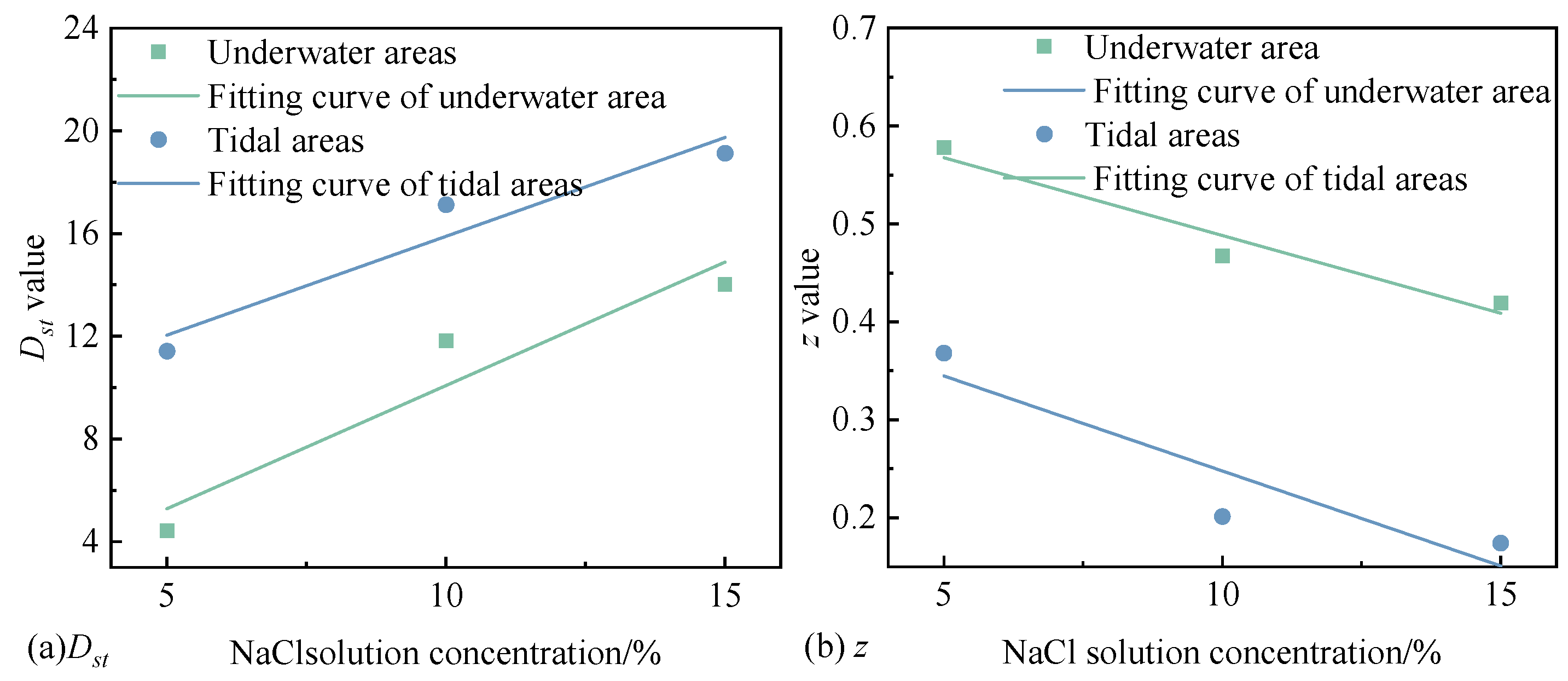
The data in Table 10 indicate that the chloride concentration in the corrosive environment exerts a significant influence on the chloride ion diffusion coefficient. Considering the effect of chloride concentration n on Dst and z, linear models for Dst and z were established in this study with n as the independent variable, as expressed in Equations (10) and (11), respectively.
where Dst denotes the chloride ion diffusion coefficient at the selected reference erosion age; z refers to the attenuation coefficient of the chloride ion diffusion coefficient; n signifies the concentration of the NaCl solution, %; and D, f, g and h stand for the fitting parameters.
Figure 13 presents fitting curves depicting the variations in parameters Dst and z with the solution concentration. The calculated results of the corresponding fitting parameters b and c are listed in Table 11.
Figure 13.
Fitting curves of parameters Dst and z with the change in solution concentration: (a) Dst; (b) z.
Table 11.
Calculation results of parameters d, f, g and h.
By substituting the parameters in Table 8 into Equations (10) and (11), the regression equations are derived. Further substituting these regression equations into Equations (7) and (8) yields the functional models describing the relationship between the chloride ion diffusion coefficient, erosion duration and NaCl solution concentration for the submerged zone and tidal zone, which are expressed as Equations (12) and (13), respectively.
3.6. Promotion and Application of the Model
The chloride diffusion model proposed in this study is developed based on the classical Fick’s second law, whose fundamental mathematical framework possesses general applicability. The essential distinction between the proposed model and conventional empirical models lies in the introduction of a parameterized system incorporating a time-dependent attenuation coefficient related to exposure duration, a correction term for salt solution concentration, and characteristic parameters representing different exposure zones. For various types of concrete materials, differences in chloride transport behavior are primarily associated with variations in microstructural pore characteristics and interfacial transition zone (ITZ) properties. These differences can be quantitatively characterized through appropriate adjustment of the core model parameters. Therefore, the proposed model has a solid theoretical basis for extension to other types of concrete, including high-performance concrete, recycled aggregate concrete, and mineral admixture-modified concrete.
To achieve accurate prediction for different concrete systems, a standardized parameter calibration and modification procedure is required, as outlined below:
- (1)
- Calibration of fundamental parameters
For the target concrete, marine exposure simulation tests consistent with those conducted in this study (including tidal and submerged zones) should be performed to determine three key parameters: the initial chloride diffusion coefficient, the time-dependent attenuation coefficient of the diffusion coefficient, and the fitted parameter for surface chloride concentration. These parameters reflect the intrinsic transport properties of the material under specific environmental conditions.
- (2)
- Introduction of characteristic correction factors
Based on the compositional characteristics of the target concrete, specific correction factors (k) should be introduced to adjust the fundamental parameters and account for material-dependent transport behavior:
For mineral admixture-modified concretes (e.g., fly ash, slag, silica fume), a replacement ratio correction factor (k1) is introduced, varying with the substitution level to represent pore refinement induced by pozzolanic reactions.
For recycled aggregate concrete, a recycled aggregate replacement correction factor (k2) is incorporated, varying with replacement ratio to characterize the initial defects associated with adhered old mortar.
For fiber-reinforced or polymer-modified concretes, a performance enhancement correction factor (k3) is introduced, related to the type and dosage of modifiers, to represent crack-bridging and densification effects.
- (3)
- Model validation and optimization
The corrected parameters are then incorporated into the model and validated against experimentally measured chloride ingress data for the target concrete. The correction factors are optimized using the least-squares method to ensure that the coefficient of determination satisfies R2 ≥ 0.90, thereby guaranteeing predictive accuracy for extended applications.
Through this parameter modification framework, the proposed model can be developed into an intelligent predictive tool integrating fundamental theory with a material parameter database. With the accumulation of parameter data for concretes of different mix proportions and strength grades, a comprehensive durability parameter database for marine concrete can be established. Engineers could directly retrieve the corresponding correction parameters based on concrete type to rapidly predict chloride concentration profiles in tidal or submerged marine environments, thereby providing a scientific basis for durability design, service life assessment, and maintenance decision-making for marine engineering structures such as cross-sea bridges, port terminals, and offshore platforms.
4. Conclusions
(1) The chloride ion diffusion behavior in concrete is significantly influenced by the marine exposure zone and salt concentration. Tidal zones, due to alternating wet–dry cycles, induce greater microstructural damage and chloride ingress compared to submerged zones.
(2) Higher NaCl concentrations accelerate both the degradation of compressive strength and the transformation of micro/mesopores into macropores, leading to increased permeability.
(3) SEM-EDS analysis confirms severe decalcification, salt crystallization, and corrosion product formation in tidal zone samples, validating the mechanism of “penetration–corrosion–cracking” degradation.
(4) Modified chloride diffusion models were developed, incorporating the effects of erosion duration, NaCl concentration, and environmental zone. These models exhibit high accuracy and are applicable for predicting long-term durability performance.
Considering the limitations of the present study and the evolving trends in marine concrete durability research, future work should incorporate chloride binding effects—particularly the formation of Friedel’s salt—as well as the dynamic transformation between free and bound chlorides into the diffusion framework. Such integration would enable the development of a more comprehensive chloride transport model and improve the prediction accuracy under long-term exposure conditions. In addition, systematic erosion experiments on various types of modified marine concretes are recommended to establish a comprehensive database of model parameters for modified systems. By further integrating field monitoring data from actual marine engineering structures, the proposed models can be validated and optimized, thereby facilitating their practical application in durability design and service life prediction for marine concrete structures.
Author Contributions
Investigation, S.L., X.Z. and H.J.; Methodology, S.L., X.Z. and Y.Z.; Writing—original draft, S.L., X.Z., Y.Z., H.J., P.L. and J.S.; Writing—review & editing S.L. All authors have read and agreed to the published version of the manuscript.
Funding
This research received no external funding.
Data Availability Statement
The data presented in this study are available upon request from the corresponding author.
Conflicts of Interest
The authors declare no conflict of interest.
References
- Homaei, F.; Najafzadeh, M. A reliability-based probabilistic evaluation of the wave-induced scour depth around marine structure piles. Ocean Eng. 2020, 196, 106818. [Google Scholar] [CrossRef] [Scilit]
- Shan, J.; Jing, H.; Guo, M.; Yan, X.; Li, X.; Ye, W.; Gao, M. Fractal Characteristics of Pore Structure of Coal Gangue Aggregate Concrete under Freeze–Thaw Environment. J. Mater. Civ. Eng. 2025, 37, 04025445. [Google Scholar] [CrossRef] [Scilit]
- Zhang, M.; Ma, D.; Cui, J.; Liu, K.; Sun, S.; Li, J. Scouring erosion resistance of nano-marine concrete under the coupled effect of chloride attack and dry-wet cycles. Constr. Build. Mater. 2024, 411, 134227. [Google Scholar] [CrossRef] [Scilit]
- Zhang, P.; Li, J.; Gan, Y.; Zhang, J.; Qi, X.; Le, C.; Ding, H. Bearing capacity and load transfer of brace topological in offshore wind turbine jacket structure. Ocean Eng. 2020, 199, 107037. [Google Scholar] [CrossRef] [Scilit]
- Xu, L.Y.; Yuan, Z.H.; Peng, X.B.; Chen, W.Y.; Cai, F.; Zhou, Y.G.; Chen, G.X. Seismic response analysis of offshore wind turbines supported by monopiles on gently sloping sandy seabed. Ocean Eng. 2025, 323, 120599. [Google Scholar] [CrossRef] [Scilit]
- El-Khoury, M.; Rozière, E.; Grondin, F.; Marcel, M.; Cortas, R.; Chehade, F.H. A new protocol to evaluate the behaviour and durability of marine structures. Ocean Eng. 2024, 302, 117579. [Google Scholar] [CrossRef] [Scilit]
- Liu, J.; Jiang, Z.; Zhao, Y.; Zhou, H.; Wang, X.; Zhou, H.; Xing, F.; Li, S.; Zhu, J.; Liu, W. Chloride distribution and steel corrosion in a concrete bridge after long-term exposure to natural marine environment. Materials 2020, 13, 3900. [Google Scholar] [CrossRef] [Scilit]
- Majumder, S.; Datta, G.; Bhattacharjya, S. A dual response surface-based efficient fragility analysis approach of offshore structures under random wave load. Appl. Math. Model. 2021, 98, 680–700. [Google Scholar] [CrossRef] [Scilit]
- Wang, L.; Niu, W.; Ding, L.; Zhao, Z. A bibliometric review on marine economy: Current status, development and future directions. Mar. Policy 2023, 155, 105705. [Google Scholar] [CrossRef] [Scilit]
- Zhang, M.; Xu, R.; Liu, K.; Sun, S. Research progress on durability of marine concrete under the combined action of Cl− erosion, carbonation, and dry–wet cycles. Rev. Adv. Mater. Sci. 2022, 61, 622–637. [Google Scholar] [CrossRef] [Scilit]
- Wang, D.; Yang, K.; Liu, C.; Zhang, Y.; Zhou, Y.; Liu, Z.; Tang, K.; Ren, J.; Li, X.; Guo, R. Investigation of concrete deterioration under time-varying corrosion conditions in semi-buried and semi-immersed saline environments. Constr. Build. Mater. 2025, 496, 143707. [Google Scholar] [CrossRef] [Scilit]
- Peng, R.; Qiu, W.; Teng, F. Investigation on seawater freeze-thaw damage deterioration of marine concrete structures in cold regions from multi-scale. Ocean Eng. 2022, 248, 110867. [Google Scholar] [CrossRef] [Scilit]
- Bayuaji, R.; Darmawan, M.S.; Husin, N.A.; Anugraha, R.B.; Budipriyanto, A.; Stewart, M.G. Corrosion damage assessment of a reinforced concrete canal structure of power plant after 20 years of exposure in a marine environment: A case study. Eng. Fail. Anal. 2018, 84, 287–299. [Google Scholar] [CrossRef] [Scilit]
- Cao, T.; Zhang, L.; Sun, G.; Wang, C.; Zhang, Y.; Wang, P.; Xu, A. Simulation of chloride ion transport in concrete under the coupled effects of a bending load and drying–wetting cycles. Constr. Build. Mater. 2020, 241, 118045. [Google Scholar] [CrossRef] [Scilit]
- Huang, Y.; Ji, F.; Chen, Z.L.; Yu, J. Analytical solution for chloride diffusion in concrete with the consideration of nonlinear chloride binding. Constr. Build. Mater. 2022, 360, 129457. [Google Scholar] [CrossRef] [Scilit]
- Wang, G.; Wu, Q.; Zhou, H.; Peng, C.; Chen, W. Diffusion of chloride ion in coral aggregate seawater concrete under marine environment. Constr. Build. Mater. 2021, 284, 122821. [Google Scholar] [CrossRef] [Scilit]
- Sanchez, T.; Conciatori, D.; Laferriere, F.; Sorelli, L. Modelling capillary effects on the reactive transport of chloride ions in cementitious materials. Cem. Concr. Res. 2020, 131, 106033. [Google Scholar] [CrossRef] [Scilit]
- Guo, B.; Yu, R.; Zhang, Z.; Wang, Y.; Niu, D. Numerical model of chloride reactive transport in concrete—A review. Transp. Porous Media 2024, 151, 367–398. [Google Scholar] [CrossRef] [Scilit]
- Tran, V.Q.; Soive, A.; Bonnet, S.; Khelidj, A. A numerical model including thermodynamic equilibrium, kinetic control and surface complexation in order to explain cation type effect on chloride binding capability of concrete. Constr. Build. Mater. 2018, 191, 608–618. [Google Scholar] [CrossRef] [Scilit]
- Han, Q.; Yang, Y.; Zhang, J.; Dong, B. Electrochemical characterization of chloride ion transport in rubber concrete. J. Build. Eng. 2023, 73, 106658. [Google Scholar] [CrossRef] [Scilit]
- Jain, A.; Gencturk, B. Multiphysics and multiscale modeling of coupled transport of chloride ions in concrete. Materials 2021, 14, 885. [Google Scholar] [CrossRef] [Scilit] [PubMed]
- Liu, Q.; Sun, L.; Zhu, X.; Xu, L.; Zhao, G. Chloride transport in the reinforced concrete column under the marine environment: Distinguish the atmospheric, tidal-splash and submerged zones. In Structures; Elsevier: Amsterdam, The Netherlands, 2022; Volume 39, pp. 365–377. [Google Scholar]
- Chen, X.; Shen, J. Experimental Investigation on Deterioration Mechanisms of Concrete under Tensile Stress-Chloride Ion-Carbon Dioxide Multiple Corrosion Environment. J. Mar. Sci. Eng. 2022, 10, 80. [Google Scholar] [CrossRef] [Scilit]
- Chang, H.; Zhang, Z.; Ma, Z.; Ji, Y.; Huang, X. Permeation characteristics and surface accumulation of chloride in different zones of concrete along altitude in marine environments. Crystals 2021, 11, 722. [Google Scholar] [CrossRef] [Scilit]
- Fan, L.; Liang, Z.; Shen, W.; Sun, B.; Zhang, R. Investigation of the impact of protective layer thickness and chloride ion penetration direction on macro-cell corrosion of reinforcement in mortar columns under marine environment. Constr. Build. Mater. 2025, 489, 142197. [Google Scholar] [CrossRef] [Scilit]
- Ju, X.; Wu, L.; Liu, M.; Jiang, H.; Zhang, W. Modelling of chloride concentration profiles in concrete by the consideration of concrete material factors under marine tidal environment. J. Mar. Sci. Eng. 2022, 10, 917. [Google Scholar] [CrossRef] [Scilit]
- Zhang, Z.; Gou, K.; Zhu, Z.; Pan, Y.; Sun, Y.; Ma, W. Influence of vehicle loads on failure mechanism for tunnel lining eroded to chloride salts considering steel fibre concrete effects. Constr. Build. Mater. 2024, 457, 139445. [Google Scholar] [CrossRef] [Scilit]
- Ye, X.; Cao, Z.; Gu, C.; Zhang, Q.; Cai, Y.; Hu, H. Effects of chlorine salt crystallization on long-term characteristics of road base aggregates. Acta Geotechnica 2025, 20, 2661–2682. [Google Scholar] [CrossRef] [Scilit]
- Nicula, L.M.; Corbu, O.; Ardelean, I.; Andrei, V.S.; Mihai, I.; Dorina, S. Freeze–thaw effect on road concrete containing blast furnace slag: NMR relaxometry Investigations. Materials 2021, 14, 3288. [Google Scholar] [CrossRef] [Scilit]
- Niu, L.; Gao, S.; Guan, J.; Li, L.; Qian, J. Impact of Salt Crystallization on the Mechanical Properties of Masonry. J. Mater. Civ. Eng. 2025, 37, 04025120. [Google Scholar] [CrossRef] [Scilit]
- Wagner, M.; Decker, M.; Kunther, W.; Machner, A.; Beddoe, R.E.; Heisig, A.; Heinz, D. Gypsum formation mechanisms and their contribution to crystallisation pressure in sulfate resistant hardened cement pastes during early external sulfate attack at low sulfate concentrations. Cem. Concr. Res. 2023, 168, 107138. [Google Scholar] [CrossRef] [Scilit]
- Ragoug, R.; Metalssi, O.O.; Barberon, F.; Torrenti, J.M.; Roussel, N.; Divet, L.; Lacaillerie, J.B.E.D. Durability of cement pastes exposed to external sulfate attack and leaching: Physical and chemical aspects. Cem. Concr. Res. 2019, 116, 134–145. [Google Scholar] [CrossRef] [Scilit]
- Cai, Y.; Tao, Y.; Xuan, D.; Zhu, X.; Poon, C.S. Effects of seawater on the formation and mechanical properties of Friedel’s salt associated with tricalcium aluminate. Cem. Concr. Res. 2023, 174, 107340. [Google Scholar] [CrossRef] [Scilit]
- Sun, C.; Wang, X.; Xin, M.; He, J. Study on the Damage of Fiber-Reinforced Seawater Sea Sand Concrete by Freezing and Thawing of Seawater. Materials 2024, 17, 1910. [Google Scholar] [CrossRef] [Scilit]
- Ding, J.; He, S.; Huang, R.; Xiao, L.; Mei, G. Investigating the chloride ion resistance of cracked concrete through Reverse-seepage and Saturation based Action Anti-corrosion Tech (RS-AAT): Experimental and numerical analysis. Constr. Build. Mater. 2023, 400, 132639. [Google Scholar] [CrossRef] [Scilit]
- Jin, H.; Fan, X.; Li, Z.; Wang, W.; Liu, J.; Zhong, D.; Tang, L. An experimental study on the influence of continuous ambient humidity conditions on relative humidity changes, chloride diffusion and microstructure in concrete. J. Build. Eng. 2022, 59, 105112. [Google Scholar] [CrossRef] [Scilit]
- Ying, J.; Chen, W.; Chen, S.; Chen, B. Chloride ion diffusion in recycled concrete containing slag under biaxial compression. Constr. Build. Mater. 2024, 454, 139136. [Google Scholar] [CrossRef] [Scilit]
- Alomayri, T.; Ali, B.; Raza, S.S.; Ahmed, H.; Hamad, M. Investigating the effects of polypropylene fibers on the mechanical strength, permeability, and erosion resistance of freshwater and seawater mixed concretes. J. Mar. Sci. Eng. 2023, 11, 1224. [Google Scholar] [CrossRef] [Scilit]
- Pansera, W.A.; Reichert, T.A.; Savaris, G.; Balestra, C.E. Nonlinear regression using Gaussian-Lorentzian functions to empirical modeling of convective-diffusive chloride transport in concrete. Constr. Build. Mater. 2022, 341, 127770. [Google Scholar] [CrossRef] [Scilit]
- Chatterji, S. On the applicability of Fick’s second law to chloride ion migration through Portland cement concrete. Cem. Concr. Res. 1995, 25, 299–303. [Google Scholar] [CrossRef] [Scilit]
- Ma, J.; Lin, P. Simulation approach for random diffusion of chloride in concrete under sustained load with cellular automata. Materials 2022, 15, 4384. [Google Scholar] [CrossRef] [Scilit]

Disclaimer/Publisher’s Note: The statements, opinions and data contained in all publications are solely those of the individual author(s) and contributor(s) and not of MDPI and/or the editor(s). MDPI and/or the editor(s) disclaim responsibility for any injury to people or property resulting from any ideas, methods, instructions or products referred to in the content. |
© 2026 by the authors. Licensee MDPI, Basel, Switzerland. This article is an open access article distributed under the terms and conditions of the Creative Commons Attribution (CC BY) license.