


Abstract
Late Permian paleoenvironmental instability and recurrent biotic crises coincided with enhanced marine organic-carbon burial, yet ocean-circulation dynamics have remained underappreciated as a key driver. In particular, for the Wuchiaping Formation along the eastern margin of the Paleo-Tethys Ocean, the presence, variability, and mechanistic impact of upwelling—and its coupling with water-column redox structures—have not been systematically constrained, limiting a process-based understanding of organic-matter enrichment. Here, we integrate sedimentological, mineralogical, and multi-proxy geochemical data to investigate the dominant controls on organic matter enrichment in the Wuchiaping Formation shale succession from the northeastern Sichuan Basin. The Lower Wuchiaping Formation consists mainly of clay-rich shales deposited under oxic, shallow-water, and weakly stratified conditions, as indicated by low Ni/Co ratios (average 1.88), limited uranium enrichment (UEF = 0.21), low Ba/Al ratios, and sparse biogenic debris. Biomarker indices (gammacerane index = 0.35; Pr/Ph = 1.91) suggest unfavorable preservation conditions, resulting in a low mean TOC of 0.78%. In contrast, the Upper Wuchiaping Formation is dominated by siliceous shales with elevated Ni/Co ratios (average 15.83), moderate uranium enrichment (UEF = 2.48), abundant framboidal pyrite, radiolarian–planktic foraminiferal assemblages, and laminated apatite. High Ba/Al and Cd/Mo ratios, higher gammacerane values, and low Pr/Ph ratios (<1) indicate enhanced water-column stratification and bottom-water anoxia, leading to efficient organic matter preservation and a high mean TOC of 9.2%. Biomarker compositions reveal a shift from terrestrial-dominated organic matter in the Lower Wuchiaping Formation to algal- and plankton-derived inputs in the Upper Wuchiaping Formation. Collectively, these results indicate that intensified upwelling—rather than tectono-magmatic forcing alone—was the primary driver of enhanced productivity, strengthened redox stratification, and organic matter enrichment in the Upper Wuchiaping Formation. Our findings highlight the importance of upwelling–redox coupling as a key mechanism linking Late Permian ocean-system reorganization to spatially and stratigraphically heterogeneous organic-carbon accumulation along the Paleo-Tethyan margin.
1. Introduction
During the Late Permian, the global paleoenvironment experienced pronounced changes, accompanied by recurring biotic crises (e.g., the Capitanian event and the end-Permian extinction) and concomitant perturbations to the carbon cycle that promoted enhanced marine organic-carbon burial [1,2,3,4]. These events have been widely attributed primarily to large-scale volcanism and ocean-system reorganization, which in turn drove the expansion of anoxic–euxinic conditions, perturbed nutrient cycling, and strengthened water-column stratification [5,6], including across the Paleo-Tethys Ocean. Previous studies have broadly emphasized that volcanic forcing could play a major role in Late Permian organic-matter enrichment by increasing nutrient availability and promoting marine anoxia [7,8,9]. A representative example is the Emeishan Large Igneous Province (ELIP), whose magmatic activity is generally considered to have initiated in the late Maokouan (Middle Permian) and persisted into the Late Permian [10,11]. The early ELIP phase was dominated by voluminous basaltic eruptions, largely in submarine settings, whereas later activity became more subaerial and shifted toward more silicic (acidic to intermediate) volcanism [12,13,14]. Volcanic ash from these eruptions could be dispersed over long distances, delivering macronutrients (e.g., P, Si) and trace (e.g., Fe, Zn) nutrients to seawater; their release during ash alteration can enter marine biogeochemical cycles and enhance nutrient availability [5]. Such fertilization has been proposed to stimulate primary productivity and increase the export of organic matter to sediments, thereby promoting organic-matter enrichment in contemporaneous fine-grained deposits [7,15].
However, relative to volcanic forcing, fluid-dynamic responses to ocean-system reorganization—particularly the evolution of upwelling, its coupling with water-column redox structure, and its role in controlling marine organic-carbon enrichment—have received comparatively less attention. In the Paleo-Tethyan realm, particularly along the northern margin of the Upper Yangtze Block, available evidence suggests that continued expansion of the Paleo-Tethys Ocean drove marine transgression and favored the development of upwelling systems. Strong upwelling has been documented in the Middle Permian Maokou Formation [11,16], and upwelling-related depositional features in siliceous rocks of the Upper Permian Dalong Formation in the Sichuan Basin likewise record the operation of such upwelling systems [17]. In contrast, for the intervening Wuchiaping Formation—stratigraphically sandwiched between the upwelling-influenced Maokou and Dalong formations—the driving mechanisms, intensity variations, and specific role of upwelling in regulating organic-matter enrichment and redox differentiation have not yet been systematically evaluated, thereby limiting a more comprehensive understanding of Late Permian marine productivity evolution and organic-carbon enrichment.
Despite extensive investigations into organic matter enrichment in marine shales of the Wuchiaping Formation—and the prevailing view that this enrichment was mainly controlled by ELIP-driven nutrient fertilization and intensified marine anoxia [7,8,9]—two key scientific issues remain unresolved. First, volcanic forcing alone could not fully account for the spatial and stratigraphic heterogeneity of organic matter enrichment observed in local depositional settings, implying that upwelling may have acted as an additional or synergistic control. However, direct sedimentological and geochemical evidence for upwelling during deposition of the Wuchiaping Formation remains sparse, and the manner in which any such upwelling could have operated to drive organic-matter enrichment—along with its governing mechanisms and response dynamics—has yet to be systematically evaluated. Second, although the importance of redox conditions for organic matter preservation has been widely recognized, available reconstructions largely have limited on indirect geochemical proxies, which limited a clear and explicit understanding of redox evolution and its controlling role in organic matter accumulation.
To address these issues, this study applies an integrated set of trace-element, mineralogical, and lithofacies indicators to establish a well-constrained redox evolutionary framework for the Wuchiaping Formation. By synthesizing petrographic, geochemical, and sedimentological evidence, we further develop a coupled “upwelling–water-column redox structure–organic matter enrichment” model for the Wuchiaping Formation, with the aim of elucidating the key drivers of paleoceanographic evolution and organic matter accumulation along the eastern margin of the Paleo-Tethys Ocean during the Late Permian.
2. Geological Backgrounds
During the Late Permian, the South China Craton occupied a low-latitude position along the eastern margin of the Paleo-Tethys Ocean (Figure 1a), where its tectonic evolution and paleogeographic configuration exerted a primary control on regional sedimentary systems [3,18,19]. The western margin of the craton was constrained by the foreland uplift of the Kangdian Oldland, whereas its interior accommodated an extensive ramp–platform carbonate system [1,20], together producing a characteristic west-uplift–east-depression basin–mountain coupling pattern (Figure 1b). Beginning in the late Guadalupian (~260 Ma), the combined effects of mantle-plume activity related to the Emeishan Large Igneous Province (ELIP) and rollback of the Paleo-Tethyan oceanic slab facilitated the transition of the Yangtze Craton from a compressional to an extensional tectonic regime [11,18]. The ensuing Emeishan rifting event, marked by intense crustal extension, triggered the emplacement of voluminous basaltic lava flows and generated a series of NW–SE-trending intracontinental rift depocenters in northeastern Sichuan, among which the Kaijiang–Liangping trough represented the most developed system (Figure 1b,c) [21,22]. These rift troughs were structurally bounded by syn-sedimentary normal faults and locally accommodated discontinuous basaltic to volcaniclastic successions along the Huaying Mountain and Kaijiang–Liangping fault belts. Zircon U–Pb ages ranging from 260.7 to 253.0 Ma provide robust temporal constraints on the spatiotemporal evolution of lithospheric extension and thinning [10].
Figure 1.
Lithofacies paleogeographic framework of the Permian Wuchiaping Formation in the Sichuan Basin. (a) Late Guadalupian global paleogeography (NC: North China; SC: South China; PT: Paleo-Tethys) (modified from [21]). (b) Late Guadalupian paleogeographic reconstruction of South China (modified from [11]). (c) Planar sedimentary facies map of the Wuchiaping Formation in northeastern Sichuan during the Late Permian (modified from [22]). (d) Stratigraphic section of the Wuchiaping Formation in the northeastern Sichuan region.
The paleogeographic framework of the Sichuan Basin was modulated by recurrent basement-fault reactivation, differential subsidence, and the progressive evolution of land–sea transitional systems, which collectively induced pronounced heterogeneity in seawater chemistry and promoted zoned and facies-variable sedimentary architectures during the Late Permian. The study area is situated on the eastern limb of the gently deformed northern Sichuan structural belt and preserves a well-resolved vertical record of environmental evolution, reflecting the coupled influences of tectonism, episodic volcanism, and contemporaneous sea-level fluctuations (Figure 1d). Previous studies have conventionally subdivided the Wuchiaping Formation into three members, Wu I to Wu III, each characterized by distinct lithological assemblages and depositional environments. For the purposes of integrated geochemical and sedimentological analyses, the formation is herein subdivided into the Lower and Upper Wuchiaping Formations. The Lower Wuchiaping Formation mainly includes Wu I and Wu II and is composed of basalt–volcaniclastic–black shale associations, together with rhythmic alternations of shale, tuff, and thin-bedded limestone, reflecting the combined influence of volcanic activity and mixed continental–volcanic sediment supply. The Upper Wuchiaping Formation corresponds to Wu III and is dominated by deep-water siliceous shale interbedded with micritic limestone, indicating the sustained development of an oxygen-deficient basin-floor depositional environment. The vertical facies succession and its spatial variability therefore record the integrated effects of rift-related lithospheric extension, episodic magmatism, and synchronous sea-level fluctuations, thereby providing a high-resolution archive for reconstructing Late Permian sedimentary dynamics and organic matter accumulation [21,23].
3. Materials and Methods
Four drill cores from the Kaijiang–Liangping trough were selected, and samples were collected at 1 m intervals or at lithological, color, or structural boundaries, yielding a total of 79 core samples. After core observation and sampling, 65 samples were prepared for petrographic thin sections, 55 for total organic carbon (TOC) analysis, 31 for major element analysis, 28 for trace element analysis, 18 for rare earth element (REE) analysis, 47 for X-ray diffraction (XRD), and 14 for scanning electron microscopy (SEM) and energy-dispersive spectroscopy (EDS) analyses. All experiments were conducted at the State Key Laboratory of Petroleum Resources and Prospecting, China University of Petroleum (Beijing), Beijing, China.
Thin sections were examined using an Axio Scope.A1 polarized light microscope (Carl Zeiss AG, Oberkochen, Germany), with a voltage range of 100–240 V ±10%, frequency 50/60 Hz, and input power 220 VA. Fresh shale samples were selected, cut, and polished, then embedded in epoxy resin on glass slides. After curing, samples were sectioned, ground to a thickness of approximately 0.03 mm, stained, and cover-slipped.
High-resolution polarized light microscopy was used to quantify the average fossil abundance for samples containing radiolarians, foraminifera, and other microfossils. For example, in a thin section with a field of view A mm × B mm, if X radiolarians were counted, the average fossil abundance is calculated as: X/(A × B) (individuals/mm2). To improve statistical reliability, at least four different fields of view per sample were photographed and counted, with magnification held constant. Each field was counted at least four times, and the mean abundance was calculated.
SEM observations were performed using a Crossbeam 540 field emission scanning electron microscope (Carl Zeiss AG, Oberkochen, Germany), with electron beam resolution of 0.9 nm @15 kV, 1.8 nm @1 kV; ion milling precision 3.5 nm, beam current 1 pA–100 nA. The procedure included mechanical polishing of 1 cm2 samples, followed by argon ion polishing, surface carbon coating, and observation using focused ion beam scanning electron microscopy (FIB-SEM; Carl Zeiss AG, Oberkochen, Germany), with selected minerals analyzed by analyzed by energy-dispersive spectroscopy (EDS; Oxford Instruments, Oxford, UK).
TOC was measured using a LECO CS-230HC carbon–sulfur analyzer (LECO Corporation, St. Joseph, MI, USA), 220 V, 50 Hz, stabilized ≥1 h, weighing range 0.0001–1.0000 g, measurement range 4 ppm–100%, precision 2 ppm or 0.5% of measured value. Approximately 200 mg of powdered sample was dissolved in 10% HCl, heated at 60–80 °C for ≥2 h to ensure complete dissolution, filtered and repeatedly rinsed to neutrality, dried, and then analyzed in the LECO instrument.
Major elements were determined using an XRF rock elemental analyzer (Axios mAX) (PANalytical B.V., Almelo, Netherlands), power 2.4–4 kW, element range B–U, maximum current 160 mA, goniometer reproducibility 0.0001°. The fusion method was employed: powdered samples were first calcined to determine loss on ignition (LOI), then mixed with flux and fused at high temperature to form glass beads, analyzed using an XRF-1800 wavelength-dispersive X-ray fluorescence spectrometer, with relative error ± line intensity (typically ±1–3%).
Trace element and rare earth element (REE) analyses were conducted using acid digestion followed by inductively coupled plasma mass spectrometry (ICP-MS). Powdered samples were placed in Teflon crucibles and sequentially digested with HF, HNO3, and HClO4, then transferred into 50 mL volumetric flasks with deionized water and diluted to volume. Element concentrations were measured using a NexION 300D ICP-MS. The relative standard deviations (RSDs) for trace elements and REEs were <5% and <10%, respectively.
To evaluate elemental enrichment, the enrichment factor (EF) was calculated as follows:
where (X/Al)sample and (X/Al) PAAS represent the abundance ratios of element X to aluminum in the sample and the Post-Archean Australian Shale (PAAS), respectively. Elements are considered enriched relative to PAAS when EF >1 and depleted when EF < 1.
XEF = (X/Al)sample/(X/Al)PAAS
X-ray diffraction (XRD) analysis was performed using a PANalytical X’Pert PRO diffractometer (The Netherlands), with a power of 3 kW, T-2θ goniometer, reproducibility 0.0001°, and 2θ scanning range from −10° to 180°. Approximately 3 g of sample was ground to 200 mesh, decarbonated, mixed with ethanol, and mounted on glass slides with an XRD internal standard. Diffraction patterns were obtained on the X’Pert PRO, and mineral phases and contents were determined by comparison with standard reference patterns. For mineral components with >40% abundance, the relative error was <10%; for 5–20% abundance, the relative error was <30%.
4. Results
4.1. Lithological Characteristics
4.1.1. Stratigraphic Architecture and Lithologic Vertical Differentiation
The Wuchiaping Formation in the study area exhibits pronounced vertical lithological differentiation (Figure 2, Detailed data can be found in Appendix A.1–Appendix A.4.). The Lower Wuchiaping Formation is primarily composed of interbedded basaltic layers and shale, which upward gradually transitions into a mixed shale–limestone depositional system. Individual shale beds range from 1.5 to 21 m in thickness, with an average thickness of 6.58 m, and are predominantly black to dark gray, relatively competent, and well laminated (Figure 3a). Pyrite nodules are commonly developed in the middle to upper parts of this interval (Figure 3b), together with thin calcite laminae (Figure 3c), and locally developed silt-enriched lamination is also observed (Figure 3d), indicating variable terrigenous input and fluctuating depositional energy.
Figure 2.
Integrated multi-well stratigraphic, lithological, and geochemical correlation of the Wuchiaping Formation in the northeastern Sichuan Basin ((A,A’) correspond to the relevant positions in Figure 1c).
Figure 3.
Core-scale lithological characteristics of shales in the Permian Wuchiaping Formation, northeastern Sichuan Basin. (a) Well-developed lamination, Well FT1, 4594.57 m; (b) Pyrite nodule, Well FT1, 4592.40 m; (c) Calcite band, Well FT1, 4599.87 m; (d) Silty lamination, Well DY1, 4363.80 m; (e) Well-developed lamination, Well LT2, 5978.50 m; (f) Well-developed lamination, Well FT1, 4573.60 m; (g) Tuffaceous band, Well FT1, 4570.00 m; (h) Bioclastic debris, Well FT1, 4578.00 m; (i) Pyrite nodule, Well LT2, 5977.80 m.
The Upper Wuchiaping Formation is dominated by black shale characterized by well-developed and continuous lamination (Figure 3e,f). Tuffaceous laminae, bioclastic components, and abundant pyrite nodules are commonly present (Figure 3g–i), reflecting persistent volcanic influence, elevated primary productivity, and deposition under oxygen-deficient bottom-water conditions.
4.1.2. Mineralogical Composition and Vertical Variation of Fine-Grained Sediments
Based on 65 thin-section observations and 41 quantitative XRD analyses, an end-member mineral assemblage model was established for the fine-grained sedimentary rocks of the Wuchiaping Formation (Figure 4, Detailed data can be found in Appendix A.5). Overall, the mineralogical composition is controlled by three principal end members: felsic minerals (2.6–64.77%), dominated by quartz with subordinate K-feldspar and plagioclase; carbonate minerals (2.0–92.7%), mainly calcite with minor dolomite; and clay minerals (2.6–85.5%), consisting predominantly of illite and illite–smectite mixed layers, with subordinate chlorite. Pronounced vertical variations in mineral assemblages allow the succession to be clearly subdivided into the Lower Wuchiaping Formation (Members I–II) and the Upper Wuchiaping Formation (Member III). The Lower Wuchiaping Formation is characterized by clay-dominated assemblages, with clay mineral contents ranging from 43.6% to 85.5% (median 67.6%), in which illite–smectite mixed layers are dominant (21–97%, median 63%). Felsic minerals are consistently low, with an average content of approximately 12%, whereas carbonate minerals are scarce and irregularly distributed, averaging ~2.2%. This mineralogical association reflects deposition under relatively low-energy conditions with a strong terrigenous input. In contrast, the Upper Wuchiaping Formation exhibits pronounced silicification, with felsic mineral contents increasing to 6.1–64.8% (average 46.9%), accompanied by a substantial enrichment in carbonate minerals (4.7–92.7%, average 30.8%). Clay mineral contents decrease markedly to 2.6–33.3% (average 13.7%), and the assemblage becomes strongly illite-dominated (75–100%, average 92%). These features indicate enhanced siliceous supply, intensified carbonate sedimentation, and strengthened water-column stratification conditions. This systematic shift in mineral assemblages and end-member structure provides a robust mineralogical framework for interpreting subsequent variations in primary productivity, organic matter preservation, and upwelling-related enrichment processes (Figure 4).
Figure 4.
Ternary diagram of shale mineral composition and lithofacies classification of the Wuchiaping Formation in the northeastern Sichuan Basin.
4.1.3. Vertical Variation in Mineral Occurrence and Microfabric Characteristics
The distribution of felsic minerals in the Wuchiaping Formation shows pronounced vertical differentiation. In the Lower Wuchiaping Formation, felsic minerals occur predominantly as dispersed grains (Figure 5a), appearing as isolated particles embedded within a clay-rich matrix, and felsic lamination is poorly developed. Carbonate minerals are mainly composed of micritic calcite (<10 μm), which locally forms thin laminae and is closely intergrown with clay minerals and fine-grained detrital particles. Clay minerals, dominated by illite and chlorite, commonly exhibit a close spatial association with organic matter at the micrometer scale (approximately 30–80 μm). In contrast, the Upper Wuchiaping Formation is characterized by well-developed felsic lamination, expressed as parallel, platy laminae with thicknesses ranging from 20 to 150 μm (Figure 5b). Authigenic microcrystalline quartz is widely developed and commonly occurs in close association with organic matter, together with apatite, bioclastic fragments, and banded pyrite (Figure 5c–e). Feldspars typically display subhedral, lath-shaped morphologies, and localized dissolution features are observed (Figure 5f). Felsic mineral contents increase markedly upward through the succession, reaching an average of 49.43% in the Upper Wuchiaping Formation. Meanwhile, carbonate lamination in the Upper Wuchiaping Formation becomes more continuous, with individual laminae ranging from 50 to 200 μm in thickness and locally developing millimeter-scale wavy structures (1–3 mm) (Figure 5g), suggesting deposition under relatively low-energy conditions within a stable water column. Clay minerals in the Upper Wuchiaping Formation remain dominated by illite and chlorite, with rutile locally identified as an accessory mineral (Figure 5g,i).
Figure 5.
Petrographic and microstructural characteristics of shales from the Wuchiaping Formation in the northeastern Sichuan Basin. (a) Dispersed felsic minerals, Well DY1, 4369.37 m; (b) Well-developed felsic lamination, Well DY1, 4337.6 m; (c) Authigenic microcrystalline quartz associated with calcite and apatite, Well DY1, 4338.10 m; (d) Bioclastic debris, Well FT1, 4559.18 m; (e) Stratiform pyrite, Well FT1, 4573.24 m; (f) Lath-shaped feldspar with local dissolution features, Well DY1, 4333.60 m; (g) Clay mineral–organic matter lamination, Well DY1, 4335.70 m; (h) Chlorite–illite aggregates, Well DY1, 4387.30 m; (i) Rutile–illite aggregates, Well DY1, 4387.30 m.
4.1.4. Fossil Assemblages and Upwelling-Related Paleoecological Signals
Shales of the Upper Wuchiaping Formation contain a fossil assemblage that provides clear and robust biological evidence for intensified upwelling activity (Figure 6), as planktic foraminifera are abundantly enriched, with test sizes reaching 300–800 μm (Figure 6a,d,e), and are generally well preserved, indicating markedly elevated surface-water primary productivity and sustained input of nutrient-rich deep waters from the open ocean, which together constitute a key biological signal of enhanced upwelling; radiolarians, dominated by spherical to ellipsoidal siliceous tests (Figure 6b,f), show a pronounced increase in abundance, directly reflecting enhanced siliceous nutrient supply and representing one of the most sensitive and direct biological responses to strong upwelling conditions, whereas ostracods, as benthic aquatic organisms (Figure 6c,d,g,h), mainly record shelf to upper slope depositional settings and bottom-water ecological conditions and therefore reflect benthic environmental characteristics rather than upwelling processes themselves. In contrast, the lower shale interval contains markedly fewer bioclasts (Figure 6i–l), with only sporadic occurrences of terrestrial plant debris, extremely weak signals of planktonic microfossils, and no evidence for significant proliferation of siliceous plankton, indicating limited nutrient availability, weak upwelling activity, and substantially reduced marine productivity during this stage; consequently, the pronounced contrast in fossil assemblages between the upper and lower intervals of the Wuchiaping Formation records a stepwise intensification of the upwelling system from weak to strong, accompanied by rapid expansion of siliceous plankton communities, which in turn significantly enhanced siliceous sedimentation intensity and increased the potential for organic matter enrichment.
Figure 6.
Microscopic characteristics of bioclastic components in shale thin sections from Well DY1, Wuchiaping Formation, northeastern Sichuan Basin (corresponding to Figure 2). (a) Foraminifera; (b) Radiolarians; (c) Ostracods; (d) Ostracods and sponge spicules; (e) Foraminifera; (f) Radiolarians; (g) Ostracods; (h) Ostracods; (i) Terrestrial plant debris; (j) Argillaceous matrix; (k) Argillaceous matrix; (l) Argillaceous matrix.
4.2. Major and Trace Element Characteristics
According to XRF analyses, the Wuchiaping Formation is dominated by SiO2 and Al2O3, with subordinate Fe2O3 and CaO, and exhibits pronounced vertical compositional differentiation (Figure 2). In the Lower Wuchiaping Formation, SiO2, Al2O3, CaO, and Fe2O3 contents range from 16.6–56.1% (median 43.3%), 4.1–30.6% (median 22.4%), 0.1–36.7% (median 0.4%), and 1.8–18.1% (median 10.1%), respectively. In contrast, the Upper Wuchiaping Formation contains 13.6–86.8% SiO2 (median 51.2%), 1.2–19.7% Al2O3 (median 8.5%), 5.4–33.9% CaO (median 13.1%), and 1.3–23.9% Fe2O3 (median 2.9%). Overall, the Upper Wuchiaping Formation is characterized by significantly elevated SiO2 contents, whereas the Lower Wuchiaping Formation shows relatively higher Al2O3 and Fe2O3 contents, suggesting contrasting detrital input and depositional regimes between the two stratigraphic units.
PAAS-normalized trace-element patterns (Figure 7a,b, Detailed data can be found in Appendix A.6–Appendix A.9) show consistent enrichment of redox-sensitive elements (V, Cr, Mo) and productivity-related elements (Cu, Ba). Ni is depleted only in the lower member of Well DY1, whereas other wells and intervals exhibit relative enrichment. Trace elements in the upper member are generally more enriched than those in the lower member, indicating stronger redox stratification and enhanced paleo-productivity during deposition of the upper interval.
Chondrite-normalized REE patterns (Figure 7c) reveal a marked “right-leaning” distribution in the Wuchiaping shales from Well DY1, with significant enrichment of light rare earth elements (LREE) and relative depletion of heavy rare earth elements (HREE). Vertically, the Gd–Lu segment is relatively flat, indicating weak HREE fractionation, whereas the La–Eu segment shows stronger fractionation within the LREE group. Quantitatively, ΣREE values in the lower member range from 96.9–1477.9 ppm (avg. 749.6 ppm), approximately 3.3 times those of the upper member (125.4–405.6 ppm, avg. 227.2 ppm). Total REE abundances exceed those of the upper continental crust (UCC: 146.4 ppm) and the North American Shale Composite (NASC: 167.4 ppm) [24], implying significant REE enrichment during sedimentary–diagenetic processes. A pronounced negative Eu anomaly is observed throughout the formation, indicating a notable volcanic influence [19,25]. Moreover, the REE patterns closely resemble those of felsic volcanic products associated with the late-stage ELIP activity.
Figure 7.
Geochemical characteristics and discrimination diagrams of major, trace, and rare earth elements of shales from the Wuchiaping Formation in the northeastern Sichuan Basin. (a) Trace element distribution patterns of Well WT1; (b) Trace element distribution patterns of Well DY1; (c) Rare earth element (REE) distribution patterns of Well DY1 (Emeishan volcanic ash data from [19]); (d) Covariation diagram of Co (ppm)–Mn (%) versus Cd/Mo; (e) Cross-plot of Cd/Mo versus TOC (discrimination framework after [26]); (f) Cross-plot of Mo enrichment factor (MoEF) versus U enrichment factor (UEF).
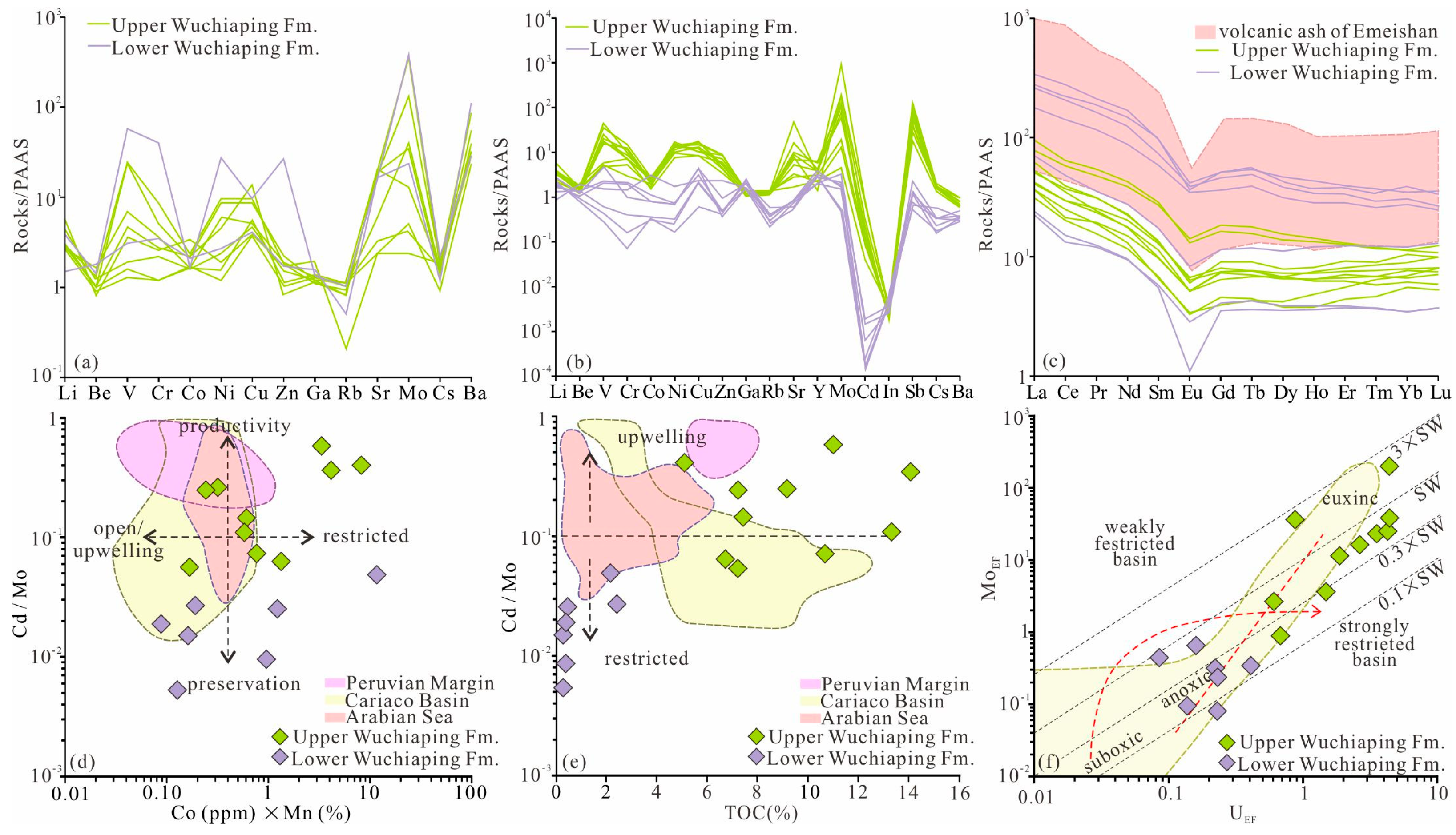
Trace-element redox proxies further document a clear stratigraphic shift in bottom-water redox conditions within the Wuchiaping Formation (Figure 7d,e). The Upper Wuchiaping Formation is characterized by moderate Co × Mn and Cd/Mo ratios (0.17–8.5 and 0.06–0.58), indicating deposition under predominantly suboxic to weakly euxinic water-column redox conditions [26]. Concurrent enrichment of U and Mo, reflected by elevated enrichment factors (UEF = 0.61–4.40, mean 2.50; MoEF = 0.88–198, mean 35.4), indicates efficient sequestration of redox-sensitive trace metals, implying the development of a relatively stable redoxcline and enhanced preservation of organic matter (Figure 7f). In contrast, the Lower Wuchiaping Formation exhibits uniformly low UEF and MoEF values (UEF = 0.09–0.4, mean 0.21; MoEF = 0.09–0.64, mean 0.32), reflecting limited trace-metal enrichment and deposition under weakly reducing to near-oxic conditions. Such redox conditions suggest reduced water-column stratification and diminished organic-matter preservation efficiency.
4.3. Total Organic Carbon Content
The total organic carbon (TOC) content of shales from the Wuchiaping Formation in Well DY1 exhibits pronounced vertical variability (Figure 2). TOC values in the lower member range from 0.06% to 12.27%, with an average of 2.04% (n = 15), whereas the upper member shows substantially higher TOC values of 0.2–15.4%, averaging 5.35% (n = 50). On average, TOC in the upper member is approximately 2.6 times that of the lower member. Laterally, the upper member represents the most organic-rich interval within the Wuchiaping Formation.
4.4. Biomarker Compounds
Biomarkers in crude oil and organic matter originate from the precursor organisms, retaining structural stability during diagenesis and thermal maturation [27]. They preserve information on organic matter sources, palaeo-redox conditions, salinity, and depositional evolution, and thus serve as key indicators in petroleum geochemistry. Here, we analyzed terpanes, hopanes, and steranes of the Wuchiaping Formation using m/z 191, m/z 217, and TIC chromatograms, with peak areas representing relative abundances.
4.4.1. Terpane Distributions
Terpanes are abundant in both intervals and are dominated by C19–C25 homologues. In the Lower Wuchiaping Formation (sample W22), the abundance of 13β(H),14α(H)-C23 terpane (3.64 × 10⁵) is comparable to that of C30 hopane (3.67 × 10⁵), indicating a mixed algal–bacterial organic-matter source deposited under suboxic to weakly reducing conditions (Figure 8). In contrast, the Upper Wuchiaping Formation (sample W34) is characterized by pronounced enrichment of C21 terpane (4.91 × 10⁵) and C24 tetracyclic terpane (8.92 × 10⁴), whereas the abundance of C23 terpane decreases by approximately 63%, reflecting a shift in organic-matter source composition. Concurrently, gammacerane shows a marked increase, with the gammacerane/C30 hopane ratio rising from 0.27 to 0.38, indicating enhanced salinity stratification and the development of a more stable anoxic water column. Such conditions are favorable for the preservation of plankton-derived organic matter and are consistent with intensified water-column stratification in the Upper Wuchiaping Formation( Detailed data are provided in Appendix B).
Figure 8.
Gas chromatographic characteristics of saturated hydrocarbons in shale from the Permian Wuchiaping Formation in the northeastern Sichuan Basin ((a) m/z 191 mass chromatogram of sample W22; (b) m/z 191 mass chromatogram of sample W34; (c) m/z 217 mass chromatogram of sample W22; (d) m/z 217 mass chromatogram of sample W34; (e) TIC mass chromatogram of sample W22; (f) TIC mass chromatogram of sample W34).
The Ts/Tm and Ts/(Ts + Tm) ratios are sensitive indicators of redox conditions. Lower-member values range from 0.68 to 1.03 (avg. 0.88) and 0.40 to 0.51 (avg. 0.46), respectively; upper-member ratios range from 0.46 to 0.92 (avg. 0.65) and 0.32 to 0.48 (avg. 0.38). Most samples plot within the reducing-field thresholds (Ts/Tm < 1.0; Ts/(Ts + Tm) < 0.5; Figure 9a, Detailed data are provided in Appendix A.10), indicating dominantly anoxic depositional conditions.
Figure 9.
Cross-plots and ternary diagrams of biomarker parameters for shale from the Permian Wuchiaping Formation in the northeastern Sichuan Basin. (a) Ts/Tm versus Ts/(Ts + Tm) cross-plot; (b) C27–C28–C29 sterane ternary diagram; (c) Pr/nC17 versus Ph/nC18 discrimination diagram.
4.4.2. Sterane Distributions
Steranes serve as effective indicators of organic matter sources. C29 steranes are typically associated with terrestrial higher plants, whereas C27 steranes suggest algal or low-order aquatic origins [27]. The samples contain abundant steranes (Figure 8c,d), dominated by regular C27, C28, and C29 homologues. In the lower member (W22), C29 sterane (2.22 × 10⁵) exceeds C27 (1.34 × 10⁵) and C28 (1.50 × 10⁵), indicating a relatively stronger terrestrial input. In contrast, the upper member (W34) shows a pronounced increase in C27 sterane (6.44 × 10⁴), reflecting enhanced contributions from algae and plankton (Figure 8b). The C27–C28–C29 ternary plot (Figure 9b) places most samples within the mixed-source region, implying combined terrestrial and aquatic inputs.
4.4.3. Isoprenoids
Pristane (Pr) and phytane (Ph) provide valuable constraints on redox conditions. Lower-member Pr/Ph ratios range from 0.78 to 4.03 (avg. 1.91), corresponding to weakly oxic to weakly reducing conditions (Figure 8e). Pr/nC17 and Ph/nC18 ratios (0.56–0.68, avg. 0.60; and 0.19–0.86, avg. 0.63) predominantly indicate reducing conditions (Figure 9c). Upper-member Pr/Ph values range narrowly between 0.82 and 1.01 (avg. 0.91), consistently below 1.0, implying strongly reducing conditions. Corresponding Pr/nC17 (0.52–0.70, avg. 0.59) and Ph/nC18 (0.63–0.94, avg. 0.82) values reinforce this interpretation (Figure 9c).
5. Discussion
5.1. Clay-Rich Shale of the Lower Member: Low-Productivity–Weak Preservation Organic Matter Suppression System
5.1.1. Direct Evidence of Low Biological Productivity
Micropetrographic observations indicate that shales of the Lower Wuchiaping Formation are nearly devoid of biogenic structures, as systematic whole-rock thin-section analyses reveal no identifiable bioclastic components at the microscopic scale, in sharp contrast to the silica-rich Upper Wuchiaping Formation, where radiolarians and planktic foraminifera are abundant (Figure 6), implying fundamentally different levels of marine primary productivity between the two stratigraphic units. This interpretation is further supported by multiple geochemical proxies that consistently indicate suppressed biological productivity during deposition of the Lower Wuchiaping Formation. In Well DY1, the average Ba/Al ratios (mean 24.33) in the Lower Wuchiaping Formation are lower than those in the Upper Wuchiaping Formation (mean 50.42). Moreover, P/Ti ratios are significantly lower (0.02–0.07; mean 0.05) thanthose observed in the Upper Wuchiaping Formation (0.14–5.38; mean 2.11) (Figure 10, Detailed data are provided in Appendix A.11 and Appendix A.12), indicating relatively subdued primary productivity during deposition of the Lower Wuchiaping Formation. In addition, Cu and Zn concentrations decrease markedly and synchronously in the Lower Wuchiaping Formation (Figure 10), reflecting a diminished capacity for organic matter–metal complexation under low-productivity conditions. The Cd/Mo ratio, a sensitive indicator of surface-water nutrient availability [26], provides further support, as Cd/Mo values in the Lower Wuchiaping Formation are consistently low (0.01–0.05; mean 0.02), well below the threshold commonly associated with biologically productive upwelling systems (>0.15) (Figure 7d,e), and Cd/Mo ratios below 0.1 generally correspond to surface-water nitrate concentrations of less than 1 μM, which are insufficient to sustain phytoplankton blooms [28,29]. The strong concordance between these geochemical signals and the near absence of biogenic components in thin sections demonstrates that marine primary productivity during deposition of the Lower Wuchiaping Formation remained persistently limited.
Figure 10.
Integrated vertical evolution of depositional environment and paleoceanographic conditions in the DY1 well of the Wuchiaping Formation, northeastern Sichuan (δ13Corg data from [9]).
5.1.2. Constraint of Oxidative Conditions on Organic Matter Preservation
Redox conditions exert a primary control on the burial efficiency of organic matter [30,31]. The development of an anoxic–sulfidic interface suppresses aerobic degradation and limits the effectiveness of sulfate-reducing bacterial remineralization, thereby significantly enhancing the preservation of total organic carbon (TOC) [32,33,34]. To reconstruct paleo-redox conditions in the study area, a multi-proxy geochemical approach integrating Ni/Co, U/Th, and enrichment factors of U and Mo (UEF–MoEF) is employed. Specifically, Ni/Co and U/Th ratios are interpreted as follows: oxic conditions (Ni/Co < 5.0, U/Th < 0.75), dysoxic transitional conditions (5.0 ≤ Ni/Co < 7.0, 0.75 ≤ U/Th < 1.25), and anoxic to sulfidic conditions (Ni/Co ≥ 7.0, U/Th ≥ 1.25) [35,36].
Redox-sensitive geochemical proxies indicate that the Lower Wuchiaping Formation in Well DY1 was deposited predominantly under oxic to weakly dysoxic conditions. Ni/Co ratios range from 1.26 to 2.26 (mean 1.88), and U/Th ratios vary between 0.14 and 0.86 (mean 0.37), and their coherent vertical trends (Figure 10) consistently indicate a relatively oxidizing depositional interface. Such bottom-water conditions would have enhanced organic-matter remineralization [37], thereby reducing organic carbon preservation and limiting the enrichment of organic matter in the Lower Wuchiaping Formation.
Biomarker parameters further support this interpretation, as Pr/Ph ratios range from 0.78 to 4.03 (mean 1.91) and are systematically higher than those observed in the Upper Wuchiaping Formation. The maximum value recorded in sample W22 (Pr/Ph = 4.03) suggests that although the water column was generally reducing, intermittent oxidative perturbations were likely present. The Ph/nC18–Pr/nC17 crossplot (Figure 9) corroborates this inference, with most data plotting within the reducing field but displaced toward the weakly oxic endmember, indicating spatial and temporal redox fluctuations.
In addition, Ts/(Ts + Tm) ratios of 0.40–0.51 and Ts/Tm ratios of 0.68–1.03 are approximately 30% higher than those of the Upper Wuchiaping Formation (Figure 9), further implying relatively more oxidizing depositional conditions. Under comparable thermal maturity, higher Ts/(Ts + Tm) and Ts/Tm ratios (commonly > 0.4 and >0.6, respectively) are generally interpreted to reflect more oxic depositional environments, whereas lower values are typically associated with more reducing conditions, thus supporting deposition of the Lower Wuchiaping Formation under relatively well-oxygenated conditions. Gammacerane/C30 hopane ratios of 0.27–0.44, substantially lower than those of the Upper Wuchiaping Formation, indicate weak or absent water-column stratification and a relatively well-oxygenated bottom layer, conditions that would have inhibited organic-matter preservation and thereby account for the consistently low TOC contents observed in the Lower Wuchiaping Formation.
5.2. Siliceous Shales of the Upper Member: A High-Productivity and Strong-Preservation System Driven by Upwelling
5.2.1. Intensification of Upwelling and the Development of a High-Productivity System
Upwelling is primarily driven by wind-stress curl and modulated by shelf and seafloor topography, whereas sea-surface temperature, background circulation, and geographic setting indirectly affect its intensity and spatial distribution. The upward transport of nutrient-rich deep waters into the photic zone markedly enhances primary productivity, as illustrated by the Peru upwelling system [26,38,39]. During the Wuchiapingian, the South China Block was situated within the equatorial convergence zone along the eastern Paleo-Tethys margin, where persistent northeasterly trade winds and westward boundary currents jointly facilitated the development of an equatorial upwelling system. This paleoceanographic configuration has been validated through paleomagnetic evidence and climate modeling [28,40]. At this time, northeastern Sichuan was connected to the open marine realm, allowing regional basins to be directly influenced by large-scale oceanic circulation and upwelling-derived nutrient supply [7]. Such a large-scale upwelling regime would have supplied continuous nutrient inputs, fostering a high-productivity marine ecosystem [41,42,43].
Upwelling-related nutrient enrichment favors the proliferation of planktonic organisms, such as phytoplankton, planktic foraminifera, and radiolarians, leading to elevated primary productivity in the surface ocean [44]. Based on quantitative analyses of benthic and planktonic fossil assemblages, the Lower Wuchiaping Formation contains very low fossil abundances. In the lower part of the Upper Wuchiaping Formation, benthic ostracods dominate the assemblage, whereas in the upper part, planktonic foraminifera and radiolarians increase significantly, accompanied by a marked decline in benthic organisms. Consequently, the fossil assemblage is characterized by a planktonic siliceous-dominated association (Figure 10). The abundant occurrence of planktic foraminifera and radiolarians in the siliceous shales of the Upper Wuchiaping Formation provides a clear biological record of elevated paleoproductivity (Figure 6 and Figure 10) and closely resembles upwelling-related fossil assemblages documented from the Barnett Shale [45]. Quantitative fossil counts (Figure 10) further demonstrate a strong positive correlation between fossil abundance and TOC, indicating that organic-matter enrichment in the Upper Wuchiaping Formation was predominantly driven by enhanced primary productivity associated with upwelling processes.
Inorganic geochemical proxies provide further evidence for the development of an upwelling-driven, high-productivity system. The Upper Wuchiaping Formation contains abundant laminae of authigenic apatite, with individual laminae thicknesses of 0.2–1.5 mm and contents ranging from 1.70 to 7.40 wt% (average 4.67%), a feature that is characteristic of high-productivity upwelling environments such as the modern Peru margin [39,45,46]. In addition, nutrient-related elemental proxies, including Ba/Al, P/Ti, Cu, and Zn, are significantly enriched in the Upper Wuchiaping Formation and show positive correlations with radiolarian abundance (Figure 10), collectively indicating sustained nutrient replenishment in surface waters and persistently elevated primary productivity associated with intensified upwelling.
The Upper Wuchiaping Formation is characterized by systematically elevated Cd/Mo ratios (0.06–0.58, mean 0.23), indicating enhanced nutrient availability in surface waters and increased primary productivity. In addition, Co × Mn covariation indicates that a subset of samples from the Upper Wuchiaping Formation plots within the upwelling discrimination field (Co × Mn < 0.4; Figure 7), suggesting a close linkage between nutrient supply and upwelling processes. These proxy signals are comparable to those documented in modern, well-developed upwelling systems, such as the Cariaco Basin, the Peruvian Margin, and the Arabian Sea, which are characterized by high productivity and efficient organic carbon accumulation in sediments [26]. Stratigraphically, all upwelling- and productivity-related proxies display consistently higher values in the Upper Wuchiaping Formation than in the Lower Wuchiaping Formation (Figure 10), forming a coherent chain of geochemical evidence supporting deposition of the Upper Wuchiaping Formation under an upwelling-intensified regime characterized by high primary productivity and enhanced organic-matter preservation.
A pronounced negative excursion in δ13Corg is recorded in the Upper Wuchiaping Formation (Figure 10), providing additional evidence for intensified upwelling. Upwelling can transport oxygen-depleted deep waters characterized by low δ13C values into the surface ocean, thereby inducing a negative shift in organic carbon isotopic compositions [47]. In addition, the influx of isotopically light CO2 associated with Late Permian deep-sea volcanism may have acted as a secondary factor, further amplifying the negative δ13Corg excursion at a broader, global scale [9,13]. The vertical δ13Corg variations observed in Well DY1 are therefore interpreted to reflect a response to enhanced upwelling driven by marine transgression associated with the expansion of the Paleo-Tethys Ocean [17].
5.2.2. Enhanced Preservation of Organic Matter Under Anoxic–Sulfidic Conditions
In the Upper Wuchiaping Formation of Well DY1, shale samples display Ni/Co ratios ranging from 11.40 to 25.05 (mean 15.83), representing an approximately 8.7 fold increase relative to the Lower Wuchiaping Formation (Figure 10). U/Th ratios in the Upper Wuchiaping Formation vary between 1.29 and 9.37 (mean 5.16), which are markedly higher than those of the Lower Wuchiaping Formation and correspond to an overall increase of approximately 17.8 times. In addition, the covariation pattern between UEF and MoEF (Figure 7f) shows that samples from the Upper Wuchiaping Formation cluster predominantly within the field defined by UEF > 0.5 and MoEF > 0.8, indicating deposition under persistently strongly reducing and locally euxinic, water-column conditions.
Biomarker evidence provides independent confirmation of redox conditions. The consistently low Pr/Ph ratios in the Upper Wuchiaping Formation (0.82–1.01; mean 0.91) indicate strongly reducing depositional conditions. In the Ph/nC18–Pr/nC17 crossplot (Figure 9c), samples cluster within the algal-dominated, reducing-field domain, suggesting stable anoxic conditions during deposition. Additional redox-sensitive parameters, including Ts/(Ts + Tm) ratios of 0.32–0.48 and Ts/Tm ratios of 0.46–0.92 (Figure 9a), further support a reducing depositional environment. Moreover, the markedly elevated gammacerane/C30 hopane ratio in sample W34 (3.81), far exceeding values observed in the Lower Wuchiaping Formation, indicates pronounced water-column stratification and the development of persistent anoxic, and potentially sulfidic, bottom-water conditions, which are highly favorable for organic matter preservation.
Sedimentological observations further corroborate these geochemical signals. Abundant framboidal pyrite identified in core samples and SEM–EDS images (Figure 5e,g,h) indicates rapid syngenetic formation under strongly reducing to sulfidic conditions. Collectively, these sedimentological and geochemical lines of evidence demonstrate the establishment of a stable sulfidic–anoxic interface within the Upper Wuchiaping Formation, which effectively suppressed organic matter degradation. Consequently, the Upper Wuchiaping Formation exhibits a high average TOC content of 9.2%, indicating that redox conditions constituted a primary control on organic matter enrichment in the DY1 core.
5.3. Organic Matter Sources and Enrichment Patterns
5.3.1. Sources of Organic Matter
Biomarker characteristics provide essential evidence for reconstructing the organic matter sources and depositional evolution of the Wuchiaping Formation shale. The Pr/Nc17–Ph/nC18 diagram effectively distinguishes between terrestrial higher-plant and aquatic algal inputs, whereas the distribution of steranes (C27, C28, C29) further constrains the specific sources. Upper-member samples of the Wuchiaping Formation plot predominantly within the algal-dominated field on the Pr/nC17–Ph/nC18 diagram (Figure 9), indicating that aquatic algae represent the principal contributors to organic matter. Sterane compositions corroborate this inference: although C29 sterane remains dominant (45.1–46.3%), the significantly elevated C27 sterane (up to 33.3%) reflects a mixed contribution from aquatic algae and terrestrial sources, with autochthonous aquatic organisms playing the major role. Tricyclic terpane distributions further support this interpretation, with C23/C24 ratios consistently ranging from 1.97 to 2.49, typical of planktonic input; in several samples (e.g., W28), C20/C23 > 1 suggests enhanced bacterial activity, adding complexity to upper-member organic matter sources.
In contrast, lower-member samples exhibit increased terrestrial plant influence on the Pr/nC17–Ph/nC18 diagram, although some samples (e.g., W22) retain a notable algal contribution, indicating spatial heterogeneity in organic matter sources. Sterane distributions also show pronounced dominance of C29 sterane over C27 and C28 (Figure 8), suggesting that terrestrial higher plants served as the primary contributors during deposition of the lower member. Although the C23/C24 and C20/C23 ratios of tricyclic terpanes display similar ranges in both members, variations in relative contributions indicate that both intervals received mixed algal–bacterial inputs but with distinct source structures.
Intense volcanism associated with the Late Permian Emeishan Large Igneous Province (ELIP) exerted a profound influence on regional marine–atmospheric systems by enhancing water-column stratification, intensifying anoxia, and redistributing nutrients [48]. These coupled perturbations promoted the proliferation of algal and bacterial communities. The predominance of algal-derived organic matter in the Upper Wuchiaping Formation is therefore interpreted to reflect enhanced nutrient availability and redox instability induced by the persistent input of acidic volcanic ash during the late stage of ELIP activity [48]. In contrast, the strengthened terrestrial organic-matter signature in the Lower Wuchiaping Formation is unlikely to have resulted solely from increased detrital influx from basin margins. Instead, it is more plausibly linked to the influence of early Wuchiapingian basaltic eruptions during the main stage of ELIP activity, which supplied mafic materials and coincided with relatively shallow-water depositional conditions that facilitated the transport and preservation of terrestrial plant debris. Accordingly, contrasting volcanic regimes, characterized by mafic dominance during deposition of the Lower Wuchiaping Formation and intensified acidic ash input during deposition of the Upper Wuchiaping Formation, collectively governed the temporal evolution of organic-matter source composition.
Overall, integrated biomarker evidence demonstrates pronounced differences in organic-matter sources between the Lower and Upper Wuchiaping Formations. Organic matter in the Upper Wuchiaping Formation is dominated by autochthonous algal–bacterial inputs, whereas the Lower Wuchiaping Formation is characterized by a predominance of terrestrial higher-plant material. When integrated with regional tectonic evolution and the volcanic background of the Emeishan Large Igneous Province, these results provide a robust framework for understanding the mechanisms of organic-matter enrichment and their genetic linkage to major Late Permian geological events.
5.3.2. Analysis of Key Controlling Factors
To systematically elucidate the dominant controls on organic-matter enrichment in the Wuchiaping Formation shales, correlation analysis was conducted to quantify the relationships between TOC contents and a suite of geochemical proxies, including redox indicators (Ni/Co, U/Th, MoEF, and UEF), upwelling-related parameters (Co (ppm)-Mn (%) and Cd/Mo), and paleoproductivity indices (Ba/Al and P/Ti) (Figure 11). This approach enables an evaluation of the relative contributions of paleoproductivity, redox conditions, and upwelling intensity within a vertically differentiated framework. Given the pronounced contrast in TOC values between the upper and lower intervals of the Wuchiaping Formation, the regression intercept was fixed at zero during calculation of R2 to minimize artificial offset effects and to better represent the intrinsic linear relationships and their geological significance.
Figure 11.
Relationships between geochemical elemental proxies and TOC in shales of the Wuchiaping Formation, northeastern Sichuan ((a). Cross plot of TOC vs. Ni/Co; (b). Cross plot of TOC vs. U/Th; (c). Cross plot of TOC vs. UEF; (d). Cross plot of TOC vs. MEF; (e). Cross plot of TOC vs. Co × Mn; (f). Cross plot of TOC vs. Cd/Mo; (g). Cross plot of TOC vs. Ba/Al; (h). Cross plot of TOC vs. P/Ti).
Redox conditions exert a primary control on organic-matter enrichment. Both Ni/Co and uranium enrichment factors (UEF) show strong positive correlations with TOC (R2 = 0.90 and 0.59, respectively), indicating that intensified oxygen-deficient conditions (Ni/Co > 10; UEF > 0.5) substantially enhanced organic-matter preservation. In contrast, U/Th and molybdenum enrichment factors (MoEF) exhibit weaker correlations with TOC (R2 = 0.55 and 0.21), likely reflecting dilution effects associated with increased terrigenous input. Nevertheless, vertical comparisons demonstrate that TOC values and multiple redox-sensitive proxies (Ni/Co, U/Th, UEF, and MoEF) are consistently higher in the Upper Wuchiaping Formation than in the Lower Wuchiaping Formation (Figure 10). This systematic pattern supports the interpretation that organic-matter accumulation in the Upper Wuchiaping Formation was primarily governed by overall strongly reducing depositional conditions.
Upwelling processes also played an important role in regulating organic-matter enrichment. Correlation analyses show that TOC exhibits a weak relationship with Co (ppm)–Mn(%) (R2 = 0.17) but a moderate to strong positive correlation with Cd/Mo (R2= 0.64). Elevated TOC values are generally associated with lower Co–Mn ratios (< 0.4) and higher Cd/Mo values (> 0.1), indicating intensified upwelling that enhanced nutrient supply to surface waters, thereby stimulating primary productivity and increasing the downward flux of organic matter to the sediment. Among the paleoproductivity proxies, Ba/Al displays a strong positive correlation with TOC (R2 = 0.75), suggesting that enhanced primary productivity was a key driver of organic carbon enrichment in the Wuchiaping Formation. In contrast, the relationship between P/Ti and TOC is relatively weaker (R2= 0.49), likely reflecting diagenetic remobilization and recycling of phosphorus, which may partially obscure its direct linkage to primary productivity signals.
Based on these quantitative relationships, the Upper and Lower Wuchiaping formations display systematic contrasts in fossil assemblages, sedimentological characteristics, and trace-element geochemical responses (Table 1). The Upper Wuchiaping Formation, represented by siliceous shale, is characterized by abundant planktonic fossils, widespread development of stratiform apatite, pronounced enrichment in Ba/Al and P/Ti ratios, and elevated Cd/Mo, U enrichment factors (UEF), and Mo enrichment factors (MoEF). Collectively, these features indicate deposition under persistently intensified upwelling conditions, associated with high primary productivity and efficient organic-matter preservation under strongly reducing redox conditions. In contrast, the Lower Wuchiaping Formation, dominated by clay-rich shale, exhibits weak planktonic fossil signals, generally low concentrations of nutrient-related and redox-sensitive elements, and limited geochemical evidence for upwelling influence, reflecting reduced primary productivity and relatively more oxic bottom-water conditions. The coherent vertical variation of multiple independent proxies demonstrates that organic-matter enrichment in the Wuchiaping Formation was governed by the coupled effects of paleoproductivity, redox conditions, and upwelling intensity. Specifically, the Upper Wuchiaping Formation records a high-productivity, strongly reducing preservation regime, whereas the Lower Wuchiaping Formation reflects limited organic-matter accumulation under low-productivity and weakly reducing conditions.
Table 1.
Integrated comparison of depositional conditions and organic-matter enrichment between the Lower and Upper Wuchiaping Formation in the northeastern Sichuan Basin.
5.3.3. Differential Enrichment Patterns of Organic Matter
To elucidate the contrasting mechanisms of organic matter enrichment in the upper and lower members of the Wuchiaping Formation, we propose a conceptual model that integrates upwelling dynamics with water-column redox stratification processes (Figure 12).
Figure 12.
Conceptual model illustrating organic matter enrichment in the Wuchiaping Formation of northeastern Sichuan ((a). Vertical changes in sedimentary environment; (b). Planar model diagram of the upper Wujiaping Formation; (c). Planar model diagram of the lower Wujiaping Formation; (d). Stereoscopic model diagram of the upper Wujiaping Formation; (e). Stereoscopic model diagram of the lower Wujiaping Formation).
- The Lower Wuchiaping Formation: a low-productivity and strongly oxic depositional system.
The clay-rich shale of the lower member (Figure 12a,c) was deposited under predominantly oxic marine conditions. Low Ni/Co (mean 1.88) and U/Th (mean 0.37) ratios indicate elevated dissolved oxygen levels and the absence of a stable redoxcline. Under such conditions, organic matter was persistently exposed to oxidative degradation during early diagenesis. In addition, low Ba/Al ratios (mean 24.33) reflect subdued primary productivity. Together, these factors established a coupled “low-productivity–strong-oxidation” constraint on organic matter accumulation [46,49].
This depositional pattern corresponds closely to the regional tectonic setting. During the late Guadalupian (~260 Ma), the Yangtze Craton was strongly influenced by the main stage of basaltic volcanism associated with the Emeishan Large Igneous Province (ELIP). Enhanced activity along major faults promoted basin extension and sedimentary differentiation, facilitating substantial input of basalt-derived detrital material into the basin. The PAAS-normalized REE patterns, characterized by pronounced negative Eu anomalies and basalt-like signatures, further confirm the dominance of basalt-derived material during deposition of the Lower Wuchiaping Formation.
- The Upper Wuchiaping Formation: a high-productivity and strongly anoxic–sulfidic system.
In contrast, the silica-rich shale of the Upper Wuchiaping Formation (Figure 12b,d) was deposited under persistently anoxic–sulfidic conditions. Elevated redox proxy values indicate the establishment of a stable reducing water column, which substantially enhanced organic matter preservation. Concurrently, the study area was strongly influenced by intensive coastal upwelling driven by prevailing trade winds and extension-related basin circulation. Continuous entrainment of nutrient-rich deep waters into the photic zone stimulated vigorous blooms of algae and siliceous plankton [50,51].
Silica was derived from multiple sources, including biogenic silica produced by radiolarians and sponge spicules, volcanic ash supplied by late-stage acidic eruptions of the Emeishan Large Igneous Province, and hydrothermal silica released along deep-seated fault systems [52,53]. These inputs not only enhanced nutrient availability but also reinforced water-column stratification, thereby promoting the persistence of anoxic–sulfidic conditions.
- Validation from biomarker evidence.
Biomarker assemblages are fully consistent with this depositional framework. The Lower Wuchiaping Formation is dominated by C29 steranes, indicating enhanced terrestrial higher-plant input, which is consistent with deposition in a relatively shallow, oxic environment influenced by increased detrital influx. In contrast, the Upper Wuchiaping Formation is characterized by elevated Ph/Nc18 ratios, significantly higher abundances of C27 steranes, and persistently high C23/C24 tricyclic terpane ratios, reflecting an algal–microbial-dominated “high-productivity–strong-preservation” system driven by intensified upwelling and persistent anoxia.
The pronounced vertical heterogeneity in organic-matter enrichment within the Wuchiaping Formation indicates that Late Permian depositional evolution was not governed solely by the direct effects of Emeishan Large Igneous Province (ELIP) volcanism, but instead reflects a coupled response among volcanic activity, oceanographic processes, and marine biological productivity. During deposition of the Lower Wuchiaping Formation, frequent mafic eruptions combined with predominantly oxic water-column conditions constrained organic-matter preservation. In contrast, the Upper Wuchiaping Formation records a transition toward felsic–hydrothermal volcanic activity, accompanied by intensified upwelling and the establishment of persistent water-column stratification, which collectively enhanced nutrient supply, promoted recovery of primary productivity, and facilitated sustained organic carbon accumulation. These results highlight upwelling intensification, within the broader ELIP framework, as a critical linkage between large-scale volcanic–tectonic processes and marine productivity evolution. By integrating regional sedimentary records with global environmental change, this study provides new sedimentological and geochemical constraints on marine carbon cycling, productivity recovery, and organic-matter enrichment following the Guadalupian biotic crisis.
6. Conclusions
This study demonstrates that organic-matter enrichment in the Wuchiaping Formation was governed by the coupled effects of primary productivity, redox conditions, and water-column stratification, rather than by a single controlling factor. A pronounced vertical contrast is observed between the Lower and Upper Wuchiaping Formations, reflecting fundamentally different depositional regimes during the Late Permian.
The Lower Wuchiaping Formation records a low-productivity system characterized by limited nutrient supply, weak upwelling influence, and predominantly oxic to weakly reducing bottom-water conditions, which collectively resulted in inefficient organic-matter preservation. In contrast, the Upper Wuchiaping Formation was deposited under intensified upwelling conditions, with sustained nutrient input, elevated marine primary productivity, and the development of a stable anoxic–sulfidic chemocline, leading to efficient organic carbon burial.
This stepwise transition from a “low-productivity–weak preservation” system to a “high-productivity–strong preservation” system reflects a major reorganization of marine environments during the Late Permian. Although volcanism associated with the Emeishan Large Igneous Province exerted an important influence, organic-matter enrichment was ultimately controlled by the integrated response of volcanic forcing, ocean circulation, and biological productivity, particularly through upwelling-driven nutrient redistribution and enhanced water-column stratification.
The Wuchiaping Formation therefore provides a robust sedimentary record of upwelling intensification along the eastern margin of the Paleo-Tethys Ocean and highlights the critical role of marginal upwelling systems in regulating marine productivity, redox structure, and organic carbon burial during periods of environmental instability. These findings offer new constraints on Late Permian oceanic reorganization and contribute to a broader understanding of how large igneous province-related volcanic–tectonic events can influence marine carbon cycling at regional to potentially global scales.
Author Contributions
Conceptualization, H.T. and S.Z.; methodology, H.T. and S.Z.; software, H.T.; validation, H.T. and H.C.; formal analysis, H.T.; investigation, H.T. and Z.S.; resources, S.Z.; data curation, H.T.; writing—original draft preparation, H.T.; writing—original draft preparation, H.T., S.Z., H.C. and Q.Z.; writing—review and editing, H.T., S.Z. and H.C.; visualization, H.T.; supervision, S.Z.; project administration, S.Z.; funding acquisition, S.Z. and Z.J. All authors have read and agreed to the published version of the manuscript. All authors have read and agreed to the published version of the manuscript.
Funding
This research was funded by the National Natural Science Foundation of China under Grant No. 42272109.
Data Availability Statement
The data that supports the findings of this study are available.
Acknowledgments
The authors gratefully acknowledge the Southwest Oil and Gas Field Exploration and Development Research Institute for providing the samples used in this study. We also extend our sincere thanks to the three anonymous reviewers for their constructive comments and valuable suggestions, which have greatly improved the quality and clarity of this manuscript. Our appreciation also goes to the editor for the time and effort dedicated to handling this paper.
Conflicts of Interest
The authors declare no conflicts of interest.
Appendix A
Appendix A.1
Table A1.
This table provides the data for Well WT1 that are shown in Figure 2.
Appendix A.2
Table A2.
This table provides the data for Well DY 1 that are shown in Figure 2.
Appendix A.3
Table A3.
Major element data for Well DY1 used in Figure 2.
Appendix A.4
Table A4.
Major element and clay mineral data for Well FT1 used in Figure 2.
Appendix A.5
Table A5.
Mineral composition data presented in Figure 4.
Appendix A.6
Table A6.
Trace element data for Well WT1 in Figure 7a.
Appendix A.7
Table A7.
Trace element data for Well DY1 in Figure 7b.
Appendix A.8
Table A8.
Rare earth element (REE) data for Well DY1 in Figure 7c.
Appendix A.9
Table A9.
Data for (d) Covariation diagram of Co (ppm)–Mn (%) versus Cd/Mo; (e) Cross-plot of Cd/Mo versus TOC; and (f) Cross-plot of Mo enrichment factor (MoEF) versus U enrichment factor (UEF) in Figure 7.
Appendix A.10
Table A10.
Biomarker and ratio data in Figure 9.
Appendix A.11
Table A11.
Data in Figure 10.
Appendix A.12
Table A12.
Fossil abundance data in Figure 10.
Appendix B
Table A13.
Biomarker compounds analyzed in this study (Appendix for Section 4.4: Biomarker Compounds).
References
- Lai, X.-L.; Wang, W.; Wignall, P.B.; Bond, D.P.G.; Jiang, H.-S.; Ali, J.R.; Sun, Y.-D. Palaeoenvironmental change during the end-Guadalupian mass extinction. Palaeogeogr. Palaeoclimatol. Palaeoecol. 2008, 269, 78–93. [Google Scholar] [CrossRef] [Scilit]
- Shen, J.; Schoepfer, S.D.; Feng, Q.-L.; Zhou, L.; Yu, J.-X.; Song, H.-Y.; Wei, H.-Y.; Algeo, T.J. Marine productivity changes during the end-Permian crisis. Earth-Sci. Rev. 2015, 149, 136–162. [Google Scholar] [CrossRef] [Scilit]
- Peng, Y.; Zheng, M.-P.; Zhang, Y.-S.; Xing, E.-Y.; Gui, B.-L.; Zuo, F.-F. Geochronology and geochemistry of lithium-rich tuffs in the Sichuan Basin, western Yangtze. Geosci. Front. 2023, 14, 101480. [Google Scholar] [CrossRef] [Scilit]
- Zhang, L.-J.; Buatois, L.A.; Mángano, M.G.; Gong, Y.-M.; Feng, Q.-L.; Qi, Y.-A.; Luo, M.; Zhang, X. Uppermost Permian trace fossils along a shelf-to-slope transect in South China and their implications for oceanic redox evolution and extinction pattern. Glob. Planet. Change 2018, 169, 97–111. [Google Scholar] [CrossRef] [Scilit]
- Dougal, A.J.; Wignall, P.B.; Bond, D.P.G.; Sun, Y.-D.; Lai, X.-L.; Hallam, A. Submarine palaeoenvironments during Emeishan flood basalt volcanism, SW China. Palaeogeogr. Palaeoclimatol. Palaeoecol. 2016, 441, 65–73. [Google Scholar] [CrossRef] [Scilit]
- Xiao, W.; Zhang, B.; Yang, K.; Wang, Y.; Wen, S.; Ma, K.; Cao, G. Geochemical characteristics of the Upper Permian Longtan Formation from northeastern Sichuan Basin: Implications for the depositional environment and organic matter enrichment. Acta Geol. Sin. 2023, 97, 1196–1213. [Google Scholar] [CrossRef] [Scilit]
- Hengye, W.; Die, H.; Zhen, Q.; Zhang, X.; Liu, W.; Kong, W.; Ahmed, M. Sedimentary and geochemical characteristics of organic-rich rocks in the Upper Permian of northern Sichuan–western Hubei areas, South China. J. Sediment. Res. 2024, 42, 719–798. [Google Scholar] [CrossRef]
- Zou, H.; Hu, C.H.; Santosh, M.; Chen, H.F.; Huang, C.C.; Chen, X.W.; Li, H.K.; Jin, X.; Yu, L.M.; Li, M. Crust-derived felsic magmatism in the Emeishan Large Igneous Province: New evidence from zircon U–Pb–Hf–O isotopes from the Yangtze Block, China. Geosci. Front. 2022, 13, 101369. [Google Scholar] [CrossRef] [Scilit]
- Yu, M.-X.; Zhao, J.-H.; Liu, K.-Y.; Hu, Q.-H.; Wu, W.; Liu, Q.-Y.; Jin, Z.-J. Paleoenvironment and organic matter enrichment in the Kaijiang–Liangping Trough. Mar. Pet. Geol. 2025, 181, 107517. [Google Scholar] [CrossRef] [Scilit]
- Lin, L.-B.; Yu, Y.; Zhai, C.-B.; Li, Y.-H.; Wang, Y.-N.; Liu, G.-X.; Guo, Y.; Gao, J. Paleogeography and shale development of the Longtan Formation. Mar. Pet. Geol. 2018, 95, 67–81. [Google Scholar] [CrossRef] [Scilit]
- Wang, Y.; Cao, J.; Zhang, B.-L.; Hu, G.; Liu, J.-C.; Zhang, B.; Liao, Z.-W.; Xiao, D. Effects of the Emeishan Large Igneous Province on organic matter accumulation. Sediment. Geol. 2023, 452, 111862. [Google Scholar] [CrossRef] [Scilit]
- Dai, S.; Ward, C.R.; Graham, I.T.; French, D.; Hower, J.C.; Zhao, L.; Wang, X. Altered volcanic ashes in coal and coal-bearing sequences: A review of their nature and significance. Earth-Sci. Rev. 2017, 175, 44–74. [Google Scholar] [CrossRef] [Scilit]
- Deng, X.-S.; Yang, J.-H.; Cawood, P.A.; Wang, X.; Du, Y.-S.; Huang, Y.; Lu, S.-F.; He, B. Detrital record of late-stage silicic volcanism in the Emeishan Large Igneous Province. Gondwana Res. 2020, 79, 197–208. [Google Scholar] [CrossRef] [Scilit]
- Xiang, F.; Yu, X.-T.; Huang, H.-X.; Zhang, D.-Y.; Zhu, X. Mineralogy and diagenesis of Permian marine tuffaceous deposits, Sichuan Basin. Mar. Pet. Geol. 2021, 123, 104744. [Google Scholar] [CrossRef] [Scilit]
- Shen, J.-J.; Wang, P.-W.; Chen, K.-Q.; Zhang, D.-T.; Wang, Y.-M.; Cai, Q.-S.; Meng, J.-H. Volcanic activity and shale organic matter enrichment during the Ordovician–Silurian transition. Palaeogeogr. Palaeoclimatol. Palaeoecol. 2021, 577, 110551. [Google Scholar] [CrossRef] [Scilit]
- Zhang, B.-L.; Wignall, P.B.; Yao, S.; Hu, W.-X.; Liu, B. Collapsed upwelling and intensified euxinia in response to climate warming during the Capitanian (Middle Permian) mass extinction. Gondwana Res. 2021, 90, 31–46. [Google Scholar] [CrossRef] [Scilit]
- Yu, Y.-M.; Li, P.-P.; Guo, R.-X.; Zhao, Y.-Z.; Li, S.; Zou, H.-Y. Upwelling-induced organic matter enrichment of the Upper Permian Dalong Formation. Palaeogeogr. Palaeoclimatol. Palaeoecol. 2021, 576, 110510. [Google Scholar] [CrossRef] [Scilit]
- Huang, H.-Y.; He, D.-F.; Li, Y.-Q.; Li, D.; Zhang, Y.-Y.; Chen, J.-J. Late Permian tectono-sedimentary setting of the Upper Yangtze region. J. Asian Earth Sci. 2021, 205, 104599. [Google Scholar] [CrossRef] [Scilit]
- Li, M.-L.; Yang, B.-Y.; Qiu, L.; Zhang, Y.-J.; Xu, H.; Shi, X.-B.; Tian, W.-X.; Wang, Y.; Gao, J.; Zheng, D.-S. Emeishan felsic volcanism lasting until the Changhsingian. J. Asian Earth Sci. 2022, 238, 105390. [Google Scholar] [CrossRef] [Scilit]
- Bagherpour, B.; Hugo, B.; Yuan, D.-X.; Marc, L.; Zhang, C.; Shen, S.-Z. Early Wuchiapingian drowning event in the South China Block suggests a late eruptive phase of the Emeishan Large Igneous Province. Glob. Planet. Change 2018, 169, 119–132. [Google Scholar] [CrossRef] [Scilit]
- Wu, W.; Liu, W.; Mou, C.; Liu, H.; Qiao, Y.; Pan, J.; Ning, S.; Zhang, X.; Yao, J.; Liu, J. Organic-rich siliceous rocks in the Upper Permian Dalong Formation (NW Middle Yangtze): Provenance, paleoclimate, and paleoenvironment. Mar. Pet. Geol. 2021, 123, 104728. [Google Scholar] [CrossRef] [Scilit]
- Yang, Y.; Wang, H.; Xie, J.-R.; Sun, H.-F.; Zhang, B.-J.; Ming, Y.; Zhao, R.-R.; Ye, Y.-H.; Xu, L.; Dai, X.; et al. Exploration breakthroughs and prospects of Permian marine shale gas in the Kaijiang–Liangping Trough. Nat. Gas Ind. 2023, 43, 19–27. [Google Scholar] [CrossRef]
- Takashima, R.; Selby, D.; Yamanaka, T.; Kuwahara, Y.; Nakamura, H.; Sawada, K.; Ikeda, M.A.; Ando, T.; Hayashi, K.; Nishida, M.; et al. Large igneous province activity drives oceanic anoxic event 2 environmental change in eastern Asia. Commun. Earth Environ. 2024, 5, 85. [Google Scholar] [CrossRef] [Scilit]
- Zhang, Y.; Lyu, C.; Gao, X.; Dang, Z.; Sun, Z.; Zhou, Q.; Chen, G. Geochemical characteristics and organic matter accumulation of Wufeng–Longmaxi shales in the southeast of the Sichuan Basin, South China. Geofluids 2022, 2022, 7360065. [Google Scholar] [CrossRef] [Scilit]
- Li, C.-Q.; Cui, Y.-X.; Ning, M.; Li, C.; Xing, C.-C.; Xia, P.; Dong, L. Can Eu anomaly indicate a hydrothermal Si source? Front. Earth Sci. 2022, 10, 932263. [Google Scholar] [CrossRef] [Scilit]
- Sweere, T.; van den Boorn, S.; Dickson, A.J.; Reichart, G.-J. Definition of new trace-metal proxies for the controls on organic matter enrichment in marine sediments based on Mn, Co, Mo and Cd concentrations. Chem. Geol. 2016, 441, 235–245. [Google Scholar] [CrossRef] [Scilit]
- Peters, K.E.; Walters, C.C.; Moldowan, J.M. The Biomarker Guide, 2nd ed.; Cambridge University Press: Cambridge, UK, 2005. [Google Scholar]
- Zhang, B.-L.; Cao, J.; Mu, L.; Yao, S.-P.; Hu, W.-X.; Huang, H.; Lang, X.-G.; Liao, Z.-W. The Permian chert event in South China. Earth-Sci. Rev. 2023, 244, 104513. [Google Scholar] [CrossRef] [Scilit]
- Poulton, S.W.; Henkel, S.; März, C. Continental-weathering control on orbitally driven redox–nutrient cycling during OAE 2. Geology 2015, 43, 963–966. [Google Scholar] [CrossRef] [Scilit]
- Rakociński, M.; Kucharczyk, J.; Pisarzowska, A.; Zatoń, M.; Marynowski, L.; Hartenfels, S.; Becker, R.T. Redox changes and mercury signatures during the Lower Alum Shale Event. Glob. Planet. Change 2023, 227, 104013. [Google Scholar] [CrossRef] [Scilit]
- Ge, Y.-Z.; Algeo, T.J.; Wen, H.-G.; Zhang, C.; Ma, Y.; Lian, C. Dynamics of Tethyan marine deoxygenation and relationship to S–N–P cycles during the Permian–Triassic boundary crisis. Earth-Sci. Rev. 2023, 247, 104576. [Google Scholar] [CrossRef] [Scilit]
- Taylor, S.R.; McLennan, S.M. The Continental Crust: Its Composition and Evolution—An Examination of the Geochemical Record Preserved in Sedimentary Rocks; Blackwell Scientific Publications: Oxford, UK, 1985; pp. 1–312. [Google Scholar]
- Tribovillard, N.; Algeo, T.J.; Lyons, T.W.; Riboulleau, A. Trace metals as paleoredox and paleoproductivity proxies. Chem. Geol. 2006, 232, 12–32. [Google Scholar] [CrossRef] [Scilit]
- Algeo, T.J.; Maynard, J.B. Trace-element behavior and redox facies in core shales of Upper Pennsylvanian Kansas-type cyclothems. Chem. Geol. 2004, 206, 289–318. [Google Scholar] [CrossRef] [Scilit]
- Mouro, L.D.; Rakociński, M.; Marynowski, L.; Pisarzowska, A.; Musabelliu, S.; Zatoń, M.; Carvalho, M.A.; Fernandes, A.C.; Waichel, B.L. Benthic anoxia, intermittent photic zone euxinia and elevated productivity during deposition of the Lower Permian, post-glacial fossiliferous black shales of the Paraná Basin, Brazil. Glob. Planet. Change 2017, 158, 155–172. [Google Scholar] [CrossRef] [Scilit]
- Algeo, T.J.; Tribovillard, N. Environmental analysis of paleoceanographic systems based on molybdenum–uranium covariation. Chem. Geol. 2009, 268, 11–22. [Google Scholar] [CrossRef] [Scilit]
- Rimmer, S.M. Geochemical paleoredox indicators in Devonian–Mississippian black shales, Central Appalachian Basin. Chem. Geol. 2004, 206, 373–391. [Google Scholar] [CrossRef] [Scilit]
- Liu, W.; Zhang, X.; Qiao, Y.; Xu, Y.; Mou, C.; Wu, W.; Yao, J. Climate-driven paleoceanography change controls on petrology and organic matter accumulation in the Upper Permian Dalong Formation, western Hubei Province, southern China. Sediment. Geol. 2022, 440, 106259. [Google Scholar] [CrossRef] [Scilit]
- Cañadas, F.C.; Papineau, D.; Algeo, T.J.; Li, C. Upwelling-driven high organic production in the late Ediacaran. Commun. Earth Environ. 2024, 5, 461. [Google Scholar] [CrossRef] [Scilit]
- Zhang, B.; Yao, S.; Hu, W.; Han, Z.; Liao, Z.; Liu, B.; Mu, L. Middle Permian palaeoceanographic evolution and organic matter accumulation. Int. J. Coal Geol. 2022, 264, 104132. [Google Scholar] [CrossRef] [Scilit]
- Adamu, C.I.; Omang, B.O.; Oyetade, O.P.; Johnson, O.; Nganje, T.N. Trace and rare earth element geochemistry of the black and grey shales of the Calabar Flank, southeastern Nigeria: Constraints on the depositional environment and degree of metal enrichment. Acta Geochim. 2021, 40, 312–324. [Google Scholar] [CrossRef] [Scilit]
- Ehlert, C.; Grasse, P.; Frank, M. Changes in silicate utilisation and upwelling intensity off Peru since the Last Glacial Maximum. Quat. Sci. Rev. 2013, 72, 18–35. [Google Scholar] [CrossRef] [Scilit]
- He, Z.-W.; Algeo, T.J.; Yang, S.-Y.; Vance, D. Sedimentary cycling of zinc and nickel and their isotopes on an upwelling margin. Geochim. Cosmochim. Acta 2023, 343, 84–97. [Google Scholar] [CrossRef] [Scilit]
- Feng, Q.-L.; Algeo, T.J. Evolution of oceanic redox conditions during the Permo–Triassic transition. Earth-Sci. Rev. 2014, 137, 34–51. [Google Scholar] [CrossRef] [Scilit]
- Rowe, H.D.; Loucks, R.G.; Ruppel, S.C.; Rimmer, S.M. Mississippian Barnett Formation, Fort Worth Basin, Texas: Bulk geochemical inferences and Mo–TOC constraints on the severity of hydrographic restriction. Chem. Geol. 2008, 257, 16–28. [Google Scholar] [CrossRef] [Scilit]
- Khan, S.A.; Dar, S.A.; Khan, K.F.; Karim, Y. Geochemical characteristics of Early Cambrian phosphate-bearing sedimentary rocks. Geosyst. Geoenviron. 2022, 1, 100046. [Google Scholar] [CrossRef] [Scilit]
- Kakuwa, Y.; Matsumoto, R. Cerium negative anomaly before the Permian–Triassic boundary event. Palaeogeogr. Palaeoclimatol. Palaeoecol. 2006, 229, 335–344. [Google Scholar] [CrossRef] [Scilit]
- He, B.; Xu, Y.G.; Huang, X.L.; Luo, Z.Y.; Shi, Y.R.; Yang, Q.J.; Yu, S.Y. Age and duration of the Emeishan flood volcanism, SW China: Geochemistry and SHRIMP zircon U–Pb dating of silicic ignimbrites, post-volcanic Xuanwei Formation and clay tuff at the Chaotian section. Earth Planet. Sci. Lett. 2006, 255, 306–323. [Google Scholar] [CrossRef] [Scilit]
- Grice, K.; Twitchett, R.J.; Alexander, R.; Foster, C.B.; Looy, C. A potential biomarker for the Permian–Triassic ecological crisis. Earth Planet. Sci. Lett. 2005, 236, 315–321. [Google Scholar] [CrossRef] [Scilit]
- Piper, D.Z.; Calvert, S.E. A marine biogeochemical perspective on black shale deposition. Earth-Sci. Rev. 2009, 95, 63–96. [Google Scholar] [CrossRef] [Scilit]
- Zhou, L.; Algeo, T.J.; Feng, L.; Zhu, R.; Pan, Y.; Gao, S.; Zhao, L.; Wu, Y. Pyroclastic volcanism and lake-water acidification linked to Jehol Biota events. Chem. Geol. 2016, 428, 59–76. [Google Scholar] [CrossRef] [Scilit]
- Dong, Y.-X.; Xu, S.-L.; Win, L. Tectonic control of Guadalupian–Lopingian cherts in northwestern Sichuan Basin, South China. Palaeogeogr. Palaeoclimatol. Palaeoecol. 2020, 557, 109915. [Google Scholar] [CrossRef] [Scilit]
- Zhang, B.-L.; Yao, S.-P.; Wignall, P.B.; Hu, W.-X.; Ding, H.; Liu, B.; Ren, Y.-L. Widespread Middle Permian coastal upwelling along the eastern Paleo-Tethys margin. Mar. Pet. Geol. 2018, 97, 113–126. [Google Scholar] [CrossRef] [Scilit]
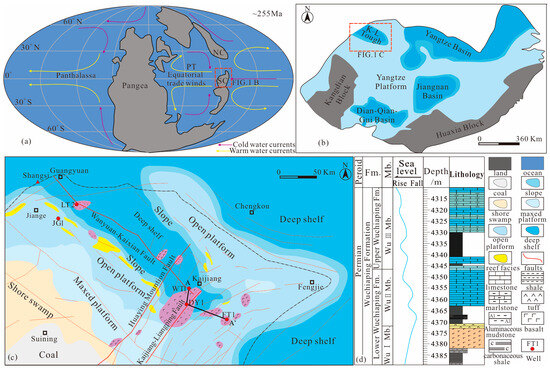
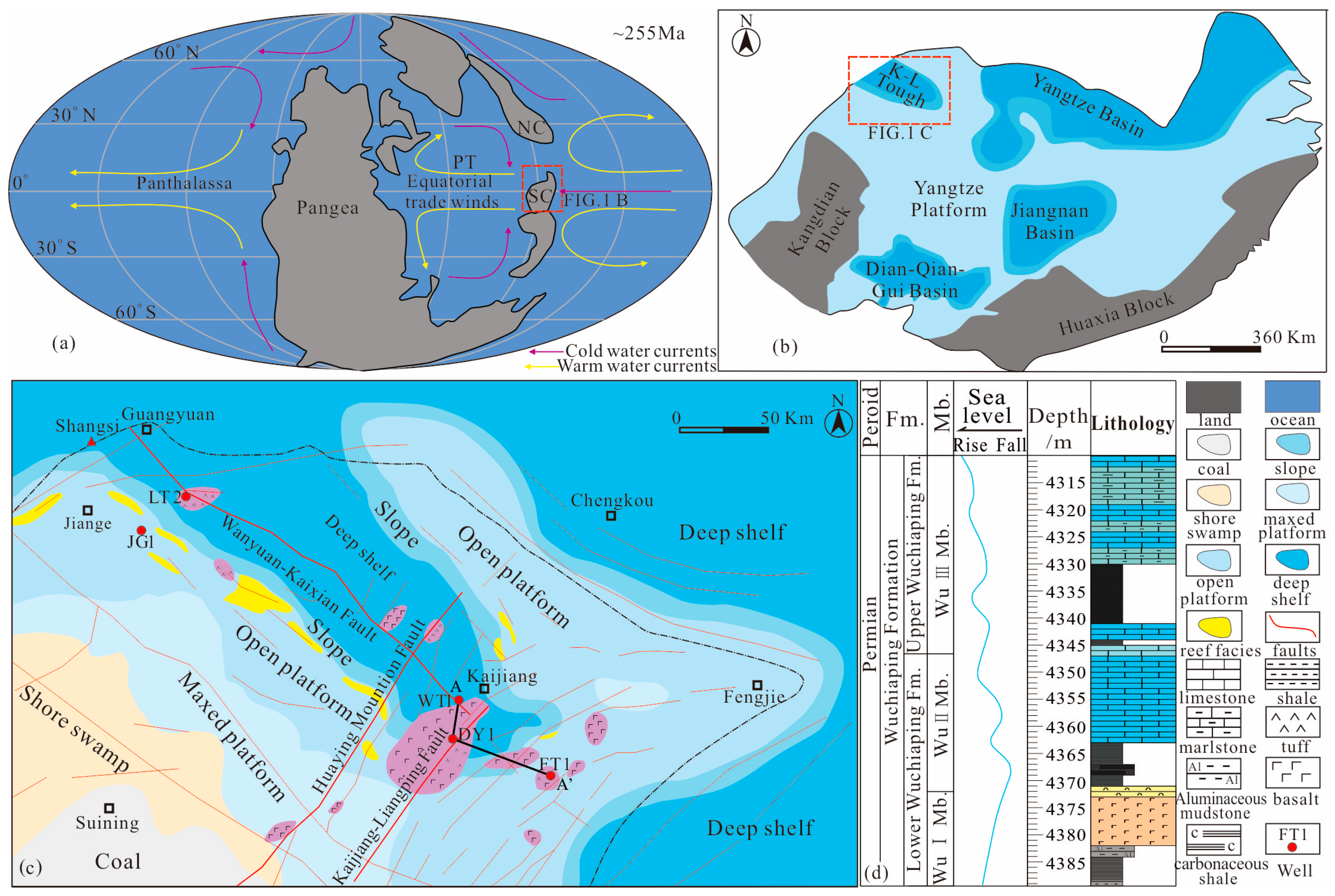
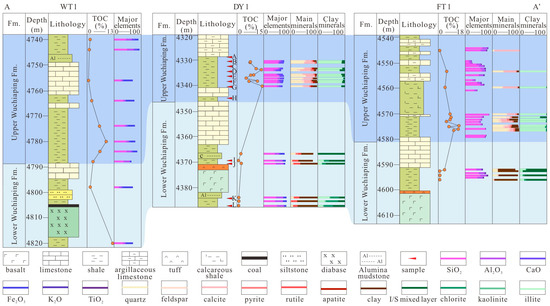
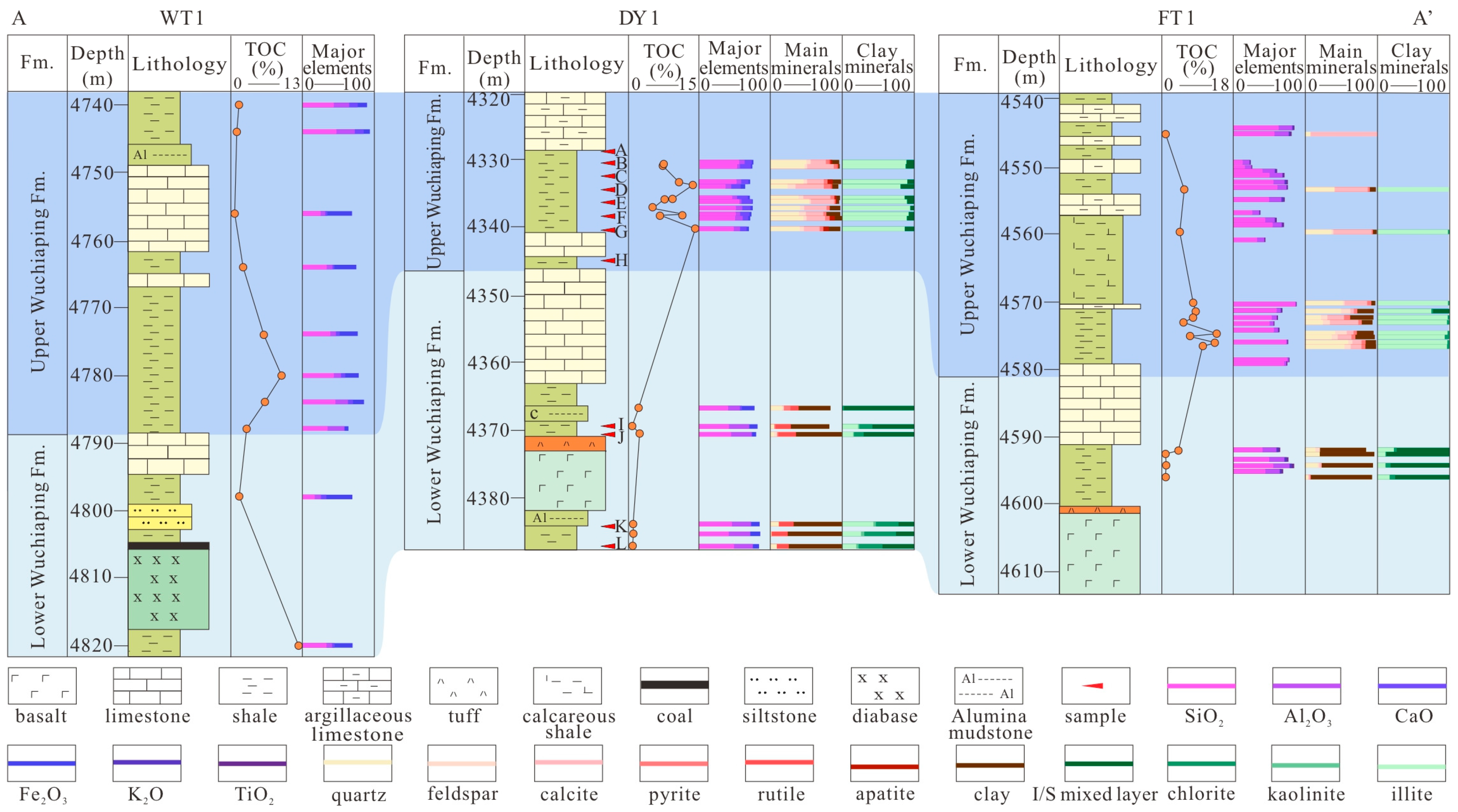
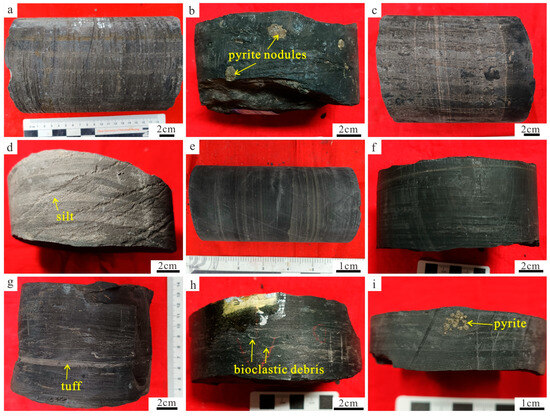
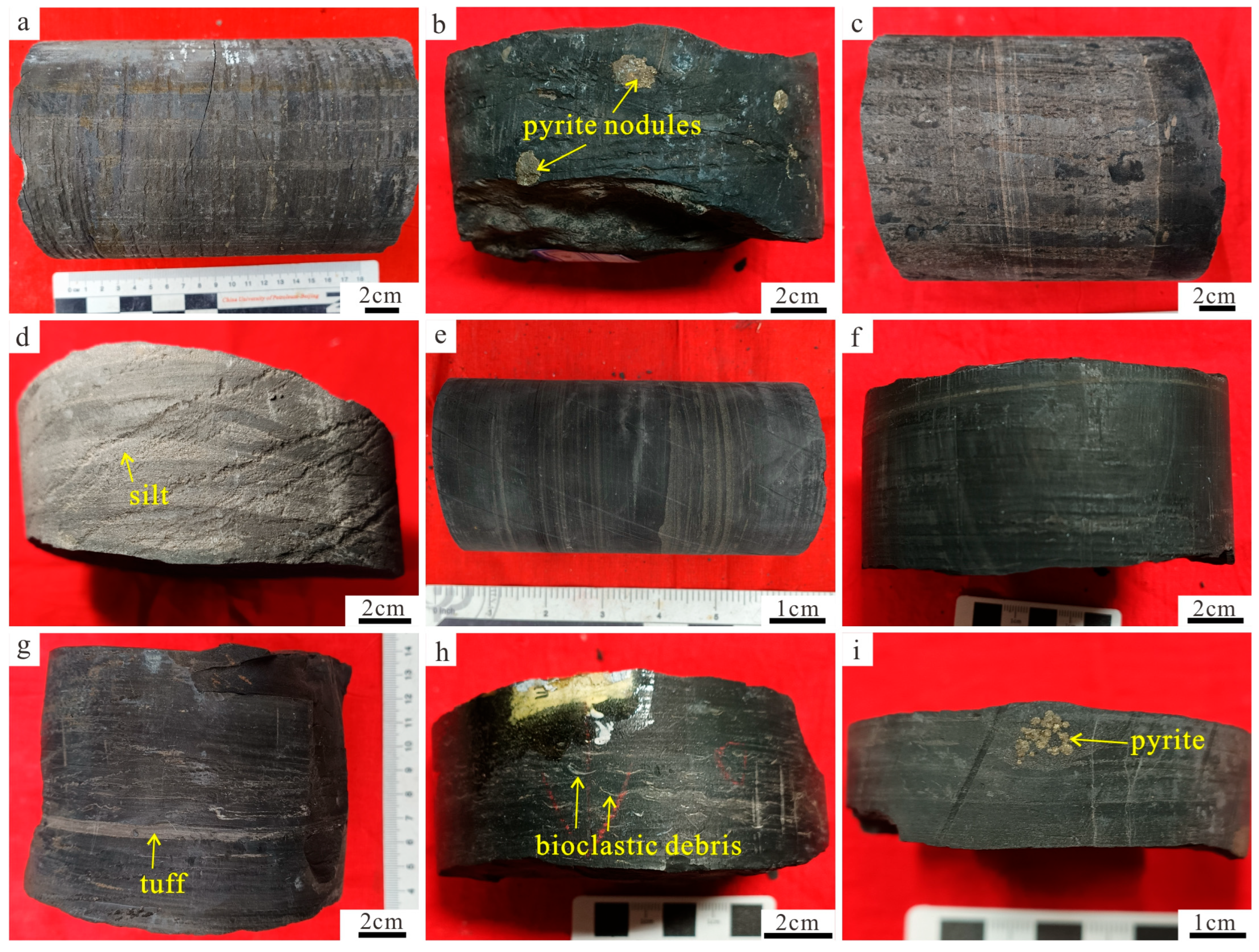
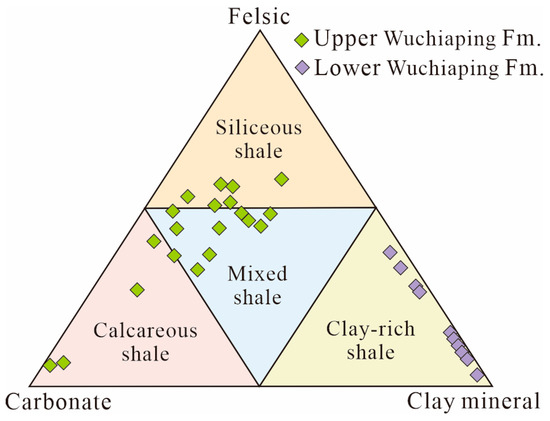
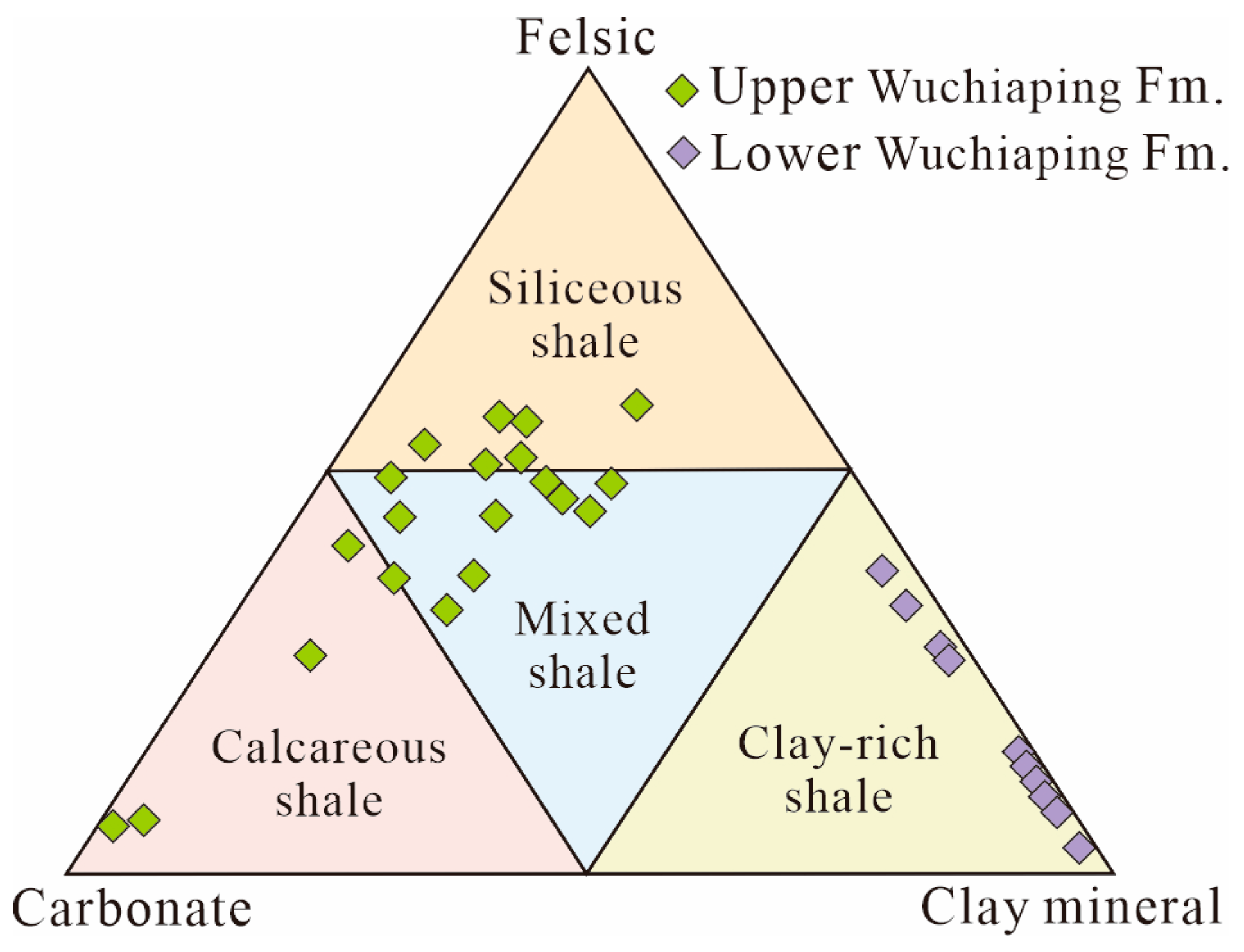
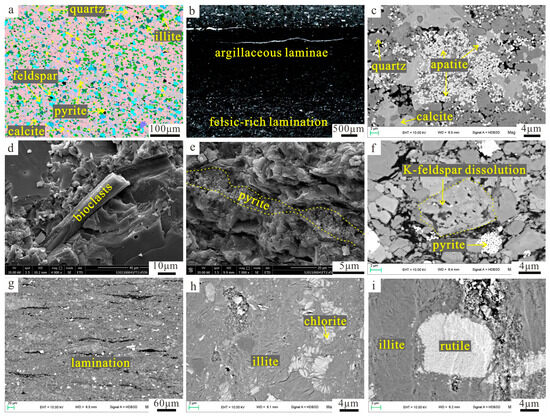
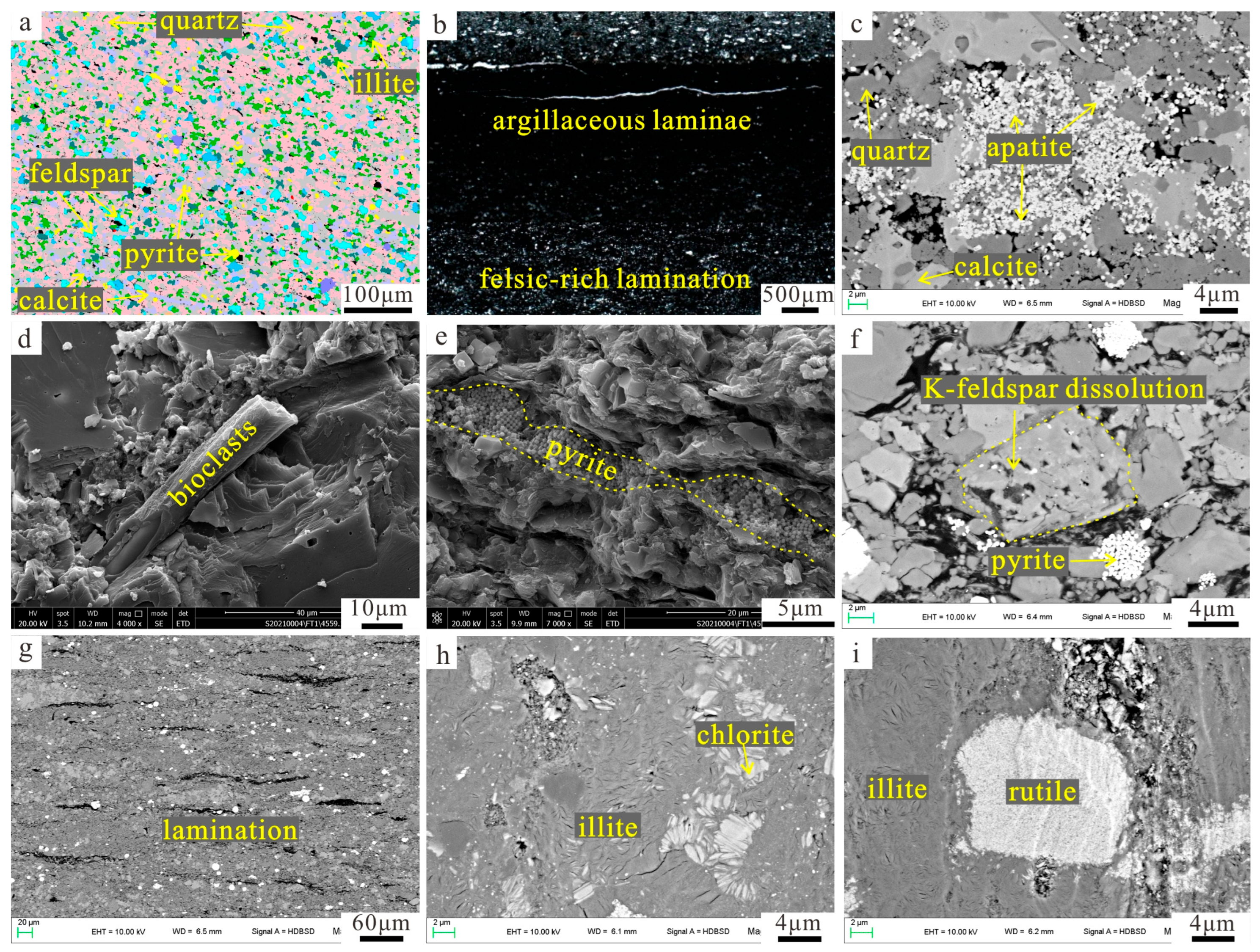
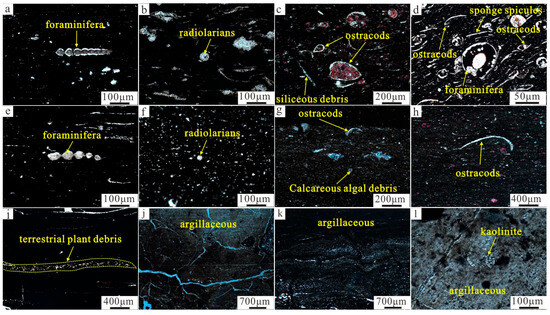
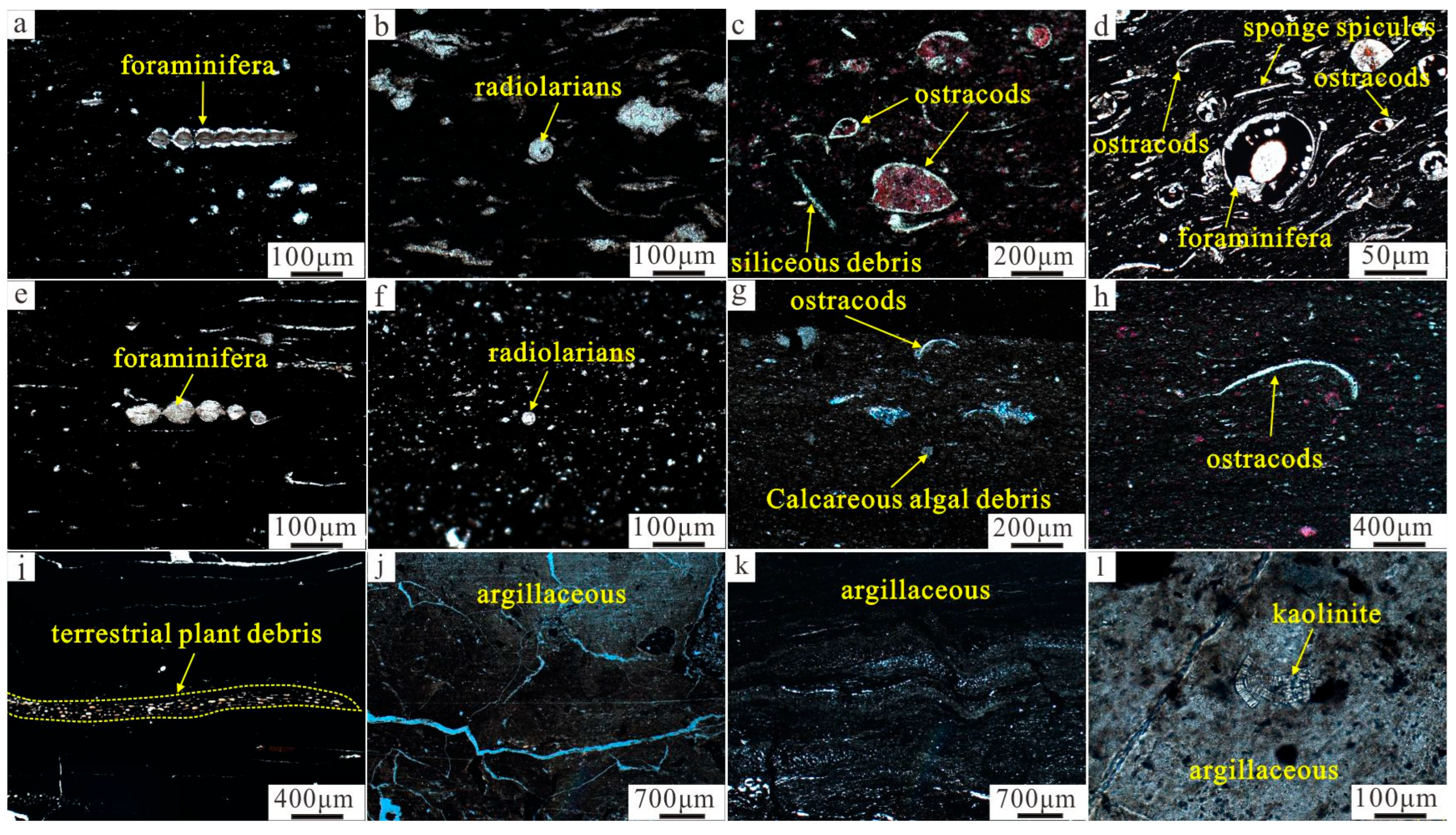
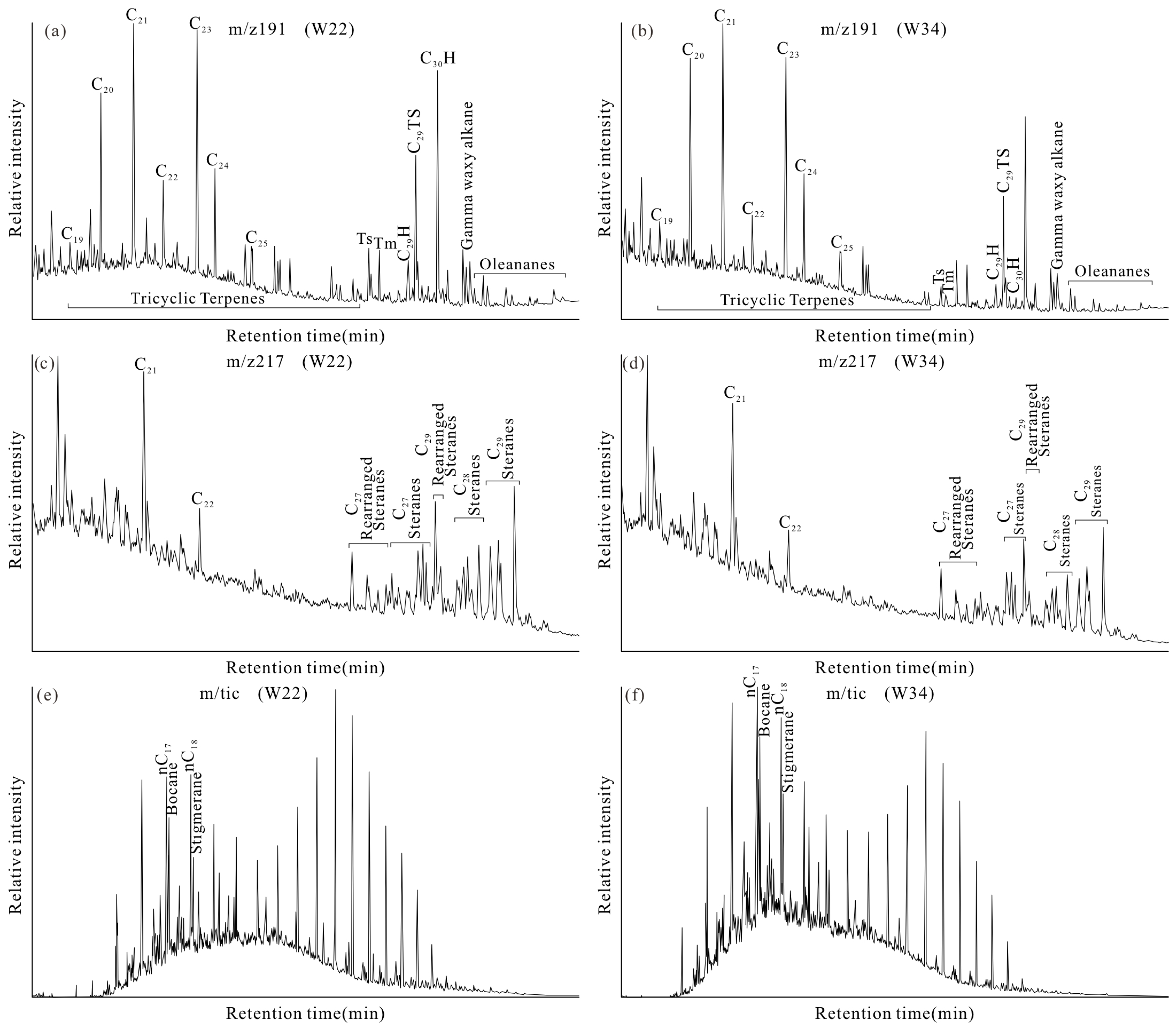
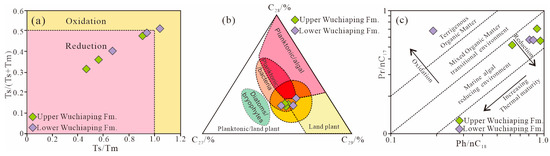
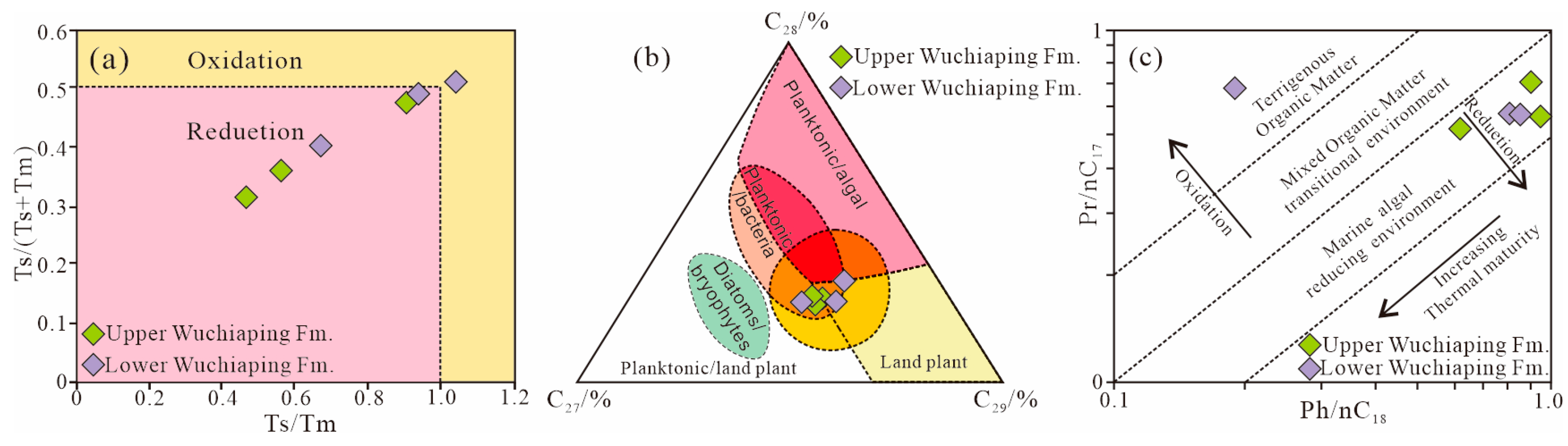
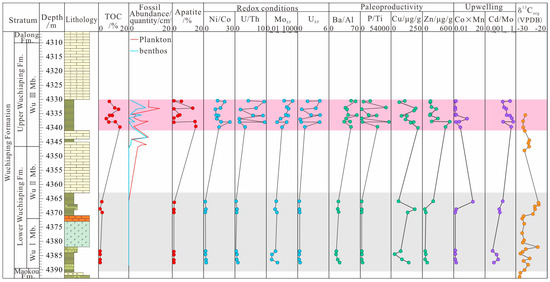
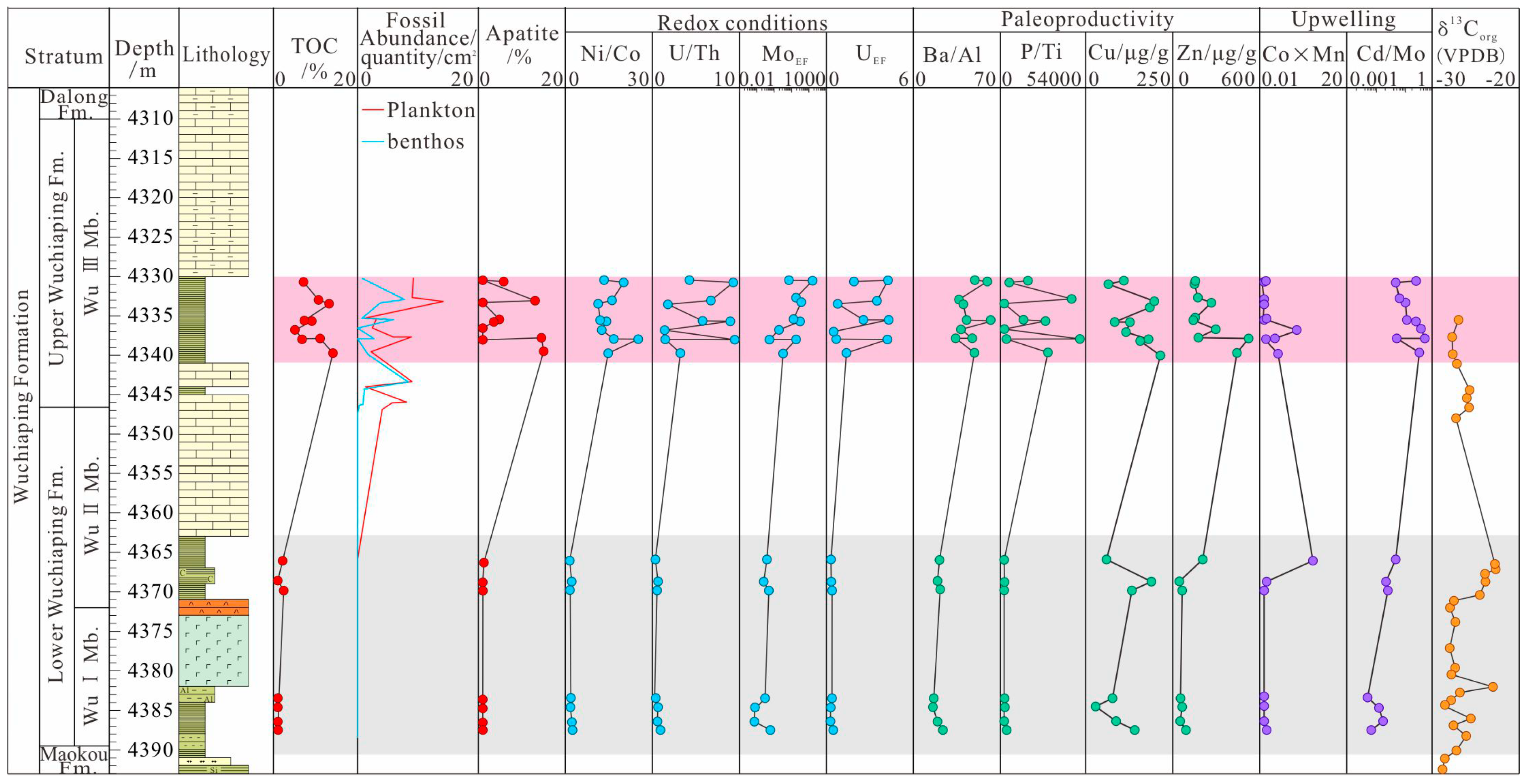
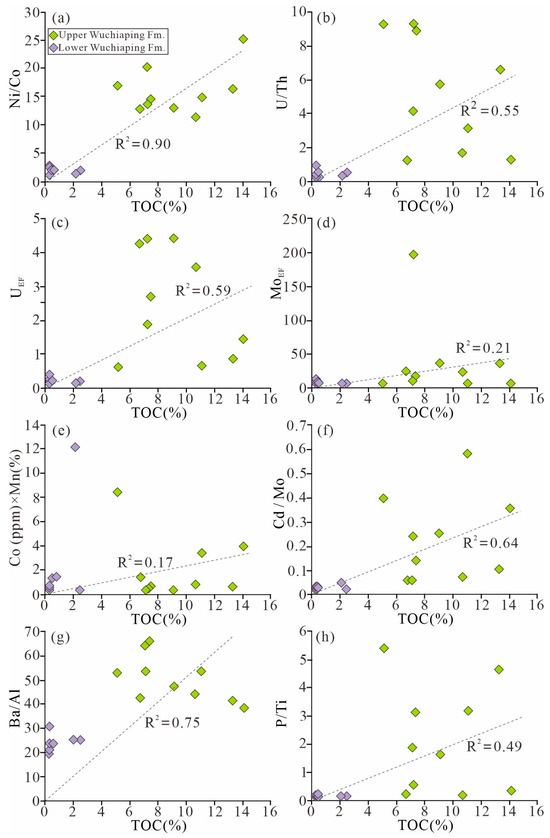
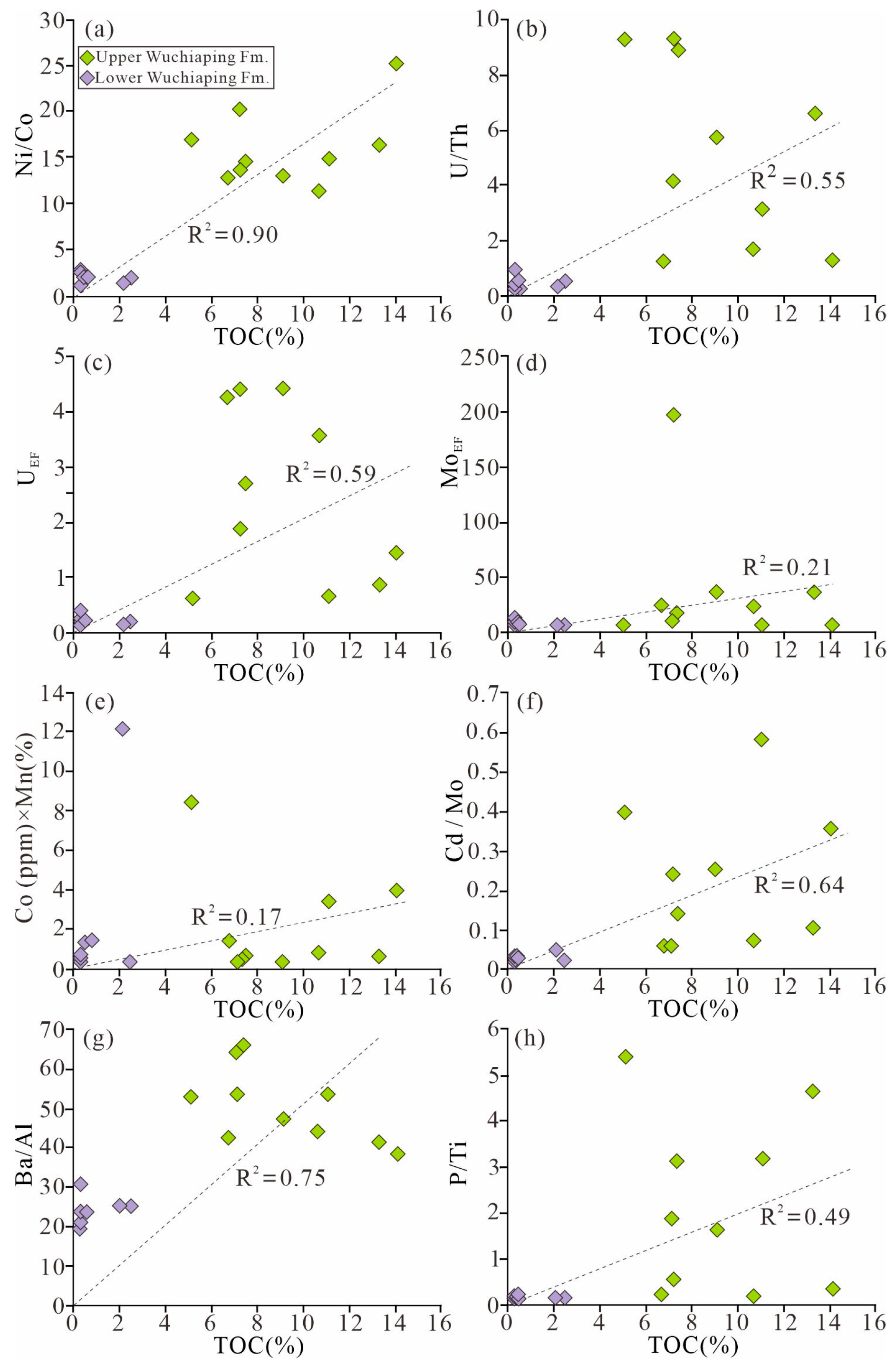
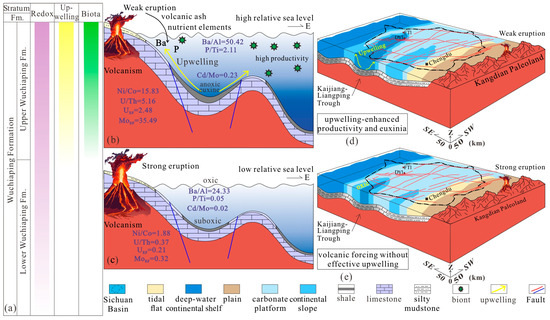
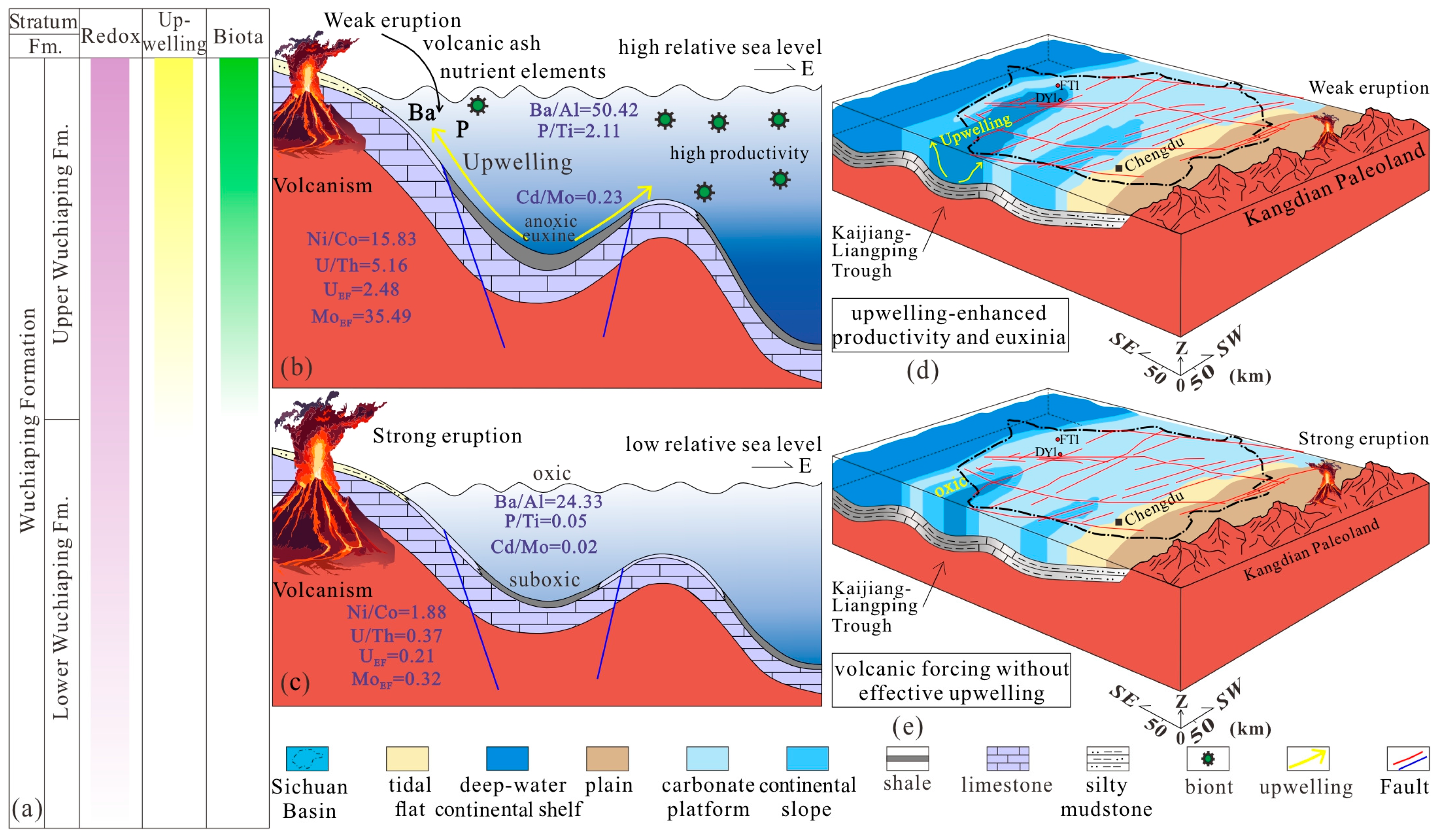

Disclaimer/Publisher’s Note: The statements, opinions and data contained in all publications are solely those of the individual author(s) and contributor(s) and not of MDPI and/or the editor(s). MDPI and/or the editor(s) disclaim responsibility for any injury to people or property resulting from any ideas, methods, instructions or products referred to in the content. |
© 2026 by the authors. Licensee MDPI, Basel, Switzerland. This article is an open access article distributed under the terms and conditions of the Creative Commons Attribution (CC BY) license.