Review

Programmed Cell Death in Sea Urchins: A Review

by
Viviana Di Tuccio
1,
Pasquale De Luca
1 and
Giovanna Romano
2,*
1
Department of Research Infrastructures for Marine Biological Resources, Stazione Zoologica Anton Dohrn, Villa Comunale, 80121 Napoli, Italy
2
Department of Ecosustainable Marine Biotechnology, Stazione Zoologica Anton Dohrn, Via Acton 55, 80133 Napoli, Italy
*
Author to whom correspondence should be addressed.
J. Mar. Sci. Eng. 2023, 11(5), 956; https://doi.org/10.3390/jmse11050956
Submission received: 27 March 2023 / Revised: 26 April 2023 / Accepted: 27 April 2023 / Published: 30 April 2023

Abstract

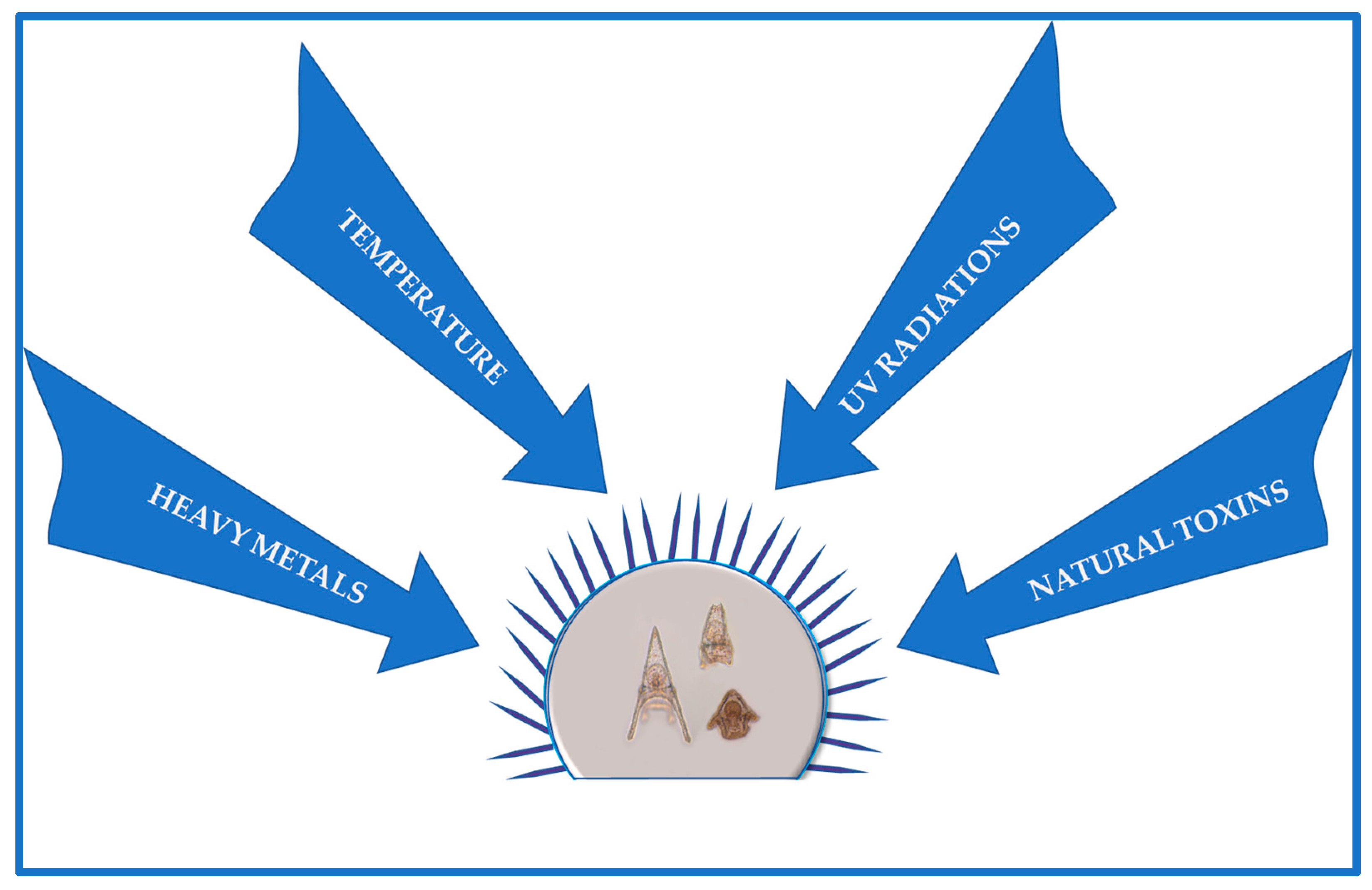
The sea urchin embryo is a widespread model system useful to study fundamental biological processes, but also for the identification of molecular and cellular mechanisms activated in response to external stress factors. Programmed cell death (PCD) is a molecular mechanism regulated at the genomic level and conserved during evolution, playing a central role in the rearrangement and shaping of tissues in developing embryos, especially during metamorphosis, also activated in response to damages induced by abiotic stress. Currently, different types of PCD have been described, among which apoptosis and autophagy are the most conserved processes among metazoans. These processes can be activated as alternative or combined defense strategies in embryos exposed to different types of stress when repairing mechanisms (activation of Heath Shock Proteins and Metallothioneins, DNA repair), fail to rescue cell viability. In this review, we report on the available information concerning the possible involvement of PCD processes in sea urchin embryos following exposure to pollutants, including heavy metals, physical factors and toxic natural compounds. We also report information about the occurrence of physiological apoptosis during development.
Keywords: sea urchin; apoptosis; autophagy; cell death; heavy metals sea urchin; apoptosis; autophagy; cell death; heavy metals