


Abstract
Soil adhesion and abrasive wear severely degrade the performance and service life of soil-covering rollers in no-tillage seeders, particularly in the heavy clay black soil regions of Northeast China. To address the critical issues of soil adhesion and wear on soil-covering rollers used in no-tillage seeders within black soil regions, this study presents a surface engineering strategy that integrates a bionic micro-texture with a functional composite coating. Inspired by the crescent-shaped pits on the body surface of Procambarus clarkii, a bionic texture was designed and combined with a PTFE/PDMS/TiO2 composite coating. Key parameters were optimized using response surface methodology, yielding a TiO2 mass fraction of 6%, coating thickness of 40 μm, remaining texture depth of 50 μm, and texture spacing of 250 μm. A prototype was fabricated and evaluated through orthogonal field experiments in two distinct soil environments. In clay soil (15–25% moisture content), soil moisture and vertical load significantly influenced anti-adhesion performance, with recommended operating parameters of 600 N vertical load and a speed range of 10.8–14.4 km·h−1. In sandy soil (8–18% moisture content), vertical load and operating speed had significant effects on wear resistance, with optimal parameters identified as 600 N vertical load and 10.8 km·h−1. Verification tests confirmed stable low-adhesion and low-wear performance under varying moisture conditions. Compared to conventional and PTFE-coated rollers, the bionic roller reduced soil adhesion by 82.62% and 74.02%, respectively, in high-moisture clay soil, and reduced wear loss by 36.81% and 28.97%, respectively, in dry sandy soil. These results demonstrate that the synergistic “structure–material” design, which leverages stress dispersion and storage from the bionic texture alongside low surface energy and enhanced wear resistance from the composite coating, offers a promising approach for improving the durability and performance of soil-engaging agricultural components.
1. Introduction
Conservation tillage is a core strategy for ensuring the sustainable use of black soil in China and realizing the goal of “storing grain in technology”. No-tillage seeding technology is widely adopted for its advantages in reducing soil disturbance, preserving soil moisture, and increasing yield [1,2,3,4]. The soil-covering roller is a key soil-engaging component of no-tillage seeders, mainly used for covering and compacting the seedbed after sowing. Its working quality directly affects seed germination and seedling growth [5,6]. However, during actual field operations, especially in the heavy clay black soil regions of Northeast China, severe soil adhesion occurs on the surface of the pressing disk, leading to increased working resistance, higher energy consumption, and uneven compaction of the seedbed, which in turn reduces seedling emergence uniformity [7]. At the same time, hard abrasives such as quartz sand particles in the soil readily cause rapid wear on the pressing disk surface, shortening its service life [8,9]. Soil adhesion and abrasive wear often occur interactively, forming a vicious cycle of “adhesion-wear”, which has become a prominent bottleneck restricting the operational efficiency and quality of seeders [10,11].
The severity of soil adhesion on agricultural soil-engaging components is measured by the adhesion force, which is closely related to soil texture, moisture content, and the material and shape of the components. Liu et al. [12] combined vibration with a scraper and designed a mechanical anti-adhesion and resistance-reducing press device for a press roller. This method requires adding vibration devices or scrapers to the machine, making the structure relatively complex and prone to fatigue failure of working parts; it is commonly used on tillage machinery where energy consumption is high. Jafar Massah et al. [13] experimentally investigated the effect of bionic electro-osmosis technology inspired by soil-burrowing animals on the plate-soil adhesion system. They found that plates treated with electro-osmosis exhibited a 29.8–90% reduction in soil adhesion compared to ordinary plates, showing significant anti-adhesion effects. Although this method is effective, it requires complex structural design and continuous energy supply, resulting in high energy consumption. Xu et al. [14] selected polytetrafluoroethylene (PTFE) with excellent non-stick properties as an anti-adhesion coating and ultra-high molecular weight polyethylene (UHMWPE) as an anti-adhesion structure, preparing two types of anti-adhesion soil-covering press disks. Their results showed that in northeastern black clay loam, the PTFE-coated press roller reduced soil adhesion by 49.8% compared to a bare metal disk. Under simulated sandy loam conditions with the same optimal parameters, soil adhesion was negligible; the soil compaction achieved by the anti-adhesion press roller was 43.0 kPa, while that of the metal press roller was 38.7 kPa, meeting the pressing performance requirements.
Barzegar et al. [15] coated UHMWPE onto furrower blades and compared them with uncoated blades. They found that the coated blades exhibited lower soil adhesion and friction coefficient, reducing the draft force by approximately 30–50%. Wang et al. [16] designed several bionic coupled furrow openers based on the convex shell of the dung beetle and the scale structure of the pangolin’s back. Experimental results showed that the furrowing resistance of these bionic openers was significantly lower than that of conventional openers. Ren et al. [17] proposed a “non-smooth surface electro-osmosis” method based on the electro-osmotic structure of earthworm body surfaces, which effectively reduced soil adhesion on bulldozing plates.
Despite these advances, most existing strategies address soil adhesion and wear separately. Wear-resistant surfaces produced by heat treatment or hard coatings generally lack anti-adhesion functionality, whereas low-surface-energy polymer coatings reduce adhesion but exhibit poor mechanical durability under abrasive field conditions. Moreover, surface textures designed for hydrophobicity are easily degraded by hard soil particles. This functional disconnect means that few solutions can withstand the combined adhesion–abrasion stresses typical of conservation tillage. A synergistic design that integrates a wear-tolerant bionic texture with a durable low-surface-energy composite coating has not been systematically developed for soil-covering rollers. This study addresses that gap.
To improve the wear resistance of agricultural machinery, LEMKEN GmbH & Co. KG [18] uses manganese-boron steel to manufacture wear-resistant shovel tips, which achieve a hardness of 45–50 HRC. However, this material increases manufacturing costs and requires high technical precision during production, making it difficult to guarantee the machining accuracy of heat-treated components. Hao et al. [19] applied plasma cladding technology to prepare an Fe-Cr-C-V cladding layer on the surface of 65Mn rotary tiller blades. Compared with untreated blades, the hardness increased by 75% and the wear loss decreased by 67%. Zhang et al. [20] prepared two types of CoCrFeNi high-entropy alloy coatings using conventional laser cladding and high-speed laser cladding. The results showed that the high-speed laser cladded coating exhibited higher hardness, better wear resistance, and superior corrosion resistance. Li et al. [21] took the shell of Chlamys farreri as a bionic prototype and designed six plowshares with different ridge directions and three different ridge spacings. The experimental results showed that the sample with a ridge spacing of 5 mm reduced wear loss by 17.25% compared to a conventional plowshare. Li et al. [22] used laser processing technology to prepare micro-dimple array surface textures on 45 steel surfaces. The study found that the orderly distributed micro-dimples on the textured samples effectively inhibited three-body wear by mechanically capturing abrasive particles, thereby significantly reducing material loss and exhibiting better wear resistance. However, the increased surface roughness caused by the micro-dimple structure led to a higher friction coefficient compared to the untreated surface.
In summary, to address the problems of soil adhesion and wear on soil-covering rollers in clay and sandy soil environments, this study proposes a surface engineering solution that integrates bionic texture with an anti-adhesive and wear-resistant coating. Inspired by the crescent-shaped pits on the body surface of Procambarus clarkii, a bionic micro-texture was designed, and a PTFE/PDMS/hydrophobic nano-TiO2 composite coating was prepared. The texture and coating were fabricated in combination using laser processing and spraying techniques. To investigate the operational performance of this novel press roller in different soil environments and the synergistic mechanism of the “structure-material” integration, systematic field orthogonal and comparative experiments were conducted, aiming to provide a theoretical basis and technical reference for solving the problem of combined adhesion and wear control in soil-engaging components. The novelty of this work lies in the deliberate integration of a bionic micro-texture with a functional low-surface-energy composite coating, a structure–material synergy not previously applied to soil-covering rollers in conservation tillage.
2. Materials and Methods
2.1. Design and Optimization of the Bionic Press Roller
2.1.1. Design Basis and Parameter Determination
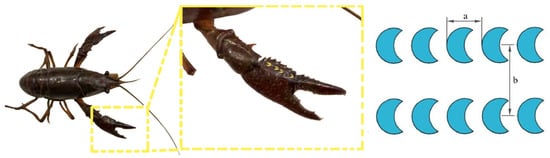
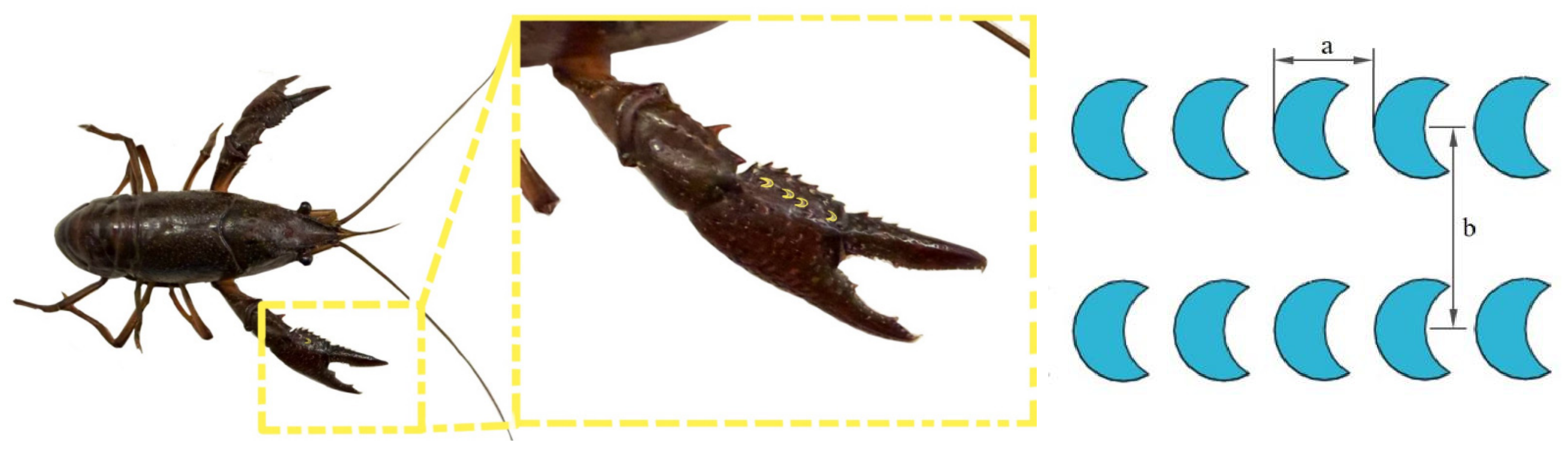
Aquatic organisms have long been exposed to friction and wear from hard media such as sand and gravel [23]. Although Procambarus clarkii inhabits aquatic environments, its claws undergo intense mechanical interactions with hard, abrasive particles (sand and gravel) during burrowing and predation. The crescent-shaped micro-texture on the claw surface serves a critical mechanical function of stress relief and debris capture, which is a universal tribological principle applicable to both wet and dry particulate contact. The crayfish (Procambarus clarkii) frequently uses its claws for feeding and burrowing, yet its claws show little damage and do not accumulate large amounts of soil on their surfaces, demonstrating good wear resistance and anti-adhesion properties. Therefore, this study takes the crescent-shaped pits on the claw surface of Procambarus clarkii as the bionic prototype; its typical morphology is shown in Figure 1. White light interferometry analysis revealed that the natural dimensions of these pits are approximately 1000 μm in length, 500 μm in width, and 100 μm in depth. Based on this bionic feature, a scaled-down bionic micro-texture was designed, with a single texture length of 100 μm, width of 50 μm, aspect ratio maintained at 2:1, and a fixed longitudinal spacing of 200 μm. This reduction in scale from the natural dimensions was informed by tribological studies indicating that smaller texture widths, typically in the range of 10–60 μm, are more effective for friction reduction under dry sliding conditions [24]. While strict dimensional similarity criteria such as Reynolds number are not applicable to dry particulate contact, the characteristic crescent morphology and the 2:1 aspect ratio were preserved to retain the stress-dispersion function observed in the natural prototype. This crescent-like morphology served as the basis for subsequent finite element analysis, in which a normal concentrated force of 20 N was applied to the upper sliding counterpart while the bottom surface of the textured 65Mn steel (AISI 65Mn spring steel, produced according to Chinese national standard GB/T 1222-2007, China) plate was fully constrained, simulating the dry sliding contact conditions in field operations [25].
Figure 1.
Surface morphology of Procambarus clarkii claw and schematic diagram of bionic texture design. (a) Lateral spacing; (b) Longitudinal spacing.
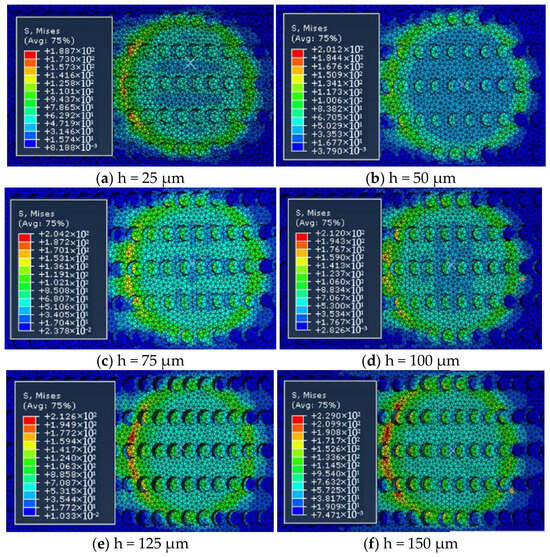
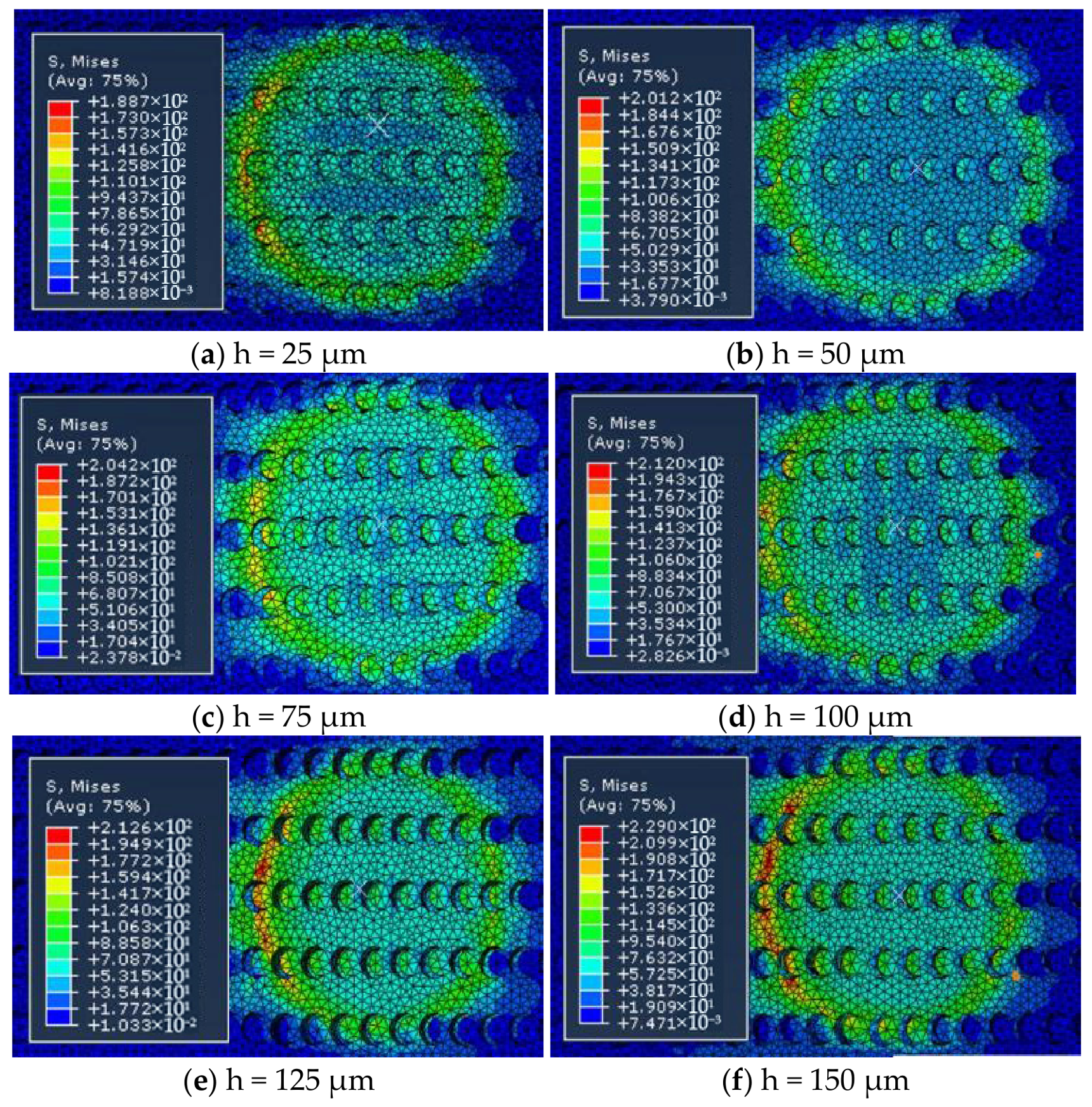
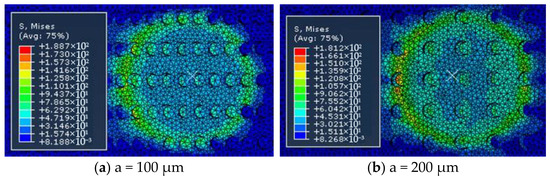
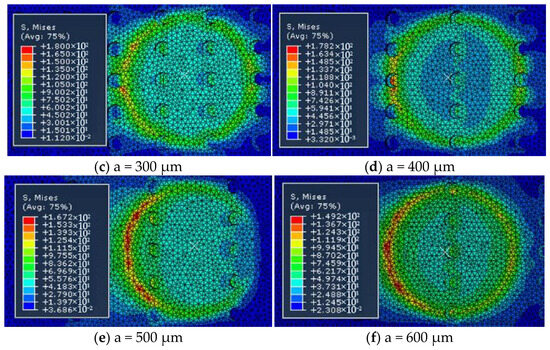
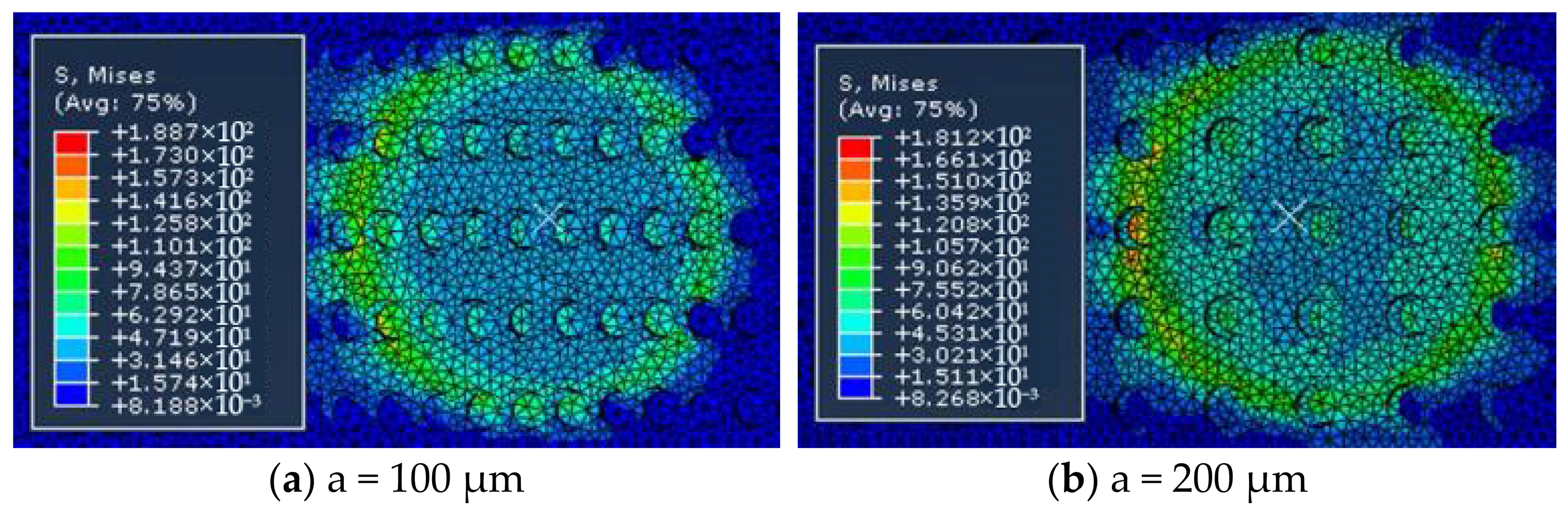
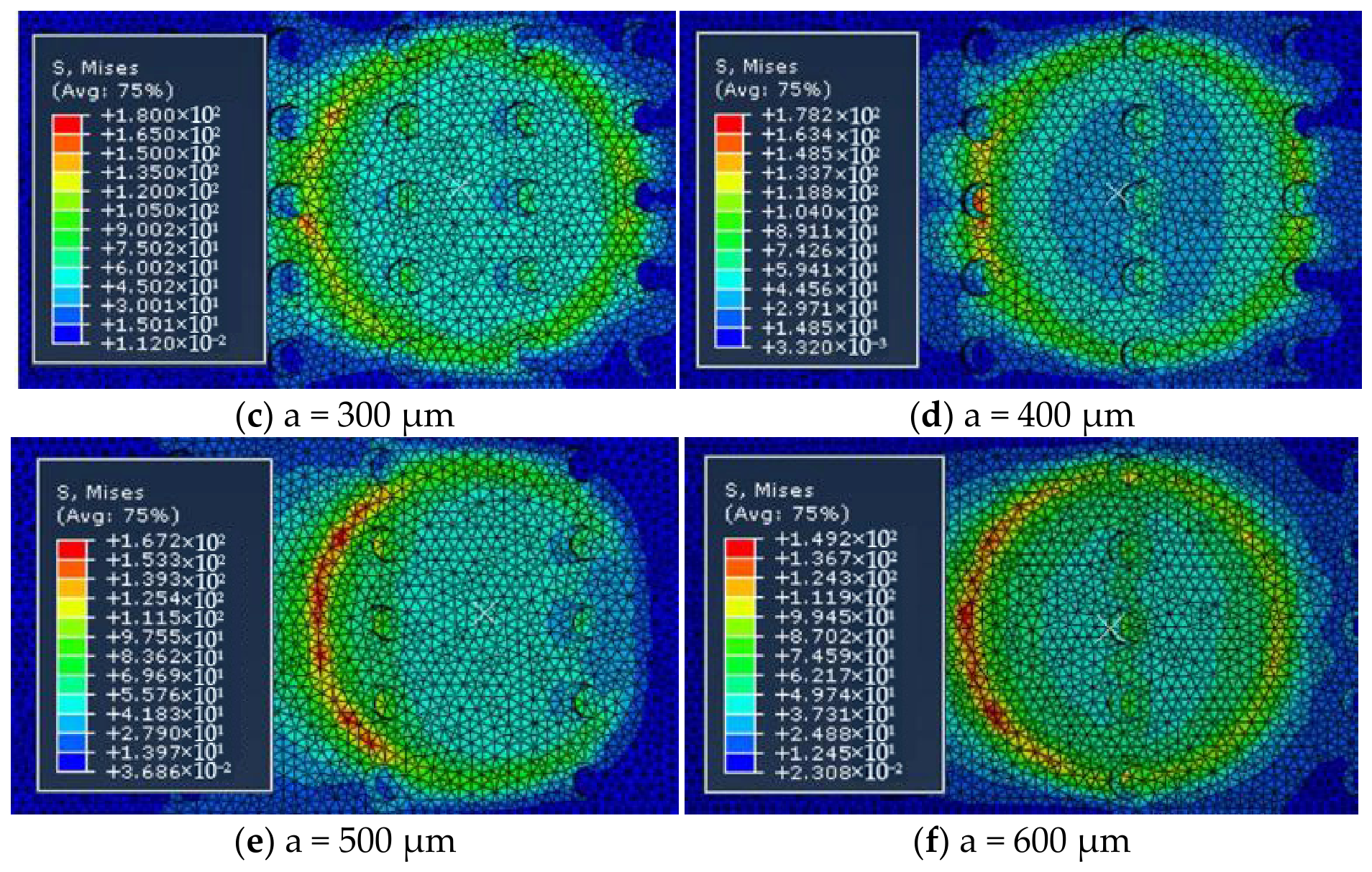
To further investigate the anti-friction mechanism of the texture, a dry friction finite element model of the textured 65Mn steel surface was established using Abaqus software (Abaqus CAE 2025), and the effects of texture depth and lateral spacing on surface stress distribution were systematically analyzed. In the finite element model, a normal concentrated force of 20 N was applied to the upper sliding counterpart, and the bottom surface of the 65Mn steel plate was fully constrained to simulate dry sliding contact. The 65Mn steel was modeled with an elastic modulus of 211 GPa and a Poisson’s ratio of 0.288, while the ceramic counterpart was assigned an elastic modulus of 221 GPa and a Poisson’s ratio of 0.22. The simulation results, summarized quantitatively in Figure 2 and Figure 3, revealed distinct trends in peak von Mises stress. The untextured surface exhibited a peak stress of 89.1 MPa with a pronounced stress concentration. In contrast, the introduction of bionic textures increased the peak stress owing to reduced contact area, but significantly improved stress uniformity. For texture depth, the peak stress increased from 188.7 MPa at 25 μm to 201.2 MPa at 50 μm, 204.2 MPa at 75 μm, and reached 229.0 MPa at 150 μm. Depths between 50 and 100 μm yielded the most uniform stress fields with minimal localized concentrations. For lateral spacing at a fixed depth of 50 μm, the peak stress decreased gradually from 188.7 MPa at 100 μm to 149.2 MPa at 600 μm, but spacings below 400 μm maintained superior stress dispersion. These numerical comparisons confirm that texture depths of 50–100 μm and lateral spacings of 100–400 μm provide an optimal balance between stress magnitude and distribution uniformity, which verify the positive effect of surface micro-texturing in improving contact stress distribution [26]. These simulation results established a favorable parameter window for further experimental optimization. The specific combination of texture depth (50 μm) and lateral spacing (250 μm) was subsequently refined through response surface methodology, as detailed in Section 2.3.
Figure 2.
Influence of texture depth on stress distribution on steel surfaces.
Figure 3.
Influence of texture lateral spacing on stress distribution on steel surfaces.
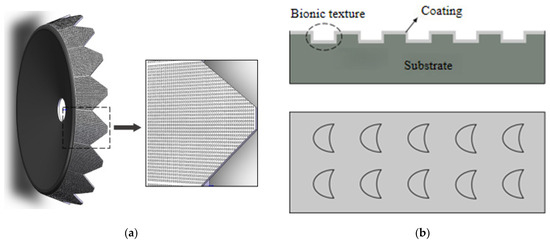
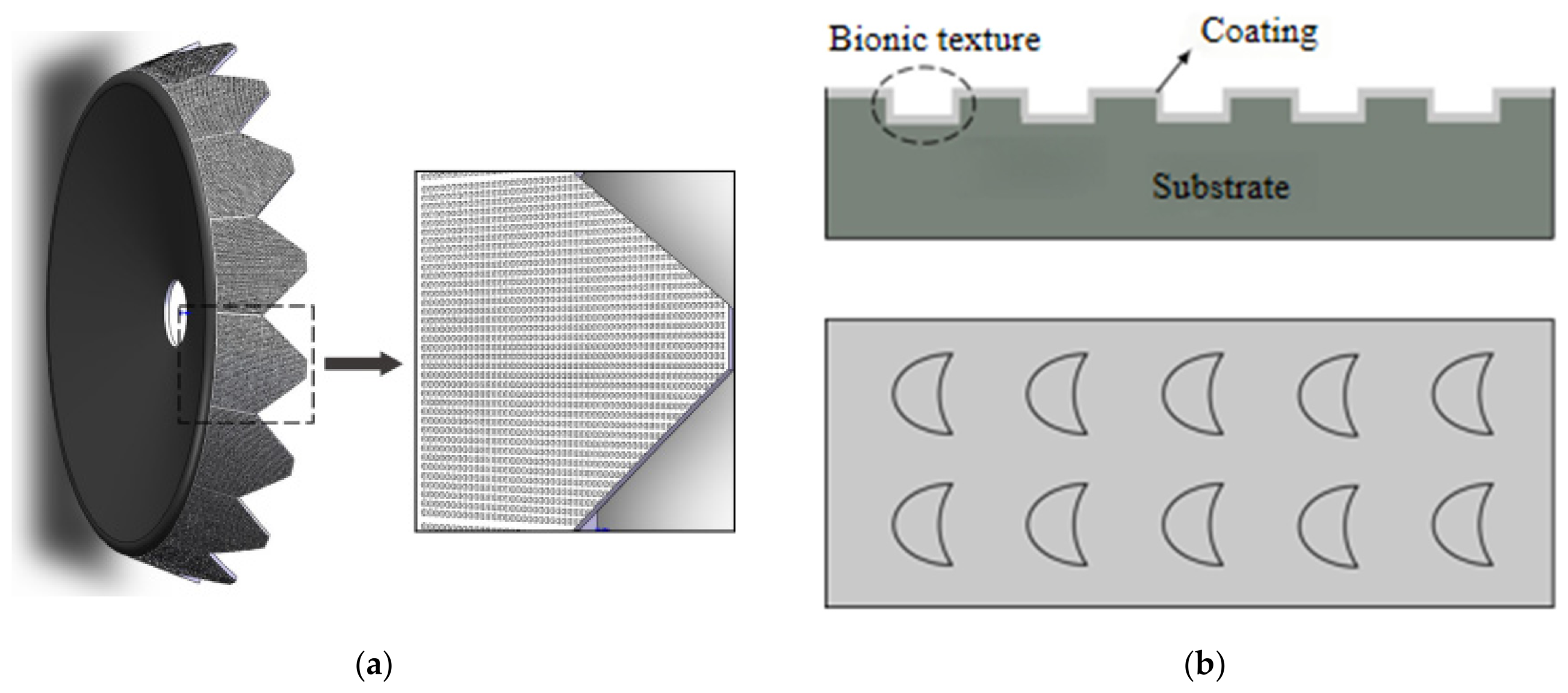
Laser surface texturing technology has been widely proven to effectively improve the tribological properties of metal surfaces [27]. The simulation conclusions were further validated by single-factor friction and wear tests. Compared with the untextured surface, samples with texture depths of 50–100 μm and lateral spacings of 100–400 μm exhibited reductions in wear mass loss of approximately 15–30%, with the lowest wear (12.8 mg) observed at a depth of 75 μm and a spacing of 200 μm. The friction coefficient curves also showed reduced fluctuation, demonstrating improved tribological stability. These experimental results align well with the simulation predictions and validate the stress-dispersion and debris-storage mechanisms. Figure 4 shows the model diagram of the surface-textured anti-adhesive and wear-resistant soil-covering press wheel.
Figure 4.
Model diagram of the surface-textured anti-adhesive and wear-resistant soil-covering press wheel. (a) Textured anti-adhesive and wear-resistant press wheel. (b) Schematic diagram of the overall design.
2.1.2. Design and Optimization of the Anti-Adhesive and Wear-Resistant Composite Coating
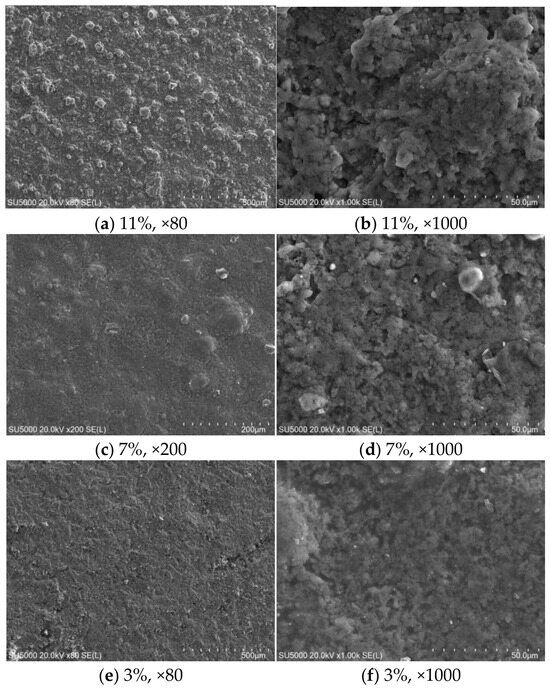
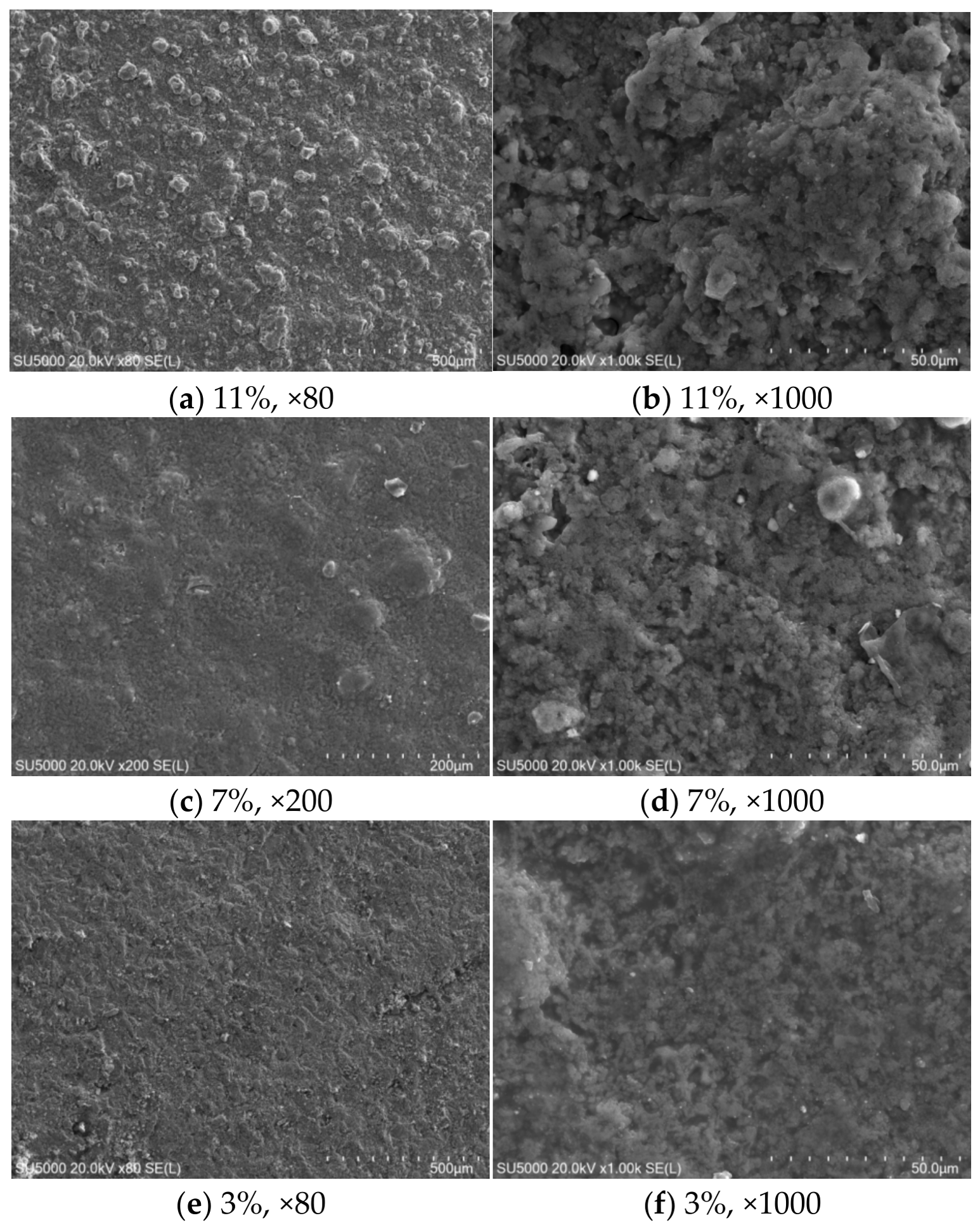
According to the wetting theory [27], superhydrophobic surfaces can be constructed mainly by two approaches: reducing the solid surface energy and building micro-/nano-scale rough structures. Accordingly, a composite coating system based on PTFE (Polytetrafluoroethylene, DuPont™ Teflon™, Wilmington, DE, USA), PDMS (Polydimethylsiloxane, Dow Inc. SYLGARD® 184, Midland, MI, USA), and hydrophobic nano-TiO2 (hydrophobic nano-titanium dioxide, Degussa AEROXIDE® TiO2 P25, Evonik Industries, Essen, North Rhine-Westphalia, Germany) was designed and optimized. PTFE, as the main hydrophobic component, significantly reduces the surface free energy of the coating. PDMS, used as a binder, not only enhances the adhesion strength between the coating and the substrate but also promotes the agglomeration of TiO2 nanoparticles to form micron-scale rough structures. The nano-TiO2, modified with n-octyltriethoxysilane to become hydrophobic, serves as a reinforcing phase, increasing the overall hardness and wear resistance of the coating while synergistically contributing to the formation of a hydrophobic rough surface. The surface morphologies of coatings with different TiO2 mass fractions are compared in Figure 5.
Figure 5.
Surface morphology of samples with different TiO2 mass fractions.
The SEM images reveal a progressive increase in surface roughness with TiO2 content, driven by the agglomeration of nanoparticles facilitated by PDMS. At 7–9 wt.% TiO2, the hierarchical micro-/nano-scale roughness provides an optimal density of air-trapping sites without excessive particle agglomeration, which directly correlates with the highest measured contact angles. At 11 wt.%, however, excessive agglomeration reduces coating uniformity and compromises both hydrophobicity and wear resistance.
Contact angles were measured at room temperature using a sessile drop method with 3 μL deionized water droplets. Each reported value represents the mean of five measurements taken at different locations on the sample surface, with standard deviations typically below 3°.
Through single-factor experiments and quadratic regression orthogonal rotational combination tests, the effects of TiO2 mass fraction and coating thickness on the contact angle and wear resistance of the coating were systematically investigated. The results showed that when the TiO2 mass fraction was between 5% and 9% and the coating thickness was between 30 and 70 μm, the coating achieved a superhydrophobic contact angle exceeding 150° and a low stable friction coefficient, exhibiting excellent comprehensive anti-adhesion and wear-resistant properties. This indicates that the bionic micro-texture effectively suppresses abrasive wear through the dual mechanisms of wear debris storage and stress dispersion, thereby enhancing the durability of the material surface. Post-test examination of the worn surfaces confirmed the accumulation of fine wear debris within the bionic dimples, consistent with the proposed debris-storage mechanism.
It should be noted that in this study, the “texture depth” refers to the remaining depth of the dimple after coating curing. Considering that the subsequent composite coating will fill the dimple, the initial laser-machined depth must be compensated according to the coating thickness, i.e., the machining depth = target remaining depth + coating thickness. The texture depths mentioned in the following sections of this paper (including those in the simulation, single-factor tests, and optimization results) all refer to the remaining depth after coating.
2.1.3. Synergistic Optimization of Texture and Coating and Performance Verification
To achieve synergistic enhancement between the bionic texture and the composite coating, response surface methodology was applied using a four-factor, five-level central composite design. The experimental factors included TiO2 mass fraction, coating thickness, texture remaining depth, and texture lateral spacing, while the evaluation indices were contact angle and wear loss. This design enabled systematic optimization of the coating and texture parameters to identify the combination yielding the best balance of superhydrophobicity and wear resistance. The fitted second-order polynomial models for contact angle and wear loss were statistically significant (p < 0.01) with coefficients of determination (R2) of 0.95 and 0.98, respectively. Analysis of the model terms indicated that TiO2 mass fraction and texture depth had the strongest influence on contact angle, whereas TiO2 content, coating thickness, and texture spacing dominated wear behavior.
The optimization results showed that when the TiO2 mass fraction was 6%, coating thickness 40 μm, texture at depth 50 μm, and texture lateral spacing 250 μm, the surface exhibited an optimal synergistic state of superhydrophobicity and high wear resistance. Validation tests further confirmed the reliability of the optimization results. At the optimal parameter combination of 6% TiO2, a coating thickness of 40 μm, a remaining texture depth of 50 μm, and a spacing of 250 μm, the model predicted a contact angle of 152.1° and a wear loss of 8.9 mg. The corresponding measured values, averaged over three replicates, were 150.8° and 9.3 mg, yielding relative errors of 0.9% and 4.3%. This close agreement indicates high predictive accuracy and provides a reliable process basis for the subsequent fabrication of the field prototype.
2.1.4. Synergistic Mechanism of Anti-Adhesion and Wear Resistance
In heavy clay soil environments, the anti-adhesion mechanism is based mainly on two aspects. First, the synergistic effect of PTFE, PDMS, and hydrophobic TiO2 in the composite coating significantly reduces the surface free energy of the press wheel. Second, the optimized bionic texture together with the TiO2 agglomerates in the coating forms a micro-/nano-scale hierarchical rough structure. According to the Baxter wetting theory, when the surface is sufficiently rough and has low surface energy, droplets cannot penetrate the grooves of the rough structure; instead, air is trapped beneath the droplet, forming a composite contact interface. The apparent contact angle θ* is given by [28]:
where fs is the solid-liquid contact area fraction (the proportion of the solid surface in contact with the liquid) and θ is the intrinsic contact angle. This model indicates that decreasing fs significantly increases the apparent contact angle; when fs is sufficiently small, the surface exhibits superhydrophobicity. In this study, the hierarchical rough structure formed by the bionic texture and TiO2 agglomerates effectively traps air, creating a stable air cushion (Baxter state), which disrupts the continuous water film at the soil-metal interface and substantially reduces the actual solid-liquid contact area. The superhydrophobic state was further confirmed by the low contact angle hysteresis, measured at less than 10°, and the facile roll-off of water droplets from the coated textured surface, indicating that the Baxter regime dominates under ambient conditions.
cosθ = fscosθ − (1 − fs)
The expression for the adhesion work Wadhesion directly reflects this relationship [7]:
where Wadhesion is the adhesion work (J/m2), fr is the solid–liquid actual contact area fraction (dimensionless), and γsolid, γliquid, and γsolid-liquid are the solid surface energy, liquid surface energy, and solid–liquid interfacial energy, respectively (all in J/m2). Comparing with the Cassie–Baxter model, it can be seen that fr in this equation corresponds to fs. Therefore, by reducing the solid surface energy γsolid and the solid–liquid interfacial energy γsolid-liquid, and by decreasing the solid–liquid contact area fraction fr, the adhesion work can be significantly reduced, achieving anti-adhesion and detachment.
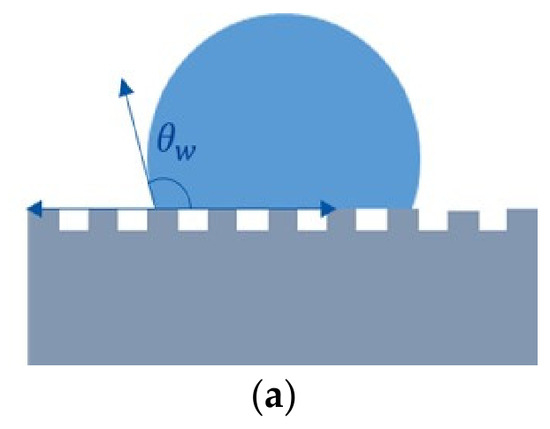
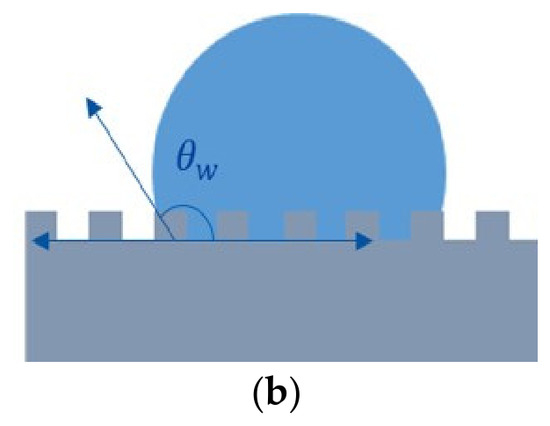
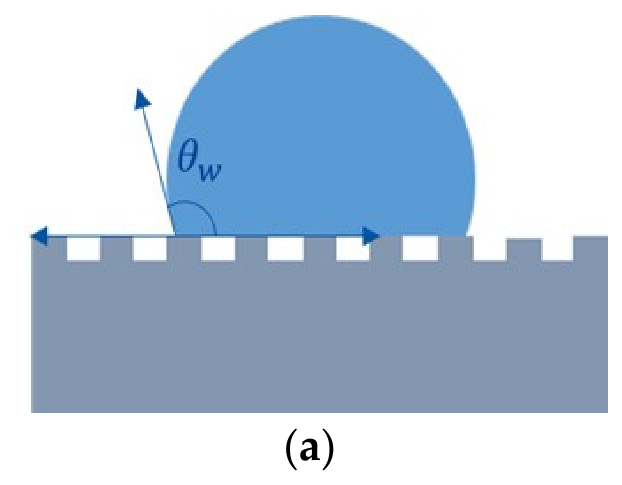
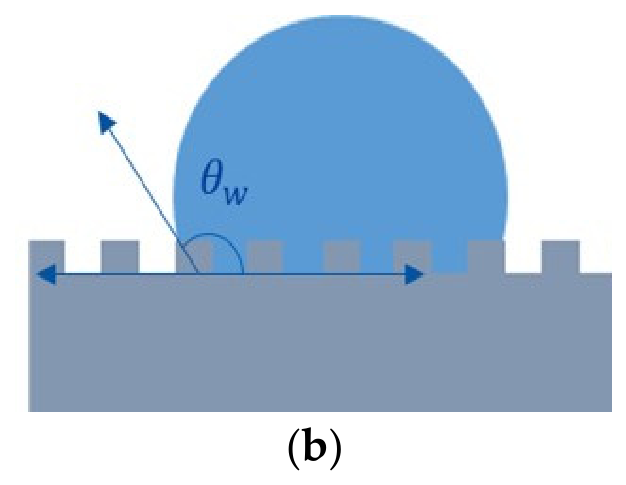
Under field operating conditions, the soil-covering roller is subjected to vertical loads as high as 600–800 N. The pressure at the solid-liquid interface may compress part of the air layer, causing localized transition from the Baxter state to the Wenzel state (As shown in Figure 6, this causes a localized transition from the Baxter state to the Wenzel state, where the droplet completely wets the grooves), thereby increasing fr and weakening the anti-adhesion effect. However, the dual-scale rough structure formed by the composite coating and bionic texture in this study has good pressure stability and can maintain a certain air-trapping capacity even under relatively high loads [15,28].
Figure 6.
Wettability theory model. (a) Baxter model. (b) Wenzel model.
To verify the above analysis, the anti-adhesion performance of the bionic press roller under high load was examined in field experiments. The comparative test results show that even under a load of 800 N, the soil adhesion amount of the bionic press roller (e.g., 13.88 g in clay soil) was still much lower than that of the conventional roller (71.30 g) and the PTFE-coated roller (47.70 g), demonstrating that its anti-adhesion function remains effective under load. Therefore, although the load has some influence on the air cushion, the “structure-material” integrated design, through stress dispersion and the synergy of the composite coating, still achieves excellent comprehensive anti-adhesion and wear-resistant performance.
In sandy soil environments, the wear-resistance mechanism is mainly derived from the following three aspects. First, PTFE has excellent self-lubricating properties, while TiO2 nanoparticles can generate a “rolling bearing” effect at the friction interface, jointly reducing the friction coefficient [15]. Second, as a hard reinforcing phase, TiO2 significantly enhances the overall hardness and plastic deformation resistance of the coating. The use of hard nanoparticles as a reinforcing phase is an effective means to improve the wear resistance of polymer-based coatings [28]. Finally, the optimized bionic texture plays a key role as a “wear debris reservoir”. Its specific size and distribution effectively capture fine sand particles and wear debris generated during operation, preventing them from acting as third-body abrasives that cause continuous plowing, thereby greatly reducing abrasive wear. At the same time, the texture helps to disperse contact stress, inhibiting fatigue peeling of the coating caused by stress concentration, and thus improving the durability of the coating under harsh operating conditions.
2.2. Fabrication of Key Components
2.2.1. Laser Fabrication of Bionic Texture
The V-shaped soil-covering press wheel, fabricated from 65 Mn steel with a diameter of 320 mm and a cone angle of 150°, served as the substrate. The conical surface was first sandblasted and polished to achieve a uniform surface roughness that promotes strong mechanical interlocking between the substrate and the subsequent coating. A femtosecond laser processing system (femtosecond laser processing system, Coherent Inc., Santa Clara, CA, USA) was then employed to fabricate the crescent-shaped bionic texture array designed in Section 2.1. Because the composite coating applied in the following step would partially fill the dimples, the initial laser machining depth was intentionally increased relative to the target remaining depth. Specifically, the machining depth was set by adding the expected coating thickness of 40 μm to the desired remaining depth of 50 μm, resulting in an initial depth of 90 μm. After laser texturing, the surface was lightly polished to remove any micro-burrs and thoroughly cleaned by ultrasonication. Randomly selected dimples were examined using confocal microscopy, which confirmed that the machined depths consistently ranged from 88 to 92 μm, with well-defined edges and intact crescent morphologies that met the design requirements.
2.2.2. Spraying Process of the Composite Coating
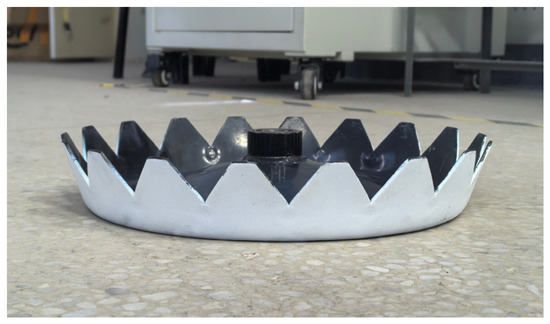
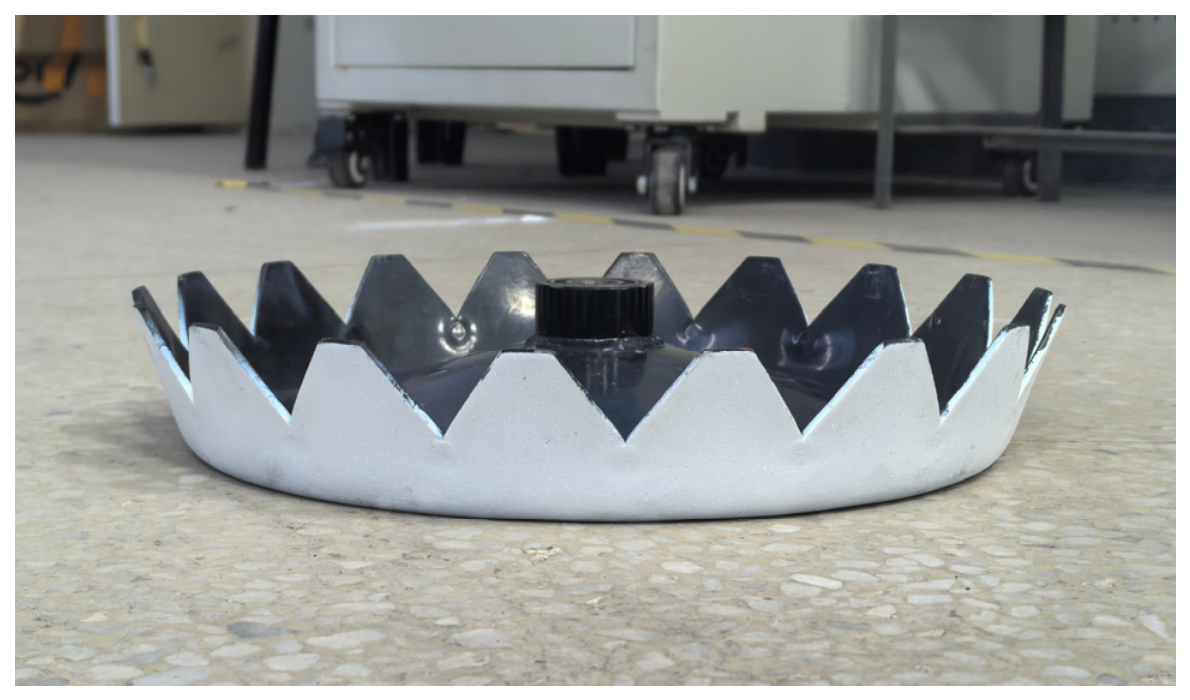
The composite coating suspension was prepared according to the optimized formulation (TiO2 mass fraction 6%, PTFE:PDMS mass ratio 1:1) and the hydrophobic modification procedure for TiO2 nanoparticles described previously. The suspension was uniformly sprayed onto the laser-textured surface at a pressure of 0.2 MPa. During spraying, the dry film thickness was monitored in real time using a coating thickness gauge to ensure that the final coating thickness reached the target value of 40 μm. The coated press wheel was then cured in an infrared drying oven (infrared drying oven, generic laboratory equipment, Hangzhou, China) at 300 °C for 3 h to achieve full cross-linking and firm adhesion to the substrate. Post-curing measurements using confocal microscopy verified that the remaining dimple depth after coating was 48–52 μm, which agrees well with the target depth of 50 μm. The finished bionic-textured and composite-coated press wheel is shown in Figure 7.
Figure 7.
Bionictextured packer wheel with anti-adhesion and wear-resistant coating.
2.3. Field Experiment
The design parameters of the bionic texture and composite coating were systematically optimized in the laboratory (Section 2.3). The field experiments reported in this section were conducted to evaluate the robustness and adaptability of the optimized roller under realistic, variable field conditions. Soil moisture content, vertical load, and operating speed were selected as experimental factors because they represent the primary external variables that affect soil–tool interaction in practice. The objective was twofold: (1) to assess how these uncontrollable or operationally adjustable factors influence anti-adhesion and wear performance, and (2) to identify a recommended operating envelope—a range of vertical load and speed settings—within which the roller can deliver consistently low adhesion and wear across the expected soil moisture spectrum. This envelope provides practical guidance for machine operators rather than a single rigid set-point.
2.3.1. Test Conditions and Equipment
The field experiment was conducted in November 2024 at the Xiangyang Experimental Base of Northeast Agricultural University. The experimental field was covered with corn stubble from the previous crop, with a ridge spacing of 650 mm. The soil type was black soil. The measured soil particle compositions of the clay soil test area and the sandy soil test area (prepared by manually mixing sand) are shown in Table 1.
Table 1.
Particle Composition of Test Soil.
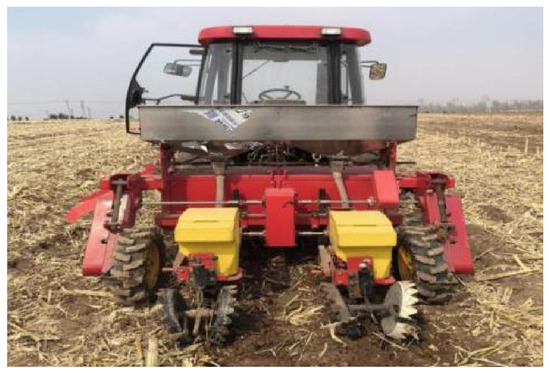
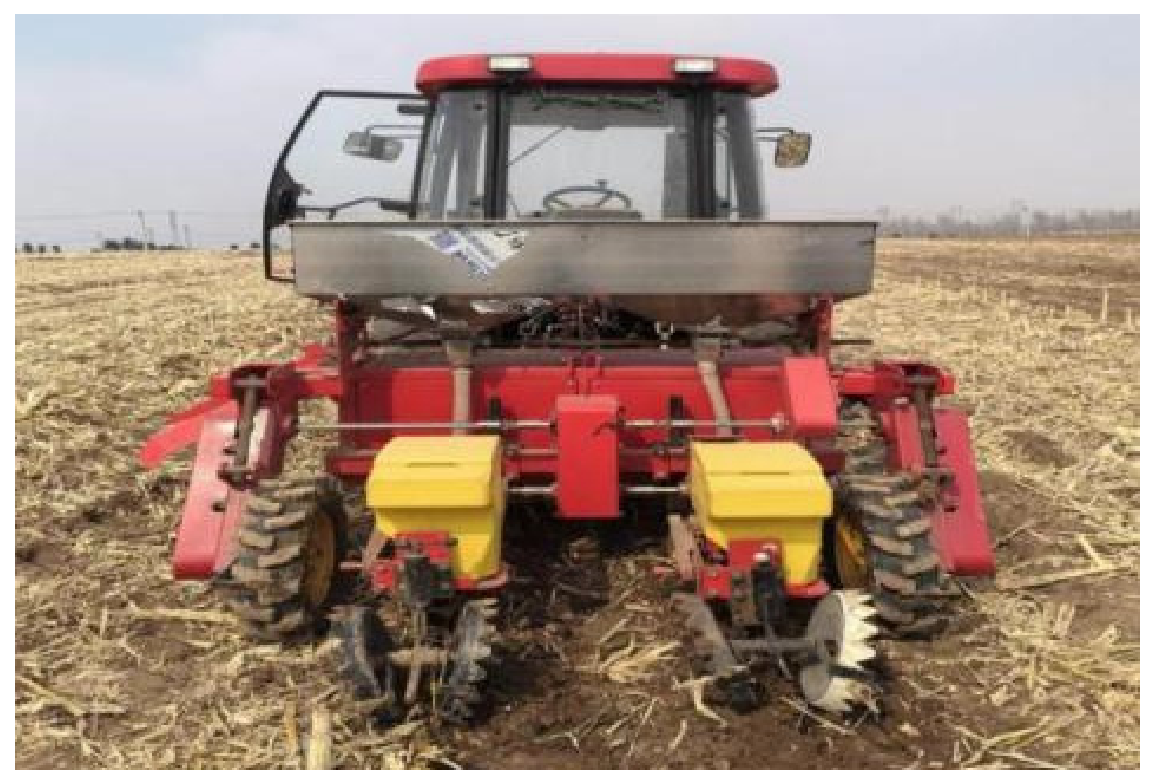
The experimental prototype was modified from a 2BMFJ-2 no-till straw-mulching precision seeder platform, as shown in Figure 8, and was powered by a Dongfanghong 604 tractor. The main test instruments included a TPJ-21 soil temperature recorder (Zhejiang Topu Yunnong Technology Co., Ltd., Hangzhou, Zhejiang, China) for monitoring soil temperature, a TZS-1 soil moisture meter (Zhejiang Topu Instrument Co., Ltd., Hangzhou, Zhejiang, China) for measuring soil water content, an ACS-30 electronic balance (Guangdong Xiangshan Weighing Instrument Group Co., Ltd., Zhongshan, Guangdong, China) for precise weighing, and an SL-TYA soil hardness tester (Shandong Hengmei Electronic Technology Co., Ltd., Weifang, Shandong, China) for measuring soil compaction.
Figure 8.
Experimental prototype based on the 2BMFJ-2 No-Till StrawMulching Precision Seeder.
2.3.2. Experimental Factors and Methods
To investigate the optimal operating conditions of the novel press roller and evaluate its comprehensive performance, orthogonal optimization tests and comparative validation tests were conducted separately. Whereas the design parameters were optimized in the laboratory using response surface methodology (Section 2.3), the field experiment employed an L9(34) orthogonal array design. This orthogonal design efficiently evaluated the effects of soil moisture, vertical load, and operating speed on roller performance under representative field conditions, rather than re-optimizing the roller design.
Since soil moisture content is difficult to precisely control under field conditions, this study selected plots with moisture contents close to the target levels by monitoring the natural variation in soil moisture after rainfall during the suitable sowing period. The measured moisture contents in the clay test area were 15.56%, 20.62%, and 25.38%; those in the sandy test area were 7.86%, 13.29%, and 17.22%, all in good agreement with the designed levels (15%, 20%, 25% for clay; 8%, 13%, 18% for sandy), with deviations controlled within ±1.5%. The actual moisture content was measured multiple times before and after the tests, and the average value was taken as the soil moisture level for each test.
Vertical loads were applied stepwise by adding or removing standard weights on the press roller frame. The number of weights was adjusted to achieve actual vertical loads of 600 N, 700 N, and 800 N acting on the press disk. During operation, the floating state of the press roller was adjusted through the tractor hydraulic system to maintain constant contact with the ground and a constant load, avoiding load fluctuations caused by surface undulations.
For the orthogonal experiment, three field operating parameters that significantly affect the operational performance were selected as experimental factors: soil moisture content A, vertical load B, and operating speed C. Three levels were set for each factor, as shown in Table 2. The experiment was arranged using an L9(34) orthogonal array. The soil adhesion amount Y1 on the press disk after operation and the wear loss Y2 of the press disk itself were used as evaluation indices.
Table 2.
Factors and Levels of Orthogonal Experiment.
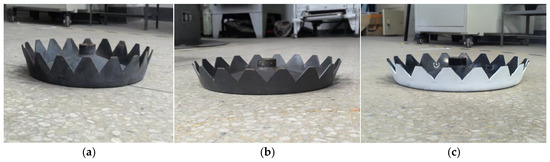
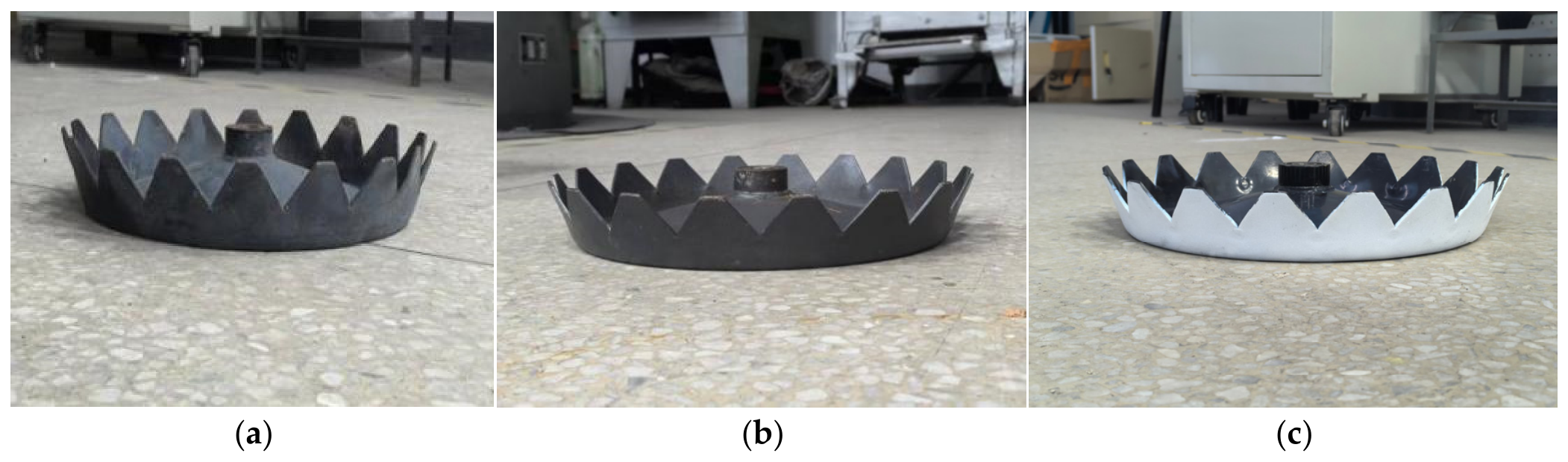
The comparative tests were conducted under the optimal parameter combinations determined by the orthogonal experiment. Three treatments were set: (a) conventional 65Mn steel press roller (control); (b) anti-adhesion press roller coated only with PTFE coating; (c) bionictextured anti-adhesive and wear-resistant press roller developed in this study. Photographs of the three types of press rollers are shown in Figure 9. The tests were performed under two extreme soil conditions: a high-moisture clay environment, for which plots with a natural moisture content of approximately 25% were selected; and a dry sandy environment, for which plots with a natural moisture content of approximately 8% were selected. Each treatment was repeated three times to minimize random error.
Figure 9.
Different types of soil covering and compacting rollers. (a) Conventional press wheel. (b) PTFE-coated anti-adhesive press wheel. (c) Bionictextured anti-adhesive and wear-resistant press wheel.
2.3.3. Evaluation Indices
- (1)
- Soil adhesion amount
Soil adhesion amount directly reflects the anti-adhesion effect on the soil-engaging component surface. After each test, the soil adhering to the surface of the press disk was collected using an aluminum sampling box, dried in a constant-temperature drying oven at 105 °C for 24 h, and then weighed using a balance. The mass of the dried soil was taken as the soil adhesion amount.
- (2)
- Wear loss
Before the test, the mass of the press disk, m0, was recorded. After the test, the adhering soil on the press disk was removed, and the disk was cleaned, dried, and weighed, recorded as m1. The wear loss Δm was calculated according to Equation (3):
2.3.4. Data Processing
Statistical analysis of the experimental data was performed using SPSS 26.0 software. Prior to ANOVA, the residuals were examined for normality (Shapiro–Wilk test, p > 0.05) and homogeneity of variance (Levene’s test, p > 0.05), confirming that the assumptions of the analysis were satisfied. Range analysis was first conducted to determine the primary and secondary order of the influence of each factor on the evaluation indices. Subsequently, analysis of variance (ANOVA) was performed to test the significance of differences among factors and treatments. Finally, mean comparisons were carried out at a significance level of p < 0.05 to identify specific differences among treatments.
3. Experimental Results and Analysis
3.1. Orthogonal Experiment Results and Operational Parameter Optimization
The orthogonal experiment results and range analysis for the clay and sandy soil test areas are shown in Table 3 and Table 4, respectively. The range R value reflects the degree of influence of each factor on the evaluation index.
Table 3.
Range analysis table of test results for the clay soil test area.
Table 4.
Range analysis table of test results for the sandy soil test area.
For the clay soil environment, the order of influence of the factors on soil adhesion Y1 was A > B > C, i.e., soil moisture content had the greatest influence, followed by vertical load, while operating speed had the smallest influence. Considering the dual requirements of anti-adhesion and wear resistance, the combination that yielded the best balance of anti-adhesion and wear resistance under the tested conditions involved a vertical load of 600 N and an operating speed in the range of 10.8–14.4 km·h−1. This recommended operating envelope maintained low soil adhesion and wear loss across the moisture content range of 15–25%, providing practical flexibility for field operations. This parameter combination achieved low soil adhesion and wear loss across the moisture content range of 15–25%, demonstrating good adaptability. The order of influence of the factors on wear loss Y2 was B > A > C, with vertical load being the dominant factor affecting wear; the optimal combination was A3B1C2. Considering the dual requirements of anti-adhesion and wear resistance and prioritizing operational efficiency, the final recommended operating parameters for the clay soil environment were determined as A1B1C3.
For the sandy soil environment, the order of influence of the factors on wear loss Y2 was B > C > A, with vertical load being the most prominent. Under the three moisture content levels (8%, 13%, and 18%), the optimal controllable parameter combination obtained by multi-objective optimization was A1B1C2, i.e., vertical load of 600 N and operating speed of 10.8 km·h−1. This parameter combination stably achieved low wear and low adhesion across the moisture content range of 8–18%.
The dominant influence of soil moisture on adhesion in clay soil can be understood from the perspective of interfacial water film formation and the stability of the Baxter state. As soil moisture increases within the tested range of approximately 15% to 25%, the water film at the soil–roller interface becomes progressively more continuous, thereby increasing the effective solid–liquid contact area fraction and directly raising the adhesion work as described by Equation (2). Concurrently, higher moisture content tends to collapse the air pockets trapped within the hierarchical micro-/nano-scale roughness formed by the bionic texture and TiO2 agglomerates, promoting a partial transition from the non-wetting Baxter state toward the fully wetted Wenzel state. This transition further enlarges the actual contact area and amplifies adhesion. The fact that the bionic roller maintained substantially lower adhesion than the conventional roller even at 25% moisture indicates that its dual-scale texture and low-surface-energy coating provide a degree of pressure-stable superhydrophobicity, which delays the Cassie-to-Wenzel transition and preserves an air-entrapping interface under moderate mechanical loads.
3.2. Analysis of Variance and Significance Test of Operating Parameters
To further quantify the significance of the effects of the operating parameters on the evaluation indices, analysis of variance (ANOVA) was performed on the orthogonal experimental data. The results are presented in Table 5 and Table 6.
Table 5.
Analysis of variance for test results in clay soil environment.
Table 6.
Analysis of variance table for experimental results in sandy test plot.
From Table 5, it can be seen that in the clay soil environment, for soil adhesion, factors A (soil moisture content) and B (vertical load) both had significant effects, with factor A having the greatest influence. The effect of factor C (operating speed) was not significant. The significant effect of vertical load on adhesion (p < 0.05) supports the interpretation that higher contact pressures partially collapse the air-entrapping interface, promoting a Cassie-to-Wenzel transition and increasing the effective solid–liquid contact area. For wear loss, factors A and B both had highly significant effects, with factor B being the key parameter controlling wear loss. The effect of factor C on wear loss was not significant. These results are consistent with the range analysis, where factor C showed the smallest range.
From Table 6, it can be seen that in the sandy soil environment, for soil adhesion, only factor C (operating speed) had a significant effect (p < 0.05), while vertical load and soil moisture content had no significant effect. For wear loss, factor B (vertical load) had a highly significant effect (p < 0.01), factor C had a significant effect (p < 0.05), and factor A had no significant effect. This indicates that in sandy soil, vertical load is the most critical factor determining the degree of wear, and operating speed has a significant effect on both adhesion and wear loss. This conclusion is consistent with the range analysis, which showed that factor B had the largest range, followed by factor C.
3.3. Verification Test and Reliability Analysis
To confirm the effectiveness and stability of the recommended parameter combinations obtained from the orthogonal experiment and ANOVA under different soil moisture content conditions, verification tests were conducted in clay and sandy soil environments. The test conditions were consistent with those of the orthogonal experiment: the load was fixed at 600 N, the operating speed was 14.4 km·h−1 for clay and 10.8 km·h−1 for sandy soil, and tests were carried out at three moisture content levels for each soil type. Each parameter combination was repeated three times, and the results were averaged.
Two sets of parameter combinations were established for the verification tests: one was the optimal combination A1B1C3 selected for the clay environment, and the other was the optimal combination A1B1C2 selected for the sandy environment (clay:soil moisture content 15%, vertical load 600 N, operating speed 14.4 km·h−1; sandy:soil moisture content 8%, vertical load 600 N, operating speed 10.8 km·h−1). In addition, to investigate the effect of soil moisture content on performance under the optimal vertical load and operating speed conditions, supplementary verification tests with different soil moisture content levels A2 and A3 were conducted in the clay environment under the same vertical load and operating speed.
The verification test results for the clay soil environment are shown in Table 7. At soil moisture contents of 15%, 20%, and 25%, the soil adhesion amounts using the recommended parameters (600 N, 14.4 km·h−1) were 3.73 g, 7.52 g, and 12.39 g, respectively, and the wear losses were 1.80 g, 2.10 g, and 1.10 g, respectively. The results show that although soil adhesion increased with moisture content, even at the highest moisture content of 25%, the adhesion remained at a relatively low level (12.39 g), far lower than that of the conventional press wheel under high-humidity conditions. The wear loss showed little variation across different moisture contents, demonstrating good stability. This confirms the applicability of the recommended controllable parameters across the entire moisture content range in clay soil.
Table 7.
Validation test results for optimal parameters in clay soil.
The verification test results for the sandy soil environment are shown in Table 8. At soil moisture contents of 8%, 13%, and 18%, the soil adhesion amounts using the recommended parameters (600 N, 10.8 km·h−1) were 1.33 g, 1.17 g, and 1.33 g, respectively, and the wear losses were 9.90 g, 11.10 g, and 10.30 g, respectively. The data indicate that in sandy soil, the effect of moisture content variation on adhesion and wear is relatively small, and the recommended parameters maintained stable low-adhesion and low-wear performance across all moisture content levels. Notably, even at the highest moisture content of 18%, the wear loss of 10.30 g was still significantly lower than that of the conventional press wheel, confirming the reliability of the recommended parameters.
Table 8.
Validation test results for optimal parameters in sandy soil.
Analysis of the data in Table 7 and Table 8 shows that in both soil environments, the recommended operating parameter combinations selected based on the orthogonal experiment and range analysis consistently achieved low soil adhesion and low press wheel wear in actual field operations, confirming the effectiveness of the parameter combinations and the reliability of the orthogonal experimental analysis method.
3.4. Comparative Analysis of Anti-Adhesion and Wear-Resistant Performance
Under the optimal operating parameters, the field comparative test results for the three types of press wheels are shown in Table 9 and Figure 10.
Table 9.
Comparative test program and results.
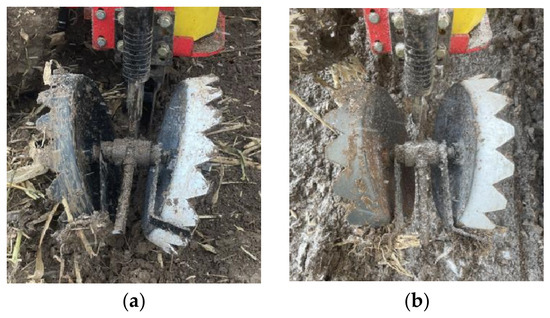
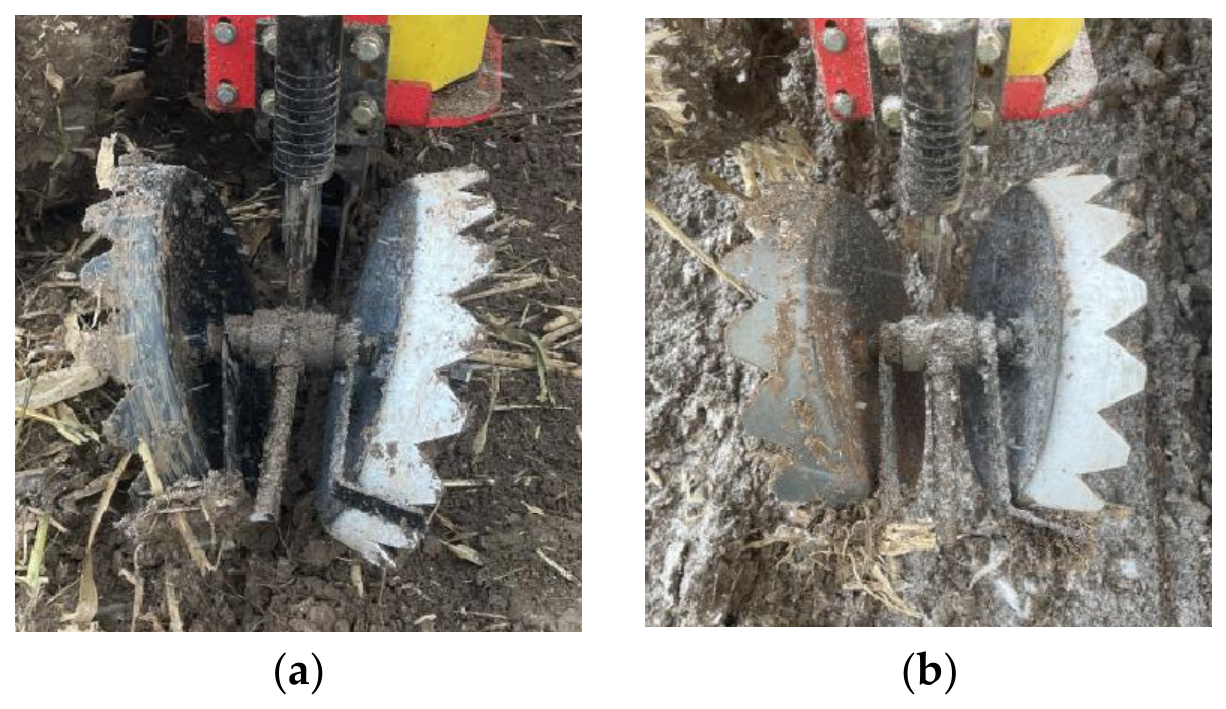
Figure 10.
Operational performance of different press wheels in clay soil. (a) Conventional press wheel vs. bionictextured anti-adhesive and wear-resistant press wheel during operation. (b) PTFE-coated anti-adhesive press wheel vs. bionictextured anti-adhesive and wear-resistant press wheel during operation.
In the high-humidity clay environment, as shown in Figure 10a, the surface of the conventional press wheel was completely covered with a thick layer of mud; the adhesion on the PTFE-coated press wheel was reduced but still evident; while the bionictextured press wheel showed only sporadic fine soil particles on its surface. The visual differences among the three were extremely significant. The data in Table 9 show that the soil adhesion of Treatment 3 (bionictextured press wheel) was significantly lower than that of Treatment 1 (conventional) and Treatment 2 (PTFE-coated), being reduced by 82.62% compared to the conventional press wheel and by 74.02% compared to the PTFE-coated press wheel. These reductions were statistically significant (p < 0.05) as confirmed by post hoc comparisons following ANOVA. Meanwhile, the wear loss of Treatment 3 was also significantly lower than that of Treatment 1 and was statistically at the same level as Treatment 2, showing no significant difference. This indicates that in clay soil, the bionictextured press wheel is dominated by anti-adhesion performance while also maintaining good wear resistance.
Even under the extreme conditions of the highest moisture contents (25% in clay, 18% in sandy soil), the soil adhesion (12.39 g in clay) and wear loss (10.30 g in sandy soil) of the bionic press wheel were still far lower than those of the conventional press wheel (71.30 g in clay, 16.30 g in sandy soil) and the PTFE-coated press wheel (47.70 g in clay, 14.50 g in sandy soil), demonstrating the significant advantages of its anti-adhesion and wear-resistant performance in both high-humidity and dry environments.
4. Conclusions
- (1)
- Based on the morphological characteristics of the body surface of Procambarus clarkii, a crescent-shaped bionic micro-texture was designed and combined with a PTFE/PDMS/hydrophobic nano-TiO2 composite coating. A bionictextured anti-adhesive and wear-resistant soil-covering press wheel was successfully developed, and a composite surface preparation process combining laser processing and spray curing was established.
- (2)
- Field evaluations demonstrated that the bionic roller maintained stable performance across a wide range of soil moisture conditions. A vertical load of 600 N and operating speeds of 10.8–14.4 km·h−1 are recommended for clay soil, whereas for sandy soil a load of 600 N and a speed of approximately 10.8 km·h−1 are preferable. These recommended operating envelopes provide practical guidance for no-tillage seeding operations while confirming the robust anti-adhesion and wear-resistant properties of the roller design.
- (3)
- Comparative tests showed that in high-humidity clay soil, the soil adhesion of the bionic press wheel was reduced by 82.62% compared to the conventional press wheel and by 74.02% compared to the PTFE-coated press wheel; in dry sandy soil, the wear loss was reduced by 36.81% compared to the conventional press wheel and by 28.97% compared to the PTFE-coated press wheel. This demonstrates a synergistic and significant improvement in both anti-adhesion and wear-resistant performance. The study indicates that the stress dispersion and wear debris storage functions of the bionic texture, synergized with the low surface energy and enhanced wear resistance of the composite coating, are key to achieving the performance enhancement through the “structure-material” integrated design.
Author Contributions
Conceptualization, H.C.; Methodology, H.C. and R.L.; Software, Z.G.; Validation, Z.L. and X.W.; Formal Analysis, Z.G., Z.Z. and Y.W.; Investigation, Z.L.; Resources, Y.Z.; Data Curation, Z.Z. and Y.W.; Writing—Original Draft Preparation, Z.L.; Writing—Review & Editing, H.C. and Y.Z.; Visualization, Z.G., Y.Y. and Z.L.; Supervision, H.C.; Project Administration, Y.Z.; Funding Acquisition, H.C. All authors have read and agreed to the published version of the manuscript.
Funding
The study was financially supported by the National Key Research and Development Program of China (Grant No. 2021YFD2000401) and the Graduate Student Training Fund of the College of Engineering, Northeast Agricultural University (Grant No. 52000212).
Institutional Review Board Statement
The bionic design was inspired solely by the morphological observation of biological structures, and all experiments were conducted on material specimens (65Mn steel) and coatings.
Data Availability Statement
The original contributions presented in this study are included in the article. Further inquiries can be directed to the corresponding author.
Acknowledgments
The study was financially supported by the National Key Research and Development Program of China (Grant No. 2021YFD2000401).
Conflicts of Interest
The authors declare no conflicts of interest. The funders had no role in the design of the study; in the collection, analyses, or interpretation of data; in the writing of the manuscript; or in the decision to publish the results.
Abbreviations
The following abbreviations are used in this manuscript:
| PTFE | Polytetrafluoroethylene |
| PDMS | Polydimethylsiloxane |
| TiO2 | Titanium Dioxide |
| 65Mn | AISI 65Mn Steel |
| RSM | Response Surface Methodology |
| SEM | Scanning Electron Microscope |
| FEA | Finite Element Analysis |
| ANOVA | Analysis of Variance |
| CCD | Central Composite Design |
References
- He, J.; Li, H.; Chen, H.; Lu, C.; Wang, Q. Research progress of conservation tillage technology and machinery. Trans. Chin. Soc. Agric. Mach. 2018, 49, 1–19. [Google Scholar]
- Liang, A.; Zhang, Y.; Chen, X.; Zhang, S.; Huang, D.; Yang, X.; Zhang, X.; Li, X.; Tian, C.; McLaughlin, N.; et al. Conservation tillage in the black soil region of Northeast China: A review. Geogr. Sci. 2022, 42, 1325–1335. [Google Scholar]
- Jiang, F.; Peng, X.; Yao, S.; Islam, M.U.; Zhang, Z.; Chen, B.; Wang, Y.; Wang, N.; Qi, H.; Wang, Z.; et al. A six-site field study on assessing the suitability of conservation and conventional tillage in the black soil region, Northeast China. Soil Tillage Res. 2025, 248, 106379. [Google Scholar] [CrossRef] [Scilit]
- Ao, M.; Zhang, X.; Guan, Y. Research and practice of conservation tillage technology in black soil region of Northeast China. Bull. Chin. Acad. Sci. 2021, 36, 1203–1215. [Google Scholar]
- Guo, H.; Chen, Z.; Jia, H.; Zheng, T.; Wang, G.; Wang, Q. Design and experiment of soil-covering and soil-compacting device with cone-shaped structure of wheel. Trans. Chin. Soc. Agric. Eng. (Trans. CSAE) 2017, 33, 56–65. [Google Scholar]
- Chen, H.; Xu, Y.; Shi, N. Design and experiment on three-way adjustable V-type soil-covering and soil-compacting device. J. Northeast Agric. Univ. 2018, 49, 65–73. [Google Scholar]
- Ren, L. Soil Adhesion Mechanics; China Machine Press: Beijing, China, 2011. [Google Scholar]
- Jia, H.; Wang, W.; Chen, Z.; Zheng, T.; Zhang, P.; Zhuang, J. Research status and prospect of optimization of soil-engaging components in agricultural machinery. Trans. Chin. Soc. Agric. Mach. 2017, 48, 1–13. [Google Scholar]
- Chen, X.; Li, C.; Gao, Q.; Duan, X.; Liu, H. Comparison of Microstructure, Microhardness, Fracture Toughness, and Abrasive Wear of WC-17Co Coatings Formed in Various Spraying Ways. Coatings 2022, 12, 814. [Google Scholar] [CrossRef] [Scilit]
- Su, B.; Xu, Y.; Jian, J. Development and research status of wear-resistant parts for agricultural machinery. Heat Treat. Technol. Equip. 2013, 34, 53–58. [Google Scholar]
- Ren, L. Progress in the bionic study on anti-adhesion and resistance reduction of terrain machines. Sci. China Ser. E Technol. Sci. 2009, 52, 273–284. [Google Scholar] [CrossRef] [Scilit]
- Liu, H.; Zhao, S.; Tan, H.; Yang, R.; Zhang, X. Investigation of anti-adhesion and resistance-reducing press device based on scraping and vibration principles. Trans. Chin. Soc. Agric. Mach. 2018, 49, 86–92. [Google Scholar]
- Massah, J.; Fard, M.R.; Aghel, H. An optimized bionic electro-osmotic soil-engaging implement for soil adhesion reduction. J. Terramechanics 2021, 95, 1–6. [Google Scholar] [CrossRef] [Scilit]
- Xu, Y. Design of Three-Way Adjustable V-Type Soil-Covering and Soil-Compacting Device and Research on Its Anti-Adhesion Technology. Master’s Thesis, Northeast Agricultural University, Harbin, China, 2018. [Google Scholar]
- Barzegar, M.; Hashemi, S.; Nazokdast, H.; Karimi, R. Evaluating the draft force and soil-tool adhesion of a UHMW-PE coated furrower. Soil Amp Tillage Res. 2016, 163, 160–167. [Google Scholar] [CrossRef] [Scilit]
- Wang, Y.; Xue, W.; Ma, Y.; Tong, J.; Liu, X.; Sun, J. DEM and soil bin study on a biomimetic disc furrow opener. Comput. Electron. Agric. 2019, 156, 209–216. [Google Scholar] [CrossRef] [Scilit]
- Ren, L.; Cong, Q.; Tong, J.; Chen, B. Reducing adhesion of soil against loading shovel using bionic electro-osmosis method. J. Terramechanics 2001, 38, 211–219. [Google Scholar] [CrossRef] [Scilit]
- LEMKEN GmbH & Co. KG. Company Brochure; LEMKEN GmbH & Co. KG.: Alpen, Germany.
- Hao, J.; Yang, Z.; Ma, L.; Zhao, J.; Liu, J. Fe-Cr-C-V plasma cladding layer improving wear resistance and impact toughness of rotary tiller blade. Trans. Chin. Soc. Agric. Eng. (Trans. CSAE) 2019, 35, 24–30. [Google Scholar]
- Zhang, Q.; Han, B.; Li, M.; Chen, Z.; Hu, C.; Jia, C. Comparison of CoCrFeNi coatings prepared via high-speed laser cladding and normal laser cladding on microstructure and properties. Intermetallics 2023, 153, 107795. [Google Scholar] [CrossRef] [Scilit]
- Li, Q.; Guo, J.; Hu, J.; Zhang, W.; Wang, H.; Dai, H. Research status of wear reduction and resistance reduction treatment of soil tillage components. Surf. Technol. 2017, 46, 119–126. [Google Scholar]
- Li, Y.; Pang, X.; Sun, L.; Niu, Y.; Zhang, Y. Effect of laser surface texturing on friction and wear properties of 45 steel. Surf. Technol. 2018, 47, 147–154. [Google Scholar]
- Wei, Z.; Zhang, C.; Liu, X.; Shen, C.; Gao, M.; Li, J.; Wu, Z.; Zhu, M. Research on the Anti-Erosion Mechanism of the Shell Surface Structure Based on Numerical Simulation. Biomimetics 2026, 11, 62. [Google Scholar] [CrossRef] [Scilit]
- Gachot, C.; Rosenkranz, A.; Hsu, S.M.; Costa, H.L. A critical assessment of surface texturing for friction and wear improvement. Wear 2017, 372–373, 21–41. [Google Scholar] [CrossRef] [Scilit]
- GB/T 1222-2007; Spring Steel. General Administration of Quality Supervision: Beijing, China, 2007.
- Poulia, A.; Georgatis, E.; Lekatou, A.; Karantzalis, A. Microstructure and wear behavior of a refractory high entropy alloy. Int. J. Refract. Met. Hard Mater. 2016, 57, 50–63. [Google Scholar] [CrossRef] [Scilit]
- Niu, Y.; Pang, X.; Yue, S.; Shangguan, B.; Zhang, Y. The friction and wear behavior of laser textured surfaces in non-conformal contact under starved lubrication. Wear 2021, 476, 203723. [Google Scholar] [CrossRef] [Scilit]
- Wang, J.; Gan, J.; Zhang, C.; Hong, W.; Jiang, F. Natural and biomimetic superhydrophobic surface: Review of the manufacturing techniques. In Proceedings of the 3rd International Conference on Materials Chemistry and Environmental Engineering (Part 3), Stanford, CA, USA, 18 March 2023; pp. 66–79. [Google Scholar] [CrossRef]

Disclaimer/Publisher’s Note: The statements, opinions and data contained in all publications are solely those of the individual author(s) and contributor(s) and not of MDPI and/or the editor(s). MDPI and/or the editor(s) disclaim responsibility for any injury to people or property resulting from any ideas, methods, instructions or products referred to in the content. |
© 2026 by the authors. Licensee MDPI, Basel, Switzerland. This article is an open access article distributed under the terms and conditions of the Creative Commons Attribution (CC BY) license.