


Abstract
Compost-derived products are increasingly used to enhance soil biological activity and plant performance in perennial fruit systems, but the effects of compost tea (CT) in kiwifruit orchards remain unexplored. This study assessed root-zone applications of aerated CT from 2023 to 2025 on the yield and fruit quality of gold kiwifruit in a commercial pergola-trained orchard. Two treatments were compared: weekly CT fertigation during summer and an untreated control (Ctrl). Yield, fruit number, mean fruit weight, and fruit quality—hue angle (H°), firmness, soluble solids content (SSC), and dry matter were evaluated annually. The CT application did not significantly affect total yield or fruit number over three seasons. However, it increased the mean fruit weight and shifted fruit distribution toward larger size classes. Fruit quality responses varied: CT-treated fruits initially showed lower firmness and SSC, but in the final year, firmness and SSC matched controls. Dry matter content was higher in CT fruits (18.87%) than in controls (16.71%). These results indicate that during the early to mid-bearing phase, CT promotes fruit growth toward larger sizes and enhances dry matter accumulation. Gradual benefits appeared after three annual applications, suggesting CT is a promising tool for medium- to long-term soil and rhizosphere management in kiwifruit.
Keywords:
Actinidia chinensis; organic waste; orchard; dry matter; fruit weight; firmness; biostimulants 1. Introduction
Kiwifruit (Actinidia spp.) represents one of the most economically relevant temperate fruit crops worldwide, with a global production exceeding 4.4 million tons in 2023 [1] and Italy ranking among the leading producers [2]. Beyond its commercial value, kiwifruit is highly appreciated for its nutritional profile, characterized by high vitamin C, antioxidant compounds, and dietary fiber [3]. While green cultivar Hayward (Actinidia chinensis var. deliciosa) has historically dominated international markets, gold kiwifruit (Actinidia chinensis var. chinensis) has gained increasing importance due to its lower chilling requirements and enhanced adaptability to warmer winter conditions [4].
Despite its economic importance, kiwifruit is physiologically sensitive to soil structure, oxygen availability, and mineral balance. Root asphyxia, soil fatigue, and imbalances in nitrogen and calcium nutrition can severely compromise plant vigor and fruit quality [5,6]. Kiwifruit growth is strongly dependent on carbohydrate availability and mineral supply during the cell expansion phase [7,8]. Moreover, calcium-mediated cell wall stabilization plays a crucial role in determining fruit firmness and postharvest performance [9,10]. In Mediterranean environments, frequent heat waves and irregular rainfall distribution increase plant stress, affecting carbon allocation patterns, respiration rates, and dry matter accumulation [11,12].
In perennial orchard systems, improvements in soil functionality and rhizosphere activity are often gradual and cumulative [13]. Sustainable management strategies increasingly focus on enhancing soil biological activity to improve nutrient cycling and plant resilience [14]. Among these compost-derived strategies, compost-derived products have attracted attention for their potential to modulate soil microbial communities and stimulate plant physiological processes [15,16].
Compost tea, a water extract of compost that may be either aerated or non-aerated, contains soluble nutrients, humic substances, and diverse microbial consortia [15,17]. Depending on compost origin, extraction method, and application mode, compost tea may function as a biostimulant, enhancing nutrient availability and inducing plant defense responses [18,19]. Positive effects have been reported in several horticultural crops, including lettuce and kohlrabi [20], tomato [21], mini watermelon [22], pomegranate [23], and grapevine [24]. The effects described include improved nutrient uptake, increased fruit size, increased chlorophyll content, disease suppression, and modulation of the biochemical characteristics of the fruit.
However, most available studies have been conducted in annual crops or short-term trials, and little is known about the cumulative effects of repeated compost tea applications in perennial fruit systems. In orchards, where carbon partitioning, mineral accumulation, and rhizosphere stabilization occur over multiple seasons, the biological impact of compost tea may require medium- to long-term assessment before measurable changes in fruit quality traits become evident.
To date, no study has specifically evaluated the effects of aerated compost tea on kiwifruit cultivation. Given the high sensitivity of Actinidia chinensis to soil physical constraints and mineral imbalances, and the increasing exposure of Mediterranean orchards to thermal and hydric stress, assessing the role of rhizosphere-targeted biostimulants in modulating yield components and fruit structural quality is of particular relevance.
We hypothesized that repeated root-zone application of aerated compost tea would progressively enhance rhizosphere functionality and nutrient dynamics, resulting in improved fruit growth and structural quality parameters such as firmness and dry matter accumulation rather than immediate increases in total yield.
Therefore, the aim of this three-year field study was to evaluate the cumulative effects of aerated compost tea on yield performance and key quantitative and qualitative attributes of gold kiwifruit grown in Mediterranean environments.
2. Materials and Methods
2.1. Study Area and Experimental Design
The experimental trial was carried out during the summer seasons of 2023, 2024, and 2025, at KIWI SUD s.r.l. (Eboli, Salerno, Italy; 40°35.113′ N, 15°3.735′ E, 145 m a.s.l.) on a commercial farm planted with 7-year-old gold kiwifruit plants (Actinidia chinensis var. chinensis, cv. AC 501 022/intermediate Hayward/D1 rootstock). The cultivar AC 501 022, developed in the Kikokà project and patented by the University of Studi di Udine in collaboration with New Kiwi Plant, is a late-ripening variety harvested from late September to mid-October. It produces sweet, yellow-fleshed fruits characterized by high uniformity.
Plants were trained on a pergola system and planted at 4.5 m between rows and 2 m within rows, resulting in a density of 1.100 plants ha−1 (2 m × 4.5 m) with north–south row orientation. The male-to-female ratio was 1:8.
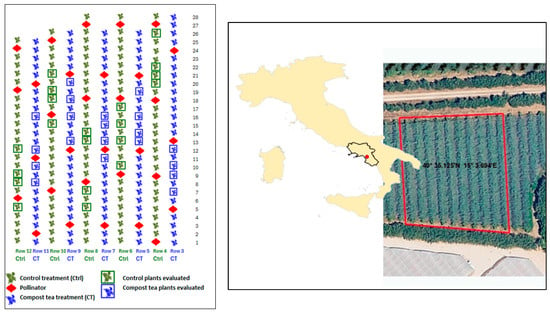
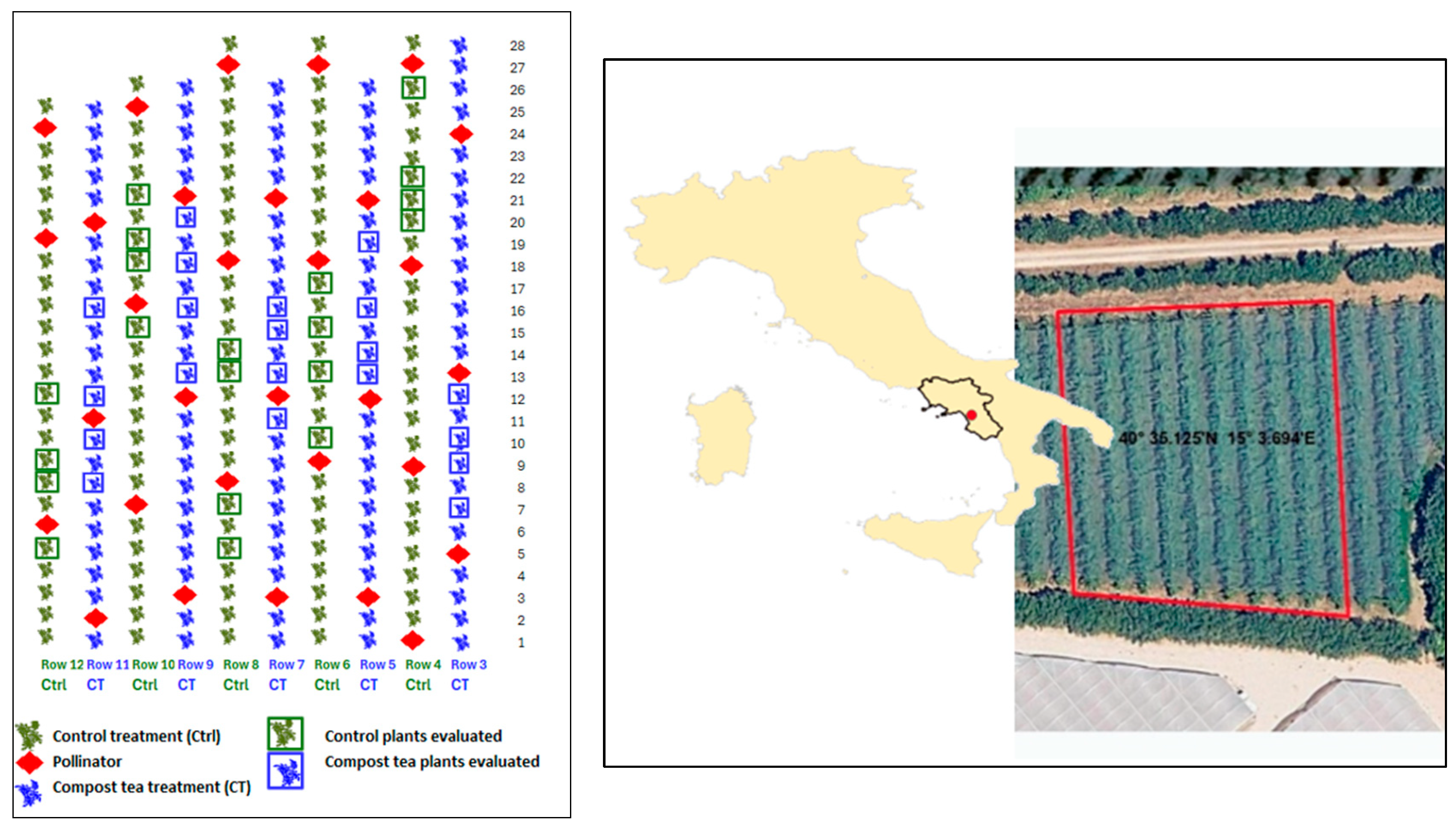
The experimental area covered 2.500 m2 and included two treatments: an aerated compost tea treatment (CT), in which plants received compost tea applications, and a control treatment (Ctrl), which was managed under the same agronomic conditions but without compost tea application. Each treatment was replicated five times, with four plants per replication across five rows, for a total of 20 plants per treatment. At the beginning of the experiment, variability among plants within the experimental area was analyzed based on statistically similar trunk diameters, measured on 264 plants from the third to the twelfth rows. Trunk diameter was measured using a digital caliper at 40 cm above ground level, with an average value of 26 ± 4.8 mm (mean ± SD) (Figure 1). Within the rows designated for each treatment, plants with a trunk diameter of approximately 20 mm were randomly selected, and their representativeness relative to the total population was verified. Furthermore, crop load was homogenized through early thinning.
Figure 1.
(Left) Experimental layout showing control treatment (Ctrl, green symbols) and compost tea treatment (CT, blue symbols); pollinators are indicated with red rhombus; selected plants subjected to measurements are marked with green and blue square symbols. (Right) experimental kiwifruit field (2500 m2) outlined by a red rectangle, used for this study.
Irrigation was applied via two drip lines, delivering 6500–8000 m3 ha−1, and fertilization was applied through fertigation, which was also used for CT application.
The experimental site is characterized by a Mediterranean hot-summer climate (Köppen classification: Csa). Moreover, to describe the growing conditions of the plants, the hydrothermal coefficient (HTC) was calculated for each year according to Selyaninov [24] using the following formula:
where ΣR is the sum of the rainfall in mm, and ΣT is the sum of mean daily temperatures for the years 2023, 2024 and 2025, calculated for days with mean temperature greater than or equal to 10 °C. The classification is as follows: 0–0.4 extremely dry, 0.41–0.7 very dry, 0.71–1.0 dry, 1.01–1.3 quite dry, 1.31–1.6 optimum, 1.6–2.01 quite wet, 2.01–2.5 wet and 2.51–3 very wet. Soil texture and organic matter were analyzed according to the International Union of Soil Sciences (IUSS) protocols [25]. Soil hydraulic properties, including saturation water capacity (SWS), soil moisture at field capacity (FC), wilting point (WP), available water holding content (AWHC), and saturated hydraulic conductivity (SHC), were estimated based on soil texture and organic matter using pedotransfer functions [26] (Table 1). The soil was classified as loamy clay, with moderate organic content, good water-holding capacity, and moderate permeability.
HTC = Σ R/0.1 × Σ T
Table 1.
Main physical and hydraulic properties of the soil.
2.2. Extraction and Distribution of Aerated Compost Tea
Compost tea (CT) was obtained using on-farm compost derived from agricultural residues. The extracted compost was formulated on a volumetric basis (v/v): artichoke waste (30%), maize stalks (30%), and rocket and lettuce residues (40%). The chemical and microbiological characteristics of the compost used to produce compost tea are reported in Table 2.
Table 2.
Chemical and microbiological characteristics of compost used for compost tea production.
Compost extraction was carried out using a bio-extractor–oxygenator system with a 1 m3 tank. The components assembled for the extraction system were those described by Palese et al. [27], Zaccardelli et al. [15] and Pergola et al. [28]. The extraction system ensured regular and homogeneous oxygenation of the liquid mass and provided adequate mechanical support for the compost, which was placed inside permeable jute bags.
Once the bio-extractor had been assembled, jute bags filled with green compost were immersed in a water-filled tank. The compost-to-extractant ratio was set at 1:8 (v/v).
The compost tea extraction was carried out over a period of five days. Oxygenation of the liquid mass was achieved through continuous recirculation using a self-priming WORTEX electric pump for aeration, and it is suitable for operation with water up to 35 °C. During the extraction phase, compressed air was introduced into the aqueous suspension for 15 min every 3 h using a mechanical timer to maintain adequate oxygen concentration and promote microbial growth. At the end of the extraction, the suspension was filtered through a nylon mesh and collected in a container [18,28].
Compost tea was applied weekly from June to August via fertigation, for a total of 12 applications and a total volume of 0.8 m3 (0.16 m3 per row). Compost tea was diluted with water at a 2.5:100 (v/v) ratio.
2.3. Yield and Fruit Quality Evaluation
Yield was measured directly in the field by weighing the total yield per plant in the Ctrl and CTs. At harvest, ten fruits were randomly selected from the total yield of each plant. (for a total of 200 fruits from the Ctrl treatment and 200 fruits from the CTs). Fruit weight was measured using a digital scale (Kern EMB 1200-1, KERN & SOHN, Balingen-Frommern, Germany) with two decimal places. Subsequently, qualitative assessments were carried out on the same ten fruits.
The qualitative evaluation included measurements of hue angle (H°), fruit firmness, and soluble solids content (SSC). The hue angle was measured using a colorimeter (Chroma Meter CR-200; Minolta, Milan, Italy). Fruit firmness was determined using a penetrometer (T.R. Turoni s.r.l., Forlì, Italy) equipped with a 6 mm piston specifically designed for kiwifruit (model 53200, Turoni, Forlì, Italy). SSC was measured using a digital refractometer (Hanna Instruments HI 96800, Woonsocket, RI, USA), an optical instrument designed to determine sugar concentration (°Brix) based on the refractive index of aqueous solutions.
Measurements were taken on both longitudinal sides of each fruit, resulting in two measurements per fruit. After removing the peel with a peeler, the H° was measured first, followed by firmness determination. Finally, a few drops of juice were extracted from the pulp through the hole created by the tip of the penetrometer, and SSC was measured after calibration with distilled water.
2.4. Determination of Dry Matter
Twenty fruits randomly sampled at harvest from both treatments were frozen at −80 °C. The dry matter (d.w.) was determined by drying the fruit samples in an oven at 65 °C until constant weight (approximately 5–6 days). Prior to drying, the fruits were cut into small pieces to facilitate moisture loss.
2.5. Statistical Analysis
The experimental data were analyzed using one-way analysis of variance (ANOVA) in JMP® software (version 18.0.2; JMP Statistical Discovery LLC, Cary, NC, USA). Homogeneity of variance and normality were assessed by Bartlett’s and Shapiro–Wilk tests, respectively (p > 0.05). Means were compared using Student’s t test (p < 0.05 level). A two-way ANOVA was conducted for dry matter content (%), with year and treatment considered as fixed factors and their interaction included in the model. For multiple comparisons among the means of the year × treatment combinations, Tukey’s HSD test was used. Differences were considered statistically significant at p < 0.05.
3. Results
3.1. Environmental Conditions
Meteorological data were obtained from the agro-meteorological station of Improsta (Salerno, Campania, Italy; 40.5537° N, 14.9805° E), provided by the Regional Agro-Meteorological Service of Campania.
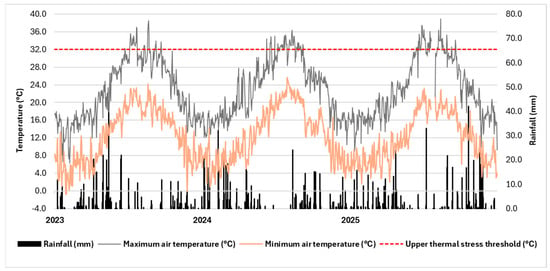
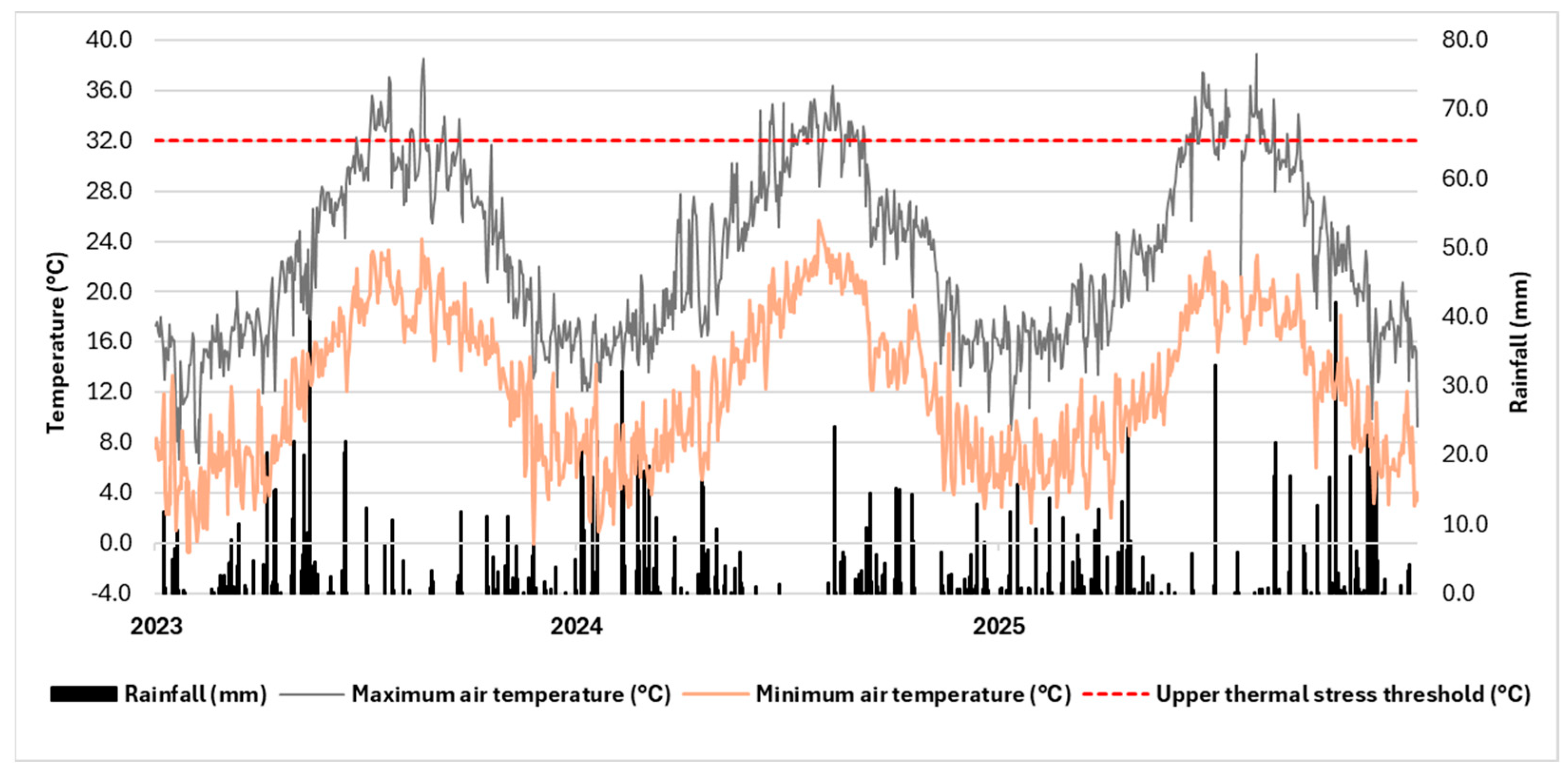
Figure 2 presents precipitation, as well as maximum and minimum air temperatures, together with the threshold temperature above which plant metabolic functions slow, for the years 2023, 2024, and 2025. During this period, the maximum air temperature showed constant seasonal dynamics, with recurring temperatures exceeding 32 °C during the summer. In 2023, there was a prolonged heatwave between July and August that lasted about two weeks. In 2024, temperatures began to exceed 32 °C earlier (mid-June) and remained consistently high throughout July and August, with numerous consecutive days above 32 °C and peak values exceeding 36 °C. The 2025 season was characterized by the highest maximum temperatures of the three-year period, with values reaching 38.9 °C and multiple episodes of intense heat from mid-June to the end of August.
Figure 2.
Daily rainfall (mm d−1) (black bars), maximum (gray line) and minimum (orange line) daily air temperature (°C) and upper thermal stress threshold (°C) (dashed red line) for the years 2023, 2024, and 2025. Source: Regional Agro-Meteorological Service of Campania (Salerno, Campania, Italy; 40.5537° N, 14.9805° E).
The minimum air temperature followed a parallel seasonal pattern, but with significant contrasts between seasons. Winter nights remained generally mild, rarely falling below 2–4 °C, suggesting limited exposure to severe cold stress. In contrast, summer nights were increasingly warm, with frequent minimum temperatures above 20 °C in 2024 and especially in 2025.
Annual precipitation was 492 mm in 2023, increasing to 539 mm in 2024 and reaching 596 mm in 2025. Summer heat waves generally coincided with prolonged periods of drought, particularly in July 2024 and between late June and July 2025, while precipitation was more frequent in spring and fall. Overall, the repeated exceedance of the 32 °C threshold, combined with uneven rainfall distribution, suggests recurrent exposure of plants to combined thermal and water stress, with 2025 representing the most extreme year in terms of temperature during the study period.
The hydrothermal coefficient (HTC) indicated consistent drought conditions across all years. The values increased slightly from 0.75 in 2023 to 0.82 in 2024 and 0.95 in 2025, suggesting a slight increase in moisture availability; however, all years remained within the dry category.
3.2. Yield
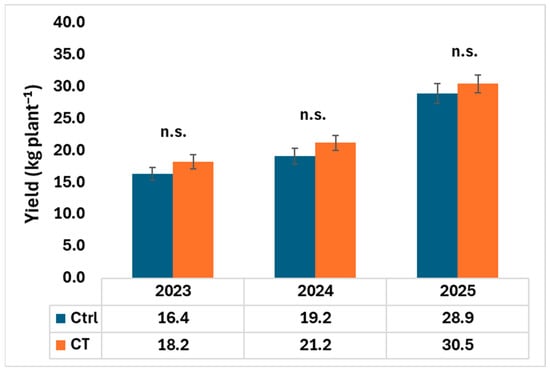
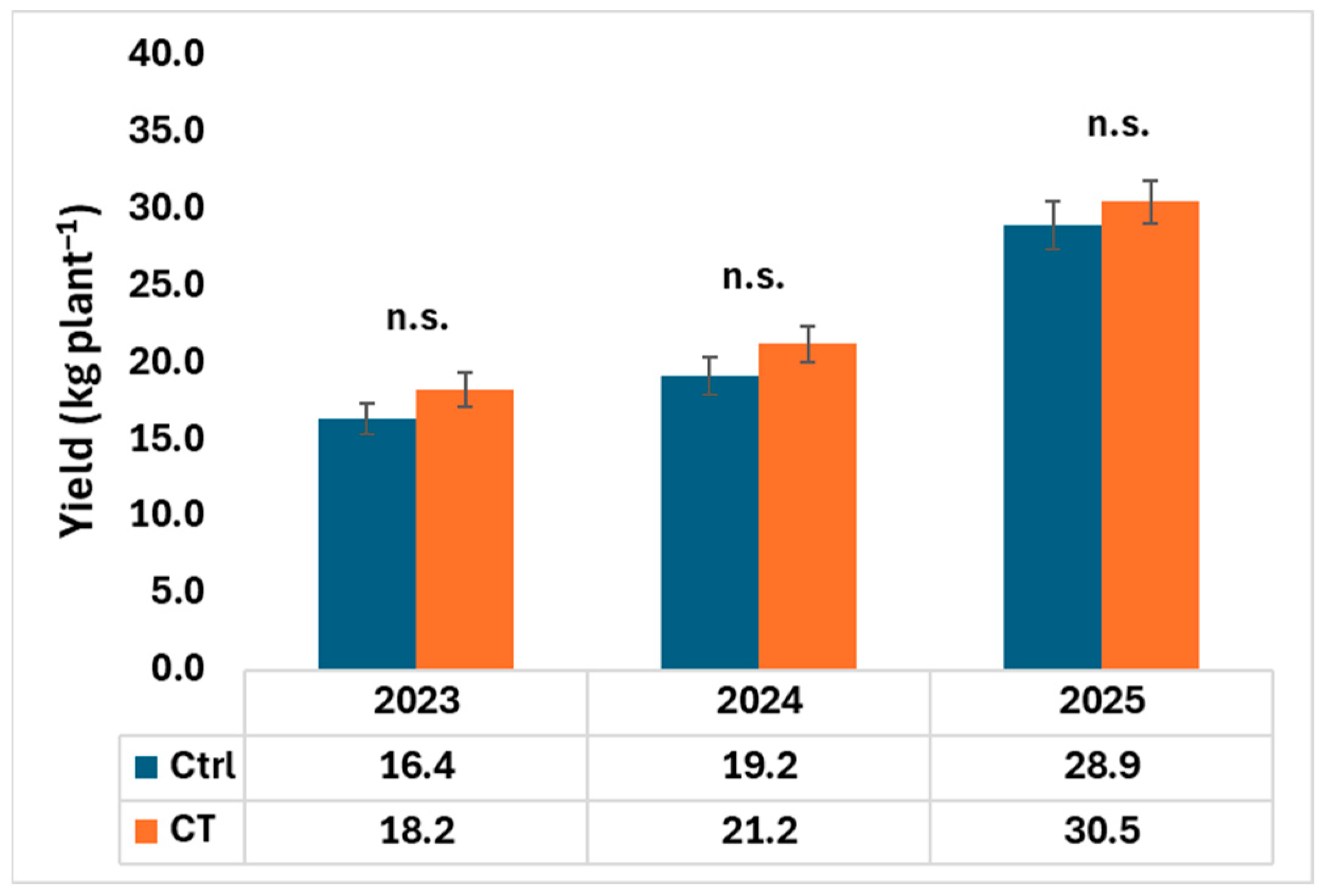
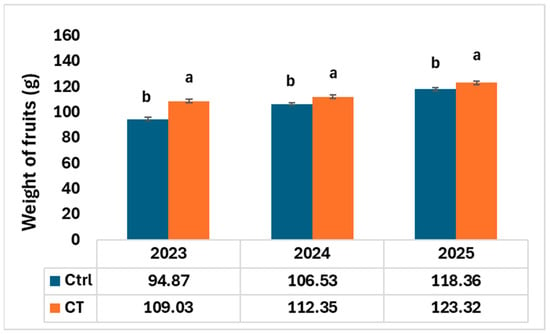
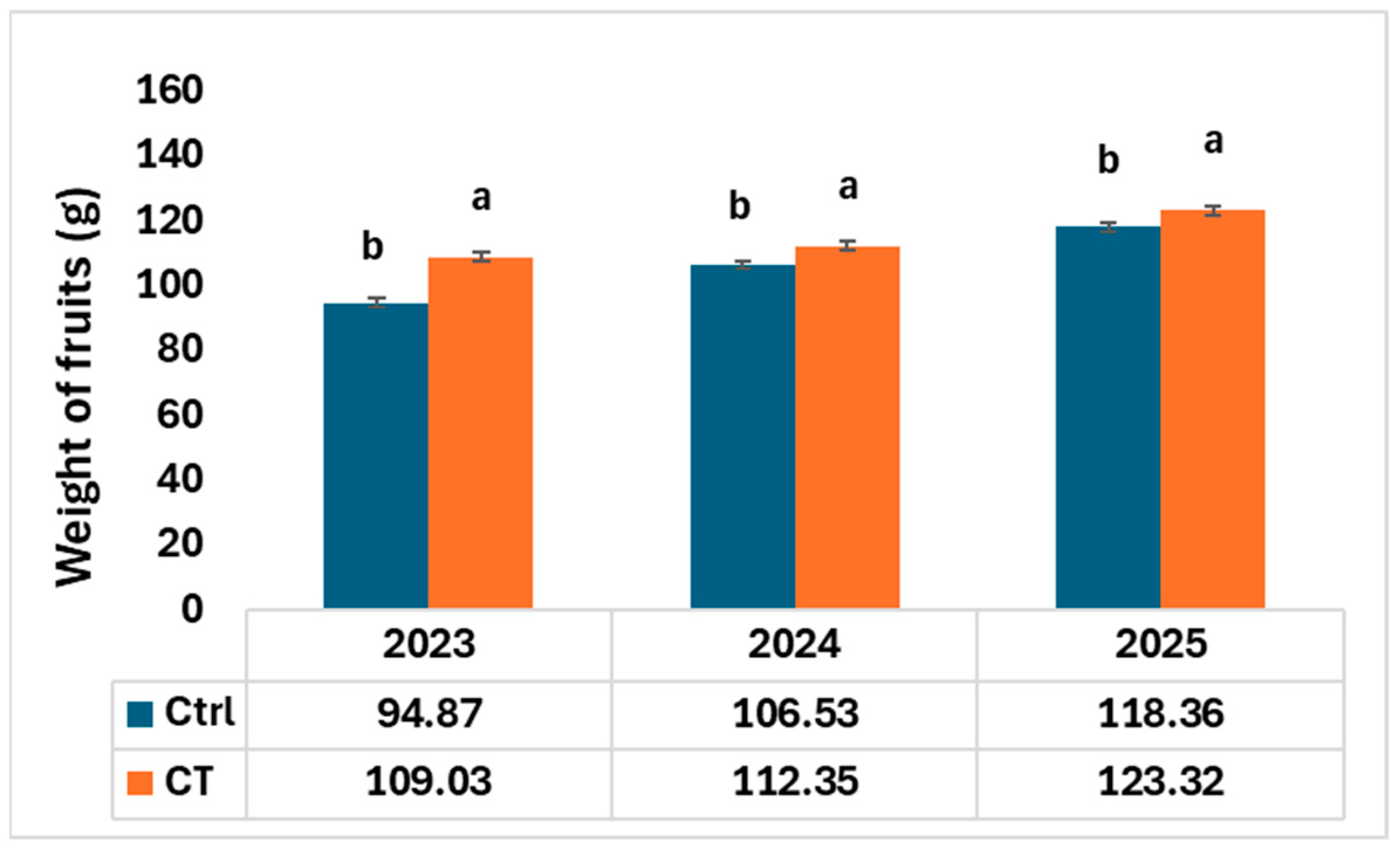
Mean yield per plant, mean fruit weight, fruit distribution, and mean number of fruits per plant for the 2023–2025 seasons are shown in Figure 3, Figure 4, Figure 5 and Figure 6.
Figure 3.
Mean values ± standard error of yield for the years 2023, 2024, and 2025. n.s. indicates no significant differences according to Student’s t-test (p < 0.05; n = 20).
Figure 4.
Mean values ± standard error of the weight of fruits for the years 2023, 2024, and 2025. Different letters indicate significant differences according to Student’s t-test (p > 0.05; n = 200).
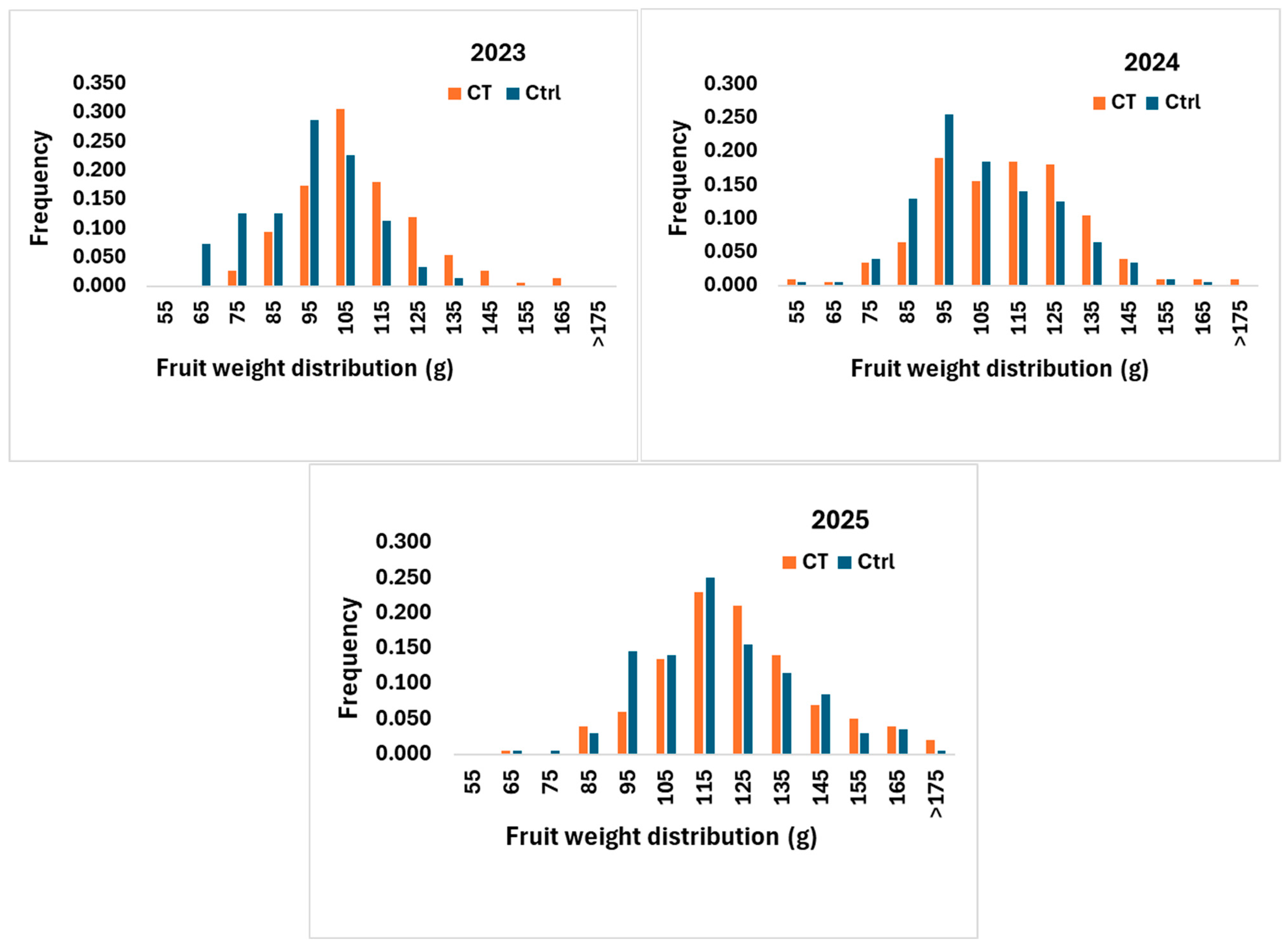
Figure 5.
Frequency of fruit weight distribution in the different caliber classes for the years 2023 (top left), 2024 (top right), and 2025 (bottom).
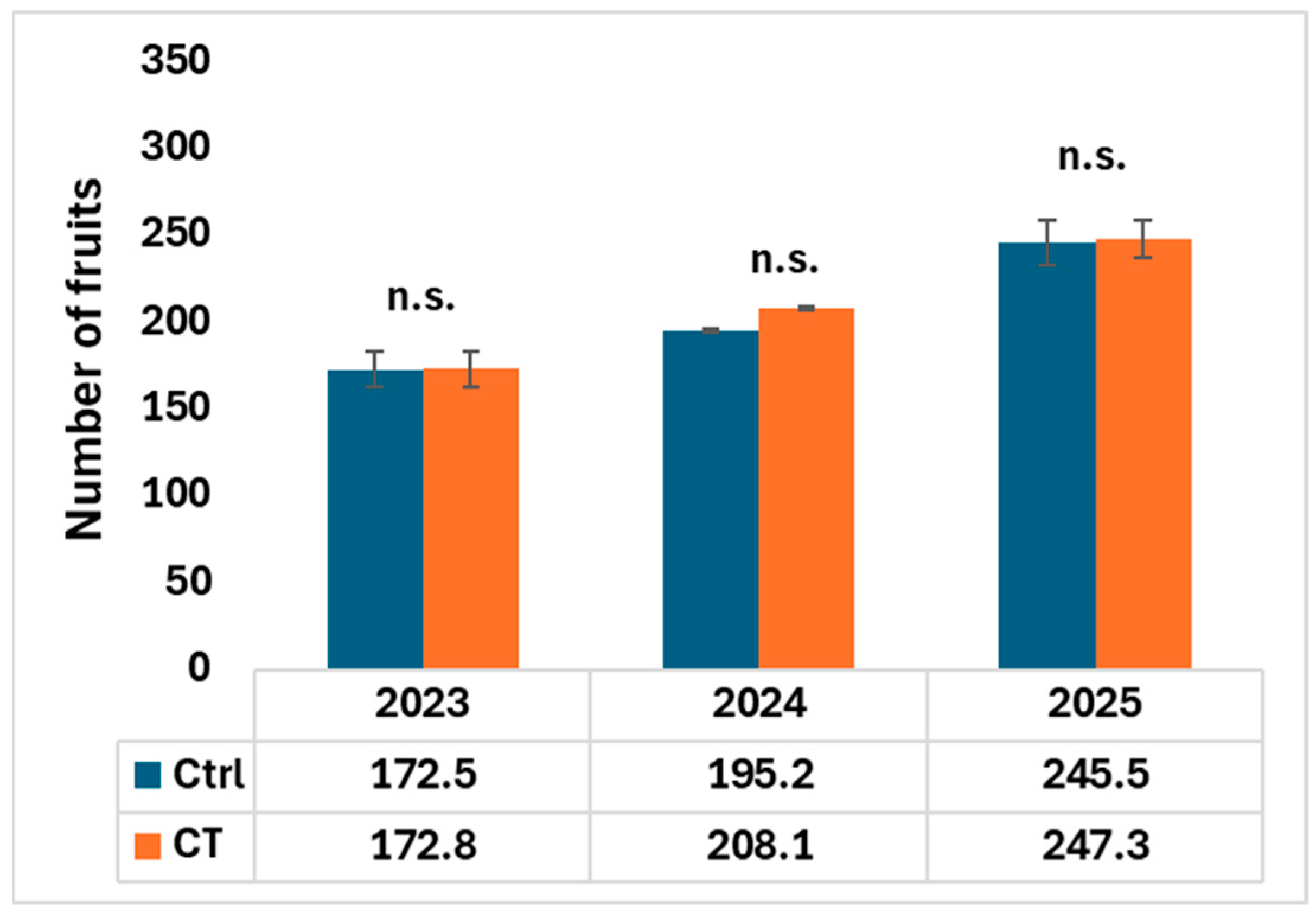
Figure 6.
Mean values ± standard error of the number of fruits for the years 2023, 2024, and 2025. n.s. indicates no significant differences according to Student’s t-test (p < 0.05; n = 200).
Mean yield per plant (Figure 3) was not significantly affected by treatment in any of the three years (p > 0.05). Yield in the Ctrl treatment was 16.4, 19.2, and 28.9 kg plant−1 in 2023, 2024, and 2025, respectively, while the CT recorded 18.2, 21.2, and 30.5 kg plant−1. Although differences were not statistically significant, CT showed higher values than Ctrl (+11%, +10.4%, and +5.5% in 2023, 2024, and 2025, respectively).
Mean fruit weight (Figure 4) was significantly influenced by treatment (p < 0.05), with higher values under CT in all years. In the CT, mean fruit weight was 109.0 g in 2023, 112.3 g in 2024, and 123.3 g in 2025, compared with 94.5, 106.5, and 118.3 g in the Ctrl treatment.
The fruit weight distribution (Figure 5) confirmed this pattern. In 2023 and 2024, a higher distribution of fruits ≥ 115 g was observed under CT, while in 2025, the shift toward larger size classes was evident from ≥125 g.
The mean number of fruits per plant (Figure 6) was not significantly affected by treatment (p > 0.05), averaging 204 and 209 fruits per plant in the Ctrl and CTs, respectively.
3.3. Fruit Quality and Dry Matter Content
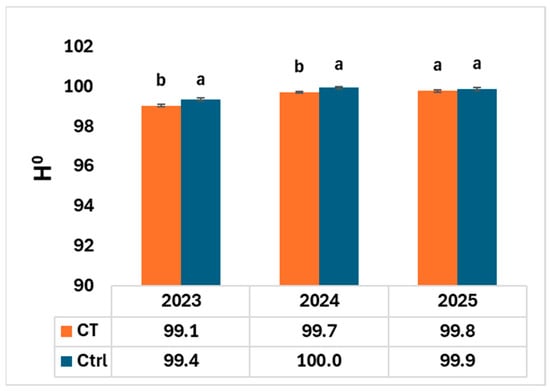
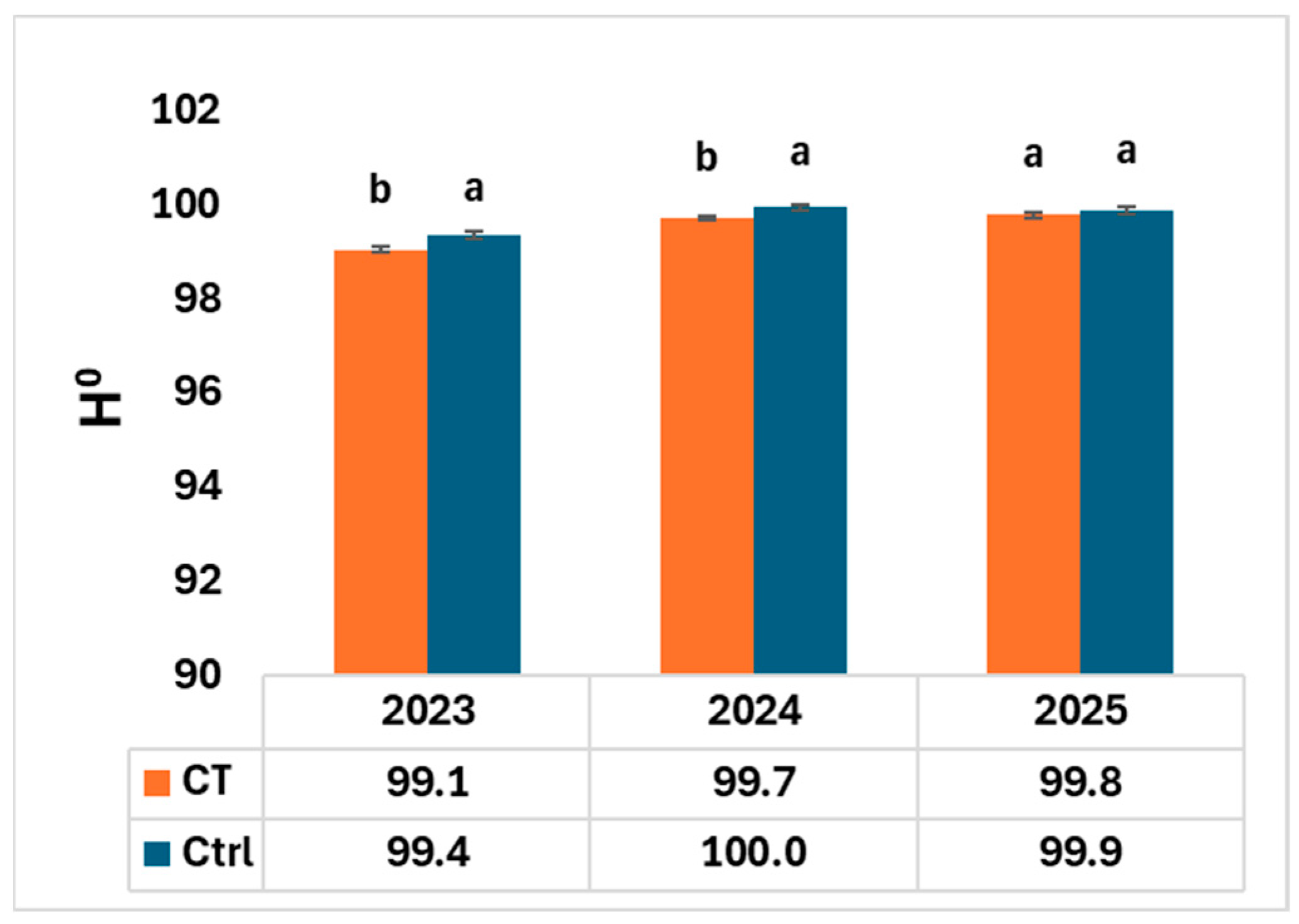
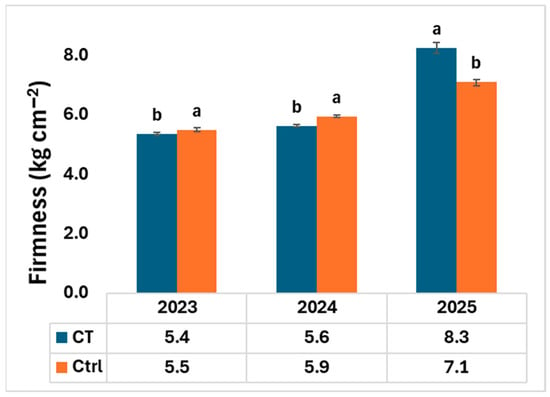
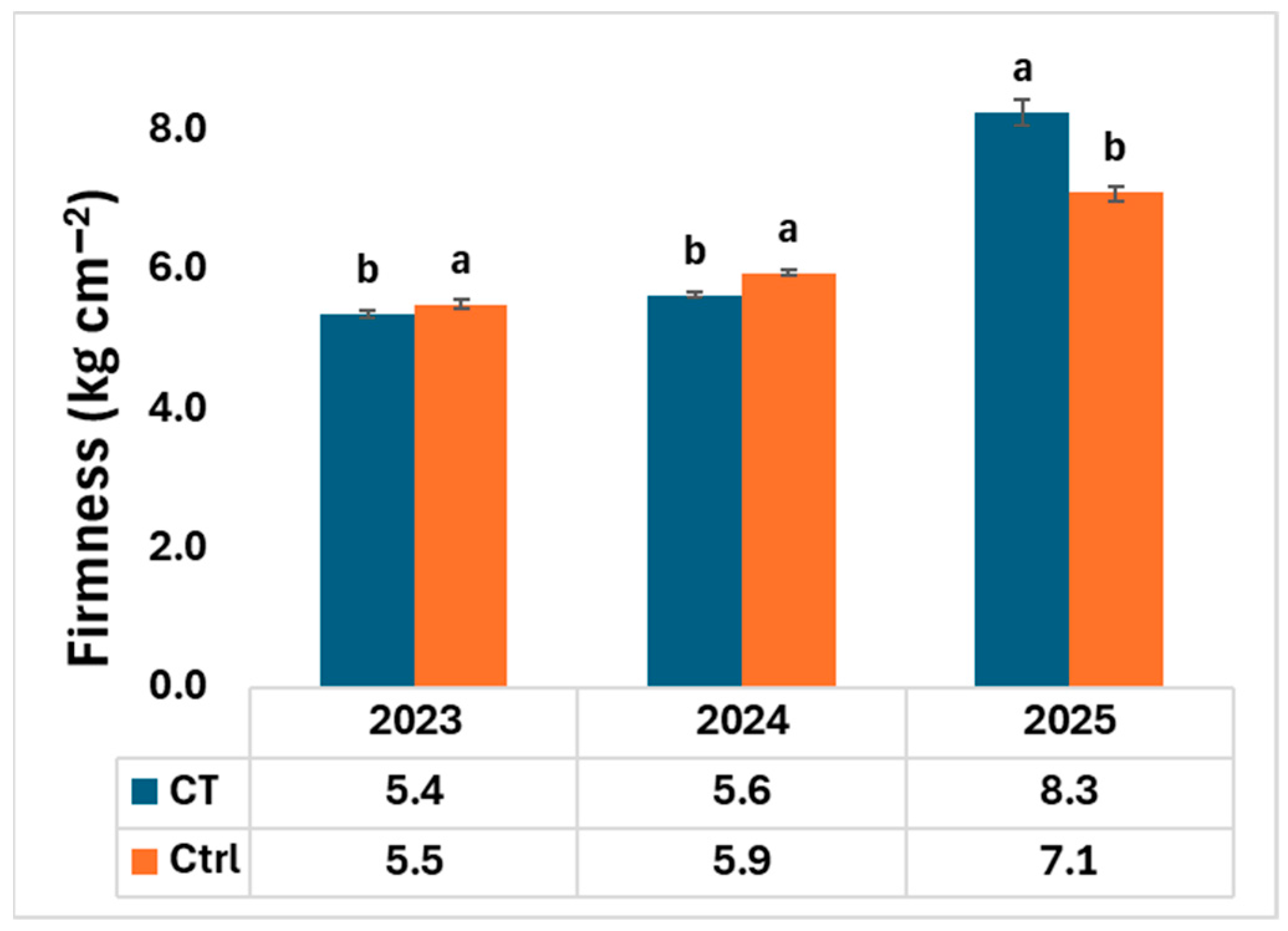
Hue angle (H°), firmness, and soluble solids content (SSC) are presented in Figure 7, Figure 8 and Figure 9.
Figure 7.
Mean values ± standard error of H° for the years 2023, 2024, and 2025. Different letters are significantly different according to Student’s t-test (p < 0.05; n = 200).
Figure 8.
Mean values ± standard error of firmness for the years 2023, 2024, and 2025. Different letters are significantly different according to Student’s t-test (p < 0.05; n = 200).
Figure 9.
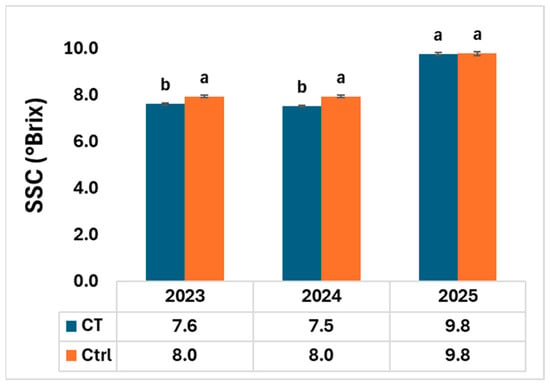
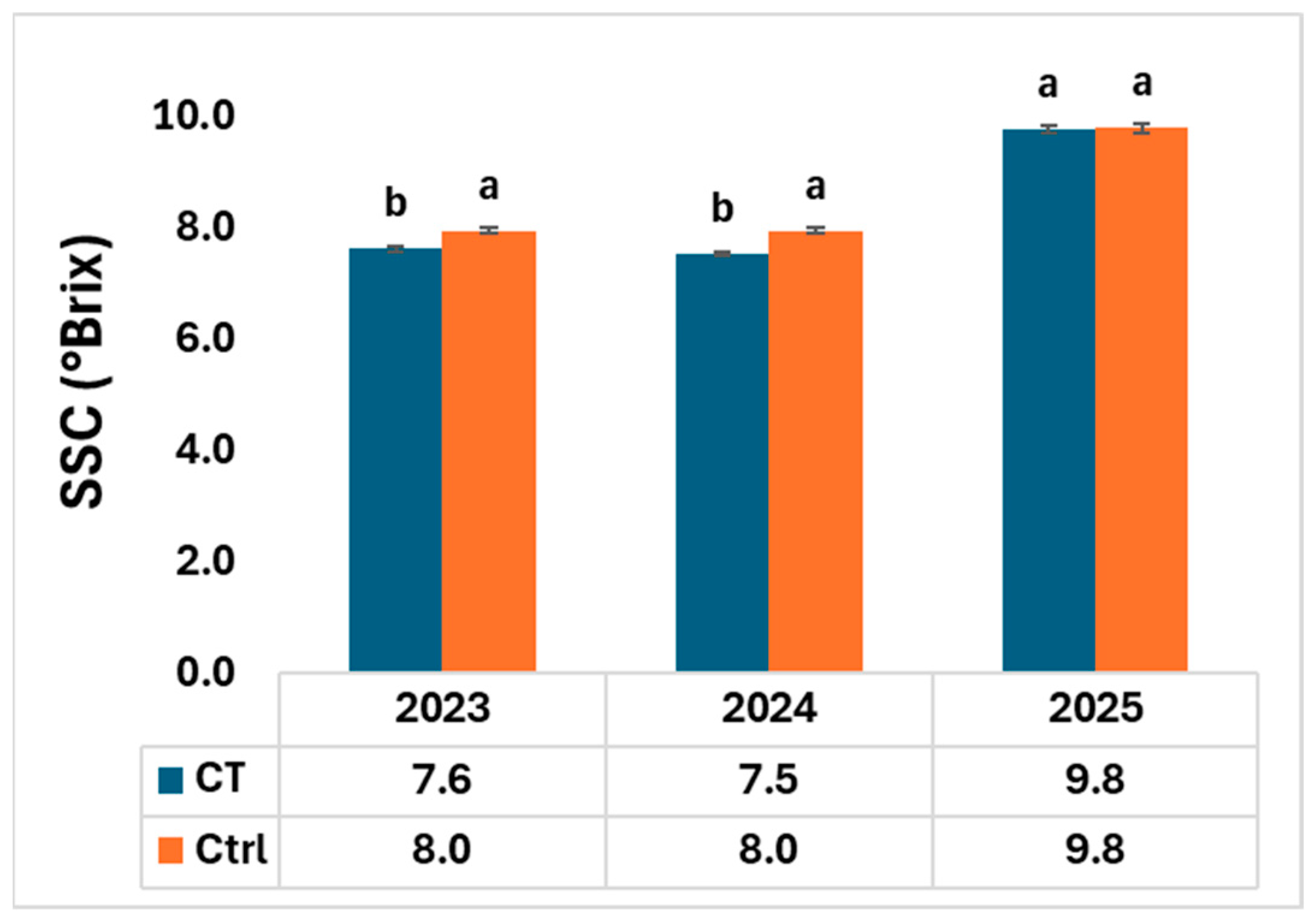
Mean values ± standard error of Soluble solids content (SSC, °Brix) for the years 2023, 2024, and 2025. Different letters are significantly different according to Student’s t-test (p < 0.05; n = 200).
H° (Figure 7) was not significantly affected by treatment in 2025 (p > 0.05). In contrast, significant differences were detected in 2023 and 2024 (p < 0.05), with higher values recorded in the Ctrl treatment (99.4 and 100.0, respectively) compared with CT.
Firmness (Figure 8) showed a significant treatment effect in 2025 (p < 0.05), with higher values under CT (8.3 kg cm−2) than Ctrl (7.1 kg cm−2). Conversely, in 2023 and 2024, firmness was significantly higher in the Ctrl treatment (5.5 and 5.9 kg cm−2, respectively).
SSC (Figure 9) increased in 2025 in both treatments, reaching 9.8 °Brix, with no significant differences between treatments (p > 0.05). In 2023 and 2024, SSC values were significantly higher in Ctrl (8.0 °Brix) than in CT (7.5 °Brix) (p < 0.05).
The effects of year, treatment, and their interaction on dry matter content are reported in Table 3. The year × treatment interaction was highly significant (p < 0.0001), whereas the main effects of year and treatment were not significant (p > 0.05).
Table 3.
Effects of year, treatment and their interaction on dry matter content (%). Values represent degrees of freedom (df), sum of squares (SS), mean squares (MS), F values, and associated probabilities (p).
Given the significant interaction, comparisons were performed within each year (Table 4). In 2025, dry matter content was significantly higher in CT-treated plants (18.77%) than in Ctrl (16.71%) (p < 0.05). No significant differences between treatments were found in 2023 and 2024.
Table 4.
Mena values ± SE of the effect of year × treatment (CT: compost tea; Ctrl: control) interaction on dry matter content (%). Different letters indicate significant differences according to Tukey’s HSD test (p < 0.05).
4. Discussion
4.1. Quantity Parameters of Production
The application of CT via the root system over three consecutive seasons did not result in statistically significant increases in total yield per plant compared to the control. Nevertheless, yield values in CT-treated plants showed a progressive increase from 2023 to 2025, suggesting a cumulative and gradual effect on plant performance. Similar trends have been observed in perennial orchard systems, where organic amendments tend to enhance yield stability over time rather than induce abrupt increases, particularly during the early to mid-bearing phase [18]. Moreover, the response to CT may depend on the method of application. For instance, Gaeta et al. [29] demonstrated that compost tea, integrated with compost and applied both to the soil and as a foliar spray, improved yield in sweet cherry.
The absence of significant differences in total yield may also be associated with plant age. During the experimental period, kiwifruit plants ranged from five to seven years old, a stage at which plants approach full productive capacity but have not yet reached complete physiological maturity. At this phase, improvements in soil and rhizosphere conditions are more likely to be reflected in fruit growth and quality rather than in substantial increases in overall yield. Indeed, kiwifruit production at this stage remains strongly regulated by plant balance, carbohydrate availability, and canopy development [8,30].
Consistently, no significant differences were observed in fruit number between treatments, indicating that CT did not influence flowering induction or fruit set, which in Actinidia spp. are largely determined by environmental conditions of the previous season and by thinning practices. In contrast, CT significantly increased mean fruit weight and shifted production toward larger size classes, without altering fruit number. This pattern indicates that CT primarily enhanced fruit growth rather than fruit set.
Comparable effects have been reported in other horticultural species. In melon (Cucumis melo), CT application increased fruit weight and improved quality attributes such as soluble solids and antioxidant content [31,32]. Mechanistic studies in tomato (Solanum lycopersicum) have shown that CT can enhance nitrogen transport and metabolism within the fruit, promoting nutrient allocation to reproductive organs even when total yield is not significantly affected [33]. These findings support the hypothesis that plant-based compost teas may improve nutrient dynamics and rhizosphere activity, thereby increasing resource availability during the critical phase of cell expansion.
Fruit size in kiwifruit is strongly dependent on the availability of nitrogen, potassium, and calcium during the mid- to late-season, when cell expansion determines final fruit size [7]. Compost teas derived from plant-based or agricultural waste composts have been shown to stimulate microbial-mediated nutrient cycling in the rhizosphere and enhance nutrient uptake efficiency without promoting excessive vegetative growth [31,33,34]. Such mechanisms may explain the progressive increase in mean fruit weight observed in CT-treated plants, particularly as vines matured, suggesting a positive interaction between CT application and the stabilization of plant physiological balance over time.
4.2. Fruit Quality
Fruit quality traits, including H°, firmness, and SSC, are key indicators of physiological maturity and commercial value in kiwifruit. In this study, CT application via the root zone influenced the seasonal dynamics of these traits over three consecutive seasons.
H° was higher in Ctrl fruits in 2023–2024, whereas no differences were observed in 2025, suggesting a transient effect of CT on pigment dynamics during the early seasons, possibly mediated by nutrient availability and ripening progression [35]. Firmness exhibited an inverse pattern: Ctrl fruits were firmer in the first two years (5.5–5.9 kg cm−2), whereas CT fruits were firmer in 2025 (8.3 vs. 7.1 kg cm−2 in Ctrl), likely reflecting long-term improvements in tree nutritional status and calcium-mediated cell wall stability [9,10].
SSC values were initially higher in Ctrl fruits (8.0 vs. 7.5 °Brix in 2023–2024) but converged at ~9.8 °Brix in 2025, indicating that CT did not impair carbohydrate accumulation and may enhance assimilate partitioning over time [36,37]. Calcium accumulation in kiwifruit is a slow, transpiration-dependent process, and improvements in soil structure and root activity often require multiple seasons before manifesting in fruit firmness [12]. The higher firmness observed in CT-treated fruits in 2025 suggests that long-term CT application may contribute to improved mineral balance as plants approach full bearing.
SSC was not positively affected by CT during the first two seasons and was slightly lower in treated fruits, which may be attributed to a dilution effect associated with increased fruit size. This phenomenon is frequently reported in kiwifruit when carbohydrate supply per fruit does not increase proportionally with fruit growth [38]. Overall, these results support the view that the long-term biological and nutritional effects of compost tea in perennial systems gradually manifest in fruit quality traits.
These findings are consistent with previous studies on kiwifruit and other perennial crops, which show that organic amendments can improve fruit quality over successive seasons by promoting mineral uptake, particularly calcium and carbohydrate allocation [10,39,40].
4.3. Dry Matter Content
Significant increases in dry matter were observed in CT-treated fruits only in the third year of the experiment (2025), whereas no differences were detected in 2023 and 2024. The two-way ANOVA revealed a highly significant Year × Treatment interaction, indicating that dry matter content is more strongly influenced by seasonal conditions than by treatment.
In kiwifruit, dry matter at harvest consists primarily of starch and structural carbohydrates, which are later converted into soluble sugars as the fruit matures [38,41]. The higher dry matter observed in 2025, therefore, represents an accumulation of total carbohydrate reserves, even though SSC did not differ significantly between treatments in that year. Elevated temperatures during the 2025 season, with maximums up to 38.9 °C and nighttime temperatures frequently above 20 °C, likely increased respiratory demand, diverting some assimilates from soluble sugar accumulation toward structural biomass formation [11].
Firmness data further support this interpretation. Fruit firmness depends on cell wall integrity, calcium-mediated pectin stabilization, and overall structural dry matter [9]. The increased firmness in CT-treated fruits in 2025 suggests that long-term CT applications improved mineral balance and carbon allocation, reinforcing cell wall structure and partially mitigating the negative effects of heat stress. Overall, these results indicate that the effects of CT on dry matter and structural traits are gradual, becoming more evident as trees approach physiological maturity and under conditions of climatic stress.
5. Conclusions
Three years of root-zone CT application in gold kiwifruit did not significantly affect total yield or fruit number, but increased mean fruit weight, shifting fruits toward larger size classes. The plants were 5–7 years old and had not yet reached full physiological maturity, so gradual changes over time are expected.
Fruit quality responses varied across seasons. Early in the experiment, CT-treated fruits showed lower firmness and SSC than Ctrl. Dry matter was higher in 2025 in CT, reflecting increased accumulation of starch and structural carbohydrates. By 2025, firmness of CT fruits exceeded that of Ctrl, while SSC values were similar between treatments, suggesting improvements in mineral balance, structural integrity, and carbon allocation. Heat stress in 2025 likely diverted carbon toward respiration and structural biomass, explaining unchanged SSC despite higher dry matter.
Overall, CT primarily enhanced fruit growth and structural quality rather than total yield. Based on the results obtained, this technology may be used to improve fruit shelf life and increase the economic value of production.
From an operational perspective, large-scale adoption of CT requires standardized production and on-farm distribution systems to ensure efficient integration with fertigation facilities. A potential limitation is the risk of clogging irrigation emitters; however, this can be effectively mitigated by installing in-line filtration systems and using low-concentration CT.
Future studies should assess quantitative and qualitative performance in fully mature plants, extending trials to the fourth year. In addition, given the increase in dry matter accumulation observed with CT, future research should investigate plant performance under different crop load conditions. Furthermore, future studies should focus on soil quality, particularly its microbiological components, an aspect currently under investigation by our research group. A moderate reduction in fruit thinning could help determine whether CT-treated plants can sustain higher production levels without compromising fruit quality. Further research should also explore foliar applications, microbial consortia, and fruit shelf life using metabolomic approaches to optimize nutrient uptake and quality.
Author Contributions
G.A.: writing—original draft preparation; methodology, formal analysis; resources; data curation. N.G.: methodology; data curation; review and editing; resources. D.C.: resources; review and editing. A.T.: resources; review and editing. G.C.: conceptualization; methodology; supervision; project administration; funding acquisition; review and editing. All authors have read and agreed to the published version of the manuscript.
Funding
This research was funded by the Research Project “RESO—Re-sustainability of fruit, vegetable and cereal agri-food chains respecting suitability and enhancing territories.” Code ARS01–01224.
Data Availability Statement
All the data supporting the findings of this study are available from the corresponding authors upon reasonable request.
Acknowledgments
The authors gratefully acknowledge the support of KIWI SUD farm, with special thanks to Giancarlo Mellone and Carmine D’Amora for their invaluable assistance during the field trial.
Conflicts of Interest
The authors declare that they have no known competing financial interests or personal relationships that could have appeared to influence the work reported in this paper.
References
- FAOSTAT. FAOSTAT Statistical Database; Food and Agriculture Organization of the United Nations: Rome, Italy, 2023; Available online: https://www.fao.org/faostat (accessed on 1 October 2025).
- CSO—Centro Servizi Ortofrutticoli. Kiwi Production Data. 2023. Available online: https://www.csoservizi.com/focusprodotti/kiwi/ (accessed on 1 October 2025).
- Richardson, D.P.; Ansell, J.; Drummond, L.N. The nutritional and health attributes of kiwifruit: A review. Eur. J. Nutr. 2018, 57, 2659–2676. [Google Scholar] [CrossRef] [Scilit]
- Wang, S.; Huang, C.; Tao, J.; Zhong, M.; Qu, X.; Wu, H.; Xu, X. Evaluation of chilling requirement of kiwifruit (Actinidia spp.) in south China. N. Z. J. Crop Hortic. Sci. 2017, 45, 289–298. [Google Scholar] [CrossRef] [Scilit]
- Smith, G.S.; Miller, S.A. Effects of root anoxia on the physiology of kiwifruit vines. Acta Hortic. 1991, 297, 401–408. [Google Scholar] [CrossRef] [Scilit]
- Savé, R.; Serrano, L. Some physiological and growth responses of kiwi fruit (Actinidia chinensis) to flooding. Physiol. Plant. 1986, 66, 75–78. [Google Scholar] [CrossRef] [Scilit]
- Clark, C.J.; Smith, G.S. Seasonal changes in the composition, distribution and accumulation of mineral nutrients in persimmon fruit. Sci. Hortic. 1990, 42, 99–111. [Google Scholar] [CrossRef] [Scilit]
- Buwalda, J.G.; Smith, G.S. Acquisition and utilization of carbon, mineral nutrients, and water by the kiwifruit vine. Hortic. Rev. 1990, 12, 307–347. [Google Scholar]
- Poovaiah, B.W. Role of calcium in prolonging storage life of fruits and vegetables. Food Technol. 1988, 42, 86–89. [Google Scholar]
- Antunes, M.D.C.; Neves, N.; Curado, F.; Rodrigues, S.; Franco, J.; Panagopoulos, T. The effect of calcium applications on kiwifruit quality preservation during storage. Acta Hortic. 2006, 753, 727–732. [Google Scholar] [CrossRef] [Scilit]
- Amthor, J.S. The McCree–de Wit–Penning de Vries–Thornley respiration paradigms: 30 years later. Ann. Bot. 2000, 86, 1–20. [Google Scholar] [CrossRef] [Scilit]
- Montanaro, G.; Dichio, B.; Lang, A.; Mininni, A.N.; Nuzzo, V.; Clearwater, M.J.; Xiloyannis, C. Internal versus external control of calcium nutrition in kiwifruit. J. Plant Nutr. Soil Sci. 2014, 177, 819–830. [Google Scholar] [CrossRef] [Scilit]
- Bender, S.F.; Wagg, C.; Van der Heijden, M.G.A. An underground revolution: Biodiversity and soil ecological engineering for agricultural sustainability. Trends Ecol. Evol. 2016, 31, 440–452. [Google Scholar] [CrossRef] [Scilit]
- Van der Heijden, M.G.A.; Bardgett, R.D.; Van Straalen, N.M. The unseen majority: Soil microbes as drivers of plant diversity and productivity in terrestrial ecosystems. Ecol. Lett. 2008, 11, 296–310. [Google Scholar] [CrossRef] [Scilit] [PubMed]
- Zaccardelli, M.; Pane, C.; Scotti, R.; Palese, A.M.; Celano, G. Impiego di compost-tea come bioagrofarmaci e biostimolanti in ortofrutticoltura. Italus Hortus 2012, 19, 17–28. [Google Scholar]
- Scheuerell, S.; Mahaffee, W. Compost tea: Principles and prospects for plant disease control. Compost Sci. Util. 2002, 10, 313–338. [Google Scholar] [CrossRef] [Scilit]
- Reeve, J.R.; Carpenter-Boggs, L.; Reganold, J.P.; York, A.L.; Brinton, W.F. Influence of biodynamic preparations on compost development and resultant compost extracts on wheat seedling growth. Bioresour. Technol. 2010, 101, 5658–5666. [Google Scholar] [CrossRef] [Scilit]
- Pilla, N.; Tranchida-Lombardo, V.; Gabrielli, P.; Aguzzi, A.; Caputo, M.; Lucarini, M. Effect of compost tea in horticulture. Horticulturae 2023, 9, 984. [Google Scholar] [CrossRef] [Scilit]
- Dell’Olmo, E.; Semenzato, G.; Raio, A.; Zaccardelli, M.; Serratore, G.; Cuccurullo, A.; Sigillo, L. Microbial metabolic profile of two compost teas and their biostimulant and bioprotectant effects on chickpea and pea plants. Agronomy 2025, 15, 1378. [Google Scholar] [CrossRef] [Scilit]
- Pane, C.; Palese, A.M.; Celano, G.; Zaccardelli, M. Effects of compost tea treatments on productivity of lettuce and kohlrabi systems under organic cropping management. Ital. J. Agron. 2014, 9, 596. [Google Scholar] [CrossRef] [Scilit]
- Pane, C.; Palese, A.M.; Spaccini, R.; Piccolo, A.; Celano, G.; Zaccardelli, M. Enhancing sustainability of a processing tomato cultivation system by using bioactive compost teas. Sci. Hortic. 2016, 202, 117–124. [Google Scholar] [CrossRef] [Scilit]
- Liguori, L.; Pane, C.; Albanese, D.; Celano, G.; Zaccardelli, M.; Di Matteo, M. Compost and compost tea management of mini watermelon cultivations affects the chemical, physical and sensory assessment of the fruits. Agric. Sci. 2015, 6, 117–125. [Google Scholar] [CrossRef]
- Kassem, M.S.M. Effect of compost tea or some botanical extracts on the fruit quality of pomegranate trees at Upper Egypt. Alex. Sci. Exch. J. 2021, 42, 435–444. [Google Scholar] [CrossRef] [Scilit]
- Selyaninov, G.T. About climate agricultural estimation. Proc. Agric. Meteorol. 1928, 20, 165–177. [Google Scholar]
- IUSS Working Group. World Reference Base for Soil Resources 2014: International Soil Classification System for Naming Soils and Creating Legends for Soil Maps; World Soil Resources Reports; No. 106; FAO: Rome, Italy, 2014. [Google Scholar]
- Saxton, K.E.; Rawls, W.J. Soil water characteristic estimates by texture and organic matter for hydrologic solutions. Soil Sci. Soc. Am. J. 2006, 70, 1569–1578. [Google Scholar] [CrossRef] [Scilit]
- Palese, A.M.; Pane, C.; Villecco, D.; Zaccardelli, M.; Altieri, G.; Celano, G. Effects of organic additives on chemical, microbiological and plant pathogen suppressive properties of aerated municipal waste compost teas. Appl. Sci. 2021, 11, 7402. [Google Scholar] [CrossRef] [Scilit]
- Pergola, M.; Maffia, A.; Carlucci, G.; Persiani, A.; Palese, A.M.; Zaccardelli, M.; Altieri, G.; Celano, G. An environmental and economic analysis of strawberry production in southern Italy. Agriculture 2023, 13, 1705. [Google Scholar] [CrossRef] [Scilit]
- Gaeta, L.; Tarricone, L.; Persiani, A.; Fiore, A.; Montemurro, F.; De Benedetto, D.; Diacono, M. Sustainable fertilization of organic sweet cherry to improve physiology, quality, yield, and soil properties. Agronomy 2025, 15, 135. [Google Scholar] [CrossRef] [Scilit]
- Minchin, P.E.H.; Snelgar, W.P.; Blattmann, P.; Hall, A.J. Competition between fruit and vegetative growth in ‘Hayward’ kiwifruit. N. Z. J. Crop Hortic. Sci. 2010, 38, 101–112. [Google Scholar] [CrossRef] [Scilit]
- Zaghouani, A.; Karima, K.A.R.A.; Hadjeb, A. Improving organic melon production through the application of compost tea in arid regions. Phyton Ann. Rei Bot. 2025, 65, 51–64. [Google Scholar]
- García-Villela, K.M.; Preciado-Rangel, P.; Sifuentes-Ibarra, E.; Salas-Pérez, L.; Núñez-Ramírez, F.; González-Fuentes, J.A. Ecological nutrient solutions on yield and quality of melon fruits. Terra Latinoam. 2020, 38, 39–44. [Google Scholar]
- Li, W.; Liu, Y.; Chai, X.; He, J.; Liu, C.; Li, J. Advantages of compost tea: Promotion of nitrogen influx into the fruit and improvement of fruit nitrogen metabolism in tomato. Plant Physiol. Biochem. 2024, 216, 109184. [Google Scholar] [CrossRef] [Scilit]
- Zaccardelli, M.; Pane, C.; Villecco, D.; Palese, A.M.; Celano, G. Compost tea spraying increases yield performance of pepper (Capsicum annuum L.) grown in greenhouse under organic farming system. Ital. J. Agron. 2018, 13, 991. [Google Scholar] [CrossRef] [Scilit]
- Afonso, A.M.; Guerra, R.; Freitas, L.; Veloso, F.; Cavaco, A.M.; Antunes, M.D. Ripening evolution of ‘Hayward’ kiwifruit orchards. Acta Hortic. 2022, 1332, 379–384. [Google Scholar] [CrossRef] [Scilit]
- Feng, J.; Mackay, B.R.; Maguire, K.M. Variation in firmness of packed Hayward kiwifruit. Acta Hortic. 2003, 610, 239–246. [Google Scholar] [CrossRef] [Scilit]
- Ferrandino, A.; Guidoni, S. Chemical composition of Actinidia deliciosa fruits influenced by harvest date. Acta Hortic. 1999, 498, 225–232. [Google Scholar]
- Boldingh, H.; Smith, G.S.; Klages, K. Seasonal concentrations of non-structural carbohydrates of five Actinidia species in fruit, leaf and fine root tissue. Ann. Bot. 2000, 85, 469–476. [Google Scholar] [CrossRef] [Scilit]
- Larocca, G.N.; Baldi, E.; Toselli, M. Understanding the role of calcium in kiwifruit: Ion transport, signaling, and fruit quality. Horticulturae 2025, 11, 335. [Google Scholar] [CrossRef] [Scilit]
- Baldi, E.; Toselli, M.; Bonora, A. Agronomic strategies to manipulate kiwifruit calcium content. Horticulturae 2025, 11, 237. [Google Scholar] [CrossRef] [Scilit]
- Cai-Hong, Z.; Peng, Z.; Zheng-Wang, J.; Sheng-Mei, W.; Fei, H.; Li-Yun, X.U.; Hong-Wen, H. Dynamic Changes of Carbohydrate and Vitamin C in Fruits of Actinidia chinensis and A. eriantha during Growth Season. Plant Sci. J. 2011, 4, 319–330. [Google Scholar]

Disclaimer/Publisher’s Note: The statements, opinions and data contained in all publications are solely those of the individual author(s) and contributor(s) and not of MDPI and/or the editor(s). MDPI and/or the editor(s) disclaim responsibility for any injury to people or property resulting from any ideas, methods, instructions or products referred to in the content. |
© 2026 by the authors. Licensee MDPI, Basel, Switzerland. This article is an open access article distributed under the terms and conditions of the Creative Commons Attribution (CC BY) license.