


Abstract
Cover crops are crucial in conservation agriculture for preventing soil erosion. For Citrus unshiu production, rattail fescue (Vulpia myuros (L.) C.C. Gmel) is a popular cover crop because its growth season differs from the citrus season, minimizing nutrient competition. However, no studies have examined its effects on the seasonal concentrations of flavonoids and monoterpenes in citrus peels, which are often used as medical ingredients. In this study, our aim is to determine the effects of cover crops on the sugar content and medicinal properties of unripe citrus fruit during the growing season. Samples collected in 2022 were examined for the effects of cover crops on the sugar concentration of fresh pulp. In addition, samples were taken from three randomly selected trees in each cover crop treatment (0, 50, and 100% area coverage) at the thinning (July, August, and September) of 2023 and 2024 to analyze hesperidin and d-limonene concentrations using standard methods. The results showed that cover crops reduced the sugar concentration of fresh pulp but had no impact on hesperidin concentrations across all thinning events and had inconsistent effects on the d-limonene concentration. Hence, while the use of rattail fescue might negatively affect the sugar concentration of mature Citrus unshiu, the use of premature fruits for medical ingredients could compensate for this loss.
Keywords:
cover crop; soil moisture content; Citrus unshiu; rattail fescue; sucrose; glucose; fructose; hesperidin; d-limonene 1. Introduction
Unshiu mikan (Citrus unshiu) is a popular citrus species in Japan. People in Japan often eat Citrus unshiu throughout the winter, reflecting a mandarin orange production of about 617,100 tons in 2023 [1]. People’s preference for high-quality fruits (higher in sugar content) requires thinning fruits several times during the production period to ensure an appropriate leaf-to-fruit ratio (25~30:1) [2,3]. While thinned fruits have been traditionally thrown away on the ground to decompose, the use of thinned fruits has recently been emphasized in studies for reducing environmental impacts and developing scientifically sound products, such as fermented tea [4], anti-allergy medicine [5], and functional food or Kampo medicine [5,6]. These products could enhance not only the producer’s income but also consumers’ well-being.
Using cover crops in cultivation is a common conservation agriculture practice for preventing surface soil erosion [7]. Although the weed-free bare soil method is a traditional cultivation method for Citrus unshiu, there is increasing concern about environmental impacts from eroded soils. Thus, the use of cover crops has become useful for improving soil and water quality, making it an overall sustainable alternative to conventional agriculture [8]. Traditionally, farmers use straws to cover the soil surface, but the use of cover crops, such as hairly vetch (Vicia villosa), rattail fescue (Vulpia myuros (L.) C.C. Gmel.), and ladino clover (Terifolium rapens f. giganteum), has been the subject of experimental study [9]. Among cover crops, rattail fescue has been introduced into citrus fields to prevent weeds and reduce soil erosion [10] and to reduce soil phosphorus loss [11], and its winter-annual growing season [12] is offset from Citrus unshiu. Ishikawa (2010) [13] demonstrated that the use of rattail fescue reduced excess nitrogen in the cultivation field and had no negative impact on yield and fruit quality. However, few studies have examined how cultivation conditions influence the medicinal properties of citrus peel, particularly how these properties relate to field management practices such as the use of cover crops.
The objective of this study was to elucidate the effect of rattail fescue on sugar concentrations and d-limonene and hesperidin concentrations in the peel of thinned fruits. We examined the effect of rattail fescue on sugar concentrations (fructose, sucrose, glucose) in the fresh pulp of thinned fruits in 2022, then investigated the effect of rattail fescue on the flavonoid and monoterpene properties of orange peels over two growing seasons in the years 2023 and 2024.
2. Materials and Methods
2.1. Study Site and Experimental Design
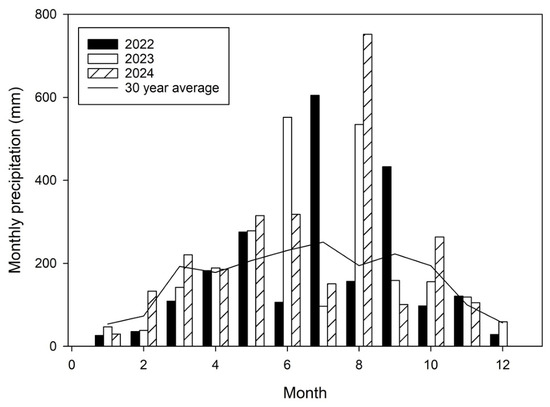
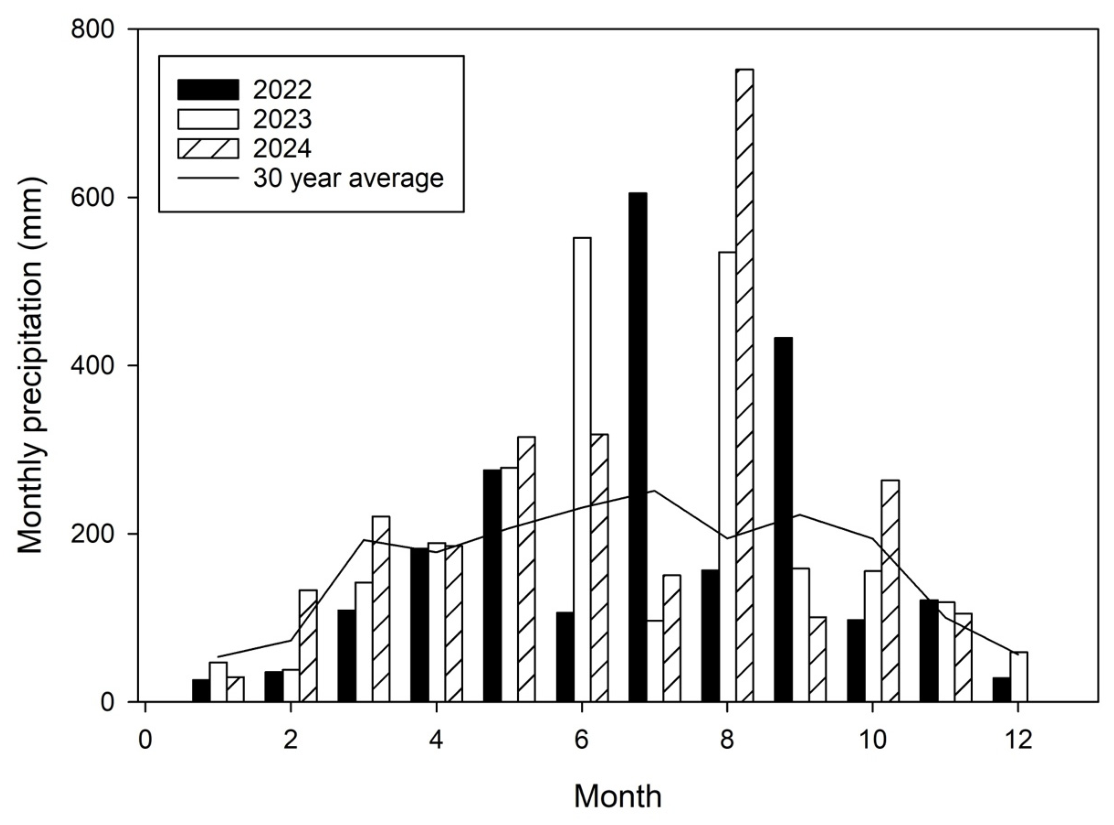
The field experiment was conducted in Mikkabi ward, Hamamatsu city, in Shizuoka prefecture, Japan (E 137°32′39.459″, N 34°49′8.63″). The 30-year average of annual daily temperature (1994–2024) was 16.8 °C, and the annual daily temperatures of 2022, 2023, and 2024 were 17.2 °C, 17.9 °C, and 18.4 °C, respectively [14]. The air temperature in the field was measured using a meteorological sensor system (ATMOS41, Meter Japan Inc., Tokyo, Japan) with a data logger (ZL6, Meter Japan Inc., Tokyo, Japan). While the winter air temperatures (from November through March) were above the 30-year average, the summer temperatures (from June to August) were similar to the 30-year average (Table 1). The 30-year average (1991–2020) annual precipitation for the area was 1954 mm, and the annual precipitation in 2022, 2023, and 2024 was 2176 mm, 2370 mm, and 2574 mm, respectively [14]. The average of monthly precipitation from 2022 to 2024 indicated that the majority of precipitation during the summer exceeded the 30-year average (Figure 1). Cumulative precipitation (mm) and air temperature at the site were recorded using a meteorological sensor system with a data logger. The data logger recorded precipitation (mm) every 30 min during the experimental period, and the monthly cumulative precipitation (mm) was back-calculated. Cumulative precipitation (mm) was measured one week prior to each thinning and was used to assess the impact of precipitation on d-limonene and hesperidin concentrations.
Table 1.
Monthly average of mid-day temperatures at Mikkabi ward, Hamamatsu city, Shizuoka, Japan.
Figure 1.
Monthly precipitation measured in the local district area (Hamamatsu city, Shizuoka, Japan) from 2022 to 2024. The solid line indicates the 30-year average precipitation, while each bar indicates the total monthly precipitation during 2022, 2023, and 2024, respectively (source data: Japan Meteorological Agency, n.d.).
All fruit samples used in this study were obtained from a farm growing the Aoshima variety of Citrus unshiu. Soil fertility management was performed simultaneously across all fields, regardless of the field setting. Each field was categorized based on its rattail fescue cover ratio: 0%, 50%, and 100%. The field in which there was no rattail fescue cover was classified as “0% coverage”, the field with 50% rattail fescue cover was classified as “50% coverage”, and the field with 100% rattail fescue cover was classified as “100% coverage”. Here, we note that the “50% coverage” field was established in 2023. The area with 0% coverage was situated on flat land, with a slope of less than 4%, while the areas with 50% and 100% coverage were situated on sloped land, with a slope between 4 and 8%. Both the 100% coverage and 50% coverage fields were located in the mid-slope position of the topography. All fields were situated on the mid-slope, as close together as possible, and were owned by the same farmer to minimize land management effects other than that of rattail fescue. Each field contained at least eight trees after excluding border trees to minimize the edge effect. Three trees were randomly selected from each field, and fruit samples were collected from each tree in June of the 2022 season. For the 2023 and 2024 seasons, the trees were selected in 2023, and the same trees were used to analyze d-limonene and hesperidin in the fruit peels.
2.2. Soil Temperature and Moisture Measurements
Soil temperature and moisture content were measured using three sensors (TEROS 12, Meter Japan Inc., Tokyo, Japan) per treatment, randomly installed at a depth of 10 cm from the mineral soil surface. Hourly measured data were collected in data loggers (ZL6, Meter Japan Inc., Tokyo, Japan) during the experimental period and are shown in Table 1. The 3-year average monthly soil temperature indicated no notable differences compared with 0% coverage. For this study, averages of three sensors were used to measure the soil temperature and moisture of each treatment, and data from the week prior to each thinning event were used in the analysis. However, in 2023, one of the three sensors at the 0% coverage site failed for a period of time. Thus, for the 0% coverage site, the average of the two sensors’ soil temperature data in 2023 was used until the situation was resolved.
2.3. Fruit Sampling and Sugar Analysis
Fruit samples were collected monthly during the fruit-bearing season (July to November) in 2022. To test the effects of thinning on d-limonene and hesperidin concentrations, fruit samples were collected three times a year (July, August, and September), concurrent with the fruit thinning practice. At each sampling time, three fruits were randomly collected from each respective tree. The fruits were stored in a freezer (−19 °C) until further analysis of the sugar concentration in 2022. In the laboratory, the fruits were thawed and peeled, and the pulp was weighed. The fruit pulp was then crushed and homogenized using a hand blender. The fibers were first filtered out using #2 qualitative filter paper, and the filtrate was then passed through a 0.22 μm hydrophobic filter to remove fine particles. The final filtrates were analyzed for sugars (fructose, glucose, sucrose) using a high-performance liquid chromatograph (HPLC) (EXTREMA, JASCO, Tokyo, Japan) equipped with a refractive index (RI) detector (MD-4010, JASCO, Tokyo, Japan). The samples were then auto-injected into the HPLC autosampler at 20 μL volumes. The solvent consisted of 75% acetonitrile and 25% HPLC-grade water; the column oven temperature was 40 °C, and the flow rate was 1.0 mL/min.
2.4. Hesperidin and D-Limonene Analyses
The fruit samples from 2023 and 2024 were harvested three times per season (thinning 1—July, thinning 2—August, thinning 3—September) and stored in a freezer (−19 °C) until further analysis for d-limonene and hesperidin. However, some sample trees produced only a few fruits in 2024. To mitigate the risk of a sample shortage for these trees, additional nearby trees were randomly selected. Prior to the chemical analyses, the whole fruits, fresh peel weight, and dried peel weight were measured. The peels were then dried overnight using a freeze-drier (FDS-1000, Tokyo Rikakikai Co., Ltd., Tokyo, Japan). All samples were pulverized using a Hi-speed Vibration Sample Mill (TI-100, CMT, Tokyo, Japan) for 30 s. The quantification of hesperidin and d-limonene was conducted using the method described in the section on Chinpi in the Japanese Pharmacopeia [15], with a slight modification that omitted the dilution step to maintain adequate concentrations of hesperidin and d-limonene for better detection in the chromatogram of HPLC. As the methodology described in the Japanese Pharmacopeia had no specific information regarding the evaporation temperature, the temperature of the reflux was set to 40 °C (±2 °C) due to the evaporation temperature of d-limonene (48 °C) [15] and hesperidin’s inflammable properties. The extracted samples were passed through a 0.22 μm hydrophobic filter and then analyzed using HPLC with a photodiode array (PDA) detector (MD-4010, JASCO, Tokyo, Japan) to determine the concentrations of d-limonene and hesperidin. The specific setting for HPLC described in the following was based on the method provided by the manufacturer of the HPLC system (JASCO, Tokyo, Japan): the sampling tube was set to 10 μL, the separation column used was an ODS column Unipeak C18 (4.6 mm I.D. × 150 mm L, 5 μm) maintained at 40 °C, and a constant flow (1.0 mL/min.) of solvent was maintained using a mixture of 20 mM phosphoric acid and acetonitrile (initial 75:25 ratio, 60:40 by 5 min., 10:90 by 7 min., 10:90 by 14 min., and 75:25 by 14.1 min.). D-limonene was measured at 200 nm, and hesperidin at 285 nm. The concentrations of d-limonene and hesperidin were determined using standard curves at 0, 12.5, 25, and 50 mg/L. Each analytical batch’s standard curve was made to minimize the measurement error.
2.5. Data Handling and Statistical Analysis
Based on the outputs of HPLC, the concentrations of hesperidin and d-limonene in the peel were back-calculated using the dry weight:volume ratio (approximately 0.1 g: 50 mL) with specific weights for each sample in mg. Then, the data for hesperidin and d-limonene were checked for normality using the Shapiro–Wilk test and for homogeneity of variance using the Bartlett test in R (Ver. 4.4.1, r-project.org). If both tests were passed, ANOVA was used; otherwise, a non-parametric method (Kruskal–Wallis test) was used. Significant differences were assessed at the 0.05 level. The statistical method for each sampling time is presented in Table 2. All figures were produced using SigmaPlot v16 (Grafiti.com).
Table 2.
Statistical methods for measuring d-limonene and hesperidin concentrations in the peel of Citrus unshiu.
3. Results
3.1. Abiotic Conditions
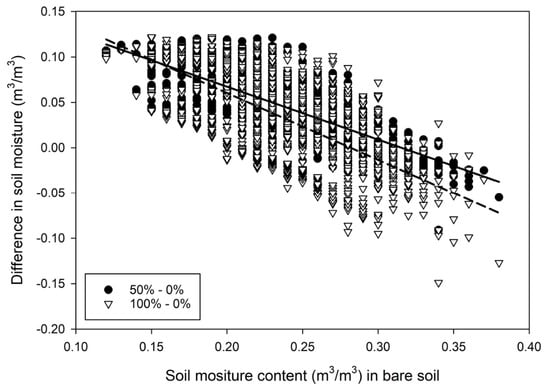
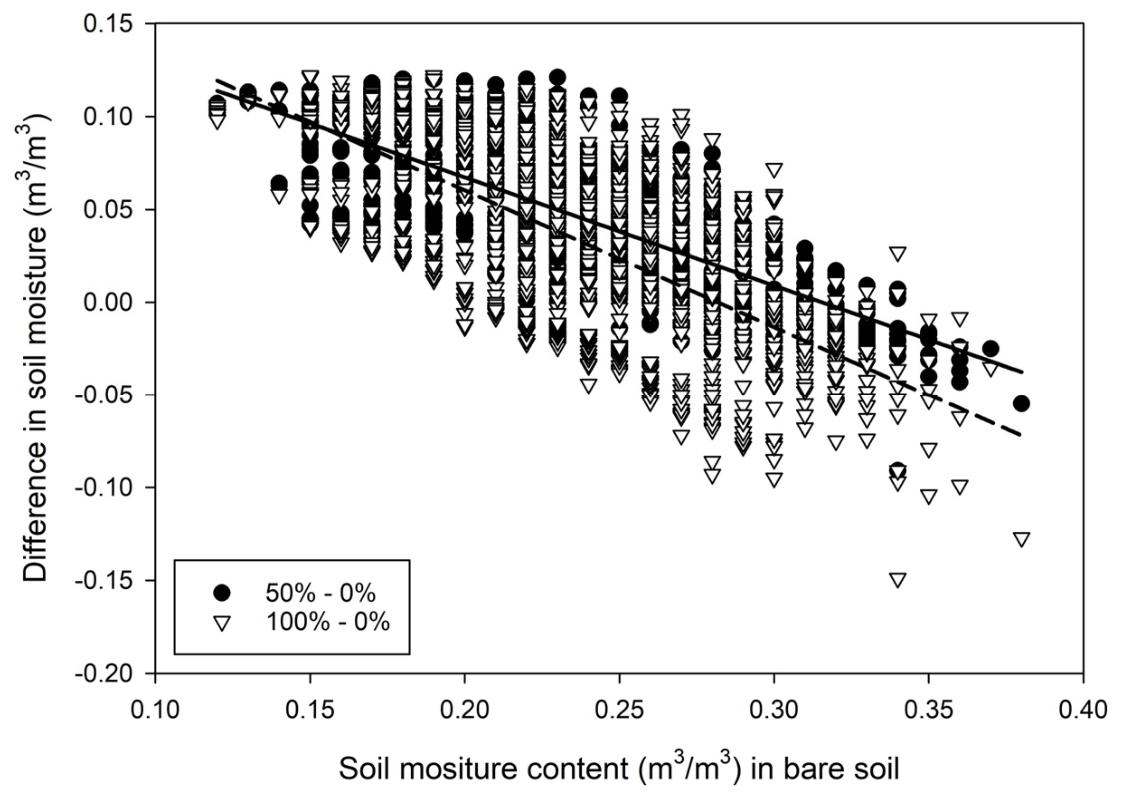
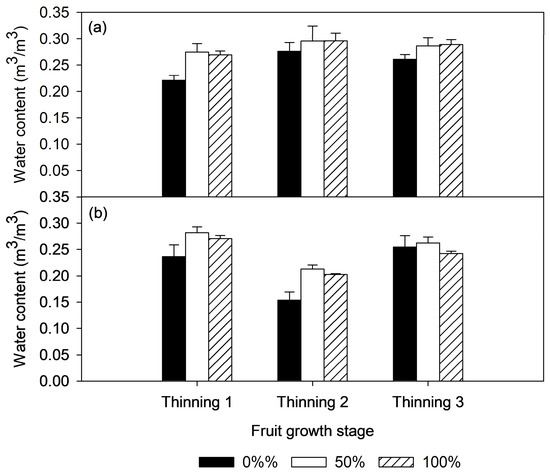
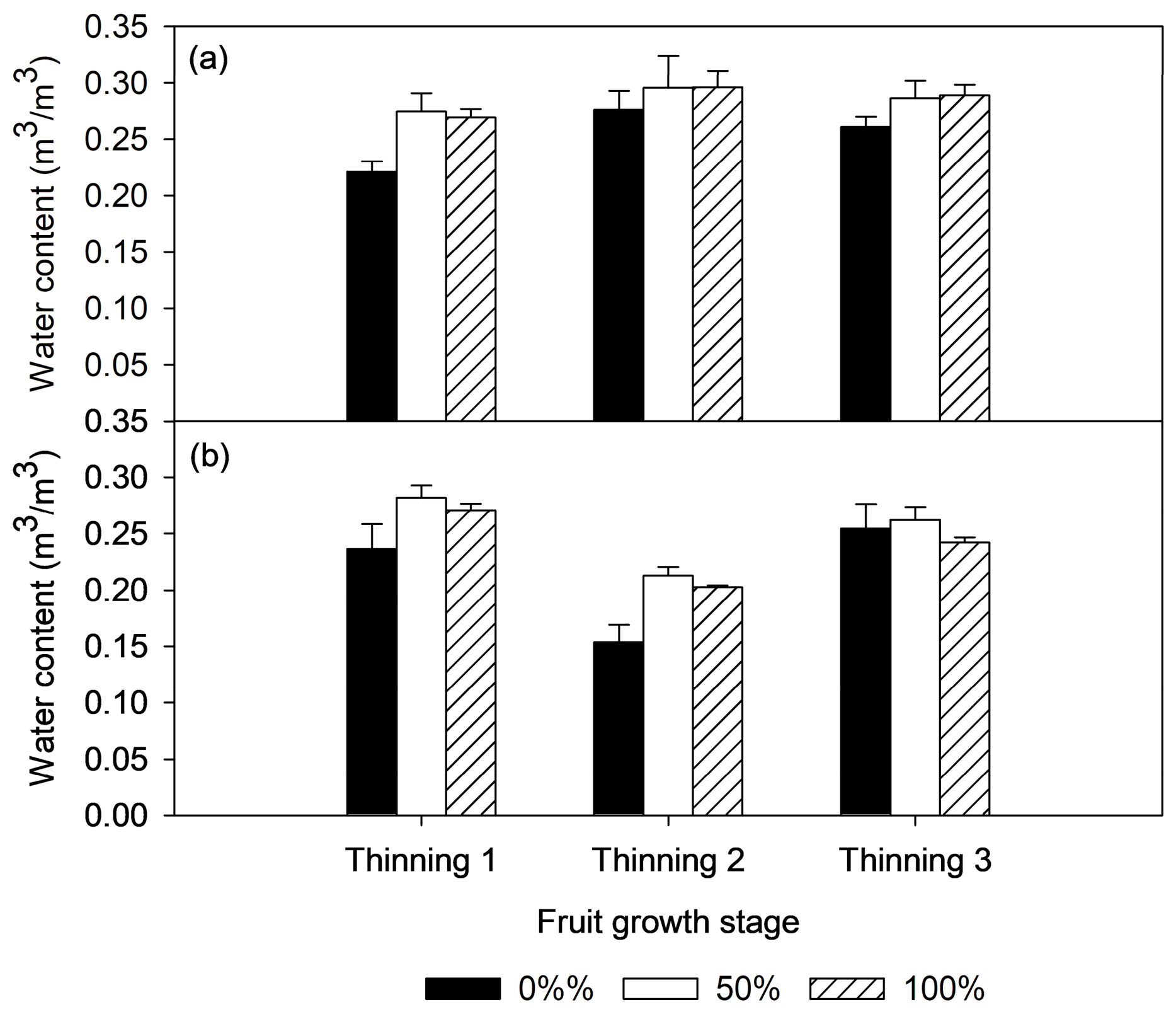
The overall effects of rattail fescue on the soil moisture contents are shown in Figure 2. Both the 50% and 100% coverages presented similar trends for the soil moisture content. Fields with a drier soil moisture content at 0% coverage (bare soil) showed higher soil moisture contents under cover crops, regardless of the coverage rate. This is likely due to the cover crops preventing evapotranspiration by blocking solar radiation. In contrast, fields with a higher soil moisture content at 0% coverage showed lower soil moisture contents under cover crops, regardless of the coverage rate. This is likely because the cover crops disrupted the infiltration of precipitation or irrigation. Specifically, the multi-year accumulation of detritus from rattail fescue creates layers like thatch roofing. The cover rate of cover crops influences the abovementioned relationships, as the slopes of the fitted curves indicated a significant difference between 50% and 100% coverage (Figure 2). The fitted linear equations indicated that a higher cover crop coverage shifts the phase from evapotranspiration prevention to infiltration disruption at drier conditions. The slope for 50% coverage was −0.5818, with an intercept of 0.1836 (r2 = 0.5423, p < 0.0001), while the slope for 100% coverage was −0.7363, with an intercept of 0.2076 (r2 = 0.4635, p < 0.0001). The equations indicate the matching conditions with bare soil (y = 0) were 0.31 m3/m3 at 50% coverage and 0.28 m3/m3 at 100% coverage (Figure 2). Soil moisture contents within the week prior to thinning events at 0%, 50%, and 100% coverage differed across thinning events (Figure 3). Soil moisture contents at 50% and 100% coverage tended to be higher than at 0% coverage, although there was no significant difference in the soil moisture content during the thinning events conducted in 2023 and 2024 (Figure 3).
Figure 2.
Difference in soil moisture content between bare soil and cover crops. The black dots indicate differences between 50% surface coverage and bare soil. The white triangles indicate differences between 100% surface coverage and bare soil. The continuous line indicates the linear relationship between 50% surface coverage and bare soil (R2 = 0.5423). The dotted line indicates the linear relationship between 100% surface coverage and bare soil (R2 = 0.4635).
Figure 3.
Average soil moisture contents (m3/m3) at 10 cm depth from a week prior to each thinning practice during the growing seasons of (a) 2023 and (b) 2024. Vertical stripes, solid black, and skewed stripes indicate treatments of rattail fescue at 0%, 50%, and 100% coverages, respectively. Each error bar indicates a standard deviation of the mean over the one-week duration.
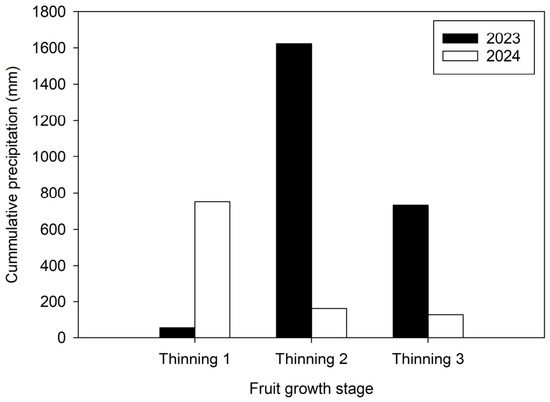
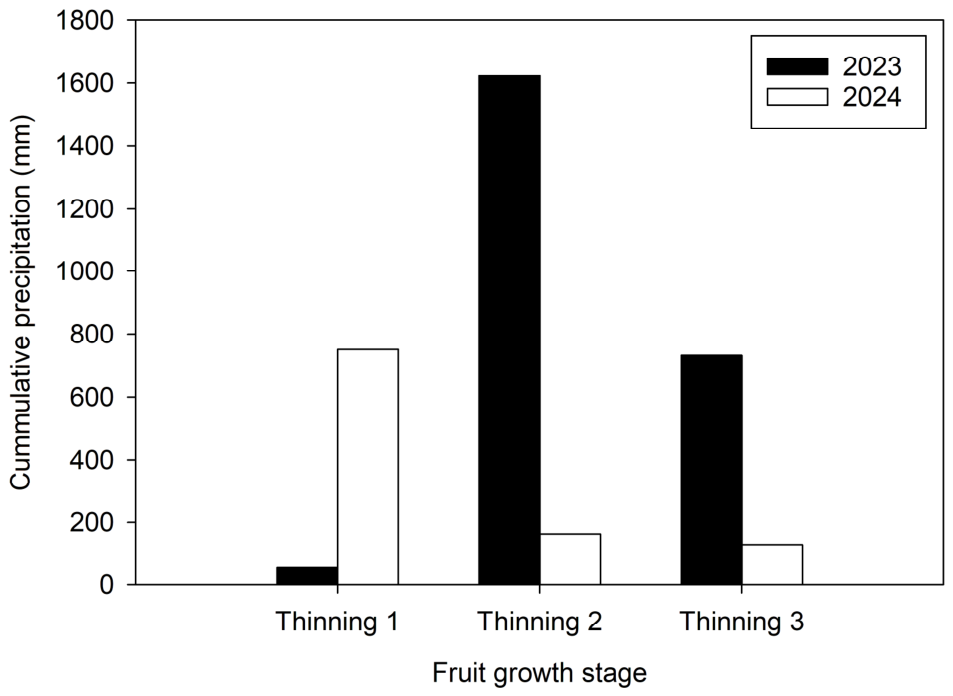
Different trends in cumulative precipitation (mm) were observed in 2023 and 2024 (Figure 4): while the cumulative precipitation before thinning 3 in 2023 was particularly large, the cumulative precipitation in 2024 was lower overall than that in 2023. This is because of the large year-to-year variability in precipitation (Figure 1).
Figure 4.
Cumulative precipitation (mm) from the week prior to each thinning practice during the growing seasons of 2023 (black) and 2024 (white).
3.2. Sugar Concentration
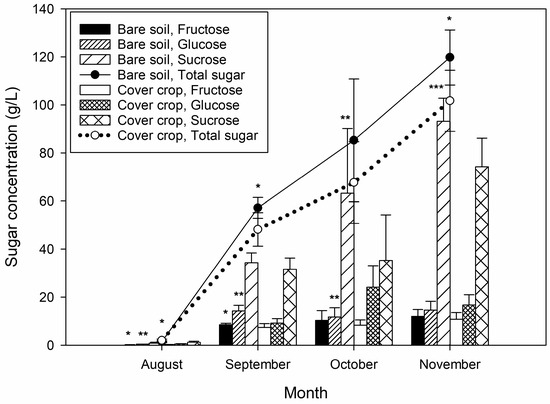
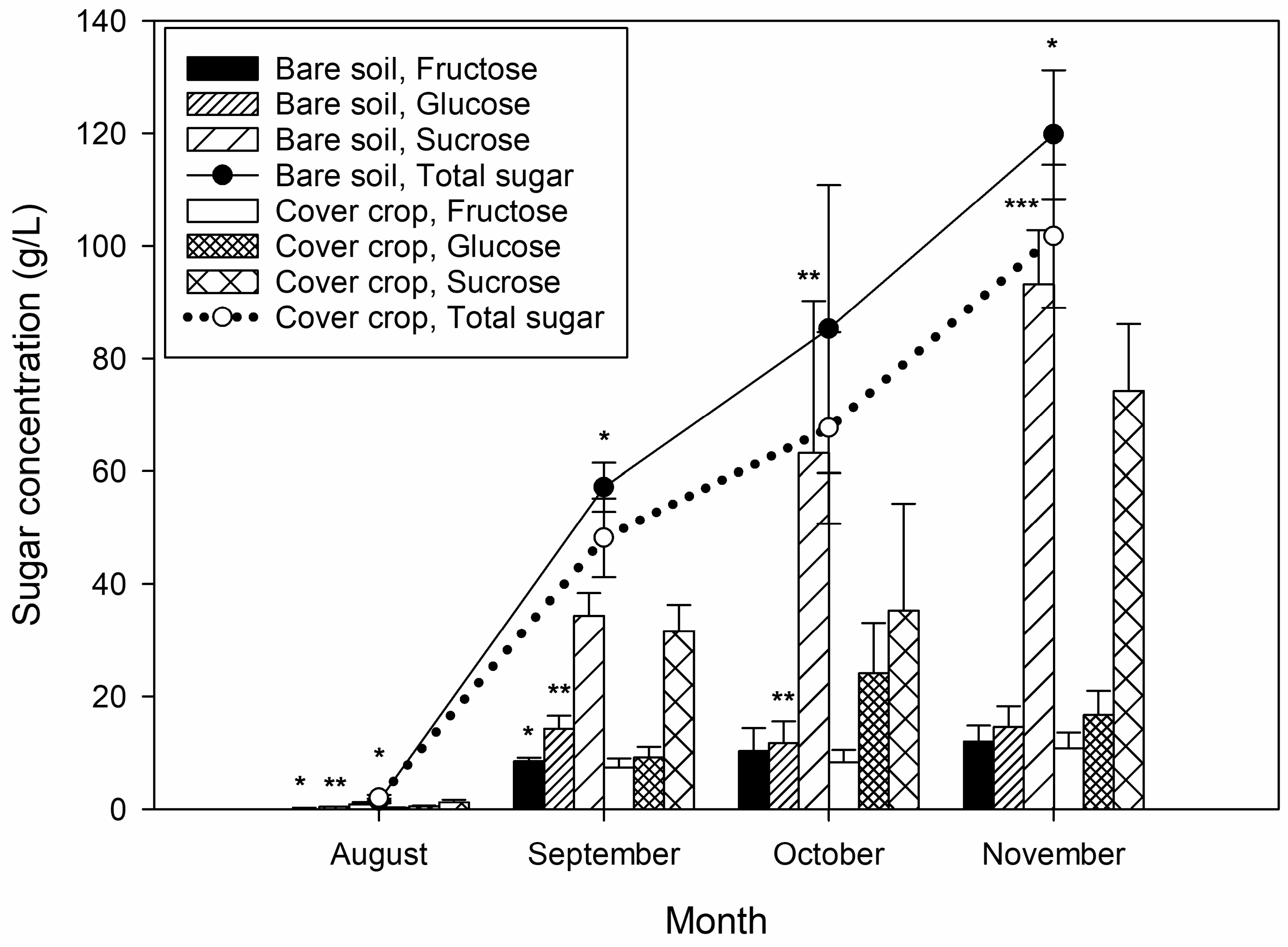
The overall sugar concentration of fresh pulp from the 0% coverage site exceeded that of fruits grown at the 100% coverage site (Figure 5). Sucrose concentrations were particularly high in fruits grown at both sites, even before they reached full maturity in November. As fruits continued to mature, the sucrose concentration increased almost linearly at the bare soil site. The sucrose concentration at the cover crop site, on the other hand, showed a two-step increase between August and September, as well as between October and November. There was no significant difference between the bare soil and cover crop sites in both August (p = 0.054) and September (p = 0.137). In contrast, at the later time periods, sucrose concentrations were significantly lower than those of bare soil. Fructose concentrations increased logarithmically in fruits grown under both conditions, with a rapid increase between August and September (Figure 5). Although the differences in concentration between 0% coverage condition fruits and 100% coverage condition fruits were minimal between August and September, the differences were significant. The gap increased from October onward, but the differences were not statistically significant: p = 0.157 in October and p = 0.293 in November. By the time of harvest in November, fructose concentrations in fresh pulp from the 0% coverage site were nearly 2 g/L greater than those of fruits grown with 100% coverage.
Figure 5.
Mean concentrations of fructose, glucose, and sucrose in fruit pulp in 2022. The solid line indicates the total sugar concentration in the fruit pulp harvested from the 0% coverage site. The dotted line indicates the total sugar concentration in the fruit pulp harvested from the cover crop site. Each error bar indicates a standard deviation (n = 6). *, **, and *** indicate statistical significance at p = 0.05, 0.001, and less than 0.001 between bare soil and cover crop fields for each category and each month based on the t-test.
Glucose concentrations in fresh pulp increased irregularly for fruits grown under both 0% and 100% coverage. Unlike the trends observed with sucrose and glucose concentrations, the 100% coverage fruits had significantly higher glucose concentrations than the 0% coverage fruits until October. The fruits from the 100% coverage site showed a linear increase (approximately 10 g/L/month) in glucose concentration between August and October, followed by a decrease in November. Meanwhile, the glucose concentration in fruits from the 0% coverage site increased to 14 g/L by September and remained at a similar concentration between September and November. The glucose concentrations in fruits with 0% coverage and with 100% coverage were not significantly different in November (p = 0.205).
Large disparities were not observed in terms of total sugar concentrations (Figure 5). Fruits grown under 100% coverage conditions in August and September had significantly lower total sugar concentrations compared with 0% conditions. The difference in October was not significant (p = 0.062) because the lower sucrose concentration at 100% coverage was offset by the greater glucose concentration. The total sugar concentration in November in fruits from the 0% coverage site (119.8 g/L) was significantly greater than that from the 100% coverage site, measuring 101.7 g/L. As the difference in end-product sucrose concentration between the two field management systems was large, it could be inferred that sucrose is the main determinant of the total sugar content of Citrus unshiu fruits grown under varying conditions.
3.3. D-Limonene and Hesperidin
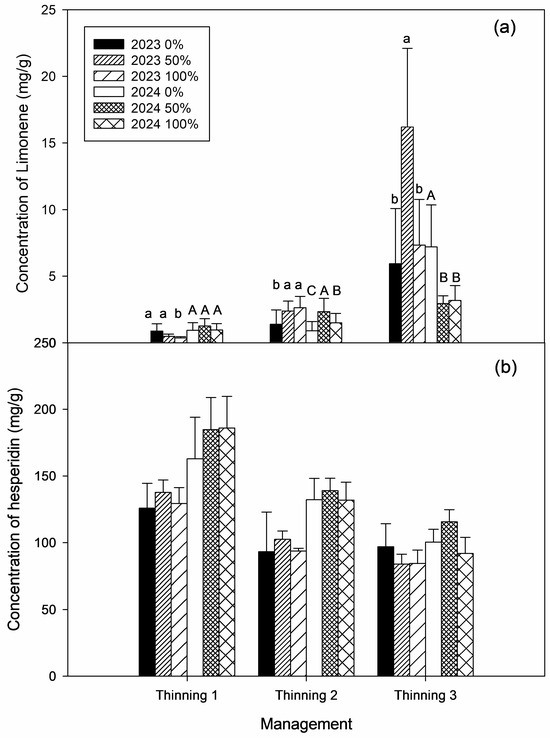
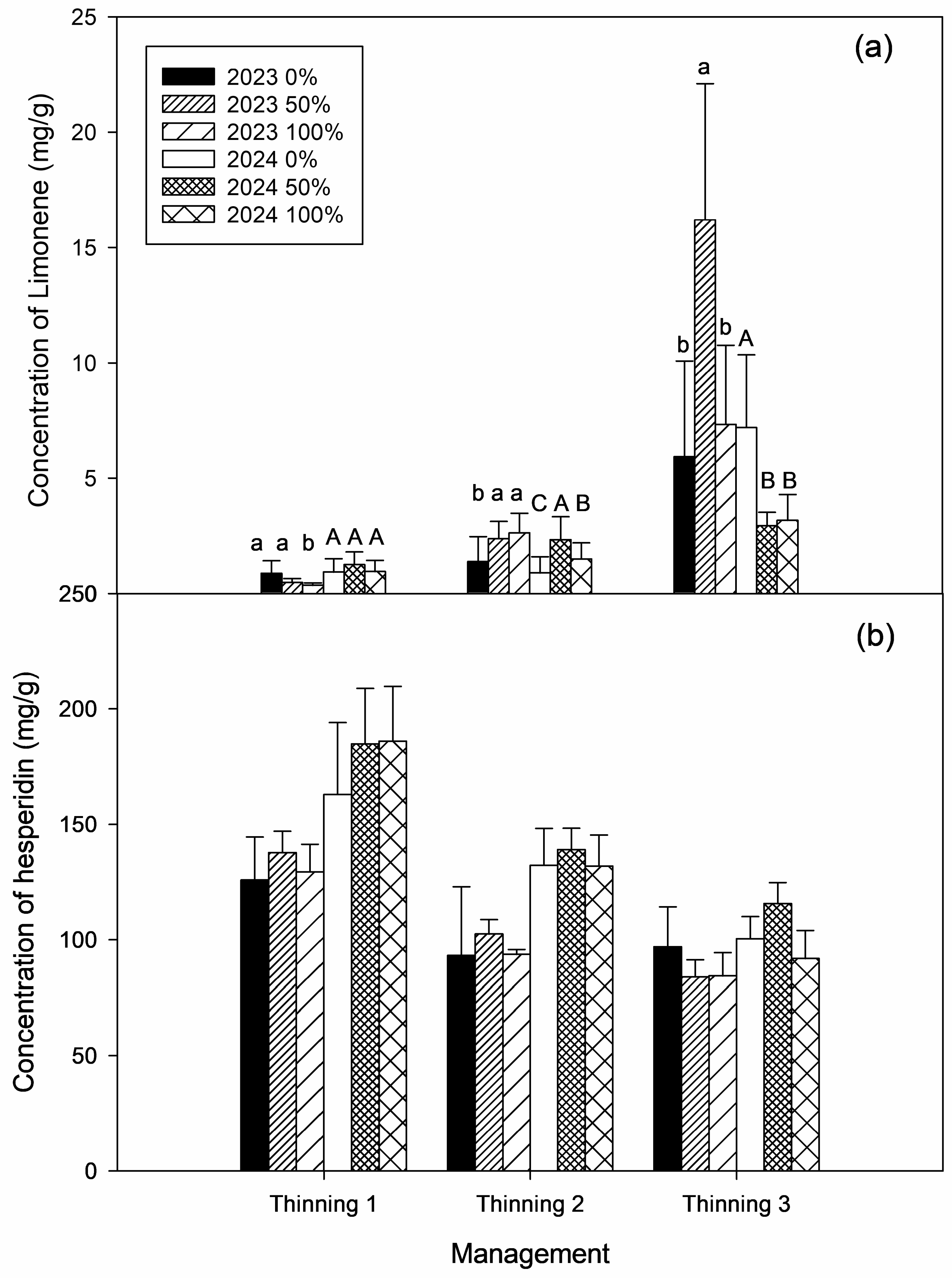
The concentrations of d-limonene showed no significant differences in the early fruit growth stages, as seen in thinning 1, although there were significant differences in the later fruit growth stages, as seen in thinning 2 and 3 (Figure 6a). As the fruit growth stages progressed, differences in the concentration of d-limonene increased among the coverages, including 0%, 50%, and 100% (Figure 6a). While there were overall differences in d-limonene concentrations among cover crop coverages of 0%, 50%, and 100%, the coverage of rattail fescue had no consistent effect on the d-limonene concentration, likely because the coverage does not necessarily result in an increase or decrease in the d-limonene concentration (thinning 2 and 3). Still, the concentration of d-limonene in the peel generally increased with the growth stage in 2023 and 2024 (Figure 6a). The greater d-limonene concentration in 2023 than in 2024 suggests the possibility of substantial year effects on d-limonene accumulation in the peel.
Figure 6.
Concentrations of (a) d-limonene and (b) hesperidin in the peel of Citrus unshiu in 2023 and 2024. Each error bar indicates a standard deviation. Labels 0, 50, and 100% indicate the cover rate of rattail fescue in the field. Different letters within each thinning time of the year indicate significant differences at p = 0.05. n = 3.
The hesperidin concentration showed no significant difference among coverages of 0%, 50%, and 100%, regardless of thinning timing in both 2023 and 2024 (Figure 6b). In general, the hesperidin concentration decreased as fruit growth progressed in 2023 and 2024; however, the concentration of hesperidin in 2024 was higher than that in 2023 (Figure 6b).
4. Discussion
For Citrus unshiu orchards with rattail fescue as the cover crop, the soil water content tends to be more stable than in the control Citrus unshiu orchard. Koudahe et al. (2022) [16] showed that, in a water-scarce region, cover crops promoted water stability by storing more water. Our study also showed a higher water content (about 0.10 m3/m3 more) in the dried condition (less than 0.25 m3/m3, Figure 1), likely because physical constraints prevented evapotranspiration. On the other hand, the lower soil moisture content in wet conditions (likely over 0.25 m3/m3; Figure 1), likely caused by the residue of rattail fescue, increases surface runoff during heavy precipitation or irrigation events. This benefit of rattail fescue in maintaining a favorable soil moisture content could improve farmers’ irrigation workload [17].
The effects of rattail fescue on the soil moisture content also affected the sugar content of Citrus unshiu, reducing the sugar concentration. The trend found in this study is consistent with past studies, which found that citrus fruit varieties grown under water-abundant conditions are characterized by lower sugar concentrations [18,19,20,21]. This trend could be different for other crops, such as peaches cultivated with bahia grass, which did not show a difference in the sugar content of the fruits [22]. Our results showed significant reduction in cover crop soil than in bare soil, even though the standard deviations were large. This large standard deviation does not originate from random sampling within a tree, but rather from differences among trees [23]. However, it is worth noting that the sugar concentration measured from the samples collected as part of this study was consistently higher than the national average for Citrus unshiu fruits. This implies that a slight decrease in sugar concentration resulting from the implementation of cover crops such as rattail fescue could be considered harmless for such sites. However, for farmers who are unable to consistently produce Citrus unshiu fruit with high sugar concentrations, the implementation of cover crops may result in significant financial losses and threaten their income. Although a detailed cost–benefit analysis or economic assessment is beyond the scope of this study, the reduction in total sugar concentration in Citrus unshiu fruits could be a factor for farmers to consider when deciding whether to implement a cover crop, and this issue should be addressed in future research.
Regardless of the timing of thinning, the surface coverage rates of cover crops did not show a consistent trend for the concentration of d-limonene (Figure 6a) and had no effect on hesperidin (Figure 6b) in the peels of Citrus unshiu. This outcome is the opposite of our hypothesis regarding the relationship between d-limonene or hesperidin and the soil moisture content, based on the 2022 season’s data. The first factor of concern regarding cover crop cultivation is the soil moisture content. Regarding the soil moisture content, rattail fescue reduces not only surface runoff, but also phosphorus runoff in sloped citrus fields [24]. Phosphorus runoff during the growing season could potentially be reduced to approximately 1% compared to phosphorus runoff in bare soils as a result of the withering and falling of rattail fescue after the rainy season in late June [24]. In addition, the coarse, well-drained soil in the Citrus unshiu field could be the best candidate for showing the effects of cover crops, though the precipitation above the 30-year average in 2022 may have skewed this effect.
The second factor of concern is nutrient competition between Citrus unshiu and rattail fescue. In the case of these crops, the difference in growing periods, May through November for Citrus unshiu and late October through May for rattail fescue, indicates that the two species are less likely to compete for resources. Thorup-Kristensen (2006) [25] stated that the Paceae family does not fix atmospheric nitrogen, although it can accumulate available nitrogen in soil within a short time. In other words, as cover crops, Poaceae plants can assimilate and recycle residual soil nitrate [26]. Without plant assimilation, the plant-available nitrogen in soil could leach beneath the effective rooting depth during intense precipitation events. Furthermore, a high C:N ratio in Poaceae plant tissue slows decomposition and extends the time that nitrogen remains in soil [8,27]. In this way, detritus from rattail fescue could also provide a significant amount of nitrogen to both Citrus unshiu and rattail fescue in citrus fields [28]. Thus, using Poaceae as a cover crop can maintain long-term soil nutrient status and diffuse the nutritional effects on the medicinal ingredients of Citrus unshiu. This could be why there is minimal nutrient competition between Citrus unshiu and rattail fescue.
Soil moisture conditions might not influence the pathways of d-limonene biosynthesis in these plants. Regarding the pathway of d-limonene production, creating GPP (geranyl diphosphate) from DMAPP (dimethylallyl pyrophosphate) and IPP (isopentenyl diphosphate) is a common process among citrus species and other plants, although citrus species have a unique process for d-limonene production [29,30]. Particularly, in citrus, d-limonene is stored in secretory cavities that are in the flavedo, or the outer colored region of the fruit peel [31]. In epithelial cells, biosynthetic genes for d-limonene production are strongly expressed in Thale cress, a model plant commonly used for gene expression studies [29]. The enzymes required for d-limonene production were found in the leucoplasts, indicating that these organelles are present in these cells [32]. However, leucoplasts are plastids that differ from chloroplasts, which are the general location for d-limonene synthesis [30], because they lack a photosynthetic mechanism [29]. In these cells, the enzymatic biotransformation generates d-limonene from GPP via the MEP (methylerythritol phosphate) pathway using glyceraldehyde-3-phosphate and pyruvate [30], and thus there is no interaction with water in the d-limonene biosynthesis process.
The pathway for hesperidin biosynthesis might explain why the soil moisture condition had no effect on the hesperidin concentration in the peel. The synthesis begins with the condensation of three molecules of malonyl-CoA and one molecule of p-coumaroyl-CoA [33]. Malonyl-CoA is produced through the acetate–malonate pathway, and p-coumaroyl-CoA is synthesized from the phenylpropanoid pathway [33]. This reaction produces naringenin chalcone, the first important intermediate, via CHS (chalcone synthase) [33]. CHI (chalcone isomerase) isomerizes naringenin chalcone (metabolite) and creates the flavanone naringenin [33]. The enzymes then convert the flavanone naringenin to other flavanones, flavones, and dihydroflavonols, and the flavanone hesperidin is produced by 1,2RhaT (1–2 rhamnosyltransferase) [33]. Thus, none of the hesperidin-producing strains require water as a source. Even for storage in citrus such as C. reticulata “Chachi”, flavonoids are concentrated in the secretory cavity cells of citrus peels [34]. One of the hesperidin synthases, “Crc1,6RhaT,” is created in the endoplasmic reticulum, and vesicle fusion with the vacuole transports “Crc1,6RhaT” into the vacuole [33]. Hesperidin is produced and stored in the vacuoles of epithelial cells, and the appropriate localization of flavonoids is important for this [34], though this localization remains unclear [35]. Although the impact of water availability on hesperidin biosynthesis is still uncertain, it could influence secondary metabolite accumulation indirectly through effects on plant stress physiology, carbon allocation, growth dynamics, and sink–source relationships. Further investigation of this subject is required.
Overall, hesperidin and d-limonene concentrations show different trends across thinning 1, 2, and 3, and there is no significant difference in hesperidin between different cover crop coverages. On the other hand, the influence of the surface cover crop and soil water content changed over time: while there was no effect on the d-limonene concentration in earlier stages, there was some impact as time progressed (Figure 6a). Overall, the concentration of hesperidin decreased, while that of d-limonene increased over time (Figure 6a,b). Although there were changes in the concentrations, all data met the requirement for the minimum concentration of hesperidin (40 mg/g) from the Japanese Pharmacopeia [15].
5. Conclusions
In this study, we initially expected that cover crops would reduce water stress due to higher soil water contents, leading to a lower total sugar content in the fresh pulp. Indeed, the results indicated that cover crops increased the soil water content and were associated with reduced total sugar concentrations compared with fruits grown under standard bare soil conditions. Although the reduction in total sugar concentration in the cover crop system was significant, the cover crop cultivation method could be appropriate for farmers who consistently produce Citrus unshiu with a high sugar content. That said, implementing the cover crop cultivation method could adversely affect the quality of yields for farmers with a low average sugar content under standard bare soil conditions.
The concentrations of hesperidin were largely unaffected by cover crop treatment, supporting the interpretation that their biosynthesis is not strongly influenced by soil moisture availability. However, the outcome of this study could be hindered by site-specific conditions, such as the slope. Overall, however, the use of rattail fescue as a cover crop improved soil moisture retention during dry periods, reduced irrigation requirements, and decreased weed pressure through the accumulation of surface detritus. These benefits indicate that cover crop cultivation could provide agronomic and environmental advantages, with generally positive implications for sustainable citrus orchard management. Future studies, including studies with longer follow-ups, would enable a robust statistical evaluation of year–treatment interactions.
Author Contributions
Conceptualization, A.M., M.A.F., S.K., M.Y. and R.F.; methodology, A.M., M.A.F. and R.F.; validation, S.K. and M.Y.; formal analysis, A.M. and M.A.F.; investigation, A.M., M.A.F. and R.F.; resources, R.F.; data curation, A.M., M.A.F. and R.F.; writing—original draft preparation, A.M. and M.A.F.; writing—review and editing, S.K., M.Y. and R.F.; visualization, S.K., M.Y. and R.F.; supervision, R.F.; project administration, S.K.; funding acquisition, S.K., M.Y. and R.F. All authors have read and agreed to the published version of the manuscript.
Funding
This research was funded by the Japan Agency for Medical Research and Development (AMED), grant number JP25ak0101159.
Data Availability Statement
Data available in a publicly accessible repository.
Acknowledgments
We would like to express special gratitude to Mikkabi Citrus unshiu farmers for allowing us to use their land and produce. We also thank AMED (Japan Agency for Medical Research and Development) for funding this study.
Conflicts of Interest
The authors declare no conflicts of interest. The funders had no role in the design of the study; in the collection, analyses, or interpretation of data; in the writing of the manuscript; or in the decision to publish the results.
Abbreviations
The following abbreviations are used in this manuscript:
| HPLC | High-performance liquid chromatograph |
| RI | Refractive index |
| PDA | Photodiode array |
| GPP | Geranyl diphosphate |
| DMAPP | Dimethylallyl pyrophosphate |
| MEP | Methylerythritol phosphate |
| CoA | Coenzyme A |
| CHI | Chalocone isomerase |
| CHS | Chalcone synthase |
| RhaT | Rhamnosyltransferase |
References
- Ministry of Agriculture, Forestry and Fisheries. 2024 Mandarin Orange Fruiting Area, Production, and Shipment. 2025. Available online: http://www.maff.go.jp/j/tokei/kouhyou/sakumotu/index.html (accessed on 6 April 2026).
- Shimizu, T.; Torikata, H.; Torii, S. Studies on the Effect of Crop Load on the Composition of Satsuma Mandarin Trees, III. Effect of Different Leaf-to-fruit Ratios on the Carbohydrate Content of the Tree of Harvest Time and Blossom and Foliage Productions of the Following Year. J. Jpn. Soc. Hort. Sci. 1975, 43, 423–429. [Google Scholar] [CrossRef] [Scilit]
- Hiratsuka, S.; Kubo, T.; Takagi, C.; Ochi, M.; Matsushima, J. Relation of fruit-thinning time to taste in satsuma mandarin. Nippon Shokuhin Kagaku Kogaku Kaishi 2004, 51, 708–711. [Google Scholar] [CrossRef] [Scilit]
- Tamaru, S.; Tanaka, K. Solubilization of hesperidin, which is abundant in discarded premature mandarin oranges: Makes the insoluble components available for consumption as tea beverages. Chem. Biol. 2017, 55, 290–293. [Google Scholar]
- Kobayashi, S.; Takayanagi, M.; Tanabe, S. Anti-allergy function of Unshiu Mikan. New Food Ind. 2006, 48, 15–22. [Google Scholar]
- Kawahara, M.; Yamashita, J.; Soejima, Y.; Aramaki, S.; Tanaka, K. Establishment of efficient harvest and ideal control system for unripe satsuma mandarin fruits enriched with hesperidin. Res. Rep. Nagasaki Agric. For. Tech. Dev. Cent. 2019, 9, 129–147. [Google Scholar]
- Jat, R.; Sahrawat, K.; Kassam, A. Conservation Agriculture—Global Prospects and Challenges; CAB International: Wallingford, UK, 2013. [Google Scholar]
- Dabney, S.M.; Delgado, J.A.; Reeves, D.W. Using winter cover crops to improve soil and water quality. Commun. Soil Sci. Plant Anal. 2001, 32, 1221–1250. [Google Scholar] [CrossRef] [Scilit]
- Shibata, K. Utilization of cover crops in fruit tree cultivation. Jpn. J. Farm Work Res. 2005, 40, 43–48. [Google Scholar] [CrossRef]
- Wada, T.; Fukuyama, M.; Inoue, M. Physiological moisture approach to the overthrow characteristics of Rattail fescue. Jpn. J. Grassl. Sci. 2002, 48, 288–289. [Google Scholar]
- Yamaga, I.; Sugiyama, T.; Takahashi, K. Effect of rattail fescue [Vulpia myuros (L.) C.C. Gmel.] sod culture on size-dependent particulate phosphorus concentration in the surface runoff water from a citrus orchard. Trans. Jpn. Soc. Irrig. Drain. Rural Eng. 2014, 82, 321–327. [Google Scholar]
- Weber, E. Vulpia myuros (annual fescue). CABI Compend. 2022, 117880. [Google Scholar] [CrossRef] [Scilit]
- Ishikawa, K. Studies on improvement of soil and fertilizer application management to improve utilization efficiency of nitrogen and reduce nitrate leaching in citrus orchards. Bull. Fruit Tree Res. Cent. Ehime Res. Ins. Agri. Forest. Fish. 2010, 2, 1–91. [Google Scholar]
- Japan Meteorological Agency. Past Meteorological Data. Hamamatsu City, Shizuoka Prefecture, Japan. Available online: https://www.data.jma.go.jp/stats/etrn/index.php (accessed on 25 February 2026).
- Ministry of Health, Labour and Welfare. The Japanese Pharmacopoeia, 18th ed.; Ministry of Health, Labour and Welfare: Tokyo, Japan, 2021; p. 420. [Google Scholar]
- Koudahe, K.; Allen, S.C.; Djaman, K. Critical review of the impact of cover crops on soil properties. Int. Soil Water Conserv. Res. 2022, 10, 343–354. [Google Scholar] [CrossRef] [Scilit]
- Tsuji, T. Changes in soil temperature and soil moisture under Rattail fescue herbaceous cultivation (Naginatagaya souseisaibaika deno chion to dojo suibun no suii). Pasture Hort. 2002, 50, 13–16. [Google Scholar]
- Sakamoto, T.; Okuchi, S. Effects of rainfall on soluble solids and acid in Satsuma oranges. J. Jpn. Soc. Hort. Sci. 1968, 37, 28–36. [Google Scholar] [CrossRef] [Scilit]
- Tomita, E. Effects of summer application of water and nitrogen on fruit quality and flowering of Satsuma orange trees. J. Jpn. Soc. Hort. Sci. 1971, 40, 225–229. [Google Scholar] [CrossRef] [Scilit]
- Romero-Conde, A.; Kusakabe, A.; Melgar, J.C. Physiological responses of citrus to partial rootzone drying irrigation. Sci. Hortic. 2014, 169, 234–238. [Google Scholar] [CrossRef] [Scilit]
- Sadka, A.; Shlizerman, L.; Kamara, I.; Blumwald, E. Primary metabolism in citrus fruit as affected by its unique structure. Front. Plant Sci. 2019, 10, 1167. [Google Scholar] [CrossRef] [Scilit]
- Yano, T.; Shimizu, T.; Shinkai, S.; Matsumoto, H.; Miyata, N. Effects sod culture with bahia grass on fruit quality of ‘Akatsuki’ peach and soil moisture. Kinki Chugoku Shikoku Agric. Res. 2015, 26, 55–62. [Google Scholar]
- Hamada, S. The Effects of Growing Environment, Sampling Year and Month to the Quantities of Hesperidin, Nobiletin and Tangeretin Contained in the Peels of Citrus unshiu Marc. (Aoshima unshiu and Okitsu Wase). Master’s Thesis, International Christian University, Mitaka, Tokyo, Japan, 2025. [Google Scholar]
- Yamaga, I.; Sugiyama, T.; Takahashi, K. Changes in mitigating effects of Vulpia myuros C.C. Gmel culture on phosphorus loss in surface runoff from citrus orchard soil. Jpn. Soc. Soil Sci. Plant Ntr. 2008, 79, 303–306. [Google Scholar]
- Thorup-Kristensen, K. Effect of deep and shallow root systems on the dynamics of soil inorganic N during 3-year crop rotations. Plant Soil 2006, 288, 233–248. [Google Scholar] [CrossRef] [Scilit]
- Cline, G.R.; Silvernail, A.F. Effects of cover crops, nitrogen, and tillage on sweet corn. HortTechnology 2002, 12, 118–125. [Google Scholar] [CrossRef] [Scilit]
- Dabney, S.M.; Meisinger, J.J.; Schomberg, H.H.; Liebig, M.A.; Kaspar, T.C.; Delgado, J.A.; Mitchell, J.; Reeves, D.W. Using cover crops and cropping systems for nitrogen management. In Advances in Nitrogen Management for Water Quality; Delgado, J.A., Follett, R.F., Eds.; Soil and Water Conservation Society: Ankeny, IA, USA, 2010; pp. 230–281. [Google Scholar]
- Ishikawa, K.; Kimura, H. Absorption of nitrogen decomposed from rat tail fescue residue in satsuma mandarin orchard with sod management. Jpn. J. Farm Work Res. 2008, 43, 179–186. [Google Scholar] [CrossRef] [Scilit]
- Jongedijk, E.; Cankar, K.; Buchhaupt, M.; Schrader, J.; Bouwmeester, H.; Beekwilder, J. Biotechnological production of limonene in microorganisms. Appl. Microbiol. Biotechnol. 2016, 100, 2927–2938. [Google Scholar] [CrossRef] [Scilit] [PubMed]
- Pang, Y.; Zhao, Y.; Li, S.; Zhao, Y.; Li, J.; Hu, Z.; Zhang, C.; Xiao, D.; Yu, A. Engineering the oleaginous yeast Yarrowia lipolytica to produce limonene from waste cooking oil. Biotechnol. Biofuels 2019, 12, 241. [Google Scholar] [CrossRef] [Scilit]
- Voo, S.S.; Grimes, H.D.; Lange, B.M. Assessing the biosynthetic capabilities of secretory glands in Citrus peel. Plant Phys. 2012, 159, 81–94. [Google Scholar] [CrossRef] [Scilit]
- Turner, G.W.; Lange, B.M. Ultrastructure of grapefruit secretory cavities and immunocytochemical localization of (+)-limonene synthase. Int. J. Plant Soil Sci. 2015, 176, 643–661. [Google Scholar] [CrossRef] [Scilit]
- Pereira, V.; Figueira, O.; Castilho, P.C. Hesperidin: A flavanone with multifaceted applications in the food, animal feed, and environmental fields. Phytochem. Rev. 2025, 24, 3291–3305. [Google Scholar] [CrossRef] [Scilit]
- Shang, N.; Tong, P.; Ye, P.; Su, J.; Bai, M.; Wu, H. Crc1,6RhaT is involved in the synthesis of hesperidin of the main bioactive substance in the Citrus reticulata ‘Chachi’ fruit. Hort. Plant J. 2024, 10, 1321–1335. [Google Scholar] [CrossRef] [Scilit]
- Kitamura, S. Transport of flavonoids: From cytosolic synthesis to vacuolar accumulation. In The Science of Flavonoids; Grotewold, E., Ed.; Springer: New York, NY, USA, 2006; pp. 123–146. [Google Scholar]

Disclaimer/Publisher’s Note: The statements, opinions and data contained in all publications are solely those of the individual author(s) and contributor(s) and not of MDPI and/or the editor(s). MDPI and/or the editor(s) disclaim responsibility for any injury to people or property resulting from any ideas, methods, instructions or products referred to in the content. |
© 2026 by the authors. Licensee MDPI, Basel, Switzerland. This article is an open access article distributed under the terms and conditions of the Creative Commons Attribution (CC BY) license.