Return Flow Compensation Reshapes Water Savings and Carbon–Water Synergy in Cold-Region Paddy Systems


Abstract
1. Introduction
2. Materials and Methods
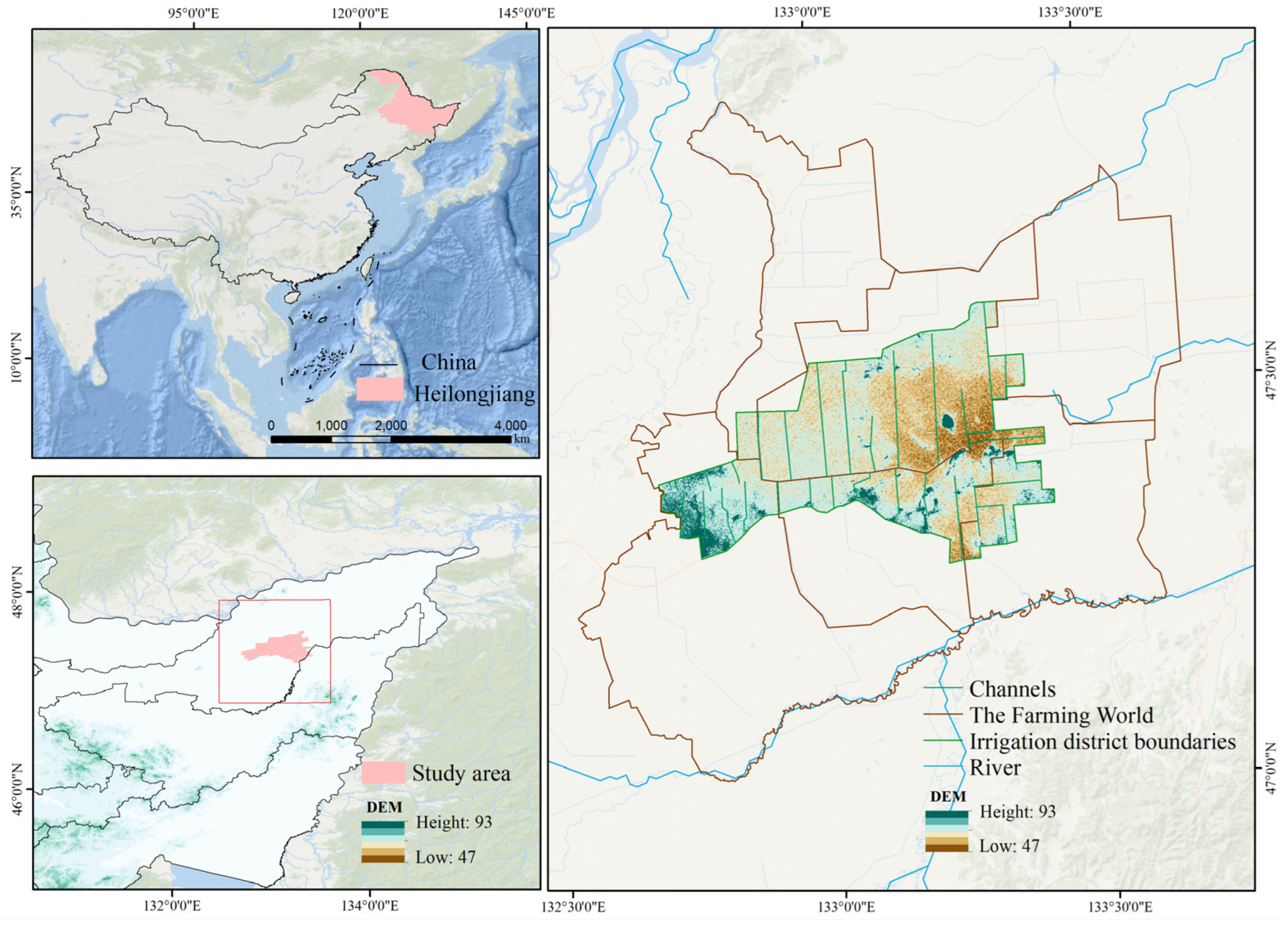
2.1. Study Area
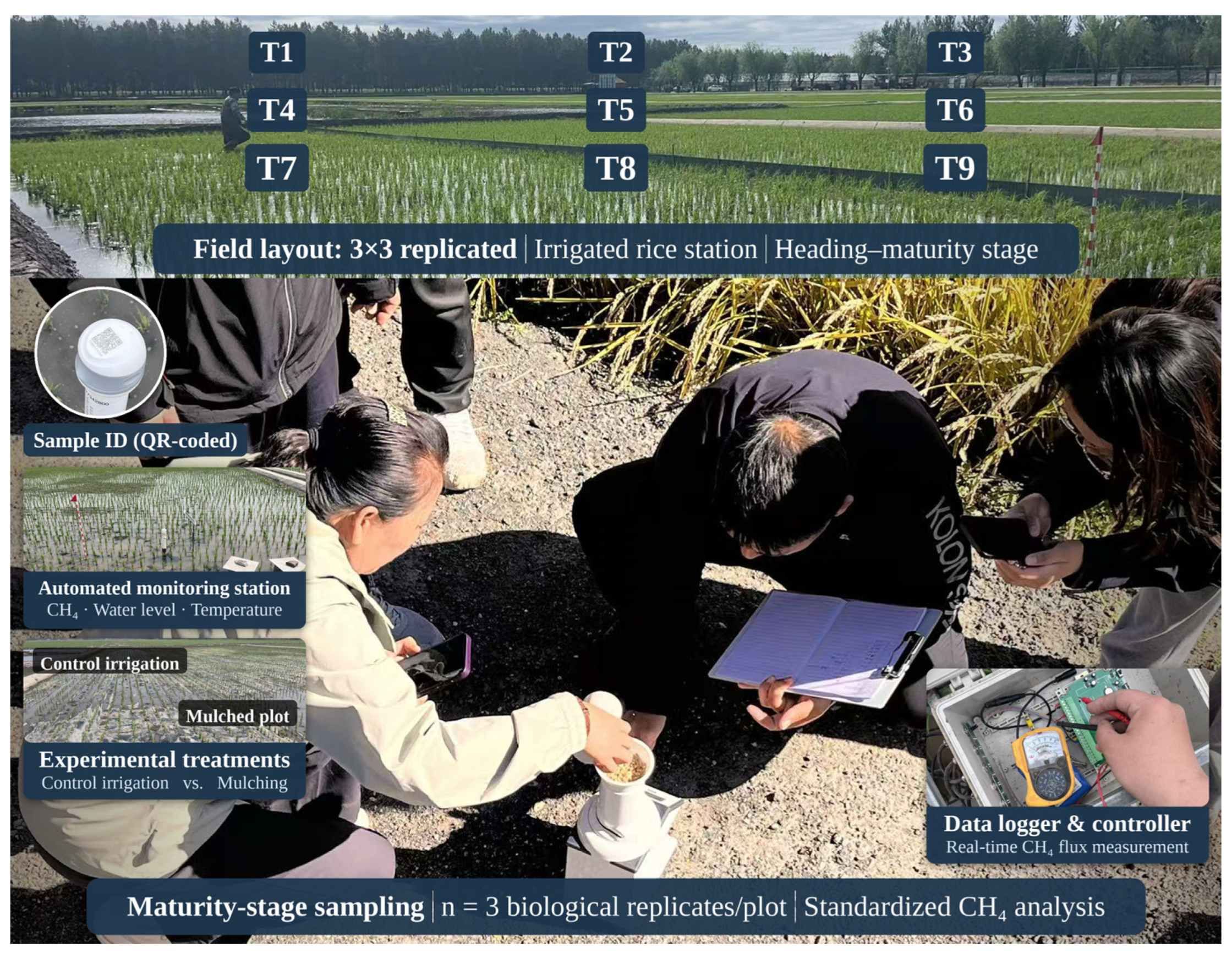
2.2. Experimental Site
2.3. Observations and Measurements
2.3.1. Field Moisture Monitoring
2.3.2. Monitoring of Groundwater Levels and River Discharge
2.3.3. Other Data Sources
2.3.4. Greenhouse Gas Flux Monitoring
2.3.5. Rice Yield Measurement
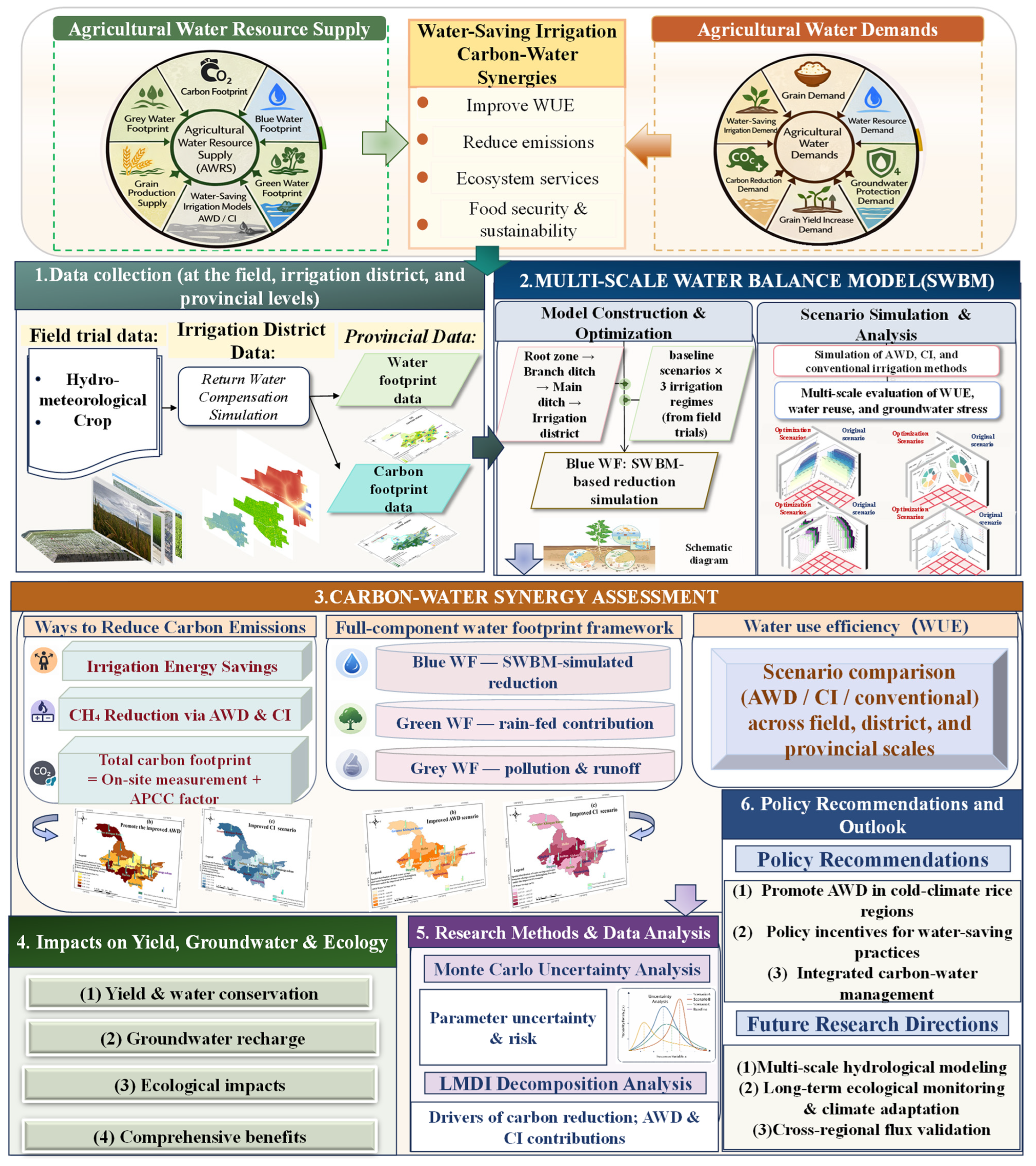
2.4. Methods
2.5. Semi-Distributed Multiscale Water Balance Model (SWBM)
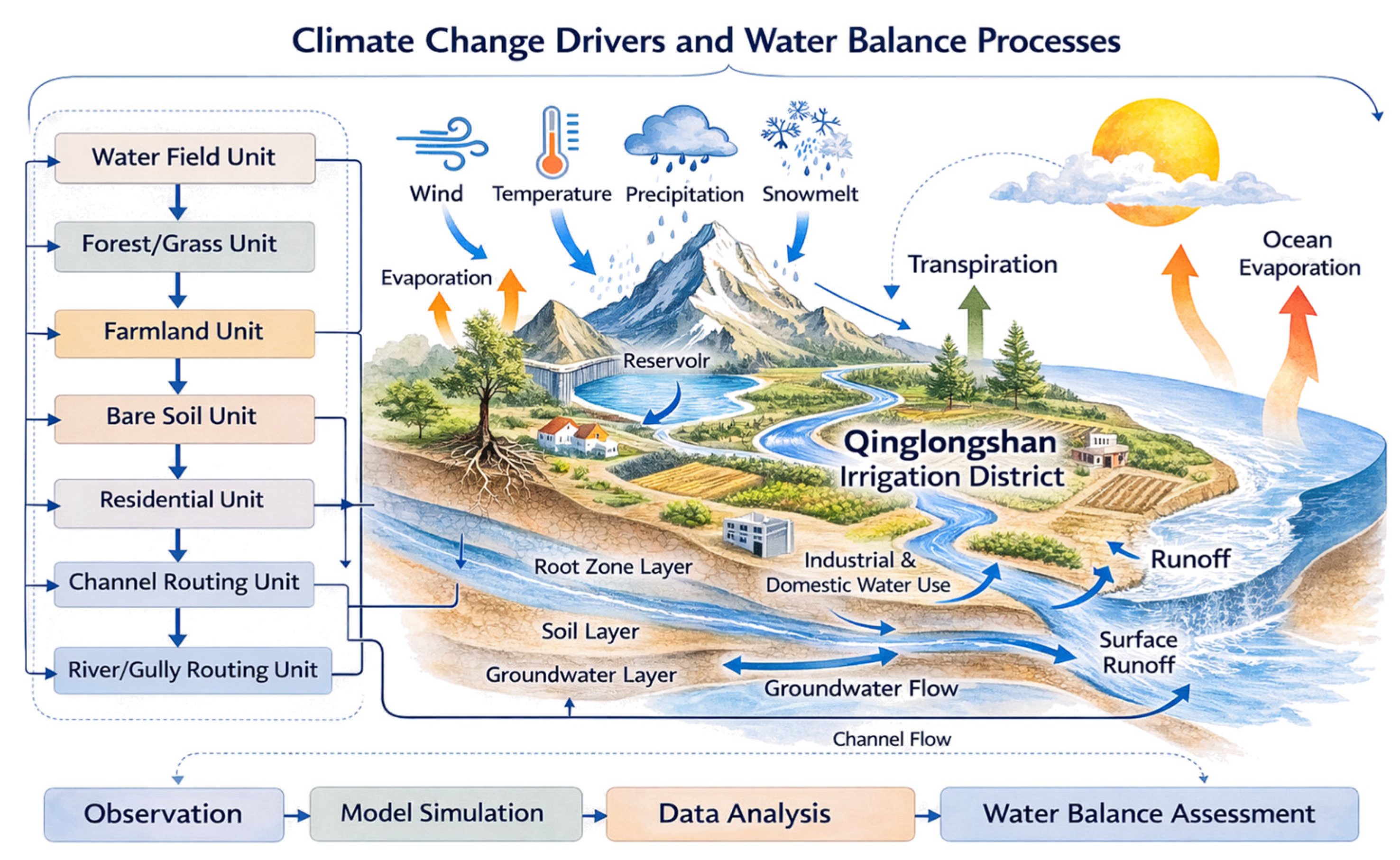
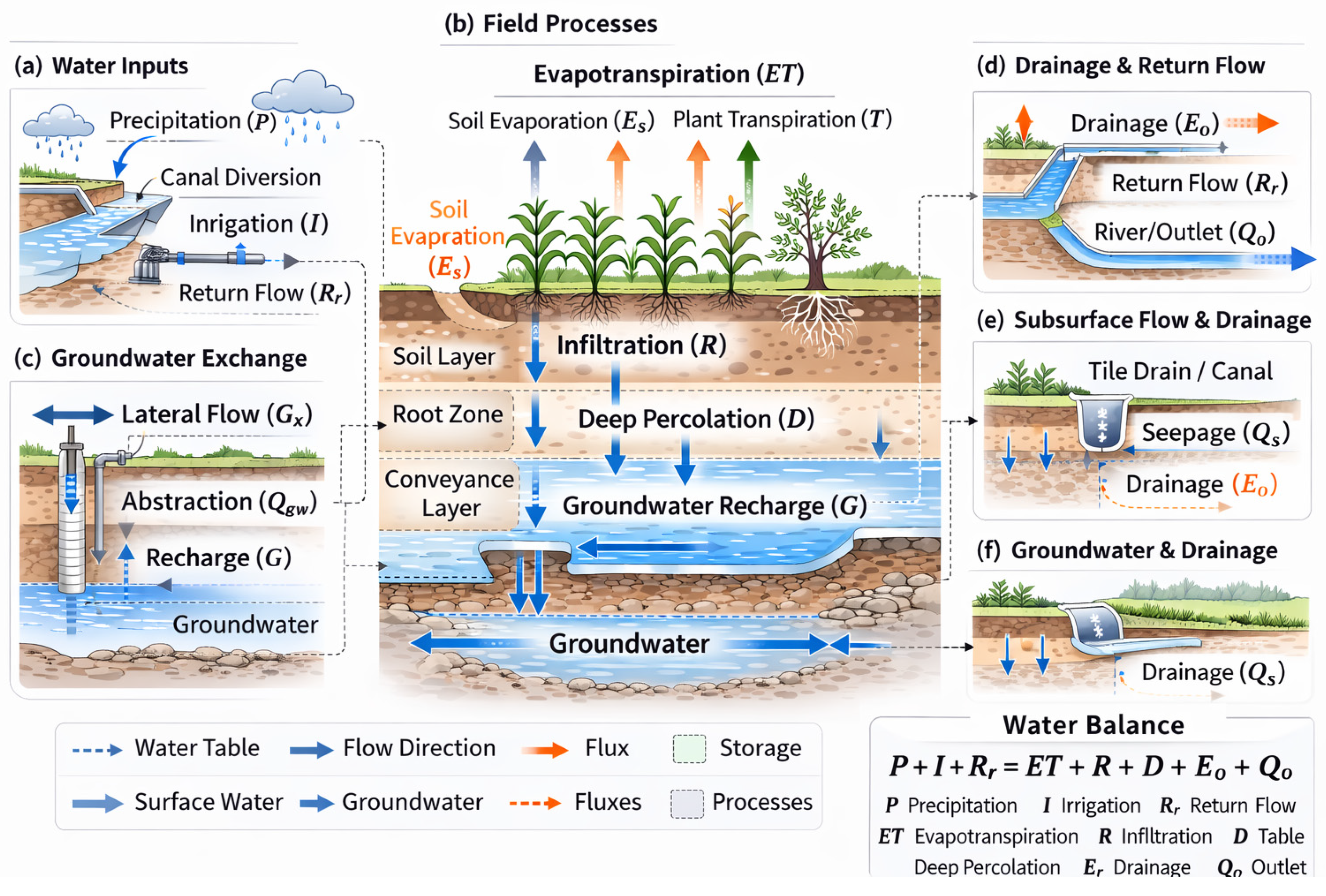
2.5.1. Model Structure
2.5.2. Model Governing Equations
2.6. Scenario Development
2.7. Framework for Analyzing Carbon–Water Synergies
- (1)
- Pathway for reducing irrigation energy consumption.
- (2)
- Pathway for CH4 emission reductions in rice paddies.
2.8. Framework for Calculating the Full-Life-Cycle Water Footprint
2.9. Monte Carlo Uncertainty Analysis
2.10. LMDI Attribution Decomposition Method
2.11. Metrics for Evaluating Model Accuracy
3. Results
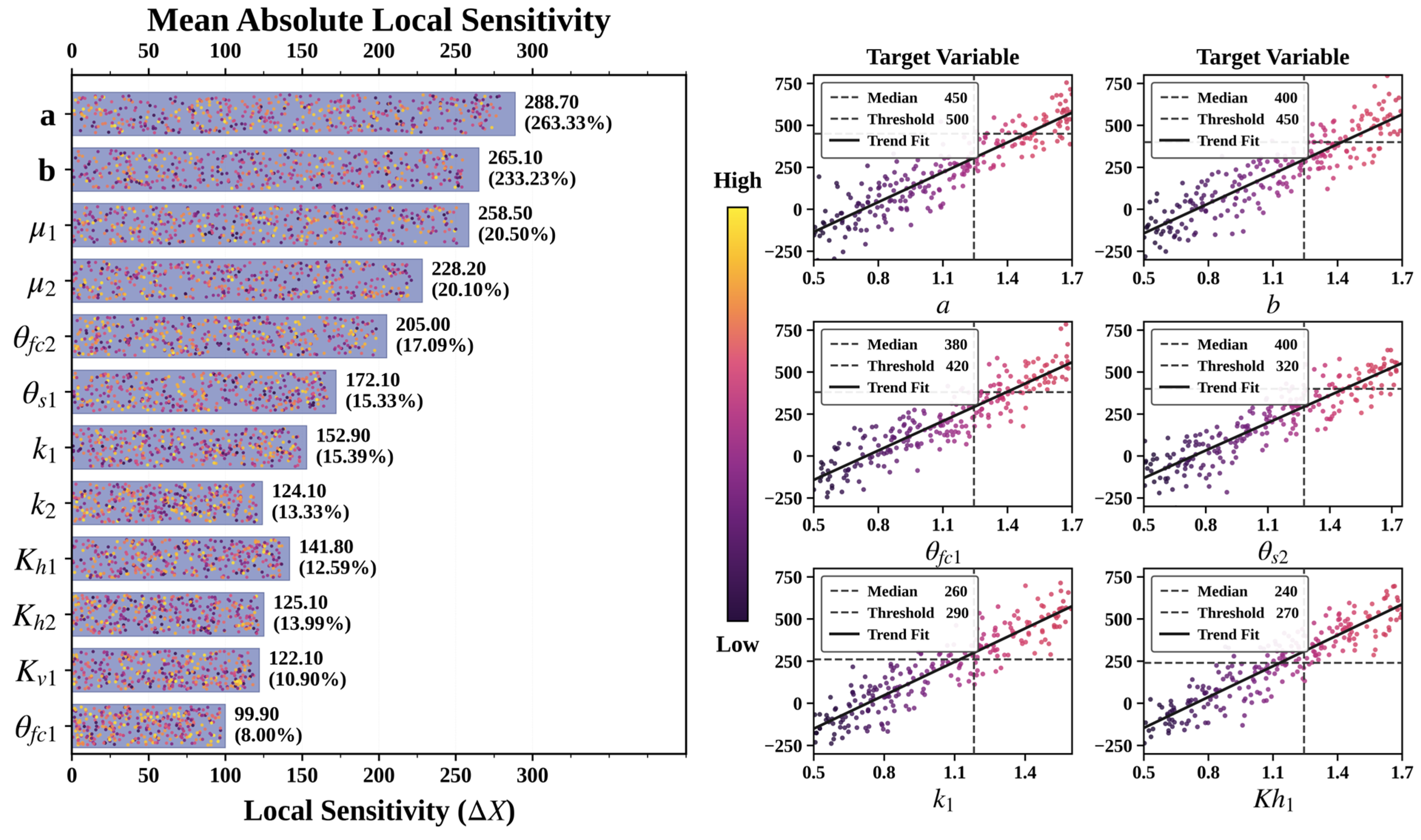
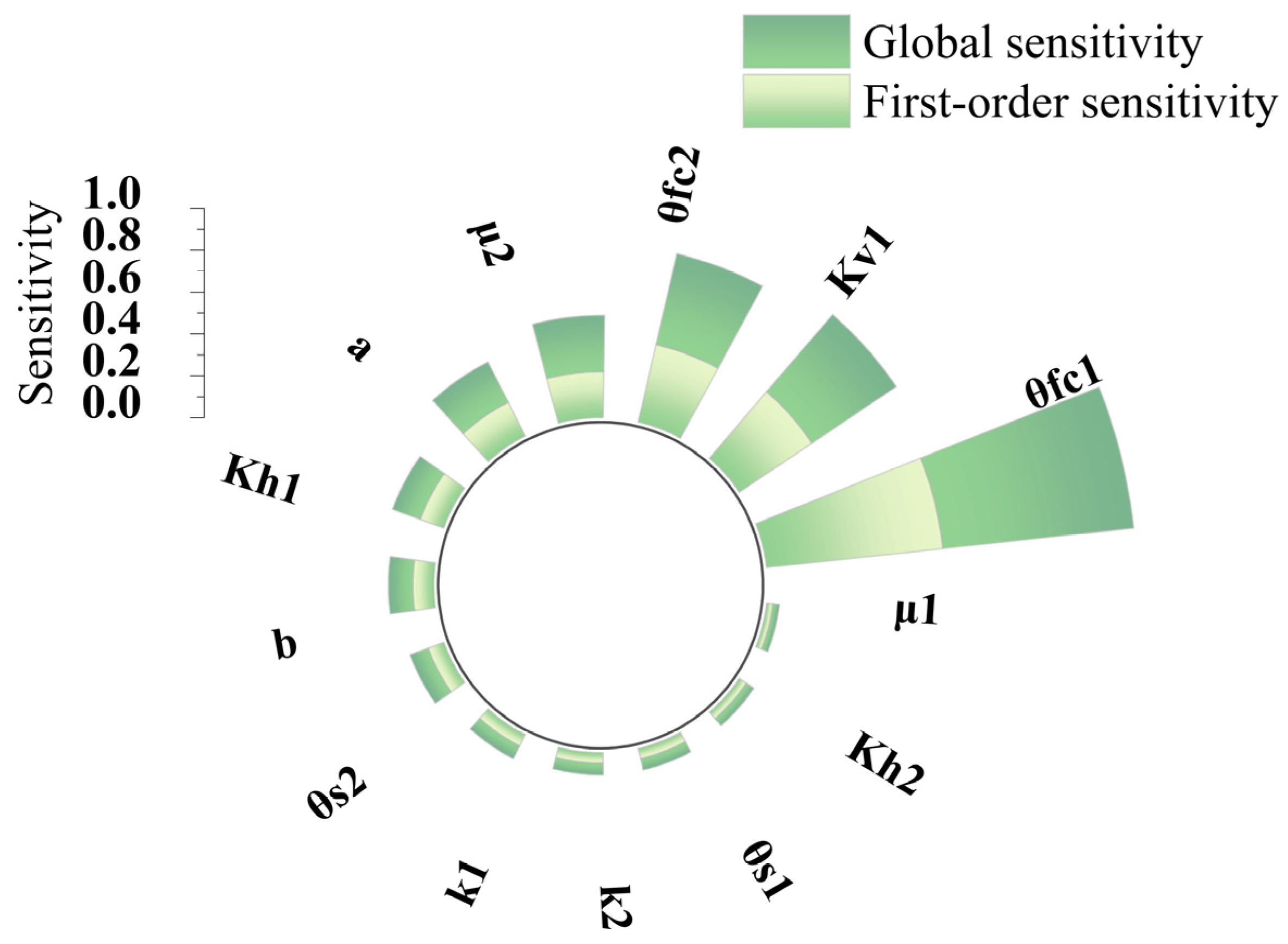
3.1. Sensitivity Analysis of Model Parameters
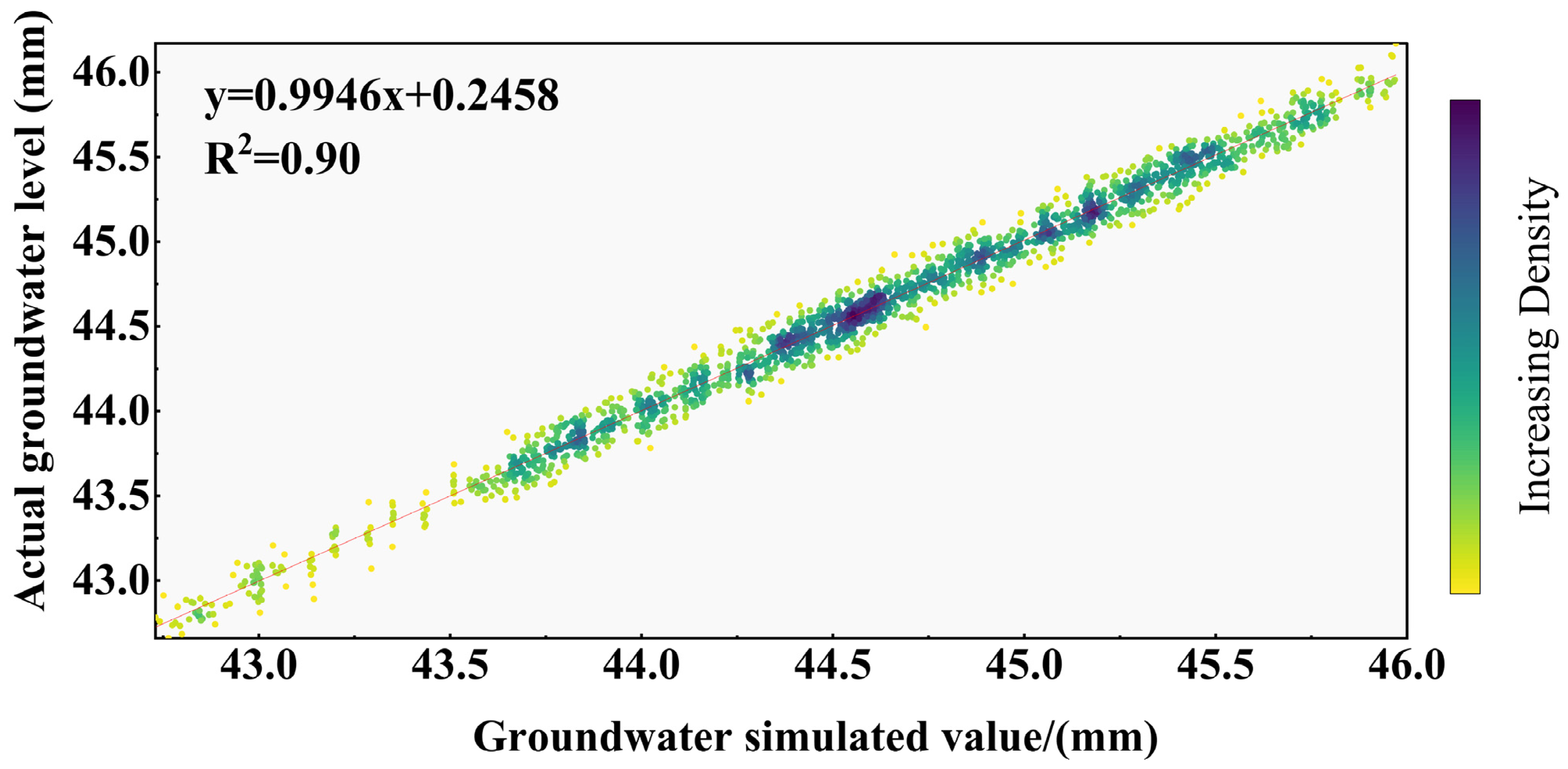
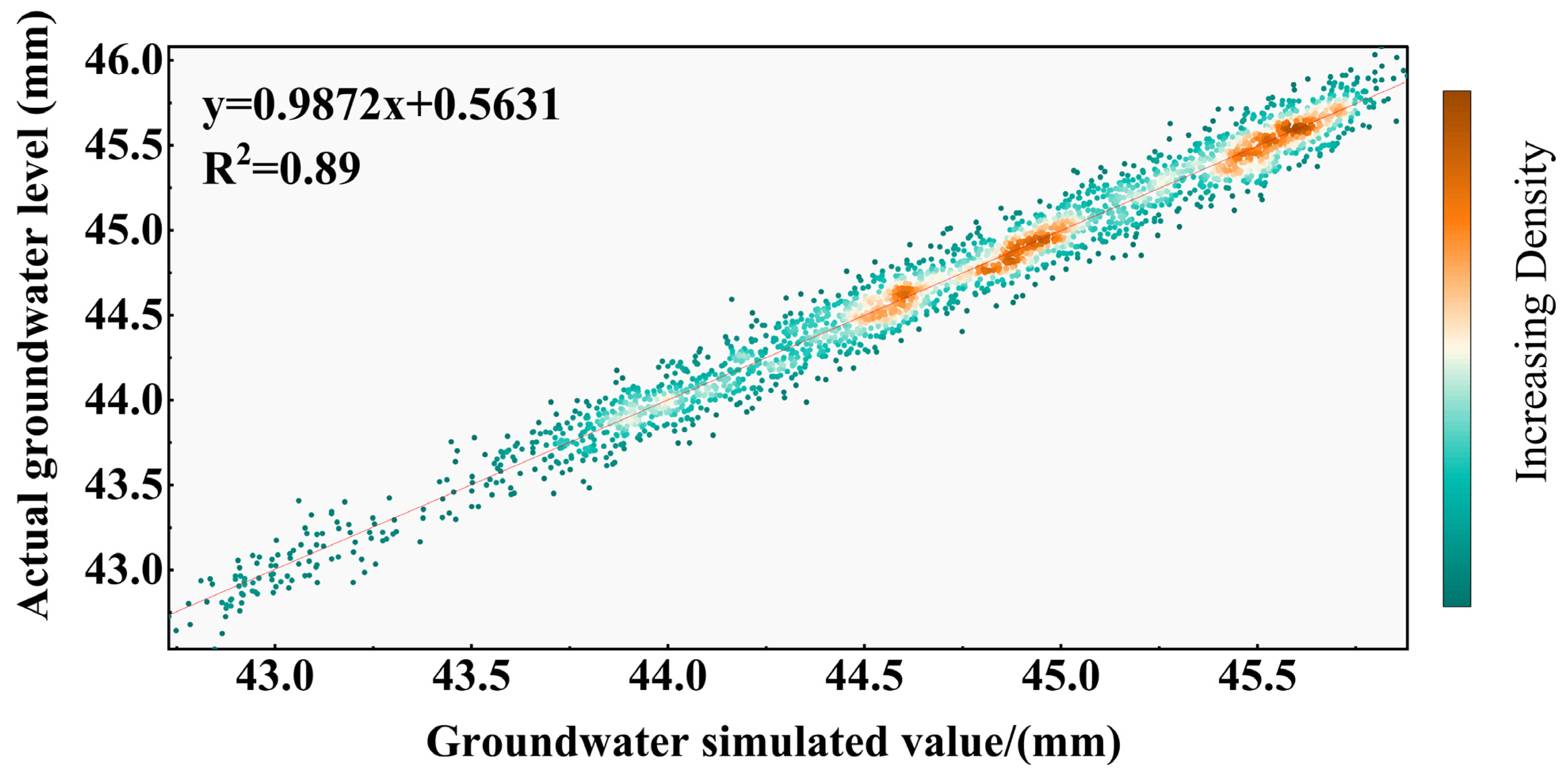
3.2. Model Calibration and Validation
3.3. Effects of Irrigation Regimes on Multi-Scale Water Use Efficiency and Groundwater Dynamics
3.3.1. Irrigation Regime as the Primary Determinant of Water Use Efficiency
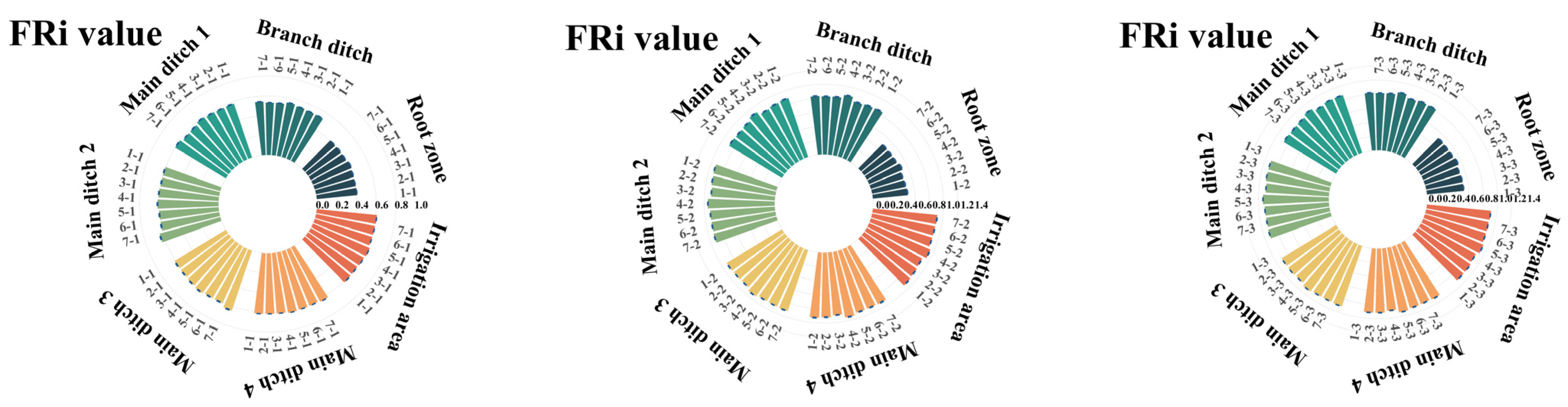
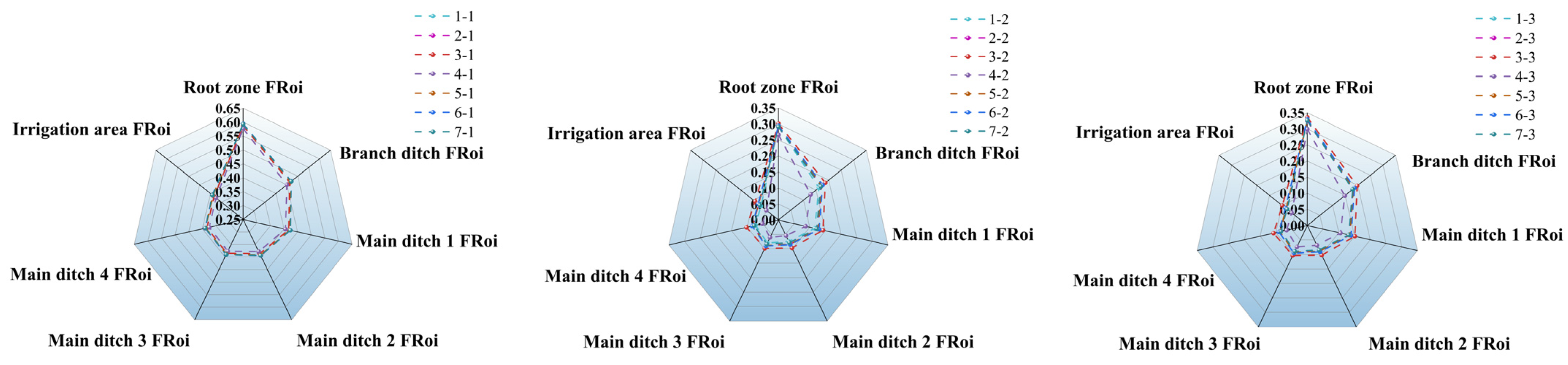
3.3.2. Scale-Dependent Convergence Characteristics of Water Use Efficiency
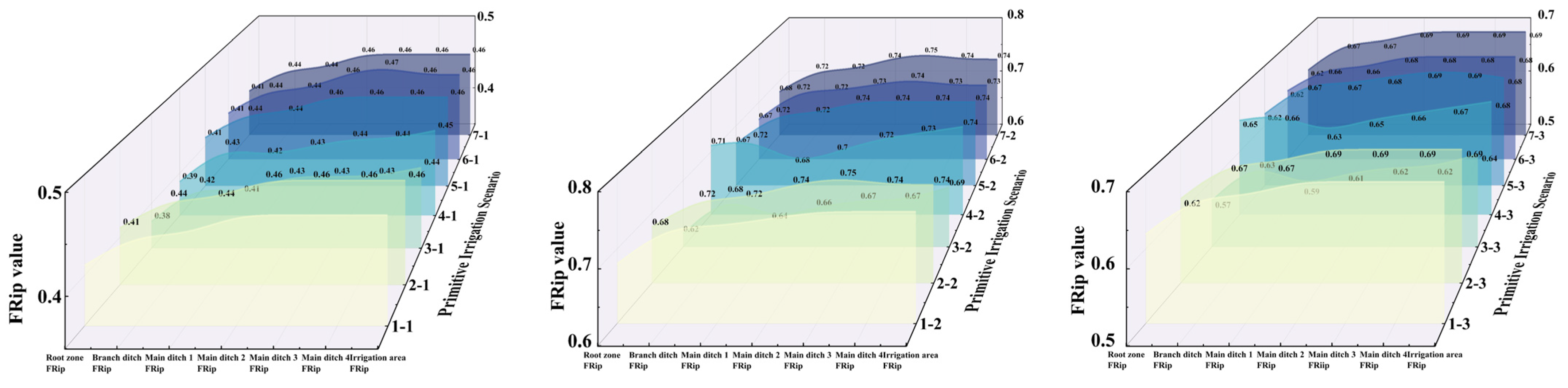
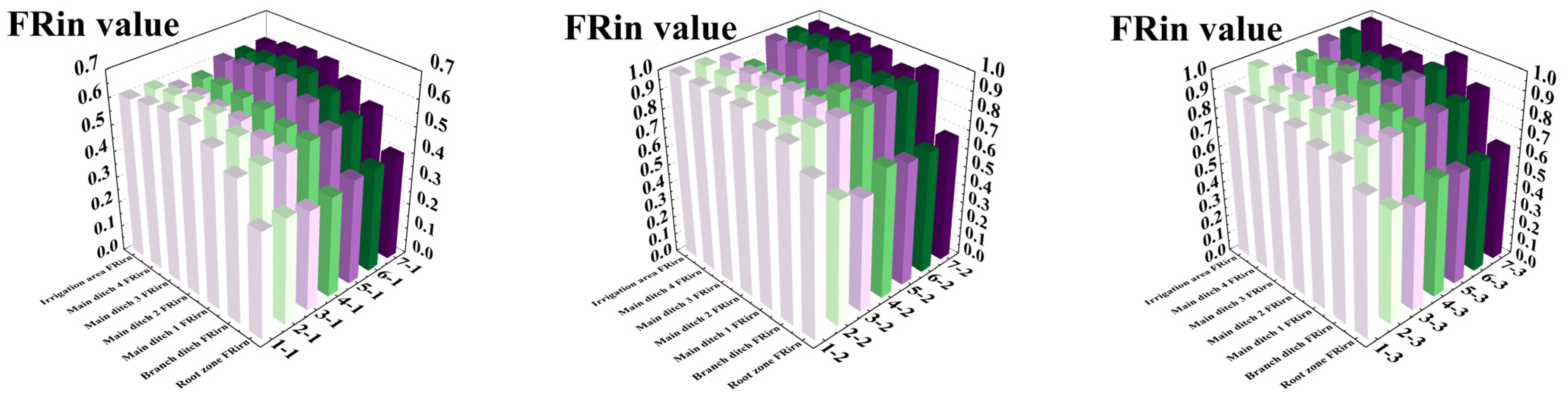
3.3.3. Return Water Reuse Efficiency and Groundwater Effects
3.4. Multidimensional Assessment of Carbon–Water Synergies
3.4.1. Carbon Reduction Efficiency: Drying Frequency Rather than Irrigation Volume as the Governing Variable
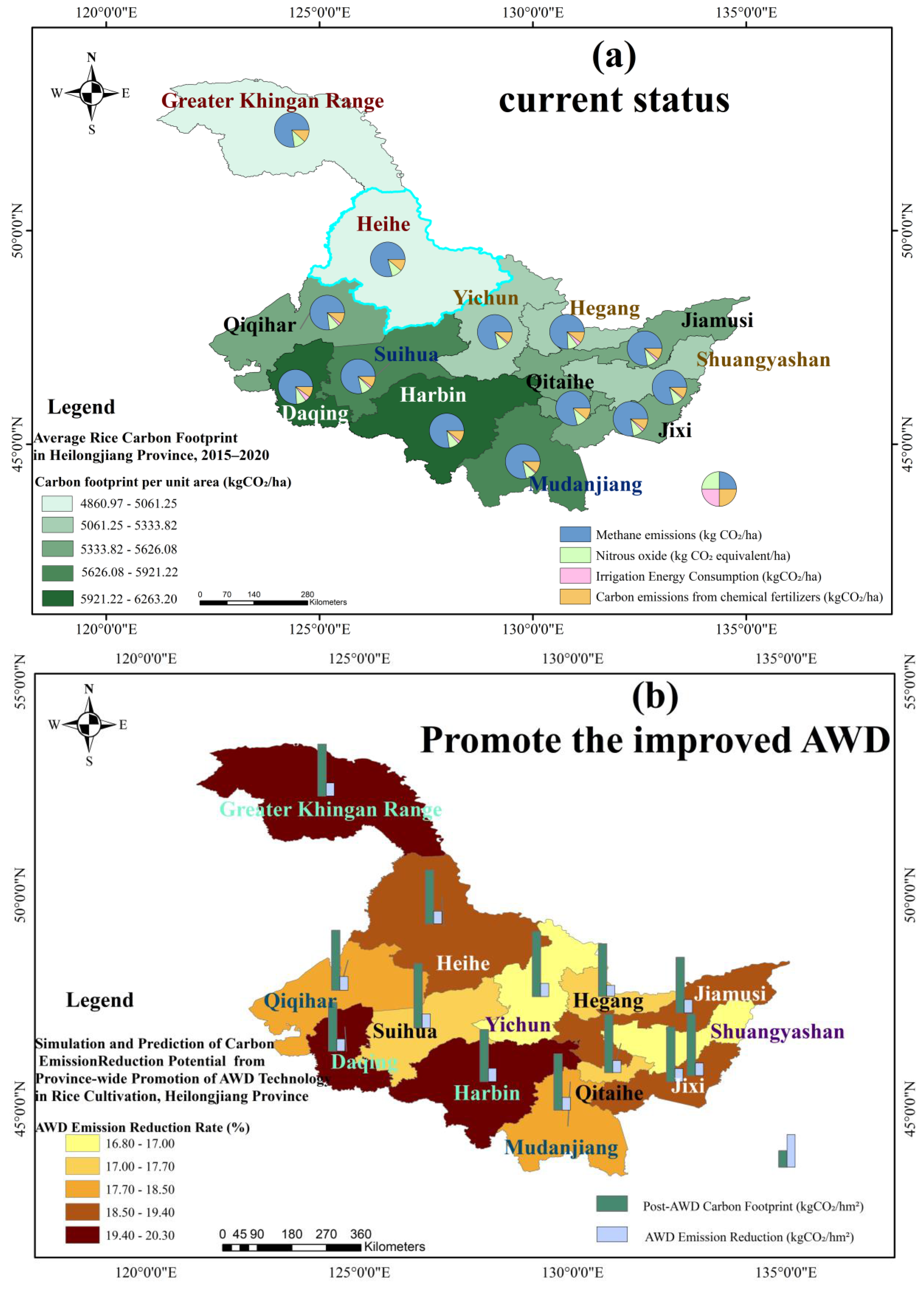
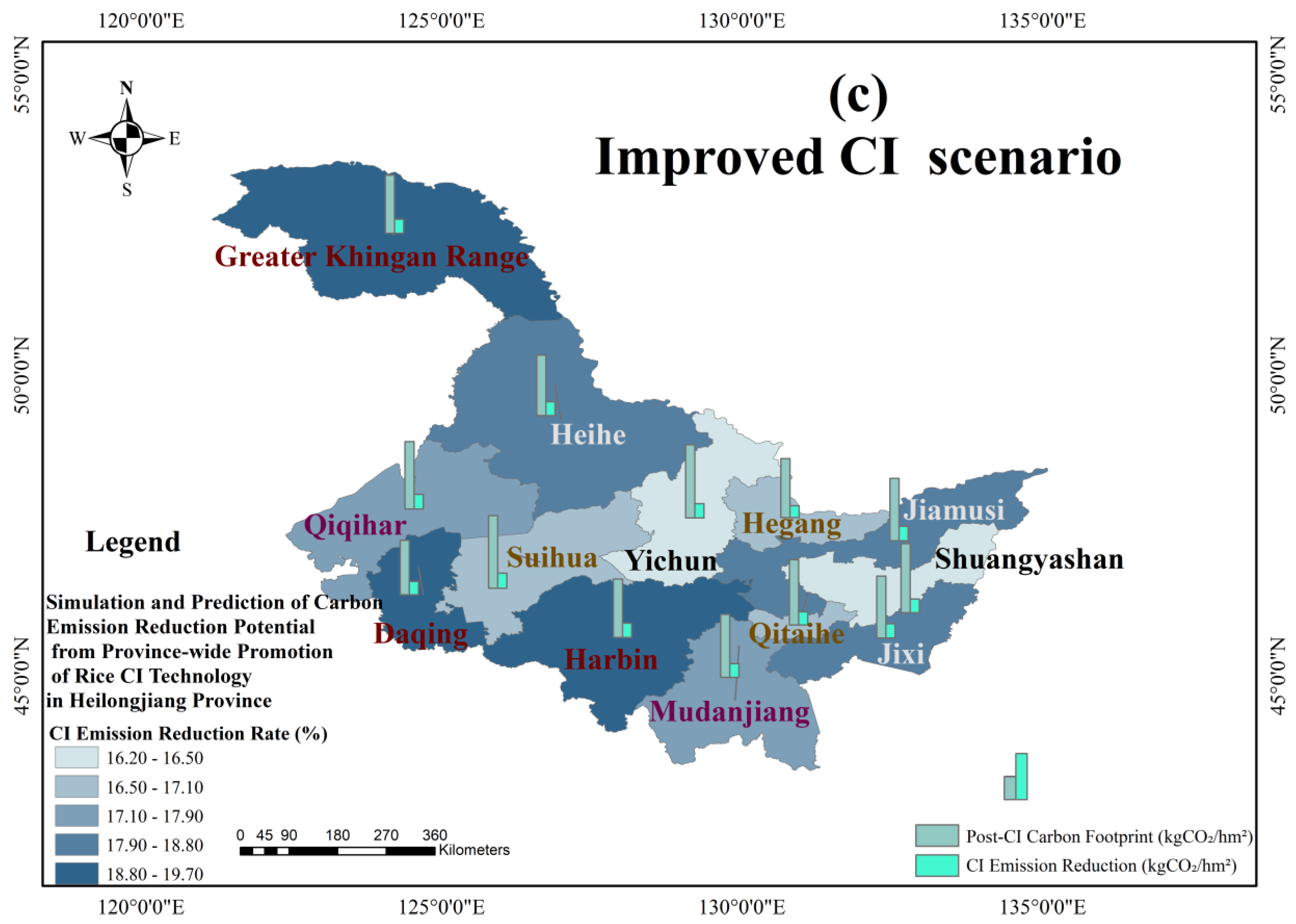
3.4.2. Provincial Carbon Reduction Potential and Spatial Distribution
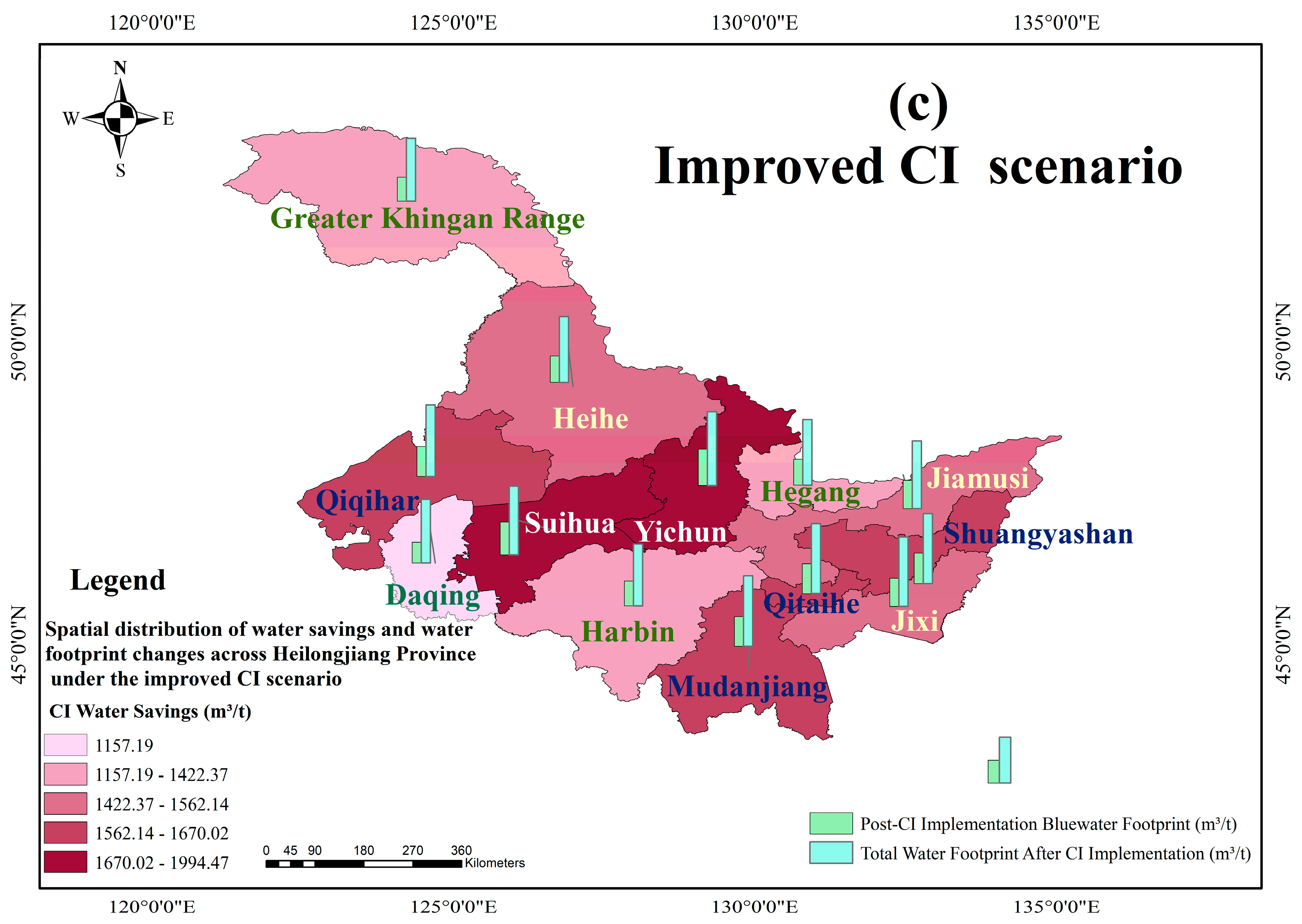
3.4.3. Irrigation District-Scale Blue Water Footprint and the Effects of Irrigation Regimes
3.4.4. Cross-Scale Comparison Between Irrigation Districts and Provinces and LMDI Attribution Analysis
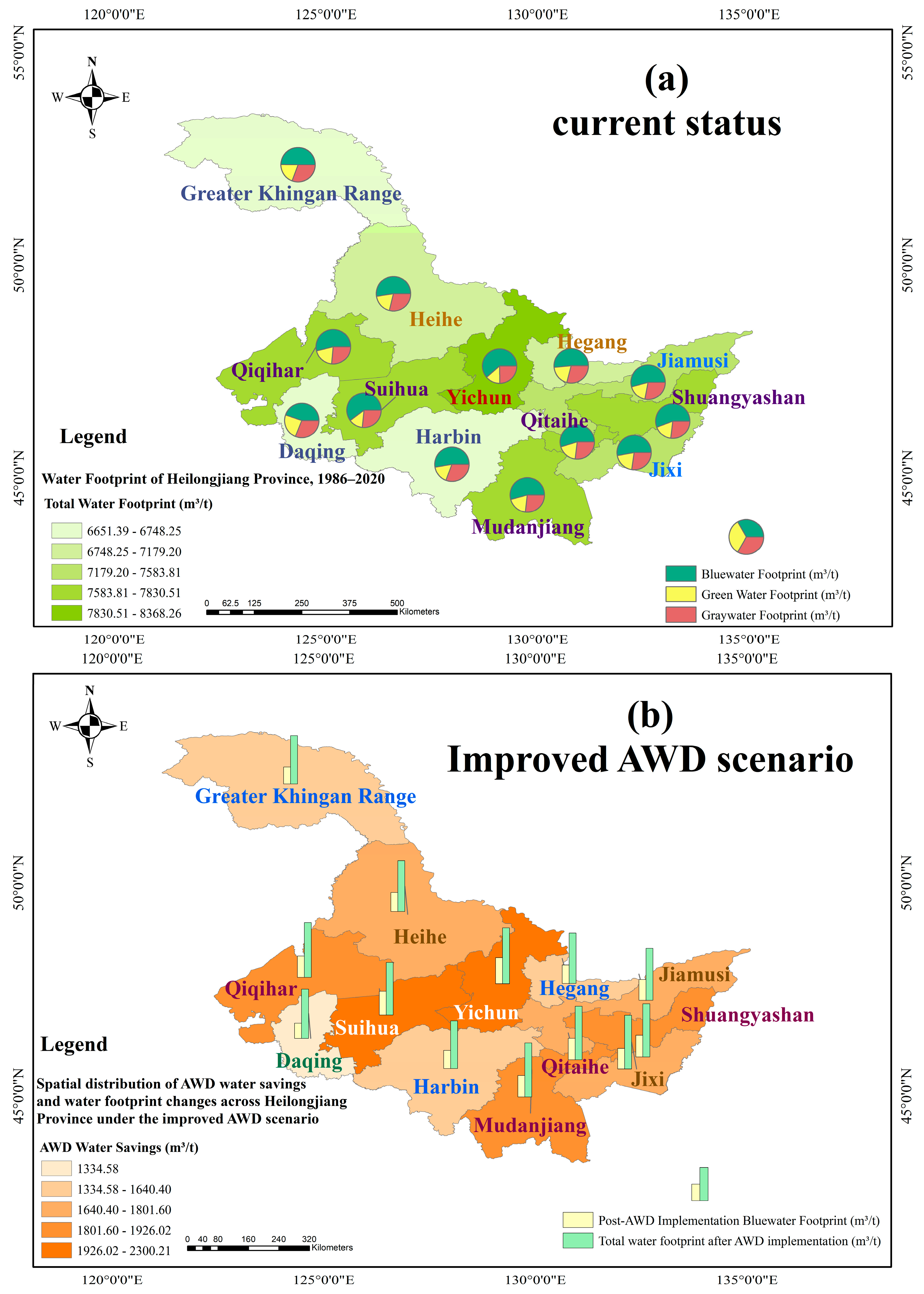
3.4.5. Historical Time-Series Characteristics and Spatial Distribution of the Provincial Total Water Footprint
4. Discussion
4.1. Mechanistic Interpretation and Policy Implications of the Return Flow Compensation Effect
4.2. Carbon–Water Decoupling Mechanisms and Policy Implications
4.3. Water Footprint Component Transformation and Blue Water Efficiency Bottlenecks
4.4. Practical Barriers and Countermeasures for AWD/CI Promotion in Cold Zones
4.5. Research Limitations and Future Directions
5. Conclusions
Supplementary Materials
Author Contributions
Funding
Data Availability Statement
Conflicts of Interest
References
- Qian, H.; Zhu, X.; Huang, S.; Linquist, B.; Kuzyakov, Y.; Wassmann, R.; Minamikawa, K.; Martinez-Eixarch, M.; Yan, X.; Zhou, F. Greenhouse gas emissions and mitigation in rice agriculture. Nat. Rev. Earth Environ. 2023, 4, 716–732. [Google Scholar] [CrossRef]
- Gilardi, G.L.C.; Mayer, A.; Rienzner, M.; Romani, M.; Facchi, A. Effect of Alternate Wetting and Drying (AWD) and other irrigation management strategies on water resources in rice-producing areas of Northern Italy. Water 2023, 15, 2150. [Google Scholar] [CrossRef]
- Suwanmaneepong, S.; Kultawanich, K.; Khurnpoon, L.; Sabaijai, P.E.; Cavite, H.J.; Llones, C.; Lepcha, N.; Kerdsriserm, C. Alternate wetting and drying as water-saving technology: An adoption intention in the perspective of good agricultural practices (GAP) suburban rice farmers in Thailand. Water 2023, 15, 402. [Google Scholar] [CrossRef]
- Li, L.; Huang, Z.; Mu, Y.; Song, S.; Zhang, Y.; Tao, Y.; Nie, L. Alternate wetting and drying maintains rice yield and reduces global warming potential: A global meta-analysis. Field Crop. Res. 2024, 318, 109603. [Google Scholar] [CrossRef]
- Perry, C. Efficient irrigation; inefficient communication; flawed recommendations. Irrig. Drain. J. Int. Comm. Irrig. Drain. 2007, 56, 367–378. [Google Scholar] [CrossRef]
- Grafton, R.Q.; Williams, J.; Perry, C.J.; Molle, F.; Ringler, C.; Steduto, P.; Udall, B.; Wheeler, S.A.; Wang, Y.; Garrick, D. The paradox of irrigation efficiency. Science 2018, 361, 748–750. [Google Scholar] [CrossRef] [PubMed]
- Hoffmann, P.; Villamayor-Tomas, S. Irrigation modernization and the efficiency paradox: A meta-study through the lens of Networks of Action Situations. Sustain. Sci. 2023, 18, 181–199. [Google Scholar] [CrossRef]
- Morrisett, C.N.; Van Kirk, R.W.; Bernier, L.O.; Holt, A.L.; Perel, C.B.; Null, S.E. The irrigation efficiency trap: Rational farm-scale decisions can lead to poor hydrologic outcomes at the basin scale. Front. Environ. Sci. 2023, 11, 1188139. [Google Scholar] [CrossRef]
- Xiong, R.; Zheng, Y.; Han, F.; Tian, Y. Improving the scientific understanding of the paradox of irrigation efficiency: An integrated modeling approach to assessing basin-scale irrigation efficiency. Water Resour. Res. 2021, 57, e2020WR029397. [Google Scholar] [CrossRef]
- Lankford, B.A. Resolving the paradoxes of irrigation efficiency: Irrigated systems accounting analyses depletion-based water conservation for reallocation. Agric. Water Manag. 2023, 287, 108437. [Google Scholar] [CrossRef]
- Jaiswal, R.K.; Ali, S.; Jain, S.; Galkate, R.V.; Krishan, G.; Lohani, A.K.; Kumar, S. Monitoring and modelling approaches for quantitative assessment of irrigation return flows in a command. Environ. Earth Sci. 2024, 83, 161. [Google Scholar] [CrossRef]
- Zhang, Q.; Sun, J.; Dai, C.; Zhang, G.; Wu, Y. Sustainable development of groundwater resources under the large-scale conversion of dry land into rice fields. Agric. Water Manag. 2024, 298, 108851. [Google Scholar] [CrossRef]
- Zhao, C.; Qiu, R.; Zhang, T.; Luo, Y.; Agathokleous, E. Effects of alternate wetting and drying irrigation on methane and nitrous oxide emissions from rice fields: A meta-analysis. Glob. Change Biol. 2024, 30, e17581. [Google Scholar] [CrossRef] [PubMed]
- Bo, Y.; Wang, X.; van Groenigen, K.J.; Linquist, B.A.; Müller, C.; Li, T.; Yang, J.; Jägermeyr, J.; Qin, Y.; Zhou, F. Improved alternate wetting and drying irrigation increases global water productivity. Nat. Food 2024, 5, 1005–1013. [Google Scholar] [CrossRef]
- Wu, M.; Li, Y.; Xiao, J.; Guo, X.; Cao, X. Blue, green, and grey water footprints assessment for paddy irrigation-drainage system. J. Environ. Manag. 2022, 302, 114116. [Google Scholar] [CrossRef] [PubMed]
- Mialyk, O.; Schyns, J.F.; Booij, M.J.; Su, H.; Hogeboom, R.J.; Berger, M. Water footprints and crop water use of 175 individual crops for 1990–2019 simulated with a global crop model. Sci. Data 2024, 11, 206. [Google Scholar] [CrossRef] [PubMed]
- Liang, S.; Liu, W.; Lu, M.; Xia, L.; You, L.; Liu, Y.; Liu, Z.; Zha, Y.; Tang, H.; Yang, P. Climate adaptation through rice northward expansion aggravated groundwater overexploitation in Northeast China. Commun. Earth Environ. 2025, 6, 516. [Google Scholar] [CrossRef]
- Chen, H.; Gao, Z.; Zeng, W.; Liu, J.; Tan, X.; Han, S.; Wang, S.; Zhao, Y.; Yu, C. Scale effects of water saving on irrigation efficiency: Case study of a rice-based groundwater irrigation system on the Sanjiang plain, northeast China. Sustainability 2017, 10, 47. [Google Scholar] [CrossRef]
- Yin, Z.; Liu, Y.; Si, Z.; Wang, L.; Li, T.; Meng, Y. Evolution and Future Challenges of Hydrological Elements in the Qinglongshan Irrigation Area: A Study on the Impact of Climate Change and Land Use Based on the Soil and Water Assessment Tool for the Qinglongshan Irrigation Area Model. Sustainability 2025, 17, 239. [Google Scholar] [CrossRef]
- Liu, J.; Chen, H. Conjunctive use of groundwater and surface water for paddy rice irrigation in Sanjiang plain, North-East China. Irrig. Drain. 2020, 69, 142–152. [Google Scholar] [CrossRef]
- Choi, W.; Ryu, Y.; Kong, J.; Jeong, S.; Lee, K. Evaluation of spatial and temporal variability in Sentinel-2 surface reflectance on a rice paddy landscape. Agric. For. Meteorol. 2025, 363, 110401. [Google Scholar] [CrossRef]
- Nan, Y.; Tian, F.; Li, Z. How does the mixing assumption influence the distributed tracer-aided hydrological model? J. Hydrol. 2025, 654, 132839. [Google Scholar] [CrossRef]
- Wen, Y.; Wan, H.; Shang, S. A monthly distributed water and salt balance model in irrigated and non-irrigated lands of arid irrigation district with shallow groundwater table. J. Hydrol. 2023, 616, 128811. [Google Scholar] [CrossRef]
- Tan, X.; Shao, D.; Liu, H. Simulating soil water regime in lowland paddy fields under different water managements using HYDRUS-1D. Agric. Water Manag. 2014, 132, 69–78. [Google Scholar] [CrossRef]
- Lee, S.; Park, Y.S.; Kim, J.; Lim, K.J. Enhanced hydrological simulations in paddy-dominated watersheds using the hourly SWAT-MODFLOW-PADDY modeling approach. Sustainability 2023, 15, 9106. [Google Scholar] [CrossRef]
- Wang, H.; Ren, R.; Gao, X.; Zhang, H.; Jiang, W.; Lang, X.; Hu, X.; Jiang, X.; Zhao, K.; Zhang, B. Enhancing regional-scale simulation accuracy of paddy runoff by coupling water balance models with remote sensing. J. Hydrol. 2025, 653, 132798. [Google Scholar] [CrossRef]
- Wen, Y.; Wan, H.; Shang, S.; Rahman, K.U. A monthly distributed agro-hydrological model for irrigation district in arid region with shallow groundwater table. J. Hydrol. 2022, 609, 127746. [Google Scholar] [CrossRef]
- Allen, R.G.; Pereira, L.S.; Raes, D.; Smith, M. Crop evapotranspiration-Guidelines for computing crop water requirements-FAO Irrigation and drainage paper 56. Fao 1998, 300, D05109. [Google Scholar]
- Ramos, T.B.; Liu, M.; Paredes, P.; Shi, H.; Feng, Z.; Lei, H.; Pereira, L.S. Salts dynamics in maize irrigation in the Hetao plateau using static water table lysimeters and HYDRUS-1D with focus on the autumn leaching irrigation. Agric. Water Manag. 2023, 283, 108306. [Google Scholar] [CrossRef]
- Zhuang, T.; Ata-UI-Karim, S.T.; Zhao, B.; Liu, X.; Tian, Y.; Zhu, Y.; Cao, W.; Cao, Q. Investigating the impacts of different degrees of deficit irrigation and nitrogen interactions on assimilate translocation, yield, and resource use efficiencies in winter wheat. Agric. Water Manag. 2024, 304, 109089. [Google Scholar] [CrossRef]
- Zhao, T.; Zhu, Y.; Ye, M.; Yang, J.; Jia, B.; Mao, W.; Wu, J. A new approach for estimating spatial-temporal phreatic evapotranspiration at a regional scale using NDVI and water table depth measurements. Agric. Water Manag. 2022, 264, 107500. [Google Scholar] [CrossRef]
- Qin, J.; Duan, W.; Zou, S.; Chen, Y.; Huang, W.; Rosa, L. Global energy use and carbon emissions from irrigated agriculture. Nat. Commun. 2024, 15, 3084. [Google Scholar] [CrossRef]
- Driscoll, A.W.; Conant, R.T.; Marston, L.T.; Choi, E.; Mueller, N.D. Greenhouse gas emissions from US irrigation pumping and implications for climate-smart irrigation policy. Nat. Commun. 2024, 15, 675. [Google Scholar] [CrossRef]
- Demir, M.S.; Muratoglu, A. Water footprint concept, approaches, and applications: A comprehensive review for the agricultural sector. Water Environ. J. 2025, 39, 128–142. [Google Scholar] [CrossRef]
- Koradia, A.; Yadav, B.; Pandey, A.; Chowdary, V.; Chandrasekar, K. Crop water footprint assessment: A review of methodological Approaches, scale Variability, and data constraints. Water Resour. Manag. 2025, 39, 7361–7384. [Google Scholar] [CrossRef]
- Hu, X.; Chen, M.; Liu, D.; Li, D.; Jin, L.; Liu, S.; Cui, Y.; Dong, B.; Khan, S.; Luo, Y. Reference evapotranspiration change in Heilongjiang Province, China from 1951 to 2018: The role of climate change and rice area expansion. Agric. Water Manag. 2021, 253, 106912. [Google Scholar] [CrossRef]
- Gao, X.; Qiu, L.; Huang, X.; Wu, M.; Cao, X. Monitoring grey water footprint and associated environmental controls in agricultural watershed. Environ. Sci. Pollut. Res. 2024, 31, 11334–11348. [Google Scholar] [CrossRef]
- Hoekstra, A.Y.; Chapagain, A.K.; Aldaya, M.M.; Mekonnen, M.M. The Water Footprint Assessment Manual: Setting the Global Standard; Routledge: London, UK, 2011. [Google Scholar]
- Xu, Q.; Li, J.; Liang, H.; Ding, Z.; Shi, X.; Chen, Y.; Dou, Z.; Dai, Q.; Gao, H. Coupling life cycle assessment and global sensitivity analysis to evaluate the uncertainty and key processes associated with carbon footprint of rice production in Eastern China. Front. Plant Sci. 2022, 13, 990105. [Google Scholar] [CrossRef] [PubMed]
- Molina-Castro, G. A Monte Carlo Method for Quantifying Uncertainties in the Official Greenhouse Gas Emission Factors Database of Costa Rica. Front. Environ. Sci. 2022, 10, 896256. [Google Scholar] [CrossRef]
- Fu, T.; Xu, C.; Yang, L.; Hou, S.; Xia, Q. Measurement and driving factors of grey water footprint efficiency in Yangtze River Basin. Sci. Total Environ. 2022, 802, 149587. [Google Scholar] [CrossRef]
- Ang, B.W. LMDI decomposition approach: A guide for implementation. Energy Policy 2015, 86, 233–238. [Google Scholar] [CrossRef]
- Ju, H.; Liu, Y.; Zhang, S. Interprovincial agricultural water footprint in China: Spatial pattern, driving forces and implications for water resource management. Sustain. Prod. Consum. 2023, 43, 264–277. [Google Scholar] [CrossRef]
- Zhang, C.; Zhao, Y.; Shi, C.; Chiu, Y.-h. Can China achieve its water use peaking in 2030? A scenario analysis based on LMDI and Monte Carlo method. J. Clean. Prod. 2021, 278, 123214. [Google Scholar] [CrossRef]
- Cinkus, G.; Mazzilli, N.; Jourde, H.; Wunsch, A.; Liesch, T.; Ravbar, N.; Chen, Z.; Goldscheider, N. When best is the enemy of good–critical evaluation of performance criteria in hydrological models. Hydrol. Earth Syst. Sci. 2023, 27, 2397–2411. [Google Scholar] [CrossRef]
- Pizarro, A.; Jorquera, J. Advancing objective functions in hydrological modelling: Integrating knowable moments for improved simulation accuracy. J. Hydrol. 2024, 634, 131071. [Google Scholar] [CrossRef]
- Moriasi, D.N.; Gitau, M.W.; Pai, N.; Daggupati, P. Hydrologic and water quality models: Performance measures and evaluation criteria. Trans. ASABE 2015, 58, 1763–1785. [Google Scholar] [CrossRef]
- Larabi, S.; Mai, J.; Schnorbus, M.; Tolson, B.A.; Zwiers, F. Towards reducing the high cost of parameter sensitivity analysis in hydrologic modeling: A regional parameter sensitivity analysis approach. Hydrol. Earth Syst. Sci. 2023, 27, 3241–3263. [Google Scholar] [CrossRef]
- Abbas, S.A.; Bailey, R.T.; White, J.T.; Arnold, J.G.; White, M.J.; Čerkasova, N.; Gao, J. A framework for parameter estimation, sensitivity analysis, and uncertainty analysis for holistic hydrologic modeling using SWAT+. Hydrol. Earth Syst. Sci. 2024, 28, 21–48. [Google Scholar] [CrossRef]
- Perry, C.; Steduto, P.; Allen, R.G.; Burt, C.M. Increasing productivity in irrigated agriculture: Agronomic constraints and hydrological realities. Agric. Water Manag. 2009, 96, 1517–1524. [Google Scholar] [CrossRef]
- Peyron, M.; Bertora, C.; Pelissetti, S.; Said-Pullicino, D.; Celi, L.; Miniotti, E.; Romani, M.; Sacco, D. Greenhouse gas emissions as affected by different water management practices in temperate rice paddies. Agric. Ecosyst. Environ. 2016, 232, 17–28. [Google Scholar] [CrossRef]
- Itoh, M.; Sudo, S.; Mori, S.; Saito, H.; Yoshida, T.; Shiratori, Y.; Suga, S.; Yoshikawa, N.; Suzue, Y.; Mizukami, H. Mitigation of methane emissions from paddy fields by prolonging midseason drainage. Agric. Ecosyst. Environ. 2011, 141, 359–372. [Google Scholar] [CrossRef]
- Qian, H.; Zhang, N.; Chen, J.; Chen, C.; Hungate, B.A.; Ruan, J.; Huang, S.; Cheng, K.; Song, Z.; Hou, P. Unexpected parabolic temperature dependency of CH4 emissions from rice paddies. Environ. Sci. Technol. 2022, 56, 4871–4881. [Google Scholar] [CrossRef] [PubMed]
- Hu, Q.; Li, J.; Xie, H.; Huang, Y.; Canadell, J.G.; Yuan, W.; Wang, J.; Zhang, W.; Yu, L.; Li, S. Global methane emissions from rice paddies: CH4MOD model development and application. Iscience 2024, 27, 111237. [Google Scholar] [CrossRef] [PubMed]



| Reproductive Years | Date | Number of Days (d) |
|---|---|---|
| Flooding period | 4.14–6.2 | 49 |
| Recovery period after transplanting | 6.3–7.6 | 34 |
| tillering stage | 7.7–7.23 | 17 |
| Jointing and heading stage | 7.24–8.5 | 13 |
| Flowering and heading stage | 8.6–8.14 | 9 |
| Milk-ripening stage | 8.15–8.26 | 12 |
| Total | 134 |
| Symbol | Full Name | Definition |
|---|---|---|
| FRi | Irrigation water utilization coefficient | Ratio of water effectively used by the crop root zone to total water diverted from the source, at the stated spatial scale |
| FRip | Total water-supply utilization efficiency | Ratio of water consumed by crops to total water input (irrigation + effective precipitation) |
| FRirn | Net water-supply utilization efficiency | Ratio of crop-consumed water to net withdrawal (gross withdrawal minus recycled return flow) |
| FRoi | Return-water reuse efficiency | Ratio of return flow recycled and reused within the district to total return flow generated |
| Parameters | Distribution Type | Parameter Values (Minimum/Mode/Maximum) | Sobol S1 |
|---|---|---|---|
| AWD-CH4 emission reduction factor (%) | Triangular Distribution Tri | 30/46.3/60 | 72% |
| CI-CH4 emission reduction factor (%) | Triangular Distribution Tri | 28/45.3/55 | 72% |
| CH4 emission reference value (kg CO2eq·hm−2) | Normal distribution N (μ, σ2) | μ = 3113.89, σ = 350 | 18% |
| Benchmark for Carbon Emissions from Irrigation Energy Use (kg CO2eq·hm−2) | Normal distribution N (μ, σ2) | μ = 109.93, σ = 15 | <5% |
| AWD Water Savings Rate (%) | Uniform distribution U (a, b) | 43.5–46.0 | <5% |
| CI Water Savings Rate (%) | Uniform distribution U (a, b) | 37.5–39.8 | <5% |
| Verification Process | Time Slot | R2 | NSE | RMSE | MAE | RSR | Accuracy Class |
|---|---|---|---|---|---|---|---|
| Groundwater level (calibrated) | 2025.4–8 | 0.9 | 0.87 | 0.022 m | 0.015 m | 0.36 | Very Good |
| River cross-section (calibration) | 2025.4–8 | 0.97 | 0.93 | 13.81 × 10⁴ m3·d−1 | 10.33 × 10⁴ m3·d−1 | 0.26 | Excellent |
| Groundwater Level (Verification) | 2020.1–2025.4 | 0.89 | 0.85 | 0.032 m | 0.024 m | 0.39 | Very Good |
| Root zone moisture content (year-over-year) | 2024 Growing Season | 0.86 | — | 0.028 m3·m−3 | — | — | Good |
| Irrigation Regime | Net Irrigation (×104 m3) | Water Saving Rate (%) | CH4 Reduction (kg CO2eq·hm−2) | Irrigation Energy Reduction (kg CO2eq·hm−2) | Total Reduction (kg CO2eq·hm−2) | Total Carbon Reduction Rate (%) |
|---|---|---|---|---|---|---|
| CK (n = 7) | 6.976 ± 0.111 | — | — | — | — | — |
| AWD (n = 7) | 3.851 ± 0.087 | 44.84 ± 0.76 | 1441.73 | 49.44 ± 0.84 | 1491.03 ± 0.84 | 32.76 ± 0.02 |
| CI (n = 7) | 4.264 ± 0.082 | 38.88 ± 0.76 | 1409.04 | 42.75 ± 0.82 | 1451.79 ± 0.82 | 31.90 ± 0.02 |
| Irrigation Method | Mean Water Saving Rate (%) | Mean Total Emission Reduction (kgCO2/hm2) | Mean Total Carbon Reduction Rate (%) |
|---|---|---|---|
| AWD (Alternate wetting and drying) | 44.84 | 1491 | 32.76 |
| CI (Controlled irrigation) | 38.88 | 1452 | 31.9 |
| Irrigation Regime | Net Irrigation (×104 m3) | Gross Irrigation (m3·hm−2) | WFblue (m3·t−1) | Reduction vs. CK (%) |
|---|---|---|---|---|
| CK (n = 7) | 6.976 ± 0.111 | 12,588 ± 201 | 1307.13 ± 22.08 | — |
| AWD (n = 7) | 3.851 ± 0.087 | 6943 ± 157 | 721.01 ± 16.30 | 44.84 ± 0.76 |
| CI (n = 7) | 4.264 ± 0.082 | 7693 ± 148 | 798.86 ± 15.37 | 38.88 ± 0.76 |
Disclaimer/Publisher’s Note: The statements, opinions and data contained in all publications are solely those of the individual author(s) and contributor(s) and not of MDPI and/or the editor(s). MDPI and/or the editor(s) disclaim responsibility for any injury to people or property resulting from any ideas, methods, instructions or products referred to in the content. |
© 2026 by the authors. Licensee MDPI, Basel, Switzerland. This article is an open access article distributed under the terms and conditions of the Creative Commons Attribution (CC BY) license.
Share and Cite
Wang, J.; Zheng, E.; Liu, T.; Xing, Z.; Si, Z. Return Flow Compensation Reshapes Water Savings and Carbon–Water Synergy in Cold-Region Paddy Systems. Agriculture 2026, 16, 1002. https://doi.org/10.3390/agriculture16091002
Wang J, Zheng E, Liu T, Xing Z, Si Z. Return Flow Compensation Reshapes Water Savings and Carbon–Water Synergy in Cold-Region Paddy Systems. Agriculture. 2026; 16(9):1002. https://doi.org/10.3390/agriculture16091002
Chicago/Turabian StyleWang, Jing, Ennan Zheng, Tao Liu, Zhe Xing, and Zhenjiang Si. 2026. "Return Flow Compensation Reshapes Water Savings and Carbon–Water Synergy in Cold-Region Paddy Systems" Agriculture 16, no. 9: 1002. https://doi.org/10.3390/agriculture16091002
APA StyleWang, J., Zheng, E., Liu, T., Xing, Z., & Si, Z. (2026). Return Flow Compensation Reshapes Water Savings and Carbon–Water Synergy in Cold-Region Paddy Systems. Agriculture, 16(9), 1002. https://doi.org/10.3390/agriculture16091002