


Abstract
The Brazilian Amazon has been endangered by agro-extractivism, a development model characterized by the expansion of the agricultural frontier to produce raw commodities embedded in power-asymmetrical commodity chains. Recently, the socio-biodiversity economy has emerged as an alternative development model, aimed at reconciling local development with nature conservation. While the environmental and social contrasts between the two models are well documented, the commercial dimension of the socio-biodiversity economy remains underexplored. These two models are typically approached as separate systems, yet their coexistence and interaction within the same actors and across interconnected value chains has not been empirically examined. In this paper, we provide a qualitative analysis of dynamics and upgrading mechanisms in two cocoa value chains in the Brazilian Amazon: raw (bulk) and fine-flavor (fino) cocoa. Through this comparison, we examine how each chain differs in terms of commercial relations and how socio-biodiversity economy and agro-extractivism interact within the commercial sphere. The research took place in three municipalities along the Transamazon highway between March and September 2024. Data were gathered through semi-structured interviews with cocoa producers, buyers, and supporting actors such as NGOs, companies, and public agencies, complemented by participant observation and participation in cocoa-related events. Findings suggest that the bulk and fino cocoa chains present distinct commercial configurations, the former displaying agro-extractivist patterns, the latter consistent with the socio-biodiversity economy. Cocoa production in the region is part of an emergent socio-biodiversity economy that remains commercially embedded in agro-extractivism. Notably, farmers engage in both chains as part of their livelihood strategies, while relying predominantly on the bulk trade. We argue that the fino cocoa chain may represent a pathway for transforming commercial relations in the region, provided that the structural conditions sustaining agro-extractivist patterns in the bulk chain are addressed. More broadly, we show that production-level transitions toward sustainable farming do not automatically translate into the transformation of commercial relations, and call for greater analytical attention to the commercial dimension of socio-biodiversity economies.
1. Introduction
Over the past decades, the Brazilian Amazon has been threatened by the expansion of the agricultural and pastoral frontier, whose land use activities are responsible for 80% of forest clearing in the region [1,2]. Triggered by domestic and international demands for commodities [3], the environmental degradation and agrarian injustices in the region reflect the characteristics of the agro-extractivist development model. Agro-extractivism relies on raw, unspecialized, and undifferentiated commodities, which are highly susceptible to fluctuations in stock market prices [4,5]. Commodities are produced in large-scale farms and integrated into long supply chains dominated by a few transnational corporations, which aggregate value far from production areas [6,7]. In frontier regions such as the Brazilian Amazon, these dynamics have bypassed local economies, displaced family farmers, and eroded their farming knowledge and production systems [7,8]. Consequently, the agro-extractivist economic model constitutes not only an environmental problem but also a profound social one, involving dispossession, unemployment, dependency, and cultural erosion.
To counter the perverse outcomes of agro-extractivism, the socio-biodiversity economy has been proposed as an alternative model for the Amazon, aimed at reconciling environmental conservation, social inclusion of family farmers, and income generation [9,10,11,12]. The socio-biodiversity economy is rooted in sustainable farming systems such as agroecology and agroforestry and focuses on a wide range of forest-based products. Moreover, the socio-biodiversity economy is believed to promote inclusion of local stakeholders in economic activities and value aggregation within rural communities [13,14].
Recent studies indicate that the socio-biodiversity economy may fail to transform commercial relations and, at times, can even reproduce agro-extractivist patterns [15,16]. Not all forest-based products are necessarily part of a socio-biodiversity economy, and some authors claim that this alternative economic model is vulnerable to old asymmetric structures and patterns of labor grabbing [17]. Açaí berry, for example, has been increasingly produced in large-scale monocrop systems and integrated into the global commodity chains [18]. Therefore, closer attention to the commercial dimension of the socio-biodiversity economy is needed.
Cocoa (Theobroma cacao L.) is particularly relevant in this debate as it represents a forest product that has long been commodified and has recently been reclaimed in the Amazon as a socio-biodiversity product. In contrast with the usual commodity-based production systems in other places in the world [19], cocoa in the Brazilian Amazon is primarily produced by family farmers in agroforestry systems (AFS), intercropped with several fruit and timber species [20,21] (Monocrop cocoa cultivation (‘cacao in pleno sol’) is also practiced by a few family farmers in the region.) Since the new millennium, a cocoa transition has been taking shape in connection with policies to counter increased deforestation driven by cattle ranching in the region. This process of ‘cocoaisation’ has been framed by local actors as a shift towards a socio-biodiversity economy. Several studies have documented ecological and social benefits, including carbon sequestration [22], biodiversity conservation through forest restoration [12,23], and increased labor opportunities for family farmers [24]. Cocoa agroforestry production generates approximately 1 job/1–2.5 ha of cropland, compared to 1 job/100 ha in livestock production [25].
Based on this evidence, local and regional actors have promoted the cocoa expansion along the Transamazon highway as a socio-biodiversity economy. The region has been incorporated into one of the several National Integration Routes Programs, proposed by the National Government to foster network building of local production systems connected to strategic production chains. The establishment of the Cocoa Route in 2018 was strongly rooted in principles of the socio-biodiversity economy model, as described on the official websites:
‘Agroforestry systems based on cocoa have been restoring degraded areas and contributing to the regeneration of the Amazon rainforest.’ (Available online: http://portalrotas.avaliacao.org.br/rota/rota-do-cacau/3 (accessed on 26 February 2026)).
‘In particular, agroforestry systems (AFS) stand out due to their characteristics, comparative advantages, and especially because they represent a sustainable alternative for family farmers in the Legal Amazon… The goal is to drive regional development while promoting family farming and agroindustry, with a focus on socioeconomic and environmental sustainability.’ (Available online: https://rotadocacaupa.com.br/sobre-nos/ (accessed on 26 February 2026)).
These developments signal a transition from the dominant agro-extractivist model toward a more inclusive and sustainable pathway. However, the emphasis on forest-based products (cocoa) and production systems (agroforestry) leaves the commercial dimension of the cocoa value chain aside. We argue that, in addition to social and environmental dimensions, changes in commercial structures are equally important to avoid reproduction of agro-extractivist practices in socio-biodiversity economies.
In this paper, we focus on the commercial relations within two cocoa value chains in three municipalities along the Transamazon highway—Altamira, Brasil Novo, and Medicilândia. The bulk cocoa, based on raw beans, is supplied to food and cosmetics companies outside the Amazon region and constitutes the core of the market. The fino cocoa, consisting of fermented beans, is driven by premium chocolate production (bean-to-bar) and remains a niche market. Through a qualitative, comparative value chain analysis, we address two main research questions: (1) How do commercial relations and value chain dynamics differ between bulk and fino cocoa in the Transamazon region? (2) To what extent do value aggregation and upgrading mechanisms in each chain reflect or challenge agro-extractivist commercial patterns? We hypothesize that the emergence of socio-biodiversity economies in agro-extractivist structures may create challenges for the transformation of commercial relations, even when production systems are socially inclusive and ecologically sustainable.
The following section situates the two models within the literature and outlines their commercial underpinnings. Next, we present the study area and the methodology adopted for the comparative value chain analysis, followed by the results organized according to value chain dynamics and value aggregation mechanisms. Finally, we discuss the implications of developing socio-biodiversity economies within an agro-extractivist commercial landscape and conclude with a reflection on the constraints and possibilities of the socio-biodiversity economy transition.
2. The Dual Amazonian Frontiers
The contemporary Amazon is characterized by the coexistence of two multidimensional farming models, each encompassing distinct environmental, social and economic dimensions. On one side, the dominant commodity-based production systems, practiced by large-scale farmers and grounded in principles of agro-extractivism, are recognized as a driving force in the national economy. The expansion of agro-extractivism has been supported by national policies that facilitated appropriation of forested land by companies and large-scale farmers since the 1960s [7,26]. The social and environmental impacts of this expansion are well documented in the academic literature [27,28,29]. On the other side, the socio-biodiversity production systems, practiced by family farmers and traditional populations, comprise a range of agroecological practices in the region. Growing concern about climate change and social justice in the Amazon has led the state and private sector to increasingly support sustainable traditional farming practices and forest-based economies [30]. In 2009, the socio-biodiversity economy was institutionalized through the National Plan for the Promotion of Socio-biodiversity Product Chains (PNPSB) [31], and by 2023, it was incorporated into the high-priority developmental strategies for the Amazon and Pará [32].
The coexistence of these two models has led some authors to characterize the Brazilian Amazon as a ‘double frontier’ [6,7], where a destructive economic model advances alongside an emerging sustainable one within the same territory. The notion captures the tensions and contrasts of these two models within the same territory through different commodities, actors, and productive logics—from land use and forest conservation to labor relations and local knowledge to commercial relations and value distribution along value chains.
The environmental and social dimensions are where the contrasts between the two models have been most extensively documented. The agro-extractivist economy in the Brazilian Amazon has been consolidated by integrating forested land into farming systems [33] and by intensifying the productivity in cleared lands—the former through clearing forested areas for extensive agriculture or cattle ranching [1,2] and the latter through conversion of degraded lands into grain fields such as soybean and corn [4,7,34,35]. The social impacts of this model include displacement of family farmers, erosion of local farming knowledge, and the relegation of rural populations to off-farm labor [7,8]. In contrast, the socio-biodiversity economy is rooted in sustainable farming systems such as agroforestry, implying an interdependent relationship between agricultural activities and forest ecosystems that promotes forest conservation and the restoration of degraded lands [12,23]. From a social perspective, it is primarily sustained by local and indigenous labor and knowledge, contributing to job creation, preservation of community cultural heritage, and reinforcement of local cohesion and resilience [22,24,26], thereby helping to compensate for the limited public-sector support [36,37,38].
The commercial dimension reveals critical differences between the two models, particularly regarding how value is generated, captured, and distributed along value chains. Agro-extractivism operates not only as a production model but also as a system of accumulation in which value is extracted from rural territories and transferred to external actors [5]. The dominance of a few transnational corporations in commodity chains has hindered local development, as private actors maximize competitive advantage rather than redistributing benefits to farmers [39,40]. The trade of raw, undifferentiated products prevents local value aggregation [1,41], locking rural economies into what Veltmeyer and Ezquerro-Cañete [5] describe as ‘reprimarization’—a structural dependency on the export of unprocessed commodities. As a result, farmers become price-takers, dependent on external buyers, with their commercial strategies reduced to increasing market access and the volume of their sales.
The socio-biodiversity economy, by contrast, is expected to foster more equitable commercial relations. Garrett et al. [42] emphasize the value chain perspective by defining the socio-biodiversity economy as ‘…systems of production, management, processing, distribution, recreation and consumption based on the sustainable use and restoration of healthy forests and rivers’ (p. 1816). Within this model, family farmers play a crucial role in structuring commercial relations with trade stakeholders, supported by farmer-led cooperatives and associations [31]. A growing literature reveals that local actors can strengthen their market position by enhancing farmers’ bargaining power and fostering the creation of new markets [43,44]. In addition, value aggregation mechanisms can be facilitated by the involvement of NGOs and state institutions in local knowledge exchange [9,14,36,45], and the private companies in niche markets can foster processing skill development within rural communities [9,37].
Although the socio-biodiversity economy is often portrayed as a catalyst for an alternative development model in the Amazon, recent studies have challenged this optimistic view [15,30]. In the environmental and social dimensions, the distinction between the two models is sharp and well documented. In the commercial dimension, however, the boundary becomes far less clear. Evidence of social and environmental performance in specific cases may lead to generalized assumptions grounded in romanticized views of forest-based societies [46], while the global expansion of some socio-biodiversity markets risks reproducing agro-extractivist commercial patterns. Açaí, cocoa, and Brazil nuts, for example, have been integrated into global commodity chains, resulting in reproduction of agro-extractivist practices [31,38] such as raw commodity specialization and the gradual relegation of family farmers to the role of commodity suppliers [47,48,49].
This evidence suggests that, in the commercial sphere, agro-extractivism and the socio-biodiversity economy may not necessarily develop along parallel trajectories—different actors, commodities and productive logics—as implied by the notion of ‘double frontier’. We propose to conceptualize their relationship as a hybridization process, in which (1) production systems grounded in the socio-biodiversity economy may remain commercially embedded in agro-extractivist structures and (2) the same actors may participate in both models as part of their livelihood strategies. Through this lens, we examine whether the commercial dimension of the socio-biodiversity economy can effectively transform existing structures or whether agro-extractivist patterns persist beneath a socio-biodiversity narrative.
3. Materials and Methods
3.1. Study Area
This research examines the commercial relations within two cocoa value chains in three municipalities in the Transamazon region in the State of Pará—Altamira, Brasil Novo, and Medicilândia (See Figure 1). This ‘double frontier’ is characterized by the expansion of sustainable productive arrangements such as agroforestry systems under a dominant agro-extractivist livestock production landscape. According to Costa et al. [22], the region accounts for 22% of the total socio-biodiversity GDP in Pará, mainly from cocoa (93%), followed by açaí (5%) and Brazil nuts (2%). Socio-biodiversity products are produced by family farmers—a group that experienced a 127% increase in numbers between 1995 and 2017 in the studied area [32,50]. The region is also characterized by a considerable presence of small-scale, livestock-specialized farmers, who increased by 47% over the same period [22,50,51,52].
Figure 1.
The Transamazon region.
The Transamazon highway is part of the region’s colonization programs (National Integration Plans—NIP) led by the Brazilian federal government to integrate the Amazon into the domestic economy [53]. Its construction in the early 1970s attracted waves of migration of small- and medium-scale farmers from across Brazil [54]. In the same period, the National Executive Commission for the Cocoa Farming Plan (CEPLAC) and the Guidelines for the Expansion of National Cocoa Growing (PROCACAU) were established to develop the region as a cocoa-production hub, given the abundance of fertile terra roxa soils [21,54,55].
Although cocoa was a consolidated perennial crop among migrant settlers in the 1980s, cattle ranching became the dominant land use among farmers, with the support of national policies. Since the 2000s, the implementation of anti-deforestation policies, combined with cocoa cultivation incentives and the development of farmer’s cooperatives, has led to a new wave of cocoa expansion in the region. According to Costa et al. [22], over 98% of the cocoa market in the Transamazon region is dominated by bulk cocoa, which undergoes no fermentation and is traded by four transnational agri-food traders, namely Cargill, OFI, Barry Callebaut, and Gencau [56]. The remaining 2% of the Transamazonian cocoa market is taken by fino cocoa, which undergoes a specialized fermentation rate of at least 50%, necessary to produce high-quality chocolate.
Bulk and fino cocoa are both produced in agroforestry systems and the beans are of the same variety; however, they follow very distinct pre-processing practices. In the case of bulk cocoa, the beans are quickly sun-dried and sold in raw form within a few hours of harvest. In contrast, fino cocoa requires the beans to be placed in banana leaves or fermentation baskets for at least one week, which requires continuous attention. This process triggers the development of complex aromas and flavors, enhancing cocoa quality and enabling its processing into high-quality chocolate.
This study was focused on farmers of two cooperatives in the region. Family farmers live in landholdings between 5 and 100 hectares and engage in the production of both bulk and fino cocoa. The cooperative CEPOTX was created in 2005 and specializes in organic cocoa beans, supplying fino cocoa for the cosmetics and chocolate industries. CEPOTX operates through five local branches across the Transamazon region, with approximately 150 members in total. This study focused on the Brasil Novo branch (COPOXIN), which comprises approximately 20 members. COOPATRANS (Transamazonian Agro-Industrial Cooperative) was created in 2010 primarily to supply non-organic fino cocoa to the premium chocolate sector. The cooperative has approximately 40 registered members, of whom 24 are actively engaged in fino cocoa production and commercialization. The cooperative owns a chocolate industry where several chocolate-based products are produced under their own brand (Cacauway) and sold in local and regional markets.
3.2. Methodology
This study takes an ethnographic approach to value chains by focusing primarily on the commercial relations in the cocoa market in the Brazilian Amazon. In this study, commercial relations are understood as the set of socially embedded economic interactions through which agricultural products are exchanged. These encompass transactions related to production, trade, and pricing, as well as social relations, negotiation practices, power dynamics, and institutional arrangements that shape interactions between farmers, buyers, and other market participants. Through this qualitative lens, we sought to make visible the socioeconomic interactions within these value chains—a dimension often overlooked in previous studies on socio-biodiversity value chains [45].
The value chain is used as an analytical concept to define the commercial relations and the actors’ position throughout the chain [57]. The analysis addresses two aspects of the commercial relations: (1) value chain dynamics and (2) value aggregation and upgrading mechanisms. Value chain dynamics refers to the interactions between the key stakeholders involved in the different stages of the cocoa trade [58], including the state agencies and NGOs [59]. This level of analysis explores the social and commercial relations among stakeholders along the value chain stages, encompassing the product form, chain branches, the product destination and processing stages [60,61,62,63,64]. In addition, we draw on Gereffi et al.’s [58] global value chain governance framework to situate the commercial relations and social dynamics observed in each chain within broader governance structures. By examining how transactions are coordinated, how information flows between actors, and how power is distributed along each chain, we identify the governance type that characterizes the two cocoa value chains.
Value aggregation and upgrading mechanisms examines opportunities for farmers and their cooperatives to add value to their products [65]. The analysis focuses on the socioeconomic dimension of value aggregation, which is directly related to the commercial dimension. Drawing on Trienekens [66], we address the materiality of value aggregation through four key upgrading opportunities, namely: (a) economic upgrading, defined as an increase in the returns obtained from the sale of the raw product compared to the standard market (commodity) prices [65]; (b) product upgrading and (c) process upgrading, which involve the improvement in the quality of the product and the enhancement of production processes, respectively [67]; and (d) functional upgrading, which describes the shift of economic actors (farmers and cooperatives) from low-value aggregation tasks, such as basic commodity production, toward knowledge-intensive and high-value aggregation functions, thereby increasing their ability to capture value [68]. We classify functional upgrading as the set of downstream functions whereby farmers and cooperatives acquire new roles in processing, marketing, branding, entrepreneurship and service diversification.
Empirical data were gathered between March and September 2024 through semi-structured interviews, field observations, and participation in six cocoa-related local events (for a detailed account of the methodological procedures, including participant recruitment, coding strategy, and researcher positionality, see Supplementary Materials Sections S2, S5 and S6). Ethnographic engagement allowed interview data to be triangulated with observations of how commercial relations unfold in everyday practice across the cocoa value chains. A total of 84 participants were interviewed, which included most of the cooperative members and several other relevant actors: 41 farmers, 11 cooperative board members, and 32 other value chain actors, such as NGOs, public institutions, bean-to-bar companies, and agri-food traders.
The interviews addressed commercial relations, value aggregation mechanisms, and market access challenges across both cocoa value chains. Interviews lasted approximately one hour and a half, were audio-recorded with informed consent, manually transcribed, and complemented with ethnographic field notes. All interviews were conducted in Portuguese by the first author, who was based in the region for six months, enabling sustained engagement with participants and the development of trust-based relationships that facilitated access to sensitive commercial information. Transcripts were translated into English during the writing phase.
Data were processed using ATLAS.ti (ver 25.0.1). An abductive coding strategy was adopted, combining theory-driven and data-driven approaches. In the first round, transcriptions and field notes were coded using predefined categories derived from the analytical framework, namely value chain dynamics and value aggregation mechanisms. In the second round, these initial codes were refined into empirically grounded sub-themes. Coding was carried out by the first author, with the second author reviewing the coding structure for consistency and jointly refining the final codebook through peer debriefing. Interview data were cross-checked with field notes, observations, and published data from the literature. Direct quotations from individual participants were included in the manuscript but anonymized in order to prevent the risk of deductive disclosure.
4. Results
Farmers in the Transamazon region produce both bulk and fino cocoa in agroforestry systems. Bulk cocoa beans are sold in raw form and require minimal processing: once harvested, the pods are opened, and the beans are left to rest for a few hours prior to their sale. Farmers can reliably find buyers regardless of the amount of produce. Cocoa beans are sold primarily to intermediaries and, in some cases, directly to regional and global traders. In contrast, fino cocoa requires specialized fermentation skills and depends on access to niche markets and specific buyers. Fermentation levels are assessed by the cooperatives through a standardized protocol established by CEPLAC, based on the visual inspection of the internal veining and size of individual beans after fermentation (cut test). The minimum fermentation threshold for fino cocoa is 50%, below which beans are redirected to the bulk market. Farmers sell fino cocoa beans to their respective cooperatives and receive price premiums that vary according to the degree of fermentation and the buyer’s specific requirements. Differences in the processing strategy between bulk and fino cocoa have social and commercial implications related to processing skills, value aggregation and market access. In this section, we highlight the key aspects observed in the two value chains.
4.1. Value Chain Socioeconomic Dynamics
Value chain dynamics refer to the socioeconomic interactions between the actors involved in the trade of cocoa beans. The analysis of the bulk and fino value chains in the Transamazon region reveals very distinct patterns: the former aligns more closely with an agro-extractivist economic model, while the latter reflects more transformative relations.
The bulk cocoa value chain consists of a single branch, starting with producers and passing through intermediaries and agri-food traders to finally reach manufacturers. Intermediaries play a crucial role in the commodity market, purchasing and collecting daily yields from farmers’ properties.
Farmers depend on intermediaries to reduce transportation costs and bring their produce to urban areas. Direct transactions with traders are also limited by the need for registration in their databases, which requires the Rural Environmental Registry (Cadastro Ambiental Rural—CAR, in Portuguese). This document certifies land tenure status and monitors compliance with land use and forest legislation. However, only twelve of the farmers interviewed hold the CAR due to bureaucratic complexities, logistical challenges, and land tenure issues. As one farmer recounted, “I have been waiting for years [for the CAR], and I have lost count of how much I have spent. They [the municipality] keep telling me they will let me know” (Farmer 2, COPOXIN). At the same time, only ten of the farmers interviewed own sufficiently powerful and well-equipped vehicles to travel independently to urban centers, due to the high cost of such vehicles.
The low daily volume of cocoa produced would not justify self-transportation to urban markets even for motorized producers due to the transportation costs. As a result, most farmers interviewed rely on intermediaries, who provide immediate payment to farmers and apply a surcharge of R$1–3 (0.2–0.5 USD) on stock exchange cocoa prices. As one farmer explained, “with the little cocoa I harvest each day, it is not worth making the trip to town. He [the intermediary] comes here to my property, pays me right away, and that is it” (Farmer 5, COPOXIN). Subsequently, bulk cocoa beans are delivered to traders’ warehouses in the nearby towns of Altamira or Medicilândia at stock exchange rates (See Figure 2).
Figure 2.
Visual Representation of the Network Structures and Transaction Dynamics in the Bulk Cocoa Value Chain. A marked reduction in the number of actors in the intermediate stages of the value chain reveals a classic commodity-chain bottleneck [58], with only a few traders mediating between producers, intermediaries, and manufacturers. Cocoa is traded primarily as raw beans, while pre-processing into powder, liquor, and butter is carried out far from the production sites, in Southern Brazil by the same traders.
The bulk cocoa value chain is centered around four transnational agri-food traders. Traders transport cocoa beans to Southern Brazil, where their main warehouses are based. They process beans into derivatives (e.g., powder, butter, and liquor) to ultimately sell these derived products to industrial chocolate and cosmetics manufacturers. The final products—chocolate and industrial cosmetics—are produced in São Paulo to serve the Brazilian domestic market.
The bulk cocoa value chain, therefore, follows a typical agro-extractivist commercial structure, characterized by highly asymmetric power relations between producers and buyers, and a significant discrepancy between the value captured by producers and by actors further up the chain.
In contrast, the fino cocoa value chain has a more diverse and diffuse structure, which aligns more with disruptive commercial relations between suppliers and buyers. One remarkable difference from bulk cocoa is the centrality of the cooperatives in the value chain. Fino cocoa beans are sold directly to one of the cooperatives, which serve as sorting and quality control centers, as well as processors and manufacturers. Cooperatives replace the role of intermediaries by collecting the harvest in their affiliated farmers’ properties in a more symmetrical fashion. As a cooperative director described, “we take our truck and go property by property when the cocoa is ready. We bring it back, analyze it right away, and the farmers already know what bonus they are getting—it all depends on the quality” (Cooperative Director, COOPATRANS). They purchase a selected amount of fino cocoa from farmers and establish premium pricing according to internally defined quality standards. In addition, cooperatives process cocoa locally into either chocolate or cocoa butter. In the first case, one cooperative (COOPATRANS) distributes the chocolate and its derivatives to eight Cacauway stores across Brazil which are associated with their chocolate brand. In the second case, the cocoa butter is sold to a national cosmetics company, which manufactures it into beauty and skincare products. The fino cocoa value chain consists of several different branches—from local to national—depending on the fermentation quality and target market (See Figure 3). All bean-to-bar chocolate companies and the cosmetics company receive fermented cocoa beans in São Paulo or Belém. Only cocoa beans that reach the fermentation level of 70% are directed to bean-to-bar companies or to the local Cacauway chocolate factory, owned by COOPATRANS. Cocoa beans with a fermentation level between 50–70% are sold on the cosmetics market or sent to the cocoa butter factory operated by CEPOTX.
Figure 3.
Visual Representation of the Network Structures and Transaction Dynamics in the Fino Cocoa Value Chain. No bottlenecks typical of global value chains [58] are observed: cocoa reaches farmer-led cooperatives, which serve as the chain’s sorting hub and distribute products to multiple firms. These cooperatives not only carry out the fermentation of beans but also process cocoa beans locally into butter and chocolate, which are then sold to retailers across Brazil.
A key feature of the fino cocoa value chain is the presence of formal contracts between cooperatives and bean-to-bar and cosmetics companies. One-to-one agreements include cocoa prices set annually based on the cocoa fermentation features, such as quality, and the market value of the final products (e.g., chocolate or cosmetic goods).
In sum, the centrality of cooperatives and the diversity of commercial channels increase producers’ bargaining power and provide more diverse venues for negotiating their produce, as well as opportunities for value aggregation, elaborated in Section 4.2.
4.2. Value Aggregation Mechanisms
Value aggregation and upgrading are key aspects of the socio-biodiversity economy, offering the potential to enhance both the social standing of producers and the economic value of their products. In the case of cocoa beans—which represent an emblematic global commodity—the transition observed in the Transamazon region to agroforestry-based production systems and the close involvement of producers’ cooperatives are both expected to strengthen value aggregation mechanisms. In this section, we present a comparative analysis of the four value aggregation mechanisms—economic, process, product and functional—for both bulk and fino cocoa regarding their potential to transform commercial relations.
Our data show that the bulk cocoa trade does not lead to economic upgrading for farmers, since their harvest is tied to stock exchange pricing. As one farmer reported, “I call the three intermediaries, and they tell me what they are paying today. With the traders it is the same thing. There is nothing we can do, we just have to accept it” (Farmer 8, COOPATRANS). A couple of exceptions apply to this pattern. First, farmers who can sell directly to traders can get better prices by bypassing intermediaries. However, this is limited to twelve interviewed farmers who hold the required legal documentation of their properties (CAR) as explained in Section 4.1.
Another exception is related to product upgrading through certification programs to turn bulk cocoa into a differentiated product. Certification programs impose rigorous socio-environmental and labor compliance requirements that are difficult to implement for family farmers—most notably, the prohibition of child labor, the prevention of deforestation, and the implementation of sustainable and ethically responsible production practices. Certified cocoa provides a price premium of R$0.5/kg (0.08 USD) above the standard bulk cocoa stock exchange price. However, less than 20% of the farmers interviewed can participate in traders’ certification programs due to the documentation required to register in traders’ databases, including the CAR, as previously explained in Section 4.1.
The bulk cocoa value chain also possesses very limited mechanisms to aggregate value through process upgrading and no functional upgrading opportunities. The two main state agencies supporting this value chain have been institutionally weakened over the last decades. CEPLAC (National Executive Commission for the Cocoa Farming Plan) and EMATER (State Agency for Technical Assistance and Rural Extension) suffered major budget and staff cuts, leading to limited technical assistance to family farmers. Only 8% of the farmers interviewed have access to technical assistance services. As one farmer recounted, “CEPLAC used to visit us regularly, but now we almost never see anyone. If something goes wrong with the cocoa, we must figure it out on our own” (Farmer 12, COOPATRANS). Some traders have filled this gap by providing bimonthly technical visits in order to enhance production practices and improve cocoa quality. Yet this support has been limited to twelve interviewed farmers who are properly documented and registered in the traders’ databases, as explained in Section 4.1.
Finally, functional upgrading mechanisms within the bulk cocoa value chain are nearly nonexistent, mainly due to lack of upgrading infrastructure, such as independent local processing plants for farmers and their cooperatives. Despite its relatively low quality, bulk cocoa has the potential to be locally processed into other products such as powder, liquor, and butter, and sold at a higher price.
In contrast, the fino cocoa trade generates higher economic returns per production unit through several upgrading mechanisms. The economic upgrading is closely related to the product and process upgrading. Fino cocoa farmers receive a price premium depending on the purchasing companies and the degree of cocoa fermentation. This price increases according to the fermentation levels and the type of final manufactured product. Bean-to-bar companies offer farmers a premium of up to 150% compared to bulk cocoa stock exchange prices, while cosmetics companies’ premiums range from 30% to 50%. Cooperatives apply the same quality-based pricing criteria for that portion of fino cocoa processed locally into chocolate and cocoa butter.
The additional labor required for fino cocoa production is relatively limited—consisting mainly of daily turning of the beans during the fermentation period of one week and subsequent drying. The price premium thus largely translates into net economic gains for farmers, as the additional processing costs are minimal. The main trade-off lies instead in the delayed payment cycle: while bulk cocoa generates immediate cash upon sale to intermediaries, fino cocoa requires extra time for fermentation and drying before it can be delivered to the cooperative, followed by an additional waiting period before payment is received. This liquidity gap may represent a significant constraint for farmers whose household economies depend on regular cash flow. One farmer captured this tension: “With fino I earn much more, but the money does not come until the company pays the cooperative and the cooperative pays me. That can take a while. So when I need cash right away, I sell bulk” (Farmer 4, COPOXIN).
Public and private actors play a key role in fino cocoa’s process and product upgrading and contribute to functional upgrading by enabling farmers to aggregate value independently. Governmental and non-governmental institutions (e.g., CEPLAC, SENAR, SEBRAE) provide training programs and seminars aimed exclusively at supporting the fino cocoa sector (see Figure 4). These initiatives assist farmers in improving cocoa quality, accessing niche markets, promoting rural entrepreneurship, processing cocoa into chocolate and related products on-site, and diversifying income through cocoa-based ecotourism and artisanal activities. All these programs are freely available to all farmers, regardless of their land ownership status and cooperative or association affiliation.
Figure 4.
Value Aggregation Networks in Bulk and Fino Cocoa Value Chains. Value aggregation mechanisms differ markedly between the two chains. In the bulk chain, two state institutions play a limited role in product and process upgrading, and traders support only farmers registered in their databases. In contrast, the fino chain involves a wider range of actors—including multiple state institutions, NGOs, and private companies—resulting in more frequent and effective upgrading opportunities.
More recently, the Cocoa Research Support Foundation (FUNCACAU), created in 2008 by the State Secretariat of Agriculture, has opened new opportunities for functional upgrading. It organizes festivals to promote and celebrate the quality of Amazonian fino cocoa and local chocolate brands and offers public grants for new small factories for chocolate and cocoa butter production. FUNCACAU has invested several million reais in value aggregation projects to develop fino cocoa production in the Transamazon region and promote local industrialization, leading to the creation of Cacauway. Today, it continues to fund initiatives for the production, processing, marketing, and promotion of fino cocoa, including support for producers to attend national and international festivals.
Private companies also promote upgrading mechanisms. Bean-to-bar companies promote upgrading in economic terms by sourcing high-value fermented cocoa beans. A cosmetics company actively contributes to product, process, and functional upgrading through the provision of technical assistance that enables farmers to improve cocoa quality and optimize fermentation techniques. This company also promotes functional upgrading through the donation of equipment to generate subproducts such as fermentation baskets, fruit pulp extraction tools, and machinery to extract cocoa butter.
In sum, value aggregation in the fino cocoa value chain not only provides material gains through fair pricing but also a range of product, process, and functional upgrading, including processing skills (e.g., fermentation and butter extraction), product development (e.g., chocolate), and local market channels. The public training programs, grants for small-scale processing facilities, participation in festivals, and support for entrepreneurship and cocoa-based tourism also constitute clear evidence of functional upgrading within the fino cocoa value chain. The upgrading evident in the fino cocoa value chain contrasts with the bulk value chain, which remains rooted in the conventional agro-extractivist structure that reflects the historical commercial relations in the region.
5. Discussion
Cocoa is one of the world’s most traded agricultural commodities, with about 90% exchanged in raw form and more than two-thirds controlled by three major agri-food corporations [69]. The commodification of cocoa has fueled deforestation in key producing countries such as Côte d’Ivoire and Ghana, where slash-and-burn practices convert forests into monocultures [19]. In the Transamazon, however, the AFS cocoa expansion over the past two decades has gradually replaced unsustainable production systems such as timber and cattle ranching with cocoa under a shade-tree canopy. This process has driven not only vegetation regeneration but also job generation for the rural population [12,23]. Based on perceived social and environmental changes, the region has been branded as a case of sustainable transition by farmers, policymakers, NGOs, and private companies. Grounded in the narrative of the Cocoa Route, these actors seize a new opportunity to promote a local economy for the region. However, a closer look at the commercial relations of the cocoa market reveals a more complex picture, where two different value chains reveal the coexistence of two development models articulated by the family farmers.
Our findings contribute to the socio-biodiversity economy literature in two ways. First, they confirm that the commercial dimension remains a critical blind spot: production-level transitions toward agroforestry do not automatically translate into more equitable commercial relations [15,46]. Second, they challenge, in the commercial sphere, the assumed separation between agro-extractivism and the socio-biodiversity economy implied by the notion of the ‘double frontier’ [6,7], revealing instead a process of hybridization in which the two models coexist within the same farmers’ strategies. In the following sections, we elaborate on these findings.
Table 1 summarizes the contrasting elements of each development model materialized by bulk and fino cocoa value chains—the former more aligned with commercial relations shaped by market-driven solutions, whereas the latter aligns with principles of the socio-biodiversity economy.
Table 1.
Value chain dynamics and value aggregation mechanisms in the bulk and fino cocoa value chains.
Although the two chains both combine elements of the socio-biodiversity economy, their commercial relations are fundamentally different. Drawing on Gereffi et al.’s [58] value chain governance typology, the commercial structures of the two chains can be situated within distinct governance patterns. The bulk cocoa chain displays features of market governance: transactions center on a raw, undifferentiated product, pricing is set by the stock exchange, and suppliers are readily interchangeable. At the same time, elements of captive governance emerge, as a small number of transnational traders concentrate control over the chain’s intermediate stages. Access to direct sales, certification programs, and technical assistance is conditional on database registration, which requires the CAR—a document held by only a small fraction of interviewed farmers. This creates an asymmetric dependency in which traders define the trade terms and farmers have virtually no capacity to negotiate prices or influence commercial conditions. The fino cocoa chain, by contrast, exhibits elements of relational governance. Product quality depends on specialized skills—particularly fermentation techniques—and requires sustained coordination between farmers, cooperatives and value chain stakeholders. Prices are negotiated annually through formal contracts based on quality parameters, reflecting mutual dependence rather than unilateral control. The diversity of commercial branches further reduces dependency on any single buyer, while cooperatives serve as platforms for information exchange and collective bargaining. These governance features are consistent with the more equitable commercial relations associated with the socio-biodiversity economy, while the market-captive structure of the bulk chain reflects the agro-extractivist patterns.
Farmers engage with both cocoa value chains; however, bulk cocoa remains the most economically relevant for most farmers, as it accounts for most of the trade in the region. At the same time, the fino cocoa trade reveals both the potential and limitations for more inclusive and fair commercial relations. This double engagement is at the core of the hybridization between agro-extractivism and the socio-biodiversity economy discussed in Section 2. While the two models are clearly differentiated on the environmental and social dimensions, their commercial boundaries are far less defined. This hybridization manifests in two ways: cocoa produced in sustainable agroforestry systems is predominantly sold through agro-extractivist commercial structures in the bulk chain; and the same farmers who depend on an agro-extractivist value chain (bulk) simultaneously engage in a socio-biodiversity value chain (fino). In the following sections, we unpack the implications of this commercial hybridization. First, we elaborate on the tensions emerging from addressing the bulk cocoa market as a socio-biodiversity economy, and second, we address the role of the fino cocoa value chain as a pathway for transforming commercial relations in the region.
5.1. Incomplete Socio-Biodiversity Economy Transition
Place-based production systems have traditionally been pervasive in the Amazon and represent an important backbone of local economies [45] and a source of transformative processes based on local knowledge and partnerships with external actors [14,36,46]. These local systems, however, operate in commercial spaces dominated by agro-extractivist economic models. The coexistence of both economic models creates commercial tensions as these local economies are vulnerable to appropriation by commodity-based economies. Cocoa is a typical case of a forest product that has been commodified since the colonial period. The cocoa value chains that originated in agroecological principles tend to undergo a gradual shift toward raw commodity production as they become integrated into global markets [17,49,70].
These dynamics may not be unique to cocoa. A limited but growing body of literature suggests that other socio-biodiversity products in the Amazon may be following potentially similar trajectories [26,39]. The global expansion of the açaí market, for instance, appears to have shifted trade from short local chains toward agro-industrial configurations, potentially centralizing control and aggregating value outside the region [13]. Similar concerns have been raised for Brazil nut chains, where global demand growth may be strengthening traders’ influence over pricing, information flows, and value aggregation [18,31]. Yet the specific commercial mechanisms behind these shifts remain poorly understood, as few studies have examined value chain dynamics in sufficient detail to document how commercial relations are structured on the ground.
The multidimensionality of the socio-biodiversity economy can generate some tradeoffs. Categories such as product type (e.g., cocoa, açaí, Brazil nuts), production systems (e.g., agroforestry), or producer type (e.g., family farmer) are relevant for defining this economy; however, a decontextualized focus on a few aspects of the system can result, at best, in romanticized interpretations or, at worst, in the strengthening of agro-extractivist commercial structures. This is particularly relevant in contexts where production systems are transitioning toward agroforestry systems, which are closely associated with the socio-biodiversity economy. In the Transamazon, this risk is exemplified by the gap between the Cocoa Route narrative and the actual reach of state support. While the region has been branded as a sustainable transition through the National Integration Routes Program, only 8% of the farmers interviewed have access to CEPLAC and EMATER services. Severe budget and staff reductions over the past decades have weakened these institutions’ capacity to support the very transition they helped promote. As a result, the Cocoa Route risks functioning primarily as a discursive framework while structural conditions on the ground remain largely unaddressed.
In sum, the socio-biodiversity economy observed in the region has not yet been able to break through persistent agro-extractivist socioeconomic structures that continue to shape commercial relations in the region [28,71]. As a result, farmers act as suppliers of low-value raw commodities while global traders capture most of the economic benefits generated by the expansion of the AFS-based cocoa production. Our analysis indicates that the transition to a socio-biodiversity economy has not yet been completed in the Transamazon. Despite its shortcomings, the bulk cocoa value chain has created an opportunity for the fino cocoa value chain to emerge. In the following section, we elaborate on the role of this emergent value chain for the transformation of commercial relations in the region.
5.2. Between Bulk and Fino Cocoa
The socio-biodiversity economy aims, among other goals, to enhance local value aggregation, strengthen farmers’ bargaining position in commercial transactions, and foster upgrading opportunities through collaboration among NGOs, private actors, and cooperatives [22,36,45]. In contrast to the bulk cocoa value chain, the fino cocoa value chain has shown remarkable performance in upgrading and value aggregation (Table 1), in which the farmers’ cooperatives play a key role.
Through reorganization of their production, both cooperatives have been able to increase their economies of scale and negotiate better prices. Just as agri-food traders provide a permanent channel for marketing any quantity of bulk cocoa, the two cooperatives offer their members a comparable outlet for fino cocoa, acting not only as gateways to the market but also as platforms for renegotiating market parameters. Moreover, while bulk cocoa farmers must accept the standards and prices set by traders, fino cocoa producers can negotiate prices directly with cosmetics and chocolate companies through their cooperatives. These mechanisms encourage farmers to increase fino cocoa production.
Partnerships with state and non-state actors have also opened opportunities to enhance process, product, and functional upgrading. Farmers have been able to increase their technical expertise to improve cocoa production and processing. In turn, these advancements have allowed farmers not only to supply high-value processed beans but also to engage in the verticalization of production by processing cocoa into chocolate. In particular, Cacauway, the chocolate brand of the farmers’ cooperative COOPATRANS, has been able to reach regional markets.
The fino cocoa value chain may represent what Feola [72] calls a ‘crack’ in the system, the opening up of an autonomous space in locked-in structures that allows for experimentation and small changes. Although this remains a niche market, it has a much deeper influence on reimagining commercial relations in the region. The way farmers interact with the other actors in the fino cocoa value chain has a lot to say about their ability to reshape the local economy. It was not until the 2010s that farmer-led initiatives started to emerge, engaging in the fino cocoa production and local value aggregation [73,74]. The efforts of farmers, cooperatives, state institutions and NGOs to carve out a space within a commodified sector indicate a developmental trajectory that integrates key economic dimensions of the socio-biodiversity economy. However, the dominance of the bulk cocoa market and its importance for the farmers’ household income raise questions about the potential of the fino value chain to trigger disruptive changes in commercial relations. Farmers are reshaping commercial relations while still relying on bulk cocoa sales. As a niche market accounting for only 2% of the regional trade [22], it remains uncertain whether fino cocoa could become the region’s primary outlet, since this would require a level of expansion capable of absorbing the full production of all farmers. A niche market of this scale cannot, on its own, transform the dominant commercial structures.
A more decisive role from state institutions and other actors is needed to address the structural conditions that sustain agro-extractivist commercial patterns in the bulk chain. Facilitating access to land documentation (CAR) would be a critical first step, as it would enable farmers to sell directly to traders, participate in certification programs, and access technical assistance—three channels currently blocked by bureaucratic and logistical obstacles. Equally important is investment in rural transport infrastructure and collective logistics, which would reduce farmers’ dependence on intermediaries who currently dominate the first stage of the bulk value chain. Strengthening state agencies such as CEPLAC and EMATER would be essential to improve farmers’ production practices regardless of the value chain. This would also shift technical assistance from the private sphere of agri-food traders back into the public institutional framework. Alongside these measures, public investment in local processing facilities would enable cooperatives and farmers to transform not only fino but also bulk cocoa into derivatives such as powder, butter, and liquor, thereby fostering local value aggregation within the Transamazon region. The development of public procurement channels for locally produced cocoa could further valorize agroforestry-based production and strengthen the position of local farmers in the commercial landscape. Without such intervention, the emergence of the fino cocoa market risks becoming another legitimating element reinforcing the socio-biodiversity economy narrative in the region, while the largest share of cocoa will remain traded through agro-extractivist practices.
6. Conclusions
This study provides an analysis of cocoa value chains in the Transamazon region and their relations to agro-extractivist and socio-biodiversity economy models. By focusing on commercial relations, we show how the analysis of value chain dynamics and upgrading mechanisms can reveal deep-seated power asymmetries that remain invisible when the focus is limited to production systems and environmental outcomes. This study contributes to the socio-biodiversity economy debate by moving beyond social and ecological emphases to critically examine the commercial dimension on the ground.
Our analysis indicates that the transition to a socio-biodiversity economy in the Transamazon remains incomplete due to persistent structural constraints. The bulk cocoa chain, which accounts for 98% of the regional trade, operates under market-captive governance, where stock exchange pricing, dependence on intermediaries, and barriers to land documentation confine farmers to the role of commodity suppliers with virtually no bargaining power. At the same time, the fino cocoa chain suggests that more equitable commercial relations are possible through relational governance, cooperative intermediation, quality-based pricing, and multi-stakeholder support for value aggregation. Yet this chain represents only 2% of the regional trade, and its capacity to transform the dominant commercial structures remains constrained by its scale.
The coexistence of these two chains points to a process of commercial hybridization, which manifests in two ways: cocoa produced in sustainable agroforestry systems is predominantly sold through agro-extractivist commercial structures in the bulk chain, and the same farmers simultaneously engage in both models as part of their livelihood strategies. Rather than advancing along parallel trajectories, the two models intersect in the commercial sphere. It is in this intersection that both the transformative potential and the structural limitations of the socio-biodiversity economy become visible. The transition to more inclusive commercial relations will therefore depend not only on fostering emergent value chains such as fino cocoa, but also on addressing the structural conditions that sustain agro-extractivist patterns in the bulk chain.
As a qualitative study focused on a specific regional context and two cooperatives, the findings reflect the particular institutional, market, and organizational conditions observed in the field. The structural constraints and hybridization patterns identified here may manifest differently in other regions or value chains. Future research could extend this analysis to other socio-biodiversity products in the Amazon to assess whether similar patterns of commercial hybridization emerge and explore the conditions under which relational governance structures can scale beyond niche markets.
Supplementary Materials
The following supporting information can be downloaded at https://www.mdpi.com/article/10.3390/agriculture16060643/s1. Section S1: Overview of Research Participants; Table S1: Overview of research participants; Section S2: Sampling Strategy and Participant Recruitment; Section S3: Interview Guide; Section S4: Analytical Procedure; Section S5: Coding Tree; Table S2: Coding tree: analytical dimensions, initial codes, sub-themes, and descriptions; Section S6: Researcher Positionality.
Author Contributions
Conceptualization, V.C.; methodology, V.C.; formal analysis, V.C.; investigation, V.C.; writing—original draft preparation, V.C.; writing—review and editing, V.C. and F.d.C.; supervision, F.d.C.; project administration, F.d.C.; funding acquisition, F.d.C. All authors have read and agreed to the published version of the manuscript.
Funding
This research was funded by the São Paulo Research Foundation (FAPESP, grant number 2021/108052 and 2023/04705-0) and the Dutch Research Council (NWO, grant number 2022/21.406).
Institutional Review Board Statement
This study was conducted in accordance with the Declaration of Helsinki, and the protocol was approved by the Ethics Committee of the Faculty of Humanities, University of Amsterdam (Ethics Protocol: FGW-1631_2023) on 20 October 2023. All participants were fully informed about the nature of the study and gave their written informed consent to participate.
Data Availability Statement
Due to the sensitive and identifiable nature of the interview data, and in order to protect participant privacy, the data supporting this study are not publicly available. Anonymized excerpts are available from the corresponding author upon reasonable request, subject to ethical approval.
Acknowledgments
The views and ideas presented in this paper are the sole responsibility of the authors, yet they would not have been developed without the support of several individuals. In particular, we wish to thank Miquéias Calvi (UFPA) and Lucas Lunelli for their valuable contribution to the fieldwork data collection and for creating the conditions that enabled the first author to meaningfully develop the conceptualization of this study. We also extend our gratitude to the LINKAGES project team and to all the farmers, practitioners, and participants involved in this research for their generous collaboration and thoughtful reflections. During the preparation of this manuscript, the authors used ChatGPT 5 for the purposes of improving readability and grammar of the text. The authors have reviewed and edited the output and take full responsibility for the content of this publication.
Conflicts of Interest
The authors declare no conflicts of interest. The funders had no role in the design of the study; in the collection, analyses, or interpretation of data; in the writing of the manuscript; or in the decision to publish the results.
References
- Carrero, G.C.; Fearnside, P.M.; do Valle, D.R.; de Souza Alves, C. Deforestation Trajectories on a Development Frontier in the Brazilian Amazon: 35 Years of Settlement Colonization, Policy and Economic Shifts, and Land Accumulation. Environ. Manag. 2020, 66, 966–984. [Google Scholar] [CrossRef] [Scilit]
- Pacheco, P.; Poccard-Chapuis, R. The Complex Evolution of Cattle Ranching Development Amid Market Integration and Policy Shifts in the Brazilian Amazon. Ann. Assoc. Am. Geogr. 2012, 102, 1366–1390. [Google Scholar] [CrossRef] [Scilit]
- Haddad, E.A.; Araújo, I.F.; Feltran-Barbieri, R.; Perobelli, F.S.; Rocha, A.; Sass, K.S.; Nobre, C.A. Economic Drivers of Deforestation in the Brazilian Legal Amazon. Nat. Sustain. 2024, 7, 1141–1148. [Google Scholar] [CrossRef] [Scilit]
- Svampa, M. Commodities Consensus: Neoextractivism and Enclosure of the Commons in Latin America. South Atl. Q. 2015, 114, 65–82. [Google Scholar] [CrossRef] [Scilit]
- Veltmeyer, H.; Ezquerro-Cañete, A. Agro-Extractivism. J. Peasant Stud. 2023, 50, 1673–1686. [Google Scholar] [CrossRef] [Scilit]
- Domingues, G.; Sauer, S. Amazonian Socio-Environmental Frontier: Struggles, Resistance and Contradictions in Confronting the Agrarian Extractive Frontier. Third World Q. 2023, 44, 2208–2226. [Google Scholar] [CrossRef] [Scilit]
- Domingues, G.; Sauer, S. The Great Frontier: Amazon and the Formation of the Global Agrarian Extractive System. Rev. Katálysis 2021, 24, 447–458. [Google Scholar] [CrossRef] [Scilit]
- Verano, T.d.C.; Medina, G.d.S.; de Oliveira Júnior, J.R. Can Family Farmers Thrive in Commodity Markets? Quantitative Evidence on the Heterogeneity in Long Agribusiness Supply Chains. Logistics 2022, 6, 17. [Google Scholar] [CrossRef] [Scilit]
- Cassol, M.; Sellitto, M.A. Socio-Biodiversity Supply Chain: Sustainable Practices of a Brazilian Cosmetic Company. Environ. Qual. Manag. 2020, 30, 25–31. [Google Scholar] [CrossRef] [Scilit]
- da Silva, R.R.V.; Gomes, L.J.; Albuquerque, U.P. What Are the Socioeconomic Implications of the Value Chain of Biodiversity Products? A Case Study in Northeastern Brazil. Environ. Monit. Assess. 2017, 189, 64. [Google Scholar] [CrossRef] [Scilit]
- Jensen, A. Valuation of Non-Timber Forest Products Value Chains. For. Policy Econ. 2009, 11, 34–41. [Google Scholar] [CrossRef] [Scilit]
- Schroth, G.; Garcia, E.; Griscom, B.W.; Teixeira, W.G.; Barros, L.P. Commodity Production as Restoration Driver in the Brazilian Amazon? Pasture Re-Agro-Forestation with Cocoa (Theobroma Cacao) in Southern Pará. Sustain. Sci. 2016, 11, 277–293. [Google Scholar] [CrossRef] [Scilit] [PubMed]
- Diniz, J.A.S.; Cerdan, C. Produtos da sociobiodiversidade e cadeias curtas: Aproximação socioespacial para uma valorização cultural e econômica. In Cadeias Curtas e Redes Agroalimentares Alternativas: Negócios e Mercados da Agricultura Familiar; Gazolla, M., Schneider, S., Eds.; UFRGS: Porto Alegre, Brazil, 2017; pp. 259–280. [Google Scholar]
- Londres, M.; Salk, C.; Andersson, K.P.; Tengö, M.; Brondizio, E.S.; Russo Lopes, G.; Siani, S.M.O.; Molina-Garzón, A.; Sonetti-González, T.; Montoya, D.R.; et al. Place-Based Solutions for Global Social-Ecological Dilemmas: An Analysis of Locally Grounded, Diversified, and Cross-Scalar Initiatives in the Amazon. Glob. Environ. Change 2023, 82, 102718. [Google Scholar] [CrossRef] [Scilit]
- Clement, C.R.; dos Santos Pereira, H.; Vieira, I.C.G.; Homma, A.K.O. Challenges for a Brazilian Amazonian Bioeconomy Based on Forest Foods. Trees For. People 2024, 16, 100583. [Google Scholar] [CrossRef] [Scilit]
- dos Santos, G.G.; Neris, J.P.F.; de Freitas, T.P.M.; dos Santos, M.G.; Narusawa, Í.D.S.; da Silva, B.K.S.; de Sousa, J.S.; Silva, V.d.S. Identificação e análise espacial das aglomerações produtivas do cacau na mesorregião do sudoeste paraense. In Agronegócio: Técnicas, Inovação e Gestão; Mendonça, M.d.S., Ed.; Editora Científica Digital: Belo Horizonte, Brazil, 2021; pp. 271–286. ISBN 9786589826408. [Google Scholar]
- Bergamo, D.; Zerbini, O.; Pinho, P.; Moutinho, P. The Amazon Bioeconomy: Beyond the Use of Forest Products. Ecol. Econ. 2022, 199, 107448. [Google Scholar] [CrossRef] [Scilit]
- Vieira, I.C.G.; Fernandes, D.A.; Araújo, R.; Freitas, M.A.B.; Brandão, F. Scaling up Sociobioeconomy in the Amazon: Opportunities and Risks. One Earth 2024, 7, 1908–1912. [Google Scholar] [CrossRef] [Scilit]
- Bermúdez, S.; Voora, V.; Larrea, C.; Luna, E. Global Market Report: Cocoa Prices and Sustainability; International Institute for Sustainable Development: Winnipeg, MB, Canada, 2022; Available online: https://www.iisd.org/publications/report/2022-global-market-report-cocoa (accessed on 6 March 2026).
- Calvi, M.F.; Kato, O.R. Agricultores Familiares e Adoção de SAF em Medicilândia, Pará; Embrapa Amazônia Oriental: Belém, Brazil, 2011; Available online: http://www.alice.cnptia.embrapa.br/handle/doc/910663 (accessed on 6 March 2026).
- Souza, B.G.R. Cacau orgânico, conservação ambiental, segurança alimentar e nutricional: O caso da Transamazônica, Amazônia, Brasil. In Agricultura e Agroindústria no Contexto do Desenvolvimento Rural Sustentável; Lima, F.d.S., de Melo Neto, B.A., de Melo, G.J.A., Cavalcante, D.K., dos Santos, T.R., Souza, B.G.R., Eds.; Editora Científica Digital: Belo Horizonte, Brazil, 2021; pp. 95–109. ISBN 9786589826972. [Google Scholar]
- Costa, F.d.A.; Ciasca, B.S.; Castro, E.C.C.; Barreiros, R.M.M.; Folhes, R.T.; Bergamini, L.L.; Solyno Sobrinho, S.A.; Cruz, A.; Costa, J.A.; Simões, J.; et al. Socio-Biodiversity Bioeconomy in the State of Pará; Natura; The Nature Conservancy (TNC Brasil): Brasília, Brazil, 2021; Available online: https://www.nature.org/content/dam/tnc/nature/en/documents/SociobiodiversityBioeconomy_Para_Eng_FullReport.pdf (accessed on 6 March 2026).
- Gama-Rodrigues, A.C.; Müller, M.W.; Gama-Rodrigues, E.F.; Mendes, F.A.T. Cacao-Based Agroforestry Systems in the Atlantic Forest and Amazon Biomes: An Ecoregional Analysis of Land Use. Agric. Syst. 2021, 194, 103270. [Google Scholar] [CrossRef] [Scilit]
- Bro, A.S.; Moran, E.; Calvi, M.F. Market Participation in the Age of Big Dams: The Belo Monte Hydroelectric Dam and Its Impact on Rural Agrarian Households. Sustainability 2018, 10, 1592. [Google Scholar] [CrossRef] [Scilit]
- Calvi, M.F.; Moran, E.F.; da Silva, R.F.B.; Batistella, M. The Construction of the Belo Monte Dam in the Brazilian Amazon and Its Consequences on Regional Rural Labor. Land Use Policy 2020, 90, 104327. [Google Scholar] [CrossRef] [Scilit]
- Pegler, L. Peasant Inclusion in Global Value Chains: Economic Upgrading but Social Downgrading in Labour Processes? J. Peasant Stud. 2015, 42, 929–956. [Google Scholar] [CrossRef] [Scilit]
- Bunker, S.G. Underdeveloping the Amazon: Extraction, Unequal Exchange, and the Failure of the Modern State; University of Chicago Press: Chicago, IL, USA, 1985; ISBN 978-0-226-08032-1. [Google Scholar]
- Schmink, M.; Wood, C.H. Contested Frontiers in Amazonia; Columbia University Press: New York, NY, USA, 1992; ISBN 978-0-231-51388-3. [Google Scholar]
- Fearnside, P.M. Deforestation in Brazilian Amazonia: History, Rates, and Consequences. Conserv. Biol. 2005, 19, 680–688. [Google Scholar] [CrossRef] [Scilit]
- Rosenfeld, T.; Pokorny, B.; Marcovitch, J.; Poschen, P. BIOECONOMY Based on Non-Timber Forest Products for Development and Forest Conservation—Untapped Potential or False Hope? A Systematic Review for the BRAZILIAN Amazon. For. Policy Econ. 2024, 163, 103228. [Google Scholar] [CrossRef] [Scilit]
- Diniz, J.A.S.; van Els, R.H. Socio-Biodiversity Products: Opportunities to Promoting Local Development in Brazil and Suriname. In Sustainability at a Crossroads: Challenges and Development Opportunities of the Guiana Shield; Menke, J., Ed.; The Institute for Graduate Studies and Research, The Anton de Kom University of Suriname: Paramaribo, Suriname, 2021; pp. 90–121. ISBN 978-99914-2-024-0. [Google Scholar]
- Government of Pará. Plano Estadual de Bioeconomia Do Pará. Belém, Pará, 2023. Available online: https://www.semas.pa.gov.br/wp-content/uploads/2023/01/Plano-Estadual-V9_pg-simple-2-1.pdf (accessed on 6 March 2026).
- Thaler, G.M.; Viana, C.; Toni, F. From Frontier Governance to Governance Frontier: The Political Geography of Brazil’s Amazon Transition. World Dev. 2019, 114, 59–72. [Google Scholar] [CrossRef] [Scilit]
- Brannstrom, C. South America’s Neoliberal Agricultural Frontiers: Places of Environmental Sacrifice or Conservation Opportunity. AMBIO J. Hum. Environ. 2009, 38, 141–149. [Google Scholar] [CrossRef] [Scilit] [PubMed]
- VanWey, L.K.; Spera, S.; de Sa, R.; Mahr, D.; Mustard, J.F. Socioeconomic Development and Agricultural Intensification in Mato Grosso. Philos. Trans. R. Soc. B Biol. Sci. 2013, 368, 20120168. [Google Scholar] [CrossRef] [Scilit] [PubMed]
- Futemma, C.; De Castro, F.; Brondizio, E.S. Farmers and Social Innovations in Rural Development: Collaborative Arrangements in Eastern Brazilian Amazon. Land Use Policy 2020, 99, 104999. [Google Scholar] [CrossRef] [Scilit]
- Cunha, M. Social Capital and Access to (Natural) Resources and Markets along the Brazil Nut (Bertholletia Excelsa) Value Chain in the Lower Amazon Basin, Pará. Bol. Mus. Para. Emílio Goeldi-Ciênc. Nat. 2014, 9, 337–352. [Google Scholar] [CrossRef] [Scilit]
- Brondizio, E.S. The Global Açaí: A Chronicle of Possibilities and Predicaments of an Amazonian Superfood. In Critical Approaches to Superfoods; McDonell, E., Wilk, R., Eds.; Bloomsbury Publishing Plc: London, UK, 2020; pp. 149–168. ISBN 978-1-350-12390-8. [Google Scholar]
- Brondizio, E. Agriculture Intensification, Economic Identity, and Shared Invisibility in Amazonian Peasantry: Caboclos and Colonists in Comparative Perspective. In Amazon Peasant Societies in a Changing Environment: Political Ecology, Invisibility and Modernity in the Rainforest; Adams, C., Murrieta, R., Neves, W., Harris, M., Eds.; Springer: Dordrecht, The Netherlands, 2009; pp. 181–214. ISBN 978-1-4020-9283-1. [Google Scholar]
- Ioris, A.A.R. Peasant Farming in the Amazon Frontiers. In Frontier Making in the Amazon: Economic, Political and Socioecological Conversion; Ioris, A.A.R., Ed.; Key Challenges in Geography; Springer International Publishing: Cham, Switzerland, 2020; pp. 73–100. ISBN 978-3-030-38524-8. [Google Scholar]
- Barros, R.; Almeida, L. Triple-A Approach and Global Value Chain Governance (GVC): The Case of Brazilian Beef. J. Rural. Stud. 2024, 107, 103241. [Google Scholar] [CrossRef] [Scilit]
- Garrett, R.; Ferreira, J.; Abramovay, R.; Brandão, J.; Brondizio, E.; Euler, A.; Pinedo, D.; Porro, R.; Cabrera Rocha, E.; Sampaio, O.; et al. Transformative Changes Are Needed to Support Socio-Bioeconomies for People and Ecosystems in the Amazon. Nat. Ecol. Evol. 2024, 8, 1815–1825. [Google Scholar] [CrossRef] [Scilit] [PubMed]
- Ollinaho, O.I. What Is ‘Business as Usual’? Towards a Theory of Cumulative Sociomaterial Change. Globalizations 2022, 20, 611–627. [Google Scholar] [CrossRef] [Scilit]
- Ollinaho, O.I.; Kröger, M. Separating the Two Faces of “Bioeconomy”: Plantation Economy and Sociobiodiverse Economy in Brazil. For. Policy Econ. 2023, 149, 102932. [Google Scholar] [CrossRef] [Scilit]
- Brondizio, E.S.; Andersson, K.; de Castro, F.; Futemma, C.; Salk, C.; Tengö, M.; Londres, M.; Tourne, D.C.; Gonzalez, T.S.; Molina-Garzón, A.; et al. Making Place-Based Sustainability Initiatives Visible in the Brazilian Amazon. Curr. Opin. Environ. Sustain. 2021, 49, 66–78. [Google Scholar] [CrossRef] [Scilit]
- de Castro, F.; Brondizio, E.S.; Futemma, C.R.T.; de Theije, M.; Lopes, G.R.; de Moraes, A.R. Beyond “Green Markets” and Local Romanticisms for a Locally Grounded Bioeconomy in Amazonia. One Earth 2024, 7, 1904–1907. [Google Scholar] [CrossRef] [Scilit]
- Abramovay, R.; Ferreira, J.; de Assis Costa, F.; Ehrlich, M.; Castro Euler, A.M.; Young, C.E.F.; Kaimowitz, D.; Moutinho, P.; Nobre, I.; Rogez, H.; et al. Opportunities and Challenges for a Healthy Standing Forest and Flowing Rivers Bioeconomy in the Amazon. In Amazon Assessment Report 2021; Nobre, C., Encalada, A., Anderson, E., Roca Alcazar, F.H., Bustamante, M., Mena, C., Peña-Claros, M., Poveda, G., Rodriguez, J.P., Saleska, S., et al., Eds.; UN Sustainable Development Solutions Network (SDSN): New York, NY, USA, 2021; ISBN 978-1-73480-800-1. [Google Scholar]
- Nobre, C.A.; Feltran-Barbieri, R.; Costa, F.; Haddad, E.A.; Schaeffer, R.; Domingues, E.P.; Frasson, C.M.; Camuri, P.; Genin, C.; Szklo, A.; et al. New Economy for the Brazilian Amazon; WRI Brasil: São Paulo, Brazil, 2023. [Google Scholar]
- Freitas, M.A.B.; Magalhães, J.L.L.; Carmona, C.P.; Arroyo-Rodríguez, V.; Vieira, I.C.G.; Tabarelli, M. Intensification of Açaí Palm Management Largely Impoverishes Tree Assemblages in the Amazon Estuarine Forest. Biol. Conserv. 2021, 261, 109251. [Google Scholar] [CrossRef] [Scilit]
- IBGE. Agricultural Census 2017; Instituto Brasileiro de Geografia e Estadistica: Rio de Janeiro, Brazil, 2017. Available online: https://censoagro2017.ibge.gov.br/ (accessed on 6 March 2026).
- IBGE. Agricultural Census 2006; Instituto Brasileiro de Geografia e Estadistica: Rio de Janeiro, Brazil, 2006. Available online: https://ftp.ibge.gov.br/Censo_Agropecuario/Censo_Agropecuario_2006/Segunda_Apuracao/censoagro2006_2aapuracao.pdf (accessed on 6 March 2026).
- IBGE. Agricultural Census 1995; Instituto Brasileiro de Geografia e Estadistica: Rio de Janeiro, Brazil, 1995. Available online: https://www.ibge.gov.br/en/statistics/economic/agriculture-forestry-and-fishing/20763-1995-1996-censoagro-en.html?=&t=destaques (accessed on 6 March 2026).
- Fraga, N.C.; Gonçalves, T.d.O. On the Road of Transamazônica (BR 230), Territory and Occupation of Amazon: An Overview of Two Influenced Cities—Balsas (Maranhão State) (MA) and Medicilândia (Pará State) (PA1). Braz. Geogr. J. Geosci. Humanit. Res. Medium 2011, 2, 132–145. [Google Scholar]
- Moran, E.F. Developing the Amazon; Indiana University Press: Bloomington, IN, USA, 1981; ISBN 978-0-253-14564-2. [Google Scholar]
- Júnior, M.A. A cultura do cacau no território da transamazônica e xingu: Um enfoque as pesquisas realizadas no município de Medicilândia-pa. EDUCAmazônia 2013, 10, 126–142. [Google Scholar]
- Albuquerque, M.; Couto, M.H.G.; Oliva, F.L. Identificação e análise dos riscos corporativos associados ao ambiente de valor do negócio de cacau da Cargill. Cad. EBAPE.BR 2019, 17, 156–172. [Google Scholar] [CrossRef] [Scilit]
- Stein, C.; Barron, J. Mapping Actors Along Value Chains: Integrating Visual Network Research and Participatory Statistics into Value Chain Analysis; International Water Management Institute (IWMI), CGIAR Research Program on Water, Land and Ecosystems (WLE): Montpellier, France, 2017; ISBN 978-92-9090-857-9. [Google Scholar]
- Gereffi, G.; Humphrey, J.; Sturgeon, T. The Governance of Global Value Chains. Rev. Int. Political Econ. 2005, 12, 78–104. [Google Scholar] [CrossRef] [Scilit]
- Coe, N.M.; Yeung, H.W.-C. Global Production Networks: Theorizing Economic Development in an Interconnected World; Oxford University Press: Oxford, UK, 2015; ISBN 978-0-19-870390-7. [Google Scholar]
- Humphrey, J.; Schmitz, H. Governance in global value chains. IDS Bull. Spec. Issue Value Value Chain. 2001, 32, 19–29. [Google Scholar] [CrossRef] [Scilit]
- Kaplinsky, R. Globalisation and Unequalisation: What Can Be Learned from Value Chain Analysis? J. Dev. Stud. 2000, 37, 117–146. [Google Scholar] [CrossRef] [Scilit]
- Jaligot, R.; Wilson, D.C.; Cheeseman, C.R.; Shaker, B.; Stretz, J. Applying Value Chain Analysis to Informal Sector Recycling: A Case Study of the Zabaleen. Resour. Conserv. Recycl. 2016, 114, 80–91. [Google Scholar] [CrossRef] [Scilit]
- Jimenez, É.A.; Amaral, M.T.; de Souza, P.L.; Ferreira Costa, M.d.N.; Lira, A.S.; Frédou, F.L. Value Chain Dynamics and the Socioeconomic Drivers of Small-Scale Fisheries on the Amazon Coast: A Case Study in the State of Amapá, Brazil. Mar. Policy 2020, 115, 103856. [Google Scholar] [CrossRef] [Scilit]
- Salazar, O.V.; Latorre, S.; Godoy, M.Z.; Quelal-Vásconez, M.A. The Challenges of a Sustainable Cocoa Value Chain: A Study of Traditional and “Fine or Flavour” Cocoa Produced by the Kichwas in the Ecuadorian Amazon Region. J. Rural. Stud. 2023, 98, 92–100. [Google Scholar] [CrossRef] [Scilit]
- Barrientos, S.; Gereffi, G.; Rossi, A. Economic and Social Upgrading in Global Production Networks: A New Paradigm for a Changing World. Int. Labour Rev. 2011, 150, 319–340. [Google Scholar] [CrossRef] [Scilit]
- Trienekens, J.H. Agricultural Value Chains in Developing Countries A Framework for Analysis. Int. Food Agribus. Manag. Rev. 2011, 14, 51–83. [Google Scholar] [CrossRef]
- Humphrey, J.; Schmitz, H. How Does Insertion in Global Value Chains Affect Upgrading in Industrial Clusters? Reg. Stud. 2002, 36, 1017–1027. [Google Scholar] [CrossRef] [Scilit]
- Kaplinsky, R.; Morris, M. Value Chain Analysis: A Tool for Enhancing Export Supply Policies. Int. J. Technol. Learn. Innov. Dev. 2008, 1, 283–308. [Google Scholar] [CrossRef] [Scilit]
- Fountain, A.C.; Huetz-Adams, F. Cocoa Barometer 2020; Voice Coca Network: Ede, The Netherlands, 2020; Available online: https://voicenetwork.cc/wp-content/uploads/2021/03/2020-Cocoa-Barometer-EN.pdf (accessed on 6 March 2026).
- Superti, E.; Pegler, L.; Araujo, M.M.V. The Governance of Emerging Value Chains and Their Impacts on Traditional Communities. Int. J. Humanit. Soc. Sci. 2018, 8, 24–35. [Google Scholar] [CrossRef] [Scilit]
- Weinstein, B. The Amazon Rubber Boom, 1850–1920; Stanford University Press: Redwood, CA, USA, 1983; ISBN 978-0-8047-6674-6. [Google Scholar]
- Feola, G. Degrowth and the Unmaking of Capitalism: Beyond ‘Decolonization of the Imaginary’? ACME Int. J. Crit. Geogr. 2019, 18, 977–997. [Google Scholar] [CrossRef]
- Hernandes, G.M.C.; Efraim, P.; Silva, A.R.d.A.; Queiroz, G.d.C. Carbon Footprint of Brazilian Cocoa Produced in Pará State. Braz. J. Food Technol. 2022, 25, e2020263. [Google Scholar] [CrossRef] [Scilit]
- Vronski, M.; Maia Olimpio, S. Production of the Organic Cocoa in the Amazon: A Case Study of the Amazon Organic Products Cooperative—COPOAM. REBRAE 2017, 9, 351–361. [Google Scholar] [CrossRef] [Scilit]
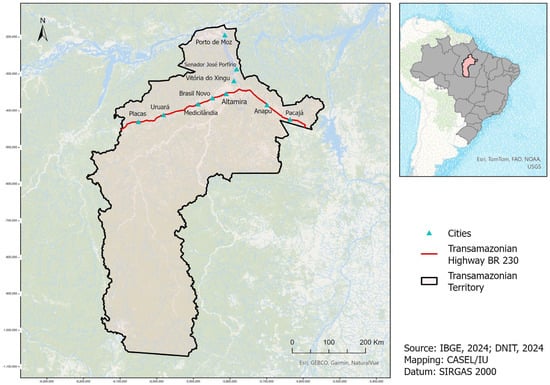
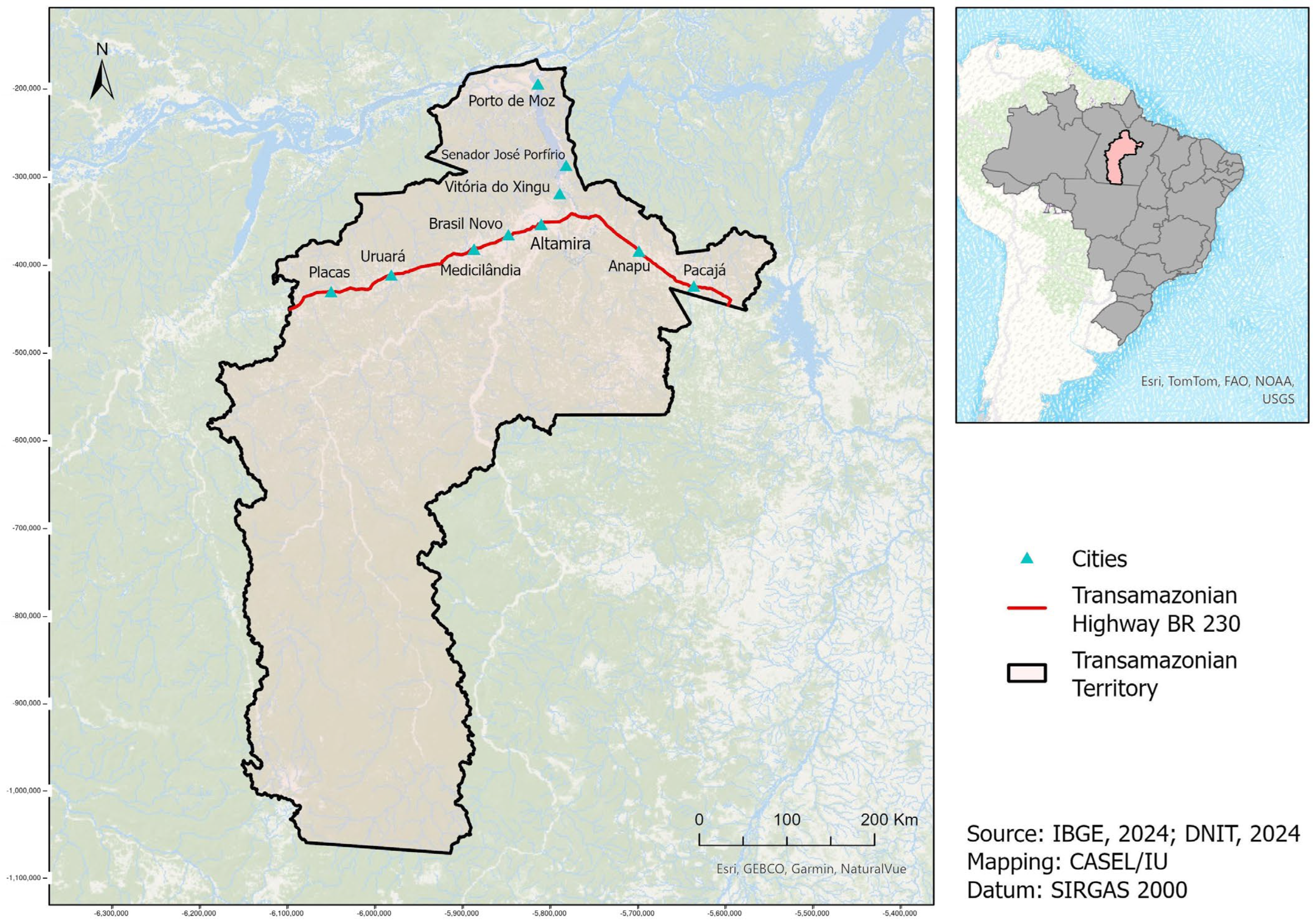
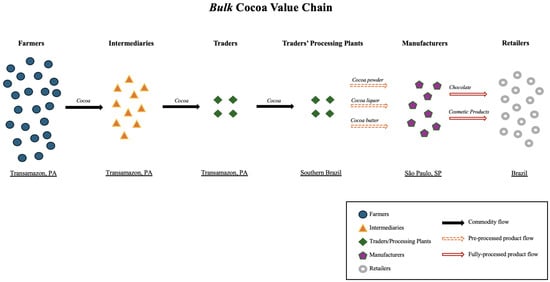
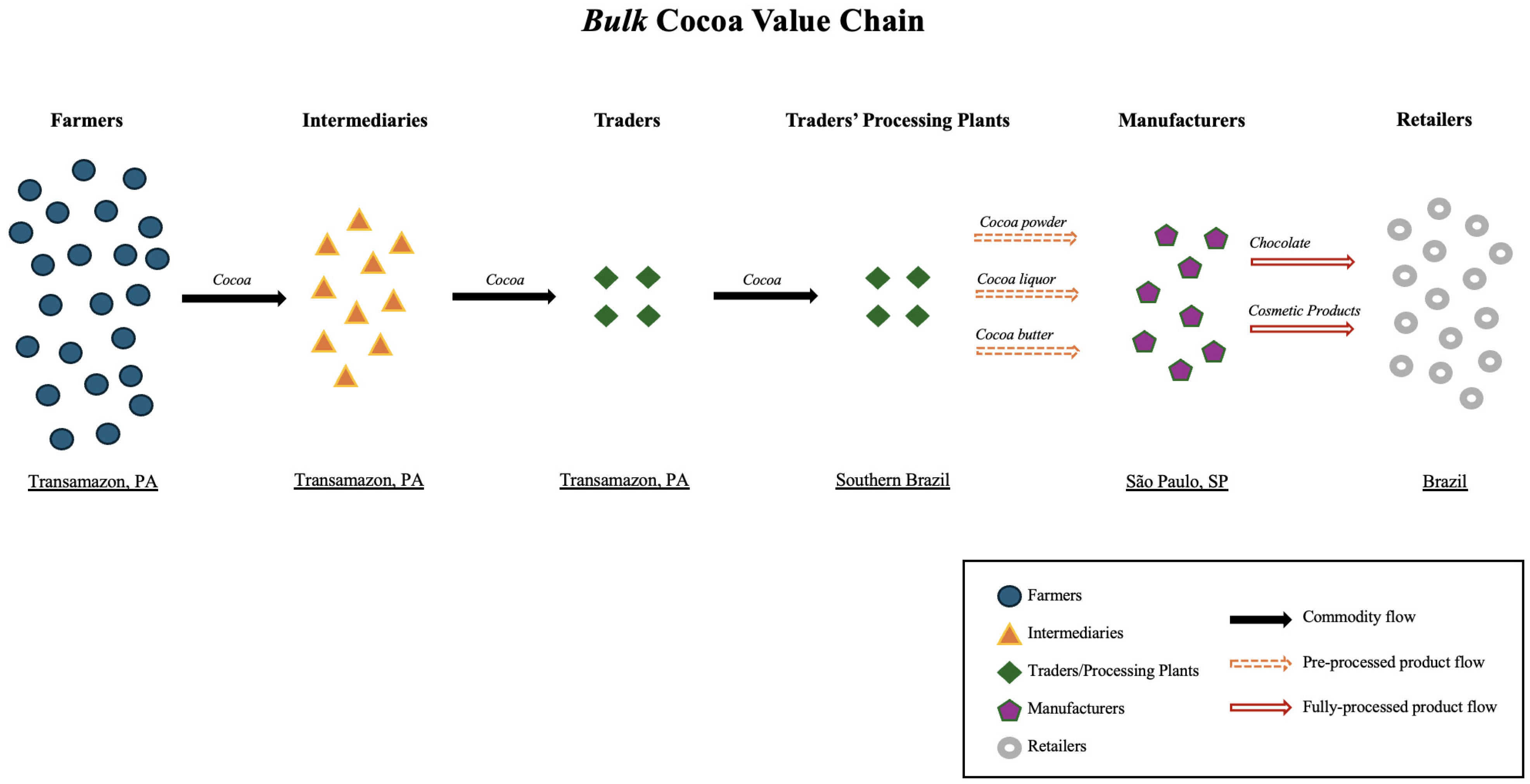
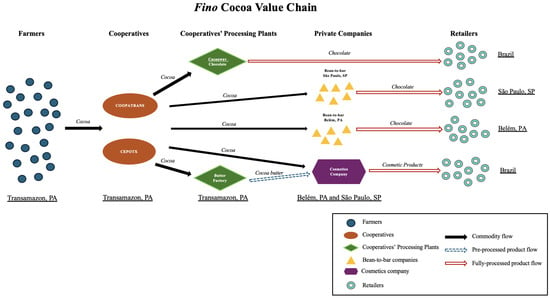
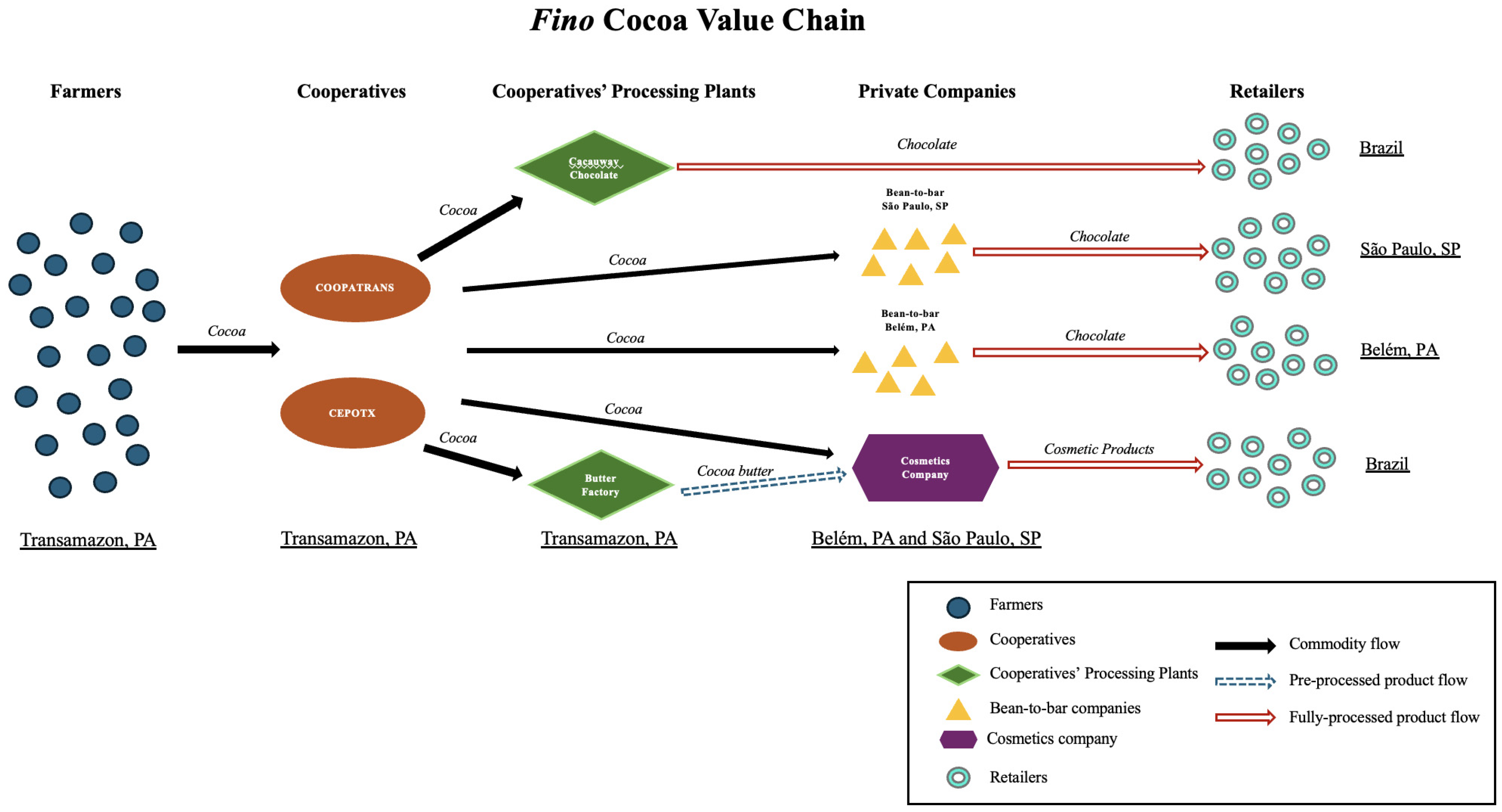
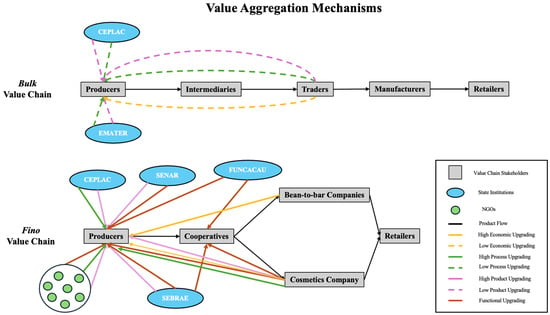
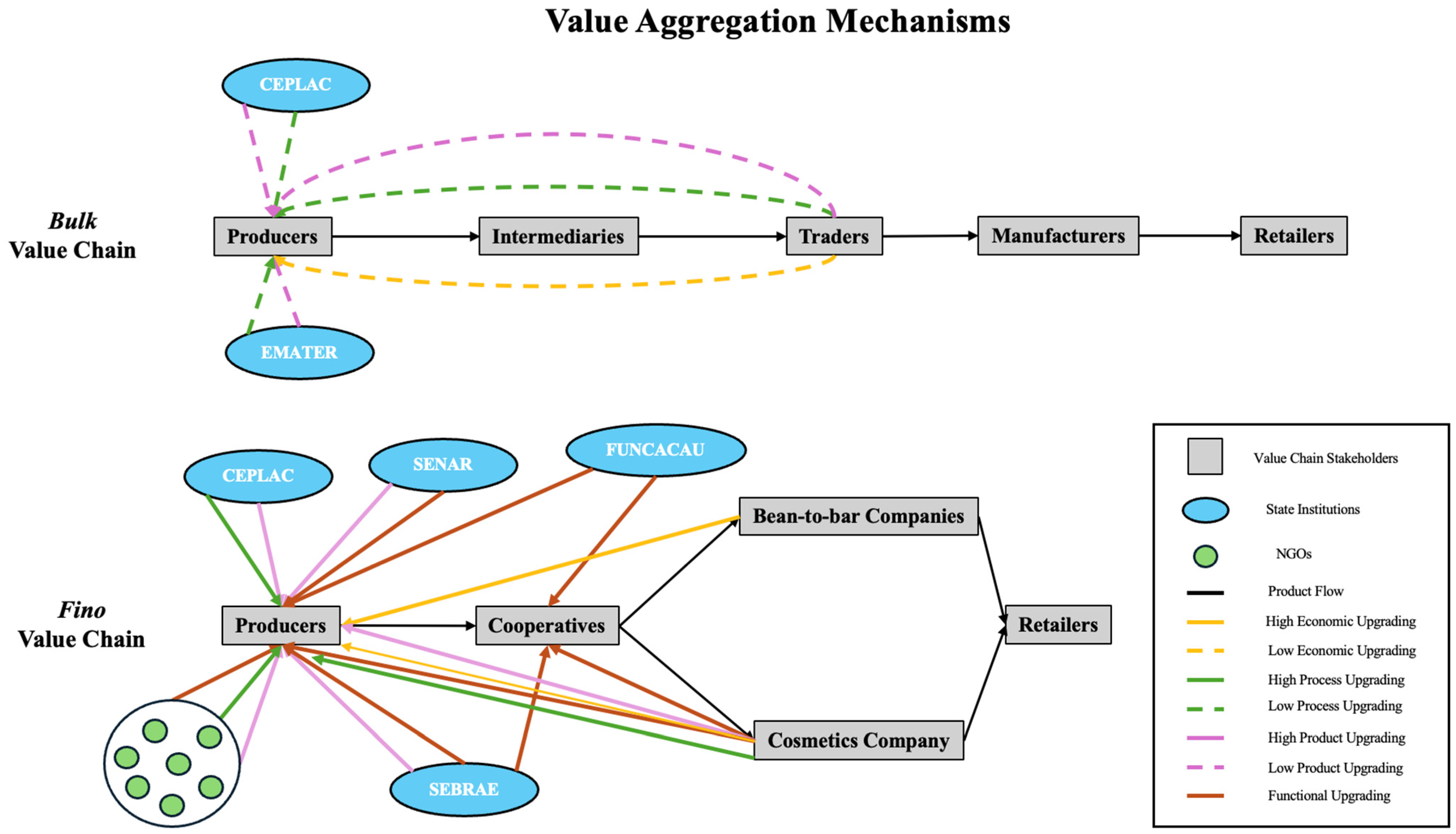

Disclaimer/Publisher’s Note: The statements, opinions and data contained in all publications are solely those of the individual author(s) and contributor(s) and not of MDPI and/or the editor(s). MDPI and/or the editor(s) disclaim responsibility for any injury to people or property resulting from any ideas, methods, instructions or products referred to in the content. |
© 2026 by the authors. Licensee MDPI, Basel, Switzerland. This article is an open access article distributed under the terms and conditions of the Creative Commons Attribution (CC BY) license.