


Abstract
To address the problems of high labor intensity, high production cost, low efficiency, and unevenness in the manual seed dressing process of cut potatoes, as well as the poor quality and easy damage caused by the poor adaptability of existing seed dressing equipment, this study designs a drum-type seed dressing device for cut potatoes based on design principles of seed treatment machinery. A kinematic model of the seed dressing process was established, and the process was simulated using EDEM 2024 discrete element simulation software combined with ray tracing. Two indicators commonly used in the pharmaceutical industry were introduced to evaluate seed dressing uniformity: the inter-tablet variation coefficient (CoVinter) and intra-tablet variation coefficient (CoVintra). Through single-factor experiments and three-factor, five-level orthogonal rotational combination experiments, the influence of drum speed, spiral guide plate pitch, and feed rate on the seed dressing effect were explored, and the parameters were optimized. The results show that the optimal parameter combination is a drum speed of 32.84 r·min−1, a spiral guide plate pitch of 682.64 mm, and a feed rate of 10.44 t·h−1, at which CoVinter was 6.33% and CoVintra was 6.35%. Bench tests verified that the seed dressing pass rate reached 94.1% and the breakage rate was only 0.32% under this parameter combination, meeting the requirements for seed potato treatment in mechanized potato planting. These findings can facilitate the progress of potato-seed engineering and offer theoretical and technical support for the development of mechanized potato seed dressing equipment.
1. Introduction
Potatoes are widely popular due to their rich nutritional value and diverse ways of preparation, and many countries regard them as an important crop in their food security strategies [1,2,3,4]. In China, potato cultivation primarily uses cut potatoes as the seed potato form [5,6,7]. Seed treatment is a crucial step in potato production [8], which can achieve the goals of disease prevention and rot prevention, improving stress resistance and increasing yield. However, currently, potato cutting and seed dressing in China is still mainly done manually, which involves problems such as high labor intensity, high production costs, low work efficiency, and uneven seed dressing.
Regarding equipment for treating cut potato seed pieces, the American company Milestone Equipment [9] developed two models, the Potato Seed Barrel Duster and the Liquid Seed Treater, for powder and liquid treatment. All Star Manufacturing & Design [10] developed the Better Built Potato Seed Treater, which can perform liquid mixing treatment. Currently, research in China on potato seed treatment equipment is limited, with most researchers using rotary drum, rotary auger, and coating pan [11,12]. Wang et al. [13] designed a spinning-disk roller-type peanut seed coating machine, analyzed the influence of different factors on the coating effect and gave the optimal parameter combination. Zhang et al. [14] designed a disk pelletizing device and studied the influence of different process parameters on rapeseed pelleting based on the discrete element simulation analysis method, which is beneficial for improving the processing level of rapeseed. Ma et al. [15,16] designed a pelleting coating machine. They analyzed the main factors affecting the coating quality of forage seeds using theoretical methods, used EDEM software to simulate material-mixing under different structural parameters, and obtained the optimal parameter combination. The aforementioned researchers used seed treatment equipment designed with a spinning disk drum, a spinning disc auger, and a coating pan structure, which performed well in the treatment of peanut, rapeseed, ice grass, and red clover seeds [17]. However, cut potatoes are large in size, vary in shape, are easily broken, and have a high moisture content. When such crop seed treatment equipment is used for cut potato seed dressing, it shows poor adaptability and struggles to achieve satisfactory operational performance. This problem has become a technical bottleneck restricting the development of the potato seed industry and requires in-depth research.
Advanced optimization algorithms (e.g., TSA for strawberry grading [18]) are increasingly used in agricultural engineering to improve performance. Following this trend, this study optimizes potato seed dressing device parameters using orthogonal design and DEM simulation, classifying it as a computationally enhanced agricultural technology.
For cut potato seed dressing and comprehensive analysis of the current research status of key seed treatment technologies and equipment [19], there is limited research on the adaptability of process parameters for seed dressing of cut potatoes, and there is a lack of unified evaluation standards for seed dressing quality. Most other seed treatment processes adopt the coefficient of variation as an evaluation index [15,17]. It is used to measure the mixing uniformity between seeds and powder. Cut potato and powder have an enormous size difference. This method cannot be applied to cut potatoes. Meanwhile, since the processing of the cut potato in China mostly involves mixing chemical solutions and powders, this presents a unique challenge for the development of potato seed treatment devices.
Research on seed dressing devices specifically for potatoes remains relatively scarce, as most existing studies have focused on seed treatment equipment for other crops. Furthermore, the application of spiral structures in such seed dressing devices is relatively limited. To address these gaps, this paper proposes a potato seed dressing device that adopts a spiral structure and incorporates an innovative transverse auxiliary seed dressing mechanism. To advance mechanization in potato seed processing, this work presents the design, modeling, simulation, and experimental validation of a dedicated seed dressing device for cut potatoes. Guided by established principles of seed treatment machinery design, a kinematic model of the dressing process was developed. A prototype device was then designed and its performance was simulated using EDEM 2024 (Altair Company, Troy, MI, USA) integrated with the ray tracing method. The coefficient of variation between/within tablets [20,21,22], a standard for evaluating the quality of tablet coating in the pharmaceutical industry, was introduced as an evaluation index for numerical simulation to explore the influence of different factors on the seed dressing effect. The working parameters were optimized and verified through bench tests, providing theoretical support and technical support for the design and development of mechanized seed dressing equipment for cut potatoes.
2. Materials and Methods
2.1. Test Materials
The potato variety used in the experiment was Kexin 23 with a water content of 80.77%. After standardized cutting treatment, the weight of the tubers was 30–50 g, and each tuber retained 1–2 buds, which met the requirements of NY/T 3483-2019 Technical Specifications for Mechanized Production of Potato [23]. While various potato seed dressing methods are available, 75% alcohol solution and 400-mesh talc powder were selected as seed dressing agents in this study in accordance with relevant technical guidelines as well as seed dressing practices commonly adopted by local farmers in Heilongjiang Province, with the mixing ratio of solution, cut potatoes and talc powder set at 1:100:2. Specifically, the 75% alcohol solution is used for sterilization and disinfection, and the 400-mesh talc powder serves as a lubricant to prevent adhesion of cut potatoes during the seed dressing process and subsequent sowing process.
2.2. Overall Structure and Working Principle
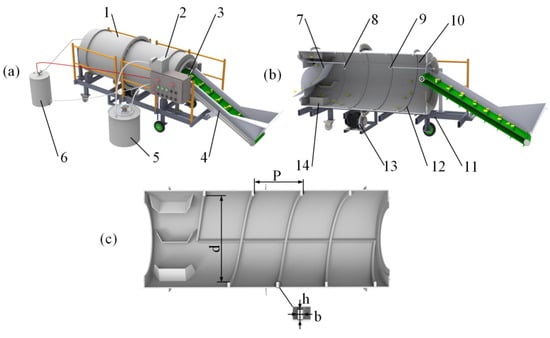
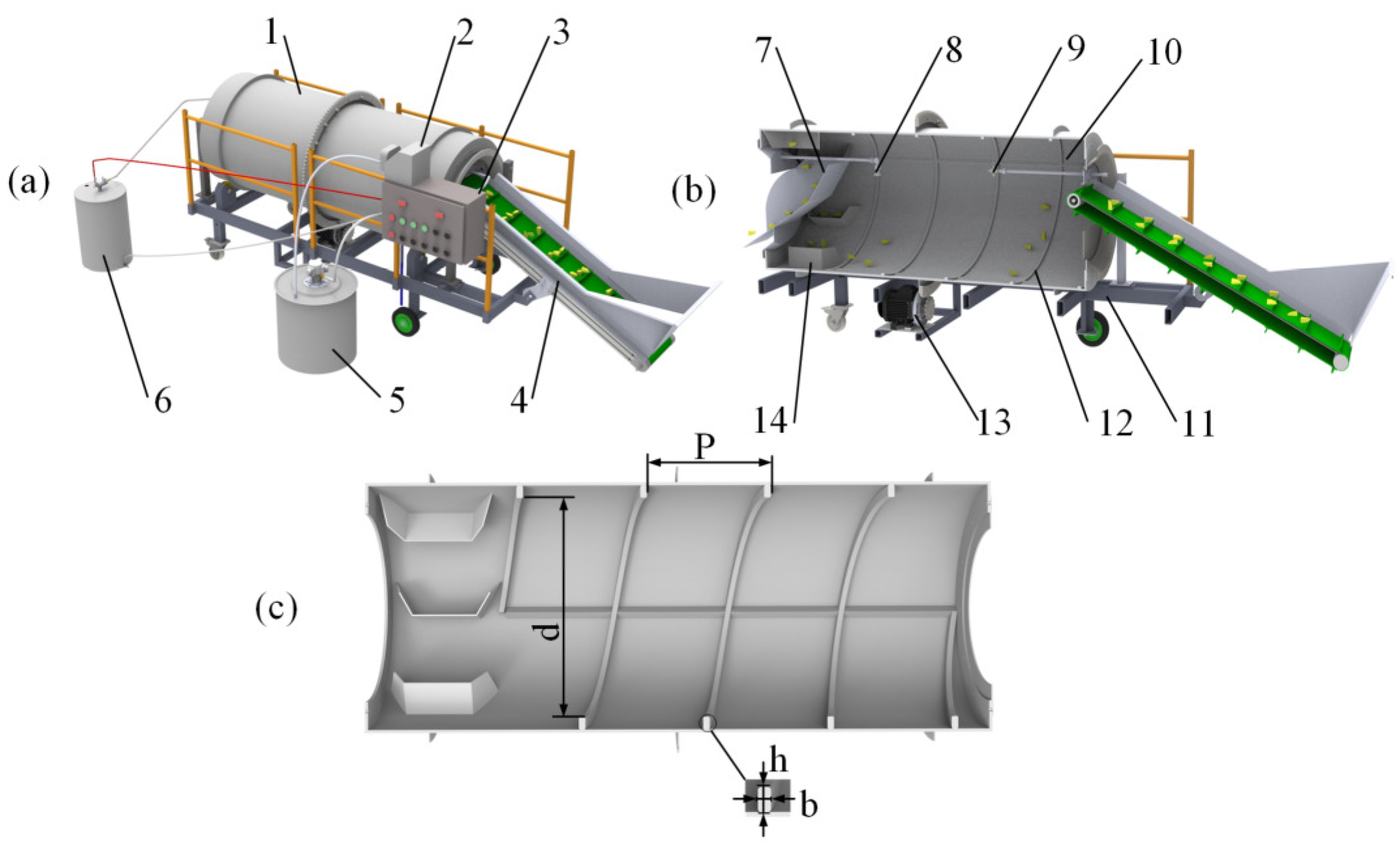
The seed dressing device for cut potatoes consists of a seed dressing drum, a peristaltic pump, a control cabinet, a lifting device, a liquid tank, a powder tank, a discharge chute, a powder nozzle, a liquid nozzle, a transverse auxiliary seed dressing mechanism, a frame, a spiral guide plate, an asynchronous motor, and a rotating hopper. The inner diameter d of the drum is 800 mm, the width b of the spiral guide plate is 6 mm, and the height h is 40 mm. As shown in Figure 1, during operation, cut potatoes are first conveyed to the feed inlet by a lifting device, and then enter the seed dressing drum. The quantitative supply of cut potatoes can be achieved by adjusting the speed of the lifting belt motor via the control cabinet. The liquid medicine is delivered to the liquid nozzle by a peristaltic pump and atomized. The cut potatoes come into contact with the atomized liquid medicine during movement, forming a liquid film on their surface. An asynchronous motor drives the seed dressing drum to rotate, and the cut potatoes tumble and move towards the discharge chute under the action of the spiral guide plate and transverse auxiliary seed dressing mechanism. Powder is conveyed from the powder tank to the powder nozzle by an air pump and sprayed onto the surface of the cut potatoes. When the cut potatoes reach the end of the drum, they are rotated to the discharge chute by the rotating hopper and finally leave the seed dressing drum, completing the entire seed dressing process.
Figure 1.
A seed dressing device for cut potatoes. (a) Axonometric drawing; (b) section view; (c) diagram of the seed dressing drum structure. 1. Seed dressing drum; 2. Peristaltic pump; 3. Control cabinet; 4. Lifting device; 5. Liquid tank; 6. Powder tank; 7. Discharge chute; 8. Powder nozzle; 9. Liquid nozzle; 10. Transverse auxiliary seed dressing mechanism; 11. Frame; 12. Spiral guide plate; 13. Asynchronous motor; 14. Rotating hopper.
2.3. Rotational Speed Design
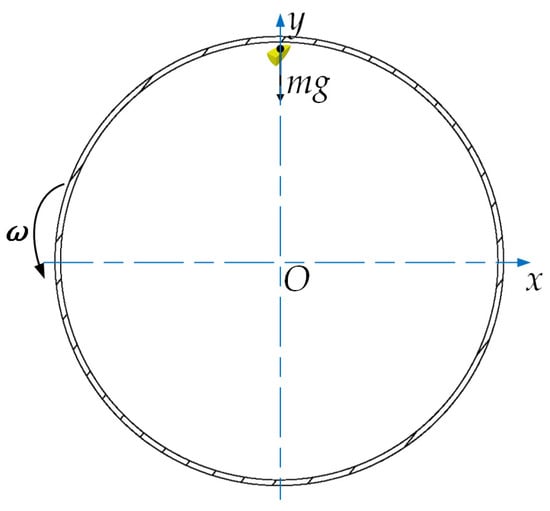
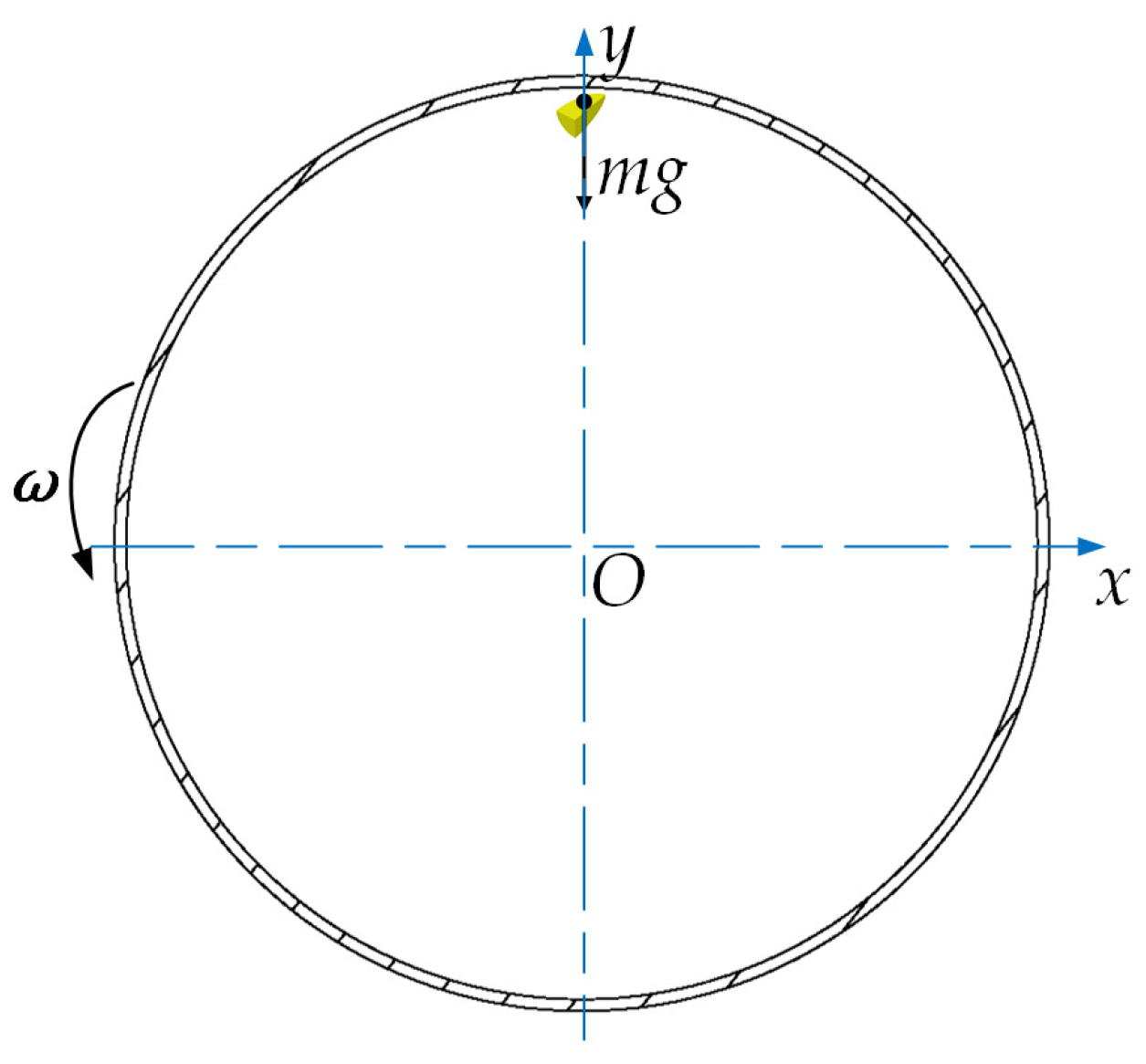
The rotational speed of the rotary seed dressing drum is a core parameter that directly determines the movement state of the cut potatoes and the seed dressing effect. When the rotational speed exceeds the maximum critical limit, the cut potatoes adhere tightly to the drum wall due to centrifugal force and move in a synchronous circular motion, losing their displacement ability and becoming unable to flow, resulting in a poor seed dressing effect. In order to ensure that the cut potatoes do not exceed the highest point of the inner wall of the drum and move in a circular motion close to the drum, the drum speed should be lower than the maximum critical speed. The force analysis is performed with the cut potatoes just reaching the highest point, as shown in Figure 2.
Figure 2.
Force analysis diagram when the cut potato reaches the highest point of the drum. Note: O is the origin of the Cartesian coordinate system, m is the mass of the cut potato, and g is the acceleration due to gravity.
When the cut potato reaches its highest point, it is in contact with the inner wall of the drum but not compressed. It is not supported by the drum’s force, only by its own weight, which provides the centripetal force for its circular motion; thus, the following can be obtained:
At this point, the maximum rotational speed ωm of the drum can be obtained as 47.75 r·min−1.
In the formula, ω is the rotational speed of the seed dressing drum, r·min−1.
Therefore, the actual rotational speed of the drum should not exceed the upper limit of 47.75 r·min−1; at the same time, in order to avoid the accumulation of cut potatoes in the lower half of the drum, the actual rotational speed of the drum should not be lower than 30% of the limit speed [24,25], that is, the actual rotational speed of the drum should be greater than 14.33 r·min−1.
2.4. Force Analysis of Cut Potatoes
To investigate the key factors affecting the quality of seed dressing of cut potatoes, the motion of the cut potatoes in the drum was analyzed. In the actual seed dressing process, the motion of the cut potatoes is not a simple helical motion, but a complex motion involving the coupling of multiple factors such as rotational speed, drum wall structure, and gravity. When the drum speed is appropriate, the cut potatoes rise to a specific height under the action of friction on the drum wall and thrust from the spiral guide plate; at this time, gravity exceeds the resultant force of centrifugal force and friction, and the cut potatoes break free from the constraints and make a spiral projectile motion along the axial direction. Meanwhile, the transverse auxiliary seed dressing mechanism inside the drum applies a thrust along the tangential direction of the drum wall to the cut potatoes, causing them to collide and tumble. However, the trajectory of the cut potatoes in the drum is also affected by the interaction force between the potato chunks, making the individual movement process of the potatoes quite complex. In order to facilitate analysis and research, the influence of the interaction force between the potatoes is not considered for the time being, and the cut potatoes are regarded as point masses.
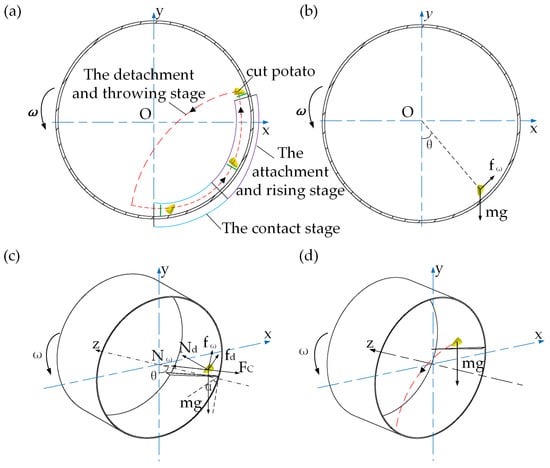
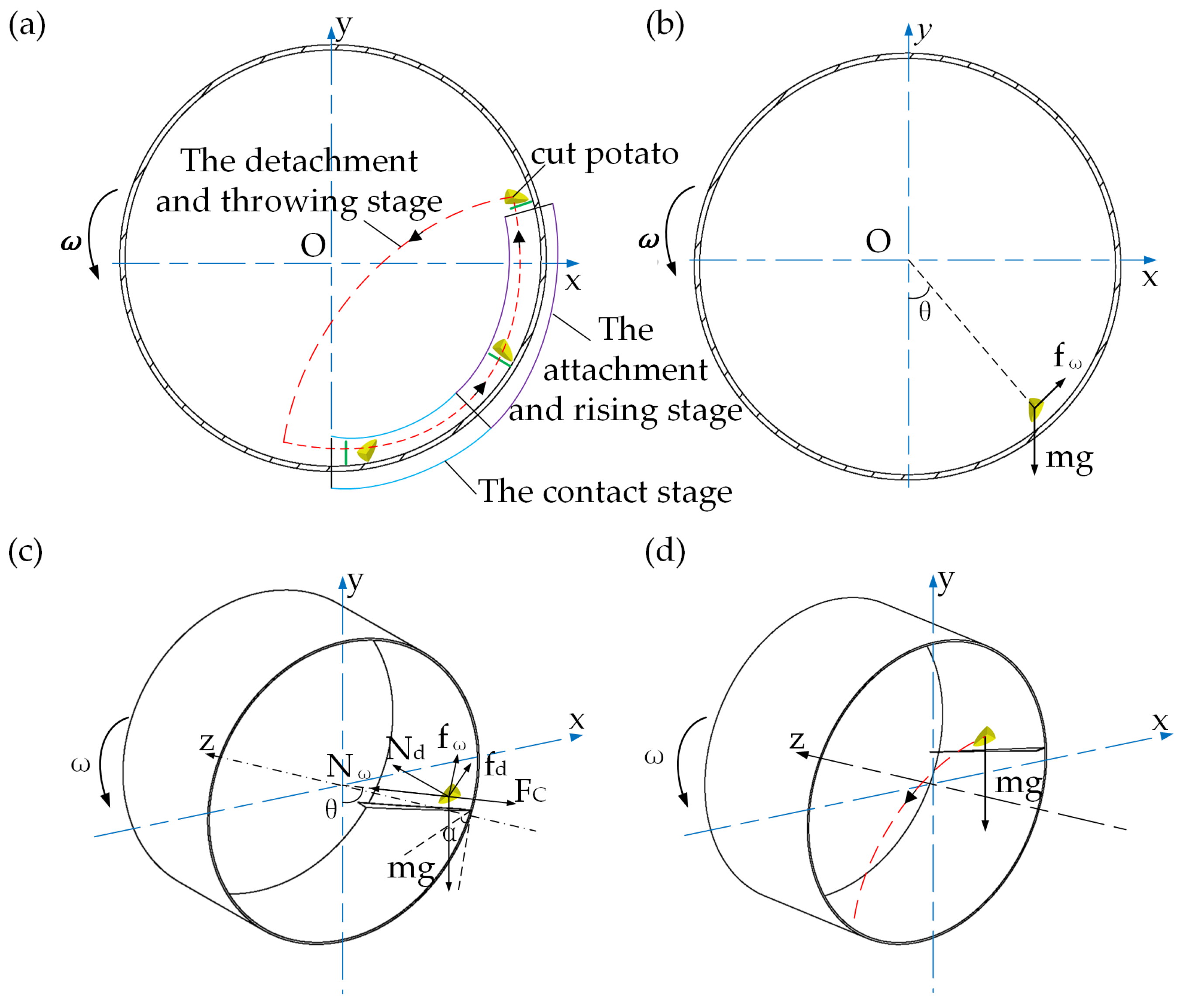
The motion of the cut potatoes in the drum is a periodic spatial motion. Taking a single cut potato as the research object, the dynamics and kinematics of the cut potato’s motion process are analyzed, and the spatial motion of each cycle is divided into three stages: The first stage is the contact stage, where the cut potatoes fall from the lifting device into the drum, slide down the drum wall and contact the spiral guide plate as the drum rotates. The second stage is the attachment and rising stage, where the cut potatoes are lifted by the spiral guide plate after contacting it and make a spatial compound curve motion. The above motion consists of uniform circular motion of the cross section and axial acceleration motion, until it slides down along the spiral guide plate. The third stage is the detachment and throwing stage, where the cut potatoes detach from the spiral guide plate and make a throwing motion, falling back to the bottom of the drum, as shown in Figure 3a.
Figure 3.
Motion analysis of cut potato: (a) schematic diagram of the motion process; (b) the contact stage; (c) the attachment and rising stage; (d) the detachment and throwing stage.
2.4.1. Motion and Force Analysis During the Contact Stage
During the contact stage, the cut potato falls to the bottom of the drum and starts moving from rest under the action of the drum. During the acceleration process, it moves in a circle with the drum and slides down the drum wall until it contacts the spiral guide plate. During this stage, the cut potato is subjected to its own gravity, the support force of the drum, and the frictional force of the drum wall. The force analysis is shown in Figure 3b.
As shown in the force analysis diagram, the centripetal force of the cut potato as it moves in a circular motion with the drum is provided by the resultant force of the support force from the drum and the radial component of gravity. The tangential acceleration of the cut potato is provided by the resultant force of the frictional force from the drum wall and the tangential component of gravity; thus, the following can be obtained:
In the formula, FC is the centripetal force, N; Nω is the normal support force of the cylinder wall, N; θ is the angular displacement of the cut potato, °; μω is the coefficient of friction of the cylinder wall; d is the inner diameter of the drum, mm; a1 is the acceleration of the cut potato as the drum rotates during the contact stage, m·s−2; and fω is the frictional force between the cut potato and the cylinder wall, N.
The following can be obtained:
2.4.2. Motion and Force Analysis During the Attachment and Rising Stage
At this stage, the cut potatoes stop sliding down the cylinder wall when they come into contact with the spiral guide plate. Under the action of the cylinder wall and the spiral guide plate, they make an attachment and upward motion, making a circular motion along the circumference of the drum and an axial forward motion along the spiral guide plate, and finally slide off the spiral guide plate. During this process, the cut potatoes are subjected to their own gravity, the supporting force and friction of the spiral guide plate, and the supporting force and friction of the cylinder wall. Assume the inner helix of the drum is a standard single-start helix with equal pitch, equal diameter, and helix angle α. The force analysis is shown in Figure 3c.
As can be seen from the force analysis diagram, there is, along the radial direction of the drum:
Since the net force is zero in the circumferential direction, this work can be obtained:
The net force in the axial direction is zero, and the cut potato moves forward at a constant speed along the spiral guide plate. The equilibrium relationship is:
In the formula, Nd is the normal support force of the guide plate, N; α is the helix angle of the spiral guide plate, °; fd is the frictional force between the cut potatoes and the spiral guide plate, N; and μd is the friction coefficient of the guide plate.
2.4.3. Motion and Force Analysis During the Detachment and Throwing Stage
The cut potatoes move forward continuously under the combined action of the drum and the spiral guide plate and eventually slide off the spiral guide plate. Under the action of gravity alone, they undergo parabolic motion until they fall back onto the drum wall. The force analysis and motion trajectory are shown in Figure 3d.
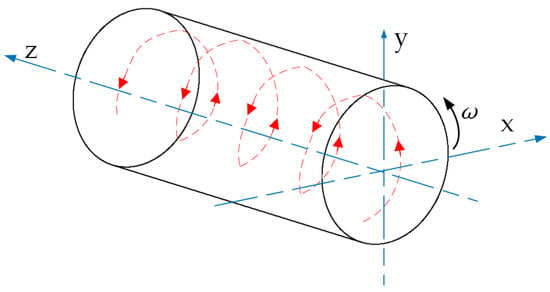
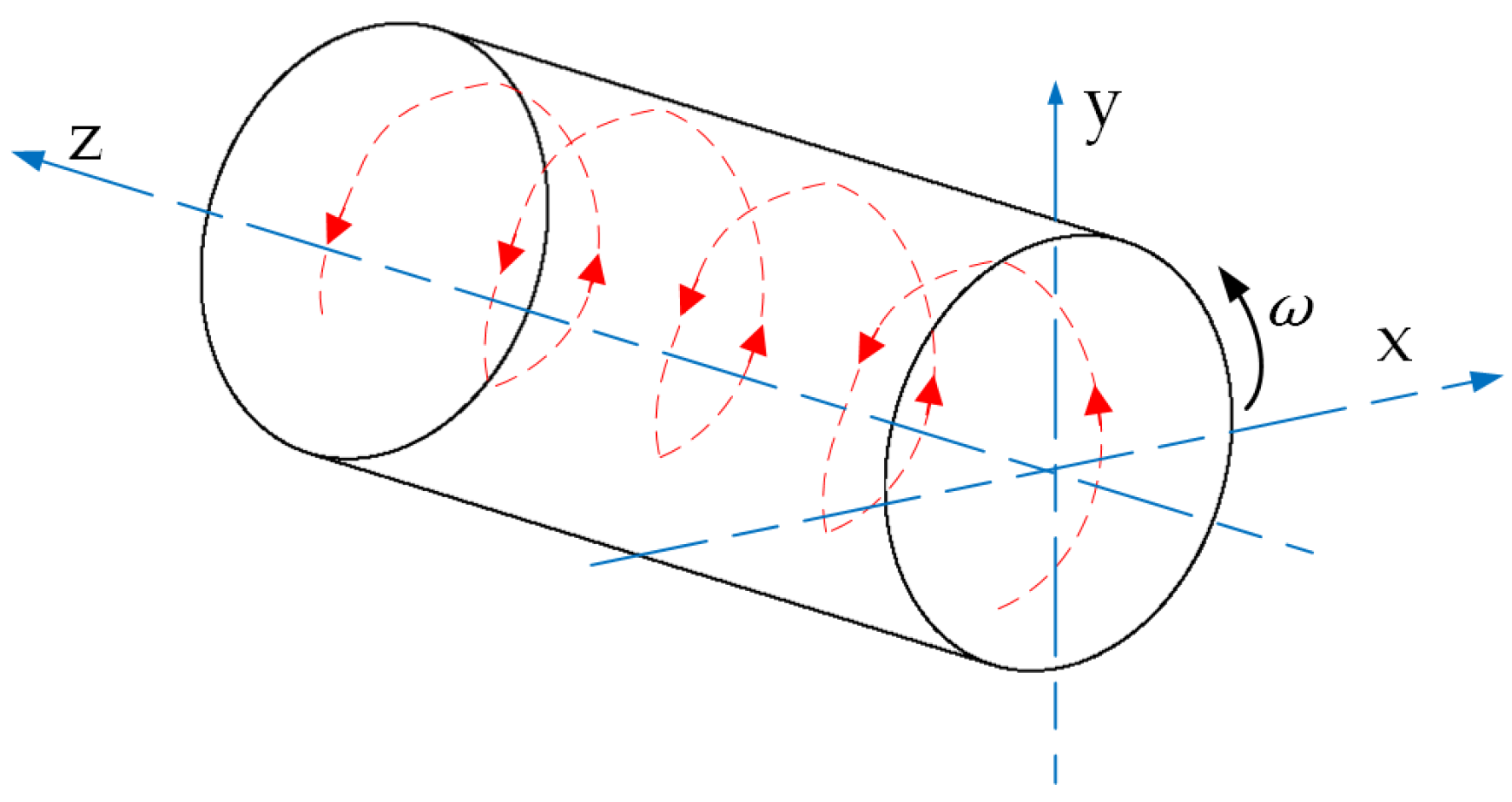
After the cut potatoes enter the drum, they scatter at the bottom of the drum. Under the action of the drum wall and the spiral guide plate, they make periodic spatial movements from the lifting device end to the discharge end, as shown in Figure 4.
Figure 4.
Schematic diagram of the periodic movement of cut potato in the drum.
Theoretically, with each rotation of the drum, the cut potatoes undergo axial displacement due to the action of the drum and guide plates. The relationship between the axial displacement and the pitch is as follows:
In the formula, L is the lead, mm; P is the pitch, mm.
The following can be obtained:
Based on the working principle of the screw conveyor, the relationship between the conveying capacity [26,27] and the structural parameters of the screw conveyor is as follows:
In the formula, φ is the filling coefficient; λ is the unit volumetric mass of the material; and ε is the inclined conveying coefficient (1 for horizontal conveying).
As can be seen from Equation (9), the conveying capacity Q of the screw conveyor is related to the screw pitch P, the screw speed ω, and the filling coefficient φ.
In summary, a kinetic analysis of the cut potatoes was conducted, dividing their movement into three stages: contact, attachment and rising, and detachment and throwing, which continuously cycle. The kinetic equations of the cut potatoes show that the movement in these three stages is related to the drum speed and the pitch of the spiral guide plate. Furthermore, considering the efficiency of the seed dressing process, the feed rate also affects the dressing effect. Based on the previous analysis, if the rotation speed is too high, the seed dressing work cannot be completed; if the rotation speed is too low, it will affect the conveying speed and cause cut potatoes to accumulate. Therefore, the rotation speed range is 15~45 r·min−1. To ensure sufficient axial thrust for the cut potatoes, the pitch P of the spiral guide plate is set at 560~880 mm. The feed rate affects axial resistance during the movement of the cut potatoes; based on preliminary test results, the filling coefficient φ is set at 0.1~0.4, and the feed rate ranges from 5 to 20 t·h−1.
2.5. DEM Simulation Model
2.5.1. Discrete Model Establishment
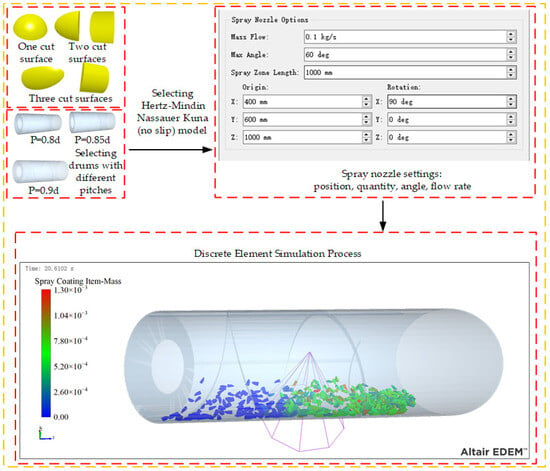
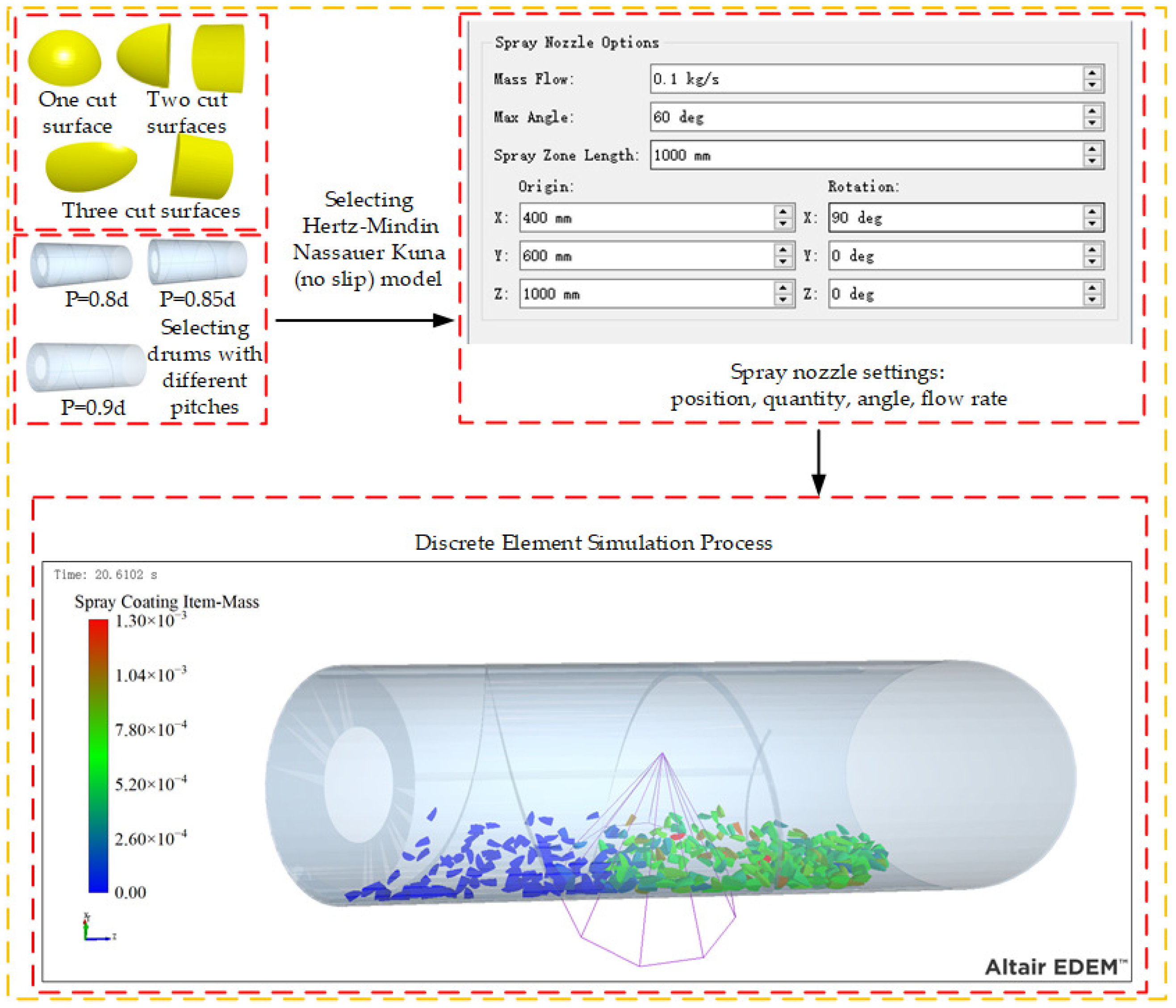
Based on the cutting patterns observed with large potato seed cutters, five common cut potato shapes were identified, as shown in Figure 5. Considering the predominantly irregular polyhedral structure of cut potatoes, a handheld 3D laser scanner (HSCAN (SCANTECH, Hangzhou, China)) was used to scan and model the cut potatoes. The polyhedral particle model was then imported into EDEM 2024 software, dividing the cut potato surface into several microfacets. The seed dressing drum device was modeled to scale using SolidWorks 2022 (Dassault Systemes, Waltham, MA, USA) 3D modeling software. The model was then imported into EDEM 2024 software in “.stl” format. Based on the actual processing and production conditions, the material of the drum and its spiral guide plate are set to Q235 steel. Referring to relevant literature [28,29,30], the specific contact parameters are shown in Table 1. To ensure the reliability of the simulation parameters in Table 1, parameter calibration and sensitivity analysis were performed based on the measured physical properties of potato tubers. The accuracy of these parameters was verified by high consistency between simulation results and bench test data.
Figure 5.
Simulation flowchart.
Table 1.
Material and contact mechanics parameters in DEM.
2.5.2. Ray Tracing Method
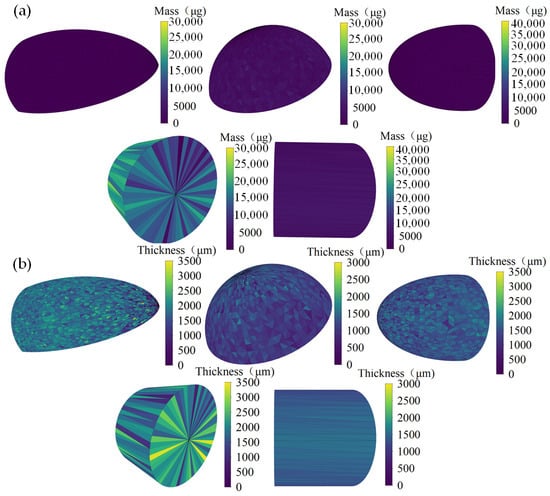
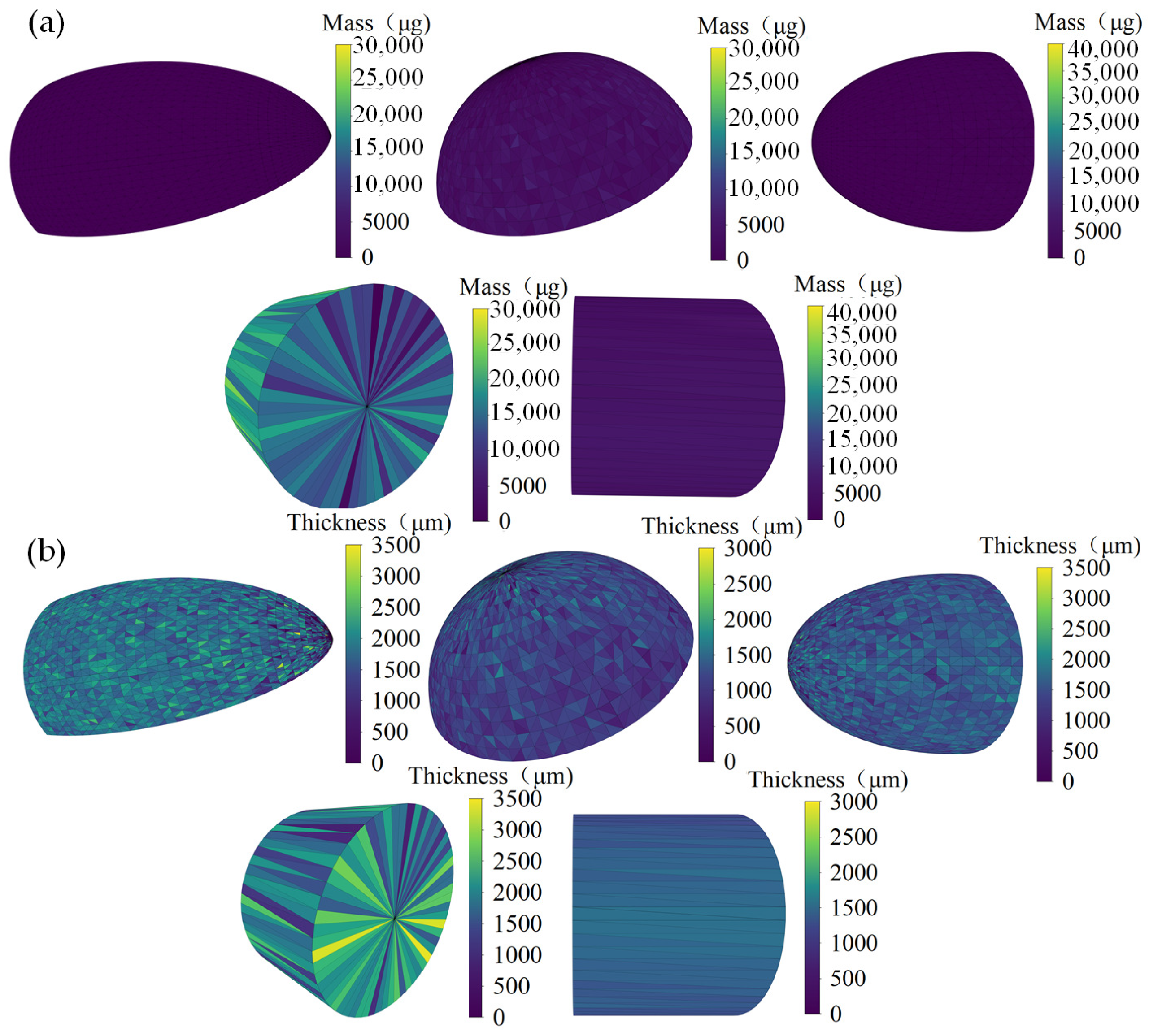
The ray tracing method [31,32,33] models the spray using EDEM software. In the post-processing process, the spray is simulated as a ray beam. By tracing the interaction between the ray path and the particles, the coverage area and mass transfer of the spray are indirectly simulated, thereby obtaining the spray density and spray quality of the particles and each plane of the particles, as shown in Figure 6.
Figure 6.
Radiation spraying: (a) spraying density diagram; (b) spraying quality diagram.
Since the talc powder used in actual operations has a very small particle size, it is difficult to represent in the simulation process. Therefore, the ray tracing method is used to simulate the process of spraying seed dressing powder for cut potatoes. This study uses the Hertz–Mindin Nassauer Kuna (no slip) model, which is suitable for polyhedral particles, and the friction model used is Spinning Friction.
2.5.3. Simulation Scheme Design
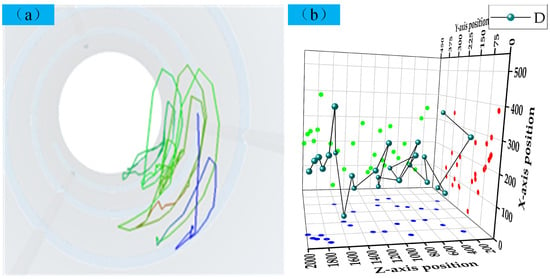
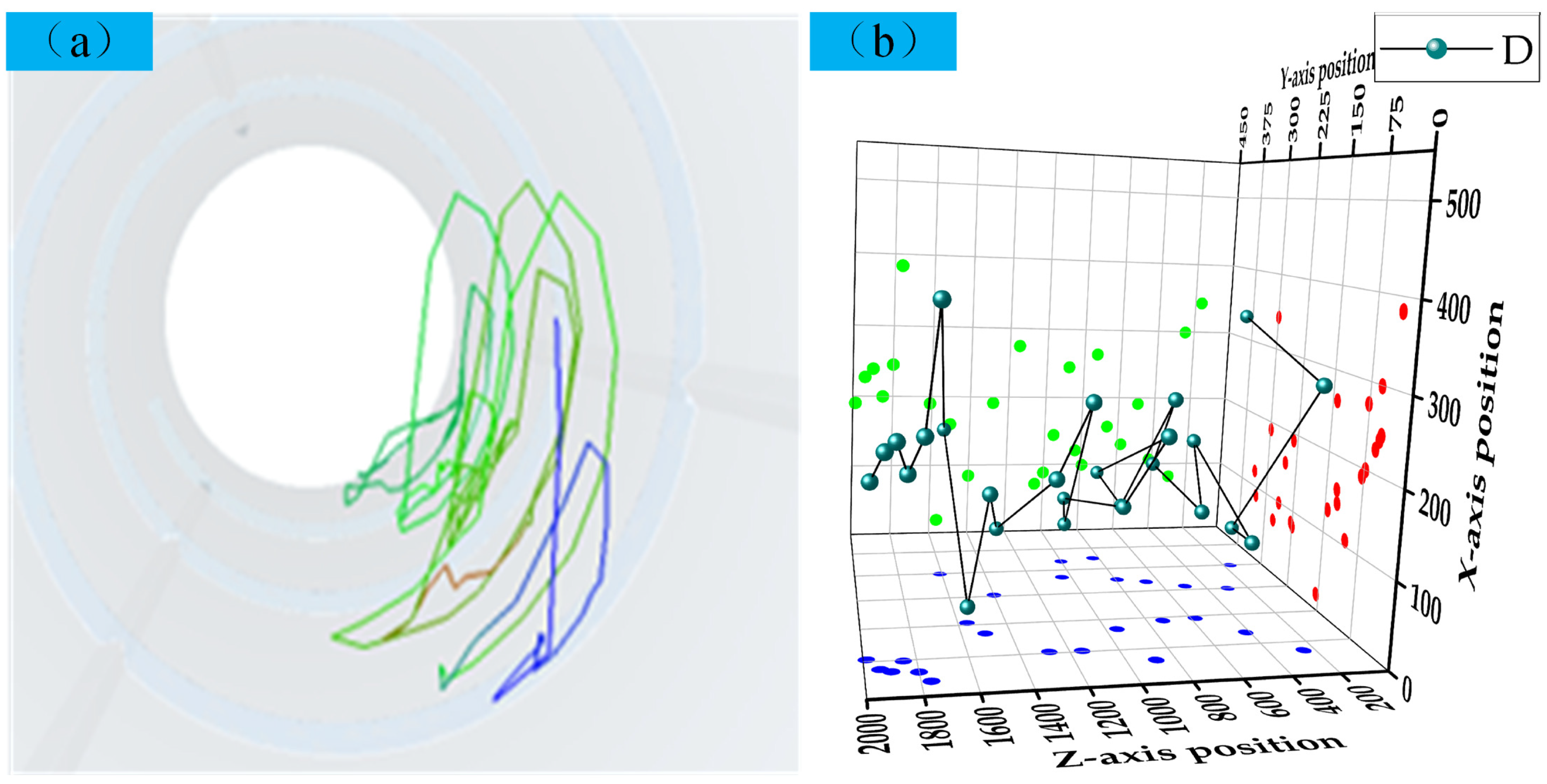
To simulate the continuous operation of the seed dressing device for cut potatoes, a circular granule factory was set up directly above the feed inlet. A dynamic generation method was used to continuously produce cut potatoes. Each simulation generated 500 cut potatoes, generation started at 0.01 s, 100 cut potatoes were generated per second, totaling 20 kg. After the generation process was completed, the motion simulation continued until the end. The simulation duration was set to 30 s, the single data acquisition time was 0.01 s, and a GPU solver was used for acceleration. After the cut potatoes move to a certain height along the guide plate and cylinder wall, they undergo oblique projectile motion in the axial direction. At the same time, the cut potatoes come into contact with each other and collide, mixing and diffusing to form a stable forward-spiral seed flow. Figure 7a shows the movement path of a single cut potato during the simulation process, and Figure 7b shows the corresponding motion coordinate diagram. The first simulation only recorded the movement of the cut potatoes inside the seed dressing drum. After the simulation, a Spray Nozzle was added to the Spray Coating Analysis module in the post-processing section, and the position(x: 400 mm, y: 600 mm, z: 1000 mm), spray angle (60°), and flow rate (0.1 kg/s) of the nozzle were adjusted to perform coating analysis and simulate the powder-spraying process, as shown in Figure 5. However, post-processing spray cannot capture real-time interaction between the liquid and potato seeds. It thus differs from the fully coupled dynamic behavior in actual seed dressing.
Figure 7.
Motion process diagrams: (a) motion trajectory of a single cut potato; (b) motion coordinates of a single cut potato.
In studies on tablet coating, in order to analyze the uniformity of the coating amount on different tablets in the same batch and the uniformity of coating thickness on individual tablets after simulation using EDEM software, some researchers have chosen to measure inter-tablet coating variability and intra-tablet coating variability. Since there are no national standards, agricultural industry standards, or relevant technical specifications for evaluating seed dressing quality in potato seed treatment, the inter-tablet coating variation coefficient CoVinter and intra-tablet coating variation coefficient CoVintra of pharmaceutical tablet-coating are used as indicators to evaluate the uniformity of seed dressing quality during the simulation process. The smaller the variation coefficient, the better the uniformity of seed dressing quality. The number of cut potatoes corresponding to the seed dressing quality after ray-tracing spraying was exported using the Create graph module of EDEM software. CoVinter of seed dressing quality uniformity among cut potatoes was calculated using Equation (10), and CoVintra of seed dressing quality uniformity within cut potatoes was calculated using Equation (11).
In the formula, Np is the total number of cut potatoes inside the seed dressing drum, mi is the seed dressing mass on the cut potatoes, is the average seed dressing weight on all the cut potatoes, Nf is the number of faces on a single cut potato, is the average seed dressing mass per face on cut potato piece i, and mi,j is the seed dressing mass of face j of cut potato piece i.
2.6. Experimental Design
2.6.1. Single-Factor Experiment
To verify the range of influencing factors proposed in the theoretical analysis, single-factor experiments were conducted to study the effects of different influencing factors on seed dressing uniformity. The rotational speed ranges from 15 to 45 r·min−1 (obtained in Section 2.3); the relationship between the screw pitch and the screw diameter of the screw conveyor [34,35,36] is usually P = 0.8 to 1.0 d. In this study, the screw pitch of the spiral guide plate of the seed dressing drum is 560 to 880 mm, i.e., P = 0.7 to 1.1 d; the maximum filling capacity of the seed dressing device studied in this paper is 50 t per hour. Referring to JB/T 7679-2008 Screw Conveyor [37] and related studies [38,39], the filling coefficient φ is set to 0.1~0.4. The working efficiency of large-scale potato-cutting machines is 5~15 t·h−1, and the feed rate range corresponding to this study is 5~20 t·h−1, which can meet the needs of the work.
2.6.2. Orthogonal Experiment
To determine the optimal combination of process parameters for the seed dressing device for cut potatoes, a three-factor, five-level orthogonal experiment was conducted using seed dressing drum speed, spiral guide plate pitch, and feed rate as experimental factors, and the coefficient of variation in seed treatment uniformity between the cut potatoes (CoVinter) and within the cut potatoes (CoVintra) as evaluation indicators. The coding tables for each factor are shown in Table 2. Simultaneously, experimental data for each group was recorded and analyzed using data processing software Design-Expert (Version 13.0, Stat-Ease, Minneapolis, MN, USA).
Table 2.
Parameter encoding table.
2.6.3. Bench Verification Test
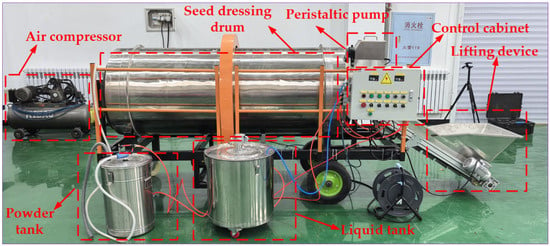
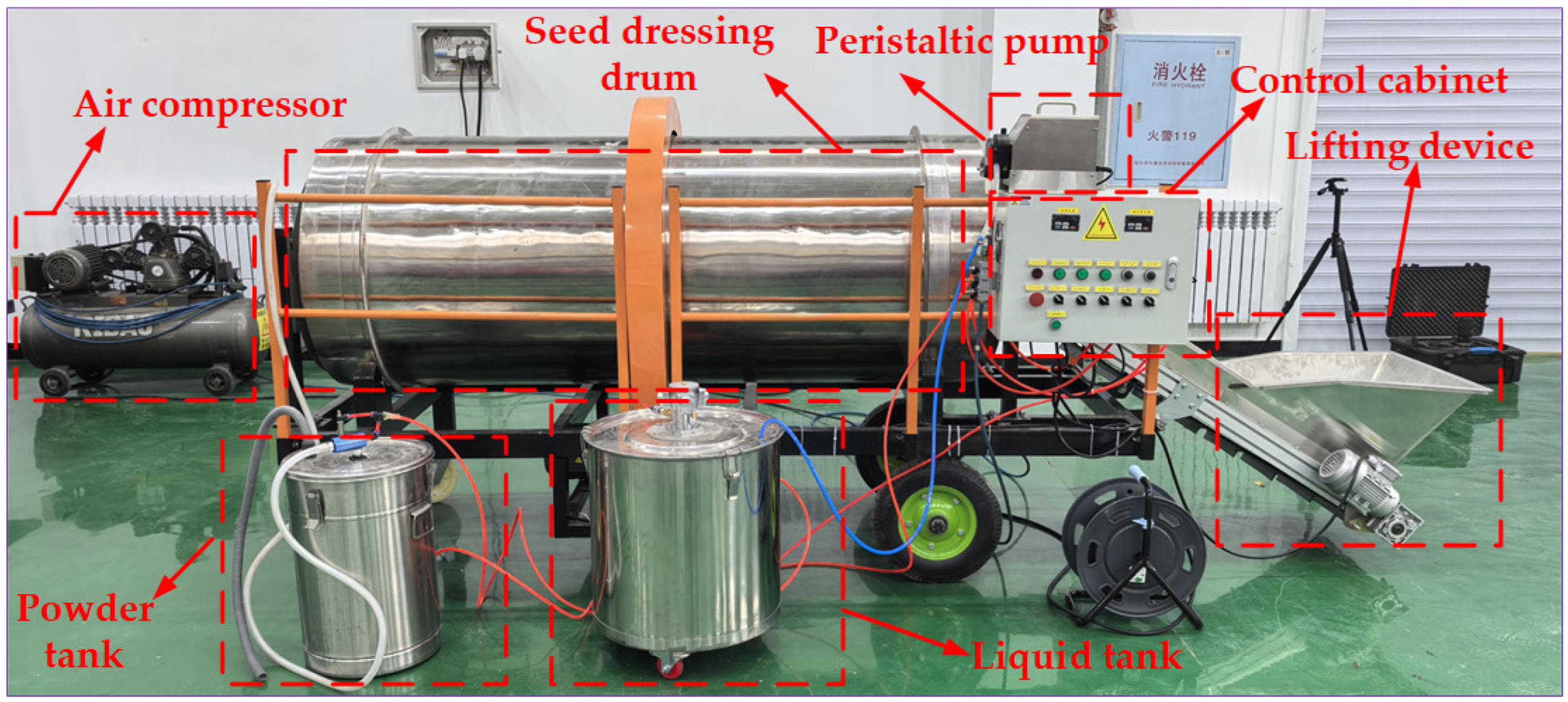
To verify the actual operating performance of the seed dressing device for cut potatoes, a bench test was conducted at the Agricultural and Livestock Machinery Laboratory of Northeast Agricultural University from 24 to 27 April 2025. The bench test site is shown in Figure 8. The main instruments include a performance test bench for the seed dressing device for cut potatoes, a liquid tank, a powder tank, a peristaltic pump, an air compressor, and a control cabinet. In addition, the instruments include an SW6236C tachometer, a TuberLog PTR400 electronic potato maker, and an electronic scale. During the experiment, rotational speed, pitch, and feed rate were used as the test factors. Each factor was tested at 5 levels. Single-factor tests were conducted on the test bench. The coding table for each factor is shown in Table 3. Each test was conducted 5 times. The actual operation effect was compared with simulation results. Subsequently, based on optimal simulation results, a prototype was set up for verification testing. A total of 100 kg of cut potatoes were transported into the seed dressing device through a lifting device according to process flow. At the same time, electronic potatoes were added to obtain the collision characteristics between potatoes during the seed dressing process. A total of 5 tests were conducted. After the experiment, the cut potatoes were dried in a cool place for 24 h until the surface was naturally air-dried. Several cut potatoes were randomly selected and placed in a 350 mm × 350 mm square area for image acquisition. Referring to JB/T 7730-2011 Seed Coater Machine [40] and NY/T 364-2019 Seed Chemical Treater-Technical Specification of Quality Evaluation [41], the seed dressing qualification rate and breakage rate were used as test indicators. A total of 1000 seed potatoes were randomly selected from each group of tests for measurement. The calculation formulas for the test indicators are as follows:
Figure 8.
Bench test site.
Table 3.
Single-factor experiment factor level table.
In the formula, Ji is the seed dressing qualification rate; %, Zd is the number of seeds with a powder dressing area greater than or equal to 80%, number; Zx is the number of seeds with a powder dressing area less than 80%, number; Pu is the original material damage rate, %, Pj is the seed dressing damage rate, %, which refers to the sum of breakage rate and damage rate. Damaged seed potatoes are more susceptible to pathogens, which seriously affects the germination rate in the field; Ghp is the mass of damaged seeds after seed dressing, g; Ghz is the total mass of the material being dressed, g.
3. Results and Discussion
3.1. Single-Factor Experiment Results
3.1.1. Influence of Seed Dressing Drum Speed
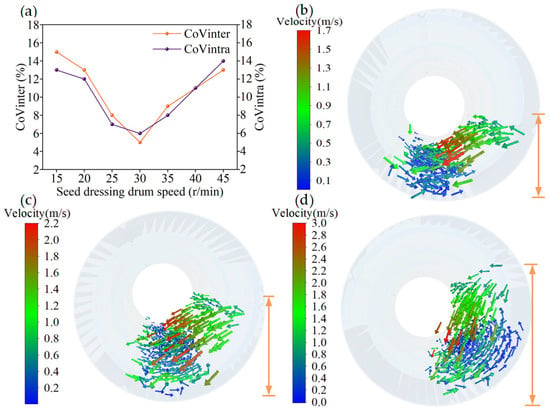
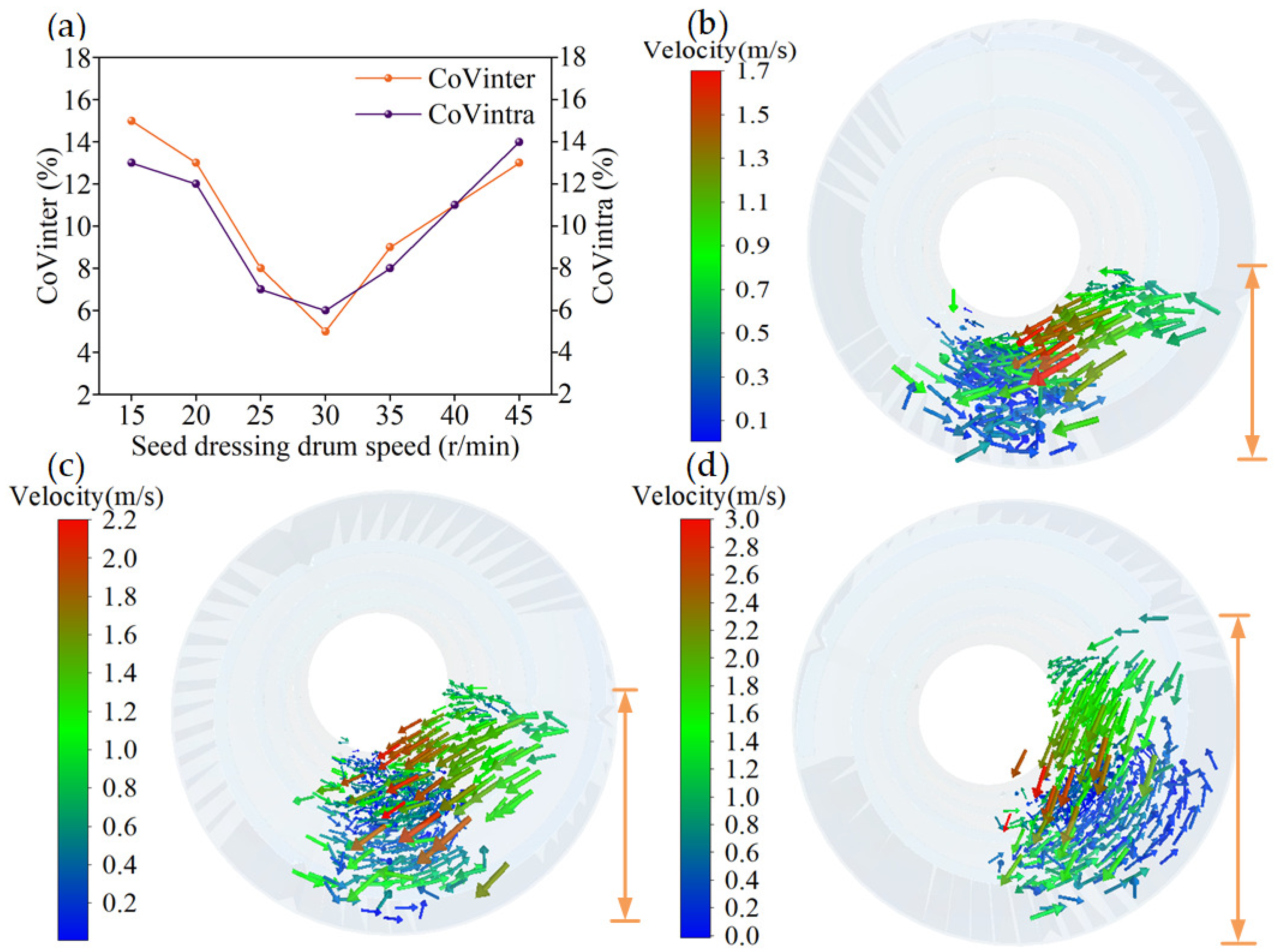
Figure 9 shows the effect of different dressing drum speeds on the evaluation index of seed dressing uniformity. The drum speed ranges from 15 to 45 r·min−1, CoVinter ranges from 5% to 15%, and CoVintra ranges from 6% to 14%. When the drum speed is 20 to 40 r·min−1, CoVinter and CoVintra are at relatively low levels and have small fluctuation ranges.
Figure 9.
Schematic diagram of the effect of rotational speed: (a) effect of different rotational speeds on the coefficient of variation; (b) movement of the cut potato at 20 r·min−1; (c) movement of the cut potato at 30 r·min−1; (d) movement of the cut potato at 40 r·min−1.
The results of single-factor experiments shows that the uniformity of potato seed dressing first increased and then decreased with the increase in drum speed. When the drum speed was low, most of the cut potatoes were located in the lower half of the seed dressing drum, resulting in potato accumulation (Figure 9b), which also affected axial conveying speed. When drum speed was too high, the cut potatoes would undergo a complete centrifugal motion along the inner wall of the drum, resulting in uneven seed tumbling or detachment from the area sprayed by the nozzle (Figure 9d), causing a decrease in seed dressing quality.
3.1.2. Influence of Spiral Guide Plate Pitch
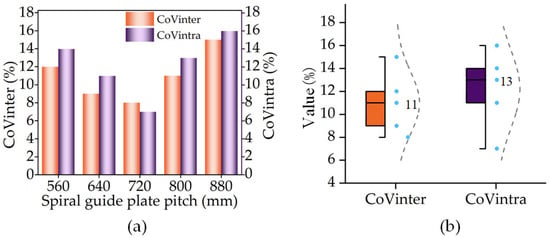
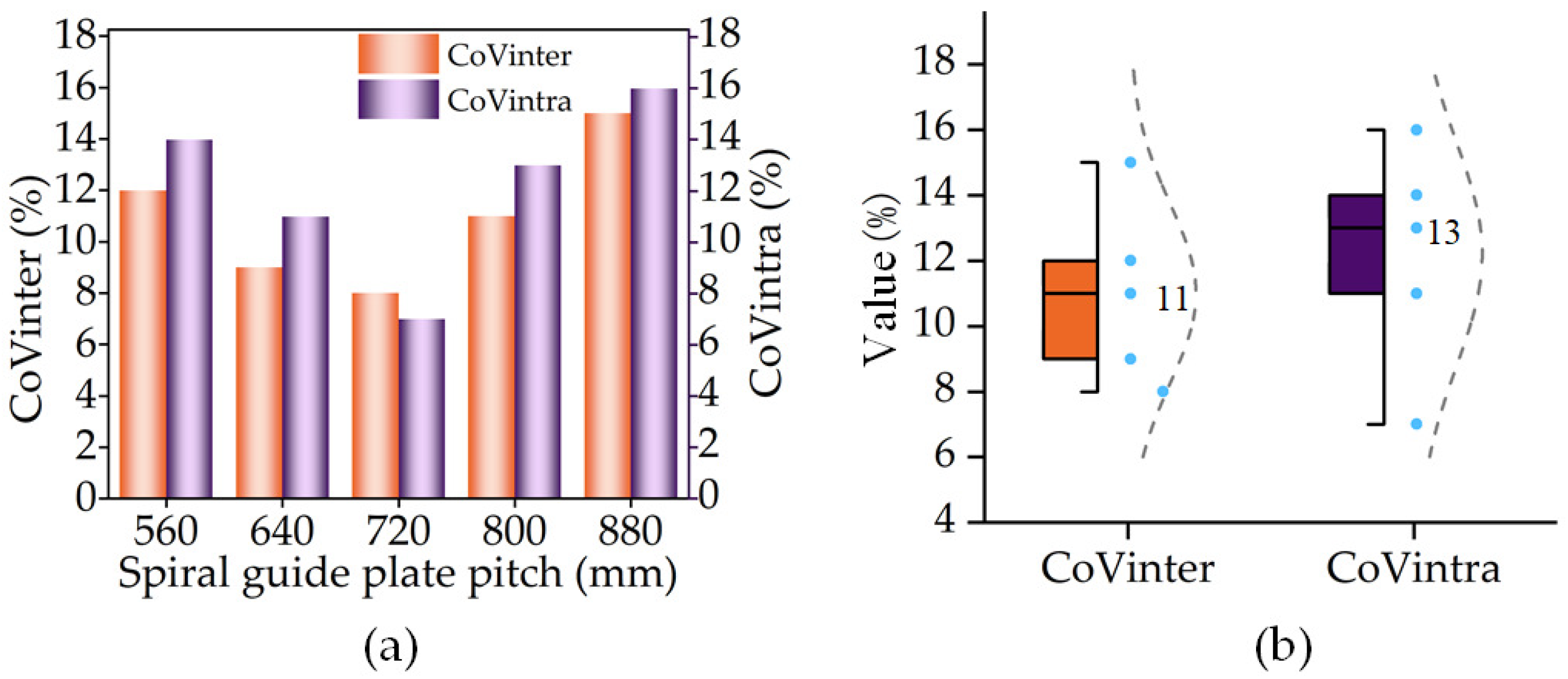
Figure 10 shows the influence of the pitch of the spiral guide plates inside the seed dressing drum on the evaluation index of seed dressing uniformity. The pitch ranges from 560 to 880 mm, CoVinter from 8% to 15%, and CoVintra from 7% to 16%. The experimental results show that when the pitch is 640 to 800 mm, both indicators are at a relatively low level and include the minimum value. Therefore, the optimal pitch range is 640 to 800 mm.
Figure 10.
The effect of different spiral guide plate pitches on the coefficient of variation. (a) the bar chart; (b) the box-and-whisker plot.
Analysis of the experimental results reveal that when the screw pitch was small, the number of times the cut potatoes were thrown increased, leading to more frequent contact between the guide plate and the cut potatoes, which increased the risk of damage and slowed down the material’s propulsion speed. Conversely, when the screw pitch was large, although the axial displacement increased after each oblique throwing motion, the uneven tumbling of the cut potatoes and the reduced contact time with the powder resulted in a decline in the quality of the seed dressing.
3.1.3. Influence of Feed Rate
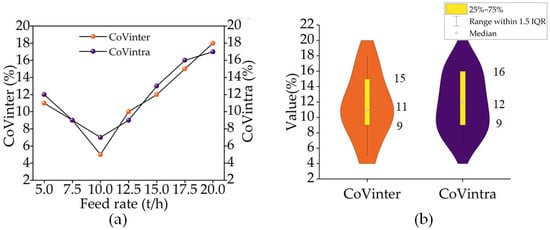
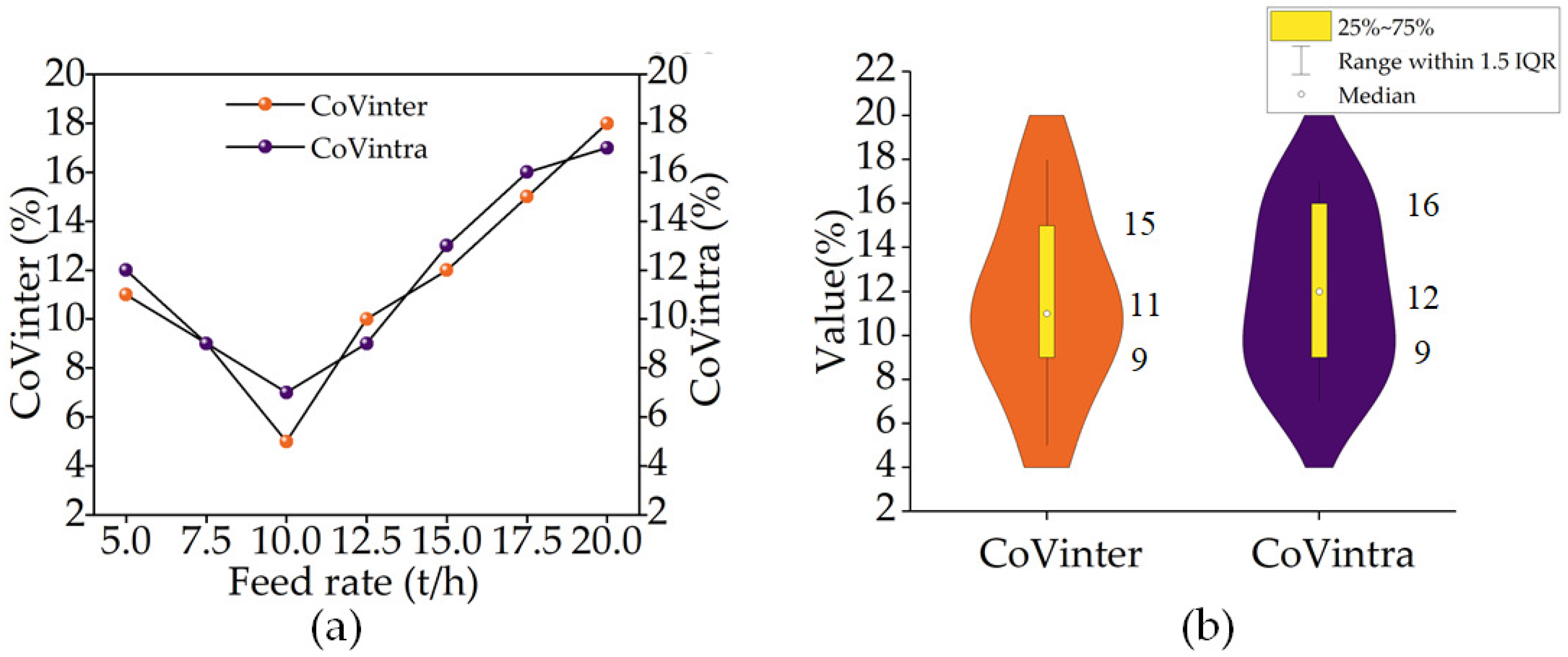
Figure 11 shows the effect of different feed rates on the evaluation index of seed dressing uniformity. The feed rate ranged from 5 to 20 t·h−1, CoVinter ranged from 5% to 18%, and CoVintra ranged from 7% to 17%. As the feed rate increased, CoVinter and CoVintra first decreased and then increased, and when the feed rate was relatively low, CoVinter and CoVintra were at relatively low levels.
Figure 11.
The effect of different feed rates on the coefficient of variation. (a) the line chart; (b) the violin chart.
The experimental results show that when the feed rate is too high (the filling coefficient is too high, such as exceeding 0.4), the cut potatoes accumulate excessively inside the drum, resulting in uneven turning. This leads to poor seed dressing quality and may also cause excessive machine load. When the feed rate does not exceed 15 t·h−1, the coefficient of variation is smaller, indicating better operation of the seed dressing device and higher seed dressing quality.
3.2. Orthogonal Experiment Results and Parameter Optimization
3.2.1. Regression Model Equation and Significance Test
To explore the interactions among the factors, a three-factor, five-level orthogonal rotational combination experiment was conducted after the single-factor experiment. The experimental design and results are shown in Table 4.
Table 4.
Experimental design and results.
The experimental data were subjected to regression analysis using Design-Expert software to obtain regression equations between each performance evaluation index and each factor, as shown in Formulas (14) and (15).
Analysis of variance was performed on the regression equations, and the results are shown in Table 5. Regression equations for CoVinter Y1 and CoVintra Y2 were both highly significant, with no significant missing fit, indicating that the established model is accurate and effective. Determination coefficients of Y1 and Y2 are 0.99 and 0.98, respectively, indicating a high correlation between the predicted and actual values of the regression equations [42,43].
Table 5.
Analysis of variance (ANOVA) results.
To further validate the robustness and reliability of the models, additional verifications were performed, including residual analysis, significance testing of regression and mismatch terms, and comparison between predicted and experimental values. The residuals were randomly distributed around zero without obvious systematic deviation, and the regression models were highly significant (p < 0.01) while the lack of fit was not significant, confirming good stability and predictive ability. The close agreement between predicted results and experimental data further verify that the models possess strong robustness and can be reliably used for parameter optimization and performance prediction of the seed dressing device. Therefore, the regression models of Y1 and Y2 can be used to analyze and predict the uniformity of seed dressing in cut potatoes.
3.2.2. Analysis of the Influence of Experimental Factors
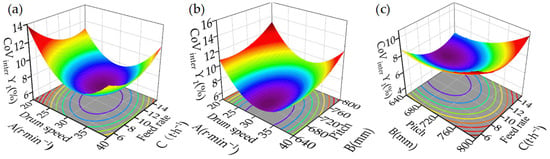
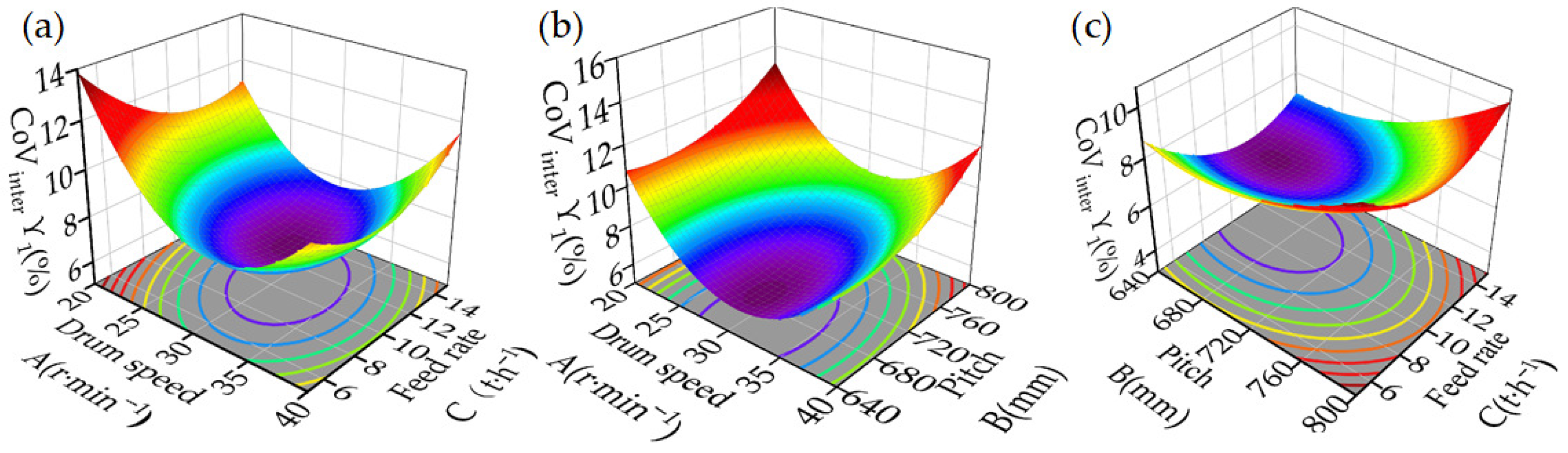
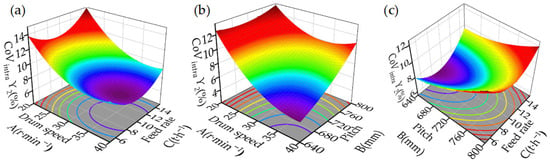
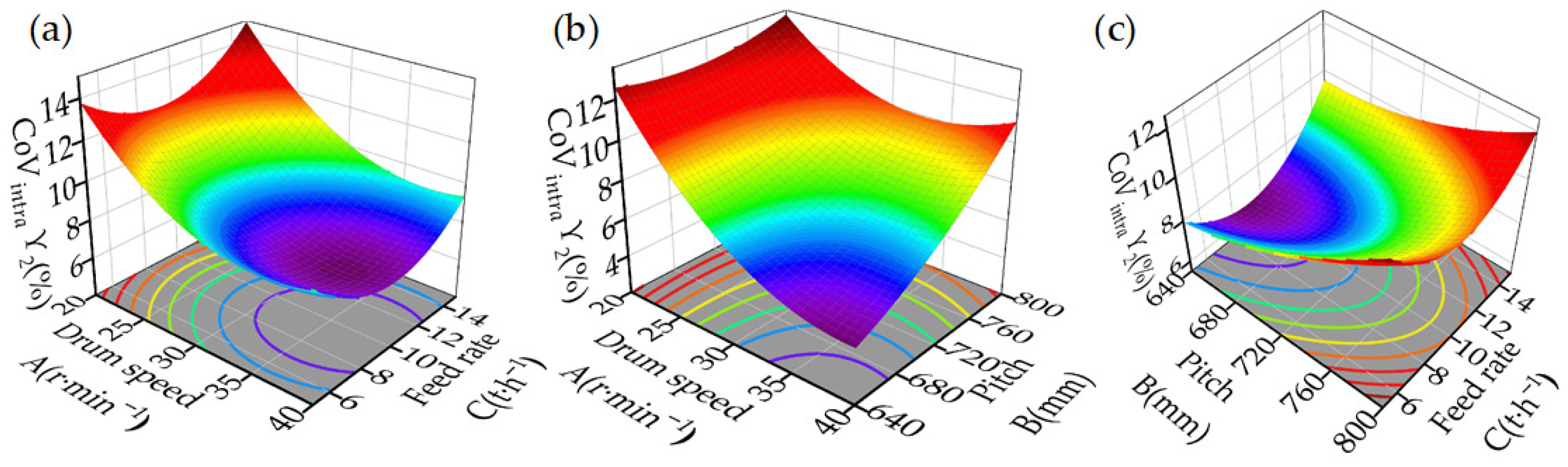
As shown in Table 5, the major and minor factors affecting CoVinter Y1 were A2 > B > C2 > A > B2 > C > AC, and the interaction between drum speed and feed rate had a significant impact on CoVinter Y1. Similarly, the major and minor factors affecting CoVintra Y2 were A > B > C2 > A2 > AB > B2, and the interaction between drum speed and screw pitch had a significant impact on CoVintra Y2. To more intuitively illustrate the impact of various factors and their interactions on the experimental indicators, response surface plots were generated using Design-Expert software, as shown in Figure 12 and Figure 13.
Figure 12.
Effects of Various Factors on CoVinter (a) Y1 (A, 720 mm, C); (b) Y1 (A, B, 10 t·h−1); (c) Y1 (30 r·min−1, B, C).
Figure 13.
Effects of Various Factors on CoVintra (a) Y2 (A, 720 mm, C); (b) Y2 (A, B, 10 t·h−1); (c) Y2 (30 r·min−1, B, C).
As shown in Figure 12a and Figure 13a, when the feed rate is at 0 (10 t·h−1), as the rotation speed of the seed dressing drum increases, CoVinter first decreases and then increases, while CoVintra continuously decreases, but the decreasing trend gradually slows down. Changes in rotation speed of the seed dressing drum affect the tumbling height of the cut potatoes within the drum. Under otherwise constant conditions, appropriately increasing the rotation speed can significantly reduce CoVinter and CoVintra; however, when the rotation speed is too high, some cut potatoes will escape the coverage of the powder spray nozzles, leading to an increase in CoVinter.
When the drum speed is at 0 (30 r·min−1), CoVinter and CoVintra initially decrease and then increase with increasing feed rate. With other conditions remaining constant, changes in feed rate affect the accumulation of cut potatoes within the seed dressing drum, but the effect is smaller compared to drum speed.
As shown in Figure 12b and Figure 13b, when the pitch is at 0 (720 mm), as the rotational speed of the seed dressing drum increases, CoVinter first decreases and then increases, while CoVintra continuously decreases. As the pitch increases, the changing trends of CoVinter and CoVintra gradually slow down, but the values remain relatively large.
When the rotational speed is at 0 (30 r·min−1), CoVinter and CoVintra show a continuous increasing trend with increasing pitch. Changes in pitch affect the number of times the cut potatoes tumble within the seed dressing drum. Although a smaller pitch increases the number of times the cut potatoes undergo helical, oblique, and projectile motion within the drum, resulting in lower values for both evaluation indicators, it increases the likelihood of damage to the cut potatoes.
As shown in Figure 12c and Figure 13c, when the feed rate is at 0 (10 t·h−1), both CoVinter and CoVintra increase with increasing screw pitch, with CoVintra showing a larger trend. This is because increasing the screw pitch reduces the number of times the cut potatoes tumble within the dressing drum, thus reducing the contact time with the powder, leading to an increase in values of both evaluation indicators.
When the pitch is at 0 (720 mm), both evaluation indicators first decrease and then increase with the increase in feed rate. When the feed rate is small, the movement of the cut potatoes in the dressing drum is not a continuous seed flow, and there is less collision and tumbling between the cut potatoes, so CoVinter and CoVintra are at a higher level; however, when the feed rate is large, the cut potatoes will accumulate in the dressing drum, resulting in uneven tumbling between the potatoes, so the two evaluation indicators gradually increase.
3.2.3. Parameter Optimization
To find the optimal parameter combination of interaction factors within the target range, a multi-objective optimization method was used to optimize three influencing factors—drum speed, screw pitch, and feed rate—and two evaluation indices—CoVinter and CoVintra. The optimized objective function and constraints are as follows:
The model analysis reveals that, under the parameter combination of a rotational speed of 32.84 r·min−1, a screw pitch of 682.64 mm, and a feed rate of 10.44 t·h−1, CoVinter was 6.33% and CoVintra was 6.35%.
3.3. Bench Test Verification
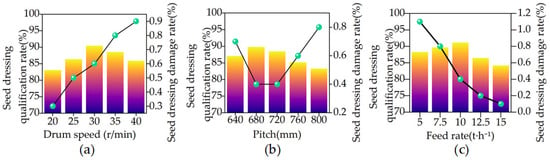
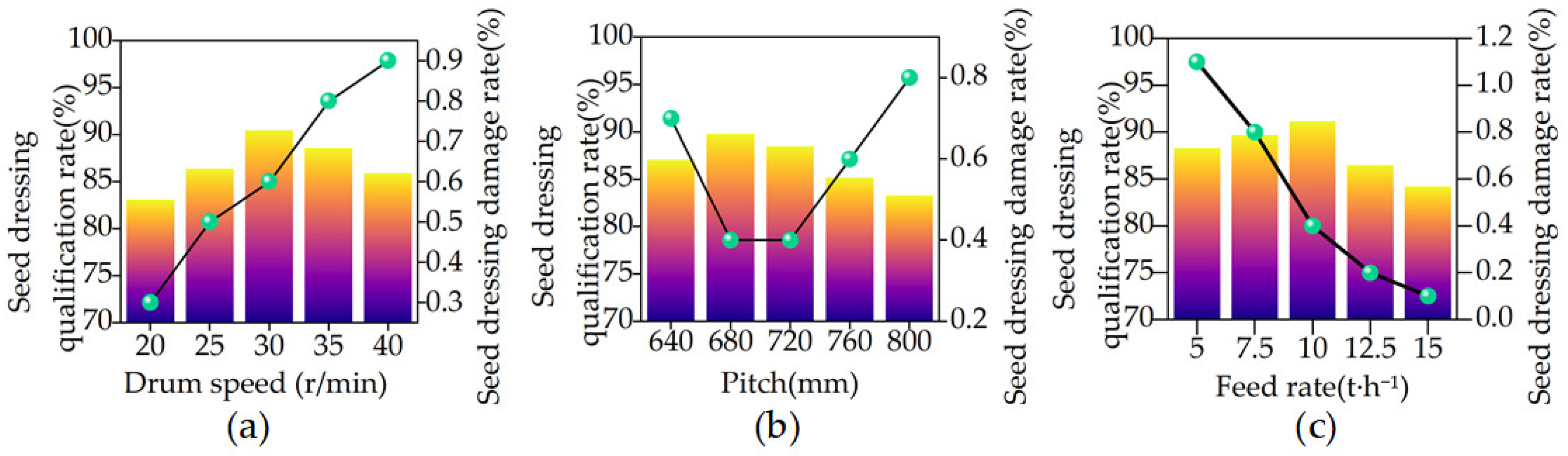
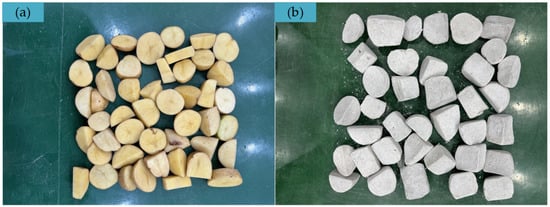
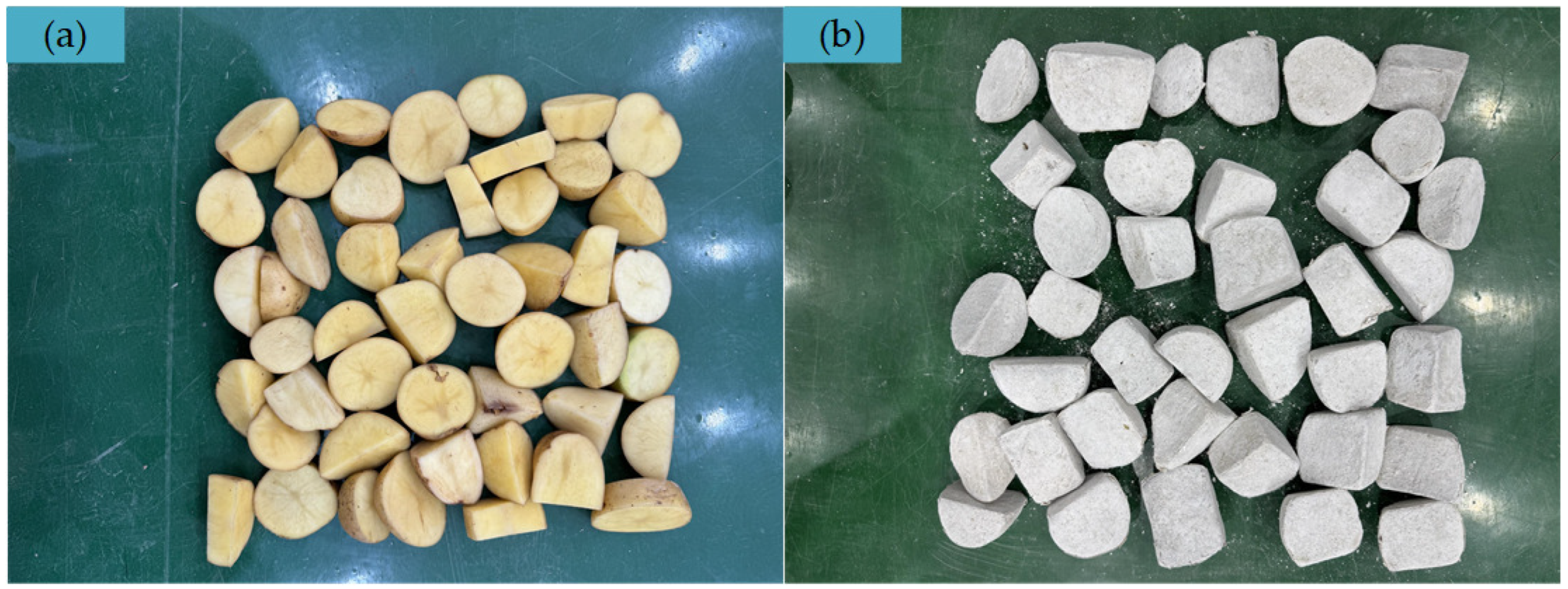
To verify the rationality of the simulation results using a self-built experimental platform, a single-factor experiment was first conducted, and the results are shown in Figure 14, where the bar chart represents the seed dressing qualification rate and the line chart represents the seed dressing damage rate. The experimental results show that the simulation results are consistent with the platform experiment results. Subsequently, five repeated experiments were conducted under the optimal combination of parameters, and the results are shown in Table 6. A comparison of the effects before and after seed dressing is shown in Figure 15.
Figure 14.
Single-factor experiment results. (a) effect of drum speed on seed dressing qualification rate and damage rate; (b) effect of spiral guide plate pitch on seed dressing qualification rate and damage rate; (c) effect of feed rate on seed dressing qualification rate and damage rate.
Table 6.
Verification test results.
Figure 15.
Comparison of effects before and after seed dressing: (a) before seed dressing; (b) after seed dressing.
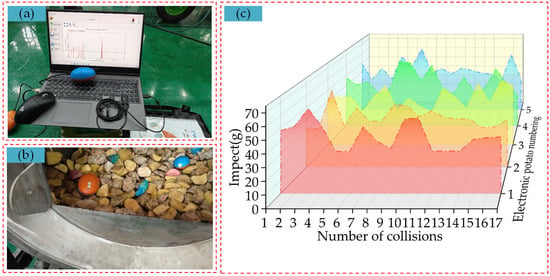
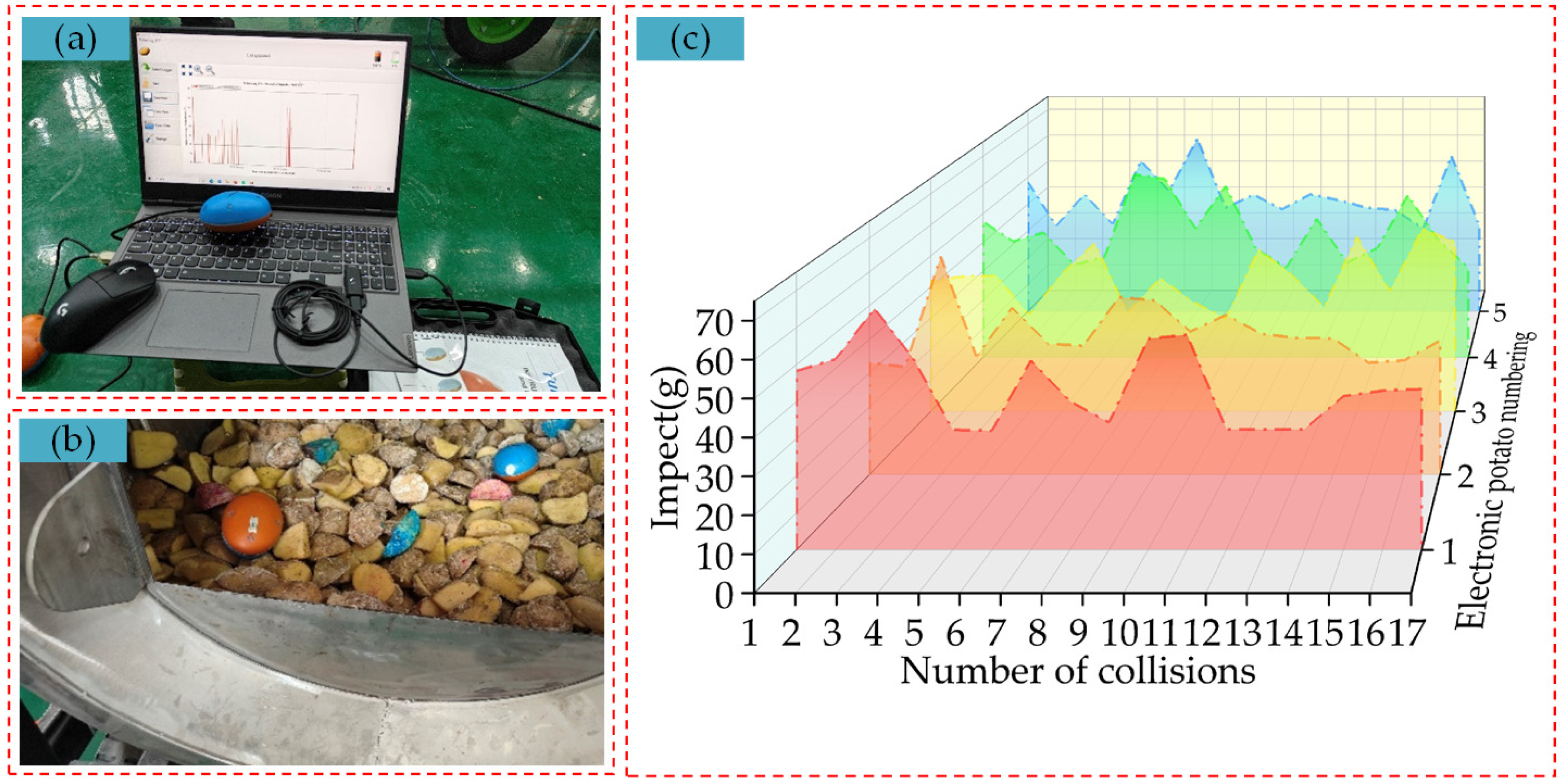
During the experiment, electronic potato collision detection technology was used to obtain the collision characteristics of potatoes when the seed dressing device for cut potatoes was running under optimal parameter conditions. The experiment was conducted 5 times, and the experimental process and data obtained are shown in Figure 16.
Figure 16.
Electronic potato collision detection device and data acquisition process. (a) electronic potato collision detection device; (b) schematic diagram of collision data acquisition; (c) collision acceleration distribution of electronic potatoes.
The experiment shows that when the rotation speed of the seed dressing device was 32.84 r·min−1, the screw pitch was 682.64 mm, the feed rate was 10.44 t·h−1, the seed dressing qualification rate was 94.1%, and the seed dressing damage rate was 0.32%. Although predicted and experimental values show some differences, their overall trends are highly consistent. These deviations mainly arise from simplified spraying and idealized boundary conditions in the simulation. Theoretical modeling in Section 2.3 and Section 2.4 has certain limitations from simplifications such as treating cut potatoes as point masses and neglecting tuber interactions, but these assumptions only helped define initial parameter ranges. The subsequent EDEM 2024 simulation with ray tracing used irregular tuber models and real material parameters to accurately reproduce the actual seed dressing process. Bench tests confirmed a seed dressing qualification rate of 94.1% and a damage rate of 0.32%, with strong agreement between simulation and test results. The closed-loop research framework effectively offsets early modeling limitations, so their impact on final conclusions and equipment performance is negligible.
Furthermore, as shown in Figure 16c, the peak collision acceleration of the electronic potatoes (Martin Lishman Ltd., Bourne, UK) during the seed dressing process was consistently lower than the peak acceleration of the potato tuber collision damage [44,45]. Potato damage was rare during the experiment, indicating a good seed dressing effect that met agronomic requirements for potato seed dressing.
4. Conclusions
This study develops a drum-type seed dressing device for cut seed potatoes that solves key technical bottlenecks in practical production. The spiral design achieves uniform coating while minimizing mechanical damage. By integrating spraying and powdering into one compact process, the device greatly reduces labor input, improves operational efficiency, and ensures stable, high-quality seed treatment. Furthermore, this innovative research provides valuable reference for the construction of a potato seed dressing quality assessment system. These advantages make it highly suitable for large-scale industrial production and commercial popularization. It can significantly promote the mechanization, standardization, and intelligent upgrading of the potato seed industry chain, with important practical value and broad market prospects for commercial potato planting and seed enterprises. This study yields the following conclusions:
(1) A drum-type seed dressing device suitable for cut potatoes was designed, and its overall structure and working principle are described in detail. Through kinematic and dynamic analysis, movement patterns of cut potatoes in the drum during the three stages were revealed, and the key factors affecting seed dressing and their value ranges were determined.
(2) Through modeling analysis, three factors affecting the working effect of the seed dressing device were determined: drum speed, spiral guide plate pitch, and feed rate. The seed dressing process was simulated using EDEM 2024 combined with ray tracing. Single-factor experiments showed that seed dressing uniformity was good when the drum speed was 20 to 40 r·min−1, the spiral guide plate pitch was 640 to 800 mm, and the feed rate did not exceed 5 to 20 t·h−1. Combined with a quadratic orthogonal rotational combination experiment, the optimal parameter combination was determined to be a drum speed of 32.84 r·min−1, a spiral guide plate pitch of 682.64 mm, and a feed rate of 10.44 t·h−1. At this time, the predicted CoVinter was 6.33%, and CoVintra was 6.35%.
(3) The optimal working parameters were obtained through multi-objective solution. Under optimal parameters, the seed dressing qualification rate reached 94.1%, the damage rate was 0.32%, and the peak impact acceleration did not exceed the damage threshold of a potato. The simulation results are highly consistent with the bench test results.
Future research will focus on the theory and methods of coordinated control of feed amount, spray amount and powder amount, so as to achieve dynamic adjustment of working parameters while meeting the quality requirements of seed potato dressing.
Author Contributions
Conceptualization, L.W., L.S. and J.L.; methodology, L.W. and L.S.; software, L.S. and X.Z.; validation, Q.G., J.L. and Y.R.; formal analysis, L.W., L.S. and Q.G.; investigation, L.W. and J.L.; resources, X.Z., L.L. and Y.R.; data curation, L.W., L.S. and L.L.; writing—original draft preparation, L.W., L.S. and J.L.; writing—review and editing, L.W., Q.G., J.L. and Y.R.; supervision, L.S., X.Z. and Y.R.; funding acquisition, J.L. and Y.R.; All authors have read and agreed to the published version of the manuscript.
Funding
This work was supported by Research on precise seed cutting technology and equipment for potato under the Sub-project of National Key R&D Programme (grant number 2023YFD2000901-4); Development of an Electric Precision Potato Seed Metering Device (grant number CN20235002-2-2). The authors wish to thank their generous financial assistance.
Institutional Review Board Statement
Not applicable.
Data Availability Statement
All data are presented in this article in the form of figures and tables. The original contributions presented in this study are included in the article.
Acknowledgments
The authors would like to acknowledge the College of Engineering at Northeast Agricultural University and the Northern Potato Full Mechanization Research Base (Northeast China) of the Ministry of Agriculture and Rural Affairs.
Conflicts of Interest
The authors declare no conflicts of interest.
References
- Food and Agriculture Organization. FAOSTAT on Production/Yield Quantities of Potatoes in World, 2000–2019. 2019. Available online: http://www.fao.org/faostat/en/ (accessed on 3 February 2026).
- Larkin, R.P.; Honeycutt, C.W.; Griffin, T.S.; Olanya, O.M.; He, Z. Potato Growth and Yield Characteristics under Different Cropping System Management Strategies in Northeastern U.S. Agronomy 2021, 11, 165. [Google Scholar] [CrossRef] [Scilit]
- Zhu, X.X.; Lyu, P.Y.; Gao, Q.; Ma, H.Q.; Chen, Y.X.; Qi, Y.; Li, J.C.; Lyu, J.Q. Design and Comparative Experimental Study of Air-Suction Mulai-Arm Potato Planter. Agriculture 2025, 15, 1714. [Google Scholar] [CrossRef] [Scilit]
- Liu, C.; Wu, F.; Gu, F.; Cao, M.; Yang, H.; Shi, L.; Wang, B.; Wang, B. Recent Research Progress on Key Technologies and Equipment for Mechanized Potato Harvesting. Agriculture 2025, 15, 675. [Google Scholar] [CrossRef] [Scilit]
- Lyu, J.Q.; Yang, X.H.; Li, Z.H.; Li, J.C.; Liu, Z.Y. Design and Experiment of Vertical-Horizontal Cutter Collaborative Potato Seed Cutting Device. Trans. Chin. Soc. Agric. Mach. 2020, 51, 89–97. [Google Scholar] [CrossRef]
- Wang, X.Y.; Liu, W.L.; Zhang, H.; Su, G.L.; Ren, J.Y. Design and Experiment of Alignment-Positioning-Clamping-Cutting Combined Potato Seed Cutting Device. Trans. Chin. Soc. Agric. Mach. 2023, 54, 148–158. [Google Scholar] [CrossRef]
- Gu, H.Y.; Li, Z.H.; Li, T.; Li, T.H.; Li, N.; Wei, Z.C. Lightweight detection algorithm of seed potato eyes based on YOLOv5. Trans. Chin. Soc. Agric. Eng. 2024, 40, 126–136. [Google Scholar] [CrossRef]
- Li, Z.H.; Wen, X.Y.; Lyu, J.Q.; Li, J.C.; Yi, S.J.; Qiao, D. Analysis and prospect of research progress on key technologies and equipments of mechanization of potato planting. Trans. Chin. Soc. Agric. Mach. 2019, 50, 1–16. [Google Scholar] [CrossRef]
- Milestone Equipment. Treaters Models. Available online: https://milestone-equipment.com/new-equipment/cutters-treaters/ (accessed on 3 February 2026).
- All Star Manufacturing & Design. Better Built Potato Seed Treater. Available online: http://www.allstarmfgllc.com/seed-treaters.html (accessed on 3 February 2026).
- Zhao, H.X.; Xu, L.Q.; Chen, S.Q.; Cai, Y.S.; Du, X.D.; Yang, L.M. Research Progress of Seed Pelletization Technology at Home and Abroad. Crops 2024, 18–25. [Google Scholar] [CrossRef]
- Wu, F.; Zhang, H.J.; Xie, H.X.; Wang, J.N.; Qiu, C.T. Overview and Development Thinking of Seed Coaters in China. J. Chin. Agric. Mech. 2017, 38, 116–120. [Google Scholar]
- Wang, J.N.; Xie, H.X.; Hu, Z.C.; Hu, L.L.; Peng, B.L.; Liu, M.J. Optimization of Process Parameters for Mechanized Coating of Peanut Seeds by Disc-Roller Type Coater. Trans. Chin. Soc. Agric. Eng. 2017, 33, 43–50. [Google Scholar] [CrossRef]
- Zhang, S.Y.; Lyu, C.X.; Bai, S.H.; Wu, J.C.; Du, A.L.; Mao, W.H. Experiment and Parameter Optimization of Disc-Type Pelletizing Processing for Rapeseed. Trans. Chin. Soc. Agric. Mach. 2022, 53, 131–140. [Google Scholar] [CrossRef]
- Ma, X.J.; Liu, M.; Hou, Z.F.; Gao, X.Y.; Bai, Y.; Guo, M.J. Numerical Simulation and Experiment of Pellet Coating for Small Forage Seeds. Trans. Chin. Soc. Agric. Eng. 2023, 39, 43–52. [Google Scholar] [CrossRef]
- Qiu, Y.; Chen, Z.; Hou, Z.F.; Song, T.; Mi, L.K.; Shao, Z.W. Numerical Simulation and Experiment of Vibration Field Improving Pellet Coating Effect of Forage Seeds. Trans. Chin. Soc. Agric. Eng. 2017, 33, 86–93. [Google Scholar] [CrossRef]
- Guo, M.J.; Cai, X.Y.; Ma, X.J.; Hou, Z.F.; Tong, X.; Liu, H.Y. Numerical Simulation and Experiment on Pill Coating of Red Clover Seeds under the Action of Vibrating Force Field. Processes 2023, 11, 2551. [Google Scholar] [CrossRef] [Scilit]
- Manoj, H.M.; Pawar, P.P.; Krupa, R.; Pareek, P.K.; Kumar, D.; Vindhya, G.B. Innovative Horizons in Agricultural Technology with TSA Based Strawberry Squeeze Net Classification Model. In Proceedings of the 2024 International Conference on Data Science and Network Security (ICDSNS), Tiptur, India, 26–27 July 2024; IEEE: Piscataway, NJ, USA, 2024; pp. 1–7. [Google Scholar] [CrossRef] [Scilit]
- Xie, J.; Han, L.P. Research Status and Prospect of Seed Pelletization in China. Chin. J. Eco-Agric. 2024, 32, 605–615. [Google Scholar]
- Pasternak, L.; Sommerfeld, M.; Muramulla, P.; Yuan, F.L.; Gopireddy, S.; Urbanetz, N.; Profitlich, T. Tablet Coating in Lab-Scale Drum Coaters: Combining DEM Simulations and Spray Experiments to Predict Tablet Coating. Powder Technol. 2023, 427, 118683. [Google Scholar] [CrossRef] [Scilit]
- Mostafaei, F.; Khinast, J.G.; Remmelgas, J.; Forgber, T. Simultaneous Optimization of Inter-and Intra-Tablet Coating Variability in a Lab-Scale Coating Process via DEM-MC Simulations. Powder Technol. 2023, 428, 118788. [Google Scholar] [CrossRef] [Scilit]
- Song, Y.; Zhou, T.; Bai, R.; Zhang, M.; Yang, H. Evaluation of Coating Variability in a Wurster Coater via Ray Tracing and Spray Zone Methods. Ind. Eng. Chem. Res. 2024, 63, 1649–1661. [Google Scholar] [CrossRef] [Scilit]
- NY/T 3483-2019; Technical Specification for Mechanized Production of Potato. Standards Press of China: Beijing, China, 2019.
- Li, B.; Li, F.L.; Xia, C.L.; Zhu, Y.; Cai, Z.Y.; Wu, H. Design and Experiment of Drum-Type Roaster for Liu’an Guapian Based on EDEM. Trans. Chin. Soc. Agric. Eng. 2025, 41, 310–321. [Google Scholar] [CrossRef]
- Shi, X.; Niu, C.H.; Wang, X.N.; Zhang, H.C.; Yang, H.M. Design of Wind Separation Device for Waste Plastic Film and Impurities with Drum Screen. Trans. Chin. Soc. Agric. Eng. 2017, 33, 19–26. [Google Scholar] [CrossRef]
- Liu, L.; Wu, T.; Kong, F.T.; Sun, Y.F.; Chen, C.L.; Xie, Q.; Shi, L. Optimized design and experiment of the picking mechanism for brush-roller castor harvesters. Trans. Chin. Soc. Agric. Eng. 2021, 37, 19–29. [Google Scholar] [CrossRef]
- Chen, P.; Huang, T.C.; Wu, B.; Qian, H.Y.; Xie, F.P.; Liu, B.H.; Liu, D.W.; Li, X. Modeling the Discharge Rate of a Screw Conveyor Considering Hopper–Conveyor Coupling Parameters. Agriculture 2024, 14, 1203. [Google Scholar] [CrossRef] [Scilit]
- Liu, W.Z.; He, J.; Li, H.W.; Li, X.Q.; Zheng, K.; Wei, Z.C. Calibration of Simulation Parameters for Mini-Potato Based on Discrete Element Method. Trans. Chin. Soc. Agric. Mach. 2018, 49, 125–135+142. [Google Scholar] [CrossRef]
- Su, C. Research on Precision Seeding Technology and Device for Cut Potato. Master’s Thesis, Xihua University, Chengdu, China, 2023. [Google Scholar]
- Su, C.; Liao, M.; Zhang, Y.; Yang, J. Classification and Mixed Population Calibration of Cut Potato Based on Discrete Element Method. Agric. Dev. Equip. 2023, 4, 136–138. [Google Scholar]
- Toschkoff, G.; Just, S.; Funke, A.; Djuric, D.; Knop, K.; Kleinebudde, P. Spray Models for Discrete Element Simulations of Particle Coating Processes. Chem. Eng. Sci. 2013, 101, 603–614. [Google Scholar] [CrossRef] [Scilit]
- Pei, C.; Elliott, J.A. Asymptotic Limits on Tablet Coating Variability Based on Cap-to-Band Thickness Distributions: A Discrete Element Model (DEM) Study. Chem. Eng. Sci. 2017, 172, 286–296. [Google Scholar] [CrossRef] [Scilit]
- Chen, J.; Yang, Q.; Liu, J.; Li, M.; He, S.; Zhou, X. Understanding the Correlations Between Tablet Flow Dynamics and Coating Uniformity in a Pan Coater: Experiments and Simulations. Chem. Eng. J. 2023, 471, 144392. [Google Scholar] [CrossRef] [Scilit]
- Hou, S.Y.; Ji, Z.C.; Xue, D.H.; Wang, X.; Feng, B.J.; Chen, H.T. Improved design and test of straw cleaning device suitable for no-tillage seeding unit. Trans. Chin. Soc. Agric. Mach. 2023, 54, 111–122. [Google Scholar] [CrossRef]
- Zhang, S.W.; Zhang, R.Y.; Cao, Q.Q.; Zhang, Y.; Fu, J.; Yuan, H.F. Design and Experiment of Double-deck Roller Sieve Type Fruit Impurity Separation Device for Tiger Nut Harvester. Trans. Chin. Soc. Agric. Mach. 2023, 54, 148–157. [Google Scholar] [CrossRef]
- Wang, Y.; Chen, Y.; Tang, Y.C.; Deng, C.; Zheng, Z.Y.; Luo, H.L. Study on Conveying Efficiency and Energy Consumption of Inclined Screw Conveyor Based on EDEM. Mater. Rev. 2025, 39, 639–642. [Google Scholar]
- JB/T 7679-2008; Screw Conveyor. Standards Press of China: Beijing, China, 2008.
- Editorial Committee. Handbook of Transportation Machinery Design and Selection (Volume 2); Chemical Industry Press: Beijing, China, 1998. [Google Scholar]
- Li, L.; Gan, Z.Y.; Li, C.B.; Li, L.L.; Liu, J.W.; Wang, H.J. Optimization Method of Design Parameters for Screw Conveyor Oriented to High Efficiency and Energy Saving. Comput. Integr. Manuf. Syst. 2023, 29, 2585–2594. [Google Scholar]
- JB/T 7730-2011; Seed Coater Machine. Standards Press of China: Beijing, China, 2011.
- NY/T 364-2019; Seed Chemical Treater-Technical Specification of Quality Evaluation. Standards Press of China: Beijing, China, 2019.
- Li, K.; Cai, W.; Zhao, B.; Lu, B.; Li, S.; Ni, X. Simulation and Experimental Study on the Seed Filling Performance of a Split Cotton Seeder. Biosyst. Eng. 2025, 253, 104128. [Google Scholar] [CrossRef] [Scilit]
- Shan, X.; Li, L.; Yan, B.; Dong, J.; Wei, X.; Meng, Z.; Wu, G. Design and Test of a Rotary Centrifugal Granular Fertiliser Hole-Applied Discharge Device. Biosyst. Eng. 2025, 255, 104163. [Google Scholar] [CrossRef] [Scilit]
- Wei, Z.C.; Wang, X.H.; Li, X.Q.; Wang, F.M.; Li, Z.H.; Jin, C.Q. Design and Experiment of Tracked Self-Propelled Sorting Type Potato Harvester. Trans. Chin. Soc. Agric. Mach. 2023, 54, 95–106. [Google Scholar] [CrossRef]
- Wei, Z.C.; Han, M.; Su, G.L.; Hu, L.L.; Wang, F.M.; Wang, X.L.; Cheng, P.X.; Jin, C.Q.; Zhang, X.C. Analysis and experiments of potato impact damage during the process of bagging and unloading. Trans. Chin. Soc. Agric. Eng. 2024, 40, 41–51. [Google Scholar] [CrossRef]

Disclaimer/Publisher’s Note: The statements, opinions and data contained in all publications are solely those of the individual author(s) and contributor(s) and not of MDPI and/or the editor(s). MDPI and/or the editor(s) disclaim responsibility for any injury to people or property resulting from any ideas, methods, instructions or products referred to in the content. |
© 2026 by the authors. Licensee MDPI, Basel, Switzerland. This article is an open access article distributed under the terms and conditions of the Creative Commons Attribution (CC BY) license.