


Abstract
To address the seasonal forage shortage in the southern foothills of the Greater Khingan Mountains in Inner Mongolia, this study investigated the effects of intercropping forage oat with rapeseed on forage yield, nutritional quality, and resource utilization. The experiment was conducted in Arun Banner, Hulunbuir City during 2023–2024, where a second crop was established after a first cut of forage oat. Three planting patterns were compared: monoculture oat (AO), monoculture rapeseed (BR), and oat–rapeseed intercropping (CO‖CR). The results showed that the yield of the intercropping system was higher than monoculture oat but lower than monoculture rapeseed. However, the system demonstrated an advantage in land use efficiency, with a land equivalent ratio (LER) of 1.161. Compared to their respective monocultures, intercropping significantly increased the dry matter yield of rapeseed by 38.4%, whereas the effect on oat yield was limited. Intercropping significantly increased the crude protein and crude fat content in both crops compared to their monocultures but had no significant effect on soluble sugar content. Furthermore, intercropping significantly reduced the neutral detergent fiber and acid detergent fiber content in both crops, resulting in higher relative feed value. Regarding water and nitrogen utilization, the water use efficiency of monoculture rapeseed was significantly higher than that of the intercropping system and monoculture oat by 20.7–21.5% and 90.2–113.2%. The total nitrogen accumulation in the intercropping system was significantly higher than in monoculture oat by 97.7–117.3% but showed no significant difference from monoculture rapeseed. In conclusion, adopting the oat–rapeseed intercropping pattern can significantly increase forage yield, improve nutritional quality, enhance water and nitrogen uptake and utilization efficiency, and achieve a coordinated improvement in high yield, quality, and efficiency for forage production in the southern foothills of the Greater Khingan Mountains.
1. Introduction
The agro-pastoral ecotone in the southern foothills of the Greater Khingan Mountains is a key livestock production region in Inner Mongolia. However, the development of animal husbandry in this area is constrained by the degradation of natural grasslands and seasonal forage shortages. This has led to a structural imbalance between forage supply and livestock demand [1]. The development of a forage cultivation technology system and developing efficient forage production systems based on artificial grasslands are important pathways to address the forage gap [2,3]. Fragmented forage planting can not only achieve a supply–demand balance across seasons and regions but also alleviate grazing pressure on natural grasslands. In addition, regulating forage quality through cultivation technologies such as fertilization and mixed sowing can provide support for realizing the supply of forage with multi-level quality gradients [4,5]. Therefore, establishing high-yield, high-quality cultivated forage systems is a necessary strategy to support the sustainable development of local animal husbandry.
At present, the single-forage planting structure dominated by silage maize can no longer meet the diversified development needs of modern animal husbandry. Both oat (Avena sativa) and rapeseed (Brassica napus) are important crops in the farming–pastoral ecotone of Inner Mongolia, as well as typical dual-purpose crops for grain and forage. They possess favorable production traits such as high forage yield, good palatability, and rich nutritional value, along with physiological characteristics including cold and drought resistance and salt–alkali tolerance [6,7]. Constructing diversified cropping systems of oat and rapeseed through different agronomic measures is an important approach to intensifying forage production, which can not only enhance the efficient utilization of environmental resources but also further increase forage yield and improve forage quality [8,9,10]. Numerous studies have shown that, compared to monoculture, intercropping or mixed sowing of different forage crops is conducive to increasing dry matter yield, improving feed value (optimizing the contents of neutral detergent fiber, acid detergent fiber and crude protein), and simultaneously increasing the land equivalent ratio [11,12,13].
The southern foothills of the Greater Khingan Mountains in Inner Mongolia are located in the northeastern part of the northern farming–pastoral ecotone and represent one of the key regions for agricultural and animal husbandry production. This region is characterized by a slow temperature rise in spring, short summer duration, and early frost in autumn and winter, resulting in a current situation where forage supply is abundant in the short term but insufficient and of poor quality in the cold season. Numerous practices have demonstrated that adopting “double-cropping” technology within one year can not only increase the fresh forage supply during autumn and winter, effectively extending the forage supply period, but also simultaneously improve land use efficiency [14,15,16,17]. Therefore, exploring the full utilization of water and nitrogen resources and the excavation of yield potential of forage under intercropping conditions with relay cropping is of great significance.
Based on this context, this study, grounded in the climatic characteristics and soil conditions of the southern foothills of the Greater Khingan Mountains in Hulunbuir, takes forage oat and rapeseed as the research subjects. It analyzes and compares the effects of double cropping and intercropping techniques on forage yield, quality, and water and nitrogen utilization, aiming to provide a theoretical basis for establishing high-yield, high-quality, and efficient forage production models in the southern foothills of the Greater Khingan Mountains and for promoting the diversified development of forage cropping structures.
2. Materials and Methods
2.1. Experiment Site
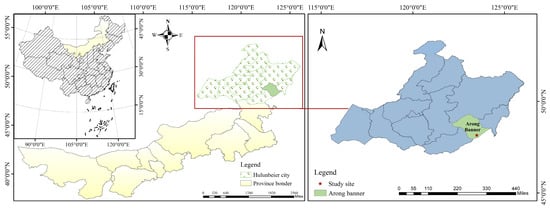
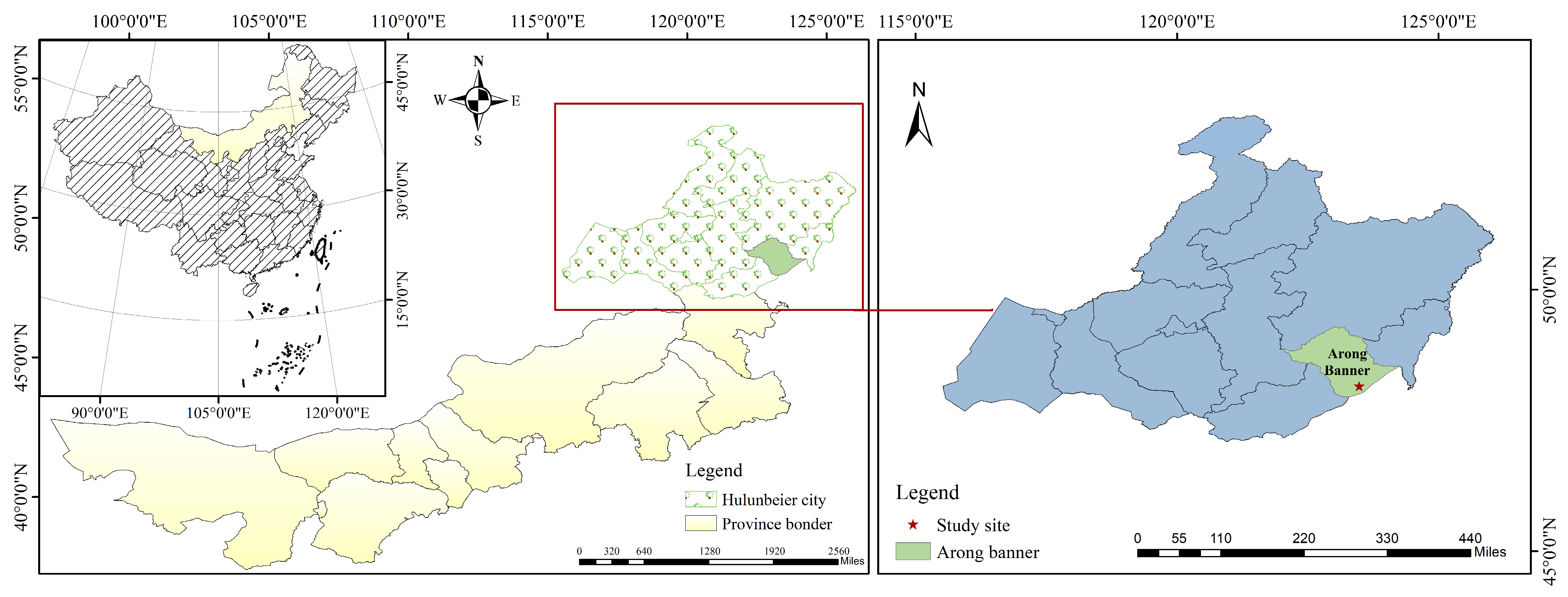
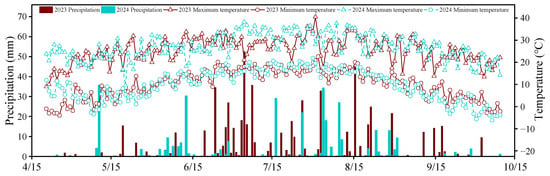
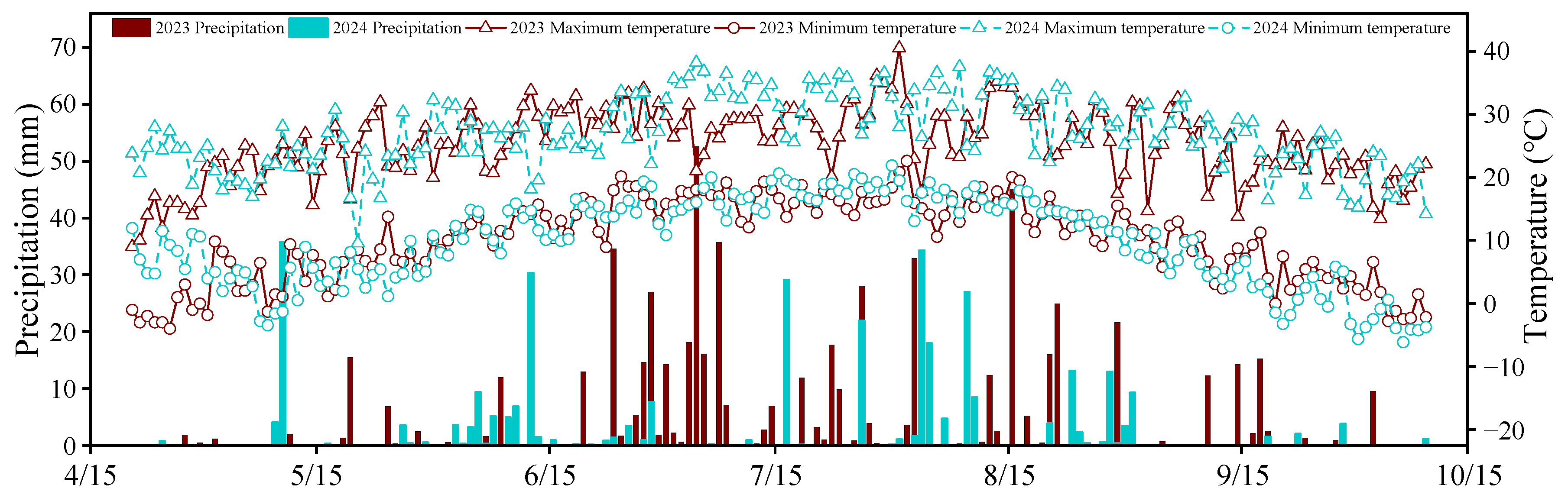
This study was conducted from 2023 to 2024 at the Modern Agricultural Science and Technology Demonstration Park in Arun Banner, Hulunbuir City, Inner Mongolia, China (119°29′ E, 42°50′ N). The site is located in the southern foothills of the Greater Khingan Mountains, belonging to the northern farming–pastoral ecotone (Figure 1). The climate is a temperate continental semi-humid type, with a long-term annual mean temperature of 1.7 °C, significant diurnal temperature variation, an annual effective accumulated temperature of 2394.1 °C, and annual sunshine hours of 2750−2850 h. The average annual precipitation is 458.4 mm, mainly concentrated primarily from June to August, accounting for 70% of the yearly total. The average annual evaporation is 1455.3 mm, and the frost-free period is approximately 120 days. More specifically, the vegetation season is typically greening up from mid-April and withering in mid-September. The precipitation and temperature during the growing seasons of the two years are shown in Figure 2. The soil type of the experimental site is meadow chernozem, and the soil texture is loam. The basic nutrient properties of the 0–20 cm soil layer prior to the experiment are presented in Table 1.
Figure 1.
Geographical location of the experimental site.
Figure 2.
Daily precipitation and temperature (max to min) during crop season in 2023 and 2024.
Table 1.
Basic nutrient conditions of 0~20 cm soil layer.
2.2. Experiment Design
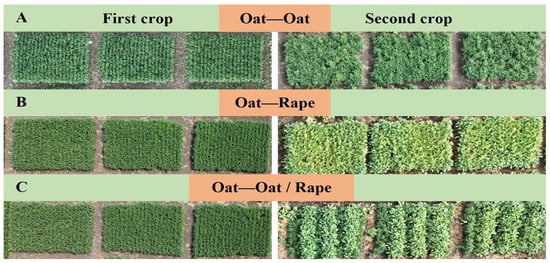
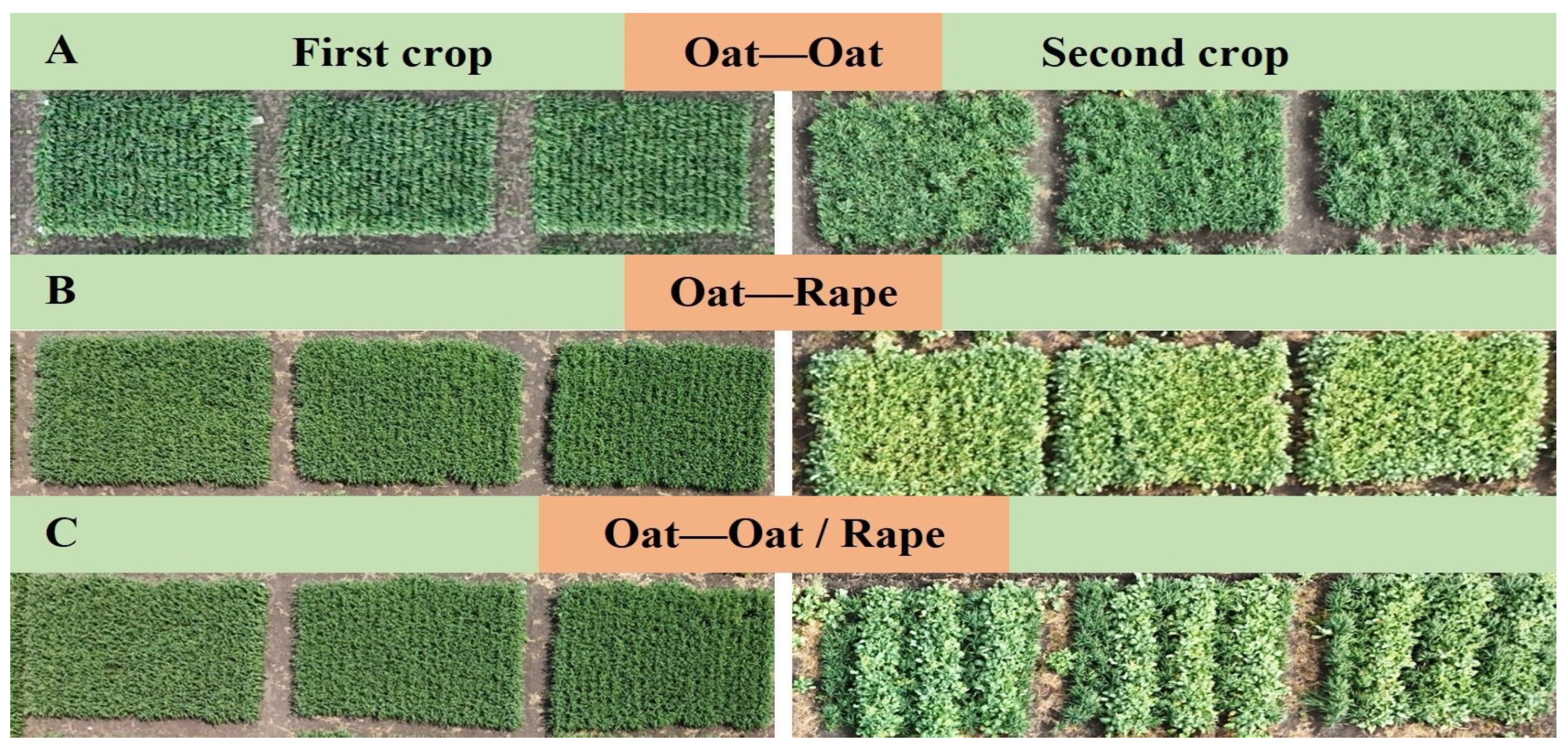
The experiment used oat (Mengsiyan 1) and rapeseed (Huayouza 62) as the test varieties. This study was conducted within a double-cropping system. The first crop was a spring-sown oat. Following this harvest, three multiple cropping patterns were designed, namely oat (A, with monoculture oat denoted as AO), rapeseed (B, with monoculture rapeseed denoted as BR), and oat‖rapeseed intercropping (C, with intercropped oat and rapeseed denoted as CO and CR, respectively). A schematic diagram of the planting patterns is shown in Figure 3. The experiment was arranged in randomized complete block design with three replicates, totaling 9 plots. Each plot covered an area of 20 m2 (5 m × 4 m). A uniform row spacing of 25 cm was set for all planting patterns (both monoculture and intercropping). For the intercropping treatment, a planting ratio of 4 rows of oat to 2 rows of rapeseed was used. The seeding rates of oat and rapeseed were 150 kg ha−1 and 12 kg ha−1, respectively.
Figure 3.
Planting patterns of two crop seasons oats and rapeseed in the field. (A), (B) and (C) represent oat monoculture, rapeseed monoculture, and intercropping of oats and rapeseed after the first oat harvest, respectively.
The sowing dates for the first (spring) crop were 3 May 2023, and 29 April 2024, harvested on 11 July 2023, and 9 July 2024, respectively, at which time the oat was at the early filling stage and the rapeseed was at the flowering stage. Before sowing, a one-time basal fertilizer application was carried out, consisting of 14.18 kg ha−1 urea (46% N), 130.44 kg ha−1 diammonium phosphate (18% N, 46% P2O5), and 120 kg ha−1 potassium sulfate (50% K2O). A topdressing of 97.83 kg ha−1 urea (46% N) was applied at the oat tillering stage. The sowing dates for the second (double) crop were 15 July 2023 and 16 July 2024, with 163.04 kg ha−1 urea (46% N) applied before sowing. The second crop was harvested on 29 September 2023 and 3 October 2024. Over the two cropping seasons per year, the total fertilizer application amounted to 150 kg ha−1 of pure N, 60 kg ha−1 of pure P2O5, and 60 kg ha−1 of pure K2O. At 25 DAS, manual weeding was conducted in all plots, and an insecticide (Avermectin, Bojea Agriculture Co., Ltd., Nangong, China) was applied to the rapeseed plots to control pests.
2.3. Sampling and Measurements
2.3.1. Forage Yield
Forage yield measurement and harvest were conducted at the oat early filling stage and the rapeseed flowering stage. For each monoculture treatment, two random 1 m2 areas were selected, the plants within were cut, and the fresh weight was measured to calculate fresh forage yield. Concurrently, 10 fresh plant samples were retained from each treatment. For the intercropping treatment, sample sections of oat (4 rows × 50 cm) and rapeseed (2 rows × 50 cm) were randomly cut for calculating fresh forage yield based on the measured plant fresh weight, and 10 fresh plant samples each of oat and rapeseed were also retained. The retained 10 fresh plants samples from each treatment mentioned above were weighed for fresh weight, then placed in an oven for deactivation at 105 °C for 30 min, followed by drying at 85 °C to constant weight. The dry forage yield per unit area was calculated according to the ratio of fresh weight to dry weight.
2.3.2. Land Equivalent Ratio
The land equivalent ratio (LER) was used to evaluate the benefit of the intercropping system relative to the monoculture systems and serves as an indicator for assessing the yield advantage of intercropping.
The land equivalent ratio (LER) was calculated using the following formula:
where YAO is monoculture oat yield, YBR is monoculture rapeseed yield, YCO is intercropped oat yield, and YCR is intercropped rapeseed yield. An LER > 1 indicates an intercropping advantage and higher land use efficiency, an LER = 1 indicates that the land use efficiency is equivalent to that of monocultures, whereas an LER < 1 indicates no intercropping advantage.
2.3.3. Forage Nutritional Quality
The dried forage plant samples from the 10 plants were ground and sieved. Crude protein content was determined using the Kjeldahl method. Crude fat content was determined using the Soxhlet extraction method. Soluble sugar content was determined using the anthrone colorimetric method. Neutral detergent fiber and acid detergent fiber contents were determined using the filter bag technique and an A200i semi-automated fiber analyzer (ANKOM Technology, Macedon, NY, USA). All methods for determining the aforementioned forage nutritional quality indices referred to the procedures described by Zhang [18] in Feed Analysis and Feed Quality Detection Technology.
The relative feeding value (RFV) was calculated using the following formula:
where DMI represents potential dry matter intake (%), DDM represents digestible dry matter (%), NDF represents neutral detergent fiber (%), and ADF represents acid detergent fiber (%).
RFV = (DDM × DMI)/1.29
DMI = 120/NDF
DDM = 88.9 − 0.779 ADF
2.3.4. Water Utilization
Soil moisture content was determined using the oven-drying method. Soil samples from the 0–100 cm soil layer (sampled at 20 cm intervals) were collected from each plot using a soil auger before sowing and after harvesting the second-season crop. The samples were placed in aluminum boxes and dried at 105 °C until a constant weight was achieved to calculate the soil water content. For the intercropping treatment, soil samples were collected from the area between adjacent rows of the two forage crops.
The following formulas were used to calculate soil water storage, seasonal water consumption, and water use efficiency:
where SWS represents soil water storage in the 0–100 cm soil layer (mm), W represents soil water content (%), D represents soil bulk density (g cm−3), H represents soil layer thickness (cm), ET represents seasonal water consumption (mm), P represents precipitation during the growing season (mm), ΔW represents the difference in soil water storage between before sowing and after harvest (mm), WUE represents forage water use efficiency (kg ha−1 mm−1), and Y is the forage yield (kg ha−1).
SWS = 0.1 × W × D × H
ET = P + ΔW
WUE = Y/ET
2.3.5. Nitrogen Utilization
Plant total nitrogen content was determined using the Kjeldahl method. Forage plant samples collected at 20, 50, and 75 days after sowing the second crop were dried, ground, sieved, and then digested with H2SO4-H2O2. The total nitrogen content was measured using a Kjeldahl nitrogen analyzer (Hanon K9860, Hanon Advanced Technology Group Co., Ltd., Jinan, China).
Plant nitrogen uptake was calculated using the following formula:
where NA is plant nitrogen uptake (kg ha−1), NC is plant nitrogen content (%), and DY is dried forage yield (kg ha−1).
NA = NC × DY
2.4. Data Statistical Analyses
Soil water storage and water use efficiency data were analyzed by analysis of variance (ANOVA) to detect differences using the least significant difference (LSD) method at the 5% probability level, which was performed using the SAS 9.0 software (SAS Institute Inc., USA). All other experimental data were statistically analyzed using the R software v4.5.1 (The R Foundation, Austria), with mixed linear models (lme4 package, years as random factors), and Tukey’s HSD method (emmeans package) for multiple comparisons (significance detect at p < 0.05). The Origin 2021 software (OriginLab Corporation, USA) was used for graphing.
3. Results
3.1. Forage Yield and Land Equivalent Ratio
The analysis of variance showed that species, cropping pattern, and their interaction all had a highly significant effect (p < 0.05) on both fresh and dry forage yield (Table 2). The significant interaction indicates that the effect of the cropping system differed between the two species. Compared with their respective monocultures, intercropping increased the fresh forage yield of rapeseed in both growing seasons. However, its effect on increasing oat fresh forage yield was limited, and it even caused a reduction in 2024. Analysis of dry forage yield revealed that, for both oat and rapeseed, intercropping had a yield-promoting effect relative to each monoculture. The increase for rapeseed was especially significant (p < 0.05), exceeding 38.4%, while the increase for oat was less than 10%. Furthermore, the fresh and dry forage yield of rapeseed was significantly higher than oat yield under both monoculture and intercropping conditions (p < 0.05). The fresh forage yield and dry forage yield under different cropping patterns followed the following order: monoculture rapeseed > intercropping system > monoculture oat. The average land equivalent ratio (LER) of the intercropping system over the two years was 1.161 (Table 3), indicating an overall advantage in land use efficiency compared to monocultures. The partial land equivalent ratios for oat and rapeseed were 0.694 and 0.467, contributing 59.8% and 40.2% to the LER. These values reveal competitive asymmetry; rapeseed acted as the dominant component in the system, while oat exhibited weaker competitive ability and even yield suppression under intercropping. In conclusion, intercropping exerted a significant high-yield effect on rapeseed yield. Furthermore, rapeseed contributed more than oat to the overall intercropping advantage.
Table 2.
Effects of different treatments on forage yield (t ha−1).
Table 3.
Effects of different treatments on forage land equivalent ratio.
3.2. Forage Nutrient Quality
As shown in Table 4, the analysis of variance indicated that species and cropping pattern had a highly significant effect (p < 0.05) on forage crude protein, soluble sugar and crude fat content, while the interaction (S × P) only significantly (p < 0.05) affected the crude protein and crude fat content and had no significant effect (p > 0.05) on soluble sugars. Within the same crop species, intercropping improved various nutritional quality traits of the forage to different extents, with the enhancement effect on crude fat content being particularly significant (p < 0.05). Within the same cropping pattern, rapeseed exhibited higher crude protein and crude fat content than oat, while its soluble sugar content was lower and its differences were significant (p < 0.05). Among the different treatments, intercropped rapeseed showed significantly higher crude protein and crude fat content than all other treatments (p < 0.05), with increases ranging from 39.5% to 54.7% and 8.0% to 12.5%, respectively. In contrast, for soluble sugar content, intercropped oat and monoculture oat were significantly higher than intercropped rapeseed and monoculture rapeseed. In summary, intercropping improved the nutritional quality of both oat and rapeseed to varying degrees, with the most pronounced effect being the significant enhancement of crude protein content in rapeseed.
Table 4.
Effects of different treatments on forage nutrient quality composition content (%).
3.3. Fiber Content and Relative Feeding Value
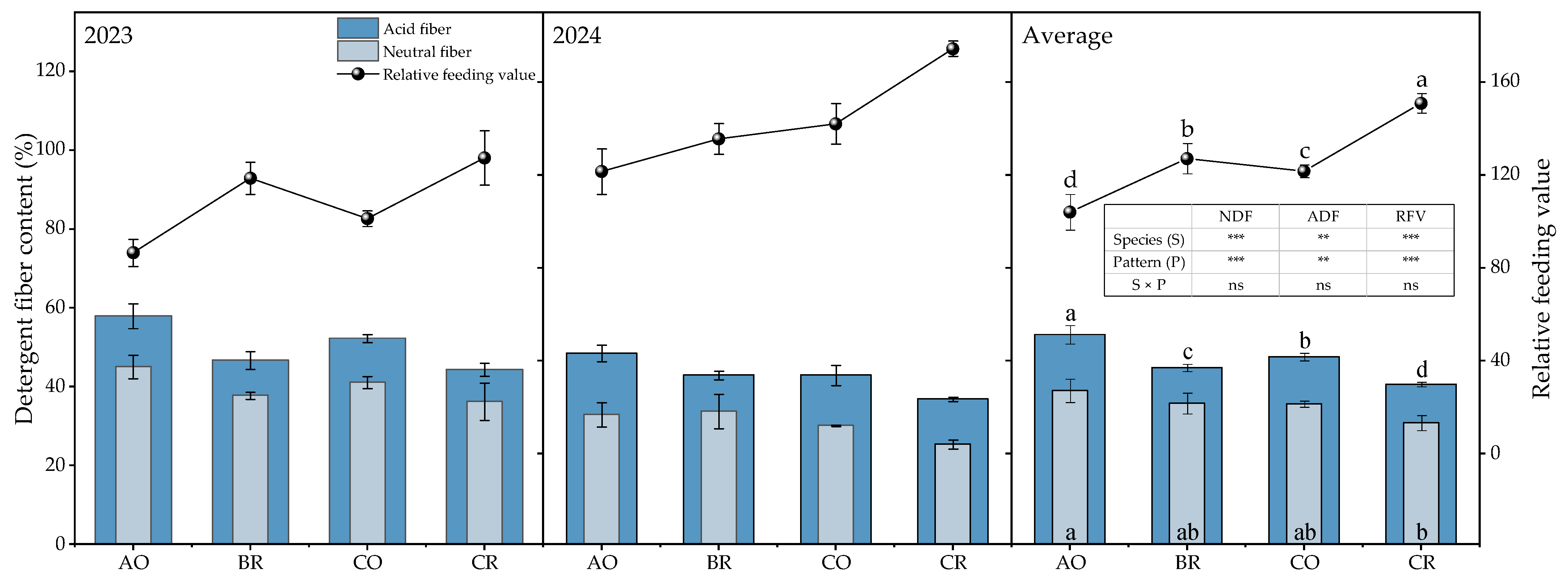
Neutral detergent fiber (NDF) and acid detergent fiber (ADF) are key indicators for assessing forage palatability and digestibility (Figure 4). The analysis of variance indicated species and cropping pattern significantly affected (p < 0.05) NDF, ADF and the relative feed value (RFV). The interaction between cropping system and species (S × P) was not significant for NDF, ADF, or RFV (p > 0.05). Therefore, we focused on the main effects of species and cropping system. Compared to their respective monocultures, intercropping significantly (p < 0.05) reduced the NDF and ADF contents of both oat and rapeseed to different extents over the two years while significantly (p < 0.05) increasing the relative feed value (RFV) synchronously. For the species, rapeseed had significantly (p < 0.05) lower NDF and ADF contents and a significantly (p < 0.05) higher RFV compared to oat. Among the different treatments, the CR treatment exhibited the lowest NDF and ADF contents, which were 13.4–20.9% and 10.4–31.0% lower than the other treatments, respectively. Concurrently, the RFV of the CR treatment was significantly higher than the other treatments, with an increase of 19.8–45.0%. The above results indicate that intercropping is conducive to reducing the NDF and ADF contents of oat and rapeseed, thereby improving forage palatability and increasing the relative feed value.
Figure 4.
Effects of different treatments on forage detergent fiber content and RFV. AO is monoculture oats, BR is monoculture rapeseed, CO is intercropped oats, and CR is intercropped rapeseed. Species (S) represents different crops, and Pattern (P) represents different planting methods. Lowercase letters indicate significant differences among treatments (p < 0.05), as determined by the Tukey test. ns indicates no significance. ** and *** indicate significance at the 0.01 and 0.001 probability levels, respectively.
3.4. Water Storage Capacity and Use Efficiency
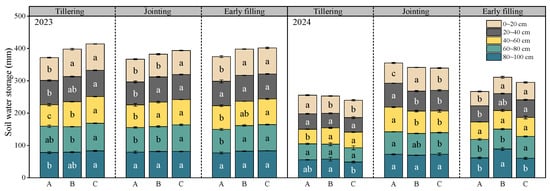
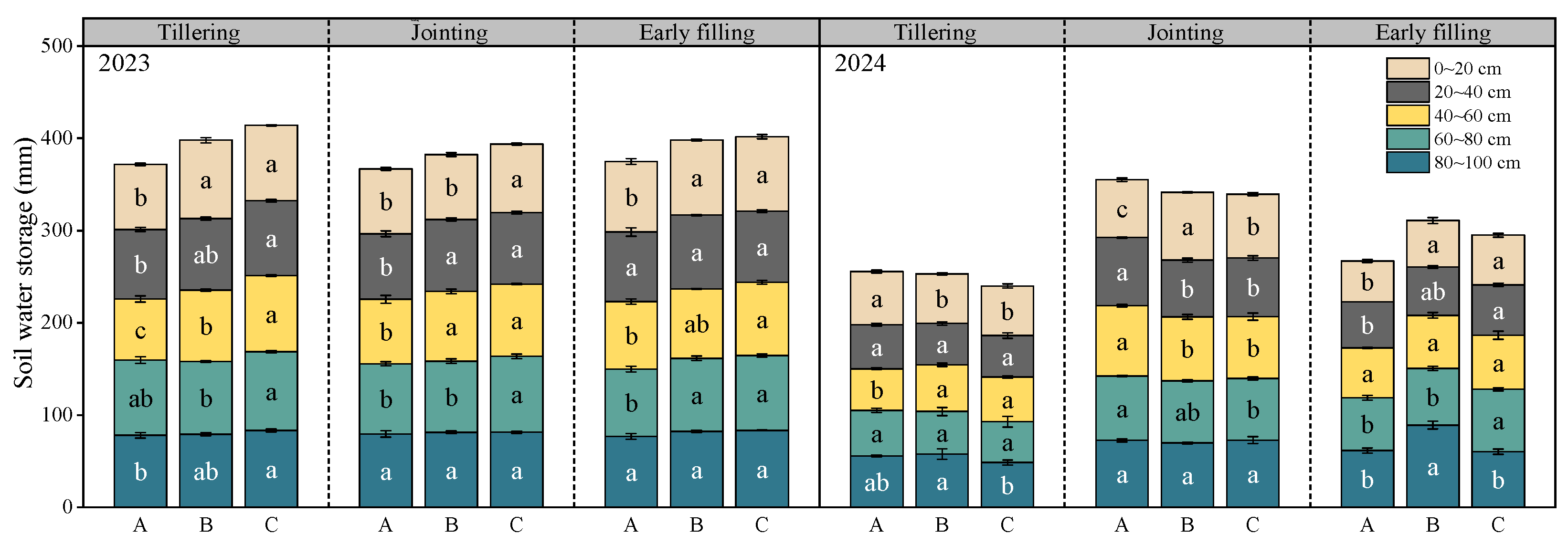
As shown in Figure 5, the differences in soil water storage among treatments at various growth stages were relatively minor in 2023. In contrast, soil water storage in 2024 exhibited a trend of an initial increase then decreasing with the progression of the growing period. In terms of comparisons among treatments in 2023, soil water storage in the deeper layers showed no significant differences, whereas soil water storage in the upper-to-middle soil layers (0–80 cm) was the highest (p < 0.05) in the intercropping system. In 2024, at the tillering stage, the surface (0–20 cm) and deep (80–100 cm) soil layers, as well as the middle layer (20–80 cm) at the jointing stage, showed the highest (p < 0.05) water storage under the monoculture oat treatment. At the early filling stage, the intercropping system had the highest (p < 0.05) soil water storage in the 0–80 cm layer. Analysis of total soil water storage revealed that, in 2023, the total storage at different stages followed the following order: intercropping system > monoculture rapeseed > monoculture oat. In 2024, at the tillering and jointing stages, monoculture oat had the highest total water storage, while at the early filling stage, monoculture rapeseed was significantly (p < 0.05) higher than both the intercropping system and monoculture oat.
Figure 5.
Effects of different treatments on soil water storage in different soil layers under different growth stages. A—Monoculture oats, B—monoculture rapeseed, and C—the intercropping system. Lowercase letters indicate significant differences among treatments (p < 0.05), as determined by the LSD test.
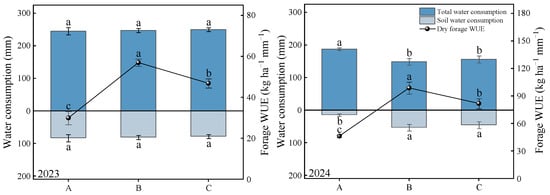
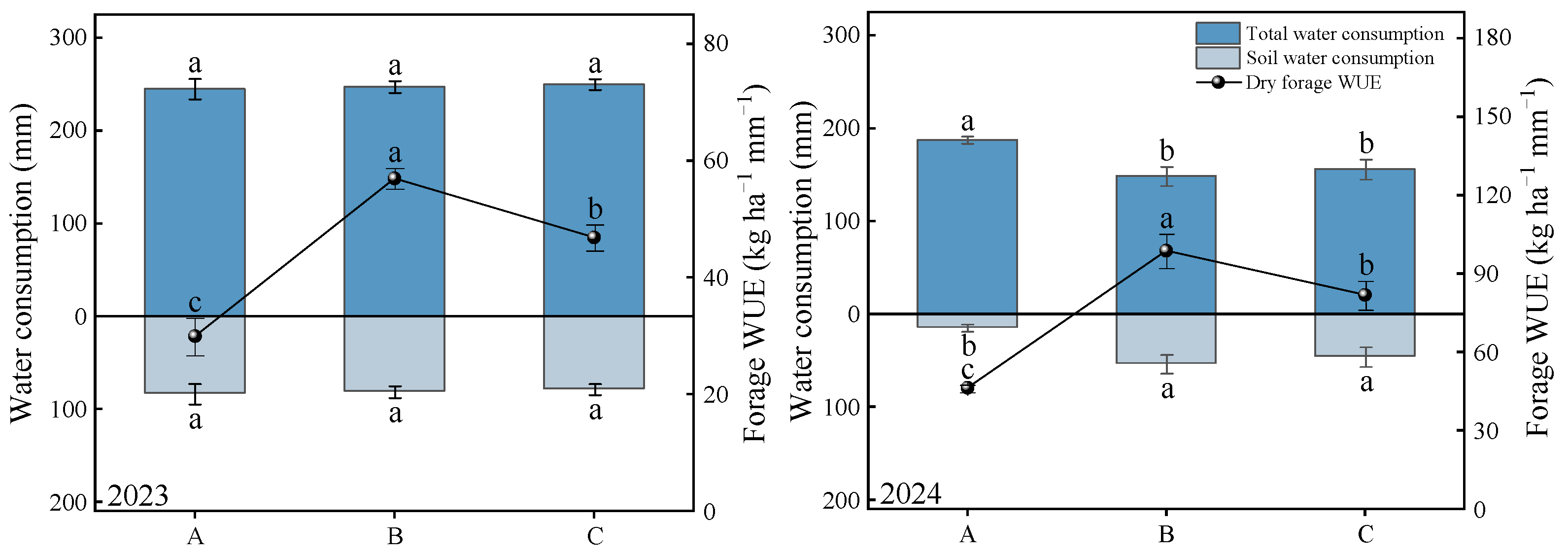
As shown in Figure 6, there were no significant differences in total water consumption and soil water consumption among the different treatments in 2023. In 2024, the total water consumption of monoculture oat was significantly (p < 0.05) higher than that of the intercropping system and monoculture rapeseed. The difference in soil water consumption between monoculture rapeseed and the intercropping system was not significant, but both were significantly (p < 0.05) higher than that of monoculture oat. Water use efficiency (WUE) showed significant (p < 0.05) differences between every two treatments in both years, following the following order: monoculture rapeseed > intercropping system > monoculture oat. Specifically, monoculture rapeseed’s WUE was significantly (p < 0.05) higher than that of the intercropping system and monoculture oat by 20.7–21.5% and 90.2–113.2%.
Figure 6.
Effects of different treatments on water consumption and use efficiency. A—Monoculture oats, B—monoculture rapeseed, and C—the intercropping system. Lowercase letters indicate significant differences among treatments (p < 0.05), as determined by the LSD test.
3.5. Nitrogen Absorption and Utilization
As shown in Table 5, both forage plants’ nitrogen uptake gradually increased with the growth process over two years. The analysis of variance indicated species and cropping pattern significantly affected (p < 0.05) plants’ nitrogen uptake at different stages. The interaction effect (S × P) on forage nitrogen accumulation was not significant at the AS20 stage but became significant at the subsequent growth stages. Whether under monoculture or intercropping, the nitrogen uptake of rapeseed plants increased to varying degrees compared with that of oat plants at each growth stage. Compared with their respective monocultures, the plant nitrogen uptake of intercropped oat and rapeseed showed a slight decrease at the AS20 stage in 2024. However, intercropping significantly (p < 0.05) increased the nitrogen uptake of both oat and rapeseed plants at other growth stages, with increases ranging from 4.5% to 22.1% for oat and 17.8% to 108.7% for rapeseed. Comparing different cropping patterns, plant nitrogen uptake at the AS20 stage over the two years followed the following order: monoculture rapeseed > intercropping system > monoculture oat. However, the intercropping system exhibited the highest nitrogen uptake at the other two stages (AS50 and AS75). At the AS75 stage, intercropping system nitrogen uptake showed no significant difference from monoculture rapeseed but was higher than monoculture oat by 97.7% to 117.3%. In conclusion, intercropping is conducive to promoting the nitrogen absorption and utilization of both crops, with a particularly more significant promoting effect on rapeseed.
Table 5.
Effects of different treatments on plant nitrogen absorption (kg ha−1).
4. Discussion
4.1. Intercropping Promotes the Synergistic Improvement in Forage Yield and Quality
Inner Mongolia is a major province for animal husbandry in China, and the area along the Greater Khingan Mountains serve as a significant livestock output base with a substantial demand for forage, particularly high-quality forage. Therefore, increasing the proportion of artificially cultivated forage supply and further improving forage quality are crucial for enhancing efficiency and ensuring the sustainable development of animal husbandry in this region. Intercropping systems can more efficiently utilize growth resources such as light, water, and nutrients through interspecific interactions and related processes between crops, which is conducive to the individual growth of crop plants and subsequent population establishment, thereby achieving yield improvement [19,20]. However, current research on forage intercropping is relatively limited and mostly focuses on grass–legume combinations [21,22,23,24,25,26,27,28,29,30,31,32,33]. There is no definitive conclusion on whether forage intercropping can synergistically enhance both yield and quality or on the specific mechanisms involved. Some studies have shown that intercropping has a significant yield-increasing effect on forages [24], for instance, increasing corn yield by over 20% in silage corn–legume intercropping systems [25,26]. In contrast, other research indicates that forage yield in intercropping shows no significant difference from monoculture or may even decrease [27,28]. Based on years of research, our team previously established a forage cropping pattern in Inner Mongolia centered on oat intercropped with common vetch. However, due to the growth characteristics of vetch, achieving high forage yield levels proved challenging [29,30,31,32]. Therefore, this study aimed to further explore forage yield potential by constructing an oat/rapeseed forage intercropping system. The results showed that the fresh and dry forage yields of the intercropping system were lower than those of monoculture rapeseed but significantly higher than monoculture oat, which was basically consistent with the research results of Qu et al. [33] on the intercropping of oat and Vicia sativa. Over the two growing seasons, intercropping significantly increased the dry matter yield of both oat and rapeseed compared to their monocultures. This may be attributed to the differing canopy closure levels after the establishment of the two crop populations, which effectively improved the light transmission environment within the intercropping system, increased the photosynthetic rate of leaves in the middle and lower canopy layers, and consequently fostered a compensatory effect on population photosynthesis between oat and rapeseed. An LER greater than 1 also verified this yield advantage, indicating that the land use efficiency of the intercropping system was 16.1% higher than that of the monocultures. Ultimately, this coordinated and balanced interspecific and intraspecific competition, leading to improved forage production performance. In addition, regardless of the cropping pattern, the fresh forage yield in 2023 was generally higher than in 2024, while the dry forage yields were similar. This is likely due to the abundant precipitation in 2023 increasing plant water content rather than a promotion of dry matter accumulation via enhanced photosynthesis, ultimately leading to a significant difference in the dry-to-fresh matter ratio between the two years. Therefore, the utilization method of forage at harvest (e.g., direct fresh feeding or silage) can be decided based on the precipitation pattern of the given year.
In intercropping systems, the improvement in nutritional quality benefits from the complementary resource utilization mechanisms of the two crops in time and space. This mechanism allows for maintaining or even increasing forage yield while further increasing nutritional quality of the mixed forage population, thereby achieving a synergistic improvement in both forage yield and quality [34]. The nutritional value of forage largely depends on its crude protein and fiber content. Forage with high feeding value is generally characterized by low fiber and high crude protein contents [35]. The results of this study indicate that the crude protein and crude fat contents of intercropped oat and rapeseed were significantly higher than those in their respective monocultures, while no significant difference was found in soluble sugar content, which aligns with previous research findings [36]. The reason may be that although intercropping improved the population photosynthetic efficiency by optimizing the canopy structure and then promoting the synthesis of more soluble sugars, these newly synthesized sugars were not stored additionally. Instead, they likely served as carbon sources and energy precursors, being preferentially allocated towards the synthesis of other nutrients such as crude protein and crude fat. Furthermore, this study also found that intercropping significantly reduced the NDF and ADF contents of both oat and rapeseed while simultaneously increasing the relative feed value, leading to a comprehensive improvement in forage quality. This might be because intercropping modified plant growth characteristics by enhancing nutrient availability and improving environmental use efficiency, which reduced the content of lignocellulosic compounds and consequently lowered the NDF and ADF contents of the forage [37].
4.2. Effects of Intercropping on Forage Water and Nitrogen Uptake and Utilization
Due to the complementary effects of the paired intercropped crops on water absorption and utilization in time and space, plants can maintain their own growth and development by improving their water consumption characteristics. In an intercropping study of corn and legumes, Gao et al. [38] found that the corn plants accessed soil water from the legume strip, which improved the soil water utilization environment by reducing the excessive depletion of water within their own strip by the more water-demanding crop. In this study, under the condition of sufficient precipitation in 2023, the soil water storage in the oat-and-rapeseed intercropping system was significantly higher than in the monoculture treatments. This indicates that the well-structured canopy formed by the intercropping system effectively reduced soil evaporation between plants, maintaining soil water storage at a relatively high level. In contrast, in 2024 when precipitation was relatively lower, monoculture rapeseed had the highest soil water storage after population establishment, followed by the oat–rapeseed intercropping system, with monoculture oat being the lowest. This is because oat is more water-intensive than rapeseed, having more leaves and a higher transpiration rate, which led to lower soil water storage in the tillage layer of the monoculture oat treatment. In comparison, rapeseed has a smaller leaf transpiration rate and thus consumes less soil moisture [39]. Furthermore, its larger biomass created a “shading effect”, reducing direct solar radiation to the soil surface, inhibiting soil evapotranspiration and thereby synergistically increasing soil water storage [40]. This study found that the water use efficiency of the intercropping system was between that of the monoculture rapeseed and monoculture oat treatments. This suggests that intercropping, by improving its own resource and environmental conditions, can absorb less water than monoculture in order to maintain water availability and conversion efficiency, increase its contribution rate to the yield effect, and consequently improve water use efficiency.
In intercropping systems, the complementary resource utilization mechanisms of crops in time and space represent a concrete manifestation of the advantages in nutrient accumulation and enhanced resource use efficiency. Li et al. [41] demonstrated that in a wheat/soybean intercropping system, by improving the interspecific root interactions in the below-ground part, the total accumulation of nitrogen, phosphorus, and potassium by the plant was 6–64% higher than that in the corresponding monocultures of wheat and soybean. Yang et al. [42] studied the effects of nitrogen application rate on productivity and nitrogen accumulation in a mung bean/oat intercropping system and found that, compared to monoculture, the intercropping system showed a clear advantage in nitrogen uptake by enhancing the nitrogen uptake ability of oat and simultaneously alleviating the nitrogen feedback inhibition of the legume crop. In the present study, both oat and rapeseed showed increased plant nitrogen content under intercropping compared to their respective monocultures, indicating that the intercropping system can coordinate the allocation of nitrogen content in plants through nutrient uptake and utilization. Furthermore, at the AS20 stage, the nitrogen accumulation of intercropped oat and rapeseed showed no significant difference from their monocultures. As growth progressed, the nitrogen accumulation of intercropped oat increased slightly, while that of rapeseed increased by multiple folds, compared to each monoculture. This suggests that rapeseed possesses a stronger resource acquisition ability, and its competitive advantage gradually expands with growth, to some extent suppressing oat’s nitrogen uptake and utilization. This may be related to the root system architectures of the two crops. As a fibrous root crop, oat has a root system mainly concentrated in the surface soil layer, whereas rape possesses a well-developed, deeply penetrating taproot system [43]. When intercropped, it is plausible that rapeseed, with its deep roots, could not only intercept and absorb topsoil nitrogen first but also access and utilize nitrogen sources from deeper soil layers as its roots grow downward, thereby greatly expanding its nitrogen acquisition range [44]. On the other hand, it is reported that rapeseed roots can secrete large amounts of secondary metabolites such as organic acids [45].
5. Conclusions
In the southern foothills of the Greater Khingan Mountains, the adoption of an oat–rapeseed intercropping system after harvesting first-season forage oat significantly improves land use efficiency. This system not only has a significant yield-increasing effect but also improves nutritional quality by increasing crude protein content and decreasing fiber content. Furthermore, this planting pattern synergistically enhances the water and nitrogen use efficiency of the forage. These findings provide a valuable intercropping production practice, contributing to the development of high-yield, high-quality, and sustainable forage production systems in agro-pastoral ecotones.
Author Contributions
Conceptualization, L.L., X.W. and L.H.; methodology, L.H. and F.L.; software, L.H.; validation, L.H., H.J. and Z.W.; formal analysis, L.H., H.Z. and X.Z.; investigation, L.H., F.L. and J.Y.; resources, L.H.; data curation, L.H.; writing—original draft preparation, L.H.; writing—review and editing, L.L. and X.W.; visualization, L.H.; supervision, L.H. and X.W.; project administration, L.H. and X.W.; funding acquisition, L.L. All authors have read and agreed to the published version of the manuscript.
Funding
This research was funded by the “National Key R&D Program” focused on “Research and demonstration on technology of water-heat matching and productivity enhancement in intercropping systems (2022YFD1500904-3)” and the “National Key R&D Program” focused on “Screening of new drought-resistant and processing-specific quinoa varieties and research and demonstration of mechanization-suitable cultivation techniques (2023YFD1600701-2)”.
Institutional Review Board Statement
Not applicable.
Data Availability Statement
The original contributions presented in this study are included in the article. Further inquiries can be directed to the corresponding author.
Acknowledgments
We would like to express our sincere gratitude to Fang Luo for his valuable assistance in the management and smooth implementation of the experimental project. Meanwhile, we are grateful to Xiaorong Wu, Haoqi Jin, Zhe Wang, Xinyao Zhao and others, for their contributions to data analysis, project design and writing assistance. In addition, we extend our thanks to all friends and colleagues who have contributed in various ways but are not listed as authors of this paper.
Conflicts of Interest
The authors declare no conflicts of interest.
References
- Shen, H.H.; Zhu, Y.K.; Zhao, X.; Geng, X.Q.; Gao, S.Q.; Fang, J.Y. Analysis of current grassland resources in China. Chin. Sci. Bull. 2016, 61, 139–154. [Google Scholar]
- Singh, D.N.; Bohra, J.S.; Tyagi, V.; Singh, T.; Banjara, T.R.; Gupta, G. A review of India’s fodder production status and opportunities. Grass Forage Sci. 2022, 77, 1–10. [Google Scholar] [CrossRef] [Scilit]
- Chand, S.; Indu; Singhal, R.K.; Govindasamy, P. Agronomical and breeding approaches to improve the nutritional status of forage crops for better livestock productivity. Grass Forage Sci. 2022, 77, 11–32. [Google Scholar] [CrossRef] [Scilit]
- Sowiński, J. Intercropping maize (Zea mays L.) and field beans (Vicia faba L.) for forage, increases protein production. Sci. Rep. 2024, 14, 16419. [Google Scholar] [CrossRef] [Scilit]
- Angadi, S.V.; Umesh, M.R.; Begna, S.; Gowda, P. Light interception, agronomic performance, and nutritive quality of annual forage legumes as affected by shade. Field Crops Res. 2022, 275, 108358. [Google Scholar] [CrossRef] [Scilit]
- Perotti, E.; Huguenin-Elie, O.; Meisser, M.; Sébastien, D.; Probo, M.; Mariotte, P. Climatic, soil, and vegetation drivers of forage yield and quality differ across the first three growth cycles of intensively managed permanent grasslands. Eur. J. Agron. 2021, 122, 126194. [Google Scholar] [CrossRef] [Scilit]
- Abdelgaleil, S.A.M.; Abdel-Razeek, N.; Soliman, S.A. Herbicidal activity of three sesquiterpene lactones on wild oat (Avena fatua) and their possible mode of action. Weed Sci. 2009, 57, 6–9. [Google Scholar] [CrossRef] [Scilit]
- Paridaen, A.; Kirkegaard, J.A. Forage canola (Brassica napus): Spring-sown winter canola for biennial dual-purpose use in the high-rainfall zone of southern Australia. Crop Pasture Sci. 2015, 66, 275–286. [Google Scholar] [CrossRef] [Scilit]
- Emery, S.E.; Anderson, P.; Carlsson, G.; Friberg, H.; Larsson, M.C.; Wallenhammar, A.C.; Lundin, O. The potential of intercropping for multifunctional crop protection in oilseed rape (Brassica napus L.). Front. Agron. 2021, 3, 782686. [Google Scholar] [CrossRef] [Scilit]
- Wang, Z.K.; Wang, C.Y.; Tan, X.Q.; Lou, H.X.; Wang, X.L.; Shao, D.L.; Ning, N.; Kuai, J.; Wang, J.; Xu, Z.H.; et al. Developing diversified forage cropping systems for synergistically enhancing yield, economic benefits, and soil quality in the Yangtze River Basin. Agric. Ecosyst. Environ. 2024, 365, 108929. [Google Scholar] [CrossRef] [Scilit]
- Rodriguez, C.; Mårtensson, L.M.D.; Jensen, E.S.; Carlsson, G. Combining crop diversification practices can benefit cereal production in temperate climates: Combining crop diversification practices can benefit cereal production in temperate climates. Agron. Sustain. Dev. 2021, 41, 48. [Google Scholar] [CrossRef] [Scilit]
- Iqbal, M.A.; Hamid, A.; Hussain, I.; Siddiqui, M.H.; Ahmad, T.; Khaliq, A.; Ahmad, Z. Competitive indices in cereal and legume mixtures in a South Asian environment. Agron. J. 2019, 111, 242–249. [Google Scholar] [CrossRef] [Scilit]
- Kebede, G.; Assefa, G.; Feyissa, F.; Mengistu, A. Forage legumes in crop-livestock mixed farming systems: A review. Int. J. Livest. Res. 2016, 6, 1–18. [Google Scholar] [CrossRef] [Scilit]
- Feng, Q.; Wei, X.Y.; Deng, J.Q.; Wang, T.F.; Lan, J.; Usman, S. Forage production and interspecific relationship of the cereal–legume mixed-cropping system coupling diversified sowing seasons in the Northwestern of China. Plant Soil 2025. early access. [Google Scholar] [CrossRef] [Scilit]
- Yuan, Y.L.; Tang, D.; Lu, Y.; Ran, G.X.; Guo, Y.Q. An investigation of multiple crop planting options when following wheat with mixed-cropped forage rape and oats in the Jilin area of northeast China. Acta Pratacult. Sin. 2021, 30, 167–178. [Google Scholar]
- Li, W.L.; Li, F.; Zhang, Z.J.; Wang, D.Q.; Wang, H.; Jin, H.Q.; Te, M.R.; Hu, Z.L.; Tao, Y.A. performance evaluation of two crops of forage oats per year in the northern Ordos Plateau. Acta Pratacult. Sin. 2024, 33, 159–168. [Google Scholar]
- Han, D.Y.; Li, L.J.; Lian, W.X.; Zhang, Y.L.; Zhao, X.Y.; Yang, J.H.; Jiao, H.W.; Wang, Q.J.; Han, X.; Zhang, H.J. Effects of oat and common vetch intercropping and nitrogen application on soil properties and forage yield at the southern foot of Yinshan Mountain. Soil Fertil. Sci. China 2024, 5, 151–161. [Google Scholar]
- Zhang, L.Y. Feed Analysis and Feed Quality Testing Technology, 3rd ed.; China Agricultural University Press: Beijing, China, 2003; pp. 49–72. [Google Scholar]
- Shi, X.L.; Zhou, Y.F.; Zhao, X.H.; Guo, P.; Ren, J.Y.; Zhang, H.; Dong, Q.Q.; Zhang, Z.; Yu, H.Q.; Wan, S.B. Soil metagenome and metabolome of peanut intercropped with sorghum reveal a prominent role of carbohydrate metabolism in salt-stress response. Environ. Exp. Bot. 2023, 209, 105274. [Google Scholar] [CrossRef] [Scilit]
- Wang, B.; Deng, J.; Wang, T.; Ni, W.; Feng, Q.; Lan, J. Effect of Seeding Options on Interspecific Competition in Oat (Avena sativa L.)–Common Vetch (Vicia sativa L.) Forage Crops. Agronomy 2022, 12, 3119. [Google Scholar] [CrossRef] [Scilit]
- Umesh, M.R.; Angadi, S.; Begna, S.; Gowda, P.; Lauriault, L.; Darapuneni, M. Intercropping and species interactions on physiological and light use characteristics of forage cereals-legumes combinations in semi-arid regions. Field Crops Res. 2023, 290, 108755. [Google Scholar] [CrossRef] [Scilit]
- Zhu, J.H.; Song, L.; Du, W.H. Productivity and Nutritional Quality of Silage Maize Intercropped with Soybean in Dryland Plateau Area of East Gansu. Acta Agric. Boreali-Occident. Sin. 2025, 34, 458–468. [Google Scholar]
- Dong, L.; Liu, X.J.; Lin, F.; Wang, X.; Wang, J. Study on Quality of Mixed Silage under Bean/Gramineae Forage Intercropping. Acta Agrestia Sin. 2024, 32, 620–629. [Google Scholar]
- Bi, Y.X.; Yang, G.W.; Wei, Y.Q.; Wilson, G.W.; Wei, B.; He, Y.J.; Yu, H.Q.; Liu, N.; Zhang, Y.J. Low legume-grass seeding ratio combined with phosphorus fertilization promotes forage yield and soil quality in managed grasslands. Agron. Sustain. Dev. 2024, 44, 36. [Google Scholar] [CrossRef] [Scilit]
- Wei, Z.Y.; Zhang, H.X.; Shi, W.; Chang, S.H.; Zhang, C.; Jia, Q.M.; Hou, F.J. Effects of planting methods and nitrogen application on forage crop yield, quality and water use in arid area of northwest China. Acta Agron. Sin. 2022, 48, 2638–2653. [Google Scholar] [CrossRef] [Scilit]
- Sang, H.Z.; Wang, C.; Fan, Z.L.; Yin, H.; Fan, H.; He, W.; Hu, F.L.; Cai, Q. Effects of nitrogen fertilizer reduction on water use characteristics of silage maize leguminous forage intercropping system. Acta Agron. Sin. 2024, 50, 2848–2859. [Google Scholar] [CrossRef] [Scilit]
- Wu, Y.H.; Ma, Q.J.; Ma, L.S.; Wang, Z.K. Interspecific competition and productivity in a dryland silage maize/alfalfa intercropping system. Food Energy Secur. 2023, 12, e474. [Google Scholar] [CrossRef] [Scilit]
- Assefa, G.; Ledin, I. Effect of variety, soil type and fertiliser on the establishment, growth, forage yield, quality and voluntary intake by cattle of oats and vetches cultivated in pure stands and mixtures. Anim. Feed Sci. Technol. 2001, 92, 95–111. [Google Scholar] [CrossRef] [Scilit]
- Zhao, X.Y.; Wang, Y.; Wang, X.Y.; Han, L.; Yang, J.H.; Zhang, Y.L.; Zhang, H.J.; Wu, X.R.; Wang, X.Q.; Li, L.J. Tradeoff between forage yield and nitrogen utilization under double-cropped and regenerated oat managements: A case study in northern China. Plant Soil 2025, 1–15. [Google Scholar] [CrossRef] [Scilit]
- Yang, J.H.; Li, L.J.; Zhang, Y.L.; Qu, J.H.; Han, D.Y.; Zhao, X.Y. Effects of Oat Intercropping with Common Vetch and Fertilization on Forage Nutrient Accumulation, Yield and Water Utilization in Horqin Sandy Land. Acta Agric. Boreali-Occident. Sin. 2024, 33, 121–132. [Google Scholar]
- Li, X.B.; Li, L.J.; Ma, N.J. Effects of Mixed Planting of Oat and Rape on Forage Yield and Quality and Soil Enzyme Activities. Chin. J. Soil Sci. 2020, 51, 897–904. [Google Scholar]
- Qu, J.H.; Li, L.J.; Zhao, P.Y.; Han, D.Y.; Zhao, X.Y.; Zhang, Y.L.; Han, L.; Wang, Y. Impact of Phosphorous Fertilization on Rape and Common Vetch Intercropped Fodder and Soil Phosphorus Dynamics in North China. Agriculture 2022, 12, 1949. [Google Scholar] [CrossRef] [Scilit]
- Qu, J.H.; Li, L.J.; Zhao, P.Y.; Zhang, T.T.; Chen, G.M.; Yang, J.H.; Han, D.Y. Effects of intercropping oat and common vetch on plant biomass yield and soil nitrogen and phosphorus availability in different soil characteristics. J. Soil Sci. Plant Nutr. 2023, 23, 3258–3270. [Google Scholar] [CrossRef] [Scilit]
- Aponte, A.; Samarappuli, D.; Berti, M.T. Alfalfa–grass mixtures in comparison to grass and alfalfa monocultures. Agron. J. 2019, 111, 628–638. [Google Scholar] [CrossRef] [Scilit]
- Qiao, F.Q.; Wang, F.; Ren, L.P.; Zhou, Z.M.; Meng, Q.X.; Bao, Y.H. Effect of steam-flaking on chemical compositions, starch gelatinization, in vitro fermentability, and energetic values of maize, wheat and rice. J. Integr. Agric. 2015, 14, 949–955. [Google Scholar] [CrossRef] [Scilit]
- Lian, L.; Hu, F.G.; Li, B.; Cui, G.W.; Ji, G.X.; Yan, N.N. Effects of Planting Densities and Mixed Sowing Ratios of Silage Corn and Fodder Soybean on Silage Quality. Acta Agrestia Sin. 2017, 25, 178–183. [Google Scholar]
- Sadafzadeh, E.; Javanmard, A.; Amani Machiani, M.; Sofo, A. Application of Bio-Fertilizers Improves Forage Quantity and Quality of Sorghum (Sorghum bicolor L.) Intercropped with Soybean (Glycine max L.). Plants 2023, 12, 2985. [Google Scholar] [CrossRef] [Scilit]
- Gao, Y.L.; Sun, Z.X.; Bai, W.; Feng, L.S.; Yang, N.; Cai, Q.; Feng, C.; Zhang, Z. Productivity and Water Use Efficiency of Maize-Peanut Intercropping Systems in the Semi-Arid Region of Western Liaoning Province. Sci. Agric. Sin. 2017, 50, 3702–3713. [Google Scholar]
- Ding, D.; Zhao, Y.; Guo, H.; Li, X.; Schoenau, J.; Si, B. Water Footprint for Pulse, Cereal, and Oilseed Crops in Saskatchewan, Canada. Water 2018, 10, 1609. [Google Scholar] [CrossRef] [Scilit]
- Wang, H.X.; Liu, C.M. Soil evaporation and its affecting factors under crop canopy. Commun. Soil Sci. Plant Anal. 2007, 38, 259–271. [Google Scholar] [CrossRef] [Scilit]
- Li, L.; Li, X.L.; Zhang, F.S.; Sun, J.H.; Yang, S.C.; Lu, M.J. Uptake and utilization of nitrogen, phosphorus and potassium as related to yield advantage in wheat/soybean intercropping. J. Plant Nutr. Fertil. 2000, 6, 140–146. [Google Scholar]
- Yang, X.C.; Hu, Y.G.; Qian, X.; Ren, C.Z.; Lin, Y.C.; Guo, C.L.; Wang, C.L.; Zeng, Z.H. Effects of nitrogen applicaton level on system productivity, nitrogen absorption and accumulation in mung bean‖oat intercropping system. J. China Agric. Univ. 2012, 17, 46–52. [Google Scholar]
- Louvieaux, J.; Leclercq, A.; Haelterman, L.; Hermans, C. In-Field Observation of Root Growth and Nitrogen Uptake Efficiency of Winter Oilseed Rape. Agronomy 2020, 10, 105. [Google Scholar] [CrossRef] [Scilit]
- Kupcsik, L.; Chiodi, C.; Moturu, T.R.; De Gernier, H.; Haelterman, L.; Louvieaux, J.; Tillard, P.; Sturrock, C.J.; Bennett, M.; Nacry, P.; et al. Oilseed Rape Cultivars Show Diversity of Root Morphologies with the Potential for Better Capture of Nitrogen. Nitrogen 2021, 2, 491–505. [Google Scholar] [CrossRef] [Scilit]
- Wang, Y.L.; Almvik, M.; Clarke, N.; Eich-Greatorex, S.; Øgaard, A.F.; Krogstad, T.; Lambers, H.; Clarke, J.L. Contrasting responses of root morphology and root-exuded organic acids to low phosphorus availability in three important food crops with divergent root traits. AoB Plants 2015, 7, plv097. [Google Scholar] [CrossRef] [Scilit]

Disclaimer/Publisher’s Note: The statements, opinions and data contained in all publications are solely those of the individual author(s) and contributor(s) and not of MDPI and/or the editor(s). MDPI and/or the editor(s) disclaim responsibility for any injury to people or property resulting from any ideas, methods, instructions or products referred to in the content. |
© 2026 by the authors. Licensee MDPI, Basel, Switzerland. This article is an open access article distributed under the terms and conditions of the Creative Commons Attribution (CC BY) license.