


Abstract
This paper examines how the financial crisis and the COVID-19 pandemic affected wine consumption across European Union (EU) member states, focusing on countries’ trade positions. Using a balanced panel of 28 EU countries from 2000 to 2022, we apply a panel difference-in-differences framework and a complementary event-study analysis to estimate the effects of these shocks. Because year fixed effects absorb shocks common to all countries, the design identifies differences between export-oriented and other countries, not EU-wide effects of the crises. Export-oriented EU countries show a larger, significant decline in measured wine consumption after the financial crisis, at the end of the post-crisis period. The comparison of the impact of COVID-19 is inconclusive because parallel trends are not supported. The estimates are conditional associations and may reflect how consumption is measured and characteristics shared by wine exporting countries. Findings highlight the importance of structural market characteristics for consumer behavior and suggest that global integration may condition the resilience of EU wine markets.
1. Introduction
In 2024, global wine production reached a historic low of 226 million hectoliters, a 4.8% decrease compared to 2023, marking the lowest output since 1961 [1]. For decades, wine consumption has declined in its traditional continental European markets [2]. This decline was offset by growth in markets such as the UK, the United States, northern Europe (e.g., Scandinavian countries), and the Asia-Pacific region (including Japan, China, and Australia) for many years. However, over the past decade, these previously growing markets have also experienced declines in volume [3]. Since 2018, global wine consumption has declined steadily, primarily due to declines in the European and Asian markets, economic crises, rising prices, and a global market deceleration caused by the COVID-19 pandemic later [4]. In 2021, the relaxation of restrictions and the reopening of the tourism and hospitality sector led to a rebound in consumption across many wine-producing and -consuming countries [2]. In the long term, Old-World wine consumption and production are declining. At the same time, New World countries have experienced significant increases in consumption and rapid expansion of global markets and trade [5]. Global wine consumption in 2022 reached 232 million hectoliters, up from 226 million hectoliters in 2000 but down from 247 million hectoliters in 2017 [6]. By 2024, wine consumption had decreased to 214 million hectoliters, a 3.3% drop from 2023, the lowest level since 1961 [1].
The European Union (EU) is the leading player in the global wine industry, accounting for 65% of global wine production, 60% of global wine consumption, and 70% of wine exports [7]. In the EU, 20% of wine production is exported, with Italy, France, and Spain accounting for 75% of the region’s total export volume [8].
Since the Millennium, wine consumption in European countries has declined substantially, accelerated by the global financial crisis of 2007–2008 and further exacerbated by the downturn caused by the COVID-19 pandemic and the recent energy crisis. In 2021, wine consumption in the European Union fell to 102 million hectoliters, down from a peak of 119 million hectoliters in 2016 [9].
In the EU, the five largest wine consumers (in million hectoliters) are France (23), Italy (22.3), Germany (17.8), the UK (12.6), and Spain (9.9). Regarding per capita consumption in liters, Portugal (61), France (41), Italy (43), Switzerland (30), and Austria 28.6) were among the top 5. Consumption is shrinking due to economic pressure, confirming that inflation and shifting consumer preferences are weighing on mid-priced wines. Market rebalancing reduces excess stocks and limits the dynamism of global trade [1].
In the past, economic recessions significantly affected alcoholic beverage consumption, though the effects varied across product segments. The surge in household penetration of spirits was reported during the pandemic, with consumption rates increasing three times faster than beer and twice as fast as wine [10]. Regarding changing consumer behavior, alcohol abstinence among Generation Z (born between 1998 and 2012) is increasing, with a larger share of young adults reporting abstinence than among Millennials (born between 1980 and 1997), as suggested by Kellershohn et al. [11]. This trend is attributed to increased mental health awareness and a healthier, cleaner lifestyle, which encourages more sustainable choices in eating and drinking [12]. Generation Z and Millennials are showing conscientiousness about their alcohol consumption, with a significant proportion actively restricting their intake, and they prefer soft drinks to hard seltzers [13,14]. Following 2019, global wine markets have been significantly impacted by COVID-19, resulting in a decline in wine consumption [15].
Furthermore, changing consumer preferences towards non-alcoholic wines or products with lower alcohol content are also evident. High-quality fine wine is often considered a luxury product due to its association with higher prices and greater prestige than other alcoholic beverages. As such, the income elasticity of demand for higher-priced wine is higher than that for lower-priced wine products [16].
Wine exports are a significant component of the wine economies in many European countries, including France, Italy, Spain, Germany, and Portugal [17]. Since the wine export market is highly competitive, wine price inflation driven by higher production costs can undermine the global competitiveness of these countries [17]. Higher wine prices reduce demand in overseas markets, damaging the EU’s wine industry. All these factors can affect wine consumption. While earlier studies focused on factors influencing wine consumption [18,19], there is a notable lack of research on the relationship between crises and trade positions and their impact on wine consumption.
This paper investigates how major macroeconomic shocks, such as the 2007–2008 financial crisis and the COVID-19 pandemic, affected wine consumption across EU member states, with particular attention to differences across countries with varying levels of trade exposure. To do so, we employ a panel difference-in-differences (DiD) framework combined with an event-study analysis over the period of 2000–2022.
While the existing literature examines either determinants of wine consumption or the impacts of crisis on alcohol markets, little is known about how trade exposure shapes consumption responses to macroeconomic shocks. Wine exporters are more exposed to global demand shocks and price volatility, whereas substitution effects and the income sensitivity of domestic consumers are more influential in wine-consuming countries.
The contribution of this paper is twofold. First, it provides difference-in-differences estimation on the effect of major economic shocks on wine consumption in the EU using a panel DiD approach with country and year fixed effects. Second, it introduces wine exporter trade position as a moderating factor, highlighting how integration into global wine markets shapes the magnitude and persistence of consumption responses to crisis.
Applying a panel difference-in-differences approach and event-study analysis and event plots from 2000 to 2022, this research provides empirical evidence on the heterogeneity of crisis impacts across EU wine markets. The UK is part of the sample, as it is the largest European wine import market and was a member of the EU prior to Brexit.
The remainder of the paper is structured as follows. Section 2 reviews the relevant literature and develops the hypotheses. Section 3 presents the data and empirical methodology. Section 4 reports the results, followed by a discussion. Section 5 concludes with implications and avenues for future research.
2. Literature Review
2.1. Determinants of Wine Consumption
Several factors affect wine consumption, including price, income, price of a substitute good, culture, consumer preferences (e.g., age, gender, marital status, level of education, geographic area, and tourism activities), lifestyle determinants, and wine labels [20,21,22,23,24]. Villanueva et al. [25] offered a historical and econometric analysis of the demographic and socioeconomic characteristics of American wine consumers. Using a general demand model, the authors demonstrate that from 1972 to 2012, the evolution of wine consumption in the US followed three distinct stages: a period of growing consumption, a decline, and a recovery and subsequent growth. The results of the research reveal that wine was previously associated with higher-income, higher-education consumers; it is now described as a product consumed by younger generations, married individuals, and women. For the European wine market, Silva et al. [26] identified determinants of wine, beer, and non-alcoholic beer consumption, using consumption pattern data from Portugal and the Netherlands. Wine is perceived as the healthiest beverage, followed by non-alcoholic beer and regular beer. The motivation to consume wine is tied to special occasions. Positive emotions are associated with moderate consumption of wine and beer. Using data from German-speaking Swiss consumers, Brunner and Siegrist [21] identified lifestyle determinants that motivate wine consumption and spending, since sales and profits are primarily driven by sound wine knowledge. Lifestyle determinants accounted for a large portion of the variance in the data. In wine consumption, wine knowledge, the drinking of wine to relax, and sociability were the strongest determinants.
Globalization is blurring differences between countries, leading to long-term convergence in wine consumption patterns, although climate and historical factors also play significant roles in this transformation [27]. Recent studies highlight evolving trends in European wine consumption and production. While EU wine production and consumption have decreased over the past two decades, domestic demand and wine sector-specific subsidies remain the primary drivers of the sector [7]. Moreover, wine consumption decreases as the Human Development Index increases, suggesting a shift towards quality and health-conscious consumption. European Union countries exhibit higher wine consumption than other regions worldwide, with a positive gradient from west to east [28]. The British wine market has experienced significant growth since the 1970s, becoming the world’s largest import wine market by value. In the UK, consumers enjoy wine in a sophisticated manner, with their behavior depending on the occasion and environment [29]. Recently, there has been an increasing trend in the consumption of wine by the glass, driven by UK consumers’ desire for variety [30].
Several researchers have investigated the wine sectors in the EU, analyzing Italian [31,32], Spanish [33], German, and Hungarian wine consumption [34] at the country level. Consumption has declined in traditional EU wine-producing countries such as Italy and France [31], while it has increased in the United States [35]. Di Vita et al. [36] analyzed different types of Italian wines and showed that consumer motivations and wine consumption determinants change according to each wine’s quality range and support a hierarchical scale of quality wines (wines with geographical indications, basic and bulk wines); consumer motivation changes as quality scales increase or decrease. Furthermore, the authors suggest that different geographical indicators (Protected Designation of Origin and Protected Geographical Indication) on labels affect consumers’ choices. Dias et al. [37] evaluated social and behavioral determinants of alcohol consumption among Portuguese adults. They concluded that less educated men reported higher wine consumption but lower consumption of other types of alcohol. Cultural differences also influence wine consumption, with Germans generally preferring relatively dry wines and Hungarians preferring sweeter ones [34].
Researchers [38,39] have expanded studies exploring factors affecting wine consumption in non-Western countries, such as China, where consumption has increased rapidly, to investigate whether there are significant differences between Western countries and China. García-Cortijo et al. [38] found that higher income, being married, living in an urban area, and traveling tended to increase Chinese wine consumption. Liu and Song [39] found that income is positively associated with the demand for imported wine among Chinese wine consumers. In contrast, wine prices are negatively associated with the demand for imported wine.
In summary, the prior literature [21,31,32,33] shows that in Europe, wine is perceived as a traditional beverage, having historical roots, and quality and labels are important determinants of wine consumption. However, new trends, especially among Generation Z, suggest that young generations consume fewer alcoholic beverages because they find them unhealthy [13,14]. In the US, wine was traditionally associated with higher incomes and more highly educated consumers. However, this perception has shifted among younger wine consumers who are more open to new wine styles and product innovations [40]. In turn, wine consumption has declined worldwide in recent years, particularly among younger consumers.
Geographical cues play a crucial role in consumer behavior, but their importance varies between Old and New World wine consumers. Factors such as wine knowledge, socio-demographic characteristics, consumption settings, and labelling strategies affect purchasing decisions [41]. Old World wine countries are experiencing declines in consumption and production, while some New World countries are showing increases in consumption [5]. In turn, wine imports are rising in many countries, reflecting the growing demand for foreign, imported wines [5]. In South Africa, consumer perceptions of wine are influenced by factors such as life stage, considering consumption, and price [42].
Most South American wine-producing countries have also experienced a decline in production compared to 2021. In 2022, Chile remained the largest producer in South America, but wine production was lower than the previous year’s high. On the other hand, Argentina saw a decrease in wine production due to highly variable weather conditions, including frost and heavy rainfall. In 2022, Argentina’s wine production fell by 8% from 2021, representing a 9% decline relative to its five-year average. Finally, Brazil reported an increase in wine production in 2022, attributed to La Niña events. This is a 9% rise compared to 2021 and a 14% increase over the past five years [43]. Significant growth in wine consumption has been observed across East Asia, particularly in the luxury wine segment, since the early 2000s [44]. This trend is part of a broader increase in alcohol consumption in Asia, with the share of wine converging towards Western consumption patterns [45]. Asian markets, including China, Japan, South Korea, Hong Kong, and Singapore, have emerged as significant wine trading hubs, driven by economic development, shifting gender norms, and Western cultural influences [44]. In recent years, declines in wine consumption and imports, and stagnating domestic production, have been observed in Asian wine markets, including China [43].
2.2. Economic Growth and Wine Consumption
Economic growth generally exhibits a procyclical relationship with alcohol consumption, particularly in high- and middle-income countries, with spirits most sensitive to economic fluctuations [46]. The global wine market may also be driven by economic growth, wine tourism, and increasing competition [5]. While economic expansion generally leads to increased alcohol consumption in the long term, economic recession and rising unemployment affect alcohol consumption differently, with a decrease in wine consumption, especially in the luxury and fine wine segments. Research indicates that wine and beer consumption patterns differ from the overall alcohol consumption averages. During the economic boom, alcoholic beverage consumption aligns with the consumption of normal goods.
In contrast, during the recession, it aligns with the hypothetical consumption of luxury or cultural goods [47]. Changing consumption habits, globalization, and climate change are reshaping the wine industry, leading to shifts in consumer preferences and market dynamics [27]. Despite these challenges, the international wine market continues to evolve, with increasing trends in the wine trade. Eighty percent of countries reported increased wine imports, reflecting growing interest in wines from the New Wine World, which in turn indicates rising demand for foreign wines [5]. The literature identified a strong link between economic growth and wine consumption in several countries [48,49]. Moreover, population dynamics also influence wine consumption. Economies with a higher proportion of urban population tend to have higher levels of wine consumption, as increased urbanization simplifies the distribution of wine products [50,51]. Economic development among developing countries has also led to an increase in middle-class wine consumers, who are being affected by rising urbanization [22].
2.3. The Impact of the Economic Shocks on Wine Consumption
Recent economic shocks have had a significant impact on wine consumption. The economic downturn caused by the global financial crisis of 2007–2008 was followed by a period of economic growth and political stability in most wine-producing and consuming countries, along with lower price inflation, particularly in Europe [48]. The European Union’s per capita wine consumption has remained low since the fiscal crisis, with consumption falling since 2009 [43]. The average price of wines and spirits in the EU has increased sharply, with bottle prices contributing to a decline in consumption [52]. After this period of stability, COVID-19 caused a negative shock to wine demand, with wine producers across different Wine Worlds affected in different ways. Considering distribution systems and business models, the New World wine-producing countries, with their downstream (production oriented) business model (linked to distributors and consumers) were more vulnerable to shocks induced by the pandemic compared to the upstream integration (marketing, digital sales and communication) of the Old-World wine countries such as France, Italy, and Spain [53,54]. In the Australian wine sector, during COVID-19, wine exports were disrupted and domestic sales were adversely affected by temporary income declines and the closure of the HORECA (Hotels, Restaurants, and Catering) sector, along with a decline in international tourism [49].
In many countries during the pandemic, reduced sales in the hospitality sector were partially offset by a boost in off-premise and direct e-commerce sales [53]. The COVID-19 pandemic has had a more profound and longer-lasting impact on the global drinks industry than the 2007–2008 financial crisis, with on-premise and global travel retail experiencing severe losses, highlighting the potential for similar downturns [55]. In turn, Niklas et al. [53] suggested that average pre-lockdown consumption was positively associated with increased consumption frequency during the lockdown, despite a significant decrease in on-premise consumption. Furthermore, Agnoli and Charters [56] demonstrated that consumers’ wine consumption remained unchanged, particularly among non-professionals, whereas professionals increased their wine consumption during the pandemic.
While a substantial body of literature has examined the determinants of wine consumption and the broader relationship between economic cycles and alcohol demand, limited attention has been paid to how trade exposure interacts with macroeconomic shocks in shaping consumption patterns. Existing studies analyze consumption responses at the aggregate level or focus on specific countries, without explicitly accounting for heterogeneity arising from countries’ positions in global wine markets. This gap is particularly relevant in the context of the European Union (EU), which dominates global wine production, consumption, and trade. EU member states differ significantly in their trade positions: some are major exporters with solid integration into global markets (e.g., France, Italy, Spain), while others rely heavily on imports. These structural differences may influence how economic shocks affect domestic wine consumption.
From a theoretical perspective, trade exposure can amplify or mitigate the impact of economic downturns. Export-oriented countries may be more vulnerable to global demand contractions, price volatility, and disruptions in international markets. In contrast, less trade-exposed or import-oriented countries may experience different adjustment mechanisms, including substitution effects or shifts in domestic consumption patterns. Therefore, ignoring trade position may mask important heterogeneity in the effects of economic crisis.
Consumption of discretionary goods, including wine, is sensitive to macroeconomic conditions. During periods of economic downturn, declining income and increased uncertainty lead to reduced consumption, particularly for non-essential or higher-value goods.
Hypothesis 1 (H1).
Export-oriented EU wine-producing countries experienced a higher decline in wine consumption than other EU countries during the 2007–2008 financial crisis.
COVID-19 disrupted household income, mobility, and on-premise consumption channels. Although off-premise and e-commerce sales partially offset losses, aggregate consumption declined in many markets.
Hypothesis 2 (H2).
Export-oriented EU wine-producing countries experienced a higher decline in wine consumption than other EU countries during the COVID-19 pandemic.
The impact of economic shocks is likely to be heterogeneous across countries depending on their structural characteristics. Countries highly integrated into global wine markets are more exposed to external demand shocks, price volatility, and disruptions in international trade. These channels can amplify domestic consumption responses during crises.
The interaction effects are examined in the robustness analysis (Section 3.4).
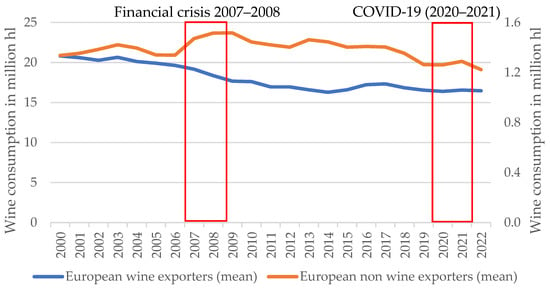
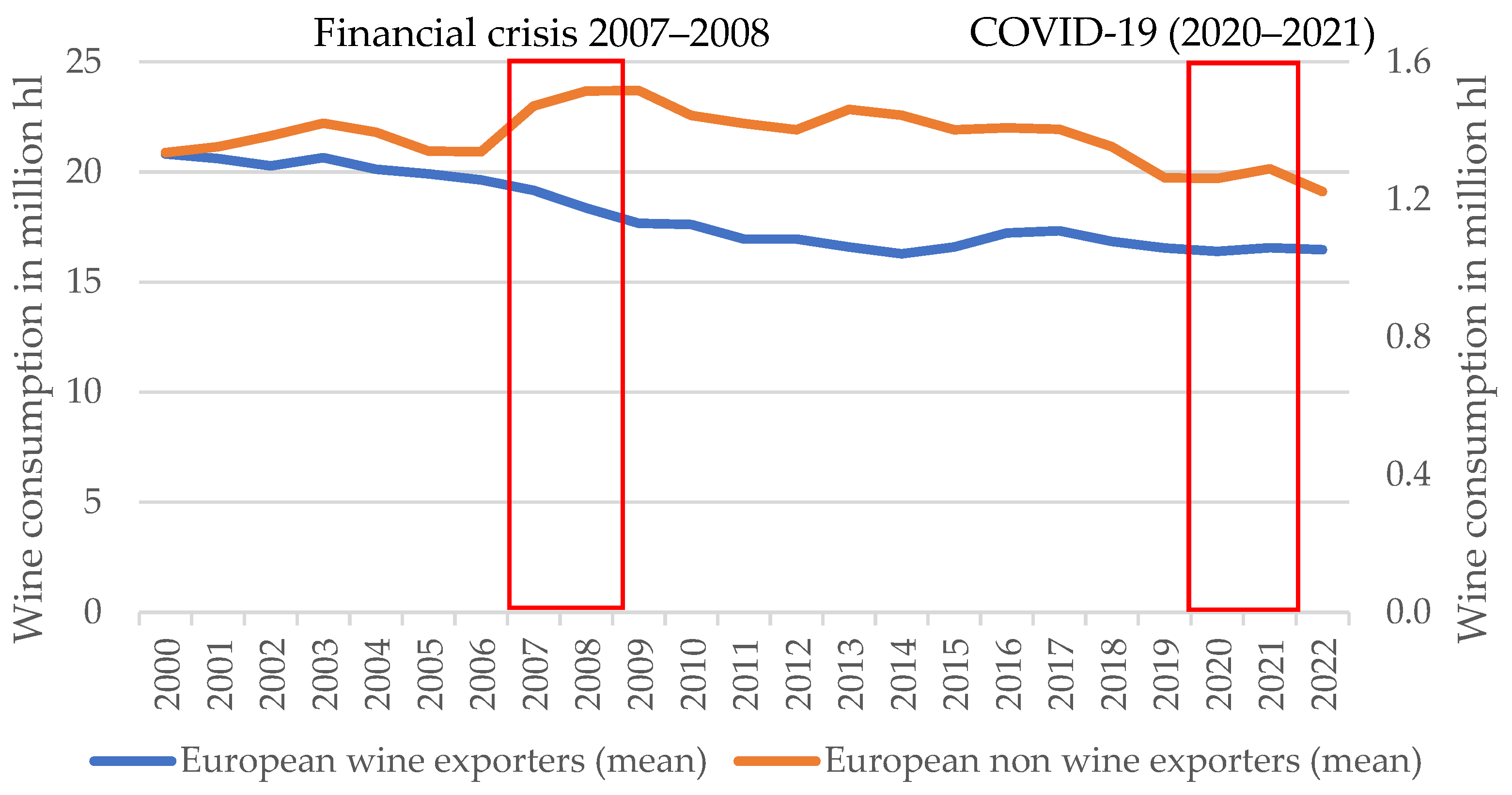
Figure 1 illustrates the trends in wine consumption for exporters and non-exporters, in the 2000–2022 period, with the crisis years marked. It suggests that during the time of crises, the aggregate wine consumption of top EU wine exporters declined while non-wine exporters’ consumption was increasing (2007–2008) or stagnating (2020–2021). For more details see Appendix A, Table A1, Table A2, Table A3 and Table A4.
Figure 1.
Trends in EU wine consumption for EU exporters and non-exporters, 2000–2022. Source: Authors’ composition.
Structural differences, such as market integration, production scale, and cultural consumption patterns, shape how countries adjust to macroeconomic shocks. Ignoring trade position of the EU wine producers would mask this heterogeneity.
3. Methodology and Data
The research employs a strongly balanced panel dataset covering 28 European Union member states (including the United Kingdom) over the period of 2000–2022. Data on wine consumption was obtained from the International Organisation of Vine and Wine (OIV), while macroeconomic indicators were sourced from the World Bank (data used as controls in the robustness analysis, in Section 3.4, the baseline model contains no covariates) [57,58].
The dependent variable is annual wine consumption volume (expressed in million liters). Because country fixed effects absorb differences in country size, the estimates reflect within-country changes in consumption; to improve cross-country comparability, wine consumption per capita (liters per inhabitant, using World Bank population data [58]) is applied as an additional outcome in the robustness analysis (Section 3.4). It should be noted that OIV consumption data are not survey-based; they are derived as measured consumption. Therefore, the outcome should be interpreted as measured wine consumption.
3.1. Empirical Strategy
To estimate the effect of economic shocks on EU wine consumption, we apply a panel difference-in-differences (DiD) model, with Average Treatment Effect on the Treated (ATET) techniques and country- and time-fixed effects. This approach allows us to compare changes in consumption before and after crisis periods between countries with different levels of trade exposure.
Also, we applied panel event studies and event plots to separately measure the differential effects of the 2007–2008 crisis and COVID-19. The baseline specification is estimated for the EU-28 countries’ panel data :
where
(Wine Consumption)it = γi + Δt + β3(Exporteri × Crisist) + εit
γi represents country fixed effects, controlling for time-invariant heterogeneity;
δt represents year fixed effects, capturing common shocks across countries;
β3 is the difference-in-differences coefficient on the interaction between the time-invariant wine exporter indicator and the crisis-period indicator (treatment effects are estimated for interactions of (Financial Crisis 2007_2008)*(Top wine exporters); (COVID19)*(Top wine exporters).;
i denotes EU-28 countries (including the UK),
t is the time expressed in years (t = 2000 … 2022).
The coefficient of interest is (β3), which represents the difference-in-differences estimator, measuring the additional impact of the crisis (financial crises 2007–2008 or COVID-19) on EU wine consumption in export-oriented countries relative to others (non-exporters).
Because the model includes country and year fixed effects, the time-invariant exporter indicator (its main effect) and the crisis-period indicator (common to all countries in a given year) are absorbed by γi and δt and are not separately identified or reported. Identification rests on the interaction (Exporteri × Crisist), where β3 measures how consumption in export-oriented countries changed during the crisis period relative to the control group, net of country-specific levels and shocks common to all countries. Standard errors are clustered at the country level; the idiosyncratic error is denoted as εit. A detailed description of the variables is presented in Table 1. Equation (1) is estimated separately for the 2007–2008 financial crisis and for COVID-19 (Models 1–2 in Table 2), and with the non-exporter indicator in place of the exporter indicator (Models 3–4). It should be noted that the control group (not wine exporters) is the complement of the treated group (wine exporters), and an interaction with the non-exporter indicator is omitted since it carries no independent information.
Table 1.
Description of variables.
Table 2.
Panel difference-in-differences estimation results for wine consumption in the EU, 2000–2022.
3.2. Definition of Treatment
EU countries are classified as export-oriented based on their average share of wine exports in the period of 2000–2022. Export share is defined as the average wine export volume divided by average total EU wine export of 2000–2022 of the individual country. Specifically, countries with average export shares above 4% are defined as treated (top wine exporters), and all remaining countries form the control group (non-wine exporters), i.e., the control group is the complement of the treated group. The full list of countries in each group is presented in Appendix A. The wine export share breakdown provides a separation between treated and control units. The robustness analysis (Section 3.4) also uses export share as a measure of trade exposure (see Appendix A).
3.3. Identification Assumption
The validity of the DiD approach relies on the parallel trends assumption, which requires that, in the absence of treatment, consumption trends in the treated and control groups would have evolved similarly over time. To assess this assumption, we complement the DiD estimation with an event-study specification to estimate dynamic treatment effects relative to the onset of each crisis. Insignificant pre-treatment coefficients are consistent with the parallel trends assumption. The formal pre-trend tests reported in Table 2 reject parallel trends for the COVID-19 exporter specification (Model 2, p = 0.022) and are borderline for the financial-crisis exporter specification (Model 1, p = 0.061). All models are estimated using panel fixed effects, with standard errors clustered at the country level to account for serial correlation and heteroskedasticity.
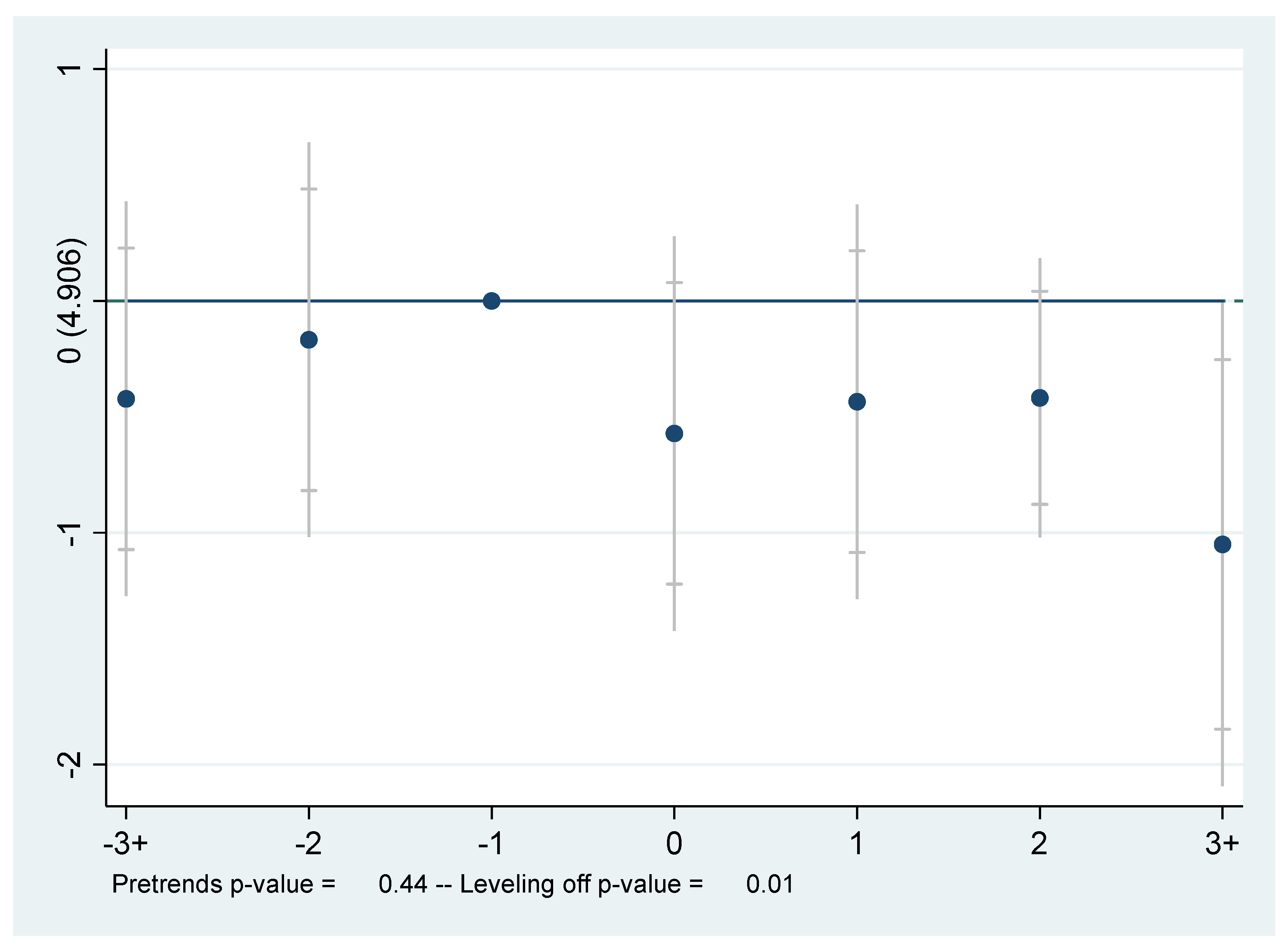
Event time t = 0 is before 2007 for the financial crisis and before 2020 for COVID-19, with coefficients measured relative to t = −1. The crisis indicator in the panel DiD models equals 1 from 2007 to 2008 for financial crisis, as well as 2020 and 2021 for COVID-19 (it covers only the crisis years). The DiD estimate captures the average difference during those years and does not support claims of persistence, which rests on the event-study coefficients. The 2+ coefficient in Figure 3 is exactly zero, since it is omitted. The end-point bins (−3+ and 3+ in Figure 2; −2+ and 2+ in Figure 3) pool all earlier or later years. Because the dataset ends in 2022, only two post-treatment years are available for COVID-19; thus, the event-study results for this shock cannot distinguish short-lived from persistent effects.
3.4. Sensitivity and Robustness
The sensitivity of the main results was assessed along exporter status which is based on average export shares in 2000–2022 (Section 3.2). Considering parallel trends, for COVID-19, models may have varying pre-treatment windows (e.g., 2013–2019 and 2010–2019, and excluding the post-financial-crisis adjustment years 2008–2012). In response to measurement, OIV consumption is a measure of wine consumption that includes wine purchases by country inhabitants (Section 3). Regarding parallel trends, bounds on the treatment effect are reported under relative-magnitude and restrictions on the deviation from parallel trends, following Rambachan and Roth [59]. Export volumes and share in the EU wine sector are used to define wine producers and exporter-oriented country groups in Equation (1) to test whether they respond differently in export-oriented countries.
4. Results
A panel event study and event plots are computed to explore the impacts of the financial crisis and COVID-19 on wine consumption in the EU over time. To examine the dynamics of the treatment effect and assess the validity of the identification strategy, Figure 2 and Figure 3 present the results from the event-study specification. Figure 2 shows that the pre-crisis coefficients are small and their 95% confidence intervals include zero (joint pre-trend test: p = 0.44), which is consistent with parallel pre-trends; however, the earliest pre-period bin (−3+) is similar in size to the post-crisis coefficients at t = 0 to 2, which weakens the visual case for a break at the crisis. After the onset of the crisis the point estimates are negative, but the confidence intervals at t = 0, 1 and 2 include zero. Only the cumulative post-crisis bin (3+) is statistically different from zero, and it is also the largest in absolute value. The leveling-off test (p = 0.01) rejects the hypothesis that the effect stabilizes. The evidence therefore points to a differential decline in export-oriented countries that emerges gradually and had not levelled off by the end of the horizon, rather than to an immediate effect that fades, and it is imprecisely estimated. Because year fixed effects absorb the component of the shock common to all countries, the panel DiD design identifies relative effects rather than EU-wide effects.
Figure 2.
Panel event plot for capturing the impacts of the financial crisis of 2007–2008 on the EU wine consumption in export-oriented countries relative to other EU countries, 2000–2022. Note: Horizontal axis: event time (e.g., years before and after the financial crisis); vertical axis: estimated coefficients for the dynamic treatment effect (the financial crisis). Points represent estimated coefficients (treatment effects-the financial crisis) for each period relative to t = −1. Vertical bars show 95% confidence intervals. Pre-trends p-value (0.44) tests whether coefficients for pre-treatment periods (t < 0) are jointly different from zero. High p-value supports the parallel trends assumption. Leveling-off p-value (0.01) tests whether post-treatment coefficients (t ≥ 1) are leveling off (no significant long-term change). The pre-trend test does not reject parallel trends. Only the cumulative post-crisis bin (3+) has a confidence interval that excludes zero, and the leveling-off test rejects stabilization of the effect. End-point bins pool all earlier or later years. Source: Authors’ composition based on OIV [57] data.
In Figure 3 (COVID-19) all 95% confidence intervals include zero, the earliest pre-period coefficient is of similar size to the post-period ones, and the 2+ coefficient is exactly zero. Only two post-treatment years (2021–2022) are available, hence the figure cannot show whether an effect was short-lived or persistent. However, the pre-trend test for the COVID-19 exporter comparison rejects parallel trends (Table 2, Model 2), so this pattern is descriptive. Evidence for H2 is therefore absent: no coefficient is statistically significant, and the event window is relatively short to distinguish short-lived from persistent effects. The event-study pre-trend test (p = 0.24) and the linear pre-trend test in Table 2 (p = 0.022) are different tests that give different answers, and we rely on the more conservative one.
Figure 3.
Panel event plot for capturing the impacts of the COVID-19 crisis of 2020 on the EU wine consumption in export-oriented relative to other EU countries, 2000–2022. Note: Horizontal axis: event time (years before and after the COVID-19 pandemic). Vertical axis: Estimated coefficients for the dynamic treatment effect (COVID-19). Points represent estimated coefficients (treatment effects–COVID19) for each period relative to t = −1. Pre-trends p-value (0.24) tests whether coefficients for pre-treatment periods (t < 0) are jointly different from zero. Levelling-off p-value (0.24) tests whether post-treatment coefficients (t ≥ 1) are levelling off (no significant long-term change). Impact of COVID-19: no coefficient is statistically different from zero; the 2+ coefficient is exactly zero; and only two post-treatment years are observed. Source: Authors’ composition based on OIV [57] data.
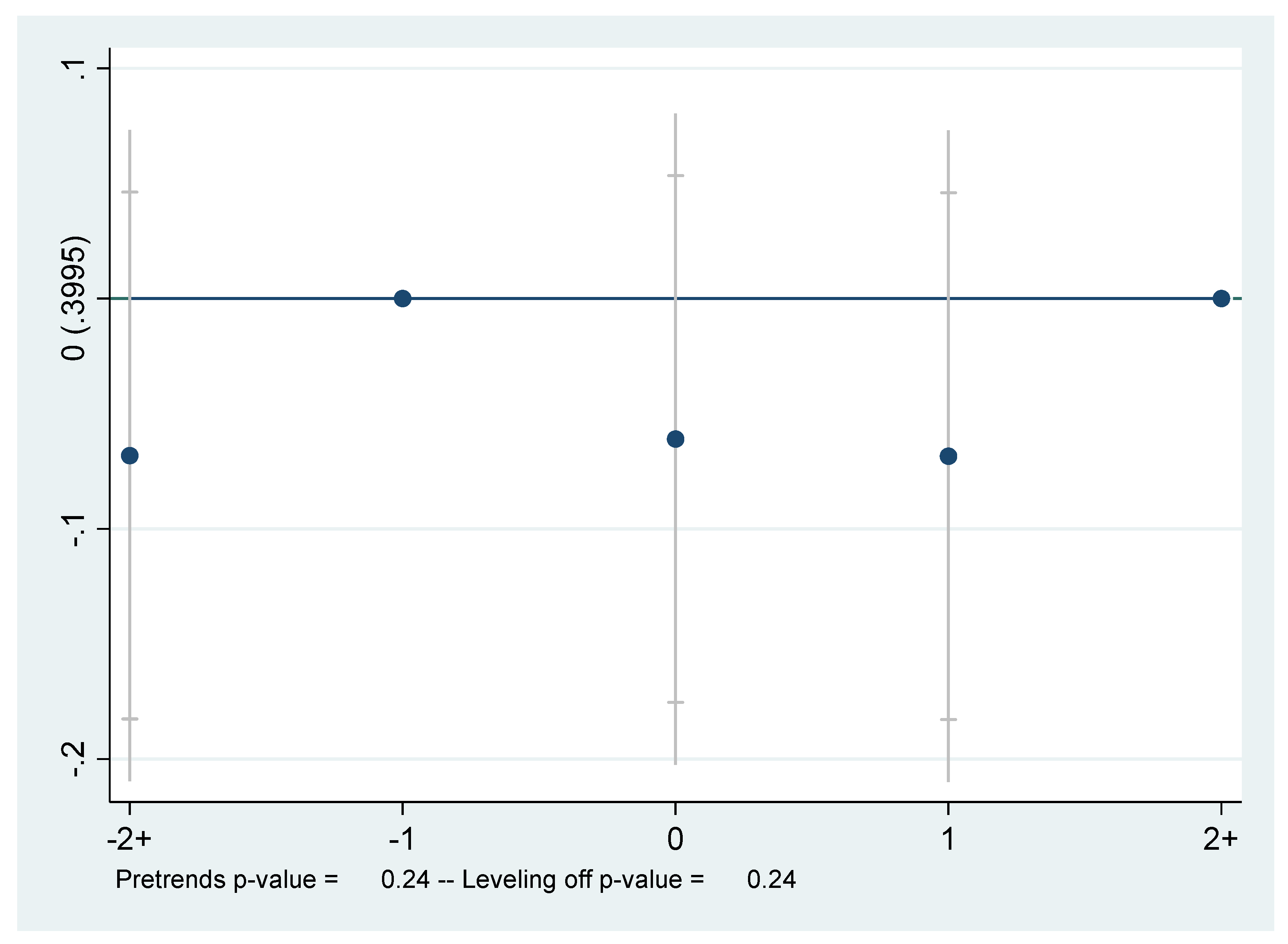
Table 2 presents the results of the estimated models based on the panel difference-in-differences (DiD) specification for EU wine consumption (Equation (1)). The focus is on the interaction term (β3), which serves as the difference-in-differences estimator. The estimated coefficient is negative in both exporter models but statistically significant only in Model 1 (financial crisis; p = 0.017).
This finding indicates that EU countries more oriented towards wine exports experienced a higher decline in wine consumption during the 2007–2008 financial crisis than EU countries being less export-oriented.
In model 1, the interaction term between the financial crisis and the wine exporter indicator (β3) reinforces this conclusion, as it is both negative and statistically significant. Conversely, in model 2, the interaction term between COVID-19 and the EU wine exporters dummy (β3) suggests that the pandemic did not significantly impact consumption among EU wine exporters relative to their less export-oriented counterparts. Since the parallel trends assumption is violated in this model, the specification is invalid and will not be interpreted further. Model 1 is consistent with H1 (a larger decline in export-oriented countries during the financial crisis), whereas H2 (COVID-19) cannot be confirmed because Model 2 fails the parallel-trends test and the event-study coefficient is not statistically significant.
These results are consistent with trade exposure being associated with larger declines in domestic consumption during the financial crisis. The Model 1 coefficient (β3 = −3.272, p = 0.017) should be read in the units of the dependent variable (Table 1), and its robustness is checked in Section 3.4 (the evidence is rather associative and does not isolate the channel).
5. Discussion
The results suggest heterogeneity in the consumption response to the 2007–2008 financial crisis according to countries’ trade positions in global wine markets while the evidence is inconclusive for COVID-19. Contrary to the common perception that traditional wine-producing countries are more resilient due to strong domestic consumption cultures, the results suggest that export-oriented EU countries experienced high wine consumption declines after the financial crisis of 2007–2008.
These results should not be read as contradicting earlier studies [5,53,54], since that research examined producers’ business models, distribution channels and firm-level resilience, so they offer no direct prediction analyzed here.
These findings highlight the importance of accounting for trade exposure when analyzing wine consumption dynamics. One possible explanation, which the present data cannot test, lies in the multiple channels through which global shocks affect export-oriented economies. These channels are hypothetical. The wine sector accounts for a small share of national income (GDP) in France, Italy or Spain, and income is likely to be modest; a fall in external demand could raise domestic availability and lower domestic prices, which would increase domestic consumption. Alternative explanations are that the result reflects the way consumption is measured, since OIV consumption is measured consumption which is affected by wine exports and stock changes in exporting countries; lower purchases by tourists; and characteristics shared by the exporting countries (such as the long-term decline in per-capita consumption in traditional wine-producing countries and the severity of the 2010–2013 sovereign debt crisis in Spain, Italy and Portugal).
In contrast, less export-oriented countries may be partially insulated from global demand shocks, with domestic consumption driven more strongly by local factors. In such contexts, substitution effects or shifts toward lower-priced products may mitigate the overall decline in consumption. These findings contribute to the literature on alcohol consumption and economic cycles by suggesting that aggregate effects can mask important cross-country heterogeneity. Incorporating trade exposure into the analysis provides a more nuanced understanding of how macroeconomic shocks propagate through consumption behavior.
6. Conclusions
In recent decades, the European Union, the world’s leading wine-producing region, has experienced a significant decline in wine consumption due to crises exacerbated by shifting consumption patterns. Wine exports are a significant part of many European wine economies, and recessions have significantly affected the global competitiveness and trade of these countries’ wine industries. Despite the rich literature on economic recessions and the wine industry, there is a lack of academic analyses examining the specific impacts of economic crises on EU wine consumption, particularly given the wine trading positions of the markets analyzed. To capture these effects, a wine consumption function was estimated using panel difference-in-differences, panel event study, and panel event plots for the EU-28 countries. The results suggest that the 2007–2008 financial crisis was associated with a high decline in measured wine consumption in export-oriented countries that had not levelled off by the end of the period analysed, whereas the COVID-19 comparison is inconclusive. Considering the impacts of COVID-19, no coefficient is statistically significant and only two post-treatment years are available; therefore, it cannot be observed whether any effect was short-lived or persistent. This neither confirms nor contradicts the findings of IWSR [55]. Because year fixed effects absorb shocks common to all countries, the design does not identify the average effect of either crisis on EU wine consumption.
The panel difference-in-differences estimation indicates that leading European wine-exporting countries were associated with a significantly higher decline in wine consumption after the 2007–2008 financial crisis (consistent with H1). More specifically, measured consumption fell by more in the leading European wine exporters than in the rest of the EU countries; this is a conditional association that may reflect measurement (apparent consumption), tourism and characteristics shared by the exporting countries. Consequently, a differential effect of the 2008 financial crisis was observed depending on the exporter status of EU countries, whereas no significant long-term differential impact of COVID-19 was found. EU wine exporters experienced a greater decline in consumption after the 2007–2008 crisis than other EU countries, which is consistent with greater vulnerability to declining demand and growing global competition in the wine export market.
Our findings are not directly comparable with previous work on producers’ resilience [5], which did not analyze domestic wine consumption. They indicate that measured wine consumption in leading wine-exporting countries fell by more after the financial crisis, which does not demonstrate a link between trade integration and vulnerability to shocks in global wine markets and demand.
6.1. Policy Implications
From a policy perspective, the results suggest that countries with strong export orientation may benefit from diversification strategies to reduce vulnerability to external shocks. This could include expanding domestic markets, developing alternative export destinations, or promoting product differentiation to stabilize demand. If export-dependent European wine-producing countries are more vulnerable to economic shocks, as these results suggest, greater diversification may help limit the consequences of future crises. Furthermore, diversification into non-EU markets may buffer against future recessions, given that wine exporters have been hit harder. The wine sector can drive greater innovation to develop new, more sustainable, and healthier low-alcohol wine products to cater to young generation wine consumers, whose tastes and needs differ from those of older wine consumers [60]. At the same time as the industry is looking at how to meet its evolving local markets, it should also explore new trade opportunities for traditional wines in emerging markets (the Asian and Pacific region or Africa) to diversify export destinations (targeting Nordic, Baltic, and Scandinavian countries) and reduce reliance on specific areas [61]. Promoting sustainable practices throughout the wine supply chain and attracting environmentally conscious consumers worldwide, including wine tourists, may help ensure the industry’s long-term sustainability [60].
6.2. Limitation
Several limitations of the research should be acknowledged. The classification of countries into exporter and non-exporter groups is based on aggregate measures and may not fully capture within-country heterogeneity. In addition, while the DiD framework controls unobserved time-invariant factors, other time-varying influences, such as policy interventions or changes in consumer preferences, may also play a role. The binary, export share-based classification and the small number of country clusters (28) limit precision, and parallel trends are rejected for the COVID-19 exporter model; therefore, estimates should be interpreted as conditional associations. In addition, the data does not allow us to identify the channel connecting wine export orientation to domestic wine consumption. The outcome is wine consumption derived from production, trade and stock data linked to exports and stock changes. The wine exporter countries dominated by Mediterranean wine producers share common characteristics (a long-term decline in per-capita consumption, exposure to the 2010–2013 debt crisis, and alcohol-policy regimes) which the baseline model does not control for. The applied event window after COVID-19 contains only two post-treatment years. The estimates identify differences between EU wine exporters and other countries, not the average effect of the crises on EU wine consumption. Future research could extend this analysis by incorporating more granular data, extending the period, exploring nonlinear effects, or examining other dimensions of trade integration.
Author Contributions
Conceptualization, J.M.B.; methodology, J.M.B.; formal analysis J.M.B., K.L. and I.H.; data collection J.M.B.; validation, J.M.B.; visualization J.M.B.; writing—original draft preparation, J.M.B., K.L., I.H. and T.M.; writing—review and editing, J.M.B., K.L., I.H. and T.M.; supervision, J.M.B. and T.M.; project administration, J.M.B. and T.M.; funding acquisition, T.M. All authors have read and agreed to the published version of the manuscript.
Funding
The authors received no financial support for the research, authorship, and/or publication of this article.
Institutional Review Board Statement
Not applicable. This article does not contain any studies with human participants performed by any of the authors.
Informed Consent Statement
Not applicable.
Data Availability Statement
The datasets generated and analyzed during the current study are publicly available in the International Organisation of Vine and Wine, OIV (https://www.oiv.int/what-we-do/data-discovery-report?oiv, accessed on 23 September 2026), and the World Bank (https://databank.worldbank.org/source/world-development-indicators, accessed on 23 September 2026) databases. The datasets generated and analyzed during the current study are available from the corresponding authors upon reasonable request.
Conflicts of Interest
The authors declare no conflicts of interest.
Appendix A
Table A1.
Trends in EU wine consumption for EU wine exporters and non-exporters, 2000–2022.
Table A2.
Average per capita wine consumption in the EU member states by countries, 2000–2022.
Table A3.
Share of total wine consumption in the EU by member states (2000–2022).
Table A4.
The share of country-level total wine export in the EU-28 by member states (2000–2022).
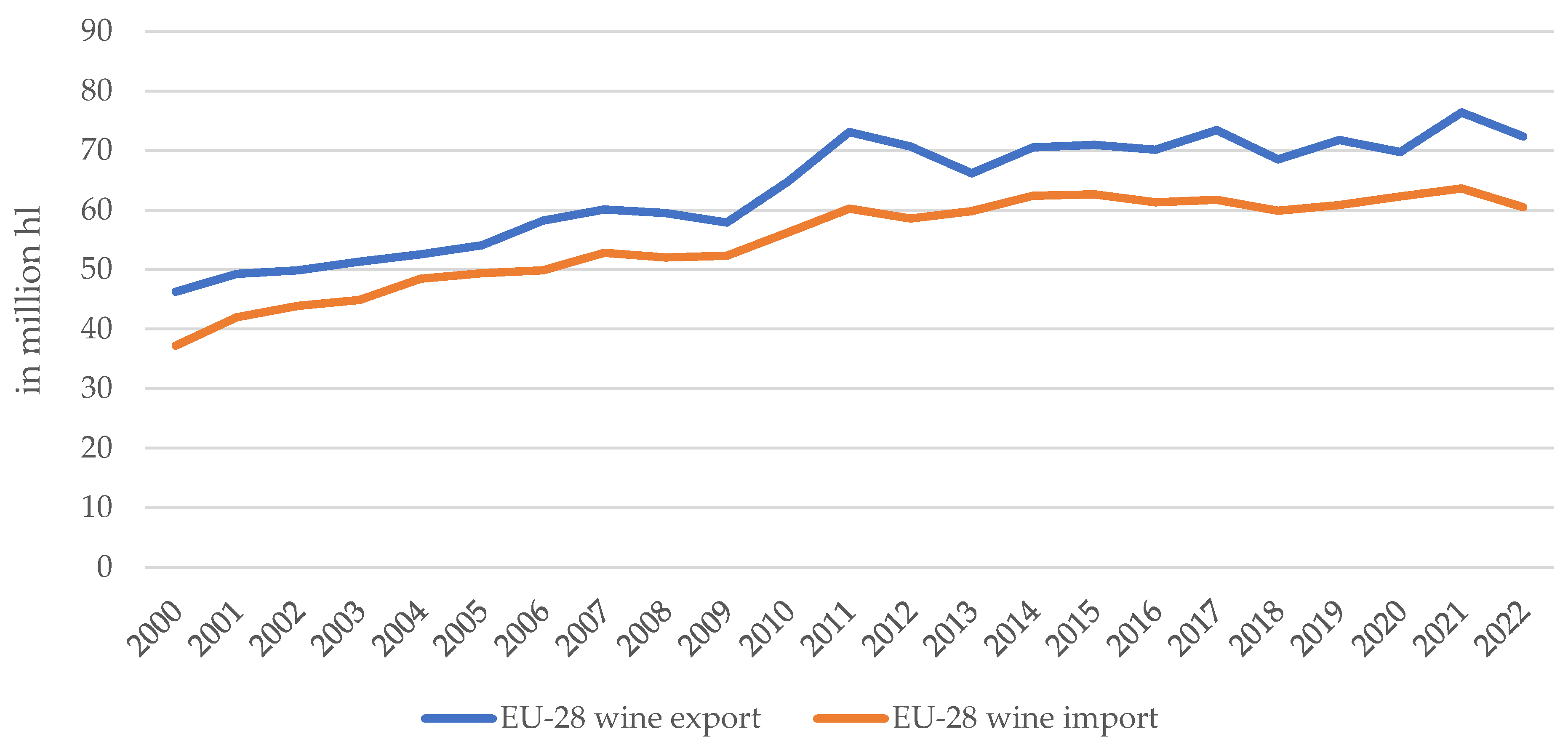
Figure A1.
Evolution of the EU-28 total wine export and import (2000–2022). Source: Authors’ calculation based on OIV data [57].
References
- Barker, J. State of the Global Vine and Wine Sector. 2025. Available online: https://www.oiv.int/sites/default/files/2025-04/OIV_State_of_the_World_Vine_and_Wine_Sector_in_2024_PPT.pdf (accessed on 12 November 2025).
- OIV. From Production to Consumption: 2024, the Negative Year of Wine. OIV Report: Productive Level Never So Low Since 60 Years. Italy Grows in Surface and Export. 2025. Available online: https://winenews.it/en/from-production-to-consumption-from-export-value-to-surface-2024-the-negative-year-of-wine_555684/ (accessed on 20 August 2025).
- IWSR. What’s Driving Wine’s Structural Decline? 2024. Available online: https://www.theiwsr.com/whats-driving-wines-structural-decline/ (accessed on 14 January 2025).
- Algieri, B.; Iania, L.; Leccadito, A.; Meloni, G. Message in a bottle: Forecasting wine prices. J. Wine Econ. 2024, 19, 64–91. [Google Scholar] [CrossRef] [Scilit]
- Ohana-Levi, N.; Netzer, Y. Long-term trends of global wine market. Agriculture 2023, 13, 224. [Google Scholar] [CrossRef] [Scilit]
- Statista. Global Wine Consumption 2000–2022. 2023. Available online: https://www.statista.com/statistics/232937/volume-of-global-wine-consumption/ (accessed on 11 July 2025).
- Katunar, J.; Grdinić, M.; Maradin, D. EU Tax and Agricultural Policy in the Wine Sector. In Real and Financial Sectors in Post-Pandemic Central and Eastern Europe: The Impact of Economic, Monetary, and Fiscal Policy; Springer: Berlin/Heidelberg, Germany, 2022; pp. 109–120. [Google Scholar] [CrossRef] [Scilit]
- Correia, L.; Gouveia, S.; Martins, P. The European wine export cycle. Wine Econ. Policy 2019, 8, 91–101. [Google Scholar] [CrossRef] [Scilit]
- Statista. Annual Wine Consumption in the European Union. 2023. Available online: https://www.statista.com/statistics/1247858/wine-consumption-eu/ (accessed on 27 May 2025).
- Evans, J.; Mathurin, P.; Campbell, C. Pandemic shift to premium brands leaves drinks makers in high spirits. Financ. Times 2021. Available online: https://www.ft.com/content/2f3d9d56-b153-4531-86f6-d33587ca612b?syn-25a6b1a6=1 (accessed on 23 September 2026).
- Kellershohn, J.; Lumby, N.; Kozar, M. Label design, packaging, and the Canadian Millennial/Gen Z wine consumer. J. Foodserv. Bus. Res. 2025, 28, 485–510. [Google Scholar] [CrossRef] [Scilit]
- Castellini, A.; Samoggia, A. Millennial consumers’ wine consumption and purchasing habits and attitude towards wine innovation. Wine Econ. Policy 2018, 7, 128–139. [Google Scholar] [CrossRef] [Scilit]
- Company, M. Mind the Gap. 2023. Available online: https://www.mckinsey.com/~/media/mckinsey/email/genz/2023/10/2023-10-17c.html (accessed on 3 March 2025).
- Clinic, C. Is Generation Z Drinking Less? 2023. Available online: https://health.clevelandclinic.org/why-gen-z-is-drinking-less (accessed on 5 March 2025).
- Eftimov, T.; Popovski, G.; Petković, M.; Seljak, B.K.; Kocev, D. COVID-19 pandemic changes the food consumption patterns. Trends Food Sci. Technol. 2020, 104, 268–272. [Google Scholar] [CrossRef] [Scilit] [PubMed]
- Bruwer, J.; Alant, K. The hedonic nature of wine tourism consumption: An experiential view. Int. J. Wine Bus. Res. 2009, 21, 235–257. [Google Scholar] [CrossRef] [Scilit]
- Agostino, M.; Trivieri, F. Geographical indication and wine exports. An empirical investigation considering the major European producers. Food Policy 2014, 46, 22–36. [Google Scholar] [CrossRef] [Scilit]
- De Toni, D.; Pompermayer, R.; Lazzari, F.; Milan, G.S. The symbolic value of wine, moderating and mediating factors and their relationship to consumer purchase intention. Int. J. Wine Bus. Res. 2022, 34, 190–211. [Google Scholar] [CrossRef] [Scilit]
- Lee, K.; Madanoglu, M.; Ha, I.S.; Fritz, A. The impact of service quality and customer satisfaction on consumer spending in wineries. Serv. Ind. J. 2021, 41, 248–260. [Google Scholar] [CrossRef] [Scilit]
- Balogh, J.M.; Jámbor, A. The global competitiveness of European wine producers. Br. Food J. 2017, 119, 2076–2088. [Google Scholar] [CrossRef] [Scilit]
- Brunner, T.A.; Siegrist, M. Lifestyle determinants of wine consumption and spending on wine. Int. J. Wine Bus. Res. 2011, 23, 210–220. [Google Scholar] [CrossRef] [Scilit]
- Lee, K. Is a glass of Merlot the symbol of globalization? An examination of the impacts of globalization on wine consumption in Asia. Int. J. Wine Bus. Res. 2009, 21, 258–266. [Google Scholar] [CrossRef] [Scilit]
- Rodríguez-Donate, M.C.; Romero-Rodríguez, M.E.; Cano-Fernández, V.J.; Guirao-Pérez, G. Sociodemographic determinants of the probability of wine consumption in Tenerife (Canary Islands). Int. J. Wine Bus. Res. 2017, 29, 316–334. [Google Scholar] [CrossRef] [Scilit]
- Nazan Gunay, G.; Baker, M.J. The factors influencing consumers’ behaviour on wine consumption in the Turkish wine market. EuroMed J. Bus. 2011, 6, 324–341. [Google Scholar] [CrossRef] [Scilit]
- Villanueva, E.C.; Castillo-Valero, J.S.; García-Cortijo, M. Who is drinking wine in the United States? The demographic and socio-economic profile of US wine consumers (1972–2012). Int. Food Agribus. Manag. Rev. 2015, 18, 39–60. [Google Scholar] [CrossRef]
- Silva, A.P.; Jager, G.; Van Zyl, H.; Voss, H.-P.; Pintado, M.; Hogg, T.; De Graaf, C. Cheers, proost, saúde: Cultural, contextual and psychological factors of wine and beer consumption in Portugal and in the Netherlands. Crit. Rev. Food Sci. Nutr. 2017, 57, 1340–1349. [Google Scholar] [CrossRef] [Scilit] [PubMed]
- Navratilova, M.; Beranova, M.; Severova, L. Economic and institutional aspects of wine consumption in the context of globalization and climate change in Europe and Russia. Terra Econ. 2021, 19, 127–140. [Google Scholar] [CrossRef] [Scilit]
- Spada, A.; Rana, R.L.; Fiore, M. Investigating the evocative link among wine consumption, Human Development Index and geographical region. Stud. Agric. Econ. 2020, 122, 66–76. [Google Scholar] [CrossRef] [Scilit]
- Ritchie, C. Beyond drinking: The role of wine in the life of the UK consumer. Int. J. Consum. Stud. 2007, 31, 534–540. [Google Scholar] [CrossRef] [Scilit]
- Acuti, D.; Mazzoli, V.; Grazzini, L.; Rinaldi, R. New patterns in wine consumption: The wine by the glass trend. Br. Food J. 2020, 122, 2655–2669. [Google Scholar] [CrossRef] [Scilit]
- Cembalo, L.; Caracciolo, F.; Pomarici, E. Drinking cheaply: The demand for basic wine in Italy. Aust. J. Agric. Resour. Econ. 2014, 58, 374–391. [Google Scholar] [CrossRef] [Scilit]
- Stasi, A.; Nardone, G.; Viscecchia, R.; Seccia, A. Italian wine demand and differentiation effect of geographical indications. Int. J. Wine Bus. Res. 2011, 23, 49–61. [Google Scholar] [CrossRef] [Scilit]
- Espejel, J.; Fandos, C.; Flavián, C. Antecedents of consumer commitment to a PDO wine: An empirical analysis of Spanish consumers. J. Wine Res. 2011, 22, 205–225. [Google Scholar] [CrossRef] [Scilit]
- Szolnoki, G.; Totth, G. A cross-cultural comparison of wine consumption and purchasing behaviour in Germany and Hungary. Wine Econ. Policy 2020, 9, 19–29. [Google Scholar] [CrossRef] [Scilit]
- Anderson, K.; Nelgen, S. Global Wine Markets, 1961 to 2009: A Statistical COMPENDIUM; University of Adelaide Press: Adelaide, Australia, 2011. [Google Scholar]
- Di Vita, G.; Caracciolo, F.; Brun, F.; D’Amico, M. Picking out a wine: Consumer motivation behind different quality wines choice. Wine Econ. Policy 2019, 8, 16–27. [Google Scholar] [CrossRef] [Scilit]
- Dias, P.; Oliveira, A.; Lopes, C. Social and behavioural determinants of alcohol consumption. Ann. Hum. Biol. 2011, 38, 337–344. [Google Scholar] [CrossRef] [Scilit] [PubMed]
- García-Cortijo, M.C.; Villanueva, E.C.; Castillo-Valero, J.S.; Li, Y. Wine consumption in China: Profiling the 21st century Chinese wine consumer. Ciênc. Téc. Vitivinícola 2019, 34, 71–83. [Google Scholar] [CrossRef] [Scilit]
- Liu, A.; Song, H. Analysis and forecasts of the demand for imported wine in China. Cornell Hosp. Q. 2021, 62, 371–385. [Google Scholar] [CrossRef] [Scilit]
- Hammond, R.; Velikova, N.; Dodd, T.H. Information sources used by millennial restaurant wine consumers. J. Foodserv. Bus. Res. 2013, 16, 468–485. [Google Scholar] [CrossRef] [Scilit]
- Giacomarra, M.; Galati, A.; Crescimanno, M.; Vrontis, D. Geographical cues: Evidences from New and Old World countries’ wine consumers. Br. Food J. 2020, 122, 1252–1267. [Google Scholar] [CrossRef] [Scilit]
- Weightman, C.; Bauer, F.F.; Terblanche, N.S.; Valentin, D.; Nieuwoudt, H.H. An exploratory study of urban South African consumers’ perceptions of wine and wine consumption: Focus on social, emotional, and functional factors. J. Wine Res. 2019, 30, 179–203. [Google Scholar] [CrossRef] [Scilit]
- OIV. State of the World Vine and Wine Sector in 2022. 2022. Available online: https://www.oiv.int/sites/default/files/documents/OIV_State_of_the_world_Vine_and_Wine_sector_in_2022_2.pdf (accessed on 3 May 2025).
- Ho, H.K. Twenty-first century wine consumption trends in East Asia: History, luxury and transformation. J. Cult. Anal. Soc. Change 2021, 6. [Google Scholar] [CrossRef] [PubMed]
- Anderson, K. Asia’s emergence in global beverage markets: The rise of wine. Singap. Econ. Rev. 2020, 65, 755–779. [Google Scholar] [CrossRef] [Scilit]
- Helble, M.; Sato, A. Booms and booze: On the relationship between macroeconomic conditions and alcohol consumption. Health Policy 2011. Available online: https://www.arfjournals.com/image/84155_7_luke_paterson.pdf (accessed on 23 September 2026). [CrossRef] [Scilit]
- Sadik-Zada, E.R.; Niklas, B. Business cycles and alcohol consumption: Evidence from a nonlinear panel ARDL approach. J. Wine Econ. 2021, 16, 429–438. [Google Scholar] [CrossRef] [Scilit]
- Cardebat, J.-M.; Masset, P.; Weisskopf, J.-P. COVID-19: What Is Next for the Market for Fine Wines? 2020. Available online: https://www.researchgate.net/publication/342595968_COVID-19_What_is_Next_for_the_Market_for_Fine_Wines (accessed on 10 November 2025).
- Wittwer, G.; Anderson, K. COVID-19’s impact on Australian wine markets and regions. Aust. J. Agric. Resour. Econ. 2021, 65, 822–847. [Google Scholar] [CrossRef] [Scilit] [PubMed]
- Anderson, K.; Wittwer, G. Asia’s evolving role in global wine markets. China Econ. Rev. 2015, 35, 1–14. [Google Scholar] [CrossRef] [Scilit]
- Agnoli, L.; Outreville, J.F. Wine consumption and culture: A cross-country analysis. Appl. Econ. Perspect. Policy 2021, 43, 1101–1124. [Google Scholar] [CrossRef] [Scilit]
- IWSR. How the Credit Crunch Has Influenced European Drinking Habits. 2023. Available online: https://www.theiwsr.com/news-comment-credit-crunch-eu-alcohol-consumption/ (accessed on 16 August 2025).
- Niklas, B.; Cardebat, J.M.; Back, R.M.; Gaeta, D.; Pinilla, V.; Rebelo, J.; Jara-Rojas, R.; Schamel, G. Wine industry perceptions and reactions to the COVID-19 crisis in the Old and New Worlds: Do business models make a difference? Agribusiness 2022, 38, 810–831. [Google Scholar] [CrossRef] [Scilit] [PubMed]
- Rebelo, J.; Compés, R.; Faria, S.; Gonçalves, T.; Pinilla, V.; Simón-Elorz, K. Covid-19 lockdown and wine consumption frequency in Portugal and Spain. Span. J. Agric. Res. 2021, 19, e0105R. [Google Scholar] [CrossRef] [Scilit]
- IWSR. Drinking in an Economic Downturn. 2023. Available online: https://www.theiwsr.com/drinking-in-an-economic-downturn/ (accessed on 16 August 2025).
- Agnoli, L.; Charters, S. The alcohol consumption of wine drinkers with the onset of Covid-19. Food Qual. Prefer. 2022, 98, 104489. [Google Scholar] [CrossRef] [Scilit] [PubMed]
- OIV. Data Discovery Report. 2024. Available online: https://www.oiv.int/what-we-do/data-discovery-report?oiv (accessed on 3 May 2025).
- Bank, W. World Development Indicators. 2025. Available online: https://databank.worldbank.org/source/world-development-indicators (accessed on 3 November 2025).
- Rambachan, A.; Roth, J. A More Credible Approach to Parallel Trends. Rev. Econ. Stud. 2023, 90, 2555–2591. [Google Scholar] [CrossRef] [Scilit]
- Palmieri, N.; Perito, M.A.; Pesce, A. Young consumers’ preferences for natural wine: An Italian exploratory study. J. Int. Food Agribus. Mark. 2025, 37, 95–115. [Google Scholar] [CrossRef] [Scilit]
- Kladou, S.; Trihas, N.; Alebaki, M.; Apladas, G. Quality labels and sustainable food chains in tourism & hospitality: The role of local and traditional products. J. Foodserv. Bus. Res. 2026, 29, 1231–1262. [Google Scholar] [CrossRef] [Scilit]
Disclaimer/Publisher’s Note: The statements, opinions and data contained in all publications are solely those of the individual author(s) and contributor(s) and not of MDPI and/or the editor(s). MDPI and/or the editor(s) disclaim responsibility for any injury to people or property resulting from any ideas, methods, instructions or products referred to in the content. |
© 2026 by the authors. Licensee MDPI, Basel, Switzerland. This article is an open access article distributed under the terms and conditions of the Creative Commons Attribution (CC BY) license.