


Abstract
Scutellaria baicalensis is an important medicinal plant, and the diversity of its rhizosphere microbiota may influence its growth, development, and yield. Numerous studies have reported that warming associated with global climate change significantly altered plant-associated soil microbial diversity. To reveal the effects of night-time warming on the rhizosphere microbial community of S. baicalensis, soil microbial diversity in the rhizosphere (RS) and bulk soil (BS) of S. baicalensis were analyzed by employing bacterial 16S rRNA and fungal ITS sequencing technology. Warming significantly altered both bacterial and fungal communities in the rhizosphere and bulk soils of S. baicalensis, with pronounced changes in OTU composition, relative abundances at both phylum and species levels. The analysis of alpha and beta diversity showed that warming significantly altered the fungal community structure in the rhizosphere soil (R2 = 0.423, p < 0.05) and significantly reduced the species richness in the bulk soil of S. baicalensis (Shannon and Simpson index, p < 0.05). LEfSe and functional prediction analyses revealed that warming altered the taxonomic composition of both bacterial (35 taxa, LDA > 3) and fungal (24 taxa, LDA > 4) communities in rhizosphere and bulk soils of S. baicalensis, with multiple bacterial and fungal taxa serving as treatment-specific biomarkers. Functional predictions indicated that fungal functional groups, including saprotrophic and mycorrhizal guilds, were more strongly affected by warming than bacteria. Overall, warming has a significantly stronger impact on fungal communities in the rhizosphere and bulk soils of S. baicalensis than on bacteria, and has a significantly greater effect on the diversity of microbial communities in bulk soils than that in rhizosphere soils. This study provides important data for understanding the impact of global climate change on the rhizosphere microbial communities of cultivated plants.
1. Introduction
Scutellaria baicalensis, a perennial herb of the Lamiaceae family, is widely distributed in temperate regions and tropical mountainous areas of China, Russia, Mongolia, Korea, and Japan [1]. S. baicalensis is a commonly used traditional medicinal plant in East Asia region. The dried root of S. baicalensis exhibits a broad spectrum of pharmacological activities [2], including antibacterial [3] and antiviral [4]. Recent studies have further demonstrated that baicalin and baicalein, the major active constituents of S. baicalensis, inhibit the replication of SARS-CoV-2 [5]. Owing to its extensive clinical applications and substantial market demand, S. baicalensis has been widely cultivated in many provinces in northern China.
Rhizosphere soil microorganisms are one of the key factors influencing root growth and development in plants and are often known as the plant’s second genome [6]. They can boost synthesis of secondary metabolites via regulating expression of relevant genes, enhancing nutrient uptake, producing plant hormones, and improving plant stress tolerance [7,8]. Previous studies have shown that plant growth-promoting bacteria such as Bacillus subtilis enhanced the yield and polysaccharide content of Pseudostellaria heterophylla, as well as the biomass and Bacoside A content in Bacopa monnieri [9,10]. The enrichment of Actinobacteria is closely associated with increased levels of bioactive compounds including polysaccharides, alkaloids, saponins, and phenolics in medicinal plants such as P. heterophylla and Sophora flavescens [11,12]. In Panax quinquefolius, rhizosphere bacteria (e.g., Bradyrhizobium and Pseudoxanthomonas) and arbuscular mycorrhizal fungi (AMF, Rhizophagus, Glomus, etc.) are associated with elevated levels of triterpenoid saponins and other bioactive compounds [13,14]. Studies on Rheum tanguticum have also indicated that rare fungal taxa served as key drivers of secondary metabolite accumulation [15]. Collectively, these findings suggested that studying the dynamic changes in rhizosphere microbial community diversity in medicinal plants is helpful for the cultivation practice of medicinal plants.
Global climate change has led to a significant increase in environmental tempera-tures, and the IPCC predicts that the global surface temperature will continue to rise by 0.5–2 °C over the next 50 years [16]. In soil ecosystems, warming not only influences the physicochemical properties of soils but also significantly affects the structure, function, and dynamics of soil microbial communities [17]. Under elevated temperature conditions, microbial species diversity, community composition, and metabolic functions often change markedly, with certain functional microbes—such as stress tolerant fungi, nitro-gen-fixing bacteria, and phosphorus-solubilizing bacteria—becoming dominant, while some sensitive taxa decline significantly [18]. For example, in field-grown wheat, warming altered the composition of root and rhizosphere bacterial communities and increased rhizosphere dissolved organic carbon content and microbial activity; among them, Actinobacteria, Firmicutes, Pseudomonas, and Bacillus exhibited increased relative abundances under warming conditions [19]. The impact of warming on soil microbial diversity may further influence plant growth, development, and metabolic processes [20]. Therefore, investigating the effects of warming on plant root-associated microbial diversity is crucial for elucidating the regulatory mechanisms of plant–microbe interactions under climate warming and for understanding the ecological strategies by which plants adapt to future climate change.
To date, the changes in soil microbial communities caused by warming have mainly been studied in wild plants and crops, and research on artificially cultivated medicinal plants is still insufficient. S. baicalensis Georgi, as a representative northern authentic medicinal herb, has its quality determined not only by genetic background and environmental factors but also closely linked to interactions with rhizosphere microorganisms [1]. Recent studies have indicated that rhizosphere microbial diversity in S. baicalensis is closely associated with flavonoid accumulation [21]. Another study indicated that the content of baicalin, the main active component of S. baicalensis, is significantly correlated with the relative abundances of rhizosphere microbes such as Vicinamibacterales, Xanthomon-adales, Burkholderiales, Sphingomonadales, and Rhizobiales, suggesting that rhizo-sphere microorganisms may influence the synthesis and accumulation of secondary metabolites in S. baicalensis [1,22]. However, the effects of warming on the rhizosphere microbial diversity of S. baicalensis remain largely unexplored.
Previous research has shown that the night-time temperature increase caused by global warming is significantly higher than the daytime temperature increase [23], and the impact of global warming on plant growth and development is largely due to night-time warming [24]. In this study, a continuous four-year night-time warming experiment simulating climate warming was conducted. Bacterial 16S rRNA and fungal ITS amplicon sequencing were employed to investigate the effects of warming on the α- and β-diversity of microbial communities in the rhizosphere and bulk soil of S. baicalensis. Furthermore, differential microbial biomarkers associated with warming were identified using LEfSe analysis. The study helps elucidate the regulatory mechanisms of plant microbe interactions under climate change, providing valuable insights for the cultivation management of S. baicalensis.
2. Materials and Methods
2.1. Study Area and Night-Time Warming System
The warming experiment was conducted using a randomized block design with six blocks (4 m × 3 m). Two groups were set up, a control group (CK) and a warming group (W), with three replicates in each group, totaling six plots. The experimental site was located in Horqin Left Wing Middle county, Tongliao City, Inner Mongolia Autonomous Region (43°55′6.12″ N, 121°59′27.53″ E). Night-time warming was applied using infrared heaters (Kalglo Electronics Inc., Bethlehem, PA, USA) mounted 2.25 m above each plot. Soil temperature at 5 cm depth was continuously monitored using a 12 cm a multi-channel soil three-parameter measurement system (Campbell Scientific Inc., Logan, UT, USA) installed at the plot center [25]. The soil and climate parameters of the experimental site are shown in Tables S1 and S2. Warming treatment was applied nightly throughout the growing season from May to September during 2022–2025, from 18:00 to 06:00. Plants in control group were maintained at ambient temperature.
2.2. Collection and Processing of Soil Samples
Rhizosphere soil (RS) and bulk soil (BS) samples (approximately 50 g) were collected on 13 September 2025, from a depth of 20 cm around the roots of S. baicalensis in the experimental field. For each group (control and night-time warming), three biological replicates were collected for both RS and BS, resulting in a total of 24 samples (2 treatments × 3 replicates × 2 soil types = 24). RS samples were obtained by gently brushing off the soil tightly adhering to the roots, while BS samples were collected from soil at the same depth but at least 5 cm away from any roots to avoid root influence. All samples from the four group (Rhizosphere soil from the control group: RS-CK; Rhizosphere soil from the warming group: RS-W; bulk soil from the control group: BS-CK; bulk soil from the warming group: BS-W) were immediately snap-frozen in liquid nitrogen and then stored at −80 °C. For soil sample processing, 0.25–0.5 g of soil was transferred into a 2 mL centrifuge tube containing 500 µL of buffer SA, 100 µL of buffer SC, and 0.25 g of grinding beads. The mixture was vortexed for 15 min until fully homogenized or homogenized using a TGrinder H24 tissue grinding system (Tiangen Biotech, Beijing, China). After centrifugation at 12,000 rpm for 1 min, 500 µL of the supernatant was transferred to a new 2 mL centrifuge tube.
2.3. Detection and Analysis of Soil Microorganisms
Nucleic acid concentrations were quantified using a microplate reader, followed by amplification and integrity assessment. DNA purity and concentration were verified spectrophotometrically (NanoDrop 2000, Thermo Fisher Scientific, Waltham, MA, USA). Total genomic DNA was amplified for the bacterial 16S rRNA gene and fungal ITS regions using PCR, following the procedures described by Li et al. [26]. Primers for bacteria were 5′-AGRGTTTGATYNTGGCTCAG-3′ (Forward primer) and 5′-TASGGHTACCTTGTTASGACTT-3′ (Reverse primer). Primers for fungi were 5′-CTTGGTCATTTAGAGGAAGTAA-3′ (Forward primer) and 5′-TCCTCCGCTTATTGATATGC-3′ (Reverse primer). PCR products were purified using magnetic bead-based clean-up to isolate target DNA fragments. Purified amplicons were sequenced on an Illumina NovaSeq 6000 platform (Illumina, San Diego, CA, USA).
2.4. CCS Sequence Processing and OTU Analysis
Raw subreads generated from root samples were corrected to obtain Circular Consensus Sequencing (CCS) reads using SMRT Link (version 8.0). CCS reads from different samples were then demultiplexed based on barcode sequences and screened for chimeras using lima (version 1.7.0), yielding high-quality CCS sequences. For OTU clustering, USEARCH [27] (version 10.0) was employed to cluster sequences at the default 97% similarity threshold. Operational taxonomic units (OTUs) were filtered using the default cutoff of 0.005% of the total sequencing reads.
2.5. Taxonomic Annotation and Classification Analysis
For taxonomic annotation, bacterial sequences were annotated using the Silva database (Release 138, http://www.arb-silva.de), and fungal sequences were annotated using the UNITE database [28] (Release 8.0, https://unite.ut.ee/). Alignment-based taxonomic assignment was performed using the classify-consensus-blast method in QIIME2 [29], which identifies the highest consensus taxonomy among the top 3 BLAST (version 2.17.0) hits. The parameters were set as follows: minimum sequence similarity of 90%, minimum alignment coverage of 90%, and minimum consensus of 51%. Naive Bayes classifier–based assignment was conducted using the classify-sklearn method in QIIME2 with a classifier confidence threshold of 0.7. For combined BLAST and classifier annotation, taxonomy was first assigned using classify-consensus-blast. Sequences that do not match to the reference sequences were subsequently categorized using the classify-sklearn Naive Bayes classifier.
2.6. Microbial Diversity Analysis
Common richness estimators used for assessing bacterial and fungal abundance include the Chao1 richness estimator and the ACE richness estimator. Diversity indices commonly used to measure community diversity include the Shannon–Wiener diversity index, and Simpson diversity index. OTU tables were rarefied to a sequencing depth corresponding to the sample with the lowest number of effective reads (bacteria: 50,000; fungi: 45,000) to ensure comparability across samples. Alpha diversity indices were determined with QIIME2 (https://qiime2.org/ (accessed on 10 October 2025)).
Beta diversity analysis was performed to evaluate changes in community composition across temporal or spatial gradients. A dissimilarity matrix was generated using the binary Jaccard algorithm. Non-metric Multidimensional Scaling (NMDS) were performed in the R statistical environment, and both analyses belong to ordination methods. Ordination projects samples into a low-dimensional space to maximize the preservation of pairwise distances, thereby visualizing relationships among microbial communities. Permutational multivariate analysis of variance was conducted based on the same distance matrix with 999 permutations to test the significance of treatment effects on community composition.
2.7. Biomarker Identification Analysis
Differential taxa between groups were identified using LEfSe analysis [30] (http://huttenhower.sph.harvard.edu/lefse/ (accessed on 10 October 2025)). LEfSe employs linear discriminant analysis (LDA) to determine the size of each taxon and to identify taxa whose relative abundances differ significantly among groups, thereby identifying potential microbial biomarkers. LDA maximizes the between-class variance while minimizing within-class variance after projection. A logarithmic LDA score threshold of ≥4 was applied for fungi, whereas a threshold of ≥3 was used for bacteria.
2.8. Prediction of Soil Microbial Functional Genes
Functional prediction of bacterial communities was performed using PICRUSt2 [31]. Briefly, 16S rRNA gene amplicon sequences were first quality-filtered and clustered into OTUs using DADA2. The OTUs were then placed into a reference phylogenetic tree, and gene family abundances were inferred based on known genomes. Predicted metagenomes were further annotated against the KEGG (Kyoto Encyclopedia of Genes and Genomes) database, and pathway abundances at Level 2 functional categories were estimated. Relative abundances of predicted functional pathways were compared between treatments. Each OTU was designated to a functional guild using the FUNGuild [32]. Only OTUs assigned at the TROPHIC level with confidence p < 0.05 were retained in the final analysis.
3. Results
3.1. Quality Assessment of Soil Microbial Sequencing Data of S. baicalensis
To analyze the impact of night-time warming on the diversity of rhizosphere microbial communities in S. baicalensis, a continuous four-year night-time warming experiment simulating climate warming was conducted. Monitoring of soil temperature shows an average increase of 1.3 degrees Celsius in night-time soil temperature due to warming (Table S2).
Bacterial 16S rRNA and fungal ITS amplicon sequencing was employed to investigate the effects of warming on the α- and β-diversity of microbial communities in the rhizosphere (RS) and bulk soil (BS) of S. baicalensis. High-throughput sequencing of bacterial and fungal communities from BS and RS yielded high-quality reads with consistent sequencing depth across all samples. Bacterial CCS reads ranged from 54,911 to 68,654, with effective reads accounting for 88.9–99.3% and a mean read length of 1451–1458 bp. Fungal CCS reads ranged from 45,527 to 67,497, with 95.3–99.9% effective reads and mean lengths of 598–658 bp (Table S3). In RS, the average number of bacterial OTUs was 2925 for CK and 3662 for W, while fungal OTUs averaged 809 for CK and 741 for W. The average sequencing counts for bacteria were 42,470 (CK) and 48,912 (W), and for fungi were 51,539 (CK) and 48,363 (W), respectively, providing a reliable basis for downstream community structure and diversity analyses (Figure S1 and Table S4).
3.2. Warming-Induced Changes in OTU Distribution in S. baicalensis Soils
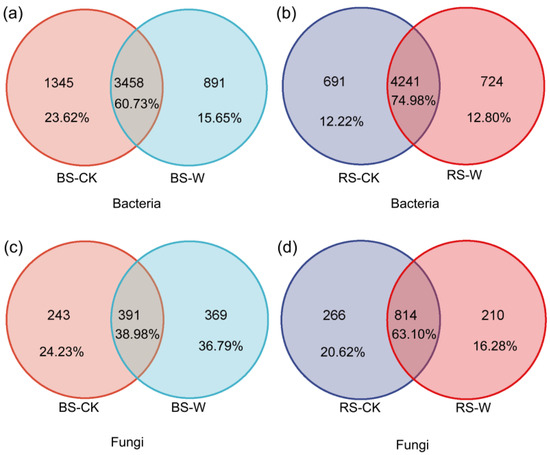
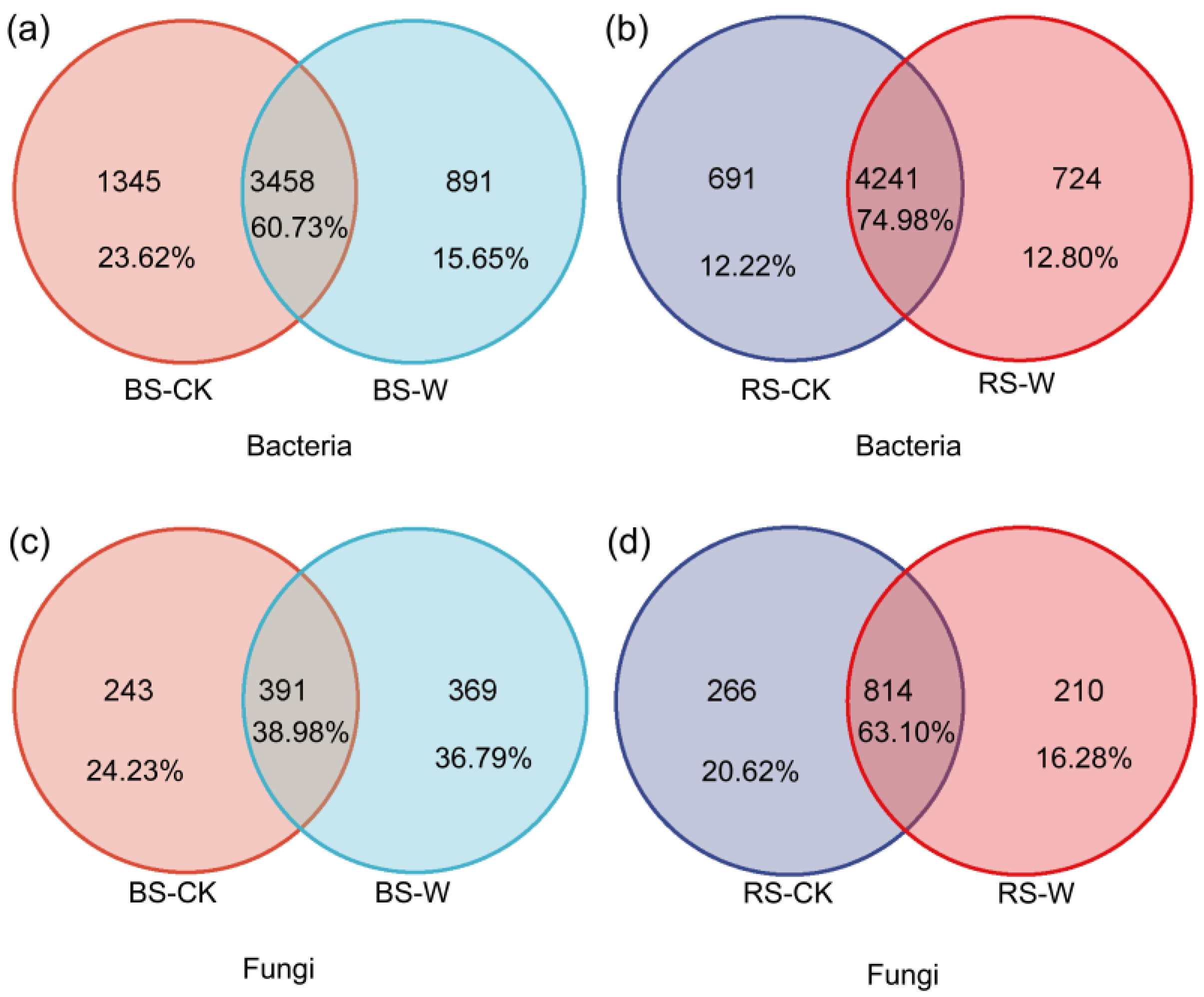
Venn diagram analysis was conducted to identify the shared and unique OTUs across different soil types (BS vs. RS) and treatments (CK vs. W) (Figure 1). For bacteria, there were 724 unique OTUs identified in RS-W, 691 unique OTUs in RS-CK, and 4241 OTUs shared by RS-W and RS-CK in rhizosphere soil. In bulk soil, there were 891 unique OTUs identified in BS-W, 1345 unique OTUs in BS-CK, and 3458 OTUs shared by BS-W and BS-CK. These data indicated that warming altered the diversity of bacterial communities in the rhizosphere and bulk soil of S. baicalensis (Figure 1a,b).
Figure 1.
Effects of warming on OTUs Venn diagrams and taxonomic abundance distributions of bacterial and fungal communities at the phylum and species levels in the rhizosphere and bulk soils of S. baicalensis. (a) OTUs Venn diagram showing the effects of warming on bacterial communities at the phylum level in bulk soil (BS). (b) OTUs Venn diagram showing the effects of warming on bacterial communities at the species level in rhizosphere soil (RS). (c) OTUs Venn diagram showing the effects of warming on fungal communities at the phylum level in bulk soil (BS). (d) OTUs Venn diagram showing the effects of warming on fungal communities at the species level in rhizosphere soil (RS).
For fungi, there were 210 unique OTUs identified in RS-W, 266 unique OTUs in RS-CK, and 814 OTUs shared by RS-W and RS-CK in rhizosphere soil. In bulk soil, there were 369 unique OTUs identified in BS-W, 243 unique OTUs in BS-CK, and 391 OTUs shared by BS-W and BS-CK. These data indicated that warming significantly altered the diversity of fungal communities in the rhizosphere and bulk soil of S. baicalensis (Figure 1c,d).
By comparing the unique OUTs proportion of bacteria and fungi in the rhizosphere and bulk soil under warming, it was found that warming had a significantly greater impact on the diversity of fungal communities in the rhizosphere and bulk soil of S. baicalensis than on bacteria (Table S5). By comparing the unique OTUs proportion of rhizosphere and bulk soil microorganisms under warming, it was found that warming had a significantly weaker effect on the bacterial community of S. baicalensis rhizosphere soil than on the microbial community of bulk soil, and this difference was more significant in soil fungi. In summary, these data indicated that warming affects the microbial communities in the rhizosphere and bulk soil of S. baicalensis, and this effect is more significant for fungi.
3.3. Warming-Induced Changes in Microbial Community Composition in S. baicalensis Soils
To explore how warming influences the microbial community structure of S. baicalensis rhizosphere soils, taxonomic annotation of bacterial and fungal OTUs was performed. The results indicated that, compared with the control, the composition of plant rhizosphere soil and bulk soil microbial communities in the warming group showed significant changes at both the phylum and species levels.
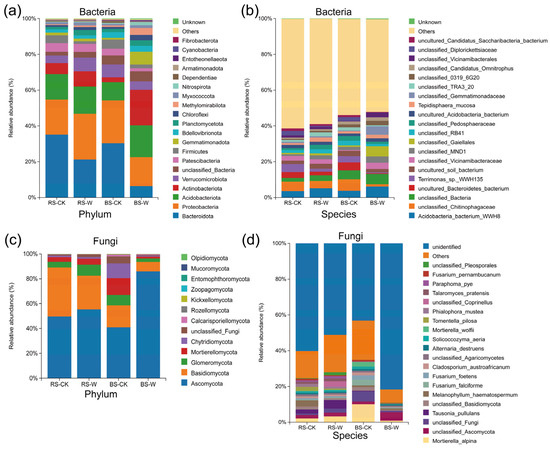
At the phylum level, for bacteria, twelve OTUs were identified from the rhizosphere soil microbial community of S. baicalensis, including Verrucomicrobiota, Firmicutes, Gemmatimonadota, Actinobacteriota, Bacteroidota, and Firmicutes. In rhizosphere soil, warming increased the relative abundances of Verrucomicrobiota by 80.90%, respectively, while decreasing the relative abundances of Firmicutes and Bacteroidota by 65.60% and 39.60%, respectively. In bulk soil, under warming conditions, the relative abundances of Gemmatimonadota and Actinobacteriota increased by 698.90% and 607.5%, respectively, whereas the relative abundances of Bacteroidota and Firmicutes decreased by 78.90% and 58.20%, respectively (Figure 2a). At the species level, for bacteria, ten OTUs were identified from the rhizosphere soil microbial community of S. baicalensis, including unclassified_Chitinophagaceae, Terrimonas_sp._WWH135 and unclassified_Vicinamibacteraceae. In rhizosphere soil, warming increased the relative abundances of Terrimonas_sp._WWH135 by 60.50%, respectively. In bulk soil, under warming conditions, the relative abundances of unclassified_Vicinamibacteraceae increased by 579.30%, respectively, whereas the relative abundances of Terrimonas_sp._WWH135 decreased by 83.60%, respectively (Figure 2b).
Figure 2.
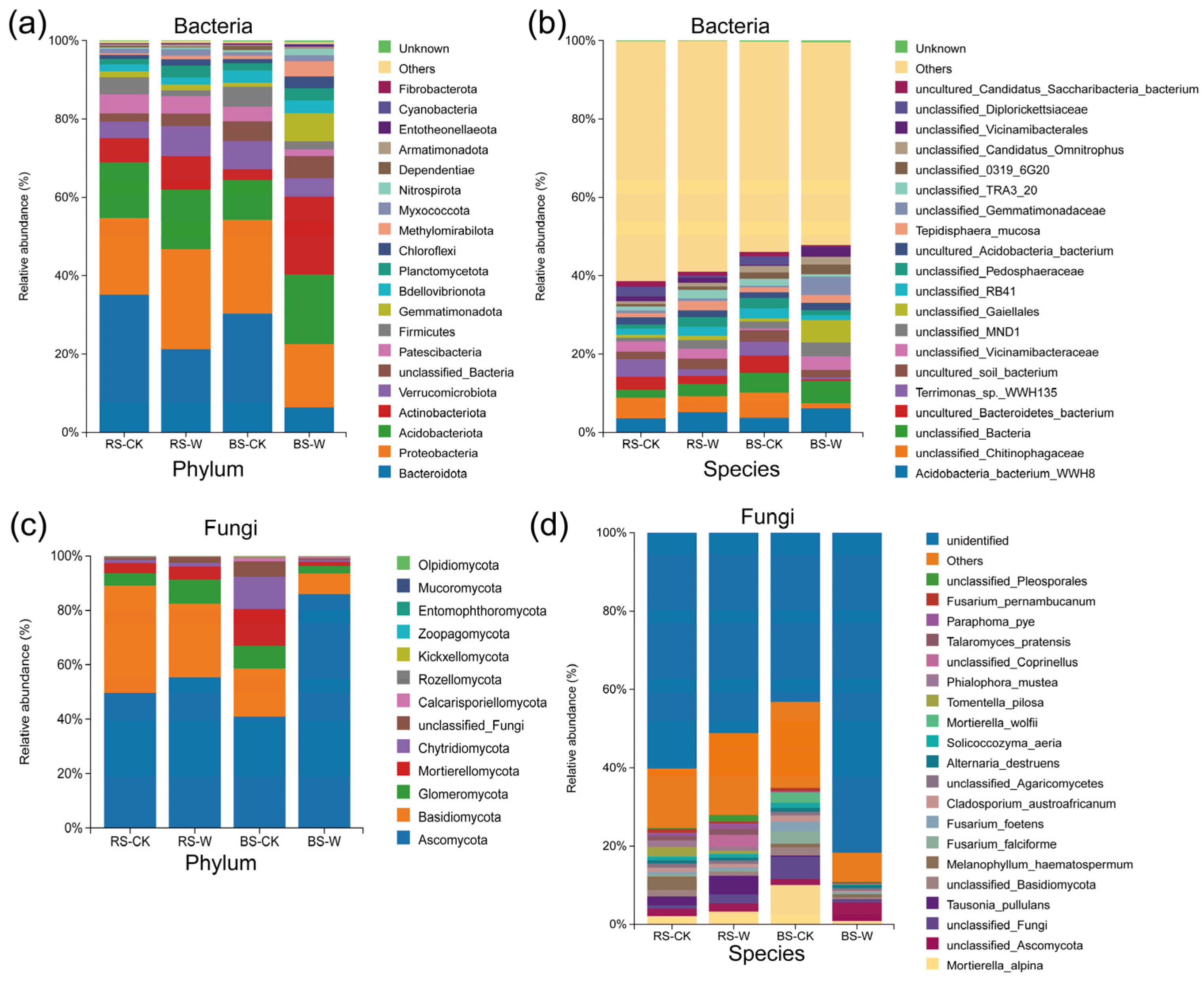
Effects of warming on microbial community composition in the rhizosphere soil (RS) and bulk soil (BS) of S. baicalensis. Stacked bar charts based on OTUs taxonomic annotation illustrate the relative abundance of bacterial and fungal taxa at the phylum and species levels under different treatments. (a) Bacterial community composition at the phylum level. (b) Bacterial community composition at the species level. (c) Fungal community composition at the phylum level. (d) Fungal community composition at the species level. The stacked bars depict the relative abundances of the 25 most dominant taxa at each taxonomic level.
For fungi, nine OTUs were identified from the rhizosphere soil microbial community of S. baicalensis including Mortierella alpina, unclassified Ascomycota, unclassified Fungi and Tausonia pullulans. In rhizosphere soil, warming increased the relative abundances of unclassified Fungi and Glomeromycota by 155.40% and 94.70%, respectively, while reducing the abundance of Zoopagomycota and Rozellomycota by 100.00% and 85.70%. In bulk soil, warming increased the relative abundances of Ascomycota by 109.9%, respectively, whereas the abundances of unclassified Fungi decreased by 89.40% (Figure 2c). For fungi, nine OTUs were identified from the rhizosphere soil microbial community of S. baicalensis including unclassified Fungi, Tausonia pullulans, unclassified Basidiomycota, unclassified Ascomycota, Fusarium falciforme and Mortierella alpina. In rhizosphere soil, warming increased the relative abundances of unclassified Fungi and Tausonia pullulans by 149.40% and 110.8%, respectively, while reducing the abundance of unclassified Basidiomycota by 48.40%. In bulk soil, warming increased the relative abundances of unclassified Ascomycota 203.60%, respectively, whereas the abundances of Fusarium falciforme and Mortierella alpina decreased by 91.60% and 90.90% (Figure 2d). Other taxonomic annotation results at different levels are provided in Tables S6–S17 and Figures S2 and S3.
3.4. The Effect of Warming on the Alpha Diversity of Bacterial and Fungal Communities in the Rhizosphere Soil and Bulk Soil of S. baicalensis
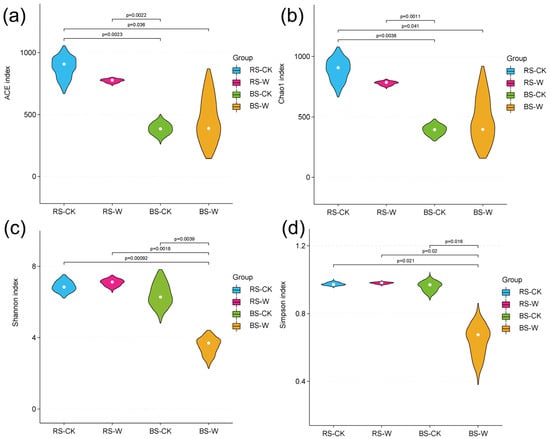
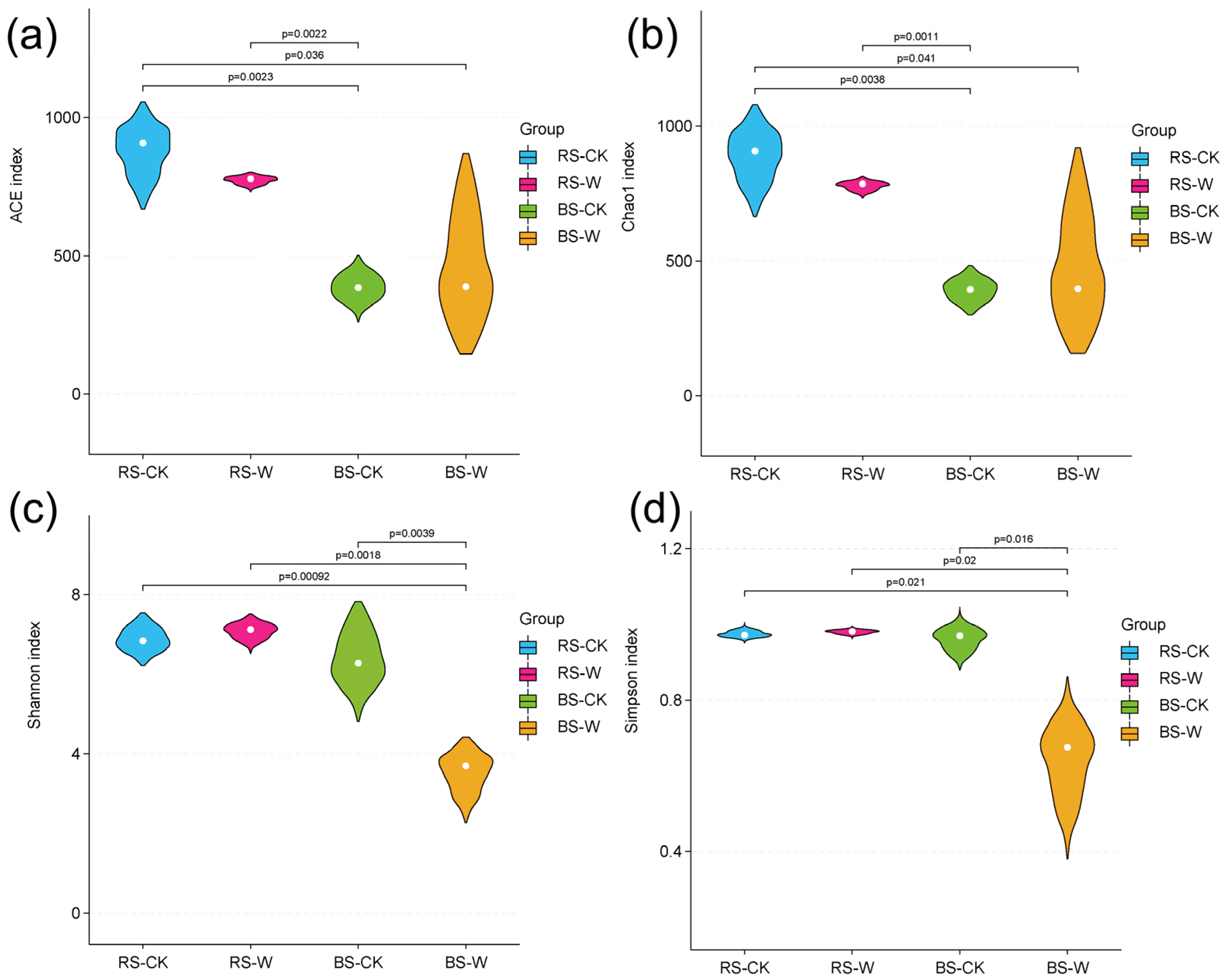
Alpha diversity of bacterial and fungal communities in rhizosphere soil and bulk soil was evaluated using Shannon, Simpson, ACE, and Chao1 indices, and the effect of warming on alpha diversity was analyzed (Table S18). The results showed that for bacteria, compared with the control group, the Shannon, Simpson, ACE, and Chao1 indices of the rhizosphere and bulk soil microbial communities in the warming group did not show significant changes (p > 0.05) (Figure S4). For fungi, warming significantly reduced the Shannon (BS-CK: 3.85, BS-W: 1.64) and Simpson (BS-CK: 0.79, BS-W: 0.33) indices of the fungal communities (p < 0.05) in bulk soils, without significant changes in the rhizosphere soil (p > 0.05). There were no significant changes in ACE and Chao1 indices of the fungal communities in the rhizosphere and bulk soils of the warming group (p > 0.05). These data indicated that warming significantly reduces the alpha diversity of fungal communities in the bulk soil of S. baicalensis, rather than in the rhizosphere soil (Figure 3).
Figure 3.
Effects of warming on fungal alpha diversity in the rhizosphere soil (RS) and bulk soil (BS) of S. baicalensis based on OTUs. The boxplots show fungal richness and diversity under control and warming treatments. (a) ACE index; (b) Chao1 index; (c) Shannon index; (d) Simpson index. Statistical significance was assessed using Student’s t-test, and significance was considered at p < 0.05.
3.5. The Effect of Warming on the Beta Diversity of Bacterial and Fungal Communities in the Rhizosphere Soil and Bulk Soil of S. baicalensis
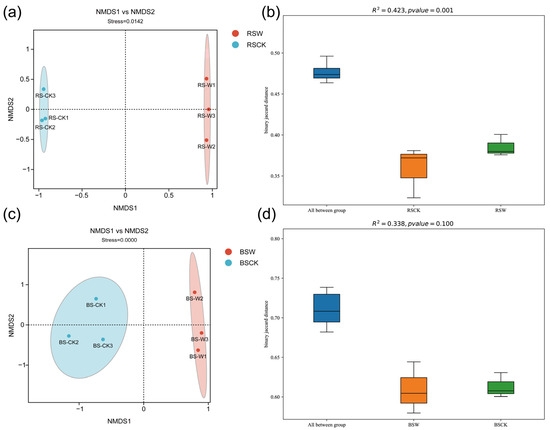
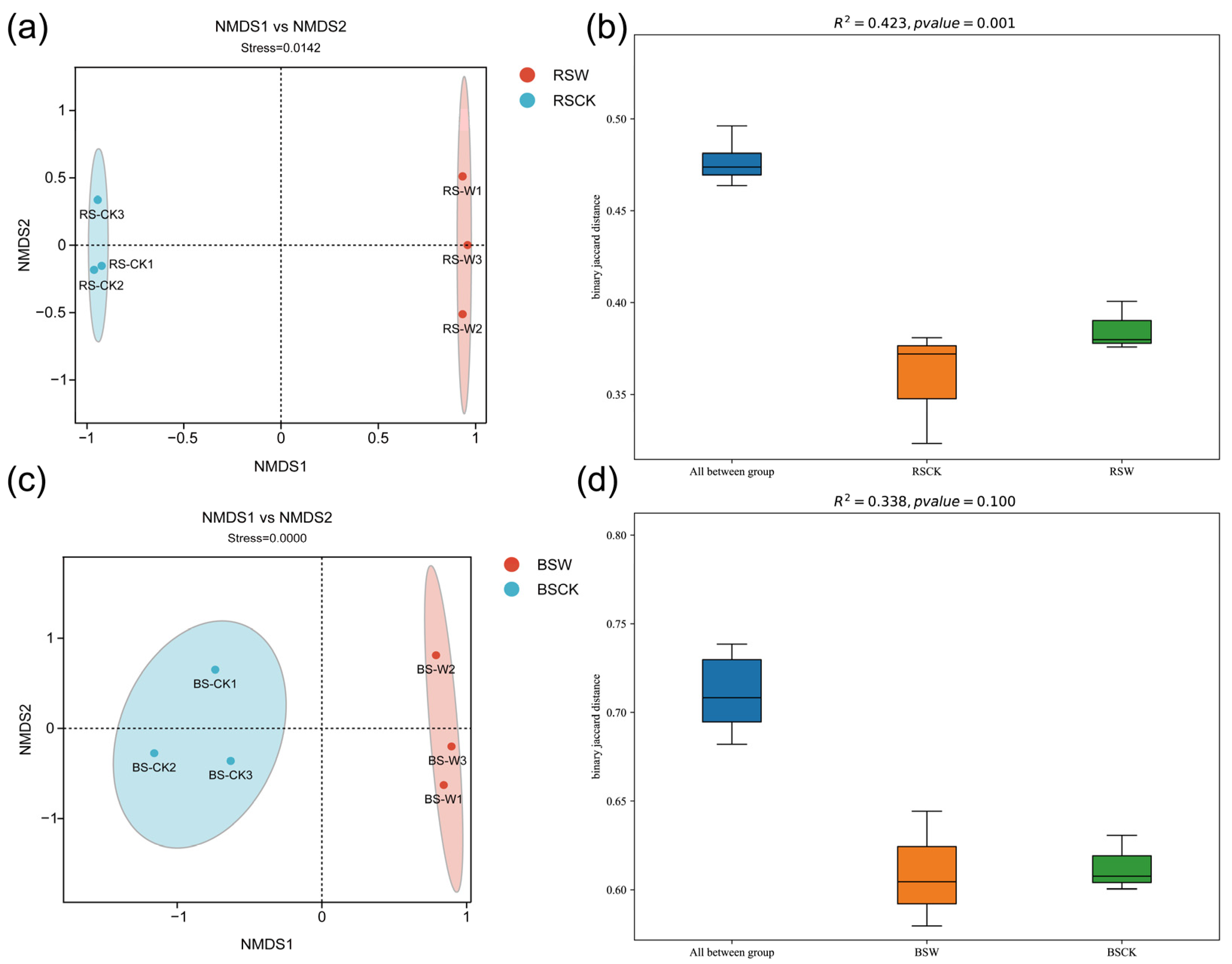
NMDS based on a binary Jaccard distance matrix and PERMANOVA were used to evaluate the effect of the warming treatments on beta diversity of bacterial and fungal community in bulk soil and rhizosphere soil of S. baicalensis. For bacterial communities, both NMDS and PERMANOVA analyses indicated there were no significant effect of warming in bacterial community composition in either rhizosphere or bulk soil (Figure S5). For fungal communities, in rhizosphere soil, both NMDS and PERMANOVA analyses indicated distinct separation between control and warming (R2 = 0.423, p < 0.05) (Figure 4a,b). In bulk soil, NMDS analysis showed clear separation between control and warming, but no significant differences was obtained in PERMANOVA analysis in fungal community structure between control and warming (R2 = 0.338, p > 0.05) (Figure 4c,d). Overall, warming led to rearrangement of the fungal community structure in the rhizosphere soil of S. baicalensis, without affecting the bacterial community structure.
Figure 4.
Effects of warming on fungal β-diversity in the rhizosphere (RS) and bulk soil (BS) of S. baicalensis. (a) NMDS ordination of fungal communities in rhizosphere soil (RS) under control (CK) and warming (W) treatments. (b) PERMANOVA analysis evaluating the effect of warming on fungal community composition in rhizosphere soil. The blue boxplot represents β-distance values among all pairwise samples, the orange boxplot represents fungal β-distance values within the warmed rhizosphere soil group, and the green boxplot represents fungal β-distance values within the control rhizosphere soil group. (c) NMDS ordination of fungal communities in bulk soil (BS) under CK and W treatments. (d) PERMANOVA analysis evaluating the effect of warming on fungal community composition in bulk soil. NMDS analysis was performed using the binary Jaccard distance, and PERMANOVA was conducted based on the same binary Jaccard distance. The blue boxplot represents β-distance values among all pairwise samples, the orange boxplot represents fungal β-distance values within the warmed bulk soil group, and the green boxplot represents fungal β-distance values within the control bulk soil group.
3.6. Identification of Biomarkers Associated with Warming Treatment in Rhizosphere and Bulk Soil of S. baicalensis
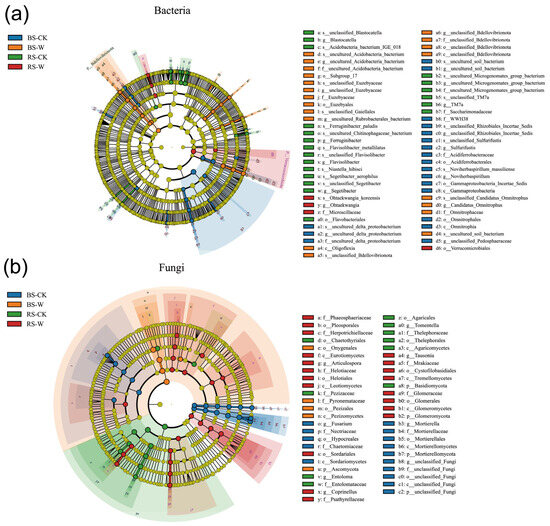
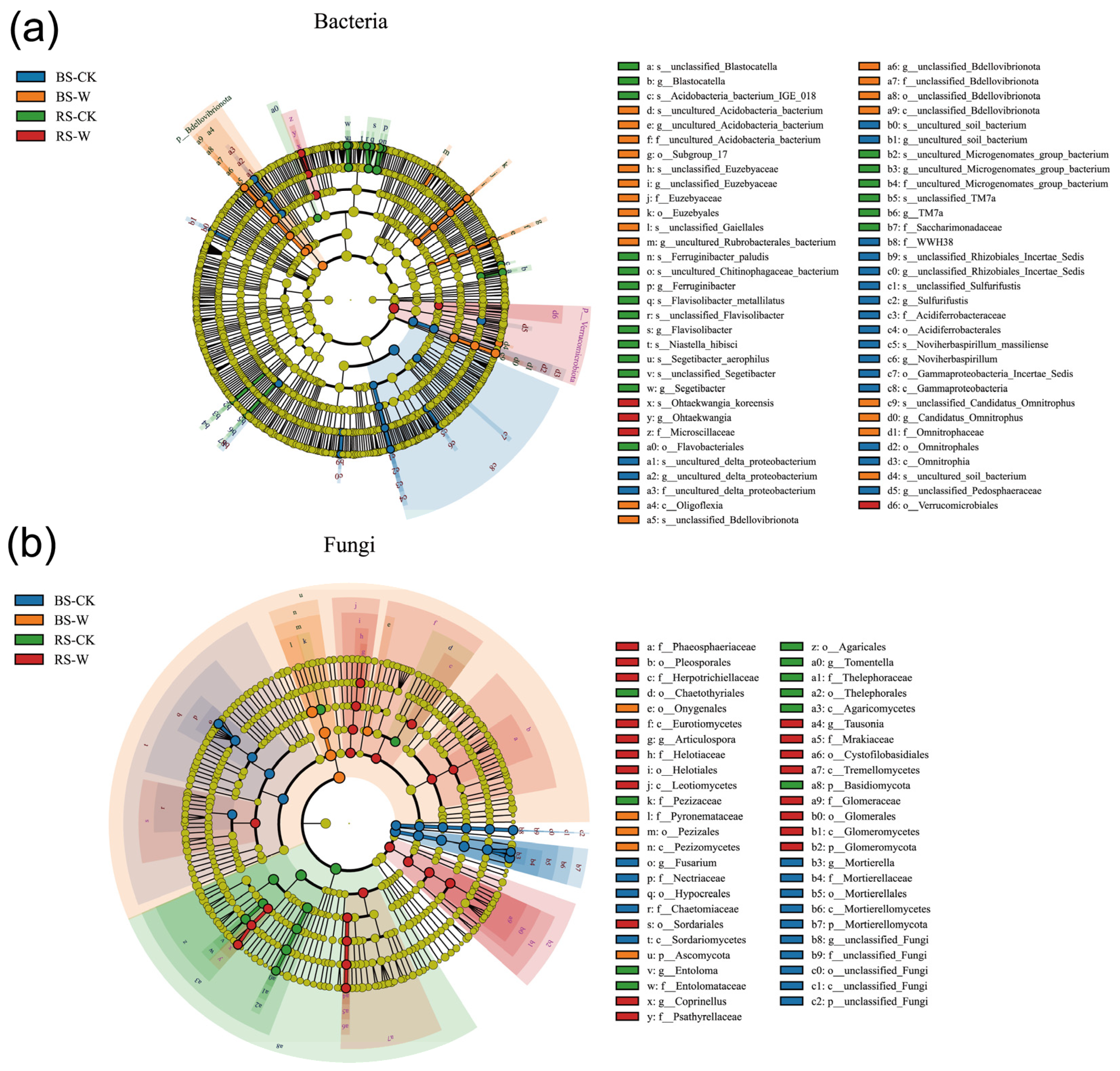
LEfSe analysis was performed to identify microbial taxa with significant differences between warming group and control. For bacterial communities in bulk soil, 17 taxa were enriched in control group, including Gammaproteobacteria and Omnitrophia, and 18 taxa were enriched in warming group, including Oligoflexia and Bdellovibrionota. For bacterial communities in rhizosphere soil, 20 taxa were enriched in control group, including Ferruginibacter; and 4 taxa were enriched in rhizosphere soil under warming, including Verrucomicrobiota and Microscillaceae (Figure 5a and Table S19).
Figure 5.
LEfSe analysis of differential microbial biomarkers in rhizosphere and bulk soils of S. baicalensis under warming. (a) Taxa significantly enriched in bacterial communities of rhizosphere soil (RS) and bulk soil (BS) of S. baicalensis under control (CK) and warming (W) treatments. (b) Taxa significantly enriched in fungal communities of rhizosphere soil (RS) and bulk soil (BS) of S. baicalensis under control (CK) and warming (W) treatments. Biomarkers were identified using an LDA score threshold of ≥3 for bacteria and ≥4 for fungi. Blue, red, orange, and green circles indicate biomarkers showing significant differences among the different groups, whereas yellow circles indicate non-significant differences.
For the fungal communities in bulk soil, 14 taxa were enriched in control, including Mortierella and Mortierellomycota, and 3 taxa were enriched in warming group, including Pezizales and Pyronemataceae. For the fungal communities in rhizosphere soil, 9 taxa were enriched in control, including Basidiomycota and Agaricomycetes; and 16 taxa were enriched in warming group, including Glomeromycota and Tremellomycetes (Figure 5b and Table S20). These results presented the distribution of potential biomarker taxa associated with warming treatment.
3.7. Functional Prediction of Bacterial and Fungal Communities Under Warming Treatment
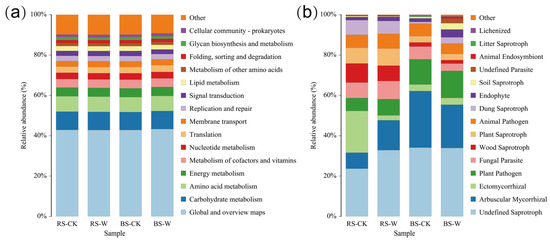
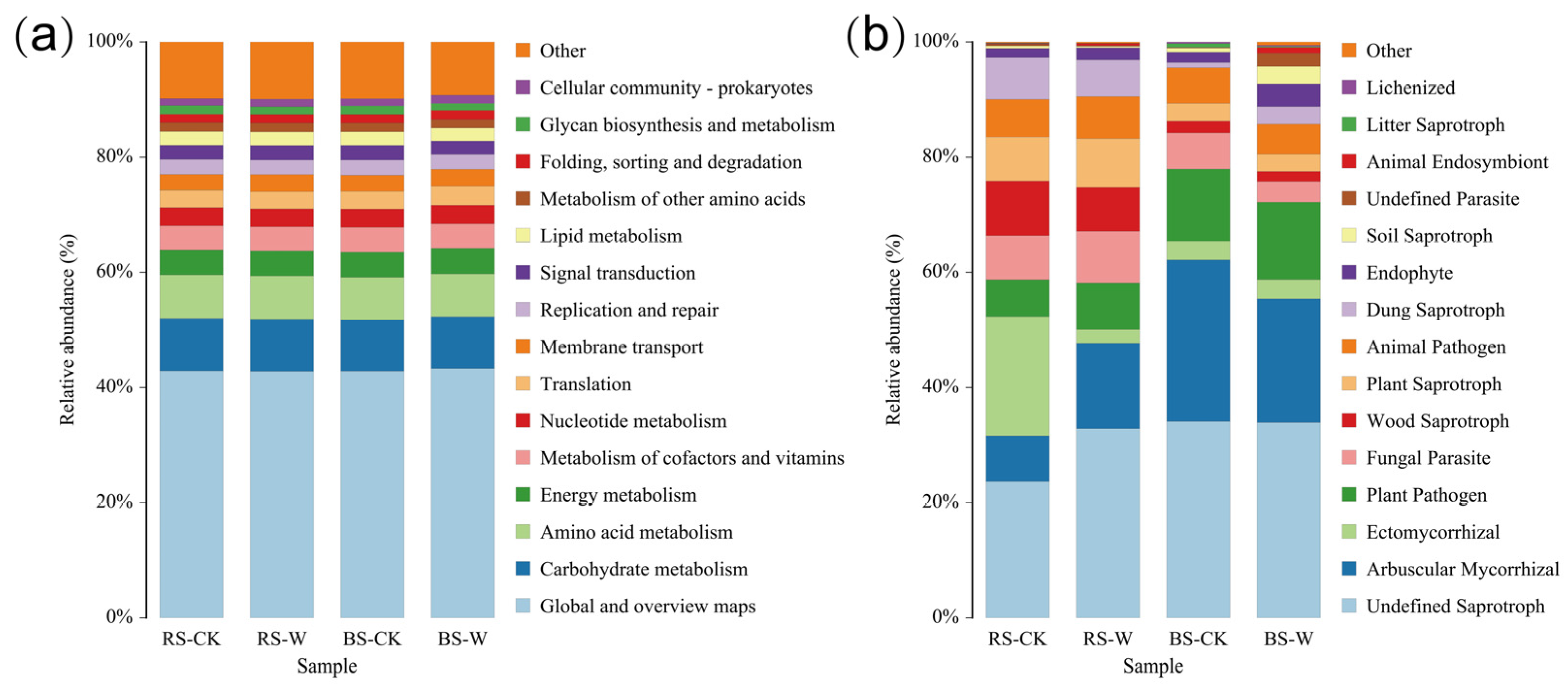
Based on PICRUSt2 and FUNGuild annotation, functional prediction analysis of different groups of bacterial and fungal communities was conducted to explore how warming treatment affect soil microorganisms of S. baicalensis. Functional prediction of bacterial communities using PICRUSt2 showed that across all soil samples, Global and overview maps accounted for the largest proportion (42.8–43.3%), followed by Carbohydrate metabolism (8.9–9.1%), Amino acid metabolism (7.4–7.6%), and Energy metabolism (4.3–4.5%). However, no significant differences were observed between control and warming treatments (RS-CK vs. RS-W, BS-CK vs. BS-W) (Figure 6a and Table S21).
Figure 6.
Functional prediction of bacterial and fungal communities in the rhizosphere soil (RS) and bulk soil (BS) of S. baicalensis under control (CK) and warming (W) treatments. (a) Predicted functional profiles of bacterial communities based on KEGG level-2 pathways using PICRUSt2. (b) Functional guild composition of fungal communities predicted using FUNGuild at the trophic mode level.
FUNGuild analysis showed that, across all soil samples, the fungal functional community was dominated by Saprotroph (Undefined) (23.68–32.85%), Arbuscular Mycorrhizal fungi (7.95–14.84%), and Ectomycorrhizal fungi (2.38–20.66%). Comparison of fungal functional group composition between the warming and control groups revealed noticeable shifts in the relative abundance of several dominant guilds. In rhizosphere soil, the relative abundance of Undefined Saprotroph increased from 23.68% (CK) to 32.85% (W), Arbuscular Mycorrhizal fungi increased from 7.95% (CK) to 14.84% (W), whereas Ectomycorrhizal fungi decreased markedly from 20.66% (CK) to 2.38% (W). In bulk soil, the relative abundance of Arbuscular Mycorrhizal fungi decreased from 28.04% (CK) to 21.50% (W) (Figure 6b and Table S22). Statistical analysis indicated that significant differences between warming and control groups were detected only for symbiotroph and saprotroph functional guilds in the rhizosphere soil (p < 0.05, Figure S6), while no significant changes were observed for other fungal functional guilds or in bulk soil. Overall, warming significantly affected fungal functional composition in the rhizosphere, but not in bulk soil, and no significant effects were detected for bacterial functional groups.
4. Discussion
Under the context of global warming, understanding how plant-associated soil microbial communities respond to elevated temperatures is increasingly important, as it provides insights into plant adaptation strategies and ecosystem stability. This study systematically analyzed the effects of warming on microbial diversity and community composition in the rhizosphere soil and bulk soil of S. baicalensis. Our data indicated that warming affects the diversity of bacterial and fungal communities in the rhizosphere and bulk soil of S. baicalensis. However, this effect is more significant for fungi. At the same time, the diversity of bacterial and fungal communities in the rhizosphere and bulk soil of S. baicalensis showed different patterns in response to warming.
Taxonomic annotation revealed that warming reshaped microbial diversity and community structure at the phylum level in both rhizosphere and bulk soils of S. baicalensis (Figure 2). Similar results have been widely reported in studies on the impact of warming on the diversity of plant rhizosphere and bulk soil microbial communities [33]. Our data indicated that, in rhizosphere soil of S. baicalensis, warming increased the relative abundance of certain bacterial groups, including Verrucomicrobiota and unclassified bacteria, while reducing the abundance of Firmicutes and Bacteroidota. A previous study reported similar results, in which a two-year experiment conducted in subtropical forests dominated by Anacardium excelsum found that warming led to a significant increase in Verrucomicrobiota and a decrease in abundance of Bacteroidetes [34]. Warming increased the abundance of unclassified fungi and Glomeromycota in rhizosphere soil of S. baicalensis, while reducing the abundance of Zoopagomycota and Rozellomycota. Studies on maize, wheat, and certain temperate grassland plants under warming also reported significant increases in rhizosphere Glomeromycota abundance [35,36].
Our data showed that warming has no significant effect on the α-and β-diversity of bacteria in the rhizosphere and bulk soil of S. baicalensis. Similar results have been obtained before. In that study, field experiments conducted on rice showed warming did not cause significant changes in alpha or beta-diversity of rhizosphere bacteria [37]. However, different results have also been reported. A three-year warming experiment using OTCs in temperate grasslands demonstrated that warming reduced the α- and β-diversity of bacteria in rhizosphere and bulk soil of Stipa krylovii [38]. In contrast, a ten-year infrared heating experiment on wheat showed that warming significantly increased rhizosphere bacterial α-diversity [19]. It seems that the impact of warming on the α—and β—diversity of bacteria in the rhizosphere and bulk soil of plants is complex and may be influenced by multiple factors, including plant species, specific soil types, and the specific methods of warming treatment.
The analysis of the alpha and beta diversity of fungi indicated that warming significantly affects the α-and β-diversity of fungi in rhizosphere of S. baicalensis. Actually. In similar studies, the effects of warming on the diversity of fungal α and β-diversity in the rhizosphere soil of plants have shown diverse results. For example, the warming experiment of Oak seeding had a significant impact on the alpha and beta -diversity of rhizosphere soil fungi [39,40], but the warming experiment of S. krylovii did not significantly affect the alpha and beta diversity of rhizosphere soil fungi [38]. It is speculated that the impact of warming on the alpha and beta diversity of plant rhizosphere soil microorganisms is influenced by specific species, soil types, and warming methods. For bulk soil, our data indicated that warming significantly reduced α-diversity without affecting community structure. However, most similar studies have shown that warming has a relatively small impact on the alpha diversity of fungi [17,38]. This difference may be related to the temperature range of the experimental site. According to relevant research reports, in areas where the annual average temperature is in the moderate range (0–10 °C), warming has a more significant impact on fungal alpha diversity [17]. Our experimental site has an average annual temperature of about 6 °C, which is within the above temperature range.
LEfSe analysis revealed that warming led to the enrichment of distinct bacterial and fungal biomarkers in rhizosphere and bulk soils, indicating that temperature reshapes the microbial community structure of S. baicalensis. In rhizosphere soil, the abundance of Verrucomicrobiota increased significantly under warming. Verrucomicrobiota are widely distributed across ecosystems and are likely involved in the degradation of complex plant-derived organic polymers, such as cellulose, pectin, and starch [41]. It is speculated that Verrucomicrobiota can participate in the response to warming by affecting the synthesis or degradation of starch. In rhizosphere soil, FUNGuild functional prediction showed a significant increase in Glomeromycota (AM fungus) under warming treatment. AM fungi are closely related to plant growth, biomass accumulation, water status, and the absorption of nitrogen and phosphorus from soil [42,43,44,45,46]. We speculate that Glomeromycota affects the growth and development of S. baicalensis under warming conditions by promoting nutrient and water absorption.
In this study, warming exerted a greater impact on fungi than on bacteria. The differential responses of bacteria and fungi to warming in our study are consistent with the results of a night-time warming study on the Poaceae species Eleusine indica and Setaria viridis and a 9-year continuous warming experiment in an alpine meadow on the Tibetan Plateau [47,48]. Similarly, in climate change simulation experiments, analogous patterns have been observed. Under certain warming treatments, the structure and complexity of fungal networks changed significantly, whereas bacterial networks exhibited smaller or divergent responses, indicating that fungal communities are more sensitive and capable of dynamic adjustment under temperature fluctuations [49,50]. One possible explanation for this difference is that fungi are generally more closely linked to environmental factors, particularly temperature and climatic variables, than bacteria [51,52]. This may be related to the unique ecological functions and physiological characteristics of fungi: they possess more complex cellular structures (e.g., chitin-based cell walls) and biochemical mechanisms, whose enzymatic activities are closely tied to environmental temperature [53]. Consequently, temperature changes directly affect fungal growth, metabolism, and community interactions. In summary, fungi generally respond more strongly to warming than bacteria, primarily because their community structures and ecological functions are more readily modulated by climatic variables.
The results of OTU analysis and alpha and beta diversity analysis of soil microbial communities in this study indicate that the response of rhizosphere microbial communities to warming treatment is usually not as strong as that of bulk soil microbial communities. This is consistent with the results of multiple studies. For example, an experiment on S. krylovi in a temperate grassland showed that warming had a smaller impact on rhizosphere soil than on bulk soil [38]. This difference may arise from the distinctive physiological and ecological mechanisms, resource supply patterns, and stability-regulating processes inherent to rhizosphere ecosystems. The rhizosphere serves as a “bridge” connecting plants and soil, continuously regulated by root activity, with abundant carbon and nutrient supply, frequent plant–microbe interactions, and stronger host buffering effects [54,55]. Consequently, rhizosphere microbial communities often exhibit greater resistance or buffering capacity to external temperature perturbations [56], as reflected in less pronounced changes in α- or β-diversity compared to bulk soil. For example, root exudates continuously provide energy and carbon to rhizosphere microbes, enhancing their resilience to short- or medium-term temperature stress, such as carbon limitation, thereby reducing their sensitivity to warming [57,58]. In contrast, bulk soil microbes rely more heavily on in situ soil organic matter, rendering them more directly and sensitively affected by temperature-driven carbon mineralization [59,60]. Therefore, a major reason rhizosphere microbial communities respond less strongly to warming than bulk soil is that the rhizosphere environment provides continuous resource supply and buffering mechanisms, along with intensified plant–microbe interactions, which collectively enhance the resistance and stability of rhizosphere communities under temperature perturbations.
5. Conclusions
In this study, we applied high-throughput sequencing technology to analyze the effects of warming on the diversity of root and peripheral soil microbial communities in S. baicalensis. The data shows that night-time warming affected the diversity of the microbial community in S. baicalensis. However, the response of bacterial alpha diversity and dominant functional pathways to warming treatment was not significant, while fungal communities showed higher sensitivity to warming. Compared with bulk soil, the response of S. baicalensis rhizosphere fungal community to warming is lower, indicating that there is an undeniable interaction between plant roots and rhizosphere microorganisms. Warming has led to significant changes in the abundance of certain microbial groups in the rhizosphere and peripheral soil of S. baicalensis, which helps to identify key microbial groups involved in global warming response. These findings provide important data for understanding the impact of climate change on S. baicalensis soil microbial communities and offer insights for improving its cultivation and climate adaptability.
Supplementary Materials
The following supporting information can be downloaded at: https://www.mdpi.com/article/10.3390/agriculture16020232/s1, Table S1: Local meteorological data; Table S2: Average soil moisture and soil temperature during the growing seasons (May–September) from 2022 to 2025 at the experimental site; Table S3: Summary of sequencing data for all samples; Table S4: Distribution of feature counts across samples; Table S5: Unique OUT proportions of bacteria and fungi in the rhizosphere and bulk soil of S. baicalensis under warming; Table S6: Distribution of bacterial species at the species level; Table S7: Distribution of bacterial taxa at the phylum level; Table S8: Distribution of bacterial taxa at the class level; Table S9: Distribution of bacterial taxa at the order level; Table S10: Distribution of bacterial taxa at the family level; Table S11: Distribution of bacterial taxa at the genus level; Table S12: Distribution of fungal taxa at the species level; Table S13: Distribution of fungal taxa at the phylum level; Table S14: Distribution of fungal taxa at the class level; Table S15: Distribution of fungal taxa at the order level; Table S16: Distribution of fungal taxa at the family level; Table S17: Distribution of fungal taxa at the genus level; Table S18: Summary of alpha diversity indices; Table S19: Differential bacterial biomarkers in S. baicalensis; Table S20: Differential fungal biomarkers in S. baicalensis; Table S21: PICRUSt2-predicted bacterial functions at KEGG Level 2; Table S22: FUNGuild-predicted fungal functional guilds (BS) of S. baicalensis; Figure S1: Distribution of feature counts across all samples; Figure S2: Distribution of bacterial taxa at different taxonomic levels; Figure S3: Distribution of fungi taxa at different taxonomic levels; Figure S4: Alpha diversity indices of bacterial OTUs; Figure S5: Beta diversity analysis of bacterial communities; Figure S6: Effects of warming on the functional profiles of fungal communities in the rhizosphere soil of S. baicalensis.
Author Contributions
A.B. and F.G. conceived and developed the research. X.U. and J.B. conducted the experiments and performed data compilation and analysis. X.U. and F.G. wrote the first draft. X.U. and Y.C. contributed to the writing and discussion of the paper. A.B. provided funds and reviewed the final draft. All authors have read and agreed to the published version of the manuscript.
Funding
This study was supported by the National Key R&D Program of China: Intergovernmental Cooperation in International Science and Technology Innovation (2022YFE0119300), the National Natural Science Foundation of China (32570457), and Natural Science Foundation of Beijing (7202109).
Institutional Review Board Statement
Not applicable.
Data Availability Statement
The raw data supporting the conclusions of this article will be made available by the authors on request.
Conflicts of Interest
The authors declare no conflicts of interest.
Abbreviations
The following abbreviations are used in this manuscript:
| S. baicalensis | Scutellaria baicalensis |
| RS | rhizosphere soil |
| BS | Bulk soil |
| CK | Control group |
| W | Warming group |
| OTUs | Operational Taxonomic Units |
| ACE | Abundance-based Coverage Estimator |
| Chao1 | Chao1 estimator |
| NMDS | Non-metric Multidimensional Scaling |
| PERMANOVA | Permutational Multivariate Analysis of Variance |
| LEfSe | Linear Discriminant Analysis Effect Size |
| PICRUSt2 | Phylogenetic Investigation of Communities by Reconstruction of Unobserved States 2 |
| FUNGuild | Fungal Functional Guild |
References
- Yang, K.L.; Zheng, Y.P.; Sun, K.M.; Sun, X.Y.; Xiao, P.G.; He, C.N. Regulation of rhizosphere microorganisms on the quality of Scutellaria baicalensis: From wild and cultivated perspectives. Ind. Crops Prod. 2024, 222, 119917. [Google Scholar] [CrossRef] [Scilit]
- Zhao, T.T.; Tang, H.L.; Xie, L.; Zheng, Y.; Ma, Z.B.; Sun, Q.; Li, X.F. Scutellaria baicalensis Georgi. (Lamiaceae): A review of its traditional uses, botany, phytochemistry, pharmacology and toxicology. J. Pharm. Pharmacol. 2019, 71, 1353–1369. [Google Scholar] [CrossRef] [Scilit]
- Gao, X.; Shen, Z.Q.; Xu, J.L.; Fan, M.; Li, Q. Antibacterial Activity and Mechanisms of Ethanol Extracts from Scutellaria baicalensis Georgi and Magnolia officinalis against Phytophthora nicotianae. Phyton 2023, 92, 1987–1999. [Google Scholar] [CrossRef] [Scilit]
- Shi, H.F.; Ren, K.; Lv, B.J.; Zhang, W.; Zhao, Y.; Tan, R.X.; Li, E.G. Baicalin from Scutellaria baicalensis blocks respiratory syncytial virus (RSV) infection and reduces inflammatory cell infiltration and lung injury in mice. Sci. Rep. 2016, 6, 35851. [Google Scholar] [CrossRef] [Scilit]
- Su, H.X.; Yao, S.; Zhao, W.F.; Li, M.J.; Liu, J.; Shang, W.J.; Xie, H.; Ke, C.Q.; Hu, H.C.; Gao, M.N.; et al. Anti-SARS-CoV-2 activities in vitro of Shuanghuanglian preparations and bioactive ingredients. Acta Pharmacol. Sin. 2020, 41, 1167–1177. [Google Scholar] [CrossRef] [Scilit] [PubMed]
- Wang, M.X.; Ge, A.H.; Ma, X.Z.; Wang, X.L.; Xie, Q.J.; Wang, L.K.; Song, X.W.; Jiang, M.C.; Yang, W.B.; Murray, J.D.; et al. Dynamic root microbiome sustains soybean productivity under unbalanced fertilization. Nat. Commun. 2024, 15, 1668. [Google Scholar] [CrossRef] [Scilit] [PubMed]
- Pantigoso, H.A.; Newberger, D.; Vivanco, J.M. The rhizosphere microbiome: Plant–microbial interactions for resource acquisition. J. Appl. Microbiol. 2022, 133, 2864–2876. [Google Scholar] [CrossRef] [Scilit] [PubMed]
- Luo, C.; He, Y.; Chen, Y. Rhizosphere microbiome regulation: Unlocking the potential for plant growth. Curr. Res. Microb. Sci. 2025, 8, 100322. [Google Scholar] [CrossRef] [Scilit]
- Ng, C.W.W.; Yan, W.H.; Xia, Y.T.; Tsin, K.W.K.; To, J.C.T. Plant growth-promoting rhizobacteria enhance active ingredient accumulation in medicinal plants at elevated CO2 and are associated with indigenous microbiome. Front. Microbiol. 2024, 15, 1426893. [Google Scholar] [CrossRef] [Scilit]
- Shukla, N.; Singh, D.; Tripathi, A.; Kumari, P.; Gupta, R.K.; Singh, S.; Shanker, K.; Singg, A. Synergism of endophytic Bacillus subtilis and Klebsiella aerogenes modulates plant growth and bacoside biosynthesis in Bacopa monnieri. Front. Plant Sci. 2022, 13, 896856. [Google Scholar] [CrossRef] [Scilit]
- Li, X.; Li, Z. Dynamics and functional roles of fungal communities in Pseudostellaria heterophylla soil under continuous cropping. Sci. Rep. 2025, 15, 36758. [Google Scholar] [CrossRef] [Scilit]
- Chen, J.; Li, N.; Chang, J.Y.; Ren, K.D.; Zhou, J.T.; Yang, G. Taxonomic Structure of Rhizosphere Bacterial Communities and Its Association with the Accumulation of Alkaloidal Metabolites in Sophora flavescens. Front. Microbiol. 2021, 12, 781316. [Google Scholar] [CrossRef] [Scilit]
- Ren, L.H.; Li, Y.T.; Tian, X.; Guo, Y.X.; Xian, Y.S.; Pang, M.H.; Zhang, Z.L. Shaping of the core microbiome by ginsenosides in American ginseng across diverse habitats. Sci. Rep. 2025, 15, 35702. [Google Scholar] [CrossRef] [Scilit]
- Ran, Z.F.; Chen, X.l.; Li, R.; Duan, W.Y.; Zhang, Y.Q.; Fang, L.; Guo, L.P.; Zhou, J. Transcriptomics and metabolomics reveal the changes induced by arbuscular mycorrhizal fungi in Panax quinquefolius L. J. Sci. Food Agric. 2023, 103, 4919–4933. [Google Scholar] [CrossRef] [Scilit] [PubMed]
- Li, J.N.; Wang, B.; Chen, C.; Zhao, S.; Ye, Z.R.; Zhou, G.Y. Rare taxa as the major drivers of the secondary metabolite accumulation in Rheum tanguticum. BMC Plant Biol. 2025, 25, 983. [Google Scholar] [CrossRef] [Scilit] [PubMed]
- IPCC. Climate Change 2023; IPCC: Geneva, Switzerland, 2023; pp. 1–83. [Google Scholar]
- Wang, X.D.; Wu, W.A.; Ao, G.k.L.; Han, M.G.; Liu, M.L.; Yin, R.; Feng, J.G.; Zhu, B. Minor Effects of Warming on Soil Microbial Diversity, Richness and Community Structure. Glob. Change Biol. 2025, 31, e70104. [Google Scholar] [CrossRef] [Scilit]
- Garcia, M.O.; Templer, P.H.; Sorensen, P.O.; Rebecca, S.D.; Groffman, P.M.; Bhatnagar, J.M. Soil Microbes Trade-Off Biogeochemical Cycling for Stress Tolerance Traits in Response to Year-Round Climate Change. Front. Microbiol. 2020, 11, 616. [Google Scholar] [CrossRef] [Scilit] [PubMed]
- Wang, J.; Chen, S.M.; Sun, R.B.; Liu, B.B.; Waghmode, T.; Hu, C.S. Spatial and temporal dynamics of the bacterial community under experimental warming in field-grown wheat. PeerJ 2023, 11, e15428. [Google Scholar] [CrossRef] [Scilit]
- Deng, R.T.; Wang, L.J.; Li, X.R.; Sun, W.P.; Jiang, S.J. Effects of experimental warming on soil microbial influence on plant growth in an alpine meadow of the Qinghai-Tibetan Plateau. Geoderma 2025, 461, 117475. [Google Scholar] [CrossRef] [Scilit]
- Li, Y.M.; Wang, Y.; Yan, F.; Guo, Q.; Tang, J.; Hu, X.C.; Chen, Y.; Yan, Y.G.; Gao, J.; Zhang, G. 16S rDNA sequencing and targeted metabolomics reveal rhizosphere microbial diversity and flavonoid dynamics in Scutellaria baicalensis Georgi. BMC Microbiol. 2025, 25, 491. [Google Scholar] [CrossRef] [Scilit]
- Sun, Y.; Liu, H.; Peng, J.W.; Shen, M.C.; Hu, Y.; Yu, D.S.; Li, J.G.; Dong, Y.H. Rhizosphere microbes influence wogonoside accumulation in perennial Scutellaria baicalensis. Pedosphere 2024, 34, 553–566. [Google Scholar] [CrossRef] [Scilit]
- Zhong, Z.Q.; He, B.; Chen, H.W.; Chen, D.L.; Zhou, T.J.; Dong, W.J.; Xiao, C.D.; Xie, S.P.; Song, X.Z.; Guo, L.L.; et al. Reversed asymmetric warming of sub-diurnal temperature over land during recent decades. Nat. Commun. 2023, 14, 7189. [Google Scholar] [CrossRef] [Scilit] [PubMed]
- Peraudeau, S.; Roques, S.; Quiñones, C.O.; Fabre, D.; Rie, J.V.; Ouwerkerk, P.B.F.; Jagadish, K.S.V.; Dingkuhn, M.; Lafarge, T. Increase in night temperature in rice enhances respiration rate without significant impact on biomass accumulation. Field Crops Res. 2015, 171, 67–78. [Google Scholar] [CrossRef] [Scilit]
- Bolyen, E.; Rideout, J.R.; Dillon, M.R.; Bokulich, N.A.; Abnet, C.C.; Ai-Ghalith, G.A.; Alexander, H.; Alm, E.J.; Arumugam, M.; Asnicar, F.; et al. Climate warming reshapes seasonal flowering but stabilizes species interactions in a Tibetan alpine grassland. New Phytol. 2025, 248, 1756–1768. [Google Scholar]
- Li, L.H.; Xia, T.Z.; Yang, H.Q. Seasonal patterns of rhizosphere microorganisms suggest carbohydrate-degrading and nitrogen-fixing microbes contribute to the attribute of full-year shooting in woody bamboo Cephalostachyum pingbianense. Front. Microbiol. 2022, 13, 1033293. [Google Scholar] [CrossRef] [Scilit]
- Edgar, R.C. Uparse: Highly accurate OTU sequences from microbial amplicon reads. Nat. Methods 2013, 10, 996–998. [Google Scholar] [CrossRef] [Scilit]
- Kõljalg, U.; Larsson, K.H.; Abarenkov, K.; Nilsson, R.H.; Alexander, I.J.; Eberhardt, U.; Erland, S.; Høiland, K.; Kjøller, R.; Larsson, E.; et al. UNITE: A database providing web-based methods for the molecular identification of ectomycorrhizal fungi. New Phytol. 2005, 166, 1063–1068. [Google Scholar] [CrossRef] [Scilit] [PubMed]
- Estaki, M.; Jiang, L.; Bokulich, N.A.; McDonald, D.; González, A.; Kosciolek, T.; Martino, C.; Zhu, Q.; Birmingham, A.; Vázquez-Baeza, Y.; et al. QIIME 2 enables comprehensive end-to-end analysis of diverse microbiome data and comparative studies with publicly available data. Curr. Protoc. Bioinform. 2020, 70, e100. [Google Scholar] [CrossRef] [Scilit] [PubMed]
- Segata, N.; Izard, J.; Waldron, L.; Gevers, D.; Miropolsky, L.; Garrett, W.S.; Huttenhower, C. Metagenomic biomarker discovery and explanation. Genome Biol. 2011, 12, R60. [Google Scholar] [CrossRef] [Scilit]
- Douglas, G.M.; Maffei, V.J.; Zaneveld, J.; Yurgel, S.N.; Brown, J.R.; Taylor, C.M.; Huttenhower, C.; Langille, M.G.I. PICRUSt2: An improved and extensible approach for metagenome inference. bioRxiv 2020, 672295. [Google Scholar] [CrossRef] [Scilit]
- Nhu, H.N.; Zewei, S.; Scott, T.B.; Sara, B.; Leho, T.; Jon, M.; Jonathan, S.S.; Peter, G.K. FUNGuild: An open annotation tool for parsing fungal community datasets by ecological guild. Fungal Ecol. 2016, 20, 241–248. [Google Scholar] [CrossRef] [Scilit]
- Zhou, J.Z.; Xue, K.; Xie, J.P.; Deng, X.Y.; Wu, L.Y.; Cheng, X.L.; Fei, S.F.; Deng, S.P.; He, Z.L.; Nostrand, J.D.V.; et al. Microbial mediation of carbon-cycle feedbacks to climate warming. Nat. Clim. Change 2012, 2, 106–110. [Google Scholar] [CrossRef] [Scilit]
- Nottingham, A.T.; Scott, J.J.; Saltonstall, K.; Broders, K.; Montero-Sanchez, M.; Puspok, J.; Baath, E.; Meir, P. Microbial diversity declines in warmed tropical soil and respiration rise exceed predictions as communities adapt. Nat. Microbiol. 2022, 7, 1650–1660. [Google Scholar] [CrossRef] [Scilit]
- Liu, Z.H.; Yu, Z.H.; Song, B.; Li, Y.S.; Fang, J.; Guo, Y.P.; Jin, J.; Adams, J.M. Elevated CO2 and temperature increase arbuscular mycorrhizal fungal diversity, but decrease root colonization, in maize and wheat. Sci. Total Environ. 2023, 873, 162321. [Google Scholar] [CrossRef] [Scilit]
- Birgander, J.; Rousk, J.; Olsson, P.A. Warmer winters increase the rhizosphere carbon flow to mycorrhizal fungi more than to other microorganisms in a temperate grassland. Glob. Change Biol. 2017, 23, 5372–5382. [Google Scholar] [CrossRef] [Scilit]
- Li, J.H.; Xiong, J.Y.; Hu, Y.X.; Ba, Q.S.; Li, F.; Zhang, F.; Jiang, L.; Liu, Y. Long-term elevated CO2 and warming alter the network complexity and composition of bacterial community in a paddy field. Appl. Soil Ecol. 2025, 213, 106241. [Google Scholar] [CrossRef] [Scilit]
- Yu, Y.; Zhou, Y.; Janssens, I.A.; Deng, Y.; He, X.; Liu, L.; Yi, Y.; Xiao, N.; Wang, X.; Li, C.; et al. Divergent rhizosphere and non-rhizosphere soil microbial structure and function in long-term warmed steppe due to altered root exudation. Glob. Change Biol. 2024, 30, e17111. [Google Scholar] [CrossRef] [Scilit]
- Hoefle, D.; Sommer, M.; Wassermann, B.; Faticov, M.; Serra, D.; Berg, G.; Tack, A.J.M.; Abdelfattah, A. Oak seedling microbiome assembly under climate warming and drought. Environ. Microbiome 2024, 19, 62. [Google Scholar] [CrossRef] [Scilit]
- Catarecha, P.; King, E.; González, S.D.; Caro, E.; Sacristán, S.; Pozo, J.C.D. Heat stress and soil thermal gradients shape root-associated fungal community recruitment. Front. Microbiol. 2025, 16, 1334648. [Google Scholar] [CrossRef] [Scilit] [PubMed]
- Naziębło, A.; Pytlak, A.; Furtak, A.; Dobrzyński, J. Advances and Hotspots in Research on Verrucomicrobiota: Focus on Agroecosystems. Microb. Ecol. 2025, 89, 1. [Google Scholar] [CrossRef] [Scilit] [PubMed]
- Martin, P. Arbuscular mycorrhiza: The mother of plant root endosymbioses. Nat. Rev. Microbiol. 2008, 6, 763–775. [Google Scholar] [CrossRef] [Scilit]
- Xiao, X.F.; Liao, X.F.; Yan, Q.X.; Xie, Y.G.; Chen, J.Z.; Liang, G.L.; Chen, M.; Xiao, S.Y.; Chen, Y.; Liu, J.M. Arbuscular Mycorrhizal Fungi Improve the Growth, Water Status, and Nutrient Uptake of Cinnamomum migao and the Soil Nutrient Stoichiometry under Drought Stress and Recovery. J. Fungi 2023, 9, 321. [Google Scholar] [CrossRef] [Scilit]
- Li, J.; Zhou, L.Y.; Chen, G.; Yao, M.Y.; Liu, Z.G.; Li, X.R.; Yang, X.P.; Yang, Y.; Cai, D.; Tuerxun, Z.; et al. Arbuscular mycorrhizal fungi enhance drought resistance and alter microbial communities in maize rhizosphere soil. Environ. Technol. Innov. 2025, 37, 103947. [Google Scholar] [CrossRef] [Scilit]
- Steve, K.K.; Derek, P.; Andreas, S.; Jakob, H.; Ye, T.; Wolfgang, W.; Werner, B. Long-term soil warming alters fine root dynamics and morphology, and their ectomycorrhizal fungal community in a temperate forest soil. Glob. Change Biol. 2022, 28, 3441–3458. [Google Scholar]
- Lekberg, Y.; Gibbons, S.M.; Rosendahl, S. Will different OTU delineation methods change interpretation of arbuscular mycorrhizal fungal community patterns? New Phytol. 2014, 202, 1101–1104. [Google Scholar] [CrossRef] [Scilit] [PubMed]
- Zhao, P.P.; Huang, Y.T.; Liu, B.Y.; Chen, J.Y.; Lei, Z.Y.; Zhang, Y.H.; Cheng, B.H.; Zhou, T.; Peng, S.L. Effects of daytime and nighttime warming on soil microbial diversity. Geoderma 2024, 447, 116909. [Google Scholar] [CrossRef] [Scilit]
- Xu, J.J.; Liu, H.; Xu, X.N.; Liu, X.; Zhou, S.R.; Nie, M. Opposite effects of N on warming-induced changes in bacterial and fungal diversity. Environ. Microbiome 2025, 20, 35. [Google Scholar] [CrossRef] [Scilit] [PubMed]
- Li, D.B.; Wu, C.S.; Wu, J.P. Soil fungal community has higher network stability than bacterial community in response to warming and nitrogen addition in a subtropical primary forest. Appl. Environ. Microbiol. 2024, 90, e0000124. [Google Scholar] [CrossRef] [Scilit] [PubMed]
- Yu, Y.; Chen, X.; Yi, Y.; Xiao, C.W. Effects of warming on soil fungal community and its function in a temperate steppe. Ecol. Process 2024, 13, 68. [Google Scholar] [CrossRef] [Scilit]
- Xue, P.P.; Minasny, B.; Dobarco, M.R.; Wadoux, A.M.J.C.; Campusano, J.P.; Bissett, A.; Caritat, P.D.; McBratney, A. The Biogeography of Soil Bacteria in Australia Exhibits Greater Resistance to Climate Change Than Fungi. Glob. Change Biol. 2025, 31, e70268. [Google Scholar] [CrossRef] [Scilit]
- Fu, F.W.; Li, Y.Y.; Zhang, B.; Zhu, S.J.; Guo, L.N.; Li, J.T.; Zhang, Y.B.; Li, J.R. Differences in soil microbial community structure and assembly processes under warming and cooling conditions in an alpine forest ecosystem. Sci. Total Environ. 2023, 907, 167809. [Google Scholar] [CrossRef] [Scilit]
- Finestone, J.; Templer, P.H.; Bhatnagar, J.M. Soil Fungi Exposed to Warming Temperatures and Shrinking Snowpack in a Northern Hardwood Forest Have Lower Capacity for Growth and Nutrient Cycling. Front. For. Glob. Change 2022, 5, 800335. [Google Scholar] [CrossRef] [Scilit]
- Anagha, W.; Emma, W.; David, W.B.; Amita, K. A Review of Plant–Microbe Interactions in the Rhizosphere and the Role of Root Exudates in Microbiome Engineering. Appl. Sci. 2025, 15, 7127. [Google Scholar] [CrossRef] [Scilit]
- Shankar, B.S.; Karolina, F. Soil–Plant–Microbe Interactions Determine Soil Biological Fertility by Altering Rhizospheric Nutrient Cycling and Biocrust Formation. Sustainability 2022, 15, 625. [Google Scholar]
- Chen, C.; Xu, D.F.; Jiang, B.L.; Lu, X.Y.; Yu, C.; Wang, Y.J.; Wang, H.J.; Li, J.N.; Zhu, J.B. Precipitation-driven restructuring of rhizosphere microbiota enhances alpine plant adaptation. Front. Plant Sci. 2025, 16, 1641511. [Google Scholar] [CrossRef] [Scilit] [PubMed]
- Wen, T.; Yu, G.H.; Hong, W.D.; Yuan, J.; Niu, G.Q.; Xie, P.H.; Sun, F.S.; Guo, L.D.; Kuzyakov, Y.; Shen, Q.R. Root exudate chemistry affects soil carbon mobilization via microbial community reassembly. Fundam. Res. 2022, 2, 697–707. [Google Scholar] [CrossRef] [Scilit]
- Parasar, B.J.; Sharma, I.; Agarwala, N. Root exudation drives abiotic stress tolerance in plants by recruiting beneficial microbes. Appl. Soil Ecol. 2024, 198, 105351. [Google Scholar] [CrossRef] [Scilit]
- Wang, C.; Morrissey, E.M.; Mau, R.L.; Hayer, M.; Piñeiro, J.; Mack, M.C.; Marks, J.C.; Bell, S.L.; Miller, S.N.; Schwartz, E.; et al. The temperature sensitivity of soil: Microbial biodiversity, growth, and carbon mineralization. ISME J. 2021, 15, 2738–2747. [Google Scholar] [CrossRef] [Scilit]
- Georgiou, K.; Koven, C.D.; Wieder, W.R.; Hartman, M.D.; Riley, W.J.; Pett-Ridge, J.; Bouskill, N.J.; Abramoff, R.Z.; Slessarev, E.W.; Ahlström, A.; et al. Emergent temperature sensitivity of soil organic carbon driven by mineral associations. Nat. Geosci. 2024, 17, 205–212. [Google Scholar] [CrossRef] [Scilit]
Disclaimer/Publisher’s Note: The statements, opinions and data contained in all publications are solely those of the individual author(s) and contributor(s) and not of MDPI and/or the editor(s). MDPI and/or the editor(s) disclaim responsibility for any injury to people or property resulting from any ideas, methods, instructions or products referred to in the content. |
© 2026 by the authors. Licensee MDPI, Basel, Switzerland. This article is an open access article distributed under the terms and conditions of the Creative Commons Attribution (CC BY) license.