


Abstract
Hawthorn (Crataegus spp.) is a wild fruit tree of considerable ecological, nutritional, and medicinal value, widely distributed throughout the Mediterranean region and other temperate areas. Its taxonomy is particularly complex due to high morphological variability and frequent synonymy, which complicates accurate species identification. In Algeria, Crataegus spp. are very common, exhibiting substantial variability, especially in the northern part of the country. Despite its broad distribution, information on the genetic diversity of Algerian hawthorn germplasm remains limited. Characterization of this diversity is essential to support the identification of valuable traits of interest and to provide suitable genetic resources for the effective valorization and conservation of the species. In this study, 205 samples of Algerian wild hawthorn were characterized through an integrated analysis based on morphological descriptors and SSR markers, separating the samples into two well-defined genetic groups corresponding to C. azarolus (CA) and C. monogyna (CM) species. High levels of allelic richness, heterozygosity, and private alleles revealed substantial genetic diversity within both species. Overall, the integration of morphological and molecular data will provide a valuable basis for the conservation and management of Algerian hawthorn genetic resources.
1. Introduction
The genus Crataegus (Hawthorn, 2n = 2x = 34) belongs to the Rosaceae family, which comprises approximately 1200 species exhibiting a wide range of growth forms, ranging from shrubs to semi-evergreen trees [1,2]. Hawthorn species are typically characterized by a gametophytic self-incompatibility system, which maintains high levels of heterozygosity and allelic variability, and prevents the accumulation of deleterious alleles associated with inbreeding. Hawthorn carries insect-pollinated flowers and produces small fleshy fruits containing 1–5 seeds [3,4], which are edible and valued for their high content of bioactive compounds, which have been associated with documented medicinal properties, particularly in the prevention of cardiovascular diseases, cancer, and diabetes [5,6,7].
Native to the Mediterranean region, hawthorn species prefer temperate areas of the Northern Hemisphere and acidic and dry soils [8,9]. Their remarkable ecological adaptability has facilitated their widespread distribution across a broad geographical range including Europe, North Africa, China, North America, and Australia [10]. In Algeria, hawthorn is mainly found in the northern regions where three species have been reported: C. azarolus L., C. monogyna Jacq., and C. laevigata L. (Poir.) DC [11]. In Algeria, hawthorn has long been used in traditional medicine, particularly for the treatment of cardiovascular disorders, owing to its cardiotonic, hypotensive, and anti-inflammatory actions [12,13,14,15]. Hawthorn species are characterized by different phytochemical profiles. In particular, C. monogyna generally exhibits higher levels of phenols and flavonoids in flowers, fruits, and twigs compared to C. azarolus [16,17,18], which makes it the preferred species for nutraceutical and pharmaceutical applications [19,20].
Despite its ecological and cultural importance, the taxonomy of the genus Crataegus remains highly complex, and reliable species identification is often challenging as morphological traits of leaves, flowers, and fruits often provide insufficient resolution [21]. Morphological characterization remains a valuable and widely adopted first approach for assessing species diversity and phenotypic variation [22,23], but molecular approaches are increasingly integrated with traditional taxonomic methods, providing more robust and reproducible tools for clarifying phylogenetic relationships and assessing genetic diversity. Molecular markers have become indispensable for the genetic characterization of plant species and populations, contributing to biodiversity conservation and to the valorisation of autochthonous or under-studied germplasm [24,25,26]. In Crataegus, several molecular marker systems, including Random Amplified Polymorphic DNA (RAPD), Inter-Simple Sequence Repeats (I-SSR) and Simple Sequence Repeat (SSR) markers, have been used [3,27,28,29,30]. However, RAPD and ISSR markers are limited by their dominant inheritance, which prevents the differentiation of heterozygotes, and their low reproducibility due to high sensitivity to experimental conditions. In contrast, SSR markers have a codominant nature, high polymorphism, and reliability, then they are widely used in plant genetics [31,32], as well as for discriminating closely related species [33,34,35].
Given the botanical and taxonomic complexity of the genus Crataegus, this study investigated the genetic diversity of wild Algerian hawthorn germplasm using an integrated approach that combined SSR markers with morphological and morphometric characterization. This approach enabled the assessment of both intra- and interspecific variation and the patterns of genetic differentiation linked to geographic distribution and local ecological conditions. Beyond providing the first comprehensive characterization of Algerian hawthorn germplasm, this study establishes a valuable reference framework for future comparisons with wild Crataegus populations across the Mediterranean basin, where native genetic resources are increasingly threatened by habitat fragmentation, overexploitation, and climate change [36,37,38]. Improving our understanding of genetic diversity within Crataegus is crucial for protecting local germplasm, preserving genotypes adapted to regional environments, and maintaining the evolutionary potential of these species under changing climate conditions. Moreover, the findings of this study provide a foundation for future research aimed at identifying genotypes with superior fruit quality and high concentrations of bioactive compounds. Such knowledge will support the valorization and sustainable use of Crataegus genetic resources while informing conservation and breeding strategies across North Africa.
2. Materials and Methods
2.1. Plant Materials
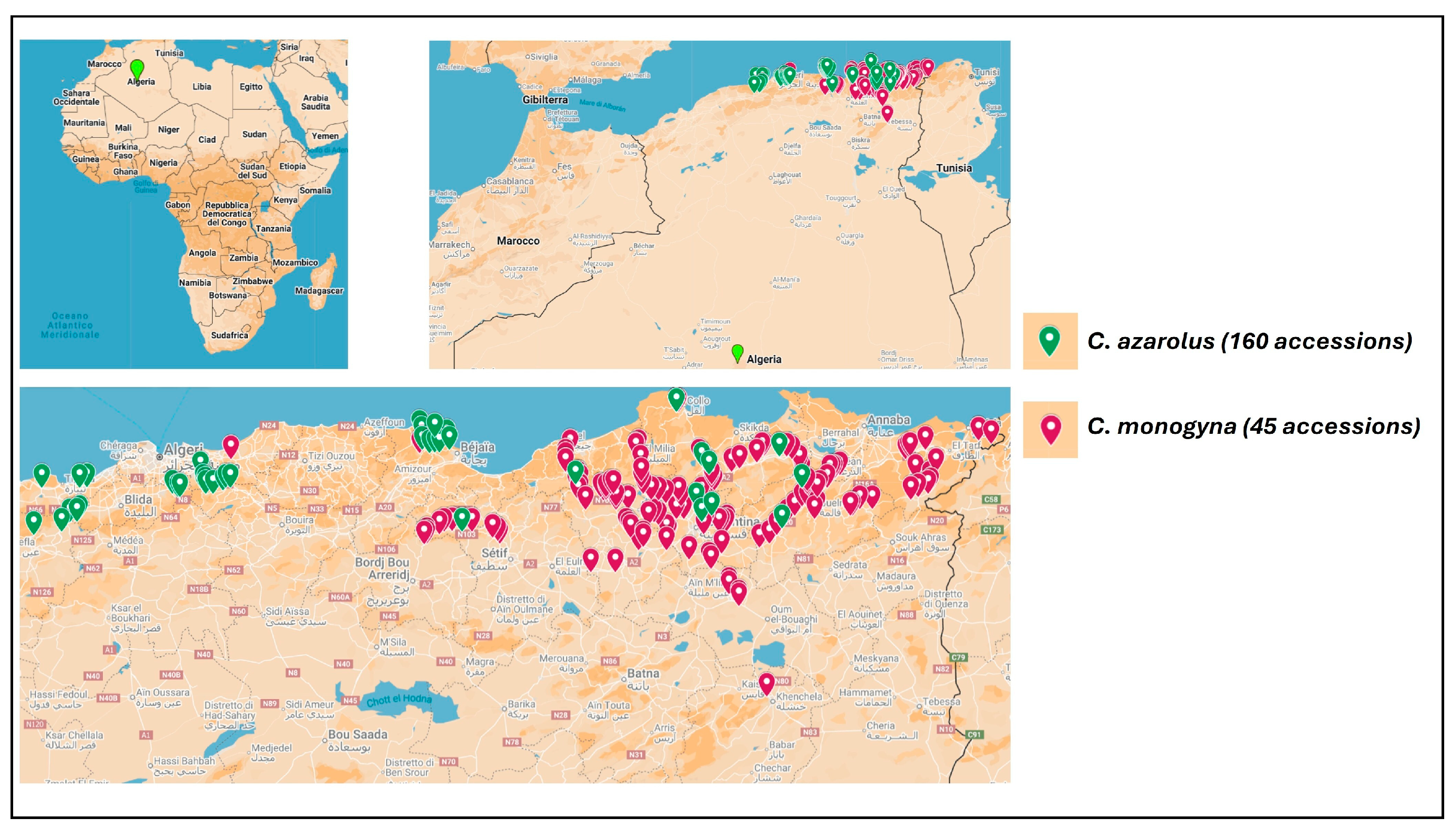
Between March and April 2023, a survey of Crataegus species was conducted across 17 northern Algerian provinces, including seven coastal provinces and ten continental provinces. A total of 205 samples were collected, comprising 160 C. azarolus (CA) and 45 C. monogyna (CM) (Figure 1). The species C. laevigata was not collected, as it is restricted to humid microclimatic conditions that can be found only in Northern Algeria. At each sampling site, individual plants were identified and georeferenced using a GPS locator, and leaf samples were collected for laboratory analyses (Figure 2; Supplementary Table S1). In addition, three Apulian (Southern Italy) samples, two of C. azarolus (CA1_REF, CA2_REF) and one of C. monogyna (CM_REF), sampled in rural areas of the Apulia region and previously genotyped using SSR markers at the Di.S.S.P.A, University of Bari, were included as reference samples.
Figure 1.
Detail of leaves and fruits of C. azarolus (A) and C. monogyna (B).
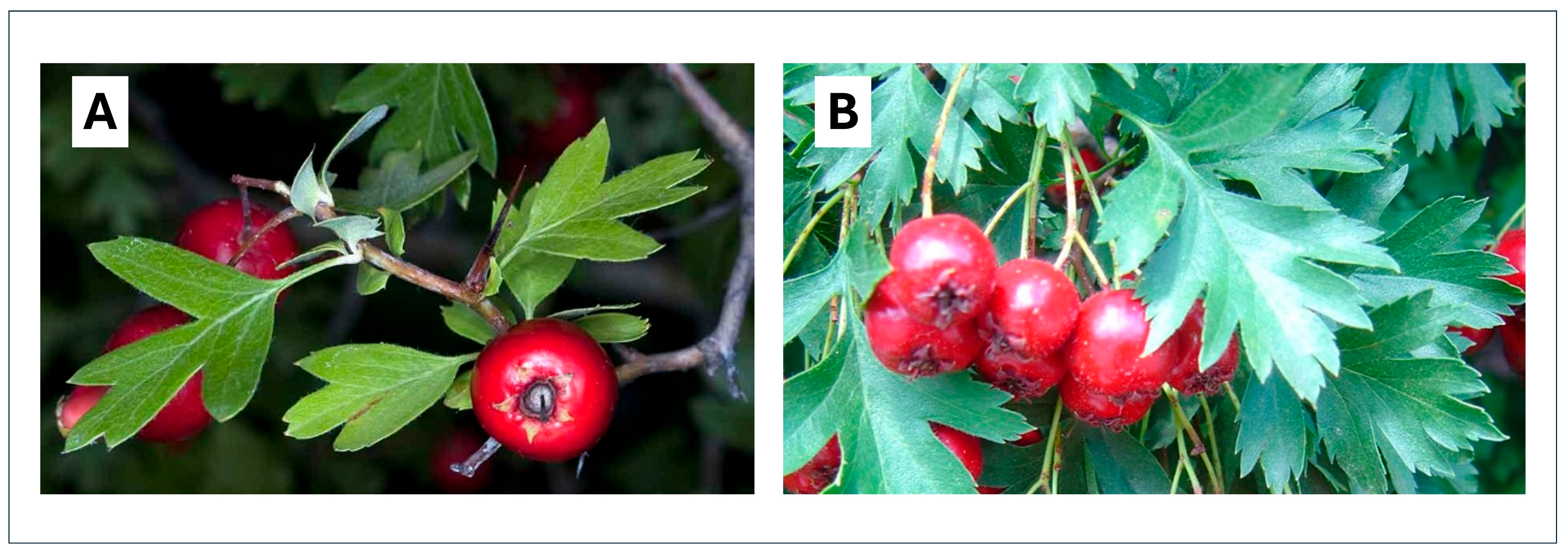
Figure 2.
Map of the 17 provinces in Algeria showing the geographical distribution of the 205 analyzed populations of two species of the wild hawthorn (Crataegus spp.) (https://www.google.com/maps/d/?hl=it, accessed on 14 July 2026).
2.2. Morphological and Morphometric Characterization
The phenotypic diversity of hawthorn accessions was assessed by analyzing 29 morphological and morphometric traits on 146 C. azarolus and 45 C. monogyna (Table 1) using ten leaves randomly selected from each accession. For the analysis of morphological traits, leaf sampling followed the UPOV guidelines for Crataegus. Ten mature, healthy, and fully expanded leaves were randomly collected from non-fruiting branches located on the outer portion of the canopy and exposed to uniform sunlight to ensure minimal intra-plant variability. Traits were also visually examined and scored in accordance with the Crataegus descriptor guidelines established by UPOV (International Union for the Protection of New Varieties of Plants) (https://www.upov.int/edocs/tgdocs/en/tg239.pdf, accessed on 14 July 2026). The morphometric analysis of leaves was performed using an image-processing approach. Morphological descriptors were automatically quantified with ImageJ (v. 1.8.0-112, https://imagej.net/ij/index.html, accessed on 14 July 2026) based on digital images acquired with a Canon EOS 700D camera. To ensure accurate dimensional calibration in millimetres, a steel ruler with 1 mm graduation was positioned alongside each leaf sample during image acquisition. Eight quantitative traits (area, perimeter, fitting ellipse—major and minor axes that represent the primary and secondary axes of the best-fitting ellipse—and shape descriptors) were measured and calculated using the following variables. Circularity was used to assess the extent to which the leaf perimeter approximated a perfect circle and to detect marginal irregularities. Aspect ratio, calculated as the ratio between the major and minor axes, was used as an indicator of leaf elongation. Roundness was employed to describe the similarity of the overall leaf shape to a circle. Solidity was measured to quantify leaf convexity and to identify the presence of shape irregularities. The selected traits include different and complementary aspects of plant architecture, shoot morphology, and leaf morphology and shape.
Table 1.
Morphological and morphometric traits used for the characterization of Algerian wild hawthorn accessions.
2.3. Statistical Analysis
Mean values for each morphological trait were used for the statistical analyses. A non-parametric descriptive analysis, including minimum, maximum, median, and interquartile range (IQR), was first conducted to characterize variation across all accessions. Subsequently, significant differences between the populations of C. azarolus and C. monogyna were evaluated using the Wilcoxon test for each of the 29 measured variables. The correlations among morphological and morphometric variables were determined using Pearson’s correlation at the significant level of p < 0.05. In addition, a principal component analysis (PCA) was performed to identify the qualitative morphological components with the greatest influence on morphological variability [39].
2.4. Molecular Characterization
Genomic DNA was extracted from leaf tissue in accordance with Miazzi et al., 2020 [40]. Qualitative and quantitative DNA characteristics were assessed by spectrophotometry using Nano-Drop™2000C (Thermo Scientific, Waltham, MA, USA) and electrophoresis on a 1% agarose gel. Nine SSR loci were assayed for the molecular characterization of the 205 wild hawthorn samples (Table 2), two C. azarolus reference samples (CA1_REF, CA2_REF), and 1 C. monogyna reference sample (CM_REF). The SSR markers for hawthorn genotyping were selected based on their informativeness, determined by the polymorphism information content (PIC) value [41] using Cervus v.3.0 software [42].
Table 2.
List of nine SSR markers used in genetic characterization of Crataegus spp. The Table shows the SSR loci analyzed, the Forward and Reverse primer sequences, the annealing temperature (Ta in °C), and the amplicon size range in base pairs (bp).
PCR reactions, set up in a final volume of 25 µL, consisted of 80 ng of DNA, 1X Dream Taq buffer, 0.08 mM dNTPs, 0.04 µM forward primer, 0.13 µM reverse primer, 0.07 µM fluorophore-labelled M13 nucleotide codon, and 0.07 U Dream Taq. All reagents used for PCR amplification were supplied by Thermo Fisher Scientific (Waltham, MA, USA). PCR amplifications were performed in a C1000TM thermal cycler (Bio-Rad, Hercules, CA, USA): 95 °C for 3 min; 35 cycles consisting of a denaturation step at 95 °C for 30 s, an annealing step at 60–62 °C for 45 s, and an elongation step at 72 °C for 30 s; and 72 °C for 7 min. Amplification products were verified by 1.8% agarose gel electrophoresis. Then, PCR products were detected using the ABI PRISM 3500 Avant Genetic Analyser automated capillary sequencer (Applied Biosystems, Foster City, CA, USA) with the GeneScan Liz 600 internal molecular weight standard dye (Applied Biosystems, Foster City, CA, USA). GeneMapper v.3.7 genotyping software (Applied Biosystems, Foster City, CA, USA) was used to perform the sample analyses.
2.5. Genetic Relationships and Population Structure
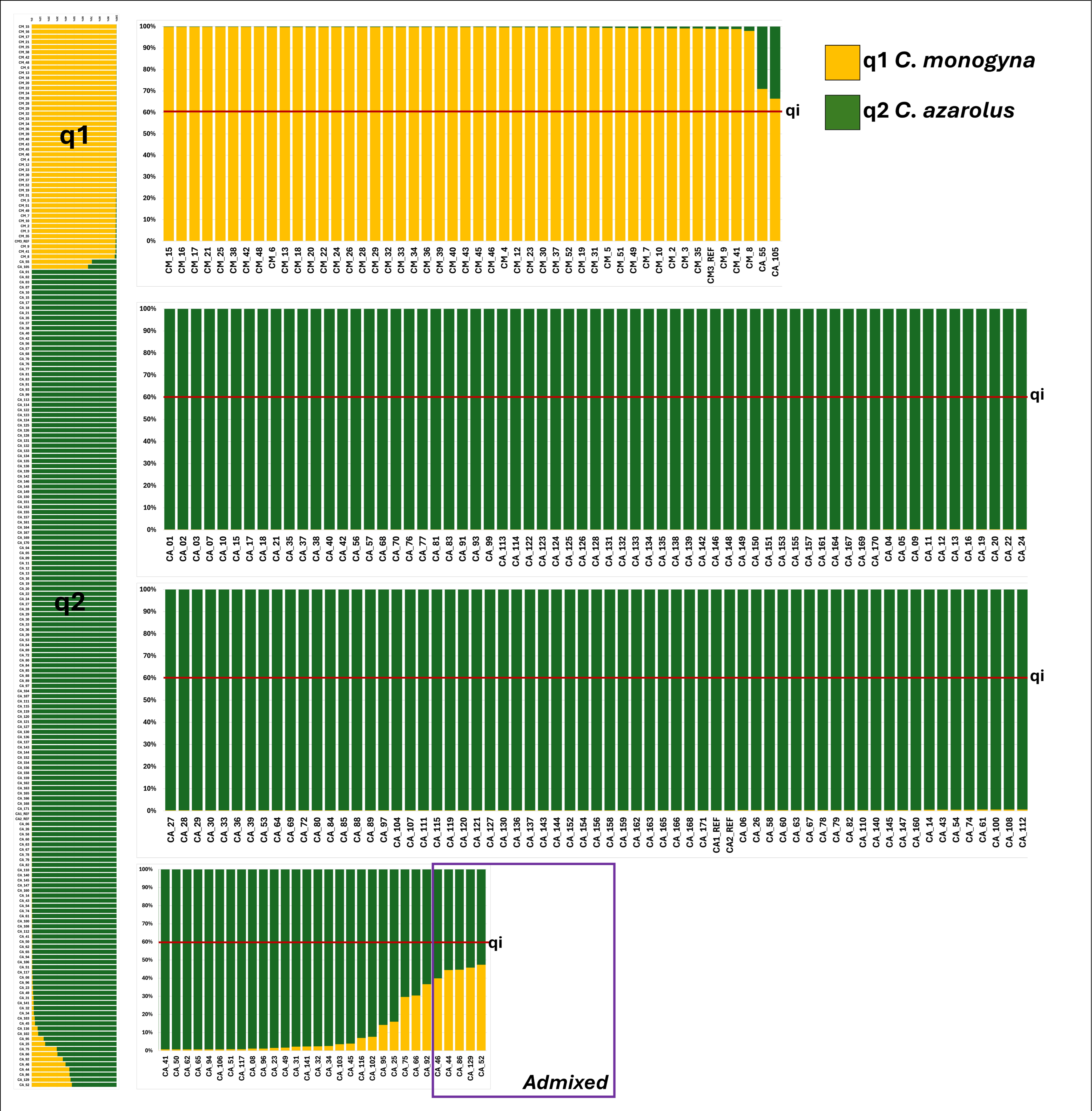
Phylogenetic relationships between the 208 hawthorn samples were estimated using DARWIN v.6.0.010 software (http://darwin.cirad.fr) by Neighbour-joining analysis based on a dissimilarity matrix, with bootstrapping of 1000 replicates to determine the support for each node [44]. The genetic structure of the population was evaluated using clustering analysis based on Bayesian models [45] using STRUCTURE 2.3.4 software. Ten independent runs for each K (1 to 10), using 100,000 MCMC repetitions and 100,000 burn-in periods, were performed to obtain the best number of subpopulations (K). The data obtained were processed using Structure Harvester software [46], based on the ad hoc ΔK test statistic [47]. Genotypes with the corresponding coefficient membership (qi) value above 0.6 were assigned to the definite populations; otherwise, they were considered mixed. In both analyses, the three reference genotypes (CA1_REF, CA2_REF and CM_REF) were included to confirm that the 205 accessions belonged to C. azarolus or C. monogyna species.
2.6. Genetic Diversity Assessment
GenAlEx v.6.5 software [48] was used to investigate the allelic similarity between the 208 hawthorn genotypes by Lynch and Ritland’s pairwise relationship analysis (LRM) [49]. In addition, the effective number of alleles (Ne), the Shannon information index (I), the observed (Ho) and expected (He) heterozygosity, the fixation index (F), and statistical significance for the Hardy–Weinberg (HW) equilibrium were estimated. Finally, GenAlEx software was used to evaluate private alleles (frequency <1%), which are able to differentiate the two Crataegus species [42].
3. Results
3.1. Assessment of Morphological and Morphometrical Variability
The descriptive statistics for the traits examined are shown in Table 3. The comparison of trait medians between the two groups revealed significant differences in some key traits. C. azarolus differed significantly from C. monogyna in three plant-related traits (growth type, growth habit and height), two shoot-related traits (number of thorns and length), and ten leaf-related traits (length, lobes and depth of lobes, variegation, anthocyanin colouration, glossiness, upper surface pubescence, surface, petiole length and leaf circularity).
Table 3.
Descriptive statistics—minimum, maximum, medians and interquartile ranges (IQR)—are reported for morphological and morphometric variables in the studied accessions of C. azarolus and C. monogyna.
Correlation analysis was performed to examine the relationships between the variables, highlighting correlations between some leaf-related traits (Supplementary Table S2). In detail, anthocyanin colouration was positively correlated with leaf variegation (r = 0.540 ***) and leaf glossiness (r = 0.527 ***) and negatively correlated with upper-side leaf pubescence (r = −0.554 ***) and leaf surface (r = −0.582 ***). Leaf glossiness was negatively correlated with upper-side leaf pubescence (r = −0.639 ***) and leaf surface (r = −0.716 ***). The leaf surface trait showed a strong positive correlation with leaf pubescence on the upper side (r = 0.925 ***).
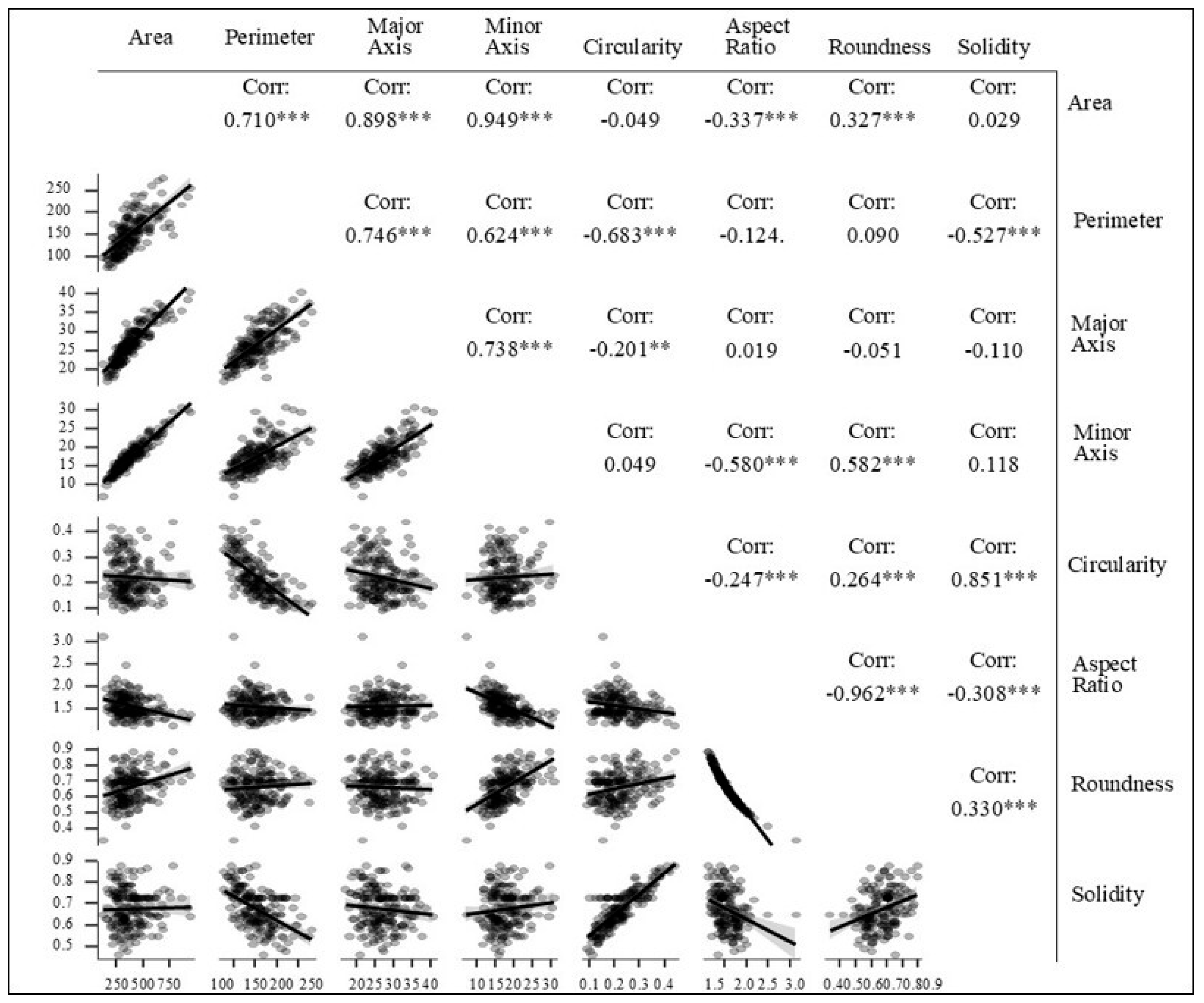
As for the quantitative morphometric traits (Figure 3), a positive correlation between solidity and circularity (r = 0.851 ***) and a negative correlation between circularity and perimeter (r = −0.683 ***) were detected. A highly negative correlation was also observed between roundness and aspect ratio (r = −0.962 ***).
Figure 3.
Correlations between morphometric variables. Significant at * p < 0.05, ** p < 0.01, and *** p < 0.001 levels.
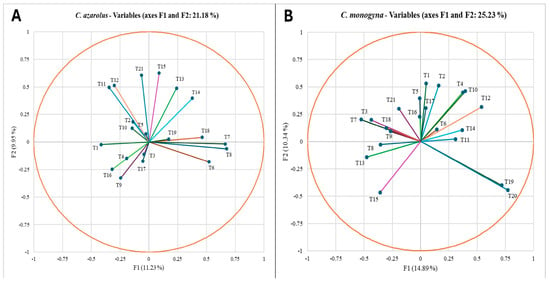
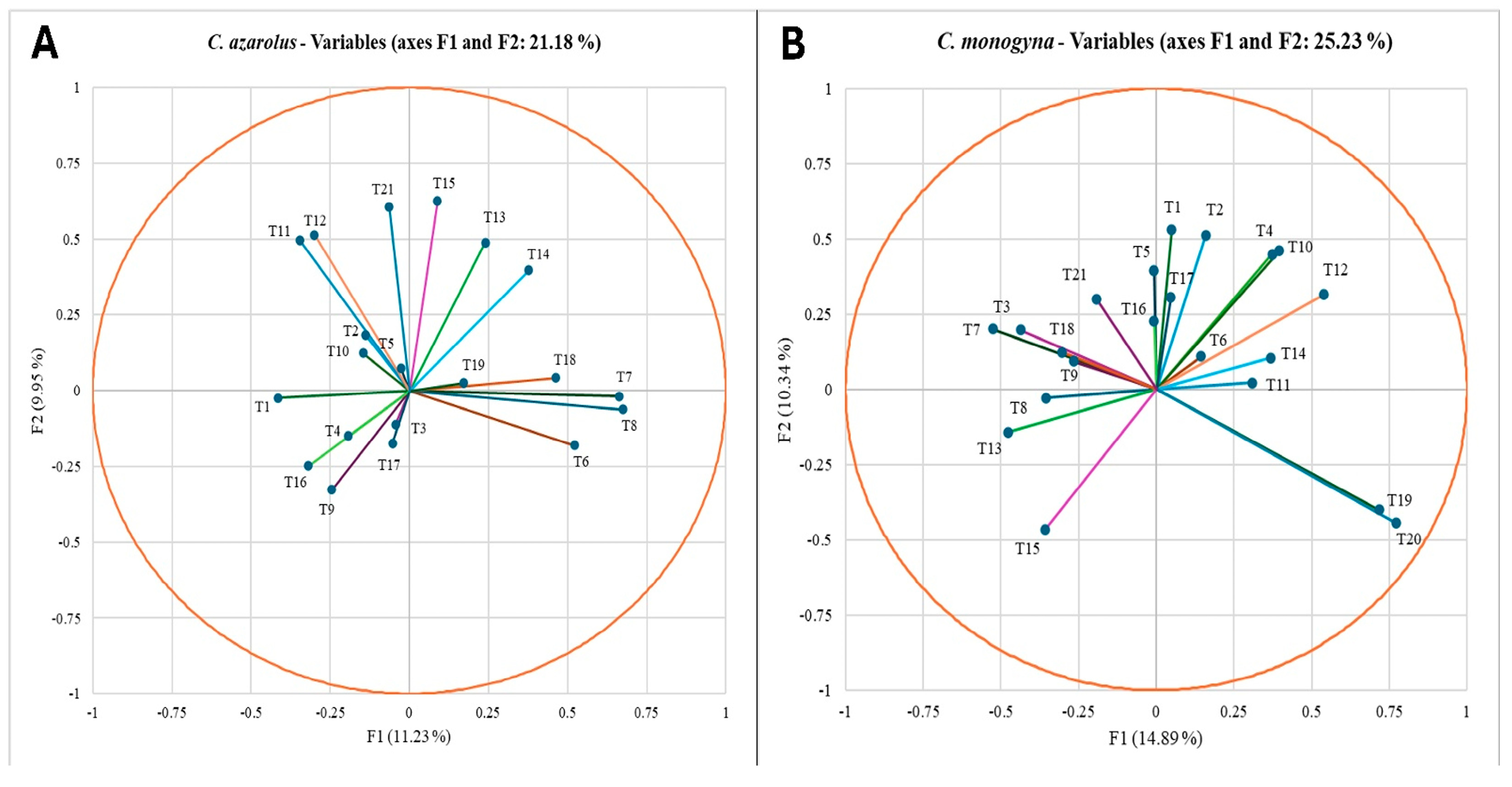
Principal component analysis (PCA) was performed independently on the two groups, including C. azarolus (Figure 4A) and C. monogyna (Figure 4B), to highlight the qualitative traits with the greatest influence on morphological diversity. In C. azarolus, the first two principal components explained 21.18% of the total variance (Figure 4A). The first component (F1) accounted for 11.23% of the variance and was predominantly associated with shoot morphological traits, including spine presence, number, and length, as well as growth habit. The second component (F2) explained 9.95% of the variance among samples and was predominantly influenced by petiole length and leaf morphological traits, such as leaf length and width, margin morphology, lobe presence, and lobe depth. In C. monogyna, the first two principal components explained 25.23% of the total variance (Figure 4B). The first component (F1) accounted for 14.89% of the variance and was predominantly associated with leaf morphological traits, including leaf surface area, adaxial pubescence, leaf width, and margin morphology, as well as plant shape and the number of spines on shoots. The second component (F2) explained 10.34% of the total variance and was mainly associated with plant architectural traits, including growth type, habit, height, and foliage density, together with shoot growth type and leaf lobe depth.
Figure 4.
Principal component analysis (PCA) performed on 160 C. azarolus (A) and 45 C. monogyna (B) Algerian samples.
3.2. Genetic Characterization Using Microsatellite Analysis
A good quality nuclear DNA was extracted from hawthorn leaves, allowing allele profiles to be obtained for all processed samples. Capillary electrophoresis showed clear peaks discriminating between homozygous and heterozygous loci. In addition, the selected SSR loci were characterized by a high polymorphic power (PIC mean value = 0.82), with a maximum PIC value of 0.90 for the Hi05B09 locus and a minimum of 0.68 for CH02F06, as indicated in Supplementary Table S3.
3.3. Genetic Diversity Assessment in Two Species of Hawthorn
The estimation of genetic indices revealed a comparable allelic richness per locus in the two species, while the mean effective number of alleles (Ne) was six for C. monogyna and five for C. azarolus (Table 4). The SSR locus Hi05B09 showed the highest number of alleles (8) in C. azarolus, whereas in C. monogyna the maximum allelic richness (10) was observed at loci CH04G04 and CH02F06. The Shannon index (I) indicated high genetic variability in both species, with mean values of 1.78 for C. azarolus and 1.90 for C. monogyna. This high level of genetic diversity was further supported by the observed (Ho) and expected (He) heterozygosity values, which exceeded 0.5. However, the observed heterozygosity was lower than expected in both species, resulting in fixation indices (F) of 0.20 for C. monogyna and 0.16 for C. azarolus. Statistically significant values for the Hardy–Weinberg equilibrium were detected only in C. azarolus for loci CH03C02, CH05D11, Hi05B09 and GD154.
Table 4.
Genetic diversity indices of nine SSR markers in C. azarolus and C. monogyna accessions. Ne, effective number of alleles; I, Shannon’s information index; Ho, observed heterozygosity; He, expected heterozygosity; F, fixation index; HW, Hardy–Weinberg equilibrium.
Pairwise comparison of the molecular profiles revealed genetic similarities within each species of hawthorn but not between the two species. Furthermore, all genotypic pairs showed LRM values of less than 0.50, indicating the distinctiveness of their allelic profiles (Supplementary Table S4).
Both hawthorn species exhibited a high number of private alleles. In particular, the loci with the highest numbers of private alleles were Hi05B09 (15) in C. azarolus and CH04G04 (14) in C. monogyna, whereas the most conserved locus in C. azarolus was CH04D08 (1) (Table 5 and Supplementary Table S5).
Table 5.
Number of private alleles and mean frequency identified for the nine SSR loci used in the molecular characterization.
3.4. Assessment of Phylogenetic Relationships and Population Structure
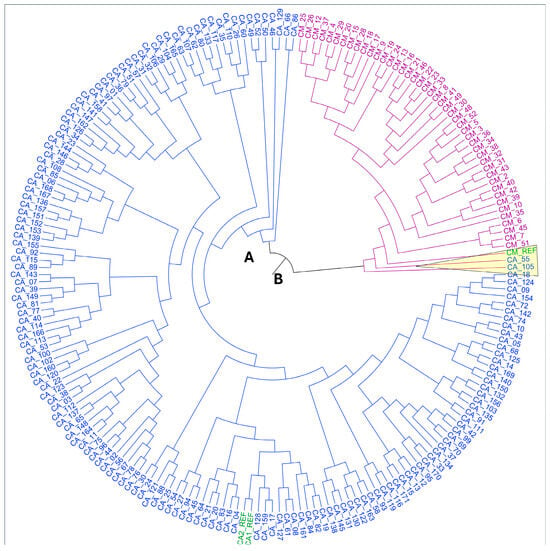
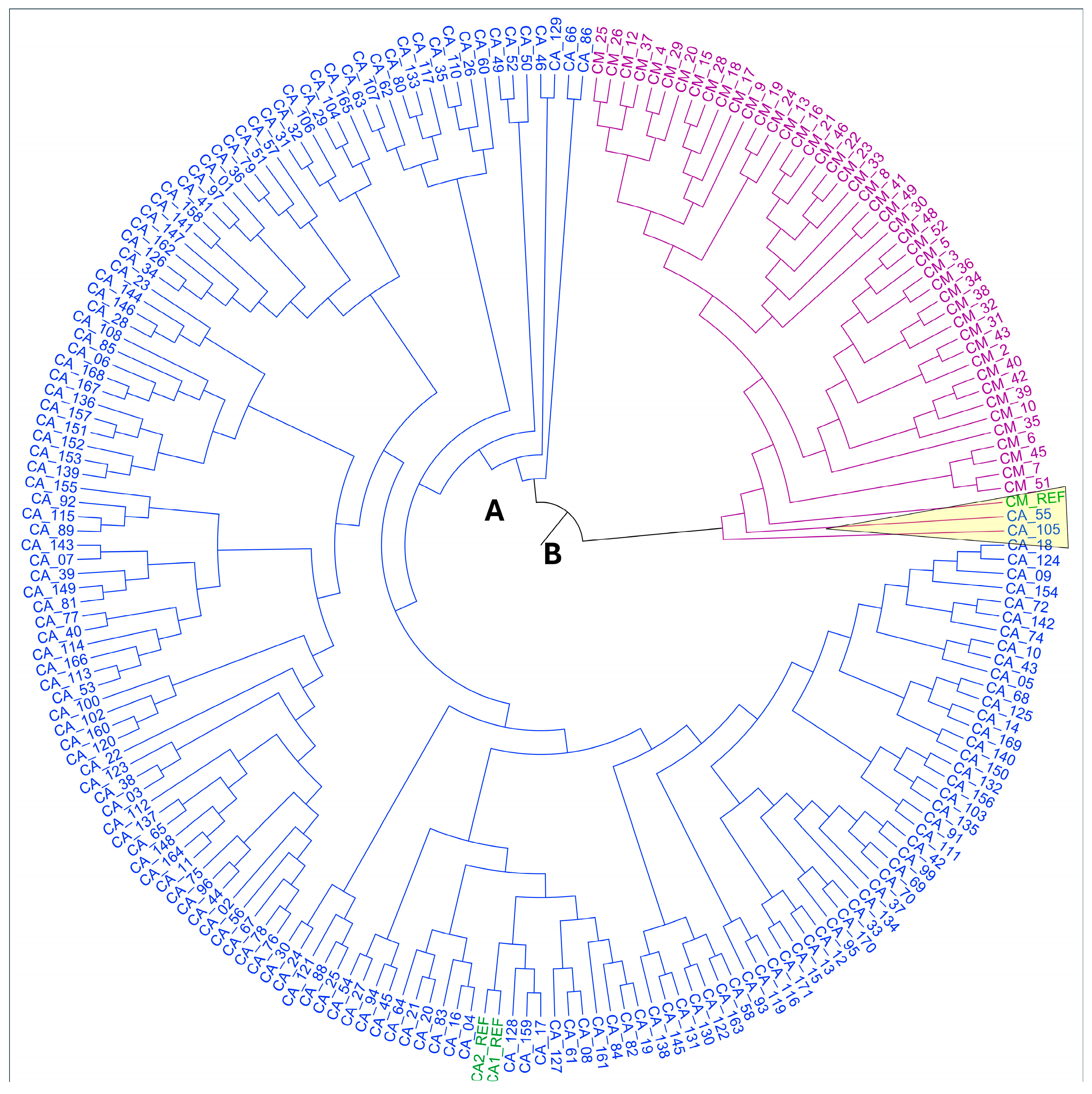
The study of phylogenetic relationships among the 205 hawthorn accessions and the three references, performed using Neighbour-joining analysis, divided the population into two clusters, A and B, demonstrating a clear genetic separation between the two Crataegus species (Figure 5). Indeed, cluster A consisted of all C. azarolus genotypes, while the C. monogyna accessions belonged to cluster B. Accordingly, reference genotypes CM_ref and CA_ref were included in clusters A and B, respectively. Interestingly, samples CA_55 and CA_105, which were morphologically defined as C. azarolus, belonged instead to the C. monogyna group.
Figure 5.
Phylogenetic tree obtained for the analyzed 205 Algerian hawthorn samples. Cluster A (blue) includes the C. azarolus samples, while cluster B (purple) groups the C. monogyna samples. The reference genotypes are shown in green. The hawthorn genotypes CA_55 and CA_105 are highlighted by a yellow triangle.
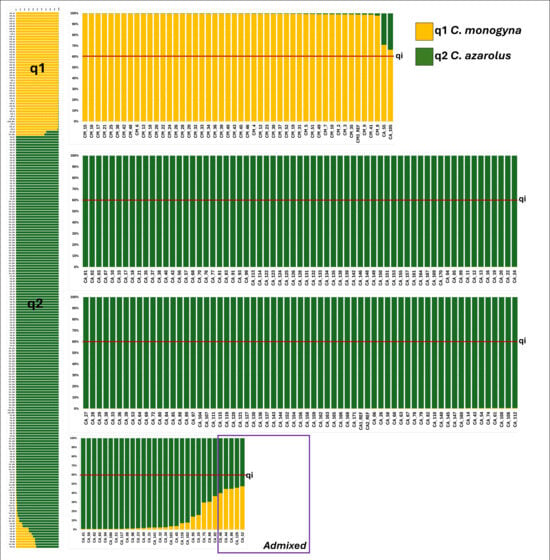
Structure analysis determined the genetic structure of Algerian hawthorn germplasm (Figure 6). Evanno’s ∆K test divided the population into two main populations (K = 2), confirming the phylogenetic analysis. Group q1 included C. monogyna accessions, with the reference genotype CM_REF, while q2 grouped C. azarolus samples together with the two reference genotypes CA_REF. The structure analysis also shows samples CA_55 and CA_105 belonging to the C. monogyna species group, confirming the phylogenetic analysis results. Finally, four genotypes (CA_44, CA_52, CA_86 and CA_129) were considered admixed, showing an equal genetic contribution of the two ancestral lines of hawthorn.
Figure 6.
Bar plot showing genetic structure inferred by STRUCTURE of analyzed hawthorn accessions. Each vertical line stands for a single genotype, and it is divided into K-coloured segments that represent the estimated membership coefficient (qi).
4. Discussion
Hawthorn is a wild fruit tree widely recognized for its high ecological, nutritional, and medicinal value. In recent years, increasing interest in this species has been driven by its increasing use in the development of a wide range of food products, including fruit wine, concentrated juice, fruit vinegar, and functional foods derived from hawthorn extracts and bioactive compounds derived from different plant organs [50]. Despite its economic and nutraceutical potential, the taxonomy of the genus remains quite complicated due to pronounced morphological variability. Therefore, integrated approaches combining molecular and morphological data are required to improve taxonomic resolution and to accurately discriminate between closely related species. A comprehensive understanding of intra- and interspecific genetic and morphological variability is essential for identifying the most promising accessions and for supporting the development of effective in situ or ex situ conservation programmes [51,52,53].
In the present study, a collection of 250 wild Algerian hawthorn accessions was characterized through an integrated analysis combining morphological descriptors and SSR markers. A total of 205 accessions classified at the sampling stage as C. azarolus (160 individuals) and C. monogyna (45 individuals) were first morphologically evaluated and then genotyped using nine highly informative microsatellite markers.
The morphological characterization was based on plant, shoot, and leaf descriptors. The comparison of trait medians of C. azarolus and C. monogyna revealed significant differences in several key traits of the plant, shoot, and leaf. In particular, CM generally exhibited a spreading tree shape, while accessions of CA showed an upright growth habit. This is consistent with the PCA results on CM samples, where plant architectural traits—habit and foliage density—were among the factors influencing the principal component, as also reported by [54]. In contrast, C. azarolus accessions generally exhibited fewer thorns than C. monogyna, suggesting species-specific differences in shoot morphology. Accordingly, the PCA performed on C. azarolus identified shoot-related traits, particularly thorn number and thorn length, among the main contributors to phenotypic variation. These findings indicate that shoot-related characters, particularly thorn traits, play a major role in shaping morphological variability within C. azarolus. This pattern is consistent with the observations of [55], who identified thorn-related traits as major contributors to multivariate differentiation among Crataegus taxa and highlighted their taxonomic and ecological relevance, likely reflecting adaptive and defensive functions.
Principal component analysis further showed that, in both species, plant growth type and leaf morphology were the main contributors to phenotypic variation, with leaf width and leaf margin morphology being particularly important. This result underscores the relevance of leaf architecture as a stable and informative set of characters for discriminating between Crataegus accessions and species. Similar conclusions were reached by [56], who demonstrated that leaf traits, especially size and margin morphology, have high discriminatory power in multivariate analyses of Crataegus. These results suggest a hierarchical model in the taxonomic value of morphological traits: shoot traits such as thorns are particularly informative for describing intraspecific variation in C. azarolus, whereas leaf morphology and growth habit provide more reliable characters for interspecific discrimination within the genus. Nonetheless, morphology alone is insufficient to achieve consistent species identification in Crataegus, which presents high complexity and overlapping traits due to multiple evolutionary processes, including hybridization, introgression, and polyploidy [57,58].
Significant correlations between the two species were also detected among several leaf traits, such as shape parameters, circularity, solidity, perimeter, roundness and aspect ratio, reflecting shared aspects of leaf geometry, as well as leaf perimeter and foliage density, as previously suggested [54,55,59]. The analysis also revealed that anthocyanin coloration, leaf glossiness, surface and pubescence variate are developmentally coordinated and may respond to common genetic or environmental factors [54].
The SSR analysis revealed a high level of polymorphism, enabling reliable genetic characterization and clear discrimination between the two Crataegus species. Both phylogenetic and STRUCTURE analyses consistently separated the Algerian genotypes into two well-defined genetic clusters corresponding to C. monogyna and C. azarolus. However, two accessions initially classified as C. azarolus (CA_55 and CA_105) clustered unequivocally with C. monogyna. Their morphological characteristics, particularly leaf circularity and lobe depth, supported this incorrect assignment during field sampling, highlighting the limitations of morphology-based identification and the importance of molecular approaches for accurate species characterization.
High genetic diversity was observed in both CA and CM species, as indicated by high allelic richness (Ne) and Shannon diversity index values, in agreement with previous studies, and reflecting the genetic variability typically observed in wild populations [28,60]. The phylogenetic tree clearly separates C. azarolus and C. monogyna samples, demonstrating the efficiency of the SSRs used in distinguishing the two Crataegus species, supporting the work performed before [25,58,61].
Previous studies showed the presence of a relatively high level of genetic diversity characterizing the Crataegus populations, implicating the importance of preserving and valorising this remarkable plant source of bioactive compounds [61,62]. In our study, the high genetic variability was confirmed by the high heterozygosity observed in both species (Ho > 0.6), which is typical of allogamous breeding species and is reflected in a low fixation index (F < 0.2). Although most loci conformed to Hardy–Weinberg equilibrium, significant deviations were detected at a limited number of loci (e.g., CH03C02, CH05D11, Hi05B09, and GD154), suggesting the influence of locus-specific evolutionary or demographic processes. In C. monogyna, most loci were in Hardy–Weinberg equilibrium, but for some markers the test was not determinable (ND), probably because of the limited sample size, which reduces the power to assess Hardy–Weinberg equilibrium [63]. Nevertheless, departures from equilibrium were less frequent in C. monogyna than in C. azarolus, indicating that the overall genetic structure of both species remained broadly consistent with Hardy–Weinberg expectations. Overall, deviations from HWE observed in both taxa were restricted to specific loci and did not indicate a systematic deviation at the species level.
The richness of private alleles detected in both C. azarolus and C. monogyna further highlights the marked genetic differentiation between the two species and confirms the high level of genetic diversity preserved within Algerian hawthorn populations. Because private alleles are restricted to single species or populations, they are widely recognized as indicators of long-term evolutionary divergence, limited gene flow, and potential local adaptation [42]. This allelic variability represents an important component of the genetic resources available for both conservation and crop improvement. Hawthorn is an important source of polyphenols, flavonoids, and flavanols shown to be associated with beneficial effects on the cardiovascular system and metabolism [64]. A high variation in the antioxidant activity was observed among Crataegus species [19]; therefore, the evaluation of Crataegus genetic resources could be useful to identify genotypes rich in bioactive compounds. From a conservation perspective, private alleles contribute to the evolutionary potential of species by enhancing their capacity to respond to environmental changes and selective pressures, whereas their loss due to genetic erosion or population decline may lead to an irreversible reduction in adaptive potential [65]. The high levels of both morphological and genetic variation observed in C. azarolus and C. monogyna therefore emphasize the importance of preserving genetically distinct populations and support the need for species-specific conservation strategies aimed at maintaining their unique genetic diversity.
From a practical standpoint, private alleles may harbour functionally important variants associated with adaptation, stress tolerance, or other agronomically important traits, making them particularly relevant for future breeding programmes and germplasm management [66,67]. Moreover, since the two species differ in the content of nutraceutical and bioactive compounds [19,20], the availability of robust and reliable tools for accurately distinguishing C. monogyna from C. azarolus, such as the integrated molecular and morphological approach adopted in this study, is essential for the effective valorization, conservation, and sustainable utilization of Algerian hawthorn genetic resources.
5. Conclusions
This study provides the first comprehensive characterization of wild Algerian hawthorn germplasm by integrating molecular markers with morphological and morphometric analyses. The combined approach successfully confirmed the presence of two distinct species, C. azarolus and C. monogyna, and provides robust tools for more accurate species characterization. Beyond their taxonomic relevance, the results highlight the remarkable genetic diversity preserved within wild Algerian hawthorn populations, emphasizing their importance as reservoirs of unique genetic variation. The conservation and valorization of these genetic resources could play a key role in the selection of agronomically and ecologically important traits, including disease resistance, tolerance to environmental stress, and plant vigour. Furthermore, these wild populations represent a strategic source of reproductive material for the improvement of cultivated hawthorn, contributing to the development of more resilient and adaptable varieties while supporting the sustainable management and conservation of local germplasm. Finally, a detailed chemical and biochemical characterization of this wild plant material will further increase the value of these genetic resources and support the development of both in situ and ex situ collections. By clarifying the functional traits and potential uses of the most promising accessions, such analyses will strengthen efforts to document, conserve, and sustainably manage wild Crataegus germplasm.
Supplementary Materials
The following supporting information can be downloaded at https://www.mdpi.com/article/10.3390/agriculture16192121/s1; Table S1: List of 206 wild hawthorn accessions, identification codes and Algerian sampling sites; Table S2: Correlations analysis among morphological and morphometric variables, determined using Pearson’s correlation at the significant level of p < 0.05; Table S3: PIC value assigned to each of the nine assayed microsatellite loci; Table S4: LRM analysis performed on the two Algerian Crataegus species; Table S5: List of private alleles identified for the nine microsatellite loci used for the molecular characterisation of Crataegus species.
Author Contributions
Conceptualization: C.M., W.F., and D.K.; formal analysis: N.S., R.d.P., and I.M.; funding acquisition: C.M. and W.F.; investigation: M.A.S., M.M.M., V.F., N.S., and W.F.; methodology: M.A.S., M.M.M., I.M., V.F., and W.F.; supervision: C.M., M.M.M., and M.A.S.; writing—original draft: M.M.M., M.A.S., N.S., and W.F.; writing—review and editing: W.F., N.S., M.A.S., I.M., R.d.P., M.M.M., V.F., D.K., and C.M. All authors have read and agreed to the published version of the manuscript.
Funding
This research has been developed in the framework of the activities of the “Centro Interdipartimentale di Ricerca per la Cooperazione allo Sviluppo” (CPS) of the University of Bari, Italy. Dr. Falek Wahiba was supported by a research grant under academic supervision for the project entitled “Molecular Diversity of Algerian Wild Hawthorn Species (Crataegus azarolus L. and Crataegus monogyna) Genotypes Using SSR Markers,” awarded by the Italian Ministry of Foreign Affairs and International Cooperation (MAECI) for a six-month study period during the academic year 2023–24. W.F. acknowledges the financial support of the National Higher School of Biotechnology, Constantine, Algeria.
Data Availability Statement
The data presented in this study are available in the manuscript and in the Supplementary Materials.
Conflicts of Interest
The co-author Cinzia Montemurro is affiliated with the company “SINAGRI s.r.l.-Spin Off of the University of Bari Aldo Moro”. The remaining authors declare that the research was conducted in the absence of any commercial or financial relationships that could be construed as a potential conflict of interest.
Abbreviations
The following abbreviations are used in this manuscript:
| CA | Crataegus azarolus |
| CM | Crataegus monogyna |
References
- Christensen, K.I.; Zieliński, J. Notes on the genus Crataegus (Rosaceae–Pyreae) in southern Europe, the Crimea and western Asia. Nord. J. Bot. 2008, 26, 344–360. [Google Scholar] [CrossRef] [Scilit]
- Attard, E.; Attard, H. Hawthorn: Crataegus oxyacantha, Crataegus monogyna and related species. In Nonvitamin and Nonmineral Nutritional Supplements; Academic Press: Cambridge, MA, USA, 2019; pp. 289–293. [Google Scholar] [CrossRef] [Scilit]
- Brown, J.A.; Beatty, G.E.; Finlay, C.M.V.; Montgomery, W.I.; Tosh, D.G.; Provan, J. Genetic analyses reveal high levels of seed and pollen flow in hawthorn (Crataegus monogyna Jacq.), a key component of hedgerows. Tree Genet. Genomes 2016, 12, 58. [Google Scholar] [CrossRef] [Scilit]
- Vašková, D.; Kolarčik, V. Breeding systems in diploid and polyploid hawthorns (Crataegus): Evidence from experimental pollinations of C. monogyna, C. subsphaerica, and natural hybrids. Forests 2019, 10, 1059. [Google Scholar] [CrossRef] [Scilit]
- Asiri, F.A.; Zaki, M.S.A.; Al-Nashar, E.M.; Waris, A.; Abdulsamad, M.R. Possible prevention of cartilage damage in rat knee osteoarthritis by howthorn (aronia) treatment: Histological and immunohistochemical studies. J. Biochem. Pharmacol. Res. 2014, 2, 57–63. [Google Scholar]
- Stanković, J.S.K.; Mićanović, N.; Grozdanić, N.; Kostić, A.Ž.; Gašić, U.; Stanojković, T.; Popović-Djordjević, J.B. Polyphenolic profile, antioxidant and antidiabetic potential of medlar (Mespilus germanica L.), blackthorn (Prunus spinosa L.) and common hawthorn (Crataegus monogyna Jacq.) fruit extracts from Serbia. Horticulturae 2022, 8, 1053. [Google Scholar] [CrossRef] [Scilit]
- Zhang, J.; Chai, X.; Zhao, F.; Hou, G.; Meng, Q. Food applications and potential health benefits of hawthorn. Foods 2022, 11, 2861. [Google Scholar] [CrossRef] [Scilit] [PubMed]
- Caliskan, O. Mediterranean hawthorn fruit (Crataegus) species and potential usage. In The Mediterranean Diet; Academic Press: Cambridge, MA, USA, 2015; pp. 621–628. [Google Scholar] [CrossRef] [Scilit]
- Venskutonis, P.R. Phytochemical composition and bioactivities of hawthorn (Crataegus spp.): Review of recent research advances. J. Food Bioact. 2018, 4, 69–87. [Google Scholar] [CrossRef] [Scilit]
- Fichtner, A.; Wissemann, V. Biological Flora of the British Isles: Crataegus monogyna. J. Ecol. 2021, 109, 541–571. [Google Scholar] [CrossRef] [Scilit]
- El Kadi, F.Z.; Kanoun, K.; Bouanani, F.Z.; Said, S.; Labbaci, F.Z. Phytochemical profile and biological activity of the aerial parts of Crataegus oxyacantha L. (Hawthorn)—A Cardiotonic Herb. J. Hortic. For. Biotechnol. 2022, 26, 56–62. [Google Scholar]
- Lakache, Z.; Tigrine-Kordjani, N.; Tigrine, C.; Kameli, A.; Meklati, B.Y. Volatile constituents, phenolic compounds, and antioxidant activity of Crataegus azarolus leaves and flowers growing in Algeria. Chem. Nat. Compd. 2014, 50, 1132–1135. [Google Scholar] [CrossRef] [Scilit]
- Larit, F.; León, F. Therapeutics to treat psychiatric and neurological disorders: A promising perspective from algerian traditional medicine. Plants 2023, 12, 3860. [Google Scholar] [CrossRef] [Scilit] [PubMed]
- Orhan, I.E. Phytochemical and pharmacological activity profile of Crataegus oxyacantha L. (hawthorn)—A cardiotonic herb. Curr. Med. Chem. 2018, 25, 4854–4865. [Google Scholar] [CrossRef] [Scilit] [PubMed]
- Benchohra, M.; Adda, A.; Othmane, M. Taxonomy and ethnobotanical study of medicinal plants used by the local population of the Algerian highlands. Bol. Latinoam. Caribe Plantas Med. Aromáticas 2025, 24, 479–505. [Google Scholar] [CrossRef] [Scilit]
- Issaadi, O.; Fibiani, M.; Picchi, V.; Scalzo, R.L.; Madani, K. Phenolic composition and antioxidant capacity of hawthorn (Crataegus oxyacantha L.) flowers and fruits grown in Algeria. J. Complement. Integr. Med. 2021, 17, 20180125. [Google Scholar] [CrossRef] [Scilit] [PubMed]
- Belabdelli, F.; Bekhti, N.; Piras, A.; Benhafsa, F.M.; Ilham, M.; Adil, S.; Anes, L. Chemical composition, antioxidant and antibacterial activity of Crataegus monogyna leaves’ extracts. Nat. Prod. Res. 2022, 36, 3234–3239. [Google Scholar] [CrossRef] [Scilit] [PubMed]
- Mecheri, A.; Amrani, A.; Benabderrahmane, W.; Bensouici, C.; Boubekri, N.; Benaissa, O.; Zama, D.; Benayache, F.; Benayache, S. In Vitro Pharmacological Screening of Antioxidant, Photoprotective, Cholinesterase, and α-Glucosidase Inhibitory Activities of Algerian Crataegus oxyacantha Fruits and Leaves Extracts. Pharm. Chem. J. 2021, 54, 1150–1156. [Google Scholar] [CrossRef] [Scilit]
- Alirezalu, A.; Ahmadi, N.; Salehi, P.; Sonboli, A.; Alirezalu, K.; Khaneghah, A.M.; Barba, F.J.; Munekata, P.E.; Lorenzo, J.M. Physicochemical Characterization, Antioxidant Activity, and Phenolic Compounds of Hawthorn (Crataegus spp.) Fruits Species for Potential Use in Food Applications. Foods 2020, 9, 436. [Google Scholar] [CrossRef] [Scilit] [PubMed]
- Ahmed Qalatobzany, H.S.; Muhammad, K.A.; Lateef, D.D.; Rasul, K.S.; Ibrahim, A.S.; Parreira, M.C.; Weisany, W. Analysis of the Metabolic Profile and Biological Activity of Hawthorn Species Twigs: Crataegus azarolus and Crataegus monogyna. Kurd. J. Appl. Res. 2025, 10, 116–125. [Google Scholar] [CrossRef] [Scilit]
- Martinelli, F.; Perrone, A.; Yousefi, S.; Papini, A.; Castiglione, S.; Guarino, F.; Cicatelli, A.; Aelaei, M.; Arad, N.; Gholami, M.; et al. Botanical, phytochemical, anti-microbial and pharmaceutical characteristics of hawthorn (Crataegus monogyna Jacq.), Rosaceae. Molecules 2021, 26, 7266. [Google Scholar] [CrossRef] [Scilit] [PubMed]
- Falek, W.; Mascio, I.; Gadaleta, S.; Fanelli, V.; Bechkri, S.; Khelifi, D.; Miazzi, M.M.; Montemurro, C. Morphological and eco-geographic variation in Algerian wild olives. Plants 2022, 11, 1803. [Google Scholar] [CrossRef] [Scilit] [PubMed]
- Guesmi, A.; Savoia, M.A.; Zaouay, F.; Mnasri, S.R.; Aurelio, F.L.; Akkak, A.; Montemurro, C.; Mars, M.; Miazzi, M.M.; Debbabi, O.S. From Genetic Diversity to Economic Valorization: The Case of the ‘Zidi’ Fig Cultivar (Ficus carica L.) in the Region of Kesra, North-West Tunisia. Horticulturae 2026, 12, 538. [Google Scholar] [CrossRef] [Scilit]
- Güney, M.; Kafkas, S.; Keles, H.; Aras, S.; Ercişli, S. Characterization of hawthorn (Crataegus spp.) genotypes by SSR markers. Physiol. Mol. Biol. Plants 2018, 24, 1221–1230. [Google Scholar] [CrossRef] [Scilit] [PubMed]
- Du, X.; Zhang, X.; Bu, H.; Zhang, T.; Lao, Y.; Dong, W. Molecular Analysis of Evolution and Origins of Cultivated Hawthorn (Crataegus spp.) and Related Species in China. Front. Plant Sci. 2019, 10, 443. [Google Scholar] [CrossRef] [Scilit] [PubMed]
- Saddoud Debbabi, O.; Rahmani Mnasri, S.; Ben Amar, F.; Ben Naceur, M.; Montemurro, C.; Miazzi, M.M. Applications of microsatellite markers for the characterization of olive genetic resources of Tunisia. Genes 2021, 12, 286. [Google Scholar] [CrossRef] [Scilit] [PubMed]
- Zarei, A.; Erfani-Moghadam, J.; Mozaffari, M. Phylogenetic analysis among some pome fruit trees of Rosaceae family using RAPD markers. Biotechnol. Biotechnol. Equip. 2017, 31, 289–298. [Google Scholar] [CrossRef] [Scilit]
- Uzun, A.; Pinar, H.; Yaman, M.; Çakiroğlu, Y.; Karakaya, A.; Uysal, M.; Keleş, H.; Öztürk, G.; Emre, R.A.; Kaçal, E.; et al. Assessment of genetic diversity by multivariate analysis in Turkish Hawthorn (Crataegus azarolus) genetic resources. Genet. Resour. Crop Evol. 2025, 72, 6407–6419. [Google Scholar] [CrossRef] [Scilit]
- Sagbas, H.I.; Ercisli, S.; Ozkan, G.; Ilhan, G. Inter- and Intraspecific Genetic Variation of Native Hawthorn (Crataegus spp.) Genotypes Grown in the Çoruh Valley in Türkiye. Erwerbs-Obstbau 2023, 65, 2537–2546. [Google Scholar] [CrossRef] [Scilit]
- Zhao, Y.; Ma, S.; Sun, C.; Zhang, X.; Dong, W.; Liu, Y. Genetic diversity and DNA fingerprinting of Chinese hawthorn (Crataegus L.) resources using simple sequence repeat (SSR) markers. Genet. Resour. Crop Evol. 2026, 73, 86. [Google Scholar] [CrossRef] [Scilit]
- Zaloğlu, S.; Kafkas, S.; Doğan, Y.; Güney, M. Development and characterization of SSR markers from pistachio (Pistacia vera L.) and their transferability to eight Pistacia species. Sci. Hortic. 2015, 189, 94–103. [Google Scholar] [CrossRef] [Scilit]
- Sion, S.; Savoia, M.A.; Gadaleta, S.; Piarulli, L.; Mascio, I.; Fanelli, V.; Montemurro, C.; Miazzi, M.M. How to Choose a Good Marker to Analyze the Olive Germplasm (Olea europaea L.) and Derived Products. Genes 2021, 12, 1474. [Google Scholar] [CrossRef] [Scilit] [PubMed]
- Falek, W.; Sion, S.; Montemurro, C.; Mascio, I.; Gadaleta, S.; Fanelli, V.; Savoia, M.A.; Piarulli, L.; Bechkri, S.; Khelifi, D.; et al. Molecular diversity and ecogeographic distribution of Algerian wild olives (Olea europaea subsp. europaea var. sylvestris). Sci. Agric. 2021, 79, e20200308. [Google Scholar] [CrossRef] [Scilit]
- Savoia, M.A.; Del Faro, L.; Turco, A.; Fanelli, V.; Venerito, P.; Montemurro, C.; Sabetta, W. Biodiversity Evaluation and Preservation of Italian Stone Fruit Germplasm (Peach and Apricot) in Southern Italy. Plants 2023, 12, 1279. [Google Scholar] [CrossRef] [Scilit] [PubMed]
- Miazzi, M.M.; Pasqualone, A.; Zammit-Mangion, M.; Savoia, M.A.; Fanelli, V.; Procino, S.; Gadaleta, S.; Aurelio, F.L.; Montemurro, C. A glimpse into the genetic heritage of the olive tree in Malta. Agriculture 2024, 14, 495. [Google Scholar] [CrossRef] [Scilit]
- Rajeb, C.; Messaoud, C.; Chograni, H.; Bejaoui, A.; Boulila, A.; Rejeb, M.N.; Boussaid, M. Genetic diversity in Tunisian Crataegus azarolus L. var. aronia L. populations assessed using RAPD markers. Ann. For. Sci. 2010, 67, 512. [Google Scholar] [CrossRef] [Scilit]
- Mraihi, F.; Hidalgo, M.; de Pascual-Teresa, S.; Trabelsi-Ayadi, M.; Chérif, J.-K. Wild grown red and yellow hawthorn fruits from Tunisia as source of antioxidants. Arab. J. Chem. 2015, 8, 570–578. [Google Scholar] [CrossRef] [Scilit]
- Kępińska-Pacelik, J.; Biel, W. Hawthorn (Crataegus monogyna Jacq.): A Review of Therapeutic Potential and Applications. Molecules 2026, 31, 226. [Google Scholar] [CrossRef] [Scilit] [PubMed]
- Jolliffe, I.T.; Cadima, J. Principal component analysis: A review and recent developments. Philos. Trans. R. Soc. A Math. Phys. Eng. Sci. 2016, 374, 20150202. [Google Scholar] [CrossRef] [Scilit] [PubMed]
- Miazzi, M.M.; D’agostino, N.; di Rienzo, V.; Venerito, P.; Savino, V.N.; Fucilli, V.; Ruffa, P.; Roseti, V.; Pirolo, C.; La Notte, P.; et al. Marginal grapevine germplasm from Apulia (Southern Italy) represents an unexplored source of genetic diversity. Agronomy 2020, 10, 563. [Google Scholar] [CrossRef] [Scilit]
- Botstein, D.; White, R.L.; Skolnick, M.; Davis, R.W. Construction of genetic linkage map in man using restriction fragment length polymorphisms. Am. J. Hum. Genet. 1980, 32, 314–331. [Google Scholar] [PubMed]
- Kalinowski, S.T. Counting alleles with rarefaction: Private alleles and hierarchical sampling designs. Conserv. Genet. 2004, 5, 539–543. [Google Scholar] [CrossRef] [Scilit]
- Liebhard, R.; Gianfranceschi, L.; Koller, B.; Ryder, C.D.; Tarchini, R.; Van De Weg, E.; Gessler, C. Development and characterisation of 140 new microsatellites in apple (Malus × domestica Borkh.). Mol. Breed. 2002, 10, 217–241. [Google Scholar] [CrossRef] [Scilit]
- Felsenstein, J. Confidence limits on phylogenies: An approach using the bootstrap. Evolution 1985, 39, 783–791. [Google Scholar] [CrossRef] [Scilit] [PubMed]
- Pritchard, J.K.; Stephens, M.; Donnelly, P. Inference of population structure using multilocus genotype data. Genetics 2000, 155, 945–959. [Google Scholar] [CrossRef] [Scilit] [PubMed]
- Earl, D.A. STRUCTURE HARVESTER: A website and program for visualizing STRUCTURE output and implementing the Evanno method. Conserv. Genet. Resour. 2012, 4, 359–361. [Google Scholar] [CrossRef] [Scilit]
- Evanno, G.; Regnaut, S.; Goudet, J. Detecting the number of clusters of individuals using the software STRUCTURE: A simulation study. Mol. Ecol. 2005, 14, 2611–2620. [Google Scholar] [CrossRef] [Scilit] [PubMed]
- Peakall, R.; Smouse, P.E. GENALEX 6: Genetic analysis in Excel. Population genetic software for teaching and research. Mol. Ecol. Notes 2006, 6, 288–295. [Google Scholar] [CrossRef] [Scilit]
- Lynch, M.; Ritland, K. Estimation of pairwise relatedness with molecular markers. Genetics 1999, 152, 1753–1766. [Google Scholar] [CrossRef] [Scilit] [PubMed]
- Wang, Z.; Li, Y.; Yu, P.; Guo, Z.; Huang, X.; Ma, C.; Dong, L.; Luo, P.; Wang, G.; Hu, X.; et al. Research Progress on The Chemical Composition And Pharmacological Effects of Hawthron (Crataegus spp.): A Review. J. Agric. Food Chem. 2025, 74, 145–170. [Google Scholar] [CrossRef] [Scilit] [PubMed]
- Vera-Sánchez, K.S.; Parra-Quijano, M.; Nieto-Ángel, R.; Barrientos-Priego, A.F. Multi-Criteria Analysis for the Prioritization of Areas for the In Situ Conservation of Crataegus L., an Underutilized Fruit Tree in Mexico. Plants 2021, 10, 2561. [Google Scholar] [CrossRef] [Scilit] [PubMed]
- Parker, J.B.; Hansbrough, M.; Lance, R.; Schlarbaum, S.E. Saving the Near Extinct Harbison Hawthorn (Crataegus harbisonii): An Ex Situ Approach for Woody Plant Species Conservation. Forests 2025, 16, 1394. [Google Scholar] [CrossRef] [Scilit]
- Romadanova, N.V.; Zemtsova, A.S.; Altayeva, N.A.; Artimovich, N.A.; Alexandrova, A.M.; Kushnarenko, S.V.; Bettoni, J.C. Geobotanical Study and Preservation of Rare and Endangered Rosaceae Species. Plants 2025, 14, 1526. [Google Scholar] [CrossRef] [Scilit] [PubMed]
- Khadivi-Khub, A.; Karimi, S.; Kameli, M. Morphological diversity of naturally grown Crataegus monogyna (Rosaceae, Maloideae) in Central Iran. Braz. J. Bot. 2015, 38, 921–936. [Google Scholar] [CrossRef] [Scilit]
- Tunç, Y.; Yaman, M.; Yılmaz, K.U.; Khadivi, A.; Goodarzi, S. Elucidation of genetic diversity in hawthorn (Crataegus azarolus L.) accessions naturally growing in the Eastern Mediterranean region of Türkiye using morphological, pomological, and inter simple sequence repeat markers. BMC Plant Biol. 2025, 25, 43. [Google Scholar] [CrossRef] [Scilit] [PubMed]
- Yildiz, E.; Sümbül, A.; Yaman, M.; Nadeem, M.A.; Say, A.; Baloch, F.S.; Popescu, G.C. Assessing the genetic diversity in hawthorn (Crataegus spp.) genotypes using morphological, phytochemical and molecular markers. Genet. Resour. Crop Evol. 2023, 70, 135–146. [Google Scholar] [CrossRef] [Scilit]
- Liston, A.; Weitemier, K.A.; Letelier, L.; Podani, J.; Zong, Y.; Liu, L.; Dickinson, T.A. Phylogeny of Crataegus (Rosaceae) based on 257 nuclear loci and chloroplast genomes: Evaluating the impact of hybridization. PeerJ 2021, 9, e12418. [Google Scholar] [CrossRef] [Scilit] [PubMed]
- Píšová, S.; Ufimov, R.; Breuer, M.; Jargal, S.; Lee, L.S.F.; Zöchner, A.; Irusta, P.; Grooß, E.M.; Fér, T.; Schmickl, R.; et al. Wide diversity in narrow geographic space: Genetic, morphological and ploidy variation in three Central European Crataegus species with emphasis on their reproductive modes. AoB Plants 2025, 18, plaf067. [Google Scholar] [CrossRef] [Scilit] [PubMed]
- Khadivi, A.; Heidari, P.; Rezaei, M.; Safari-Khuzani, A.; Sahebi, M. Morphological variabilities of Crataegus monogyna and C. pentagyna in northeastern areas of Iran. Ind. Crops Prod. 2019, 139, 111531. [Google Scholar] [CrossRef] [Scilit]
- Erkek, B.; Yaman, M.; Sümbül, A.; Demirel, S.; Demirel, F.; Coşkun, Ö.F.; Say, A.; Eren, B.; Aydin, A.; Eroglu, A. Natural Diversity of Crataegus monogyna Jacq. in Northeastern Türkiye Encompassing Morphological, Biochemical, and Molecular Features. Horticulturae 2025, 11, 238. [Google Scholar] [CrossRef] [Scilit]
- Bonanno, F.; Aprile, S.; Spadaro, V.; Raimondo, F.M.; Giovino, A. Preliminary Study on the Genetic Diversity of Sicilian Populations of Crataegus azarolus (Rosaceae) and Their Wild Relatives for Conservation and Valorisation Purposes. Diversity 2025, 17, 258. [Google Scholar] [CrossRef] [Scilit]
- Khiari, S.; Boussaid, M.; Messaoud, C. Genetic diversity and population structure in natural populations of Tunisian Azarole (Crataegus azarolus L. var. aronia L.) assessed by microsatellite markers. Biochem. Syst. Ecol. 2015, 59, 264–270. [Google Scholar] [CrossRef] [Scilit]
- Salanti, G.; Amountza, G.; Ntzani, E.E.; Ioannidis, J.P.A. Hardy-Weinberg equilibrium in genetic association studies: An empirical evaluation of reporting, deviations, and power. Eur. J. Hum. Genet. 2005, 13, 840–848. [Google Scholar] [CrossRef] [Scilit] [PubMed]
- Goudjil, S.; Boussekine, S.; Goudjil, S.; Goudjil, H.; Yilmaz, M.A.; Ola, M.S.; Ali, A.; Cakir, O. Investigation of Algerian Crataegus monogyna Jacq phenolic compounds (Using LC-ESI-MS/MS Analysis, Antioxidant Activity, and Enzyme Inhibition) and their potential implications for food and nutraceutical applications. Antioxidants 2024, 13, 1350. [Google Scholar] [CrossRef] [Scilit] [PubMed]
- Frankham, R.; Ballou, J.D.; Briscoe, D.A. Introduction to Conservation Genetics, 2nd ed.; CUP: Cambridge, UK, 2010. [Google Scholar]
- Petit, R.J.; El Mousadik, A.; Pons, O. Identifying populations for conservation on the basis of genetic markers. Conserv. Biol. 1998, 12, 844–855. [Google Scholar] [CrossRef] [Scilit]
- Allendorf, F.W.; Luikart, G.; Aitken, S.N. Conservation and the Genetics of Populations, 2nd ed.; Wiley-Blackwell: Oxford, UK, 2013. [Google Scholar]

Disclaimer/Publisher’s Note: The statements, opinions and data contained in all publications are solely those of the individual author(s) and contributor(s) and not of MDPI and/or the editor(s). MDPI and/or the editor(s) disclaim responsibility for any injury to people or property resulting from any ideas, methods, instructions or products referred to in the content. |
© 2026 by the authors. Licensee MDPI, Basel, Switzerland. This article is an open access article distributed under the terms and conditions of the Creative Commons Attribution (CC BY) license.