


Abstract
Perennial alfalfa roots form a composite with the soil, contributing to intensified grassland degradation and reduced yields. Soil-loosening and root-cutting tools are effective in disrupting root–soil composites and reducing soil compaction. However, loosening and root-cutting operations commonly face challenges, such as high tillage resistance and disturbance. This study developed a simulation model of the alfalfa root–soil composite based on the coupled Finite Element Method (FEM) and Smoothed Particle Hydrodynamics (SPH) method when considering the biomechanical properties of roots. The validity of the model was verified using direct shear and cutting tests. The errors in both simulation and test results were less than 8%. Additionally, a vibration root-cutting shovel was designed. The factors of tillage speed, vibration frequency, amplitude, and direction were analyzed for their impact on tillage resistance and root shear displacement. Results indicated that the incorporation of vibration enhanced soil breaking and reduced root-cutting displacement. The optimal combination of parameters determined using the Response Surface Method (RSM) for minimizing tillage resistance and shear displacement were a tillage speed of 0.86 m·s−1, vibration amplitude of 3.79 mm, vibration frequency of 45.05 Hz, and vibration parallel to the tillage direction. Field tests confirmed the effectiveness of the vibratory root-cutting shovel. The addition of vibration parallel to the tillage direction can reduce tillage resistance by 16.68% and penetration resistance by 26.80%. This study provides a methodology for modeling root–soil composite and improving the root-cutting shovel for grassland degradation restoration.
1. Introduction
Alfalfa is an essential leguminous forage crop worldwide, prized for its high nutritional content, resilience, and palatability to livestock [1]. It is widely cultivated in the grasslands of the North China Plain and the Inner Mongolia Plateau. In recent years, alfalfa grasslands have shown signs of degradation due to a lack of scientific management, compounded by climate change and overgrazing. The developed roots of Perennial alfalfa integrate with soil to form root–soil composites, exacerbating this issue. This process leads to soil compaction and a decline in soil fertility, ultimately reducing crop yields and the extent of natural plant cover [2,3,4].
Breaking hardened root–soil composites and cutting roots to boost crop reproductive capacity is an effective strategy for restoring degraded grasslands [5,6]. Essential mechanized practices for improving alfalfa cultivation include soil loosening, root cutting, and trenching, as these operations directly influence sprouting rates and plant height [2]. Tillage tools, as key components directly interacting with the hardened soil layer, play a vital role in soil management. However, existing tools have shown limited effectiveness in improving degraded grasslands. One major challenge is the high degree of soil compaction, which requires greater traction and power during tillage operations [7]. Additionally, traditional tillage tools exhibit poor soil fragmentation, leading to significant root-cutting displacement. This increases tillage resistance and the risk of crop damage [8]. Vibration is an effective solution to these problems [9,10,11]. These soil-engaging parts, driven by an additional power source, achieve soil fragmentation through periodic reciprocating motion at the soil–contact interface. This reduces tillage resistance and tractor power requirements [12,13] while improving soil fragmentation efficiency [14]. However, there is currently no optimization research on vibration tillage specifically designed for grassland restoration in environments with complex conditions and severe soil compaction. Parameters such as vibration frequency, amplitude, and forward speed have a significant impact on tillage resistance and work efficiency [14].
With the development of computer technology, numerical simulation methods have become a commonly used test method for parameter optimization due to the short cycle time, low cost, and effective visualization [15,16]. Root–soil composites are formed by the roots and soil. An accurate simulation model can effectively enhance the design and optimization of tillage components. Current methods for modeling root–soil composites include the Discrete Element Method (DEM) and the Finite Element Method (FEM), among others. In DEM, common approaches for modeling roots include: using contact models to connect rigid particles into a single chain to simulate roots [17,18]; and modeling roots by filling small particles after creating a geometric profile [19,20]. In FEM, commonly used methods for root–soil composites include: using Beam elements to simulate roots and embed them in the soil model to construct root–soil composites [21,22,23]; and using solid elements to model roots while employing a contact model to apply the interaction between the roots and soil [24,25,26]. However, studies usually consider roots as isotropic elastic-plastic materials, neglecting their biomechanical and anatomy characteristics. Anatomically, plant roots consist of the stele and cortex, which exhibit significant differences in strength and stiffness [27,28]. In modeling process, roots should be regarded as composite structures consisting of two distinct materials [29]. Based on this theory, Zhang et al. [30] further optimized root modeling by simplifying the structure into two distinct layers. They then filled the model with particles of varying diameters to simulate the differing properties of the epidermis and vascular bundles of cabbage roots. However, the concepts of stress and strain are not directly applicable in DEM-based methods, nor can they be calculated explicitly. Moreover, large-scale DEM simulations, which involve numerous particles, are computationally expensive. To reduce costs, researchers often use particles larger than their actual size, introducing additional simulation errors [31]. Consequently, developing a biomechanics-based FEM to model roots is both meaningful and necessary for grassland restoration tillage.
Recently, Smoothed Particle Hydrodynamics (SPH) has been widely applied to large soil deformation scenarios due to its mesh-free ability. This making it suitable for simulating large deformations and variable boundary problem. Huang et al. [32] used SPH to simulate the large deformation process of soil flow. Jin et al. [33] conducted cone penetration tests in sand using Lagrangian-SPH couple method. Wu et al. [34] simulated soil–pile–fluid interactions using SPH methods. Hu, Gao, Dong, Tan, Yi, Wu, and Bao [31] simulated the tillage-cutting process using an improved elastoplastic SPH model. However, existing research on root–soil composites primarily relies on traditional Discrete Element Method (DEM) or isotropic Finite Element Method (FEM). Furthermore, while vibratory mechanisms are known to reduce soil resistance, there is a critical lack of systematic parameter optimization simultaneously integrating forward speed, vibration frequency, amplitude, and direction specifically tailored for restoring severely compacted, degraded perennial forage grasslands.
The main objectives in this study were: developing a FEM-SPH coupled model of alfalfa root–soil composites that consider the biomechanical characteristics of roots; using Response Surface Methodology (RSM) to optimize the parameters of the vibrating root-cutting shovel, such as tillage speed, vibration frequency, amplitude, and direction; simulating and elucidate the interaction mechanisms between alfalfa-degraded grasslands and vibrating tillage components; and verifying the feasibility of the proposed optimization method through field experiments.
2. Materials and Methods
2.1. Theorical of SPH Method
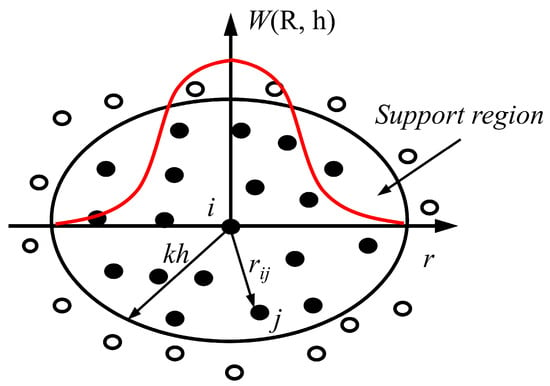
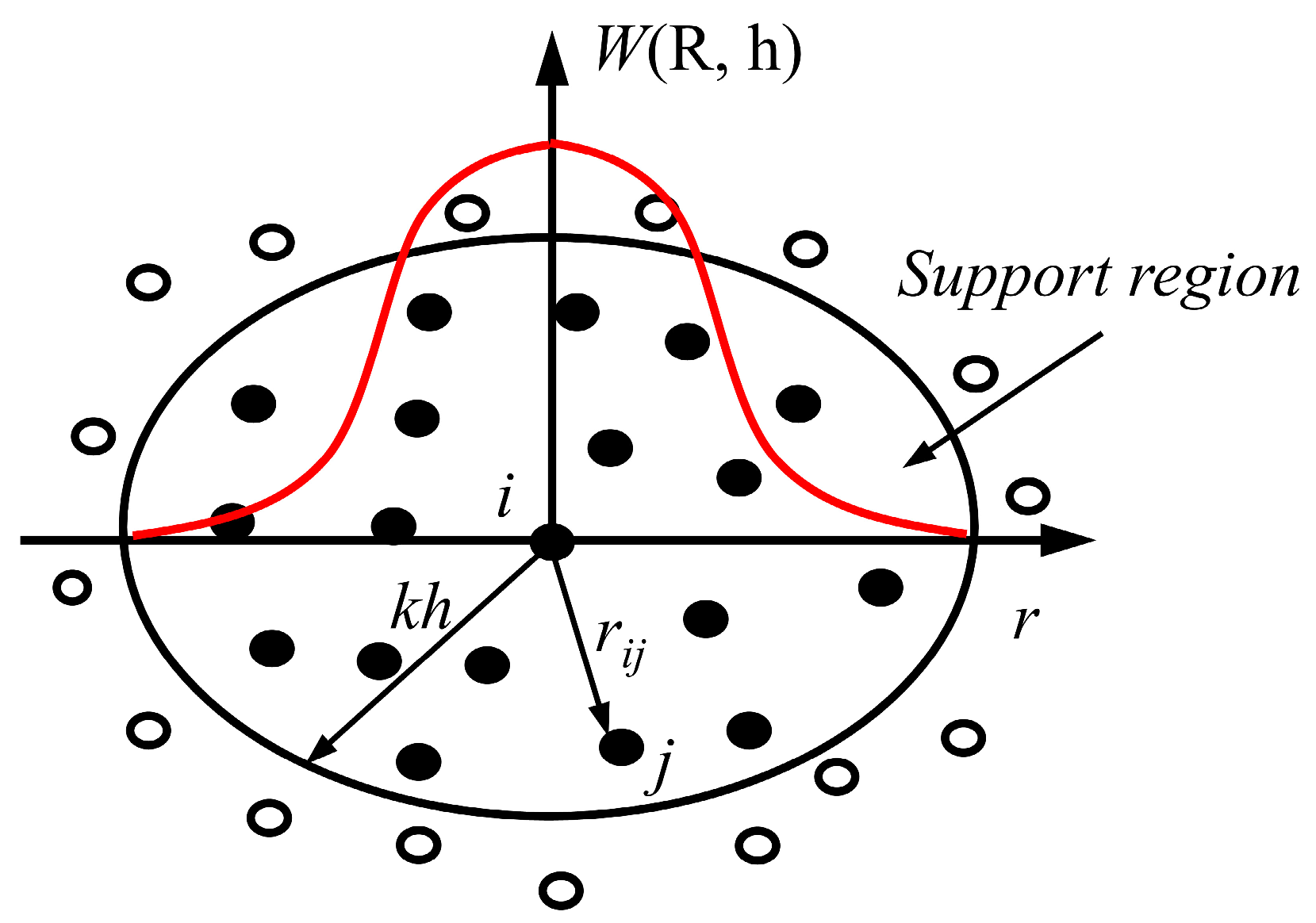
The SPH method is a fully Lagrangian approach, which models interactions between discrete particles; thus, the SPH method discretizes continuous partial differential equations. It combines the advantages of Lagrangian and meshless characteristics, making it well-suited for handling large deformations and free surface structures. In this method, the system is represented by a finite number of particles, each with an independent mass and occupying a distinct space, as illustrated in Figure 1. The continuous integral expression (particle approximation method) is shown in Equation (1) [35].
where mj and ρj represent the mass and density of the particle j within the support domain, respectively. N is the total number of particles. The kernel function W is the B-spline smoothing function [36] based on the cubic spline, as shown in Equation (2). The smoothing length h and constant k defines the influence area of W. In Equation (2), R represents the relative distance between particles i and j, which are shown in Equation (3). The coefficient ad takes values of 3/2πh3 [31].
Figure 1.
Support domains and kernel functions for SPH methods.
2.2. Soil Material Parameters
Soil samples were collected from Perennial alfalfa fields in Chifeng City, Inner Mongolia, China, in May 2024. The soil type in the field is loam. Soil samples were collected at depths of 0–10 cm, 10–20 cm, 20–30 cm, and 30–40 cm using a ring knife, and labeled as L1, L2, L3, and L4, respectively. The soil densities at these depths were determined to be 1.07, 1.17, 1.63, and 1.54 g/cm3. Soil moisture content in the field was measured using the drying method and found to be 16.31%. The Drucker–Prager (D-P) model improves the convergence issues associated with the Mohr–Coulomb criterion and is widely used in numerical simulations [31]. In this study, the D-P criterion is employed to develop the soil material model in Equations (4) and (5). Poisson’s ratio of the soil was set to 0.27 based on previous studies [25]. Parameters for the D-P were obtained through triaxial tests conducted on soil samples collected at various depths, the results of which are shown in Table 1.
where d and β represent cohesion and internal friction angle, p is the compressive stress, q is the Mises stress, r is the third deviatoric stress invariant, and k is the ratio of the yield stress in triaxial tension to the yield stress in triaxial compression.
Table 1.
Main parameters used in the simulation model of soil.
2.3. Root Material Parameters
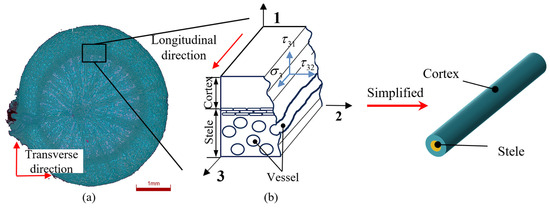
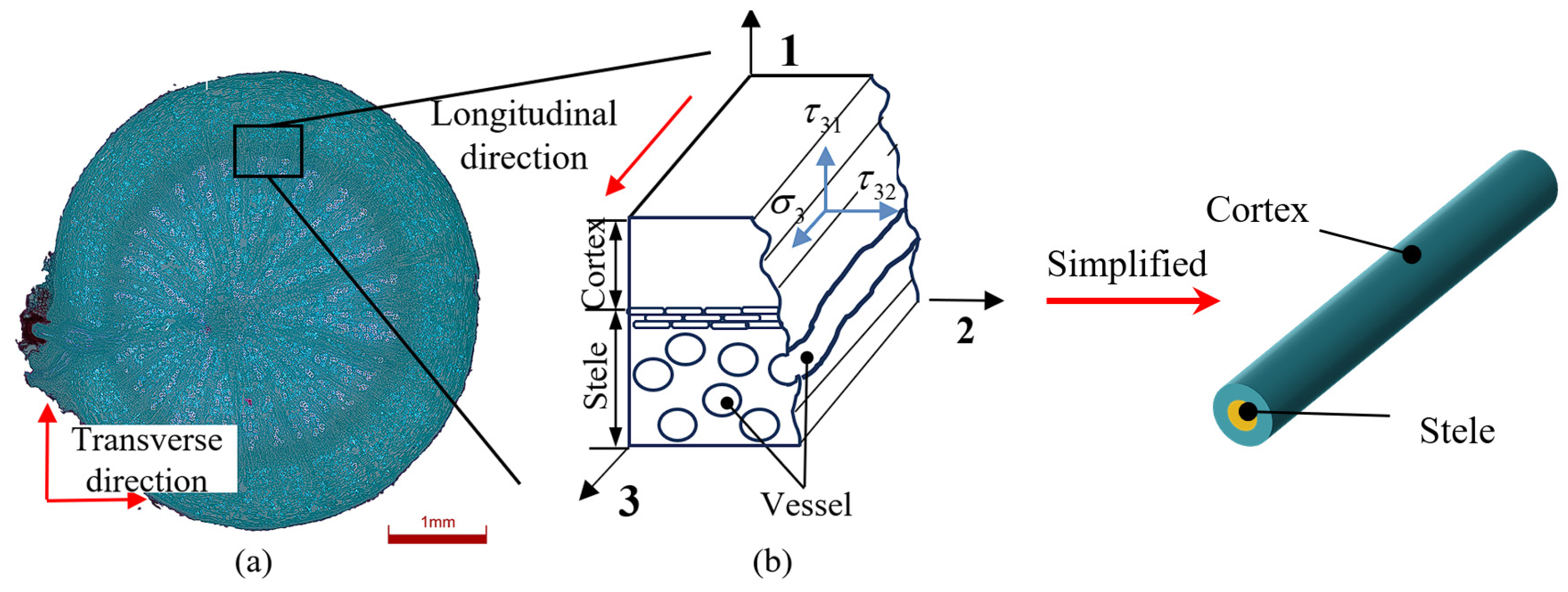
The alfalfa roots were collected from depths of 0 to 400 mm in May 2024, which meets the root-cutting depth requirement. The diameter of the collected root samples ranged from 1.89 to 4.80 mm. The simulation model considers the difference in the internal anatomy of the roots and divides these into two parts as stele and cortex, as shown in Figure 2. The cortex consists of uniform epidermal cells, which were modeled by isotropic material. The stele includes structures such as vessels and tubes, modeled using transverse isotropic material based on the Hashin 3D criteria, as shown in Equation (6).
where FLt, FLc, and FT are the damage initiation criteria for longitudinal tensile, longitudinal compression, and transverse directions, respectively. , , , , and τT are the longitudinal failure tensile strain, compressive strain, compressive strength, transverse compressive strength, and transverse shear strength, respectively. And σ1, σ2, σ3, σ12, σ13, and σ23 are three principal stresses and three tangential stresses in FEM.
Figure 2.
Profile of the alfalfa root and the simplified FEM model: (a) microscopic image of roots; (b) schematic diagram of root structure.
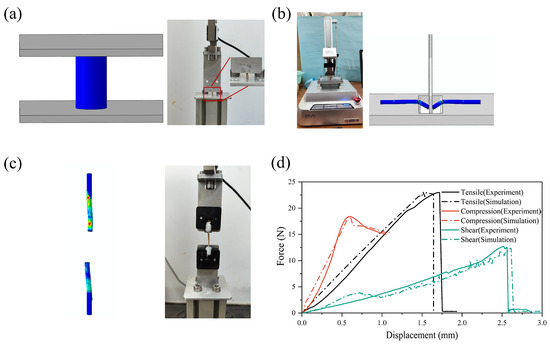
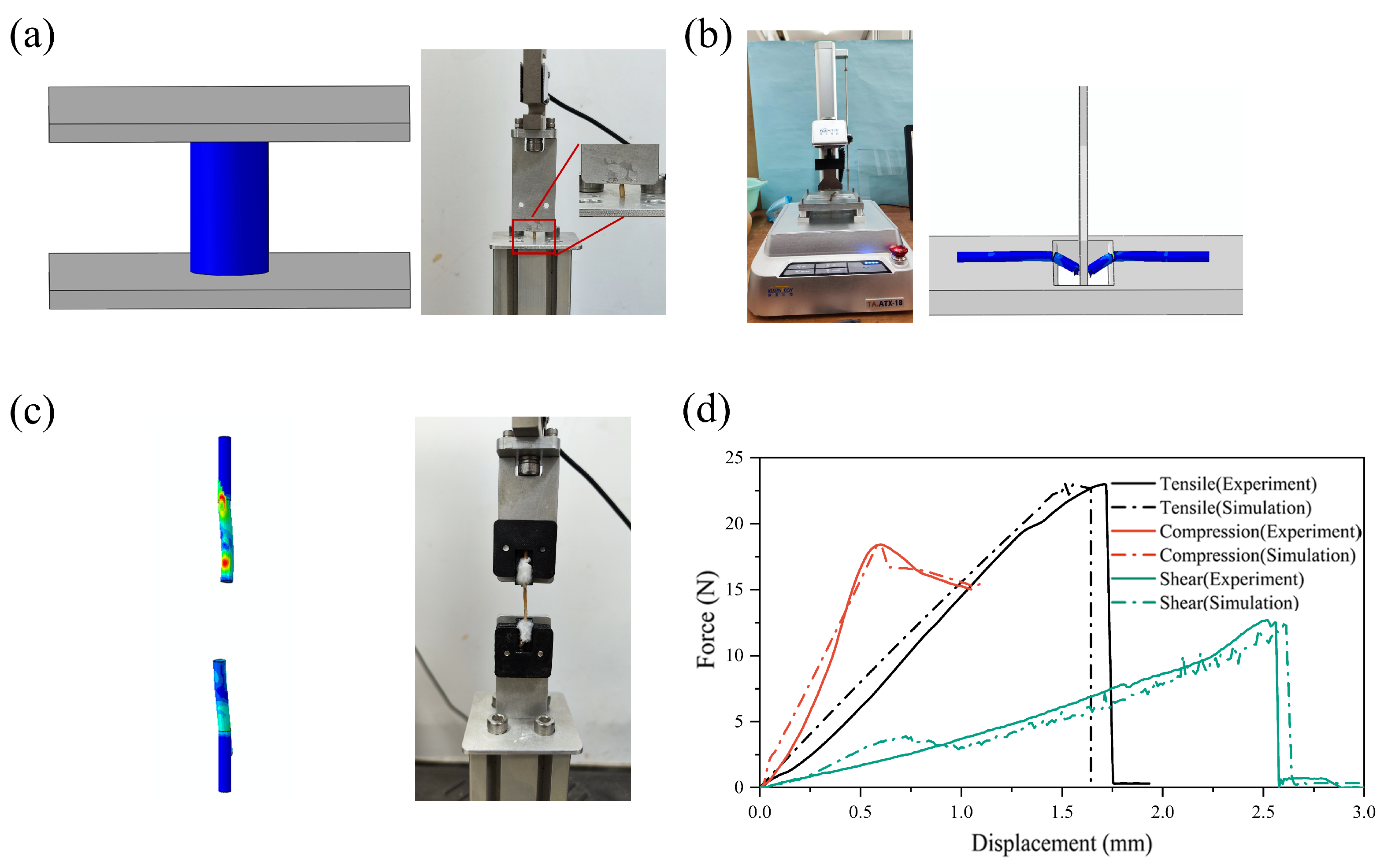
As shown in Figure 3a–c, the required simulation parameters were obtained by longitudinal tensile [37], compression [38], and shear tests [12,39] using a MTS universal testing machine (C43.104, MTS Systems Co., Ltd., Eden Prairie, MN, USA) and texture analyzer (TA.ATX-18 BosinTech Co., Ltd., Shanghai, China). The material parameters are detailed in Table 2. The outer surface of stele and inner surface of cortex were bound using the tie command, ignoring the slides between the stele and cortex. In this study, the cross-section of the root was simplified to a cylinder for modeling simplicity, thereby reducing computational time, as shown in Figure 2. All simulations were conducted in ABAQUS 6.14-1 (Dassault Systèmes Simulia Corp., Providence, RI, USA). The parameters were validated by shearing, longitudinal compression, and longitudinal tensile simulations, as shown in Figure 3a–c. Figure 3d shows the comparison results. The simulation curves matched well with the test curves. The errors between simulation and test results were less than 5%, indicating the accuracy of the parameters and models.
Figure 3.
Obtained and validated alfalfa roots material parameters: (a) simulation and experiment of longitudinal compression tests; (b) simulation and experiment of shear tests; (c) simulation and experiment of longitudinal tensile tests; and (d) comparison results of simulation and experiment.
Table 2.
Root material parameters used in simulations.
2.4. Validation of the Root–Soil Composite Model
2.4.1. Direct Shear Test
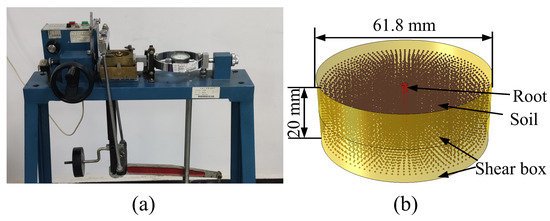
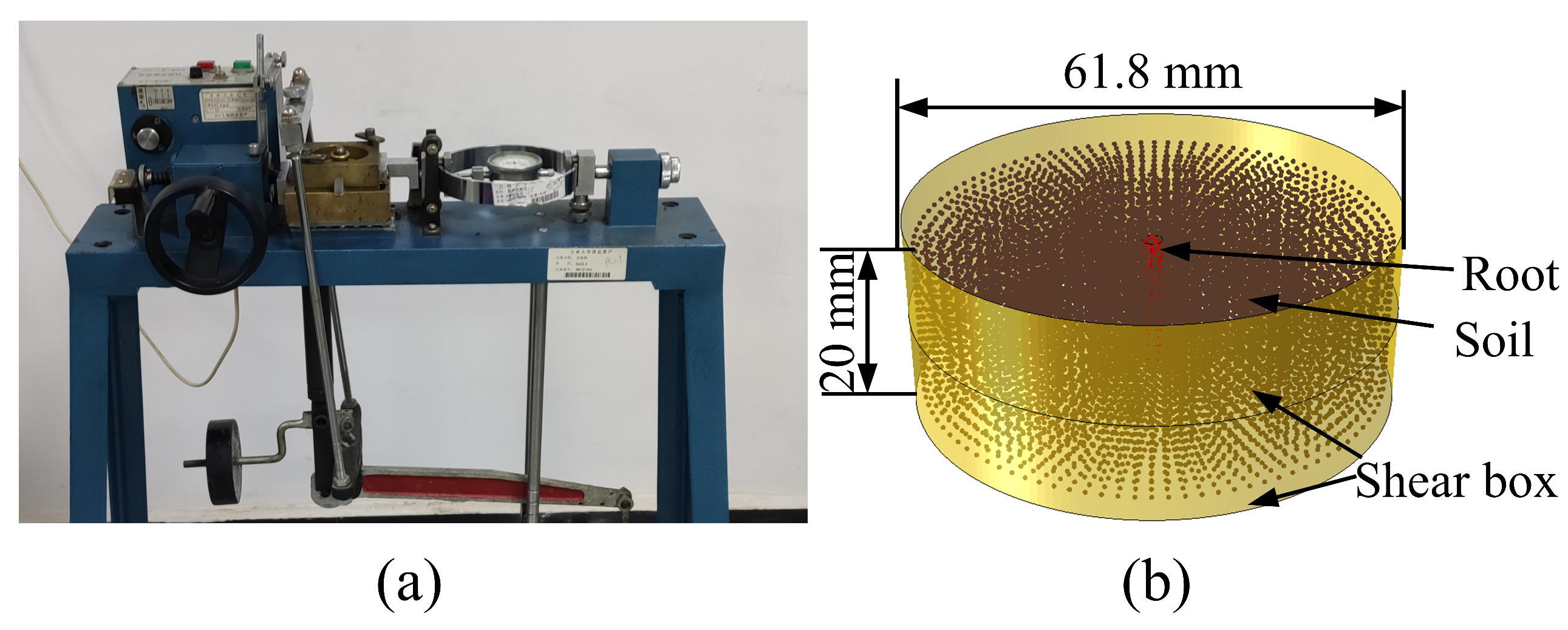
In the field, the Alfalfa is planted in rows with a spacing of 30 cm and an intra-row spacing of 20 cm. As a typical taproot crop, only a single root is expected to be placed within the range of the direct shear test box. Direct shear tests were conducted using the EDJ-1 (Nanjing Soil Instrument Factory Co., Ltd., Nanjing, China), as shown in Figure 4. Soil parameters of L3 were used to ensure the consistency of samples. The preparation of remolded soil samples was conducted in accordance with the standard for geotechnical testing method [40]. The vertical Pv loads in the direct shear test were set to 0.05, 0.1, 0.15, and 0.2 MPa. The soil simulation model was cylinder, with a diameter of 61.8 mm and a height of 20 mm. The root diameter collected in Section 2.3 ranged from 1.89 to 4.8 mm. For ease of comparison and calculation, the root was modeled by 3.35 mm in direct shear test.
Figure 4.
(a) EDJ-1 direct shear tester; (b) direct shear simulation model.
2.4.2. Cutting Test
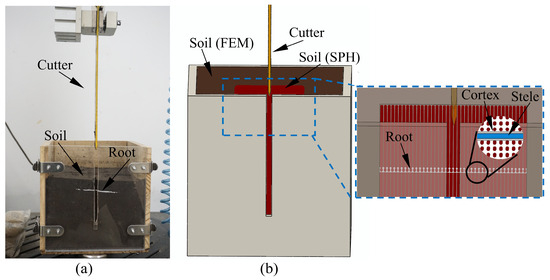
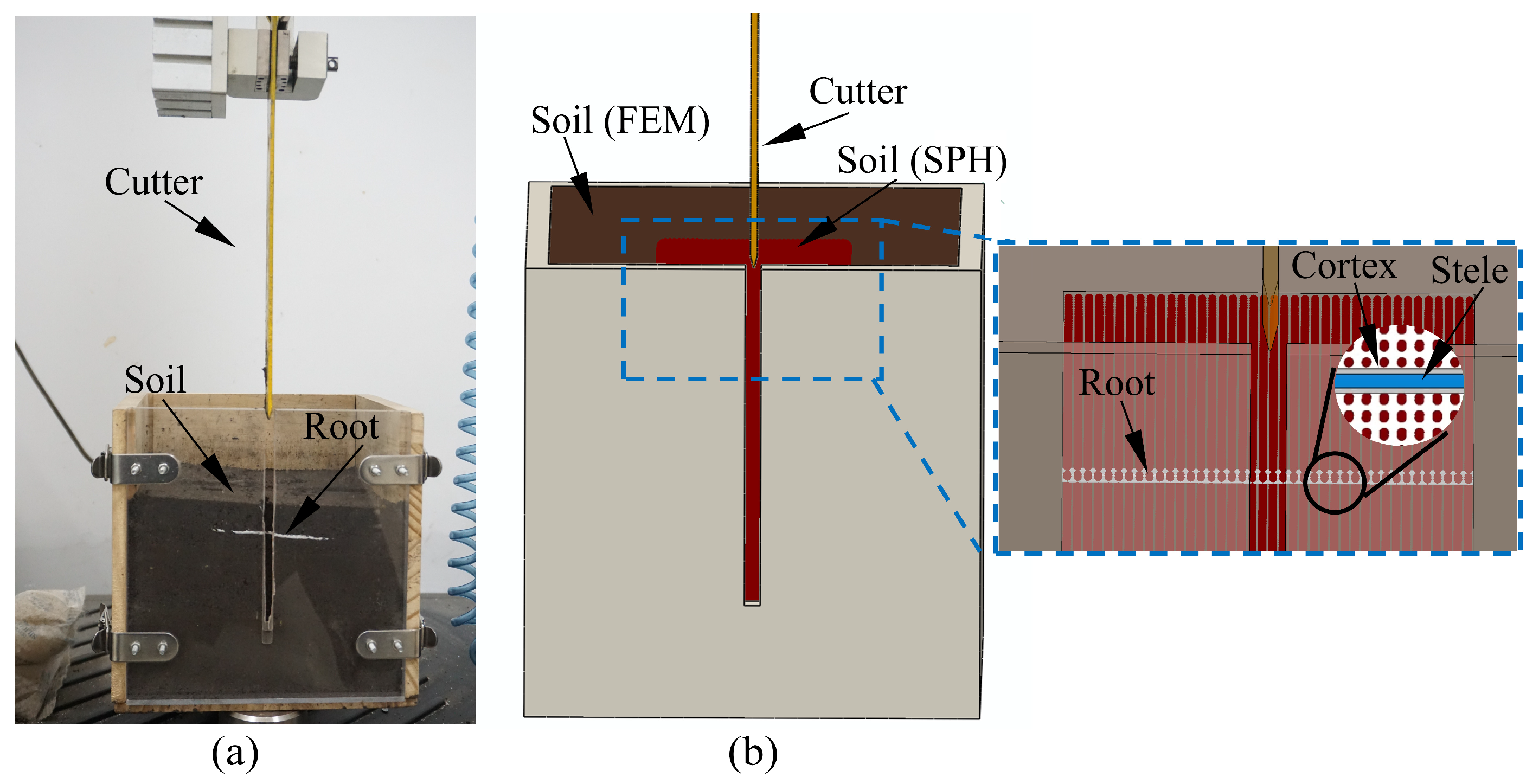
The cutting test machine consists of a MTS universal testing machine and a knife, with dimensions of 30 mm in width, 3 mm in thickness, and a 60° edge angle. Soil was added and compacted three times to match the different depth densities in Table 1. The length and diameter of the root samples were 80 mm and 3.5 mm, respectively. The root axis was perpendicular to the cutting surface of the tool. Roots were dyed white and the knife was dyed yellow before the test for easier observation, as shown in Figure 5a. The cutting speed was set to 5 mm·s−1. All cutting tests on rooted soil under different densities were repeated three times. Identical simulation models were constructed in Figure 5b. Since the knife’s material was Q235, which is significantly stronger than both the root and soil, it should not deform during the cutting process. To reduce the simulation time, the knife was modeled as a rigid body.
Figure 5.
Cutting validation test and simulation: (a) experiment device; (b) cutting simulation model.
2.4.3. Mesh Sensitivity Testing
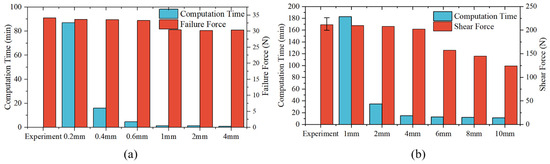
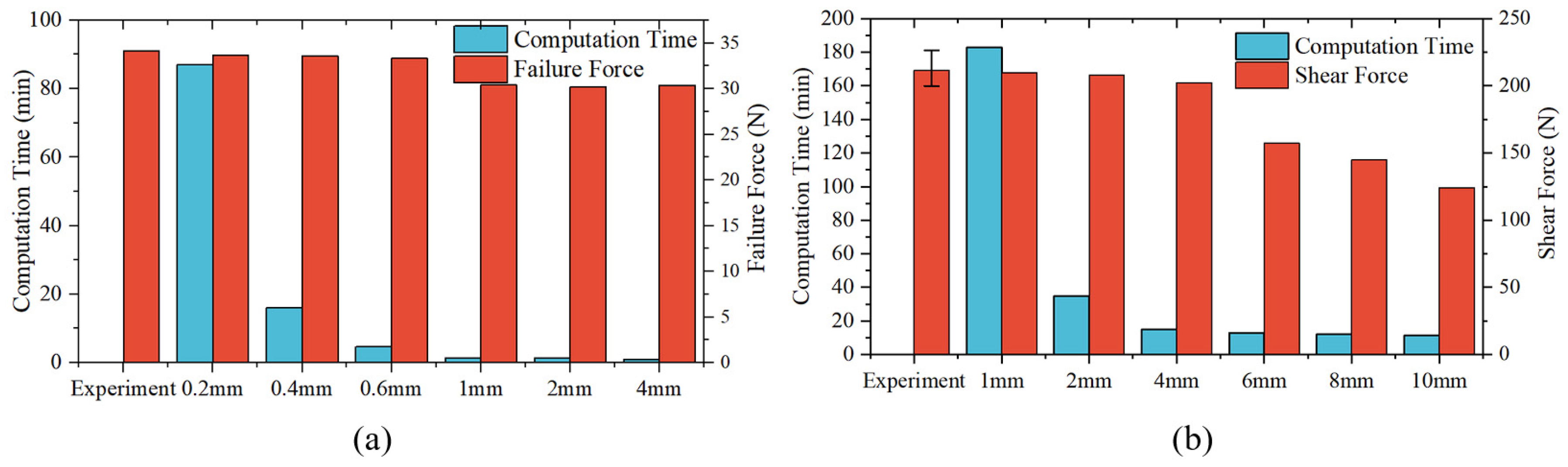
Mesh size plays a crucial role in FEM simulation, as it directly influences both simulation time and accuracy. To determine the appropriate mesh size, direct shear (vertical load was set to 100 kPa) and longitudinal tensile (root diameters of 2 mm) simulations with different mesh sizes were conducted. The results are shown in Figure 6. It can be found that the simulation error decreases as the mesh size decreases, but the computational time increases significantly. Balancing accuracy and efficiency, a soil mesh size of 4 mm was selected, with C3D8R of FEM elements and PD3D of SPH elements. Root mesh size was chosen as 0.6 mm with C3D8R elements.
Figure 6.
Mesh sensitivity testing results: (a) soil direct shear test; (b) root longitudinal tensile test.
2.5. Modeling and Optimization of Vibration Root-Cutting Systems
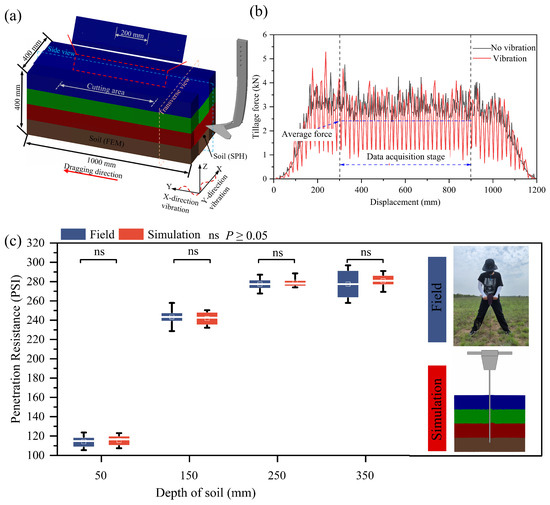
A soil bin with dimensions of 1000 mm × 400 mm × 400 mm was modeled, including the entry stabilization area, cutting area, and ending area. Pre-simulations were conducted to ensure that the soil bin size would not generate boundary effects. These pre-tests confirmed that the stress generated by the shovel at the 250 mm working depth completely dissipates before reaching the rigid boundaries, thereby preventing any artificial influence on the stress distribution. Soil was segmented into 4 layers, each with a height of 100 mm. And each layer was assigned the corresponding depth parameters seen in Table 1. A commercially available dual-wing soil-loosening shovel was used for simulation, with a 1:1 scale model imported and set as a rigid body. The diameter of the root model was set as 3 mm close to the average value of collected samples. The arrangement of the simulation model was consistent with the field planting pattern, with a row spacing of 50 cm and an intra-row spacing of 20 cm. The tillage depth of the shovel was set at 250 mm. Soil around the roots and interacting with the shovel would be greatly deformed during cutting. Therefore, this region was modeled using SPH method, while the other areas were modeled using FEM. To model the transition between the two domains, the SPH and FEM regions are coupled using the surface-based tie constraint in Abaqus. A master–slave formulation is adopted to handle the coupling interface, where the outer boundary faces of the FEM solid elements are defined as the master surface, and the boundary SPH particles (PC3D elements) are designated as the slave nodes. The default kinematic coupling method is enforced, which eliminates the independent translational degrees of freedom of the slave SPH particles within the tie tolerance. Consequently, the motion of these boundary SPH particles is strictly governed by the interpolation of the master FEM element shape functions. Furthermore, to simulate the physical severing of the roots by the blade, a progressive damage and failure framework was applied to the root FEM elements. Damage initiation was governed by the Hashin 3D criteria. Following damage initiation, a damage evolution law based on material fracture energy was employed to model the progressive degradation of element stiffness. Once the overall damage variable of a root element reached the maximum degradation threshold of 1.0, element deletion was triggered.
The forward direction of the shovel was set as the y direction, as seen in Figure 7a. Forward motion was achieved by velocity load. Periodic amplitude functions in the y and x directions, as defined in Equation (7), were used to realize the vibratory cutting motion. The average tillage resistance and the shear displacement of root in the data acquisition area, as shown in Figure 7b, were selected as criteria for evaluating the vibration parameters. Soil penetration resistance is one of the key indicator of soil looseness and can also be used to evaluate soil physical properties [41]. In this study, soil mechanical properties were measured using a soil compaction tester (SC-900, Spectrum, Plainfield, IL, USA). A 1:1 model of the tester prob was developed to simulate soil penetration process. The data were analyzed using Mann–Whitney non-parametric method. Five replicate penetration tests were conducted at each depth. As shown in Figure 7c, p < 0.05 indicated that there were no significant differences between the experiment and simulation results. This confirms the accuracy of the FEM-SPH model [16].
where s is the amplitude, mm; ω is the frequency, rad/s; and t0 represents the initial time of vibration loading. A0 is the constant term in the Fourier series, and An and Bn are the coefficients of the cosine and sine terms, respectively. t represents the time within the analysis step corresponding to the incremental step. N is the total nodes number, and n is the node that calculate in the current loop.
Figure 7.
Simulation of vibratory cutting of root–soil composites: (a) simulation model corresponding to the field experiments; (b) tillage forces of vibratory and non-vibratory shovels; and (c) comparison results of penetration resistance between field and simulation.
2.6. Field Tests
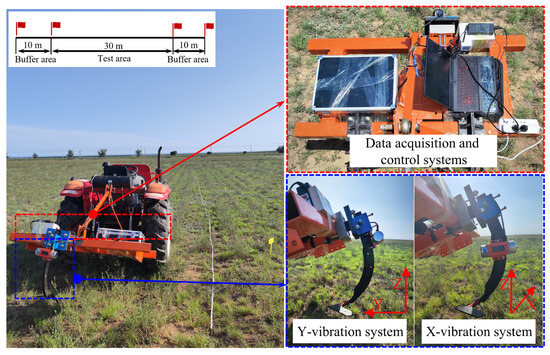
Field tests were conducted in June 2026 to validate the model and optimize its parameters. The experimental field was same as the parameter acquisition area in Section 2.2. Alfalfa planted in the field was ‘Beilin 202’, with a row spacing of 50 cm and an intra-row spacing of 20 cm. The test scenario is shown in Figure 8. The equipment was powered by a Shuangli SL404-C tractor (SL404-C Shuangli Modern Agricultural Equipment Co., Ltd., Liaocheng, China). Vibration frequency, direction, and amplitude were adjusted by the motor controller output, motor position, and the angle of the vibration eccentric block. Before the field tests, the vibration frequency and amplitude of the motor (PT-MVB160DCB36-6 Putianmotor Co., Ltd., Shanghai, China) were measured and modified to meet the required. A triaxial force sensor (FC3D160/D ForceChina Co., Ltd., Shanghai, China) was used to record the resistance data during tillage. The length of the experimental area was 50 m. The first 10 m was the acceleration area, and the last 10 m was the shutdown area. Tillage depth of the shovel was set to 250 mm. Each test was replicated three times. Tillage resistance was set as the primary evaluation indicator. The root-cutting process was conducted to break the consolidated root–soil composites and promote alfalfa growth. Therefore, soil compaction was selected as the auxiliary indicator for analysis. Statistic methods were used to determine if the optimized parameters had a significant influence on the three indicators.
Figure 8.
Field experiment situation of root-cutting process.
2.7. Text Processing
The language in the manuscript was polished by DeepSeek V3 (DeepSeek Inc., Hangzhou, China).
3. Results and Discussion
3.1. Validation Results of the Model
3.1.1. Direct Shear Test Validation Results
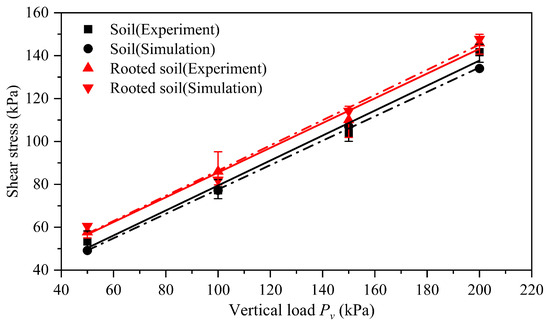
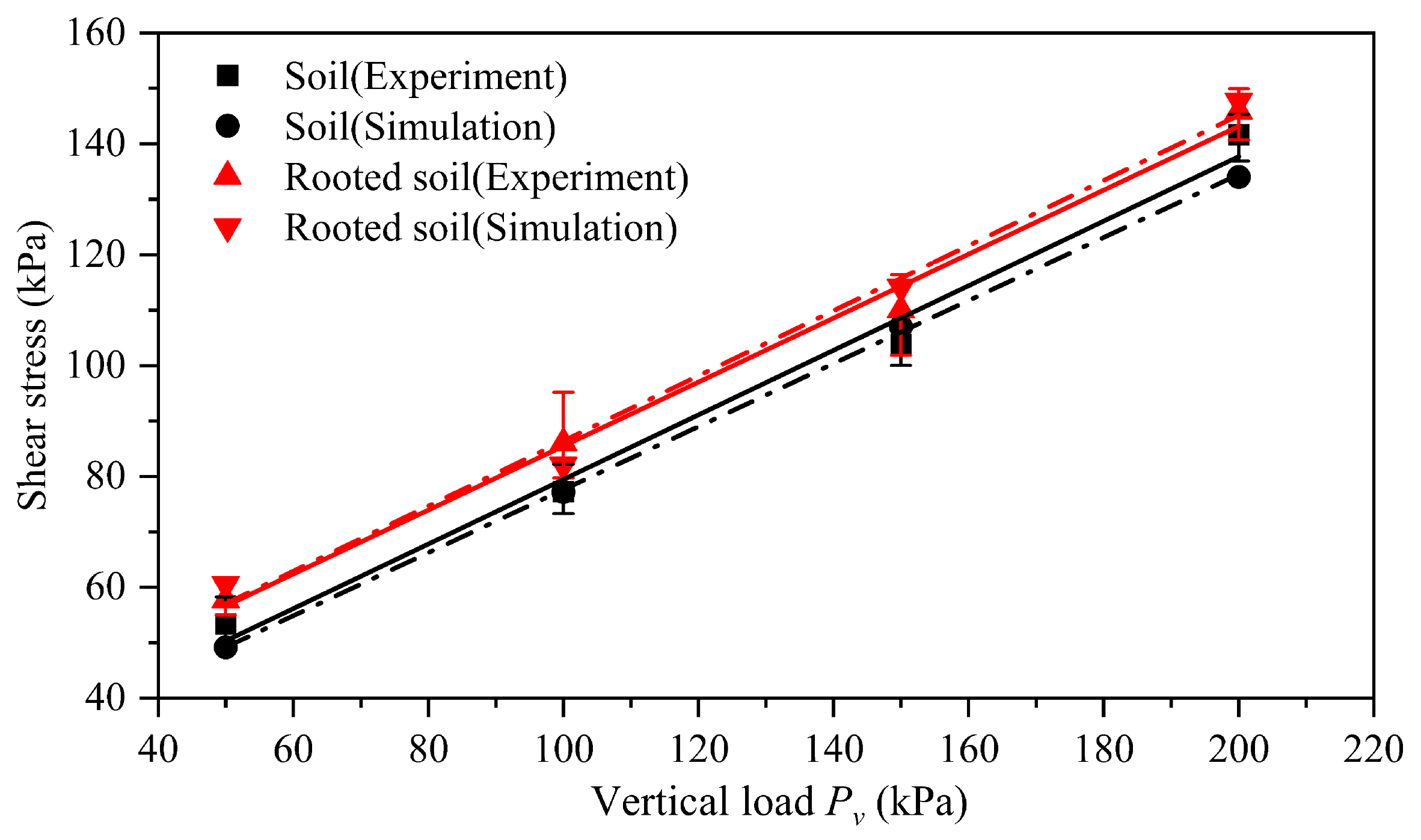
The results of the direct shear test are shown in Figure 9 and Table 3. Roots have significantly enhanced the soil’s shear strength, consistent with previous findings [42,43]. During the loading process, shear stress was transferred from the soil to roots through root–soil interactions. Shear strength of the root–soil composite was improved due to the root’s higher tensile strength [44]. The high proportion of fine particles in soil increases cohesive strength in particles and root–soil interactions [42], resulting in a large change in cohesive force and unchanged internal friction angle of the rooted soil. The simulation results for both soil and rooted soil were in high agreement with the experiments, with a maximum error of 4.16% indicating the root–soil composite model based on the coupling of FEM and SPH was reasonable.
Figure 9.
Comparison results of shear strength between rooted soil and soil samples.
Table 3.
Results of direct shear experiments and simulations.
3.1.2. Cutting Test and Simulation Results
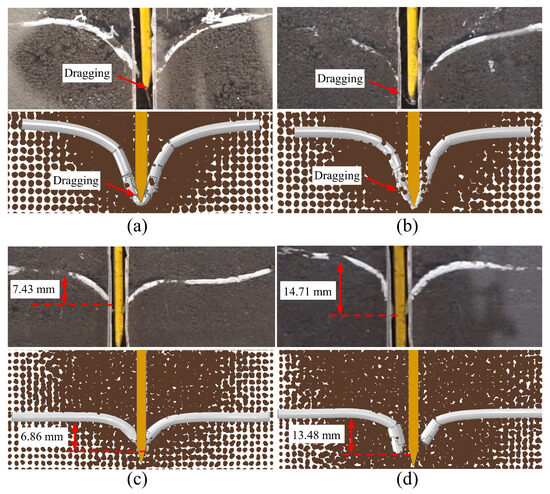
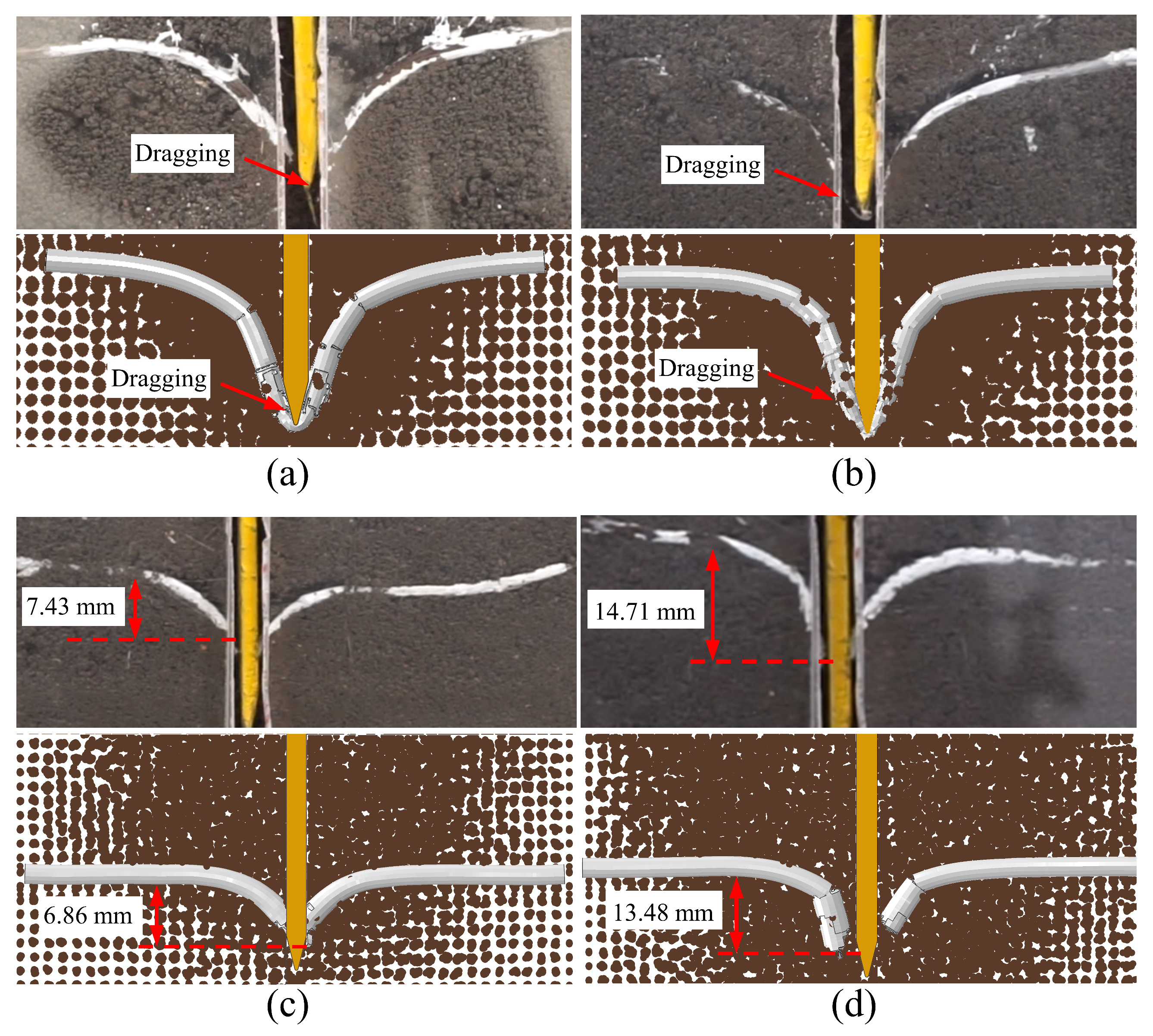
A comparison of the simulation and experimental results for various densities of root–soil composite cutting is shown in Figure 10. It can be observed that, in the cases of L1 and L2, the soil strength was insufficient to enable the knife to fully cut the alfalfa roots, resulting in root dragging. In L3 and L4, the roots were successfully cut. The test cutting displacement was 7.43 mm at L3 soil density, while the simulated cutting displacement was 6.86 mm. At the L4 soil density, the test cutting displacement was 14.71 mm, compared to a simulated displacement of 13.48 mm. The error between simulations and tests were all less than 8%. Root deformation caused by the knife indicated that the soil’s support capacity increased with greater densities. And this phenomenon was reflected in both tests and simulations.
Figure 10.
Test and simulation results of cutting of rooted soil with different densities: (a) L1; (b) L2; (c) L3; (d) L4.
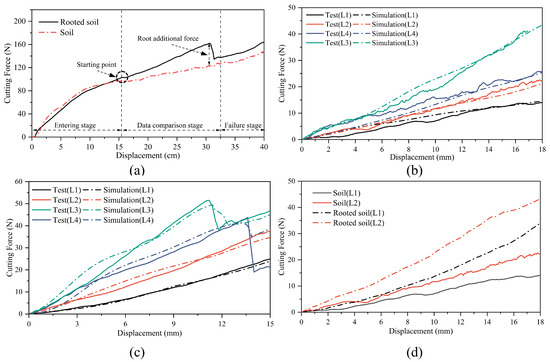
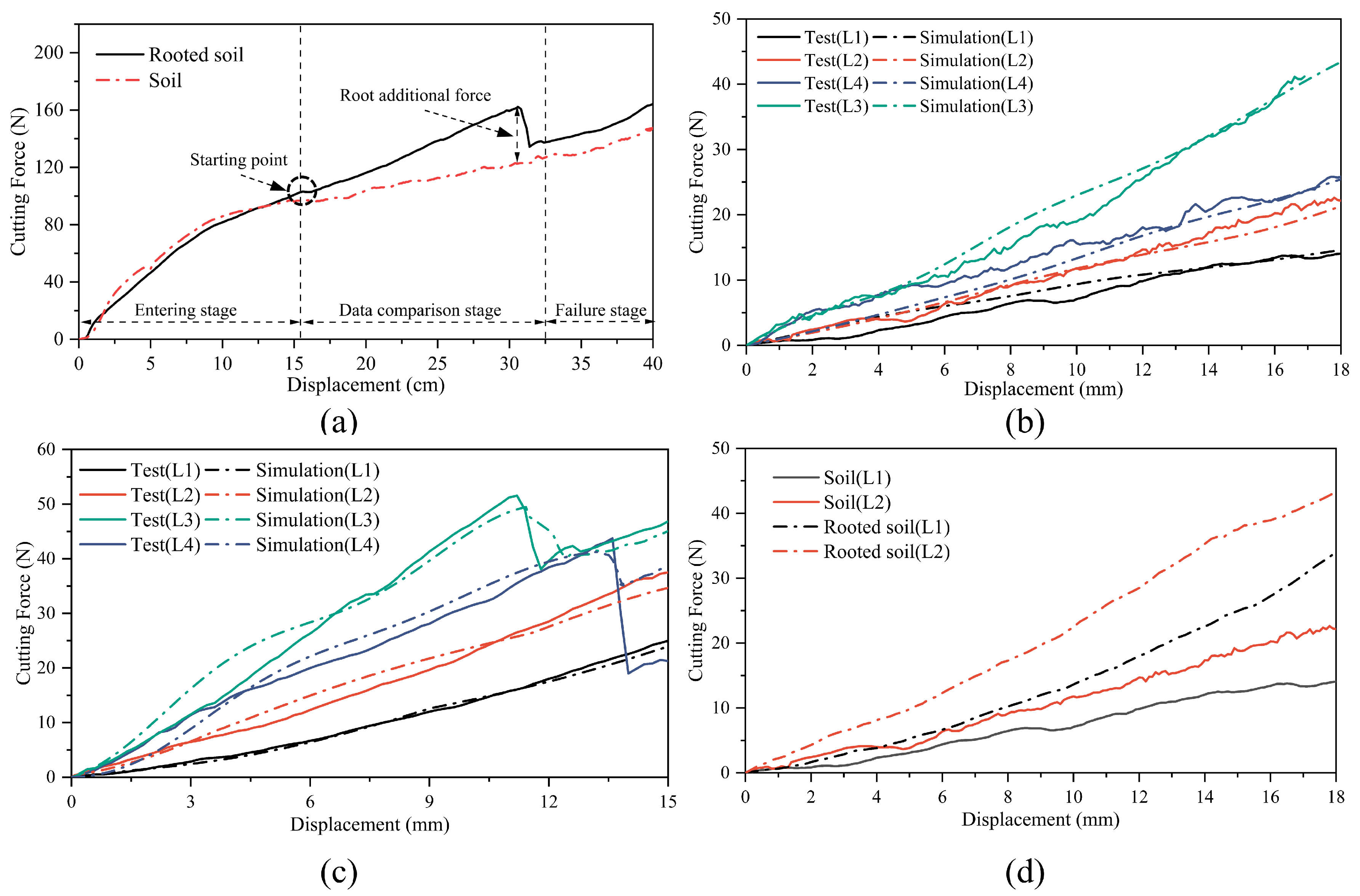
Figure 11a shows the curve of cutting resistance during testing. The resistance increased gradually with the cutter displacement. Compared to the soil samples, the presence of roots introduced stepped resistance increments during the cutting process, which is similar to the study by Zhang et al. [45]. When roots were severed, the cutting force precipitously dropped to the soil sample’s level. The results were normalized in the data comparison stage to facilitate comparison between the simulation and test results.
Figure 11.
Cutting tests results of different densities: (a) analysis of simulation and tests cutting force; (b) simulation and test results of no-rooted soil samples; (c) simulation and test results of rooted soil samples; and (d) comparison of drag cutting curves with rooted soil and no-rooted soil under low density.
In Figure 11b,c, it can be seen that the simulation results align well with the test curves. Both the continuous increase in resistance of soil samples and stepped increase resistance in rooted soil were accurately depicted. The significant dragging phenomenon was also shown in cutting force curves of the low-density rooted soil cutting tests. As shown in Figure 11d, the cutting resistance significantly increased compared to the soil samples. For cut-off samples, the test-normalized cut resistance was 51.55 N in L3 and 47.92 N in L4, while the simulated result was 49.89 N in L3 and 46.32 N in L4. The errors between the simulations and tests were 3.22% for L3 and 3.34% for L4.
The simulated peak cutting force, displacement, and shear deformation at different densities were consistent with the test results. This proves that the model and parameters can effectively characterize the mechanical properties of root–soil composites.
3.2. Vibration Simulation Optimization Analysis
To minimize tillage resistance and root shear displacement, a three-factor, three-level Box–Behnken test was designed. The main operational parameters include tillage speed (0.5–2 m·s−1), vibration frequency, and amplitude. Among these, the range of tillage speeds selected was commonly used for practical tillage. The parameter ranges of vibration frequency and amplitude were determined by the steepest climbing tests. Considering the energy consumption and noise problem, the range of vibration frequency used in the steepest climbing tests was 0–100 Hz, and the range of vibration amplitude was 0–5 mm. The results showed that the parameter optimization interval of the y-direction vibration was a frequency of 40–70 Hz and an amplitude of 3.6–5 mm, while the x-direction vibration was a frequency of 70–100 Hz and an amplitude of 1.2–3 mm. Root shear displacement and average tillage resistance were set as the optimization criteria. The test factors and levels are shown in Table 4. And the BBK simulation design scheme and results are shown in Table 5.
Table 4.
Levels of factors for Box–Behnken design.
Table 5.
Design matrix and results of Box–Behnken test.
3.2.1. Vibration in Direction x
Based on the simulation results in Table 5, regression equations were developed for tillage resistance (Y1) and shear displacement (Y2), correlating with tillage speed (A), x-direction vibration frequency (B), and x-direction vibration amplitude (C), as shown in Equations (8) and (9). The interaction factors of BC were significant (p < 0.05) in Y1, and AB were significant in Y2; all other interaction terms were not significant. The determination coefficient R2 of the regression equations were 0.9966 and 0.9852. This proves the accuracy and reliability of the models.
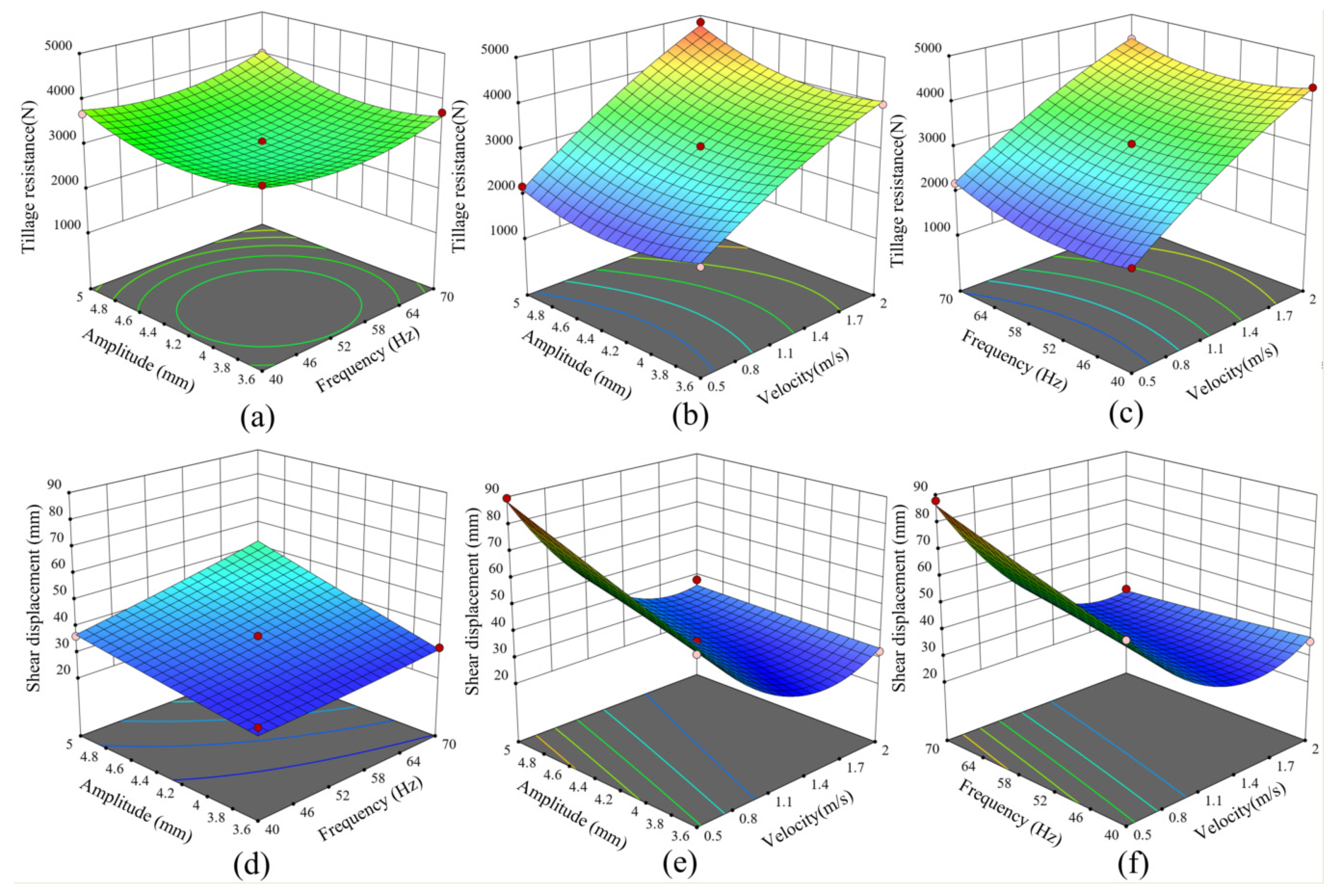
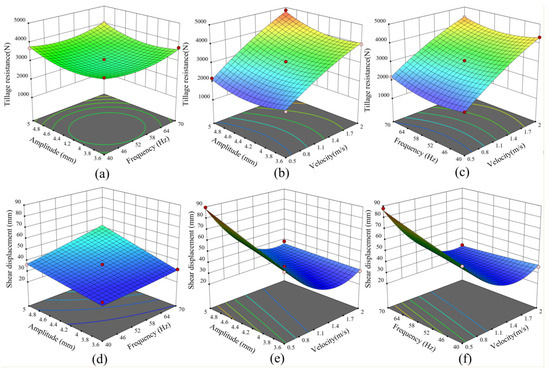
Figure 12 shows the response surface of the influencing factors on tillage resistance and shear displacement. Tillage speed was found to have the most significant impact on tillage resistance and shear displacement among the interacting factors. Higher velocity enhances soil shear strength and soil friction force [46]. As tillage speed increases, tillage resistance increases and shear displacement decreases [47]. At low speeds, increasing the vibration frequency initially reduces tillage resistance, followed by an increase. At high speeds, an increase vibration frequency gradually decreases tillage resistance. As the amplitude increases, the tillage resistance initially decreases and then increases. Increasing the vibration frequency and amplitude in the x direction results reduced shear displacement. Roots strengthening effect can convert the shear force of the shovel into the root pulling force [44]. Excessive shear displacement elevates the shovel’s tensile force on roots, potentially damaging the alfalfa roots and even causing plant death [7,48]. To minimize tillage resistance and mitigate the impact of the root-cutting process on crops, it is crucial to reduce the root shear displacement.
Figure 12.
Response surface of interaction factors on tillage force and shear displacement in x direction: (a) effect of vibration frequency and amplitude on tillage force (tillage speed 1.25 m·s−1); (b) effect of vibration amplitude and tillage speed on tillage force (vibration frequency 55 Hz); (c) effect of vibration frequency and tillage speed on tillage force (vibration amplitude 4.3 mm); (d) effect of vibration frequency and amplitude on shear displacement (tillage speed 1.25 m·s−1); (e) effect of vibration amplitude and tillage speed on shear displacement (vibration frequency 55 Hz); and (f) effect of vibration frequency and tillage speed on shear displacement (vibration amplitude 4.3 mm).
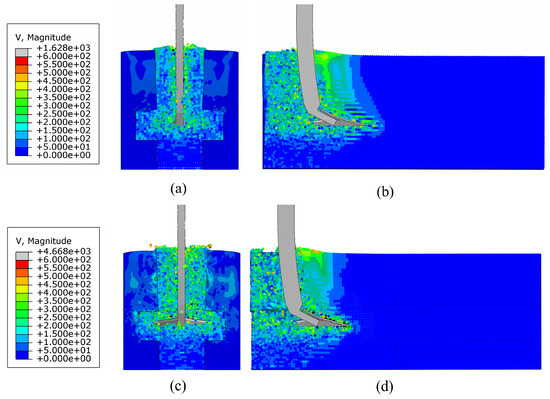
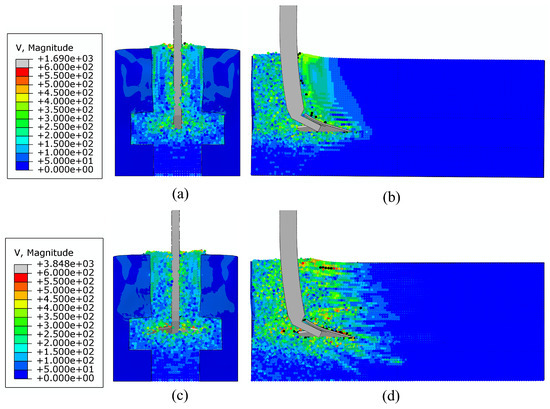
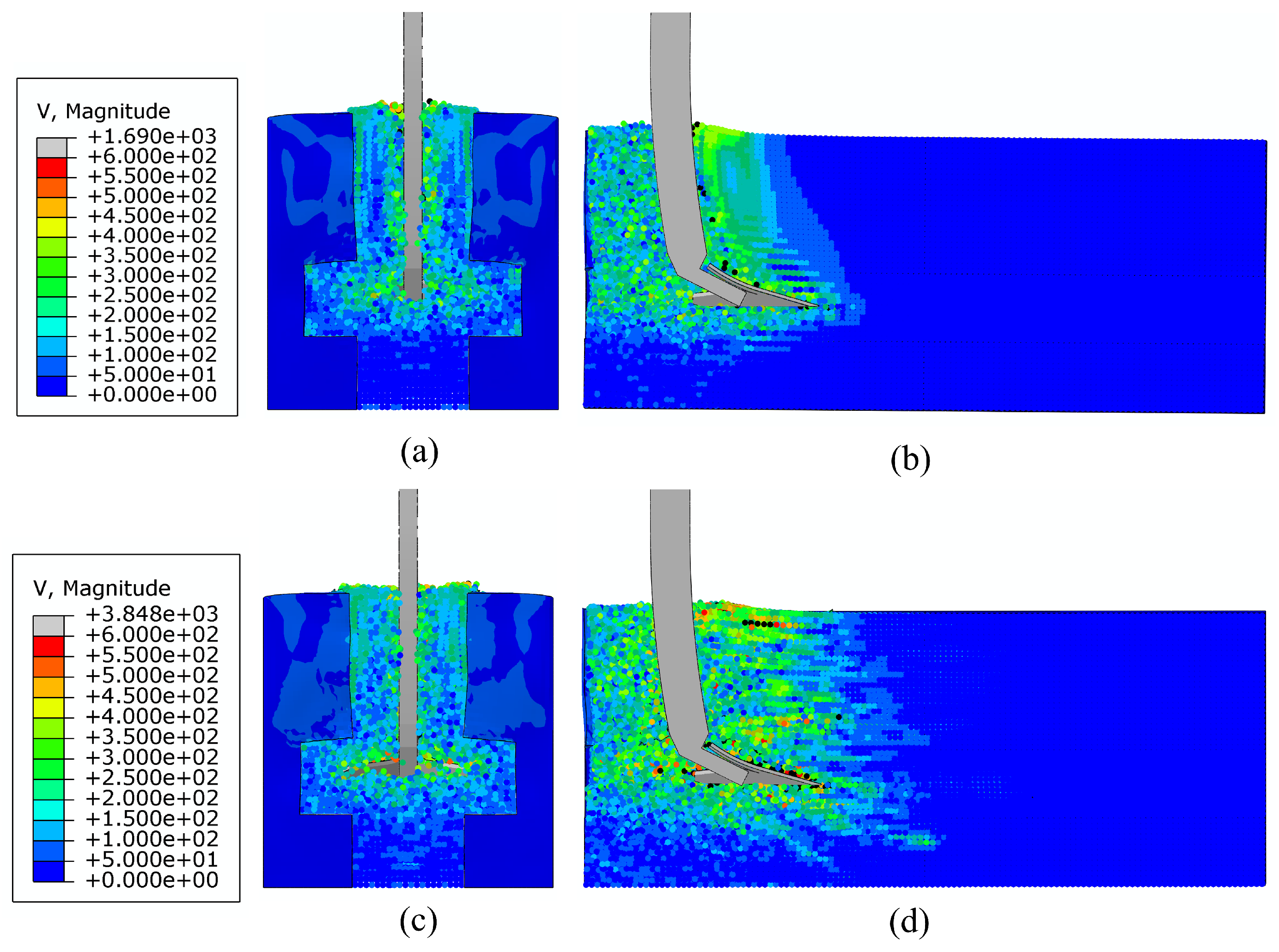
Introducing vibration in the x direction can facilitate cutting and reduce root shear displacement. To determine the optimal parameters for x-direction vibration, a multi-objective optimization was conducted based on the regression model. The optimized results are presented in Table 6. The vibration shovel reduced shear displacement by 24.07% compared to the non-vibration one, and the average tillage resistance decreased by 6.83%. Figure 13 shows the soil particles velocity of optimized results in both vibratory and non-vibratory conditions. This facilitates the study of how the soil particles translocated [14]. The introduction of x-direction vibration had a negative effect on reducing resistance due to the increased soil disturbance area in the transverse profile [49]. However, the velocity vector of soil in the forward direction shows no significant difference between the x vibration and traditional shovel.
Table 6.
RSM optimization Parameters and simulation results.
Figure 13.
Velocity distribution of x-direction vibration parameter optimization results: (a) transverse view of non-vibration; (b) side view of non-vibration; (c) transverse view of vibration; (d) side view of vibration.
3.2.2. Vibration in Direction y
Based on results in Table 5, the regression equations for tillage resistance (Y′ 1) and shear displacement (Y′ 2) were developed with regard to tillage speed (A′), y-direction vibration frequency (B′), and amplitude (C′), as shown in Equations (10) and (11). The interaction factor A′B′ was significant in Y′ 2. The factor A′C′ was significant in both Y′ 1 and Y′ 2, while the other interaction factors were not significant. The R2 of the equations were 0.9966 and 0.9929, indicating good accuracy and reliability of the models.
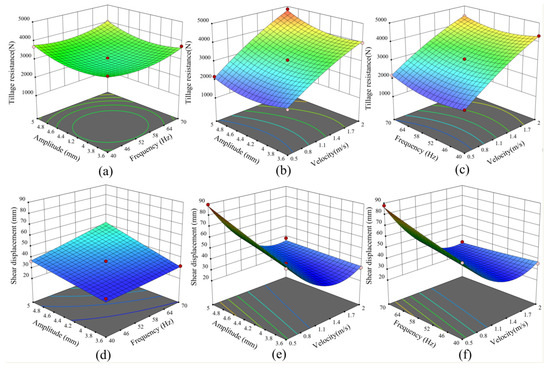
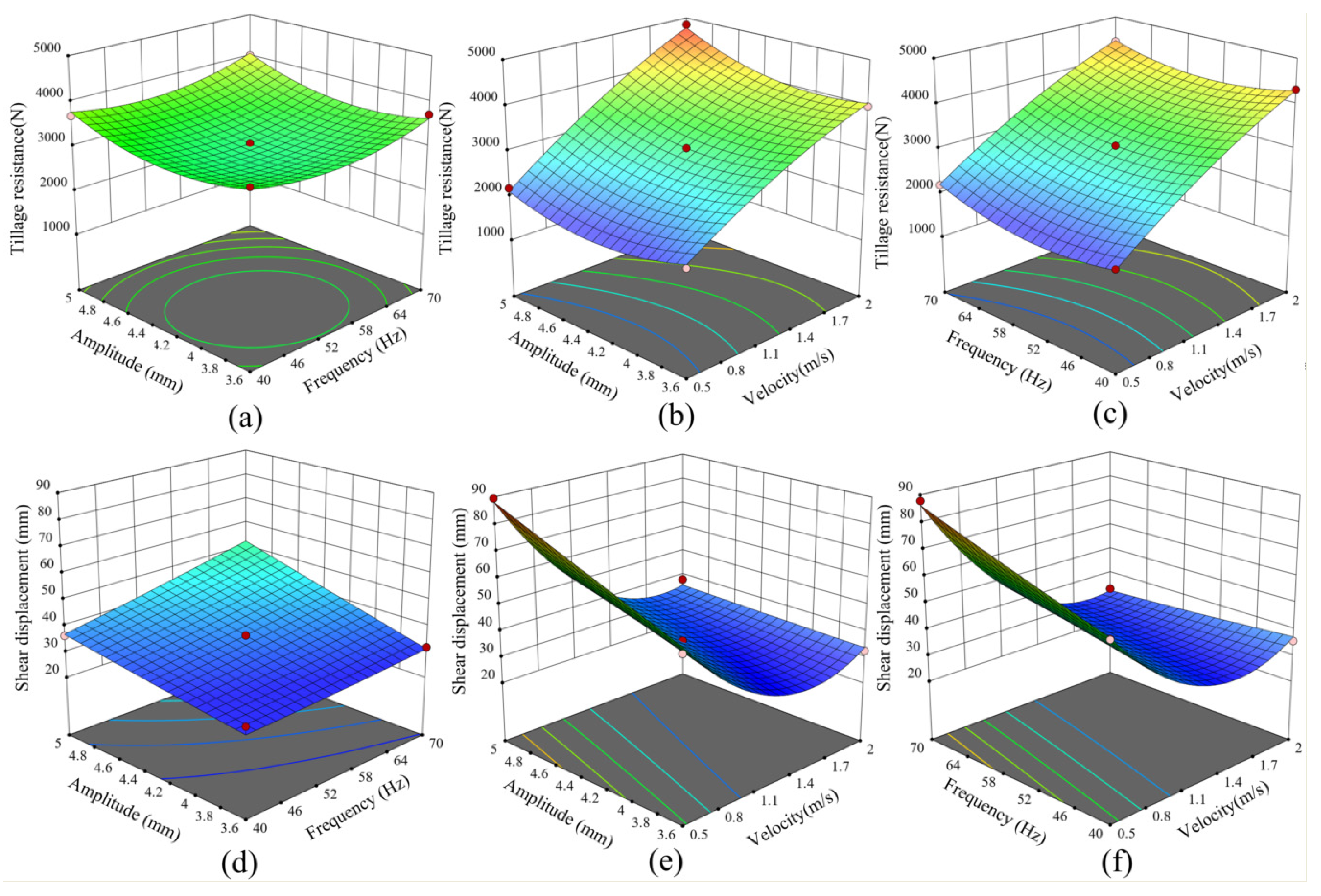
Figure 14 shows the effects of y-direction factors on tillage resistance and shear displacement. Tillage speed remains the primary determinant of tillage resistance. The vibration factor in the y direction exerted a greater effect on resistance compared to the x direction. As shown in Figure 14b,c, tillage resistance initially decreases and then increases with increasing amplitude and frequency similar to the study of (Awuah et al., 2022) [14]. Figure 14d–f shows the shear displacement increases with increased vibration frequency, amplitude, and decreases with increased velocity These findings suggest that using appropriate speed and vibration parameters in the y direction can reduce tillage resistance and root shear deformation.
Figure 14.
Response surface of interaction factors on tillage force and shear displacement in the y direction: (a) effect of vibration frequency and amplitude on tillage force (tillage speed 1.25 m·s−1); (b) effect of vibration amplitude and tillage speed on tillage force (vibration frequency 55 Hz); (c) effect of vibration frequency and tillage speed on tillage force (vibration amplitude 4.3 mm); (d) effect of vibration frequency and amplitude on shear displacement (tillage speed 1.25 m·s−1); (e) effect of vibration amplitude and tillage speed on shear displacement (vibration frequency 55 Hz); and (f) effect of vibration frequency and tillage speed on shear displacement (vibration amplitude 4.3 mm).
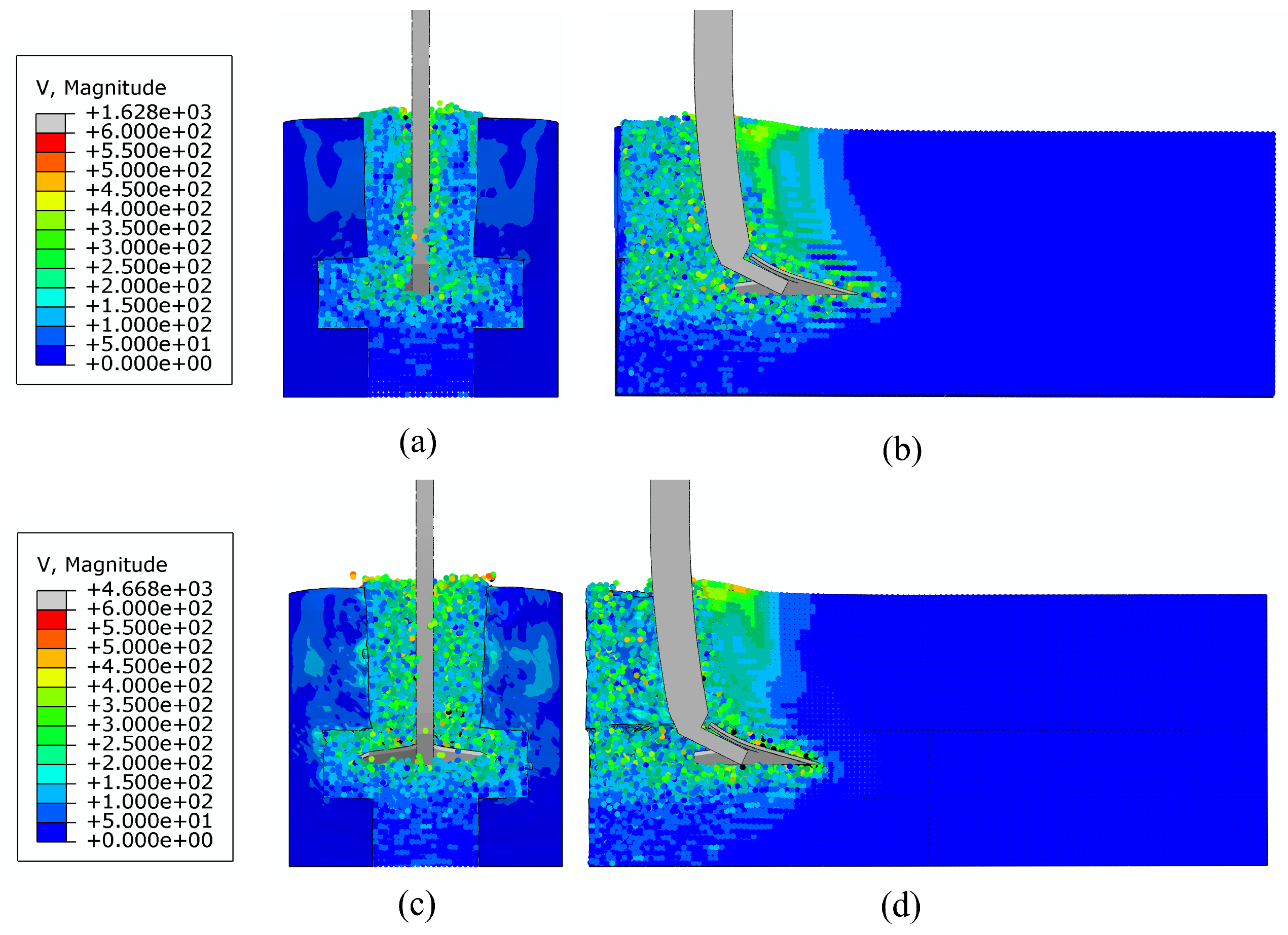
The optimized simulation results of y-direction vibratory and traditional shovel are shown in Table 6. The optimized vibratory root-cutting shovel reduced shear displacement by 24.52% and mean tillage resistance by 19.15% compared to the traditional shovel. Figure 15 shows that the optimized y-direction vibration simulation results were not significantly different from the traditional shovel in transverse profile. However, there was a notable velocity increase in side profile. Figure 15c,d show the vibration produces fluctuating impact stress on the soil above the shovel body. This impact stress facilitated soil wedge breaking. It reduced soil particle compactness and cohesion to the shovel surface, ultimately decreasing tillage resistance [50,51,52,53]. Meanwhile, the basic factors affecting root elongation were aeration and penetration resistance, which depended on the structure and firmness of the soil [54]. The fluctuating stress caused by vibration created a loose soil environment, which can promote root growth and enhance alfalfa production [5,55].
Figure 15.
Velocity distribution of y-direction vibration parameter optimization results: (a) transverse view of non-vibration; (b) side view of non-vibration; (c) transverse view of vibration; (d) side view of vibration.
Based on the above results, combining vibration effective in reducing tillage resistance and root shear displacement. Specifically, vibration in the y direction reduces resistance more effectively (19.15% compared to 6.83% for the x direction). The final optimization parameters were y-direction vibration with an amplitude of 3.79 mm and frequency of 45.05 Hz at a tillage speed of 0.86 m·s−1.
3.3. Field Tests Results
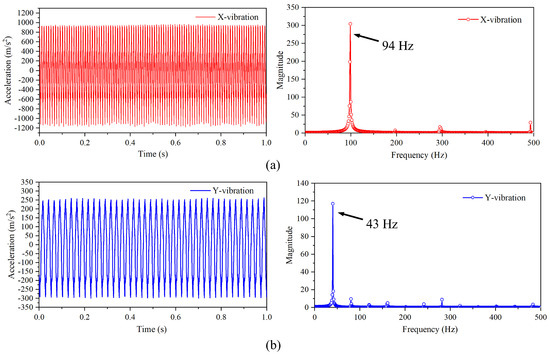
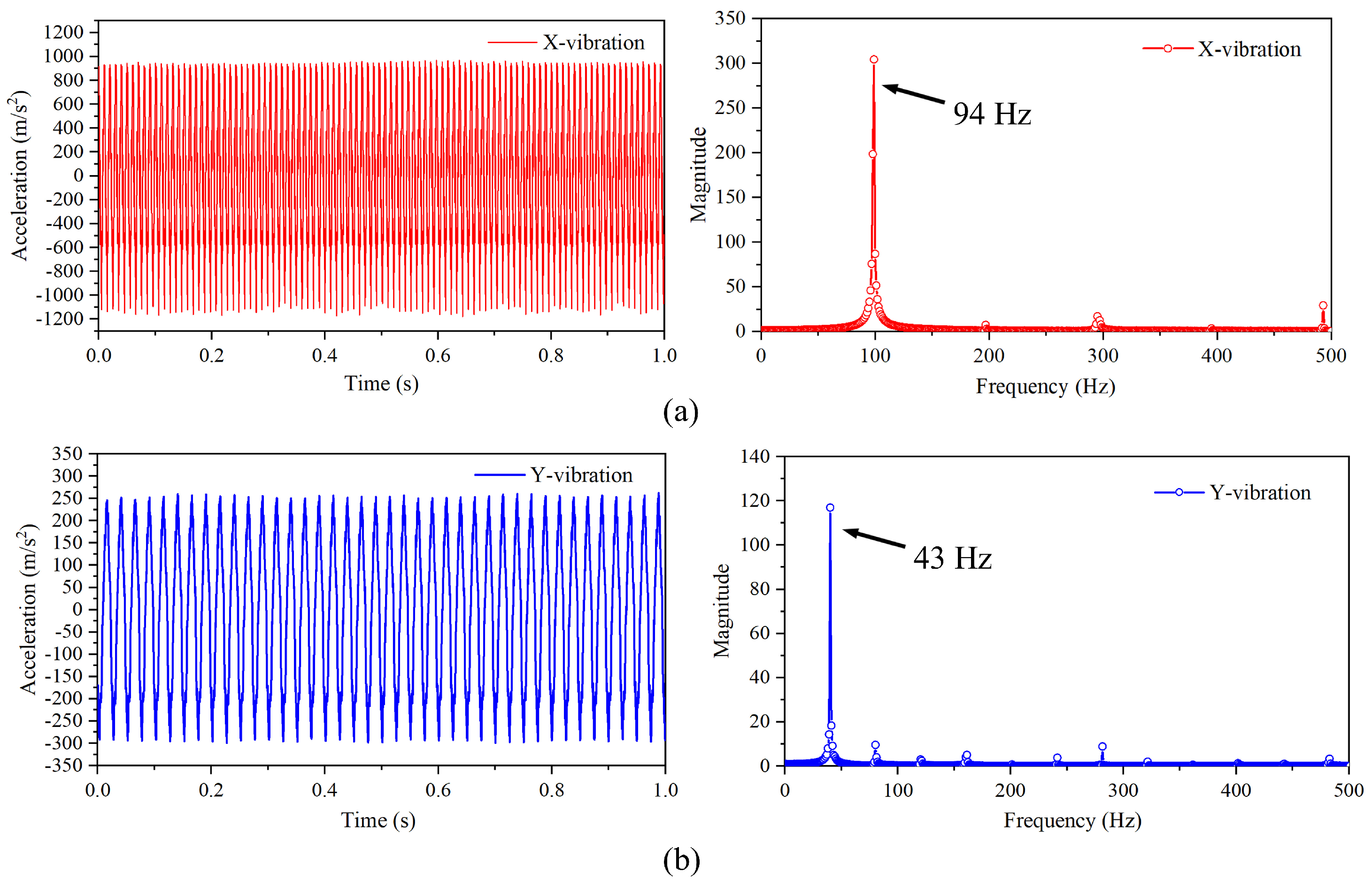
In field experiment, due to the speed difference between the two optimization results being not significant, the tillage speed was kept at 0.83 m·s−1 (3 km·h−1). Before the field test, a triaxial piezoelectric accelerometer (1A339E Donghua Testing Technology Co., Ltd., Jingjiang, China) and data acquisition analyzer (Avant mi-7004 Econ Technologies Co., Ltd., Hangzhou, China) were used to adjust and measure the vibration state of the shovel tip. The motor driver and the eccentric block of the vibration motor were adjusted to ensure the vibration frequency and amplitude met the requirements in Table 6. As shown in Figure 16a, the test results indicated that the vibration frequency and amplitude of the loosening shovel in the x direction were 94 Hz and 2.49 mm, with deviations of 4.86% and 4.23% from the RSM optimization results, respectively. In the y direction, the tested vibration frequency and amplitude were 41 Hz and 3.65 mm, with deviations of 4.55% and 3.69%, respectively. These findings demonstrate that the installation of the vibration motor provides the required vibration.
Figure 16.
Acceleration signal and its spectra of vibrating loosening shovel: (a) x-vibration shovel; (b) y-vibration shovel.
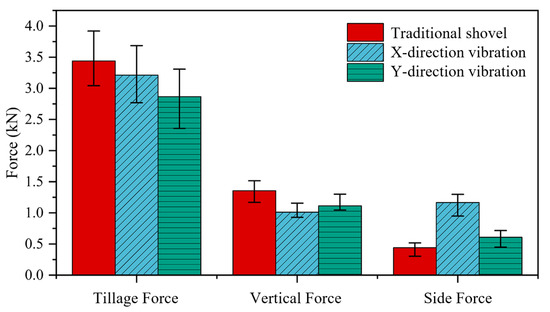
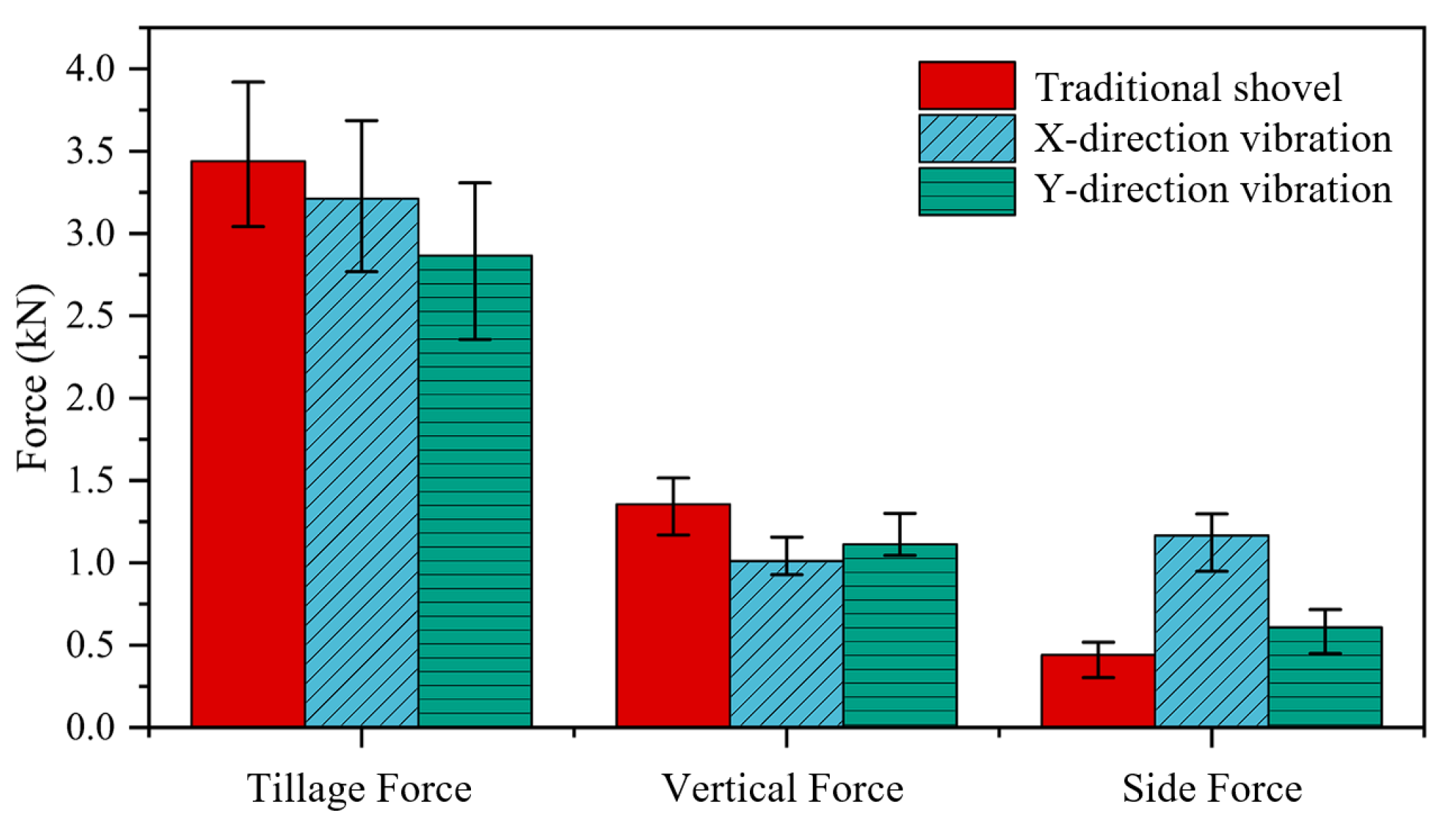
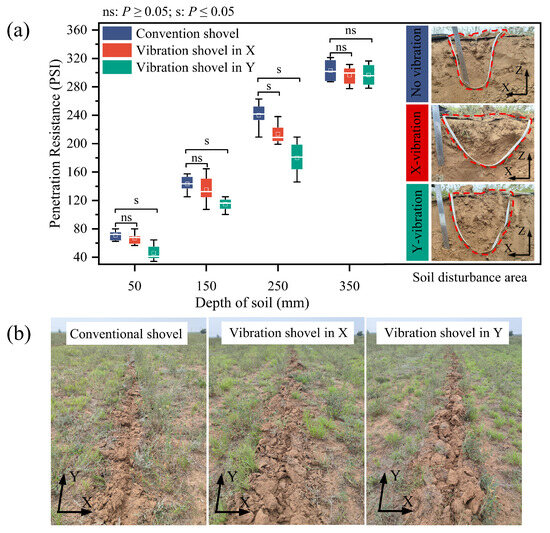
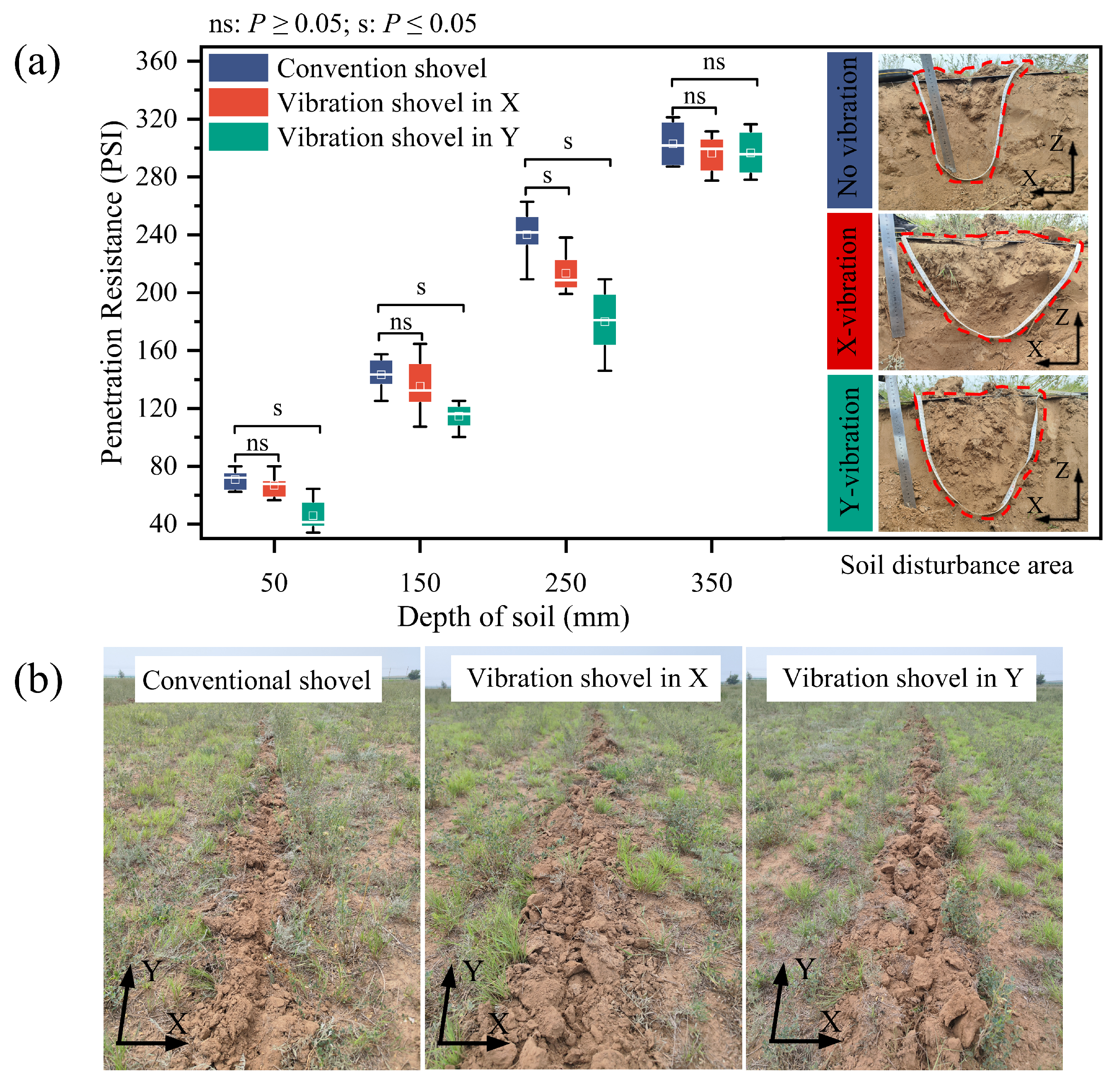
Soil moisture content before field tests was determined to be 15.77%. And soil compactness showed no significant change compared to that in parameter testing experiments. As shown in Figure 17, the average tillage resistance, obtained in the test area of field experiments, for the traditional shovel was 3438.49 N, the x-direction vibration shovel was 3211.55 N, and the y-direction vibration shovel was 2864.95 N. Compared to the traditional shovel, there was a 6.60% resistance reduction in x-direction vibration and a 16.68% resistance reduction in y-direction vibration. Soil compaction after tillage was measured at 10 cm from both sides of the furrow center, as shown in Figure 18a. It shows y-direction vibration and x-direction vibration all increased the disturbance area. In the 0–300 mm depth range, the penetration resistance of x-direction vibration decreased by 7.46% compared to the traditional shovel, while the y-direction vibration caused a 26.80% reduction. At the depth of 300–400 mm, soil compaction remained unchanged despite the introduction of vibration. Therefore, y-direction vibration plays a more significant role than x-direction vibration in soil loosing.
Figure 17.
Results of field test tillage force, vertical force, and side force.
Figure 18.
Results of field experiments: (a) comparison of surface disturbance after tillage; (b) comparison of soil compaction at different depth after and sectional view of soil disturbance area after tillage (10 cm on both sides of the ditch).
The surface disturbance was shown in Figure 18b, indicating that x-direction vibration significantly increased the exposed soil area. The exposed soil is highly vulnerable to disruption by rainfall and irrigation droplets. The dispersion of fine particles can fill pores, significantly reducing surface infiltration capacity [56,57]. Field experiments demonstrated that the y-direction vibration shovel effectively reduced resistance. Additionally, this method enhanced soil loosening, thereby improving water infiltration from rainfall and irrigation. In summary, the field experiments provided validation for the accuracy of the FEM-SPH coupled simulation. However, due to the time constraints, this study focused solely on the immediate effects of soil-loosening operations. Future research should consider the impact of tillage effects on crop yield.
In addition, simplifying the root cross-section to an ideal cylinder with a constant diameter of 3 mm significantly reduced computational time and maintained numerical stability, it introduces certain limitations when extrapolating the results to a field-wide scale. For predicting macroscopic traction resistance, this geometric simplification is generally acceptable. Under actual field conditions, alfalfa roots exhibit natural tapering, variable diameters, and distinct morphological irregularities. This may result in an underprediction of the localized peak cutting forces required to sever the thicker proximal sections of the root. Therefore, variable-diameter root geometries should be incorporated in future models.
4. Conclusions
This study developed the alfalfa root–soil composite model using a coupled FEM-SPH method. And this was used to optimize the design of vibratory root-cutting shovel. The model considers biomechanical properties, anatomical structure of roots, and the varying soil properties at different depths. The model’s validity was proven using the direct shear test and cutting test. A vibration cutting model of root–soil composites was created to analyze the effects of tillage speed, frequency, amplitude, and vibration direction on tillage resistance and shear displacement. The results showed that tillage speed significantly affects both two response values. Vibration in both x and y directions can promote root cutting. Vibration in both the x and y directions during tillage increased the disturbed soil area, which increased tillage resistance. However, y-direction vibrations can generate cyclic impact stress moving the forward, effectively breaking the soil wedge on the shovel. This ultimately reduces the tillage resistance in y-direction vibration. Based on RSM optimization, the optimal parameters were a tillage speed of 0.86 m·s−1, y-direction vibration of 3.79 mm amplitude, and 45.05 Hz frequency. Field experiments have shown that the combination of y-direction vibration reduces the tillage resistance by 16.68%. Compared to non-vibrating shovels, the addition of y vibrations can more effectively loosen the soil, which reduced penetration resistance by 26.80%. This reduction in soil compaction can enhance root growth and overall promote plant development. Given that alfalfa is a perennial crop, its mechanical properties inherently vary with root age and lignification. However, the scope of the present study was restricted to specific ages. And utilizing quasi-static parameters for high-speed simulations represents a limitation of the current constant-parameter model. Incorporating strain-rate-dependent constitutive relationships will be a crucial step in our future work to further improve the predictive accuracy of high-speed vibratory tillage models. Future research will also evaluate the effects of vibration tillage measures on soil structure improvement and the restoration of degraded grasslands of different Perennial alfalfa ages, as well as assess soil water and nutrient reserves and crop yields after tillage operations. Additionally, vibration tillage techniques hold potential for improving different types of degraded grasslands, such as Leymus chinensis and Lolium perenne.
Author Contributions
Conceptualization, S.W., X.L., Z.X. and Y.M.; methodology, S.W., Z.X. and M.H.; software, S.W. and M.H.; validation, S.W. and Q.P.; formal analysis, S.W.; investigation, S.W. and X.L.; resources, Y.M.; data curation, S.W. and X.L.; writing—original draft preparation, S.W.; writing—review and editing, S.W., M.H., Z.X. and X.L.; visualization, S.W.; supervision, Y.M.; funding acquisition, Y.M. All authors have read and agreed to the published version of the manuscript.
Funding
This work was supported by the National Natural Science Foundation of China [grant numbers 52275288 and 52105300]; the National Key Research and Development Program of China [grant number 2023YFD2000903]; and the Scientific Research Startup Fund for High-Level Talents of Bengbu University [grant number 2026GQD004].
Institutional Review Board Statement
Not applicable.
Data Availability Statement
The original contributions presented in this study are included in the article. Further inquiries can be directed to the corresponding author.
Acknowledgments
The authors extend their sincere thanks to Deepseek V3 for providing language polishing and revision support for the full text of this manuscript.
Conflicts of Interest
The authors declare no conflicts of interest.
References
- Shen, C.; Du, H.L.; Chen, Z.; Lu, H.W.; Zhu, F.G.; Chen, H.; Meng, X.Z.; Liu, Q.W.; Liu, P.; Zheng, L.H.; et al. The Chromosome-Level Genome Sequence of the Autotetraploid Alfalfa and Resequencing of Core Germplasms Provide Genomic Resources for Alfalfa Research. Mol. Plant 2020, 13, 1250–1261. [Google Scholar] [CrossRef] [PubMed]
- Ma, W.P.; You, Y.; Wang, D.C.; Hu, J.N. Design and Experiment of Low-resistance Soil Loosening Shovel for Cutting Roots and Reseeding in Perennial Alfalfa Field. Trans. Chin. Soc. Agric. Mach. 2021, 52, 86–95+144. [Google Scholar]
- Chen, X.T.; Ren, L.F.; Bai, W.M.; Zhang, W.H. Effect of tilling on yield and root morphology of alfalfa. Grassl. Turf 2023, 43, 115–121. [Google Scholar] [CrossRef]
- He, C.B.; You, Y.; Wang, D.C.; Wang, G.H. Mechanical Characteristics of Soil-root Composite and Its Influence Factors in Degenerated Grassland. Trans. Chin. Soc. Agric. Mach. 2016, 47, 79–89. [Google Scholar]
- De Boer, H.C.; Deru, J.G.C.; Van Eekeren, N. Sward lifting in compacted grassland: Contrasting effects on two different soils. Soil Tillage Res. 2020, 201, 104564. [Google Scholar] [CrossRef]
- You, Y.; Wang, D.; Liu, J. A device for mechanical remediation of degraded grasslands. Soil Tillage Res. 2012, 118, 1–10. [Google Scholar] [CrossRef]
- Sang, H.C.; He, C.B.; Bi, Y.G.; Liu, M.Y.; Wang, X. Evaluation of the performance of very narrow tines with different geometrical structures for tilling natural grassland. Biosyst. Eng. 2022, 224, 34–48. [Google Scholar] [CrossRef]
- He, C.B.; You, Y.; Wang, D.C.; Wang, G.H.; Lu, D.H.; Kaji, J.M.T. The effect of tine geometry during vertical movement on soil penetration resistance using finite element analysis. Comput. Electron. Agric. 2016, 130, 97–108. [Google Scholar] [CrossRef]
- Younis, S.; Ghonimy, M.; Hussin, T. Development of a Potato Digger. Misr J. Agric. Eng. 2006, 23, 292–313. [Google Scholar]
- Kang, W.S.; Rodriguez, L.A.; Crow, L.D. Developing a small commercial vibrating potato digger II. Effects of design parameters on draft, torque, and power. Trans. ASAE 2001, 44, 1391–1396. [Google Scholar] [CrossRef]
- Altunyan, A.; Tarverdyan, A. Geometric and kinematic parameters of vibrating knife in the development of cutting machines. J. Agric. Eng. 2021, 52, 1147. [Google Scholar] [CrossRef]
- Zou, L.L.; Yan, D.W.; Niu, Z.R.; Yuan, J.; Cheng, H.; Zheng, H. Parametric analysis and numerical optimisation of spinach root vibration shovel cutting using discrete element method. Comput. Electron. Agric. 2023, 212, 108138. [Google Scholar] [CrossRef]
- Wang, Y.X.; Osman, A.N.; Zhang, D.X.; Yang, L.; Cui, T.; Zhong, X.J. Optimized design and field experiment of a staggered vibrating subsoiler for conservation tillage. Int. J. Agric. Biol. Eng. 2019, 12, 59–65. [Google Scholar] [CrossRef]
- Awuah, E.; Zhou, J.; Liang, Z.; Aikins, K.A.; Gbenontin, B.V.; Mecha, P.; Makange, N.R. Parametric analysis and numerical optimisation of Jerusalem artichoke vibrating digging shovel using discrete element method. Soil Tillage Res. 2022, 219, 105344. [Google Scholar] [CrossRef]
- Goodwin, G.C.; Medioli, A.M.; Sher, W.; Vlacic, L.B.; Welsh, J.S. Emulation-Based Virtual Laboratories: A Low-Cost Alternative to Physical Experiments in Control Engineering Education. IEEE Trans. Educ. 2011, 54, 48–55. [Google Scholar] [CrossRef]
- Zhao, J.; Lu, Y.; Wang, X.; Zhuang, J.; Han, Z. A bionic profiling-energy storage device based on MBD-DEM coupled simulation optimization reducing the energy consumption of deep loosening. Soil Tillage Res. 2023, 234, 105824. [Google Scholar] [CrossRef]
- Bai, H.; Li, R.; Wang, W.; Xie, K.; Wang, X. Investigation on Parameter Calibration Method and Mechanical Properties of Root-Reinforced Soil by DEM. Math. Probl. Eng. 2021, 2021, 6623489. [Google Scholar] [CrossRef]
- Bourrier, F.; Kneib, F.; Chareyre, B.; Fourcaud, T. Discrete modeling of granular soils reinforcement by plant roots. Ecol. Eng. 2013, 61, 646–657. [Google Scholar] [CrossRef]
- Li, J.G.; Liu, X.M.; Zou, L.L.; Yuan, J.; Du, S. Analysis of the interaction between end-effectors, soil and asparagus during a harvesting process based on discrete element method. Biosyst. Eng. 2020, 196, 127–144. [Google Scholar] [CrossRef]
- Liu, Y.G.; Zhao, J.G.; Yin, B.Z.; Ma, Z.K.; Hao, J.J.; Yang, X.; Feng, X.J.; Ma, Y.J. Discrete element modelling of the yam root-soil complex and its verification. Biosyst. Eng. 2022, 220, 55–72. [Google Scholar] [CrossRef]
- Tian, J.; Cao, B.; Ji, J.; Li, C.; Yuan, B. Numerical simulation and validation test of direct shear test for root-soil composite of Hedysarum scoparium using finite element method. Trans. Chin. Soc. Agric. Eng. 2015, 31, 152–158. [Google Scholar]
- Li, M.; Xu, S.; Yang, Y.W.; Guo, L.; Tong, J. A 3D simulation model of corn stubble cutting using finite element method. Soil Tillage Res. 2017, 166, 43–51. [Google Scholar] [CrossRef]
- Zhu, J.; Leung, A.K.; Wang, Y. Modelling root-soil mechanical interaction considering root pull-out and breakage failure modes. Plant Soil 2022, 480, 675–701. [Google Scholar] [CrossRef]
- Yang, W.; Zhang, X.; Yang, J.; Zheng, X.; Liao, L. Simulation and test on performance of soil-cassava jitter separation device of cassava harvester. Trans. Chin. Soc. Agric. Eng. (Trans. CSAE) 2017, 33, 18–25. [Google Scholar] [CrossRef]
- Yang, W.; Zhao, W.J.; Liu, Y.D.; Chen, Y.Q.; Yang, J. Simulation of forces acting on the cutter blade surfaces and root system of sugarcane using FEM and SPH coupled method. Comput. Electron. Agric. 2021, 180, 105893. [Google Scholar] [CrossRef]
- Kim, Y.; Rahardjo, H.; Tsen-Tieng, D.L. Stability analysis of laterally loaded trees based on tree-root-soil interaction. Urban For. Urban Green. 2020, 49, 126639. [Google Scholar] [CrossRef]
- Mao, Z.; Wang, Y.; McCormack, M.L.; Rowe, N.; Deng, X.; Yang, X.; Xia, S.; Nespoulous, J.; Sidle, R.C.; Guo, D.; et al. Mechanical traits of fine roots as a function of topology and anatomy. Ann. Bot. 2018, 122, 1103–1116. [Google Scholar] [CrossRef] [PubMed]
- Meijer, G.J.; Lynch, J.P.; Chimungu, J.G.; Loades, K.W. Root anatomy and biomechanical properties: Improving predictions through root cortical and stele properties. Plant Soil 2024, 500, 587–603. [Google Scholar] [CrossRef]
- Srobka, J.; Potocka, I.; Karczewski, J.; Szymanowska-Pulka, J. Sensitivity and strength of maize roots facing different physical conditions of the growth medium. Acta Soc. Bot. Pol. 2024, 93, 187377. [Google Scholar] [CrossRef]
- Zhang, J.; Wang, J.; Du, D.D.; Long, S.F.; Wang, Y.W.; Han, C.J.; Xu, Y. Optimization and validation of root-cutting device for Chinese cabbage harvester based on discrete element method. Comput. Electron. Agric. 2023, 214, 108314. [Google Scholar] [CrossRef]
- Hu, M.; Gao, T.; Dong, X.W.; Tan, Q.T.; Yi, C.; Wu, F.; Bao, A.H. Simulation of soil-tool interaction using smoothed particle hydrodynamics (SPH). Soil Tillage Res. 2023, 229, 105671. [Google Scholar] [CrossRef]
- Huang, Y.; Hao, L.; Xie, P.; Xu, Q. Numerical simulation of large deformation of soil flow based on SPH method. Chin. J. Geotech. Eng. 2009, 31, 1520–1524. [Google Scholar]
- Jin, Z.; Yin, Z.-Y.; Kotronis, P.; Jin, Y.-F. Numerical investigation on evolving failure of caisson foundation in sand using the combined Lagrangian-SPH method. Mar. Georesources Geotechnol. 2019, 37, 23–35. [Google Scholar] [CrossRef]
- Wu, H.; Liao, C.C.; Chen, J.J.; Wang, J.H.; Wang, J. Smoothed Particle Hydrodynamics simulation of spudcan penetration based on two-phase mixture theory. Ocean Eng. 2019, 173, 835–840. [Google Scholar] [CrossRef]
- Liu, G.R.; Liu, M.B.; Li, S. Smoothed Particle Hydrodynamics—A Meshfree Method; Springer: Berlin/Heidelberg, Germany, 2004; Volume 33, p. 491. [Google Scholar]
- Momozu, M.; Oida, A.; Yamazaki, M.; Koolen, A.J. Simulation of a soil loosening process by means of the modified distinct element method. J. Terramechanics 2002, 39, 207–220. [Google Scholar] [CrossRef]
- De Baets, S.; Poesen, J.; Reubens, B.; Wemans, K.; De Baerdemaeker, J.; Muys, B. Root tensile strength and root distribution of typical Mediterranean plant species and their contribution to soil shear strength. Plant Soil 2008, 305, 207–226. [Google Scholar] [CrossRef]
- Khan, M.M.R.; Chen, Y.; Lague, C.; Landry, H.; Peng, Q.; Zhong, W. Compressive properties of Hemp (Cannabis sativa L.) stalks. Biosyst. Eng. 2010, 106, 315–323. [Google Scholar] [CrossRef]
- Cui, G.; Wei, Y.; Wen, S.; Zheng, X.; Wang, J.; Cui, Y. Experiment and Parameter Optimization of Root-Cutting for Trimming Postharvest Cabbage. Inmateh-Agric. Eng. 2021, 63, 405–412. [Google Scholar] [CrossRef]
- ISO 17892-10:2018; Geotechnical Investigation and Testing—Laboratory Testing of Soil—Part 10: Direct Shear Tests. ISO: Geneva, Switzerland, 2018.
- Poulsen, R. Correlation Between Cone Penetration Rate and Measured Cone Penetration Parameters in Silty Soils. In Proceedings of the 18th International Conference on Soil Mechanics and Geotechnical Engineering, Paris, France, 2–6 September 2013. [Google Scholar]
- Meng, S.Y.; Zhao, G.Q.; Yang, Y.Y. Impact of Plant Root Morphology on Rooted-Soil Shear Resistance Using Triaxial Testing. Adv. Civ. Eng. 2020, 2020, 8825828. [Google Scholar] [CrossRef]
- Badhon, F.F.; Islam, M.S.; Islam, M.A.; Arif, M.Z.U. A simple approach for estimating contribution of vetiver roots in shear strength of a soil-root system. Innov. Infrastruct. Solut. 2021, 6, 96. [Google Scholar] [CrossRef]
- Yan, Z.X.; Song, Y.; Jiang, P.; Wang, H.Y. Mechanical analysis of interaction between plant roots and rock and soil mass in slope vegetation. Appl. Math. Mech.-Engl. Ed. 2010, 31, 617–622. [Google Scholar] [CrossRef]
- Zhang, S.L.; Zhao, H.B.; Wang, X.Z.; Dong, J.X.; Zhao, P.F.; Yang, F.F.; Chen, X.H.; Liu, F.; Huang, Y.X. Discrete element modeling and shear properties of the maize stubble-soil complex. Comput. Electron. Agric. 2023, 204, 107519. [Google Scholar] [CrossRef]
- Stafford, J.V. An application of critical state soil mechanics: The performance of rigid tines. J. Agric. Eng. Res. 1981, 26, 387–401. [Google Scholar] [CrossRef]
- Ucgul, M.; Fielke, J.M.; Saunders, C. Defining the effect of sweep tillage tool cutting edge geometry on tillage forces using 3D discrete element modelling. Inf. Process. Agric. 2015, 2, 130–141. [Google Scholar] [CrossRef]
- Burgess, C.P.; Chapman, R.; Singleton, P.L.; Thom, E.R. Shallow mechanical loosening of a soil under dairy cattle grazing: Effects on soil and pasture. N. Z. J. Agric. Res. 2000, 43, 279–290. [Google Scholar] [CrossRef]
- Rahman, S.; Chen, Y.; Lobb, D. Soil movement resulting from sweep type liquid manure injection tools. Biosyst. Biosyst. Eng. 2005, 91, 379–392. [Google Scholar] [CrossRef]
- Chen, J.; Orozovic, O.; Williams, K.; Meng, J.; Li, C. A coupled DEM-SPH model for moisture migration in unsaturated granular material under oscillation. Int. J. Mech. Sci. 2020, 169, 105313. [Google Scholar] [CrossRef]
- Liu, G.; Xia, J.; Zheng, K.; Cheng, J.; Wang, K.; Zeng, R.; Wang, H.; Liu, Z. Effects of vibration parameters on the interfacial adhesion system between soil and metal surface. Soil Tillage Res. 2022, 218, 105294. [Google Scholar] [CrossRef]
- Ren, L.; Wang, Y.; Li, J.; Tong, J. Flexible unsmoothed cuticles of soil animals and their characteristics of reducing adhesion and resistance. Chin. Sci. Bull. 1998, 43, 166–169. [Google Scholar] [CrossRef]
- Lisowski, A.; Klonowski, J.; Green, O.; Świętochowski, A.; Sypuła, M.; Strużyk, A.; Nowakowski, T.; Chlebowski, J.; Kamiński, J.; Kostyra, K.; et al. Duckfoot tools connected with flexible and stiff tines: Three components of resistances and soil disturbance. Soil Tillage Res. 2016, 158, 76–90. [Google Scholar] [CrossRef]
- Wang, Y.; Li, N.; Ma, Y.; Tong, J.; Pfleging, W.; Sun, J. Field experiments evaluating a biomimetic shark-inspired (BioS) subsoiler for tillage resistance reduction. Soil Tillage Res. 2020, 196, 104432. [Google Scholar]
- He, C.; Guo, Y.; Guo, X.; Sang, H. A mathematical model for predicting the draft force of shank-type tillage tine in a compacted sandy loam. Soil Tillage Res. 2023, 228, 105642. [Google Scholar] [CrossRef]
- Leeds-Harrison, P.B.; Shipway, C.J.P.; Jarvis, N.J.; Youngs, E.G. The influence of soil macroporosity on water retention, transmission and drainage in a clay soil. Soil Use Manag. 2010, 2, 47–50. [Google Scholar]
- Miyajima, S.; Uoi, N.; Murata, T.; Takeda, M.; Morishima, W.; Watanabe, M. Effect of structural modification on heat transfer through man-made soils in urban green areas. Soil Sci. Plant Nutr. 2015, 61, 70–87. [Google Scholar] [CrossRef]

Disclaimer/Publisher’s Note: The statements, opinions and data contained in all publications are solely those of the individual author(s) and contributor(s) and not of MDPI and/or the editor(s). MDPI and/or the editor(s) disclaim responsibility for any injury to people or property resulting from any ideas, methods, instructions or products referred to in the content. |
© 2026 by the authors. Licensee MDPI, Basel, Switzerland. This article is an open access article distributed under the terms and conditions of the Creative Commons Attribution (CC BY) license.