


Abstract
Identifying major blast resistance genes in Oryza sativa L. genotypes is key to enhancing and maintaining the resistance. Observing rice varieties with durable resistance to blast has become a potential target in rice breeding programs. In this study, an evaluation was conducted during 2020 and 2021 on ten Egyptian and introduced varieties. First, a field experiment was conducted in a randomized complete block design with three replications, and it was found that the Egyptian cultivar Sakha 101 had the highest crop grain yields (53.27 g). The Spanish varieties Hispagrán and Puebla were the earliest (110 and 108 days, respectively) as well as the highest in 1000-grain yield, giving them priority as donors for these traits; however, they had the lowest mean values in the number of panicles. Second, these cultivars were subjected to eighteen isolates from five strains of Pyricularia oryzae (IH, IC, ID, IE, and II). The Egyptian varieties Giza 177, Giza 179, Sakha 106, Giza 182, GZ1368-5-5-4, and GZ6296 were 100% resistant, while Hispagrán’s resistance was 16.6%, followed by Sakha 101 with 27.8%. To gain insight into the ten varieties, we used STS, SCAR, and CAPS markers to detect and mine alleles for major blast broad-spectrum resistance genes Pi2, Pi9, and Pita2. In the context of considering gene pyramiding as an effective strategy for achieving broad durable spectrum resistance to blast, molecular profiling was also conducted on eighteen F2 single plants obtained from the hybridization of Giza 177 (resistant) × Puebla (susceptible) varieties. Also, eighteen F2 single plants were obtained from Giza 177 × Hispagrán (highly susceptible) varieties. Conducting a molecular scan with STS dominant marker YL153/YL154 was performed on ten cultivars to detect the presence of the Pita2 gene, which conferred a unique band in Puebla. By doing a scan of the 18 second-generation plants derived from Giza 177 × Puebla, 11 individual plants of the 18 plants obtained a band, which was transferred from Puebla. F2 plants obtained from Giza 177 × Puebla amplified with CAPS marker RG64-431/RG64-432 had higher numbers of Pi2 alleles, while F2 plants of Giza 177 × Hispagrán cross-amplified with SCAR marker linked to Pi9 exceeded their parents more. Our results have revealed that molecular markers played an essential role in determining the direction of evolution for blast resistance traits.
1. Introduction
Rice blast developed a high evolutionary rate due to a high level of instability in the genome, causing 70–80% tremendous yield losses to rice, which is considered the first nutrition source in developing countries [1]. Magnaporthe oryzae, the causal fungus, can infect all parts of the rice plant, including leaves, leaf collars, necks, panicles, pedicels, seeds, and roots [2,3]. Conventional breeding for durable resistance cultivars is still the primary straightforward, cost-effective, and environmentally safe method for maintaining blast resistance. Moreover, breeders have developed many blast-resistant cultivars adapted to different rice-growing regions worldwide. However, durability resistance is still a challenge facing rice breeders [4].
Resistance breakdowns, such as Reiho resistance lost during its first-year production in Egypt, result in a serious epidemic [5]. There is an indispensable need for broad-spectrum disease resistance, defined as the resistance to the majority of geographically different races or isolates of the same pathogen [6,7,8].
Plants produce resistance genes that can directly or indirectly recognize the pathogen’s secreted effectors to initiate a second defense called effector-triggered immunity (ETI), culminating in hypersensitive cell death [9,10,11]. More than 100 major R-genes have been identified and mapped [12,13]. Chromosomes 6 and 12 in rice are distinguished by containing elite blast resistance genes that are fundamental in resistance architecture [14,15]. Broad-spectrum R-genes Pita and Pita2 are located on chromosome 12 and a minimum of eight other genes [16,17]. Pita2 encodes R proteins differently from Pita and conferred a broader resistance spectrum [18,19,20]. Also, Pita2 shows resistance to all Pita virulent isolates and some Pita virulent isolates [21,22]. In addition, chromosome 6 indicated that the Pi2/Pi9 is situated close to the centromere 6 [23], and the Pi2/Pi9 locus includes Pi2, Pigm, Piz-t, and Pi9 [24]. The Pi9 gene of a nucleotide-binding site leucine-rich repeat (NBS–LRR) family is considered a key point in elucidating the molecular basis of the broad-spectrum disease resistance [6].
Previous studies illustrate the importance of the clustered arrangement of R-genes in association with the evolution of novel resistance specificities exerted by pathogen populations throughout evolutionary history [23,25]. So far, thirteen Pi9 alleles have been identified that are varied in their blast-resistance spectra. These variations are the main reason for the durability of Pi9 against Magnaporthe oryzae [26]. Polymerase chain reaction (PCR) based markers have been developed to screen different blast R-genes. DNA markers represent an important tool for increasing the precision of the identification of blast resistance genes in a breeding program [27,28,29].
Several Egyptian commercial rice varieties with broad-spectrum resistance have been used as sources of resistance; but R-genes have not been characterized. This study aimed to (1) evaluate the crucial traits in ten genotypes in order to demonstrate their phenotypic architecture and survey the genetic advance, variance, and heritability; (2) screen leaf blast resistance reaction under blast nurseries (natural infection) and greenhouse (18 isolates) to understand how rice blast is affected by environmental conditions; (3) examine R-genes (Pi2, Pi9, and Pita2) in rice genotypes and F2 plants.
2. Materials and Methods
2.1. Field Experiment
The present investigation was conducted at the experimental farms of the Rice Research and Training Centre located in Sakha, Kafr El Sheikh, during 3 seasons in 2020, 2021, and 2022.
The genetic materials used in this investigation involved ten Egyptian commercial varieties and promising lines as well as two introduced varieties (Table 1). During the summer seasons of 2020 and 2021, the experiment was conducted in a randomized complete block design (RCBD) with three replications. The plants were grown in three rows with a spacing of 20 cm between the rows and 15 cm between the plants. The experiment was conducted according to the agricultural practice recommended for the region. Fertilizers were added at the recommended rates and time of application: 15 days after transplanting at the rate of 40 kg N/fed and 15 kg P2O5/fed. Hand weeding was done.
Table 1.
Pedigrees, origin, type, and year of release of the selected genotypes.
2.2. Studied Characters
The studied characters (quantitative parameters) were recorded for ten rice varieties grown under flood irrigation. The studied characters were the number of days to maturity, number of panicles per plant, 1000-grain weight (g), and grain yield per plant (g) according to IRRI [30]. Phenotypic and genotypic coefficients of variation (PCV and GCV) for all the studied characters were calculated by the formula reported by Burton [31]. The genetic advance as a percentage of the mean (GAM) and broad-sense heritability for all the traits as the ratio of GCV to the total PCV were calculated as reported by Johnson et al. [32].
2.3. Data Analysis of the Genetic Parameters
The data were analyzed using the ordinary analysis of variance to test the significance of differences among the studied genotypes using the “MSTAT” computer software package version 5.4.
2.4. Blast Disease Infection
In 2022, the cultivars in the blast nurseries of Sakha and Gemmiza were evaluated from 1st June. The cultivars were planted in seedbeds and fertilized with 60 Kg N/fed and farmyard manure at a rate of 8 m3/fed. The plots of the seedbeds were 1 meter wide and 10.5 m long. Susceptible check varieties were planted after every 10 lines of the cultivars as a spreader line and also planted throughout the border of the blast nursery as a borderline. The susceptible checks followed by one row of the resistant checks were sown alternatively, surrounding the cultivars. Then, they were left exposed to natural blast infection at the seedling stage. About 40 days from sowing, the blast lesions were scored from 0 to 9.
Greenhouse infection was conducted in the same season (2022) with the use of 18 isolates of Pyricularia oryzae obtained from Sakha 101 and Sakha 104 from six rice-growing governorates. Blast-infected leaves were collected from the old rice field. First, the leaf samples were washed with sodium hypochlorite and then in distilled water before being incubated in Petri dishes at 32 °C to enhance sporulation. After incubation, single spores were picked under a microscope with a pin-loop and placed on a banana medium. The fungal growth started within 7 days after spore placement on the medium [33]. Pathogenicity tests and race identification studies were carried out for the obtained fungal isolates under greenhouse conditions with artificial infection. International differential varieties (I.D.V.) were used to identify blast physiological races. Genotypes were seeded in plastic trays (30 × 20 × 15 cm). Each tray comprised 10 rows; out of them, 2 rows were cultivated with susceptible rice checks. The trays were kept in the greenhouse at 25–30 °C and fertilized with urea (46.5% N; 5 g/tray). Seedlings at the 3–4-leaf stage (about 3–4 weeks after sowing) were inoculated with spore suspension (100 mL) at 5 × 10⁴ spores/mL using an electrical spray gun. The inoculated seedlings were held in a moist chamber with at least 90% relative air humidity and 25–28 °C temperature for 24 h and then moved to the same conditions in the greenhouse. Each plant was scored for rice blast disease severity on a 0 to 9 scale [34].
2.5. F2 Seeds
Mating was carried out for making two different crosses: the first cross Giza 177 and Puebla, and the second cross Giza 177 and Hispagrán. In the flowering period, the bulk emasculation method was applied according to Jodon [35] and modified by Butany [36], using hot water (42–44 °C for 10 min). Plants were taken from F1 and advanced to F2. Eighteen F2 single plants from each cross were subjected to extract DNA to show the inheritance of blast resistance genes.
2.6. DNA Extraction
In 2022, genomic DNA from ten genotypes and eighteen F2 single plants Giza 177 (resistant) × Puebla (susceptible) and eighteen F2 single plants Giza 177 (resistant) × Hispagrán (highly susceptible) was extracted and quantified from three-week-old immature tender leaves, according to a modified CTAB method published by Murray and Thompson [37]. The extracted DNA was kept at −20 °C. A spectrophotometric technique and agarose gel electrophoresis were used to confirm and quantify the extracted genomic DNA. Three markers (STS and CAPS, SCAR markers) were used in this study, as shown in Table 2. The primer sequences were directly downloaded from the Gramene website (www.gramene.org). PCR reactions were carried out in 20 μL volume containing 2.0 μL of DNA (15 ng μL−1), 6.0 μL of dd.H2O, 10.0 μL of 10 × PCR master max buffer, 1.0 μL forward primer (30 ng μL−1), and 1.0 μL reverse primer (30 ng μL−1). The reaction mixture was subjected to the following conditions: initial denaturation at 94 °C for 5 min, and then 35 cycles of amplification under the following parameters: template denaturation at 94 °C for 1 min, primer annealing at 50–62 °C for 24 s, and extension at 72 °C for 2 min. By the end of the 35th cycle, a final extension at 72 °C for 10 min was given, followed by storage at 4 °C. PCR thermocycler machines from Biometra and Applied Biosystems were used. DNA bands were separated on 3% agarose gel [38] and stained with ethidium bromide, and the band size was measured and analyzed by myImage analysis software version 1.1.753.
Table 2.
Marker names, chromosome location (CL), molecular size (MS), annealing temperature (AT), and sequences for the DNA primers used in PCR technique.
3. Results and Discussion
3.1. Means of Performance
Phenotypic evaluation (Table 3) was conducted over ten rice genotypes. From means of days to maturity the remarkable varieties that achieve the latest period from seed to seed, consequently, may help in escaping disease and may be a smart strategy for facing the water shortage challenge. Thus, these genotypes are intrinsic in breeding programs. The varieties were categorized into three groups: the first earliness group includes Puebla and Hispagrán, which obtained the lowest mean values of 108 and 110 days, respectively. The second group contains days to maturity ranging from 123 to 135 days, whereas the third group spends the longest time reaching maturity at 136 and 143 days in Sakha 104 and Sakha 101, respectively. Draz et al. [42] reported that Sakha 101 exhibited the highest mean value for days to maturity (140 days).
Table 3.
Mean performances of the studied genotypes.
Concerning the number of panicles per plant, results in Table 3 clearly show that Sakha 101 recorded the highest mean performance (24.92), and the second highest mean value was scored by Sakha 104 (24.11), followed by GZ1368-5-5-4 (23.33) and then Giza 182 with 22.67. On the other hand, the Spanish varieties Puebla and Hispagrán recorded the lowest number of panicles per plant 15.04 and 17.06, respectively. Giza 177, Sakha 106, Giza 179, and GZ6296-12-1-2-1-1 gave medium mean values (19.00, 19.44, 20.11, and 20.56, respectively).
The 1000-grain weight of Spanish varieties ranked the most desirable mean values as 34.20 g and 39.24 g for Hispagrán and Puebla, respectively, whereas the Egyptian varieties showed medium to low performance ranging from 23.87 g to 28.70 g for GZ1368-5-5-4 and Sakha 101, respectively. Grain yield is the final and most essential parameter, and higher yield potential is the breeder’s ultimate goal in developing countries. The highest grain yield per plant ratio was in Sakha101 and Sakha 104 were recorded at 53.27 g and 51.55 g, respectively. Abd Allah et al. [43] also reported that Spanish and Delta-Med genotypes generally had low grain yield, shorter duration, and higher 1000-grain weight.
3.2. Analysis of Variance for Varieties and Parameters
The phenotypic variance was combined genotypic variance with the environment. It was found to be high for days to maturity (132.22), low for the number of panicles per plant (13.44), and intermediate for 1000-grain weight (27.49). Genetic variance, which refers to three major components, additive, dominance, and epistasis, showed wide variability among the genotypes. Days to maturity obtained the highest genetic variability, 131.60 (Table 4), whereas low genetic variance was detected for the number of panicles per plant (12.17). There was a direct relation between the phenotypic coefficient of variation (PCV%) and the genotypic coefficient of variation (GCV%). The highest PCV% and GCV% values were found for 1000-grain weight, whereas the lowest PCV% and GCV% were found for the number of days to maturity.
Table 4.
Estimates of phenotypic variance (PV), genetic variance (GV), phenotypic coefficient of variation (PCV), genetic coefficient of variation (GCV), genetic advance (GA), and broad-sense heritability (h2) in a broad sense for all studied characters for selected genotypes.
Concerning genetic advance (GA), a reliable meaningful parameter that expresses the genetic gain and couples with heritability, the highest values were in days to maturity (23.58). On the other hand, the lowest value was recorded for the number of panicles per plant (6.84). Meanwhile, the genetic advance percentage (GA%) represented high values for the 1000-grain weight (34.61%), followed by the number of panicles per plant (33.50%), and the lowest percentage was found for the number of days to maturity (18.74%).
Assessment of heritability helps breeders to allocate resources crucial to effectively select for achieving optimized genetic gain with limited resources [44]. Broad-sense heritability was high for the chosen characters; the values ranged from 90.56 to 99.53%. The highest percentage was for days to maturity, and the lowest percentage was for the number of panicles per plant.
3.3. Blast Disease Screening Under Artificial and Natural Infection
The ten genotypes were evaluated in the field under natural infection (blast nursery). The source of infection under the blast nursery came from susceptible varieties planted in the same spreader. Leaf infections were scored according to the IRRI Standard Evaluation System (1996) by using a 0–9 score [40]. As shown in Table 5, Egyptian genotypes Giza 177, Giza 179, Giza 182, GZ1368-5-5-4, and GZ6296-12-1-2-1-1 were scored as resistant [45], Sakha 101, Sakha 104, and Puebla as susceptible varieties, and Hispagrán as highly susceptible [46].
Table 5.
Scores of leaf blast reaction for the studied genotypes over two locations during 2022 using a 0–9 SES scale.
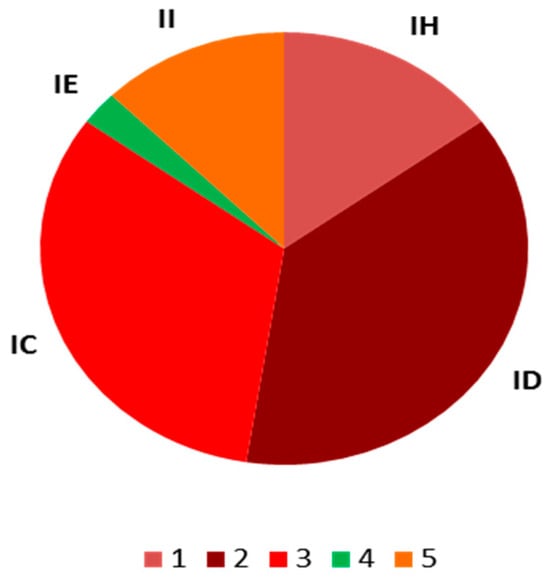
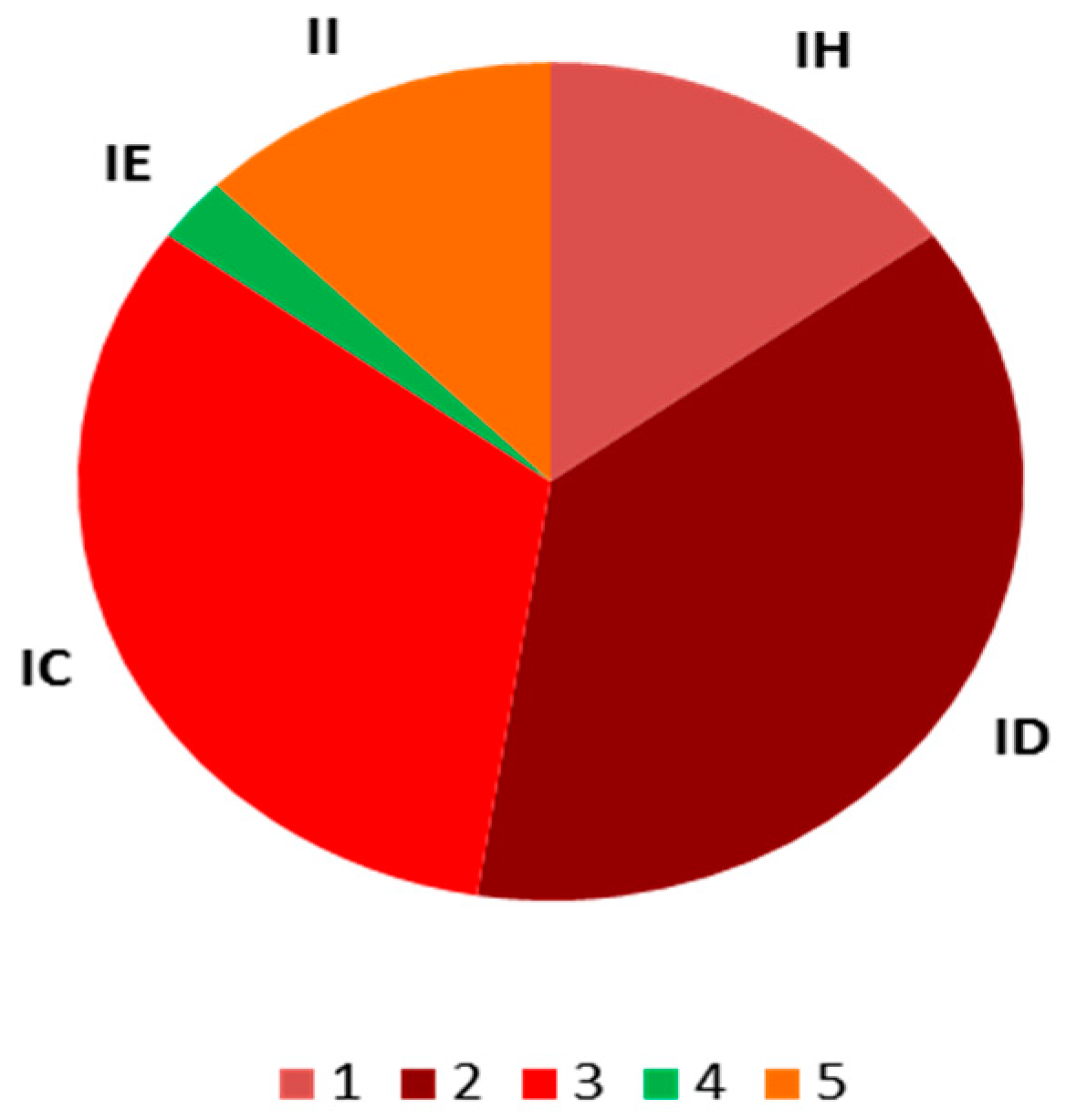
Eighteen blast isolates were collected from susceptible Sakha 101 and Sakha 104 cultivars from six rice-growing governorates during the 2022 season. The 18 isolates were categorized into five races, IC, II, IH, ID, and IE, as shown in Table 6. Race virulence percentages were highest in ID, IC, and then IH, while IE showed a low virulence percentage (Figure 1).
Table 6.
Rice blast isolates from different governorates, Egyptian rice cultivars, and their race identification (2022).
Figure 1.
Races virulence percentage: (1) IH, (2) ID, (3) IC, (4) IE, (5) II.
The isolates were identified according to their reaction to international differential varieties at the race level (Table 7).
Table 7.
Levels of blast resistance genes in Japanese differential varieties (JDV) under artificial inoculation to 18 rice blast races.
Race identification and monitoring determine race shifting; the collected data indicated that race group IC represented the most common races in 2018 and 2019 [47], but IB, IF, and IG were absent, while Sehly et al. [48] categorized the isolates into seven race groups, i.e., IA, IC, ID, IB, IG, IH, and II races.
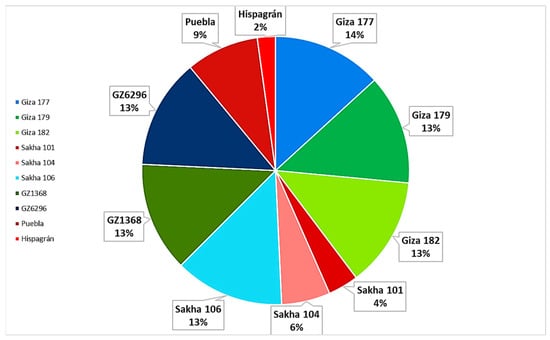
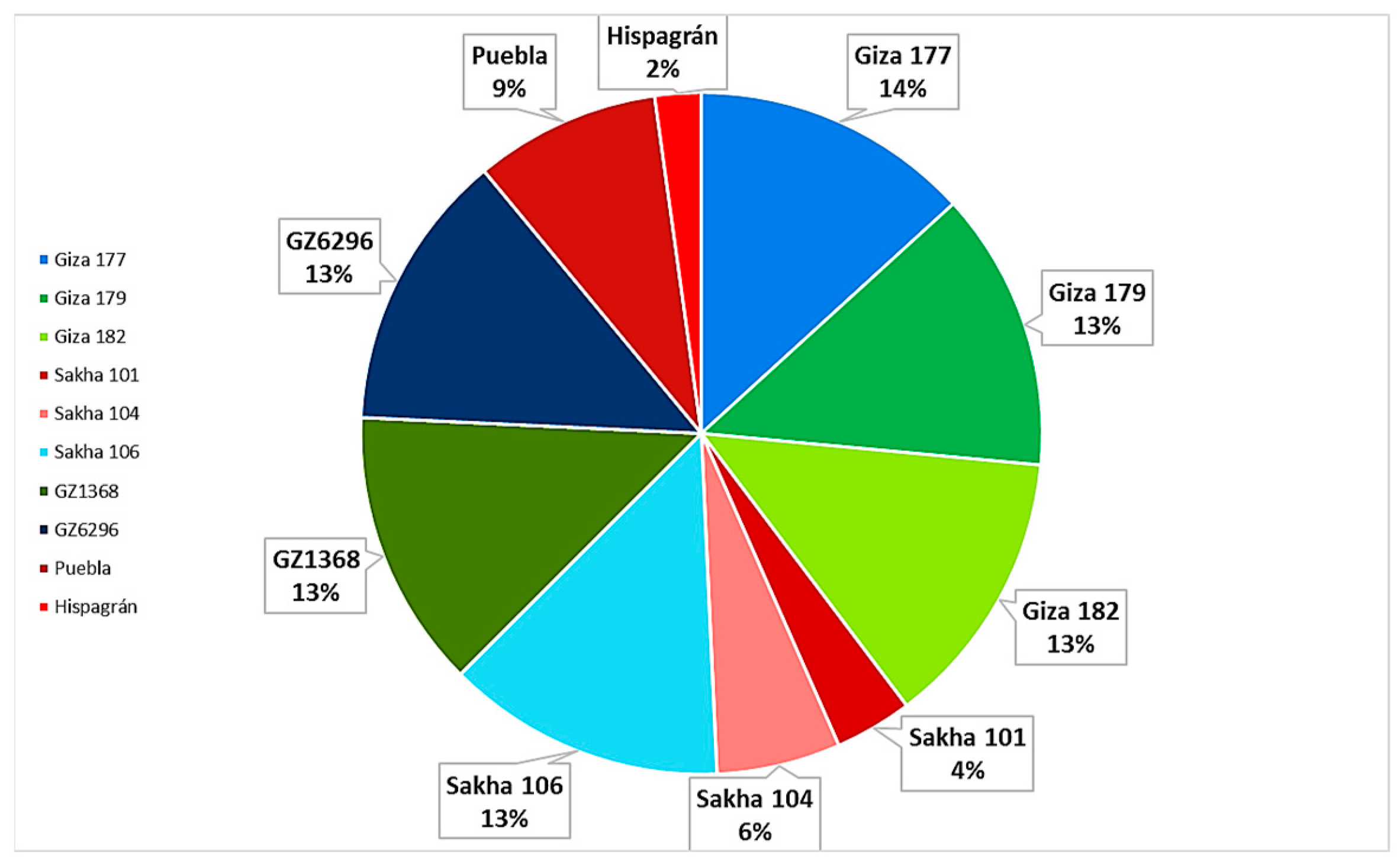
The results (Table 8, Figure 2) show that Hispagrán is highly susceptible with a resistance percentage of 16.6%.
Table 8.
Genotypes reactions under artificial inoculation against 18 rice blast races.
Figure 2.
Blast resistance percentage of the ten rice genotypes. (1) Giza 177, (2) Giza 179, (3) Giza 182, (4) Sakha 101, (5) Sakha 104, (6) Sakha 106, (7) GZ1368-5-5-4, (8) GZ6296-12-1-2-1-1, (9) Puebla, (10) Hispagrán.
Sakha 101 was also highly susceptible with a resistance percentage of 27.7%. While Sakha 104 was susceptible, its resistance to the eighteen isolates was 44.4%, and Puebla was susceptible with a resistance of 66.6%. The other Egyptian varieties showed 100% resistance.
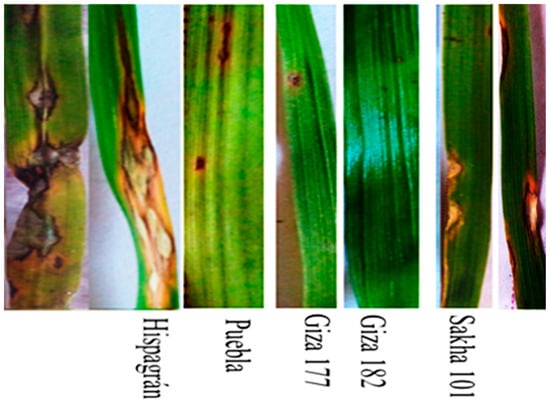
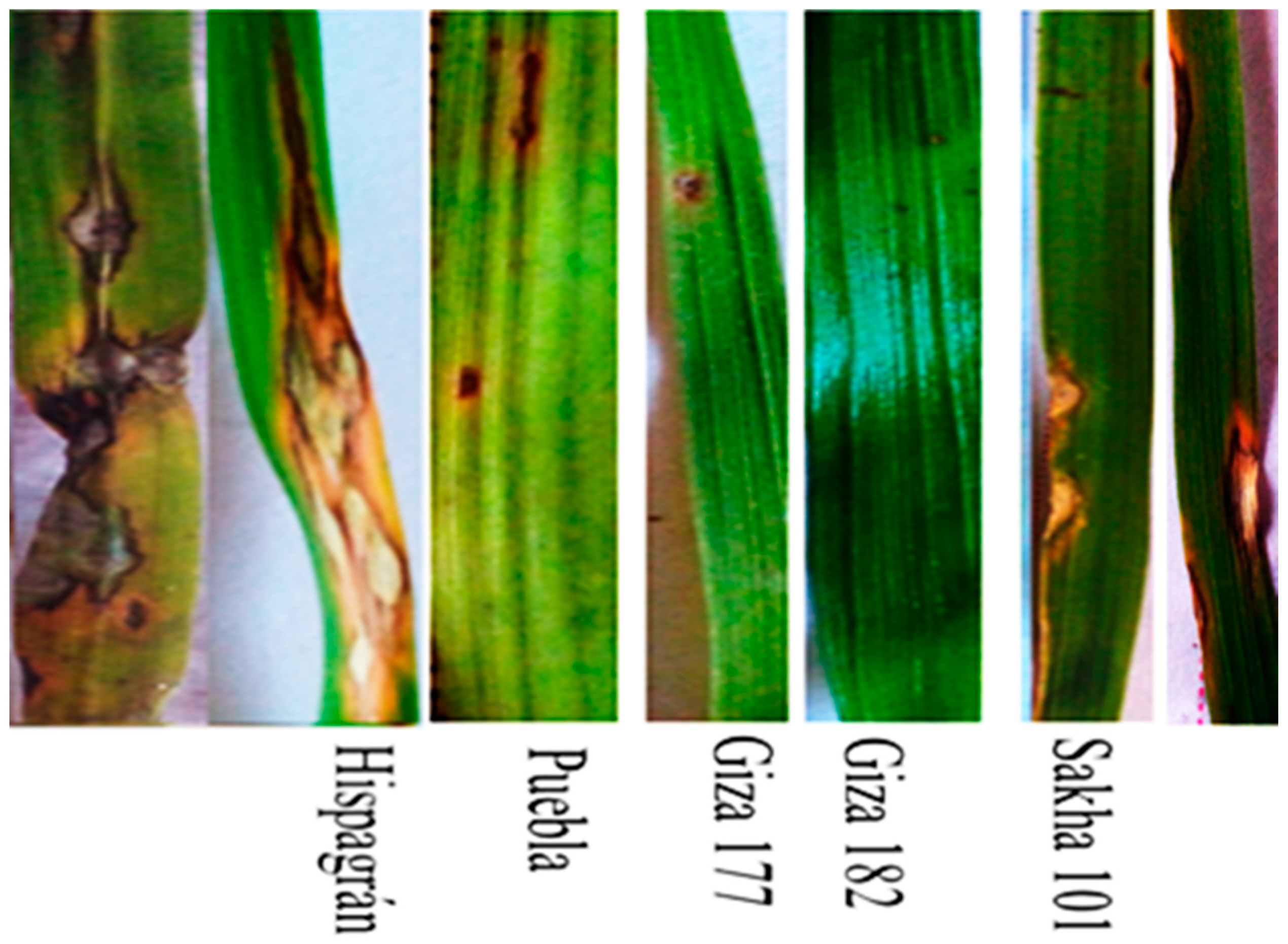
Figure 3 shows the leaf blast lesions formed from infection by isolate number 11 (race II-1) on the highly susceptible varieties Hispagrán and Sakha 101, susceptible variety Puebla, and resistant varieties Giza 182 and Giza 177.
Figure 3.
Leaf blast lesions on some varieties.
3.4. Blast Gene Identification Based on Markers
The selected rice genotypes and individual plants of F2 populations obtained from the crosses of Giza 177 × Hispagrán and Giza 177 × were subjected to screening blast resistance genes using DNA markers. Three primers (SCAR, CAPS, and STS markers) were used to identify blast resistance genes, as shown in Figure 4, Figure 5, Figure 6, Figure 7, Figure 8, Figure 9, Figure 10 and Figure 11. The distribution of the resistance genes and their expected bands are presented in Table 9 and Table 10.
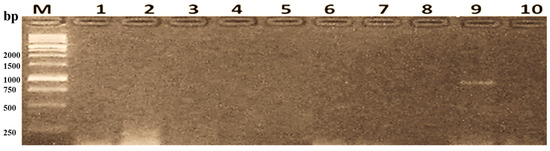
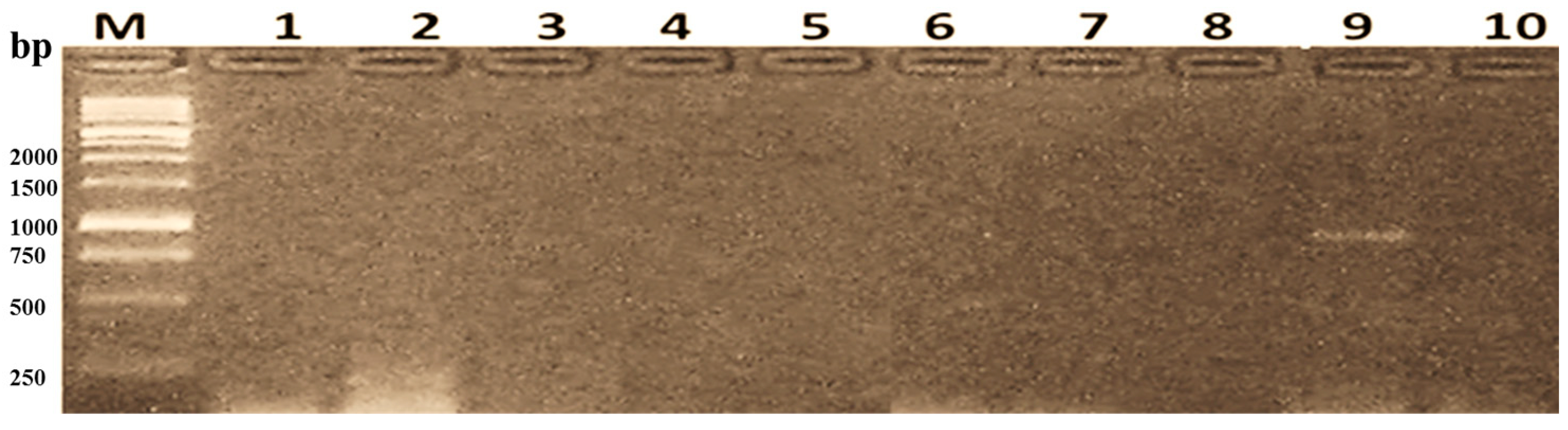
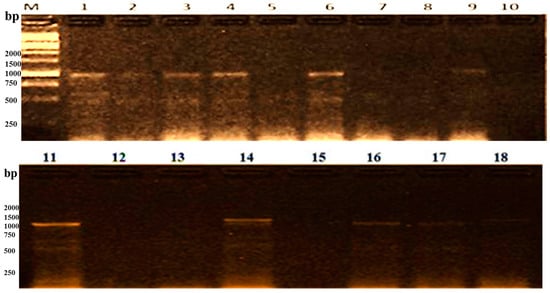
Figure 4.
Screening of the ten rice genotypes under study using the dominant STS marker YL155/YL87 for Pita2; (1) Giza 177, (2) Giza 179, (3) Giza 182, (4) Sakha 101, (5) Sakha 104, (6) Sakha 106, (7) GZ1368-5-5-4, (8) GZ6296-12-1-2-1-1, (9) Puebla, (10) Hispagrán, (M) ferments as 1000 bp ladder.
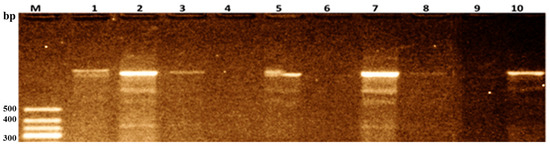
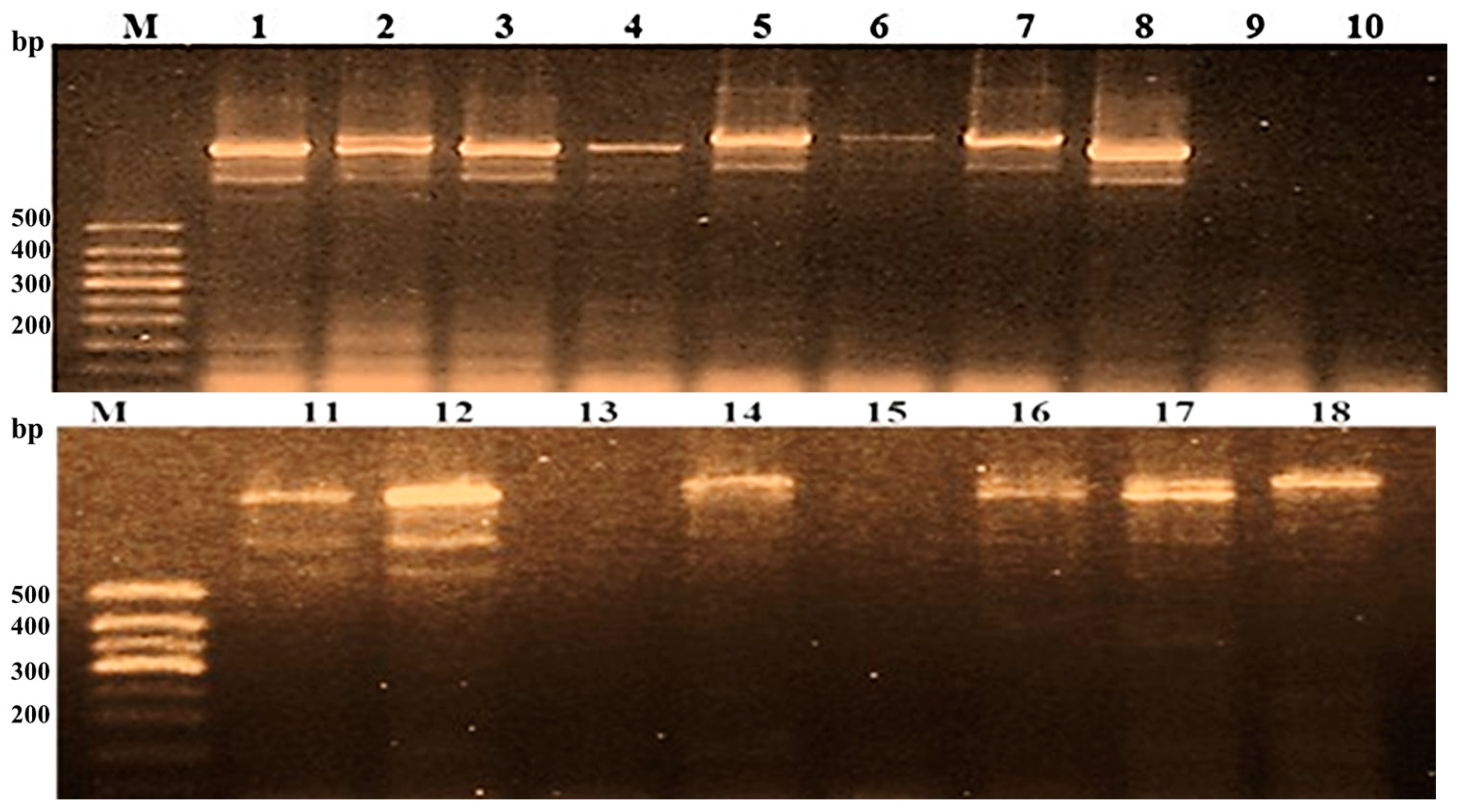
Figure 5.
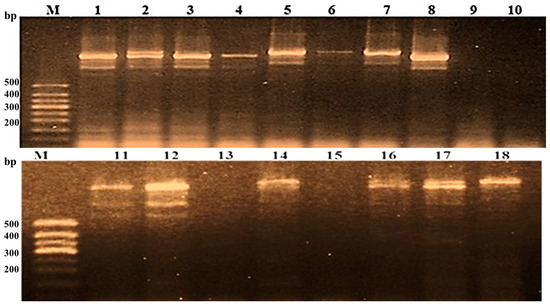
Screening of the eighteen F2 individual plants of the cross Puebla × Giza 177 using the dominant STS marker YL155/YL87.
Figure 6.
Screening of the ten rice genotypes under study using SCAR marker RG64-431/RG64-432 closely linked to Pi2 gene; (1) Giza 177, (2) Giza 179, (3) Giza 182, (4) Sakha 101, (5) Sakha 104, (6) Sakha 106, (7) GZ1368-5-5-4, (8) GZ6296-12-1-2-1-1, (9) Puebla, (10) Hispagrán, (M) ferments as 50 bp ladder.
Figure 7.
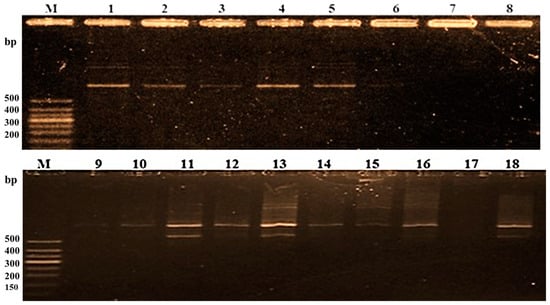
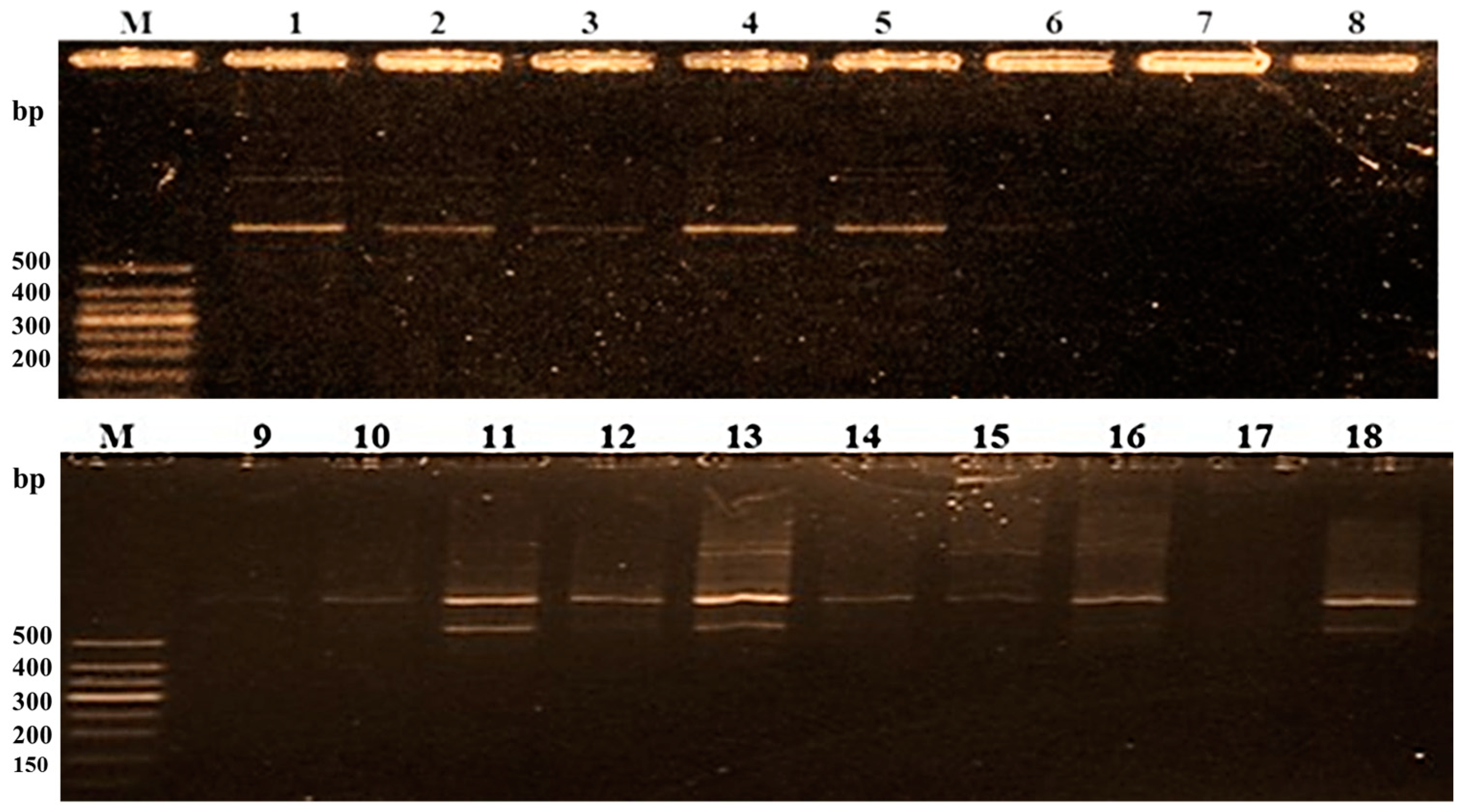
Screening of the eighteen F2 individual plants of the cross Puebla × Giza 177 using CAPS marker RG64-431/RG64-432.
Figure 8.
Screening of the eighteen F2 individual plants of the cross Hispagrán × Giza 177 using CAPS marker RG64-431/RG64-432.
Figure 9.
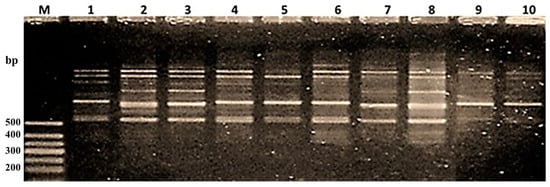
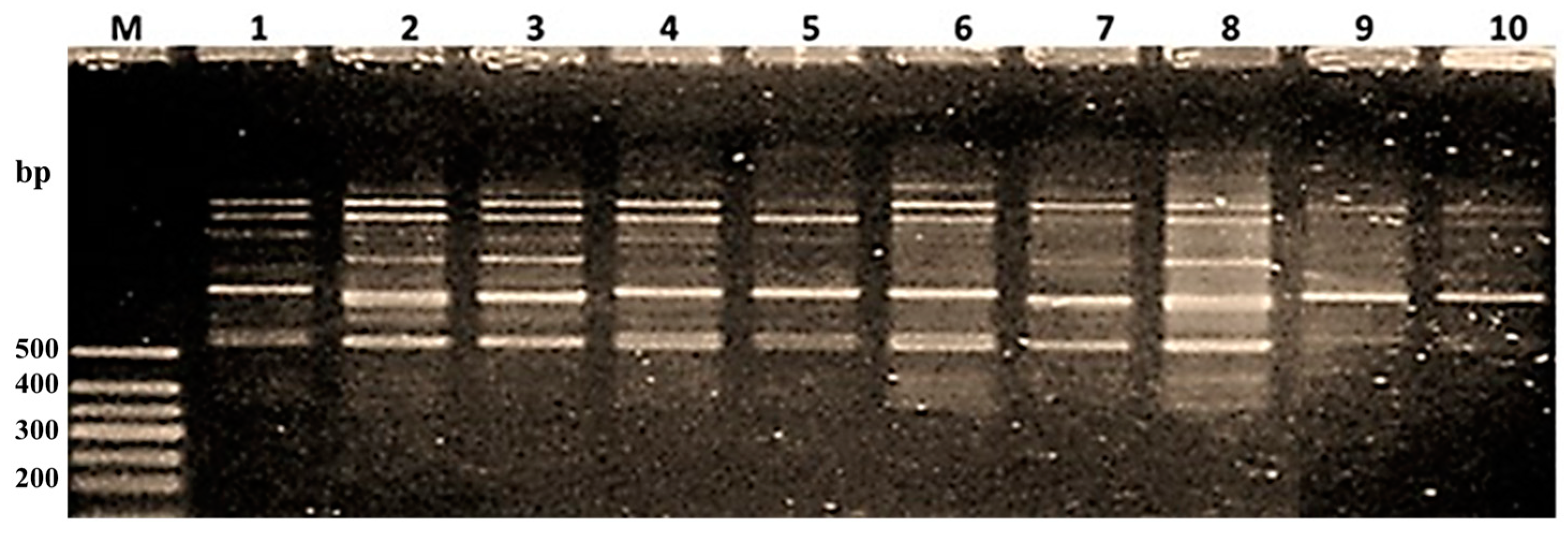
Screening of the ten rice genotypes under study using SCAR marker PBA12; (1) Giza 177, (2) Giza 179, (3) Giza 182, (4) Sakha 101, (5) Sakha 104, (6) Sakha106, (7) GZ1368-5-5-4, (8) GZ6296-12-1-2-1-1, (9) Puebla, (10) Hispagrán, (M) ferments as 50 bp ladder.
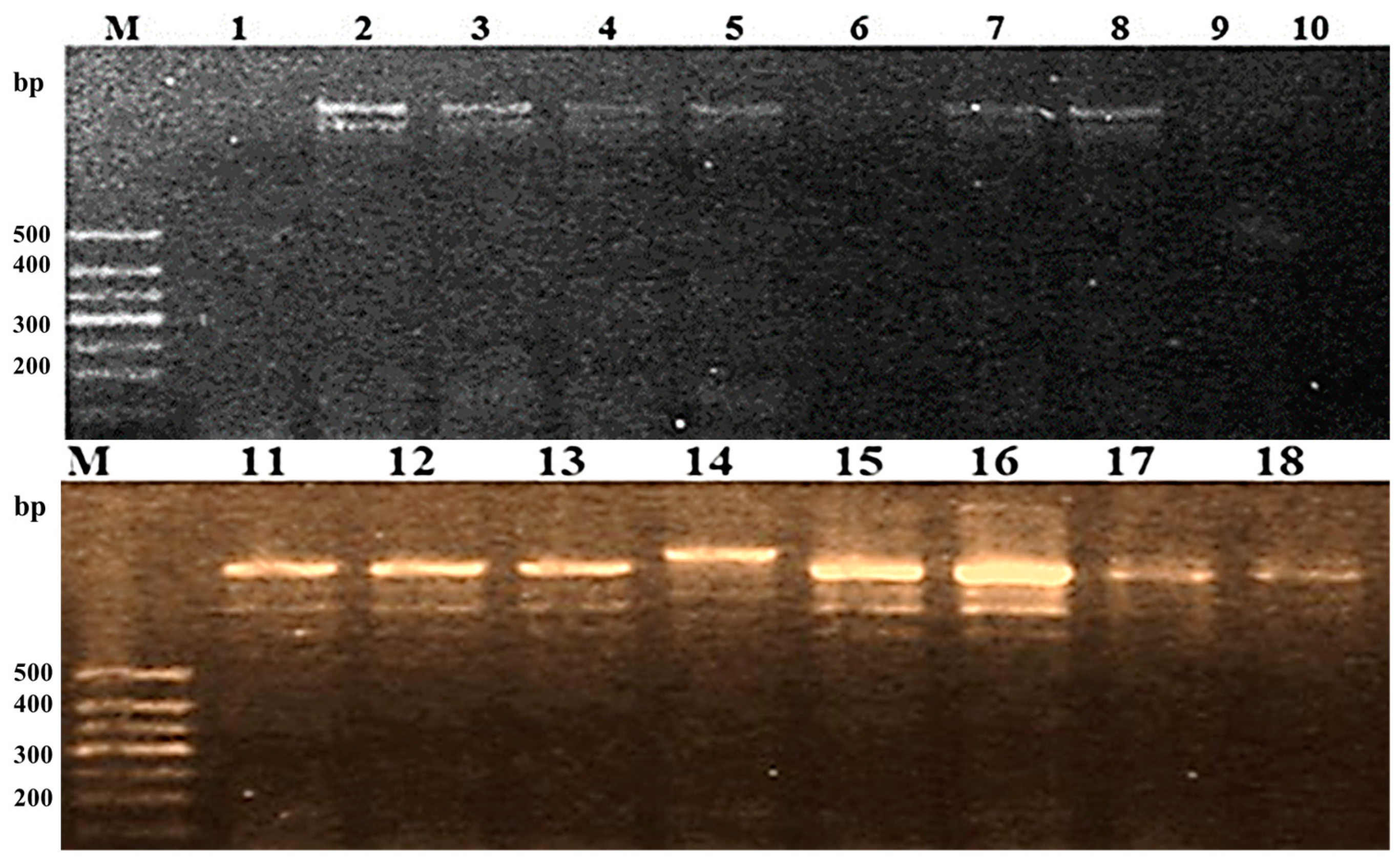
Figure 10.
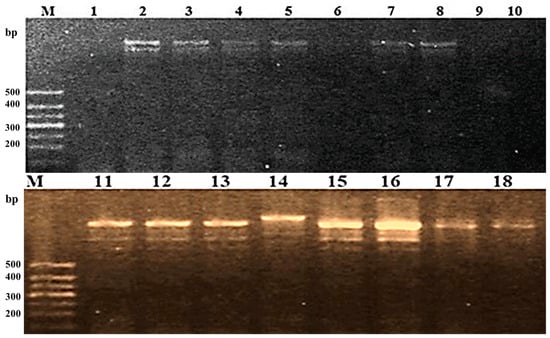
Screening of the eighteen F2 individual plants of the cross Puebla × Giza 177 using SCAR marker PBA12.
Figure 11.
Screening of the eighteen F2 individual plants of the cross Hispagrán × Giza 177 using SCAR marker PBA12.
Table 9.
Survey of the expected DNA fragments of the three primers in ten rice genotypes.
Table 10.
DNA fragments of the three primers in the F2 population Giza 177 × Puebla (F2a) and Giza 177 × Hispagrán (F2b).
The dominant molecular markers YL155 and YL187 are developed to amplify the expected bands with a molecular weight of 1040 bp for the Pita2 resistance gene [49]. The data of Figure 4 confirm the presence/absence of the Pita2 gene. The expected band (1040 bp) was polymorphic and found in one genotype, only in the susceptible introduced variety Puebla (Table 9). Notwithstanding, the gene Pita2 is absent in Giza 177 and was not inherited from its parents.
Synchronization, screening eighteen F2 plants of the cross Puebla × Giza 177, was a crucial potential to validate the presence of Pita2. The dominant allele was inherited by eleven plants, as indicated in Figure 5 and Table 10. The relationship between Pita and Pita2 was established by Meng et al. [10] in the Philippines and Burundi, who concluded that Pita2-mediated field resistance was relatively prevalent. Furthermore, reports suggest that Pita2 conferred a broader resistance spectrum than Pita [21,22]. In this study, we found that using Japanese cultivars, the resistance percentage of these genes was equal to the Pita and Pita2 genes (44%), making the gene susceptible under the conditions characteristic of 2022 in Egypt (Table 7).
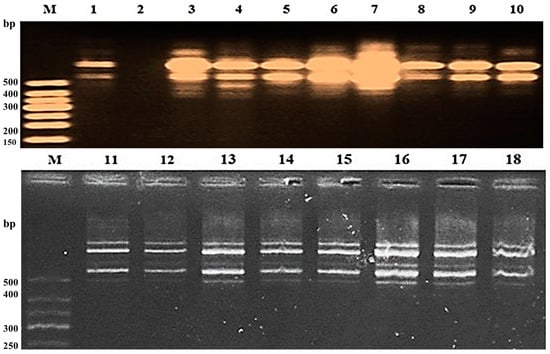
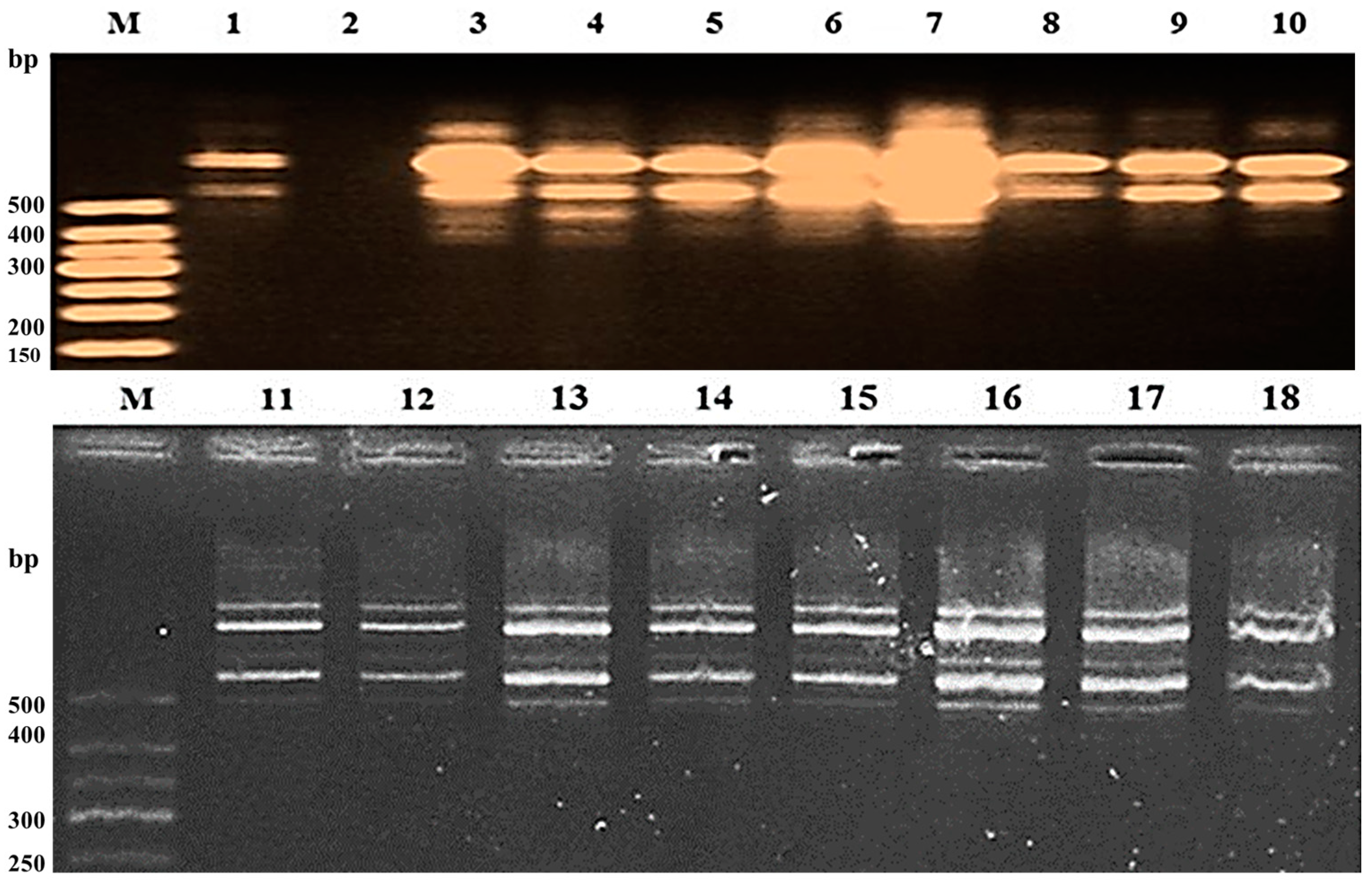
Cleaved amplified polymorphic sequence (CAPS) marker RG64-431/RG64-432 is closely linked to Pi2, which is located on chromosome 6 [50]. It amplified the nine polymorphic fragments ranged from 1450 bp to 100 bp and the expected band with molecular size 1040 bp in the ten studied varieties as specified in Table 9. The desired constructive Pi2 gene pool was found in Giza 177, Giza 179, and GZ1368-5-5-4, which exhibited all nine bands, while Pi2 alleles did not exist in Sakha 101 and Sakha 106. The marker reveals only one band with the same molecular size of 1400 bp in the susceptible variety Puebla and resistant variety GZ6296-12-1-2-1-1. Among genotypes, Sakha 104 gave five bands and Hispagrán gave seven bands.
Eighteen individual F2 plants generated from Giza 177 ×Puebla were screened for Pi2 (Table 10, Figure 7). The expected band with a molecular size of 1400 bp was amplified in twelve plants. The fragment with a molecular size of 250 pb was absent in all plants. Figure 7 shows that eight alleles were accumulated in one plant, and another two plants were devoid of Pi2 bands. Also, four plants carried seven bands, and two plants showed the presence of only one band. It was distinguished that no plant contained all fragments analog to Giza 177. From the standpoint of population genetics, the most elementary step in evolution is a change in gene frequency [51].
Analyzing R-genes in the F2 population has advanced our understanding of gene architecture and accumulations. Eighteen F2 Giza 177 × Hispagrán individual plants were amplified with CAPS marker RG64-431/RG64-432, as shown in Figure 8; the maximum number of amplified fragments was five. Four plants were destitute of the Pi2 allele and only one plant gave five fragments, while thirteen plants showed the expected band (1400 bp).
F2 plants Giza 177 × Puebla give more significant accumulation and variation of alleles of the Pi2 gene than F2 Giza 177 × Hispagrán plants. It makes the F2 population driven from Giza 177 × Puebla contain a better chance to have a superior allele for the Pi2 gene.
The SCAR (sequence characterized amplified region) marker is a co-dominant marker that detected twelve polymorphic bands with molecular sizes ranging from 2000 bp to 350 bp and two monomorphic bands with molecular sizes of 1400 bp and 1500 bp. The varieties that showed the expected band with a molecular size of 400 bp (Table 9, Figure 9) were Giza 179, Sakha 106, and GZ6296-12-1-2-1-1. Moreover, GZ6296-12-1-2-1-1 is an indica variety that amplified the largest number of fragments (11), so this variety is considered a genetic pool for Pi9. It is also regarded as an important source of this gene in breeding programs by hybridization to produce broad-spectrum resistant varieties to blast disease [52,53]. These results agree with Wu et al. [54], who reported that Pi9 was only present in indica-type accessions.
For Giza 177 × Puebla, eighteen F2 plants were evaluated with a SCAR marker; the bands’ patterns are shown in Figure 10 and Table 10. Accumulating five bands in one plant and two plants devoid of bands, we could conclude that all fragments did not inherit from the two parents. The majority of plants assembled one band.
The second-generation plants derived from Giza 177 × Hispagrán ranged from one individual plant containing 13 fragments to a plant devoid of fragments; these results are illustrated by Figure 11. The expected fragment with a molecular size of 400 bp was found in four plants. The difference and diversity in the fragments are evidence of the widening of the genetic base pool of this gene and increased allelic diversity within the F2 plants resulting from a cross between a resistant father (Giza 177) and a highly susceptible father (Hispagrán), while the genetic base was less for plants produced between a resistant father and a susceptible father only (Puebla). Allele combination is of utmost importance for the utilization of genetic resources in crop improvement as well as using different genomes for efficient utilization to increase allelic diversity at the Pi9 gene in terms of improving the blast resistance trait.
Traditional breeding by introducing varieties and hybridizing is an effective way to pyramiding genes not only to face the instability of blast physiological races but also to increase the ability of the varieties to adapt to climate change and drought because these conditions increase the severity of blast disease. As the variety Puebla is susceptible under Egyptian conditions, it contains the Pita2 gene, which contributed to the evolution of the blast resistance trait.
A major goal of DNA markers is to uncover the genetic and molecular architecture that underlies phenotypes and to identify the genotypes and phenotypes that underlie adaptation to divergent environments. Genotypic diversity usually results from the addition or deletion of the entire repeat units or motifs. Therefore, different individuals exhibit variations as differences in repeat numbers. In other words, the polymorphisms observed in markers are the result of differences in the number of repeats of the motif caused by polymerase strand slippage in DNA replication or by recombination errors. Uncovering alleles in F2 plants is the key to producing evolutional varieties, as rice blast resistance traits are not only qualitative or quantitative but both together. These traits are called threshold traits, which are polygenic and expressed in categories and give two types of resistance: partial (quantitative) and complete (qualitative).
4. Conclusions
Our findings suggest that aggregating all alleles of blast broad-spectrum resistant genes is difficult. The detection of fragments associated with the gene using molecular markers to clarify its presence and absence in plants is an important tool to help in the selection of second-generation plants to save time and effort, in addition to choosing parents in hybridization programs. The use of co-dominant molecular markers is important to elucidate the fragments related to the presence of the gene, and then to clarify the presence of re-combinations to form a new allele that may be effective in resistance in the offspring. Also, not using molecular scanning of parents before hybridization for a studied trait and confirming the transmission of the trait to the second generation after phenotypic selection is considered blind selection and depends on throwing dice.
Author Contributions
Conceptualization, W.M.E. and N.N.B.; methodology, A.E.-a.T.; software, N.N.B.; validation, N.N.B., A.M.M. and A.E.-a.T.; formal analysis, N.N.B.; investigation, A.E.-a.T.; resources, W.M.E.; data curation, A.M.M.; writing—original draft preparation, W.M.E.; writing—review and editing, J.Z.; visualization, A.E.-a.T.; supervision, A.M.M.; project administration, N.N.B.; funding acquisition, J.Z. All authors have read and agreed to the published version of the manuscript.
Funding
This research received no external funding.
Institutional Review Board Statement
Not applicable.
Data Availability Statement
Data are contained within the article.
Acknowledgments
This work was supported by the Research Excellence Programme of the Hungarian University of Agriculture and Life Sciences.
Conflicts of Interest
The authors declare no conflicts of interest.
References
- Simkhada, K.; Thapa, R. Rice Blast, A Major Threat to the Rice Production and its Various Management Techniques. Turk. J. Agric. Food Sci. Technol. 2022, 10, 147–157. [Google Scholar] [CrossRef] [Scilit]
- Zhang, H.; Zheng, X.; Zhang, Z. The Magnaporthe grisea species complex and plant pathogenesis. Mol. Plant Pathol. 2016, 17, 796–804. [Google Scholar] [CrossRef] [Scilit] [PubMed]
- Wilson, R.A.; Talbot, N.J. Under pressure: Investigating the biology of plant infection by Magnaporthe oryzae. Nat. Rev. Microbiol. 2009, 7, 185–195. [Google Scholar] [CrossRef] [Scilit]
- Miah, G.; Rafii, M.Y.; Ismail, M.R.; Puteh, A.B.; Rahim, H.A.; Asfaliza, R.; Latif, M.A. Blast resistance in rice: A review of conventional breeding to molecular approaches. Mol. Biol. Rep. 2013, 40, 2369–2388. [Google Scholar] [CrossRef] [Scilit]
- Reddy, A.P.k. Recent epidemics of rice blast in India and Egypt. Plant Dis. 1987, 71, 850. [Google Scholar] [CrossRef] [Scilit]
- Qu, S.; Liu, G.; Zhou, B.; Bellizzi, M.; Zeng, L.; Dai, L.; Han, B.; Wang, G.L. The broad-spectrum blast resistance gene Pi9 encodes a nucleotide-binding site leucine-rich repeat protein and is a member of a multigene family in rice. Genetics 2006, 172, 1901–1914. [Google Scholar] [CrossRef] [Scilit]
- Kou, Y.; Wang, S. Broad-spectrum and durability: Understanding of quantitative disease resistance. Curr. Opin. Plant Biol. 2010, 13, 181–185. [Google Scholar] [CrossRef] [Scilit]
- Li, W.; Wang, K.; Chern, M.; Liu, Y.; Zhu, Z.; Liu, J.; Zhu, X.; Yin, J.; Ran, L.; Xiong, J.; et al. Sclerenchyma cell thickening through enhanced lignification induced by OsMYB30 prevents fungal penetration of rice leaves. New Phytol. 2020, 226, 1850–1863. [Google Scholar] [CrossRef] [Scilit] [PubMed]
- Kawano, Y.; Kawano-Kaneko, T.; Shimamoto, K. Rho family GTPase-dependent immunity in plants and animals. Front. Plant Sci. 2014, 5, 522. [Google Scholar] [CrossRef] [Scilit] [PubMed]
- Meng, X.; Xiao, G.; Jeanie, M.; Yanoria, T.; Siazon, P.M.; Padilla, J.; Opulencia, R.; Bigirimana, J.; Habarugira, G.; Wu, J.; et al. The broad-spectrum rice blast resistance (R) gene Pita2 encodes a novel R protein unique from Pita. Rice 2020, 13, 1–15. [Google Scholar] [CrossRef] [Scilit] [PubMed]
- Lopez-Moya, F.; Suarez-Fernandez, M.; Lopez-Llorca, L.V. Molecular mechanisms of chitosan interactions with fungi and plants. Int. J. Mol. Sci. 2019, 20, 332. [Google Scholar] [CrossRef] [Scilit] [PubMed]
- Yamasaki, Y.; Kiyosawa, S. Studies on inheritance of resistance of rice varieties to blast. 1. Inheritance of resistance of Japanese varieties to several strains of the fungus. Bull. Natl. Inst. Agric. Sci. 1966, 14, 39–69. [Google Scholar]
- Sharma, T.R.; Rai, A.K.; Gupta, S.K.; Vijayan, J.; Devanna, B.N.; Ray, S. Rice blast management through host-plant resistance: Retrospect and prospects. Agric. Res. 2012, 1, 37–52. [Google Scholar] [CrossRef] [Scilit]
- Liu, X.Q.; Wei, J.L.; Zhang, J.C.; Wang, C.T.; Liu, X.Q.; Zhang, X.M.; Wang, L.; Pan, Q.H. Genetic Variation of Rice Blast Resistance Genes in Oryza sativa and Its Wild Relatives. Int. J. Plant Sci. 2011, 172, 970–979. [Google Scholar] [CrossRef] [Scilit]
- Ashkani, S.; Rafii, M.Y.; Shabanimofrad, M.; Ghasemzadeh, A.; Ravanfar, S.A.; Latif, M.A. Molecular progress on the mapping and cloning of functional genes for blast disease in rice (Oryza sativa L.): Current status and future considerations. Crit. Rev. Biotechnol. 2016, 36, 353–367. [Google Scholar] [CrossRef] [Scilit]
- Lei, C.; Hao, K.; Yang, Y.; Ma, J.; Wang, S.; Wang, J.; Cheng, Z.; Zhao, S.; Zhang, X.; Guo, X.; et al. Identification and fine mapping of two blast resistance genes in rice cultivar 93–11. Crop J. 2013, 1, 2–14. [Google Scholar] [CrossRef] [Scilit]
- Deng, Y.; Zhai, K.; Xie, Z.; Yang, D.; Zhu, X.; Liu, J.; Wang, X.; Qin, P.; Yang, Y.; Zhang, G.; et al. Epigenetic regulation of antagonistic receptors confers rice blast resistance with yield balance. Science 2017, 355, 962–965. [Google Scholar] [CrossRef] [Scilit] [PubMed]
- Zhao, H.; Wang, X.; Jia, Y.; Minkenberg, B.; Wheatley, M.; Fan, J.; Jia, M.H.; Famoso, A.; Edwards, J.D.; Wamishe, Y.; et al. The rice blast resistance gene Ptr encodes an atypical protein required for broad-spectrum disease resistance. Nat. Commun. 2018, 9, 2039. [Google Scholar] [CrossRef] [Scilit] [PubMed]
- Xie, Z.; Yan, B.; Shou, J.; Tang, J.; Wang, X.; Zhai, K.; Liu, J.; Li, Q.; Luo, M.; Deng, Y.; et al. A nucleotide-binding site-leucine-rich repeat receptor pair confers broad-spectrum disease resistance through physical association in rice. Philos. Trans. R. Soc. B 2019, 374, 20180308. [Google Scholar] [CrossRef] [Scilit] [PubMed]
- Meng, Q.; Gupta, R.; Min, C.W.; Kim, J.; Kramer, K.; Wang, Y.; Park, S.R.; Finkemeier, I.; Kim, S.T. A proteomic insight into the MSP1 and flg22 induced signaling in Oryza sativa leaves. J. Proteom. 2019, 196, 120–130. [Google Scholar] [CrossRef] [Scilit]
- Kiyosawa, S. Gene analysis of blast resistance in exotic varieties of rice (1971). JPN Agric. Res. Quart. 1971, 6, 1–8. [Google Scholar]
- Rybka, K.; Miyamoto, M.; Ando, I.; Saito, A.; Kawasaki, S. High resolution mapping of the Indica-derived rice blast resistance genes II. Pi-ta2 and Pi-ta and a consideration of their origin. Mol. Plant-Microbe Interact. 1997, 10, 517–524. [Google Scholar] [CrossRef] [Scilit]
- Dai, Y.; Jia, Y.; Correll, J.; Wang, X.; Wang, Y. Diversification and evolution of the avirulence gene AVR-Pita1 in field isolates of Magnaporthe oryzae. Fungal Genet. Biol. 2010, 47, 973–980. [Google Scholar] [CrossRef] [Scilit] [PubMed]
- Xiao, N.; Wu, Y.; Pan, C.; Yu, L.; Chen, Y.; Liu, G.; Li, Y.; Zhang, X.; Wang, Z.; Dai, Z.; et al. Improving of rice blast resistances in Japonica by pyramiding major R genes. Front. Plant Sci. 2017, 7, 1918. [Google Scholar] [CrossRef] [Scilit]
- Gladieux, P.; Oosterhout, C.V.; Fairhead, S.; Jouet, A.; Ortiz, D.; Ravel, S.; Shrestha, R.K.; Frouin, J.; He, X.; Zhu, Y.; et al. Extensive immune receptor repertoire diversity in disease-resistant rice landraces. Curr. Biol. 2024, 34, 3983–3995. [Google Scholar] [CrossRef] [Scilit]
- Zhou, S.X.; Zhu, Y.; Wang, L.F.; Zheng, Y.P.; Chen, J.F.; Li, T.T.; Yang, X.M.; He, W.; Li, X.P.; Ma, X.C.; et al. Osa-miR1873 fine-tunes rice immunity against Magnaporthe oryzae and yield traits. J. Integr. Plant Biol. 2020, 62, 1213–1226. [Google Scholar] [CrossRef] [Scilit] [PubMed]
- Hayashi, K.; Yoshida, H.; Ashikawa, I. Development of PCR-based allele-specific and InDel marker sets for nine rice blast resistance genes. Theor. Appl. Genet. 2006, 113, 251–260. [Google Scholar] [CrossRef] [Scilit] [PubMed]
- Wang, Z.; Jia, Y.; Rutger, J.N.; Xia, Y. Rapid survey for presence of a blast resistance gene Pi-ta in rice cultivars using the dominant DNA markers derived from portions of the Pi-ta. Plant Breed. 2007, 126, 36–42. [Google Scholar] [CrossRef] [Scilit]
- Susan, A.; Yadav, M.K.; Kar, S.; Aravindan, S.; Ngangkham, U.; Raghu, S.; Prabhukarthikeyan, S.R.; Keerthana, U.; Mukherjee, S.C.; Salam, J.L.; et al. Molecular identification of blast resistance genes in rice landraces from Northeastern India. Plant Pathol. 2019, 68, 537–554. [Google Scholar] [CrossRef] [Scilit]
- IRRI. International Rice Research Descriptors for Rice; IRRI: Los Banos Laguna, Philippines, 1996; 52p. [Google Scholar]
- Burton, G.W. Quantitative inheritance in grasses. In Proceedings of the 6th International Grassland Congress, State College, PA, USA, 17–23 August 1952; Volume 1, pp. 277–283. [Google Scholar]
- Johnson, H.W.; Robinson, H.F.; Constock, R.E. Estimates of genetic and environmental variability in soybean. Agron. J. 1955, 47, 314–318. [Google Scholar] [CrossRef] [Scilit]
- Kulmitra, A.K.; Sahu, N.; Sahu, M.K.; Kumar, R.; Kushram, T.; Kumar, V.B. Growth of Rice Blast Fungus Pyricularia oryzae (Cav.) on Different Solid and Liquid Media. Int. J. Curr. Microbiol. Appl. Sci. 2017, 6, 1154–1160. [Google Scholar] [CrossRef] [Scilit]
- IRRI. Standard Evaluation System for Rice, 3rd ed.; International Rice Testing Programme: Manila, Philippines, 2013. [Google Scholar]
- Jodon, N.E. Experiments on artificial hybridization of rice. J. Am. Soc. Agron. 1938, 30, 294–305. [Google Scholar] [CrossRef] [Scilit]
- Butany, W.T. Mass emasculation in rice. Intern. Rice Com. Newsletter 1961, 9, 9–13. [Google Scholar]
- Murray, M.G.; Thompson, W. Rapid isolation of high molecular weight plant DNA. Nucleic Acids Res. 1980, 8, 4321–4325. [Google Scholar] [CrossRef] [Scilit] [PubMed]
- Bassam, B.J.; Caetano-Anolles, G.; Gresshoff, P.M. Fast and sensitive silver staining of DNA in polyacrylamide gels. Anal. Biochem. 1991, 196, 80–83. [Google Scholar] [CrossRef] [Scilit]
- Suh, J.P.; Roh, J.H.; Chop, Y.C.; Han, S.S.; Kim, Y.G.; Jena, K.K. The Pi40 gene for durable resistance to rice blast and molecular analysis of Pi-40 advanced backcross breeding lines. Phytopathology 2009, 99, 243–250. [Google Scholar] [CrossRef] [Scilit] [PubMed]
- Hittalmani, S.; Foolad, M.R.; Mew, T.; Rodriguez, R.L.; Hung, N. Development of a PCR-based marker to identify rice blast resistance gene, pi-2(t), in a segregating population. Theor. Appl. Genet. 1995, 91, 9–14. [Google Scholar] [CrossRef] [Scilit]
- Liu, G.; Lu, G.; Zeng, L.; Wang, G.L. Two broad-spectrum blast resistance genes, Pi9(t) and Pi2(t), are physicallylinked on rice chromosome 6. Mol. Genet. Genom. 2003, 267, 472–480. [Google Scholar] [CrossRef] [Scilit] [PubMed]
- Draz, A.E.; Badawi, A.T.; Aidy, I.R.; El-Hissewy, A.A.; Maximos, M.A.; Bastawisi, A.O.; El-Kady, A.A.; El-Mowafi, H.F.; El-Abd, A.B.; Abd Allah, A.A.; et al. Sakha 101 a high yielding, Short grain rice variety. Egypt. J. Agric. Res. 2004, 82, 29–42. [Google Scholar]
- Abd Allah, A.A.; Badawy, S.A.; Badawi, A.T. Strategies and Methodologies of Improving Rice Varieties in Egypt. Egypt. J. Agron. 2012, 34, 201–211. [Google Scholar] [CrossRef] [Scilit]
- Smalley, M.D.; Daub, J.L.; Hallauer, A.R. Estimation of heritability in maize by parent offspring regression. Maydica 2004, 49, 221–229. [Google Scholar]
- Badawi, T. Rice research accomplishments in Egypt. In Activités de Recherche sur le riz en Climat Méditerranéen: Actes du Séminaire D’Arles; Chataigner, J., Ed.; CIHEAM-IAMM: Montpellier, France; 194p, (Cahiers Options Méditerranéennes; n. 24(2)). Consultation Technique du Réseau Coopératif Interrégional FAO/REU/RNE de Recherche sur le Riz en Climat Méditerranéen, 1996/09/04-07, Arles (France); Available online: http://om.ciheam.org/option.php?IDOM=736 (accessed on 23 June 2014).
- Castejón-Muñoz, M.; Lara-Álvarez, I.; Aguilar, M. Resistance of rice cultivars to Pyricularia oryzae in Southern Spain. Span. J. Agric. Res. 2007, 5, 59–66. [Google Scholar] [CrossRef] [Scilit]
- Awadallah, M.M.; Taha, A.S.; Tahoon, A.M. Genetic Variability, Insect and Disease Resistance of some Promising Rice Genotypes. J. Plant Pathol. 2021, 12, 413–421. [Google Scholar] [CrossRef] [Scilit]
- Sehly, M.R.; Osman, Z.H.; Salem, E.A. Rice diseases. In Rice in Egypt; Rice Research and Training Center, Field Crop Research Institute: Giza, Egypt, 2002; p. 301. [Google Scholar]
- Yan, L.; Yan, B.Y.; Peng, Y.L.; Ji, Z.J.; Zeng, Y.X.; Wu, H.L.; Yang, C.D. Molecular Screening of Blast Resistance Genes in Rice Germplasms Resistant to Magnaporthe oryzae. Rice Sci. 2017, 24, 41–47. [Google Scholar] [CrossRef] [Scilit]
- Yu, Z.H.; Mackill, D.J.; Bonman, J.M.; Tanksley, S.D. Tagging genes for blast resistance in rice via linkage to RFLP markers. Theor. Appl. Genet. 1991, 81, 471–476. [Google Scholar] [CrossRef] [Scilit]
- Kimura, M.; Crow, J.F. The number of alleles that can be maintained in a finite population (1964). Genetics 1964, 49, 725–738. [Google Scholar] [CrossRef] [Scilit]
- Wu, Y.; Yua, L.; Xiao, N.; Dia, Z.; Li, Y.; Pan, C.; Zhang, X.; Liu, G.; Li, A. Characterization and evaluation of rice blast resistance of Chinese indica hybrid rice parental lines. Crop J. 2017, 5, 509–517. [Google Scholar] [CrossRef] [Scilit]
- Nizolli, V.O.; Pegoraro, C.; Oliveira, A.C. Rice blast: Strategies and challenges for improving genetic resistance. Crop Breed. Appl. Biotechnol. 2021, 21, 1–15. [Google Scholar] [CrossRef] [Scilit]
- Wu, Y.; Xiao, N.; Yu, L.; Pan, C.; Li, Y.; Zhang, X.; Liu, G.; Dai, Z.; Pan, X.; Li, A. Combination Patterns of Major R Genes Determine the Level of Resistance to the M. oryzae in Rice (Oryza sativa L.). PLoS ONE 2015, 10, e0126130. [Google Scholar] [CrossRef] [Scilit]

Disclaimer/Publisher’s Note: The statements, opinions and data contained in all publications are solely those of the individual author(s) and contributor(s) and not of MDPI and/or the editor(s). MDPI and/or the editor(s) disclaim responsibility for any injury to people or property resulting from any ideas, methods, instructions or products referred to in the content. |
© 2024 by the authors. Licensee MDPI, Basel, Switzerland. This article is an open access article distributed under the terms and conditions of the Creative Commons Attribution (CC BY) license (https://creativecommons.org/licenses/by/4.0/).