


Abstract
Background/Objectives: Supportive periodontal care (SPC) is an essential part of periodontal therapy to achieve periodontal stability following active periodontal therapy. Adjunctive strategies have been proposed to improve long-term outcomes, including probiotics. Among probiotics, certain Lactobacillus strains have shown potential clinical and microbiological benefits during active periodontal therapy; however, their effectiveness during SPC remains uncertain. Therefore, the main aim of this narrative review is to evaluate whether the adjunctive use of Lactobacillus species during SPC improves clinical periodontal outcomes. Methods: This structured narrative review included an electronic search of PubMed, Embase, and Scopus up to April 2025 using predefined inclusion and exclusion criteria. Two randomized controlled trials (RCTs) met the eligibility criteria and were qualitatively analyzed. No meta-analysis was performed due to heterogeneity in probiotic formulations, intervention protocols, and follow-up periods. Results: Two randomized controlled trials met the inclusion criteria. Iwasaki et al. reported no statistically significant overall intervention effects of heat-killed L. plantarum L-137 on PPD or BOP. However, an isolated statistically significant intergroup difference in PPD reduction was observed at 12 weeks in teeth with at least one site showing a baseline PPD ≥ 4 mm (p < 0.05). This finding should be interpreted cautiously due to the absence of a significant overall intervention effect and its uncertain clinical relevance. Grusovin et al. reported statistically significant intergroup differences in PPD at 3, 6, 9, and 12 months (p < 0.05 at 3 months; p < 0.001 at 6, 9, and 12 months). Significant differences were also observed for BOP at 6 and 9 months (p < 0.001 and p < 0.05, respectively) and PAL at 6 months (p < 0.05). However, no significant intergroup differences were observed for BOP (p = 0.85) or PAL (p = 0.94) at 12 months. Conclusions: Given the extremely limited evidence base, no definitive clinical recommendation can currently be made regarding the routine use of Lactobacillus as an adjunctive therapy during supportive periodontal care.
1. Introduction
Periodontitis is a chronic inflammatory disease whose main etiological factor is dental biofilm [1]. The main aims of active periodontal therapy (APT) are promoting behavior change by motivating the patient to undertake successful removal of supragingival dental biofilm and risk factor control; controlling the subgingival biofilm; treating those areas of the dentition not responding adequately to the second step of therapy; and maintaining periodontal stability in all treated periodontitis patients [1,2]. Supportive periodontal care (SPC) is essential to preserve the results achieved with active periodontal therapy: even in periodontally compromised patients, regular SPC has been shown to maintain periodontal health at most sites, with low mean probing depth and attachment loss after 14 years [3]. Despite the efficacy of SPC, some teeth remain at higher risk of loss during periodontal maintenance, particularly in patients susceptible to periodontitis onset and recurrence. Teeth with complex anatomy, such as maxillary molars, are also more difficult to maintain [4,5]. Residual pockets after APT and furcation involvement are among the most reliable predictive factors for tooth loss in periodontal maintenance. The risk of tooth loss in cases of residual probing pocket depth (PPD) equal to or above 7 mm is increased by 37.9-fold, while grade II and III furcation involvement represents an additional risk for tooth loss, with odds ratios (ORs) of 5.1 and 12.5, respectively [6,7]. More recent evidence has further confirmed that long-term periodontal stability after non-surgical periodontal therapy strongly depends on residual pocket reduction and regular supportive periodontal care attendance, with maintenance compliance representing one of the main predictors of tooth retention and periodontal stability over time [7]. Globally, periodontitis affects a significant portion of the adult population, with severe forms affecting approximately 10–15% of the world’s population [8]. According to the current classification, the disease is staged from I to IV, based on its severity and complexity, and graded from A to C, based on the risk of progression [9].
Specifically, multirooted teeth such as maxillary molars are often more predisposed to progression due to furcation involvement, which creates anatomical areas that are difficult to access during both professional and personal oral hygiene procedures [1,10].
Another crucial point of the SPC is the recall frequency: longer recall intervals seem to be associated with an increased risk of tooth loss. In 1999, Rosen et al. compared recall intervals of 3, 6, 12, and 18 months in a five-year period, measuring parameters such as plaque, bleeding on probing, and attachment levels. Analyses showed a slight advantage for the shorter intervals regarding plaque and bleeding scores, particularly between the 3- and 18-month groups, but no differences were recorded in changes in probing depths and attachment levels, suggesting that recall intervals of up to one year may be sufficient to limit disease progression in individuals with mild susceptibility [11]. Tonetti et al. also highlighted the role of individual susceptibility: in a follow-up of 273 periodontally treated patients, the increase in bleeding pockets was not evenly distributed but was concentrated in highly susceptible patients [12]. Therefore, according to susceptibility, a clear algorithm was needed to assess the frequency of recall. In 2003, in fact, the periodontal risk assessment (PRA) was proposed, considering the percentage of bleeding on probing (BOP), the prevalence of deep residual pockets, tooth loss, and loss of periodontal support in relation to the patient’s age, systemic/genetic conditions, and environmental factors such as smoking. The main aim was to use this multifactorial risk profile to personalize the frequency and content of SPC visits [13]. The PRA model was further validated in 2010 in a study where patients with low or moderate risk were associated with a lower risk of disease recurrence than those at high risk. Furthermore, patient compliance with the individualized maintenance program emerged as a crucial factor [6,14]. This concept was further emphasized in 2019, when it was established that increasing the time between SPC visits leads to periodontal instability and increased tooth loss, while shorter intervals promote greater periodontal stability and a lower rate of tooth loss [15].
Given the importance of long-term periodontal maintenance and the high risk of periodontitis relapses in periodontally susceptible patients, there is an increasing interest in adjunctive therapy that could possibly improve the results of SPC in periodontal care. Among them, probiotics could be valid adjuncts, particularly Lactobacillus species, which have shown promising results as adjunctive therapy in non-surgical periodontal therapy (NSPT), improving several clinical parameters [16,17]. In fact, they have been shown to reduce periodontal probing depth (PPD), bleeding on probing (BOP), and plaque index (PI) [18]. A recent systematic review and meta-analysis by Benavides-Reyes et al. (2025)[17], including 24 studies, reported that adjunctive probiotic administration in patients with periodontitis significantly improved plaque index and bleeding on probing, whereas the reduction in probing pocket depth was statistically significant only at shorter follow-up periods. These findings support the potential role of probiotics as an adjunct to conventional periodontal therapy [17]. However, evidence regarding their effectiveness in the maintenance phase of periodontal therapy remains limited and heterogeneous. Lactobacillus is a genus of Gram-positive, anaerobic or microaerophilic, rod-shaped, non-spore-forming bacteria. As a member of the lactic acid bacteria group, it is characterized by its ability to ferment carbohydrates into lactic acid, thereby lowering the local pH and inhibiting the growth of acid-sensitive pathogens. In the context of oral health, Lactobacillus species are able to compete with periodontal pathogens for adhesion sites on oral surfaces, produce antimicrobial compounds such as bacteriocins and hydrogen peroxide, and modulate the host’s inflammatory response [19].
Lactobacillus species may also contribute to periodontal stability through several immunomodulatory mechanisms. Specific Lactobacillus strains are, in fact, able to reduce the production of cytokines such as interleukin (IL)-1β, IL-6, and tumor necrosis factor-alpha (TNF-α) involved in the development of inflammation, while, at the same time, they are able to promote anti-inflammatory pathways [20]. In addition, probiotics seem to play a role in the balance of the oral microbiome ecology, reducing dysbiosis and preventing recolonization by periodontal pathogens during supportive periodontal care. It is important to highlight that, during supportive periodontal care, the main aim is focused not only on the treatment of active periodontitis but also on the preservation of the achieved periodontal stability as long as possible [15].
Furthermore, the maintenance phase represents a biologically dynamic condition in which residual periodontal pockets may act as reservoirs for pathogenic bacteria despite adequate active periodontal therapy [6]. So, the development of adjunctive strategies capable of modulating both the host inflammatory response and the subgingival microbiota may potentially improve long-term treatment outcomes. In this context, Lactobacillus-based probiotics have attracted interest as potential adjunctive strategies due to their ability to modulate the oral microbiota and host inflammatory response [21,22].
Therefore, the main aim of this study is to evaluate the effect of Lactobacillus as an adjunct to supportive periodontal care, assessing whether its use can improve clinical outcomes, reduce residual inflammation, and contribute to periodontal stability in periodontitis patients undergoing long-term maintenance.
2. Materials and Methods
A comprehensive electronic search was conducted in PubMed, Embase, and Scopus up to April 2025. No restrictions were applied regarding the publication date of the retrieved studies. In addition, the methodological quality and design limitations of the included studies were qualitatively evaluated and discussed. The following inclusion and exclusion criteria were followed:
Inclusion criteria:
- •
- Human studies on periodontitis patients undergoing supportive periodontal therapy/periodontal maintenance/supportive periodontal care;
- •
- Randomized controlled trials;
- •
- Use of Lactobacillus as an adjunctive intervention;
- •
- Reporting periodontal or patient-related outcomes (e.g., PPD, BOP, CAL, microbiological or inflammatory changes);
- •
- English language;
- •
- Full-text peer-reviewed publications.
Exclusion criteria:
- •
- Studies involving implants or peri-implant conditions;
- •
- Studies using antibiotics or antibacterial agents as adjuncts;
- •
- Animal or in vitro studies;
- •
- Studies evaluating probiotics outside the maintenance phase;
- •
- Studies without Lactobacillus as the primary adjunct;
- •
- Lack of available full text;
- •
- Studies evaluating probiotics as adjunctive therapy during active non-surgical periodontal treatment (STEP II) rather than during supportive periodontal care (STEP IV).
The search strategies were adapted to the syntax and indexing systems of each database. The original PubMed search strategy and the corresponding Embase and Scopus search strategies are reported in Appendix A to improve transparency and reproducibility. No additional manual searching or reference-list screening was performed beyond the electronic database searches. This study was designed as a structured narrative review. A structured search strategy, predefined eligibility criteria, and independent screening by two reviewers were adopted to increase the transparency and reproducibility of the literature selection. Although a formal systematic review protocol was not registered, study identification, screening, eligibility assessment, and data extraction were all defined before the beginning of the review process in order to reduce selection bias as much as possible.
The following variables were extracted for each included study: study design, sample characteristics, type of periodontal maintenance therapy, probiotic strain and dosage, duration of administration, follow-up period, smoking status when available, and clinical periodontal outcomes, including probing pocket depth (PPD), bleeding on probing (BOP), and clinical attachment level/probing attachment level (CAL/PAL). To ensure consistency, probing pocket depth (PPD) was used throughout the manuscript to refer to probing depth measurements. Clinical attachment level (CAL) was used as the general term for attachment level measurements, whereas probing attachment level (PAL) was retained when referring specifically to the outcomes reported by Grusovin et al. Furthermore, in Iwasaki et al., full-mouth mean PPD and BOP measurements were distinguished from those obtained in teeth presenting at least one site with a baseline PPD ≥ 4 mm. The latter represents a tooth-defined subgroup rather than an analysis restricted exclusively to individual deep sites.
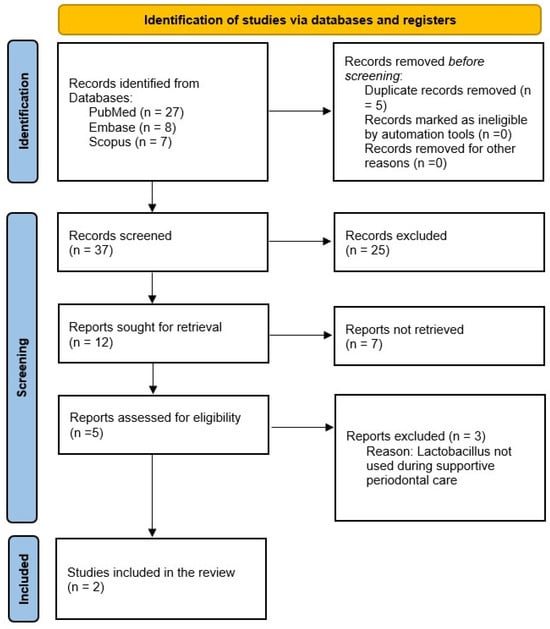
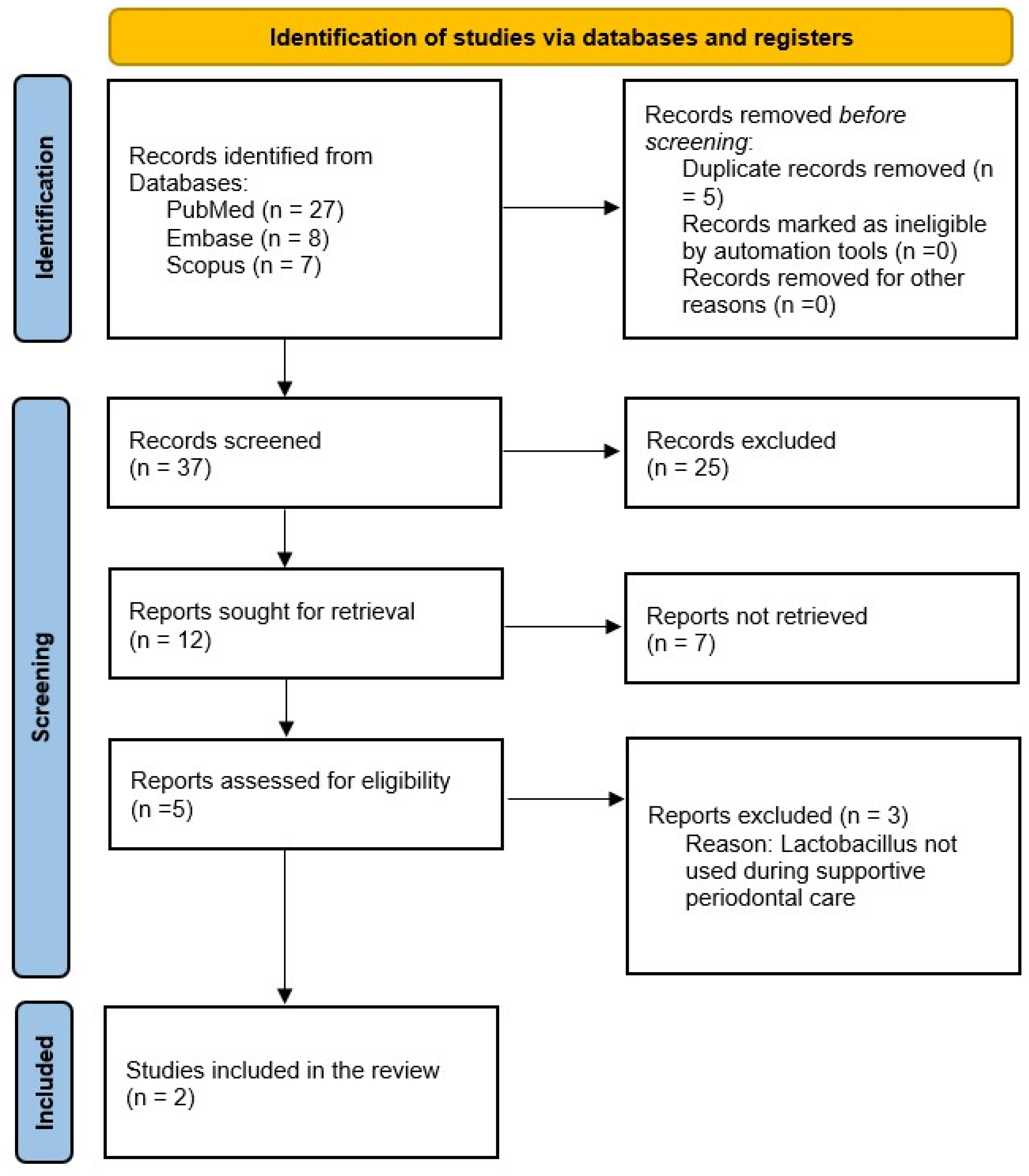
The literature search yielded 42 records. Titles and abstracts were independently screened by two reviewers (A.B. and L.M.) according to the predefined inclusion and exclusion criteria. Following the initial screening, 12 reports were sought for retrieval, of which seven could not be retrieved. The remaining five full-text articles were assessed for eligibility, and three were excluded because they did not meet the predefined inclusion criteria. At last, only two randomized controlled trials were included in the present narrative review (Figure 1). Any disagreements during the study selection process were resolved through discussion and, when necessary, consultation with a third senior reviewer (V.I.S.). Data were extracted from the included studies. Finally, the characteristics, clinical procedures, and outcomes of the included studies are summarized in comparative tables and discussed accordingly. The risk of bias of the included randomized controlled trials was assessed at the outcome level (full-mouth PPD, BOP, and CAL/PAL) using the Cochrane Risk of Bias 2 (RoB 2) tool, which evaluates five domains: bias arising from the randomization process, deviations from intended interventions, missing outcome data, measurement of the outcome, and selection of the reported result. Given the heterogeneity between the included studies in terms of probiotic formulations, intervention protocols, follow-up periods, and outcome measures, a quantitative synthesis or meta-analysis was not performed.
Figure 1.
Flowchart of the study selection process.
3. Results
Two randomized clinical studies were included, both evaluating Lactobacillus-based adjunctive therapy in supportive periodontal care. Iwasaki et al. [23] evaluated 36 patients (19 test, 17 control) with chronic periodontitis treated at Kanagawa Dental University in Japan. The test group included 6 males and 13 females, whereas the control group consisted of 7 males and 10 females, with a mean age of 68.2 ± 9.7 and 67.0 ± 8.1 years, respectively. The test group received heat-killed Lactobacillus plantarum L-137 each day for 12 weeks, while the control group received a placebo. Periodontal probing depth (PPD) and bleeding on probing (BOP) were recorded in both groups at baseline and 12 weeks. Mean PPD decreased from 2.21 ± 0.32 mm to 2.12 ± 0.36 mm and from 2.17 ± 0.36 mm to 2.15 ± 0.37 mm in the test and control groups, respectively; no statistically significant intervention effect (p = 0.932) and no statistically significant time effect (p = 0.288) were recorded. In teeth with at least one site showing a baseline PPD ≥ 4 mm, repeated-measures ANOVA showed no statistically significant overall intervention effect on PPD (p = 0.989), although a significant time effect was observed (p = 0.001). Nevertheless, at 12 weeks, the reduction in PPD was −0.36 ± 0.23 mm in the experimental group compared with −0.13 ± 0.29 mm in the control group, with a statistically significant intergroup difference reported by Iwasaki et al. (p < 0.05). However, the overall intervention effect on changes from baseline was not statistically significant (p = 0.148). BOP decreased from 9.5 ± 7.8% to 8.8 ± 9.7% and from 11.7 ± 8.3% to 8.0 ± 6.8% in the test and control groups, respectively; also in this case, repeated-measures ANOVA showed no statistically significant variation for intervention effect (p = 0.952) but a significant time effect (p = 0.022). In teeth with at least one site showing a baseline PPD ≥ 4 mm, BOP showed no statistically significant intervention effect (p = 0.893), although a significant time effect was observed (p = 0.002).
Grusovin et al. [24] included 20 patients treated at the University of Brescia, Italy. The test group included 3 males and 7 females, while the control group included 5 males and 5 females, with a mean age of 50.1 ± 10.85 and 49.2 ± 8.93 years in the test and control groups, respectively. There were 4 smokers (3 in the test group; 1 in the control group). All patients were treated with full-mouth guided biofilm therapy (FM-GBT), but the test group received lozenges of Lactobacillus reuteri, while the control group received placebo. At baseline, PPD values were 2.3 ± 1.22 mm in the test group and 2.2 ± 1.31 mm in the control group. At three months, mean PPD was 2.05 mm (CI 1.88–2.23) versus 2.15 mm (CI 1.97–2.32); at 6 months, it was 1.96 mm (1.78–2.13) versus 2.15 mm (1.98–2.33); at 9 months, it was 1.86 mm (1.69–2.04) versus 2.12 mm (1.94–2.29); and at 12 months, it was 1.76 mm (1.59–1.93) versus 1.92 mm (1.75–2.09); all reported data refer to the test and control groups, respectively. Statistically significant intergroup differences in PPD were detected in the probiotic group at 3 months (p < 0.05) and at 6, 9, and 12 months (all p < 0.001). Regarding probing attachment level (PAL), a statistically significant intergroup difference was observed in the probiotic group at 6 months (p < 0.05), while the difference at 9 months did not reach statistical significance (p = 0.06). A PAL of 3.06 mm (2.64–3.48) and 3.05 mm (2.63–3.47) was recorded at 3 months in the test and control groups, respectively, while at 6 months, a PAL of 2.95 mm (2.53–3.37) versus 3.05 mm (2.63–3.48) was recorded; at 9 months, values of 2.83 mm (2.41–3.25) versus 2.92 mm (2.50–3.34) were registered; and finally, at 12 months, both groups showed identical values of 2.74 mm (2.32–3.16), with no significant difference at the final timepoint (p = 0.94). Regarding BOP, the following values were recorded: 23.6% and 16.2% at baseline; at 3 months, 13.23% versus 16.23%; at 6 months, 9.57% versus 16.77%; at 9 months, 10.59% versus 16.33%; and at 12 months, 10.80% versus 11.10%; all reported data were recorded in the test and control groups, respectively. Statistically significant intergroup differences in BOP in the probiotic group were detected at 6 months (p < 0.001) and 9 months (p < 0.05). However, this difference was no longer statistically significant at the 12-month follow-up (p = 0.85). Overall, the two included studies provided limited evidence regarding the adjunctive effects of Lactobacillus supplementation during supportive periodontal care. Grusovin et al. reported statistically significant intergroup differences in PPD throughout the follow-up period, together with significant differences in BOP at 6 and 9 months and PAL at 6 months. However, the differences in BOP and PAL were not statistically significant at the final 12-month assessment. Conversely, Iwasaki et al. found no statistically significant overall intervention effects on the evaluated periodontal parameters, although an isolated significant intergroup difference in PPD reduction at 12 weeks in teeth with at least one initially deep site was detected. These findings should be interpreted cautiously, considering the small sample sizes of the included studies. The heterogeneity among the included studies regarding probiotic formulation, duration of administration, maintenance protocols, and follow-up periods prevented direct quantitative comparison of the outcomes.
Notably, neither study reported serious adverse events associated with Lactobacillus supplementation. However, given the small sample sizes and limited available evidence, these findings are insufficient to draw definitive conclusions regarding its safety during supportive periodontal care. In addition, the absence of microbiological analyses and inflammatory biomarkers, together with the limited patient-reported outcome data, considerably limits the interpretation of the biological and clinical significance of the observed findings.
The risk-of-bias assessment is reported in Table 1. Both trials used computer-generated randomization with adequate allocation concealment and double-blind, placebo-controlled designs, with limited missing outcome data (3 of 39 participants in Iwasaki et al.; none in Grusovin et al.). In Grusovin et al., outcomes were assessed by a blinded and calibrated examiner, and the baseline differences in BOP and smoking status were not statistically significant. In Iwasaki et al., some concerns arose regarding the selection of the reported result, as no trial registration or pre-specified primary outcome was available. Overall, Grusovin et al. was judged as being at low risk of bias, and Iwasaki et al. as raising some concerns. However, given its small sample size (20 patients), the pilot trial by Grusovin et al. provides imprecise estimates that require confirmation in larger trials.
Table 1.
Risk-of-bias assessment.
Characteristics and main findings of included studies are reported in Table 2.
Table 2.
Characteristics and clinical findings of the analyzed studies.
4. Discussion
The main aim of this narrative review was to evaluate whether the adjunctive use of Lactobacillus species during supportive periodontal care improves clinical periodontal outcomes. Over the years, several adjunctive agents have been investigated to enhance the outcomes of non-surgical periodontal therapy [25,26]; however, considerably less attention has been paid to their role during supportive periodontal care.
An important consideration when interpreting the available evidence is the distinction between active non-surgical periodontal therapy (STEP II) and supportive periodontal care (STEP IV). During STEP II, the primary objective is to control periodontal inflammation and reduce probing pocket depth through subgingival instrumentation [1]. Several adjunctive interventions, including probiotics, have been investigated for their potential to enhance clinical outcomes [27,28]. In particular, probiotics were evaluated due to their capacity to modulate the oral microbiome [29]. Previous clinical studies investigating Lactobacillus supplementation during active periodontal therapy seem to have reported improvements in periodontal parameters, including PPD and CAL [16,30]. For instance, Vivekananda et al. reported clinical and microbiological improvements following adjunctive L. reuteri administration [29], while systematic reviews and meta-analyses have suggested potential benefits of Lactobacillus-based interventions during active periodontal treatment [31,32]. However, these findings cannot be directly translated to SPC, which primarily aims to preserve periodontal stability and prevent disease recurrence [1]. Therefore, evidence obtained during STEP II should be considered only as supporting background information, while conclusions regarding the effectiveness of Lactobacillus supplementation during SPC must rely on studies specifically conducted in the maintenance phase.
Therefore, in this narrative review, we attempted to evaluate the available evidence for using Lactobacillus species during the last step of periodontal treatment, and although only two randomized clinical trials met our inclusion criteria, our findings seem to highlight some aspects of this debated topic. Iwasaki et al. found no statistically significant overall intervention effect on PPD following 12 weeks of supplementation with heat-killed L. plantarum L-137. However, a statistically significant intergroup difference in PPD reduction was reported at the 12-week follow-up in teeth with at least one site showing a baseline PPD ≥ 4 mm. This isolated finding should be interpreted cautiously, since the overall intervention effect was not statistically significant, and neither the pre-specification of this comparison nor adjustment for multiple testing was documented in the original study. Furthermore, the relatively small magnitude of the between-group difference in PPD reduction (approximately 0.23 mm), together with the limited sample size and short follow-up period, raises uncertainty regarding its clinical relevance and long-term implications for periodontal stability [23]. On the other hand, Grusovin et al. evaluated the adjunctive use of L. reuteri lozenges over a 12-month follow-up period, reporting statistically significant intergroup differences in PPD at all follow-up assessments. Interestingly, significant differences favoring the probiotic group were also observed for BOP at 6 and 9 months and PAL at 6 months. However, these differences in BOP and PAL were no longer statistically significant at the final 12-month follow-up. This temporal pattern suggests that the observed intermediate improvements should be interpreted cautiously and cannot be considered evidence of a sustained benefit across all periodontal parameters [24].
Although Grusovin et al. reported a statistically significant intergroup difference in mean PPD at the 12-month follow-up (p < 0.001), the reported difference between the estimated mean values was only 0.16 mm (1.76 mm in the probiotic group versus 1.92 mm in the control group). Despite reaching statistical significance, the clinical relevance of such a small difference remains uncertain, particularly considering the relatively shallow baseline PPD values. Furthermore, the absence of statistically significant intergroup differences in BOP and PAL at the final follow-up does not provide additional evidence of a sustained clinical benefit across periodontal parameters. Therefore, these findings should be interpreted cautiously, especially considering the limited sample size and pilot nature of the study. Another consideration is the substantial heterogeneity between the interventions investigated in the two included studies. Iwasaki et al. evaluated heat-killed L. plantarum L-137, whereas Grusovin et al. investigated lozenges containing viable L. reuteri [23,24]. These formulations substantially differ in terms of bacterial strain, viability, administration protocols, and potentially their mechanisms of action. Heat-inactivated bacterial preparations may determine their immunomodulatory effects through interactions with the host immune system, while the viable bacteria may additionally interact with the resident oral microbiota. However, these mechanisms remain supported only on a hypothetical basis since, in the context of SPC, neither of the included studies assessed microbiological or immunological outcomes. Furthermore, differences in dosage, administration schedules, follow-up periods, and study populations limit direct comparisons between the two interventions. Therefore, the available findings cannot establish the superiority of one strain over another, nor can they be generalized to Lactobacillus-based formulations. Another important consideration is that full-mouth guided biofilm therapy (FM-GBT) was administered to both groups in the Grusovin et al. study. Although this treatment may have contributed to the clinical improvements observed in both groups, its administration to both intervention arms does not independently explain the differences observed between the probiotic and placebo groups [23,24].
Additionally, patient-related factors may have influenced the clinical outcomes and should be carefully considered when interpreting these findings. In Grusovin et al., smokers were not equally distributed between the study groups, with three smokers in the probiotic group and one in the control group [24]. Although this difference does not necessarily indicate a confounding factor, its potential influence cannot be excluded in a pilot study involving only 20 participants. Furthermore, differences in baseline periodontal severity, individual oral hygiene practices, and adherence to probiotic administration and scheduled SPC visits may have influenced the observed clinical outcomes. However, the limited sample sizes and available data prevent a reliable assessment of the contribution of these factors. These considerations further limit the generalizability of the findings and highlight the need for randomized controlled trials that systematically document and account for potential confounding variables. The present findings should also be interpreted in light of the EFP S3 clinical practice guidelines for the treatment of Stage I–III periodontitis. While the guidelines do not recommend the adjunctive use of probiotics during subgingival instrumentation (STEP II), they acknowledge that the effectiveness of probiotics during supportive periodontal care (STEP IV) remains uncertain due to insufficient evidence. Therefore, the absence of a specific recommendation for probiotic supplementation during SPC should not be interpreted as definitive evidence of ineffectiveness, but rather as a reflection of the limited available data. In this context, the findings of the present review do not support the routine clinical use of Lactobacillus-based interventions during periodontal maintenance [1]. Yet, despite these encouraging signs, many doubts remain, and the present study still has several limitations. The quality of evidence is mixed, and the number of trials included is rather scarce. Furthermore, the analyzed studies still present methodological limitations, small sample sizes, and substantial heterogeneity. Therefore, it is necessary to emphasize that the evidence base is currently insufficient to support clinically meaningful recommendations. The findings of this review should be considered preliminary, highlighting a significant gap in the literature that requires urgent attention through larger, multicenter trials. None of the included studies presented microbiological or immunological data that would have been useful or even crucial for understanding probiotic mechanisms and improving species selection. Confounding factors such as smoking were not always reported. In addition, the heterogeneity in strains, dosage, and delivery forms further increases variability of the analyzed data, making it difficult to promote a standardized protocol. Based on the available evidence, L. reuteri supplementation may represent a potential adjunctive approach during supportive periodontal care. However, the findings are limited to a single small pilot study and should be considered preliminary and hypothesis-generating rather than conclusive evidence of clinical efficacy. To conclude, there is insufficient evidence to recommend probiotics in SPC, but further research should be focused on the development of randomized clinical trials with specific strains of probiotics, possibly L. reuteri, and with a standardized administration protocol.
The current review is limited by the small number of randomized controlled trials (n = 2) that met the inclusion criteria. This limited evidence base prevents the formulation of strong and proper clinical recommendations. Moreover, the review protocol was not registered a priori, and the review was not conducted according to the full methodological standards of a systematic review; therefore, the risk of selection and reporting bias cannot be completely excluded. An additional methodological limitation concerns the use of restrictive Boolean operators in the literature search. Although the exclusion of implant- and antibiotic-related terms was intentionally applied in accordance with the specific objectives of the review, this approach may have reduced search sensitivity by excluding potentially relevant publications that mentioned these terms without directly investigating implant-related conditions or antibiotic-based interventions. Furthermore, the original saved search strings for Embase and Scopus were unavailable, and their retrospective reconstruction may not fully reproduce the original database searches. Additionally, the absence of manual searching and reference-list screening may have resulted in the omission of potentially relevant studies. Furthermore, a high heterogeneity between the studies regarding the specific Lactobacillus strains used, delivery methods, and follow-up durations was recorded. The lack of microbiological and immunological data in the included trials also limits our understanding of the underlying biological effects. Future research should focus on larger, adequately powered RCTs with standardized probiotic strains, doses, administration protocols, and longer follow-up periods. Clinical outcomes should be complemented by microbiological and immunological assessments to better clarify the potential effectiveness of Lactobacillus supplementation during SPC.
5. Conclusions
The available evidence suggests that Lactobacillus may represent a promising adjunctive intervention during supportive periodontal care, particularly in reducing PPD. However, the obtained results and the lack of sustained benefits in BOP and PAL do not currently support its routine clinical use. Therefore, conventional SPC still remains the gold standard for long-term periodontal stability. Future randomized clinical trials focused on strain-specific probiotics in patients with residual periodontal pockets and an increased risk of disease recurrence are needed to determine whether Lactobacillus-based interventions can provide clinically meaningful benefits and be used in daily clinical practice.
Author Contributions
Writing—original draft preparation: L.M., A.B. and V.P.; data curation: S.M.; conceptualization: V.I.-S.; supervision: L.R. All authors have read and agreed to the published version of the manuscript.
Funding
This research received no external funding.
Institutional Review Board Statement
Not applicable.
Informed Consent Statement
Not applicable.
Data Availability Statement
All data are available and published online.
Acknowledgments
All authors would like to thank the School of Periodontology of the University of Naples for support in the conceptualization of the manuscript.
Conflicts of Interest
The authors declare no conflicts of interest.
Abbreviations
The following abbreviations are used in this manuscript:
| APT | Active Periodontal Therapy |
| BOP | Bleeding on Probing |
| CAL | Clinical Attachment Level |
| CI | Confidence Interval |
| FM-GBT | Full-Mouth Guided Biofilm Therapy |
| NSPT | Non-Surgical Periodontal Therapy |
| OR | Odds Ratio |
| PAL | Probing Attachment Level |
| PI | Plaque Index |
| PPD | Probing Pocket Depth |
| PRA | Periodontal Risk Assessment |
| RCT | Randomized Controlled Trial |
| SD | Standard Deviation |
| SPC | Supportive Periodontal Care |
Appendix A
Search string:
Pubmed: (((((“support”[All Fields] OR “support s”[All Fields] OR “supported”[All Fields] OR “supporter”[All Fields] OR “supporters”[All Fields] OR “supporters”[All Fields] OR “supporting”[All Fields] OR “supportive”[All Fields] OR “supportiveness”[All Fields] OR “supports”[All Fields]) AND (“periodontal”[All Fields] OR “periodontally”[All Fields] OR “periodontically”[All Fields] OR “periodontics”[MeSH Terms] OR “periodontics”[All Fields] OR “perio-dontic”[All Fields] OR “periodontitis”[MeSH Terms] OR “periodontitis”[All Fields] OR “periodontitides”[All Fields]) AND (“therapeutics”[MeSH Terms] OR “therapeutics”[All Fields] OR “therapies”[All Fields] OR “therapy”[MeSH Subheading] OR “therapy”[All Fields] OR “therapy s”[All Fields] OR “therapys”[All Fields])) OR ((“periodontal”[All Fields] OR “periodontally”[All Fields] OR “periodontically”[All Fields] OR “periodontics”[MeSH Terms] OR “perio-dontics”[All Fields] OR “periodontic”[All Fields] OR “periodontitis”[MeSH Terms] OR “periodontitis”[All Fields] OR “periodontitides”[All Fields]) AND (“maintenance”[MeSH Terms] OR “maintenance”[All Fields] OR “mainte-nances”[All Fields])) OR ((“support”[All Fields] OR “support s”[All Fields] OR “supported”[All Fields] OR “support-er”[All Fields] OR “supporter s”[All Fields] OR “supporters”[All Fields] OR “supporting”[All Fields] OR “supportive”[All Fields] OR “supportiveness”[All Fields] OR “supports”[All Fields]) AND (“periodontal”[All Fields] OR “periodontally”[All Fields] OR “periodontically”[All Fields] OR “periodontics”[MeSH Terms] OR “periodontics”[All Fields] OR “periodontic”[All Fields] OR “periodontitis”[MeSH Terms] OR “periodontitis”[All Fields] OR “periodontitides”[All Fields]) AND “care”[All Fields])) AND (“lactobacillus”[MeSH Terms] OR “lactobacillus”[All Fields])) NOT (“drug implants”[Supplementary Concept] OR “drug implants”[All Fields] OR “implant”[All Fields] OR “drug implants”[MeSH Terms] OR (“drug”[All Fields] AND “implants”[All Fields]) OR “embryo implantation”[MeSH Terms] OR (“embryo”[All Fields] AND “implantation”[All Fields]) OR “embryo implantation”[All Fields] OR “implantation”[All Fields] OR “implant s”[All Fields] OR “implantability”[All Fields] OR “implantable”[All Fields] OR “implantables”[All Fields] OR “implantate”[All Fields] OR “implantated”[All Fields] OR “implantates”[All Fields] OR “implantations”[All Fields] OR “implanted”[All Fields] OR “implanter”[All Fields] OR “implanters”[All Fields] OR “implanting”[All Fields] OR “implantion”[All Fields] OR “implantitis”[All Fields] OR “implants”[All Fields])) NOT (“anti bacterial agents”[Pharmacological Action] OR “anti bacterial agents”[Supplementary Concept] OR “anti bac-terial agents”[All Fields] OR “antibiotic”[All Fields] OR “anti bacterial agents”[MeSH Terms] OR (“anti bacterial”[All Fields] AND “agents”[All Fields]) OR “antibiotics”[All Fields] OR “antibiotic s”[All Fields] OR “antibiotical”[All Fields])) AND ((randomizedcontrolledtrial[Filter]) AND (humans[Filter]) AND (english[Filter])).
Embase: (‘supportive periodontal therapy’:ti,ab,kw OR ‘periodontal maintenance’:ti,ab,kw OR ‘supportive periodontal care’:ti,ab,kw OR (‘supportive therapy’:ti,ab,kw AND periodont*:ti,ab,kw)) AND (‘lactobacillus’/exp OR ‘lactobacillus’ OR lactobacill*:ti,ab,kw) NOT (implant*:ti,ab,kw OR antibiotic*:ti,ab,kw OR ‘antibacterial agents’:ti,ab,kw) AND [english]/lim.
Scopus: TITLE-ABS-KEY (“supportive periodontal therapy” OR “periodontal maintenance” OR “supportive periodontal care”) AND TITLE-ABS-KEY (lactobacill*) AND NOT TITLE-ABS-KEY (implant*) AND NOT TITLE-ABS-KEY (antibiotic* OR “antibacterial agents”) AND PUBYEAR < 2026 AND (LIMIT-TO (LANGUAGE, “English”)).
References
- Sanz, M.; Herrera, D.; Kebschull, M.; Chapple, I.; Jepsen, S.; Beglundh, T.; Sculean, A.; Tonetti, M.S. Treatment of Stage I–III Periodontitis—The EFP S3 Level Clinical Practice Guideline. J. Clin. Periodontol. 2020, 47, 4–60. [Google Scholar] [CrossRef] [Scilit] [PubMed]
- Loos, B.G.; Needleman, I. Endpoints of Active Periodontal Therapy. J. Clin. Periodontol. 2020, 47, 61–71. [Google Scholar] [CrossRef] [Scilit] [PubMed]
- Lindhe, J.; Nyman, S. Long-term Maintenance of Patients Treated for Advanced Periodontal Disease. J. Clin. Periodontol. 1984, 11, 504–514. [Google Scholar] [CrossRef] [Scilit] [PubMed]
- Hirschfeld, L.; Wasserman, B. A Long-Term Survey of Tooth Loss in 600 Treated Periodontal Patients. J. Periodontol. 1978, 49, 225–237. [Google Scholar] [CrossRef] [Scilit] [PubMed]
- Rosling, B.; Serino, G.; Hellström, M.K.; Socransky, S.S.; Lindhe, J. Longitudinal Periodontal Tissue Alterations during Supportive Therapy: Findings from Subjects with Normal and High Susceptibility to Periodontal Disease. J. Clin. Periodontol. 2001, 28, 241–249. [Google Scholar] [CrossRef] [Scilit] [PubMed]
- Matuliene, G.; Studer, R.; Lang, N.P.; Schmidlin, K.; Pjetursson, B.E.; Salvi, G.E.; Brägger, U.; Zwahlen, M. Significance of Periodontal Risk Assessment in the Recurrence of Periodontitis and Tooth Loss. J. Clin. Periodontol. 2010, 37, 191–199. [Google Scholar] [CrossRef] [Scilit] [PubMed]
- Sánchez, I.S.; Carra, M.C.; de Albornoz, A.C.; Romandini, M.; Montero, E.; Sanz, M. Long-term Stability after Nonsurgical Treatment of Periodontitis. Periodontology 2000 2026. Epub ahead of printing. [Google Scholar] [CrossRef] [Scilit] [PubMed]
- Kassebaum, N.J.; Bernabé, E.; Dahiya, M.; Bhandari, B.; Murray, C.J.L.; Marcenes, W. Global Burden of Severe Periodontitis in 1990-2010: A Systematic Review and Meta-Regression. J. Dent. Res. 2014, 93, 1045–1053. [Google Scholar] [PubMed]
- Tonetti, M.S.; Greenwell, H.; Kornman, K.S. Staging and Grading of Periodontitis: Framework and Proposals of a New Classification and Case Definition. J. Periodontol. 2018, 89, S159–S172. [Google Scholar] [CrossRef] [Scilit] [PubMed]
- Bower, R.C. Furcation Morphology Relative to Periodontal Treatment: Furcation Entrance Architecture. J. Periodontol. 1979, 50, 23–27. [Google Scholar] [CrossRef] [Scilit] [PubMed]
- Rosén, B.; Olavi, G.; Badersten, A.; Rönström, A.; Söderholm, G.; Egelberg, J. Effect of Different Frequencies of Preventive Maintenance Treatment on Periodontal Conditions. 5-Year Observations in General Dentistry Patients. J. Clin. Periodontol. 1999, 26, 225–233. [Google Scholar] [CrossRef] [Scilit] [PubMed]
- Tonetti, M.S.; Muller-Campanile, V.; Lang, N.P. Changes in the Prevalence of Residual Pockets and Tooth Loss in Treated Periodontal Patients during a Supportive Maintenance Care Program. J. Clin. Periodontol. 1998, 25, 1008–1016. [Google Scholar] [CrossRef] [Scilit] [PubMed]
- Lang, N.P.; Tonetti, M.S. Periodontal Risk Assessment (PRA) for Patients in Supportive Periodontal Therapy (SPT). Oral Health Prev. Dent. 2003, 1, 7–16. [Google Scholar] [PubMed]
- Ng, M.C.H.; Ong, M.M.A.; Lim, L.P.; Koh, C.G.; Chan, Y.H. Tooth Loss in Compliant and Non-Compliant Periodontally Treated Patients: 7 Years after Active Periodontal Therapy. J. Clin. Periodontol. 2011, 38, 499–508. [Google Scholar] [CrossRef] [Scilit] [PubMed]
- Ramseier, C.A.; Nydegger, M.; Walter, C.; Fischer, G.; Sculean, A.; Lang, N.P.; Salvi, G.E. Time between Recall Visits and Residual Probing Depths Predict Long-Term Stability in Patients Enrolled in Supportive Periodontal Therapy. J. Clin. Periodontol. 2019, 46, 218–230. [Google Scholar] [CrossRef] [Scilit] [PubMed]
- Mauriello, L.; Cuozzo, A.; Pezzella, V.; Iorio-Siciliano, V.; Isola, G.; Spagnuolo, G.; Ramaglia, L.; Blasi, A. Effects of Probiotics as an Adjunct to Non-Surgical Periodontal Therapy (NSPT): A Narrative Review. J. Clin. Med. 2025, 14, 5114. [Google Scholar] [CrossRef] [Scilit] [PubMed]
- Benavides-Reyes, C.; Cabello, I.; Magán-Fernández, A.; Rodríguez-Barranco, M.; Usta, S.N.; Mesa, F. Clinical Effects of Probiotics on the Treatment of Gingivitis and Periodontitis: A Systematic Review and Meta-Analysis. BMC Oral Health 2025, 25, 490. [Google Scholar] [CrossRef] [Scilit] [PubMed]
- de Mendonça, C.D.; da Mata, A.D.S.P.; Azevedo, L.F.R.; Marques, J.F.; Silveira, J.M.L.; Marques, D.N.d.S. Probiotics in the Non-Surgical Treatment of Periodontitis: A Systematic Review and Network Meta-Analysis. BMC Oral Health 2024, 24, 1224. [Google Scholar] [CrossRef] [Scilit] [PubMed]
- Huo, P.; Deng, L.; Lu, J.; Kan, P.; Jing, R.; Luo, L.J. The Impact of Limosilactobacillus Reuteri in Combination with Non-Surgical Periodontal Therapy on Periodontal Clinical Parameters and Salivary and Subgingival Microbiota Composition in Individuals with Stage III–IV Periodontitis: A Randomized Controlled Trial. BMC Oral Health 2025, 25, 759. [Google Scholar] [CrossRef] [Scilit] [PubMed]
- Riccia, D.N.D.; Bizzini, F.; Perilli, M.G.; Polimeni, A.; Trinchieri, V.; Amicosante, G.; Cifone, M.G. Anti-Inflammatory Effects of Lactobacillus Brevis (CD2) on Periodontal Disease. Oral Dis. 2007, 13, 376–385. [Google Scholar] [CrossRef] [Scilit] [PubMed]
- Ram, J.; Awan, K.H.; Freitas, C.M.T.; Bhandi, S. Clinical Effects of Lactobacillus Reuteri Probiotic in Chronic Periodontitis—A Systematic Review. Eur. Rev. Med. Pharmacol. Sci. 2024, 28, 1695–1707. [Google Scholar] [CrossRef] [Scilit] [PubMed]
- Shimauchi, H.; Mayanagi, G.; Nakaya, S.; Minamibuchi, M.; Ito, Y.; Yamaki, K.; Hirata, H. Improvement of Periodontal Condition by Probiotics with Lactobacillus Salivarius WB21: A Randomized, Double-Blind, Placebo-Controlled Study. J. Clin. Periodontol. 2008, 35, 897–905. [Google Scholar] [CrossRef] [Scilit] [PubMed]
- Iwasaki, K.; Maeda, K.; Hidaka, K.; Nemoto, K.; Hirose, Y.; Deguchi, S. Daily Intake of Heat-Killed Lactobacillus Plantarum L-137 Decreases the Probing Depth in Patients Undergoing Supportive Periodontal Therapy. Oral Health Prev. Dent. 2016, 14, 207–214. [Google Scholar] [CrossRef] [Scilit] [PubMed]
- Grusovin, M.G.; Bossini, S.; Calza, S.; Cappa, V.; Garzetti, G.; Scotti, E.; Gherlone, E.F.; Mensi, M. Clinical Efficacy of Lactobacillus Reuteri-Containing Lozenges in the Supportive Therapy of Generalized Periodontitis Stage III and IV, Grade C: 1-Year Results of a Double-Blind Randomized Placebo-Controlled Pilot Study. Clin. Oral Investig. 2020, 24, 2015–2024. [Google Scholar] [CrossRef] [Scilit] [PubMed]
- Iorio-Siciliano, V.; Blasi, A.; Mauriello, L.; Salvi, G.E.; Ramaglia, L.; Sculean, A. Non-Surgical Treatment of Moderate Periodontal Intrabony Defects With Adjunctive Cross-Linked Hyaluronic Acid: A Single-Blinded Randomized Controlled Clinical Trial. J. Clin. Periodontol. 2024, 52, 310–322. [Google Scholar] [CrossRef] [Scilit] [PubMed]
- Pezzella, V.; Cuozzo, A.; Mauriello, L.; Polizzi, A.; Iorio Siciliano, V.; Ramaglia, L.; Blasi, A. Propolis as an Adjunct in Non-Surgical Periodontal Therapy: Current Clinical Perspectives from a Narrative Review. J. Funct. Biomater. 2025, 16, 265. [Google Scholar] [CrossRef] [Scilit] [PubMed]
- Donos, N.; Calciolari, E.; Brusselaers, N.; Goldoni, M.; Bostanci, N.; Belibasakis, G.N. The Adjunctive Use of Host Modulators in Non-Surgical Periodontal Therapy. A Systematic Review of Randomized, Placebo-Controlled Clinical Studies. J. Clin. Periodontol. 2020, 47, 199–238. [Google Scholar] [CrossRef] [Scilit] [PubMed]
- Figuero, E.; Roldán, S.; Serrano, J.; Escribano, M.; Martín, C.; Preshaw, P.M. Efficacy of Adjunctive Therapies in Patients with Gingival Inflammation: A Systematic Review and Meta-Analysis. J. Clin. Periodontol. 2020, 47, 125–143. [Google Scholar] [CrossRef] [Scilit] [PubMed]
- Wim, T.; Mehraveh, S.; Katalina, L.; Cheah, C.W.; Pisha, P.; Ana, C.; Andy, T.; Naiera, Z.; Wannes, V.H. Not a Miracle, Not a Myth: The Role of Probiotics in Periodontal Health. Periodontology 2000 2026. Epub ahead of printing. [Google Scholar] [CrossRef] [Scilit] [PubMed]
- Vivekananda, M.R.; Vandana, K.L.; Bhat, K.G. Effect of the Probiotic Lactobacilli Reuteri (Prodentis) in the Management of Periodontal Disease: A Preliminary Randomized Clinical Trial. J. Oral Microbiol. 2010, 2, 5344. [Google Scholar] [CrossRef] [Scilit] [PubMed]
- Martin-Cabezas, R.; Davideau, J.L.; Tenenbaum, H.; Huck, O. Clinical Efficacy of Probiotics as an Adjunctive Therapy to Non-Surgical Periodontal Treatment of Chronic Periodontitis: A Systematic Review and Meta-Analysis. J. Clin. Periodontol. 2016, 43, 520–530. [Google Scholar] [CrossRef] [Scilit] [PubMed]
- Hardan, L.; Bourgi, R.; Cuevas-Suárez, C.E.; Flores-Rodríguez, M.; Omaña-Covarrubias, A.; Nicastro, M.; Lazarescu, F.; Zarow, M.; Monteiro, P.; Jakubowicz, N.; et al. The Use of Probiotics as Adjuvant Therapy of Periodontal Treatment: A Systematic Review and Meta-Analysis of Clinical Trials. Pharmaceutics 2022, 14, 1017. [Google Scholar] [CrossRef] [Scilit] [PubMed]

Disclaimer/Publisher’s Note: The statements, opinions and data contained in all publications are solely those of the individual author(s) and contributor(s) and not of MDPI and/or the editor(s). MDPI and/or the editor(s) disclaim responsibility for any injury to people or property resulting from any ideas, methods, instructions or products referred to in the content. |
© 2026 by the authors. Licensee MDPI, Basel, Switzerland. This article is an open access article distributed under the terms and conditions of the Creative Commons Attribution (CC BY) license.