


Abstract
Introduction: Pediatric Autoimmune Neuropsychiatric Disorders Associated with Streptococcal Infections (PANDAS) is a controversial clinical construct characterized by prepubertal onset of obsessive–compulsive disorder (OCD) and/or tics, with episodic symptoms reported in temporal association with group A streptococcal (GAS) infection. No confirmatory biomarker is available, and establishing the diagnosis retrospectively in adults is particularly challenging. We describe three adults with childhood-onset tic disorders (TDs) and histories suggestive of PANDAS-like presentations who received intravenous immunoglobulin (IVIG), documenting longitudinal clinical changes using standardized measures. Case presentations: Three men aged 22, 23, and 26 years had persistent motor and/or vocal tics, with Cases 1 and 2 also showing obsessive–compulsive symptoms. Their retrospective histories indicated prepubertal tic onset and recurrent throat infections; however, contemporaneous microbiological evidence of a temporal GAS–symptom association was unavailable. Cases 1 and 2 reported inadequate or incomplete benefit from several previous medications, though Case 3 had previously experienced substantial benefit from pimozide—discontinued because it became unavailable—and later reported partial benefit from other agents. Yale Global Tic Severity Scale–Global Severity Score (YGTSS-GSS) decreased from 70 to 29 and 68 to 18 after two IVIG courses in Cases 1 and 2, respectively, and from 70 to 18 within two months of one course in Case 3, who was also receiving psychotropic medication. Subsequently, his YGTSS-GSS decreased from 53 to 25 after an increase in haloperidol dose, without a second IVIG course. These observations are subject to important confounding factors. Conclusions: Tic severity scores and other psychometric measures changed after IVIG administration in three adults with childhood-onset TDs and PANDAS-like presentations. However, the uncontrolled design, retrospective diagnostic assessment, natural symptom fluctuation, prior treatments, and concomitant psychotropic use prevent causal attribution to IVIG. These descriptive findings are hypothesis-generating and require evaluation in prospective controlled studies.
1. Introduction
According to the Diagnostic and Statistical Manual of Mental Disorders, Fifth Edition (DSM-5), tics are sudden, rapid, recurrent, non-rhythmic movements or vocalizations, with tic disorders (TDs) typically emerging in childhood, most commonly around 5–6 years of age, and chronic tic disorders characterized by motor and/or vocal tics persisting for more than one year [1,2]. Pediatric Autoimmune Neuropsychiatric Disorders Associated with Streptococcal Infections (PANDAS) was initially described in a subgroup of children with obsessive–compulsive disorder (OCD) and/or TDs in whom symptom onset or exacerbations were temporally associated with group A streptococcal (GAS) infection [3].
PANDAS remains a debated clinical construct: its proposed symptoms overlap with common childhood-onset neuropsychiatric disorders, and no disease-specific diagnostic biomarker is available. Its classical criteria include (1) OCD and/or a TD, (2) prepubertal onset, (3) abrupt onset or exacerbations with an episodic course, (4) temporal association with GAS infection, and (5) associated neurological abnormalities [3,4,5], but establishing the GAS–symptom temporal relationship is particularly difficult when childhood events are reconstructed retrospectively in adulthood. A positive throat culture and/or elevated antistreptococcal antibody titers may support previous GAS exposure, but an isolated ASO elevation neither establishes the timing of infection nor serves as a validated marker of neuropsychiatric disease activity.
The diagnostic limitations have been reaffirmed in 2026 reviews: neither streptococcal serology (including ASO and anti-DNase B) nor proposed antineuronal antibody assays, including the Cunningham Panel, has sufficient validated individual-level accuracy to confirm PANDAS. Although dopamine receptor autoantibodies and other immune measures remain promising research candidates, reproducibility, specificity, and independent clinical validation are unresolved; retrospective differentiation from primary TDs is, therefore, particularly uncertain [6,7,8].
The proposed pathophysiology includes molecular mimicry and cross-reactive immune responses involving basal ganglia circuitry, but mechanistic evidence remains incomplete and heterogeneous [9]. PANDAS has also been discussed within the broader Pediatric Acute-Onset Neuropsychiatric Syndrome (PANS) framework, which includes acute-onset neuropsychiatric presentations not necessarily linked to GAS [4].
Management remains challenging. The 2017 PANS Research Consortium proposed psychiatric/behavioral, immunomodulatory, and infection-focused treatment frameworks [10,11,12], though subsequent systematic evaluation judged the certainty of evidence for anti-inflammatory, antibacterial, and immunomodulatory interventions to be very low, with important methodological limitations including small samples, diagnostic heterogeneity, and risk of bias [13]. Recent 2026 reviews continue to highlight uncertainty regarding diagnostic ascertainment, biomarker validity, and the evidence supporting immunomodulatory therapies, including intravenous immunoglobulin (IVIG), while distinguishing plausible immune mechanisms from clinically established diagnostic and therapeutic tools [6,7,8].
Controlled and uncontrolled IVIG studies have produced mixed findings. The early randomized trial by Perlmutter et al. reported improvement in selected neuropsychiatric outcomes following IVIG or plasma exchange, whereas the later randomized placebo-controlled trial by Williams et al. did not demonstrate a statistically significant advantage of IVIG over placebo during the blinded phase [14,15]; moreover, while open-label studies have reported reductions in OCD, tic, and global severity measures, their uncontrolled designs limit causal inference [16,17]. The 2025 American Academy of Pediatrics clinical report likewise emphasizes the limited evidence base and substantial caution regarding invasive immunomodulatory therapies [18].
Most published treatment data concern pediatric populations, while adult reports remain sparse [19,20]. In alignment with Krouse et al., who described a 27-year-old adult who received IVIG as part of a broader multimodal treatment course and acknowledged difficulty in definitive adult PANDAS ascertainment [20], this report uses the term “PANDAS-like presentation” rather than treating the construct as definitively established (Table 1). We contribute a longitudinal description of three adults with TDs and PANDAS-like presentations using serial standardized psychometric assessments following IVIG administration.
Table 1.
Patient-by-patient mapping of classical PANDAS features to available evidence.
Specifically, we deploy the Yale Global Tic Severity Scale–Global Severity Score (YGTSS–GSS) (range 0–100), calculated as the Total Tic Score (0–50) plus Impairment Score (0–50), with descriptive severity labels based on published YGTSS-GSS benchmarks and used descriptively rather than as validated treatment-response thresholds [21].
2. Case Presentations
2.1. Case 1
A 22-year-old male university student, previously clinically considered to have Tourette syndrome (TS) with a PANDAS-like presentation and treated with penicillin and plasmapheresis at our clinic, returned because of recurrent symptoms, reporting frequent throat clearing with a wheeze and repeated checking of switches, doors, and the stove. On examination, vocal tics included nasal air emission and “hm” sounds; motor tics included eye blinking and rolling, finger snapping, and nostril flaring.
The patient’s tics initially appeared at age 6 in the context of frequent throat infections and persisted episodically, and he began psychiatric treatment at age 14 with fluvoxamine for OCD. Five and a half years ago, during the COVID-19 pandemic, short-term treatments with fluoxetine and methylphenidate (for ADHD) were initiated at a psychiatric clinic due to various motor and vocal tics, but these proved ineffective. His medical history included asthma, ADHD, and OCD, and a maternal aunt had vocal tics.
Two years before the current IVIG treatment, he presented with prominent motor and vocal tics and checking compulsions, prompting sertraline and haloperidol titration to 50 mg and 2 mg, respectively, without tic reduction; after two months they were discontinued because the patient perceived no benefit. Risperidone 1 mg was then used for six weeks and discontinued because the patient perceived no benefit, after which sertraline was increased to 100 mg and then reduced to 50 mg because of appetite loss, while haloperidol was resumed at 1 mg.
Differential diagnostic evaluation showed an ASO titer of 1531 IU/mL, negative ANA and throat culture, RF 4, CRP 1.5, and a normal complete blood count, while echocardiography showed mild mitral and tricuspid insufficiency. EEG showed brief widespread frontal spikes without a seizure history, and neurological consultation considered the findings nonspecific; cranial MRI was normal.
Based on the retrospectively reported prepubertal onset of tic/OCD symptoms, recurrent childhood throat infections, and episodic course, the clinicians considered a PANDAS-like presentation, affirmed by the subsequently documented markedly elevated ASO titer. However, contemporaneous childhood microbiological or serological documentation was unavailable, so the temporal relationship with GAS could not be independently verified. Asthma was retained as a medical comorbidity and was not considered diagnostic evidence for PANDAS.
Monthly depot penicillin (2.4 million units intramuscularly) was initiated, causing ASO to decrease from 1531 to 971 IU/mL over 6 months, while the patient reported at least 50% improvement in tics, even as haloperidol and sertraline were discontinued because of a perceived lack of efficacy. These parallel observations are reported descriptively and are not interpreted as evidence that ASO tracked disease activity or treatment response. The patient subsequently underwent 10 plasmapheresis procedures over 1.5 months and reported an 80–90% tic reduction alongside a YGTSS–GSS decrease from 65 to 9. ASO declined from 971 to 330 IU/mL after six procedures, increasing slightly to 504 IU/mL after the tenth.
Nine months after an approximately three-month period of substantial improvement, the patient presented to our clinic with intensified symptoms. Because he would not tolerate further plasmapheresis due to arm pain, one IVIG course was planned at a total dose of 2 g/kg (134 g for 67 kg), administered as two infusions on consecutive days (1 g/kg per infusion; 67 g per infusion). The first IVIG course was initiated after a two-month procurement period, and though paroxetine 20 mg was started during this wait, it was discontinued by the patient before treatment because no tic reduction was observed.
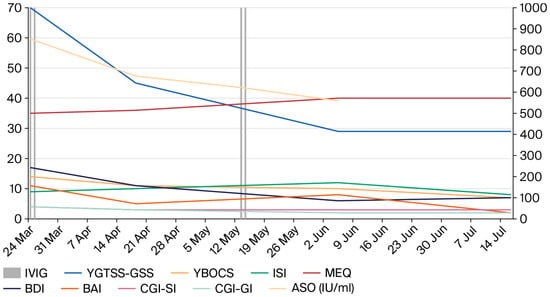
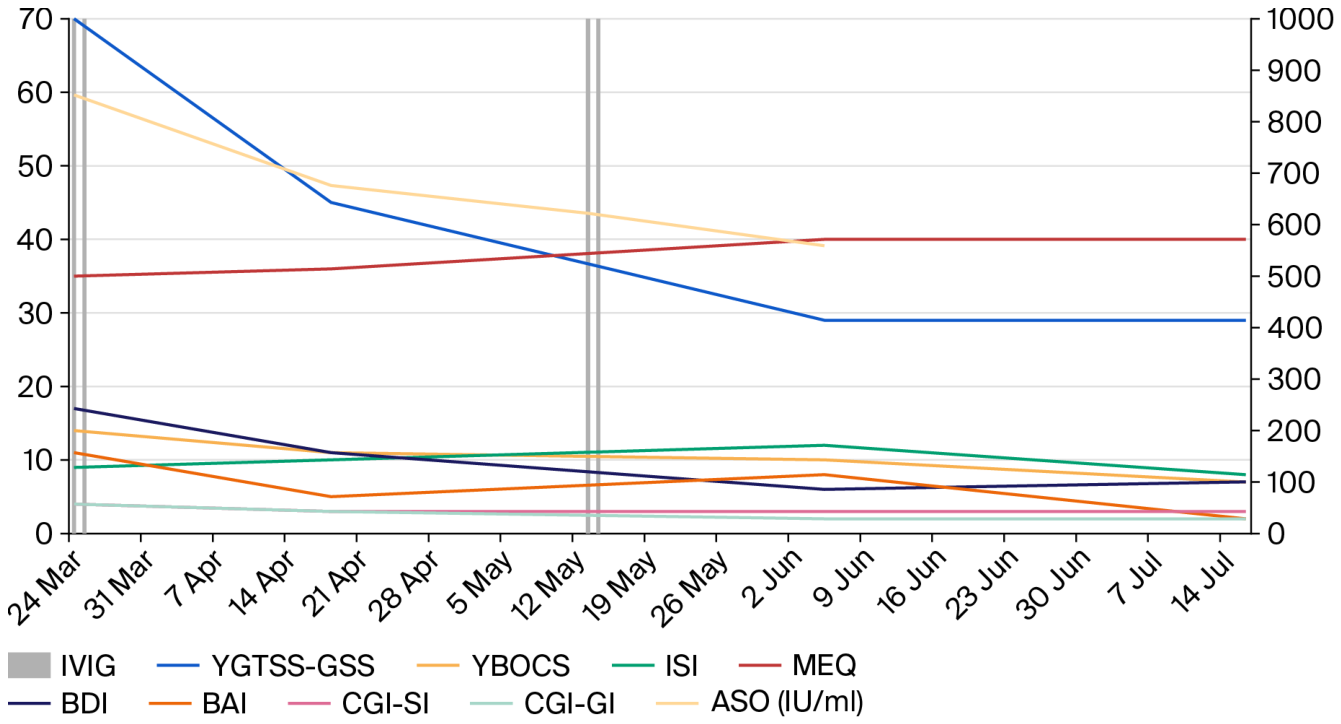
Immediately before the first IVIG course, the ASO titer and YGTSS-GSS were 852 IU/mL and 70 (marked), respectively, compared to values of 676 IU/mL was 45 (moderate) 3–4 weeks after the course, with the patient reporting fatigue during the first two days and an approximately 80% reduction in tics beginning on days 3–4. Separately, his father and friends reported that the tics were no longer noticeable during this period, though, in the third week, tics reappeared during examination-related sleep deprivation.
Because clinically important residual symptoms remained, a second IVIG course was administered over two consecutive infusion days (ASO 622 IU/mL). At 3–4 weeks after the second course, his ASO was 559 IU/mL and YGTSS-GSS was 29 (moderate), with the same score recorded at a further two-month follow-up. Checking compulsions decreased, with his Y-BOCS score changing from 14 to 7, and CGI ratings indicated clinical improvement; mild depressive and anxiety symptoms decreased, and MEQ findings suggested a shift from a delayed toward a more intermediate chronotype (Figure 1). The patient’s clinical/infectious history, treatment/interventions, and clinical assessments are summarized chronologically in Table 2.
Figure 1.
Longitudinal clinical outcome measures in Case 1, an adult with TS and a PANDAS-like presentation. TS: Tourette syndrome; PANDAS: Pediatric Autoimmune Neuropsychiatric Disorders Associated with Streptococcal Infections; IVIG: Intravenous Immunoglobulin; YGTSS-GSS: Yale Global Tic Severity Scale–Global Severity Score; Y-BOCS: Yale–Brown Obsessive–Compulsive Scale; ISI: Insomnia Severity Index; MEQ: Horne–Ostberg Morning–Evening Survey; BDI: Beck Depression Inventory; BAI: Beck Anxiety Inventory; CGI-SI: Clinical Global Impression Severity of Illness; CGI-GI: Clinical Global Impression Global Improvement; ASO: anti-streptolysin-O.
2.2. Case 2
A 23-year-old male university graduate working in the private sector reported 3–5 months of repeated door checking, shoulder and chest tensing, difficulty following conversations, and impaired social interaction, with motor tics including grimacing, lip licking, finger movements and clicking, body tensing, and touching people. He also described obsessions of doubt and repeated ablutions and mental planning scenarios, with historical vocal tics including echolalia.
His history included recurrent throat infections at ages 5–6, during which tics and checking behaviors reportedly began, as well as hospitalization for tuberculosis treatment at age 1 and allergic asthma from age 2. At age 18, OCD was treated with sertraline 200 mg and mianserin 10 mg for six months without reported benefit, while at age 20, OCD and a TD were treated with fluoxetine 60 mg and haloperidol 1 mg and an ASO titer of 493 IU/mL was documented. Haloperidol was discontinued after two months because of no perceived benefit, and later treatments included hyoscine-N-butylbromide/medazepam 10/10 mg and aripiprazole 5 mg. The patient reported no meaningful benefit from six months of fluoxetine and other medications and declined psychotropic medication during the IVIG treatment period.
Evaluation showed an ASO titer of 405 IU/mL, negative ANA, CRP 0.27 mg/dL, and normal hemogram, biochemistry, echocardiography, and cranial MRI; EEG showed epileptiform abnormalities in both anterior hemispheres and the left temporoparietal region, without a known seizure history.
The clinicians considered a PANDAS-like presentation on the basis of the retrospectively reported prepubertal onset of tic and obsessive–compulsive symptoms during recurrent throat infections and the reported episodic course, with the later documented elevated ASO titer providing additional clinical context. However, no contemporaneous documentation confirmed GAS infection at original neuropsychiatric onset or childhood exacerbations. Allergic asthma was considered a comorbidity rather than diagnostic evidence for PANDAS.
The first IVIG course comprised two infusions on consecutive days, with a total dose of 2 g/kg (186 g for 93 kg; 1 g/kg and 93 g per infusion). Immediately before treatment, his YGTSS-GSS and ASO were 68 (marked) and 405 IU/mL, respectively, decreasing to 31 (moderate) and 316 IU/mL 3–4 weeks after the first course. The patient reported headache and fatigue on day 1 and increased energy with reduced need for sleep on days 2–3.
He subsequently reported sustained subjective well-being, reduction in tics and obsessive–compulsive symptoms, and an earlier sleep schedule. Because residual symptoms remained, a second IVIG course was administered over two consecutive infusion days. ASO at that time was 294 IU/mL, decreasing to 292 IU/mL 3–4 weeks after the second course; YGTSS-GSS decreased from 20 (mild) at the 3–4-week follow-up to 18 (mild) after two months. The patient reported that his tics and compulsions nearly disappeared, with occasional door checking during stress, reflected through decreases in Y-BOCS and BAI from 16 to 10 and 30 to 18, respectively, and depressive symptoms remaining absent on the BDI; MEQ findings shifted from an intermediate to morning chronotype (Figure 2). The patient’s clinical/infectious history, treatment/interventions, and clinical assessments are summarized chronologically in Table 3.
Figure 2.
Longitudinal clinical outcome measures in Case 2, an adult with a TD and PANDAS-like presentation. TD: Tic disorder; PANDAS: Pediatric Autoimmune Neuropsychiatric Disorders Associated with Streptococcal Infections; IVIG: Intravenous Immunoglobulin; YGTSS-GSS: Yale Global Tic Severity Scale–Global Severity Score; Y-BOCS: Yale–Brown Obsessive–Compulsive Scale; ISI: Insomnia Severity Index; MEQ: Horne–Ostberg Morning–Evening Survey; BDI: Beck Depression Inventory; BAI: Beck Anxiety Inventory; CGI-SI: Clinical Global Impression Severity of Illness; CGI-GI: Clinical Global Impression Global Improvement; ASO: anti-streptolysin-O.
2.3. Case 3
A 26-year-old single male with an associate degree, living with his family and unemployed, presented with motor—eye blinking, nose wrinkling, lip licking, finger movements and clicking, and neck cracking—and vocal tics—throat clearing, inhaling sounds, and suppression of certain sounds.
He reported frequent throat infections in early childhood, tic onset at age 4–5, and tonsillectomy at age 10, with a first psychiatric evaluation for tics at age 11. At age 19 he received risperidone 5 mg for approximately two years, with partial benefit but adverse sexual effects, prompting subsequent use of pimozide 2 mg twice daily for approximately two years, producing substantial benefit; it was discontinued because the medication was no longer available rather than because of inefficacy. Aripiprazole 5 mg was then used for approximately four years with partial benefit, with the patient reporting that behaviors such as gambling and excessive spending persisted throughout this period. Fluvoxamine was later added and increased to 200 mg, alongside psychotherapy and a subsequent aripiprazole increase to 7.5 mg. Two maternal aunts reportedly had cleaning obsessions.
Five months later, the patient presented again with persistent motor and vocal tics. He had discontinued aripiprazole (7.5 mg) one week prior but had continued taking fluvoxamine (200 mg) and reported that his impulsive behaviors had resolved. Laboratory evaluations revealed an ASO level of 46 IU/mL (normal), negative ANA, RF < 10, CRP 2.2, and normal hemogram and EEG findings; cranial MRI showed a 2 × 2 cm retro-cerebellar cystic expansion, thought likely to be an arachnoid cyst. Haloperidol treatment was initiated, with the dosage gradually adjusted to 2 mg. Although the patient initially reported a 50% reduction in tics, he later described a marked increase in tics following a throat infection about a month later. Fluvoxamine (200 mg) was gradually tapered and discontinued, as it had proven ineffective for the tics.
The coexistence of prepubertal-onset TS and a history of recurrent throat infections raised the possibility of a PANDAS-like condition; however, there was no documentation of group A Streptococcus (GAS) infection from the time of tic onset, adult ASO titers remained consistently within the normal range, and the tonsillectomy was not considered diagnostic evidence. Therefore, primary TS remains a plausible alternative explanation.
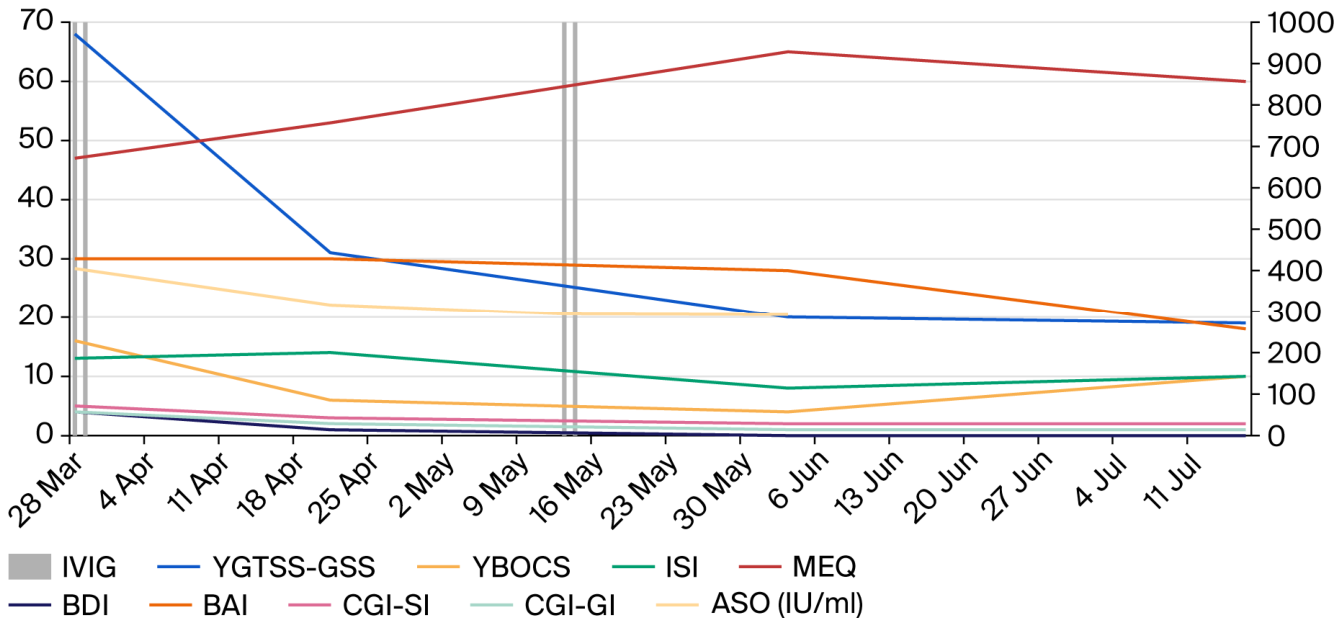
The IVIG course was initiated approximately 6 weeks after fluvoxamine discontinuation, with the patient receiving a single course of IVIG at a total dose of 2 g/kg (188 g for a body weight of 94 kg), delivered as two equal infusions on consecutive days (1 g/kg and 94 g per infusion). Throughout this period, haloperidol treatment (2 mg) was ongoing. Immediately prior to IVIG administration, his ASO level was 24 IU/mL and YGTSS-GSS was 70 (marked severity), decreasing to 26 (moderate severity) three to four weeks after the course; this was accompanied by a clinically observed reduction in tics and increased self-confidence.
During the first week after IVIG therapy, the patient reported headache, fatigue, increased urinary frequency, and dark-colored urine. As he reported these symptoms retrospectively at the second-week follow-up visit, laboratory evaluation during the symptomatic period was unavailable. Headache and fatigue are commonly reported after IVIG, though the dark-colored urine raised a clinical concern for possible transient hemolysis. Follow-up laboratory investigations showed no hemoglobin decline, with LDH and bilirubin remaining within normal limits; therefore, in the absence of additional clinical or laboratory evidence of ongoing hemolysis, further hemolytic investigations were not performed, meaning a transient hemolytic episode during the symptomatic period could not be definitively excluded.
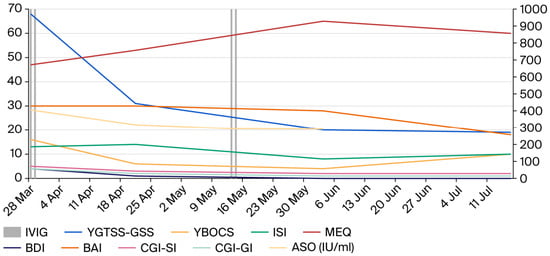
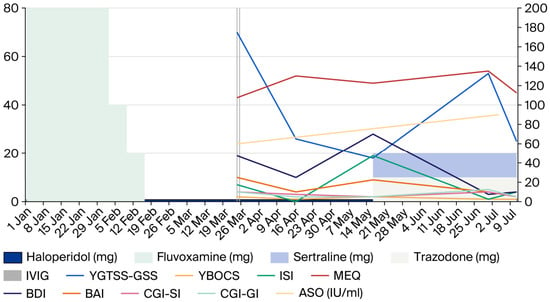
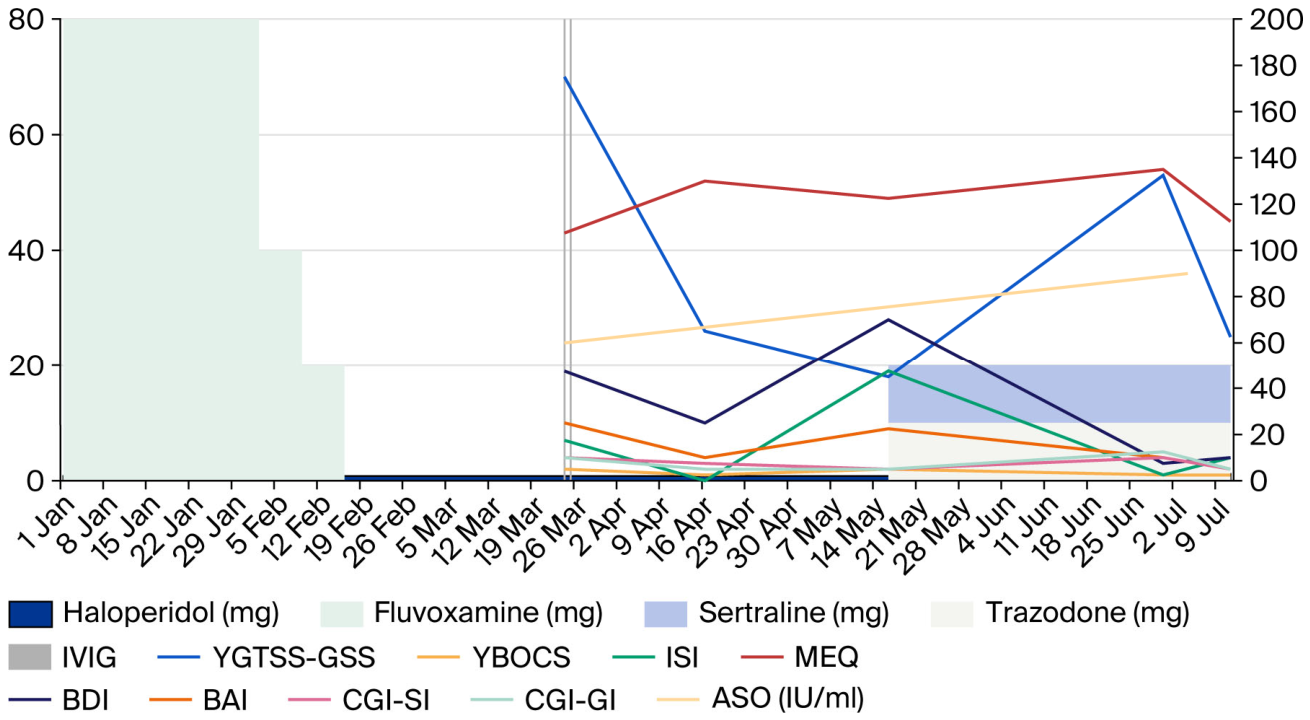
At the follow-up assessment two months after the single IVIG course, his YGTSS-GSS was 18 (mild); however, the patient reported experiencing self-criticism and feelings of guilt recently, attributed to unemployment and his mandatory military service. He also noted difficulty sleeping due to allergic rhinitis symptoms, specifically nasal discharge and congestion, with examination and rating scales revealing increases in insomnia and depressive symptoms. In response, sertraline (50 mg) and trazodone (25 mg) were added to the existing haloperidol (2 mg) regimen. At the three-month follow-up, he reported having had a throat infection three weeks earlier, accompanied by sore throat and sneezing, and noted an increase in tics following the resolution of the illness. His YGTSS-GSS rose to 53 (moderate), and an increase in tics was observed; however, insomnia and depressive symptoms showed marked improvement during follow-up. Haloperidol was increased to 3 mg and a second IVIG course was considered but not administered. Four days later, his ASO was 36 IU/mL (normal), and at a subsequent follow-up, tic reduction was observed and his YGTSS-GSS was 25 (mild). Because this reduction followed a medication dose increase and occurred without a second IVIG course, it should not be interpreted as evidence of a delayed IVIG effect (Figure 3). The patient’s clinical/infectious history, treatment/interventions, and clinical assessments are summarized chronologically in Table 4.
Figure 3.
Longitudinal clinical outcome measures in Case 3, an adult with TS and a possible PANDAS-like presentation. TS: Tourette syndrome; PANDAS: Pediatric Autoimmune Neuropsychiatric Disorders Associated with Streptococcal Infections; IVIG: Intravenous Immunoglobulin; YGTSS-GSS: Yale Global Tic Severity Scale–Global Severity Score; Y-BOCS: Yale–Brown Obsessive–Compulsive Scale; ISI: Insomnia Severity Index; MEQ: Horne–Ostberg Morning–Evening Survey; BDI: Beck Depression Inventory; BAI: Beck Anxiety Inventory; CGI-SI: Clinical Global Impression Severity of Illness; CGI-GI: Clinical Global Impression Global Improvement; ASO: anti-streptolysin-O.
2.4. IVIG Administration and Monitoring Protocol
Before IVIG administration, individual authorization for off-label IVIG use was obtained for each patient from the Turkish Medicines and Medical Devices Agency (Türkiye İlaç ve Tıbbi Cihaz Kurumu, TİTCK), Ministry of Health of the Republic of Türkiye (Case 1: 5 February 2025; Case 2: 5 February 2025; Case 3: 3 March 2025). Individual written informed consent for the off-label treatment application and IVIG administration was obtained from each patient.
All three patients received a 5% IVIG preparation containing maltose as a stabilizer, with a formulation pH of 4.0, and were premedicated with paracetamol and diphenhydramine; routine intravenous hydration was not administered. Infusions were initiated at 0.3 mL/kg/hour (approximately 20 mL/hour). If no infusion-related adverse reactions, including chills, fever, or subjective discomfort, occurred during the first 30 min, the infusion rate was increased stepwise at 15–30-min intervals according to individual tolerability, up to a maximum of 4.8 mL/kg/hour (approximately 300 mL/hour).
2.5. CARE-Style Comprehensive Chronological Timelines
The following CARE-style timelines summarize information available from clinical records and retrospective patient histories. The timelines are descriptive and intended to clarify chronology, not to imply causal relationships among infection, medication exposure, IVIG, ASO, and clinical outcomes.
Table 2.
CARE-style comprehensive chronological timeline: Case 1.
Table 3.
CARE-style comprehensive chronological timeline: Case 2.
Table 4.
CARE-style comprehensive chronological timeline: Case 3.
3. Discussion
In this case series, reductions in tic severity were observed temporally following IVIG administration in three adults with childhood-onset tic disorders and PANDAS-like presentations. All three patients had prepubertal-onset tic symptoms and retrospective histories of recurrent childhood throat infections, with obsessive–compulsive symptoms additionally documented in Cases 1 and 2. However, the evidence supporting a GAS-related neuropsychiatric syndrome differed among cases, and contemporaneous documentation of a temporal relationship between GAS infection and neuropsychiatric onset or exacerbation was unavailable. Accordingly, these should not be interpreted as definitively established PANDAS cases.
Elevated ASO levels are compatible with previous GAS exposure; however, they do not independently establish when infection occurred relative to neuropsychiatric symptom onset and are not validated surrogate markers of PANDAS activity or therapeutic response. Accordingly, elevated ASO titers in Cases 1 and 2 contributed to the clinical context but were not considered sufficient to establish PANDAS, and post-treatment decreases in ASO are reported descriptively. This limitation is particularly evident in Case 3, in whom substantial fluctuations in tic severity occurred despite ASO titers remaining within the normal range.
The temporal association between IVIG administration and subsequent symptom reduction is clinically noteworthy; however, these uncontrolled observations do not permit causal attribution to IVIG or a specific immunomodulatory mechanism. TDs characteristically fluctuate over time, and spontaneous variation, regression to the mean, expectancy effects, environmental changes, stress, sleep disturbance, preceding interventions, infection-related variation, and psychosocial influences may all have contributed. The fact that Cases 1 and 2 did not use psychotropic medications during their IVIG courses, while reducing one of the confounding factors, does not prove IVIG’s efficacy.
Case 1 illustrates this interpretative limitation particularly well. Before IVIG, the patient had already demonstrated a marked but temporary reduction in tic severity following plasmapheresis—his YGTSS-GSS decreasing from 65 to 9 before symptoms subsequently recurred—making the later reduction following IVIG clinically interesting. However, tic recurrence during examination-related sleep deprivation further illustrates the influence of contextual factors on symptom severity.
Causal interpretation is even more limited in Case 3. During the follow-up period, haloperidol was initiated three months prior to the IVIG course, and though tic symptoms decreased after the IVIG course, two months later, sertraline and trazodone were added to the regimen due to worsening depressive and anxiety symptoms. One month after that, tic symptoms recurred in conjunction with a reported throat infection, but subsided again following an increase in haloperidol dosage. Here, it is difficult to disentangle the relative contributions of various factors—such as IVIG, dopamine blockade therapy, other medication adjustments, infection-related changes, psychosocial factors, and the natural TS course—to the observed clinical changes. Therefore, Case 3 should be viewed as a descriptive, longitudinal observation rather than independent evidence of IVIG’s efficacy.
The evidence base for immunomodulatory treatment in PANS/PANDAS remains heterogeneous and has evolved since the 2017 PANS Research Consortium recommendations [11]. Johnson et al.’s 2021 systematic review judged the certainty of evidence for the beneficial effects of anti-inflammatory, antibacterial, and immunomodulatory treatments to be very low, highlighting the risk of bias, diagnostic heterogeneity, small samples, and methodological diversity [13], but open-label studies have nevertheless reported reductions in OCD, tic, and global symptom measures in selected pediatric populations [16,17]. Such studies provide clinically and biologically interesting signals but do not establish efficacy.
Recent guidance also illustrates the lack of complete consensus. The 2024 Delphi consensus recognizes immunomodulatory treatment as a possible option in selected patients while emphasizing individualized multidisciplinary evaluation and limitations of the evidence [22]. The 2025 American Academy of Pediatrics clinical report adopts a more conservative position, emphasizing the limited evidence base and recommending substantial caution with invasive immunomodulatory therapies [16]. These differences are especially relevant when extrapolating predominantly pediatric data to adults. Reviews published in 2026 likewise emphasize that the evidence supporting immunomodulatory treatment, including IVIG, remains heterogeneous and insufficient to establish efficacy or define which patients are most likely to benefit. In particular, treatment decisions require careful consideration of diagnostic uncertainty, the potential harms of invasive interventions, and the lack of controlled evidence in adults [6,7,8].
Changes in sleep and chronotype were also observed. Case 1 shifted from a delayed toward a more intermediate chronotype, whereas Case 2 shifted from intermediate to morning. Sleep and chronotype studies in adults with TDs suggest a greater tendency toward eveningness and associations between sleep timing and tic severity [23,24]. The present case series cannot determine whether the observed MEQ changes were related to IVIG, tic burden changes, contextual factors, or other influences.
Adults with childhood-onset tic/OCD syndromes and histories suggestive of infection-associated exacerbations may warrant multidisciplinary assessment, and supportive evidence of prior GAS exposure should be distinguished from documentation establishing a temporal GAS–symptom relationship. Any consideration of immunomodulatory treatment should take into account diagnostic uncertainty, alternative explanations for symptom fluctuation, potential adverse effects, treatment burden, and the limited adult evidence base.
4. Limitations
This case series has several important limitations. First, it includes only three uncontrolled cases, precluding generalization and causal inference; second, the relationship between childhood GAS infection and neuropsychiatric symptom onset or exacerbation was reconstructed from retrospective histories as contemporaneous microbiological and serial serological documentation was unavailable. Consequently, we describe PANDAS-like presentations rather than definitively established PANDAS cases. Third, adulthood ASO titers cannot establish GAS exposure timing and were interpreted only as supportive evidence of previous streptococcal exposure when elevated.
Fourth, the study had no comparator group, blinding, or stable repeated baseline, and follow-up durations and assessment intervals were relatively short and heterogeneous. TDs and TS naturally wax and wane; therefore, spontaneous variation, regression to the mean, expectancy effects, stress, sleep disturbance, infection-related variation, and environmental or psychosocial influences cannot be excluded.
Fifth, concomitant psychotropic use in Case 3 limits the attribution of clinical changes specifically to IVIG; sixth, retrospective information was incomplete regarding medication adherence, the adequacy of previous pharmacological trials, and predefined response thresholds. We also lacked comprehensive information on exposure to structured tic-specific behavioral interventions, such as Comprehensive Behavioral Intervention for Tics (CBIT) or habit reversal training.
Finally, classification of PANDAS-like presentations in adults remains uncertain, and prospective evidence regarding IVIG has been generated predominantly in pediatric populations. These observations cannot establish IVIG’s efficacy or mechanism of action in adults, nor can they establish optimal dosing, appropriate patient selection, or the risk–benefit balance. These findings should be considered descriptive and hypothesis generating.
5. Conclusions
This case series describes three adults with childhood-onset TDs and PANDAS-like presentations who showed reductions in tic severity and changes in other psychometric measures after IVIG administration. However, the study was uncontrolled, the childhood GAS–symptom relationship could not be confirmed from contemporaneous records, and natural TD symptom fluctuation and concomitant psychotropic use in Case 3 further limit interpretation; therefore, the observed clinical changes cannot be attributed specifically to IVIG. The principal contribution of this report is the longitudinal description of an understudied adult clinical population, presenting observations which cannot establish IVIG efficacy, its mechanism of action, optimal dosing, risk–benefit balance, or appropriate patient selection. Prospective controlled studies are needed, with predefined diagnostic criteria, standardized treatment protocols, repeated baseline measurements, systematic safety monitoring, and prespecified outcomes.
Author Contributions
All authors contributed to the conception and design of the study and drafting and revising the manuscript, and agree to be accountable for all aspects of the work. Specifically, A.K. contributed to data collection, project supervision, data analysis, data visualization, interpretation of results, and the literature review; D.Z. contributed to data collection, the literature review, methodological planning, and provision of materials; N.B. contributed to data analysis and data visualization; and T.E. contributed to data collection and provision of materials. All authors have read and agreed to the published version of the manuscript.
Funding
This research received no external funding.
Institutional Review Board Statement
Ethical approval was not required for this study involving humans in accordance with the local legislation and institutional requirements. Individual authorization for off-label IVIG use was obtained from the Turkish Medicines and Medical Devices Agency (Türkiye İlaç ve Tıbbi Cihaz Kurumu, TİTCK), Ministry of Health of the Republic of Türkiye, before treatment (Case 1: 5 February 2025; Case 2: 5 February 2025; Case 3: 3 March 2025). This case series did not require ethical approval, in accordance with the decision of İstanbul University-Cerrahpaşa Medical Research Ethics Committee (Reference No. E-24687260-604.01-1800142).
Informed Consent Statement
Written informed consent for publication of the clinical information included in this case series was obtained from all three patients.
Data Availability Statement
The datasets generated during and/or analyzed during the current study are not publicly available but are available from the corresponding author on reasonable request.
Conflicts of Interest
The authors declare no conflicts of interest.
References
- Regier, D.A.; Kuhl, E.A.; Kupfer, D.J. The DSM-5: Classification and criteria changes. World Psychiatry 2013, 12, 92–98. [Google Scholar] [CrossRef] [Scilit] [PubMed] [PubMed Central]
- Neuner, I.; Ludolph, A. Tics and Tourette’s syndrome throughout the life span. Nervenarzt 2009, 80, 1377–1387. [Google Scholar] [CrossRef] [Scilit] [PubMed]
- Swedo, S.E.; Leonard, H.L.; Garvey, M.; Mittleman, B.; Allen, A.J.; Perlmutter, S.; Dow, S.; Zamkoff, J.; Dubbert, B.K.; Lougee, L. Pediatric autoimmune neuropsychiatric disorders associated with streptococcal infections: Clinical description of the first 50 cases. Am. J. Psychiatry 1998, 155, 264–271. [Google Scholar] [CrossRef] [Scilit] [PubMed]
- ESwedo, S. From Research Subgroup to Clinical Syndrome: Modifying the PANDAS Criteria to Describe PANS (Pediatric Acute-onset Neuropsychiatric Syndrome). Pediatr. Ther. 2012, 2, 1000113. [Google Scholar] [CrossRef]
- Murphy, T.K.; Gerardi, D.M.; Parker-Athill, E.C. The PANDAS Controversy: Why (and How) Is It Still Unsettled? Curr. Dev. Disord. Rep. 2014, 1, 236–244. [Google Scholar] [CrossRef] [Scilit]
- Sun, X.; Bai, X. Immune dysregulation in pediatric tic disorders: Mechanisms, biomarkers, and therapeutic frontiers. Front. Immunol. 2026, 17, 1708940. [Google Scholar] [CrossRef] [Scilit] [PubMed]
- Lynne, V.; Agrawal, D.K. Pediatric autoimmune neuropsychiatric disorders associated with streptococcal infections (PANDAS): Autoimmune mechanisms, diagnostic controversies, and therapeutic implications. J. Pediatr. Perinatol. Child Health 2026, 10, 138–158. [Google Scholar] [CrossRef] [Scilit] [PubMed]
- Cesaroni, C.A.; Pisanò, G.; Rizzi, S.; Pantani, A.; Frattini, D.; Fusco, C. PANDAS syndrome: A narrative review of the diagnostic conundrum in children with acute neuropsychiatric symptoms. Int. J. Mol. Sci. 2026, 27, 4612. [Google Scholar] [CrossRef] [Scilit] [PubMed]
- Cunningham, M.W.; Cox, C.J. Autoimmunity against dopamine receptors in neuropsychiatric and movement disorders: A review of Sydenham chorea and beyond. Acta Physiol. Oxf. Engl. 2016, 216, 90–100. [Google Scholar] [CrossRef] [Scilit] [PubMed] [PubMed Central]
- Thienemann, M.; Murphy, T.; Leckman, J.; Shaw, R.; Williams, K.; Kapphahn, C.; Frankovich, J.; Geller, D.; Bernstein, G.; Chang, K.; et al. Clinical Management of Pediatric Acute-Onset Neuropsychiatric Syndrome: Part I-Psychiatric and Behavioral Interventions. J. Child Adolesc. Psychopharmacol. 2017, 27, 566–573. [Google Scholar] [CrossRef] [Scilit] [PubMed] [PubMed Central]
- Frankovich, J.; Swedo, S.; Murphy, T.; Dale, R.C.; Agalliu, D.; Williams, K.; Daines, M.; Hornig, M.; Chugani, H.; Sanger, T.; et al. Clinical Management of Pediatric Acute-Onset Neuropsychiatric Syndrome: Part II-Use of Immunomodulatory Therapies. J. Child Adolesc. Psychopharmacol. 2017, 27, 574–593. [Google Scholar] [CrossRef] [Scilit] [PubMed] [PubMed Central]
- Cooperstock, M.S.; Swedo, S.E.; Pasternack, M.S.; Murphy, T.K. Clinical Management of Pediatric Acute-Onset Neuropsychiatric Syndrome: Part III-Treatment and Prevention of Infections. J. Child Adolesc. Psychopharmacol. 2017, 27, 594–606. [Google Scholar] [CrossRef] [Scilit] [PubMed] [PubMed Central]
- Johnson, M.; Ehlers, S.; Fernell, E.; Hajjari, P.; Wartenberg, C.; Wallerstedt, S.M. Anti-inflammatory, antibacterial and immunomodulatory treatment in children with symptoms corresponding to the research condition PANS (Pediatric Acute-onset Neuropsychiatric Syndrome): A systematic review. PLoS ONE 2021, 16, e0253844. [Google Scholar] [CrossRef] [Scilit] [PubMed] [PubMed Central]
- Williams, K.A.; Swedo, S.E.; Farmer, C.A.; Grantz, H.; Grant, P.J.; D’souza, P.; Hommer, R.; Katsovich, L.; King, R.A.; Leckman, J.F. Randomized, Controlled Trial of Intravenous Immunoglobulin for Pediatric Autoimmune Neuropsychiatric Disorders Associated With Streptococcal Infections. J. Am. Acad. Child Adolesc. Psychiatry 2016, 55, 860–867.e2. [Google Scholar] [CrossRef] [Scilit] [PubMed]
- Perlmutter, S.J.; Leitman, S.F.; A Garvey, M.; Hamburger, S.; Feldman, E.; Leonard, H.L.; E Swedo, S. Therapeutic plasma exchange and intravenous immunoglobulin for obsessive-compulsive disorder and tic disorders in childhood. Lancet 1999, 354, 1153–1158. [Google Scholar] [CrossRef] [Scilit] [PubMed]
- Melamed, I.; Kobayashi, R.H.; O’COnnor, M.; Kobayashi, A.L.; Schechterman, A.; Heffron, M.; Canterberry, S.; Miranda, H.; Rashid, N. Evaluation of Intravenous Immunoglobulin in Pediatric Acute-Onset Neuropsychiatric Syndrome. J. Child. Adolesc. Psychopharmacol. 2021, 31, 118–128. [Google Scholar] [CrossRef] [Scilit] [PubMed] [PubMed Central]
- Melamed, I.; Rahman, S.; Pein, H.; Heffron, M.; Frankovich, J.; Kreuwel, H.; Mellins, E.D. IVIG response in pediatric acute-onset neuropsychiatric syndrome correlates with reduction in pro-inflammatory monocytes and neuropsychiatric measures. Front. Immunol. 2024, 15, 1383973. [Google Scholar] [CrossRef] [Scilit] [PubMed] [PubMed Central]
- American Academy of Pediatrics, Board of Directors. Pediatric Acute-Onset Neuropsychiatric Syndrome (PANS): Clinical Report. Pediatrics 2025, 155, e2024070334. [Google Scholar] [CrossRef] [Scilit] [PubMed]
- Beşiroğlu, L.; Ağargün, M.Y.; Ozbebit, O.; Sözen, M.; Dilek, I.; Güleç, M. Therapeutic response to plasmapheresis in four cases with obsessive-compulsive disorder and tic disorder triggered by streptococcal infections. Turk. Psikiyatri Derg. Turk. J. Psychiatry 2007, 18, 270–276. [Google Scholar] [PubMed]
- Krouse, A.; Li, H.; Krenzer, J.A.; Rose, W.N. Plasmapheresis, Rituximab, and Ceftriaxone Provided Lasting Improvement for a 27-Year-Old Adult Male with Pediatric Autoimmune Neuropsychiatric Disorders Associated with Streptococcal Infections (PANDAS). Case Rep. Psychiatry 2021, 2021, 8697902. [Google Scholar] [CrossRef] [Scilit] [PubMed] [PubMed Central]
- McGuire, J.F.; Piacentini, J.; Storch, E.A.; Ricketts, E.J.; Woods, D.W.; Peterson, A.L.; Walkup, J.T.; Wilhelm, S.; Ramsey, K.; Essoe, J.K.-Y.; et al. Defining Tic Severity and Tic Impairment in Tourette Disorder. J. Psychiatr. Res. 2021, 133, 93–100. [Google Scholar] [CrossRef] [Scilit] [PubMed] [PubMed Central]
- Grandinetti, R.; Mussi, N.; Pilloni, S.; Ramundo, G.; Miniaci, A.; Turco, E.; Piccolo, B.; Capra, M.E.; Forestiero, R.; Laudisio, S.; et al. Pediatric acute-onset neuropsychiatric syndrome and pediatric autoimmune neuropsychiatric disorder associated with streptococcal infections: A delphi study and consensus document about definition, diagnostic criteria, treatment and follow-up. Front. Immunol. 2024, 15, 1420663. [Google Scholar] [CrossRef] [Scilit] [PubMed] [PubMed Central]
- Ricketts, E.J.; Burgess, H.J.; Montalbano, G.E.; Coles, M.E.; McGuire, J.F.; Thamrin, H.; McMakin, D.L.; McCracken, J.T.; Carskadon, M.A.; Piacentini, J.; et al. Morning light therapy in adults with Tourette’s disorder. J. Neurol. 2022, 269, 399–410. [Google Scholar] [CrossRef] [Scilit] [PubMed] [PubMed Central]
- Ricketts, E.J.; Montalbano, G.E.; Burgess, H.J.; McMakin, D.L.; Coles, M.E.; Piacentini, J.; Colwell, C.S. Sleep and Chronotype in Adults with Persistent Tic Disorders. J. Clin. Psychol. 2022, 78, 1516–1539. [Google Scholar] [CrossRef] [Scilit] [PubMed] [PubMed Central]

Disclaimer/Publisher’s Note: The statements, opinions and data contained in all publications are solely those of the individual author(s) and contributor(s) and not of MDPI and/or the editor(s). MDPI and/or the editor(s) disclaim responsibility for any injury to people or property resulting from any ideas, methods, instructions or products referred to in the content. |
© 2026 by the authors. Licensee MDPI, Basel, Switzerland. This article is an open access article distributed under the terms and conditions of the Creative Commons Attribution (CC BY) license.