


Abstract
Background: Hematological malignancies and their treatment frequently cause fatigue, reduced physical capacity, neuropathy, pain and impaired quality of life. Exercise-based rehabilitation is increasingly recognized as part of the care of patients with hematological malignancies, whereas the role and safety of spa-based interventions, such as balneotherapy, hydrotherapy and peloidotherapy, remain uncertain. Methods: A critical narrative review of PubMed was performed. Evidence obtained in patients with hematological malignancies (direct evidence) was distinguished from evidence obtained in other oncological and non-oncological populations (indirect evidence), and each recommendation was assigned an evidence-certainty label (A–D). Results: No clinical studies evaluating balneotherapy or spa therapy in hematological malignancies were identified. Evidence supports exercise-based and functional rehabilitation for improving physical capacity, fatigue and quality of life, including in selected patients with cytopenias. Evidence for spa-specific procedures is indirect, and the laboratory thresholds used in practice derive from exercise studies and expert opinion rather than from validation for spa-specific procedures. Conclusions: The benefits documented in this population relate to rehabilitation and exercise, which can also be delivered in a spa setting; spa-specific procedures should be regarded as optional adjuncts requiring procedure-specific qualification. As a hypothesis for prospective evaluation, we also outline a framework in which the time-based eligibility criterion used in Poland is supplemented by structured clinical assessment.
1. Introduction
Treatment outcomes in many hematological malignancies have improved, and a growing number of patients live for years with the consequences of the disease and its treatment. Chemotherapy, hematopoietic stem cell transplantation and modern immunological therapies may be associated with cytopenias, infections, bleeding, neuropathy, fatigue and decreased physical performance. Rehabilitation and regular physical activity are considered important elements of comprehensive care in hematological malignancies, provided that individual qualification and monitoring are performed [1,2,3,4,5,6,7].
In several Central European countries, including Poland, rehabilitation is also delivered in spa (health resort) settings, where programs combine therapeutic exercise with balneological procedures (mineral baths, hydrotherapy, peloidotherapy), thermal and aerosol procedures and physical therapy modalities. Data on balneotherapy and spa treatment in hematological malignancies are scarce, and no clinical trials have directly evaluated these interventions in this population. Studies in other oncological populations and in chronic diseases, including rheumatic diseases, suggest possible improvements in quality of life, fatigue, pain and physical fitness, as well as changes in selected inflammatory and immunological markers [8,9,10,11,12,13,14,15,16,17,18,19], but their applicability to hematological patients is uncertain.
Several specific clinical uncertainties, therefore, arise: (i) whether spa rehabilitation offers any benefit beyond exercise-based rehabilitation delivered in other settings; (ii) which spa-specific procedures carry specific risks for hematological patients—infectious (water and aerosol exposure), hemorrhagic (manual and mechanical stimuli) or thermal and hemodynamic (heat exposure); (iii) which clinical and laboratory criteria should guide qualification, and from what evidence these criteria derive; and (iv) whether fixed waiting periods after anticancer treatment, such as those used in Poland, reflect the individual risk of the patient.
Spa treatment should not be considered anticancer therapy but, at most, a complement to rehabilitation in appropriately qualified, clinically stable patients. The core of any program should remain therapeutic exercise, functional training and individually prescribed physical activity, whereas spa-specific procedures and physical therapy modalities should be selected according to the current risk profile, type of treatment, complications and the feasibility of performing a given procedure safely.
The aim of this critical narrative review is to evaluate the available evidence on spa rehabilitation, balneotherapy and selected physical therapy modalities in patients with hematological malignancies, with explicit separation of direct and indirect evidence and particular emphasis on clinical safety. We also present a proposed framework for individual qualification and identify gaps requiring further research.
2. Hematological Malignancies: Clinical Context
2.1. Disease Spectrum and Treatment-Related Complications
Hematological malignancies comprise myeloid and lymphoid neoplasms with acute and chronic courses [20]. In acute leukemias, including acute myeloid leukemia (AML) and acute lymphoblastic leukemia (ALL), the proliferation of blasts displaces normal hematopoiesis, leading to anemia, thrombocytopenia and neutropenia [21,22,23,24]. Chronic myeloproliferative neoplasms include chronic myeloid leukemia (CML) and the Philadelphia chromosome-negative myeloproliferative neoplasms (MPN Ph−): essential thrombocythemia (ET), polycythemia vera (PV) and myelofibrosis (MF). Chronic lymphoid neoplasms include chronic lymphocytic leukemia (CLL) and lymphomas, and multiple myeloma is a distinct plasma cell neoplasm [25,26,27,28,29,30]. Treatment includes chemotherapy, monoclonal antibodies, targeted therapies, autologous and allogeneic hematopoietic stem cell transplantation (autoHSCT and alloHSCT), chimeric antigen receptor T-cell (CAR-T) therapy and, in selected situations, radiotherapy [31,32]. The treatment-related complications most relevant to rehabilitation are cytopenias, infections, bleeding, thrombosis and peripheral neuropathy [1,33,34,35,36,37]. The intensity of rehabilitation must, therefore, be adjusted to the type of disease, treatment stage, blood counts, infectious, hemorrhagic and thrombotic risk and general condition. Cytopenia itself does not necessarily preclude rehabilitation but requires appropriate supervision and modification of the exercise load [1,2,38].
2.2. Epidemiology and Survival
Survival in many hematological malignancies has improved over recent decades [39]. In some chronic diseases, survival now extends well beyond 10 years: in CML treated with tyrosine kinase inhibitors, life expectancy approaches that of the general population [40], and in a large molecularly annotated cohort, median survival was 19.8 years in ET and 13.5 years in PV [41]. Consequently, an increasing number of patients live for many years with the sequelae of the disease and its treatment.
In Poland, 11,434 new cases of malignant neoplasms of lymphoid, hematopoietic and related tissue (ICD-10 C81–C96) were registered in 2023, accounting for approximately 6% of the 192,922 malignant neoplasms registered that year [42]. The most frequent included lymphoid leukemia, non-follicular lymphoma and multiple myeloma (Table 1). Incidence is highest in older age groups, and a further increase in the number of cases is expected [42,43]. Analyses based on National Health Fund data indicate that the number of people living with these diagnoses is considerably higher than the annual number of new cases [44].
Table 1.
Number of new cases of selected malignant neoplasms of lymphoid and hematopoietic tissue in Poland in 2023, according to the Polish National Cancer Registry [42].
3. Methods
3.1. Design and Scope
This study is a critical narrative review. Its reporting was guided by the Scale for the Assessment of Narrative Review Articles (SANRA) [45]. A narrative rather than a systematic design was chosen because the research question spans heterogeneous interventions, populations and types of sources (clinical studies, guidelines and regulatory documents), and because a preliminary search indicated an absence of clinical studies of spa-based interventions in hematological malignancies.
This review covers spa rehabilitation as it is delivered in practice. In Poland and other Central European countries, a spa stay typically combines therapeutic exercise with balneological procedures (mineral baths, hydrotherapy, peloidotherapy), thermal and aerosol procedures and physical therapy modalities, such as electrotherapy, therapeutic ultrasound, photobiomodulation (laser therapy), extracorporeal shock wave therapy and massage. Qualification for spa rehabilitation, therefore, implies qualification for these procedures, each of which carries a distinct risk profile in hematological patients (infectious, hemorrhagic, thermal or local tissue risk). For this reason, selected physical therapy modalities were included, although balneotherapy and spa rehabilitation remain the primary focus of this review. For consistency, the following terms are used throughout: “spa rehabilitation” denotes the overall rehabilitation program delivered in a spa (health resort) setting; “spa-specific procedures” denotes balneological procedures (mineral baths, hydrotherapy and peloidotherapy) together with thermal and aerosol procedures; “water-based procedures” denotes hydrotherapy, aquatic exercise, mineral baths and pools; and “physical therapy modalities” denotes electrotherapy, therapeutic ultrasound, photobiomodulation, extracorporeal shock wave therapy and massage.
3.2. Literature Search
A structured literature search was performed in PubMed/MEDLINE. The primary search covered publications from January 2000 to October 2026, with the final search performed on 4 October 2026. Because the review was designed to assess contemporary clinical practice and current rehabilitation concepts, the main evidence synthesis focused on the 2000–2026 period. The search strategy used combinations of MeSH terms and free-text terms covering three principal concepts: (1) hematological malignancies and hematological rehabilitation; (2) balneotherapy, spa-based and related rehabilitation interventions; and (3) safety and clinically relevant outcomes.
The population-related search terms included the following:
(“Hematologic Neoplasms”[MeSH Terms] OR “Leukemia”[MeSH Terms] OR “Lymphoma”[MeSH Terms] OR “Multiple Myeloma”[MeSH Terms] OR leukemia*[Title/Abstract] OR lymphoma*[Title/Abstract] OR myeloma*[Title/Abstract] OR “hematologic malignan*”[Title/Abstract] OR “haematologic malignan*”[Title/Abstract] OR “hematologic disease*”[Title/Abstract] OR “haematologic disease*”[Title/Abstract] OR “Hematopoietic Stem Cell Transplantation”[MeSH Terms] OR “CAR-T”[Title/Abstract])
The intervention-related terms included the following:
(“Balneology”[MeSH Terms] OR “Hydrotherapy”[MeSH Terms] OR “Mud Therapy”[MeSH Terms] OR balneotherap*[Title/Abstract] OR hydrotherap*[Title/Abstract] OR “spa therapy”[Title/Abstract] OR “spa treatment”[Title/Abstract] OR pelotherap*[Title/Abstract] OR peloid*[Title/Abstract] OR “mud bath*”[Title/Abstract] OR “mud therap*”[Title/Abstract] OR “mineral bath*”[Title/Abstract] OR “thermal bath*”[Title/Abstract] OR “aquatic exercise”[Title/Abstract] OR “Physical Therapy Modalities”[MeSH Terms] OR “Rehabilitation”[MeSH Terms] OR “Exercise”[MeSH Terms])
Additional searches combined the intervention terms with safety- and outcome-related terms, including adverse events, infection, bleeding, thrombocytopenia, neutropenia, quality of life, fatigue, physical function, inflammatory markers, immune function, hemodynamic parameters and microcirculation.
To identify indirect evidence relevant to spa rehabilitation, additional searches combined the intervention terms with broader oncological and non-oncological populations, including other malignancies and chronic musculoskeletal diseases. Particular attention was paid to studies reporting biological, inflammatory, immunological, hematological, cardiovascular or functional outcomes that could inform the interpretation of spa-specific procedures in hematological patients.
Reference lists of relevant publications, systematic reviews, guidelines and consensus documents were additionally screened manually. Relevant recommendations and regulatory information were obtained from the websites of the organizations responsible for issuing the respective guidelines, consensus statements, registry reports and Polish legal or regulatory documents.
The search was not intended to constitute a systematic review search with exhaustive retrieval and quantitative study selection. Instead, it was designed to identify the principal body of evidence necessary to critically evaluate the clinical rationale, potential benefits, safety considerations and qualification criteria for spa rehabilitation in hematological malignancies. The search was restricted to publications in English and Polish. Accordingly, the numbers of records retrieved, screened and excluded are not reported, and no PRISMA flow diagram is provided.
3.3. Eligibility of Sources
Sources were considered eligible when they contributed relevant evidence to at least one of the following domains:
- Rehabilitation, exercise or functional recovery in patients with hematological malignancies;
- Balneotherapy, hydrotherapy, aquatic exercise, peloidotherapy, thermal procedures or other spa-based interventions in patients with cancer;
- Physiological, inflammatory, immunological, hematological or cardiovascular effects of balneotherapy or related procedures in non-hematological populations;
- Safety, contraindications, precautions or qualification criteria relevant to physical rehabilitation or spa-specific procedures in patients with cancer or hematological malignancies;
- Clinical guidelines, consensus statements or regulatory documents relevant to rehabilitation, infection prevention, treatment-related complications or eligibility for health-resort treatment.
Randomized controlled trials, non-randomized and observational studies, case series, systematic reviews, meta-analyses and scoping reviews were considered. Narrative reviews were used for background information and mechanistic context. Clinical guidelines and consensus statements were used to inform safety and clinical qualification, while official epidemiological and regulatory documents were used for disease burden and the Polish regulatory context.
Animal and in vitro studies were not considered clinical evidence. Studies in healthy volunteers were used only when they provided relevant physiological or mechanistic information and were explicitly classified as indirect evidence. Non-institutional commercial web content was excluded.
3.4. Selection and Data Extraction
Records were screened by title and abstract and then in full text by two authors (A.M.K. and Z.D.-A.) independently; disagreements were resolved by discussion or, when necessary, by a third author (M.B.).
Because this was a critical narrative review rather than a systematic review, the selection process was focused on identifying the most relevant and clinically informative evidence rather than on estimating a pooled treatment effect.
For each included source, the following information was considered: study design, population and underlying disease, sample size, intervention and setting, duration and frequency of treatment, comparator where applicable, clinical and functional outcomes, hematological or biological outcomes, reported adverse events, and the relevance of the findings to patients with hematological malignancies.
Each source was subsequently classified according to the degree to which its findings could be directly applied to hematological rehabilitation or had to be extrapolated from another population, intervention or clinical context.
3.5. Classification of Evidence and Synthesis
Because this review combines evidence obtained in different populations, each recommendation and each entry in Table 2 was assigned an evidence-certainty label based on the concept of indirectness used in the GRADE approach. The evidence-certainty labels for the recommendations and entries presented in Table 3, Table 4, Table 5, Table 6, Table 7 and Table 8 are summarized in Table 2 [46]. Labels B–D indicate that a recommendation is extrapolated, and label D also covers recommendations representing the authors’ consensus. No formal risk-of-bias assessment of individual studies was performed, given the heterogeneity of study designs and the narrative scope of the review; this limitation is discussed in Section 11. Owing to the heterogeneity of populations, interventions and endpoints and the lack of head-to-head studies, no quantitative synthesis was performed. The results of indirect studies were interpreted with caution and were not treated as evidence of the effectiveness of balneotherapy in hematological malignancies.
Table 2.
Evidence-certainty labels used in this review.
4. Evidence for Rehabilitation in Hematological Malignancies
4.1. Effectiveness and Safety
Exercise-based and functional rehabilitation is the best-documented intervention in hematological malignancies (label A). In a retrospective analysis of inpatient hematology and oncology rehabilitation, published as a conference abstract, significant functional improvement and discharge home were reported in more than 70% of patients, including those with advanced disease [47]. Patients with acute leukemia undergoing intensive treatment, including alloHSCT, experience deterioration of physical, psychological and social functioning, which justifies early, individualized rehabilitation [48]. In patients with lymphoma and other hematological diseases with low blood counts, rehabilitation performed with the physician’s consent and appropriate monitoring was not associated with a significant increase in adverse events, and in some analyses, it was associated with shorter hospitalization and maintenance of functional capacity [4,5]. A review of studies in thrombocytopenic patients concluded that physical exercise is safe and feasible under appropriate supervision [7], and a recent review confirmed the importance of physical activity across hematological malignancies, with the need for individualized programs [6].
4.2. Timing and Setting
Rehabilitation should start as early as possible, including during inpatient and outpatient treatment. In the acute phase, the priorities are maintenance of function and prevention of immobility, using breathing exercises, bedside mobilization and training in activities of daily living (ADL). During convalescence, activity should be increased gradually, and in the stable phase of the disease, more comprehensive endurance and strength programs can be implemented [3,4,5,6,7,49]. A spa stay, where available, usually falls into this last phase and should be regarded as one possible setting for continued rehabilitation rather than as a separate treatment.
4.3. Rehabilitation During and After HSCT and CAR-T
AutoHSCT, alloHSCT and CAR-T therapy may lead to sarcopenia, cachexia and reduced exercise capacity and may increase cardiovascular risk. Cardio-oncology rehabilitation includes assessment of exercise capacity and individually prescribed aerobic and resistance exercise [49]. An international survey showed that rehabilitation is widely delivered during HSCT, using functional assessments such as the chair-rise test, grip strength and the 6 min walk test, with concurrent monitoring of blood counts [3].
4.4. Guidelines and Recommendations
Contemporary oncological rehabilitation is shifting from a reactive model towards prehabilitation and early mobilization. Physiotherapy should include functional assessment, education, exercise, respiratory and thromboprophylactic measures and fatigue management [50,51]. The World Health Organization (WHO) recommends rehabilitation at every stage of cancer care, focused on quality of life and independence [52]. ASCO (American Society of Clinical Oncology) guidelines recommend regular aerobic and resistance exercise during cancer treatment to reduce fatigue and preserve fitness and strength [53,54], and ASCO geriatric oncology guidelines recommend assessment of function, comorbidity and other vulnerabilities rather than reliance on chronological age [55,56]. In older patients with hematological malignancies, including those with multiple myeloma being considered for autoHSCT, actual fitness and physiological reserve should be assessed [57,58]. Mindfulness-based interventions, yoga, tai chi, cognitive-behavioral therapy, sleep hygiene and selected integrative medicine methods may support the management of anxiety, depression, fatigue and pain [59,60,61]. Care should be multidisciplinary and coordinated according to the individual needs of the patient [62,63].
5. Spa Rehabilitation and Balneotherapy: Current Evidence
5.1. Direct Evidence in Hematological Malignancies
No clinical studies evaluating balneotherapy or spa therapy in patients with hematological malignancies were identified, and no international guidelines address its use in this group. A systematic review of water therapies in cancer included 12 studies with 430 patients, conducted predominantly in patients with breast cancer, and none of the included studies focused on hematological malignancies [8]. Consequently, all statements in this review concerning spa-specific procedures are extrapolated (labels B–D).
It is, therefore, essential to distinguish between rehabilitation delivered in a spa setting and spa-specific procedures. The former relies on exercise-based interventions whose benefits in hematological malignancies are documented (Section 4) and which can be delivered in a spa as in any other setting [3,4,5,6]. The latter—balneotherapy, hydrotherapy, peloidotherapy and thermal and aerosol procedures—lack direct evidence of benefit, and their use should depend on procedure-specific qualification. Balneotherapy is not a systemic treatment and should not be equated with anticancer therapy. In patients with active disease, significant cytopenia, immunosuppression, infection or a high risk of bleeding, water-based procedures and other procedures involving environmental exposure require special caution or postponement [8,64,65,66].
5.2. Indirect Evidence from Oncology and Chronic Diseases
Hydrotherapy and aquatic exercise may improve pain, fatigue and quality of life in some breast cancer survivors, but the overall effectiveness of aquatic therapies remains equivocal, and the studies are heterogeneous and methodologically limited [8,67,68] (label C). A hydrotherapy-based supportive skin care program after breast cancer treatment has been evaluated in a randomized controlled study [14], and a multidisciplinary supportive and educational intervention delivered in a thermal resort has been evaluated after completion of breast cancer treatment [69]. In non-oncological chronic diseases, such as fibromyalgia and rheumatic diseases, balneotherapy has been associated with improvements in pain, function and quality of life [11,12,13] (label D). Evidence on physical therapy modalities in oncology is summarized in Section 8.
6. Biological Plausibility: Hypothesis-Generating Data Only
Balneotherapy and hydrotherapy can induce neuroendocrine and immunological responses that have been interpreted as anti-inflammatory, analgesic and adaptive (hormetic) effects [9,10,11]. In patients with osteoarthritis, fibromyalgia, chronic heart failure and cardiovascular risk factors, balneotherapy and peloidotherapy have been associated with reductions in selected pro-inflammatory cytokines, CRP (C-reactive protein), PGE2 (prostaglandin E2) and LTB4 (leukotriene B4), with changes in cortisol levels and innate immune responses, and with changes in blood pressure and selected cardiovascular markers [15,16,17,18,19,70,71,72,73,74,75].
Chronic inflammation influences hematopoietic stem cell function, clonal hematopoiesis and the development of myeloid malignancies, and its role is particularly evident in MPN Ph− [76,77,78,79]. This has prompted interest in whether the anti-inflammatory effects attributed to balneotherapy could be relevant to these diseases. However, all of the above data were obtained in non-hematological populations, mostly with short-term surrogate markers, and none demonstrates a clinical or disease-modifying effect in any hematological malignancy (label D). These data should be regarded as hypothesis-generating only and do not justify the use of spa-specific procedures in hematological patients for any purpose other than symptomatic and rehabilitative support.
7. Hydrotherapy, Peloidotherapy and Thermal and Aerosol Procedures
7.1. Thermal and Aerosol Procedures
Local application of heat may be considered for selected musculoskeletal complaints in clinically stable patients. Qualification should take into account thermal tolerance, skin condition, superficial sensation, hemodynamic stability and the location of possible neoplastic lesions. Sauna and other forms of whole-body thermotherapy require greater caution than local thermotherapy because of the load on the cardiovascular system and the risk of dehydration and impaired thermoregulation. In patients with fever, hemodynamic instability, significant dehydration, severe autonomic dysfunction or significant exercise intolerance, these procedures should be postponed. Whole-body cryotherapy is not documented in the rehabilitation of patients with hematological malignancies and should not be used routinely; there are insufficient data on its safety and effectiveness in this population [80,81,82] (label D).
Inhalation and aerosol therapy require consideration of the current infection risk, the way the procedure is performed and environmental conditions. In patients with active infection, fever, severe immunosuppression or severe neutropenia, group procedures should be postponed, and individual procedures should be preferred if the method is clinically justified.
There are no direct data on the safety and effectiveness of graduation towers (open-air brine evaporation structures used for inhalation of saline aerosol) in patients with hematological malignancies. Because of the possibility of exposure to aerosols and other environmental factors, special caution is warranted in patients with significant immunosuppression or severe neutropenia, and alternative, individual forms of rehabilitation should be considered. Risk assessment should take into account not only the type of substance or device used but also whether the procedure is carried out individually or in a group, and whether hygienic conditions and ventilation can be controlled (Table 3) [64,65].
Table 3.
Thermal and aerosol procedures in patients with hematological malignancies: potential applications and safety aspects.
7.2. Hydrotherapy and Aquatic Exercise
Aquatic exercise can be part of the rehabilitation of patients with hematological malignancies, but its use requires consideration of the current clinical status, infection risk, skin condition and the presence of vascular access. In neutropenia, limiting exposure to potential sources of infection is particularly important, so individualized forms of rehabilitation conducted in a properly controlled environment may be preferred.
Infection risk increases steeply when the absolute neutrophil count (ANC) falls below 0.5 G/L (×109/L), and this value defines severe neutropenia in infectious disease guidelines [83,84]. Guidelines for HSCT recipients recommend avoiding swimming in recreational water such as lakes and ponds and avoiding swallowing water during the period of immune recovery [66], and heated, aerosol-generating installations (whirlpools, hot tubs and spa pools) are a recognized source of Legionella and other waterborne infections [64,65]. However, no study has evaluated whether any ANC threshold predicts infection risk specifically during hydrotherapy, aquatic exercise or mineral baths. The ANC-based recommendations below are, therefore, extrapolated from general neutropenia and transplant infection-control data (label D).
On this basis, water-based procedures should be postponed in patients with ANC < 0.5 G/L or significant immunosuppression, during the early period after autoHSCT, alloHSCT or CAR-T therapy, and in patients with active infection or open wounds. The decision should consider not only the ANC but also fever or active infection, skin condition, vascular access, type of treatment and the sanitary conditions of the facility. An unhealed vascular access site, wound or skin damage are additional factors against the use of a swimming pool; in patients with a central venous catheter, eligibility for aquatic exercise should be discussed with the treating team on a case-by-case basis.
The risk associated with swimming pools and other water-based procedures depends primarily on the current immune status, blood counts, type of treatment and complications, and not solely on the time since remission. Great caution is warranted in active AML and during periods of intense immunosuppression; in stable remission of AML, controlled CML and MPN Ph−, access may be broader but always after individual clinical assessment. Whirlpool baths (hot tubs), intensively recirculating baths and other shared pools with a higher risk of microbiological exposure should be treated more restrictively than individual exercise in a controlled environment, and their use should be deferred in patients with significant immunosuppression, severe neutropenia, active infection, unhealed wounds or in the early post-HSCT period [64,65,66].
Restrictions on hydrotherapy should not be equated with a contraindication to rehabilitation itself. If water-based procedures are not recommended, rehabilitation should be continued, if the clinical condition allows, using individually selected methods that do not require water exposure (Table 4).
Table 4.
Hydrotherapy and other water-based spa procedures in patients with hematological malignancies: potential benefits, risk factors and approach.
7.3. Peloidotherapy
Peloidotherapy can be used symptomatically but should be considered an environmental and cutaneous exposure. In patients with hematological malignancies, it should be preceded by an assessment of the clinical condition, skin integrity, the presence of infection and the current immunological and hemorrhagic risk. In severe neutropenia, significant immunosuppression, active infection, skin damage or cutaneous chronic graft-versus-host disease (Section 9.2), the procedure should be postponed. In procedures involving significant thermal stress, heat tolerance, hydration and hemodynamic stability should also be considered [64,65] (label D).
The biological effects described in Section 6 should not be interpreted as evidence of antineoplastic activity or as a justification for using peloidotherapy to modify the course of a hematological malignancy. In the absence of clinical trials in this population, peloidotherapy should be regarded as a potential supportive intervention requiring individual qualification.
8. Physical Therapy Modalities in Hematological Malignancies
Physical therapy modalities are discussed because they are a routine part of spa rehabilitation programs (Section 3.1). Evidence for their use in oncology comes almost exclusively from other cancer populations, mainly breast and colorectal cancer and palliative care [85,86,87,88,89,90,91,92,93] (label C), and safety recommendations are derived from general cancer rehabilitation and electrophysical agent guidance [80,81,82,94] (label D).
Massage and selected manual therapy techniques can be used to reduce pain and muscle tension and to improve comfort. However, they require individual modification in thrombocytopenia, coagulation disorders, active bleeding, osteolytic lesions, venous thrombosis and skin damage. Direct pressure over active tumor sites, osteolytic lesions, wounds and vascular access sites should be avoided. The intensity and technique of massage should be adjusted to the current risk of bleeding and injury; in patients receiving anticoagulant or antiplatelet therapy, or Bruton tyrosine kinase (BTK) inhibitors, which increase bleeding risk, light-pressure techniques should be preferred [95,96]. In suspected or diagnosed acute thrombosis, massage of the affected area should be avoided. In osteolytic lesions, tumor involvement or suspected bone instability, deep manual techniques should be avoided in the affected areas [80,81,82,92,93].
TENS (transcutaneous electrical nerve stimulation) may be considered as an adjunctive treatment for pain, including selected neuropathic and musculoskeletal complaints. Electrodes should be placed outside the area of active or suspected cancer, and skin condition, superficial sensation and the presence of implanted electronic devices should be taken into account [82,89,90,91,94].
Photobiomodulation (PBM; low-level laser therapy, LLLT) may be useful for selected rehabilitation problems and symptoms associated with cancer treatment, such as lymphedema [87,88]. Because data on the effect of PBM on cancer tissue are inconclusive, routine use directly over active or suspected cancer should be avoided until more conclusive clinical data are available.
Therapeutic ultrasound may be used for selected musculoskeletal indications [85] but should not be applied directly over active or suspected cancer or over osteolytic lesions without prior clinical evaluation.
ESWT (extracorporeal shock wave therapy) may be considered for selected musculoskeletal problems and lymphedema in cancer patients [86] but should not be applied over active tumor sites, metastases or areas involved by multiple myeloma or lymphoma. Coagulation disorders, anticoagulation, thrombocytopenia and bone lesions that increase the risk of injury also require special attention. Qualification should consider the diagnosis, lesion location and current hematological status (Table 5).
Table 5.
Selected physical therapy modalities in patients with hematological malignancies: potential applications and safety aspects.
9. Clinical Safety and Qualification Framework
9.1. Clinical Assessment
Assessment should include the stage of treatment, previous autoHSCT, alloHSCT or CAR-T therapy, current symptoms, infections, fever, dyspnea, bone pain, neuropathy, edema, skin condition, the risk of bleeding and fractures, medications and exercise tolerance. Hematological patients require simultaneous assessment of infectious, hemorrhagic, thrombotic, musculoskeletal and cardiovascular risk. In practice, exercise-based rehabilitation should be distinguished from spa-specific procedures: therapeutic exercise, functional training and education can be used more broadly, whereas hydrotherapy, peloidotherapy, swimming pools, inhalation and some physical therapy modalities require more stringent qualification [3,4,5,6,49,80].
9.2. Disease- and Treatment-Specific Considerations
Several situations require specific attention (Table 6). In PV, aquagenic pruritus is common—it was reported in 68% of 441 patients in one series and in 41% of 102 patients in a Polish cohort, one-third of whom avoided contact with water [97,98]—and may make baths and hydrotherapy poorly tolerated. Maintaining a hematocrit below 45% reduces the rate of cardiovascular death and major thrombosis [99]. Heat exposure (sauna, hot baths, whole-body thermotherapy) causes fluid loss and hemoconcentration; although not studied in PV, this mechanism argues for avoiding intense heat exposure, ensuring hydration and confirming hematocrit control before thermal procedures (label D).
After alloHSCT, chronic graft-versus-host disease (GVHD) frequently involves the skin, with sclerotic or lichen planus-like changes [100], and patients often receive prolonged immunosuppression, which increases infection risk. Fragile, sclerotic or photosensitive skin and ongoing immunosuppression argue against peloidotherapy, mineral baths and shared pools until the patient has been reviewed by the transplant team, and the infection-prevention recommendations for HSCT recipients apply [66] (label D).
After CAR-T therapy, cytopenias can be prolonged or biphasic (immune effector cell-associated hematotoxicity), and B-cell aplasia with hypogammaglobulinemia may persist for months or years, predisposing patients to infections [101,102]. Normal recent blood counts, therefore, do not exclude significant immunodeficiency; immunoglobulin levels, ongoing immunoglobulin replacement and infection history should be considered before water-based and aerosol procedures (label D). Immune effector cell-associated neurotoxicity syndrome (ICANS) should also be taken into account; it usually develops within the first weeks after infusion and may present with encephalopathy, aphasia, tremor, impaired handwriting, seizures or, rarely, cerebral edema [102]. Although ICANS is usually reversible, residual cognitive, motor or balance deficits may persist. Before spa rehabilitation, any history of ICANS and residual neurological deficits should, therefore, be documented; patients with such deficits require fall-risk assessment and supervision during water-based and thermal procedures, and any new neurological symptom should be treated as a STOP sign (Table 8) (label D).
Patients with multiple myeloma frequently have osteolytic lesions, osteoporosis and vertebral fractures and may have renal impairment and hypercalcemia [30,103]. Before manual therapy, massage, ESWT or weight-bearing and resistance exercise, a structured skeletal assessment should be performed, based on recent imaging and, where relevant, tools such as the Mirels score for long bones and the Spinal Instability Neoplastic Score (SINS), as recommended for exercise in people with bone metastases [104]. Renal function and calcium levels should be checked, and adequate hydration ensured, before thermal procedures (label D). Finally, patients receiving anticoagulants, antiplatelet agents or BTK inhibitors have an increased bleeding risk, which should be considered together with the platelet count when planning massage, manual therapy, ESWT and activities with a risk of falls [95,96] (label D).
Table 6.
Disease- and treatment-specific safety considerations for spa rehabilitation in hematological malignancies.
9.3. Hematological Parameters
Laboratory values should be interpreted together with symptoms, the trend of the values and the type of procedure, because hemoglobin (Hb), platelet count (PLT) and ANC can change rapidly; qualification should, therefore, be dynamic [3,4,5,6,7,49]. Table 7 presents the thresholds as a single ordered list, together with the source and origin of each value. Three points are essential for their interpretation.
First, there is no consensus on safe blood count values for exercise. A recent scoping review of 47 studies found that platelet thresholds were reported most often but varied widely, hemoglobin criteria (mostly <7–8 g/dL) were the most consistent, and neutrophil criteria were rarely numeric and usually triggered infection-control precautions rather than cessation of exercise [105]. The current trend is towards adapting rather than prohibiting exercise at low platelet counts [7,105], and the Academy of Acute Care Physical Therapy of the American Physical Therapy Association states that there is no absolute or relative platelet threshold for discontinuing physical therapy [106]. Second, all thresholds were derived from exercise and rehabilitation in hospital or outpatient settings (label B) or from general infection-control data (label D); none has been evaluated for spa-specific procedures. Third, the thresholds are pragmatic decision aids and should not be interpreted or applied as validated eligibility criteria for spa treatment.
Table 7.
Laboratory parameters relevant to rehabilitation and spa-specific procedures in hematological malignancies, with the source and origin of each threshold.
9.4. Proposed Safety Framework
The STOP/MODIFY framework presented in Table 8 was developed by the authors based on the cancer rehabilitation and exercise safety literature; it has not been prospectively validated in spa rehabilitation. For each warning sign, Table 8 indicates whether it is adapted from existing studies or guidance or represents the authors’ consensus. In MODIFY situations, the session should be shortened, the intensity reduced, the number of breaks increased, and thermal or traumatic stimuli limited.
Table 8.
Proposed STOP/MODIFY safety framework for rehabilitation and spa-specific procedures in hematological malignancies.
10. Polish Regulatory Framework and Proposed Qualification Pathway
10.1. Current Polish Regulations
The considerations in this section apply specifically to the Polish health system; eligibility rules for spa treatment differ between countries, and readers from other systems should interpret this section accordingly. In Poland, referral to and qualification for spa treatment and spa rehabilitation financed by the National Health Fund are governed by regulations of the Minister of Health [107,108]. Among the general contraindications, the regulation lists active neoplastic disease and a period shorter than 5 years (malignant melanoma, leukemia, Hodgkin lymphoma, malignant lymphomas and kidney cancer) or shorter than 12 months (other malignant neoplasms) since the completion of surgical treatment, chemotherapy or radiotherapy, excluding hormonal therapy [107].
This approach ensures uniform and prudent formal criteria, but the time since completion of treatment does not necessarily reflect the patient’s current clinical condition or actual need for rehabilitation. Some patients experience sequelae of the disease and its treatment for many years, such as chronic fatigue, limited physical capacity, muscle weakness, neuropathy, pain or reduced quality of life, whereas others remain clinically stable and would meet individual safety criteria for rehabilitation well before the end of the waiting period. In addition, in patients with chronic diseases receiving continuous targeted therapy (e.g., CML or CLL), the point of “completion of treatment” may be difficult to define (the proposed approach for these patients is described in Section 10.2).
10.2. Proposed Early Qualification Pathway
As a hypothesis for prospective evaluation, we propose an early qualification pathway in which the time criterion is supplemented, not replaced, by a structured clinical assessment (Figure 1). The pathway would not automatically admit patients before the end of the statutory period; it would allow selected patients to be qualified earlier if an objective assessment confirms the absence of active disease requiring intensive treatment, adequate clinical stability and the feasibility of safe rehabilitation. Patients with active disease, clinical instability, significant immunosuppression, active infection, a significant risk of bleeding or other significant contraindications would remain subject to deferral or individual specialist decision making.
Figure 1.
Proposed early qualification pathway for spa rehabilitation in patients with hematological malignancies (authors’ proposal; not validated). The pathway supplements, rather than replaces, the statutory time criterion. Patients receiving continuous therapy without a defined end date (e.g., CML, CLL) enter the early pathway directly at Step 2. ANC, absolute neutrophil count; CAR-T, chimeric antigen receptor T-cell therapy; GVHD, graft-versus-host disease; Hb, hemoglobin; HSCT, hematopoietic stem cell transplantation; PLT, platelet count.
The pathway consists of five steps. (1) Time criterion: patients who meet the current statutory period follow the standard procedure, whereas those who do not may enter the early pathway. We propose that patients receiving continuous therapy without a defined end date (e.g., tyrosine kinase inhibitors in CML or continuous BTK inhibitor therapy in CLL), who by definition cannot meet the time criterion, enter the early pathway directly, with eligibility determined by disease stability on therapy in Step 2; in patients who have completed fixed-duration therapy (e.g., venetoclax-based regimens in CLL) or have discontinued therapy (e.g., treatment-free remission in CML), the period would be counted from the date of the last dose. (2) Clinical stability screening, performed by the treating hematologist at referral: no active disease requiring intensive treatment (or stable chronic disease on continuous or maintenance therapy), no active infection, no clinical instability and completion of the early post-HSCT or post-CAR-T period, as defined by the treating center. (3) Hematological module, completed by the hematologist no earlier than 30 days before admission: Hb, PLT and ANC with their trend (preferably two measurements), immunosuppression and GVHD status, immunoglobulin levels and ICANS history after CAR-T therapy, thrombotic history and anticoagulation, skeletal involvement and the disease-specific factors listed in Table 6. (4) Procedure-specific qualification, performed on admission by the spa physician together with the physiotherapist: exercise-based rehabilitation is the default component, and each spa-specific procedure (balneological, thermal or aerosol) and physical therapy modality is qualified separately according to Table 3, Table 4, Table 5 and Table 7. (5) Monitoring and re-assessment during the stay: red flags (STOP) or yellow flags (MODIFY) (Table 8) trigger interruption or modification of the program; re-assessment by the spa physician, with consultation of the treating hematologist when needed, is required in the event of fever or infection, bleeding, new symptoms, a change in anticancer treatment or deterioration of blood counts, and in patients qualified with values close to the thresholds in Table 7, blood counts should be repeated at least weekly.
10.3. Requirements for Implementation
The proposed pathway has not been evaluated in terms of safety, effectiveness, resource use or impact on the health system, and its potential benefits—shorter delays between the end of treatment and the start of rehabilitation and a lower risk of persistent functional deficits—remain hypothetical. Its implementation would require amendment of the relevant regulations and the development and validation of uniform clinical criteria, so that the decision on early qualification does not depend solely on the discretionary judgment of a single physician. The pathway should first be evaluated in a pilot program in terms of safety, functional outcomes, quality of life, costs and waiting times (Section 12). In principle, the time criterion should not replace clinical judgment but should be integrated with it, so that the possibility of starting rehabilitation earlier depends on the patient’s current, objectively assessed risk profile.
11. Limitations
This review has several limitations. First, it is a narrative rather than a systematic review; although the search strategy and selection process are reported, incomplete retrieval of relevant studies cannot be excluded. The search was restricted to publications in English and Polish. Second, no formal risk-of-bias or certainty assessment of individual studies was performed; the evidence labels used (Table 2) describe the directness of the evidence, not its internal validity. Third, no direct evidence on spa-specific procedures in hematological malignancies was found, so all recommendations concerning these procedures are extrapolated from other populations or represent the authors’ consensus. Fourth, the laboratory thresholds and the STOP/MODIFY framework have not been validated for spa-specific procedures in any setting. Fifth, the regulatory analysis and the proposed qualification pathway refer to a single country (Poland) and may not be transferable to other health systems. Finally, some authors are professionally connected with spa treatment and with the organization that funded this work (see Conflicts of Interest); although the conclusions were formulated conservatively, this should be taken into account when interpreting the proposed change in qualification rules.
12. Evidence Gaps and Future Research
There are no guidelines from hematological societies on the use of spa-specific procedures or physical therapy modalities in leukemia, lymphoma and myeloma. Most data come from general oncology and require adaptation to the specific characteristics of hematological patients, particularly cytopenias, bleeding risk and infection risk, and there are no large randomized controlled trials assessing the safety and efficacy of physical therapy modalities in patients with active hematological malignancies.
We suggest the following steps: First, a prospective registry of patients with hematological malignancies admitted to spa rehabilitation in Poland, recording the diagnosis, treatment history (including HSCT and CAR-T therapy), time since treatment, blood counts, procedures received and adverse events. Second, a prospective pilot safety and feasibility study of the early qualification pathway with predefined stopping rules, in which the primary endpoints should include adverse events graded according to the Common Terminology Criteria for Adverse Events (CTCAE v5.0), clinically and microbiologically documented infections, bleeding events graded on the WHO bleeding scale and falls, together with feasibility measures (recruitment, retention and adherence); secondary endpoints should include the 6 min walk test, fatigue (FACIT-Fatigue), quality of life (EORTC QLQ-C30) and the time from completion of treatment to the start of rehabilitation. Third, randomized comparisons of exercise-based rehabilitation with and without spa-specific procedures, to determine whether these procedures add any benefit beyond exercise. Fourth, environmental monitoring of pools and aerosol-generating installations (e.g., for Legionella and Pseudomonas) used by immunocompromised patients.
13. Conclusions
In patients with hematological malignancies, the documented benefits concern exercise-based and functional rehabilitation, which improves physical capacity, fatigue and quality of life and can be delivered safely in selected patients, including those with cytopenias, under appropriate supervision [3,4,5,6,7,105]. Such rehabilitation can be delivered in a spa setting, but there is no direct evidence that the spa setting itself or spa-specific procedures, such as balneotherapy, hydrotherapy and peloidotherapy, provide additional benefit in this population. These procedures should be regarded as optional adjuncts requiring procedure-specific qualification because of their infectious, hemorrhagic, thermal and skin-related risks.
Qualification should be based on the current clinical and functional status, disease- and treatment-specific factors and blood counts, with the program developed jointly by a hematologist, a rehabilitation or spa physician and a physiotherapist. The laboratory thresholds and the safety framework presented here are pragmatic, largely extrapolated and require prospective validation. The proposed earlier qualification pathway within the Polish system is a hypothesis; its introduction should be preceded by the development and validation of uniform criteria and by an evaluation of safety, functional outcomes, quality of life, resource use and waiting times.
Author Contributions
Conceptualization, A.M.K., Z.D.-A., M.S. and M.C.; methodology, A.M.K., Z.D.-A., M.S. and M.C.; software, A.K.; validation, J.C., M.S., M.C. and M.B.; formal analysis, M.B.; investigation, A.M.K. and Z.D.-A.; resources, A.M.K. and Z.D.-A.; data curation, A.K.; writing—original draft preparation, A.M.K., Z.D.-A., M.S., M.C. and A.S.; writing—review and editing, A.M.K. and Z.D.-A.; visualization, A.M.K. and Z.D.-A.; supervision, M.B.; project administration, A.M.K. and Z.D.-A.; funding acquisition, D.R. All authors have read and agreed to the published version of the manuscript.
Funding
This research was funded by the Health Direction Association, 24 Mickiewicza St., 87-100 Torun, Poland, number of grant not applicable, own funds Health Direction Association.
Institutional Review Board Statement
Not applicable.
Informed Consent Statement
Not applicable.
Data Availability Statement
No new data were created or analyzed in this study. Data sharing is not applicable to this article.
Conflicts of Interest
J.C. is employed by Ciechocinek Health Resort (Affiliation 5). D.R. is the president of the Health Direction Association (Affiliation 7), which funded this work. These relationships are disclosed because the manuscript discusses access to spa rehabilitation. Apart from the participation of D.R. as an author (role for funding acquisition), the funder had no role in the design of the study; in the collection, analysis or interpretation of data; in the writing of the manuscript; or in the decision to publish the results. The remaining authors declare no conflicts of interest.
References
- Campbell, K.L.; Winters-Stone, K.M.; Wiskemann, J.; May, A.M.; Schwartz, A.L.; Courneya, K.S.; Zucker, D.S.; Matthews, C.E.; Ligibel, J.A.; Gerber, L.H.; et al. Exercise Guidelines for Cancer Survivors: Consensus Statement from International Multidisciplinary Roundtable. Med. Sci. Sports Exerc. 2019, 51, 2375–2390. [Google Scholar] [CrossRef] [Scilit] [PubMed] [PubMed Central]
- Zheng, J.Y.; Mixon, A.C.; McLarney, M.D. Safety, Precautions, and Modalities in Cancer Rehabilitation: An Updated Review. Curr. Phys. Med. Rehabil. Rep. 2021, 9, 142–153. [Google Scholar] [CrossRef] [Scilit] [PubMed] [PubMed Central]
- Leite, V.F.; Oza, S.; Parke, S.C.; Barksdale, T.; Herbert, A.; Bansal, V.; Jeon, J.Y.; McCourt, O.; Morishita, S.; Aljurf, M.D.; et al. Rehabilitation practices during hematopoietic stem cell transplantation: An international survey. Hematol. Oncol. Stem Cell Ther. 2024, 17, 176–183. [Google Scholar] [CrossRef] [Scilit] [PubMed]
- Moriyama, T.; Takami, A.; Makino, M. Rehabilitation intervention safety in patients with malignant lymphoma with low blood cell counts. J. Phys. Ther. Sci. 2023, 35, 133–138. [Google Scholar] [CrossRef] [Scilit] [PubMed] [PubMed Central]
- Moriyama, T.; Takami, A.; Makino, M. Safety of rehabilitation interventions for patients with hematologic diseases associated with low blood counts—Verification focusing on blood cancer. J. Phys. Ther. Sci. 2021, 33, 761–766. [Google Scholar] [CrossRef] [Scilit] [PubMed]
- Feng, L.S.; Tang, A.; Yin, P.; Xie, J.Q.; Dong, Z.J.; Wang, H.Y.; She, S.R.; Zhang, Y.Y.; Wang, S.B. Importance of physical activity in patients with haematological malignancies. BMJ Support. Palliat. Care. 2025, 15, 705–713. [Google Scholar] [CrossRef] [Scilit] [PubMed]
- Morishita, S.; Nakano, J.; Fu, J.B.; Tsuji, T. Physical exercise is safe and feasible in thrombocytopenic patients with hematologic malignancies: A narrative review. Hematology 2020, 25, 95–100. [Google Scholar] [CrossRef] [Scilit] [PubMed]
- Reger, M.; Kutschan, S.; Freuding, M.; Schmidt, T.; Josfeld, L.; Huebner, J. Water therapies (hydrotherapy, balneotherapy or aqua therapy) for patients with cancer: A systematic review. J. Cancer Res. Clin. Oncol. 2022, 148, 1277–1297. [Google Scholar] [CrossRef] [Scilit] [PubMed] [PubMed Central]
- Gálvez, I.; Torres-Piles, S.; Ortega-Rincón, E. Balneotherapy, Immune System, and Stress Response: A Hormetic Strategy? Int. J. Mol. Sci. 2018, 19, 1687. [Google Scholar] [CrossRef] [Scilit] [PubMed] [PubMed Central]
- Nasermoaddeli, A.; Kagamimori, S. Balneotherapy in medicine: A review. Environ. Health Prev. Med. 2005, 10, 171–179. [Google Scholar] [CrossRef] [Scilit] [PubMed] [PubMed Central][Green Version]
- Forestier, R.; Erol-Forestier, F.B.; Francon, A. Current role for spa therapy in rheumatology. Jt. Bone Spine 2017, 84, 9–13. [Google Scholar] [CrossRef] [Scilit] [PubMed]
- Naumann, J.; Sadaghiani, C. Therapeutic benefit of balneotherapy and hydrotherapy in the management of fibromyalgia syndrome: A qualitative systematic review and meta-analysis of randomized controlled trials. Arthritis Res. Ther. 2014, 16, R141. [Google Scholar] [CrossRef] [Scilit] [PubMed] [PubMed Central]
- Falagas, M.E.; Zarkadoulia, E.; Rafailidis, P.I. The therapeutic effect of balneotherapy: Evaluation of the evidence from randomised controlled trials. Int. J. Clin. Pract. 2009, 63, 1068–1084. [Google Scholar] [CrossRef] [Scilit] [PubMed]
- Dalenc, F.; Ribet, V.; Rossi, A.B.; Guyonnaud, J.; Bernard-Marty, C.; de Lafontan, B.; Salas, S.; Ranc Royo, A.L.; Sarda, C.; Levasseur, N.; et al. Efficacy of a global supportive skin care programme with hydrotherapy after non-metastatic breast cancer treatment: A randomised, controlled study. Eur. J. Cancer Care 2018, 27, e12735. [Google Scholar] [CrossRef] [Scilit] [PubMed]
- Benedetti, S.; Canino, C.; Tonti, G.; Medda, V.; Calcaterra, P.; Nappi, G.; Salaffi, F.; Canestrari, F. Biomarkers of oxidation, inflammation and cartilage degradation in osteoarthritis patients undergoing sulfur-based spa therapies. Clin. Biochem. 2010, 43, 973–978. [Google Scholar] [CrossRef] [Scilit] [PubMed]
- Oyama, J.; Kudo, Y.; Maeda, T.; Node, K.; Makino, N. Hyperthermia by bathing in a hot spring improves cardiovascular functions and reduces the production of inflammatory cytokines in patients with chronic heart failure. Heart Vessel. 2013, 28, 173–178. [Google Scholar] [CrossRef] [Scilit] [PubMed]
- Ardiç, F.; Ozgen, M.; Aybek, H.; Rota, S.; Cubukçu, D.; Gökgöz, A. Effects of balneotherapy on serum IL-1, PGE2 and LTB4 levels in fibromyalgia patients. Rheumatol. Int. 2007, 27, 441–446. [Google Scholar] [CrossRef] [Scilit] [PubMed]
- Oláh, M.; Koncz, A.; Fehér, J.; Kálmánczhey, J.; Oláh, C.; Balogh, S.; Nagy, G.; Bender, T. The effect of balneotherapy on C-reactive protein, serum cholesterol, triglyceride, total antioxidant status and HSP-60 levels. Int. J. Biometeorol. 2010, 54, 249–254. [Google Scholar] [CrossRef] [Scilit] [PubMed]
- Oláh, M.; Koncz, Á.; Fehér, J.; Kálmánczhey, J.; Oláh, C.; Nagy, G.; Bender, T. The effect of balneotherapy on antioxidant, inflammatory, and metabolic indices in patients with cardiovascular risk factors (hypertension and obesity)--a randomised, controlled, follow-up study. Contemp. Clin. Trials. 2011, 32, 793–801. [Google Scholar] [CrossRef] [Scilit] [PubMed]
- Alaggio, R.; Amador, C.; Anagnostopoulos, I.; Attygalle, A.D.; Araujo, I.B.O.; Berti, E.; Bhagat, G.; Borges, A.M.; Boyer, D.; Calaminici, M.; et al. The 5th edition of the World Health Organization Classification of Haematolymphoid Tumours: Lymphoid Neoplasms. Leukemia 2022, 36, 1720–1748, Erratum in Leukemia 2023, 37, 1944–1951. https://doi.org/10.1038/s41375-023-01962-5. [Google Scholar] [CrossRef] [Scilit] [PubMed] [PubMed Central]
- Terwilliger, T.; Abdul-Hay, M. Acute lymphoblastic leukemia: A comprehensive review and 2017 update. Blood Cancer J. 2017, 7, e577. [Google Scholar] [CrossRef] [Scilit] [PubMed] [PubMed Central]
- Döhner, H.; Wei, A.H.; Appelbaum, F.R.; Craddock, C.; DiNardo, C.D.; Dombret, H.; Ebert, B.L.; Fenaux, P.; Godley, L.A.; Hasserjian, R.P.; et al. Diagnosis and management of AML in adults: 2022 recommendations from an international expert panel on behalf of the ELN. Blood 2022, 140, 1345–1377. [Google Scholar] [CrossRef] [Scilit] [PubMed]
- De Kouchkovsky, I.; Abdul-Hay, M. Acute myeloid leukemia: A comprehensive review and 2016 update. Blood Cancer J. 2016, 6, e441. [Google Scholar] [CrossRef] [Scilit] [PubMed] [PubMed Central]
- Kantarjian, H.; Jabbour, E. Adult Acute Lymphoblastic Leukemia: 2025 Update on Diagnosis, Therapy, and Monitoring. Am. J. Hematol. 2025, 100, 1205–1231. [Google Scholar] [CrossRef] [Scilit] [PubMed] [PubMed Central]
- Jabbour, E.; Kantarjian, H. Chronic myeloid leukemia: 2025 update on diagnosis, therapy, and monitoring. Am. J. Hematol. 2024, 99, 2191–2212. [Google Scholar] [CrossRef] [Scilit] [PubMed]
- Hallek, M. Chronic Lymphocytic Leukemia: 2025 Update on the Epidemiology, Pathogenesis, Diagnosis, and Therapy. Am. J. Hematol. 2025, 100, 450–480. [Google Scholar] [CrossRef] [Scilit] [PubMed] [PubMed Central]
- Fresa, A.; Innocenti, I.; Tomasso, A.; Stirparo, L.; Mosca, A.; Iadevaia, F.; Autore, F.; Ghia, P.; Laurenti, L. Treatment Sequencing in Chronic Lymphocytic Leukemia in 2024: Where We Are and Where We Are Headed. Cancers 2024, 16, 2011. [Google Scholar] [CrossRef] [Scilit] [PubMed] [PubMed Central]
- Bennett, R.; Seymour, J.F. Update on the management of relapsed/refractory chronic lymphocytic leukemia. Blood Cancer J. 2024, 14, 33. [Google Scholar] [CrossRef] [Scilit] [PubMed]
- Banerji, V.; Anglin, P.; Christofides, A.; Doucette, S.; Laneuville, P. Updates from the American Society of Hematology 2019 annual meeting: Practice-changing studies in treatment-naïve chronic lymphocytic leukemia. Curr. Oncol. 2020, 27, e231–e245. [Google Scholar] [CrossRef] [Scilit] [PubMed] [PubMed Central]
- Rajkumar, S.V. Multiple myeloma: 2024 update on diagnosis, risk-stratification, and management. Am. J. Hematol. 2024, 99, 1802–1824. [Google Scholar] [CrossRef] [Scilit] [PubMed] [PubMed Central]
- Ghaffari, K.; Moradi Hasan-Abad, A.; Etedali, M.; Alizadeh, S.; Ghasemi, A. Hematologic malignancies and an overview of emerging therapies for hematologic malignancies: A systematic review. Cancer Treat. Res. Commun. 2026, 46, 101074. [Google Scholar] [CrossRef] [Scilit] [PubMed]
- Awan, F.T.; Al-Sawaf, O.; Fischer, K.; Woyach, J.A. Current Perspectives on Therapy for Chronic Lymphocytic Leukemia. Am. Soc. Clin. Oncol. Educ. Book. 2020, 40, 1–10. [Google Scholar] [CrossRef] [Scilit] [PubMed]
- Alyamany, R.; Alnughmush, A.; Alzahrani, H.; Alfayez, M. Let It Grow: The Role of Growth Factors in Managing Chemotherapy-Induced Cytopenia. Curr. Oncol. 2024, 31, 8094–8109. [Google Scholar] [CrossRef] [Scilit] [PubMed]
- Telli Dizman, G.; Aguado, J.M.; Fernández-Ruiz, M. Risk of infection in patients with hematological malignancies receiving CAR T-cell therapy: Systematic review and meta-analysis. Expert. Rev. Anti Infect. Ther. 2022, 20, 1455–1476. [Google Scholar] [CrossRef] [Scilit] [PubMed]
- Wang, J.; Wang, M.; Zhao, A.; Zhou, H.; Mu, M.; Liu, X.; Niu, T. Microbiology and prognostic prediction model of bloodstream infection in patients with hematological malignancies. Front. Cell Infect. Microbiol. 2023, 13, 1167638. [Google Scholar] [CrossRef] [Scilit] [PubMed] [PubMed Central]
- Tsantes, A.G.; Petrou, E.; Tsante, K.A.; Sokou, R.; Frantzeskaki, F.; Domouchtsidou, A.; Chaldoupis, A.E.; Fortis, S.P.; Piovani, D.; Nikolopoulos, G.K.; et al. Cancer-Associated Thrombosis: Pathophysiology, Laboratory Assessment, and Current Guidelines. Cancers 2024, 16, 2082. [Google Scholar] [CrossRef] [Scilit] [PubMed] [PubMed Central]
- Horowitz, N.A.; Brenner, B. Thrombosis in hematological malignancies: Mechanisms and implications. Thromb. Res. 2020, 191, S58–S62. [Google Scholar] [CrossRef] [Scilit] [PubMed]
- Mayer, R.S.; Engle, J. Rehabilitation of Individuals With Cancer. Ann. Rehabil. Med. 2022, 46, 60–70. [Google Scholar] [CrossRef] [Scilit] [PubMed] [PubMed Central]
- Allemani, C.; Matsuda, T.; Di Carlo, V.; Harewood, R.; Matz, M.; Nikšić, M.; Bonaventure, A.; Valkov, M.; Johnson, C.J.; Estève, J.; et al. Global surveillance of trends in cancer survival 2000–14 (CONCORD-3): Analysis of individual records for 37 513 025 patients diagnosed with one of 18 cancers from 322 population-based registries in 71 countries. Lancet 2018, 391, 1023–1075. [Google Scholar] [CrossRef] [Scilit] [PubMed] [PubMed Central]
- Bower, H.; Björkholm, M.; Dickman, P.W.; Höglund, M.; Lambert, P.C.; Andersson, T.M. Life Expectancy of Patients With Chronic Myeloid Leukemia Approaches the Life Expectancy of the General Population. J. Clin. Oncol. 2016, 34, 2851–2857. [Google Scholar] [CrossRef] [Scilit] [PubMed]
- Tefferi, A.; Guglielmelli, P.; Larson, D.R.; Finke, C.; Wassie, E.A.; Pieri, L.; Gangat, N.; Fjerza, R.; Belotti, A.; Bock, O.; et al. Long-term survival and blast transformation in molecularly annotated essential thrombocythemia, polycythemia vera, and myelofibrosis. Blood 2014, 124, 2507–2513. [Google Scholar] [CrossRef] [Scilit] [PubMed]
- Didkowska, J.A.; Wojciechowska, U.; Irzyk, M.; Rogalski, M.; Olasek, P.; Jawołowska, A.; Filipek, P.; Dybek, M. Cancer in Poland in 2023 [Nowotwory złośliwe w Polsce w 2023 roku]; Polish National Cancer Registry, Maria Skłodowska-Curie National Research Institute of Oncology: Warsaw, Poland, 2025; Available online: https://onkologia.org.pl/pliki/pl/publikacje/296411/0.nowotwory-krn-2025-book-20260123.pdf (accessed on 4 October 2026).
- OECD/European Commission. EU Country Cancer Profile: Poland 2025. In EU Country Cancer Profiles; OECD Publishing: Paris, France, 2025. [Google Scholar] [CrossRef] [Scilit]
- Budziszewska, B.K.; Więckowska, B.; Lech-Marańda, E.; Mikołajczyk, T.; Dagiel, J.; Jędrzejczak, W.W. Incidence and morbidity of hematological malignancies in Poland (2009–2015) determined on the basis of the analysis of the National Health Fund data used in the project “Maps of health needs—Database of systemic and implementation analyses”. Hematologia 2017, 8, 89–104. [Google Scholar] [CrossRef] [Scilit]
- Baethge, C.; Goldbeck-Wood, S.; Mertens, S. SANRA—A scale for the quality assessment of narrative review articles. Res. Integr. Peer Rev. 2019, 4, 5. [Google Scholar] [CrossRef] [Scilit] [PubMed]
- Guyatt, G.H.; Oxman, A.D.; Kunz, R.; Woodcock, J.; Brozek, J.; Helfand, M.; Alonso-Coello, P.; Falck-Ytter, Y.; Jaeschke, R.; Vist, G.; et al. GRADE guidelines: 8. Rating the quality of evidence—Indirectness. J. Clin. Epidemiol. 2011, 64, 1303–1310. [Google Scholar] [CrossRef] [Scilit] [PubMed]
- Blankenship, L.; Ogunleye, F.; Lanni, T.B.; Hakmeh, B.; Akhtar, A.J.; Riutta, J.; Gaikazian, S.S.; Anderson, J.M.; Stender, M.J.; Jaiyesimi, I.A. Inpatient Hematology and Oncology Rehabilitation [conference abstract]. J. Clin. Oncol. 2017, 35, 6580. [Google Scholar] [CrossRef] [Scilit]
- Jepsen, L.Ø.; Friis, L.S.; Høybye, M.T.; Marcher, C.W.; Hansen, D.G. Rehabilitation during intensive treatment of acute leukaemia including allogenic stem cell transplantation: A qualitative study of patient experiences. BMJ Open 2019, 9, e029470. [Google Scholar] [CrossRef] [Scilit] [PubMed]
- Moriyama, S.; Kondo, M.; Awamura, R.; Hieda, M.; Fukata, M. Role of cardio-oncology rehabilitation in hematopoietic stem cell transplantation and chimeric antigen receptor T-cell (CAR-T) therapy. Circ. Rep. 2025, 7, 59–65. [Google Scholar] [CrossRef] [Scilit] [PubMed]
- National Council of Physiotherapists. Resolution No. 837/II KRF on the adoption of guidelines for Physiotherapy Oncology Care (FOO). National Council of Physiotherapists: Warsaw, Poland, 2024.
- Working Group for Rehabilitation at the National Monitoring Center. Recommendations Regarding Rehabilitation Pathways for Patients Treated for Cancer of Various Locations; NIO-PIB: Warsaw, Poland, 2025. [Google Scholar]
- World Health Organization (WHO). Package of Interventions for Rehabilitation. Module 7: Malignant Neoplasm; WHO: Geneva, Switzerland, 2023. [Google Scholar]
- Ligibel, J.A.; Bohlke, K.; May, A.M.; Clinton, S.K.; Demark-Wahnefried, W.; Gilchrist, S.C.; Irwin, M.L.; Late, M.; Mansfield, S.; Marshall, T.F.; et al. Exercise, Diet, and Weight Management During Cancer Treatment: ASCO Guideline. J. Clin. Oncol. 2022, 40, 2491–2507. [Google Scholar] [CrossRef] [Scilit] [PubMed]
- Ligibel, J.A.; Bohlke, K.; Alfano, C.M. Exercise, Diet, and Weight Management During Cancer Treatment: ASCO Guideline Summary and Q&A. JCO Oncol. Pract. 2022, 18, 695–697. [Google Scholar] [CrossRef] [Scilit] [PubMed]
- Mohile, S.G.; Dale, W.; Somerfield, M.R.; Schonberg, M.A.; Boyd, C.M.; Burhenn, P.S.; Canin, B.; Cohen, H.J.; Holmes, H.M.; Hopkins, J.O.; et al. Practical Assessment and Management of Vulnerabilities in Older Patients Receiving Chemotherapy: ASCO Guideline for Geriatric Oncology. J. Clin. Oncol. 2018, 36, 2326–2347. [Google Scholar] [CrossRef] [Scilit] [PubMed]
- Dale, W.; Klepin, H.D.; Williams, G.R.; Alibhai, S.M.H.; Bergerot, C.; Brintzenhofeszoc, K.; Hopkins, J.O.; Marr, K.L.; McKenzie, J.; Meyer, C.; et al. Practical Assessment and Management of Vulnerabilities in Older Patients Receiving Systemic Cancer Therapy: ASCO Guideline Update. J. Clin. Oncol. 2023, 41, 4293–4312. [Google Scholar] [CrossRef] [Scilit] [PubMed]
- Mina, R.; Bringhen, S.; Wildes, T.M.; Zweegman, S.; Rosko, A.E. Approach to the Older Adult With Multiple Myeloma. Am. Soc. Clin. Oncol. Educ. Book 2019, 39, 500–518. [Google Scholar] [CrossRef] [Scilit] [PubMed] [PubMed Central]
- Wildes, T.M.; Artz, A.S. Characterize, Optimize, and Harmonize: Caring for Older Adults With Hematologic Malignancies. Am. Soc. Clin. Oncol. Educ. Book. 2021, 41, 1–9. [Google Scholar] [CrossRef] [Scilit] [PubMed]
- Carlson, L.E.; Ismaila, N.; Addington, E.L.; Asher, G.N.; Atreya, C.; Balneaves, L.G.; Bradt, J.; Fuller-Shavel, N.; Goodman, J.; Hoffman, C.J.; et al. Integrative Oncology Care of Symptoms of Anxiety and Depression in Adults With Cancer: Society for Integrative Oncology-ASCO Guideline. J. Clin. Oncol. 2023, 41, 4562–4591. [Google Scholar] [CrossRef] [Scilit] [PubMed]
- Mustian, K.; Lacchetti, C.; Zick, S.; Bower, J.E. Management of Fatigue in Adult Survivors of Cancer: American Society of Clinical Oncology—Society for Integrative Oncology (ASCO-SIO) Guideline Update Clinical Insights. JCO Oncol. Pract. 2024, 20, 1575–1579. [Google Scholar] [CrossRef] [Scilit] [PubMed]
- Mao, J.J.; Ismaila, N.; Bao, T.; Barton, D.; Ben-Arye, E.; Garland, E.L.; Greenlee, H.; Leblanc, T.; Lee, R.T.; Lopez, A.M.; et al. Integrative Medicine for Pain Management in Oncology: Society for Integrative Oncology-ASCO Guideline. J. Clin. Oncol. 2022, 40, 3998–4024. [Google Scholar] [CrossRef] [Scilit] [PubMed]
- Woofter, K.; Kennedy, E.B.; Adelson, K.; Bowman, R.; Chapman, A.E.; Dixit, N.; Gerber, R.; Jefferies, P.; Martin, E.; Mulvey, T.M.; et al. Oncology Medical Homes: ASCO-Community Oncology Alliance Standards. JCO Oncol. Pract. 2026, 22, 365–374. [Google Scholar] [CrossRef] [Scilit] [PubMed]
- Osman, H.; Shrestha, S.; Temin, S.; Ali, Z.V.; Corvera, R.A.; Ddungu, H.D.; De Lima, L.; Del Pilar Estevez-Diz, M.; Ferris, F.D.; Gafer, N.; et al. Palliative Care in the Global Setting: ASCO Resource-Stratified Practice Guideline. J. Glob. Oncol. 2018, 4, 1–24. [Google Scholar] [CrossRef] [Scilit] [PubMed] [PubMed Central]
- Leoni, E.; Catalani, F.; Marini, S.; Dallolio, L. Legionellosis Associated with Recreational Waters: A Systematic Review of Cases and Outbreaks in Swimming Pools, Spa Pools, and Similar Environments. Int. J. Environ. Res. Public Health 2018, 15, 1612. [Google Scholar] [CrossRef] [Scilit] [PubMed] [PubMed Central]
- Bartram, J.; Chartier, Y.; Lee, J.V.; Pond, K.; Surman-Lee, S. Legionella and the Prevention of Legionellosis; World Health Organization: Geneva, Switzerland, 2007. [Google Scholar]
- Tomblyn, M.; Chiller, T.; Einsele, H.; Gress, R.; Sepkowitz, K.; Storek, J.; Wingard, J.R.; Young, J.A.; Boeckh, M.J. Guidelines for preventing infectious complications among hematopoietic cell transplantation recipients: A global perspective. Biol. Blood Marrow Transplant. 2009, 15, 1143–1238. [Google Scholar] [CrossRef] [Scilit] [PubMed]
- Muñoz-Gómez, E.; Arnal-Gómez, A.; López Cascón, A.; Espí-López, G.V. Systematic review of aquatic therapeutic exercise efficacy in breast cancer survivors. Support. Care Cancer. 2022, 31, 44. [Google Scholar] [CrossRef] [Scilit] [PubMed]
- Fujimoto, S.; Iwawaki, Y.; Takishita, Y.; Yamamoto, Y.; Murota, M.; Yoshioka, S.; Hayano, A.; Hosokawa, T.; Yamanaka, R. Effects and safety of mechanical bathing as a complementary therapy for terminal stage cancer patients from the physiological and psychological perspective: A pilot study. Jpn. J. Clin. Oncol. 2017, 47, 1066–1072. [Google Scholar] [CrossRef] [Scilit] [PubMed]
- Vasson, M.P.; Kwiatkowski, F.; Rossary, A.; Jouvency, S.; Mouret-Reynier, M.A.; Duclos, M.; Van Praagh-Doreau, I.; Travade, A.; Bignon, Y.J. Effectiveness of a Global Multidisciplinary Supportive and Educational Intervention in Thermal Resort on Anthropometric and Biological Parameters, and the Disease-Free Survival after Breast Cancer Treatment Completion (PACThe). J. Oncol. 2020, 2020, 4181850. [Google Scholar] [CrossRef] [Scilit] [PubMed] [PubMed Central]
- Ortega-Collazos, E.; Otero, E.; López-Jurado, C.; Navarro, C.; Martín-Cordero, L.; Gálvez, I.; Torres-Piles, S.; Ortega, E.; Hinchado, M.D. Neuroimmunomodulation induced by mud-bath therapy: Clinical benefits and bioregulation of the innate/inflammatory responses induced by a peloid enriched with rosmarinic acid in elderly patients with osteoarthritis. Int. J. Biometeorol. 2025, 69, 2115–2124. [Google Scholar] [CrossRef] [Scilit] [PubMed] [PubMed Central]
- Ekmekcioglu, C.; Strauss-Blasche, G.; Feyertag, J.; Klammer, N.; Marktl, W. The effect of balneotherapy on ambulatory blood pressure. Altern. Ther. Health Med. 2000, 6, 46–53. [Google Scholar] [PubMed]
- Zapolski, T.; Kornecki, W.; Jaroszyński, A. The Influence of Balneotherapy Using Salty Sulfide-Hydrogen Sulfide Water on Selected Markers of the Cardiovascular System: A Prospective Study. J. Clin. Med. 2024, 13, 3526. [Google Scholar] [CrossRef] [Scilit] [PubMed] [PubMed Central]
- Antonelli, M.; Donelli, D. Effects of balneotherapy and spa therapy on levels of cortisol as a stress biomarker: A systematic review. Int. J. Biometeorol. 2018, 62, 913–924. [Google Scholar] [CrossRef] [Scilit] [PubMed]
- Gálvez, I.; Torres-Piles, S.; Ortega, E. Innate/inflammatory bioregulation and clinical effectiveness of whole-body hyperthermia (balneotherapy) in elderly patients with osteoarthritis. Int. J. Hyperthermia. 2018, 35, 340–347. [Google Scholar] [CrossRef] [Scilit] [PubMed]
- Pascarelli, N.A.; Cheleschi, S.; Bacaro, G.; Guidelli, G.M.; Galeazzi, M.; Fioravanti, A. Effect of Mud-Bath Therapy on Serum Biomarkers in Patients with Knee Osteoarthritis: Results from a Randomized Controlled Trial. Isr. Med. Assoc. J. 2016, 18, 232–237. [Google Scholar] [PubMed]
- Pietras, E.M. Inflammation: A key regulator of hematopoietic stem cell fate in health and disease. Blood 2017, 130, 1693–1698. [Google Scholar] [CrossRef] [Scilit] [PubMed] [PubMed Central]
- Craver, B.M.; El Alaoui, K.; Scherber, R.M.; Fleischman, A.G. The Critical Role of Inflammation in the Pathogenesis and Progression of Myeloid Malignancies. Cancers 2018, 10, 104. [Google Scholar] [CrossRef] [Scilit] [PubMed] [PubMed Central]
- Nathan, D.I.; Dougherty, M.; Bhatta, M.; Mascarenhas, J.; Marcellino, B.K. Clonal hematopoiesis and inflammation: A review of mechanisms and clinical implications. Crit. Rev. Oncol. Hematol. 2023, 192, 104187. [Google Scholar] [CrossRef] [Scilit] [PubMed]
- Naji, N.S.; Sathish, M.; Karantanos, T. Inflammation and Related Signaling Pathways in Acute Myeloid Leukemia. Cancers 2024, 16, 3974. [Google Scholar] [CrossRef] [Scilit] [PubMed] [PubMed Central]
- Maltser, S.; Cristian, A.; Silver, J.K.; Morris, G.S.; Stout, N.L. A Focused Review of Safety Considerations in Cancer Rehabilitation. PM R 2017, 9, S415–S428. [Google Scholar] [CrossRef] [Scilit] [PubMed] [PubMed Central]
- Bender, T.; Szekanecz, É.; Gomez, I.; Péntek, I.; Maráz, A.; Dank, M.; Szekanecz, Z. Daganatos betegek fizioterápiája—Narratív összefoglaló és szakértői vélemény [Physical therapy of cancer patients—Narrative review and expert opinion]. Magy. Onkol. 2025, 69, 80–88. [Google Scholar] [PubMed]
- Houghton, P.E.; Nussbaum, E.L.; Hoens, A.M. Electrophysical agents. Contraindications and precautions: An evidence-based approach to clinical decision making in physical therapy. Physiother. Can. 2010, 62, 1–80. [Google Scholar] [CrossRef] [PubMed] [PubMed Central]
- Bodey, G.P.; Buckley, M.; Sathe, Y.S.; Freireich, E.J. Quantitative relationships between circulating leukocytes and infection in patients with acute leukemia. Ann. Intern. Med. 1966, 64, 328–340. [Google Scholar] [CrossRef] [Scilit] [PubMed]
- Freifeld, A.G.; Bow, E.J.; Sepkowitz, K.A.; Boeckh, M.J.; Ito, J.I.; Mullen, C.A.; Raad, I.I.; Rolston, K.V.; Young, J.A.; Wingard, J.R.; et al. Clinical practice guideline for the use of antimicrobial agents in neutropenic patients with cancer: 2010 update by the Infectious Diseases Society of America. Clin. Infect. Dis. 2011, 52, e56–e93. [Google Scholar] [CrossRef] [Scilit] [PubMed]
- Al Onazi, M.M.; Yurick, J.L.; Harris, C.; Nishimura, K.; Suderman, K.; Pituskin, E.; Chua, N.; McNeely, M.L. Therapeutic Ultrasound for Chemotherapy-Related Pain and Sensory Disturbance in the Hands and Feet in Patients With Colorectal Cancer: A Pilot Randomized Controlled Trial. J. Pain. Symptom Manag. 2021, 61, 1127–1138. [Google Scholar] [CrossRef] [Scilit] [PubMed]
- Lee, J.H.; Kim, S.B.; Lee, K.W.; Ha, W.W. Long-Term Effects of Extracorporeal Shock Wave Therapy on Breast Cancer-Related Lymphedema. J. Clin. Med. 2022, 11, 6747. [Google Scholar] [CrossRef] [Scilit] [PubMed] [PubMed Central]
- Kilmartin, L.; Denham, T.; Fu, M.R.; Yu, G.; Kuo, T.T.; Axelrod, D.; Guth, A.A. Complementary low-level laser therapy for breast cancer-related lymphedema: A pilot, double-blind, randomized, placebo-controlled study. Lasers Med. Sci. 2020, 35, 95–105. [Google Scholar] [CrossRef] [Scilit] [PubMed]
- Kozanoglu, E.; Gokcen, N.; Basaran, S.; Paydas, S. Long-Term Effectiveness of Combined Intermittent Pneumatic Compression Plus Low-Level Laser Therapy in Patients with Postmastectomy Lymphedema: A Randomized Controlled Trial. Lymphat. Res. Biol. 2022, 20, 175–184. [Google Scholar] [CrossRef] [Scilit] [PubMed]
- Nakano, J.; Ishii, K.; Fukushima, T.; Ishii, S.; Ueno, K.; Matsuura, E.; Hashizume, K.; Morishita, S.; Tanaka, K.; Kusuba, Y. Effects of transcutaneous electrical nerve stimulation on physical symptoms in advanced cancer patients receiving palliative care. Int. J. Rehabil. Res. 2020, 43, 62–68. [Google Scholar] [CrossRef] [Scilit] [PubMed]
- Tai, J.B.; Hong, L.; Ma, M.E.; Xu, J.; Fang, J.Q.; Jiang, Y.Q. Evaluation of therapeutic effect of transcutaneous electrical acupoint stimulation on bone metastasis pain and its influence on immune function of patients. Ann. Palliat. Med. 2020, 9, 2538–2544. [Google Scholar] [CrossRef] [Scilit] [PubMed]
- Sudek, E.W.; Mach, S.; Huh, B.; Javed, S. Use of Temporary Percutaneous Peripheral Nerve Stimulation in an Oncologic Population: A Retrospective Review. Neuromodulation 2024, 27, 118–125. [Google Scholar] [CrossRef] [Scilit] [PubMed]
- Zhang, Y.; Wang, S.; Ma, X.; Yuan, Y.; Cheng, H.; Lin, L.; Tian, L. Massage therapy can effectively relieve cancer pain: A meta-analysis. Medicine 2023, 102, e33939. [Google Scholar] [CrossRef] [Scilit] [PubMed] [PubMed Central]
- Epstein, A.S.; Liou, K.T.; Romero, S.A.D.; Baser, R.E.; Wong, G.; Xiao, H.; Mo, Z.; Walker, D.; MacLeod, J.; Li, Q.; et al. Acupuncture vs Massage for Pain in Patients Living With Advanced Cancer: The IMPACT Randomized Clinical Trial. JAMA Netw. Open. 2023, 6, e2342482. [Google Scholar] [CrossRef] [Scilit] [PubMed] [PubMed Central]
- Daia, C.O.; Păduraru, D.N.; Radu, L.; Lipianu, I.; Bumbea, A.M. Electrotherapy in Oncology Rehabilitation: Current Evidence, Safety Considerations, and Future Perspectives. J. Clin. Med. 2026, 15, 5548. [Google Scholar] [CrossRef] [Scilit] [PubMed] [PubMed Central]
- Key, N.S.; Khorana, A.A.; Kuderer, N.M.; Bohlke, K.; Lee, A.Y.Y.; Arcelus, J.I.; Wong, S.L.; Balaban, E.P.; Flowers, C.R.; Francis, C.W.; et al. Venous Thromboembolism Prophylaxis and Treatment in Patients With Cancer: ASCO Clinical Practice Guideline Update. J. Clin. Oncol. 2020, 38, 496–520. [Google Scholar] [CrossRef] [Scilit] [PubMed]
- Shatzel, J.J.; Olson, S.R.; Tao, D.L.; McCarty, O.J.T.; Danilov, A.V.; DeLoughery, T.G. Ibrutinib-associated bleeding: Pathogenesis, management and risk reduction strategies. J. Thromb. Haemost. 2017, 15, 835–847. [Google Scholar] [CrossRef] [Scilit] [PubMed]
- Siegel, F.P.; Tauscher, J.; Petrides, P.E. Aquagenic pruritus in polycythemia vera: Characteristics and influence on quality of life in 441 patients. Am. J. Hematol. 2013, 88, 665–669. [Google Scholar] [CrossRef] [Scilit] [PubMed]
- Lelonek, E.; Matusiak, Ł.; Wróbel, T.; Kwiatkowski, J.; Szepietowski, J.C. Burden of Aquagenic Pruritus in Polycythaemia Vera. Acta Derm. Venereol. 2018, 98, 185–190. [Google Scholar] [CrossRef] [Scilit] [PubMed]
- Marchioli, R.; Finazzi, G.; Specchia, G.; Cacciola, R.; Cavazzina, R.; Cilloni, D.; De Stefano, V.; Elli, E.; Iurlo, A.; Latagliata, R.; et al. Cardiovascular events and intensity of treatment in polycythemia vera. N. Engl. J. Med. 2013, 368, 22–33. [Google Scholar] [CrossRef] [Scilit] [PubMed]
- Jagasia, M.H.; Greinix, H.T.; Arora, M.; Williams, K.M.; Wolff, D.; Cowen, E.W.; Palmer, J.; Weisdorf, D.; Treister, N.S.; Cheng, G.S.; et al. National Institutes of Health Consensus Development Project on Criteria for Clinical Trials in Chronic Graft-versus-Host Disease: I. The 2014 Diagnosis and Staging Working Group Report. Biol. Blood Marrow Transplant. 2015, 21, 389–401.e1. [Google Scholar] [CrossRef] [Scilit] [PubMed]
- Rejeski, K.; Subklewe, M.; Aljurf, M.; Bachy, E.; Balduzzi, A.; Barba, P.; Bruno, B.; Benjamin, R.; Carrabba, M.G.; Chabannon, C.; et al. Immune effector cell-associated hematotoxicity: EHA/EBMT consensus grading and best practice recommendations. Blood 2023, 142, 865–877. [Google Scholar] [CrossRef] [Scilit] [PubMed]
- Hayden, P.J.; Roddie, C.; Bader, P.; Basak, G.W.; Bonig, H.; Bonini, C.; Chabannon, C.; Ciceri, F.; Corbacioglu, S.; Ellard, R.; et al. Management of adults and children receiving CAR T-cell therapy: 2021 best practice recommendations of the European Society for Blood and Marrow Transplantation (EBMT) and the Joint Accreditation Committee of ISCT and EBMT (JACIE) and the European Haematology Association (EHA). Ann. Oncol. 2022, 33, 259–275. [Google Scholar] [CrossRef] [Scilit] [PubMed]
- Terpos, E.; Zamagni, E.; Lentzsch, S.; Drake, M.T.; García-Sanz, R.; Abildgaard, N.; Ntanasis-Stathopoulos, I.; Schjesvold, F.; de la Rubia, J.; Kyriakou, C.; et al. Treatment of multiple myeloma-related bone disease: Recommendations from the Bone Working Group of the International Myeloma Working Group. Lancet Oncol. 2021, 22, e119–e130. [Google Scholar] [CrossRef] [Scilit] [PubMed]
- Campbell, K.L.; Cormie, P.; Weller, S.; Alibhai, S.M.H.; Bolam, K.A.; Campbell, A.; Cheville, A.L.; Dalzell, M.A.; Hart, N.H.; Higano, C.S.; et al. Exercise Recommendation for People With Bone Metastases: Expert Consensus for Health Care Providers and Exercise Professionals. JCO Oncol. Pract. 2022, 18, e697–e709. [Google Scholar] [CrossRef] [Scilit] [PubMed]
- Houston, J.L.; Boyd, K.P.; Gittings, P.M.; Cavalheri, V. What are safe hemoglobin, neutrophil and platelet counts for people with hematological malignancies to participate in exercise and activities of daily living: A scoping review. Support. Care Cancer. 2025, 33, 605. [Google Scholar] [CrossRef] [Scilit] [PubMed] [PubMed Central]
- Academy of Acute Care Physical Therapy—APTA; Academy of Pediatric Physical Therapy—APTA. Laboratory Values Interpretation Resource. Updated December 2023. Available online: https://cdn.ymaws.com/www.aptaacutecare.org/resource/resmgr/uploads_for_links/december_2023_version_lab_va.pdf (accessed on 4 October 2026).
- Regulation of the Minister of Health of 5 January 2012 on the procedure for referring and qualifying patients for spa treatment facilities [Rozporządzenie Ministra Zdrowia z dnia 5 stycznia 2012 r. w sprawie sposobu kierowania i kwalifikowania pacjentów do zakładów lecznictwa uzdrowiskowego]. J. Laws (Dz.U.) 2012. item 14. Available online: https://isap.sejm.gov.pl/isap.nsf/DocDetails.xsp?id=WDU20120000014 (accessed on 4 October 2026).
- Announcement of the Minister of Health of 14 April 2026 on the publication of the consolidated text of the Regulation of the Minister of Health of 7 July 2011 on referral to spa treatment or spa rehabilitation [Rozporządzenie Ministra Zdrowia z dnia 7 lipca 2011 r. w sprawie kierowania na leczenie uzdrowiskowe albo rehabilitację uzdrowiskową]. J. Laws (Dz.U.) 2026. item 557. Available online: https://isap.sejm.gov.pl/isap.nsf/DocDetails.xsp?id=WDu20111420835 (accessed on 4 October 2026).
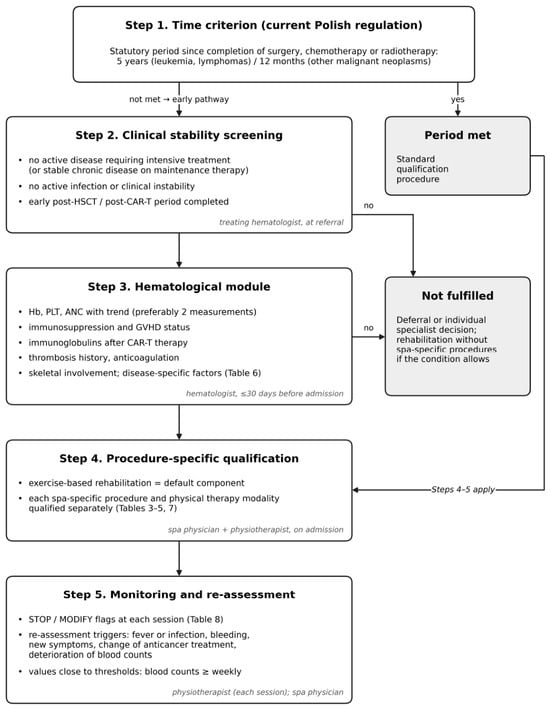
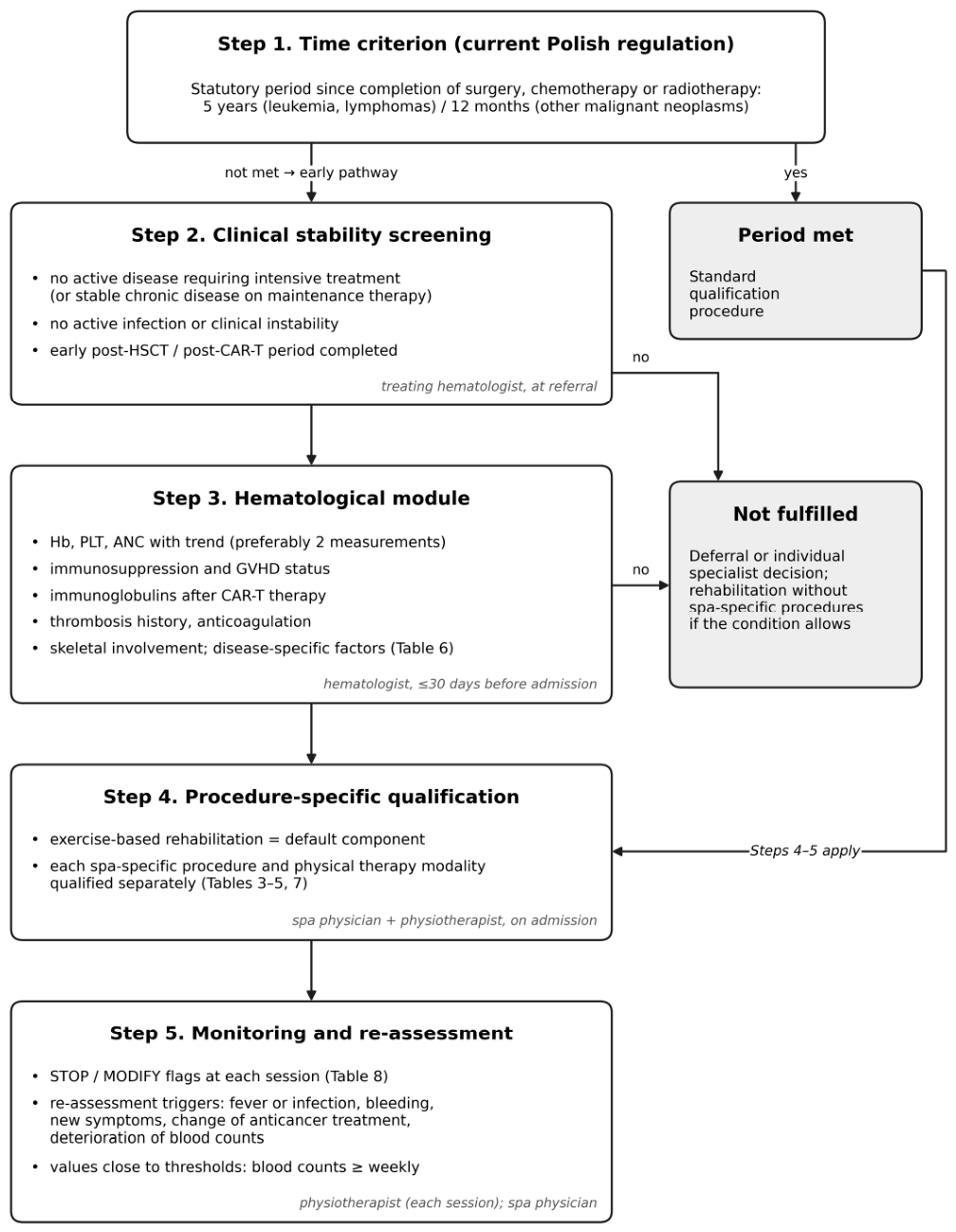

Disclaimer/Publisher’s Note: The statements, opinions and data contained in all publications are solely those of the individual author(s) and contributor(s) and not of MDPI and/or the editor(s). MDPI and/or the editor(s) disclaim responsibility for any injury to people or property resulting from any ideas, methods, instructions or products referred to in the content. |
© 2026 by the authors. Licensee MDPI, Basel, Switzerland. This article is an open access article distributed under the terms and conditions of the Creative Commons Attribution (CC BY) license.