


Abstract
Photovoltaic–thermal–membrane distillation (PV/T-MD) systems have emerged as a promising solution to global energy and water scarcity by efficiently utilizing solar energy for the co-production of electricity and freshwater. This review summarizes recent theoretical and experimental advances in PV/T-MD systems. Following the PRISMA-ScR guidelines, a scoping search was conducted in Web of Science through December 2025, and 37 studies that met the eligibility criteria were included. Given the non-clinical, engineering nature of the included studies, a risk-of-bias assessment and meta-analysis were not performed, and the findings were synthesized narratively. Theoretical studies have developed detailed mathematical models to analyze photothermal and photovoltaic conversion processes, as well as heat and mass transfer mechanisms in membrane distillation, providing critical guidance for system optimization. Experimental research, ranging from laboratory-scale to large-scale field applications, has validated the performance, efficiency, and stability of various PV/T-MD configurations. Innovative designs, including multi-effect membrane distillation (MEMD), high- and low-concentration photovoltaic thermal (HCPV/T, LCPV/T) systems, and advanced heat recovery technologies, have significantly improved thermal efficiency, water production, and overall energy utilization. Despite these advancements, challenges remain in improving system efficiency under dynamic environmental conditions, scaling up modular designs, and integrating multifunctional components. This review outlines future directions, including intelligent control systems, novel material development, and standardized techno-economic assessment (TEA) and life cycle assessment (LCA). These assessments are needed to evaluate the scale-up potential and to further validate the commercial prospects and low-carbon benefits of PV/T-MD systems.
1. Introduction
1.1. Context and Motivation
With global population growth and rapid economic development, the demand for freshwater and energy has intensified. According to United Nations projections, by 2025, approximately 70% of the global population will face freshwater scarcity, while many regions also contend with insufficient energy supplies. Desalination has emerged as a pivotal strategy for mitigating global water scarcity. Conventional desalination technologies, such as reverse osmosis (RO) and multi-stage flash distillation (MSF), have been widely deployed in industrial applications [1]. Collectively, RO and MSF account for over 80% of the global desalination capacity, attributed to their TRL 9 maturity, high thermal recovery efficiency, and economies of scale in municipal applications. However, these advantages are heavily contingent upon stable grid access, large-scale infrastructure, and continuous O&M capabilities, thereby hindering their deployment in off-grid, decentralized, or resource-constrained scenarios. Furthermore, reliance on fossil fuels exacerbates greenhouse gas emissions and environmental degradation. Consequently, developing efficient and sustainable technologies for freshwater production and energy supply is a critical global challenge.
Solar energy, valued for its clean and renewable nature, has emerged as a promising solution. Photovoltaic (PV) technology, a primary mode of solar energy utilization [2], is widely deployed globally. However, conventional PV systems convert only 15–20% of solar energy into electricity, with 80–85% dissipated as heat [3], resulting in low overall energy efficiency. This limitation not only reduces system performance but also fails to harness solar thermal potential. To address this, photovoltaic–thermal (PV/T) technology integrates thermal collectors with PV cells to recover waste heat, simultaneously generating electricity and thermal energy, achieving a combined electrical and thermal efficiency of 60–80% under certain configurations and operating conditions, with some optimized PVT systems reaching up to 76% [4]. This innovation paves the way for enhanced solar energy applications and facilitates integration with other technologies.
Concurrently, desalination technologies have evolved to address the escalating water crisis. While thermal and membrane-based desalination methods are mature, their high energy demands and costs remain unresolved, with limited integration of renewable energy sources. Membrane distillation (MD), an emerging desalination technique, has garnered attention for its ability to leverage vapor pressure differences across hydrophobic membranes to produce freshwater [5]. MD operates at low temperatures (30–80 °C), can utilize low-grade thermal energy such as waste heat and solar thermal energy, and excels in treating high-salinity water [6]. However, its widespread adoption is hindered by dependence on continuous heat supply and complex system integration. Identifying stable, cost-effective heat sources is thus pivotal for advancing MD technology [7].
The integration of PV/T with MD (PV/T-MD systems) offers a promising solution to these challenges. By combining photovoltaic electricity generation with thermal energy utilization, PV/T-MD systems convert solar energy into electricity and heat to directly drive desalination processes [8]. Specifically, PV cells in the PV/T module generate electricity, while thermal collectors recover waste heat from the cells to provide a stable low-grade heat source for the MD unit. The MD unit employs this heat to evaporate pure water from saline feed through a hydrophobic membrane, followed by condensation to produce high-purity freshwater. This coupled design improves solar energy utilization efficiency while reducing the energy and cost demands of freshwater production. PV/T-MD systems can be flexibly configured to meet diverse application needs [9]. For instance, concentrating PV/T (CPV/T) systems use optical concentrators to enhance solar radiation intensity [10], improving electrical conversion efficiency and providing high-temperature heat for MD processes, suitable for high-performance scenarios. Conversely, non-concentrating (flat-plate) PV/T systems, with simpler structures and lower costs, are ideal for resource-limited regions with low solar irradiance. Additionally, MD configurations—such as direct contact membrane distillation (DCMD), vacuum membrane distillation (VMD), air gap membrane distillation (AGMD), and sweeping gas membrane distillation (SGMD)—enhance system adaptability to varying operational conditions [11].
It is essential to distinguish system-level PV/T-MD from the emerging Photothermal Membrane Distillation (P-MD). PV/T-MD relies on separate PV/T collectors to generate both electrical and thermal energy to drive conventional MD modules. In contrast, P-MD focuses on material-level innovations by integrating photothermal materials directly into the membrane or its surface, achieving localized heating under solar irradiation to mitigate temperature polarization. Recent advances in P-MD are primarily centered on advanced photothermal materials and membrane fabrication. Therefore, to maintain a clear conceptual scope, this review focuses exclusively on the macroscopic system design, thermodynamic evaluation, and energy management of PV/T-MD systems, rather than the micro-scale material engineering of P-MD [12,13].
The development of PV/T-MD technology holds important implications for mitigating local water and energy challenges. By coupling solar electricity generation with thermal-driven desalination, these systems offer flexible deployment and practical value. In remote areas, such as islands, coastal communities, and arid regions, PV/T-MD systems provide self-sustaining solutions through modular designs [14] and minimal infrastructure requirements, reducing reliance on external energy and complex equipment as illustrated in Figure 1. Furthermore, by leveraging renewable energy, these systems substantially lower carbon emissions, aligning with global low-carbon development goals. Ongoing research explores integrating PV/T-MD systems with forward osmosis (FO) [15] modules or organic Rankine cycles (ORC) [16] to further enhance water flux and energy recovery efficiency. These explorations underscore the practical value of PV/T-MD systems in mitigating water scarcity while promoting clean energy adoption, supporting global sustainable development objectives. Consequently, the continued development and deployment of PV/T-MD technology offer promising prospects for sustainable resource management.
Figure 1.
PV/T-MD system energy transfer flow chart.
1.2. Literature Search and Inclusion Criteria
The literature search was conducted in December 2025 using Web of Science. The search strings combined (“photovoltaic thermal” OR “PV/T” OR “PVT”) AND (“membrane distillation” OR “MD”), and (“solar desalination” OR “solar-driven desalination”) AND (“membrane distillation”). The publication period was 2010–2025. Inclusion criteria were: (1) studies focusing on coupled or hybrid PV/T-MD systems; (2) studies involving integrated systems that utilize PV or PV/T modules for electricity generation while simultaneously recovering waste heat to drive MD processes. Exclusion criteria were: literature entirely unrelated to PV/T or MD technologies, and studies without sufficient technical details. These criteria ensured that only studies demonstrating the actual functional integration of PV/T and MD were included. After deduplication, titles and abstracts were screened. Google Scholar was used as an auxiliary tool for full-text retrieval of potentially eligible records. This scoping review was conducted following the PRISMA-ScR guidelines. No review protocol was registered for this scoping review. The study selection process is summarized in the PRISMA-ScR flow diagram (Figure 2). Data were charted using a standardized form covering system configuration, performance indicators, and study type. Given the heterogeneity of the included studies, the findings were synthesized narratively in Figure 2. A systematic literature review was conducted in accordance with the Preferred Reporting Items for Systematic reviews and Meta-Analyses extension for Scoping Reviews (PRISMA-ScR) Checklist. The PRISMA-ScR checkist was completed and is provided as Supplementary Materials.
Figure 2.
PRISMA-ScR flow diagram illustrating the study selection process for this scoping review.
1.3. Current State of the Literature and Identified Research Gaps
Among solar-driven desalination technologies, the integration of PV/T systems with MD has gained increasing attention because PV/T can simultaneously generate electricity and low-grade heat, which matches the thermal-driven nature of MD and enables off-grid operation. As summarized in Table 1, research on this integration has evolved from early studies on conventional PV or solar-thermal MD without PV/T, to flat-plate PV/T-MD systems, to concentrating PV/T-MD systems, and more recently to regional/global-scale reviews. This progression reflects a shift from single thermal or electrical desalination toward electro-thermal co-generation and system-level integration.
Early reviews focused mainly on solar-driven MD or other desalination technologies, with little focus on the coupling of PV/T and MD. Qtaishat et al. [17] reviewed solar-driven MD systems (highlighting the low operating temperatures and high rejection rates of such systems) but only indirectly referenced the application of PV/T in solar distillation, without addressing its integration with MD. Manchanda [18] briefly discussed MD as a membrane-based technology in a broad desalination overview, with limited exploration of the integration of this process with solar technologies. Sansaniwal [19] noted the role of PV modules in powering MD during research on solar-driven wastewater treatment, yet overlooked the potential of the PV/T-MD combination. Verma et al. [20] focused on the application of solar thermal energy for water purification, discussing the integration of MD with solar collectors but not with PV/T. A pivotal shift came with Giwa et al. [21], who conducted the first detailed analysis of PV/T in polygeneration desalination (including its coupling with MD) with case studies and performance data, marking the start of focused attention on this integrated system.
Subsequent reviews established PV/T-MD as a research hotspot. Ma et al. [22] underscored the potential of this integration in small-scale distributed solar MD systems. Abdelaziz et al. [23] cited experimental studies on the combined system in reviews of hybrid solar desalination, emphasizing the advantages of such technology in remote areas. Anand et al. [24] compared the integration of PV/T across desalination technologies, with detailed analysis of the performance and economic viability of PV/T-MD to highlight the efficiency of this system. Alsaman et al. [25] demonstrated the polygeneration capabilities of the integrated system by incorporating it into solar desalination-cooling systems. Sharon et al. [26] mentioned the use of PV/T for feedwater preheating in research on PV-based solar distillation but not its integration with MD. El-Agouz et al. [27] focused on the coupling of solar thermal technologies and MD, emphasizing strategies for the optimization and performance enhancement of PV/T-MD.
Recent reviews deepened the analysis of this integrated system further. Shalaby et al. [28] positioned PV/T-MD as an efficient solution in configurations of integrated solar desalination. Sayed et al. [29] explored the potential of the combined system in high-irradiance environments for renewable energy-driven desalination in the MENA region. Tashtoush et al. [30] highlighted the advantages of PV/T-MD in small-scale systems integrating renewable energy and desalination. He et al. [31] centered on the PV/T-MD combination in research on the synergy between PV/T and desalination technologies, providing performance analyses and future research directions. Maqbool et al. [32] summarized the global technical challenges and development trends of this integrated system in a comprehensive review.
Other reviews supplemented research on PV/T-MD from diverse angles. For example, Sarvar-Ardeh et al. [33] and Elfaqih, Albashir K et al. [34] explored the potential of this system in modular design, thermoelectric synergy, and economic feasibility. These studies consistently highlight the strengths (high energy efficiency, strong sustainability) of the integrated system in small-scale, distributed, and remote applications, while noting existing challenges: high initial investment costs, membrane fouling, and the intermittency of solar energy. Proposed solutions include the optimization of system design, the development of anti-fouling membranes, and the integration of energy storage technologies to advance the commercialization of PV/T-MD [21,24,27,31,32].
Table 1.
Classification of Previous Reviews on PV/T-MD Related Technologies.
Despite growing attention, prior reviews have mainly focused either on solar-driven MD or on the broad applications of PV/T in desalination. In these works, PV/T-MD integration is often discussed as a sub-topic rather than as the central focus, and the analysis is frequently based on theoretical models and simulation results. These reviews have provided valuable foundations for understanding solar-driven desalination and PV/T applications. However, a dedicated and experiment-informed synthesis specifically centered on PV/T-MD integration is still lacking.
1.4. Aim and Contribution
Building on these existing reviews, the present review aims to complement rather than replace them. It places PV/T-MD integration at the center, emphasizes experimental data and real-world case studies, and provides a systematic, experiment-informed assessment of PV/T-MD performance. By comprehensively evaluating recent progress in PV/T-MD integration for renewable energy utilization and seawater desalination, assessing the technical and economic performance of these systems, and exploring future development pathways, this review extends, rather than duplicates, previous review articles.
The review is structured to provide a comprehensive analysis of PV/T-MD systems. Section 2 categorizes and analyzes innovative PV/T-MD designs, focusing on configurations such as decoupled photovoltaic–thermal modules and multi-effect membrane distillation (MEMD). It also explores the potential for coupling with forward osmosis (FO) modules and organic Rankine cycles (ORC) to enhance system performance. Section 3 comprehensively presents the photovoltaic and thermal conversion models for PV/T systems, alongside mass and heat transfer models for MD systems, evaluating the overall efficiency of PV/T-MD systems and analyzing the impact of additional factors such as concentrating modules. Section 4 reviews research outcomes from laboratory-scale, medium-scale outdoor experiments, and large-scale field trials, validating theoretical models with experimental data and identifying technical bottlenecks and improvement strategies. Finally, Section 5 synthesizes the current state of PV/T-MD technology, proposing recommendations for optimizing system design, developing advanced light-absorbing and membrane materials, and establishing hybrid renewable energy networks to elevate technology readiness levels (TRL) and facilitate commercialization.
By synthesizing key research advancements, this review highlights opportunities for performance enhancement and innovation, with a particular focus on system integration, field applications, and economic viability. It evaluates the feasibility and sustainability of PV/T-MD systems in practical solar energy utilization and freshwater production scenarios. Finally, it offers recommendations that may support the future optimization of PV/T-MD technology and support the decarbonization of the global desalination industry, providing both theoretical insights and practical references for sustainable water and energy solutions.
2. Classification of PV/T-MD Systems
2.1. Classification of PV/T Collectors
Recent reviews have provided comprehensive frameworks for understanding PV/T system configurations. Ahmed et al. [35] proposed an innovative and comprehensive classification methodology for hybrid PV/T systems, integrating both design parameters and performance metrics. Al-Waeli et al. [36] systematically categorized PV/T systems based on working fluids—air-based, water-based, and refrigerant-based configurations—while detailing their respective design principles and thermal-electrical trade-offs. Chow [37] traced the historical evolution of PV/T technology and established a foundational classification framework that continues to influence contemporary system design and performance evaluation methodologies.
As shown in Figure 3, the classification of PV/T-MD systems can be divided into two categories: types of PV/T systems and types of MD units. Based on the degree of solar concentration applied to the photovoltaic module, PV/T systems can be classified into CPVT systems and flat-plate PV/T systems. CPVT systems utilize lenses or reflectors to concentrate solar radiation onto high-efficiency photovoltaic cells, significantly enhancing the conversion efficiency of solar energy to electricity, reaching over 40% [38]. Simultaneously, these systems employ active cooling mechanisms to recover the waste heat generated by photovoltaic cells, which can then be used to drive the MD process. Depending on the concentration ratio, as shown in Figure 4, CPVT systems can be further divided into low-concentration systems, high-concentration systems, and ultra-high-concentration systems. Low-concentration systems are typically suitable for small-scale applications, such as residential or small commercial setups, while high- and ultra-high-concentration systems are more appropriate for large-scale industrial applications, capable of providing higher electrical and thermal outputs to meet stringent energy efficiency requirements.
Figure 3.
Types of photovoltaic thermal membrane distillation systems.
Figure 4.
Basic classification of PV/T systems. (a) Flat-plate PV/T systems. (b) Low-concentration PV/T systems. (c) High-concentration PV/T systems.
In contrast, flat-plate PV/T systems feature a simpler design, relying on flat-panel collectors to directly absorb solar radiation. While their thermal efficiency is slightly lower than CPVT systems, they are cost-effective, structurally simple, and easier to maintain, making them particularly suitable for resource-constrained or low-sunlight regions. Flat-plate PV/T systems do not require complex optical components, reducing maintenance demands, and are thus more applicable in scenarios where sunlight is weaker or cost constraints are critical. In practical applications, CPVT and flat-plate PV/T systems can be combined flexibly to meet different energy demands and environmental conditions. For instance, in regions with strong sunlight, CPVT systems can maximize energy output, while in areas with lower solar irradiance, flat-plate PV/T systems are more attractive due to their low cost and ease of maintenance.
2.2. Classification of MD Configurations
As the core desalination components of PV/T-MD systems, MD units can be classified based on mass transfer mechanisms into DCMD, VMD, AGMD, and SGMD, as shown in Figure 5. DCMD is the simplest and most widely used MD configuration, where the feed solution and permeate stream are in direct contact across the membrane. Its simplicity and low cost make it well-suited for remote or resource-limited areas. However, its thermal efficiency is relatively low due to significant conductive heat losses through the membrane. VMD, on the other hand, maintains a vacuum on one side of the membrane to enhance vapor transport and reduce conductive heat loss. This configuration is ideal for industrial applications requiring high water production rates but involves additional equipment for vacuum generation, which increases system complexity and cost.
Figure 5.
Illustration of basic MD configurations: (A) DCMD, (B) AGMD, (C) SGMD and (D) VMD.
AGMD introduces an air gap between the membrane and the condensation surface, further reducing conductive heat losses and improving thermal efficiency. This design is particularly advantageous for systems prioritizing energy recovery. Conversely, Sweeping Gas Membrane Distillation (SGMD) utilizes a flowing inert gas to sweep the vapor from the permeate side of the membrane. While this configuration effectively reduces mass transfer resistance and enhances flux, it requires an additional condensation unit to separate the vapor from the sweeping gas, increasing system complexity.
Beyond the four traditional configurations mentioned above, recent advances have introduced several novel variants. For instance, Permeate Gap Membrane Distillation (PGMD), also referred to as Liquid-Gap MD (LGMD), replaces the air gap in AGMD with a liquid permeate gap, further improving thermal energy recovery and minimizing heat losses [39]. Additionally, Material-Gap MD (MGMD) has been developed by filling the gap with solid or liquid materials (e.g., sand, graphite), effectively reducing mass transfer resistance while maintaining a high thermal gradient [40,41]. Furthermore, Multi-Effect MD (MEMD) connects multiple MD units in series, allowing for stepwise utilization of thermal energy to significantly improve overall system efficiency and freshwater production. Recent studies have also coupled VMD with MEMD to form Vacuum Multi-Effect MD (V-MEMD), further enhancing MD efficiency. These multi-effect designs (e.g., MEMD and V-MEMD) are critical desalination modules for PV/T-MD systems, especially in high-demand scenarios where maximizing water output per unit of energy consumption is essential [42,43].
Table 2 summarizes representative PV/T-MD systems reported in the literature, including their PV/T types, MD configurations, membrane areas, and application scenarios. The classification of PV/T systems and MD units highlights the structural flexibility and functional diversity of PV/T-MD systems, enabling tailored solutions for diverse energy and water challenges. By integrating advanced photovoltaic–thermal modules with efficient membrane distillation units, PV/T-MD systems not only achieve high solar energy utilization but also provide robust technical support for sustainable energy and water resource development.
Table 2.
Classification and summary of PVT coupled membrane distillation system.
2.3. Different Types of PV/T-MD Systems
2.3.1. Decoupled Photovoltaic–Thermal Module
The integrated PV/T system installs fluid channels on the back of the PV panel to absorb excess heat. This setup serves two purposes: cooling the PV cells to improve power generation efficiency and transferring the heated fluid to thermally driven systems for additional benefits, such as freshwater production in MD systems. Compared to conventional PV systems, the PV/T system has higher upfront costs but achieves effective thermal energy utilization, with overall thermal efficiencies exceeding 50% and improved solar energy utilization.
For the MD system, although it can be driven by low-grade heat sources, A previous study [55] indicates that feedwater temperature is the primary factor affecting membrane flux, with water production increasing as feed temperature rises. Generally, the outlet temperature of a PV/T system under peak irradiance ranges between 40 °C and 50 °C [24], which is sufficient to drive MD. To further increase feedwater temperature and improve water production, concentrating modules are often added to focus sunlight on PV cells, raising the fluid temperature in the channels.
Li et al. [56] developed a stand-alone solar-powered MD desalination system by separately utilizing solar collectors to heat seawater and PV arrays to power auxiliary devices. The system includes solar collectors, PV arrays, a thermal storage tank, membrane modules, and a condenser. The collectors achieved an average thermal efficiency of 50%, and the PV modules had an average electrical efficiency of 15%. Theoretical predictions indicate daily freshwater production ranging from 9.98 kg to 23.26 kg, depending on solar irradiance. Al-Hrari et al. [9] reported a CPV/T-DCMD system achieving 18% electrical efficiency, 71% total efficiency, and 3 kg/m2/h freshwater flux. Ding [57] proposed a nanofluid-filtered CPV/T system with heat pump membrane distillation, achieving over 12.2% electrical efficiency and 61% overall efficiency. Han et al. [10] further developed an Ag/saline nanofluid-filtered CPV/T-DCMD system, reaching 12.2% electrical efficiency, 71.3% total efficiency, and 26.4 kg/m2/h freshwater production at 353 K.
Compared to PV/T-MD systems, the stand-alone system offers higher thermal efficiency and more flexible design, allowing for targeted optimization of PV or thermal performance. However, it requires larger installation space, resulting in lower space utilization, and has higher installation, maintenance, and operational costs. In contrast, PV/T-MD systems repurpose the waste heat from PV panels to improve energy efficiency. While the water production in MD is limited by the PV module’s material and surface area, the decoupled system can provide more thermal energy, aiming for higher water production rates and efficiency.
2.3.2. Multi-Stage Membrane Distillation (MSMD)
Single-stage MD systems have limited water production and fail to fully utilize the input solar energy. To address this, Wang et al. [58] proposed a multi-stage MD system that replaces single-stage MD by coupling multiple MD units in series. Srivastava and Swaminathan [59] developed a permeate-gap multi-effect MD with internal feed preheating, improving water production and energy efficiency by 80%. Gained output ratio (GOR) reached ~1.3 with a recovery ratio of 21% in a single pass. Poredoš et al. [60] proposed stage temperature boosting for solar MD. An 8-stage device with 250 W/m2 heat injection achieved 1.13 L/m2h per stage—88% higher than state-of-the-art 10-stage systems. Elbessomy et al. [61] found helical hollow-fibers in three-stage WGMD reduced thermal energy consumption (STEC) from 6000 to 1800 kWh/m3 versus straight fibers. Hassan et al. [62] reported a 40-stage solar HF-WGMD with STEC 424 kWh/m3, boosting overall solar efficiency from 2.6% to 57.5%. This design enables stepwise utilization of thermal energy, maximizing thermal efficiency and water production. The MSMD system was integrated with commercial solar cells, utilizing their waste heat to drive membrane distillation. Under one sun, a three-stage MD system achieved a water production rate of 1.79 kg/m2h, which is three times higher than that of single-stage MD.
The PV/T-MSMD system has two main advantages over PV/T-MD systems, as shown in Figure 6. First, it achieves higher thermal efficiency by utilizing thermal energy more effectively through multi-stage distillation. Second, it significantly increases water production, with multi-effect MD generating more freshwater than single-effect MD. However, the coupled MSMD system also has drawbacks, such as increased design complexity and higher initial investment costs.
Figure 6.
Different types of PV/T-MD coupled systems. (a) Decoupled PV-solar thermal collector-MD system [56]. (b) PV/T-MSMD integrated system [58].
2.4. Integration with Other Processes
2.4.1. Adding FO and RO Modules
The PV/T collector provides low-grade thermal energy for MD desalination systems, and the electricity generated can be used to power auxiliary devices, thereby improving the overall energy utilization efficiency of the coupled system. Although the fluid channels on the back of PV panels effectively collect low-grade thermal energy, the thermal efficiency cannot be significantly improved. Therefore, maximizing solar energy utilization is critical to enhancing system efficiency. Ali et al. [15] proposed a PV/T-FO-MD coupled system that efficiently utilizes the waste heat from PV/T for FO and MD processes. This integrated system also has the potential to reduce energy consumption and increase water production. The research team developed a dynamic model for the coupled system and analyzed the dynamic performance of temperature variations, water production, and power output throughout the process. The system consists of a PV/T collector, heat exchanger, pump, FO unit, and MD unit. In the FO unit, water from the feed solution passes through the membrane and mixes with the draw solution, achieving freshwater production. The diluted draw solution is heated by an electric heater before being fed into the MD unit for further freshwater production.
Following the development of a coupled PV/T, forward osmosis (FO), and MD system, the research team [14] conducted a cost and profitability analysis of a pilot plant to evaluate its feasibility and industrial potential as shown in Figure 7. Using the Pyomo modeling framework, mass and energy balance equations were solved to simulate the system’s annual performance. The results indicated that the PV/T system, occupying 98 m2, generated 33,872 kWh of electricity and 65,846 kWh of thermal energy annually. The average freshwater production was 29.27 L/h, yielding 106.84 m3 per year. Sensitivity analysis revealed that solar irradiance, feed flow rate, and salinity significantly influenced performance, with maximum water yield achieved under high irradiance and low feed salinity. Economic analysis estimated an internal rate of return (IRR) of 11.84%, with a break-even point after 9 years and a positive net present value (NPV) after 19 years. The study concluded that the PV/T-FO-MD system reduced energy conversion costs compared to concentrated solar power (CSP) systems, making it suitable for off-grid regions and capable of processing diverse water sources, thus demonstrating industrial potential. However, further optimization is needed to enhance market competitiveness. This economic analysis provides a detailed assessment of investment returns and long-term profitability, laying a foundation for industrial applications. The system’s flexibility in utilizing low-grade heat and handling varied water sources offers a sustainable solution for water-scarce regions.
Figure 7.
Schematic diagram of the studied PV/T driven FO and MD desalination systems. (a) Schematic diagram of the PV/T-FO-MD system [14]. (b) Schematic diagram of the PV/T-PCM-FO-MD system [63].
Bourhan Tashtoush et al. [63] advanced the FO-MD hybrid desalination system by integrating PV/T collectors and phase change materials (PCM) to provide continuous freshwater production for residential buildings. Designed for brackish water, the system employs FO for pretreatment, followed by MD to produce high-quality freshwater, with PCM and battery storage enabling 24 h operation. Mathematical models analyzed mass and heat transfer in FO and MD under varying environmental conditions and PCM thicknesses. The results demonstrated a daily freshwater yield of 192.03–213.25 L, with peak production in June at a PCM thickness of 2 cm. Salinity variations had minimal impact on yield, whereas lower draw solution concentrations significantly enhanced water production. The study also found that FO and MD channel heights affected pump power consumption but had negligible effects on water yield. The system’s continuous operation via solar energy, coupled with its low sensitivity to salinity changes and optimized energy management, makes it a reliable freshwater solution for small households. The innovation lies in combining PCM storage with the FO-MD system, enabling nighttime operation through thermal and electrical energy storage, overcoming the diurnal limitations of conventional solar desalination systems.
The FO-MD hybrid configuration effectively mitigates membrane fouling and enhances water quality, making it particularly suitable for brackish water desalination. Optimizing draw solution concentration and other operational conditions can reduce energy consumption and improve energy efficiency. This decentralized desalination approach, integrated with advanced PV/T technology, offers a novel and practical solution for water resource management in remote areas.
Javed Alam et al. [64] employed MATLAB and Simulink to model a solar-driven hybrid system integrating RO with VMD to treat brine from desalination processes, targeting minimal liquid discharge (MLD) or zero liquid discharge (ZLD) as shown in Figure 8. The study found that the RO process exhibited a specific electrical energy consumption of 4.61–5.11 kWh/m3, with a recovery ratio of 43.5–48.2% and an annual freshwater production of 7595–9611 m3. The VMD component processed the concentrated brine from RO, with a specific thermal energy consumption of 152–202.4 kWh/m3, a recovery ratio of 11.22–13.64%, and an annual freshwater yield of 2149–2480 m3. Collectively, the RO-VMD system achieved a total recovery ratio of 54.7–61.9% and an annual freshwater production of 9744–12,091 m3. This approach offers an efficient and sustainable solution for brine management, particularly in regions with abundant solar resources, while laying the groundwork for MLD/ZLD objectives. The study highlights the potential of utilizing low-grade waste heat to power VMD, further enhancing system sustainability. These findings provide valuable insights for academia and the desalination industry, advancing the development of environmentally friendly desalination technologies.
Figure 8.
Schematic diagram of the studied PV/T driven RO and MD desalination systems [64].
2.4.2. Adding Organic Rankine Cycle (ORC)
In addition to coupling FO modules, a combined heat and power system can also be introduced to further improve the thermal power efficiency. Anazi et al. [65] integrated the ORC and absorption refrigeration cycle modules into the PV/T-MD system to form a hybrid photovoltaic system capable of generating electricity, producing fresh water and refrigeration as Figure 9. In this system, the CPV/T module simultaneously generates electricity and heat energy and transfers the heat to the ORC. The ORC generates electricity using organic fluid under the Rankine cycle, while the waste heat generated by the ORC is transferred to the absorption refrigeration cycle and then to the MD desalination plant. This process generates cooling load and fresh water for use. In this trigeneration system, increasing the supply of cooling load can improve the utilization rate of thermal energy. The results show that the fresh water production is about 56.7 m3/year. Overall, the authors of that study reported an overall thermal efficiency and exergy efficiency for the combined system of 75% and 93.72%, respectively, which significantly improves the energy utilization rate compared with the traditional PV/T system.
Figure 9.
Schematic diagram of the studied PV/T-coupled ORC, ARS, and MD systems [65].
Fahad Awjah Almehmadi et al. [66] investigated a polygeneration system combining solar thermal collectors, PV/T systems, ORC, and multi-effect vacuum membrane distillation (V-MEMD) to optimize seawater desalination through efficient solar energy and waste heat utilization. The study developed energy balance equations for the ORC, encompassing components such as the evaporator, turbine, and condenser, and evaluated system performance metrics including permeate flux, GOR, specific STEC, and specific electrical energy consumption (SEEC). Under optimal conditions, the system achieved a maximum water flux of 13 kg/m2h, a GOR of 5.5, an SEEC of 49 kWh/m3, and an STEC of 145 kWh/m3. The findings indicate that hot water temperature and flow rate are critical for regulating V-MEMD efficiency, with higher operating conditions generally enhancing performance, though elevated temperatures may reduce GOR due to thermal energy imbalances. The system produced 19.58 m3 of potable water annually at a cost of 22.48 USD/m3, while reducing carbon emissions by 136.82 kg, demonstrating its potential for addressing water scarcity in small communities. This polygeneration design not only improves energy efficiency but also achieves environmentally friendly desalination through waste heat recovery and low carbon emissions, offering a viable solution for community-scale water resource management.
3. Theoretical Model and System Evaluation
3.1. PV/T System
A mathematical model is established to analyze the photothermal and photovoltaic conversion processes in PV/T solar collectors. Photothermal modeling considers the actual solar energy absorbed by photovoltaic cells and the heat transfer between layers within the PV/T system. Photovoltaic modeling focuses on the process of converting part of the absorbed solar energy into electrical output by photovoltaic cells. Maqbool et al. [52] conducted a detailed study on PV/T systems and developed energy balance equations for the energy transfer between each individual component to evaluate the system’s energy efficiency.
3.1.1. PV/T Photothermal Conversion Model
PV/T collectors are designed to absorb solar energy and convert it into both heat and electricity. The heat is used to heat the working fluid (seawater) flowing through heat exchange channels and is partially dissipated to the surrounding environment. The available energy on the photovoltaic module is determined by the following equation [67,68]:
where Tc is the temperature of the photovoltaic cell, K; Ta is the ambient temperature, K; Tb is the backplate temperature, K; Ua is the overall heat transfer coefficient from the solar cell to the environment, W/(m2·K); Ub is the overall heat transfer coefficient from the solar cell to the backplate, W/(m2·K); αc is the absorptivity of the photovoltaic module; βc is the packing factor of the PV module, i.e., the ratio of the PV cell area to the collector aperture area; τg is the transmittance of the glass layer; ηc is the electrical efficiency of the PV module, and G is the solar irradiance, W/m2.
αcτgβcG = Ua(Tc − Ta) + Ub(Tc − Tb) + ηcτgβcG
The heat absorbed by the working fluid is calculated using the Hottel-Whiller model:
where Qu is the useful heat gain absorbed by the working fluid, W; Ac is the aperture area of the collector, m2; FR is the collector heat removal factor, i.e., the ratio of the actual useful heat gain to the heat gain that would occur if the entire collector were at the working fluid inlet temperature; (τα) is the effective transmittance–absorptance product; UL is the overall heat loss coefficient of the collector, W/(m2·K), which depends on the structure and material of the insulation layer; Tin is inlet temperature of the water, K.
Qu = AcFR[G(τα) − UL(Tin − Ta)]
The temperature change of the seawater in the heat exchange channel is determined by:
where is mass flow of water, kg/s; c is specific heat capacity of water, J/(kg·K); Tout is outlet temperature of the water, K.
The temperature of the heated seawater in the heat exchange channel of the PV/T module can be expressed as:
where is the volumetric flow rate of seawater, m3/s; ρ is the density of water, kg/m3.
3.1.2. PV/T Photovoltaic Conversion Model
Photovoltaic (PV) cells are typically modeled as an equivalent circuit comprising a diode in parallel with a constant current source, with their electrical behavior described by five key parameters. Solar irradiance and PV cell temperature are critical determinants of electricity generation, governing the electrical performance of hybrid collectors that convert solar energy into electrical power through photovoltaic processes. The equivalent circuit model for a PV cell is depicted in Figure 10.
Figure 10.
Equivalent circuit of photovoltaic cells.
This circuit can be expressed through the current-voltage (I-V) characteristic equation, yielding the output current curve as follows [69]:
where I is the load current, A; U is voltage, V; Iph is the photocurrent generated within the PV cell, A; I0 is the reverse saturation current of the p-n junction, A; Rsh is the equivalent shunt resistance, Ω; Rs is the equivalent series resistance, Ω; k is the Boltzmann constant (1.38 × 10⁻²³ J/K); q is the electron charge (1.6 × 10⁻¹⁹ C); T is the PV cell temperature, K; n is the diode ideality factor, typically 1.3.
The open-circuit voltage (Uoc), short-circuit current (Isc), maximum power (Pm), maximum power point voltage (Um), and maximum power point current (Im) are generally specified by the manufacturer. Detailed calculations of these parameters are omitted here, as they form the basis for constructing the PV cell’s mathematical model. The relationship between current and voltage is expressed as:
where Uoc is the open-circuit voltage, V; Isc is the short-circuit current, A. Intermediate variables C1 and C2 are calculated using the following equations:
where Um is the maximum power point voltage, V; Im is the maximum power point current, A.
The load current I(G,Tc) and voltage V(G,Tc) are functions of solar irradiance and cell temperature, with their variations determined by:
where βI is the temperature coefficient for current, A/K; βV is the temperature coefficient for voltage, V/K; Iref is the load current under reference conditions, A; Vref is the load voltage under reference conditions, V; Tc,ref is the PV cell temperature under reference conditions, K; Gref is the solar irradiance under reference conditions, W/m2; Isc,ref is the short-circuit current under reference conditions, A; ΔI is the deviation of the load current from the reference-condition load current, A(ΔI = I(G,Tc) − Iref).
V(G,Tc) = Vref + βV(Tc − Tc,ref) − RsΔI
3.1.3. PV/T Comprehensive Efficiency Analysis
Assessing system performance is a crucial criterion for evaluating the feasibility of a system. For the solar collector system, the focus is typically on the electrical efficiency of PV modules. However, PV/T systems incorporate fluid channels behind the PV panels to dissipate excess heat, which not only cools the PV cells and improves their power generation efficiency but also enables heat recovery. This heat is absorbed by the fluid in the channels, raising its temperature, and the thermal efficiency is used to quantify this process.
The photothermal efficiency of the collector (ηth) is defined as the ratio of the heat absorbed by the working fluid in the heat exchange channels to the solar irradiance received on the collector surface under steady-state operation:
By substituting this model equation into the analysis, the thermal efficiency of the collector can be expressed as:
For a given collector with constant FR and (τα), the thermal efficiency is approximately a linear function of (Tin − Ta)/ G.
The photovoltaic efficiency of the solar cell (ηc) is described as the ratio of the maximum output power to the product of the aperture area and solar irradiance:
where the maximum output power (Pmax) is the product of the maximum power point voltage (Vmp) and current (Imp), i.e., Pmax = Vmp × Imp.
Based on the photovoltaic characteristics of solar cells, the electrical power output of PV cells in a PV/T system (W) is given by:
where τ is the transmittance of the cover layer; σ is the absorptivity of the PV cell.
W = Gτσηc
The efficiency of the solar cell, ηc, depends on the cell temperature:
where ηr is the conversion efficiency of the solar cell under standard conditions; β is the temperature coefficient of efficiency, K−1. Tpv is the temperature of the photovoltaic cell, K; Tref is the temperature corresponding to the reference efficiency, K. For crystalline silicon solar cells, under a solar irradiance of 1000 W/m2 and Tref of 298.15 K, β is typically 0.0045, and ηr is 0.2. Tpv depends on solar irradiance and ambient temperature. It can be expressed as:
where NOCT refers to the nominal operating cell temperature, which is the working temperature of the solar cell under the conditions of a solar irradiance of 800 W/m2, an ambient temperature of 20 °C, and a wind speed of 1 m/s. For solar cells with plastic backplates, the NOCT is typically around 47 °C.
ηc = ηr[1 − β (Tpv − Tref)]
According to the first law of thermodynamics, the total solar energy utilization efficiency of a PV/T collector (η) is:
where ξ is the coverage ratio of the PV/T collector, defined as the ratio of the photovoltaic cell area to the total aperture area of the collector. This calculation method is relatively simple and commonly adopted to evaluate system performance. However, electricity is higher-quality energy compared with heat. To reasonably assess the solar energy utilization performance of the collector, the electric output should be converted into equivalent thermal energy under standard conditions. Therefore, the equivalent comprehensive efficiency (ηeq) of the PV/T collector is defined as:
where ηpower is the power generation efficiency of conventional thermal power plants, typically 0.38.
η = ηth + ξηc
3.2. Membrane Distillation System
3.2.1. Mass Transfer Model
In DCMD, vapor molecules diffuse across the hydrophobic membrane via Knudsen diffusion and molecular diffusion. The corresponding resistances are given by:
where RK is the Knudsen diffusion resistance, m/s; τm is the tortuosity of the PTFE hydrophobic membrane; δ is the thickness of the membrane, m; ε is the porosity; r is the pore radius, m; Te is the mean absolute temperature, K; M is the molar mass of water vapor, M = 0.018 kg/mol; R is the universal gas constant, J/(mol·K).
where RM is the molecular diffusion resistance, m/s; D is the diffusion coefficient of water vapor in air, m2/s. P0 is the atmospheric pressure (typically 101,300 Pa); Pe is the total pressure inside the membrane pores, Pa.
where Tm is the average membrane surface temperature, calculated as Tm = (Tmf + Tmp)/2, where Tmf and Tmp represent the membrane surface temperature on the feed side and the permeate side, respectively, K.
The total equivalent mass transfer coefficient Dm of the membrane is determined by the nature of the mass transfer process within the membrane pores. It is expressed as the reciprocal of the sum of the Knudsen diffusion resistance Rk and the molecular diffusion resistance RM. Therefore, the membrane flux J can be expressed as:
where Pmf and Pmp are the vapor pressures at the feed and permeate sides, calculated using the Antoine equation.
where PV is the vapor pressure of water vapor, Pa; T is the absolute temperature, K.
Currently, hydrophobic microporous membranes are primarily manufactured using the phase inversion method and the stretching method. The tortuosity of the membrane is determined by its porosity and is influenced by the fabrication method. For the phase inversion method, the relationship between porosity and tortuosity is given by the empirical formula: τm = (2 − ε)/ε. For the stretching method, the relationship is expressed as: τm = 1/ε.
3.2.2. Heat Transfer Model
The heat transfer process consists of three parts: convective heat transfer on the feed side, heat conduction through the membrane, and convective heat transfer on the permeate side. The heat transfer can be expressed as:
where Qf and Qp are the heat transfer rates on the feed and permeate sides, respectively, W; hf and hp are the convective heat transfer coefficients on the feed and permeate sides, respectively, W/(m2·K); Tf and Tp are the bulk temperatures on the feed and permeate sides, respectively, K; Tmf and Tmp are the membrane surface temperatures on the feed and permeate sides, respectively, K. Convective heat transfer coefficients h are determined based on flow conditions (laminar or turbulent) and other parameters, such as Reynolds (Re) and Prandtl (Pr) numbers:
where ρ is the fluid density, kg/m3; v is the fluid velocity, m/s; μ is the dynamic viscosity, Pa·s; k is the average thermal conductivity of the liquid, W/(m·K); Dh is the hydraulic diameter of the flow channel, m; Cp is the specific heat capacity, J/(kg·K); Nu, Re, and Pr are the Nusselt, Reynolds, and Prandtl numbers, respectively. For flat-plate membrane distillation, the Nusselt number is calculated using the formula for laminar flow (Re < 2100):
where Lm is the length of the flow channel, m; μb is the dynamic viscosity of the bulk fluid, Pa·s; and μm is the dynamic viscosity evaluated at the membrane surface temperature, Pa·s.
Qf = Qp = hf(Tf − Tmf) = hp(Tmp − Tp)
The heat flux across the membrane is divided into two components: latent heat transfer and conductive heat transfer:
where Qm is the total heat flux across the membrane, W/m2; Qc is the conductive heat flux, W/m2; Qv is the latent heat flux, W/m2; hm is the membrane heat transfer coefficient, W/(m2·K); and ΔHv is the latent heat of vaporization, J/kg. It is expressed by the following empirical equation:
Qm = Qc + Qv = hm(Tmf − Tmp) + JΔHv
ΔHv = (1.7535Tmf + 2024.3),
It should be noted that Tmf in Equation (30) must be expressed in °C based on the empirical fitting conditions.
3.2.3. MD System Performance Analysis
Thermal efficiency is a critical metric for MD system performance, directly reflecting the efficiency of energy utilization. In MD, thermal energy drives the evaporation of water molecules from the feed solution through a hydrophobic membrane. Thermal efficiency quantifies the proportion of input thermal energy converted into effective distillation capacity, typically considering the latent heat transferred across the membrane as the effective heat flux, while heat conduction through the membrane is regarded as a loss. Strategies to enhance thermal efficiency include optimizing feed temperature, reducing membrane thermal conductivity, and implementing heat recovery designs. For DCMD, thermal efficiency is calculated as follows:
The GOR is another valuable parameter for assessing MD performance, particularly in terms of heat recovery and economic viability. GOR quantifies the freshwater yield per unit of thermal energy input, defined as the ratio of heat associated with vapor transfer to the total input heat in the MD process. It is calculated as the ratio of the latent heat of produced water to the input thermal energy, with higher GOR values indicating greater water production efficiency. Achieving high GOR values typically requires cascading heat reuse or coupling with energy-saving technologies, though this must be balanced against increased equipment complexity and cost. GOR provides a standardized benchmark for comparing energy consumption across MD systems of varying scales and is expressed as:
where Am is the effective area of the membrane, m2; and Qin is the actual heat consumed by the feed solution, W; Qin is given by:
where is the mass flow rate of the feed solution, kg/s; cp is the specific heat capacity, J/(kg·K); Tbf,in and Tbf,out are the inlet and outlet temperatures of the feed channel on the hot side, respectively, K.
In MD processes, the temperature polarization coefficient (TPC) and concentration polarization coefficient (CPC) are key indicators of thermal efficiency, reflecting intrinsic phenomena caused by heat and mass transfer boundary layer effects. These coefficients collectively influence the system’s driving force and long-term operational stability. TPC quantifies the temperature difference attenuation at the membrane surface relative to the bulk solution due to thermal resistance, with a TPC approaching 1 indicating high heat transfer efficiency. TPC is defined as the ratio of the effective temperature difference at the membrane interface to the bulk solution temperature difference:
where Tbf and Tbp are the bulk solution temperatures on the feed and permeate sides, respectively, K.
CPC characterizes the deviation of solute concentration at the membrane surface from the bulk concentration, driven by solute accumulation forming a concentration boundary layer, resulting in a CPC significantly greater than 1. CPC is defined as:
where Cmf is the solute concentration at the membrane surface on the feed side, kg/m3; Cbf is the bulk concentration of the feed solution, kg/m3.
To mitigate polarization effects, strategies include optimizing channel designs to enhance turbulent flow, selecting membranes with low thermal conductivity and high hydrophobicity, or adopting multistage energy recovery processes.
3.3. System Energy Assessment
3.3.1. PV/T-MD System Comprehensive Efficiency Analysis
To evaluate the performance of PV/T-MD hybrid systems, mathematical models can be developed to compute theoretical electrical and thermal performance parameters. Given that thermal energy is of lower quality compared to electrical energy, the exergy efficiency, grounded in the second law of thermodynamics, is introduced to holistically assess the electro-thermal performance of hybrid systems. Key metrics include electrical exergy efficiency, thermal exergy efficiency, and total exergy efficiency. The exergy of thermal energy depends on its temperature, and for working fluids experiencing temperature variations in PV/T-MD systems, exergy efficiency is closely tied to fluid temperature. The following equations outline the calculations for electrical, thermal, and total exergy efficiencies.
Since electrical energy is a high-quality, fully utilizable form of energy, its exergy is equivalent to the generated electrical power:
Ee = GAcηc
Thermal exergy (Eth) depends on the temperature difference between the working fluid and the ambient environment. For coupled systems, the thermal exergy calculation encompasses both the waste heat utilization in the PV/T module and the heat utilization efficiency in the MD module, expressed as:
where T0 is the reference temperature (typically 298.15 K, where exergy is zero, known as the dead-state temperature). Tth is the average temperature of the working fluid in the PV/T module, calculated as Tth = (Tout + Tin)/2.
The total input exergy of the coupled system is determined by the exergy of solar irradiance, calculated based on the Carnot efficiency relative to the solar surface temperature and ambient temperature:
where Esun is the total exergy of the coupled system, W; Tsun is the solar surface temperature (typically 5760K). The total exergy efficiency of the coupled system (Esys) is then given by:
This framework enables a comprehensive evaluation of the PV/T-MD system’s performance, accounting for both electrical and thermal contributions relative to the solar energy input.
3.3.2. Influence of Additional Factors
Zhao et al. [70] integrated PV and DCMD modules into a hybrid system and added a solar selective absorber (SSA) to enhance the absorption of long-wave solar radiation, thereby improving the energy conversion efficiency of the hybrid system in Figure 11. By developing expressions for the power and energy efficiency of the PV and DCMD modules, they studied the impact of feedwater temperature, permeate water temperature, and flow rates of feedwater and permeate water on system performance. Results showed that feedwater temperature and flow rate had the most significant impact on system performance. The maximum power density and energy efficiency of the hybrid system were approximately 4.44 times higher than those of a standalone PV system. The total power output (P) and energy efficiency (η) of the hybrid system were expressed as [71]:
where PPV is the output power of the PV module, W; ADCMD is the effective membrane area of the DCMD module, m2; JΔHvADCMD represents the equivalent power output of the DCMD module, W.
P = PPV + JΔHvADCMD
Figure 11.
Schematic diagram of hybrid system composed of PVM and DCMD [70].
Similarly, instead of adding a solar absorber, the fluid introduced into the system can also enhance solar absorption. Han et al. [10] circulated silver salt nanofluids on both sides of PV panels to effectively absorb infrared solar radiation and increase the outlet temperature of the PV/T device in Figure 12. By establishing a numerical model for a CPV/T-DCMD integrated system, they studied the electrical efficiency and maximum water production rate of the hybrid system. It was found that increasing the mass flow rate of the fluid improved the output power, thermal efficiency, and electrical efficiency of the nanofluid-based PV/T system. At a mass flow rate of 0.015 kg/s, the hybrid system achieved optimal performance, with maximum DCMD water production, total system efficiency of 51.4%, and equivalent thermal efficiency of 71.3%. The system’s electrical output power reached 608 W, and the water production rate was 26.4 kg/m2h. The presence of nanofluids mitigated the effects of temperature polarization in MD, further improving water production. The evaluation metrics for the proposed hybrid system included total efficiency and equivalent thermal efficiency, with total efficiency expressed (ηsys) as:
where Ag is the area of the glass plate over the PV panel, m2; PDCMD is the output power of the DCMD module, W; Gλ is the spectral solar irradiance, W/(m2·μm); C is the concentration ratio caused by the nanofluid, representing the enhanced solar absorption; and λ is the wavelength, μm.
Figure 12.
Schematic of hybrid nanofluid filtered CPV/T-DCMD system [10].
Building on this nanofluid system, the team [57] integrate a heat pump to further increase the feedwater temperature of the DCMD module. By developing a heat pump-enhanced nanofluid CPV/T-DCMD system model, they evaluated the performance of the hybrid system with and without the heat pump. The results showed that the system with the heat pump achieved 84.1% and 97.1% improvements in permeate flux and GOR, respectively. MD efficiency and overall system efficiency were also improved by 25.8% and 18.4%, respectively. These findings demonstrate that the addition of a heat pump significantly enhances system performance. Using response surface methodology (RSM) and artificial neural network (ANN) for parameter analysis and multi-objective optimization [72], the effective energy efficiency and permeate flux were further improved by 9.9% and 30.2%, respectively, while the STEC was reduced by 5.7%. Here, STEC is defined as the specific thermal energy consumption per unit volume of produced water, calculated as follows:
3.3.3. Impact of Concentrating Modules
Flat-plate PV panels have limited power generation capacity under low-light conditions. Adding concentrating modules can increase solar radiation received per unit area of the PV cells, thereby improving their adaptability to varying sunlight conditions and enhancing photovoltaic conversion efficiency. However, the concentration of sunlight causes a significant temperature rise on PV panels, which could reduce photovoltaic efficiency. To address this, fluid channels are added to the back of PV panels for cooling, forming CPV/T panels. CPV/T panels not only achieve higher photovoltaic conversion efficiency but also provide high-temperature water for users as shown in Figure 13.
Figure 13.
Study on the influence of concentrating modules on PV/T-MD. (a) Schematic diagram of CPV/T-MD system [9]. (b) Schematic diagram of LCPV/T-MD system [49]. (c) Schematic diagram of HCPV/T-MD system [47].
Al-Hrari et al. [9] incorporated concentrating modules into flat-plate PV panels to enhance system efficiency. By developing a CPV/T-DCMD theoretical model, they validated the performance and efficiency of the solar desalination system. The results showed an electrical efficiency of 19.26%, a total efficiency of 71%, and a DCMD water production rate of 3 kg/m2h, with minimal deviation from experimental data.
Huang et al. [49] designed a solar VMD system coupled with low-concentration PV/T (LCPV/T) modules. Low-concentration modules were installed on both sides of the PV panel to concentrate sunlight on the photovoltaic cells. Their model studied the effects of different solar radiation intensities and feedwater temperatures on water production and analyzed seasonal variations. Results indicated that the membrane flux of the LCPV/T-VMD system was significantly influenced by seasons, with the highest water production in summer, averaging 1.71 kg/m2h. Among seasons, the average electrical efficiency in winter was higher than in summer and autumn, while the average thermal and total energy efficiencies were highest in summer, reaching 11.29%.
Rabie et al. [47] investigated high-concentration PV/T modules and developed a comprehensive multiphysics model for a high-concentration photovoltaic/thermal membrane distillation (HCPV/T-MD) system. Concentrated photovoltaic (CPV) systems were categorized based on concentration ratios (CRs) into low, high, and ultra-high concentration systems. The main difference lies in the solar concentration ratio:
where Aa is the aperture area, m2; and Ar is the receiver area, m2. Without active cooling, high concentration can cause PV cell temperatures to exceed optimal operating levels. Therefore, incorporating MD active cooling downstream of the HCPV is feasible. Simulation results using Fluent for a CPV/T 3D temperature distribution and a 2D MD water production model showed that at CR = 1000, the outlet temperature reached 49.85 °C, with freshwater production of approximately 5.88 kg/m2h.
Integrated CPV modules with PV panels to enhance the efficiency of solar energy conversion by focusing sunlight more effectively on photovoltaic cells, thereby improving the photoelectric conversion efficiency. In CPV/T systems, a fluid is passed through the backside of the PV panels to absorb the excess heat generated. While the concentrating module can raise the temperature of the working fluid to some extent, the heat transfer efficiency is limited by the material properties of the PV panel itself. As a result, the outlet temperature of the working fluid remains within a certain range. To further increase the temperature of the working fluid within the flow channel, Liu et al. [73] combined solar PV cells with solar thermal collectors (STC) in their system. The system was composed of four LCPV/T cells and four solar thermal collectors. The role of the STC was to provide secondary heating to the feedwater, allowing the temperature to exceed 60 °C. This configuration enabled the LCPV/T-MD system to achieve a GOR of 0.69 and an electrical efficiency of 15.9%. The heat transfer formula for PV cells in the LCPV/T system was as follows:
where rm is the reflectivity of the compound parabolic concentrator, C is the concentration ratio, and αc is the absorptivity of the PV cell. The enhanced light collection and heat absorption allowed the working fluid in the channels to reach higher temperatures, improving system efficiency.
qc = rmCGτgαc(1 − ηc)
3.4. Numerical Simulation and Software Implementation
In terms of simulation using TRNSYS 17, Ahmed Remlaoui’s research team [74] proposed a DCMD system driven by flat-plate solar collectors (FPC) to provide sustainable brackish water desalination for remote regions. Using TRNSYS software, the team modeled and dynamically simulated the system under the climatic conditions of Ain Témouchent, Algeria, for a 10-h operational period. The system employs FPC to capture solar energy, transferring heat to brackish water via a heat exchanger, which then enters the DCMD module for desalination. Results showed a daily freshwater yield of 42.86 L, with a specific water production rate of 10.85 kg/m2 of FPC. The solar fraction (SF), representing the proportion of heat provided by the heat exchanger, ranged from 0 to 1, with a collector efficiency of up to 74%. The predicted permeate flux aligned closely with experimental data from the literature, with an average error of only 8%. The study concluded that this system holds significant potential for small-scale, portable desalination applications, effectively addressing drinking water needs in remote areas. The innovation lies in the development of a new TRNSYS component (Type 223), implemented via Fortran programming, to simulate the heat and mass transfer behavior of DCMD systems. This component fills a gap in TRNSYS for modeling solar-driven MD, enabling researchers to dynamically evaluate annual system performance. The optimized design for small-scale portable systems offers ease of operation and low maintenance costs, advancing the practical application of solar desalination technologies.
In 2024, the same team [53] extended their research by integrating a PV/T-DCMD system and analyzing its dynamic performance using TRNSYS. The study examined the impact of feed water mass flow rate and temperature on yield. The PV/T collector provided thermal energy for desalination via a heat exchanger, supplemented by an auxiliary heater. Simulation results indicated that the PV/T outlet fluid temperature fluctuated between 20 °C and 85 °C, with a maximum efficiency of 0.66. Fluid temperatures in the storage tank were highest at the top (56–60 °C), decreasing toward the middle and bottom. The DCMD system achieved a maximum permeate flux of 12 kg/m2h, with a monthly average of 5.556 kg/m2h and a daily average of 6.22 kg/m2 day, increasing with higher feed temperature and flow rate. The study concluded that the PV/T-DCMD system is feasible and efficient for seawater desalination, with future improvements needed in brine recycling and heat recovery to enhance yield, alongside further analysis of cooling temperatures and economic viability. Through parametric analysis, the study provided detailed insights into the effects of feed temperature and flow rate on permeate flux. Proposed strategies for stratified tank control and external energy storage offer new approaches to improve system performance, providing valuable references for the practical application and optimization of solar desalination technologies.
In terms of simulation using CFD, Zhang et al. [51] proposed a novel concentrating photovoltaic–membrane distillation flat-plate integrated seawater desalination structure (CPV-MDPTSD) to efficiently utilize waste heat from photovoltaic modules, achieving cogeneration of electricity and freshwater by integrating CPV/T and MD units. Using computational fluid dynamics (CFD) simulations, the study analyzed the effects of CR and mass flow rate on system performance. Results showed that without seawater cooling, PV cell temperatures exceeded 150 °C at a CR of 10, but with cooling, temperatures remained below 150 °C even at a CR of 100. At low flow rates, seawater temperatures reached 100 °C, while higher flow rates ensured more uniform temperature distribution, maintaining average cell temperatures below 100 °C. Water production rates increased with CR, reaching 0.94 kg/m2h at CR = 1, though excessively high CR values increased energy consumption. The system demonstrated efficient seawater desalination while ensuring safe PV operation at a CR of 100 and mass flow rates of 0.0007–0.7 kg/s. The innovation lies in the integrated CPV/T-MD flat-plate design, utilizing serpentine cooling channels and hydrophilic coatings to optimize heat transfer and evaporation efficiency. This compact design significantly enhances water yield and thermal utilization, offering an efficient and environmentally friendly solution for solar-driven desalination.
Mohammed Rabie’s team [75] utilized CFD simulations to investigate the effects of higher CR, Reynolds number (Re), and channel aspect ratio (AR) on the performance of a CPV/T-DCMD integrated system. To prevent boiling in the channel, the maximum feed temperature was set at 99.85 °C. Results indicated that increasing CR raised feed temperature and permeate flux but required careful control within safe limits. For instance, at Re = 175, a CR of 240 yielded a maximum flux of 16.5 kg/m2h. Higher Re permitted higher CR but reduced flux due to increased power output. Increasing AR improved heat transfer, achieving a flux of 33.2 kg/m2h at AR = 2400. The study concluded that optimized channel designs under high CR significantly enhance water yield while maintaining adequate power output. This compact integration improves energy utilization efficiency and provides a sustainable, cost-effective pathway for freshwater and electricity supply in remote regions.
In terms of simulation using MATLAB, Zhou et al. [76] proposed a solar-driven VMD system for regenerating liquid desiccant in liquid desiccant air conditioning (LDAC) systems. Mathematical models based on heat and mass balance were developed for VMD regeneration and conventional thermal (TH) regeneration, with performance analyzed via MATLAB under varying climatic conditions and operational parameters. The study found that VMD regeneration outperformed TH regeneration in energy consumption and stability, particularly in humid and low-temperature conditions. VMD regeneration maintained consistent performance regardless of environmental parameters (e.g., air temperature and humidity), while TH regeneration exhibited significant performance declines in hot, humid environments. Additionally, VMD regeneration excelled in high-concentration solution regeneration, saving 10–37% energy compared to TH regeneration, with greater savings in high-humidity settings. The study concluded that VMD regeneration is particularly suited for humid, hot regions and solar thermal applications, offering an efficient and energy-saving solution for LDAC systems. This research marks the first application of solar-driven VMD to liquid desiccant regeneration, enhancing distillation efficiency via vacuum pumps to increase water vapor pressure differences across the membrane, overcoming limitations of conventional methods in humid environments.
Table 3 summarizes the output parameters of different types of PV/T-MD systems obtained from the above numerical simulations, including outlet water temperature, water mass flux, and simulation tools.
Table 3.
Output parameters of different types of PV/T-MD systems.
4. Experimental Studies
4.1. Experimental Design
4.1.1. Outdoor Flexible Experiments
Laboratory-scale experiments, conducted under controlled conditions, aim to elucidate the performance and characteristics of PV/T-MD systems. Researchers have explored various configurations to investigate the coupling effects of PV/T and MD technologies. For instance, Krnac et al. [79] studied an experimental system integrating CPV with DCMD. The system utilized a membrane area of 0.0491 m2, with K-type thermocouples measuring temperatures at multiple points. A heat exchanger transferred heat from the CPV to the saline feed side of the DCMD. Results demonstrated a permeate flux of 7.1 L/m2h at a membrane temperature difference of 18.82 °C. The system leveraged low-grade waste heat from the CPV to drive DCMD, confirming its feasibility for freshwater production in arid regions while significantly enhancing the heat recovery efficiency of PV components.
Al-Hrari et al. [9] investigated an experimental system CPV/T-DCMD. The system achieved an electrical efficiency of 18% and an overall efficiency of 71%. At a maximum freshwater yield of 3 kg/m2h, the specific thermal energy consumption was 9200 kJ/kg, highlighting a strong correlation between thermal efficiency and water production. Huang et al. [49] designed an experimental setup combining LCPV/T with VMD. Under specific solar irradiance and ambient temperature conditions, the VMD system achieved a membrane flux of 2.73 L/m2h and a desalination rate of 99.9%. A two-stage heating design for the working fluid maintains outlet temperatures above 65 °C, effectively enhancing MD operational efficiency. Hughes et al. [36] tested an AGMD system integrated with CPV/T under outdoor conditions. The system employed a hybrid photovoltaic–thermal collector with a parabolic concentrator, featuring a concentration area of 1 m2, a collector area of 0.002 m2, and a concentration ratio of up to 500. Results showed a maximum permeate flux of 3.4 L/m2h under fluctuating solar irradiance. Conductivity measurements on the permeate side revealed a gradual decrease throughout the experiment, likely due to high flow rates reducing fouling. The system consistently produced water meeting safe drinking water standards.
Farzaneh Mahmoudi et al. [54] proposed an innovative off-grid solution by designing and testing a PV/T-DCMD system for simultaneous freshwater and electricity production. The system’s performance was evaluated through both indoor and outdoor experiments. Indoor tests under controlled conditions demonstrated high stability, with permeate fluxes of 22–30 kg/m2h. In contrast, outdoor tests, influenced by dynamic factors such as solar radiation intensity, wind speed, and ambient temperature, yielded lower fluxes of 8–16 kg/m2h. However, battery storage enabled stable operation under fluctuating solar conditions. In terms of energy efficiency, the PV/T unit achieved a maximum power output of 280 W, with the system’s overall power consumption approximately one-third of the PV/T rated power. The PV/T unit exhibited a thermal efficiency of 15–20% and an electrical efficiency of 10–18%. Cooling reduced panel temperatures by 1.5–2 °C, increasing electrical efficiency by 0.8–1.2%. The system’s GOR ranged from 0.60 to 0.66, indicating potential for improving internal heat recovery. These results demonstrate that, despite the impact of outdoor conditions, the system offers robust potential for energy utilization and freshwater production in off-grid applications.
These laboratory-scale studies have clarified the characteristics of different MD configurations in energy recovery and system performance, providing theoretical support for optimizing system designs as shown in Figure 14.
Figure 14.
Self-Developed Flexible Experiment for PV/T-MD System. (a) Main System Components of the Experimental Setup [79]. (b) Outdoor Flat-Plate PV/T Coupled with DCMD Module [54].
In outdoor conditions, researchers have conducted various experiments to verify the long-term stability and performance of medium-scale PV-MD systems. For instance, Guillén-Burrieza et al. [80] conducted tests on a pilot-scale solar desalination system integrating AGMD with compound parabolic concentrators (CPC) to preheat the feed solution before entering the MD module. The system comprised 252 CPC solar collectors, each with an area of 500 m2, arranged in 84 parallel loops, with three collectors connected in series per loop. Coupled with a flat-plate AGMD system featuring a membrane surface area of 2.8 m2, the system produced high-purity distillate at a rate of 40.2 L/h. However, increasing the salt concentration in the feed reduced distillate production by 14% and lowered the desalination rate. Chen et al. [77] investigated a distributed photovoltaic–thermal vacuum multi-effect membrane distillation (V-MEMD) system under real-world conditions in Saudi Arabia. The system utilized mini-CPV/T modules (120 mm × 120 mm) and a V-MEMD module consisting of 17 membrane frames, each measuring 0.33 m × 0.48 m, with a total membrane area of 1.58 m2. The system achieved an overall energy utilization efficiency of approximately 70%, with annual electricity generation of 562 kWh/m2 and freshwater production of 5.25 m3. Seasonal variations in solar radiation significantly affected performance, with optimized thermal storage and circulation designs identified as critical for enhancing year-round stability and economic viability.
Mikah Inkawhich et al. [81] explored the integration of AGMD with CSP and PV systems to develop sustainable desalination solutions for inland and off-grid applications. The study focused on a pilot-scale hybrid AGMD-CSP/PV system designed to leverage solar energy for thermal and electrical production, minimizing brine disposal and energy consumption in water-stressed regions. Conducted over nine months at the University of Arizona’s solar desalination testbed, the experiment provided critical insights into operational dynamics under real-world conditions. Results revealed pronounced seasonal variations, with summer operations yielding nearly twice the distillate output of winter due to higher direct normal irradiance, while thermal energy consumption was approximately three times higher in summer. Preheating storage tanks proved particularly effective in winter, increasing distillate yield by 61%. Energy efficiency metrics further highlighted seasonal impacts, with the lowest STEC of 192 kWh/m3 in October and the lowest SEEC of 1.26 kWh/m3 in April, while winter operations required higher energy due to reduced solar availability. This study represents a significant pilot-scale evaluation of such hybrid systems in real-world settings, demonstrating their potential as standalone desalination technologies for remote areas. By underscoring the feasibility of solar-driven desalination and the importance of adaptive modular designs to address temporal fluctuations, the research lays a foundation for advancing sustainable water treatment solutions.
These experiments demonstrate that medium-scale systems can effectively address outdoor environmental challenges, providing a critical transition toward practical technology deployment as shown in Figure 15.
Figure 15.
Self-Developed Flexible Experiment. (a) High-Concentration PV/T-MD Hybrid System [81]. (b) Addition of Heat Collection Module to Enhance Output Temperature [49]. (c) Addition of Concentrating Module to Increase Output Temperature [9].
4.1.2. Commercialization Analysis
In large-scale applications, research teams have focused on modular system design and economic analysis. J.A. Andrés-Mañas et al. [45] evaluated a pilot solar desalination system implemented at the University of Almeria, Spain, which combined a solar thermal field based on static collectors and V-MEMD technology. V-MEMD improves thermal efficiency by using seawater flow to condense steam and preheat the feed. The study verified the role of the thermal storage system in maintaining the feed temperature of the membrane module, even when solar radiation is unstable, through experiments under different environmental conditions. The experimental results showed that on high-irradiation days, the system operated stably, the feed temperature quickly reached the set value, and the water production flux reached a maximum of 7.2 L/m2h. The thermal storage system provided continuous heat energy when the radiation was insufficient, extending the operation time. The study also simulated the annual water production and operation time at different feed temperatures through a quasi-dynamic model, and the results showed that the annual water production ranged from 41.7 to 70.5 m3, with the highest water production at 80 °C and an average flux of 5.5 L/m2h. The study found that higher feed temperature significantly increased water production, and the system produced evenly throughout the year. The conclusion shows that the solar V-MEMD system is technically feasible, especially for small, decentralized desalination needs, and the thermal storage system is crucial in dealing with radiation fluctuations.
4.2. Long-Term System Operation and Economic Analysis
Laboratory-scale systems exhibit high operational stability under controlled conditions, but prolonged operation may lead to performance degradation in MD units due to salt crystallization. Outdoor systems, however, must contend with fluctuations in solar irradiance and temperature. High-concentration systems mitigate these challenges through cooling and heat recovery modules, enhancing adaptability and ensuring long-term stability. For instance, Elminshawy et al. [82] developed a novel system integrating concentrating photovoltaic cooling with MD for the cogeneration of electricity and freshwater in Figure 16. Experimental results showed that the system converted 83% of solar radiation into usable energy, producing 19.58 m3 of freshwater annually at a cost of 22.48 USD/m3 while reducing carbon dioxide emissions by 136.82 kg. These findings highlight its potential for sustainable development in remote regions. Ong et al. [44] deployed a HCPVT and MEMD hybrid system in the Middle East to evaluate its performance under high solar radiation conditions. The system achieved an overall energy utilization efficiency of 85% and a daily freshwater yield of 24 L/m2. Stable operation over six months demonstrated its suitability for water-intensive, resource-scarce regions.
Figure 16.
Validation Experiment with Concentrating Module [82].
4.3. System Optimization and Novel Designs
4.3.1. Novel Integrated System Design
Several innovative designs have emerged from experimental studies. Wang et al. [58] developed a multi-effect solar PV-MD integrated system, incorporating multistage MD units on the backside of PV panels to utilize waste heat generated during photovoltaic conversion. Experiments demonstrated a water production rate of 1.79 kg/m2h under single-pass solar irradiation, while maintaining an 11% photovoltaic efficiency. By recovering latent heat through multistage distillation, the system achieved a GOR of 1.3, significantly enhancing energy utilization efficiency. Compared to conventional solar distillation systems, this multi-effect design doubled the water production rate.
Liang et al. [46] proposed a novel passive CPVT-MD integrated system. This system employed compound parabolic reflectors to concentrate solar radiation and embedded the distillation unit underground, enabling efficient cogeneration of electricity and freshwater. Under solar radiation of 900 W/m2, the system achieved an overall efficiency of 42%, with 10% electrical efficiency and 32% water production efficiency. Its robust anti-typhoon design and high land-use efficiency make it particularly suitable for island and remote applications. Notably, the same team [50] introduced an underwater CPV-MD integrated system tailored for coastal cities and islands facing land, electricity, and freshwater shortages. The system featured a deformable solar concentrator designed for underwater operation, with optical simulations optimizing structural parameters. Optimal performance was achieved at a deformation ratio of 0.25 and a height ratio of 0.35. The photovoltaic cells converted concentrated solar energy into electricity, while their waste heat drove the MD process to produce freshwater. Tested under real weather conditions with a 50 mm radius solar cell, the system delivered an output power ranging from 1.0 to 1.53 W at an average solar radiation of 514 W/m2, with an average electrical efficiency of 3.1% and a water production efficiency of 28.5%. The system exhibited similar performance at 0° and 10° incidence angles, indicating good angular adaptability. The study concluded that this system holds significant potential for underwater solar energy utilization, offering a land-free solution for resource-scarce regions. By immersing PV cells in feed seawater, the system effectively reused waste heat to drive MD while maintaining cell cooling, overcoming the limitations of conventional land-based systems and opening new pathways for solar energy utilization in marine environments, particularly in land-constrained coastal and island regions.
In addition, Giovanni Antonetto et al. [83] integrated PV modules with a passive MD unit, leveraging waste heat from PV modules to drive the distillation process for simultaneous freshwater and electricity production. Experimental and numerical simulations validated the system’s performance, demonstrating a freshwater yield of up to 2 L/m2h under standard solar irradiance (1000 W/m2). Waste heat recovery improved PV module electrical efficiency, with the cooling effect of the distillation unit reducing PV cell temperatures by 9 °C, resulting in a 4.5% relative increase in electrical efficiency and an overall system efficiency of 26.9%. The multistage distillation design, which recycled latent heat multiple times, reduced energy consumption to 670 kWh/m3, approximately 40% lower than conventional single-stage solar distillation systems. The study concluded that this synergistic approach offers significant advantages in energy utilization efficiency and environmental impact, particularly for remote regions with high water and energy demands.
These innovative designs provide new perspectives for system integration, enhancing the feasibility of PV/T-MD technologies in diverse applications as shown in Figure 17.
Figure 17.
Direct Integration of Multi-Effect Membrane Distillation System with PV Backplate. (a) Experimental setup of the integrated PV-MD devices [58]. (b) Experimental setup of the PV module and the passive MSMD system [83]. (c) Experimental setup. of the CPVT-MD integrated system [46]. (d) Experimental setup of the solar CPV-MD integrated system [50].
4.3.2. Optimization of Operating Conditions
Research has also focused on optimizing operational conditions. Liu et al. [73] developed a LCPV/T-MD integrated system and conducted experimental performance analyses. Results showed that at an inlet water temperature of 60 °C, the system achieved a thermal efficiency of 56.2%, an electrical efficiency of 15.9%, and a water production rate of 0.579 L/m2h. The study further revealed that increasing inlet water temperature and reducing salinity significantly enhanced system performance while substantially lowering the energy consumption of the MD unit. These optimizations provide a foundation for efficient system operation.
4.4. Comparative Analysis of Experimental Results
The above experiments demonstrate that PV/T-MD co-production systems exhibit excellent performance across different scales. Efficiency analysis highlights significant variations in thermal, electrical, and overall energy efficiencies among different types and scales of PV/T-MD systems.
- (1)
- Thermal Efficiency: Laboratory-scale LCPV/T-MD systems typically achieve around 55%, while HCPVT-MD systems with higher concentration ratios can reach up to 85%. Introducing MEMD units further enhances thermal efficiency, achieving total energy utilization rates of 70–85% under strong solar irradiance.
- (2)
- Electrical Efficiency: This is affected by temperature rise and heat dissipation optimization. Laboratory-scale PV/T modules generally achieve electrical efficiencies of 15–18%, while outdoor systems with improved cooling can reach up to 19% under stable operating conditions.
- (3)
- System Energy Efficiency: Multi-stage distillation and heat recovery designs significantly improve GOR values, increasing from 0.69 in laboratory systems to 2–3 in large-scale applications. Water production rates also improve significantly, with laboratory systems producing 2–7 L/m2h, while outdoor medium- and large-scale systems achieve hundreds of liters per day.
- (4)
- Stability: Laboratory-scale systems exhibit high operational stability due to controlled environments, but prolonged operation can lead to salt crystallization in MD units. Outdoor systems face challenges from variable solar irradiance and temperatures. Cooling and heat recovery modules in high-concentration systems enhance adaptability under different climatic conditions, ensuring long-term stability.
- (5)
- Economic Feasibility: Economic evaluations focus on unit water cost, payback period, and operational maintenance costs. While small-scale systems have higher unit water costs, optimized designs reduce freshwater production costs to $4.2–7.5/m3. Distributed systems achieve payback periods within five years, with large-scale projects potentially shortening this further.
Comparing experimental results with theoretical predictions, good consistency is observed, though deviations exist due to dynamic environmental conditions (e.g., wind speed, temperature fluctuations) and heat dissipation limitations. Laboratory experiments align well with theoretical models due to simplified conditions, whereas outdoor and large-scale experiments reveal challenges such as system aging and energy losses.
In conclusion, small-scale experiments are cost-effective and suitable for early-stage validation, while medium-scale experiments fill the gap between theory and application. Large-scale experiments demonstrate the practical potential and economic benefits of PV/T-MD systems but face challenges in investment and maintenance. Future research should integrate the advantages of all scales to optimize theoretical precision, technical adaptability, and economic performance, promoting the widespread application of solar photovoltaic–thermal–membrane distillation co-production systems. Modular designs and optimization strategies also offer valuable references for sustainable energy and water resource management.
Table 4 summarizes the specific experimental performance of various PV/T-MD systems, detailing key metrics such as outlet water temperature, water mass flux, electrical efficiency, and thermal efficiency.
Table 4.
Experimental output parameters of different types of PV/T-MD systems.
4.5. Normalized Comparison Framework for PV/T-MD Systems
To enable meaningful cross-study comparison, a normalized comparison framework is developed (Table 5). This framework unifies the definitions, units, and data sources of key performance indicators, including electrical efficiency, thermal efficiency, overall solar utilization efficiency, water production rate, specific thermal and electrical energy consumption (STEC/SEEC), GOR, water cost, system scale, and operating conditions. Data are classified as experimentally measured (Exp), modeled (Sim), or projected (Proj).
Table 5.
A normalized comparison framework of key performance indicators for PV/T-MD systems.
Based on the normalized framework (Table 5), several consistent trends and notable data gaps can be observed across the reviewed PV/T-MD studies. Electrical efficiency is the most frequently reported indicator, ranging from approximately 10–18% for lab-scale systems to about 24% for CPVT systems, while thermal efficiency varies widely from 15% to 56% depending on PV/T configuration and operating conditions. Overall solar utilization efficiency is less consistently defined, with reported values between 37% and 85%, reflecting differences in whether electricity, heat, or both are included. Water production rate spans a broad range from 0.017 to 26.4 L/m2h, mainly due to differences in MD configuration, feed temperature, and membrane area. STEC ranges from 42 to 1386 kWh/m3, and GOR varies from 0.6 to 4.1, with multi-effect MD tending to achieve higher GOR and lower STEC through internal heat recovery. Water cost ranges from 0.7 to 22.48 USD/m3, strongly dependent on system scale, location, and whether external heating is used. Notably, SEEC data are rarely reported, and many studies do not provide enough information to normalize all indicators. These gaps highlight the need for standardized reporting of system boundaries, operating conditions, and data sources in future PV/T-MD research.
While the above synthesis summarizes the overall trends and data gaps, the reasons behind the large performance variations can be further explored by analyzing the effects of key parameters, although such analysis is limited by the available data in Table 5.
PV/T configuration: CPVT systems tend to provide higher thermal input due to solar concentration, which may enable higher feed temperatures and water flux, but their electrical efficiency is often slightly lower than that of flat-plate PV/T systems because of elevated cell temperatures. Flat-plate PV/T systems tend to show more stable electrical efficiency but limited thermal output, making them potentially suitable for low-temperature MD and small-scale applications.
MD configuration: DCMD often achieves higher permeate flux because of direct contact between feed and permeate streams, but it may suffer from larger conductive heat loss and thus lower GOR. AGMD and VMD tend to reduce heat loss and improve thermal efficiency, while multi-effect MD (MEMD, V-MEMD) can recover latent heat internally, which may lead to higher GOR and lower STEC in the reported cases.
Operating temperature: Increasing feed temperature generally raises the vapor pressure difference across the membrane and therefore tends to increase flux. However, excessively high temperatures may cause membrane wetting, intensified polarization, and reduced GOR, so an optimum temperature window likely exists for each system.
Membrane characteristics: Pore size, porosity, thickness, and thermal conductivity can strongly affect flux, liquid entry pressure, and long-term stability. Smaller pores tend to increase liquid entry pressure but reduce flux, whereas larger pores may increase flux but raise the risk of wetting. Membrane material also influences fouling and lifespan.
System scale: Lab-scale systems often report higher flux because of controlled conditions and minimal heat loss, but these values may not be directly scalable. Pilot and field systems generally show lower flux due to heat losses, pumping power, and fluctuating ambient conditions.
While the normalized framework above focuses on performance metrics, it also reveals a critical gap: environmental and life-cycle data are rarely reported alongside these indicators. This gap is important because PV/T-MD systems are often described as sustainable and low-carbon, yet their life-cycle impacts remain insufficiently quantified. From an environmental perspective, key contributors include the embodied energy and materials of PV/T collectors (silicon, aluminum, glass), membranes (PTFE, PVDF), heat exchangers, pumps, and storage systems, as well as membrane replacement and end-of-life management. Energy-source assumptions also strongly affect net emissions: fully solar-powered operation has low operational carbon emissions, while systems relying on auxiliary electric heating may have considerably higher indirect emissions. Compared with conventional RO, which typically consumes 3–4 kWh/m3, PV/T-MD has a higher thermal energy demand but can treat high-salinity water and is suitable for off-grid regions. However, standardized LCA data for PV/T-MD are still scarce, and most studies focus on energy performance rather than full life-cycle assessment. This is therefore identified as a key gap for future research.
5. Conclusions and Future Outlook
5.1. Summary of Key Findings and Limitations
From the reviewed studies on PV/T-MD systems, it is evident that significant progress has been made in theoretical research, experimental exploration, and practical applications. On the theoretical side, researchers have developed detailed mathematical models to analyze the photothermal and photovoltaic conversion processes of PV/T systems, as well as the heat and mass transfer mechanisms in membrane distillation. These models provide critical theoretical foundations for evaluating system performance and optimizing design parameters. The introduction of MEMD and low-concentration/high-concentration photovoltaic thermal (LCPV/T, HCPV/T) modules has notably enhanced overall thermal efficiency and water production, highlighting the role of PV/T-MD systems in efficiently utilizing solar energy.
On the experimental side, extensive tests, ranging from small-scale laboratory experiments to medium-scale outdoor systems and large-scale field applications, have validated the practical performance and adaptability of PV/T-MD systems. Laboratory experiments clarified the impact of key parameters, such as membrane temperature difference, saline water flow rate, and inlet temperature, on system performance. Medium-scale outdoor experiments further verified system stability under real-world conditions, showing the significant influence of seasonal solar irradiance and ambient temperature on system performance. High-concentration systems, with improved cooling and heat recovery modules, demonstrated high efficiency and stability under outdoor conditions. Large-scale field experiments highlighted the potential of modular design and economic feasibility, showing promising results in regions with energy and water scarcity.
Overall, the current research indicates that PV/T-MD systems effectively utilize solar energy for co-production of electricity and freshwater, providing a sustainable solution to global challenges in water and energy. Multi-effect distillation, multifunctional coupling structures, and efficient heat recovery designs have significantly improved overall efficiency and resource utilization, supporting further optimization and scalable deployment. These findings, however, are subject to several limitations.
The included studies are highly heterogeneous in system configuration, operating conditions, and reported metrics, which prevents quantitative pooling of results. In addition, missing data on several key indicators limit the normalization and cross-study comparison of performance metrics. These limitations should be considered when interpreting the findings of this review.
5.2. Unresolved Scientific and Engineering Challenges and Future Directions
Despite the significant achievements in theoretical and experimental research, several unresolved scientific and engineering challenges remain for PV/T-MD systems. These include scalability, long-term membrane stability and fouling/scaling, intermittent solar operation, thermal/electrical trade-offs, system integration, standardized performance indicators, techno-economic uncertainty, and environmental impacts. Addressing these challenges requires the following research directions.
- (1)
- Developing spectral splitting photovoltaic cells with wavelength-selective absorption layers to simultaneously maintain high electrical conversion efficiency while providing quality thermal energy for distillation processes.
- (2)
- Engineering hybrid photovoltaic–thermal collectors incorporating microchannel cooling architectures and selective absorber coatings to achieve optimal balance between electrical output and thermal energy quality.
- (3)
- Creating machine learning-enhanced tracking systems that dynamically adjust PV orientation and coolant flow rates based on real-time solar spectrum analysis.
- (4)
- Developing anti-fouling and anti-scaling membranes and optimizing module configurations and flow paths to enhance water flux and salt rejection in long-term operations.
- (5)
- Exploring localized heating strategies compatible with PV/T-MD modules to reduce temperature polarization effects during high-salinity operations.
- (6)
- Building hybrid renewable energy networks by integrating PV/T-MD systems with other renewable sources (e.g., wind, geothermal) to optimize overall energy management.
- (7)
- Developing machine learning (e.g., ANN) based algorithms to predict optimal system states under dynamic environmental variables.
In conclusion, PV/T-MD systems represent a clean and efficient electricity-water co-production technology with promising potential to address global energy and water resource challenges. Further theoretical innovation, component optimization, and pilot-scale validation are still required to mature this technology. Systematic techno-economic evaluation (TEA) and life-cycle assessment (LCA) are particularly needed to quantify capital and operational costs, component lifetime, and carbon footprint, before reliable judgements on large-scale practical deployment can be drawn. Modular designs and optimized operational strategies provide valuable insights for developing sustainable energy and water resource management pathways.
Supplementary Materials
The following supporting information can be downloaded at: https://www.mdpi.com/article/10.3390/membranes16110364/s1, Preferred Reporting Items for Systematic reviews and Meta-Analyses extension for Scoping Reviews (PRISMA-ScR) Checklist. Reference [84] is cited in the Supplementary Materials.
Author Contributions
Conceptualization, W.S. and L.D.; methodology, C.C., C.Z. and L.D.; validation, W.S. and C.Z.; data curation, C.Z.; writing—original draft preparation, W.S., C.Z., C.C. and L.D.; writing—review and editing, W.S., C.C. and J.A.K.; visualization, C.C. and C.Z.; supervision, W.S., W.L. and W.W.; project administration, W.S., W.L. and W.W. All authors have read and agreed to the published version of the manuscript.
Funding
This research was funded by the Fundamental Research Funds for the Central Universities, grant number 21625401. National Natural Science Foundation of China, grant number 52400081.
Institutional Review Board Statement
Not applicable.
Data Availability Statement
No new data were created or analyzed in this study. Data sharing is not applicable to this article.
Acknowledgments
The authors would like to acknowledge the support from the Innovation and Entrepreneurship Training Program for Undergraduates of Jinan University (NO.CX26352).
Conflicts of Interest
The authors declare no other conflicts of interest.
Abbreviations
| AGMD | air gap membrane distillation | NOCT | nominal operating cell temperature |
| ANN | artificial neural network | NPV | net present value |
| AR | aspect ratio | ORC | Organic Rankine cycles |
| CPC | concentration polarization coefficient | PCM | phase change materials |
| CPVT | Concentrating photovoltaic–thermal | PGMD | Permeate Gap Membrane Distillation |
| CR | concentration ratio | PV | Photovoltaic |
| CSP | concentrated solar power | PV/T | Photovoltaic–thermal |
| DCMD | direct contact membrane distillation | RSM | response surface methodology |
| FO | Forward osmosis | RO | Reverse osmosis |
| FPC | flat-plate solar collectors | SEEC | specific electrical energy consumption |
| GOR | gained output ratio | SF | solar fraction |
| IRR | internal rate of return | SGMD | Sweep-gas membrane distillation |
| LDAC | liquid desiccant air conditioning | SSA | solar selective absorber |
| MD | Membrane distillation | STC | solar thermal collectors |
| MEMD | multi-effect membrane distillation | STEC | specific thermal energy consumption |
| MENA | Middle East and North Africa | TPC | temperature polarization coefficient |
| MLD | minimal liquid discharge | TRL | technology readiness levels |
| MPC | model predictive control | VMD | vacuum membrane distillation |
| MSMD | multi-stage membrane distillation | V-MEMD | multi-effect vacuum membrane distillation |
| MSF | multistage flash distillation | ZLD | zero liquid discharge |
Nomenclature
| A | Area | r | Pore radius of the membrane |
| C | concentration | T | Temperature |
| c | Specific heat capacity of water | U | Heat transfer coefficient |
| D | Diffusion coefficient | V | Volume of water |
| E | Exergy efficiency | v | Fluid velocity |
| G | Solar irradiance | α | Absorptivity of the photovoltaic |
| h | heat transfer coefficient | β | Fill factor of the photovoltaic |
| I | Current | η | Efficiency |
| J | Flux | FR | the collector heat removal factor |
| k | Thermal conductivity of the liquid | τ | Transmittance |
| m | Mass of water/mass flow rate | ρ | Density of water |
| M | Molar mass | ξ | the coverage factor of the PV/T solar collector |
| P | Power/Pressure | δ | Thickness of the membrane |
| Q | Heat transfer | ε | Porosity of the membrane |
| R | Resistance | μ | Dynamic viscosity |
| Subscripts | |||
| a | Ambient | m | Maximum/membrane |
| b | Back plate | mf | The membrane surface of the feed side |
| bf,in | The inlet temperature of the feed channel | mp | The membrane surface of the permeate side |
| bf,out | The outlet temperature of the feed channel | in | Inlet |
| c | Photovoltaic cell | out | Outlet |
| e | Average temperature/electrical | p | permeate side |
| f | Feed side | sys | The coupled system |
| g | Glass | th | thermal exergy |
References
- Ben Rouane, D.; Errouhi, A.A.; Mghaiouini, R. Seawater desalination: A review of technologies, environmental impacts, and future perspectives. Desalin. Water Treat. 2025, 324, 101578. [Google Scholar] [CrossRef] [Scilit]
- Khatri, A.; Khadka, S.; Lamichhane, N.; Shrestha, R. A comprehensive review of infrared thermography and deep learning applications for solar photovoltaic systems. Infrared Phys. Technol. 2025, 148, 105878. [Google Scholar] [CrossRef] [Scilit]
- Hassabou, A.; Melhim, S.H.; Isaifan, R.J. Techno-Economic Analysis and Assessment of an Innovative Solar Hybrid Photovoltaic Thermal Collector for Transient Net Zero Emissions. Sustainability 2025, 17, 8304. [Google Scholar] [CrossRef] [Scilit]
- Herez, A.; Jaber, H.; Ramadan, M.; Lemenand, T.; Hage, H.E.; Khaled, M.; Salameh, T.; Hamid, A.K.; Hussein, M. Recent advances in hybrid photovoltaic/thermal (PVT) systems: A comprehensive review of performance, configurations, and emerging technologies. Energy Convers. Manag. X 2025, 28, 101235. [Google Scholar] [CrossRef] [Scilit]
- Alessandro, F.; Macedonio, F. A Critical Review of Membrane Distillation Using Ceramic Membranes: Advances, Opportunities and Challenges. Materials 2025, 18, 3296. [Google Scholar] [CrossRef] [Scilit]
- Elsheniti, M.B.; Elbessomy, M.O.; Rezk, A.; Fouly, A.; Elsherbiny, S.M.; Elsamni, O.A. Comparative analyses of transient batch operations of hollow-fiber DCMD and WGMD desalination systems at high salinity levels. Desalination 2025, 600, 118492. [Google Scholar] [CrossRef] [Scilit]
- Soukane, S.; Son, H.S.; Mustakeem, M.; Obaid, M.; Alpatova, A.; Qamar, A.; Jin, Y.; Ghaffour, N. Materials for energy conversion in membrane distillation localized heating: Review, analysis and future perspectives of a paradigm shift. Renew. Sustain. Energy Rev. 2022, 167, 112702. [Google Scholar] [CrossRef] [Scilit]
- Hughes, A.J.; O’Donovan, T.S.; Mallick, T.K. Experimental Evaluation of a Membrane Distillation System for Integration with Concentrated Photovoltaic/Thermal (CPV/T) Energy. Energy Procedia 2014, 54, 725–733. [Google Scholar] [CrossRef] [Scilit]
- Al-Hrari, M.; Ceylan, İ.; Nakoa, K.; Ergün, A. Concentrated photovoltaic and thermal system application for fresh water production. Appl. Therm. Eng. 2020, 171, 115054. [Google Scholar] [CrossRef] [Scilit]
- Han, X.; Ding, F.; Huang, J.; Zhao, X. Hybrid nanofluid filtered concentrating photovoltaic/thermal-direct contact membrane distillation system for co-production of electricity and freshwater. Energy 2023, 263, 125974. [Google Scholar] [CrossRef] [Scilit]
- Wang, P.; Chung, T.-S. Recent advances in membrane distillation processes: Membrane development, configuration design and application exploring. J. Membr. Sci. 2015, 474, 39–56. [Google Scholar] [CrossRef] [Scilit]
- Razaqpur, A.G.; Wang, Y.; Liao, X.; Liao, Y.; Wang, R. Progress of photothermal membrane distillation for decentralized desalination: A review. Water Res. 2021, 201, 117299. [Google Scholar] [CrossRef] [Scilit]
- Aytaç, E.; Ahmed, F.E.; Aziz, F.; Khayet, M.; Hilal, N. A metadata survey of photothermal membranes for solar-driven membrane distillation. Sep. Purif. Technol. 2025, 364, 132565. [Google Scholar] [CrossRef] [Scilit]
- Ali, A.S.; Bounahmidi, T. Design of PVT driven forward osmosis and membrane distillation pilot plant for co-production of water and electricity. RSC Adv. 2025, 15, 5751–5765. [Google Scholar] [CrossRef] [Scilit]
- Ali, A.S.; Bounahmidi, T. Coupling of photovoltaic thermal with hybrid forward osmosis-membrane distillation: Energy and water production dynamic analysis. J. Water Process Eng. 2024, 64, 105710. [Google Scholar] [CrossRef] [Scilit]
- Ziapour, B.M.; Afzal, S.; Ahmadi, H. Compact PV/T–ORC hybrid system with zeotropic fluids and recirculated heat recovery for enhanced solar conversion. Energy Convers. Manag. 2025, 346, 120474. [Google Scholar] [CrossRef] [Scilit]
- Qtaishat, M.R.; Banat, F. Desalination by solar powered membrane distillation systems. Desalination 2013, 308, 186–197. [Google Scholar] [CrossRef] [Scilit]
- Manchanda, H.; Kumar, M. Study of water desalination techniques and a review on active solar distillation methods. Environ. Prog. Sustain. Energy 2018, 37, 444–464. [Google Scholar] [CrossRef] [Scilit]
- Sansaniwal, S.K. Advances and challenges in solar-powered wastewater treatment technologies for sustainable development: A comprehensive review. Int. J. Ambient Energy 2022, 43, 958–991. [Google Scholar] [CrossRef] [Scilit]
- Verma, S.K.; Singhal, P.; Chauhan, D.S. A synergistic evaluation on application of solar-thermal energy in water purification: Current scenario and future prospects. Energy Convers. Manag. 2019, 180, 372–390. [Google Scholar] [CrossRef] [Scilit]
- Giwa, A.; Yusuf, A.; Dindi, A.; Balogun, H.A. Polygeneration in desalination by photovoltaic thermal systems: A comprehensive review. Renew. Sustain. Energy Rev. 2020, 130, 109946. [Google Scholar] [CrossRef] [Scilit]
- Ma, Q.; Xu, Z.; Wang, R. Distributed solar desalination by membrane distillation: Current status and future perspectives. Water Res. 2021, 198, 117154. [Google Scholar] [CrossRef] [Scilit]
- Abdelaziz, G.B.; Said, E.M.S.E.; Dahab, M.A.; Omara, M.A.; Sharshir, S.W. Hybrid solar desalination systems review. Energy Sources Part A Recovery Util. Environ. Eff. 2025, 47, 2005721. [Google Scholar] [CrossRef] [Scilit]
- Anand, B.; Shankar, R.; Murugavelh, S.; Rivera, W.; Prasad, K.M.; Nagarajan, R. A review on solar photovoltaic thermal integrated desalination technologies. Renew. Sustain. Energy Rev. 2021, 141, 110787. [Google Scholar] [CrossRef] [Scilit]
- Alsaman, A.S.; Hassan, A.A.; Ali, E.S.; Mohammed, R.H.; Zohir, A.E.; Farid, A.M.; Eraqi, A.M.Z.; El-Ghetany, H.H.; Askalany, A.A. Hybrid Solar-Driven Desalination/Cooling Systems: Current Situation and Future Trend. Energies 2022, 15, 8099. [Google Scholar] [CrossRef] [Scilit]
- Sharon, H.; Vivar, M.; Fuentes, M. A review on role of solar photovoltaic (PV) modules in enhancing sustainable water production capacity of solar distillation units. J. Environ. Manag. 2022, 320, 115781. [Google Scholar] [CrossRef] [Scilit]
- El-Agouz, S.; Zayed, M.E.; Ghazala, A.M.A.; Elbar, A.R.A.; Shahin, M.; Zakaria, M.; Ismaeil, K.K. Solar thermal feed preheating techniques integrated with membrane distillation for seawater desalination applications: Recent advances, retrofitting performance improvement strategies, and future perspectives. Process Saf. Environ. Prot. 2022, 164, 595–612. [Google Scholar] [CrossRef] [Scilit]
- Shalaby, S.; Hammad, F.A.; Zayed, M.E. Current progress in integrated solar desalination systems: Prospects from coupling configurations to energy conversion and desalination processes. Process Saf. Environ. Prot. 2023, 178, 494–510. [Google Scholar] [CrossRef] [Scilit]
- Sayed, E.T.; Olabi, A.; Elsaid, K.; Al Radi, M.; Alqadi, R.; Abdelkareem, M.A. Recent Progress in Renewable Energy Based-Desalination in the Middle East and North Africa MENA Region. J. Adv. Res. 2022, 48, 125–156. [Google Scholar] [CrossRef] [Scilit]
- Tashtoush, B.; Alyahya, W.; Al Ghadi, M.; Al-Omari, J.; Morosuk, T. Renewable energy integration in water desalination: State-of-the-art review and comparative analysis. Appl. Energy 2023, 352, 121950. [Google Scholar] [CrossRef] [Scilit]
- He, W.; Huang, G.; Markides, C.N. Synergies and potential of hybrid solar photovoltaic-thermal desalination technologies. Desalination 2023, 552, 116424. [Google Scholar] [CrossRef] [Scilit]
- Maqbool, F.; Kumar, L.; Soomro, M.I.; Harijan, K. Global advancement of solar photovoltaic thermal technologies integrated with membrane distillation systems: A comprehensive review. Environ. Sci. Pollut. Res. 2025, 32, 9361–9411. [Google Scholar] [CrossRef] [Scilit]
- Sarvar-Ardeh, S.; Rashidi, S.; Rafee, R.; Li, G. Recent advances in the applications of solar-driven co-generation systems for heat, freshwater and power. Renew. Energy 2024, 225, 120256. [Google Scholar] [CrossRef] [Scilit]
- Elfaqih, A.K.; Elbaz, A.; Akash, Y.M. A review of solar photovoltaic-powered water desalination technologies. Sustain. Water Resour. Manag. 2024, 10, 123. [Google Scholar] [CrossRef] [Scilit]
- Ahmed, M.T.; Rashel, M.R.; Islam, M.; Islam, A.K.M.K.; Tlemcani, M. Classification and Parametric Analysis of Solar Hybrid PVT System: A Review. Energies 2024, 17, 588. [Google Scholar] [CrossRef] [Scilit]
- Kazem, H.A.; Al-Waeli, A.H.A.; Chaichan, M.T.; Al-Waeli, K.H.; Al-Aasam, A.B.; Sopian, K. Evaluation and comparison of different flow configurations PVT systems in Oman: A numerical and experimental investigation. Sol. Energy 2020, 208, 58–88. [Google Scholar] [CrossRef] [Scilit]
- Chow, T.T. A review on photovoltaic/thermal hybrid solar technology. Appl. Energy 2009, 87, 365–379. [Google Scholar] [CrossRef] [Scilit]
- Santana, J.P.; Rivera-Solorio, C.I.; Chew, J.W.; Tan, Y.Z.; Gijón-Rivera, M.; Acosta-Pazmiño, I. Performance Assessment of Coupled Concentrated Photovoltaic-Thermal and Vacuum Membrane Distillation (CPVT-VMD) System for Water Desalination. Energies 2023, 16, 1541. [Google Scholar] [CrossRef] [Scilit]
- Abu-Zeid, M. Comparison of the Effect of Air and Permeate Gap Regions on Highly Saline Water Desalination Using Hollow Fiber Membrane Distillation Modules. J. Soil Sci. Agric. Eng. 2021, 12, 417–424. [Google Scholar] [CrossRef] [Scilit]
- Memon, S.; Im, B.-G.; Lee, H.-S.; Kim, Y.-D. Comprehensive experimental and theoretical studies on material-gap and water-gap membrane distillation using composite membranes. J. Membr. Sci. 2023, 666, 121108. [Google Scholar] [CrossRef] [Scilit]
- Francis, L.; Ghaffour, N.; Alsaadi, A.A.; Amy, G.L. Material gap membrane distillation: A new design for water vapor flux enhancement. J. Membr. Sci. 2013, 448, 240–247. [Google Scholar] [CrossRef] [Scilit]
- Chen, Q.; Muhammad, B.; Akhtar, F.H.; Ybyraiymkul, D.; Muhammad, W.S.; Li, Y.; Ng, K.C. Thermo-economic analysis and optimization of a vacuum multi-effect membrane distillation system. Desalination 2020, 483, 114413. [Google Scholar] [CrossRef] [Scilit]
- El-Zanati, E.; Khedr, M.; Farg, E.; Taha, E. Development of vacuum multi-effect membrane distillation system of pilot-scale for water desalination. Desalin. Water Treat. 2021, 217, 22–30. [Google Scholar] [CrossRef] [Scilit]
- Ong, C.L.; Escher, W.; Paredes, S.; Khalil, A.S.G.; Michel, B. A novel concept of energy reuse from high concentration photovoltaic thermal (HCPVT) system for desalination. Desalination 2012, 295, 70–81. [Google Scholar] [CrossRef] [Scilit]
- Andrés-Mañas, J.A.; Roca, L.; Ruiz-Aguirre, A.; Acién, F.G.; Gil, J.D.; Zaragoza, G. Application of solar energy to seawater desalination in a pilot system based on vacuum multi-effect membrane distillation. Appl. Energy 2020, 258, 114068. [Google Scholar] [CrossRef] [Scilit]
- Liang, S.; Zheng, H.; Ma, X.; Liu, F.; Wang, G.; Zhao, Z. Study on a passive concentrating photovoltaic-membrane distillation integrated system. Energy Convers. Manag. 2021, 242, 114332. [Google Scholar] [CrossRef] [Scilit]
- Rabie, M.; Ali, A.Y.; Abo-Zahhad, E.M.; Elqady, H.I.; Elkady, M.; Ookawara, S.; El-Shazly, A.; Salem, M.S.; Radwan, A. Thermal analysis of a hybrid high concentrator photovoltaic/membrane distillation system for isolated coastal regions. Sol. Energy 2021, 215, 220–239. [Google Scholar] [CrossRef] [Scilit]
- Lai, C.; Zhang, H.; Hu, Z. Performance analyses on a concentrated photovoltaics driven direct contact membrane distillation coupled system. Desalination 2022, 531, 115695. [Google Scholar] [CrossRef] [Scilit]
- Huang, S.; Liu, Z.; Zhang, Y.; Su, D.; Sun, D.; Cheng, C. Experimental Performance Evaluation of an Integrated, LCPV/T Membrane Distillation System for Electricity and Seawater Desalination. Energies 2022, 15, 9641. [Google Scholar] [CrossRef] [Scilit]
- Liang, S.; Zheng, H.; Zhao, Z.; Ma, X.; Ng, K.C. Investigation on an underwater solar concentrating photovoltaic-membrane distillation (CPV-MD) integrated system. Desalination 2023, 546, 116193. [Google Scholar] [CrossRef] [Scilit]
- Zhang, H.; Li, X.; Han, Z.; Fang, H. Numerical study of a novel concentrator photovoltaic-membrane distilled plate-type seawater desalination structure. Appl. Therm. Eng. 2023, 227, 120328. [Google Scholar] [CrossRef] [Scilit]
- Maqbool, F.; Soomro, M.I.; Kumar, L.; Harijan, K. Modeling and simulation of direct contact membrane distillation system integrated with a photovoltaic thermal for electricity and freshwater production. Front. Energy Res. 2024, 12, 1344214. [Google Scholar] [CrossRef] [Scilit]
- Remlaoui, A.; Nehari, D.; Kada, B.; Panchal, H.; Al-Farhany, K.; Al-Dawody, M. Dynamic Simulation of Solar-Powered Desalination with Integrated Photovoltaic/Thermal Collectors and Membrane Distillation. AL-Qadisiyah J. Eng. Sci. 2024, 17, 445–456. [Google Scholar] [CrossRef] [Scilit]
- Mahmoudi, F.; Ng, D.; Ang, K.; Xie, Z. Sustainable desalination through hybrid photovoltaic/thermal membrane distillation: Development of an off-grid prototype. Sol. Energy 2024, 284, 113090. [Google Scholar] [CrossRef] [Scilit]
- Chen, L.; Xu, P.; Wang, H. Interplay of the Factors Affecting Water Flux and Salt Rejection in Membrane Distillation: A State-of-the-Art Critical Review. Water 2020, 12, 2841. [Google Scholar] [CrossRef] [Scilit]
- Li, G.; Lu, L. Modeling and performance analysis of a fully solar-powered stand-alone sweeping gas membrane distillation desalination system for island and coastal households. Energy Convers. Manag. 2020, 205, 112375. [Google Scholar] [CrossRef] [Scilit]
- Ding, F.; Han, X. Performance enhancement of a nanofluid filtered solar membrane distillation system using heat pump for electricity/water cogeneration. Renew. Energy 2023, 210, 79–94. [Google Scholar] [CrossRef] [Scilit]
- Wang, W.; Shi, Y.; Zhang, C.; Hong, S.; Shi, L.; Chang, J.; Li, R.; Jin, Y.; Ong, C.; Zhuo, S.; et al. Simultaneous production of fresh water and electricity via multistage solar photovoltaic membrane distillation. Nat. Commun. 2019, 10, 3012. [Google Scholar] [CrossRef] [Scilit]
- Srivastava, R.; Swaminathan, J. Integrated Internal Feed Preheating Design for Modular Multieffect Membrane Distillation. ACS ES&T Eng. 2025, 5, 2543–2554. [Google Scholar] [CrossRef] [Scilit]
- Poredoš, P.; Gao, J.; Shan, H.; Yu, J.; Shao, Z.; Xu, Z.; Wang, R. Ultra-high freshwater production in multistage solar membrane distillation via waste heat injection to condenser. Nat. Commun. 2024, 15, 7890. [Google Scholar] [CrossRef] [Scilit]
- Elbessomy, M.O.; Farghaly, K.W.; Elsamni, O.A.; Elsherbiny, S.M.; Rezk, A.; Elsheniti, M.B. Evaluation of a Non-Stagnant Water Gap in Hollow-Fiber Membrane Distillation and Multistage Performance Limitations. Membranes 2025, 15, 253. [Google Scholar] [CrossRef] [Scilit]
- Elbessomy, M.O.; Farghaly, K.W.; Elsamni, O.A.; Elsherbiny, S.M.; Rezk, A.; Elsheniti, M.B. Unveiling the Potential of Solar-Powered Multistage Hollow Fiber WGMD: A Transient Performance Evaluation. Membranes 2025, 15, 318. [Google Scholar] [CrossRef] [Scilit]
- Tashtoush, B.; Al Ghadi, M.; Tashtoush, N. Advancing solar-powered hybrid FO-MD desalination: Integrating PVT collectors and PCM for sustainable water production in residential building. Energy Build. 2024, 313, 114246. [Google Scholar] [CrossRef] [Scilit]
- Alam, J.; Daoud, O.A.; Shukla, A.K.; Ali, F.A.A.; Alhoshan, M. Simulation of a Solar-Powered Reverse Osmosis System Integrated with Vacuum Membrane Distillation for Desalination Brine Treatment. Arab. J. Sci. Eng. 2023, 48, 16343–16357. [Google Scholar] [CrossRef] [Scilit]
- Anazi, A.A.A.; Alghamdi, M.I.; Chammam, A.; Kadhm, M.S.; Kharsan, I.H.A.; Alayi, R. Theoretical Analysis of an Integrated, CPVT Membrane Distillation System for Cooling, Heating, Power and Seawater Desalination. Water 2023, 15, 1345. [Google Scholar] [CrossRef] [Scilit]
- Almehmadi, F.A.; Najib, A.; Ansary, H.A. Prediction of key performance indicators of multi-effect vacuum membrane distillation systems integrated with PVT and Organic Rankin Cycle. Case Stud. Therm. Eng. 2024, 61, 105080. [Google Scholar] [CrossRef] [Scilit]
- Liu, Z.-Y.; Varbanov, P.S.; Klemeš, J.J.; Yong, J.Y. Recent developments in applied thermal engineering: Process integration, heat exchangers, enhanced heat transfer, solar thermal energy, combustion and high temperature processes and thermal process modelling. Appl. Therm. Eng. 2016, 105, 755–762. [Google Scholar] [CrossRef] [Scilit]
- Verma, S.K.; Kumar, R.; Barthwal, M.; Rakshit, D. A review on futuristic aspects of hybrid photo-voltaic thermal systems (PV/T) in solar energy utilization: Engineering and Technological approaches. Sustain. Energy Technol. Assess. 2022, 53, 102463. [Google Scholar] [CrossRef] [Scilit]
- Ćalasan, M.; Vujošević, S.; Krunić, G. Towards enhanced photovoltaic Modeling: New single diode Model variants with nonlinear ideality factor dependence. Eng. Sci. Technol. Int. J. 2025, 65, 102037. [Google Scholar] [CrossRef] [Scilit]
- Zhao, Q.; Zhang, H.; Hu, Z.; Hou, S. A solar driven hybrid photovoltaic module/direct contact membrane distillation system for electricity generation and water desalination. Energy Convers. Manag. 2020, 221, 113146. [Google Scholar] [CrossRef] [Scilit]
- Abdelrehim, O.; Hetta, A.E.E.; Matter, A.A.; Ghobashy, A.E.E.; Mekawy, A.H.E.; Fathy, A.S.; Farag, K.A.; Soliman, A.S. Performance analysis of high concentration Photovoltaic/Membrane distillation hybrid system. Int. J. Heat Fluid Flow 2024, 108, 109493. [Google Scholar] [CrossRef] [Scilit]
- Ding, F.; Han, X. Parameter collaborative analysis and multi-objective optimization of a nanofluid filtered solar membrane distillation system using heat pump. Desalination 2024, 575, 117301. [Google Scholar] [CrossRef] [Scilit]
- Liu, Z.; Zhang, H.; Cheng, C.; Huang, J. Energetic performance analysis on a membrane distillation integrated with low concentrating PV/T hybrid system. Renew. Energy 2021, 179, 1815–1825. [Google Scholar] [CrossRef] [Scilit]
- Remlaoui, A.; Nehari, D.; Elmeriah, A.; Laissaoui, M. A TRNSYS model of a direct contact membrane distillation (DCMD) system coupled to a flat plate solar collector (FPC). J. Eur. Des Systèmes Autom. 2017, 50, 335–360. [Google Scholar] [CrossRef] [Scilit]
- Rabie, M.; Ali, A.Y.; Abo-Zahhad, E.M.; Elkady, M.; El-Shazly, A.; Salem, M.S.; Radwan, A.; Rajabzadeh, S.; Matsuyama, H.; Shon, H.K. New hybrid concentrated photovoltaic/membrane distillation unit for simultaneous freshwater and electricity production. Desalination 2023, 559, 116630. [Google Scholar] [CrossRef] [Scilit]
- Zhou, J.; Zhang, X.; Sun, B.; Su, W. Performance analysis of solar vacuum membrane distillation regeneration. Appl. Therm. Eng. 2018, 144, 571–582. [Google Scholar] [CrossRef] [Scilit]
- Chen, Q.; Burhan, M.; Akhtar, F.H.; Ybyraiymkul, D.; Shahzad, M.W.; Li, Y.; Ng, K.C. A decentralized water/electricity cogeneration system integrating concentrated photovoltaic/thermal collectors and vacuum multi-effect membrane distillation. Energy 2021, 230, 120852. [Google Scholar] [CrossRef] [Scilit]
- Almehmadi, F.A.; Najib, A.; Ali, E.; Al-Ansary, H.; Orfi, J. Sustainable Approach of Generating Water and Energy: Techno-Economic Analysis of a Hybrid Solar Photoactive Thermal System Coupled with Direct Contact Membrane Distillation for Water Purification and Electricity Generation. Appl. Sci. 2022, 12, 9137. [Google Scholar] [CrossRef] [Scilit]
- Krnac, A.; Araiz, M.; Rana, S.; Velardo, J.; Date, A. Investigation of Direct Contact Membrane Distillation coupling with a Concentrated Photovoltaic solar system. Energy Procedia 2019, 160, 246–252. [Google Scholar] [CrossRef] [Scilit]
- Guillén-Burrieza, E.; Blanco, J.; Zaragoza, G.; Alarcón, D.-C.; Palenzuela, P.; Ibarra, M.; Gernjak, W. Experimental analysis of an air gap membrane distillation solar desalination pilot system. J. Membr. Sci. 2011, 379, 386–396. [Google Scholar] [CrossRef] [Scilit]
- Inkawhich, M.; Shingler, J.; Ketchum, R.S.; Pan, W.; Norwood, R.A.; Hickenbottom, K.L. Temporal performance indicators for an integrated pilot-scale membrane distillation-concentrated solar power/photovoltaic system. Appl. Energy 2023, 349, 121675. [Google Scholar] [CrossRef] [Scilit]
- Elminshawy, N.A.S.; Gadalla, M.A.; Bassyouni, M.; El-Nahhas, K.; Elminshawy, A.; Elhenawy, Y. A novel concentrated photovoltaic-driven membrane distillation hybrid system for the simultaneous production of electricity and potable water. Renew. Energy 2020, 162, 802–817. [Google Scholar] [CrossRef] [Scilit]
- Antonetto, G.; Morciano, M.; Alberghini, M.; Malgaroli, G.; Ciocia, A.; Bergamasco, L.; Spertino, F.; Fasano, M. Synergistic freshwater and electricity production using passive membrane distillation and waste heat recovered from camouflaged photovoltaic modules. J. Clean. Prod. 2021, 318, 128464. [Google Scholar] [CrossRef] [Scilit]
- Tricco, A.C.; Lillie, E.; Zarin, W.; O’Brien, K.K.; Colquhoun, H.; Levac, D.; Moher, D.; Peters, M.D.J.; Horsley, T.; Weeks, L.; et al. PRISMA Extension for Scoping Reviews (PRISMAScR): Checklist and Explanation. Ann. Intern Med. 2018, 169, 467–473. [Google Scholar] [CrossRef] [Scilit]
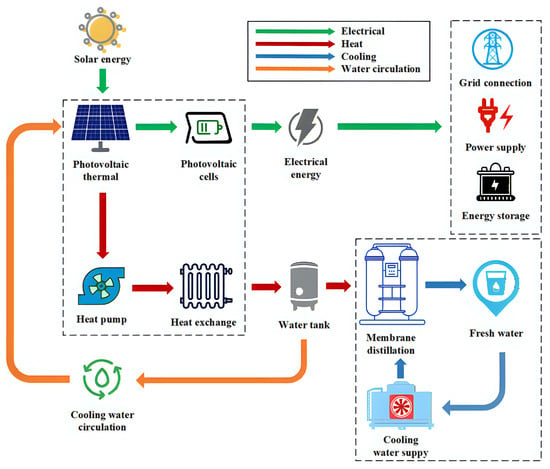
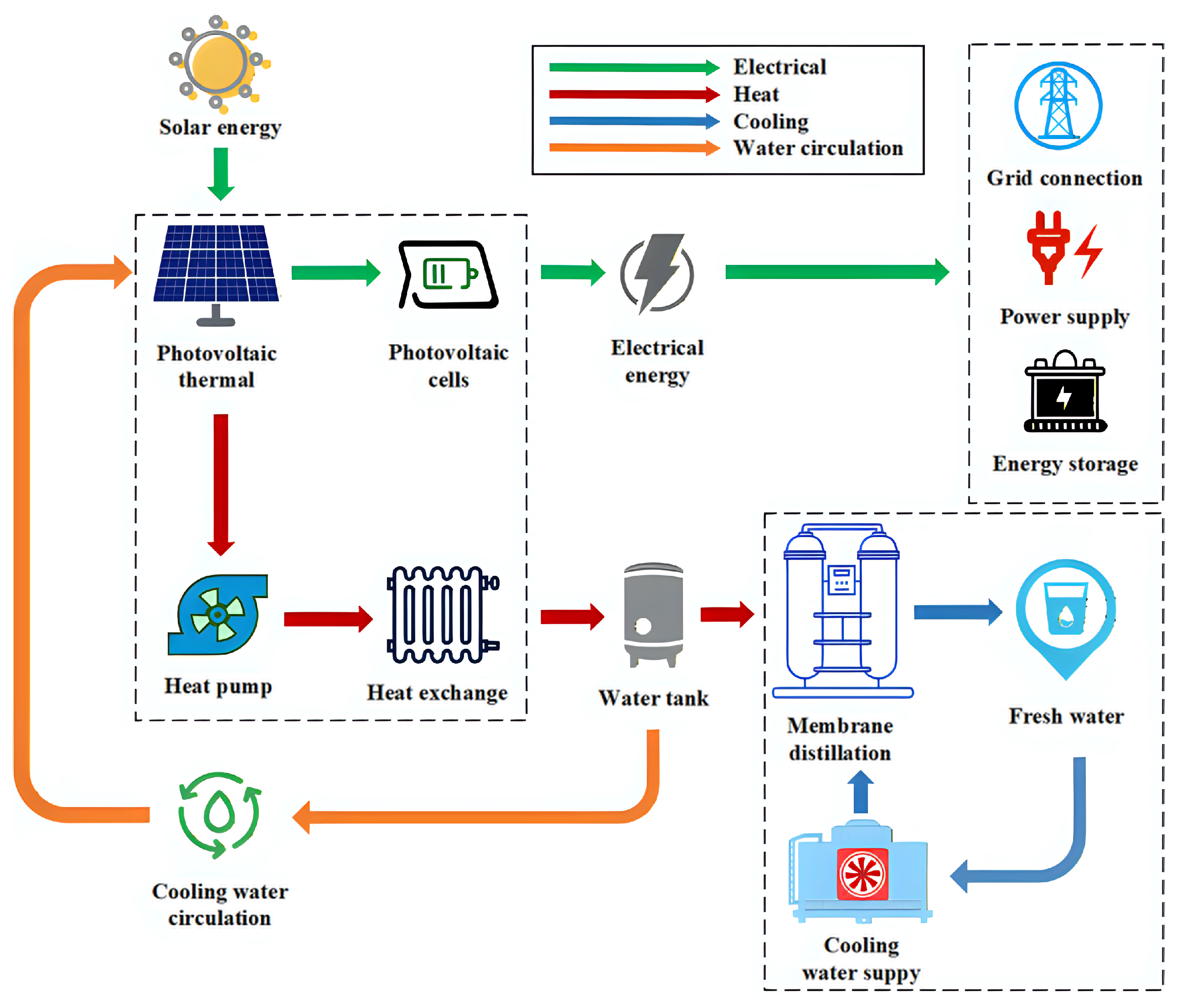
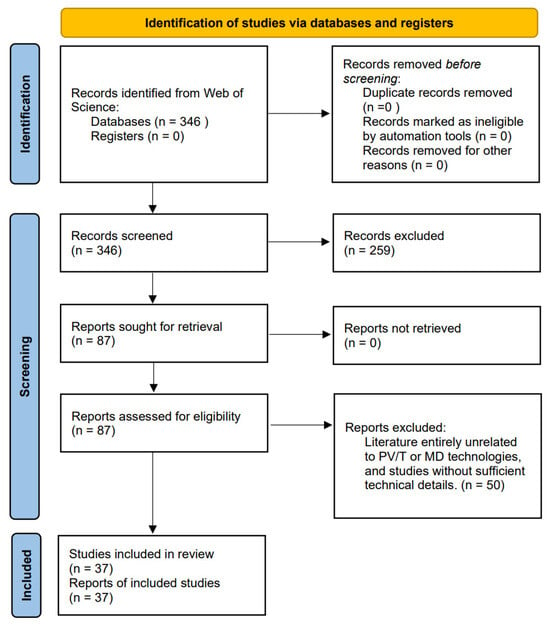
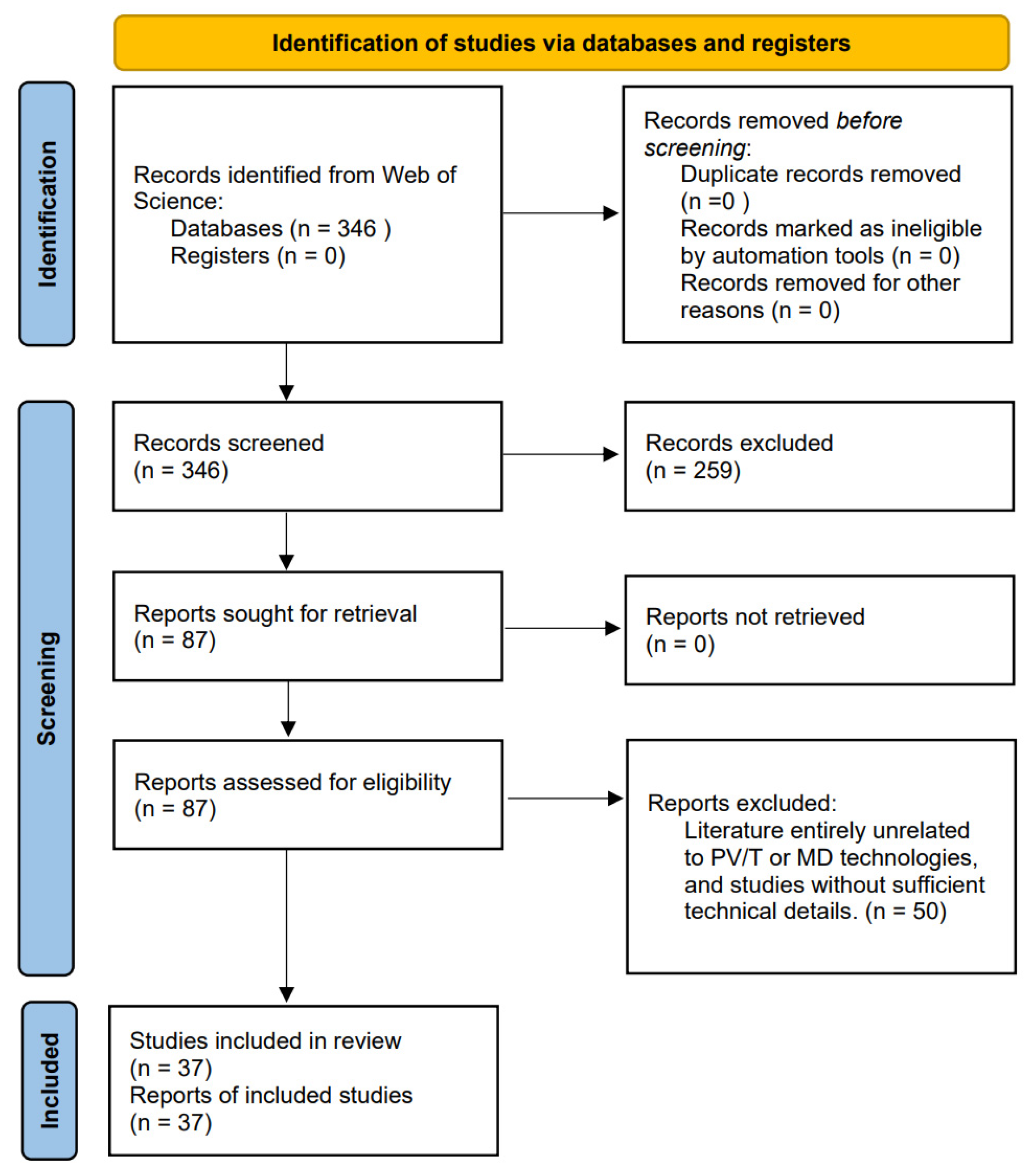
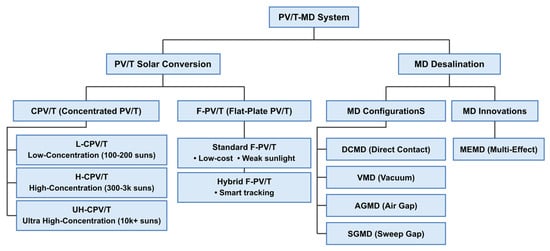
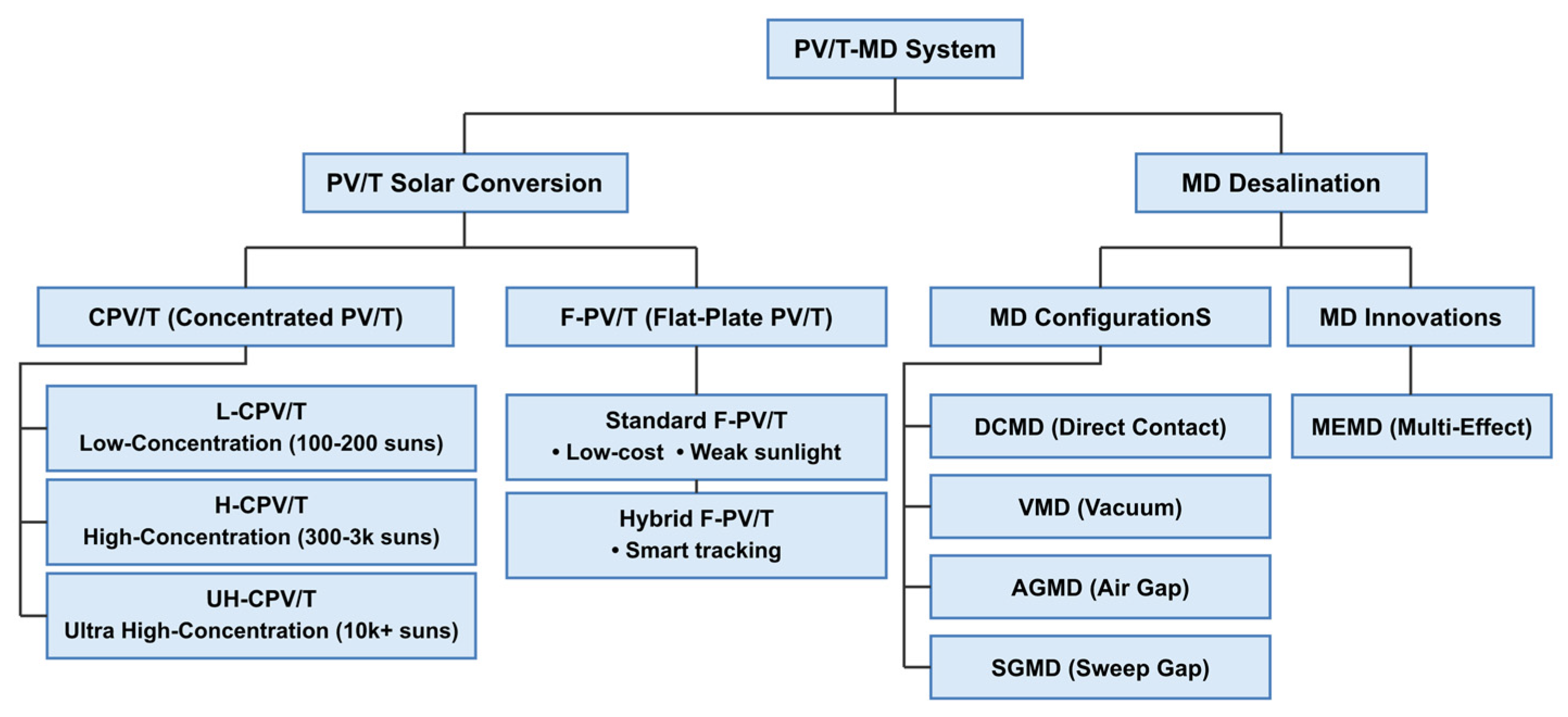
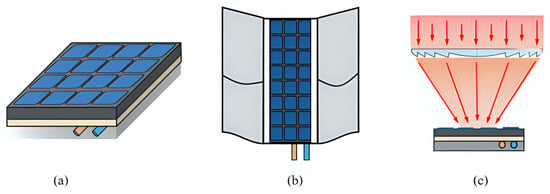
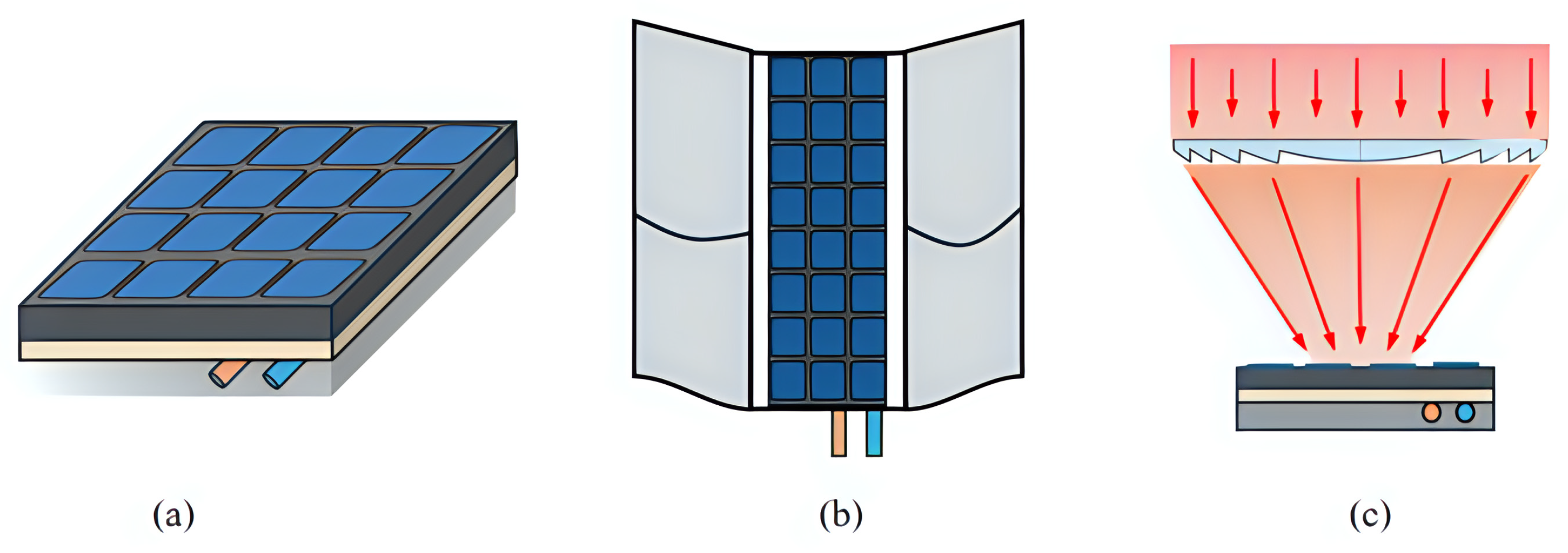
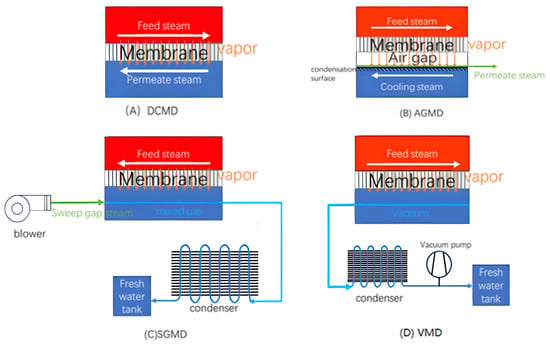
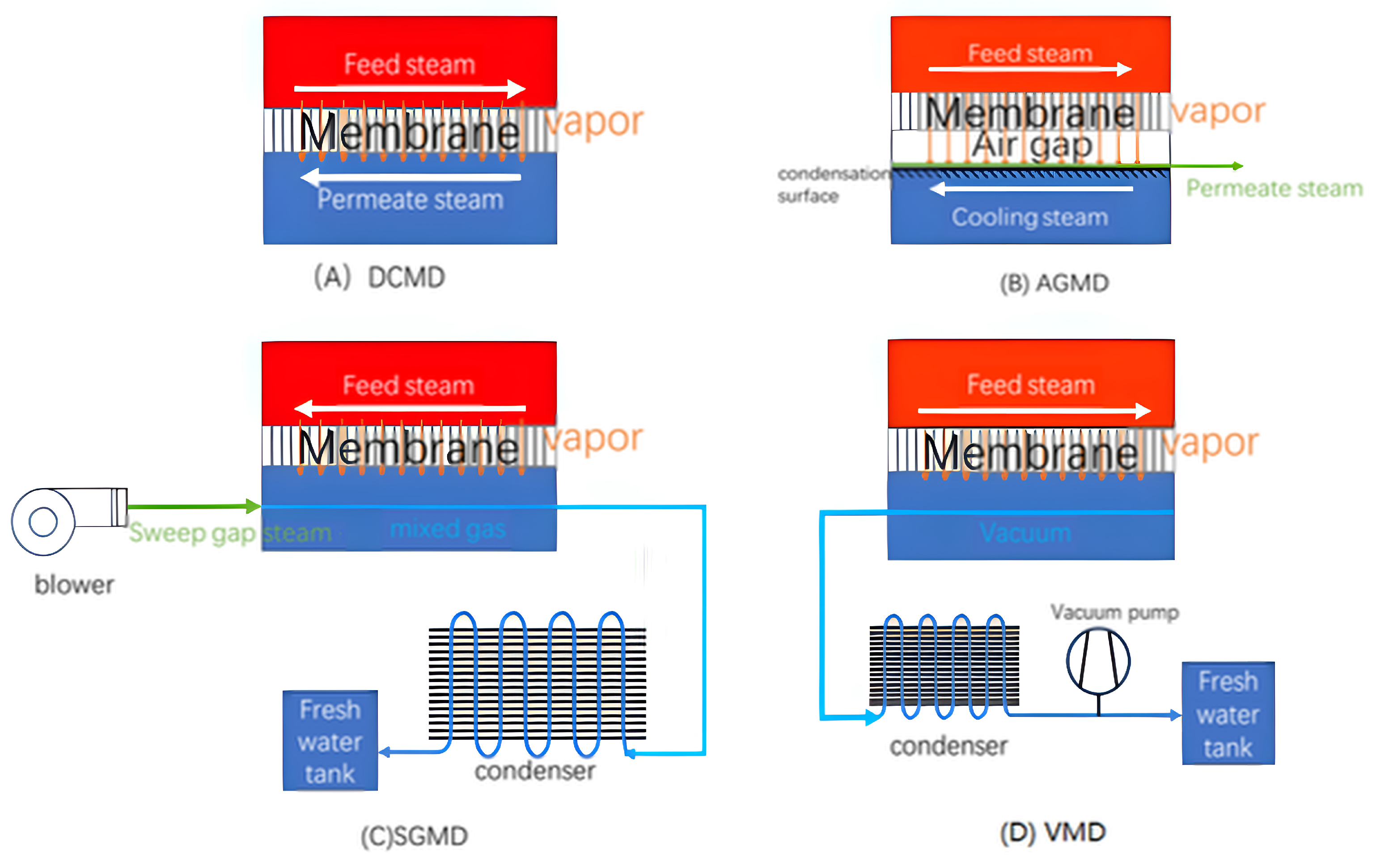
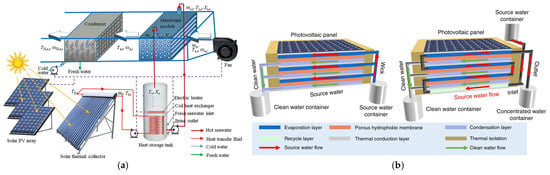
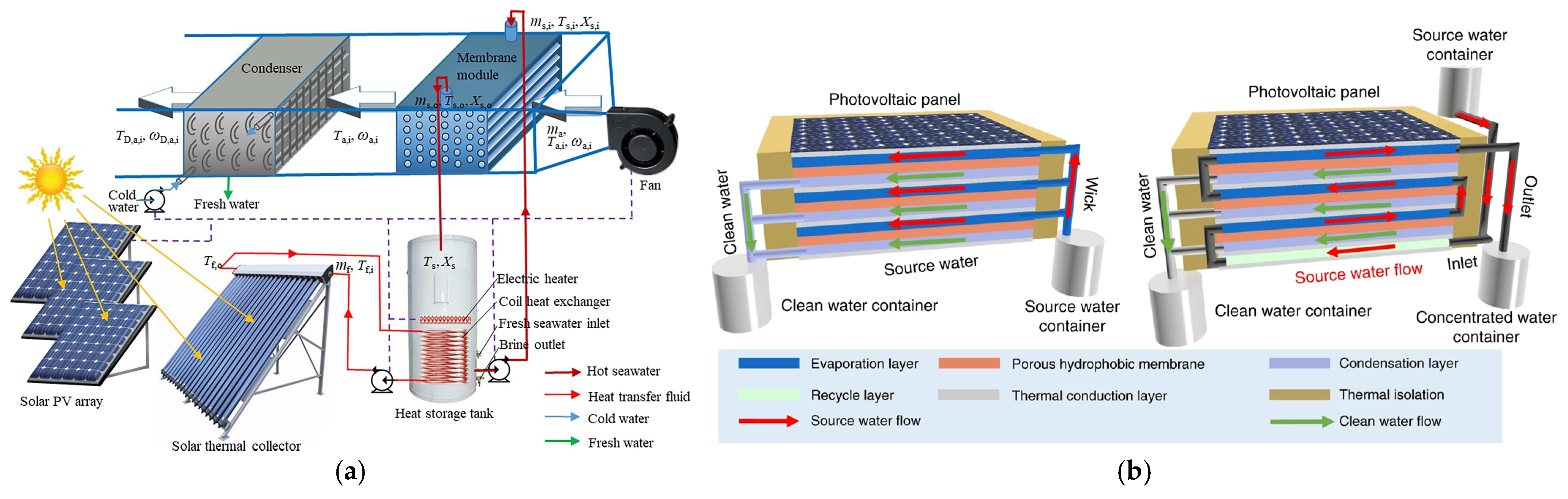
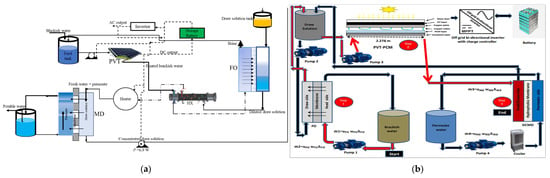
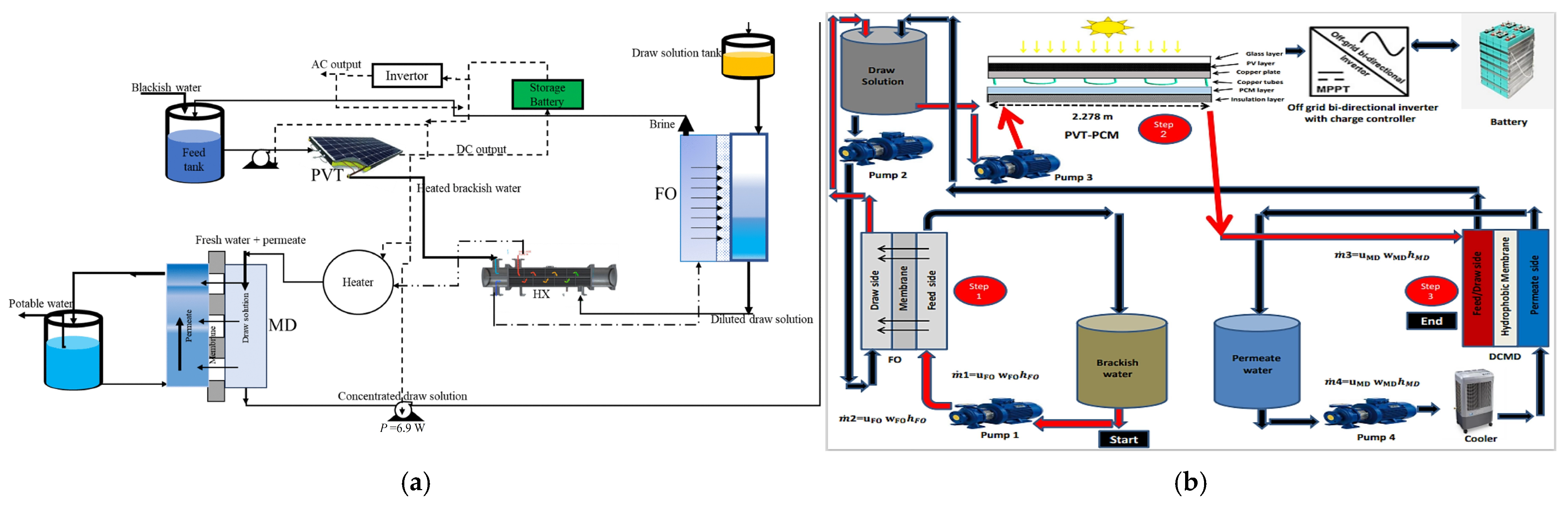
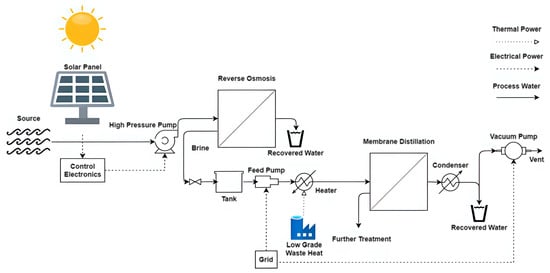
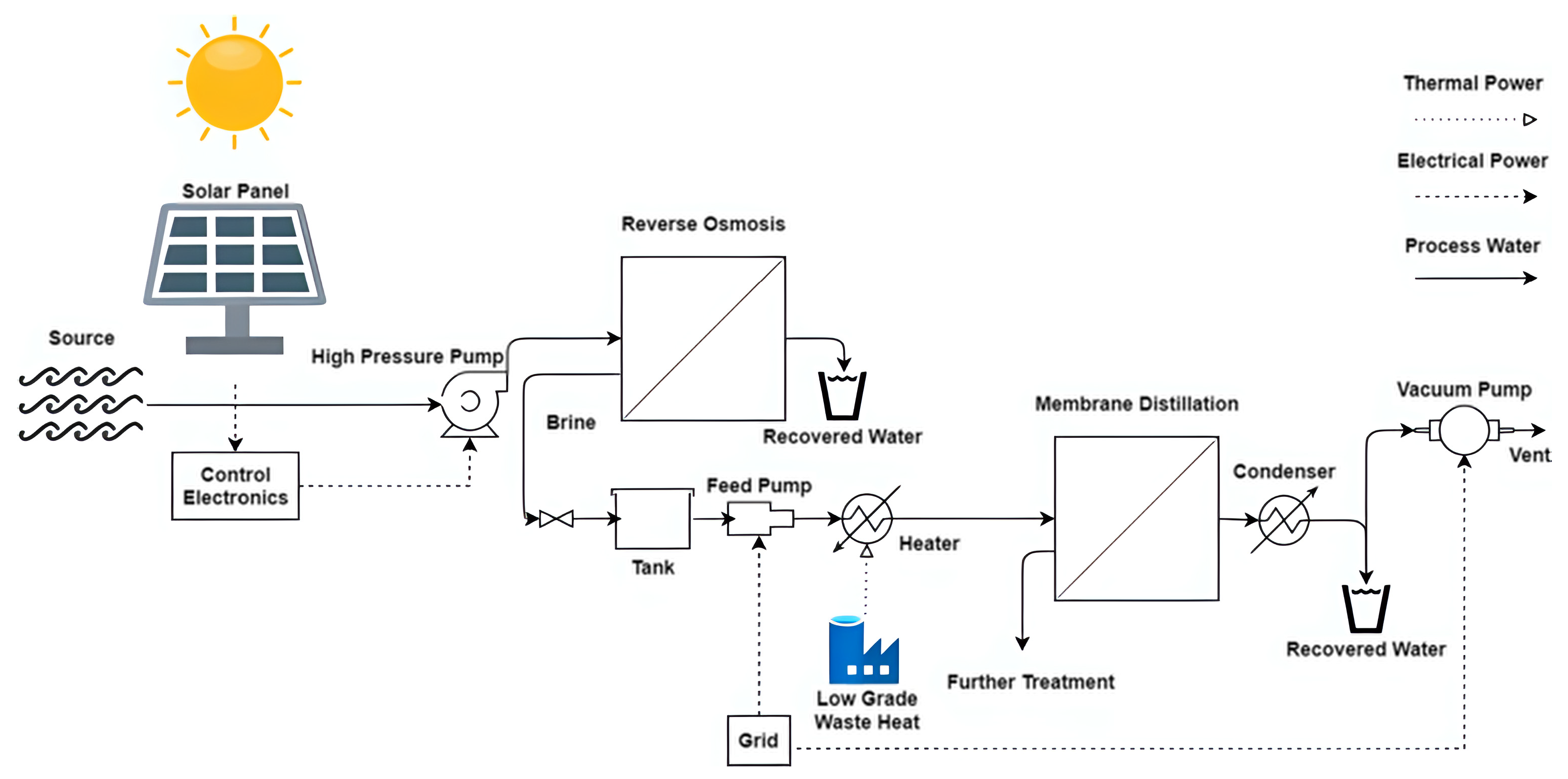
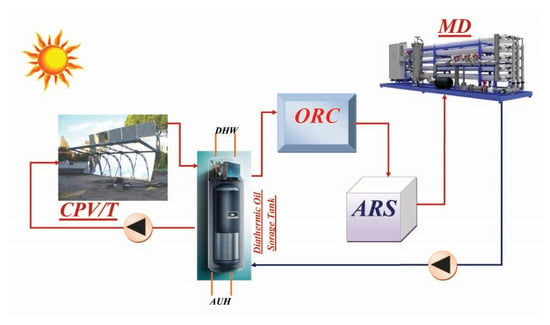
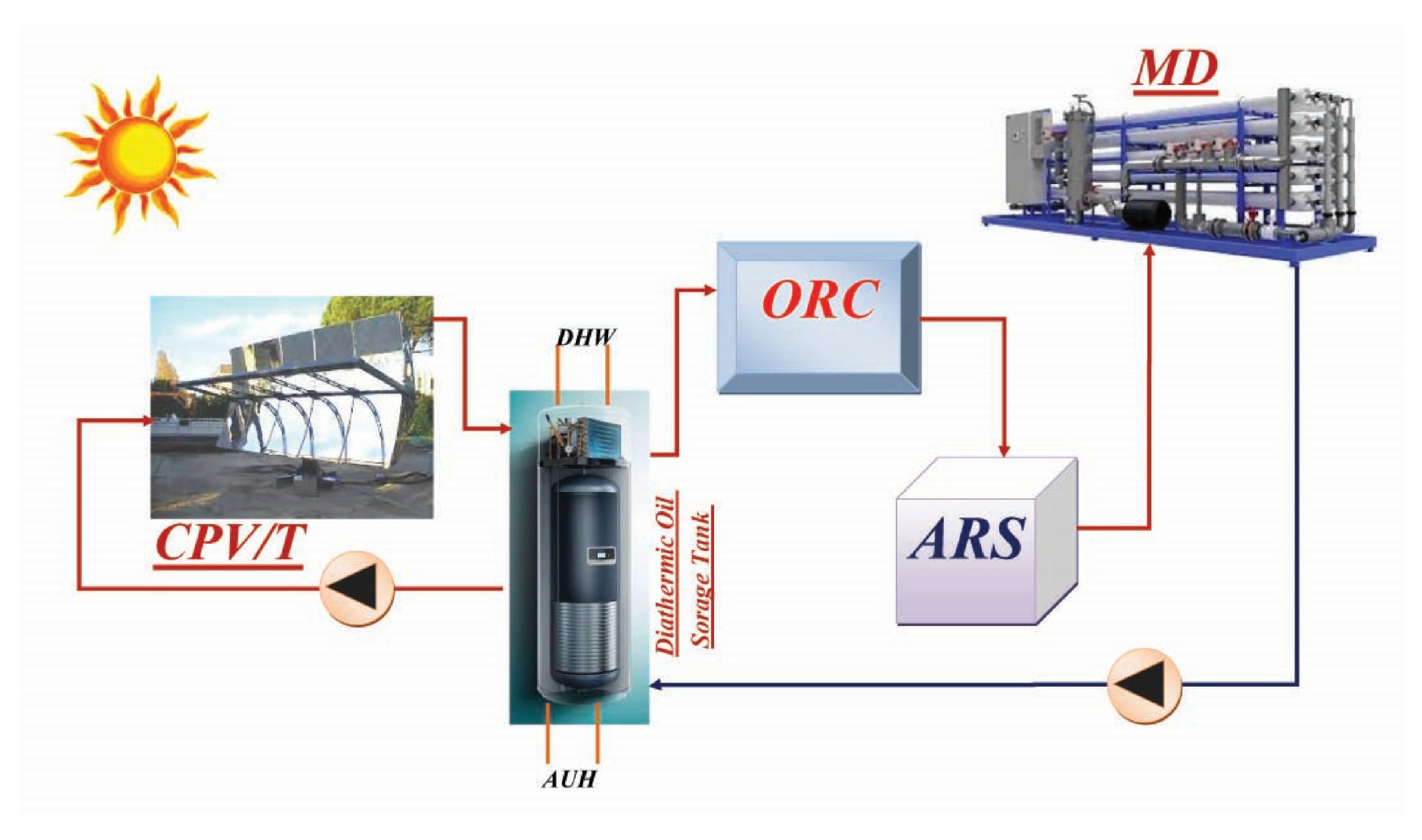
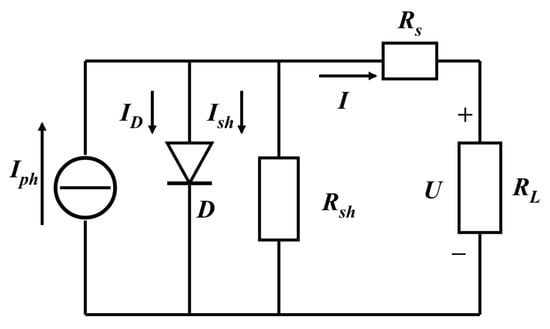
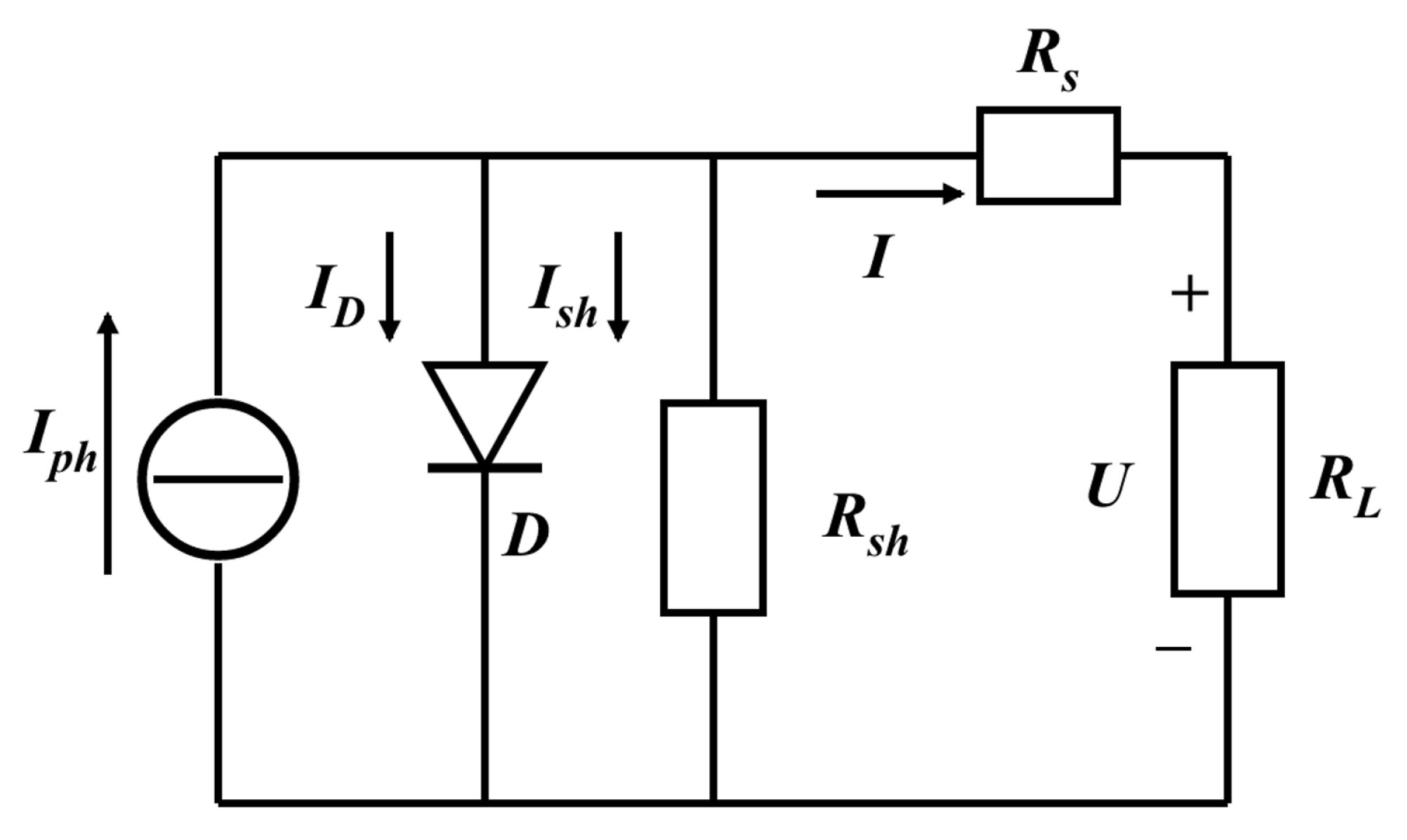
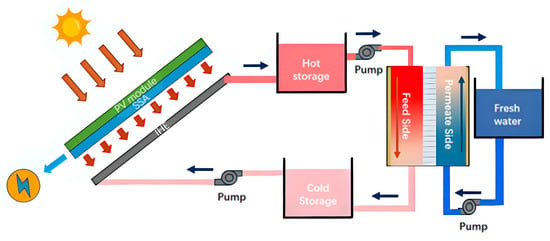
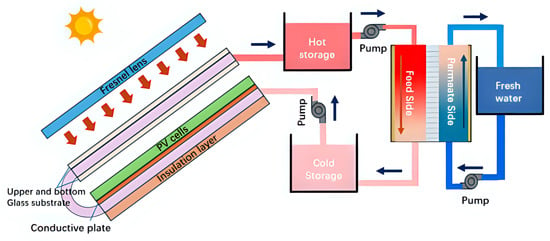
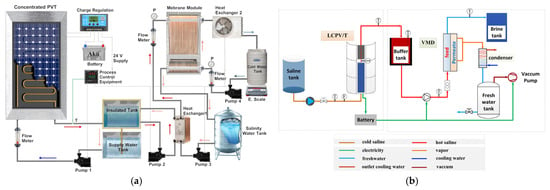
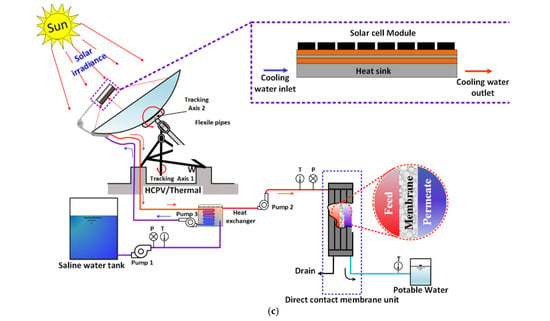
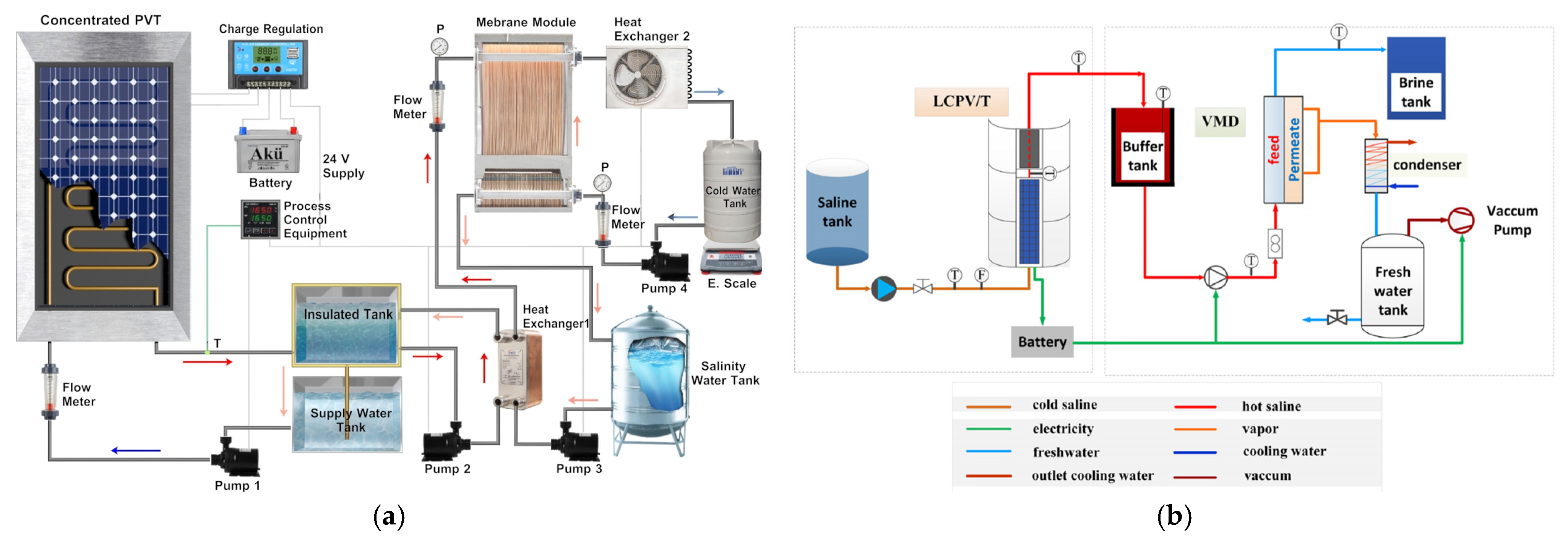
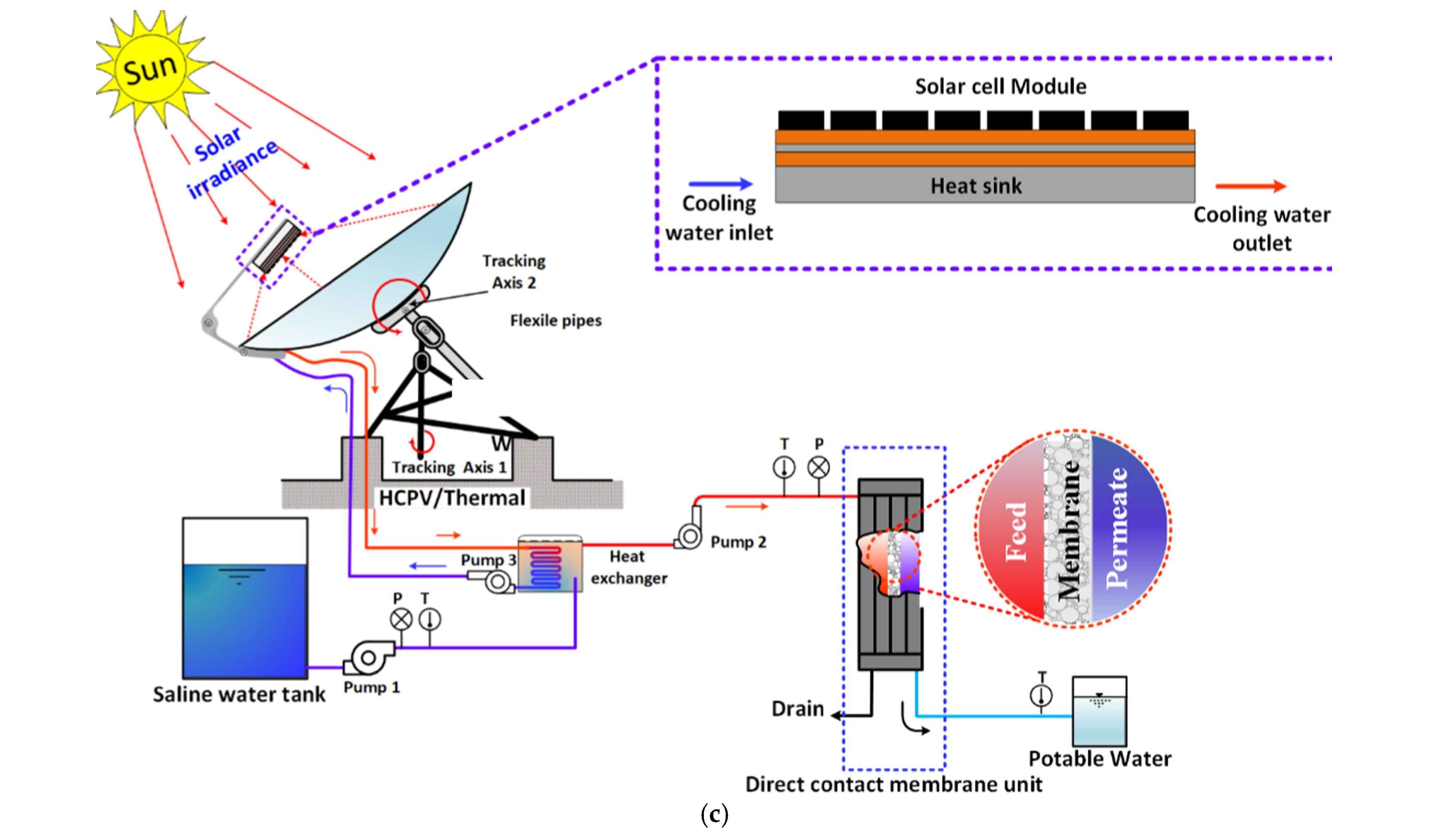
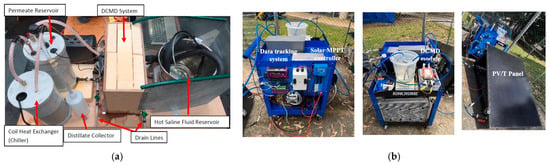
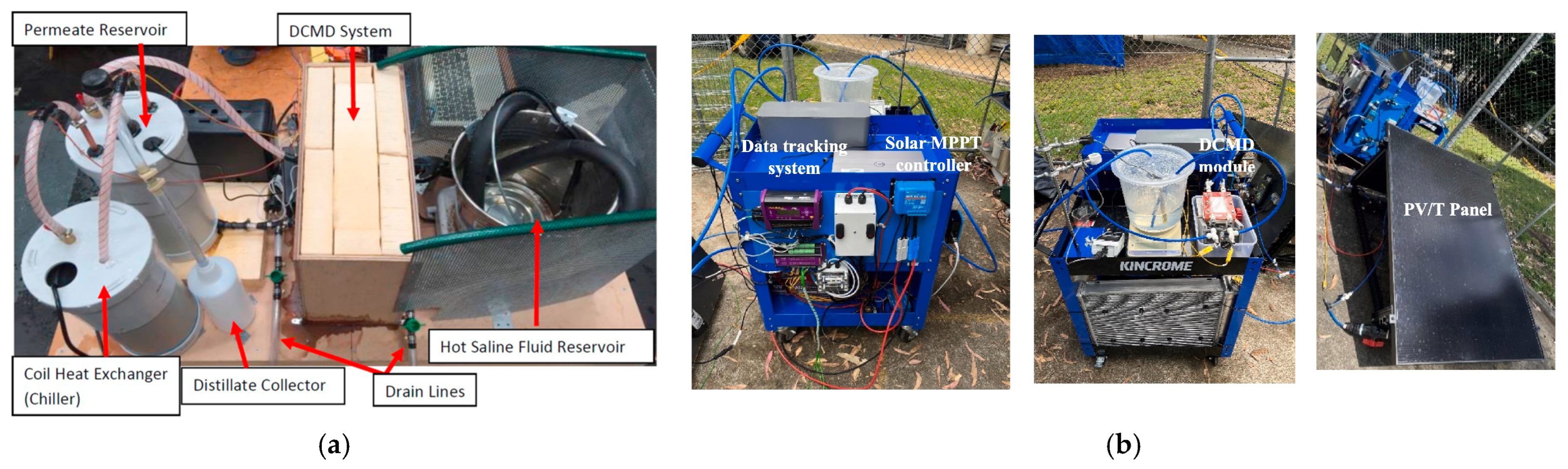
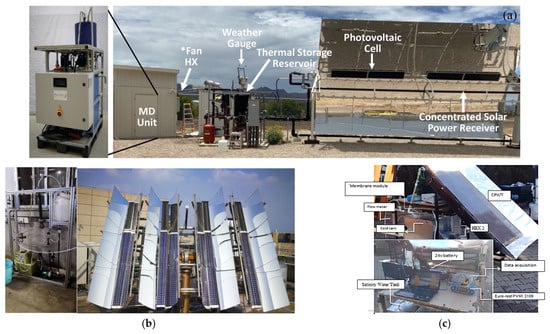
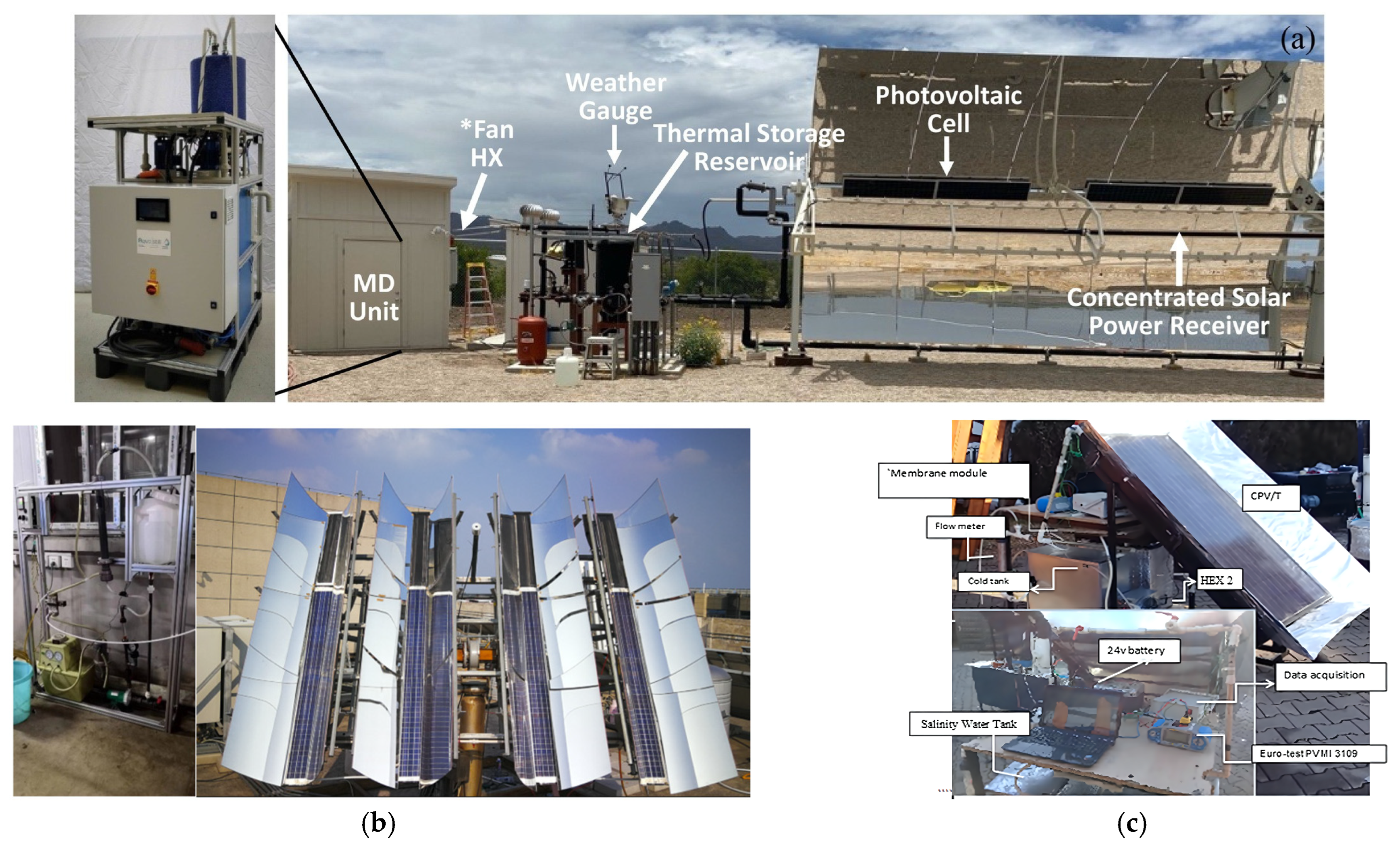
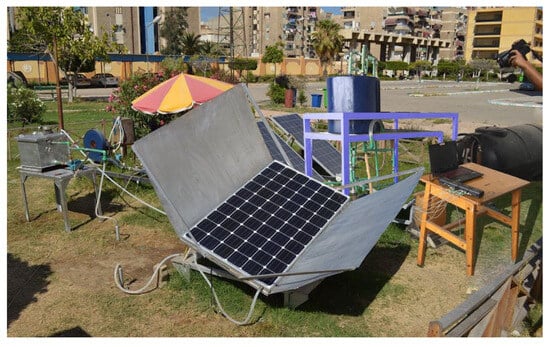
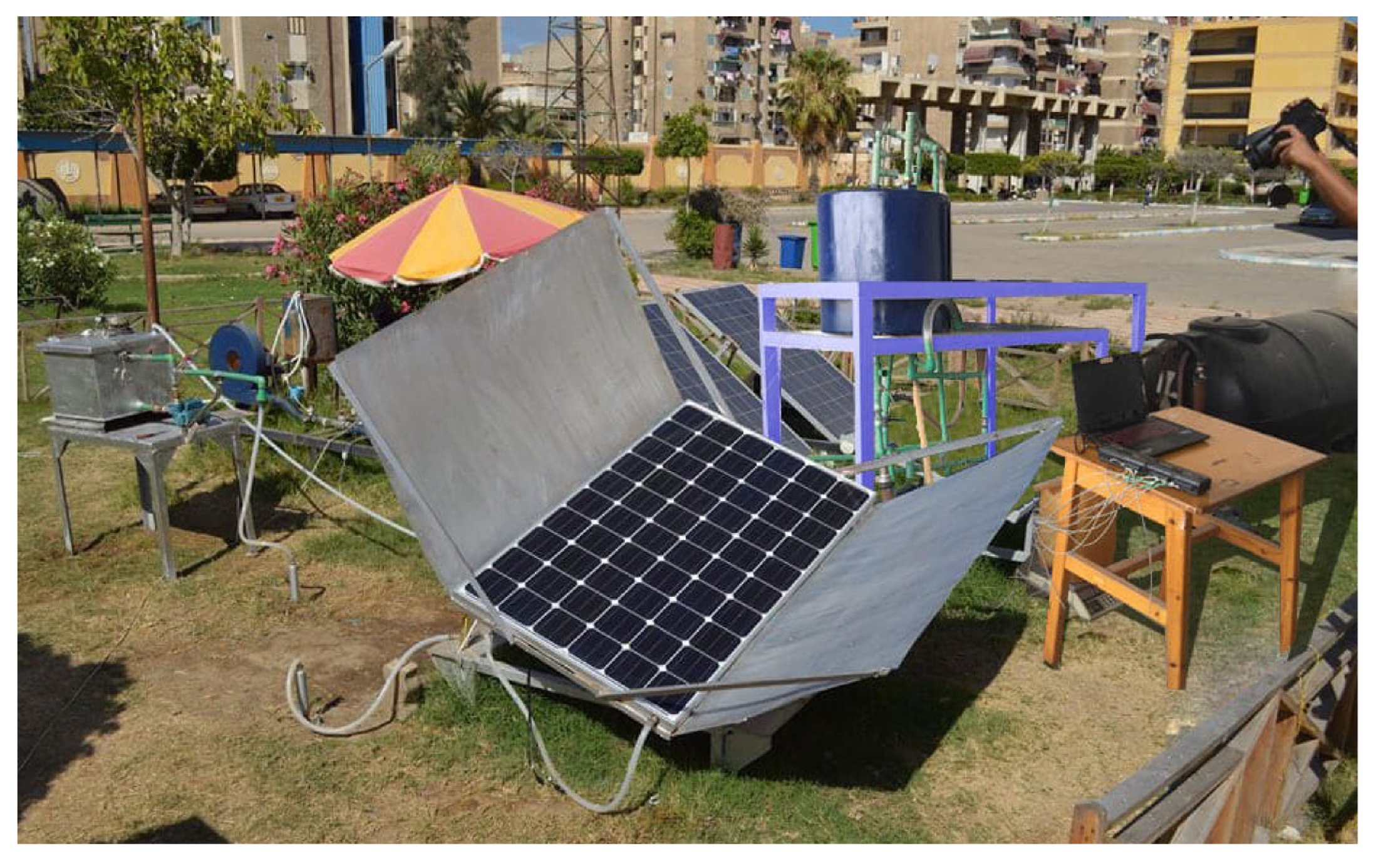
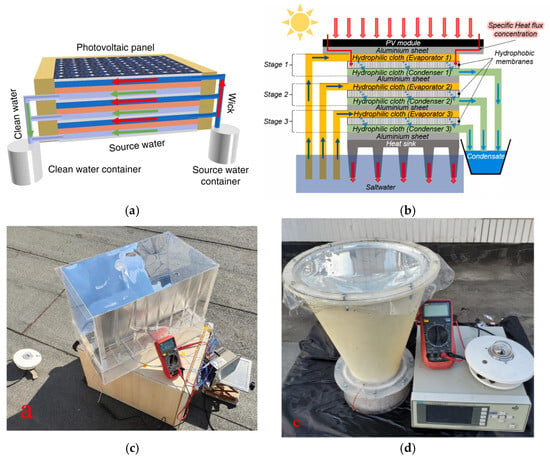
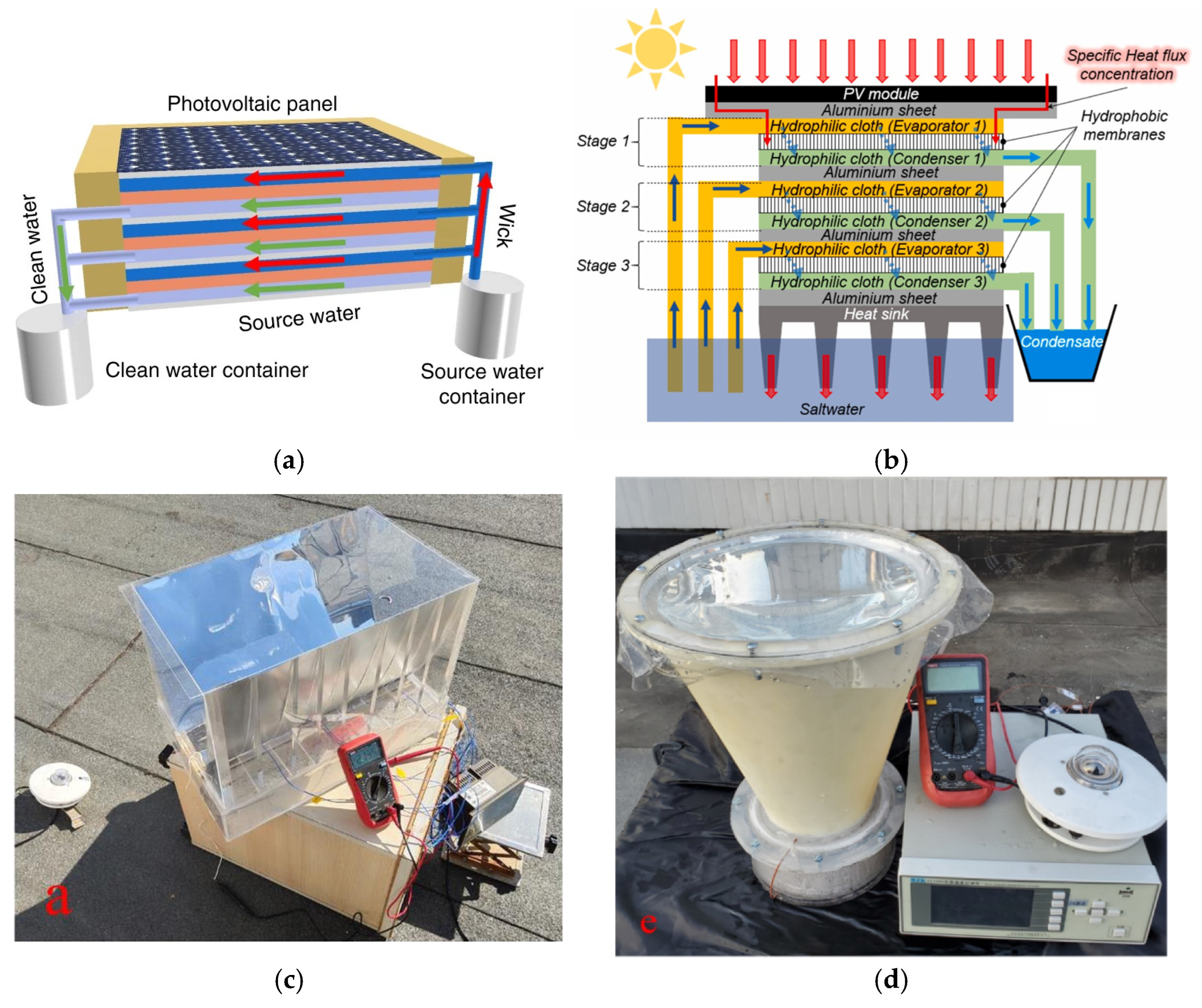

Disclaimer/Publisher’s Note: The statements, opinions and data contained in all publications are solely those of the individual author(s) and contributor(s) and not of MDPI and/or the editor(s). MDPI and/or the editor(s) disclaim responsibility for any injury to people or property resulting from any ideas, methods, instructions or products referred to in the content. |
© 2026 by the authors. Licensee MDPI, Basel, Switzerland. This article is an open access article distributed under the terms and conditions of the Creative Commons Attribution (CC BY) license.