


Abstract
Background: ExPEC9V was a 9-valent vaccine candidate intended for the prevention of invasive extraintestinal pathogenic Escherichia coli (ExPEC) disease (IED). Here, we describe more than a decade-long formulation development trajectory of this vaccine candidate aimed at establishing a stable, robust and scalable drug product that maintains long-term stability while addressing potential manufacturing challenges and increasing the probability of successful global deployment. Methods: Selected formulation development studies of the ExPEC multivalent vaccine candidate are summarized, spanning formulation screening, confirmation, and design of experiments (DoE)-based robustness, stability and compatibility studies. A formulation initially developed for an early low-valency vaccine candidate was subsequently tested and confirmed for candidates with additional serotypes incorporated based on antigen heterogeneity evidence. Contact materials employed included primary packaging—polycarbonate (PC) and polyethylene terephthalate glycol (PETG) bottles, borosilicate glass vials, stoppers, and prefilled syringes; vessel types—bags and stainless steel vessels used in drug substance (DS) and drug product (DP) manufacturing; and varying concentrations of tungsten and hydrogen peroxide. An evolving analytical panel was applied to assess attributes such as purity, protein concentration and degree of O-acetylation. Results: A phosphate-based formulation containing sorbitol, methionine, and polysorbate 80 showed superior stability in screening and was confirmed as fit for purpose across increasing vaccine valency. The ExPEC 9V drug product displayed remarkable thermal and formulation robustness, long-term (3 years) stability at 2–8 °C in glass vials and prefilled syringes, and compatibility with assessed primary containers and manufacturing materials. DoE-based robustness studies defined acceptable excipient and pH ranges, supporting a wide formulation design space. Conclusions: The development trajectory of the ExPEC9V vaccine candidate demonstrates that early prioritization of a robust, scalable formulation that remains fit for purpose across valency evolution supports a stable late-stage manufacturable drug product.
1. Introduction
Antimicrobial resistance (AMR) is considered a global health crisis, representing an increasing risk to human health, with current predictions forecasting 10 million deaths annually worldwide by 2050 [1,2,3,4]. Extraintestinal pathogenic E. coli (ExPEC) strains, which move from the gastrointestinal tract to extraintestinal locations, cause invasive ExPEC disease (IED), including sepsis, bacteremia (blood infections) and urinary tract infections. They are among the most threatening pathogens, particularly impacting immunocompromised individuals and adults aged 60 and older [5,6,7]. The World Health Organization (WHO) has prioritized AMR for research, highlighting the urgent need for effective treatments and vaccines to potentially prevent multidrug-resistant infections [8]. An increasing number of E. coli strains and their rising resistance to a variety of antibiotics make the effective treatment of many common infections more challenging, causing growing rates of hospital admissions and fatalities, as well as increasing healthcare costs [9]. This further emphasizes an urgent need for an effective vaccine that has the potential to prevent IED, including instances caused by drug-resistant E. coli strains.
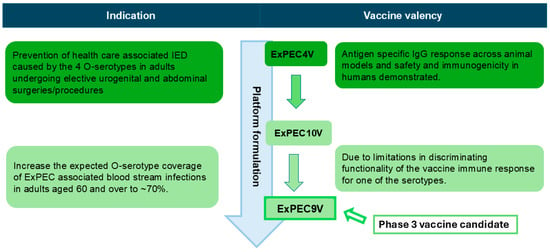
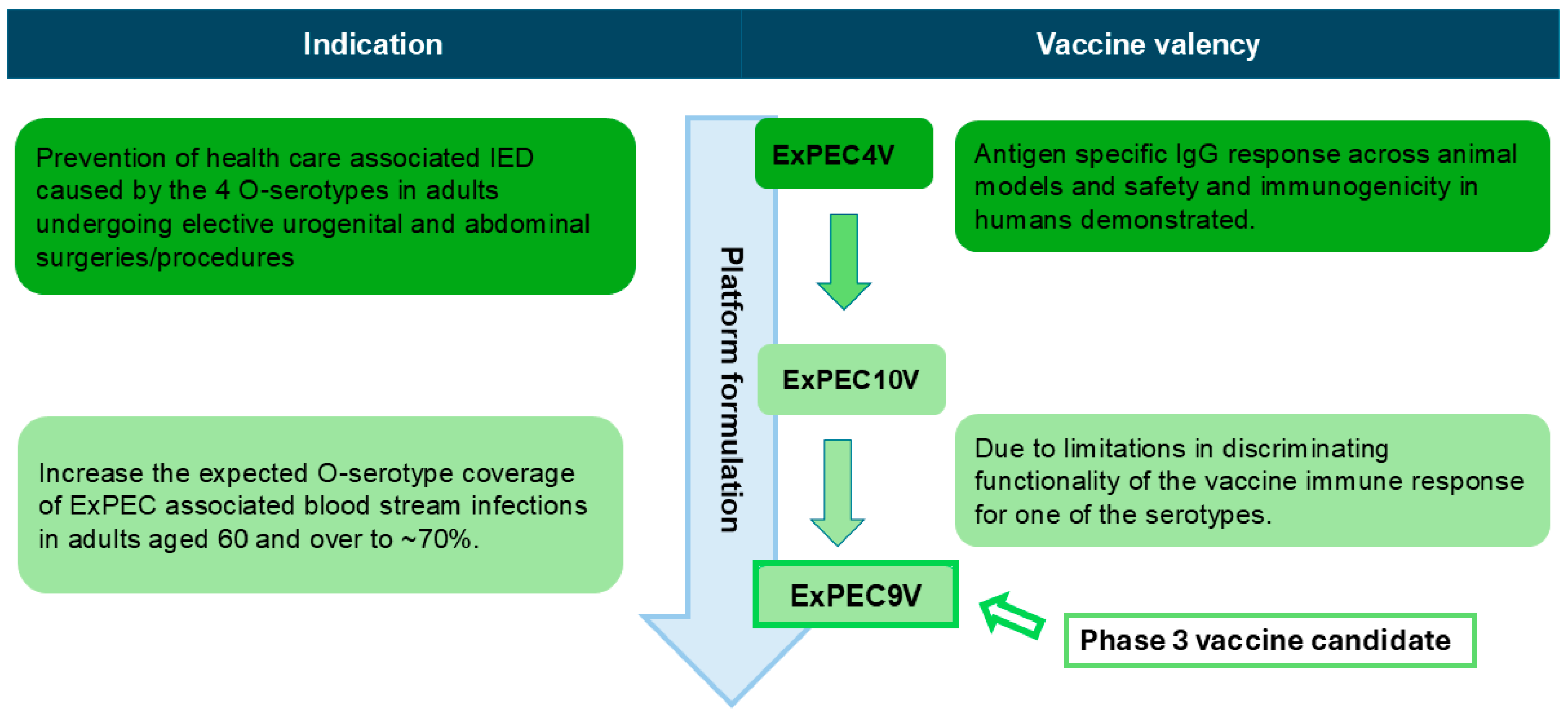
Johnson and Johnson was developing an ExPEC vaccine candidate aimed at addressing this unmet need [6,9,10]. A platform approach was adopted, where a formulation was first developed for a low-valency vaccine candidate and then confirmed for ExPEC candidates containing additional serotypes included to overcome antigen heterogeneity, as informed by epidemiology. The structural similarity between the various serotypes was the driver for this approach and was confirmed during the course of our development work. The evolution of ExPEC vaccine valency and indication is presented in Figure 1 [11].
Figure 1.
Evolution of ExPEC vaccine indication and valency. The composition of the ExPEC vaccine candidates is presented in Appendix A.1. References: Indication evolution [7,9,11,12,13]; antigen-specific IgG response [14]; safety in humans [1,11]; additional clinical data published on the Phase 1/2a and the Ph3 E.ngage [15,10].
A Phase 3 candidate, ExPEC9V, was designed as a multivalent developmental prophylactic glycoconjugate vaccine consisting of the O-antigen polysaccharides of the extraintestinal pathogenic E. coli serotypes (Table A1) separately bioconjugated to a genetically detoxified form of 66 kDa exotoxin A (dEPA) carrier protein derived from Pseudomonas aeruginosa [10,16]. Previous ExPEC vaccine candidates were composed of the same dEPA protein with a different number of O-antigen polysaccharides (Figure 1). The bioconjugation process used for generating polysaccharide/protein complexes of the ExPEC vaccine candidate is described in Appendix A.2.
To ensure (glycoconjugate) vaccine stability during its (long-term) storage and shipment, it is crucial to optimize excipient selection, including buffering species and pH, as well as excipient concentrations [e.g., [17,18,19,20,21]. Commonly used classes of vaccine excipients are tonicity modifiers (e.g., salts and sugars), antioxidants (e.g., EDTA, vitamins C and E, and methionine), stabilizers (e.g., sugars, amino acids and proteins) as well as surfactants (e.g., polysorbate 20 and 80 and poloxamer 188 (P188).
Currently available licensed vaccines based on glycoconjugate technology are Haemophilus influenzae type b vaccines such as ActHIB and Hiberix, which use PRP conjugated to carriers like CRM197 or tetanus toxoid (TT); meningococcal vaccines such as Menactra and MENVEO employing serogroup-specific polysaccharides conjugated to CRM197 or diphtheria toxoid (DT); and pneumococcal vaccines such as Prevnar 13/20, VAXNEUVANCE and Synflorix that combine multiple serotype glycans with carriers including CRM197, TT, and Protein D [22,23,24,25]. As reflected in their regulatory product information (EPAR) they demonstrate multi-year labeled shelf lives under refrigerated storage (2–8 °C), while stability at 25 °C data can be limited and is product-specific [26,27,28,29,30].
However, these sources primarily describe labeled conditions rather than the experimental pathway that established formulation choices, including how formulations were screened, selected, stress-qualified, and made manufacturing- and container-robust, particularly as product complexity (e.g., valency) evolves.
In parallel, numerous glycoconjugate vaccine candidates, including biosynthetic and bioconjugate programs using rEPA/EPA-derived carrier proteins and O-antigens—across pathogens including E. coli multidrug-resistant sequence type 131 (MDR ST131), Shigella dysenteriae type 1, Shigella flexneri 2a, Francisella tularensis, Klebsiella pneumoniae and Salmonella Typhi [31,32]. Published literature has primarily emphasized antigen selection, carrier protein selection, conjugation or glycoengineering methodology, analytical characterization, immunogenicity, and protective efficacy across multiple pathogens [31,32,33,34,35,36,37,38,39,40,41,42,43]. By contrast, explicit drug-product formulation development and storage-stability datasets are limited. For E. coli MDR ST131, “O25B-EPA” and Shigella flexneri 2a, “Flexyn2a” are among the few EPA-based bioconjugates for which the clinical formulation composition is clearly disclosed: O25B-EPA and Flexyn2a drug products are formulated in Tris-buffered saline containing 25 mM Tris, 137 mM NaCl, and 2.7 mM KCl at pH 7.4 [31,34]. However, available Shigella EPA-bioconjugate clinical literature does not report systematic excipient screening, long-term real-time stability, stored adjuvant-antigen compatibility, container-closure compatibility, or explicit shelf-life justification. Overall, even though formulations of some of the bioconjugates have been discussed in a clinical context, based on the literature identified here, integrated datasets linking excipient selection, formulation optimization, late-stage compatibility, robustness, and multi-year stability remain sparse for O-antigen EPA/rEPA-based bioconjugates.
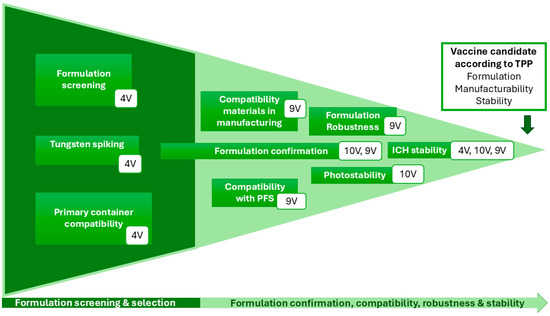
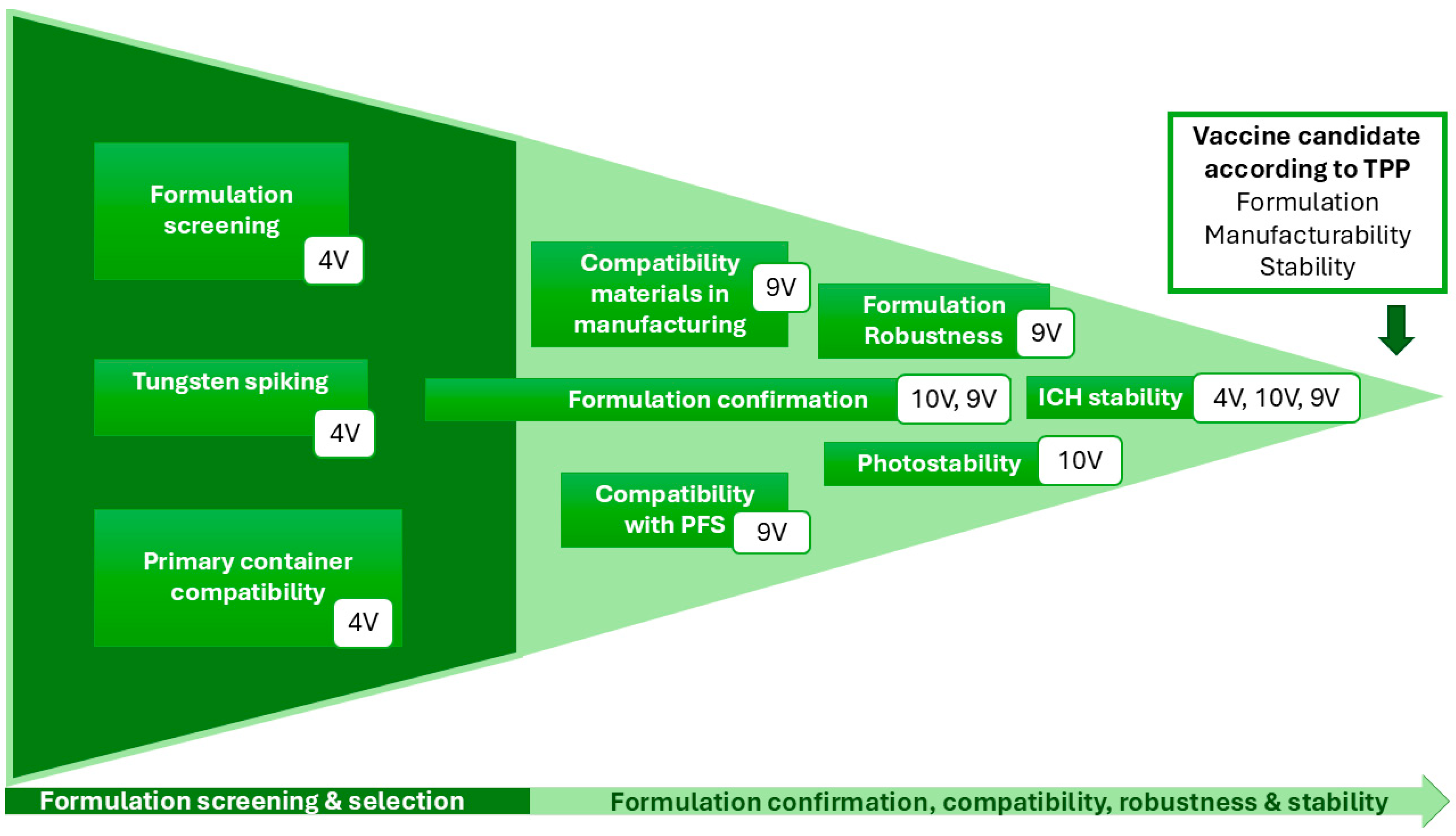
Despite the discontinuation of the ExPEC9V clinical development during the Phase 3 E.mbrace study [9], multiple learnings were obtained that can benefit other (bio)conjugate vaccine development projects. Therefore, we here present a >10-year development trajectory for a dEPA-based multivalent ExPEC bioconjugate vaccine candidate, spanning formulation screening, formulation confirmation across valency evolution (4V→10V→9V), DoE-based robustness, and compatibility across assessed primary containers and manufacturing contact materials (Figure 2).
Figure 2.
Summary of selected studies performed during the formulation development of the ExPEC multivalent vaccine.
This work is supported by multi-year real-time stability data. An evolving analytical panel (e.g., SE-HPLC for glycoform distribution and aggregate monitoring, SoloVPE for protein quantification, and O-acetylation assays) is used to link early formulation screening to later-stage stability and compatibility studies.
2. Materials and Methods
2.1. Summary of the Formulation Development Trajectory
A summary of selected formulation-development studies (including the ICH stability study) of the ExPEC multivalent vaccine discussed in this manuscript is shown in Figure 2. Polysaccharide (PS) and EPA protein concentrations, including the PS/protein ratio for the selected DS and DP vaccine candidates discussed in this manuscript, are presented in Appendix A.1. Materials employed in the studies are detailed in Table A3. Contact materials included primary packaging (polycarbonate (PC) and polyethylene terephthalate glycol (PETG) bottles, borosilicate glass vials, stoppers, and prefilled syringes), vessel types (bags and stainless steel vessels) used in DS/DP manufacturing, and varying concentrations of tungsten and hydrogen peroxide. An overview of methods used per study and assessed attributes is presented in Table A5.
Studied Formulations
In total, more than 50 formulations were evaluated during this work. An initial screening focused on buffer species and pH, assessing >20 formulations containing sodium acetate, sodium succinate, histidine, Tris, or potassium phosphate across a pH range of 5–8. Based on the preliminary stability data, the best-performing histidine, phosphate and Tris-based formulations (30 candidate formulations) were progressed into formulation screening studies (Table A2) with ExPEC4V DP (serotype composition presented in Table A1) and the monovalent EO25 at concentrations representative of the drug substance (DS). The EO25 DS was selected as illustrative of the DS material, as it was shown to be one of the less stable DS serotypes and because it reflects DS serotypes with high relative mono- and diglycosylated percentages, has a polysaccharide (PS) content in the higher range compared with other DS serotypes, and contains partly acetylated rhamnose OH groups, which is an additional indicator of stability. Formulations comprising different buffer species, pH values, tonicity modifiers, antioxidants, and other excipients were investigated according to the formulation matrix in Table A2. All DS formulations were filled into PC (Thermo Scientific, Waltham, MA, USA) or PETG (Thermo Scientific) bottles. All DP formulations were filled into 2R Type I borosilicate glass vials (Schott, Mainz, Germany) and stoppered with 4432/50 chlorobutyl stoppers with Flurotec coating (West, Exton, PA, USA).
2.2. Stability and Compatibility of the Selected ExPEC Formulation
ExPEC DS and DP in the selected formulation were further assessed in multiple studies evaluating their stability and compatibility with different contact materials used during manufacturing as well as primary packaging. Tested contact materials included DP primary packaging—2R Type I borosilicate glass vials (OMPI), with a 4432/50 chlorobutyl stopper with Flurotec coating (West); and 1.0 mL short pre-filled syringes with either Nipro glass (OMPI) or Fiolax glass (BD), both containing an FM30 tip cap and a 4432/50 chlorobutyl stopper with Flurotec coating (West); FM30 PFS tip cap (Datwyler, Altdorf, Switzerland); and 366 dimethicone (silicone oil; DOW Corning, Midland, MI, USA).
Conditions and contact materials evaluated during the formulation development trajectory are summarized in Table A3 and Table A4, and an extensive list of attributes evaluated in these studies, including appearance and clarity, purity, protein content, and O-acetylation, along with the methods used, is presented in Table A5.
Stability and Compatibility Testing Conditions
To evaluate the ExPEC multivalent vaccine candidate stability during and after intended real-time storage, and when exposed to different stresses, the formulations evaluated were subjected to various conditions, including agitation, freeze/thaw, UV and visible light exposure and (developmental and ICH) stability testing on different temperature settings up to 40 °C (testing conditions are presented in Table A4, and attributes assessed and methods used in Table A5).
2.3. ExPEC9V Formulation Robustness Study, DoE
To demonstrate the robustness of the selected formulation, the ExPEC9V DP robustness study varied serotype concentration, excipient concentrations, pH and primary packaging as per Table 1. The study design was set according to design of experiments (DoE) methodology and comprised 45 sample formulations and 2 primary packaging types (2R Type I borosilicate glass vials (OMPI), 4432/50 chlorobutyl stopper with Flurotec coating (West); 1.0 mL short Fiolax glass PFS with a 4432/50 chlorobutyl stopper with Flurotec coating and FM30 tip cap (OMPI)). The study design is further detailed in Appendix E.
Table 1.
Factors of the present ExPEC9V DP formulation robustness study in vials and PFS. The target/midpoint excipient concentrations and pH value are presented in bold.
3. Results and Discussion
3.1. Formulation
3.1.1. Formulation Screening
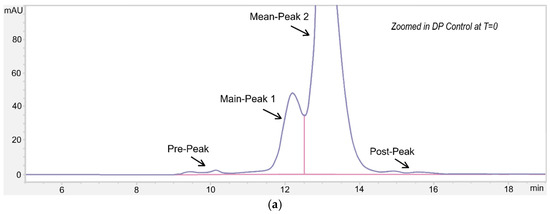
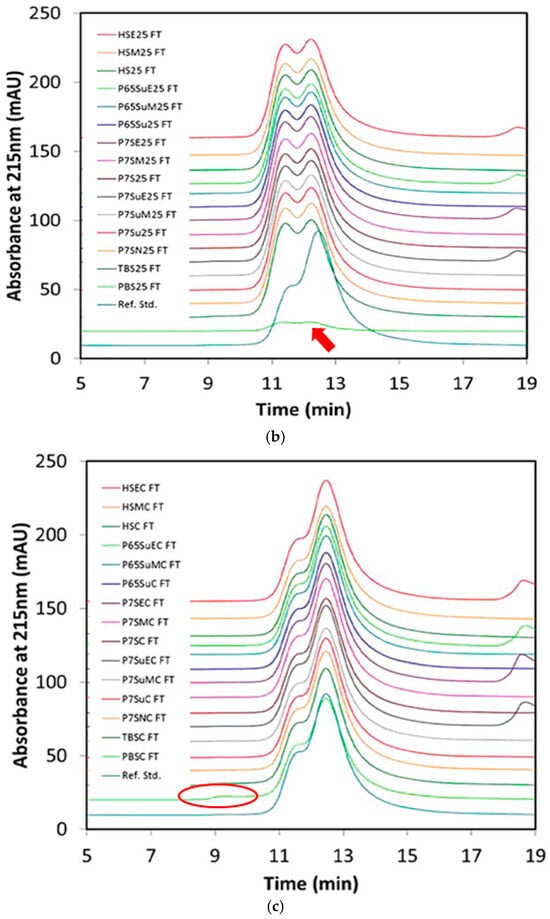
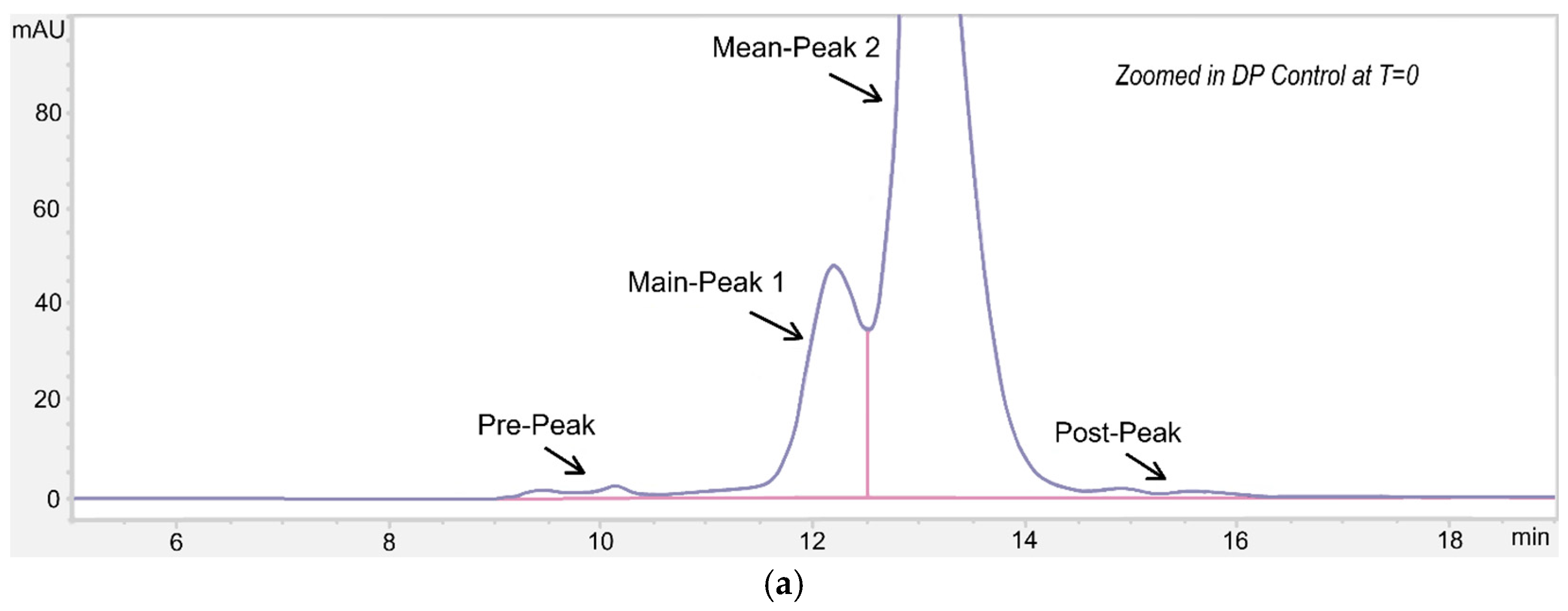
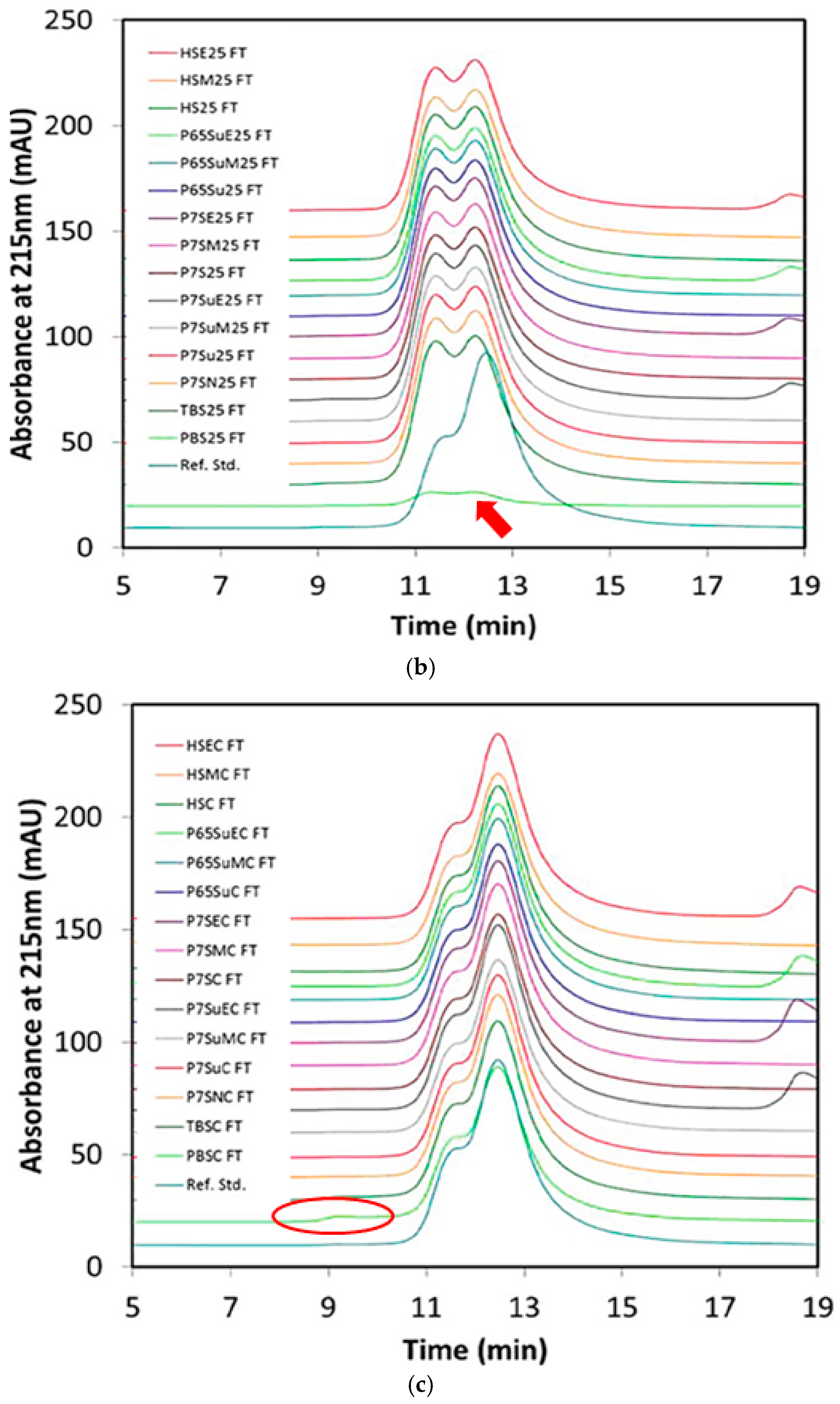
At this stage, a total of 30 formulations were assessed: 15 for the ExPEC multivalent (4V) DP and 15 for the ExPEC DS (Table A2). Stress conditions, including agitation stress, 5 freeze/thaw cycles, and extended storage at 40 °C were essential for discriminating between the screened formulations. As an illustration, formulations exposed to 5 freeze/thaw cycles are presented in Figure 3 (data listed in Table S4; an example chromatogram showing ExPEC4V peak integration is presented in Figure 3a). The PBS25 DS formulation was unstable after exposure to 5 consecutive freeze/thaw cycles (Figure 3b, indicated by the red arrow, Table S4), along with the PBSC DP and TBSC DP formulations, as demonstrated by increases in SE-HPLC pre-peak species (e.g. +1.6 % PBSC, and +28.5% PBS25) (Figure 3c, PBSC DP indicated by the red circle, Table S4). Notably, these three formulations did not have a cryoprotectant in their formulation composition, which likely explains their underperformance under freeze/thaw cycling stress compared to formulations that did contain sugar as a cryoprotectant. All other assessed EO25 DS and ExPEC4V DP formulations were not susceptible to aggregation after exposure to freeze/thaw stress (Figure 3b,c, Table S4). Other discriminatory stress conditions are described in detail in Appendix C. None of the formulations was impacted by storage at 5 °C for 12 weeks (Table S5).
Figure 3.
(a) An example of SEC-HPLC chromatogram peak integration of ExPEC formulation (ExPEC4V) showing the integrated regions: Pre-peak (earlier-eluting, higher apparent molecular weight species associated with aggregates); main peaks (intended bioconjugate glycoform distribution); and post-peak (later-eluting, lower apparent molecular weight species associated to degradation fragments). (b) SE-HPLC results for EO25 DS formulations. Red arrow: PBS25 DS formulation. (c) SE-HPLC results for ExPEC4V DP formulations (freeze/thaw). SE-HPLC peak percentage values for ExPEC4V DP and DS formulations exposed to freeze/thaw stress are presented in Table S5. Designations used: Histidine (H); K/Na phosphate (P); Tris buffered saline (TBS); phosphate buffered saline (PBS); pH (in case of phosphate formulations) = 6.5 (65) 7.0 (7), 7.5 (75); sorbitol (S); sucrose (Su); EDTA (E); methionine (M); ExPEC4V DP (C); EO25 DS (25). Red circle: PBSC DP formulation.
After the first screening, three formulations were selected for both multivalent DP and DS: two leading phosphate formulations (P7SuEC and P7SMC) and a TBS formulation, and further assessed for the impact of additional stressors and compatibility with primary packaging (detailed in Appendix C.2 and Section 3.2.1).
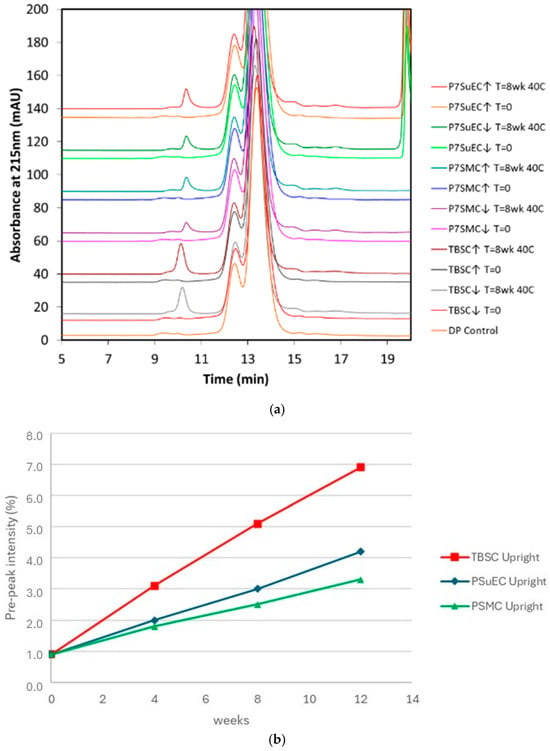
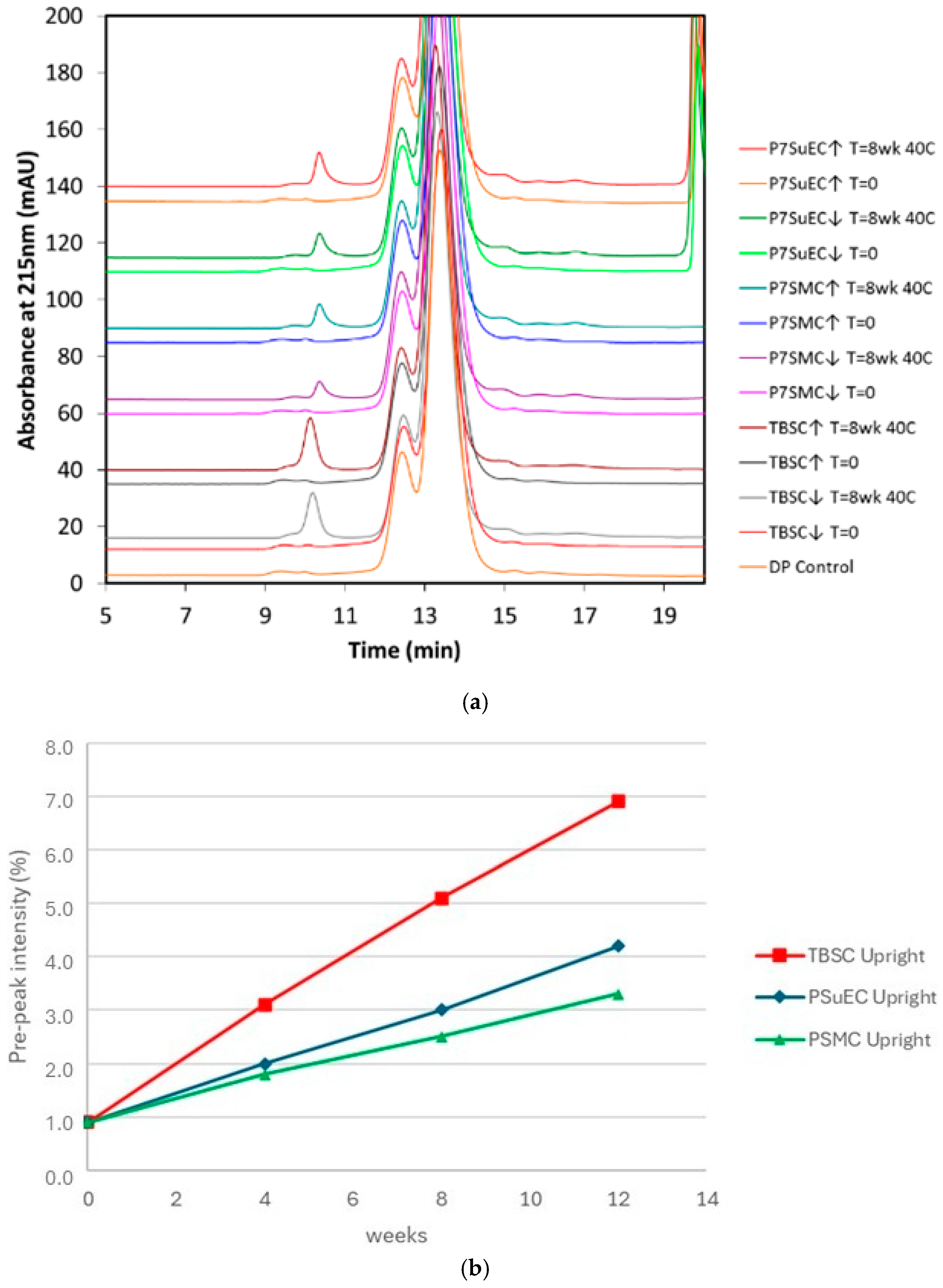
ExPEC DP and DS phosphate and TBS formulations exhibited comparable behavior when stored at 5 °C and 25 °C, while at 40 °C, phosphate formulations demonstrated superior stability independent of vial orientation. ExPEC4V DP showed this most clearly via reduced pre-peak growth by SE-HPLC (Figure 4a, Table S8). Among phosphate formulations, the sorbitol-containing PSMC had the best stability, with the least aggregation over 12 weeks at 40 °C (Figure 4b).
Figure 4.
(a) SE-HPLC peak percentages of ExPEC DP formulations after 8 weeks of storage at 40 °C (↑: upright, ↓: inverted). (b) SE-HPLC pre-peak percentages of ExPEC DP formulations after storage at 40 °C for 12 weeks. Designations used: Histidine (H); K/Na phosphate (P); Tris buffered saline (TBS); phosphate buffered saline (PBS); pH (in the case of phosphate formulations) = 6.5 (65) 7.0 (7), 7.5 (75); sorbitol (S); sucrose (Su); EDTA (E); methionine (M); ExPEC4V DP (C); EO25 DS (25).
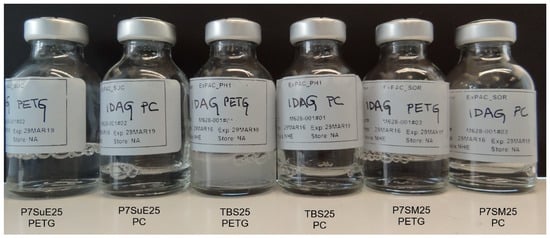
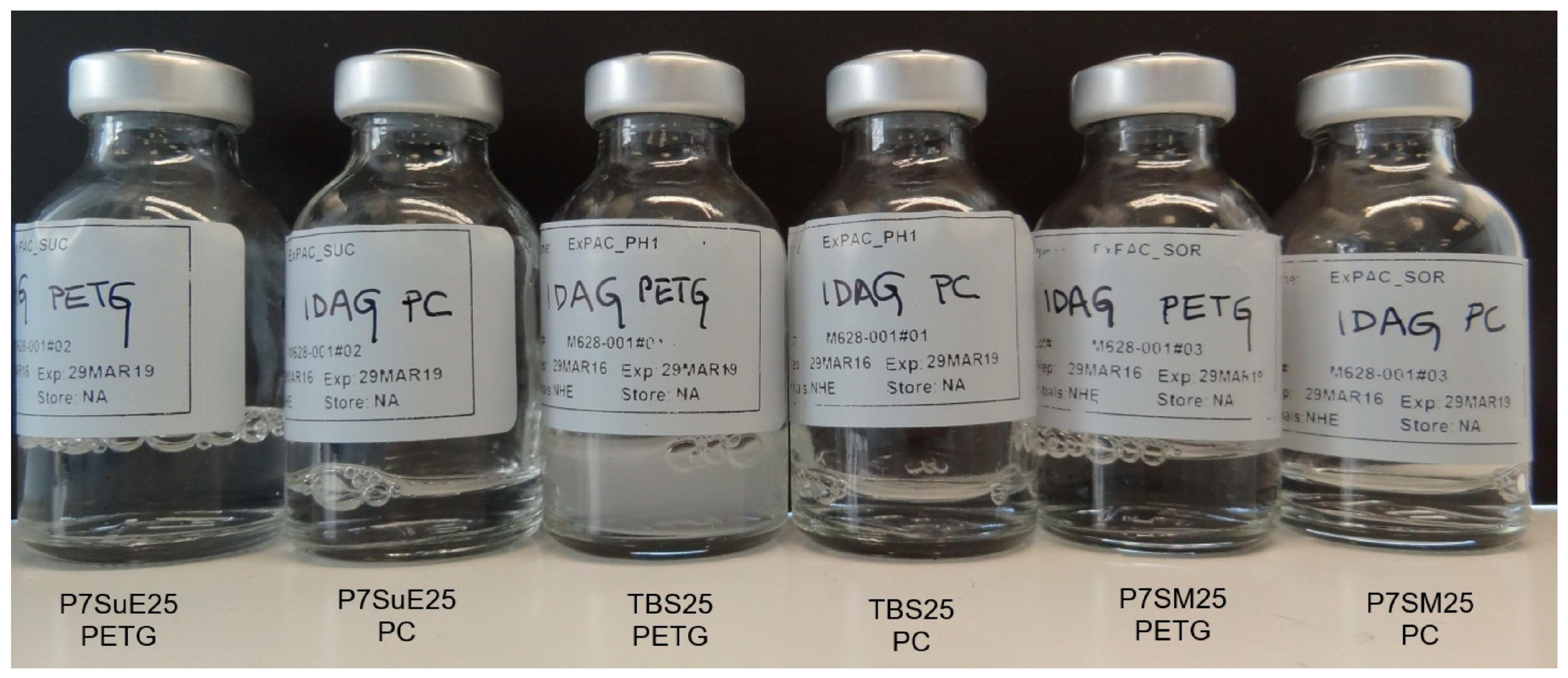
In addition, enhanced stability of phosphate-based formulations relative to the TBS formulation was confirmed for EO25DS after 4 weeks of storage at 40 °C, as detailed in Appendix C.2. Furthermore, the three formulations for DS EO25 were evaluated for the impact of exposure to 24 h of agitation stress at RT in two containers (polycarbonate—PC and polyethylene terephthalate glycol—PETG). Visible cloudiness was observed for the TBS-based formulation incubated in PETG bottles (Figure 5), whereas this was not seen for formulations incubated in PC bottles (a clear visual appearance was observed for all three formulations) (Figure 5).
Figure 5.
Visual appearance of three lead candidate EO25 formulations after 24 h of agitation at RT in polycarbonate (PC) and polyethylene terephthalate glycol (PETG) bottles. Note: After incubation for 24 h at RT, samples were poured in glass bottles to facilitate visual inspection. Designations used: K/Na phosphate (P); Tris buffered saline (TBS); phosphate buffered saline (PBS); pH (in case of phosphate formulations) = 6.5 (65) 7.0 (7), 7.5 (75); sorbitol (S); sucrose (Su); EDTA (E); methionine (M); EO25 DS (25).
3.1.2. Selection of the Final DS and DP Formulation
Two phosphate formulations that demonstrated superior performance compared to the TBS formulation are presented in Table 2.
Table 2.
Two lead candidate phosphate formulations DP P7SMC/DS P7SM25 and DP P7SuEC/DS P7SuE25.
The sorbitol-containing phosphate formulation variant (DP P7SMC/DS P7SM25) exhibited greater robustness across all evaluated stress conditions, as per sections (Section 3.1 and Section 3.2.1 and Appendix C), resulting in its selection as an optimal formulation for ExPEC4 DP and ExPEC DS. The selected formulation, including excipient concentrations and their functions, is presented in Table 3.
Table 3.
Final formulation (pH 7.0) selected for ExPEC DS and 4VDP based on the formulation screening studies.
3.1.3. Formulation Confirmation for ExPEC Multivalent Drug Products
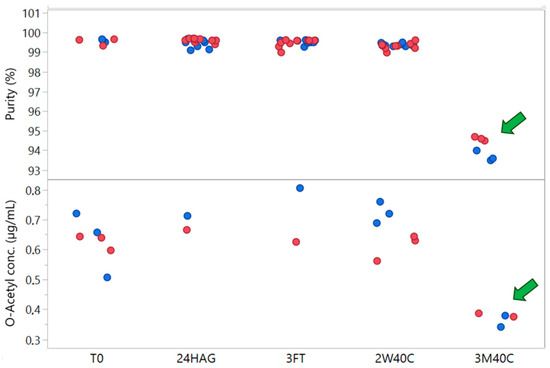
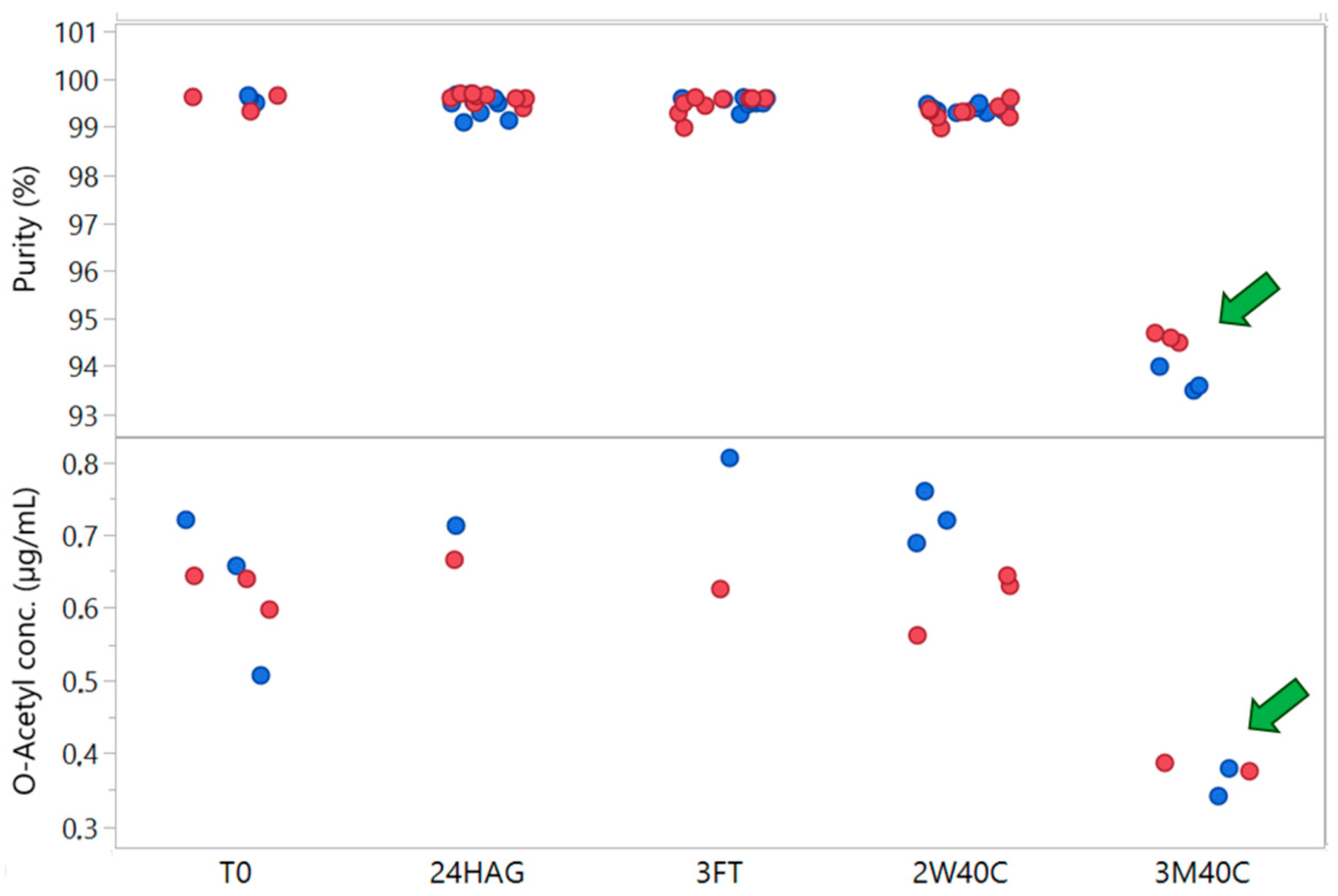
Due to the progressive addition of serotypes to the drug product during vaccine candidate development—from the initial ExPEC4V through ExPEC10V to the Phase-3 (9V) candidate—formulation-confirmation studies were performed to verify that the formulation developed for the 4V vaccine was suitable for other ExPEC multivalent drug products. In this way, it was possible to continuously justify the use of the platform approach applied during the clinical progression of the candidate vaccine from 4V to 9V. The outcome of the study, which evaluated the stability of the ExPEC10V DP in the selected formulation (Table 3) under storage and stress conditions described in Table A4, is presented in Figure 6. Selected attributes—purity and degree of O-acetylation (or O-acetyl concentration)—were unchanged under stress conditions, except after 3 months at 40 °C when they declined (Figure 6, green arrows), which was consistent with the stability profile of the ExPEC4V in the same formulation, thus confirming the selected formulation for the 10V DP.
Figure 6.
Purity and O-acetyl concentration results for ExPEC10V DP (HD—high dose, LD—low dose); 24H AG = 24 h agitation at RT; 3FT= 3 freeze/thaw cycles; 2W 40C= 2 weeks storage at 40 °C; and 3M40C, 3 months storage at 40 °C. HD—high dose (blue), LD—low Dose (red). Green arrow: attributes impacted by exposure to 40 °C for 3 months. O-acetyl concentration: n = 1 for 24HAG and 3FT, n = 2 3M40C, and n = 3 for T0 and 2W40C.
3.2. Compatibility
3.2.1. Early Compatibility—Tungsten Spiking
Tungsten spiking was performed prior to final formulation selection on three formulations selected from the formulation screening work: phosphate and TBS formulation (Appendix C.2) to evaluate preliminary compatibility with, e.g., prefilled syringes.
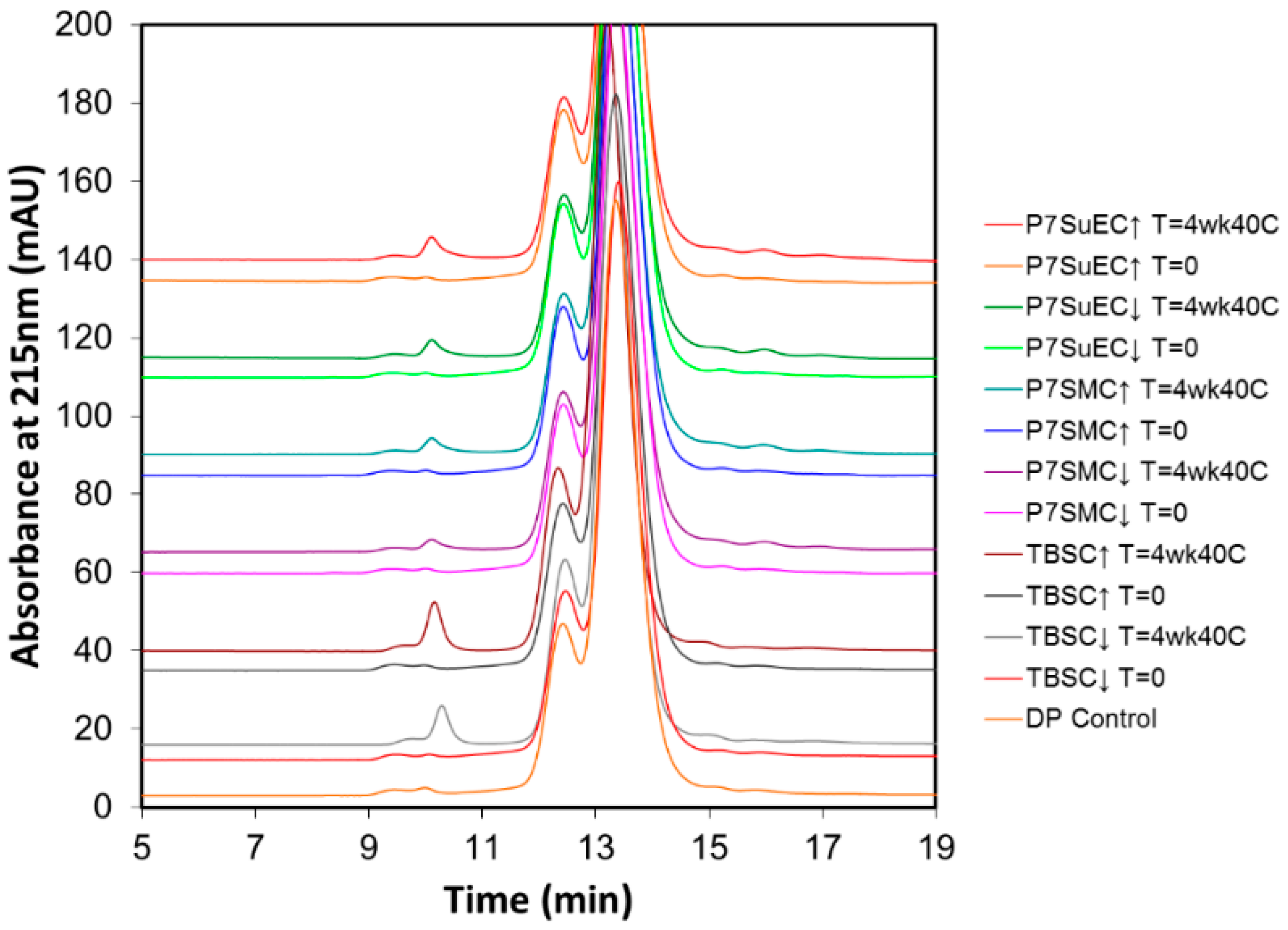
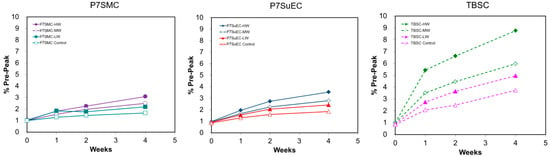
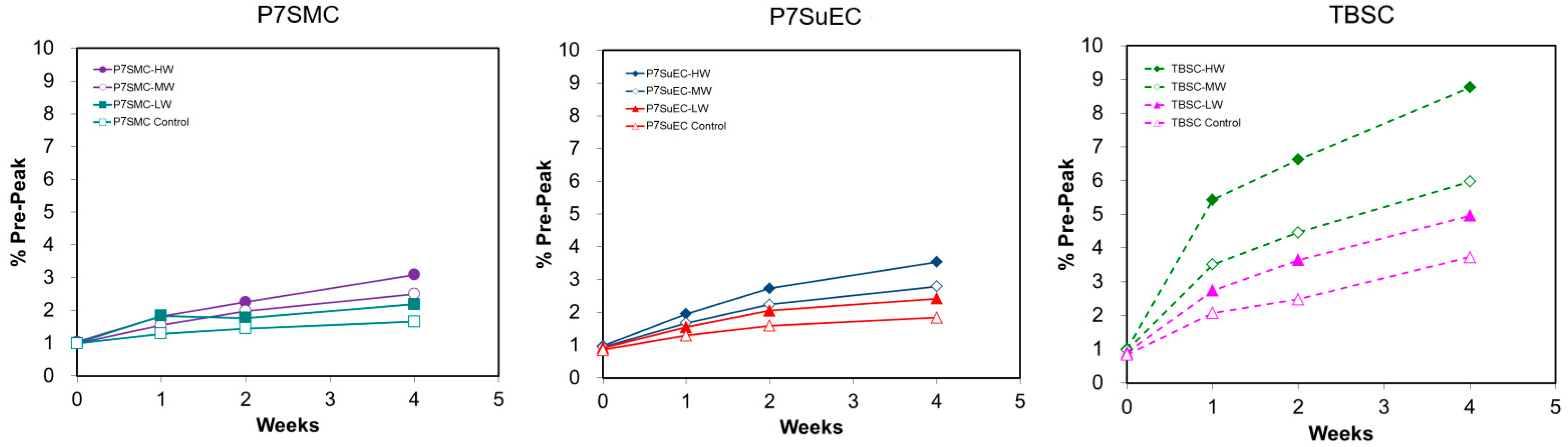
Formulations were spiked with various concentrations of tungsten extract after agitation stress or following 4 weeks of incubation at 40 °C. Among the assessed attributes, only purity by SE-HPLC was affected in the selected formulations, and this was observed only after storage at 40 °C for 4 weeks. There, a correlation between aggregate formation and tungsten concentration was observed, supporting the superiority of phosphate formulations relative to the TBS formulation (Figure 7, Table S9).
Figure 7.
SE-HPLC Pre-Peak trends of formulations after 4 weeks at 40 °C. LW: 417 ng/mL, MW: 833 ng/mL, HW: 2083 ng/mL tungsten concentration. Designations used: Histidine (H); K/Na phosphate (P); Tris buffered saline (TBS); phosphate buffered saline (PBS); pH (in case of phosphate formulations) = 6.5 (65) 7.0 (7), 7.5 (75); sorbitol (S); sucrose (Su); EDTA (E); methionine (M); ExPEC4V DP (C); EO25 DS (25).
3.2.2. Compatibility of Selected Formulation with Contact Materials
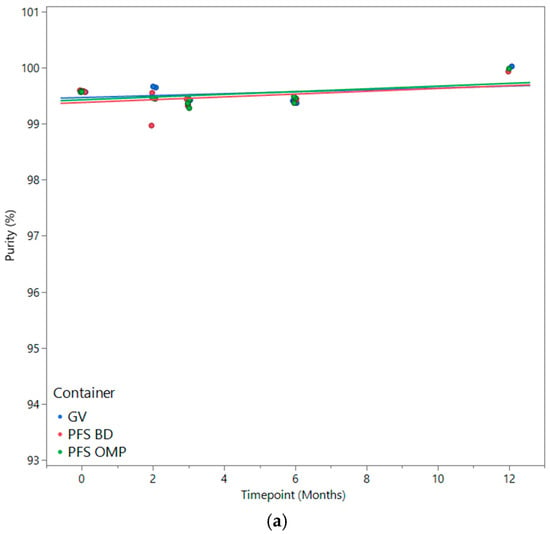
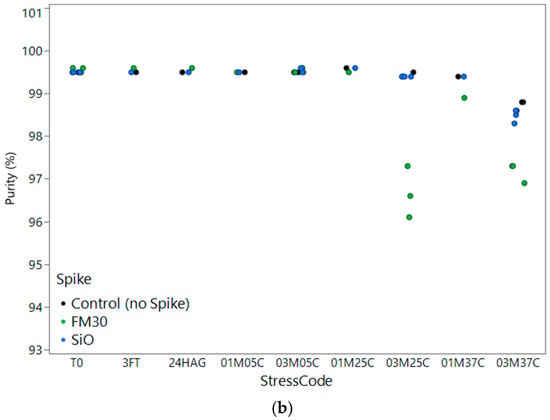
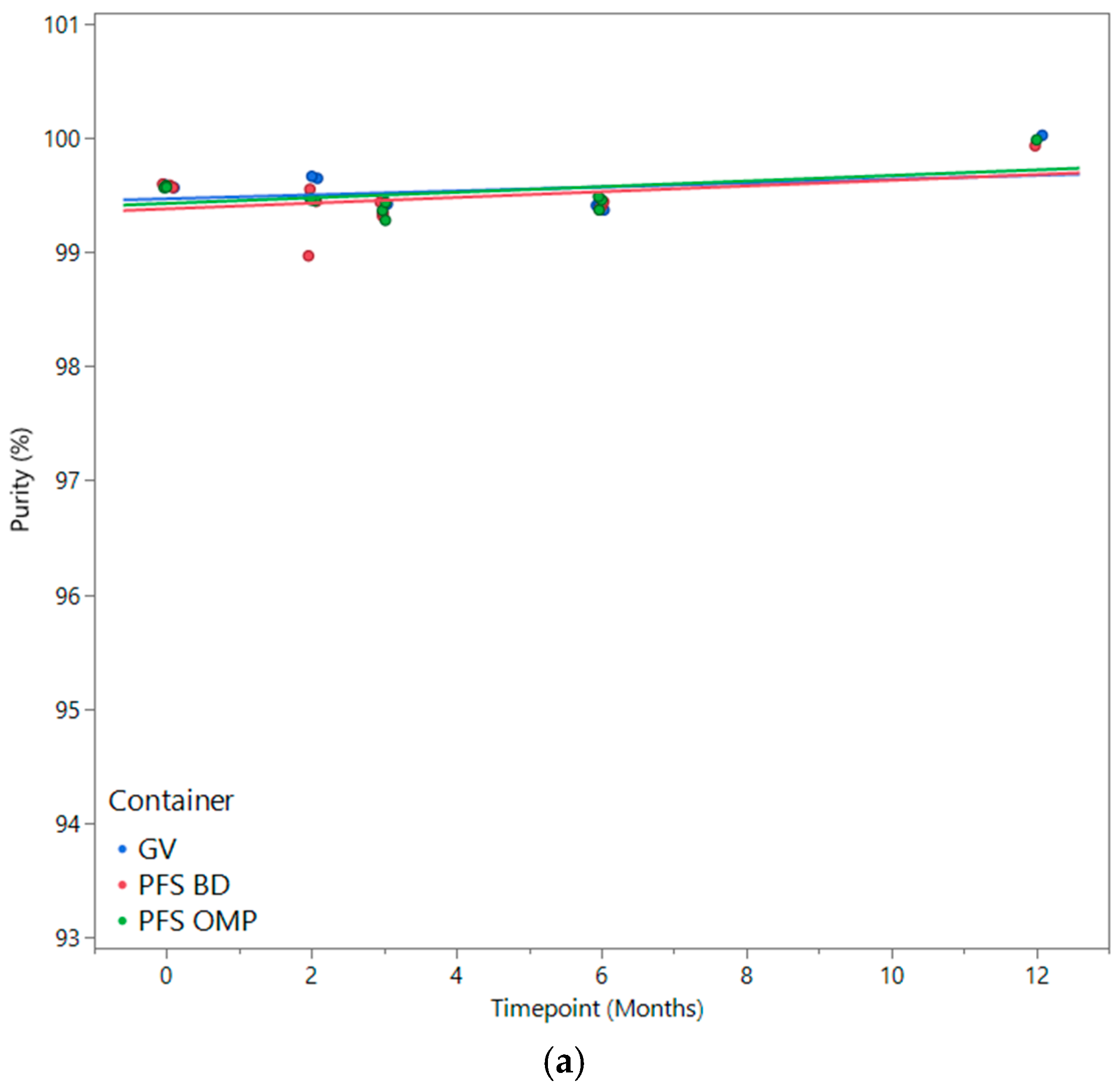
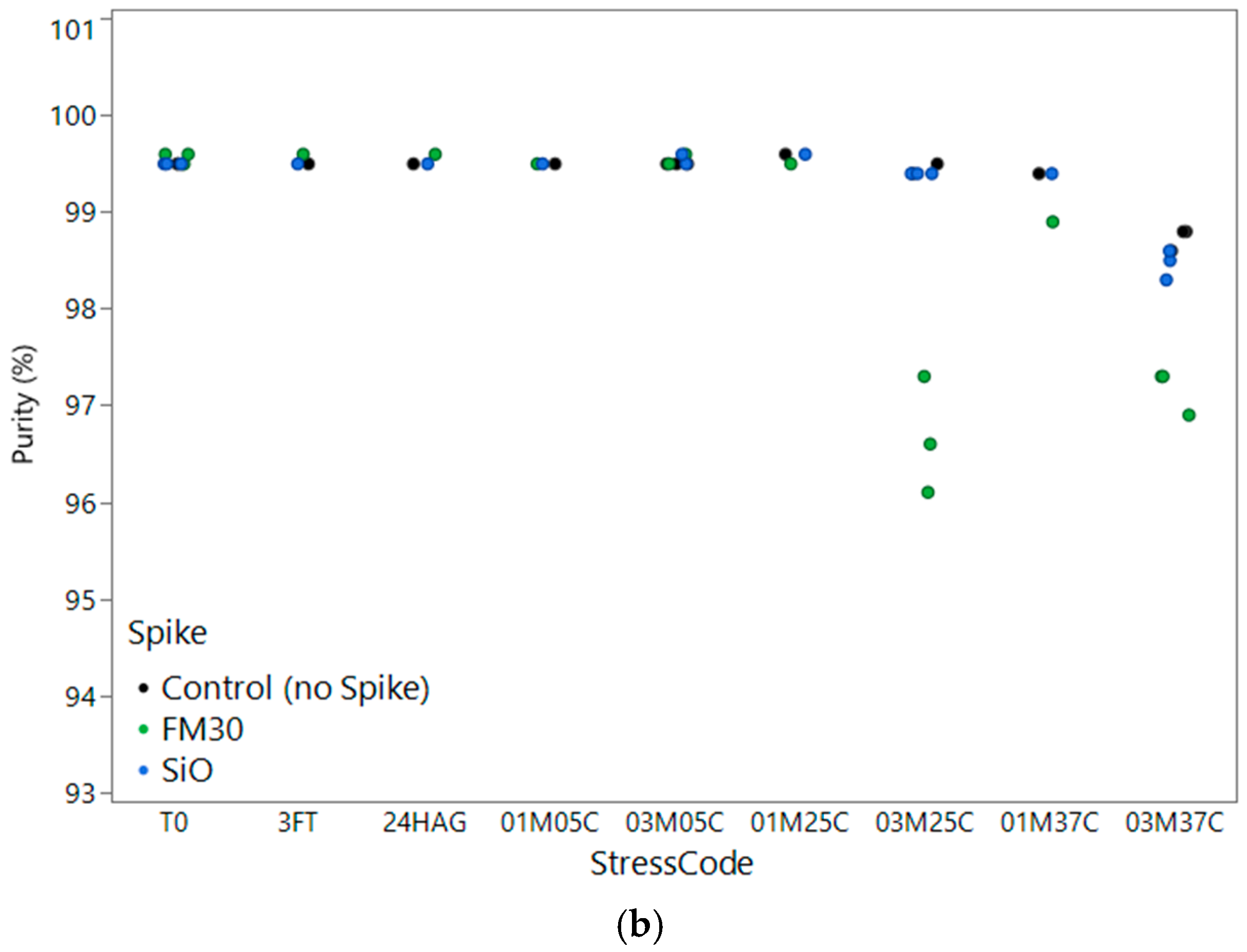
After selecting ExPEC9V as the Ph3 DP, a series of studies was conducted to confirm the formulation and expand understanding of product properties. Compatibility with prefilled syringes from two suppliers (Nipro glass (OMPI) and Fiolax glass (BD)) was demonstrated in a comparative stability assessment, including a glass-vial control (ExPEC9V DP in borosilicate glass vials (GV), serving also as an additional formulation confirmation step for the ExPEC9V Ph3 vaccine candidate). Data shows stability in PFS and glass vials for at least 12 months at 2–8 °C (Figure 8a), confirming the findings from early formulation screening work. Exposure to silicone oil and FM30 cap rubber did not affect stability for assessed attributes across storage and stress conditions, except for 3 months at 25 °C and 37 °C, where a slight increase in aggregation was observed in FM30-spiked samples (Figure 8b).
Figure 8.
(a) Purity (%) by SE-HPLC of ExPEC9V DP at 5 °C up to 12 months. Depicted are the individual values, as well as the linear fit over time. (GV)- ExPEC9V DP in glass vials (PFS OPM)—ExPEC9V DP in PFS from OMPI (Nipro glass), and (PFS BD)—ExPEC9V DP in PFS from Becton, Dickinson (Fiolax glass). n = 3 for all timepoints. (b) Purity (%) by SE-HPLC of ExPEC9V DP control (black), FM30 (green) and SiO emulsion (blue) spiked. 3FT = 3 freeze/thaw cycles, 24HAG = agitation at 200 rpm for 24 h at RT, M = months. n = 3 for T0, 03M05C, 03M25C and 03M37C; n = 1 for 3FT, 24HAG, 01M05C, 01M25C, 01M37C.
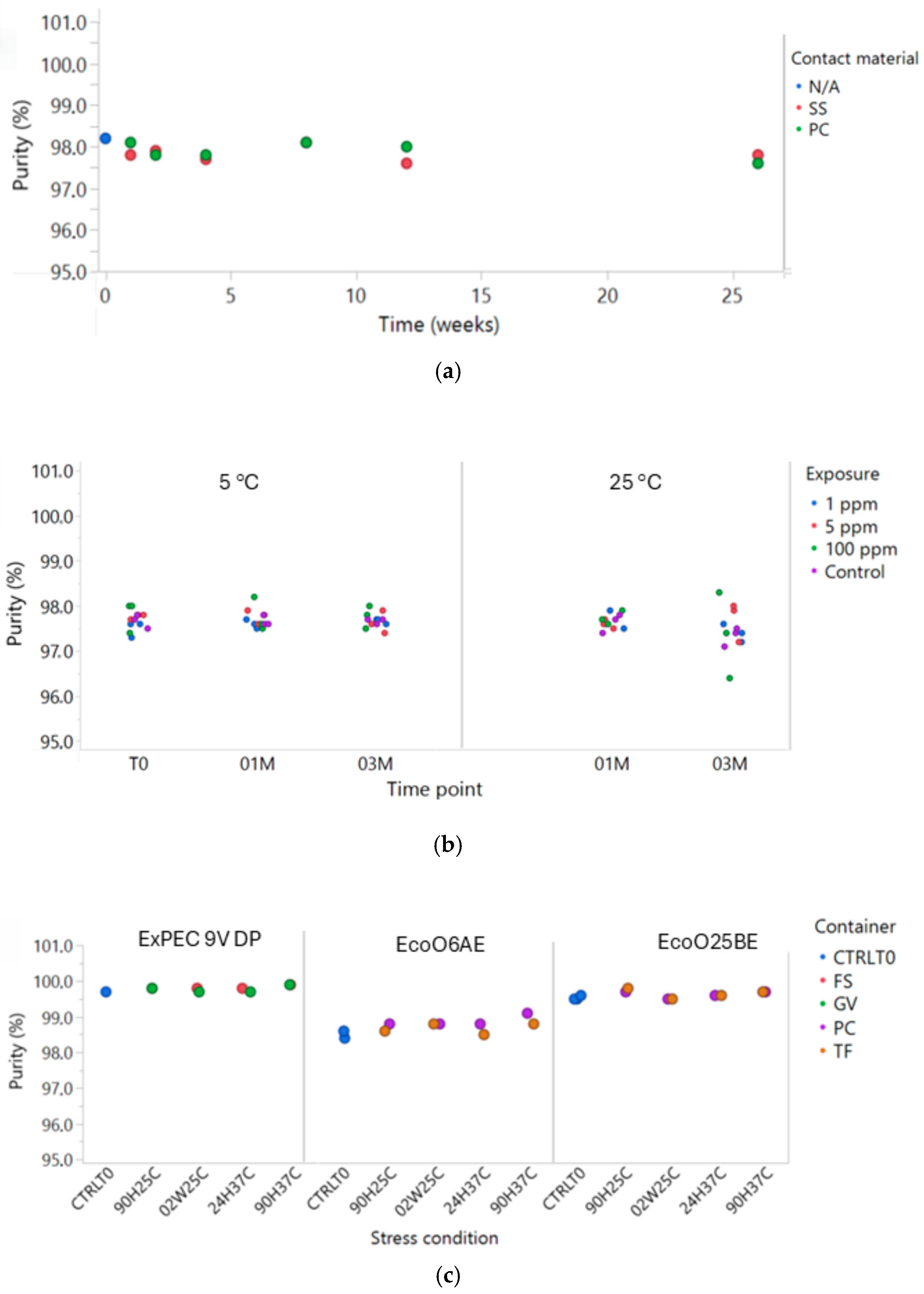
The formulation is also proven to be compatible with materials in manufacturing, including linear low-density polyethylene (LLDPE), low-density polyethylene (LDPE), stainless steel, and residual peroxide amounts, as described in D2 Compatibility with materials in manufacturing.
3.3. Formulation Robustness
Deviations from the target DP composition that may occur during buffer preparation or in the formulation step were assessed in a formulation robustness study. The robustness of the ExPEC9V DP Ph3 candidate in vials and PFS is discussed in detail in E. Formulation robustness ExPEC9V. This study served to determine acceptable excipient ranges and their impact on DP quality and stability. Results from this study generally inform formulation buffer specification ranges, the criticality analysis, and DP manufacturing control strategy, and can support assessments of potential deviations. All formulations evaluated in this study passed the acceptance criteria for the tested potential (p)CQAs for 6 months of real-time storage at 5 °C, 7 freeze/thaw (FT) cycles, as well as 3 days of agitation at room temperature (RT), as detailed in E. Formulation robustness ExPEC9V.
3.4. ICH Long-Term Stability and Photostability
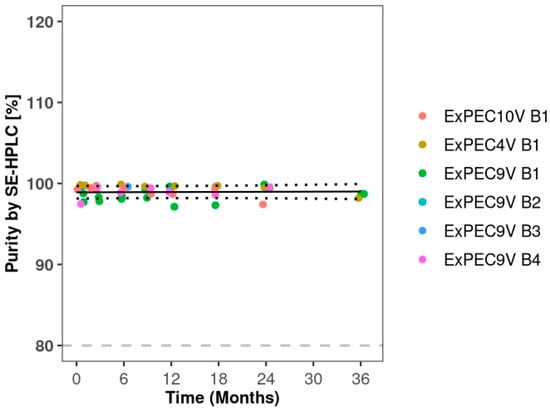
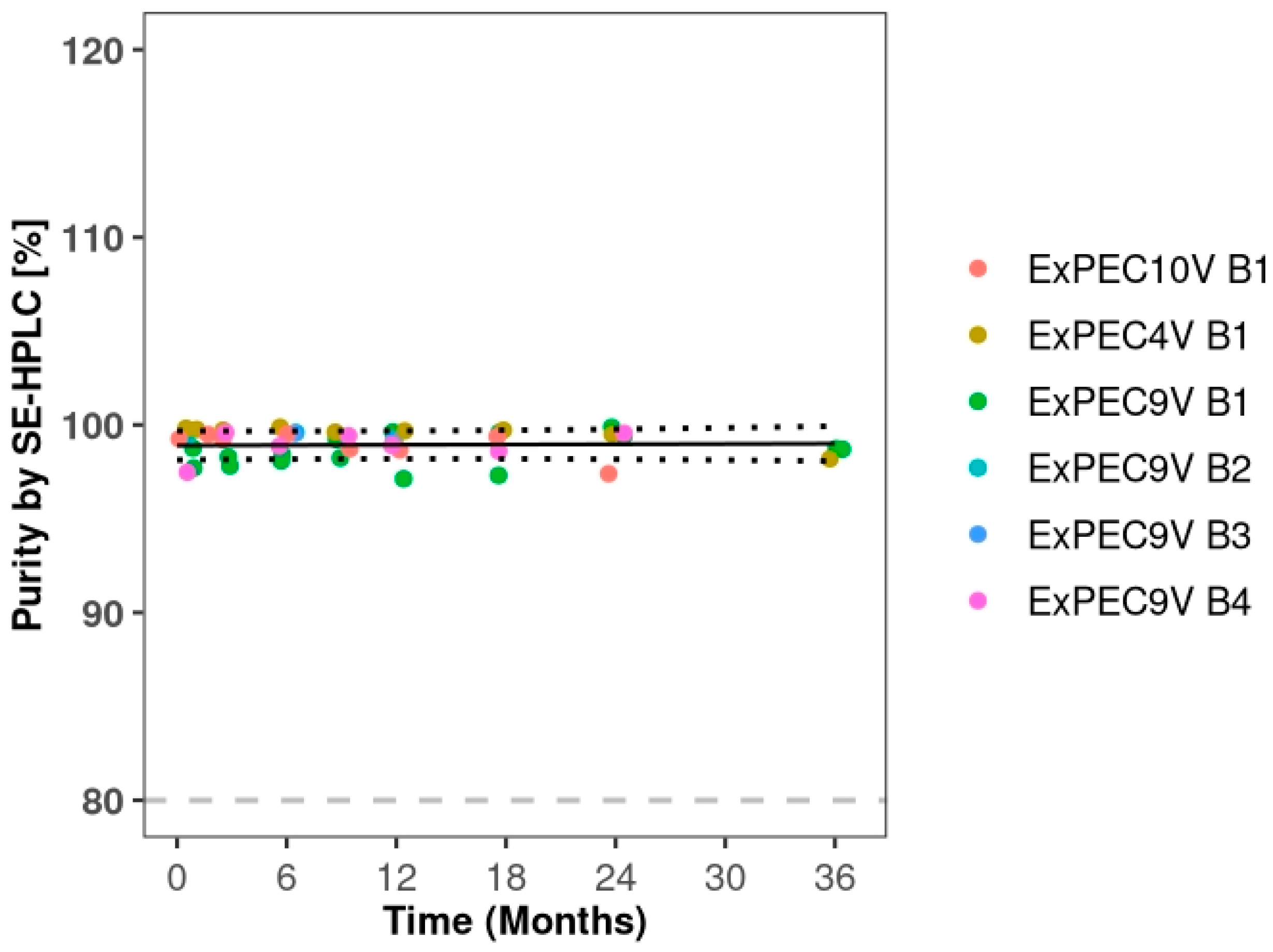
The long-term stability of ExPEC DP and DS formulation was further confirmed in the ICH stability studies carried out with several clinical batches of ExPEC DP with different valencies, including the four batches of Ph3 9V DP (Figure 9) and multiple ExPEC DS batches (Figure S1). The stability of all the ExPEC DP batches was confirmed to be within Ph3 specifications (listed in Table S1) and no degradation was observed for up to and including 36 months at 2–8 °C, as demonstrated here by purity by SE-HPLC (Figure 9).
Figure 9.
Stability data: purity by SE-HPLC from ExPEC DP batches, 36 months of storage at 2–8 °C. Grey dashed lines represent DP Ph3 specifications (Table S1). B= Batch (B1, 1 batch of ExPEC10V and ExPEC4V; B1, 2, 3, 4 = 4 batches of ExPEC9V). Stability data: ExPEC4V B1 and ExPEC9V B1 up to 36 months, ExPEC10V B1 and ExPEC9V B4 up to 24 months, and ExPEC9V B2 and ExPEC9V B3 up to 12 months.
The stability of several ExPEC DS batches, some of which have been proven to be stable at −70 ± 10 °C for 48 months, is presented in Figure S1.
Additionally, the photostability of multivalent ExPEC was confirmed with ExPEC 10V DP, which was subjected to rigorous light exposure of 1.2 million lux-hours of visible light and 200 W-hr/m2 of integrated UV energy, particularly within the spectral range of 300–400 nm (ICH Q1B). The results, focusing on the total protein content, indicated that there was no significant impact on glycoconjugate structure or its physicochemical properties after light exposure (Table 4).
Table 4.
Total protein concentration on light-stressed DP material.
4. Conclusions
The formulation selected through screening studies performed with ExPEC 4V DP and EO25 DS was subsequently confirmed for higher valency candidates, including ExPEC 10V and the Ph3 candidate ExPEC 9V DP, as well as all evaluated DS serotypes.
The Ph3 ExPEC 9V DP exhibited sustained stability under refrigerated storage of 2–8 °C, compatibility with multiple primary containers and manufacturing contact materials, and resistance to degradation during routine handling and upon exposure to harsh light. This supports reliable production and product integrity across various conditions and light-exposure stresses. As a result, it allowed for the storage of materials for extended periods and higher flexibility during manufacturing, facilitating a substantially improved clinical supply chain, including storage, and shipment.
By adopting a platform-based formulation and connecting early formulation screening with late-stage requirements (manufacturing robustness, multi-container compatibility, and multi-year stability), our story illustrates how an early, robust formulation strategy can be successfully translated into a late-stage, scalable vaccine candidate. These integrated data, spanning early design to late-stage requirements, may offer a novel and generalizable approach for ongoing or future development programs involving multivalent bioconjugates based on dEPA carrier protein and O-polysaccharide antigens.
5. Patents
2WO2018077853A1—“ExPEC glycoconjugate vaccine formulations”.
Supplementary Materials
The following supporting information can be downloaded at: https://www.mdpi.com/article/10.3390/vaccines14080690/s1, Supplementary Figure S1: Stability data of ExPEC DS 10 serotypes: Purity by SE-HPLC, 36 months storage at −70 ± 10 °C. Grey dashed lines present DS Ph3 specifications. Different colors represent different DS; Supplementary Table S1: Specifications (selected attributes discussed in this manuscript) for release and stability testing of ExPEC9V drug product for Phase 3 clinical studies. The DP specifications have undergone revisions during the development progression, results measured were evaluated as per requirements applicable at the time; Supplementary Table S2: SE-HPLC peak percentages for ExPEC4V DP formulations (agitated and control). Designations used: Histidine (H); K/Na phosphate (P); Tris buffered saline (TBS); phosphate buffered saline (PBS); pH (in case of phosphate formulations) = 6.5 (65) 7.0 (7), 7.5 (75); sorbitol (S); sucrose (Su); EDTA (E); methionine (M); ExPEC4V DP (C); EO25 DS (25); Supplementary Table S3: SE-HPLC peak percentages for EO25 DS formulations (agitated and control). Designations used: Histidine (H); K/Na phosphate (P); Tris buffered saline (TBS); phosphate buffered saline (PBS); pH (in case of phosphate formulations) = 6.5 (65) 7.0 (7), 7.5 (75); sorbitol (S); sucrose (Su); EDTA (E); Methionine (M); ExPEC4V DP (C); EO25 DS (25); Supplementary Table S4: SE-HPLC peak percentages for ExPEC4V DP and ExPEC DS formulations (freeze/thaw). Designations used: Histidine (H); K/Na phosphate (P); Tris buffered saline (TBS); phosphate buffered saline (PBS); pH (in case of phosphate formulations) = 6.5 (65) 7.0 (7), 7.5 (75); sorbitol (S); sucrose (Su); EDTA (E); methionine (M); ExPEC4V DP (C); EO25 DS (25); Supplementary Table S5: SE-HPLC peak percentages of ExPEC formulations after 12 weeks at 5 °C. Designations used: Histidine (H); K/Na phosphate (P); Tris buffered saline (TBS); phosphate buffered saline (PBS); pH (in case of phosphate formulations) = 6.5 (65) 7.0 (7), 7.5 (75); sorbitol (S); sucrose (Su); EDTA (E); methionine (M); ExPEC4V DP (C); EO25 DS (25); Supplementary Table S6: SE-HPLC peak percentages of three final ExPEC4V formulations (T = O and Freeze/thaw). Designations used: Histidine (H); K/Na phosphate (P); Tris buffered saline (TBS); phosphate buffered saline (PBS); pH (in case of phosphate formulations) = 6.5 (65) 7.0 (7), 7.5 (75); sorbitol (S); sucrose (Su); EDTA (E); methionine (M); ExPEC4V DP (C); EO25 DS (25). F/T—Freeze/thaw cycle; Supplementary Table S7: SE-HPLC peak percentages of ExPEC formulations after 4 weeks at 40 °C. Designations used: Histidine (H); K/Na phosphate (P); Tris buffered saline (TBS); phosphate buffered saline (PBS); pH (in case of phosphate formulations) = 6.5 (65) 7.0 (7), 7.5 (75); sorbitol (S); sucrose (Su); EDTA (E); methionine (M); ExPEC4V DP (C); EO25 DS (25). Supplementary Table S8: SE-HPLC peak percentages of three final ExPEC4V formulations after 12 weeks of storage at 40 °C. Designations used: Histidine (H); K/Na phosphate (P); Tris buffered saline (TBS); phosphate buffered saline (PBS); pH (in case of phosphate formulations) = 6.5 (65) 7.0 (7), 7.5 (75); sorbitol (S); sucrose (Su); EDTA (E); methionine (M); ExPEC4V DP (C); EO25 DS (25); Supplementary Table S9: SE-HPLC peak areas of tungsten compatibility formulations after 4 weeks at 40 °C. Designations used: Histidine (H); K/Na phosphate (P); Tris buffered saline (TBS); phosphate buffered saline (PBS); pH (in case of phosphate formulations) = 6.5 (65) 7.0 (7), 7.5 (75); sorbitol (S); sucrose (Su); EDTA (E); methionine (M;; ExPEC4V DP (C); EO25 DS (25).
Author Contributions
Conceptualization, M.O., O.L., P.d.G. and M.A.H.C.; methodology, M.O., O.L., P.d.G. and M.A.H.C.; writing—original draft preparation, M.O.; writing—review and editing, M.O., O.L., P.d.G. and M.A.H.C.; visualization, M.O.; project administration, M.A.H.C. All authors have read and agreed to the published version of the manuscript.
Funding
This research received no external funding.
Institutional Review Board Statement
Not applicable.
Informed Consent Statement
Not applicable.
Data Availability Statement
All data that support the findings of this study are available from the corresponding author upon request.
Acknowledgments
We thank Francisca Galindo Garre for providing biostatistical support for the studies listed in this manuscript and for generating Figure 9. We thank Nora Mihalyi and Tanja Yark-Stepanova for their support in creating comprehensive tables detailing study materials and analytical methods and for contributing to the preparation of historical overviews of the work performed. We thank our colleagues API, DPD, AD and CMC, who have worked on the development of this product and contributed to the studies that underpin this work. During the preparation of this manuscript/study, the author(s) used Copilot Premium (https://www.microsoft.com/en-in/microsoft-365-copilot/pricing) and internal J&J AI tools for the purposes of text edits and literature search. The authors have reviewed and edited the output and take full responsibility for the content of this publication.
Conflicts of Interest
The authors were employees of Johnson & Johnson at the time of the study and may have ownership of shares in Johnson & Johnson. The authors declare that the research was conducted independently and that this relationship did not influence the study design, data collection, analysis, interpretation, or the conclusions presented in this manuscript.
Abbreviations
| AD | Analytical Development |
| AT | Ambient Temperature |
| AG | Agitation |
| A280 | Absorbance at 280 nm |
| AMR | Antimicrobial Resistance |
| API | Active Pharmaceutical Ingredient |
| BD | Becton Dickinson |
| BLA | Biologics License Application |
| CRM197 | Cross-reactive material 197 |
| CMC | Chemistry, Manufacturing and Controls |
| CQAs | Critical Quality Attributes |
| DT | Diphtheria Toxoid |
| dEPA | Detoxified Exotoxin |
| d | Day |
| DLS | Dynamic Light Scattering |
| DoE | Design of Experiments |
| DP | Drug Product |
| DS | Drug Substance |
| EDTA | Ethylenediaminetetraacetic Acid |
| EPA | Exotoxin A |
| EMA | European Medicines Agency |
| EPAR | European Public Assessment Report |
| ExPEC | Extraintestinal pathogenic Escherichia coli |
| ExPEC4V/ExPEC9V/ExPEC10V | 4-, 9-, or 10-valent ExPEC vaccine candidate |
| FDA | Food and Drug Administration |
| FT | Freeze/thaw |
| h | Hour |
| GV | Glass vial |
| HD/LD/MD | High dose/Low dose/Medium dose |
| HPLC | High-performance liquid chromatography |
| ICH | International Council for Harmonisation |
| ICH Q1B | International Council for Harmonisation guideline Q1B on photostability testing |
| IC-PAD | Ion chromatography with pulsed amperometric detection |
| IED | Invasive ExPEC disease |
| IEF | Isoelectric focusing |
| LDPE | Low-density polyethylene |
| LDAO | Lauryl dimethylamine oxide |
| LLDPE | Linear low-density polyethylene |
| MALS | Multi-angle light scattering |
| m | Month |
| MFI | Micro-flow imaging |
| MW | Molecular weight |
| OMPI | Ompi (glass primary packaging supplier) |
| PBS | Phosphate-buffered saline |
| PETG | Polyethylene terephthalate glycol |
| PC | Polycarbonate |
| pCQA | Potential critical quality attribute |
| PFS | Pre-filled syringe |
| Ph3 | Phase 3 |
| PoS | Probability of success |
| PRP | Polyribosyl–ribitol–phosphate |
| PS | Polysaccharide |
| PS80 | Polysorbate 80 |
| QbD | Quality by design |
| rEPA | Recombinant exotoxin A |
| RH | Relative humidity |
| RP-HPLC | Reversed-phase high-performance liquid chromatography |
| RT | Room temperature |
| SEC/SE-HPLC | Size-exclusion (high-performance) liquid chromatography |
| SoloVPE | Variable pathlength extension spectroscopy |
| SS | Stainless steel |
| TBS | Tris-buffered saline |
| TT | Tetanus toxoid |
| USP | United States Pharmacopeia |
| UV | Ultraviolet |
| w | Week |
| WHO | World Health Organization |
| WES | Wes™ capillary-based Western system |
Appendix A
Appendix A.1. ExPEC Drug Substance and Drug Products—Composition
The polysaccharide concentration of ExEPC EO25 DS was 200 µg/mL. The serotype composition and concentrations of ExPEC vaccines with different valences presented in this manuscript are described in Table A1. The total protein content varied from an average of 220 µg/mL for the 4V ExPEC vaccine candidate to an average of 700 µg/mL in the 9V ExPEC vaccine candidate and an average of 500 µg/mL in EO25 DS, preserving the PS/protein ratio of 0.2–0.4 (this reflects the average PS chain length and the degree of glycosylation, which both define the MW distribution of the active ingredients).
Table A1.
Serotype composition and concentrations of ExPEC vaccine with different valencies.
Appendix A.2. Bioconjugation Process
Conjugation of glycan antigens to a carrier protein in vaccine formulations enabled enhanced long-term immunological memory and increased vaccine stability [44,45,46]. The technique of in vivo bioconjugation removed limitations of the original conjugation technology, including challenges of combining multiple individually conjugated serotypes in a single vial and purifying the O- antigen as (delipidated) polysaccharide [44,46,47]. Bioconjugation utilizes engineered E. coli cells, which express the O-polysaccharide of the different O-serotypes in the E. coli periplasm, in the presence of oligosaccharyl transferase (PglB), and the carrier protein [48]. This process allows for the extraction and purification of a fully assembled glycoconjugate vaccine. As a result of the in vivo glycoconjugate vaccine manufacturing process, the active substances produced are of relatively high purity, contrasting with the typical high levels of heterogeneity that arise from chemical cross-linking.
Appendix B. Materials and Methods Detailed Tables
Table A2.
ExPEC4V DP and EO25 DS formulation matrix for the formulation screening studies. Formulations 1–15: ExPEC4V DP; Formulations 16–30 EO25 DS. Bolded formulations were selected and further assessed for stability and compatibility, including tungsten compatibility. Three selected EO25 DS formulations were also assessed for compatibility with primary packaging (Figure 5). Exc.—Excipient; Meth.—Methionine; So—Sorbitol; Su—Sucrose; Surf.—Surfactant (PS80).
Table A3.
DS and DP samples and contact materials assessed in the early and late development studies. Studies: 1—Formulation screening and packaging compatibility (tungsten spiking); 2—Formulation confirmation; 3—Developmental stability in vials & PFS; 4—Spiking with silicone oil and FM30 rubber material compatibility with PFS; 5—Formulation robustness; 6—Compatibility with LDPE, LLDPE; 7—Stainless steel compatibility; 8—Peroxide compatibility; 9—ICH stability; 10—Photostability.
Table A4.
Testing conditions for the studies during the formulation development trajectory. 1—Formulation screening; 2—Early (DS) packaging compatibility; 3—Formulation robustness; 4—Formulation confirmation; 5—Stability in vials & PFS; 6—Spiking with silicone oil and FM30 rubber material (PFS compatibility); 7—Photostability; 8—Compatibility with LDPE, LLDPE; 9—Stainless steel compatibility; 10—Peroxide compatibility; 11—ICH stability. AT—Ambient temperature; RT—Room temperature; h—hour; d—day; w—week; m—month; in.—inverted; up.—upright; acc.—accelerated.
Table A5.
Attributes evaluated in supporting studies and the analytical methods employed to assess these attributes. Studies: 1—Formulation screening and early compatibility study; 2—DS compatibility with primary packaging; 3—Formulation confirmation study; 4—Stability in vials & PFS; 5—Spiking with silicone oil and FM30 rubber material (compatibility with PFS); 6—Compatibility with LDPE and LLDPE; 7—Stainless steel compatibility; 8—Peroxide compatibility; 9—Formulation robustness.
Appendix C. Formulation Screening Work—Detailed Results
Appendix C.1. Initial Screening of Thirty Formulations—Impact of Agitation and Temperature Stress
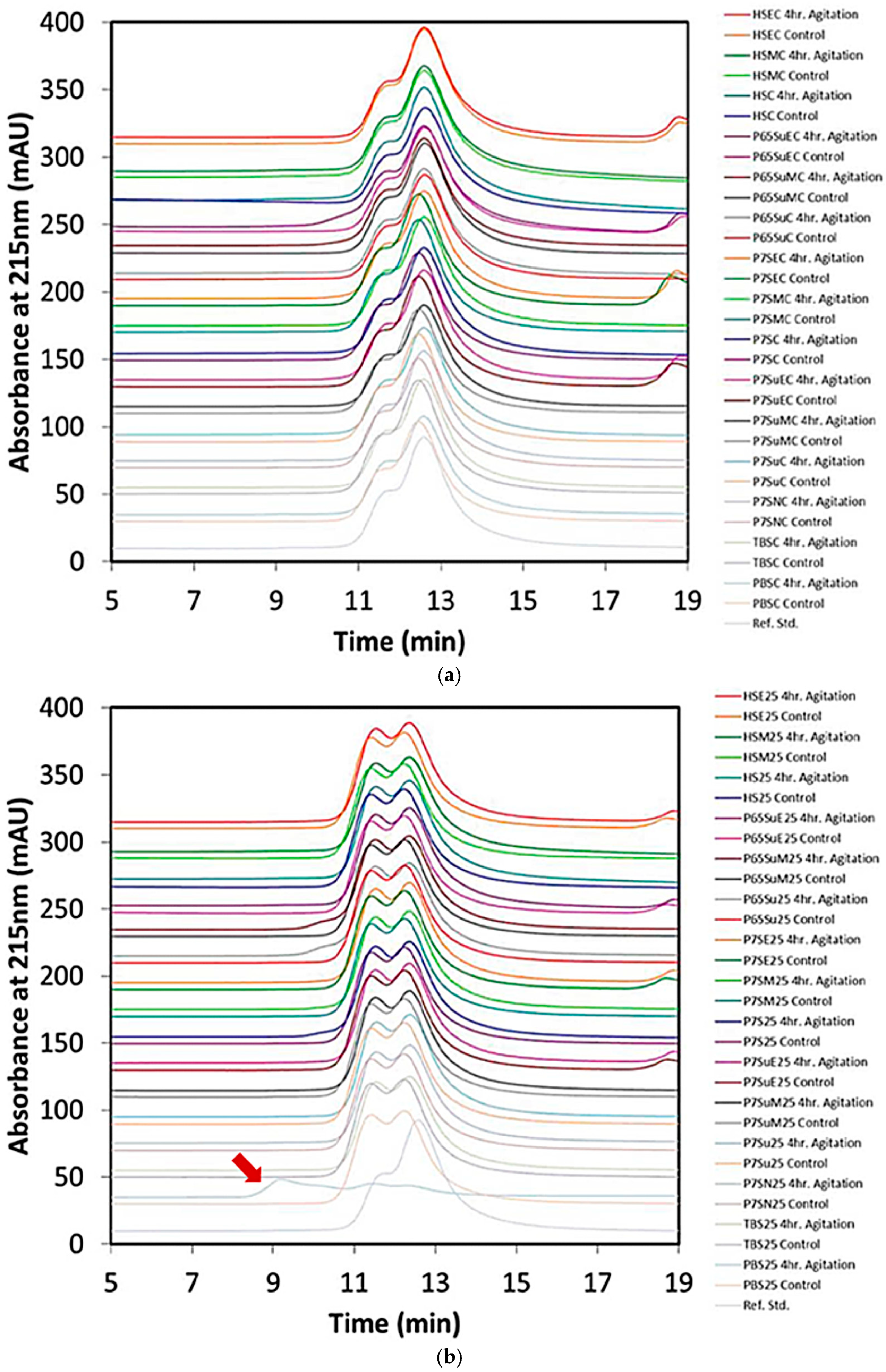
Agitation stress has caused a significant impact on purity of phosphate buffered saline formulation DS PBS25 (Figure A1b, red arrow), which is seen as increases in pre-peak (+34.2%) and post-peak (+28.2%) areas (Table S3). This could have been due to a higher salt concentration in combination with a low pH. As the experimental isoelectric point (pI) of the ExPEC serotypes, per internal measurements, is ~5.5 [49], pH values that are closer to the pI could reduce the net charge, and adding NaCl could remove the remaining repulsion between conjugates. This combination of pH values close to the pI of the drug product, increased salt concentration, and the fact that no surfactant was used in these formulations are the factors that could have impacted the observed low stability and aggregate formation.
Other formulations, including histidine DP HSEC, DP HSC, DS HSM25, DS HS25, exhibited negligible impact of agitation stress, demonstrated as slight increases (+0.1% to +1.1%) in pre-peak areas. EO25 DS and ExPEC4V DP phosphate formulations at pH 7.0 were not at all susceptible to acute shear stress-induced aggregation (Figure A1a, Table S2; an illustration of a sample chromatogram showing the integration for ExPEC4V is presented in Figure 3a).
Figure A1.
SE-HPLC results for ExPEC4V DP (a) and EO25 DS (b) formulations (agitated for 4 h at RT and static control). The formulation matrix is described in Table A2. Designations used: Histidine (H); K/Na phosphate (P); Tris buffered solution (TBS); phosphate buffered saline (PBS); pH (in the case of phosphate formulations) = 6.5 (65) 7.0 (7), 7.5 (75); sorbitol (S); sucrose (Su); EDTA (E); methionine (M); ExPEC4V DP (C); EO25 DS (25).
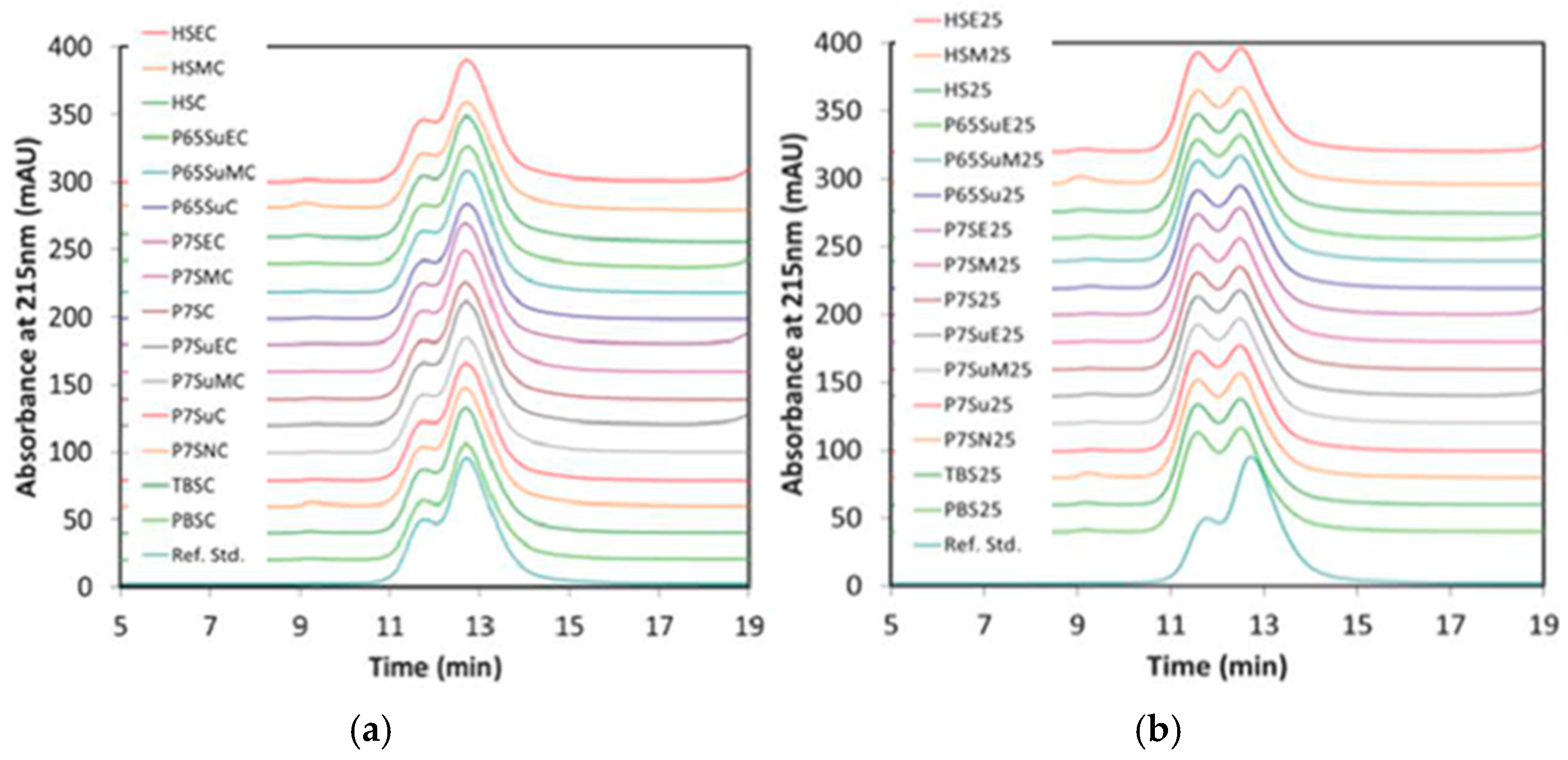
Among the conditions evaluated, storage at 40 °C for 4 weeks was the only condition that differentiated the formulations, and this was detected only by purity by SE-HPLC. After storage at 40 °C for 4 weeks, a high level of aggregate species in the histidine formulation containing sorbitol and methionine as well as phosphate formulations containing salt and sorbitol at pH 6.5 and 7.0, could be seen per SE-HPLC (Figure A2, Table S7).
Figure A2.
SE-HPLC chromatogram of ExPEC DP (a) and EO25 DS (b) formulations after 4 weeks at 40 °C. Formulation matrix described in Table A2. Designations used: Histidine (H); K/Na phosphate (P); Tris buffered solution (TBS); phosphate buffered saline (PBS); pH (in the case of phosphate formulations) = 6.5 (65) 7.0 (7), 7.5 (75); sorbitol (S); sucrose (Su); EDTA (E); methionine (M); ExPEC4V DP (C); EO25 DS (25).
Appendix C.2. Three Final Formulations—Impact of Agitation and Temperature Stress (Including Freeze/Thaw)
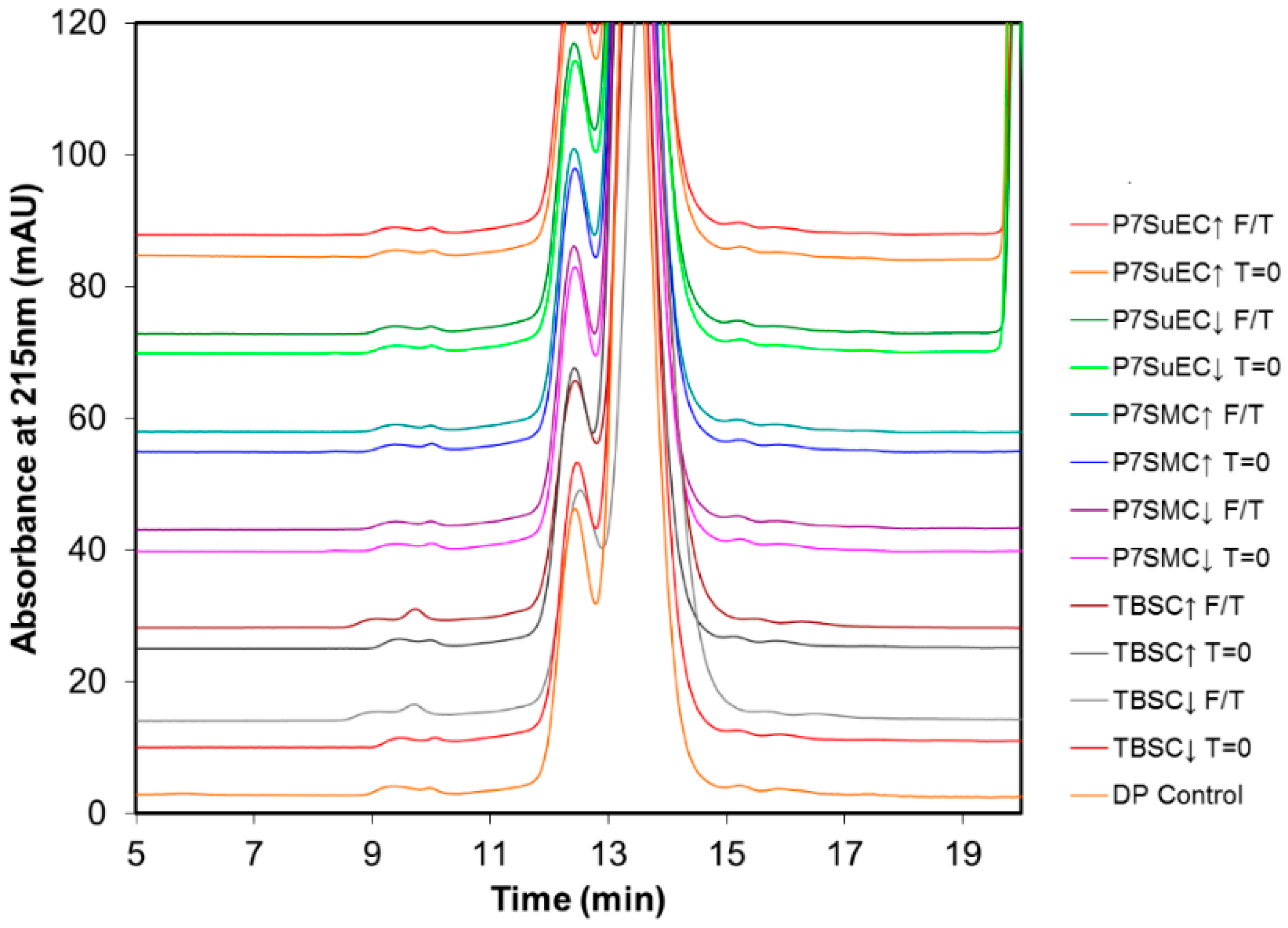
Across the stress conditions assessed for the three final formulations, and across all evaluated attributes, discriminatory effects were observed after exposure to freeze/thaw cycles and after storage at 40 °C for 12 weeks.
When exposed to five consecutive freeze/thaw cycles, TBS formulations displayed slight increases in pre-peak species (+0.4 to +0.7%) when compared to their respective controls (Figure A3, Table S6) whereas no noticeable change was seen in the SE-HPLC chromatogram of the phosphate formulations irrespective of vial orientation.
Figure A3.
SE-HPLC chromatogram of ExPEC4V DP formulations, T = 0 and Freeze/thaw (↑: upright, ↓: inverted). Designations used: Histidine (H);K/Na phosphate (P); Tris buffered solution (TBS); phosphate buffered saline (PBS); pH (in the case of phosphate formulations) = 6.5 (65) 7.0 (7), 7.5 (75); sorbitol (S); sucrose (Su); EDTA (E); methionine (M); ExPEC4V DP (C); EO25 DS (25).
ExPEC DP and DS phosphate and TBS formulations exhibited comparable behavior when stored at 5 °C and 25 °C, while a visibly higher aggregation was seen for TBS formulations when exposed to 40 °C for 12 weeks (Figure A4, Table S8).
Figure A4.
SE-HPLC peak percentages of ExPEC DS formulations after 12 weeks of storage at 40 °C. (↑: upright, ↓: inverted). Designations used: Histidine (H); K/Na phosphate (P); Tris buffered solution (TBS); phosphate buffered saline (PBS); pH (in the case of phosphate formulations) = 6.5 (65) 7.0 (7), 7.5 (75); sorbitol (S); sucrose (Su); EDTA (E); methionine (M); ExPEC4V DP (C); EO25 DS (25).
The TBS formulations also showed a significantly higher count of particles with different sizes, especially in the inverted vials, relative to the counts in the phosphate formulations (Table A6).
Table A6.
The MFI analysis results of ExPEC4V formulations after 5 freeze/thaw cycles.
Appendix D. Compatibility with Materials in Manufacturing—Detailed Results
The final selected Ph3 formulation was thoroughly assessed for manufacturability. The evaluation included its compatibility with different materials used in manufacturing, such as formulation vessels, as well as the residual amounts of peroxide (utilized for cleaning systems after production runs and may remain in residual amounts in the pipes). A list of contact materials evaluated is presented in Table A3.
No impact of exposure to contact materials including, LLDPE, LDPE, and stainless steel as well as residual peroxide amounts, on ExPEC stability was seen under the assessed conditions described in Table A4 for any of the assessed attributes. A detailed list of the attributes assessed and methods used in presented in Table A5, illustrated here by purity as determined using SE-HPLC (Figure A5c, Figure A5a and Figure A5b respectively).
Figure A5.
Purity as determined by SEC of (a): ExPEC9V DP at 5 °C for up to 26 weeks. PC: samples incubated in PC bottles; SS: Incubate in stainless steel containers. (b) ExPEC9V DP by SE-HPLC over time (months): blue -control—non-spiked; red—spiked with 1 ppm H2O2; green—spiked with 5 ppm H2O2; purple—spiked with 100 ppm H2O2. (c) ExPC9V DP, EcoO6AE DS and EcoO25BE DS after exposure to 5 different stresses in different containers. GV—Glass vial; TF-Tepoflex Biocontainer (LDPE contact material); PC—Polycarbonate; FS—FlexSafe150 mL bags (LLDPE contact material).
Appendix E. Formulation Robustness ExPEC9V—Statistical Analysis
The robustness of the 9-valent ExPEC (ExPEC9V) DP was evaluated in syringes and vials, as described in the ExPEC9V Formulation robustness study, DoE. This DoE was created using the D-optimality criterion and 42 unique formulations were generated using JMP Statistical Discovery software (versions 18). An additional three formulations were added at the center points of the formulation design space to ensure a total of two formulations with center point values were filled in vials and two in PFS. Having these four center point formulations in the DoE allowed for the assessment of the lack of fit as well as the within-formulation error of the design space model.
Stress and stability conditions associated with this study are presented and attributes and analytical methods used to analyze them are presented in Table A4 and Table A5.
Multiple linear models were fitted to the observed degradation between control conditions and stress conditions to compute the probability of meeting the acceptance criteria for all the combinations of input material (formulation factors), as advised by ICH Q8, in order to define the design space for the formulation. The probability of meeting the specifications was analyzed marginally (each degradation process analyzed separately) to identify the critical quality attributes leading to significant degradation.
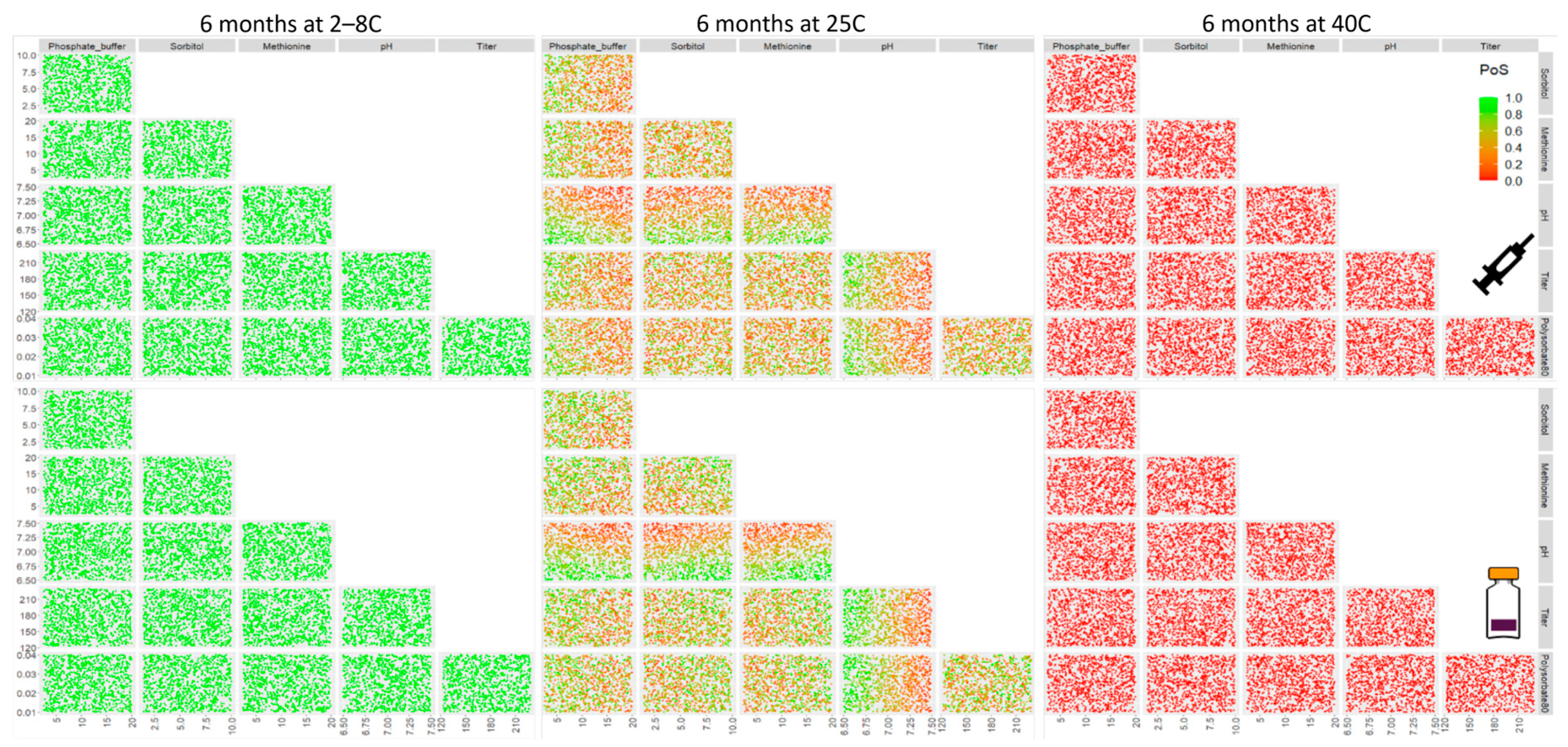
Data for purity and degree of O-acetylation for all the evaluated testing conditions and formulations are presented in Figure A6 and Figure A8. PoS plots for the real-time storage condition of 25 °C for 6 months, accelerated storage condition of 25 °C for 6 months and the stressed storage condition of 40 °C for 3 months are presented in Figure A7 and Figure A9.
Formulation robustness for ExPEC 9V DP was confirmed for both syringes and vials. Specifically, regardless of primary packaging, all 45 tested formulations passed the preset study acceptance criteria for the tested attributes (purity ≥ 90%, measured by SEC-HPLC; degree of O-acetylation ≥50% relative to T0) for the following testing conditions: 6 months of real-time (inverted) storage at 5 °C, 7 freeze/thaw (FT) cycles as well as 3 days of agitation at room temperature (RT). Moreover, the probability of success (PoS) for meeting these preset acceptance criteria after 6 months of real-time (inverted) storage at 5 °C was ≥99% for both purity and degree of O-acetylation, regardless of primary packaging.
Thus, for these storage conditions, the design space (i.e., excipient and pH ranges listed in Table 1) of the formulation does not need to be restricted from a product quality aspect in either primary packaging.
However, not all formulations passed the acceptance criteria for the accelerated storage condition of 25 °C for 6 months, nor for the stressed storage condition of 40 °C for 3 months. Nevertheless, ExPEC9V DP is not intended to be exposed to storage at either 25 °C or 40 °C. Therefore, data from these temperature storage conditions can be used to gain additional product understanding that could potentially be used for assessing deviations during manufacturing and/or the supply chain.
Figure A6.
Purity (%) results (by SEC-HPLC) for the 45 tested formulations and storage/stress conditions, n = 1. Within each subfigure, each marker is the value of a single measurement (i.e., each subfigure contains the data for all 45 formulations). However, for each condition (“Stress code”, i.e., each row of subfigures) all subfigures contain the same measurements, but they are sorted according to the values of the excipients/titer/pH in order to visualize the impact of each of those factors of the DoE. Markers are not always visible as they often have near-identical values and therefore are stacked on top of each other. The red dashed lines indicate the acceptance criterion of ≥90% purity. Stress codes: 3dAG = 3 days of agitation at room temperature; 7FT = 7 freeze/thaw cycles; 06M05C—6 months storage at 2–8 °C; 06M25C—6 months storage at 25 °C; 03M40C—3 months storage at 40 °C.
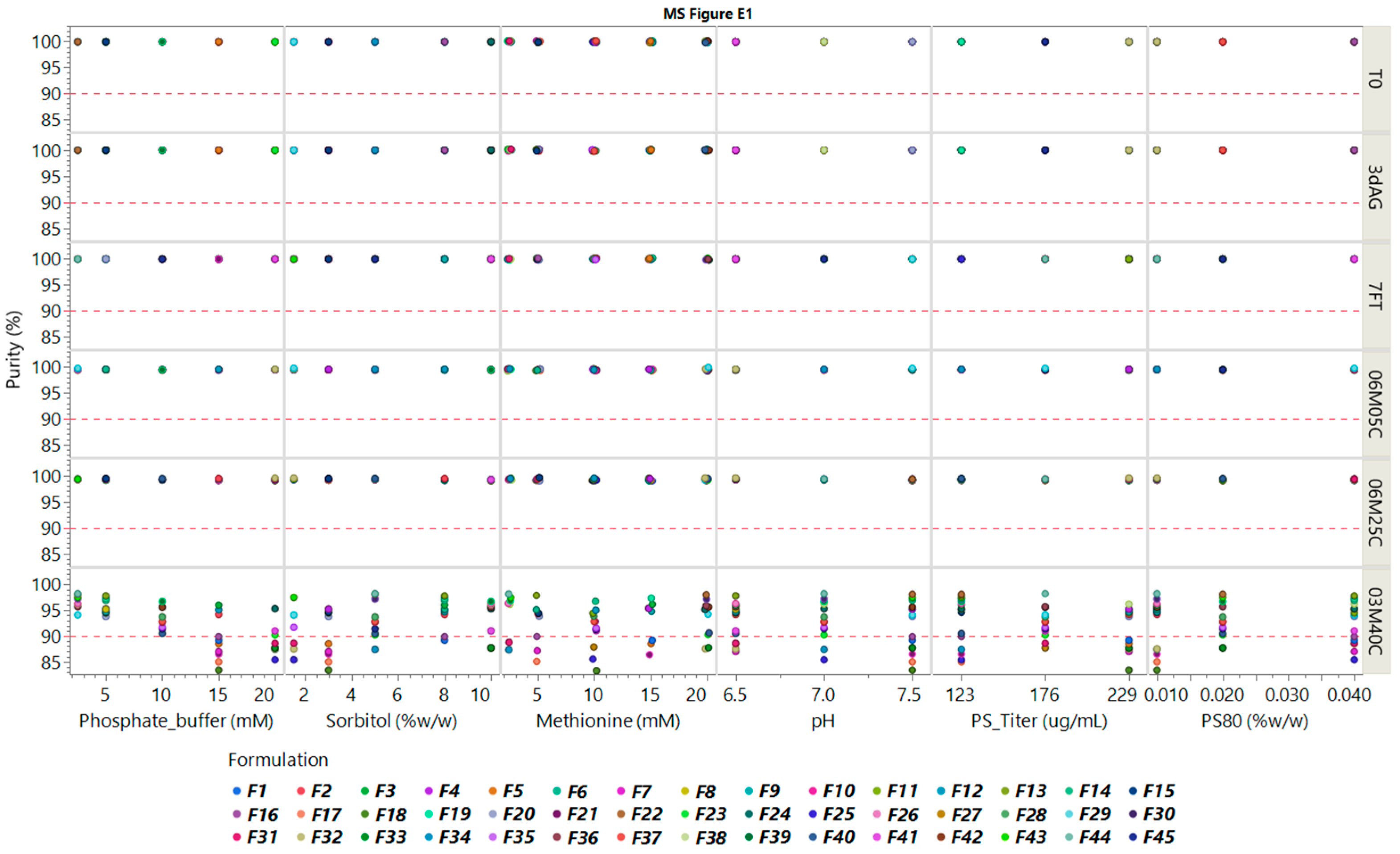
Figure A7.
Probability of success (PoS) to meet the specification of purity ≥90%, as a function of the tested DoE parameters for product-related purity. PoS was calculated for the storage conditions of 6 months at 5 °C (left panels), 6 months at 25 °C (middle panels) and 3 months at 40 °C (right panels) for syringe (top panels) and vial (bottom panels) containers. For each of these 6 panels, PoS is quantified using color coding for the combinations of—from left to right—concentrations of phosphate buffer, sorbitol, methionine, pH and titer, together with (from top to bottom) sorbitol, methionine, pH, titer and PS80 concentrations.
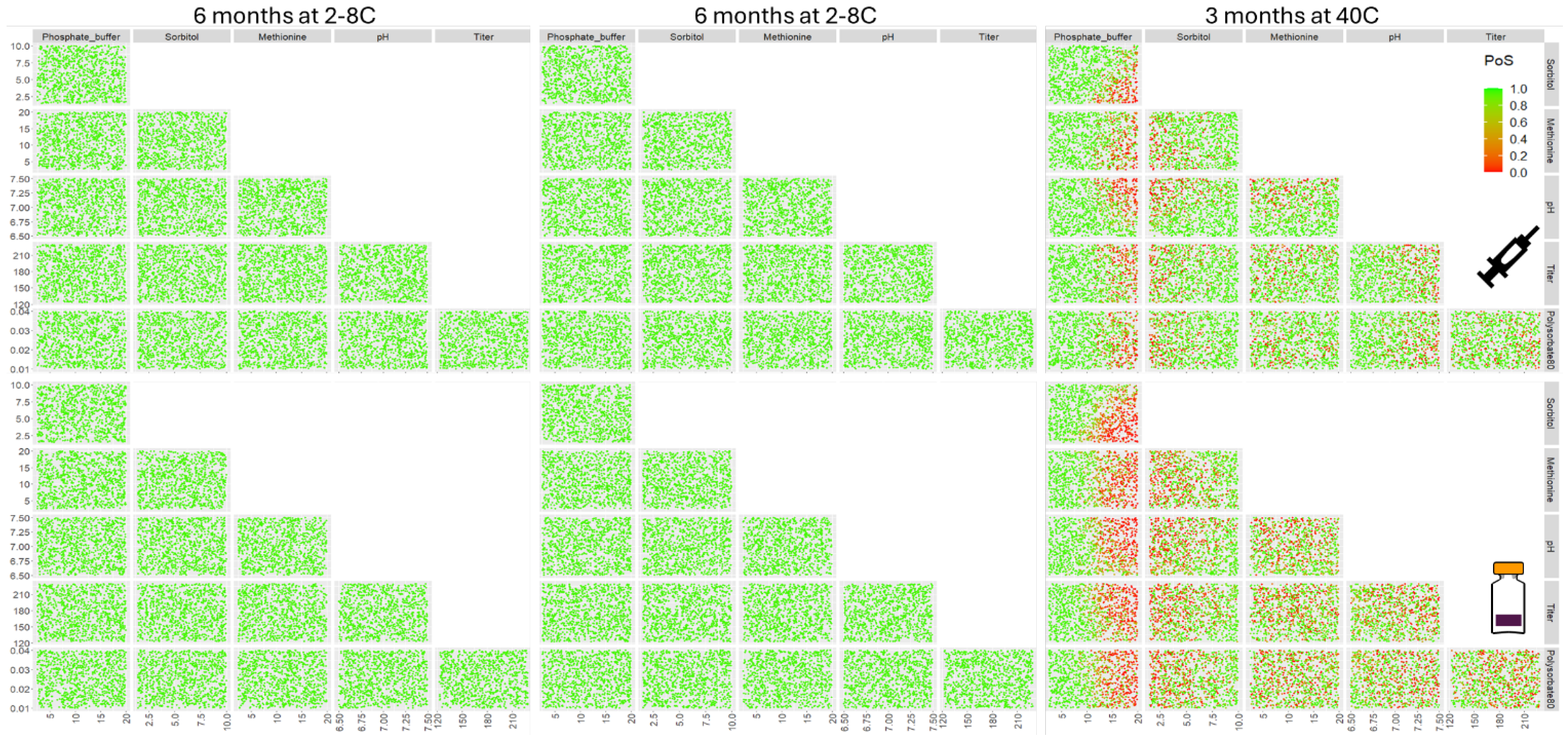
Figure A8.
Degree of O-acetylation (% relative to T0) results (by enzymatic colorimetry) for the 45 tested formulations and storage/stress conditions, n = 1. Within each subfigure, each marker is the value of a single measurement (i.e., each subfigure contains the data of all 45 formulations). However, for each condition (“Stress code”, i.e., each row of subfigures) all subfigures contain the same measurements, but they are sorted according to the values of the excipients/titer/pH in order to visualize the impact of each of those factors of the DoE. Markers are not always visible as they sometimes have near-identical values and therefore are stacked on top of each other. The red dashed lines indicate the acceptance criterion of ≥50% (relative to T0). Stress codes: 06M05C—6 months storage at 2–8 °C; 06M25C—6 months storage at 25 °C; 03M40C—3 months storage at 40 °C.
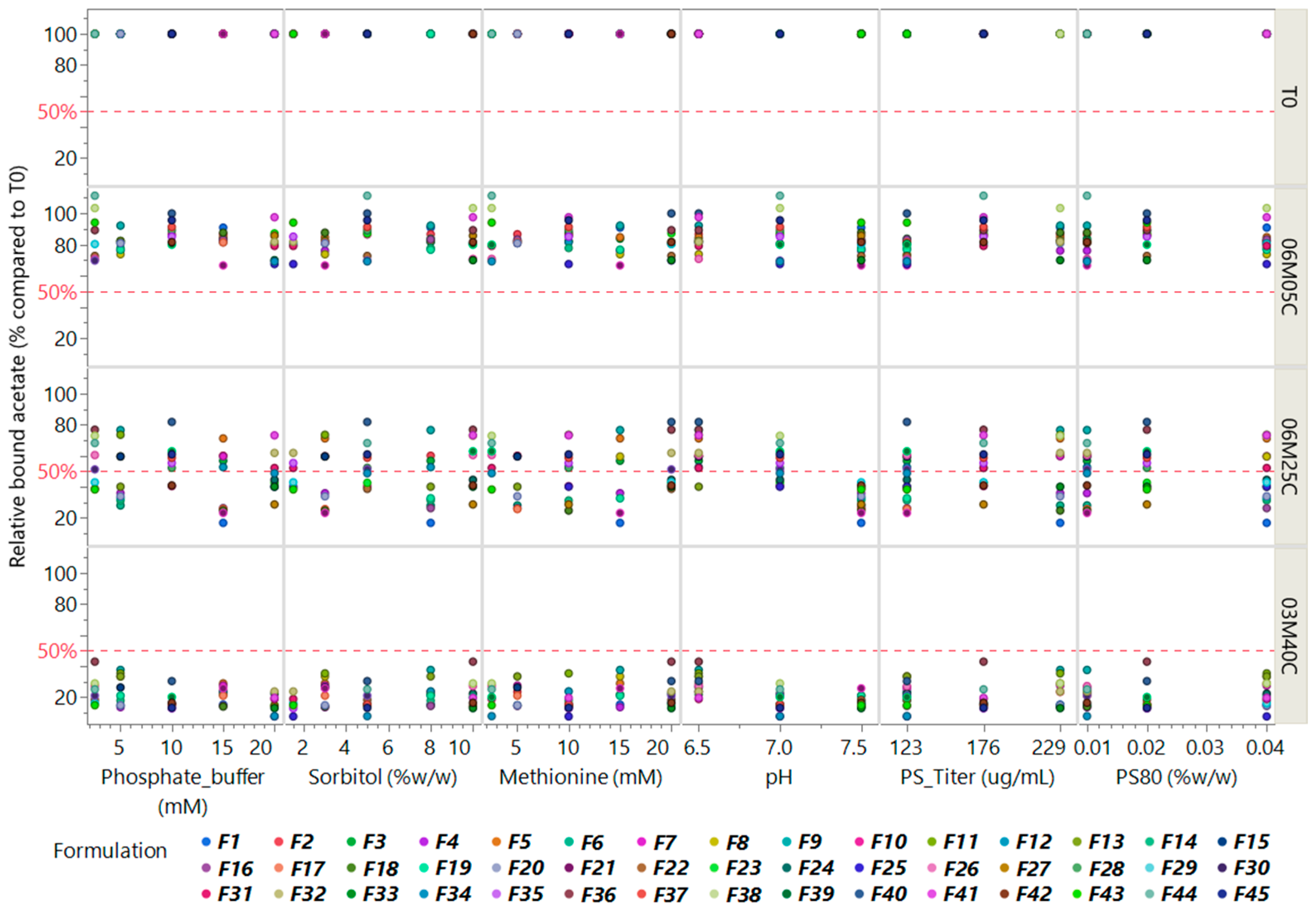
Figure A9.
Probability of success (PoS) to meet the specification of ≥50% degree of O-acetylation relative to the T0 value, as a function of the tested DoE parameters. PoS was calculated for the storage conditions of 6 months at 2–8 °C (left panels), 6 months at 25 °C (middle panels) and 3 months at 40 °C (right panels) for syringe (top panels) and vial (bottom panels) containers.
References
- Qiu, L.; Chirman, D.; Clark, J.R.; Xing, Y.; Hernandez Santos, H.; Vaughan, E.E.; Maresso, A.W. Vaccines against extraintestinal pathogenic Escherichia coli (ExPEC): Progress and challenges. Gut Microbes 2024, 16, 2359691. [Google Scholar] [CrossRef] [Scilit] [PubMed]
- Millar, B.C.; Cates, M.J.; Torrisi, M.S.; Round, A.J.; Warde, A.; Lowery, C.J.; Moore, J.E. Antimicrobial Resistance: The Answers. Br. J. Biomed. Sci. 2026, 83, 15559. [Google Scholar] [CrossRef] [Scilit] [PubMed]
- Dale, A.P.; Woodford, N. Extra-intestinal pathogenic Escherichia coli (ExPEC): Disease, carriage and clones. J. Infect. 2015, 71, 615–626. [Google Scholar] [CrossRef] [Scilit] [PubMed]
- Cabrera, A.; Mason, E.; Mullins, L.P.; Sadarangani, M. Antimicrobial resistance and vaccines in Enterobacteriaceae including extraintestinal pathogenic Escherichia coli and Klebsiella pneumoniae. npj Antimicrob. Resist. 2025, 3, 34. [Google Scholar] [CrossRef] [Scilit] [PubMed]
- Weerdenburg, E.; Davies, T.; Morrow, B.; Zomer, A.L.; Hermans, P.; Go, O.; Spiessens, B.; van den Hoven, T.; van Geet, G.; Aitabi, M.; et al. Global Distribution of O Serotypes and Antibiotic Resistance in Extraintestinal Pathogenic Escherichia coli Collected from the Blood of Patients with Bacteremia Across Multiple Surveillance Studies. Clin. Infect. Dis. 2023, 76, e1236–e1243. [Google Scholar] [CrossRef] [Scilit] [PubMed]
- Blum, M.; Geurtsen, J.; Herweijer, E.; Sarnecki, M.; Spiessens, B.; Reynolds Diogo, G.; Hermans, P.; Thelwall, S.; Bhattacharya, A.; Verstraeten, T.; et al. Epidemiology of invasive Escherichia coli disease in adults in England, 2013-2017. Epidemiol. Infect. 2025, 153, e4. [Google Scholar] [CrossRef] [Scilit] [PubMed]
- Han, R.; Tang, C.; Yu, F.; Li, T.; Shen, S.; Ding, L.; Yang, W.; Shi, Q.; Yang, Y.; Wu, S.; et al. Extraintestinal pathogenic Escherichia coli (ExPEC) O-serotype distribution and antibiotic resistance profiles among the aging population in China: A longitudinal, multi-center study. Int. J. Antimicrob. Agents 2025, 66, 107607. [Google Scholar] [CrossRef] [Scilit] [PubMed]
- WHO. WHO Publishes List of Bacteria for Which New Antibiotics Are Urgently Needed. Available online: https://www.who.int/news/item/27-02-2017-who-publishes-list-of-bacteria-for-which-new-antibiotics-are-urgently-needed (accessed on 31 July 2026).
- Geurtsen, J.; Doua, J.; Martinez-Martinez, L.; Ibarra de Palacios, P.; Powis, J.; Sims, M.; Hermans, P.; Barraud, O.; Lanotte, P.; Thaden, J.; et al. A retrospective global study of the prevalence of O-serotypes of invasive Escherichia coli disease in patients admitted to tertiary care hospitals. Epidemiol. Infect. 2025, 153, e109. [Google Scholar] [CrossRef] [Scilit] [PubMed]
- Leroux-Roels, I.; Day, T.A.; Deleu, S.; McLean, C.; Go, O.; Davies, T.A.; Stoop, J.N.; Peeters, M.; Pau, M.G.; Spiessens, B.; et al. Immunogenicity and Safety of the ExPEC9V Escherichia coli Vaccine Co-Administered with a High-Dose Influenza Vaccine in Older Adults: A Placebo-Controlled, Randomized, Phase 3 Study. Vaccines 2026, 14, 146. [Google Scholar] [CrossRef] [Scilit] [PubMed]
- Huttner, A.; Gambillara, V. The development and early clinical testing of the ExPEC4V conjugate vaccine against uropathogenic Escherichia coli. Clin. Microbiol. Infect. 2018, 24, 1046–1050. [Google Scholar] [CrossRef] [Scilit] [PubMed]
- Abernethy, J.; Guy, R.; Sheridan, E.A.; Hopkins, S.; Kiernan, M.; Wilcox, M.H.; Johnson, A.P.; Hope, R. Epidemiology of Escherichia coli bacteraemia in England: Results of an enhanced sentinel surveillance programme. J. Hosp. Infect. 2017, 95, 365–375. [Google Scholar] [CrossRef] [Scilit] [PubMed]
- Grome, H.N.; Brandenburg, J.M.; Kent, A.G.; Curtis, L.; Raymond, R.E.; Ansari, U.; Gargis, A.S.; McKay, S.L.; Parker, E.; Driscoll, J.; et al. Extraintestinal Invasive Escherichia coli Infections in the US. JAMA Netw. Open 2026, 9, e2557201. [Google Scholar] [CrossRef] [Scilit] [PubMed]
- van den Dobbelsteen, G.; Faé, K.C.; Serroyen, J.; van den Nieuwenhof, I.M.; Braun, M.; Haeuptle, M.A.; Sirena, D.; Schneider, J.; Alaimo, C.; Lipowsky, G.; et al. Immunogenicity and safety of a tetravalent E. coli O-antigen bioconjugate vaccine in animal models. Vaccine 2016, 34, 4152–4160. [Google Scholar] [CrossRef] [Scilit] [PubMed]
- Fierro, C.A.; Sarnecki, M.; Spiessens, B.; Go, O.; Day, T.A.; Davies, T.A.; van den Dobbelsteen, G.; Poolman, J.; Abbanat, D.; Haazen, W. A randomized phase 1/2a trial of ExPEC10V vaccine in adults with a history of UTI. npj Vaccines 2024, 9, 106. [Google Scholar] [CrossRef] [Scilit] [PubMed]
- Leppla, S.H. Large-scale purification and characterization of the exotoxin of Pseudomonas aeruginosa. Infect. Immun. 1976, 14, 1077–1086. [Google Scholar] [CrossRef] [Scilit] [PubMed]
- Khandke, L.; Welsch, J.A.; Alderson, M.R. Chapter 9: Formulation Development of Glycoconjugate Vaccines for Low- and Middle-Income Countries. In Carbohydrate-Based Vaccines: From Concept to Clinic; Prasad, A.K., Ed.; ACS Symposium Series; ACS Publications: Washington, DC, USA, 2018; Volume 1290, pp. 197–228. [Google Scholar]
- Domachowske, J. Vaccine Additives and Excipients. In Vaccines: A Clinical Overview and Practical Guide; Domachowske, J., Suryadevara, M., Eds.; Springer International Publishing: Cham, Switzerland, 2021; pp. 49–76. [Google Scholar]
- Anderluh, M.; Berti, F.; Bzducha-Wróbel, A.; Chiodo, F.; Colombo, C.; Compostella, F.; Durlik, K.; Ferhati, X.; Holmdahl, R.; Jovanovic, D.; et al. Recent advances on smart glycoconjugate vaccines in infections and cancer. FEBS J. 2022, 289, 4251–4303. [Google Scholar] [CrossRef] [Scilit] [PubMed]
- Tognetti, F.; Biagini, M.; Denis, M.; Berti, F.; Maione, D.; Stranges, D. Evolution of Vaccines Formulation to Tackle the Challenge of Anti-Microbial Resistant Pathogens. Int. J. Mol. Sci. 2023, 24, 2054. [Google Scholar] [CrossRef] [Scilit] [PubMed]
- Zafar, S.; Akhtar, A.; Sayed, E.; Onaiwu, E.; Arshad, M.S.; Ahmad, Z. Vaccine formulation design: Challenges and opportunities. RSC Pharm. 2025, 2, 490–516. [Google Scholar] [CrossRef] [Scilit]
- Micoli, F.; Stefanetti, G.; MacLennan, C.A. Exploring the variables influencing the immune response of traditional and innovative glycoconjugate vaccines. Front. Mol. Biosci. 2023, 10, 1201693. [Google Scholar] [CrossRef] [Scilit] [PubMed]
- Micoli, F.; Adamo, R.; Costantino, P. Protein Carriers for Glycoconjugate Vaccines: History, Selection Criteria, Characterization and New Trends. Molecules 2018, 23, 1451. [Google Scholar] [CrossRef] [Scilit] [PubMed]
- Morais, V.; Suarez, N. Conjugation Mechanism for Pneumococcal Glycoconjugate Vaccines: Classic and Emerging Methods. Bioengineering 2022, 9, 774. [Google Scholar] [CrossRef] [Scilit] [PubMed]
- Prymula, R.; Schuerman, L. 10-valent pneumococcal nontypeable Haemophilus influenzae PD conjugate vaccine: Synflorix. Expert Rev. Vaccines 2009, 8, 1479–1500. [Google Scholar] [CrossRef] [Scilit] [PubMed]
- EMA. Prevenar 13: EPAR–Product Information. Available online: https://www.ema.europa.eu/en/documents/product-information/prevenar-13-epar-product-information_en.pdf (accessed on 31 July 2026).
- EMA. Vaxneuvance: EPAR–Product Information. Available online: https://www.ema.europa.eu/en/documents/product-information/vaxneuvance-epar-product-information_en.pdf (accessed on 31 July 2026).
- EMA. Menveo: EPAR Product Information. Available online: https://www.ema.europa.eu/en/documents/product-information/menveo-epar-product-information_en.pdf (accessed on 31 July 2026).
- EMA. Prevenar 20: EPAR–Product Information. Available online: https://www.ema.europa.eu/en/documents/product-information/prevenar-20-epar-product-information_en.pdf (accessed on 31 July 2026).
- EMA. Synflorix: EPAR–Product Information. Available online: https://www.ema.europa.eu/en/documents/product-information/synflorix-epar-product-information_en.pdf (accessed on 31 July 2026).
- Kowarik, M.; Wetter, M.; Haeuptle, M.A.; Braun, M.; Steffen, M.; Kemmler, S.; Ravenscroft, N.; De Benedetto, G.; Zuppiger, M.; Sirena, D.; et al. The development and characterization of an E. coli O25B bioconjugate vaccine. Glycoconj. J. 2021, 38, 421–435. [Google Scholar] [CrossRef] [Scilit] [PubMed]
- Wang, Y.; Liu, H.; Wang, B.; Gheyret, G.; Qin, J.; Wang, H.; Di, Y.; Wang, Y.; Wang, J.; Tan, H. Recent advances in the biosynthesis of polysaccharide-based antimicrobial glycoconjugate vaccines. Front. Microbiol. 2024, 15, 1457908. [Google Scholar] [CrossRef] [Scilit] [PubMed]
- Hatz, C.F.; Bally, B.; Rohrer, S.; Steffen, R.; Kramme, S.; Siegrist, C.A.; Wacker, M.; Alaimo, C.; Fonck, V.G. Safety and immunogenicity of a candidate bioconjugate vaccine against Shigella dysenteriae type 1 administered to healthy adults: A single blind, partially randomized Phase I study. Vaccine 2015, 33, 4594–4601. [Google Scholar] [CrossRef] [Scilit] [PubMed]
- Riddle, M.S.; Kaminski, R.W.; Di Paolo, C.; Porter, C.K.; Gutierrez, R.L.; Clarkson, K.A.; Weerts, H.E.; Duplessis, C.; Castellano, A.; Alaimo, C.; et al. Safety and Immunogenicity of a Candidate Bioconjugate Vaccine against Shigella flexneri 2a Administered to Healthy Adults: A Single-Blind, Randomized Phase I Study. Clin. Vaccine Immunol. 2016, 23, 908–917. [Google Scholar] [CrossRef] [Scilit] [PubMed]
- Ravenscroft, N.; Braun, M.; Schneider, J.; Dreyer, A.M.; Wetter, M.; Haeuptle, M.A.; Kemmler, S.; Steffen, M.; Sirena, D.; Herwig, S.; et al. Characterization and immunogenicity of a Shigella flexneri 2a O-antigen bioconjugate vaccine candidate. Glycobiology 2019, 29, 669–680. [Google Scholar] [CrossRef] [Scilit] [PubMed]
- Cuccui, J.; Thomas, R.M.; Moule, M.G.; D’Elia, R.V.; Laws, T.R.; Mills, D.C.; Williamson, D.; Atkins, T.P.; Prior, J.L.; Wren, B.W. Exploitation of bacterial N-linked glycosylation to develop a novel recombinant glycoconjugate vaccine against Francisella tularensis. Open Biol. 2013, 3, 130002. [Google Scholar] [CrossRef] [Scilit] [PubMed][Green Version]
- Alaimo, C.; Karaky, N.; Lawrence, R.; Bownes, E.; Haffner, S.; Kowarik, M.; Goldblatt, D.; Martin, P. Safety and Immunogenicity of a Klebsiella pneumoniae Tetravalent Bioconjugate Vaccine (Kleb4V) Administered to Healthy Adults: A First-in-Human Phase I/II Randomized and Controlled Study. J. Infect. Dis. 2026, 233, e342–e351. [Google Scholar] [CrossRef] [Scilit] [PubMed]
- Wren, B.W.; Hall, C.L.; Terra, V.S.; Harrison, M.A.; Atkins, E.; Nasher, F.; Passmore, I.J. Recent Advances in Bioconjugate Vaccine Development. Vaccines 2025, 13, 703. [Google Scholar] [CrossRef] [Scilit] [PubMed]
- Tilahun, S.T.; Kim, S.B.; D’Cor, N.A.; Cowden, J.; Saluja, T. Accelerating Shigella vaccines: From decades of research to global access. Expert Rev. Vaccines 2026, 25, 2686291. [Google Scholar] [CrossRef] [Scilit] [PubMed]
- MacLennan, C.A.; Grow, S.; Ma, L.F.; Steele, A.D. The Shigella Vaccines Pipeline. Vaccines 2022, 10, 1376. [Google Scholar] [CrossRef] [Scilit] [PubMed]
- Martin, P.; Alaimo, C. The Ongoing Journey of a Shigella Bioconjugate Vaccine. Vaccines 2022, 10, 212. [Google Scholar] [CrossRef] [Scilit] [PubMed]
- Salman, M.; St Michael, F.; Ali, A.; Jabbar, A.; Cairns, C.; Hayes, A.C.; Rahman, M.; Iqbal, M.; Haque, A.; Cox, A.D. First characterization of immunogenic conjugates of Vi negative Salmonella Typhi O-specific polysaccharides with rEPA protein for vaccine development. J. Immunol. Methods 2017, 450, 27–33. [Google Scholar] [CrossRef] [Scilit] [PubMed]
- Peng, Z.H.; Pan, C.; Sun, P.; Feng, E.L.; Wu, J.; Zhu, L.; Peng, Q.Z.; Wang, H.L. Preparation and immunogenicity-evaluation of typhoid O-specific polysaccharides bio-conjugate vaccines. Yi Chuan 2015, 37, 473–479. [Google Scholar] [CrossRef] [Scilit] [PubMed]
- Abouelhadid, S.; Atkins, E.R.; Kay, E.J.; Passmore, I.J.; North, S.J.; Lehri, B.; Hitchen, P.; Bakke, E.; Rahman, M.; Bossé, J.T.; et al. Development of a novel glycoengineering platform for the rapid production of conjugate vaccines. Microb. Cell Fact. 2023, 22, 159. [Google Scholar] [CrossRef] [Scilit] [PubMed]
- Anish, C.; Beurret, M.; Poolman, J. Combined effects of glycan chain length and linkage type on the immunogenicity of glycoconjugate vaccines. npj Vaccines 2021, 6, 150. [Google Scholar] [CrossRef] [Scilit] [PubMed]
- Kay, E.; Cuccui, J.; Wren, B.W. Recent advances in the production of recombinant glycoconjugate vaccines. npj Vaccines 2019, 4, 16. [Google Scholar] [CrossRef] [Scilit] [PubMed]
- Poolman, J.T.; Wacker, M. Extraintestinal Pathogenic Escherichia coli, a Common Human Pathogen: Challenges for Vaccine Development and Progress in the Field. J. Infect. Dis. 2016, 213, 6–13. [Google Scholar] [CrossRef] [Scilit] [PubMed]
- Knoot, C.J.; Pomper, N.; Robinson, L.S.; Harding, C.M. Glycoengineering the Pseudomonas exotoxin A for multi-sequon integration and enhanced bioconjugation efficiency by PglS. Glycobiology 2025, 36, cwaf075. [Google Scholar] [CrossRef] [Scilit] [PubMed]
- Cui, T.J.; Clénet, D.; Capelle, M.A.H.; Opacic, M. Predictive Stability of Aggregation in Glycoconjugate Vaccines Using Advanced Kinetics Modeling and High-Throughput Screening. Pharmaceutics 2026, 18, 564. [Google Scholar] [CrossRef] [Scilit] [PubMed]

Disclaimer/Publisher’s Note: The statements, opinions and data contained in all publications are solely those of the individual author(s) and contributor(s) and not of MDPI and/or the editor(s). MDPI and/or the editor(s) disclaim responsibility for any injury to people or property resulting from any ideas, methods, instructions or products referred to in the content. |
© 2026 by the authors. Licensee MDPI, Basel, Switzerland. This article is an open access article distributed under the terms and conditions of the Creative Commons Attribution (CC BY) license.