


Abstract
Background/Objectives: Children exposed to HIV perinatally but remaining uninfected (HEU) may represent a vulnerable population for preventive healthcare. This study assessed age-appropriate vaccination completeness among HEU children in Romania and explored its distribution across birth cohorts and selected sociodemographic characteristics. Methods: We conducted a retrospective observational cohort study including children born to women living with HIV and enrolled in a prevention of mother-to-child HIV transmission program between 2005 and 2024. Vaccination data were obtained from the Romanian National Electronic Vaccination Registry. Vaccination completeness was assessed according to the national immunization schedule applicable to each child’s year of birth, using an age-eligible vaccine completeness score. Results: Among 139 HEU children evaluated, the mean vaccination completeness score was 60.4% (SD 29.0%), with a median of 69.4% (IQR 44.3–80.6%). Overall, 70.5% of children had scores below 80%, whereas only 13.0% achieved ≥90% completeness. BCG had the lowest documented coverage (14.4%), while MMR showed the highest vaccine-series completion, although still suboptimal. Important gaps were observed for several vaccines, particularly among older cohorts. Vaccination patterns differed significantly across birth cohorts, while the analyzed sociodemographic characteristics did not consistently explain these differences. Conclusions: Vaccination completeness among HEU children in this Romanian cohort was substantially below recommended targets, despite their follow-up within a specialized healthcare setting. The findings suggest persistent gaps in preventive care and highlight the need for systematic vaccination monitoring, timely catch-up strategies, and improved continuity of care throughout the transition from HIV-exposure follow-up to routine pediatric services.
1. Introduction
Vaccination remains one of the most effective and cost-effective public health interventions, substantially reducing morbidity and mortality from vaccine-preventable diseases [1]. Maintaining high vaccination coverage is particularly important in populations with increased vulnerability to infectious diseases, including children born to mothers living with HIV.
The widespread implementation of antiretroviral therapy (ART) and prevention of mother-to-child transmission (PMTCT) programmes has dramatically reduced vertical HIV transmission, resulting in a rapidly expanding population of HIV-exposed uninfected (HEU) children. By 2023, approximately 15 million HEU children were living worldwide, representing one of the fastest-growing pediatric populations requiring long-term follow-up [2]. Although these children remain HIV-uninfected, increasing evidence suggests that prenatal HIV exposure, maternal immune activation, antiretroviral exposure, and adverse socioeconomic conditions may influence immune development and early-life susceptibility to infectious diseases [2,3,4].
Compared with HIV-unexposed uninfected (HUU) children, HEU children have a higher risk of severe bacterial and viral infections, particularly during infancy, as well as impaired growth and neurodevelopmental abnormalities [3,4,5]. Consequently, prevention of infectious diseases through timely immunization constitutes a key component of long-term care in this vulnerable population.
Current World Health Organization (WHO) recommendations and international guidelines state that HEU children should receive all routine childhood vaccines according to the national immunization schedule, as HIV exposure alone does not constitute a contraindication to vaccination [6]. However, several factors may compromise vaccine uptake or delay vaccine administration, including uncertainty regarding the infant’s HIV status before definitive diagnosis, missed healthcare opportunities, socioeconomic vulnerability, parental vaccine hesitancy, and healthcare system barriers [7]. Delayed or incomplete immunization may leave HEU children inadequately protected against vaccine-preventable diseases during a period of increased infectious vulnerability.
Romania has a distinctive HIV epidemiological history in Europe, largely shaped by a large cohort of children who acquired HIV through nosocomial transmission during the late 1980s and early 1990s [8]. As many individuals from this cohort have now reached reproductive age, they constitute an important proportion of women living with HIV who are followed within the national prevention of mother-to-child transmission (PMTCT) programme [9,10]. Together with women who acquired HIV through other routes, they have contributed to a growing population of HIV-exposed uninfected (HEU) children requiring long-term follow-up. In this context, ensuring complete and timely immunization represents a cornerstone of preventive healthcare and an essential strategy for reducing the burden of vaccine-preventable diseases in this vulnerable population.
In recent years, declining childhood vaccination coverage has become a growing public health concern in Romania. Like other European countries, vaccine uptake has been affected by increasing vaccine hesitancy, periodic vaccine shortages, healthcare access inequalities, and disruptions to immunization services during the COVID-19 pandemic [11,12]. As a result, vaccination coverage for several routine childhood vaccines has fallen below the 95% threshold recommended by the World Health Organization for maintaining herd immunity, contributing to recurrent outbreaks of vaccine-preventable diseases, particularly measles [13]. These challenges may disproportionately affect socially vulnerable populations, including children born to mothers living with HIV, who often face additional medical and socioeconomic barriers to timely immunization [14,15].
In addition to declining vaccination coverage, evaluation of childhood immunization in Romania is complicated by the substantial evolution of the National Immunization Programme over the past two decades [16,17,18,19,20,21,22,23]. The introduction of new vaccines, replacement of vaccine formulations, and revisions of vaccination schedules resulted in different immunization requirements across birth cohorts [24,25,26,27,28]. Consequently, vaccination completeness cannot be meaningfully compared using the absolute number of administered vaccines but should instead be assessed according to the age- and calendar-specific schedule applicable to each child’s year of birth (Table 1).
Table 1.
Summary of the main milestones in the evolution of childhood vaccination in Romania [16,17,18,19,20,21,22,23,24,25,26,27,28].
Despite the growing number of HEU children worldwide, information regarding vaccination completeness in this population remains limited, particularly in Eastern Europe. In Romania, published data are largely restricted to vaccination coverage in the general pediatric population, while vaccination patterns among HEU children have received little attention. Furthermore, to our knowledge, no previous Romanian study has evaluated vaccination completeness while accounting for the successive changes in the National Immunization Programme.
The aim of this study was to assess the overall level and completeness of routine childhood vaccination among HIV-exposed uninfected children born to mothers living with HIV in Romania, to characterize vaccine-specific and demographic patterns, and to identify potential areas for targeted interventions to improve vaccination uptake in this vulnerable population.
2. Materials and Methods
2.1. Study Design and Population
A retrospective observational cohort study was conducted at the Clinical Hospital for Infectious Diseases Galați, Romania. The study included children born between 1 January 2005 and 31 December 2024, to women living with HIV who were enrolled in the national PMTCT.
Eligible participants were HIV-exposed uninfected (HEU) children, historically referred in Romania as HIV seroreverters, who had reached at least 24 months of age, allowing exclusion of HIV infection according to the national diagnostic algorithm. HEU status was defined as the absence of confirmed HIV infection following completion of the age-appropriate diagnostic follow-up according to the national diagnostic algorithm, including documented loss of passively acquired maternal anti-HIV antibodies and absence of detectable HIV RNA [29,30].
Children were excluded if they had confirmed HIV infection, persistent HIV seropositivity beyond the age defined by the national diagnostic algorithm or died before completion of HIV diagnostic follow-up. Children were not excluded because of incomplete vaccination documentation.
Maternal characteristics included age, area of residence (urban/rural), educational level, marital status (living with a partner or single), membership in the Romanian pediatric HIV cohort, and paternal HIV status. Formal educational attainment was categorized into three groups: primary education (4 years), lower secondary education (8 years), and upper secondary or tertiary education (≥12 years), according to the International Standard Classification of Education [31].
Child characteristics included year of birth, sex, mode of delivery (elective caesarean section or vaginal delivery), birth order, and vaccination history.
To evaluate temporal patterns in vaccination practices in relation to major changes in the Romanian National Immunization Programme, participants were stratified according to year of birth into three birth cohorts: Cohort 1 (C1, 2005–2014), Cohort 2 (C2, 2015–2019), and Cohort 3 (C3, 2020–2024). The latest birth included in the cohort was recorded in June 2024, allowing them to reach 24 months of age at the end of study analysis, by June 30, 2026.
2.2. Vaccination Assessment
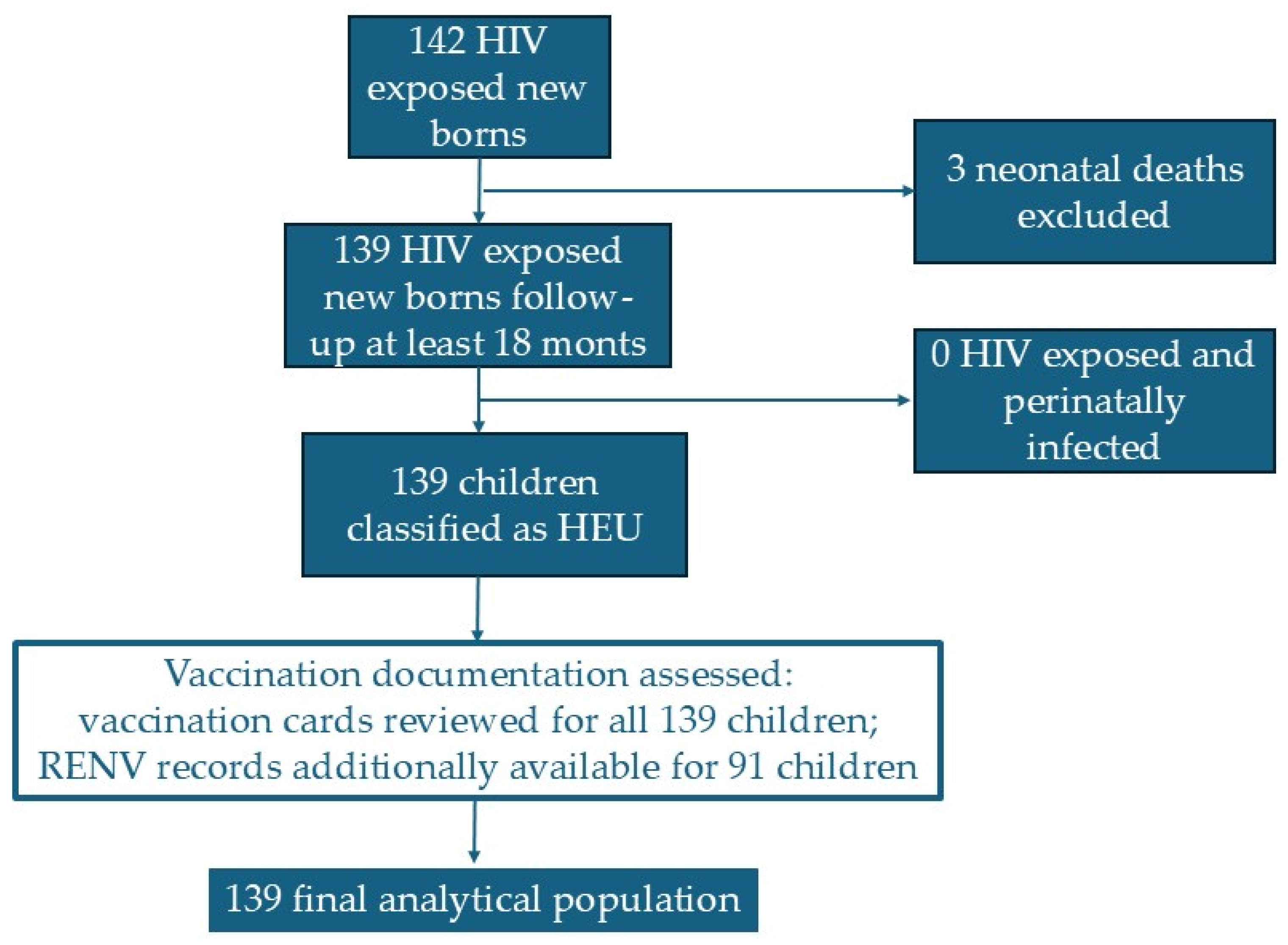
Vaccination records were assessed using the vaccination cards and Romanian National Electronic Vaccination Registry (RENV), cross-checked, where available, with records from the family physicians or Public Health Regional Directorate. The RENV was introduced nationally in September 2011. For children born before the implementation of RENV, vaccination cards provided an important source of documented vaccination history. A vaccine dose was considered documented when evidence of administration was available in either the RENV or the vaccination card. Vaccination documentation was assessed by reviewing vaccination cards for all 139 children. These data were supplemented by records retrieved from the Romanian RENV, which were available for 91 children. The participant selection and study population are summarized in Figure A1.
Vaccination histories were evaluated according to the Romanian National Immunization Schedule applicable to each child’s year of birth. Because the Romanian National Immunization Programme underwent several modifications during the study period, including changes in vaccine formulations, schedules, and recommended doses, vaccination status was assessed individually according to the schedule applicable to each child’s birth cohort and age at data extraction. Thus, children were not retrospectively evaluated against a single contemporary immunization schedule.
For vaccines recommended during the first year of life, vaccination completeness was assessed at 24 months of age, corresponding to the age reached by the youngest child in the study population by the date of data extraction (30 June 2026). This approach allowed a defined period for delayed administration or catch-up vaccination. Doses administered after 24 months were not counted toward first-year vaccine completion. For subsequent vaccine doses, age eligibility was assessed according to the applicable birth-cohort schedule and the child’s age at data extraction.
For each vaccine, the number of documented doses received was compared with the number of doses recommended and age-eligible for the individual child by the date of data extraction. Across the study population, the total number of age-eligible vaccine doses per child ranged from 17 to 26, depending on birth cohort and age at data extraction. The vaccination schedules applicable to each birth cohort, including the transition to systematic pneumococcal vaccination from 2017, are presented in Table A1 and were used to determine vaccine-specific age eligibility and denominators.
For vaccine-specific analyses, vaccination status was classified as complete when all age-eligible recommended doses had been received, partial when at least one but fewer than all age-eligible recommended doses had been received, and absent when no age-eligible recommended dose was documented. Children who had not yet reached the age at which a specific vaccine dose was recommended were excluded from the denominator for that specific vaccine analysis.
The overall Age-Eligible Vaccination Completeness Score (AE-VCS) was calculated as the proportion of documented age-eligible vaccine doses received among all age-eligible recommended doses, expressed as a percentage. Each eligible dose contributed equally to the score. This dose-level approach was intended to describe overall vaccination coverage at the time of assessment rather than completion of individual vaccine series. Accordingly, the AE-VCS reflects the vaccination status documented at the defined assessment point and may be influenced by differences in opportunities for catch-up vaccination across birth cohorts.
2.2.1. Core Vaccinations
Core vaccinations recommended during the first year of life were assessed according to the Romanian National Immunization Schedule applicable to each child’s birth cohort. To account for delayed, postponed, rescheduled, or catch-up vaccination, an assessment window extending to 24 months of age was used for these vaccines. This 24-month window was a methodological approach intended to capture delayed or catch-up administration of vaccines initially recommended during the first year of life and did not represent the age at which overall vaccination completeness was assessed.
Vaccines introduced into the National Immunization Programme at later stages of the study period, such as Haemophilus influenzae type b (Hib) and pneumococcal conjugate vaccine (PCCV), were assessed only for birth cohorts for which these vaccines were included in the applicable national schedule.
A sensitivity analysis was performed at the vaccine-series level to assess the potential effect of dose weighting on the AE-VCS. For each child, every vaccine for which at least one dose was age-eligible at the date of data extraction was considered one vaccine series, irrespective of the number of recommended doses. A vaccine series was considered complete only when all age-eligible recommended doses had been received; series with one or more missing doses were classified as incomplete, irrespective of the proportion of doses received. The vaccine-series completion score was calculated as the number of completed age-eligible vaccine series divided by the total number of age-eligible vaccine series, expressed as a percentage.
2.2.2. MMR Vaccination
For measles–mumps–rubella (MMR) vaccination, the first and second doses were assessed separately. The first-dose analysis included children who had reached the age at which the first dose was recommended according to the schedule applicable to their birth cohort. The second-dose analysis included only children who had reached the age at which the second dose was recommended. Accordingly, children in C3 who had not yet reached the recommended age for the second MMR dose were not included in the denominator for this analysis.
2.3. Age-Eligible Vaccination Completeness Score
For the purposes of this study, we proposed an Age-Eligible Vaccination Completeness Score (AE-VCS) as an individualized overall measure of age-appropriate vaccination completeness. The score was developed to allow comparison of vaccination completeness among children belonging to different birth cohorts and therefore exposed to different versions of the Romanian National Immunization Schedule.
For each child, the number of vaccine doses recommended and age-eligible by the date of data extraction was determined according to the National Immunization Schedule applicable to the child’s year of birth. Only vaccine doses for which the child had reached the recommended age by the date of data extraction were included in the denominator. Thus, the number of vaccine doses considered age-eligible differed between children according to their birth cohort and age at assessment. Across the study population, the number of age-eligible recommended doses ranged from 17 to 26.
The AE-VCS was calculated as AE-VCS (%) = (number of age-eligible recommended doses received/number of age-eligible recommended doses) × 100.
For each vaccine, the number of documented doses received was capped at the number of doses required for age-appropriate complete vaccination. Therefore, doses administered beyond the number required for age-appropriate completeness could not increase the AE-VCS above 100%.
The AE-VCS ranged from 0% to 100%. A score of 100% indicated that all vaccine doses recommended and age-eligible for the individual child had been received, whereas lower scores indicated varying degrees of incomplete age-appropriate vaccination. Higher scores therefore represented greater vaccination completeness.
The AE-VCS was developed specifically for the present study and should therefore be considered a study-specific measure of vaccination completeness rather than a previously validated vaccination assessment instrument.
A sensitivity analysis was performed to assess the potential impact of within-mother clustering on the results. The analysis was repeated after restricting the dataset to one child per mother.
2.4. Statistical Analysis
Categorical variables are expressed as frequencies and percentages. Differences between birth cohorts are assessed using the Pearson chi-square test or Fisher’s exact test. Pearson’s chi-square test was used when the expected frequencies met the assumptions for the test; Fisher’s exact test was used when these assumptions were not met, particularly in the presence of small, expected cell counts. The assumptions for categorical tests were assessed based on the expected cell frequencies in the contingency tables.
Continuous variables are summarized as median and interquartile range (IQR). Comparisons between two independent groups were performed using the Mann–Whitney U test, whereas comparisons among three or more independent groups were performed using the Kruskal–Wallis test. Associations between continuous or ordinal variables were assessed using Spearman’s rank correlation coefficient.
For the comparison of second-dose MMR vaccination between eligible birth cohorts, the odds ratio (OR) was calculated from the 2 × 2 contingency table, and the corresponding 95% confidence interval (CI) was derived using the standard log-transformation method.
For each analysis, the denominator was defined according to the age-eligibility criteria described above. Children who had not yet reached the age of eligibility for a specific vaccine dose were therefore not considered missing observations. The number of missing observations was reported for variables for which information was unavailable among eligible participants. No formal adjustment for multiple comparisons was applied. Given the relatively small sample size and the number of vaccine-specific and participant-characteristic comparisons, these analyses were considered exploratory, and p values were interpreted accordingly.
All statistical tests were two-sided, and a p value < 0.05 was considered statistically significant. Statistical analyses were performed using XLSTAT, version 2022.4.5 (Addinsoft, Paris, France).
2.5. Ethical Considerations
The study was conducted in accordance with the principles of the Declaration of Helsinki and applicable national regulations. The study protocol was reviewed and approved by the Ethics Committee of the Clinical Hospital for Infectious Diseases Galați Approval No. 45, dated 23 March 2026.
Given the retrospective observational design and the use of routinely collected clinical and vaccination data, the requirement for written informed consent was waived by the Ethics Committee.
3. Results
3.1. Study Population and Demographic Characteristics
Between 2005 and 2024, 142 children were born to women living with HIV who were enrolled in the hospital-based PMTCT programme. The PMTCT programme included maternal HIV screening and antiretroviral treatment during pregnancy, delivery by caesarean section when indicated, neonatal antiretroviral prophylaxis, replacement feeding, and virological follow-up of the infants through 18 months of age. Three children died during the neonatal period and were therefore excluded from further analysis. The remaining children who had completed the required HIV diagnostic follow-up by June 30, 2026, were classified as HIV-exposed uninfected (HEU). The final study population comprised 139 children. Vaccination documentation was assessed by reviewing vaccination cards for all 139 children. These data were supplemented, where available, by records retrieved from the Romanian RENV, which were available for 91 children.
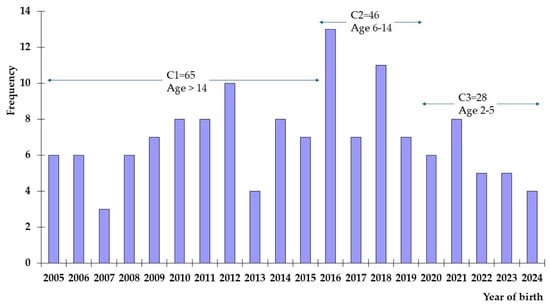
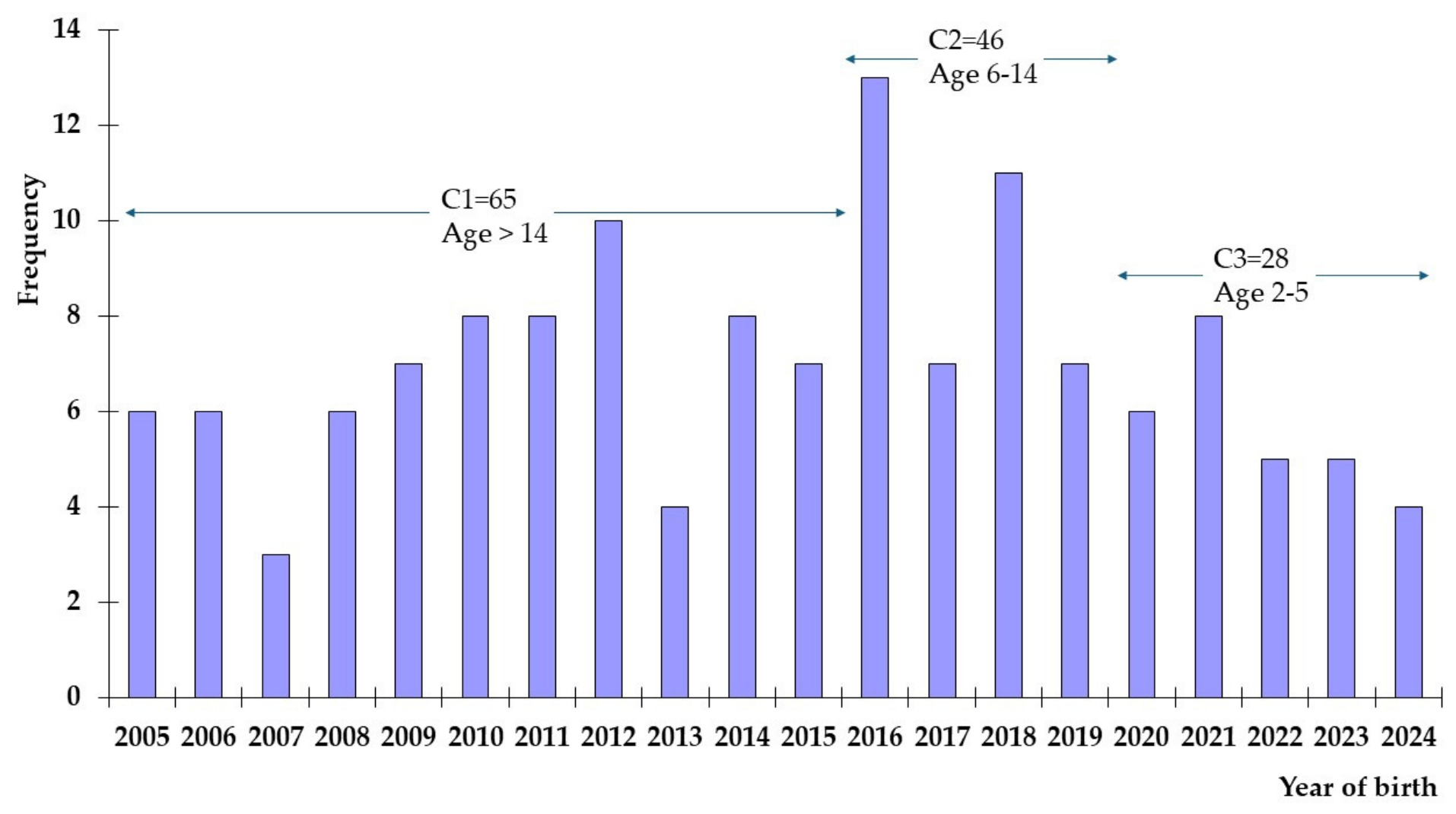
At the time of data extraction, 65 children (46.8%) belonged to C1 (>14 years), 46 (33.1%) to C2 (6–14 years), and 28 (20.1%) to C3 (2–5 years) (Figure 1).
Figure 1.
Distribution of the study population by year of birth and age cohort.
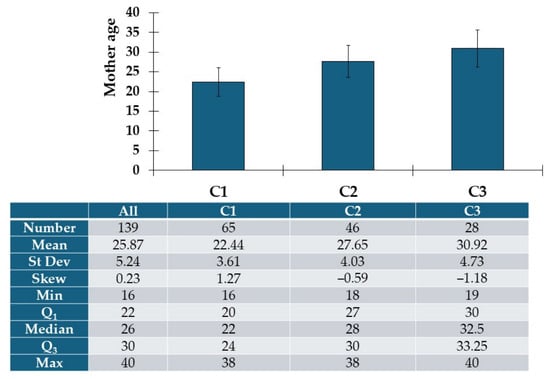
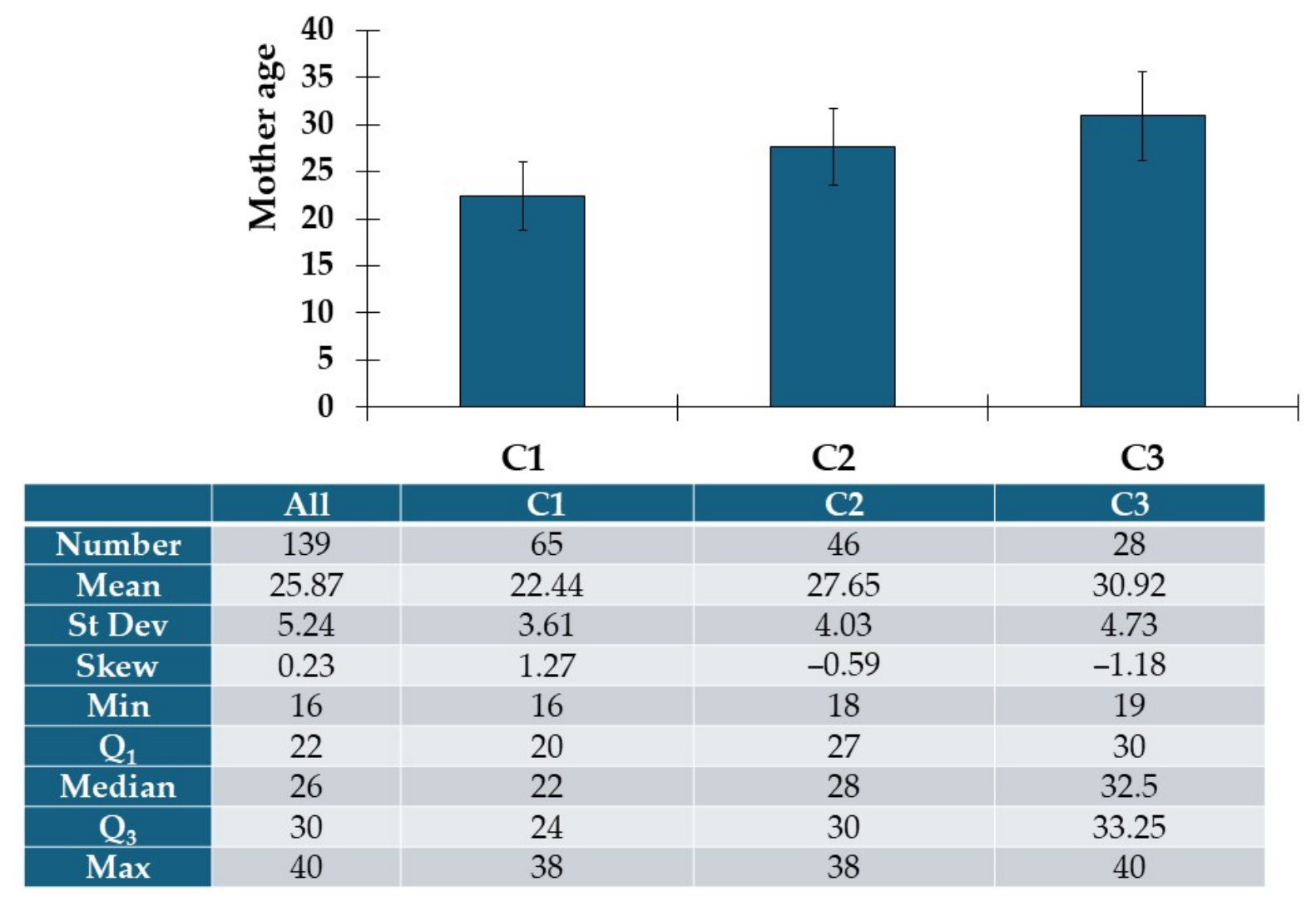
Maternal age ranged from 16 to 40 years and showed a significant increasing trend across the birth cohorts, with median [IQR] C1: 22 [20,21,22,23,24], C2: 28 [27,28,29,30], and C3: 32.5 [30–33.25] (Figure 2).
Figure 2.
Maternal age across the birth cohorts.
Other demographic and epidemiological characteristics of the mother–child pairs included in the study are presented in Table 2.
Table 2.
Demographic and epidemiological characteristics of perinatally HIV-exposed but uninfected children.
No statistically significant differences were observed between cohorts regarding area of residence (p = 0.076), maternal HIV diagnosis context (p = 0.478), maternal history of tuberculosis (p = 0.646), paternal HIV status (p = 0.073), or birth order (p = 0.327).
Most children were born by caesarean section (91.4%), but the proportion of children born by caesarean section differed significantly between cohorts (p = 0.004), increasing from 83.1% in C1 to 97.8% in C2 and 100% in C3.
The distribution of several characteristics differed significantly across the three birth cohorts.
Maternal formal education differed significantly across the cohorts (p = 0.0002). The proportion of mothers with lower educational attainment (≤4 years) was highest in C1 (36.9%), whereas the proportion with ≥12 years of education increased across the cohorts, reaching 42.9% in C3.
Maternal marital status also differed significantly between cohorts (p = 0.005), with the proportion of married mothers increasing from 44.6% in C1 to 60.9% in C2 and 64.3% in C3, while single mothers were reported only in C1 (16.9%).
3.2. Vaccination Status for Vaccines Recommended During the First Year of Life by Birth Cohort
The vaccination status for vaccines recommended during the first year of life according to birth cohort was classified as complete, incomplete, or absent, and comparison between the study cohorts is presented in Table 3.
Table 3.
Completion of the recommended number of vaccine doses during the first year of life, by birth cohort.
As a sensitivity analysis, vaccine-series completion was assessed as the proportion of children who had completed all vaccine series eligible for their age and birth cohort.
Overall, 11/139 children (7.9%) had completed all age- and cohort-eligible vaccine series.
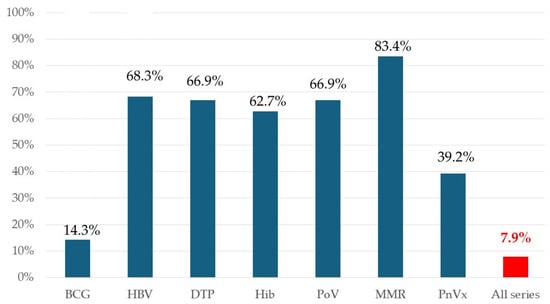
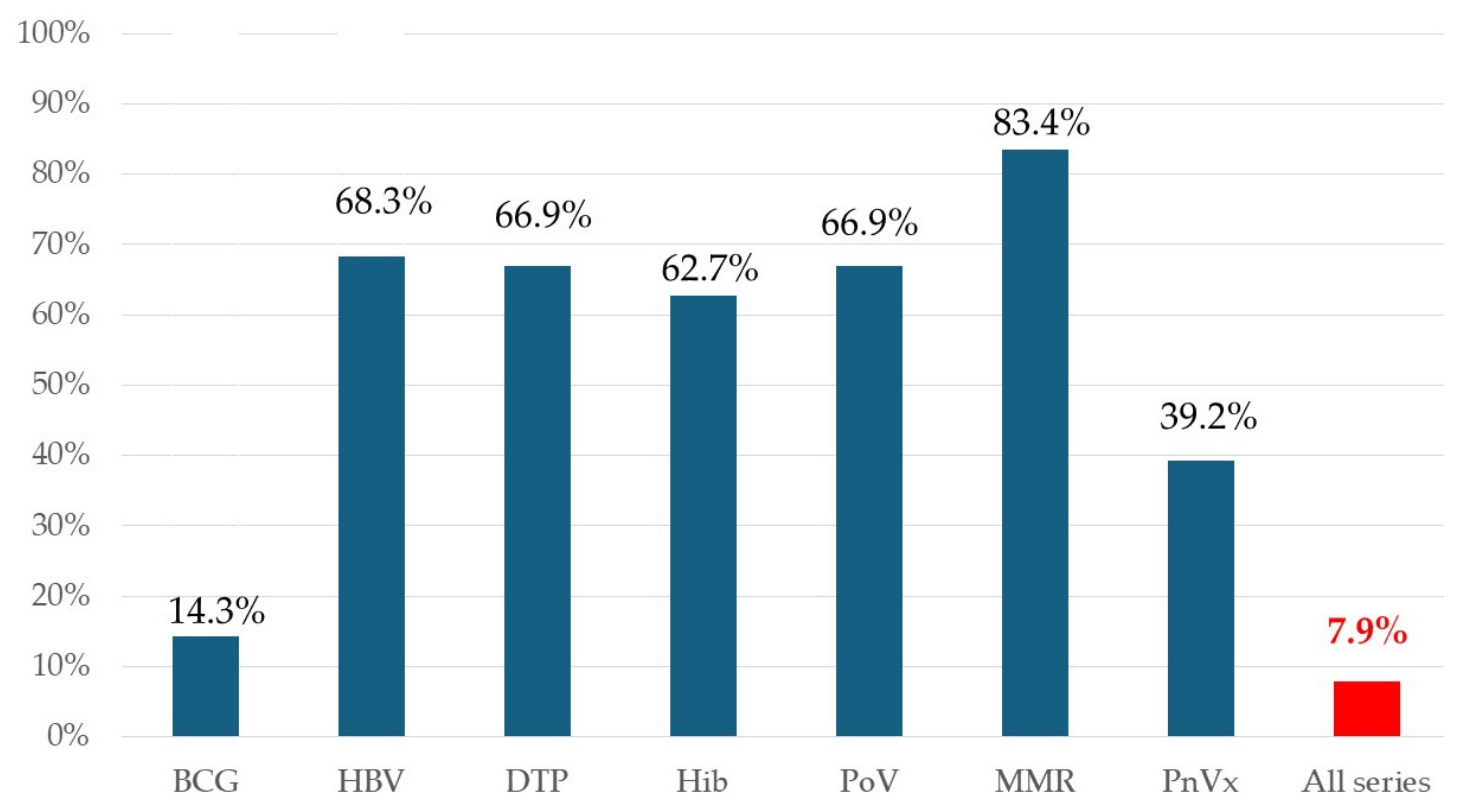
As a sensitivity analysis, vaccination was additionally assessed at the vaccine-series level, with series completion defined as receipt of all doses eligible according to the applicable birth-cohort immunization schedule. Series completion varied substantially across vaccines, with the lowest completion observed for BCG and the highest for MMR. Overall, only 11 of 139 children (7.9%) had completed all eligible vaccine series, whereas 17 (12.2%) had not completed any vaccine series (Figure 3).
Figure 3.
Completion of core vaccine series recommended during the first year of life.
Differences in vaccination completion across the three birth cohorts were observed for AHB (p = 0.033), Hib (p = 0.005), and PCCV (p = 0.040). For hepatitis B, complete vaccination was more frequent in C2 and C3 than in C1 (80.4%, 78.6%, and 55.4%, respectively; global p = 0.033). These comparisons were considered exploratory, given the number of vaccine-specific comparisons and the absence of adjustment for multiple testing.
Descriptively, complete vaccination for BCG was more frequent in C3 (25.0%) than in C1 (15.4%) and C2 (4.35%), although the overall distribution also included children with incomplete or absent vaccination.
3.3. Measles Vaccination
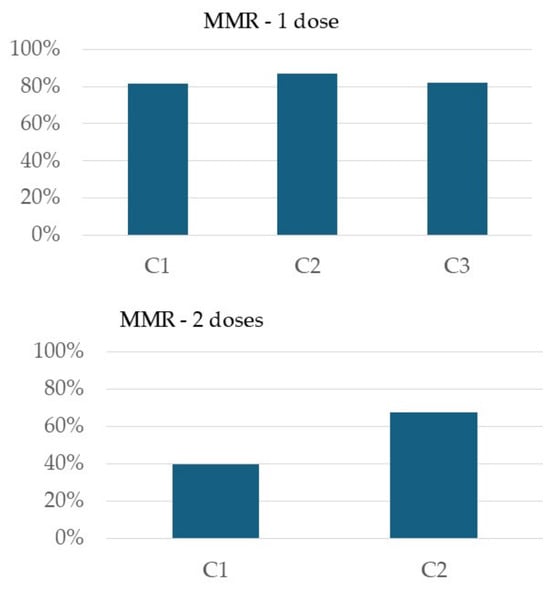
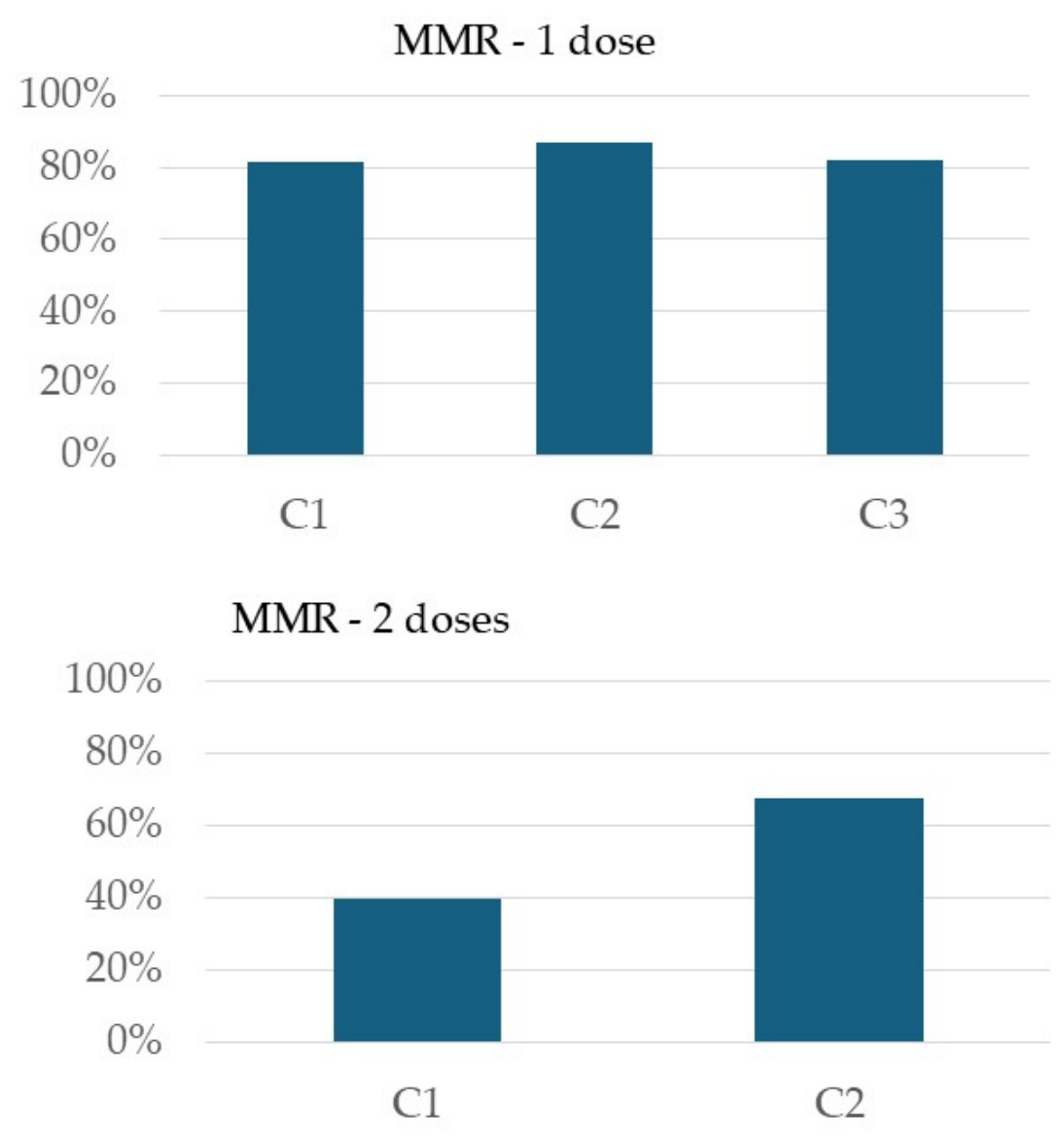
First-dose MMR coverage exceeded 80% in all three cohorts. No statistically significant difference in first-dose MMR vaccination was observed across the birth cohorts (global p = 0.723). In contrast, second-dose coverage was substantially higher in C2 than in C1 (31/46 [67.4%] vs. 26/65 [38.5%]; OR = 3.10, 95% CI: 1.42–6.76; global p = 0.004). For second-dose MMR vaccination, the analysis included only children who had reached the age of eligibility for the second MMR dose under the vaccination schedule applicable to their birth cohort (Figure 4).
Figure 4.
MMR vaccination coverage among HIV-exposed, uninfected children.
3.4. Overall Age-Eligible Vaccination Completeness
The AE-VCS ranged from 0% to 100%. The mean score was 60.4% (SD, 29.0%), while the median was 69.4% (IQR, 44.3–80.6%). No vaccine doses were recorded in six children.
Ninety-eight children (70.5%) had a low AE-VCS below 80%, 23 children (16.5%) had moderate values between 80% and 89%, and 18 children (13%) achieved a high AE-VCS of at least 90%. Complete age-eligible vaccination (AE-VCS = 100%) was documented in 11 children (7.9%). All 11 children were also classified as having completed the recommended core vaccinations during the first year of life, demonstrating complete concordance between the two vaccination-completion measures in this cohort. Overall, the AE-VCS demonstrated substantial heterogeneity in age-eligible vaccination completeness across the study population. While nearly one-third of children achieved at least 80% completeness, only a small proportion had received all vaccine doses recommended for their age according to the applicable national immunization schedule.
No statistically significant differences in AE-VCS were observed according to residence, maternal educational attainment, maternal membership in the pediatric HIV cohort, birth order, or birth cohort (Table 4).
Table 4.
Age-Eligible Vaccination Completeness Score according to selected demographic and birth-cohort characteristics.
During the initial analyses, multiple children from the same mother were identified, raising the possibility of within-mother clustering. After deduplication, 106 unique mothers were identified. A sensitivity analysis was therefore performed by retaining one child per mother, specifically the first child included in the study for each mother. For the two pairs of twins, the first-born twin was retained, resulting in a dataset of 106 children. In this restricted dataset, no statistically significant differences in age-eligible vaccination completeness were observed according to birth cohort (p = 0.359), maternal educational attainment (>12 vs. ≤12 years; p = 0.818), residence (urban vs. rural; p = 0.433), or maternal HIV transmission mode in the pediatric cohort (p = 0.942).
4. Discussion
4.1. Overall Vaccination Coverage and the Romanian Context
Vaccination coverage was suboptimal across the core childhood vaccines assessed. This finding is particularly relevant in the context of the broader decline in routine childhood immunization in Romania. According to WHO/UNICEF estimates, national measles-containing vaccine coverage decreased between 2018 and 2024 from 90% to 78% for the first dose and from 81% to 62% for the second dose, remaining well below the ≥95% coverage generally required to maintain population-level protection against measles [32,33]. More broadly, recent WHO and Romanian National Institute of Public Health assessments have identified insufficient reliable information, limited access, socioeconomic inequalities, and challenges in healthcare-provider communication as important barriers to childhood vaccination in Romania [33].
Evidence on vaccination completeness among HIV-exposed, uninfected (HEU) children remains limited, particularly from Eastern Europe. To our knowledge, data specifically describing vaccination completeness among HEU children in Romania are lacking. In this context, our findings provide locally derived evidence on documented vaccination coverage and completion in a population for which vaccination practices have received limited systematic evaluation. The available literature is also limited, with few studies specifically addressing vaccination uptake or completeness in HEU children; therefore, direct comparisons with previous reports should be interpreted cautiously. The limited available evidence, including previous reports from other settings [14,15], similarly suggests that vaccination gaps may occur among HEU children, although differences in healthcare systems, immunization schedules, study populations, and definitions of vaccination completeness limit direct comparison.
4.2. Overall Vaccination Completeness and Age-Eligible Vaccination Score
The most important finding of this study was the low overall completeness of age-eligible vaccination. The median AE-VCS was 69.4%, and 70.5% of children had an AE-VCS below 80%. Only 13.0% reached ≥90% completeness, while complete age-eligible vaccination (100%) was documented in only 7.9% of children. Thus, the vaccination gap affected a substantial proportion of the cohort rather than representing isolated cases of delayed or missed vaccination.
The AE-VCS should be interpreted as a study-specific measure of age-eligible vaccination completeness rather than as a direct equivalent of vaccine-specific population coverage. Its main advantage was that it accounted for the number of doses recommended for each child according to age and birth cohort. Each participant was evaluated against the Romanian national immunization schedule applicable to their year of birth and age at assessment, rather than retrospectively against a single contemporary schedule. This approach is particularly relevant for the 2005–2024 study period, during which the national immunization programme underwent several changes, including the introduction of combination vaccines and the incorporation of pneumococcal vaccination into the national programme [16,17,18,19,20,21,22,23,24,25,26,27,28].
The distribution of AE-VCS also suggested a shift toward lower completeness in the most recent birth cohort. C3 showed the lowest overall vaccination completeness, with 89.3% of children having an AE-VCS below 80% and none reaching ≥90%. However, this finding should be interpreted cautiously, as C3 comprised the youngest children, some of whom had not yet reached the age at which all recommended vaccine doses become age-eligible. The cohort also covered the 2020–2024 period during witch the COVID-19 pandemic may have disrupted routine immunization services. Because age-related eligibility and potential pandemic-related disruptions overlap in this cohort, their individual contributions cannot be distinguished from our data.
4.3. Vaccine-Specific Patterns
The low global completeness score was reflected across several individual vaccines, although important differences between vaccines and cohorts were observed.
4.3.1. BCG Vaccination
BCG vaccination had the lowest documented coverage, at 14.4%. This finding is particularly relevant in the context of the high tuberculosis burden in Romania, where 36% of mothers in our study population had a previous history of tuberculosis and the national tuberculosis notification rate remains substantially higher than the EU/EEA average [10,33]. BCG is a live-attenuated vaccine and is contraindicated in children with confirmed HIV infection because of the risk of disseminated BCG disease. Consequently, uncertainty regarding HIV infection status during infancy may have affected the timing of BCG vaccination in some HIV-exposed infants, particularly in earlier birth cohorts when access to early infant HIV diagnosis was more limited. Notably, none of the documented BCG doses was administered at birth, indicating that BCG vaccination was delayed in all children for whom vaccination was documented. Romanian recommendations concerning BCG vaccination of HIV-exposed infants evolved over the study period, and delayed vaccination could involve additional procedural requirements, including assessment of HIV status and, depending on the age at vaccination, tuberculin testing. These factors may have contributed to difficulties in timely catch-up vaccination but were not directly assessed in our study and therefore remain potential explanations rather than demonstrated causes of the low documented BCG coverage [10,34,35].
The low BCG coverage observed in our cohort may have multiple explanations, including incomplete documentation and, in some periods, the additional procedural requirements for BCG vaccination of HIV-exposed infants.
4.3.2. Measles–Mumps–Rubella Vaccination
Although first-dose MMR coverage exceeded 80% in all cohorts, second-dose documented coverage remained lower in C1 (38.5%) than in C2 (67.4%). This difference should be interpreted cautiously, as C1 included substantially older children, many of whom were beyond the routine age for administration of the second MMR dose. Differential loss to follow-up or incomplete vaccination documentation during school age may therefore have contributed to the observed cohort difference. Accordingly, the higher second-dose coverage in C2 should not be interpreted as evidence of improved vaccination access or practices in the later cohort. Historical differences in HIV diagnostic pathways and vaccination practices may also have contributed to differences between cohorts; however, these factors were not directly assessed and their contribution cannot be established from our data.
The observed MMR coverage remains concerning in the context of Romania’s national vaccination profile, where WHO/UNICEF estimated the coverage in 2024 at only 78% for the first dose and 62% for the second dose [36,37]. The vaccine-specific findings in our cohort therefore highlight persistent gaps in MMR vaccination, particularly regarding completion of the second dose. However, differences between birth cohorts should be interpreted descriptively, as age, follow-up, documentation completeness, and changes in vaccination practices across the study period cannot be disentangled in this cross-sectional analysis [32,38].
4.3.3. Other Core Vaccines
DTP-containing vaccine coverage ranged between 63.1% and 73.9%, while poliovirus vaccination ranged between 64.3% and 71.7% [32]. These values indicate substantial gaps in routine childhood immunization and remain below population-level targets for maintaining high protection against vaccine-preventable diseases. Differences between cohorts should be interpreted in the context of changes in the Romanian National Immunization Schedule, including the progressive use of combination vaccines and changes in poliovirus vaccine administration.
Pneumococcal vaccination showed a different temporal pattern, with higher coverage in the youngest cohort, consistent with the incorporation of pneumococcal vaccination into the Romanian National Immunization Programme in 2017 [21,32]. This pattern illustrates the importance of interpreting vaccine-specific coverage in relation to the recommendations and vaccine availability applicable during each child’s period of eligibility.
4.4. Potential Determinants of Immunization Gaps in Heu Children
The observed vaccination gaps were not significantly associated with the socio-demographic characteristics examined. Although this does not exclude underlying associations, the findings raise the possibility that factors beyond individual family characteristics may contribute to incomplete immunization. These may include broader changes in vaccination coverage in Romania, as well as factors related to the specific healthcare pathway of children perinatally exposed to HIV [39].
Children born to women living with HIV undergo specialized monitoring during the period required to definitively exclude HIV infection and may subsequently return predominantly to routine primary care. Although HEU children generally follow standard childhood vaccination recommendations, the clinical complexity surrounding HIV exposure may create uncertainty regarding the interpretation or timing of specific recommendations, particularly for live vaccines. Current international guidance emphasizes that most routine vaccines should be administered according to standard recommendations in HIV-exposed children, while specific considerations apply according to HIV status and immune function [32,36]. Thus, the issue may not be the absence of appropriate recommendations, but their consistent recognition and implementation across different levels of care.
The transition from specialized infectious-disease follow-up to primary care after definitive classification as HEU may therefore represent a potential point of discontinuity in preventive care. Our study did not directly assess provider knowledge, communication between specialists and family physicians, parental vaccine hesitancy, or reasons for missed vaccination; consequently, this interpretation should be regarded as a hypothesis generated by the observed findings rather than a demonstrated causal mechanism. Nevertheless, recent WHO/INSP research in Romania has identified communication and knowledge-related challenges among healthcare providers as relevant barriers to childhood vaccination [37,38,39], supporting the need to consider continuity and coordination of care as potentially modifiable factors.
From a public-health perspective, these findings support strengthening continuity of vaccination care rather than establishing a separate immunization programme for HEU children. A structured vaccination review at the time of definitive HEU classification could identify missed age-eligible doses and facilitate communication of an individualized catch-up plan to the primary-care provider. Targeted continuing education for primary-care professionals regarding vaccination recommendations for HIV-exposed children may further support consistent implementation of existing guidance. Such measures would complement broader vaccination-strengthening interventions already being implemented in Romania [35].
The potential contribution of HIV-related stigma to healthcare engagement also warrants further investigation. Although stigma was not assessed in the present study, the history of perinatal HIV exposure may remain relevant to families after HIV infection has been definitively excluded [40,41,42,43,44]. Ensuring that the transition from specialized care to routine primary care does not result in loss of vaccination follow-up, while avoiding unnecessary labelling or stigmatization, may therefore be an important component of long-term preventive care for HEU children.
4.5. Strengths and Limitations
A major strength of this study is the individualized assessment of vaccination completeness according to the Romanian national immunization schedule applicable to each child’s year of birth and age at assessment. This approach accounts for temporal changes in the national immunization programme and avoids applying a single contemporary schedule retrospectively to all cohorts. The AE-VCS additionally provided a standardized measure of age-eligible vaccination completeness across cohorts with different vaccination opportunities.
Several limitations should be considered. First, this was a retrospective, single-center study, and the findings may not be fully generalizable to HEU children receiving care in other regions of Romania. Second, the number of participants in some birth cohorts and vaccine-specific subgroups was limited, reducing the statistical power of some comparisons. Third, the study did not include an HIV-unexposed comparison group from the same geographic area and birth periods; therefore, the observed vaccination gaps cannot be directly compared with those of the general pediatric population, and no causal inference can be made regarding the contribution of perinatal HIV exposure to vaccination completeness. Fourth, the study did not directly assess the reasons for missed or delayed vaccination, including parental attitudes, access to vaccination services, vaccine availability, provider knowledge, communication, or continuity of care. Therefore, the potential mechanisms proposed in the Discussion remain hypotheses requiring prospective evaluation. Fifth, the birth cohorts differed in age, applicable vaccination schedules, opportunities for catch-up vaccination, registry availability, maternal characteristics, and exposure to different healthcare and epidemiological contexts, including the COVID-19 pandemic in the youngest cohort. These differences make age, period, and cohort effects difficult to disentangle; therefore, cohort-specific findings should be interpreted descriptively rather than as evidence of temporal trends or independent cohort effects. The AE-VCS is an unweighted measure and may therefore mask clinically relevant gaps in specific vaccine series. Vaccine-specific and series-completion analyses were consequently considered alongside the overall score. Finally, although AE-VCS provides a useful, standardized measure within this study, it is a study-specific composite indicator and has not yet been externally validated or directly compared with established population-level vaccination indicators.
5. Conclusions
Routine childhood vaccination among HIV-exposed uninfected children born to mothers living with HIV in Romania was suboptimal, with incomplete immunization affecting both overall vaccination status and several individual vaccines. Vaccination completeness varied across birth cohorts, reflecting, in part, differences in the national immunization schedules applicable during the study period, while substantial gaps were observed for specific vaccines and vaccine series.
The observed vaccination gaps were not consistently explained by the demographic characteristics assessed, suggesting that incomplete vaccination may represent a broader and potentially generalized issue within this population rather than one restricted to specific demographic subgroups. Although the youngest birth cohort showed a particularly unfavorable vaccination profile for several vaccines, the absence of a statistically significant difference in overall AE-VCS across cohorts argues against interpreting these findings as evidence of a temporal or cohort effect. Given the limited evidence available for this population in Romania, these findings highlight the need for systematic vaccination assessment throughout the follow-up of HEU children. Vaccination status could be reviewed at the time of confirmation of HIV-uninfected status and subsequently at regular intervals, with early identification of missed or incomplete doses and timely catch-up vaccination. Strengthening routine vaccination monitoring and timely catch-up interventions may therefore be particularly important in this vulnerable population.
These findings support the integration of systematic vaccination assessment into the long-term follow-up of HIV-exposed uninfected children, including regular verification of vaccination records, early identification of missed or incomplete doses, and timely catch-up vaccination. Closer coordination between HIV/PMTCT services, primary healthcare providers, and vaccination services may help improve vaccination completeness and reduce gaps in protection against vaccine-preventable diseases in this vulnerable population.
Author Contributions
Conceptualization, M.A. and A.G.; methodology, M.A., C.-V.G., C.P.-C. and I.-M.D.; software, P.N. and C.P.-C.; validation, I.-M.D. and P.N.; formal analysis, A.G.; investigation, A.G., M.A. and P.N.; resources, C.-V.G. and C.P.-C.; data curation, I.-M.D.; writing—original draft preparation, A.G., C.-V.G., C.P.-C. and P.N.; writing—review and editing, M.A. and I.-M.D.; visualization, A.G., C.-V.G., C.P.-C., P.N., I.-M.D. and M.A.; supervision, M.A.; project administration, C.-V.G., M.A. and A.G. All authors have read and agreed to the published version of the manuscript.
Funding
The Article Processing Charge (APC) for this publication was supported by “Dunarea de Jos” University of Galați.
Institutional Review Board Statement
The study was conducted in accordance with the Declaration of Helsinki, and approved by the Ethics Committee of the Clinical Hospital for Infectious Diseases Galați Approval No. 45, dated 23 March 2026.
Informed Consent Statement
Patient consent was waived due to the retrospective design of the study.
Data Availability Statement
The data supporting the findings of this study are not publicly available due to privacy, ethical, and confidentiality restrictions. The dataset contains individual-level clinical and vaccination information and cannot be shared publicly.
Acknowledgments
The authors gratefully acknowledge the “Dunarea de Jos” University of Galați, Romania, for support of academic research and scientific publication.
Conflicts of Interest
The authors declare no conflicts of interest.
Abbreviations
The following abbreviations are used in this manuscript:
| AE-VCS | Age-Eligible Vaccination Completeness Score |
| ART | Antiretroviral Therapy |
| BCG | Bacillus Calmette–Guérin |
| dT | Diphtheria-Tetanus |
| DTaP | Diphtheria, Tetanus, and acellular Pertussis |
| DTwP | Diphtheria, Tetanus, and Whole-cell Pertussis |
| EU | European Union |
| EEA | European Economic Area |
| HEU | HIV-Exposed Uninfected |
| HUU | HIV-Unexposed Uninfected |
| AHB | HepB vaccine |
| Hib | Haemophilus influenzae type b |
| HIV | Human Immunodeficiency Virus |
| INSP | National Institute of Public Health |
| IPV | Inactivated Polio Vaccine |
| IQR | Interquartile Range |
| ISCED | International Standard Classification of Education |
| MMR | Measles, Mumps, and Rubella |
| PV | Polio Vaccine |
| PMTCT | Prevention of Mother-to-Child Transmission |
| PCCV | Pneumococcal Conjugate Vaccine |
| RENV | National Electronic Vaccination Registry |
| RNA | Ribonucleic Acid |
| UNICEF | United Nations Children’s Fund |
| WHO | World Health Organization |
| XLSTAT | Excel Statistics |
Appendix A
Table A1.
Birth-cohort matrix of age-eligible vaccine doses included in the AE-VCS.
Figure A1.
Flow diagram of the study population.
References
- World Health Organization. Immunization Agenda 2030 (Essential Programme on Immunization): Mid-Term Review 2025; World Health Organization: Geneva, Switzerland, 2025; Available online: https://www.immunizationagenda2030.org/ (accessed on 31 July 2026).
- Salvi, M.; Fioretti, B.; Alberti, M.; Scarvaglieri, I.; Arsuffi, S.; Tiecco, G.; Castelli, F.; Quiros-Roldan, E. Understanding HIV-Exposed Uninfected Children: A Narrative Review. Viruses 2025, 17, 442. [Google Scholar] [CrossRef] [Scilit] [PubMed]
- Wedderburn, C.J.; Musiime, G.M.; McHenry, M.S. Care of the Child Perinatally Exposed to Human Immunodeficiency Virus. Clin. Perinatol. 2024, 51, 881–894. [Google Scholar] [CrossRef] [Scilit] [PubMed]
- Parnell, A.; Lopez, E.; Moorhouse, M.; Hutto, C.; Powis, K.M.; Puga, A.M. Health Disparities Among Children Who Are HIV-Exposed but Without HIV: A Narrative Literature Review and Call to Action for Further Research. Cureus 2025, 17, e99628. [Google Scholar] [CrossRef] [Scilit] [PubMed]
- Slogrove, A.L.; Powis, K.M.; Johnson, L.F.; Stover, J.; Mahy, M. Estimates of the global population of children who are HIV-exposed and uninfected, 2000–2018: A modelling study. Lancet Glob. Health 2020, 8, e67–e75. [Google Scholar] [CrossRef] [Scilit] [PubMed]
- World Health Organization. WHO Updated Recommendations on HIV Clinical Management: Recommendations for a Public Health Approach. 2025. Available online: https://www.ncbi.nlm.nih.gov/books/NBK620317/ (accessed on 12 June 2026).
- Adetokunboh, O.O.; Ndwandwe, D.; Awotiwon, A.; Uthman, O.A.; Wiysonge, C.S. Vaccination among HIV-infected, HIV-exposed uninfected and HIV-uninfected children: A systematic review and meta-analysis of evidence related to vaccine efficacy and effectiveness. Hum. Vaccines Immunother. 2019, 15, 2578–2589. [Google Scholar] [CrossRef] [Scilit] [PubMed]
- Kallings, L.O. The first postmodern pandemic: 25 years of HIV/AIDS. J. Intern. Med. 2008, 263, 218–243. [Google Scholar] [CrossRef] [Scilit] [PubMed]
- Romanian Government. Decision No. 1446/2022 Approving the National Strategy for the Surveillance, Control, and Prevention of HIV/AIDS Cases for the Period 2022–2030. Official Gazette of Romania (Monitorul Oficial al României), Part I, No. 1205 bis, 15 December 2022. Available online: https://legislatie.just.ro/Public/DetaliiDocumentAfis/262842 (accessed on 25 August 2026).
- Săndulescu, O.; Streinu-Cercel, A.; Mărdărescu, M.; Oprea, C.; Dorobanţu, M.; Ismail, G.; Reghina, A.D.; Chirilă, O.; Group, E.C. Consensus statement: Updated recommendations for the interdisciplinary management of people living with HIV in Romania. Germs 2025, 15, 221–241. [Google Scholar] [CrossRef] [Scilit] [PubMed]
- European Centre for Disease Prevention and Control. Vaccine Effectiveness, Burden and Impact Studies (VEBIS). Available online: https://www.ecdc.europa.eu/en/infectious-disease-topics/related-public-health-topics/immunisation-and-vaccines/vaccine-0 (accessed on 12 June 2026).
- Carter, A.; Msemburi, W.; Sim, S.Y.; Gaythorpe, K.A.M.; Lambach, P.; Lindstrand, A.; Hutubessy, R. Modeling the impact of vaccination for the immunization Agenda 2030: Deaths averted due to vaccination against 14 pathogens in 194 countries from 2021 to 2030. Vaccine 2024, 42, S28–S37. [Google Scholar] [CrossRef] [Scilit] [PubMed]
- Dascalu, S. Measles Epidemics in Romania: Lessons for Public Health and Future Policy. Front. Public Health 2019, 7, 98. [Google Scholar] [CrossRef] [Scilit] [PubMed]
- Vlad, D.A.; Mărdărescu, M.; Petre, C.; Neagu-Drăghicenoiu, R.; Ungurianu, R.; Petrea, S.; Tudor, A.M.; Cibea, A. Immunizations in children exposed perinatally to HIV—From theory to practice. BMC Infect. Dis. 2014, 14, P2. [Google Scholar] [CrossRef] [Scilit]
- Succi, R.C.M.; Krauss, M.R.; Harris, D.R.; Machado, D.M.; de Moraes-Pinto, M.I.; Mussi-Pinhata, M.M.; Pavia Ruz, N.; Pierre, R.B.; Kolevic Roca, L.A.; Joao, E.; et al. Immunity After Childhood Vaccinations in Perinatally HIV-exposed Children with and without HIV Infection in Latin America. Pediatr. Infect. Dis. J. 2018, 37, 304–309. [Google Scholar] [CrossRef] [Scilit] [PubMed]
- Ministry of Health of Romania. Order No. 10 of 12 January 2005 Approving the Implementation of Health Programs and Sub-Programs Financed from the State Budget in 2005. Official Gazette of Romania, Part I, No. 61, 18 January 2005. Available online: https://legislatie.just.ro/Public/DetaliiDocument/71512 (accessed on 5 August 2026).
- Ministry of Health of Romania. Order No. 86 of 6 February 2006 Approves the Implementation of Health Programs and Sub-Programs Financed by the State Budget in 2006. Official Gazette of Romania, Part I, No. 174, 23 February 2006. Available online: https://legislatie.just.ro/Public/DetaliiDocument/69259 (accessed on 5 August 2026).
- Ministry of Public Health of Romania; National Health Insurance House. Order No. 574/269 of 31 March 2008 Approving the Technical Norms for the Implementation of National Health Programs in 2008. Official Gazette of Romania, Part I, No. 258, 2 April 2008. Available online: https://legislatie.just.ro/Public/DetaliiDocument/90994 (accessed on 5 August 2026).
- Ministry of Public Health; National Health Insurance House. Order No. 1612/670 of 23 September 2008 Amending and Supplementing Order No. 574/269 of 31 March 2008 Approving the Technical Norms for the Implementation of National Health Programs in 2008. Official Gazette of Romania, Part I, No. 712, 20 October 2008. Available online: https://legislatie.just.ro/Public/DetaliiDocument/98222 (accessed on 5 August 2026).
- Ministry of Health of Romania. Order No. 532 of 17 April 2013 Amending and Supplementing the Technical Norms for the Implementation of National Public Health Programs for 2013 and 2014, Approved by Order No. 422/2013. Official Gazette of Romania, Part I, No. 234, 23 April 2013. Available online: https://legislatie.just.ro/Public/DetaliiDocument/153695 (accessed on 5 August 2026).
- Ministry of Health of Romania. Order No. 377 of 30 March 2017 Approving the Technical Norms for the Implementation of National Public Health Programs for 2017 and 2018. Official Gazette of Romania, Part I, No. 223 and 223 bis, 31 March 2017. Available online: https://legislatie.just.ro/Public/DetaliiDocument/196484 (accessed on 5 August 2026).
- Ministry of Health of Romania. Order No. 964 of 31 March 2022 Approving the Technical Norms for the Implementation of National Public Health Programs. Official Gazette of Romania, Part I, No. 320 and 320 bis, 1 April 2022. Available online: https://legislatie.just.ro/Public/DetaliiDocument/255191 (accessed on 5 August 2026).
- Ministry of Health of Romania. Order No. 3975 of 29 December 2022 Amending and Supplementing the Technical Norms for the Implementation of National Public Health Programs, Approved by Order No. 964/2022. Official Gazette of Romania, Part I, No. 1277, 30 December 2022. Available online: https://legislatie.just.ro/Public/DetaliiDocument/263368 (accessed on 5 August 2026).
- Radoi, C.L.; Zlatian, O.; Balasoiu, M.; Giubelan, L.; Stoian, A.C.; Dragonu, L.; Neacsu, A.; Iliescu, D.G. Seroprevalence of Infections with TORCH Agents in Romania: A Systematic Review. Microorganisms 2023, 11, 2120. [Google Scholar] [CrossRef] [Scilit] [PubMed]
- Stanescu, A.; Ruta, S.M.; Cernescu, C.; Pistol, A. Suboptimal MMR Vaccination Coverages-A Constant Challenge for Measles Elimination in Romania. Vaccines 2024, 12, 107. [Google Scholar] [CrossRef] [Scilit] [PubMed]
- Baicus, A. History of polio vaccination. World J. Virol. 2012, 1, 108–114. [Google Scholar] [CrossRef] [Scilit] [PubMed]
- World Health Organization. Haemophilus influenzae type b (Hib) vaccines: WHO position paper. Wkly. Epidemiol. Rec. 2013, 88, 413–428. Available online: https://iris.who.int/server/api/core/bitstreams/25c18109-94c2-4e85-a0d8-c2af32b74ffb/content (accessed on 5 August 2026). [PubMed]
- World Health Organization. Pneumococcal conjugate vaccines in infants and children under 5 years of age: WHO position paper. Wkly. Epidemiol. Rec. 2019, 94, 85–104. Available online: https://www.who.int/publications/i/item/10665-310968 (accessed on 5 August 2026).
- Slogrove, A.L.; Burmen, B.; Davies, M.A.; Edmonds, A.; Abrams, E.J.; Chadwick, E.G.; Goetghebuer, T.; Mofenson, L.M.; E Paul, M.E.; Thorne, C.; et al. Standardized Definitions of In Utero Human Immunodeficiency Virus and Antiretroviral Drug Exposure Among Children. Clin. Infect. Dis. 2021, 75, 347–355. [Google Scholar] [CrossRef] [Scilit] [PubMed]
- Seng, R.; Frange, P.; Faye, A.; Dollfus, C.; le Chenadec, J.; Boufassa, F.; Essat, A.; Goetghebuer, T.; Arezes, E.; Avettand-Fènoël, V.; et al. Immunovirological status in people with perinatal and adult-acquired HIV-1 infection: A multi-cohort analysis from France. Lancet Reg. Health Eur. 2024, 40, 100885. [Google Scholar] [CrossRef] [Scilit] [PubMed]
- UNESCO Institute for Statistics. International Standard Classification of Education (ISCED) 2011; UNESCO Institute for Statistics: Montreal, QC, Canada, 2012; ISBN 978-92-9189-123-8. Available online: https://uis.unesco.org/sites/default/files/documents/international-standard-classification-of-education-isced-2011-en.pdf (accessed on 1 August 2026).
- World Health Organization Regional Office for Europe. European Immunization Agenda 2030: Technical Progress Report 2023; WHO Regional Office for Europe: Copenhagen, Denmark, 2024; Available online: https://www.who.int/europe/publications/i/item/WHO-EURO-2025-12355-52127-80032 (accessed on 1 August 2026).
- Ministry of Health of Romania; National Institute of Public Health. Situation Analysis: National Vaccination Promotion Campaign 2025; Ministry of Health: Bucharest, Romania, 2025; Available online: https://ms.ro/ro/informatii-de-interes-public/campanii-informare-educare-comunicare/analiza-de-situatie-vaccinare-2025/ (accessed on 1 July 2026).
- European Centre for Disease Prevention and Control; World Health Organization Regional Office for Europe. Tuberculosis Surveillance and Monitoring in Europe 2026–2024 Data; ECDC: Stockholm, Sweden, 2026; Available online: https://www.ecdc.europa.eu/en/publications-data/tuberculosis-surveillance-and-monitoring-europe-2026-2024-data (accessed on 1 July 2026).
- Campbell, J.I.; Vachharajani, O.; Dubois, M.M.; Martinez, L.; Christos, P.J.; Herlihy, J.M.; Jenkins, H.E.; Horsburgh, C.R.; Jacobson, K.R.; Powis, K.M. Tuberculosis in children who are HIV-exposed uninfected. AIDS 2026, 40, 1517–1529. [Google Scholar] [CrossRef] [Scilit] [PubMed]
- Smith, C.; Huo, Y.; Patel, K.; Fetters, K.; Hegemann, S.; Burchett, S.; Van Dyke, R.; Weinberg, A. Immunologic and Virologic Factors Associated With Hospitalization in Human Immunodeficiency Virus-Exposed, Uninfected Infants in the United States. Clin. Infect. Dis. 2021, 73, 1089–1096. [Google Scholar] [CrossRef] [Scilit] [PubMed]
- World Health Organization Regional Office for Europe. Romania Increases Vaccination Coverage for Measles, Mumps and Rubella. Available online: https://www.who.int/europe/news/item/26-06-2026-romania-increases-vaccination-coverage-for-measles--mumps-and-rubella (accessed on 29 June 2026).
- National Institutes of Health. Guidelines for the Prevention and Treatment of Opportunistic Infections in Children with and Exposed to HIV: Immunizations for Preventable Diseases. Available online: https://clinicalinfo.hiv.gov/en/guidelines/hiv-clinical-guidelines-pediatric-opportunistic-infections/immunizations-for-preventable-diseases (accessed on 5 June 2026).
- World Health Organization. The Immunological Basis for Immunization Series: Module 7: Measles: Update 2020; World Health Organization: Geneva, Switzerland, 2020; Available online: https://iris.who.int/handle/10665/331533 (accessed on 12 May 2026).
- Ramokolo, V.; Goga, A.E.; Slogrove, A.L.; Powis, K.M. Unmasking the vulnerabilities of uninfected children exposed to HIV. BMJ 2019, 366, l4479. [Google Scholar] [CrossRef] [Scilit] [PubMed]
- Prendergast, A.J.; Evans, C. Children who are HIV-exposed and uninfected: Evidence for action. AIDS 2023, 37, 205–215. [Google Scholar] [CrossRef] [Scilit] [PubMed]
- Mensi, M.; Ahishakiye, A.; Journeay, K.; Baiocco, R.; Betancourt, T.S.; Paganotti, G.M. HIV-Exposed Uninfected Children: A Systematic Review on Psychological Well-Being and Association with School Performances in Africa. Int. J. Environ. Res. Public Health 2023, 20, 2499. [Google Scholar] [CrossRef] [Scilit] [PubMed]
- Robinson, A.; Cooney, A.; Fassbender, C.; McGovern, D.P. Examining the Relationship Between HIV-Related Stigma and the Health and Wellbeing of Children and Adolescents Living with HIV: A Systematic Review. AIDS Behav. 2023, 27, 3133–3149. [Google Scholar] [CrossRef] [Scilit] [PubMed]
- Davtyan, M.; Kacanek, D.; Lee, J.; Berman, C.; Chadwick, E.G.; Smith, R.; Salomon, L.; Frederick, T.; Pediatric HIV/AIDS Cohort Study. The role of internalised HIV stigma in disclosure of maternal HIV serostatus to children perinatally HIV-exposed but uninfected: A prospective study in the United States. J. Int. AIDS Soc. 2023, 26, e26167. [Google Scholar] [CrossRef] [Scilit] [PubMed]

Disclaimer/Publisher’s Note: The statements, opinions and data contained in all publications are solely those of the individual author(s) and contributor(s) and not of MDPI and/or the editor(s). MDPI and/or the editor(s) disclaim responsibility for any injury to people or property resulting from any ideas, methods, instructions or products referred to in the content. |
© 2026 by the authors. Licensee MDPI, Basel, Switzerland. This article is an open access article distributed under the terms and conditions of the Creative Commons Attribution (CC BY) license.