


1. Introduction
Polyphenols are a large class of secondary metabolites abundant in fruits and vegetables, renowned for their antioxidant and anti-inflammatory activities [1]. They encompass flavonoids, phenolic acids, stilbenes, lignans, and tannins, each with distinct structural features and biological actions. Dietary polyphenols can modulate the Nrf2/ARE pathway, inhibit NF-κB signalling, and interact with gut microbiota in a bidirectional manner: they promote beneficial bacteria (Bifidobacterium, Lactobacillus, Akkermansia) and reduce the Firmicutes/Bacteroidetes ratio, while gut microbes convert polyphenols into bioactive metabolites (such as urolithins, short-chain fatty acids) that enhance host antioxidant defences [2,3]. This interplay positions polyphenols as promising nutritional interventions for intestinal inflammation, particularly ulcerative colitis (UC), which affects about 5 million people globally [4]. The six original articles collected in this Special Issue illustrate the remarkable diversity of antioxidant phytochemicals from fruits and vegetables, ranging from phenanthrenes in yam peel and carotenoids in Rubus fruits to anthocyanins in blueberries and polyphenols in artichoke and fig wastes [5,6,7,8,9,10]. The articles collectively reinforce the central theme that dietary plant compounds offer multifaceted strategies for managing oxidative stress and inflammation.
2. Classification and General Mechanisms
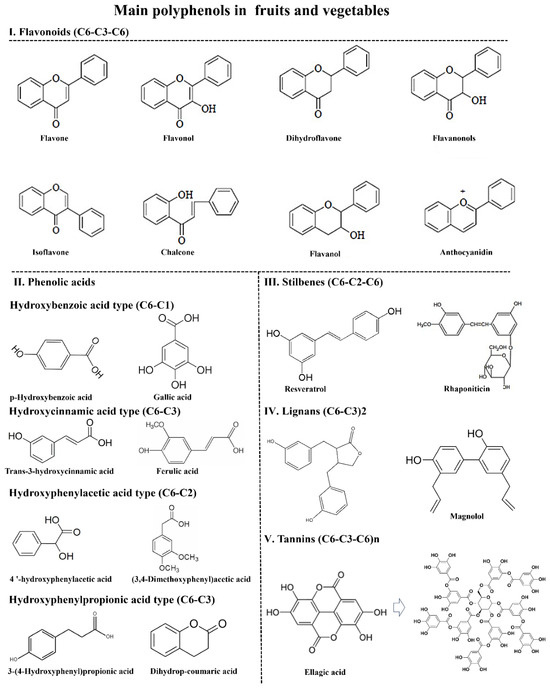
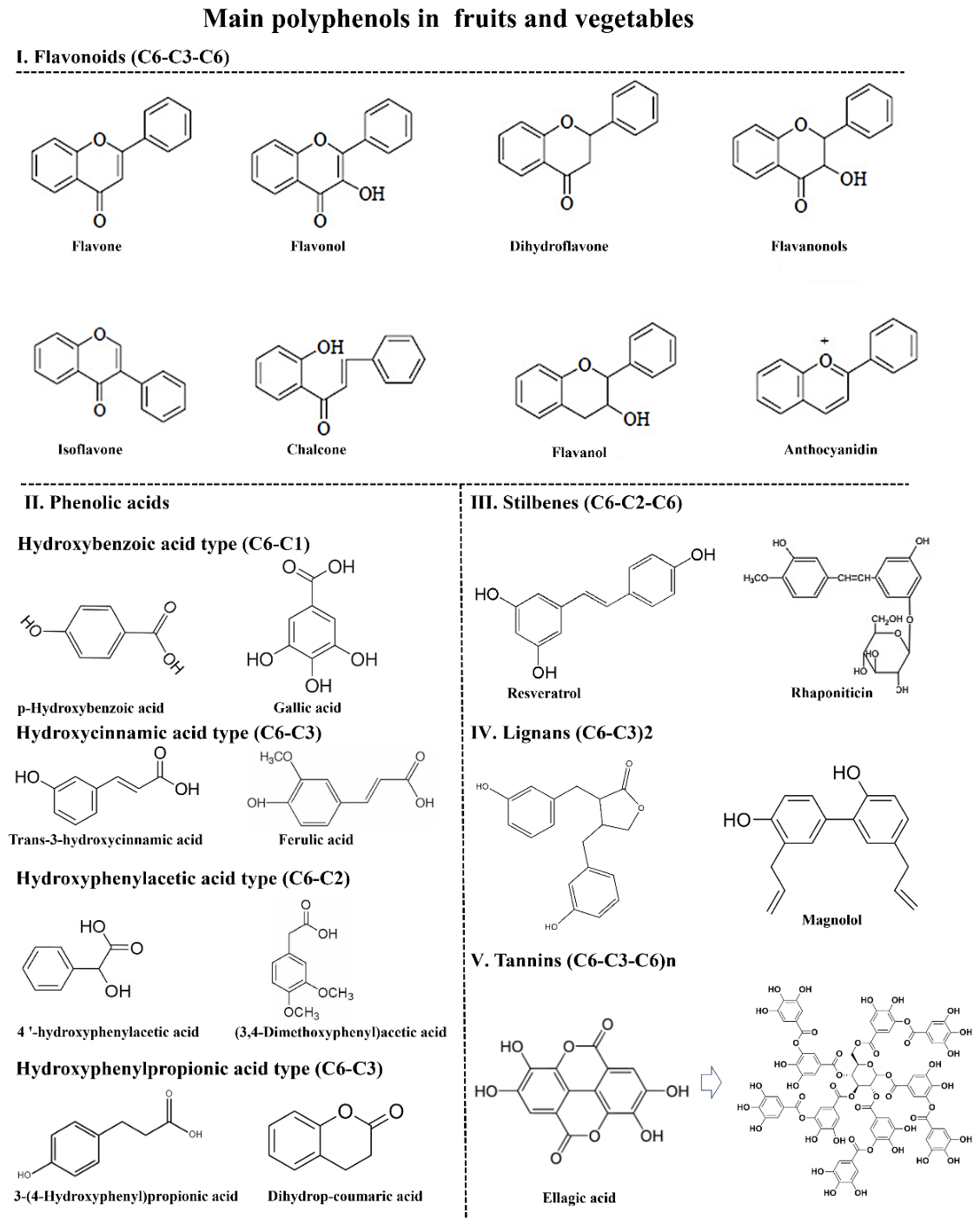
Flavonoids (such as anthocyanins and flavonols) feature a C6-C3-C6 skeleton and inhibit intestinal inflammation by strengthening tight junctions, scavenging ROS, and blocking NF-κB and MAPK pathways [10,11]. Phenolic acids (hydroxybenzoic and hydroxycinnamic derivatives) suppress NF-κB/MAPK, enhance barrier proteins, and modulate microbiota [12]. Stilbenes (such as resveratrol) activate SIRT1/Nrf2, inhibit COX-2, and reinforce epithelial integrity [13]. Lignans are metabolised by gut microbiota into enterolignans that modulate NF-κB and cytokine production [14]. Tannins (hydrolysable and condensed) exhibit strong metal-chelating and protein-precipitating properties, alleviating colitis via AMPK/NF-κB/STAT3 pathway inhibition and microbial modulation [15]. Despite these shared mechanisms, each subclass shows compound-specific efficacy, which is influenced by hydroxylation patterns, glycosylation, and molecular weight (Figure 1).
Figure 1.
Classification and structure of different polyphenol subtypes in fruits and vegetables.
3. Effects and Mechanisms in Intestinal Inflammation
3.1. Flavonoids
Flavonoids like cyanidin-3-O-glucoside (C3G) and dihydroquercetin attenuate DSS-induced colitis by restoring microbial diversity, increasing SCFA production, and inhibiting the PI3K-Akt pathway [16]. Epigallocatechin gallate reduces inflammatory cytokines in a microbiota-dependent manner [17]. Icariin suppresses Th1/Th17 differentiation, while corylin modulates the gut–brain axis [18,19]. Barrier protection is achieved through the upregulation of ZO-1 and occludin via NADPH oxidase downregulation. Importantly, the work of Ma et al. [7] in this Special Issue demonstrates that C3G also exerts neuroprotective effects against amyloid-β-induced apoptosis by regulating Ca2+ homeostasis and mitochondrial function, underscoring the multi-target potential of flavonoids beyond the gut.
3.2. Phenolic Acids
Gallic acid, chlorogenic acid (CGA), and protocatechuic acid remodel the microbiota by enriching Lactobacillus and Akkermansia while suppressing pathogenic Enterobacteriaceae [20,21,22]. They restore goblet cells and MUC2 expression, and suppress caspase-dependent apoptosis via TXNIP/NLRP3 inhibition [23]. Quinic acid dually targets TLR4/NF-κB and iNOS/NO pathways [24,25]. The Special Issue article by Laghezza Masci et al. [8] shows that artichoke by-product extracts, rich in phenolic acids, reduce ROS and restore GSH in neuronal cells and improve survival in Drosophila, highlighting the broader antioxidant capacity of these compounds.
3.3. Stilbenes
Resveratrol and pterostilbene enrich Akkermansia and Bacteroides, activate Nrf2/HO-1, and enhance MUC2 retention [25,26]. However, their therapeutic window is narrow; high doses may exert pro-oxidant effects. The extraction of polyphenols from discarded fig fruits using deep eutectic solvents (DESs), as reported by Zhang et al. [9] in this issue, provides a green approach to obtain stilbene-rich extracts with high antioxidant and enzyme-inhibitory activities, offering a sustainable source for future anti-inflammatory applications.
3.4. Lignans
Lignans such as secoisolariciresinol diglucoside (SDG) and sesamin inhibit NF-κB and MAPK, reduce IL-6 and TNF-α, and prevent gut barrier damage by enhancing occludin and claudin-1 [27,28]. Their bioactivity depends heavily on microbial conversion; germ-free animals show negligible effects. The carotenoid-rich Rubus fruits studied by Piechowiak et al. [6] in this issue, although not lignans, exemplify how regional and genetic diversity influence phytochemical profiles and antioxidant capacity, reinforcing the need for tailored dietary interventions.
3.5. Tannins
Persimmon-derived condensed tannins and punicalagin from pomegranate mitigate colitis by modulating Bacteroides populations, suppressing leukocyte trafficking, and activating AMPK/NF-κB/STAT3 signalling [29,30]. Microbial metabolites like urolithin A enhance barrier integrity via AhR-Nrf2-mediated tight junction upregulation. The Special Issue also features the work of Kim et al. [5] on yam peel phenanthrenes, which, though focused on skin protection, demonstrates that tannin-like polyphenols from waste streams possess potent antioxidant and MMP-inhibitory activities, suggesting their potential in inflammatory conditions beyond the intestine.
4. Strategies to Improve Bioavailability
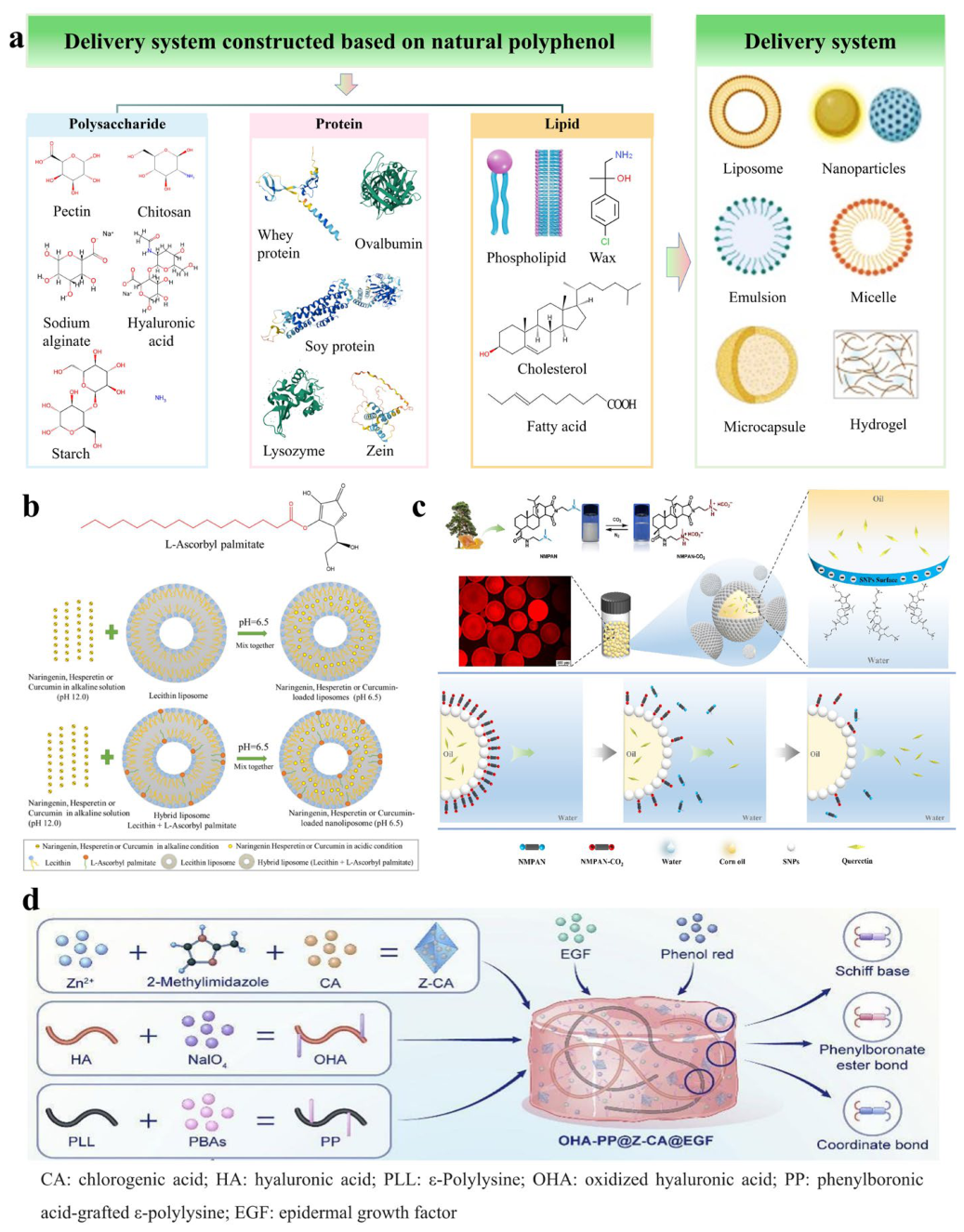
Poor solubility, rapid metabolism, and instability in the GI tract limit polyphenol efficacy. Several emerging technologies address these challenges (Figure 2).
Delivery systems: Nano-liposomes, Pickering emulsions, and protein/polysaccharide complexes enhance solubility and enable targeted colonic release [31,32]. Curcumin-loaded high internal phase emulsions have shown superior anti-colitis effects [33].
Structure engineering: Covalent conjugation with proteins (such as pea 7S protein-C3G) or polysaccharides (quercetin–carboxymethyl starch) improves digestive stability by >30% [34,35].
Microbiota modulation: Co-administration with probiotics (Lactobacillus, Bifidobacterium) enhances polyphenol biotransformation; for instance, B. animalis protects proanthocyanidins during digestion [36,37].
Processing optimisation: Non-thermal techniques (ultrasound, pulsed electric fields) and green solvents (DESs) increase bio-accessibility without degrading bioactive. The work by Zhang et al. [9] on the DES extraction of fig polyphenols and by Moura et al. [10,11] on the advanced processing of pearl millet grains exemplify how innovative technologies can preserve or even enhance antioxidant quality while reducing antinutritional factors.
Synthetic biology and precision nutrition: Engineered E. coli and Saccharomyces cerevisiae can produce high yields of flavonoids and stilbenes [38,39]. Personalised intake plans based on genomic and metabolomic data, combined with probiotic ratios, optimise utilisation for low absorbers [40].
Figure 2.
(a) Delivery systems constructed based on natural polyphenols; (b) molecular structure of l-ascorbyl palmitate and schematic illustration of the formation mechanism of naringenin, hesperetin, and curcumin loaded into a pure LAP hybrid liposome via a pH-driven method [31]; (c) quercetin Pickering emulsion; (d) chlorogenic acid-loaded nanocomposite hydrogel [41].
5. Innovation Potential and Safety Considerations
Polyphenols offer unique advantages over conventional immunosuppressants: they act as prebiotics, reinforce the epithelial barrier, and modulate multiple inflammatory pathways simultaneously. Nanoformulations and synergistic combinations with polysaccharides (such as Ganoderma lucidum) are being explored for functional foods tailored to IBD management [40,42,43]. However, high doses may provoke pro-oxidant effects, gastrointestinal irritation, or reproductive toxicity [44]. Resveratrol at ≥1000 mg/day can cause diarrhoea, while genistein and curcumin have shown negative effects on sperm motility and embryonic development in animal models [45,46]. Therefore, dose optimisation and long-term safety studies are essential. The six Special Issue articles collectively emphasise the importance of characterising both the bioactivity and potential toxicity of phytochemical extracts from various sources [5,6,7,8,9,10].
6. Conclusions and Future Perspectives
Polyphenols are versatile natural agents that mitigate intestinal inflammation through direct antioxidant actions, the modulation of gut microbiota, and the regulation of host signalling pathways (NF-κB, Nrf2, AMPK). Their structural diversity dictates specific mechanisms, yet common challenges such as low bioavailability and rapid metabolism can be overcome by advanced delivery systems, enzymatic modifications, green processing, and personalised probiotic combinations. The research presented in this Special Issue, from the valorisation of yam peel and artichoke wastes to the neuroprotective effects of C3G and the characterisation of carotenoids in Rubus fruits, illustrates the breadth of phytochemical activities and underscores the importance of sustainable sourcing and innovative technologies. Future work should prioritise well-designed clinical trials, integrate multi-omics approaches to identify responder profiles, and develop regulatory frameworks for standardised polyphenol-based functional foods. By bridging traditional natural product chemistry with cutting-edge biotechnology, polyphenols hold promise for the safer, multi-targeted management of inflammatory bowel diseases and beyond.
Data Availability Statement
No new data were created or analyzed in this study. Data sharing is not applicable to this article.
Conflicts of Interest
The author declares no conflicts of interest.
References
- Zhang, Q.; Xu, Y.; Bukvicki, D.; Peng, Y.; Li, F.; Zhang, Q.; Yan, J.; Lin, S.; Liu, S.; Qin, W. Phenolic compounds in dietary target the regulation of gut microbiota: Role in health and disease. Food Biosci. 2024, 62, 105107. [Google Scholar] [CrossRef] [Scilit]
- Zhou, M.; Johnston, L.J.; Wu, C.; Ma, X. Gut microbiota and its metabolites: Bridge of dietary nutrients and obesity-related diseases. Crit. Rev. Food Sci. Nutr. 2023, 63, 3236–3253. [Google Scholar] [CrossRef] [Scilit]
- Mithul Aravind, S.; Wichienchot, S.; Tsao, R.; Ramakrishnan, S.; Chakkaravarthi, S. Role of dietary polyphenols on gut microbiota, their metabolites and health benefits. Food Res. Int. 2021, 142, 110189. [Google Scholar] [CrossRef] [Scilit] [PubMed]
- Le Berre, C.; Honap, S.; Peyrin-Biroulet, L. Ulcerative colitis. Lancet 2023, 402, 571–584. [Google Scholar] [CrossRef] [Scilit] [PubMed]
- Kim, Y.H.; Kim, T.; Kim, J.; Tran, T.Y.N.; Hahn, D.; Kang, N.J. Skin-Protective Activities of Dioscorea batatas Decne Peel Extracts with Differential Phenanthrene Contents. Antioxidants 2026, 15, 733. [Google Scholar] [CrossRef] [Scilit] [PubMed]
- Adamczuk, N.; Krauze-Baranowska, M.; Milewska, M.; Kimel, K.; Migas, P. Determination of Carotenoids and Their Antioxidant Activity in Fruits of Selected Species from the Genus Rubus and Their Cultivars and Hybrids from Poland Versus Other Regions of the World. Antioxidants 2025, 14, 1438. [Google Scholar] [CrossRef] [Scilit] [PubMed]
- Ma, C.; Nie, Y.; Zhang, D.; Ran, L.; Xu, S.; Ran, X.; Huang, J.; Meng, L. Cyanidin-3-O-Glucoside Mitigates Amyloid-Beta (1–42)-Induced Apoptosis in SH-SY5Y Cells by Regulating Ca2+ Homeostasis and Inhibiting Mitochondrial Dysfunction. Antioxidants 2025, 14, 490. [Google Scholar] [CrossRef] [Scilit] [PubMed]
- Laghezza Masci, V.; Mezzani, I.; Alicandri, E.; Tomassi, W.; Paolacci, A.R.; Covino, S.; Vinciguerra, V.; Catalani, E.; Cervia, D.; Ciaffi, M.; et al. The Role of Extracts of Edible Parts and Production Wastes of Globe Artichoke (Cynara cardunculus L. var. scolymus (L.)) in Counteracting Oxidative Stress. Antioxidants 2025, 14, 116. [Google Scholar] [CrossRef] [Scilit] [PubMed]
- Zhang, Q.; Peng, Y.; Xu, Y.; Li, F.; Liu, S.; Bukvicki, D.; Zhang, Q.; Lin, S.; Wang, M.; Zhang, T.; et al. Extraction, Characterization, and In Vitro Biological Activity of Polyphenols from Discarded Young Fig Fruits Based on Deep Eutectic Solvents. Antioxidants 2024, 13, 1084. [Google Scholar] [CrossRef] [Scilit] [PubMed]
- Oliveira Moura, L.d.S.; Guimarães, R.d.C.A.; Inada, A.C.; Donadon, J.R.; Pott, A.; Ferreira, R.d.S.; Fernandes, C.D.P.; Costa, C.d.M.; Moura, F.d.S.; Freitas, K.d.C.; et al. Conventional and Advanced Processing Techniques and Their Effect on the Nutritional Quality and Antinutritional Factors of Pearl Millet Grains: The Impact on Metabolic Health. Antioxidants 2025, 14, 1460. [Google Scholar] [CrossRef] [Scilit] [PubMed]
- Gao, X.; Feng, X.; Hou, T.; Huang, W.; Ma, Z.; Zhang, D. The roles of flavonoids in the treatment of inflammatory bowel disease and extraintestinal manifestations: A review. Food Biosci. 2024, 62, 105431. [Google Scholar] [CrossRef] [Scilit]
- Xie, J.; Xiong, S.; Li, Y.; Xia, B.; Li, M.; Zhang, Z.; Shi, Z.; Peng, Q.; Li, C.; Lin, L.; et al. Phenolic acids from medicinal and edible homologous plants: A potential anti-inflammatory agent for inflammatory diseases. Front. Immunol. 2024, 15, 1345002. [Google Scholar] [CrossRef] [Scilit] [PubMed]
- Li, M.; Li, P.; Tang, R.; Lu, H. Resveratrol and its derivates improve inflammatory bowel disease by targeting gut microbiota and inflammatory signaling pathways. Food Sci. Hum. Wellness 2022, 11, 22–31. [Google Scholar] [CrossRef] [Scilit]
- Baldi, S.; Tristán Asensi, M.; Pallecchi, M.; Sofi, F.; Bartolucci, G.; Amedei, A. Interplay between Lignans and Gut Microbiota: Nutritional, Functional and Methodological Aspects. Molecules 2023, 28, 343. [Google Scholar] [CrossRef] [Scilit] [PubMed]
- Liu, H.; Li, J.; Yan, C.; Liu, J.; Zhao, D.; Li, S.; Xia, X. Punicalagin ameliorates DSS-induced colitis in mice through strengthening gut barrier, decreasing oxidative stress and downregulating inflammation via AMPK–NF–κB-STAT3 pathway. Food Biosci. 2024, 60, 104384. [Google Scholar] [CrossRef] [Scilit]
- Liu, T.; Fan, S.; Meng, P.; Ma, M.; Wang, Y.; Han, J.; Wu, Y.; Li, X.; Su, X.; Lu, C. Dietary Dihydroquercetin Alleviated Colitis via the Short-Chain Fatty Acids/miR-10a-5p/PI3K-Akt Signaling Pathway. J. Agric. Food Chem. 2024, 72, 23211–23223. [Google Scholar] [CrossRef] [Scilit] [PubMed]
- Wu, Z.; Huang, S.; Li, T.; Li, N.; Han, D.; Zhang, B.; Xu, Z.Z.; Zhang, S.; Pang, J.; Wang, S.; et al. Gut microbiota from green tea polyphenol-dosed mice improves intestinal epithelial homeostasis and ameliorates experimental colitis. Microbiome 2021, 9, 184. [Google Scholar] [CrossRef] [Scilit] [PubMed]
- Tao, F.; Qian, C.; Guo, W.; Luo, Q.; Xu, Q.; Sun, Y. Inhibition of Th1/Th17 responses via suppression of STAT1 and STAT3 activation contributes to the amelioration of murine experimental colitis by a natural flavonoid glucoside icariin. Biochem. Pharmacol. 2013, 85, 798–807. [Google Scholar] [CrossRef] [Scilit] [PubMed]
- Wang, Z.-J.; Chen, L.-H.; Xu, J.; Xu, Q.-X.; Xu, W.; Yang, X.-W. Corylin ameliorates chronic ulcerative colitis via regulating the gut–brain axis and promoting 5-hydroxytryptophan production in the colon. Phytomedicine 2023, 110, 154651. [Google Scholar] [CrossRef] [Scilit] [PubMed]
- Zhang, X.; Leng, Y.; Zhang, Q.; Yu, H.; Liao, Z.; Xia, J.; Ma, C.; Liu, K.; Zhang, Y.; Hong, Y.; et al. Gallic acid ameliorates colitis by modulating the Treg/Th17 balance via microbiota-derived secondary bile acids. Food Sci. Hum. Wellness 2025, 14, 9250235. [Google Scholar] [CrossRef] [Scilit]
- Xu, P.; Chen, S.; Fu, Q.; Zhu, S.; Wang, Z.; Li, J. Amelioration effects of chlorogenic acid on mice colitis: Anti-inflammatory and regulation of gut flora. Food Biosci. 2024, 61, 104942. [Google Scholar] [CrossRef] [Scilit]
- Yang, X.; Sun, X.; Zhou, F.; Xiao, S.; Zhong, L.; Hu, S.; Zhou, Z.; Li, L.; Tan, Y. Protocatechuic Acid Alleviates Dextran-Sulfate-Sodium-Induced Ulcerative Colitis in Mice via the Regulation of Intestinal Flora and Ferroptosis. Molecules 2023, 28, 3775. [Google Scholar] [CrossRef] [Scilit] [PubMed]
- Yu, S.; Qian, H.; Zhang, D.; Jiang, Z. Ferulic acid relieved ulcerative colitis by inhibiting the TXNIP/NLRP3 pathway in rats. Cell Biol. Int. 2023, 47, 417–427. [Google Scholar] [CrossRef] [Scilit] [PubMed]
- Ghasemi-Dehnoo, M.; Lorigooini, Z.; Amini-Khoei, H.; Sabzevary-Ghahfarokhi, M.; Rafieian-Kopaei, M. Quinic acid ameliorates ulcerative colitis in rats, through the inhibition of two TLR4-NF-κB and NF-κB-INOS-NO signaling pathways. Immun. Inflamm. Dis. 2023, 11, e926. [Google Scholar] [CrossRef] [Scilit] [PubMed]
- Yu, X.; Li, X.; Xu, Y.; Li, Y.; Zhou, Y.; Zhang, J.; Guo, L. Resveratrol ameliorates ulcerative colitis by upregulating Nrf2/HO-1 pathway activity: Integrating animal experiments and network pharmacology. Mol. Med. Rep. 2024, 29, 77. [Google Scholar] [CrossRef] [Scilit] [PubMed]
- Wang, P.; Wang, R.; Zhao, W.; Zhao, Y.; Wang, D.; Zhao, S.; Ge, Z.; Ma, Y.; Zhao, X. Gut microbiota-derived 4-hydroxyphenylacetic acid from resveratrol supplementation prevents obesity through SIRT1 signaling activation. Gut Microbes 2025, 17, 2446391. [Google Scholar] [CrossRef] [Scilit] [PubMed]
- Wang, F.; Wen, H.; Liu, L.; Aisa, H.A.; Xin, X. A Pair of Epimers of Lignan Alleviate Neuroinflammatory Effects by Modulating iNOS/COX-2 and MAPK/NF-κB Signaling Pathways. Inflammation 2025, 48, 361–371. [Google Scholar] [CrossRef] [Scilit] [PubMed]
- Zhao, B.; Xia, B.; Li, X.; Zhang, L.; Liu, X.; Shi, R.; Kou, R.; Liu, Z.; Liu, X. Sesamol Supplementation Attenuates DSS-Induced Colitis via Mediating Gut Barrier Integrity, Inflammatory Responses, and Reshaping Gut Microbiome. J. Agric. Food Chem. 2020, 68, 10697–10708. [Google Scholar] [CrossRef] [Scilit] [PubMed]
- Wang, R.; Shi, X.; Li, K.; Bunker, A.; Li, C. Activity and potential mechanisms of action of persimmon tannins according to their structures: A review. Int. J. Biol. Macromol. 2023, 242, 125120. [Google Scholar] [CrossRef] [Scilit] [PubMed]
- Singh, R.; Chandrashekharappa, S.; Bodduluri, S.R.; Baby, B.V.; Hegde, B.; Kotla, N.G.; Hiwale, A.A.; Saiyed, T.; Patel, P.; Vijay-Kumar, M.; et al. Enhancement of the gut barrier integrity by a microbial metabolite through the Nrf2 pathway. Nat. Commun. 2019, 10, 89. [Google Scholar] [CrossRef] [Scilit] [PubMed]
- Chen, M.; Li, R.; Lu, X.; Dai, Y.; Chen, T.; Xing, Y.; Xue, L.; Duan, Z.; Zhou, W.; Li, J. Fabrication and characterization of l-ascorbyl palmitate and phospholipid-based hybrid liposomes and their impacts on the stability of loaded hydrophobic polyphenols. Food Chem. 2023, 398, 133953. [Google Scholar] [CrossRef] [Scilit] [PubMed]
- Ghiorghita, C.-A.; Platon, I.-V.; Lazar, M.M.; Dinu, M.V.; Aprotosoaie, A.C. Trends in polysaccharide-based hydrogels and their role in enhancing the bioavailability and bioactivity of phytocompounds. Carbohydr. Polym. 2024, 334, 122033. [Google Scholar] [CrossRef] [Scilit] [PubMed]
- Feng, R.; Liu, W.-J.; Xu, B.-C.; Tao, H.; Zhang, B. Curcumin-loaded high internal phase emulsions alleviated dextran sulfate sodium-induced ulcerative colitis in mice via inhibiting inflammatory response and modulating gut microbiota. Food Biosci. 2023, 56, 103338. [Google Scholar] [CrossRef] [Scilit]
- Li, K.; Yuan, X.; Zhao, J.; Ren, J.; Ma, L.; Liao, X.; Hu, X.; Chen, F.; Ji, J. Covalent conjugate of pea protein induced by cyanidin-3-O-glucoside quinone: The structural formation and functional properties. Food Hydrocoll. 2024, 153, 110047. [Google Scholar] [CrossRef] [Scilit]
- Lv, X.; Ye, F.; Li, J.; Ming, J.; Zhao, G. Synthesis and characterization of a novel antioxidant RS4 by esterifying carboxymethyl sweetpotato starch with quercetin. Carbohydr. Polym. 2016, 152, 317–326. [Google Scholar] [CrossRef] [Scilit] [PubMed]
- Xu, L.; Liao, J.; Li, X.; Zhu, L.; Wang, X.; Xu, B.; Li, L.; Ze, X.; Sun, H.; Li, J. Exploring the mechanism of probiotics in enhancing the utilization of chemical components (or polyphenols) of grape seed extract. Food Chem. 2024, 438, 137982. [Google Scholar] [CrossRef] [Scilit] [PubMed]
- Tasch Holkem, A.; Favaro-Trindade, C.S. Potential of solid lipid microparticles covered by the protein-polysaccharide complex for protection of probiotics and proanthocyanidin-rich cinnamon extract. Food Res. Int. 2020, 136, 109520. [Google Scholar] [CrossRef] [Scilit] [PubMed]
- Hanko, E.K.R.; Robinson, C.J.; Bhanot, S.; Jervis, A.J.; Scrutton, N.S. Engineering an Escherichia coli strain for enhanced production of flavonoids derived from pinocembrin. Microb. Cell Fact. 2024, 23, 312. [Google Scholar] [CrossRef] [Scilit] [PubMed]
- Xu, S.; Li, G.; Zhou, J.; Chen, G.; Shao, J. Efficient production of anthocyanins in Saccharomyces cerevisiae by introducing anthocyanin transporter and knocking out endogenous degrading enzymes. Front. Bioeng. Biotechnol. 2022, 10, 899182. [Google Scholar] [CrossRef] [Scilit] [PubMed]
- Mahdavi, S.; Anthony, N.M.; Sikaneta, T.; Tam, P.Y. Perspective: Multiomics and Artificial Intelligence for Personalized Nutritional Management of Diabetes in Patients Undergoing Peritoneal Dialysis. Adv. Nutr. 2025, 16, 100378. [Google Scholar] [CrossRef] [Scilit] [PubMed]
- Wang, S.; Liu, Y.; Wang, X.; Chen, L.; Huang, W.; Xiong, T.; Wang, N.; Guo, J.; Gao, Z.; Jin, M. Modulating macrophage phenotype for accelerated wound healing with chlorogenic acid-loaded nanocomposite hydrogel. J. Control. Release 2024, 369, 420–443. [Google Scholar] [CrossRef] [Scilit] [PubMed]
- Cai, X.; Wijesekara, T.; Xu, B. New insights into recent development, health benefits, emerging technologies, and future trends of cereal-based fermented products. Process Biochem. 2024, 147, 433–439. [Google Scholar] [CrossRef] [Scilit]
- Shi, D.; Xu, X.; Wang, J.; Bu, T.; Sun, P.; Yang, K.; Cai, M. Synergistic anti-inflammatory effects of Ganoderma lucidum polysaccharide and ganoderic acid A on LPS-induced RAW264.7 cells by inhibition of TLR4/NF-κB activation. Int. J. Biol. Macromol. 2025, 309, 143074. [Google Scholar] [CrossRef] [Scilit] [PubMed]
- Duda-Chodak, A.; Tarko, T. Possible Side Effects of Polyphenols and Their Interactions with Medicines. Molecules 2023, 28, 2536. [Google Scholar] [CrossRef] [Scilit] [PubMed]
- Bitterman, J.L.; Chung, J.H. Metabolic effects of resveratrol: Addressing the controversies. Cell. Mol. Life Sci. 2015, 72, 1473–1488. [Google Scholar] [CrossRef] [Scilit] [PubMed]
- Lopez, T.E.; Pham, H.M.; Barbour, J.; Tran, P.; Van Nguyen, B.; Hogan, S.P.; Homo, R.L.; Coskun, V.; Schriner, S.E.; Jafari, M. The impact of green tea polyphenols on development and reproduction in Drosophila melanogaster. J. Funct. Foods 2016, 20, 556–566. [Google Scholar] [CrossRef] [Scilit] [PubMed]
Disclaimer/Publisher’s Note: The statements, opinions and data contained in all publications are solely those of the individual author(s) and contributor(s) and not of MDPI and/or the editor(s). MDPI and/or the editor(s) disclaim responsibility for any injury to people or property resulting from any ideas, methods, instructions or products referred to in the content. |
© 2026 by the author. Licensee MDPI, Basel, Switzerland. This article is an open access article distributed under the terms and conditions of the Creative Commons Attribution (CC BY) license.