


Abstract
This study investigated the effects of high-lipid diets (HLD) with methionine (Met) supplementations on golden pompano (Trachinotus ovatus). T. ovatus (initial weight 82 ± 0.04 g) were fed with a normal lipid control diet (11.30% crude lipid and 1.04% Met, NLM) and HLDs (18% crude lipid) supplemented with varying Met levels (1.04%, 1.14%, 1.24%, 1.34%, 1.44%, 1.54% and 1.64%) namely HLM1, HLM2, HLM3, HLM4, HLM5, HLM6 and HLM7, respectively. After 56 days of feeding trial, the growth performance such as weight gain rate was significantly elevated in the HLM3 (p < 0.05). The liver lipid droplets area, sum of n-3 and n-6 poly-unsaturated fatty acids and fatty acid synthesis genes were elevated in the HLM1 and HLM7, while the genes for lipid breakdown were elevated in the HLM3. Based on the groups NLM, HLM1, and HLM3, the transcriptome sequence data revealed critical associated lipid metabolism, classic antioxidant pathway nrf2 and ferroptosis markers were influenced by Met and higher lipid. The fish livers in HLD groups with lower or higher Met showed the phenomenon of lipid oxidation obviously, while the reactive oxygen species and malondialdehyde were considerably lowered in the liver of fish in group HLM3 (p < 0.05). The hepatic Met was significantly reduced while cysteine was elevated in the HLM3 compared to HLM7 (p < 0.05). Fe and ferroptosis inducers were significantly upregulated in the liver of HLM1 and HLM7. HLM3 elevated anti-ferroptosis and anti-inflammation markers. In conclusion, Met inclusion in the HLD was associated with nrf2/keap1 and critical anti-ferroptosis-related transcriptional responses and regulated lipid metabolism in T. ovatus. The quadratic regression model revealed the optimal dietary Met in the HLD as 1.32%, which will help formulators make more rational and effective use of dietary lipid to support the better growth of golden pompano.
1. Introduction
Lipids, carbohydrates, and proteins are crucial nutrients that significantly influence fish metabolism, development, and overall performance [1,2]. As is well known, aquaculture species exhibit a greater demand for dietary protein and amino acids than terrestrial animals [3]. Lipids were found to be more effective than carbohydrates for protein utilization, particularly at lower protein levels in rainbow trout [4]. Especially lipids are recognized for their high energy density, providing approximately 9 kcal/g compared to carbohydrates’ 4 kcal/g [4,5] and then serve as a crucial energy source, facilitating development, immunological function, and reproduction for carnivorous fish with elevated metabolic requirements [6,7,8]. In the last few decades, high-lipid diets (HLDs) have been widely adopted in the intensification of aquaculture production to decrease protein intake and phosphorus and nitrogen emissions, thereby achieving protein savings [9,10,11]. Higher lipid levels had a cascade of negative effects on the physiological tolerance in farmed fish, which were mainly reflected in oxidative stress, inflammatory response, metabolism, and apoptosis and ultimately affected growth in juvenile black seabream (Acanthopagrus schlegelii) [12,13] and large yellow croaker (Larimichthys crocea) [14]. Research on mitigating the detrimental effects of HLDs in aquaculture has thus become essential.
Methionine (Met) is an indispensable amino acid for protein synthesis and serves as a methyl donor in numerous metabolic pathways, regarded as a crucial dietary regulatory element in lipid metabolism [15]. Suitable dietary Met was proved to decrease lipid accumulation, inflammatory response, and oxidative stress and alleviated liver damage in juvenile black seabream [13]. In rainbow trout (Oncorhynchus mykiss), Met restriction inhibits lipogenesis, potentially by down-regulating the gene expression of sterol regulatory element binding protein-1 (srebp1) or adenosine monophosphate activated protein kinase (ampk) [16]. In addition to its role in lipid metabolism, Met may also influence ferroptosis-related responses through sulfur amino acid metabolism, trans-sulfuration, cysteine availability, glutathione synthesis, and redox regulation [17]. Ferroptosis is an iron-dependent form of regulated cell injury characterized by excessive lipid peroxidation, reactive oxygen species (ROS) accumulation, disrupted iron homeostasis, and impaired glutathione peroxidase 4 (GPX4)-mediated antioxidant defense [18,19]. In fish, accumulating evidence indicates that oxidative stress, lipid peroxidation, and iron overload are closely associated with ferroptosis-related tissue injury and mortality under nutritional or environmental stress [20,21,22].
Golden pompano (Trachinotus ovatus, Linnaeus 1758) is a crucial species for the cage aquaculture sector in China and Southeast Asia [23]. These regions account for 75% of worldwide aquaculture production [24,25]. In 2024, China’s domestic aquaculture production of T. ovatus attained 305,552 tons, establishing it as one of the top three mariculture species in the nation [26]. HLDs have been widely used to feed T. ovatus in practical aquaculture conditions in China; nevertheless, one of the concerns of this approach is inefficient utilization of lipid [8,27]. Given that dietary Met is crucial for protein synthesis and has lipid metabolism enhancing capability, this study investigated the mechanism via which dietary Met mitigates the adverse effects of HLDs in T. ovatus.
2. Materials and Methods
2.1. Experimental Diets
There were eight groups of experimental diets, with crude protein content approximately 43%. The basal diet was named NLM with 11.30% crude lipid and 1.04% Met. The remaining seven diets all contained 18% dietary crude lipid, with added Met of 1.04%, 1.14%, 1.24%, 1.34%, 1.44%, 1.54%, and 1.64%, respectively (HLM1, HLM2, HLM3, HLM4, HLM5, HLM6, and HLM7). All the solid raw ingredients were separately ground into a fine powder, sieved through 60 mesh, weighed accurately based on the formulation (Table 1), and mixed with oils. The expanded pellets with diameter 3.0 mm were made and dried under 25 °C for 72 hrs and stored at −20 °C until administered to fish.
Table 1.
Composition and nutrient levels of the experimental diets fed to adult T. ovatus (dry matter basis, %).
2.2. Fish Rearing
The feeding trial was carried out on offshore sea cages (Nansan town, Zhanjiang city, Guangdong Province, China). The experimental fish were purchased from a commercial farm (Sanya, Hainan Province, China) and stocked in sea cages (3.0 × 3.0 × 3.0 m3). All fish were fed with a commercial diet (43.98% crude protein and 10.84% crude lipid) for two weeks to adapt to the aquaculture environment. Before the feeding trial, the fish were starved for 24 h and weighed after being anesthetized with eugenol (1:10,000) (Shanghai Reagent Corp., Shanghai, China). T. ovatus of similar weight (initial weight 82.34 ± 0.04 g) were distributed into 24 sea cages (1.0 × 1.0 × 1.5 m3) at a density of 40 fish per cage. Each experimental diet was randomly administered to three cages. The feeding amount was set at 2% of the body weight at the beginning of the experiment, and then the subsequent feeding amounts were adjusted according to the above-mentioned feeding situation until the fish reached apparent satiety. The fish were hand-fed the experimental diets at 8:00 a.m. and 5:00 p.m. over a period of 56 days. During the feeding trial, the sea water quality parameters were temperature 28.8 ± 0.55 °C, salinity 25 ± 0.58, dissolved oxygen 6 ± 0.88 mg/L, and pH value 8.0 ± 0.40. The fish were cultured under natural light and dark conditions.
2.3. Sample Collection and Analysis
After 56 days’ feeding period, all the experimental fish in each experimental net were starved for 24 h, and counting and bulk weighing the T. ovatus in each replicate were done to ascertain survival rate, specific growth rate, and weight gain rate. The body weight, length, liver weight, and visceral weight of three randomly selected T. ovatus from each replication were measured to evaluate the morphological indicators. Nine fish from each replicate were randomly selected for whole fish body composition analysis. T. ovatus livers were sampled from 6 fish in every replicate and later used for amino acid profile and fatty acid profile tests. The methods of nutrition and composition analysis for each treatment diet and whole fish were dried at 105 °C to constant weight for moisture detection, Dumas combustion method for protein, Soxhlet extraction using petroleum ether method for crude lipid content and combusted to constant weight at 550 °C for crude ash. The amino acid profile was assessed according to the Chinese standard GB/T 18246-2019 [28] (Table 2), while the fatty acid profile was analyzed according to the Chinese standard GB 5009.168-2016 [29] (Table 3).
Table 2.
Amino acid profile of the experimental diets (dry matter basis, %).
Table 3.
Contents of fatty acids of experimental diets (dry matter basis, %).
Blood was drawn from the caudal vein of 6 randomly chosen fish from each triplicate cage using a syringe without heparin. The blood samples were then centrifuged at 1252× g for 10 min at 4 °C. The serum was separated and analyzed using test kits (Nanjing Jiancheng Bioengineering Institute, Nanjing, China) for triglyceride (TG, F001-1-1), total cholesterol (T-CHO, A11-1-1), the contents of high-density lipoprotein cholesterol (HDL-C, A112-2-1), low-density lipoprotein cholesterol (LDL-C, A113-1-1), alanine transaminase (ALT, C009-2-1), nonesterified fatty acid (NEFA, A042-1-1) and aspartate aminotransferase (AST, C010-2-1). Serum biochemical indices were measured using an automatic biochemical analyzer (Hitachi 7020, Hitachi Science Systems, Hitachinaka, Japan). After sampling, fish were dissected on ice, and liver tissues were collected from three fish per cage. The liver samples were placed in RNase-free tubes, immediately frozen in liquid nitrogen, and stored at −80 °C for subsequent analysis of antioxidant status and enzyme activities. Commercial assay kits from Nanjing Jiancheng Bioengineering Institute (Nanjing, China) were used to determine glutathione peroxidase (GSH-Px, A005-1-2), malondialdehyde (MDA, A003-1-2), superoxide dismutase (SOD, A001-3-2), total antioxidant capacity (T-AOC, A015-2-1), catalase (CAT, A007-1-1), and immunoglobulin M (IgM, E025-1-1) in both serum and liver samples. Hepatic iron content was measured using a tissue iron assay kit (Fe, A039-2-1; Nanjing Jiancheng Bioengineering Institute, Nanjing, China). Hepatic ROS levels were determined using an ELISA kit (ROS, YJ266025) according to the manufacturer’s instructions (Shanghai Enzyme-linked Biotechnology Co., Ltd., Shanghai, China).
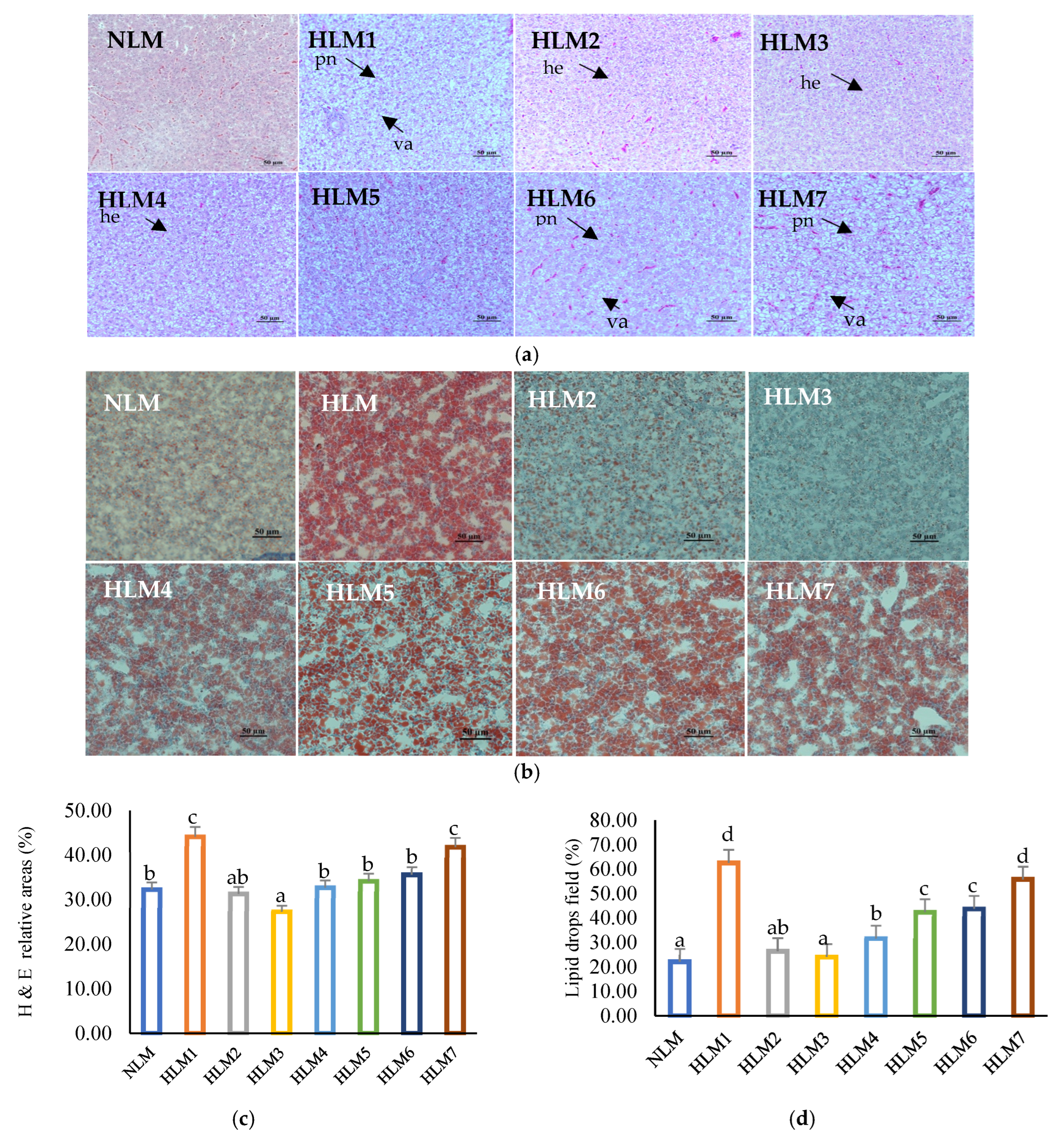
The liver samples for histomorphological analysis stained by hematoxylin and eosin (H&E) and oil red o were tested by Wuhan Service Biotechnology Co. Ltd. (Wuhan, China) after liver samples were collected from three fish per cage, fixed in 4% paraformaldehyde, dehydrated, embedded in paraffin, and sectioned at 4–5 μm. For oil red o staining, fresh liver tissues were embedded in optimal cutting temperature compound, frozen, sectioned, stained with oil red o, and counterstained with hematoxylin to evaluate hepatic lipid accumulation.
For each treatment, liver sections from nine fish were examined. Three sections per fish and five non-overlapping microscopic fields per section were captured at the same magnification. Oil red o-positive areas were quantified using ImageJ software (version 1.54r, National Institutes of Health, Bethesda, MD, USA) and expressed as the percentage of lipid-positive area relative to the total tissue area. The same thresholding criteria were applied to all images. Representative micrographs were selected based on their consistency with the average histological appearance and quantitative lipid-area results of each group. Image selection and quantification were performed in a blinded manner.
2.4. Transcriptome Sequencing and Real-Time Quantitative PCR (RT-qPCR)
For transcriptomic analysis, liver samples were selected from three representative groups: NLM, HLM1, and HLM3. These groups represented the normal-lipid control, high-lipid diet with insufficient Met, and high-lipid diet with optimal Met supplementation, respectively. Three biological replicates were analyzed per group, giving a total of nine RNA-seq libraries. Total RNA was extracted from liver tissues, and RNA quality was assessed using agarose gel electrophoresis, NanoPhotometer spectrophotometry, Qubit 2.0 Fluorometer (Life Technologies, Carlsbad, CA, USA) and Agilent 2100 Bioanalyzer (Agilent Technologies, Santa Clara, CA, USA). Eukaryotic mRNA was enriched using Oligo(dT) magnetic beads, fragmented, reverse-transcribed into cDNA, ligated with sequencing adapters, amplified by PCR, and purified to construct paired-end RNA-seq libraries.
Raw reads were filtered using fastp (version 0.23.4) to remove adapters, reads with >10% unknown bases, poly(A) reads, and low-quality reads. After filtering, 45,179,512–51,445,340 clean reads were obtained per sample, corresponding to 6.73–7.67 Gb clean data, with Q20 values of 97.00–97.59%, Q30 values of 92.24–93.43%, and GC contents of 49.96–50.85%. Residual rRNA reads were removed using Bowtie2 (version 2.2.8), and the remaining reads were mapped to the Trachinotus ovatus reference genome using HISAT2 (version 2.1.0; default parameters), with total mapping rates of 90.78–93.62% and unique mapping rates of 85.01–87.87%.
Transcript reconstruction and expression quantification were performed using StringTie (version 1.3.4; -f 0.3) and RSEM (version 1.2.19), respectively, and expression levels were calculated as read counts and TPM. Differentially expressed genes were identified using DESeq2 (version 1.20.0) based on raw read counts. Multiple-testing correction was performed using false discovery rate (FDR), and genes with p < 0.05 and |log2FC| > log2(1.5) were considered significantly differentially expressed. GO and KEGG enrichment analyses were performed using the hypergeometric test. The raw RNA-seq reads have been deposited in the NCBI Sequence Read Archive under BioProject accession number PRJNA1482782.
A total of 10 key genes were selected for RT-qPCR analysis. AIDpure total RNA kit 010-82796972 (Aidlab Biotech Co Ltd., Beijing, China) was used to extract total RNA from the liver samples (approximately 300 mg). A Prime Script RT kit (TaKaRa, Osaka, Japan) was used to synthesize cDNA. The RT-qPCR was performed with a SYBR Premix Ex Taq kit (TaKaRa, Osaka, Japan). A quantitative thermocycler (Light Cycler 480II, Roche Diagnostics, Basel, Switzerland) was performed. Conditions were cycled (95 °C and 30 s), followed by 35 cycles (95 °C and 5 s, 60 °C and 25 s, 72 °C and 30 s). In the relative expression analysis, the β-actin was used as an internal control and the 2−ΔΔCt method was used to calculate the results. According to the transcriptome sequencing data, the target genes’ primer sequences are outlined in Table S1 and all the primers were synthesized by Sangon Biotech (Shanghai) Co., Ltd., Shanghai, China.
2.5. Calculation Formula
Weight gain rate (WGR, %) = 100 × (final body weight (FBW, g) − initial body weight (IBW, g))/initial body weight (IBW, g)
Specific growth rate (SGR, %/days) = 100 × [ln(final weight (g)) − ln(initial weight (g))]/days
Feed efficiency (FE) = 100 × (weight gain (g)/feed intake (g))
Protein efficiency ratio (PER) = FBW (g) − IBW (g)/total protein intake (g).
Lipid efficiency ratio (LER) = FBW (g) − IBW (g)/total lipid intake (g).
Condition factor (CF, g/cm3) = 100 × body weight (g)/(the body length (cm3))
Hepatopancreas index (HSI; %) = 100 × hepatic weight (g)/body weight (g)
Viscerosomatic index (VSI; %) = 100 × visceral weight (g)/body weight (g)
2.6. Statistical Analysis
The one-way analysis of variance (ANOVA) was used to analyze all data, and significant differences between dietary groups were estimated using Tukey’s multiple comparison test, IBM SPSS Statistics, version 27.0.1.0 (IBM Corp., Armonk, NY, USA). The experimental results are presented as mean ± standard error (SE). The significant difference was established at p < 0.05. Results were visualized utilizing GraphPad Prism 10. The circle-base triangle correlogram heatmap showing the Pearson correlation between the various key indices was plotted on the online platform https://www.bioinformatics.com.cn (accessed on 4 January 2026).
3. Results
3.1. Growth Performance of Trachinotus ovatus
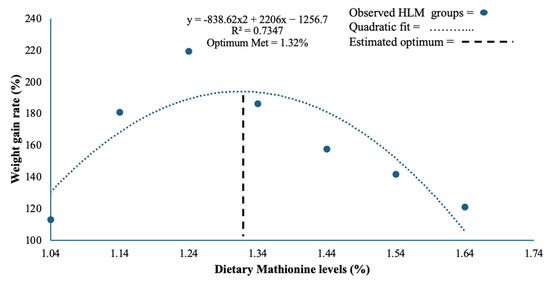
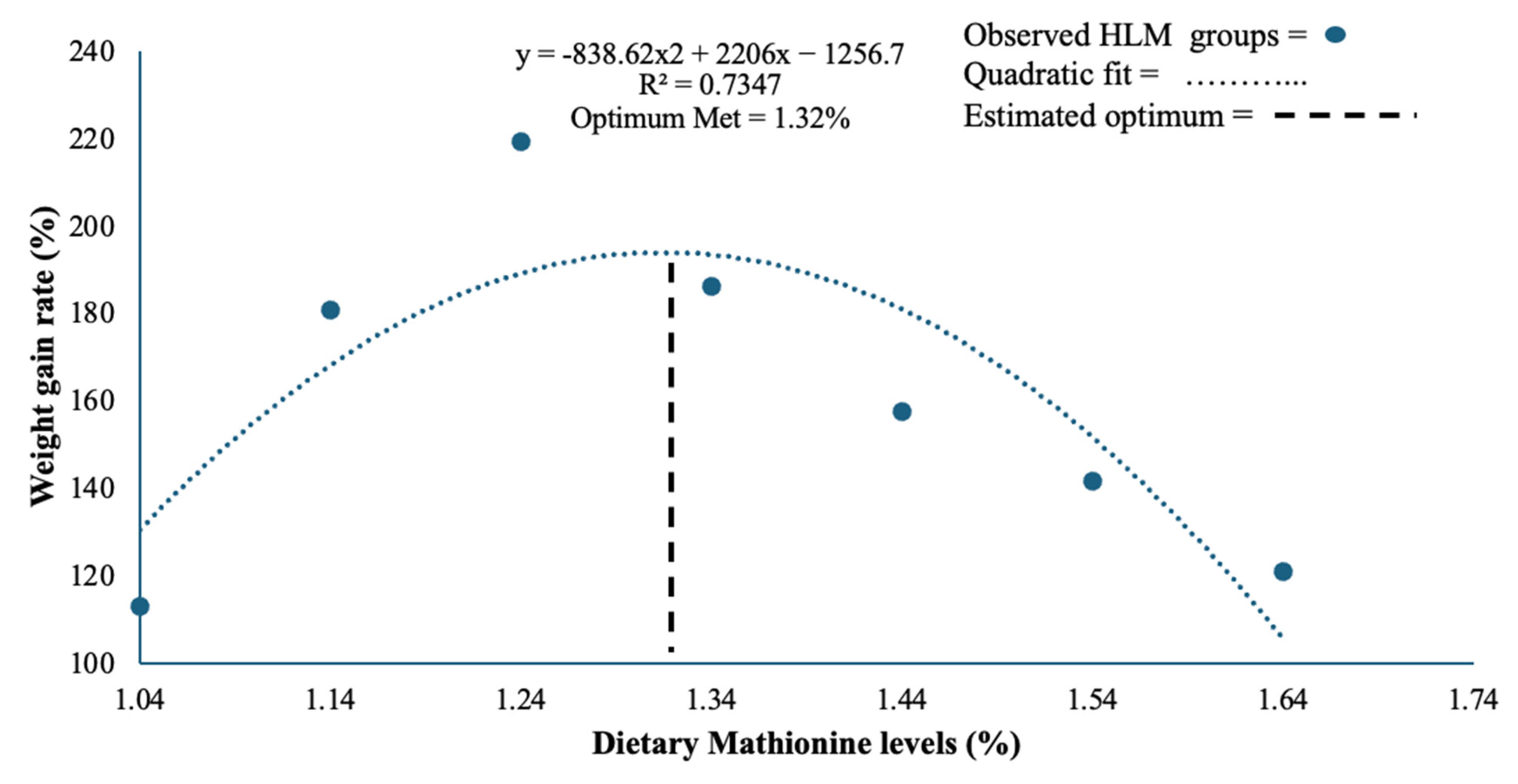
At the end of the 56 days of the feeding trial, the FBW, SGR, and WGR were markedly increased in HLM3 (p < 0.05); also, the FE (Table 4) was notably elevated in HLM3 compared to the HLM1, HLM6, and HLM7 groups (p < 0.05). The HSI was elevated in HLM3 and HLM4 compared to the other groups (p < 0.05). The PER and LER were significantly elevated in the HLM3 group but reduced in HLM1 and HLM7 (p < 0.05). The VSI and CF did not show significant differences across all the groups (p > 0.05). As shown in Figure 1, quadratic regression analysis of WGR against dietary Met level in the HLD groups indicated that WGR increased with increasing dietary Met level up to an estimated optimum and then declined at higher inclusion levels. The fitted regression equation was y = −838.62 x2 + 2206x − 1256.7, with R2 = 0.7347, where y represents WGR (%) and x represents dietary Met level (% dry matter). The quadratic regression model estimated the optimal dietary Met requirement to be 1.32% that made fish fed HLD get better WGR.
Table 4.
Effect of dietary Met inclusions on the growth indices of T. ovatus fed HLDS.
Figure 1.
Quadratic regression analysis between dietary Met inclusion level and weight gain rate (WGR) of golden pompano fed HLDs.
3.2. Fish Whole Body Composition
After the 56 days of the feeding trial (Table 5), the crude lipid of whole fish was considerably increased in the HLM1, HLM4, HLM5, HLM6, and HLM7 groups compared to the NLM, HLM2 and HLM3 groups (p < 0.05). The crude protein of the whole body of the experimental fish was significantly lower in the HLM1 and NLM groups compared to the remaining groups (p < 0.05); however, the whole fish’s body moisture content was not statistically significantly different across all the experimental groups (p > 0.05).
Table 5.
Proximate composition of T. ovatus (%).
3.3. Serum and Liver Biochemical Indices and Antioxidant Defense Parameters Across Dietary Treatment Groups
The serum TG and T-CHO contents in groups HLM1 and HLM7 were markedly increased compared to NLM, HLM2 and HLM3 (p < 0.05) (Table 6). The HDL-C levels were elevated in NLM, HLM2 and HLM3 compared to the other groups (p < 0.05). Comparative to the other groups, the serum LDL-C levels were significantly decreased in the NLM, HLM2 and HLM3 groups (p < 0.05). The serum AST and ALT contents were significantly elevated in the HLM1, HLM5, HLM6, and HLM7 groups (p < 0.05) compared to the remaining groups.
Table 6.
Serum biochemical parameters of adult T. ovatus fed HLDs with varied dietary Met levels.
The effect of dietary Met inclusion in HLDs on the serum and hepatic IgM and antioxidative parameters of adult T. ovatus are listed in Table 7 and Table 8. The SOD activity in the fish serum and liver of groups NLM, HLM2, and HLM3 was significantly increased compared to HLM1 and HLM7 (p < 0.05). The activities of CAT and GSH-px in the serum and liver were significantly decreased in HLM1, HLM6 and HLM7 compared to the HLM3 (p < 0.05). The IgM of fish in groups NLM and HLM3 was increased compared to HLM1 and HLM5-HLM7 (p < 0.05). The serum and liver MDA content in groups NLM, HLM2, and HLM3 was lower than that in HLM1 and HLM4-HLM7 (p < 0.05). The T-AOC was increased in NLM, HLM2, and HLM3 and significantly decreased in HLM1, HLM6, and HLM7 (p < 0.05) in both liver and serum.
Table 7.
Serum antioxidant and biochemical parameters of adult T. ovatus fed HLDs with varied dietary Met levels.
Table 8.
Hepatic antioxidant and biochemical parameters of adult T. ovatus fed HLDs with varied dietary Met levels.
3.4. Hepatic Met, Cysteine, and Fatty Acid Profile of T. ovatus
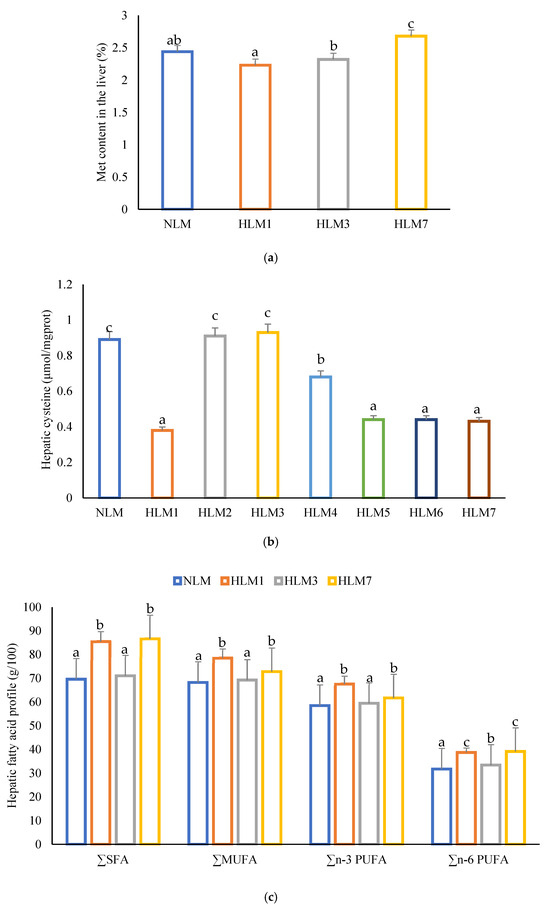
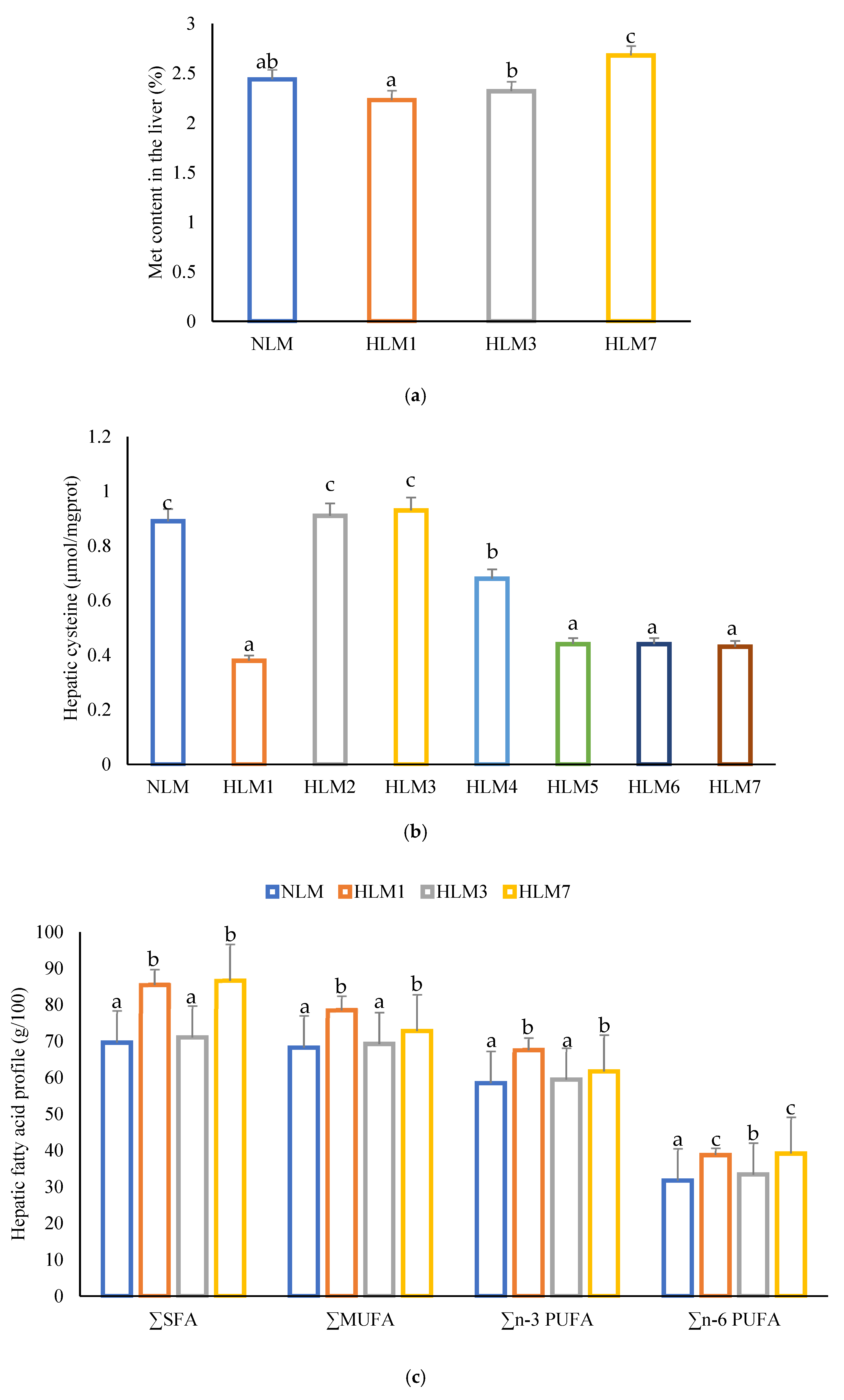
The hepatic Met content in HLM7 group was significantly elevated compared to HLM1 and HLM3 groups (p < 0.05) (Figure 2a). The cysteine content in the liver was significantly increased in the HLM2 and HLM3 groups compared to the other groups (p < 0.05) (Figure 2b). The ∑SFA, ∑MUFA, ∑n-3 PUFA, and ∑n-6 PUFA were significantly increased in the HLM1 and HLM7 groups compared to the NLM and HLM3 groups (p < 0.05) (Figure 2c).
Figure 2.
Effect of ingested high-lipid diet and Met on liver contents. (a) Hepatic Met content, (b) liver cysteine content, and (c) fatty acid profile in the liver of T. ovatus. Different letters indicate significant differences among groups (p < 0.05), as determined by one-way ANOVA. The same notation is used for the data presented in the other figures.
3.5. Lipid Accumulation in the Liver of T. ovatus
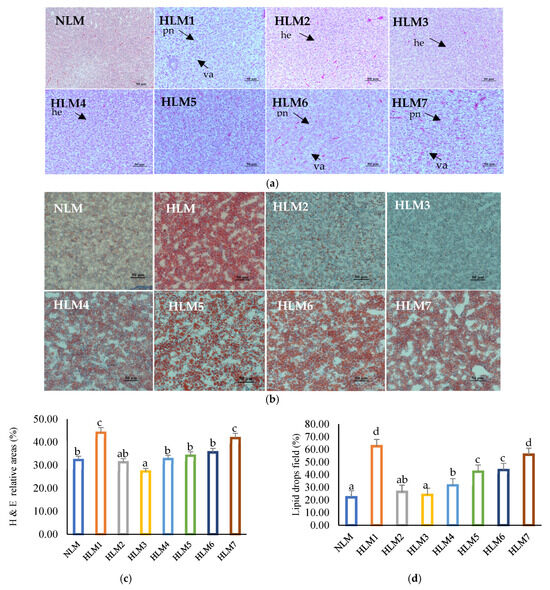
The results of the relative lipid droplet area in the H&E staining showed that 1.24% dietary Met (HLM3) significantly reduced lipid droplets area (27.34%), while 1.02% and 1.63% dietary Met groups significantly increased the lipid droplets field 44.17% (HLM1) and 41.83% (HLM7), respectively (p < 0.05) (Figure 3a,c). Dietary Met of 1.02% and 1.63% markedly increased the lipid droplet field 62.55% (HLM1) and 55.84% (HLM7), respectively, compared to NLM (p < 0.05), which is based on oil red O staining (Figure 3b,d).
Figure 3.
Effects of dietary Met and 18% high-lipid diet on lipid accumulation in the liver of adult T. ovatus. (a) Histology slice of liver with hematoxylin and eosin staining (×400). (b) The oil red O staining (×400) of experimental fish liver. (c) Relative area in the liver of the H & E staining. (d) Hepatic oil red O staining lipid droplets field. Pyknotic nuclei (pn), vacuoles (va), and hepatocytes (he).
3.6. Hepatic Transcriptome Sequence of T. ovatus
GO and KEGG Enrichment Analysis of DEGs
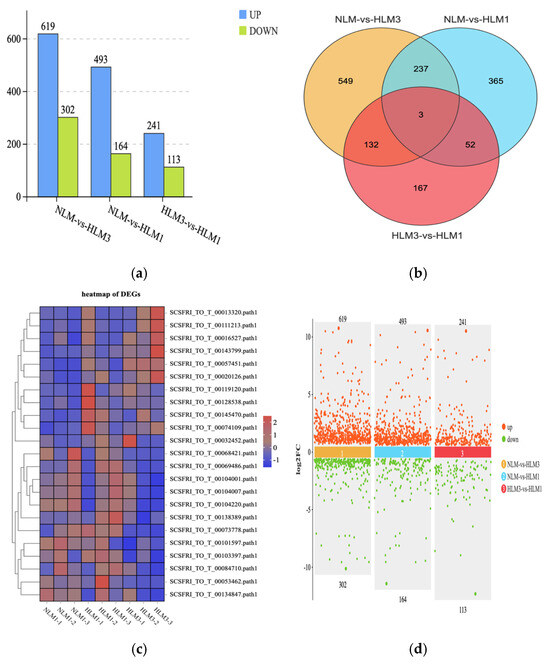
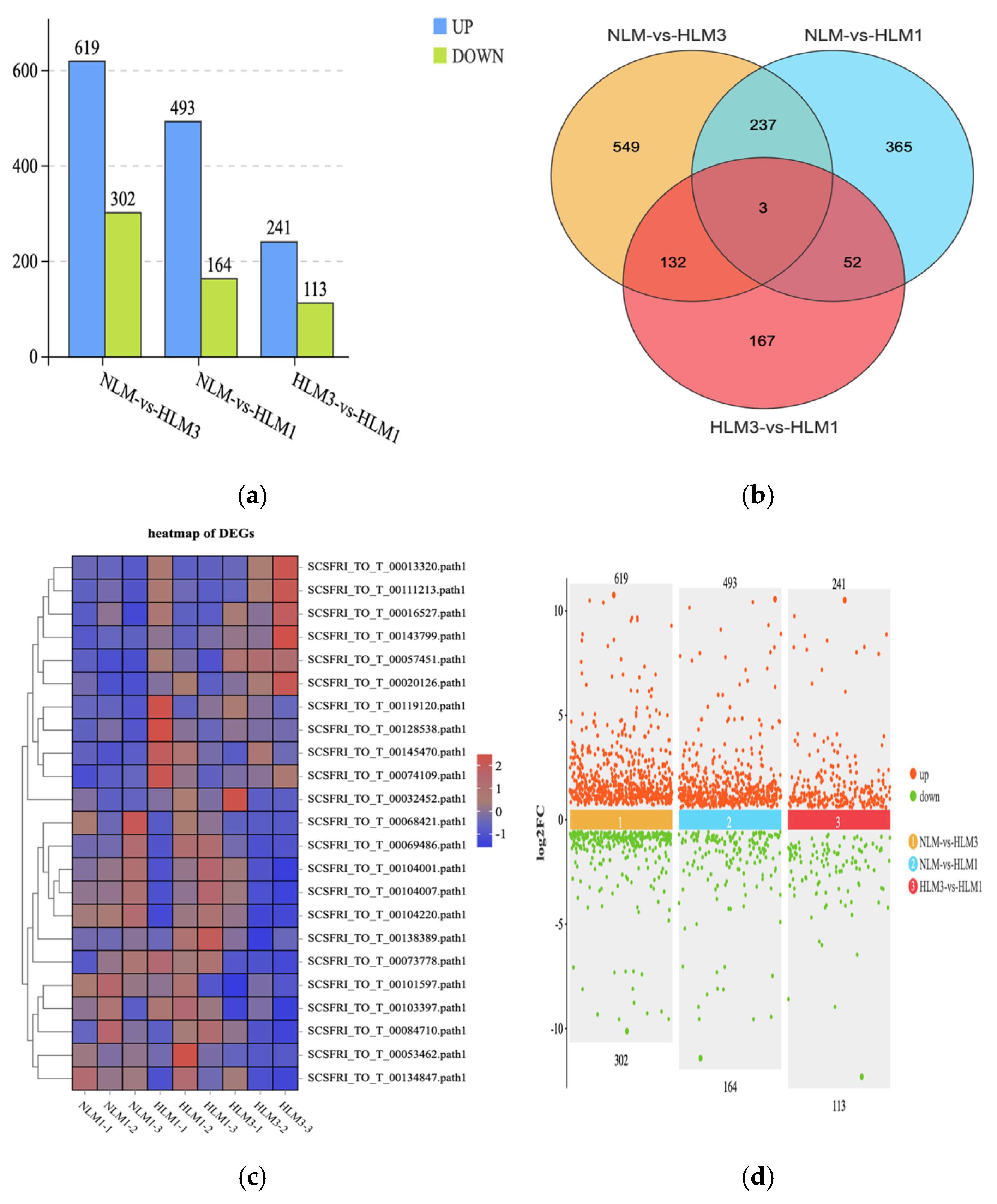
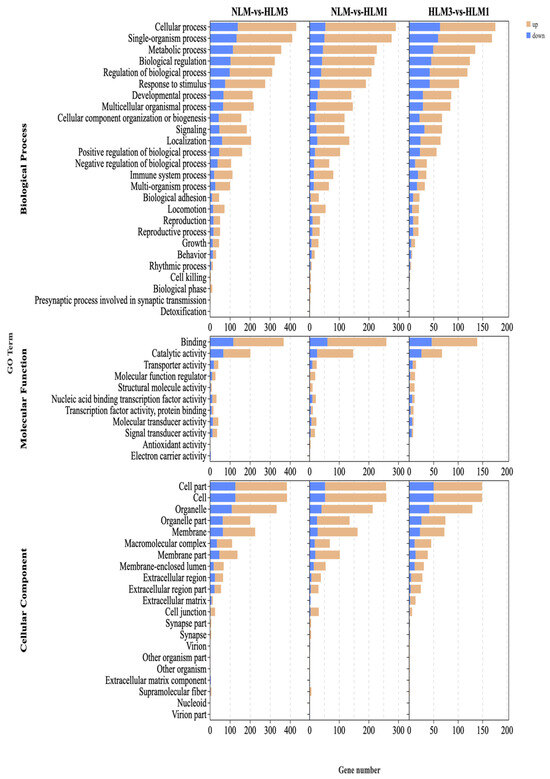
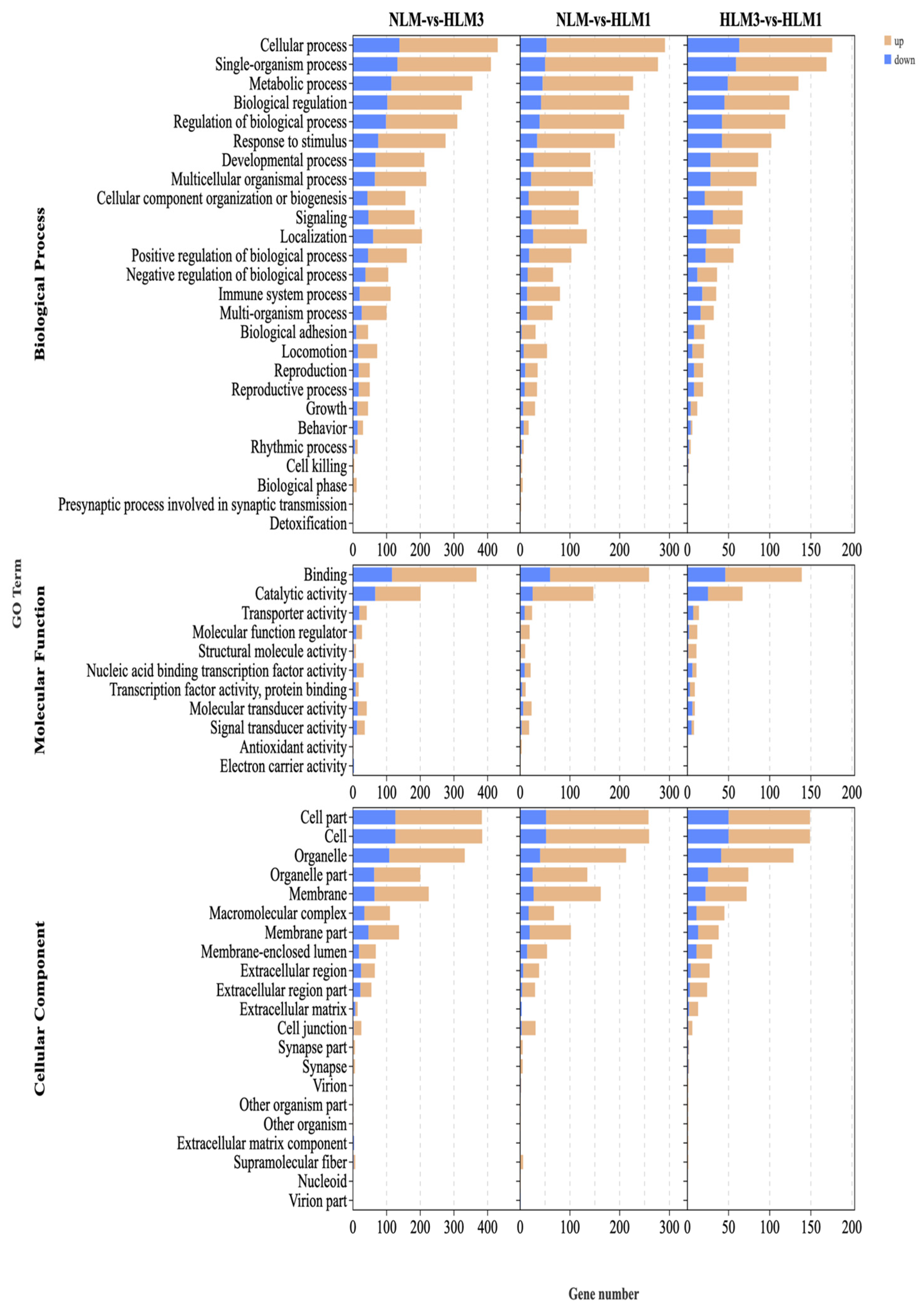
The GO database was used to further annotate the DEGs and evaluate their functionality. GO analysis showed that DEGs were higher in the NLM, HLM1, and HLM3 groups (Figure 4a–d). All DEGs were classified into three broad functional classes (cellular components, molecular functions, and biological processes), with 58 subcategories (Figure 5). There were 26 significantly enriched terms in the biological process (BP), cellular process category, which included reaction to stimuli, biological regulation, single-organism process, metabolic process, signaling, localization, growth, detoxification, and others. Another 11 significantly enriched phrases were classified as molecular function (MF), which included antioxidant activity, binding, molecular transducer activity, structural molecule activity, catalytic activity, signal transducer activity, transcription factor activity, and so on. The remaining 21 highly enriched terms belonged to the cellular component (CC), such as cell portion, macromolecular complex, extracellular area, supramolecular fiber, membrane- enclosed lumen, and so on. The cell process involved the most DEGs, followed by cell portion, catalytic activity, metabolic activities, single organism processes, binding, and biological regulators.
Figure 4.
Effect of dietary Met and high-lipid on the transcriptome sequence statistics of T. ovatus. (a) Bar graph of differentially expressed genes (DEGs) between T. ovatus fed with NLM, HLM1, and HLM3. (b) Venn diagram of DEGs of NLM, HLM1 and HLM3. (c) Heatmap of differentially expressed genes (DEGs). (d) Scatter graph of differentially expressed genes (DEGs).
Figure 5.
GO enrichment analysis of DEGs in T. ovatus fed with NLM, HLM1 and HLM3. Three main GO categories: cellular component, molecular function, and biological process. X-axis indicates the number of DEGs, and Y-axis indicates GO categories and subcategories.
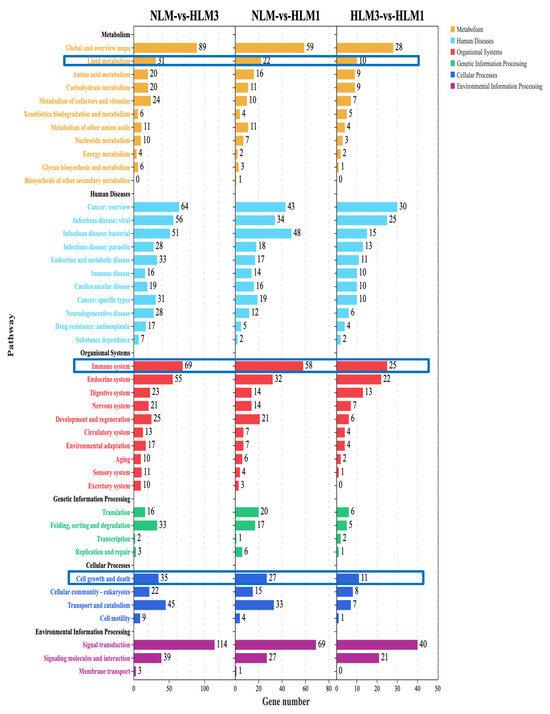
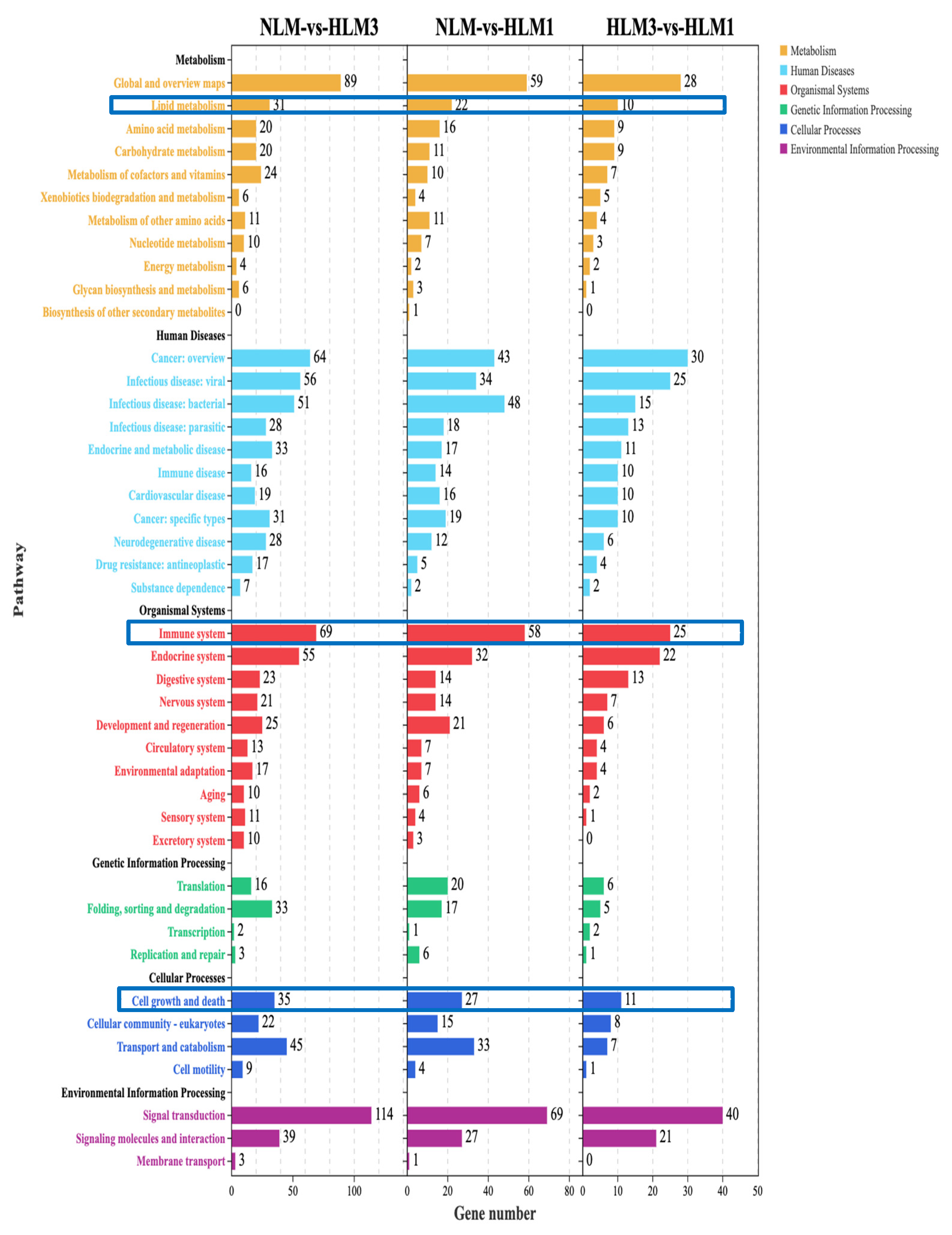
As shown in Figure 6, KEGG enrichment analysis revealed that differentially expressed genes in the NLM vs. HLM3 and HLM3 vs. HLM1 comparisons were mainly distributed across the six major KEGG.
Figure 6.
KEGG enrichment analysis of DEGs of T. ovatus fed with NLM, HLM1 and HLM3 dietary treatments. Highly expressed biological pathways were represented in the transcriptome retrieved from the KEGG database. DEGs were assigned to six special KEGG pathways, including organismal systems, metabolism, genetic information processing, environmental information processing, cellular processes, and human diseases.
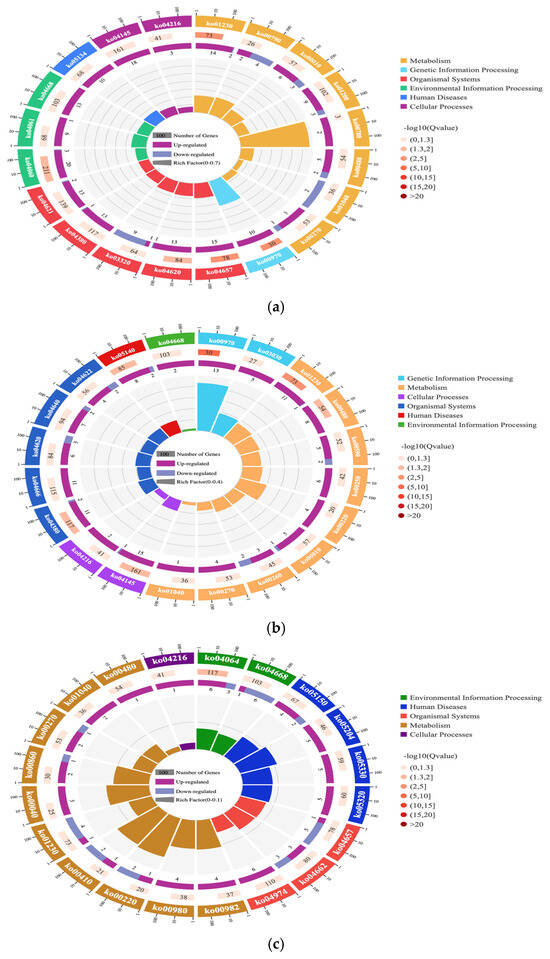
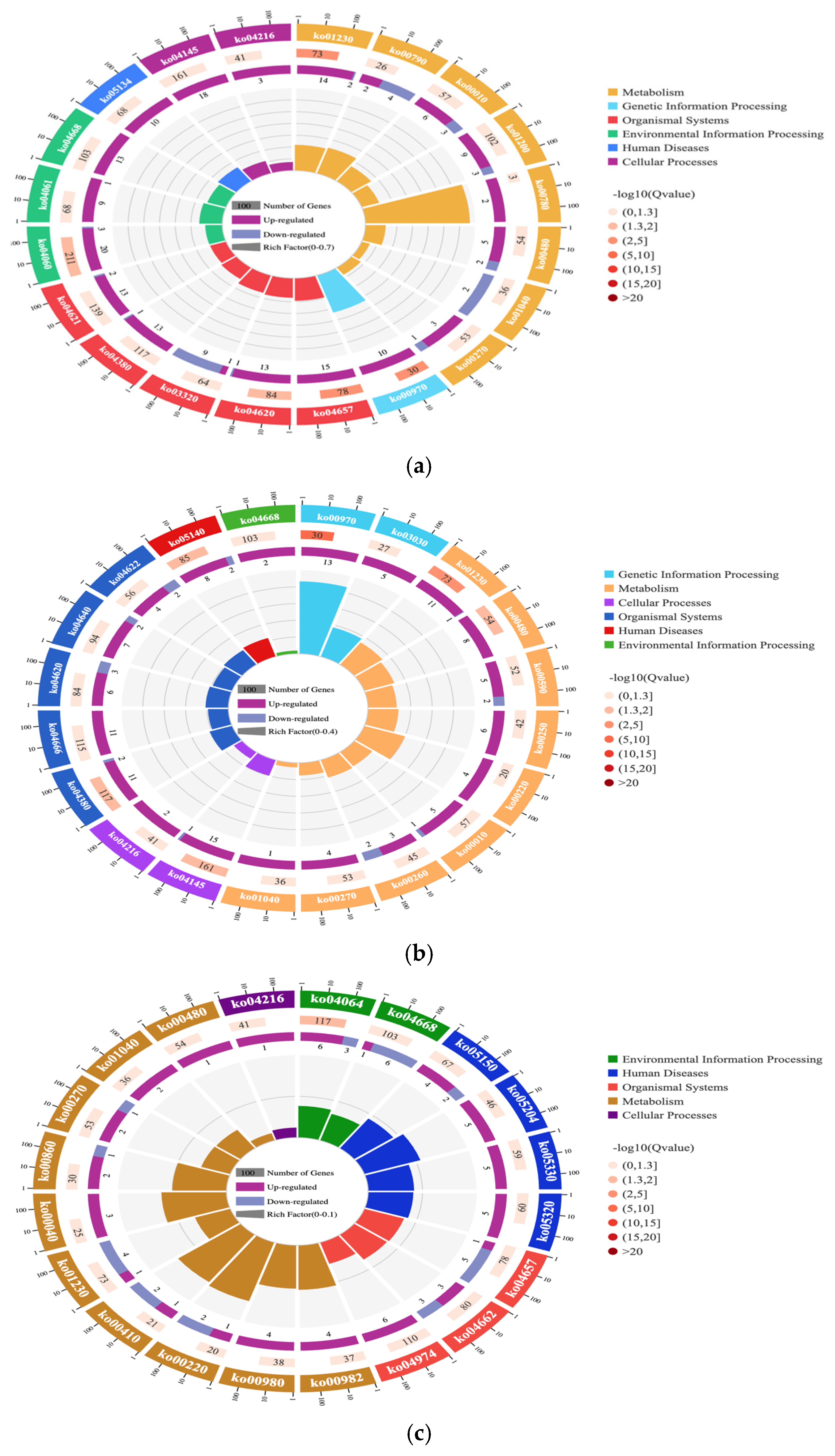
KEGG enrichment analysis revealed that differentially expressed genes between the NLM-vs-HLM1 groups were associated with environmental information processing, metabolomics, human disease, organismal systems, and cellular processes (Figure 7a–c). The DEGs between all the group combinations were involved in mTOR signaling pathway (ko04150), arginine biosynthesis (Ko00220), beta alanine metabolism (ko00410), biosynthesis of amino acids (ko01230), pentose and glucuronate interconversions (ko0040), porphyrin metabolism (ko00860), ferroptosis (ko04216), cysteine and Met metabolism (ko00480), biosynthesis of unsaturated fatty acids (ko01040) and PI3K-Akt signaling pathway (ko04151).
Figure 7.
KEGG pathway enrichment analysis showing significantly enriched pathways, where (a) represents NLM vs. HLM3, (b) HLM3 vs. HLM1, and (c) NLM vs. HLM1.
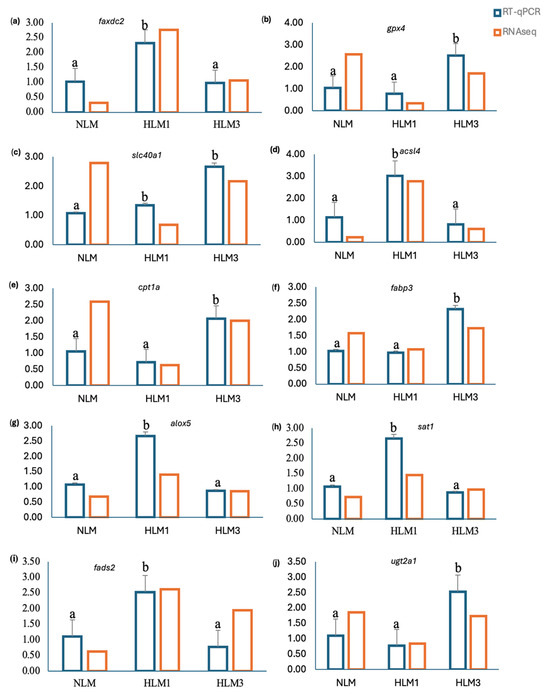
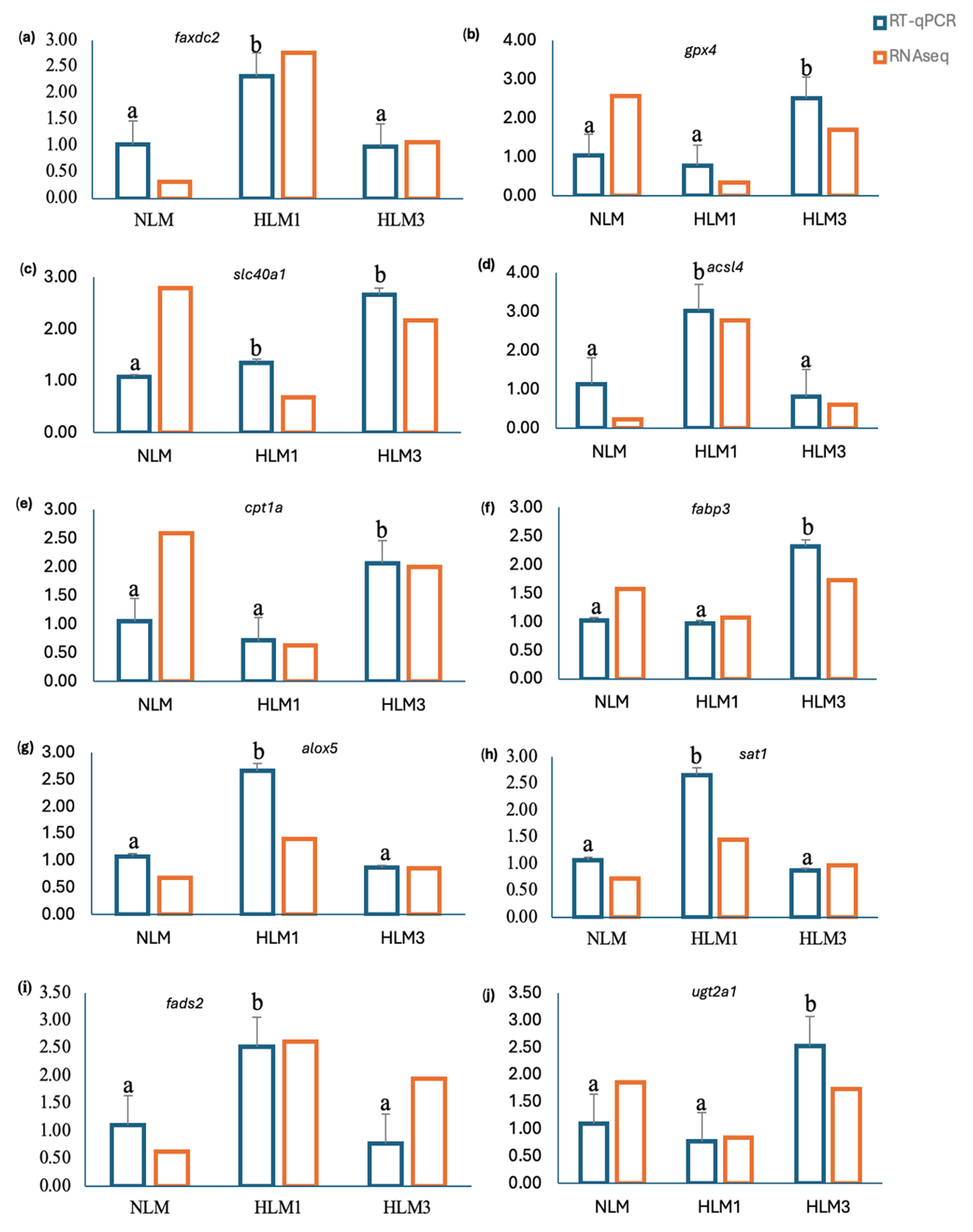
For the purpose of our study, 10 DEGs (faxdc2, gpx4, slc40a1, acsl4, cpt1a, fabp3, alox5, sat1, fads2, and ugt2a1) associated with ferroptosis (ko04216) and biosynthesis of unsaturated fatty acids and thus lipid metabolism (ko01040) pathways were selected from the transcriptome data and validated via RT-qPCR (Figure 8a–j).
Figure 8.
(a–j) Validation of DEGs associated with the ferroptosis (ko04216) and lipid metabolism pathways by qPCR. The detection of gene expression was done in triplicate for each sample. Expression levels were normalized to those of β-actin using the Livak (2−ΔΔCt) technique, and the data are reported as the means ± SD of triplicate tests.
3.7. Lipid Metabolism in the Liver of T. ovatus
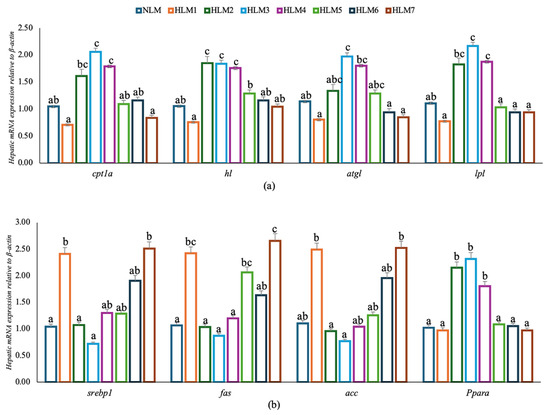
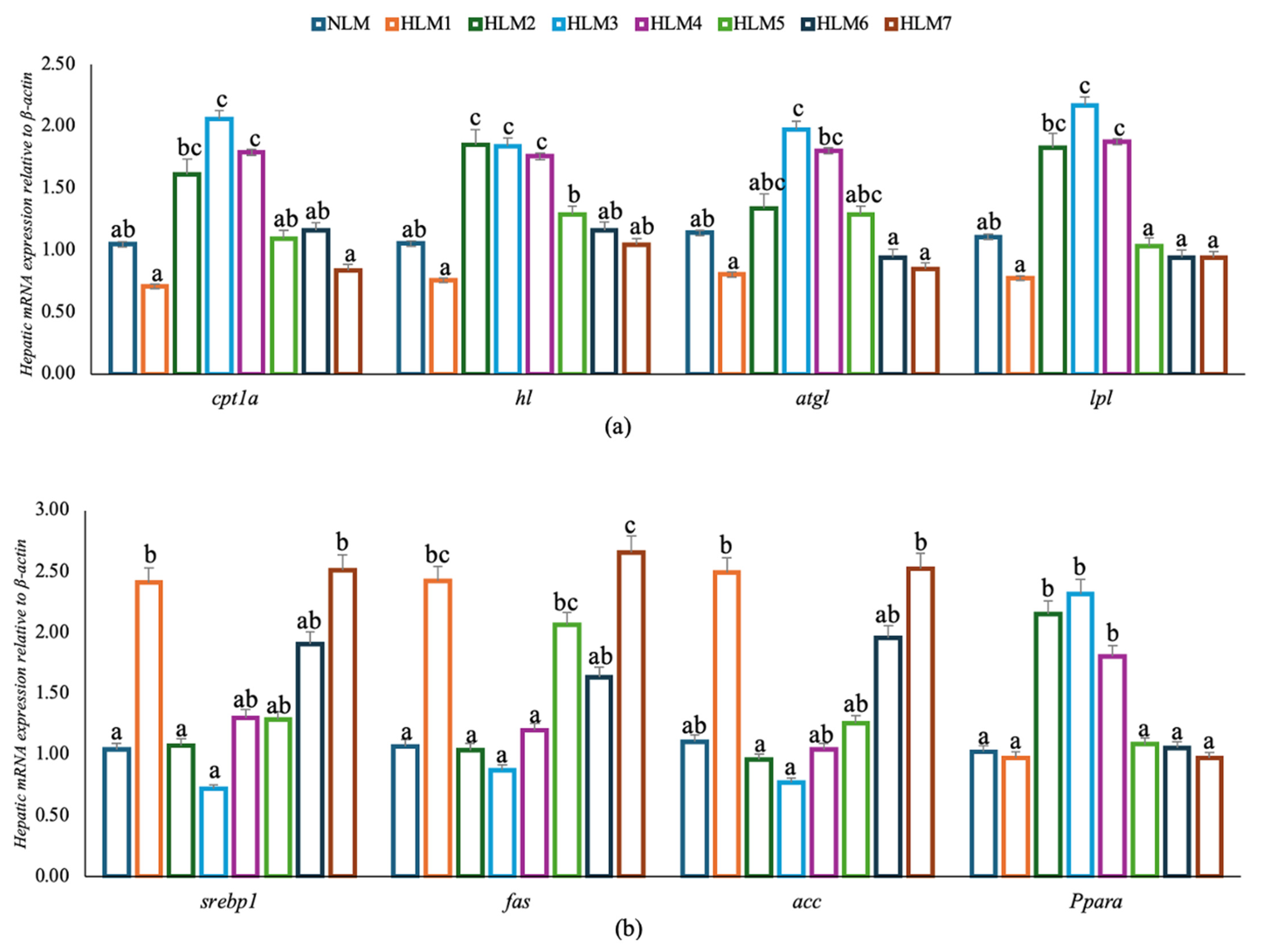
The hepatic expression levels of genes related to lipid metabolism pathways of adult T. ovatus are represented in Figure 9. The experimental fish fed with HLM3 markedly increased the expression levels of the genes cpt1a, hl, atgl, lpl, and Pparα involved in lipolysis; meanwhile, the HLM1 and HLM7 experienced lowered expression levels (p < 0.05) (Figure 9a). With regard to the lipogenesis pathway, the mRNA expression levels of the genes srebp1, fas, and acc were highly expressed in the groups HLM1 and HLM6 (p < 0.05), yet significantly lowered in the HLM2 and HLM3 (p < 0.05) (Figure 9b).
Figure 9.
Effect of dietary Met on relative mRNA expressions of lipid metabolism genes. (a) Relative gene expression involved in lipolysis in the liver of experimental fish. (b) Relative hepatic mRNA expression involved in lipogenesis and Pparα.
3.8. Inflammatory Response in the Liver of T. ovatus
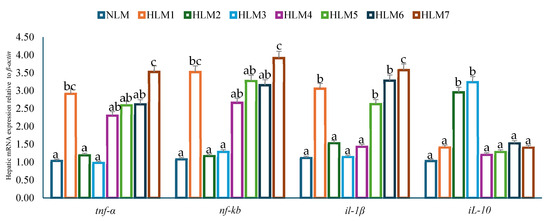
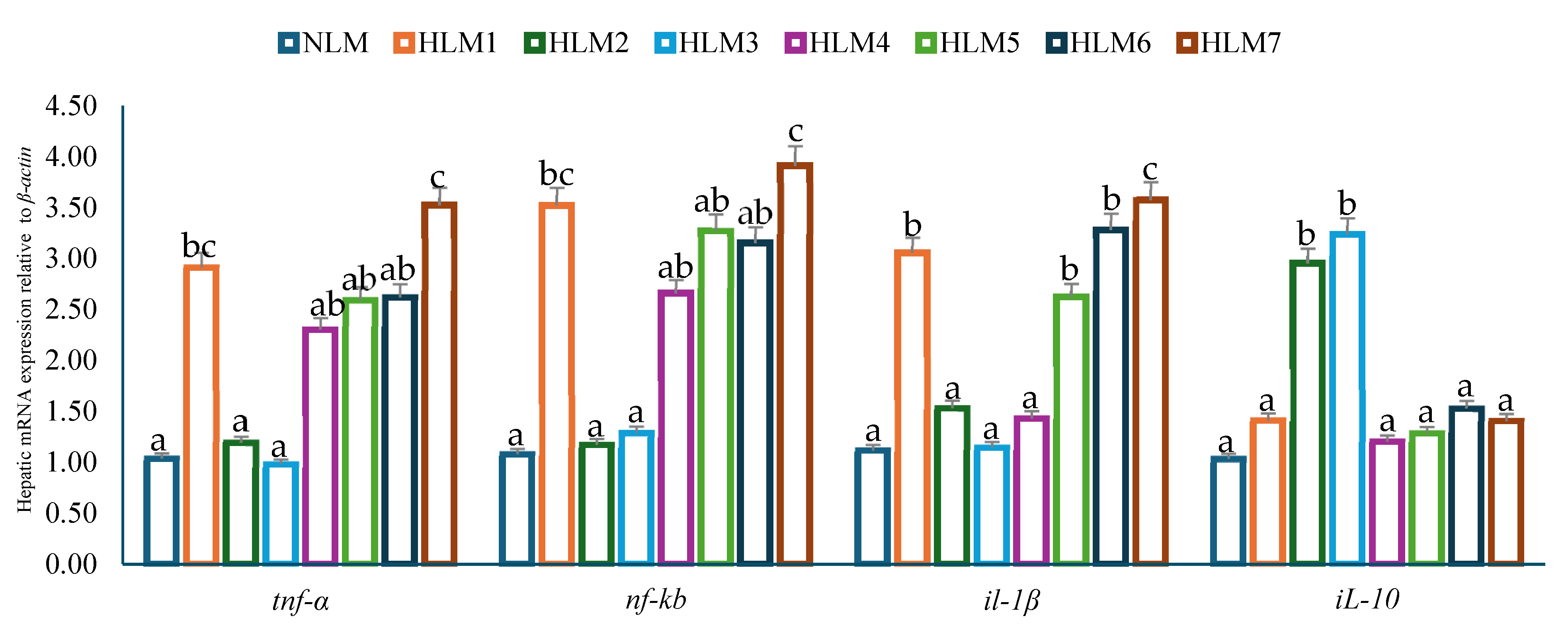
The mRNA expression of inflammation-related genes are shown in (Figure 10). The expression levels of the pro-inflammation-related genes tnf-α, nf-kb, and il-1β were markedly higher in the HLM1, HLM5, HLM6 and HLM7, while the gene iL-10 belonging to anti-inflammatory response was significantly declined in the same groups (p < 0.05). The HLM2 and HLM3 groups elevated the expression of iL-10 in the liver (p < 0.05).
Figure 10.
Effect of dietary Met and high lipid on the hepatic mRNA expression of inflammatory-response-related genes.
3.9. Antioxidant and Ferroptosis-Associated Transcriptional Changes in the Liver of T. ovatus
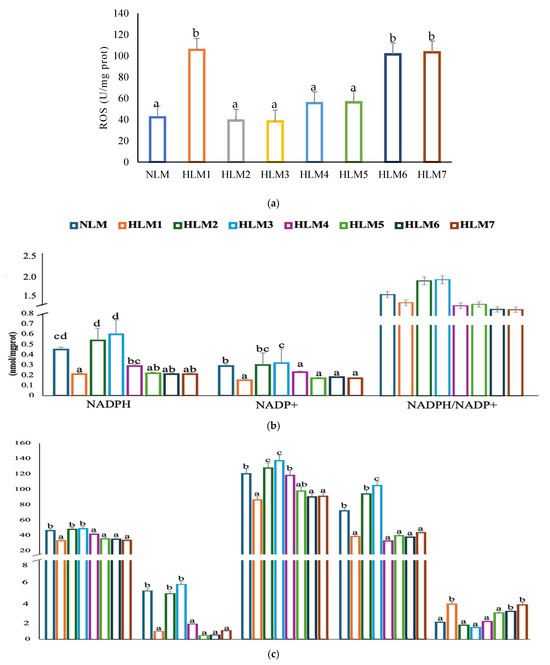
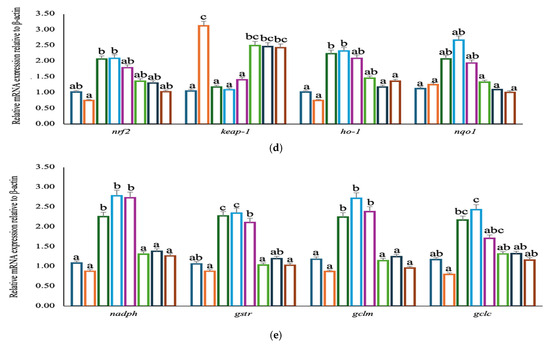
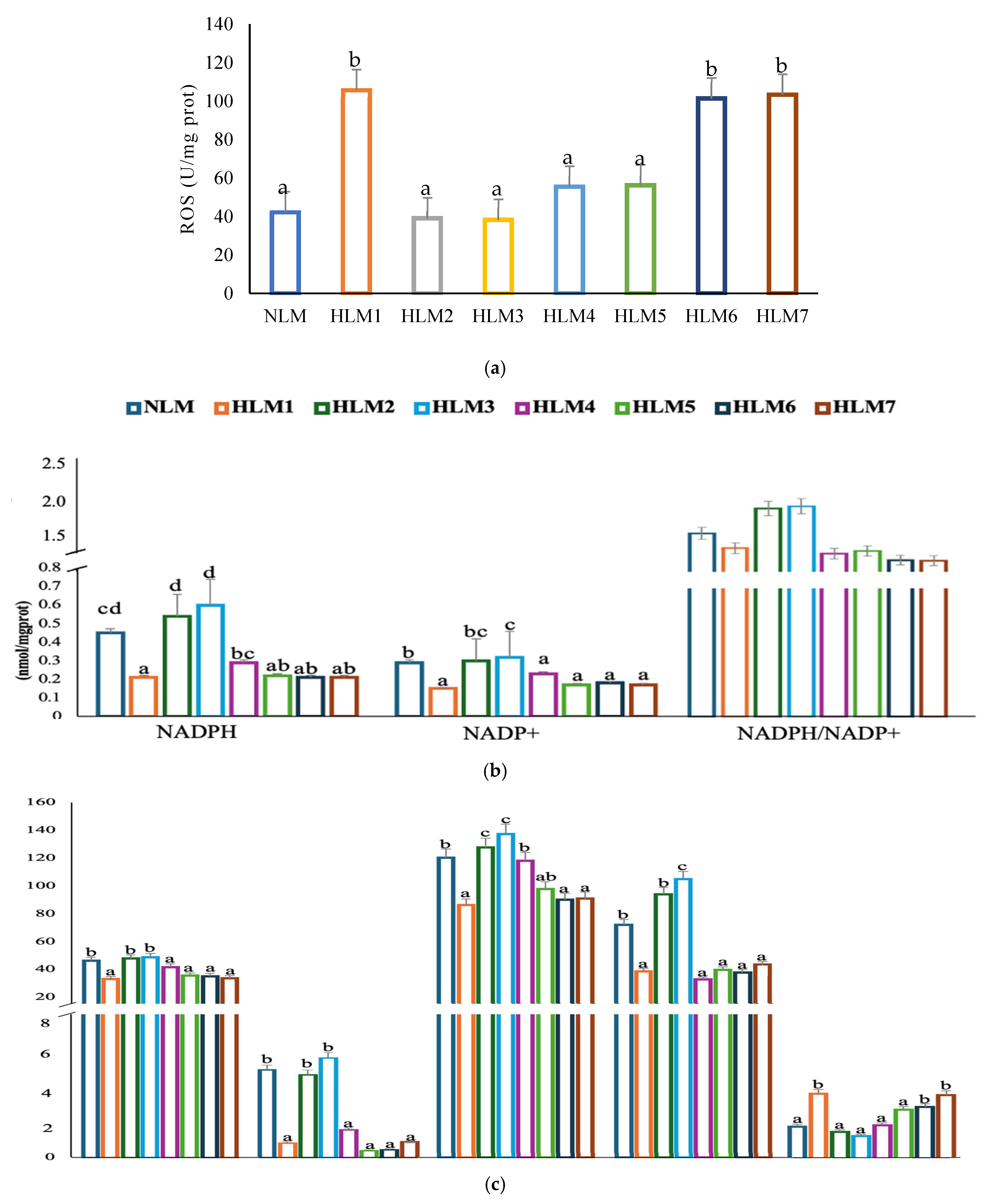
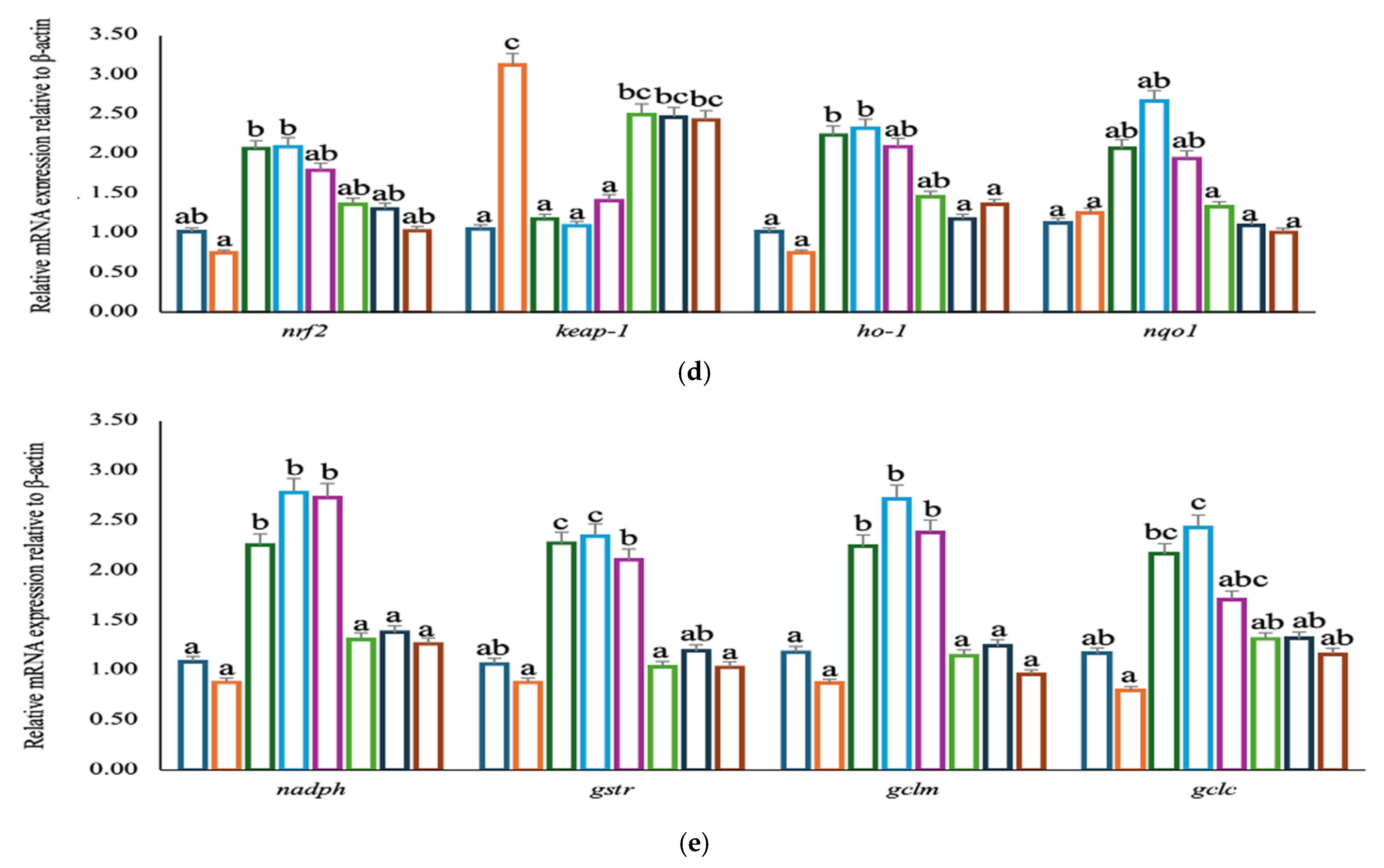
T. ovatus fed with HLM1, HLM6, and HLM7 dramatically increased hepatic ROS and MDA levels, while the same parameters were lowered by HLM2 and HLM3 (p < 0.05) (Figure 11a,c). Notwithstanding, the antioxidants such as NADPH, NADP+, SOD, T-AOC, GSH-px and GSH as well as relative mRNA expression of antioxidant-related genes (nrf2, ho-1, nqo1, nadph, gstr, gclc, and gclm) levels were significantly elevated in the liver of T. ovatus fed HLM2 and HLM3 compared to HLM1, HLM6 and HLM7 (p < 0.05, Figure 11b–e). The relative hepatic mRNA expression levels of keap-1 in the liver were enhanced considerably by HLM1, HLM6 and HLM7 yet lowered by HLM3 (p < 0.05, Figure 11d).
Figure 11.
The effect of high-lipid diet and Met on liver antioxidants and oxidative stress in adult T. ovatus. (a) The content of ROS in the liver of adult T. ovatus. (b) Hepatic NADPH content of experimental fish, (c) oxidative and antioxidant enzymes in the liver, and (d) relative mRNA expression levels of nrf2 signaling pathway genes in the liver of T. ovatus. (e) Hepatic relative mRNA expression levels of antioxidant signaling genes.
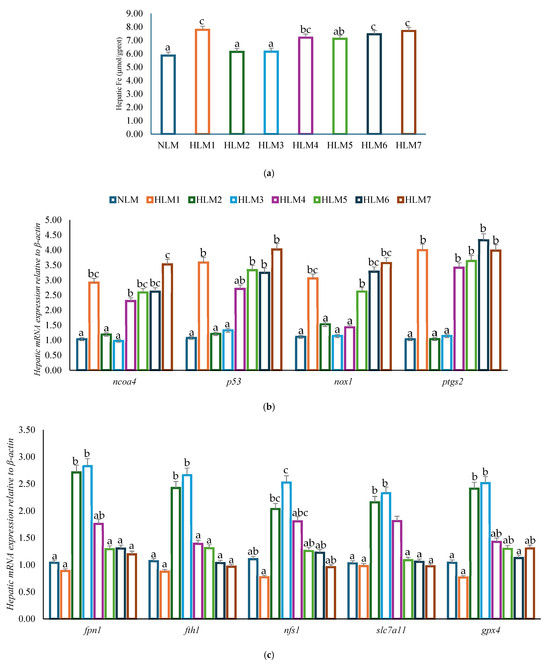
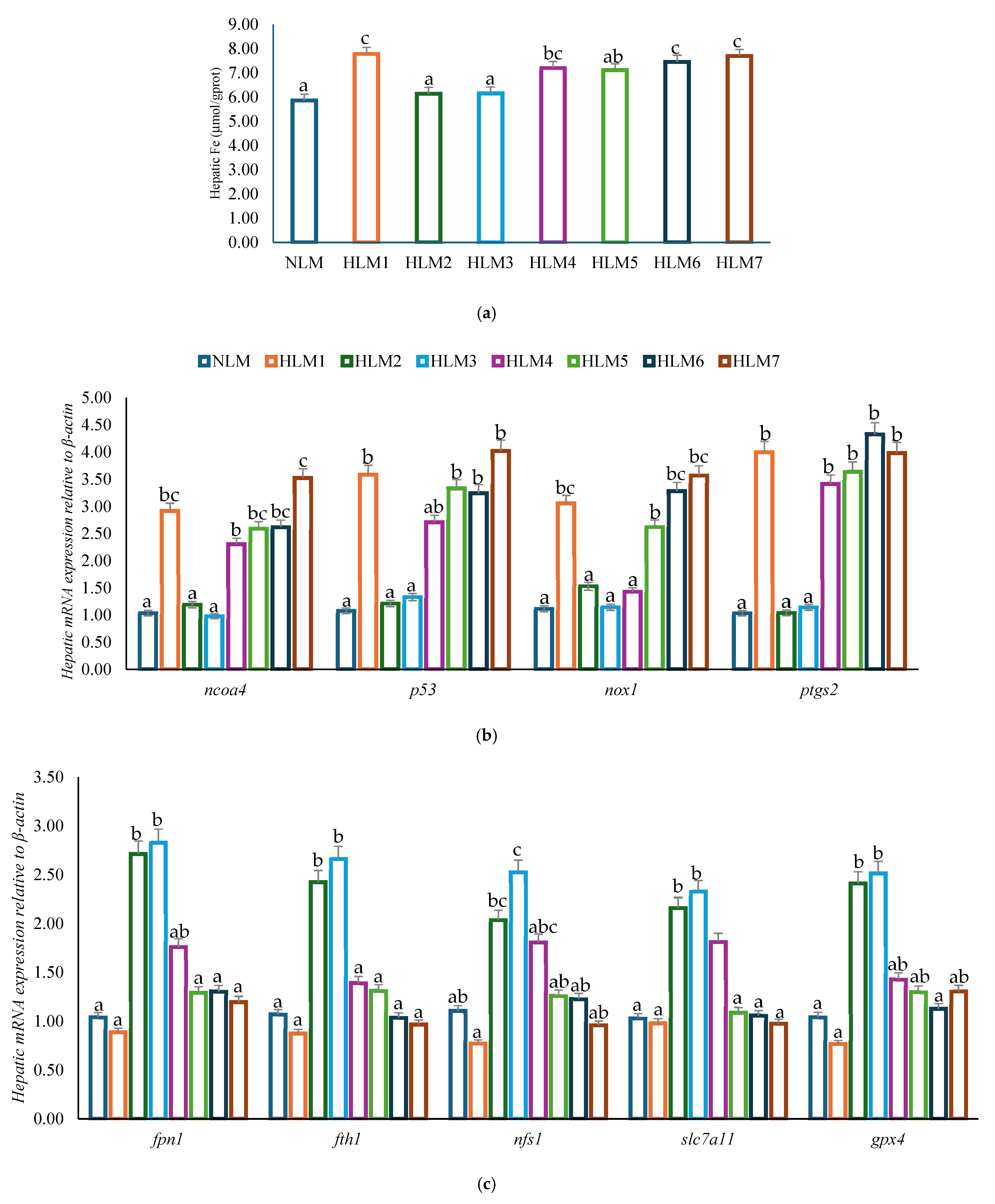
Ferroptosis-related genes are presented in (Figure 12a–c). The Fe content in the liver of experimental fish fed with HLM1, HLM6 and HLM7 was significantly high compared to HLM2 and HLM3 (p < 0.05, Figure 12a). The relative mRNA expression of ferroptosis promoter genes ncoa4, p53, nox1, and ptgs2 in fish liver was markedly higher in groups HLM1, HLM6 and HLM7 than those in groups HLM2 and HLM3 (p < 0.05, Figure 12b). The genes fpn1, fth1, nfs1, slc7a11, and gpx4 were significantly elevated in the HLM2 and HLM3 groups yet HLM1, HLM5, HLM6 and HLM7 experienced significantly low expression levels (p < 0.05, Figure 12c).
Figure 12.
The effect of dietary Met and high lipid on the mRNA expression of ferroptosis-related genes in the liver of adult T. ovatus. (a) Fe content in the liver of T. ovatus. (b) Relative mRNA expressions of ferroptosis induction genes. (c) Relative hepatic mRNA expressions of anti-ferroptosis-related genes.
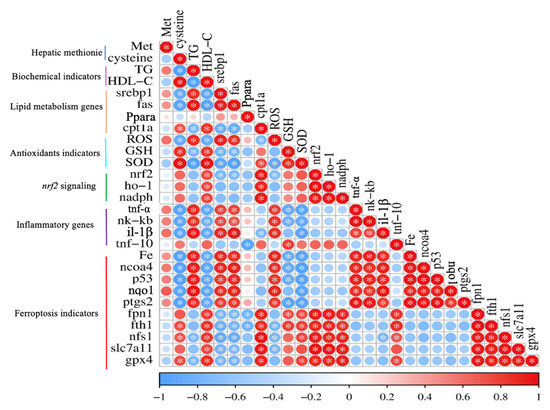
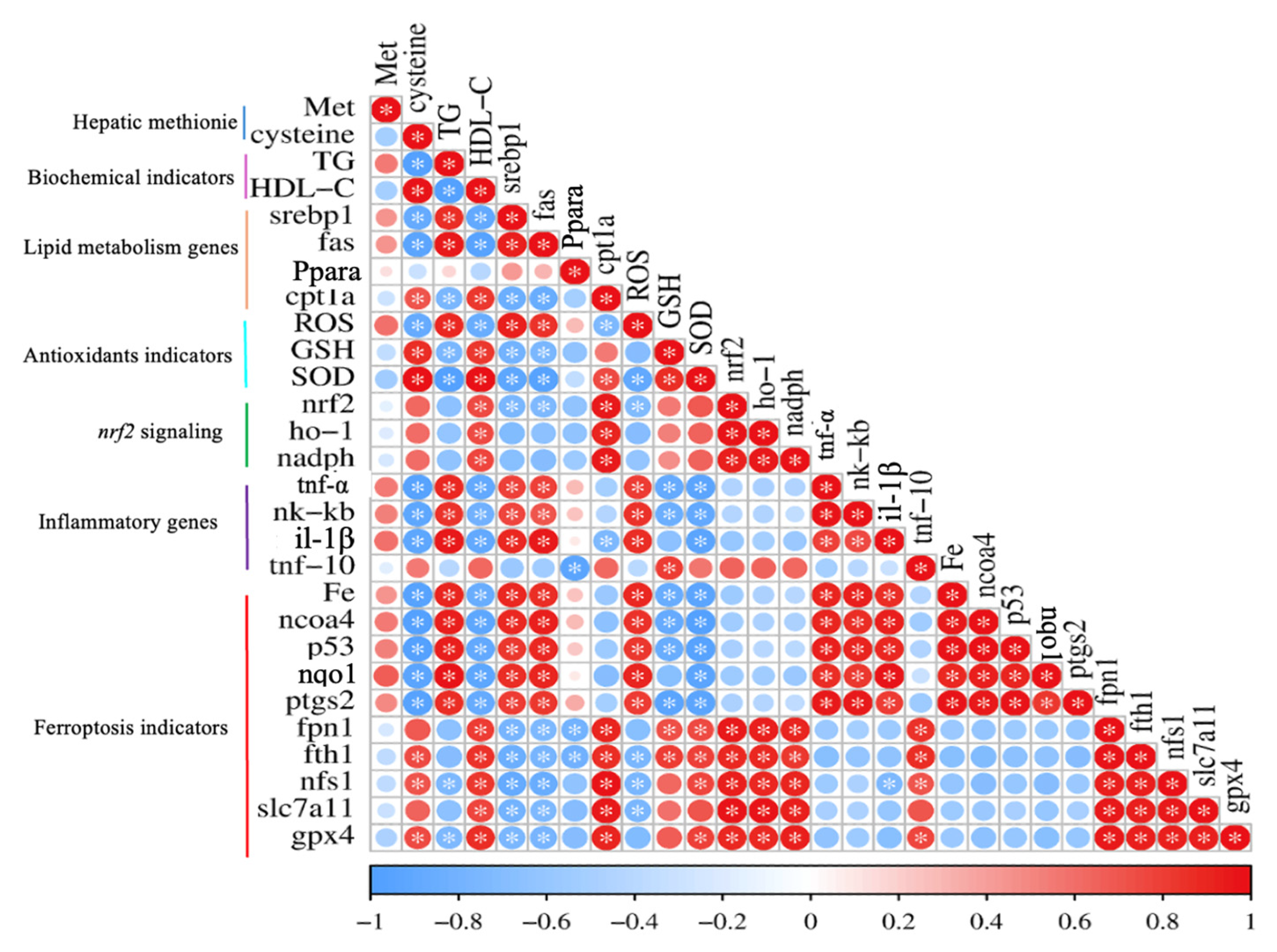
The correlation analysis revealed strong and biologically meaningful associations among hepatic amino acid levels, biochemical indicators, antioxidant capacity, lipid metabolism, inflammatory responses, and ferroptosis-related response in T. ovatus (Figure 13). The lipolysis-related genes (Pparα and cpt1a) were negatively correlated with ROS and MDA but positively correlated with antioxidant indicators (GSH, SOD, and CAT) (p < 0.05), while the ferroptosis-associated genes (ncoa4, p53, nox1, and ptgs2) exhibited strong positive correlations with Fe content, ROS, MDA, and inflammatory markers (p < 0.05), indicating that iron accumulation and oxidative stress are closely linked to ferroptotic processes. These genes were also positively associated with the lipogenesis markers (p < 0.05, Figure 13). Notably, gpx4 and slc7a11 were strongly associated with hepatic cysteine and GSH levels, possibly, highlighting the importance of the glutathione-dependent antioxidant system in suppressing ferroptosis.
Figure 13.
Correlation analysis of hepatic Met, biochemical indicators, antioxidant defense, and the transcription of genes participating in lipid metabolism, nrf2 signaling, inflammatory and ferroptosis responses. Color depth signifies the magnitude of the correlation, with red indicating a positive correlation and blue indicating a negative correlation. The size of the circle is proportional to the value. An asterisk (∗) denotes a significance level of p < 0.05.
4. Discussion
4.1. Effect of Dietary Met on Growth Performance and Feed Utilization in T. ovatus
Diet with optimum Met enhanced growth across a range of marine fish species, including hybrid grouper (Epinephelus fuscoguttatus♀ × E. lanceolatus♂) [30], cobia (Rachycentron canadum) [31], S. maximus L. [32], D. labrax [33], T. ovatus [34], and T. blochii [35]. Supplemented Met in HLDs of juvenile black seabream and juvenile yellow croaker had no effect on growth performance or feed utilization [13,14]. Meanwhile, Met deficiency in HLDs retarded growth in hybrid grouper [36]. In the current study, the inclusion of 1.24% and 1.34% Met in the HLD (HLM3 and HLM4) improved the growth performance and feed utilization of adult T. ovatus, whereas higher and lower inclusion levels of Met in HLDs did not enhance growth performance or feed utilization. The effect of Met on growth performance of fish fed HLD showed a dose-dependent pattern.
4.2. Effect of Dietary Met on Lipid Metabolism in T. ovatus Fed HLD in Serum and Hepatic Indices
Met is known as a signaling molecule that regulates lipid metabolism [37]. The changes in T-CHO and TG concentrations in the serum emanates from the breakdown of lipids and proteins, and these levels can help to identify changes in metabolism [38,39,40]. However, high HDL-C levels have been associated with healthy lipid metabolism and cardiovascular/liver health [41,42,43]. Higher serum LDL-C and NEFAs levels indicate hepatic lipid buildup, metabolic syndrome, or a fatty liver [44,45]. Once the liver is injured by oxidative stress, liver cell (hepatocyte) membranes degrade, allowing ALT and AST to escape into the bloodstream [46,47,48]. In the current study, serum T-CHO, TG, LDL-C, AST and ALT in groups HLM1, HLM6 and HLM7 significantly increased compared to NLM, HLM2 and HLM3 as well as NEFA levels. Those hinted the liver of fish in groups HLM1, HLM6 and HLM7 may be injured. And higher HDL-C levels were shown in HLM3 group compared to the other high-lipid groups, demonstrating that fish ingesting diet containing the 18% lipid got liver dysregulated lipid metabolism, but optimal Met level improved lipid metabolism homeostasis of fish in HLM3 group. Moreover, the results regarding the serum biochemical indices were corroborated by the liver H&E and oil red o slice analysis. T. ovatus fed with NLM, HLM2 and HLM3 exhibited a significant reduction in lipid droplet area. These current findings are somewhat consistent with prior studies on yellow croaker [14], hybrid grouper [36], juvenile black seabream [13], and rice field eel [37]. Although HSI is often used as an indicator of hepatic enlargement and lipid deposition, it should be interpreted together with growth, biochemical, histological, and molecular indicators. In growing rockfish (Sebastes schlegeli), increased dietary lipid significantly elevated HSI, but the fish growth performance and feed utilization were improved [17]. Similarly, in the present study, the higher HSI observed in HLM3 did not appear to indicate hepatic injury, because this group showed improved growth performance, reduced serum T-CHO, TG, LDL-C, AST, and ALT compared with the high-Met group, lower hepatic lipid droplet accumulation, and enhanced antioxidant capacity. Thus, the increased HSI in HLM3 may represent adaptive hepatic nutrient metabolism rather than pathological lipid accumulation.
4.3. Transcriptomics Analysis of Fish Liver
Based on the growth performance data, NLM, HLM1 and HLM3 were selected to explore transcriptomics analysis. Results presented that the identified DEGs corresponding to biological processes were involved in metabolic processes, immune system processes and growth. And the KEGG enrichment analysis revealed that lipid metabolism, immune system, cell death and growth, transport and catabolism were among the most enriched in DEGs. According to interpretation of the transcriptomic results, hepatic ferroptosis (ko04216), p53 signaling pathway (ko04115), ppar signaling pathway (ko03320), biosynthesis of unsaturated fatty acid (ko01040), and TNF signaling pathway (ko04668) were sensitive to the HLDs and dietary Met levels treatments. High lipid accumulation is associated with elevated tissue iron and ferroptosis [49], and dietary Met was the main regulator of lipid metabolism, immunity and antioxidant response [37]. Beyond that, transcriptomic data further hinted that the signaling pathways responsible for lipid metabolism, ferroptosis, and immune responses might be the mechanisms to explain how dietary Met enhanced lipid metabolism and growth in the T. ovatus fed HLDs.
4.3.1. Hepatic Lipid Metabolism in T. ovatus
In the present study, the fish fed with HLM2 and HLM3 had higher hepatic mRNA expression levels in lipolysis such as cpt1a, ppara, atgl, hl, and lpl of the adult T. ovatus. The lipogenesis-related genes srebp1, fas and acc were markedly upregulated in the HLM1 and HLM7. In previous studies, hepatic acc, fas, srebp1, and fad were elevated under higher lipid feeding condition, while lpl, cpt1 and ppara were suppressed in juvenile T. ovatus [36,50,51]. Also, ppara and cpt-1 were down-regulated in juvenile hybrid grouper fed HLD with low dietary Met inclusion [36,50]. The srebp-1c and fas expression in the liver of juvenile black seabream were elevated by 17%HLD; however, optimal dietary Met inclusion elevated ppara, cpt1a, hsl and lpl in the same [13]. The possible reason was that, at the lipid level of experimental feed, the concentration of Met was either too high or too low. Similar phenomena were also observed in the high-Met and low-Met groups of this experiment. The 18% dietary lipid elevated lipogenesis, while optimal dietary Met inclusion activated lipolysis.
4.3.2. Hepatic Antioxidant Defense and Anti-Inflammatory Signaling
The antioxidant defense markers of fish such as SOD, CAT, GSH-Px, GSH, and T-AOC aids to combat oxidative stress and it encompasses enzymatic and non-enzymatic markers [52,53,54,55,56]. In this study, the T. ovatus fed HLM1, HLM6 and HLM7 had significantly higher levels of MDA and ROS, while the antioxidant defense markers were significantly reduced. It showed that higher lipid induced the oxidant and that an inappropriate level of Met not only fails to address this situation but also makes it worse. Interestingly, HLM2, HLM3 and HLM4 made the situation better and had high amounts of NADPH.
The keap1 mRNA expression was found to be high in HLM1 and HLM5-HLM7, and these groups had low levels of nrf2, ho-1,nqo1, gstr, gclm, and gclc. However, elevated levels of nrf2 and its downstream genes ho-1, nqo1, gstr, gclm, and gclc were seen in the T. ovatus fed HLM2, HLM3 and HLM4. Under oxidative stress, nrf2 moves to the nucleus and promotes the transcription of these cytoprotective genes [57,58]. This suggests that the HLDs weakened the antioxidant defense of T. ovatus via suppressing nrf2 signaling, while the optimal dietary Met levels in the HLM2-HLM4 enhanced the antioxidant defense. Elevated ho-1 and nqo1 promote detoxification, and gstr, gclm, and gclc are involved in glutathione production, which is necessary for neutralizing ROS, which is consistent with a previous study where oxidative stress suppressed nrf2 and ho-1 expression; however, optimal Met supplementation enhanced antioxidant defense via elevated nrf2 and ho-1 signaling in juvenile blunt snout bream [59], juvenile largemouth bass (Micropterus salmoides) [60] and grass carp (Ctenopharyngodon idella) [61].
The inflammatory response in fish is orchestrated by innate immune cells [62]. In the present study, the pro-inflammation response indicators (tnf-α, il-1β, and nf-kb) were significantly elevated in the HLM1, HLM6 and HLM7 groups, while the same were suppressed in the HLM2 and HLM3. Interestingly, the iL-10 showed the opposite trend. Higher lipid ingestion in Japanese seabass (Lateolabrax japonicus) resulted in high serum and hepatic lipid overload, which caused hepatic oxidative stress damages, which lead to the activation of damage-associated molecular patterns triggered by inflammation markers (il-1β, tgfβ, tnf-α, and il8) in the liver [63]. Dietary Met at optimal level in HLD reduced serum and hepatic lipid levels and inhibited hepatic inflammation signaling in black seabream [13]. These changes indicate that moderate dietary Met in the HLM3 group attenuated hepatic inflammation triggered by the 18% lipid, possibly by the enhanced antioxidant capacity via the nrf2/keap1 response, thereby promoting hepatic homeostasis.
4.3.3. Dietary Met Was Associated with Transcriptional Changes in Hepatic Ferroptosis-Related Genes
Ferroptosis is a type of regulated cell death triggered by iron, characterized by cell membrane damage [64]. Lipid peroxidation exhibited a strong positive correlation with iron accumulation and disrupted antioxidant system homeostasis in fish [49,65,66,67]. One of the key KEGG pathways revealed by the transcriptome sequencing in the current investigation was cell death and growth, which contained substantial DEGs associated with ferroptosis, gpx4,sat1, slc40a1 (also known as fpn1), and acsl4. The hepatic lipid and iron contents were significantly elevated in the HLM1 group and in the HLM6 and HLM7 groups. It suggested that higher dietary lipid intake induced oxidative stress, which, in turn, might result in ferroptosis; although Met was supplied, the Met dose was either too high or too low. However, optimal Met in the HLM2 and HLM3 groups significantly improved the phenomenon. Upregulated ptgs2, ncoa4, and nox1 could regulate free iron (Fe2+) and produce superoxide (O2−) to drive lipid oxidation stress and promote ferroptosis [68].
The high-lipid control HLM1 triggered high levels of ptgs2, nox1, ncoa4, and p53, while the normal-lipid control NLM and the HLM2 and HLM3 groups reduced these levels. Fth1 stores iron safely and prevents Fe2+ from catalyzing ROS, fpn1 exports iron out of cells, reduces intracellular iron, and protects cells from hepatic iron accumulation [69], and nfs1 maintains mitochondrial Fe–S proteins to stabilize iron metabolism and suppresses free iron accumulation [68,69,70]. Interestingly, the nfs1, gpx4, slc7a11, fth1, and fpn1 were significantly elevated in the NLM, HLM2, and HLM3 groups, which had a strong positive correlation with hepatic Met, cysteine, GSH concentration, and nrf2 expression. Slc7a11 imports cystine, used to produce glutathione, which maintains antioxidant defense. Met contributes to the transsulfuration pathway, in which it is converted to homocysteine and then to cysteine. This is used to produce GSH, a powerful antioxidant that neutralizes ROS and protects cells from oxidative stress [71,72]. GSH is directly implicated in lipid hydroperoxide reduction via gpx4, a central ferroptosis suppressor [73,74]. Prior study indicated that dietary Met via nrf2 signaling pathway reduced ferroptosis induced by heat stress bovine mammary epithelial cell [75,76].
Reduced Met intake decreases malondialdehyde (MDA) levels in grass carp, while appropriate supplementation enhances glutathione (GSH)-mediated antioxidant capacity and reduces ROS accumulation in black seabream fed high-fat diets [13,77]. These findings indicate that Met imbalance, whether deficient or excessive in aquatic organisms, influences antioxidant defense and lipid oxidation. High-lipid diets are associated with metabolic disorders that promote lipid peroxidation, ROS accumulation, and iron dysregulation, all of which are key drivers of ferroptosis-related cellular injury [22,78]. Our previous study on hybrid grouper under high-lipid dietary conditions showed that Met restriction promoted hepatic lipid accumulation, enhanced lipid oxidation, and increased ROS production, whereas optimal dietary Met supplementation effectively alleviated these effects by improving lipid utilization and redox homeostasis [36]. These physiological changes—particularly excessive lipid deposition and elevated oxidative stress—are key upstream events closely associated with the initiation of ferroptosis. Consistent with this, the present study’s transcriptomic analysis revealed that ferroptosis-related pathways were significantly enriched under high-lipid dietary conditions across NLM, HLM1, and HLM3. Therefore, based on both our previous findings and the current molecular evidence, we hypothesize that dietary Met plays a regulatory role in modulating ferroptosis-related responses in T. ovatus under high-lipid dietary stress. In the present study, reduced oxidative stress was observed in HLM2 and HLM3, suggesting that appropriate Met supplementation may suppress HLD-induced ferroptosis-like responses in adult T. ovatus. Met could regulate redox homeostasis and the Nrf2-mediated antioxidant system.
While high amounts of Met and cysteine help antioxidant systems, an excess of these amino acids can cause an imbalance in the transsulfuration pathway, resulting in excess homocysteine and potentially contributing to oxidative stress [79]. Elevated homocysteine levels have been related to a variety of oxidative and metabolic problems, which, if not managed appropriately, can lead to cellular damage [80]. Furthermore, high-lipid consumption, especially when combined with an imbalance in antioxidant defenses, has the potential to overwhelm the glutathione system, resulting in lipid peroxidation and ferroptosis, particularly in the liver, where lipid and antioxidant metabolism is very active. In fish, lipid peroxidation, iron accumulation, ROS, and MDA are directly linked to ferroptosis [79,81,82]. This could explain why high levels of Met inclusion in groups HLM6 and HLM7 exhibited a strong positive correlation with pro-ferroptosis indicators in this study.
Lipolysis-related genes, including Pparα and cpt1a, were negatively correlated with ROS and MDA but positively associated with antioxidant indicators (GSH, SOD, and CAT). It indicated that enhanced fatty acid β-oxidation is closely linked to improved redox homeostasis, consistent with previous reports that activation of Pparα–cpt1a signaling improves lipid utilization and reduces oxidative stress in fish [13,36]. In contrast, ferroptosis-related genes, including ncoa4, p53, nox1, and ptgs2, showed strong positive correlations with hepatic Fe content, ROS, MDA, inflammatory markers, and lipogenesis-related genes, suggesting that iron accumulation and oxidative stress promote ferroptosis-associated hepatic injury, consistent with iron-dependent lipid peroxidation mechanisms in aquatic organisms [83,84]. Notably, gpx4 and slc7a11 were positively correlated with hepatic cysteine and GSH levels, highlighting the importance of the glutathione-dependent antioxidant system in suppressing ferroptosis [85]. Overall, these results demonstrated a coordinated interaction among lipid metabolism, redox balance, iron homeostasis, and ferroptosis-associated responses, supporting the role of dietary Met in regulating hepatic metabolic health in T. ovatus.
5. Limitation Notes
The RNA-seq analysis was performed only in the selected representative groups, namely NLM, HLM1, and HLM3; therefore, the transcriptomic conclusions should be interpreted as applying only to these groups. Based on the groups NLM, HLM1, and HLM3, the transcriptome sequence data revealed that critical associated lipid metabolism, classic antioxidant pathway Nrf2, and ferroptosis markers were influenced by Met and higher lipid. And the expression of these genes was further tested in all experimental groups, including HLM6 and HLM7. The interpretation was mainly supported by growth performance, biochemical indices, histology, and targeted gene-expression analysis rather than whole-transcriptome evidence.
6. Conclusions
High-lipid diet-induced hepatic injury is likely a complex process involving multiple interacting mechanisms, including oxidative stress, lipid peroxidation, inflammation, and so on. The present study provides an indispensable insight into the utilization of HLDs in aquaculture production. HLD ingestion in T. ovatus could disrupt serum biochemical indices and body antioxidant defense and promote ROS and Fe production, lipogenesis, and inflammation, factors which may trigger ferroptosis in the T. ovatus liver. Optimal dietary Met was involved in key genes expression on pathways nrf2/keap1, metabolism and ferroptosis to make fish fed HLD grow well. Quadratic regression analysis estimated the optimal dietary Met requirement to be 1.32%, which could made fish fed HLD get better WGR.
Supplementary Materials
The following supporting information can be downloaded at: https://www.mdpi.com/article/10.3390/antiox15070873/s1, Table S1: Primers used for lipid metabolism gene expression and validation of DEGs by qRT-PCR.
Author Contributions
B.F. spearheaded the administration of this project and took the lead in drafting the manuscript. K.C., A.G.B., J.D., B.T. and A.D. made substantial contributions to the project, including administration, data curation, visualization, manuscript review, and editing. S.C. contributed significantly to the study’s funding support, design, conceptual framework, project supervision, data curation, manuscript revision, and ensured the provision of necessary reagents, materials, and equipment. All authors have read and agreed to the published version of the manuscript.
Funding
This work was supported by the Special Fund Project China Agriculture Research System of MOF and MARA (CARS-47), and the Guangdong Provincial Special Fund Project for Talent Development Strategy (2024R1004).
Institutional Review Board Statement
All experimental procedures involving fish were conducted in strict accordance with the guidelines outlined in the National Institutes of Health Guide for the Care and Use of Laboratory Animals (NIH Publications No. 8023, revised 1978). The study protocol was reviewed and approved by the Animal Research and Ethics Committee of Guangdong Ocean University (Approval No. GDOU-IACUC-2023-A0901 dated 23 September 2023).
Informed Consent Statement
Not applicable.
Data Availability Statement
The raw RNA-seq reads generated in this study have been deposited in the NCBI Sequence Read Archive under BioProject accession number PRJNA1482782. Other data supporting the findings of this study are available from the corresponding author upon reasonable request.
Acknowledgments
We express our profound appreciation to our laboratory colleagues especially Jiacheng Zhang for their indispensable assistance during this research. We extend our heartfelt gratitude to the Guangdong Yuehai Feed Company in Zhanjiang, China, especially to the raft workers, Chen Jiawei and Wu Liangfeng, for their outstanding technical support during this project.
Conflicts of Interest
Author Kaimin Cheng was employed by Guangdong Yuehai Feeds Group, a commercial aquafeed company. The remaining authors declare that the research was conducted in the absence of any commercial or financial relationships that could be construed as a potential conflict of interest. The authors declare that no external funding was received from Guangdong Yuehai Feeds Group for this study. The company only provided technical/material support related to experimental feed preparation and was not involved in the study design, sample collection, data analysis, data interpretation, manuscript writing, or the decision to submit the article for publication. The technical assistance provided by Chen Jiawei and Wu Liangfeng was personal in nature and does not constitute a company-related conflict of interest.
References
- Desouky, H.E.; Sayed, N.M.; Abasubong, K.P.; Zhang, Z. Nutritional and physiological effects of high-fat diets in finfish: Effects on growth, immunity, lipid metabolism, and intestinal health: A review. J. Comp. Physiol. B 2025, 195, 415–437. [Google Scholar] [CrossRef] [Scilit] [PubMed]
- Hardy, R.W.; Kaushik, S.J.; Mai, K.; Bai, S.C. Fish nutrition—History and perspectives. In Fish Nutrition; Academic Press: Cambridge, MA, USA, 2022; pp. 1–16. [Google Scholar] [CrossRef] [Scilit]
- Zhang, Y.; Lu, R.; Qin, C.; Nie, G. Precision nutritional regulation and aquaculture. Aquac. Rep. 2020, 18, 100496. [Google Scholar] [CrossRef] [Scilit]
- Ogino, C.; Ghiou, J.Y.; Takeuchi, T. Protein nutrition in fish. VI. Effects of dietary energy sources on the utilization of proteins by rainbow trout and carp. Nippon Suisan Gakkaishi 1976, 42, 213–218. [Google Scholar] [CrossRef] [Scilit]
- Li, X.; Gao, L.; Chen, F.; Guan, J.; Wang, S.; Xie, D.; Pan, Q. Protein-sparing effects of lipids in the diet of golden pompano (Trachinotus ovatus): Evaluation of growth, feed utilization, and lipid metabolism. Fish Physiol. Biochem. 2024, 50, 2275–2286. [Google Scholar] [CrossRef] [Scilit] [PubMed]
- Glencross, B.D.; Bachis, E.; Betancor, M.B.; Calder, P.; Liland, N.; Newton, R.; Ruyter, B. Omega-3 futures in aquaculture: Exploring the supply and demands for long-chain omega-3 essential fatty acids by aquaculture species. Rev. Fish. Sci. Aquac. 2025, 33, 167–216. [Google Scholar] [CrossRef] [Scilit]
- Luo, Y.; Xie, X. Effects of high carbohydrate and high lipid diets on growth, body composition and glucose metabolism in southern catfish at two temperatures. Aquac. Res. 2010, 41, e431–e437. [Google Scholar] [CrossRef] [Scilit]
- Shao, Y.; Xie, Z.; Liang, S.; Chen, C.; Tocher, D.R.; Lin, L.; Huang, Y.; Li, Y.; Xie, D.; Hong, Y.; et al. Dietary calcium pyruvate could improve growth performance and reduce excessive lipid deposition in juvenile golden pompano (Trachinotus ovatus) fed a high-fat diet. Fish Physiol. Biochem. 2022, 48, 555–570. [Google Scholar] [CrossRef] [Scilit] [PubMed]
- Tong, Y.; Gao, H.; Qi, Q.; Liu, X.; Li, J.; Gao, J.; Li, P.; Wang, Y.; Du, L.; Wang, C. High fat diet, gut microbiome and gastrointestinal cancer. Theranostics 2021, 11, 5889–5910. [Google Scholar] [CrossRef] [Scilit] [PubMed]
- Naiel, M.A.E.; Negm, S.S.; Ghazanfar, S.; Shukry, M.; Abdelnour, S.A. The risk assessment of high-fat diet in farmed fish and its mitigation approaches: A review. J. Anim. Physiol. Anim. Nutr. 2023, 107, 948–969. [Google Scholar] [CrossRef] [Scilit] [PubMed]
- Su, N.; Zheng, J.; Zhang, G.; An, W.; Chen, F.; Xu, C.; Xie, D.; Li, Y. Tissue-specific mechanism of fat distribution in teleosts: Comparative analysis between two carnivorous marine species, golden pompano (Trachinotus ovatus) and spotted sea bass (Lateolabrax maculatus). Aquac. Nutr. 2025, 2025, 1005455. [Google Scholar] [CrossRef] [Scilit] [PubMed]
- Jin, M.; Shen, Y.; Pan, T.; Zhu, T.; Li, X.; Xu, F.; Betancor, M.B.; Jiao, L.; Tocher, D.R.; Zhou, Q. Dietary betaine mitigates hepatic steatosis and inflammation induced by a high-fat diet by modulating the Sirt1/Srebp-1/Pparα pathway in juvenile black seabream (Acanthopagrus schlegelii). Front. Immunol. 2021, 12, 694720. [Google Scholar] [CrossRef] [Scilit] [PubMed]
- Yang, B.; Shen, Y.; Monroig, Ó.; Zhao, W.; Bao, Y.; Tao, S.; Jiao, L.; Zhou, Q.; Jin, M. The ameliorative role of methionine in hepatic steatosis and stress response in juvenile black seabream (Acanthopagrus schlegelii) fed with a high-fat diet. Aquaculture 2024, 580, 740306. [Google Scholar] [CrossRef] [Scilit]
- Li, J.; Xu, W.; Lai, W.; Kong, A.; Zhang, Z.; Pang, Y.; Wang, Z.; Shentu, J.; Wu, X.; Mai, K.; et al. Effect of dietary methionine on growth performance, lipid metabolism and antioxidant capacity of large yellow croaker (Larimichthys crocea) fed with high lipid diets. Aquaculture 2021, 536, 736388. [Google Scholar] [CrossRef] [Scilit]
- Wang, L.; Gao, C.; Wang, B.; Wang, C.; Sagada, G.; Yan, Y. Methionine in fish health and nutrition: Potential mechanisms, affecting factors, and future perspectives. Aquaculture 2023, 568, 739310. [Google Scholar] [CrossRef] [Scilit]
- Craig, P.M.; Moon, T.W. Methionine restriction affects the phenotypic and transcriptional response of rainbow trout (Oncorhynchus mykiss) to carbohydrate-enriched diets. Br. J. Nutr. 2013, 109, 402–412. [Google Scholar] [CrossRef] [Scilit] [PubMed]
- Li, P.; Song, Z.; Huang, L.; Sun, Y.; Sun, Y.; Wang, X.; Li, L. Effects of Dietary Protein and Lipid Levels in Practical Formulation on Growth, Feed Utilization, Body Composition, and Serum Biochemical Parameters of Growing Rockfish (Sebastes schlegeli). Aquac. Nutr. 2023, 2023, 9970252. [Google Scholar] [CrossRef] [Scilit] [PubMed]
- Ma, C.; Xu, A.; Zuo, L.; Li, Q.; Fan, F.; Hu, Y.; Sun, C. Methionine Dependency and Restriction in Cancer: Exploring the Pathogenic Function and Therapeutic Potential. Pharmaceuticals 2025, 18, 640. [Google Scholar] [CrossRef] [Scilit] [PubMed]
- Qu, K.; Zeng, J.; Deng, J.; Dong, X.; Liu, H.; Zhang, S.; Chi, S.; Yang, Q.; Tan, B.; Xie, S. Dietary bile acids reduced ferroptosis, improved the flesh quality and intestinal health of Pacific white shrimp (Litopenaeus vannamei) fed the high plant protein-based diets. Aquaculture 2025, 605, 742562. [Google Scholar] [CrossRef] [Scilit]
- Gao, F.; Shi, X.; Pei, C.; Zhao, X.; Zhu, L.; Zhang, J.; Li, L.; Li, C.; Kong, X. The role of ferroptosis in fish inflammation. Rev. Aquac. 2023, 15, 318–332. [Google Scholar] [CrossRef] [Scilit]
- Xia, X.; Cheng, Z.; He, B.; Liu, H.; Liu, M.; Hu, J.; Lei, L.; Wang, L.; Bai, Y. Ferroptosis in aquaculture research. Aquaculture 2021, 541, 736760. [Google Scholar] [CrossRef] [Scilit]
- He, L.; Zhang, Y.; Cao, Q.; Shan, H.; Zong, J.; Feng, L.; Jiang, W.; Wu, P.; Zhao, J.; Liu, H.; et al. Hepatic Oxidative Stress and Cell Death Influenced by Dietary Lipid Levels in a Fresh Teleost. Antioxidants 2024, 13, 808. [Google Scholar] [CrossRef] [Scilit] [PubMed]
- Luo, H.; Zhang, Y.; Liu, F.; Zhao, Y.; Peng, J.; Xu, Y.; Chen, X.; Huang, Y.; Ji, C.; Liu, Q.; et al. The male and female genomes of golden pompano (Trachinotus ovatus) provide insights into the sex chromosome evolution and rapid growth. J. Adv. Res. 2023, 65, 1–17. [Google Scholar] [CrossRef] [Scilit] [PubMed]
- FAO. The State of World Fisheries and Aquaculture 2024—Blue Transformation in Action; FAO: Rome, Italy, 2024. [Google Scholar] [CrossRef] [Scilit]
- Wang, Y.; Chen, Q.; Xiang, H.; Sun-Waterhouse, D.; Chen, S.; Zhao, Y.; Li, L.; Wu, Y. Insights into microbiota community dynamics and flavor development mechanism during golden pomfret (Trachinotus ovatus) fermentation based on single-molecule real-time sequencing and molecular networking analysis. Food Sci. Hum. Wellness 2024, 13, 101–114. [Google Scholar] [CrossRef] [Scilit]
- Bureau of Fisheries, Ministry of Agriculture and Rural Affairs; National Fisheries Technology Extension Center; China Society of Fisheries. China Fishery Statistical Yearbook 2025; China Agriculture Press: Beijing, China, 2025. [Google Scholar]
- Chen, X.; Niu, J.; Wang, J.; Zhao, W. Effects of L-carnitine supplementation in high-fat diet on growth, antioxidant capacity and lipid metabolism of golden pompano (Trachinotus ovatus). Front. Mar. Sci. 2022, 9, 831153. [Google Scholar] [CrossRef] [Scilit]
- GB/T 18246-2019; Determination of Amino Acids in Feeds. Standards Press of China: Beijing, China, 2019.
- GB 5009.168-2016; National Food Safety Standard—Determination of Fatty Acids in Foods. Standards Press of China: Beijing, China, 2016.
- Li, X.; Mu, W.; Wu, X.; Dong, Y.; Zhou, Z.; Wang, X.; Ma, L.; Ye, B.; Geng, L. The optimum methionine requirement in diets of juvenile hybrid grouper (Epinephelus fuscoguttatus ♀ × Epinephelus lanceolatus ♂): Effects on survival, growth performance, gut micromorphology and immunity. Aquaculture 2020, 520, 735014. [Google Scholar] [CrossRef] [Scilit]
- Chi, S.; He, Y.; Zhu, Y.; Tan, B.; Dong, X.; Yang, Q.; Liu, H.; Zhang, S. Dietary methionine affects growth and the expression of key genes involved in hepatic lipogenesis and glucose metabolism in cobia (Rachycentron canadum). Aquac. Nutr. 2020, 26, 123–133. [Google Scholar] [CrossRef] [Scilit]
- Gao, Z.; Wang, X.; Tan, C.; Zhou, H.; Mai, K.; He, G. Effect of dietary methionine levels on growth performance, amino acid metabolism and intestinal homeostasis in turbot (Scophthalmus maximus L.). Aquaculture 2019, 498, 335–342. [Google Scholar] [CrossRef] [Scilit]
- Coutinho, F.; Simões, R.; Monge-Ortiz, R.; Furuya, W.M.; Pousão-Ferreira, P.; Kaushik, S.; Oliva-Teles, A.; Peres, H. Effects of dietary methionine and taurine supplementation to low-fish meal diets on growth performance and oxidative status of European sea bass (Dicentrarchus labrax) juveniles. Aquaculture 2017, 479, 447–454. [Google Scholar] [CrossRef] [Scilit]
- Niu, J.; Du, Q.; Lin, H.-Z.; Cheng, Y.-Q.; Huang, Z.; Wang, Y.; Wang, J.; Chen, Y.-F. Quantitative dietary methionine requirement of juvenile golden pompano Trachinotus ovatus at a constant dietary cystine level. Aquac. Nutr. 2013, 19, 677–686. [Google Scholar] [CrossRef] [Scilit]
- Ebeneezar, S.; Vijayagopal, P.; Srivastava, P.P.; Gupta, S.; Varghese, T.; Prabu, D.L.; Chandrasekar, S.; Varghese, E.; Tejpal, C.S.; KK, A.; et al. Optimum dietary methionine requirement of juvenile silver pompano, Trachinotus blochii (Lacepede, 1801). Anim. Feed Sci. Technol. 2020, 268, 114592. [Google Scholar] [CrossRef] [Scilit]
- Zhang, J.; Zhou, Y.; Liao, C.; Gao, W.; Tan, B.; Chi, S. Methionine restriction reduced growth performance and exacerbated lipid deposition in hybrid grouper (Epinephelus fuscoguttatus ♀ × E. lanceolatus ♂) under high-lipid diets by suppressing the lipid degradation pathways with the single-cell RNA-seq analysis. Genomics 2024, 116, 110960. [Google Scholar] [CrossRef] [Scilit] [PubMed]
- Hu, Y.; Cai, M.; Zhang, J.; Dai, J.; Zhong, H.; Chu, W.; Xu, W.; Hu, Y.; Chen, K. Methionine supplemented in a high-fat diet: Effects of growth performance and lipid metabolism in rice field eel (Monopterus albus). Aquac. Rep. 2023, 32, 101701. [Google Scholar] [CrossRef] [Scilit]
- Nahrgang, J.; Camus, L.; Broms, F.; Christiansen, J.S.; Hop, H. Seasonal baseline levels of physiological and biochemical parameters in polar cod (Boreogadus saida): Implications for environmental monitoring. Mar. Pollut. Bull. 2010, 60, 1336–1345. [Google Scholar] [CrossRef] [Scilit] [PubMed]
- Shen, Y.; Lau-Cam, C.A. Taurine enhances the protective actions of fish oil against D-galactosamine-induced metabolic changes and hepatic lipid accumulation and injury in the rat. In Taurine 11; Springer: Singapore, 2019; pp. 71–85. [Google Scholar] [CrossRef] [Scilit] [PubMed]
- Li, M.; Zhang, M.; Ma, Y.; Ye, R.; Wang, M.; Chen, H.; Xie, D.; Dong, Y.; Ning, L.; You, C.; et al. Dietary supplementation with n-3 high unsaturated fatty acids decreases serum lipid levels and improves flesh quality in the marine teleost golden pompano Trachinotus ovatus. Aquaculture 2020, 516, 734632. [Google Scholar] [CrossRef] [Scilit]
- Zhu, T.; Mai, K.; Xu, W.; Ai, Q. Effect of dietary cholesterol and phospholipids on feed intake, growth performance and cholesterol metabolism in juvenile turbot (Scophthalmus maximus L.). Aquaculture 2018, 495, 443–451. [Google Scholar] [CrossRef] [Scilit]
- Zhu, T.; Ai, Q.; Mai, K.; Xu, W.; Zhou, H.; Liufu, Z. Feed intake, growth performance and cholesterol metabolism in juvenile turbot (Scophthalmus maximus L.) fed defatted fish meal diets with graded levels of cholesterol. Aquaculture 2014, 428–429, 290–296. [Google Scholar] [CrossRef] [Scilit]
- Yun, B.; Mai, K.; Zhang, W.; Xu, W. Effects of dietary cholesterol on growth performance, feed intake and cholesterol metabolism in juvenile turbot (Scophthalmus maximus L.) fed high plant protein diets. Aquaculture 2011, 319, 105–110. [Google Scholar] [CrossRef] [Scilit]
- Zhang, Z.; Li, X.; Liu, G.; Gao, L.; Guo, C.; Kong, T.; Wang, H.; Gao, R.; Wang, Z.; Zhu, X. High insulin concentrations repress insulin receptor gene expression in calf hepatocytes cultured in vitro. Cell. Physiol. Biochem. 2011, 27, 637–640. [Google Scholar] [CrossRef] [Scilit] [PubMed]
- Xu, J.; Yao, X.; Li, X.; Xie, S.; Chi, S.; Zhang, S.; Cao, J.; Tan, B. Bile acids reduced the lipid deposition in fatty-degenerated hepatocytes of pearl gentian grouper (Epinephelus fuscoguttatus♂ × Epinephelus lanceolatus♀) in vitro. Front. Mar. Sci. 2022, 9, 861117. [Google Scholar] [CrossRef] [Scilit]
- Bojarski, B.; Witeska, M.; Kondera, E. Blood biochemical biomarkers in fish toxicology—A review. Animals 2025, 15, 965. [Google Scholar] [CrossRef] [Scilit] [PubMed]
- Mirghaed, A.T.; Ghelichpour, M.; Hoseini, S.M.; Amini, K. Hemolysis interference in measuring fish plasma biochemical indicators. Fish Physiol. Biochem. 2017, 43, 1143–1151. [Google Scholar] [CrossRef] [Scilit] [PubMed]
- Chen, H.; Luo, D. Application of haematology parameters for health management in fish farms. Rev. Aquac. 2023, 15, 704–737. [Google Scholar] [CrossRef] [Scilit]
- Pope, L.E.; Dixon, S.J. Regulation of ferroptosis by lipid metabolism. Trends Cell Biol. 2023, 33, 1077–1087. [Google Scholar] [CrossRef] [Scilit] [PubMed]
- Song, F.; Qin, Y.; Geng, H.; He, C.; Yang, P.; Wang, W.; Chen, Y. Transcriptome analysis reveals the effects of dietary lipid level on growth performance and immune response in golden pompano (Trachinotus ovatus). Aquaculture 2023, 563, 738959. [Google Scholar] [CrossRef] [Scilit]
- Zhu, K.C.; Zhang, N.; Liu, B.S.; Guo, L.; Guo, H.Y.; Jiang, S.G.; Zhang, D.C. Transcription factor pparαb activates fads2s to promote LC-PUFA biosynthesis in the golden pompano Trachinotus ovatus (Linnaeus 1758). Int. J. Biol. Macromol. 2020, 161, 605–616. [Google Scholar] [CrossRef] [Scilit] [PubMed]
- Shen, Y.; Li, X.; Bao, Y.; Zhu, T.; Wu, Z.; Yang, B.; Jiao, L.; Zhou, Q.; Jin, M. Differential regulatory effects of optimal or excessive dietary lipid levels on growth, lipid metabolism and physiological response in black seabream (Acanthopagrus schlegelii). Aquaculture 2022, 560, 738532. [Google Scholar] [CrossRef] [Scilit]
- Yang, L.; Zhao, M.; Liu, M.; Zhang, W.; Zhi, S.; Qu, L.; Xiong, J.; Wang, L.; Qin, C.; Nie, G. Effects of genistein on lipid metabolism, antioxidant activity, and immunity of common carp (Cyprinus carpio L.) fed with high-carbohydrate and high-fat diets. Aquac. Nutr. 2023, 2023, 9555855. [Google Scholar] [CrossRef] [Scilit] [PubMed]
- Xu, H.; Zhang, Q.; Wei, Y.; Liao, Z.; Liang, M. Dietary methionine increased the lipid accumulation in juvenile tiger puffer Takifugu rubripes. Comp. Biochem. Physiol. Part B Biochem. Mol. Biol. 2019, 230, 19–28. [Google Scholar] [CrossRef] [Scilit] [PubMed]
- Song, Z.; Zhou, Y.; Li, Y.; Chen, Z.; Liu, X.; Liu, X.; Sun, Z.; Ye, C. Methionine promoted the growth of golden pompano by activating intestinal transport and TOR signaling pathway. Aquac. Nutr. 2025, 2025, 8592097. [Google Scholar] [CrossRef] [Scilit] [PubMed]
- Xie, J.; Niu, J. Evaluation of four macro-algae on growth performance, anti-oxidant capacity and non-specific immunity in golden pompano (Trachinotus ovatus). Aquaculture 2022, 548, 737690. [Google Scholar] [CrossRef] [Scilit]
- Ramsden, R.; Gallagher, E.P. Dual NRF2 paralogs in Coho salmon and their antioxidant response element targets. Redox Biol. 2016, 9, 114–123. [Google Scholar] [CrossRef] [Scilit] [PubMed]
- Loboda, A.; Damulewicz, M.; Pyza, E.; Jozkowicz, A.; Dulak, J. Role of Nrf2/HO-1 system in development, oxidative stress response and diseases: An evolutionarily conserved mechanism. Cell. Mol. Life Sci. 2016, 73, 3221–3247. [Google Scholar] [CrossRef] [Scilit] [PubMed]
- Ji, K.; Liang, H.; Ren, M.; Ge, X.; Mi, H.; Pan, L.; Yu, H. The immunoreaction and antioxidant capacity of juvenile blunt snout bream (Megalobrama amblycephala) involves the PI3K/Akt/Nrf2 and NF-κB signal pathways in response to dietary methionine levels. Fish Shellfish Immunol. 2020, 105, 126–134. [Google Scholar] [CrossRef] [Scilit] [PubMed]
- Liang, H.; Huang, D.; Ren, M.; Zhang, L.; Mi, H.; Aboseif, A.M.; Xue, C.; Gu, J. A study on the function of methionine in growth, immunity, antioxidant, endoplasmic reticulum stress and apoptosis of largemouth bass (Micropterus salmoides). Aquac. Rep. 2024, 39, 102531. [Google Scholar] [CrossRef] [Scilit]
- Pan, F.Y.; Feng, L.; Jiang, W.D.; Jiang, J.; Wu, P.; Kuang, S.Y.; Tang, L.; Tang, W.N.; Zhang, Y.A.; Zhou, X.Q.; et al. Methionine hydroxy analogue enhanced fish immunity via modulation of NF-κB, TOR, MLCK, MAPKs and Nrf2 signaling in young grass carp (Ctenopharyngodon idella). Fish Shellfish Immunol. 2016, 56, 208–228. [Google Scholar] [CrossRef] [Scilit] [PubMed]
- Gao, J.; Liu, M.; Guo, H.; Zhu, K.; Liu, B.; Liu, B.; Zhang, N.; Zhang, D. ROS induced by Streptococcus agalactiae activate inflammatory responses via the TNF-α/NF-κB signaling pathway in golden pompano Trachinotus ovatus (Linnaeus, 1758). Antioxidants 2022, 11, 1809. [Google Scholar] [CrossRef] [Scilit] [PubMed]
- Xie, S.; Lin, Y.; Wu, T.; Tian, L.; Liang, J.; Tan, B. Dietary lipid levels affected growth performance, lipid accumulation, inflammatory response and apoptosis of Japanese seabass (Lateolabrax japonicus). Aquac. Nutr. 2021, 27, 807–816. [Google Scholar] [CrossRef] [Scilit]
- Dixon, S.J.; Lemberg, K.M.; Lamprecht, M.R.; Skouta, R.; Zaitsev, E.M.; Gleason, C.E.; Patel, D.N.; Bauer, A.J.; Cantley, A.M.; Yang, W.S.; et al. Ferroptosis: An iron-dependent form of nonapoptotic cell death. Cell 2012, 149, 1060–1072. [Google Scholar] [CrossRef] [Scilit] [PubMed]
- Duan, Y.; Xiao, M.; Zhu, R.; Nan, Y.; Yang, Y.; Huang, X.; Zhang, D. Effects of ammonia stress on the antioxidant, ferroptosis, and immune response in the liver of golden pompano Trachinotus ovatus. Antioxidants 2025, 14, 419. [Google Scholar] [CrossRef] [Scilit] [PubMed]
- Dixon, S.J.; Olzmann, J.A. The cell biology of ferroptosis. Nat. Rev. Mol. Cell Biol. 2024, 25, 424–442. [Google Scholar] [CrossRef] [Scilit] [PubMed]
- Deng, L.; He, S.; Guo, N.; Tian, W.; Zhang, W.; Luo, L. Molecular mechanisms of ferroptosis and relevance to inflammation. Inflamm. Res. 2023, 72, 281–299. [Google Scholar] [CrossRef] [Scilit] [PubMed]
- Jiang, X.; Peng, Z.; He, B.; Li, S.; Huang, Q. A comprehensive review of ferroptosis in environmental pollutants-induced chronic obstructive pulmonary disease. Sci. Total Environ. 2024, 957, 177534. [Google Scholar] [CrossRef] [Scilit] [PubMed]
- Yin, B.; Ren, J.; Liu, X.; Lu, M.; Huang, D.; Zhang, Y.; Zuo, J.; Wen, R.; Pei, H.; Zhu, S.; et al. Astaxanthin attenuates doxorubicin-induced liver injury via suppression of ferroptosis in rats. J. Funct. Foods 2024, 121, 106437. [Google Scholar] [CrossRef] [Scilit]
- Liu, J.B.; Li, Z.F.; Lu, L.; Wang, Z.Y.; Wang, L. Glyphosate damages blood-testis barrier via NOX1-triggered oxidative stress in rats: Long-term exposure as a potential risk for male reproductive health. Environ. Int. 2022, 159, 107038. [Google Scholar] [CrossRef] [Scilit] [PubMed]
- Stipanuk, M.H. Metabolism of sulfur-containing amino acids: How the body copes with excess methionine, cysteine, and sulfide. J. Nutr. 2020, 150, 2494S–2505S. [Google Scholar] [CrossRef] [Scilit] [PubMed]
- Sbodio, J.I.; Snyder, S.H.; Paul, B.D. Regulators of the transsulfuration pathway. Br. J. Pharmacol. 2019, 176, 583–593. [Google Scholar] [CrossRef] [Scilit] [PubMed]
- Cozza, G.; Rossetto, M.; Bosello-Travain, V.; Maiorino, M.; Roveri, A.; Toppo, S.; Zaccarin, M.; Zennaro, L.; Ursini, F. Glutathione peroxidase 4-catalyzed reduction of lipid hydroperoxides in membranes: The polar head of membrane phospholipids binds the enzyme and addresses the fatty acid hydroperoxide group toward the redox center. Free Radic. Biol. Med. 2017, 112, 1–11. [Google Scholar] [CrossRef] [Scilit] [PubMed]
- Seibt, T.M.; Proneth, B.; Conrad, M. Role of GPX4 in ferroptosis and its pharmacological implication. Free Radic. Biol. Med. 2019, 133, 144–152. [Google Scholar] [CrossRef] [Scilit] [PubMed]
- Xu, J.; Wang, X.L.; Zeng, H.F.; Han, Z.Y. Methionine alleviates heat stress-induced ferroptosis in bovine mammary epithelial cells through the Nrf2 pathway. Ecotoxicol. Environ. Saf. 2023, 256, 114889. [Google Scholar] [CrossRef] [Scilit] [PubMed]
- Homma, T.; Kobayashi, S.; Fujii, J. Methionine deprivation reveals the pivotal roles of cell cycle progression in ferroptosis that is induced by cysteine starvation. Cells 2022, 11, 1603. [Google Scholar] [CrossRef] [Scilit] [PubMed]
- Wu, P.; Tang, L.; Jiang, W.; Hu, K.; Liu, Y.; Jiang, J.; Kuang, S.; Tang, W.; Zhang, Y.; Zhou, X.; et al. The relationship between dietary methionine and growth, digestion, absorption, and antioxidant status in intestinal and hepatopancreatic tissues of sub-adult grass carp (Ctenopharyngodon idella). J. Anim. Sci. Biotechnol. 2017, 8, 63. [Google Scholar] [CrossRef] [Scilit] [PubMed]
- Feng, W.; Weng, Y.; Shi, W.; Liang, S.; Liao, X.; Chu, R.; Ai, Q.; Mai, K.; Wan, M. Aquatic high iron induces hepatic ferroptosis in zebrafish (Danio rerio) via interleukin-22 signaling pathway. Environ. Pollut. 2025, 367, 125627. [Google Scholar] [CrossRef] [Scilit] [PubMed]
- Ligthart-Melis, G.C.; Engelen, M.P.; Simbo, S.Y.; Ten Have, G.A.; Thaden, J.J.; Cynober, L.; Deutz, N.E. Metabolic consequences of supplemented methionine in a clinical context. J. Nutr. 2020, 150, 2538S–2547S. [Google Scholar] [CrossRef] [Scilit] [PubMed]
- Espe, M.; Adam, A.C.; Saito, T.; Skjærven, K.H. Methionine: An indispensable amino acid in cellular metabolism and health of Atlantic salmon. Aquac. Nutr. 2023, 2023, 5706177. [Google Scholar] [CrossRef] [Scilit] [PubMed]
- Xia, C.; Peng, P.; Zhang, W.; Xing, X.; Jin, X.; Du, J.; Peng, W.; Hao, F.; Zhao, Z.; Dong, K.; et al. Methionine-SAM metabolism-dependent ubiquinone synthesis is crucial for ROS accumulation in ferroptosis induction. Nat. Commun. 2024, 15, 8971. [Google Scholar] [CrossRef] [Scilit] [PubMed]
- Yang, X.; Wang, L.; Wang, R.; Ding, N.; He, Y.; Wang, F. Homocysteine induces endometrial ferroptosis via MAPK pathway in recurrent pregnancy loss. Placenta 2025, 165, 148–161. [Google Scholar] [CrossRef] [Scilit] [PubMed]
- Stockwell, B.R.; Angeli, J.P.F.; Bayir, H.; Bush, A.I.; Conrad, M.; Dixon, S.J.; Fulda, S.; Gascón, S.; Hatzios, S.K.; Kagan, V.E.; et al. Ferroptosis: A regulated cell death nexus linking metabolism, redox biology, and disease. Cell 2017, 171, 273–285. [Google Scholar] [CrossRef] [Scilit] [PubMed]
- Ursini, F.; Maiorino, M. Lipid peroxidation and ferroptosis: The role of GSH and GPx4. Free Radic. Biol. Med. 2020, 152, 175–185. [Google Scholar] [CrossRef] [Scilit] [PubMed]
- Yang, W.S.; Stockwell, B.R. Ferroptosis: Death by lipid peroxidation. Trends Cell Biol. 2016, 26, 165–176. [Google Scholar] [CrossRef] [Scilit] [PubMed]

Disclaimer/Publisher’s Note: The statements, opinions and data contained in all publications are solely those of the individual author(s) and contributor(s) and not of MDPI and/or the editor(s). MDPI and/or the editor(s) disclaim responsibility for any injury to people or property resulting from any ideas, methods, instructions or products referred to in the content. |
© 2026 by the authors. Licensee MDPI, Basel, Switzerland. This article is an open access article distributed under the terms and conditions of the Creative Commons Attribution (CC BY) license.