


Abstract
The ENCALS survival prediction model offers patients with amyotrophic lateral sclerosis (ALS) the opportunity to receive a personalized prognosis of survival at the time of diagnosis. We explored experiences of patients with ALS, caregivers, and physicians with discussing personalized prognosis through interviews with patients and their caregivers, and in a focus group of physicians. Thematic analysis revealed four themes with seven subthemes; these were recognized by the focus group. First, tailored communication: physician’s communication style and information provision mediated emotional impact and increased satisfaction with communication. Second, personal factors: coping style, illness experiences, and information needs affected patient and caregiver coping with the prognosis. Third, emotional impact ranged from happy and reassuring to regret. Fourth, regaining control over the future: participants found it helpful in looking towards the future, and emphasized the importance of quality over quantity of life. Personalized prognosis can be discussed with minimal adverse emotional impact. How it is communicated—i.e., tailored to individual needs—is as important as what is communicated—i.e., a good or poor prognosis. Discussing personalized prognosis may help patients with ALS and their caregivers regain control over the future and facilitate planning of the future (care). For many patients, quality of life matters more than quantity of time remaining.
1. Introduction
Life expectancy in amyotrophic lateral sclerosis (ALS) varies greatly, ranging from months to over 10 years from disease onset [1]. When receiving their diagnosis, most people with ALS are informed that, although variable, average survival is 3 to 5 years from disease onset [2]. The Personalized ENCALS survival prediction model for ALS allows physicians to estimate a more personalized prognosis—i.e., expected survival in individual patients from symptom onset to death, tracheostomy, or non-invasive ventilation for more than 23 h per day—at diagnosis [3]. This is especially relevant, since the prediction model shows that in about 60% of patients, average survival is either an overestimation or underestimation, which can have a negative impact on the emotional wellbeing of patients and their families [4].
Adequate and accurate discussion of prognosis in life-limiting neurological disorders is acknowledged as being important in supporting patient-centered care [5,6]. Many clinical decisions and patients’ choices cannot be fully informed unless the prognosis is considered [7]. However, there are important barriers to prognostic disclosure. Physicians may not feel confident in delivering bad news and may fear a negative impact on patient’s hope or mental wellbeing; this may even cause physicians to avoid discussing prognostic information altogether [6,8,9]. Furthermore, filling out a prediction model, interpreting outcomes, and communicating numerical estimates like a prognosis in a way that is easily understandable for patients, can also seem challenging [10,11,12]. To date, there have been no studies focusing on prognostic disclosure in neurological disease. However, studies in other life-limiting diseases, predominantly terminal cancer, show that prognosis can safely be discussed with patients and their caregivers as long as communication is tailored to their preferences and needs; this may even benefit patient decision-making and planning for the future, and provide a sense of control [13,14].
We developed a communication guide to help physicians overcome barriers to prognostic disclosure and support them in discussing the personalized prognosis in ALS with care, and tailored to patient and caregiver needs [13]. However, given the absence of research on the (emotional) impact of prognostic disclosure in life-limiting neurological disorders and ALS, physicians may find it difficult to discuss life expectancy [9]. Qualitative research is specifically suited to obtain deeper insight into the experiences of participants involved [15]. In the present study, we explored experiences of people with ALS, their caregivers, and their physicians when discussing the personalized prognosis based on the ENCALS prediction model [3].
2. Methods
2.1. Design
This is a qualitative study using thematic analysis; data are reported in accordance with the Consolidated criteria for reporting qualitative research (COREQ) checklist (Tables S1 and S2) [16,17].
2.2. Setting
After receiving the diagnosis of ALS from the neurologist, most patients are referred to one of 38 multidisciplinary teams responsible for ALS care in The Netherlands where ALS care is part of (rehabilitation) palliative care. ALS care teams are coordinated by a rehabilitation physician. Three ALS care teams were involved in the recruitment for this study, one associated with a university hospital (UMC Utrecht) and two with rehabilitation centers (Basalt Den Haag and Basalt Leiden).
2.3. Participants
2.3.1. Patients with ALS and Their Caregivers
Patients and their caregivers were eligible for inclusion if the personalized prognosis based on the ENCALS prediction model had been discussed with them by their neurologist or rehabilitation physician within six months of the diagnosis of ALS. The ENCALS prediction model, based on data from over 11,000 patients with ALS in population-based registers, allows physicians to estimate the personalized prediction of survival at diagnosis. The model is based on eight factors: age, El Escorial classification, site of onset, vital capacity, genetic status for C9orf72 expansion, diagnostic delay, cognitive status and functional score [3]. Physicians were encouraged to use the communication guide to support them in discussing the personalized prognosis [13]. Patients were recruited by physicians at three ALS care teams in The Netherlands (UMC, Utrecht; Basalt Den Haag; Basalt Leiden) using convenience sampling. Interested patients and their caregivers were sent an information leaflet on the study and contacted by one of the researchers (RvE, LK) to inform them about the study. After written consent had been provided, a date and time convenient to the participants was agreed upon for the interview within one month after discussing the personalized prognosis. Patients with PMA or PLS were not eligible for inclusion because the ENCALS prediction model is only calibrated for patients with ALS [3]. Patients with ALS and frontotemporal dementia (FTD) were also included in cases where the personalized prognosis was discussed with the caregiver.
2.3.2. Physicians
All physicians who discussed the personalized prognosis and were involved in the recruitment of patients and caregivers for this study were invited to participate in a focus group.
2.4. Data Collection
2.4.1. Patients and Caregivers
Semi-structured interviews with detailed probes were conducted by two researchers (RvE, LK) not involved in the care of the patients. Interviews were directed by an interview guide (Table S3). RvE has been trained to conduct qualitative research and this is his third qualitative study. LK has been coached and supervised in the conduction of interviews and qualitative analysis by RvE. Both RvE and LK were supported by a senior researcher with extensive experience in qualitative research (AB). The interview guide was formulated by two researchers (RvE, AB) and based on a literature review which was performed as part of an earlier study on the development of a communication guide [13]. Interview topics included information needs [18,19,20,21,22,23,24,25,26], difference in experiences between patients and caregivers [19,21,22,24,27], emotional impact and hope [18,24,26,28,29], and satisfaction with prognostic disclosure [18,20,23,24,25,28,30]. Taking patient preferences into account, the interview was face-to-face at the ALS clinic or the home of the patient (pre-COVID-19) and recorded via telephone or video-consultation.
At the start of the interview, participant characteristics were registered (gender, age, level of education, and relationship of caregiver to patient). During the interview, patients and caregivers were asked to elaborate on their experiences discussing the personalized prognosis: how and when this was discussed, the impact (emotional or otherwise), and their satisfaction with the consultation including their suggestions for improvement. Participants were offered a transcript of the interview to make corrections and additions if needed (member check).
2.4.2. Physicians
A focus group of physicians was led by two trained researchers (RvE, AB) and was directed by an interview guide (Table S4); LK, present as observer, made field notes. The focus group was recorded via video-consultation. Physicians were asked to elaborate on their experiences discussing personalized prognosis with patients with ALS and their caregivers, and to reflect on the emerging themes from the interviews (with patients and caregivers).
2.5. Data Analysis
2.5.1. Patients and Caregivers
Interviews were transcribed verbatim, anonymized, and analyzed by two researchers (RvE, LK) using an inductive approach. The process of data collection and analysis was iterative, proceeding simultaneously to provide the opportunity for important emerging topics to be incorporated into subsequent interviews. Inclusion proceeded until data saturation was reached, i.e., when no new themes emerged during the last three interviews [31]. First, transcripts were read to become familiar with the narrative. Second, the texts were broken down into fragments based on their content and coded independently by two researchers (RvE, LK) in NVIVO 12 (NVivo Qualitative Data Analysis Software; v. 12.6) using open coding [32]. Resulting codes and discrepancies were compared and discussed to enhance credibility of the results and minimize interpretation bias. Third, after every 4-5 interviews, existing codes were evaluated by the research team (RvE, LK, AB, WK) and, where necessary, recoded. Fourth, codes were sorted and categorized into overarching themes and subthemes using thematic analysis [16]. A descriptive summary of each theme was written, and quotes were linked to the themes by one researcher (RvE) to express the essence of the content; themes were discussed by the research team (RvE, LK, AB, WK, EKR, MvE).
2.5.2. Physicians
The focus group was transcribed verbatim and analyzed by two researchers (RvE, LK) similarly as described above. The goal of the focus group was to explore physician experiences discussing personalized prognosis and to discuss the most important patient and caregiver themes.
3. Results
3.1. Participants
A total of 16 interviews were performed in 14 cases, involving thirteen patients and ten caregivers (eight partners and two adult children), between October 2019 and May 2021 (Table 1). Data saturation was reached after we had interviewed nine patients and six caregivers in ten cases; the recording of one interview failed due to technical issues (C6) and could not be analyzed. Four rehabilitation physicians and one neurologist were included in the focus group (Table 2). Included patients represented different age and prognostic groups (except for the very short prognostic group); most participants had received a high level of education; five an intermediate level. In one case, only the caregiver was interviewed because the patient had FTD (C1); children were interviewed separately. Interviews took between 21 and 66 min; the focus group with physicians lasted 60 min.
Table 1.
Description of cases.
Table 2.
Characteristics of physicians.
3.2. Patient and Caregiver Themes
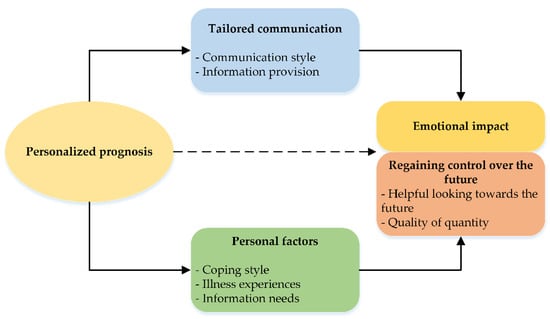
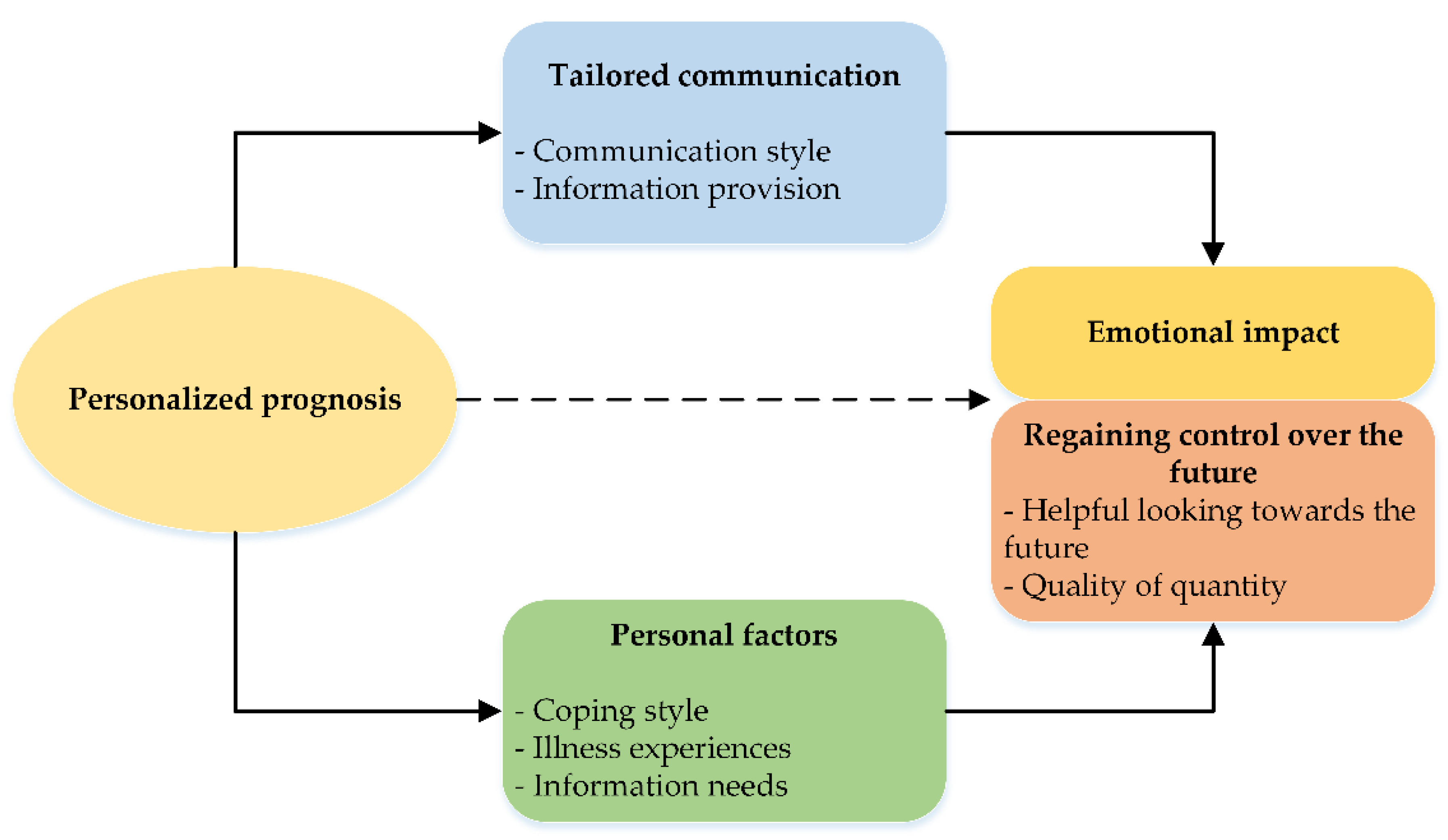
The analysis of the interview data revealed four overarching themes with seven subthemes (see Figure 1).
Figure 1.
Overarching themes and subthemes on patient and caregiver experiences with discussing personalized prognosis in amyotrophic lateral sclerosis.
3.2.1. Tailored Communication
Communication style
Patients and caregivers emphasized the importance of a person-centered communication style tailored to their emotional needs (quotes 1, 2 in Table 3). When the physician’s style did not meet their preferences, this led to dissatisfaction (quote 3).
Table 3.
Patient and caregiver quotes on tailored communication.
Information provision
They also expressed their satisfaction when prognostic information was tailored to their needs (quotes 4, 5). Empathetic, tailored communication did not have to take up much time, however, patients and caregivers also emphasized the importance of adequate preparation by the physician (quote 6). Patients reported inconsistency between the information provided on the average life expectancy in ALS at diagnosis and the personalized prognosis they received later. This inconsistency could increase the negative emotional impact of bad news (quote 7, 25). Generally, the personalized prognosis was discussed as a range and the inherent statistical uncertainty was emphasized by the physician. The better end of this range could provide a measure of hope (quote 8). However, it could also cause confusion if the underlying prediction model and range were insufficiently explained (quote 5).
3.2.2. Personal Factors
The subthemes coping style, illness experiences, and information needs were strongly interrelated with each other, but generally not with role (patient or caregiver), gender, or prognosis.
Coping style
Often patients described themselves as down-to-earth and displayed an active, problem-focused coping style. They said that this coping style and knowing their personalized prognosis helped them to confront and accept their prognosis and start planning for the future instead of dwelling on their emotions (quotes 9, 10 in Table 4). Older patients and caregivers (i.e., over 65 years old) often reflected with satisfaction on a long and fulfilled life making it easier for them to accept and cope with their prognosis, regardless of whether it was good or bad news (quotes 11, 12). One patient at first exhibited an avoidant coping style, due to the death of his sibling from ALS, but later he did want to know his personalized prognosis (quote 17). Due to inconsistency of information, another patient responded with regret and denial because his personalized prognosis turned out to be bad news (quote 25). The coping styles of caregivers also varied. Some had difficulty coping with the situation (quote 10) and, as a result, did not always wish to participate in the interviews, but others wanted information about the personalized prognosis in order to regain some measure of control (quotes 13).
Table 4.
Patient and caregiver quotes on personal factors.
Illness experiences
Patients reported that, prior to prognostic disclosure, they already had an expectation about what their life expectancy would be, based on their experience with the rate of disease progression. Some described the personalized prognosis as reassuring (quote 14), whereas others questioned its added value (quotes 15). A number of caregivers, however, said that this information was important to them because it confirmed what their partner already felt (quote 15). When the prognosis did not match the patient’s feelings, they described this as surreal (quote 16). Prior illness experiences with ALS within the family and other diseases could affect how participants coped with prognostic disclosure (quotes 17, 18).
Information needs
Information needs for the personalized prognosis varied between participants. Some said they wanted as much detailed information as possible about their personalized prognosis and the underlying model (quote 19), whereas others preferred a more general indication (quote 20). Although in most cases the physician broached the topic, sometimes patients and caregivers took the initiative and requested information about the prediction model (quote 19). Some caregivers found it harder to cope with the situation and were sometimes taken aback by the patients’ desire for information on the personalized prognosis (quote 19, 10), others needed clarity (quote 21, 15, 28). There were also reports by patients and caregivers that their need for information about functional prognosis was not met (quote 22).
3.2.3. Emotional Impact
The emotional impact of prognostic disclosure ranged from happy and reassuring to regret. Patients and caregivers said that good news about their personalized prognosis made them happy and gave them a feeling of having time and peace (quote 23 in Table 5) but emphasized that the communication style mediated the emotional impact (quotes 1, 2). A shorter than average prognosis could be a more difficult message to cope with for participants (quote patient 24) and one patient expressed regret over agreeing to discuss his personalized prognosis (quote 25). Many of the older patients, however, were more accepting, and some described the limited life expectancy as a relief (26, 18). Regardless of good or bad news, none of the patients said it caused them anxiety or to lose hope and most patients were satisfied with the discussion of their personalized prognosis.
Table 5.
Patient and caregiver quotes on emotional impact & regaining control over the future.
3.2.4. Regaining Control over the Future
Helpful in looking towards the future
The majority of patients and caregivers stated that discussing their personalized prognosis was helpful as it provided clarity and alleviated uncertainty (quotes 27, 28, 21). They told us how this information helped them regain some measure of control, enabling them to redefine and plan for the future (quotes 29, 10), including future care (quotes 11, 15), as well as what would happen after the patient’s death (quote 30). Also, this knowledge helped participants make the most of the time they had left (quotes 28, 11).
Quality over quantity
Without being prompted to discuss the topic, the majority of patients, and some caregivers, emphasized the importance of quality of life over the quantity (quote 22). For them a good quality of life meant allowing them to engage in meaningful activities, to communicate with loved ones and friends, and to express their own will (quotes 31). A number of patients divided their remaining time into a “acceptable” part with a satisfactory quality of life and contrasted this with a “bad” part while reflecting on taking control over the end-of-life (quotes 31, 32, 33). Although a few patients and caregivers expressed the hope of being on the ‘good side’ of the prognosis, they hoped more often for a satisfactory quality of life for as long as possible (quotes 33, 34).
3.3. Physician Focus Group
Patient and caregiver themes described above were also recognized by the physician focus group (quotes p1–p9 in Table 6). Analysis of the focus group revealed potential benefits of discussing personalized prognosis and barriers.
Table 6.
Quotes from physician focus group.
Benefits
Physicians agreed that discussing personalized prognosis is not that different from other difficult conversations about bad news in ALS (quote p10). The two more experienced physicians said that even with many years of experience, the prediction model provided valuable information because they were sometimes surprised by the outcome (quote p11). Additionally, discussing personalized prognosis can enhance more personalized care (quote p12).
Barriers
Physicians underscored that preparation, interpreting the outcomes, especially in the case of missing (e.g., the outcome of genetic testing for C9orf repeat expansion) and uncertain data (e.g., date of symptom onset), requires time and effort, as does explaining the model, and responding to emotions (quote p13). They also discussed the dilemma of missing or unclear variables when filling out the model and how this can result in different outcomes (quote p14). Another topic that was discussed at length concerned the difficulty of prognostic disclosure with patients with a language barrier, which could be further confounded by a different cultural background (quote p15).
4. Discussion
This is the first study investigating experiences of patients, caregivers, and physicians when discussing personalized prognosis of survival based on a prediction model in neurological disease. Our study shows that personalized prognosis can be discussed with patients with ALS and their caregivers without negative impact, provided the physicians tailor communication to individual needs and preferences. Personalized prognosis may help patients and their caregivers regain control over the future, and can facilitate future planning, where maintaining quality of life is more important than survival time.
Most of the experiences of patients with ALS and their caregivers in our study are in agreement with studies on prognostic disclosure in other life-limiting diseases, and show that concerns about an adverse impact on psychological wellbeing of patients and caregivers are unwarranted [8,13,14]. Indeed, studies show that an unfulfilled desire for a more personalized prognosis can cause frustration and distress for patients and caregivers [24,33,34], whereas patients and caregivers in our study reported that discussing personalized prognosis can alleviate uncertainty. Participants in our study differed in their information needs, some desiring a very detailed explanation of their personalized prognosis and prediction model and others wanting a more general indication of their life expectancy. All participants agreed about the importance of empathetic and honest communication. Our study and others show that exploring and tailoring prognostic disclosure to the emotional and information needs of patients and their caregivers mediates the emotional impact, supports acceptance, and improves satisfaction with the communication [14,18,24,27,29].
Prognostic disclosure may also promote acceptance and coping by supporting patients with life-limiting diseases and their caregivers to redefine and plan for their future, including future care, thus allowing them to focus on the present and their quality of life [29,30,35]. Prognostic awareness also supports patients in planning future care together with their caregivers and physicians, and allows for clinical and end-of-life decision-making that is better aligned with patients’ values and preferences [7,18,24]. This has been associated with a better quality of life, especially nearing end-of-life [36,37]. In ALS specifically, this may help patients, caregivers, and ALS care teams to ‘stay one step ahead’ when planning future care and end-of-life [38]. All of this can help patients regain a sense of control [30], especially relevant to patients with ALS who, from diagnosis, are confronted by the prospect of ever-present and increasing loss [33,39,40,41].
Coping style and illness experiences are important personal factors that mediate the acceptance and outcome of prognostic disclosure. Similar to our results, patients with advanced, incurable cancer preferring a more active coping style were more likely to want information about their prognosis and to use this in planning their future and future care [30]. Additionally, older patients may find it easier to accept a poor prognosis, because they can reflect on a long, fulfilled life [30]. Before discussing their personalized prognosis, many patients in our study already anticipated this on the basis of the changes they did or did not feel in their body. Living with a disease and experiencing symptoms may promote coping and acceptance, and limit the emotional impact of a poor prognosis [30]. Some patients and caregivers in our study reported diverging prognostic information needs depending on their coping style and acceptance of the disease [30]. A number of studies in ALS [42,43] and other life-limiting diseases [21,24] report that some caregivers may have a stronger desire for prognostic information than the patient. Our study suggests that, in addition to the need to plan future care and for the time after the patient’s death, some caregivers may have a need for prognostic certainty, because they are not experiencing the rate of deterioration and cannot feel what the patient is feeling.
Physicians in our focus group agreed that, in many ways, discussing personalized prognosis is not so different from other bad news conversations. Communication guidelines [44,45] can support physicians in tailoring prognostic disclosure to individual patient needs. Discussion of prognosis itself takes little time but should be placed in the broader, holistic context of the patient’s values and dignity, their perspective on the future, goals of care and treatment options, and quality of life.
Our results differ from those in other life-limiting diseases, in particular cancer, with respect to the relationship between prognosis and hope. Hope is acknowledged as essential in life-limiting disease and ranges from the hope to be cured, to having a longer life, a good life, to a good death. In cancer there is often a realistic hope for a cure and even in the palliative phase, cancer patients often hold out the hope of remission or a cure [28,46]. When diagnosed with ALS, there is no prospect of a cure or remission, and patients are immediately referred to palliative care. As a result, shortly after diagnosis, most patients with ALS and their caregivers redefine their hope from hope of a cure to focusing on hoping for a meaningful life [47]. Patients in our study often focused more on the hope of maintaining a satisfactory quality of life rather than the quantity of time left.
While reflecting on their quality of life and remaining time, patients in our study also talked about taking control of the end-of-life through euthanasia. After receiving their diagnosis, most patients with ALS in the Netherlands inquire about the possibility of euthanasia [2]. In other countries, many ALS patients consider hastening their death and would welcome the opportunity to discuss this topic with their physician; however, this often does not happen [48,49]. Reasons to consider or actually hasten death include loss of autonomy and dignity, disability impairing quality of life, and a desire to control the end-of-life [49,50,51]. Better prognostic awareness may support advance care planning and end-of-life decision-making, which can relief anxiety, provide a sense of control, support hope, and facilitate both quality of life and quality of dying when the disease becomes too much to bear [52].
The use of prediction models to predict survival and support decision-making is on the rise [10,12]. Physicians in our focus group agreed that filling out the model, interpreting outcomes, and communicating estimated survival (and its uncertainty) in an easily understandable manner for patients takes some time, but after a small learning curve, it was no more difficult or stressful than other bad news conversations in ALS. The accuracy of a prediction model can be impaired by missing or unclear variables [53]. The two most important predictors for the ENCALS prediction model and most at risk of uncertainty are date of onset and vital capacity [3]. If these data are uncertain, physicians should consider the impact on the outcome and decide whether it is feasible to discuss the personalized prognosis. Physicians in our focus group were hesitant to discuss the personalized prognosis with patients with a language barrier and those from non-western cultures. However, non-western studies show a positive association between prognostic disclosure and quality of life; preferences about prognostic disclosure may differ among and within non-western cultures [54,55]. It is recommended that physicians approach all patients, regardless of their cultural background, in the same way, by exploring their preferences and needs regarding this topic [44]. The above-mentioned topics have already been incorporated in our communication guide [13].
This and other studies show that at least some patients with ALS and their caregivers would like to receive a more personalized prognosis than the average life expectancy of all patients [3,33,42,56]. Some of the participants in our study took the initiative to ask their physician about the prediction model and their personalized prognosis after having read or heard about it. However, information discrepancy between the average life expectancy discussed at diagnosis and personalized prognosis may cause dissatisfaction and be detrimental to the patient-physician relationship [18]. Proper discussion of personalized prognosis in the broader context of ALS care trajectory may not always be possible at diagnosis due to time restraints and the shock of diagnosis-limiting information retention. However, besides discussing the fact that ALS is a lethal disease with a limited, but variable life expectancy, neurologists in the Netherlands should inform patients that they can be offered a more personalized prognosis at a later date, either in a second consultation with the neurologist or with the rehabilitation physician.
Finally, to facilitate uptake of discussing personalized prognosis in ALS, the online ENCALS prediction model could be made more user-friendly by integrating instructions to handle missing and unclear variables, and recommendations on how to discuss the outcome; also, the model should be validated in more populations.
Strengths and Limitations
An important strength of this study is the robust methodological design with two independent coders, and multiple viewpoints from patients, caregivers, and physicians. A possible limitation is that most participants had received a high level of education and none a lower level. We also lack the perspective of patients with a very short prognosis. However, due to their fast rate of disease progression, these patients are probably already aware of their poor prognosis and a personalized prognosis would offer very limited additional benefit.
5. Conclusions
Personalized prognosis can be discussed with patients with ALS who want information about their individual life expectancy, and with their caregivers, with minimal adverse emotional impact. For the emotional impact, how the message is communicated—i.e., a person-centered communication tailored to their emotional and information needs—is as important as what is communicated—i.e., a good or poor prognosis. Discussing personalized prognosis shortly after diagnosis may help patients with ALS and their caregivers regain control over the future and can facilitate planning (of the future) including future care. For many patients, quality of life matters more than quantity of time remaining.
Supplementary Materials
The following are available online at https://www.mdpi.com/article/10.3390/brainsci11121597/s1. Table S1: COREQ checklist, Table S2: Researcher credentials, Table S3: Interview guide (with prompts) for interviews with patients and their caregivers on discussing personalized prognosis in amyotrophic lateral sclerosis, Table S4: Interview guide (with prompts) for focus group with physicians.
Author Contributions
Conceptualization, R.M.v.E., L.H.v.d.B., J.M.A.V.-M. and A.B.; Data curation, R.M.v.E., L.S.K.and W.J.K.; Formal analysis, R.M.v.E., L.S.K. and A.B.; Funding acquisition, L.H.v.d.B. and J.M.A.V.-M.; Investigation, R.M.v.E. and L.S.K.; Methodology, R.M.v.E., W.J.K., J.M.A.V.-M. and A.B.; Project administration, R.M.v.E. and A.B.; Resources, W.J.K., E.T.K.-v.R. and S.P.; Supervision, W.J.K. and J.M.A.V.-M.; Writing—original draft, R.M.v.E., L.S.K. and A.B.; Writing—review & editing, W.J.K., E.T.K.-v.R., M.A.v.E., L.H.v.d.B. and J.M.A.V.-M. All authors have read and agreed to the published version of the manuscript.
Funding
This study was funded by The Netherlands ALS foundation (No. 2016–51).
Institutional Review Board Statement
The study protocol was submitted to the Medical Ethical Committee of the university medical center (UMC) Utrecht (18-870/C) who deemed it exempt from review as the Dutch Medical Research Involving Human Subjects Act was not applicable.
Informed Consent Statement
Participation was voluntary and written consent was obtained after informing patients and caregivers about the study.
Data Availability Statement
The data in this study, including the coding scheme, are available in Dutch on request from the corresponding author. The data are not publicly available due to privacy and ethical reasons.
Acknowledgments
The authors would like to thank all patients and caregivers who participated in the interviews for this study. Additionally, we would like to thank Anne-Wil Koopman (rehabilitation physician at Basalt rehabilitation, Leiden, The Netherlands), and Mark Janse van Mantgem (neurologist at University Medical Center Utrecht, The Netherlands); both contributed to the inclusion and participated in our focus group.
Conflicts of Interest
The authors report no disclosure relevant to the manuscript.
References
- Van Es, M.A.; Hardiman, O.; Chio, A.; Al-Chalabi, A.; Pasterkamp, R.J.; Veldink, J.H.; van den Berg, L.H. Amyotrophic Lateral Sclerosis. Lancet 2017, 390, 2084–2098. [Google Scholar] [CrossRef] [Scilit]
- Seeber, A.A.; Pols, A.J.; Hijdra, A.; Grupstra, H.F.; Willems, D.L.; de Visser, M. Experiences and Reflections of Patients with Motor Neuron Disease on Breaking the News in a Two-Tiered Appointment: A Qualitative Study. BMJ Support. Palliat. Care 2019, 9, e8. [Google Scholar] [CrossRef] [Scilit] [PubMed]
- Westeneng, H.-J.; Debray, T.P.A.; Visser, A.E.; van Eijk, R.P.A.; Rooney, J.P.K.; Calvo, A.; Martin, S.; McDermott, C.J.; Thompson, A.G.; Pinto, S.; et al. Prognosis for Patients with Amyotrophic Lateral Sclerosis: Development and Validation of a Personalised Prediction Model. Lancet Neurol. 2018, 17, 423–433. [Google Scholar] [CrossRef] [Scilit]
- O’Brien, M.R.; Whitehead, B.; Jack, B.A.; Mitchell, J.D. From Symptom Onset to a Diagnosis of Amyotrophic Lateral Sclerosis/Motor Neuron Disease (ALS/MND): Experiences of People with ALS/MND and Family Carers—A Qualitative Study. Amyotroph. Lateral Scler. 2011, 12, 97–104. [Google Scholar] [CrossRef] [Scilit]
- Sullivan, R.; Ugalde, A.; Sinclair, C.; Breen, L.J. Developing a Research Agenda for Adult Palliative Care: A Modified Delphi Study. J. Palliat. Med. 2019, 22, 480–488. [Google Scholar] [CrossRef] [Scilit]
- Holloway, R.G.; Gramling, R.; Kelly, A.G. Estimating and Communicating Prognosis in Advanced Neurologic Disease. Neurology 2013, 80, 764–772. [Google Scholar] [CrossRef] [Scilit]
- Gill, T.M. The Central Role of Prognosis in Clinical Decision Making. JAMA 2012, 30, 199. [Google Scholar] [CrossRef] [Scilit]
- Hancock, K.; Clayton, J.M.; Parker, S.M.; Der, S.W.; Butow, P.N.; Carrick, S.; Currow, D.; Ghersi, D.; Glare, P.; Hagerty, R.; et al. Truth-Telling in Discussing Prognosis in Advanced Life-Limiting Illnesses: A Systematic Review. Palliat. Med. 2007, 21, 507–517. [Google Scholar] [CrossRef] [Scilit]
- Mitsumoto, H. What If You Knew the Prognosis of Your Patients with ALS? Lancet Neurol. 2018, 17, 386–388. [Google Scholar] [CrossRef] [Scilit]
- Haaksma, M.L.; Eriksdotter, M.; Rizzuto, D.; Leoutsakos, J.M.S.; Olde Rikkert, M.G.M.; Melis, R.J.F.; Garcia-Ptacek, S. Survival Time Tool to Guide Care Planning in People with Dementia. Neurology 2020, 94, E538–E548. [Google Scholar] [CrossRef] [Scilit]
- Van Der Steen, J.T.; Albers, G.; Licht-Strunk, E.; Muller, M.T.; Ribbe, M.W. A Validated Risk Score to Estimate Mortality Risk in Patients with Dementia and Pneumonia: Barriers to Clinical Impact. Int. Psychogeriatr. 2011, 23, 31–43. [Google Scholar] [CrossRef] [Scilit]
- Schoenborn, N.L.; Bowman, T.L.; Cayea, D.; Pollack, C.E.; Feeser, S.; Boyd, C. Primary Care Practitioners’ Views on Incorporating Long-Term Prognosis in the Care of Older Adults. JAMA Intern. Med. 2016, 176, 671–678. [Google Scholar] [CrossRef] [Scilit] [PubMed]
- Van Eenennaam, R.M.; Kruithof, W.J.; van Es, M.A.; Kruitwagen-van Reenen, E.T.; Westeneng, H.J.; Visser-Meily, J.M.A.; van den Berg, L.H.; Beelen, A. Discussing Personalized Prognosis in Amyotrophic Lateral Sclerosis: Development of a Communication Guide. BMC Neurol. 2020, 20, 446. [Google Scholar] [CrossRef] [Scilit] [PubMed]
- Van der Velden, N.C.A.; Meijers, M.C.; Han, P.K.J.; van Laarhoven, H.W.M.; Smets, E.M.A.; Henselmans, I. The Effect of Prognostic Communication on Patient Outcomes in Palliative Cancer Care: A Systematic Review. Curr. Treat. Options Oncol. 2020, 21, 40. [Google Scholar] [CrossRef] [Scilit] [PubMed]
- Greenhalgh, T.; Annandale, E.; Ashcroft, R.; Barlow, J.; Black, N.; Bleakley, A.; Boaden, R.; Braithwaite, J.; Britten, N.; Carnevale, F.; et al. An Open Letter to The BMJ Editors on Qualitative Research. BMJ 2016, 352, i563. [Google Scholar] [CrossRef] [Scilit]
- Braun, V.; Clarke, V. Using Thematic Analysis in Psychology. Qual. Res. Psychol. 2006, 3, 77–101. [Google Scholar] [CrossRef] [Scilit]
- Tong, A.; Sainsbury, P.; Craig, J. Consolidated Criteria for Reporting Qualitative Research (COREQ): A 32-Item Checklist for Interviews and Focus Groups. Int. J. Qual. Health Care 2007, 19, 349–357. [Google Scholar] [CrossRef] [Scilit] [PubMed]
- Butow, P.; Dowsett, S.; Hagerty, R.; Tattersall, M. Communicating Prognosis to Patients with Metastatic Disease: What Do They Really Want to Know? Support. Care Cancer 2002, 10, 161–168. [Google Scholar] [CrossRef] [Scilit] [PubMed]
- Clayton, J.M.; Butow, P.N.; Arnold, R.M.; Tattersall, M.H.N. Discussing Life Expectancy with Terminally Ill Cancer Patients and Their Carers: A Qualitative Study. Support. Care Cancer 2005, 13, 733–742. [Google Scholar] [CrossRef] [Scilit] [PubMed]
- Clayton, J.M.; Butow, P.N.; Tattersall, M.H.N. When and How to Initiate Discussion about Prognosis and End-of-Life Issues with Terminally Ill Patients. J. Pain Symptom Manag. 2005, 30, 132–144. [Google Scholar] [CrossRef] [Scilit] [PubMed]
- Curtis, J.R.; Engelberg, R.; Young, J.P.; Vig, L.K.; Reinke, L.F.; Wenrich, M.D.; McGrath, B.; McCown, E.; Back, A.L. An Approach to Understanding the Interaction of Hope and Desire for Explicit Prognostic Information among Individuals with Severe Chronic Obstructive Pulmonary Disease or Advanced Cancer. J. Palliat. Med. 2008, 11, 610–620. [Google Scholar] [CrossRef] [Scilit]
- Friedrichsen, M.; Lindholm, A.; Milberg, A. Experiences of Truth Disclosure in Terminally Ill Cancer Patients in Palliative Home Care. Palliat. Support. Care 2011, 9, 173–180. [Google Scholar] [CrossRef] [Scilit] [PubMed]
- Hagerty, R.G.; Butow, P.N.; Ellis, P.M.; Lobb, E.A.; Pendlebury, S.C.; Leighl, N.; Mac Leod, C.; Tattersall, M.H.N. Communicating with Realism and Hope: Incurable Cancer Patients’ Views on the Disclosure of Prognosis. J. Clin. Oncol. 2005, 23, 1278–1288. [Google Scholar] [CrossRef] [Scilit] [PubMed]
- Kirk, P.; Kirk, I.; Kristjanson, L.J. What Do Patients Receiving Palliative Care for Cancer and Their Families Want to Be Told? A Canadian and Australian Qualitative Study. BMJ 2004, 328, 1343. [Google Scholar] [CrossRef] [Scilit]
- Mitchison, D.; Butow, P.; Sze, M.; Aldridge, L.; Hui, R.; Vardy, J.; Eisenbruch, M.; Iedema, R.; Goldstein, D. Prognostic Communication Preferences of Migrant Patients and Their Relatives. Psychooncology 2012, 21, 496–504. [Google Scholar] [CrossRef] [Scilit] [PubMed]
- Rohde, G.; Söderhamn, U.; Vistad, I. Reflections on Communication of Disease Prognosis and Life Expectancy by Patients with Colorectal Cancer Undergoing Palliative Care: A Qualitative Study. BMJ Open 2019, 9, e023463. [Google Scholar] [CrossRef] [Scilit] [PubMed]
- Clayton, J.M.; Butow, P.N.; Tattersall, M.H.N. The Needs of Terminally Ill Cancer Patients versus Those of Caregivers for Information Regarding Prognosis and End-of-Life Issues. Cancer 2005, 103, 1957–1964. [Google Scholar] [CrossRef] [Scilit]
- Clayton, J.M.; Butow, P.N.; Arnold, R.M.; Tattersall, M.H.N. Fostering Coping and Nurturing Hope When Discussing the Future with Terminally Ill Cancer Patients and Their Caregivers. Cancer 2005, 103, 1965–1975. [Google Scholar] [CrossRef] [Scilit]
- Coulourides Kogan, A.; Penido, M.; Enguidanos, S. Does Disclosure of Terminal Prognosis Mean Losing Hope? Insights from Exploring Patient Perspectives on Their Experience of Palliative Care Consultations. J. Palliat. Med. 2015, 18, 1019–1025. [Google Scholar] [CrossRef] [Scilit]
- Walczak, A.; Butow, P.N.; Davidson, P.M.; Bellemore, F.A.; Tattersall, M.H.N.; Clayton, J.M.; Young, J.; Mazer, B.; Ladwig, S.; Epstein, R.M. Patient Perspectives Regarding Communication about Prognosis and End-of-Life Issues: How Can It Be Optimised? Patient Educ. Couns. 2013, 90, 307–314. [Google Scholar] [CrossRef] [Scilit]
- Moser, A.; Korstjens, I. Series: Practical Guidance to Qualitative Research. Part 3: Sampling, Data Collection and Analysis. Eur. J. Gen. Pract. 2018, 24, 9–18. [Google Scholar] [CrossRef] [Scilit]
- Saldaña, J. The Coding Manual for Qualitative Researchers, 2nd ed.; SAGE Publications: Thousand Oaks, CA, USA, 2013. [Google Scholar]
- Hogden, A.V.; Greenfield, D.; Nugus, P.; Kiernan, M.C. What Influences Patient Decision-Making in Amyotrophic Lateral Sclerosis Multidisciplinary Care? A Study of Patient Perspectives. Patient Prefer. Adherence 2012, 6, 829–838. [Google Scholar] [CrossRef] [Scilit]
- Etkind, S.N.; Koffman, J. Approaches to Managing Uncertainty in People with Life-Limiting Conditions: Role of Communication and Palliative Care. Postgrad. Med. J. 2016, 92, 412–417. [Google Scholar] [CrossRef] [Scilit] [PubMed]
- Clayton, J.M.; Hancock, K.; Parker, S.; Butow, P.N.; Walder, S.; Carrick, S.; Currow, D.; Ghersi, D.; Glare, P.; Hagerty, R.; et al. Sustaining Hope When Communicating with Terminally Ill Patients and Their Families: A Systematic Review. Psychooncology 2008, 17, 641–659. [Google Scholar] [CrossRef] [Scilit] [PubMed]
- Wright, A.A.; Zhang, B.; Ray, A.; Mack, J.W.; Trice, E.; Balboni, T.; Mitchell, S.L.; Jackson, V.A.; Block, S.D.; Maciejewski, P.K.; et al. Associations between End-of-Life Discussions, Patient Mental Health, Medical Care near Death, and Caregiver Bereavement Adjustment. JAMA 2008, 300, 1665–1673. [Google Scholar] [CrossRef] [Scilit] [PubMed]
- Mack, J.W.; Weeks, J.C.; Wright, A.A.; Block, S.D.; Prigerson, H.G. End-of-Life Discussions, Goal Attainment, and Distress at the End of Life: Predictors and Outcomes of Receipt of Care Consistent with Preferences. J. Clin. Oncol. 2010, 28, 1203–1208. [Google Scholar] [CrossRef] [Scilit]
- McConigley, R.; Kristjanson, L.J.; Aoun, S.M.; Oldham, L.; Currow, D.; O’Connor, M.; Holloway, K. Staying Just One Step Ahead: Providing Care for Patients with Motor Neurone Disease: Table 1. BMJ Support. Palliat. Care 2014, 4, 38–42. [Google Scholar] [CrossRef] [Scilit] [PubMed]
- Hobson, E.V.; McDermott, C.J. Supportive and Symptomatic Management of Amyotrophic Lateral Sclerosis. Nat. Rev. Neurol. 2016, 12, 526–538. [Google Scholar] [CrossRef] [Scilit] [PubMed]
- Foley, G.; Timonen, V.; Hardiman, O. Exerting Control and Adapting to Loss in Amyotrophic Lateral Sclerosis. Soc. Sci. Med. 2014, 101, 113–119. [Google Scholar] [CrossRef] [Scilit]
- Soundy, A.; Condon, N. Patients Experiences of Maintaining Mental Well-Being and Hope within Motor Neuron Disease: A Thematic Synthesis. Front. Psychol. 2015, 6, 606. [Google Scholar] [CrossRef] [Scilit]
- Chiò, A.; Montuschi, A.; Cammarosano, S.; De Mercanti, S.; Cavallo, E.; Ilardi, A.; Ghiglione, P.; Mutani, R.; Calvo, A. ALS Patients and Caregivers Communication Preferences and Information Seeking Behaviour. Eur. J. Neurol. 2008, 15, 55–60. [Google Scholar] [CrossRef] [Scilit]
- Ozanne, A.; Graneheim, U.H. Understanding the Incomprehensible—Patients’ and Spouses’ Experiences of Comprehensibility before, at and after Diagnosis of Amyotrophic Lateral Sclerosis. Scand. J. Caring Sci. 2018, 32, 663–671. [Google Scholar] [CrossRef] [Scilit]
- Clayton, J.M.; Hancock, K.M.; Butow, P.N.; Tattersall, M.H.N.; Currow, D.C. Clinical Practice Guidelines for Communicating Prognosis and End-of-life Issues with Adults in the Advanced Stages of a Life-limiting Illness, and Their Caregivers. Med. J. Aust. 2007, 186, 478. [Google Scholar] [CrossRef] [Scilit]
- Gilligan, T.; Coyle, N.; Frankel, R.M.; Berry, D.L.; Bohlke, K.; Epstein, R.M.; Finlay, E.; Jackson, V.A.; Lathan, C.S.; Loprinzi, C.L.; et al. Patient-Clinician Communication: American Society of Clinical Oncology Consensus Guideline. J. Clin. Oncol. 2017, 35, 3618–3632. [Google Scholar] [CrossRef] [Scilit] [PubMed]
- Nierop-van Baalen, C.; Grypdonck, M.; van Hecke, A.; Verhaeghe, S. Hope Dies Last A Qualitative Study into the Meaning of Hope for People with Cancer in the Palliative Phase. Eur. J. Cancer Care 2016, 25, 570–579. [Google Scholar] [CrossRef] [Scilit]
- De Moree, S.; Smets, E.M.; Visser, L.N.; van Vliet, R.O.; Kruitwagen-van Reenen, E.T.; Grupstra, H.F.; Pieters, S.; De Visser, M.; De Haes, H.C.; Nollet, F.; et al. Silver Linings: The Experience of Hope in Dyads with Motor Neuron Disease. An Explorative Study. J. Palliat. Care Med. 2019, 9, 1–8. [Google Scholar] [CrossRef]
- Stutzki, R.; Weber, M.; Reiter-Theil, S.; Simmen, U.; Borasio, G.D.; Jox, R.J. Attitudes towards Hastened Death in ALS: A Prospective Study of Patients and Family Caregivers. Amyotroph. Lateral Scler. Front. Degener. 2014, 15, 68–76. [Google Scholar] [CrossRef] [Scilit] [PubMed]
- Hauswirth, A.G.; George, H.C.; Lomen-Hoerth, C. ALS Patient and Caregiver Attitudes toward Physician-Hastened Death in California. Muscle Nerve 2021, 64, 428–434. [Google Scholar] [CrossRef] [Scilit]
- Wang, L.H.; Elliott, M.A.; Jung Henson, L.; Gerena-Maldonado, E.; Strom, S.; Downing, S.; Vetrovs, J.; Kayihan, P.; Paul, P.; Kennedy, K.; et al. Death with Dignity in Washington Patients with Amyotrophic Lateral Sclerosis. Neurology 2016, 87, 2117–2122. [Google Scholar] [CrossRef] [Scilit]
- Maessen, M.; Veldink, J.H.; Onwuteaka-Philipsen, B.D.; de Vries, J.M.; Wokke, J.H.J.; van der Wal, G.; van den Berg, L.H. Trends and Determinants of End-of-Life Practices in ALS in the Netherlands. Neurology 2009, 73, 954–961. [Google Scholar] [CrossRef] [Scilit]
- Rietjens, J.A.C.; van der Maas, P.J.; Onwuteaka-Philipsen, B.D.; van Delden, J.J.M.; van der Heide, A. Two Decades of Research on Euthanasia from the Netherlands. What Have We Learnt and What Questions Remain? J. Bioethical Inq. 2009, 6, 271–283. [Google Scholar] [CrossRef] [Scilit] [PubMed]
- Kappen, T.H.; van Klei, W.A.; van Wolfswinkel, L.; Kalkman, C.J.; Vergouwe, Y.; Moons, K.G.M. Evaluating the Impact of Prediction Models: Lessons Learned, Challenges, and Recommendations. Diagn. Progn. Res. 2018, 2, 11. [Google Scholar] [CrossRef] [Scilit] [PubMed]
- Wattanapisit, S.; Wagland, R.; Hunt, K. Prognostic Disclosure and Quality of Life in Palliative Care: A Systematic Review. BMJ Support. Palliat. Care 2021, 11, 361–370. [Google Scholar] [CrossRef] [Scilit]
- Obeidat, R.F.; Homish, G.G.; Lally, R.M. Shared Decision Making Among Individuals with Cancer in Non-Western Cultures: A Literature Review. Oncol. Nurs. Forum 2013, 40, 454–463. [Google Scholar] [CrossRef] [Scilit] [PubMed]
- O’Connor, M.; Aoun, S.M.; Breen, L.J. Australian Family Carer Responses When a Loved One Receives a Diagnosis of Motor Neurone Disease Our Life Has Changed Forever. Health Soc. Care Community 2018, 26, e415–e421. [Google Scholar] [CrossRef] [Scilit] [PubMed]

Publisher’s Note: MDPI stays neutral with regard to jurisdictional claims in published maps and institutional affiliations. |
© 2021 by the authors. Licensee MDPI, Basel, Switzerland. This article is an open access article distributed under the terms and conditions of the Creative Commons Attribution (CC BY) license (https://creativecommons.org/licenses/by/4.0/).