


Abstract
Foliar preparations are used in potato cultivation, and their use can affect starch properties, which are important for food production. Therefore, the aim of this study was to evaluate the effect of foliar application of preparations (biostimulants, fertilizers) during the growing season of potatoes (Solanum tuberosum L.), cultivar Concordia, on selected physicochemical, thermal, and rheological properties of starch. Eight commercial preparations (Basfoliar 12-4-6+S + ADOB PK (ADOB), Asahi SL, BlueN®, Megafol®, Quantis™, Qultivo, Rizoderma TSI, and Rizofos) were foliarly applied during the growing season. Potato starch was isolated using a laboratory method. Starch from potatoes grown without foliarly preparations served as a control sample. The research methodology included determination of amylose content and mean starch granule diameter. Thermodynamic characterization of gelatinization and retrogradation was performed using a DSC (differential scanning calorimeter), viscometric pasting characterization was performed with a Rapid Visco Analyzer (RVA), and flow curves were determined. A statistically significant effect of the type of foliar biostimulant/fertilizer applied on amylose content, starch grain size distribution, and rheological properties of the tested starches was observed. Amylose content ranged from 31.7% (BlueN) to 36.3% (ADOB). Starch from potatoes grown with ADOB had the largest grains, with the largest number of grains having a diameter >40 µm. The tested starches generally did not differ in terms of the onset, peak, and end temperatures of gelatinization determined using DSC. Similarly, slight differences were observed in the pasting temperature determined viscometrically. The RVA analysis showed that the highest maximum viscosity value was observed for starch obtained from the raw material stimulated with the Megafol preparation (3744 mPa·s), and the paste based on starch isolated from potatoes grown with the Asahi biostimulant was characterized by the highest rheological stability at 95 °C. The starch pastes obtained from the raw material stimulated with the Megafol and Quantis preparations were characterized by the lowest values of the consistency coefficient (15.7 Pa·sn), and the control starch had the highest value of this parameter (21.7 Pa·sn).
1. Introduction
Potato (Solanum tuberosum L.) is a cultivated plant and ranks fourth in the world in terms of production volume [1,2]. Potatoes are a valuable food for millions of people around the world and for animals due to their nutritional value, various functional properties and ease of cultivation. Starch dominates the dry matter of potatoes, occurring in the form of large granules, up to 100 µm in size [3]. The average starch content in fresh potato matter is from 17 to 21%, and in dry matter it is on average 80% [4]. Starch is characterized by a semi-crystalline structure with varying degrees of crystallinity. Crystallinity is associated exclusively with amylopectin, while amorphous regions are mainly associated with amylose [3]. Due to its various functional properties, the described biopolymer has a number of food and non-food applications [1]. Potato starch is of great technological importance due to its valued thickening, texturizing, stabilizing and water-retaining properties in food systems [3,4]. Starch is commonly used in the production of biodegradable films and coatings, hydrogels, and many other polymeric materials [5]. Chemically, it is a biopolymer of very high molecular weight, composed of linear amylose and branched amylopectin. In these fractions, individual glucose units are linked by glycosidic bonds. In the case of amylose, glucose molecules are linked primarily by α-1,4 glycosidic bonds and a small number of α-1,6 glycosidic bonds. The amylopectin fraction, on the other hand, is a highly branched fraction of starch, with α-1,6 glycosidic bonds present at the branch points [2,3,6]. Therefore, amylose structurally forms a single helix, whereas amylopectin has an additional chain extending from the starch monomer at position 6 at the branch end, forming a double helix structure with a straight chain extending at position 4 [2,7]. Potato starch has several different properties compared to starches of other botanical origin. Primarily, it is distinguished by its high purity, clear gelatinization, the presence of phosphate ester groups in amylopectin, the ability to form viscoelastic gels after heating and subsequent cooling, the absence of internal lipids, and the ability to form transparent gels after gelatinization. Furthermore, compared to corn, wheat, and rice starches, it differs in its gelatinization characteristics, such as viscosity, gelatinization enthalpy, and degree of retrogradation [1]. The above-mentioned properties of potato starch, as well as its content, are a function of many factors, such as the potato variety [8], agrotechnical conditions of cultivation (soil type, fertilization) or environmental conditions [1,9,10]. According to Tong et al. [2], the starch content in potatoes ranges widely from 10.8% to 22.1% and depends on genetic conditions or environmental conditions.
Modern agriculture, including potatoes, increasingly uses biopreparations in plant cultivation, including biostimulants, biofertilizers, biopesticides, and microbiological preparations. According to du Jardin [11], a plant biostimulant can be defined as any substance or microorganism applied to plants, seeds, or in the rhizosphere to stimulate natural plant processes and increase nutrient utilization and/or tolerance to abiotic stress, regardless of the nutrient content or any combination of such substances and/or microorganisms. According to the cited author, biostimulants comprise seven classes, including humic acid, fulvic acid, protein hydrolysates, seaweed extracts, chitosan, inorganic compounds, and beneficial microorganisms. Therefore, biostimulants stimulate plant growth, improve their resistance to abiotic stress factors (pest and pathogen activity) and abiotic stresses (water deficiency associated with drought, frost, salinity, environmental pollution with heavy metals), increase nutrient utilization, stimulate the development of the root system and leaves, and influence yield [12,13,14]. The use of biostimulants generally has a positive effect on plant development and yields [12]. Research on the impact of using biopreparations, including biostimulants, in potato cultivation demonstrates numerous benefits related to the size and quality of the obtained yields. Biopreparations are maximally effective at low doses, and their effectiveness depends on the vegetative phase and the plant species and variety [15]. Foliar application of biostimulants based on marine algae in potato cultivation contributed to a significant increase in potato yield. Furthermore, a significant increase in plant size and stem number was noted [15,16]. Sarahan [17] and Mystkowska et al. [18] similarly observed a significant increase in potato yield in crops grown with foliar biostimulants. By increasing nutrient absorption from soils, biostimulants may also reduce the pressure of plant diseases related to micro- and macronutrient deficiencies [15,19]. However, in addition to affecting yield size and quality, biostimulants also affect the chemical composition of potatoes. Mystkowska [20] found that the use of biostimulants in potato cultivation led to an increase in the dry matter content in potatoes and to an increase in the starch content [20]. According to the cited researcher, the effect of biostimulants on dry matter content depended on meteorological conditions during the growing season and the potato variety. However, the methods of biostimulant application and weather conditions prevailing in the individual years of the study significantly influenced the average starch content in potato tubers. The importance of genotype and environmental conditions during the potato growing season is also emphasized by Cortiello et al. [21]. Furthermore, among all the agrotechnical factors significantly affecting the level and quality of potato starch, fertilization, in addition to irrigation, is also important. In this regard, the type of fertilizer used, its chemical composition, the applied dose, and the frequency of application and the method of application are crucial [4]. The use of foliar fertilizers is an effective way of providing plants with nutrients due to their speed of action and better utilization of fertilizers.
However, there is a lack of information regarding the effect of foliar application of preparations in the form of biostimulants or fertilizers during the potato growing season on the physicochemical properties, including grain size distribution, thermal, and rheological properties, of the resulting starch. Given the widespread use of such preparations and the continuing importance of starch in both the food and non-food industries due to its properties, expanding our knowledge in this area is highly imperative.
2. Materials and Methods
2.1. Research Material
The research material was starches isolated from potatoes of the Concordia variety (Europlant Pflanzenzucht GmbH, Lüneburg, Germany; general-purpose, floury-compact type), obtained from a field experiment conducted in 2023 in southeastern Poland (N 49°53′46.68″ E 21°53′06.69″, 256 m above sea level). The experiment was conducted in a randomized block design, with three replications. The plot area was 14.5 m2 (2 rows of 30 tubers × 0.35 m per row × 0.675 m inter-row spacing). The following foliar preparations were applied to the potatoes: Basfoliar 12-4-6+S + ADOB PK (ADOB), Asahi SL (Asahi), BlueN® (BlueN), Megafol® (Megafol), Quantis™ (Quantis), Qultivo (Qultivo; QULTIVO Sp. z o.o., Charsznica, Poland), Rizoderma TSI (Rizoderma, Rizobacter do Brasil Ltda, Brazil) and Rizofos (Rizofos, manufacturer Rizobacter, Pergamino, Argentina) (Table 1). The selected preparations represent different functional groups, including mineral fertilizers, biostimulants (based on amino acids and plant extracts), and microbiological preparations. Their selection was intended to reflect a wide range of mechanisms of action, such as nutrient supply, stimulation of plant metabolism, and enhancement of nutrient uptake and stress tolerance. These products are used in agricultural practice and have been reported to influence plant growth, nutrient uptake, and biochemical composition, including starch-related traits [12,13,20]. During the potato growing season, these preparations were applied three times. The treatments were carried out at (i) the onset of flowering (BBCH 60), (ii) full flowering (BBCH 65), and (iii) the end of flowering (BBCH 69), which are critical periods for assimilate partitioning and starch accumulation in tubers. The effects of the foliar preparations were related to controls where the plants were sprayed with the same amount of pure water. Spraying was carried out using a GAR-LAND FUM 12B battery backpack sprayer (Lechler LU 120–03 sprayer, Lechler GmbH, Metzingen, Germany; working pressure 0.30 MPa, spray liquid consumption 300 dm3∙ha−1). Foliar applications were performed under typical field conditions for southeastern Poland, in the morning hours, under low-wind conditions (<2 m·s−1), moderate temperature (approximately 18–25 °C), and without precipitation. Relative humidity during treatments was within the range favorable for foliar absorption (approx. 60–80%). These conditions are consistent with standard agronomic recommendations to ensure effective uptake and minimize drift. The doses of all biopreparations were selected based on the manufacturers’ recommendations for potato cultivation and are commonly used in agricultural practice.
Table 1.
Chemical composition and doses of biostimulants/fertilizers applied foliarly.
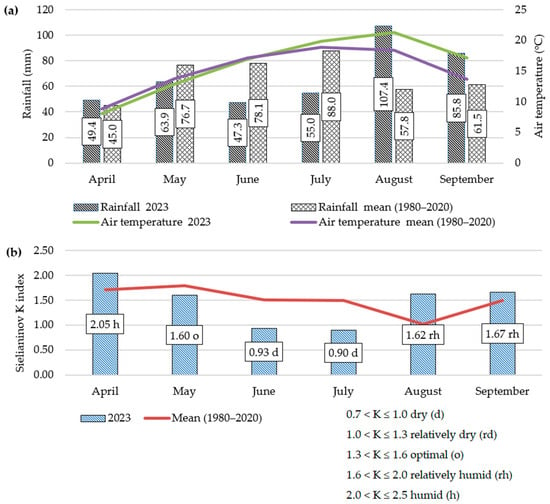
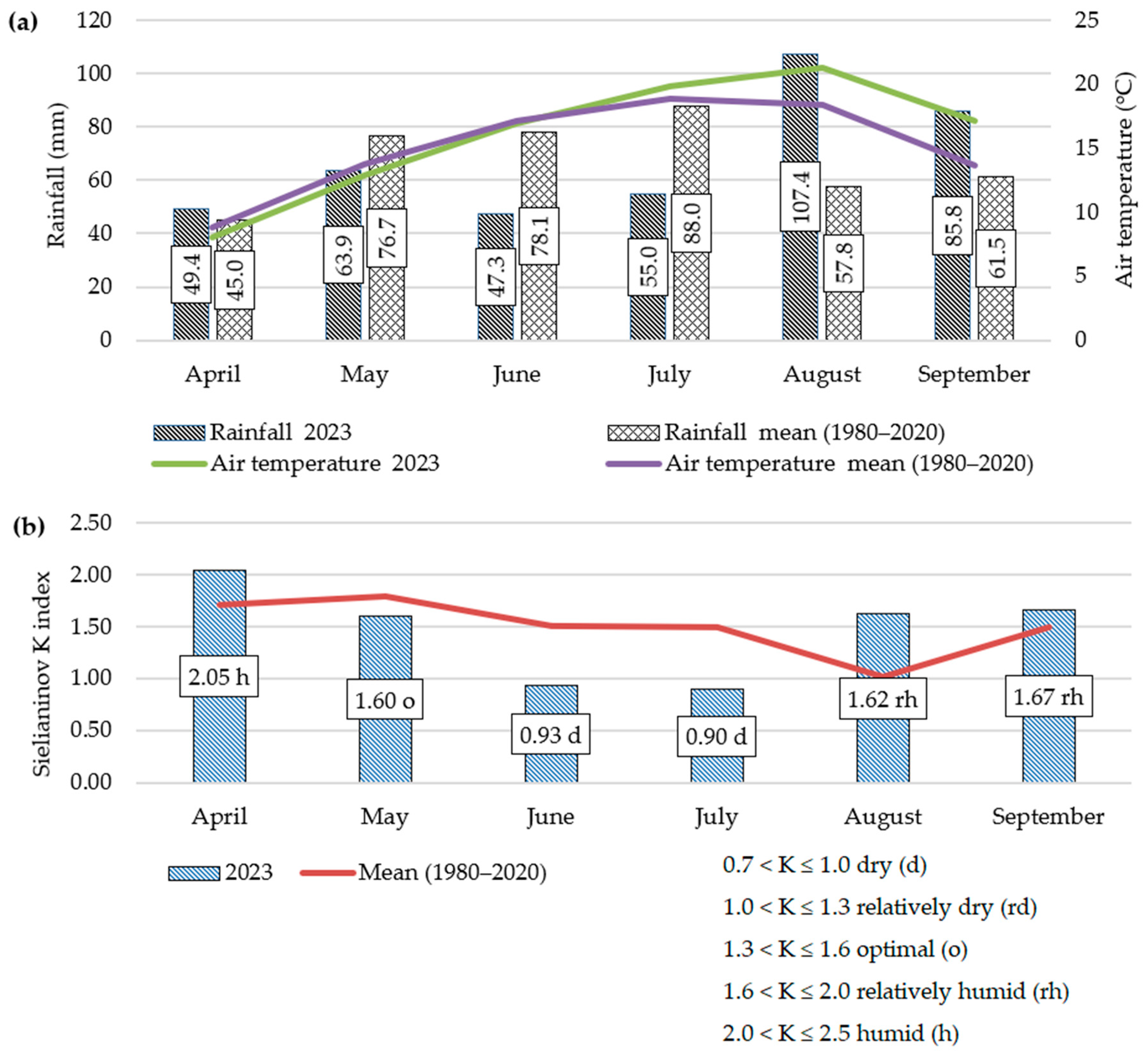
In 2023, total rainfall during the potato growing season (April–September) amounted to 408.8 mm and was similar to the average for the years 1980–2020, while the average temperature during this period was 16.0 °C, which was 0.9 °C higher than the long-term average. Hydrothermal conditions during the potato growing season, described using the hydrothermal coefficient (K), indicate a high variability of the weather course between individual months. In April, hydrothermal conditions were humid, in May optimal, and in June and July dry, while August and September were considered relatively humid (Figure 1).
Figure 1.
Weather conditions during the potato growing season in 2023 compared to a multi-year average. (a) Monthly rainfall totals and average air temperatures. (b) Sielianinov hydrothermal index (K) during the potato growing season described for Poland by Skowera et al. [22].
Starch was isolated from potatoes using a laboratory method [8]. Starch samples were dried at 23 °C ± 1 °C, crushed and sifted through a 0.125 mm sieve.
2.2. Methods
2.2.1. Selected Physicochemical Properties of Starch
The dry matter content of starch was determined based on the mass loss after drying (130 °C). The apparent amylose content was analyzed using the Morrison and Laignelet method [23]. The absorbance of colored starch–iodine complexes was measured at a wavelength of λ = 630 nm using a ZUZI 4211/50 spectrophotometer (DanLab, Białystok, Poland).
2.2.2. Analysis of Starch Granule Size
Particle size determination of the tested potato starches was performed using a Mastersizer 2000 laser analyzer (Malvern Instruments Ltd, Great Malvern, UK) by wet measurement in deionized water using a Hydro 2000MU attachment using the laser beam diffraction technique in full compliance with ISO 13320-1 [24]. The measurement was performed with a laser light obscuration in the range of 15–20%. Before each measurement, the aqueous starch suspension was dispersed using ultrasound at a frequency of 20 Hz for a period of 10 s. The following parameters were read from the obtained graphs of the starch particle size distribution: D [4,3]—the mean volume diameter of the tested material; d(0.5)—the mean mass diameter (MMA), i.e., the diameter in micrometers from which 50% of the sample is smaller and 50% of the sample is larger; d(0.1)—the particle diameter below which 10% of the tested sample is located; d(0.9)—the particle diameter below which 90% of the sample is located; D [3,2]—the mean surface diameter (also called the Sauter diameter); and the percentage share of the starch granule fraction as small, medium and large.
2.2.3. Thermal Properties and Retrogradation
The thermal properties of potato starch gelatinization were examined using a differential scanning calorimeter DSC 4000 (Perkin-Elmer, Waltham, MA, USA). Samples (5 mg + 15 mg water) were hermetically sealed in aluminum pans and heated from 30 to 100 °C at a rate of 10 °C/min. An aluminum pan without starch or water was used as a reference. The obtained thermograms were used to determine the values of parameters such as onset (TO), peak (TP), and endset (TE) gelatinization temperatures and enthalpy (∆HG) of gelatinization. The gelatinized samples were stored in a refrigerator at approximately 5 °C for 7 days, and the measurement was repeated under the same conditions. Temperatures and enthalpy of thermal transitions were determined using the instrument’s Pyris Manager Analysis software (Perkin-Elmer, Waltham, MA, USA). The onset (TO), peak (TP), and endset (TE) temperatures and enthalpy (∆HR) of retrogradation were calculated. The index of retrogradation (%R) was also calculated [8,10].
2.2.4. Pasting Properties
Potato starch pasting properties (5 g/100 g) were obtained using a Rapid Visco Analyzer (Tec Master, Perten Instruments, Hägersten, Sweden). The starch suspension was stirred at 160 rpm and heated and cooled according to the program described in previous work [8,10]. The determined viscograms were used to read the following parameters: pasting temperature (PT) [°C], peak viscosity (PV), hot paste viscosity (HPV), final viscosity (FV), breakdown (BD) (BD = PV − HPV), and setback (SB) (SB = FV − HPV). The viscosities are presented in [mPa·s]. The analysis was performed in triplicate.
2.2.5. Flow Behavior
Flow curves of 5% (w/w) potato starch pastes were determined using a Rheolab QC rheometer operated by RheoCompass software (AntonPaar, Graz, Austria). A sample of starch paste obtained during the determination of the pasting characteristics (Section 2.2.4) was placed in a measuring element consisting of a system of coaxial CC27 cylinders, thermostated at 50 °C, and then subjected to a variable shear rate of 1–300 s−1, 300 s−1, and 300–1 s−1. A power-law model was used to describe the obtained curves with increasing shear rate:
where ηap—apparent viscosity [Pa·s], K—consistency coefficient [Pa·sn], —shear rate [s−1], and n—flow behavior index.
Thixotropy hysteresis surface areas were also calculated.
2.2.6. Statistical Analysis
All analyses were performed in at least triplicate. Statistical analysis of data was performed using Statistica 13.3 software (TIBCO Software Inc., Palo Alto, CA, USA). One-way analysis of variance (ANOVA) and Duncan’s multiple range test at α = 0.05 were used to compare significant differences between mean values of individual parameters. Additionally, Pearson correlation coefficients were determined to assess the relationships between the tested variables, and their significance was verified at α = 0.05.
3. Results and Discussion
3.1. Physicochemical Properties
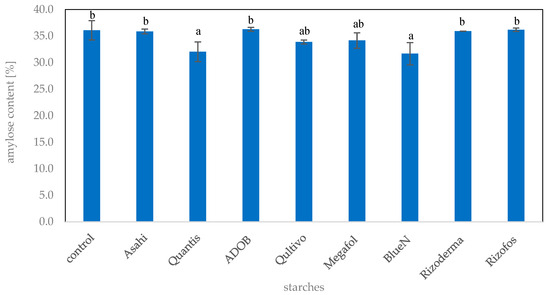
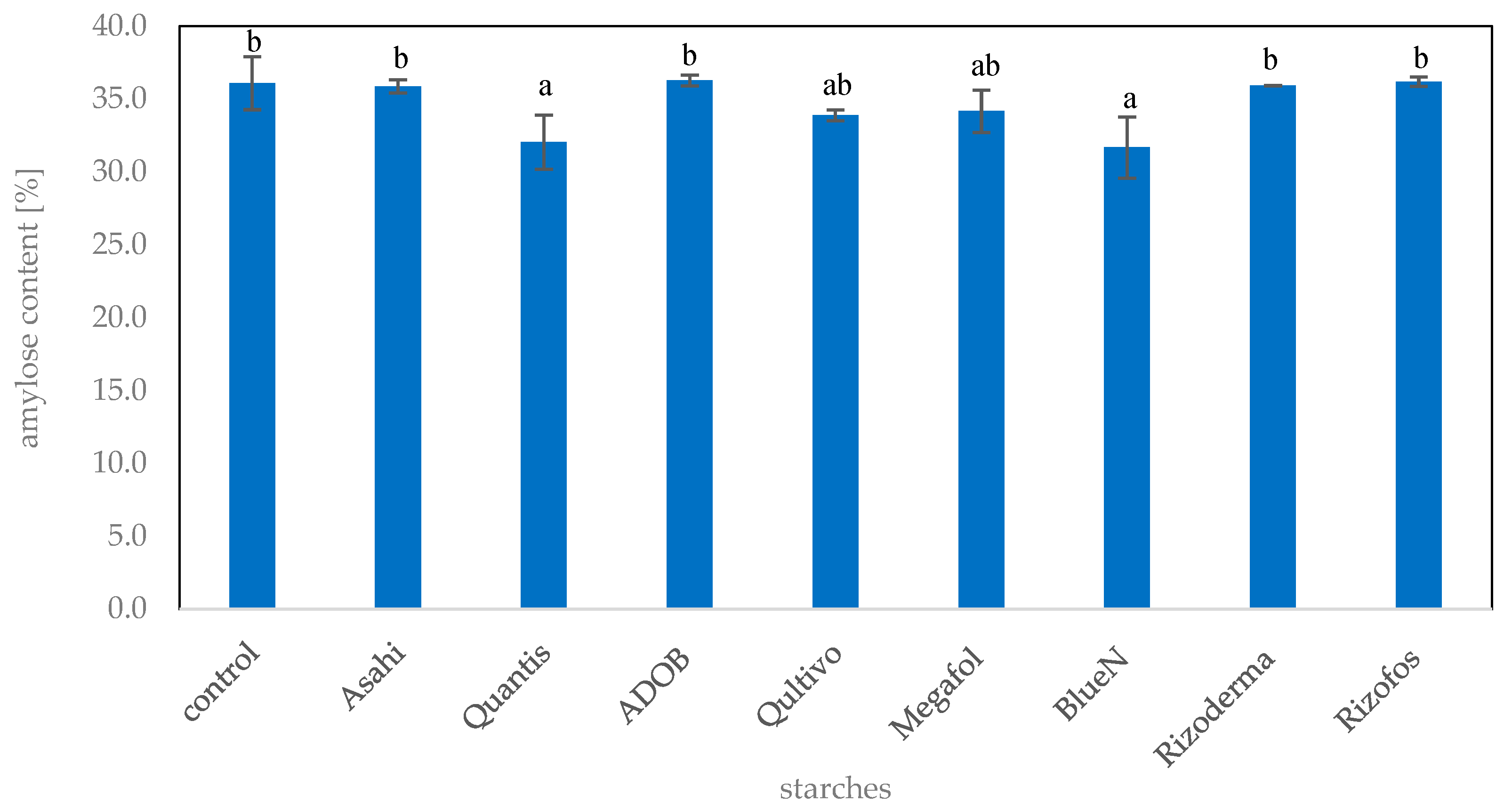
Figure 2 presents the average amylose content in starch from potatoes treated with various foliar preparations. There was little statistical variation in this parameter between the starches tested. All starches had high amylose content, exceeding 30%. Amylose content ranged from 31.7% (BlueN) to 36.3% (ADOB). The application of foliar preparations resulted in a reduction in or did not affect amylose content compared to the control sample. The application of BlueN preparation and Quantis fertilizer significantly (p < 0.05) reduced the amylose level in starch compared to the control sample. The amylose content depends on the botanical origin of the starch, the soil type, and the climatic conditions prevailing during the plant’s growing season. Furthermore, the activity of enzymes involved in starch biosynthesis, as well as the method of its determination, also influences the amylose content of this starch fraction [3]. The amylose content in starch from standard potato varieties generally ranges from 20 to 31% [3]. Pycia et al. [8] reported that the amylose content in starch from various Polish potato varieties ranged from 25.7% to 30%. In another study [10], which examined starches isolated from potatoes grown in various soils and fertilized with ash at various rates, the amylose content was found to range from 24.7% to 29.7%. Ahmed et al. [1] found that the average amylose content of 29 potato samples was 25.3%, with a wide range from 18.9% to 29.4%. These researchers argue that the variety, soil type, and weather conditions significantly influence the content of this starch fraction. The amylose content in starch from tuberous plants is also related to the size of starch granules [25]. Furthermore, the level of both fractions in starch determines the functional properties of this polymer. Amylose-rich starches have a higher gelling power and are more useful in the production of bread, sweets, and pasta [26].
Figure 2.
Amylose content in potato starches. Mean values from three repetitions ± SD. Values followed by the same superscript letters do not significantly differ at significance level of 0.05.
The main purpose of biopreparations, including biostimulants used in potato cultivation, is to stimulate plant life processes, provide essential micronutrients and trace elements, increase plant resistance to stress conditions (e.g., water deficiency), and stimulate root and leaf development. Researchers have repeatedly confirmed an increase in starch content in potatoes grown with biostimulants [21]. Furthermore, the variety, agrotechnical conditions, and climatic conditions (temperature, water availability) also significantly influence starch content [2]. When using biostimulants in potato cultivation, their impact on the metabolism, plant life processes, and the process of starch biosynthesis itself likely influenced the amylose level.
3.2. Starch Grain Size Distribution
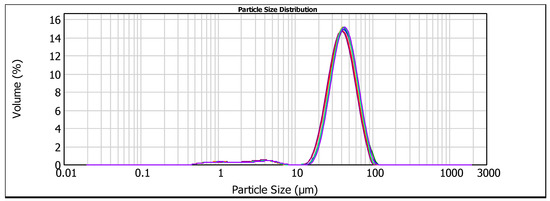
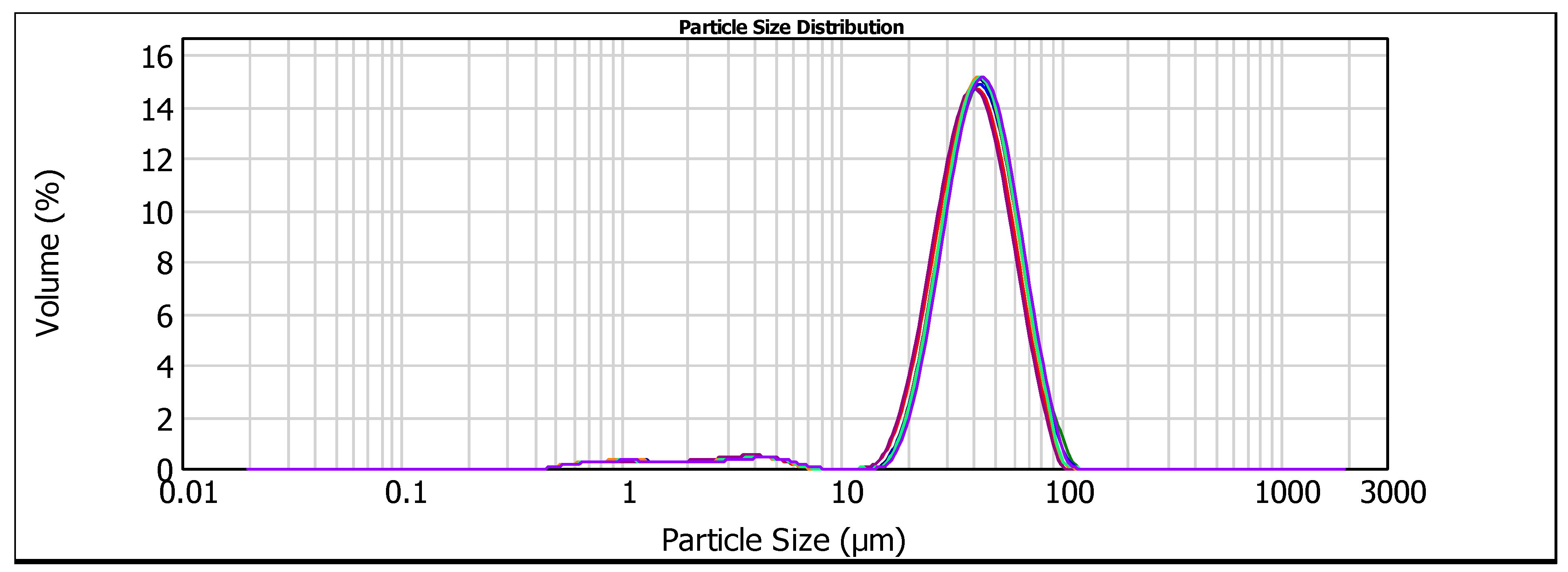
The size and shape of starch grains depends on the botanical origin of the plant and the cultivar [3,27,28]. Potato starch is characterized by oval and ellipsoidal grains with a relatively wide size distribution from 5 to 110 µm, with the typical size being 20–40 µm [27]. Figure 3 presents the grain size distribution of the tested potato starches, and Table 2 and Table 3 present the grain diameters and percentages of individual size fractions. It was found that the potato starches differed in grain size and the percentages of individual fractions. The mean volumetric diameter of the grains ranged from 40.16 µm (Qultivo) to 47.51 µm (ADOB). In turn, the mean surface diameter ranged from 17.94 µm (Qultivo) to 41.48 µm (ADOB). Among the tested samples, potato starch obtained from raw material foliar fertilized with ADOB was distinguished by the highest share of grains with a diameter greater than 40 µm.
Figure 3.
Grain size distribution of the tested potato starches. Control—red, ASAHI—green, BlueN—brown, Megafol—yellow, Quantis—blue, Qultivo—purple, Rizoderma—light purple, and Rizofos—dark blue.
Table 2.
Diameter of the grain fractions of the tested potato starches.
Table 3.
Percentage of the grain fractions of the tested potato starches.
In contrast, starch from potatoes stimulated with foliar fertilization with Qultivo was characterized by the highest proportion of starch grains with diameters <20 µm and the lowest proportion of starch grains with diameters >40 µm. Therefore, the use of the ADOB foliar fertilizer in potato cultivation had a positive effect on the size of starch grains and, consequently, on the possible uses of starch. Biostimulants also significantly influenced the size of starch grains. The ADOB preparation could improve the plant’s nutrition by improving the availability of nutrients and the development of the plant’s root system. However, Winnicki and Bogucka [29] did not notice any significant effect of foliar fertilization with Basfoliar 12-4-6 and/or ADOB Mn on the starch content in potatoes.
In addition to biostimulants, fertilizers, and biofungicides, other agrotechnical factors can also influence starch grain size. Brążkiewicz et al. [30] demonstrated a significant effect of products for potato seed treatment on starch grain size. According to the cited authors, each of the applied products for potato seed treatment led to a higher proportion of the largest starch grains. Moreover, combining different products for potato seed treatment increased the proportion of large grains in their size distribution. Romano et al. [31] indicate that the starch grain size distribution significantly depends on genetic predisposition and the potato’s intended use. Starch grain size will determine the functional properties of potato-based products. In the case of fried potato products, the predominance of large-grain starch can increase the moisture content of products such as French fries, which is a disadvantage [30]. In addition, the use of soil fertilizers in potato cultivation also has a significant impact on the size distribution of starch grains, as indicated by the research of Wszelaczyńska et al. [28]. The cited authors noted an increased share of the 20–40 mm grain size fraction in potato starch from potatoes grown with soil fertilizer. Therefore, fertilization is an agrotechnical factor that can significantly affect the size of starch grains and their size distribution. Literature reports indicate that fertilization with doses of phosphorus and potassium promotes the formation of large starch grains, while nitrogen fertilization and the use of organic fertilizers contribute to the formation of small starch grains [4,32].
In the case of starches of various botanical origins, there is a correlation between their physicochemical properties, such as paste clarity, amylose content, water solubility, and water absorption, and their grain size distribution [3,25]. Furthermore, Hoover et al. [33] confirmed that there is a relationship between potato starch grain size and amylose content. The cited researchers found higher amylose levels in starch characterized by larger grains.
Potato starch has a wide range of technological applications. Its intended use largely depends on the size of the starch grains. Starch granularity, i.e., the proportion of individual fractions differing in grain size, plays a significant role in starch production and distilling, among other industries. In the starch industry, potato varieties with coarse-grained starch are preferred, which simplifies the starch production process, increases process efficiency, and enables the production of a product of high technological quality. The same applies to the distilling industry, which also prefers coarse-grained starch to facilitate the starch saccharification process [34].
3.3. Gelatinization and Retrogradation Properties
The thermal properties of potato starches were determined using DSC, which allows for the collection of data on the phase transition temperatures of starch and the amount of thermal energy required for, among other things, starch gelatinization [25]. The double helix structure and the ordered structure are destroyed during gelatinization [35]. The phase transition from ordered to disordered structure was recorded using DSC endotherms. Table 4 summarizes the values of parameters related to the gelatinization and retrogradation processes. The onset temperature (TO) ranged from 61.7 °C (Megafol) to 63.2 °C (Rizoderma). The peak temperature (TP) ranged from 66.3 °C (BlueN) to 67.6 °C (Rizofos). The end temperature (TE) ranged from 69.0 °C (Megafol) to 73.6 °C (Qultivo). The determined values are similar to those reported by other authors. Singh and Singh [35] found the To, TP and TE ranges for potato starches to be 59.72–60.70 °C, 63.29–64.58 °C and 67.28–70.34 °C, respectively. Ahmed et al. [1] reported that the To, TP and TE for potato starches ranged from 62.2 to 67.6 °C, 66.1 to 71.1 °C and 73.5 to 77.4 °C, respectively. Pycia et al. [10] indicated that in the case of potato starch grown in Haplic Luvisol soil, To, TP, and TE ranged from 65.2 to 66.4 °C, 70.7 to 71.2 °C, and 77.2 to 78.5 °C. However, for Gleyic Chernozem soil, the temperature values were in the range of 65.9–67.0 °C, 70.6–71.8 °C, and 77.2–78.8 °C, respectively. The gelatinization temperature determines the direction of starch application. Starches with lower values and high water absorption are suitable for the production of dry mixes and meat products, while those with higher gelatinization temperature values are dedicated to the development of dietary products with a low glycemic index and containing resistant starch.
Table 4.
Thermal properties of the tested potato starches.
The enthalpy of gelatinization (∆HG) is a quantitative measure of the degree of starch crystallinity. It is determined based on the amount of energy required to disintegrate the ordered structure of starch granules [1]. This parameter, like the temperature values determined by DSC, is used to characterize starch granules and also provides the basis for identifying the botanical origin of starch [3]. The calculated enthalpy of gelatinization was found to range widely from 4.1 J/g (Megafol) to 15.1 J/g (ADOB). Compared to the control sample, starch from potatoes stimulated with ADOB showed the highest enthalpy of gelatinization, while Megafol significantly reduced this parameter. Singh and Singh [35] determined the ∆HG of potato starches in the range of 12.55–13.85 J/g. Ahmed et al. [1] reported higher values of 17.5–21.0 J/g. Starch grain shape and grain size distribution are factors determining ∆HG [25]. Singh and Singh [35] observed that starch from potato varieties with smaller starch granules showed lower ∆HG content, and vice versa. As reported by the cited authors [35], the values of this parameter also depend on the granule shape, the percentage of large and small granules, and the presence of phosphate esters.
The parameters of the retrogradation process are summarized in Table 4. Retrogradation is a physical process occurring in cooled starch paste. It involves the formation of hydrogen bonds between starch chains. During this process, amylose forms short double helices, and short, extreme chains forming branches participate in amylopectin crystallization [3]. The tested starches differed statistically significantly (p < 0.05) in terms of retrogradation temperatures and retrogradation enthalpies. It was found that To, TP, and TE, describing the degradation process of retrograded amylopectin, ranged from 38.2 °C (Qultivo) to 49.7 °C (Rizofos), 46.8 °C (Quantis) to 59.9 °C (control), and 58.9 °C (Quantis) to 69.6 °C (control), respectively. The reported retrogradation temperature values are significantly lower than those determined for the gelatinization process. This is consistent with the observations of Singh et al. [3]. The cited authors indicate that TR is typically 10–26 °C lower than TG. Moreover, the degree of decrease in these temperature values is greater in the case of gels based on potato starch compared to wheat, corn, or rice starches. According to Singh et al. [3], this is due to the greater tendency of potato starch to retrograde. The retrogradation enthalpy values ranged from 0.6 J/g (Qultivo) to 4.3 J/g (ADOB). A significant (p < 0.05) linear correlation was found between the ΔHR parameter and the starch grain size parameters D [4.3], d(0.1), d(0.5), and d(0.9), and the percentage of grains with a diameter of 20–40 µm and > 40 µm (r = 0.67, r = 0.67, r = 0.70, r = 0.66, r = −0.69, r = 0.70, respectively, p < 0.05).
The percentage of retrogradation was calculated based on the ratio of the retrogradation enthalpy to the gelatinization enthalpy. The R values ranged within a fairly wide range, from 4% (Qultivo) to 50.1% (Megafol), and were significantly lower than those reported by Singh and Singh [35] and Pycia et al. [8]. In another study, Pycia et al. [10] reported R values ranging from 29.3% to 47.3%. Ahmed et al. [1] showed that the %R ranged from 10.6% to 21.4%. Discrepancies in the values presented by different authors may result from differences in the analysis conditions [8]. However, the starch retrogradation process is influenced by the content of amylose and amylopectin, the spatial structure of amylopectin, and the presence of long-chain intermediate materials [3,8]. A linear correlation was demonstrated between R and the gelatinization process parameters TE, ΔTG, and ΔHG (respectively r = −0.77, r = −0.70, r = −0.69, p < 0.05).
3.4. Pasting Properties
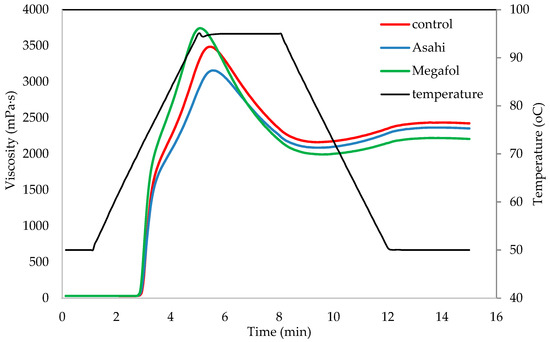
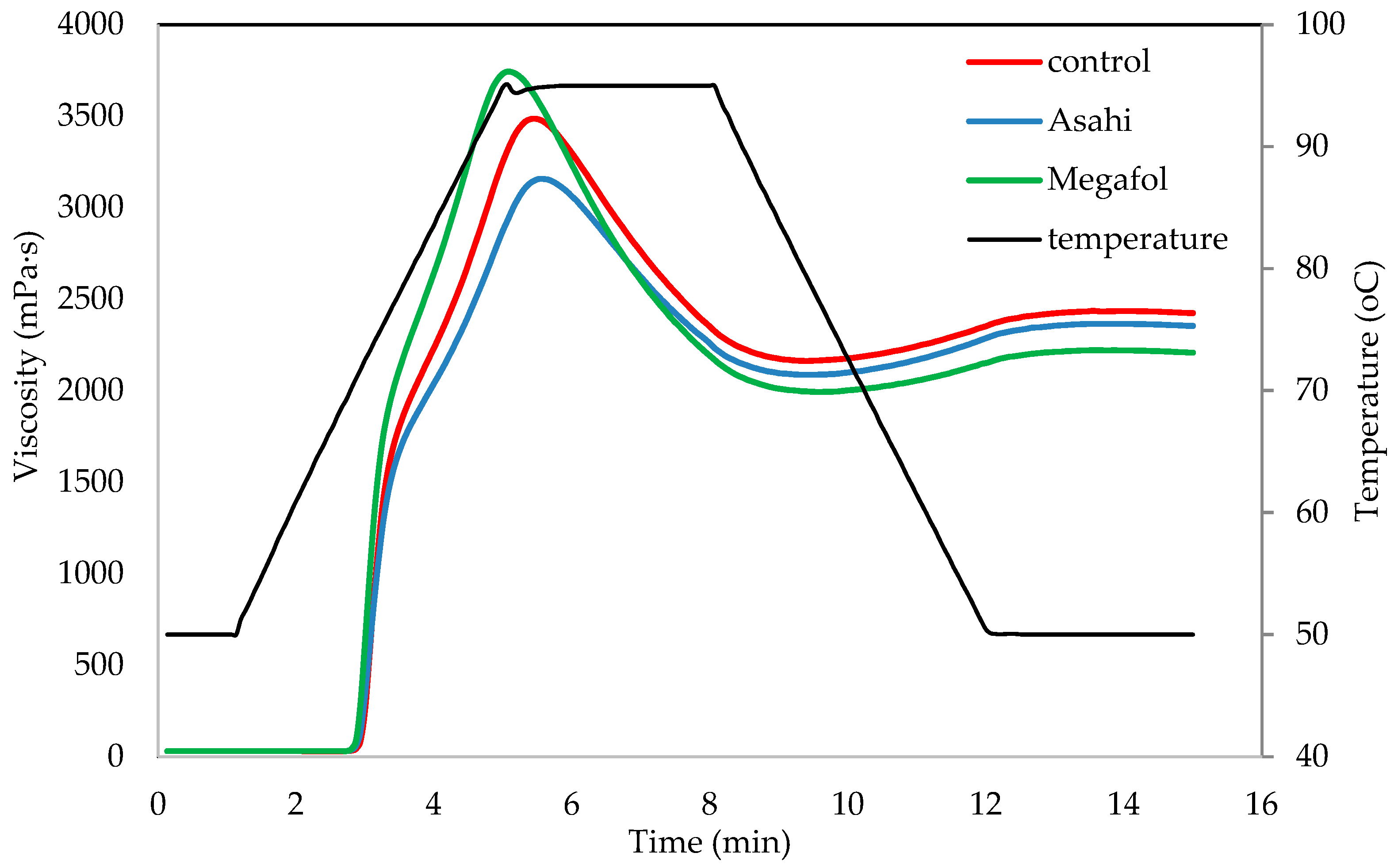
The Rapid Visco Analyzer (RVA) allows for the assessment of changes in starch viscosity in an aqueous environment during heating and cooling. The pasting curves for selected potato starches are shown in Figure 4. It was found that the type of preparation used in potato cultivation significantly affected (p < 0.05) the pasting characteristics of the isolated starches. The pasting curves indicate a rapid increase in system viscosity from the pasting temperature (PT) to the point of reaching the maximum viscosity (PV), followed by a decrease in viscosity upon heating to 95 °C, and an increase in viscosity upon cooling. Therefore, the potato-based starches tested in cultivation with foliar preparations have pasting curves typical of potato starch. The PV of the starch–water system is a measure of the ability of starch granules to freely swell before physical disintegration [3]. Analysis of the pasting curves indicates that the highest peak PV value occurred in the case of potato starch stimulated with Megafol, and the lowest in the case of potato starch grown with the Asahi biostimulant and Quantis fertilizer. Starch from potatoes grown with Megafol had the highest PV and BD values. The parameters describing the starch pasting process are summarized in Table 5. It was found that the type of biopreparation used generally did not significantly (p > 0.05) affect the pasting temperature PT of the tested starches. The average PT value of all tested starches was 69.5 °C. PT measured using RVA reflects the ability of starch granules to swell freely, and its value is lower the faster the granules absorb water [36].
Figure 4.
RVA viscogram of selected potato starches.
Table 5.
Pasting parameters of potato starches.
The behavior of starch in the pasting process is a result of the physical and chemical properties of starch granules, such as their size distribution, content and ratio of amylose to amylopectin, and the content of mineral components [3]. Larger potato starch granules more readily enter the colloidal state, and therefore have a lower gelatinization temperature compared to smaller-sized starches. Furthermore, the maximum viscosity (PV) of the pastes and their stability during high-temperature storage (BD) are lower for starches containing larger granules than for those with smaller granule sizes. Large-grain starches are more susceptible to the action of amylolytic enzymes and have a greater capacity for retrogradation [37]. Furthermore, pastes based on large-grain potato starch are clearer compared to those based on smaller-grain starches [25].
A significant (p < 0.05) effect of the type of biopreparation used on the maximum viscosity of starch pastes was observed. Starch from potatoes stimulated with Megafol had the highest PV value, while starch from raw material stimulated with Quantis had the lowest. Starch from potatoes treated with Rizofos had the highest viscosity value at 95 °C (HPV) and the highest final viscosity (FV) (Table 5). Starch from potatoes treated with Quantis had the lowest HPV. Starch from potatoes stimulated with Megafol also showed the greatest decrease in viscosity during heating and holding at 95 °C (BD), indicating its low rheological stability. However, starch from potatoes stimulated with Asahi had the highest rheological stability. A linear correlation (p < 0.05) was demonstrated between the HPV parameter and PT (r = 0.88), FV (r = 0.97) and the retrogradation process parameters TP (r = 0.71) and TE (r = 0.77). The highest rheological stability during cooling and storage at 50 °C was observed in starches obtained from potatoes grown with the use of ADOB, Megafol, Quantis, and Rizoderma preparations. Differences in the pasting characteristics of individual potato starches resulted from the use of different foliar biopreparations in potato cultivation. Previous studies by Pycia et al. [8,10] demonstrated that the pasting characteristics of potato starches depended on the potato variety [8] and soil type, fertilization, and ash dose [10]. Furthermore, the conducted research demonstrated that another factor used in potato cultivation that may affect pasting properties is the use of biostimulants/fertilizers. A linear correlation was found between the final viscosity (FV) and PT (r = 0.87), HPV (r = 0.97), SB (r = 0.71), and the retrogradation process parameters TP (r = 0.70) and TE (r = 0.74). However, the SB parameter correlated with the FV parameter (r = 0.71) and parameters related to the grain size distribution D [4.3], d(0.1), d(0.5), fraction B and fraction C (r = −0.67, r = −0.69, r = –0.72, r = 0.73, r = –0.74, p < 0.05, respectively).
3.5. Flow Behavior
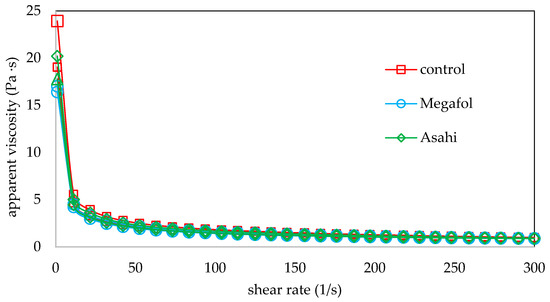
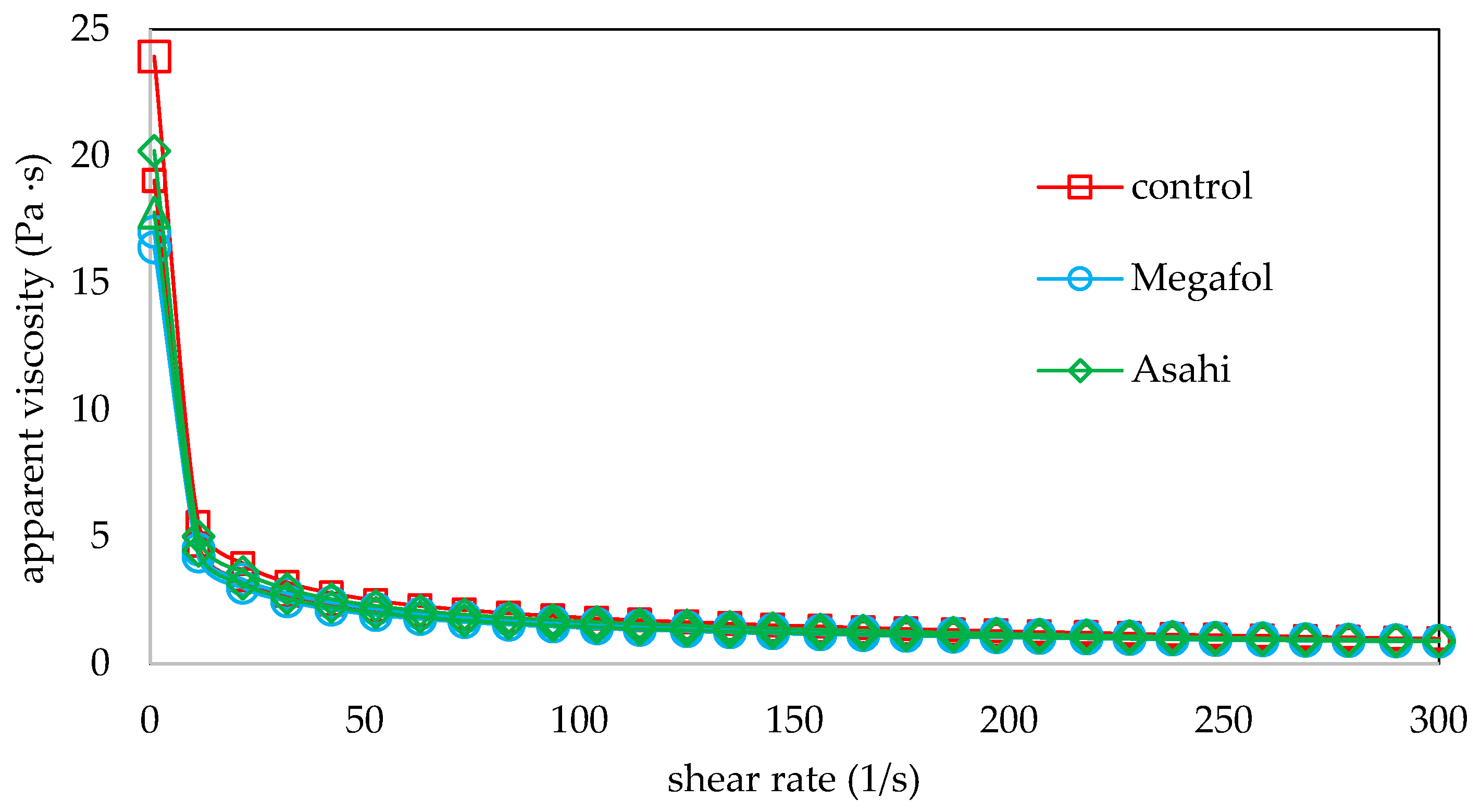
Figure 5 shows the viscosity curves of the potato starch pastes tested. The parameters of the power-law model describing the experimental curves are summarized in Table 6. Based on the conducted studies, significant (p < 0.05) differences were found between the starches in terms of their flow-related rheological properties. It was demonstrated that all the starches tested exhibited properties typical of shear-thinning non-Newtonian fluids. Therefore, their apparent viscosity decreased with increasing shear rate (Figure 5).
Figure 5.
Examples of viscosity curves of the starches.
Table 6.
Parameters of power-law model describing the flow curves of potato starches.
The observed flow pattern of the tested pastes is consistent with previous observations regarding potato pastes [8,10]. As reported by Gałkowska et al., [38], the phenomenon of shear thinning of starch pastes can be explained by the disintegration of biopolymer molecule bonds and their orientation in the flow direction. As a result, a reduction in the system’s resistance to applied shear stress is observed. The type of foliar preparation used in potato cultivation generally had a significant (p < 0.05) effect on the values of the consistency coefficient, which reflects the initial apparent viscosity of the paste. The lowest K value was found for starch from potatoes stimulated with Megafol and Quantis (15.7 Pa·sn). However, the highest value of this parameter was observed for the control starch paste. Therefore, the use of biopreparations significantly (p < 0.05) reduced the consistency coefficient of the tested potato starches. The control starch was characterized by the highest consistency coefficient K and the lowest flow index n, indicating lower rheological stability of this paste and a stronger tendency of shear thinning. However, the use of biostimulants/fertilizers in potato cultivation significantly increased the value of this parameter, which may indicate slightly better rheological stability and a weaker tendency of shear thinning. The calculated values of the coefficient of determination R2, ranging from 0.9914 to 0.9980, indicate a good fit of the power-law model used in the study for the experimental data. Statistical analysis revealed a linear correlation (p < 0.05) between the consistency coefficient K and the parameters HPV (r = 0.78), FV (r = 0.82), n (r = −0.78), HA (r = 0.83), and the retrogradation process parameters TP (r = 0.75), TE (r = 0.84).
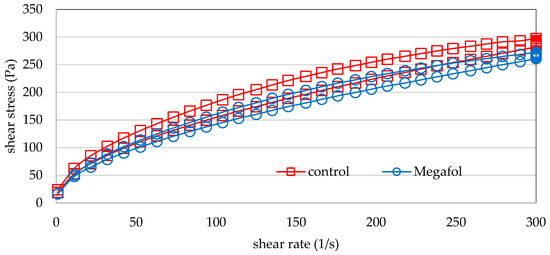
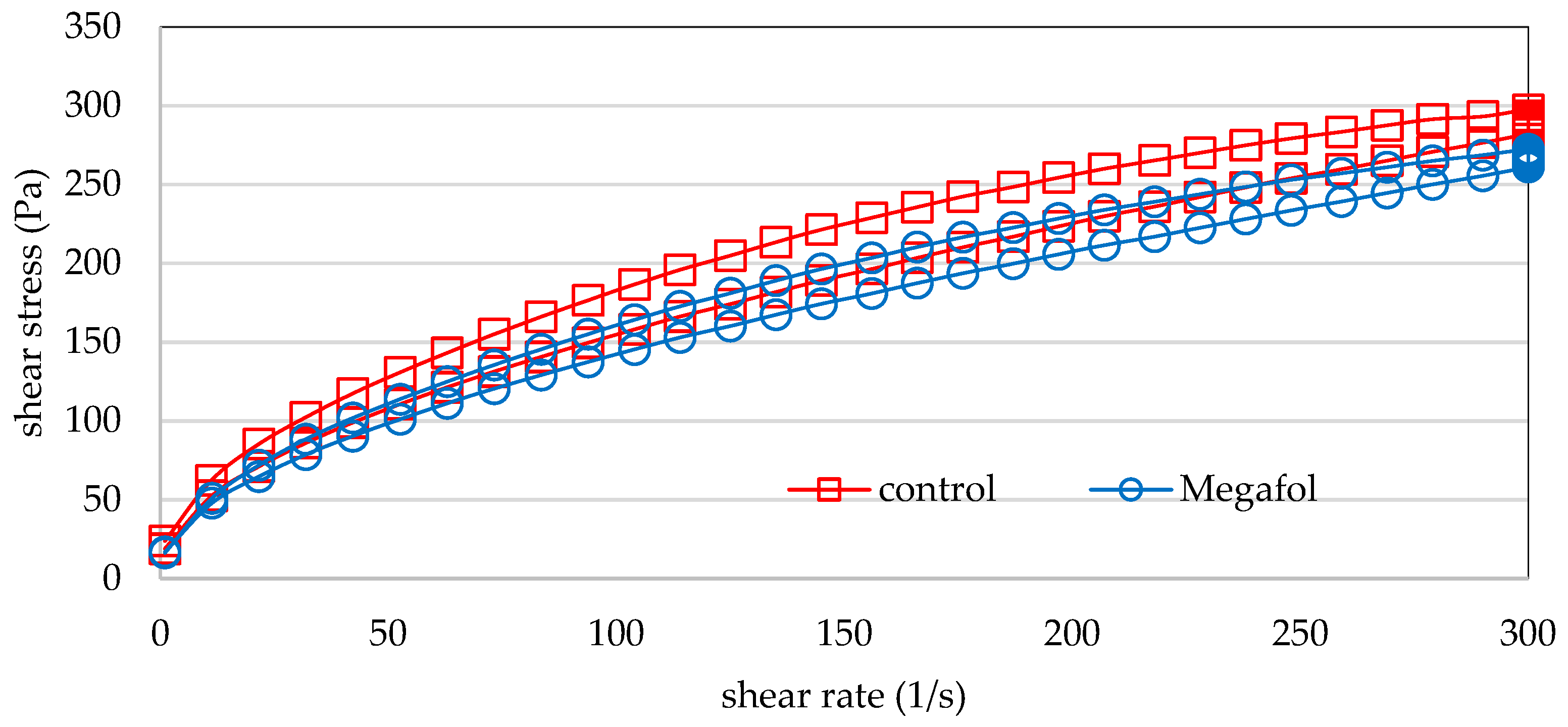
The pastes of the tested starch preparations exhibited thixotropy. The largest hysteresis loop area (HA) of the flow curves (Figure 6) was observed for starch from potatoes grown without biostimulants/fertilizers, while the lowest HA value was observed for starch from potatoes stimulated with the foliar preparations Quantis and Megafol. Therefore, a significant (p < 0.05) effect of the preparation used in potato cultivation on the thixotropy loop area values of the flow curves was observed.
Figure 6.
Example flow curves with thixotropic hysteresis loops.
It should be noted that the present study was conducted using a single potato cultivar (cv. Concordia). Therefore, the obtained results should be interpreted with caution, as the response to foliar preparations may vary depending on the genetic background of the cultivar. Further studies involving multiple potato varieties are needed to confirm the general applicability of the observed effects.
4. Conclusions
The study assessed the impact of using foliar preparations (biostimulants/fertilizers) during the potato growing season on selected physicochemical, thermal, and rheological properties of the resulting starch. These preparations, as substances safe for plants, animals, and humans, primarily positively impact plant growth and development and increase plant resistance to stress factors during the growing season. However, the study also found that their use affects starch properties. Starch’s application is determined by its physicochemical and rheological properties. It was demonstrated that foliar application of various biopreparations significantly impacts these properties, which may also impact its potential applications. The use of BlueN and Quantis preparations reduced amylose content compared to the control sample. However, starch from potatoes treated with ADOB foliar fertilizer was characterized by the largest grains. The use of Megafol biostimulant resulted in the highest maximum viscosity of the starch paste, and starch treated with Asahi biostimulant exhibited the highest rheological stability during heating and storage at 95 °C. Therefore, the tested biopreparations had varying effects on starch properties. The collected scientific data may have not only scientific value but also practical application in designing starch properties, and thus, directions for application of selected foliar biostimulants/fertilizers in potato cultivation. The study results suggest that foliar application of preparations can modulate starch biosynthesis processes, leading to significant changes in its functional properties. Therefore, the conducted research provides new information on the relationship between agrotechnical practices and starch technological quality. This indicates the possibility of designing the properties of potato starch depending on the direction of application in the food and non-food industries. Future research should include different potato cultivars to verify the universality of the observed effects.
Author Contributions
Conceptualization, K.P.; methodology, K.P., A.G., and L.J.; formal analysis, K.P. and L.J.; investigation, K.P., A.G. and L.J.; resources, E.S.-K. and K.P.; data curation, K.P., A.G. and L.J.; writing—original draft preparation, K.P., A.G., E.S.-K. and L.J.; writing—review and editing, K.P. and L.J.; visualization, K.P. and A.G.; supervision, K.P.; project administration, K.P.; funding acquisition, K.P. All authors have read and agreed to the published version of the manuscript.
Funding
This research received no external funding.
Institutional Review Board Statement
Not applicable.
Informed Consent Statement
Not applicable.
Data Availability Statement
Dataset available on request from the authors.
Acknowledgments
The authors would like to thank Michał Noworól for providing access to his farm and enabling the field experiment.
Conflicts of Interest
The authors declare no conflicts of interest.
References
- Ahmed, S.; Zhou, X.; Pang, Y.; Xu, Y.; Tong, C.; Bao, J. Genetic diversity of potato genotypes estimated by starch physicochemical properties and microsatellite markers. Food Chem. 2018, 257, 368–375. [Google Scholar] [CrossRef] [Scilit]
- Tong, C.; Ma, Z.; Chen, H.; Gao, H. Toward an understanding of potato starch structure, function, biosynthesis, and applications. Food Front. 2023, 4, 980–1000. [Google Scholar] [CrossRef] [Scilit]
- Singh, N.; Singh, J.; Kaur, L.; Sodhi, N.S.; Gill, B.S. Morphological, thermal and rheological properties of starches from different botanical sources. Food Chem. 2003, 81, 219–231. [Google Scholar] [CrossRef] [Scilit]
- Liszka-Skoczylas, M. Effect of potato plants (Solanum tuberosum L.) Fertilization on content and quality of starch in tubers. Żywność Nauka Technol. Jakość 2020, 27, 31–46. [Google Scholar] [CrossRef] [Scilit]
- Choque-Quispe, D.; Gonzales, F.H.O.; Carranza-Oropeza, M.V.; Solano-Reynoso, A.M.; Ligarda-Samanez, A.M.; Palomino-Rínconi, W.; Choque-Quispe, K.; Torres-Calla, M.J. Physicochemical and technofunctional properties of high Andean native potato starch. J. Agric. Food Res. 2024, 15, 100955. [Google Scholar] [CrossRef] [Scilit]
- Gilbert, R.G. Size-separation characterization of starch and glycogen for biosynthesis-structure-property relationships. Anal. Bioanal. Chem. 2011, 399, 1425–1438. [Google Scholar] [CrossRef] [Scilit]
- Nimz, O.; Gessler, K.; Uson, I.; Sheldrick, G.M.; Saenger, W. Inclusion complexes of V-amylose with undecanoic acid and dodecanol at atomic resolution: X-ray structures with cycloamylose containing 26 D-glucoses (cyclohexaicosaose) as host. Carbohydr. Res. 2004, 339, 1427–1437. [Google Scholar] [CrossRef] [Scilit]
- Pycia, K.; Juszczak, L.; Gałkowska, D.; Witczak, M. Physicochemical properties of starches obtained from polish potato cultivars. Starch/Stärke 2012, 64, 105–114. [Google Scholar] [CrossRef] [Scilit]
- Noda, T.; Tsuda, S.; Mori, M.; Takigawa, S.; Matsuura-Endo, C.; Saito, K.; Mangalika, W.H.A.; Hanaoka, S.; Suzuki, Y.; Yamauchi, H. The effect of harvest dates on the starch properties of various potato cultivars. Food Chem. 2004, 86, 119–125. [Google Scholar] [CrossRef] [Scilit]
- Pycia, K.; Szupnar-Krok, E.; Szostek, M.; Pawlak, R.; Juszczak, L. Effect of Soil Type and Application of Ecological Fertilizer Composed of Ash from Biomass Combustion on Selected Physicochemical, Thermal, and Rheological Properties of Potato Starch. Molecules 2022, 27, 4318. [Google Scholar] [CrossRef] [Scilit]
- Du Jardin, P. Plant biostimulants: Definition, concept, main categories and regulation. Sci. Hortic. 2015, 196, 3–14. [Google Scholar] [CrossRef] [Scilit]
- Dziugieł, T.; Wagas, W. Effect of Plant Biostimulants on Macronutrient Content in Early Crop Potato Tubers. Agronomy 2020, 10, 1202. [Google Scholar] [CrossRef] [Scilit]
- Szpunar-Krok, E.; Depciuch, J.; Drygaś, B.; Jańczak-Pieniążek, M.; Mazurek, K.; Pawlak, R. The Influence of Biostimulants Used in Sustainable Agriculture for Antifungal Protection on the Chemical Composition of Winter Wheat Grain. Int. J. Environ. Res. Public Health 2022, 19, 12998. [Google Scholar] [CrossRef] [Scilit] [PubMed]
- Ginter, A.; Zarzecka, K.; Gugała, M.; Mystkowska, I. The impact of the use of biostimulants and herbicide on reducing the occurrence of defects and small tubers in the potato yield. J. Plant Prot. Res. 2024, 64, 298–306. [Google Scholar] [CrossRef] [Scilit]
- Hara, P. Znaczenie biostymulatorów w uprawie ziamniaka. Ziemn. Pol. 2019, 2, 18–23. [Google Scholar]
- Prajapati, A.; Patel, C.K.; Singh, N.; Jain, S.K.; Chongtham, S.K.; Maheshwari, M.N.; Patel, R.N. Evaluation of seaweed extract on growth and yield of potato. Environ. Ecol. 2016, 34, 605–608. [Google Scholar]
- Sarhan, T.Z. Effect of humic acid and seaweed extracts on growth and yield of potato plant (Solanum tubersum L.) Desiree cv. Mesop. J. Agric. 2011, 39, 19–25. [Google Scholar] [CrossRef] [Scilit]
- Mystkowska, I. Wpływ zróżnicowanej techniki odchwaszczania i stosowania biostymulatorów na efektywność ekonomiczną uprawy ziemniaków jadalnych. Rocz. Nauk. Ser. 2017, 19, 190–194. [Google Scholar] [CrossRef] [Scilit]
- Szparaga, A.; Kocira, S.; Kocira, A.; Czerwińska, E.; Świeca, M.; Lorencowicz, E.; Oniszczuk, T. Modification of growth, yield, and the nutraceutical and antioxidative potential of soybean through the use of synthetic bio-stimulants. Front. Plant Sci. 2018, 9, 1401. [Google Scholar] [CrossRef] [Scilit]
- Mystkowska, I. Wpływ stosowania biostymulatorów na zawartość suchej masy i skrobi w bulwach ziemniaka jadalnego. Fragm. Agron. 2019, 36, 45–53. [Google Scholar]
- Cortiello, M.; Milc, J.; Caccialupi, G.; Sanfelici, A.; Martini, S.; Tagliazucchi, D.; Ben Hassine, M.; Caradonia, F. Genotype and Plant Biostimulant Treatments Influence Tuber Size and Quality of Potato Grown in the Pedoclimatic Conditions in Northern Apennines in Italy. Int. J. Plant Prod. 2021, 18, 579–599. [Google Scholar] [CrossRef] [Scilit]
- Skowera, B.; Jędrszczyk, E.; Kopcińska, J.; Ambroszczyk, A.M.; Kołtun, A. The effects of hydrothermal conditions during vegetation period on fruit quality of processing tomatoes. Pol. J. Environ. Stud. 2014, 23, 195–202. [Google Scholar]
- Morrison, W.R.; Laignelet, B. An improved colorimetric procedure for determining apparent and total amylose in cereal and other starches. J. Cereal Sci. 1983, 1, 9–20. [Google Scholar] [CrossRef] [Scilit]
- ISO 13320-1; Particle Size Analysis-Laser Diffraction Methods. International Organization for Standardization: Geneva, Switzerland, 2020.
- Kaur, L.; Singh, N.; Singh Sodhi, N. Some properties of potatoes and their starches II. Morphological, thermal and rheological properties of starches. Food Chem. 2002, 79, 183–192. [Google Scholar] [CrossRef] [Scilit]
- Luque-Vilca, O.M.; Pampa-Quispe, N.B.; Pumacahua-Ramos, A.; Pilco-Quesada, S.; Cabel Moscoso, D.J.; Choque-Rivera, T.J. Structural, Thermal, Rheological, and Morphological Characterization of the Starches of Sweet and Bitter Native Potatoes Grown in the Andean Region. Polymers 2023, 15, 4417. [Google Scholar] [CrossRef] [Scilit]
- Yusuph, M.; Tester, R.F.; Ansell, R.; Snape, C.E. Composition and properties of starches extracted from tubers of different potato varieties grown under the same environmental conditions. Food Chem. 2003, 82, 283–289. [Google Scholar] [CrossRef] [Scilit]
- Wszelaczyńska, E.; Poberezny, J.; Dudek, S.; Kuśmierek-Tomaszewska, R.; Żarski, J.; Pawelzik, E. The effects of fertilizers, irrigation and storage on the properties of potato tubers and their constituent starches. Starch-Stärke 2015, 67, 478–492. [Google Scholar] [CrossRef] [Scilit]
- Winnicki, T.; Bogucka, B. Evaluation of different potato fertilization regimes on starch yield–pro-duction economic aspects. Pol. J. Nat. Sci. 2017, 32, 637–648. [Google Scholar]
- Brążkiewicz, A.; Poberezny, J.; Wszelaczyńska, E.; Bogucka, B. Potato starch quality in relation to the treatments and long-term storage of tubers. Sci. Rep. 2025, 15, 4144. [Google Scholar] [CrossRef] [Scilit]
- Romano, A.; Masi, P.; Aversano, R.; Carucci, F.; Palomba, S.; Carputo, D. Microstructure and tuber properties of potato varieties with different genetic profiles. Food Chem. 2018, 239, 789–796. [Google Scholar] [CrossRef] [Scilit] [PubMed]
- Haase, N.U.; Plate, J. Properties of potato starch in relation to varieties and environmental factors. Starch-Stärke 1996, 48, 167–171. [Google Scholar] [CrossRef] [Scilit]
- Hoover, R. Composition, molecular structure and physicochemical properties of tuber and root starches: A review. Carbohydr. Polym. 2001, 45, 253–267. [Google Scholar] [CrossRef] [Scilit]
- Ratuszniak, E.; Kubiak, A. Badania nad wielkością ziaren skrobi w różnych odmianach ziemniaka pod kątem możliwości zmniejszenia zanieczyszczenia środowiska wodnego odpadami produkcyjnymi. Srod.-Pomor. Tow. Nauk. Ochr. Środowiska. Rocz. Ochr. Sr. 2010, 12, 409–418. [Google Scholar]
- Singh, J.; Singh, N. Studies on the morphological, thermal and rheological properties of starch separated from some Indian potato cultivars. Food Chem. 2001, 75, 67–77. [Google Scholar] [CrossRef] [Scilit]
- Juszczak, L.; Pietrzyk, S.; Fortuna, T.; Gałkowska, D.; Witczak, T. Wybrane właściwości fizykochemiczne skrobi ziemniaczanej o różnym stopniu utlenienia. Biul. Inst. Hod. I Aklim. Roślin 2014, 272, 39–48. [Google Scholar] [CrossRef] [Scilit]
- Nowakowska, K.; Sucharzewska, D. Wpływ wielkości ziaren skrobi ziemniaczanej na kinetykę kleikowania i retrogradację. Żywność Nauka Technol. Jakość 2002, 4, 92–102. [Google Scholar]
- Gałkowska, D.; Południak, M.; Juszczak, L. Wpływ polidekstrozy na charakterystykę reologiczną oraz właściwości sensoryczne deserów skrobiowo- -mlecznych o obniżonej zawartości sacharozy. Żywność Nauka Technol. Jakość 2023, 30, 265–283. [Google Scholar] [CrossRef] [Scilit]

Disclaimer/Publisher’s Note: The statements, opinions and data contained in all publications are solely those of the individual author(s) and contributor(s) and not of MDPI and/or the editor(s). MDPI and/or the editor(s) disclaim responsibility for any injury to people or property resulting from any ideas, methods, instructions or products referred to in the content. |
© 2026 by the authors. Licensee MDPI, Basel, Switzerland. This article is an open access article distributed under the terms and conditions of the Creative Commons Attribution (CC BY) license.