Review

Research and Development of Innovative Modular Thorium Reactors in Nuclear-Producing Countries

by
Zinetula Z. Insepov
1,2,*,
Ahmed Hassanein
2,
Zulkhair A. Mansurov
3,
Aisarat Gajimuradova
4 and
Zhanna Alsar
1
1
Private Institution “Nazarbayev University Research Administration”, Nazarbayev University, Astana 010000, Kazakhstan
2
School of Nuclear Engineering, Purdue University, West Lafayette, IN 47907, USA
3
Institute of Combustion Problems, Kazakh National State University, Almaty 050012, Kazakhstan
4
Engineering Center for Organic Agricultural Technologies, Seifullin Kazakh Agrotechnical Research University, Astana 62 Zhenis Ave, Astana 010000, Kazakhstan
*
Author to whom correspondence should be addressed.
Appl. Sci. 2026, 16(9), 4314; https://doi.org/10.3390/app16094314
Submission received: 4 December 2025 / Revised: 18 March 2026 / Accepted: 21 April 2026 / Published: 28 April 2026

Abstract

This review examines current research and development directions in thorium-based nuclear fuel cycles and reactor systems, including innovative and modular reactor concepts being investigated in several nuclear-producing countries. The analysis considers the feasibility of integrating thorium-containing fuels into both existing and emerging reactor technologies. Particular attention is paid to the potential use of thorium-based fuels in pressurized water reactors (PWRs) as transitional platforms that can enable gradual introduction in thorium without requiring immediate deployment of entirely new reactor architectures. This study synthesizes representative quantitative results reported in the recent literature, including neutronic performance metrics, conversion ratio estimates, and fuel behavior characteristics of mixed Th–U oxide fuels under typical operating conditions. These results are evaluated together with broader system-level considerations, such as fuel cycle closure potential, materials performance, and technology readiness across different reactor classes. A comparative assessment of light water reactors (LWRs), heavy water reactors (HWRs), and molten salt reactors (MSRs) demonstrates that each platform offers distinct advantages and limitations for thorium deployment. While LWR systems provide the most realistic near-term pathway for partial thorium introduction within the existing nuclear infrastructure, HWR and MSR concepts offer more favorable conditions for efficient thorium utilization and potential Th–U fuel cycle closure. These reactor classes are currently being explored within national research and development programs focused on advanced and modular nuclear technologies. By integrating neutronic analysis, materials considerations, fuel cycle strategies, and techno-economic factors, this review provides a system-level perspective on the research and development of innovative thorium reactor concepts and outlines realistic pathways for their gradual implementation in evolving nuclear energy systems.

1. Introduction

Thorium has long been considered a potentially attractive alternative to conventional uranium-based nuclear fuel cycles because of its favorable nuclear properties, relatively high natural abundance, and potential for improved long-term resource utilization [1,2,3]. Unlike uranium, which contains only about 0.7% of the fissile isotope U-235 in its natural composition, thorium occurs almost entirely as the fertile isotope Th-232. Through neutron absorption followed by two successive β-decays, Th-232 can be converted into fissile U-233, enabling fuel cycle concepts with higher conversion ratios and, in principle, reduced production of long-lived transuranic elements compared with traditional uranium–plutonium systems [1,2,3]. In practice, however, the extent to which these advantages can be realized depends strongly on reactor physics constraints, fuel management strategies, and the availability of appropriate fuel cycle technologies.
Interest in thorium utilization has therefore persisted for decades within the nuclear engineering community, particularly in the context of advanced reactor concepts and long-term fuel cycle sustainability. Thorium-based fuels have been investigated in a wide range of reactor systems, including molten salt reactors (MSRs), advanced heavy water reactors (AHWRs), high-temperature reactors (HTRs), and accelerator-driven systems (ADSs). In these configurations, thorium may serve either as a primary fuel component or as a fertile breeding material in seed–blanket arrangements. Favorable thermophysical properties of thorium dioxide, chemical stability in oxide and molten salt fuel forms, and intrinsic proliferation resistance associated with the presence of U-232 impurities in bred U-233 have contributed to sustained scientific interest in thorium fuels for next-generation nuclear technologies [4,5,6].
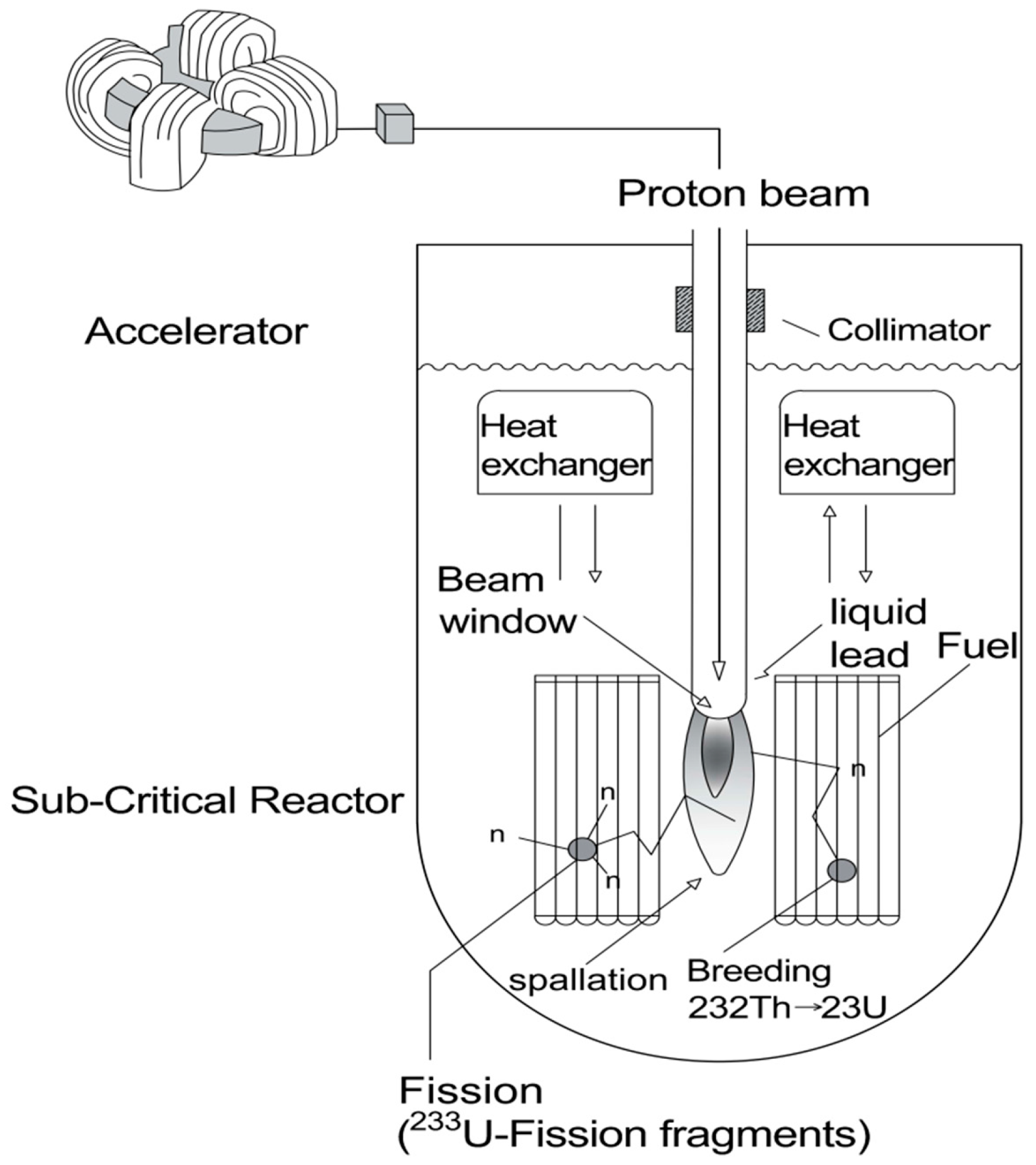
Thorium-based fuels have also been investigated in subcritical reactor systems driven by external neutron sources. In accelerator-driven systems, a high-energy proton beam striking a heavy target produces spallation neutrons that sustain fission reactions in a subcritical core. Such configurations offer additional safety margins and provide flexibility for the transmutation of minor actinides and selected long-lived fission products, potentially contributing to advanced fuel cycle strategies aimed at reducing long-term radiotoxicity of nuclear waste [7,8].
From a resource perspective, thorium is estimated to be approximately three to four times more abundant in the Earth’s crust than uranium and is widely distributed geographically. Significant thorium resources have been identified in multiple countries, including India, Brazil, Australia, the United States, Norway, and Kazakhstan (Table 1) [7]. The broad geographical distribution of thorium resources highlights its potential strategic relevance for long-term nuclear energy development in multiple regions.
The relatively low production of plutonium and other transuranic elements in thorium-based fuel cycles is frequently cited as an additional advantage compared with conventional uranium cycles. Reduced transuranic inventories may contribute to lowering the long-term radiological burden of spent nuclear fuel and therefore align thorium-based systems with broader sustainability objectives in nuclear energy development [1,2].
For these reasons, several nuclear-producing countries, including India, China, the United States, and members of the European Union, have continued research and development programs aimed at integrating thorium into advanced reactor technologies [3,7,9]. These activities range from experimental reactor projects and fuel cycle studies to conceptual designs of next-generation reactor systems that could utilize thorium as part of diversified nuclear energy strategies.
Among advanced reactor concepts, molten salt reactors have frequently been identified as promising platforms for thorium utilization because of their potential for high burnup and the possibility of continuous or semi-continuous removal of fission products from liquid fuel salts. Concepts such as the liquid fluoride thorium reactor (LFTR) and experimental thorium molten salt reactors under development in China aim to demonstrate key elements of a closed Th–U-233 fuel cycle, including online fuel management and improved fuel utilization efficiency [5,10,11,12]. However, these systems remain at relatively early stages of technological maturity and continue to face challenges related to materials performance, corrosion resistance, fuel chemistry control, and regulatory acceptance [1,2].
In parallel, India has pursued thorium deployment through the development of advanced heavy water reactors employing thorium-based fuel compositions, including ThO2–U-233 mixtures. The AHWR design combines favorable neutron economy with seed–blanket fuel arrangements and incorporates several passive safety features, such as gravity-driven emergency cooling and passive decay-heat removal. As a result, AHWR concepts are often considered among the most advanced solid-fuel reactor systems specifically designed for thorium utilization [13,14].
In the United States and Europe, additional approaches have been proposed within advanced fast-spectrum and modular reactor concepts. One example is the Dual Fluid Reactor (DFR), which employs separate fuel and coolant circuits and can accommodate thorium-based fuels together with molten salt coolants. Operation at elevated temperatures and relatively low pressures offers potential gains in thermodynamic efficiency and intrinsic safety, although such concepts remain largely at the conceptual or early development stage [15]. In parallel, several countries, including Canada, Japan, Saudi Arabia, and France, are investigating small modular reactor (SMR) technologies with potential thorium capability, motivated by prospects for factory fabrication, modular deployment, and flexible integration into regional energy systems [9,10].
Despite these technological developments, the global nuclear fleet continues to be dominated by light water reactors operating primarily on once-through uranium fuel cycles. In such systems, less than 1% of the total energy content of natural uranium is typically utilized, resulting in significant inventories of spent nuclear fuel requiring long-term management [11,12,13]. Although recycling strategies based on mixed oxide (MOX) fuels have been demonstrated, they remain economically constrained and may increase inventories of minor actinides, complicating fuel fabrication, reprocessing, and waste disposal [13,14,15,16].
These limitations have renewed attention to alternative nuclear fuel cycle strategies, including thorium-based options, particularly within the framework of Generation III+ and Generation IV reactor systems aimed at improving fuel utilization and enhancing inherent safety characteristics [17,18,19]. In this context, thorium is increasingly discussed not only as a fuel resource but also as part of broader research and development efforts focused on innovative reactor concepts and modular nuclear technologies.
The feasibility of thorium deployment is strongly influenced by reactor type. Thorium-containing fuels in light water and advanced pressurized water reactors are constrained by neutron economy and therefore cannot typically sustain fully closed Th–U-233 breeding cycles. Nevertheless, they may provide incremental benefits such as reduced plutonium production and improved fuel performance characteristics [3,20,21]. In contrast, heavy water reactors and molten salt reactors offer more favorable conditions for higher conversion ratios and more efficient thorium utilization, although these systems differ substantially in technological maturity, infrastructure requirements, and deployment timelines [1,2,13,14].
Historically, thorium was not adopted as a primary nuclear fuel because early nuclear programs were largely based on uranium–plutonium fuel cycles and because industrial-scale reprocessing technologies for thorium fuels were not developed. Unlike uranium, thorium does not require isotopic enrichment; however, it must be combined with an external fissile driver, such as U-235 or U-233. Advances in reactor physics modeling, materials science, and fuel cycle analysis have nevertheless renewed interest in thorium as a potential component of advanced nuclear energy systems.
The objective of this study is to review and critically assess current research and development trends in thorium reactor technologies across major nuclear-producing countries. Particular attention is given to the potential integration of thorium-containing fuels into advanced pressurized water reactor (PWR) systems as transitional platforms, evaluated in comparison with heavy water and molten salt reactor concepts. By synthesizing neutronic analyses, fuel performance studies, and international technology assessments, this review aims to clarify realistic deployment pathways for thorium-based nuclear systems and to identify priority research directions relevant to applied nuclear engineering.

2. Neutronic Performance and Materials Characteristics of Thorium-Based Fuels

2.1. Neutronic Performance and Fuel Cycle Efficiency

Recent peer-reviewed studies and international assessments provide a quantitative basis for evaluating thorium fuel cycles beyond purely conceptual considerations. System-level analyses conducted by international organizations such as the International Atomic Energy Agency and the OECD Nuclear Energy Agency indicate that present-day light water reactors (LWRs) operating on once-through uranium fuel cycles typically exhibit conversion ratios of approximately 0.50–0.60. Advanced high-conversion LWR strategies, including those incorporating thorium-based fuels, may increase this value to roughly 0.65–0.70 through optimized lattice design, improved fuel management strategies, and limited recycle options [1,2]. Dedicated neutronic studies of thorium–uranium pressurized water reactor (PWR) cores further demonstrate that values near the upper bound of this range can be achieved through targeted core and lattice optimization [22,23].
Even under optimized conditions, however, these conversion ratios remain insufficient to support a self-sustaining Th–U-233 fuel cycle. Continuous fissile support is therefore required, which constrains the role of thorium in PWR systems primarily to optimization-oriented or transitional applications rather than full fuel cycle closure [1,2]. For this reason, many current research and development programs consider thorium deployment in conventional reactor systems as a gradual step toward more advanced reactor technologies rather than as an immediate closed-cycle solution.
Detailed neutronic analyses of thorium-containing LWR and PWR cores have been widely performed using Monte Carlo simulation tools such as MCNP and SERPENT. These studies consistently report systematic changes in neutron spectrum characteristics and reactivity behavior relative to conventional UO2 fuel, including moderate spectrum hardening, a reduced effective delayed neutron fraction, and flatter radial and axial power distributions [14,22]. Although the smaller delayed neutron fraction associated with U-233 requires careful consideration in reactor control and safety analysis, these effects may also contribute to improved fuel utilization and reduced plutonium generation compared to conventional uranium fuel cycles.
Beyond neutronic characteristics, fuel performance parameters play a critical role in determining the practical feasibility of thorium deployment. Experimental studies and international evaluations indicate that mixed Th–U oxide fuels may exhibit lower fuel centerline temperatures, reduced fission gas release, and improved dimensional stability under comparable operating conditions relative to conventional UO2 fuel [24,25].
Coupled neutronic–thermal multiphysics simulations further quantify these effects. For comparable linear heat rates, ThO2-based fuels may demonstrate reductions in fuel centerline temperature on the order of approximately 150–250 °C, largely due to the relatively high thermal conductivity and improved microstructural stability of thoria relative to urania [24,25,26]. In addition, several modeling studies and irradiation analyses reported in the literature indicate that thorium-containing fuels may achieve burnup levels significantly higher than those typical for conventional UO2 fuels. In some advanced thorium fuel concepts, burnup values on the order of 500–700 GWd/tHM have been discussed under favorable reactor conditions, although the attainable burnup ultimately depends on reactor design, fuel composition, and operating parameters [24,27].
These results indicate that thorium-based fuels can provide competitive neutronic and fuel performance characteristics when evaluated using modern multiphysics modeling tools. At the same time, their overall performance remains strongly dependent on reactor configuration and fuel cycle strategy, which explains the continuing interest in thorium deployment across different reactor technologies currently investigated in international research programs.

2.2. Materials Performance and Technological Potential of Thorium Fuels

From a materials perspective, thorium dioxide (ThO2) exhibits several properties that are advantageous for nuclear fuel applications, including relatively high thermal conductivity, excellent chemical stability, and an exceptionally high melting temperature. These characteristics facilitate improved heat removal from the fuel pellet and contribute to lower fuel centerline temperatures compared with conventional uranium dioxide fuels under similar operating conditions [24,26].
Experimental irradiation studies on ThO2 and ThO2-based solid solutions have demonstrated favorable fuel behavior, including reduced fission gas release and improved dimensional stability relative to UO2 fuels under comparable irradiation conditions [24,27]. Post-irradiation examinations of thorium-containing fuels also indicate reduced swelling and improved resistance to pellet–cladding mechanical interaction, which may contribute to enhanced fuel reliability at elevated burnup levels.
Microstructural investigations further suggest that thorium dioxide exhibits slower defect accumulation and improved resistance to certain forms of radiation-induced degradation compared to conventional uranium dioxide fuels. These characteristics provide a materialsscience basis for the higher burnup potential often discussed for thorium fuels in advanced reactor concepts [24,27].
Historical irradiation experiments performed in reactor systems such as the Shippingport Light Water Breeder Reactor and the Dragon high-temperature reactor program provided early demonstrations of the stability of thorium-based fuels under reactor conditions. These experiments confirmed the favorable irradiation behavior of ThO2 fuels and continue to serve as important experimental references for modern thorium fuel cycle research [28,29].
For molten salt reactor (MSR) systems, the principal materials challenges differ substantially from those associated with solid fuels. Instead of fuel pellet behavior, the primary issues include corrosion, mass transfer, and radiation-assisted degradation of structural components exposed to high-temperature molten salt environments. Reviews of MSR materials research identify the qualification of nickel-based structural alloys, graphite moderators, and corrosion-resistant coatings as key challenges for the large-scale deployment of molten salt reactor technologies [5,12].
Despite these challenges, the favorable thermophysical and irradiation properties of thorium dioxide continue to support interest in thorium fuels for advanced reactor systems. In particular, the combination of high melting temperature, good thermal stability, and favorable irradiation behavior makes ThO2 a promising fuel material for both solid-fuel reactor designs and liquid fuel systems currently investigated within international research and development programs on advanced and modular nuclear technologies.

2.3. Reference Physical and Neutronic Parameters of Thorium Fuels

Thorium-232 is a fertile actinide isotope capable of absorbing neutrons across a broad energy spectrum. Following neutron capture, Th-232 undergoes two successive β decays to form fissile U-233. This isotope exhibits a high thermal fission cross section and produces on average approximately 2.5 neutrons per fission event, which are values comparable to those of U-235 and slightly lower than those of Pu-239 [3,22].
In addition to its neutronic properties, thorium dioxide demonstrates favorable thermophysical characteristics relevant to nuclear fuel performance. Compared with uranium dioxide, ThO2 exhibits relatively high thermal conductivity, a higher melting temperature, and slightly lower thermal expansion, resulting in improved thermal margins during reactor operation. These characteristics reduce temperature gradients within the fuel pellet and contribute to improved fuel stability under high-power operating conditions [24,27].
A comparison of key physical and neutronic parameters of thorium- and uranium-based fuels is summarized in Table 2.
These parameters illustrate the favorable neutron economy associated with the U-233 isotope bred from thorium, which enables higher conversion ratios and improved fuel utilization in appropriately designed reactor systems. The influence of these physical and neutronic properties on reactor performance in different reactor concepts is illustrated by representative simulation results summarized in Table 3.
For pressurized water reactors employing mixed ThO2–UO2 fuel, reported studies indicate conversion ratios of approximately 0.65–0.70 and achievable burnup levels in the range of 500–700 GWd/tHM, accompanied by reductions in fuel centerline temperature relative to conventional uranium fuel [22,23]. Heavy water reactor concepts, such as the advanced heavy water reactor (AHWR), provide more favorable neutron economy and may approach near-breeding conditions with conversion ratios close to unity under optimized fuel management strategies [16,17].
Molten salt reactor systems designed for thorium fuel cycles, including liquid fluoride thorium reactor (LFTR) concepts, offer the potential for conversion ratios at or above unity due to continuous fuel processing and improved neutron economy. However, the practical deployment of such systems remains dependent on the resolution of materials performance challenges and licensing considerations associated with liquid fuel reactors [5,10].

3. Reactor Design and R&D Considerations for Thorium Fuel Cycles

3.1. Key Engineering Challenges and R&D Priorities

Contemporary research and development efforts in thorium-based reactor systems increasingly focus on several closely interrelated priorities that extend beyond neutronic feasibility alone. International assessments and Generation IV technology roadmaps consistently identify three dominant R&D directions: (i) qualification of structural and fuel materials capable of withstanding high-temperature, high-radiation, and chemically aggressive environments; (ii) development of viable fuel cycle closure and reprocessing strategies; and (iii) integration of reactor concepts into realistic licensing, manufacturing, and deployment pathways, particularly within modular reactor frameworks [1,10,14].
This prioritization reflects the broader transition of thorium research from early proof-of-principle neutronic studies toward engineering challenges that ultimately determine whether a reactor concept can be licensed, fabricated, operated, and maintained at industrial scale. In molten salt reactor (MSR) systems, peer-reviewed studies and Generation IV evaluations consistently identify the corrosion resistance of structural alloys, irradiation behavior of graphite moderators, and long-term salt chemistry and redox control as key feasibility constraints, often outweighing purely neutronic considerations when assessing practical deployability [5,10,11,12]. System-level analyses further emphasize that without validated materials performance, reliable chemistry control, and demonstrated component lifetimes, the theoretical advantages of thorium breeding cannot be translated into deployable reactor systems [2].
National development programs illustrate how these priorities translate into concrete research strategies. Experimental activities associated with China’s thorium molten salt reactor (TMSR) program and European MSR studies emphasize materials qualification, component testing, and salt loop operability as enabling steps preceding large-scale performance optimization [11,12]. In contrast, thorium deployment in water-cooled systems—particularly pressurized water reactors (PWRs) and heavy water reactors (HWRs)—primarily focuses on fuel performance validation, irradiation testing, and compatibility with existing licensing frameworks, reflecting their role as nearer-term platforms for incremental thorium introduction within current nuclear infrastructures [1,14].
This comparison highlights the system-dependent nature of thorium R&D. Water-cooled reactors provide comparatively lower-risk and deployment-oriented pathways for early thorium fuel utilization, whereas molten salt reactor concepts represent longer-term options with greater potential for fuel cycle transformation but significantly higher engineering uncertainty and technology development requirements [10].

3.2. Reactor Platforms for Thorium Fuel Cycles

The feasibility and efficiency of thorium utilization are fundamentally shaped by reactor type, neutron spectrum, and core architecture. Three principal reactor platforms dominate the literature on thorium fuel cycles: light water reactors (LWRs), heavy water reactors (HWRs), and molten salt reactors (MSRs). Each offers a distinct balance between technological maturity, neutron economy, and the potential for closing the Th–U fuel cycle.
In LWRs, including pressurized water reactors (PWRs), thorium is typically introduced in the form of mixed oxide fuel (ThO2–UO2). Owing to the limited neutron economy associated with light water moderation, such systems cannot sustain the efficient breeding of U-233 and therefore cannot realize a fully closed Th–U fuel cycle. Instead, thorium deployment in LWRs yields incremental benefits, including improved fuel performance, reduced plutonium production, and enhanced proliferation resistance while remaining dependent on external fissile support [2,22].
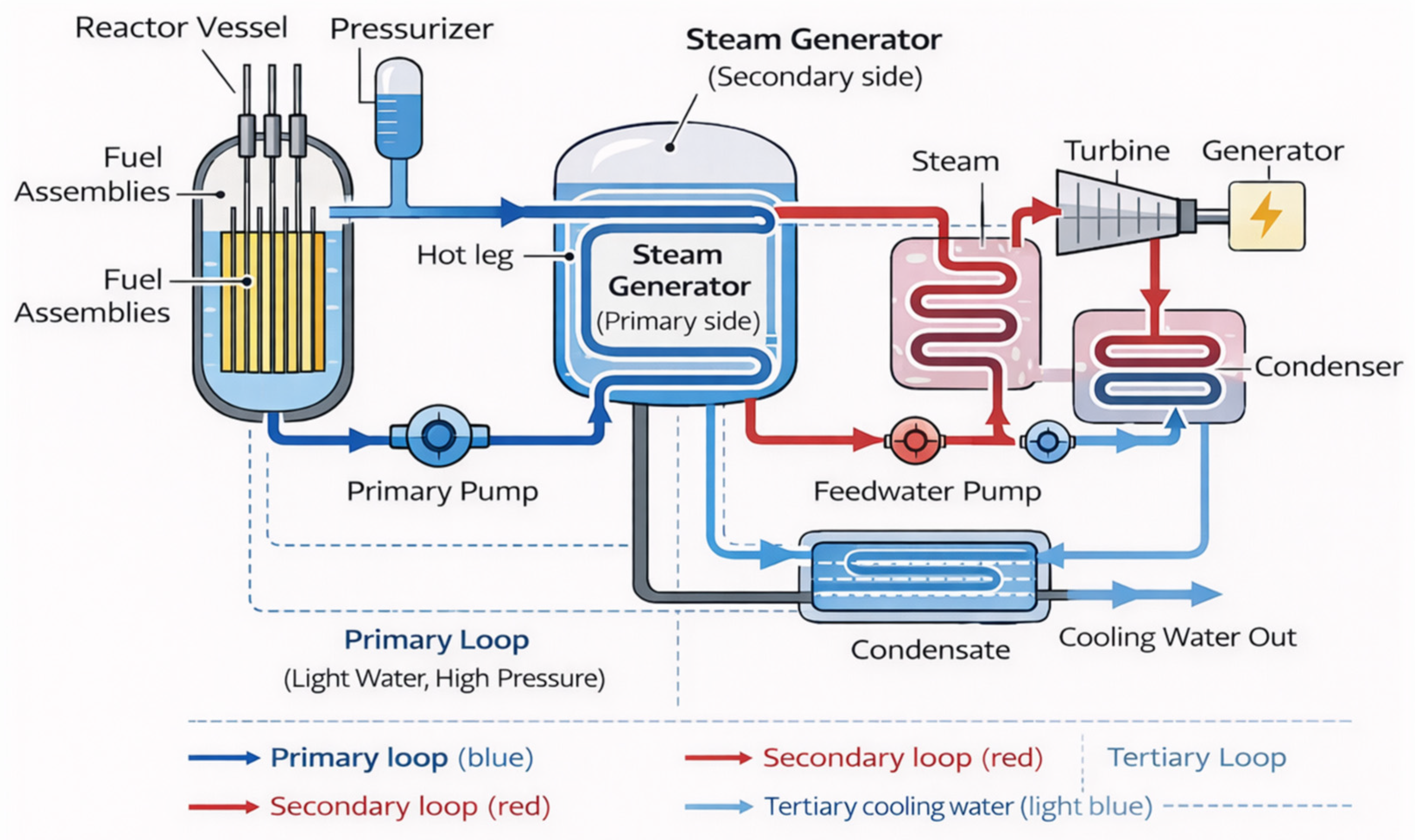
Figure 1 schematically illustrates a representative PWR configuration, distinguishing the primary high-pressure coolant circuit, the secondary steam–water power cycle, and the tertiary cooling water loop responsible for heat rejection in the condenser. Heat is transferred from the reactor core to the secondary system via the steam generator without physical mixing of fluids, while pressure control in the primary circuit is maintained by the pressurizer.
This three-loop configuration underpins the operational reliability and licensing maturity of PWR technology. At the same time, it illustrates the constraints relevant to thorium utilization: the use of light water as both moderator and coolant limits neutron economy and effectively confines thorium deployment in PWR systems to mixed-fuel strategies rather than enabling closed-cycle Th–U operation.
Compared with PWRs, heavy water reactors provide substantially more favorable conditions for thorium utilization. The low neutron absorption cross section of deuterium enables efficient conversion of Th-232 to U-233 within a thermal neutron spectrum. Channel-type HWR designs, exemplified by CANDU reactors, combine excellent neutron economy with on-power refueling and flexible fuel management, making them among the most mature solid-fuel platforms for thorium-based fuel cycles [30,31].
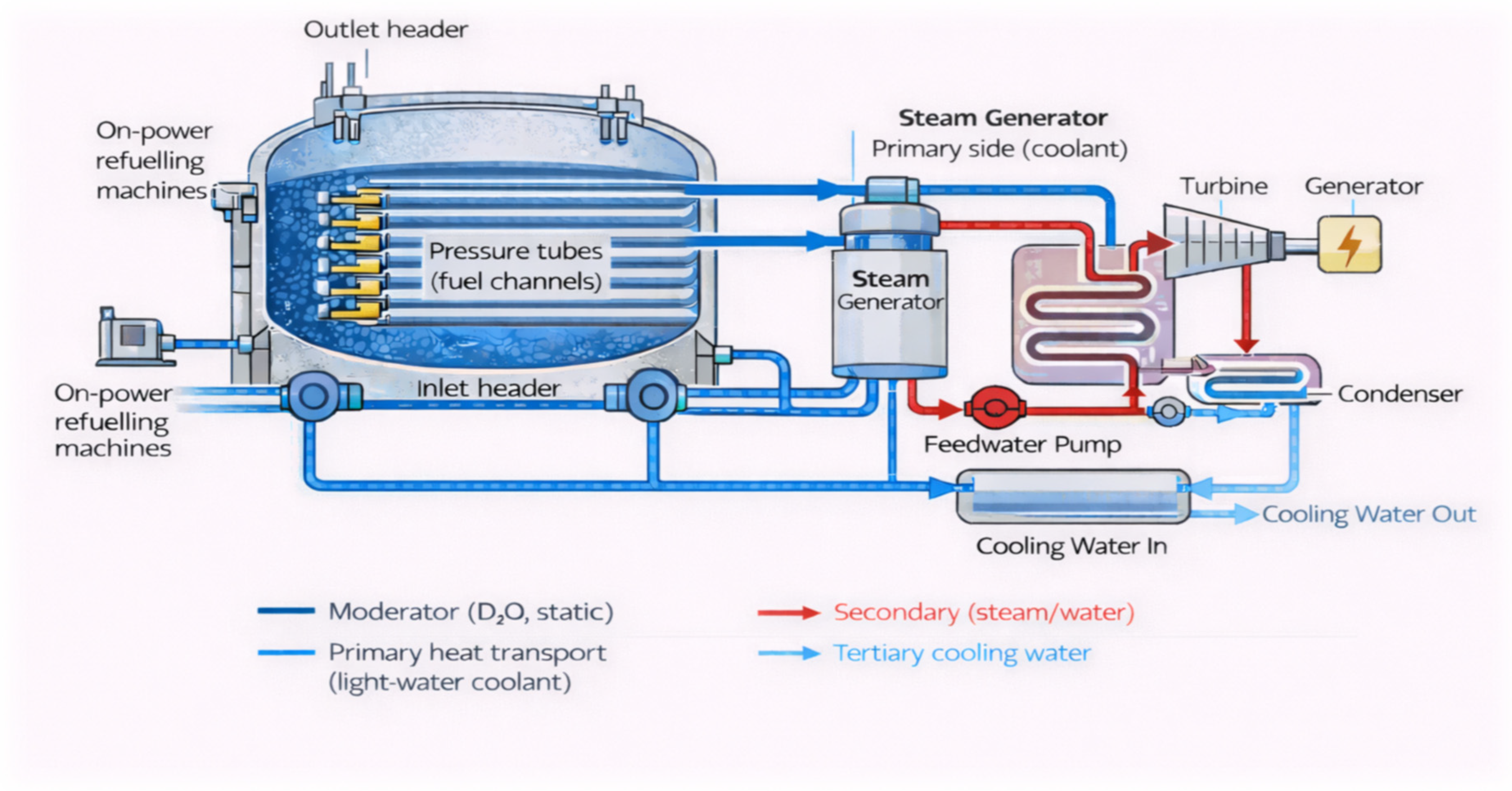
Figure 2 presents the schematic layout of a CANDU-type heavy water reactor, emphasizing the separation between the heavy water moderator (D2O), contained within the calandria vessel, and the primary heat transport system circulating through horizontal pressure tubes.
These structural features are responsible for the high neutron economy of HWR systems and explain their suitability for thorium utilization. The pressure-tube configuration enables continuous on-power refueling and flexible fuel management, allowing efficient breeding of U-233 from thorium within a thermal neutron spectrum.
India’s advanced heavy water reactor (AHWR) represents a further development of this approach, having been conceived specifically for thorium utilization. The AHWR incorporates optimized core geometry, with thorium as the primary fertile component, and an extensive set of passive safety systems, making it one of the few reactor concepts in which the thorium fuel cycle forms the conceptual foundation rather than a retrofit option [30,31,32].
In contrast to solid-fuel LWR and HWR systems, molten salt reactors represent a fundamentally different paradigm in which the reactor and fuel cycle are tightly integrated. Thorium and fissile material are dissolved directly in molten fluoride or chloride salts, allowing the liquid fuel to function simultaneously as the fissile medium and the primary heat transfer fluid.
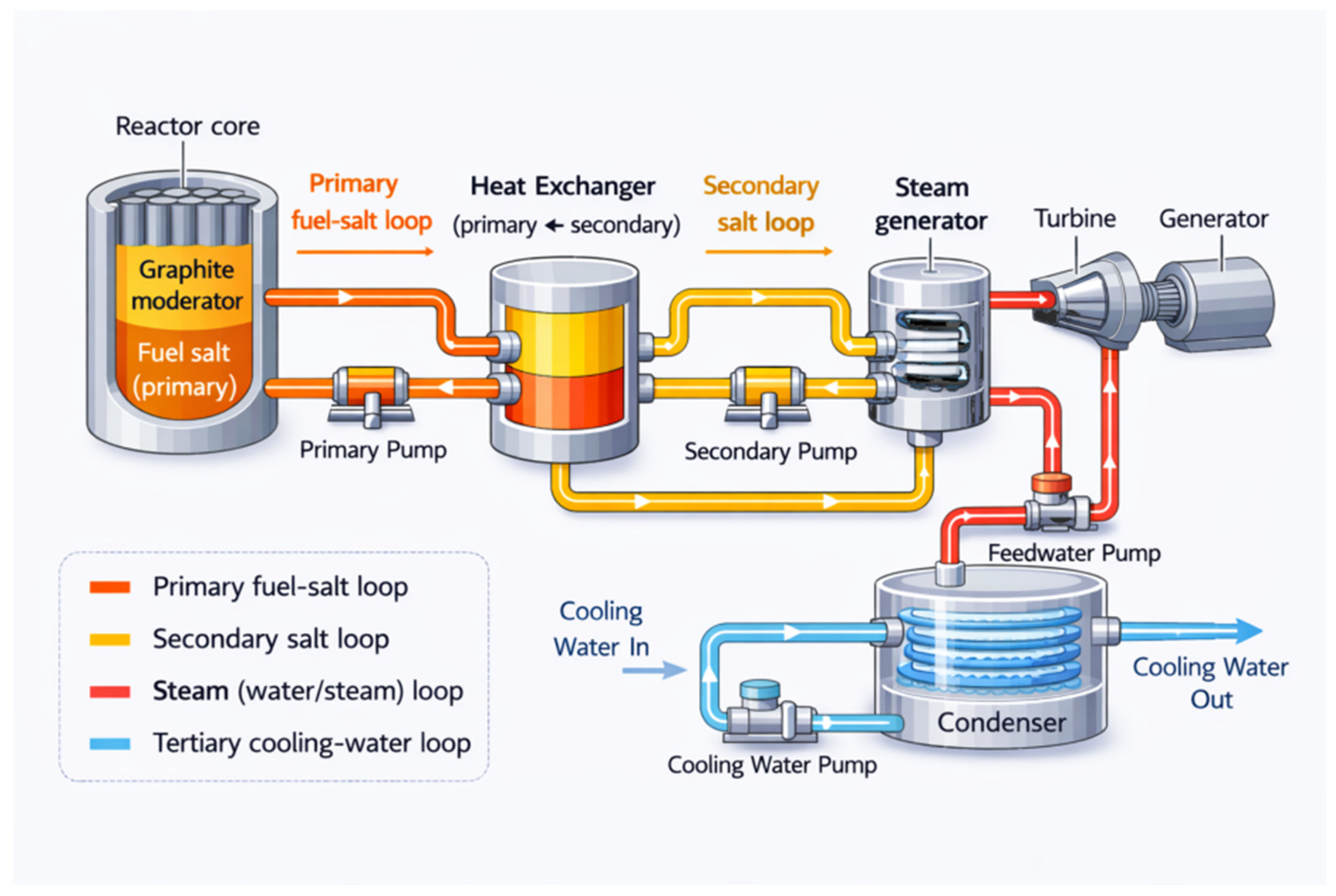
Figure 3 illustrates a representative MSR configuration comprising a circulating primary fuel salt loop, graphite moderation within the reactor core, an intermediate heat exchanger transferring energy to a secondary salt loop, and a conventional steam–water power conversion system.
Unlike solid-fuel reactors, the MSR architecture integrates reactor operation and fuel management through a continuously circulating liquid fuel. This configuration enables uniform fuel utilization, flexible power control, and the theoretical potential for achieving a closed Th–U fuel cycle under appropriate fuel management strategies.
Although MSRs offer one of the most complete theoretical pathways toward efficient thorium utilization and near-complete Th–U fuel cycle closure, their deployment remains constrained by unresolved challenges related to materials performance, salt handling technologies, chemistry control, and regulatory acceptance [5,8].

3.3. Modular Deployment and the Role of PWRs in Thorium Development

Many thorium reactor concepts are framed within the broader context of modular or factory-fabricated nuclear systems. In this review, the internationally adopted small modular reactor (SMR) definition is applied, referring to nuclear systems with electrical output up to approximately 300 MWe designed for serial production and modular deployment [10,20].
International assessments emphasize that modularization primarily facilitates manufacturability, scalability, and licensing efficiency; however, it does not inherently enable closed thorium fuel cycles without parallel advances in fuel processing, materials qualification, and operational chemistry control [10,17,20].
Accordingly, modular thorium concepts span a broad spectrum, from near-term solid-fuel systems compatible with existing infrastructure to longer-term MSR-based architectures requiring extensive supporting facilities.
Within this context, the continued emphasis on LWR and PWR platforms in thorium research should be understood as deployment-driven rather than technology-limiting. fuel cycle assessments consistently indicate that near-complete thorium utilization and closed Th–U cycles are more realistically achievable in HWRs, MSRs, or other advanced reactor systems with more favorable neutron economy [1,2,5,31].
Nevertheless, thorium implementation in PWRs offers a valuable pathway for validating fuel behavior, irradiation performance, and regulatory approaches within the world’s most widespread reactor class. PWR-based thorium studies therefore provide an important bridge between existing nuclear infrastructure and future thorium-optimized systems, enabling incremental progress while reducing technological and licensing risks [2,22].

3.4. Thorium Research and Development Programs in Nuclear-Producing Countries

Research on thorium-based nuclear technologies is being pursued in several nuclear-producing countries as part of broader efforts to improve long-term fuel sustainability and diversify nuclear energy systems [1,2]. These activities include experimental reactor projects, fuel cycle studies, and the development of advanced reactor concepts capable of utilizing thorium.
India maintains one of the most comprehensive national programs focused on thorium utilization. Owing to its large thorium resources, the country has developed a three-stage nuclear energy strategy in which pressurized heavy water reactors (PHWRs) operating on natural uranium form the initial stage, followed by fast breeder reactors and ultimately thorium-based systems producing and utilizing U-233. The advanced heavy water reactor (AHWR) represents a key element of this strategy and is specifically designed to employ thorium as the primary fertile material while incorporating favorable neutron economy and passive safety features [30,31,32].
China has initiated a major research program focused on thorium molten salt reactor (TMSR) technologies. The program, led by the Chinese Academy of Sciences, investigates molten salt reactors capable of operating on thorium fuel cycles and supporting closed Th–U fuel cycle strategies. Current research focuses on materials qualification, molten salt chemistry, and integrated reactor–fuel cycle operation in high-temperature environments [8,11,12].
In the United States, thorium research historically emerged from molten salt reactor experiments conducted at Oak Ridge National Laboratory during the 1960s and 1970s. These experiments demonstrated the feasibility of liquid fuel reactors and provided experimental data on molten salt chemistry, reactor operation, and fuel behavior. Contemporary studies continue within advanced reactor development programs and academic research investigating thorium utilization in next-generation reactor concepts [24,25].
Within the European Union, thorium research is primarily conducted through collaborative initiatives associated with Generation IV reactor programs. These projects investigate advanced reactor systems, including molten salt reactors and fast-spectrum systems, aimed at improving fuel utilization and reducing long-term radioactive waste generation [5,17].
Canada also represents a potential platform for thorium deployment because of its extensive experience with heavy water reactor technology. CANDU-type reactors offer favorable neutron economy and flexible fuel management capabilities, and several studies have evaluated thorium utilization in such systems using seed–blanket fuel configurations and advanced fuel cycle strategies [30,31].
Taken together, these national research programs illustrate the diversity of technological approaches currently being explored for thorium deployment. While India and China maintain particularly active development initiatives, research in Europe and North America continues to contribute to the broader scientific and technological foundation for future thorium-based nuclear systems.

4. Thorium Fuel Cycle Strategies in LWR, HWR, and MSR Systems

4.1. Fuel Cycle Pathways for Thorium Integration

The integration of thorium into nuclear fuel cycles is widely regarded as a long-term strategy for improving resource utilization and reducing the radiotoxicity of spent nuclear fuel. However, the practical realization of thorium-based energy systems is strongly conditioned by reactor type, neutron spectrum, and, critically, the degree of achievable fuel cycle closure. International assessments therefore increasingly interpret thorium deployment as an evolutionary process that balances near-term feasibility with long-term fuel cycle efficiency and sustainability goals [1,2,5].
Global decarbonization efforts and the growing demand for low-carbon, dispatchable energy sources have further intensified interest in advanced nuclear systems, including thorium-based reactors, high-temperature technologies, and hybrid fuel cycle concepts [2,25]. While thorium offers favorable physicochemical properties and potential long-term advantages in fuel cycle performance, its deployment remains constrained by challenges extending beyond reactor physics. These include the availability of supporting industrial infrastructure, reprocessing capabilities, regulatory readiness, and the need for specialized human capital. For developing countries in particular, the economic and institutional barriers associated with thorium-capable systems require careful evaluation of deployment pathways that are both technically feasible and economically sustainable under strict safety requirements [2].
In contrast to reactor-centric analyses, the focus of this section is placed explicitly on fuel cycle strategies, including degrees of closure, reprocessing requirements, and deployment sequencing across reactor classes. Within this framework, contemporary thorium concepts can be grouped into three principal routes: solid-fuel cycles in water-cooled reactors, liquid fuel cycles in molten salt reactors, and hybrid approaches such as accelerator-driven systems.
Across all routes, neutronic and fuel cycle simulations—commonly performed using tools such as SCALE and related system-analysis methods—play a central role in screening design options, optimizing fuel management strategies, and assessing safety margins under realistic technological constraints [31].

4.2. Solid-Fuel Thorium Cycles in Light and Heavy Water Reactors

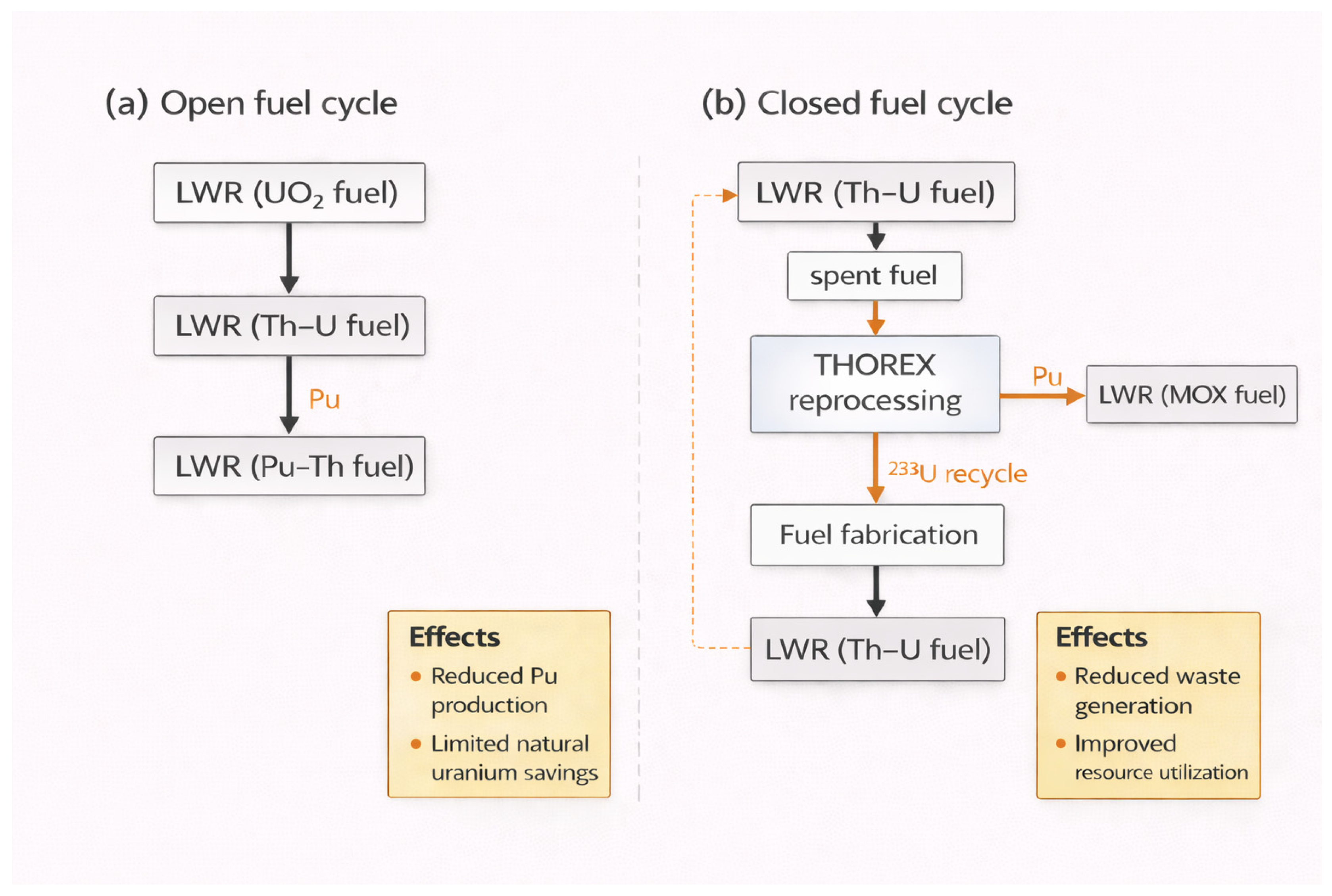
In light water reactors (LWRs), thorium is primarily considered within open or partially closed fuel cycles, most commonly through mixed oxide fuels in which thorium dioxide is blended with uranium (ThO2–UO2). This approach enables incremental improvements in fuel performance, reductions in plutonium production, and more favorable spent-fuel radiation characteristics, while requiring minimal modifications to existing reactor designs and operating practices [1,2]. Representative fuel cycle options for thorium deployment in LWRs are illustrated in Figure 4, including once-through configurations and closed-cycle schemes based on THOREX-type reprocessing [1,33].
Figure 4 illustrates two representative thorium fuel cycle strategies in light water reactors. In the open cycle (Figure 4a), thorium–uranium fuels are introduced into the reactor without subsequent recycling of bred fissile material. Plutonium generated during irradiation may be partially reused in mixed plutonium–thorium fuel compositions, leading to reduced overall plutonium production but only limited savings in natural uranium consumption. In contrast, the closed-cycle option (Figure 4b) incorporates chemical reprocessing using THOREX-type separation technologies, enabling the recovery of bred uranium-233 and its return to the fuel fabrication stage. This recycling pathway improves resource utilization and reduces the accumulation of long-lived radioactive waste but requires significantly more complex fuel cycle infrastructure.
Despite their technical feasibility, thorium-containing fuels in LWRs remain constrained by the limited neutron economy imposed by light water moderation. Reviews consistently indicate that reductions in natural uranium consumption achievable in LWR-based thorium cycles are modest and that fully closed thorium fuel cycles would require complex reprocessing strategies that are not yet industrially mature [2,34]. Consequently, LWR-based thorium deployment is generally interpreted as a transitional strategy that enables operational experience with thorium fuels while maintaining compatibility with existing reactor infrastructure.
Heavy water reactors (HWRs), particularly channel-type designs such as CANDU and its derivatives, offer a different fuel cycle perspective. Owing to minimal neutron absorption by deuterium, HWRs provide superior neutron economy and enable more effective breeding of U-233 from Th-232 in a thermal spectrum [30,31]. A widely discussed thorium strategy in HWRs involves seed–blanket configurations, in which fissile and fertile zones are spatially separated to enhance neutron utilization and fuel management flexibility [30,31].

4.3. Liquid Fuel and Hybrid Thorium Systems (MSR and ADS)

The most resource-efficient strategies for thorium utilization are associated with liquid fuel systems, particularly molten salt reactors (MSRs). In these concepts, thorium and fissile materials are dissolved in molten fluoride or chloride salts, enabling online fuel processing, continuous removal of neutron-absorbing fission products, and controlled management of protactinium-233. These features significantly enhance U-233 breeding potential and overall thorium utilization efficiency, with several designs reporting breeding ratios approaching or exceeding unity while simultaneously limiting the accumulation of long-lived minor actinides [5,10].
From a safety perspective, many MSR designs incorporate favorable reactivity feedbacks and passive safety features, including freeze-plug drain tanks that allow liquid fuel to be passively transferred to subcritical storage under off-normal conditions. However, MSRs face engineering challenges that dominate current R&D priorities and largely determine their technology readiness. These include high-temperature corrosion and mass transfer phenomena in molten salt environments, radiation damage to structural materials, tritium production and containment, and the integration of reliable online chemical processing and off-gas systems [5,10]. Although historically developed alloys such as Hastelloy-N demonstrated feasibility in early MSR experiments, modern deployment of molten salt reactors depends on advances in materials science, salt chemistry control, and licensing methodologies.
Hybrid approaches, most notably accelerator-driven systems (ADSs), represent an additional pathway for thorium utilization and actinide management. In ADS concepts, a subcritical thorium-fueled core is coupled to an external neutron source, enabling flexible fuel management while maintaining inherent subcriticality. A schematic representation of a thorium-based ADS is shown in Figure 5 [7,21].
Figure 5 schematically illustrates a thorium-fueled accelerator-driven system, highlighting the coupling between a subcritical reactor core and an external neutron source. This configuration decouples criticality constraints from fissile breeding and expands the design space for thorium fuel cycle strategies.
Fuel reprocessing remains a central enabling element across all closed and quasi-closed thorium fuel cycle strategies. Processes such as THOREX are specifically designed to recover U-233 from thorium-based fuels. Although historical experience confirms the technical feasibility of thorium reprocessing, it also highlights important bottlenecks related to chemical complexity and economic viability and safeguards against challenges associated with U-232 contamination in recovered uranium streams [33].
Overall, strategies for integrating thorium into nuclear fuel cycles increasingly emphasize staged implementation that reflects both technological readiness and fuel cycle performance considerations. Solid-fuel systems provide opportunities for incremental deployment and operational experience, while liquid fuel and hybrid concepts offer pathways toward more advanced fuel cycle configurations. Together, these approaches illustrate the range of technological options currently under investigation for incorporating thorium into future nuclear energy systems [2,5,10,14].

5. Fuel Cycle and Recycling Strategies as Enabling Constraints

The selection of fuel cycle architecture and recycling methods represents a decisive constraint governing the efficiency, sustainability, and safety of thorium-based nuclear energy systems. Unlike uranium, thorium (232Th) is a fertile material whose energy potential can only be realized through the breeding and subsequent management of fissile 233U. As a result, the fuel cycle design for thorium systems is inherently inseparable from reprocessing feasibility and radiological handling requirements, and safeguards considerations [1,17].
Recent analyses of advanced nuclear development pathways further emphasize that fuel cycle architecture, rather than individual reactor design, increasingly governs the feasibility of thorium deployment, particularly in systems targeting staged or region-specific implementation strategies [2,26].
In light water reactors (LWRs), thorium is predominantly introduced within open or partially closed fuel cycles using mixed oxide fuels (ThO2–UO2). This approach reduces plutonium production, improves spent-fuel radiological characteristics, and can increase achievable burnup without major modifications to existing reactor infrastructure [1]. However, the limited neutron economy of light water moderation strongly constrains 233U breeding, resulting in only modest reductions in natural uranium consumption [33,34]. Although closed-cycle schemes relying on THOREX-type reprocessing have been proposed, the high chemical stability of ThO2 and the presence of U-232 impurities—associated with intense γ-radiation—significantly complicate fuel handling, shielding, and reprocessing economics [35,36,37].
Recent system-level studies further indicate that, even under optimized conditions, thorium-bearing fuels in LWR environments primarily provide fuel performance and waste management benefits rather than meaningful fuel cycle closure, reinforcing their role as transitional options within broader thorium deployment strategies [2].
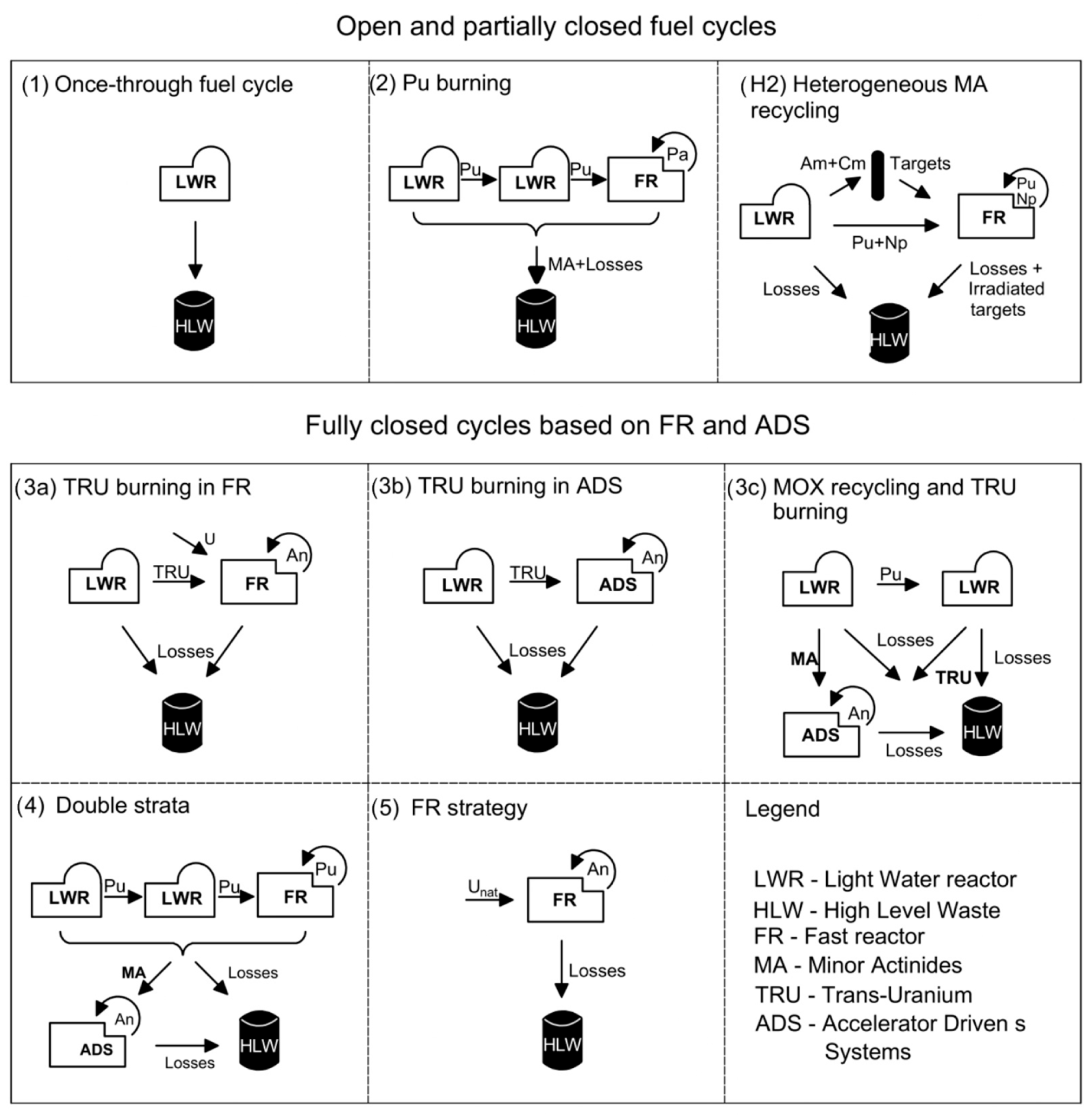
Figure 6 schematically illustrates fuel cycle closure options in fast reactors and accelerator-driven systems, emphasizing pathways for recycling fissile material and transmuting long-lived radionuclides rather than reactor design features.
Heavy water reactors (HWRs), particularly channel-type designs such as CANDU, PHWR, and AHWR, provide substantially improved neutron economy, enabling quasi-closed thorium fuel cycles. Seed–blanket configurations allow spatial separation of fissile and fertile zones, improving neutron utilization and facilitating controlled accumulation of 233U for subsequent recycling [30,31]. The capability for on-power refueling and flexible core management supports partial fuel recycling strategies and leads to more pronounced reductions in natural uranium demand compared to LWR-based thorium cycles. International assessments therefore identify HWRs as among the most technologically mature solid-fuel options for practical thorium deployment in the near to medium term [2,26].
Multiphysics safety and fuel behavior analyses of thorium-based fuels in heavy water reactor environments further confirm favorable thermal margins and mechanical stability under representative operating and transient conditions, supporting the technical feasibility of thorium recycling strategies in HWR platforms [33].
Fully closed fuel cycles incorporating fast reactors and accelerator-driven systems (ADSs) offer further reductions in waste volume and long-term radiotoxicity by enabling efficient recycling of thorium-derived 233U and minor actinides (Figure 6). These systems complement thermal reactor strategies by addressing fuel cycle closure and waste management at the system level rather than within a single reactor class.
The most advanced fuel cycle architecture is realized in molten salt reactors (MSRs), where thorium and fissile material are dissolved directly in the circulating fuel salt. This configuration enables continuous online processing, removal of neutron-absorbing fission products, and the controlled extraction of protactinium-233 prior to its decay into 233U, significantly enhancing conversion ratios and thorium utilization efficiency [5]. Despite these advantages, international assessments emphasize that large-scale deployment of fully closed thorium cycles in MSRs remains contingent on advances in materials science, salt chemistry control, and regulatory frameworks [10].
Fuel cycle and recycling methods therefore act as enabling constraints rather than optional enhancements in thorium-based systems. While LWRs provide limited and largely open cycle options, HWRs support quasi-closed solid-fuel strategies, MSRs provide the technological basis for fully closed cycles, and ADSs extend system-level capabilities for recycling and waste transmutation. Their coordinated development defines an evolutionary approach to thorium deployment that balances feasibility, safety, and long-term sustainability [2,5,10,26].
From a broader system perspective, the integration of thorium fuel cycles with environmental protection and long-term waste mitigation strategies further strengthens the rationale for staged deployment pathways that align nuclear energy development with sustainability objectives [26].
In this context, modular reactor concepts are increasingly viewed as platforms for staged thorium integration, allowing fuel cycle technologies, regulatory frameworks, and industrial infrastructure to co-evolve rather than requiring full system maturity at the outset [17,38,39].

6. Thorium Fuel Parameters and Operational Constraints

The fuel parameters most relevant to thorium-based systems are considered here in terms of thermophysical behavior, neutronic implications, and in-core performance, allowing comparison across reactor platforms without repeating data already summarized elsewhere. Fuel properties are traditionally discussed for uranium-based systems and often treated independently of fuel cycle strategy. In the case of thorium deployment, however, only a subset of these parameters directly constrains practical implementation. This section therefore focuses on fuel characteristics that influence reactor operability, safety margins, and deployment feasibility in thorium-bearing systems rather than providing a general description of fuel behavior [40,41,42,43,44].
For uranium dioxide (UO2) fuel, key parameters include thermal conductivity, thermal expansion, burnup-dependent microstructural evolution, and fission gas accumulation. Degradation of thermal conductivity with burnup increases centerline temperatures and thermomechanical stresses, thereby affecting cladding integrity and operational margins [45,46,47,48,49]. Similar phenomena occur in thorium-based fuels, but with important quantitative differences that directly influence reactor operation.
Thorium dioxide (ThO2) exhibits higher thermal conductivity, lower thermal expansion, and superior dimensional stability compared with UO2. When incorporated into mixed ThO2–UO2 fuels, these properties reduce peak fuel temperatures, flatten axial and radial power distributions, and mitigate pellet–cladding mechanical interaction. From an operational standpoint, these effects translate into increased tolerance to power transients and improved fuel reliability, particularly in water-cooled reactors [6,7,42,50].
Recent multiphysics safety analyses of thorium-fueled heavy water and light water reactor cores further confirm that these thermophysical advantages translate into measurable improvements in thermal margins under both normal and transient operating conditions [38,51,52,53,54].
A critical constraint unique to thorium fuels is the requirement for an external fissile driver. Because 232Th is fertile, thorium-based fuels require initial enrichment with 235U or 233U to sustain criticality. In practice, enrichment levels of approximately 4% 235U are technically and economically feasible, allowing thorium-bearing fuels to be implemented without exceeding enrichment limits commonly accepted for commercial reactors [1,14]. Thorium addition also tends to flatten reactivity over the fuel cycle and suppress plutonium buildup, contributing to more stable long-term core behavior [52].
Operational constraints related to peak linear heat generation and localized power peaking remain central to thorium fuel deployment. Engineering mitigation strategies, such as optimized pellet geometry, burnable absorbers, and composite fuel matrices, are effective, but they remain secondary to intrinsic fuel properties. In this regard, the improvements in thermal conductivity and reduced swelling associated with thorium-based fuels act as primary enabling features rather than merely auxiliary optimizations [3,6,7].
From a deployment perspective, the relevance of fuel parameters lies not only in their absolute values but also in their influence on licensing margins, safety analyses, and fuel cycle compatibility. Thorium-based fuels offer measurable advantages in thermal performance and reactivity management, but these benefits must be weighed against enrichment requirements, fabrication complexity, and reprocessing implications when assessing their role in specific reactor platforms.
System-level studies of modular thorium reactor concepts further emphasize that such fuel-property advantages are particularly valuable in staged deployment scenarios, where conservative licensing margins and incremental fuel qualification play a dominant role [17,30].

7. Techno-Economic Feasibility of Thorium Reactor Systems

The techno-economic feasibility of thorium-based nuclear systems depends on the interplay between reactor physics, fuel cycle architecture, materials performance, system complexity, and regulatory maturity. Unlike conventional uranium fuel cycles, thorium deployment often requires external fissile support, specialized fuel processing infrastructure, and, in some concepts, continuous chemical control, all of which influence capital investment, operational costs, and project risk [1,17,19].
Recent system-level assessments of modular thorium concepts further emphasize that institutional readiness and supply chain maturity can be as decisive as technical performance in determining economic feasibility [17,30].
Light water reactors remain the most technologically mature and economically predictable platform due to established supply chains and regulatory frameworks. Incorporation of thorium in LWRs through ThO2–UO2 fuel does not significantly alter capital costs but yields limited economic benefit, as modest gains in fuel utilization do not offset increased fabrication and reprocessing complexity [2,52,54,55]. Consequently, thorium use in LWRs is best viewed as transitional or optimization-oriented.
Nevertheless, multiphysics safety and economic studies of thorium-bearing fuels in water-cooled reactors indicate that such deployments can reduce licensing risk and provide valuable operational data for future thorium-optimized systems [38,56].
Heavy water reactors occupy an intermediate position. Their high neutron economy enables quasi-closed thorium fuel cycles without major reactor modifications, keeping capital costs broadly comparable to conventional HWRs. Improved fuel utilization and reduced uranium demand may partially compensate for additional thorium fuel handling and processing expenses, yielding a more favorable long-term economic balance, albeit with continued dependence on reprocessing infrastructure [14,39,57].
Molten salt reactors and thorium molten salt reactor (TMSR) concepts present a fundamentally different techno-economic model. Liquid fuel operation enables high burnup, online fuel management, and potentially fully closed thorium cycles with breeding ratios near or above unity. However, feasibility is currently limited by first-of-a-kind (FOAK) capital costs, materials qualification challenges, complex chemical processing systems, and immature regulatory pathways [5,10]. Sensitivity analyses indicate that the levelized cost of electricity (LCOE) for MSR systems depends strongly on capital cost reduction through learning effects, serial production, and commercialization timelines [29,58].
Accelerator-driven systems are not direct competitors to power reactors because of the high capital and operational costs associated with accelerator technology. Their primary value lies in system-level benefits, including subcritical safety margins, efficient minor-actinide transmutation, and support for closed fuel cycles, yielding indirect economic advantages through reduced waste management burdens and enhanced system resilience [7,21].
Overall, feasibility assessments consistently identify first-of-a-kind investment risk, regulatory uncertainty, and fuel cycle infrastructure costs as the dominant barriers to thorium deployment. International roadmaps therefore emphasize phased development strategies, early demonstration units, niche and hybrid applications, and proactive regulatory engagement [10,17,59]. From a system-level perspective, this analysis indicates that no single reactor platform currently provides an optimal solution for thorium utilization across all deployment conditions. Under these conditions, LWRs provide low-risk but limited-benefit pathways, HWRs offer realistic medium-term solutions, MSRs represent the highest long-term potential accompanied by substantial technological challenges, and ADSs contribute primarily to system-level sustainability rather than direct power generation. Comparative analyses of national thorium R&D programs indicate that such phased deployment strategies are already being pursued in several nuclear-producing countries as a means of managing economic and regulatory uncertainty [11,14].
Taken together, these considerations show that thorium deployment is governed not by a single optimal reactor concept, but by platform-specific trade-offs among technical maturity, fuel cycle complexity, and system-level risk.
The comparative characteristics of the principal reactor platforms considered for thorium deployment are summarized in Table 4. The table highlights differences in technological maturity, fuel cycle potential, research and development priorities, and expected deployment horizons across nuclear-producing countries.

8. Conclusions

This review has examined thorium-based nuclear fuel cycles from a system-level perspective, integrating neutronic performance, fuel behavior, materials constraints, recycling strategies, and techno-economic feasibility across the major reactor platforms relevant to thorium deployment. Rather than treating thorium as a single technological solution, the analysis shows that its practical value lies in how it is integrated within staged deployment pathways that balance technological readiness, fuel cycle efficiency, and institutional feasibility.
Quantitative assessments indicate that thorium implementation in light water reactors is best understood as transitional. Mixed ThO2–UO2 fuels can improve fuel performance, support more favorable reactivity behavior, and reduce plutonium production while remaining broadly compatible with existing reactor infrastructure and licensing frameworks. However, the fundamental neutron economy limitations of light water systems prevent LWRs from achieving efficient closed thorium fuel cycles, restricting their role to near-term validation and operational experience rather than long-term fuel cycle closure.
Heavy water reactors emerge as the most mature solid-fuel platform for effective thorium utilization. Their favorable neutron economy, combined with channel-type core architecture and on-power refueling capability, enables quasi-closed fuel cycles and improved thorium conversion performance. Advanced concepts such as the AHWR further demonstrate that thorium can function not merely as a supplementary fuel component but as a central design element within a realistic medium-term deployment pathway.
Molten salt reactors represent the most direct route toward fully closed Th–U fuel cycles. Their liquid fuel architecture allows online fission product management, flexible fuel processing, and controlled handling of protactinium, creating conditions that are particularly favorable for thorium utilization. At the same time, deployment of MSR systems remains constrained by materials qualification, salt chemistry control, fuel processing complexity, and regulatory readiness.
Accelerator-driven systems broaden the fuel cycle design space by decoupling fissile breeding from criticality constraints. Their role is not primarily to compete with conventional power reactors but to support waste transmutation, advanced recycling strategies, and hybrid fuel cycle configurations.
Across all reactor classes, the dominant constraints on thorium deployment are associated with materials science, fuel fabrication and reprocessing, system integration, and first-of-a-kind deployment risk rather than with basic nuclear-physics limitations. Thorium-based fuels offer genuine thermal and mechanical advantages, but their successful deployment depends on coordinated progress in fuel cycle infrastructure, licensing practice, and economic implementation.
Taken together, the reviewed reactor options define a structured and evolutionary landscape for thorium-based nuclear energy systems. Continued research and development efforts in nuclear-producing countries will therefore play a decisive role in determining whether innovative and modular thorium reactor technologies can transition from experimental concepts to deployable components of future low-carbon energy systems [60].

Author Contributions

Z.Z.I.: supervision, project administration, writing—original draft preparation; A.H.: project administration, resources; Z.A.M.: validation, formal analysis; A.G.: software, formal analysis; Z.A.: investigation, resources. All authors have read and approved the final manuscript.

Funding

This study was part of the scientific program IRN BR24993225 for program-targeted financing of the Committee of Science, Ministry of Science and Higher Education of the Republic of Kazakhstan, 2024–2026.

Data Availability Statement

No new experimental or observational data were created or analyzed in this study. This manuscript is a literature review; all results, figures and tables are drawn from and cited to previously published sources (see References). Underlying data and datasets are available from the original publications cited. Reasonable requests for specific source documents or clarifications can be directed to the corresponding author.

Conflicts of Interest

The authors declare no conflicts of interest related to this research.

References

  1. International Atomic Energy Agency (IAEA). Thorium Fuel Cycle—Potential Benefits and Challenges; IAEA-TECDOC-1450; IAEA: Vienna, Austria, 2005. [Google Scholar]
  2. OECD Nuclear Energy Agency (NEA). Introduction of Thorium in the Nuclear Fuel Cycle; NEA No. 7224; OECD Publishing: Paris, France, 2015. [Google Scholar] [CrossRef]
  3. Ault, T.; Krahn, S.; Croff, A. Thorium fuel cycle research and literature: Trends and insights from eight decades of diverse projects and evolving priorities. Ann. Nucl. Energy 2017, 110, 726–738. [Google Scholar] [CrossRef]
  4. Chroneos, A.; Goulatis, I.; Daskalopulu, A.; Tsoukalas, L.H. Thorium fuel revisited. Prog. Nucl. Energy 2023, 164, 104839. [Google Scholar] [CrossRef]
  5. Serp, J.; Allibert, M.; Beneš, O.; Delpech, S.; Feynberg, O.; Ghetta, V.; Heuer, D.; Holcomb, D.; Ignatiev, V.; Kloosterman, J.L.; et al. The molten salt reactor (MSR) in Generation IV: Overview and perspectives. Prog. Nucl. Energy 2014, 77, 308–319. [Google Scholar] [CrossRef]
  6. World Nuclear Association (WNA). Thorium. Available online: https://world-nuclear.org/information-library/current-and-future-generation/thorium (accessed on 18 March 2026).
  7. International Atomic Energy Agency (IAEA). World Thorium Occurrences, Deposits and Resources; IAEA-TECDOC-1877; IAEA: Vienna, Austria, 2019. [Google Scholar]
  8. International Atomic Energy Agency (IAEA). Status of Molten Salt Reactor Technology; Technical Reports Series No. 489; IAEA: Vienna, Austria, 2023. [Google Scholar]
  9. Insepov, Z.; Lesbayev, B.T.; Tanirbergenova, S.; Alsar, Z.; Kalybay, A.A.; Mansurov, Z.A. Small modular nuclear power reactors as a driver of development of nuclear technologies. Energies 2025, 18, 5766. [Google Scholar] [CrossRef]
  10. OECD Nuclear Energy Agency (NEA). Small Modular Reactors: Nuclear Energy Market Potential for Near-Term Deployment; OECD Publishing: Paris, France, 2016. [Google Scholar]
  11. World Nuclear Association (WNA). The Nuclear Fuel Cycle. Available online: https://world-nuclear.org/information-library/nuclear-fuel-cycle.aspx (accessed on 18 March 2026).
  12. Salvatores, M.; Palmiotti, G. Radioactive waste partitioning and transmutation within advanced fuel cycles: Achievements and challenges. Prog. Part. Nucl. Phys. 2011, 66, 144–166. [Google Scholar] [CrossRef]
  13. Poinssot, C.; Rostaing, C.; Baron, P.; Warin, D. Recycling the Actinides, The Cornerstone of Any Sustainable Nuclear Fuel Cycles. Procedia Chem. 2012, 7, 349–357. [Google Scholar] [CrossRef]
  14. OECD Nuclear Energy Agency (NEA). The Economics of the Back-End of the Nuclear Fuel Cycle; OECD Publishing: Paris, France, 2013. [Google Scholar]
  15. International Atomic Energy Agency (IAEA). Impacts of Partitioning and Transmutation on Fuel Cycle Facilities; IAEA-TECDOC-1766; IAEA: Vienna, Austria, 2015. [Google Scholar]
  16. International Atomic Energy Agency (IAEA). Climate Change and Nuclear Power 2022; IAEA: Vienna, Austria, 2022. [Google Scholar]
  17. OECD Nuclear Energy Agency (NEA). Generation IV Nuclear Energy Systems: Status and Prospects; OECD Publishing: Paris, France, 2014. [Google Scholar]
  18. Generation IV International Forum (GIF). Technology Roadmap Update for Generation IV Nuclear Energy Systems; OECD Publishing: Paris, France, 2014. [Google Scholar]
  19. OECD Nuclear Energy Agency (NEA). The Role of Nuclear Energy in a Low-Carbon Energy Future; OECD Publishing: Paris, France, 2012. [Google Scholar]
  20. International Atomic Energy Agency (IAEA). Advances in Small Modular Reactor Technology Developments; IAEA: Vienna, Austria, 2022. [Google Scholar]
  21. Leppänen, J.; Pusa, M.; Viitanen, T.; Valtavirta, V.; Kaltiaisenaho, T. The Serpent Monte Carlo code: Status, development and applications in 2013. Ann. Nucl. Energy 2015, 82, 142–150. [Google Scholar] [CrossRef]
  22. Du Toit, M.H.; Van Niekerk, F.; Amirkhosravi, S. Review of thorium-containing fuels in LWRs. Prog. Nucl. Energy 2024, 170, 105136. [Google Scholar] [CrossRef]
  23. Lombardi, C.; Luzzi, L.; Padovani, E.; Vettraino, F. Thoria and inert matrix fuels for a sustainable nuclear power. Prog. Nucl. Energy 2008, 50, 944–953. [Google Scholar] [CrossRef]
  24. International Atomic Energy Agency (IAEA). Thermophysical Properties Database of Materials for Light Water Reactors and Heavy Water Reactors; IAEA-TECDOC-1496; IAEA: Vienna, Austria, 2006. [Google Scholar]
  25. Dąbrowski, L.; Szuta, M. Diffusion of helium in uranium and thorium dioxide single crystals. Nukleonika 2013, 58, 295–300. [Google Scholar]
  26. Long, Y. Thoria and Urania PWR Fuel. Ph.D. Thesis, Massachusetts Institute of Technology, Cambridge, MA, USA, 2002. [Google Scholar]
  27. U.S. Nuclear Regulatory Commission (NRC). Safety and Regulatory Issues of the Thorium Fuel Cycle; NUREG/CR-7176; NRC: Washington, DC, USA, 2014. [Google Scholar]
  28. Olson, G.L.; McCardell, R.K.; Illum, D.B. Fuel Summary Report: Shippingport Light Water Breeder Reactor—Rev. 2; Idaho National Laboratory: Idaho Falls, ID, USA, 2002. [Google Scholar] [CrossRef][Green Version]
  29. Todreas, N.E.; Kazimi, M.S. Nuclear Systems Volume I: Thermal Hydraulic Fundamentals, 3rd ed.; CRC Press: Boca Raton, FL, USA, 2021. [Google Scholar]
  30. International Atomic Energy Agency (IAEA). Heavy Water Reactors: Status and Projected Development; Technical Reports Series No. 407; IAEA: Vienna, Austria, 2002. [Google Scholar]
  31. International Atomic Energy Agency (IAEA). Role of Thorium to Supplement Fuel Cycles of Future Nuclear Energy Systems; Nuclear Energy Series NF-T-2.4; IAEA: Vienna, Austria, 2012. [Google Scholar]
  32. International Atomic Energy Agency (IAEA). Nuclear Technology Review 2016; IAEA: Vienna, Austria, 2016. [Google Scholar]
  33. Kakodkar, A. Evolving Indian Nuclear Programme: Rationale and Perspective; Indian Academy of Sciences Lecture: Bangalore, India, 2008. [Google Scholar]
  34. International Atomic Energy Agency (IAEA). Nuclear Technology Review 2017; IAEA: Vienna, Austria, 2017. [Google Scholar]
  35. World Nuclear Association (WNA). The Nuclear Fuel Report 2023; WNA: London, UK, 2023. [Google Scholar]
  36. Haubenreich, P.N.; Engel, J.R. Experience with the Molten Salt Reactor Experiment. Nucl. Appl. Technol. 1970, 8, 118–136. [Google Scholar] [CrossRef]
  37. Rosenthal, M.W.; Briggs, R.B.; Haubenreich, P.N.; Kasten, P.R. Molten-Salt Reactor Program Semiannual Progress Report for Period Ending February 28, 1970; ORNL-4548; Oak Ridge National Laboratory: Oak Ridge, TN, USA, 1970. [Google Scholar]
  38. Brooksbank, R.E.; McDuffee, W.T.; Rainey, R.H. A Review of Thorium Fuel Reprocessing Experience; Oak Ridge National Laboratory: Oak Ridge, TN, USA, 1978. [Google Scholar]
  39. Taiwo, T.A.; Kim, T.K.; Wigeland, R.A. Thorium fuel cycle option screening in the United States. Nucl. Technol. 2016, 194, 127–135. [Google Scholar] [CrossRef]
  40. Cooper, M.W.D.; Middleburgh, S.C.; Grimes, R.W. Modelling the thermal conductivity of (UxTh1−x)O2 and (UxPu1−x)O2. J. Nucl. Mater. 2015, 466, 29–35. [Google Scholar] [CrossRef]
  41. Gehin, J.C.; Powers, J.J. Liquid fuel molten salt reactors for thorium utilization. Nucl. Technol. 2016, 194, 152–161. [Google Scholar] [CrossRef]
  42. Ade, B.; Worrall, A.; Powers, J.; Bowman, S. Analysis of key safety metrics of thorium utilization in LWRs. Nucl. Technol. 2016, 194, 162–177. [Google Scholar] [CrossRef]
  43. Powers, J.J.; Worrall, A.; Gehin, J.C.; Harrison, T.J.; Sunny, E.E. Reactor physics analysis of thorium fuel cycles using molten salt reactors. Trans. Am. Nucl. Soc. 2013, 109, 1457–1460. [Google Scholar]
  44. Şahin, S.; Yıldız, K.; Şahin, H.M.; Acır, A. Investigation of CANDU reactors as a thorium burner. Energy Convers. Manag. 2006, 47, 1661–1675. [Google Scholar] [CrossRef]
  45. LeBlanc, D. Molten salt reactors: A new beginning for an old idea. Nucl. Eng. Des. 2010, 240, 1644–1656. [Google Scholar] [CrossRef]
  46. Huke, A.; Ruprecht, G.; Weißbach, D.; Gottlieb, S.; Hussein, A.; Czerski, K. The Dual Fluid Reactor—A novel concept for a fast nuclear reactor of high efficiency. Ann. Nucl. Energy 2015, 80, 225–235. [Google Scholar] [CrossRef]
  47. International Atomic Energy Agency (IAEA). Thorium Based Fuel Options for the Generation of Electricity: Developments in the 1990s; IAEA-TECDOC-1155; IAEA: Vienna, Austria, 2000. [Google Scholar]
  48. International Atomic Energy Agency (IAEA). Thorium Fuel Utilization: Options and Trends; IAEA-TECDOC-1319; IAEA: Vienna, Austria, 2002. [Google Scholar]
  49. International Atomic Energy Agency (IAEA). Near-Term and Promising Long-Term Options for the Deployment of Thorium Based Nuclear Energy; IAEA: Vienna, Austria, 2022. [Google Scholar]
  50. Atamanova, T.; Lesbayev, B.; Tanirbergenova, S.; Alsar, Z.; Kalybay, A.; Mansurov, Z.; Atamanov, M.; Insepov, Z. Advanced techniques for thorium recovery from mineral deposits: A review. Appl. Sci. 2025, 15, 11403. [Google Scholar] [CrossRef]
  51. Zhan, L.; Yang, B.; Lin, T.; Zhang, F. Development and outlook of advanced nuclear energy technology. Energy Strategy Rev. 2021, 34, 100630. [Google Scholar] [CrossRef]
  52. Kurbanova, B.; Sizyuk, Y.; Aryngazin, A.; Alsar, Z.; Hassanein, A.; Insepov, Z. Thermal hydraulics and solid mechanics multiphysics safety analysis of a heavy water reactor with thorium-based fuel. J. Nucl. Eng. 2025, 6, 53. [Google Scholar] [CrossRef]
  53. Alsar, Z.; Gajimuradova, A.; Mansurov, Z.; Gubaidullin, N.; Hassanein, A.; Insepov, Z. Thorium in energy and ecology: Prospects for clean fuel sources and environmental protection. Energies 2025, 18, 6177. [Google Scholar] [CrossRef]
  54. International Atomic Energy Agency (IAEA). Nuclear Fuel Cycle Simulation System (VISTA); IAEA-TECDOC-1535; IAEA: Vienna, Austria, 2007. [Google Scholar]
  55. OECD Nuclear Energy Agency (NEA). Advanced Nuclear Fuel Cycles and Radioactive Waste Management; OECD Publishing: Paris, France, 2006. [Google Scholar]
  56. Andrews, H.B.; McFarlane, J.; Chapel, A.S.; Ezell, N.D.B.; Holcomb, D.E.; de Wet, D.; Greenwood, M.S.; Myhre, K.G.; Bryan, S.A.; Lines, A.; et al. Review of molten salt reactor off-gas management considerations. Nucl. Eng. Des. 2021, 385, 111529. [Google Scholar] [CrossRef]
  57. Wu, J.; Chen, J.; Cai, X.; Zou, C.; Yu, C.; Cui, Y.; Zhang, A.; Zhao, H. A Review of Molten Salt Reactor Multi-Physics Coupling Models and Development Prospects. Energies 2022, 15, 8296. [Google Scholar] [CrossRef]
  58. Betzler, B.R.; Powers, J.J.; Worrall, A. Molten salt reactor neutronics and fuel cycle modeling with SCALE. Ann. Nucl. Energy 2017, 101, 489–503. [Google Scholar] [CrossRef]
  59. Olander, D.R. Nuclear Fuels and Materials: Science and Technology; Cambridge University Press: Cambridge, UK, 2009. [Google Scholar]
  60. Heuer, D.; Merle-Lucotte, E.; Allibert, M.; Brovchenko, M.; Ghetta, V.; Rubiolo, P. Towards the thorium fuel cycle with molten salt fast reactors. Ann. Nucl. Energy 2014, 64, 421–429. [Google Scholar] [CrossRef]
Figure 1. Schematic diagram of a pressurized water reactor (PWR). Author’s illustration based on reactor design descriptions in Refs. [1,30].
Applsci 16 04314 g001
Figure 2. Schematic diagram of a CANDU-type heavy water reactor. Author’s illustration based on reactor design descriptions in Refs. [30,31].
Applsci 16 04314 g002
Figure 3. Conceptual schematic of a molten salt reactor (MSR) system. Author’s illustration based on system descriptions in Refs. [5,8].
Applsci 16 04314 g003
Figure 4. Thorium-based fuel-cycle options in LWRs. (a) Open cycle—black arrows: primary flows (fresh Th–U or Th+Pu fuel → reactor; spent/irradiated fuel → interim storage/disposal). Orange arrows: limited recycling (partial recovery/use of Pu in Pu–Th fuel). (b) Closed (THOREX) cycle—black arrows: main closed loop (Th feed → reactor → spent fuel → THOREX reprocessing → recovered U-233 → fuel fabrication → reactor). Orange arrows: non-recovered outputs and wastes (reprocessing tails, interim decay/storage). Key streams indicated: Th-232 (fertile), U-233 (bred fissile), Pu (by-product), wastes. Adapted from Refs. [1,33].
Applsci 16 04314 g004
Figure 5. Schematic of a thorium ADS. Solid black arrows = operational/material flows: proton beam → spallation target/beam window → prompt neutrons → subcritical core; heat removal from core → heat exchangers → power conversion. Arrows between fertile assemblies and fuel indicate breeding (232Th → 233U) and return of bred fissile material; small arrows at fuel pins denote fission product release. Components: accelerator, collimator/beam window, liquid-lead spallation target, subcritical core with Th/fuel assemblies, heat exchangers. Adapted from Refs. [7,21].
Applsci 16 04314 g005
Figure 6. Schematic illustration of closed fuel cycle possibilities in fast reactors and accelerator-driven systems (ADSs). Adapted from Refs. [13,21].
Applsci 16 04314 g006
Table 1. Estimated thorium reserves worldwide (upper estimate) [7].
CountryTh Reserves (kt)CountryTh Reserves (kt)
Brazil1300Canada172
Turkey880Russia155
India846South Africa148
Australia521China100
United States434Greenland93
Norway430Kazakhstan50
Egypt380Other countries1781
Venezuela300Worldwide7590
Table 2. Comparison of thorium and uranium as nuclear fuels.
ParameterThorium (Th-232/ThO2)Uranium (U-235/UO2)Remarks/Source
Atomic number (Z)9092Actinide elements
Natural abundanceTh-232 ≈ 100%U-238 99.28%, U-235 0.72%[1]
Fuel typeFertile → U-233Fissile (U-235)/fertile (U-238)[1,2]
Thermal neutron absorption σa (barn)~7.42.7 (U-235)[22]
Thermal neutron fission σf (barn)— → U-233 ≈ 530U-235 ≈ 584[22]
Average neutrons per fission (ν)2.49–2.50 (U-233)2.43 (U-235)[22]
Reproduction factor η (thermal)≈2.3≈2.07[22]
Effective delayed neutron fraction βeff≈0.0028≈0.0065[14]
Conversion ratio (thermal reactor)0.95–1.05 (optimized systems)0.55–0.65[2,22]
Fertile-to-fissile conversionTh-232 → U-233U-238 → Pu-239[1]
Melting point (°C)~3300~2865–2970[24]
Thermal conductivity (W m−1 K−1 at 1000 K)6–72.5–3.5[24,27]
Linear thermal expansion (10−6 K−1)~10–11~11–12[24]
Density (g cm−3)~10.0~10.96[24]
Heat capacity Cp at 1000 K (J mol−1 K−1)~68–70~62–64[24]
Typical achievable burnup (GWd/tHM)500–700 *40–70[24,27]
Fission gas release (relative)lower than UO2baseline[24]
Plutonium and MA productionstrongly reducedsignificant[1,2]
Proliferation resistancehigher (U-232 contamination)moderate[1]
* Estimated values discussed for advanced thorium fuel concepts under favorable reactor conditions.
Table 3. Representative simulation results for thorium-based fuels in different reactor systems reported in the literature.
Reactor/FuelConversion RatioBurnup (GWd/tHM)ΔT Centerline (°C)Reference
PWR (ThO2–UO2)0.65–0.70500–700−150 to −250[22,23]
HWR/AHWR0.95–1.05up to ~700–800 *≈−200[30,31,32,33]
MSR/LFTR≥1.0potentially >700Liquid fuel[5,10]
* Estimated values discussed in conceptual AHWR fuel cycle studies.
Table 4. Comparative assessment of reactor platforms and R&D pathways for thorium deployment.
Reactor PlatformTechnology ReadinessThorium Fuel cycle PotentialTypical R&D Programs/CountriesDeployment HorizonPrincipal
Constraints
Light Water Reactors (LWRs/PWRs)High (commercially mature technology with extensive global deployment)Limited; typically open or partially closed fuel cycles using mixed ThO2–UO2 fuelsUSA, EU countries, international fuel performance programsNear-termLimited neutron economy; inefficient U-233 breeding; modest resource savings
Heavy Water Reactors (HWRs/CANDU/AHWRs)Medium–highModerate to high; quasi-closed thorium cycles achievable through seed–blanket configurationsIndia (AHWR program), Canada (CANDU thorium studies)Medium-termRequirement for fuel reprocessing infrastructure and specialized fuel fabrication
Molten Salt Reactors (MSRs/TMSRs)Low–medium (experimental and early demonstration stage)High; potential for fully closed Th–U fuel cycles with breeding ratios approaching unityChina (TMSR program), EU MSR research initiativesLong-termMaterials corrosion, salt chemistry control, regulatory uncertainty, high FOAK costs
Accelerator-Driven Systems (ADSs)Low (research stage)High (supporting role in advanced fuel cycles and actinide management)International research programs in Europe, Asia, and the USALong-term/specialized applicationsHigh accelerator cost, complex system integration, limited operational experience
Disclaimer/Publisher’s Note: The statements, opinions and data contained in all publications are solely those of the individual author(s) and contributor(s) and not of MDPI and/or the editor(s). MDPI and/or the editor(s) disclaim responsibility for any injury to people or property resulting from any ideas, methods, instructions or products referred to in the content.