


Abstract
This study evaluates the effect of loading size on the longitudinal warping of beech wood containing reaction wood. Reaction wood in hardwood species has properties that negatively affect not only the usability of wood products but also the processing of the wood in which it is found. To investigate these effects, steam pressure treatment and three levels of mechanical loading (700, 2000, 4000 kg·m−2) were used, along with the effect of the proportion of reaction wood. Steam pressure treatment generally caused greater warping, particularly in unloaded specimens, due to increased release of internal growth stresses. Mechanical loading effectively reduced deformation, with the most pronounced effects observed at 700 and 2000 kg·m−2; further increases in loading did not provide any significant additional benefits. Although the proportion of reaction wood ranged from 14% to 56%, there was no obvious statistical correlation with deformation, suggesting that the distribution and degree of development of reaction wood have a greater impact than its total content. Overall, hydrothermal treatment induces the release of internal stress, leading to warping, while moderate mechanical loading can successfully limit warping. Understanding these interactions is key to processing beech wood with reaction wood and to improving the quality of finished products.
1. Introduction
Warping is a deformation of the timber caused by differences in shrinkage along the grain, defects in the wood structure, or internal stresses. Various forms of warping (transverse, longitudinal) are among the most significant defects that develop during the drying of lumber. Losses due to warping range from 6 to 25%. There are several factors that affect the extent of longitudinal warping, but one of the most significant factors in beech wood is the presence of reaction wood. Reducing the extent and severity of longitudinal warping by properly loading the sawn timber during the steaming process has a significant impact on the efficiency of the wood processing into products [1]. The reaction wood of deciduous trees is very difficult to detect by the naked eye.
The difference between reaction wood and normal wood on a fresh cross-section is not very obvious. In beech, reaction wood can be observed only rarely, when it is strongly developed, as a lighter area on a cross-section and on longitudinal sections as a white, shiny appearance [2].
In publications [3,4], the authors addressed the issue of increased drying of reaction wood, where differences in the saturation limits of reaction and normal wood were determined. The studies indicate that reaction wood begins to dry at a higher moisture content than normal wood. This aspect may have a significant impact on the increased shrinkage values of reaction wood in the longitudinal direction. Shrinkage and swelling of reaction wood are more pronounced in the longitudinal direction, resulting in increased values of longitudinal warping. The work by the authors [4] addressed the increased shrinkage of reaction wood in the longitudinal direction, where the final conclusion was to look for a more pronounced difference in shrinkage in other layers, not just in the G layer. A more detailed explanation of the greater shrinkage of tension reaction wood in the longitudinal direction is provided in this research, where the author, based on observations and analysis of the composition of individual layers, concluded that the G layer is characterized by significant transverse shrinkage. As a result of shrinkage and weak bonds between the G layer and the S2 layer, the G layer separates from S2, allowing the S1 and S2 layers to submit to greater longitudinal shrinkage.
A clear explanation can also be found in the article [5] to effectively address processing defects in hardwood lumber containing tension wood (TW); it is essential to understand the mechanisms responsible for the generation of hygrothermal in G fibers. Growth stresses in the xylem cell wall consist of two components: an elastic component and a viscoelastically locked-in component. The elastic component is released immediately after cutting a specimen from the tree, whereas the viscoelastic component is released gradually over time. This time-dependent release is referred to as delayed recovery of growth stress, which can be significantly accelerated by hydrothermal treatment such as steaming. Based on the cited work [6], the dimensional stability of sawn timber is one of the key factors influencing its processing and subsequent use in various fields, such as construction, furniture manufacturing, and interior design. One of the most common problems in processing beech wood is the formation of various types of warping during drying, which significantly impairs the workability of the material and can lead to reduced yield and economic losses. According to research [7], wood deformation is strongly influenced by moisture-related processes, as changes in moisture content lead to swelling and shrinkage of the wood structure. These dimensional changes are inherently anisotropic, with significantly lower deformation in the longitudinal direction compared to the radial and tangential directions. However, the presence of reaction wood alters this behavior, increasing longitudinal deformation. In addition, increasing moisture content reduces the mechanical stiffness of wood, which facilitates deformation during hydrothermal treatment. The resulting warping is, therefore, not only dependent on the proportion of reaction wood but also on its spatial distribution and the anatomical structure of the material. These factors contribute to the complex nature of deformation observed in beech wood during steaming [7]. Hydrothermal treatment induces significant morphological changes in the cell walls of reaction beech wood, resulting in stress relaxation that shows as dimensional changes in the longitudinal direction. Based on the citated work [8], the authors studied the effect of steaming on the release of growth stresses in reaction wood and demonstrated that both steaming time and temperature substantially influence longitudinal warping. In contrast, normal or opposite wood showed negligible longitudinal warping.
The benefit of steaming is particularly evident in beech wood, which is often subjected to this treatment in practice to achieve a more consistent color and improve its technological properties during further processing [9,10].
Research results [11] indicate that steaming beech wood at a temperature of approximately 80 °C for various time intervals (20 to 100 h) has a noticeable effect on its physical, mechanical, and chemical properties. It was found, for example, that longer steaming leads to a slight decrease in material density, by approximately 2%, which is associated with changes in the wood’s structure and its response to moisture. At 100 h of steaming, a reduction in compressive strength and modulus of elasticity was also observed (by approximately 13% and 16%, respectively), indicating a change in the material’s mechanical properties following prolonged exposure to steam. From a chemical perspective, it was found that the hemicellulose content decreases by approximately 7–9%, and this is associated with a decrease in acetyl content, while lignin remains stable or increases slightly, which may affect the dimensional stability and water resistance of the wood. One prospective way to improve the dimensional stability of beech wood is to combine steaming with other physical or chemical treatments. Steaming alone already leads to a reduction in the hygroscopicity of the wood and a slight release of internal stresses; however, its effect can be significantly enhanced if supplemented by another factor, such as mechanical loading. In addition, authors [12] reported a 22% decrease in the moisture content of beech wood during pressure steaming. Other research [13] reported an increase in the density of Quercus rubra L. samples measured at 10% moisture content by 1.7% after 6 h and by 28.71% after 96 h of atmospheric steaming. Based on the findings in article [14], pressure steaming has a significant role in the processing of wood containing reaction wood, as it significantly affects the state of internal stresses. This process can lead to their partial release, thereby improving conditions for subsequent drying. On the other hand, the heterogeneous structure of reaction wood causes uneven dimensional changes, which can lead to deformations such as longitudinal warping or twisting. A recent study [15] indicates that the effect of pressure steaming is more pronounced in wood containing reaction wood compared to normal wood, primarily due to differences in density and chemical composition. These differences affect heat and moisture transfer as well as the degree of cell wall plasticization. At higher temperatures, pressure steaming allows for more intensive cell wall plasticization and more effective release of growth stresses, thereby reducing the risk of lumber deformations such as crook or twist [16]. Research results [17] on Hyeronima alchorneoides wood have shown that steaming leads to a reduction in longitudinal residual growth stresses and an improvement in the dimensional stability of lumber. Steaming at a temperature of 115 °C and a pressure of approximately 80–100 kPa for 24 h, during which the internal temperature of the wood reached approximately 90 °C, resulted in a reduction in warping. This effect is attributed primarily to the plasticization of part of the lignin and hemicellulose at temperatures above 90 °C, which leads to the reorganization of the cell wall microstructure and subsequent relaxation of internal stresses. Based on the cited work [18], during hot-air drying of pine lumber with a load equivalent to 976.5 kg·m−2, a significant reduction in warping was observed, with 65.6% of the lumber in the drying chamber meeting the standard requirements. In contrast, during drying without any load, only 49% of the lumber from the two kilns combined met the standard. Similar results were reported by the cited work [19] for the drying of spruce wood with a high proportion of juvenile wood, where a load of 600 kg·m−2 was sufficient to reduce shrinkage, while further increasing the load did not produce additional benefits.
In our measurements, however, the moisture content of the sawn timber never fell below the FSP beginning due to steaming, and therefore, no drying or dimensional changes occurred that could reveal differences between the behavior of non-reactive and reactive wood.
The aim of this article was to investigate the effects of loading size on the longitudinal warping of European beech (Fagus sylvatica L.) and to assess how mechanical loading and reaction wood proportion influence deformation, with the goal of identifying strategies for reducing warping during the pressure steaming process. Another objective was to determine the effective load range for blanks and its significance for reducing losses and increasing product efficiency.
2. Materials and Methods
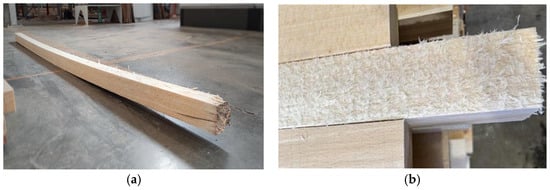
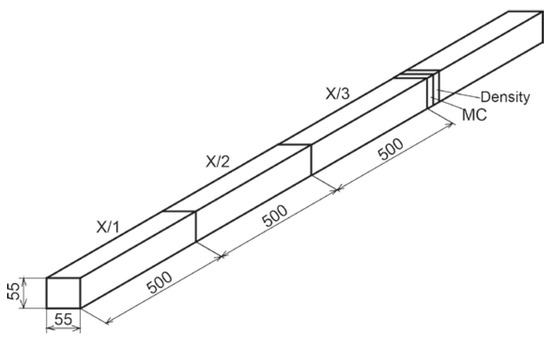
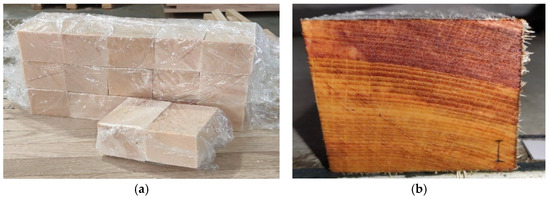
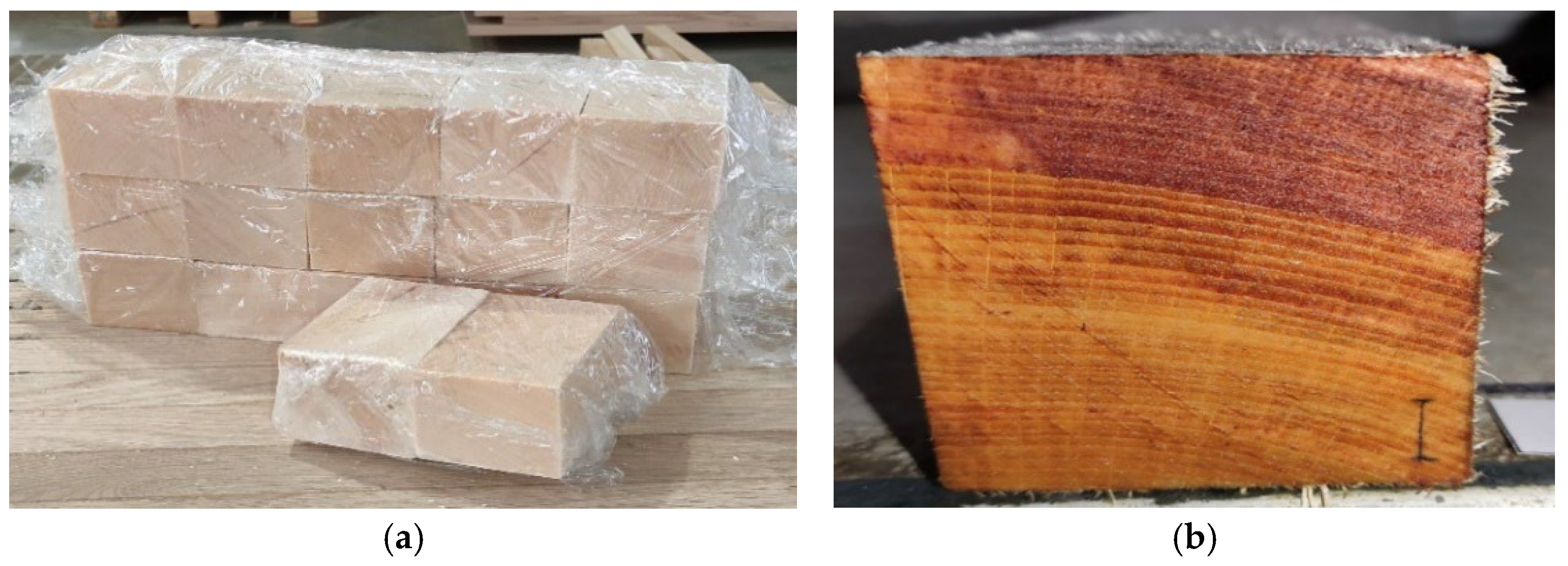
The material used in this study was European beech (Fagus sylvatica L.), one of the most prevalent tree species in Slovak forests and commonly utilized in the production of solid glued panels, furniture or construction. The raw material was sourced from the Forests of the Slovak Republic (regions Poľana). Sawn timber was produced from logs of quality class III.B or III.C according to standard STN EN 48 0056 [20]. Logs were processed using a vertical band saw (EWD 1800, Bremen/Germany) equipped with a milling head (PF 19, EWD Bremen/Germany) to obtain boards with a thickness of 60 mm. These boards were subsequently trimmed into blanks with a thickness of 55 mm, yielding a total of 26 long blanks (length 2 m). Blanks were selected immediately after trimming based on visual indicators of reaction wood (TW), initial longitudinal warping and the presence of torn fibers (“woolly surface”) on the surface (Figure 1). Samples containing visible defects such as red false heartwood, decay, or knots were excluded.
Figure 1.
(a) Initial warp in the beech blanks; (b) woolly surface on specimens.
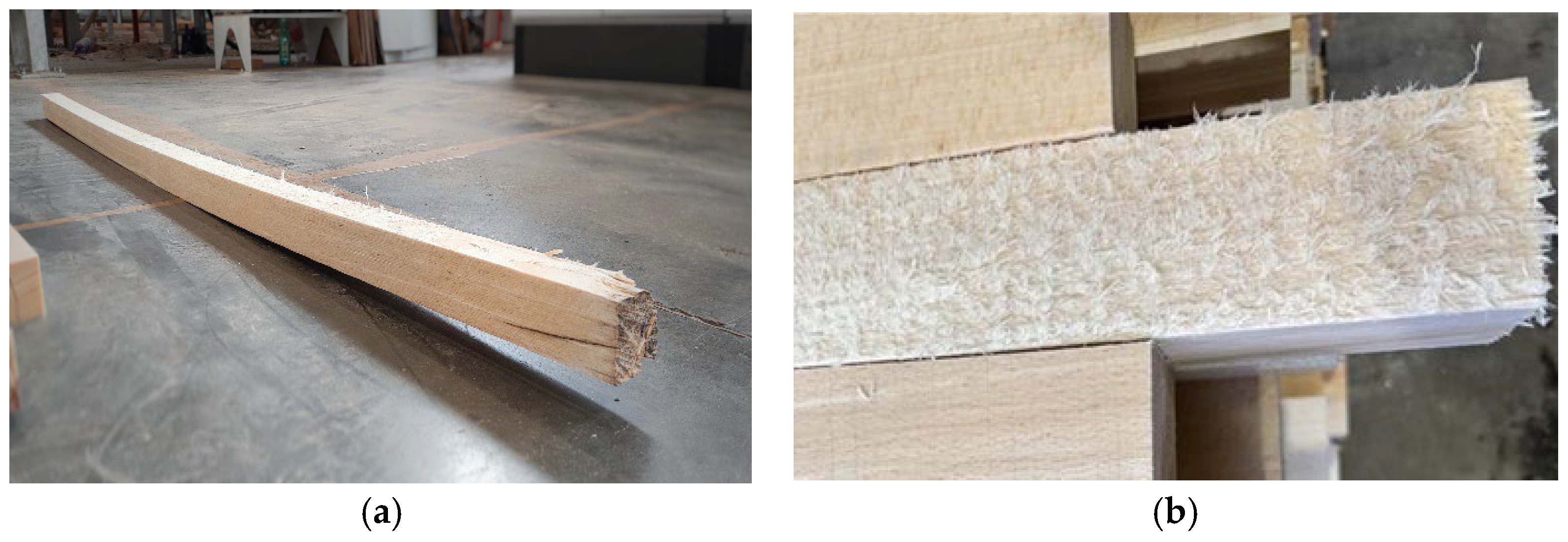
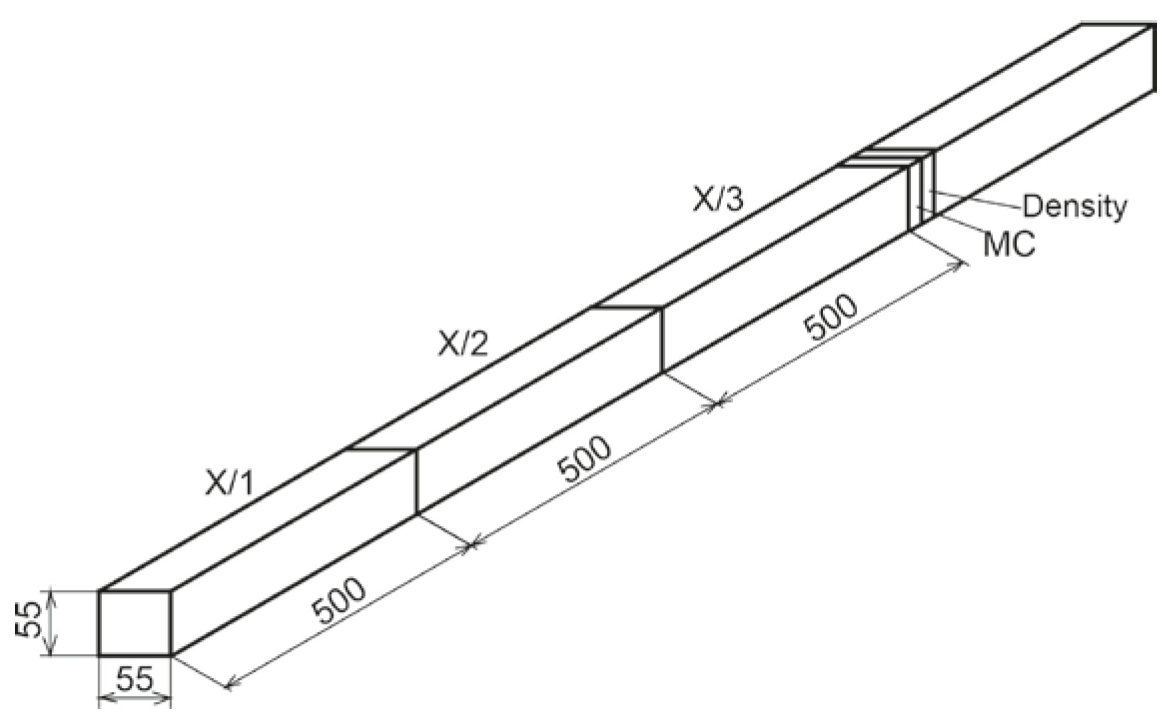
The samples were labeled X/Y, where X is the number of the long blank from which the samples were cut (1, 2, 3) and Y is the letter (A, B, C, D) used to label the samples (short sections) in the order in which they were cut from the long blanks. A 10 cm-long sample was taken from each long blank to determine selected physical properties (Figure 2).
Figure 2.
Method of preparation, marking and dimensions of sample.
2.1. Identification of Reaction Wood
The presence of reaction wood was determined using a chemical reagent; all details are shown in the article by Vilkovská et al. [2], applied to both cross-sectional ends of each blank. Reaction wood was identified by a color change to dark brown in heartwood and dark blue to black in sapwood. Only blanks with a confirmed content of reaction wood were included in the experiment (Figure 3b).
Figure 3.
(a) Samples for determining selected properties. (b) Cross-section of the specimen after application of the chemical reagent for detection of reaction wood in blanks.
2.2. Determining the Proportion of Reaction Wood in the Blanks
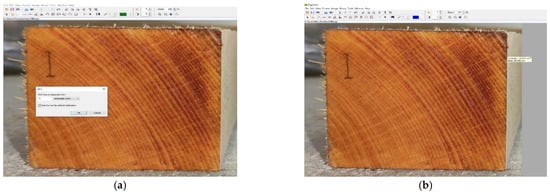
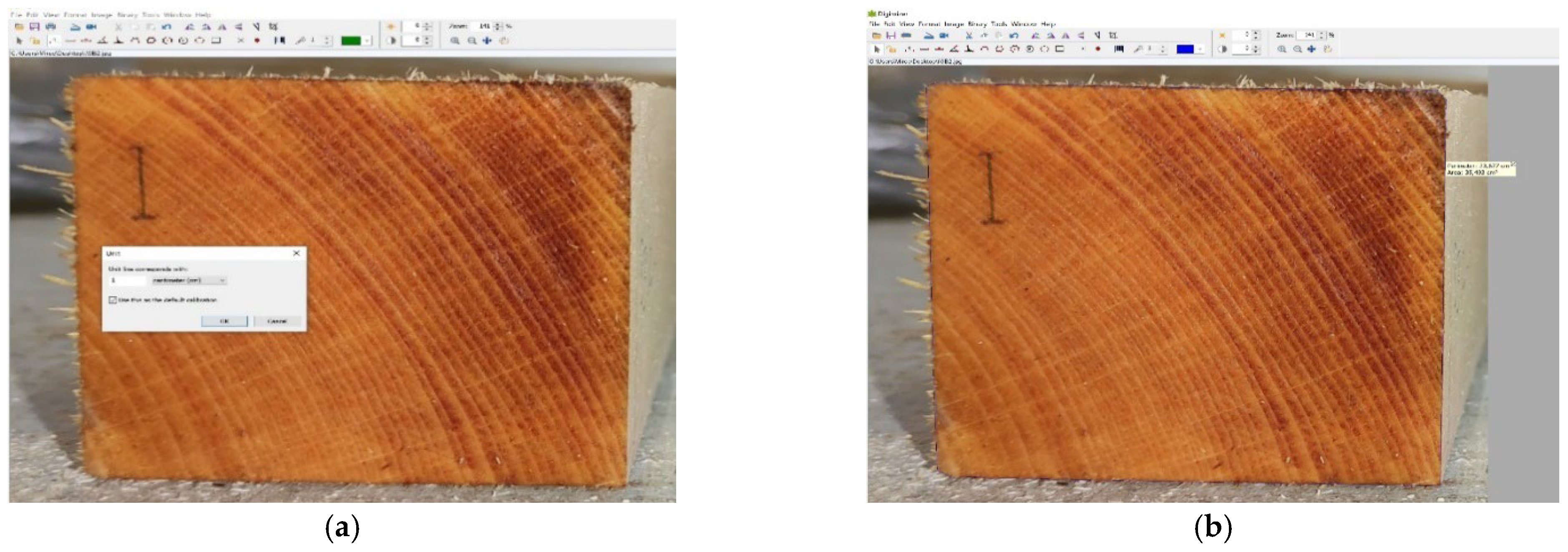
Digimizer software version 6.5.1 (MedCalc Software Ltd., Ostend, Belgium) was used to calculate the proportion of TW in the cross-sections; this software enables precise measurement and automatic detection of objects in images. The procedure began by defining a unit of length (1 cm) at the end of the cross-section (Figure 4), which made it possible to determine the total cross-sectional area.
Figure 4.
(a) Definition of a unit of length. (b) Calculation of the frontal area.
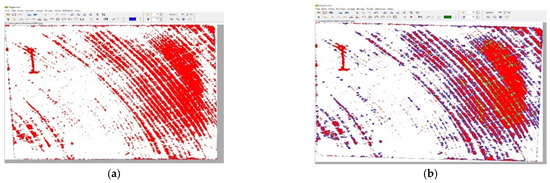
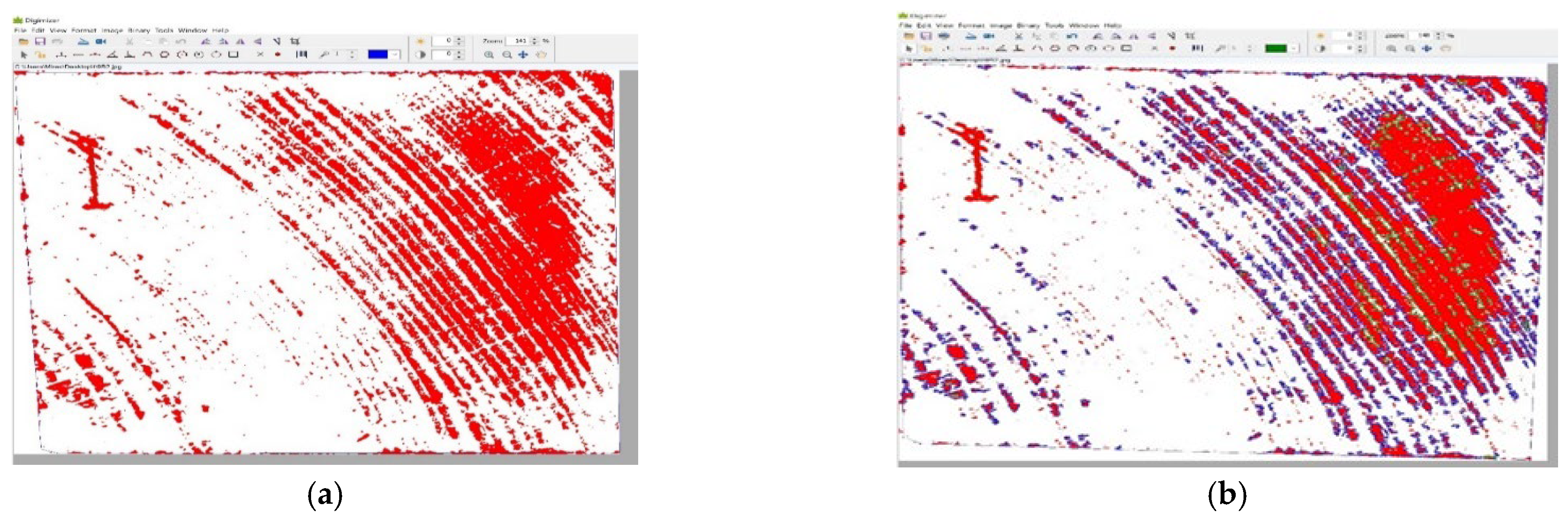
The image was then binarized into red and white (Figure 5a), where red indicated areas containing TW. The software automatically identified these areas and calculated their area (Figure 5b), while incorrectly labeled objects, such as line segments, were manually removed. Smaller incorrectly marked areas (green, Figure 5b) were subtracted from the total TW area (red), yielding the proportion of TW on the face of each cross-section. Area and proportion calculations were performed in MS Excel.
Figure 5.
(a) Image binarization. (b) Reaction wood areas marked by the program.
2.3. Evaluation of Selected Physical Properties
Moisture content of the samples was determined by the gravimetric method by standard STN EN 49 0103 [21] before and after steaming, while wood density was measured according to standard STN EN 49 0108 [22]. These measurements allowed an assessment of the effect of pressure steaming and mechanical loading on the physical properties of blanks and provided a basis for interpreting the observed longitudinal warping.
The magnitude of longitudinal warping was measured after the steaming process. Measurements were conducted on a flat surface at the midpoint of the specimens using a digital caliper. The method for determining the maximum longitudinal warping is illustrated in Figure 6. Longitudinal warping is characterized by maximum deformation and is expressed as the greatest deviation from the surface of the board.
Figure 6.
Maximum longitudinal warping measurement.
2.4. Mechanical Loading
Longitudinal warping is a significant defect that reduces the efficiency of wood processing into finished products. One way to reduce the incidence of longitudinal warping is to remove timber containing reaction wood. However, this results in a reduction in the quantity of final products. The second option is to apply pressure to the blanks during their hydrothermal treatment. For this measure to be effective, the direction and force of the pressure must be correctly selected. The direction of the pressure should be perpendicular to the direction of maximum deflection of the blanks. The magnitude of the required compressive force (weight) varies during the hydrothermal treatment process and depends on the dimensions (thickness and width) of the blanks, the modulus of elasticity, and the moisture content of the wood.
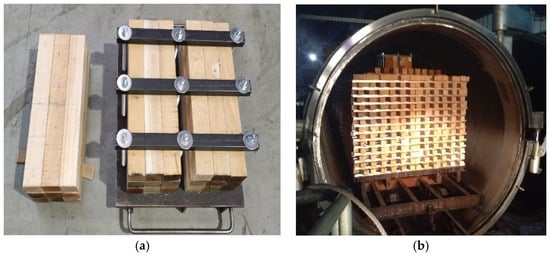
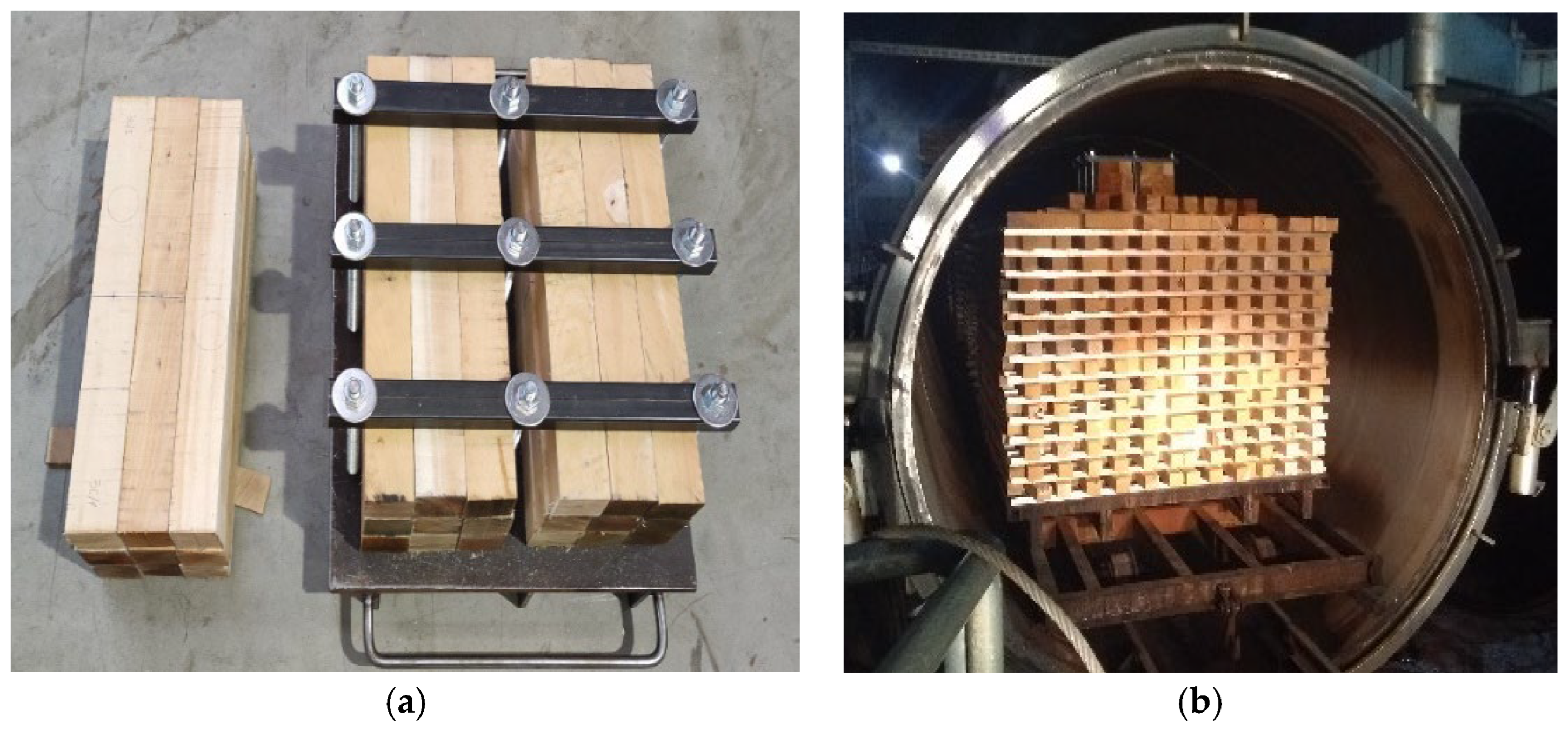
The objective was to identify the effect of loading on longitudinal warping. A device was designed and manufactured at the Technical University of Zvolen to ensure precise loading of the samples (Figure 7a).
Figure 7.
(a) Test specimen filled with test specimens and reference specimens; (b) arrangement of loaded and unloaded test specimens in the autoclave.
The device consisted of a steel plate with nine threaded steel rods, and the required load was created by tightening bolts that pressed three steel profiles against the test specimens. The cross-sections were positioned in the fixture so that the load acted at the center of their length, 5 cm from the end, and if the arrangement of the reaction wood allowed, they were oriented with the pull side down against the direction of warping.
One device contained three layers of six cross-sections each (18 pieces in total). The fixture with the cross-sections and the unloaded control cross-sections (Figure 7b) were then placed on a rack and loaded into a steam autoclave (Figure 7). Three load levels were selected for the cross-sections during the steaming process: 700 kg/m2 (6865 kPa); 2000 kg/m2 (19,613 kPa); and 4000 kg/m2 (39,227 kPa). MITCalc software was used to calculate the tightening torque required to tighten the nuts and thus determine the correct load acting on the cross-sections.
To statistically evaluate the effect of load on longitudinal warping, analysis of variance (ANOVA) and Duncan’s post hoc test were used; at the same time, the results were represented graphically using 95% confidence intervals for individual load levels (0, 700, 2000, and 4000 kg).
2.5. Steaming Process
Pressure steaming was carried out in an autoclave at 108 °C and 181 kPa for 7 h. The process included a heating phase, a steaming phase at constant conditions, and a cooling phase. The detailed schedule is given in Table 1.
Table 1.
Pressure steaming parameters.
3. Results and Discussion
The moisture content and density of the samples were measured in the absolutely dry state of the wood before and after the steaming process. The basic statistical characteristics of the moisture content of the wood blocks are listed in Table 2. The average moisture content of the samples decreased by 19.7% during the steaming process, and the variation in moisture content among the samples also decreased after steaming.
Table 2.
Basic statistical values for moisture content and density of sawn timber before and after the steaming process.
These results are comparable to those reported by other authors [2,3,4], who observed a decrease and equalization of moisture content among steamed samples under similar steaming conditions. The decrease in moisture content is caused by the evaporation of water from the wood during isochoric cooling of water vapor in the autoclave, hydrolytic reactions occurring during plastification, and also the evaporation of water from the wood surface during the cooling process.
Another important aspect is that the moisture content of the sawn timber did not fall below the fiber saturation point during steaming. As noted in the literature [7], significant warping and dimensional changes occur mainly when moisture content drops below this level. Therefore, the observed differences in warping are likely related primarily to the release and redistribution of internal stresses rather than to classical drying warping. The authors from [12] report a 22% decrease in moisture content during pressure steaming of beech wood.
The density of the wood in the absolutely dry state increased slightly by 10.81 kg/m3 through the steaming process, which is 1.65%. This slight decrease in density may be due to the hydrolysis of polysaccharides and the leaching of water-soluble substances from the wood. Similarly, [13] reports an increase in the density of Quercus rubra L. wood samples after 96 h of atmospheric steaming. Our results also confirm previous findings regarding the effect of steaming on the mechanical properties and structure of wood. The authors from [14], also described in the work of [13], found a decrease in density due to atmospheric steaming at 80 °C for 100 h of up to 2%. This is consistent with our results.
The exposure of wood to heat and moisture during the pressure steaming process results not only in the required color change but also in the relaxation of the reaction wood. Depending on the amount and distribution of reaction wood in the blanks, the most common result of this relaxation is longitudinal warping of the blanks.
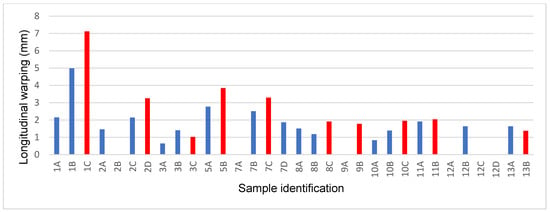
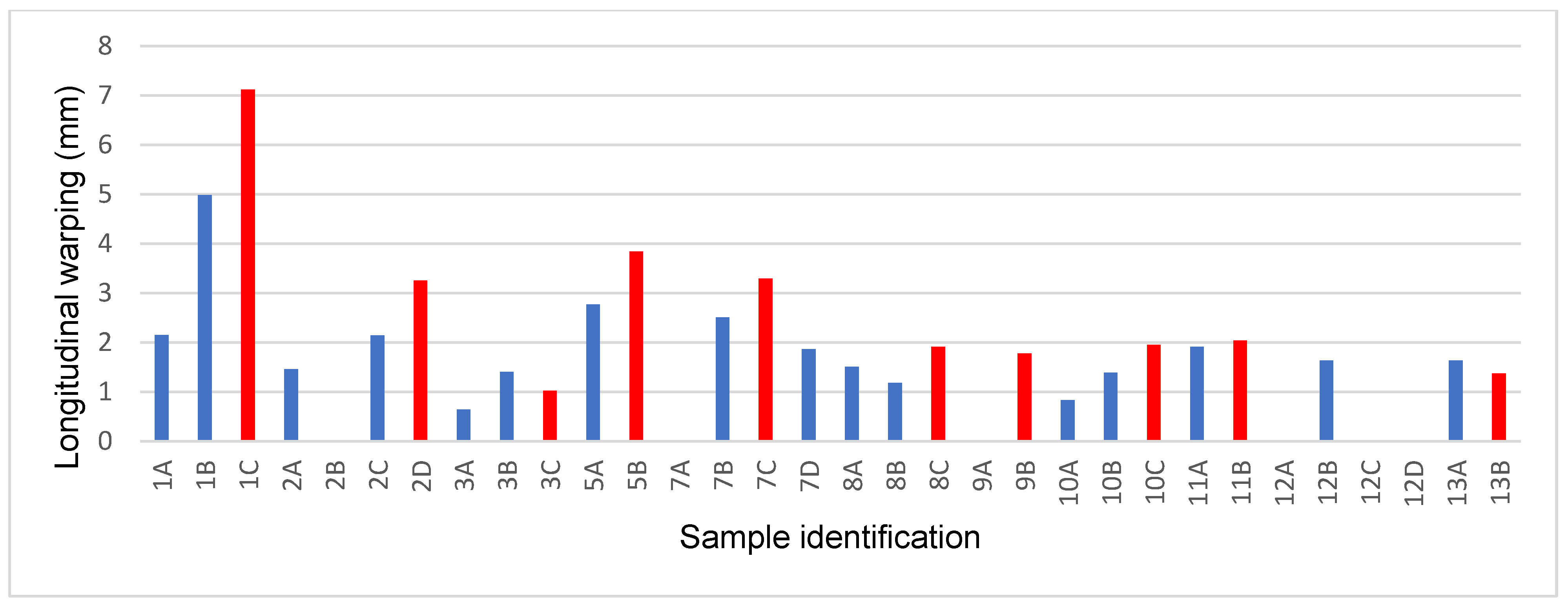
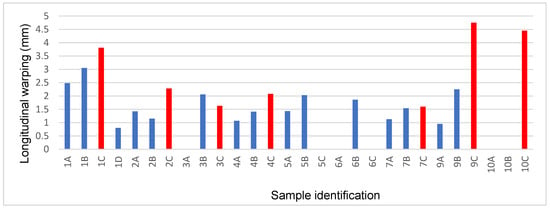
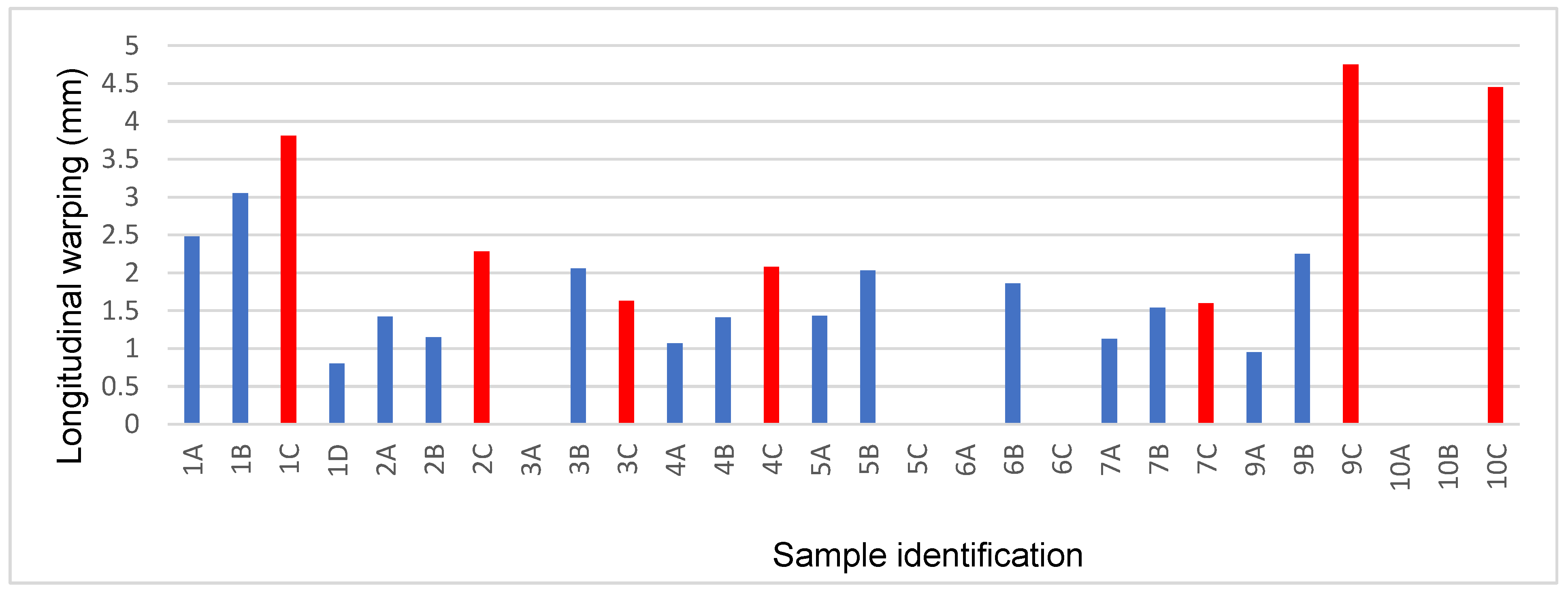
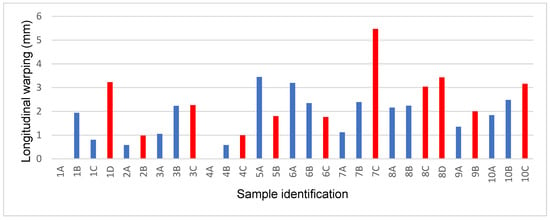
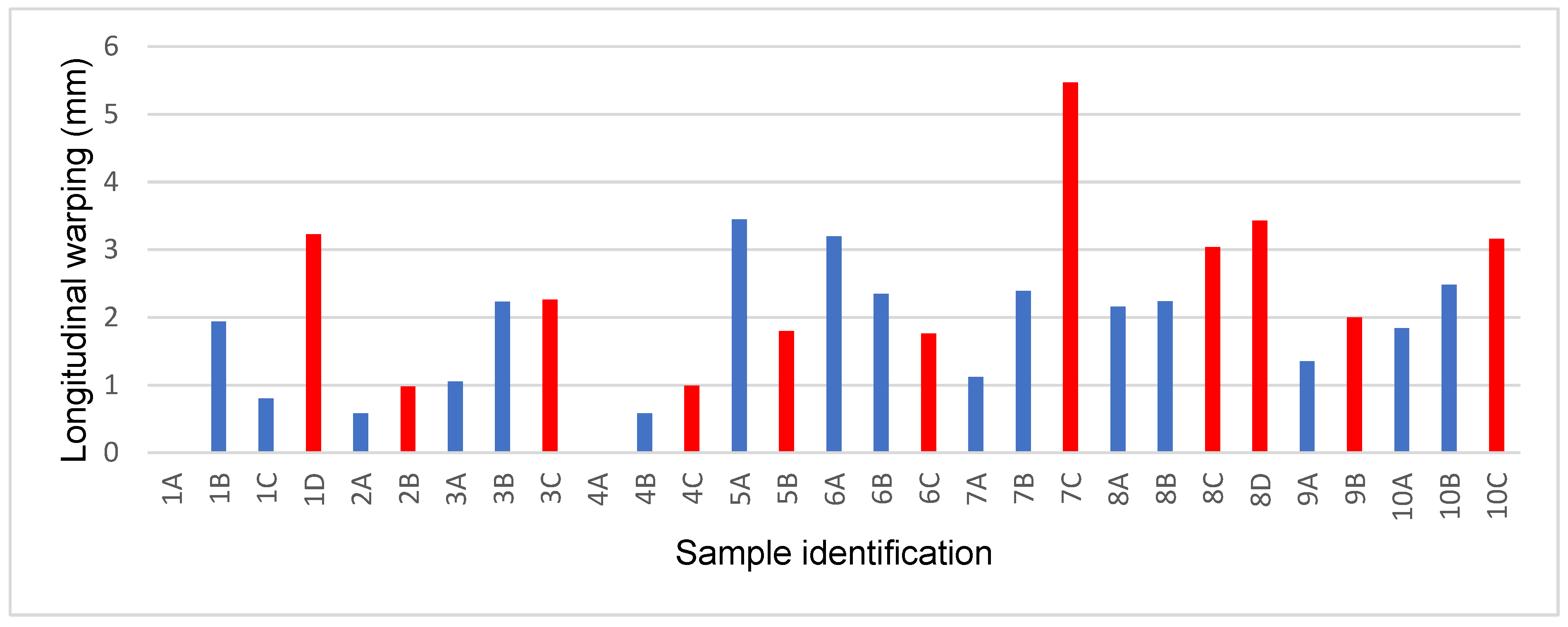
Figure 8, Figure 9 and Figure 10 show the measured values of longitudinal warping after pressure steaming for blanks loaded with weights of 700, 2000, and 4000 kg/m2 (blue columns in the graphs) and for unloaded blanks (red columns in the graphs). The tables below the figures show the percentage proportions of the observed occurrence of tensile reaction wood in the blanks.
Figure 8.
Longitudinal warping of cross-sections after pressure steaming load of 700 kg/m2 (blue columns—loaded blanks/red columns—unloaded blanks).
Figure 9.
Longitudinal warping of cross-sections after pressure steaming load of 2000 kg/m2 (blue columns—loaded blanks /red columns—unloaded blanks).
Figure 10.
Longitudinal warping of cross-sections after pressure load of 4000 kg/m2 (blue columns—loaded blanks /red columns—unloaded blanks).
For each graphical representation at a given loading, the percentage of reaction wood in the cross-sections is also indicated. All data are shown in Table 3, Table 4 and Table 5 below the graphs.
Table 3.
Percentage of reaction wood (TW) in the samples of 700 kg/m2.
Table 4.
Percentage of reaction wood (TW) in the samples of 2000 kg/m2.
Table 5.
Percentage of reaction wood (TW) in the samples of 4000 kg/m2.
The measured values of longitudinal warping indicate that the load has a positive effect on the amount of warping. For unloaded blanks, the longitudinal warping was greater in most cases than for loaded ones. In the analysis of the effect of load size, no statistically significant non-linear effect of load size on warping was confirmed across the entire range of load values used. The results obtained in this study confirm the assumptions reported in previous research concerning the behavior of reaction wood during the steaming process and subsequent deformation processes.
As described in earlier studies [2,3,4], reaction wood differs from normal wood not only in its anatomical structure but also in its moisture-related behavior, which can lead to increased longitudinal warping. Our results support these findings, as the presence of reaction wood in the blanks was associated with higher values of longitudinal warping, particularly in the unloaded samples.
The positive effect of loading can be explained by the behavior of tension reaction wood described in earlier studies [4,5,7]. Reaction wood is characterized by higher longitudinal shrinkage and by the presence of a G layer, which may separate from the S2 layer during moisture or temperature changes. When a load is applied, the deformation caused by these internal structural changes is partially restricted, which leads to lower longitudinal warping values. Analysis of variance (ANOVA) was used to analyze the effect of load on the longitudinal warping of the blanks. The analysis confirmed statistically significant differences in warping at individual factor levels (Table 6). The indicated effects are significant at the p < 0.05000 level.
Table 6.
Analysis of variance—the effect of load on longitudinal warping.
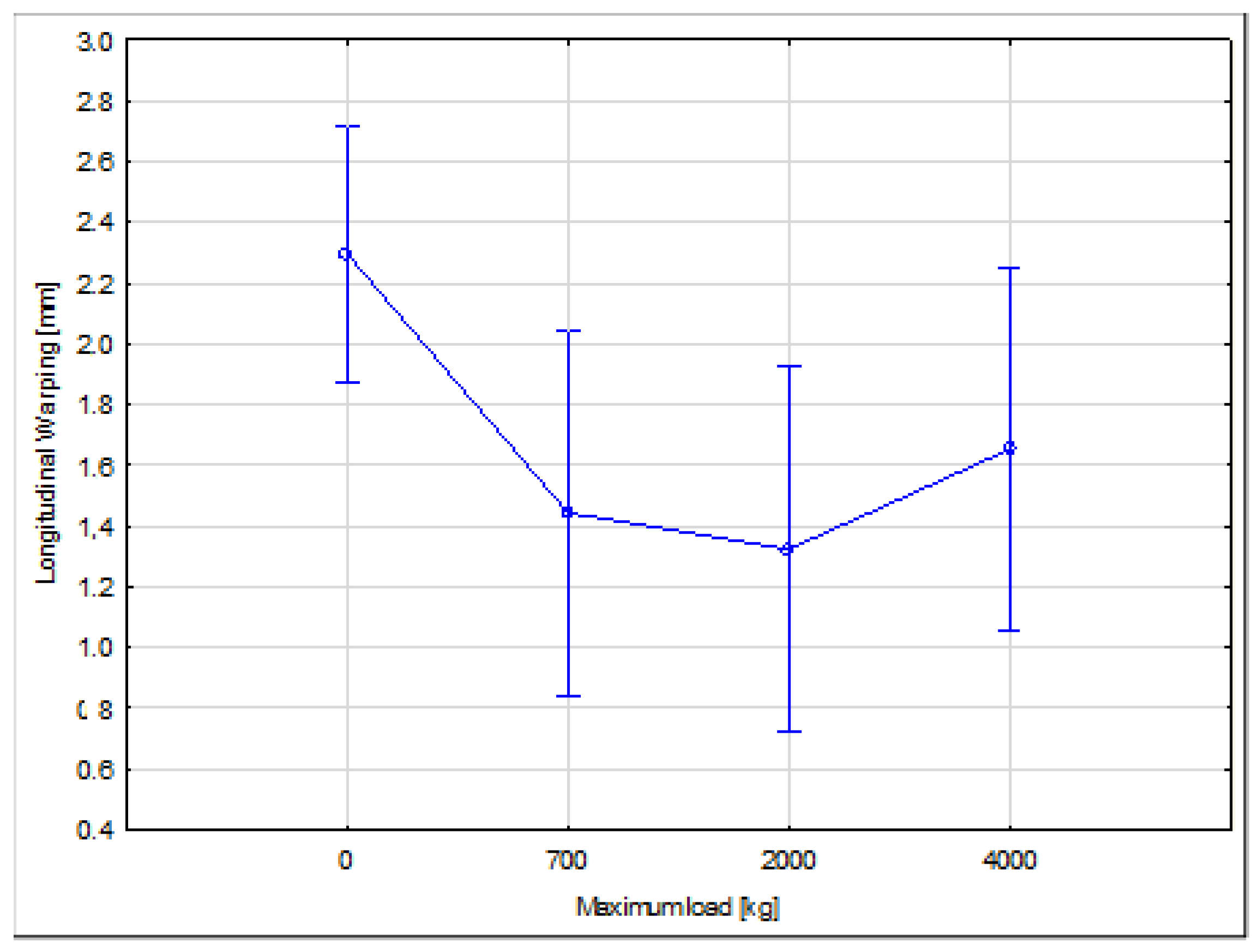
Table 7 presents the results of Duncan’s test for longitudinal warping under different loading conditions. The table compares differences between the tested groups (0 kg, 700 kg, 2000 kg, and 4000 kg) and their corresponding p-values. The results show a statistically significant difference between the unloaded samples (0 kg) and the samples loaded with 700 kg/m2 (p = 0.045432) and 2000 kg/m2 (p = 0.026702), while no statistically significant difference was found between 0 kg/m2 and 4000 kg/m2 (p = 0.111094). Although a slight increase in mean values was observed at the highest load (4000 kg), this difference was not statistically significant and, therefore, cannot be interpreted as a confirmed trend. The observed increase at 4000 kg/m2 may be attributed to data variability rather than a systematic effect of the applied load.
Table 7.
Duncan’s test for the effect of load on longitudinal warping.
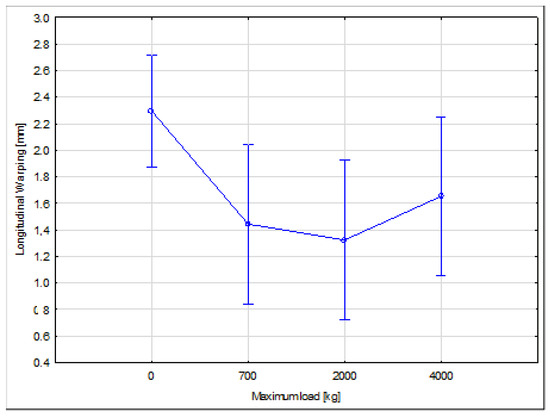
A graphical representation of the 95% confidence intervals is shown in Figure 11. The graph shows the effect of different loads on longitudinal warping. Without a load, warping is greatest (2.3 mm); under a moderate load (700–2000 kg), it decreases significantly (1.3–1.5 mm), with the material behaving optimally. At a high load of 4000 kg, a slight increase in shrinkage (1.6 mm) was observed; however, this difference was not statistically significant and, therefore, cannot be interpreted as a trend. Statistical analysis confirmed that loading has a significant effect on longitudinal shrinkage (F(3,87) = 3.2116; p = 0.02687). The results indicate that these loads are sufficient to reduce longitudinal warping, and further increases in load have no statistically significant effect.
Figure 11.
Graphs of 95% confidence intervals of longitudinal warping of loaded blanks (700, 2000, 4000 kg/m2 and unloaded blanks 0).
The cited work [18] reported that, during warm-air drying of pine lumber with a load density of 976.5 kg/m2, there was a significant reduction in the rate of warping, and 65.6% of the lumber in the pile met the standard requirements. In contrast, during drying without loading, only 49% of the lumber from the two piles combined met the standard requirements. Authors [19] similarly reported that, when drying spruce wood with a high proportion of juvenile wood, a load of 600 kg/m2 was sufficient to reduce shrinkage, and further increasing the load did not produce the desired effect. In our measurements, however, the moisture content in the sawn timber never fell below the FSP limit due to steaming, and thus, no drying or dimensional changes in the sawn timber occurred that would reveal differences in the drying of normal and reaction wood. Table 8 shows the fronts of selected cross-sections with the reaction wood zone highlighted and the calculated proportion of reaction wood. Due to the large number of samples, we do not list all of them.
Table 8.
Reaction wood on the fronts of selected blanks, with the indication of the proportional percentage.
The effect of the proportion of reaction wood in the blanks on the size of the longitudinal warping was also analyzed using regression analysis.
The results of the analysis are presented in Table 9. Based on the results, no statistically significant relationship was found between the proportion of reaction wood and the size of the longitudinal warping.
Table 9.
Statistical analysis of the effect of the proportion of reaction wood on longitudinal warping.
The degree of reaction wood development and its distribution at the front of the blanks have a major impact on the degree of warping, even more so than reaction wood proportion. Further extensive research is needed to conduct a detailed analysis of this factor’s influence. This factor was not examined or analyzed in this article. Therefore, this claim is the authors’ hypothesis, and further extensive research would be needed to confirm it. Regression analysis did not confirm a statistically significant relationship between the proportion of reaction wood and the extent of longitudinal warping.
This result may appear to contradict the findings reported in the scientific literature [6,7,8], where reaction wood is generally associated with increased longitudinal deformation. However, these studies also emphasize that the behavior of reaction wood is significantly influenced not only by its presence but mainly by its anatomical structure and distribution within the material.
4. Conclusions
This paper analyzes the effect of load magnitude and the proportion of reaction wood on the extent of longitudinal warping in beech sawn timber during the steaming process. The effect of steaming on changes in wood moisture content and density was also investigated.
Based on the measured and evaluated results, the following conclusions can be drawn:
- -
- Hydrothermal treatment of beech sawn timber by steaming resulted in the release of internal stresses and subsequent warping.
- -
- Steaming reduces the water content in the wood and simultaneously decreases the moisture variation among individual steamed samples.
- -
- The effect of loading on the magnitude of longitudinal warping was significant at loading weights of 700 and 2000 kg/m2. A loading weight of 4000 kg/m2 no longer had a statistically significant effect.
- -
- An analysis of the effect of the proportion of reaction wood in the blanks on the magnitude of warping did not confirm a clear correlation between the proportion and the magnitude of warping. The degree of development of the reaction wood and its distribution at the end of the blank have a greater influence on the degree of warping.
The results of this study confirmed that, by loading beech sawn timber with a proportion of reaction wood during the steaming process, it is possible to achieve a significant reduction in longitudinal warping, thereby reducing losses and increasing processing efficiency. Effective loading was in the range of 700 to 2000 kg/m2, and further increases in loading weight no longer have a statistically significant effect on reducing warping. Increasing the loading weight would, in the case of mechanical loading, lead to a reduction in the capacity of the steaming equipment.
Author Contributions
Conceptualization, I.K. and T.V.; methodology, T.V. and P.V.; software, P.V.; validation M.U. and I.K.; formal analysis, P.V.; investigation P.V.; resources, T.V.; data curation, I.K.; writing—original draft preparation, I.K. and T.V.; writing—review and editing, T.V.; visualization, T.V.; supervision, I.K.; project administration, I.K. and T.V.; funding acquisition, I.K. All authors have read and agreed to the published version of the manuscript.
Funding
This work was supported by the Slovak Research and Development Agency under contract no. APVV-21-0049.
Institutional Review Board Statement
Not applicable.
Informed Consent Statement
Not applicable.
Data Availability Statement
The data presented in this study are available on request from the corresponding author.
Acknowledgments
This work was supported by the Slovak Research and Development Agency under contract no. APVV-21-0049. This work was supported by the Scientific Grant Agency of the Ministry of Education, Science, Research and Sport of the Slovak Republic and the Slovak Academy of Sciences—project VEGA no. 1/0092/26.
Conflicts of Interest
The authors declare no conflicts of interest.
References
- Clair, B.; Ruelle, J.; Thibaut, B. Relationship Between Growth Stress, Mechanical-Physical Properties and Proportion of Fibre with Gelatinous Layer in Chestnut (Castanea sativa Mill.). Holzforschung 2003, 57, 189–195. [Google Scholar] [CrossRef] [Scilit]
- Vilkovská, T.; Klement, I.; Vilkovský, P.; Čunderlík, I.; Geffert, A. Chemical reagent for detecting tension wood in selected tree species. BioResources 2024, 19, 4335–4351. [Google Scholar] [CrossRef] [Scilit]
- Ruelle, J.; Beauchêne, J.; Yamamoto, H.; Thibaut, B. Variations in physical and mechanical properties between tension and opposite wood from three tropical rainforest species. Wood Sci. Technol. 2011, 45, 339–357. [Google Scholar] [CrossRef] [Scilit]
- Kúdela, J.; Čunderlík, I. Bukové Drevo Štruktúra, Vlastnosti, Použitie; Technická Univerzita vo Zvolene (Technical University in Zvolen): Zvolen, Slovakia, 2012; 152p. [Google Scholar]
- Yamamoto, H.; Matsuo-Ueda, M.; Gril, J. A model to explain microscopic mechanism of hygrothermal recovery in tension wood G-fiber. Wood Sci. Technol. 2026, 60, 19. [Google Scholar] [CrossRef] [Scilit]
- Vilkovský, P.; Vilkovská, T.; Klement, I.; Fúčela, M. Dimensional Stability of Beech Wood: The Influence of Taper, Slope of Annual Ring and Sawing Pattern. Polymers 2025, 17, 3158. [Google Scholar] [CrossRef] [Scilit] [PubMed]
- Sujan, K.; Yamamoto, H.; Matsuo, M.; Yoshida, M.; Naito, K.; Shirai, T. Continuum contraction of tension wood fiber induced by repetitive hygrothermal treatment. Wood Sci. Technol. 2015, 49, 1157–1169. [Google Scholar] [CrossRef] [Scilit]
- Čunderlík, I.; Kúdela, J.; Bluskova, G. Relaxation of stresses in streamed beech tension wood. In Lesotechničesko Obrazovanie v Bulgarija; TOM II. Visš Lesotechničeski Institute: Sofia, Bulgaria, 1995; pp. 199–205. [Google Scholar]
- Mihulja, G.; Poljak, D.; Sedlar, T. Joint Durability of Steam-Treated Beech Wood. Polymers 2023, 15, 3318. [Google Scholar] [CrossRef] [Scilit] [PubMed]
- Gao, Z.; Huang, R. Effects of Pressurized Superheated Steam Treatment on Dimensional Stability and Its Mechanisms in Surface-Compressed Wood. Forests 2022, 13, 1230. [Google Scholar] [CrossRef] [Scilit]
- Ali, M.R.; Abdullah, U.H.; Ashaari, Z.; Hamid, N.H.; Hua, L.S. Hydrothermal Modification of Wood: A Review. Polymers 2021, 13, 2612. [Google Scholar] [CrossRef] [Scilit] [PubMed]
- Klement, I.; Vilkovská, T.; Baranski, J.; Konopka, A. The impact of drying and steaming processes on surface color changes of tension and normal beech wood. Dry. Technol. 2019, 37, 1490–1497. [Google Scholar] [CrossRef] [Scilit]
- Varga, D.; van der Zee, M.E. Influence of steaming on selected wood properties of four hardwood species. Holz Roh-Werkst. 2008, 66, 11–18. [Google Scholar] [CrossRef] [Scilit]
- Yilgor, N.; Unsal, O.; Kartal, S.N. Physical, mechanical, and chemical properties of steamed beech wood. For. Prod. J. 2001, 51, 89–93. [Google Scholar]
- Dadswell, H.E.; Wardrop, A.B.; Wats, A.J.; Christensen, G.N. The morphology, chemistry and pulping characteristics of reaction wood. In Fundamentals of Papermaking Fibres, Transactions of the 1st Fundamental Research Symposium, Cambridge, 1957; Bolam, F., Ed.; FRC: Manchester, UK, 2018; pp. 187–219. [Google Scholar] [CrossRef] [Scilit]
- Xiang, E.; Jin, X.; Li, J.; Huang, R. Surface physicochemical properties of surface-compressed wood subjected to superheated steam treatment under varying pressures. Constr. Build. Mater. 2024, 418, 135444. [Google Scholar] [CrossRef] [Scilit]
- Moya, R.; Tenorio, C. Reduction of growth stresses in logs of Hieronyma alchorneoides Allemão from fast-growth plantations using steaming and heating: Effects on the quality of lumber. Ann. For. Sci. 2021, 78, 74. [Google Scholar] [CrossRef] [Scilit]
- Arganbright, D.; Venturino, J.; Gorvad, M. Warp Reduction in Young-Growth Ponderosa Pine Studs. Calif. Agric. 1979, 33, 6–8. [Google Scholar]
- Tronstad, S.; Magnar, K.; Sandland, K.M.; Folvik, K. Top loading. In Measures for Improving Quality and Shape Stability of Sawn Softwood Timber During Drying and Under Service Conditions: Best Practice Manual to Improve Straightness of Sawn Timber; VTT Technical Research Centre of Finland: Espoo, Finland, 2005. [Google Scholar]
- STN EN 48 0056; Quality Sorting of Hardwood Logs. Slovak Standards Institute: Bratislava, Slovakia, 2007.
- STN EN 49 0103; Determination of Moisture Content of the Physical Mechanical Tests. Slovak Standards Institute: Bratislava, Slovakia, 1979.
- STN EN 49 0108; Wood. Determination of Density. Slovak Standards Institute: Bratislava, Slovakia, 1993.





Disclaimer/Publisher’s Note: The statements, opinions and data contained in all publications are solely those of the individual author(s) and contributor(s) and not of MDPI and/or the editor(s). MDPI and/or the editor(s) disclaim responsibility for any injury to people or property resulting from any ideas, methods, instructions or products referred to in the content. |
© 2026 by the authors. Licensee MDPI, Basel, Switzerland. This article is an open access article distributed under the terms and conditions of the Creative Commons Attribution (CC BY) license.