


Abstract
Stone heritage deteriorates through physical, chemical, and biological processes driven by water, climate, and microbial colonization. Multifunctional polymeric coatings combining hydrophobic and antimicrobial moieties have emerged as a promising conservation strategy, yet a substantial gap remains between laboratory innovation and real-world performance. This review critically examines advances from 2021 to 2026, covering wetting theory, antimicrobial mechanisms, and material architectures, including molecularly integrated systems, Sol–Gel hybrids, nanocomposites, and layered systems. Long-term studies on the Aurelian Walls in Rome and stone in Reims show that biocidal efficacy typically declines within one to two years despite the chemical persistence of the coatings. In parallel, hydrophobic performance often deteriorates over time due to UV exposure, particulate deposition, and surface chemical changes, leading to increased wettability and reduced protective efficiency. Substrate porosity governs durability and visual compatibility (ΔE* < 5 threshold), while treatments can reshape microbial communities, favoring stress-tolerant meristematic fungi. Regulatory pressure on fluorinated compounds drives the development of more sustainable alternatives. Emerging directions include stimuli-responsive systems, self-healing materials, slippery interfaces, and precision polymer architectures. However, future progress will depend on tailoring formulations to major lithotypes, improving compatibility with porous substrates, and validating performance through standardized accelerated aging and multi-year field trials. Bridging laboratory design with environmental exposure data and conservation practice will be essential for achieving durable and culturally acceptable protection strategies.
1. Introduction
Cultural heritage, in its tangible and intangible forms, represents the accumulated memory and identity of human societies, embodying knowledge, beliefs, and artistic expression for future generations [1,2]. Among tangible heritage, natural stone has been a fundamental building material for millennia, from monumental architecture to sculpture, creating a lasting link between geology and cultural identity [3,4]. However, once extracted from its geological context and exposed to the outdoor environment, stone becomes vulnerable to a synergistic combination of physical, chemical, and biological decay processes [5].
The control of water ingress, which acts as a vector for pollutants and a medium for biological life, remains a cornerstone of heritage conservation, but isolated remedial measures are often insufficient against the complex interplay of deterioration factors [6,7]. This has driven the evolution of the field from reactive restoration towards approaches that prioritize long-term stability and minimal intervention [8].
Within heritage science, a useful distinction is drawn between preservation, which emphasizes passive protection through environmental control, and conservation, which encompasses active interventions aimed at stabilizing or restoring material integrity [9,10]. Both are regulated by the concepts of reversibility and compatibility, and both are essential to the future of stone heritage.
In this context, functional polymeric coatings have emerged as a key strategy for protection against water action [11]. By engineering surface chemistry, these materials can impart protective properties while preserving a monument’s aesthetic and structural authenticity. Initial research focused on individual functionalities, such as hydrophobicity to minimize water absorption and capillary rise, thereby reducing freeze–thaw stress and salt efflorescence [12,13]. Concurrently, antimicrobial coatings were developed to inhibit biofilm formation by bacteria, algae, fungi, and lichens, whose metabolic activities cause both aesthetic disfigurement and chemical deterioration of the mineral matrix [14,15]. It is now widely accepted that the most promising direction lies in multifunctional systems that deliberately integrate both passive (hydrophobic) and active (biocidal) protection mechanisms to address the major deterioration pathways simultaneously [11,16].
The design of such coatings is grounded in well-established principles of surface science. Wettability, described by the Young, Wenzel, and Cassie–Baxter models, dictates how water interacts with the rough, porous stone surface, with superhydrophobic states (contact angle > 150°) offering self-cleaning potential [17,18]. Antimicrobial action can be achieved through various routes, including superhydrophobic anti-adhesion, the release of biocides, or contact-active mechanisms using agents like quaternary ammonium compounds (QACs) and naturally derived polymers such as chitosan [19,20].
More recently, the field has explored sophisticated material architectures to achieve multifunctionality. These range from the molecular integration of functional groups into single polymer chains [21] and the use of versatile Sol–Gel chemistry to create hybrid organic–inorganic matrices [22,23], to polymer-based nanocomposites that incorporate functional nanoparticles [24] and layered architectures that segregate functions into sequential strata [25].
Despite these substantial advances in materials chemistry, a significant and often underappreciated gap exists between laboratory-scale innovation and real-world performance. A current point of discussion in the field is the validity of accelerated aging tests, which may not capture the complex, synergistic effects of outdoor exposure, including fluctuating humidity, UV radiation, pollutant deposition, and dynamic biological colonization [26,27]. Furthermore, the long-term environmental persistence and toxicity of commonly used fluorinated polymers have become a major point of controversy, driving a shift in the field towards the development of sustainable, fluorine-free alternatives [28]. Most importantly, the few long-term field studies available have revealed unexpected complexities. They show that while coatings may remain chemically detectable on a stone surface, their biocidal efficacy can decline significantly within one to two years [26]. Even more critically, hydrophobic treatments have been observed to reshape microbial communities actively, inadvertently selecting for stress-tolerant organisms such as meristematic fungi, which may pose an even greater long-term threat [27]. These findings challenge the core assumption that simply inhibiting growth is a sufficient endpoint and point to a need for ecologically informed design.
Therefore, while previous reviews have explored hydrophobic or antimicrobial coatings individually, a critical synthesis is needed that integrates the latest mechanistic insights with the sobering realities of field exposure and the pressing demands of sustainability.
This review addresses this gap by constructing an integrated framework that links the interdependent physical, chemical, and biological pathways of stone decay with the design and function of next-generation multifunctional polymeric coatings. While a wide range of inorganic treatments, including hydroxyapatite, calcium oxalate, and aluminum phosphate-based systems, have been explored for stone conservation, they are not the primary focus of this review. Instead, emphasis is placed on polymeric and hybrid coating systems capable of integrating hydrophobic and antimicrobial functionalities, with inorganic materials considered, where they contribute to multifunctional behavior or are incorporated into hybrid architectures. To ensure a comprehensive literature review, a systematic search was conducted across available databases, encompassing Web of Science, Scopus, and Google Scholar. The selection focused on peer-reviewed articles published primarily within the past five years, with inclusion criteria emphasizing novelty, multifunctionality, sustainability, and material performance, namely hydrophobic and antimicrobial efficiencies, aesthetic neutrality (with ΔE* < 5 as the benchmark, according to the CIE L*a*b system), and long-term durability. By synthesizing laboratory studies and the important lessons from long-term field investigations, this review identifies the key scientific and technical hurdles that remain. It concludes by charting a roadmap for the future, highlighting the transformative potential of smart, stimuli-responsive systems, self-healing materials, and precision polymer architectures. Ultimately, this review suggests that the future of stone heritage conservation lies in the development of adaptive, sustainable, and ecologically informed conservation treatments that actively help preserve our shared cultural heritage for generations to come.
2. Mechanisms of Stone Deterioration and Implications for Protective Coatings
The deterioration of stone heritage results from the coupled action of physical, chemical, and biological processes driven primarily by water and environmental stressors. Figure 1 summarizes the main mechanisms and their interactions.
Figure 1.
Main mechanisms of deterioration of historic stones: water, climatic factors, and biological colonization act interdependently, causing physical (microcracks, erosion), chemical (dissolution of minerals and salt crystals), and biological (biofilms and hyphal penetration) effects.
The effective conservation of stone heritage demands a comprehensive understanding of the mechanisms that drive material deterioration and eventual disintegration. Although interrelated, these two stages are distinct: deterioration refers to the progressive loss of physical, chemical, and mechanical properties, while disintegration denotes the irreversible collapse of structural integrity, rendering the material incapable of fulfilling its original architectural or artistic function [29,30]. Stone degradation arises from the combined influence of three principal factors: water–stone interactions, climatic stressors, and biological colonization. These act synergistically, producing complex feedback loops between physical, chemical, and biological processes. Understanding these interactions is essential for designing integrated conservation strategies and, central to this review, for engineering polymeric coatings that address multiple damage pathways simultaneously.
2.1. The Central Role of Water in Stone Decay
Water is the most pervasive and destructive agent in stone deterioration. It exists in multiple physical states—vapor, liquid, and solid ice—and originates from atmospheric humidity, rainfall, groundwater, condensation, or anthropogenic activities [13,31]. The presence and movement of water within the porous matrix of stone initiate both physical and chemical degradation mechanisms, the severity of which depends on lithotype, pore morphology, and environmental exposure.
Physical Interactions. Cycles of moisture and temperature induce substantial mechanical stresses within stone. Wet–dry cycles trigger alternating swelling and shrinkage of minerals capable of water adsorption, resulting in microcrack formation, surface roughening, and chromatic alteration. Over time, this cyclical stress weakens grain boundaries and enhances permeability. Freeze–thaw cycles introduce a distinct but complementary mechanism of physical stress. As water expands upon freezing, it generates internal pressures within confined pores that widen existing fissures and create new ones, particularly in porous or microcracked stones [13,32]. Lithotypes rich in phyllosilicates, such as calcareous mudstones, are especially susceptible, as clay minerals retain interlayer water and sustain swelling stresses even after drying. Experimental work has shown that repeated hydration–dehydration cycles can increase porosity and decrease tensile strength by over 40% in certain marly limestones [33].
Water also serves as a vector for salt migration and crystallization, one of the most destructive deterioration processes, and acts as a key trigger for microbial colonization and biofilm development, as discussed in Section 2.3. Dissolved salts infiltrate the pore system and, upon evaporation, precipitate as efflorescence on the surface or as subflorescence within pores. Subflorescence is particularly damaging, as crystallization pressures can exceed the tensile strength of most stones, resulting in granular disintegration and scaling [34,35]. Pore geometry strongly influences these processes: large, well-connected pores may alleviate freezing stress but promote capillary rise, while small pores increase salt supersaturation and crystallization pressures [32,36].
Chemical Interactions. Water is equally central to chemical alteration, driving dissolution, hydration, hydrolysis, and ion exchange processes. These reactions gradually alter the mineral lattice and weaken intergranular cohesion [33]. Solution chemistry plays a decisive role: under acidic conditions, carbonate minerals dissolve rapidly, while alkaline environments enhance silicate hydrolysis and leaching of alkali and alkaline earth ions. Both pathways lead to mineral loss and increased friability [37,38]. In polluted urban atmospheres, these reactions accelerate dramatically. Sulfur dioxide and nitrogen oxides dissolve in water films to form sulfuric and nitric acids, which react with calcitic and dolomitic stones, forming gypsum and other expansive salts within pore spaces [39,40]. The combined presence of pollutants, humidity, and temperature fluctuations promotes a self-reinforcing cycle of dissolution, recrystallization, and cracking.
Implications for Coating Design. Understanding the mechanistic role of water is fundamental for designing protective polymeric systems. Hydrophobic coatings disrupt liquid-phase interactions by lowering surface energy and impeding capillary uptake. However, the most promising formulations extend beyond simple repellence. Coatings that are pH-buffering, ion-selective, or responsive to humidity can modulate water transport, ionic migration, and salt crystallization pressures at the pore scale [41,42]. Such materials aim to balance water resistance with vapor permeability, maintaining the stone’s ability to exchange moisture with the environment while preventing deep infiltration of liquid water. This delicate equilibrium represents one of the central challenges in polymer design for heritage conservation: excessive hydrophobicity risks sealing the substrate and trapping moisture, whereas insufficient repellence leaves it vulnerable to capillary ingress. The current research frontier lies in developing adaptive coatings capable of dynamically adjusting their wetting behavior according to environmental conditions.
2.2. Climatic Stressors
Climate acts as a force multiplier in stone deterioration, with UV radiation, temperature fluctuations, wind, and airborne pollutants interacting constantly with water-related processes [43,44].
Airborne Particulate Matter. Particulate matter originates from both natural sources, such as dust storms and volcanic emissions, and anthropogenic sources, including traffic, industry, and domestic heating. It deposits on stone surfaces via wet pathways like rain and fog, or through dry deposition such as aerodynamic settling [45,46]. Over time, these particles interact with atmospheric sulfur dioxide and moisture to form gypsum-rich black crusts that trap carbonaceous particles and heavy metals [47,48]. Although such crusts may appear initially protective, thermal and hygric cycling eventually causes their detachment, generating microfissures that enhance water ingress and accelerate decay [49]. Field studies in Istanbul and Edirne, Turkey, revealed faster black crust formation in areas with higher pollution and humidity, dominated by gypsum with embedded combustion-derived carbon [48]. Similar mechanisms have been reported in rural settings, such as Lipowiec Castle in Poland, demonstrating that industrial emissions and prevailing winds can affect heritage structures far from urban centers [47].
Radiation and Temperature. UV radiation damages mineral surfaces directly, particularly calcite and silica, producing paramagnetic centers and long-lived electron traps that drive chromatic changes. White marbles tend to yellow, gray limestones often whiten, and travertines may bleach [50,51]. Thermal stress arises from anisotropic mineral expansion, inducing microcracks, increased porosity, and enhanced capillary uptake [52,53]. Outdoor stones experience synergistic effects: thermal fatigue, moisture-induced dissolution and crystallization, and freeze–thaw cycles combine to accelerate material decay in ways that single-factor laboratory tests cannot fully replicate [54]. Laboratory studies on Lioz limestone and granite indicate that complex expansion and contraction patterns under high temperatures lead to microstructural damage, while marble transitions to ductile behavior above approximately 500 °C, demonstrating lithotype-specific vulnerabilities [55].
Wind and Wind-Driven Rain. Aeolian corrosion from wind-borne particles contributes to mechanical erosion, crack propagation, and enhanced moisture penetration [56,57]. Particle size, shape, and hardness, combined with wind speed, humidity, and surface properties, dictate the extent of damage. Fine particles tend to contour surfaces, while medium-sized particles impart greater momentum and can abrade substrates more effectively, especially under drier conditions [44,58]. Wind-driven rain introduces a horizontal velocity component, producing diagonal wetting and deep-seated moisture penetration that drives salt efflorescence and subflorescence, frost damage, and biodeterioration, particularly in high-porosity stones [56,59,60,61]. The combined effects of wind abrasion, water ingress, and thermal and hygroscopic cycling produce complex patterns of physical and chemical degradation that are highly site- and lithotype-specific.
Implications for Coating Design. To counteract these climatic stressors, functional polymeric coatings play a crucial role. Low-wettability, dirt-repellent, and UV-stable polymers can reduce particulate matter adhesion, inhibit the growth of gypsum crusts, and moderate thermal and hygric fluctuations by limiting water ingress. Properly engineered coatings balance surface energy and roughness to maintain vapor permeability, preventing moisture entrapment while allowing for environmental exchange. By integrating these features, coatings provide a barrier that mitigates mechanical, chemical, and photothermal stresses, extending the lifespan and aesthetic fidelity of heritage stone [62,63].
2.3. Biological Colonization and Biodeterioration
The colonization of stone by living organisms represents one of the most visually and chemically destructive forms of deterioration, manifesting as discoloration, biofilm formation, or granular disintegration. The susceptibility of stone to microbial attachment and growth, termed bioreceptivity, depends on intrinsic stone properties such as porosity, roughness, and mineralogy, as well as environmental conditions including humidity, temperature, and pollution, and the physiological traits of colonizing organisms [64,65].
Lithotype-Specific Vulnerability. The vulnerability of building stones is largely determined by their mineral composition, which influences both abiotic and biological deterioration processes [66]. This inherent weakness is intensified by biodeterioration, as bacteria, algae, and certain lichens secrete organic acids, especially oxalic acid, that promote calcite dissolution [14]. In contrast, siliceous stones, including granite and sandstone, demonstrate greater resistance to chemical attack but face threats from physical disaggregation caused by mechanical stresses, particularly salt crystallization and freeze–thaw cycles affecting pores and mineral boundaries [6,66]. Their biodeterioration is mainly driven by penetrating colonizers such as lichens and microcolonial fungi, whose hyphal growth and biochemical activities lead to granular disintegration and exfoliation [14]. Sandstones containing calcite cement represent an intermediate scenario, susceptible both to acid dissolution of the cement and to mechanical and biological disruption [67].
Mechanisms of Biodeterioration. Sessile organisms contribute to stone decay through physical and biochemical mechanisms. Early colonizers, typically cyanobacteria and photoautotrophic algae, adhere to surface irregularities and initiate biofilm formation, creating conditions that support secondary colonizers such as fungi and lichens [68,69]. Initial bacterial adhesion can be described by the Derjaguin–Landau–Verwey–Overbeek (DLVO) theory, involving van der Waals and electrostatic interactions, while fungi and lichens rely on additional mechanical and biochemical mechanisms [70]. The developing biofilm secretes extracellular polymeric substances that retain water, dust, and nutrients, creating microenvironments that sustain heterotrophic organisms. Within these biofilms, localized acidification, metal chelation, and redox cycling occur at the stone-biofilm interface, destabilizing mineral frameworks and causing chromatic alteration [15].
Microbial activity drives chemical deterioration through the production of low-molecular-weight organic acids, including oxalic, citric, gluconic, and lactic acids, which dissolve mineral phases through proton exchange and complexation with cations such as calcium, iron, and magnesium [71]. Oxalate precipitation may form calcium oxalate patinas that superficially stabilize the stone, though these often indicate progressive biogenic alteration. Fungal hyphae and lichen rhizomes impose mechanical stress, penetrating microcracks and promoting granular disintegration [72]. Extracellular polymeric substances further protect microbial communities from UV radiation, desiccation, and biocides while mediating nutrient capture and ion transport, intensifying localized chemical impacts [71].
Environmental Modulation and Ecological Succession. Environmental conditions modulate colonization intensity and community composition. Elevated relative humidity and temperature accelerate microbial metabolism and biofilm maturation, while polluted atmospheres supply nitrogen, sulfur, and other nutrients that stimulate microbial proliferation [49,73]. Coastal environments favor halotolerant and phototrophic species adapted to saline aerosols and high irradiance, whereas temperate urban settings favor UV-tolerant organisms, including lichens and microcolonial fungi [74]. Colonization follows a structured successional pattern: pioneer bacteria and algae establish initial biofilms, which modify surface chemistry and water dynamics, thereby facilitating fungal colonization and lichen growth. This ecological succession increases both the complexity and resilience of microbial communities, creating persistent biodeteriorative microenvironments [75].
Implications for Coating Design. From a conservation perspective, these biological mechanisms point directly to coating design requirements. Antimicrobial moieties must inhibit biofilm establishment and disrupt the successional colonization process. Simultaneously, hydrophobic properties reduce water availability, a critical factor for microbial proliferation, thereby limiting microbial metabolism and nutrient transport. Multifunctional coatings that integrate both features provide dual protection: chemically mitigating microbial activity while physically controlling the moisture regime that sustains life. By targeting multiple stages of biofilm formation and development, such coatings aim to preserve structural integrity, slow biochemical deterioration, and maintain the aesthetic fidelity of heritage stone [41,42].
The principal deterioration mechanisms affecting stone heritage, their driving factors, and their implications for the design of protective polymeric coatings are summarized in Table 1.
Table 1.
Main mechanisms of stone deterioration, typical manifestations, and implications for the performance and design of protective coatings.
3. Multifunctional Coatings for Stone Conservation: From Fundamental Principles to Field Performance
In the context of this review, the term multifunctional coatings refers specifically to systems that integrate at least two complementary protective functions within a single treatment, most commonly hydrophobic (passive) and antimicrobial (active) mechanisms. It is important to note, however, that not all coatings discussed in the literature fully achieve this level of functional integration. In many cases, systems provide only partial functionality, such as water repellence without antimicrobial activity or vice versa. These systems are nonetheless considered here when they contribute to the development of multifunctional strategies or provide key mechanistic insights into individual protective functions.
The formulation of polymeric coatings for stone conservation requires a delicate balance between functionality, compatibility, and sustainability. The goal is to develop dynamic interfacial systems capable of mitigating water ingress, pollutant accumulation, photochemical deterioration, and biofouling while preserving the aesthetics and permeability of the materials. Achieving this multifunctionality depends on the chemical architecture of the polymer, its interaction with the substrate, and the hierarchical organization of the coating at both the micro- and nanoscale [76,77,78].
Performance is commonly reported using quantitative metrics, such as contact angle and hysteresis, color variation, water vapor permeability, and biocidal effectiveness. It is worth mentioning, however, that these tests do not consistently standardize between formulation concentration, solvent systems, application method, number of layers, and time of curing. Testing conditions, including UV radiation sources and intensity, temperature, and biological assays with different microbial species and inoculum load, also vary substantially.
3.1. Engineering Surface Wettability: From Theory to Superhydrophobicity
While the fundamental principles of wettability are well established in the literature, they are concisely revisited here as a conceptual framework for understanding how surface engineering governs functional performance on porous stone substrates, where roughness, heterogeneity, and capillary effects play a decisive role.
Surface energy modulation is central to the design of protective polymeric coatings, involving the control of contact angle, surface roughness, and surface chemistry to achieve the desired interfacial behavior. At the solid–liquid interface, the degree of wetting is determined by the balance between adhesive and cohesive forces, quantitatively described by the Young Equation (1) [79].
where γSV, γSL, and γLV are the interfacial tensions between the solid–vapor, solid–liquid, and liquid–vapor phases, respectively, and θ is the equilibrium contact angle.
γSV = γSL + γLVcos θ
The contact angle provides a direct measure of surface wettability and thus an indirect indicator of surface energy [17]. Hydrophilic surfaces are characterized by high surface free energy, favoring strong adhesive interactions with water and resulting in low contact angles. In contrast, hydrophobic surfaces exhibit low surface energy, where cohesive forces within the liquid dominate, leading to poor wetting and higher contact angles [80]. Surfaces can be broadly classified according to their static water contact angle: hydrophilic (θ < 90°), hydrophobic (90° < θ < 150°), and superhydrophobic (θ > 150°) [81,82].
However, the Young model assumes an ideally smooth and chemically homogeneous surface [83], a condition rarely met in real stone substrates. Natural roughness and heterogeneity alter the effective contact area and, thus, the apparent contact angle. To capture these effects, theoretical extensions were introduced: the Wenzel Equation (2) describes homogeneous wetting where liquid penetrates surface irregularities [17], while the Cassie–Baxter model (3) accounts for heterogeneous wetting where air becomes trapped beneath the liquid [18].
Both equations are applied to elucidate the impact of surface roughness on the apparent contact angle (θ*). Based on Wenzel’s equation, θ* can be characterized as follows:
where the roughness factor (r) is defined as the ratio of the real surface area of a rough surface to its geometric projected area [18]. On the other hand, Cassie and Baxter proposed the following equation for this concept:
cos θ* = r · cos θ
cos θ* = ƒSL cos θ1 + ƒLG cos θ2
In this context, θ1 and θ2 denote the contact angles of the liquid with the solid surface and air, respectively. The parameter ƒSL refers to the fractional area of the liquid in direct contact with the solid surface, while ƒLG represents the area fraction of the liquid with the air entrapped within the irregularities of the surface [18]. In most practical cases, cos θ2 = 0, as the air regions of the surface exhibit perfectly non-wetting characteristics. Therefore, the Cassie–Baxter equation can be simplified as:
cos θ* = ƒSL (cos θ + 1) – 1
The Cassie–Baxter regime is particularly desirable for stone conservation, as trapped air pockets minimize liquid–solid contact and facilitate self-cleaning through rolling droplets, a behavior that requires contact angle hysteresis below 10° [28,84]. The wettability models on rough surfaces are illustrated in Figure 2.
Figure 2.
Wettability models on rough surfaces: (a) Wenzel, where the liquid penetrates the surface irregularities, increasing the contact area; (b) Cassie–Baxter, where the liquid is partially supported by air trapped between the irregularities, promoting superhydrophobic surfaces and a self-cleaning effect. Created with BioRender.com.
For stone substrates, which are inherently hydrophilic and porous, superhydrophobic surfaces are typically achieved through a two-step strategy: generating hierarchical micro- and nanoscale roughness on the stone surface, followed by conformal deposition of a low-surface-energy hydrophobic layer [85,86]. Techniques such as mechanical abrasion, chemical etching, or laser treatments create the required topography [87,88], while hydrophobic coatings based on organosilanes [89,90], polysiloxanes [91,92], or fluorinated silanes [93,94] provide the necessary surface chemistry through covalent Si–O–Si bonding with surface hydroxyl groups, as well as non-covalent interactions such as hydrogen bonding and van der Waals forces [7,95].
The incorporation of nanoparticles such as TiO2 [96], SiO2 [97], or ZnO [98] into these hydrophobic layers represents a significant advancement, enhancing durability and UV resistance while creating hierarchical roughness that promotes superhydrophobicity and imparts additional functionalities, including antimicrobial activity [7,98,99].
Most commercially used hydrophobic coatings are fluorinated or belong to the per- and polyfluoroalkyl substances (PFAS) family; however, these chemicals are persistent, non-biodegradable, and increasingly linked to adverse environmental and health effects. For instance, the production of polytetrafluoroethylene (PTFE) relies on PFAS-based processing aids, such as perfluorooctanoic acid (PFOA), while end-of-life disposal may release fluorinated combustion by-products that persist in the environment. Consequently, there is a growing demand for fluorine-free and more sustainable hydrophobic coatings. This has stimulated research into bio-derived polymers, natural waxes, fatty acids, and environmentally benign nanoparticles to improve biodegradability, reversibility, and compatibility with heritage materials. Although these alternatives show considerable promise, achieving the same level of durability and long-term performance as fluorinated systems remains a significant challenge [28].
3.2. Antimicrobial Strategies: From Biocide Release to Contact-Active Mechanisms
Concurrently, increasing attention has been directed toward integrating antimicrobial functionalities to address biological deterioration processes. The attachment of bacteria to surfaces is significantly influenced by the characteristics of their cell envelopes. Gram-positive bacteria, characterized by peptidoglycan layers, form adhesive interactions through teichoic acids and surface proteins [100], while Gram-negative bacteria rely on pili and fimbriae for attachment [101]. These structural distinctions affect both adhesion strength and reversibility and must be considered when designing protective coatings.
A significant conceptual advance was the development of superhydrophobic surfaces that prevent bacterial adhesion rather than eliminating microorganisms directly. Such surfaces suppress biofilm formation without relying on leaching biocides, thereby avoiding environmental contamination and reducing the risk of resistance development [102,103]. Superhydrophobicity inhibits adhesion by creating air gaps that decrease effective contact area and by introducing roughness that reduces van der Waals interactions [104], while self-cleaning properties facilitate microbial detachment [105].
Building on this concept, contact-active antimicrobial materials emerged as a more targeted approach. In these systems, biocidal functionality is covalently attached to the polymer surface, inactivating microorganisms upon direct contact without releasing active compounds into the environment [106,107]. The most frequently utilized agents include quaternary ammonium compounds (QACs), antimicrobial peptides (AMPs), and chitosan polymers [19].
QACs operate through a membranolytic mechanism: cationic ammonium groups engage in electrostatic interactions with negatively charged bacterial envelopes, while hydrophobic alkyl chains insert into the lipid bilayer, causing membrane destabilization and cell lysis [19,108,109]. This mechanism is effective against both Gram-positive and Gram-negative bacteria, though Gram-positive cells exhibit higher susceptibility due to their simpler envelope architecture [19,110,111]. Recent advances have produced “soft QACs” with degradable linkages that maintain antibacterial properties while minimizing environmental persistence [110].
The amphiphilic nature of QACs enables integration into Sol–Gel systems [112,113], polymer films [114], and silica-based consolidants [115], providing durable, contact-active protection. However, their vulnerability to photodegradation and potential for resistance development [116,117] motivated exploration of greener alternatives, leading to antimicrobial peptides.
AMPs represent a further evolution in antimicrobial design. These naturally occurring molecules share the cationic and amphiphilic character of QACs but offer selective action and environmental compatibility [118,119]. AMPs are produced across all kingdoms of life and are central to innate immunity in eukaryotes [120]. They are categorized into four structural classes: α-helical, β-sheet, loop, and extended peptides [121]. α-helical peptides adopt amphipathic conformations upon membrane contact [120], while β-sheet peptides possess rigid structures stabilized by disulfide bonds [122]. Loop peptides display exceptional proteolytic resistance [123], and extended peptides generate detergent-like disruptive effects [123,124].
AMP activity encompasses both membranolytic and non-membranolytic modes, following four membrane-disruptive pathways: barrel-stave, toroidal pore, carpet, and aggregate models [125,126]. Beyond membrane disruption, some AMPs target intracellular processes, including cell wall, protein, and nucleic acid synthesis [127,128]. This structural diversity and multimodal action make AMPs highly attractive for stone conservation [129], with β-sheet and loop peptides offering long-term stability under outdoor exposure and α-helical peptides providing broad-spectrum protection [130,131].
Chitosan, derived from the deacetylation of chitin, is a natural polysaccharide with distinct advantages [132,133]. Its antimicrobial activity arises from electrostatic interaction between protonated amino groups and negatively charged microbial envelopes [20,134]. At higher concentrations, high-molecular-weight chitosan can form a physical barrier around cells [135,136], while low-molecular-weight chitosan can traverse membranes and bind to intracellular targets [135,137]. These mechanisms, however, are strongly influenced by environmental conditions such as pH, temperature, and ionic strength. The pH dependence of chitosan activity presents challenges for alkaline stone substrates [138,139], addressed through incorporation into hybrid organic–inorganic matrices [140,141]. The abundant functional groups on chitosan enable strong interfacial bonding during Sol–Gel processing [142], creating cohesive hybrid materials.
The incorporation of metal nanoparticles into chitosan matrices represents the latest advance in this line of research. Chitosan’s cationic character facilitates electrostatic interactions with nanoparticles [143,144], while hydroxyl and amino groups act as coordination sites, improving dispersion and stability [145,146,147]. These functional groups also enable in situ synthesis and immobilization of nanoparticles [148,149], while chitosan’s film-forming properties yield transparent, minimally invasive coatings [150,151].
3.3. Integrating Hydrophobicity and Antimicrobial Activity: Four Evolving Architectures
The integration of hydrophobic and antimicrobial functionalities into unified coating systems represents the central challenge in the field [152,153]. In addition to wettability and aesthetic compatibility, other performance parameters are equally vital for the long-term effectiveness of protective coatings. It is essential to maintain water vapor permeability to prevent moisture buildup within the substrate, as this can worsen salt crystallization and freeze–thaw damage. Likewise, resistance to acidic environments is crucial, particularly in polluted urban areas where acid deposition accelerates mineral dissolution. Despite their significance, these properties are frequently underreported in the literature, underscoring the need for more comprehensive and standardized evaluation protocols that consider the full spectrum of environmental stressors impacting heritage stone.
Four main material strategies have emerged to address these challenges, each building upon the limitations of its predecessors. A schematic overview of these four material strategies is presented in Figure 3.
Figure 3.
Evolution of multifunctional coating architectures for stone conservation: (a) molecular integration of functionalities into single polymers; (b) organic–inorganic Sol–Gel hybrid matrices; (c) polymeric nanocomposites, and (d) layered architectures with spatially segregated functions. Created with BioRender.com.
3.3.1. Molecular Integration in Single-Polymer Systems
The molecular integration strategy involves direct incorporation of both water-resistant and contact-active antimicrobial moieties into a single polymer chain [154,155]. This approach achieved proof-of-concept with copolymers containing quaternary ammonium dodecyl groups, applied to glass substrates, where blending and cross-linking enabled precise tuning of the hydrophilicity/hydrophobicity ratio [154]. Crucially, these polymers demonstrated that reducing alkyl chain length from C16 to C12 maintained greater than 97% mortality against bacteria while increasing aqueous solubility, showing that effective biocidal activity does not require extreme hydrophobicity.
Building on this foundation, Silva et al. [21] applied the molecular integration concept to stone substrates using ionically cross-linked chitosan hydrogels. Applied to granite, marble, and limestone, the system inhibited pigment-producing yeast, particularly Rhodotorula spp. while significantly reducing wettability and causing no detectable color changes (ΔE* < 4). However, this approach revealed inherent trade-offs: while covalent integration ensures functional stability, it requires precise compositional control and presents scalability challenges [156]. As a proof-of-concept strategy, it established fundamental design principles but remains limited in direct conservation application.
3.3.2. Hybrid Organic–Inorganic Sol–Gel Matrices
The Sol–Gel method represents a significant evolution, offering control over texture, size, and surface properties while enabling strong covalent adhesion to substrates through siloxane bond formation [22,157,158]. This “chimie douce” approach produces organic–inorganic hybrid materials with molecular-level homogeneity, combining the functional versatility of organic components with the mechanical strength of inorganic matrices [159,160,161].
Early Sol–Gel applications focused on consolidation, where sol penetrates porous stone and forms a cementing gel [162,163]. Subsequent development produced hydrophobic protective treatments through the incorporation of organic agents [164]. A pivotal advance was addressing the adhesion challenge on carbonate stones, which lack surface silanols. The incorporation of amino-functional silanes such as 3-aminopropyltriethoxysilane (APTES) enabled Lewis acid–base interactions between amine groups and calcium ions, providing stronger and more hydrolytically stable bonding than direct Me–O–Si bonds [165,166,167].
Irizar et al. [23] elevated this approach by formulating an epoxy-silica nanocomposite incorporating amino-functionalized mesoporous silica nanoparticles. The surface amine groups enabled covalent anchoring of nanoparticles, ensuring homogeneous integration, while the mesoporous structure allowed for encapsulation and controlled release of natural biocides. Applied to calcarenite stone, this nanoengineered coating achieved hydrophobicity (contact angle ≈ 105°), tailored thermomechanical behavior, and sustained antimicrobial activity with color differences (ΔE* = 1.3–2.1) well within conservation limits.
Privitera et al. [168] advanced the concept further by loading a polydimethylsiloxane-tetraethyl orthosilicate (PDMS-TEOS) matrix with two distinct nanoparticle types: TiO2 for photocatalytic self-cleaning and core–shell silica nanocapsules encapsulating natural biocides. Applied to brick, peperine, and mortar, this architecture achieved hydrophobicity (~130–140°), >97% reduction in capillary water uptake, and crucially, preservation of water vapor permeability, demonstrating that multiple functionalities could be engineered independently within a single matrix.
3.3.3. Polymer Matrix Nanocomposites
The nanocomposite approach represents a shift from in situ network formation to controlled integration of pre-engineered functional nanoparticles into continuous polymer matrices. Polymers such as PDMS, acrylics, and polyurethanes provide film-forming properties and adhesion [169], while incorporated nanoparticles serve as functional building blocks for superhydrophobicity [170], photocatalysis [171,172], and antimicrobial activity [173,174].
Fruth et al. [11] demonstrated this strategy by dispersing MgO and TiO2 nanoparticles in a hydrophobically modified polyacrylate matrix. Tested on limestone, brick, and marble, the composites exhibited self-cleaning activity, effective antimicrobial properties, and hydrophobicity (contact angle > 90°) without aesthetic alteration (∆E* < 2).
Ruggiero et al. [175] introduced a strategic nanocarrier design, developing silica nanocapsules and mesoporous silica nanoparticles loaded with the biocide 2-mercaptobenzothiazole (MBT). This study confirmed effective encapsulation and sustained release, providing the mechanistic basis for long-term antifouling action. Zuena et al. [176] translated these nanocarriers into practice, dispersing MBT-loaded nanocapsules together with TiO2 nanoparticles into a TEOS/PDMS-OH matrix. Applied to mortar, brick, travertine, and marble, the coatings achieved high hydrophobicity (contact angles ~100–150°), drastic reduction in capillary uptake, retained photocatalytic activity, and sustained antimicrobial release with minimal color alteration (ΔE* < 5). Notably, nanocapsules outperformed mesoporous nanoparticles, establishing design principles for carrier architecture.
Manoudis et al. [24] elevated the field by systematically optimizing ZnO nanoparticle concentration (0.8 wt%) in a commercial silane-based polymer. This balance yielded superhydrophobic behavior (contact angle ≈ 153°, hysteresis ≈ 5°), photocatalytic self-cleaning, and strong antimicrobial activity against E. coli and S. aureus (94.8% and 99.9% inhibition). The coating showed compatibility with limestone (ΔE* < 3) and, critically, withstood intense UV exposure while retaining hydrophobicity (contact angle > 140°) and acceptable color shift (ΔE* = 4.18). This systematic optimization approach demonstrated how nanocomposite design could be refined for real-world durability.
3.3.4. Layered Architectures and the Leap to Field Validation
Layered architectures spatially segregate functional roles into sequentially applied layers [177,178], each independently engineered to perform a specific function. Hafez and Biskos [25] developed a two-step coating for marble: a polyelectrolyte underlayer consisting of a film of polyethylenimine and polyacrylic acid (PEI/PAA) that provides acid resistance and reduces water absorption, followed by a hydroxyapatite topcoat for consolidation. While contact angles remained below 90°, the system demonstrated that functional segregation could achieve properties unattainable in single layers.
The key leap from laboratory innovation to field validation came through two landmark studies. Eyssautier-Chuine et al. [26] investigated polyoxometalate-ionic liquid coatings on four calcareous stones with varying porosities. Initial laboratory characterization showed preserved vapor permeability and acceptable color change on porous stones (ΔE* ≈ 3–5), though darker, low-porosity stones exhibited unacceptable alteration (ΔE* > 14). Accelerated aging tests demonstrated strong resistance to algal biofilm growth. However, two-year outdoor exposure in Reims revealed a more complex reality: porous stones were colonized by fungi and phototrophs regardless of treatment, whereas denser stones remained uncolonized even when uncoated. Biocidal effectiveness lasted one year before aligning with untreated samples, and critically, energy-dispersive X-ray spectroscopy (EDX) and scanning electron microscope (SEM) analysis detected residual coating material after two years.
Bartoli et al. [27] built upon this foundation by installing coated mock-ups on the Aurelian Walls in Rome for three years, subjecting materials to authentic urban stressors while maintaining experimental control. The TEOS/PDMS-OH matrix incorporating 2-mercaptobenzothiazole (MBT)-loaded nanocapsules or mesoporous nanoparticles was applied to mortar, brick, travertine, and marble. Half the specimens were deliberately inoculated with algae and cyanobacteria. After three years, treated samples, particularly those with nanocapsules, displayed substantially reduced biofouling. Critically, inoculated specimens developed black meristematic fungi rather than the original algae, indicating that coatings modified the surface microenvironment, selecting for stress-tolerant organisms. This finding fundamentally challenges the assumption that antimicrobial action simply removes biological threat; instead, coatings may actively reshape microbial communities, favoring more resilient colonizers.
The wide range of coating architectures and their performance parameters are summarized in Table 2.
Table 2.
Multifunctional coating architectures for stone, integrating hydrophobic and antimicrobial properties, with examples of application on different lithotypes and observed performance. Antimicrobial durability information is included qualitatively in parentheses due to the lack of standardized long-term data across studies.
From a practical implementation standpoint, economic and scalability factors pose significant challenges to the widespread adoption of multifunctional coatings in stone conservation. Although many laboratory-scale formulations display exceptional hydrophobic and antimicrobial properties, their application in the field is often limited by the high costs of precursors (such as functional silanes, nanoparticles, and biocidal agents), the complexity of synthesis, and the requirement for multi-step application protocols. While sol–gel and nanocomposite systems are highly versatile, they may necessitate controlled processing conditions that hinder large-scale or in situ applications on heritage structures. In contrast, simpler formulations based on silanes or waxes tend to be more cost-effective and easier to scale, but they often compromise on long-term durability and multifunctionality. Therefore, a key challenge for future development lies in achieving a balance between performance, cost-effectiveness, and practical applicability, especially for large-scale restoration projects that must account for material volume, labor intensity, and long-term maintenance.
The progression outlined above illustrates a field moving steadily from fundamental material design toward practical applicability in heritage conservation. Early approaches based on molecular integration established essential structure–property relationships but remained largely confined to laboratory conditions. Hybrid organic–inorganic systems and nanocomposites subsequently addressed issues of adhesion, durability, and multifunctionality, demonstrating that water repellence, antimicrobial activity, and self-cleaning properties can be combined within a single treatment.
More recently, layered architectures and controlled-release strategies have enabled spatial and temporal separation of functions, improving performance under complex environmental conditions. Importantly, long-term outdoor studies have revealed that laboratory metrics alone are insufficient predictors of real-world effectiveness, highlighting the decisive influence of substrate properties, environmental variability, and biological adaptation. These findings emphasize that future developments must prioritize durability, compatibility, and ecological impact under authentic exposure conditions, thereby bridging the gap between experimental innovation and sustainable conservation practice.
At the same time, emerging research has begun to explore stimuli-responsive coating systems capable of adapting their behavior to environmental conditions. These materials can be engineered to release active agents or modify surface properties in response to triggers such as pH changes, light exposure, or moisture fluctuations. Although still at an early stage in the context of stone conservation, such adaptive systems represent a promising direction for overcoming the limitations of conventional passive coatings. Such systems have already demonstrated effectiveness in other fields, such as corrosion protection and biomedical coatings, where environmental triggers have been successfully used to regulate self-healing and controlled release processes.
4. Conclusions and Future Perspectives
Despite major advances in coating design, long-term field studies consistently show that biocidal and anti-fouling performance declines within one to two years, even when the coating material remains visibly present on the stone surface. Photodegradation of active components, progressive accumulation of airborne particulates, hydrolysis of sensitive functional groups, and evolving surface chemistry all contribute to this loss of efficacy. Although accelerated aging tests provide valuable mechanistic insights, they cannot reproduce the full synergistic complexity of natural environmental exposure and therefore tend to overestimate long-term durability.
A critical yet insufficiently explored aspect of multifunctional coatings is the apparent decoupling between chemical persistence and long-term biocidal efficacy. Field studies show that, although coating components remain detectable on stone surfaces over time, antimicrobial performance often declines within one to two years. This loss of activity arises from combined mechanisms, including UV-induced degradation and surface oxidation of active functionalities, fouling by deposited particulates that shield biocidal sites, and the formation of conditioning layers composed of dust, organic matter, and salts that both mask active interfaces and promote microbial recolonization. In parallel, physicochemical aging of the coating, such as increased wettability due to surface alteration or microstructural damage, facilitates water retention and re-establishes conditions for microbial growth.
In addition to this functional decline, coatings can exert ecological selection pressure on surface communities. By reducing wettability and limiting water availability, hydrophobic treatments create low-nutrient, high-stress microenvironments that favor extremotolerant and extremophilic fungi. In particular, meristematic (black) fungi are well adapted to these conditions due to their melanized cell walls, slow metabolism, and high resistance to desiccation, UV radiation, and biocidal agents. Consequently, coatings may not simply inhibit colonization but instead shift microbial communities toward more resilient and potentially more damaging organisms capable of penetrating mineral substrates. This ecological filtering challenges the assumption that antimicrobial action is inherently beneficial and highlights the need to integrate microbial ecology into coating design, considering not only which organisms are suppressed but also which may be promoted over time.
Substrate characteristics, including porosity, mineral composition, and surface chemistry, influence coating penetration, adhesion, moisture transport, and visual impact. A formulation that performs effectively on porous brick may fail on dense marble in terms of both durability and aesthetic compatibility. The commonly accepted CIE L*a*b threshold of ΔE* < 5 for acceptable color change may be achieved on some lithotypes yet exceeded on others, confirming that universal solutions are unrealistic. Consequently, adaptable, lithotype-specific strategies should become standard practice in conservation treatments.
Moreover, field evidence consistently demonstrates that laboratory metrics alone cannot fully predict real-world durability and ecological outcomes. Accordingly, the successful application of conservation materials requires a diagnostic framework integrating lithotype identification, environmental exposure, and deterioration risks. Porous calcareous stones benefit from hydrophobic treatments that preserve water vapor permeability and facilitate moisture exchange. In contrast, siliceous stones prone to microfractures may require low-viscosity treatments capable of restoring internal cohesion without trapping moisture. Environmental exposure further conditions performance needs. In polluted settings, nanoparticle-based systems provide photocatalytic activity and resistance to acidic pollutants. Maritime environments demand resistance to salt crystallization, often achieved through multilayer systems incorporating sacrificial porous layers that absorb salts and can be periodically replaced. In cold climates, freeze–thaw resistance is vital, requiring treatments that avoid excessive pore blocking. Coating selection should also integrate biocidal systems where biodeterioration occurs. However, field evidence indicates that hydrophobic and biocidal coatings may exert selective pressure on microbial communities, favoring stress-tolerant and extremotolerant organisms adapted to low water availability. These organisms are often capable of surviving under reduced moisture conditions and may exhibit enhanced resistance to environmental stressors and antimicrobial agents. This ecological shift challenges the assumption that antimicrobial action is inherently beneficial and underscores the need to design coatings with microbial ecology in mind, considering not only which organisms are inhibited but also which may be promoted. Recent empirical studies confirm that fluorinated formulations currently establish the performance benchmark for stone hydrophobic treatments. Armal et al. [87] evaluated three commercial coatings across ten Portuguese stone types and identified a silane/siloxane formulation with modified fluorinated additives as the most effective, compatible, and durable option, achieving consistent hydrophobicity across all lithotypes with minimal performance loss after accelerated aging. Similarly, Hashim et al. [179] compared three coatings on limestone, marble, and granitoid and found that a silane/siloxane coating with fluorinated additives demonstrated superior durability, maintaining high contact angles after aging even on porous substrates, while a fluorocarbon polymer exhibited high initial hydrophobicity but proved vulnerable on porous limestone. Together, these studies highlight that despite the emergence of alternative formulations, fluorinated systems, particularly silane/siloxane hybrids with fluorinated additives, remain the most reliable option for achieving durable hydrophobic protection across diverse lithotypes.
At the same time, increasing regulatory restrictions on PFAS, together with concerns about the ecotoxicity of leaching nanoparticles, render many traditional formulations progressively unsustainable. Fluorine-free alternatives, including plant-based polymers, natural waxes, and plant oils, represent promising directions, although their typically lower durability often necessitates combination with benign inorganic nanoparticles or stabilization through sustainable cross-linking chemistries. The long-term environmental fate of nanomaterials remains insufficiently understood and requires systematic investigation, particularly for outdoor applications where runoff may introduce these materials into surrounding soil and water systems.
Emerging research directions offer potential pathways to overcome these limitations. Stimuli-responsive materials, which are engineered to release biocides or consolidants only when triggered by heritage-relevant stimuli, such as the localized acidification during early biofilm formation or daily solar exposure, could extend functional lifetime while minimizing environmental release. Recent work by Xu et al. [180] on dual pH/light-responsive systems for corrosion protection provides a compelling model adaptable to stone conservation. Self-healing coatings incorporating microcapsules or reversible covalent chemistries could automatically repair minor physical damage, addressing the microcracks that otherwise become preferential pathways for moisture ingress and biological colonization. Engineered slippery solid surfaces, as demonstrated by Sarkar et al. [181], could circumvent many limitations of rough superhydrophobic coatings. Their non-fluorinated, covalently cross-linked polysiloxane coating achieves precise surface energy control (~22 mN/m) and nanoscale smoothness (~3 nm), yielding transparency, thermal stability, and exceptional self-cleaning performance. While not yet applied to stone, this approach provides a clear pathway for designing next-generation coatings that resist pollutants, biological fouling, and graffiti without compromising aesthetics or vapor permeability.
Translating these advances from laboratory research into reliable conservation tools will require sustained interdisciplinary collaboration among materials scientists, conservation specialists, microbiologists, and environmental scientists. Future coatings must function not merely as passive barriers but as adaptive systems capable of maintaining performance under complex and evolving environmental conditions while preserving the physical, chemical, and aesthetic integrity of heritage stone.
Author Contributions
R.E., Conceptualization, investigation, writing—original draft preparation, writing—review and editing. A.T.C., Conceptualization, resources, supervision, funding acquisition, writing—original draft preparation, writing—review and editing. S.M., Methodology, writing—review and editing. J.M., Resources, project administration, funding acquisition, writing—review and editing. P.B., Methodology, resources, supervision, project administration, funding acquisition, writing—review and editing. All authors have read and agreed to the published version of the manuscript.
Funding
The work is funded by national funds through FCT—Fundação para a Ciência e Tecnologia, I.P., in the framework of the projects Eco-STONEPROTEC—Eco-friendly superhydrophobic hybrid coatings for STONE PROTECtion (EXPL/CTA-GEO/0609/2021, doi: 10.54499/EXPL/CTA-GEO/0609/2021), UID/04449/2025 (doi: 10.54499/UID/04449/2025) and LA/P/0132/2020 (doi: 10.54499/LA/P/0132/2020). The work is also supported by project Mobilizing Agenda: Valuing natural stone for a digital, sustainable and qualified future (Sustainable Stone by Portugal; C644943391-00000051) co-financed by the Portuguese Recovery and Resilience Plan and the European Union.
Institutional Review Board Statement
Not applicable.
Informed Consent Statement
Not applicable.
Data Availability Statement
The data presented in this study are available on request from the corresponding author.
Acknowledgments
During the preparation of this manuscript, the authors used the artificial intelligence tool DeepSeek-V3 to assist in drafting the background text and ChatGPT (OpenAI, GPT-5.3) to create some elements of Figure 1. The authors have reviewed and edited the output and take full responsibility for the content of this publication.
Conflicts of Interest
The authors declare no conflicts of interest.
Abbreviations
The following abbreviations are used in this manuscript:
| QAC | Quaternary ammonium compound |
| PFAS | Per- and polyfluoroalkyl substances |
| PTFE | Polytetrafluoroethylene |
| PFOA | Perfluorooctanoic acid |
| DLVO | Derjaguin–Landau–Verwey–Overbeek |
| AMP | Antimicrobial peptide |
| PDMS | Polydimethylsiloxane |
| NC | Nanocapsule |
| TEOS | Tetraethyl orthosilicate |
| MBT | Mercaptobenzothiazole |
| PEI | Polyethylenimine |
| PAA | Polyacrylic Acid |
| SEM | Scanning Electron Microscopy |
| EDX | Energy-Dispersive X-ray Spectroscopy |
References
- Sharma, M.; Lakhan. The role of culture and behavior in global health. In Effective Approaches to Global Health Issues; Elsevier: Amsterdam, The Netherlands, 2025; pp. 43–65. [Google Scholar]
- Vatan, M. Culture and Identity in the Global Context: Transformation of Locality. In The Dialectics of Urban and Architectural Boundaries in the Middle East and the Mediterranean; Girginkaya Akdağ, S., Dinçer, M., Vatan, M., Topçu, Ü., Maro Kırış, İ., Eds.; Springer: Cham, Switzerland, 2021; pp. 119–133. [Google Scholar]
- Gomez-Heras, M.; McCabe, S. Weathering of stone-built heritage: A lens through which to read the Anthropocene. Anthropocene 2015, 11, 1–13. [Google Scholar] [CrossRef] [Scilit]
- Castro, N.F.; Becerra, J.E.; Bellopede, R.; Marini, P.; Dino, G.A. Introduction to ‘natural stones and cultural heritage promotion and preservation’. Resour. Policy 2022, 78, 102775. [Google Scholar] [CrossRef] [Scilit]
- Peloggia, A. The Rock Cycle of the Anthropocene: Inserting human agency into the Earth System. Rev. Inst. Geol. 2018, 39, 1–13. [Google Scholar]
- Charola, A.E. Stone Deterioration Characterization for its Conservation. Geonomos 2017, 24, 16–20. [Google Scholar] [CrossRef] [Scilit]
- Peng, M.; Wang, L.; Guo, L.; Guo, J.; Zheng, L.; Yang, F.; Ma, Z.; Zhao, X. A durable nano-SiO2-TiO2/dodecyltrimethoxysilane superhydrophobic coating for stone protection. Coatings 2022, 12, 1397. [Google Scholar] [CrossRef] [Scilit]
- Centenaro, S.; Franceschin, G.; Cattaruzza, E.; Traviglia, A. Consolidation and coating treatments for glass in the cultural heritage field: A review. J. Cult. Herit. 2023, 64, 132–143. [Google Scholar]
- Colangiuli, D.; Calia, A.; Bianco, N. Novel multifunctional coatings with photocatalytic and hydrophobic properties for the preservation of the stone building heritage. Constr. Build. Mater. 2015, 93, 189–196. [Google Scholar] [CrossRef] [Scilit]
- Bassin, R. Conservation and Preservation of Indian Temples through Different Projects: A Consequential Analyses of Present Condition of Indian Heritage Sites. Kaav Int. J. Arts Humanit. Soc. Sci. 2022, 9, 16–18. [Google Scholar]
- Fruth, V.; Todan, L.; Codrea, C.I.; Poenaru, I.; Petrescu, S.; Aricov, L.; Ciobanu, M.; Jecu, L.; Ion, R.-M.; Predoana, L. Multifunctional Composite Coatings Based on Photoactive Metal-Oxide Nanopowders (MgO/TiO2) in Hydrophobic Polymer Matrix for Stone Heritage Conservation. Nanomaterials 2021, 11, 2586. [Google Scholar] [CrossRef] [Scilit]
- Çelik, M.Y.; Güven, Ö. An assessment of the durability of untreated and water repellent-treated cultural heritage stone (Döğer tuff–Turkey) by salt mist and salt crystallization tests. Bull. Eng. Geol. Environ. 2024, 83, 183. [Google Scholar] [CrossRef] [Scilit]
- Alves, C.; Figueiredo, C.; Maurício, A. Water-stone Interaction in Contemporary works of the Built Environment. Procedia Earth Planet. Sci. 2017, 17, 320–323. [Google Scholar] [CrossRef] [Scilit]
- Sterflinger, K.; Piñar, G. Microbial deterioration of cultural heritage and works of art—Tilting at windmills? Appl. Microbiol. Biotechnol. 2013, 97, 9637–9646. [Google Scholar] [CrossRef] [Scilit]
- Gadd, G.M. Geomicrobiology of the built environment. Nat. Microbiol. 2017, 2, 16275. [Google Scholar] [CrossRef] [Scilit] [PubMed]
- Chen, F.; Yang, X.; Mak, H.K.C.; Chan, D.W.T. Photocatalytic oxidation for antimicrobial control in built environment: A brief literature overview. Build. Environ. 2010, 45, 1747–1754. [Google Scholar] [CrossRef] [Scilit]
- Kung, C.H.; Sow, P.K.; Zahiri, B.; Mérida, W. Assessment and Interpretation of Surface Wettability Based on Sessile Droplet Contact Angle Measurement: Challenges and Opportunities. Adv. Mater. Interfaces 2019, 6, 1900839. [Google Scholar] [CrossRef] [Scilit]
- Sun, Q.; Chen, Y.-N.; Liu, Y.-Z. Wetting Transition from Wenzel to Cassie States: Thermodynamic Analysis. Materials 2025, 18, 543. [Google Scholar] [CrossRef] [Scilit] [PubMed]
- Lainioti, G.C.; Druvari, D. Designing Antibacterial-Based Quaternary Ammonium Coatings (Surfaces) or Films for Biomedical Applications: Recent Advances. Int. J. Mol. Sci. 2024, 25, 12264. [Google Scholar] [CrossRef] [Scilit]
- Rinaudo, M. Chitin and chitosan: Properties and applications. Prog. Polym. Sci. 2006, 31, 603–632. [Google Scholar] [CrossRef] [Scilit]
- Silva, N.C.; Castro, D.; Neto, C.; Madureira, A.R.; Pintado, M.; Moreira, P.R. Antimicrobial chitosan/TPP-based coatings for the prevention of biodeterioration of outdoor stone sculptures. Prog. Org. Coat. 2024, 189, 108246. [Google Scholar] [CrossRef] [Scilit]
- Navas, D.; Fuentes, S.; Castro-Alvarez, A.; Chavez-Angel, E. Review on Sol-Gel Synthesis of Perovskite and Oxide Nanomaterials. Gels 2021, 7, 275. [Google Scholar] [CrossRef] [Scilit]
- Irizar, P.; Pintor-Rial, A.; Maguregui, M.; Martinez-Arkarazo, I.; Cardiano, P.; Gómez-Laserna, O. Synergies of sugar-derived epoxy-silica hybrids and amino-functionalized silica NPs for advanced stone conservation. Prog. Org. Coat. 2024, 196, 108735. [Google Scholar] [CrossRef] [Scilit]
- Manoudis, P.N.; Zuburtikudis, I.; Konstantopoulos, G.; Khalifeh, H.A.; Kottaridi, C.; Karapanagiotis, I. Superhydrophobicity, Photocatalytic Self-Cleaning and Biocidal Activity Combined in a Siloxane-ZnO Composite for the Protection of Limestone. Biomimetics 2024, 9, 573. [Google Scholar] [CrossRef] [Scilit] [PubMed]
- Hafez, I.T.; Biskos, G. New method for the protection and restoration of calcareous cultural heritage stones by polyelectrolytes and hydroxyapatite nanocrystals. J. Colloid Interface Sci. 2021, 604, 604–615. [Google Scholar] [CrossRef] [Scilit]
- Eyssautier-Chuine, S.; Franco-Castillo, I.; Misra, A.; Hubert, J.; Vaillant-Gaveau, N.; Streb, C.; Mitchell, S.G. Evaluating the durability and performance of polyoxometalate-ionic liquid coatings on calcareous stones: Preventing biocolonisation in outdoor environments. Sci. Total Environ. 2023, 884, 163739. [Google Scholar] [CrossRef] [Scilit]
- Bartoli, F.; Hosseini, Z.; Graziani, V.; Zuena, M.; Venettacci, C.; Della Ventura, G.; Tortora, L.; Sodo, A.; Caneva, G. In Situ Evaluation of New Silica Nanosystems as Long-Lasting Methods to Prevent Stone Monument Biodeterioration. Coatings 2024, 14, 163. [Google Scholar] [CrossRef] [Scilit]
- Taliantzis, K.; Ellinas, K. Green hydrophobic and superhydrophobic coatings and surfaces for water related applications: A review. Adv. Colloid Interface Sci. 2025, 343, 103566. [Google Scholar] [CrossRef] [Scilit]
- Siedel, H.; Siegesmund, S.; Sterflinger, K. Characterization of Stone Deterioration on Buildings. In Stone in Architecture: Properties, Durability, 4th ed.; Siegesmund, S., Snethlage, R., Eds.; Springer: Berlin/Heidelberg, Germany, 2011; pp. 347–410. [Google Scholar]
- Urbina Leonor, L.; Sosa Echeverría, R.; Perez, N.A.; Veja, E.; Kahl, J.D.W.; Solano Murillo, M.; Soto Ayala, R. Importance of atmospheric sciences in stone heritage conservation: Study in Italy and Mexico. Sustainability 2023, 15, 5321. [Google Scholar] [CrossRef] [Scilit]
- Mitchell, D.; Sass, O. Rock weathering: The effects of varying rock moisture on controlled weathering cycles in low porosity limestone. Geomorphology 2024, 457, 109149. [Google Scholar] [CrossRef] [Scilit]
- Deprez, M.; De Kock, T.; De Schutter, G.; Cnudde, V. A review on freeze-thaw action and weathering of rocks. Earth-Sci. Rev. 2020, 203, 103143. [Google Scholar] [CrossRef] [Scilit]
- Su, X.; Zhang, C.; Zou, Z.; Wang, Y.; Lai, J.; Liu, T. Influence of water–rock interaction on stability of tunnel engineering. Pol. J. Environ. Stud. 2025, 34, 535–548. [Google Scholar] [CrossRef] [Scilit]
- Pappalardo, G.; Mineo, S.; Caliò, D.; Bognandi, A. Evaluation of natural stone weathering in heritage building by infrared thermography. Heritage 2022, 5, 2594–2614. [Google Scholar] [CrossRef] [Scilit]
- Sass, O.; Viles, H. Heritage hydrology: A conceptual framework for understanding water fluxes and storage in built and rock-hewn heritage. Herit. Sci. 2022, 10, 66. [Google Scholar] [CrossRef] [Scilit]
- Alves, C.; Figueiredo, C.; Sanjurjo-Sánchez, J.; Hernández, A. Effects of water on natural stone in the built environment—A review. Geosciences 2021, 11, 459. [Google Scholar] [CrossRef] [Scilit]
- Šachlová, S.; Kuchařová, A.; Pertold, Z.; Přikryl, R. Evaluation of alkali–silica reaction potential of quartz-rich rocks by alkaline etching of polished rock sections. Environ. Earth Sci. 2016, 75, 730. [Google Scholar]
- Pratama, M.; Khan, H. Effect of pH on spontaneous imbibition in calcareous rocks. Water Resour. Res. 2024, 60, e2023WR035307. [Google Scholar] [CrossRef] [Scilit]
- De Rosa, A.; Cennamo, P.; Saltarelli, C.; Trojsi, G.; Rimauro, J.; Vigorito, M.R.; Chianese, E. The effects of urban pollution on the “Gesù Nuovo” façade (Naples, Italy): A diagnostic overview. Atmosphere 2025, 16, 68. [Google Scholar] [CrossRef] [Scilit]
- Kanellopoulou, D.; Koutsoukos, P. Kinetics of dissolution of monument building materials. In 10th International Symposium on the Conservation of Monuments in the Mediterranean Basin (MONUBASIN 2017); Koui, M., Zezza, F., Kouis, D., Eds.; Springer: Cham, Switzerland, 2018; pp. 339–346. [Google Scholar]
- DuChanois, R.M.; Porter, C.J.; Violet, C.; Verduzco, R.; Elimelech, M. Membrane materials for selective ion separations at the water-energy nexus. Adv. Mater. 2021, 33, 2101312. [Google Scholar] [CrossRef] [Scilit]
- Kim, K.H.; Kim, M.J.; Kim, H.; Ann, K.-Y. Effect of hydrophobic surface treatment in lowering ionic transport into concrete. Adv. Mater. Sci. Eng. 2020, 2020, 4810259. [Google Scholar] [CrossRef] [Scilit]
- Coletti, C. Climate change threats to stone cultural heritage: State of the art of quantitative damage functions and new challenges for a sustainable future. Heritage 2024, 7, 3276–3290. [Google Scholar] [CrossRef] [Scilit]
- Camuffo, D. Physical weathering of stones. Sci. Total Environ. 1995, 167, 1–14. [Google Scholar] [CrossRef] [Scilit]
- Islam, N.; Roy, K.; Barman, P.; Rabha, S.; Bora, H.K.; Khare, P.; Konwar, R.; Saikia, B.K. Chemical and toxicological studies on black crust formed over historical monuments as a probable health hazard. J. Hazard. Mater. 2024, 464, 132939. [Google Scholar] [CrossRef] [Scilit]
- Perez-Monserrat, E.M.; Varas-Muriel, M.J.; Alvarez De Buergo, M.; Fort, R. Black layers of decay and color patterns on heritage limestone as markers of environmental change. Geosciences 2016, 6, 4. [Google Scholar] [CrossRef] [Scilit]
- Marszałek, M.; Dudek, K.; Gaweł, A. Black crust from historic buildings as a natural indicator of air pollution: A case study of the Lipowiec Castle, Babice, Southern Poland. Sustainability 2024, 16, 3816. [Google Scholar] [CrossRef] [Scilit]
- Yıldız, A.; Küçükkaya, A.G.; Mıhlayanlar, E. Investigation and characterization of black crusts on limestone at historical buildings in the cities of İstanbul and Edirne (Turkey). Instrum. Sci. Technol. 2023, 52, 291–308. [Google Scholar] [CrossRef] [Scilit]
- Ruffolo, S.A.; La Russa, M.F.; Rovella, N.; Ricca, M. The impact of air pollution on stone materials. Environments 2023, 10, 119. [Google Scholar] [CrossRef] [Scilit]
- Kabacińska, Z.; Yate, L.; Wencka, M.; Krzyminiewski, R.; Tadyszak, K.; Coy, E. Nanoscale effects of radiation (UV, X-ray, and γ) on calcite surfaces: Implications for its mechanical and physico-chemical properties. J. Phys. Chem. C 2017, 121, 13357–13369. [Google Scholar] [CrossRef] [Scilit]
- Navarro, R.; Catarino, L.; Pereira, D.; Campos Gil, F. Effect of UV radiation on chromatic parameters in serpentinites used as dimension stones. Bull. Eng. Geol. Environ. 2019, 78, 5445–5455. [Google Scholar] [CrossRef] [Scilit]
- Martinho, E.; Mendes, M.; Dionísio, A. 3D imaging of P-waves velocity as a tool for evaluation of heat induced limestone decay. Constr. Build. Mater. 2017, 135, 119–128. [Google Scholar] [CrossRef] [Scilit]
- Chaki, S.; Takarli, M.; Agbodjan, W.P. Influence of thermal damage on physical properties of granite. Rock Mech. Rock Eng. 2008, 41, 567–586. [Google Scholar]
- Lobarinhas, R.; Dionísio, A.; Paneiro, G. High temperature effects on global heritage stone resources: A systematic review. Heritage 2024, 7, 6310–6342. [Google Scholar] [CrossRef] [Scilit]
- Gautam, P.K.; Jha, M.K.; Verma, A.K.; Singh, T.N. Experimental study of thermal damage under compression and tension of Makrana marble. J. Therm. Anal. Calorim. 2020, 139, 609–627. [Google Scholar] [CrossRef] [Scilit]
- Erkal, A.; D’Ayala, D.; Sequeira, L. Assessment of wind-driven rain impact, related surface erosion and surface strength reduction of historic building materials. Build. Environ. 2012, 57, 336–348. [Google Scholar] [CrossRef] [Scilit]
- Gholamalipour, P.; Ge, H.; Stathopoulos, T. Wind-driven rain (WDR) loading on building facades: A state-of-the-art review. Build. Environ. 2022, 221, 109314. [Google Scholar] [CrossRef] [Scilit]
- Striani, R.; Cappai, M.; Casnedi, L.; Esposito Corcione, C.; Pia, G. Coating’s influence on wind erosion of porous stones used in the cultural heritage of Southern Italy: Surface characterisation and resistance. Case Stud. Constr. Mater. 2022, 17, e01501. [Google Scholar] [CrossRef] [Scilit]
- Tang, W.; Davidson, C.I.; Finger, S.; Vance, K. Erosion of limestone building surfaces caused by wind-driven rain: 1. Field measurements. Atmos. Environ. 2004, 38, 5589–5599. [Google Scholar] [CrossRef] [Scilit]
- Padma, R.; Ramasamy, R.; Mathews, M.S. Chemical weathering of a granite stone sample from the Peruvudaiyaar Koil, Thanjavur, Tamil Nadu, India. IOSR J. Appl. Geol. Geophys. 2013, 1, 39–53. [Google Scholar] [CrossRef] [Scilit]
- Hayen, R.; De Clercq, H. Protecting the stone artworks of the seventeenth century portico of the House of Pieter Paul Rubens in Antwerp (Belgium) from wind driven rain. Restor. Build. Monum. 2016, 22, 47–64. [Google Scholar] [CrossRef] [Scilit]
- Cheng, J.; Dai, Y.; Yan, H.; Li, Z.; Liu, Y.; Lin, X. Superhydrophobic layer-by-layer assembled coating modified Mg alloys for enhanced corrosion protection. Thin Solid Films 2025, 832, 140824. [Google Scholar] [CrossRef] [Scilit]
- Costinas, C.; Cotet, L.C.; Baia, L.; Habra, N.E.; Nodari, L.; Tomasin, P. Performance assessment of graphene oxide as a protective coating for historical stone. Materials 2025, 18, 1243. [Google Scholar] [CrossRef] [Scilit]
- Gabriele, F.; Ranaldi, R.; Bruno, L.; Casieri, C.; Rugnini, L.; Spreti, N. Biodeterioration of stone monuments: Studies on the influence of bioreceptivity on cyanobacterial biofilm growth and on the biocidal efficacy of essential oils in natural hydrogel. Sci. Total Environ. 2023, 870, 161901. [Google Scholar] [CrossRef] [Scilit]
- Miller, A.Z.; Sanmartín, P.; Pereira-Pardo, L.; Dionísio, A.; Saiz-Jimenez, C.; Macedo, M.F.; Prieto, B. Bioreceptivity of building stones: A review. Sci. Total Environ. 2012, 426, 1–12. [Google Scholar] [CrossRef] [Scilit] [PubMed]
- Winkler, E.M. Stone in Architecture: Properties, Durability, 3rd ed.; Springer: Berlin/Heidelberg, Germany, 1997; pp. 1–313. [Google Scholar]
- Charola, A.E. Salts in the deterioration of porous materials: An overview. J. Am. Inst. Conserv. 2000, 39, 327–343. [Google Scholar] [CrossRef]
- Goudie, A.S.; Viles, H.A. Weathering and the global carbon cycle: Geomorphological perspectives. Earth-Sci. Rev. 2012, 113, 59–71. [Google Scholar] [CrossRef] [Scilit]
- Gaylarde, C.C.; Little, B. Biodeterioration of stone and metal—Fundamental microbial cycling processes with spatial and temporal scale differences. Sci. Total Environ. 2022, 823, 153193. [Google Scholar] [CrossRef] [Scilit]
- Hermansson, M. The DLVO theory in microbial adhesion. Colloids Surf. B Biointerfaces 1999, 14, 105–119. [Google Scholar] [CrossRef] [Scilit]
- Negi, A.; Sarethy, I.P. Microbial biodeterioration of cultural heritage: Events, colonization, and analyses. Microb. Ecol. 2019, 78, 1014–1029. [Google Scholar] [CrossRef] [Scilit]
- Kisch, J.M.; Utpatel, C.; Hilterhaus, L.; Streit, W.R.; Liese, A. Pseudomonas aeruginosa biofilm growth inhibition on medical plastic materials by immobilized esterases and acylase. ChemBioChem 2014, 15, 1911–1919. [Google Scholar] [CrossRef] [Scilit]
- Tiano, P. Biodeterioration of stone monuments: A worldwide issue. Open Conf. Proc. J. 2016, 7, 29–38. [Google Scholar] [CrossRef] [Scilit]
- Viver, T.; Orellana, L.H.; Díaz, S.; Urdiain, M.; Ramos-Barbero, M.D.; González-Pastor, J.E.; Oren, A.; Hatt, J.K.; Amann, R.; Antón, J.; et al. Predominance of deterministic microbial community dynamics in salterns exposed to different light intensities. Environ. Microbiol. 2019, 21, 4300–4315. [Google Scholar] [CrossRef] [Scilit]
- Avdanina, D.A.; Zhgun, A.A. Rainbow code of biodeterioration to cultural heritage objects. Herit. Sci. 2024, 12, 187. [Google Scholar] [CrossRef] [Scilit]
- Fistos, T.; Fierascu, I.; Doni, M.; Chican, I.E.; Fierascu, R.C. A short overview of recent developments in the application of polymeric materials for the conservation of stone cultural heritage elements. Materials 2022, 15, 6294. [Google Scholar] [CrossRef] [Scilit] [PubMed]
- Fistos, T.; Fierascu, I.; Manaila-Maximean, D.; Fierascu, R.C. Advancements in stone object restoration using polymer–inorganic phosphate composites for cultural heritage preservation. Polymers 2024, 16, 2085. [Google Scholar] [CrossRef] [Scilit]
- Xie, Z.; Duan, Z.; Zhao, Z.; Li, R.; Zhou, B.; Yang, D.; Hu, Y. Nano materials enhanced protectants for natural stone surfaces. Herit. Sci. 2021, 9, 122. [Google Scholar] [CrossRef] [Scilit]
- Jiménez-Serratos, G.; Warren, P.B.; Singleton, S.; Bray, D.J.; Anderson, R.L. Modeling contact angles with chemically specific dissipative particle dynamics. Langmuir 2025, 41, 3877–3887. [Google Scholar] [CrossRef] [Scilit]
- Zhu, Y.; Xu, W.; Cao, Z.; Meng, W.; Ni, J.; Pan, J.; Wei, D. Prediction of contact angle for oriented hydrophobic surface and experimental verification by micro-milling. Coatings 2023, 13, 1305. [Google Scholar] [CrossRef] [Scilit]
- Roy, T.; Sabharwal, T.P.; Kumar, M.; Ranjan, P.; Balasubramaniam, R. Mathematical modelling of superhydrophobic surfaces for determining the correlation between water contact angle and geometrical parameters. Prec. Eng. 2020, 61, 55–64. [Google Scholar] [CrossRef] [Scilit]
- Wang, F.; Xiang, M.; Yang, W. Effects of contact angle hysteresis on frosting and defrosting characteristics on vertical superhydrophobic surfaces. Appl. Therm. Eng. 2024, 236, 121881. [Google Scholar] [CrossRef] [Scilit]
- Yamaguchi, Y.; Kusudo, H.; Surblys, D.; Omori, T.; Kikugawa, G. Interpretation of Young’s equation for a liquid droplet on a flat and smooth solid surface: Mechanical and thermodynamic routes with a simple Lennard-Jones liquid. J. Chem. Phys. 2019, 150, 044701. [Google Scholar] [CrossRef] [Scilit]
- Li, X.; Lin, X.; Wu, Y.; Zhang, Z.; Hu, T.; Jiang, L.; Xiao, T.; Tan, X. Superhydrophobic surface with good mechanical robustness and stable Cassie-Baxter state throughout freezing and thawing processes. Surf. Interfaces 2025, 56, 105619. [Google Scholar] [CrossRef] [Scilit]
- Yan, X.; Huang, Z.; Sett, S.; Oh, J.; Cha, H.; Li, L.; Feng, L.; Wu, Y.; Zhao, C.; Orejon, D.; et al. Atmosphere-mediated superhydrophobicity of rationally designed micro/nanostructured surfaces. ACS Nano 2019, 13, 4160–4173. [Google Scholar] [CrossRef] [Scilit] [PubMed]
- Armal, F.; Dias, L.; Mirão, J.; Pires, V.; Sitzia, F.; Martins, S.; Costa, M.; Barrulas, P. Chemical composition of hydrophobic coating solutions and its impact on carbonate stones protection and preservation. Sustainability 2023, 15, 16135. [Google Scholar] [CrossRef] [Scilit]
- Carrascosa, L.A.M.; Zarzuela, R.; Botana-Galvín, M.; Botana, F.J.; Mosquera, M.J. Achieving superhydrophobic surfaces with tunable roughness on building materials via nanosecond laser texturing of silane/siloxane coatings. J. Build. Eng. 2022, 58, 104979. [Google Scholar] [CrossRef] [Scilit]
- Yong, J.; Yang, Q.; Guo, C.; Chen, F.; Hou, X. A review of femtosecond laser-structured superhydrophobic or underwater superoleophobic porous surfaces/materials for efficient oil/water separation. RSC Adv. 2019, 9, 12470–12495. [Google Scholar] [CrossRef] [Scilit]
- Ding, Y.; Grassini, S.; Angelini, E.; Schiavon, N. Plasma enhanced chemical vapor deposition (PECVD) of SiOx thin films on Portuguese limestone: An experimental study. J. Cult. Herit. 2024, 70, 281–292. [Google Scholar] [CrossRef] [Scilit]
- Ruggiero, L.; Fidanza, M.R.; Iorio, M.; Tortora, L.; Caneva, G.; Ricci, M.A.; Sodo, A. Synthesis and characterization of TEOS coating added with innovative antifouling silica nanocontainers and TiO2 nanoparticles. Front. Mater. 2020, 7, 185. [Google Scholar] [CrossRef] [Scilit]
- Xin, X.; Tian, Y.; Yong, W.; Hu, J.; Liu, M.; Liu, W.; Chen, Y.; Fu, G. Polysiloxane coating based on organic–inorganic interpenetrating networks with high-transparency, efficient anti-icing properties, and flame retardancy. ACS Appl. Polym. Mater. 2025, 7, 11271–11283. [Google Scholar] [CrossRef] [Scilit]
- Zhang, Z.; Xie, Q.; Zhang, G.; Ma, C.; Zhang, G. Surface-enriched amphiphilic polysiloxane coating with superior antifouling ability and strong substrate adhesion. ACS Appl. Polym. Mater. 2023, 5, 3524–3533. [Google Scholar] [CrossRef] [Scilit]
- Adamopoulos, F.G.; Vouvoudi, E.C.; Achilias, D.S.; Karapanagiotis, I. Fluorosilane water-repellent coating for the protection of marble, wood and other materials. Heritage 2021, 4, 2668–2675. [Google Scholar] [CrossRef] [Scilit]
- Szubert, K.; Dutkiewicz, A.; Nowicki, M.; Maciejewski, H. Fluorocarbosilane-based protective coatings for concrete. Materials 2022, 15, 5994. [Google Scholar] [CrossRef] [Scilit]
- Petcu, C.; Alexandrescu, E.; Bălan, A.; Tănase, M.A.; Cinteză, L.O. Synthesis and characterisation of organo-modified silica nanostructured films for the water-repellent treatment of historic stone buildings. Coatings 2020, 10, 1010. [Google Scholar] [CrossRef] [Scilit]
- Bergamonti, L.; Potenza, M.; Scigliuzzo, F.; Meli, S.; Casoli, A.; Lottici, P.P.; Graiff, C. Hydrophobic and photocatalytic treatment for the conservation of painted Lecce stone in outdoor conditions: A new cleaning approach. Appl. Sci. 2024, 14, 1261. [Google Scholar] [CrossRef] [Scilit]
- Kydyrbay, N.; Zhazitov, M.; Abdullah, M.; Toktarbay, Z.; Tezekbay, Y.; Duisebayev, T.; Toktarbaiuly, O. Utilization of SiO2 nanoparticles in developing superhydrophobic coatings for road construction: A short review. Molecules 2025, 30, 2705. [Google Scholar] [CrossRef] [Scilit]
- Yumei, C.; Gang, W.; Pei, S.; Luo, H.; Xichen, Z.; Biao, Z.; Zhu, J. Nanosized ZnO/SiO2-based amphiphobic coatings for stone heritage protection. ACS Appl. Nano Mater. 2022, 5, 18708–18717. [Google Scholar] [CrossRef] [Scilit]
- Chai, Y.; Li, Y.; Wang, W.; Shi, P.; Luo, H.; Ma, T.; Zhao, X.; Zhang, B.; Zhu, J. Sandstone monuments still standing after storms: Waterproofing and durability protection. J. Cult. Herit. 2023, 62, 242–250. [Google Scholar] [CrossRef] [Scilit]
- Jiang, X.; Whitehead, K.A.; Arneborg, N.; Fang, Y.; Risbo, J. Understanding bacterial surface and adhesion properties and the implications for Pickering stabilization of colloidal structures. Curr. Opin. Colloid Interface Sci. 2024, 69, 101767. [Google Scholar] [CrossRef] [Scilit]
- Berne, C.; Ducret, A.; Hardy, G.G.; Brun, Y.V. Adhesins involved in attachment to abiotic surfaces by Gram-negative bacteria. Microbiol. Spectr. 2015, 3, MB-0018-2015. [Google Scholar] [CrossRef] [Scilit]
- Ashok, D.; Cheeseman, S.; Wang, Y.; Funnell, B.; Leung, S.F.; Tricoli, A.; Nisbet, D. Superhydrophobic surfaces to combat bacterial surface colonization. Adv. Mater. Interfaces 2023, 10, 2300324. [Google Scholar] [CrossRef] [Scilit]
- Zhang, X.; Wang, L.; Levänen, E. Superhydrophobic surfaces for the reduction of bacterial adhesion. RSC Adv. 2013, 3, 12003–12020. [Google Scholar] [CrossRef] [Scilit]
- Mu, M.; Liu, S.; DeFlorio, W.; Hao, L.; Wang, X.; Salazar, K.S.; Taylor, M.; Castillo, A.; Cisneros-Zevallos, L.; Oh, J.K.; et al. Influence of surface roughness, nanostructure, and wetting on bacterial adhesion. Langmuir 2023, 39, 5426–5439. [Google Scholar] [CrossRef] [Scilit] [PubMed]
- Chan, Y.; Wu, X.H.; Chieng, B.W.; Ibrahim, N.A.; Then, Y.Y. Superhydrophobic nanocoatings as intervention against biofilm-associated bacterial infections. Nanomaterials 2021, 11, 1046. [Google Scholar] [CrossRef] [Scilit]
- Elena, P.; Miri, K. Formation of contact active antimicrobial surfaces by covalent grafting of quaternary ammonium compounds. Colloids Surf. B Biointerfaces 2018, 169, 195–205. [Google Scholar] [CrossRef] [Scilit]
- Yatvin, J.; Gao, J.; Locklin, J. Durable defense: Robust and varied attachment of non-leaching poly‘‘-onium’’ bactericidal coatings to reactive and inert surfaces. Chem. Commun. 2014, 50, 9433–9442. [Google Scholar] [CrossRef] [Scilit]
- Knetsch, M.L.W.; Koole, L.H. New strategies in the development of antimicrobial coatings: The example of increasing usage of silver and silver nanoparticles. Polymers 2011, 3, 340–366. [Google Scholar] [CrossRef] [Scilit]
- Daood, U.; Matinlinna, J.P.; Pichika, M.R.; Mak, K.K.; Nagendrababu, V.; Fawzy, A.S. A quaternary ammonium silane antimicrobial triggers bacterial membrane and biofilm destruction. Sci. Rep. 2020, 10, 10970. [Google Scholar] [CrossRef] [Scilit]
- Crnčević, D.; Krce, L.; Brkljača, Z.; Cvitković, M.; Babić Brčić, S.; Čož-Rakovac, R.; Odžak, R.; Šprung, M. A dual antibacterial action of soft quaternary ammonium compounds: Bacteriostatic effects, membrane integrity, and reduced in vitro and in vivo toxicity. RSC Adv. 2025, 15, 1490–1506. [Google Scholar] [CrossRef] [Scilit]
- Daood, U.; Burrow, M.F.; Yiu, C.K.Y. Effect of a novel quaternary ammonium silane cavity disinfectant on cariogenic biofilm formation. Clin. Oral Investig. 2020, 24, 649–661. [Google Scholar] [CrossRef] [Scilit] [PubMed]
- Bapat, R.A.; Parolia, A.; Chaubal, T.; Yang, H.J.; Kesharwani, P.; Phaik, K.S.; Lin, S.L.; Daood, U. Recent update on applications of quaternary ammonium silane as an antibacterial biomaterial: A novel drug delivery approach in dentistry. Front. Microbiol. 2022, 13, 927282. [Google Scholar] [CrossRef] [Scilit] [PubMed]
- Say, Y.; Aksakal, B. Silver/Selenium/Chitosan-doped hydroxyapatite coatings on biological NiTi alloy: In vitro biodegradation analysis. J. Sol-Gel Sci. Technol. 2019, 90, 434–442. [Google Scholar] [CrossRef] [Scilit]
- Yagci, M.B.; Bolca, S.; Heuts, J.P.A.; Ming, W.; de With, G. Self-stratifying antimicrobial polyurethane coatings. Prog. Org. Coat. 2011, 72, 305–314. [Google Scholar] [CrossRef] [Scilit]
- Rózga-Wijas, K.; Mizerska, U.; Fortuniak, W.; Chojnowski, J.; Hałasa, R.; Werel, W. Quaternary ammonium salts (QAS) modified polysiloxane biocide supported on silica materials. J. Inorg. Organomet. Polym. Mater. 2007, 17, 605–613. [Google Scholar] [CrossRef] [Scilit]
- Mohapatra, S.; Xian, J.; Gálvez-Rodríguez, A.; Ekande, O.; Drewes, J.; Gin, K. Photochemical fate of quaternary ammonium compounds (QACs) and degradation pathways predication through computational analysis. J. Hazard. Mater. 2024, 465, 133483. [Google Scholar] [CrossRef] [Scilit] [PubMed]
- Vereshchagin, A.N.; Frolov, N.A.; Egorova, K.S.; Seitkalieva, M.M.; Ananikov, V.P. Quaternary Ammonium Compounds (QACs) and Ionic Liquids (ILs) as Biocides: From Simple Antiseptics to Tunable Antimicrobials. Int. J. Mol. Sci. 2021, 22, 6793. [Google Scholar] [CrossRef] [Scilit]
- Tajer, L.; Paillart, J.-C.; Dib, H.; Sabatier, J.-M.; Fajloun, Z.; Abi Khattar, Z. Molecular Mechanisms of Bacterial Resistance to Antimicrobial Peptides in the Modern Era: An Updated Review. Microorganisms 2024, 12, 1259. [Google Scholar] [CrossRef] [Scilit]
- Yu, T.T.; Kuppusamy, R.; Yasir, M.; Hassan, M.M.; Alghalayini, A.; Gadde, S.; Deplazes, E.; Cranfield, C.; Willcox, M.D.P.; Black, D.S.; et al. Design, Synthesis and Biological Evaluation of Biphenylglyoxamide-Based Small Molecular Antimicrobial Peptide Mimics as Antibacterial Agents. Int. J. Mol. Sci. 2020, 21, 6789. [Google Scholar] [CrossRef] [Scilit]
- Zhang, Q.Y.; Yan, Z.B.; Meng, Y.M.; Hong, X.Y.; Shao, G.; Ma, J.J.; Cheng, X.R.; Liu, J.; Kang, J.; Fu, C.Y. Antimicrobial peptides: Mechanism of action, activity and clinical potential. Mil. Med. Res. 2021, 8, 48. [Google Scholar] [CrossRef] [Scilit]
- Bin Hafeez, A.; Jiang, X.; Bergen, P.J.; Zhu, Y. Antimicrobial Peptides: An Update on Classifications and Databases. Int. J. Mol. Sci. 2021, 22, 11691. [Google Scholar] [CrossRef] [Scilit]
- Kim, S.H.; Min, Y.-H.; Park, M.C. Antimicrobial Peptides: Current Status, Mechanisms of Action, and Strategies to Overcome Therapeutic Limitations. Microorganisms 2025, 13, 2574. [Google Scholar] [CrossRef] [Scilit]
- Di Somma, A.; Moretta, A.; Canè, C.; Cirillo, A.; Duilio, A. Antimicrobial and Antibiofilm Peptides. Biomolecules 2020, 10, 652. [Google Scholar] [CrossRef] [Scilit] [PubMed]
- Kang, S.-J.; Nam, S.H.; Lee, B.-J. Engineering Approaches for the Development of Antimicrobial Peptide-Based Antibiotics. Antibiotics 2022, 11, 1338. [Google Scholar] [CrossRef] [Scilit] [PubMed]
- Li, J.; Hu, S.; Jian, W.; Xie, C.; Yang, X. Plant antimicrobial peptides: Structures, functions, and applications. Bot. Stud. 2021, 62, 5. [Google Scholar] [CrossRef] [Scilit]
- Ma, X.; Wang, Q.; Ren, K.; Xu, T.; Zhang, Z.; Xu, M.; Rao, Z.; Zhang, X. A Review of Antimicrobial Peptides: Structure, Mechanism of Action, and Molecular Optimization Strategies. Fermentation 2024, 10, 540. [Google Scholar] [CrossRef] [Scilit]
- Chen, N.; Jiang, C. Antimicrobial peptides: Structure, mechanism, and modification. Eur. J. Med. Chem. 2023, 255, 115377. [Google Scholar] [CrossRef] [Scilit] [PubMed]
- Huan, Y.; Kong, Q.; Mou, H.; Yi, H. Antimicrobial Peptides: Classification, Design, Application and Research Progress in Multiple Fields. Front. Microbiol. 2020, 11, 582779. [Google Scholar] [CrossRef] [Scilit]
- Caldeira, A.T. Green mitigation strategy for cultural heritage using bacterial biocides. In Microorganisms in the Deterioration and Preservation of Cultural Heritage; Joseph, E., Ed.; Springer: Cham, Switzerland, 2021. [Google Scholar]
- Rughani, R.V.; Schneider, J.P. Molecular design of beta-hairpin peptides for material construction. MRS Bull. 2008, 33, 530–535. [Google Scholar] [CrossRef] [Scilit]
- Shai, Y. Mechanism of the binding, insertion and destabilization of phospholipid bilayer membranes by α-helical antimicrobial and cell non-selective membrane-lytic peptides. Biochim. Biophys. Acta 1999, 1462, 55–70. [Google Scholar] [CrossRef] [Scilit]
- Ke, C.L.; Deng, F.S.; Chuang, C.Y.; Lin, C.H. Antimicrobial Actions and Applications of Chitosan. Polymers 2021, 13, 904. [Google Scholar] [CrossRef] [Scilit]
- Yan, D.; Li, Y.; Liu, Y.; Li, N.; Zhang, X.; Yan, C. Antimicrobial Properties of Chitosan and Chitosan Derivatives in the Treatment of Enteric Infections. Molecules 2021, 26, 7136. [Google Scholar] [CrossRef] [Scilit]
- Helander, I.M.; Nurmiaho-Lassila, E.L.; Ahvenainen, R. Chitosan disrupts the barrier properties of the outer membrane of Gram-negative bacteria. Int. J. Food Microbiol. 2001, 71, 235–244. [Google Scholar] [CrossRef] [Scilit] [PubMed]
- Bajrami, D.; Fischer, S.; Barth, H.; Hossain, S.I.; Cioffi, N.; Mizaikoff, B. Antimicrobial Efficiency of Chitosan and Its Methylated Derivative against Lentilactobacillus parabuchneri Biofilms. Molecules 2022, 27, 8647. [Google Scholar] [CrossRef] [Scilit] [PubMed]
- Ramasamy, P.; Dubal, S.V.; Jeyachandran, S.; Pitchiah, S.; Kannan, K.; Elangovan, D.; Thangadurai, T.; Paramasivam, S.; Selvin, J. Control and prevention of microbially influenced corrosion using cephalopod chitosan and its derivatives: A review. Int. J. Biol. Macromol. 2023, 242, 124924. [Google Scholar] [CrossRef] [Scilit]
- Yadav, H.; Malviya, R.; Kaushik, N. Chitosan in biomedicine: A comprehensive review of recent developments. Carbohydr. Polym. Technol. Appl. 2024, 8, 100551. [Google Scholar] [CrossRef] [Scilit]
- Delic, M.; Butorova, I.; Kuskov, A. Chitosan application in cosmetics and dermatology—Antimicrobial and prebiotic potential to control human microbiome. J. Biotechnol. 2025, 408, 217–231. [Google Scholar] [CrossRef] [Scilit]
- Verlee, A.; Mincke, S.; Stevens, C.V. Recent developments in antibacterial and antifungal chitosan and its derivatives. Carbohydr. Polym. 2017, 164, 268–283. [Google Scholar] [CrossRef] [Scilit]
- Palla-Rubio, B.; Araújo-Gomes, N.; Fernández-Gutiérrez, M.; Rojo, L.; Suay, J.; Gurruchaga, M.; Goñi, I. Synthesis and characterization of silica-chitosan hybrid materials as antibacterial coatings for titanium implants. Carbohydr. Polym. 2019, 203, 331–341. [Google Scholar] [CrossRef] [Scilit] [PubMed]
- Taurino, R.; Bolelli, G.; Messi, P.; Iseppi, R.; Borgioli, F.; Galvanetto, E.; Caporali, S. Investigation of chemical, physical and mechanical properties of hybrid chitosan-silica based coatings for aluminium substrate. Surf. Coat. Technol. 2024, 493, 131265. [Google Scholar] [CrossRef] [Scilit]
- Budnyak, T.M.; Pylypchuk, I.V.; Tertykh, V.A.; Yanovska, E.S.; Kolodynska, D. Synthesis and adsorption properties of chitosan-silica nanocomposite prepared by sol-gel method. Nanoscale Res. Lett. 2015, 10, 87. [Google Scholar] [CrossRef] [Scilit]
- Kumar, M.N.V.R. A review of chitin and chitosan applications. React. Funct. Polym. 2000, 46, 1–27. [Google Scholar] [CrossRef] [Scilit]
- Mandal, S.; Hazra, C.; Joshi, N.; Kumar, P.; Sen, R.; Das, S.; Das, K. Development and performance evaluation of chitosan hydrogel based ZnO/CuO antibacterial and antialgal nanocoating for the control of biofouling in cultural heritage stones. Constr. Build. Mater. 2025, 489, 142236. [Google Scholar] [CrossRef] [Scilit]
- El-Araby, A.; Janati, W.; Ullah, R.; Ercisli, S.; Errachidi, F. Chitosan, chitosan derivatives, and chitosan-based nanocomposites: Eco-friendly materials for advanced applications (a review). Front. Chem. 2024, 11, 1327426. [Google Scholar] [CrossRef] [Scilit]
- El-Naggar, N.E.A.; Shiha, A.M.; Mahrous, H.; Abeer Mohammed, A.B. A sustainable green approach for biofabrication of chitosan nanoparticles: Optimization, characterization, antifungal activity against phytopathogenic Fusarium culmorum, and antitumor activity. Sci. Rep. 2024, 14, 11336. [Google Scholar] [CrossRef] [Scilit] [PubMed]
- Jhaveri, J.; Raichura, Z.; Khan, T.; Momin, M.; Omri, A. Chitosan Nanoparticles—Insight into Properties, Functionalization and Applications in Drug Delivery and Theranostics. Molecules 2021, 26, 272. [Google Scholar] [CrossRef] [Scilit]
- Ben Amor, I.; Hemmami, H.; Grara, N.; Aidat, O.; Ben Amor, A.; Zeghoud, S.; Bellucci, S. Chitosan: A Green Approach to Metallic Nanoparticle/Nanocomposite Synthesis and Applications. Polymers 2024, 16, 2662. [Google Scholar] [CrossRef] [Scilit]
- Phan, T.T.V.; Phan, D.T.; Cao, X.T.; Huynh, T.-C.; Oh, J. Roles of Chitosan in Green Synthesis of Metal Nanoparticles for Biomedical Applications. Nanomaterials 2021, 11, 273. [Google Scholar] [CrossRef] [Scilit] [PubMed]
- Elsabee, M.Z.; Abdou, E.S. Chitosan based edible films and coatings: A review. Mater. Sci. Eng. C 2013, 33, 1819–1841. [Google Scholar] [CrossRef] [Scilit]
- Soni, B.; Hassan, E.B.; Mahmoud, B. Chitosan-based films and coatings: A review. Carbohydr. Polym. 2016, 151, 789–801. [Google Scholar]
- Frigione, M.; Lettieri, M. Novel Attribute of Organic–Inorganic Hybrid Coatings for Protection and Preservation of Materials (Stone and Wood) Belonging to Cultural Heritage. Coatings 2018, 8, 319. [Google Scholar] [CrossRef] [Scilit]
- Irizar, P.; Pintor-Rial, A.; Martinez-Arkarazo, I.; Olazabal, M.A.; Ruiz-Rubio, L.; Cardiano, P.; Gomez-Laserna, O. Bio-based hybrid nanocomposites as multifunctional sustainable materials for stone conservation. Prog. Org. Coat. 2023, 185, 107899. [Google Scholar]
- Druvari, D.; Antonopoulou, A.; Lainioti, G.C.; Vlamis-Gardikas, A.; Bokias, G.; Kallitsis, J.K. Preparation of Antimicrobial Coatings from Cross-Linked Copolymers Containing Quaternary Dodecyl-Ammonium Compounds. Int. J. Mol. Sci. 2021, 22, 13236. [Google Scholar] [CrossRef] [Scilit] [PubMed]
- Gao, C.; Qiu, H.; Chen, J. Ionic liquid-based composites: Multifunctional antibacterial platform. Fundam. Res. 2025, in press. [Google Scholar] [CrossRef] [Scilit]
- Yusran, Y.; Miao, B.; Qiu, S.; Fang, Q. Functional Covalent Organic Frameworks: Design Principles to Potential Applications. Acc. Mater. Res. 2024, 5, 1263–1278. [Google Scholar] [CrossRef] [Scilit]
- Meissner, M.; Seddon, A.M.; Royall, C.P. Colloidal Microfluidics. Front. Nanoscience 2019, 13, 125–166. [Google Scholar]
- Figueira, R.B. Hybrid Sol–gel Coatings for Corrosion Mitigation: A Critical Review. Polymers 2020, 12, 689. [Google Scholar] [CrossRef] [Scilit] [PubMed]
- Barrino, F. Hybrid Organic–Inorganic Materials Prepared by Sol–Gel and Sol–Gel-Coating Method for Biomedical Use: Study and Synthetic Review of Synthesis and Properties. Coatings 2024, 14, 425. [Google Scholar] [CrossRef] [Scilit]
- Liu, J.; Berg, J.C. An aqueous sol-gel route to prepare organic-inorganic hybrid materials. J. Mater. Chem. 2007, 17, 4430–4435. [Google Scholar] [CrossRef] [Scilit]
- Wen, J.; Wilkes, G.L. Organic/Inorganic Hybrid Network Materials by the Sol-Gel Approach. Chem. Mater. 1996, 8, 1667–1681. [Google Scholar] [CrossRef] [Scilit]
- de los Santos, D.M.; Montes, A.; Sánchez-Coronilla, A.; Navas, J. Sol–gel application for consolidating stone: An example of project-based learning in a physical chemistry lab. J. Chem. Educ. 2014, 91, 1481–1485. [Google Scholar]
- Sena da Fonseca, B.; Ferreira Pinto, A.P.; Piçarra, S.; Mègre, S.; Rucha, M.; Montemor, M.F. New water-based hybrid materials for the protection against water and consolidation of stone monuments. Prog. Org. Coat. 2024, 194, 108599. [Google Scholar] [CrossRef] [Scilit]
- Salazar-Hernández, C.; Salazar-Hernández, M.; Mendoza-Miranda, J.M. The sol–gel process applied in the stone conservation. J. Sol-Gel Sci. Technol. 2023, 106, 495–517. [Google Scholar]
- Pinto, A.F.; Rodrigues, J.D.; Bracci, S.; Sacchi, B. The action of APTES as coupling agent of ethylsilicate for limestone and marble consolidation. In Proceedings of the International Symposium Stone Consolidation in Cultural Heritage, Research and Practice, Lisbon, Portugal, 6–7 May 2008; pp. 71–79. [Google Scholar]
- Sena da Fonseca, B.; Piçarra, S.; Ferreira Pinto, A.P.; Ferreira, M.J.; Montemor, M.F. TEOS-based consolidants for carbonate stones: The role of N1-(3-trimethoxysilylpropyl)diethylenetriamine. New J. Chem. 2017, 41, 2458–2467. [Google Scholar] [CrossRef] [Scilit]
- Chen, H.; Cao, Y.; Wang, C.; Tie, F.; Dong, W.; Camaiti, M.; Baglioni, P. Superhydrophobic surfaces for the sustainable maintenance of building materials and stone-built heritage: The challenges, opportunities and perspectives. Adv. Colloid Interface Sci. 2025, 335, 103343. [Google Scholar] [CrossRef] [Scilit]
- Privitera, A.; Tuti, S.; Pasqual Laverdura, U.; Duranti, L.; di Bartolomeo, E.; Taddei, A.R.; Sodo, A. One-step nanoencapsulation of essential oils and their application in hybrid coatings: A sustainable long-lasting treatment of stone materials against biodeterioration. Prog. Org. Coat. 2024, 196, 108759. [Google Scholar] [CrossRef] [Scilit]
- Ielo, I.; Giacobello, F.; Sfameni, S.; Rando, G.; Galletta, M.; Trovato, V.; Rosace, G.; Plutino, M.R. Nanostructured Surface Finishing and Coatings: Functional Properties and Applications. Materials 2021, 14, 2733. [Google Scholar] [CrossRef] [Scilit]
- Cassidy, S.S.; Page, K.; Reyes, C.I.L.; Allan, E.; Parkin, I.P.; Carmalt, C.J. Modification of Commercial Polymer Coatings for Superhydrophobic Applications. ACS Omega 2024, 9, 7154–7162. [Google Scholar] [CrossRef] [Scilit] [PubMed]
- Naor, T.; Gigi, S.; Waiskopf, N.; Jacobi, G.; Shoshani, S.; Kam, D.; Magdassi, S.; Banin, E.; Banin, U. ZnO Quantum Photoinitiators as an All-in-One Solution for Multifunctional Photopolymer Nanocomposites. ACS Nano 2023, 17, 20366–20375. [Google Scholar] [CrossRef] [Scilit] [PubMed]
- Feliczak-Guzik, A. Nanomaterials as Photocatalysts—Synthesis and Their Potential Applications. Materials 2023, 16, 193. [Google Scholar] [CrossRef] [Scilit]
- Rehan, M.; Nada, A.A.; Khattab, T.A.; Abdelwahed, N.A.M.; El-Kheir, A.A.A. Development of multifunctional polyacrylonitrile/silver nanocomposite films: Antimicrobial activity, catalytic activity, electrical conductivity, UV protection and SERS-active sensor. J. Mater. Res. Technol. 2020, 9, 9380–9394. [Google Scholar] [CrossRef] [Scilit]
- Thapliyal, D.; Verros, G.D.; Arya, R.K. Nanoparticle-Doped Antibacterial and Antifungal Coatings. Polymers 2025, 17, 247. [Google Scholar] [CrossRef] [Scilit]
- Ruggiero, L.; di Bartolomeo, E.; Gasperi, T.; Luisetto, I.; Talone, A.; Zurlo, F.; Peddis, D.; Ricci, M.A.; Sodo, A. Silica nanosystems for active antifouling protection: Nanocapsules and mesoporous nanoparticles in controlled release applications. J. Alloys Compd. 2019, 798, 144–148. [Google Scholar] [CrossRef] [Scilit]
- Zuena, M.; Ruggiero, L.; Della Ventura, G.; Bemporad, E.; Ricci, M.A.; Sodo, A. Effectiveness and Compatibility of Nanoparticle Based Multifunctional Coatings on Natural and Man-Made Stones. Coatings 2021, 11, 480. [Google Scholar] [CrossRef] [Scilit]
- Fan, Q.; Ma, J.; Xu, Q.; An, W.; Qiu, R. Multifunctional coatings crafted via layer-by-layer spraying method. Prog. Org. Coat. 2018, 125, 215–221. [Google Scholar] [CrossRef] [Scilit]
- Zhang, H.; Bu, X.; Li, W.; Cui, M.; Ji, X.; Tao, F.; Gai, L.; Jiang, H.; Liu, L.; Wang, Z. A Skin-Inspired Design Integrating Mechano–Chemical–Thermal Robustness into Superhydrophobic Coatings. Adv. Mater. 2022, 34, 2203210. [Google Scholar] [CrossRef] [Scilit] [PubMed]
- Hashim, H.; Dias, L.; Martins, S.; Pires, V.; Costa, M.; Barrulas, P. Optimization of the application of commercial hydrophobic coatings for natural stone protection and preservation. Heritage 2024, 7, 3495–3510. [Google Scholar] [CrossRef] [Scilit]
- Xu, R.; Li, X.; Li, M.; Dong, Y.; Tong, L. A smart coating for Mg alloys based on mPDA/h-BN hybrids: Achieving self-healing via pH and light dual-responsive behaviour. Diam. Relat. Mater. 2026, 163, 113362. [Google Scholar] [CrossRef] [Scilit]
- Sarkar, D.; Dhar, M.; Das, A.; Mandal, S.; Phukan, A.; Manna, U. Covalent crosslinking chemistry for controlled modulation of nanometric roughness and surface free energy. Chem. Sci. 2024, 15, 4938–4951. [Google Scholar] [CrossRef] [Scilit]
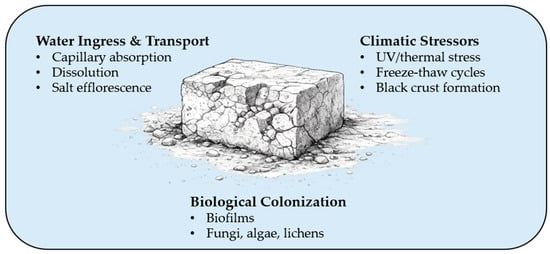
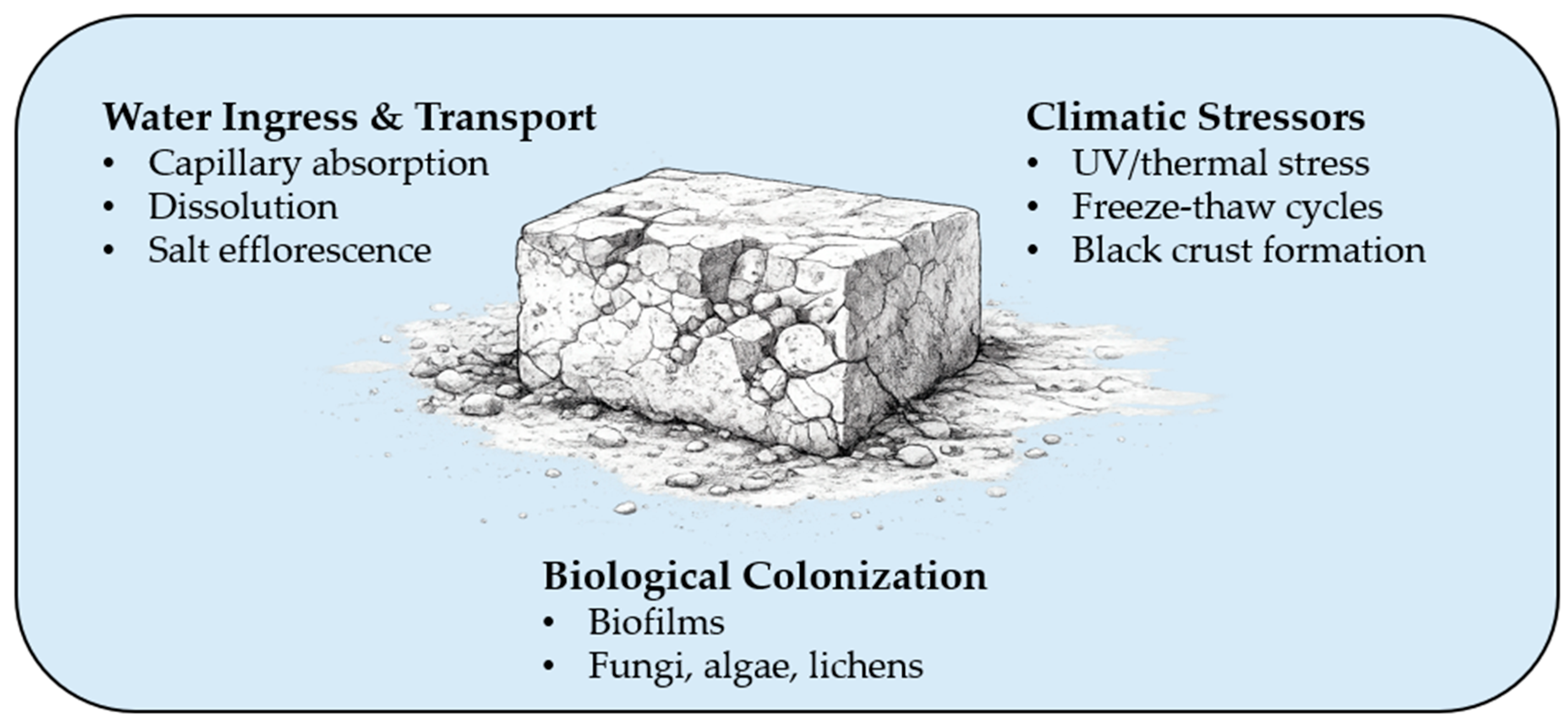


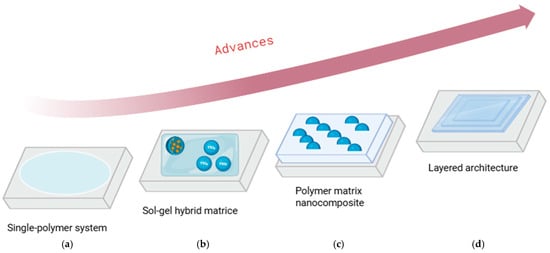
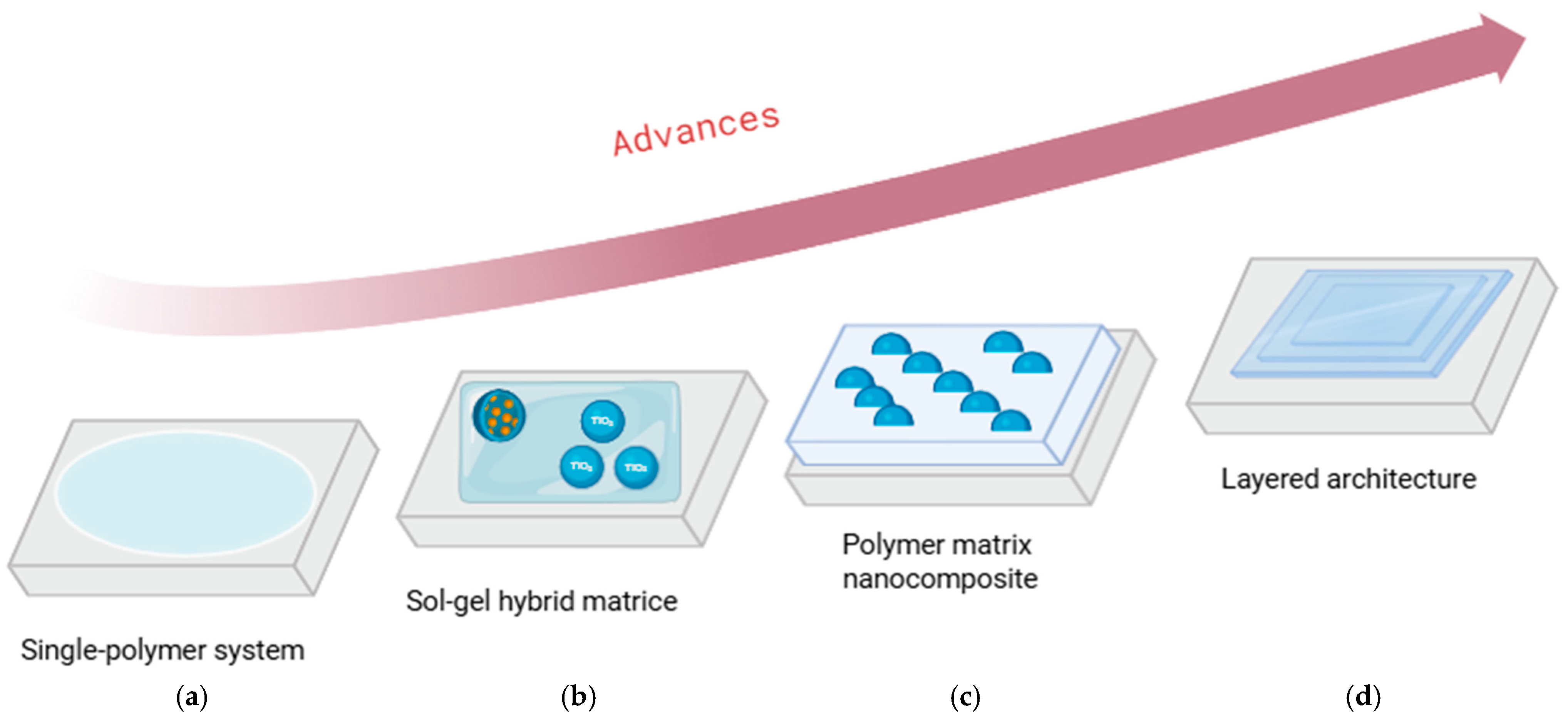

Disclaimer/Publisher’s Note: The statements, opinions and data contained in all publications are solely those of the individual author(s) and contributor(s) and not of MDPI and/or the editor(s). MDPI and/or the editor(s) disclaim responsibility for any injury to people or property resulting from any ideas, methods, instructions or products referred to in the content. |
© 2026 by the authors. Licensee MDPI, Basel, Switzerland. This article is an open access article distributed under the terms and conditions of the Creative Commons Attribution (CC BY) license.