


Abstract
Cooking-related emissions represent a major contributor to indoor air pollution in residential kitchens, producing complex mixtures of volatile organic compounds (VOCs), odor-causing gases, oil vapors, particulate matter (PM2.5), and combustion-related pollutants (CO and NOx). In this study, a controlled ozone-assisted oxidation approach was integrated into a recirculating (ductless) domestic kitchen hood equipped with a confined reaction chamber and experimentally evaluated under closed-loop operating conditions where treated air was returned to the indoor environment after post-treatment. A multivariate Response Surface Methodology (RSM) framework based on the Box–Behnken design was employed to quantify and optimize the coupled effects of temperature (20–30 °C), relative humidity (40–60%), ozone dosage (1–3 ppm within the confined reaction zone), and airflow rate (150–250 m3/h) on multi-pollutant removal performance. The results demonstrate that ozone assistance substantially improves the abatement of oxidation-sensitive pollutants, particularly VOCs and odor, while airflow rate strongly governs transport-dominated pollutants such as PM2.5 and oil vapors. In contrast, CO and NOx exhibited limited improvement, indicating that ozone-assisted oxidation alone is insufficient for comprehensive control of combustion-related gases under short-residence-time recirculating hood conditions. The main contribution of this work is the implementation of a demand-driven ozone management strategy, supported by dual ozone sensing for reaction-zone control and outlet safety verification, where ozone generation is activated only in the presence of reactive gaseous pollutants and automatically reduced or terminated once pollutant concentrations fall below predefined thresholds, minimizing unnecessary oxidant release. Residual ozone downstream of the reaction stage was continuously monitored to prevent excess ozone return to the occupied zone. Overall, the proposed closed-loop, feedback-controlled ozone-assisted recirculating range hood concept demonstrated device-level reductions in measured VOC/odor signals under controlled conditions, while also highlighting the need for complementary post-treatment components for particle- and combustion-related pollutants. However, the potential formation of secondary oxidation byproducts was not characterized in this study, and therefore the results should be interpreted with respect to device-level pollutant removal rather than comprehensive indoor air quality improvement.
1. Introduction
Indoor air quality has become a critical environmental and public health concern in parallel with rapid urbanization, changing lifestyle patterns, and the increasing amount of time spent indoors [1]. Residential kitchens are a major source of indoor air pollution. High-temperature cooking, oil volatilization, and also fuel combustion generate a complex mixture of pollutants, including volatile organic compounds (VOCs), odor-causing gases, oil-derived aerosols, fine particulate matter (PM2.5), carbon monoxide (CO), and nitrogen oxides (NOx) [2,3]. Repeated exposure to these emissions has been linked with respiratory irritation, cardiovascular risks, and deterioration of indoor environmental quality [3].
Range hoods are widely deployed in residential kitchens to capture and treat cooking emissions. In many dwellings, these systems operate in recirculating (ductless) mode. In these systems, captured air is treated and returned to the indoor environment. Conventional recirculating hoods typically rely on grease filtration and activated carbon adsorption stages [4]. While such configurations effectively capture coarse oil droplets and part of the gaseous fraction, their performance is constrained by compact geometries, limited contact times, and short internal flow paths [5]. As a result, a fraction of cooking-related VOCs and odorants may persist in the occupied space, particularly under sustained or high-intensity cooking conditions. These limitations motivate the exploration of better treatment approaches compatible with compact, closed-loop residential devices.
Ozone-based air treatment technologies have attracted attention due to ozone’s strong oxidizing capacity and its ability to react with a wide range of organic pollutants, including odor-causing compounds and unsaturated VOCs [6,7]. Oxidation by ozone can transform reactive organics into less odor-active or more easily removable species. However, the application of ozone in indoor environments remains controversial. Ozone chemistry is sensitive to temperature, relative humidity, pollutant composition, and residence time. As is well known, uncontrolled ozone use may increase exposure risk and promote the formation of secondary oxidation products, including oxygenated by-products and secondary organic aerosols [8]. For this reason, ozone-assisted purification in residential systems must be implemented under strict safety-oriented control [9].
The multi-pollutant character of cooking emissions further complicates treatment strategies. Reactive gaseous pollutants such as VOCs and odorants may benefit from oxidation-driven removal, whereas particulate matter (PM2.5 and oil-derived aerosols) is primarily governed by aerodynamic capture, transport dynamics, and filtration mechanisms [2,3]. Combustion-related gases such as CO and NOx exhibit distinct chemical behavior and limited reactivity toward ozone under short residence times typical of compact duct geometries. Therefore, removal performance in residential hood systems cannot be attributed to a single dominant mechanism; rather, it reflects the interaction between chemical oxidation, flow-driven transport, and filtration processes.
In compact hood systems, performance is shaped by temperature, humidity, ozone level, and airflow, which together determine reaction rates and effective residence time. Because these variables interact, evaluating them separately does not adequately capture real operating behavior. Response Surface Methodology (RSM) therefore offers a practical way to analyze combined effects and define feasible operating regions [10,11]. However, multivariate studies focusing specifically on compact, recirculating household hoods remain limited.
In this context, the present study experimentally evaluates an ozone-assisted filtration system integrated into a household recirculating range hood under controlled yet realistic operating conditions. The effects of temperature (20–30 °C), relative humidity (40–60%), ozone concentration (1–3 ppm within a confined reaction section), and airflow rate (150–250 m3/h) on the removal efficiencies of VOCs, odor-causing compounds, oil vapors, PM2.5, CO, and NOx are assessed using a Box–Behnken design within the RSM framework. The system adopts a closed-loop, confined, demand-driven ozone application strategy with dual-sensor monitoring to verify downstream ozone levels and support safe residential operation.
This study makes four main contributions. First, it experimentally demonstrates ozone-assisted oxidation performance in a realistic household range hood geometry under multi-pollutant conditions. Second, it distinguishes pollutant-specific removal mechanisms by distinguishing between oxidation-dominated and transport-dominated removal mechanisms. Third, it applies RSM-based multivariate modeling to define operational regions that enhance removal performance while maintaining controlled ozone dosing. Finally, it clarifies the practical limitations of ozone-assisted treatment for combustion-related gases (CO and NOx) under short-residence-time domestic conditions.
The remainder of the study is structured as follows. Section 2 describes the configuration of the recirculating ozone-assisted hood system, experimental setup, and modeling framework. Section 3 reports the experimental results, Section 4 discusses pollutant-specific behaviors and safety implications, and Section 5 summarizes the main findings and outlines directions for future research.
2. Materials and Methods
2.1. System Configuration and Experimental Setup
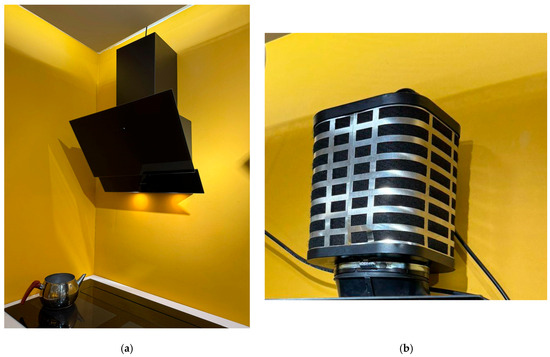
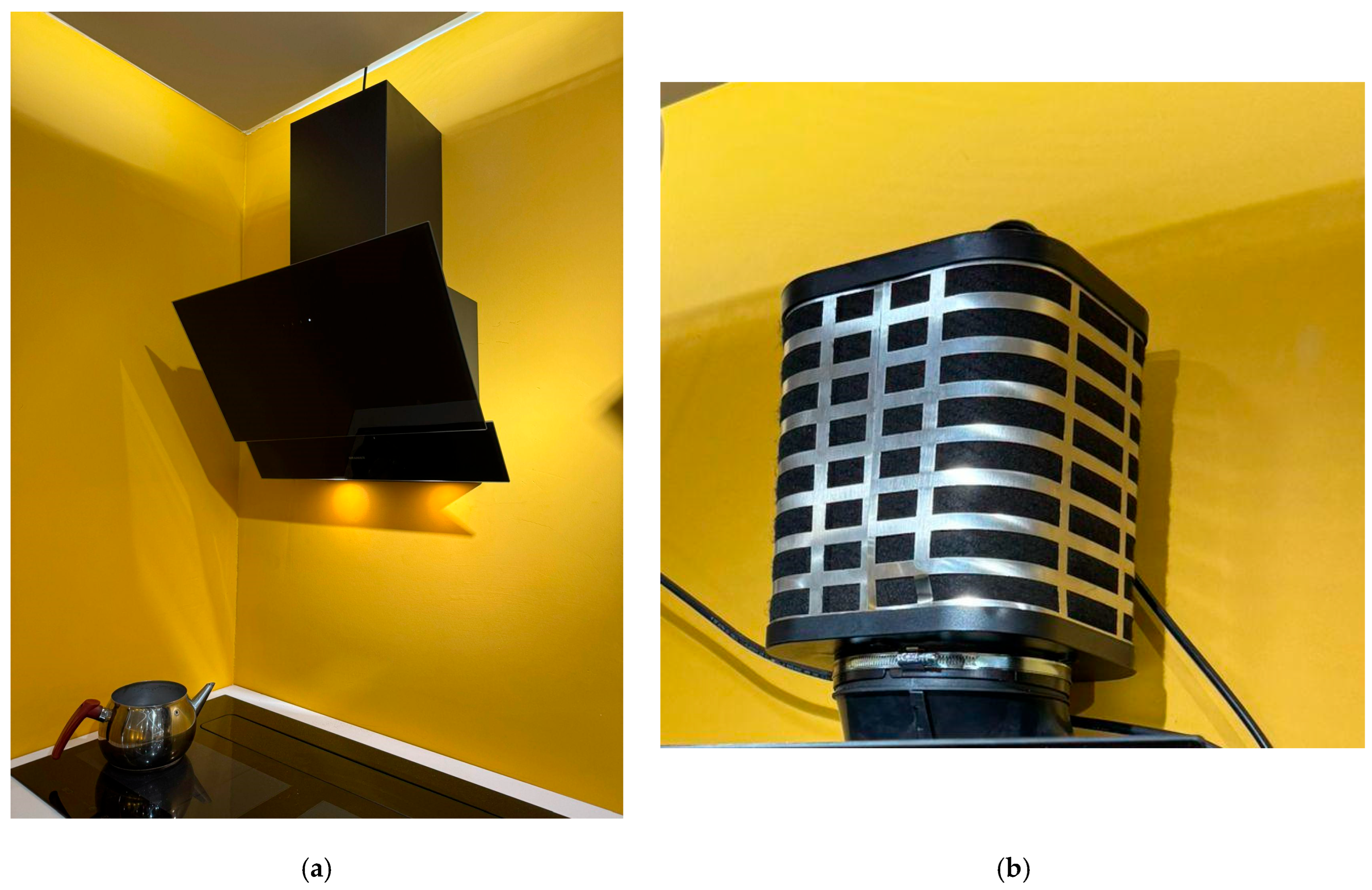
For the test environment, a 60 cm recirculating (ductless) range hood model was utilized with a maximum rated airflow capacity of 300 m3/h. This replicates standard residential conditions. A custom-integrated variable-speed propulsion unit featuring a precision fan controller to ensure stable and repeatable airflow conditions. The stainless-steel housing included a confined treatment section (reaction zone) with an effective length of 1.2 m within the hood’s internal flow path. This section was designed to increase oxidant–pollutant contact time while maintaining a closed-loop recirculating operation (i.e., treated air was returned to the kitchen after post-treatment) (see Figure 1a).
Figure 1.
(a) Range Hood and Stove System with Ozone Generator. (b) Ceramic Ozone Generator Mounted on the Range Hood.
The treatment train included three functional stages. The first stage was an aluminum mesh grease filter. This filter is designed to capture large oil droplets and coarse aerosols that are generated during cooking. In the second stage, ozone was injected into the confined reaction section to oxidize gaseous and semi-volatile pollutants. The third stage used an activated carbon filter to remove residual ozone before the treated air was returned to the kitchen.
2.1.1. Ozone Generation and Safety-Oriented Control Strategy
The ozone generator (custom-built, Figure 1b) used was a portable corona-discharge unit with an adjustable output of 0–5 ppm. Ozone was injected downstream of the fan through a diffuser to improve mixing in the reaction section. The investigated ozone levels (1–3 ppm) refer to concentrations measured inside the confined reaction section, which defines the effective oxidation zone.
A demand-driven ozone control strategy was implemented to ensure operational safety and prevent unnecessary ozone release. Ozone generation was activated only when reactive gaseous pollutants (primarily VOCs) were detected at the inlet side of the treatment path. In the absence of ozone-reactive pollutants, the ozone generator remained in a passive standby mode, and no ozone was released.
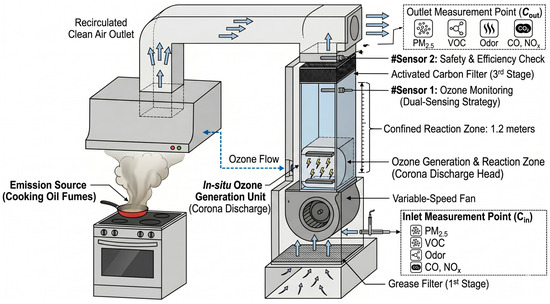
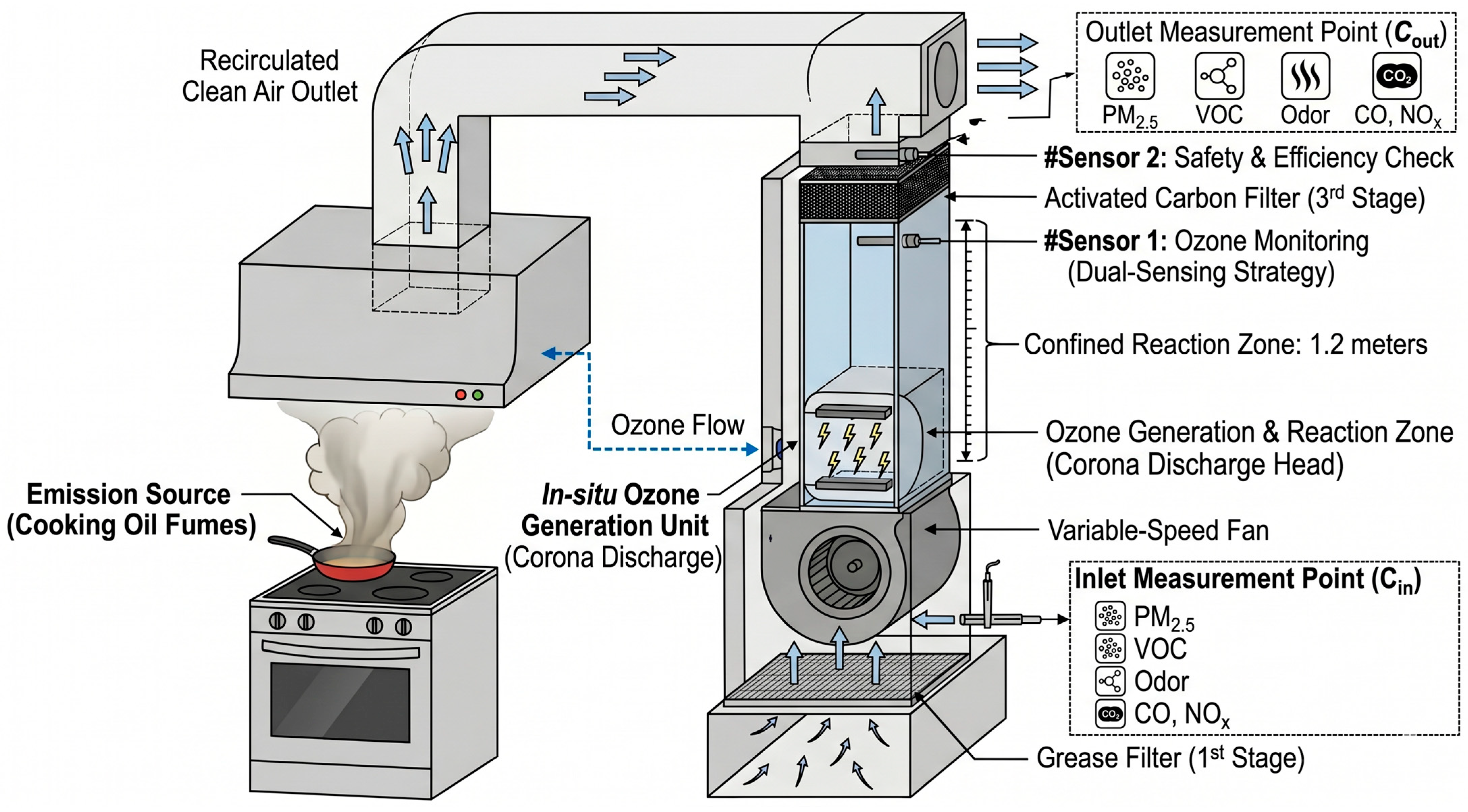
To address safety requirements inherent to closed-loop recirculation, two ozone sensors were used: Sensor 1 monitored ozone concentration within/at the outlet of the reaction section for process control, whereas Sensor 2 monitored ozone downstream of the activated carbon stage (supply/outlet side) for outlet safety verification. If the downstream ozone level exceeded the predefined safety setpoint (50 ppb), the controller automatically reduced ozone generation and/or shut the generator off. All experiments were conducted under recirculating operation, meaning treated air was returned indoors after post-treatment. The selected 50 ppb downstream ozone safety threshold is consistent with established indoor air quality guidelines. In particular, it aligns with the WHO air quality guideline for ozone (100 µg/m3, approximately 50 ppb as an 8 h average) and remains within conservative exposure limits recommended by NIOSH, ensuring safe operation under recirculating indoor conditions. In Figure 2, the diagram illustrates the position of the corona-discharge ozone generation unit, the 1.2 m confined reaction zone, and the dual-sensor placement for safety-oriented control.
Figure 2.
Detailed schematic of the experimental setup and internal air flow path.
2.1.2. Environmental Condition and Airflow Control
Temperature and relative humidity were monitored using a digital thermo-hygrometer (Testo 605-H1, Lenzkirch, Germany) with an accuracy of ±0.5 °C and ±2% relative humidity. The airflow rate was adjusted between 150 and 250 m3/h using a variable-speed fan controller. Airflow accuracy was verified by measuring outlet velocity with a calibrated digital anemometer (Lutron AM-4201, Taipei, Taiwan).
Based on the effective reaction section length (1.2 m) and the applied airflow rates (150–250 m3/h), the estimated residence time within the confined reaction zone ranged between approximately 0.35–0.85 s, depending on the selected airflow condition.
2.1.3. Pollutant Measurement Strategy
In the study, as mentioned, six different pollutant categories were evaluated: VOCs, odor-causing compounds, oil vapor aerosols, PM2.5, CO, and NOx. PM2.5 was selected as the primary particulate metric because cooking-generated aerosols and oil vapors are predominantly characterized by fine and ultrafine particles, which pose a more significant respiratory health risk compared to coarser fractions like PM10. Pollutant concentrations were measured upstream of the treatment train (after capture, before oxidation) and downstream of the post-treatment stage (supply outlet) under steady-state conditions. Cin was measured after the grease filter and before ozone injection, while Cout was measured at the final outlet downstream of the activated carbon filter. In this way, Cin represents the inlet to the oxidation stage, and Cout represents the air returned to the kitchen.
VOC concentrations were measured using a photoionization detector (PID) (ppbRAE 3000, San Jose, CA, USA). It should be noted that the PID provides a total VOC (TVOC) signal and does not differentiate between primary VOCs and ozone-generated oxidation byproducts. Therefore, the measurements represent overall VOC changes rather than species-specific concentrations.
Odor levels were quantified using an electronic nose system (PEN3, Airsense Analytics, Schwerin, Germany) equipped with a metal oxide semiconductor (MOS) sensor array capable of detecting composite odor signatures. The system was operated under steady-state conditions, and sensor responses were recorded for comparative analysis. Prior to each experimental session, the E-nose system was calibrated by exposing the sensor array to filtered ambient air (zero-air baseline) for 10 min to establish a stable reference signal. Sensor drift was monitored across sessions, and recalibration was performed whenever baseline deviation exceeded 5% of the initial reference value. The system was operated according to the manufacturer’s recommended protocol for indoor air monitoring applications.
It should be noted that electronic nose sensors may exhibit cross-sensitivity to oxidizing gases such as ozone. Therefore, the measured odor reduction values should be interpreted as overall sensor signal changes rather than compound-specific odor removal, particularly under ozone-assisted conditions. Oil vapor aerosols were measured using a portable aerosol spectrometer (Grimm 1.109, Grimm Aerosol Technik, Ainring, Germany). Additionally, PM2.5 concentrations were measured using a PMS7003 sensor (Plantower, Beijing, China) with an accuracy of ±10 µg/m3, enabling assessment of potential particle accumulation due to ozone application.
While the VOC (PID) and odor (E-nose) sensors provided continuous real-time data flow throughout each experimental run, the reported removal efficiency values were derived from two discrete 5 min sampling windows taken under confirmed steady-state conditions. This approach was adopted to minimize the influence of transient fluctuations during the initial emission phase. Although continuous data were available from the VOC and odor sensors, duplicate steady-state averages were selected to ensure consistency across all pollutant categories since PM2.5, oil vapor, CO, and NOx sensors were positioned externally at the Cin and Cout measurement points and operated in a spot-measurement configuration rather than as integrated continuous components of the hood system. Regarding sensor integration, the dual ozone sensors (Sensor 1 and 2) are integrated components of the hood’s control system, whereas the VOC PID, E-nose, and aerosol spectrometer are high-precision portable laboratory instruments used externally for performance verification at the Cin and Cout points.
2.1.4. Cooking Emission Generation Protocol
Cooking-related emissions were generated under controlled laboratory conditions designed to represent typical domestic high-temperature frying scenarios. A standard electric induction stove was used as the heat source to ensure stable and repeatable operating conditions. Emissions were produced by heating 50 mL of commercial vegetable oil in a stainless-steel pan. The oil was heated at a high temperature until reaching its smoke point (approximately 200 °C), at which point visible emissions (smoke and odor) were consistently generated. The system was allowed to reach a quasi-steady-state condition before any measurements were taken. No open-flame combustion source (e.g., gas or firewood) was used in this study; therefore, CO and NOx concentrations reflect low-level background and thermal emission conditions rather than direct combustion from gas fuel. The inlet concentration () was defined as the pollutant level measured immediately after the grease filter and before ozone injection under these stabilized emission conditions. This standardized approach ensures that the reported removal efficiencies are based on consistent and repeatable inlet pollutant loads representative of controlled residential cooking emissions.
2.1.5. Removal Efficiency Calculation
Pollutant removal efficiency (%) was calculated based on the inlet and outlet concentrations according to the following expression:
where Cin and Cout represent the inlet and outlet pollutant concentrations, respectively.
2.2. Experimental Design and RSM Modeling
To evaluate the combined effects of operating parameters, a Box–Behnken design was used to limit the number of experimental runs while still allowing estimation of second-order effects. Four independent variables were selected because they were expected to affect ozone chemistry, pollutant behavior, and overall system performance:
- Temperature: 20 °C, 25 °C, 30 °C
- Relative humidity: 40%, 50%, 60%
- Ozone concentration: 1 ppm, 2 ppm, 3 ppm
- Airflow rate: 150, 200, 250 m3/h.
The resulting Box–Behnken design comprised 27 experimental runs (including 3 center points, see Table 1 for the full design matrix). The run order was randomized for potential bias. For each design point, measurements were performed in duplicate and averaged for subsequent modeling. These duplicate readings were used only to ensure measurement stability and do not represent independent experimental replicates.
Table 1.
Box–Behnken experimental design matrix showing coded variables (x1–x4) and corresponding actual factor levels for the 27 design runs, together with separate baseline reference runs conducted under ozone-off conditions.
The response variables were defined as the removal efficiencies (%) of VOCs, odor-causing compounds, oil vapors, PM2.5, CO, and NOx. System responses were fitted using a second-order polynomial model:
where represents the response variable (e.g., pollutant removal efficiency), denotes the coded independent variables, represents regression coefficients, and ϵ is the experimental error.
Model adequacy was evaluated using analysis of variance (ANOVA) at a significance level of p < 0.05. Goodness-of-fit was assessed using the coefficient of determination (R2, adjusted R2 and RMSE). Formal lack-of-fit testing was not performed because independent replicates were available only at the center point; therefore, model validity was assessed primarily through overall F-test significance, R2 agreement, and residual analysis.
3. Experimental Results
The performance of the ozone-assisted kitchen hood system was evaluated in terms of removal efficiencies for VOCs, odor-causing compounds, oil vapors, PM2.5, CO, and NOx. To establish a reference for the ozone-assisted performance, baseline measurements were conducted with the ozone generator disabled (ozone-off mode). Under these baseline conditions, where the system relied solely on mechanical filtration and passive adsorption, the removal efficiencies for VOCs and odor were found to be minimal (typically below 20%). In contrast, the activation of ozone (1–3 ppm) led to substantial increases in removal performance, reaching up to 82.4% for VOCs and 85.7% for odor. This comparison confirms that the high removal efficiencies reported in this study are directly attributable to the chemical oxidation provided by the ozone-assisted stage rather than standalone physical filtration.
Table 2 presents the quadratic RSM model statistics for each response variable. All models were statistically significant (p < 0.01). The coefficients of determination (R2) ranged from 0.769 to 0.817, with adjusted R2 values showing consistent agreement, indicating satisfactory model fit within the investigated design space. RMSE values were calculated using min–max normalized responses (0–1) to allow comparison across pollutant categories.
Table 2.
Statistical summary and goodness-of-fit metrics for the quadratic Response Surface Methodology (RSM) models, including coefficients of determination (R2, adjusted R2), p-values, and Scaled Root Mean Square Error (RMSE) for the removal efficiencies of the investigated pollutants.
3.1. VOC Removal Performance
ANOVA results indicate that VOC removal was driven primarily by ozone concentration and airflow rate. Increasing ozone dosage was associated with greater apparent VOC reduction, whereas higher airflow reduced removal efficiency by shortening the effective contact time in the confined reaction section. Temperature and relative humidity had statistically significant but smaller effects within the tested range.
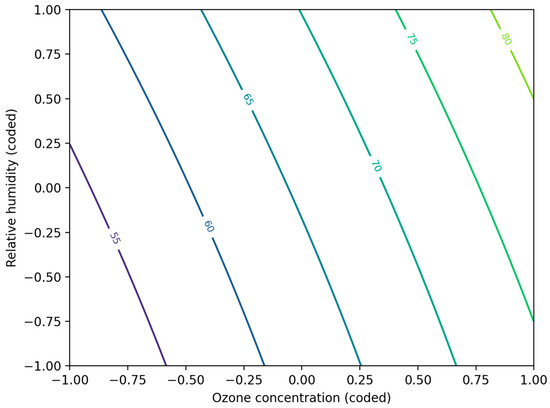
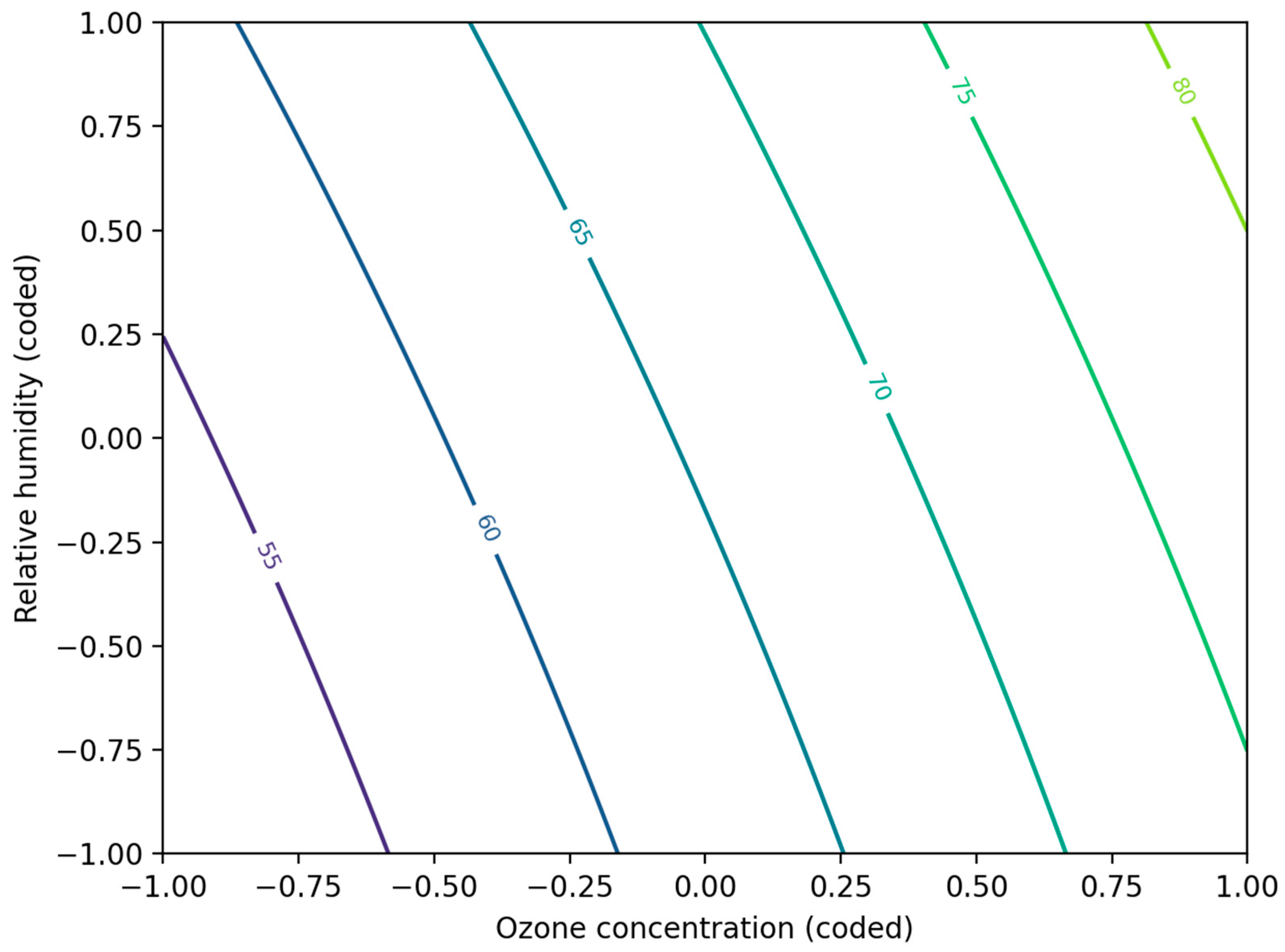
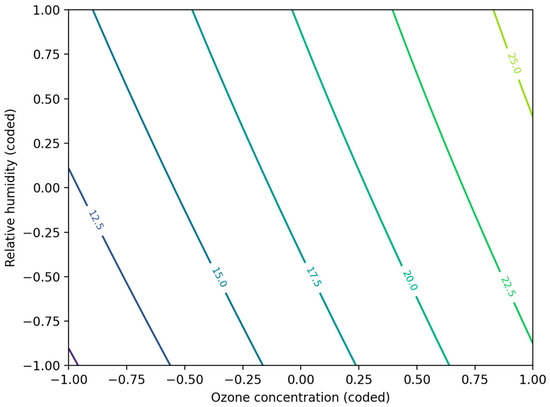
As shown in Figure 3 and Figure 4, the highest VOC removal occurred at higher ozone concentrations and lower airflow rates, consistent with oxidation benefiting from longer residence times in the reaction section. The ozone–humidity interaction (Figure 4) suggests a moderate humidity effect, likely through changes in reaction kinetics, but ozone concentration remained the dominant driver of performance.
Figure 3.
Contour plot of the combined effect of ozone concentration and airflow rate on VOC removal efficiency at fixed temperature (25 °C) and relative humidity (50%).
Figure 4.
Contour plot showing the interaction between ozone concentration and relative humidity on VOC removal efficiency at fixed temperature (25 °C) and airflow rate (200 m3/h).
To complement the percentage-based removal efficiencies, the minimum absolute outlet concentrations (Cout) achieved under representative high-performance conditions, summarized in Table 3 (Run 8: 3 ppm O3, 200 m3/h airflow, 30 °C, 50% RH), are reported here. Under these conditions, the system returned the following representative pollutant levels to the kitchen environment: VOC (PID-based TVOC) ≈ 88 ppb, E-nose odor signal ≈ 0.14 (dimensionless sensor response ratio), oil vapor aerosol ≈ 280 µg/m3, PM2.5 ≈ 19.4 µg/m3, CO ≈ 0.89 ppm, and NOx ≈ 41 ppb. These values provide a quantitative basis for assessing the residual pollutant load returned to the occupied space under ozone-assisted recirculating operation.
Table 3.
Summary of pollutant removal efficiencies under representative operating conditions, including all evaluated pollutant categories (VOCs, odor, oil vapor, PM2.5, CO, and NOx), across different combinations of temperature, relative humidity, ozone concentration, and airflow rate.
The contour plots (Figure 3 and Figure 4) indicate that higher VOC removal occurred at higher ozone concentrations and lower airflow rates, consistent with longer residence times supporting oxidation within the duct. Because treated air was subsequently passed through an activated carbon post-treatment stage before being returned to the kitchen environment, the enhanced VOC degradation observed here reflects device-level oxidation performance under controlled recirculating operation. In addition to these main effects, the ozone–humidity interaction (Figure 4) suggests that relative humidity can moderately influence removal efficiency. Ozone concentration remained the dominant factor, whereas humidity affected performance to a lesser extent by altering reaction kinetics. Accordingly, the reported VOC removal efficiencies should be interpreted as net TVOC reductions at the system level, which may include both degradation of primary VOCs and transformation into secondary oxidation products.
3.2. Odor Removal Performance
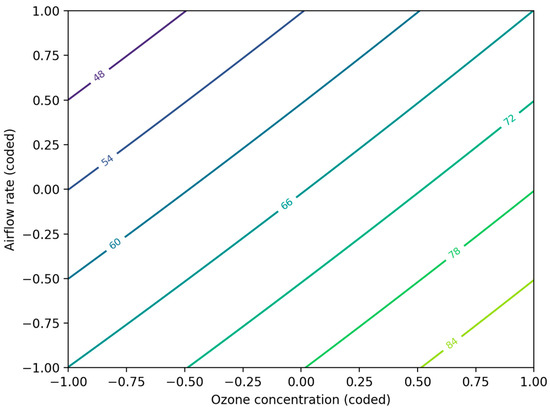
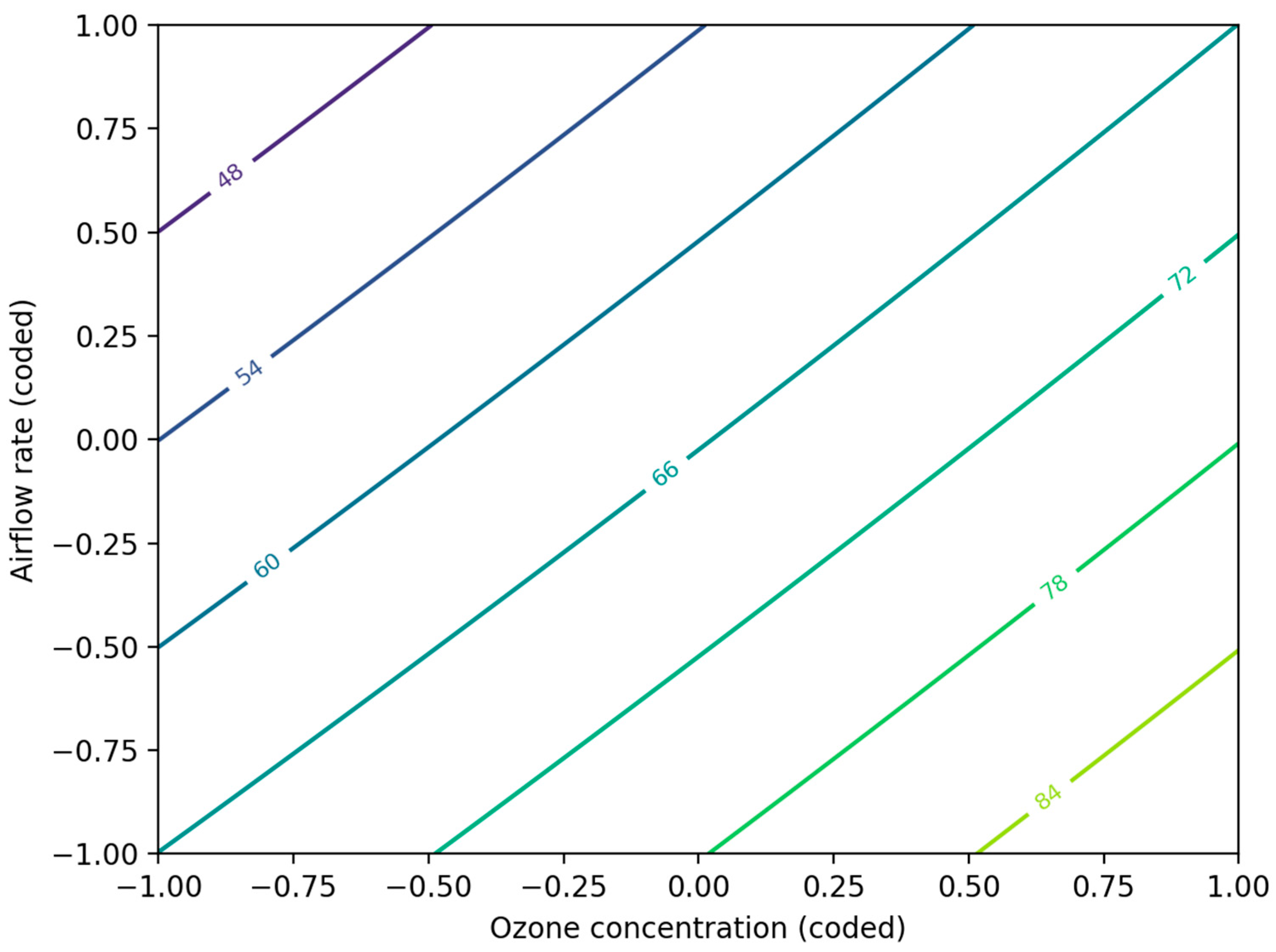
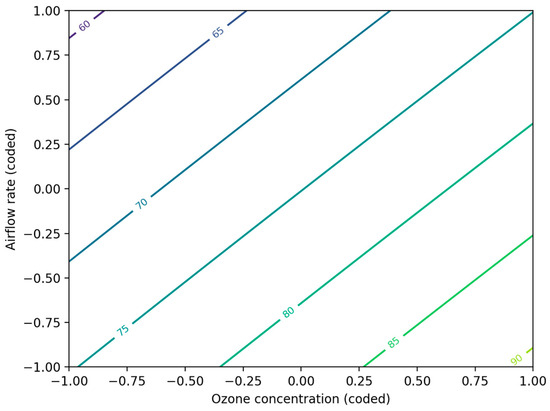
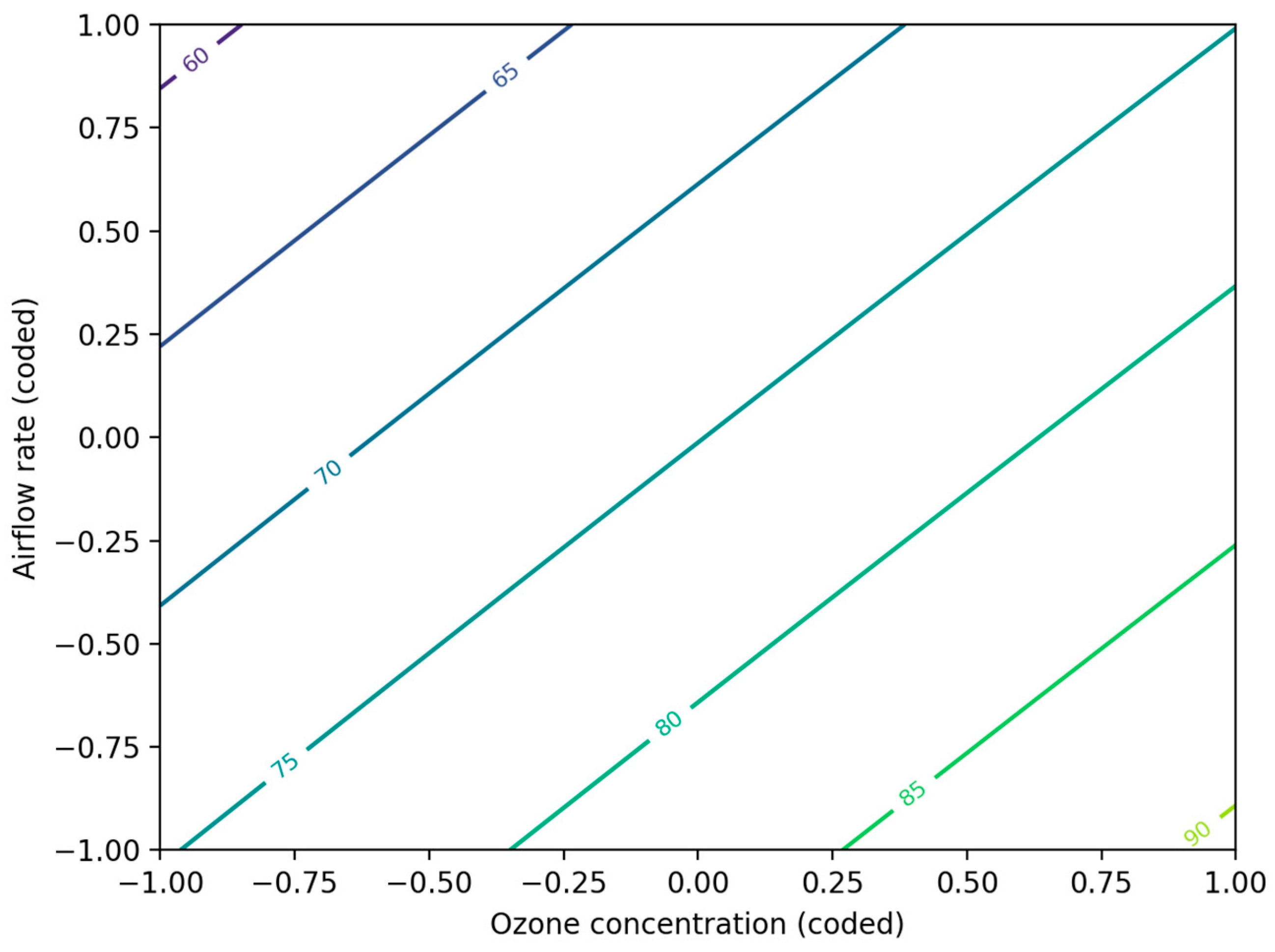
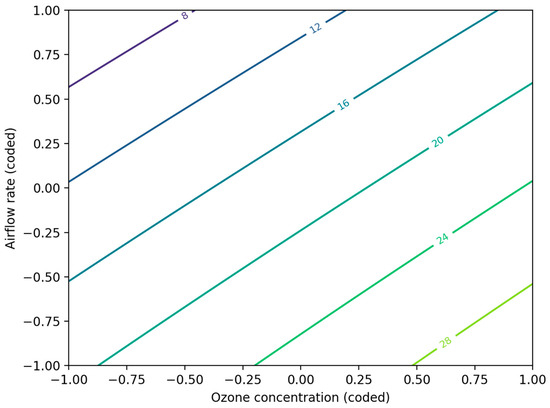
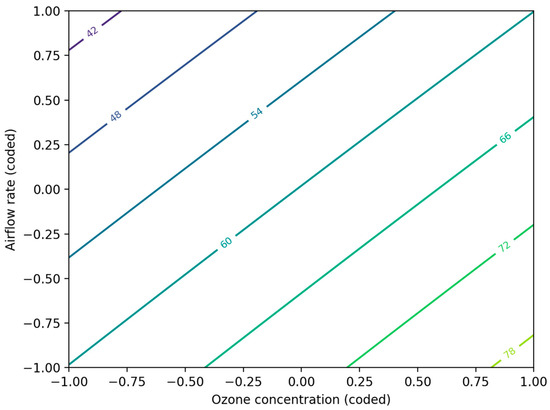
Odor removal was assessed using a portable electronic nose (E-nose) to monitor the overall chemical signature of cooking emissions. RSM analysis showed that ozone concentration was the dominant factor influencing odor removal within the tested range. Higher ozone levels consistently improved odor reduction, whereas increasing airflow reduced removal efficiency by shortening contact time in the confined reaction section. As illustrated by the diagonal (45-degree) contour distribution in Figure 5, ozone concentration and airflow rate exhibit a reciprocal and synergistic relationship. The diagonal pattern confirms that odor removal is equally sensitive to both parameters: the reduction in residence time at higher airflow rates can be compensated for by increasing the ozone dosage to maintain high removal performance.
Figure 5.
Contour plot of the combined effect of ozone concentration and airflow rate on odor removal efficiency at fixed temperature (25 °C) and relative humidity (50%).
To validate the specific contribution of the treatment, baseline odor removal at O3 = 0 ppm was measured and found to be negligible (typically <15%), primarily due to limited carbon adsorption. In contrast, the activation of ozone resulted in removal efficiencies reaching up to 85.7% under optimal conditions (3 ppm O3 and 200 m3/h airflow). Relative humidity had a secondary but noticeable effect, with moderate humidity levels associated with improved odor removal. Temperature effects were statistically significant but less influential.
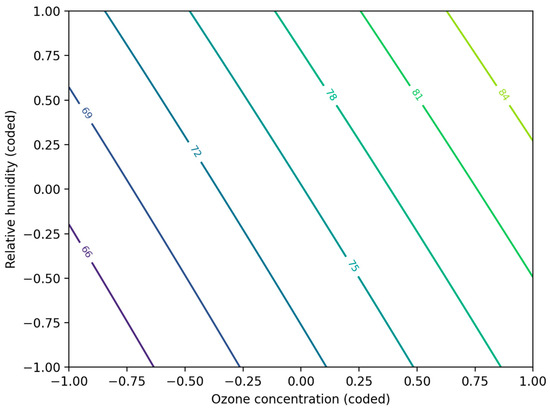
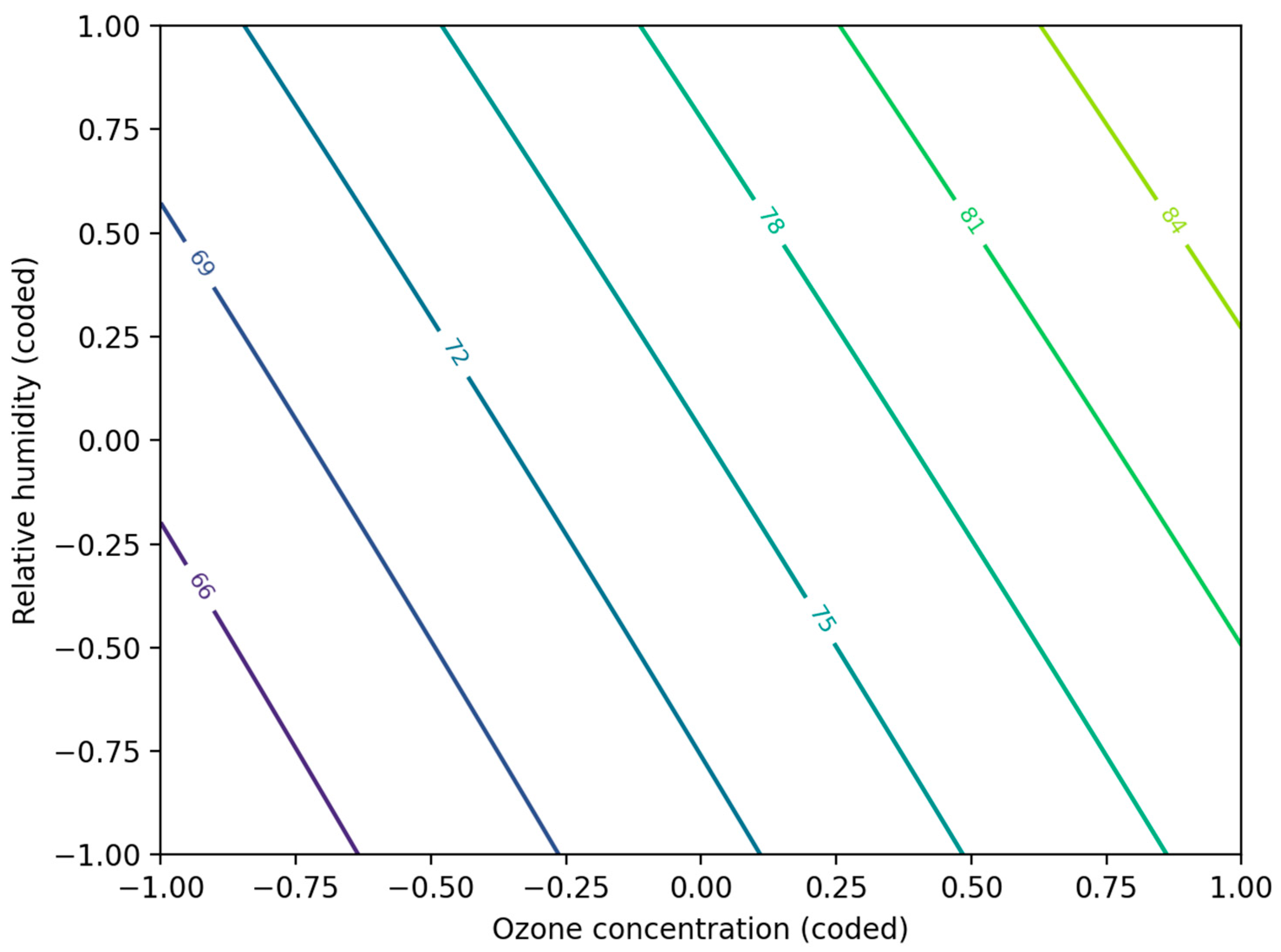
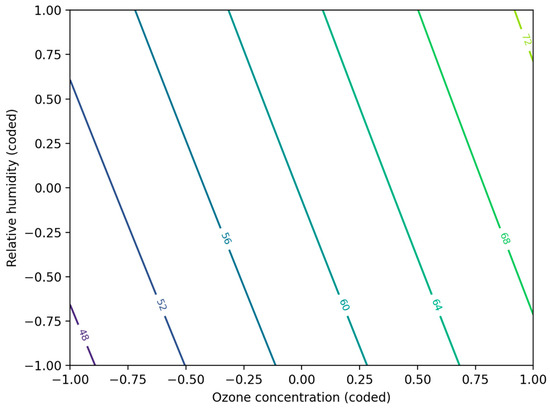
Figure 5 and Figure 6 illustrate the combined influence of ozone concentration, airflow rate, and humidity. The contour plots indicate that odor reduction is maximized at higher ozone levels and lowest airflow conditions (150 m3/h), reflecting the balance between oxidation efficiency and residence time under recirculating operation. To complement these contour-based findings, representative operating conditions covering different ozone levels and airflow rates are summarized in Table 3, providing a quantitative basis for interpreting the observed removal performance across VOC, odor, PM2.5, oil vapor, CO, and NOx.
Figure 6.
Contour plot showing the interaction between ozone concentration and relative humidity on odor removal efficiency at fixed temperature (25 °C) and airflow rate (200 m3/h).
3.3. PM2.5 Removal Performance
The PM2.5 represents a critical indoor air pollutant due to its small aerodynamic diameter and prolonged suspension time. PM2.5 concentrations were measured with an accuracy of ±10 µg/m3, enabling assessment of potential particle accumulation due to ozone application. PM2.5 removal was primarily governed by airflow rate, indicating that the hood’s extraction capacity and aerodynamic capture mechanisms dominated particulate removal within the investigated range. However, higher airflow rates led to a decrease in PM2.5 removal efficiency. While increased airflow enhances the extraction of pollutants from the stove, it also increases the face velocity at the filter surface, resulting in higher particle penetration and reduced residence time for physical capture. In contrast, ozone concentration had only a minor effect on PM2.5 removal. This indicates that chemical oxidation was not the dominant mechanism in this configuration.
Relative humidity played a minor and practically negligible role in modulating PM2.5 behavior, especially under ozone-assisted conditions. While the interaction between ozone concentration and relative humidity was statistically included in the model, its practical impact on particle dynamics (e.g., hygroscopic growth) remains minimal compared to the dominant influence of ozone concentration and airflow.
Evidence from the contour plots (Figure 7 and Figure 8) confirms that PM2.5 does not mirror the behavior of gaseous pollutants. The removal profiles across varying ozone and humidity levels highlight a clear shift in dominance toward aerodynamic mechanisms, marking a sharp departure from the oxidation-limited pathways seen in gases.
Figure 7.
Contour plot of the combined effect of ozone concentration and airflow rate PM2.5 removal efficiency at fixed temperature (25 °C) and relative humidity (50%).
Figure 8.
Contour plot showing the interaction between ozone concentration and relative humidity on PM2.5 removal efficiency at fixed temperature (25 °C) and airflow rate (200 m3/h).
3.4. Oil Vapor Removal Performance
Cooking-related oil vapor aerosols represent a distinct class of indoor pollutants characterized by relatively larger particle sizes and predominantly physical removal behavior compared to gaseous VOCs.
The combined effects of ozone concentration and airflow rate on oil vapor removal efficiency are shown in Figure 9. The contour distribution clearly indicates that airflow rate is the main parameter governing oil vapor removal. However, the results indicate that higher airflow rates negatively impacted oil vapor removal efficiency. At higher velocities, the contact time between the oil aerosols and the filter media is significantly shortened, allowing a larger fraction of aerosols to pass through the system without being captured. Consequently, the maximum removal efficiency for oil vapor was observed at the minimum airflow setting.
Figure 9.
Contour plot showing the combined effect of ozone concentration and airflow rate on oil vapor removal efficiency.
On the other hand, ozone concentration had a limited effect, indicating that oxidation played only a secondary role in oil aerosol removal under the tested conditions. Unlike gaseous pollutants, oil vapor aerosols show negligible sensitivity to changes in relative humidity. At higher humidity levels, no substantial enhancement in removal efficiency is observed, as reflected by the vertical orientation of the contour lines in Figure 10. This confirms that moisture-mediated ozone chemistry contributes minimally to oil aerosol transformation within the tested operating window, further supporting the predominantly physical removal mechanism governing oil vapor aerosols.
Figure 10.
Contour plot of the interaction between ozone concentration and relative humidity on oil vapor removal efficiency.
3.5. CO and NOx Removal Performance
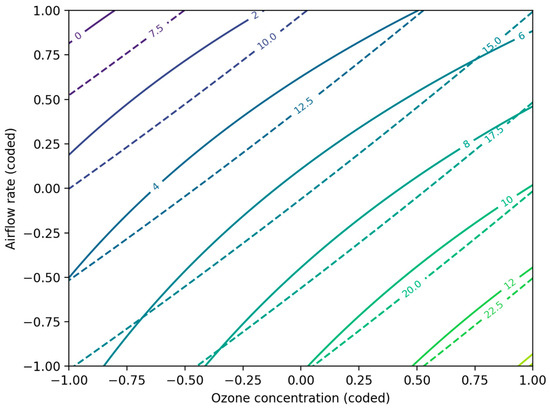
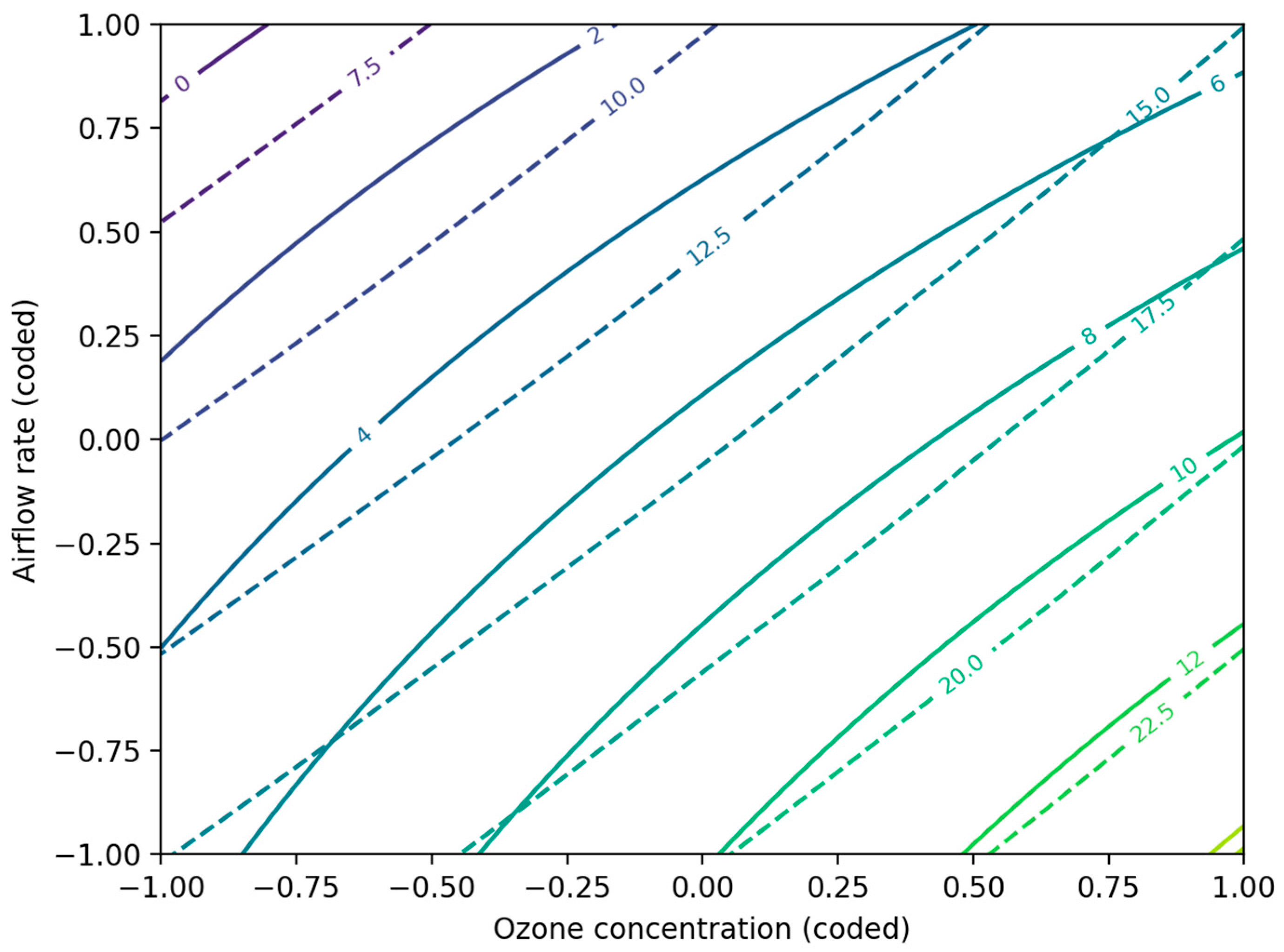
CO and NOx showed limited improvement under ozone-assisted operation within the tested household-scale conditions. This behavior is consistent with the low reactivity of CO toward ozone and the short residence times typical of compact hood systems. The results indicate that lower airflow rates led to higher apparent removal efficiencies for both gases, as the increased residence time within the reaction zone allowed for more extended (though still limited) interaction with ozone. Conversely, increasing the airflow rate reduced the removal performance, as seen in the downward trend toward the higher airflow settings in Figure 11. However, this effect is primarily attributed to flow-driven transport rather than direct oxidation. Changes in ozone concentration had only a minor impact, indicating that ozone plays a limited role in controlling combustion-related gases in this configuration.
Figure 11.
Contour plot showing the combined effect of ozone concentration and airflow rate on the removal efficiencies of CO (solid lines) and NOx (dashed lines) at fixed temperature (25 °C) and relative humidity (50%).
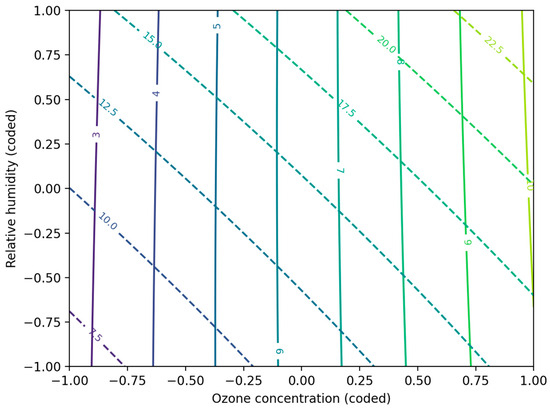
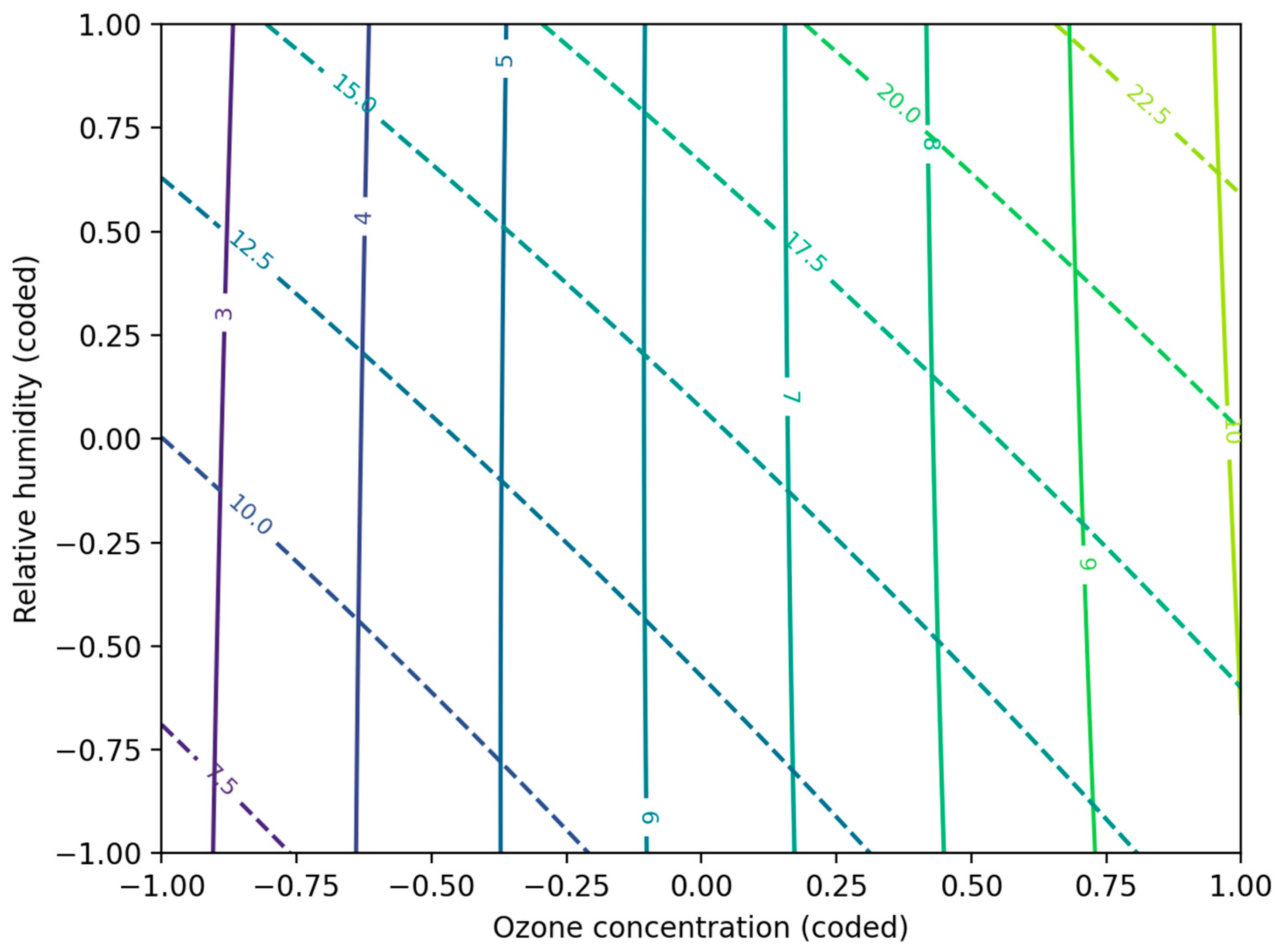
Figure 12 presents the combined effect of ozone concentration and relative humidity. Across the investigated humidity range, no substantial enhancement in removal was observed, suggesting that humidity-dependent ozone chemistry does not significantly affect CO and NOx under the tested conditions.
Figure 12.
Contour plot showing the interaction between ozone concentration and relative humidity on the removal efficiencies of CO (solid lines) and NOx (dashed lines) at fixed temperature (25 °C) and airflow rate (200 m3/h).
4. Discussion
This study examined ozone-assisted pollutant removal in a recirculating (ductless) household range hood using an RSM-based multivariate design. Overall, ozone assistance benefited reactive pollutants (VOCs and odor) more than particle-phase pollutants (PM2.5 and oil aerosols), which remained largely governed by transport and filtration. Because cooking emissions vary widely with fuel type and cooking practice, these results support the need for demand-driven operation rather than fixed settings [12].
4.1. Oxidation-Dominated Responses: VOC and Odor
VOC and odor removal were driven mainly by ozone dosage and airflow rate. Higher ozone levels improved removal, consistent with ozone’s strong reactivity toward cooking-related organics and odor precursors [6]. In contrast, higher airflow reduced removal because it shortened the time available for ozone–pollutant contact in the confined reaction section of the recirculating unit. This pattern highlights a practical trade-off: ozone assistance helps, but only when contact time is not sacrificed to high flow. Similar flow-limited oxidation behavior has been reported in indoor air-cleaning studies [13].
Relative humidity played a secondary role. From a mechanistic perspective, humidity can influence ozone–organic reactions by modifying reaction pathways and intermediate formation. The presence of water vapor can promote secondary oxidation processes and alter the composition of intermediate products, which may change odor perception even when overall pollutant levels decrease. Changes in humidity can shift ozone reaction pathways and intermediate formation, which may alter odor-active chemistry rather than simply lowering total concentrations [14]. This is consistent with the observed variability in instrumentally measured odor intensity across humidity conditions [15].
4.2. Transport-Dominated Responses: PM2.5 and Oil Vapor
PM2.5 and oil aerosol removal were mainly controlled by airflow and physical capture, rather than ozone chemistry. However, increasing airflow did not enhance removal; instead, higher airflow rates tended to reduce removal efficiency due to increased particle penetration and reduced residence time available for effective capture, whereas ozone concentration had only a minor effect. This is consistent with prior evidence that particle control in domestic ventilation systems is driven primarily by aerodynamic capture and filtration performance [16].
The limited ozone dependence is expected in compact hood geometries. Any ozone-driven particle transformation would require sufficient reaction time and suitable precursor conditions, which are not consistently available under short-residence household-scale operation [17]. At the same time, ozone exposure in VOC-rich mixtures may promote secondary pathways and by-product formation, including oxygenated VOCs and secondary organic aerosol precursors [18]. These by-products were not quantified here and should therefore be treated as a plausible mechanism rather than a confirmed outcome. In practice, particle control comes down to airflow and filtration; ozone adds little under these conditions. Therefore, while ozone-assisted oxidation may reduce primary VOC levels, the potential formation of secondary pollutants such as oxygenated VOCs and secondary organic aerosols introduces uncertainty in the overall indoor air quality impact. This should be considered when interpreting the results from a health perspective.
It should be noted that the PM2.5 removal efficiency remained relatively low, peaking at approximately 28–30% under the given airflow conditions. This limited performance is attributed to the fact that the experimental system utilizes standard aluminum grease filters and activated carbon media rather than high-efficiency particulate air (HEPA) filtration. Since ozone-assisted oxidation is primarily effective for gas-phase pollutants, its contribution to solid particle degradation is negligible within the short residence times (<1 s) typical of compact hood geometries. These results underscore that while ozone significantly enhances VOC and odor abatement, effective PM2.5 control in residential recirculating hoods still relies heavily on mechanical filtration efficiency.
4.3. Combustion-Related Gases
The results show that ozone assistance did not substantially improve the removal of CO and NOx under the tested household-scale conditions. The observed influence of airflow is better explained by transport and dilution effects than by chemical oxidation. This is consistent with the low reactivity of CO toward ozone and the limited conversion potential of NOx under short contact times in compact hood geometries [19].
Direct gas-phase oxidation of CO by ozone is negligibly slow under ambient-temperature, non-catalytic conditions, as supported by kinetic studies reporting extremely low reaction rate constants for O3–CO interactions [20,21]. Therefore, increasing ozone dose or residence time alone cannot be expected to meaningfully enhance CO removal in the present system.
These findings reflect a practical limitation of ozone-assisted treatment in domestic systems. Under short-residence conditions, ozone is more effective for reactive VOCs and odorants than for primary combustion gases. Effective control of CO and NOx would likely require longer contact times, catalytic treatment, improved combustion control, or additional after-treatment technologies [22,23].
4.4. Safety-Oriented Integration
Ozone-assisted purification in recirculating (ductless) devices must be implemented with explicit safety control. While ozone can improve the removal of reactive pollutants, uncontrolled dosing increases exposure risk and may promote secondary by-products depending on mixture composition and environmental conditions [8]. In this system, oxidation was confined to an internal reaction section, and the treated air passed through an activated carbon stage before recirculation to the kitchen.
Ozone was operated in a demand-driven manner and activated only when reactive pollutants were detected, limiting unnecessary oxidant release. Because ozone is subject to strict health-based limits in occupied environments, downstream verification was added using dual ozone sensing [24]. Sensor 1 monitored ozone within/at the outlet of the reaction section for process control, whereas Sensor 2 monitored ozone downstream of the activated carbon filter at the supply outlet. If downstream ozone exceeded the safety setpoint (50 ppb), ozone generation was automatically reduced and/or shut off.
These results support using ozone as a controlled, intermittent enhancement stage rather than an always-on purifier. Combining post-treatment with downstream verification aligns with recommendations for consumer-relevant air-cleaning technologies aimed at preventing unintended ozone release [9,25]. Overall, the system integrates multiple safety layers, including confined oxidation, demand-driven ozone control, dual-sensor monitoring, downstream safety threshold enforcement, and post-treatment filtration, forming a multi-level safety architecture for indoor operation.
4.5. Implications for Optimization and System Design
The RSM results help define operating ranges that improve VOC and odor removal without compromising ventilation requirements. In practice, this means avoiding excessively high airflow when oxidation is the primary objective and maintaining ozone within demand-driven, safety-verified limits (e.g., below the 50 ppb downstream setpoint in recirculating operation).
For particle-dominated pollutants, optimization should focus on airflow and filtration rather than ozone dosage. PM2.5 and oil aerosol removal were largely governed by transport and capture processes, with ozone providing limited additional benefit under the tested conditions.
4.6. Limitations and Future Work
This study evaluated pollutant removal under controlled laboratory conditions designed to represent typical household range hood operation. Although the tested parameter ranges were selected to reflect realistic domestic scenarios, experiments were performed under stabilized emission profiles rather than dynamically fluctuating cooking events. As a result, short-term emission peaks and rapid concentration changes were not fully represented.
This limitation is particularly important because real cooking processes involve transient emission peaks and rapidly changing pollutant concentrations. Under such dynamic conditions, short-term high pollutant loads may challenge the oxidation and transport capacity of the system differently than steady-state conditions. Therefore, future studies should explicitly incorporate transient emission scenarios and dynamic loading profiles to better represent real household cooking environments.
Future studies should include continuous, high-resolution monitoring of residual ozone at the supply outlet under dynamic pollutant loads and extended recirculating operation. While a 50 ppb downstream safety setpoint was applied here, longer-term validation would provide stronger evidence for exposure control under real-use conditions.
Further work is also needed to characterize potential oxidation by-products and secondary aerosol formation across different cooking emission mixtures. Detailed chemical analysis of intermediate oxidation products (e.g., oxygenated VOCs and secondary organic aerosols) would clarify transformation pathways and allow assessment beyond simple removal efficiency metrics.
Another limitation of this study is the absence of independent experimental replicates at non-center design points. Although duplicate measurements were collected to ensure measurement stability, they do not represent true experimental replication. This limits the reliability of pure error estimation and the strict statistical interpretation of lack-of-fit and RMSE metrics. Future studies should include independent replicates across the full experimental design space to improve statistical robustness.
In addition, VOC measurements were based on a non-specific PID sensor, which does not distinguish between original VOCs and oxidation byproducts. As a result, the reported VOC removal efficiencies reflect net TVOC changes and may include transformation effects. Future studies should incorporate species-resolved analytical techniques (e.g., GC-MS) to better quantify reaction pathways and byproduct formation.
Finally, hybrid system configurations combining ozone-assisted oxidation with catalytic or advanced adsorptive post-treatment should be investigated. Incorporating catalytic ozone decomposition or selective sorptive media may improve robustness and reduce the likelihood of secondary by-product formation. Multi-objective optimization approaches that account for pollutant removal, energy use, and exposure risk would support a more balanced residential system design.
5. Conclusions
This study experimentally evaluated an ozone-assisted recirculating household range hood for the removal of VOCs, odor-causing compounds, oil vapors, PM2.5, CO, and NOx using a Box–Behnken RSM framework. The findings indicate that ozone-assisted operation was associated with greater device-level reduction in reactive cooking pollutants, particularly VOC-related PID signals and odor, under the tested conditions. Ozone generation was activated only when reactive gaseous pollutants were detected and was automatically reduced or shut off once concentrations decreased. In the recirculating configuration, downstream monitoring at the supply outlet with a 50 ppb safety setpoint provided an additional safeguard against unintended ozone release.
Within the investigated design space, ozone concentration and airflow rate were the dominant parameters affecting VOC and odor removal, while temperature and relative humidity showed smaller but statistically significant effects depending on pollutant type. In contrast, PM2.5 and oil vapor removal were governed mainly by airflow-driven transport and physical capture, with ozone contributing only marginally. CO and NOx showed limited improvement under short-contact-time household conditions, indicating that ozone-assisted oxidation alone is not sufficient for effective control of combustion-related gases.
Finally, ozone-assisted treatment showed potential for improving device-level VOC-related and odor reduction performance in recirculating kitchen hoods when combined with confinement, post-treatment, and outlet verification. However, broader indoor air quality control, especially for fine particles and combustion-related gases, requires additional filtration or catalytic after-treatment stages. Future research should focus on continuous residual ozone monitoring under dynamic cooking conditions and on hybrid system configurations that improve long-term stability and safety in real residential use.
Author Contributions
Conceptualization, E.Ö., C.İ. and A.H.Ü.; methodology, E.Ö.; software, E.Ö., C.İ.; validation, E.Ö. and A.H.Ü.; data curation, E.Ö. and A.H.Ü. All authors have read and agreed to the published version of the manuscript.
Funding
This research received no external funding.
Institutional Review Board Statement
Not applicable.
Informed Consent Statement
Not applicable.
Data Availability Statement
The experimental data that support the findings of this study are available from the corresponding author upon reasonable request. The data are not publicly available due to laboratory confidentiality and ongoing related research activities.
Conflicts of Interest
The authors declare no conflicts of interest.
References
- Tham, K.W. Indoor air quality and its effects on humans—A review of challenges and developments in the last 30 years. Energy Build. 2016, 130, 637–650. [Google Scholar] [CrossRef] [Scilit]
- Tang, R.; Sahu, R.; Su, Y.; Milsom, A.; Mishra, A.; Berkemeier, T.; Pfrang, C. Impact of cooking methods on indoor air quality: A comparative study of particulate matter (PM) and volatile organic compound (VOC) emissions. Indoor Air 2024, 2024, 6355613. [Google Scholar] [CrossRef] [Scilit]
- Singh, L.; Agarwal, T. Polycyclic aromatic hydrocarbons (PAHs) exposure through cooking environment and assessment strategies for human health implications. Hum. Ecol. Risk Assess. Int. J. 2022, 28, 635–663. [Google Scholar] [CrossRef] [Scilit]
- Hou, Y.; Xu, Y.; Liu, Z.; Lin, Z.; Xie, W.; Cao, C.; Zheng, Z.; Gao, J. Indoor air quality and energy-saving potential improvement of a range-hood-integrated air cleaner. Sci. Technol. Built Environ. 2023, 29, 795–808. [Google Scholar] [CrossRef] [Scilit]
- Eom, Y.S.; Kang, D.H.; Rim, D.; Yeo, M. Particle dispersion and removal associated with kitchen range hood and whole house ventilation system. Build. Environ. 2023, 230, 109986. [Google Scholar] [CrossRef] [Scilit]
- Oyama, S.T. Chemical and catalytic properties of ozone. Catal. Rev. 2000, 42, 279–322. [Google Scholar] [CrossRef] [Scilit]
- Romay, F.J.; Ou, Q.; Pui, D.Y. Effect of ionizers on indoor air quality and performance of air cleaning systems. Aerosol Air Qual. Res. 2024, 24, 230240. [Google Scholar] [CrossRef] [Scilit]
- Nuvolone, D.; Petri, D.; Voller, F. The effects of ozone on human health. Environ. Sci. Pollut. Res. 2018, 25, 8074–8088. [Google Scholar] [CrossRef] [Scilit]
- Nazaroff, W.W.; Weschler, C.J. Indoor ozone: Concentrations and influencing factors. Indoor Air 2022, 32, e12942. [Google Scholar] [CrossRef] [Scilit]
- Montgomery, D.C. Design and Analysis of Experiments; John Wiley & Sons: Hoboken, NJ, USA, 2017. [Google Scholar]
- Yifan, A.; Lei, Y.; Pan, W.; Song, C. A novel swirling-flow range hood for improving the kitchen air quality and energy efficiency. Build. Environ. 2025, 284, 113488. [Google Scholar] [CrossRef] [Scilit]
- Buonanno, G.; Morawska, L.; Stabile, L.J.A.E. Particle emission factors during cooking activities. Atmos. Environ. 2009, 43, 3235–3242. [Google Scholar] [CrossRef] [Scilit]
- Gong, H.; Liu, Y.; Yang, T.; Liu, L.; Li, X.; Gu, C.; Jin, Z.; Li, D.; Wang, W. Advancements in Hybrid and Combined Biological Technologies for Treating Polluted Gases: A Comprehensive Review. Water Air Soil Pollut. 2025, 236, 148. [Google Scholar] [CrossRef] [Scilit]
- Xin, J.; Chen, Z.; Shi, X.; Ye, F.; Yin, P.; Ding, M.; Miao, B.; Wu, Y. Performance assessment of the range hood with an air supply system in cooking kitchen for improving air quality and thermal comfort. Appl. Therm. Eng. 2025, 265, 125572. [Google Scholar] [CrossRef] [Scilit]
- Zannoni, N.; Li, M.; Wang, N.; Ernle, L.; Bekö, G.; Wargocki, P.; Langer, S.; Weschler, C.J.; Morrison, G.; Williams, J. Effect of ozone, clothing, temperature, and humidity on the total OH reactivity emitted from humans. Environ. Sci. Technol. 2021, 55, 13614–13624. [Google Scholar] [CrossRef] [Scilit]
- McNabola, A.; O’Luanaigh, N.; Gallagher, J.; Gill, L. The development and assessment of an aspiration efficiency reducing system of air pollution control for particulate matter in building ventilation systems. Energy Build. 2013, 61, 177–184. [Google Scholar] [CrossRef] [Scilit]
- Ciattaglia, G.; Iadarola, G.; Gambi, E.; Spinsante, S. Design and Power Consumption Analysis of a Smart Hood to Reduce Indoor Air Pollution. In Proceedings of the 2024 IEEE International Workshop on Metrology for Industry 4.0 & IoT (MetroInd4. 0 & IoT), Florence, Italy, 29–31 May 2024; IEEE: New York, NY, USA, 2024; pp. 227–232. [Google Scholar]
- Li, X.B.; Yuan, B.; Huangfu, Y.; Yang, S.; Song, X.; Qi, J.; He, X.; Wang, S.; Chen, Y.; Yang, Q.; et al. Vertical changes in volatile organic compounds (VOCs) and impacts on photochemical ozone formation. Atmos. Chem. Phys. 2025, 25, 2459–2472. [Google Scholar] [CrossRef] [Scilit]
- Li, S. Review of engineering controls for indoor air quality: A systems design perspective. Sustainability 2023, 15, 14232. [Google Scholar] [CrossRef] [Scilit]
- Arin, L.M.; Warneck, P. Reaction of ozone with carbon monoxide. J. Phys. Chem. 1972, 76, 1514–1516. [Google Scholar] [CrossRef] [Scilit]
- Toby, S.; Ullrich, V. Reaction of carbon monoxide with ozone: Kinetics and mechanism. Int. J. Chem. Kinet. 1980, 12, 535–546. [Google Scholar] [CrossRef] [Scilit]
- Jaffe, D.A.; Creekmore, A. Emissions and exposure to NOx, CO, CO2 and PM2.5 from a gas stove using reference and low-cost sensors. Atmos. Environ. 2024, 331, 120564. [Google Scholar] [CrossRef] [Scilit]
- Jiang, Z.; Chen, M.; Shi, J.; Yuan, J.; Shangguan, W. Catalysis removal of indoor volatile organic compounds in room temperature: From photocatalysis to active species assistance catalysis. Catal. Surv. Asia 2015, 19, 1–16. [Google Scholar] [CrossRef] [Scilit]
- Weschler, C.J.; Nazaroff, W.W. Ozone loss: A surrogate for the indoor concentration of ozone-derived products. Environ. Sci. Technol. 2023, 57, 13569–13578. [Google Scholar] [CrossRef] [Scilit] [PubMed]
- Zhang, Y.; Mo, J.; Li, Y.; Sundell, J.; Wargocki, P.; Zhang, J.; Little, J.C.; Corsi, R.; Deng, Q.; Leung, M.H.; et al. Can commonly-used fan-driven air cleaning technologies improve indoor air quality? A literature review. Atmos. Environ. 2011, 45, 4329–4343. [Google Scholar] [CrossRef] [Scilit] [PubMed]

Disclaimer/Publisher’s Note: The statements, opinions and data contained in all publications are solely those of the individual author(s) and contributor(s) and not of MDPI and/or the editor(s). MDPI and/or the editor(s) disclaim responsibility for any injury to people or property resulting from any ideas, methods, instructions or products referred to in the content. |
© 2026 by the authors. Licensee MDPI, Basel, Switzerland. This article is an open access article distributed under the terms and conditions of the Creative Commons Attribution (CC BY) license.