


Abstract
Rubber–textile conveyor belts with polyester–polyamide (EP) carcasses are widely used in bulk material handling, where their mechanical performance significantly affects their reliability, safety and service life. Due to the anisotropic structure of the textile reinforcement, the deformation of EP belts is strongly dependent on the loading direction. This study investigates the deformation rate behavior of rubber–textile conveyor belts under uniaxial tensile loading, with an emphasis on the differences between the longitudinal (warp) and transverse (weft) directions. The experimental results show that the strain rate is controlled by different deformation mechanisms of the textile components, which leads to significantly different deformation kinetics under warp and weft loading. The findings provide new insights into the time-dependent tensile behavior of EP belts and support the optimization of the textile carcass design for better durability and sustainability under severe operating conditions.
1. Introduction
Rubber–textile conveyor belts are an integral part of modern industrial and logistics processes. Their role is to efficiently and reliably transport materials and products in various industrial sectors, from the extraction of raw materials to the production and distribution of finished products. The combination of flexible rubber with the strength of textiles provides high load capacity, excellent resistance to impact and tearing, flexibility for various roller arrangements, and lower noise and vibration during belt conveyor operation [1]. The efficiency of conveyor belts depends mainly on the selected materials and construction methods, taking into account the transport distance. For short distances, where flexibility and ease of assembly are important, belts made of lighter materials are preferred, such as rubber reinforced with woven textiles made of cotton, nylon or their combinations [2]. These materials provide sufficient strength and flexibility to overcome the slopes common in shorter systems, such as in production halls or distribution warehouses. The construction is usually multi-layered for better tear resistance. Conversely, for long hauls in mining operations or long-distance belt transport, higher strength and durability are essential, so belts with high-strength synthetic fabrics, such as polyester or aramid fibers, combined with special rubber compounds are chosen [3].
One of the key characteristics that affects the performance and service life of rubber–textile belts is their strain rate. The strain rate is the rate of change in strain with respect to time. In the context of the response of a loaded body to the rate of application of external forces, where the dynamics of strain determine the behavior of the material [4], it is a critical parameter that affects several aspects of conveyor belt operation. The effect of strain rate on belt wear, service life and safety is an important aspect in belt transportation.
The strain rate of conveyor belts is an important parameter affecting their performance, service life and efficiency. This phenomenon is analyzed through theoretical models, numerical simulations and experimental measurements. Methods for analyzing strain rate include the following:
- Theoretical models
Modeling the dynamic properties of belts often uses viscoelastic laws, such as the Kelvin–Voigt model. This approach allows us to solve equations describing dynamic stresses and displacements, taking into account the natural frequency of the system and the dynamic stress [5].
- 2.
- Numerical simulations (FEM)
Simulations using software such as ANSYS 19.2 allow for accurate modeling of strain and stresses in critical parts of the conveyor system, such as the bearings or drums. The results show that the largest deformation usually occurs in the center of the rollers, while the highest stress values are concentrated near the bearings [6,7].
- 3.
- Experimental measurements
Experimental tests involve the use of strain gauges and optical methods to monitor deformation in real time. These methods provide accurate data on the behavior of the belt under different loading conditions [8].
The strain rate of conveyor belts is influenced by several factors; Table 1 provides a literature overview of examined factors influencing the strain rate of conveyor belts.
Table 1.
Factors influencing the strain rate.
Ali et al. [11] investigated the effect of the loading rate, number of layers of reinforcing material and loading direction on the tensile strength of textile-reinforced conveyor belts using the Taguchi method. They found that the loading rate has little effect on the tensile strength.
Temperature and humidity have a significant effect on the tensile properties (tensile modulus, yield strength, tensile strength, elongation at break) of conveyor belts; their effects were investigated by Rudawska et al. [12].
Deformation in woven textiles arises both during the shaping of fabrics into more complex structural forms and throughout the service life of the finished products. The deformation behavior of textile materials is affected by several elements. Among the most important are the characteristics of the yarns, the fabric’s structural construction, and the density of the warp and weft threads [13].
The strain rate of rubber–textile belts represents a specific aspect of the mechanical behavior of composites (rubber + textile), but the available scientific works typically focus on rubber and textile materials rather than directly on rubber–textile conveyor belts. Most published works deal with factors such as belt material, belt speed, ambient temperature, material loading, and thermal aging, while the influence of fabric direction on the strain rate of conveyor belts has not been systematically investigated. This work deals with the issue of the strain rate of rubber–textile conveyor belts. Its aim is an experimental investigation of the strain rate of conveyor belts with different carcass materials and the comparison of strain rate evolution between different loading directions. Because woven materials exhibit anisotropic behavior, it is necessary to examine their deformation both along the warp direction and along the weft direction of the fabric. The novelty of the presented study lies in the experimental evaluation and comparison of strain rate behavior for different types of rubber–textile conveyor belts in both fabric directions.
Rubber–textile conveyor belts with polyester–polyamide carcasses are key load-bearing components of modern bulk material handling systems, especially in mining and heavy industry. Their mechanical response is anisotropic due to the combined viscoelastic behavior of the rubber matrix and the different tensile characteristics of the polyester warp and polyamide weft yarns. While the tensile strength and elongation of rubber–textile belts are well documented in experimental studies [12,14,15,16], the deformation behavior of entire belts and their individual structural components as a function of the strain rate remains poorly quantified, especially with respect to the loading direction. Although the tensile properties of conveyor belts are well documented, the strain rate-dependent deformation behavior of complete rubber–textile belts, particularly with respect to the loading direction, has received limited attention.
2. Materials and Methods
2.1. Materials
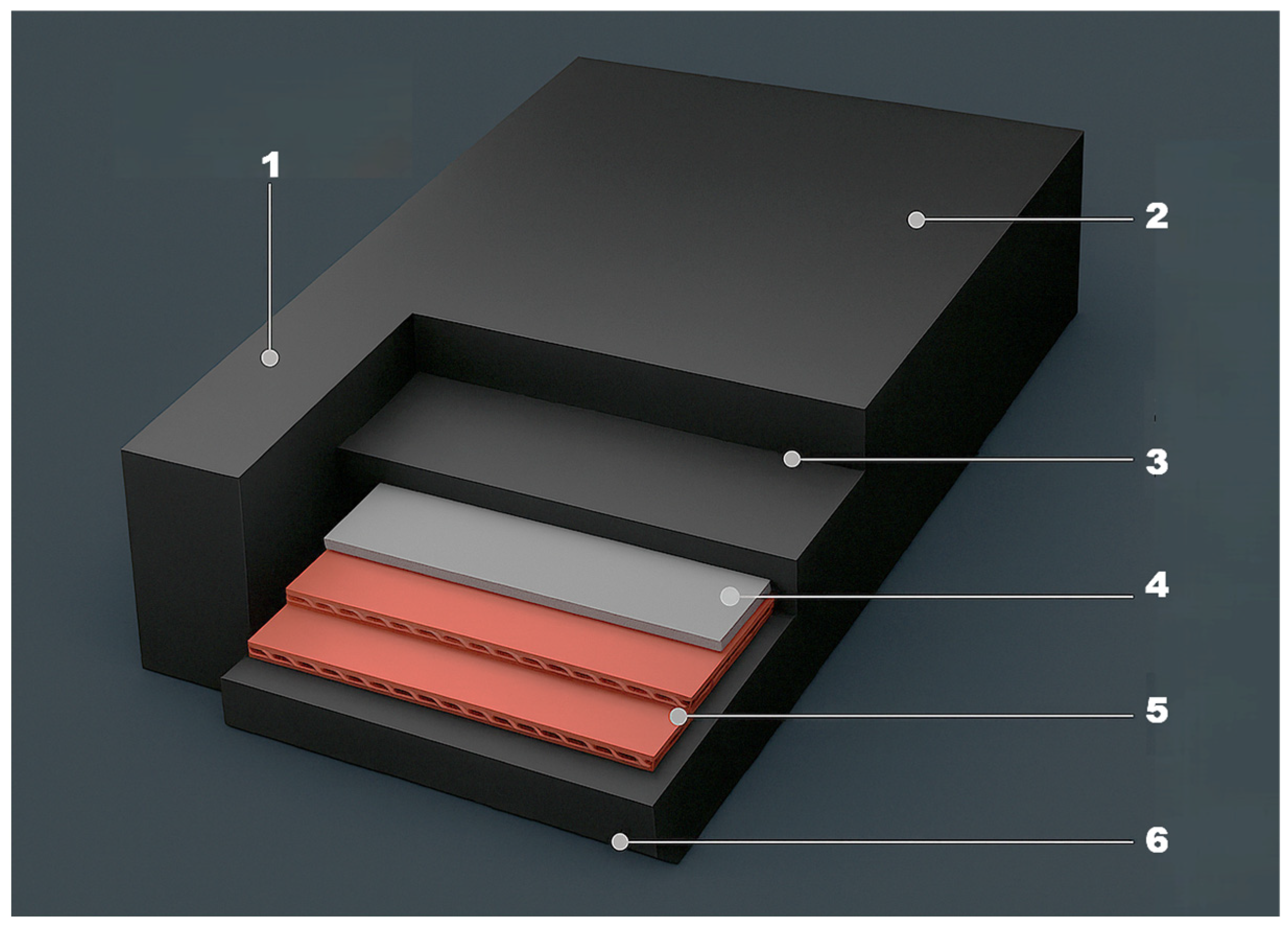
Rubber–textile belts are used in mines, quarries, sand pits, cement works, lime works, metallurgy, construction, and agriculture, and also in power plants. The belts are made of rubber covering layers, rubber edges, and a carcass which contains several textile inserts (Figure 1). The carcass materials are various synthetic fibers (e.g., polyester E, polyamide P, aramid D), natural fibers (e.g., cotton B) or steel cords (designation ST) in the case of steel cord belts. The covering layers and edges protect the belt from damage to the carcass and from atmospheric, biological and chemical influences [17]. The carcass of conveyor belts often also includes a bumper, which increases puncture resistance. The tensile strength and dimensional stability of the belts depend largely on the mechanical properties of the textile fibers: polyester has a high modulus of elasticity and resistance to elongation, which increases the stability of the belt [18]; polyamide is characterized by elasticity and fatigue resistance, which prolongs its service life [19]; and aramid fibers, thanks to their strength-to-weight ratio and heat resistance, provide excellent tensile strength and resistance to deformation, thus improving the overall performance of the belt and its service life [20].
Figure 1.
Construction of a rubber–textile conveyor belt: 1—protective rubber edge, 2—top cover layer, 3—adhesive mixture, 4—bumper, 5—carcass (textile plies), 6—bottom cover layer.
Experimental tests were performed on three types of rubber–textile conveyor belts (Table 2):
Table 2.
Characteristics of the tested conveyor belts.
- EP 800/3 1000 4 + 2 H—rubber–textile belt with a carcass material consisting of polyester (E) fabrics in the warp and polyamide (P) in the weft, with cover layer category H, i.e., a belt resistant to high temperatures;
- EP 800/3 800 4 + 2 Y—rubber–textile belt with a carcass material consisting of polyester fabrics in the warp and polyamide in the weft, with a category of covering layers Y, i.e., the belt is antistatic and abrasion resistant;
- EP 630/4 800 4 + 2 Y—rubber–textile belt with the same carcass material as the previous types and with cover layer category Y.
2.2. Test Methodology
A hydraulic punching press ATOM SE 25 (ATOM S.p.A., Vigevano, Italy) was used for sample preparation. This press allows precise cutting of the desired sample shape with smooth edges and without unwanted material deformation. Type A test pieces [21] were cut using the punching tool, which was subsequently used for experimental measurements. After cutting, each piece was fixed in the jaws of a Zwick/Roell Z030 tensile testing machine (ZwickRoell GmbH & Co. KG, Ulm, Germany). The test was carried out at a constant loading speed of 100 mm.min−1. During testing, the elongation values of the piece were recorded using a videoextensometer videoExtens (ZwickRoell videoExtens, Ulm, Germany). For each type of belt, three pieces ruptured between the reference lines—all tested pieces satisfied the testing standard requirements. The tensile properties of the belts under investigation were determined according to [21]:
- o
- Tensile strength—the maximum force measured during the tensile test, divided by the width of the test piece:where fs—tensile strength [N·mm−1];
- ▪
- Fr—the maximum force [N];
- ▪
- bt—the width of the test piece [mm].
The resulting tensile strength value is the arithmetic mean of the values for three test pieces.
- o
- Elongation at break—elongation at peak force, expressed as a percentage increase in the distance between two reference lines:where Ɛab—the elongation at break [%];
- ▪
- L1—the distance between reference lines before loading [mm];
- ▪
- L2—the distance between reference lines at break [mm].
The resulting value of the elongation at break is the arithmetic mean of the values for the three test pieces.
The test pieces were taken in the longitudinal direction, i.e., along the warp, but also in the transverse direction, in the so-called weft. The strain rate, denoted as ϵ˙, was determined as the derivative of the strain with respect to time for three examined belts in both directions.
3. Results
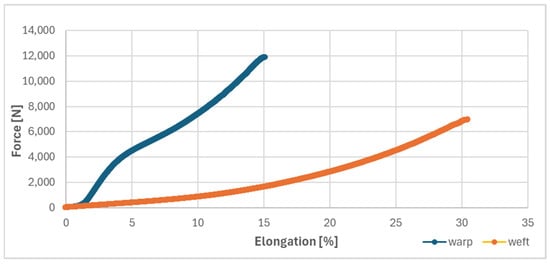
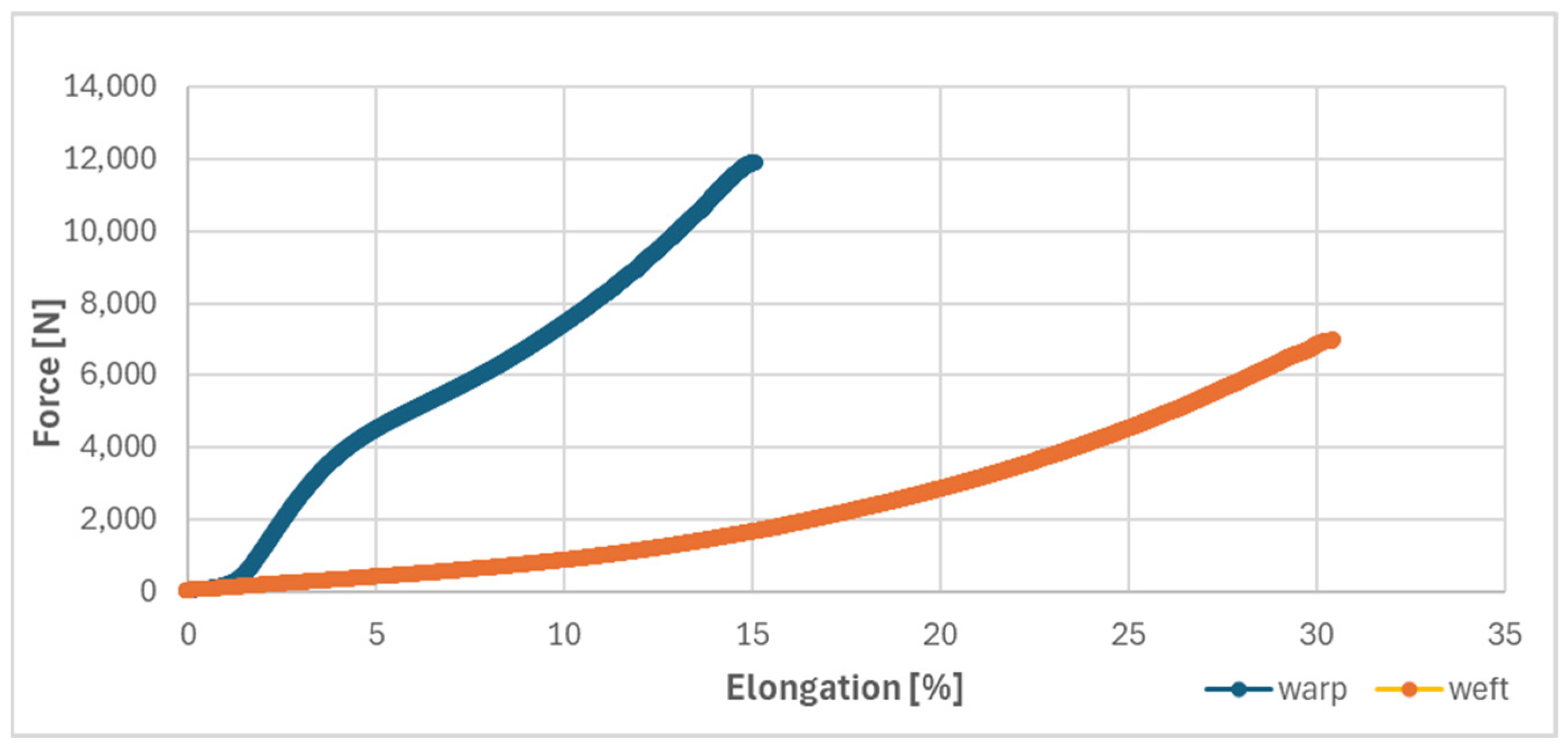
The investigated rubber–textile conveyor belts are multilayer composites made of textile reinforcement (polyester, polyamide) + rubber cover layers and intermediate layers [22]. The tensile properties of these belts are mainly influenced by the material of the carcass, which serves to transfer tensile forces from the drive drum of the belt conveyor to the conveyor belt and ensures the tensile strength of the belt [23]. The tested belts are made of different synthetic textile fibers. In the longitudinal direction, i.e., in the warp, a thermoplastic polymer—polyester—was used, which is characterized by a high strength, good tensile properties, and resistance to acids, alkalis and moisture. In the transverse direction, i.e., in the weft, a typical viscoelastic material—polyamide—was used, which is resistant to moisture and chemicals and has excellent abrasion resistance and tensile strength, but exhibits significant elongation [1]. These differences are evident from the tensile diagrams of the tested Belt 1 (EP800/3 1000 4 + 2 H) taken in both directions (Figure 2). The tensile strength in the warp reaches almost two times the strength in the weft, and the elongation in the warp is about 50% lower than in the weft.
Figure 2.
Tension diagrams of EP800/3 1000 4 + 2 H (Belt 1) in different directions.
3.1. Welf Strain Rates
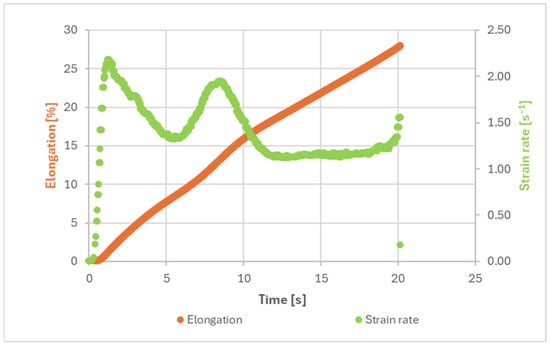
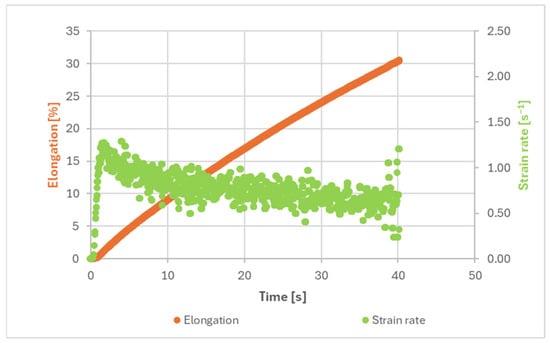
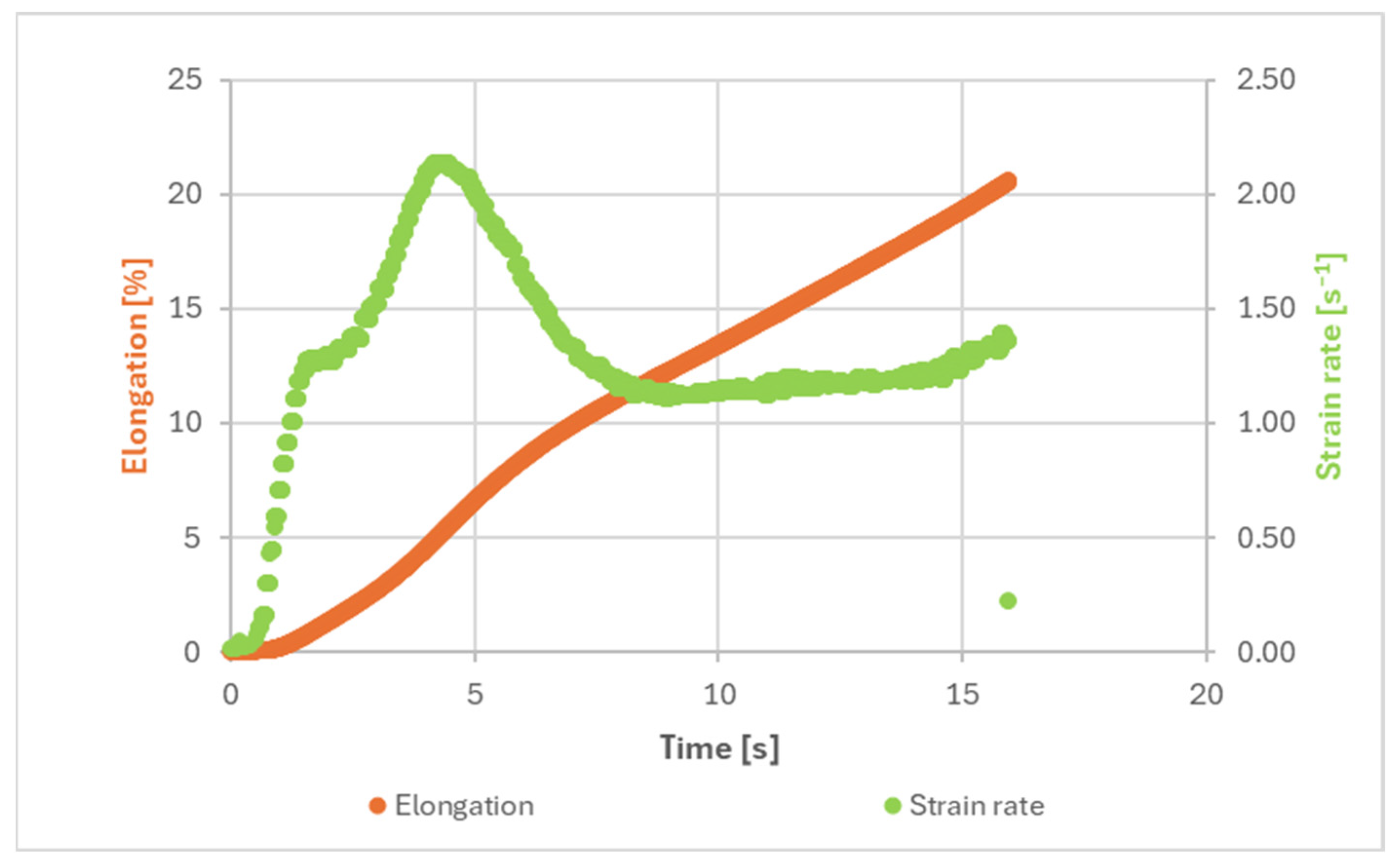
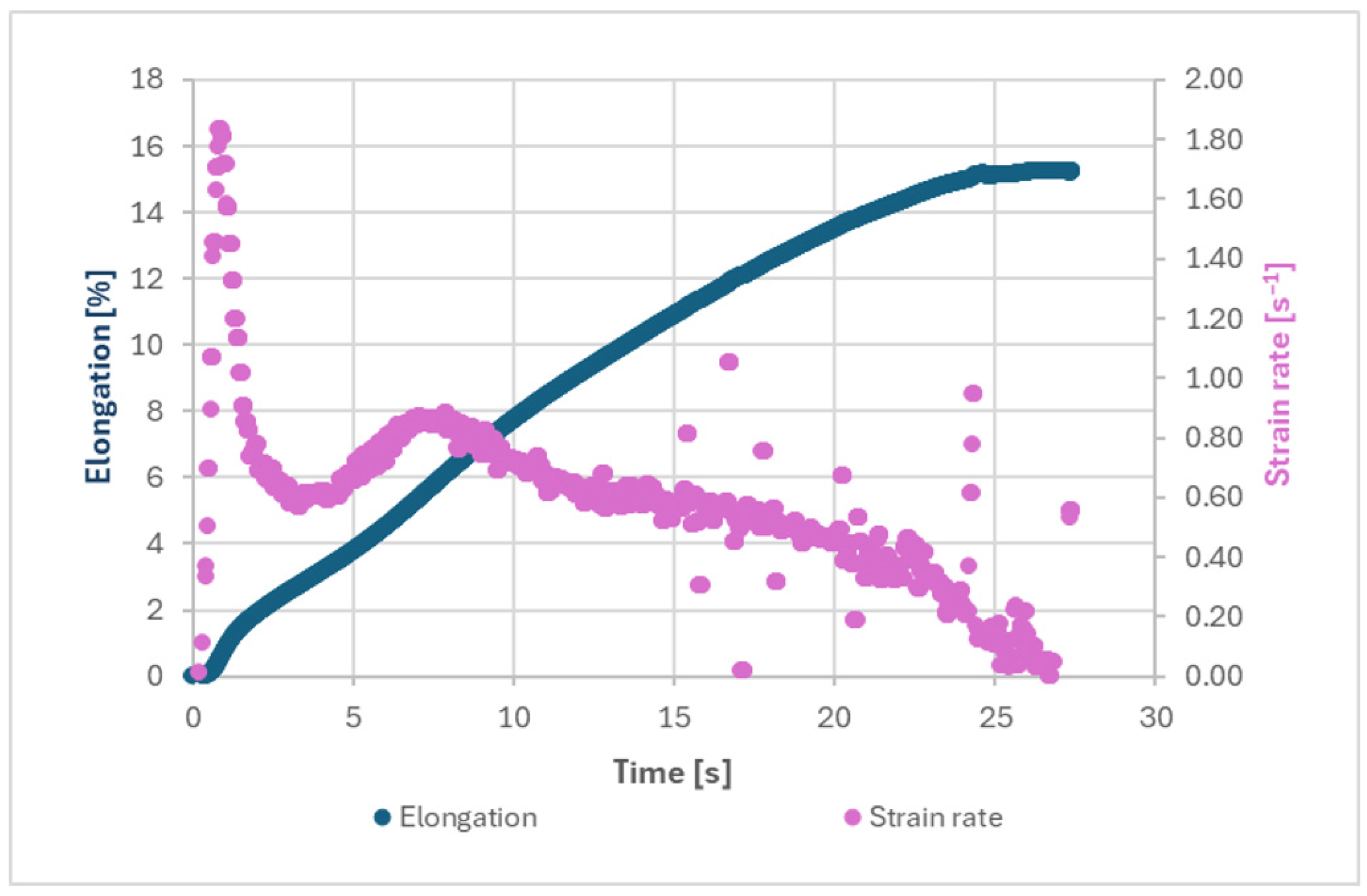
The mechanical properties of polymers are sensitive to temperature and strain rate [24]. At room temperature, polyamide exhibits time-dependent (viscoplastic) deformation [25]. In this work, the experiments were performed at a standard temperature, so its influence was not evaluated. The elongation and strain rate curves in the weft are shown in Figure 3, Figure 4 and Figure 5. By comparing the curves, differences in the behavior of textile materials under loading in this transverse direction can be observed.
Figure 3.
Strain rate progression in the weft (Belt 2).
Figure 4.
Strain rate progression in the weft (Belt 1).
Figure 5.
Strain rate progression in the weft (Belt 3).
In Figure 3, the curve for the belt EP800/3 800 4 + 2 Y (Belt 2) is shown. The strain rate in this case after the run-up ranges in the interval 1.1–2.1 s−1. The strain rate course is uneven: it shows a maximum at the beginning of the tensile force; then, there is an evident decrease with a subsequent increase in the rate up to a point that does not exceed the maximum. Approximately halfway through the test, after the second decrease, the strain rate stabilizes. At the end of the test, a sharp increase in the rate is evident. The non-uniform strain rate curve observed for Belt 2 is attributed to the interaction between the rubber layers and the textile inserts during tensile loading, resulting in localized micro-shears and evident non-uniform deformation. The strain rate curves are also likely influenced by the composition of the rubber compound, which, even with the same categories of cover layers, may not be completely identical for all tested belts.
Figure 4 shows a belt EP800/3 1000 4 + 2 H (Belt 1), where a more uniform strain rate can be observed compared to the previous belt, but with more pronounced fluctuations. The strain rate after the run-up moves in the interval 0.2–1.2 s−1.
Figure 5 shows the progression for the belt EP630/4 800 4 + 2 Y (Belt 3), where initially there is a gradual increase in the strain rate to a maximum. After a decrease, the strain rate stabilizes in the second half of the test and gradually increases. After the run-up, the strain rate ranges from 1.1 to 2.1 s−1.
In the weft direction, there is an increase in the strain rate at the beginning of the loading. After this increase, a stabilization phase occurs in the second half of the tests. In the weft direction, greater variability in the material behavior can be observed, indicating that materials in this orientation are more susceptible to changing the response under loading than in the warp.
3.2. Warp Strain Rates
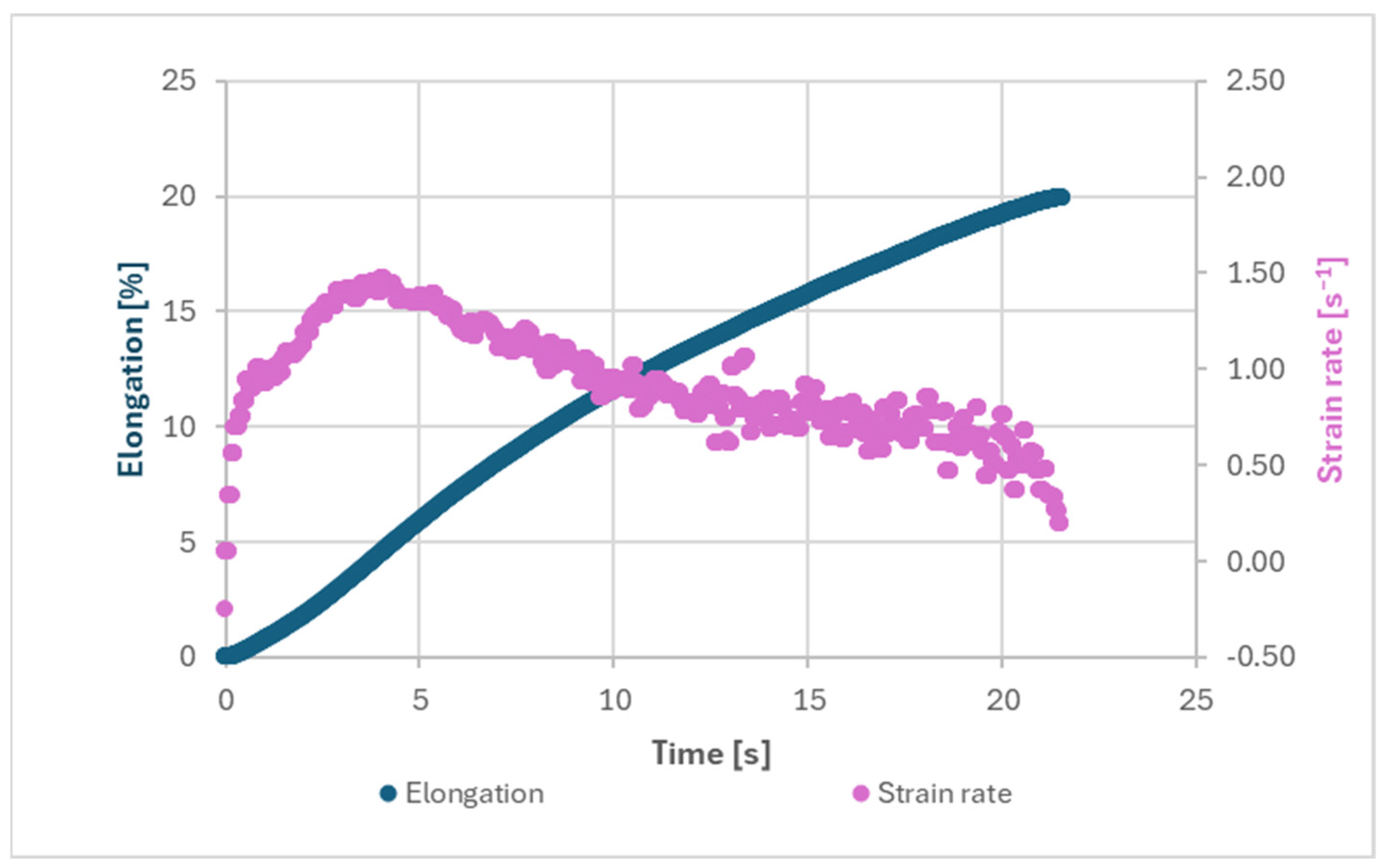
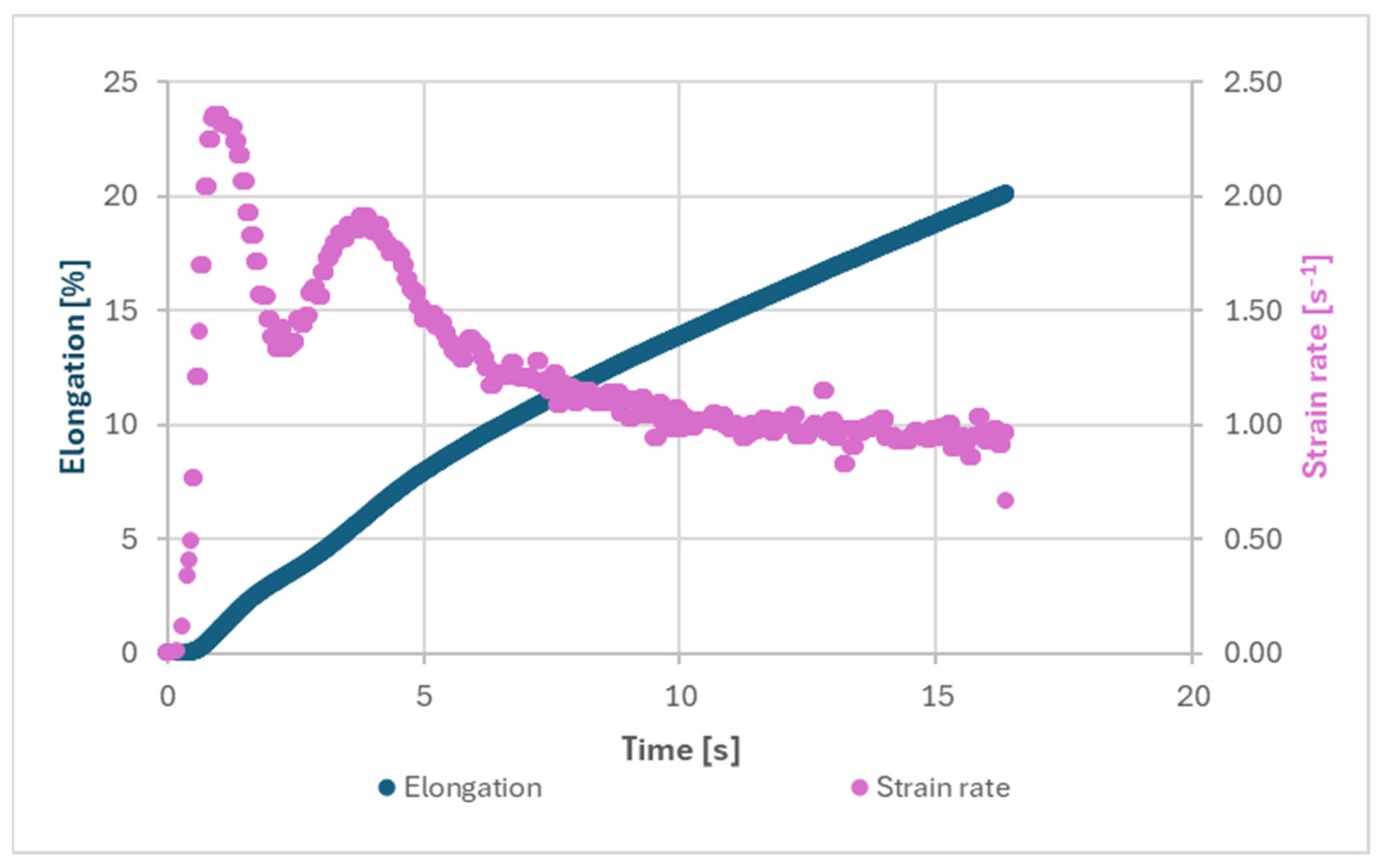
Both elongation and strain rate curves along the warp, which are shown in Figure 6, Figure 7 and Figure 8, show a different strain pattern compared to the weft orientation.
Figure 6.
Strain rate progression in the warp (Belt 2).
Figure 7.
Strain rate progression in the warp (Belt 1).
Figure 8.
Strain rate progression in the warp (Belt 3).
In Figure 6, which shows the belt EP800/3 800 4 + 2 Y (Belt 2), a gradual increase in the strain rate can be seen during the first third of the test. After reaching the maximum, the strain rate decreased, changing smoothly without significant fluctuations, which indicates a consistent behavior of the material under loading in this direction. At the beginning, a negative value of the strain rate was recorded, which is related to the preload, which at the beginning of the test was apparently compressive.
Figure 7 captures the course for the belt EP800/3 1000 4 + 2 H (Belt 1), where the course of the strain rate is significantly uneven, showing a maximum at the beginning of the tensile force, followed by a sharp decrease to a rate of 0.5 s−1. The subsequent increase in the rate reaches 50% for the maximum, and the rate then declines. At the end, a negative value of the strain rate was recorded, which is related to reaching a plateau for elongation. The negative strain rate corresponds to a short-term relaxation effect during sample tearing, which may occur due to the viscoelastic behavior of rubber materials or the redistribution of internal stress in the belt structure after peak loading.
Figure 8 shows the belt EP630/4 800 4 + 2 Y (Belt 3), where the strain rate develops similarly to the previous belt. In this case, the strain rate after the run-up ranges in the interval 0.8–2.3 s−1. The strain rate course is uneven, with a maximum at the beginning of the tensile force; then, a decrease is evident, followed by an increase in the rate up to a point that does not exceed the maximum. Approximately halfway through the test, the second decrease is followed by a stabilization of the strain rate.
After the warp, there is a sudden increase in the strain rate at the beginning of the loading, which indicates that the material responds more dynamically to the increasing force. From the comparison of the strain rate curves, it is clear that the individual belts respond to the force differently. Belt 2 is characterized by a smooth and stable strain rate curve, which indicates its uniform material response, while the other two belts show more pronounced deviations in strain rate, especially in the initial stages of loading. Belt 3 reaches the highest values of strain rate. Conversely, Belt 2 also shows zero values.
The deformation rate curves are influenced not only by the anisotropy that textile materials exhibit, but also by the different types of textile fibers used in individual directions. In the case of the warp, these were almost straight polyester fibers, the properties of which differ significantly from polyamide wavy and interlaced fibers. When loaded in the weft, the wavy polyamide fibers straighten and the fabric weave rearranges. This process occurs gradually and increases the deformation rate, especially in the initial phase of the test. The deformation capacity of polyamide is significant, but when used in the transverse direction, it is limited with respect to the load. Polyester, thanks to its high modulus of elasticity, has resistance to elongation, which is an important factor for the deformation rate.
3.3. Comparison of Strain Rates
The strain rate of a composite material, such as a conveyor belt, is influenced by several parameters. The carcass material is responsible for the tensile strength of the belt, but defining its influence for different types of EP belts is not unambiguous. The highest value of the strain rate along the warp is shown by Belt 3 (2.35 s−1), while in the weft the highest measured value is 2.18 s−1 for Belt 2. The maximum average strain rates were recorded for all belts in the weft (Table 3), which corresponds to the better deformation ability of polyamide, which is also confirmed by higher values of elongation Ɛab in the weft. The maximum tensile strength fs was confirmed along the warp for Belt 3, as well as the maximum value of the strain rate. The minimum tensile strength and minimum strain rate are shown by Belt 1 in the weft.
Table 3.
Mechanical properties of the tested conveyor belts.
The mechanical properties of these composites are strongly rate-dependent—the stress increases at higher strain rates. Under cyclic loading, the fatigue properties are strongly dependent on the cycling rate (frequency), which is analogous to the increased strain rate. These findings are directly transferred to the rubber interlayer of rubber–textile belts: during rapid deformation (shocks, sudden bends on drums, impact when the material falls), the belt is stiffer and more stressed, and the temperature increases [26].
4. Conclusions
Based on experimental measurements, the strain rate was evaluated in two main directions: weft and warp. The results showed that the direction significantly affects the dynamics of belt deformation. Strain rates in the weft are higher than in the warp, which indicates a higher sensitivity of materials to loading in this direction. This difference can be caused by the orientation of textile fibers in the belt construction, as well as the different weave of the material in the weft and warp. The different deformation rate of EP conveyor belts in the warp and weft is caused by a combination of anisotropic textile construction, the different mechanical properties of polyester and polyamide, the geometric alignment of fibers in the weft and different load transfer under tensile stress.
The mechanical response of rubber–textile conveyor belts with EP carcasses is anisotropic due to the combined viscoelastic behavior of the adhesive mixture and the different tensile characteristics of the polyester warp and polyamide weft yarns. While the tensile properties of conveyor belts are well examined, the deformation behavior of entire belts and their individual structural components as a function of the strain rate was not sufficiently quantified, especially with respect to the loading direction.
This work investigates the strain rate during the uniaxial tensile loading of selected rubber–textile conveyor belts, with an emphasis on the differences between loading directions. The experimental program combines tensile tests of full-thickness belt specimens with an analysis of deformation contributions of rubber covers, rubber layers and textile carcass layers. The results show that the deformation rate is strongly influenced by the structural arrangement of the textile reinforcement, leading to significantly different deformation kinetics in the warp and weft directions. The findings provide new insights into the time-dependent mechanical behavior of EP conveyor belts and complement existing tensile strength-based assessments. By identifying key structural parameters influencing the deformation rate, the study contributes to the optimization of textile carcass design and rubber–textile combinations, thereby promoting longer service life, improved operational safety and increased sustainability of belt conveyor systems operating under severe loading conditions.
Author Contributions
Conceptualization, Ľ.A. and L.Č.; methodology, Ľ.A.; software, Ľ.A. and L.Č.; validation, Ľ.A.; formal analysis, Ľ.A.; investigation, Ľ.A.; resources, Ľ.A.; data curation, Ľ.A.; writing—original draft preparation, Ľ.A.; writing—review and editing, Ľ.A. and L.Č.; visualization, Ľ.A. and L.Č.; supervision, Ľ.A.; project administration, Ľ.A.; funding acquisition, Ľ.A. All authors have read and agreed to the published version of the manuscript.
Funding
This work was supported by the Scientific Grant Agency of the Ministry of Education, Research, Development and Youth of the Slovak Republic and the Slovak Academy Sciences as part of the research project VEGA 1/0114/25.
Institutional Review Board Statement
Not applicable.
Informed Consent Statement
Not applicable.
Data Availability Statement
The data presented in this study are available on request from the corresponding author due to legal reasons.
Conflicts of Interest
The authors declare no conflicts of interest.
Abbreviations
The following abbreviations are used in this manuscript:
| E | Polyester |
| FEM | Finite Element Method |
| P | Polyamide |
References
- Adak, B.; Chatterjee, U.; Joshi, M. Rubber-Based Sustainable Textiles and Potential Industrial Applications. Textiles 2025, 5, 17. [Google Scholar] [CrossRef] [Scilit]
- Kabziński, A. Rubber textile composites. Application of fabrics in conveyor belts. Tech. Wyr. Włókiennicze 2010, 18, 59–63. [Google Scholar]
- Deka, R.; Borthakur, P.P.; Baruah, E.; Sarmah, P.; Saikia, M. A comprehensive review on mechanical conveyor systems: Evolution, types, and applications. Int. J. Eng. Nat. Sci. 2024, 18, 164–183. [Google Scholar]
- Veles, P. Mechanical Properties and Testing of Metals, 1st ed.; Alfa: Bratislava, Slovakia, 1985. (In Slovak) [Google Scholar]
- Li, J.-X.; Pang, X.-X.; Li, Y.-J. Research of Dynamic Characteristic of Belt Conveyor. In Proceedings of the 3rd Annual International Conference on Mechanics and Mechanical Engineering (MME 2016), Chengdu, China, 16–18 December 2016; Atlantis Press: Dordrecht, The Netherlands, 2016; pp. 304–312. [Google Scholar]
- Düzenli, A.; Gül, O. Stress Analysis of Belt Conveyor Roller Tube. In Proceedings of the 5th International Conference on Applied Engineering and Natural Science, Konya, Turkey, 10–12 July 2023. [Google Scholar]
- Chelopo, D.; Gupta, K. Structural analysis on mild-steel and aluminium brake disk for application on belt conveyor. IOP Conf. Ser. Mater. Sci. Eng. 2020, 971, 042056. [Google Scholar] [CrossRef] [Scilit]
- Grincova, A.; Marasová, D. Experimental research and mathematical modelling as an effective tool of assessing failure of conveyor belts. Eksploat. I Niezawodn. Maint. Reliab. 2014, 16, 229–235. [Google Scholar]
- Puhach, A.M.; Lysytsia, M.I.; Kalhankov, Y.V.; Lysytsia, N.M.; Hrunskyi, D.O. Rationale for the thickness of the rubber lining of belt conveyor drums. Geo-Tech. Mech. 2021, 157, 152–162. [Google Scholar]
- Lemmi, T.S.; Barburski, M. Thermal aging effect on the physio-mechanical properties of textiles used for the reinforcement of conveyor belts. Fibres Text. 2023, 30, 105–109. [Google Scholar] [CrossRef] [Scilit]
- Ali, A.A.; Abdellah, M.Y.; Hassan, M.K.; Mohamed, S.T. Optimization of tensile strength of reinforced rubber using Taguchi method. Int. J. Sci. Eng. Res. 2018, 9, 180–186. [Google Scholar]
- Rudawska, A.; Madleňák, R.; Madleňáková, L.; Droździel, P. Investigation of the effect of operational factors on conveyor belt mechanical properties. Appl. Sci. 2020, 10, 4201. [Google Scholar] [CrossRef] [Scilit]
- Stepanović, J.; Ćirković, N.; Sadiković, A.; Stepanović, J. Analysis of the deformation characteristics of woven textile materials in plain weave. Adv. Technol. 2024, 13, 50–56. [Google Scholar] [CrossRef] [Scilit]
- Lemmi, T.S.; Barburski, M.; Kabzinski, A.; Frukacz, K. Effect of vulcanization process parameters on the tensile strength of carcass of textile-rubber reinforced conveyor belts. Materials 2021, 14, 7552. [Google Scholar] [CrossRef] [Scilit] [PubMed]
- Ilanković, N.; Živanić, D.; Katona, M. Analysis of the conveyor belt tensile properties. In Proceedings of the VI Međunarodna Konferencija “Savremeni Trendovi i Inovacije u Tekstilnoj Industriji”, Belgrade, Serbia, 14–15 September 2023. [Google Scholar]
- Zarzycki, J. The influence of selected parameters on the elasticity modulus of conveyor belts with a polyester-polyamide core. Min. Inform. Autom. Electr. Eng. 2023, 556, 49–55. [Google Scholar] [CrossRef] [Scilit]
- Kalia, S.; Fu, S.-Y. (Eds.) Polymers at Cryogenic Temperatures, 1st ed.; Springer: Heidelberg, Germany, 2013. [Google Scholar]
- Barburski, M. Analysis of the mechanical properties of conveyor belts on the three main stages of production. J. Ind. Text. 2014, 45, 1322–1334. [Google Scholar] [CrossRef] [Scilit]
- Li, B.; Liao, G.; Li, Y.; Xie, Z.; Cui, L.; Cao, K.; Liu, Y. Investigation of dynamic viscoelastic asymmetric response of PA6 film based on fractional rheological model. Polymers 2024, 16, 2485. [Google Scholar] [CrossRef] [Scilit] [PubMed]
- Van De Ven, H.; Beers, H.; Lodewijks, G.; Drenkelford, S. Aramid in conveyor belts: Extended lifetime, energy savings and environmental effects. In Proceedings of the Beltcon 18—The International Materials Handling Conference (IMHC), Johannesburg, South Africa, 9 March 2015. [Google Scholar]
- ISO 283:2023; Textile Conveyor Belts—Full Thickness Tensile Strength, Elongation at Break and Elongation at the Reference Load—Test Method. International Organization for Standardization: Geneva, Switzerland, 2023.
- Ambriško, Ľ.; Marasová, D. Experimental research of rubber composites subjected to impact loading. Appl. Sci. 2020, 10, 8384. [Google Scholar] [CrossRef] [Scilit]
- Ambriško, L.; Marasová, D.; Grendel, P. Determination the effect of factors affecting the tensile strength of fabric conveyor belts. Eksploat. Niezawodn. Maint. Reliab. 2016, 18, 110–116. [Google Scholar] [CrossRef] [Scilit]
- Song, P.; Trivedi, A.; Hawkins, N.; Graham, A.; Chapman, D.; Siviour, C.R. Thermomechanical characterisation of polyamide 6 over a wide range of rates and temperatures. Polymer 2024, 300, 126907. [Google Scholar] [CrossRef] [Scilit]
- Regrain, C.; Laiarinandrasana, L.; Toillon, S. Experimental and numerical study of creep and creep rupture behavior of PA6. Eng. Fract. Mech. 2009, 76, 2656–2665. [Google Scholar] [CrossRef] [Scilit]
- Wootton, D.B. The Application of Textiles in Rubber, 1st ed.; Rapra Technology Ltd.: Shawbury, UK, 2003. [Google Scholar]

Disclaimer/Publisher’s Note: The statements, opinions and data contained in all publications are solely those of the individual author(s) and contributor(s) and not of MDPI and/or the editor(s). MDPI and/or the editor(s) disclaim responsibility for any injury to people or property resulting from any ideas, methods, instructions or products referred to in the content. |
© 2026 by the authors. Licensee MDPI, Basel, Switzerland. This article is an open access article distributed under the terms and conditions of the Creative Commons Attribution (CC BY) license.