


Abstract
CO2 geological storage in deep coal seams is a key carbon emission reduction approach, where coal permeability dominates sequestration efficiency. Current studies mainly concentrate on pre-CO2-adsorption permeability of various coal ranks, while studies on permeability evolution after CO2 adsorption saturation remain limited, which is vital for optimizing sequestration schemes. This work performed permeability experiments on different-rank coal samples saturated with CO2 under diverse axial confining pressures and temperatures. The sequestration rate, capacity, and engineering safety were analyzed to propose optimal sequestration conditions. Results reveal that coal permeability decreases significantly after CO2 saturation. With axial confining pressure increasing from 10 to 30 MPa, the permeability of low-, medium- and high-rank coals declines continuously. Within the temperature range of 20 °C to 60 °C, the permeability of low-rank long-flame coal decreases first then increases, whereas medium-rank coking coal and high-rank anthracite show the opposite trend. At 800 m burial depth, CO2 injection efficiency first declines then rises. Distinct permeability evolution exists in different coal ranks, so differentiated injection strategies should be adopted to balance sequestration efficiency and safety. By mathematically fitting the permeability variation curves of anthracite saturated with CO2 under varying axial and confining pressures, combined with the surrounding rock stress formula around the borehole, when CO2 at approximately 4.7 MPa is injected into anthracite seams, CO2 can permeate to a distance of 1.35 times the borehole radius from the borehole center around the borehole. The penetration radius ratio of 1.35 is only a qualitative indicator, not a fixed design parameter.
1. Introduction
To address the pressing challenges of China’s “dual carbon” goal and based on its coal-dominated energy structure, developing safe and efficient carbon capture, utilization, and storage (CCUS) technologies, especially reliable CO2 storage, has become an urgent requirement and practical choice for achieving near-zero emissions from fossil energy [1,2]. CO2 storage technologies mainly include geological storage and ocean storage, among which geological storage has been extensively studied due to its long-term safety. The primary geological storage media include deep saline aquifers, depleted oil and gas reservoirs, and deep coal seams [3,4,5]. For deep coal seam resources that are currently underutilized owing to technical and economic constraints, developing deep coal seam CO2 storage technology can not only realize safe CO2 sequestration but also effectively displace coalbed methane, thereby synergistically improving environmental protection and resource efficiency [6,7,8].
During effective CO2 storage in deep coal seams, coal permeability is a key parameter governing CO2 injectability, migration range, and storage stability. Permeability directly determines the injection rate and injectable volume of CO2, thereby affecting CO2 displacement and sequestration efficiency. Better-developed pores and fractures in coal correspond to higher permeability, which accelerates CO2 injection and facilitates CO2 entry into coal pores [9,10,11]. Considerable experimental efforts have been made to clarify the permeability evolution of coal induced by CO2 adsorption. Chen et al. [12] used micro-CT and seepage tests to confirm that fracture expansion and improved connectivity dominate permeability enhancement after CO2 saturation, and established a quantitative relationship between permeability, fractal dimension, and porosity, which provides a method reference for analyzing the pore structure–permeability relationship in this work. Chen et al. [13] investigated the coupled hydro–mechanical behavior of coal under varying CO2 pressures and revealed a multi-stage permeability evolution law, yet neglected the influence of coal rank, which supports the necessity of comparing different coal ranks in this study. Wang et al. [14] and Hou et al. [15] focused on supercritical CO2 conditions and emphasized the roles of mineral dissolution and pore-fracture development in permeability variation, but rarely addressed conventional CO2 adsorption or systematic comparisons among coal ranks, which guides this study to use normal CO2 and carry out multi-rank experiments. Zhang et al. [16] further identified that CO2 adsorption intensifies permeability anisotropy, but comprehensive studies on permeability responses of different-rank coals after full CO2 adsorption saturation are still insufficient, which enhances the significance of measuring permeability under fully CO2-saturated conditions in this work. Su et al. [17] conducted high-temperature triaxial seepage tests for thermal recovery of coalbed methane and found that coal permeability during heating is controlled by the coupling of thermal expansion and desorption-induced deformation. Thermal expansion compresses seepage channels and reduces permeability, with the effect dependent on porosity; desorption shrinkage enhances permeability. The switch between the two dominant mechanisms determines the overall permeability trend. Shi et al. [18] performed high-temperature triaxial seepage tests on bituminous coal. From 300 °C to 450 °C, effective stress and thermal expansion jointly compress fractures, causing permeability to decrease in a negative logarithmic manner. From 450 °C to 600 °C, thermal pyrolysis widens fractures, leading to a slight permeability recovery. Adsorption-induced swelling reduces permeability with increasing pore pressure, and higher effective stress intensifies this trend. The thermal expansion coefficient of bituminous coal first increases and then decreases with rising temperature, further affecting the rate of permeability decline. This provides a certain degree of reference for the subsequent analysis of the experimental results in this study. Lin et al. [19] systematically investigated the influence of temperature on the fracture evolution of coal in the CO2-H2O system, clarified the synergistic/competitive relationship between thermal effect and desorption-induced shrinkage, and provided an important theoretical basis for this study to analyze the coupling mechanism of thermal expansion effect and CO2 desorption effect in coal.
In summary, there is a significant lack of research on the permeability of coals with different ranks after CO2 adsorption saturation. The evolution law of such permeability is of great significance for optimizing storage parameters and ensuring operational safety. Accordingly, this study focuses on this issue to provide a valuable reference for relevant engineering applications.
2. Experimental Materials and Methods
2.1. Coal Samples and Test System
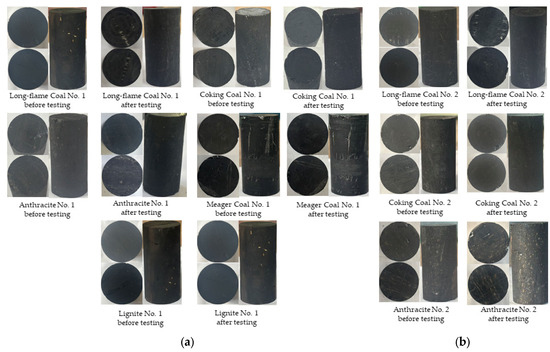
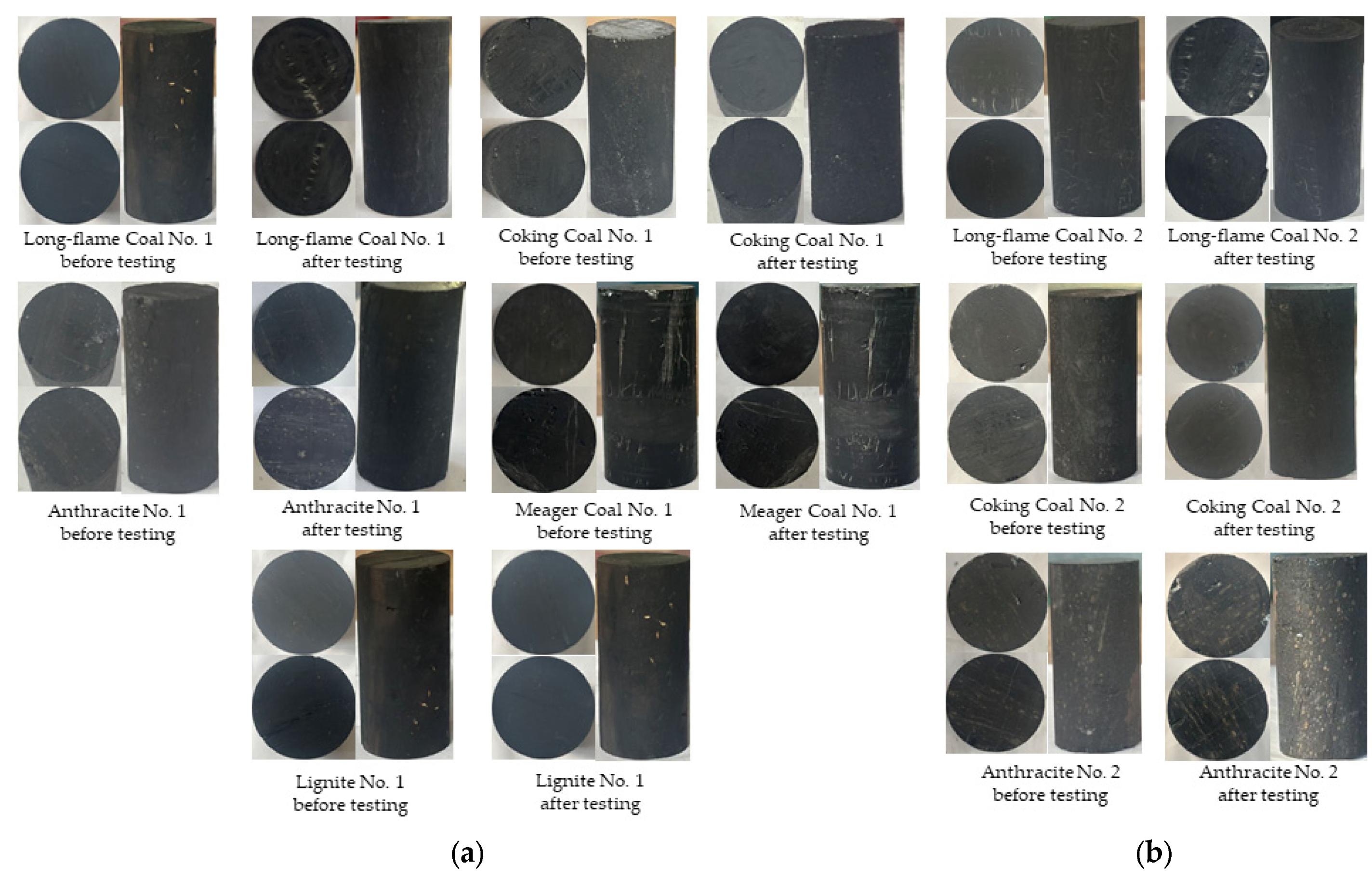
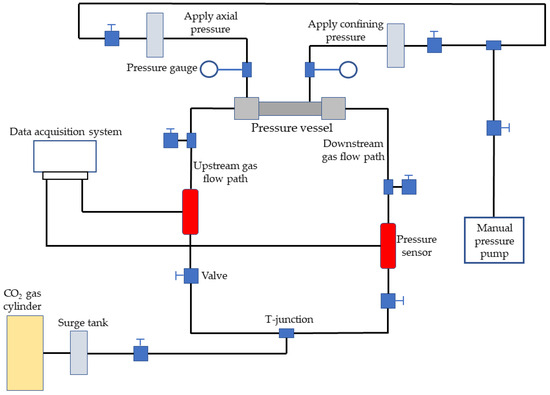
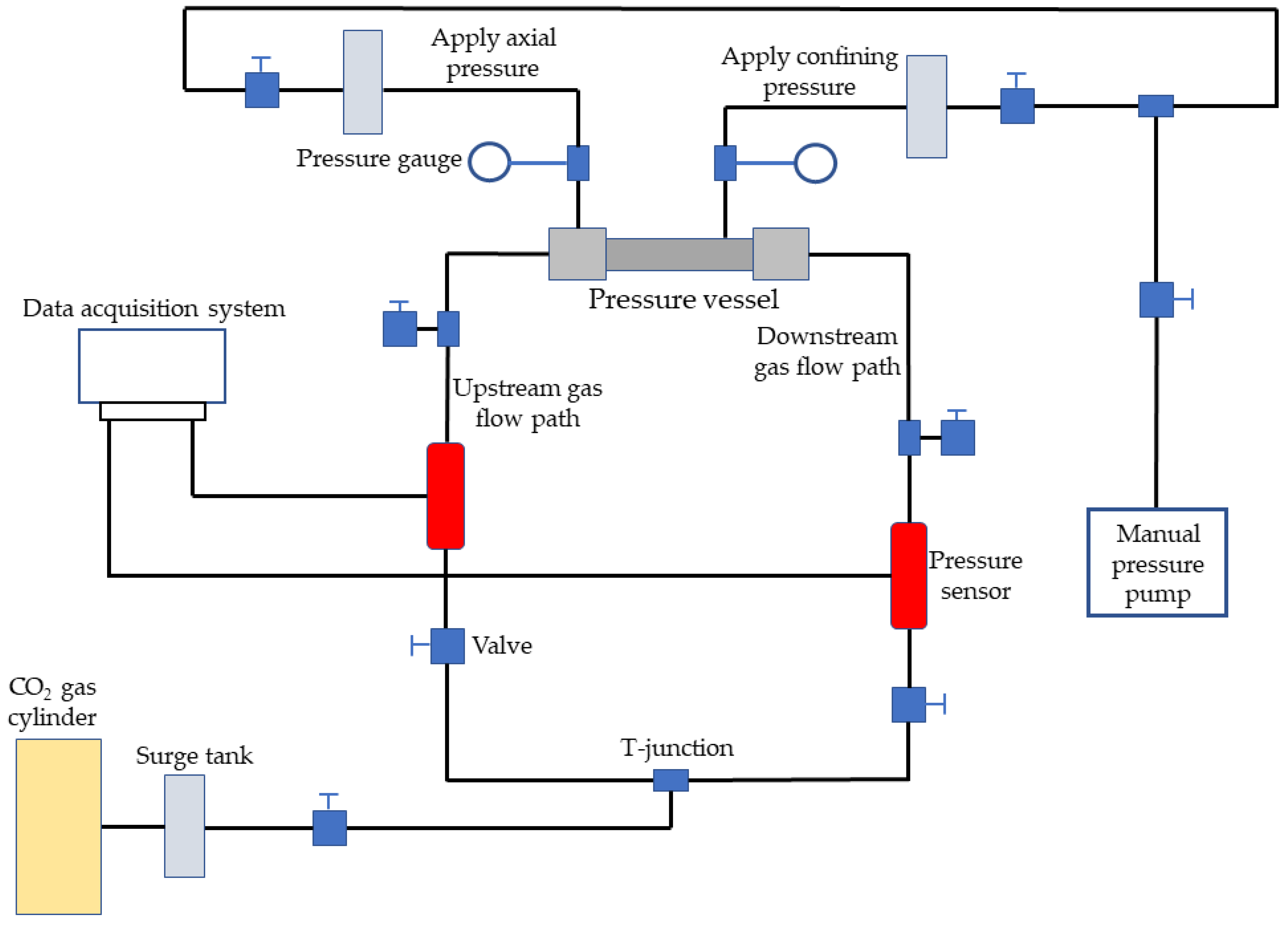
In this study, long-flame coal was collected from Panjiayao Coal Mine in Datong, Shanxi Province, China; coking coal and anthracite were obtained from Tashan Coal Mine in Datong, Shanxi Province; lignite was sampled from Haibaor Mine in Hulunbuir, Inner Mongolia Autonomous Region; and meager coal was taken from Xiaochang Coal Mine in Changzhi, Shanxi Province. According to the experimental requirements, bulk coal samples were processed into standard cylindrical specimens with a diameter of 25 mm and a height of 50 mm using an abrasive wire sawing machine (manufactured by Taiyuan Sicen Mechanical Equipment Co., Ltd., Taiyuan, China) with appropriate cutting parameters. All cylindrical specimens were drilled and processed perpendicular to the coal bedding plane to reduce the influence of anisotropy on permeability test results and ensure consistent experimental conditions. The surface morphologies of the specimens before and after testing are shown in Figure 1. The experimental system mainly consists of a high-purity CO2 cylinder (Taiyuan Dingsheng Gas Co., Ltd., Taiyuan, China), pressure vessel (Taiyuan Jiuding Machinery Manufacturing Co., Ltd., Taiyuan, China), manual pressure pump (Taiyuan Taihang Pressure Test Technology Co., Ltd., Taiyuan, China), PID temperature controller (Taiyuan Taihang Pressure Test Technology Co., Ltd., Taiyuan, China), pressure stabilizer (Taiyuan Jinboke Electronics Co., Ltd., Taiyuan, China), and high-precision pressure sensor (Taiyuan Aviation Instrument Co., Ltd., Taiyuan, China), which are connected by 3 mm pipelines and valves. Since CO2 was used as the pore pressure fluid, coal specimens were wrapped with a special heat-resistant, high-pressure-resistant, and corrosion-resistant rubber sleeve to isolate them from the pressure vessel. The schematic diagram of the experimental setup is illustrated in Figure 2.
Figure 1.
Surface images of samples before and after testing. (a) Specimens for axial and confining pressure tests; (b) specimens for temperature tests.
Figure 2.
Schematic diagram of equipment connection.
The proximate and ultimate analyses of all coal samples are shown in Table 1. Proximate analysis was performed using a muffle furnace (Model SX2-10-12N, manufactured by Shanghai Jingqi Instrument Co., Ltd., Shanghai, China), while ultimate analysis was conducted with an elemental analyzer (Model Unicube, manufactured by Elementar Analysensysteme GmbH, Langenselbold, Germany).
Table 1.
Proximate and ultimate analysis results of coal samples.
2.2. Experimental Procedure
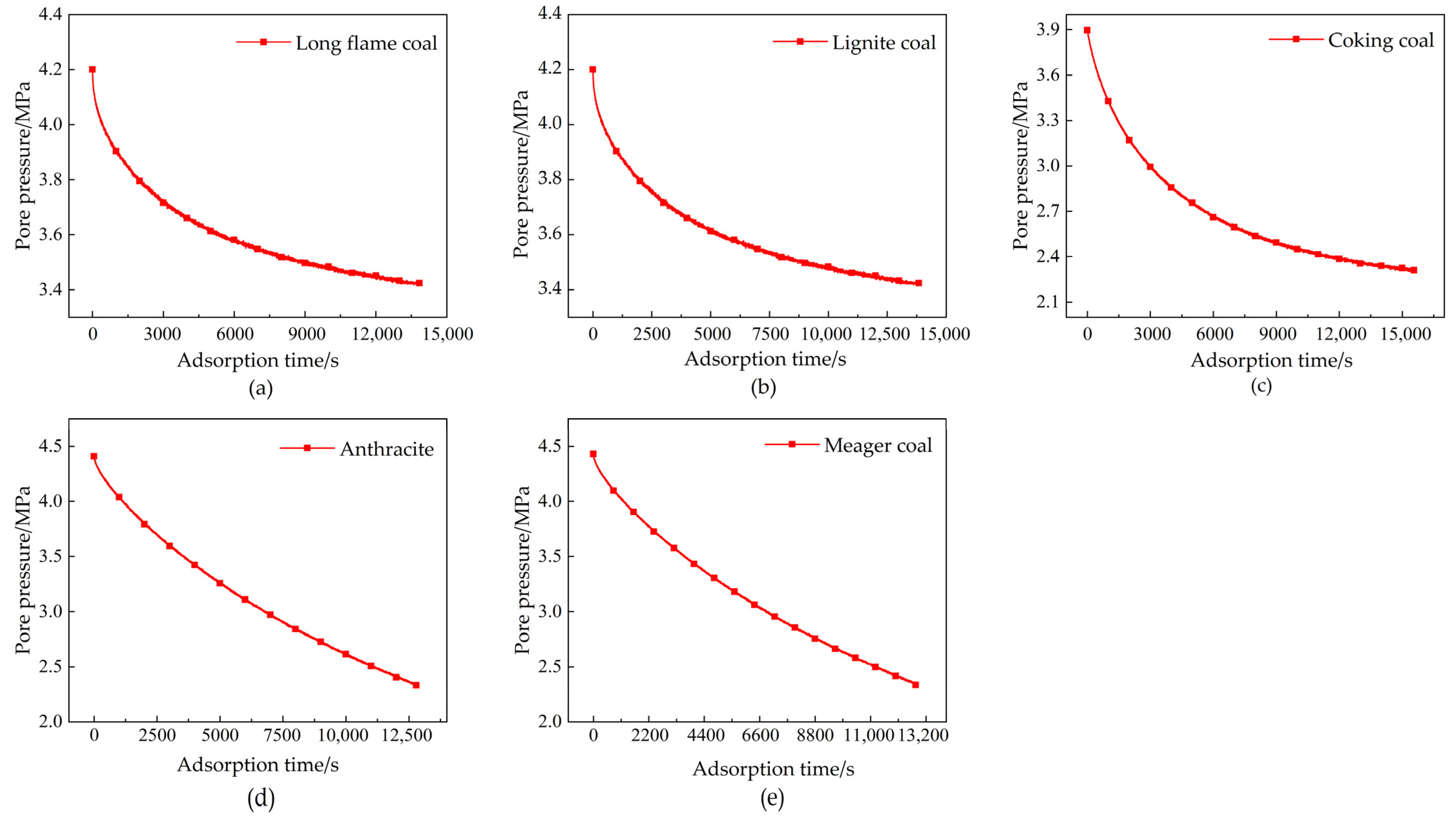
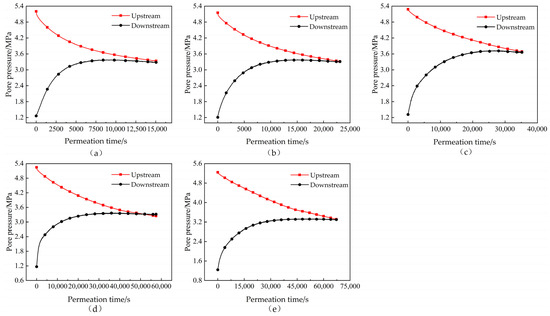
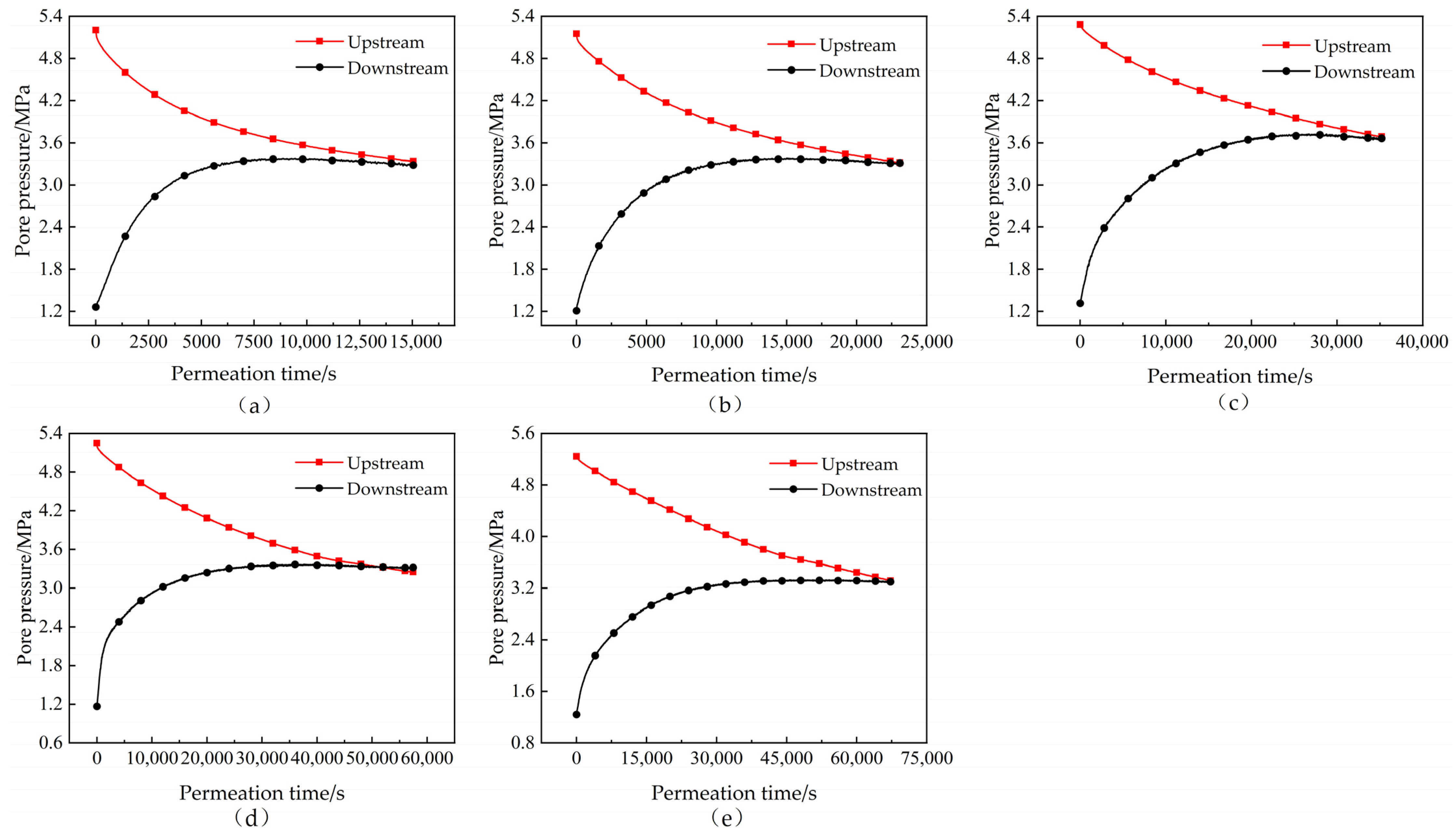
Prior to the pressure and temperature tests, the prepared coal specimens were placed into the pressure vessel in accordance with standard experimental procedures, and the test system was assembled with the upstream and downstream vessels connected. Axial stress and confining pressure were applied to 5 MPa, and CO2 was injected into the vessel to allow sufficient adsorption. As shown in the Figure 3, the pore pressure evolution curves of different rank coals during CO2 adsorption prior to the permeability tests are presented. Under similar adsorption durations, long-flame coal, lignite, and coking coal had already reached CO2 adsorption saturation, whereas anthracite and meager coal had not. The latter two were further allowed to stand for 6 h until full saturation was achieved. Subsequently, CO2 was injected into the upstream and downstream vessels to establish a stable pressure difference, after which the upstream and downstream sections were isolated using valves. The pore pressure was continuously recorded as a function of time. In this study, five coal types were tested to investigate the effect of axial and confining pressure within the range of 10–30 MPa (5 MPa intervals). Meanwhile, three coal types were used to evaluate the temperature effect in the range of 20–60 °C (10 °C intervals). The detailed experimental procedures are as follows:
- (1)
- Assemble the experimental system using 3 mm metal pipelines. After connection, check the airtightness of all joints by applying soapy water; proceed with the experiment only if no bubbles are observed.
- (2)
- Place the prepared long-flame coal No. 1 specimen into the pressure vessel according to standard experimental procedures. Connect the system and communicate the upstream and downstream vessels. Apply axial stress and confining pressure up to 5 MPa; once the pressure readings stabilize, inject CO2 to allow sufficient adsorption.
- (3)
- After adsorption saturation, isolate the upstream and downstream vessels. Inject CO2 at 4.7 MPa into the upstream and 1.0 MPa into the downstream, and continuously monitor the pressure variation in both vessels over time. Terminate the test when the pore pressures reach equilibrium or remain nearly constant.
- (4)
- Maintain a constant temperature and sequentially increase axial and confining pressure to 10 MPa, 15 MPa, 20 MPa, 25 MPa, and 30 MPa. Repeat Step (3) for each pressure increment.
- (5)
- Replace the coal sample and conduct axial and confining pressure tests on coking coal No. 1 specimen, anthracite No. 1 specimen, lignite, and meager coal in sequence.
- (6)
- For temperature tests, fix axial and confining pressure at 15 MPa. Heat the pressure vessel using a PID temperature-controlled heater and measure the coal temperature inside with a thermocouple. Increase the temperature sequentially to 20 °C, 30 °C, 40 °C, 50 °C, and 60 °C and hold for 2 h at each target temperature. Repeat the operational procedure outlined in Step (3) and perform temperature tests on long-flame coal No. 2 specimen, coking coal No. 2 specimen, and anthracite No. 2 specimen in sequence.
Figure 3.
Pore pressure variation curves of different rank coals versus adsorption time. (a) Long flame coal; (b) lignite coal; (c) coking coal; (d) anthracite; (e) meager coal.
For both temperature and axial-confining pressure tests, two parallel coal specimens were tested under each condition to ensure experimental repeatability. The permeability data reported in this study are the average values of duplicate measurements, with the standard deviation controlled within 5%. The measurement uncertainties of permeability, temperature, axial pressure, and confining pressure were systematically analyzed. The main sources of error include instrument accuracy and manual operation, with the combined relative uncertainty of permeability determined to be within ±3%.
3. Experimental Results
3.1. Calculation of Permeability by Transient Method
In this study, the pressure pulse decay method was employed to measure the permeability of coal samples of various ranks after reaching CO2 adsorption saturation. Based on Darcy’s law, combined with the equation of state and mass conservation equation, Brace et al. [20,21] derived the permeability calculation formula under four assumptions: the fluid is weakly compressible, the flow obeys Darcy’s law, the coal sample is a homogeneous and isotropic cylinder, and the entire test process is isothermal. The formula is given as follows:
where ΔP(t) is the pressure difference at time t (Pa), ΔP0 is the initial pressure difference at t = 0 (Pa), Pr is the pressure of 1 Pa, α is the decay constant, a characteristic parameter of the system known as the pressure decay coefficient (s−1), and t is the seepage time (s).
where k is the permeability of the coal sample (m2), A is the cross-sectional area of the coal sample (m2), μ is the dynamic viscosity of the test fluid (Pa·s), β is the volume compressibility of the test fluid (Pa−1), L is the length of the coal sample (m), Vu is the volume of the upstream vessel (m3), and Vd is the volume of the downstream vessel (m3).
In this experiment, CO2 was used as the pore fluid to measure the permeability of coal samples. The critical conditions for CO2 to reach the supercritical state are 7.38 MPa and 31.1 °C [22]. Since the maximum CO2 pressure applied in the tests was approximately 5 MPa, CO2 did not transform into the supercritical phase, and thus the physicochemical reactions between supercritical CO2 and coal samples during adsorption and seepage were not taken into account. However, deviations from the theoretical assumptions exist because CO2 acts as the pore fluid and coal samples possess inherent heterogeneity. To improve the reliability of the experimental results, temperature and pressure were precisely controlled during testing. The physical parameters of CO2 under corresponding test conditions were obtained from standard property handbooks and used in calculations. During data processing, only valid data obtained under steady seepage conditions were selected to represent the final permeability of coal samples. In terms of sample selection, heterogeneous specimens with abnormal behavior were excluded, and multi-point pressure measurements were adopted to eliminate outliers and better approximate the Darcy flow assumption. In summary, through targeted optimization measures, the influence of assumption deviations has been minimized to the greatest extent, ensuring the reliability of the experimental results.
According to the NAST database, the dynamic viscosity and volume compressibility of CO2 at 5 MPa under different temperatures are presented in the following Table 2 and Table 3:
Table 2.
Dynamic viscosity of CO2 at different temperatures (Pa·s).
Table 3.
Volume compressibility of CO2 at different temperatures (Pa−1).
3.2. Effect of Axial and Confining Pressure Variation on Coal Permeability
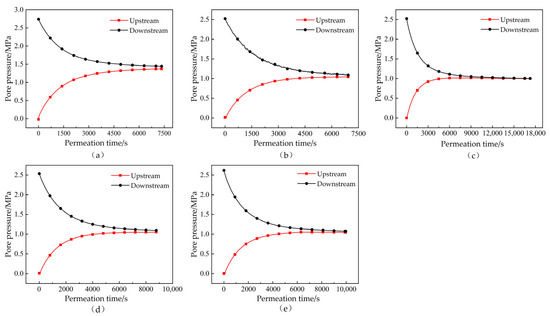
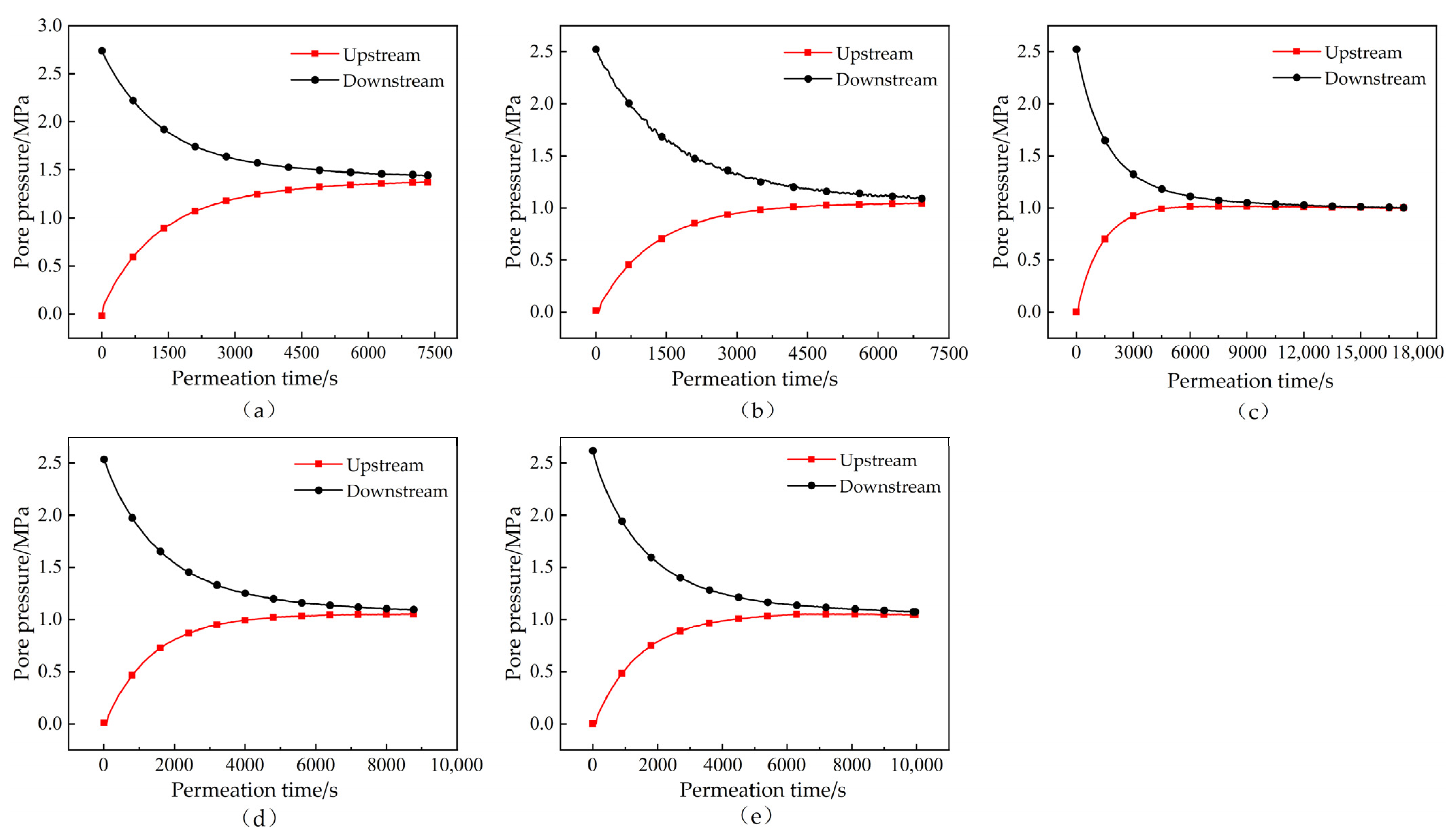
At a constant temperature, permeability tests were conducted on coal samples of various ranks after CO2 adsorption saturation using the pressure pulse decay method with varying axial and confining pressures. The test results for long-flame coal No. 1 specimen are presented in Figure 4. From a preliminary analysis of the pore pressure evolution, it can be clearly observed that, with the incremental increase in axial and confining pressures and under roughly constant initial upstream and downstream pressures and pressure difference, the time required for pressure equilibrium between the upstream and downstream vessels becomes increasingly longer.
Figure 4.
Pore pressure variation of long flame coal No.1 under axial and confining pressure conditions. (a) Pore pressure variation at 10 MPa; (b) pore pressure variation at 15 MPa; (c) pore pressure variation at 20 MPa; (d) pore pressure variation at 25 MPa; (e) pore pressure variation at 30 MPa.
Based on the measured pore pressure variation data over time, combined with Equations (1) and (3), the permeability of different coal ranks under various axial and confining pressures was calculated, and the results are presented in Table 4.
Table 4.
Permeability of different coal ranks under various axial and confining pressures at room temperature.
3.3. Effect of Temperature Variation on Coal Permeability
With axial and confining pressure maintained constant at 15 MPa, permeability tests were performed on coal samples of various ranks after CO2 adsorption saturation using the pressure pulse decay method, with specimen temperature increasing sequentially. The experimental results for anthracite No. 2 are illustrated in Figure 5. A preliminary analysis of the pore pressure evolution reveals that the influence of temperature variation on coal permeability is relatively weaker than that of axial and confining pressure variation.
Figure 5.
Pore pressure variation of anthracite No. 2 under temperature variation. (a) Pore pressure variation at 20 °C; (b) pore pressure variation at 30 °C; (c) pore pressure variation at 40 °C; (d) pore pressure variation at 50 °C; (e) pore pressure variation at 60 °C.
Based on the measured pore pressure variation data over time, combined with Equations (1) and (3), the permeability of different coal ranks under various temperature conditions was calculated, and the results are presented in Table 5.
Table 5.
Permeability of different coal ranks at various temperatures with axial and confining pressure of 15 MPa.
As can be clearly observed from Table 4 and Table 5, the permeability of long-flame coal and coking coal is on the order of 10−20–10−21 m2, and the size of their nanopores is comparable to the mean free path of CO2 molecules. This suggests that even at an average experimental pressure of 5 MPa, the gas slip (Klinkenberg) effect cannot be fully neglected. Therefore, all permeability values measured in this study are regarded as apparent permeability rather than absolute permeability.
4. Analysis and Discussion
4.1. Analysis of the Influence Mechanism of Temperature on the Permeability of Different Coal Ranks After Adsorption Saturation
For coal samples before CO2 adsorption, the effect of temperature on coal permeability is primarily dominated by the thermal expansion effect [23]. Increased temperature causes thermal expansion of the coal matrix and minerals, which enlarges their volume and compresses internal flow pathways. This reduces pore and fracture space and thus lowers coal permeability.
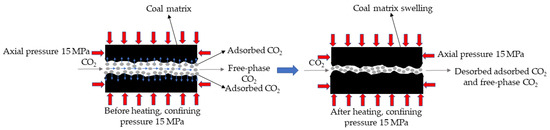
However, for coal samples saturated with CO2, the permeability is affected not only by the thermal expansion effect of the coal matrix but also by the influence of temperature on the adsorbed gas, which induces corresponding changes in coal permeability. The schematic diagram of the temperature influence mechanism is presented in Figure 6.
Figure 6.
Schematic diagram of temperature influence mechanism.
In general, at the same adsorption pressure, the CO2 adsorption capacity increases significantly with rising coal rank, exhibiting the following order: anthracite > coking coal > long-flame coal [24]. Furthermore, under identical gas adsorption pressure and temperature, the cumulative total CO2 desorption per unit mass of coal sample within the same duration increases with increasing coal rank [25].
As shown in Table 4, the permeability of long-flame coal decreases significantly with increasing temperature from 20 °C to 50 °C, but rises noticeably when the temperature reaches 60 °C. As a low-rank bituminous coal, long-flame coal has a relatively low coalification degree and weak CO2 adsorption capacity. In the temperature range of 20–50 °C, the thermal expansion effect dominates the permeability evolution.
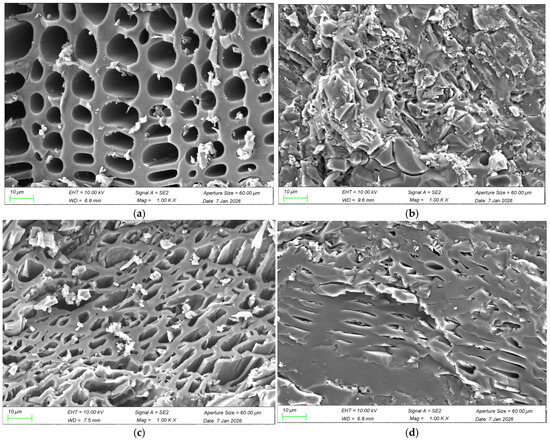
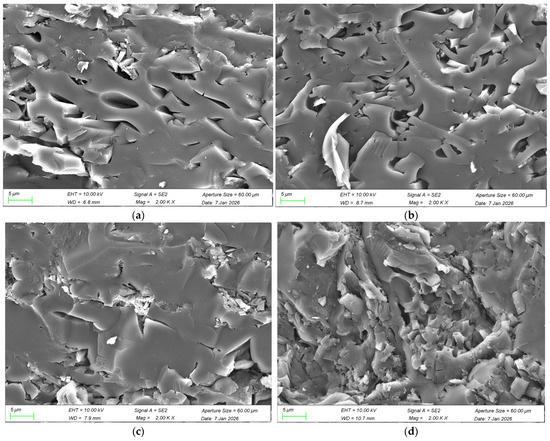
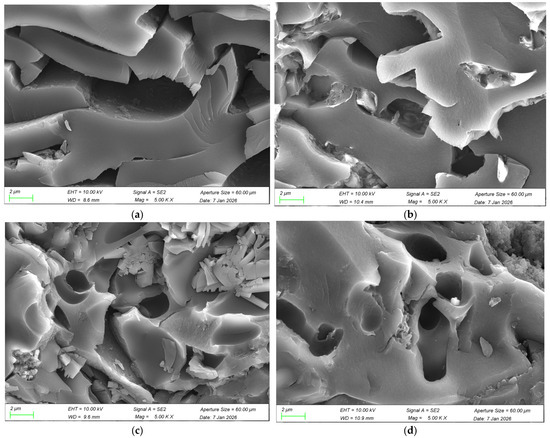
As illustrated in Figure 7c, the pre-test coal sample exhibits a well-developed pore-fracture network with open seepage channels. As temperature rises, the coal matrix and minerals undergo thermal expansion, which compresses and narrows the original pores and fractures. Although adsorbed CO2 is gradually desorbed, the limited total CO2 adsorption capacity of long-flame coal results in insufficient expansion of seepage pathways to offset the compaction effect, leading to a continuous decrease in permeability. When the temperature increases to 60 °C, the cumulative desorption of CO2 becomes sufficient to drive the expansion of pore and fracture spaces, which exceeds the compaction effect of thermal expansion. As shown in Figure 7d, the post-test coal sample presents reconstructed pore structures with widened seepage channels, which increases the effective flow space and ultimately leads to a rise in permeability. The SEM images in Figure 7c,d provide direct microscopic evidence for the competitive mechanism between thermal expansion and CO2 desorption, which governs the permeability variation of long-flame coal during temperature stimulation.
Figure 7.
SEM Images of lignite coal and long-flame coal sections before and after tests. (a) SEM image of lignite coal cross-section before the test; (b) SEM image of lignite coal cross-section after the test; (c) SEM image of long-flame coal No. 2 cross-section before the test; (d) SEM image of long-flame coal No. 2 cross-section after the test.
As shown in Figure 6, the SEM images directly verify the fracture compaction effect of lignite under axial and confining pressure loading. The pre-test lignite sample (Figure 7a) presents a well-developed open pore-fracture network with large interconnected voids. After the loading test (Figure 7b), significant compaction of the original fractures and closure of pore spaces are observed, which is caused by the mechanical compression of the coal matrix under axial and confining pressure. This structural contraction narrows the seepage pathways and reduces the effective flow space, fundamentally governing the permeability evolution of lignite under in situ stress conditions.
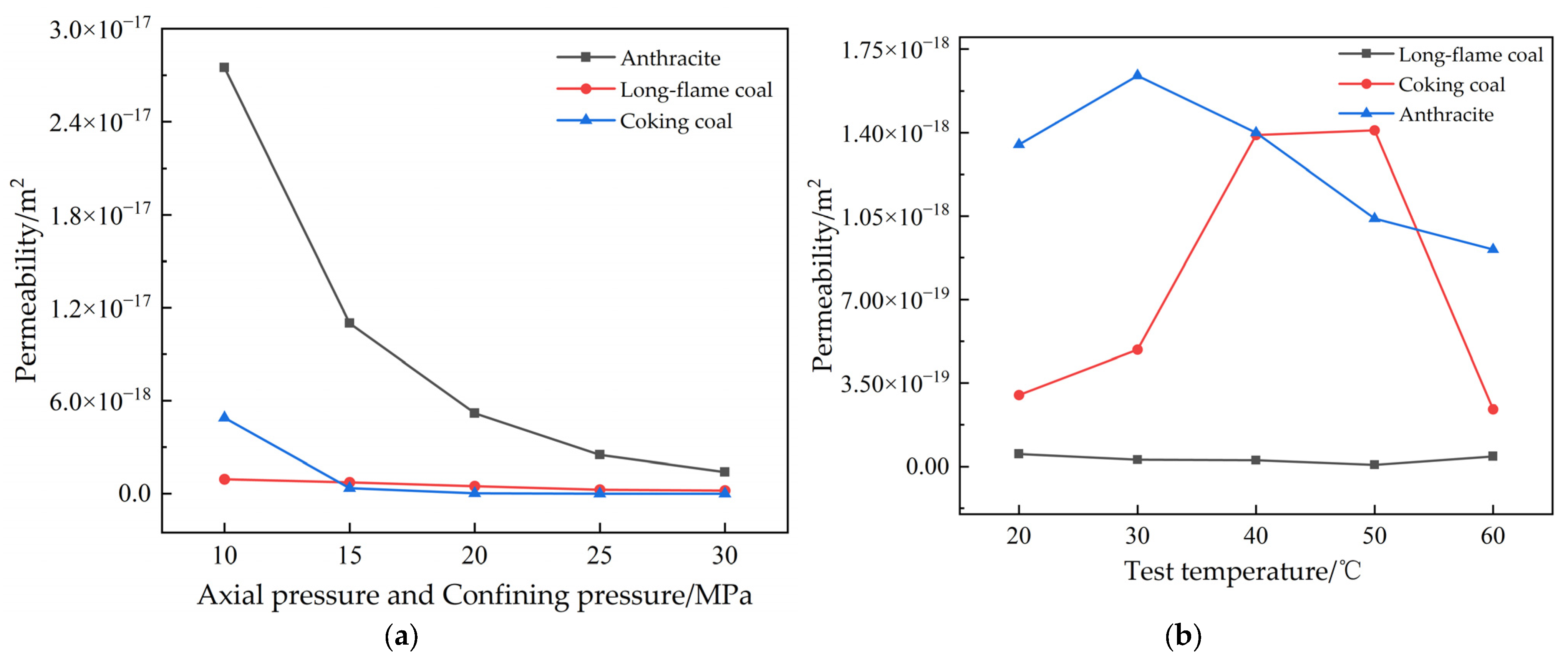
As shown in Table 4 and Figure 8, for both coking coal and anthracite, the permeability of CO2-saturated samples exhibits a consistent trend of first increasing and then decreasing with rising temperature. Specifically, the permeability of coking coal increases continuously from 20 °C to 50 °C and begins to decline at 60 °C. In contrast, the permeability of anthracite rises from 20 °C to 30 °C and then decreases steadily across the 30–60 °C range.
Figure 8.
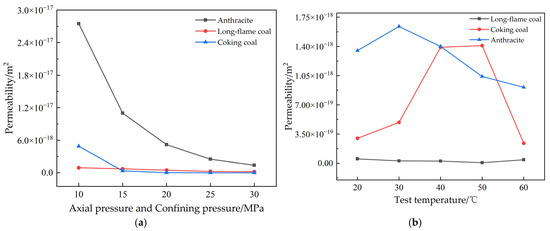
Variation of permeability for coals of different ranks. (a) Permeability variation with axial pressure and confining pressure; (b) permeability variation with temperature.
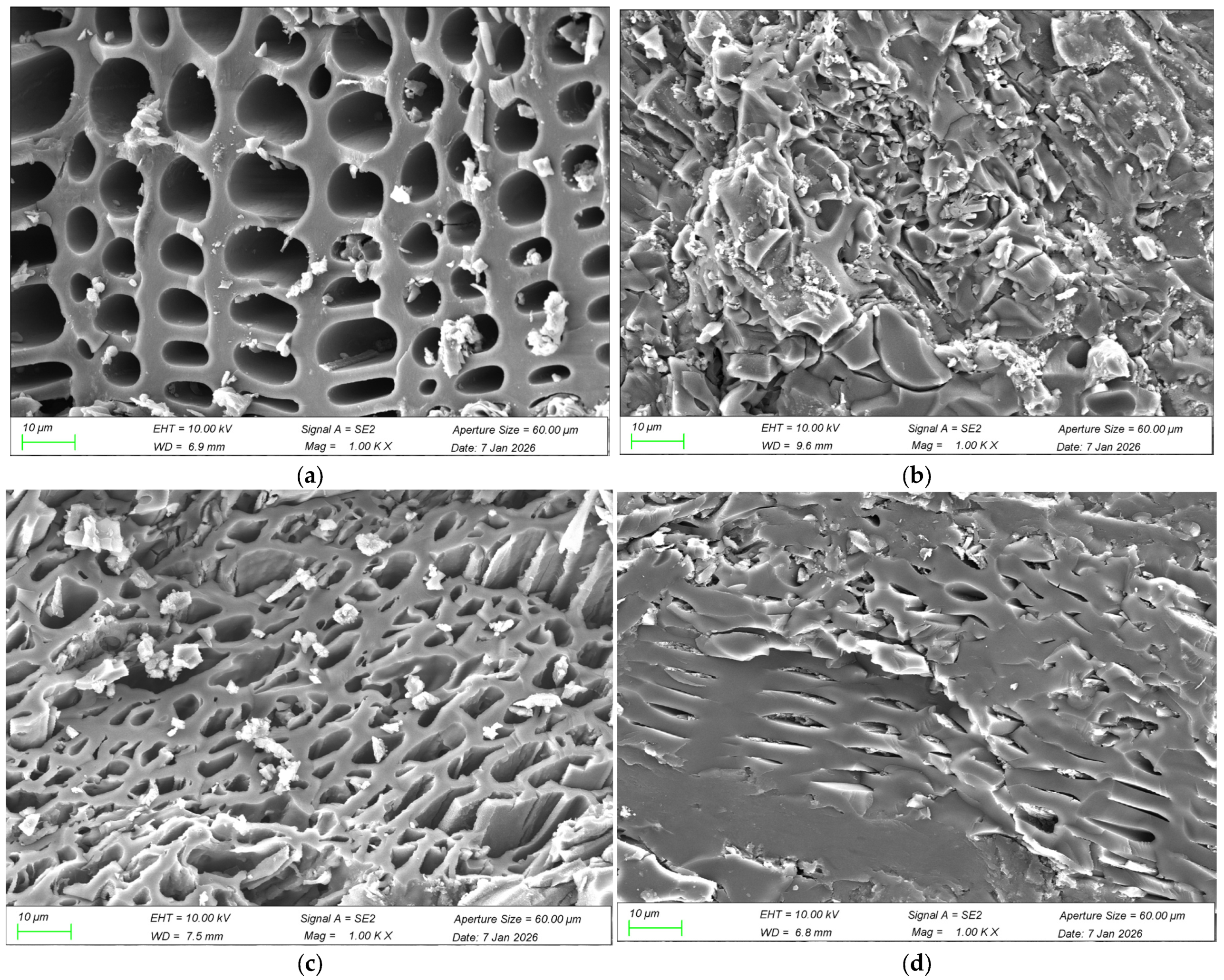
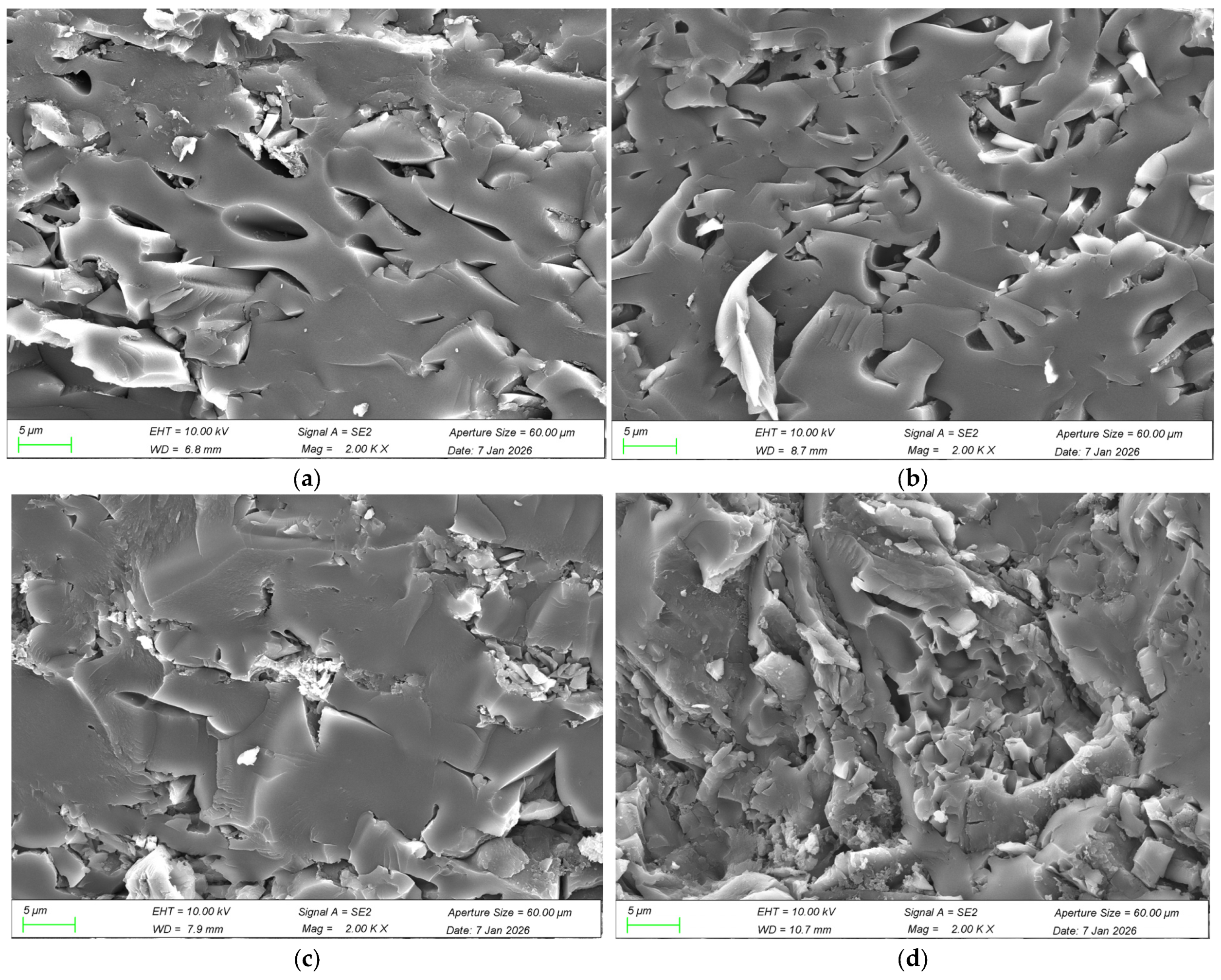
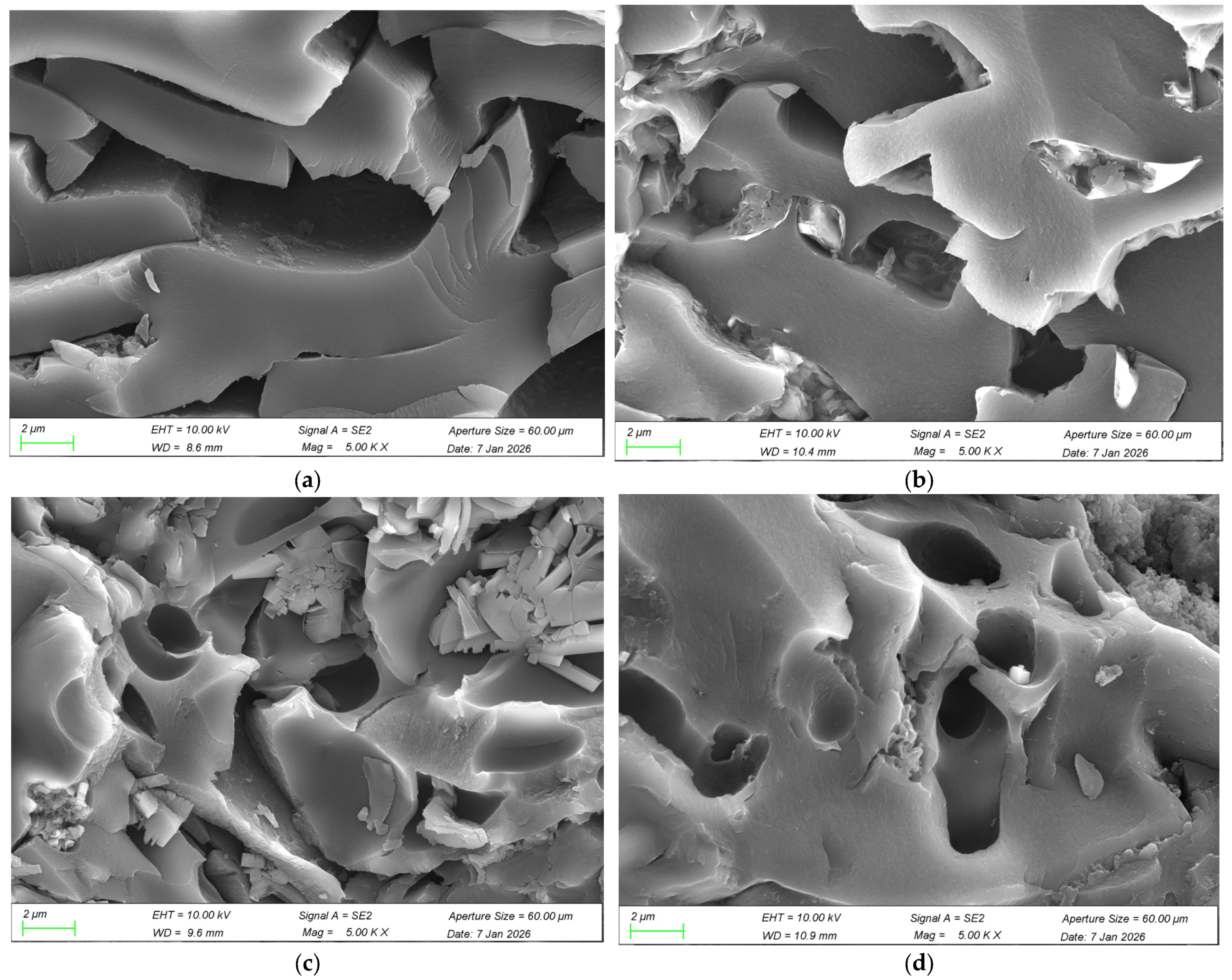
The SEM images in Figure 9 provide direct microscopic evidence to elucidate the underlying mechanisms governing these permeability variations. As shown in Figure 10a, the pre-test coking coal presents a relatively compact pore-fracture structure with narrow seepage channels. After temperature loading (Figure 10b), significant expansion of primary fractures and generation of new microcracks are observed, which effectively widens the seepage pathways. This structural evolution corresponds to the permeability increase of coking coal in the 20–50 °C range, where the expansion effect induced by CO2 desorption dominates over matrix thermal expansion. When the temperature rises to 60 °C, thermal expansion of the coal matrix becomes the dominant effect, compressing the expanded fractures and leading to a permeability decrease. For anthracite, the pre-test sample (Figure 10c) exhibits a more brittle, open fracture network with higher initial connectivity. After temperature loading (Figure 10d), the fracture structure shows obvious contraction and closure at an earlier stage, which aligns with the permeability decline of anthracite starting from 30 °C. The higher coal rank of anthracite endows it with a stronger CO2 adsorption capacity and greater sensitivity to adsorption-desorption, so the thermal expansion-induced permeability reduction effect offsets the desorption expansion at a lower temperature, resulting in an earlier permeability inflection point. In contrast, coking coal, as a medium-rank bituminous coal, has lower thermal expansion sensitivity, allowing the desorption expansion effect to maintain dominance until 50 °C and leading to a later permeability decline. These microstructural differences directly confirm the competitive mechanism between CO2 desorption and thermal expansion, which underlies the distinct permeability evolution characteristics of coking coal and anthracite.
Figure 9.
SEM images of long-flame coal and coking coal sections before and after pressure tests. (a) SEM image of coking coal No. 1 cross-section before the test; (b) SEM image of coking coal No. 1 cross-section after the test; (c) SEM image of long-flame coal No. 1 cross-section before the test; (d) SEM image of long-flame coal No. 1 cross-section after the test.
Figure 10.
SEM images of anthracite and coking coal sections before and after temperature tests. (a) SEM image of coking coal No. 2 cross-section before the test; (b) SEM image of coking coal No. 2 cross-section after the test; (c) SEM image of anthracite No. 2 cross-section before the test; (d) SEM image of anthracite No. 2 cross-section after the test.
4.2. Analysis of the Influence Mechanism of Coal Rank on the Permeability of Adsorption-Saturated Coal Samples
In general, coal permeability increases with decreasing coal rank, as well as with more developed fractures and pores and better connectivity among pore-fracture networks [26,27]. Low-rank coal is characterized by a low coalification degree, high moisture content, loose texture, low brittleness, and strong plasticity. Medium-rank coal features a moderate coalification degree, low moisture content, relatively high brittleness, and well-developed cleats. High-rank coal exhibits a high coalification degree, extremely high brittleness, and smooth pore-fracture pathways [28].
As shown in Figure 8, long-flame coal is a low-rank coal with low coalification, weak CO2 adsorption capacity, and high plasticity. Plastic deformation buffers the effective stress, so increasing axial and confining pressures only weakly compresses internal pore-fracture spaces. As a result, permeability of CO2-saturated long-flame coal shows no obvious changes with variations in temperature or stress.
Coking coal is a medium-rank coal with moderate coalification, well-developed cleats, and relatively strong CO2 adsorption. Its permeability changes significantly with temperature, while its moderate brittleness and plasticity lead to moderate permeability variations under changing axial and confining pressures.
In contrast, anthracite is a high-rank coal with the highest coalification, smooth pore-fracture channels, and strong CO2 adsorption. Its permeability variation with temperature is smaller than that of coking coal. However, owing to its high brittleness, adjustments in axial and confining pressures strongly alter pore-fracture structures, making permeability variations of CO2-saturated anthracite the most significant under changing stress conditions.
As shown in Figure 8a, when the axial and confining pressures were 15 MPa, the permeability of CO2-saturated coking coal was lower than that of long-flame coal, and their permeability changed negligibly with further increases in axial and confining pressures. This phenomenon can be attributed to the following: at this pressure, the brittleness of coking coal induced fracture compaction, leading to a sharp permeability drop, whereas the plastic deformation of long-flame coal buffered the pressure reduction, resulting in a smaller permeability decline and thus a permeability reversal; as axial and confining pressures continued to increase, the compression of coal fractures approached their limit, exerting minimal influence on permeability.
A comparative analysis of Figure 9a,c reveals that, before the pressure tests, bituminous coal had significantly more developed pores and fractures than long-flame coal, which microscopically verifies the experimental phenomenon that the permeability of long-flame coal was lower than that of coking coal before axial and confining pressures reached 15 MPa during the pressure tests. The comparative analysis of Figure 9a,b further confirms that the brittleness of coking coal induced fracture compaction, and the compression of coal fractures approached their limit, which caused the sharp permeability drop of coking coal at 15 MPa axial and confining pressures and made further increases in axial and confining pressures have little effect on its permeability. As can be seen from Figure 9c,d, the pores and fractures inside long-flame coal were rarely developed and disconnected before and after the pressure tests, which is a direct microscopic manifestation of the steady permeability of long-flame coal (the lowest among the three coals) with minimal fluctuations under varying pressures and temperatures, as shown in Figure 8.
As shown in Figure 8b, the permeability of coking coal is lower than that of anthracite in the temperature range of 20–50 °C. It exceeds that of anthracite at 50 °C and becomes lower again at 60 °C, showing two permeability reversals with increasing temperature.
As shown in Figure 10, SEM images provide direct microscopic evidence for the three-stage permeability reversal between coking coal and anthracite. Before the experiment, coking coal featured narrow layered fractures and a dense matrix, while anthracite had well-connected large pores and a developed cleat network. After the experiment, coking coal showed local fracture expansion due to moisture desorption, accompanied by matrix compaction; anthracite retained its large-pore structure with only slight compression and no obvious structural deformation. In the temperature range of 20–50 °C, anthracite, with its high brittleness and low thermal expansion, maintained good cleat connectivity, resulting in higher permeability than coking coal. The narrow fractures of coking coal were easily closed by thermal stress, leading to lower permeability. At 50 °C, moisture desorption, CO2 desorption, and mineral interactions in coking coal collectively contribute to the generation of new microfractures, significantly increasing its permeability and forming the first permeability reversal. At 60 °C, moisture in coking coal was basically completely desorbed, and thermal expansion became the dominant factor. The limited CO2 desorption could not offset the thermal compaction effect, leading to a continuous decline in the permeability of coking coal. In contrast, anthracite, supported by strong CO2 desorption and newly formed microfractures, had a slower decline in permeability, forming the second permeability reversal.
The observed mass loss mainly arises from moisture desorption, CO2 desorption, and minor structural loosening, which is consistent with the inherent moisture difference between the two coal ranks. These microstructural variations reasonably explain the macroscopic permeability evolution, and the mechanism of permeability enhancement through microfracture generation is supported by both SEM observations and mass balance analysis.
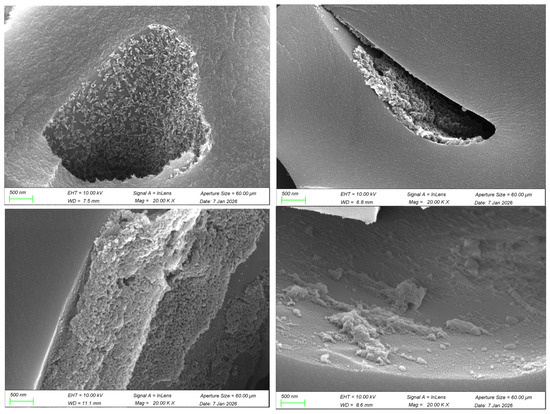
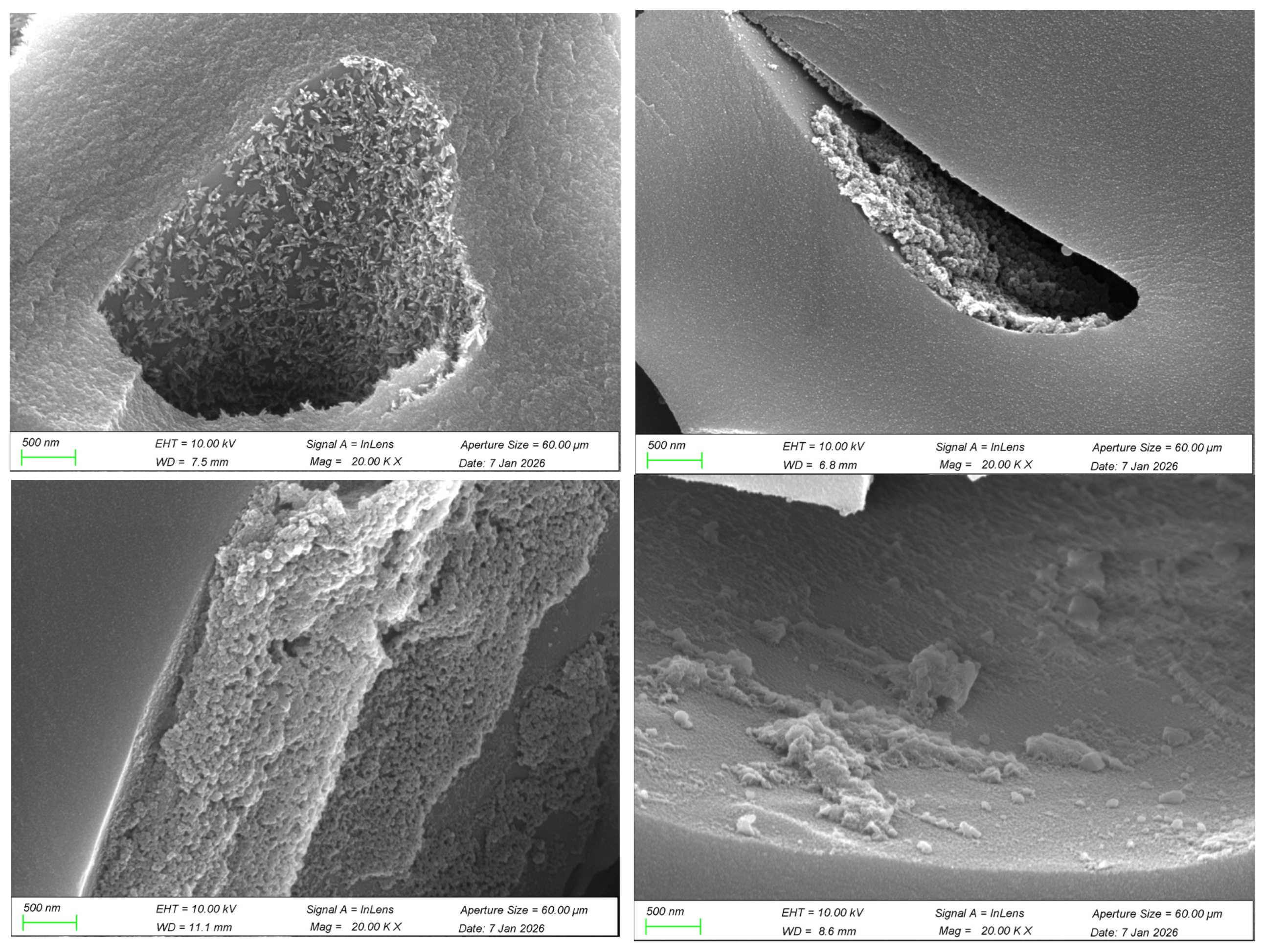
As shown in Figure 11, SEM observations reveal the microstructural evolution of coal induced by CO2–water–rock interaction. The dissolution of CO2 in formation water generates carbonic acid (H2CO3), which triggers physicochemical reactions with mineral components in the coal matrix. Original mineral aggregates in pore-fracture systems undergo partial dissolution and recrystallization, creating secondary micropores and microfractures that reconstruct the pore-throat structure and stress-bearing framework. Mineral dissolution reduces effective stress on pore walls and improves fracture connectivity, which can enhance coal permeability, while recrystallization may locally reinforce the skeleton and cause partial pore blockage, potentially reducing permeability. These dual effects, including mineral corrosion, secondary pore generation, and pore structure redistribution, fundamentally govern the porosity and permeability variations observed in temperature tests, providing direct microscopic evidence for the coupled thermodynamic and geochemical effects on the seepage characteristics of CO2-saturated coal.
Figure 11.
Microstructural characteristics of CO2-saturated coal under formation water conditions.
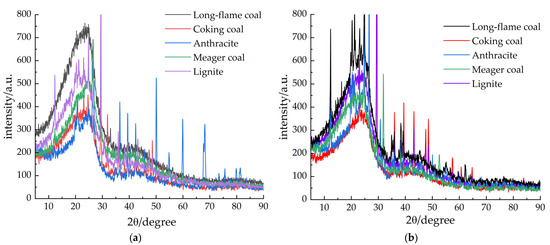
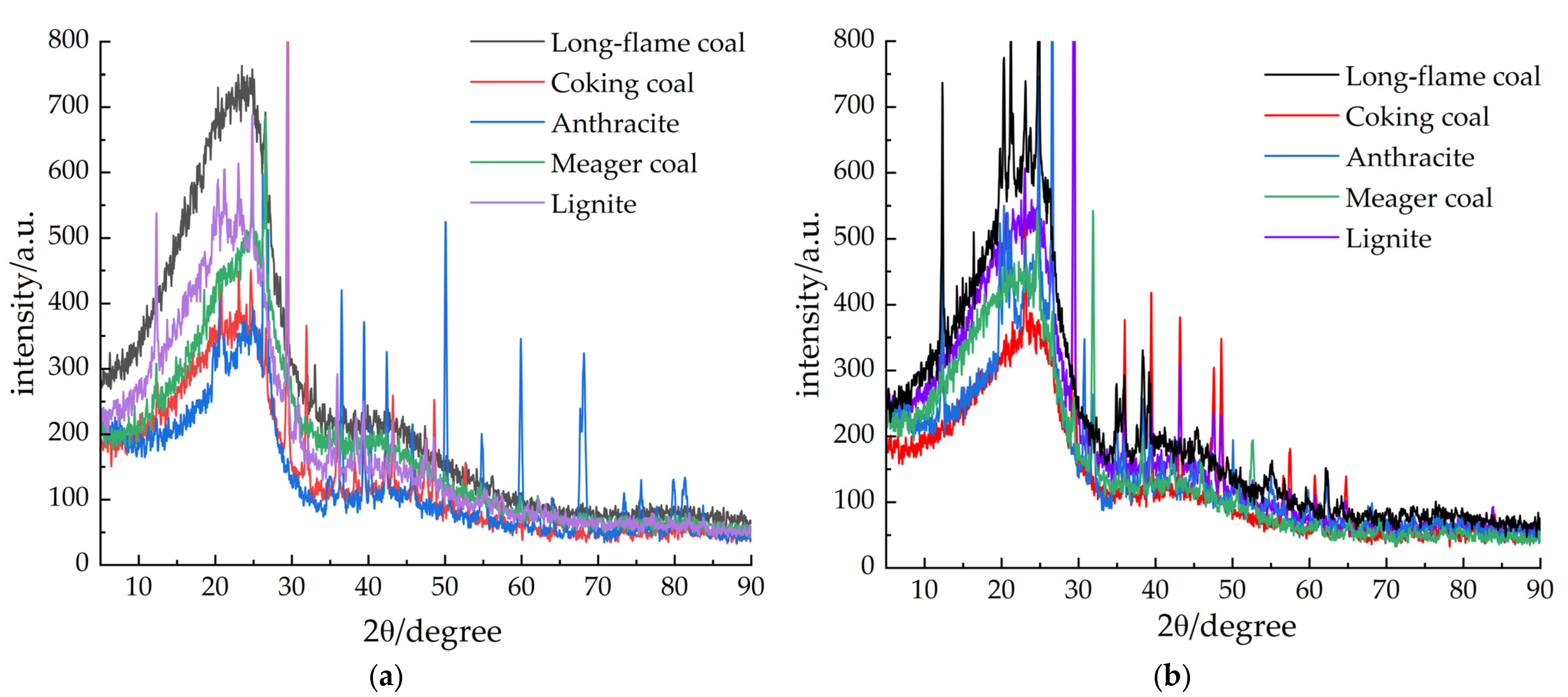
To complement the qualitative SEM results, XRD measurements were performed before and after the CO2 adsorption–permeation tests to quantitatively analyze the microcrystalline structure of the coal samples. Tests were performed using Cu Kα radiation (λ = 0.15406 nm), with a scanning range of 5.0–90.0° and a scanning step of 0.04°. The corresponding XRD patterns are presented in Figure 12.
Figure 12.
XRD patterns of coal samples before and after CO2 adsorption and permeation tests. (a) XRD pattern before the test; (b) XRD pattern after the test.
The XRD patterns of coal samples were fitted using the PsdVoigt1 (pseudo-Voigt) function to resolve the γ peak (amorphous carbon and aliphatic structures) and the 002 peak (aromatic layer stacking). From the fitted 2θ position and full width at half maximum (FWHM) of the 002 peak, the interlayer spacing d002 and stacking height Lc were calculated via the Bragg and Scherrer equations, respectively. The microcrystalline evolution was analyzed to provide a structural basis for changes in coal pore structure and permeability.
The interlayer spacing d002 was calculated using Bragg’s law:
where d is the interlayer spacing (nm), θ002 is the diffraction angle of the 002 diffraction peak (°), n is the order of diffraction (taken as 1), and λ is the wavelength of X-ray radiation (nm).
The stacking height Lc was determined by the Scherrer equation:
where Lc is the stacking height of aromatic crystallites (nm), K is the Scherrer constant. (taken as 0.89), and β is the FWHM in radians.
The XRD patterns were fitted using Origin 2024 software. Mineral interferences such as quartz were subtracted via a linear baseline, and the γ peak corresponding to amorphous carbon and the 002 peak related to aromatic layer stacking were fitted using a double Voigt function. The microcrystalline structural parameters of coals with different ranks before and after the test are presented in Table 6 and Table 7.
Table 6.
Structural parameters obtained by XRD peak fitting for different rank coals prior to the experiment.
Table 7.
Structural parameters obtained by XRD peak fitting for different rank coals after the experiment.
As shown in Table 6 and Table 7, the interlayer spacing d002 and full width at half maximum β decrease monotonically with increasing coal rank, while the stacking thickness Lc increases monotonically, both before and after the experiment. This is consistent with coalification theory, indicating that higher-rank coals possess a more ordered and compact aromatic structure. This quantitatively explains why high-rank anthracite exhibits high compactness, strong brittleness, and the highest sensitivity to effective stress during permeability tests. After the experiment, the 002 diffraction peaks shift to lower 2θ values, indicating an increase in d002 caused by CO2 adsorption and seepage. The enlarged interlayer spacing weakens the stacking order of aromatic layers and promotes the development of intercrystalline pores and microfractures. The decrease in Lc and increase in β further confirm the reduced compactness of coal. These microcrystalline changes provide a microscopic mechanism for pore structure evolution and are well supported by SEM observations.
Although changes at the aromatic interlayer scale cannot directly govern macroscopic permeability, they essentially reflect weakened intermolecular forces within coal and enhanced structural brittleness and damage. Such microstructural degradation promotes the initiation, propagation, and connection of microfractures under stress, thereby improving pore connectivity and ultimately exerting a significant controlling effect on the evolution of macroscopic permeability. This quantitatively verifies that the reason for the sudden occurrence of higher permeability in coking coal than in anthracite at 50 °C may be related to the generation of microfractures.
4.3. Implications for Coal Seam Sequestration
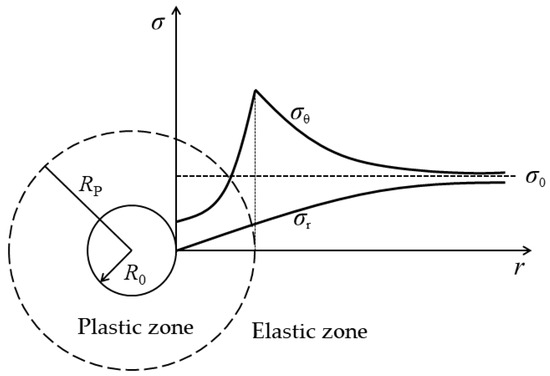
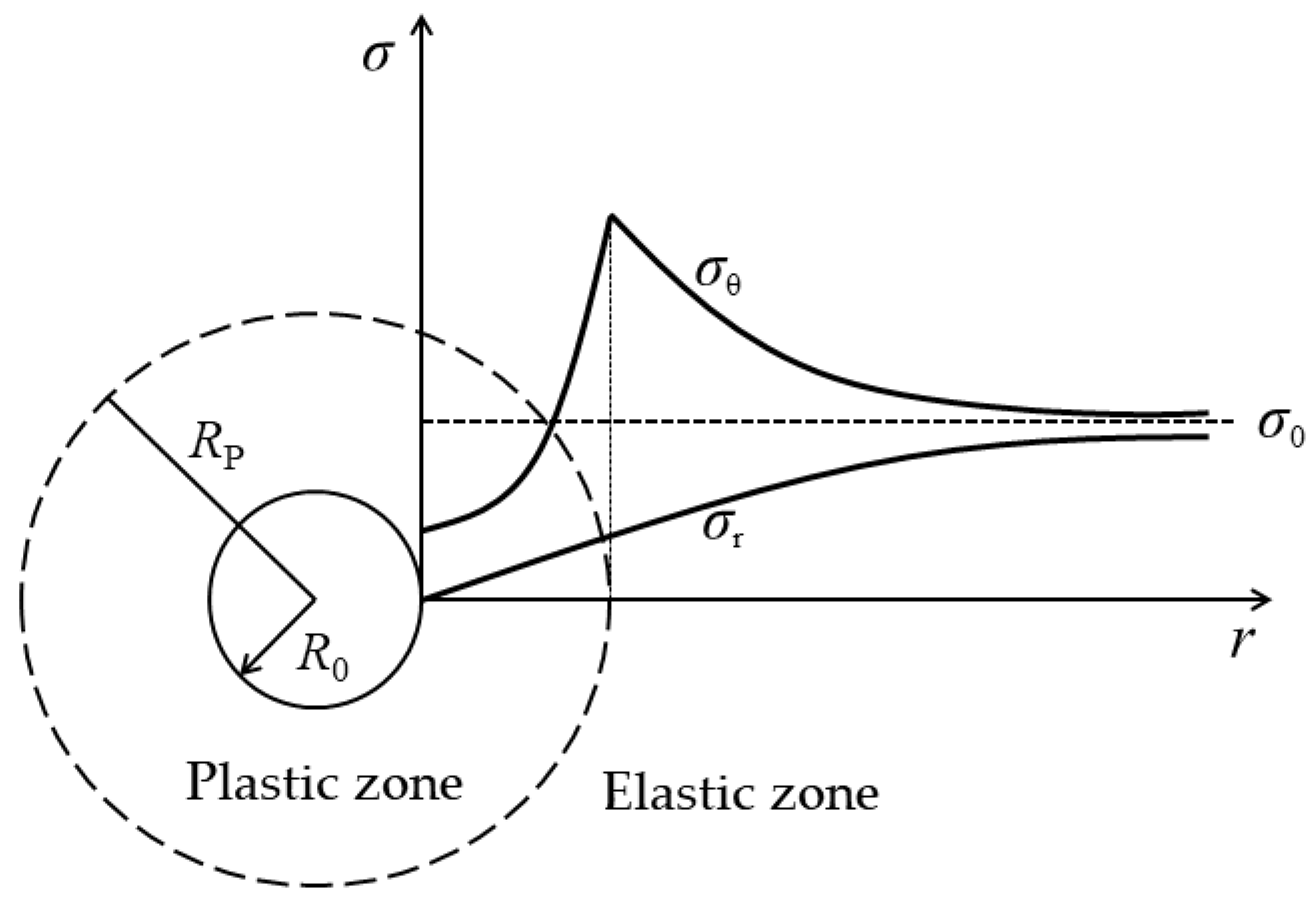
Based on the surrounding rock stress equilibrium equation and the Mohr–Coulomb criterion, the elasto-plastic stress solution and the expression for the plastic zone radius of surrounding rock can be derived, and further the stress distribution of surrounding rock around a deep coal seam borehole can be obtained as shown in Figure 13 [29]; when the burial depth of long-flame coal seam reaches 800 m underground, the vertical stress σv can be estimated at approximately 20 MPa, the minimum horizontal stress σh at 16–20 MPa, and the maximum horizontal stress σH at 22–26 MPa according to empirical formulas, so it can be considered that injecting CO2 into coal specimens under axial and confining pressures of 20 MPa in the experiment is equivalent to CO2 injection into deep coal seams at 800 m burial depth [30]. As illustrated in Figure 9, around the borehole wall within the plastic zone, the tangential stress is relatively high and fluctuates drastically, while the radial stress is small and varies gently, meaning this region is classified as a stress-increased zone, and the tangential stress reaches its peak at the elasto-plastic interface; in the elastic zone, both tangential and radial stresses decrease with increasing distance from the borehole wall, forming a stress-decreased zone, and when the distance is sufficiently far, the coal seam is regarded as being in the in situ stress zone. As revealed in Table 3, the permeability of long-flame coal, coking coal, anthracite, lignite, and meager coal all decrease with rising pressure in the range of 20–30 MPa, indicating that during CO2 injection into coal seams at 800 m burial depth, the CO2 migration rate and injection efficiency gradually decline in the stress-increased zone near the borehole wall; in the pressure range of 10–20 MPa, the permeability of all five coal ranks increases with increasing pressure, suggesting that the CO2 migration rate and injection efficiency gradually rise in the elastic (stress-decreased) zone. Overall, the CO2 injection efficiency exhibits a trend of first decreasing and then increasing during CO2 sequestration into coal seams at 800 m burial depth.
Figure 13.
Stress distribution in surrounding rock around coal seam boreholes.
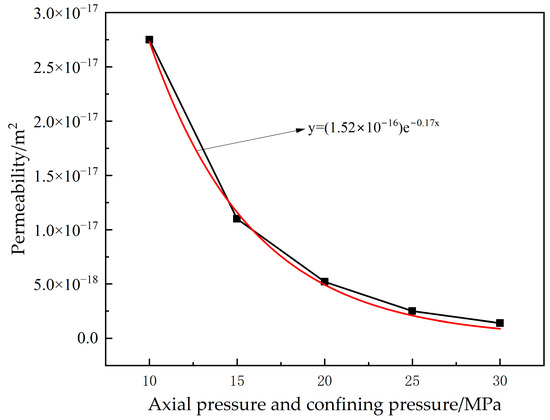
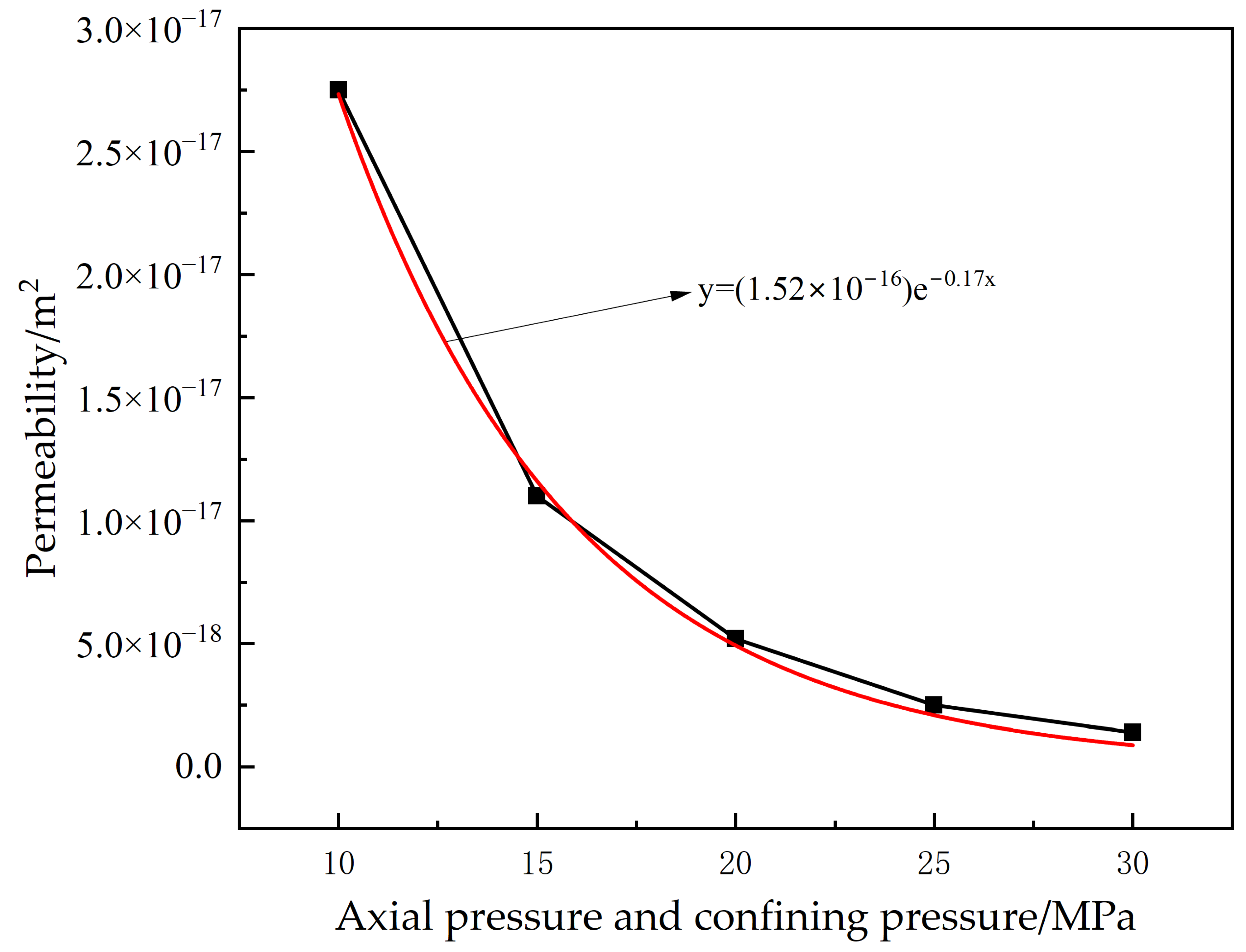
Exponential fitting was conducted on the permeability curve of anthracite as a function of axial and confining pressures (Figure 8), and the resulting fitted curve is presented in Figure 14. With a coefficient of determination (R2) of 0.9974, the fitted curve demonstrates high reliability. As shown in Figure 14, the fitted curve exhibits a trend of transitioning from steep to gentle, and the permeability increment is minimized in the pressure range of 25–30 MPa. This indicates that CO2 is barely permeable in anthracite at 25 MPa; therefore, the permeability of anthracite at 25 MPa (2.5 × 10⁻¹⁸) was designated as the threshold permeability (Kd). Substituting this threshold into the fitting equation yielded a boundary stress (σd) of approximately 24.16 MPa. The expression for the tangential stress of surrounding rock in the plastic zone is provided below [29]:
where c is the cohesion with a value of 3.32 MPa, φ is the angle of internal friction taken as 38.2°, and R0 is the borehole radius.
Figure 14.
Fitting curve of permeability for anthracite.
Substituting σd into Equation (6) yields a distance rp from the borehole center of 1.35 times the borehole radius, indicating that when CO2 at approximately 4.7 MPa is injected into an anthracite coal seam with a burial depth of 800 m, CO2 can permeate to a distance of 1.35 times the borehole radius around the borehole. Compared with the calculation of sequestration parameters based on the permeability of coal samples before CO2 adsorption, the calculation scheme using the permeability of CO2-saturated coal samples is more consistent with the actual conditions of deep coal seam sequestration and can significantly improve the accuracy of parameter results and engineering guidance. It should be emphasized that the permeability used in the theoretical calculation in this work was obtained from anthracite specimens saturated with adsorbed CO2 under sub-critical conditions. The actual transport characteristics of in situ supercritical CO2, including its unique migration behavior and the effect of dissolving organic matter in coal and altering the pore structure, were not considered in the calculation process. In addition, the anisotropy of coal itself significantly affects the accuracy of penetration distance calculation and the rationality of field well network layout, while the isotropic assumption fails to reflect the elliptical migration pattern caused by the difference between horizontal and vertical permeability. Accordingly, the relevant calculation results are not intended for direct engineering guidance, but only provide a certain degree of reference for practical engineering applications. Compared with permeability analysis of coal mass prior to CO2 adsorption, the permeability evolution characteristics of coals of varying ranks after adsorption saturation offer more precise engineering guidance for rate regulation, storage capacity evaluation, and safety prevention and control of CO2 sequestration in deep coal seams. Combined with the permeability evolution laws of different rank coals after adsorption saturation obtained from coupled tests of axial and confining pressures (10–30 MPa) and temperature (20 °C to 60 °C) in this work, the key implications for deep coal seam CO2 sequestration are outlined below:
- (1)
- For sequestration rate regulation: The injection potential of long-flame coal (low-rank coal) is easily overestimated when based on pre-adsorption permeability. After CO2 adsorption saturation, the permeability of all coal ranks decreases continuously with increasing confining pressure. For long-flame coal, permeability first decreases and then increases with rising temperature, rendering it suitable for long-term injection. In contrast, the permeability of coking coal (medium-rank coal) and anthracite (high-rank coal) exhibits a trend of initial increase followed by decrease; thus, it is necessary to avoid rate attenuation in the high-temperature range and optimize the dynamic injection pressure accordingly.
- (2)
- For sequestration capacity evaluation: The total sequestration capacity is prone to overestimation when the pore occupation effect of adsorbed CO2 and temperature–pressure coupling effect are neglected based on pre-adsorption permeability [31]. After CO2 adsorption saturation, by combining the permeability attenuation characteristics with axial and confining pressures and the temperature response behavior, the effective storage space can be accurately delineated for anthracite, while long-flame coal can support long-term dynamic sequestration by virtue of its excellent permeability stability. Specifically, the attenuation of permeability of all coal ranks with increasing axial and confining pressures after adsorption saturation directly reflects the compression law of storage space with burial depth [32]. Anthracite features well-developed micropores and can maintain a high adsorption capacity even as permeability decreases under continuously rising pressure and moderate temperature fluctuations; thus, the effective storage space can be precisely delineated by integrating its temperature-pressure response law. Long-flame coal relies on its permeability stability under temperature and pressure variations to support long-term dynamic sequestration, which extends the time scale and temperature–pressure adaptation dimension of total capacity evaluation.
- (3)
- For safety prevention and control: Leakage risk is difficult to predict based on pre-adsorption permeability. After CO2 adsorption saturation, stress accumulation readily occurs under high confining pressure, and coking coal and anthracite are susceptible to fracture and leakage in the high-temperature range. By contrast, long-flame coal presents strong adaptability to temperature and pressure variations and superior safety performance, which can provide a reliable basis for the optimization of target coal seam horizons.
In summary, deep CO2 sequestration should take the permeability of coal mass under temperature and pressure adaptation after CO2 adsorption saturation as the core indicator and formulate targeted implementation schemes in consideration of coal rank differences, so as to achieve the collaborative improvement of sequestration efficiency and operational safety.
4.4. Limitations and Future Outlook
This study focuses on the permeability evolution of coal after CO2 adsorption saturation, clarifying the intrinsic coupling mechanism between CO2 adsorption and coal matrix deformation under long-term storage and filling relevant research gaps. However, it has certain limitations due to research design and experimental constraints. First, pure CO2 was used in experiments without considering residual methane in in situ residual coal seams, so the conclusions are more applicable to pure CO2 adsorption saturation scenarios, and the permeability evolution under multi-component gas coupling was not fully explored. Second, this study did not involve ECBM technology, nor consider the impact of dynamic changes in gas components on permeability during CO2 displacement of residual methane. Third, the experiments were laboratory-simulated, different from the real in situ environment, and the in situ applicability of the conclusions needs further verification by field tests.
To address the above limitations, future research could focus on permeability evolution experiments under CO2 and residual CH4 multi-component gas coupling to explore the influence mechanism of residual methane. It could analyze the effect of dynamic gas component changes combined with ECBM technology, verify conclusions through field tests, improve the theoretical system of CO2 geological storage, and enhance the engineering practicality of the results.
Despite sufficient pre-test equilibration, absolute full saturation of coal samples with CO2 cannot be guaranteed in experiments. Slight residual adsorption during the pulse test may affect the measured pressure drop and permeability results, which is an inherent limitation of laboratory transient permeability measurements. However, a detailed sensitivity analysis can be conducted in the laboratory by assuming different degrees of undersaturation (e.g., 5%, 10%, 15%) and quantifying the corresponding permeability deviations. Since such a sensitivity analysis was not performed in this study, the potential error range induced by incomplete saturation remains unclear and requires further systematic investigation in future work.
Since this study was conducted under subcritical CO2 conditions, the results are only applicable to shallow or low-pressure storage scenarios. The dissolution and pore structure alteration induced by supercritical CO2 in deep reservoirs were not considered. Further experiments under real supercritical conditions are thus suggested to provide more reliable support for deep CO2 sequestration projects.
When calculating permeability for determining the penetration radius, this study considered coal’s anisotropy with different horizontal and vertical permeability but did not modify the formula of the isotropic elasto-plastic Brace model. Only samples were cut perpendicular to the bedding plane to reduce the impact of anisotropy, which still introduced errors in permeability and penetration radius calculations. The calculated sequestration zone is circular, but horizontal and vertical permeability of coal seams differ significantly in practice. When horizontal permeability is 10 times the vertical permeability, the actual CO2 sequestration zone is a flattened ellipse, resulting in limited engineering implications that cannot effectively guide practical engineering.
To address the impact of coal anisotropy, subsequent studies can introduce a transversely isotropic model, combine the test results of coal bedding structure, and make targeted modifications to the Brace model. The ratio parameter of horizontal and vertical permeability should be incorporated to establish a penetration distance calculation model considering anisotropy, which can accurately simulate the CO2 migration pattern under different permeability differences and provide a more scientific theoretical basis for the on-site well network layout.
Although this study has qualitatively analyzed the pore structure evolution of coals with different ranks by SEM and quantitatively characterized it by XRD, petrographic analysis was not performed. Consequently, the structural differences observed among coal samples of the same rank cannot be fully explained, and the relevant interpretations remain somewhat speculative. In addition, the quantitative influence of organic components on coal swelling and permeability evolution during CO2 adsorption–permeation experiments have not been investigated in this work, which warrants further experimental verification through supplementary petrographic characterizations in future studies.
5. Conclusions
In this paper, the seepage characteristics of CO2-saturated coal samples with different coal ranks were investigated by adopting two testing schemes: increasing the axial confining pressure at a constant temperature, and elevating the test temperature at a fixed axial confining pressure. Based on the permeability data of different coal rank samples after the tests, the influences of temperature variation, coal rank, and axial confining pressure change on coal permeability were analyzed successively, and the findings were further discussed in combination with CO2 storage in deep coal seams. The main conclusions of this study are drawn as follows:
- (1)
- For low-rank, medium-rank, and high-rank coals, the permeability of CO2-saturated coal samples exhibits a continuous decreasing trend as the axial confining pressure increases within the range of 10 MPa to 30 MPa.
- (2)
- Within the temperature range of 20 °C to 60 °C, the permeability of CO2-saturated low-rank long-flame coal shows a trend of decreasing first and then increasing with rising test temperature; by contrast, the permeability of medium-rank coking coal and high-rank anthracite exhibits a trend of increasing first and then decreasing as the test temperature rises.
- (3)
- When CO2 is injected into coal seams at a burial depth of 800 m, the CO2 injection efficiency shows a trend of decreasing first and then increasing. When CO2 at approximately 4.7 MPa is injected into anthracite seams with a burial depth of 800 m, CO2 can permeate to a distance of 1.35 times the borehole radius from the borehole center around the borehole. It should be emphasized that the ratio of the penetration radius to the borehole radius (1.35) obtained from the isotropic Brace model is only a qualitative indicator rather than a fixed design parameter for field injection projects, due to the actual elliptical geometry of the gas diffusion zone in anisotropic coal masses. CO2-saturated long-flame coal exhibits significant plastic deformation and a gentle decrease in permeability, with favorable potential for long-term continuous injection and high storage safety. Coking coal is prone to fracture closure and a sharp permeability reduction caused by adsorption-induced swelling, so the injection pressure needs to be strictly controlled to avoid injection rate attenuation. Anthracite has a large adsorption capacity, and its effective storage space can be accurately defined in combination with the permeability evolution characteristics to improve the total storage volume.
Author Contributions
Conceptualization, Z.F. and Z.T.; methodology, Z.T.; validation, Z.T., Q.G., and S.L.; formal analysis, Z.T. and Z.Z.; data curation, Z.T.; writing—original draft preparation, Z.T.; writing—review and editing, Z.F.; supervision, Z.F. All authors have read and agreed to the published version of the manuscript.
Funding
This research was funded by the Science and Technology Major Project of Shanxi Province (Grant No. 202101060301024) and the National Natural Science Foundation for Outstanding Young Scholars of China (Grant No. 52122405). The authors gratefully acknowledge all the financial supports.
Institutional Review Board Statement
Not applicable.
Informed Consent Statement
Not applicable.
Data Availability Statement
The data presented in this study are available on request from the corresponding author due to data confidentiality, the ongoing nature of the project, and the plan to use these data for subsequent research.
Acknowledgments
The authors would like to thank the anonymous reviewers for their valuable comments and suggestions to improve the quality of this paper. We also appreciate the administrative and technical support provided by the relevant laboratories and staff during the experiment and data analysis.
Conflicts of Interest
The authors declare no conflicts of interest.
Nomenclature
| Term | Definition | Unit |
| A | Cross-sectional area of coal sample | m2 |
| c | Cohesion of coal mass | MPa |
| Kd | Threshold permeability | m2 |
| k | Permeability of coal sample | m2 |
| L | Length of coal sample | m |
| R0 | Borehole radius | m |
| Rp | Plastic zone radius | m |
| R2 | Coefficient of determination | - |
| rp | Distance from borehole center | m |
| t | Seepage time | s |
| Vd | Volume of downstream vessel | m3 |
| Vu | Volume of upstream vessel | m3 |
| ΔP0 | Initial pressure difference (t = 0) | Pa |
| ΔP(t) | Pressure difference at time t | Pa |
| α | Pressure decay coefficient (decay constant) | - |
| σd | Boundary stress | MPa |
| σh | Minimum horizontal stress | MPa |
| σH | Maximum horizontal stress | MPa |
| σv | Vertical stress | MPa |
| β | Volume compressibility of test fluid | Pa−1 |
| μ | Dynamic viscosity of test fluid | Pa·s |
| φ | Internal friction angle of coal mass | ° |
| d002 | The interlayer spacing | nm |
| θ002 | The diffraction angle of the 002 diffraction peak | ° |
| β | Full width at half maximum | rad |
| Lc | The stacking height of aromatic crystallites | nm |
References
- Luo, J.; Huo, L.; Li, C. An Integrated Assessment of Carbon-Neutral Transition Pathways for the Chinese Power Sector: Feasibility and Implications in a Coal-Dominant and Renewable-Rich Context. Energies 2026, 19, 1457. [Google Scholar] [CrossRef] [Scilit]
- Wang, Z.T.; Chen, Y.A.; Li, M.J.; Yao, K.Y.; Zhai, R.R.; He, Y.L. Design and thermodynamic analysis of a coal-fired power plant coupled with liquid CO2 energy storage for wide-load operation. J. Energy Storage 2026, 155, 121434. [Google Scholar] [CrossRef] [Scilit]
- Sui, D.; Sui, D.; Wang, X.; Zhan, M.; Sadeghpour, F.; Torkashvand, M.; Ostadhassan, M. CO2 storage capacity estimation in underground geological sites using innovative data-driven techniques. Energy 2026, 349, 140492. [Google Scholar] [CrossRef] [Scilit]
- Ngouangna, E.N.; Dzulkarnain, I.B.; Jaafar, M.Z.; Norddin, M.N.A.M.; Oseh, J.O.; Sulaiman, W.R.W.; Agi, A. The Effects of Brine on CCUS-EOR and Challenges Faced during CO2 Projects: A Review Involving Storage Mechanisms with Future Prospects. ACS Omega 2026, 11, 111–142. [Google Scholar] [CrossRef] [Scilit]
- Dai, K.; Xia, Y.; Yuan, G.; Liu, T.; Zhang, H.; Song, H.; Yuan, H. Correction: Experimental Procedures, Influencing Parameters, and Future Prospects of Geological Sequestration of Carbon Dioxide. Front. Earth Sci. 2025, 13, 1627479. [Google Scholar] [CrossRef] [Scilit]
- Cui, Y.; Li, C.; Tian, Y.; Miao, B.; Liu, Y.; Yue, Z.; Zheng, S. CO2-ECBM from a Full-Chain Perspective: Mechanism Elucidation, Demonstration Practices, and Future Outlook. Energies 2025, 18, 2841. [Google Scholar] [CrossRef] [Scilit]
- Li, Y.; Wang, Y.; Bi, C.; Wang, Q.; Shi, Y.; Xu, Y.; Yuan, Y.; Tong, L.; Tang, Y.; Shan, Y.; et al. Assessment of In-Situ CO2 Sequestration Potential and Enhanced Coalbed Methane (ECBM) Production of Continental Coal-Bearing Basins in China. Acta Geol. Sin. (Engl. Ed.) 2024, 98, 1602–1614. [Google Scholar] [CrossRef] [Scilit]
- Yang, L.; Shi, Z.; Wu, M.; Liao, X.; Liu, R.; Zhou, X.; Mao, Z. Geological Storage Potential and Stability of CO2 in Abandoned Deep Coal Seams: A Case Study of the Wanglou Mine, China. ACS Omega 2025, 10, 44903–44912. [Google Scholar] [CrossRef] [Scilit]
- Yang, D.; Xu, X.; Liu, Z.; Xu, W.; Zhou, D.; Tong, W.; Bu, N. Dual Control of Permeability-Viscosity in Coalbed CO2 Flow: Carbon Safety Supervision Assessment for Optimized Sequestration. ACS Omega 2025, 10, 44087–44097. [Google Scholar] [CrossRef] [Scilit]
- Tang, Y.; Li, B.; Li, J.; Zeng, X.; Zeng, X.; Wang, L. A Dual-Media Permeability Model for Coal Featuring Dynamic Slip Factor: Incorporating Heterogeneity, Stress and Adsorption Effects. Langmuir 2026, 42, 3242–3263. [Google Scholar] [CrossRef] [Scilit]
- Jiang, Y.; Jiang, F.; Cheng, X.; Luan, H.; Wang, C.; Shi, Y.; Di, X. Review of the Impact of Cross-Scale Coal Damage on Gas Migration Mechanism under Supercritical CO2 Conditions. ACS Omega 2026, 11, 3690–3712. [Google Scholar] [CrossRef] [Scilit] [PubMed]
- Chen, L.; Wang, L.; Liu, H.; Zhu, C.; Li, S.; Fan, H.; Wang, Y. Study on the micro-fracture-structure and permeability behavior of coal under the action of CO2 based on micro-CT. Geomech. Geophys. Geo-Energy Geo-Resour. 2025, 11, 25. [Google Scholar] [CrossRef] [Scilit]
- Chen, L.; Wang, L.; Zhang, Y.; Jin, K.; Wu, Y.; Yang, Z.; Liao, Z. Triaxial-mechanical and permeability properties of coal body under varying CO2 pressures. Sci. Total Environ. 2024, 946, 174261. [Google Scholar] [CrossRef] [Scilit] [PubMed]
- Wang, Z.; Xu, X.; Yan, T.; Liu, J.; Zhao, W. Effects of the Supercritical CO2 Exposure Duration on Coal Permeability and Microstructural Changes. J. Energy Eng. 2024, 150, 5. [Google Scholar] [CrossRef] [Scilit]
- Hou, Y.; Xiao, C.; Fu, W.; Liu, W.; Jia, Y.; Ge, Z. Supercritical CO2 Induced Development of Macropores/Fractures in Coal and Associated Mineral Precipitation. Int. J. Greenh. Gas Control 2026, 151, 104614. [Google Scholar] [CrossRef] [Scilit]
- Zhang, T.; Ding, L.; Li, J.X.; Zhu, Y.; Rudolph, V.; Chen, Z. Experimental Investigation of Anisotropy Ratio Evolution in Coal Permeability: Implications for Underground Compressed Air Energy and CO2 Storage. Int. J. Min. Sci. Technol. 2025, 35, 1713–1729. [Google Scholar] [CrossRef] [Scilit]
- Su, X.; Feng, Z.; Cai, T.; Shen, Y. Coal Permeability Variation during the Heating Process considering Thermal Expansion and Desorption Shrinkage. Adsorpt. Sci. Technol. 2022, 2022, 7848388. [Google Scholar] [CrossRef] [Scilit]
- Shi, J.; Feng, Z.; Zhou, D.; Li, X.; Meng, Q. Experimental Study on Permeability Evolution of Bituminous Coal Under High Temperature and Volumetric Stress. Rock Mech. Rock Eng. 2023, 56, 5223–5239. [Google Scholar] [CrossRef] [Scilit]
- Lin, B.Q.; Shi, Y.; Liu, T.; Shen, Y.; Huang, T. Mechanism of temperature affecting coal fracture evolution in CO2-H2O system. Coal Geol. Explor. 2025, 53, 17–30. (In Chinese) [Google Scholar]
- Tian, Z.; Zhang, M.; Wang, M. Theoretical Analysis of Klinkenberg Correction of Permeability Measurement of Micro/Nanoporous Media. Transp. Porous Media 2024, 151, 2041–2056. [Google Scholar] [CrossRef] [Scilit]
- Brace, W.F.; Walsh, J.B.; Frangos, W.T. Permeability of granite under high pressure. J. Geophys. Res. 1968, 73, 2225–2236. [Google Scholar] [CrossRef] [Scilit]
- Hou, Z.; Yuan, Y.; Chen, Y.; Feng, J.; Wang, H.; Zhang, X. A Review of Supercritical CO2 Fracturing Technology in Shale Gas Reservoirs. Processes 2024, 12, 1238. [Google Scholar] [CrossRef] [Scilit]
- Ye, P.; Li, B.; Ren, C.; Song, H.; Fu, J.; Wu, X. Investigation on Damage-Permeability Model of Dual-Porosity Coal under Thermal-Mechanical Coupling Effect. Gas Sci. Eng. 2024, 123, 205229. [Google Scholar] [CrossRef] [Scilit]
- Zhang, Y.; Fan, N.; Wang, Y.; Qiao, L.; Deng, C. Multiple Models Characterize the Dynamic Adsorption Behavior of Supercritical CO2 on Medium to High Rank Coal. ACS Omega 2025, 10, 5809–5818. [Google Scholar] [CrossRef] [Scilit]
- Yan, J.; Feng, X.; Guo, Y.; Wang, W.; Wu, L.; Tan, Z. Desorption Effects and Laws of Multiscale Gas-Bearing Coal with Different Degrees of Metamorphism. ACS Omega 2021, 6, 22114–22125. [Google Scholar] [CrossRef] [Scilit]
- Jia, J.; Wang, D.; Li, B.; Wu, Y.; Zhao, D. CO2 Adsorption-Deformation-Percolation Characteristics of Coals with Different Degrees of Metamorphism and Improvement of Dynamic Prediction Model. Fuel 2023, 338, 127384. [Google Scholar] [CrossRef] [Scilit]
- Wu, M.; Qin, Y.; Zhang, Y.; Zhu, S.; Zhang, G.; Lan, F.; Qin, Y. Influence Factors and Feasibility Evaluation on Geological Sequestration of CO2 in Coal Seams: A Review. ACS Omega 2023, 8, 16561–16569. [Google Scholar] [CrossRef] [Scilit]
- Huang, Q.; Du, Z.; Liu, H.; Niu, Q.; Fang, H.; Yang, J.; Lou, M. Investigation of cleat and micro-fracture and its aperture distribution in the coals of different ranks in North China: Relative to reservoir permeability. Front. Earth Sci. 2023, 10, 1048042. [Google Scholar] [CrossRef] [Scilit]
- Li, Y.; Yue, C.H.; Guo, X. Research on Drilling and Sealing Technology for Cross Bedding of Superthick Coal Seam. Adv. Civ. Eng. 2022, 2022, 3011856. [Google Scholar] [CrossRef] [Scilit]
- Li, P.; Cai, M.; Miao, S.; Ren, F. Assessment of the Contemporary Stress Field and Regional Geological Tectonics in the Heze Coal Basin, North China, Based on Stress Measurements and Focal Mechanism Solutions. Bull. Eng. Geol. Environ. 2025, 84, 611. [Google Scholar] [CrossRef] [Scilit]
- Zhou, Y.; Guan, W.; Cong, P.; Sun, Q. Effects of heterogeneous pore closure on the permeability of coal involving adsorption-induced swelling: A micro pore-scale simulation. Energy 2022, 258, 124859. [Google Scholar] [CrossRef] [Scilit]
- Li, Q.; Zhang, X.; Wang, Z.; Qiao, L.; Shao, S. Research on comprehensive characterization of deep coal full aperture structure and burial depth effect. Sci. Rep. 2025, 15, 4510. [Google Scholar] [CrossRef] [Scilit]

Disclaimer/Publisher’s Note: The statements, opinions and data contained in all publications are solely those of the individual author(s) and contributor(s) and not of MDPI and/or the editor(s). MDPI and/or the editor(s) disclaim responsibility for any injury to people or property resulting from any ideas, methods, instructions or products referred to in the content. |
© 2026 by the authors. Licensee MDPI, Basel, Switzerland. This article is an open access article distributed under the terms and conditions of the Creative Commons Attribution (CC BY) license.