Article

Synthesis and Drag Reduction Experimental Study of Superhydrophobic Surface Coatings for Underwater Vehicle Hulls

by
Zhong Luo
*,
Junbo Hu
and
Yao Li
*
Naval University of Engineering, Wuhan 430033, China
*
Authors to whom correspondence should be addressed.
Appl. Sci. 2026, 16(8), 3801; https://doi.org/10.3390/app16083801
Submission received: 15 February 2026 / Revised: 2 April 2026 / Accepted: 8 April 2026 / Published: 13 April 2026

Featured Application

The superhydrophobic coating developed in this study exhibits excellent drag-reduction performance, making it suitable for application on the hull surfaces of low-speed underwater vehicles and capable of significantly reducing energy consumption compared to conventional coatings.

Abstract

To address the drag reduction requirements of superhydrophobic surface coatings for underwater vehicle hulls, this study designed a synthesis method based on resin substrate modification and filler modification according to superhydrophobic coating synthesis techniques. Three types of superhydrophobic microstructured surface coatings were prepared: polyurethane resin, silicone resin, and fluororesin. The coatings were fabricated by incorporating fluorine-modified SiO2 nanoparticles into the modified resin matrices to construct hierarchical micro/nanostructures. The main components and synthesis processes for each coating were determined. Performance tests were conducted to evaluate mechanical properties (thickness, hardness, adhesion, wear resistance), functional characteristics (surface morphology, static/dynamic hydrophobic angles), and environmental resistance (seawater immersion, salt spray stability, thermal stability). Five surface coating test plans for underwater vehicle hull models were proposed, and drag reduction experiments were carried out to compare total drag, drag coefficient, and drag reduction rate across coating plans. Experimental results indicated that the silicone resin superhydrophobic coating with F660 + 8% SiO2 exhibited the best comprehensive performance, while the PU + 6% SiO2 superhydrophobic coating achieved optimal drag reduction at speeds below 9 m/s, meeting the performance criteria for underwater vehicle hull applications.

1. Introduction

The interaction between an underwater vehicle and seawater flow during navigation generates a turbulent boundary layer on the hull surface, leading to fluid resistance and noise due to fluctuations in seawater velocity and pressure. Reducing the hull drag of underwater vehicles is beneficial for increasing speed and range, lowering noise, and enhancing stealth and offensive capabilities. Coating-based drag reduction can simultaneously meet requirements for speed and stealth. A superhydrophobic surface coating, characterized by a static water contact angle greater than 150° and a sliding angle less than 5°, can create micro/nanostructures [1,2]. Superhydrophobic coatings exhibit promising application potential in diverse fields, including self-cleaning surfaces for construction and solar panels, anti-icing coatings for aircraft, and drag-reduction coatings for marine vessels [3,4,5,6,7,8]. Such coatings are typically composed of organic polymer matrices and inorganic fillers. Organic polymers commonly employed include polyurethane, silicone, fluorocarbon resins, and epoxy resins, which are widely used due to their excellent film-forming ability, flexibility, and processability [1,2,3,4]. Among these, fluorocarbon resins feature the lowest surface energy yet suffer from relatively high cost; silicone exhibits exceptional thermal resistance, UV stability, and favorable flexibility, while polyurethane delivers outstanding mechanical strength and wear resistance [5,6]. Representative inorganic fillers involve metal oxides, silica, and others. To construct the distinctive surface roughness essential for superhydrophobic performance, frequently adopted fabrication strategies comprise the sol–gel method, phase separation, electrospinning, and template-assisted techniques [7,8].
Superhydrophobic surface coatings offer advantages such as economic efficiency, ease of application, strong adaptability, noise reduction, and anti-fouling properties [9,10]. Its drag reduction mechanisms primarily include wall slip phenomena based on low surface energy and air film phenomena based on microstructures [11,12,13,14,15,16,17,18]. Scholars have conducted theoretical research on superhydrophobic coating drag reduction, analyzing the resistance of superhydrophobic models under different flow regimes and the slip mechanisms at gas–liquid interfaces near walls through experimentation [13,14,15,16,17]. They have studied the influence mechanisms of different microstructures on drag reduction and slip [9,11], investigated the wetting and drag reduction characteristics of surfaces with varying surface energies and microstructures [19,20], and analyzed the relationship between wettability, surface coatings, fluid boundary layer state, and drag [16,17,18].
Regarding underwater applications, particularly for underwater vehicles or special-purpose underwater equipments, research on superhydrophobic drag reduction is still predominantly at the laboratory scale [1,2,19,20]. Most studies focus on small coupons or simplified geometries in controlled flow facilities [9,11]. The primary challenges hindering practical deployment include the long-term stability of the entrapped air layer (plastron) under hydrostatic pressure and turbulent flow [13,14,15,16,17], the mechanical durability of the fragile micro/nanostructures against abrasion and biofouling [5,10,18,19,20], and the scalability of the coating process for large, complex hull structures [3,4]. To date, there are very few, if any, documented cases of superhydrophobic coatings being operationally deployed on full-scale underwater vehicles [1,2], highlighting a significant gap between laboratory promise and engineering reality.
Currently, there is limited research on the synthesis and performance evaluation of superhydrophobic surface coatings for underwater vehicle hulls that comprehensively addresses material selection, environmental durability, and full-scale hydrodynamic validation. Based on application requirements, this paper primarily employs experimental methods to synthesize various superhydrophobic surface coatings, test their physical properties and functional characteristics, and conduct drag reduction tests for these coatings on underwater vehicle hulls in a towing tank, providing data support for engineering applications.

2. Materials Synthesis

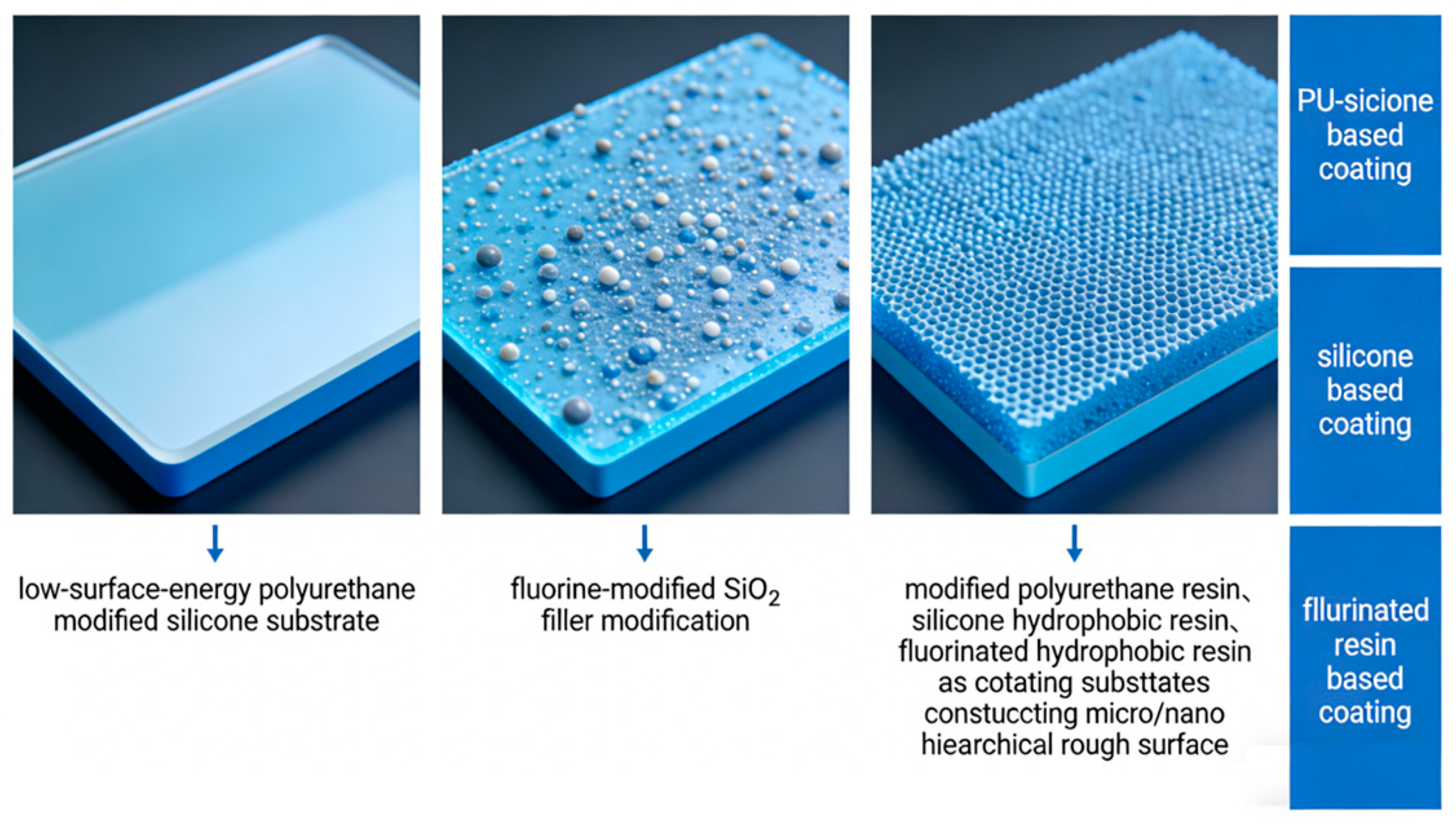
The synthesis method for superhydrophobic microstructured surface coatings on underwater vehicle hulls shows in Figure 1: ① A low-surface-energy polyurethane resin (WANNATE® series, Wanhua Chemical Group Co., Ltd., Yantai, China) for organic silicone substrate modification to reduce the resin substrate’s surface energy. ② Use fluorine-modified SiO2 (VK-FS series, Hangzhou WeKing New Materials Co., Ltd., Hangzhou, China) for filler modification to improve hydrophobic properties. ③ Use modified polyurethane resin, silicone hydrophobic resin (commercial designation: Yimei F660, Dongguan Yimei Materials Technology Co., Ltd., Dongguan, China), and fluorinated hydrophobic resin (commercial designation: Gemini Ano163, Hunan Weiss Bonya Co., Ltd., Changsha, China) as coating substrates for filler modification, constructing hierarchical rough surfaces with micro/nanostructures to enhance the strength and wear resistance of the rough coating surface. Three types of superhydrophobic microstructured surface coatings were synthesized for performance testing and drag reduction experiments.

2.1. Resin Substrate Modification

Prior to synthesis, polypropylene glycol (PPG, number-average molecular weight 2000 g/mol) and hydroxyl-terminated polydimethylsiloxane (PDMS-OH, 1000 g/mol) were dried over anhydrous calcium chloride under vacuum at 60 °C for 24 h to reduce moisture content to below 50 ppm. A mixture of 10.0 g of dried PPG and a predetermined amount of PDMS-OH was charged into a three-neck round-bottom flask equipped with a mechanical stirrer, nitrogen inlet, and thermometer. The mass ratio of PDMS-OH to total polyol was varied at 0, 5, 10, 15, and 20 wt% while maintaining a constant total hydroxyl content across all formulations. The mixture was stirred at 300 rpm under a nitrogen atmosphere and heated to 60 °C. Toluene diisocyanate (TDI, 4.23 g, NCO/OH molar ratio = 1.1:1) was then added dropwise over 30 min, followed by a 3 h reaction at 60 °C. Subsequently, dibutyltin dilaurate (DBTDL, 0.05 wt% relative to total solids) was introduced as a catalyst, and the temperature was raised to 70 °C for an additional 1 h to yield a moisture-curable silicone-modified polyurethane coating substrate.
To facilitate application, anhydrous toluene (10 wt% relative to the total formulation) was added to adjust viscosity. The resulting solution was homogenized by stirring at 400 rpm for 30 min and then applied onto degreased aluminum panels. The coated samples were cured in an oven at 40 °C for 3 h to complete the moisture-induced crosslinking.
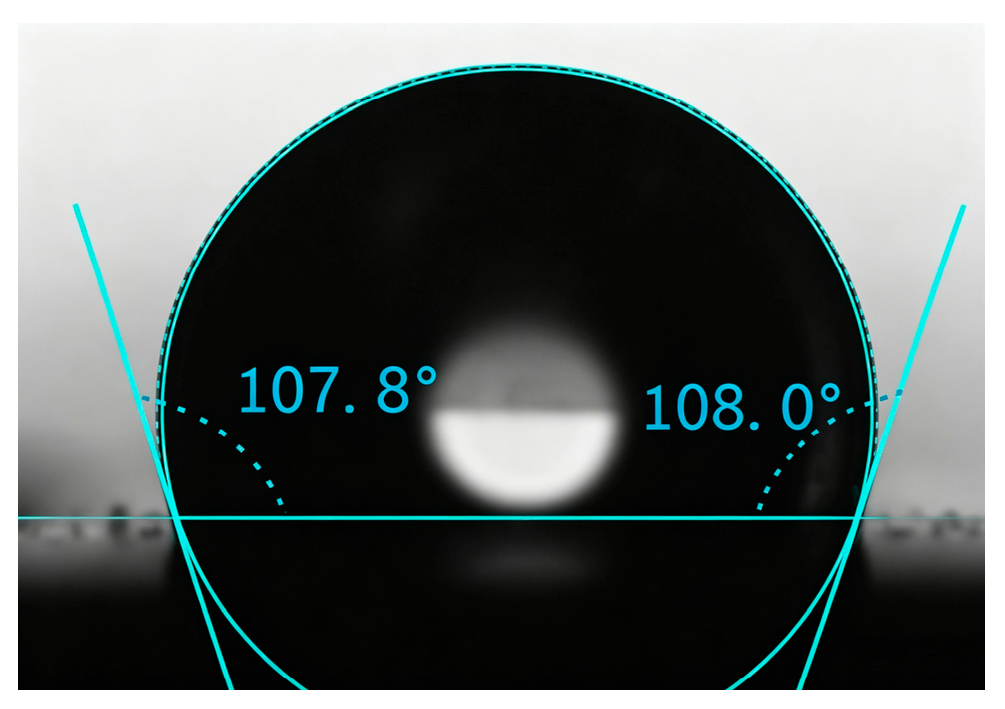
Hydrophobic angles were measured using the sessile drop method (5 μL deionized water, n = 5), with representative results shown in Figure 2. Among all compositions, the coating containing 10 wt% PDMS-OH exhibited the highest hydrophobicity, achieving a hydrophobic angle of 107.8°. This optimal performance is attributed to the effective surface enrichment of low-surface-energy siloxane segments without compromising film integrity. Further increases in PDMS-OH content led to phase separation, reduced cohesive strength, and consequently inferior overall performance.

2.2. Filler Modification

Preparation of fluorine-modified SiO2 particle filler: ① 5 mL of tetraethyl orthosilicate (TEOS, 98%) was added to 200 mL of absolute ethanol (EtOH, 99.7%) and stirred at 400 rpm at room temperature (25 ± 2 °C) until homogeneous. Subsequently, 4 mL of aqueous ammonia (NH3·H2O, 25–28 wt%) was slowly introduced dropwise at a rate of 1 mL/min as a catalyst, maintaining a volume ratio of TEOS:EtOH:NH3·H2O = 1:40:0.8. The reaction was allowed to proceed under continuous stirring at room temperature for 2 h. After completion, the SiO2 solid product was collected by centrifugation at 8000 rpm for 10 min, followed by sequential washing with absolute ethanol and deionized water (three times each) to remove unreacted precursors. The resulting powder was then dried in a vacuum oven at 70 °C for 12 h. The particle size of the SiO2 nanoparticles was tuned by adjusting the amount of aqueous ammonia in the reaction system: when the ammonia volume was varied from 2 to 6 mL (corresponding to a TEOS:NH3·H2O volume ratio of 1:0.4–1.2), SiO2 nanoparticles with diameters ranging from 20 to 200 nm were successfully obtained. ② Additionally, 1.0 g of the as-synthesized SiO2 nanoparticles was dispersed in 50 mL of n-hexane (99%) by ultrasonication at 200 W for 30 min, followed by magnetic stirring at 500 rpm for 1 h to ensure uniform dispersion. Then, 0.2 g of perfluorooctyltriethoxysilane (PFOTS, 97%)—or alternatively, other fluorinated modifiers such as perfluorodecyltriethoxysilane (PFDS)—was slowly added dropwise to the suspension. The mixture was stirred continuously at room temperature for 6 h to allow surface modification. The hydrophobically modified product was recovered by centrifugation at 6000 rpm for 8 min, washed three times with n-hexane to remove excess modifier, and finally dried in a vacuum oven at 60 °C for 8 h, yielding fluorinated SiO2 nanoparticles with enhanced hydrophobicity. The SiO2 particles exhibited an average hydrodynamic diameter of approximately 85 nm (PDI = 0.15) as determined by dynamic light scattering (DLS), confirming their nanoscale size and good dispersibility.
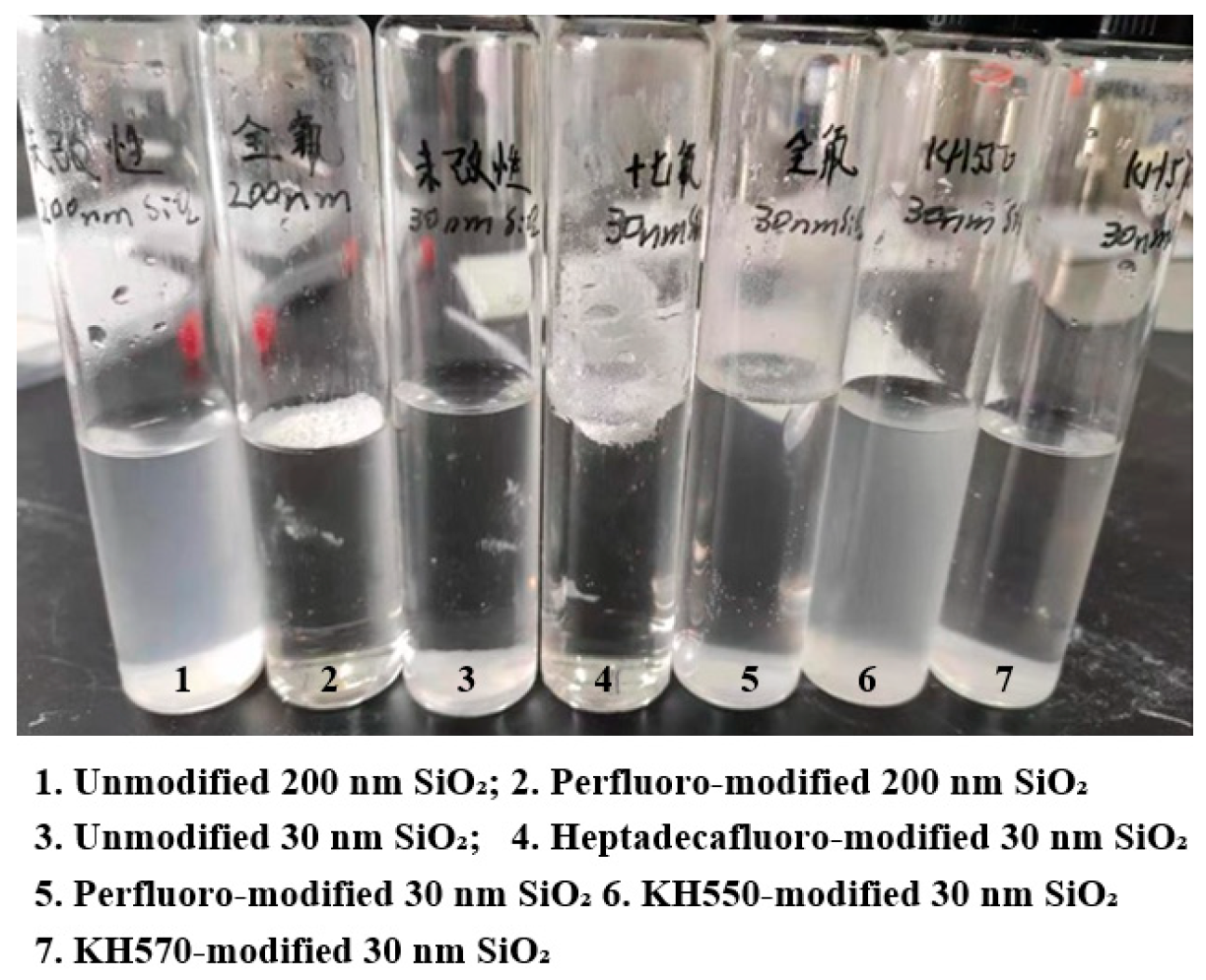
Before modification, SiO2 was partially uniformly dispersed in water and partially settled at the bottom, as shown in Figure 3. After modification with perfluorooctyltriethoxysilane, SiO2 floated on the water surface, showing obvious hydrophobic effects. The reason for this phenomenon is that unmodified SiO2 has a large number of hydroxyl groups on its surface, which are hydrophilic, making unmodified SiO2 easily wettable by water, dispersing in water or settling at the bottom. After modification with perfluorooctyltriethoxysilane, the hydroxyl groups on the SiO2 surface are replaced, showing significant hydrophobic effects. Although the density of hydrophobic SiO2 is greater than that of water, it can still float on the water surface.

2.3. Preparation of Superhydrophobic Surface Coatings

(1) Preparation of polyurethane resin superhydrophobic coating: The previously synthesized organosilicon-modified polyurethane (hereinafter referred to as PU) was used as component A, and fluorine-modified SiO2 particles were used as component B to prepare the superhydrophobic surface coating for underwater vehicle hulls. The steps are as follows: ① Pretreat the substrate: Clean to remove impurities, wax, grease, polishing agents, etc., to achieve good adhesion and keep the substrate dry. ② Shake component A to uniformly disperse the white precipitate in the solvent. Keep the nano-liquid shaken during the spraying process. The nozzle should be 20–25 cm vertically from the substrate surface, moving uniformly at a speed of 15–25 cm/s. After spraying, dry for more than 10 min. ③ Spray component B: Prepare component B as a 6% acetone dispersion and spray it onto component A’s coating substrate and perform performance tests after thorough drying.
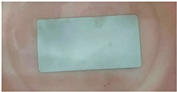
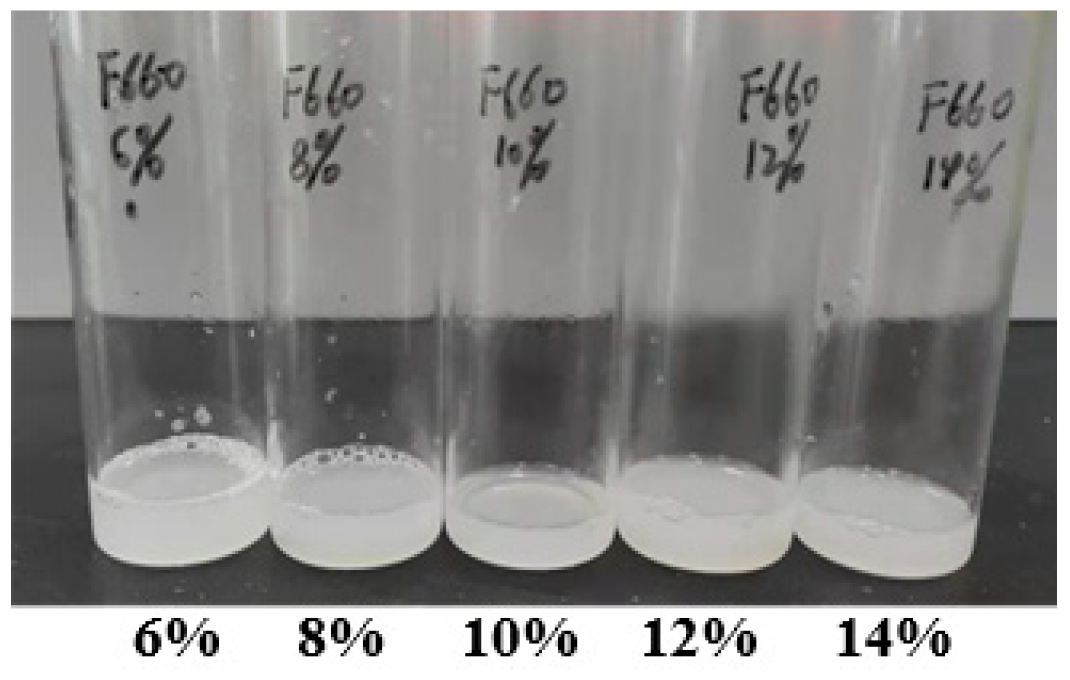
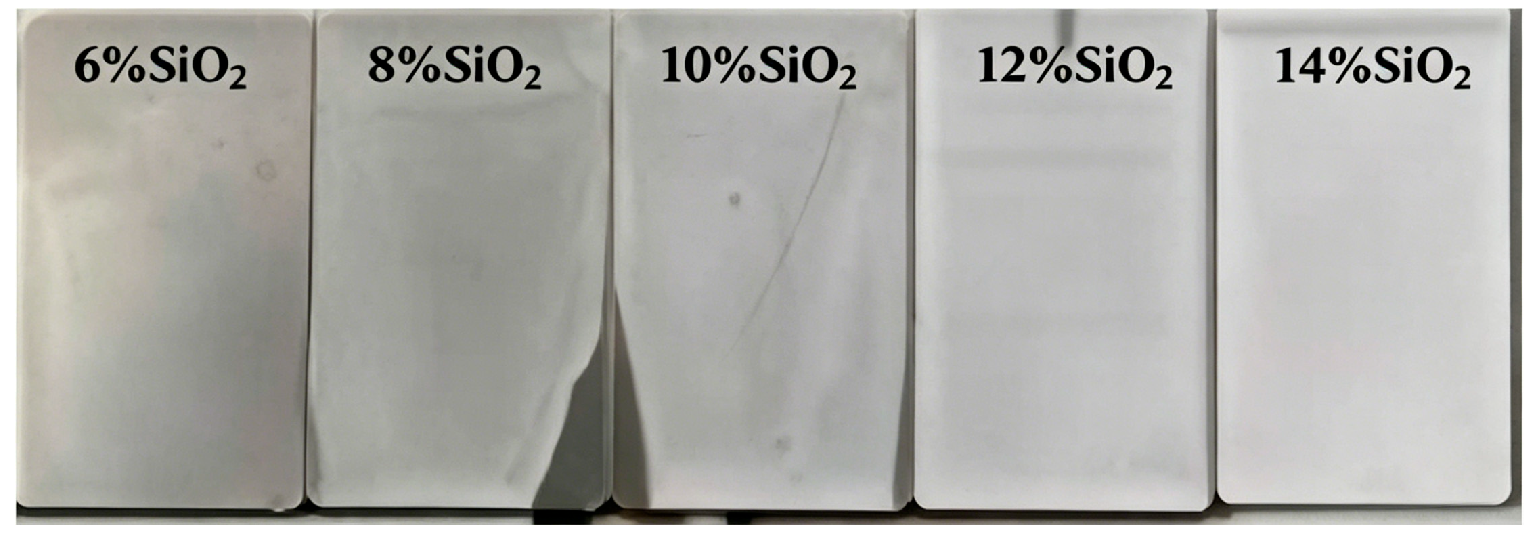
(2) Preparation of silicone resin superhydrophobic coating: Select organic silicone resin Yimei F660 as the coating substrate, with a water contact angle greater than 112°, wear resistance, coating hardness of 2H, transparent liquid, and film thickness of 10–50 μm. The cured colloid has a high refractive index (>1.48) and light transmittance (>95%). Preparation steps: Take an appropriate amount of F660 and place it in five 50 mL centrifuge tubes; add hydrophobic SiO2 to prepare dispersions with SiO2 contents of 6%, 8%, 10%, 12%, and 14%, respectively. Ultrasonicate for 2 h to ensure uniform dispersion of the coating, all presenting as semi-transparent white emulsions without large insoluble particles, as shown in Figure 4. Apply the coating to aluminum plates, ABS, and PVC boards and cure in an oven at 60 °C for 1 h, as shown in Figure 5. It can be seen that as the SiO2 content increases, the coating transparency decreases and the color turns white. At 6% SiO2 content, the coating is semi-transparent; at 14% content, the coating is completely opaque white, and the surface becomes smooth, with slight cracks around the edges.
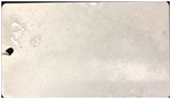
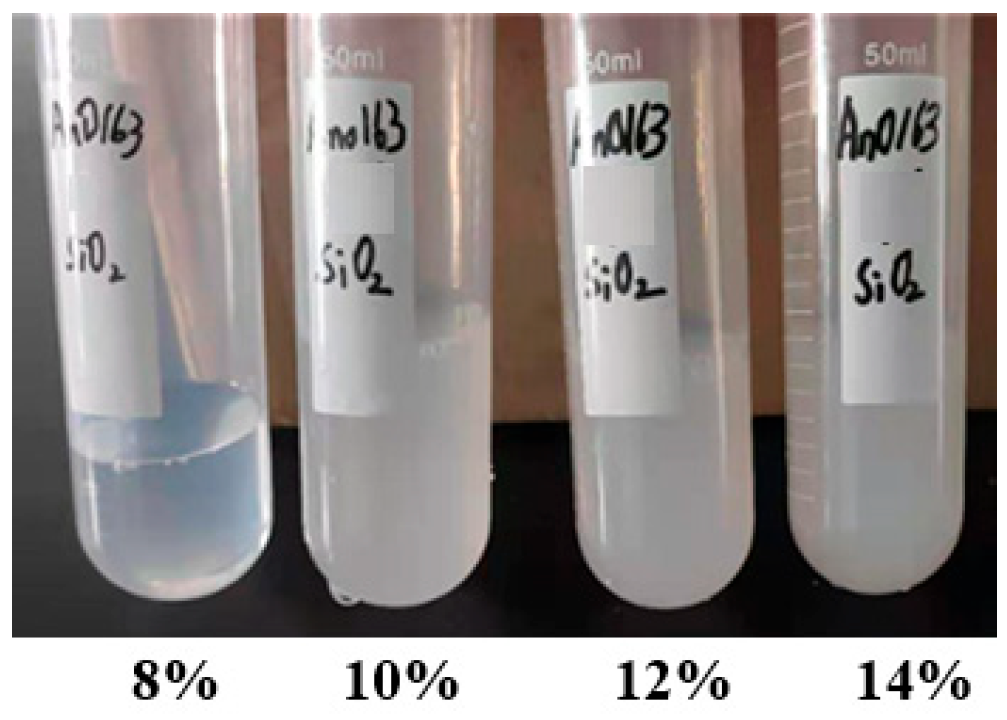
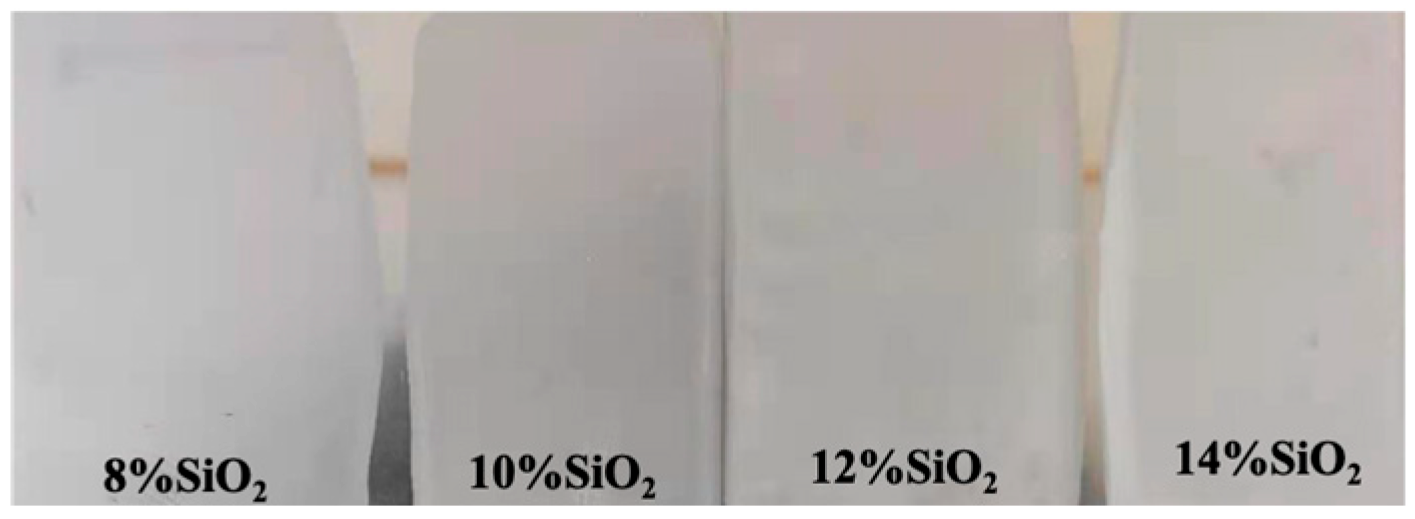
(3) Preparation of fluororesin superhydrophobic coating: Select organic fluororesin GeminiAno163 as the coating substrate, with a water contact angle greater than 105°, ultra-wear resistance, coating hardness of 7H, transparent liquid, high transparency, and high hardness. Preparation steps: Take an appropriate amount of Ano163 and place it in four 50 mL centrifuge tubes; add hydrophobic SiO2 to prepare dispersions with SiO2 contents of 8%, 10%, 12%, and 14% respectively. Ultrasonicate for 2 h for uniform dispersion. As the SiO2 content increases, transparency decreases, gradually turning into a white emulsion, as shown in Figure 6. Apply the coating to aluminum plates, titanium alloy plates, ABS boards, and PVC boards, and cure in an oven at 60 °C for 2 h. It can be seen that as the SiO2 content increases, the coating transparency slightly decreases, as shown in Figure 7.

3. Results of Performance Testing

All tests described in this section were repeated at least three times, and the reported values are averages.

3.1. Effect of SiO2 Fillers on Coating Properties

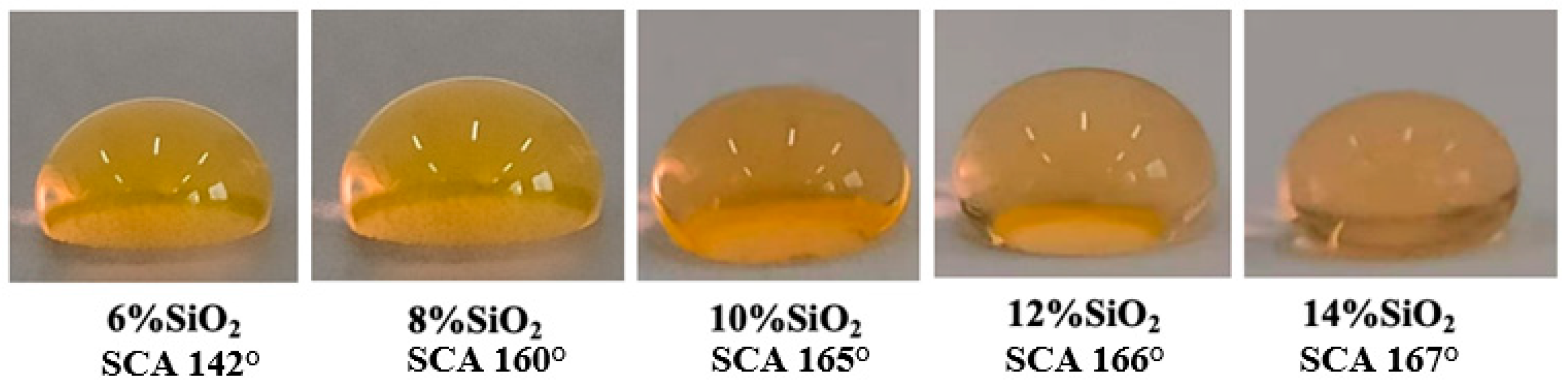
(1) The performance of F660 + SiO2 superhydrophobic coating: As the SiO2 content increases, the hydrophobic contact angle of droplets on the coating surface gradually increases. When the SiO2 content reaches above 10%, the change in the hydrophobic contact angle is not significant, as shown in Figure 8.
Pencil hardness was used to test the surface hardness of the coating, and the cross-cut test was used to test the adhesion of the coating, as shown in Table 1. When the SiO2 content is greater than 8%, the surface hardness decreases significantly, and adhesion reaches level 1 or above, achieving superhydrophobic effects.
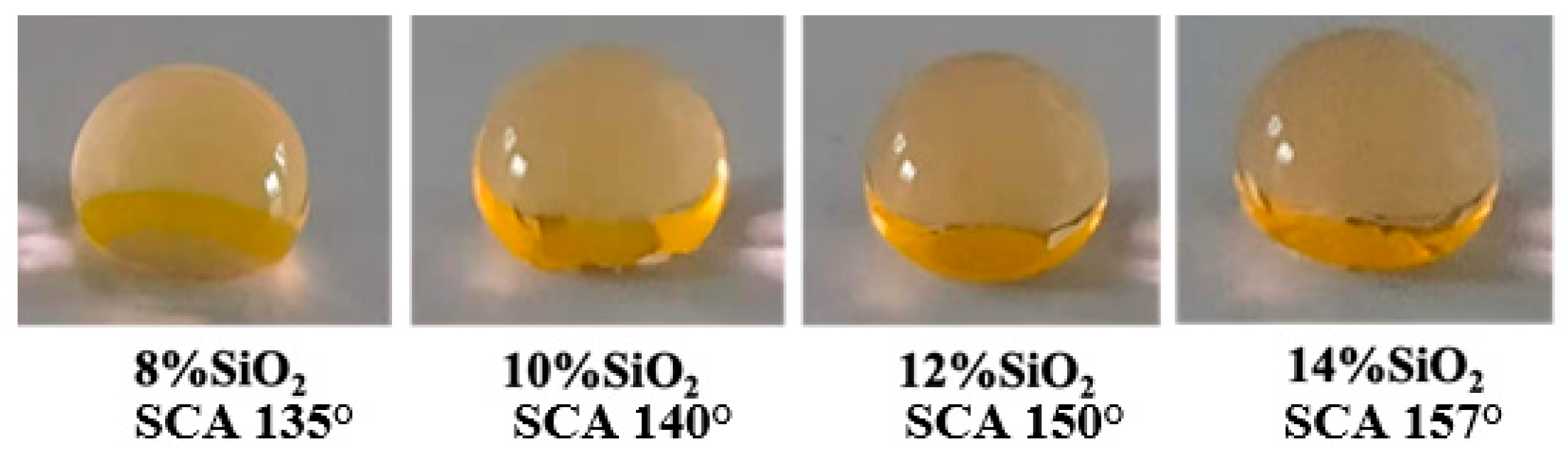
(2) The performance of no163 + SiO2 superhydrophobic coating: As the SiO2 content increases, water droplets aggregate on the coating surface without spreading, and the coating’s hydrophobic contact angle gradually increases, showing gradually enhanced hydrophobic effects, as shown in Figure 9.
The comprehensive performance test results of the Ano163 + SiO2 coating are shown in Table 2 below. As the SiO2 content increases, surface hardness and adhesion gradually decrease. When the content is greater than 14%, the comprehensive performance is best, achieving superhydrophobic effects.

3.2. Mechanical Performance Testing

Comprehensive performance tests were conducted on the three prepared superhydrophobic surface coatings for underwater vehicle hulls: PU + 6%SiO2, F660 + 8%SiO2, and Ano163 + 14%SiO2. The adaptability of various parameters of these coatings for engineering applications was analyzed, laying the foundation for drag reduction experiments.
(1) Thickness: testing equipment, coating thickness gauge AS-X6 (Yingshang Zhuoyue, Fuyang, China); standard, GB/T13452.2-2008 [21]; substrate: aluminum alloy; sample surface must be flat, clean, and crack-free. Results are shown in Table 3. Coating thickness is between 10 and 60 μm, with small errors for all coatings, meeting the requirements for underwater vehicle hull surface coatings. The significant difference in thickness (PU: ~55 μm vs. F660/Ano163: ~13 μm) is attributed to the distinct solid content and viscosity of the different resin systems, which dictate their film-forming characteristics during spraying. All subsequent performance evaluations were conducted on coatings with their respective as-prepared thicknesses to reflect realistic application scenarios.
(2) Hardness: testing equipment, portable pencil hardness tester QHQ-A (Flora Automation Technology Co., Ltd., Tianjin, China); standard, GB/T6739-1996 (Method B) [22]; substrate, tinplate. Results are shown in Table 3. Coating hardness is HB for all, meeting the requirements.
(3) Adhesion: testing equipment, cross-cut cutter test tool; standard, GB/T9286-1998 [23]; tested at three different locations per board; substrates, titanium alloy, stainless steel, aluminum alloy, PVC board, ABS board. Results are shown in Table 4. PU and F660-based coatings achieved adhesion level 1 or above on all five substrate materials; the adhesion of the 163-based coating on non-metallic substrates was affected due to its high SiO2 content.
(4) Wear resistance: Substrate: aluminum alloy; using 400-grit sandpaper, 200 g weight, cyclic friction test 10 times, observing coating appearance and water contact angle. Results are shown in Table 5. PU-based surface showed no significant changes, F660-based surface had obvious scratches, Ano163-based surface was heavily scratched.

3.3. Functional Characteristic Testing

(1) Surface microstructure: Testing equipment: field emission scanning electron microscope GeminiSEM300 (Carl Zeiss AG, Oberkochen, Germany); standard: GB/T20307-2006 [24]; sample surface sputtered with gold; substrate: PVC board. Results are shown in Table 6. All coating surfaces formed micro/nanostructures, with PU-based surface being rough, F660-based surface uniform, and Ano163-based surface having a network structure. This semi-quantitative assessment from SEM images suggests a hierarchical roughness that is conducive to the Cassie–Baxter wetting state.
(2) Superhydrophobicity: testing equipment, video optical contact angle measuring instruments JY-82B Kruss DSA (Chengde Dingsheng Testing Machine Co., Ltd., Chengde, China) and Dataphysics OCA20 (DataPhysics GmbH, Filderstadt, Germany); standard, GB/T30693-2014 [25]; substrate, PVC board. Results are shown in Table 7. The static water contact angles of all three coating substrates were greater than 150°, and sliding angles were less than 5°, classifying them as superhydrophobic microstructured surface coatings. The extremely low sliding angles (<5°) strongly indicate that water droplets reside in the Cassie–Baxter state, where air is stably trapped within the micro/nanostructures, minimizing the solid–liquid contact area. This is the fundamental prerequisite for the observed drag reduction effect. The static water contact angles of all substrates decreased after wear resistance testing.
(3) Seawater immersion resistance: Coating samples on aluminum alloy substrates were immersed in seawater with a mass concentration of 3% for 2 months, analyzing changes in surface appearance before and after immersion. Results are shown in Table 8. All three coatings remained intact after immersion, with unchanged morphology, indicating good seawater immersion resistance.
(4) Salt spray stability: Testing equipment, export-type salt spray test chamber YWX-750C (Nanjing Huanke Testing Equipment Co., Ltd., Nanjing, China); standard, GJB150.11A-2009 [26]; substrate, aluminum alloy; temperature, 37 °C; salt solution concentration, 5%; test duration, 1500 h. Results showed that all three coatings remained intact after the salt spray test, without peeling, and had no significant changes compared to before testing, indicating good salt spray stability.
(5) Thermal stability: Thermal stability tests were conducted considering that part of the hull structure of underwater targets is exposed to high-temperature environments during hot seasons when in a moored state. Testing equipment, electric blast constant temperature oven XMTA-7000 (Changjiang Temperature Instrument Factory, Yuyao, China); substrate, aluminum alloy; test temperature, 150 °C; test duration, 24 h. Results showed that all three coatings remained intact, with surface color slightly yellowing, but there was no cracking or peeling, indicating good thermal stability.
(6) Chemical and Morphological Stability after Environmental Exposure: FTIR tests and SEM characterizations were performed on several samples after seawater immersion resistance, salt spray resistance, and thermal stability tests. The results show that no significant changes were observed in the peak positions of the main functional groups of the coating, indicating that the main chemical structure of the coating is stable. The micro-nano structure remained basically intact without obvious dissolution or collapse.


4. Experiment and Discussion

4.1. Experimental Model Structure Design

The drag reduction experimental model for the superhydrophobic surface coating on the underwater vehicle hull adopted a body of revolution structure. The main body length was 2.9 m, the main body diameter was 0.32 m, the total wetted surface area was 2.7 m2, and the fully submerged displacement volume was 0.2 m3. The test model structure was fabricated with the following specific process: Based on the model’s 3D structure, design an internal steel frame of appropriate size, as shown in Figure 10. Weld the steel frame onto a processing platform, using two appropriately sized iron plates as the benchmark mounting surfaces for the model, with the distance between the plates matching the spacing for the drag test, and mark horizontal and vertical reference lines. Based on the model’s line plan, use a five-axis machine to process a wooden male mold and create a fiberglass female mold. Make the fiberglass skin inside the female mold and position the steel frame inside the female mold, ensuring coaxiality with the model, to create the fiberglass model. Make inspection templates based on the 3D lines, use the qualified templates to inspect the model shape, and inspect and polish the fiberglass model until the line accuracy meets requirements. Open inlet and outlet holes on the main body, create a hatch cover on the main body, and mark horizontal and vertical reference lines on the model surface for easy loading of counterweights and model installation. Finally, spray the relevant test drag reduction coatings on the model’s outer surface, ensuring a smooth and fair outer surface.

4.2. Experimental Model Installation

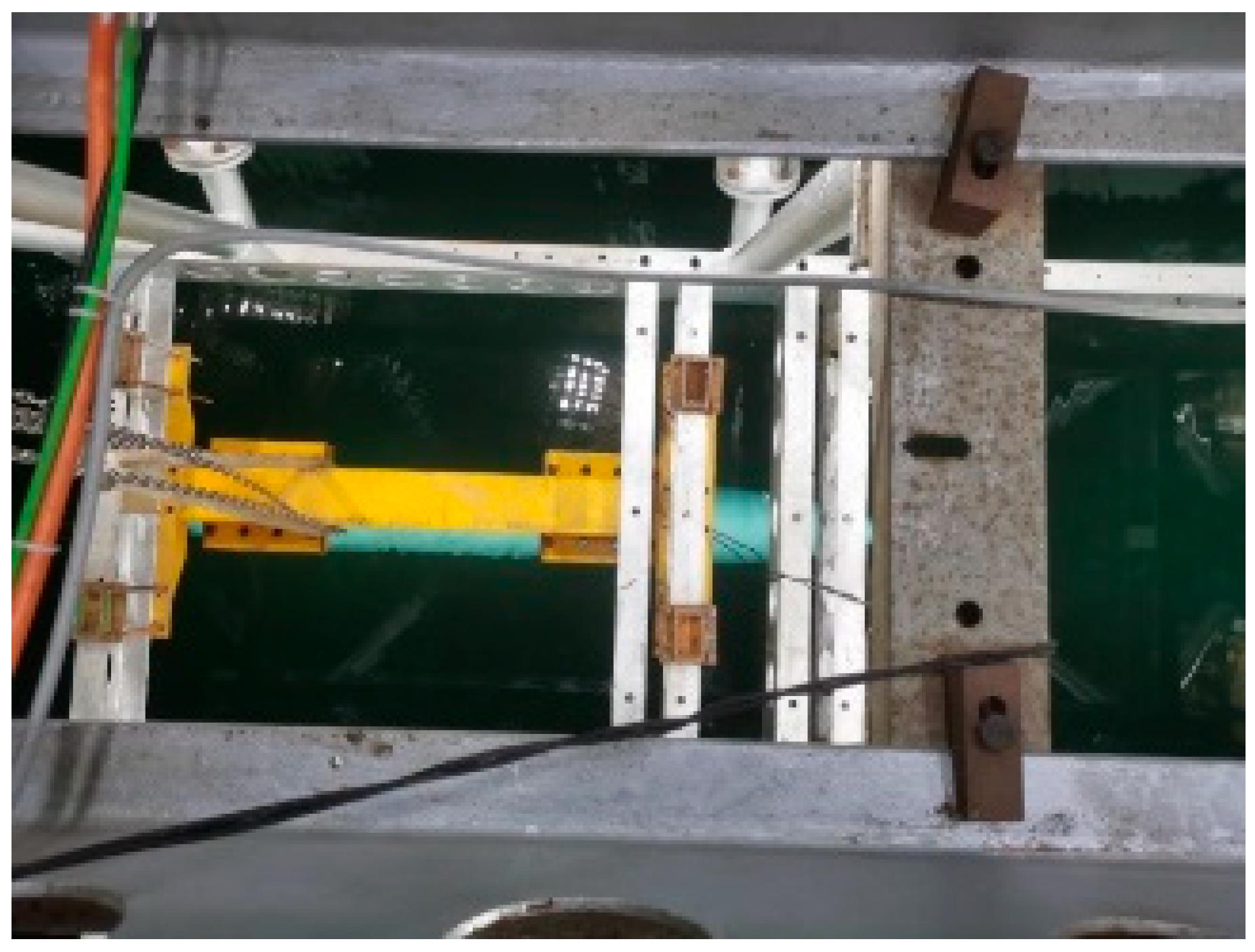
The drag reduction experiment was conducted in a high-speed hydrodynamics laboratory. The tank was 510 m long, 6.5 m wide, and 6.8 m deep, with a water depth of 5.0 m. Test equipment included an underwater dynamometer, a platinum resistance temperature measurement system, a towing carriage system, a control and acquisition system, an electronic crane scale, etc. The dynamometer had a single sensor range of 100 kg, a sampling frequency of 100 Hz, a carriage speed range of 0.1 m/s~25 m/s, and speed stability accuracy better than 0.1%.
The experiment used a twin-strut towing method. The model installation is shown in Figure 11. To reduce surface wave influence, the entire model was installed below the twin struts, with the longitudinal baseline aligned with the direction of travel. The model was installed horizontally centered on the twin struts of the underwater towing test device, with a center distance of 1.48 m between the struts. The model’s center of gravity was between the struts and below the buoyancy center to avoid capsizing moments affecting results. The entire model was immersed, weight not exceeding the struts’ capacity, trimmed to negative buoyancy.

4.3. Drag Reduction Experimental Plan

Five surface coating plans were selected for the underwater vehicle hull drag reduction experiment: bare hull (without coating, Plan 1); smooth coating EC-C10 (Plan 2, hardness 6H, adhesion level 0, smooth surface, low roughness); polyurethane superhydrophobic coating PU + 6%SiO2 (Plan 3); silicone-modified superhydrophobic coating F660 + 8%SiO2 (Plan 4); and fluorinated-modified superhydrophobic coating Ano163 + 14%SiO2 (Plan 5). Resistance values were obtained for each plan to analyze the drag reduction performance. The test procedure was as follows:
(1)
Dynamometer calibration and model status adjustment: Calibrate single and twin dynamometer systems before testing. Add counterweights to the middle of the model to lower the center of gravity below the buoyancy center and ensure it lies between the struts, achieving negative buoyancy.
(2)
Model installation and debugging: Connect the towing struts to the carriage, adjust fore-aft alignment, then hoist and connect the model to the struts. Fine-tune the model’s attitude using reference lines and height gauges, ensuring alignment and height errors are less than 2 mm.
(3)
Test parameters: Carriage speed from 1 m/s to 13 m/s, data recorded at 1 m/s intervals, recording resistance value R_M and corresponding speed V.
(4)
Test the five coating plans sequentially. After each plan, remove the coating by sanding and apply the next plan, drying before testing. Each coating scheme was tested three times. The experiments were conducted in a national-level high-precision towing tank, with the measurement uncertainty maintained within 2%.

4.4. Analysis of Drag Reduction Experimental Results

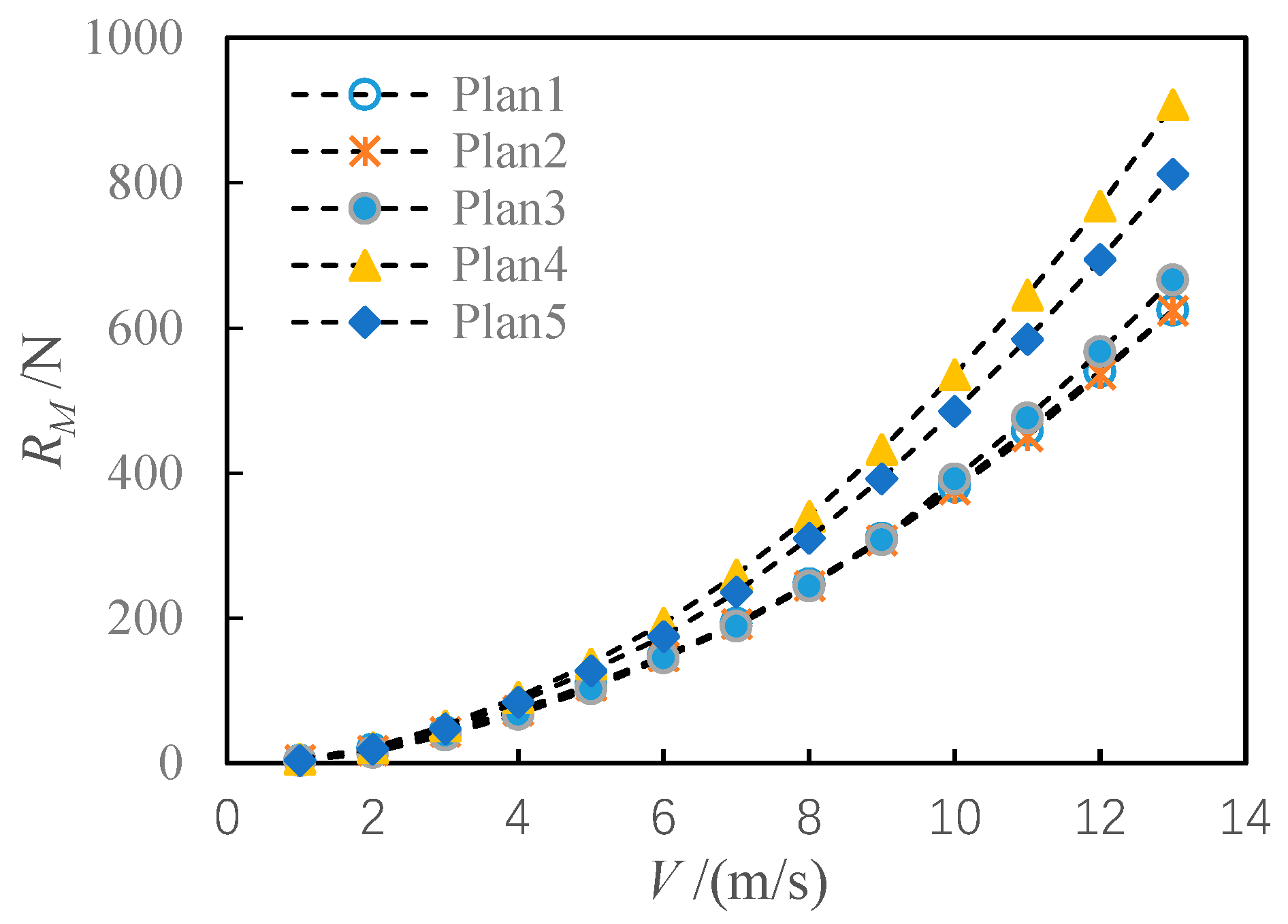
The total resistance test results for the five coating plans are shown in Figure 12. As speed increases, the variation trend of total resistance aligns with theoretical expectations; as coating roughness increases, the total resistance of the hull increases. Plan 1 (bare) and 2 (smooth EC-C10) show similar total resistance, both being the lowest among the five plans. Plan 3 (PU + 6%SiO2), Plan 4 (F660 + 8%SiO2), and Plan 5 (Ano163 + 14%SiO2) possess superhydrophobic drag reduction effects due to the presence of resin and SiO2 particles, but also increase surface roughness, leading to increased total resistance at medium to high speeds.
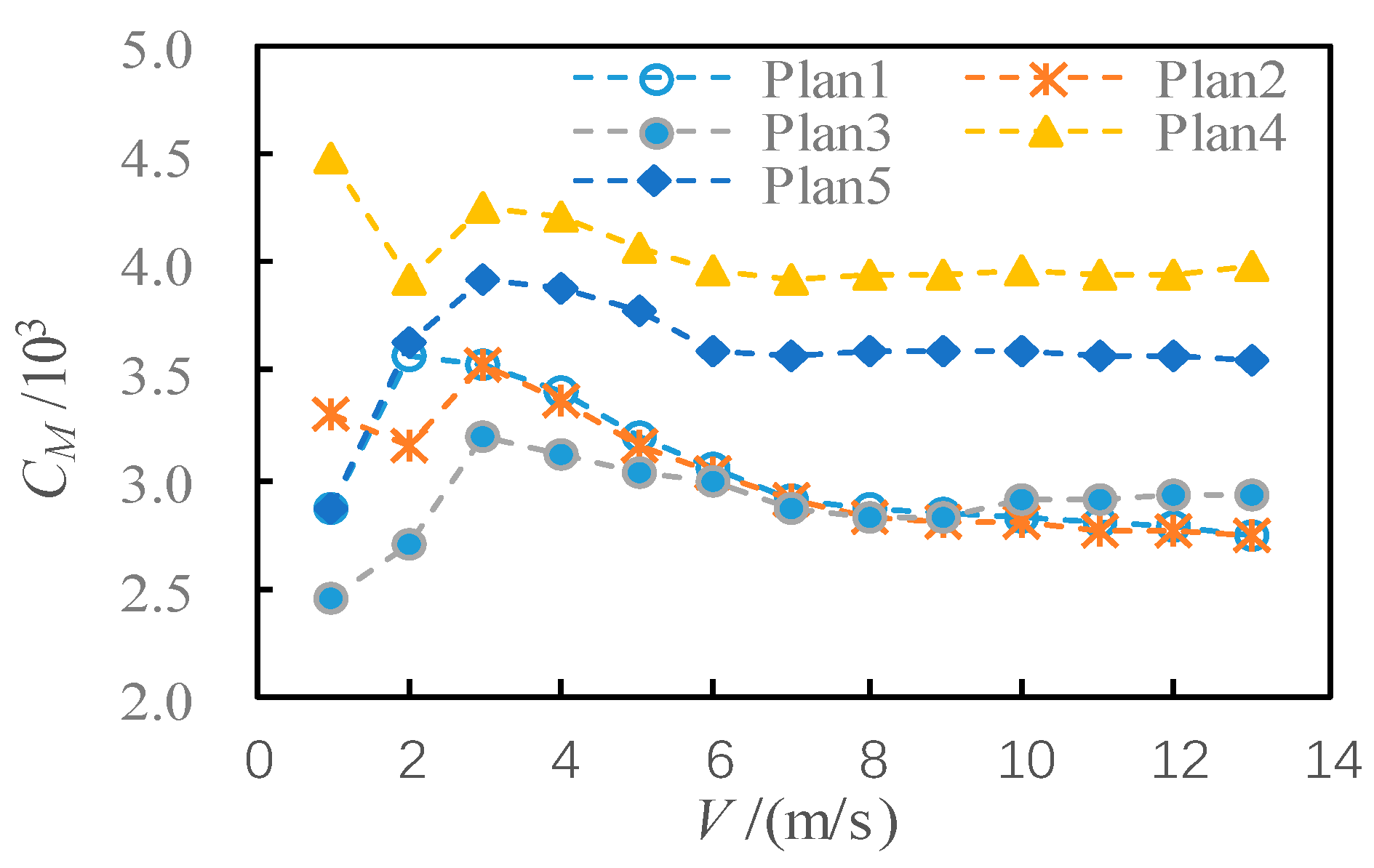
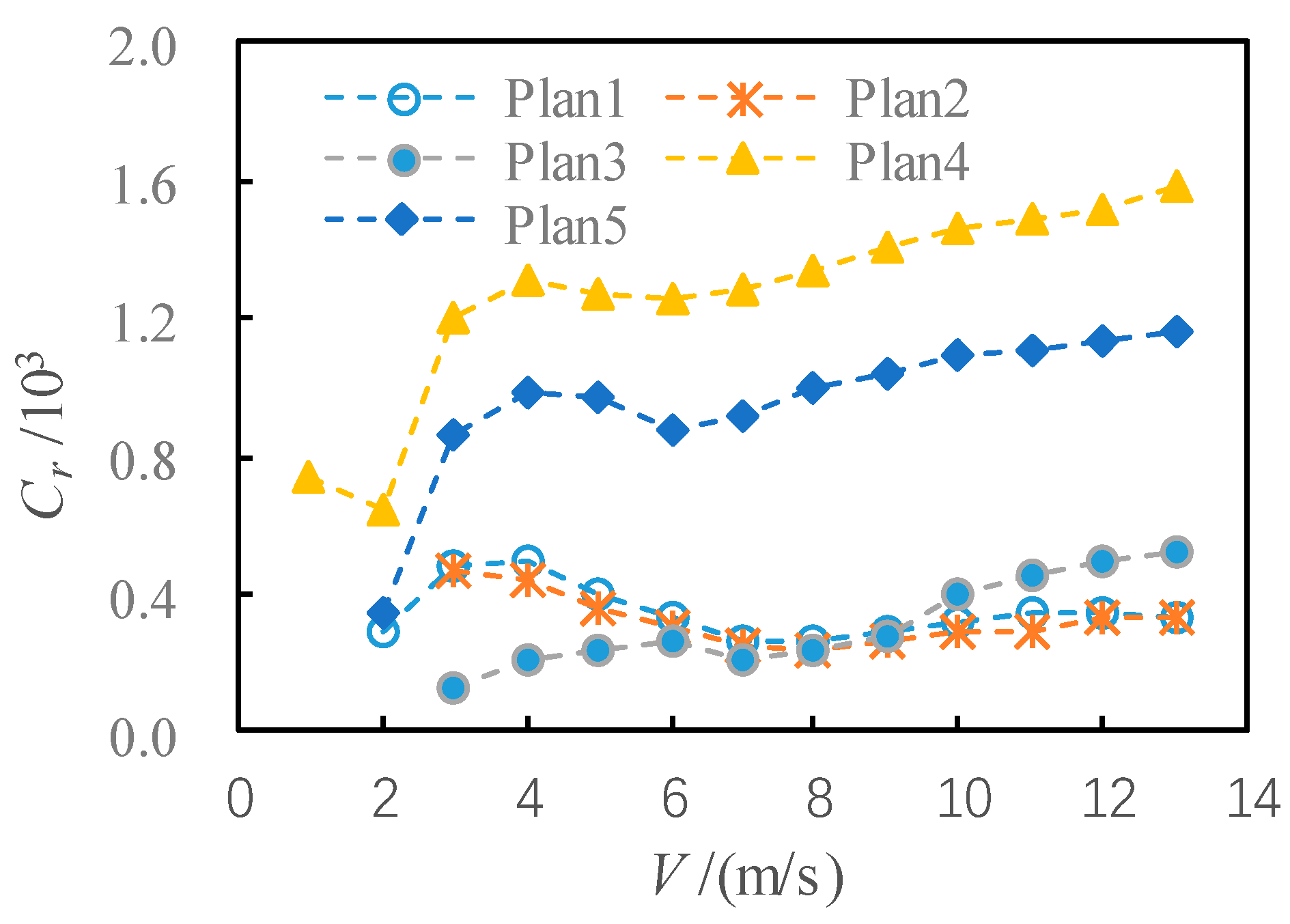
The resistance magnitude for different coating plans is determined by the drag coefficient. Data processing followed CB/Z216-2008 [27]. The total drag coefficient, CM, and form drag coefficient, Cr, are shown in Figure 13 and Figure 14. Plans 1 and 2 have similar total drag coefficients; Plan 3 has the smallest total drag coefficient at speeds below 9 m/s, approaching the bare hull at higher speeds, indicating drag reduction at low speeds; Plans 4 and 5 have larger form drag coefficients due to higher roughness (Plan 4 is about five times, and Plan 5 is about four times that of Plan 1), hence larger total drag coefficients.
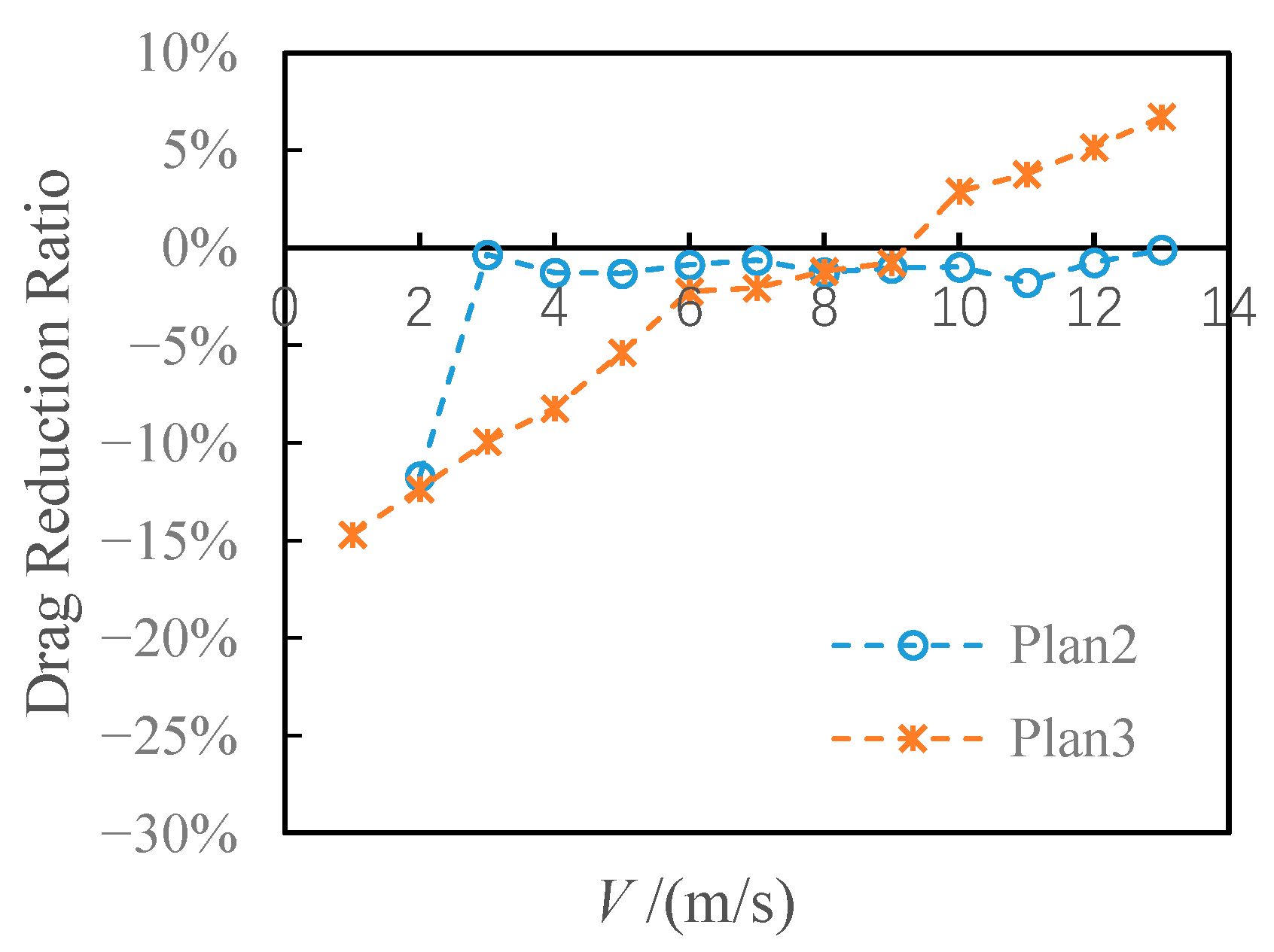
The drag reduction rates of Plan 2 and Plan 3 relative to Plan 1 are shown in Figure 15. At low speeds (<9 m/s), the drag reduction rate of Plan 2 stabilizes around 1%; Plan 3 achieves a maximum drag reduction rate of 15%, which decreases with increasing speed, showing better effect at lower speeds. At speeds > 9 m/s, an increase in drag is observed, determined by the wall slip and “air cavity” drag reduction mechanisms of superhydrophobic coatings.
A more rigorous hydrodynamic interpretation is warranted. The Reynolds number (Re) for our model ranges from about 3 × 10⁵ to 4 × 10⁶, covering the critical transition to fully turbulent flow. At low speeds (V < 9 m/s, Re < 2.5 × 10⁶), the shear stress is insufficient to disrupt the stable air plastron trapped in the Cassie–Baxter state, enabling effective wall slip and thus drag reduction. However, as the speed increases beyond this threshold, the intensified turbulent fluctuations and higher shear forces can destabilize and eventually rupture the air film. Once the plastron fails, the underlying rough solid surface is exposed to the flow. The increased form drag coefficient (Cr) shown in Figure 13 is approximately five times higher for Plan 4 than the bare hull. These demonstrate that this roughness becomes a dominant source of resistance, overwhelming the benefits of any residual slip effect and leading to a net drag penalty. This highlights a crucial design trade-off for underwater superhydrophobic coatings: optimizing for maximum roughness to enhance air retention must be balanced against the inherent drag penalty of that roughness should the air film fail.

5. Conclusions

(1)
Through organosilicon modification of polyurethane substrate and fluorine-modified SiO2 particle filler, three superhydrophobic coating samples were prepared: polyurethane resin, silicone resin, and fluororesin. Performance tests determined the optimal component ratios: PU + 6%SiO2, F660 + 8%SiO2, and Ano163 + 14%SiO2.
(2)
Mechanical properties (thickness, hardness, adhesion, wear resistance) and functional characteristics (surface microstructure, static/dynamic hydrophobic angles, seawater immersion resistance, salt spray stability, thermal stability) of the three coatings were tested and compared. The silicone resin superhydrophobic coating F660 + 8%SiO2 exhibited the best comprehensive performance, followed by the polyurethane resin coating PU + 6%SiO2.
(3)
The drag of the hull surface coating is closely related to roughness; generally, higher roughness leads to greater drag. Superhydrophobic surface coatings exhibit a good drag reduction effect at speeds below 9 m/s. The PU + 6%SiO2 coating, in particular, achieved a remarkable peak drag reduction rate of 15% at low speeds, suggesting its high potential for energy savings on slow-moving underwater platforms like surveillance AUVs or underwater gliders. However, its performance degrades significantly at higher speeds due to plastron instability. Future work should focus on enhancing the mechanical strength of the microstructure and the long-term stability of the air layer under dynamic pressure to extend the effective speed range of these coatings towards practical marine engineering deployment.

Author Contributions

Methodology, Z.L. and Y.L.; data curation, Z.L.; validation, Z.L., J.H. and Y.L.; investigation, Z.L., J.H. and Y.L.; writing—original draft, Z.L.; writing—review and editing, Y.L. The results were discussed, and conclusions were drafted jointly by all authors. All authors have read and agreed to the published version of the manuscript.

Funding

This research was funded by the National Defense Key Scientific Research Project, grant 342 number 2024105070.

Institutional Review Board Statement

Not applicable.

Informed Consent Statement

Not applicable.

Data Availability Statement

The data presented in this study are available on request from the corresponding author. The data is unavailable due to privacy.

Acknowledgments

During the preparation of this manuscript/study, the authors used Office 2016 for the purposes of creating tables and figures. The authors have reviewed and edited the output of 348 results and take full responsibility for the content of this publication.

Conflicts of Interest

The authors declare no conflicts of interest.

References

  1. Tang, Z.Q.; Tian, T.; Molino, P.J.; Skvortsov, A.; Ruan, D.; Ding, J.; Li, Y. Recent advances in superhydrophobic materials development for maritime applications. Adv. Sci. 2024, 11, 2308152. [Google Scholar] [CrossRef] [PubMed]
  2. Feng, J.X.; Hu, H.B.; Lu, B.J.; Qin, L.P.; Zhang, M.Z.; Du, P.; Huang, X. Experiment Study on Drag Reduction Characteristics of Superdrophobic Groove Surfaces with Ventilation. Chin. J. Theor. Appl. Mech. 2020, 52, 25–30. [Google Scholar] [CrossRef]
  3. Ke, S.; Li, J.; Li, R.; Zhu, J.; Chen, Y.; Hu, J.; Lai, Y.; Huang, J.; Wu, X.; Chen, Z. Recent developments in the fabrication, performance, and application of transparent superhydrophobic Coatings. Adv. Colloid Interface Sci. 2025, 342, 103537. [Google Scholar] [CrossRef] [PubMed]
  4. Li, T.; Peng, Y.; You, H.; Guan, X.; Lv, J.; Yang, C. Recent developments in the fabrication and application of superhydrophobic surfaces. Chem. Rec. 2024, 24, e202400065. [Google Scholar] [CrossRef] [PubMed]
  5. Wang, P.; Li, C.Y.; Zhang, D. Recent advances in chemical durability and mechanical stability of superhydrophobic materials: Multi-Strategy design and strengthening. J. Mater. Sci. Technol. 2022, 129, 40–69. [Google Scholar] [CrossRef]
  6. Wang, S.; Liu, H.; Liu, G.; Song, P.; Liu, J.; Liang, Z.; Chen, D.; Ren, G. Green superhydrophobic surfaces: From natural substrates to sustainable fabrication processes. Materials 2025, 18, 4270. [Google Scholar] [CrossRef] [PubMed]
  7. Khan, M.Z.; Militky, J.; Petru, M.; Tomková, B.; Ali, A.; Tören, E.; Perveen, S. Recent advances in superhydrophobic surfaces for practical applications: A review. Eur. Polym. J. 2022, 178, 111481. [Google Scholar] [CrossRef]
  8. He, Q.; Xu, Y.; Zhang, F.; Jia, Y.; Du, Z.; Li, G.; Shi, B.; Li, P.; Ning, M.; Li, A. Preparation methods and research progress of superhydrophobic anti-icing surface. Adv. Colloid Interface Sci. 2024, 323, 103069. [Google Scholar] [CrossRef] [PubMed]
  9. Yao, Z.H.; Zhang, J.X.; Hao, P.F. Effect of Surface Micro/nano-structure on Gas-water Interface Stability and Flow Drag Reduction. J. Exp. Fluid Mech. 2020, 34, 73–79. [Google Scholar] [CrossRef]
  10. Zeng, L.L.; Chang, Q.; Zhong, X.M.; Kong, G.; Che, C.S.; Lai, D.L. Construction of Superhydrophobic Coatings on Hot-Dip Galvanized Surface and Its Corrosion Resistance Properties. Mater. Prot. 2020, 53, 127–131. [Google Scholar] [CrossRef]
  11. Liu, M.; Ma, L.R. Drag Reduction Methods at Solid-liquid Interfaces. Friction 2022, 10, 491–515. [Google Scholar] [CrossRef]
  12. Zhao, M.R.; Zhou, H.Y.; Kang, W.Q.; Huang, Y.; Zheng, Y. Comparison of Methods for Fabricating Superhydrophobic Surface. Acta Mater. Compos. Sin. 2021, 38, 361–379. [Google Scholar] [CrossRef]
  13. Kitagawa, A.; Shiomi, Y.; Muria, Y.; Denissenko, P. Transient Velocity Profiles and Drag Reduction due to Air-filled Super-hydrophobic Grooves. Exp. Fluids 2020, 61, 237. [Google Scholar] [CrossRef]
  14. Hu, H.B.; Huang, S.H.; Song, B.W.; Zhang, Z.Z.; Luo, Z.Z. Recent Development about Drag Reduction on Hydrophobic Micro-Structured Surfaces. J. Ship Mech. 2015, 19, 1011–1022. [Google Scholar] [CrossRef]
  15. Guo, X.Y.; Xia, Z.Y. Experimental Study on Drag Reduction of Superhydrophobic Surfaces with Longitudinal Microstructures in a Turbulent Boundary Layer. J. Exp. Mech. 2023, 38, 378–386. [Google Scholar] [CrossRef]
  16. Liu, C.Y.; Wang, X.W.; Wang, X.; Li, B.H.; Wang, Y.F.; Jiang, N. Experimental Study of the Mechanism of Drag Reduction in Turbulent Boundary layers on the Superhydrophobic Structured Wall with Microstructure. J. Exp. Fluid Mech. 2025, 39, 54–64. [Google Scholar] [CrossRef]
  17. Ren, L.Z.; Hu, H.B.; Song, B.W. Research on Underwater Drag Reduction of Superhydrophobic Surface. Digit. Ocean Underw. Warefare 2020, 3, 204–211. [Google Scholar] [CrossRef]
  18. Zhou, J.J.; Hu, H.Y.; Zhu, P. Preparation and Study on Bionic Elastic Slippery Coatings. Surf. Technol. 2024, 53, 179. [Google Scholar] [CrossRef]
  19. Sun, R.-Y.; Zhao, J.; Mo, J.L.; Yu, N.; Zhou, Z. Study of the Drag Reduction Performance on Steel Spheres with Superhydrophobic ER/ZnO Coating. Mater. Sci. Eng. B 2023, 288, 116144. [Google Scholar] [CrossRef]
  20. Zhang, D.; Chen, H.; Jiang, Y.; Cai, J.; Feng, L.; Zhang, X. Bionic drag reduction surface from shark skin and bioinspired anti-icing surface from superhydrophobic lotus leaf. Micro- Nano-Bionic Surf. 2022, 2022, 197–226. [Google Scholar] [CrossRef]
  21. GB/T13452.2-2008; Paints and Varnishes—Determination of Film Thickness. Standardization Administration of the People’s Republic of China: Beijing, China, 2008.
  22. GB/T6739-1996; Determination of Film Hardness by Pencil Test. State Bureau of Technical Supervision: Beijing, China, 1996.
  23. GB/T9286-1998; Paints and Varnishes—Cross Cut Test for Films. State Bureau of Technical Supervision: Beijing, China, 1998.
  24. GB/T20307-2006; General Rules for Nanometer-Scale Length Measurement by SEM. Standardization Administration of the People’s Republic of China: Beijing, China, 2006.
  25. GB/T30693-2014; Measurement of Water-Contact Angle of Plastic Films. Standardization Administration of the People’s Republic of China: Beijing, China, 2014.
  26. GJB150.11A-2009; Military Equipment Laboratory Environmental Test Methods—Part 11: Salt Spray Test. General Armament Department of the People’s Liberation Army: Beijing, China, 2009.
  27. CB/Z 216-2008; Submarine Model Resistance and Self-Propulsion Test Methods. National Defense Industry Technology Committee: Beijing, China; China Shipbuilding Industry Corporation: Beijing, China, 2008.
Figure 1. Schematic of the fabrication method for superhydrophobic surface coatings.
Applsci 16 03801 g001
Figure 2. Hydrophobic angle of organosilicon-modified polyurethane.
Applsci 16 03801 g002
Figure 3. Dispersion appearance of nano-SiO2 modification.
Applsci 16 03801 g003
Figure 4. Dispersion appearance of F660 + SiO2.
Applsci 16 03801 g004
Figure 5. F660 + SiO2 aluminum plate coating substrate.
Applsci 16 03801 g005
Figure 6. Dispersion appearance of Ano163+ SiO2.
Applsci 16 03801 g006
Figure 7. Ano163 + SiO2 aluminum plate coating substrate.
Applsci 16 03801 g007
Figure 8. Optical image of hydrophobic contact for F660 + SiO2.
Applsci 16 03801 g008
Figure 9. Optical image of hydrophobic contact for Ano163 + SiO2.
Applsci 16 03801 g009
Figure 10. Drag reduction experimental model for superhydrophobic surface coating on underwater vehicle hull.
Applsci 16 03801 g010
Figure 11. Drag reduction test device.
Applsci 16 03801 g011
Figure 12. Total resistance test of superhydrophobic surface coating on underwater vehicle hull.
Applsci 16 03801 g012
Figure 13. Total drag coefficient of superhydrophobic surface coating on an underwater vehicle hull.
Applsci 16 03801 g013
Figure 14. Form drag coefficient of superhydrophobic surface coating on an underwater vehicle hull.
Applsci 16 03801 g014
Figure 15. Drag reduction rate of superhydrophobic surface coating on an underwater vehicle hull.
Applsci 16 03801 g015
Table 1. Comprehensive performance test results of F660 + SiO2.
SampleHardnessSurface AdhesionProperty
AlABSPVC
6% SiO2HL1L0L1HP
8% SiO2HBL1L0L1SHP
10% SiO2BL1L1L2SHP
12% SiO24BL1L1L3SHP
14% SiO2<6BL1L1L3SHP
Table 2. Comprehensive performance test results of Ano163 + SiO2.
SampleHardnessSurface AdhesionProperty
AlTiABSPVC
8% SiO22HL0L0L4L5HP
10% SiO22HL0L1L4L5HP
12% SiO22HL1L1L5L4SHP
14% SiO2HBL1L1L5L4SHP
Table 3. Superhydrophobic thickness and hardness test results.
SamplePU + 6%SiO2F660 + 8%SiO2Ano163 + 14%SiO2
Thickness54.78 μm13.88 μm12.98 μm
HardnessHBHBHB
Table 4. Superhydrophobic coating adhesion test results.
SamplePU + 6%SiO2F660 + 8%SiO2Ano163 + 14%SiO2
TitaniumL0L0L1
SteelL1L1L2
AluminumL0L1L0
PVC L0L1L4
ABSL1L0L5
Table 5. Superhydrophobic abrasion resistance test results.
SamplePU + 6%SiO2F660 + 8%SiO2Ano163 + 14%SiO2
Before TestingApplsci 16 03801 i001Applsci 16 03801 i002Applsci 16 03801 i003
After TestingApplsci 16 03801 i004Applsci 16 03801 i005Applsci 16 03801 i006
Table 6. Superhydrophobic coating microstructure test results.
SamplePU + 6%SiO2F660 + 8%SiO2Ano163 + 14%SiO2
Micro-structureApplsci 16 03801 i007Applsci 16 03801 i008Applsci 16 03801 i009
Table 7. Superhydrophobic angle test results.
SamplePU + 6%SiO2F660 + 8%SiO2Ano163 + 14%SiO2
Static Angle before Test155.2°160.6°156.7°
Static Angle after Test150°156.1°152.9°
Sliding Angle0.4°0.8°3.2°
Table 8. Superhydrophobic seawater immersion resistance.
SamplePU + 6%SiO2F660 + 8%SiO2Ano163 + 14%SiO2
Before ImmersionApplsci 16 03801 i010Applsci 16 03801 i011Applsci 16 03801 i012
ImmersionApplsci 16 03801 i013Applsci 16 03801 i014Applsci 16 03801 i015
Immersion 2 MonthsApplsci 16 03801 i016Applsci 16 03801 i017Applsci 16 03801 i018
Disclaimer/Publisher’s Note: The statements, opinions and data contained in all publications are solely those of the individual author(s) and contributor(s) and not of MDPI and/or the editor(s). MDPI and/or the editor(s) disclaim responsibility for any injury to people or property resulting from any ideas, methods, instructions or products referred to in the content.