


Abstract
To systematically investigate the combined effects of moisture content, confining pressure, and loading rate on the mechanical properties of weakly cemented soft rock, this study focuses on the Jurassic coal measures from the Hoxtolgay coalfield in Xinjiang. A series of uniaxial and triaxial compression tests were conducted under varying moisture states, loading velocities, and confining pressures. Complementary X-ray diffraction (XRD), scanning electron microscopy (SEM), and Brazilian splitting tests were performed to analyze the microstructural evolution and tensile failure characteristics. The experimental results demonstrate that moisture content acts as the primary governing factor for mechanical degradation; increased hydration promotes clay mineral swelling and attenuates inter-granular cementation, leading to a continuous reduction in both compressive and tensile strengths, as well as the elastic modulus. Conversely, confining pressure consistently enhances these macroscopic mechanical parameters by restricting lateral deformation. While the loading rate alters the mechanical response, its impact is secondary compared to the definitive effects of moisture and stress constraints. Furthermore, by utilizing established stress–strain-based indices, the study quantitatively evaluates the brittleness characteristics, confirming that hydration fundamentally drives the rock mass from a brittle state toward ductility. This research elucidates the coupled degradation mechanisms of highly sensitive soft rock, providing a theoretical foundation for stability design and risk assessment in underground geotechnical engineering.
1. Introduction
China’s Jurassic coalfields account for approximately 60% of the nation’s total reserves. Driven by the strategic westward shift of China’s coal production center to ensure national energy security [1,2], underground mine construction in resource-rich regions such as Xinjiang has progressed rapidly. However, this shift introduces complex geological challenges, as the overburden in these western mining areas primarily consists of weakly cemented soft rock from the Jurassic or Cretaceous periods [3]. These rock masses are characterized by inherently low strength and a high susceptibility to volumetric expansion and structural disintegration upon contact with water [4], while their mechanical properties also exhibit significant sensitivity to varying loading rates during mining activities [5].
Aqueous environments significantly attenuate the mechanical performance of weakly cemented rocks, accelerating changes in their structure and mineral composition [6,7,8]. Owing to the water–rock interfacial softening and the tendency of weakly cemented rock masses to disintegrate upon water exposure [9], surrounding rocks in stopes frequently exhibit instability. To evaluate these water–rock interactions, Huang et al. [10] quantified the degradation of clay-bearing red sandstone, demonstrating a negative correlation between water content and both compressive strength and elastic modulus. Chen et al. [11] and Jiang et al. [12] established damage constitutive models to describe progressive failure mechanisms under hydro-mechanical coupling, attributing strength reduction to the dissolution of inter-granular cements. For specific lithologies, Zhang et al. [13] observed that water infiltration fundamentally alters the pore structure, decreasing the macroscopic stiffness of weakly cemented soft rock in Jurassic strata, while Zhang et al. [14] identified profound time-dependent deformation and support degradation in water-rich red-bed soft rocks.
The influence of loading rate and stress paths on rock mechanical properties is another critical aspect. Wang et al. [15] and Zhang et al. [16] demonstrated that elevated loading rates restrict the full development of internal micro-cracks, leading to an apparent increase in peak strength and an accumulation of pre-peak elastic strain energy. Extending this to multi-factor coupling, Wang et al. [17] investigated the combined effects of moisture content and loading rate on coal samples, finding that while higher loading velocities enhance compressive strength, moisture introduces a competing softening effect that ultimately drives the failure mode transition from brittleness to ductility. Furthermore, maintaining mine working stability in such stratified rock masses, particularly under complex stress environments and in zones of increased rock pressure behind the longwall face, requires a comprehensive understanding of rock mass response to these coupled factors [18,19].
Despite these advancements, a specific research gap remains: the quantitative relationship and governing micro–macro-mechanisms of Jurassic weakly cemented soft rock in Xinjiang under the concurrent influence of varying moisture states and complex stress paths are not fully resolved. The existing literature primarily addresses these variables in isolation or focuses on distinct lithologies, leaving the coupled hydro-mechanical degradation mechanisms of this highly sensitive soft rock insufficiently substantiated. Therefore, systematically investigating the mechanical characteristics of weakly cemented soft rock under these coupled conditions is of paramount importance for the scientific assessment of mining risks and the formulation of safety protocols in the weakly cemented strata of Xinjiang.
2. Project Overview and Experimental Protocol
2.1. Project Overview
The rock specimens for this study were collected from the roof and floor carbonaceous mudstone of the A4 coal seam at the No. 6 Mine, operated by the Xinjiang Saier Energy Co., Ltd. (Xuzhou Mining Group, Tacheng, China). The mine is situated within the Hoxtolgay coalfield in Hoboksar Mongol Autonomous County, Xinjiang. The research area belongs to the Jurassic strata, with an average burial depth of approximately 300 m.
Because of the relatively late geological formation of the Jurassic sequences, the strata within the Hoxtolgay coalfield exhibit a low degree of lithification and poor cementation. Consequently, the rock mass is characterized by inherently low mechanical strength. Notably, under high-moisture-saturation conditions, its structural integrity undergoes a pronounced decline, manifesting as significant water-induced softening and instability.
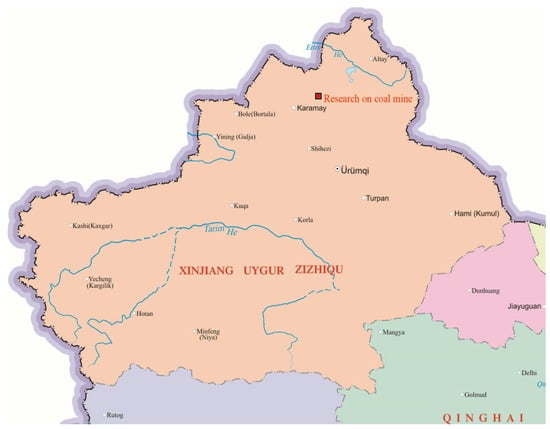
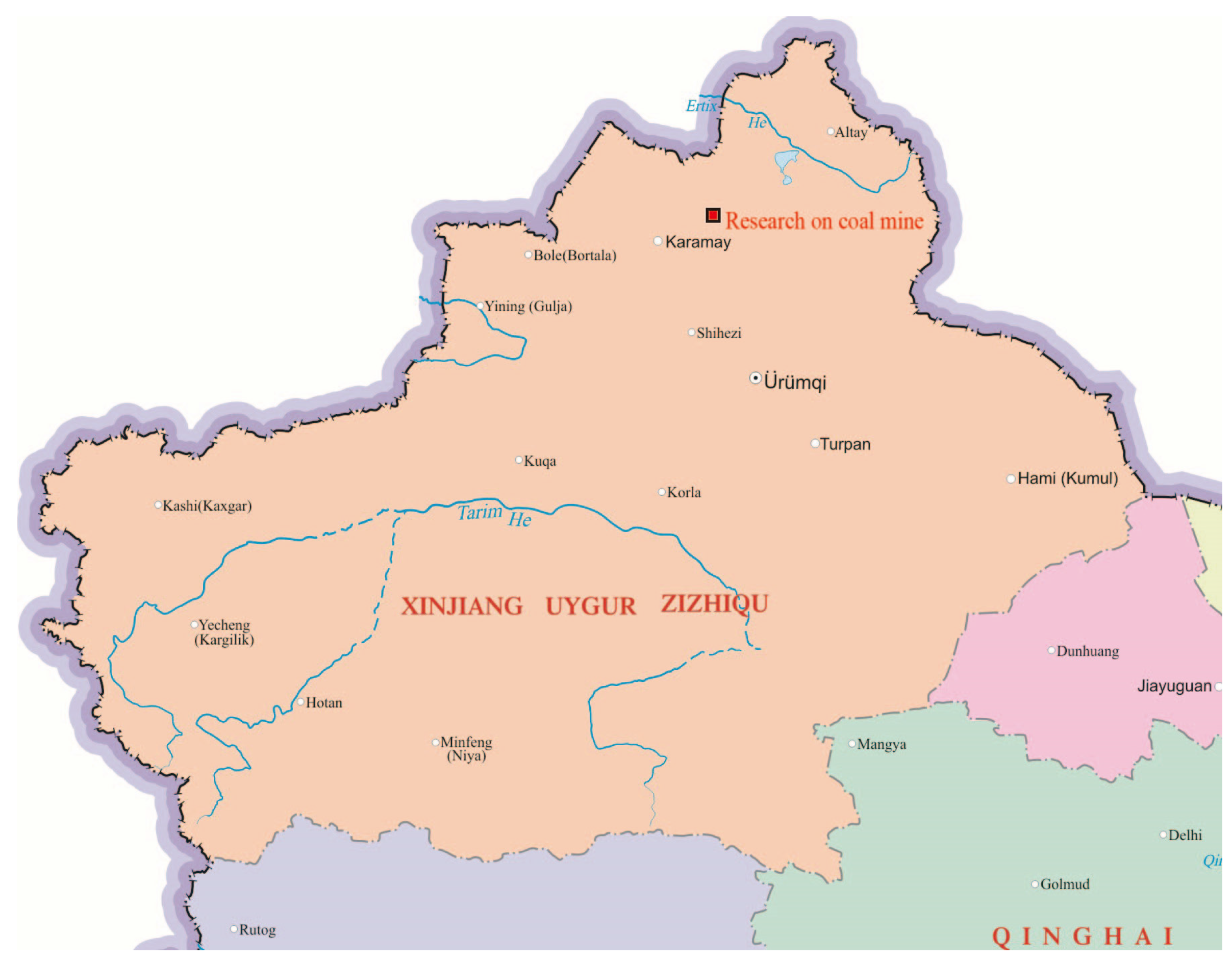
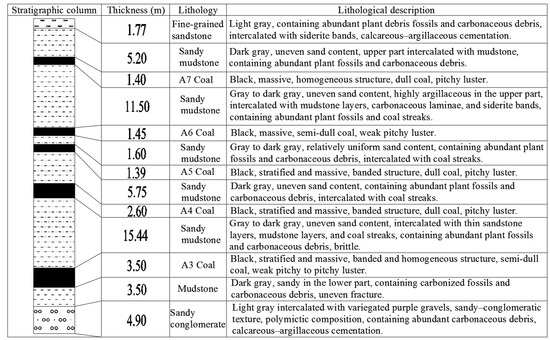
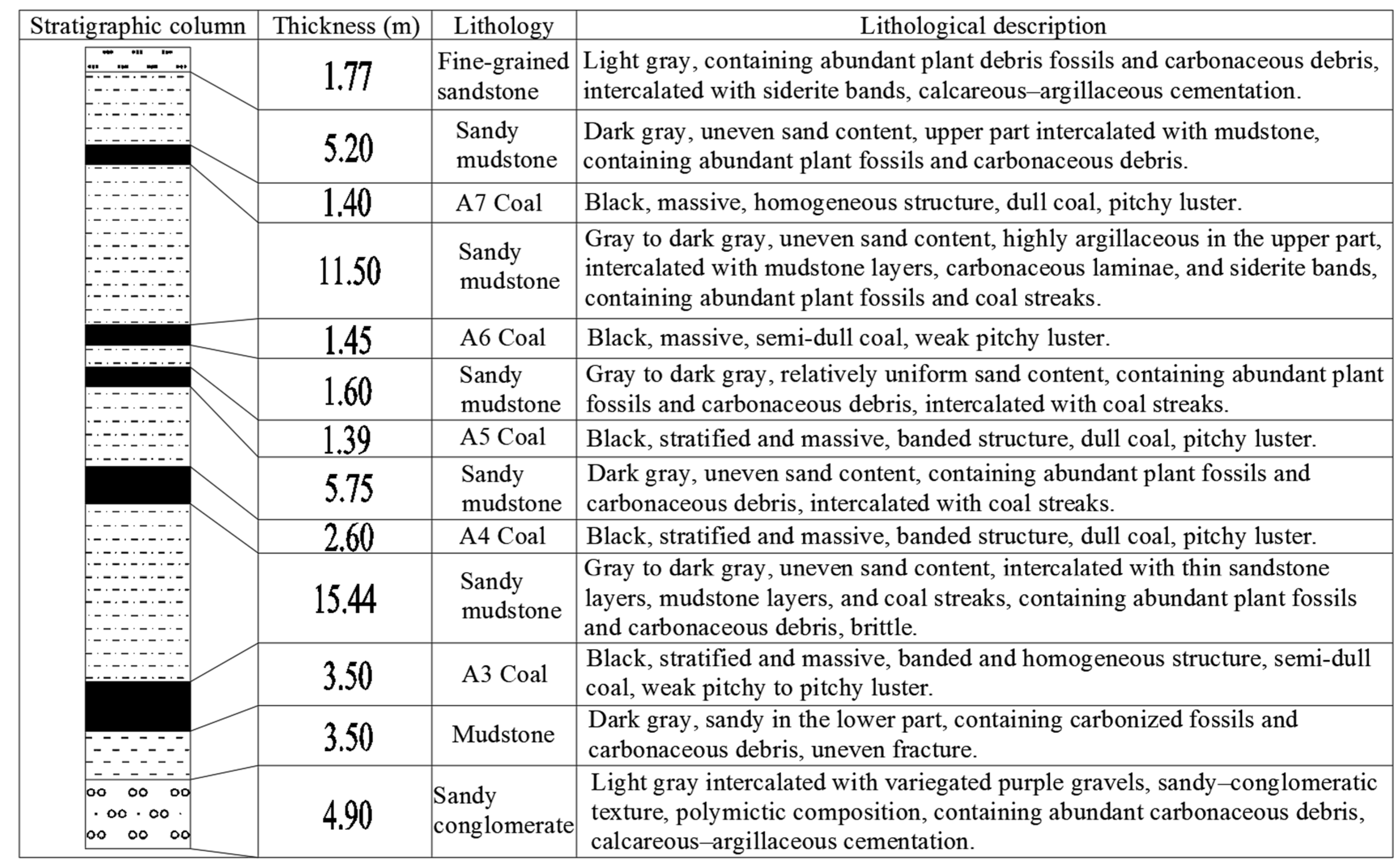
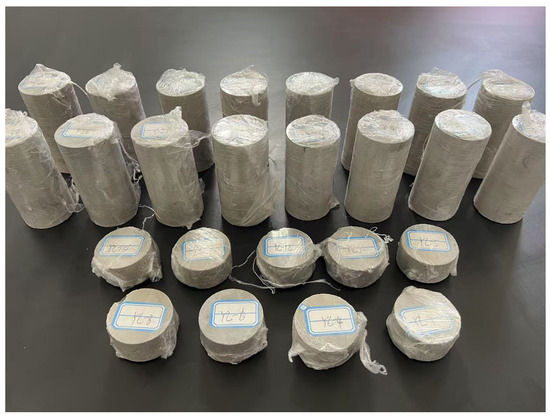
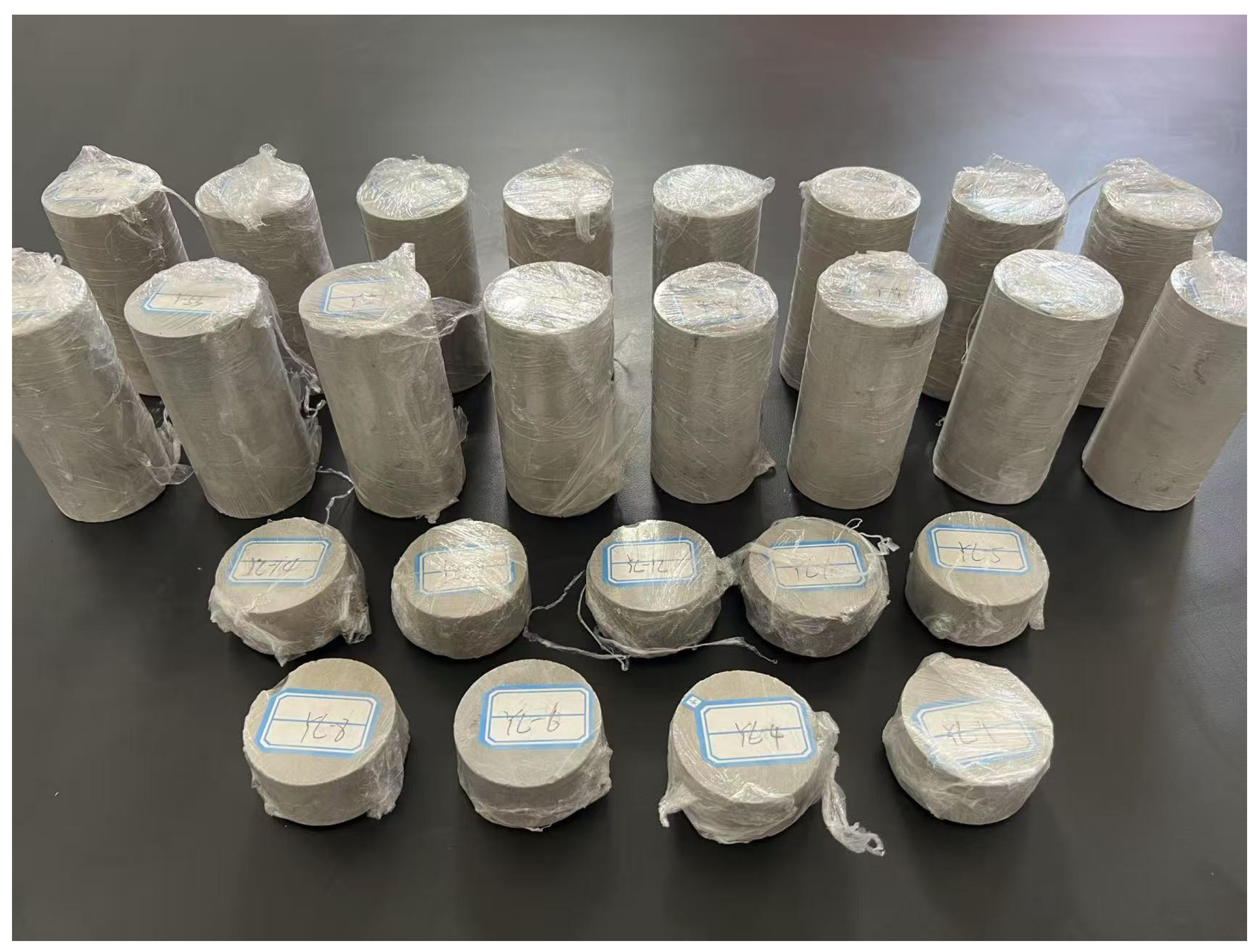
The Saier No. 6 Mine is located approximately 8 km northwest of Hoxtolgay Town, Hoboksar Mongol Autonomous County, Xinjiang Uygur Autonomous Region, under the jurisdiction of Tacheng Prefecture within the Ili Kazakh Autonomous Prefecture. The mine field has a strike length of approximately 1.78 km and a width of 1.28 km, covering a total area of roughly 2.28 km2, as illustrated in Figure 1. Additionally, the local borehole stratigraphic column of the study area is detailed in Figure 2. The processed standard rock specimens are shown in Figure 3.
Figure 1.
Location map of the studied coal mine.
Figure 2.
Local borehole stratigraphic column of the study area.
Figure 3.
The processed rock samples.
2.2. Experimental Protocol
A systematic experimental study was conducted using X-ray diffraction (XRD), scanning electron microscopy (SEM), Brazilian splitting tests, and uniaxial/triaxial compression tests. Specimens for XRD and SEM analysis were extracted from the same rock block and subjected to specific drying or curing protocols to achieve the desired moisture states.
Based on the in situ geological and engineering conditions of the sampling site, three moisture states were established: dry, natural, and water-abundant (saturated) [20,21]. The confining pressures were set at 0 MPa, 7.5 MPa, and 15 MPa [22], and the loading rates were prescribed at 0.02 mm/min, 0.06 mm/min, and 0.1 mm/min [23,24].
Considering the potential scale of the experimental matrix under multi-factor interactions, an orthogonal experimental design was implemented. This methodology was adopted to strategically combine and screen the influential factors, thereby ensuring data accuracy and representativeness while effectively managing the experimental workload. By utilizing an orthogonal array, the analysis value of the experimental data was maximized while minimizing redundant testing. The specific experimental matrix is summarized in Table 1, with each test group performed in triplicate to ensure statistical reliability.
Table 1.
Summary of orthogonal experiment parameter setting.
The specimens were categorized into three moisture states: natural, dry, and water-abundant. Natural state: Upon extraction from the underground coal mine, rock blocks were immediately sealed with industrial plastic wrap to preserve their in situ moisture content. Dry state: Processed standard specimens were placed in a constant temperature and humidity chamber set at 105 °C and 0% humidity. After an initial 12 h drying period, the specimens were weighed every 2 h. The specimens were considered completely dry (0% moisture content) when the mass difference between two consecutive measurements was less than 0.1 g. Water-abundant state: Previous slaking tests indicated that this specific weakly cemented soft rock undergoes rapid disintegration within 30 min of water immersion, rendering mechanical testing impossible [25]. Consequently, the immersion method was substituted with a humid-curing protocol. Specimens were maintained in the chamber at 30 °C and 100% relative humidity. After a 240 h curing period, mass measurements were taken every 2 h until the mass stabilized (difference < 0.1 g).
To avoid experimental bias and irreversible microstructural alteration caused by wetting–drying cycles, an indirect calculation method was employed to determine the moisture content of the natural and water-abundant specimens prior to mechanical testing.
First, the natural moisture content (ωn) was determined using the dedicated dry state experimental group according to Equation (1):
where mn is the initial mass of the specimen in the natural state, and md is the absolute dry mass after the 105 °C drying process. The average natural moisture content () obtained from this group was established as the baseline for the batch.
For the water-abundant specimens, direct drying prior to curing was prohibited. Instead, their theoretical dry mass () was estimated based on their initial natural mass (mn0) and the established baseline (), expressed as = mn0/(1 + ). Subsequently, the moisture content of the specimens in the water-abundant state (ωw) after humid curing was calculated using Equation (2):
where ωw is the final stabilized mass of the specimen after the 240 h humid curing process. This methodology accurately quantifies the respective moisture states while rigorously preserving the structural integrity of the samples.
Following the orthogonal design outlined in Table 1, the compression tests were divided into three groups based on moisture state: dry (Groups I, VI, VIII), natural (Groups II, IV, IX), and water-abundant (Groups III, V, VII). Concurrently, the specimens were further categorized by loading rate: low (0.02 mm/min; Groups I, IV, VII), medium (0.06 mm/min; Groups II, V, VIII), and high (0.1 mm/min; Groups III, VI, IX). This classification serves as the framework for the subsequent analysis of the experimental results. The moisture content of the rock under different moisture states is shown in Table 2.
Table 2.
Summary of average moisture content for rock samples in each experimental group.
3. Experimental Results and Analysis
3.1. Analysis of XRD Experimental Results
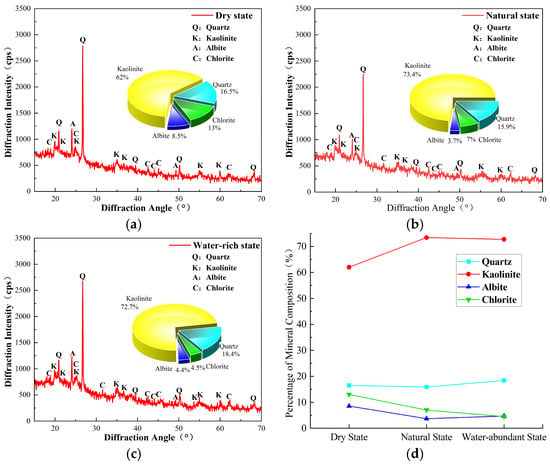
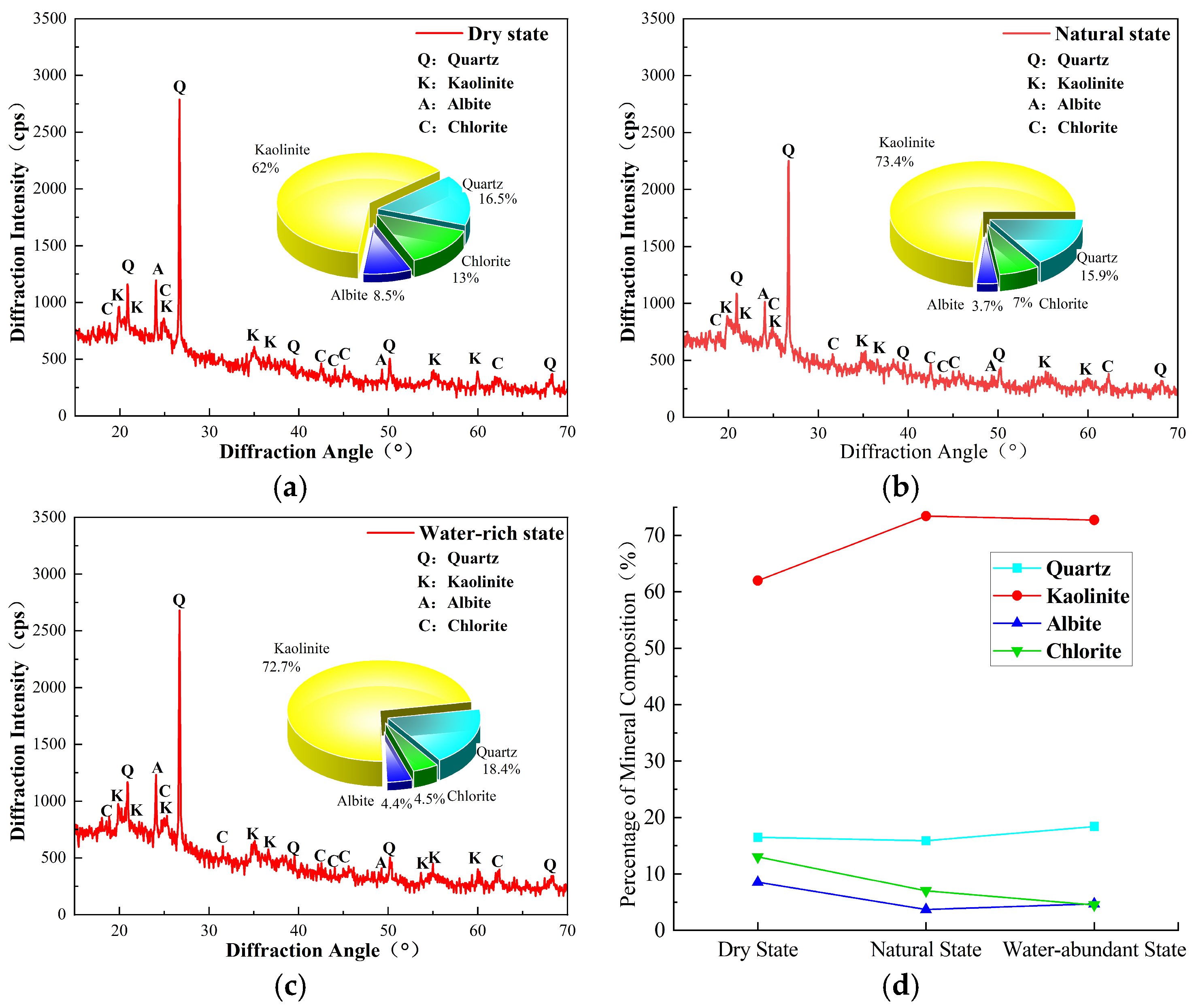
A rock block, retrieved and sealed from the underground site, was partitioned into three subsets. One subset was maintained in its natural moisture state using industrial plastic wrap, while the other two were prepared as dry and water-abundant states according to the protocols described in Section 2.2. For the X-ray diffraction (XRD) tests, the prepared specimens representing various moisture states were each ground to pass through a 200-mesh sieve before conducting the mineral phase analysis, and the corresponding results are illustrated in Figure 2.
As demonstrated in Figure 4, the quartz content within the weakly cemented soft rock remains relatively stable across different moisture states. However, other mineralogical components exhibit significant variations. As the moisture content increases, the albite (sodium feldspar) content declines from 8.5% in the dry state to 4.5% in the water-abundant state. In contrast, the kaolinite content experiences a substantial surge, rising from 62.0% under dry conditions to 73.4% in the natural state, and remains elevated at 72.7% in the water-abundant state. Interestingly, the chlorite content, which is 3.7% in the natural state, spikes to 13.0% in the dry state before settling at 4.4% under water-abundant conditions.
Figure 4.
XRD patterns of weakly cemented soft rock under different moisture conditions. (a) XRD patterns in the dry state; (b) XRD patterns in the natural state; (c) XRD patterns in the water-abundant state; (d) variations in mineral composition across different moisture states.
The variations in mineral content are primarily mediated by combined physical and chemical water–rock interactions. The observed trends—specifically the increase in the relative percentage of kaolinite alongside the reduction in albite—can be attributed to the partial hydrolytic dissolution of feldspar minerals in aqueous environments, a mechanism widely documented in weathering studies [26,27]. Additionally, the hydration and swelling of clay minerals can alter the relative mass fraction calculations in quantitative XRD analysis. Regarding the anomalously high chlorite content observed in the dry state, this phenomenon is identified as a diffraction artifact. Dehydration induces the collapse of the interlayer spacing in specific clay minerals and enhances preferred orientation, which anomalously amplifies the basal diffraction peak intensities. Consequently, quantitative algorithms misinterpret this signal enhancement as a surge in mineral concentration [28,29].
3.2. Analysis of SEM Results
For the SEM observations, the sample surfaces were coated with a thin layer of gold to enhance electrical conductivity prior to scanning. The microscopic morphology and pore structure distribution patterns were then observed using a secondary electron (SE2) detector with an accelerating voltage of 5 kV and a working distance of approximately 9.5 mm, at a magnification of 2000×.
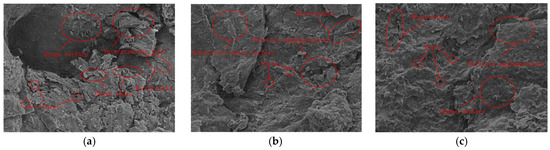
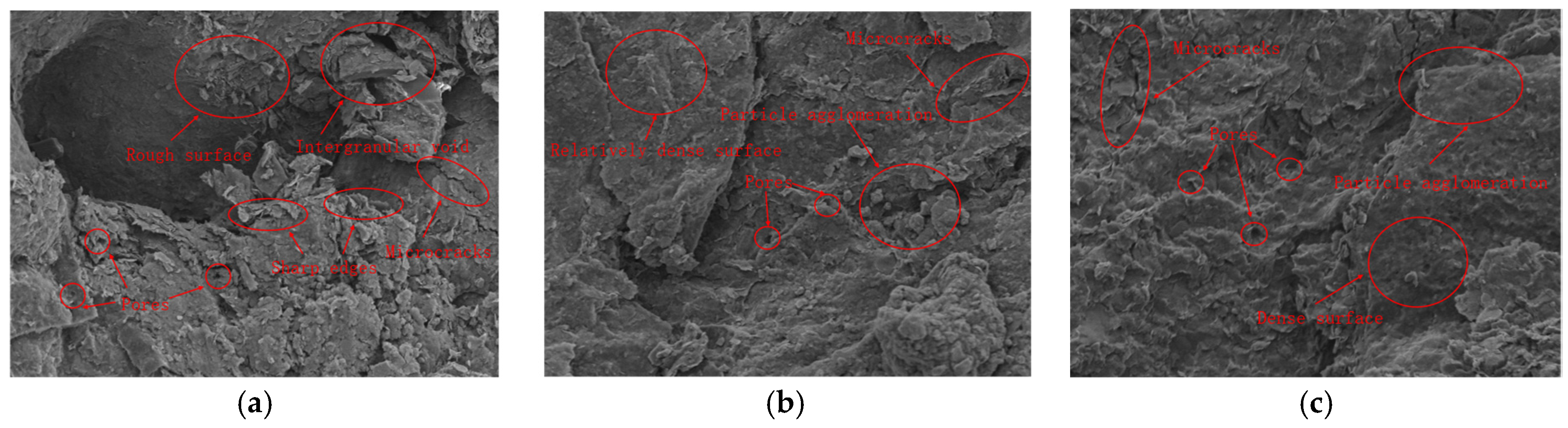
A rock block, retrieved and sealed from the underground site, was partitioned into three subsets. One subset remained sealed with industrial plastic wrap to serve as the natural moisture state specimen. The remaining two subsets were prepared into dry and water-abundant states, respectively, following the protocols detailed in Section 2.2. All specimens were then subjected to Scanning Electron Microscopy (SEM) to characterize their microscopic morphology. The SEM images of the rock under different moisture conditions are illustrated in Figure 5.
Figure 5.
SEM images of weakly cemented soft rock at 2000× magnification under different moisture conditions. (a) SEM micrographs of the specimens in the dry state; (b) SEM micrographs in the natural state; (c) SEM micrographs in the water-abundant state.
As illustrated in Figure 5, the specimens in the dry state exhibit a well-defined pore architecture with sharp grain boundaries and distinct inter-granular voids. The surface texture appears rough and fragmented, with clearly exposed micro-fractures. Although the pore system is highly visible and intact, the absence of an adsorbed water film leads to deficient inter-particle cohesion, rendering the rock susceptible to desiccation cracking and grain detachment.
In the natural moisture state, a portion of the pores is occupied by water, causing grain boundaries to become blurred and surfaces to appear smoother. The formation of a water film introduces a lubrication effect, which significantly reduces inter-particle friction. Concurrently, the initial hydration of clay minerals begins to attenuate the inter-granular cementation, although the overall macroscopic structural framework remains identifiable.
In the water-abundant state, the majority of pores are filled with water, resulting in a pseudo-dense appearance with intense grain aggregation. The presence of a surface liquid film makes individual grains difficult to distinguish. Micro-fractures are almost entirely sealed due to the extensive swelling of clay minerals, further hindering their identification. Overall, the rock structure becomes increasingly loose with indistinct margins, exhibiting a clear precursor to structural collapse.
3.3. Analysis of the Results of the Brazilian Splitting Test
The dimensions of the specimens for the Brazilian splitting tests were Φ50 mm × 25 mm. Brazilian splitting tests were conducted to evaluate the indirect tensile strength of the specimens under three moisture states: dry, natural, and water-abundant. The tests were performed at a constant loading rate of 0.06 mm/min.
To ensure statistical reliability, each experimental group was performed in triplicate. The mean value of the three measurements was calculated to represent the average tensile strength for the respective moisture state. The detailed experimental results are summarized in Table 3.
Table 3.
Statistical results of Brazilian splitting test.
As detailed in Table 3, the tensile strength of the weakly cemented soft rock exhibits significant sensitivity to moisture content. In the dry state, the specimens withstood the highest failure loads, yielding an average tensile strength of 1.51 MPa. Upon transitioning to the natural state, both the failure load and tensile strength experienced a marked reduction, with the average tensile strength dropping to 0.66 MPa. Under water-abundant conditions, the mechanical performance further deteriorated, with the average tensile strength plummeting to 0.29 MPa, representing a total reduction of approximately 80% compared to the dry state.
The underlying mechanisms for this strength degradation are directly correlated with the microstructural and mineralogical alterations observed in the SEM and XRD analyses:
Inter-Granular Friction and Stiffness (Dry state): The absence of an adsorbed water film maximizes inter-granular friction and matrix stiffness. This corresponds to the SEM observations of a well-defined pore architecture and sharp grain boundaries, which collectively provide the highest resistance to tensile stress.
Lubrication and Initial Hydration (Natural state): The in situ moisture forms water films around the mineral particles, introducing a lubrication effect that diminishes internal friction. Furthermore, this moisture initiates the hydration of the abundant kaolinite (>70%, as indicated by XRD analysis). This early-stage hydration weakens the cementing bonds, corroborating the SEM observations of blurred grain boundaries and explaining the initial reduction in tensile strength.
Extensive Swelling and Bond Attenuation (Water-abundant state): Under high saturation, water extensively infiltrates the micro-fractures. This triggers the massive swelling of the clay mineral matrix and the severe attenuation of the remaining inter-particle cohesion. This mechanism is directly supported by the SEM results, which display a pseudo-dense morphology where swollen clay minerals almost entirely occlude the original micro-fractures, culminating in the lowest macroscopic tensile strength.
3.4. Analysis of Compressive Strength Test Results
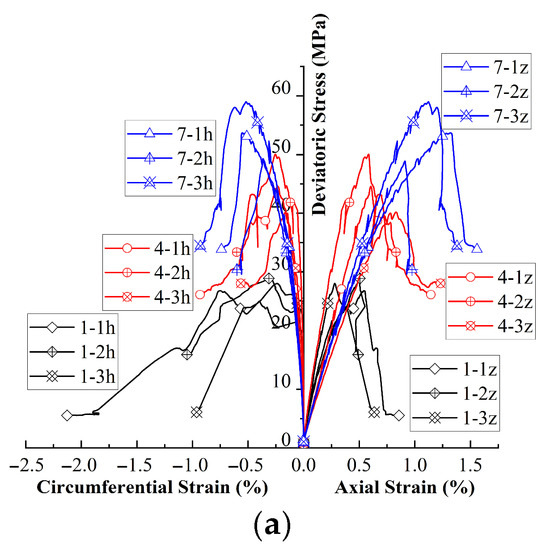
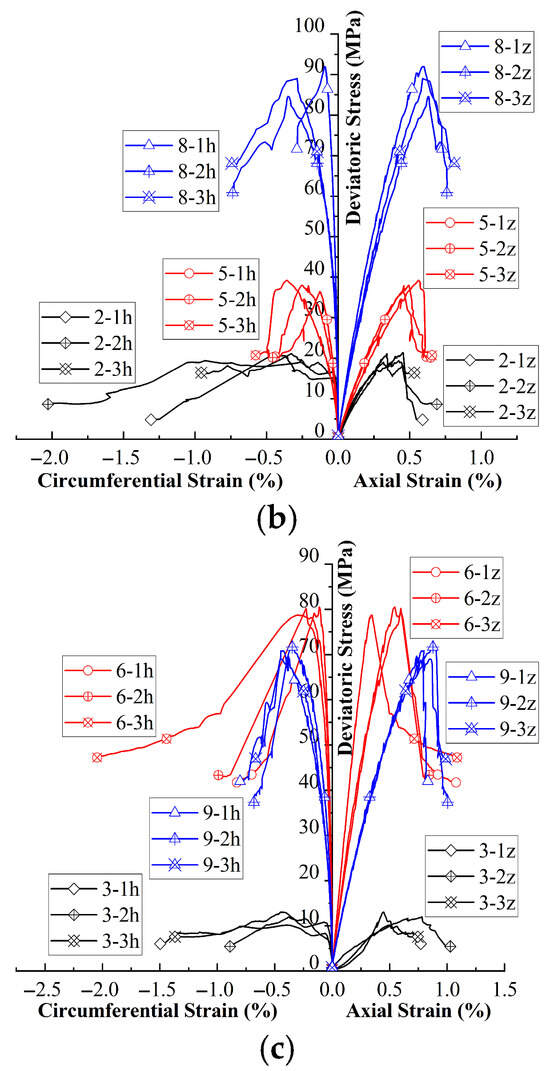
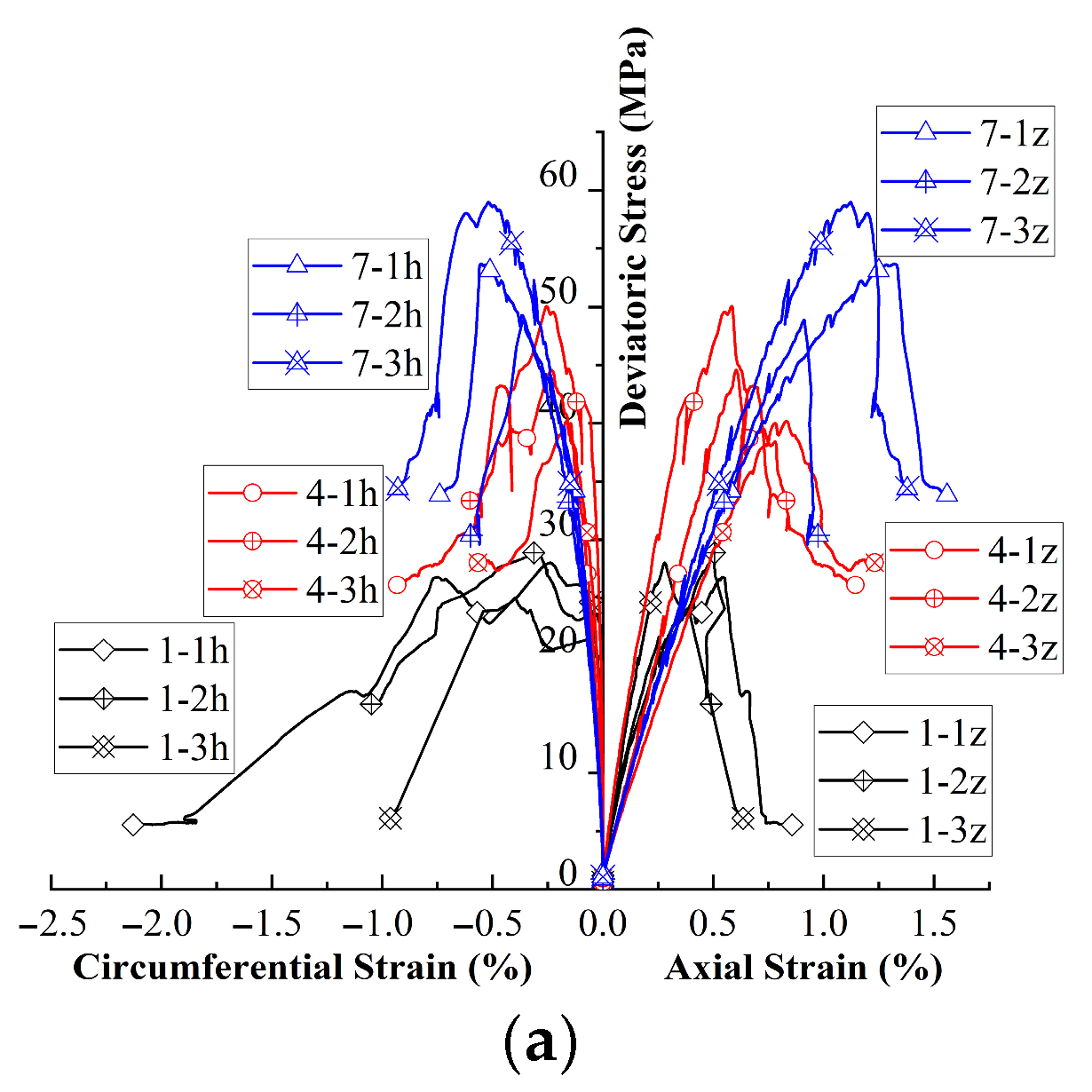
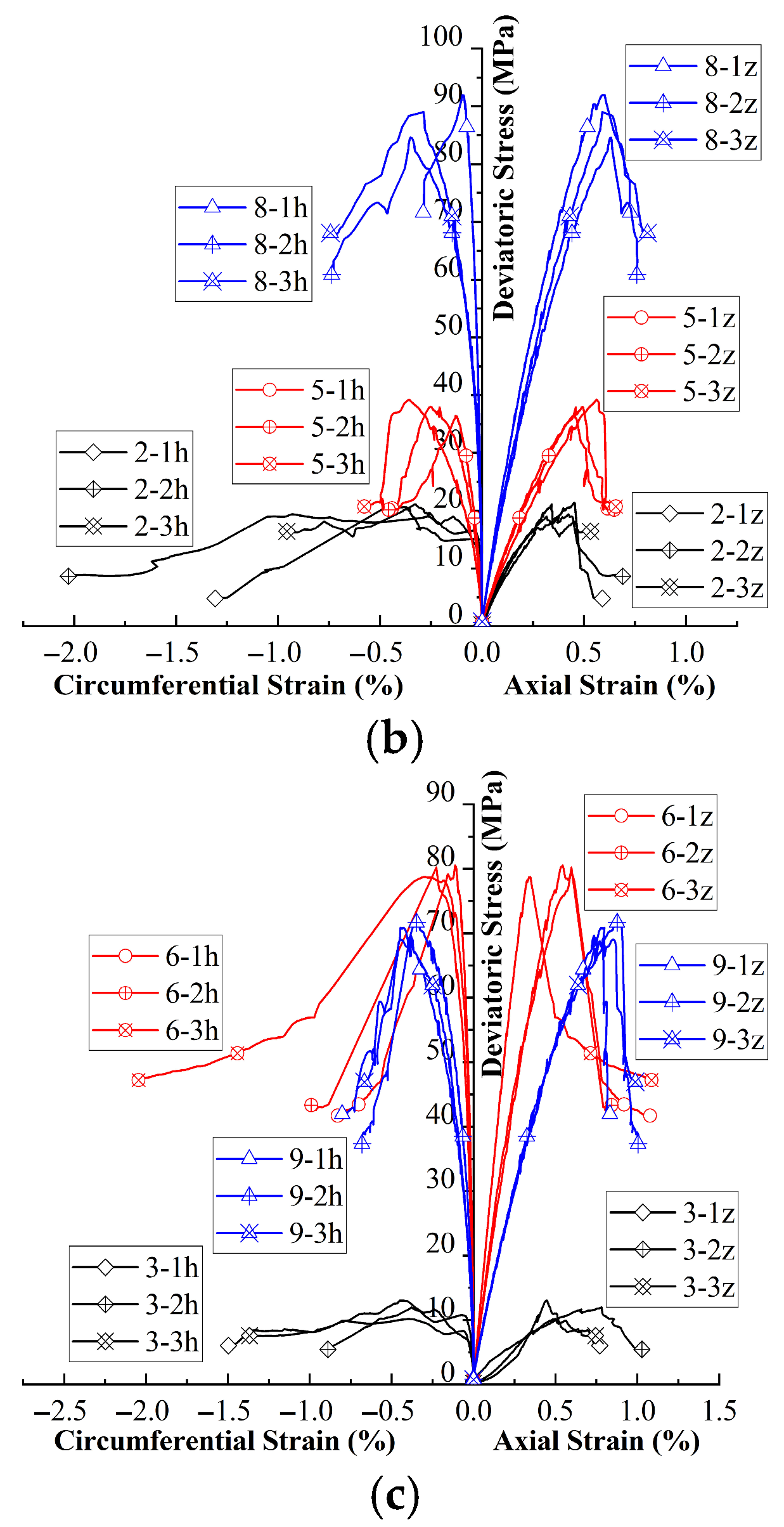
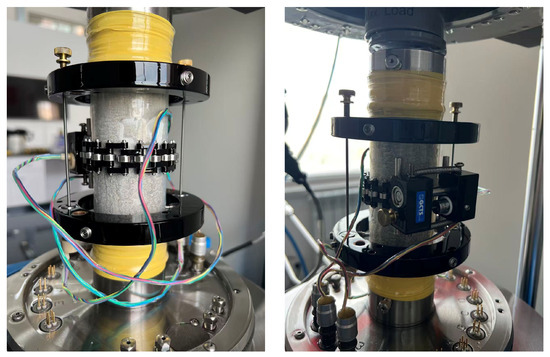
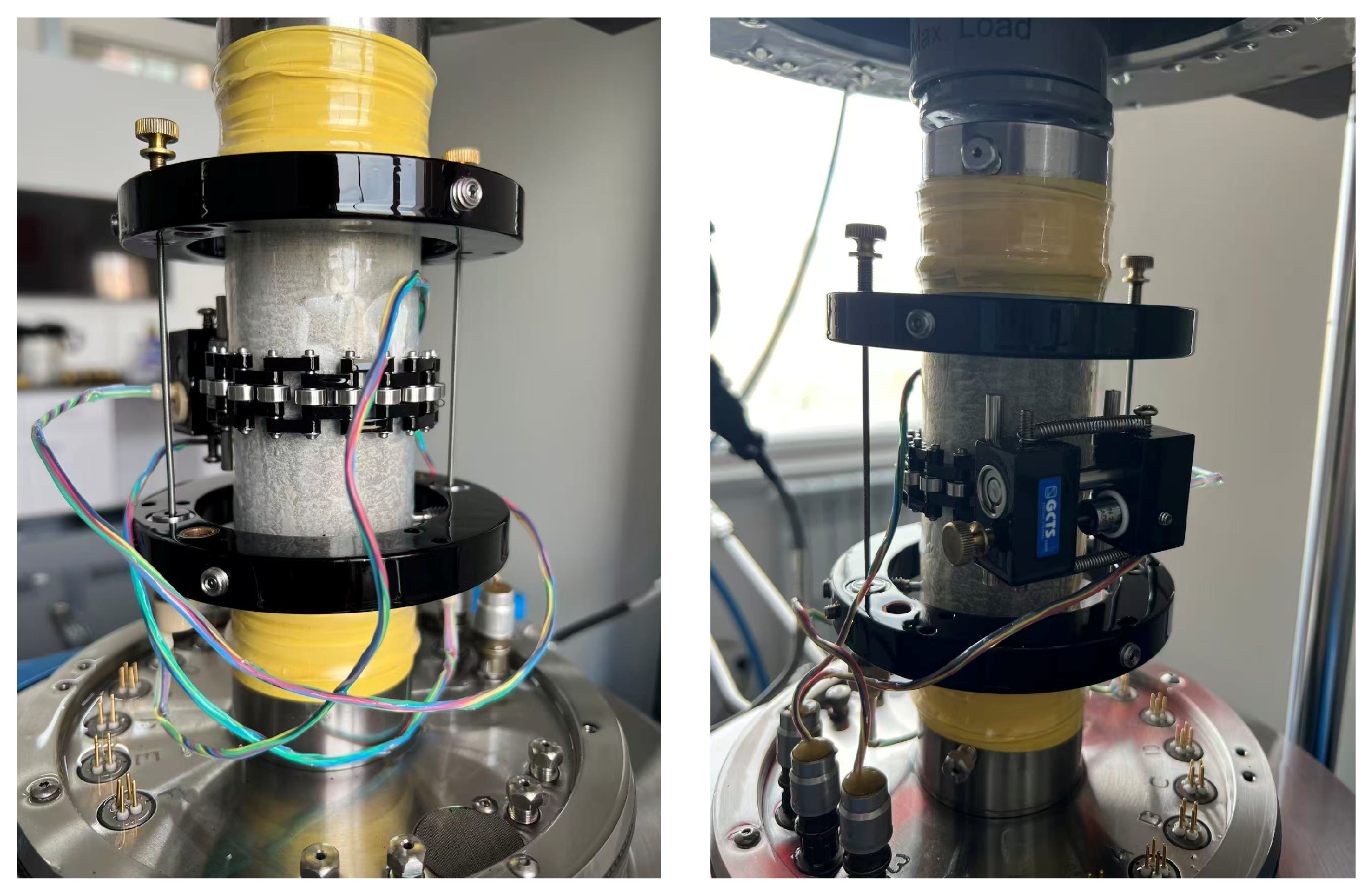
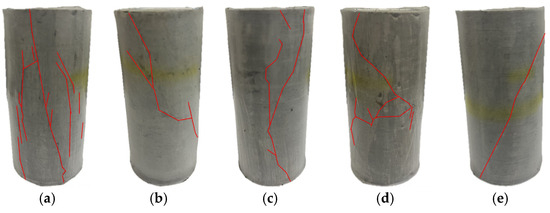
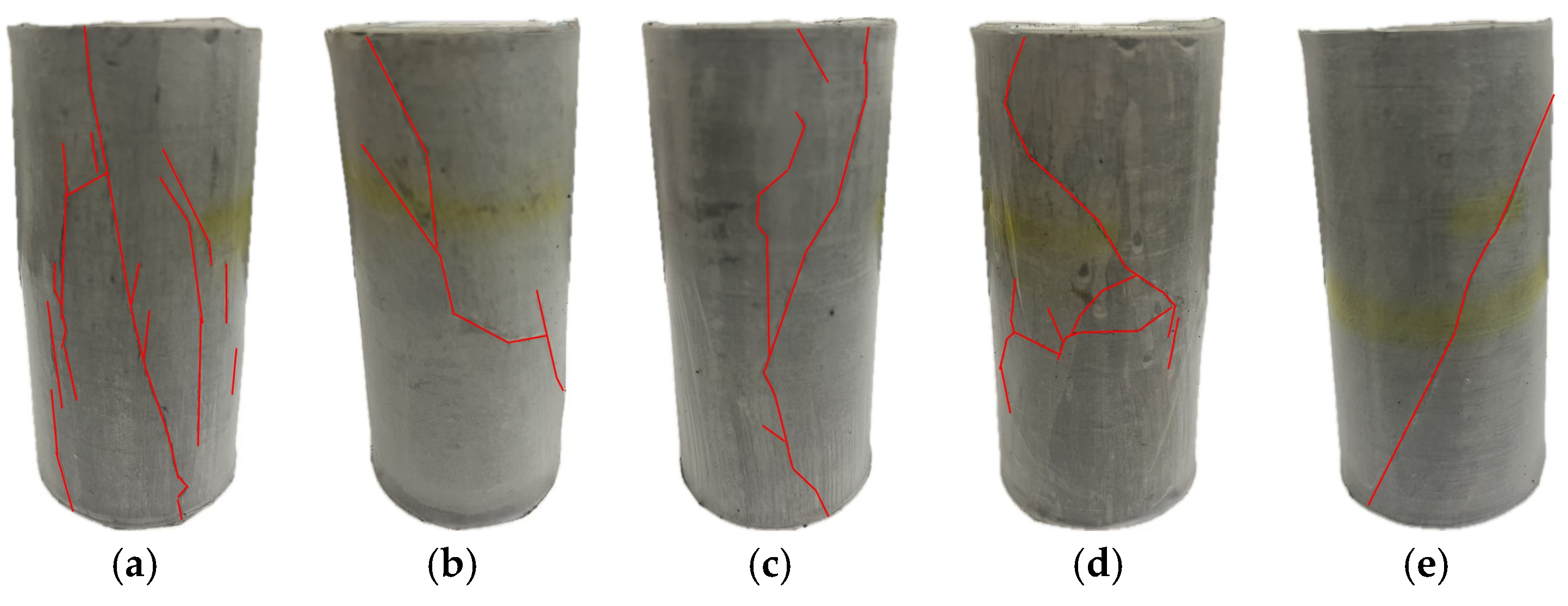
The specimen size used for uniaxial/triaxial compression tests is 50 mm in diameter by 100 mm in length. The mechanical property parameters derived from the uniaxial and triaxial compression tests, conducted according to the orthogonal experimental design in Table 1, are summarized in Table 4. The corresponding stress–strain curves and typical failure photographs of the specimens are presented in Figure 6, Figure 7, Figure 8 and Figure 9, respectively.
Table 4.
Statistical results of uniaxial/triaxial compressive strength for weakly cemented soft rock.
Figure 6.
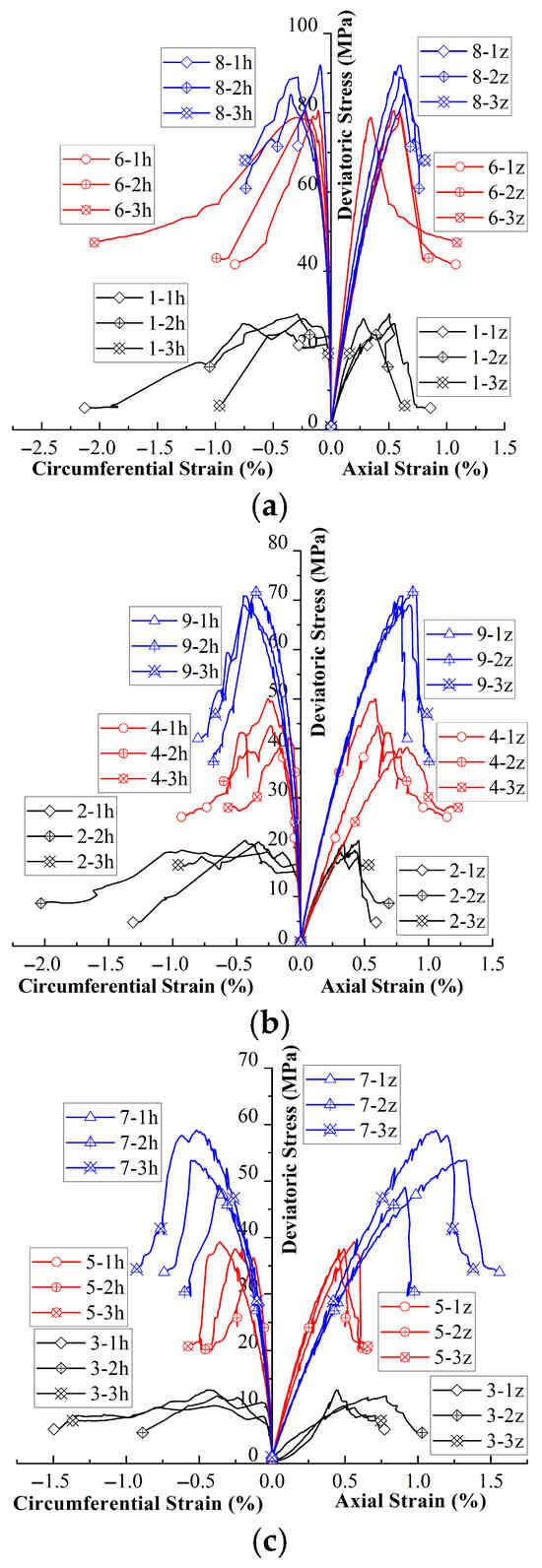
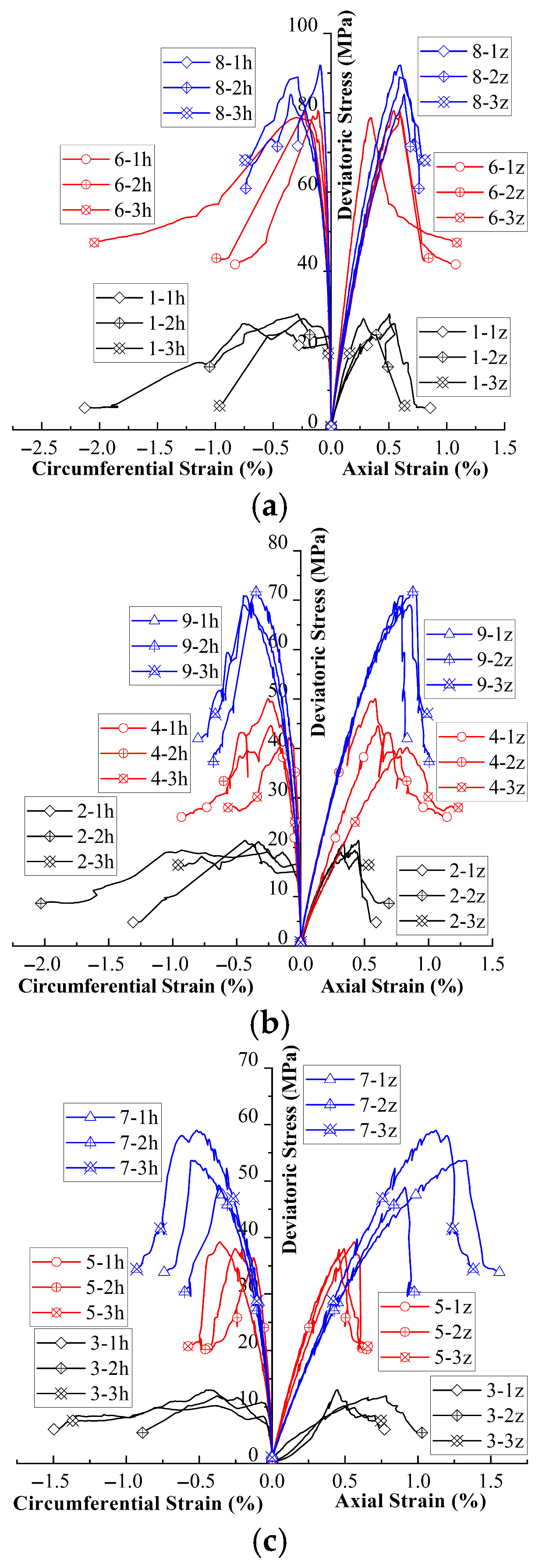
Grouped data by moisture condition. (a) Dry state; (b) natural state; (c) water-abundant state.
Figure 7.
Grouped data by loading rate: (a) 0.02 mm/min; (b) 0.06 mm/min; (c) 0.1 mm/min.
Figure 8.
Photographs of rock samples in uniaxial and triaxial compression tests.
Figure 9.
Examples of failure modes in rock samples (red lines outline the macroscopic fractures): (a) 3-1; (b) 4-2; (c) 5-1; (d) 7-3; (e) 8-2.
To systematically analyze the influential factors, the results of the nine experimental groups are categorized in two ways: Figure 6 presents the aggregated stress–strain responses based on varying moisture states, while Figure 7 categorizes the results according to the different loading rates.
As illustrated in Figure 6 and Figure 7, the stress–strain curves obtained from both uniaxial and triaxial compression tests consistently exhibit a characteristic evolutionary process comprising five distinct stages: the crack closure stage; linear elastic stage; stable-crack-propagation stage; unstable-crack-growth stage; and post-peak stage.
As indicated in Table 4 and Figure 6a–c, the peak strength of the weakly cemented soft rock decreases with increasing moisture content, regardless of the variations in loading rate. Under identical moisture conditions, the peak strength consistently increases as the confining pressure rises. Additionally, at confining pressures of 7.5 MPa and 15 MPa, the peak strength in the dry state exhibits lower data dispersion compared to that in the natural and water-abundant states.
4. Analysis of the Mechanical Properties of Weakly Cemented Soft Rock
4.1. Analysis of Elastic Modulus and Poisson’s Ratio
The elastic modulus and Poisson’s ratio are fundamental parameters for quantifying the stiffness and deformation characteristics of rock materials. These parameters provide profound insights into the microstructural integrity, cementation mechanisms, and pore distribution within the specimens, making them indispensable for evaluating the mechanical behavior of weakly cemented soft rock. In this study, the elastic modulus and Poisson’s ratio are determined using Equations (3) through (7), where Equations (3) and (4) are utilized to calculate the elastic modulus and Poisson’s ratio under the uniaxial state, while Equations (5)–(7) are employed for the triaxial state:
where E represents the elastic modulus under uniaxial or triaxial stress states (MPa); σb is the stress at the end of the linear elastic segment of the stress–strain curve (MPa); σa is the stress at the beginning of the linear elastic segment of the stress–strain curve (MPa); εb is the strain value at the end of the linear elastic segment of the stress–strain curve; εa is the strain value at the beginning of the linear elastic segment of the stress–strain curve; μ denotes Poisson’s ratio; εdp is the average lateral strain corresponding to the linear segment of the stress–lateral strain curve; εlp is the average longitudinal strain corresponding to the linear segment of the stress–longitudinal strain curve; Δσ1 and Δσ3 are the increments of axial stress and confining (lateral) stress, respectively (MPa); and Δε1 and Δε3 represent the increments of axial strain and lateral strain, respectively.
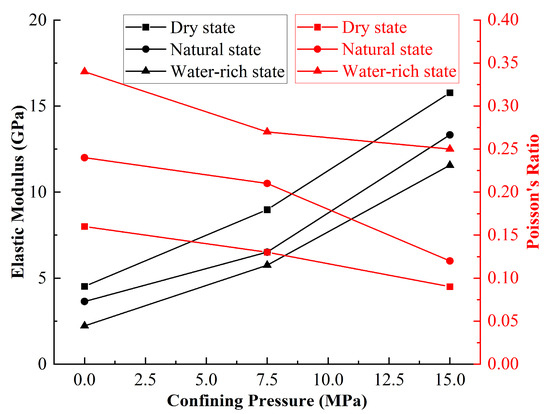
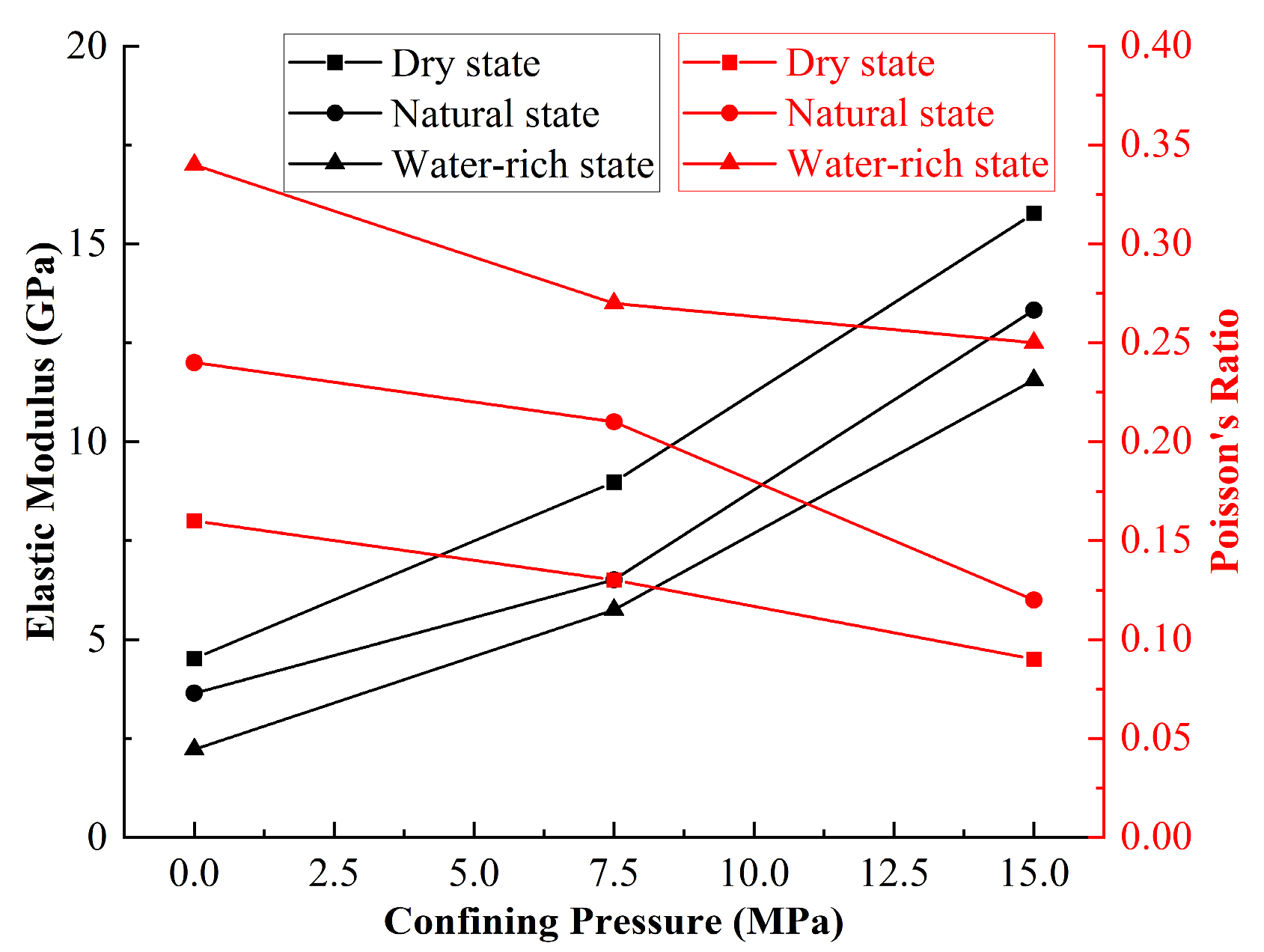
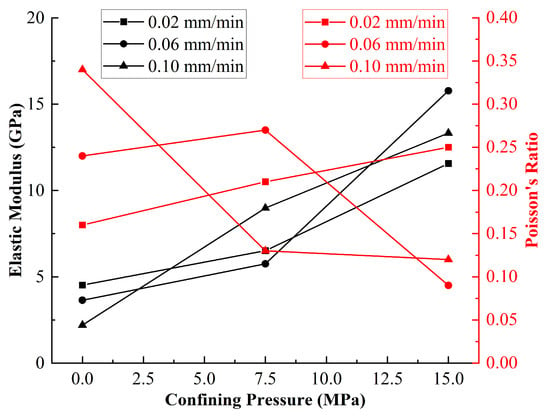
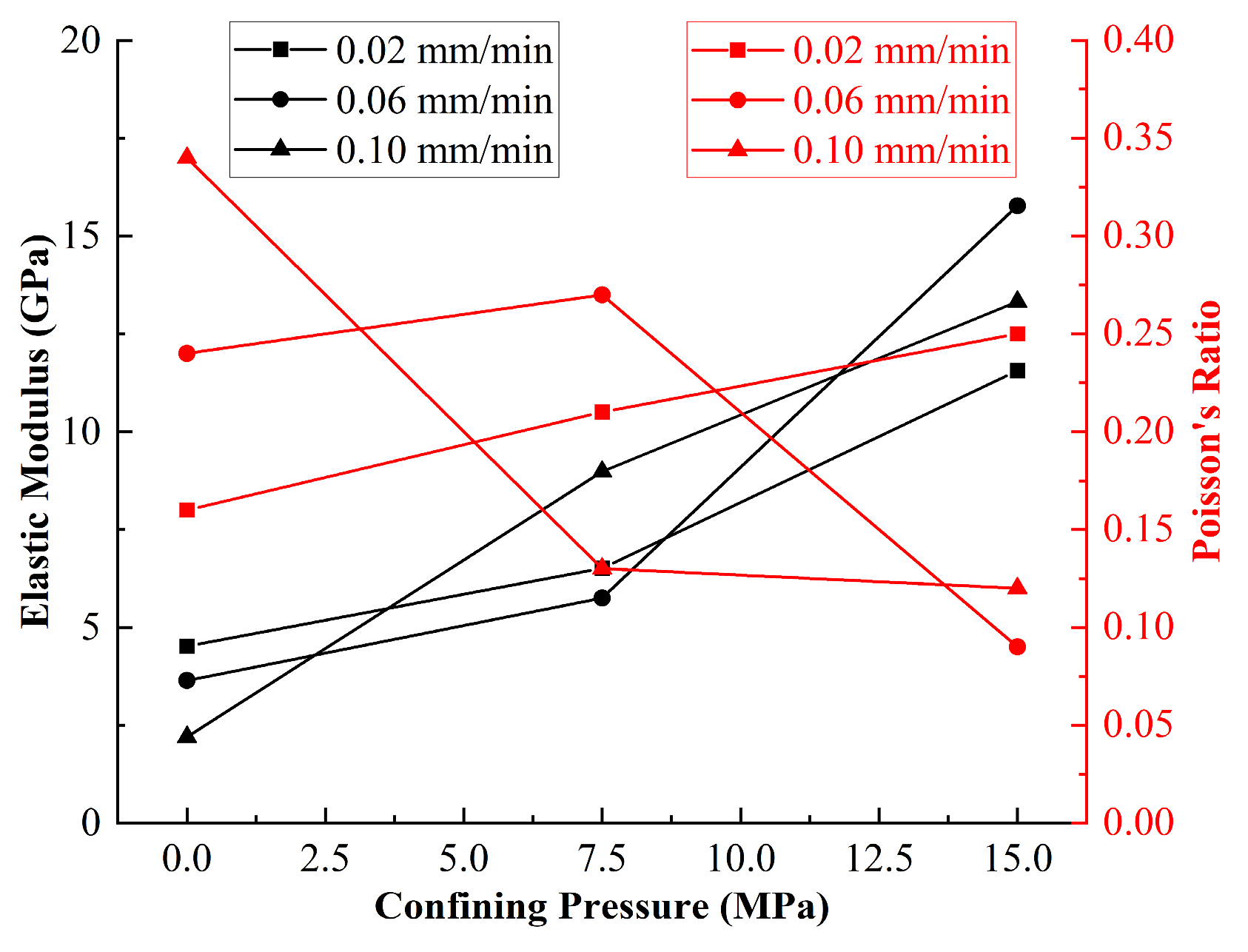
The elastic modulus and Poisson’s ratio of the weakly cemented soft rock were calculated using Equations (3) through (7) based on the compression test results (Figure 6 and Figure 7), with the detailed parameters being summarized in Table 5. Furthermore, the evolutionary trends of the average elastic modulus and Poisson’s ratio under different moisture states and loading rates are illustrated in Figure 10 and Figure 11, respectively.
Table 5.
Summary of elastic modulus and Poisson’s ratio for weakly cemented soft rock.
Figure 10.
Variation in average elastic modulus and Poisson’s ratio for each experimental group under different moisture conditions.
Figure 11.
Variation trend of average elastic modulus and Poisson’s ratio for each experimental group under different loading rates.
As illustrated in the figures, the elastic modulus of the weakly cemented soft rock exhibits a monotonic increasing trend with the elevation of confining pressure across all experimental groups. Under identical confining pressure conditions, the elastic modulus demonstrates a strict negative correlation with moisture content; specifically, the dry state yields the highest elastic modulus, followed by the natural state, while the water-abundant state yields the lowest. Conversely, under the same confining pressure, the elastic modulus generally shows a positive correlation with the loading rate, increasing sequentially as the rate elevates from 0.02 mm/min to 0.10 mm/min.
The Poisson’s ratio exhibits a monotonic decreasing trend as the confining pressure increases from 0 MPa to 15 MPa. Regarding the influence of moisture, under a constant confining pressure, Poisson’s ratio increases with higher moisture content, strictly following the order: water-abundant state > natural state > dry state. The impact of the loading rate on Poisson’s ratio is relatively secondary compared to the moisture state, but the overall trend consistently reflects a reduction under higher-confining-pressure constraints.
The observed data trends indicate that increasing confining pressure facilitates the closure of internal micro-defects, thereby enhancing the macroscopic stiffness (increased elastic modulus) and restricting lateral deformation (decreased Poisson’s ratio). The presence of moisture exerts a softening effect on the weakly cemented matrix, which reduces stiffness and promotes lateral expansion. Additionally, the positive correlation between the elastic modulus and the loading rate reflects the rate-dependent nature of the rock matrix during the compression process.
4.2. Analysis of Peak Strength and Residual Strength
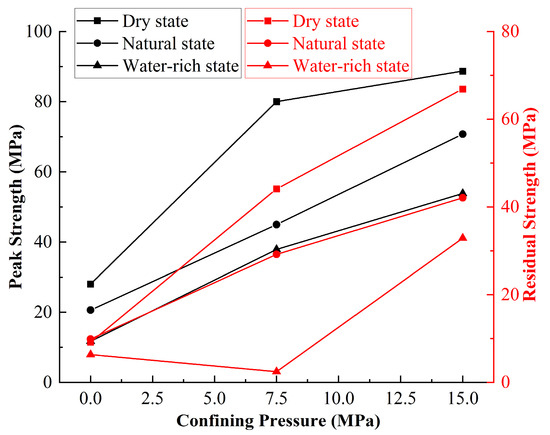
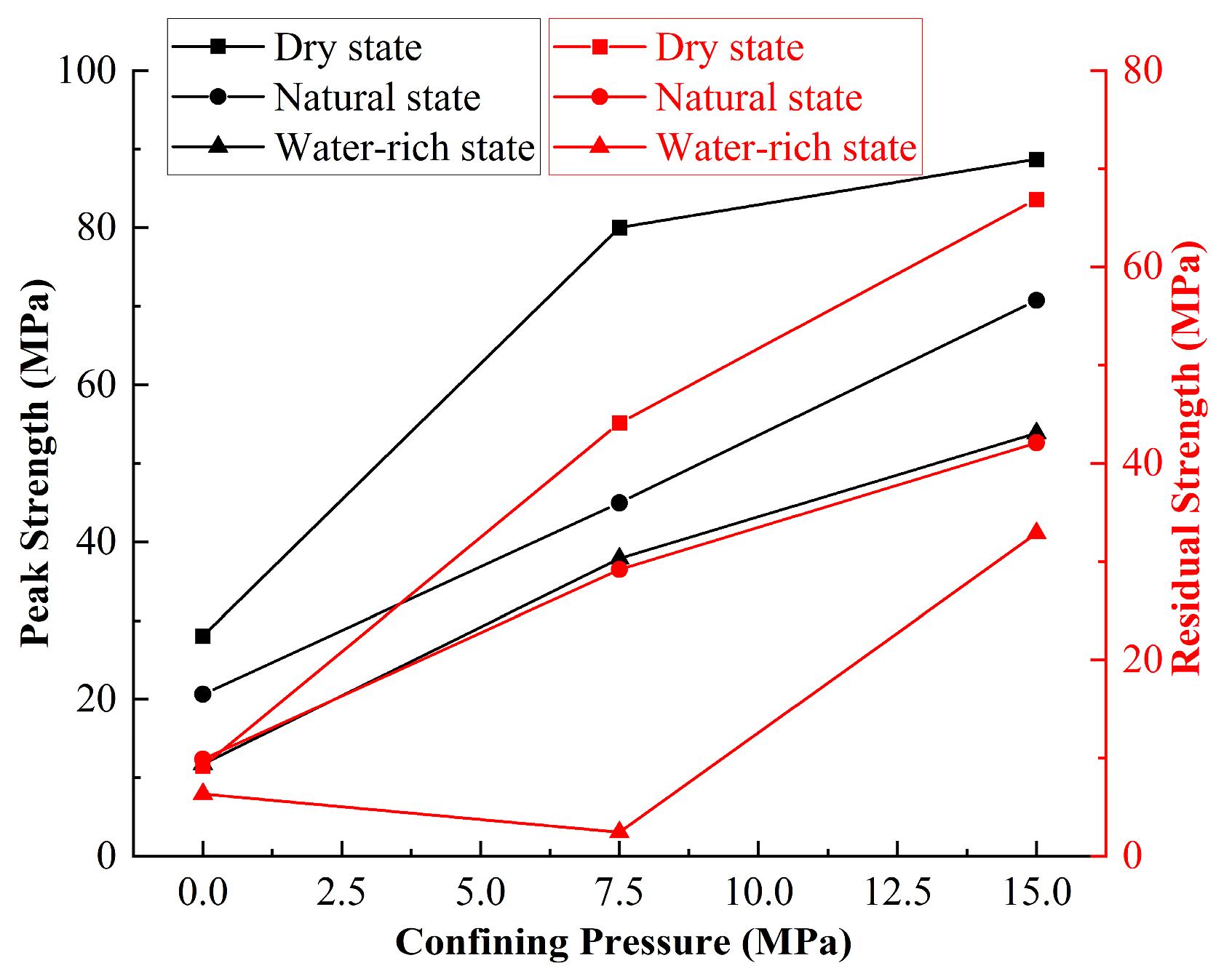
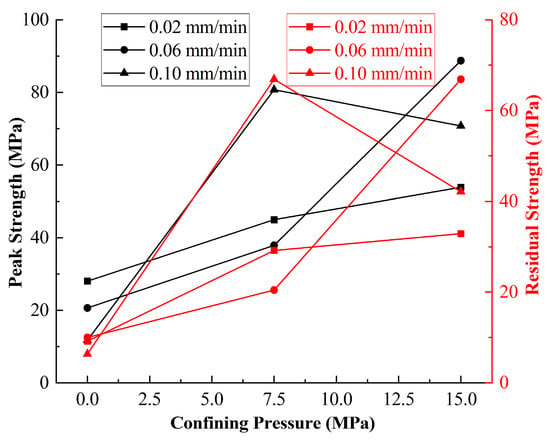
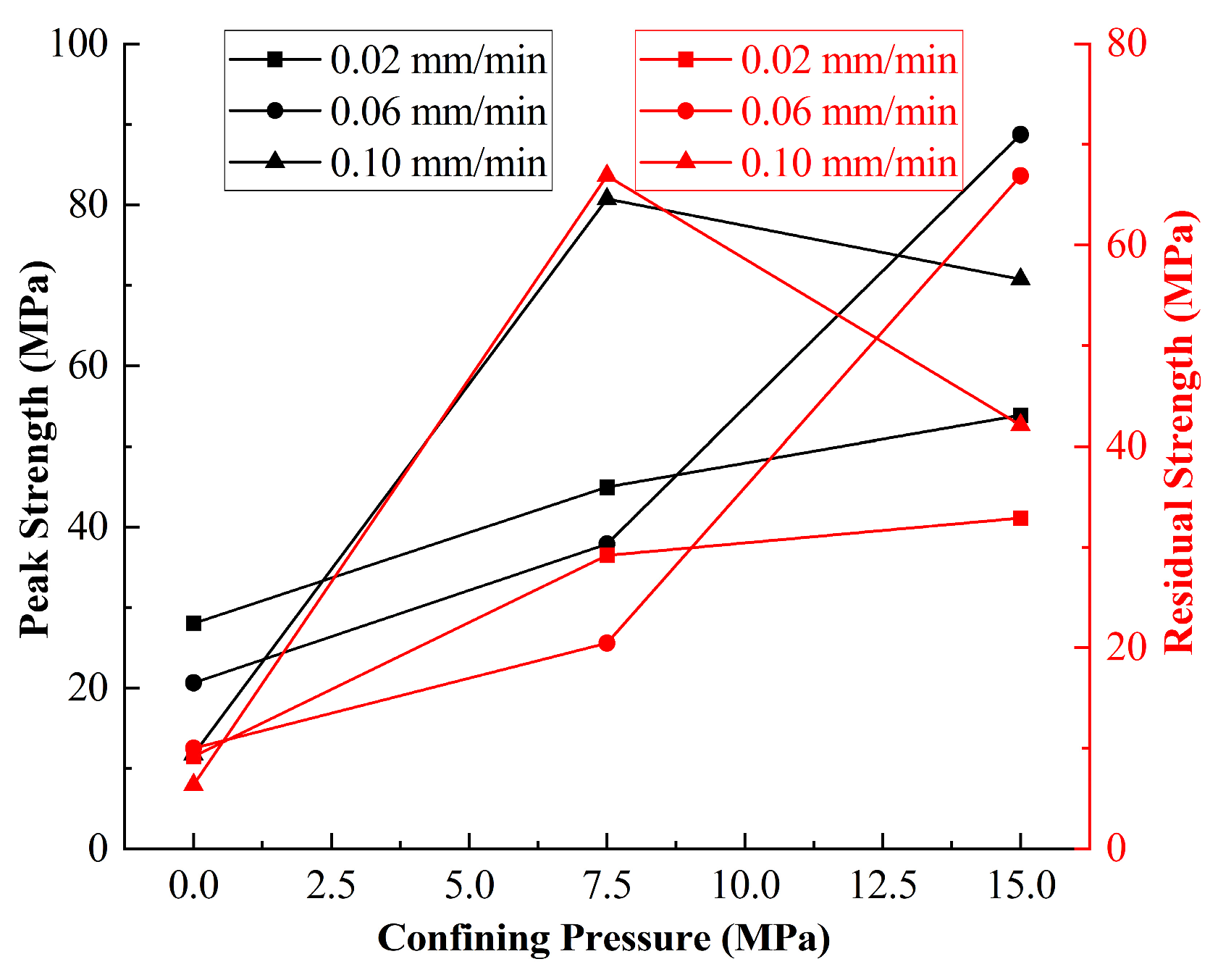
The evolutionary trends of the peak strength and residual strength of the weakly cemented soft rock under various moisture states and loading rates are illustrated in Figure 12 and Figure 13.
Figure 12.
Variation trend of average peak strength and residual strength for each experimental group under different moisture conditions.
Figure 13.
Variation trend of average peak strength and residual strength for each experimental group under different loading rates.
As depicted in Figure 12, both the peak strength and residual strength exhibit a monotonic increasing trend as the confining pressure increases from 0 MPa to 15 MPa across all moisture states. Under equivalent confining pressure conditions, a strict negative correlation is observed between the strength parameters and the moisture content. Specifically, the dry state consistently yields the highest peak and residual strengths, followed by the natural state, while the water-abundant state records the lowest values. The data indicates that an increase in moisture content continuously reduces the load-bearing capacity of the rock at both the peak and post-peak stages.
Figure 13 presents the variations in peak and residual strengths grouped by loading rate. The overall trend confirms that confining pressure acts as a primary factor in enhancing both strength parameters. However, the influence of the loading rate on the peak and residual strengths does not exhibit a uniform monotonic relationship across different confining pressures. The strength values display varied distributions under different loading velocities. This statistical distribution indicates that while the loading rate alters the mechanical response, its impact is secondary and more complex compared to the consistent strengthening effect of confining pressure and the definitive softening effect of moisture content.
The experimental results demonstrate that the macroscopic strength of the weakly cemented soft rock is governed by the interplay of moisture and stress state. Moisture acts as the primary softening agent, decreasing both peak and residual bearing capacities, whereas confining pressure provides lateral restraint that consistently enhances the macroscopic strength.
4.3. Analysis of the Brittleness Factor
Brittleness is a critical property governing the failure mechanism of rock masses. To quantitatively evaluate the brittle-to-ductile transition of the weakly cemented soft rock under varying moisture and stress conditions, established brittleness indices based on stress–strain parameters are employed. In this study, two widely recognized indices, B15 proposed by LI Shaojun et al. (2022) [30] and B5 proposed by ZHANG Qi et al. (2024) [31], are utilized. The mathematical formulations are expressed in Equations (8) and (9):
where B15 and B5 denote the rock brittleness indices as defined in the referenced literature; εp represents the axial strain corresponding to the peak strength of the rock.
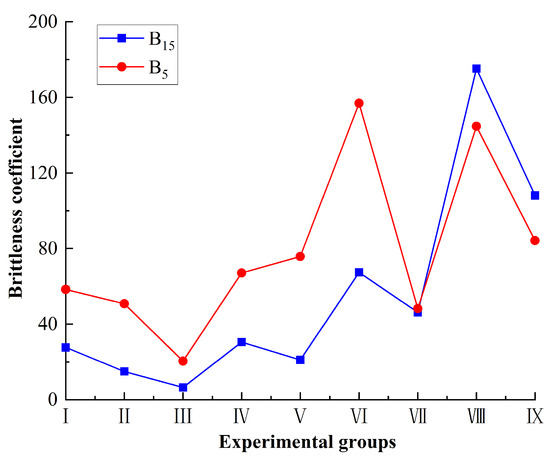
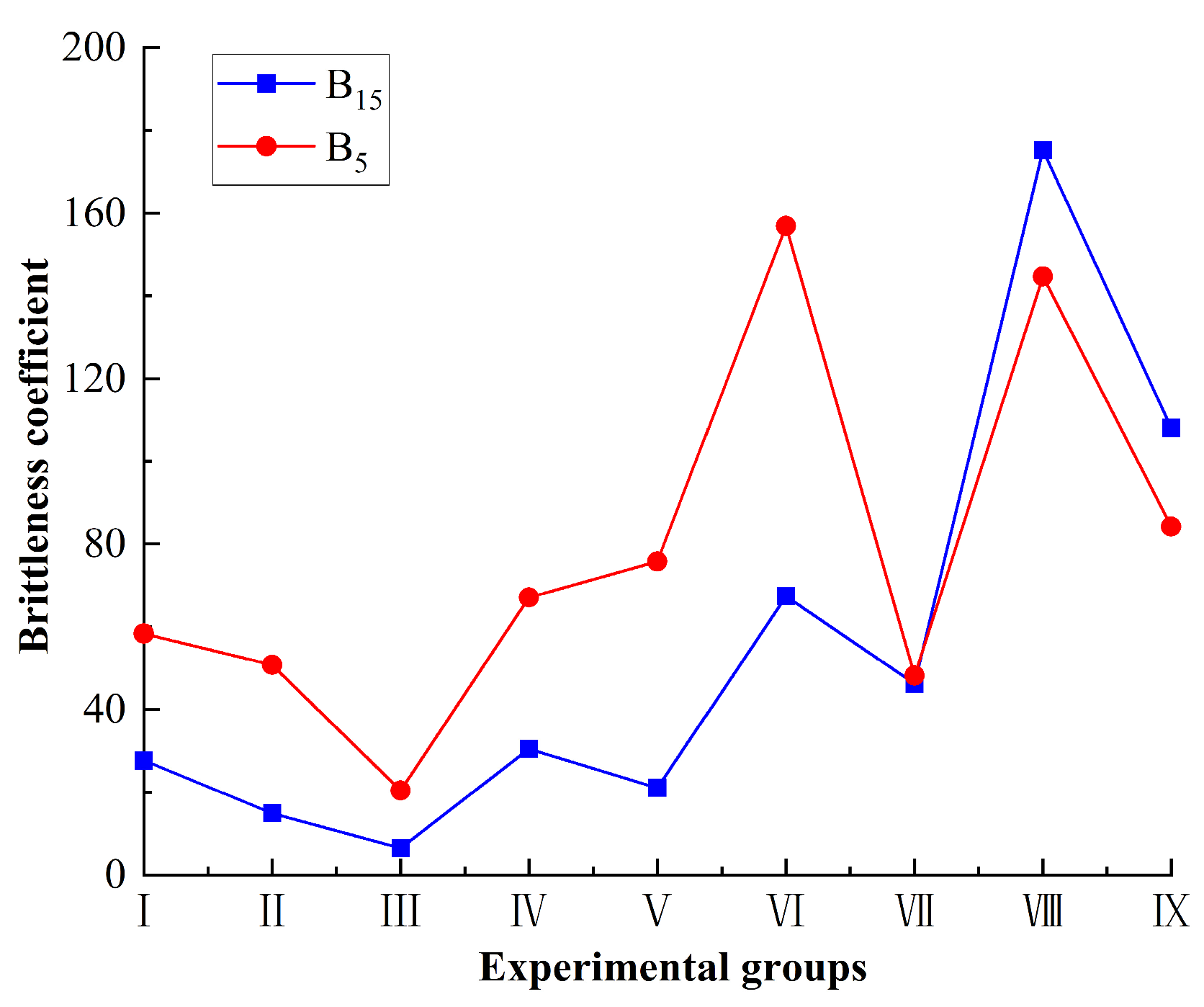
The brittleness indices for each experimental group are calculated based on the compressive test results (Table 4 and Table 5) and are summarized in Table 6. Furthermore, the evolutionary trends of B15 and B5 across the different experimental groups are illustrated in Figure 14. The analytical results indicate that both B15 and B5 exhibit a strict negative correlation with moisture content. In the dry state, the rock exhibits the highest brittleness indices. As the moisture content increases to the natural and water-abundant states, the indices experience a continuous reduction. This trend quantitatively reflects that hydration attenuates the rock’s stiffness and peak bearing capacity while promoting pre-peak axial deformation, thereby driving the macroscopic mechanical behavior from brittleness toward ductility.
Table 6.
Summary of brittleness coefficients for weakly cemented soft rock.
Figure 14.
Variation trends of brittleness coefficients B15 and B5 across different experimental groups.
Regarding the influence of stress state, under identical moisture conditions, both brittleness indices generally show a positive correlation with the confining pressure. The increasing confining pressure restricts transverse deformation and enhances the post-peak residual strength, which modulates the rock’s failure mode. The influence of the loading rate on the calculated brittleness indices is relatively secondary compared to the predominant softening effect of the moisture content.
5. Conclusions
In this study, the mechanical properties and microstructural evolution of weakly cemented soft rock under varying moisture contents and stress paths were systematically investigated. The main conclusions are as follows:
- (1)
- Mechanical behavior and governing factors: Moisture content acts as the primary governing factor for the mechanical degradation of the weakly cemented soft rock. Increased hydration promotes clay mineral swelling and attenuates inter-granular cementation, resulting in a continuous reduction in compressive strength, tensile strength, and elastic modulus. Conversely, confining pressure consistently enhances these mechanical parameters by restricting lateral deformation, while the loading rate exerts only a secondary influence on the overall mechanical response compared to moisture and stress constraints.
- (2)
- Evaluation of brittle-to-ductile transition: The macroscopic failure mode transition was quantitatively evaluated using established stress–strain-based brittleness indices (B15 and B5). The analytical results demonstrate that rock brittleness exhibits a strict negative correlation with moisture content and a positive correlation with confining pressure, while remaining relatively insensitive to variations in the loading rate. The data confirms that hydration fundamentally drives the mechanical behavior of the rock mass from brittleness toward ductility.
- (3)
- Limitations and future research: While this research elucidates the mechanical degradation mechanisms under static hydro-mechanical coupling, the experiments were limited to static humid-curing conditions and did not account for dynamic groundwater flow. Future studies should incorporate dynamic-water-pressure testing and advanced non-destructive imaging techniques (e.g., Micro-CT) to continuously monitor the internal damage evolution of the soft rock under realistic in situ geological conditions.
Author Contributions
Conceptualization, P.C. and H.W.; methodology, P.C. and H.W.; validation, H.W., Y.C., Y.J. and P.C.; formal analysis, Y.C.; investigation, Y.J.; resources, H.W.; data curation, P.C. and Y.J.; writing—original draft preparation, P.C. and H.W.; writing—review and editing, Y.C. and Y.J.; visualization, P.C.; supervision, H.W.; project administration, Y.J.; funding acquisition, H.W. All authors have read and agreed to the published version of the manuscript.
Funding
Xinjiang Uygur Autonomous Region Natural Science Foundation—General Project (2024D01C15); Xinjiang University Outstanding Graduate Student Innovation Project (XJDX2025YJS226).
Institutional Review Board Statement
Not applicable.
Informed Consent Statement
Not applicable.
Data Availability Statement
The original contributions presented in this study are included in the article. Further inquiries can be directed to the corresponding author.
Conflicts of Interest
Authors Peichang Cheng, Hongzhi Wang, Yuanfeng Chen, and Yetao Jia were employed by Xinjiang University. The remaining authors declare that the research was conducted in the absence of any commercial or financial relationships that could be construed as a potential conflict of interest.
References
- Fan, L. Geological technological innovations and contributions in the exploration and development of the Shenfu coalfield. Coal Geol. Explor. 2025, 53, 2. [Google Scholar]
- Guo, Y.; Mao, X.; Wei, J.; Liu, M.; Chen, Y.; Zhou, J. Changes in the distance of interprovincial coal transportation in China and its effect on carbon emissions. J. Transp. Geogr. 2025, 123, 104139. [Google Scholar] [CrossRef] [Scilit]
- Zhang, L.; Zhang, Z.; Wang, K.; Tan, X.; Zhang, T.; Zhang, L. Characteristic developments of the water-conducting fracture zones in weakly cemented overlying strata of jurassic coal mines in Western China. Water 2023, 15, 1097. [Google Scholar] [CrossRef] [Scilit]
- Zhao, R.; Wu, X.; Zhu, G.; Wang, X.; Mei, A.; Zhang, X. Experimental study on mechanical properties of highly swelling soft rocks in the Yanji Basin, Northern China. Rock Mech. Rock Eng. 2022, 55, 1125–1141. [Google Scholar] [CrossRef] [Scilit]
- Sun, L.; Long, Y.; Li, X.; Jiang, Z.; Fan, Y.; Wang, Z.; Han, X. Effect of loading rate on the mechanical properties of weakly cemented sandstone. Sustainability 2023, 15, 2750. [Google Scholar] [CrossRef] [Scilit]
- Yu, Z.; Lun, Z.; Zhang, Z.; Zhang, W.; Wang, S.; Zhao, L.; Liu, S. Water-induced damage mechanism and dual-radius grouting control of weakly cemented argillaceous roadways in Western China. Sci. Rep. 2025, 15, 45325. [Google Scholar] [CrossRef] [Scilit] [PubMed]
- Luo, T.; Fan, G.; Zhang, S.; Fan, Z.; Chen, M.; Kong, Z.; Lin, T. Mechanical degradation induced by the alkaline water effects of weakly cemented fine-grained sandstone. Sci. Rep. 2026, 16, 9622. [Google Scholar] [CrossRef] [Scilit] [PubMed]
- Xue, S.; Wang, Q.; Song, Z. Analysis of water-permeable fractured zone in weakly cemented overburden considering rock strain-softening. Sci. Rep. 2026, 16, 10776. [Google Scholar] [CrossRef] [Scilit] [PubMed]
- Liu, C.; Liu, X.; Wang, E.; Wang, S.; Peng, H. Water-rock interfacial softening model of cemented soft rock: An experimental and numerical study. Results Eng. 2024, 23, 102710. [Google Scholar] [CrossRef] [Scilit]
- Huang, S.; He, Y.; Liu, G.; Lu, Z.; Xin, Z. Effect of water content on the mechanical properties and deformation characteristics of the clay-bearing red sandstone. Bull. Eng. Geol. Environ. 2021, 80, 1767–1790. [Google Scholar] [CrossRef] [Scilit]
- Chen, G.; Li, Y.; Li, T.; Zhang, G. Deterioration law of intermittent jointed sandstone mechanical properties under water–rock interaction. Acta Geophys. 2022, 70, 1923–1935. [Google Scholar] [CrossRef] [Scilit]
- Jiang, J.; Hou, Z.M.; Hou, K.P.; Lu, Y.F.; Sun, H.F.; Niu, X.D. The Damage Constitutive Model of Sandstone under Water-Rock Coupling. Geofluids 2022, 2022, 1731254. [Google Scholar] [CrossRef] [Scilit]
- Zhang, Y.; Zhang, W.; Wang, K.; Xie, K.; Song, K.; Wang, Y. Hydromechanical properties and engineering applications of weakly cemented soft rock in jurassic strata. ACS Omega 2023, 8, 16373–16383. [Google Scholar] [CrossRef] [Scilit]
- Wu, J.; Peng, F.; Jin, Z.; Han, Z.; Cheng, G.; Jia, J. Mechanism of Time-Dependent Deformation and Support Collaborative Failure in Water-Rich Red-Bed Soft Rock Tunnels. Appl. Sci. 2025, 15, 9810. [Google Scholar] [CrossRef] [Scilit]
- Wang, T.; Elsworth, D.; He, Y.; Zhao, X.; Wang, S.; Xu, D.; Lei, M. Impact of loading rate on the mechanical behavior of jointed rock. Geomech. Geophys. Geo-Energy Geo-Resour. 2023, 9, 127. [Google Scholar] [CrossRef] [Scilit]
- Zhang, L.; Cong, Y.; Meng, F.; Wang, Z.; Zhang, P.; Gao, S. Energy evolution analysis and failure criteria for rock under different stress paths. Acta Geotech. 2021, 16, 569–580. [Google Scholar] [CrossRef] [Scilit]
- Wang, D.; Ju, F.; Xu, J.; Yan, C.; Xiao, M.; Ning, P.; Wang, T.; Si, L.; Wang, Y. Effects of moisture content and loading rate on coal samples: Mechanical properties and failure mechanisms. Rock Mech. Rock Eng. 2025, 58, 3391–3416. [Google Scholar] [CrossRef] [Scilit]
- Demin, V.; Khalikova, E.; Rabatuly, M.; Amanzholov, Z.; Zhumabekova, A.; Syzdykbaeva, D.; Bakhmagambetova, G.; Yelzhanov, Y. Research into mine working fastening technology in the zones of increased rock pressure behind the longwall face to ensure safe mining operations. Min. Miner. Depos. 2024, 18, 27–36. [Google Scholar] [CrossRef] [Scilit]
- Imashev, A.; Suimbayeva, A.; Zhunusbekova, G.; Adoko, A.C.; Issakov, B. Assessing stability of mine workings driven in stratified rock mass. Min. Miner. Depos. 2024, 18, 82–88. [Google Scholar] [CrossRef] [Scilit]
- Ou, K. Experimental and Theoretical Investigation on the Chemo-Hydro-Mechanical Behaviour of Hard Soils-Soft Rocks. Ph.D. Thesis, The University of Newcastle, Newcastle, Australia, 2021. [Google Scholar]
- Zhang, C.; Bai, Q.; Han, P.; Wang, L.; Wang, X.; Wang, F. Strength weakening and its micromechanism in water–rock interaction, a short review in laboratory tests. Int. J. Coal Sci. Technol. 2023, 10, 10. [Google Scholar] [CrossRef] [Scilit]
- Li, K.; Han, X.; Zhang, H.; Fang, T.; Luo, X.; Nie, J. Effects of clay types and fractions on elastic properties of artificial clay-bearing sandstones: An experimental study. J. Geophys. Eng. 2023, 20, 103–116. [Google Scholar] [CrossRef] [Scilit]
- Zhang, Y.; Chen, Y.; Yu, R.; Hu, L.; Irfan, M. Effect of loading rate on the felicity effect of three rock types. Rock Mech. Rock Eng. 2017, 50, 1673–1681. [Google Scholar] [CrossRef] [Scilit]
- Yu, W.; Li, K.; Liu, Z.; An, B.; Wang, P.; Wu, H. Mechanical characteristics and deformation control of surrounding rock in weakly cemented siltstone. Environ. Earth Sci. 2021, 80, 337. [Google Scholar] [CrossRef] [Scilit]
- Chen, Z. Study on Weak Cementation Swelling Soft Rock Roadway Surrounding Rock Deformation Mechanism and Control technology. Master’s Thesis, Xinjiang University, Urumqi, China, 2023. [Google Scholar]
- Ruiz-Agudo, E.; Putnis, C.V.; Rodriguez-Navarro, C.; Putnis, A. Mechanism of leached layer formation during chemical weathering of silicate minerals. Geology 2012, 40, 947–950. [Google Scholar] [CrossRef] [Scilit]
- Hellmann, R.; Wirth, R.; Daval, D.; Barnes, J.-P.; Penisson, J.-M.; Tisserand, D.; Epicier, T.; Florin, B.; Hervig, R.L. Unifying natural and laboratory chemical weathering with interfacial dissolution–reprecipitation: A study based on the nanometer-scale chemistry of fluid–silicate interfaces. Chem. Geol. 2012, 294, 203–216. [Google Scholar] [CrossRef] [Scilit]
- Binns, J.; Darmanin, C.; Kewish, C.M.; Pathirannahalge, S.K.; Berntsen, P.; Adams, P.L.R.; Paporakis, S.; Wells, D.; Roque, F.G.; Abbey, B.; et al. Preferred orientation and its effects on intensity-correlation measurements. IUCrJ 2022, 9, 231–242. [Google Scholar] [CrossRef] [Scilit]
- Surdu, V.A.; Győrgy, R. X-ray diffraction data analysis by machine learning methods—A review. Appl. Sci. 2023, 13, 9992. [Google Scholar] [CrossRef] [Scilit]
- Li, S.; Kuang z Qiu, S.; Zheng, H. Review of rock brittleness evaluation methods and discussion on their adaptabilities. J. Eng. Geol. 2022, 30, 59–70. [Google Scholar]
- Zhang, Q.; Zhang, X.; Chang, X.; Liu, C. Study on energy evolution characteristics at pre-peak and post-peak stages and brittleness evaluation of rock. J. Eng. Geol. 2024, 32, 2110–2119. [Google Scholar]

Disclaimer/Publisher’s Note: The statements, opinions and data contained in all publications are solely those of the individual author(s) and contributor(s) and not of MDPI and/or the editor(s). MDPI and/or the editor(s) disclaim responsibility for any injury to people or property resulting from any ideas, methods, instructions or products referred to in the content. |
© 2026 by the authors. Licensee MDPI, Basel, Switzerland. This article is an open access article distributed under the terms and conditions of the Creative Commons Attribution (CC BY) license.